TURRIFF CHURCH, Aberdeenshire.
Reading edition
This ancient church, which was dedicated to St. Congan, is a very old foundation, having probably been established, in the seventh century, by a follower of St. Columba. It received donations at various early dates, amongst others one by King Robert the Bruce. In 1272 it was attached by the Earl of Buchan to an almshouse for thirteen poor husbandmen. The church was 120 feet long by 18 feet wide, but is now reduced to the fragment of the choir, crowned with the picturesque belfry shown by the sketches. The belfry (Fig. 1605) is interesting as an example of the application to an ecclesiastical edifice of the Scottish style so general in
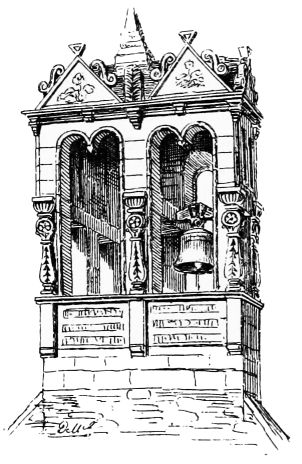
Fig. 1605.—Turriff Church.
Belfry.
the domestic architecture of the seventeenth century. There is a strong dash of Renaissance taste in the design; but the cornice with its small corbels, and the string course with its moulded supports, might be details from any old Scottish castle. The bell bears the date 1557. A curious relic of the older structure has, however, been discovered in the choir in the form of an antique wall-painting of St. Ninian.
The interior of the choir contains
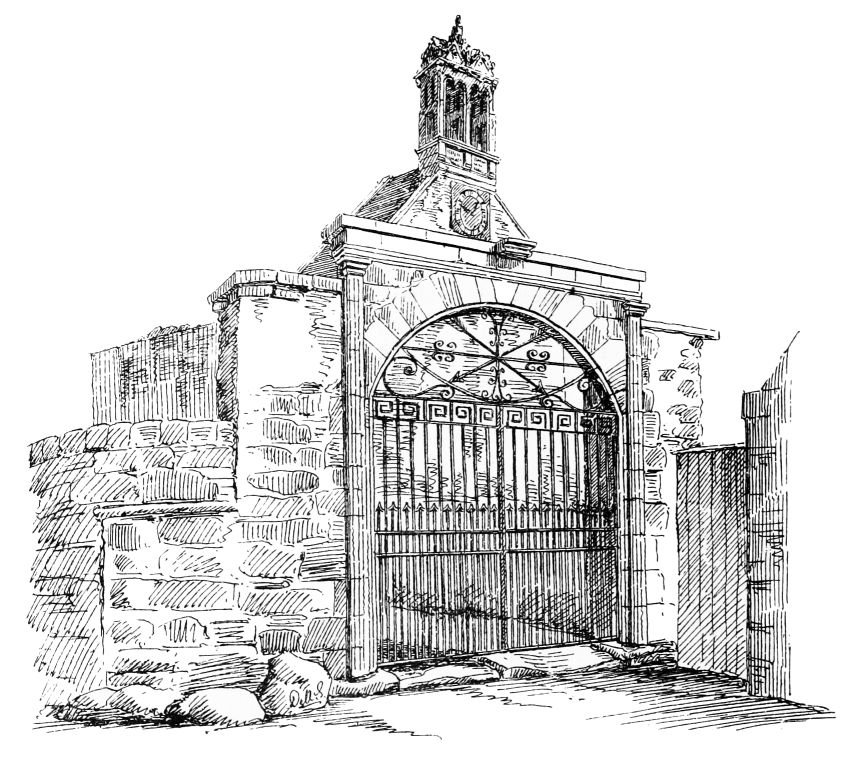
Fig. 1606.—Turriff Church. Gateway to Courtyard.
a very interesting and remarkably picturesque series of monumental slabs, with a quantity of well-executed lettering. One of these tablets is to the memory of a member of the family of Barclay of Towie, of date 1636, with a Latin inscription still legible.
The churchyard contains a number of interesting monuments of the same date as the belfry.
The gateway to the churchyard (Fig. 1606) is a simple but pleasing specimen of the early Scottish Renaissance, similar in style to the belfry.