MONUMENT IN RENFREW CHURCH.
Reading edition
This monument is placed in the modern parish church of Renfrew. It consists of a recumbent effigy resting on a sculptured tomb, and enclosed within an arched canopy. The inscription round the arch in Gothic raised letters is as follows:—“Hic iacet Johēs Ros miles quo(n)dam dominus de Hawkehede et Marioria uxor sua orate pro ipsis qui obit.”
Crawford mentions in his History of Renfrewshire, p. 66, that Sir Josias (he means Sir John) Ross of Halkhead married “Marjory Mure, a daughter of Caldwel,” and that their statues “as big as the life, with their coats of arms over them,” are carved on the monument. The arms of the lady are not there now. Crawford states that this was “the first of the family who laid the foundation of that hereditary honour, which his successors have ever since enjoyed, who, being a favourite of King James IV., was by that prince created a baron of this realm, with the title of Lord Ross of Hawkhead and Melvil, about the year 1492.”[214] It is to be observed, however, that the arms on the tomb are simply those of Ross, whereas the arms of Melville were quartered with those of Ross after the marriage of Sir John Ross with the heiress of Melville in the time of Robert II.
The monument (Fig. 1491) has been partly restored, the shafts at the sides with their bases and caps are modern, but they probably follow the original design. The mouldings of the arch, which are thickly coated with paint, appear to be original. The effigies, of which there are two, husband and wife, with the table on which they rest, remain untouched.
The tomb is 8 feet 6½ inches long by 2 feet 6 inches high, but the base is probably buried beneath the floor. The front is richly sculptured in a somewhat rude but vigorous manner, and is divided into eleven compartments. Each of the end compartments contains an angel playing on a musical instrument, namely, a violin and a viol. The other nine compartments contain shields supported by angels, with the following armorial bearings, as described by Mr. W. R. Macdonald:—
1. A chevron chequé between three hunting horns, for Semple.
2. A pale, for Erskine.
3. A griffin segreant, for Lauder of Hatton.
4. Quarterly, 1st and 4th—A lion rampant within a double tressure flory counterflory, for Scotland, as on No. 5; 2nd and 3rd—A fesse chequé (with four rows of panes), for Stewart, as on No. 6.
5. A lion rampant within a double tressure flory counterflory, for Scotland.
6. A fesse chequé (also with four rows of panes), for Stewart.
7. A bend, for——.
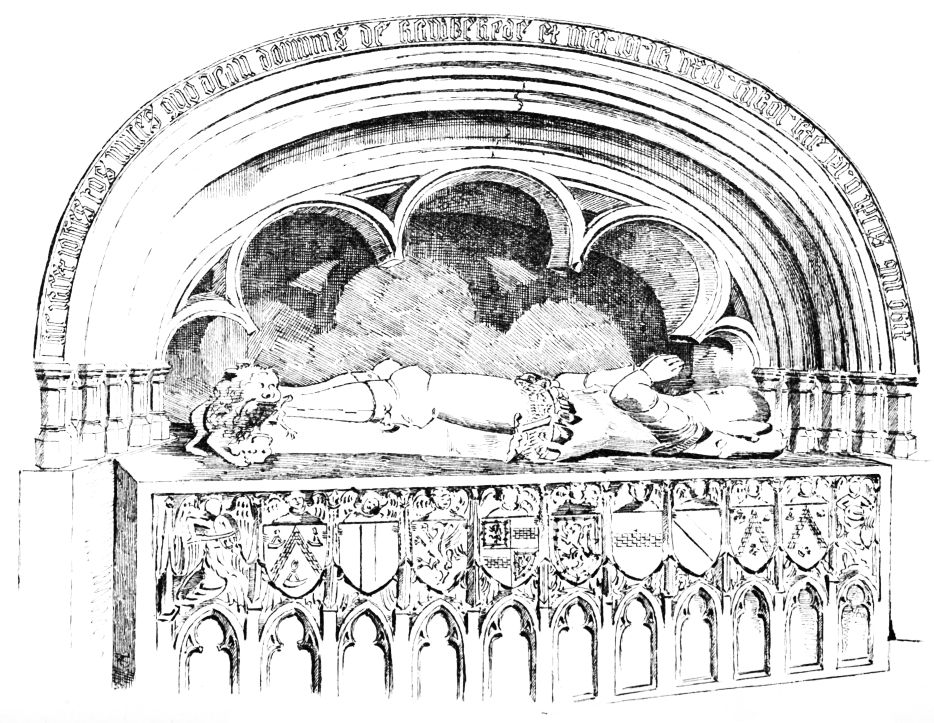
Fig. 1491.—Monument of Sir John Ross and Spouse in Renfrew Church.
8. A chevron chequé between three water budgets, for Ross of Halket.
9. A chevron chequé between a hunting horn in dexter chief, a water budget in sinister chief, and a demi hunting horn combined with a demi water budget in base, being the shields 1 and 8 dimidiated, but showing no dividing line.
On the knight’s breast a chevron between three water budgets, for Ross of Halket, as in No. 8.
The Church of Renfrew was granted by David I. as a prebend of Glasgow, and is believed to have stood on the present site.
In 1557 mention is made of the chaplainry of St. Christopher in the Lord Ross’s Aisle on the south side of the Church of Renfrew. The monument is situated on the south side of the present church. The Chapel of St. Christopher was probably connected with the ferry across the Clyde.