NEWLANDS CHURCH, Peeblesshire.
Reading edition
The ruined church of Newlands stands in the midst of the old churchyard, in the retired and quiet valley of the Lyne, which flows southwards towards the Tweed from near the foot of the Pentland Hills. It is about four miles from West Linton Station on the Dolphinton Railway.
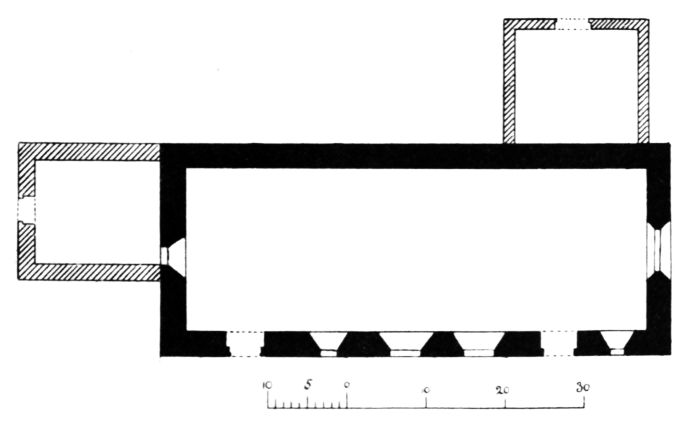
Fig. 1430.—Newlands Church. Plan.
The church (Fig. 1430), which is a simple oblong in plan, is evidently in some degree of ancient date; but it has been considerably altered in post-Reformation times, in order to make it suitable for Presbyterian service. For this purpose two large square-lintelled windows (Fig. 1431) have been inserted in the south wall, and one doorway near the east end of that wall (Fig. 1432) (the lintel of which bears the date of 1705). The ancient round-arched doorway near the west end (see Fig. 1431) has been
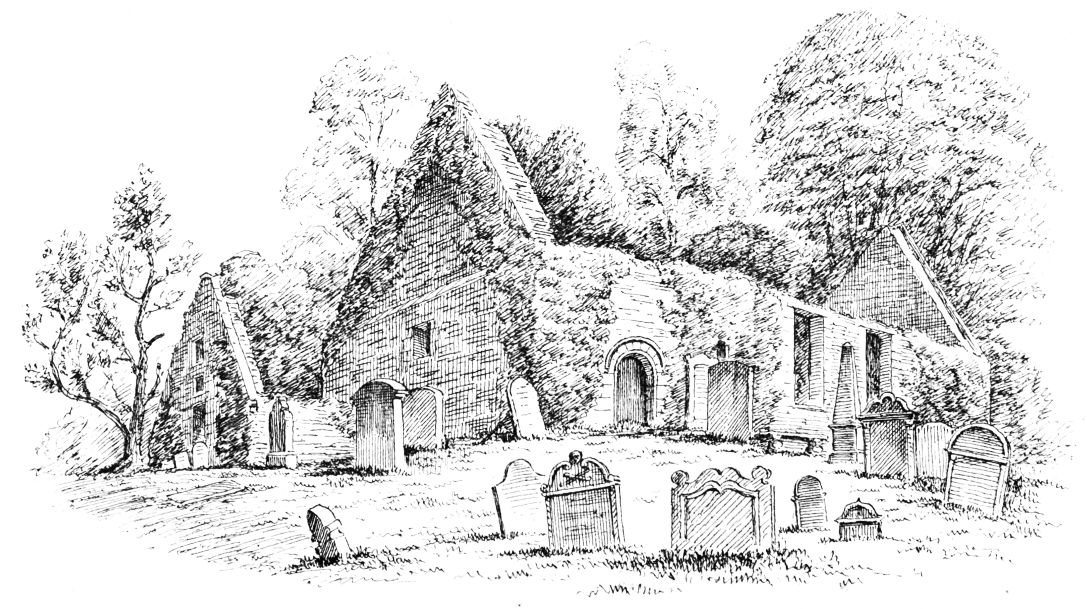
Fig. 1431.—Newlands Church. View from South-West.
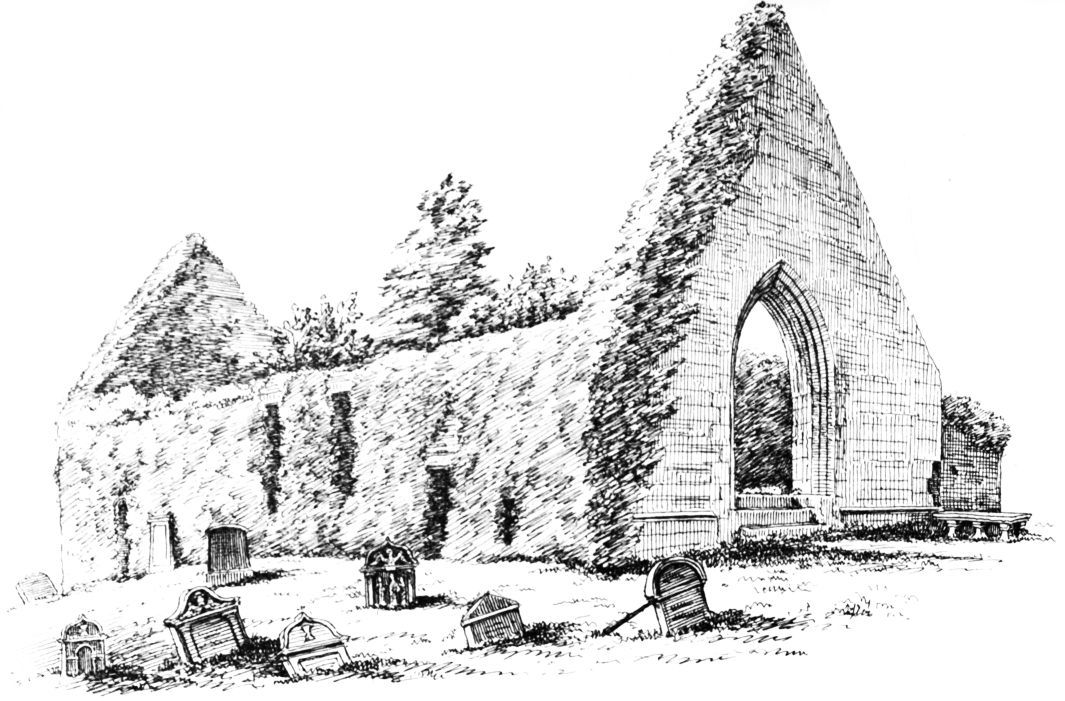
Fig. 1432.—Newlands Church. View from South-East.
preserved, and has also been made available in later times. The later internal arrangements would thus be the usual Presbyterian ones, of having the pulpit placed in the centre of the south wall, with a large window on each side of it, and a central passage down the church, to which access was obtained by the two doorways near the east and west ends.
The church was doubtless originally lighted by several small windows in the south and west walls, and by a large pointed window in the east wall. The latter (see Fig. 1432) and the round-headed doorway near the west end of the south wall are the principal ancient features. The doorway has a bead on edge, and a plain hood moulding. It has all the appearance of being of early date. The east end is partly built with ashlar, and has a moulded string course near the ground running along part of it. The pointed window has double splays on the jambs and arch, both in the interior and exterior. It has doubtless had mullions at one time, but it is now impossible to find traces of them. The window is doubtless of third pointed date.
Various sepulchral enclosures have been added to the church, both internally and externally. That at the west end (see Fig. 1431) has probably had a coat of arms in the recess above the door, but it is now gone.
A number of quaintly carved tombstones of seventeenth and eighteenth century date are still crumbling away in the churchyard.
“The name of Newlands refers to the era when the lands lying around the Kirktown were first brought into cultivation by Scoto-Saxon bands.”[195] At the end of the thirteenth century Newlands belonged to the monks of Dunfermline. In Bagimond’s Roll the Rectoia de Newland, in the Deanery of Peebles, is valued at £16.