HERALDIC PANEL FROM PRESTONPANS CHURCH, Haddingtonshire.[255]
Reading edition
HERALDIC PANEL FROM PRESTONPANS CHURCH, Haddingtonshire.[255]
This panel (Fig. 1585) was discovered in 1891 during some alterations of the seating of the church. It then formed the back of a seat in the gallery, and was concealed by a green cloth. Doubtless, from its heraldic decorations, it must originally have occupied a more prominent position. The arms and initials show that it belonged to the Hamiltons of Preston. The date on the panel (1604) connects it with an earlier church, the present church having been erected later. The panel is of oak and in good preservation, except where cut away to make it fit its new position, and the colours are still rich and fresh. The panel is in two pieces, each 2 feet 3 inches high. The whole is divided into eight compartments, of which only four bear arms. They are all arched, and are separated by
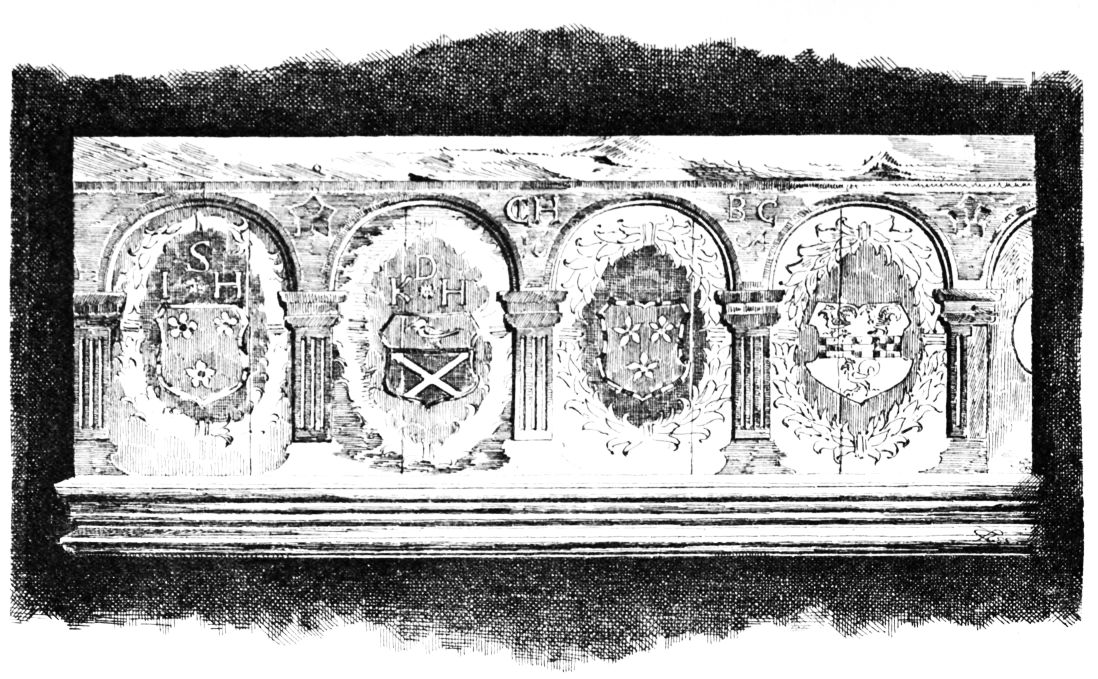
Fig. 1585.—Heraldic Panel from Prestonpans Church.
pilasters. On the four compartments arms, surrounded by laurel wreaths, are blazoned in colour, together with initials. The initials G. H. and B. C., which refer to George Hamilton, Laird of Preston, and Barbara Cockburn, his wife, are carved in relief in the spandrils. The letters painted within the arches, viz.,S/J. H. and D./K. H. stand for Sir John Hamilton, the son of the above, and Dame Katherine Howieson, his second wife, married 1620. The lady died 1629. The shields beneath these initials contain the Hamilton arms twice, and the Cockburn and Howieson arms for the wives of the father and son. The initials of the son and his wife were carved over the windows of the tower, while over the centre window they appear in a monogram with the date 1626.
This panel, which is one of the very few early coloured decorations which survive in Scotland, is now in the possession of General Sir William Stirling Hamilton of Preston.