LYNE CHURCH, Peeblesshire.
Reading edition
This building, which is still used as the parish church, is situated on the Lyne Water, near the Tweed, about three miles above Peebles. It stands on the summit of a mound, which is occupied as the churchyard.
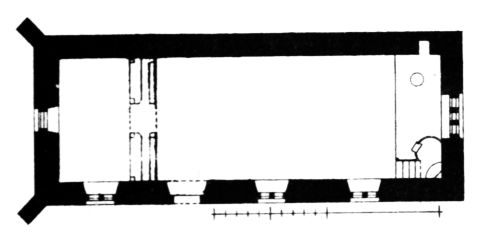
Fig. 1571.—Lyne Church. Plan.
The building (Fig. 1571) is a tiny one, measuring internally only about 34 feet by 11 feet. The windows and doorway are on the
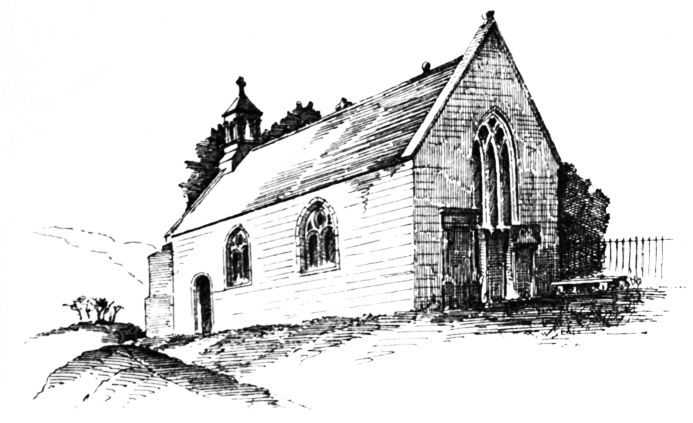
Fig. 1572.—Lyne Church. View from South-East.
south side (Fig. 1572) and in each gable, there being no opening in the north wall. The windows have simple tracery of a late type, and the jambs have backfillets (a late feature) round the openings. There are angle buttresses at the west end, and a modern belfry on the apex of the west gable.
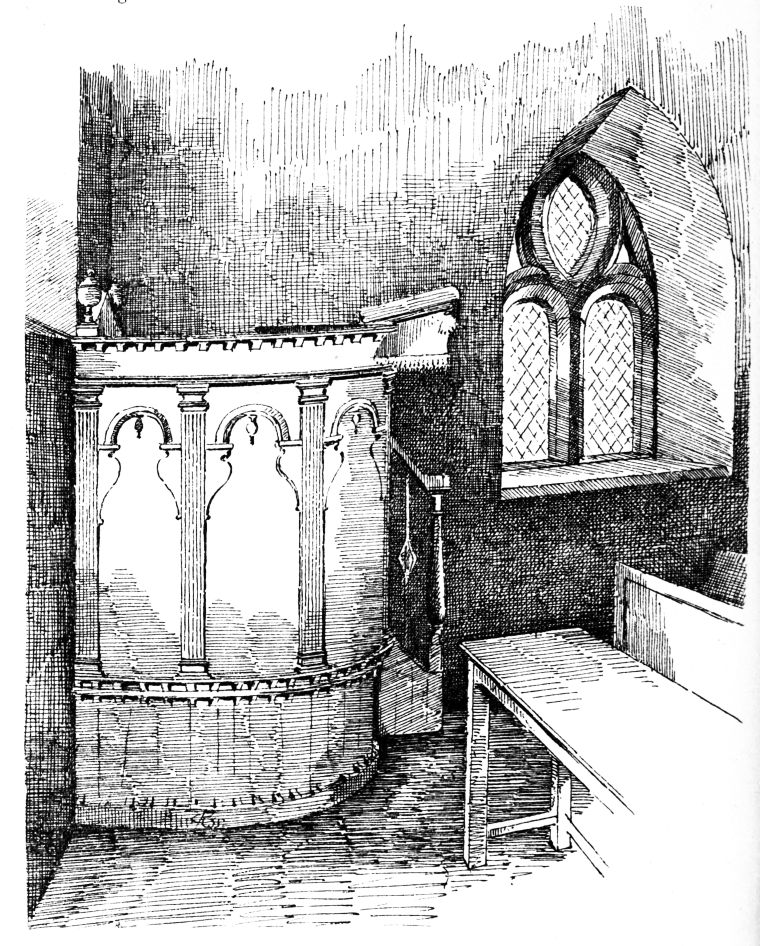
Fig. 1573.—Lyne Church. Pulpit.
Some good fragments of old woodwork survive in the church, particularly a pulpit (Fig. 1573), which, it is usually stated, was made in Holland. Lyne is distant from the sea and must have been difficult of access; for which reason, amongst others, we doubt whether there is any truth in the tradition. The pulpit, which is circular in plan, is quite simple in design, and its construction would not present a formidable task to a Scottish country wright, judging by other examples of woodwork made in Scotland about this time. Some of the other woodwork bears the date 1644, and one of the pews, now removed, was dated 1606.[245] The church has been frequently repaired, which accounts for the loss of such examples.
“The district was, in the twelfth century, a chapelry dependent on Stobo.”[246] Robert, the chaplain of Lyne, is a witness to a charter in the Register of Glasgow, between 1208 and 1213; but of the early church then existing nothing now remains, the present structure probably dating from the beginning of the seventeenth century.