DURNESS CHURCH, Sutherlandshire.[230]
Reading edition
DURNESS CHURCH, Sutherlandshire.[230]
It is interesting to find in the neighbourhood of Cape Wrath a specimen of ecclesiastical architecture, even though of the seventeenth century. The old parish church, which is now a ruin, occupies the site of a cell of Dornoch monastery. It was built in 1619. The Plan (Fig. 1531) is somewhat irregular, but not unlike, in general form, to many of the churches of Scotland at the same period, having the pulpit placed in the centre of the long side wall, and facing the wing.
In a recess is the grave of Duncan MacMorroch, a relation of the chief of the clan, believed to have been very serviceable in getting rid quietly of
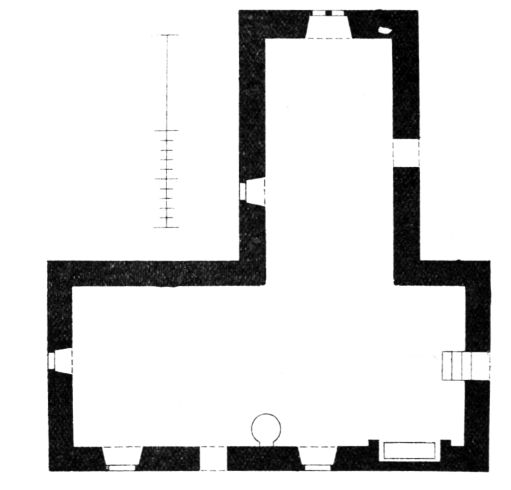
Fig. 1531.—Durness Church. Plan.
troublesome hindrances. This gentleman was desirous to be buried in the sacred edifice, but as some doubts existed as to his sanctity, it was resolved
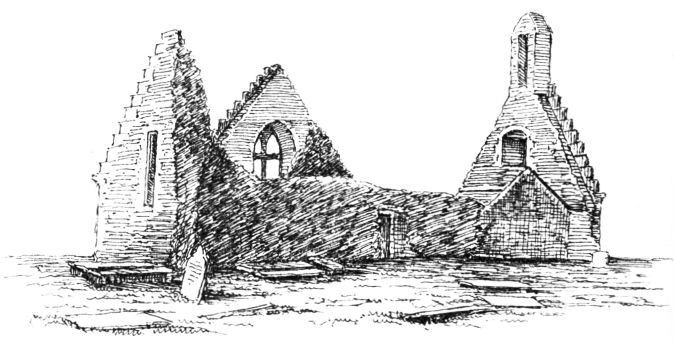
Fig. 1532.—Durness Church. View from South-West.
not to admit his body quite into the church, so he was buried under the wall. His tomb is dated 1619, and his epitaph hands down his name to posterity in the following words:—
“Duncan MacMorroch here lies low Was ill to his friend, waur to his foe True to his master in weird and wo.”
The adjoining gable has crowsteps and is topped with a belfry (Fig. 1532). The lintel of the doorway in the wing bears the letters and figures 16 · HMK · A. In the gable of the wing there is a two-light window with a pointed arch, a central mullion dividing into two small arches at the head (the space between being left solid), and a transom.
An old font lies in the main part of the church.