ST. MOLOC’S or ST. MOLUOG’S CHURCH, Mortlach, Banffshire.
Reading edition
It was formerly believed, on the evidence of Boece, that Malcolm ii. in a battle with the Danes, looking up to the Chapel of St. Moloc at Mortlach, vowed that, if successful, he would there erect a cathedral and found a bishop’s see. The record of the See of Aberdeen appeared to support this statement, and mentioned further that the see was afterwards transferred by David i. to Aberdeen. But Professor Cosmo Innes has
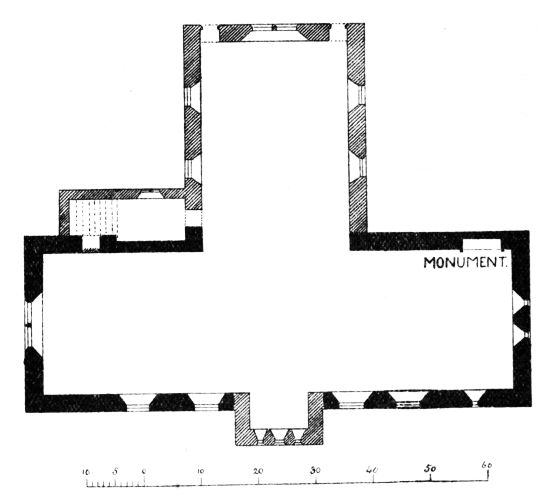
Fig. 1341.—St. Moloc’s or St. Moluog’s Church. Plan.
proved that these stories are forgeries, and must be entirely rejected. It is, however, probable that there was an early religious settlement at Mortlach, which may have given some foundation for the above fables. At all events, in 1157, a Bull of Pope Adrian IV. mentions the monastery of Mortlach and the five churches belonging to it.
The existing structure (Fig. 1341) consists of an old building of simple oblong form, 83 feet in length internally by 24 feet in width, to which was added, in 1826, a large north wing or aisle. This wing was further vefynded in 1876, and now measures, internally, 36 feet long by 26 feet.
A small wing or projection has also been added to the south to contain an organ, and the whole church has been reseated and fitted up for service in modern style. There are two lancet windows in the east end, which, together with some portions of the walls, may be ancient (perhaps of thirteenth century date), as it is understood that these windows were found built up, and were reopened during the late restoration, but the remainder of the church has been completely modernised.
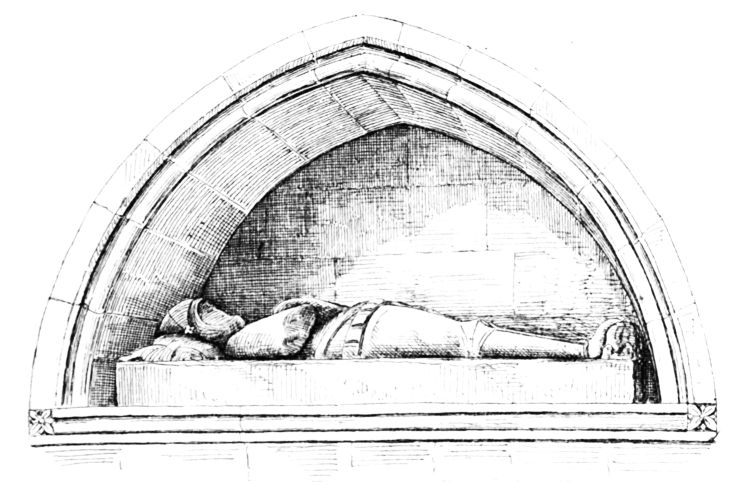
Fig. 1342.—St. Moloc’s or St. Moluog’s Church. Effigy of Alexander Leslie.
Under a pointed arch in the thickness of the north wall, close to the east end, lies the recumbent effigy of a knight in armour (Fig. 1342), supposed to be the monument of Alexander Leslie, the first of Kininvie,[155] who died about 1549. The figure used to stand upright, but has now been placed in its proper position.
A remarkable sculptured stone[156] stands in the flat ground below the church, where the battle with the Danes is said to have taken place, and of which it is traditionally believed to be a memorial.