COLLEGIATE CHURCH, Maybole.
Reading edition
The ancient town of Maybole, which is situated on the side of a hill about nine miles south from Ayr, was formerly the capital of Carrick, and contained the castle of the Earl of Cassillis[131] and the town houses of the lairds of the district. Being within two miles of Crosraguel Abbey and having a collegiate establishment within the town, the ecclesiastical
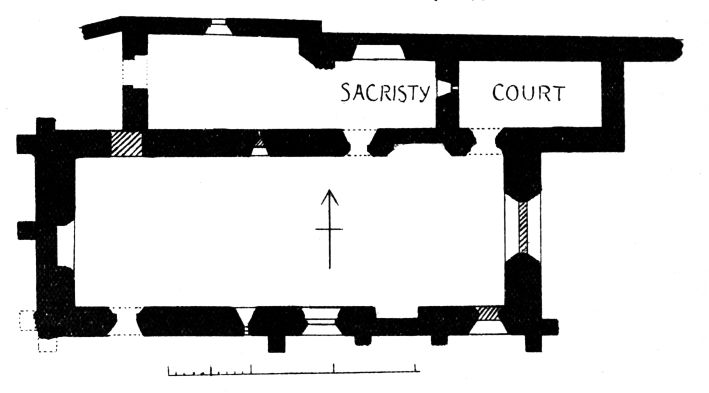
Fig. 1267.
Tullibardine Church.
Jamb of Transept Arch.
Fig. 1272.—Maybole Collegiate Church. Plan.
element would not be wanting in the society of the place. At the Reformation the house of the provost was the scene of a celebrated debate between John Knox and Quentin Kennedy, Abbot of Crosraguel, in September 1561.
The college stands on gently sloping ground near the base of the hill on which the town is situated, and is now enclosed within the streets.
In 1371 a chapel was founded in Maybole by Sir John Kennedy of Dunure, and endowed for one clerk and three chaplains. This was probably the earliest foundation of the kind established in Scotland, but it had many successors as collegiate churches in the following century.
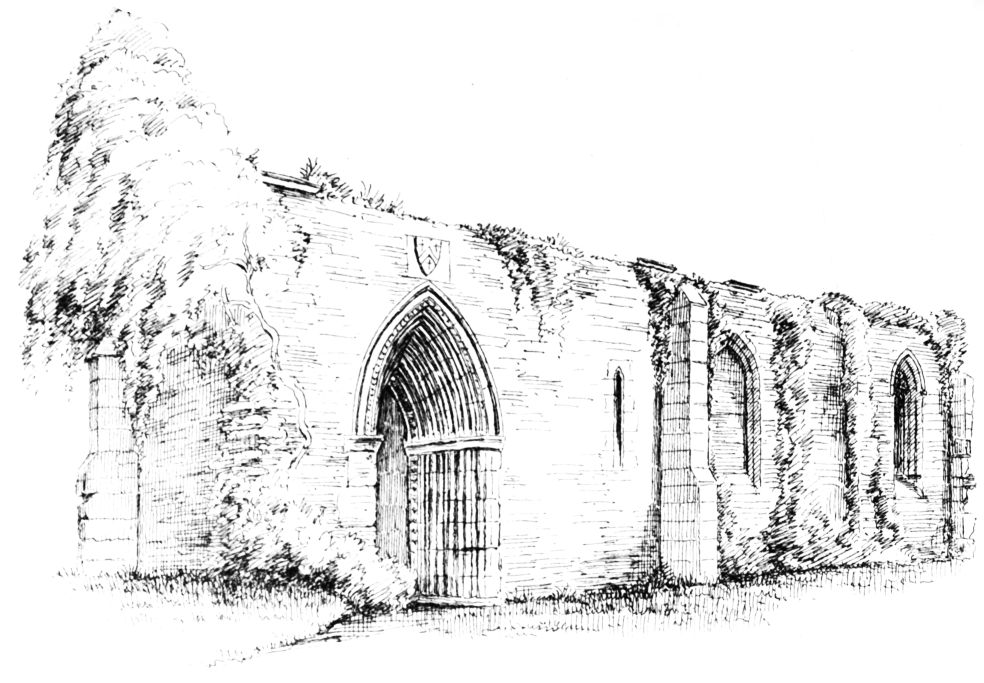
Fig. 1273.—Maybole Collegiate Church. View from South-West.
In Abercrummie’s description of Carrick,[132] written in the end of the seventeenth century, the collegiate church is mentioned as being still entire, “being now used as the burial-place of the Earl of Cassillis, and other gentlemen who contributed to the putting of a roofe upon it, when it was decayed.” It is further mentioned that the “Colledge consisted of a rector and three prebends, whose stalls are all of them yet extant, save the rector’s.”
The houses or “stalls” of the prebends are now all gone, and the church is again roofless. The freestone has been taken away from many of the buttresses, and the tracery of the windows is broken and most of the windows built up.
The church as it now stands (Fig. 1272) consists of a simple oblong 52 feet long by 18 feet wide internally, but there are evidences of its having been altered. There was a small sacristy on the north side, with a good pointed doorway leading into the church.
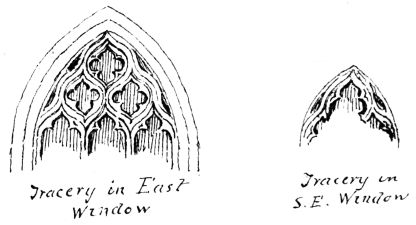
Fig. 1274.—Maybole Collegiate Church. Tracery in Windows.
Both in the north and south walls (Fig. 1273) of the edifice there is a very narrow pointed and cusped window, which does not correspond with the other details of the building, and close to the narrow window in the south wall there is a dressed corner, now built against, which seems to indicate a complete change in the structure at this point. The east window and the two windows adjoining it in the north and south sides still retain part of their tracery (Fig. 1274), which is of a late character. A recess with pointed arch-head for a tomb or an Easter sepulchre in the north wall of the choir (Fig. 1275) contains mouldings enriched with imitations of the dog-tooth, and the arches of the south-west doorway (see Fig. 1273) have also similar dog-tooth ornaments. The church having been founded in 1371, when the first pointed period (to which the dog-tooth belongs) had long passed away, there can be no doubt of the above ornaments being very late revivals, even if the style of their execution did not make that apparent.
The south-west doorway is, however, a good late adaptation or imitation of a thirteenth century design, like other imitations of early work which were common during the third pointed period. The doorway is surmounted by a shield bearing the Kennedy arms.
The west end (see Fig. 1273) has a buttress in the centre, while in the inside opposite it the recess of a built up window is observable (see Plan), thus further indicating alteration. It seems probable that the church was originally small, and the narrow windows, above referred to, may possibly be remains of the original fabric. Then at a later date the
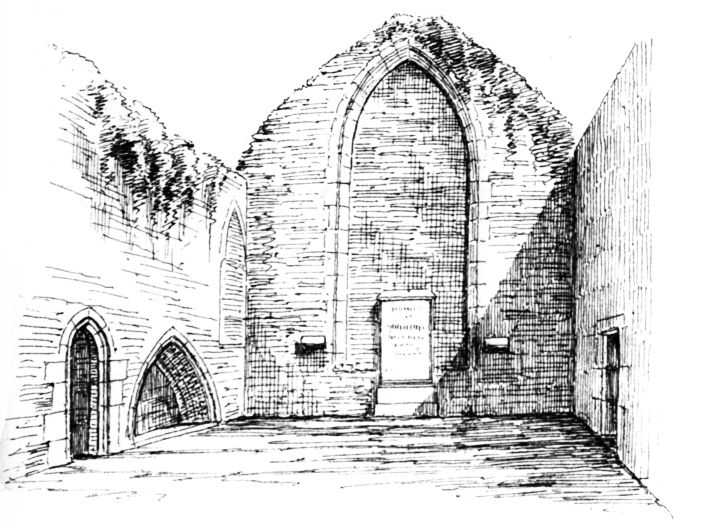
Fig. 1275.—Maybole Collegiate Church. Interior of East End.
structure was probably enlarged and partly rebuilt, when the enlarged traceried windows, the recess in the choir, and the south-west doorway—all of which are undoubtedly late—were introduced. This may have occurred about A.D. 1500. The ruined sacristy still retains its barrel vault (Fig. 1276).
Abercrummie further says—“On the north syde of the kirk is the buriall place of the laird of Colaine within ane enclosure of new square-stone lately built.” This enclosure remains, and its architecture corresponds with the date mentioned, viz., seventeenth century. The entrance doorway (see Fig. 1276) is elaborate, but considerably decayed, and over
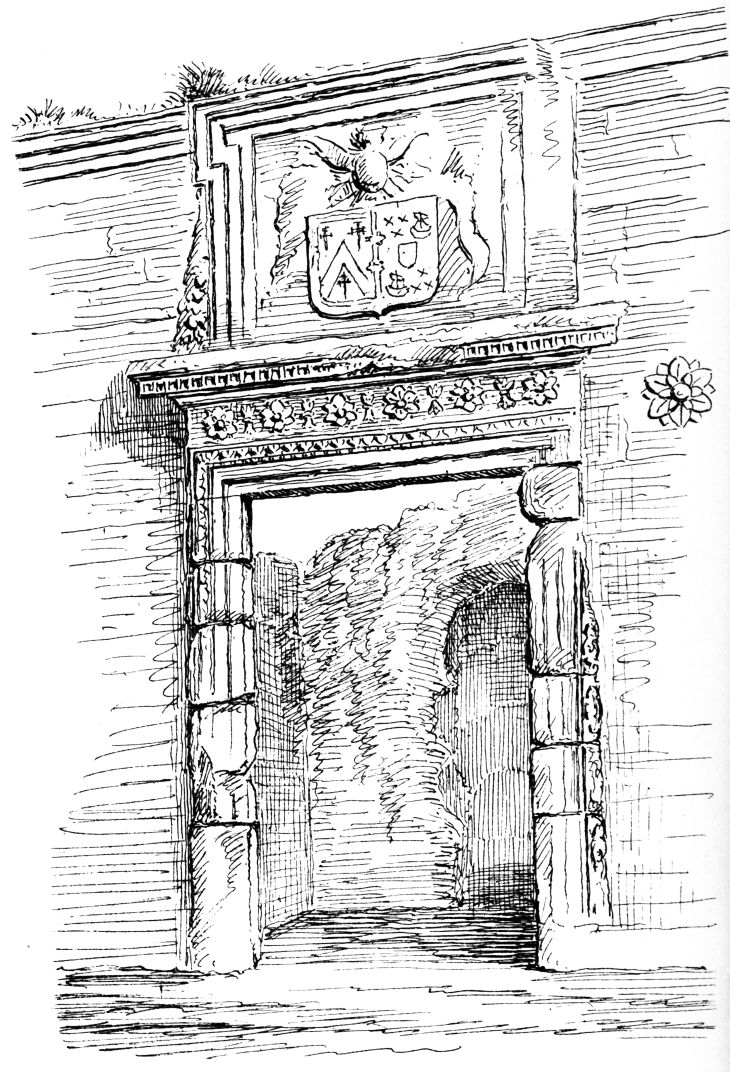
Fig. 1276.—Maybole Collegiate Church. Doorway to Burial Vault.
it a large shield bears the Kennedy arms, impaled with another. The church itself is now used as a burial ground by certain families of the name of Kennedy.