ST. JOHN’S CHURCH, Dalry, Kirkcudbrightshire.[229]
Reading edition
ST. JOHN’S CHURCH, Dalry, Kirkcudbrightshire.[229]
The village of Dalry or St. John’s Town stands on the east bank of the Dee, in the northern or Glenkens district of Kirkcudbrightshire, and is about ten miles north from Parton Railway Station. The old parish church was removed in 1829-31, when a new church was erected on the old site.
An old burial vault formerly attached to the church, and known as the Kenmure burial aisle, has, however, been preserved, which (Fig. 1523), with its crow-stepped gable and large antiquely grilled window and panelled coat of arms, forms an interesting relic of the seventeenth century.
This adjunct to the old church formed a projection on its south side, and measures internally 17 feet in length by 14 feet 2 inches in width (Fig. 1524). The entrance from the church, which was about 7 feet wide, was by a plain rubble archway, which is now built up. The doorway in the west wall is square-lintelled, and 2 feet 8 inches wide. The window in the south wall is also square-lintelled, and the iron grill appears to have been built in along with the wall. The coat of arms in the panel over the window is divided in pale, having the three boars’ heads of the Gordons on the dexter side, and a lion rampant on the sinister side. These, Mr. Galloway suggests, may be the arms of John Gordon of Kenmure, who was Justiciar of the Stewartry in 1555, and died in 1604, and who here combines the provincial with the family arms—the lion rampant being the heraldic emblem of the province of Galloway.
There is an ambry in the south-west angle 1 foot 7 inches wide by 1 foot 9 inches high, and 1 foot 3 inches deep.
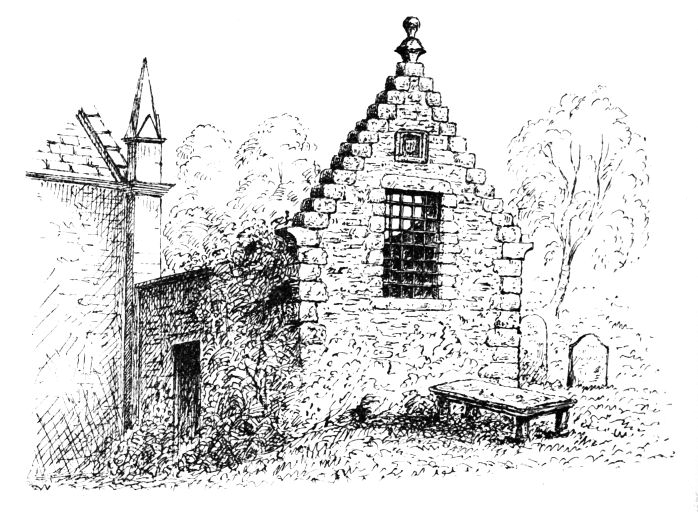
Fig. 1523.—St. John’s Church, Dalry. View from South-West.
On the outside of the north-east angle there is an interesting relic of the south wall of the old church, a portion of one rybat of a window having been preserved. Three courses of freestone yet remain, having a bold splay externally, a groove for glass, and a splayed ingoing. This shows that the chancel of the old church must have extended some distance to the eastward.
Some of the dressed granite stones of the old church have been reused in the modern building.
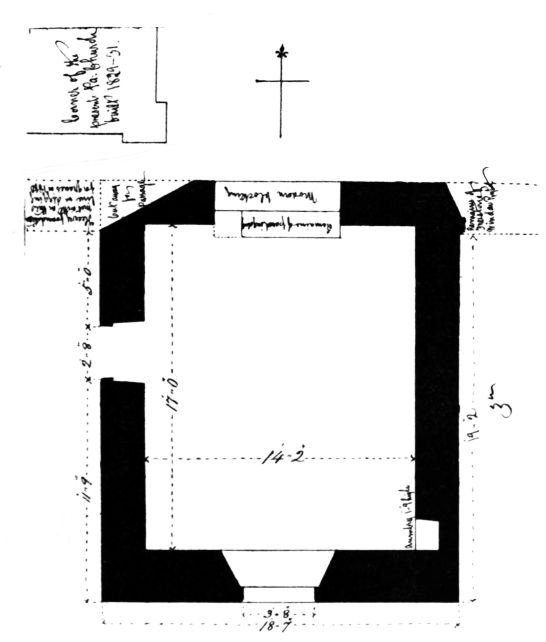
Fig. 1524.—St. John’s Church, Dalry. Plan.