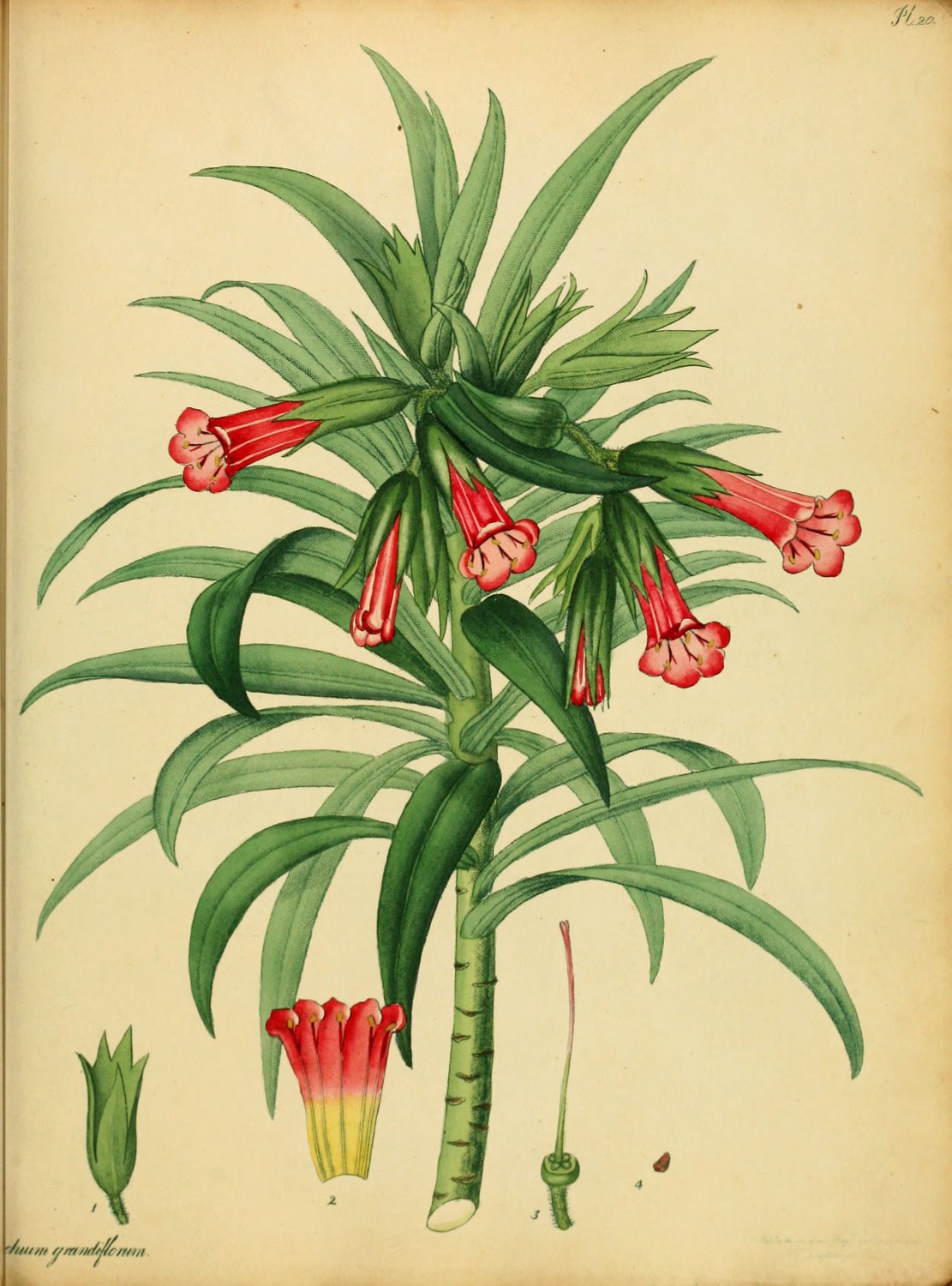
Volume 1 — PLATE XX. ECHIUM GRANDIFLORUM. Large-flowered Viper’s Bugloss.
Reading edition
CLASS V. ORDER I.
PENTANDRIA MONOGYNIA. Five Chives. One Pointal.
GENERIC CHARACTER.
Calyx. Perianthium quinquepartitum, erectum persistens; laciniis subulatis erectis.
Corolla. Monopetala, campanulata. Tubus brevissimus. Limbus erectus, sensim ampliatus, quinquefidus obtusus; laciniis sæepius inæqualibus; superioribus duabus longioribus, infirnis minoribus, acutis, reflexis. Faux pervia.
Stamina. Filamenta quinque, subulata, longitudine corollæ, declinata, inæqualia. Antheræ oblongæ, incumbentes.
Pistillum. Gemina quatuor. Stylus filiformis, longitudine staminum. Stigma obtusum, bifidum.
Pericarpium nullum. Calyx rigidior, in sinu semina fovens.
Semina quatuor, subrotunda, oblique acumenata.
Empalement. Cup with five divisions, upright, permanent; segments awl-shaped, upright.
Blossom. One petal, bell-shaped. Tube very short. Border gradually widening, with five clefts, blunt. Segments oftenest unequal, the two upper ones the longest; the lower ones smaller, sharp, and reflexed. The mouth open.
Chives. Five threads, awl-shaped, the length of the blossom, declined, and unequal. Tips oblong, fixed sideways to the threads.
Pointal. Seed-buds four. Shaft thread-shaped, the length of the chives. Summit blunt, and two-cleft.
Seed-vessel none. The cup growing more harsh, contains the seeds.
Seeds four, roundish, obliquely tapering.
SPECIFIC CHARACTER.
Echium, foliis nitidis, lanceolatis, hispidis; caule fruticoso; corollis maximis, æqualibus, rubris.
Viper’s Bugloss, with shining, lance-shaped, hairy leaves; stem shrubby; blossoms very large, equal, and red.
REFERENCE TO THE PLATE.
1. The Empalement. 2. A Blossom cut open, to expose the situation of the Chives. 3. The Shaft and its Summit magnified. 4. A ripe seed.
The Echium Grandiflorum is a native of the Cape of Good Hope, was sent from thence by Mr. F. Masson to the Royal Gardens at Kew, about the year 1791. The superior beauty of this species to the rest of its congenors makes it considered as a valuable greenhouse plant, although its intrinsic merit is sufficient to ensure it that character; the rich green of its foliage, contrasted to the colour of the blossoms, gives to each a singular brilliancy. It is rather a tender greenhouse plant, grows about two feet high, and becomes naked at the lower part of the stem; is with difficulty propagated by cuttings, seldom perfecting its seeds; thrives best in rich earth, and flowers in April and May. The drawing was made from a plant in the collection of the Marquis of Blandford, Bill-hill, Berks.
PLATE 20