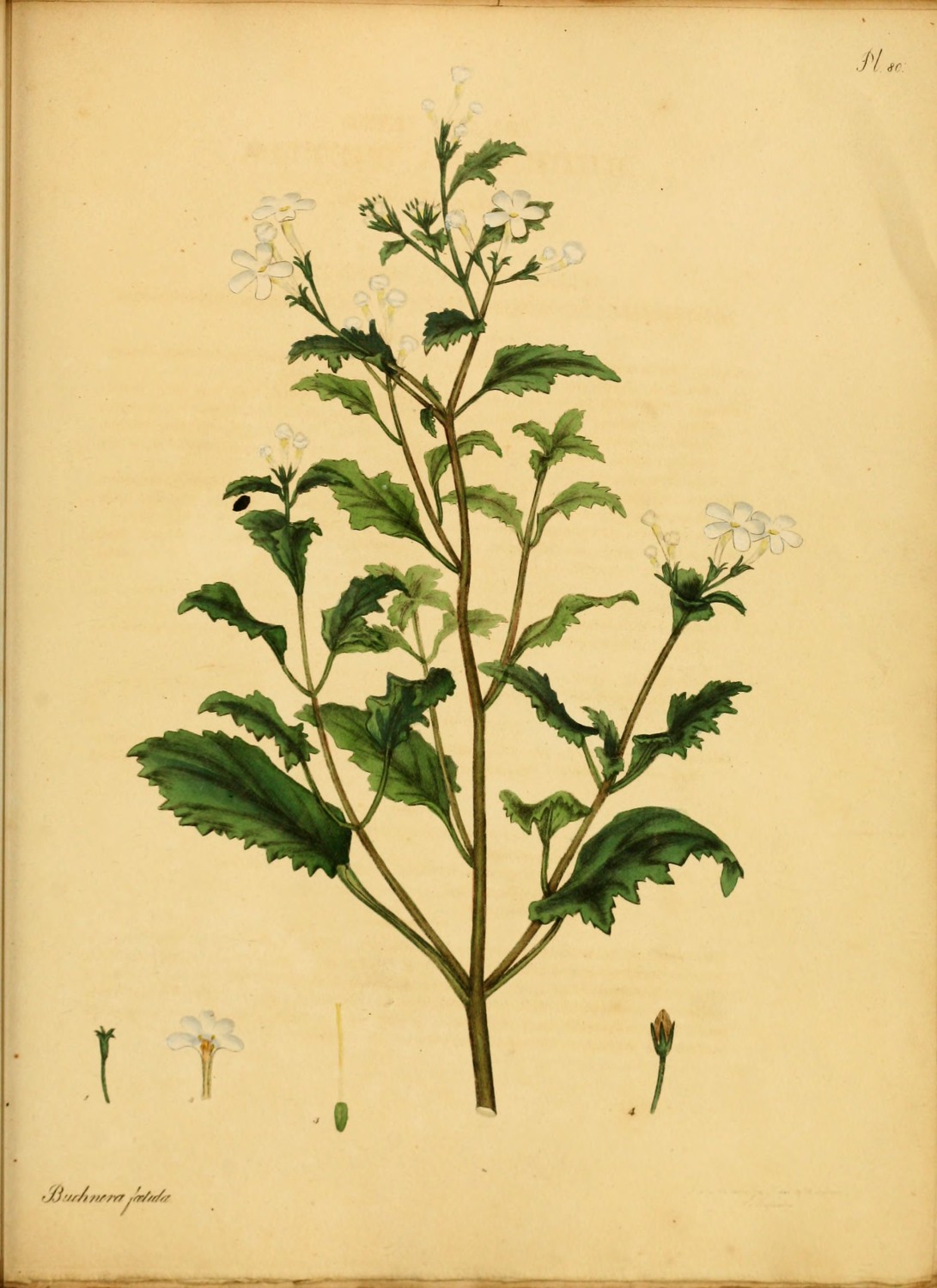
Volume 2 — PLATE LXXX. BUCHNERA FŒTIDA. Stinking Buchnera.
Reading edition
CLASS XIV. ORDER II.
DIDYNAMIA ANGIOSPERMIA. Two Chives longer. Seeds covered.
GENERIC CHARACTER.
Calyx. Perianthium monophyllum, quinquedentatum, scabrum, persistens.
Corolla, monopetala; tubus longissimus, filiformis, arcuatus; limbus planus, quinquefidus, æqualis; laciniis duabus superioribus reflexis, tribus inferioribus cordatis, subæqualibus.
Stamina. Filamenta quatuor, brevissima, in fauce corollæ, quorum duo superiora extra prominentia. Antheræe oblongæ, obtusæ.
Pistillum. Germen ovato-oblongum. Stylus filiformis, longitudine tubi. Stigma obtusum.
Pericarpium. Capsula ovato-oblonga, acuminata, tecta, bilocularis, apice bifarium dehiscens; dissepimentum contrarium.
Semina numerosa, angulata.
Receptaculum medio dissepimenti adnatum.
Empalement. Cup one leaf, five-toothed, rough, and remaining.
Blossom one petal; tube very long, thread-shaped, and arched; border flat, five-cleft, equal; the two upper divisions reflexed, the three under ones heart-shaped, nearly equal.
Chives. Threads four, very short, in the mouth of the blossom, of which the two upper protrude without. Tips oblong, blunt.
Pointal. Seed bud oblong-egg-shaped. Shaft thread-shaped, the length of the tube. Summit blunt.
Seed-vessel. Capsule oblong-egg-shaped, tapered, covered, two cells, and splitting at the point in two; the partition opposite to the valves.
Seeds numerous, and angular.
Receptacle fixed to the middle of the partition.
SPECIFIC CHARACTER.
Buchnera, foliis laciniatis, oppositis, fœtidissimis; flores umbellulati, terminales.
Buchnera, with leaves appearing torn, opposite and very stinking; flowers terminate the branches in small umbels.
REFERENCE TO THE PLATE.
1. The Empalement. 2. A Flower cut open, to expose the situation of the Chives. 3. The Pointal magnified. 4. A ripe Seed-vessel.
This species of Buchnera is an annual, and a native of the Cape of Good Hope; from whence, it was introduced to England in the year 1795, by Messrs. Lee and Kennedy. It should be raised with other tender annuals in spring, and kept, either to ornament the greenhouse with them in pots, or planted in a warm part of the flower border, about the beginning of June. It will begin to flower about July, and generally has perfected seeds by September; although, it will continue to bloom till destroyed by the frost, as there is a constant succession of blossoms.
PLATE 80