BOOK OF THE CHILD WORLD
Reading edition
PHYSICAL LIFE OF CHILDREN: Work and Play
THE CHILD, THE PARENTS AND THE SCHOOL
THE MENTAL LIFE OF THE CHILD: Story-land, Nature-land, School-land
SIMPLE LESSONS: Words, Reading, Writing, Numbers, etc.
THE MORAL LIFE OF THE CHILD: Conduct, Manners and Etiquette, Adolescence, Habits, Cultivation of Ideals, etc.
MANHOOD, WOMANHOOD, PARENTHOOD
(Abridged in Single Volume Edition.)
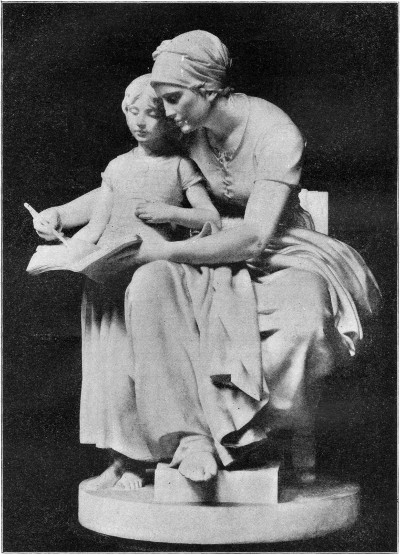
THE MOTHER AS TEACHER—Sculptured by E. Delaplanche
In the above masterpiece we have a vivid and sympathetic portrayal in eternal marble of the universal mother-instinct to instruct and educate her children. This she does in accordance with the measure of her own mental equipment, her previous advantages, and a mother love which frequently means patience, sacrifice and anxiety. But the instinct is always present and must continue while the human race lasts—ever onward and upward.
THE CHILD WORLD
THE GROWING BODY—WORK AND STUDY—FOOD—THE NERVOUS SYSTEM—PUBERTY—REST AND SLEEP—THE EYE—THE EAR—OTHER SENSES
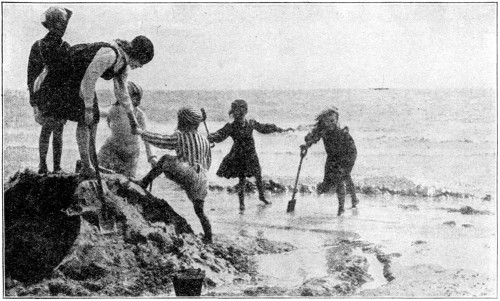
THE HEALTH OF CHILDREN DURING SCHOOL LIFE
Children begin school life at an age which is, unfortunately, one of the greatest importance in their physical development. It is a truism that no mechanism, whether animate or inanimate, can do two things at once and get as good results as when all its efforts are being directed toward one object. So it is obvious that any vital energy used in developing a young child’s brain must be taken away from the amount that had hitherto been entirely devoted to physical growth. Too often this fact is lost sight of both by energetic teachers and ambitious parents.
Instead of being delighted with the rapid development of the child’s mind, parents should receive any evidences of abnormal advancement with some suspicion of its true worth.
WHEN THE CHILD FIRST GOES TO SCHOOL
At the age of six, when the average child first goes to school, practically everything he sees is new and interesting, and worthy of deep consideration. His brain gets no rest from the time he wakes until he goes to sleep at night.
To do its work, the brain needs a full and active blood supply, and this it will take often at the expense of leaving an inadequate amount for the demands of the rest of the body.
Curiously enough, excessive mental activity seems to have no stunting effect on the growth in the way of height. It is in breadth and thickness that the body suffers. Everyone is familiar with the tall, lanky boy or girl in the early teens who is said not to care much for games and exercise, and is, unfortunately, “rather delicate.” This youngster is almost certain to be pointed out by the proud parents as being extremely well up in his studies.
Short of encouraging laziness or indolence at school, it really makes very little difference to the ordinary man or woman, so far as their adult mental attainments go, whether they were ranked as fairly good scholars or fairly poor ones when they were young children. On the other hand, the effort necessary to be made by a sensitive, not over-brilliant child to keep a good place among its fellows may have a serious physical effect that will hamper him or her throughout life.
WHAT NATURE’S DOCTORS PRESCRIBE FOR CHILDREN
DR SUNLIGHT DR FRESH-AIR DR WALK DR PLAY
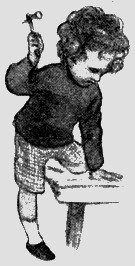
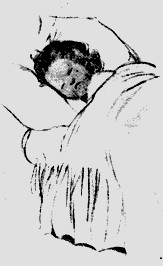
DR REST DR OPEN-WINDOW DR WORK DR SLEEP
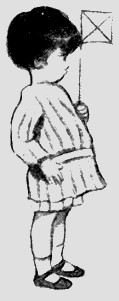
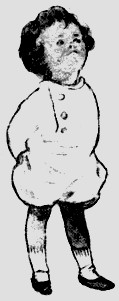
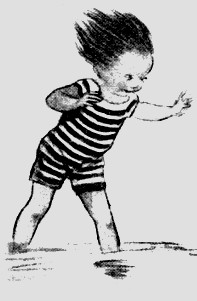
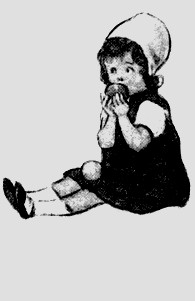
DR STAND-UP DR BREATHE-THROUGH-THE-NOSE DR BATHE DR MASTICATE
DR SUNLIGHT DR FRESH-AIR DR WALK
DR PLAY DR REST DR OPEN-WINDOW
DR WORK DR SLEEP DR STAND-UP
DR BREATHE-THROUGH-THE-NOSE DR BATHE DR MASTICATE
The effort should be made when a child is first sent to school to determine just how much work he can do comfortably and happily. If an attempt is made to force him to do more than this, he will become depressed and worried. With children, any mental worry will shortly produce unmistakable signs on the physique. It is a bad plan to attempt to get as much as possible out of a child; there should always be a certain amount of vital energy left for emergencies.
IMPORTANT CONDITIONS AFFECTING THE CHILD’S LESSONS
With young children, no lesson should last for more than half an hour, and if possible, a short interval between each lesson should be spent in the open air. If the young scholar is notably in advance with his school work, discourage this; or, at any rate, carefully consider whether his health will allow such active development. If backward and seemingly lazy, the cause of the indolence should be sought first in the physical condition before the character is assailed.
Above all, no child under fifteen should have to do any routine night study to keep up in his lessons. Young eyes are easily strained, and young bodies are easily tired. Watch a tired child who has to study at night; he will get his body in the most comfortable position he can manage, and will take no thought of the direction from which the light falls on his page. Nor has he the energy to hold his book so that the plane of the lines is always parallel to that of his eyes.
His mind may accumulate a little extra book knowledge by such work, but only at the risk of strained eyes and possible spinal defects. Lateral curvature of the spine, in a great majority of cases, may be traced back to habitual faulty postures used by children when at school work. A fair rule to make about night work is to allow a child to study at home only so long as he will comfortably sit upright and hold his book at a correct angle.
In children, the physical state is a very good guide to the mental condition. If the body is tired, the mind is in no fit state to absorb knowledge. The thin, narrow-chested, delicate youth, perhaps with strained eyes and nearly always with a good school record, is nine times out of ten a preventable mistake.
If, when first he showed signs of more than average scholarship, his parents had noted that this superiority was due principally to work done when physically tired, and to neglect of outdoor games and general “play,” a little sense of the comparative worth of health and youthful scholarship would have given him a greater chance of developing into a valuable citizen.
THE PROPER TIME FOR WORK
A child’s brain, and its body as well, are in the prime of their vigor during the morning hours. From nine till noon, therefore, should be the period of the hardest mental or physical work he undergoes. Evening preparation of lessons is harmful, not only because it tends to bring into a state of high activity the brain, which shortly should be quiet and ready to sink into slumber, but also because it throws hard work on an already fatigued organ. Much of the nervousness, debility, and insomnia so common among school children can be traced to evening preparation.
NECESSITY OF ABUNDANT FOOD
The more actively growing the tissues, the greater the need for abundant nourishment. The growing child, therefore, requires more food in relation to his size and weight than does the grown person who has passed the stage of rapid development.
No fixed rule can be laid down as to how much a child should eat. Generally speaking, the country-bred child, living an outdoor life, may rely on his own appetite as a guide. On the other hand, the city child, living a more indoor artificial life, may have little appetite, and as a result, if not watched, may lapse into a condition of malnutrition simply through underfeeding. The best guide, perhaps, is the child’s weight. If he is continually below weight, this fact may in all cases be taken as proof either that the child’s food is unsuitable to its age and digestive powers, or else deficient in amount.
EFFECT OF THE SEASONS ON THE NERVOUS SYSTEM
The effect of the change in seasons is much more marked in children than in grown people. In the Spring in particular the watchful mother should keep a careful eye on the health of her little ones. “There come with the Spring in many children,” writes a noted physician, “a restlessness and excitability, a perversity and irascibility of temper, or a listlessness, and indisposition for exertion that are not displayed at other times; and there come then, also, more plentifully than at other seasons, physical indications of debility and the scrofulous habit, such as enlarged glands and tonsils, dyspepsia and loss of appetite, strumous ophthalmia, discharges from the ear, and enlargements of joints.”
The moral is that since the body is growing fastest (and therefore has the greatest need of husbanding its vitality) in the Spring time, any extra pressure on the nervous system as from prolonged school hours, or any undue exertion, should be strenuously avoided. Unfortunately with the “final” examinations in the early summer, our school systems demand that the hardest and most strenuous work of preparation falls in the Spring time, the season at which the body is least fitted to withstand abnormal stress.
When a child or growing boy or girl becomes more nervous in the Spring time than is his usual habit, or becomes depressed in mind, or constantly complains of being tired, the only common-sense treatment is to put an end at once to all schooling for the time being, and to turn the child out-of-doors every day for all the hours of sunlight.
THE PERIOD OF PUBERTY AND ITS SPECIAL PROBLEMS
Parents should ever be watchful regarding the education of their young children when they approach the age of puberty, that is, the period when the child begins to develop into the man or woman.
Profound and rapid changes take place at this period in mind, brain, the nervous system, the glandular system, and, one may indeed say, in the body generally. The nerve centers temporarily lose some of their normal stability, and such conditions as insanity, hysteria, and epilepsy, rare in childhood, now become common. Even though no actual nervous disease develop, there is quite commonly during this change from childhood to adult life a period of nervous excitability and exhaustion accompanied by physical weakness, which to a great extent unfits the young person for close pursuit of his or her studies. Particularly in young girls is there the greatest necessity for curtailing any tendency to overwork at school during this period.
CONDITIONS OF BONES AND MUSCLES AT THE PERIOD OF PUBERTY
At this time there is also rapid growth and development of the bones which lengthen rapidly, and are still soft and cartilaginous in places. It is all-important at this period, therefore, that the muscles on the two sides of the body receive roughly the same amount of use, otherwise there is grave danger of some deformity, such as lateral curvature of the spine, developing.
While the bones are in this condition of rapid development, all muscle-straining attitudes, such as sitting upright at a desk, practicing at the piano, writing, painting, etc., should be kept within such limits as never to entail real fatigue. Young girls at this period, even more than boys, require all their strength and vitality to support them in their rapid growth. This does not mean, however, that all muscular exercises must be forbidden during the period of puberty, which may be reckoned as from twelve to sixteen in girls, and from thirteen to sixteen in boys. The point is that violent, really fatiguing exercise, such as hockey, hunting, cycling tours, mountain climbing, etc., as well as all occupations which entail the holding of the muscles tense and fixed in one position for a long period, should be indulged in very sparingly, if at all. The young girl can obtain all the exercise necessary for health in less strenuous outdoor pursuits such as golf, croquet, a little not too strenuous tennis, walking, etc.
GENEROUS HOURS OF SLEEP SHOULD BE ALLOWED
While moderate mental work does not in the healthy grown person necessitate an increase in the amount of sleep, the child at school, constantly using his brain in the accumulation of new ideas, needs an even more generous proportion of sleep than if his brain were not so occupied. Again, if the child shows any signs of nervousness, he ought to be allowed to sleep a little longer than the more stolid non-temperamental child. The following is the average duration of sleep required at different ages:
4 years of age 12 hours
7 years of age 11 hours
9 years of age 10 1⁄2 hours
14 years of age 10 hours
17 years of age 9 hours
Up to the approach of puberty (the change from childhood to adult life) a child may well be allowed to sleep a little later in the morning in the winter than in summer. Again, if as is frequently the case, he should suddenly commence to grow in height very rapidly an extra hour or half-hour in bed may be of the greatest service in weathering the strain of the rapid growth.
PRECAUTIONS TO PREVENT SLEEPLESSNESS
Insomnia is sometimes very troublesome in young children, demanding most painstaking treatment. Most important in encouraging the habit of going to sleep immediately on being put to bed is regularity in the hour of bedtime. Unless the child is put into bed at a certain fixed hour with clock-like regularity, the habit of getting sleepy (which is such an important factor in going to sleep) cannot be normally developed.
Sometimes a subdued, shaded light will sooth a nervous child’s excited brain and so induce sleep. A child who wakes in terror in a pitchdark room may for years be nervous about going to bed in the dark. Any attempt to stamp out this tendency to nervousness by refusing a comforting glimmer of light in the room may bring on a habit of sleeplessness on first going to bed which may be difficult to eradicate. Sometimes a softly-ticking clock, by affording a sense of companionship, encourages the child to drop off to sleep.
MENTAL QUIETUDE AND GOOD VENTILATION
Another factor in encouraging sleep is a quiet mental state, which is best brought about by the strict avoidance of all exciting games or other mental activities for at least an hour before bedtime. School lessons prepared in the evening are a fertile source of insomnia in children. The brain, keyed up to working at full pitch, cannot quiet down at its owner’s wish, and its unwonted activity may banish sleep for an hour or more.
While free ventilation is essential in the child’s sleeping-room, it should never be forgotten that the young are more susceptible to cold than are grown people, and have not the same power of generating extra body heat to replace any undue loss of warmth from exposure to outside cold. The temperature of the child’s bedroom, therefore, should be kept between 55° and 60° F. If below this, a general feeling of chilliness, and in particular of cold feet, may be the cause of sleeplessness.
Apart from the discomfort and misery caused by the feelings of chilliness, cold feet lead to the adoption of postures in bed which are anything but conducive to health.
BENEFICIAL EFFECTS OF THE BATH
In nervous children who sleep badly, a hot bath or a hot mustard foot bath often acts like a charm, the child falling into deep sleep almost as soon as it has been tucked in bed. The warmth, by dilating the blood-vessels, on the surface of the body in the case of the full bath, or of the feet in the case of the mustard foot-bath, draws blood away from the brain and so, reducing its activity, allows it to quiet down into sleep.
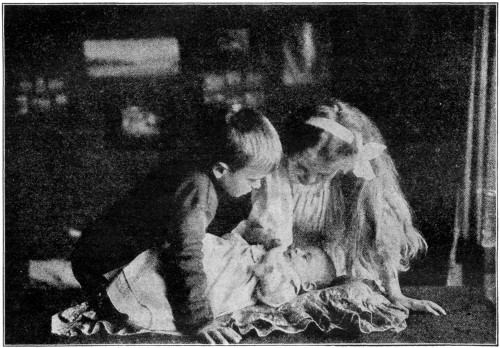
Where did you come from, baby dear?
Out of the Everywhere into here.
Where did you get those eyes so blue?
Out of the sky as I came through.
What makes the light in them sparkle and spin?
Some of the starry twinkle left in.
Where did you get that little tear?
I found it waiting when I got here.
What makes your forehead so smooth and high?
A soft hand stroked it as I went by.
What makes your cheek like a warm white rose?
I saw something better than anyone knows.
Whence that three-cornered smile of bliss?
Three angels gave me at once a kiss.
Where did you get this pearly ear?
God spoke, and it came out to hear.
Where did you get those arms and hands?
Love made itself into bonds and bands.
Feet, whence did you come, you darling things?
From the same box as the cherubs’ wings.
How did they all just come to be you?
God thought about me, and so I grew.
But how did you come to us, you dear?
God thought about you, and so I am here.
(The above poem was written by George MacDonald, Scottish novelist and poet; born 1824, died 1905. He wrote a long list of novels, stories and poems. His children’s poems and stories are deservedly popular, and contain numerous passages of singular beauty, lighted up with fine fancy and descriptive power.)
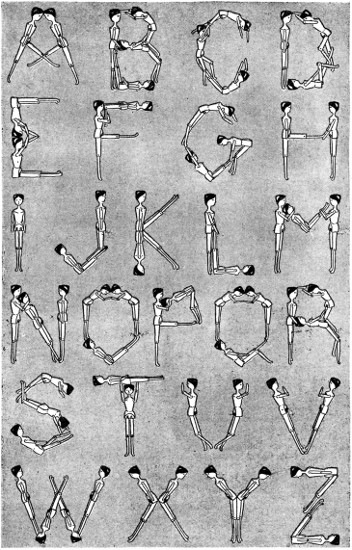
HOW THE DUTCH DOLLS PLAY THE GAME “ALPHABET”
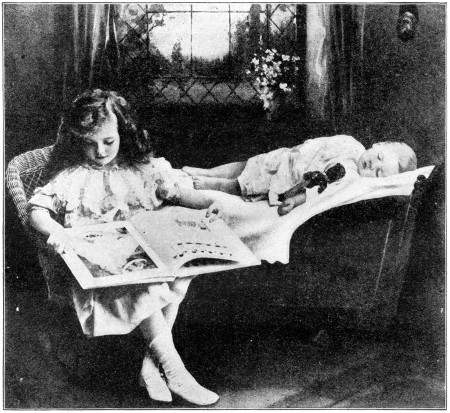
HOW TO TEACH A CHILD TO READ AT HOME
A a E e I i L l P p S s W w
B b F f J j M m Q q T t X x
C c G g N n U u Y y
D d H h K k O o R r V v Z z
Above are the big and little letters of the Alphabet.
Below is a story with all these letters in words.
I saw the big ox when I went to the Zoo last week. It was in a den by the cave and stood near the bars. I thought it looked quite fierce when it stared at me. It made me jump when it put its nose out of the bars. A man fed the ox with some hay that he got from a box. It then lay down on the hard floor and had a nap. I should not like to be in the den with the ox.
It is not a proper test of a child’s advance that he should be able to read very early. Neither do we now make the teaching of reading the chief object in first lessons. Rather does the child learn first to master the difficult art of connecting spoken sounds with written signs somehow, on the happy road from babyhood to schooldays, while his mother still holds him by the hand.
The training of your boy’s ear in detecting the sounds that go to make up the words he uses is of the very first importance. You encourage him in the use of language by getting him to talk freely about what you do together, describing in his own pretty way the flowers, birds, toys, pictures that he loves. All the time you are gently insisting on perfect pronunciation, clear, pleasant modulation of his speaking voice, quiet breathing through the nose. Presently, when you see he is quite ready for it, you lay stress on the sounds made at the beginning and end of such words as cat, dog, puss, pig. He will soon copy quite accurately the sounds of the various consonants, and find other words beginning or ending with similar sounds to those in the examples you give.
Later will come the vowel sounds, and patient work will be needed to make him see the difference in the various sounds of a, o, and so on. At this stage it will amuse him to have a looking-glass before him to see how the shape of his mouth alters when speaking. Let him practice working the muscles round his lip and moving his tongue freely. It will also help if he sings the vowels, thus—take deep breath, sing a (as in father) as long as the breath lasts; take breath, sing a (as in fate), in same way; and so on with all the vowel sounds.
You will, of course, make a table of all the sounds you teach him for your own use, with lists of suitable words, and something has really been accomplished in the numberless five-minute sound-lessons when the child can break up the words he uses into the sounds that go to make them—b-u-n, bun; f-i-g, fig.
So much for the first training in recognizing and reproducing the sounds.
And now we come face to face with the much-discussed question—when and how is a child to learn the letters (the printed signs of sounds) and the names given to these letters? Some children settle this question for themselves by “picking up” these letters and their names from picture-books and blocks with little outside help, but they will find it useful later on to know the names of the letters and the order of the alphabet. See to it that your boy learns to call the letters by their sounds, not their names, and help him to realize that the letters are the signs of the sounds, used to tell us what sounds we are to utter.
You have a sand-tray? Let the fat little finger practice making a round o in it, while the rosy lips form the long o, as in no and lord, the short sound, as in not; or tracing crooked s while he hisses like the geese on the common, or says “puss,” “sat,” and so on.
If you have a box of good, plain letters, let him pick out the m in mouse, the t in table and in rat. Your small blackboard will come in handy, for he will be most happy to print on it in chalks the letters as he learns them. Let him model their shapes in clay, draw and paint them in colors, make them out of slips and curves of colored cardboard, varying the practice as much as possible; and see to it that he is never bored. He will soon greatly enjoy identifying and cutting out large and small letters as he learns them from advertisements in big type, and pasting them in a “letter” scrapbook, made by fastening together a few sheets of brown paper. Guide him to class together v and f, r and l, s and z, b and p, m and n, t and d, and the vowels in their order, with a whole page to themselves—this with a view to the time when he begins to study seriously.
But that is looking far ahead. We have now brought him to the point of being ready for his first reading lesson. But do not hurry; give his eyes plenty of distance work, plenty of training in reading Nature’s wide-open book, before you put printed books into his hands. He is to be a keen lover of books, so make him want to read, and see to it that he is interested and happy every moment of the time given to his reading lesson.
Here is the method:
Buy three copies of some well-printed simple stories; put one copy aside, and cut up the other two, pasting the sheets on drawing-paper, alternate pages face down, so that you get one complete copy out of the two books.
Now cut up, line by line, and then word by word, the first little story, and put the words in a small tray or box. Perhaps it is, “Thank you, pretty cow.” So now print on your blackboard two or three of the words—cow, milk, pretty, the child earnestly watching and listening while you say the words very distinctly, giving the component sounds as clearly as you possibly can.
Then hand him the tray, and let him pick out the words and name them as you have done. Proceed in the same way with a few more words of the story, printing them as you go in a column on the board, and when he knows them up and down, in and out, the great moment has arrived. Your heart will beat as you put the little book—the copy that was not cut up—into his hands. He can read, so much at any rate, quite readily.
Note that there must be no spelling; it is “look and say.” Next day you take word-building with the box of letters, and a fine game you have, based on the words learned the day before. Add letters and syllables in every way you can think of, always giving sounds, not names; let the boy read, copy, take from dictation these new words for a happy twenty minutes. He is now learning to spell, that he may be able to write with the sound signs. Go on like this, reading one day, word-building the next, till several sets of little books have been used up.
Let him dramatize the little stories and poems whenever you can; take parts with him, thus laying the foundation of real, live reading aloud, without any disfiguring mannerisms or self-consciousness. His stock of words grows apace—ten a day will give over three thousand in a year—and little by little, as opportunity offers, the more complex sounds in our language and its puzzling irregularities are unfolded and made familiar. Thus reading, elocution, spelling, writing, all advance together.
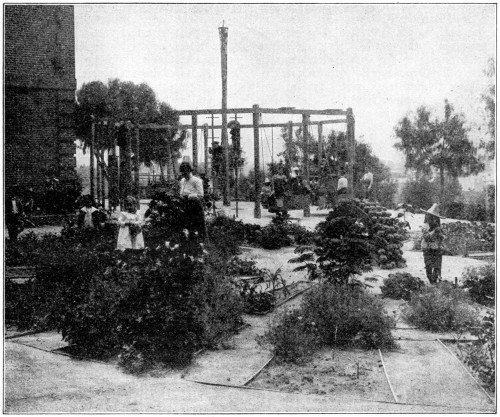
The study of Nature should go hand in hand with the study of books. Children love the outdoors—the trees, the flowers, the grass,—all living things. Nature trains the special senses, awakens the powers of observation, and creates a love of both the beautiful and the useful.
THE CHILD’S PICTURE GRAMMAR—NOUNS AND VERBS A NOUN IS THE NAME OF ANY THING—A VERB TELLS WHAT A NOUN DOES OR IS DONE TO
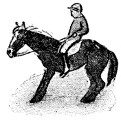
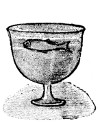
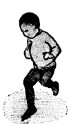
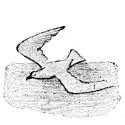
THE HORSE STOPS THE FISH SWIMS THE BOY HOPS THE BIRD SKIMS
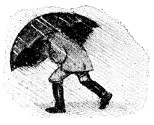
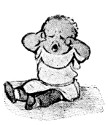
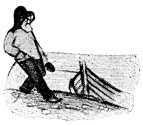
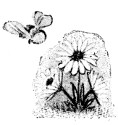
THE RAIN FALLS THE BABE CRIES THE MAN HAULS THE BEE FLIES
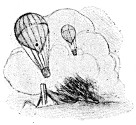
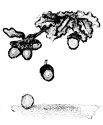
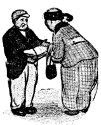
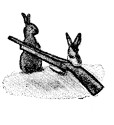
BALLOONS RISE ACORNS DROP THE WOMAN BUYS AIRGUNS POP
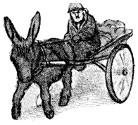
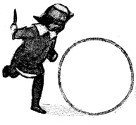
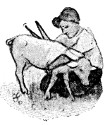
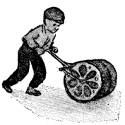
THE CART IS DRAWN THE HOOP IS ROLLED THE SHEEP IS SHORN THE LAWN IS ROLLED
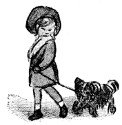
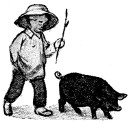
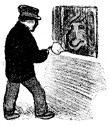
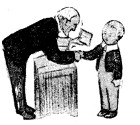
THE DOG IS LED THE PIG IS DRIVEN THE LION IS FED THE PRIZE IS GIVEN
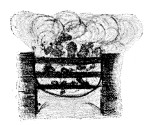
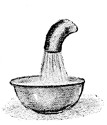
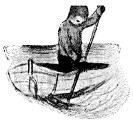
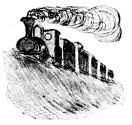
THE FIRE BURNS THE WATER FLOWS THE BOAT TURNS THE TRAIN GOES
WHAT OUR DOMESTIC ANIMALS GIVE US THE USEFUL THINGS OBTAINED FROM THE COW, HORSE, SHEEP, GOAT, PIG, FOWL, AND DEER
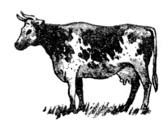
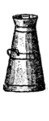
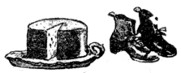
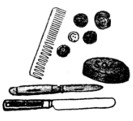
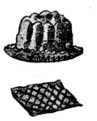
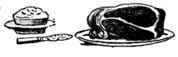
MILK CHEESE LEATHER COMBS BUTTONS JELLY
BUTTER BEEF KNIFE-HANDLES SOAP GLUE
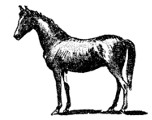
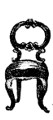
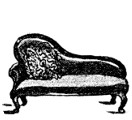
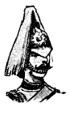
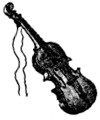
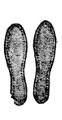
CHAIR-COVERS HAIR FOR STUFFING SOFAS PLUMES CATGUT SOCKS
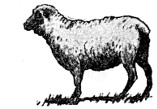
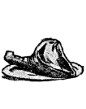
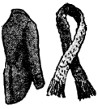
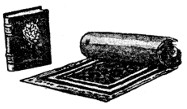
MUTTON WOOLLEN GOODS RUGS BOOK COVERS CARPETS
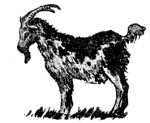
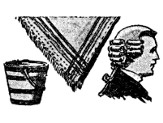
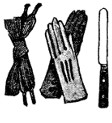
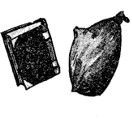
MILK WIGS GLOVES BOOK COVERS WATER SKINS
PERSIAN SHAWLS SHOE-LACES KNIFE-HANDLES
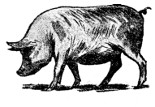
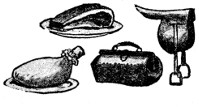
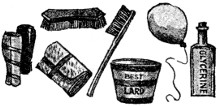
PORK BACON LEATHER GOODS BRISTLES BLADDERS
LARD GLYCERINE
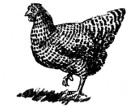
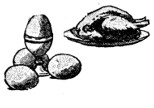
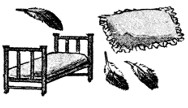
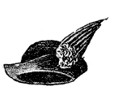
EGGS FLESH FEATHERS FOR BEDS AND PILLOWS FEATHERS FOR HATS
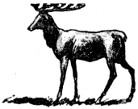
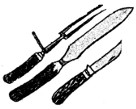
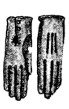
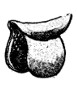
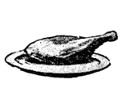
KNIFE-HANDLES GLOVES HAIR FOR STUFFING SADDLES VENISON
MILK CHEESE LEATHER
BUTTER BEEF
COMBS BUTTONS JELLY
KNIFE-HANDLES SOAP GLUE
CHAIR-COVERS HAIR FOR STUFFING SOFAS
PLUMES CATGUT SOCKS
MUTTON WOOLLEN GOODS
RUGS BOOK COVERS CARPETS
MILK PERSIAN SHAWLS WIGS
SHOE-LACES GLOVES KNIFE-HANDLES
BOOK COVERS WATER SKINS
PORK BACON LEATHER GOODS
LARD GLYCERINE
BRISTLES BLADDERS
EGGS FLESH FEATHERS FOR HATS
FEATHERS FOR BEDS AND PILLOWS
KNIFE-HANDLES GLOVES
HAIR FOR STUFFING SADDLES VENISON
THE CHILDREN OF THE ANIMALS


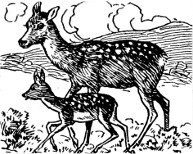
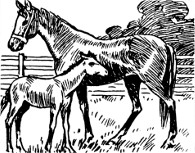
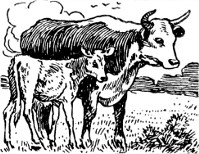
A YOUNG DEER IS CALLED A FAWN A YOUNG HORSE IS CALLED A COLT A YOUNG COW IS CALLED A CALF
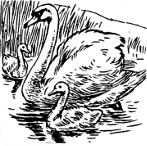
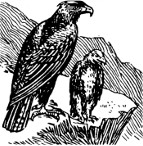
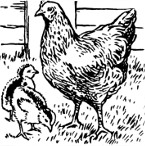
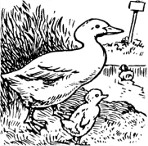
A YOUNG SWAN IS A CYGNET A YOUNG EAGLE IS AN EAGLET A YOUNG HEN IS A CHICKEN A YOUNG DUCK IS A DUCKLING
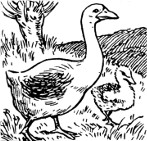
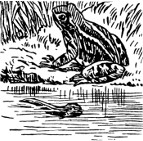
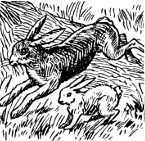
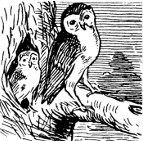
A YOUNG GOOSE IS A GOSLING A YOUNG FROG IS A TADPOLE A YOUNG HARE IS A LEVERET A YOUNG OWL IS AN OWLET
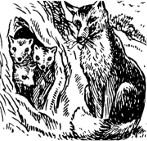
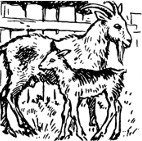
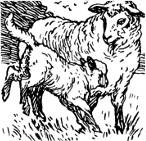
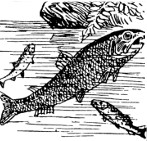
A YOUNG FOX IS A CUB A YOUNG GOAT IS A KID A YOUNG SHEEP IS A LAMB A YOUNG TROUT IS AN ALEVIN
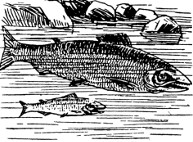
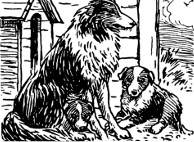
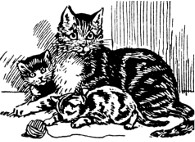
A YOUNG SALMON IS A GRILSE A YOUNG DOG IS A PUPPY A YOUNG CAT IS A KITTEN
The young of some animals have special names, and with many of these we are familiar. But there are other young creatures whose particular names are not so well known. In the pictures on this page we see the young of eighteen different creatures with their mothers, and the special names of these are given.
THE STORY OF THE SPIDER AND THE BUTTERFLY
On the garden wall a brown was spinning her . Backwards and forwards she went, making hundreds of little threads at once, twisting them into white ropes, arranging them with her feet and the little hooks on her jaws, and gluing them together where they crossed.


The stood on a and watched.


“Is that to put your eggs in?” she asked at last. “Or do you put them on a cabbage?”
“On a cabbage! No, indeed!” said the , staring with all her eight eyes at once. “I make a soft nest of silken threads to put them in.”
“That would not do for my babies.” And the nodded her head and looked very wise. “They would get their wings fast in the threads.”
“Their what?” gasped the , standing suddenly still in the middle of her .
“Their wings,” repeated the innocent . “I don’t think I dare let my children come to play with yours if you always hang about.”

“But your children won’t have wings!” gasped the again. “They won’t be baby !”

The laughed gaily.
“What a funny idea!” she said. “Your eggs hatch into baby , don’t they? and they don’t have wings. And the hen’s hatch into little baby , and they do have wings, like the hen. I saw them this morning running after her, with all their wings stretched out. I suppose they are not old enough to fly yet. When my babies can fly, I shall go back to the flower garden.”


She flew away, leaving the astonished still sitting in the middle of her trying to understand it all.
“Well!” she exclaimed to herself at last. “That’s what comes of having no mother! I always did say that the family arrangements of the are the most foolish I ever heard of.”
The was very busy, gumming her eggs safely underneath a cabbage leaf. Each little jar hung by its narrow end, as close to the next as could be.
“What a funny old !” she thought at last, when she had finished. “I wonder if she has finished that .”
“Have you found a cabbage to please you?” called the .
“Well, I suppose it’s all right,” answered the a little doubtfully. “I don’t seem to be able to think of a better place to put my eggs, and I suppose the flowers will grow on the cabbage very soon. My baby will not be able to fly far at first to find honey.”
“You mean your creepy, crawly !”

“Don’t you mean ?” asked the , trying to be sarcastic.
“Nothing so sensible! If you want to see——”
“Hush! hush! Don’t quarrel!” said the Breeze, shaking the ’s and puffing at the ’s wings.
“She says that my babies will be creepy, crawly——”
“Come away! come away! Come and find some honey!” said the Breeze.
He shook the and the fell off. Then the Breeze so hurried her across the garden that when they reached the flowers she was out of breath with laughing.
“I suppose that old is jealous because her children will not be so pretty as my baby ” she said.
LADY GRAY AND THE NUTS
One summer Robert and his father and mother lived in a little in the woods.

They saw a running about in the .


Robert put some on the ground, and hid behind a . Soon the came and carried them away.


The next day he put the nearer the . The came again and carried them away.
So it went on for some time. Each day Robert put the nearer the .
They named the Lady Gray.
One day Robert’s mother sat down on a in the porch. She put some on the floor and kept very still.

After a while Lady Gray came up on the porch. She looked at Robert’s mother, then she took a and ran off as fast as she could.

By-and-by Lady Gray became so gentle that she would hunt for in their pockets.
One morning father put a on his shoulder. Lady Gray jumped on father’s shoulder and ate the . How they all laughed!
CUNNING NANCY AND HER KITTENS
Three little were born in a where there were two lively The were at once named Tom, Dick, and Harry.


As soon as they were big enough to handle, the began to carry them round, indoors and out. Nancy, the mamma , did not like her to be handled so much, for she knew it was not good for them. She mewed, but the children did not notice her distress.

Dick, a lovely grey, seemed to be her pet. She took the best care of him, and seemed most worried when the children picked him up.
One day little Dick could not be found. The hunted for him, but in vain. They noticed that Nancy did not seem anxious, nor did she go looking for her lost .

They did not notice, however, that she would often go up the , and stay away awhile from Tom and Harry.

When washing day came, they found out all about it. In a low, dark upstairs, where the soiled clothes were kept, Nancy and Dick were found. Dick was snugly wrapped in the clothes, and purred contentedly. Mamma Nancy lay beside him. She had taken her favorite and hidden him, so that the children should not play with him.

THE GOOD LITTLE STARS
Once upon a time a great many little lived up in the sky.

Their father was the , and their mother was the .


Usually these were good little . They liked to help brighten the sky and so make the brighter.


But one night when their mother called to them to come and light up the sky, they came very slowly. They looked very cross. They did not shine when she told them to do so.
Mother felt sad. She called up from the some good little . They were only on , but Mother changed them into in the sky.

The naughty felt themselves falling. Faster and faster they fell, until they sank down into the .
They cried and cried until they fell asleep for they were very sorry for what they had done.
In the morning Father shone out so brightly that everything, even the baby under the grass, wakened. They began to cry again.
Their father felt sorry for them. He told them they might shine on the .
So now the stars shine in the sky at night, and in the morning, when Father shines for them, the open their eyes and shine in the grass all day.
NATURE AS THE FIRST INVENTOR AND CRAFTSMAN
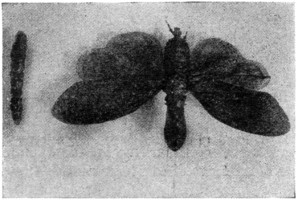
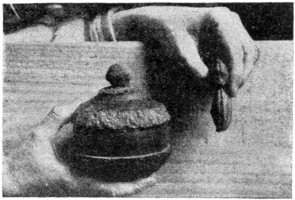
THE LANTERN FLY OF TROPICAL AMERICA LIGHT WITHOUT HEAT ONE OF THE FIRST BOXES, A RECEPTACLE FOR BRAZIL NUTS
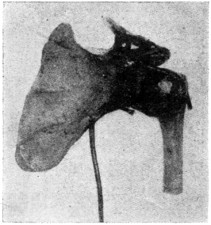
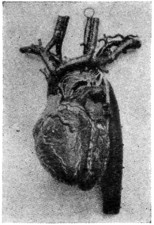
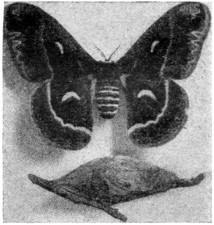
THE FIRST BALL-AND-SOCKET JOINT—A HUMAN SHOULDER THE FIRST PUMP—A HEART THE FIRST SPINNERS—A MOTH WHOSE CATERPILLAR SPINS THE COCOON
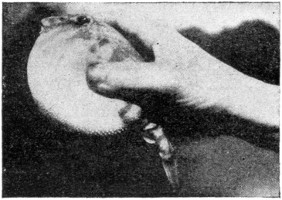
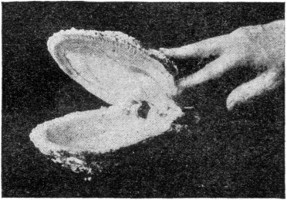
THE FIRST BALLOON—THE “SWELLFISH,” WHICH INFLATES ITSELF THE FIRST HINGE—THE THORNY OYSTER OF THE PACIFIC
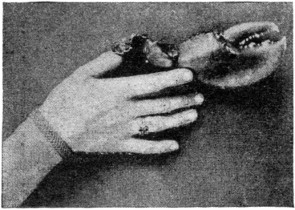
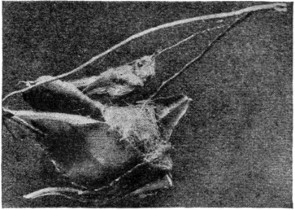
A LOBSTER’S CLAW—THE ORIGINAL OF A GAS FITTER’S PINCERS THE TAILOR BIRD, WHICH STITCHES THE LEAVES OF HER NEST TOGETHER
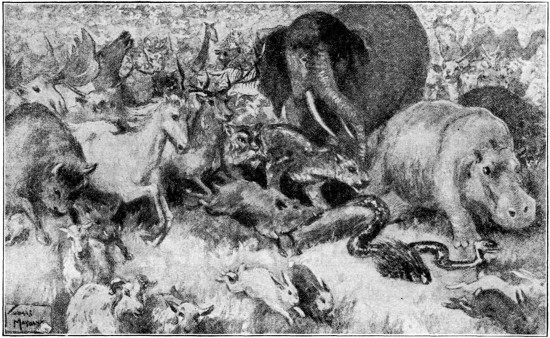
THE PANIC IN THE FOREST
A timid hare was resting one day in a grove of palm-trees, and a strange thought came into his head.
“What should I do if an earthquake occurred?”
At that moment a gust of wind shook the palm-trees, and some ripe fruit pattered down.
“An earthquake is beginning!” cried the timorous hare. And, starting up, he fled without daring to look behind him. A deer met him as he was racing along.
“What is the matter?” said the deer, catching up with him and running by his side.
“An earthquake is destroying the forest!” the hare gasped out.
The terrible news quickly spread among the hares, deer and rabbits, and they scampered away in wild terror. As they went on, they were joined by elks, buffaloes, elephants, tigers, and rhinoceroses.
“What is the matter?” said each animal in turn, as he joined the fugitives.
“An earthquake is destroying the forest!” they panted, rushing on, and never stopping to see if it were so. At last the line of frightened animals extended across the country for a full mile. All the smaller beasts standing in the path of the army of fugitives were unable to ask any question; they had to race ahead to avoid being trampled down. But as the maddened host was sweeping blindly down to the bank of a great river, which looked like being choked up with dead bodies, a lion came up, and stopped the frightened beasts with a terrible roar.
“What is the matter?” he said to the tigers.
“The buffaloes told us that an earthquake is coming,” said the tigers.
“Who saw it coming?” said the lion.
“We don’t know,” said the tigers. “The elephants know.”
“The rhinoceroses told us,” said the elephants.
“And we heard it from the buffaloes,” said the rhinoceroses, panting for breath.
The buffaloes heard it from the elks; the elks heard it from the deer; and at last it got down to the timid hare.
“Do you mean to tell me,” roared the lion, “that you have all been frightened to death by a timid little hare? Let us go to the grove of palm-trees, and witness this terrible earthquake.”
When they arrived there, the fruit was still pattering to the ground.
“Now, you see,” said the lion, “what comes of following the lead of the most timorous creature on earth. He has made you all more cowardly than he is himself. You ran away without even hearing the noise that frightened him. Henceforward avoid the gossip of the crowd, and trust to your own judgment.”
THE JOURNEY FROM THE CLOUDS TO THE SEA
When the little drop of rain fell, he didn’t know in the least what was going to happen. For a minute or two he felt quite frightened. Then he suddenly found himself rolling down a hill. He had just begun to think it great fun, when he noticed a lot of other drops beside him, all laughing together and all rolling down the hill.
One of them came close to him and touched him, and he found himself growing bigger. Then more and more came up, and presently he saw that he was quite a big fellow. He felt very proud of himself. “I’m getting bigger and bigger every minute,” he said.
Half-way down the hill he looked back, and saw himself stretched out like a line of silver, glittering and shining between the trees and stones and bushes.
“I’m a stream now,” he murmured proudly as he hurried over sand and gravel and clay, “and I’m getting bigger and bigger still.”
Suddenly he found himself falling over a big black rock. Down, down he fell, thirty feet or more. But he was so big and strong now that he didn’t care a bit.
At the bottom of the hill there were a great many rocks and stones right in front of him. “Get out of my way!” he roared. “I’m a river now! Get out of my way!” And he dashed and splashed and flew right over them.
A little farther on he came to a lovely meadow, with beautiful trees hanging down, and birds singing, and great sleepy red cattle standing knee-deep in the long, sweet grass, and the big blue sky shimmering overhead. It was so very, very pretty that he thought he would stay here a while. So he twisted and wound round and round, just to get another look at the trees, and to watch the birds flying from branch and bush.
He laughed merrily to a little boy who was standing on the bank with a fishing-rod in his hand, and hurried on again.
As he turned a corner quickly he saw a great blue plain stretching for miles and miles, with ships and boats and birds dotted here and there on its broad, heaving, shining surface.
“Hello! There is the sea at last!” he cried joyfully, and rushed forward eagerly to meet it. And as he joined the great ocean he shouted out as if he meant that all the world should hear, “Here I am; I’m a sea now!” (See full page illustration on page 68.)
THE SPIDER AND THE FLY
The spider was in a rare temper as she hurried back to the dark corner where she had her home.
“Upon my word,” she muttered, “it is too bad! This is the third time that wretched housemaid has swept my web away. The ignorant creature calls me an insect. I am not an insect. My body is in two parts instead of three; my head is part of my chest; and I have eight legs instead of six.”
The spider sat in her dark corner thinking very hard. Presently a buzzing sound caught her ears, which happened to be placed at the end of her feet. Her six pairs of eyes glistened with anger.
“There’s that old bluebottle again,” she murmured. “His noise makes my head ache. If I make haste and spin another web, perhaps I can catch him before the maid comes with her broom.”
Having made up her mind, the spider began. On the underpart of her body were four tiny tubes, each with about a thousand still tinier holes. From each tube came a thousand delicate threads made of a gummy fluid. The spider’s hind feet combed and twisted them into one fine thread.
The thread gradually increased in length until a draught caught it and carried it to the edge of the window-curtain, to which it clung.
Several other threads were then stretched from point to point.
“Now,” said the spider, “I can go on building my web.”
Line after line appeared as if by magic. The lines crossed and recrossed, and at every point where they touched a tiny drop of sticky fluid held them firmly together.
The spider viewed her work with satisfaction.
Lastly, she ran a more delicate thread round and round in spiral fashion. At the end of an hour the web was complete.
“Now I will test it,” said the spider; and she tried her work here and there, and found it quite good.
Only a short time passed before the big fly buzzed into the elastic strands. The more he struggled, the more he became entangled.
The spider was hungry and very impatient. She darted from her lair and seized the fly with her terrible claws.
At the end of the feelers were tubes from which she poured poison into the body of her prisoner, while with her fore feet she entangled still further the fly’s legs and wings.
In a few moments the bluebottle was quite still. Securely bound up in the sticky strands, bitten and poisoned, it was clear that he would never again buzz about in the sunshine. Then the spider enjoyed a better meal than she had had for a long time.
An hour later the housemaid came along, and, catching sight of the web, she flicked it with her duster.
“That miserable insect has been at its tricks again,” she said.
The spider was just settling down to a quiet nap after her hearty meal. She did not like being disturbed, but it did not matter so much now. She simply smiled to herself. (See articles on Spiders; Flies and Insects in general in Book of the Animal Kingdom.)
THE STORY OF PETER PAN
Every child in the world grows up to be a woman or a man. The only one who doesn’t grow up, and won’t, is Peter Pan. He always stays a little boy, which is very jolly indeed, and he’s friends with all little boys and girls,—as you’ll understand if you read.
The Darlings,—Wendy, John, and Michael,—lived with their father and mother. They were rather poor, but it didn’t matter, they were all so fond of each other. They’d a little maid called ’Liza, and, because they hadn’t the money for a proper nurse, they’d a dog instead, named Nana,—wasn’t it funny?
Peter Pan came every night; the window blew open wide, and in he hopped, without a sound, and hurried to Wendy’s side. And a curious little dancing light came in with Peter as well; this was a fairy lady, and her name was Tinker Bell. Peter was dressed in skeleton leaves; he had pipes on which he played—a delightful person. Wendy was not the least little bit afraid. He talked to her of the Never-Land, where she’d always wanted to go. And he said, “If I only teach you to fly, you can get there now, you know!” So John and Michael were taught to fly, and Wendy too, and they found it’s as easy, when you get used to it, as walking on the ground. And at last, when both their father and mother were out, one Friday night, the Darling children and Peter Pan and Tinker Bell took flight. Away in their little nightgowns they flew, as fast as they could go, till they came to the island, the Never-Land, where all the adventures grow.
Now in this island, I must tell you, were wonderful things to find: unknown birds, and curious beasts, and Redskins, fierce but kind. Fairies were there, and Mermaids, and Wolves,—some wild, some tame; and a Crocodile that had swallowed a clock, and ticked wherever it came. But—hush, let us whisper!—the “Jolly Roger,” a rascally pirate craft, with raking masts, and swelling sails, and guns both fore and aft, was anchored there, and the hideous crew were lying in wait, each man, and the captain, Hook, in particular, to kill little Peter Pan. Hook was not his real name; Peter, some while ago, in open fight, had cut off his hand, so now he’d a hook, you know. And as, with a stern and gloomy air, he paced, on his quarterdeck, he was thinking all the time, “I’d like to wring that Peter’s neck!” And the rest of the horrible band of Pirates were always prowling about, to see if they couldn’t capture Peter, and kill him, without a doubt. They crept along, singing “Yeo-ho-ho”—as stealthily as could be, they, and the bo’sum, who, indeed, was the best of them—one Smee. But the Redskins, with the tomahawks, were on the Pirates’ track, and followed them quite noiselessly,—not a single rustle or crack. For they thought the world of Peter Pan; in fact, they all were rather inclined to kneel at his little feet. And they called him “Great White Father.”
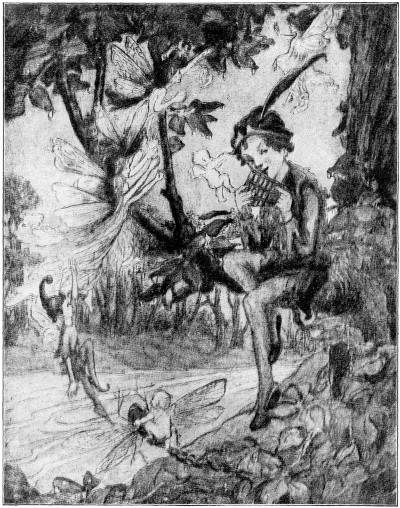
PETER PAN, WHO COULD NEVER GROW UP TO BE A MAN
Upon the island there were also some boys—well, counting rightly, there were six: Nibs, Tootles, Curly, and the Twins (no names), and Slightly. And Tootles, by a silly mistake, when he saw the Darlings near, hastily aimed his swiftest arrow, and drew his bow to his ear, and shot poor Wendy. Just at first she was thought to be dead, by her friends. But, finding she wasn’t, they built her a house, in the hope of making amends. They built it right, round her, with branches, leaves, and moss, and lovely make-believe roses clambering quite across. And when it was completed (and it looked remarkably fine), “Oh, Wendy, do be our mother!” they cried, and they hadn’t to ask her twice. “Come in at once, you naughty children!” Wendy delightedly cried; and they all squeezed in, except Peter Pan, who stayed upon guard outside.
There was also a beautiful house under-ground, where elegant mushrooms grew, and a Never-tree also (but every morning they sawed the trunk right through). You entered the house by hollow trees, going up and down quite fast, which was hard at first, but the children did it exceedingly well at last. And here, in the charming underground house, the eight boys slept alone in a great big bed,—for Wendy lived in that dear little house of her own. But every evening she told them stories, and when the stories were done, they’d have a dance in their night-clothes, and a pillow fight,—Oh, such fun! Peter Pan wasn’t always there, because, as you understand, he was busy strolling about the island, or watching with sword in hand. But in the day-time he would come, and take them, not very far, to the blue lagoon, where the weedy rocks and the hundreds of Mermaids are.
And here, one day, both Peter and Wendy received a bit of a shock; for Hook pursued them, and so they climbed on a rock—the Marooners’ Rock. Wendy fainted, and so did Peter. A Mermaid came to see whoever those two little dripping folks on the slippery rock could be. Then Peter perceived the tide was rising, and he tied up Wendy tight to the tail of a kite which was drifting near, and sent her away with the kite. And there he stayed on the rock alone, and he thought he’d be drowned each minute. But the Never-Bird, in her floating nest, came up, and Peter got in it, while the Never-Bird took to a Pirate’s hat, which was luckily close at hand. So Peter went gaily sailing off, and arrived quite safe at land.
Now every night the Redskins were camped above the underground house. And every night the Pirates were creeping, each as still as a mouse (with the terrible Crocodile after them, showing its crunching teeth), while Wendy was cheerfully telling tales to the children down beneath. But, oh dear me! there came a night when that treacherous pirate Hook contrived to surprise the Redskins, and the children; and he took the whole nine children prisoners, exceedingly sad to tell. The only ones who made their escape were Peter and Tinker Bell. And while the unhappy children were roughly carried on board, Peter was off to rescue them, with his trusty dagger and sword. And, just in the nick of time, he arrived. He armed the boys, and they slew, after a most tremendous fight, fifteen of the Pirate crew. And after a thrilling duel, which lasted a very short while, between Hook and Peter, the wicked Hook was thrown to the Crocodile.
So Peter took command of the ship, and they all sailed home, and then, how glad their father and mother were, to have them back again! They all were dressed in the Pirates’ clothes (cut short), and exceedingly grand; and oh, what tales they had to tell of the wonderful Never-Land! Peter, who didn’t like houses at all,—brick ones, and that sort of thing, returned to the Never-Land by himself. But he comes back every spring, and fetches Wendy to help him do spring-cleaning, and Wendy stops and tidies up the little house, which is now in the high tree-tops. As for the boys, they’ve all grown up, so the Pirates’ clothes won’t fit. And as for the great adventures they had, they’ve forgotten them every bit. Only Wendy and Peter Pan can still do just as they please. How happy they are, as they talk up there in the dear little house in the trees!
COUNTING AND NUMBERS
In numbers, as in other primary subjects, a child should be taught and permitted to do things himself. Rousseau said, “What the child does, it easily remembers”; and we shall soon find that time spent in this way is far from being wasted.
Children who have been taught numbers gradually, in this easy, interesting fashion, develop an astonishing aptitude for dealing with figures as they grow older.
Counting
Learning to count 1, 2, 3, 4, etc., parrotlike, does very little good. Rather let the child count objects and point out 5 marbles, 6 blocks, etc., in order that you may determine if he knows exactly what 5 or 6 of anything means.
Take a number of blocks or marbles and ask the child to take 3, 5, 7, or any number of them.
Hold up 3, 5, or 6 of them and ask him to tell how many you have. When you are told the number you have, write the figure which tells the number on paper, or the blackboard. Have the child copy the figure, making a large character.
Then reverse the work by writing a figure on paper and asking the child to take the number of blocks the writing asks for.
Spend a few minutes every day in asking him to show you 2 pins, 3 houses, 5 stripes, etc.
Teach the child to count 50 as soon as he has started in his number work at school and later on to 100. Objects should be counted at first and then counters substituted, such as pennies, marbles, blocks, beads, etc.
Recognition of Numbers.—The purpose of counting objects is to give the children a clear idea of number. They should be able to recognize 2, 3, 4 and 5, i.e., be able to tell four objects when they see four, without counting them, also 3, 5, etc. Stories and games with objects should be repeated again and again, until the children can do this easily.
Analysis of Numbers.—When the numbers can be recognized without difficulty, the children should be encouraged to analyze them, i.e., tell what they are made up of, but objects should be put in front of the class to represent the numbers until they can do this readily.
Suppose the number five to be the lesson, each child would take five shells out of its box, and lay them on the desk, thus:— or or etc. The child should always be able to describe what it has done: thus, the first child would say—four shells and one shell are five; the second, three shells and two shells are five, and so on.


Higher Numbers.—The analysis of six, seven, eight and nine may be taught in the same way, each number being taken separately and thoroughly mastered, before proceeding to the next. The children should learn all the different combinations of numbers that make six—three and three, five and one, four and two, three twos, etc.—but always with the objects, and when they have seen the number analyzed by the Teacher, they should do it for themselves with shells, bricks or other objects.
Number Ten.—This is the most important number of all, and it should be thoroughly well taught. The Teacher should show on the table the different analyses that can be made of ten, and the children should lay these with shells or other objects again and again. It is necessary to learn these perfectly, for however well any or all of the numbers may be learned, they are comparatively useless without ten.
Figures.—When the figures are introduced they should invariably be shown with the concrete numbers which each figure represents. They say, “Here are four balls” “I will show you a figure that means those four balls, 4, and I will put the four balls beside it, thus:”—4 .

Number on Paper or Slates.—If the children have learned how to use a pencil, they may transfer the number-pictures made with shells to their slates, using dots for “shells,” thus:—.

Then another “picture” may be made with the shells and this be copied on the paper at some distance from the other. Then another is made and copied, and so on until the child sees on his paper all the combinations of numbers that go to make six. He should be able to read them all out, and because a child remembers what he has done himself, it will be found that numbers taught in this way are seldom forgotten.

As the children become more proficient, the two signs + and = may be taught, + means and, = means are. Then they may put on their slates + = and use these signs in the analysis of other numbers.


Money Taught as Numbers
When the children know numbers up to ten, they might play little “shopping” games with coins. Show them actual coins in teaching money. Lessons on money should be given frequently after the first year of school life.
Begin by teaching the value of the cent and the nickel, then the dime, then the quarter, then the half-dollar, and then the dollar.
Make little problems involving change. Develop the ability to make change rapidly. The child may have some money of his own and he should be taught the comparative values of the coins.
Simple Table of Money
10 cents make 1 dime.
2 five-cent pieces make 1 dime.
100 cents make 1 dollar.
A quarter of a dollar = 25 cents.
A half-dollar = 50 cents.
$ means dollars and c means cents.
A 5-cent piece is called a nickel, because it is made of nickel.
A cent piece is made of copper.
The other coins named are made of silver.
(See United States Money for more advanced instruction.)
COMBINATIONS OF NUMBERS
We now come to the method of teaching the combinations in Addition and Subtraction.
We can count books, tables, and houses and say that we have counted so many things but we do not add books, tables, and houses. We add books and books, tables and tables, houses and houses.
We count by ones. When we add three beads and two beads we are counting by ones, for it means that we are adding three ones of beads and two ones of beads, making five beads in all.
From 1 to 9 we use only one figure to tell how many we mean. When we wish to say in writing that we have ten of anything we write a 0 after the 1 and have 10, ten.
1. Add 1 to every number up to 10; later to 20.
2. Subtract 1 from every number up to 10; later to 20.
3. Add:
+2 +3 +4 +5 +6 +7 +8 +9 +10 +2 +3 +4 +5 +6 +7 +8 +9 +10
Here the addends are equal and easily added. The figures should be placed as above and not 2 + 2, 3 + 3, etc., because the vertical form is the natural one which the child will use all through life. It does not look so formal and represents better what he really does with the objects.
4. Add:
+1 +2 +3 +4 +5 +6 +7 +8 +19 +2 +3 +4 +5 +6 +7 +8 +9 +10
Here one addend exceeds the other by 1.
5. Subtract:
-2 -3 -4 -5 -6 -7 -8 -9 -10 -1 -2 -3 -4 -5 -6 -7 -8 1-9
Here the minuend is one greater in each case.
6. Teach the parts of 10.
+5 +2 +3 +4 +9 +5 +8 +7 +6 +1
7. In adding 9 to numbers have the child think of 9 as 10,
thus 9+6 = 10+5 and 9+8 = 10+7
8. Teach the corresponding subtractions.
9. Add 8 to each number up to 10.
10. Teach the corresponding subtractions.
11. Add 7, 6, and 5 to each number up to 10.
12. Teach the corresponding subtractions.
13. Review and give combinations not taught above.
Objects should be grouped by tens and units, in showing numbers above ten. Ten should be the basis of all our reckoning, and if the children know ten, and the numbers which precede it, they can soon be taught the rest. Little children should not have “sums” given them to do on their slates, for “sums” are made up of abstract figures, and children of tender years cannot grasp the abstract.
Number to One Hundred.—When the children are conversant with numbers up to ten, it is very easy to teach them one hundred.
PRIMARY IDEAS OF DIVISION
In teaching the two ideas of division—division by measurement (division proper) and the fractional idea of division (partition)—proceed very slowly and see that each step is thoroughly understood.
The following suggestions may be useful:—
Division by Measurement
Use blocks or any other counters in illustrating the process.
Example:
4 12
The teacher should ask the child, “How would you count this story?”
Facts Given by Child
12 = whole number of blocks.
4 = number in each part.
We want to know the number of parts.
We place the blocks so, 4 in each part:—

There are 3 parts.
Division by Partition
Make use of blocks or substitutes to show the process here.
Example: 1⁄4 of 12 = 3.
The teacher should ask the child, “How would you count this story?”
Facts Given by Child
12 = whole number of blocks.
4 = number of parts.
We want to know the number in each part.
We place the blocks so, as we know there are 4 parts:—

We have put one in each part.
Now we will put one in each part until the 12 blocks are gone:—

There are 3 in each part.
NUMBERS IN MULTIPLICATION
Example:
3 × 4 = —
Facts Given by Child
3 × 4 means 3 4’s.
I count my blocks by fours—I take 1 four, another, another.
I find that 3 4’s are 12.
3 × 4 = 12.
To the Teacher:
Now the child is ready to give a number story about 3 × 4.
PRIMARY MEASURES FOR CHILDREN
The child has been taught to count. Now while he is telling you how many objects he is dealing with, teach him to tell how much he is dealing with.
In other words, have the child measure and compare as well as count.
Ideas of larger and smaller, longer and shorter, and the like, should be made important. The need at the outset, is to learn, in a simple way, the basis of all arithmetic—the comparison of quantity,—in as many of its forms as possible.
Measures of Length
Teach the child to estimate distances and then to verify every estimate by actual measurement.
Teach half inches as well as inches.
Long measure is used to measure length.
12 inches make 1 foot.
3 feet make 1 yard.
in. means inch or inches.
ft. means foot or feet.
For the Child to Do:
1. Cut a strip of paper 12 inches long and 1 inch wide.
2. Mark the inches on it.
3. How many inches long is it?
4. What do you call a measure 12 inches long?
5. Draw a line 2 inches long, as near as you can, without using a ruler.
6. Measure it with a ruler. Did you guess nearly right? Try again.
7. Measure this page. How long is it? How wide?
8. Draw a line on the ground 1 yard long.
9. 1⁄2 of a foot is how many inches?
10. 1 yard is how many inches? What is measured by the yard?
11. Ask your mother how many yards of cloth she needs for a dress.
12. What is measured by the foot?
13. How tall are you?
TELLING THE TIME
First—Teach him to tell the hour hand from the minute hand.
Next—Teach him when he first looks at the dial, to find the hour hand and then notice which Roman Numeral it is nearest. This will tell about what time it is.
Then—Find the minute hand. The minute hand will tell exactly what time it is.
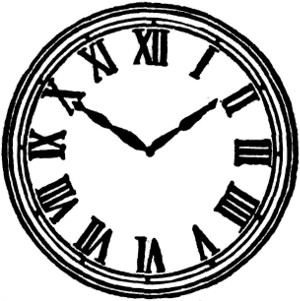
To Illustrate: Take this clock. The hour hand is near the Roman Numeral II., which stands for 2. Tell the child it is somewhere near two o’clock.
The minute hand will tell how near.
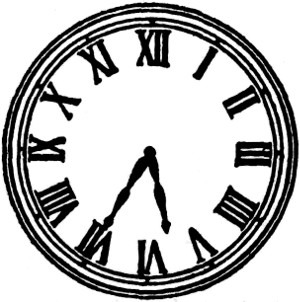
What time is it?
It must always point to the XII. before it is exactly the hour. If it is one numeral away from the XII., toward the left, it is 5 minutes of two. If it is two numerals away to the left it is 10 minutes of two, etc. If it is one numeral away to the right, it is 5 minutes after two, etc. Proceed in this way and keep at it.
The Day
A new day begins at midnight and lasts until the next midnight.
Midnight is the middle of the night; that is, 12 o’clock at night.
Noon is the middle of the day, that is, 12 o’clock in day time.
One hour after noon is 1 o’clock, 2 hours after is 2 o’clock, etc.
If a person says he was at a certain place at 2 o’clock, he must say forenoon or afternoon, so we will know which half of the day he means. If it was 2 o’clock in the morning he would write 2 A.M., and if 2 o’clock in the afternoon, 2 P.M.
Things for the Child to Do:
1. Name the days of the week and the months of the year.
2. What day of the week does Christmas fall on this year?
3. Is 22 days longer than 3 weeks?
4. Is 5 weeks longer than a month? How much?
5. How many days in 3 weeks?
6. On what day of the week will your next birthday be, etc.
Remember:
The days of the week in their order.
The months of the year in their order.
Procure a calendar for the child to own.
A good way to make him familiar with the use of the days of the week and month, as found on a calendar, is to ask him to look up and tell on what day of the week the next Fourth of July will fall; Christmas; New Year; his birthday.
Have him distinguish between the day of the week and the day of the month.
7 days make 1 week. 30 days make 1 month.
Days of the Week
Sunday
Monday
Tuesday
Wednesday
Thursday
Friday
Saturday
Months of the Year
January
February
March
April
May
June
July
August
September
October
November
December
THE CALENDAR
1903 July 1903
Sun. Mon. Tues. Wed. Thur. Fri. Sat.
First Quar. 1st 30th Full Moon 9th Last Quar. 17th 1 2 3 4
5 6 7 8 9 10 11
12 13 14 15 16 17 18
19 20 21 22 23 24 25
26 27 28 29 30 31 New Moon 23d
FORM AND COLOR
In many schools a lesson is given on Form and Color at least once a week. The different forms should be kept in a box, in which there should be also squares of cardboard, showing the various colors. This apparatus should, however, be amply extended. Pieces of silk or colored paper should be kept in another box, and colored wools wound on pieces of cardboard show the colors nicely.
The Object of the Lesson.—The object of the lesson is not simply to teach the shape or color of one particular piece of wood, or cardboard, but to enable the child to distinguish the same shape or color whenever it sees an example of it. Thus the child is helped to observe and compare, and its interest in life is strengthened as it learns with joy to find out things for itself.
FORM
The Circle, or round, is the first form to be taught, and it should be illustrated by numerous examples, such as a plate, a round cake, coins, etc.; all these things should be shown to the children.
Then the circle may be compared with the ball, and the children are asked: “What things are round like the ball?” “Orange, apple, etc.” “And what things are round like a circle?” “A penny, a shilling, etc.” “What has the circle that the ball has not?” “The circle has two flat faces, and the ball has only one round face.”
The Square is somewhat familiar to the child, who has noticed the shape of his books, and the table. It has four sides all the same length; this fact may be taught thus:
Take a long stick or ruler. Teacher says: “I will measure the sides of the square. Johnnie shall hold it for me” (measure the top edge, and cut off a piece of stick just the length). Show it to the children, and say: “This stick is just as long as the top edge of the square. I will give it to Mary to hold. Now we will measure the bottom edge” (again cut the length). “This is the length of it” (holding up the stick).
The right and left sides are measured in the same way, and the child now holds four sticks. Let the children count how many sticks there are, and notice also that all four measure exactly the same, and then they will see that the square has four sides all the same length. Then ask for objects of this shape.
The Oblong is measured in the same way as the square, and the sticks are cut the lengths of its sides. The children then see that the sticks cut to represent the sides of the oblong are not all of the same length, but that two are short, and two longer, so the oblong must have two long sides and two short sides. Let a child point to the two long sides, and another to the short ones.
Then the children are asked to name all the things they can see that are oblong in shape, such as the table, door, window. They may also name objects at home—dresser, piano, bed, and many other things.
The Oval is frequently taught after the circle, but as the difference between square and oblong is more marked than the difference between circle and oval, the former comparison if taken first may help the child to understand the latter.
Take a square and draw a circle on it, then take the oblong and draw an oval shape upon it. Ask the children, “How is this shape different from the round shape on the square?” “It is longer.” “Why?” “Because the oblong is longer.”
Now show the oval with the round or circle. “How is the oval different from the round?” “It is longer.” “What things do you know that are shaped like the oval?” “An egg, a basket, a bathtub, a dish, etc.”
The Sphere, Cylinder, Cube, Cone and Pyramid are solid figures. The cylinder can be explained from the sphere, the cone from the cylinder and the pyramid from the cube.
The pyramid points upward, so, But it is square and flat below: The cone is pointed, too, and round; A sugar loaf like it is found.
The children soon learn the difference between the Cone and Pyramid, and if they are allowed to make all these solid figures in clay they will remember them more easily.
1. The oval shape is like an egg, The circle’s round as all can tell, The sphere is round, just like a ball, The cylinder you know quite well; 2. We roll it gently on the ground, For it is very smooth and round; It has two faces flat, you see, And stands, as well as rolls for me. 3. The cube has six square faces, flat, And corners eight, just think of that! And edges twelve, three fours you know, Which round the faces always go.
The Pentagon, Hexagon, Octagon and other similar forms should be learned by drawing them on checkered slates or paper. These figures introduce the obtuse angle, and before the children learn the shapes, they should understand clearly the difference between the right, acute, and obtuse angles. The hexagon and octagon can be combined so as to make pretty designs which may be used for perforating and embroidery.
The “Forms” may be further impressed on the mind of the child by means of a Story; see the one given after “Color,” at end of this chapter.
COLOR
Color should be taught if possible from objects and pictures. The six colors can be illustrated by fruits, as an orange, a rosy apple, a purple plum, a red cherry. The children’s dresses, their eyes and hair, can all be brought into a lesson on color. In spring and summer flowers make charming illustrations, e.g., different colors seen in roses, and the autumn-tinted leaves can be used likewise.
Then there are colors in pictures, trees, besides colored wools, beads, tablets, etc.
Ask for flowers and fruits of certain colors, e.g., what flower is yellow? What fruit is red?, etc. Also colors of birds and animals, and let the children say what colors look nice together. In summer this may be shown by arranging a number of flowers in a bouquet.
In the flowers themselves colors always harmonize, e.g., forget-me-not is blue, and has a yellow center, because blue and yellow look pretty together.
Spring flowers are mostly yellow, and have pale green leaves, for green and yellow look pretty together.
The red poppy and blue cornflower look pretty among the yellow corn, and there are yellow flowers among the corn also.
Harmony of color may be further illustrated by the dressing of a doll, or a story of a little girl who was taken to the shop by her mamma. The little girl was to have a new dress, cloak, and hood; what colors would her mamma choose?
Secondary Colors.—Teach that red, blue and yellow are the first or primary colors, from which other colors may be made. A child’s box of paints and six small tumblers are required for the following illustration.
Pour a little water into each tumbler, and mix a little red paint in one, a little blue in the next, and a little yellow in the third. These are the primary colors.
Let us see what can be made by mixing two of them together. Take an empty tumbler. Pour in a little blue water and a little yellow. Mix together and the children will see that green is produced. Now take another tumbler and mix blue and red in it; this makes purple.
In another tumbler show that red and yellow make orange. “What beautiful thing have you seen in the sky showing all these colors?” “A Rainbow.”
This is a most interesting lesson, and if the tumblers, etc., are not obtainable, the same experiment may be shown on a piece of white cardboard. Paint the colors in stripes on the cardboard, first the three primary, which should be allowed to stand; then the secondary are produced by rubbing one color over another, e.g., paint over the red with blue, and purple is produced. Over the blue stripe paint a little yellow, and we have green. Over the yellow stripe paint red, and orange is seen.
The primary colors are Red, Yellow, Blue, The Red and Blue mixed will show Purple to you; Mix Yellow and Blue if you wish to make Green, Mix Yellow and Red, then bright Orange is seen.
Color Story
After the forms and colors have been learned, they may be woven into an interesting story, thus:
“A man had a large piece of land to make into a garden; he gave a piece to each of his children, and said they might make small beds of any shape that they liked.
“So Johnnie made a round bed” (draw shape on board, and let children copy on slate), “and Willie had a square bed; Mary said her bed should be oblong, and Nellie made hers oval” (draw each on board, and let the children copy). “Then Gerty wanted hers to be the shape of a semicircle, and Harry said his should be very pretty, for he would make it crescent shape, like the moon.”
When the blackboard is full of shapes the teacher might say: “Now you would like to know what these children had growing in their beds. Johnnie had a pink rose-bush in the middle of his bed.
“Willie sowed red Poppy seeds in rows in his square bed, and Mary had a yellow Iris in the center of hers, with blue Forget-me-nots all round. You remember that blue and yellow look pretty together.”
Whenever possible, pin the flower named on the shape representing the flower bed.
The story should be continued until all the “beds” have flowers in them. The children may be allowed to suggest names of flowers and should be encouraged to choose colors that will harmonize.
STORIES
Stories are the “spice” of childhood. The eager delight with which children beg for a story, and listen while it is told, is in itself a plea for stories, and the routine of lessons should be broken up by setting apart five or ten minutes between them for this pleasant exercise.
Use of Stories.—In the first place, story-telling may be made the means of helping the children to acquire familiarity with good English. We all know how limited is the child’s vocabulary, and how difficult it is for a child to express his thoughts. Sometimes when a fact is perfectly well known, the language is wanting in which he can express it.
Second, the child’s sympathy may be cultivated and developed by means of stories. He becomes intensely interested in the subject of the story, and for the time being almost lives the incident over again in his own little life.
A very little child was one day listening to a story about “A lazy boy who missed a school picnic because he was so slow in getting ready. The school children were all on board the steamer, the bell rang, the moorings were loosed, and away went the boat just as the late little boy came running down to the pier.”
The little listener followed the story intently up to this point, and then burst out, “Oh! Auntie, couldn’t they get a little row-boat and take him out to the steamer? I don’t like him to be left behind.”
Stories, then, enlist the sympathy of the child.
Third.—Story-telling strengthens the child’s power of imagination. But, be careful to develop the imagination in a right direction, and not to feed it with anything coarse or cruel.
Fourth.—The stories offer opportunity for inculcating moral truths and sometimes it is possible to teach by stories truths that would be difficult to teach in any other way.
Kinds of Stories.—(a) Stories of Real Life—of events which have actually happened, or would be likely to happen. It is in this kind of story that moral truths can be illustrated most frequently.
(b) Fairy Tales.—Some people object to fairy tales, but innocent fairy tales feed the imagination, and often point a moral. Stories of horror and cruelty should never be recounted. Children soon learn to take delight in this class of story, and as a consequence, their moral tone deteriorates. Such stories as “Bluebeard” have this effect, but “Cinderella,” “Sleeping Beauty,” and many others, show that right is victorious in the end, and cannot have any bad effect on the children.
(c) Stories of Nature.—Flowers, rocks, trees, and other objects in nature may be made the subject of pleasant stories, interesting as a fairy tale, and many important truths may be taught in this way. A story of the kind is given as an example.
(d) Stories for Very Little Ones.—These should be exceedingly simple. A dog, a kitten, a bird, anything that comes into the life of a little child, he is delighted to hear about. Many such stories are given in the chapters on Numbers and Reading, and others will suggest themselves to the teacher. They should all be told in baby language, i.e., in language that the child can comprehend. Pictures often suggest a story, which is all the more interesting for being thus illustrated.
The children should sometimes be encouraged to tell what they can remember of the story. In this way they learn to express themselves.
The Story-Teller. (a) We have said before that the language should be simple and easy to understand.
(b) The voice should be modulated, and the story-telling is much more effective when gesticulations are used. The flying of birds, the rustling of leaves, etc., should be accompanied by hand movements on the part of the Teacher.
(c) The story-teller should be in sympathy with the subject of the story, and also with the listeners, otherwise the interest will be lost.
(d) Just as pictures add interest to a story, so do illustrations on the blackboard and these should be frequently given. Sometimes the children may be allowed to draw for themselves objects which have been mentioned in the story.
The After-Effect of Stories.—It is well to remember that the child’s taste for reading is largely influenced by the class of stories told to him in early life, and in these days of plentiful, cheap literature, how important it is that the youthful mind should be trained to appreciate that which is good.
If a child has learned to gloat over horrible stories, he will gratify this morbid taste by reading ghastly tales as he grows older, and if, on the other hand, he has learned to love stories that are simple and pure, he will choose reading that is good and elevating.