BOOK OF RACES AND PEOPLES (continued 2)
Reading edition
One of the principal figures is the rabbit—the “brer rabbit” of the “Uncle Remus” tales. He figures conspicuously not only in the southern United States, but in the West Indies and on the Amazons, and in the folklore of the Venezuelan negroes.
Along with story-telling, singing and music are favorite diversions of the colored population. This tendency is a direct inheritance from their African ancestry, as throughout that continent the natives are passionately fond of these diversions. In Central America the negroes still employ the marimba, a native African instrument with wooden keys placed over jars or gourds, the keys being struck with a stick. In the United States the violin, the fife, and the guitar are used, but the favorite is the banjo, an instrument of African derivation, modified from the guitars with grass strings still in use on the Guinea coast. With these simple means they produce music of pleasant though not artistic character. In individual instances (as Blind Tom, born in Georgia in 1849) members of the race have attained remarkable skill on the piano and organ, rendering the most difficult compositions with spirit. No negro composer, however, has attained wide celebrity. Their songs are numerous, many of them of a religious character, others turning on the incidents of daily life. They are generally defective in prosody and without merit, being often little more than words strung together to carry an air.
Persians (per´shanz).—The natives or inhabitants of ancient or of modern Persia. The Persian race or people is quite different from the Persian nationality. The latter includes several very different peoples, as will presently be seen. Linguistically the Persian is the chief race of Persia speaking an Iranic language, that is, one of the Aryan tongues most nearly related to the Hindi. Physically, the race is of mixed Caucasian stock. It is almost entirely composed of Tajiks. The small section known as “Parsis” or, incorrectly, “Fire worshipers,” have for the most part emigrated to India. The Armenians are so closely related to the Persians as to be put with them by some into the Iranic branch. The Kurds, the Beluchis, and the Afghans also belong to the latter.
Of the 9,500,000 estimated population of Persia about two-thirds are true Persian or “Tajik.” The other third is also Caucasian for the most part, including Kurds (400,000), Armenians (150,000), and other Iranians (820,000), and the non-Aryan Arabs (350,000). There are 550,000 Turks and 300,000 Mongols in the Empire. The only Christians are the Armenians and a small group of 25,000 “Chaldeans,” “Assyrians,” or “Nestorians,” really eastern Syrians, about Lake Urmia, on the northwestern border.
In intellect, if not in civilization the Persian is perhaps more nearly a European than is the pure Turk. He is more alert and accessible to innovation. Yet he is rather brilliant and poetical than solid in temperament. Like the Hindu he is more eager to secure the semblance than the substance of modern civilization.
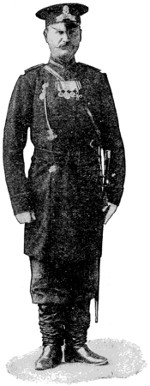
MODERN RUSSIAN POLICE OFFICER
Slavs (slȧvz).—Peoples widely spread in eastern, southeastern, and central Europe. The Russian and Polish are its leading tongues. The Slavs are divided into two sections—the southeastern and the western. The former section comprises the Russians, Bulgarians, Serbo-Croatians, and Slovenes; the latter, the Poles, Bohemians, Moravians, Slovaks, Wends, etc.
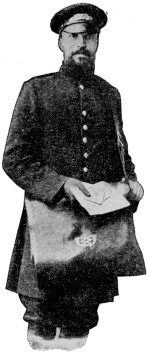
RUSSIAN POSTMAN
Physically, and perhaps temperamentally, the Slavs approach the Asiatic, or particularly the Tartar, more closely than do the peoples of western Europe. In language they are as truly Aryan as ourselves. Of course, languages do not fuse by interbreeding; physical races do. There is some truth in the old saying, “Scratch a Russian and you find a Tartar,” especially if he come from southern Russia, where once lived the Mongol conquerors of the Russians.
Yet the common conception of the Slav as dreamy and impractical does not seem to fit with the greatness of the new nation which impresses the imagination of the beholder more than any other in Europe. The fact is that we do not know the Slav. Unfortunately the unlikeness of the language to those of western Europe, perhaps even the unfamiliarity of the alphabet used, has delayed the study of what must soon be regarded as one of the great languages and literatures of civilization. Its spread, like that of the Russian Empire, has been more rapid than that of any other in the present century.
If the Slav be still backward in western ideas, appliances, and form of government, it is nevertheless conceivable that the time is not far distant when he will stand in the lead. The race is still young. Its history is shorter than that of any other important people of Europe.
Turning to the physical characteristics of the Slavs, it is found that there is not, properly speaking, a Slavic race. Deniker says that no fewer than five European races are represented among the Slavs, besides Turkic and Ugric or Mongolian elements. These are the fair, but broad-headed and short races, in Poland and White Russia especially; the dark, very broad-headed, and short peoples among the Little Russians of the south, the Slovaks, and some Great Russians; and the taller, but still dark and broad-headed races among the southwestern Slavs or Serbo-Croatians and some Czechs and Ruthenians. In the northwest the Russians have been modified by the blond or Teutonized Finns, in the northeast by the dark Finns, and in the southeast by the Tartars; but all such alike are broad-headed Mongolians in origin. With the exception of these Asiatic remnants and the related Magyars and Turks, and the Greeks, all of Europe east of Germany is filled with Slavs. They occupy more than one-half of the continent of Europe, and their presence has been a fertile source of political and governmental dissensions for many centuries, particularly in the Balkan countries. Indeed the scourge of war which has been ravaging all Europe, since 1914, is traceable in no small degree to this admixture of racial elements.
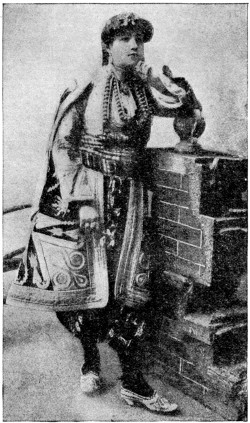
Servian Slav woman showing the native costume worn by the Servian women on feast days.
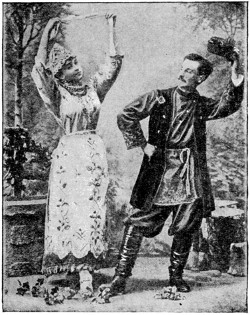
Russian Slavs, in native costumes, from a southern province on the Black Sea.
Teutonic.—This great branch of the Aryan family of languages and “races,” includes all those of northwestern Europe excepting the Celtic. The Teutonic was the second Aryan swarm in Western Europe, that which came after the Celts, and is the one with whose history we are more concerned than with that of any other; for it is the branch of the Aryan family to which we ourselves belong. The Teutons were the forefathers of the Germans and the English, and of the Danes, Swedes, and Norwegians in Northern Europe. They do not appear in history till a much later time than the Celts, and then we find them lying immediately to the east of the Celts, chiefly in the land which is now called Germany. From this they spread themselves into many of the countries of Europe; but in most cases they were absorbed into the earlier inhabitants, and learned, like them, to speak the language of the Romans. The chief parts of Europe where Teutonic languages are now spoken are Germany, England and Scandinavia.
In Scandinavia we cannot doubt that the present Teutonic inhabitants were the first Aryan settlers; for they found a Mongolian people there, some of whom still remain, by the name of Lapps and Finns, in the extreme north of Sweden and Norway and on the eastern coast of the Baltic. But in most places the Teutons, as the second wave, came into land where other Aryan settlers had been before them. Sometimes they may have simply come in the wake of the Celts as they were pressing westward; but, sometimes they found the Celts in the land and drove them out, as was specially the case in Britain. Of the first coming of the Teutons into Europe we can say nothing from written history, any more than of the first coming of the Celts.
The Teutonic stock of nations, as they exist at the present day, is divided into two principal branches: (1) The Scandinavian, embracing Danes, Swedes, Norwegians, Icelanders; and (2) the Germanic, which includes, besides the German-speaking inhabitants of Germany proper and Switzerland, also the population of the Netherlands (the Dutch), the Flemings of Belgium, and the descendants of the Angles, Saxons and Jutes in Great Britain, together with their offspring in North America, Australia, and other British colonies—the English-speaking peoples of the world. It is necessary in this case, as in all similar cases, to guard against making language the sole test of race. In many parts of Germany, where German now prevails, Slavic dialects were spoken down to recent times, and in some places are not yet quite extinct. And in Great Britain it is unreasonable to suppose that the Anglo-Saxon invaders exterminated the native Celtic population, or even drove more than a tithe of them into Wales and the Highlands.
THE TEUTONIC RACIAL GROUP
LOW GERMAN. - NORSE. - W. Branch. - Old Norwegian. - Icelandic.
W. Dalecarlian.
Jämetlandish.
Faroic.
E. Branch. - Danish. - Bornholm.
Normanno-Jutish.
Dano-Jutish.
Swedish. - E. Dalecarlian.
Gothic.
Scanian.
NIEDER-DEUTSCH. - Frisic. - W. Fr. Groningen.
E. Fr. Saterland.
N. Fr. Helgoland, Sylt, etc.
Continental Saxon. - Old Saxon of the “Heliand.”
Westphalian.
Hanoverian.
Brunswick.
Pomeranian, etc.
Anglo-Saxon (English). - Anglisc (Northern). - Northumbrian.
Lowland Scotch.
Shetland, etc.
Midland. - Lincoln.
Yorkshire.
Derby, etc.
Saxon (Southern). - Cornish.
Somerset.
Dorset.
Kent, etc.
HIGH GERMAN. - MITTEL-DEUTSCH. - Salic Frankish (extinct).
Riparian Frankish. - Rhenish.
E. Frankish.
Hessian.
Thuringian. - Upper Saxon.
Erzgebirge.
Transylvanian.
Meissen.
OBER-DEUTSCH. - Burgundian. Swiss. - Bernese.
Hazli.
Appenzell.
Alemanno-Suabian. - Neuhochdeutsch (literary standard).
Alsatian.
Wurtemberg.
Baden.
Bavarian. - Tyrolese. - Styrian.
Austrian. Carinthian.
Zips, etc.
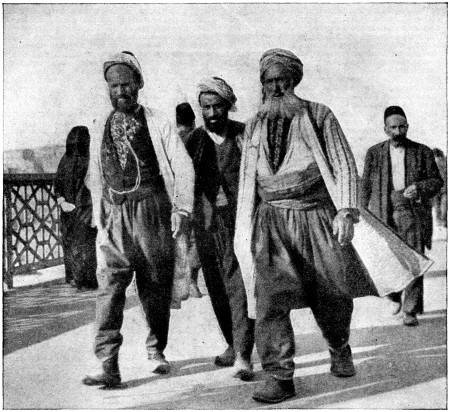
GROUP OF OLD SCHOOL TURKISH GENTLEMEN OF CONSTANTINOPLE
The modern Turk is very far from being of purely Mongolian stock. In truth the mixed blood of practically all the peoples of southeastern Europe and western Asia courses in his veins.
Turks (tèrks) or Ottomans, the race now dominant in Turkey, lived originally in central Asia. They belong to the Sibiric or Tartar division of the Mongolian race, and reached Europe, probably in straggling bands, before the Christian Era (See Mongolian). To the same race division belong the European Finns, Lapps, Hungarians, Bulgarians, and Basques. Physically and in culture the Turks have become Europeanized, though to a less degree than the related Finns and Magyars. Instead of becoming blond, as the Finns, they have approached the brunette type of southern Europe, probably in part through their frequent intermarriages with the Circassian and other Mohammedan peoples of the Caucasus. In fact, today they are not so much Turkish by blood as Arabian, Circassian, Persian, Armenian, Greek, and Slavic. They prefer to be considered as Arabo-Persian in culture rather than as Turkish. In religion they are almost universally Mohammedan.
The Turks are in the minority in their own country, especially in the European part of Turkey, where the Turks, Greeks, Albanians, and “Slavs” (Bulgarians and Servians) are to be found in nearly equal parts. The first three named have been estimated to constitute seventy per cent of the population. No census of Turkey has ever been taken. The following estimates are compiled from various sources. The entire Ottoman Empire, excluding states practically independent, has a population of about 24,000,000. Of these 10,000,000 are Turks. In European Turkey, 1,500,000 out of a population of 6,000,000 are Turks. Here they are without doubt decreasing in numbers. In Macedonia the Turks number about 500,000 out of a population of 2,200,000. Of the latter number, however, only about 1,300,000 are Christians. In the capital itself, Constantinople, the Turks constitute only about one-half of the population of 1,200,000. In Turkey in Asia, on the other hand, the Turkish race is in the majority. The Mohammedans number perhaps 10,000,000 in a total population of 13,000,000 in Asiatic Turkey and Armenia. There are about 500,000 Turks in Bulgaria out of a total population of 4,000,000. The Mohammedan population of Bosnia and Herzegovina—550,000 out of a total of 1,600,000—is mainly Slavic rather than Turkish.
COMPARATIVE CLASSIFICATION OF RACES AND PEOPLES
Showing also the latest estimated population of the various subdivisions throughout the world, together with a view of the numerous races entering into the population of the United States.
Race Stock Group Peoples and Tribes Estimated Total Population Races Represented in the United States
Caucasian Race (White) - Hamitic - Egyptians - Copts 800,000 - 500
Fellaheen 5,000,000 ( )
Lybians - Berbers (modern) 7,500,000 ...
Etruscans
Assyrians (early)
Hittites
East Africans Somalis 1,000,000 ...
Semitic - Arabians - Arabs - 5,000,000 500
Bedouins
Abyssinians Ethiopians 9,000,000 ...
Chaldean - Assyrians (later)
Babylonians
Hebrews 11,000,000 2,050,000
Arameans (Syrians) 2,000,000 50,000
Samaritans
Aryan - Iranic, or Persic - Hindus 225,000,000 10,000
Medes
Persians 6,500,000 300
Gypsies 800,000 4,000
Armenic Armenians 4,000,000 30,000
Celtic - Britons - Celtic population of Europe, 3,200,000; of the world, 9,200,000 Scotch: 660,000 Irish: 4,600,000 Welsh: 250,000
Scotch (part)
Irish (part)
Welsh
Gauls
Picts
Italic - Latins (Romans)
Italians (part) 38,000,000 2,100,000
Roumanians 10,000,000 90,000
Spanish 50,000,000 1,375,000
Portuguese 5,000,000 115,000
French 45,000,000 300,000
Hellenic Greeks 6,000,000 110,000
Illyric Albanian 1,500,000 3,000
Teutonic - Scandinavian 13,000,000 ...
Danish 2,800,000 450,000
Norwegian 3,000,000 1,010,000
Swedish 5,500,000 1,450,000
German 85,000,000 8,300,000
Dutch 6,300,000 300,000
English (part) 126,000,000 2,250,000
Flemish 4,000,000 100,000
Swiss (part) 2,300,000 300,000
Austrians (part) 10,000,000 2,000,000
Lettic Lithuanians 4,000,000 225,000
Slavonic - Russians 84,000,000 100,000
Polish 17,000,000 1,725,000
Czech:
Bohemian 4,000,000 - 550,000
Moravian 2,000,000
Serbs, Croatians (Servia, Montenegro, Bosnia, Croatia, Slavonia, Dalmatia, Herzegovina) - 10,000,000 125,000
Caucasic - Georgians 1,200,000 ...
Circassians 500,000 ...
Mongolian Race (Yellow and Brown) - Sibiric - Finnic - Finns 6,000,000 200,000
Lapps 30,000 ...
Magyar (Hungarian) 8,500,000 700,000
Bulgarian 5,000,000 25,000
Tartaric - Turks 10,000,000 125,000
Cossacks 4,000,000 ...
Kalmucks 200,000 500
Iberian Basques (in Spain) 800,000 ...
Japanese - Japanese 48,000,000 75,000
Korean 10,000,000 ...
Sinitic Chinese - Chinese 305,000,000 75,000
Indo-Chinese 35,000,000 ...
Siamese 1,600,000 ...
Burmese 10,000,000 ...
Malay - Polynesian - New Zealand (Maoris) 45,000 ...
Philippines (part) 7,600,000 7,600,000
Hawaiians (part) 40,000 40,000
Samoans 40,000 - 500
Javanese 25,000,000
East Indian - Dravidians 65,000,000 - 10,000
Madagascar (part) 2,000,000
Sumatra (part) 3,000,000
Borneo (part) 1,500,000
Negro Race (Black) - Tribes and peoples whose real homes are (1) Central and Southern Africa; (2) Malay Peninsula, Andamans, parts of the Eastern Archipelago and Philippines, New Guinea, Australia; (3)America - (1) 180,000,000 ...
(2) 185,000,000 ...
(3) 125,000,000 9,850,000
American or Indians (Red) - Tribes comprising: (1) North American Indians; (2) South American Indians; (3) Central American Indians; (4) Patagonians; (5) Eskimo - (1) 180,500,000 270,000
(2) 186,000,000 ...
(3) 187,500,000 ...
(4) 180,190,000 ...
(5) 180,040,000 ...
Race Stock Group Peoples and Tribes Estimated Total Population Races Represented in the United States
Caucasian Race (White) Hamitic - Egyptians - Copts 800,000 - 500
Fellaheen 5,000,000 ( )
Lybians - Berbers (modern) 7,500,000 ...
Etruscans
Assyrians (early)
Hittites
East Africans Somalis 1,000,000 ...
Caucasian Race Semitic - Arabians - Arabs - 5,000,000 500
Bedouins
Abyssinians Ethiopians 9,000,000 ...
Chaldean - Assyrians (later)
Babylonians
Hebrews 11,000,000 2,050,000
Arameans (Syrians) 2,000,000 50,000
Samaritans
Caucasian Race Aryan - Iranic, or Persic - Hindus 225,000,000 10,000
Medes
Persians 6,500,000 300
Gypsies 800,000 4,000
Caucasian Race Aryan Armenic Armenians 4,000,000 30,000
Caucasian Race Aryan - Celtic - Britons - Celtic population of Europe, 3,200,000; of the world, 9,200,000 Scotch: 660,000 Irish: 4,600,000 Welsh: 250,000
Scotch (part)
Irish (part)
Welsh
Gauls
Picts
Caucasian Race Aryan - Italic - Latins (Romans)
Italians (part) 38,000,000 2,100,000
Roumanians 10,000,000 90,000
Spanish 50,000,000 1,375,000
Portuguese 5,000,000 115,000
French 45,000,000 300,000
Caucasian Race Aryan Hellenic Greeks 6,000,000 110,000
Caucasian Race Aryan Illyric Albanian 1,500,000 3,000
Caucasian Race Aryan - Teutonic - Scandinavian 13,000,000 ...
Danish 2,800,000 450,000
Norwegian 3,000,000 1,010,000
Swedish 5,500,000 1,450,000
German 85,000,000 8,300,000
Dutch 6,300,000 300,000
English (part) 126,000,000 2,250,000
Flemish 4,000,000 100,000
Swiss (part) 2,300,000 300,000
Austrians (part) 10,000,000 2,000,000
Caucasian Race Aryan Lettic Lithuanians 4,000,000 225,000
Caucasian Race Aryan - Slavonic - Russians 84,000,000 100,000
Polish 17,000,000 1,725,000
Czech:
Bohemian 4,000,000 - 550,000
Moravian 2,000,000
Serbs, Croatians (Servia, Montenegro, Bosnia, Croatia, Slavonia, Dalmatia, Herzegovina) - 10,000,000 125,000
Caucasian Race Aryan - Caucasic - Georgians 1,200,000 ...
Circassians 500,000 ...
Mongolian Race (Yellow and Brown) Sibiric - Finnic - Finns 6,000,000 200,000
Lapps 30,000 ...
Magyar (Hungarian) 8,500,000 700,000
Bulgarian 5,000,000 25,000
Mongolian Race Sibiric - Tartaric - Turks 10,000,000 125,000
Cossacks 4,000,000 ...
Kalmucks 200,000 500
Mongolian Race Sibiric Iberian Basques (in Spain) 800,000 ...
Mongolian Race Sibiric - Japanese - Japanese 48,000,000 75,000
Korean 10,000,000 ...
Mongolian Race Sinitic Chinese - Chinese 305,000,000 75,000
Indo-Chinese 35,000,000 ...
Siamese 1,600,000 ...
Burmese 10,000,000 ...
Mongolian Race Malay - Polynesian - New Zealand (Maoris) 45,000 ...
Philippines (part) 7,600,000 7,600,000
Hawaiians (part) 40,000 40,000
Samoans 40,000 - 500
Javanese 25,000,000
East Indian - Dravidians 65,000,000 - 10,000
Madagascar (part) 2,000,000
Sumatra (part) 3,000,000
Borneo (part) 1,500,000
Negro Race (Black) - Tribes and peoples whose real homes are (1) Central and Southern Africa; (2) Malay Peninsula, Andamans, parts of the Eastern Archipelago and Philippines, New Guinea, Australia; (3)America - (1) 180,000,000 ...
(2) 185,000,000 ...
(3) 125,000,000 9,850,000
American or Indians (Red) - Tribes comprising: (1) North American Indians; (2) South American Indians; (3) Central American Indians; (4) Patagonians; (5) Eskimo - (1) 180,500,000 270,000
(2) 186,000,000 ...
(3) 187,500,000 ...
(4) 180,190,000 ...
(5) 180,040,000 ...
N.B.—Races in italic are either now non-existent or have merged with later peoples thus forming mixed races.
NAPOLEON AT THE BURNING OF MOSCOW IN 1812
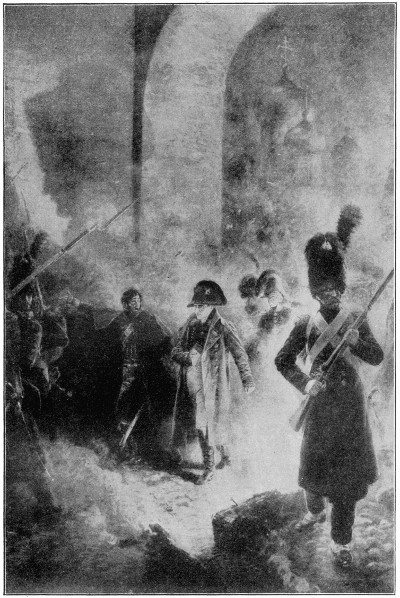
The disastrous Russian campaign of Napoleon in 1812, which resulted in the destruction of the city of Moscow by its own inhabitants to prevent it from falling into the hands of the French, was the virtual turning point in European history. From that time Napoleon’s star declined, and Europe was reconstituted a few years later practically as it is today.