CINQUIÈME LEÇON
Reading edition
I. Étude de mots
l'ami, m., the friend. le besoin, the need. la semaine, the week. la somme, the sum. a été, has been. blessé, wounded, hurt. grand, ~e, big, great, large. mauvais, ~e, bad. sérieusement, seriously. transporté, carried.
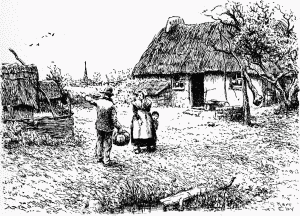
II. La mauvaise nouvelle
L'homme, qui arrive de Paris, est un ami de Jérôme. Il annonce à mère Barberin que son mari a été sérieusement blessé dans un accident. Jérôme a été transporté à l'hôpital par ses amis; il a grand besoin d'argent. La bonne femme envoie un peu d'argent à son mari. Les jours, les semaines passent, et une lettre arrive de Paris qui demande une grande somme d'argent.
III. Conversation
1. Qui est l'homme qui arrive de Paris?
2. Quelle est la mauvaise nouvelle?
3. Où est le pauvre mari maintenant?
4. Pourquoi a-t-il besoin d'argent?
5. Que demande la lettre de Paris?
IV. Grammaire
PLURIEL DES NOMS
L'ami de Jérôme, Jerome's friend.
Les amis de Jérôme, Jerome's friends.
1. Pour former le pluriel, nous ajoutons s au singulier.
Le fils de mère Barberin, Mother Barberin's son.
Les fils de mère Barberin, Mother Barberin's sons.
2. Un nom singulier terminé par s ne change pas au pluriel.
V. Thème
The poor husband is now at the hospital in Paris. Two friends of Jerome are in the hospital also. After a few weeks he sends a friend to Mother Barberin. The man announces that her husband is in great need of money. The little family is poor, but Remi sends two letters to Jerome with a little money every week.