CINQUANTE ET UNIÈME LEÇON
Reading edition
I. Étude de mots
le bras, the arm. le cœur, the heart. le frère, the brother. crier, to cry, cry out. poser, to place. regarder, to look at. saluer, to bow. gravement, solemnly. je veux dire, I mean. mon Dieu! good heavens! dear me!
II. La surprise
En arrivant sur la porte, mère Barberin aperçut quelqu'un dans la maison.
—Qui est là? dit-elle.
—Moi! C'est moi!
Remi la regarda, et elle le regarda aussi.
—Mon Dieu, murmura-t-elle, mon Dieu, est-ce possible, Remi!
Remi courut à elle, la prit dans ses bras.
—Maman!
—Mon garçon, c'est mon garçon!
Remi appela Mattia et Capi.
—Voilà Mattia, dit-il, mon frère.
—Ah! tu as retrouvé tes parents?
—Non, je veux dire que c'est mon camarade, mon ami; c'est avec lui que je voyage. Et voilà Capi, mon camarade aussi et mon ami. Salue la mère de ton maître, Capi!
Le chien posa une de ses pattes de devant sur son cœur et salua gravement.
—Allons voir le jardin, dit Remi.
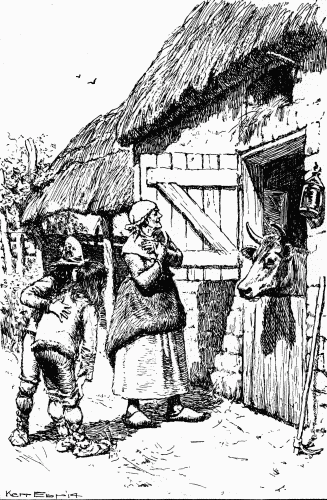
Ils allèrent au jardin. En passant devant l'étable, mère Barberin poussa la porte:
—Une vache, une vache dans l'étable! cria-t-elle.
Mattia et Remi éclatèrent de rire.
—Oh! le bon enfant, le cher garçon! dit mère Barberin en embrassant Remi. Et quelle belle vache!
III. Conversation
1. Quelle fut la première question de mère Barberin?
2. Remi avait-il retrouvé ses parents?
3. Comment Capi salua-t-il mère Barberin?
4. Où était la vache?
5. Que firent Mattia et Remi?
IV. Grammaire
PRONOMS PERSONNELS
(Sujet et complément d'une préposition)
Je voyage avec Mattia, I travel with Mattia.
Moi! C'est moi! I! It is I!
1. Nous employons les pronoms sujets suivants avec le verbe:
je, j', I tu, thou, you il, he elle, she nous, we vous, you ils, they elles, they
2. Nous employons les pronoms sujets suivants sans le verbe:
moi, I toi, thou, you lui, he elle, she nous, we vous, you eux, they elles, they
3. Nous employons aussi ces pronoms après les expressions c'est et ce sont; nous disons:
c'est moi, it is I c'est toi, it is thou, you c'est lui, it is he c'est elle, it is she c'est nous, it is we c'est vous, it is you ce sont eux, it is they ce sont elles, it is they
C'est avec lui que je voyage, it is with him that I am traveling.
4. Nous employons encore ces pronoms comme complément d'une préposition; nous disons:
avec moi, with me avec toi, with thee, you avec lui, with him avec elle, with her avec nous, with us avec vous, with you avec eux, with them avec elles, with them
V. Thème
It was she. I looked at her and she looked at me. Mattia was behind me. "Is it you, Remi? Who is that boy with you?"
"That is my good comrade Mattia, who plays with us, and this is my faithful friend, Capi. It is they who form the famous troupe."
They went into the garden and Mother Barberin saw a cow in the stable.
"Is it for me?"
"Yes," answered Remi, "it is a present which we have brought to you."