The Roll of Honour. (continued 9)
Reading edition
Buckingham Palace, 11 Nov. 1914.
Dear Mrs. Busk,
The King has heard with much concern of the tragic death of your son Mr. Busk. His Majesty well remembers meeting him at the Royal Aircraft Factory on the occasion of Their Majesties visit to Aldershot last summer, and was much struck by his ability and technical knowledge of the machinery of aeroplanes.
The King and Queen also saw him give an exhibition of flying in a stable aeroplane of his own invention.
In offering you his sincere sympathy in your bereavement, the King feels that the Country has lost the services of one, who, by experiment and research, contributed, in no small measure, towards the Science of flying.
Yours very truly, (Signed) Clive Wigram.
Mr. Mervyn O’Gorman, C.B., Superintendent R.A.F. wrote: “He did the most magnificent things without announcing any intention and without applauding audience. He merely took all the sane precautions of a clever engineer. Later with his hair blown about by a hatless flight, he would walk into my office, report the success of an experiment. He knew it was interesting, he forgot that it was brilliant or it did not occur to him. He worked out a result, knew he was right, but simply had his results checked and then proved them in his own person over and again. He was a genius, that we knew and you knew. He knew what he was about when he relinquished his volunteer regimental duty for the risks of this service, he talked it all over with me and he took this course, because he knew that he served his country better that way”; and Lord Rayleigh, President, writing on behalf of the Advisory Committee for Aeronautics: “At the National Physical Laboratory the assistance he was constantly able to give, from his experience in actual flying and his wide knowledge of his subject, in the critical examination of the difficult problems presented for investigation was very greatly valued.... The Committee have had many opportunities of appreciating the services he was able to render to the development of flying, and to his country, and wish to offer their tribute of admiration of the courage, skill, and devotion he brought to his work.” He was also awarded the posthumous honour of the Gold Medal of the Aeronautical Society.
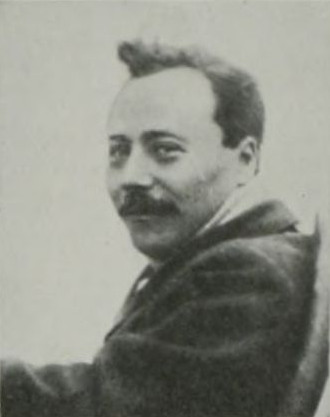
Edward T. Busk.
BUTCHER, CHARLES GEOFFREY, Lieut., 1st Battn. Dorsetshire Regt., 3rd s. of George William James Butcher, of 9, Tregunter Road, South Kensington, by his wife, Mary, dau. of Samuel Debenham; educ. St. Paul’s School, and was for some time in the H.A.C. He was gazetted to the Special Reserve in Aug. 1912. On 10 June, 1914, he joined the 2nd Battn. Dorsetshire Regt., and on the outbreak of war was appointed to the 1st Battn. At La Bassée on 22 Oct. 1914, he was wounded in the leg by a bullet, his life being saved by Sergt. H. Cox, of the Dorsetshire Regt. who carried him from the trenches into cover under a very heavy fire. For this Sergt. Cox received the D.C.M. Lieut. Butcher was mentioned in F.M. Sir John (now Lord) French’s Despatches [London Gazette, 17 Feb. 1915], and was promoted Lieut. 15 Nov. 1914, returning to the Front on 25 March. He was killed in action by asphyxiating gas at Hill 60 on 2 May, 1915, and was buried at Reninghelst, Belgium; unm. His Adjutant wrote: “I knew him very well and looked upon him always as a man of unusual character, ability, and promise; his loss is a severe one for the Dorset Regt.”; and another officer wrote “He is a real loss to the regt. in every way. I am sure he had great prospects before him as he was an extraordinarily keen subaltern and very popular with both officers and men. He was always ready for any amount of work.” Two of his brothers are in the Army and one in the Navy.
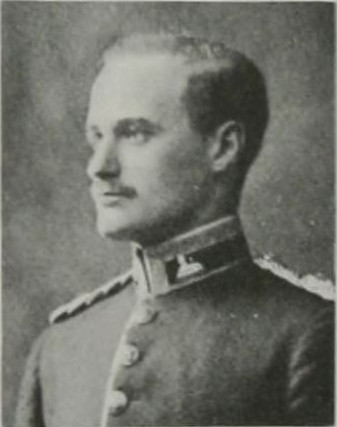
Charles Geoffrey Butcher.
BUTCHER, HARRY STANLEY, A.B., J. 3004, H.M.S. Cressy; lost in action in the North Sea, 22 Sept. 1914.
BUTCHER, WILLIAM, Signalman, J. 6825, H.M.S. Liberty; killed in action in the Heligoland Bight, 28 Aug. 1914.
BUTLER, CHARLES, Seaman, R.N.R., 3442C, H.M.S. Aboukir; lost in action in North Sea, 22 Sept. 1914.
BUTLER, FREDERICK, A.B. (R.F.R., B. 1441), 198254, H.M.S. Good Hope; lost in action off Coronel, on the coast of Chili, 1 Nov. 1914.
BUTLER, HARRY WILLIAM, A.B. (R.F.R., B. 1990), 199217, H.M.S. Good Hope; lost in action off Coronel, on the coast of Chili, 1 Nov. 1914.
BUTLER, JOHN, Sergt., R.M.L.I., Ch./8249, H.M.S. Cressy; lost in action in the North Sea, 22 Sept. 1914.
BUTLER, JOHN, Private, No. 3545, 5th Battn. The Queen’s Royal West Surrey Regt. (T.F.), eldest s. of Henry Butler, of Sutton Scotney, near Winchester, Hants, by his wife, Abigail, 3rd dau. of John Stocker, of Hampshire; b. Crookham, co. Berks, 24 April, 1885; educ. West Clandon (Surrey) Council School; and had worked on Lord Rendel’s estate at East Clandon for nine years; enlisted 16 Nov. 1914, and died at the London South-Western Fever Hospital, Stockwell, 25 Feb. 1915, of measles and double pneumonia, contracted while on active service. He m. at Edmonton, London, 25 April, 1907, Ellen (2, Westfield Cottages, Great Bookham, Surrey), 3rd dau. of William Savage, of Bones Cottage, West Clandon, and had four children: William John, b. 17 May, 1910; Henry Louvain, b. 18 Dec. 1914; Edith Annie, b. 22 July, 1908; and Dora Irene, b. 1 Aug. 1912.
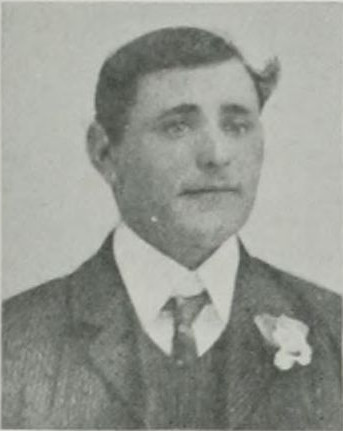
John Butler.
BUTLER, JOHN, Stoker, 1st Class (R.F.R., B. 4345), S.S. 101226, H.M.S. Good Hope; lost in action off Coronel, on the coast of Chili, 1 Nov. 1914.
BUTLER, WALTER, Stoker, 1st Class, 311362, H.M.S. Pathfinder; lost when that ship was sunk by a mine about 20 miles off the East Coast, 5 Sept. 1914.
BUTLER, WILLIAM LEWIS, Private, No. 3187, 1/13th Battn. (Princess Louise’s Kensington) The London Regt. (T.F.), s. of William Butler, of Prior’s Lea, Barrow-in-Furness, Solicitor, by his wife, Bertha, dau. of John Lewis; b. Barrow-in-Furness, 1 Dec. 1892; educ. Lancing College; volunteered on the outbreak of war, and joined the Kensingtons in Sept. 1914; went to France, March, 1915, and was killed in action, 19 April, 1915. He was buried in La Croix Marechal Cemetery, Rue David, near Armentières.
BUTTERWICK, ALEXANDER MIDDLETON, Rifleman, No. 3636, 9th Battn. (Queen Victoria’s Rifles) The London Regt. (T.F.), yr. s. of the late Charles Matthias Butterwick, of Walthamstow, House and Estate Agent, by his wife, Mary Ann, dau. of R. Adnams, formerly of Reading; b. Walthamstow, co. Essex, 20 April, 1895. After his father’s death, when a child, he was taken and brought up by his uncle, A. M. Butterwick (Master Mariner, retired), who saw service in Burma, 1885–7, now of Broxton, Kew, Surrey; educ. Richmond (Surrey) County School and Gunnersbury High School, and on leaving there became an articled pupil in the firm of Breadmore and Webb, F.A.I., Auctioneers and Estate Agents, of Richmond. After the outbreak of war he volunteered and enlisted in Queen Victoria’s Rifles in Nov. 1914; went to France, March, 1915, and was killed in action in Flanders, 13 July, 1915; unm. Buried in 13th Infantry Brigade Cemetery, Voormeezelle. At the time of his death his name was down for a commission. He was a keen athlete, and held prizes for drill and swimming, also certificates for life saving and first-aid.
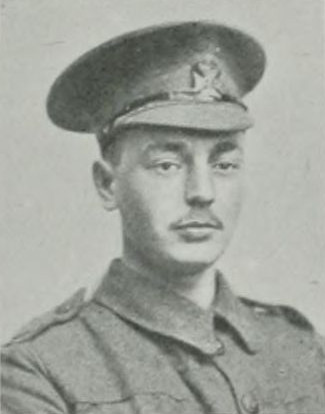
Alexander M. Butterwick.
BUTTON, JOHN SAMUEL, Seaman, R.N.R., 1540D, H.M.S. Aboukir; lost in action in the North Sea, 22 Sept. 1914.
BYATT, HARRY VIVIAN BYATT, Capt., R.A.M.C., elder s. of Henry Byatt, author, late of 36, Warwick Gardens, Kensington; b. Kensington, 16 Dec. 1882; educ. Summer Fields, Summertown, Oxford, 1891; obtained an entrance scholarship at Charterhouse School, Godalming, 1896, and left there with the Charterhouse Science Exhibition, 1901, entering Clare College, Cambridge, with a Science Scholarship the same year. He left Cambridge with a second class in the Natural Science Tripos, and proceeded to the London Hospital, qualifying M.R.C.S., L.R.C.P., 1907. He was gazetted Lieut. R.A.M.C. the same year, and appointed to Netley Hospital. From there he proceeded to Poona in 1909, was promoted Capt. 29 Jan. 1911, and after five years’ service in India, joined the Expeditionary Force in France in Oct., being attached to the 2nd Battn. Rifle Brigade. He attended to the trenches between Laventie and Estaires, and died 11 March, 1915, from wounds received at Neuve Chapelle while dressing the wound in the head of Machine Gun Sergt. Marriage. He was buried at Estaires. His Commanding Officer wrote: “Your son was hit while attending to a wounded man and I never saw him again. He was taken to the 25th Field Ambulance at Estaires and died there. He was shot by a rifle bullet in the chest.” While at Clare College he was first secretary and then captain of the Clare Rowing Club, and under his leadership Clare rowing improved so greatly that the well-known footer college was placed in the first division on the river for the first time for many years.
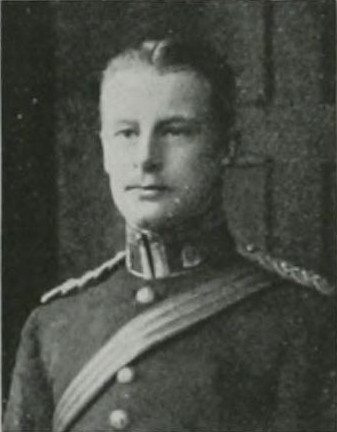
Harry Vivian Byatt Byatt.
BYE, FRANK EDWIN, Private, R.M.L.I., Ch./17384, H.M.S. Hawke; lost in action in the North Sea, 15 Oct. 1914.
BYHAM, EDWARD ARTHUR GEORGE, Private, R.M.L.I. (Ports.), 12937, H.M.S. Good Hope; lost in action off Coronel, on the coast of Chili, 1 Nov. 1914.
BYRNE, HERBERT HENRY, Leading Seaman, 184370, H.M.S. Aboukir; lost in action in the North Sea, 22 Sept. 1914.
BYRNE, JAMES, A.B. (R.F.R., B. 2235), 204649, H.M.S. Good Hope; lost in action off Coronel, on the coast of Chili, 1 Nov. 1914.
BYRNE, THOMAS, Private, No. 5334, 2nd Battn. Royal Dublin Fusiliers, s. of the late Thomas Byrne, Royal Irish Rifles, by his wife, Anne (Castledermot, co. Kildare), dau. of James Grace; b. Carlow, 14 Aug. 1895; educ. Castledermot; joined the Army in Aug. 1911, and was killed in action at Ypres, 13 Jan. 1915; unm.
CADGER, WILLIAM LAW, Leading Stoker (R.F.R., B. 4793), 293766 (Ports.), H.M.S. Hogue; lost in action in the North Sea, 22 Sept. 1914.
CADMAN, ISAIAH, Private, No. 10213, 3rd Battn. Cheshire Regt., s. of the late Samuel Cadman, of Bilston, co. Staffs, Collier, by his wife, Ann (9, Taylor’s Buildings, Heywood, Lanes, Manchester), dau. of Joseph Reynolds; b. Awsworth, co. Notts. ...; educ. Bilston; enlisted 12 Aug. 1914; went to France, 18 Dec., and was killed in action at Neuve Chapelle, 13 March, 1915; unm.
CAESAR, AUGUSTUS BENJAMIN, Private, No. 1896, 1st Battn. (Royal Fusiliers) The London Regt. (T.F.), yr. s. of the late Julius Cæsar, of 49, Chippenham Road, Elgin Avenue, W., formerly of Southampton, M.P.S., F.S.M.C., by his wife, Emma (49, Chippenham Road, Elgin Avenue, W.), dau. of James Baker; b. at 49, Chippenham Road aforesaid, 12 April, 1897; educ. at Vale College, Maida Vale, W., afterwards at the City of London Freeman’s School, where he obtained the bronze medal for rifle shooting at Bisley; he was an optician and microscopical demonstrator attached to the firm of H. F. Angus & Co., Wigmore Street, W.; joined the 1st City of London Regt., 17 Aug. 1914; trained at Croydon; left for Malta, 19 Sept. 1914; returned to England, Feb. 1915; went to France, 9 March, 1915, and was killed in action on Sunday, 9 May, 1915, at the Battle of Aubers Ridge.
CAFFYN, HAROLD HUNT, Capt., 1st Battn., North Staffordshire Regt., eldest s. of Stephen Mannington Caffyn, of 6, Cedar Gardens, S.W., M.D., by his wife, Kathleen, Novelist (Iota) (Lacey Green, Princes Risborough), dau. of William de Vere Hunt, of Waterloo House, co. Tipperary; b. at Mount Sandria, South Australia, 10 Feb. 1882; educ. Rugby and Sandhurst; gazetted second Lieut., unattached, 8 Jan. 1901; posted to the 2nd North Staffordshires 9 March following and promoted Lieut., 16 Feb. 1904; served in the South African War (Queen’s medal with 2 clasps) 1901–2, and afterwards in India and retired in 1912. Subsequently he was for eighteen months Private Secretary to Sir Wilfred Collett, Governor of British Honduras, but after the outbreak of war volunteered and was gazetted Capt., 14 Nov. 1914. He rejoined his old regiment in Jan., went to France, 7 Jan., 1915, and was killed in action in front of the trenches near Armentières, 21 March, 1915, while reconnoitring; unm.
CAHILL, HENRY THOMAS, Chief Stoker (R.F.R., A. 1709), 152629, H.M.S. Hawke; lost when that ship was torpedoed in the North Sea, 15 Oct. 1914; m.
CAINAN, DAVID WALTER, Corpl., No. 9866, 2nd Battn. Rifle Brigade, 4th s. of William Cainan, of 49, Albert Street, Llanelly, South Wales, Marine Engineer, by his wife, Catherine, dau. of William Perrott, of Llanelly; b. Llanelly, 9 April, 1886; educ. Copper Works School; joined the Army 4 May, 1903, and after being stationed at Malta for 12 months, he went to India, where he did 11 years’ service, returning to Europe with his regt. after the outbreak of war. He was killed in action at Neuve Chapelle, between the 10–14 March, 1915; unm. He was an all-round athlete, having gained the light-weight boxing championship of India, as well as a record for long jump and high jump.
CAIRD, JAMES ROBERT, Capt., 2nd Battn. King’s Own Scottish Borderers, s. of Major Lindsay Henryson Caird (late Border Regt.), Assistant to Colonel in charge of Records, No. 2 District, by his wife, the late Janet Laura, 5th dau. of the late Rowland Hunt, of Boreatton Park, co. Salop, and Kibworth Hall, co. Leicester, and grandson of the late Right Hon. Sir James Caird, of Cassencary, Kirkcudbrightshire; b. Dalhousie, India, 4 Nov. 1892; educ. Bedford and Carlisle Grammar Schools; was in the office of the Australian Mercantile Land & Finance Co., Ltd., but when war broke out at once applied for a commission, and being a member of the Inns of Court O.T.C., was gazetted 2nd Lieut. 3rd Battn. K.O.S.B. 15 Aug. 1914. He was promoted Lieut. 9 Nov. following, and went to the Front in Dec., being attached to the 2nd Highland L.I. until March, when he came home on short leave. On his return to the Front he was posted to the 2nd Battn. of his regt., and was killed in action while leading his platoon over open ground in the advance upon St. Julien, near Ypres, 23 April, 1915; unm. He was promoted Capt. after his death to rank as from 2 Feb. 1915. Major Hilton, who was in command of the battn. during the action and was himself seriously wounded, wrote: “Capt. Caird was a gallant fellow, and we can ill afford to lose his kind.... I didn’t get much detail of the manner of his death as I was also knocked over, but I know enough to say that he died game and led his men well until killed.” And Sergt. Hugh McMurchy, in a sworn statement, declared: “I saw Lieut. Caird killed on 23 April in the advance at St. Julien. He was advancing in front of me and was shot through the forehead, being killed instantaneously.” Capt. Caird’s experience of active service had brought him to the conviction that he preferred a military to a civil career, and his application for a permanent commission had been sent in before his death. His last letter to his father contained an interesting account of the assault and capture of Hill 60, in which he took part.
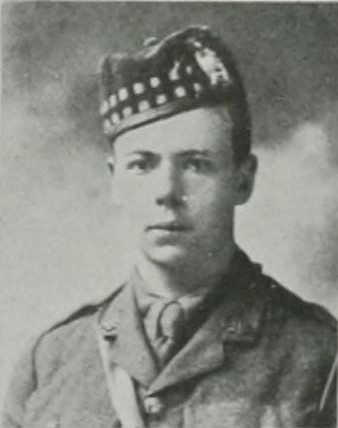
James Robert Caird.
CAIRNIE, GILBERT JAMES BRYAN, Corporal, No. 12/50, A Coy., 3rd Auckland Infantry, New Zealand Expeditionary Force, s. of James Bryan Cairnie, of Taranaki, New Zealand, retired Farmer; b. Lymington, near Kilmarnock, co. Ayr, 5 June, 1881; educ. Tarbolton, Ayr, and Higher Grade School, Deansgate, Manchester; went to New Zealand and was Computing Draughtsman, Lands and Survey Office, Auckland, N.Z.; volunteered for Imperial service on the outbreak of war, and joined the N.Z.E.F. Aug. 1914; left for Egypt with the main force, and from there went to the Dardanelles, where he was killed in action during a night sortie, 5 June, 1915; unm. He was mentioned in Despatches with his Coy. Sergt.-Major, for bringing in a wounded man under heavy fire. He was for a long time reported as missing, and Sapper L. J. Poff wrote: “The last that was seen of Jim as far as I can ascertain was that he was by himself in a Turkish trench. I hope he was taken prisoner rather than that he has been killed, for he has proved himself as brave as a lion. I sought out the Sergt.-Major of Jim’s company, who was with him in bringing in a wounded man, of which I wrote some time ago. He tells me that they were both ‘Mentioned in Despatches’ for it. The Sergt.-Major says that the sortie in which Jim became missing was a purely voluntary one, but practically the whole of his section went. They sallied out, did their work, and what was left returned with the wounded. The dead they could not bring in then. A few nights afterwards a party went out and gathered the identity discs of those who were killed. They also procured those of the men whose dead bodies were thrown out of the Turkish trenches, accounting for all but six. Jim’s disc was not among them, so let us hope he is a prisoner,” but later he was officially returned as killed in action, 5 June, 1915.
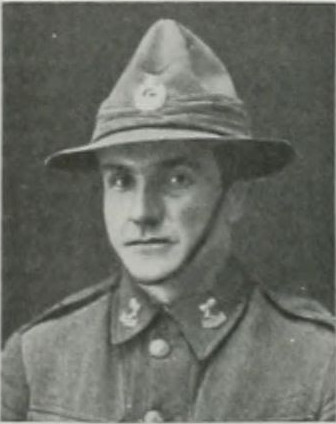
Gilbert J. B. Cairnie.
CAIRNS, JOHN, Sergt., No. 3515, 2nd Battn. Royal Inniskilling Fusiliers, s. of the late Thomas Cairns, Gunner, Mid-Ulster Artillery, by his wife, Phoebe (Ballygawley, co. Tyrone), dau. of James Montgomery, of Feddan, Ballygawley, co. Tyrone; b. Ballygawley, co. Tyrone, 12 May, 1891; educ. National School there; enlisted originally in 1909, was called up on mobilisation, Aug. 1914, and was killed in action at Messines 31 Oct. following; unm. His brother, Private William Cairns, No. 17584, 9th Battn. Royal Inniskilling Fusiliers, is now (1916) on Active Service.
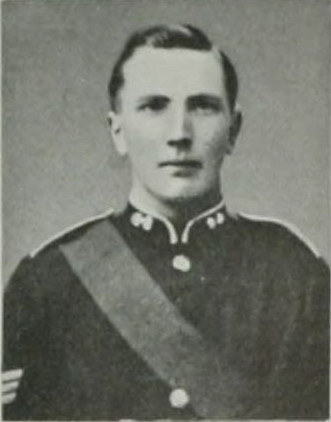
John Cairns.
CALE, ALBERT, P.O., 2nd Class (R.F.R., A. 2006), 143929 (Ports.), H.M.S. Hawke; lost when that ship was torpedoed in the North Sea, 15 Oct. 1914; m.
CALLANDER, ARTHUR WILLIAM, Private, No. 2332, 14th Battn. (London Scottish) The London Regt. (T.F.), 6th s. of the late Thomas Edward Callander, late of Richmond, Surrey, by his wife, Mary Ann Henrietta, dau. of the late Edward Faggetter; b. Richmond, Surrey, 21 June, 1886; educ. Commercial Travellers’ Schools, Pinner; was manager of the costume department at Messrs. Green & Co., Oxford Circus Mansions; volunteered after the outbreak of war in Aug. 1914, and joined the London Scottish; went to France in March, and was killed in action, 9 May, 1915; unm.
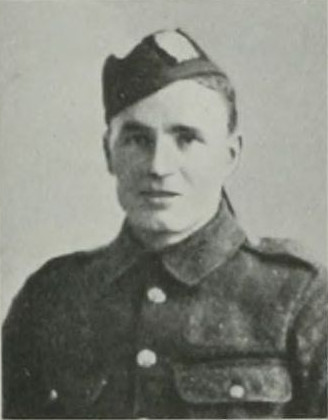
Arthur W. Callander.
CALLEY, OLIVER JOHN, Lieut., 2nd Battn. Wiltshire Regt., only s. of the Rev. John Henry Calley, Vicar of Figheldean, Salisbury, by his wife, Elizabeth Isabella Maria, yst. dau. of Major John Haverfield; b. Chiseldon, 4 July, 1892; educ. at The Old Ride, Branksome, Bournemouth, and St. John’s School, Leatherhead; gazetted 2nd Lieut. from the Territorial Force to the Wiltshire Regiment, 4 Dec. 1912, joining at Tidworth in Jan. 1913, and being transferred the following Sept. to the 2nd Battn. at Gibraltar. He was promoted Lieut. 27 Oct. 1914; went to the Front the same month, and was invalided home a few weeks later. He left for the Front again in Dec., and was killed in action, 12 March, 1915; unm. Buried, Spanbrock Molen. His Colonel said of him that he deplored the loss of such a valuable and trustworthy officer.
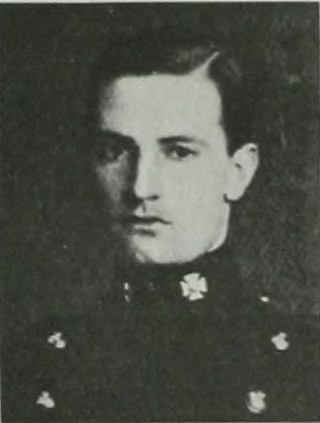
Oliver J. Calley.
CALROW, WILLIAM ROBERT LAUNCELOT, 2nd Lieut., 1st Battn. Loyal North Lancashire Regt., s. of Gerald Walton Calrow, of Boerne, Kendall Co., Texas, U.S.A., by his wife, Mabel Selina Elizabeth, dau. of the late Edmund King, formerly of Bury St. Edmunds and later of Boerne, Texas, and gdson. of the late Robert Calrow, of Cuzgarth, Adel, Leeds; b. San Antonio, Texas, U.S.A., 12 March, 1895; educ. Seascale, The School House, Rugby, and Sandhurst; received his commission 17 Sept. 1913, joined his regt. early in Nov. 1913, and accompanied it to France, 12 Aug. 1914. He was in the retreat from Mons, the Battles of the Marne and the Aisne, at which latter he was killed by a high explosive shell, 7 Oct. 1914. He was buried near Vendresse, on the Aisne, about 12 miles from Braye; unm. Letters from his superior officers testify to his great courage, his capability, and the esteem in which he was held in the regt.
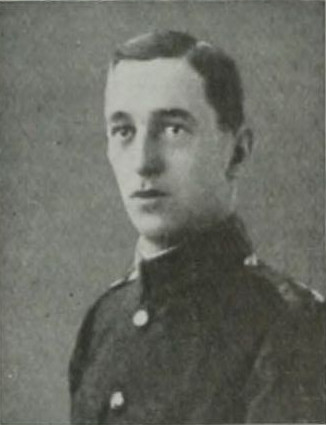
William Robert Launcelot Calrow.
CALVERLEY, JAMES, Armourer, 342978, H.M.S. Aboukir; lost in action in the North Sea, 22 Sept. 1914.
CALVERLEY, LAWRENCE BASIL, Ordinary Seaman, J. 13727, H.M.S. Pathfinder; lost when that ship was sunk by a mine, about 20 miles off the East Coast, 5 Sept. 1914.
CALVERT, HERBERT EDWIN, Private, No. 6994, 3rd Battn. Coldstream Guards, s. of Edwin Calvert, ex-Police Constable; b. Lincoln, 13 Dec. 1888; enlisted Oct. 1906; served in Egypt Jan. 1908 to April, 1911; was badly wounded in the leg at the Battle of the Aisne, and died in hospital in Paris following the amputation of his leg, 24 Sept, 1914. Private Blanchard, who was severely wounded the same day, writing from hospital at Woolwich, said: “I sincerely hope Calvert is not dead. He was one of my best friends. He was the one that carried me to safety.” Calvert m. Lincoln, 13 April, 1914, Alice Maud, dau. of James Barnes, of Norwich, and had a posthumous son, Herbert Edwin, b. 14 Dec. 1914.
CALVERT, JOHN DUTTON, Lieut., 4th Battn. Rifle Brigade, elder s. of Edmund Percy Calvert, of The Manor House, Spexhall, Halesworth, by his wife, Susan May, eldest dau. of the late Col. the Hon. Charles Dutton, of Twigworth Lodge, Gloucester [5th s. of James Henry Legge, 3rd Baron Sherborne]; b. Abbotswood, Romsey, 26 Feb. 1891; educ. Winton House, Winchester, Osborne, Dartmouth and Sandhurst (1909); was gazetted to the Rifle Brigade 20 Sept. 1911, joined the 4th Battn. in Cairo in Nov. 1911, and proceeded with it a year later to India. He was promoted Lieut. 16 April, 1914, and left Dagshai with his battn. the following Oct. for Winchester, and from there went to Flanders 20 Dec. 1914. Lieut. Calvert was killed in action near Ypres, 15 Feb. 1915, during a heavy bombardment. He came out of his dug-out to help a wounded man, and was killed instantaneously by a shrapnel shell. A few days previously he had assisted to bring in a wounded rifleman under difficult conditions, owing to the mud and wet, and that it was a fairly bright night, with Germans sniping. He was buried at Dickebusch; unm.
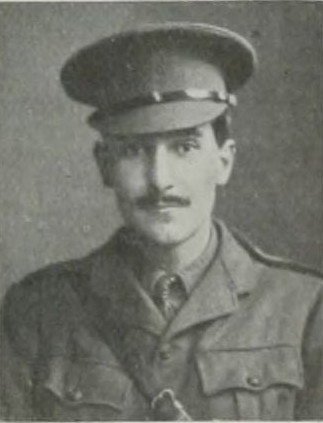
John Dutton Calvert.
CAMBRIDGE, GEORGE WILLIAM, Private, No. 6235, 3rd Battn. Coldstream Guards, s. of William James Cambridge, of 2, Brocks Cottages, Fairfield South, Kingston-on-Thames, by his wife, Martha Ellen, dau. of George Greenfield; b. Wandsworth, S.W., 12 Sept. 1886; educ. Swathfield Road School there; enlisted 20 June, 1905; was wounded at Landrecies, 25 Aug. 1914, during the retreat from Mons, and invalided home on the 31st, but returned to France on 22 Oct.; was again wounded in action at Bethune, and died in the 4th Field Ambulance Dressing Station, 7 Feb. 1915. He was buried in Bethune Cemetery. He m. at Kingston-on-Thames, 22 Nov. 1909, Kiziah (34, Fairfield Place, Kingston-on-Thames), dau. of Richard George Goldsmith, and had a dau., Emily Martha Ethel, b. 2 May, 1910, d. 7 Feb. 1915.
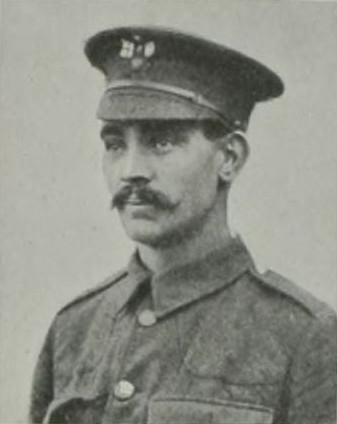
George William Cambridge.
CAMERON, ALLAN GEORGE, Capt., 1st Battn. Queen’s Own Cameron (79th) Highlanders, 3rd s. of the late Donald Cameron, of Lochiel, Twenty-fourth Chief of Clan Cameron, by his wife, Lady Margaret, 2nd dau. of Walter Francis Montagu-Douglas Scott, 5th Duke of Buccleuch; b. Achnacarry, 27 July, 1880; educ. Eton and Sandhurst; gazetted 2nd Lieut. to the 2nd Battn. Cameron Highlanders, 4 Oct. 1899, and promoted Lieut. 30 April, 1901, and Capt. 14 May, 1910; served with them at Gibraltar, Malta, Crete and in South Africa, where he was for a time in the Mounted Infantry, and was Adjutant of Lovat’s Scouts Dec. 1907–Feb. 1911, on vacating which appointment he was posted to the 1st Battn. On the outbreak of war he accompanied his battn. to France on 12 Aug. 1914, and was killed in action near the Aisne, 25 Sept. 1914; buried at Bourg-et-Comin. Capt. E. J. Brodie (Adjutant 1st Camerons) wrote of him: “We were sent to relieve the Black Watch north of Verneiulle on the 24th. On the 25th we were again heavily shelled. Capt. Miers was in command of the regt., and at 7 a.m. he got wounded in the right arm, and decided to go to Verneiulle to get it dressed. He sent a message to Allan Cameron, who was next senior, to that effect. Before he could get away heavy shell fire again started, so he delayed going. Allan Cameron, however, came straight to Headquarters. Just as Allan Cameron got to the trench—or rather cave—a huge high explosive shell burst on the top and blew it in. The cave contained headquarters, signallers, stretcher-bearers, etc. Death to all must have been instantaneous. It took us three nights to get the bodies out, 31 in all. We could only work in the dark, as the place was shelled by day. We buried the officers and the Sergt.-Major at Bourg. Capt. Miers, Allan Cameron, Meiklejohn, Napier Cameron and Dr. Crockett were the officers killed.” In 1902 Capt. Cameron won the Royal Humane Society’s certificate for saving a boy’s life at Oban by jumping over the esplanade into the sea and bringing him out. At the Scottish Command Rifle Meeting in 1913 he won the Officers’ Aggregate for the highest number of points and was third in the individual aggregate of all ranks. He m. at Inverness Cathedral, 6 Oct. 1908, Hester Vere (Aldourie, Inverness), dau. of Col. Edward Grant Fraser-Tytler, of Aldourie, D.L., and had one son, Angus Ewen, b. 20 Jan. 1914.
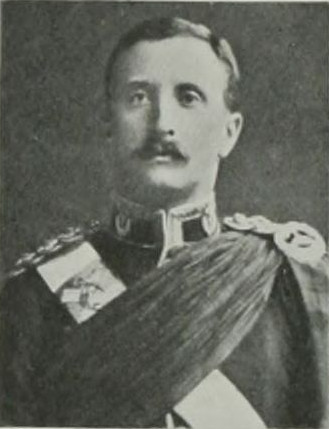
Allan George Cameron.
CAMERON, ARCHIE, Private, No. 12693, A Coy., 5th Battn. Canadian Expeditionary Force, s. of Angus Cameron, of Virden, Manitoba, Canada, Farmer and Liveryman [b. St. Catherine’s, Ontario, emigrated to Manitoba in 1880]; b. Virden, 22 Aug. 1884; educ. Public School and Collegiate Institute there, and was for five years a trooper in the 12th Manitoba Dragoons; volunteered on the outbreak of war and enlisted 14 Oct. 1914; left with the 1st Canadian Contingent in Oct.; went to France in Feb., and died 25 May, 1915, of wounds received in action at Festubert, the previous day: unm. He was buried in the New Cemetery, Choques, France [No. 75, Row B.]. Private Cameron was a good sportsman, a typical Western pioneer, and an enthusiastic soldier and sincere Imperialist.
CAMERON, ARTHUR IAN DOUGLAS, 2nd Lieut., 2nd Battn. Seaforth Highlanders, 2nd s. of the Rev. Angus Cameron, of St. Andrew’s, Tain, by his wife, Elizabeth Anna, dau. of the late Benjamin Liddall, of Press Castle, co. Berwick; b. St. John’s Rectory, Arpafeelie, Ross-shire, 28 Sept. 1893; educ. Trinity College, Glenalmond, Norwich, and Hanover; joined the Special Reserve of the Seaforth Highlanders, 13 July, 1913. On the outbreak of war was attached to the 2nd Battn., and died 25 April, 1915, from wounds received while in action at St. Julien; unm. Col. R. S. Vandaleur, writing to Mr. Cameron, said: “I saw and spoke to him not long before he fell, and he was then leading his men gallantly into the firing line. You will have heard how our brigade was ordered to attack early in the morning of 25 April; not knowing the ground or the exact position of the enemy we suffered terribly. We and the Warwicks, supported by the Argyll and Sutherland Highlanders, were attacking on the left of the road leading to St. Julien, when we came under the fire of machine guns in a farm immediately in front of us. Your son’s company was in support, and the last I saw of him was when he was leading his platoon up on the right of that farm,” and Capt. the Hon. Eric Campbell wrote: “He was a very gallant officer, whose loss will be felt very much by us all. His company commander, Major Campion, told me before I left the Battn., that he had done extremely well the day he met his death on 25 April. We were carrying out an attack on St. Julien, north-east of Ypres, about dawn. We came upon the enemy in trenches and occupying houses sooner than we expected; they inflicted heavy losses on us. Your son, after behaving with the utmost bravery, was hit, I should think, about 6 a.m., and died some hours later. We buried him and four other officers near a farm on the road between Ypres and St. Julien.” Two of his brothers are now (1916) on active service.
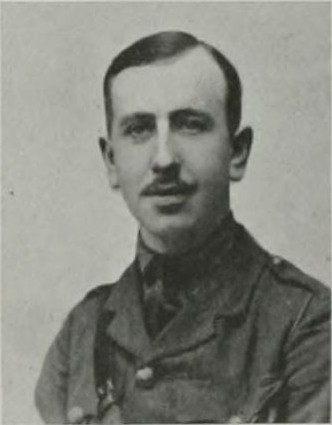
Arthur Ian D. Cameron.
CAMERON, DONALD EWAN, of Montreal, Quebec, Canada, Lieut., Princess Patricia’s Canadian L.I., yst. s. of the late Archibald Cameron, Manager of the Merchants’ Bank of Canada, Toronto, by his wife, Agnes Margaret, dau. of Major James Barwick, 79th Cameron Highlanders, and grandson of Lieut.-Col. Duncan Cameron, C.B., 79th Cameron Highlanders (who fought at Waterloo); b. Toronto, 18 Dec. 1870; educ. Trinity College School, Port Hope, and the Montreal High School, and on leaving school entered the service of the Canadian Bank of Commerce. In 1902 he formed the Lilley and Cameron Cartage Co., and later the Terminal Warehouse & Cartage Co. of Montreal. In 1912 he became associated with the Dominion Securities Corporation. He served in the Canadian Militia for many years—first in the Victoria Rifles of Canada, then in all the ranks up to that of Major in the Duke of York’s Royal Canadian Hussars, and went on the Reserve of Officers. He joined the Princess Patricia’s Canadian L.I. upon the organisation of the regt. for service in Aug. 1914; sailed with the Canadian Contingent in Oct.; was encamped on Salisbury Plain and at Winchester, and left for France on 20 Dec. 1914. The regt. was sent up to the trenches in the neighbourhood of Ypres, and was constantly engaged. He fell in the counter-attack upon the Germans at St. Eloi, 15 March, 1915, and was buried in the Princess Patricia’s Canadian L.I. cemetery at Voormezeele; unm. His brother, Col. Kenneth Cameron, of Montreal, was the officer in charge of the Surgical Division of No. 1 Canadian General Hospital at Netheravon on Salisbury Plain, and Etaples, France, and later officer commanding No. 2 Canadian General Hospital at Le Tréport, France.
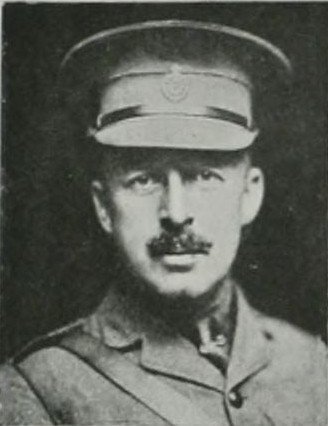
Donald Ewan Cameron.
CAMERON, EVAN STUART, Corpl., No. 25931 (Royal Montreal Regt.), 14th Battn. Canadian Expeditionary Force, eldest surviving s. of Sir Edward John Cameron, K.C.M.G., Governor and Commander-in-Chief of Gambia, by his wife, Eva Selwyn, dau. of the late Robert Mackintosh Isaacs, LL.D., of New South Wales; b. Turks Island, West Indies, 21 Sept. 1893; educ. Blundell’s School, Tiverton (1905–12), where he was head for two years, and on leaving there in Sept. 1912, went to Montreal to join the Royal Bank of Canada. He enlisted in the Canadian Contingent on the outbreak of war, Aug. 1914, and was killed in action near St. Julien, 24 April, 1915; unm. Major Beatty. A.D.C. to General Alderson, Commanding 1st Canadian Contingent, wrote: “He was dearly loved by all his comrades, and he had earned the respect and admiration of all, and had behaved with the greatest gallantry all through that dreadful time from 5 p.m. on Thursday, 22 April, up to the time of his death.” His Capt. said: “He handled his men wonderfully, and would have been given a commission had he survived the battle,” and the head master of Blundells: “As I look back upon his school career I feel that we have lost one of the most sterling of the old pupils whom I remember in my long experience of 40 years.” He was a good cricketer, and was capt. of the cricket eleven and football fifteen for two years at Blundells and won the average bat four years in succession. He played against the Australian XI in 1913 and made the first century of the season for the McGill Cricket Club in July, 1914. He also played at Lords in 1912 in a Public Schools XI.
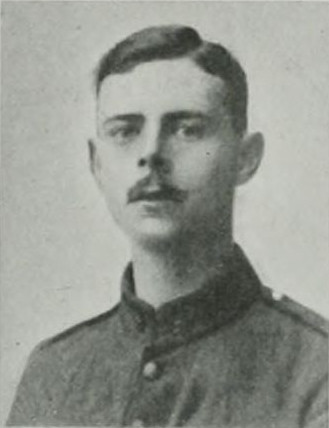
Evan Stuart Cameron.
CAMERON, JOSEPH, stoker, P.O., 292522, H.M.S. Hawke; lost when that ship was torpedoed in the North Sea, 15 Oct. 1914.
CAMERON, MORTON AUGUSTUS, Private, No. 22557, 15th Battn. (48th Highlanders of Canada), Canadian Expeditionary Force, only s. of Augustus Morton Cameron, of St. Stephen’s, New Brunswick, Canada, Labourer, by his wife, Isabella Mary, dau. of Caleb Hennessey; b. St. Stephen’s afsd. 27 Nov. 1896; educ. Mark Street School there; volunteered on the outbreak of war and enlisted in the 71st New Brunswick Regt. at St. Stephen’s, 8 Aug. 1914. After 3 weeks at Fredericton, N.B., he was sent to Valcartier, where he was transferred to the 12th Battn., and left for England with the first Canadian contingent. They landed at Plymouth on 14 Oct. and trained on Salisbury Plain during the winter of 1914–15. On 23 April. 1915, he was transferred to the 15th Battn., and went over to France with a draft for that Battn. and joined it in the trenches at Ypres. He went through the fighting at Ploegsteert Wood and Festubert, and was killed in action at Messines, 10 Nov. 1915; unm. He was buried in the Military Cemetery near Ration Hill. His captain wrote that he had been sent out with a party to repair the front trench, and that a piece of shell hit him on the head killing him almost instantaneously.
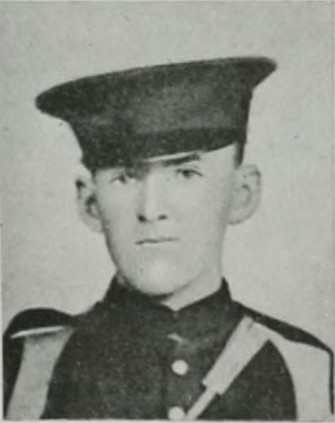
Morton Augustus Cameron.
CAMERON, PEDRO, Corporal, No. 1685, 2nd Coy., 1/4th Battn. Seaforth Highlanders (T.F.), eldest s. of George Cameron y Mackenzie, of Street Delicias 213, Valparaiso, Chili, by his wife, (—), dau. of (—) Zanartie; b. Tocopilla, Chili; educ. Valparaiso Liceum; came home in 1907 to finish his education with his uncle, afterwards serving his apprenticeship at Kirkintilloch, near Glasgow. On the outbreak of war enlisted in the 4th Battn. Seaforth Highlanders (T.F.), Nov. 1914, proceeded with his regt. to the Front, and was killed in action in France, in an attack on Hill 60, 9 May, 1915. Buried side by side with two of his cousins, who were killed in the same action; unm.
CAMERON, THOMAS ALBERT, L.-Corpl., 2nd Kimberley Regt., South African Force, s. of Thomas Cameron, of Kimberley, Diamond Miner, by his wife, Annie, dau. of the late John Richardson, of Frizington, co. Cumberland; b. Bridgefoot, Cumberland, 2 June. 1891; went to Kimberley with his parents in 1895, and was educ. at the Boys’ High School there. He afterwards returned to England and worked as an electrician with Messrs. Dick, Kerr & Co., of Preston; but in 1911 returned to Kimberley, and after the outbreak of war in Aug. 1914, joined General Botha’s Army. He was killed in action at Trekkopjies, German South-West Africa, 26 April, 1915. His Commanding Officer, Col. Rodgers, wrote: “He was cut down in the act of doing a very brave deed. Ammunition was urgently required at one of the most exposed trenches. Volunteers were called for to carry the same, and without the slightest hesitation your gallant husband came forward, took the case of ammunition and had just put it down where wanted when he was killed. He died without any pain. We all—officers and men—mourn with you in your loss. His conduct was such that I, in my official report to the Officer Commanding, brought his name to official notice, as in my opinion such a deed of gallantry deserved recognition.” He played for Oldham in the Northern Rugby Union. He m. at Preston, 9 March, 1910, Grace, dau. of the late Alexander White, of Frizington, Cumberland, and had two sons: Thomas Alexander, b. Frizington, 9 May, 1911, and John Head, b. Kimberley, South Africa, 12 Sept. 1914.
CAMERON, WILLIAM MATHESON, Lieut., A Coy., 2nd Battn. Transvaal Scottish, yst. s. of Duncan Cameron, of Balbair, Edderton, Ross-shire, Bank Agent at Tain, Ross-shire (d. Nov. 1915); b. Thurso, 17 June, 1870; educ. Tain Royal Academy, and George Watson’s College, Edinburgh, and entered the Commercial Bank, Glasgow, leaving it on the outbreak of the South African War to join the Imperial Yeomanry. He served throughout that war, was given a commission as Lieut., and received two medals and five clasps. After the war he settled in Johannesburg, where he was secretary to the manager of the Angelo Section of the East Rand Proprietary Mines, and on the outbreak of the European War volunteered and was appointed Lieut. in the Transvaal Scottish. He served under General Botha in German West Africa, and was killed in action by a shell, at Trekkopjis, on the morning of 26 April, 1915. He m. (—), dau. of John Munro, Manager for Barnato Bros., and ex-President of the Transvaal Chamber of Mines, and left a dau., Constance, b. 1912. Lieut. Cameron was an excellent tennis player, and for several years held the Singles Championship of the East Rand Club.
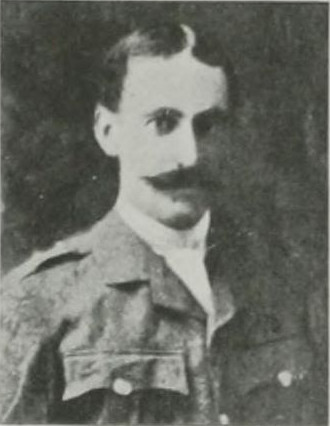
William M. Cameron.
CAMFFERMAN, ALEXANDER, Corpl., No. 1581, 1/7th Battn. Middlesex Regt. (T.F.), only s. of John James Camfferman. of Sunnyside, Whetstone, Nurseryman, by his wife, Bertha, dau. of Charles Athron; b. Whetstone, co. Middlesex, 7 April, 1895; educ. Christ’s College, Finchley; was a Nurseryman in his father’s business; joined the 7th Middlesex Territorials on his seventeenth birthday, and was in camp when war was declared. He volunteered for foreign service, and went out with his regt. to Gibraltar at the beginning of Sept. 1914, with one of the earliest convoys of Territorials for foreign service. The Battn. returned to England in Feb., and crossed to France, 12 March, 1915, and he was killed in action at the Battle of Fromelles, 9 May, 1915; unm. He was buried in Rue Petillon La Cordonerie, France. His commanding officer wrote: “He was an excellent soldier, a fine shot, a clean liver and speaker, in short a young Englishman of the best type. I wish we had more like him.” Passionately fond of the rifle, he soon became the best shot in the Battn., and was the winner of many prizes.
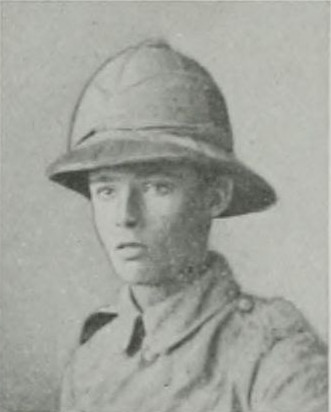
Alexander Camfferman.
CAMFIELD, WILLIAM, Stoker, 1st Class, 310864, H.M.S. Good Hope; lost in action off Coronel, on the coast of Chili, 1 Nov. 1914; m.
CAMPBELL, ALEXANDER, Stoker, 1st Class, 283219, H.M.S. Good Hope; lost in action off Coronel, on the coast of Chili, 1 Nov. 1914.
CAMPBELL, COLIN FREDERICK FITZROY, Capt., 1st Battn. Scots Guards, only s. of Major-Gen. Frederick Lorn Campbell, of Highfield House, West Byfleet, co. Surrey, late Scots Guards (of the Melfort family, Argyll), by his wife, Caroline, dau of John Alexander Smyth, and gdson. of Rear-Admiral Frederick Archibald Campbell; b. London, 29 Sept. 1880; educ. Stubbington and Haileybury; obtained his first commission in the Cameron Highlanders from the Militia, 5 Jan. 1901; became Lieut. 3 Aug. 1904; transferred to the Scots Guards, 29 March, 1905; was Adjutant of the Guards Depot at Caterham from 1911 to 1913, being promoted Capt. 29 Oct. 1914, the same day on which he was killed in action close to the village of Gheluvelt, near Ypres. He m. at the Guards’ Chapel, London, 11 June, 1914, Helen Margaret, eldest dau. of Charles John Stewart, of 32, Eccleston Square, S.W., by his wife, Lady Mary Graham, née Toler; s.p.
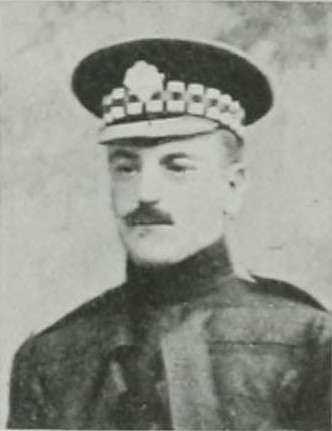
Colin F. F. Campbell.
CAMPBELL, DONALD, M.B., Lieut., R.A.M.C., attd. 2nd Battn. East Yorkshire Regt., 3rd s. of the late John Campbell, for 43 years Tenant of Blair Mills, by his wife, Isabella (Fincastle, Bridge of Tilt, Blair Atholl), dau. of Alexander McBeath; b. Blair Atholl, 20 Jan. 1887; educ. at Blair Atholl Public School, Pitlochry Higher Grade School, where he won the County Council Bursary, and George Watson’s College (1904–6), from which he entered Edinburgh University as an Arts Student in 1906, gaining the same year the McDougal Bursary. He graduated M.A. in 1909, and M.B. Ch.B in 1913. In 1910 he shared the Vans Dunlop Scholarship with another student. When war broke out he was house surgeon in Sheffield Royal Hospital, and receiving a commission in the R.A.M.C. 16 Dec. 1914, went to the Front in Jan. as Medical Officer to the 2nd East Yorks Regt. He was killed on 17 Feb. 1915, near the village of Zillebeke while going to the assistance of a wounded man, and was buried at St. Eloi; unm. An officer of the 2nd East Yorks Regt. wrote: “He was only with me a short time, but it is no exaggeration to say that he left behind him not mere acquaintances, but real friends, who mourn his loss more than I can tell you. He lived always in the same billet with me and the headquarters staff, and shared all our rough food, delicacies and hardships just as they came, and for my part I find he has left a blank that will take a long time to fill. He met his death going up to the front to help a wounded man. A stretcher-bearer was with him at the time, and as they crossed an open space they came under the fire of the enemy in a house some 200 yards away, and both were shot dead.” For two years he was joint secretary for the Edinburgh University Musical Society, was a keen golfer, and for several years was a member of the Edinburgh Northern Hockey Club.
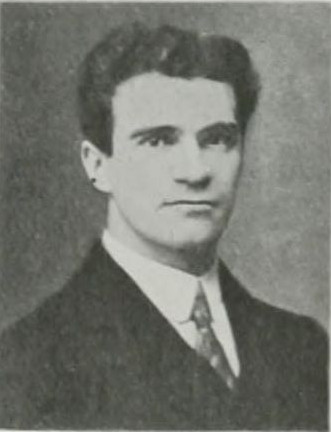
Donald Campbell.
CAMPBELL, DONALD HENRY BRUCE, Sergt., No. 6999, 1st Battn. Canadian Expeditionary Force, 4th surviving s. of Alexander Campbell, of Highland Grove, Ontario, Canada, Proprietor and Farmer, by his wife, Helen Isabella, dau. of Alexander Grant, of Blackhill, Bower, Caithness; b. Dalnacloich, Rosskeen, co. Ross, 11 Dec. 1894; educ. Munlochy and Arpafeelie Episcopal (where he was Dux and won the silver medal for head scholar, etc.) Schools, Ross; went to Canada with his parents in March, 1910; joined the Canadian Territorials in 1912, and was given the rank of Sergt. then; volunteered for service overseas on the outbreak of war; left Canada with the first contingent; went to France in Jan. 1915, and was killed in action at Givenchy, 15 June, 1915; unm. His company officer, Lieut. R. R. Brown (who was himself wounded on this occasion) wrote that Campbell was his platoon sergt. and that he had a very high opinion of him, adding: “During the attack circumstances were such that I had to leave my own men under another officer (Lieut. Sims) while I took command of men of another company, thereby failing to witness the fate of so many of my brave men. During the fight one of my own men came up to me (I could not say who it was) and said Sergt. Campbell had just been killed.”
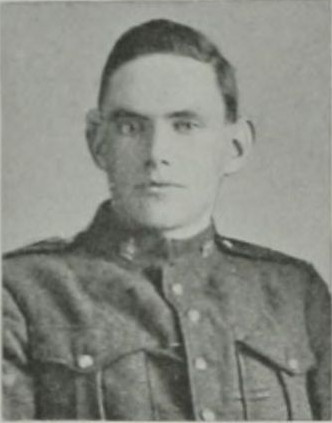
D. H. B. Campbell.
CAMPBELL, DUNCAN, Capt., 2nd Battn. The Black Watch (Royal Highlanders), elder s. of Col. Edward Parker Campbell, of South Hall, co. Argyle, J.P., D.L., Major, The Black Watch, by his wife, Alice Isabel, 3rd dau. of Lieut.-Col. Thomas Goulbourn Parker, of Browsholme, co. York, and Alkincoats, co. Lancaster; b. South Hall aforesaid, 24 Oct. 1880; educ. Rugby; joined the 3rd (Royal Perth Militia) Battn. of The Black Watch, Dec. 1899, and on the outbreak of the Boer War volunteered for active service. He was gazetted 2nd Lieut. The Black Watch, 27 Oct. 1900, and served in South Africa with the 2nd Battn. from 27 Oct. to 22 Dec. 1900, when he was transferred to the 1st Battn. in India. He served with them again in South Africa from 6 Dec. 1901, to 27 Oct. 1902, and took part in the operations in the Transvaal and Orange Free State from Dec. 1901, to 31 May, 1902, and was promoted Lieut. 24 May, 1902, and received the Queen’s medal with five clasps. From 16 Sept. 1905, to 29 Sept. 1910, he served in Northern Nigeria with the West African Force, and in 1906 took part in the Hodeija Campaign (medal with clasp). Promoted Capt. 8 Jan. 1910, he was in 1912 transferred back to the 2nd Battn. of his regt. in India and proceeded with the battn. to France with the Indian Expeditionary Force in the autumn of 1914. He was wounded in December and invalided home, but rejoined early in 1915; was present at the Battles of Neuve Chapelle, Richebourg, etc., and in all the other engagements in which his battn. took part. He was killed in action in the trenches near the Bois-de-Biez, 18 May, 1915, by a shell which burst on the parapet of the trench, the repair of which he was directing. Letters from his commanding officers speak most highly of him as an officer and testify to the love and respect entertained for him by his men. He was unm. His yr. brother, Lieut. Patrick Colin Campbell, Royal Flying Corps, is now (1916) on active service with the British Expeditionary Force in France.
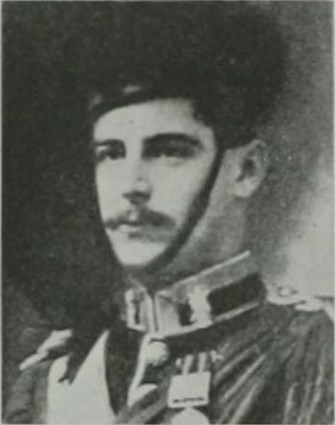
Duncan Campbell.
CAMPBELL, FREDERICK JAMES, Stoker, 1st Class (R.F.R., B. 4781), S.S. 104136, H.M.S. Good Hope; lost in action off Coronel, on the coast of Chili, 1 Nov. 1914; m.
CAMPBELL, GEORGE EDWARD FORMAN, Lieut., 2/10th Gurkha Rifles, yst. and only surviving s. of Col. Robert Neil Campbell, C.B., C.I.E., M.B., I.M.S. (ret.), by his wife, Ethel, dau. of Benjamin Bensley; b. Strathyre, Balquhidder, 27 Aug. 1893; educ. at Edinburgh Academy and Sandhurst, and gazetted 2nd Lieut. 24 Aug. 1912. A year later he was appointed to the Indian Army, and posted to the 2nd Battn. of the 10th Gurkha, 23 Nov. 1913. He was promoted Lieut. 24 Nov. 1914, and was killed in action at the Dardanelles, on Rhododendron Spur, Chanak Bair, 7 August, 1915, in a charge on the Turkish trenches with two battns. of New Zealanders (Auckland). He was mentioned in Dispatches by Sir Ian Hamilton, 22 Sept. 1915; unm. His elder brother, Capt. R. C. C. Campbell, died of wounds received at Ypres (see his notice).
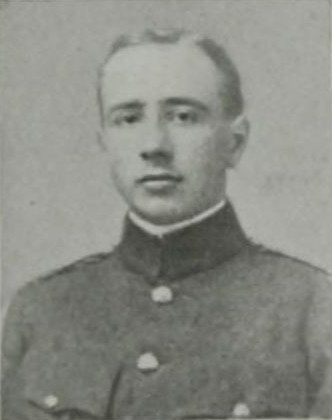
George E. F. Campbell.
CAMPBELL, GEORGE JACKSON, Stoker, 1st Class (R.F.R., B. 8270), S.S. 104251, H.M.S. Hawke; lost when that ship was torpedoed in the North Sea, 15 Oct. 1914.
CAMPBELL, HAROLD EDGAR, Cook’s Mate, M. 2482, H.M.S. Aboukir; lost in action in the North Sea, 22 Sept. 1914.
CAMPBELL, JAMES, Private, No. 4121, 1st Battn. Irish Guards, 3rd s. of Michael Campbell, of Tubberfin, Drogheda, Labourer, by his wife, Jane, dau. of the late Patrick Kelly, of Howth; b. Sheephouse, Drogheda, 20 July, 1890; educ. Donore National Schools; enlisted 20 May, 1912, and was killed in action at Givenchy, 11 March, 1915; unm.
CAMPBELL, JOHN, Private, No. 19984, 4th Battn. Canadian Expeditionary Force, eldest s. of the late Archibald Campbell, by his wife, Helen Hogg (1, St. Ninian’s Terrace, Edinburgh), dau. of the late James Lawson; b. Glencorse, Midlothian, 24 Dec. 1878; educ. George Heriot’s School, Edinburgh; joined the Army and served with the Irish Guards, 1900–3, and afterwards went to British Columbia gold mining. He joined the 4th Battn. 1st Canadian Contingent, 1914, and died at No. 1 Canadian Field Ambulance, 24 May, 1915, of wounds received in action; unm.
CAMPBELL, JOHN DAVIES, Lieut., L Battery, R.H.A., eldest s. of John Davies Campbell, of Howden Court, Tiverton; b. Tacna, Chili, 1 March, 1883; educ. Cheltenham College and Royal Military Academy, Woolwich; entered the Army, 21 Dec. 1901, was promoted Lieut. 21 Dec. 1904, and was killed in action at Nery, near Compiégne 1 Sept. 1914. He was mentioned in F.M. Sir John French’s Despatch of 8 Oct. 1914.
CAMPBELL, JOHN GORDON, Private, No. 4296, 2nd Battn. The Royal Scots, 3rd s. of Hugh Campbell, of 852, New City Road, Glasgow, and Clam Cottage, Cloverhill, Glasgow, by his wife, Isabella, dau. of James Munro; b. at North Woodside Road, 16 Sept. 1876; educ. Henderson Street School, Glasgow; enlisted 1891, and was a Reservist when called up on mobilisation, 5 Aug. 1914; killed in action at Kemmel, 22 April, 1915. He m. at Glasgow, 20 Feb. 1903, Alice (Clare Cottage, Clover Hill, Drumchapel, Glasgow), dau. of Alexander McDonald, and had a dau., Isabella Munro, b. 6 Aug. 1906.
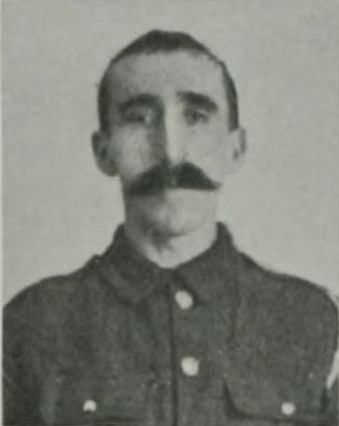
John Gordon Campbell.
CAMPBELL, KEITH MOREHEAD GUNNING, Sub-Lieut., R.N., yst. s. of Col. Gunning Campbell, Royal Marine Artillery, by his wife, Sophia Charlotte Jean, dau of the Rev. George Barber Peregrine Viner, M.A., and great-gdson, of William Campbell, of Fairfield; b. Eastney Barracks, Portsmouth, 23 Dec. 1892; educ. Haskoll’s School, Folkestone, Suffolk House, Cheltenham, Pelham House, Folkestone, and the Osborne (15 Sept. 1905, to 14 Sept. 1907) and Dartmouth (15 Sept. 1907, to 14 Sept. 1909) Royal Naval Colleges, being Chief Cadet Capt. at the latter. He served on H.M.S. St. Vincent (May, 1910–June, 1911); the Cochrane, which formed one of the escort on the occasion of the King’s visit to India (June, 1911–May, 1912), the Achilles (May, 1912–Sept. 1913), and the Albemarle, joining H.M.S. Lawford in the spring of 1914. He was present at the sinking of the Konigin Louise, and the engagement off the Bight of Heligoland. He was commissioned to the Arrogant on 30 Nov. 1914, for submarine service, and died between 4 and 12 Jan. the following year while on Active Service on Submarine C 31; unm. A fine Rugby three-quarter back, he several times played in the Royal Navy and United Services Fifteens, his last important match being in the R.N. officers’ team against the Harlequins at the turn of the season of 1913–14 at Queen’s Club.
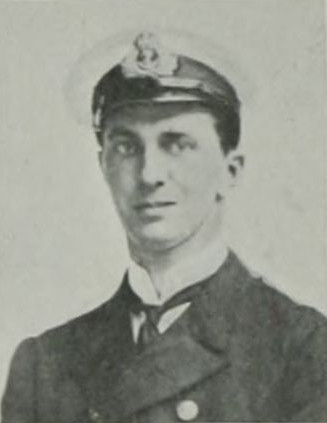
Keith M. G. Campbell.
CAMPBELL, KENNETH JAMES, 2nd Lieut., 9th Battn. Argyll and Sutherland Highlanders (T.F.), only s. of Robert Story Campbell, of Achnashie, Rosneath, co. Dumbarton, retired East Indian Merchant, by his wife, Evelyn Rose, dau. of the late Rev. William Henry Stokes, Vicar of Goring, a nephew of the late Sir James Campbell, K.C.I.E. (of the Bombay Civil Service and compiler of the Bombay Gazetteer), and, gdson. of the late Rev. John Macleod Campbell, D.D.; b. Bombay, 4 Jan. 1891; educ. at Rottingdean and Marlborough, he proceeded with a scholarship to Magdalen College, Oxford, where he took his degree with honours in History in 1912, and in “Greats” in 1914. He had originally intended to take orders in the Church of England, and on leaving the University in 1913 joined the Magdalen College Mission in the Euston Road. On the outbreak of war, however, having been for eight years a cadet in the O.T.C. at Marlborough and Oxford, he applied for a commission, and on 2 Sept. was gazetted to the 1/9th Argyll and Sutherland Highlanders, leaving Bedford with his regt. on 19 Feb. for France. He was killed in action near Ypres, being struck by a shell while in charge of machine guns, 10 May. 1915; unm. His commanding officer wrote that he died “doing his duty nobly.” His platoon Sergt. that “He was a brave young officer and the pride of all the platoon.” A brother officer, writing on 13 May, stated: “I was myself slightly wounded the same day, so was not on the spot when he was killed, but I understand that he was wounded by a shell, but that he continued to serve the gun until a second shell killed him.” He was stroke of his college boat in the Torpids when Magdalen was head of the river in Feb. 1913.
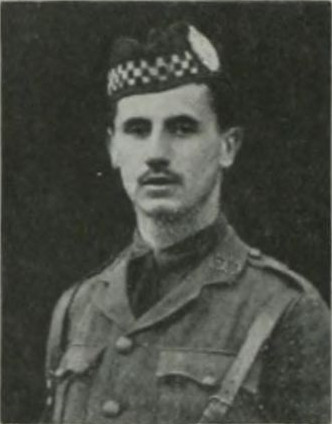
Kenneth James Campbell.
CAMPBELL, KENNETH McKENZIE, Corpl., No. 17101, 7th Battn. (British Columbia Regt.) Canadian Expeditionary Force, 2nd s. of James Campbell Campbell, of Dublin, by his wife, Jane Davidson, dau. of the late John Christie, of Bankhead, Aberdeen, and gdson. of the late Sergt. and Master Tailor Alexander Campbell, 93rd Sutherland Highlanders (who served 28 years); b. Dublin, 3 Aug. 1884; educ. Hardwicke National School there; went to Canada in April, 1906; enlisted on the outbreak of war in Aug. 1914; came over with the first contingent; was wounded at Festubert, 23 April, 1915; and promoted Corpl. on his return to duty, 16 May following, but was killed in action at Givenchy eight days later, 24 May, 1915; unm.
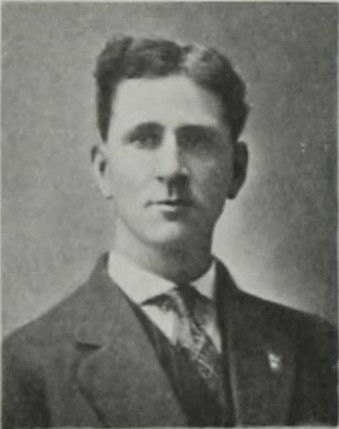
Kenneth M. Campbell.
CAMPBELL, MALCOLM DRING, Lieut., R.N.V.R., 3rd s. of the Rev. Herbert Ernest Campbell, of The Abbey, Carlisle, Canon of Carlisle; b. St. George’s Vicarage, Millom, 5 Sept. 1890; educ. Loretto; was a Cotton Broker in the firm of Bushby Bros., Liverpool, but on the outbreak of war in Aug. 1914. joined the R.N.V.R. He served through the siege of Antwerp, and was afterwards sent to the Dardanelles, and was killed in action there, 2 May, 1915; unm. He was a good sportsman, played football for Birkenhead Park, and rowed for the Mersey Rowing Club.
CAMPBELL, MALCOLM JAMES, Private, No. 53323, 18th Battn. Canadian Expeditionary Force, 2nd s. of the late Malcolm Campbell, of Lismore, co. Argyle, by his wife, Mary (Backwater School House. Dykends, by Alyth, co. Perth), dau. of George M. Forrester, of Tayport; b. Tayport, co. Fife, 4 Aug. 1894; educ. at Tayport; emigrated to Canada in Oct. 1912, and after the outbreak of war enlisted at Kingsville in Nov. 1914. After going through a course of training at London, Ontario, he came to England in May, 1915, and was in camp at Sandling, Kent, till Sept., when the battn. went to the Western Front. Private Campbell was killed in action near Ypres, 13 Oct. 1915; unm. The Chaplain wrote that he “had indeed proved himself a very faithful soldier,” and had “done his part always well.” He was buried in Ridgewood Cemetery, Dickebusch, south-west of Ypres, Belgium.
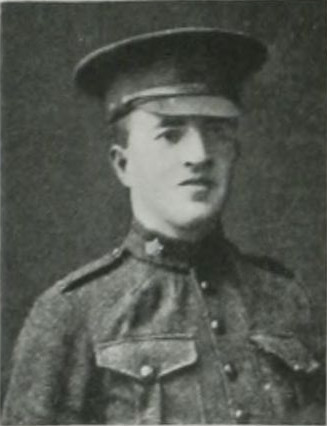
Malcolm James Campbell.
CAMPBELL, ROBERT, Private, No. 2105, 4th Battn., 1st Brigade, Australian Imperial Force, eldest s. of Kenneth Campbell, of Wick, by his wife, Isabella, dau. of David Sutherland, of Duncansbay; b. Wick, 13 Jan. 1873; educ. there; went to Australia in 19—, and settled at Sydney. After the outbreak of war he joined (Feb. 1915) the Commonwealth Expeditionary Force, and was killed in action at Lone Pine, Gallipoli, between the 6–9 Aug. 1915. He was one of the few who took the Turkish trench, and was found beyond it. A letter from the Chaplain said: “He fought like a hero, and died as such, and they buried him a few days later in the military cemetery at Burrows Dip.” He m. at Barry, co. Glamorgan, 6 Aug. 1904, Flora Hannah (9, Trenwith Terrace, St. Ives, Cornwall), dau. of the Rev. Henry Roe, and had a dau., René, b. 7 Aug. 1905.
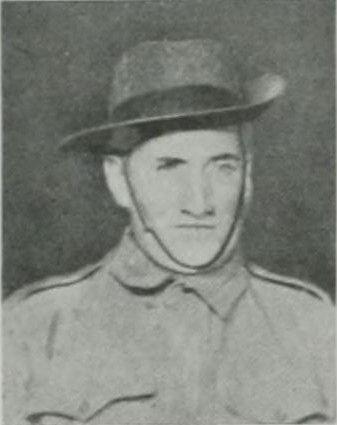
Robert Campbell.
CAMPBELL, ROBERT CHARLES COWBURN, Capt., 3rd King’s Own Scottish Borderers, s. of Col. Robert Neil Campbell, of Elsieshields, Lochmaben, co. Dumfries, C.B., C.I.E., M.B., I.M.S. (ret.), by his wife, Ethel, dau. of Benjamin Bensley; b. Shillong, Assam, India, 26 March, 1889; educ. Dollar Institution, Edinburgh Academy and King’s College, Cambridge. He entered the Bombay Burma Trading Corporation, Ltd., in 1910, and was home on leave when war broke out. He volunteered, and was gazetted 2nd Lieut. to the 3rd King’s Own Scottish Borderers, 4 Sept. 1914, being promoted Lieut. 9 Nov. 1914, and Capt. 5 Feb. 1915. He was attached to the 2nd Highland L.I., and served with them in the trenches from Dec. 1914, to March 1915, and at Givenchy and Neuve Chapelle. He reverted to the 2nd King’s Own Scottish Borderers in April, 1915; was in the attack and capture of Hill 60, and was wounded in the counter-attack at Ypres on 23 April, 1915. He died at Queen Alexandra’s Hospital for Officers, Highgate, 19 May following; unm. He was in the Rugby and cricket teams of the Edinburgh Academy, and obtained his Blue at Cambridge for Rugby football, and was in the King’s College Rugby and soccer football, cricket and hockey teams. His yst. and only surviving brother, Lieut. G. E. F. Campbell, was killed in action at the Dardanelles (see his notice).
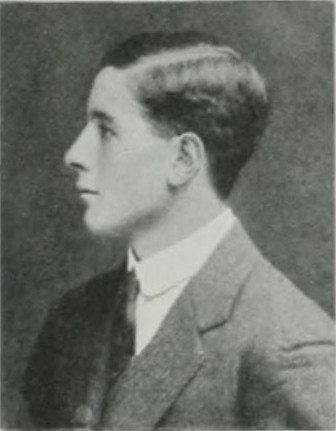
Robert C. C. Campbell.
CANDY, PHILIP SADLER, Midshipman. R.N., 2nd s. of John Alfred Sadler Candy, of Kingston, Angmering, co. Sussex, by his wife, Emily Louisa French, dau. of Capt. Edward Holland Hills, R.N., of Littlehampton, co. Sussex; b. 24 Feb. 1899; educ. Charlecote, Worthing; entered the Osborne Class on H.M.S. Conway, Jan. 1911, and afterwards went through a course of training at Dartmouth. He became Midshipman in Aug. 1914, and was lost on H.M.S. Monmouth in the naval action off Coronel, on the coast of Chili, 1 Nov. 1914. A tablet to his memory was placed in Ferring Parish Church, near Worthing.
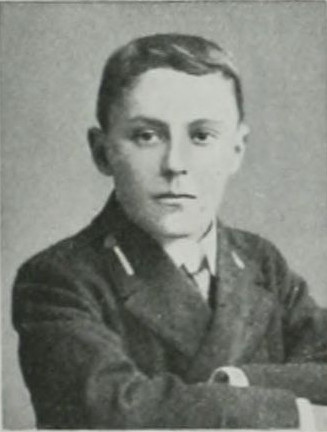
Philip Sadler Candy.
CANHAM, HERBERT, Private, R.M.L.I. (R.F.R., B. 861), H.M.S. Cressy; lost in action in the North Sea, 22 Sept. 1914.
CANN, CHARLES, E.R.A., 4th Class, M. 4211, H.M.S. Hogue, s. of Robert Cann, of 81, Percy Place, Dublin; lost in action in the North Sea, 22 Sept. 1914.
CANN, ROBERT HENRY, Stoker, 1st Class, K. 14258, H.M.S. Good Hope; lost in action off Coronel, on the coast of Chili, 1 Nov. 1914.
CANNON, CHARLES EDWIN, Private, No. 1972, 5th Battn. Queen’s Royal West Surrey Regt. (T.F.), s. of the late (—) Cannon, by his wife, S. (Felix Cottages, Updown Hill, Windlesham, Surrey); b. Windlesham, co. Surrey, 16 April, 1885; educ. Windlesham Board School; joined the Surrey Territorials in 1912; volunteered for foreign service after the outbreak of war; left England with the Mediterranean Expeditionary Force ....; was severely wounded in the chest at the Dardanelles and sent to Alexandria, and died on the hospital ship Asturias on his way back to England at 2 p.m. 23 Sept. 1915; unm. Buried at sea.
CANNON, HUGH STANLEY, Corpl., No. 28754, and Motor Despatch Rider, R.E., 2nd s. of the late Alfred Cannon, of Sandford-on-Thames, Oxford; b. Sandford-on-Thames, 15 Oct. 1888; educ. Roysse’s School and Magdalen College, Oxford. On the outbreak of war enlisted in the R.E., was promoted Corpl., attached to the 6th Cavalry Brigade, 3rd Cavalry Division (as despatch rider), and left for the Front, 6 Oct. 1914; served in France and Flanders, and was killed whilst on his motor bicycle carrying Despatches at the First Battle of Ypres, 31 Oct. 1914; unm. He was buried at Ypres Menin. His commanding officer wrote: “He was one of the nicest men to work with I have ever met, and all the officers on the staff think the same. He was always cheerful and keen to do his best, which was very good.”
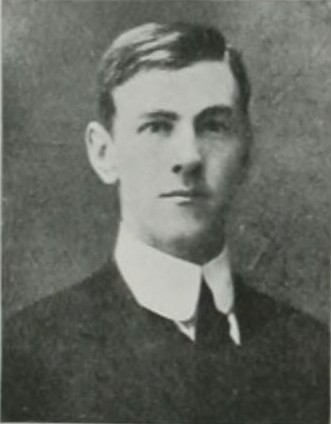
Hugh Stanley Cannon.
CANNONS, FRANK JOHN, Stoker, 1st Class (R.F.R., B. 3952), S.S. 101990, H.M.S. Good Hope; lost in action off Coronel, on the coast of Chili, 1 Nov. 1914.
CANTON, CHARLES JOHN, Gunner, No. 2/299, 1st Battery New Zealand Field Artillery, 3rd s. of the late George Canton, of Palmerston North, New Zealand, Farmer, by his wife, Mary, dau. of James Roberts, of Nelson, New Zealand; b. Ngatimoti, Nelson, New Zealand, 22 Aug. 1876; educ. Public School there. On the outbreak of war joined the New Zealand E.F., 8 Aug. 1914, and was killed in action at the Dardanelles, 19 May, 1915; unm. Col. Meldrum wrote he “was hit and killed instantly by a Turkish bullet on the 19th., I met him two days previously, he had put in three weeks’ work with his guns. He was happy and elated, he was having the time of his life”; and Major McGilp, O.C. 1st Battery: “His grave is on the heights of Anzac, in a nice spot close to the battery, which enables our men to keep it in proper order. We obtained a large wooden cross from Egypt, which will answer the purpose until a more permanent memorial can be erected.” He was a County Councillor, member of the Wellington Land Board, etc., and a keen and enthusiastic sportsman.
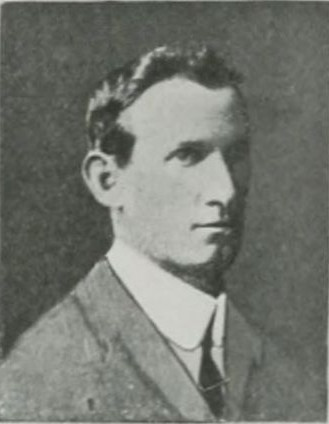
Charles John Canton.
CANTON, HERBERT WESTRUP, Lieut., 1st Battn. East Lancashire Regt., only s. of Frank Canton, Merchant (of a Huguenot family), by his wife, Florence; b. Walton-on-Thames, 6 March, 1892; educ. Magdalen College School, Oxford, and Sandhurst; gazetted 2nd Lieut. 13 March, 1912; went to the Front with the Expeditionary Force in Aug. 1914; first came under fire at Le Cateau, where his platoon suffered heavy casualties; took part in the retreat from Mons, and was present at the Battles of the Marne and the Aisne. Through the winter of 1914 he was with his regt. in the trenches near Armentières, and was killed in action in the trenches near Ypres, 13 May, 1915, after repelling a strong German attack. He was buried at Wieltje; unm. Though promoted to the command of his company from 5 Mar. 1915, his appointment to rank as from 31 March, 1915, was only gazetted after his death.
CAPELL, ARTHUR GEORGE CONINGSBY, Capt., 2nd Northamptonshire Regt., only s. of the Rev. George Marie Capell, Rector of Passenham, co. Northampton (d. 1 Feb. 1915), by his wife, Annie, dau. of Peter Stanley Lowe, of Whitehall Churchstow, co. Devon, and gdson. of the Hon. Adolphus Capell, brother of Arthur Algernon, 6th Earl of Essex; b. Passenham, Stony Stratford, 28 June, 1879; educ. by private tutor; joined the Northamptonshire Imperial Yeomanry in Jan. 1900, sailing with them for South Africa, 16 March the same year; took part in the operations in the Transvaal (Queen’s medal with five clasps); returned in June, 1901, and 12 months later joined 3rd Battn. Northants Militia, obtaining one of the late Earl Roberts’ commissions, 17 May, 1902, for which he was specially recommended by his Adjutant. He was promoted Lieut. 27 Feb. 1904, and obtained his company 20 Nov. 1910. On the outbreak of war he was with his regt. in Alexandria; they returned to England and went to France, 4 Nov. 1914. In the fighting near Neuve Chapelle on 12 March, 1915, he was twice wounded in the hand and side, but refused to fall out, and went on leading and cheering his men till finally shot through the head, falling into the arms of his colonel, Col. C. Richard, D.S.O., C.B. He was buried behind the lines at Neuve Chapelle with his great friend, Capt. H. Power, adjutant to the regt., and 19 men of his company who fell that same day. The second in command wrote: “He was a brilliant officer, and deeply regretted by all the regt.” Capt. Capell m. at Whatstandwell, 20 Oct. 1914, Phyllis, dau. of Maurice Deacon, of Chase Cliffe, Whatstandwell, co. Derby, s.p. Capt. Capell was mentioned in F.M. Sir John French’s Despatches [London Gazette, 22 June, 1915] for gallant and distinguished services.
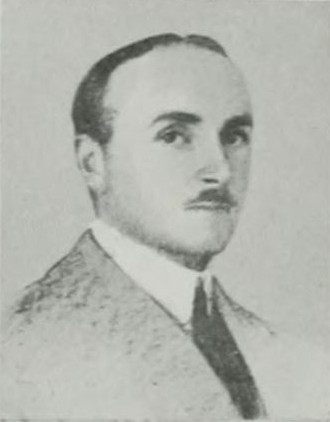
Arthur G. C. Capell.
CAPPER, WILLIAM, Stoker, 1st Class (R.F.R., B. 4253), S.S. 102941, H.M.S. Good Hope; lost in action off Coronel, on the coast of Chili, 1 Nov. 1914; m.
CARBAN, WILLIAM HENRY, A.B. (R.F.R., B. 2796), 165857, H.M.S. Cressy; lost in action in the North Sea, 22 Sept. 1914; m.
CARBERY, MILES BERTIE CUNNINGHAME, Capt., 1st Battn. Princess Victoria’s Royal Irish Fusiliers, yst. s. of the late William Edward Carbery, of 17, Hartington Mansions, Eastbourne, by his wife, Florence, dau. of the late Charles William Jebb, formerly in the 60th Rifles; b. at Bangalore, 6 June, 1877; educ. at the Oxford Military College; gazetted 2nd Lieut. from the Militia to the Royal Irish Fusiliers, 1 Dec. 1897, and promoted Lieut., 1 Dec. 1899, and Capt., 17 Feb. 1903, and was Adjutant to the Special Reserve, 10 March, 1910, to 2 Nov. 1913; served in South African War, 1899–1900; was present at the operations in Natal, including the action at Talana, where he was dangerously wounded (Queen’s medal with clasp); and with the Expeditionary Force in France and Flanders, from Aug. 1914; was killed in action at Houplines, Northern France, 17 Oct. 1914, while bravely leading his men. He m. at St. Columba’s, Pont Street, S.W., 24 Sept. 1908, Dora, dau. of the late Right Hon. Thomas Sinclair, P.C., of Hopefield House, Belfast; s.p.
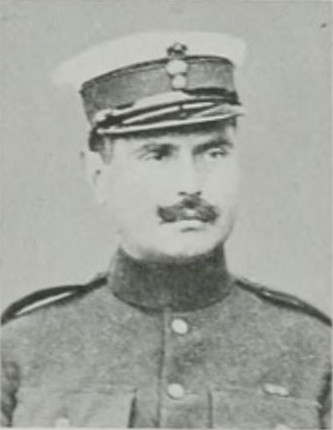
Miles B. C. Carbery.
CARDEN, DERRICK ALFRED, Major, 2nd Battn. Seaforth Highlanders (Ross-shire Buffs), and temp. Lieut.-Col., 7th Battn. Argyll and Sutherland Highlanders, yst. s. of the late Sir John Craven Carden, of Templemore Abbey, 4th Bt., by his 2nd wife, Julia Isabella (Wertown, Straffan, co. Kildare), dau. of Admiral Charles Gepp Robinson; b. Templemore Abbey, co. Tipperary, 27 March, 1875; educ. Wellington College; gazetted 2nd Lieut. Seaforth Highlanders from the Militia, 7 Dec. 1895, and promoted Lieut., 30 Aug. 1899, Capt., 3 July, 1901, and Major, 23 May, 1915, and was Adjutant from 10 May, 1911, to 9 May, 1914. He served in the Nile Expedition, 1898, and was present at the Battles of Atbara and Khartoum; and subsequently on the North-West Frontier of India, 1908, and during the operations in the Zakka Khel country (medal with clasp). On the outbreak of the European War he went to France with the Expeditionary Force, and was wounded on the Aisne in Sept. 1914, and was invalided home; returning to the Front in Dec. On 7 March, 1915, he was given command of the 7th Battn. Argyll and Sutherland Highlanders, with the rank of Lieut.-Col., and died of wounds received in action near Ypres, 25 May, 1915; unm. Buried in the Military Cemetery at Hazebrouck.
CARDY, GEORGE JAMES, Stoker, 1st Class, 302500, H.M.S. Pathfinder; lost when that ship was sunk by a mine, about 20 miles off the East Coast, 5 Sept. 1914; m.
CAREW, FRANCIS LUDOVIC, 2nd Lieut., 20th Hussars, yr. s. of Charles Robert Sydenham Carew, of Warnicombe, Tiverton, co. Devon, M.P. [grandson of the Rev. Thomas Carew, of Collipriest House, 3rd s. of Sir Thomas Carew of Haccombe, 6th Bart.], by his wife, Muriel Mary, dau. of Sir John Heathcoat-Amory, 1st Bart.; b. Collipriest, Tiverton, 4 March, 1895; educ. Malvern (Mr. Douglas’) and Winchester College; gazetted 2nd Lieut. 20th Hussars 24 Feb. 1914; joined at Colchester, 24 Mar. and was killed in action at Oostaverne, near Ypres, 30 Oct. 1914.
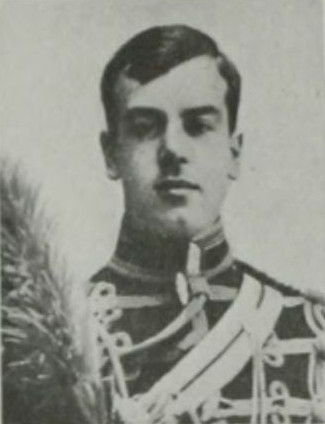
Francis Ludovic Carew.
CAREW, JASPER, 2nd Lieut., 1st Battn. West Yorkshire Regt., yr. s. of the late Rev. Henry William Carew, Vicar of Rattery, South Brent, co. Devon [great-gdson. of Sir Henry Carew, of Haccombe, 7th Bart.], by his wife, Maude Eliza (Airlea, South Brent, Devon), dau. of the Rev. Fitzwilliam John Taylor, Rector of Haccombe and Ogwell; b. Rattery Vicarage, South Brent, co. Devon, 29 June, 1894; educ. The School, Malvern Link, Blundell’s School, Tiverton, and the Royal Military College, Sandhurst. He joined the 1st West Yorkshire Regt. as 2nd Lieut. 22 Feb. 1914, and was killed in action while leading his platoon near Hazebrouck, 14 Oct. 1914. He was buried in the cemetery at Doulieu, Nord, France, and a stone with his name, etc., on it was erected by the Canadians. Lieut. Carew’s Commanding Officer wrote of him: “He fell while gallantly leading his platoon in an advance guard action near Hazebrouck. It was quite instantaneous, and he suffered no pain and never moved. He was beloved by every one, always cheery and bright under all circumstances, and we had some trying ones. A most promising officer, absolutely fearless, and had done so well.”
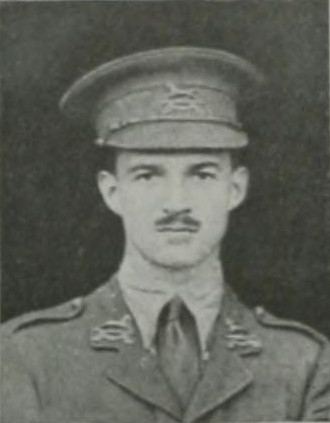
Jasper Carew.
CAREY, EDWARD, Ordinary Seaman, J. 17011, H.M.S. Pathfinder; lost when that ship was sunk by a mine, about 20 miles off the East Coast, 5 Sept. 1914.
CAREY, JEFFREY HUELIN, Private, No. 3555, 1/4th Battn. (Royal Fusiliers) The London Regt. (T.F.), eldest s. of Ernest Rutherford Carey, of Melbourne, Australia, Accountant, by his wife, Mabel Marion (6, Park Road, Brentwood, Middlesex), dau. of Thomas Shann Detham, of Leeds, Yorks; b. Melbourne, Victoria, 13 Oct. 1898; educ. Merivale, Bexhill-on-Sea, City of London School (1909–11) and Brentwood Grammar School (1911–14); joined the 1/4th London Regt. 6 Jan. 1915, and was killed in action at Ypres, 27 April, 1915; unm. His Major wrote in a letter of sympathy: “Your son was a good boy, and faced the fire without fear. He was unfortunately hit, death being instantaneous. I enclose you a small sketch map, showing the spot where I had him buried by the side of a comrade who was killed at the same time. I hope the map will be clear to you; the grave lies in the corner of the field about 3 yards from each hedge, and at present has a small cross at its head bearing his name, number and regt.”
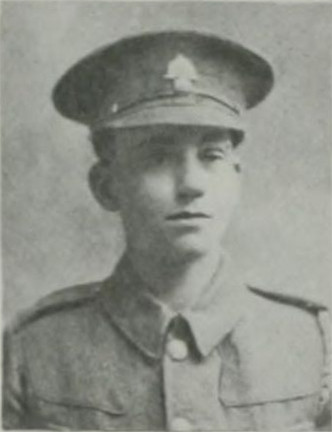
Jeffery Huelin Carey.
CAREY, JOHN, Private, R.M.L.I., Ch./14142, H.M.S. Cressy; lost in action in the North Sea, 22 Sept. 1914.
CARGO, JAMES ROY, Lieut., Taranaki Coy., Wellington Infantry Battn. New Zealand Expeditionary Force, s. of the late (—) Cargo; b. Auckland, 1892; educ. Auckland Grammar School; was a member of the Highland Rifles, and on the outbreak of war in Aug. 1914, volunteered for Imperial service; left for Egypt in Oct.; took part in the landing at the Dardanelles, 25 April; was promoted Coy. Sergt.-Major, 8 May, 1915, and Lieut., on 29 May, and was transferred to the Ruakine Coy. on 2 June, 1915. He was killed in action at Courtney’s Post, Gallipoli, 3 June, 1915, and was buried in New Zealand Officers’ Cemetery there; unm. Sergt.-Major Seldon wrote: “He was shot through the head, and died before they could take him out of the trenches. I have the personal guarantee of the doctor who attended him (Dr. Ross, of New Plymouth) that he did not regain consciousness. Major Cox entrusted me personally with the duties of his burial. That evening I called for volunteers, and the whole of his company was forthcoming. We restricted it to a few of his most intimate friends, all ranks being represented. Under heavy shrapnel fire, but under cover of darkness, we buried dear old Roy with full soldier’s funeral rites and honours under the hill overlooking the sea,” adding, “Roy was the first in our battn. to receive a commission on his merits from the ranks. Having speedily proved his worth as a soldier he was on 8 May promoted to Coy. Sergt.-Major, and on 29 May was appointed Lieut., being transferred to the Ruahine Coy. on 2 June. Alas! his chance of further distinguishing himself was soon cut off, for in his first action as Lieut. he was, 3 June, sadly accounted for. It was at Courtney’s Post he gave his life for his country.”
CARLETON, THOMAS, Private, No. 12491, 1st Battn. Coldstream Guards, s. of Patrick Carleton, of 7, Wellington Place, Enniskillen, co. Fermanagh, Master Tailor, by his wife, Anne, dau. of William Maguire, of Drumlyon; b. Enniskillen, 16 Sept. 1894; educ. Presentation Bothes’ School there; went to London in 1912, and was a Vanman. After the outbreak of war he enlisted in the Coldstreams, 14 Sept. 1914, went out to the Front in Feb. 1915, and was killed by a sniper whilst on outpost duty, 1 April, 1915; unm. He was buried on the east side of the road from Rue de Berceaux to Rue du Bois.
CARLISLE, JOHN EDWARD GORDON, Capt., 107th Pioneers, Indian Army, eldest s. of Edward Carlisle, M.A., Army Tutor, of 7, Lexham Gardens, London, W., by his wife, Sarah, dau. of William Clegg, late of Highbury; b. Wargrave-on-Thames, 10 June, 1885; educ. St. Paul’s School, where he was a member of the O.T.C., and Sandhurst. On passing out of Sandhurst on the unattached list for the Indian Army, he was attached to the North Staffordshire Regt., 13 Aug. 1904, and afterwards joined the 114th Mahrattas, being subsequently transferred to the 107th Pioneers. He was promoted Lieut. 7 Jan. 1907, and Capt. 13 Aug. 1913; went to France with his regt. in Sept. 1914, and died in the military hospital, Bethune, 11 May, 1915, of wounds received in action near Neuve Chapelle on the 9th. He was buried in the Civil Cemetery, Bethune; unm. A brother officer wrote: “He went up with our machine gun in support of the Dehra Dun Brigade when they were attacked. He got up with the guns as far as the firing line, but then they got the order to retire, and as he was retiring with the machine gun detachment down a trench he was shot through his belt. He was unable to move but quite sensible, and told the machine gun section to leave him with his pistol. They, however, carried him back and got him to the dressing station. It has cast a gloom over the regt., as he was very popular, and all the Sepoys are very sad about it. He was attached to the 2nd Gurkhas when he received his death wound, and the commanding officer of that regt. spoke very highly of the conduct of the machine gunners. You have the consolation that he died a very gallant death, right up in the firing line, doing his job to the last.” Capt. Carlisle was the holder of the Officers’ Light Weight (Boxing) Championship of India, won at the Delhi Durbar.
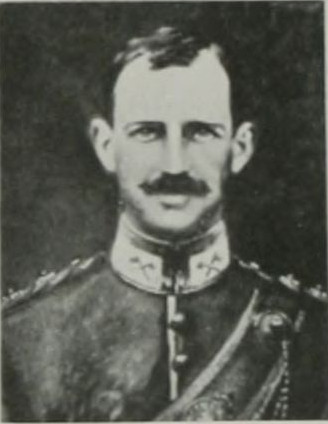
John Edward G. Carlisle.
CARLTON, GEORGE EDWARD, A.B., 228168, H.M.S. Laurel; killed in action in the Heligoland Bight, 28 Aug. 1914.
CARLTON, LAURENCE, Private, No. 36562, 40th Field Ambulance, R.A.M.C., only s. of Arthur Carlton, High Sheriff and Alderman of Worcester, owner of several London and provincial places of amusement, by his wife, Maude, dau. of Graham Seymour; b. London, 4 May, 1892; educ. City of London School, Worcester Royal Grammar School, and Birmingham University, matriculating at London University. He had passed all his examinations for the dental profession except the final, and was to have taken that in Nov., but war breaking out in Aug. 1914, he volunteered and enlisted in the R.A.M.C. on the 29th of that month, and was attached to the Nursing Section. He left for the Dardanelles with the Mediterranean Expeditionary Force, and was killed in action at 5.30 a.m. on 9 Aug. 1915; unm. The Adjutant (Capt. E. F. Burke) wrote: “We had gone out to a valley and had opened up an advanced dressing station there to attend to the wounded. They were just behind the firing line, and were under shell and rifle fire all the time. Your son was bravely dressing a wounded man on a stretcher, and as he was kneeling down adjusting the bandage a machine gun opened fire on us, and he was shot through the heart whilst doing his duty. He died a very brave soldier’s death, and had all along displayed the greatest courage under fire. He was buried by his comrades where he died. He was a very great favourite with all.” Carlton was a good amateur athlete. He won the mile race at the University Sports on three occasions, and also won the Old Boys’ race at the Grammar School Sports.
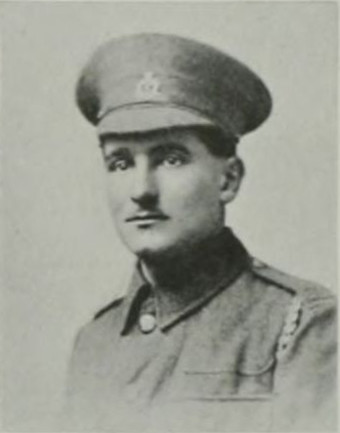
Laurence Carlton.
CARLYLE, ROBERT, 2nd Lieut., 1/5th (Dumfries and Galloway) Battn. King’s Own Scottish Borderers (T.F.), elder s. of Thomas Robert Carlyle, of Waterbeck, co. Dumfries, by his wife, Jean Graham, dau. of Alexander Miller, of Caithness; b. Waterbeck, 12 Oct. 1892; educ. St. Mary’s, Melrose, and Edinburgh Academy; volunteered and enlisted in the 5th King’s Own Scottish Borderers immediately on the outbreak of war; was given a commission as 2nd Lieut. 26 Aug. 1914; left for Gallipoli 28 May; landed at the Dardanelles 8 June, and was killed in action there 12 July, 1915; unm. He was a member of the Academy Rugby XV, who were Scottish School Champions for the season 1910–11.
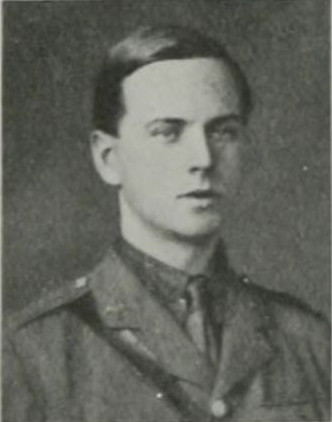
Robert Carlyle.
CARMICHAEL, DAVID, Private, No. 1922, 10th Battn. Australian Imperial Force, s. of James Carmichael, of Whin Cottage, Comrie, co. Perth, Builder; b. Comrie, 8 March, 1886; educ. Comrie Public School; became a mason, and after serving his apprenticeship went to Melbourne about 1907; volunteered for Imperial service after the outbreak of war; left with the fifth reinforcement for the Dardanelles, and was killed in action there, 14 Aug. 1915. He was a student of natural history, could tell a bird at a glance, and had made a fine collection of British ferns. Private Carmichael m. in Australia, Carrie, dau. of (——) Kinnley; s.p.
CARMICHAEL, JOHN, Corpl., No. 3653, 1st Battn. Royal Scots, s. of John Carmichael; b. Glasgow, 3 June, 1877; enlisted 20 July, 1894 (No. 5095); served in India, 21 Oct. 1896, to 1 March, 1902, and in South Africa (medal with clasp “Transvaal, 1902”), 2 March to 27 Sept. 1902; obtained his discharge, 19 July, 1906; worked as a Dock Labourer; re-enlisted 27 Aug. 1914; became L.-Corpl. 26 Sept. 1914; Acting Corpl., 27 Oct. following, and Corpl., 2 Feb. 1915; served with the Expeditionary Force in France and Flanders, 2 Feb. to 24 Feb. 1915, on which latter date he was killed in action in the trenches, being shot through the head. He m. at St. Patrick’s Roman Catholic Church, Glasgow, 25 Nov., Bridget (168, French Street, Bridgeton, Glasgow), dau. of William Little, and had seven sons: William John, b. 27 June, 1895; James, b. 27 June, 1897; Patrick, b. 23 Aug. 1903; Peter, b. 14 Aug. 1905; George, b. 9 April, 1911; and Joseph and David (twins), b. 18 Dec. 1913.
CARMICHAEL, ROBERT HENRY MORRIS, Lieut., 5th Battn. (Princess Louise’s) Argyll and Sutherland Highlanders (T.F.), 4th and yst. s. of Thomas Carmichael, of Netherton, Greenock, by his wife, Nina Jane Isabella, dau. of the Rev. David Arthur, of Belize; b. Greenock, 27 Jan. 1895; educ. Collegiate School, Greenock, and Loretto School, Musselburgh, at which latter he joined the Cadet Corps, and became an expert Signaller. On leaving school he was apprenticed to Messrs. Hardie and Rowan, of Greenock, Chartered Accountants, and obtained a commission in the 5th (Renfrew) Battn. (T.F.) of the Argyll and Sutherland Highlanders, 11 March, 1913. He was promoted temp. Lieut. 1 Nov. 1914, this rank being soon afterwards made substantive; landed at the Dardanelles with his battn., and was killed by shrapnel at the head of his company in the attack on the first line of Turkish trenches at Aki Baba in the Gallipoli Peninsula, 12 July, 1915; unm. His three elder brothers are now (1916) on active service, and his two sisters are V.A.D. nurses.
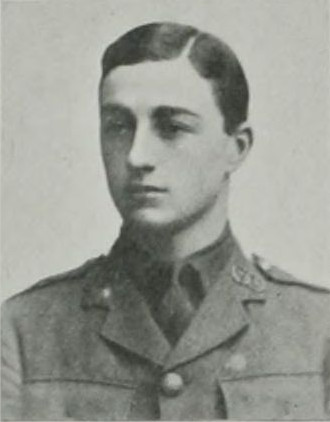
R. H. M. Carmichael.
CARNAGHAN, STANLEY GEORGE, Corpl., No. 2153, D Coy., 5th Battn. Royal Sussex Regt. (T.F.), s. of George Carnaghan, of 174–178, Old London Road, Hastings, by his wife, Ellen, dau. of Henry Clarke; b. Ore, near Hastings, co. Sussex, 18 March, 1888; educ. Clive Vale Board School there; was an ironmonger’s assistant; served in the 1st Cinque Ports Volunteer Rifle Corps (No. 4678) from 25 Oct. 1906, to 31 March, 1908, and on the outbreak of war volunteered for foreign service and enlisted, 12 Aug. 1914; went to France, 18 Feb. 1915, and was killed in action at Richebourg St. Vaast, France, 30 March, 1915; unm. Carnaghan was a good shot, and won first prize at the annual competition in 1907, also two silver spoons, etc. He was buried in the field adjoining the first farm on the east side of the road leading from Windy Corner, Rue des Berceaux to Rue du Bois. Lieut. J. B. Aiton wrote: “As senior subaltern of D Coy. (which is now the old G and H Coys.), I knew your son well, and can assure you we felt his loss deeply. He was a universal favourite, always cheerful, hard working and attentive to his duties.”
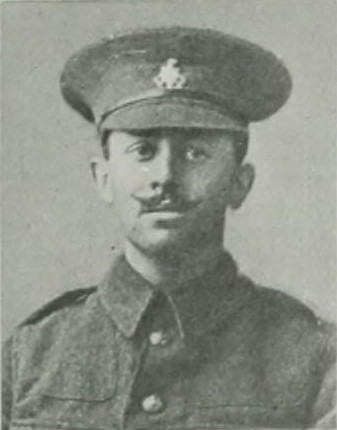
Stanley George Carnaghan.
CARNEGIE, ALEXANDER, Shipwright, 1st Class, 343178, H.M.S. Pathfinder; lost when that ship was sunk by a mine, about 20 miles off the East Coast, 5 Sept. 1914; m.
CARNEY, FRANK, Private, No. 712, 1st Australian Light Horse, Australian Expeditionary Force, elder s. of the late James Carney, Sergt., 3rd King’s Own Hussars, by his wife, Margaret, (5, Queen Street, Cheetham Hill, Manchester); b. The Curragh, Ireland, 31 Aug. 1893; emigrated to Australia in 1912; joined the 1st Australian Light Horse in Aug. 1914, on the outbreak of war, and was killed in action at the Dardanelles, 7 Aug. 1915, during the general assault on the Turkish position that day; unm.
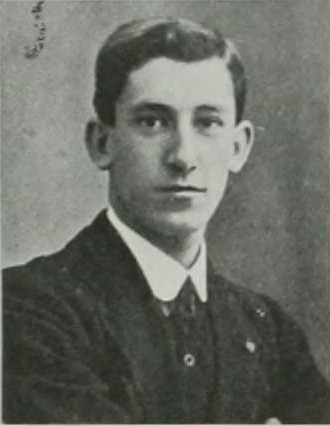
Frank Carney.
CARNEY, HAROLD, Rifleman, No. Z/781, 2nd Battn. The Rifle Brigade, yr. s. of the late James Carney, Sergt., 3rd King’s Own Hussars, by his wife, Margaret, (5, Queen Street, Cheetham Hill, Manchester); b. Salford, co. Lancaster, ... June, 1896; enlisted 2 Sept. 1914, and after four months’ training, left for the Front with a draft for his Battn., and a fortnight later was in the trenches. He received a gunshot wound in the neck on 10 March, 1915, during the first day of the Battle of Neuve Chapelle, and was taken to Boulogne, where he died in hospital on the 16th of the month. He was buried in the Cemetery there; unm. One of the Army Chaplains wrote: “He was a brave boy and bore his suffering with fortitude.”
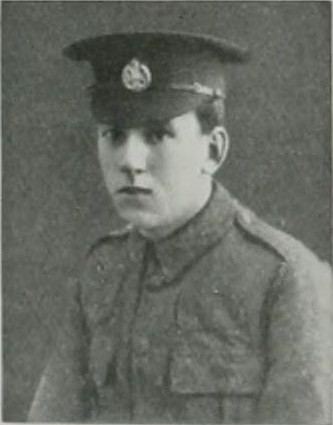
Harold Carney.
CARNOCHAN, ALEXANDER, Private, No. 269, 15th Infantry Battn. 4th Brigade, Australian Imperial Force, eldest s. of the late Alexander Carnochan, of Southsea, formerly Manager of the Bow and Stepney branches of the London & South-Western Bank, by his wife, Mary, dau. of Charles Carter; b. London & South-Western Bank, Bow, 11 March, 1871; served over 15 years in the 1st Royal Scots, and fought throughout the Boer War. He emigrated to Australia, 4 June, 1914, and at the outbreak of the European War joined the Australian Imperial Force. He was wounded on 7 Aug. 1915, at Suvla Bay, near Walker’s Ridge, and died in the 2nd Stationary Hospital at Lemnos on 10 Aug. following. He m. at St. Pancras, 11 Oct. 1899, Edith Rose (82, Lady Margaret Road, Tufnell Park, N.), dau. of Joseph Warren, of co. Herts. and had issue: Douglas Alexander, b. 12 Dec. 1908; Edith Emily Mary, b. 13 June, 1900; Iva Lilian, b. 21 Jan. 1906; and Vera Millicent, b. 17 Jan. 1913.
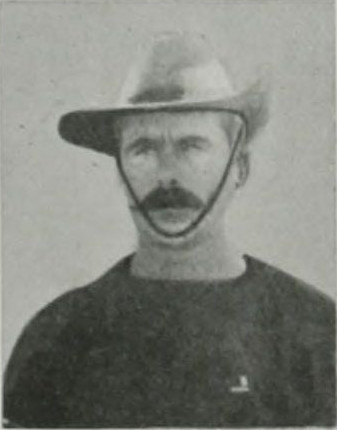
Alexander Carnochan.
CARON, RENE, Private, No. 61987, Platoon 9, C Coy., 22nd Battn. Canadian Expeditionary Force, only child of Alfred Caron, of 19, Rue Pacific, Verdun, Montreal, Canada, by his wife, Marie Louise, dau. of Joseph Bélanger; b. West Farnham, P.Q., 15 July, 1896; enlisted Jan. 1915; left Canada with the second contingent; went to France, 15 Sept., and was killed in action, 17 Oct. 1915; unm.
CARPENTER, DAVID REID, Lieut., 3rd Auckland Regt. (Countess of Ranfurly’s Own), New Zealand Expeditionary Force, s. of Robert Carpenter, Major (retired), N.Z.S. Corps, late A.G. and Q.M.G., Auckland Military District, by his wife, Louisa Catherina Gabrielena, dau. of Simon Peter van Blerk, of Simons Town, South Africa; b. Hounslow, co. Middlesex, 23 Jan. 1893; educ. Grafton Road Public School, Auckland Grammar School, and Royal Military College, Duntroon, Australia (1911–12), and on leaving there entered the employ of Mr. T. H. Dawson, of Auckland, Barrister and Solicitor. He was appointed a 2nd Lieut. in Coast Defence Detachment, 31 May, 1913, and on the outbreak of war volunteered for foreign service, and joined the 3rd Auckland Regt., of which Major T. H. Dawson was appointed Major and officer commanding. He was killed in action at the Dardanelles, 8 May, 1915; unm. Lieut. Carpenter represented Auckland Grammar School in athletics, and was also capt. of No. 8 Company of the School Battn. of Defence Cadets.
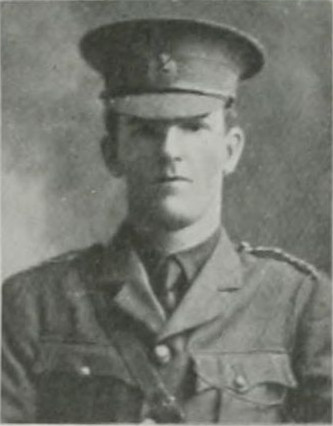
David Reid Carpenter.
CARPENTER, EDGAR STANLEY, Corpl., No. 1494, C Coy., 6th Battn. (Rifles) The London Regt. (T.F.), 3rd s. of Francis George Carpenter, of Bath, by his wife, Alice Elizabeth, dau. of Henry Wickham, 1st class Petty Officer, R.N.; b. Bath, 2 Aug. 1890; educ. Central Walcot School, and in 1905 went to the City Secondary School, where he won a bursarship and student teachership. In 1909 he passed the Oxford Local Examination with first-class honours, and was head of the school, receiving the much-coveted gold medal. Taking up his student teachership at Central Walcot Schools, he showed much promise, and went to Cheltenham Training College, where he remained two years, being in 1913 especially selected for an assistant mastership at a County Council school in London. While at the Bath Secondary School, Carpenter excelled at sports as well as in studies, and on going to St Paul’s, Cheltenham, was placed in the College Rugby XV. He joined the 6th London Rifles soon after coming to town, and was killed in action at La Bassée, 21 April, 1915; unm. His commanding officer wrote, speaking in the highest terms of his bravery in action, and saying that he died while leading and encouraging his comrades. He was buried in an orchard 300 yards north of Givenchy Cemetery.
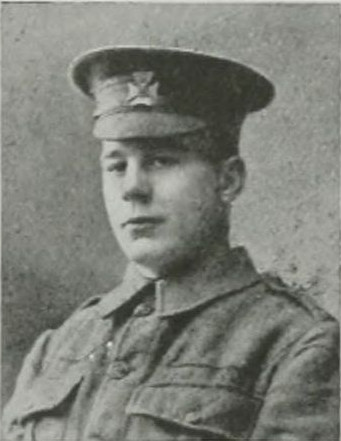
Edgar Stanley Carpenter.
CARPENTER, GEORGE HENRY, Stoker, 2nd Class, K. 21585, H.M.S. Aboukir; lost in action in the North Sea, 22 Sept. 1914.
CARPENTER, JOHN HENRY, Private, No. 8316, 2nd Battn. Canadian Expeditionary Force, 2nd s. of John Martin Carpenter, by his wife, Mary Ann (74, Grecian Street, Maidstone), dau. of Henry Wilson; b. Maidstone, co. Kent, 5 Sept. 1892; educ. St. Paul’s Church School there; went to Canada in April, 1911; joined the Canadian Expeditionary Force on the outbreak of war, came over with the first contingent, and was killed in action at Neuve Chapelle, 8 May, 1915; unm.
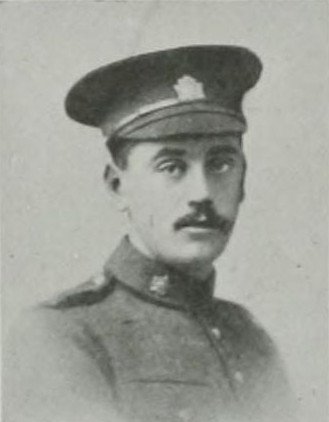
John Henry Carpenter.
CARPENTER, WILLIAM, A.B. (R.F.R., Immed. Class, 314), 203198; H.M.S. Good Hope; lost in action off Coronel, on the coast of Chili, 1 Nov. 1914.
CARR, JAMES, Private, No. 2115, 2nd Battn. Australian Imperial Force, 2nd s. of James Carr, of Fettercairn, co. Kincardine, Master Tailor, by his wife, Margaret, dau. of Robert Milne; b. Fettercairn, 10 Dec. 1874; educ. at Public School there; joined Fincastle’s Horse in 1900, and served through the South African War, after which he joined the South African Mounted Police, in which he served three years, then going to Australia. After the outbreak of the European war he enlisted in March, 1915, in the Commonwealth Expeditionary Force, and was killed in action at the Dardanelles between 6 and 9 Aug. 1915; unm.
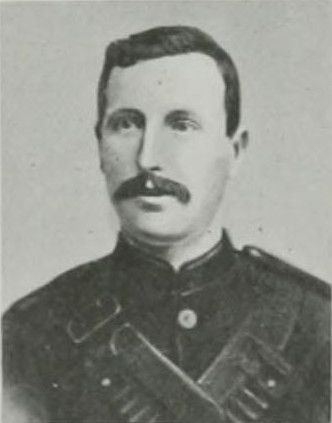
James Carr.
CARR, JOHN WILLIAM, Private, No. 8463, 4th Battn. West Yorkshire Regt.; b. Durham, 16 July, 1878; enlisted in the Yorkshire Regt. (Green Howards); served through the South African War; re-enlisted in the 4th West Yorkshire Regt. 14 Aug. 1914, and died in the General Hospital, Boulogne, as the result of wounds received in action, 26 April, 1915; buried at Boulogne (Grave No. 1713). He m. at Scarborough, 15 Oct. 1898, Elizabeth (2, Eliza’s Place, Canning Street, Hull), dau. of Charles Dyson Whitaker, and had a dau., Christiana, b. 1 Dec. 1906.
CARR, STANLEY JESSE, Private, No. 1285, 13th Battn. (Princess Louise’s Kensington) The London Regt. (T.F.), s. of the late Walter Carr, L.C.C. Tramway Driver, by his wife, Elizabeth (1, Chesson Road, West Kensington), dau. of the late George Ballam; b. Iron Acton, co. Gloucester, 31 Dec. 1893; educ. North End Road Council School, Fulham; joined the Kensingtons in April, 1912, and on the outbreak of war volunteered for foreign service with his regt., and was killed in action while trench digging at Laventie, France, 4 March, 1915; unm. Buried on a farm on the La Bassée road, about a mile and a-half from Neuve Chapelle.
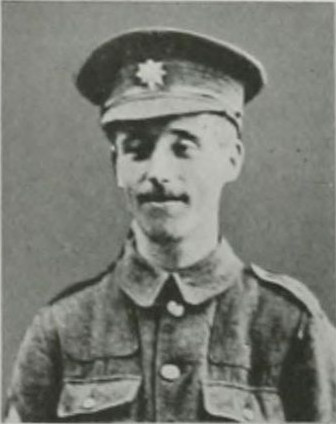
Stanley Jesse Carr.
CARR, TOM ADAMTHWAITE, Corpl., No. 1037, North Riding Battery, R.F.A., 2nd Northumbrian Division, only child of Edward Carr, of Beaconsfield Villas, Scalby, Gardener, by his wife, Jane, dau. of John Hunter Adamthwaite; b. Scalby, 4 Jan. 1881; educ. there; enlisted in 1911, and was killed in action at Ypres, 24 May, 1915; unm.
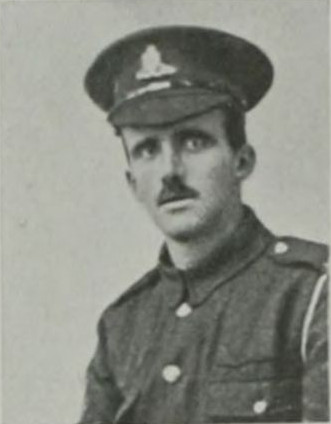
Tom Adamthwaite Carr.
CARRIERE, ALFRED, Private, No. 448043, 25th Battn. Canadian Expeditionary Force, s. of Auguste Carrière, of 607, Johette Street, Hochelaga, Montreal, Canada, by his wife, Elmire, dau. of Antoine Carrière; b. St. Jacques Dembrun, Ontario, 11 Nov. 1898; educ. School of the Nativity, Hochelaga; enlisted in the 57th Battn., 30 June, 1915, and transferred to the 25th, 13 July following; left Canada 9 Aug. 1915, and was killed in action in France, 7 Dec. 1915. Buried in Laletterie Cemetery.
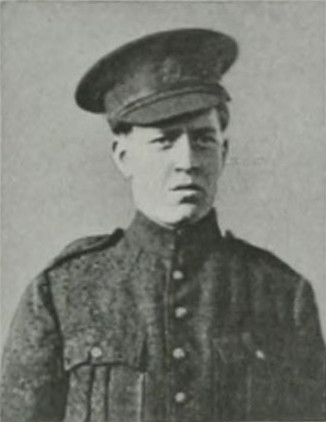
Alfred Carrière.
CARROL, PETER JAMES, Private, No. 29430, 16th Battn. (91st Highlanders) Canadian Expeditionary Force, s. of James Carrol, of 156, Cannon Street West, Hamilton, Ontario, Machinist [b. at Lariston, Scotland], by his wife, Mary, dau. of John Jardine; b. Terra Cotta, Peel Co., Ontario, 16 Oct. 1881; educ. Hamilton, aforesaid; joined the 4th Field Battery in 1898; served with them three years; joined the 91st Canadian Highlanders in 1914; volunteered for Imperial service on the outbreak of the European War in Aug. 1914; came over with the 1st Contingent in Oct.; went to France in Feb., and was killed in action at St. Julien, 23 April, 1915, while on a sniping expedition immediately after the Battle of St. Julien. Buried about 30 yards from the wood of St. Julien. The Corpl. in charge of the expedition wrote from hospital in England: “On the night of 22 April we made a charge, and on the morning of 23 April, just at daybreak, I was sent about 20 yards from the German trench to dig ourselves in with seven men, and Private Peter Carrol, 29430, was one of the men who went with me. It was close to the wood we had taken the night before, so we did not go so far down in the ground when we found we were being fired at from all sides, and there were only three of us left in five minutes, so we tried to move round to the main tunnel, and it was in doing that that Private Carrol was shot through the head. He was as cool under fire as he always was, and had his pipe in his mouth when he left the trench to go out, and sat joking when we were under heavy fire.” Private Carrol m. at Hamilton, 21 Dec. 1903, Margaret Ethel (1, Birch Avenue, Hamilton, Ontario, Canada), dau. of Alexander McIsaac, and had two children: Forence, b. 14 July, 1905; and Auralie, b. 9 May, 1908.
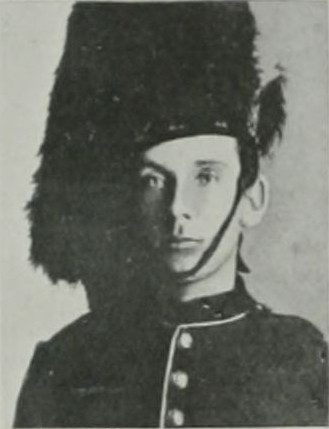
Peter J. Carrol.
CARSON, GEORGE ALFRED, Sergt., No. 811, Princess Patricia’s Canadian Light Infantry, yst. s. of the late Edward Carson, of Manchester, Draper, by his wife, Annie (74, Sandy Lane, Chorlton-cum-Hardy, Manchester), dau. of Thomas Wallworth, of Manchester; b. Bradford, 13 March, 1885; educ. Manchester Higher Grade School, and the Science and Art School; enlisted in the 16th (Queen’s) Lancers in 1902, and served two years in South Africa; obtained his discharge by purchase on the death of his father in 1905; went to Canada in 1909 to take up farming, but afterwards went into the Post Office in Regina; volunteered for Imperial service on the outbreak of war and joined the Regina Legion of Frontiersmen, 9 Aug. 1914, subsequently transferring to Princess Patricia’s Canadian Light Infantry; came over in Oct. 1914; went to France in Dec.; was in action on the 25th, and was promoted Sergt. on the field; was wounded by a stray shell while going to Headquarters at Ypres, 9 May, 1915, and died in the 13th General Hospital, Boulogne, on the 18th. Buried in the Military Cemetery at Boulogne. He greatly distinguished himself after the repulse of the German attack on 8 May by bringing in the wounded, and a comrade wrote: “He returned [from the support trenches to the open] and carried a wounded man back to our trenches. To do this he had to cross an open space 300ft. wide swept by shrapnel and machine guns, he returned four times and brought back a wounded man each time—how he escaped unhurt I cannot imagine. Our company sergt. shook him by the hand and said ‘You are the bravest man I ever met.’” Captain Adamson also wrote speaking highly of his conduct, and added “No braver man ever gave his life for his country.” He m. at Regina, Saskatchewan, Canada, 22 Aug. 1914, Frances Emily, yst. dau. of Thomas (and Marcella) Bolton, of Carlow; s.p.
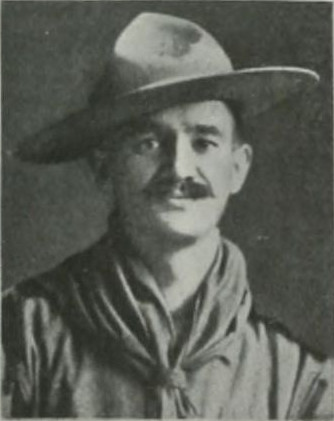
George A. Carson.
CARSWELL, ROBERT NEVIN, 2nd Lieut., 3rd, attd. 2nd, Battn. The King’s Own Yorkshire L.I., eldest s. of John George Carswell, of St. Aubyn’s Park, Tiverton, Devon, by his wife, Sarah Constance, dau. of William Nevin Bell; b. at Shortlands, Kent, 31 Aug. 1889; educ. Blundell’s and Sheffield University, at both of which he was in the O.T.C.; gazetted 2nd Lieut. from the Special Reserve of Officers, 11 Sept. to rank as from 15 Aug. 1914; went to France, 7 Oct. 1914, and was killed in action at Richebourg L’Avoué, 26 Oct. 1914; unm.
CARTER, ARTHUR DONALD DUNDAS, Lieut. 4th Gurkha Rifles, Indian Army, elder s. of Roderick Edmond Carter, of Waratilla, Wimborne Road, Bournemouth, formerly of the Public Works Dept., Bengal, by his wife, Mary Ursula, dau. of Donald William Dundas; b. Arrah, Bengal, 6 Sept. 1888; educ. Charterhouse and Sandhurst; gazetted to the 4th Gurkhas, 9 Sept. 1908, and promoted Lieut. 9 Dec. 1910. He was attached to the Shropshire L.I. from Sept. 1908 till Sept. 1909; served in the Abor Expedition in 1913, and with the Expeditionary Force in France and Flanders during the winter of 1914–15, being accidentally killed near Merville, France, 20 July, 1915, by the explosion of a bomb while instructing his men. He was buried in Merville Cemetery; unm.
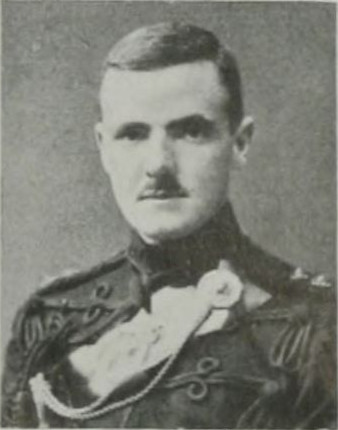
Arthur Donald D. Carter.
CARTER, CHARLES HERBERT EDGAR, Private, No. 10113, 1st Battn. Coldstream Guards, eldest s. of Charles William Peter Carter, of Rose Cottage, Gracious Pond, Chobham, by his wife, Eliza, widow of Amos Packham, dau. of the late William Sadler; b. Laleham, co. Middlesex, 16 Feb. 1895; educ. Long Cross School, near Chertsey; enlisted 2 May, 1913, and was killed in action near Ypres, 29 Oct. 1914; unm.
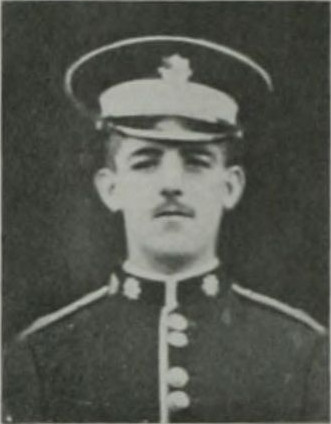
Charles H. E. Carter.
CARTER, EDWARD CHARLES, Rifleman, No. 2373, 17th Battn. (Poplar and Stepney Rifles) The London Regt. (T.F.), yst. s. of John James Carter, of 73, Narrow Street, Limehouse, by his wife, Ada, dau. of James Smith; b. Stepney, 10 May, 1894; educ. St. John’s School, Limehouse; enlisted 1 Sept. 1914; went to the Front 9 March, 1915, and was killed in action at Givenchy on Monday, 17 May, 1915. He was shot through the head, and died shortly afterwards without regaining consciousness, being buried on Tuesday close to the trenches. He m. at St. John’s, Limehouse, 4 Sept. 1911, Eliza Amelia (17, Taylors Place, Ben Jonson Road, Stepney), dau. of Thomas Robert Blundell, and had a son and dau.: Edward Kitchiner, b. posthumous, 6 March, 1915; and Eliza Amelia, b. 25 Jan. 1913.
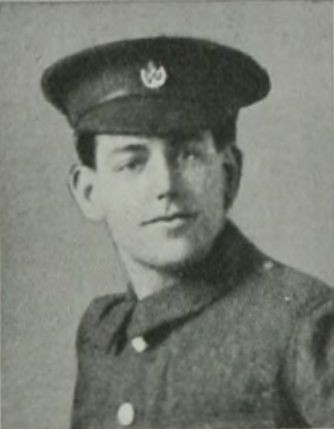
Edward Charles Carter.
CARTER, ERNEST GEORGE, Private, R.M.L.I. (R.F.R., B. 1983), Chatham, H.M.S. Aboukir; lost in action in the North Sea, 22 Sept. 1914.
CARTER, FREDERICK JAMES, Stoker, 1st Class, K. 9668, H.M.S. Good Hope; lost in action off Coronel, on the coast of Chili, 1 Nov. 1914.
CARTER, GEORGE, Private, No. 1359, 7th Battn. Middlesex Regt. (T.F.), s. of Walter Carter of 71, Park Road, Crouch End; served with the Expeditionary Force in France, etc.; killed in action, 28 July, 1915.
CARTER, GERALD FRANCIS, 2nd Lieut., 7th (Service) Battn. King’s Royal Rifle Corps, only s. of Alfred Henry Carter, of The Lindens, Abingdon, formerly of Birmingham, M.D., F.R.C.P. (Lond.), by his wife, Elizabeth Marian, dau. of the late William Henry King, of Pedmore House, Stourbridge; b. Edgbaston, Birmingham, 30 Nov. 1896; educ. St. Ninian’s Moffat, and Winchester College; was preparing for the Indian Forest Service, and was already entered as an undergraduate at St. John’s College, Oxford, when war was declared. He enlisted in the Public School Corps (16th Middlesex Regt.) in Sept. 1914, and became L.-Corpl., being gazetted 2nd Lieut. to the 7th King’s Royal Rifle Corps, 6 April, 1915. He went to the Front in May. On 30 July he was gallantly leading a bombing party in a counter attack on some trenches at Hooge when only a few yards from the enemy he was severely wounded. L.-Corpl. Standing (who has since been promoted for his bravery), assisted by three of his men, carried Mr. Carter out of action, but he died of his wounds shortly afterwards. He was buried close by, in Sanctuary Wood. The lieut.-col. commanding his battn. wrote: “He behaved most gallantly, and was leading his men when he was struck down. He was a great loss to the regt. as a soldier and a friend. I could always rely on him to do the right thing, and always so cheery. We were all very fond of him, and I am sure he enjoyed himself soldiering.” And the major wrote in much the same terms, referring also to the gallantry of the men who carried him out of action. At Winchester Lieut. Carter won the headmaster’s gold medal for gymnastics two years in succession, also two cups for diving. He was a good all-round athlete and a first-class shot. Dr. Carter, who was formerly professor of medicine at Birmingham University and a member of the City Council, is now (1916) on Active Service as Major in the R.A.M.C.