The Roll of Honour. (continued 45)
Reading edition
THOMAS, CHARLES HERBERT, Capt., 2nd Battn. South Staffordshire Regt., only child of Howard Thomas, of 10, Westminster Palace Gardens, S.W., by his wife, Ethel, dau. of the late William Baker, of Sneyd Park, Bristol, and grandson of the late Charles Thomas, of Stoke Bishop, Bristol, J.P., D.L.; b. Charlton, Henbury, co. Gloucester, 25 April, 1880; educ. at Clifton; Abbotsholme, and Edinburgh University; gazetted 2nd Lieut. 4th Somerset L.I., 21 April, 1900, from the militia, and promoted Lieut. 16 Dec. 1901, and Capt. 8 Jan. 1909. He served in the South African War, 1899–1901, with the Somerset L.I., receiving the Queen’s medal with clasp, and in Feb. 1901, was transferred to the South Staffordshire Regt. then in India; was on leave, 1904–05; at Depôt, Lichfield, 1906–08, and in South Africa 1908–1911, where, in 1909, he was given the command of the Mounted Infantry Coy. of his Regt. then at Harrismith, and returned to Lichfield in 1911. On the outbreak of the European War he went to France with the Expeditionary Force, 11 Aug. 1914; served through the retreat from Mons and the Battles of the Marne and the Aisne; was severely wounded in action near Ypres, 27 Oct., and died at the Hotel Crystal Hospital, Boulogne, 5 Nov. 1914. He was buried in the English quarter of the cemetery there. Capt. Thomas was mentioned in Sir John (now Lord) French’s Despatch of 18 Feb. 1915, for gallant and distinguished conduct in the field, and his Col. wrote: “I had hoped that your gallant and beloved son might have been the recipient of our most coveted decoration on the strength of my recommendation.” He was an expert horseman and a keen polo player. He m. at Winsford, Exmoor, 4 June, 1912, Dorothy Catherine, only dau. of Philip Everard, of Miltons, Dulverton, co. Somerset, and had issue a son, Charles Richard, b. 15 June, 1913.
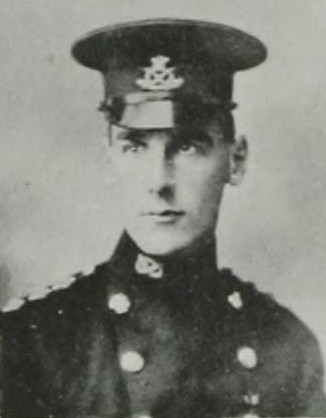
Charles Herbert Thomas.
THOMAS, EDWARD THOMAS, Rifleman, No. 9867, 3rd Battn. Rifle Brigade, eldest s. of John Thomas, Shearer, Raglan Bays Works, Briton Ferry, by his wife, Susanah, dau. of David Hopkins; b. Pontarddulais, co. Glamorgan, 2 Feb. 1884; educ. Hammonford; was employed at Port Talbot; enlisted in the Rifle Brigade, 5 May, 1903; served three years with the Colours; and then joined the Reserve; was called up on mobilisation in Aug. 1914; went to France in Aug. 1914, and was killed in action at the Battle of the Aisne, 23 Oct. 1914. Buried near Chapelle d’Armentières. He was a member of the Silver Band, Briton Ferry. He m. at Neath, 6 March, 1909, Catherine (Lowther Street, Briton Ferry, Glamorgan), dau. of David Hopkins, and had four children: Thomas Ivor Gwyn, b. 18 Dec. 1913; Edward Ypres, b. (posthumous), 16 April, 1915; Jane Ellen, b. 9 Jan. 1910; and Mary Catherine, b. 27 April, 1911.
THOMAS, JOHN ARLOE EDWARD, Leading Carpenter’s Crew, 345555, H.M.S. Hawke, s. of Charles Thomas, of 17, St. Thomas Green, Haverfordwest; lost when that ship was torpedoed in the North Sea, 15 Oct. 1914.
THOMAS, JOHN BAKER, Stoker, 1st Class (R.F.R., B. 9863), S.S. 106671, H.M.S. Hogue; lost in action in the North Sea, 22 Sept. 1914.
THOMAS, MAURICE, Private, No. 1715, 1/4th (Service) Battn. the Royal Sussex Regt. (T.F.), s. of the late Thomas Henry Thomas, of Worthing, by his wife, Ellen (11, Stanhope Road, Worthing), dau. of William Knight, of Washington, Sussex; b. Worthing, co. Sussex, 4 April, 1897; educ. St. Andrew’s Higher Grade School there, and on leaving became a messenger boy at the Worthing G.P.O. and had passed his examinations for the staff when war broke out. He had joined the Royal Sussex Territorials, 14 Aug. 1913; was called up 4 Aug. 1914, and volunteered for foreign service, and left England for the Dardanelles in July, 1915. He was attd. to the machine-gun section of his battn., landed at Suvla Bay, 8 Aug. and was killed in action there four days later, 12 Aug. 1915, as his battn. was retiring after being relieved from the front trenches. The Turks opened a heavy machine-gun fire on them, and he was hit and killed almost immediately. He was buried where he fell at Anafarta Sagir, 1.20-000-105H, near Track to Chocolate Hill between 4–7 p.m. He was a prominent member of the Holy Trinity Church Lads’ Naval Brigade.
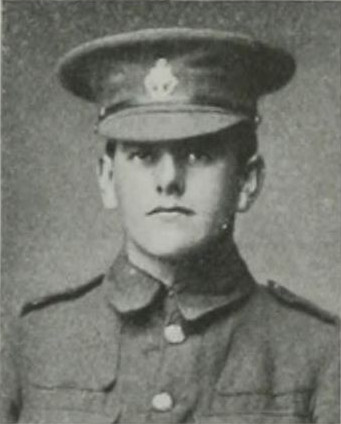
Maurice Thomas.
THOMAS, PHILLIP PERCIVAL, A.B., 231687, H.M.S. Hogue; lost in action in the North Sea, 22 Sept. 1914.
THOMAS, THOMAS JAMES, Petty Officer, 2nd Class (R.F.R., B. 3800), 189482, H.M.S. Hogue; lost in action in the North Sea, 22 Sept. 1914.
THOMAS, WALTER JAMES, Corpl., R.M.L.I., Po./10970, H.M.S. Good Hope; lost in action off Coronel, on the coast of Chili, 1 Nov. 1914.
THOMPSON, ALBERT RICHARD, A.B. (R.F.R., B. 1994), 211537, H.M.S. Good Hope; lost in action off Coronel, on the coast of Chili, 1 Nov. 1914.
THOMPSON, ARCHER, Stoker, 1st Class (R.F.R., B. 8602), S.S. 104956, H.M.S. Hawke; lost when that ship was torpedoed in the North Sea, 15 Oct. 1914.
THOMPSON, BERNARD HARRY LEOPOLD, Ch. E.R.A., 1st Class, 175938, H.M.S. Pathfinder; lost when that ship was sunk by a mine, about 20 miles off the East Coast, 5 Sept. 1914.
THOMPSON, EDWARD, A.B., 226948, H.M.S. Good Hope; lost in action off Coronel, on the coast of Chili, 1 Nov. 1914.
THOMPSON, GEORGE MASTERMAN, Lieut., 1st Battn. The Royal Scots, attd. Gold Coast Regt. West African Frontier Force, only s. of the late Col. George William Thompson, formerly commanding 1st Battn. Royal Scots (who saw service in the Crimea, China, and India), by his wife, Agnes (Beechwood, Burley, co. Hants), dau. of Admiral John Russell; b. Etschowe, Zululand, 21 Feb. 1890; educ. Mr. Stanford’s Private School, St. Aubyns, Rottingdean; Wellington College, and Sandhurst; gazetted 2nd Lieut., 2nd Royal Scots, 18 Sept. 1909; transferred to 1st Battn. in Jan. 1910, and served three years in India; promoted Lieut. 13 Feb. 1913, and attd. to the Gold Coast Regt. West African Frontier Force, and was killed in action, 22 Aug. 1914, while gallantly leading an attack on a strongly entrenched position at Chra, Togoland: “a deed of extraordinary courage.” Buried at Chra; unm. Lord Kitchener forwarded to his relatives an official letter from the Governor-General of French West Africa, saying: “That he had decided that the splendid behaviour on 22 Aug. 1914, in the affair of Chra, of Lieut. Thompson, of His Britannic Majesty’s Army, and of the detachment of French native troops commanded by that officer, deserved to be commemorated in a Special General Order, as an example to all the troops in the Colony”; and one from General Pienau, forwarding the Order: “and expressing his very deep admiration for the magnificent way in which this officer performed his duty as a soldier, when sacrificing his life.” The terms of the Order were: “Placed on 22 Aug. before the fight of Chra under the orders of Capt. Castaing of the Dahomey Brigade, he gave proof of supreme courage, of fine qualities of command in leading his Tirailleurs to the attack of German trenches vigorously defended—fifty metres from the enemy’s line he fell mortally wounded—his splendid example earned that almost the whole of the French Tirailleurs placed under his orders laid down their lives defending his body.” The Commanding Officer wrote: “His conduct during the action was particularly gallant. He was killed while attempting to storm the German trenches on the enemy’s left. He was an officer who was genuinely popular with all ranks and one whom we could ill afford to lose, and I wish to convey to you not only my own profound sympathy in your loss, which is also mine, but that of all ranks of the Togoland Field Force. His conduct was that of a gallant officer and gentleman.” The Adjutant wrote: “I had more opportunities than anybody of realising your son’s sterling qualities as a soldier in peace times and his conspicuous gallantry in times of war. His loss is deeply felt by the whole force”; and a District Commissioner wrote: “His proficiency in the language and his influence over the natives, both soldiers and civilians, were astonishing, and great regret was evinced by all at Quittah, where the force of his personality had been very much felt during the short time he had been in command there, the chief asking leave to visit the grave at Chra.” Lieut. Thompson was a fine linguist, and besides speaking French and the native dialect fluently, had passed the higher standard in Hindustani and Persian. He was a keen sportsman and a good fencer and polo player.
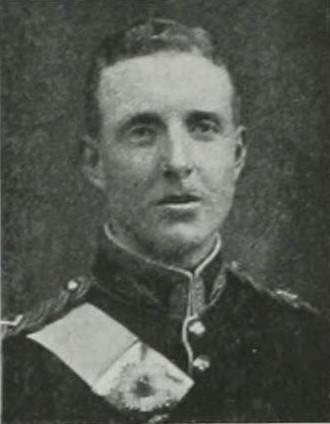
George M. Thompson.
THOMPSON, GILBERT, Capt., 2nd Battn. Connaught Rangers, attd. as Adjutant 13th Battn. (Princess Louise’s Kensington) The London Regt. (T.F.), 2nd s. of Reginald Thompson, of Loftus Hill, Knaresborough, Col. 2nd Vol. Battn. West York Regt., by his wife, Frances Harriet, 4th dau. of the Rev. Charles Smith Royds, of Haughton, co. Stafford, and Heysham, co. Lancaster, J.P., and gdson. of Sir Matthews William Thompson, of Guiseley, 1st Bart.; b. Baildon Lodge, 22 June, 1877; educ. Yarlet near Stafford, afterwards privately; gazetted 2nd Lieut., 2nd Connaught Rangers, from the Militia, 20 May, 1899, and promoted Lieut. 24 July, 1900, and Capt. 29 Nov. 1905; served eight years with them in India; appointed Adjutant to the Kensingtons, 1 Jan. 1913; left for France with them 3 Nov. 1914, and was killed in action at Laventie, 24 Feb. 1915. Buried at Picantin. One of the men, writing home, said of him: “We have lost one of our best officers. Capt. Thompson, the Adjutant. He was showing the General round, and he was shot in the head. He was one of the best; he thought of the men first and himself last. Every man is sorry at his death.... The men have lost their best friend.” Another man wrote: “Out in the trenches he was splendid. He would come along and ask how we were and always have something cheery to say. He got his feet frost-bitten and asked what he should do.... ‘See the doctor, sir,’ I said. ‘Not I,’ he replied. ‘He’ll want a few toes off and put me on the sick list.’ And he wouldn’t, with all my persuasion. When my feet got very bad, I rode back three miles on his horse and the next morning he came round to see me. He’s splendid.” He was buried in the little cemetery behind the firing-line. His last request was: “Bury me with the boys, not beside the officers,” and this wish was carried out. He was mentioned in F.M. Sir John (now Lord) French’s Despatch of 5 April and 31 May [London Gazette, 22 June], 1915. Capt. Thompson m. at Finghall, Yorkshire, 7 June, 1906, Ethel Isabella, 2nd dau. of Marmaduke D’Arcy Wyvill, of Constable Burton and Denton Park, Yorkshire, J.P., D.L., and had three children: Christopher Smith Byron, b. 19 April, 1907; Laura Barbara Frances, b. 10 Nov. 1908, and Naomi Isabella, b. 23 Oct. 1912.
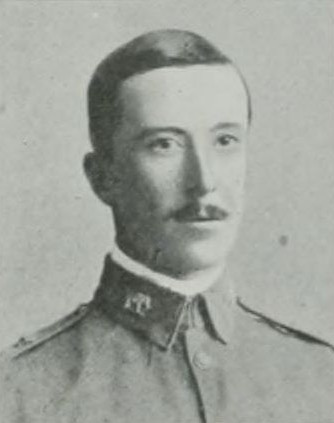
Gilbert Thompson.
THOMPSON, JOHN, A.B. (R.F.R., B. 4241), 168018, H.M.S. Hogue; lost in action in the North Sea, 22 Sept. 1914.
THOMPSON, JOHN ALEXANDER MACKAY, Lieut., 10th Battn. Canadian Expeditionary Force, eldest s. of William Thomas Thompson, M.A., Sc. (McGill), M.Can.Soc. C.E., D.T.S., District Engineer, Grenfell, Saskatchewan, Canada, by his wife, Mary, eldest dau. of the late Rev. Alexander Mackay, M.A., and grandson of the late Lieut.-Col. John Hall Thompson. M.P.; b. Qu’Appelle, Saskatchewan, 6 Aug. 1890; educ. Qu’Appelle Schools and by tutors, afterwards by his father in Surveying and Engineering, and was acting as assistant to him when war broke out. In Dec. 1914, he was given a temporary Lieutenancy in the 16th Light Horse and, after qualifying at the Military Institute, Winnipeg, was gazetted Lieut. to the 32nd Battn. He left for England in Feb. 1915, and in April went with his company to reinforce the 10th Battn. in France, took part in the Second Battle of Ypres and was killed in the Battle of Festubert, leading his platoon in a night attack on the German position K. 5 (or Bexhill), 21 May following. He was unm., and was buried in a shell hole near K. 5. His men said that “he died like a hero, leading his men, on a rush attack right into a murderous fire,” and his commanding officer describing the attack on K. 5 wrote: “Lieut. Thompson in his quiet unassuming way led his platoon out to return no more—no better little soldier graced the 10th.” A brother officer wrote: “He was a soldier with few superiors, and a courage that knew no limits.”
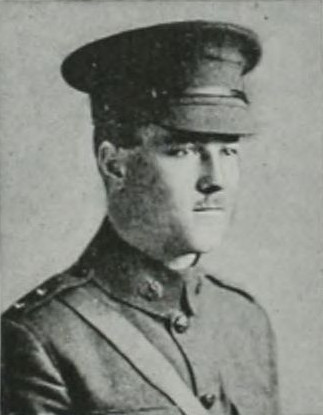
John A. M. Thompson.
THOMPSON, ROBERT, Stoker, R.N.R., 759V, H.M.S. Aboukir; lost in action in the North Sea, 22 Sept. 1914.
THOMPSON, SAMUEL VINCENT, Signalman, 237351, H.M.S. Cressy; lost in action in the North Sea, 22 Sept. 1914.
THOMPSON, THOMAS, Private, No. 5690, 2nd Battn. Scots Guards; b. co. Kerry; enlisted 14 Nov. 1904; served with the Expeditionary Force in France, etc.; killed in action, 12 March, 1915.
THOMPSON, WALTER DARCY, Private, No. 4843, 2nd Battn. Coldstream Guards, s. of the late John Thompson, engineer; b. Elswick, Newcastle, 1883; educ. Southwick Board School; enlisted at Elswick, 26 Sept. 1902; left with the 1st Expeditionary Force for the Front on the outbreak of war, and was killed in action in France, 16 Sept. 1914. Private Thompson m. at Southwick, 21 Feb. 1906, Martha Alexandra, dau. of Robert Whyte, of Perth, and had two sons and one daughter: Vernon, b. 3 Nov. 1912; Walter Darcy, b. 11 Nov. 1914, and Edna, b. 21 April, 1909. His widow died 12 March, 1915, leaving the three infant children without any known relations. Capt. John Smith, of the Salvation Army at Southwick, took temporary charge of them, and Queen Alexandra hearing of the sad story wrote to Capt. Smith for particulars and expressed herself as anxious to assist in some way. The story was submitted to Her Majesty, and in reply a handsome money gift was sent for each child to be banked in trust for them.
THOMPSON, WILLIAM JOHN HENRY, Corpl., R.M.L.I., Ch./15133, H.M.S. Hawke; lost when that ship was torpedoed in the North Sea, 15 Oct. 1914.
THOMSON, ALEXANDER, L.-Corpl., 6378, 2nd Battn. Scots Guards; b. Strickey, co. Aberdeen; enlisted 6 Jan. 1906; served with the Expeditionary Force in France, etc.; killed in action, 20–26 Oct. 1914. He m. Jennie (51, Esslemont Avenue, Aberdeen), dau. of (—) Anderson, and had two daus.: Mary Anderson, b. 20 April, 1910, and Joan, b. 25 June, 1915.
THOMSON, ALEXANDER CAMERON, Sergt., No. 1380, D Coy., 13th Battn. Australian Imperial Force, 6th s. of James Thomson, of 57, St. Andrew Road, Pollokshields, Glasgow, by his wife, Elizabeth, dau. of the late Alexander Cameron, of Rothes; b. Glasgow, 30 March, 1892; educ. Kinning Park Public School; was two years in the 7th S. R. Glasgow before going to Australia, 25 Nov. 1912; volunteered on the outbreak of war and joined the Commonwealth Expeditionary Force in Sydney, N.S.W., 26 Sept. 1914; left for Egypt about 24 Dec.; took part in the landing at the Dardanelles, 25 April, 1915, and after being promoted Corpl. and Sergt. was killed in action there, 3 May, 1915; unm. His Officer Commanding, Lieut. C. B. Hopkins, wrote: “Your son was killed on the night of 3 May, doing his duty in a most gallant manner, in a charge against some Turkish trenches.”
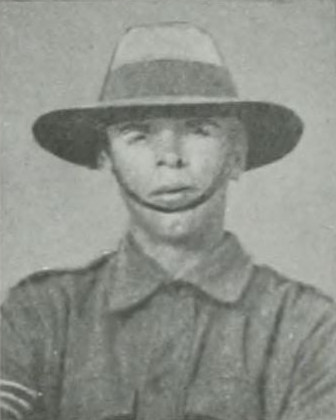
Alexander C. Thomson.
THOMSON, DUNCAN TURNER, Private, No. 118, 9th Battn. (Glasgow Highlanders) Highland Light Infantry (T.F.). s. of Alexander Thomson, of 8, Hamilton Park Terrace, Glasgow, M.B., C.M., Edinburgh, by his wife, Mary J. McKean, dau. of the Rev. Duncan Turner, M.A.; b. Huntly, co. Aberdeen, 23 Dec. 1888; educ. Glasgow Academy, and the Royal Technical College, Glasgow; was a fully qualified and diplomated architect, and was in the employment of Mr. P. Macgregor Chelmers, Glasgow; joined the 9th Highland L.I. Territorials in 1908; volunteered for active service on the outbreak of war; went to France in Oct. 1914, and died in the General Hospital, Northampton, 30 July, 1915, of wounds received in action on 19 June. He was shot by a sniper when on duty in the trenches at Vermelles; unm. Capt. A. K. Reid wrote: “He was a man for whom I had the highest regard, especially since we came out here, and he was one of the most popular members of the company. His good humour even under the most trying circumstances caused him to be liked by all. He could be trusted at all times to do his duty as a soldier and as a man. I saw him in the Vermelles trenches a few minutes after he was hit, and he left us to walk back to the dressing station with a cheery good-bye to us all”; and one of his comrades, writing to a friend, said: “You doubtless have heard of Duncan Thomson’s death. Man! Why is it that all those splendid sportsmen get knocked out, and the rest of us go free. He was an awfully decent chap and I saw quite a lot of him in the G.H. at Dunfermline and in France. A more thorough, straighter, cleaner chap you could not meet. Five of the old 1st Battn.—friends of his—and myself carried the coffin into the Kirk, and then again to the grave. It wasn’t a military funeral (military honours having been paid when the body left Northampton), so we could only salute his grave, but if ever a man deserved honours at his graveside he did. We called him ‘Sniper’ out there, for the simple reason that he was so delightfully cool and casual. He never fired a shot at anything unless he was absolutely certain. If ever you wanted a hot drink, or anything to cheer yourself up with, you went to Duncan, and sure enough then you got it.”
THOMSON, HENRY, L.-Corpl., No. 2713, 2nd Battn. Royal Scots (Lothian Regt.); served with the Expeditionary Force in France, etc.; killed in action, 13 Nov. 1914.
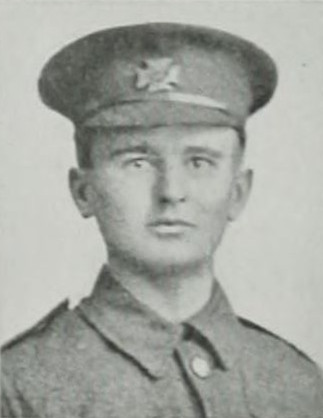
THOMSON, LESLIE, Rifleman, No. 1877, F Coy. 1/16th Battn. (Queen’s Westminster Rifles) The London Regt. (T.F.). s. of Walter Thomson, of 18, Lorne Street, Reading, by his wife, Emma; b. Reading, co. Berks, 9 Feb. 1893; educ. Christ’s Hospital, West Horsham; volunteered and joined the Queen’s Westminsters, 5 Aug. 1914; went to France, 1 Nov. 1914, and was killed in action by a rifle grenade which burst just behind him in the trenches at Houplines, near Armentières, 18 March, 1915; unm. Buried in the hospital cemetery, Rue Carnot, Houplines. Major Tyrwhitt wrote to his parents: “Your son was always such a bright cheerful boy and such a good soldier,” and a letter signed by 42 men, including officers of his company (Sec. 11), also bore testimony to the respect in which he was held by all.
707
Leslie Thomson.
THORBURN, WILLIAM, Sergt.-Artificer, A.S.C., No. M./2, 101388, attd. to the 11th Battery, Motor Machine Gun Service, eldest s. of William Thorburn, of 110, Second Avenue, Clydebank, Linotype Operator, by his wife, Jessie Symington, 3rd dau. of the late Alexander Briton, Boot and Shoe Maker, Queen Street and Shawlands, Glasgow; b. Glasgow, 27 May, 1894; educ. at Dalmuir Public School, Clydebank; was employed by the Singer Manufacturing Company, Kilbowie, as an Engineer; enlisted 18 Nov. 1914; was promoted Corpl. and transferred to the Active Service Corps on Saturday, 29 May, 1915, being attd. to the 11th Battery, Motor Machine Guns, as Mechanic, and went to France on 7 July, 1915. He was employed at the time of his death in a blacksmith’s shop constructing an iron covering to bring a cycle and machine gun into action under cover, when one of the battery accidentally discharged a loaded revolver at 8 a.m. on Saturday, 7 Aug. 1915. The bullet entered his throat and travelled to his back and down the spine, and two and three-quarter hours later he died in hospital. He was buried in Chocques Military Cemetery, Pas de Calais, just outside Bethune; unm.
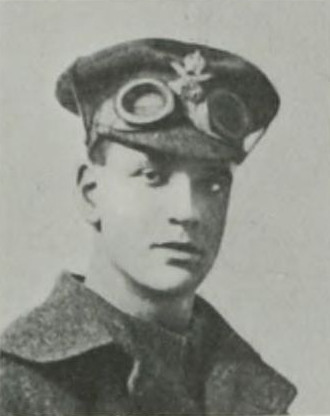
William Thorburn.
THORNTON, EDWARD, Private, No. 11817, 3rd Battn. Coldstream Guards, s. of William Thornton, of 16, Berkeley Street, Lambeth; b. co. Surrey; served with the Expeditionary Force in France and Flanders; killed in action near Cambrin, 27 June, 1915; unm.
THORNTON, JACK, A.B. (R.F.R., B. 2997), 220331, H.M.S. Good Hope; lost in action off Coronel, on the coast of Chili, 1 Nov. 1914.
THORNTON, LEACH, Telegraphist, J. 11559, H.M.S. Good Hope; lost in action off Coronel, on the coast of Chili, 1 Nov. 1914.
THORNTON, WILLIAM CHATMAN, A.B., S.S. 1435, H.M.S. Good Hope; lost in action off Coronel, on the coast of Chili, 1 Nov. 1914.
THORPE, CYRIL KIRKMAN, A.B., J. 7169, H.M.S. Laurel; killed in action in the Heligoland Bight, 28 Aug. 1914.
THORPE, EDWARD ARTHUR, Stoker, 1st Class, 310026, H.M.S. Cressy; lost in action in the North Sea, 22 Sept. 1914.
THORPE, GEORGE ROBERT, Stoker, 1st Class, S.S. 110938 (Ports.), H.M.S. Cressy; lost in action in the North Sea, 22 Sept. 1914.
THRUSH, GEORGE, S.P.O. (R.F.R., B. 2050), 164113, H.M.S. Hawke; lost when that ship was torpedoed in the North Sea, 15 Oct. 1914; m.
THUMWOOD, ARTHUR GEORGE, Leading Stoker, 300662, H.M.S. Good Hope; lost in action off Coronel, on the coast of Chili, 1 Nov. 1914.
THUNDERCLIFFE, ERNEST, Stoker, 1st Class, K. 8086 (Ports.), H.M.S. Hogue; lost in action in the North Sea, 22 Sept. 1914.
THURGOOD, JOHN EDWARD, Petty Officer, 180071, H.M.S. Hogue; lost in action in the North Sea, 22 Sept. 1914.
THURLEY, ALBERT EDWARD, Private, R.M.L.I., Ch./14029, H.M.S. Aboukir; lost in action in the North Sea, 22 Sept. 1914.
THURLEY, ANSELL GIFFORD, Armourer’s Crew, M. 2565, H.M.S. Hawke, s. of Joseph Thurley, of 24, Station Road, Westgate-on-Sea; lost when that ship was torpedoed in the North Sea, 15 Oct. 1914.
THURLOW, ARTHUR GEOFFREY, 2nd Lieut., 8th Battn. Duke of Wellington’s West Riding Regt., only s. of the late Arthur James Thurlow, of The Rookery, High Wycombe, co. Bucks, by his wife, Florence; b. High Wycombe, 8 Nov. 1891; educ. Norfolk House School, Beaconsfield; Felsted School, and won an open classical scholarship at Gonville and Caius College, Cambridge (where he graduated B.A. with classical honours, June 1914); gazetted 2nd Lieut., 8th Duke of Wellington’s Regt., 9 Sept. 1914; left for the Dardanelles, 1 June, 1915; took part in the landing at Suvla Bay, 6 Aug.; was wounded 21 Aug., and died at Alexandria, 29 Aug. 1915, of his wounds; unm. Buried at Alexandria. He was a fine athlete; was Captain of his College football team, and a member of The Wanderers Club, and played hockey for the University.
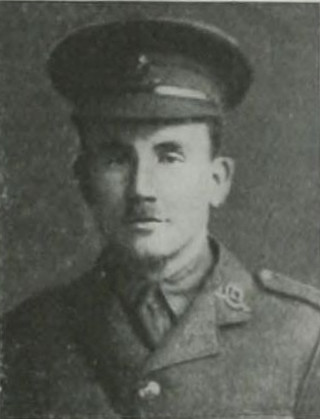
Arthur Geoffrey Thurlow.
THURSTON, SIDNEY GEORGE, A. B. (R.F.R., B. 9808), 203210, H.M.S. Hogue; lost in action in the North Sea, 22 Sept. 1914.
TIBBO, JAMES JOSEPH, Private, No. 1017, D Coy. 1st Newfoundland Regt., 2nd s. of Richard Tibbo, of 7, Lime Street, St. John’s, Newfoundland, Labourer, by his wife, Mary Ann, dau. of Richard Roach; b. St. John’s aforesaid, 12 Nov. 1894; educ. St. Patrick’s Hall and Holy Cross Christian Brothers’ Schools; was a Seaman; joined the Newfoundland Regt. 13 Jan. 1915; left for England, 20 March; went to the Dardanelles, and was killed in action there, 1 Dec. 1915, while gallantly assisting a stretcher bearer to remove the wounded; unm.
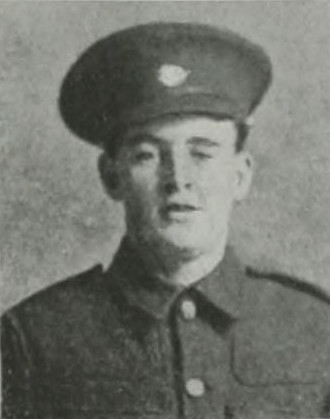
James Joseph Tibbo.
TIDBURY, ALFRED HARRY, Stoker, 1st Class (R.F.R., Ch. B. 9670), S.S. 107002, H.M.S. Cressy; lost in action in the North Sea, 22 Sept. 1914.
TIDMAN, THOMAS JAMES SAMUEL, Petty Officer, 196090, H.M.S. Pathfinder; lost when that ship was sunk by a mine, about 20 miles off the East Coast, 5 Sept. 1914.
TIERNEY, THOMAS, Stoker, 1st Class (R.F.R., Ch. B. 9535), S.S. 106901, H.M.S. Cressy; lost in action in the North Sea, 22 Sept. 1914.
TIGHE, BERNARD, A.B. (R.F.R., B. 4818), S.S. 1738, H.M.S. Good Hope; lost in action off Coronel, on the coast of Chili, 1 Nov. 1914.
TILBURY, DAVID, Gunner, R.M.A. (R.F.R., B. 548), late R.M.A., 5982, H.M.S. Hogue; lost in action in the North Sea, 22 Sept. 1914.
TILDESLEY, HARRY, Stoker, 1st Class (R.F.R., B. 3195), S.S. 100853; H.M.S. Good Hope; lost in action off Coronel, on the coast of Chili, 1 Nov. 1914.
TILLETT, JAMES ALFRED, Petty Officer, 1st Class (O.S.), 178794, H.M.S. Cressy; lost in action in the North Sea, 22 Sept. 1914.
TILLEY, HENRY PERCIVAL, Private, No. 8669, 1st Battn. Scots Guards; b. Parkstone, co. Dorset; enlisted 5 Aug. 1913; served with the Expeditionary Force in France, etc.; killed in action, 26 Oct. 1914.
TILLEY, JAMES CHARLES, Gunner, R.M.A., 1288, H.M.S. Good Hope; lost in action off Coronel, on the coast of Chili, 1 Nov. 1914.
TIMBRELL, GORDON, Sergt., No. 225, 3rd Light Horse, Australian expeditionary Force, 2nd s. of the late Samuel Timbrell, for many years Manager of the Central Station Hotel, Glasgow, by his wife, Charlotte Whyte (now wife of Anderson Rodger, of 59, Longridge Road, Earl’s Court, S.W.), dau. of George Gordon, of Aberdeen; b. Glasgow, 13 April, 1891; educ. Glasgow High School, and on leaving there in 1906 went to Stubbington House, Fareham, to be prepared for entrance in the Royal Navy as an Engineer Cadet. This idea had to be abandoned owing to the new age limit (12 years) coming into force, bringing Engineers under the same regulations as the Executive Cadets. Shortly afterwards he entered the office of a shipping firm in Stettin, with the purpose of learning the German language in combination with business training, and on leaving there, returned to Glasgow where he served a brief apprenticeship in a stockbroker’s office, and then went to Australia in 1910. He first took up sheep farming, but city life lured him, first to Melbourne, where he gained some experience in the wool trade, and then to Adelaide, where he managed the shipping department of Messrs. Bagot, Shakes & Lewis, Ltd. He had been with them three years when war broke out. He immediately volunteered and joined the Light Horse as a private, but being a fluent speaker of French and German, and a hard and fearless worker, he quickly won promotion and was appointed Sergt. early in March. He was killed in action at the Dardanelles, 1 July, 1915; unm. In a letter from Sergt. Smith under date of 26 June, printed in the Glasgow High School Magazine, Dec. 1915, p. 37, is the following passage: “My outlook on the world and things in general just now is even brighter than usual. Timmy (Sergt. Gordon Timbrell) is a wonderful boy and yesterday secured all manner of good things. We dined last night on turtle soup, thick mutton stew, pineapple, cakes, dates and coffee, and wound up with cigarettes. This morning for breakfast we had porridge and milk as a preliminary to what was in itself a splendid ‘feed.’ When Timmy is purveyor we are sure to be all right. The hardships of war! They have not existed so far.” And in a later letter he wrote: “You will no doubt have heard of poor Timmy’s death. He was killed in the trench last Thursday evening. You don’t know how I miss him. We have been the best of pals all the time. He was as game as you make ’em.” The secretary of his firm wrote: “He was a courageous and chivalrous young fellow, and had done uncommonly well in our firm. We were only awaiting his return, and the return of something like normal conditions to give him that lift which he had so well earned.”
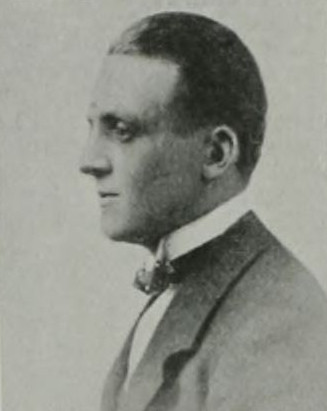
Gordon Timbrell.
TIMMINGS, EDWARD ALBERT JOHN, Electrical Artificer, 4th Class, M. 4098 (Ports.), H.M.S. Hawke; lost when that ship was torpedoed in the North Sea, 15 Oct. 1914.
TIMMINS, JOHN LLEWELLYN, Private, R.M.L.I. (R.F.R., B. 611), late Ch./4514, H.M.S. Hogue; lost in action in the North Sea, 22 Sept. 1914.
TIMMINS, WILLIAM, Petty Officer, 187758, H.M.S. Hawke; lost when that ship was torpedoed in the North Sea, 15 Oct. 1914; m.
TINKLER, GILBERT, Stoker, R.N.R., 1883T, H.M.S. Hogue; lost in action in the North Sea, 22 Sept. 1914.
TINNE, ERNEST PERCY JAMES, Lieut., R.N.R., 4th s. of John Ernest Tinne, of Liverpool, Merchant; b. Aigburth, Liverpool, 30 Dec. 1882; educ. Liverpool College, and H.M.S. Conway; joined the R.N.R., and became Lieut. Oct. 1909; joined H.M.S. Hogue at Chatham, 3 Aug. 1914, and was lost when that ship was torpedoed in the North Sea, 22 Sept. 1914. He m. at Paignton, South Devon, 4 May, 1907, Annie Amelia Kate, dau. of (—) Bartlett, and had three children: Maurice Herman James, b. 21 Feb. 1914; Hester Petronella, b. 26 Feb. 1908, and Margery Bertha Denise, b. 31 Oct, 1909.
TIPPER, GEORGE, Private, No. 7730, 3rd Battn. Coldstream Guards, only child of Fred Tipper, of 7, Back, 11, Blythe Street, Ladywood, Birmingham, Builder’s Labourer, by his wife, Ada, daughter of Isaac Morgan; b. Selly Oak, co. Worcester, 14 Feb. 1889; educ. St. Barnabas’ Church School, Ryland Street, Birmingham; enlisted, 4 March, 1908; went to France, Aug. 1914, and was killed at Givenchy, France, 16 April, 1915; unm. He was relieved from sentry duty in the trenches, at 6 a.m. that morning, and then went to attend a class for bomb throwing and at 11 a.m. a bomb exploded in his hand killing him and Lieut. Crawford. He was buried by the Bishop of Khartoum, just behind the firing-line.
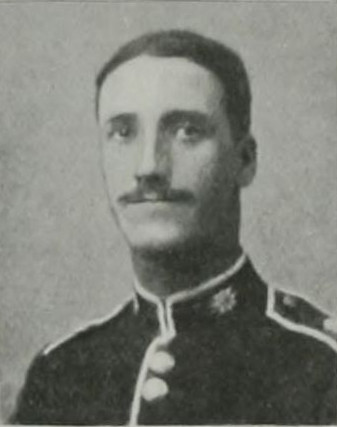
George Tipper.
TIPPINS, JOHN, Corpl. and Acting Sergt., No. 3105, 2nd Battn. Essex Regt., s. of Luke R. Tippins, of Mistley, Essex, Schoolmaster and Rifle Expert; b. Winsford, co. Somerset, 10 March, 1887; educ. Norman School, Mistley, and privately; served first in 2nd Vol. Battn. Essex Regt., then in the 5th Essex (T.F.) as Machine Gun Sergt., and finally in 8th Essex (T.F.) as Motor Cycle Sergt.; joined 2nd Battn. as Private 18 Sept. 1914, in order to get at once to the Front, and was appointed Corpl., and left for France the following day, and was killed in action at a farm near Armentières, 26 Nov. 1914, having been appointed Acting Sergt. in charge of a machine gun a few days previously. Buried in 2nd Essex Cemetery, near Armentières; unm. John Tippins was one of the finest rifle shots in the United Kingdom. He qualified for the final stage of the King’s Prize Competition at Bisley in the years 1908–11 inclusive and in 1913; he won the Wimbledon Cup, 1910, the Association Cup, 1909, the Aggregate Service Rifle Championship, 1911, and took first place in the second stage of the Albert Competition the same year. He shot in the Elcho, Mackinnon, and Challenge Trophy teams, and was one of the Empire Team chosen to go out to Australia, whose departure was prevented by the outbreak of war. On the night he fell, he had gone himself to get water for the Maxim in his charge, as it was a dangerous job in daylight, and was killed on his return. Capt. Binstead (since killed) wrote: “He had already gained for himself a reputation as a daring sniper and splendid shot, which had spread far beyond his own regt., and which, had he not been shot, would, I feel sure, have obtained for him a coveted distinction.”
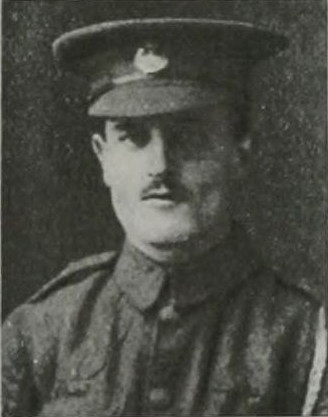
John Tippins.
TITE, CHARLES JOHN, Stoker, 1st Class, S.S. 111796, H.M.S. Aboukir; lost in action in the North Sea, 22 Sept. 1914.
TITTERINGTON, LESLIE, E.R.A., 4th Class, 272194, H.M.S. Pathfinder; lost when that ship was sunk by a mine, about 20 miles off the East Coast, 5 Sept. 1914.
TITTERINGTON, ROGER, Private, No. 11281, 3rd Battn. Coldstream Guards, 1st s. of James Titterington, of Elim Grove, Bowness on Windermere, co. Westmoreland, by his wife, Sarah, dau. of Roger Aldren, of Carnforth, Lancs.; b. Bowness on Windermere, 30 March, 1894; educ. Bowness Elementary School; enlisted 31 Aug. 1914, and was killed in action at Rue de l’Epinette, 31 Dec. 1914; unm. Buried in Soldiers’ Cemetery, Rue du Bois, on road from Bethune to Richebourg, about a mile beyond Le Touret.
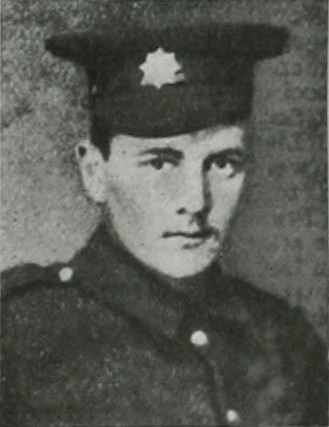
Roger Titterington.
TOCHER, JOHN LESLIE, Petty Officer (N.S.), 215576, H.M.S. Aboukir; lost in action in the North Sea, 22 Sept. 1914.
TOD, BERNARD DOUGLAS, Private, No. 1828, A Coy. 1/14th Battn. (London Scottish) London Regt. (T.F.), only s. of James Tod, of 7, Bennochy Terrace, Kirkcaldy; b. North Berwick, East Lothian, 30 Jan. 1896; educ. Kirkcaldy High School (where he was a member of the O.T.C.), and Rouen; was a member of the staff of Messrs. Steel Bros. & Co., Ltd., East India Merchants, of 6, Fenchurch Avenue, E.C.; joined the London Scottish about March, 1913; volunteered for Imperial Service on the outbreak of war, and left for France, 15 Sept. 1914; took part in the charge of the London Scottish at Messines, and in the gallant defence of the trenches at Zillebeke, and was killed in action in the trenches at Givenchy, 23 Dec. 1914. Buried in a disused part of the trench; unm. A comrade wrote: “He was without fear, and his whole thought was to do his duty for those at home.”
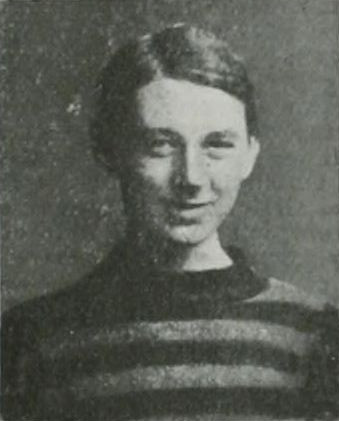
Bernard Douglas Tod.
TODD, GEORGE, A.B. (R.F.R., B. 9580), 200339 Chatham, H.M.S. Good Hope; lost in action off Coronel, on the coast of Chili, 1 Nov. 1914.
TODD, JOHN WRIGHT, L.-Corpl., No. 11308, 2nd Battn. King’s Own Scottish Borderers, grandson of John Todd, of Main Street, Norham-on-Tweed; b. Norham-on-Tweed, 14 Feb. 1894; educ. there; was a Baker; enlisted in 2nd King’s Own Scottish Borderers, Oct. 1911; left for France, 14 Aug. 1914, and was killed in action, 9 April, 1915, being shot by a sniper; unm.
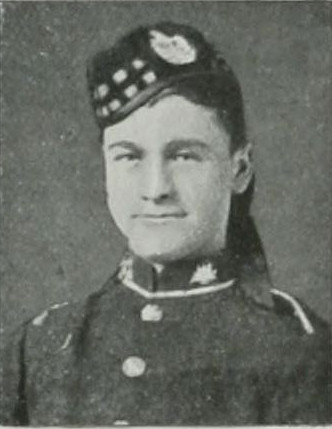
John Wright Todd.
TODD, ROBERT FREDERICK, Chief Ship’s Cook, 344299, H.M.S. Good Hope; lost in action off Coronel, on the coast of Chili, 1 Nov. 1914.
TODDERINGHAM, WILLIAM, 1st Class Stoker, No. K. 12824, R.N., eldest s. of the late William Todderingham, Seaman, by his wife, Bridget (40, Tredegar Street, Cardiff), dau. of (—) Landers, of Cardiff; b. Cardiff, 10 May, 1892; educ. St. Peter’s R.C. Schools there; entered the Navy, 1909, and was lost when H.M.S. Monmouth was sunk in the Battle off Coronel, on the coast of Chili, 1 Nov. 1914; unm.
TODRICK, THOMAS, W.S., Capt., 1/8th Battn. Royal Scots (T.F.), elder s. of Robert Todrick, Agent for the Bank of Scotland at Haddington, Hon. Sheriff Substitute, by his wife, Marianne Somerville, dau. of the late Rev. John Stevenson, of Wigtown; b. Haddington, 26 Dec. 1879; educ. Knox Institute; Leys School, Cambridge, and Edinburgh University, at which latter he took his law course, and was admitted, in 1904, a Writer to the Signet. Apprenticed for a time in the offices of Messrs. J. & J. Turnbull, W.S., Edinburgh, he afterwards started business there on his own account. He received his first commission in the 7th (Haddingtonshire) Vol. Battn. of the Royal Scots, 1900, and was appointed to the command of the Headquarters Coy. at Haddington, 1908, which command he held till 1913, and then joined the Reserve of Officers. Early in 1914 he accepted the offer to take command of the Dalkeith Coy., and on the outbreak of war volunteered for foreign service. It was expected that the Service Battn. of the 8th Royal Scots would be called upon to leave Britain about Christmas, but on 1 Nov. they received orders to entrain the following day. Within a few days they were in France, and by the 15th of the same month in the firing line. Capt. Todrick took a prominent part in the operations, and was killed in action 15 Dec. 1914. A few nights before his death he crept from the British across to the German trenches, went under the wire entanglements and came back on that occasion in safety. A few days later the General in command asked that listening patrols should be sent out at night, and Capt. Todrick went out with three men himself. On reaching a certain point he asked them to lie in a ditch, as he thought he saw figures moving in front; he went on alone and fired his revolver. Doubtless the flash revealed him; an answering shot struck him in the neck, and his death was practically instantaneous. His men brought back his body, and he was buried in a little French cemetery while shells passed overhead. One of his brother officers wrote: “Poor Todrick has gone, best of comrades and bravest man in the battn.; no officer could have been more beloved by the others of all ranks in the battn.” Capt. Todrick was mentioned in F.M. Sir John (now Lord) French’s Despatch of 31 May, 1915. He m. at Blackheath, 27 Aug. 1910, Brenda (30, Regent Terrace, Edinburgh), dau. of John List, chief engineer of the Union-Castle Line, and had a son and dau.: Archibald, b. 25 April, 1912; and Elizabeth, b. 5 Feb. 1914.
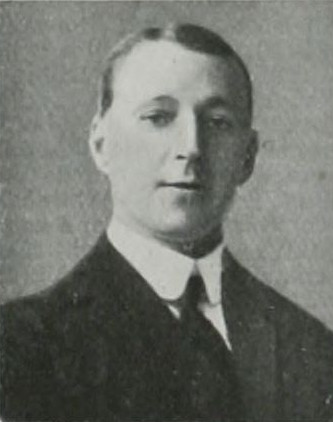
Thomas Todrick.
TOLHURST, WALTER, Chief Stoker (R.F.R., A. 1852), 157015, H.M.S. Hawke; lost when that ship was torpedoed in the North Sea, 15 Oct. 1914; m.
TOLLEMACHE, BEVIL DOUGLAS, 2nd Lieut., 1st Battn. Coldstream Guards, eldest s. of the Hon. Douglas Alfred Tollemache, of Southbeach, Felixstowe, by his wife, Alice Mary, dau. of the late John Heath, and grandson of John, 1st Baron Tollemache; b. Melton, Woodbridge, co. Suffolk, 11 April, 1889; educ. Wixenford and Eton; gazetted 2nd Lieut. to the Special Reserve of the 1st Coldstream Guards, 15 Aug. 1914; left for France in Oct., and was killed in action at Givenchy on the morning of 22 Dec. following; unm.
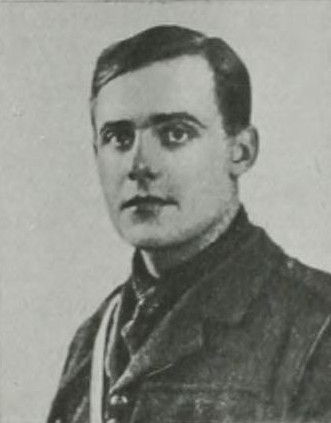
Bevil Douglas Tollemache.
TOMBS, JOHN BERNARD EVELYN, Corpl., No. 2367, 2/9th Battn., attd. 2/10th Battn., The Middlesex Regt. (T.F.), yr. s. of Thomas Charles Tombs, of 60, Harrow View, Harrow, Middlesex, by his wife, Mary Frances, dau. of John Airey, of Oakdene, Holly Park Gardens, Finchley, N.; b. Aylesbury, co. Bucks, 28 Jan. 1894; educ. Holmwood House School, Hampstead, and the William Ellis Endowed School, Gospel Oak; was in the employ of the Sun Life Office, Threadneedle Street, E.C., and was a Probationer of the Institute of Actuaries; volunteered after the outbreak of war and joined the 2/9th Middlesex in Sept. 1914; trained at Staines, Cambridge and Bedford; left England for the Dardanelles, 17 July, 1915, and was attached to the 2/10th Battn.; was in action at Suvla Bay, 8–12 Aug. 1915, when he was invalided to Alexandria and died there in the 15th General Hospital, 23 Sept. 1915; unm. He was buried in the Chatby Military Cemetery.
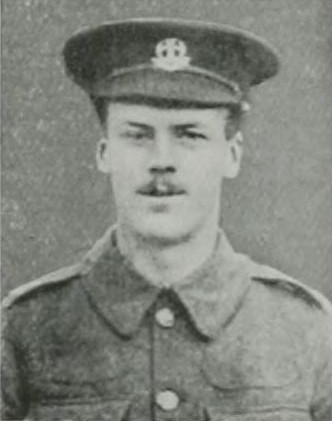
John Bernard E. Tombs.
TOMLIN, HENRY, A.B. (R.F.R., B. 1517), 201734, H.M.S. Good Hope; lost in action off Coronel, on the coast of Chili, 1 Nov. 1914.
TOMLIN, JOHN, Canteen Assistant, H.M.S. Cressy; lost in action in the North Sea, 22 Sept. 1914.
TOMLINSON, FREDERICK WALLACE, A.B., J. 7909, H.M.S. Cressy; lost in action in the North Sea, 22 Sept. 1914.
TOMLINSON, WILLIAM, Stoker, 1st Class (R.F.R., B. 2240), 301735, H.M.S. Good Hope; lost in action off Coronel, on the coast of Chili, 1 Nov. 1914.
TOMPKINS, EDWIN, Private, No. 54, 8th Battn. Australian Imperial Force, eldest s. of Henry James Tompkins, of 133, St. James’ Road, Northampton, by his wife, Mary Anne, dau. of William Griffin; b. Great Houghton, co. Northampton, 30 March, 1891; educ. Kingsthorpe and Council School, St. James’ End; was an employee in Wolverton Carriage Works, and joined the Oxford and Bucks Territorials in May, 1913; emigrated to Australia in July, 1913, and settled in Victoria as a Farm Hand; joined the Australian Imperial Force after the outbreak of the European War, 1 Sept. 1914; left for Egypt, 19 Oct 1914; took part in the landing at the Dardanelles, 25 April, and died in King’s College Hospital, London, 16 Aug. 1915, of wounds received in Gallipoli the previous May; unm.
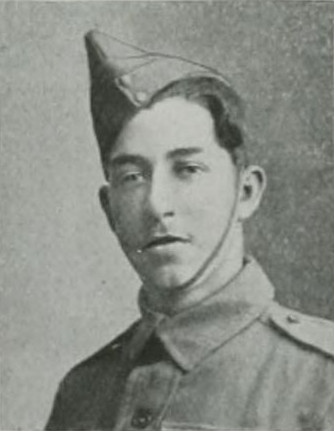
Edwin Tompkins.
TOMPKINS, GEORGE CHARLES, Stoker, 1st Class, S.S. 109430, H.M.S. Hogue; lost in action in the North Sea, 22 Sept. 1914.
TOMPKINS, WILLIAM JOHN, Ordinary Signalman, No. J20250, R.N., H.M.S. Triumph, only s. of Thomas Tompkins, of 14, College Park Terrace, Willesden Junction, N.W., Gardener in Hyde Park under H.M. Office of Works, by his wife, Annie Ellen, dau. of Robert Margetts; b. Faringdon, co. Berks, 14 Feb. 1897; educ. Kenmont Garden Council School, College Park, N.W.; joined Royal Navy, 22 Sept. 1912; was drafted to Portsmouth Depot, 30 Aug. 1913; and sailed for the Dardanelles in H.M.S. Irresistible, 19 Feb. 1915. This ship was sunk by a drifting mine during the attack on the Narrows, 18 March following. He was saved and taken on board H.M.S. Ocean, which was also sunk in the same way immediately afterwards. Saved for the second time that day, he was appointed to H.M.S. Triumph, and was drowned when that ship was sunk by torpedo fire off Gaba Tepe, 25 May, 1915. His body was recovered by a trawler (705) and taken to H.M.S. Blenheim, from which it was buried at sea; unm. The Chief Yeoman of Signals of the Triumph wrote: “He was a very promising young fellow, and would have done well in his profession. I cannot say too much for him.” At school he won two scholarships and also the L.C.C. first prize for carpentry.
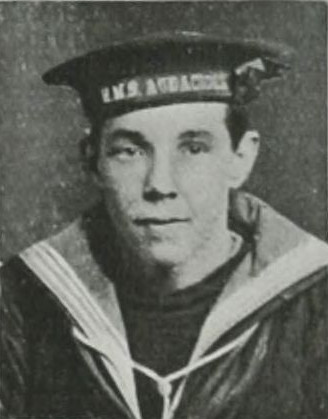
William John Tompkins.
TOMS, ARTHUR WOODLAND, Lieut., 3rd Battn. Devonshire Regt. (Special Reserve), attd. 2nd Battn. The Cameronians (Scottish Rifles), 2nd s. of Frederick Woodland Toms, of 1, Claremont Terrace, Jersey, F.I.C., Official Analyst, by his wife, Emily, dau. of the late Frazer Hopwood, of Fauresmith, Orange River Colony; b. St. Helier’s, Jersey, 25 April, 1891; educ. Victoria College there; gazetted 2nd Lieut. to the 3rd Devonshire Regt. (Special Reserve), 7 Feb. 1912, and promoted Lieut. 14 Feb. 1914. For some time before the outbreak of war he had been preparing for service under the Colonial Office, and received the offer of an appointment in West Africa from the Secretary for the Colonies three days before the declaration of war. He went to France, 6 Nov., and was accidentally killed, 27 Nov. 1914, while on active service, and was buried in the cemetery at Estaires, Nord; unm. The officer commanding 3rd Devonshire Regt. wrote: “He was a great favourite in the regt, and a most capable officer.” In 1913 and 1914 Lieut. Toms captained the “Young Soldiers’” shooting team of his regt.
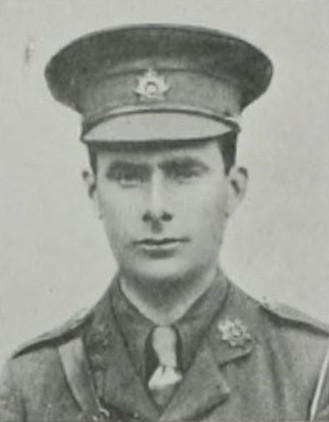
Arthur Woodland Toms.
TOMS, JOHN, Petty Officer, 1st Class, 170693, H.M.S. Good Hope; lost in action off Coronel, on the coast of Chili, 1 Nov. 1914.
TONKINSON, GEORGE, A.B. (R.F.R., I.C. 599), S.S. 805, H.M.S. Good Hope; lost in action off Coronel, on the coast of Chili, 1 Nov. 1914.
TOOGOOD, ALFRED, A.B. (R.F.R., B. 3730), 191822, H.M.S. Good Hope; lost in action off Coronel, on the coast of Chili, 1 Nov. 1914.
TOOLEY, JOHN JAMES, Private, R.M.L.I., Ch./13005, H.M.S. Pathfinder; lost when that ship was sunk by a mine, about 20 miles off the East Coast, 5 Sept. 1914.
TOOMER, CECIL WALTER, Stoker, 1st Class, K. 10181, H.M.S. Good Hope; lost in action off Coronel, on the coast of Chili, 1 Nov. 1914.
TOOMEY, ARCHIBALD ROCHE, 2nd Lieut., 6th Battn. Prince of Wales’ Leinster Regt. (Royal Canadians), eldest s. of Archibald Montgomery Toomey, of 20, Palmerston Park, Dublin, by his wife, Nina, dau. of Surg.-Major James Roche Nagle; b. Dublin, 17 Dec. 1891; educ. St. Stephen’s Green School; Portora Royal School, and Trinity College, Dublin (Medical School); volunteered on the outbreak of war and was gazetted 2nd Lieut., 6th Leinsters, 26 Aug. 1914; served with the Mediterranean Expeditionary Force at the Dardanelles from 5 Aug. 1915, to 10 Aug. 1915; killed in action at Suvla Bay on the later date; unm.
TOOP, EDWARD CHARLES, A.B. (R.F.R., B. 5115), 195218, H.M.S. Good Hope; lost in action off Coronel, on the coast of Chili, 1 Nov. 1914.
TOOSEN, ENDOXIL, Stoker, H.M.S. Good Hope; lost in action off Coronel, on the coast of Chili, 1 Nov. 1914.
TOPHAM, GEORGE SAMUEL, L.-Corpl., No. 1358, 1/5th Battn. East Kent Regt. (The Buffs) (T.F.), yst. s. of William Topham, of Arlesey, co. Bedford, Engine Driver, by his wife, Mary Ann, dau. of William Bowskill, of Arlesey; b. St. Neots, co. Huntingdon, 2 Feb. 1896; educ. Arlesey Council School, and was apprenticed to Messrs. Levitt & Sons, Outfitters, of Arlesey, and then moved to Luton, later going to Cranbrook, Kent. Volunteered on the outbreak of war, and joined The Buffs on or about 6 Aug. 1914; left for India, 29 Oct., where he remained until Nov. 1915, when he was ordered to the Persian Gulf, and died there 17 Jan. 1916, of wounds received in action on the 6th: unm.
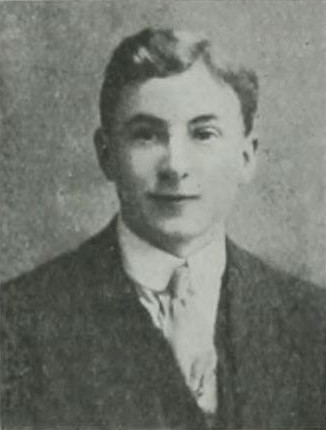
George Samuel Topham.
TOPHAM, HENRY ANGRAVE CECIL, 2nd Lieut., Indian Army, attd. 1st Battn. The Welsh Regiment, elder s. of John Henry Topham, of Morley Hall, co. Derby, by his wife, Dorothy Marion, dau. of George Henry Angrave; b. Derby, 14 Oct. 1891; educ. Malvern and Clare College, Cambridge (graduated B.A., Dec. 1913), and was in both the school and college O.T.C. He obtained a university commission as 2nd Lieut. Indian Army, 21 Jan. 1913, and his rank was made substantive, 5 Aug. 1914. He was on the point of sailing for India when war was declared, but was posted to the 4th Sherwood Foresters at Backworth, Northumberland, where he remained until the end of Feb. 1915, when he was sent to France, being attached for the period of the war to the 1st Battn. Welsh Regt. He took part in the 2nd Battle of Ypres, and on 24 May, his regt. being ordered to join in a counter-attack, he was severely wounded in the head by a piece of high explosive shell, near Ypres, dying the next day, 25 May, 1915, at Bailleul Clearing Hospital, where he had been taken, and was buried in the Military Cemetery there (No. 1125). An officer wrote: “We were all so fond of him and he is indeed a great loss. He was of great assistance to me in the field, for I could rely on him, and in addition he had the happy knack of commanding men.”
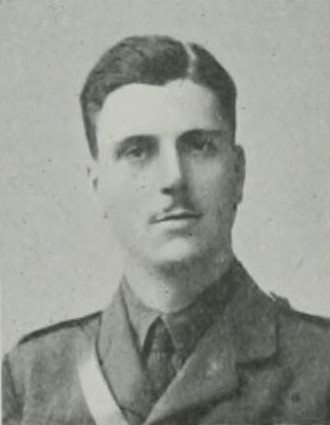
Henry A. C. Topham.
TOSH, WILLIAM, L.-Corpl., No. 551, 8th Australian Light Horse, only s. of James Tosh, of Third Part, Crail, Fife, by his wife, Jessie Christine (Mansefield, Anstruther), only dau. of Alexander Campbell Macandie; b. 30 Sept. 1885: educ. Clifton Bank School, St. Andrews, and afterwards learnt sheep-farming in one of the Border counties; then proceeded to Australia and acted as assistant to the owner of Barunah, one of the largest sheep-runs in the Colony of Victoria. After a short visit home in 1910, he returned to Australia and started farming on his own account, but on the outbreak of war disposed of his property and joined the Australian Light Horse. He was wounded in action at Anzac, Gallipoli, and died half an hour afterwards, 7 Aug. 1915, being buried in the 8th L.H. Burial Ground, on the beach; unm. Major McLaurin wrote: “He was a splendid soldier and much beloved by the regt.”
TOVEY, FREDERICK JOHN, Private, No. 10724, 1st Battn. Coldstream Guards, s. of John Tovey, of Walk Cottages, Heythorpe, co. Oxon, Farm Labourer, by his wife, Jane, dau. of Reuben Stanger; b. Milton under Wychwood, co. Oxon, 22 Oct. 1898; educ. Village School there; enlisted in the Coldstreams, 1914 at Coventry; served with the Expeditionary Force in France, etc., and was reported missing, 25 Jan. 1915 and is now assumed to have been killed in action about that date.
TOWLE, JOHN, A.B. (R.F.R., B. 4859), S.S. 1767, H.M.S. Good Hope; lost in action off Coronel, on the coast of Chili, 1 Nov. 1914.
TOWNEND, FRANCIS WHITCHURCH, Capt., 35th Divisional Signal Coy. Royal Engineers, 3rd s. of the Rev. Alfred John Townend, Chaplain to the Forces, by his wife, Margaret Wiseman, dau. of the late William James Stairs, of Nova Scotia; b. Halifax, Nova Scotia, 10 July, 1885; educ. Dulwich College, and the Royal Military Academy, Woolwich, and on leaving there spent two years at the School of Military Engineering, Chatham; gazetted 2nd Lieut. R.E., 21 Jan. 1904, and promoted Lieut. 24 Sept. 1906, and Capt. 30 Oct. 1914; went to India in 1906, and was there attached to the 3rd Sappers and Miners; left for France with the Indian Expeditionary Force after the outbreak of war, reaching the front in Oct. and died at Bethune, 29 March, 1915, of wounds received in action the previous day, while laying telephone wires; unm. Buried in Bethune Cemetery. A motor ambulance driver wrote the following account of the incident to his Mother [Morning Post, 12 April, 1915]: “After dinner I commenced a letter, but was interrupted by a shell bursting somewhere in the vicinity and a man yelling for bandages. Of course I rushed to see if I could be of any use, and found that the shell had burst at the side of the road about forty yards away, right in the midst of a party of Indian engineers who were inspecting the telegraph wires. T. and I grabbed stretchers from our car, and with some others rushed for the Indians. I was late in starting owing to my litter, and all the Indians were being attended to when I arrived on the scene. However, I saw someone in the shell hole which was on the side of the road opposite from where the men had been hit, and so had escaped notice. In it was a man, the white officer of the Indians, who appeared to have his legs half buried in the debris of the hole. He told us to attend to the others first; he was all right. And then as we moved him we saw that he was standing on the stumps of his legs. Both had been shot off at the knee. (I’m telling you this story, horrible as it is, because of the extraordinary courage the man showed—such courage as I’ve never seen before, and hardly imagined. It’s worth while bearing the horror of it to realise that we are officered by such men.) He was perfectly conscious and calm, and spoke as though he were a medical officer and someone else the victim. He looked at his legs as we moved him on to the stretcher and asked me quietly (he was not in the least excited, and his handsome face showed no pain) to tie something tight round both thighs to stop the bleeding. I did what I could with my handkerchief, and another I requisitioned, and we took him to our billet. We had to move hurriedly, of course, as a second shell had followed and we wanted cover in case any more arrived. There were two R.A.M.C. men with us, and they attended to the subsequent first aid. They discovered another horrible wound in his arm, and while they were dressing it he told them that he thought he would give up football next year. We then took him to the nearest hospital; he was still conscious and perfectly collected, and laughed quietly and talked, apologising for the trouble he was causing, while on the way to the hospital. And I came back thinking of that tag in some book or other ‘I have seen a man.’ The poor fellow died in hospital.” While at Woolwich he played for the Association Football XI, and was a well-known Army cricketer, having several times represented the Royal Engineers against the Royal Artillery at Lord’s; he also played for the Free Foresters, the Bombay Presidency, and the Indian Army. Capt. Townend was mentioned in Despatches by F.M. Sir John French [London Gazette, 22 June, 1915].
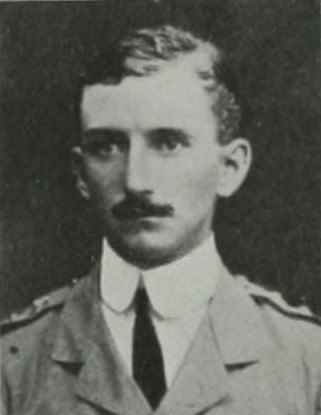
Francis W. Townend.
TOWNER, FREDERICK ARTHUR ALBERT, Private, Signaller, No. 148, 7th Battn. Australian Imperial Force, s. of Horace Frederick Towner, of 22, Alfred Street, St. Leonards-on-Sea, Cabinet Maker, by his wife, Isabel, dau. of William McLeod; b. St. Leonards, 6 July, 1890; educ. Christ Church School there; went to sea in 1906 and was twice wrecked, first on the John Shelley, in Nov. 1907, and secondly with the sailing ship Enterprise, in the North Sea, Oct. 1908, being on this last occasion the sole survivor; in 1912 went to Australia and took up farming, but after the outbreak of war enlisted in the Commonwealth Expeditionary Force, 4 Sept. 1914, and was killed in action at the Dardanelles, 3 June, 1915; unm.
TOWNSEND, CHARLES, Armourer’s Mate (Pensioner), 342373, H.M.S. Cressy; lost in action in the North Sea, 22 Sept. 1914.
TOWNSEND, HENRY CHARLES WILLIAM, A.B., 239251, H.M.S. Aboukir; lost in action in the North Sea, 22 Sept. 1914.
TOWNSHEND, ALFRED, A.B., 236174, H.M.S. Good Hope; lost in action off Coronel, on the coast of Chili, 1 Nov. 1914.
TOWNSHEND, CHARLES HENRY, A.B., 229079, H.M.S. Good Hope; lost in action off Coronel, on the coast of Chili, 1 Nov. 1914.
TRACEY, ALBERT JAMES FREDERICK, Private, No. 1940, 15th Battn. (Prince of Wales’s Own Civil Service Rifles) The London Regt. (T.F.), 4th s. of Joseph Thomas Tracey, of 24, Belmont Road, South Norwood, S.E., formerly Sergt. 1st Border (34th) Regt., by his wife, Caroline, dau. of Richard Frederick Hill; b. Caterham, co. Surrey, 11 April, 1891; educ. Garrison School, Fort George, N.B.; South Norwood Council School, and Whitgift Middle School, Croydon; served as a registered Boy Clerk at the Board of Education, Whitehall, from 27 May, 1907, to 16 July, 1911, and as an assistant clerk, 17 July, 1911, to Aug. 1914. He joined the 23rd London Territorials in March, 1909; became Sergt. in Sept. 1912, but transferred to the Civil Service Rifles, April, 1914, giving up his stripes; volunteered for foreign service on the outbreak of war; went to France, 17 March, 1915, and was killed in action at Festubert, 25 May following, while bombing a German trench; unm. He was buried at Festubert. Capt. H. H. Kemble, of his Coy., wrote: “Your son led the way along the parapet and used his bombs with such effect, that the trench was taken the next day. A report of his bravery has been forwarded to Head Quarters. He was always thorough and efficient, and always quiet and gentle”; and Sergt. F. C. Robertson said that when they found him next day he had used all his bombs. He had rushed right on using the bombs till the Germans turned the machine-gun on to him. No man could have done more. The trench was won.
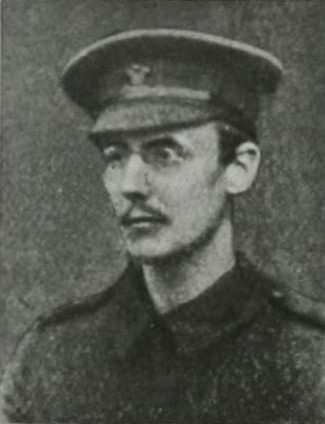
Albert J. F. Tracey.
HANBURY-TRACEY, HON. FELIX CHARLES HUBERT, Lieut., 2nd Battn. Scots Guards, yst. s. of Charles Douglas Richard, 4th Baron Sudeley, P.C., by his wife, Ada Maria Katherine, dau. of the Hon. Frederick James Tollemache; b. Buckingham Gate, S.W., 27 July, 1882; educ. Harrow and the Royal Military College, Sandhurst; gazetted 2nd Lieut. Scots Guards, 8 May, 1901, and promoted Lieut. 10 Nov. 1907; retired in 1907 and joined the Reserve of Officers; gazetted to the 3rd Battn. of his regt. on the outbreak of war, 5 Aug. 1914; went to France, 7 Nov., and died of wounds received in an attack on the German trenches near Fromelles, on the night of 18–19 Dec. 1914. He was wounded slightly at the commencement of the attack, but still led his men. When again wounded fatally on the parapet of the German trench, some of his men attempted to carry him back to safety, but he ordered them to leave him where he was and to go on, as he did not wish them to risk their lives in saving him. The Germans shortly afterwards re-took their trench, and he died a few hours later in their hands, and was buried by them. He m. at Lacock, Wiltshire, 11 June, 1908, Madeline Llewellyn (13, Queen’s Gate Place, S.W.), only dau. of Col. George Llewellyn Palmer, of Lackham, Lacock, Wilts, and had two sons: Michael David Charles, b. 29 March, 1909; and Ninian John Frederick, b. 7 Dec. 1910.
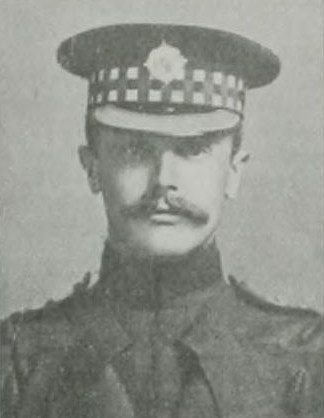
F. C. H. Hanbury-Tracey.
TRAHERNE, LLEWELLYN EDMUND, of Coedarhydyglyn, near Cardiff, J.P., Lt.-Commander, R.N., eldest s. of the late Llewellyn Edmund Traherne, of Coedarhydyglyn, by his wife, Mary, dau. of Henry Hogard; b. Paris, 14 Sept. 1863; joined the Britannia in Jan. 1877, and left in Dec. 1878, having taken the first prize in seamanship that year, he was appointed to H.M.S. Charybdis, then on the China Station, and took passage to her in the Encounter. He served in many stations and qualified in gunnery, gaining 1st Class Certificate in 1890, retiring in 1897. On the outbreak of the European War, at the age of 51, he rejoined as Lt.-Commander (G.) Emergency List, and was promoted to Acting-Commander of the Excellent, 12 Oct. 1914, and died while on active service, of pneumonia, at the Royal Naval Hospital, Haslar, 14 Oct. 1914. He was buried in the Churchyard of the village of St. Nicholas, near Cardiff. Lt.-Commander Traherne m. at Holy Trinity Church, Sloane Street, London, 16 April, 1907, Dorothy Emma Olivia, elder dau. of George Felix Standish Sinclair, of 3, Manson Place, London, S.W., and granddau. of the late Sir John George Tollemache Sinclair, of Ulbster, 3rd Bart., M.P., and had two sons and one dau.: Cennydd George, now of Coedarhydyglyn, b. 14 Dec. 1910; John Rhodri Llewellyn, b. 24 Sept. 1913; and Margaret Agnes Mary, b. 1 Dec. 1908.
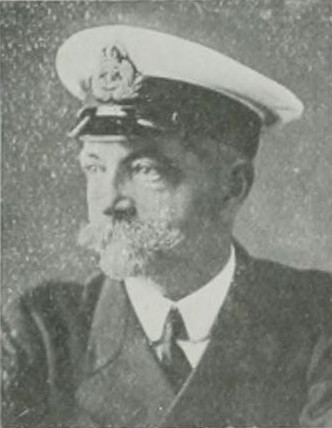
Llewellyn E. Traherne.
TRAVERS, ALBERT JOHN, Stoker, 1st Class, K. 14738 (Ports.), H.M.S. Aboukir; lost in action in the North Sea, 22 Sept. 1914.
TRAYNOR, THOMAS, Stoker, R.N.R., S. 2922, H.M.S. Hawke; lost when that ship was torpedoed in the North Sea, 15 Oct. 1914; m.
TREHANE, GEORGE, Leading Stoker, K. 1240, H.M.S. Good Hope; lost in action off Coronel, on the coast of Chili, 1 Nov. 1914.
TREVELYAN, WILFRED, 2nd Lieut., 4th Battn. Rifle Brigade, 2nd s. of Sir Ernest John Trevelyan, of 1, Marston Ferry Road, Oxford, D.C.L., Reader in Indian Law to the University of Oxford, etc. [gdson. of the Ven. George Trevelyan, Archdeacon of Taunton, 3rd s. of Sir John Trevelyan, of Nettlecombe, 4th Bart.], by his 2nd wife, Julia Isabel, dau. of Edward Walhouse Mark, late Consul at Marseilles; b. Calcutta, 10 Oct. 1893; educ. Rugby, and at Manchester University; gazetted from the Officers’ Training Corps to the 5th (Reserve) Battn. Rifle Brigade, 15 Aug. 1914, was transferred to the 4th Battn. 8 Sept. following, served with his regt. in France and Flanders, and died at Ypres, 5 May, 1915, from wounds received in action the previous day. He was buried in the grounds of Hooge Chateau, France; unm.
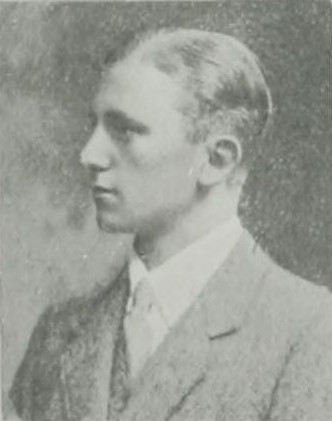
Wilfred Trevelyan.
TREVENA, FREDERIC WILLIAM, Private, No. 931, A Coy., 1/5th Battn. Seaforth Highlanders (T.F.), only surviving s. of Richard Charles Trevena, of 33, Lakeside Road, Palmer’s Green, N., by his wife, Eliza Barnicoat, dau. of the late John Robins, of Penryn, Cornwall; b. London, 22 Oct. 1892; educ. Bowes Road School, was a member of the Clerk’s Department of the Southgate Urban District Council Office; joined the Seaforth Highlanders, 14 Sept. 1914; went to France, 1 May, 1915, and was killed on the 21st of that month, by shell fire, while the battn. was resting in an orchard about three miles from the firing line, some miles N.E. of Bethune. Buried in the orchard; unm. The Chaplain, the Rev. D. Macfarlane wrote: “We were encamped and he and others were simply resting in their bivouac when the shells came raining across on us. We had been shelled the day before farther up the line and had left it to come here for safety as this place had never been shelled before. But this time the shells had a message, and it was your dear Frederic that they came to. He could have suffered nothing, as death was instantaneous. The others were spared, though they got a shock. We feel keenly parting so suddenly from a good comrade and a brave man.”
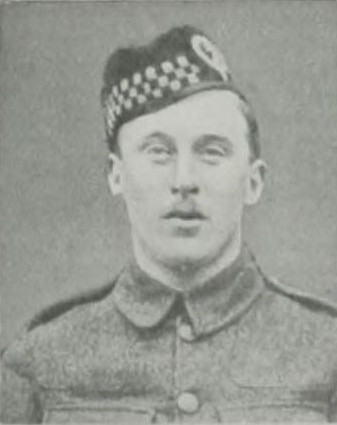
Frederic W. Trevena.
TREVENER, WALTER JOHN, Leading Stoker, 1st Class (R.F.R., Ch. B. 2277), 289209, H.M.S. Cressy; lost in action in the North Sea, 22 Sept. 1914.
TREVOR, HARRY SPOTTISWOODE, Lieut., Royal Engineers, s. of Sir Arthur Charles Trevor, K.C.S.I., late of the Indian C.S., Revenue Member of the Bombay Government (1892–95) and Public Works Member of the Government of India (1896–1901), by his wife, Florence Mary, 2nd dau. of Col. Cyril Jackson Prescott, Bombay S.C., and grandson of Captain Robert Salusbury Trevor, 3rd Bengal Cavalry (who was murdered at Kabul in Dec. 1841, with the British Envoy, Sir William Macnaghten); b. Karachi, India, 19 July, 1899; educ. Marlborough College, where he was in the sixth form. Prefect and Head of his house, and a member of the house and school football teams, and the School Shooting Eight. From Marlborough he passed direct into Woolwich, became a member of R.M.A. Football XV, and gained his commission in the R.E., after an 18 months course, 1 Oct. 1909. After the usual period of training at Chatham he was ordered to India, served for a time in the Military Works Department at Jullunder, in the Punjab, and was then transferred to the Engineering Staff of the North-Western State Railway at Lahore, and promoted Lieut. 28 Jan. 1912. On the outbreak of the war he was attached to the 1st K.G.’s O. Sappers and Miners, and proceeded with the 4th Field Company of the battn. as part of the Meerut Brigade to France, where he landed in Oct. 1914, and where he served, throughout the fighting at Givenchy, Festubert, Neuve Chapelle, and elsewhere on the front between La Bassée and Lille, till he was killed in action in the trenches near Laventie, 15 Aug. 1915. Buried in the British Cemetery at Vieille Chapelle; unm. He was mentioned in Despatches, 30 Nov. 1915. General Nanton, C.R.E., Indian Contingent (under whom Lieut. Trevor had served in the Military Department in India, as well as at the front), wrote: “I have watched your son since he was with us in Jullunder. In this war I have noted his bravery and skill on so many occasions. We have lost a brave and good officer. He was buried with our other R.E. officers at Vieille Chapelle. He was shot whilst arranging a fixed rifle rest with his usual care, and he did not suffer for an instant”; and Col. Twining, late C.R.E. Meerut Division: “Your son worked under my orders from the time he came to France until March last. I had a high opinion of him as an officer and a strong regard for him as an individual, and I deplore his loss to the Service as well as to his relations and friends. He went through much hard and dangerous work—never spared himself in the slightest and was always cheery and ready for anything. I remember one occasion in particular last Dec. when I had to send him with another young officer out on a very difficult and dangerous task—they had been out through very severe fighting for 36 hours consecutively and were very much done, but your lad stuffed a little food into his pockets and went off again, full of cheer, with a smile. You will be glad to hear of this—it was his usual attitude and we have lost a valuable officer and a much-loved comrade.” The late Col. Davidson Houston, Commanding 58th Rifles F.F., also wrote: “I trust you will excuse an entire stranger writing to you, but on behalf of both my officers and myself I wish to tender our deepest sympathy with you in the loss of your son last month. He was, when he met his death, working in my section of the front line, as he had frequently done before, and I had always found him a most able and hard working adviser on technical points connected with the defences—always cheerful, always ready to help, never sparing himself, we shall miss him greatly and the R.E.’s have lost one of their most promising young officers. Your son had been lunching with me and discussing a rifle rest he had invented, a specimen of which he had had made and given to my regiment. He said he would like to test this particular specimen as he had not had time to do so before sending it to us. He asked if he might use my observation post to shoot from and he and my adjutant went there for the purpose. The post is raised up on a platform. Your son raised his head to look over the little breastwork and was immediately shot. We much regretted being unable, owing to the Military situation, to attend his funeral and mark our respect for him as a soldier and a comrade.” An officer of high professional promise, he was also a music and book lover, a talented designer and draftsman, and had a somewhat notable turn for the devising of contrivances “for the further discomfiture of the enemy,” to use the words of a brother officer. One of the first, if not absolutely the first, trench mortar used by the British, to counter the German Minenwerfer, was made on his initiative and under his orders, of 9 inch iron piping, in the company’s workshops, and proved very effective, and it was in arranging to test a portable contrivance of his own for enabling fire to be kept up on any desired point in the dark and without exposure, that he met his death. With reference to this contrivance the O.C. 2nd Black Watch wrote in a note found among Lieut. Trevor’s papers: “We have tried your rifle rest, and found it very good.”
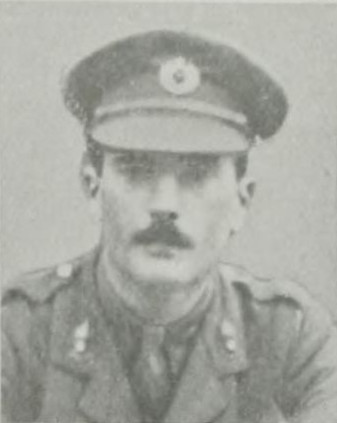
Harry S. Trevor.
TRIGGS, WOODMAN GEORGE, Ship’s Corpl. (R.F.R., Ch. B. 3710), 163287, H.M.S. Aboukir: lost in action in the North Sea, 22 Sept. 1914.
TRIMMER, GILBERT FREDERICK, Coy. Sergt.-Major, No. 3359, 2/4th Battn. The Queen’s Royal West Surrey Regt. (T.F.), 2nd s. of John Trimmer, of Guildford, by his wife, Alice Katurah, dau. of J. Dawes Esher; b. Guildford, co. Surrey, 18 April, 1876; was by trade a Tailor; served in South Africa, 1900, with the City Imperial Volunteers and was invalided, home; after the outbreak of the European War enlisted 2 Nov. 1914; went to the Dardanelles with the Mediterranean Expeditionary Force, and was killed in action at Chocolate Hill, Gallipoli, 9 Aug. 1915. He m. at St. Mary’s, Guildford, 10 Feb. 1902, Grace Eleanor (38, King John Terrace, Heaton, Newcastle-on-Tyne), dau. of the late George Hewett, of Guildford; s.p.
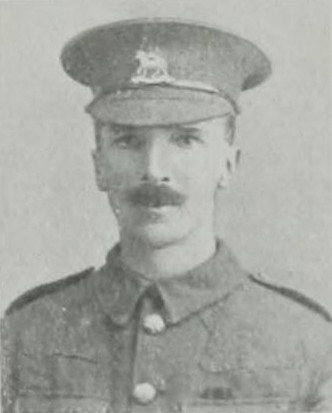
Gilbert F. Trimmer.
TRIMMER, WILLIAM DOUGLAS MACLEAN, Lieut., 1st Battn. Hampshire Regt., only child of Edward Douglas Trimmer, of Oakrigg, Walton-on-Thames, Solicitor, and his wife, Mary Kate, dau. of John Lauchlan Maclean, late of Haremere Hall, co. Sussex; b. Surbiton, co. Surrey, 29 Dec. 1891; educ. Aldenham School and the Royal Military College, Sandhurst; gazetted 2nd Lieut. to the 1st Hampshires, 20 Sept. 1911, and promoted Lieut. 18 March, 1914; left for France, 22 Aug. 1914, in the 11th Brigade of the 4th Division, served through the retreat from Mons, the Battles of the Aisne and the Marne, and was killed in action with his whole platoon, in an advanced and isolated trench at Ploegsteert Wood, during the First Battle of Ypres, 30 Oct. following. Buried in Ploegsteert Churchyard; unm. Lieut. J. F. Gwynne, Medical Officer to the Hampshires, wrote: “He died like a hero—he was a hero, and the way he and his men fought to the last is one of the finest acts I have heard of in the whole war. He was found in his trench, wounded fatally in the head, grasping unexpended cartridges in his hand—game to the last. He must have died immediately on receiving the fatal shot.” Capt. Clive Garsia, 1st Hampshires, wrote: “The simplest truth about him, uninfluenced by the natural wish to speak well of the dead, is that he was one of the very best subalterns I ever knew. From the day he joined he devoted himself whole-heartedly to work and to play, and exhibited pluck and endurance I have never seen excelled. His success as a cross-country runner was due solely to grit, because he was not the cut of a runner, but he had the heart to stay the pace however hot they made it. As a loyal subordinate who played up to me whole-heartedly on every occasion I should like to pay his memory humble tribute of acknowledgment. I knew when the war broke out that he would do well, and I have frequently asked men coming down wounded for news about the regt. and different officers. The first news I heard was about the retreat from Mons, when a sergt. told me that Mr. Trimmer and the General were the only two that wouldn’t lie down. Several told me that ‘the blokes said they’d follow him anywhere’”; and in a subsequent letter he added “the specially heroic circumstances attending the last stand of Douglas and his platoon are fully appreciated. I am now on the Divisional staff and have frequently heard the Chief Staff Officer say how well my regt. has done all through, instancing the way Douglas’ platoon stuck it to the last man.” And Capt. Douglas Johnston, 1st Hampshires, wrote: “On the Aisne he [Lieut. Trimmer] did his work perfectly, and I myself was particularly struck with the quiet courage he showed when on really dangerous patrol work. He was far from well there, but got better before we moved. When poor Major Connellan was struck, your boy dashed out and brought him into cover, and the next day, the 21 Oct., he told me about it. It is unnecessary for me to add that he was extraordinarily popular with his men.” Mr. Connellan in a letter to Mr. Trimmer said: “I have heard from Capt. Thurn and I will tell you all that he told me about your son, but I am afraid it is very little. He says, about 28 Oct. he was holding an advanced trench with his platoon in front of Ploegsteert Wood; he was very heavily shelled and attacked by infantry all day, losing most of his platoon. He sent back for reinforcements but apparently there were none to be had, anyhow none were sent. He held his men together and stuck to his trench all day, being finally killed by a shell towards the evening. The remains of his platoon, nine men out of about 40, stuck on and were finally all killed by German infantry, except, I believe, one man who is now wounded and prisoner. The only survivor of his platoon, the messenger he sent back, was killed about two months after. Young Trimmer certainly held his trench very gallantly and I know his name was sent on from the battn.” He was a good all-round athlete. When at Aldenham he won the School Mile and Half Mile, in 1910, creating school records in both instances. He was also a good cross-country runner, coming in fourth at the R.M.C. in 1911, and he ran in the 1st Hampshire Regimental Teams in 1912, 1913 and 1914, which won the Aldershot Command (twice) and the Eastern Command, Cross Country Runs. In other sports he was a useful Rugby Football and Hockey player, a plucky swimmer and a good horseman.
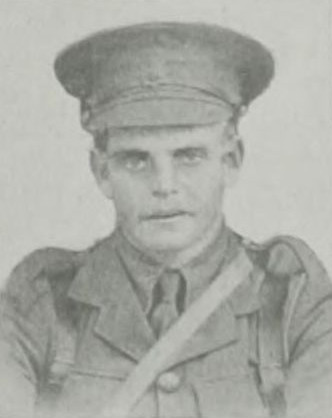
William D. M. Trimmer.
TRINEMAN, CHARLES FREDERICK, Staff Sergt., No. 62, 18th Battn. 5th Infantry Brigade, Australian Imperial Force, s. of the late William Trineman, Gardener; b. Exeter, 28 March, 1882; educ. Seaton Council School; joined the 27th Devonshire Yeomanry, and served with them through the South African War, 1899–1902 (Queen’s medal with five clasps); afterwards went to Australia; joined the Australian Imperial Force on the outbreak of war; served in Egypt and at the Dardanelles, and was killed in action there, 21–25 Aug. 1915. He had, just previous to his death, given a cooking demonstration at Victoria Barracks, on one of the Travelling Kitchens to be used by the troops, and was then presented with a gold wristlet watch. For many years he was golf professional and groundsman at the Axe Cliff Golf Links. He m. at Seaton, Devon, 28 Jan. 1903, Amelia (Southfield, New Road, Water Orton, near Birmingham), dau. of John Harley Boddy, and had a dau.: Nora Amelia, b. 13 March, 1904.
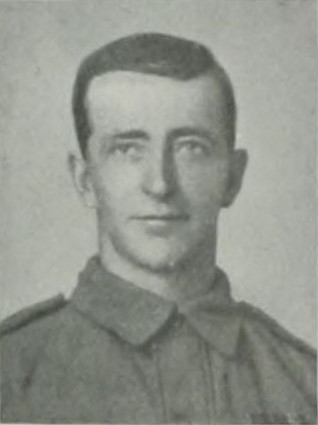
Charles F. Trineman.
TRITTON, ROBERT EDMUND, Leading Seaman, 227159, H.M.S. Aboukir; lost in action in the North Sea, 22 Sept. 1914.
TROTMAN, SYDNEY, Private, No. 3155, 2/3rd Battn. (Royal Fusiliers), The London Regt. (T.F.), s. of the late George Hayman Trotman, of Brooklands Lodge, Cambridge, by his wife, Agnes (35, Norwich Street, Cambridge), dau. of Edward Godfrey; b. Cambridge, 18 April, 1886; educ. St. Paul’s School, Cambridge; was a Clerk; joined 2/3rd Royal Fusiliers, 8 Dec. 1914; left for Egypt, in April, and died of heatstroke at Khartoum, 3 June, 1915; unm. Buried at Khartoum. His Commanding Officer wrote: “Your son was buried with all military honours and the Sirdar (Sir Reginald Wingate) has written asking me to express his sympathy to his relatives and the men of his company”; and another officer: “Your son was a good man and soldier, and will be deeply missed by officers and men alike.”
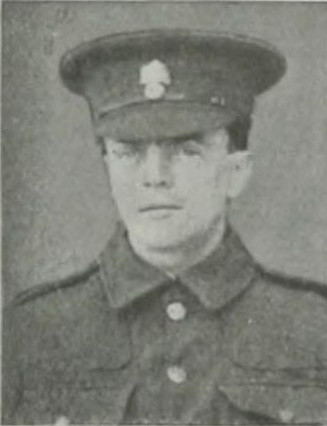
Sydney Trotman.
TROTT, FREDERICK JAMES, Stoker, 2nd Class, K. 21850, H.M.S. Pathfinder; lost when that ship was sunk by a mine, about 20 miles off the East Coast, 5 Sept. 1914.
TROTTER, ALEXANDER NIGEL, Lieut. 3rd (Reserve), attd. 1st Battn. The Royal Scots (Lothian Regt.), only s. of Alexander Pelham Trotter, of 181, Ashley Gardens, London, S.W., Electrical Adviser to the Board of Trade, by his wife, Alys Fane, dau. of Maurice Keatinge, and a nephew of Lieut.-Col. Sir Henry Trotter, K.C.M.G., C.B.; b. Cottesmore Gardens, London, W., 17 Sept. 1894; educ. Packwood Haugh, and Clifton College, where he was a member of the O.T.C., shot in the Bisley VIII, and was one of the best boxers in the school; gazetted 2nd Lieut., 3rd Royal Scots, 21 Dec. 1912, and promoted Lieut. 9 July, 1914; acted as Transport Officer for the 3rd Battn. on the outbreak of war; left for France in charge of a draft of 100 men for the 2nd Battn., 30 Aug. 1914; the Royal Scots left the trenches at the Aisne about 26 Sept. and arrived in position near Bethune 11 Oct., and Lieut. Trotter was killed in action at La Fosse, near Vieille Chapelle, 12 Oct. 1914, while engaged in attacking a wood strongly held by the enemy. The ground over which the British had to advance was intersected by small irrigation canals crossed by plank bridges, on which the officers and men offered a good target. Lieut. Trotter is believed to have been first hit while crossing one of these bridges, and after advancing three-quarters of a mile fell with two more wounds. He was buried on the farm of Zelobes, near La Fosse, north of Bethune; unm. His Coy. Commander, Capt. (now Major) F. C. Tanner, D.S.O., wrote: “Everyone is unanimous that Nigel died like a hero, and knowing him I could not suppose it otherwise. I saw him under fire at the beginning of the action”; and a man in his company: “I can assure you all the men were sorry to lose him, for he seemed to have no fear and was a good leader of men.” On the cross put up on his grave by the mobile column of the Red Cross, some of his comrades wrote: “A very gallant gentleman.”
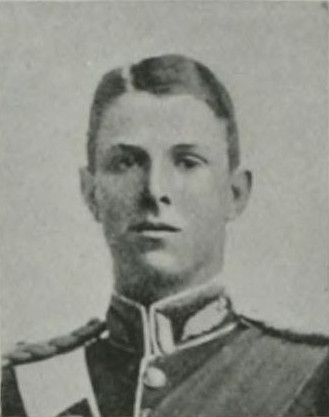
Alexander N. Trotter.
TROTTER, JAMES KEITH, Lieut. 1st Battn. Gordon Highlanders, only s. of Major-General Sir James Keith Trotter, of Aislaby Lodge, Sleights, co. York, K.C.B., C.M.G., by his wife, Alice, yst. dau. of Francis James Crow, of Haughton-le-Skerne, co. Durham; b. Malta, 19 Dec. 1888; educ. Wellington College (where he was prefect, 1906, and head of the Rifle Corps), and the Royal Military College Sandhurst; gazetted 2nd Lieut. to the Gordon Highlanders, 23 Jan. 1909, and promoted Lieut. 15 Oct. 1910; was A.D.C. to his father, Major-General Sir J. K. Trotter, Commanding Southern Coast Defences, from 3 Nov. 1910, to 23 July, 1911; went to France, 13 Aug. 1914, and was killed in action at Audencourt, near Le Cateau, 26 Aug. 1915, being shot in the head while watching the fire of his machine-guns through field-glasses; unm. He was buried at Audencourt. Lieut. Trotter was the winner of 100 and 200 yards races at Wellington College, and was second in quarter of a mile race at Army Championship Meeting, Aldershot, 1909.
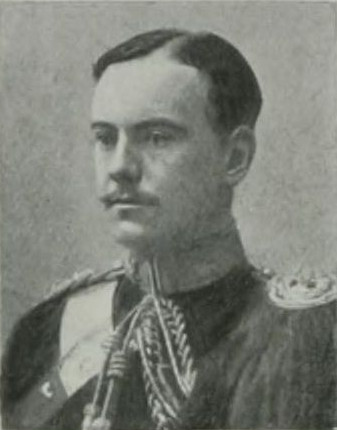
James Keith Trotter.
TROUNSON, GRAHAM FRANCIS JAMES, Midshipman, R.N.R., only child of Francis Thomas Trounson, of Onslow Mansions, Richmond, Surrey, by his wife, Kate E., dau. of Thomas Martin, of Chelmsford; b. London, 11 June, 1897; educ. The Whitegift and Mersey training ship for White Star Officers; Cadet R.N.R., 1911; Midshipman (Proby.), Jan. 1914; appointed to H.M.S. Good Hope, 2 Aug., and was lost when that ship was sunk in the Naval action off Coronel, on the coast of Chili, 1 Nov. 1914. He had the unique experience, in so short a life of having travelled the world as a cadet, and Midshipman, in sail The Mersey, in steam The Cevarmie, and in H.M.S. Good Hope. He had been round the Horn six times.
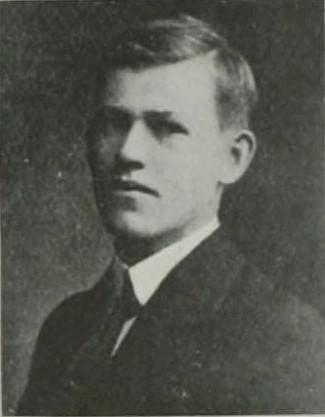
Graham F. J. Trounson.
TRUDGETT, JAMES ALBERT, Sergt., No. 5435, 1st King’s Dragoon Guards, 3rd s. of George Alfred Trudgett, of 68, Lime Tree Place, Stowmarket, Suffolk, by his wife, Harriet, dau. of William Greenwood, of Stowmarket; b. Stowmarket, 18 Dec. 1883; educ. British School there, and was for a short time a Clerk in the offices of the New Explosives Co.’s Works at Stowmarket; enlisted in the King’s Dragoon Guards, 3 Jan. 1901, and after training at York was drafted to the regt. then in South Africa; remained there a year, then returned to England; served at Hounslow and Aldershot; went to India, 6 Nov. 1907, and was stationed at Ambala and later at Lucknow; went to France with the Lucknow Cavalry Brigade about Nov. 1914; took part in the heavy fighting round La Bassée, and was killed in action at Hooge, 2 June, 1915; unm. The Adjutant, 1st King’s Dragoon Guards, wrote: “Your son was with me in the Headquarters during the 1st and 2nd and gave me very able assistance in taking messages, and assisting in dressing the wounded. During the severe bombardment of the 2nd, at about 2 p.m., the dug-out was blown in, in two places, and I gave your son an order to take the most important papers and go down the communication trench to a place of greater safety in Zouave Wood. That was the last I saw of him. The communication trench was almost obliterated, his body not being discovered for two days. The Lincoln Regt. reported that in clearing the trench, they had found him and buried him in Zouave Wood. I cannot tell you how great a loss he is to the regt., Colonel and myself. A thorough, trustworthy, gallant soldier, and mourned by all ranks.”
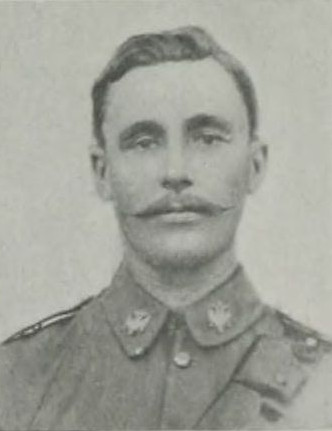
James Albert Trudgett.
TRUEMAN, CHARLES FITZGERALD HAMILTON, Capt., 2nd Battn. Manchester Regt., eldest s. of Lieut.-Col. Charles Hamilton Trueman, of Oakwell-on-the-Blean, Kent, late 32nd L.I., by his wife, Dorothea Magdalena, dau. of John P. Fitzgerald, M.D.; b. Devonport, 22 March, 1877; educ. King’s School, Canterbury, and Sandhurst; gazetted 2nd Lieut. to 2nd Manchesters, 8 Sept. 1897; promoted Lieut. 17 Aug. 1899, and Capt. 5 Jan. 1901; served in the South African War, 1900–1; took part in the operations in the Transvaal, July, 1901, and in those in the Orange River Colony, 30 Nov. 1900 to Oct. 1901 (Queen’s medal with four clasps), was Superintendant of Gymnasia, Aldershot Command, 23 April, 1908, to 31 Aug. 1909, and Assistant Inspector of Gymnasia in same command, 1 Sept. 1909, to 22 April, 1912; left for France with the Expeditionary Force (14th Brigade, 5th Division), Aug. 1914, and was reported missing after the Battle of Le Cateau, on the 26th of same month, and is believed to have been killed in this action; unm. He had the Coronation medal of King Edward VII.
TRUEMAN, GEORGE, Stoker, 1st Class (R.F.R., B. 3264), 292872, H.M.S. Hawke; lost when that ship was torpedoed in the North Sea, 15 Oct. 1914; m.
TRUSSLER, FREDERICK, Private, R.M.L.I., Po./13907, H.M S. Good Hope; lost in action off Coronel, on the coast of Chili, 1 Nov. 1914.
TUCK, ALFRED, Stoker, 1st Class (R.F.R., B. 3410), 308496, H.M.S. Good Hope; lost in action off Coronel, on the coast of Chili, 1 Nov. 1914.
TUCK, PETER ISAAC THOMAS, A.B. (R.F.R., Ch. B. 5338), 211878, H.M.S. Cressy; lost in action in the North Sea, 22 Sept. 1914.
TUCKER, ALAN ROBERT LLOYD, 2nd Lieut., Indian Army (attd. 2nd Battn. Royal Warwickshire Regt.), only s. of Robert Edward Tucker, of Ashburton, co. Devon, Solicitor, Lt.-Col. Commanding 2/5th Battn. Devonshire Regt. (T.F.), by his wife, Annie Lloyd, dau. of the late Richard Williams, of Bodafon, Anglesey; b. Ashburton, 25 June, 1894; educ. Sherborne and Sandhurst; gazetted 2nd Lieut. Indian Army, 8 Aug. 1914, and was subsequently attd. 2nd Royal Warwicks; went to France, Nov. 1914, and was killed in action near Fleurbaix, 19 Dec. following; unm.
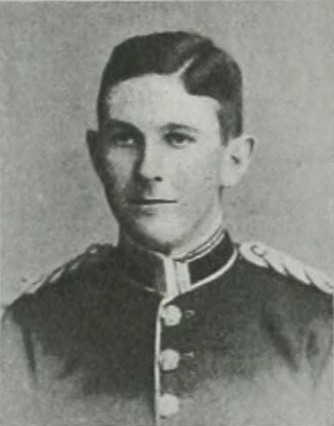
Alan R. L. Tucker.
TUCKER, ERNEST EDWIN, A.B. (R.F.R., B. 5398), 195629, H.M.S. Good Hope; lost in action off Coronel, on the coast of Chili, 1 Nov. 1914.
TUCKER, GEORGE JOSEPH, Leading Stoker (R.F.R., B. 7283), 308124, H.M.S. Hawke; lost when that ship was torpedoed in the North Sea, 15 Oct. 1914; m.
TUCKER, REGINALD, Rifleman, No. 1901, 16th (Queen’s Westminster Rifles) The London Regt. (T.F.), only s. of John Tucker, of “Oakwood.” Chorley Wood Road, Rickmansworth, Cigar Dealer, by his wife, Emma, dau. of Samuel Drake; b. Wimbledon, 13 Sept. 1891; educ. Whitgift School, Croydon. He enlisted on the outbreak of war, served in France and Flanders, and was killed in action, 4 Dec. 1914; unm. He was buried near Burnt Farm, Bois Grenier, France. Capt. Whitmore, commanding D. Coy. The Westminsters, wrote: “I regret to say that your son while sitting in the trench was this morning hit in the head by a bullet, which glanced in through a loop hole above him, and died in half an hour. I can only express my personal sorrow at losing a soldier who has always shown himself an extraordinarily plucky fellow, doing his best to keep down the enemy’s fire even when at its heaviest. We shall always remember him among us as the first man of the Company to fall fighting for England.”
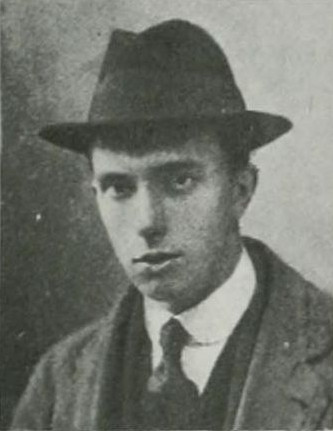
Reginald Tucker.
PITTS TUCKER, CECIL MORTIMER, Lieut., 1st Battn. Highland Light Infantry, 2nd s. of William Edwin Pitts Tucker, of Crosslands, near Barnstaple, Solicitor, by his wife, Violet Emily, dau. of Edmund Tattersall; b. Barnstaple, 12 April, 1890; educ. Ellerslie, Fremington, Devonshire; Charterhouse, and Sandhurst; gazetted 2nd Lieut. 1st H.L.I. 20 April, 1910, and promoted Lieut. 18 Dec. 1912; was an extra A.D.C. to Sir James Meston, Lieut.-Governor of the United Provinces, India, Oct. 1912, to March, 1913; left for France with the Sirhind Brigade, Lahore Division, Indian Expeditionary Force, Sept. 1914; and was killed in action at Festubert, on the morning of 20 Dec. following; unm. His Commanding Officer wrote: “He was as fine a soldier as one could wish to see and a true and affectionate comrade, and he met his soldier’s death just in the manner all who knew him, knew he would.”
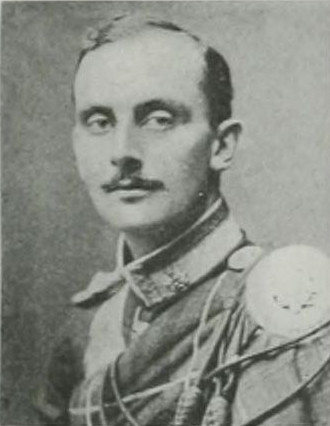
C. M. Pitts Tucker.
TUCKWOOD, LESLIE EDGAR, Private, No. 9964, 1st Battn. Princess Charlotte of Wales’s Royal Berkshire Regt., yst. s. of the late Charles Tuckwood, of 82, Wightman Road, Hornsey, Music Publisher; b. Harringay, 1891; joined the Navy in 1912, was transferred to the Army in 1913, and was killed in action at the Battle on the Aisne, 14 Sept. 1914; unm.
TUDBALL, THOMAS JOHN, Private, No. 5499, 1st Battn. Coldstream Guards, s. of John Tudball, of Bench Cottage, West Harwood, Timberscombe, near Dunster, co. Somerset, Farm Labourer, by his wife, Anna; b. Timberscombe aforesaid, 25 Dec. 1884; educ. Endowed Church School there; was a Farm Labourer and Ploughman: enlisted in the Coldstreams on 29 March, 1904; served with the Expeditionary Force in France, 21 Aug. to 21 Dec. 1914, and from 9 Jan. 1915; and was killed in action at Givenchy, 25 Jan. 1915.
TUDWAY, HERVEY ROBERT CHARLES, Lieut., 2nd Battn. Grenadier Guards, eldest s. of Charles Clement Tudway, of The Cedars, Stoberry Park, and Milton Lodge, Wells, Somerset, J.P., D.L., by his 2nd wife, Alice Constance, yst. dau. of Sir Frederick Hutchinson Hervey-Bathurst, 3rd Bart.; b. 17, Lower Berkeley Street, W., 23 Sept. 1888; educ. Evelyns and Eton, where he was in the sixth form and Eton Society; gazetted 2nd Lieut. Grenadier Guards, 1 Feb. 1910, and promoted Lieut. 29 Sept. following; was appointed A.D.C. to Lord Buxton, and sailed for South Africa, 25 July, 1914, but hearing of the outbreak of war on his arrival there, cabled to Lord Buxton, who was in England, for leave; returned immediately and rejoined his regt.; went to the Front; joined the 2nd Battn. at Ypres, 2 Nov. 1914, and died in hospital at Boulogne, 18 Nov. following, of wounds in the head received at the 1st Battle of Ypres on the 9th; unm. He was buried in the cemetery at Boulogne. A brass tablet was erected to his memory in the North Choir Aisle of Wells Cathedral, the inscription concluding with; “His life for his country, his soul to God.” Lieut. Tudway was a keen sportsman and cricketer, and played for the Brigade, I.Z. and M.C.C. His brother, Lieut. Lionel C. P. Tudway, R.N., D.S.O., was taken prisoner at Kut when in command of H.M.S. Sumara.
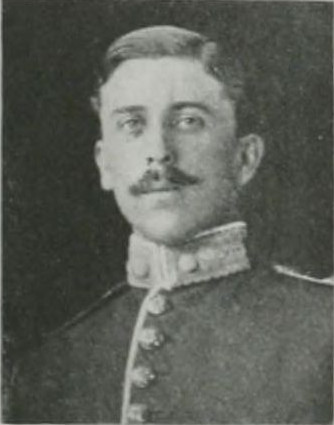
Hervey R. C. Tudway.
TUFF, CECIL THOMAS, Capt., 3rd (Reserve), attd. 1st Battn. The Queen’s Own Royal West Kent Regt., 3rd s. of Charles Tuff, of Westfield, Singlewell, near Gravesend, and Rochester, J.P., formerly M.P. for Rochester, by his wife, Marian, dau. of George William Gill; b. Rochester, 16 Aug. 1885; educ. Abbey School, Beckenham, and Malvern College; obtained a commission in the Royal West Kent Militia in 1905; but resigned in or about 1911 rejoining as a Lieut. the day war was declared. He was gazetted Capt. to 3rd Royal West Kents, 26 Sept. 1914; went to France, 25 Nov. following, where he was attd. to the 1st Battn., and was killed in action at Hill 60, near Ypres, 15 April, 1915. Buried Hill 60; unm.
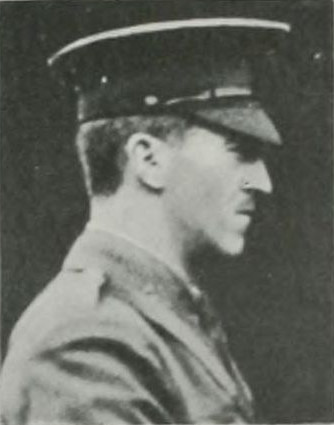
Cecil Thomas Tuff.
TUFNELL, CARLETON WYNDHAM, Lieut., 2nd Battn. Grenadier Guards, 3rd s. of Carleton Fowell Tufnell, of Waterdone Manor, Kenley, Surrey, by his wife, Laura Gertrude, dau. of William Parker Charsley, of Ceylon, M.D.; b. Sydenham, co. Kent, 5 Aug. 1892; educ. Eton and Sandhurst; gazetted 2nd Lieut., 2nd Grenadier Guards, 4 Sept. 1912; left for France in Sept. 1914, and was promoted Lieut. He was mortally wounded near Klein Zillebeke, during the first Battle of Ypres, on the evening of 6 Nov. 1914, dying shortly after he reached hospital. He was machine gun officer of his Battn., and was hit whilst taking up a position. Buried in Zillebeke Churchyard; unm. At Eton, Lieut. Tufnell was one of the best all-round athletes that the school has known. He was captain of the Eleven, Keeper of the Field (two years), Keeper of Oppadon Wall and Mixed Wall, and President of the Eton Society (“Pop.”). He won the Victor Ludorum Prize at athletic sports, and the King’s medal in the O.T.C. At Sandhurst, he was captain of the cricket, association football, and athletic team, and later played cricket for the Household Brigade, M.C.C., and Zingari, and represented the British Army against the Dutch Army at “Soccer,” both in England and Holland, in the season of 1914–15.
TULETT, THOMAS, Acting Leading Stoker, 296909, H.M.S. Cressy; lost in action in the North Sea, 22 Sept. 1914.
TULIP, JOHN JAMES, Stoker, 1st Class (R.F.R., B. 5840), S.S. 106376, H.M.S. Good Hope; lost in action off Coronel, on the coast of Chili, 1 Nov. 1914.
TULLY, DAVID, Stoker, 1st Class (R.F.R., B. 9914), S.S. 107383, H.M.S. Hawke; lost when that ship was torpedoed in the North Sea, 15 Oct. 1914.
TUNE, JOHN SKERROW, Private, No. 5435, 1st Battn. Coldstream Guards, s. of the late John Tune; b. Birmingham, 23 April, 1882; educ. Sherborne Road Board School there; enlisted 22 Feb. 1901; was reported missing after the fighting at Givenchy, Belgium, and later to have been killed in action, 22 Dec. 1914. Tune had the Good Conduct Badge granted, 22 Feb. 1906. He m. at Birmingham, 1910, Sarah Ann (16, Eastbourne Terrace, Herbert Road, Small Heath, Birmingham), eldest dau. of the late William Smith, of 32, Frazier Street, Oldburn, Staffs, and had three children: Rosina May, b. 3 Dec. 1910; Olive Florence Ada, b. 8 July, 1912, and Beatrice Maud, b. 15 April, 1915.
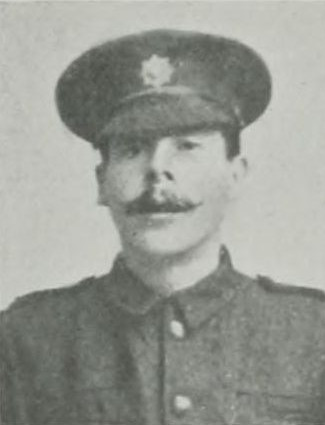
John Skerrow Tune.
TUPPER, ERNEST, Stoker, Petty Officer (R.F.R., Ch. B. 10769), 300721, H.M.S. Aboukir; lost in action in the North Sea, 22 Sept. 1914.
TURNBULL, DERWENT CHRISTOPHER, M.B., Lieut., R.A.M.C., 5th s. of William Peverill Turnbull, of Burway House, Church Stretton, co. Salop, late H.M. Divisional Inspector of Schools, by his wife, Fanny, dau. of the late Edwin John Hayes, Town Clerk of Birmingham; b. Stockwell End, Wolverhampton, 28 Aug. 1890; educ. Private Schools, Sheffield, the Sheffield Royal Grammar School, and King Edward VII’s School at Sheffield, Giggleswick School, and the University of Sheffield; volunteered in 1914, obtained a commission as Lieut. in the R.A.M.C. Dec. 1914; was for some weeks a medical officer at King George V’s Hospital, Dublin; went to France 15 Feb. 1915; was attd. to 84th Field Ambulance, 28th Division, but on 9 March was lent as a temporary M.O. to the 1st Battn. Cheshire Regt., and died at St. Eloi, 14 March, 1915, having been wounded on the 10th; unm. He was buried in a burial ground at Ypres. On the morning of 10 March, 1915, while Lieut. D. C. Turnbull was in his dressing station, a message came that an officer in a trench was bleeding to death. Lieut. Turnbull, with an orderly, volunteered to go to him, and about 10.30 a.m. crossed the dangerzone, and reached the trench, which was about 3 ft. deep and half full of water. Lieut. Turnbull attended to the wounded man but, judging some further operation necessary, determined to remove him to the dressing station. Rifle fire, however, prevented this, and the wounded officer and Lieut. Turnbull and the orderly were unable to get away from the trenches for many hours. About 6 p.m. they made an attempt in the course of which the wounded officer received a further wound and Lieut. Turnbull was shot in the lung. Of this he died four days later notwithstanding the utmost efforts made on his behalf by his colleagues, Capt. Bickerton and Lieut. Haynes. The orderly, Private (now Corpl.) J. Needham (1st Cheshires), afterwards received the D.C.M. for his conduct on this occasion. Lieut.-Col. W. Salisbury Sharpe, R.A.M.C., wrote: “I do not know what form official recognition will take, but I can assure you of my personal appreciation that no greater instance of heroic self-sacrifice will be recorded during the war;” and Capt. R. E. Bickerton, R.A.M.C., “The stretcher-bearers of my section have spoken very, very kindly of him and admired his pluck, saying that he never let them cross a risky part of the road without being there himself.” Lieut. Turnbull was mentioned in F.M. Sir John (now Lord) French’s Despatch of 31 May [London Gazette, 22 June], 1915, for gallant and distinguished service in the field.
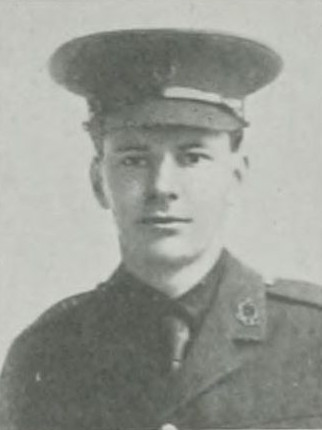
Derwent C. Turnbull.
TURNBULL, WALTER, Private, No. 964, 24th Infantry Battn. Australian Imperial Force, s. of Thomas Edward Turnbull, of Hexham, Northumberland, Rope and Candle Manufacturer, by his wife, Ann, dau. of James Charlton; b. Hexham, 26 Jan. 1882; educ. North Eastern County School, Barnard Castle; went to Australia in May, 1912; joined the Australian Force in March, 1915, and died on board the hospital ship Guildford Castle, 21 Sept. 1915, of wounds received in action near Lone Pine, Gallipoli; buried at sea about 5 miles from Lemnos; unm.
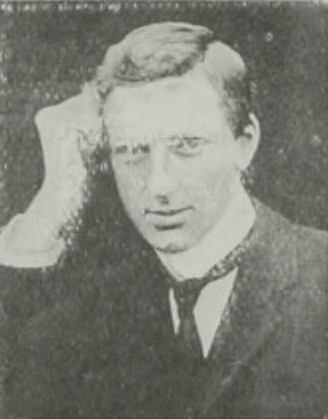
Walter Turnbull.
TURNER, ARTHUR, Private, No. 7673; 1st Battn. Royal West Kent Regt.; served with the Expeditionary Force in France, etc.; died 27 April, 1915, of wounds received in action; m.
TURNER, ARTHUR, No. 3894, 3rd Battn. Coldstream Guards; enlisted 15 Nov. 1900; served in South Africa, 26 Nov. 1901, to 6 Oct. 1902 (Queen’s medal with three clasps, “Cape Colony,” “South Africa, 1901,” “1902”), and with the Expeditionary Force in France and Flanders from 26 Aug. 1914; was reported missing after the fighting at Rentel on 12 Nov. following, and is now assumed to have been killed in action on or about that date.
TURNER, ARTHUR, A.B. (R.F.R., B. 4104), 194994, H.M.S. Good Hope; lost in action off Coronel, on the coast of Chili, 1 Nov. 1914.
TURNER, ARTHUR MORRIS, Private, No. 10/1357, Wellington Regt. New Zealand Expeditionary Force, only s. of Edwin Turner, of 27, South Street, Chichester, Wholesale and Retail Grocer and Provision Merchant, by his wife, Minnie, dau. of William Light, of Chichester; b. Chichester, co. Sussex, 22 July, 1893; educ. Chichester and Portsmouth Grammar Schools; went to New Zealand in Feb. 1913, and settled near Tologa Bay as a Farm Worker; volunteered on the outbreak of war, left for Egypt in Dec. 1914, and died on or about 11 May, 1915, from wounds received in action, when the New Zealanders landed at the Dardanelles; unm.
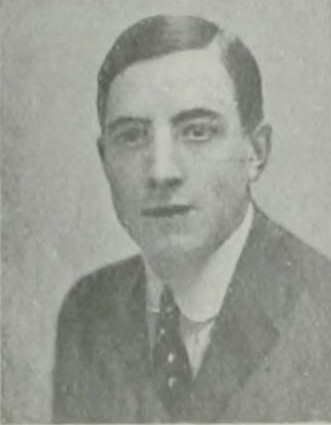
Arthur Morris Turner.
TURNER, BERNARD GEORGE, Private, No. 11833, Maxim Gun Section, 1st Battn. Coldstream Guards, only s. of John William Turner, of The Gables, Bledlow Ridge, co. Bucks. Schoolmaster, by his wife, Emily, dau. of David Hainsworth; b. Bledlow Ridge, Wallingford, 28 Nov. 1894; educ. High Wycombe Grammar School, and after leaving there won in open competition a post under the London County Council, and was serving in the Fire Brigade Department when war was declared in Aug. 1914. He volunteered shortly after and joined the Coldstream Guards in Sept. and left for the Western Front in Jan.; he was attd. there to the Maxim Gun Section, and was killed in action on Hill 70, at Vermeilles, 27 Sept. 1915, being shot through the heart; unm.
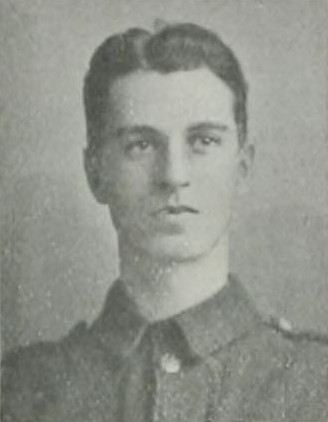
Bernard George Turner.
TURNER, CHARLES, Private, No. 7725, 2nd Battn. Royal Sussex Regt.; served with the Expeditionary Force in France, etc.; killed in action at Troyon, 8 Oct. 1914; m.
TURNER, CHARLES ALFRED, A.B. (R.F.R., B. 2817), S.S. 133, H.M.S. Good Hope; lost in action off Coronel, on the coast of Chili, 1 Nov. 1914.
TURNER, EDWARD, Stoker, 1st Class (R.F.R., B. 4579), 293331, H.M.S. Good Hope; lost in action off Coronel, on the coast of Chili, 1 Nov. 1914.
TURNER, ERNEST HERBERT, Private. No. 6226, 3rd Battn. Coldstream Guards, s. of Ernest Turner, of No. 6, Howard Terrace, Bank Top, Bedlington, Northumberland, by his wife, Elizabeth Ann, dau. of Henry Hyatt; b. Oxford, 14 July, 1886; educ. Broomhill Colliery School; was a Miner; enlisted in the Coldstreams, 30 May, 1905; went to France, 10 Aug. 1914, and was killed in action at Soupir, 16 Sept. 1914. He m. at Bedlington Parish Church, 3 Jan. 1914, Margaret Harrison, (1, Cragg’s Buildings, Bedlington, Bank Top, Northumberland), dau. of Isaac Nicholson, of Bedlington; s.p.
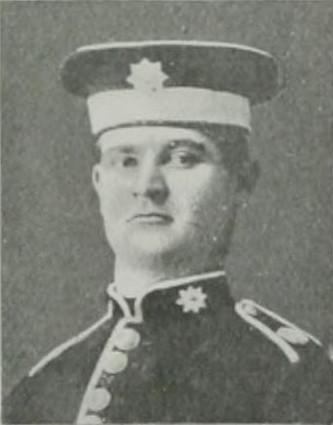
Ernest Herbert Turner.
TURNER, FRANCIS OLIVER, Private, No. 11420, No. 1 Coy. 3rd Battn. Coldstream Guards, only s. of Frederick George Turner, of Briningham, Melton Constable, Norfolk, Clerk in Time and Wages Department, Midland and G. N. Joint Railways, by his wife, Ellen Maria, dau. of John Oliver, of Thornage, Norfolk; b. Briston, co. Norfolk, 17 Aug. 1894; educ. Norfolk C. C. School, Melton Constable, and on leaving there entered the service of the M. & G. N. Joint Railways as an apprentice in the Boiler-making trade in Oct. 1908. On the outbreak of war he enlisted, 2 Sept. 1914, and after three months’ training at Caterham and Windsor, was sent to France on 22 Dec. and was in the trenches before 1 Jan. 1915. He was killed in action at Cuinchy brickfields 2 Feb. following, and was buried in the British cemetery between La Bassée Canal and the Railroad; unm.
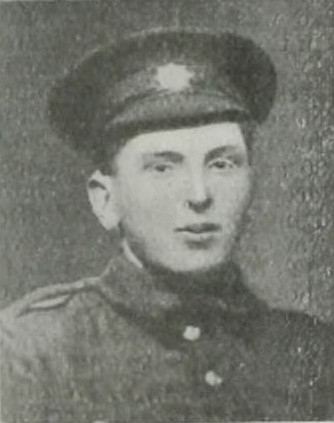
Francis Oliver Turner.
TURNER, FREDERICK HARDING, Lieut., 1/10th (Scottish) Service Battn. King’s Liverpool Regt. (T.F.), 2nd s. of William Neil Turner, of Mossley Hill Drive, Sefton Park, Liverpool, by his wife, Jessie Stewart, dau. of the late Thomas Holder, of Liverpool, J.P.; b. Liverpool, 29 May, 1888; educ. Greenbank School, Liverpool; Sedbergh (Sedgwick House, May 1902 to July, 1907), and Trinity College, Oxford, where he took his B.A. (Law, Class III) in 1910, afterwards joining the business of Turner & Dunnett, of Liverpool, of which his father was senior partner, he received a commission as 2nd Lieut. in the Liverpool Scottish, 18 May, 1912, and on the outbreak of war volunteered for foreign service. He was promoted Lieut. 25 Sept. 1914; went to the Front at the end of Oct. 1914, and was killed in action in the trenches east of Kemmel, 10 Jan. 1915, while inspecting barbed wire entanglements. He was buried in Kemmel Churchyard; unm. The circumstances of his death were given as follows in a letter from a brother officer: “After breakfast on 10 Jan., 1915, he went down the trench to look at the barbed wire he had put out in front the night before. On the way he looked up twice for a second, and each time he was shot at, but both shots missed, he then got to a place where the parapet was rather low, and was talking to a sergeant when a bullet went between their heads. Lieut. Turner said ‘By Jove, that has deafened my right ear.’ The sergeant remarked, ‘And my left one too, sir.’ Lieut. Turner then went a shade lower down, and had a look at the wire, and was shot clean through the middle of the forehead, killing him instantly.” Lieut. Turner was the famous Rugby International forward. He played as a “fresher” for Trinity, gained his Rugger Blue in 1908, when the ’Varsity match of that year ended in a drawn game. A year later he led the Oxford forwards in their runaway victory over the Cantabs, this being the occasion of R.W. Poulton’s great feat of scoring five tries. In 1910 Mr. Turner was captain of Oxford, when they beat Cambridge by 23 points to 18. On leaving Oxford he took charge of the Liverpool Rugby Club, and his wonderful power as a hard scrummager brought him before the notice of the Scottish Selection Committee, and he played in all the internationals of that and the following year, namely, against England, Ireland, Wales and France. The next season, 1912–13. he had the honour of the captaincy conferred upon him, and although the year had been a disastrous one up to the time of the English match, the Englishmen, who held an unbeaten record, were badly defeated by the impetuous rushes of the Scots. Last season Mr. Turner was not keen on playing in the International fixtures, but an appeal for help from the Scottish Union brought him out of his semi-retirement, for he still assisted the Liverpool Club. He was also a cricketer of more than average ability, and held 15 international caps. He played for Oxford in 1909 and 1910, but not against Cambridge, and in 1908 figured in the second eleven of Lancashire. His elder brother, Lieut. W. S. Turner, was killed in action, 16 June, 1915 (see his notice).