The Roll of Honour. (continued 35)
Reading edition
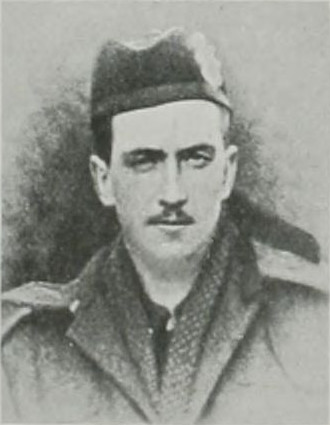
John Beveridge Nicholson.
NICHOLSON, JOHN CHARLES, Private, No. 10347, 3rd Battn. Coldstream Guards, s. of John William Nicholson, of 15, Villa Terrace, Alexandra Street, Hull; b. co. York; served with the Expeditionary Force in France and Flanders; killed in action at Zillebeke, 19 Nov. 1914; unm. Buried there.
NICHOLSON, LAWRENCE CAIL, D.S.O., Lieut., 3rd, attd. 1st. Battn. Princess Charlotte of Wales’ Royal Berkshire Regt., 4th s. of Frederick William Nicholson, of Shiplake, Henley-on-Thames, by his wife, Annie, dau. of Benjamin Cail, of Maidenhead; b. Maidenhead, co. Berks, 30 Aug. 1882; educ. Uppingham; was embodied with Militia 1 year 38 days, and attd. to Regulars 362 days; served in South African War with Mounted Infantry, 1899–1901; was gazetted 2nd Lieut., 14th (King’s) Hussars, 26 March, 1902, and promoted Lieut. 24 Jan. 1905; retired and joined the Special Reserve of Officers; appointed Lieut., 3rd Berkshire Regt., 28 July, 1914; went to France, 30 Aug. 1914, attd. to the 1st Battn.; “led and commanded his platoon admirably during an attack on German position Passchendaele-Becelaere Road, which resulted in the taking of the enemy’s trenches and 70 prisoners,” for which he was awarded the D.S.O. [London Gazette, 1 Dec. 1914]; was wounded in action near Ypres, 23 Oct. 1914, and died of wounds in London. 2 Nov. following; unm.
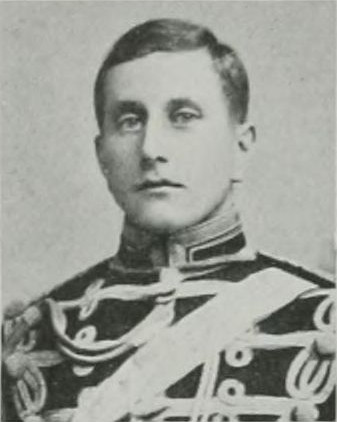
Lawrence Cail Nicholson.
NICHOLSON, LEONARD SAMPSON, 2nd Lieut., 1/12th Battn. (The Rangers) The London Regt. (T.F.), 2nd s. of John Nicholson, of Tanshelf Mills, Pontefract, co. York, Matting Manufacturer, by his wife, Elizabeth (West View, Ackworth Road. Pontefract), dau. of Leonard Sampson, of Humburton Grange, Boro’bridge, Yorks; b. Pontefract, 14 July, 1890; educ. King’s School, Pontefract; on leaving school he entered a wholesale iron and steel business in London; became a member of the Polytechnic, and in March, 1909, joined The Rangers; volunteered for Imperial service on the outbreak of war, and left for France with his battn. on Christmas Eve, 1914, holding the rank of Platoon Sergt.; gazetted 2nd Lieut. 14 April, 1915. He was killed in action at Verlorenhoek, during the Second Battle of Ypres, 2 May following. His Commanding Officer. Lieut.-Col. A. D. Bayliffe, wrote: “His death was a great loss to the Rangers; he would have made a very valuable officer had he been spared.” He was greatly esteemed by his men and, to quote from a letter written by one of them, “there was not a man in his platoon who would not have died for him if occasion had arisen. He faithfully upheld the honour of the British Army, and died doing his best for King and Country.”
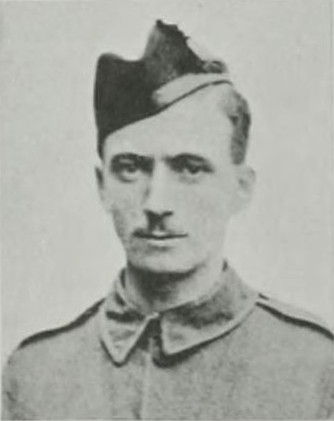
Leonard S. Nicholson.
NICKLIN, GEORGE, Acting Chief Armourer, 342117, H.M.S. Hawke; lost when that ship was torpedoed in the North Sea, 15 Oct. 1914.
NICOL, ALEXANDER, 2nd Lieut., 1/5th Argyll and Sutherland Highlanders (T.F.), 4th s. of the late John S. Nicol, of 85, Brisbane Street, Greenock, Coal Merchant, by his wife, Agnes Berwick, eldest dau. of the late Charles Mill, of Greenock, Shipowner; b. Greenock. 5 Nov. 1893; educ. Greenock Academy; was qualifying as a C.A. with Messrs. Kidston, Goff & Findlay, C.A., Glasgow. He received a commission as 2nd Lieut., 1/5th Argyll and Sutherland Highlanders, 16 Jan. 1914; volunteered for Imperial service on the outbreak of war; went to the Dardanelles in June, 1915, and was killed in action during the attack on the Krithia-Achi Baba position, Gallipoli, 12 July following; unm. Two of his brothers, Capt. C. M. Nicol, R.A.M.C. (Regular Army prior to outbreak of war), and Lieut. John E. Nicol, R.N.V.R., are (1916) on active service.
NICOL, FRANK, Stoker, 1st Class (R.F.R., Ch. B. 7237), S.S. 102206, H.M.S. Aboukir; lost in action in the North Sea, 22 Sept. 1914.
NICOL, HUGH JOHN, Sergt., No. 741, 1/4th Battn. The Royal Scots (Lothian Regt.) (T.F.), 2nd s. of the late John Nicol, of Edinburgh, Principal Stamper, Inland Revenue, by his wife, Ann S. (1c, Maxwell Street, Edinburgh), dau. of John McIntosh, of 2, Bangholm Terrace, Edinburgh; b. Edinburgh, 11 Nov. 1889; educ. South Morningside Board School there; and was in the office of the Assistant Secretary and Comptroller, Inland Revenue, Edinburgh. He had joined the 4th (Territorial) Battn. of the Royal Scots in 1909, and after the outbreak of war volunteered for Imperial service; went to the Dardanelles with the Mediterranean Expeditionary Force and was killed in action there, 28 June, 1915; unm. He was a member of St. Matthew’s Parish Church, Edinburgh. His brothers, Corpl. David Nicol, No. 13266, Cameron Highlanders, and L.-Corpl. William C. Nicol, No. 4130 (Highlanders) Royal Scots, are both on active service.
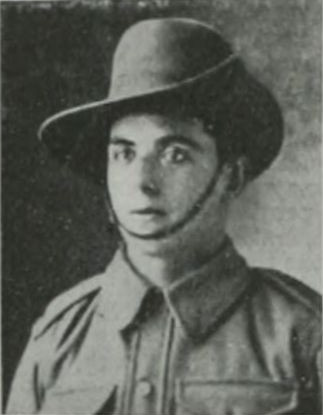
Hugh John Nicol.
NICOL, WALTER, Stoker, 1st Class, K. 14678 (Ports.), H.M.S. Aboukir; lost in action in the North Sea, 22 Sept. 1914.
NICOLSON, JOHN, Private, No. 2283, 2nd Battn. Australian Imperial Force, 4th s. of John Nicolson, of 5, Lower Ollach, Braes, Portree, Skye, Crofter, by his wife, Margaret, dau. of John Ross, of Camusknioag; b. Braes, aforesaid, 15 July, 1896; educ. Braes Public School, and Portree Higher Grade School, Skye; went to Australia, 3 May, 1914; volunteered for Imperial service on the outbreak of war, and was killed in action at the Dardanelles between 6 and 9 Aug. 1915; unm.
John Nicolson.
NIGHTINGALE, WILLIAM ARTHUR, A.B. (R.F.R., I.C. 84), 140682, H.M.S. Good Hope; lost in action off Coronel, on the coast of Chili, 1 Nov. 1914.
NILSON, CECIL EDGAR, Private, No. 2063, D Coy. 3rd Battn. (Royal Fusiliers) London Regt. (T.F.), s. of Julius Nilson, of 12, Welham Road, Streatham, S.W., Organ Tuner, by his wife, Emma Annie, dau. of the late William Goodwin Brightling, of Kennington, S.E.; b. Kennington, 19 Aug. 1894; educ. L.C.C. School, Mitcham Lane, Streatham; was employed by Liberty & Co.; enlisted on the outbreak of war, 31 Aug. 1914; was terribly wounded in action, 24 Feb. 1915, and died in a Clearing Hospital at Merville, France, the same evening; unm. Buried in the cemetery there. A comrade wrote: “I am very sorry to inform you that our comrade Nilson got wounded on a working party the other day. We were out at a place which is named by our troops as ..., and I can assure you it was a perfect hell. The Germans had a machine-gun trained upon the gates and at night to get to our duty posts we had to dodge a perfect fusilade of shot. In front of our post one could see two dead cows which could not be buried owing to the terrific danger, and it was at this place when our friend Nilson was shot. We were working at night strengthening a trench when the Germans sent up a very brilliant star shell followed by heavy fire.... The Leicesters with whom we were working informed me that they had never seen a man bear such pain so bravely; the shot entered his back and went through his stomach.”
NIXON, FRANCIS EUGENE ARCHER, Ship’s Steward, 219829, H.M.S. Pathfinder; lost when that ship was sunk by a mine, about 20 miles off the East Coast, 5 Sept. 1914.
NIXON, GERARD FERRERS, Lieut., 129th Battery, Royal Field Artillery, yst. s. of Major-Gen. Arundel James Nixon, of Clone, Ballyragget, co. Kilkenny, D.L., late R.A., by his wife, Maria Lucy, dau. of the late John Laurence, D.L.; b. Stoke, Devonport, 25 Jan. 1891; educ. Cheltenham College and Royal Military Academy, Woolwich; gazetted 2nd Lieut., R.F.A., 23 Dec. 1910, and promoted Lieut. 23 Dec 1913; left for France, Aug. 1914, and was killed in action near Neuve Chapelle, 24 Oct. following. Buried Fauquissart, in an orchard in the Rue de Bacquerot; unm. The Officer commanding his battery wrote: “It is a very great sorrow indeed to us all that we have lost him. Officers and men were devoted to him. He was a gallant little fellow and a first-class officer.” He was mentioned in Sir John (now Lord) French’s Despatch of 14 Jan. 1915, for gallant and distinguished conduct in the field. He was a keen sportsman; rode very well and was very good at all games.
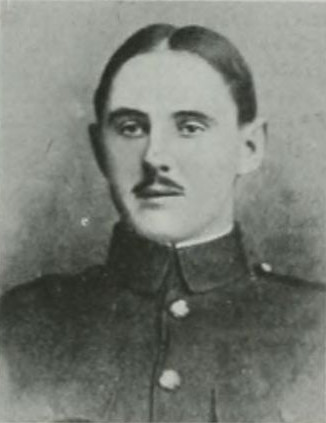
Gerard Ferrers Nixon.
NIXON, WILLIAM, Boy, 1st Class, J. 26752 (Ports.), H.M.S. Hawke; lost when that ship was torpedoed in the North Sea, 15 Oct. 1914.
NOBBS, WILLIAM ROBERT, Seaman, R.N.R., 2282A, H.M.S. Aboukir; lost in action in the North Sea, 22 Sept. 1914.
NOBLE, CHARLES CRAWFORD, Private, No. 6/698, 13th Canterbury and Westland Regt., New Zealand Expeditionary Force, s. of George Noble, of Blue Spur, Hokitika, New Zealand, Gold Miner, by his wife, Jeannie A. S., dau. of Alexander Walker, of Strichen; b. Fraserburgh, 31 Jan. 1887; educ. All Saints’ School, Strichen; went to New Zealand, 7 May, 1906; volunteered and joined the New Zealand Expeditionary Force, after the outbreak of war, 17 Aug. 1914; left for Egypt with the main body in Oct.; took part in the landing at the Dardanelles, 25 April, 1915, and died on board H.M.S. Royal George, 12 May following, of wounds received in action at Cape Helles on the 8th; unm.
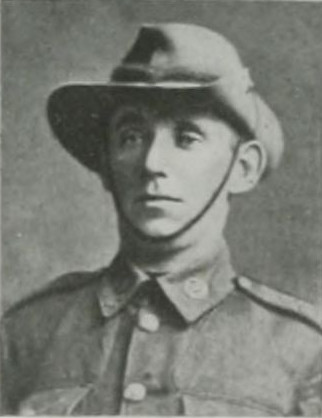
Charles C. Noble.
NOBLE, CORNELIUS, Private, No. 1856, 5th Battn. Northumberland Fusiliers (T.F.), yst. s. of John Noble, of 310, Church Street, Walker, co. Northumberland, by his wife. Alice; b. Walker, 7 June, 1895; educ. West Walker Council Schools; joined the 5th Northumberland Fusiliers, 1 June, 1913; volunteered for Imperial service, 5 Aug. 1914; went to France, 20 April, 1915, and was killed in action 24 May, 1915, during the Second Battle of Ypres, 24 May, 1915. Buried, Boulogne; unm.
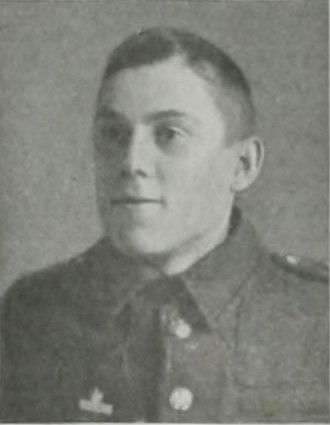
Cornelius Noble.
NOBLE, GEORGE, Private, No. 6507, 1st Battn. Royal West Kent Regt., s. of Thomas Noble, of 25, Sigismund Street, Blackwall; served with the Expeditionary Force in France, etc.; died 26 Nov. 1914, of wounds received in action.
NOBLE, GEORGE, Driver, No. 8125, 1st Battn. Royal West Kent Regt.; served with the Expeditionary Force in France; killed in action 28 Oct. 1914; m.
NOBLE, JACK EDWARD, Private, No. 15184, 3rd Battn. Middlesex Regt., s. of George Noble, of High Wycombe, Bucks; served with the Expeditionary Force in France; killed in action, 21 March, 1915.
NOBLE, ROBERT, Stoker, Petty Officer (R.F.R., B. 4521), 171089, H.M.S. Hogue; lost in action in the North Sea, 22 Sept. 1914.
NOBLE, THOMAS, of Aberdeen, lost when the mine-sweeping trawler No. 61 (Crathie, of Aberdeen) was sunk by a mine, Aug. 1914.
NOEL, HERBERT BISHOP, C.E.R.A., 2nd Class (Pensioner), 269614, H.M.S. Hogue; lost in action in the North Sea, 22 Sept. 1914.
NOLAN, MYLES PATRICK, Private, No. 2754, 2nd Battn. 8th Middlesex Regt. (T.F.), 2nd s. of the late William Nolan, of Fulham, by his wife, Catherine, dau. of Michael (and Mary) Murphy, of Dublin; b. Fulham, S.W., 3 June, 1897; educ. Council School there; was an Assistant Engineer, P.O. Telegraph; joined the 10th Middlesex Territorials in June, 1912; volunteered for foreign service, Aug. 1914; was transferred to the 2/8th Middlesex, and was drafted to Gibraltar, Sept. 1914, returning to England, Feb. 1915; went to France, 8 March, 1915, and was killed in action at Rye, France, 21 Oct. 1915, being shot by a sniper; unm. Letters from his officers speak of him as a good soldier and a general favourite.
NOOTT, MERVYN, 2nd Lieut., 1st Battn. The Buffs (East Kent Regt.), yst. s. of William Mathias Noott, M.R.C.S., L.R.C.P., L.S.A., and his wife, Louisa (Upton Lodge, St. Peter’s, Thanet), eldest dau. of the late Sir Alfred Hickman, 1st Bart., M.P.; b. Kensington Park Road, London, 19 May, 1890; educ. Mr. Edminson’s, Tan-y-bryn, Llandudno, and Fauconberg School, Beccles; joined the 3rd (Special Reserve) Battn. The Buffs as 2nd Lieut. 15 March, 1911, and promoted Lieut. 20 Jan. 1913; passed into the Regulars as 2nd Lieut., 1st Buffs, 24 May, 1913; left for France, 16 Sept. 1914; and was killed in action at Radinghem Wood, near Lille, 20 Oct. following; unm. Capt. R. Bright wrote: “Your son was killed in action on the 20th. He was gallantly leading his men under heavy fire, and every one who was near him cannot speak too highly of his conduct. I cannot tell you how sorry I am to lose him, and how I feel for you in your loss. But he died gallantly and knew nothing of being hit, being killed instantaneously. He was a good soldier and thoroughly popular with both officers and men, and we can ill afford to lose him.” Major (Brig.-Gen.) E. H. Finch-Hatton, D.S.O., wrote: “There is one thing that I can bear witness to, and that is a more noble and more chivalrous boy has never fallen on the field of battle. His enthusiasm and his sense of duty and chivalry were quite out of the ordinary. He was more like a knight of old, and it is such as he who have made the glory of the British Army to be what it is to-day—the wonder and the admiration of the world.” And L.-Corpl. Kisby wrote: “The platoon would have followed him anywhere. Yes, every man was devoted to him. He won this by his many acts of kindness and cheerfulness, and, above all, they had a great respect for him as a brave man, for undoubtedly he knew no fear.” He had taken a flying certificate and hoped to join the Royal Flying Corps.
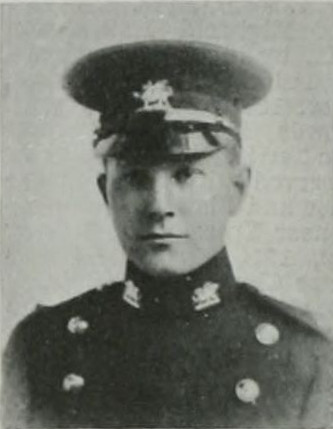
Mervyn Noott.
NORLEY, SIDNEY HENRY, Acting Chief Stoker, 195527, H.M.S. Aboukir; lost in action in the North Sea, 22 Sept. 1914.
NORMAN, ALBERT EDMUND, Capt., 3rd (Reserve) Battn. East Surrey Regt., attd. Army Cyclist Corps, yst. s. of the late Henry Alexander Norman, of Croydon, by his wife, Annie, dau. of (—) Roberts; b. Croydon, 7 April, 1875; educ. Whitgift Middle School, Croydon; was in a Bank; received a commission as 2nd Lieut. in 1st Vol. Battn. Royal West Surrey Regt. 7 Jan. 1905; gazetted Lieut., 3rd East Surreys, 11 Sept. 1914; attd. Army Cyclist Corps, 1 Dec. following; promoted Capt. 24 March, 1915, and went to France 27 March, and died in hospital at Merville, 11 May, 1915, of wounds received in the advance against the Aubers Ridge on the 9th. Buried at Merville. The N.C.Os. and men of his company erected a stone to his memory. A comrade wrote: “He very much distinguished himself in offering to take a despatch message under heavy fire. He was successful in getting it through, but was wounded on returning to Headquarters.” He was mentioned in Sir John (now Lord) French’s Despatch of 30 Nov. 1915 [London Gazette, 1 Jan. 1916]. He m. at Croydon, 5 Jan. 1905, Linda Burnell, dau. of the late William Bust Turner, of Croydon, Surrey; s.p.
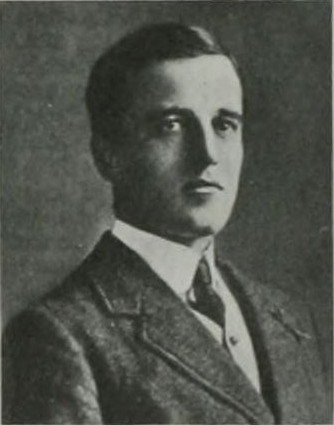
Albert Edmund Norman.
NORMAN, EDWARD, A.B., 226971, H.M.S. Good Hope; lost in action off Coronel, on the coast of Chili, 1 Nov. 1914.
NORMAN, ERRINGTON HOUNSOME, A.B. (R.F.R., B. 9676), S.S. 2428, H.M.S. Hogue; lost in action in the North Sea, 22 Sept. 1914.
NORMAN, ROBERT, Private, No. 2200, A Coy., 4th Battn. Suffolk Regt., s. of Robert Norman, Sailor; b. Ipswich, 18 Oct. 1882; educ. St. Clement’s School, Ipswich; was a Labourer at Paul’s Barley Factory, Ipswich; volunteered and enlisted in Sept. 1914; went to France, 6 Nov. 1914, and was killed in action at Neuve Chapelle, 11 March, 1915. Capt. S. L. Brown wrote: “Your husband was a soldier from head to foot, and an Englishman, and the example he set to the younger men was grand—I shall never have a better man to go with me anywhere. It may, perhaps, be a little comfort to you to know that his death was instantaneous: a soldier’s death without pain.” He m. at St. Helen’s Church, Ipswich, 25 Dec. 1906, Alice Maud (50, Rosebery Road, Ipswich), dau. of George (and Ellen) Prebble, of Ipswich, and had three children: Robert William, b. 14 Sept. 1907; Arthur George, b. 31 May, 1913; and Elsie May, b. 6 Nov. 1900.
NORMAN, ROBERT, Leading Seaman (R.F.R., I.C. 35), 186027, H.M.S. Good Hope; lost in action off Coronel, on the coast of Chili, 1 Nov. 1914.
NORMANLY, MARTIN, Private, No. 9791, 3rd Battn. Coldstream Guards, s. of Thomas Normanly, of Montuaigh, Curry, co. Sligo, Farmer, by his wife, Bridget, dau. of Thomas Gallagher; b. Montuaigh, Curry, afsd. 14 Oct. 1892; educ. National School there; was a Coal Miner; joined the Coldstreams in Oct. 1912; went to France, 12 Aug. 1914, and was killed in action at Mons, on the 25th; unm.
NORRIS, GEORGE CROSSLEY, Deckhand, No. 207 D.A., Trawler Section, R.N.R.; lost when the mine-sweeping trawler No. 61 called “Crathie” (Thomas W. Irvine, of North Shields) was sunk by a mine, Aug. 1914.
NORRIS, OSWALD MARK, Private, No. 61221, 1st Canterbury Infantry, New Zealand Expeditionary Force, 7th s. and yst. child of Thomas C. Norris, of Christchurch, J.P., late Secretary and Treasurer to North Canterbury Hospital Board, by his wife, Mary; b. Christchurch, New Zealand, 15 June, 1892; educ. Christ’s College, Canterbury, New Zealand, after which he took up sheep farming in Hawkes Bay, and while there joined the local Regt. of Mounted Rifles, in which he was a corpl. when war broke out. He volunteered for Imperial service, 12 Oct. 1914; left for Egypt with the main body; took part in the repulse of the Turkish attack on the Suez Canal in Feb. 1915, and was killed in action during the landing at Gebe Tepe, Gallipoli, 25 April, 1915; unm. A comrade wrote: “In our camp life your son’s sterling qualities and high principles made him very popular. The memory of your son Oswald—a brave and true man—will ever remain dear to us”; and another: “He was a favourite among all, and everybody admired his strength of character and his great lovable disposition.”
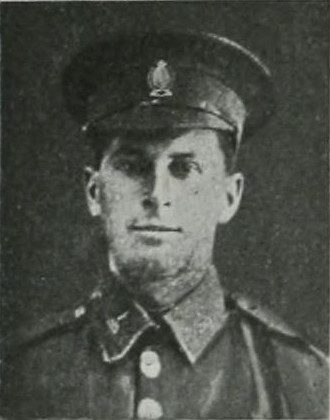
Oswald Mark Norris.
NORRIS, REGINALD HAYDEN, Corpl., No. 9096, 2nd Battn. The King’s Own Royal Lancaster Regt., s. of William Norris, of 6, Pleasant Place, Chalvey, by his wife, Mary Ann; b. Chalvey, Slough, 8 March, 1889; educ. Board School there; enlisted 22 Oct. 1906; left for France, 20 Sept., and was killed in action at Metrean, 13 Oct. 1914. Buried there. He m. at Scotforth, Lancaster, 25 Dec. 1913, Helena Eleanor (12, Abbey Terrace, Scotforth, Lancaster), dau. of Joseph Kendall, of Scotforth; s.p.
NORRIS, ROBERT, Engine Room Artificer, 2nd Class, No. Ch. 149732, R.N., s. of Robert Norris; b. Chatham, co. Kent, 22 Aug. 1866; educ. St. Paul’s School there; joined the Navy, 23 May, 1889; served in South African War (medal), and on H.M.S. Cressy, and was lost when that ship was sunk in the North Sea, 22 Sept. 1914; unm. He had the Long Service and Good Conduct medal.
NORRIS, WILLIAM, Private, No. 10734, 1st Battn. Coldstream Guards, yst. s. of Joseph Norris, of 35, Albert Road, Tamworth, Warwick, Carpenter (a native of Lancashire), by his wife, Elizabeth, dau. of David Marney, of Melbourne, Victoria; b. Melbourne, 28 Nov. 1893, came to England with his parents when two years of age, and was educ. at Tamworth Council School; was employed as a Platelayer on the L. &. N.W. Railway; enlisted in May, 1914, and was killed in action at Ypres, 29 Oct. 1914; unm.
NORSWORTHY, EDWARD CUTHBERT, Major, 13th Battn. (Royal Highlanders of Canada), 3rd Brigade, Canadian Expeditionary Force, eldest s. of James Counter Norsworthy, of Ingersoll, P. Ontario, Canada, by his wife, Mary Jane, eldest dau. of Alexander Cuthbert, of Ingersoll, and gdson. of John Norsworthy, of the Parish of Widdicombe, co. Devon, England (who went to Canada in 1852); b. Ingersoll afsd., 29 May, 1879; killed in action in the Battle of Langemarck on 22 May, 1915; educ. Ingersoll and St. Thomas’ Public Schools, from which he passed to the Upper Canada College, and thence matriculated to McGill University, at which time he won the Governor-General’s gold medal for mathematics. He subsequently became registered as a Student of the Institute of Actuaries of Great Britain along with his younger brother Stanley. At the examination held that year, there were thirty-six candidates writing in the Dominion; of this number five were successful, including Major Norsworthy and his brother. In his student days he had been connected with the Cadet Corps at St. Thomas’ Collegiate Institute, and the Upper Canada College Rifle Corps. Deciding to adopt a career in the financial world, he obtained a position with Messrs. G. A. Stimson & Co., of Toronto, and in 1901 he opened an office in Montreal as Manager for the Dominion Securities Corporation. He joined the 5th Royal Highlanders as a subaltern, shortly after his arrival there, and after passing his examination at St. John’s (Quebec) Military School, he became Capt. in 1905, and Adjutant three years later, and Major in 1909. On the outbreak of war, Major Norsworthy volunteered his services, and helped to organise the 13th Battn. for active service, and accompanied it to Europe as Senior Major and Second in Command. While in England, he was offered an appointment with Sir Max Aitken, the Canadian “Eye Witness,” but preferred to remain with his regt.; unm. On 22 April, 1915, the Germans, using virulent and asphyxiating gasses for the first time, were able to overcome a portion of the French troops adjoining our line. In the words of Sir John French’s Despatch of 15 June, 1915: “The left flank of the Canadian Division was thus left dangerously exposed to serious attack in flank, and there appeared to be a prospect of their being overwhelmed, and of a successful attempt by the Germans to cut off the British troops occupying the salient to the east. In spite of the danger to which they were exposed, the Royal Highlanders of Canada held their ground with a magnificent display of tenacity and courage; and it is not too much to say that the bearing and conduct of these splendid troops averted a disaster which might have been attended with the most serious consequences.” The 13th Battn. (5th Royal Highlanders) were the first Canadian troops to meet a charge of the Germans, and notwithstanding they were greatly outnumbered, and were being attacked in flank in their dug-outs, Major Norsworthy skilfully led his men out to the Ypres-Poelcapelle Road, manning the road ditches facing the advancing Germans, and heroically holding their position, and refusing to give one inch of ground, thereby setting the pace for the whole division. Major Norsworthy’s part in the action was thus described by one of the privates present: “After having remained in the dug-outs for about one hour, with our throats parched and our eyes watering, caused by the gas, we could see that the Germans had broken our lines. It was reported to Major Norsworthy, and he gave the order to ‘stand to’ which we were waiting anxiously to do, and he led us out to the Ypres-Poelcapelle Road. It was not long before they began to pick our boys off. Major Norsworthy was hit in the neck by a bullet, but it did not stop him from walking up and down our line, encouraging our men to hold fast. It was not until he received the second bullet that he had to give in and lie down. We bound him up as well as we could, but the second wound was serious, and he died about three-quarters of an hour after.” Another private who was with Major Norsworthy said: “As we advanced out of our dug-outs and trenches—that were being enfiladed—we met a perfect storm of shell and rifle bullets, when some inclinations of hesitancy and flinching were shown. Seeing this, Major Norsworthy sprang to the front and called out, ‘Come on, men, remember that we are Canadians and all the eyes of Canada are upon us.’ His action and words steadied those that were wavering, and we all followed him with a wild cheer, and advanced to the Ypres-Poelcapelle Road ditches—facing the advancing Germans—which gave us some little protection, and we stuck it there to the last man.” The following are extracts spoken to the first Canadian Division after the twelve days and nights of fighting included in the period from 22 of April to the 4th of May, 1915; “I tell you truly that my heart is so full I hardly know how to speak to you. It is full of sorrow for the loss of those comrades of ours who have gone, and pride in what the first Canadian Division has done. I think it is possible that you do not all of you quite realise that if we had retired in the evening of 22 April, when our Allies fell back before the gas and left our left flank quite open, the whole of the 27th and 28th Division would probably have been cut off. This is what our Commander-in-Chief meant when he telegraphed as he did: ‘The Canadians saved the situation.’ My lads, if ever men have had a right to be praised in this work, you have.” Major Norsworthy was mentioned in F.M. Sir John (now Lord) French’s Despatch of 31 May, 1915, for gallant and distinguished service in the field.
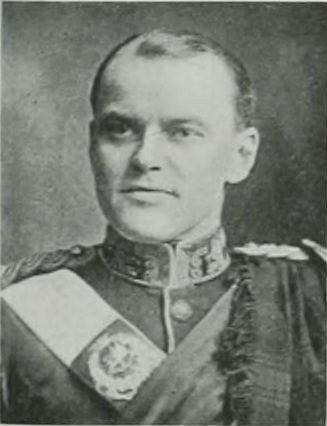
Edward C. Norsworthy.
NORTH, ARTHUR, Sergt., No. G. 582, 9th (Service) Battn. East Kent Regt.; died in Dover Military Hospital, 4 June, 1915; m.
NORTH, FREDERICK ALBERT, Sergt., No. 8010, 2nd Battn. East Surrey Regt.; served with the Expeditionary Force in France and Flanders; died 3 April, 1915, of wounds received in action; m.
NORTH, CHARLES NAPIER, Major, 5th Field Coy. Royal Engineers, eldest s. of the late Col. Roger North, R.A., by his wife Fanny Ellen (Briarwood, Camberley), dau. of Stephen Beeching, of Tunbridge Wells; b. Bristol, 16 Aug. 1874; educ. Radley College, where he gained the Heathcote Mathematical Scholarship, and the Royal Military Academy, Woolwich; gazetted 2nd Lieut. R.E. 10 Feb. 1893, and promoted Lieut. 10 Feb. 1896, Capt. 1 April, 1904, and Major, 25 July, 1913; served (1) in the South African War, 1899–1902, took part in the operations in the Orange Free State, March to May 1900, in the Transvaal, east of Pretoria, Aug. to Nov. 1900, in the Orange River Colony, May to June 1900, in Cape Colony, south of Orange River, 1899–1900, and in the Transvaal, Orange River Colony and Cape Colony, 1901–2; and was afterwards on the Staff, and from 20 May, 1902 to 7 Aug. 1902, was employed under the Dir. Mil. Intelligence (Queen’s medal with three clasps and the King’s medal with two clasps); and (2) with the Expeditionary Force in France and Flanders, 15 Aug. to 1 Nov. 1914, on which latter date he was killed in action near Zonnebeke, during the First Battle of Ypres, being shot by a sniper while engaged in inspecting the erection of barbed wire entanglements in an exposed position. Buried in Zonnebeke Wood, N.E. of Ypres. The General Officer Commanding, Royal Engineers, 2nd Division, wrote: “Major North’s death was a severe loss not only to his own company, but to the Royal Engineers and the service generally, as on several occasions his devotion to duty and his excellent work had come under my observation, and I have no doubt his example conduced largely to the fine performance of the 5th Field Coy.” Major North was mentioned in Sir John (now Lord) French’s Despatch of 14 Jan. 1915. He m. at St. Mary Abbott’s Church, Kensington, 18 Dec. 1913, Norah, dau. of the late Col. Gribbon, of Inverness Terrace, W., and had a dau. Elizabeth, b. posthumous, 31 March, 1915.
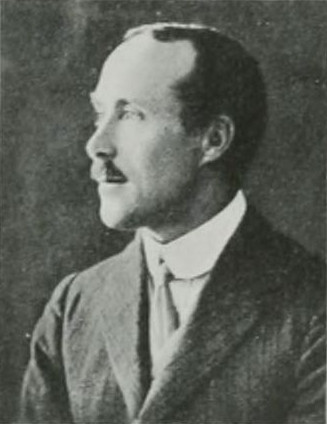
Charles Napier North.
NORTH, WILLIAM THOMAS, Stoker, 1st Class (R.F.R., B. 2721), 286931, H.M.S. Hogue; lost in action in the North Sea, 22 Sept. 1914.
NORTHCOTT, ALBERT HENRY, Shipwright, No. Chat. 345561, Royal Navy, s. of Lieut. Albert Northcott, R.N., by his wife, Mary Elizabeth Swete (4, Springfield Terrace, Elburton Cross, near Plymouth), dau. of Samuel Tolcher; b. Plymouth, co. Devon, 6 April, 1887; educ. Ryders High School, Stoke Devonport; was for some time a Shipwright Apprentice in Devonport Dockyard; joined the Navy in 1907; served on H.M. ships Cyclops, London, and Cressy; took part in the Battle of Heligoland, and was lost when the Cressy was torpedoed in the North Sea, 22 Sept. 1914; unm.
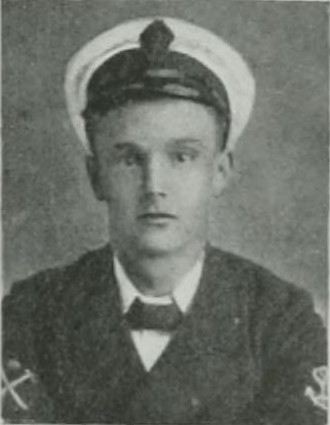
Albert H. Northcott.
NORTHEY, ALFRED, Lieut., 4th, attd. 3rd, Battn. Worcestershire Regt., yr. s. of the late Rev. Alfred Edward Northey, formerly Vicar of Rickmansworth, co. Hertford, by his wife, Alice (Lisworney, Torquay), dau. of Frederick Hatton, and grandson of Lieut.-Col. William Brook Northey, of The Mount, Sevenoaks, Coldstream Guards, J.P., D.L.; b. at The Vicarage, Rickmansworth, 10 Sept. 1886; educ. at Rottingdean, Sherborne School, and the Royal Military College, Sandhurst; gazetted 2nd Lieut. to the 4th Worcesters 3 Feb. 1906, and promoted Lieut. 24 Oct. 1908; joined his battn. at Malta, where he was stationed until Nov. 1908, when it proceeded to Bareilly, India. Returning from India on sick leave in Feb. 1911, he was sent to the Depôt at Worcester, and was there when war broke out. He acted as Machine-Gun Officer at Tregantle, Cornwall, until 30 Aug. 1914, when he left for France in charge of a draft, and, after being stationed for three weeks at St. Nazaire, joined the 3rd Worcesters (7th Brigade, 3rd Division) at the Front. He was killed in action, 12 Oct. following, close to Richebourg St. Vaast, while the battn. was fighting its way through Richebourg to Neuve Chapelle. He was unm. His Commanding Officer wrote: “He was killed whilst leading his men in the attack. He was killed instantly, and did not suffer. He was a splendid officer, and can ill be spared. I hope it may be some little comfort to you, that he died leading his men in the most gallant manner.” He was mentioned in Sir John (now Lord) French’s Despatch of 14 Jan. [London Gazette, 17 Feb., 1915.] Lieut. Northey was an excellent musician, playing both piano and violin; a good all-round sportsman, and very popular with both officers and men.
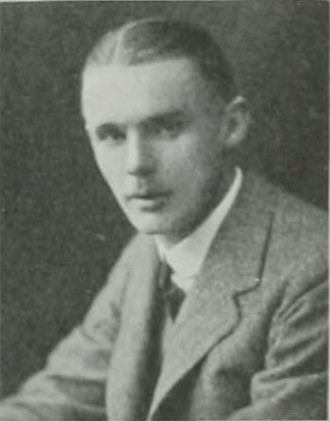
Alfred Northey.
NORTON, WILLIAM GEORGE, Private, No. 3582, 2nd Battn. (Royal Fusiliers) The London Regt. (T.F.), s. of George Thomas Norton, of 21, Newman Road, Plaistow, Labourer, by his wife, Mary Ann, dau. of William Smith, Master Baker; b. Poplar, 7 Dec. 1898; educ. West Ham; trained in the West Ham Boys’ Naval Brigade for 2½ years under A. E. Cleave, commanding officer; was employed as a Coppersmith at the Plaistow Railway Works; volunteered and joined the 2nd Royal Fusiliers, 13 Feb. 1915; went to France, 17 April, and died at No. 2 Casualty Clearing Station, Bailleul, 6 June, 1915, of a gunshot wound in the head, received in action, 31 May, 1915; unm. Buried in the Civil Cemetery, Bailleul.
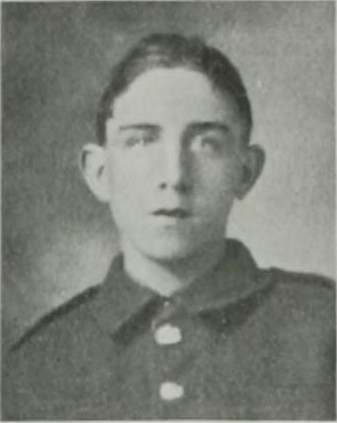
William George Norton.
NOTTON, HARRY GUY, A.B., J. 2639, H.M.S. Hogue; lost in action in the North Sea, 22 Sept. 1914.
NOURISH, THOMAS ALDERMAN, Private, No. 6118, 3rd Battn. Coldstream Guards, s. of Thomas Nourish, of Highland House, Kilby Road, Fleckney, Leicester, by his wife, Hannah, dau. of Anthony Loomes, of North Kilworth; b. Illston-on-the-Hill, co. Leicester, 8 March, 1881; educ. Fleckney Church of England School; enlisted 23 Feb. 1905; served in Egypt, 29 Sept. 1906 to 29 Jan. 1909; obtained his discharge and joined the Reserve, 23 Feb. 1908; was called up on mobilisation in Aug. 1914; went to France with the Expeditionary Force, 12 Aug., and died in No. 4 General Hospital, Boulogne, 4 Nov. 1914, of wounds received in action at Rentel, 29 Oct.; unm. Buried in Wimereux Churchyard (Grave No. 21).
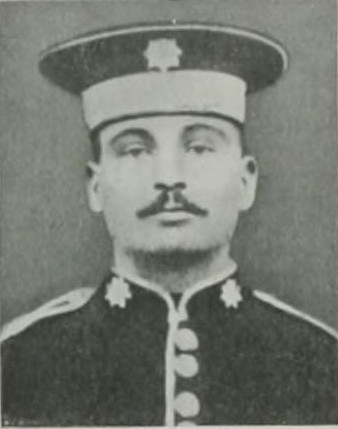
Thomas A. Nourish.
NOVELL, WILLIAM, A.B. (R.F.R., B. 3819), 189603, H.M.S. Good Hope; lost in action off Coronel, on the coast of Chili, 1 Nov. 1914.
NUNN, ARTHUR WILLIAM, Stoker, 1st Class, 228989, H.M.S. Hawke; lost when that ship was torpedoed in the North Sea, 15 Oct. 1914.
NUNN, FRANK ALFRED, Acting E.R.A., 4th Class, M. 7311, H.M.S. Pathfinder; lost when that ship was sunk by a mine, about 20 miles off the East Coast, 5 Sept. 1914.
NUNN, FREDERICK WILLIAM, Leading Cook’s Mate, 347626, H.M.S. Arethusa; killed in action in the Heligoland Bight, 28 Aug. 1914.
NUNN, MERVYN HENRY, Lieut.-Col. Commanding 9th (Service) Battn. Worcestershire Regt., s. of William Henry Nunn, of Broadwater Down, Tunbridge Wells, by his wife, Sophie Caroline, dau. of Major Richard Rollo Houghton, late of the Buffs; b. Woolhampton, co. Berks, 17 Nov. 1864; educ. Harrow; was gazetted Lieut. to the Worcestershire Regt. from the Militia, 28 April, 1886, and promoted Capt. July, 1892, Major 13 Nov. 1901, and Lieut.-Col. 8 Jan. 1915; was employed with Egyptian Army, 27 Dec. 1896 to 1 Oct. 1897; served in the Nile Expedition, 1897 (Egyptian medal with clasp, and medal); and in the South African War, 1902; was in command of the Imperial Yeomanry Battn., from 26 Feb. 1902; took part in operations in Natal (Queen’s medal with clasp); retired and joined the Reserve of Officers, 11 April, 1906, but rejoined his old Regt. on the outbreak of war in Aug. 1914; went to the Dardanelles, 24 June, 1915, and was killed in action at Chunik Bair, 10 Aug. following; unm. He was mentioned in Sir Ian Hamilton’s Despatch of 11 Dec. 1915, for gallant and distinguished service in the field. Col. Nunn was a fine sportsman, a good man to hounds and a good polo player.
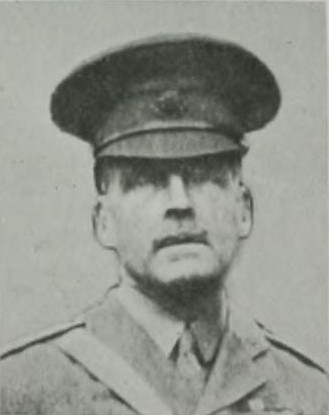
Mervyn Henry Nunn.
NUTCHER, MONTAGUE CYRIL, A.B. (R.F.R., B. 3961), S.S. 1224, H.M.S. Good Hope; lost in action off Coronel, on the coast of Chili, 1 Nov. 1914.
OAKELEY, FRANCIS ECKLEY, Lieut., R.N., 5th s. of the late Rev. James Oakeley, Vicar of Holy Trinity, Hereford, by his wife, Frances E. (Westdale, Chilston, Torquay), dau. of John Eckley, of Credenhill Park, Hereford; b. Hereford, 3 Feb. 1891; educ. Hereford Cathedral School, Eastman’s, and the Osborne and Dartmouth Royal Naval Colleges; was one of the second batch of cadets entered under the “new scheme,” and passed out from Dartmouth, 15 Sept. 1908; became Midshipman, 15 Sept. 1908, Sub-Lieut. 30 Nov. 1911, and Lieut. Nov. 1913; served in H.M. ships London (flagship of Rear-Admiral Startin, Channel Fleet, Sept. 1908); Invincible (Capt. Mark Kerr, 1st Cruiser Squadron, March, 1909); the Téméraire (1st Battle Squadron, Nov. 1909); Warrior (2nd Cruiser Squadron, Jan. 1910); Ure (2nd Destroyer Flotilla, July, 1910); Dreadnought (flagship of Sir William May, Home Fleet, Sept. 1910); Formidable (Atlantic Fleet, April to Sept. 1911); Superb (1st Battle Squadron, Nov. 1911); Dolphin (Portsmouth Submarine Depot for Instruction, Jan. to May, 1913); and from the last was transferred to H.M.S. Forth at Devonport for submarines. In Sept. 1913, he returned to Portsmouth on appointment to the Arrogant for C 7, and after the outbreak of war was appointed to the Maidstone, additional for D 2. He was lost in D 2 during the last week in Nov. 1914; unm. He was widely known for so junior an officer on account of his remarkable merit as a Rugby football player. He was in 1913’s English International Fifteen v. Scotland, and was looked upon as the most promising player of the United Services. He began playing for the Services First Twenty when he was still a Midshipman The following season Oakeley and Davis played magnificently against Ireland at Twickenham, and against Scotland at Inverleith—two matches that England won. Lieut. Oakeley had two caps against Scotland, one each against Ireland and France, and he was always on the winning side. He won the second prize for the cadet competition Sabre v. Sabre at the Royal Naval and Military Tournament, 1906, and the first prize cadet competition, Foil v. Foil, in the following year.
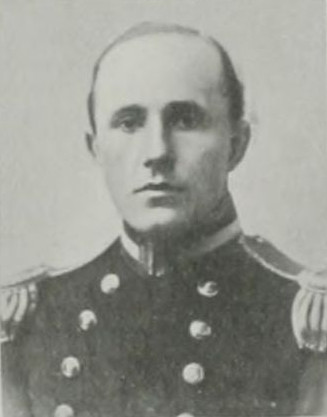
Francis Eckley Oakeley.
OAKES, ALEXANDER MONTAGUE, Private, No. 11, 19th Battn. 5th Brigade, Australian Expeditionary Force, 3rd s. of the late Alfred Charles Oakes, of Camden House, Sussex Street, Woodstock, Cape Town, South Africa, Cape Civil Service, by his wife, Eliza Jane, dau. of George Robb; b. Cape Town, 26 Dec. 1885; educ. Normal College and St. George’s Grammar School, Cape Town; served for some time in the Duke of Edinburgh’s Own Volunteer Mounted Rifles before going to Australia on 30 Jan. 1913. On the outbreak of war he immediately volunteered and joined the 1st Naval and Military Contingent which left Sydney, N.S.W., early in Aug. 1914, in the steamer Berrima, accompanied by H.M.A. ships Sydney and Australia, for the conquest of German New Guinea. In this expedition he lost, by an accident, the use of three fingers of his right hand and was for some time in Hospital at Sydney, but upon being discharged immediately re-enlisted in the 19th Battn. and left Australia in the Ceramic, 25 June, 1915. He was killed in action in Gallipoli, 29 Sept. 1915; unm. The battn. were on fatigue work with the engineers improving the firing line when it occurred, and Oakes was putting up sand bags, when about 4 a.m. a stray bullet struck him over the heart killing him instantaneously. His Commanding Officer, Lieut.-Col. W. K. S. MacKenzie, wrote: “Your son was on my staff at the Liverpool Camp in Sydney before we left Australia and during our stay in Egypt before we came to the Front. I saw much of him and was attached to him, and I feel his loss deeply, it was a great shock to me. He was a fine soldier, and was liked by everyone in the regt. He died bravely fighting for the Empire.” He was buried the same afternoon at the foot of a gully near the sea, and a cross with his name, etc., was erected by his comrades.
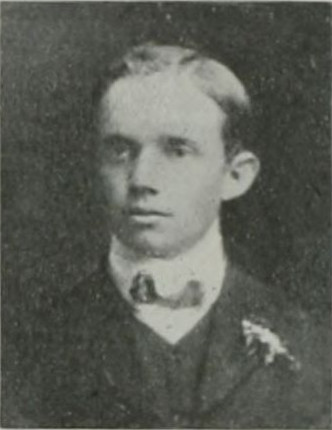
Alexander M. Oakes.
OAKES, ORBELL, Capt., 2nd Battn. Yorkshire Regt., 2nd s. of Lieut.-Col. Orbell Henry Oakes, of Nowton Court, Bury St. Edmunds, late 1st Battn. The Worcestershire Regt., by his wife, Laura Eliza Josephine, dau. of George Clifton, formerly R.N.; b. Mhow, India, 7 Nov. 1880; educ. Wellington College; gazetted 2nd Lieut. Royal Garrison Regt. 28 Jan. 1903, and promoted Lieut. 2nd Yorkshire Regt. 3 Oct. 1906, and Capt. 29 Jan. 1913; served in the South African War, 1901–2; took part in the operations in the Orange River Colony, 1901–2 (Queen’s medal with four clasps); was employed with the West African Frontier Force, 6 April, 1910, to 3 Aug. 1914; went to France with the Expeditionary Force, and was killed in action at Moulin du Pietre, near Neuve Chapelle, 12 March, 1915; unm. Buried there. The late Lieut.-Col. W. L. Alexander wrote: “He died in action on 12 March, gallantly doing his duty in a trench near the Moulin du Pietre. He was hit in the head by a bullet, and death must have been instantaneous. He had been doing splendid work with his company since he rejoined the battn., and his loss will be deeply felt by us, both as an officer and a comrade, for he had endeared himself to us all.”
OAKES, RICHARD, Stoker, 1st Class, S.S. 109616, H.M.S. Cressy; lost in action in the North Sea, 22 Sept. 1914.
OAKLEY, GEORGE HOWARD, A.B., 222020, H.M.S. Hawke; lost when that ship was torpedoed in the North Sea, 15 Oct. 1914; m.
O’BRIEN, HUGH CONOR HENRY, Capt., 2nd Battn. Royal Munster Fusiliers, eldest s. of Henry Joseph O’Brien, of Whitepoint House, Weston, Queenstown, co. Cork, late Lieut.-Col. R.A.M.C., by his wife, Ethel, dau. of Henry Banister; b. Stoke Damarel, co. Devon, 19 Nov. 1880; educ. Clongowes Wood College; Stonyhurst (1896) and Royal Military College, Sandhurst (1899–1900); gazetted 2nd Lieut. Royal Munster Fusiliers, 11 Aug. 1900, and promoted Lieut. 6 March, 1903, and Capt. 1 April, 1910; served (1) in the South African War, 1899–1902; took part in the operations in the Transvaal, Jan. to July, 1901; operations in the Orange River Colony, Feb. to 31 May, 1902, and in Cape Colony, July, 1901, to 31 May, 1902 (Queen’s medal with clasp); (2) on the North West Frontier, India, 1908, as Brigade Signalling Officer, attd. 3rd Brigade, during operations in the Mohmand country (medal with clasp); and (3) with the Expeditionary Force in France and Flanders, 1914. On 5 Sept. 1914, he left with the 2nd Battn. for Flanders where, and on the Aisne, he served in the trenches, except for one week’s leave home, until Dec. 1914. On 22 Dec. 1914, after a forced march from Bailleul, the regt. was ordered to retake, at all costs, trenches at Festubert which had been evacuated by Indian troops; advancing over open heavy ground in daylight, Capt. O’Brien, at the head of his company, was first wounded in the left side and fell, but was still able to encourage his men, calling out “Go on Munsters, now is your time to get back your own”; a few minutes later he was killed outright by shrapnel bursting over him; unm. An officer wrote: “He was ever a gallant officer, and died a glorious death after helping a wounded comrade to cover; by his death the regt. lost a most efficient and popular officer whom the men would follow anywhere.” Col. Bent, who was badly wounded, in the same regt., wrote: “I wish to tell you what a splendid officer your son was; you will have this testimony from others, but I must tell you what he was to me, as his commanding officer. He was of the best in every way, and as a company commander was of the greatest use to me—absolutely reliable, he had his company in first-class order. Beloved by all the men and officers, he was such a splendid man and soldier that it seems particularly cruel that he should have been taken so early.” Major Ryan, one of the few surviving officers of that fight, wrote: “From all accounts of everyone nothing could have been more gallant than the way he led his men.” When in India he got a Special Certificate at the School of Signalling, Kasauli. He was a keen sportsman and a good shot with gun and rifle, and on two trips to Cashmere and Baltistan made good bags of big game.
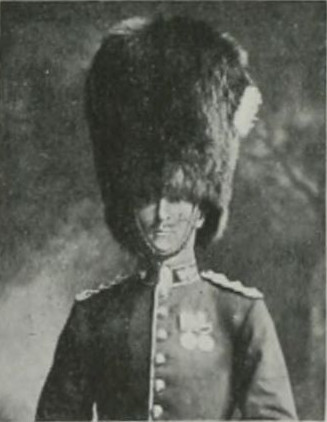
Hugh Conor H. O’Brien.
O’BRIEN, JAMES JOSEPH, Private, No. 1160, 1st Newfoundland Regt., s. of James O’Brien, of 27, Adelaide Street, St. John’s, Newfoundland, Cooper, by his wife, Mary; b. St. John’s, Newfoundland, 8 April, 1891; educ. Christian Brothers’ School there; volunteered on the outbreak of war and enlisted, 1 Feb. 1915; and died in Edinburgh Hospital, 2 Oct. 1915, following an operation; umn.
O’CALLAGHAN, DUNCAN MCKAY MACDONALD, 2nd Lieut. 3rd attd. 2nd. Battn. Duke of Cornwall’s L.I., 2nd s. of the late Surgeon-Major George Henry Kenneth O’Callaghan, A.M.S., and eldest s. by his 2nd wife, Suzanne Charlotte (Minto House, Newquay, Cornwall), dau. of the late Thomas Harding, of Wick House, Brislington; b. Ludlow, co. Salop, 4 June, 1891; educ. Cheltenham College and Trinity College, Oxford; obtained his commission 10 Aug. 1914, being gazetted to the 3rd Battn. Duke of Cornwall’s L.I., served with the 2nd Battn. in France and Flanders, and was killed in action at St. Eloi, 14 March, 1915; buried in Military Cemetery, Dickebusch, Flanders; unm. At Cheltenham he won the Junior School Championship in Athletic Sports and represented the College in cricket and football. He was a College Prefect and Head of his House. On leaving, he gained a classical scholarship at Trinity College, Oxford, where he was elected member of the Oxford University Authentics Cricket Club. He played in the Freshmen’s and Seniors’ matches in football and cricket, and, after leaving Oxford, was a prominent member of the London Irish Football Club.
OCHS, RONALD PHILIP, 2nd Lieut., 5th, attd. 4th. Battn. The Middlesex Regt., yr. s. of Capt. James Frank Ochs, of 4, Sloane Gardens, S.W., now (1916) M.L.O. at Dieppe, by his wife, Amy, eldest dau. of Philip Goldsmith; b. 4, Sloane Gardens, S.W., 20 Nov. 1896; educ. at Chertsey, Sunningdale School, and Marlborough College; joined the Public School Battn. of the Middlesex Regt. on the outbreak of war, and was given a commission, 10 Feb. 1915; went to France early in June, 1915, and was killed in action at Hooge, Flanders, 27 Sept. 1915, and buried the next day at Brandhoek.
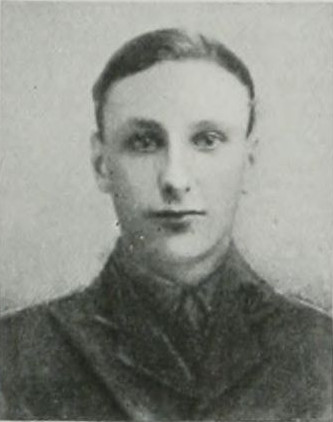
Ronald Philip Ochs.
ODDY, JOSEPH ETHELBERT, A.B., 207511 Chatham, H.M.S. Good Hope; lost in action off Coronel, on the coast of Chili, 1 Nov. 1914.
ODGERS, NICHOLAS, Leading Seaman (C.G.), 179652 (Dev.), H.M.S. Cressy; lost in action in the North Sea, 22 Sept. 1914.
ODLING, ERIC ROBERT MEADE, Lieut., Royal Engineers, only s. of Charles William Odling, of Craignoon, Ridgway Gardens, Wimbledon, C.S.I., formerly Secretary to the Government of India P.W.D., and Inspector-General of Irrigation, by his wife, Alice Ronayne Mary, dau. of Robert Warren Meade, of Dublin; b. Darjeeling, India, 30 Oct. 1893; educ. Cheltenham College (scholar), passing 3rd on the list into the Royal Military Academy, Woolwich; gazetted 2nd Lieut. 20 Dec. 1912, and promoted Lieut. 12 Nov. 1914; went to France with the Expeditionary Force in Aug. 1914, and after various services was appointed Acting Adjutant to the Signalling Coy. at Headquarters; invalided home in Oct. but returned to duty the following Jan. joining the 11th Field Coy. at Givenchy, 11 March, and was killed in action at Festubert, a fortnight later, 25 March, 1915; unm. Buried at Chateau Gorre, near Festubert.
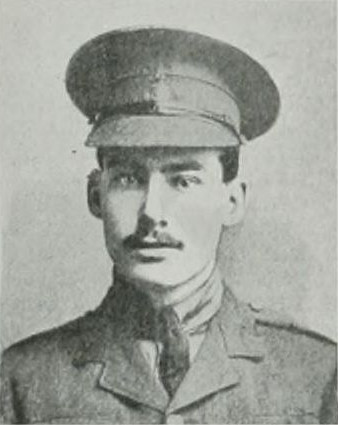
Eric R. M. Odling.
THOMAS-O’DONEL, GEORGE O’DONEL FREDERICK, M.C., Capt. and Adjutant, 4th Battn. Royal Fusiliers, only s. of Edwin Thomas-O’Donel, of Newport House, Newport, co. Mayo, J.P., D.L., by his wife, Melicent Agnes, dau. of Capt. Richard Annesley O’Donel; b. Dublin, 21 Oct. 1884; educ. Cheltenham College, and abroad; joined the Royal Donegal Artillery Militia in 1902; gazetted 2nd Lieut. in the 4th Royal Fusiliers, 23 May, 1906; promoted Lieut. 10 April, 1909, and Capt. 26 Nov. 1914; appointed Adjutant, 15 Jan. 1913; went to France with the Expeditionary Force, 13 Aug. 1914, and was killed in action at Hooge, near Ypres, 16 June, 1915. Capt. O’Dond was awarded the Military Cross [London Gazette, 19 Feb. 1915]; and was twice mentioned in Sir John (now Lord) French’s Despatches [London Gazette, 19 Oct. 1914, and 18 Feb. 1915]. Brig.-Gen. McMahon, commanding the Brigade, wrote on 5 Nov. 1914: “I think the Battn. has done very well out here, and I hope it will continue to do so. George is going strong and is fitter than when he started, and can claim a very large share in producing such good results as may have been attained”; and Col. Hely-Hutchinson wrote: “I cannot tell you what a shock the whole thing has been to me, we were the closest of friends, we slept together, we fed together, we rode together, and we fought together, and we never had a row for seven months, and the only time we had been separated, George goes and gets killed, and I get off. It is too sad after all the months he had been out and the good work he had done. I myself got a small touch of a shell on the head and have come home for a bit, thank God, as I don’t think I could have carried on any longer out there without George and the rest—we lost six killed and nine wounded officers, and I had no heart and was just tired out and so was George, he just went on till he dropped.” Major F. R. Mallock: “His death is a great loss to his country and the regt.—he served so gallantly and so well; there are few of us left who went out with the Battn., George was the only one of the combatant officers left after the fighting at Ypres. I had a great affection and admiration for him, he did work splendidly right through.” Brig.-Gen. Reginald Pinney, formerly commanding 4th Battn. Royal Fusiliers, also wrote to the late Capt. Thomas O’Donel’s father: “I am most distressed for you and his mother at George’s death—also for the regt. and the army, for he was fulfilling all the promise he showed when he joined; seeing his name gave me a special shock, for I had just heard of my getting a division, and had been talking of Staff and had hoped to get George appointed a G.S.O.” He m. in London, 26 Nov. 1914, Florence Violet (Newlands, co. Wexford), only dau. of George Claud Flood Braddell, of Newlands, co. Wexford, and Luckington, co. Wilts; s.p.
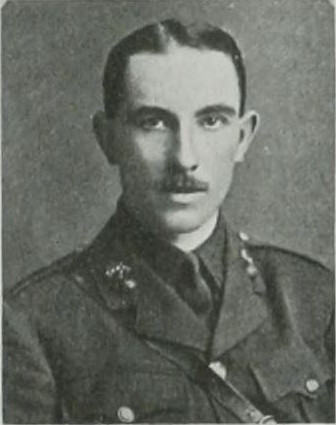
G. O’D. F. Thomas-O’Donel.
O’DONNELL, MARTIN, Seaman. R.N.R., 2729A, H.M.S. Cressy; lost in action in the North Sea, 22 Sept. 1914.
O’GRAM, CHARLES, A.B. (R.F.R., B. 5549), S.S. 2104, H.M.S. Good Hope; lost in action off Coronel, on the coast of Chili, 1 Nov. 1914.
O’HAIRE, DAVID, Private, No. 11058, 6th Battn. Royal Irish Rifles, 2nd s. of the late David O’Haire, by his wife, Agnes (now wife of Private William John McCallister, of Dromore Street, Rathfriland, co. Down, now (1916) on active service with the Royal Irish Rifles), dau. of Thomas O’Haire; b. Lierkelly, Ballyroney, co. Down, 17 July, 1897; educ. Newry Street National School, Rathgueanel; was an active member of the Ulster Volunteer Force; enlisted, 27 Aug. 1914; left Basingstoke, with the Mediterranean Expeditionary Force, July, 1915, and was killed in action at the Dardanelles on or about 6 Aug. 1915; unm.
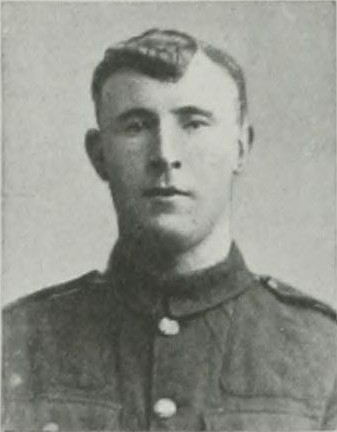
David O’Haire.
O’HARA, HENRY DESMOND, D.S.O., Lieut., 1st Battn. Royal Dublin Fusiliers, only s. of William James O’Hara, of Oriel House, Ballincollig, Cork, Resident Magistrate, by his wife, Cecilia, 7th and yst. dau. of the late Peter Connellan, of Colmore, co. Kilkenny, J.P., D.L., and gdson. of the late Rev. James Dunn O’Hara, of O’Hara Brook and The Castle, Portstewart, co. Antrim; b. Ballydulf, Thomastown, co. Kilkenny, 21 May, 1892; educ. Dunchurch Hall, Rugby; Charterhouse, and the Royal Military College, Sandhurst; gazetted 2nd Lieut. Royal Dublin Fusiliers, 4 Sept. 1912; promoted Lieut. 29 April, 1914; went to the Dardanelles, 17 March, 1915; took part in the heavy fighting following the landing there, and died on the hospital ship Arcadian, 29 Aug. 1915, of wounds received in action on the 12th; unm. Buried in the military cemetery, Gibraltar. “On 25 April, 1915, at Sedd-el-Bahr, he took command of his battn. when all other officers had been killed or wounded. At night, when the enemy broke through the line, he displayed great initiative and resource in organising a successful counter-attack, restoring the line and causing great loss to the enemy.” For this he was awarded the D.S.O. [London Gazette, 3 June, 1915]. Lieut. O’Hara was also mentioned in Sir Ian Hamilton’s Despatch of 20 May [London Gazette, 5 Aug.], 1915, for his conduct during, and after, the landing of the 29th Division on 25 April.
O’KEEFFE, THOMAS, Corpl., No. 11022, 1st Battn. Royal Dublin Fusiliers, 29th Division, Mediterranean Expeditionary Force, eldest s. of the late Richard O’Keeffe, by his wife, Ellen (Dublin Road, Carlow), dau. of Andrew O’Neill; b. Ballykealy Ballon, co. Carlow, 10 Dec. 1892; educ. Christian Brothers Academy, Carlow; enlisted 10 Jan. 1911; was appointed L.-Corpl. 1912, and promoted Corpl. 1913; served in India, Nov. 1913, to Nov. 1914; left England with his regt. for the Dardanelles, 16 March, 1915; took part in the landing there, 25–26 April, and was killed in action at Gallipoli, 10 July, 1915; unm. A comrade wrote of him: “On one occasion we were advancing and the enemy’s trenches were about three or four hundred yards in front. At all events, a Sergt. of the Worcestershire Regt. twigged a wounded man lying out in front. At this time we were halted in a ravine preparing to advance, and the enemy’s fire was very heavy; at any rate, the Sergt. shouted at his men that there was a wounded man in front: would some of them go out and take him in? But the fellows all passed it down the line that there was a wounded man out in front: would someone go out and bring him in? At any rate Tom heard it, and asked immediately where the wounded man was. The Sergt. showed him, and Tom shouted round at me, ‘Will you come, Terry?’ Then without waiting for an answer he was out over the top and started running towards the wounded chap. I rushed out after Tom, and between us we got the chap in. He told us he had been lying out there two days—in reality he had been there since about 11 a.m. that morning; it was then about 6 p.m. He was wounded in the shoulder, side, arm and thigh, and had lost an awful lot of blood. He was in that much pain that he thought he had been there two days. The Dublins and Munsters were that weak then that they combined the two regiments and called us the Dubsters. Well, after bringing in that chap we advanced, and succeeded in routing the Turks and dug ourselves in in a new position, from which the New Zealanders relieved us the next day. Well, that is just one of the many little moves I was in with poor old Tom. Now I wasn’t present when Tom was killed; I was in the trenches, and Tom was in charge of a ration party going back along a nullah to draw the company’s rations, when he was killed by a sniper. It appears this sniper had command of this part of the nullah, and blankets and sandbag barricades were put to knock off the sniper, but all to no purpose; he must have been concealed on a hill. It was him that killed poor Tom. The bullet pierced his brain, and he only lived for a couple of minutes afterwards, during which time he was unconscious, so never spoke after being hit. The medical officer was present on the spot, but could not do anything. Tom is buried in a very nice cemetery in a separate grave.” His yr. brother. Richard O’Keeffe, is now (1916) on active service with the London Regt.
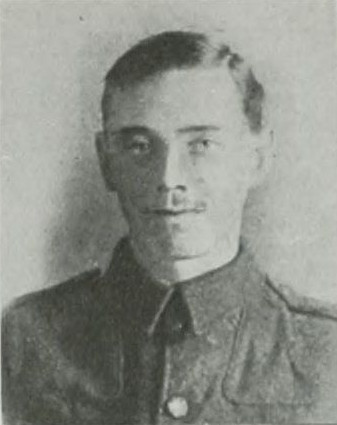
Thomas O’Keeffe.
OLDBURY, FREDERICK, Chief Armourer, 340522, H.M.S. Pathfinder; lost when that ship was sunk by a mine, about 20 miles off the East Coast, 5 Sept. 1914.
OLDFIELD, GUY CHRISTOPHER OTTLEY, Lieut., 2nd Battn. The Queen’s Royal Surrey Regt., attd. King’s African Rifles, only s. of Lieut.-Col. Christopher George Oldfield, late Royal Artillery, by his wife, Margaret Elizabeth, dau. of the late Cortlandt J. Le Bailly, and gdson. of Sir Richard Charles Oldfield; b. Poona, India, 17 Sept. 1888; educ. Clifton College and the Royal Military College, Sandhurst; gazetted 2nd Lieut. Royal West Surrey Regt. 19 Sept. 1908, and promoted Lieut. 1 April, 1911; was seconded for service with Uganda Battn. of the King’s African Rifles, 3 Dec. 1913; served in the Jubaland Expedition in the spring of 1914, and was killed in action at Tsavo, Mombassa, British East Africa, 6 Sept. 1914, while defending the Nairobi Railway against a superior German force armed with maxim guns; unm. His body was recovered two days later and buried at Tsavo. A brother Officer wrote: “It is quite impossible for me to convey to you in words how we all loved the dear lad. Such a shining example of a true Christian gentleman and sportsman.”
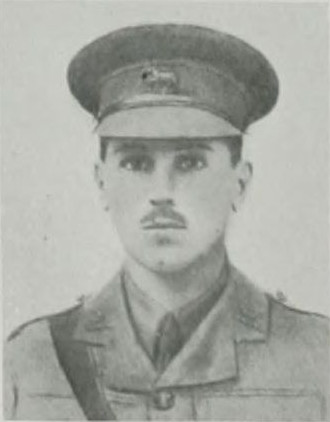
Guy C. O. Oldfield.
OLDHAM, JOHN HASLOPE, 2nd Lieut., 3rd Battn. Duke of Cornwall’s L.I., attd. 2nd Battn. King’s Own Yorkshire L.I., only s. of Ernest Haslope Oldham, of Oakfield, Chudleigh, co. Devon, by his wife, Alice, dau. of Charles Baker, of Portland Square, Bristol; b. Southgate, co. Middlesex, 7 Jan. 1891; educ. Blatchington Place, Sussex, Lancing College, and Hertford College, Oxford (graduated B.A. July, 1913), and on leaving there became junior master at Summer Fields, St. Leonards-on-Sea, in Sept. 1913; obtained a commission as 2nd Lieut. in the Reserve of Officers, 16 July, 1913; volunteered on the outbreak of war, and gazetted to the 3rd Duke of Cornwall’s L.I., 11 Aug. 1914; went to France, 4 Jan. 1915, where he was attd. to the 2nd King’s Own Yorkshire L.I., and was killed in action during the Battle for Hill 60, near Ypres, 18 April, 1915; unm. Buried near where he fell. His Col. wrote: “He behaved in a most gallant manner and will be a great loss to my battn.”; and his Capt. “He was most capable and keen on his work and had done most awfully well all the time he had been out there. He was absolutely fearless, and he fell in the attack on Hill 60 gallantly leading his men forward. He was hit by a bullet early in the charge, but ignoring his wound he went on to the top of the hill. He had just jumped up on the parapet and started to run over the crest of the hill, when he was shot and killed instantly.” An In Memoriam, from the Summer Fields Magazine, stated: “It came as a great shock to us all to read of the death of Lieut. J. H. Oldham who fell at the head of his men on Hill 60. Mr. Oldham, who was educated at Lancing College, and Hertford College, Oxford, came to us as a master in Sept. 1913, and during his 12 months’ stay endeared himself to everybody by his unaffected kindliness, his energy and unselfishness. He was always ready to help the youngest boys, constantly improvising new indoor games for their benefit, and just as keen as he could be on the outdoor games, and the work of the school. We little thought when we said good-bye to him at the end of last Summer Term that we should see him no more, but it was like him to be among the very first to volunteer for active service, without hesitation as without fuss. He was sent to the Front in Jan. and died fighting gallantly early in April. Only a few days before his death he had sent cheery messages to the boys, with snapshots taken in the trenches and numerous inquiries and good wishes for their welfare. His noble example and good influence here will long be remembered.”
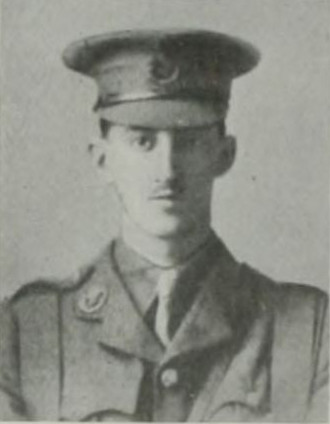
John Haslope Oldham.
OLDHAM, LESLIE WILLIAM SEARLES, Major, R.E., only s. of the late Brigade Surgeon Charles Frederick Oldham, by his wife, Harriet Bertha (The Lodge, Bealings, Suffolk), dau. of Thomas Bailey, of Gloucester; b. London, 3 Feb. 1870; educ. Cheltenham College, and the Royal Military Academy, Woolwich; gazetted 2nd Lieut. R.E. 27 July, 1889; promoted Lieut. 27 July, 1892; Capt. 5 May, 1900 and Major, 27 July, 1909; was in command of the R.E. with the Chitral Relief Force from Gilgit, 1895; was present at the actions at Chakalwat and Nisa Gol and was mentioned in Despatches. In 1899 he joined the Indian Public Works Department and did excellent work especially in connection with water supplies. After the outbreak of war he was recalled; was put in command of the 63rd Field Coy. and went to France in May, and was killed in action on the afternoon of 28 July, 1915, being shot by a sniper while inspecting work in the “Orchard” trench, near Festubert. He was a good all-round sportsman, particularly keen on polo and big game shooting, having done a good deal of the latter on the Pamirs and in the Central Provinces of India. He m. at Jubbulpore, Central Provinces, India, 27 Aug. 1900, Caroline Mary Burton, sister of Sir Arthur Conan Doyle, and dau. of the late Charles Altamont Doyle, of Edinburgh, and had a dau., Claire Annette, b. Nagpur, India, 5 Sept. 1906.
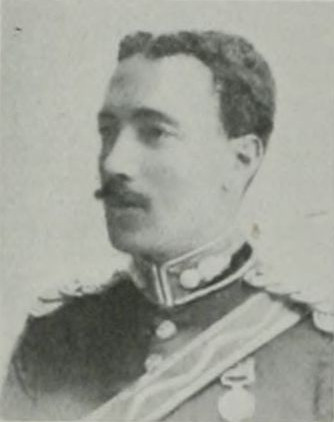
Leslie W. S. Oldham.
OLDMAN, WILLIAM, Seaman, R.N.R., 2354B., H.M.S. Hogue; lost in action in the North Sea, 22 Sept. 1914.
OLDREWE, PERCIVAL, L.-Sergt., No. 8684, 1st Battn. Coldstream Guards; b. co. Devon; served with the Expeditionary Force in France and Flanders; killed in action, 13 Nov. 1914; unm.
OLDREY, ROBERT JOHN BLATCHFORD, Capt., 4th (Royal Irish) Dragoon Guards, eldest s. of the late Robert Blatchford Oldrey, of Harpole Hall, co. Northants, by his wife, Hannah Jane Powell, of The Laws House, Turvey, co. Beds., dau. of the late Richard John James; b. Northampton, 18 June, 1883; educ. Uppingham; gazetted 2nd Lieut. 4th Dragoon Guards from the Militia, 26 March, 1902; promoted Lieut. 27 Feb. 1905, and Capt. 21 Jan. 1911; was Adjutant from Jan. to 27 Oct. 1914; served in India, and with the Expeditionary Force in France and Flanders, from 15 Aug. 1914; took part in the retreat from Mons, and the severe fighting during Sept, and Oct. and was killed in action while in command of a squadron at Richebourg, Neuve Chapelle, 29 Oct. 1914; unm. He was a keen polo player, and represented his regt. in the Inter-Regimental tournaments; and as a horseman had made his name famous in cavalry circles, being chosen to represent England in the jumping at Olympia, before King Edward and Queen Alexandra, at the 1st Olympian shows. He was also a prominent figure in the hunting world, being an ardent follower of the Oakley and Beaufort Hunt and a winner of many point-to-point races.
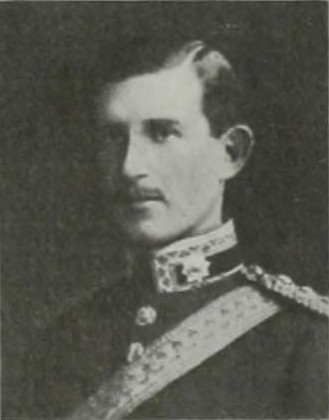
Robert J. B. Oldrey.
OLIVE, JOHN, Gunner, R.M.A., 7618, H.M.S. Good Hope; lost in action off Coronel, on the coast of Chili, 1 Nov. 1914.
OLIVER, ERNEST JAMES, Chief Stoker (R.F.R., A. 1936), 154787, H.M.S. Hogue; lost in action in the North Sea, 22 Sept. 1914.
OLIVER, PERCY FREDERICK, Armourer’s Crew, M. 7341, H.M.S. Hogue; lost in action in the North Sea, 22 Sept. 1914.
OLLEY, MATT, Private, R.M.L.I., Ch./13391, H.M.S. Hogue; lost in action in the North Sea, 22 Sept. 1914.
OLLIFF, WILLIAM, Private, No. 51370, 16th Battn. (Canadian Scottish) Canadian Expeditionary Force, elder s. of William Olliff, of 13, Grainger Street West, Newcastle-on-Tyne, Motor and Cycle Agent; b. Newcastle-on-Tyne, 29 March, 1888; educ. Royal Grammar School there; served his apprenticeship with Messrs. C. A. Parsons & Co., Ltd., Heaton Works, Newcastle-on-Tyne; went to sea as an Engineer and took a 2nd Engineer’s certificate, afterwards going to British Columbia in Feb. 1913; worked for a time at the Esquimault Dockyard, leaving there to enter the motor trade in Victoria; volunteered on the outbreak of war, and joined the Victoria Rifles; came over in Feb. 1915, being one of a hundred picked men for the P.P.L.I., but was drafted to the 16th Canadian Scottish (Gordon Highlanders), and after only a fortnight in England, went with his regt. for the Front; came unhurt through the heavy fighting at Ypres 22–25 April, and was killed by a high explosive shell while resting by the roadside, on the night of 26–27 April, 1915; unm. Private Olliff was offered a commission, but as this entailed a return to Canada, refused it.
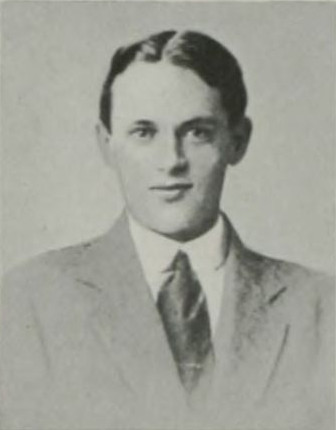
William Olliff.
O’MALLEY, EDWARD, Stoker, R.N.R., 728V, H.M.S. Aboukir; lost in action in the North Sea, 22 Sept. 1914.
O’NEILL, SAMUEL, Lieut., 6th Battn. Lancashire Fusiliers (T.F.), 2nd s. of Adolf George O’Neill, of Marland Grange, near Rochdale, co. Lancaster, J.P., Manufacturer, by his wife, Sarah Elizabeth, dau. of Thomas Holt, J.P.; b. Castleton, near Manchester, 11 June, 1894; educ. Parkgate (Mostyn House School) and Shrewsbury, and on leaving there entered the business of Messrs. Samuel O’Neill & Sons, Paper Tube Manufacturers, of Castleton; was given a commission as 2nd Lieut, in the Territorial Battn. of the Lancashire Fusiliers in Nov. 1911, promoted Lieut. 6 Jan. 1914; volunteered for Imperial service on the outbreak of war; went to the Dardanelles from Egypt, and was killed in action there, 10 June. 1915; unm. He was congratulated by Major-Gen. W. Douglas, Commanding 42nd East Lancashire Division, on an action performed 4–5 June, 1915.
ONSLOW, BRIAN WALTON, Lieut., 11th (King’s Edward’s Own) Lancers (Probyn’s Horse), Indian Army, and A.D.C. to Gen. Sir William Birdwood, yst. s. of the late Col. Gerald Charles Penrice Onslow, Royal Engineers, by his wife, Flora Frances Mary (Camperdown, Crowborough, co. Sussex), dau. of the late William Donald, of Lisle House, Cheltenham; b. Gillingham, co. Kent, 24 Aug. 1892; educ. Cheltenham College and the Royal Military College, Sandhurst; gazetted 2nd Lieut., Unattached List, 6 Sept. 1911; served his first year with the Royal West Kent Regt., passed into the Indian Army, 3 Dec. 1912. and was promoted Lieut. 6 Dec, 1913; took part in the landing at the Dardanelles, 25 April, 1915, and was killed in action there, 28 July, 1915; unm. Buried at Anzac Cove. He was mentioned in Gen. Sir Ian Hamilton’s despatch of 22 Sept. [London Gazette, 5 Nov. 1915]. Gen. Sir William Birdwood wrote: “A finer fellow or better example of the true English gentleman never lived. A son of whom any mother must always have been most justly proud. Never out of temper, always doing what he could to help others, able far above the average. I had hoped a brilliant career was in store for him. Every individual here regrets and feels his death. I have lost the best and bravest of officers, the truest and trustiest of friends”; and a brother officer: “Few people could be so ill-spared. I never met or hope to meet a more lovable character; best at everything he ever did, both in work and play, and always so cheerful. I never heard anyone say anything but good of him, and he was quite the most popular officer both with the men and in the mess.” Admiral ........ wrote from the Dardanelles: “He was a splendid young fellow. We on board only knew him for a few months, but in that short time he made himself very popular with us all. Everybody liked him and admired him, and we looked on him as the true ideal of a British soldier. I fully realise what a great loss his services must be to Gen. Birdwood and to the service generally.” And the Principal of Cheltenham College: “He has left an influence and power behind him that many an older man would be proud to leave.” While at Cheltenham he won a mathematical scholarship, and was one of the most prominent members of the hockey eleven and football fifteen. He was a keen athlete, a good polo player, pigsticker, golfer, etc. Two of his brothers and two brothers-in-law are (1916) serving either in the Army or Navy. His eldest brother, Lieut.-Commander A. G. Onslow, D.S.C., was killed in action in the Battle of Jutland, 1 June, 1916.
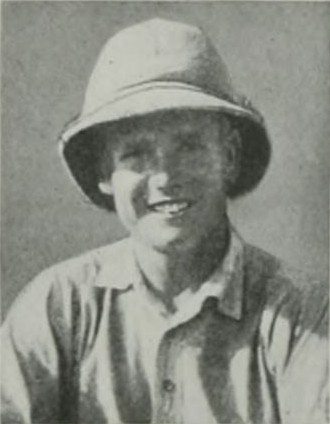
Brian Walton Onslow.
OPIE, ARTHUR GEORGE, Petty Officer, 204207, H.M.S. Good Hope; lost in action off Coronel, on the coast of Chili, 1 Nov. 1914.
OPIE, WILLIAM EDWIN, Cook’s Mate, M. 4659. H.M.S. Good Hope; lost in action off Coronel, on the coast of Chili, 1 Nov. 1914.
ORFORD, CHARLES THOMAS, Private, No. 14240. 1st Battn. Coldstream Guards, s. of the late Henry Orford, Platelayer, by his wife, Sarah, dau. of Thomas Booker; b. Bromsgrove, co. Worcester, 24 Feb. 1882; educ. Stourbridge Road Board School there; worked at the Midland Carriage Works, Bromsgrove; joined the 8th Worcestershire Territorials, 3 April, 1912; was called up on mobilization, 5 Aug. 1914; trained with them until 18 Dec. 1914, when he was discharged as medically unfit for further service, but joined the Coldstream Guards the next day; went to France in Aug. 1915, and died at No. 1 Casualty Clearing Station, 18 Oct. following, of wounds received in action. He m. at St. John’s Church, Bromsgrove, 1905, Louisa (17, Homes Cottages, Station Street, Bromsgrove), dau. of Samuel Perrys, and had five children: Henry George, b. 11 Sept. 1905; Charles William and Edna May (twins), b. 12 Sept. 1913; Annie Maud, b. 1 Dec. 1907; and Phylis Mary, b. 4 Feb. 1911.
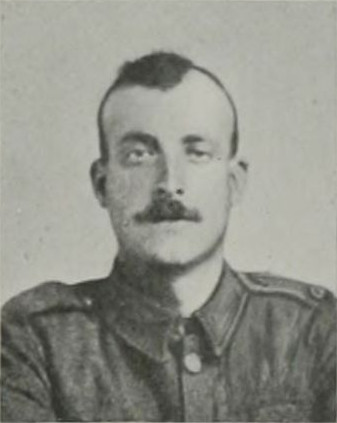
Charles T. Orford.
ORLEBAR, ROBERT EVELYN, Lieut., 2nd Battn. The Duke of Cambridge’s Own Middlesex Regt., only child of Lieut.-Col. Evelyn Henry Orlebar, of Rutt House, Ivybridge, South Devon, Royal Marine L.I., Plymouth Division, by his wife, Mary Louisa, dau. of William Morris, of Manchester [Cadet of Orlebar, of Hinwick, co. Bedford]; b. Walmer, co. Kent, 16 June, 1894; educ. Plymouth and Mannamead School, Cheltenham College, and the Royal Military College, Sandhurst; gazetted 2nd Lieut. 2nd Middlesex Regt. 17 Sept. 1913, and promoted Lieut. 15 Nov. 1914; joined his regt. at Malta in Jan. 1914; went to France, 4 Nov. 1914, and was killed in action at Neuve Chapelle, 9 Jan. 1915, while on duty in the trenches; unm. He was buried in an orchard behind the battn.’s headquarters. Letters from his officers all testify to his courage and sterling qualities. He was good at all school games, hunted with the Dartmoor Fox Hounds, and had his first polo season at Malta.
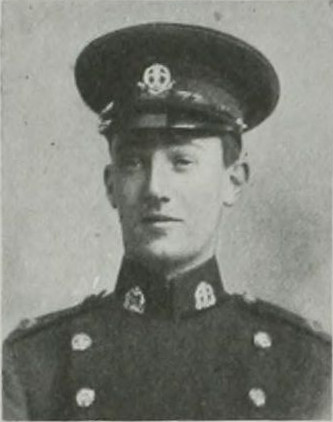
Robert Evelyn Orlebar.
ORR, ROBERT WATSON, 2nd Lieut., 1/18th (London Irish Rifles) Battn. The London Regt. (T.F.), 6th s. of John Orr, of 24, Belmont Gardens, Glasgow, by his wife, Catherine, dau. of Abreauden Ross, Railway Contractor; b. Glasgow, 19 Dec. 1878; educ. at the Academy there. He commenced his business career in Glasgow in the office of the United Kingdom Provident Institution, and remained with them until he joined the Scottish Life Assurance Co. as Assistant Secretary in London in 1908, and was still in the latter company’s employ when he joined the O.T.C. at the Inns of Court. He was training at Berkhampstead for four months, when he obtained his commission, 5 March, 1915. He joined his regt. at St. Albans, and proceeded with it to France nine days later, served in France and Flanders, and was killed in action in the advance at Loos, 25 Sept. 1915. He was buried at North Maroc, near Grenay. A good many years ago 2nd Lieut. Orr won a high reputation as a golfer. He was one of the foremost players in the Prestwick St. Nicholas Club, and gained many individual successes; but he will be remembered even more for his resourcefulness in the foursome form of the game. A neat and stylish golfer, he possessed temperamental qualities which made him an ideal partner in double harness. In 1908 he had the distinction of winning with his partner for the New Alban Club (Edinburgh) the “Evening Times” foursome tournament; and, in the same year, he was one of the quartette of players who enabled the New Alban Club to carry off also the “Evening Dispatch” trophy. When he went to London he joined the Northwood Club, and, in partnership with another member, succeeded in winning the London Amateur Foursomes in 1912. Though he never gained the highest honours in the Amateur Championship, 2nd Lieut. Orr was among the last eight in 1906; he also qualified three times—in fact, each time he entered—for the Open Championship. Brig.-Gen. Thwaites wrote to his wife: “He died in the full performance of his duty, superintending the establishment of communications for his battn. He came to his death ... as a brave soldier and gallant English gentleman should do.” He m. at Belhaven Church, Glasgow, 3 April, 1909, Annie Margaret (8, Springfield Road, St. John’s Wood, N.W.), dau. of the late James Crichton, of Edinburgh, J.P.; s.p.
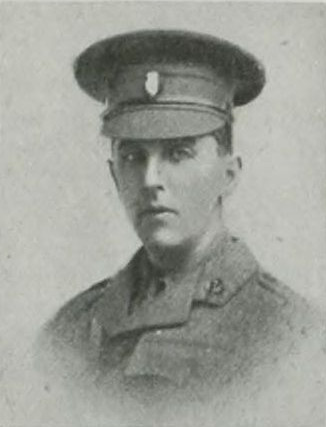
Robert Watson Orr.
ORR, WILLIAM, Private, No. 7938, 2nd Battn. Highland L.I., s. of William Orr, of 19, Carlisle Road, Londonderry; served with the Expeditionary Force in France, etc.; died 16 May, 1915, of wounds received in action at Richebourg.
ORROW, ALBERT WILLIAM, A.B., J. 6317, H.M.S. Hogue; lost in action in the North Sea, 22 Sept. 1914.
ORSLER, GEORGE HENRY, Private, No. 9144, 1st Battn. Scots Guards, s. of John Orsler, of Bridge Street, Framlingham, co. Suffolk; b. Framlingham; enlisted 14 Oct. 1914; served with the Expeditionary Force in France and Flanders; killed in action, 1 Jan. 1915.
ORTON, JAMES, Private, No. 7602, 3rd Battn. Coldstream Guards, eldest s. of James Orton, of 3, Victoria Street, Hinckley, by his wife, Maria, dau. of Samuel Spare; b. Hinckley, co. Leicester, 31 July, 1887; educ. Hinckley Church School; enlisted 11 Jan. 1908; went to France, August, 1914. and was killed instantly in action near Vermelles, Belgium, 24 Oct. 1915; unm. Sergt. Maddison wrote “he had always done his duty well, and was performing a dangerous task when he was shot.” His brother was killed in action, 20 Dec. 1915.
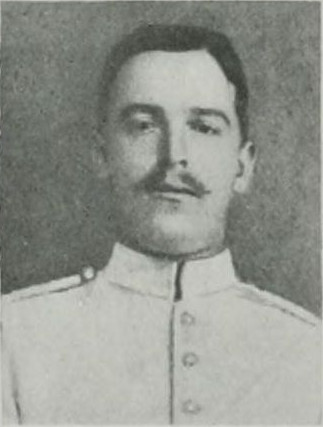
James Orton.
ORTON, JOHN THOMAS, Private. No. 12933, B Coy., 8th (Service) Battn. Leicestershire Regt., 3rd s. of James Orton, of 3, Victoria Street, Hinckley, by his wife. Maria, dau. of Samuel Spare; educ. Hinckley Council School; was a Shoe Hand; volunteered after the outbreak of war, and joined the 8th Leicesters, 3 Sept. 1914; served with the Expeditionary Force in France and Flanders from 28 July to 20 Dec. 1915, on which day he was killed in action, two months after his elder brother; unm. His company officer, Capt. H. L. Beardsley, wrote: “It is with much regret, and the deep sympathy of myself and the other officers of my company, that I have to convey the sad news of the death of your boy, who was killed by a sniper on the 20th inst. whilst carrying out his duties; he was shot through the heart and died almost immediately. A thorough, conscientious, hard-working lad, he will be sadly missed by us all.”
OSBEN, GEORGE THOMAS, Private. R.M.L.I. (R.F.R.), Ch. 11918, H.M.S. Hawke; lost when that ship was torpedoed in the North Sea, 15 Oct. 1914; m.
OSBORNE, ALBERT VINCENT, Private, No. 1837, 5th (Cinque Ports) Battn. Royal Sussex Regt. (T.F.), eldest s. of Albert Osborne, of Water Mill, Guestling, by his wife, Kate, dau. of William Dennett; b. Guestling, co. Sussex, 23 Nov. 1893; educ. there; was a Milkman; joined the Sussex Territorials, 26 Feb. 1914; volunteered for foreign service on the outbreak of war in Aug. 1914; was sent to Dover, and then to the Tower; went to France, 18 Feb. 1915, and, after being in the trenches, was resting at a farm on 16 May, when a shell burst, killing and wounding many. Osborne was sent to the 2nd General Hospital at Manchester, where he died, 24 May, 1915; unm.
OSBORNE, BRIAN, Capt., 15th (The King’s) Hussars, yr. s. of the late Capt. Frank Osborn, of Harbury Hall, near Leamington, 13th Hussars, by his wife, Helen, dau. of Thomas Lever Rushton; b. Sydney, N.S.W., 18 Nov. 1888; educ. Harrow, and the Royal Military College, Sandhurst; gazetted 2nd Lieut. in the 15th Hussars, 8 Feb. 1908, and promoted Lieut. 22 Jan. 1909, and Capt. 15 Nov. 1914; went to France, 23 Aug. 1914, and was killed in action, 11 Nov. 1914, during the assault on the trenches near Herenthaze Château by the Prussian Guard. He had been sent with his machine gun to support the Duke of Wellington’s Regt. He was at first reported missing, and it was not until the following March that confirmation of his death was received in a letter from one of his machine gun section, a prisoner of war in Germany; unm. At Harrow he was successful in both cricket and football, and was first string at racquets; at Sandhurst he won the sword of honour; and in 1908, after joining the 15th Hussars, he attained a great record of first-spears in pig-sticking when quartered at Muttra. As a polo player he came to the front with amazing rapidity, playing for his regimental team and winning the South African Inter-Regimental Tournament in 1911, and repeating the event against more powerful opponents in the English Inter-Regimental Tournament at Hurlingham in 1913. As a member of the Cavalry School team and the Cavalry Club team he lent his aid successfully, and was invited by Lord Ashby St. Ledger, now Lord Wimborne, to practise in the international team of 1914, as choice for the American Expedition. He was a fine rider to hounds, and well known in the Warwickshire country.
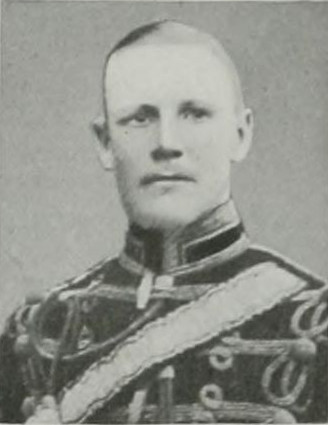
Brian Osborne.
OSBORNE, FRED, A.B. (R.F.R., Ch. B. 9092), 198537, H.M.S. Cressy; lost in action in the North Sea, 22 Sept. 1914.
OSBORNE, FREDERICK, Private, No. 1597, 1/6th (Cyclist) Battn. Suffolk Regt.(T.F.), 2nd s. of William Osborne, of 33, Salisbury Road, South Lowestoft, one of the staff of Lowestoft Central Station, by his wife, Mary Ann. dau. of (—) Hill, of London; b. Lowestoft, 19 April, 1892; educ. there; was a Waiter at the Imperial Hotel, Lowestoft; volunteered and joined the Cyclist Battn. of the Suffolk Regt. in Oct. 1914, and died in the Isolation Hospital, Lowestoft, 2 Feb. 1915, of disease contracted while on active service; unm.
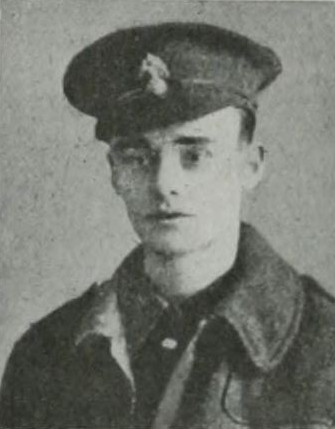
OSBORNE, JOHN ALFRED VICTOR, Private, No. 3204, 2/1st Battn. (Royal Fusiliers) The London Regt. (T.F.), only s. of George Christopher Osborne, ex-Sergt. Criminal Investigation Department, New Scotland Yard, by his wife, Louisa Helen, dau. of George Peall, of Chertsey, Surrey; b. Marylebone, London, 17 June, 1897; educ. Barnsbury Park High Grade School; volunteered after the outbreak of war and joined the Royal Fusiliers, 12 Nov. 1914; trained at Tonbridge; went to Malta, 1 Feb. 1915, where the regt. performed garrison duty until 9 Sept., when they were sent to Egypt, and thence to the Dardanelles on the 19th, where he died, 27 Sept. 1915, of wounds received in action; unm. A comrade wrote; “I was out with your son on the night he was killed, but was not very near to him, so I did not see the last of him. He was shot in the muscle of the arm by an explosive bullet, and got wounded very severely, dying on admission to the hospital. He was buried by some of his fellow mates, and a cross erected over his grave with suitable wording. If ever a man died doing his duty for his King and Country, your son did, and it was a marvel to me how the remainder of us out that night did not get killed.... Our platoon have been very unlucky, and out of Jack’s section there are only about three of us left.”
John Alfred V. Osborne.
OSBORNE, JOHN HENRY, Leading Stoker (Coastguard), 308083, H.M.S. Hogue; lost in action in the North Sea, 22 Sept. 1914.
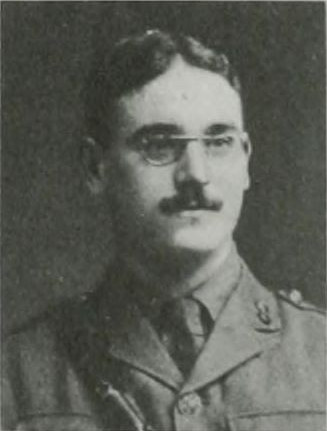
OSBORNE, LESLIE HALL, Lieut., 9th Lancashire Fusiliers, 2nd s. of John Hall Osborne, of Summer Court, Queen’s Walk, Ealing, formerly of China, by his wife, Jane Jenkinson, dau. of Capt. John Whittle; b. Shanghai, China, 2 July, 1894; educ. St. Edmund’s, Canterbury, where he won distinction on the Modern side, and went into residence at Christ’s College, Cambridge, in Oct. 1912. Having tried for an Honorary Entrance Scholarship in Medieval and Modern Languages in 1911, he was placed 2nd Class in that subject in the Intercollegiate examination of July, 1914, and was given his degree in the following year under the regulations for men on active service. He was studying at Greifswold when war was declared, and going (5 Aug. 1914) to Stettin to appeal for help to the British Consul, was arrested as a spy and detained for four days, when he was released and ordered to leave the country. At St. Edmund’s he had been a keen member of the O.T.C., gaining Certificates A and B, and on reaching England he applied for a commission, being gazetted 2nd Lieut., 9th Lancashire Fusiliers, 2 Sept. 1914, and promoted Lieut. 1 June, 1915. He left England with his regt. early in July; took part in the landing at Suvla Bay on the night of 6 Aug. 1915, and fell the following day early in the advance to the attack of Hill 10, shot through the heart. His body was recovered next night and buried with those of five brother officers in rising ground about the middle of Suvla Beach, just north of the Canal that leads into the Salt Lake; unm. His elder brother, 2nd Lieut. W. J. Osborne, was mortally wounded in the same action. While at Christ’s College, Cambridge, he took an active part in the Hockey XI. and in the Lent term, 1913, played in goal in most of the University matches. He also occasionally played for the Surrey Club.
Leslie Hall Osborne.
OSBORNE, MAURICE GODOLPHIN, Capt., 3rd Battn. Rifle Brigade, 3rd and yst. s. of the late Sidney Goldolphin Osborne, Commissioner of Inland Revenue (died 1903), by his wife, Margaret Dulcibella (51, Elm Park Gardens, London, S.W.), dau. of Hugh Hammersley, of 6, Cromwell Gardens, London, and grandson of the late Rev. Lord Sidney Godolphin Osborne [yr. bro. of George, 8th Duke of Leeds]; b. London, S.W., 1 July, 1889; educ. The Old Ride, Bournemouth and Cheltenham College; gazetted 2nd Lieut. in the Rifle Brigade, 20 April, 1910; promoted Lieut. 23 Dec. 1911, and Capt. 15 Dec. 1914; was appointed machine gun officer in May, 1913; went to France, 5 Sept. 1914, and died in Bailleul Hospital, 25 Feb. 1915, of wounds received in action in the trenches near Armentières on the 10th, while making an emplacement for one of his machine guns; unm. Buried at Bailleul. Capt. Osborne was mentioned in F.M. Sir John (now Lord) French’s Despatch of 23 June, 1915. He was a member of the Army Revolver Thirty in 1912, and won several cups and prizes in the All-Ireland Rifle Meeting of 1912 and 1913, both individually and in the Regimental Officers’ Team, and in 1911 he won the Regimental Heavyweight Point-to-Point, on his own horse Chance.
OSBORNE, WILLIAM JOHN, 2nd Lieut., 9th Battn. Lancashire Fusiliers, eldest s. of John Hall Osborne, of Summer Court, Queen’s Walk, Ealing, formerly of China, by his wife, Jane Jenkinson, dau. of Capt. John Whittle; b. Tientsin, China, 9 Nov. 1891; educ. St. Edmunds, Canterbury, and in Germany for some months, and after spending two years in the office of a Chartered Accountant, entered his father’s office in London, and was to have taken up an appointment in China in Oct. 1914. At school he was a member of the O.T.C., and during his subsequent residence in London joined the H.A.C., but had resigned some time before war was declared. He enlisted in the 18th Battn. (1st Public School) Royal Fusiliers, 11 Sept. 1914, and was given a commission, 24 Nov., and posted to the 9th (Service) Battn. Lancashire Fusiliers with which regt. he left England in July. On 6 Aug. they landed at Suvla Bay, Gallipoli. He was wounded the following morning in an attack on Hill 10, and died of his wounds two days later (9th) on board the Hospital Ship Sudan. His company commander (Capt. Milnes), writing from Alexandria, said: “The men who are back here wounded, all say how very well he did during the landing. He was an excellent officer who looked after his men, often at the expense of himself, and no work was too big for him. He never left anything unfinished. He was a good friend and my right hand platoon officer.” A brother officer who picked him up, and had him carried off the field, said he was quite cheerful though very weak, and only anxious about his men and his brother (Lieut. L. H. Osborne, who was killed there the same day, see his notice). 2nd Lieut. Osborne was conspicuous at school as an athlete, especially in hockey and football, and was always deeply interested in natural history, especially in birds; in fact, sports of all kinds appealed to him very strongly. He was a member of the Wild Fowlers’ Association and of the True Waltonian Society.
William John Osborne.
O’SHEA, MICHAEL JOHN, Private, No. 5111, 1st Battn. Royal Welsh Fusiliers, s. of Patrick O’Shea, of 70, Ethel Street, Cardiff, Labourer, by his wife, Mary; b. Cardiff, 3 Jan. 1897; educ. St. Mary’s Roman Catholic School, Canton, Cardiff; enlisted 1 Nov. 1913; went to France 21 Oct. 1914, and was killed in action at La Bassée 21 Dec. following. His company officer, Capt. Ford, wrote highly of him, and added he “was buried beside a shrine, and his grave is beautifully turfed and has a cross with his name on it.”
Michael John O’Shea.
OSMOND, ERNEST HERBERT, Pensioner, Blacksmith, 340821, H.M.S. Hawke; lost when that ship was torpedoed in the North Sea, 15 Oct. 1914; m.
OSMOND, HAROLD COOMBS, Cook’s Mate M. 5542, H.M.S. Aboukir; lost in action in the North Sea, 22 Sept. 1914.
O’SULLIVAN, ARTHUR MOORE, Capt., 1st Battn. Royal Irish Rifles, only s. of the late Patrick O’Sullivan, Advocate-General, Madras Presidency, by his wife, Sydney Jane (Auburn, Greystones, co. Wicklow), dau. of William Daniel Moore, M.D.; b. Ootacamund, India, 19 Aug. 1878; educ. Bedford Grammar School, and Hertford College, Oxford; enlisted in the Oxfordshire L.I. in 1900; gazetted 2nd Lieut. in the Royal Irish Rifles, 23 July, 1902, and promoted Lieut. 9 July, 1906; Capt. 11 March, 1910; was adjutant of his regiment from 1 Jan. 1910 to 31 Dec. 1912; served in the South African War, 1900–01; took part in the operations in Cape Colony, Orange River Colony, and the Transvaal, April, 1900, to April, 1901 (Queen’s medal with four clasps); was employed with the West African Frontier Force, 1 Oct. 1905 to 22 Nov. 1907; went to France with the Expeditionary Force in Nov. 1914, and was killed in action at Fromelles, 9 May, 1915; unm. Capt. O’Sullivan was mentioned in Sir John (now Lord) French’s Despatch of 31 May, 1915, for gallant and distinguished service in the field.
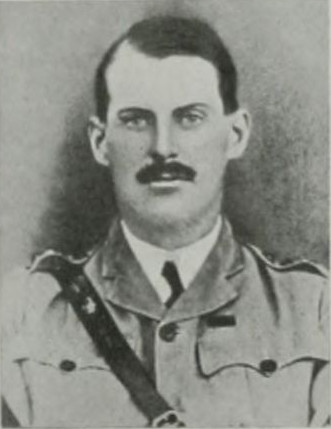
Arthur Moore O’Sullivan.
OTELLIE, WILLIAM GEORGE, A.B. (R.F.R., B. 3678), 196618, H.M.S. Good Hope; lost in action off Coronel, on the coast of Chili, 1 Nov. 1914.
OTTLEY, GEOFFREY CLAUDE LANGDALE, D.S.O., Lieut., 2nd Battn. Scots Guards, only child of Rear-Admiral Sir Charles Langdale Ottley, of 17, Queen’s Gate Gardens, S.W., and Coruanan, Fort William, Inverness-shire, K.C.M.G., C.B., M.V.O., by his wife, Kathleen Margaret, dau. of Col. Alexander Stewart, R.A., and grandson of the Rev. Lawrence Ottley, Canon of Ripon; b. Southsea, co. Hants, 20 Jan. 1896; educ. Harrow and the Royal Military College, Sandhurst; gazetted 2nd Lieut. 2nd Scots Guards, 1 Oct. 1914; promoted Lieut. 10 Dec. (ante-dated to 9 Nov.); went to France, 7 Nov., and died in the Australian Voluntary Hospital, Wimereux, near Boulogne, 21 Dec. 1914, of wounds received in action while leading an attack on the enemy’s trenches on the 18th. Lieut. Ottley was mentioned in Sir John (now Lord) French’s Despatch of 20 Nov. 1914 [London Gazette, 17 Feb. 1915], and was awarded the D.S.O. for conspicuous gallantry and good reconnaissance work.
OUSLEY, GEORGE, Leading Seaman, 230179, H.M.S. Good Hope; lost in action off Coronel, on the coast of Chili, 1 Nov. 1914.
OWEN, ALFRED FREDERICK, Petty Officer (N.S.), 204497, H.M.S. Good Hope; lost in action off Coronel, on the coast of Chili, 1 Nov. 1914.
OWEN, CHARLES, L.-Corpl., No. 7668, 1st Battn. Royal West Kent Regt.; served with the Expeditionary Force in France, etc.; killed in action, 23 Aug. 1914.
OWEN, CHARLES, Private, No. 9004, 1st Battn. East Surrey Regt.; served with the Expeditionary Force in France, etc.; killed in action, 1 Jan. 1915.
OWEN, CHARLES, Private, No. 10022, 2nd Battn. Scots Guards; b. Bushey, co. Renfrew; enlisted 3 Sept. 1914; served with the Expeditionary Force in France and Flanders; killed in action, 16–18 May, 1915. Buried near Richebourg St. Vaast, in front of Dead Cow Farm; m.
OWEN, EDWARD REID, Stoker, 1st Class, S.S. 107833, H.M.S. Pathfinder; lost when that ship was sunk by a mine, about 20 miles off the East Coast, 5 Sept. 1914.
OWEN, ERNEST HADDON, Lieut., 3rd Battn. Lincolnshire Regt., attd. 1st Battn. South Wales Borderers, elder s. of William Haddon Owen, of Louth, co. Lincoln, formerly of Little Grimsby Hall, co. Lincoln, Solicitor, by his wife, Elizabeth Vincent, dau. of Charles Leftwich Oldfeld Bartlett, of Burton House, Sherborne; b. Louth, 4 Feb. 1886; educ. Llandaff Cathedral School, Stancliffe Hall Preparatory, and Haileybury, where he was in the College Cadet Corps; gazetted 2nd Lieut. to the 4th (Militia) Battn. Lincolnshire Regt., 15 Oct. 1904; later transferring to the 3rd (Special Reserve) Battn., and was promoted Lieut. 8 May, 1911, and was Musketry Instructor; left the Army in 1912; was admitted a Solicitor in 1909, joining the firm of Haddon Owen & Son, of Louth. On the outbreak of war he rejoined his old regt., 15 Aug. 1914, with the rank of 2nd Lieut., and was gazetted Lieut. 23 Dec. 1914; went to France, 12 Nov., being attd. to the South Wales Borderers, and was killed in action at Festubert, 21 Dec. 1914; unm. Buried on the battlefield. His commanding officer wrote: “He was killed leading his men into the trenches, and was shot in the head when only three or four yards off them. He was slightly wounded in the neck a short time before, but gallantly led his men on”; and a brother subaltern: “Your son was in the leading company. We had to drive the Germans from the trenches which the Indians had lost the day previously. You will be glad to hear we got those trenches. He was most brave in the advance, and those of us who saw him advance could not help but note his coolness and unconcern.”
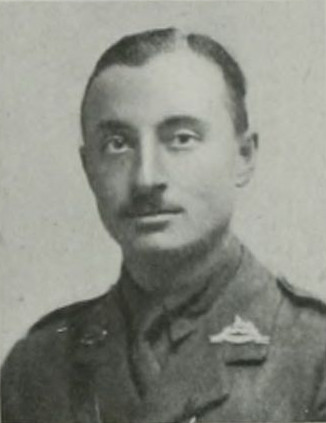
Ernest Haddon Owen.
OWEN, FRANK JAMES, Private, R.M.L.I., 12974 (R.F.R., Ch. B. 1437), H.M.S. Cressy; lost in action in the North Sea, 22 Sept. 1914.
OWEN, GEORGE WEBSTER, Capt., 1/10th Battn. The Manchester Regt. (T.F.), s. of the late Thomas Owen, of The Pollards, Penketh, near Warrington; b. Eccleston, co. Lancaster, 27 July, 1882; educ. Warrington Grammar School, and Manchester University (where he was in the O.T.C.), and later was a Yarn Agent in Manchester. He joined the 2nd Volunteer Battn. Manchester Regt. in 1899; was given a commission as 2nd Lieut., in the 10th Battn. Manchester Territorials, ... April, 1910, and promoted Lieut. 15 March, 1912, and Capt. 31 Aug. 1914; volunteered for Imperial service on the outbreak of war; served with the Mediterranean Expeditionary Force at the Dardanelles, and was killed in action there, 6 June, 1915, during the attack on Krithia. Lieut.-Col. J. B. Rye wrote: “He was with his company, which had been attd. to the Royal Fusiliers, and during the three days’ hard fighting had made quite a name for himself, by the leading of his men and the example he set them, and it was whilst taking them on to recapture a Turkish trench that he was killed. Please accept the most sincere sympathy of myself and all the officers, non-commissioned officers and men of his Battn. in your great loss. We have lost a cheerful and popular comrade.” Capt. Owen m. at Unnston, co. Lincoln, 20 July, 1910, Ruth Mary (Glentworth, Ramillies Avenue, Cheadle Hulme, Cheshire), dau. of S. W. Cocks, of Unnston; s.p.
OWEN, HUGH, Lieut., 3rd, attd. 2nd Battn. The Border Regt., yr. s. of Sol Owen, of Odessa, Russia, Merchant, by his wife, Elizabeth dau. of William Rees; b. Sevastopol, Crimea, 30 May, 1890; educ. Queen Elizabeth’s Grammar School, Cranbrook (1901–7); Armstrong College, Newcastle-on-Tyne (1907–10); and Durham University, where he obtained his degree of B.Sc. While at Cranbrook he was in the Cadet Corps, attd. 2nd Volunteer Battn. The Buffs, East Kent Regt., and at Durham University was a Corpl. in the O.T.C. On the outbreak of war he was gazetted 2nd Lieut., 3rd Border Regt., 21 Aug. 1914, and promoted Lieut. 8 April, 1915; went to the Front, 13 Nov. 1914; was wounded at Neuve Chapelle, 12 March, 1915; returned to duty on 6 April, and was killed in action at Festubert, 16 May, 1915; unm.
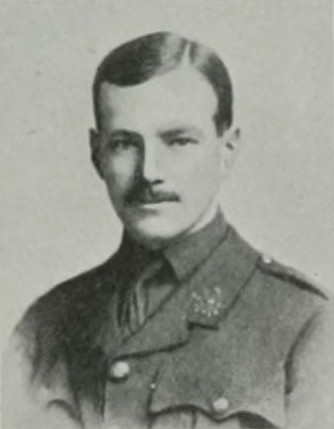
Hugh Owen.
OWEN, NORMAN MOORE, 2nd Lieut., Royal Field Artillery, yr. s. of the Rev. Octavius Edward Owen, Rector of Over Wallop, co. Hants, formerly Lieut. Royal Marine Artillery, by his wife, Ella Jane, yr. dau. of Col. John Patrick Briggs, of Strathairly, Fife, late Indian Army, b. Flempton Rectory, Bury St. Edmunds, 16 Dec. 1893; educ. Stubbington House, Fareham, and Cheltenham College; gazetted 2nd Lieut. 18 July, 1913; went to France 18 Aug. 1914, and was killed in action at the Battle of the Aisne, 13 Sept. 1914; unm. Buried at Chassemy, France.
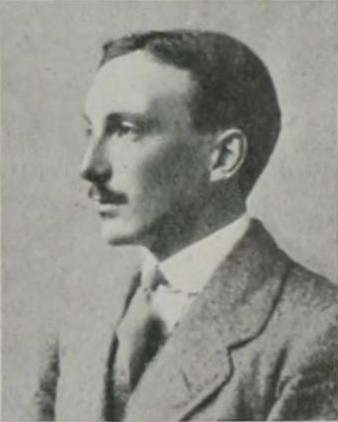
Norman Moore Owen.
OWEN, THOMAS, Private, No. G./1234 (8th Service) Battn. Royal Fusiliers; served with the Expeditionary Force in France etc.; died 29 July, 1915, of wounds received in action.
OXENBRIDGE, GEORGE HERBERT, Private, No. 3644, 2/4th Battn. Royal West Kent Regt. (T.F.), only s. of George Edward Oxenbridge, Private, Royal Sussex Regt. (now serving in Egypt), by his wife, Eliza Annie (33, Shelly Cottage, Denny Bottom, Tunbridge Wells); b. Tunbridge Wells, 26 April, 1897; educ. Rusthall and Church of England Schools there; enlisted 21 Dec. 1914; served with the Mediterranean Expeditionary Force, and was killed in action at Gallipoli, 22 Aug. 1915, while acting as a stretcher-bearer, and was buried at Anafarta Plain. An officer of his platoon wrote: “It was on 22 Aug., a man was wounded outside the trench; your son went out after him to bring him in, and was shot dead. I was sorry indeed, as he was a very good soldier, cheerful and very willing, also a general favourite amongst his fellow comrades. He did a very brave act, and I am very sorry indeed to lose him”; and a comrade: “We were in some heavy fighting that day and chaps were shot down anyhow, and one Welsh boy was severely wounded and laid out in front of our lines, and as they asked for volunteers to fetch him in, Pat, who was a stretcher-bearer, volunteered and was shot before he got to the chap; it was a very brave deed and deserved the D.C.M. All our company miss him very much.”
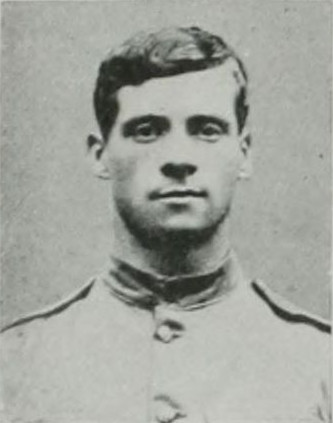
George H. Oxenbridge.
OZANNE, EDWARD GRAEME, Capt., 3rd Battn. Royal Fusiliers, only s. of Edward Chepmell Ozanne, of Le Platon, Guernsey, Bailiff of Guernsey, by his wife, Frances; b. Guernsey, 5 April, 1883; educ. Rugby; gazetted 2nd Lieut. to the Royal Fusiliers, 8 May, 1901, and promoted Lieut. 19 Oct. 1904, and Capt. 23 April, 1912; served in the South African War, 1902; took part in the operations in the Transvaal, and in those of the Orange River Colony and Cape Colony, Feb.-31 May, 1902 (Queen’s medal with four clasps); and with the Expeditionary Force in France from 18 Jan. to 14 Feb. 1915; and was killed in action in trenches at Ypres on the latter date. Buried in the Ramparts there. He m. at Bombay, India, 17 Oct. 1913, Aline (52, Lower Sloane Street, S.W.), dau. of the late Lieut.-General Josias Gordon Cloete, Indian Army; s.p.
PACKER, REGINALD CHARLES, Sergt., No. 53, A Squadron, Essex Yeomanry (T.F.), s. of the late Handal Henrico Packer, Architect and Surveyor, Proprietor of Angel Hotel, Wellingboro’, and subsequently of the Cliff Hotel, Dovercourt, by his wife, Emily Mary Jane (Cliff Hotel, Dovercourt), dau. of (—) Hobbs, of Stroud, Glos.; b. Wellingborough, 5 Dec. 1888; educ. Wellingborough and Eye Grammar Schools; worked with his father until his death in 1909, and subsequently managed the Cliff Hotel, Dovercourt, for his mother; joined the Essex Yeomanry in 1908; was promoted Sergt. in 1912 for work in connection with regimental signalling, and was in charge of the signallers of the regt.; volunteered for active service on the outbreak of war; went to France 29 Nov. 1914; was selected in Jan. for a special signalling course, with about 50 others, from which he passed out No. 11, and died in Hazebrouck Military Hospital, 19 May, 1915, of wounds received in action at Ypres on the 13th. Buried in Hazebrouck Cemetery. Capt. Parker, of the Essex Yeomanry, wrote: “I can a little realise your loss, for I have been learning signalling lately and have seen a good deal of him, and have learnt what a charming fellow he was. As you probably know he was a signaller of exceptional ability and in that way alone he was a serious loss to the regt. But apart from that he has become a very good soldier and his troop officer during the last two months has been continuous in his praise of the work he has done. He is a sad loss to the Squadron, and was very popular with all and we shall miss him sadly.” He m. at Ufford, co. Suffolk, 28 Nov. 1914, Marion (2, Station Road, Dovercourt), elder dau. of the late Quartermaster-Sergt. George Thomas Rushton-Rudd, of the Essex Regt.; s.p.
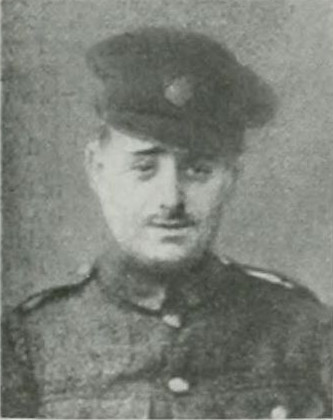
Reginald C. Packer.
PADDAY, WILLIAM HAMILTON, Capt., 36th, attd. 47th Sikhs, Indian Army, yr. s. of the late Col. Arthur Charles Padday, Royal (late Bengal) Engineers, by his wife, Alice Hamilton (30, Orsett Terrace, Hyde Park W.), dau. of the late Thomas Campbell Foster, Q.C., Bencher of the Middle Temple, and Recorder of Warwick; b. Stoke Devonport, 21 Sept. 1881; educ. Bath College (where he was a prominent member of the football XV in 1898); and the Royal Military College, Sandhurst (1900–01); gazetted 2nd Lieut. (unattd.) Indian Army, 8 Jan. 1901; served his first year with the Queen’s Royal West Surrey Regt. then in the Punjab; was gazetted to the 36th Sikhs, 7 April, 1902, and promoted Lieut. 8 April, 1903, and Capt. 20 July, 1911; was for some time attd. to the Military Police in Assam, but rejoined his regt. in 1910. Home on leave when the European War broke out, he was for a short time attd. to the 8th Service Battn. West Riding Regt. at Belton Camp, but early in Nov. joined the 47th Sikhs in France, and was serving with that regt. when he was killed in action near Givenchy, 21 Dec. 1914; unm. His Col. wrote that he “died a most gallant death gallantly performing a difficult task”; and an officer who was in the trenches with him: “His coolness and great personal bravery alone commanded admiration, and his unfailing cheerfulness under any circumstances.” And another: “When we had reached the bit of trench we had been told to retake, the Germans were found to be in each end of it with machine guns. On previous occasions it had been found that the most effective method of turning the enemy out of such positions was for parties of bomb-throwers to creep up to the part occupied by the Germans, and by throwing bombs amongst them, drive them out bit by bit. Your son was in charge of our regimental party of bomb-throwers, whom he had personally trained, and he went off with the party to try and dislodge the Germans. A Sepoy who was with him says that he had thrown two bombs and was preparing a third, when he was shot at close range through the head.... Owing to the heavy fire the Germans opened on the party it was quite impossible to remove the body. The party had to make their way back, and just then a retirement was ordered and the trench was evacuated. The subsequent counter-attack, in which the regt. did not participate, did not reach that trench at all, so it was never possible to recover the bodies of those who had died there.” He was a keen sportsman, fond of shooting, fishing and yachting. He was Hon. Secretary of both the Lucknow and Naini Tal Yacht Clubs, and won several cups when racing in the latter club.