The Roll of Honour. (continued 28)
Reading edition
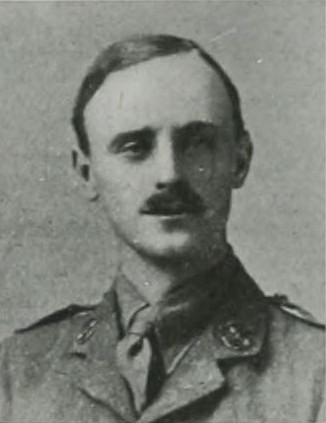
John Horace Kennedy.
KENNEDY, JOHN PITT, Capt., 2nd Battn. The Cameronians (Scottish Rifles), 2nd s. of the late Charles Napier Kennedy; b. London, 12 Aug. 1884; educ. Marlborough (House “Littlefield”) and Sandhurst: gazetted 2nd Lieut. 2nd Cameronians, 10 Oct. 1903; promoted Lieut. 14 April, 1909, and Capt. 14 May, 1913; and was killed in action at the Battle of Neuve Chapelle, 10 March, 1915. Buried near the village of Rouge Croix on the road between Neuve Chapelle and Estaires. Capt. Kennedy m. at Ootacamund, India, 13 July, 1908, Norah, dau. of Lieut.-Col. W. E. Baddeley, R.E., Indian Army, and had a son, Richard Pitt, b. 4 Sept. 1910.
KENNEL, JOHN HENRY, Private, No. 6802, 3rd Battn. Coldstream Guards, s. of Timothy Kennel, of Arundel Road, Whittington Moor, by his wife, Sarah Ann; b. Ripley, co. Derby, 7 March, 1888; enlisted, 12 June, 1906, and was killed in action at Soupir, during the Battle of the Aisne, 14 Sept. 1914. He m. at Windsor, 17 May, 1913, Emily (5 Red Lion Row, Thames Avenue, Windsor), dau. of Thomas Hobbs, of Windsor, and had issue, John Henry Ernest, b. 4 Nov. 1913.
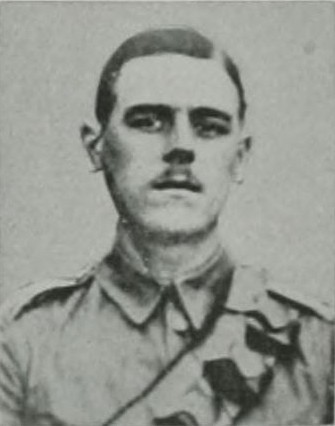
John Henry Kennel.
KENNETT, PERCY WILLIAM BISHOP, Private, No. 12009, 1st Battn. Coldstream Guards, only s. of George Bishop Kennett, of Yellands, South Zeal, near Okehampton, co. Devon, Civil Servant (retired), by his wife, Ada (Grace), dau. of W. Cone; b. Finchley Road, London, N.W., 13 Sept. 1893; educ. Bradley High School, Newton Abbott, Devon; enlisted 8 Sept. 1914; left for France, 7 Jan. 1915, and died in the 3rd Field Ambulance, 4 March, 1915, of wounds received in action near Givenchy, 2 March, 1915. Buried Bethune Cemetery; unm.
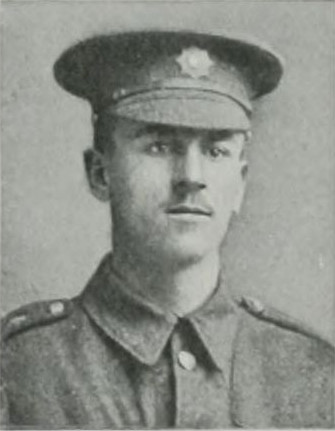
Percy W. B Kennett.
KENT, ALEXANDER JAMES, Ch. E.R.A (Pensioner), 132323. H.M.S. Aboukir: lost in action in the North Sea, 22 Sept. 1914.
KENT, ALFRED HENRY, A.B. (R.F.R., Ch. B. 3666), 203801, H.M.S. Aboukir: lost in action in the North Sea, 22 Sept. 1914.
KENYON, JOHN DE WINTON, 2nd Lieut., 1st Battn. King’s Liverpool Regt., 2nd s. of the late Ernest Kenyon, of Manchester, Drysalter, by his wife, Eliza Gertrude (14 Farnborough Road, Birkdale. Southport), dau. of Edwin Muir, C.E., M.I.C.E., M.I.M.E., F.G.S.; b. Birkdale, Southport, 13 Sept. 1896; educ. Giggleswick, Yorkshire, where he was in the first Rugby Football XV and first Cricket XI for two years, was co-editor of the School Chronicle, a cadet officer of the O.T.C. and a preposter; received a commission as 2nd Lieut. in 4th (Extra Reserve) Battn. The King’s, 15 Aug. 1914; was transferred to the 1st Battn., 13 Sept. 1914; went to France, 9 April. 1914, with the 6th Brigade (2nd Division), and was killed in action at Richebourg St. Vaast, 16 May, 1915, while engaged in locating the exact position whence the heavy rifle fire kept up by the enemy was proceeding. Buried at Richebourg St. Vaast; unm. Lieut.-Col. C. J. Steavenson, commanding 1st King’s Liverpools, wrote: “He had only been with us a few days, but had shown that, had he been spared, he would have made an excellent officer,” and Mr. R. N. Douglas, Head Master of Giggleswick School, wrote: “Only last Sept. I was looking to having Jack here as Head of the School, and was feeling the greatest confidence that now all would go well with us, and that we should have a strong and upright leader. Of all the boys I have had in my five years here, his has been the character which has interested me most and given me the most pleasure. And I looked forward to a life of infinite usefulness for him. Now it is over, but I am sure that his usefulness has been exerted, his strength of character has justified itself, and his example has been an inspiration.”
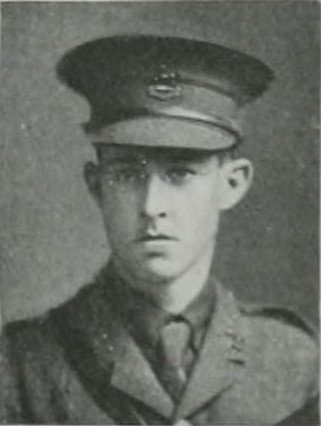
John de Winton Kenyon.
KEOGHAN, LESLIE OWEN, Gunner, 2/1594 C. Battery, New Zealand Artillery New Zealand Expeditionary Force, eldest s. of Sigismund Owen Keoghan, of Denniston, Westport, New Zealand; b. Bainham, 15 Sept. 1894; educ. Bainham, Collingwood, Nelson. He left school at the age of fourteen and was employed for a time in a cheese factory, after which he studied agriculture on his father’s farm at Bainham. At seventeen he went with his parents to reside at Denniston, Westport, and engaged in farming and other occupations until the outbreak of war. He joined the New Zealand Artillery, 20 Dec. 1914, and after six weeks’ training at Trentham, Wellington, sailed with the third contingent for Egypt; served at the Dardanelles; was admitted to the Egyptian Military Hospital, 28 May and died 1 June, 1915, of fever. Buried, Cairo; unm. Gunner Keoghan was a young man of exceptionally fine physique and remarkable strength.
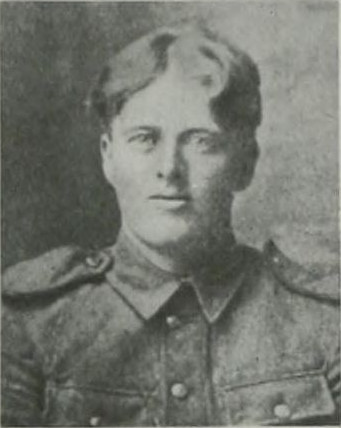
Leslie Owen Keoghan.
KEOHAN, PATRICK JOSEPH, W.T. Operator, R.N.R., W.T.S. 149, H.M.S. Hawke; lost when that ship was torpedoed in the North Sea, 15 Oct. 1914.
KER, ARTHUR MILFORD, Capt., 2nd Battn. (92nd) Gordon Highlanders, only s. of Sir Arthur Milford Ker, C.I.E., M.V.O., Knight of Grace of St. John of Jerusalem, by his wife, Constance, dau. of Peter Mitchell; b. Simla, 7 Sept. 1882; educ. Tunbridge Castle School and Cheltenham College. When the Boer War broke out he joined the East Surrey Militia and went out to South Africa with them, receiving a commission as 2nd Lieut. in the 2nd Battn. Gordon Highlanders, 19 March, 1901, and served through that campaign, 1900–2, including the operations in the Orange Free State, June to July, 1901, and in the Transvaal, Nov. 1901 to 31 May, 1902 (Queen’s medal with five clasps). Promoted Lieut. 21 Feb. 1906, and Capt. 19 May, 1911; he was killed in action near Bethune, 14 Oct. 1914; unm. Buried in Bethune Cemetery.
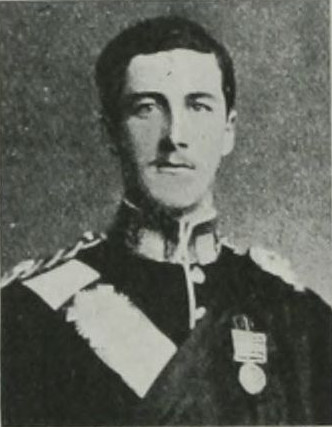
Arthur Milford Ker.
KER, CECIL HOWARD, Capt., 1st Battn. Bedfordshire Regt., only s. of George Darling Ker, of Milcote, Branksome Park, Bournemouth, formerly Secretary and Treasurer of the Bank of Madras, by his wife, Alice Mary, dau. of the late Capt. Charles Thomas Bently, 78th Highlanders; b. Madras, 4 Nov. 1883; educ. Cheltenham College; served in South African War, 1902, with the 4th Battn. Cheshire Regt. (Militia), taking part in the operations in the Orange River Colony, and Cape Colony, Feb. to 31 May, 1902 (Queen’s medal with three clasps); gazetted 2nd Lieut. 1st Bedfords, 4 July, 1903; promoted Lieut. 27 March, 1905, and Capt. 20 Nov. 1912; went to France with the Expeditionary Force in Aug. 1914, in which his Battn. formed part of the 15th Brigade (5th Division), took part in the Battle of Mons, the subsequent retreat, the Battle of the Marne, and the advance to the Aisne, and was killed in action near Missy-sur-Aisne, 15 Sept. following, being shot through the heart by a rifle bullet. Buried at Missy-sur-Aisne. His Commanding Officer wrote: “We have lost in him a very gallant officer and a dear friend.” He was a good all-round sportsman. He played cricket and football for his school, was a first-class rifle shot, and an excellent racquet and hockey player. In 1910, he and Capt. Leader of the Bedfords, were the runners-up for the Military Doubles Racquets Championship, and in 1909, when the Bedfords won the Army Hockey Championship, he captained the regimental team. He m. at St. George’s, Hanover Square, London, 31 Dec. 1912, Dorothy, yst. dau. of Lieut.-Col. William Hill-Climo, of Fir Glen Yateley, co. Hants, Army Medical Staff (ret.), and had a son, Johnnie George Skipton, b. 4 June, 1914.
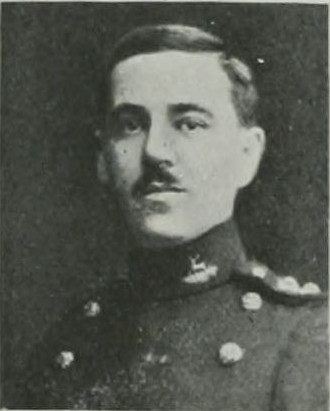
Cecil Howard Ker.
KERBY, ALFRED, Private. No. G. 7453, 2nd Battn. The Middlesex Regt.; served with the Expeditionary Force in France, etc.; killed in action, 14 March, 1915; m.
KERFOOT, HARRY VICTOR, Private, No. 5214, 3rd Battn. Coldstream Guards, s. of William Henry Kerfoot, of 77, Malmesbury Road, Small Heath, Birmingham, Compositor, by his wife, Hannah Maria, dau. of the late Edward Ford, of Wolverhampton, Painter; b. Leicester, 25 March, 1887; educ. Birmingham Council School; enlisted in Oct. 1903; went out to France with the 1st Expeditionary Force, lost his right arm in the action at Landrecies, 25 Aug. 1914, and was taken prisoner in hospital. He was conveyed to the Garrison Camp, at Zerbst, Anhalt, where he died of double pneumonia, 1 March, 1915; unm. He was buried in the Garrison Cemetery there. Kerfoot had served three years in Egypt, and in a letter to his father the Bishop of Khartoum said: “He was a very earnest and sincere soldier when I knew him, and just the kind of man to do his share in that wonderful fight at Landrecies which kept the Germans from enveloping our whole Army.”
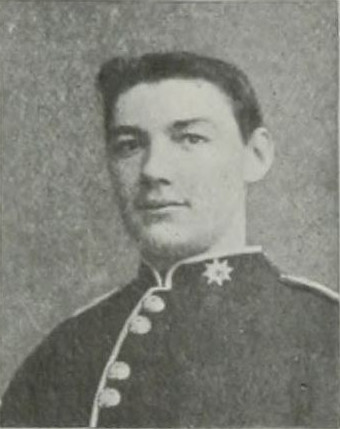
Harry Victor Kerfoot.
KERL, WILLIAM AUSTEN, Rifleman, No. 1910, 16th (Queen’s Westminster Rifles) Battn. The London Regt., only s. of William James Kerl, Auctioneer and Surveyor, of Old Jewry, E.C. and a Past Master of the Worshipful Company of Curriers (died 17 Feb. 1903), by his wife, Emily (19, Solon New Road, Clapham, S.W.), dau. of the late Henry Jeffrey Austen, of Wadhurst, co. Sussex, Auctioneer; b. Beckenham, co. Kent, 9 Sept. 1893; educ. City Freemen’s School, Brixton, and on leaving school entered the wholesale drapery warehouse of Messrs. John Howell & Co., Ltd., St. Paul’s Churchyard, E.C.; volunteered on the outbreak of war and joined The Queen’s Westminster Rifles, 6 Aug. 1914; went to France with his Battn. 1 Nov. 1914, and was killed in action, 4 June, 1915, by a shell bursting in the reserve trenches in front of Ypres while waiting to occupy the first line fire trenches. Buried at “Cross Roads,” Potyze, Ypres-Zonnebeke Road; unm. Letters from officers and men testify to his great courage and lovable disposition.
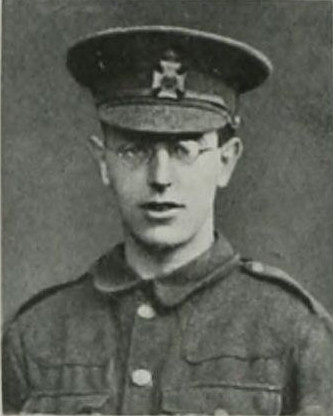
William Austen Kerl.
KERLEY, HARRY, A.B. (R.F.R., B. 3838), 192057, H.M.S. Good Hope; lost in action off Coronel, on the coast of Chili, 1 Nov. 1914.
KERR, ALEXANDER, Ch. E.R.A., 2nd Class, 269478, H.M.S. Cressy; lost in action in the North Sea, 22 Sept. 1914.
KERR, ARCHIBALD DAVID, A.B. (R.F.R., Ch. B. 9932), S.S. 2542, H.M.S. Aboukir; lost in action in the North Sea, 22 Sept. 1914.
KERR, DAVID ANSELM, 2nd Lieut., 2nd Battn. Royal Scots, yr. s. of Major-Gen. Lord Ralph Drury Kerr, late Col. 10th Hussars, K.C.B., by his wife, Lady Anne, née Fitzalan-Howard, 6th dau. of Henry Granville, 14th Duke of Norfolk, and grandson of John Williams Robert, 7th Marquis of Lothian; b. Curragh Camp, Ireland, 21 April, 1893; educ. Oratory School, Birmingham, and New College, Oxford, at which latter he was a member of the Officer’s Training Corps; gazetted 2nd Lieut., 2nd Battn. Royal Scots, 7 Aug. 1914; served in France and Flanders, and was killed near Bethune, 13 Oct. 1914. Buried, Croix Barbée, near Bethune; unm.
KERR, HERMAN HENRY, Private, No. 8/63, 10th (Otago Infantry), Battn. New Zealand Expeditionary Force, s. of the late (—) Kerr; b. Hamilton South, New Zealand, 5 Dec. 1893; educ. there; joined the 10th Battn. Otago Infantry after the outbreak of war, 2 Sept. 1914; left for Egypt with the Main Force in Oct., took part in the landing at the Dardanelles, 25 April, 1915 and died 19 May, following, of wounds received in action there; unm.
KERR, HUBERT RAYNSFORD GORDON, Lieut., 1st Battn. (71st) Highland L.I., only s. of Frederick Kerr, of 27, Hereford Square, London, S.W., by his wife, Esther Barbara Nicloux, dau. of the late Robert Raynsford Jackson, of 31, Harrington Gardens, S.W.; b. at the British Consulate, Santiago, Chili, 16 March, 1892; educ. St. Cyprians, Eastbourne; Cheltenham College (Newick House, Mr. Scot Skirving), and the Royal Military College, Sandhurst; gazetted 2nd Lieut., 1st Battn. Highland L.I., 13 March, 1912, and joined 21 April following; left for India to join the regt., 12 Sept. 1912, was promoted Lieut. 21 Sept. 1914; went to France with his regt. in the Lahore Division, and was killed at Givenchy, 19 Dec. following. Col. (now Brig.-Gen.) R. W. H. Ronaldson wrote: “he was killed on the 19th Dec. gallantly leading his men in action against a machine gun. I fear not one of them escaped and all were shot down. Gallantly he led, and as gallantly he died with all the honours of war, a soldier’s death.... I hope it may be some consolation to you all to know that he was so absolutely happy here on service among us all, and that he went to his death without a moment’s hesitation, determined to do his duty, come what might. He spoke to me a few moments before and was full of life and go there in the thick of it all. He was seen to fall just as the dawn came up for we had made a night attack on the German trenches. It seems so hard such a young life should have been so quickly cut down but you must find consolation in that he did his duty without a thought for himself, and met his death like the fine young soldier he was.”
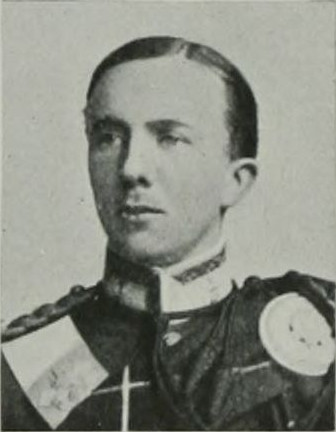
Hubert Raynsford G. Kerr.
KERR, WILLIAM JOHNSTON, Stoker, 1st Class (R.F.R., Ch. B. 7865), S.S. 105934, H.M.S. Aboukir; lost in action in the North Sea, 22 Sept. 1914.
RAIT-KERR, SYLVESTER CECIL, Capt., 22nd Trench Howitzer Battery, Royal Field Artillery, 2nd s. of Sylvester Rait-Kerr, of Rathmoyle, Edenderry, King’s co., Ireland, by his wife, Mary, dau. of the late Major-General Charles Scrope Hutchinson, C.B., R.E.; b. Rathmoyle, afsd., 14 Oct. 1887; educ. Arnold House, Llandulas, Rugby School, and the Royal Military Academy, Woolwich; gazetted 2nd Lieut. R.F.A. 18 Dec. 1907, and promoted Lieut. 18 Dec. 1910; went to South Africa in Oct. 1910, with the 100th Battery, R.F.A. and afterwards proceeded to India and was home on leave from India when war broke out. He was employed for some weeks in training men in various places, being promoted Capt. 30 Oct. 1914, and on 6 Nov. left for France with “G” Battery, R.H.A., but was subsequently transferred to the 41st Battery, R.F.A. In April, 1915, he was given the command of a Trench Howitzer Battery, with which he went into the trenches near Wieltje on 6 May, and was killed in action on the 13th, being shot through the head by a German sniper whilst carrying bombs to his guns. Buried in the trenches close to the spot where he fell; unm. The General Officer Commanding the 11th Infantry Brigade, wrote: “I have been informed that you would like a few particulars of the gallant work done by your son and the 22nd Trench Mortar Battery while they were under me in the hard fighting of May 9 to 13, during the 2nd Battle of Ypres. Your son was posted in the trenches to the left of a building, named by the troops ‘Shelltrap Farm,’ which was about the hottest part of the line, and his duty was to assist the infantry in keeping back the enemy from sapping up to the farm buildings, and to endeavour to blow in their saps. The enemy’s shelling was so intense that time after time the trench mortars were silenced and the crews buried, but they were dug out and started on again, and they refused to be relieved. Cooke, the subaltern, was hit and his shoulder dislocated, but he refused to go to hospital, and the whole battery displayed a similar spirit all through the fighting, the severity of which may be judged from the fact that Shelltrap Farm was lost and retaken with the bayonet three times in twenty-four hours.” And the General Officer Commanding the 4th Division: “I remember Rait-Kerr and his 22nd Trench Mortar Battery well. It was the best battery of that sort that we ever had with the 4th Division, and under him it did invaluable service in the front trenches during the fighting from the 6th to the 13th of May (1915), which was some of the worst we had in France. I know he was a great loss to the Division and to the service.” The officer in charge of the Trench Howitzer School, 2nd Army Corps, wrote: “He had done magnificently with his Trench battery and had received the congratulations of the Divisional and Brigade commanders to whom his battery was attached. He was a great friend of mine, and without doubt the finest officer who had passed through the Trench Howitzer School. There was no officer in the British Army who could have done it better. He was a gallant fellow. He was the ideal British officer, a real tiger with his men, but loved and admired by them. In this Army (the 2nd) he made trench howitzers. He was, of course, recommended for a decoration, and he richly deserved it,” and the subaltern under him in his battery wrote: “His death was a great blow to all of us in the battery. He was a splendid fellow, and did not know what fear was. He was recommended to General Commanding 4th Division for gallantry during the action by officer commanding the 2nd Monmouths, who told me he had upheld the best traditions of the Royal Artillery.” His brother, Capt. W. C. Rait-Kerr, was killed in action at Veldhoek, 10 Nov. 1914 (see following notice).
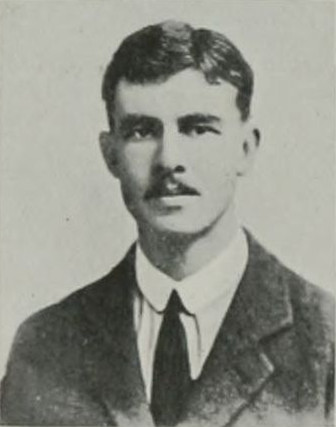
Sylvester C. Rait-Kerr.
RAIT-KERR, WILLIAM CHARLES, D.S.O., Capt., 57th Howitzer Battery, R.F.A. eldest s. of Sylvester Rait-Kerr, of Rathmoyle, Edenderry, King’s co. Ireland, by his wife, Mary, dau. of the late Major-General Charles Scrope Hutchinson, C.B., R.E.; b. Rathmoyle, afsd. 6 Aug. 1886; educ. Arnold House, Llandulas, Rugby School, and the Royal Military Academy, Woolwich; gazetted 2nd Lieut. R.F.A. 23 July, 1907; and promoted Lieut. 23 July, 1910, and Capt. 30 Oct., 1914; went to France 16 Aug. 1914, with the 1st Division, commanded by Sir Douglas Haig, as Lieut. in 57th Howitzer Battery, 43rd Brigade, R.F.A.; took part in the Battle of, and retreat from, Mons, the Battles of the Marne and the Aisne, and the 1st Battle of Ypres, and was killed in action at Veldhoek, near Ypres, 10 Nov. following, whilst in charge of an advanced gun 250 yards from the enemy, being shot through the head by a German sniper. The rest of his battery had gone to the rear to rest and refit, having been out since the beginning of the war. Buried at Veldhoek, beside the gun “he had commanded so well”; unm. He was awarded the D.S.O. “For gallant conduct in bringing up a gun to within 250 yards of the enemy in a wood, and blowing down a house in which the enemy were working a machine-gun” [London Gazette, 1 Dec. 1914]; and was mentioned in F.M. Sir John (now Lord) French’s Despatch of 14 Jan. 1915. His Colonel wrote: “He was in charge of a gun which had for some days been placed in a forward position for a special purpose, to destroy some houses from which some German snipers were causing heavy losses in our trenches. He had been doing splendid work, which had been specially noticed by the General, and only the day before his death the Commander of the French troops on our left had sent a letter of thanks for one particularly useful lot of shooting which he had put in and destroyed some German trenches in front of them. He was a brave and excellent officer and man. He had just appeared in the Gazette as Capt. and was so delighted that I had been able to get him posted to one of my batteries.” Another officer wrote: “He was up in the infantry trenches with one gun close behind, in communication by telephone with him. He was there about a fortnight, and in that time did very fine work, knocking houses down with Germans and machine-guns in them, and various other jobs. He was highly praised by all the people up there, and by the General in command of the Infantry Brigade. He had a very rough time from both shell and rifle fire, but had done great execution in spite of it.” His brother, Capt. S. C. Rait-Kerr, was killed in action 13 May, 1915 (see previous notice).
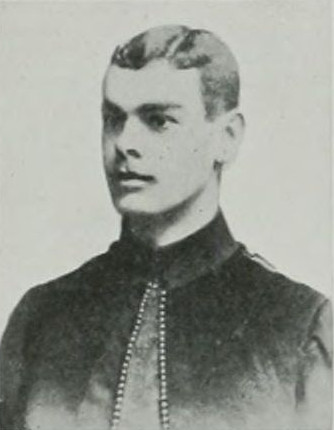
William C. Rait-Kerr.
KERRAY, JAMES, Leading Stoker (R.F.R., Ch. B. 3918), 284967, H.M.S. Cressy; lost in action in the North Sea, 22 Sept. 1914.
KERRISON, ARTHUR JAMES, Boy Servt., L. 4831, H.M.S. Good Hope; lost in action off Coronel, on the coast of Chili, 1 Nov. 1914.
KERWIN, ALBERT, Stoker, 2nd Class, S.S. 115602 (Ports.), H.M.S. Hawke; lost when that ship was torpedoed in the North Sea, 15 Oct. 1914.
KESSELL, HARRY, Lieut., Commanding Machine-Gun Section, 15th Infantry Battn. (Queensland), Australian Imperial Force, only s. of Thomas Norman Kessell, of Leederville, Western Australia, by his wife, Sophia: b. Leamington Spa, co. Warwick, 13 Jan. 1874; went to New Zealand with his parents and was educ. at the Normal School, Dunedin, afterwards settling in Australia. He joined the Victorian Rangers, 11 Dec. 1892, as a gunner in the Nordenfelt Battery; became Senior Sergt. 17 April, 1893; Lieut. G Coy., 23 Nov. 1895, Acting Signalling Inspector, 1 May, 1896, and after obtained the Flag Signalling Certificate (No. 600) 1 Aug. 1896, Signalling Instructor. He passed for promotion to the rank of Capt. Victorian Rangers, 10 Oct. 1897, and for the Militia with Special Certificate, No. 78, and obtained the extra Musketry Certificate, No. 12, 22 Oct. 1898, and re-qualified as Flag Signaller, 17 Dec. 1898. He served through the South African War, was appointed Lieut. to the 5th Victorian Mounted Rifles: at Middleberg, 1901, acting as Troop Leader and Squadron Commander on various occasions, and was mentioned by Lord Kitchener in Despatches [London Gazette, 29 July, 1902] and awarded the Queen’s medal with four clasps. After the close of the campaign he acted as Adjutant for the returning Australian Troops on board H.M.S. Britannia. On the outbreak of the European War, in Aug. 1914, he joined the Australian Imperial Force, serving with the 15th Infantry Battn. (Queensland), and died at No. 1 General Hospital, Heliopolis, 3rd July, 1915, of shrapnel wounds received in action in Gallipoli on May 9; unm. Of Lieut. Kessell’s last hours an Army chaplain wrote as follows: “He was grand, a regular inspiration to some other patients, who ceased worrying over their own troubles in the presence of a man who suffered greater things and yet never ceased to be a cheerful pattern to them.”
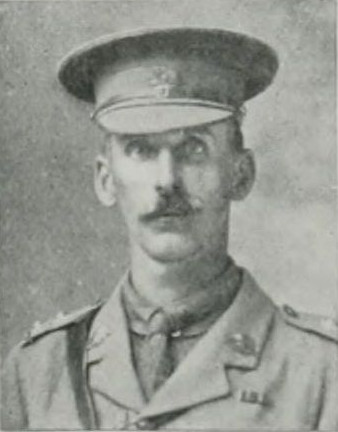
Harry Kessell.
KETTERIDGE, JAMES WILLIAM, Bombardier, No. 63852, 11th Battery, R.F.A., and First-Class signaller, s. of William Ketteridge, of Waggon Lane, Lower Tottenham, co. Middlesex, Munition Worker; b. there 5 Nov. 1891; educ. St. James’ School, Fore Street, Upper Edmonton, enlisted, 12 Jan. 1911; awarded 2nd Class Certificate at Army School, 27 June, 1914; served with the Expeditionary Force in France and Flanders, and while reconnoitring at midnight on 21 Aug. 1914 at le Cateau was shot by the French by mistake. He m. at Kildare Parish Church, 1914, Mary Florence, dau. of Benjamin Robert Singleton, late of the Northamptonshire Regt., and had one child, Rosary Annie Le Cateau, b. 20 Dec. 1914.
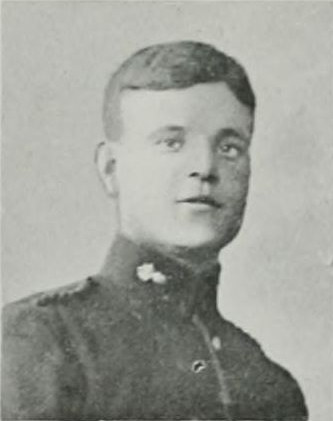
James W. Ketteridge.
KIDBY, ARTHUR, Rifleman, No. 2894, C Coy., 9th Battn. (Queen Victoria’s Rifles) The London Regt., 2nd s. of Frederick Arthur Kidby, of 19, Hertford Road, Hoddesdon, Clerk, Building Department, Hoddesdon Brewery, by his wife, Mary, dau. of Stephen Elkins; b. Hoddesdon, co. Herts, 4 Jan. 1896; educ. Hoddesdon Church of England School and Broxbourne, Herts; was Clerk in wholesale drapery trade; joined Queen Victoria’s Rifles, 2 Sept. 1914; went to France, 20 Jan. 1915, and was killed in action near Wulverghem 3 March following; unm. His company commander, Capt. Herbert Fleming, wrote: “He was shot through the head on the 3rd inst. during a heavy burst of fire from the German trenches. He had only been here a short time, but he proved himself a keen and brave soldier. I deplore his loss more than I can say. I was with your boy when he died; he was unconscious, and only lived for a few minutes after he was shot. He has been buried in the churchyard at Wulverghem, and I will see that a cross is erected to his memory.” Private Kidby was a good athlete, and was captain of his school football team. He had a good voice and was a member of the Hoddesdon Church choir.
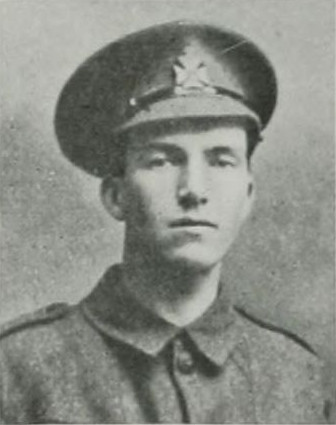
Arthur Kidby.
KIDD, GEORGE, Stoker, 1st Class (R.F.R., Ch. B. 7865), 299560, H.M.S. Aboukir; lost in action in the North Sea, 22 Sept. 1914.
KILBEY, ALBERT JOHN, Private, No. 2881, 7th Battn. The London Regt. (T.F.); only s. of John Charles Kilbey, of 11, Royston Street, Old Ford Road, Bethnal Green, Waterside Labourer, by his wife, Harriet Rossetta, dau. of George Frederick Walker; b. Bethnal Green, 29 March, 1895; educ. Wolverley Street School there; joined the 7th London, 23 Sept. 1914; left for France, 17 March, 1915, and was killed in action at the Battle of Festubert, 17 May following; unm.
KILBOURNE, FREDERICK, Stoker, 1st Class, K. 16154, H.M.S. Good Hope; lost in action off Coronel, on the coast of Chili, 1 Nov. 1914.
KILGOUR, WILLIAM, Sapper, No. 615, 51st Signal Coy., Highland Division, Royal Engineers (T.F.), elder s. of William Thomas Kilgour, of Tighnabruaich, Fort William, co. Inverness, by his wife, Annie Hossack, dau. of William Macdougall, of Fort William; b. Fort William, 23 Nov. 1895; educ. Fort William; gained a very high place in the competitive examination for entrance to the Post Office service and was employed as a Sorting Clerk and Telegraphist at Grangemouth, Bo’ness, Linlithgow and Fort William; volunteered and joined 4th Battn. Cameron Highlanders (T.F.), in Aug. 1914, and, while training at Bedford, transferred from that corps to the 51st Signal Coy., Highland Division, R.E. (T.F.); left for France, 30 April, 1915, and was killed in action at La Coutiere, 27 May, 1915, by a high explosive shell, death being instantaneous. Buried at Vieille Chapelle; unm. His commanding officer wrote: “As your son worked his instrument in the same room that I occupy myself, I had the opportunity of watching him closely, and without any exaggeration I can truthfully say that he was one of the finest young soldiers I ever met. He was always willing and ready to do his work at any time, and when we were very busy he was quite pleased to work his 12 hours on end without grumbling. He had such a happy disposition that we all feel we have lost a very good comrade and an excellent worker.”
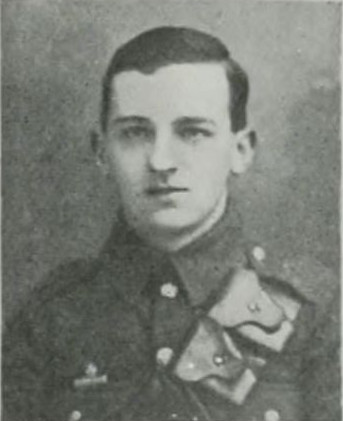
William Kilgour.
KILLICK, ALFRED HENRY, C.E.R.A. (Pensioner), 154516, H.M.S. Hogue; lost in action in the North Sea, 22 Sept. 1914.
KILLING, JOHN WILLIAM, Ch. E.R.A., 2nd Class, 269868, H.M.S. Hawke; lost when that ship was torpedoed in the North Sea, 15 Oct. 1914; m.
KIMBERLEY, ARTHUR, Private, R.M.L.I., Ply. 11904, H.M.S. Cressy; lost in action in the North Sea, 22 Sept. 1914.
KING, ALEXANDER DUNCAN CAMPBELL, Tempy. Lieut., 11th Reserve Regt. of Cavalry, attd. 18th Hussars, s. of Robert King, of Craigpark, Torphichen, co. Linlithgow, by his wife, Sara, dau. of Duncan Campbell, of Paisley; b. Torphichen aforesaid, 20 May, 1886; educ. Edinburgh Academy and Edinburgh University; received a commission as 2nd Lieut. in 11th Reserve Regt. of Cavalry, 20 Sept. 1914; promoted Tempy. Lieut., 24 Feb. 1915; left for France, 17 May; was attached there to the 18th Hussars, and died at Hooge, near Ypres, 24 May, 1915, from the effects of poisoned gas, which on that day was employed by the enemy against the British front between Shelltrap Farm and the Bellewaerde Lake for 4½ hours without intermission, the cloud in some places rising to a height of 40 feet. Buried west of Ypres, between Poperinghe and Vlamertinghe; unm.
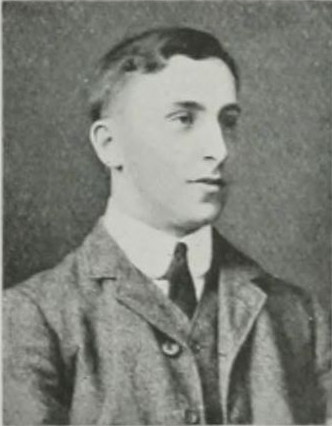
Alexander D. C. King.
KING, ALFRED CHARLES LAWRENCE, Stoker, 2nd. Class, K. 17463, H.M.S. Pathfinder; lost when that ship was sunk by a mine, about 20 miles off the East Coast, 5 Sept. 1914.
KING, CHARLES GLAZIER, Private, No. 9936, 3rd Battn. Coldstream Guards, s. of Henry King, of Lower Vobster, Coleford, near Bath; served with the Expeditionary Force in France and Flanders; killed in action at Soupir, 14 Sept. 1914.
KING, CHARLES SEALY, Lieut., 2nd Battn. Royal Munster Fusiliers, yr. s. of Charles Sealy King, of Richmount, Bandon, co. Cork, J.P., by his wife, Beatrice Ada, dau. of William Jocelyn Bradford, M.D., T.C.D.; b. Bandon, 18 Aug. 1894; educ. Catherington House Preparatory School, Hordean, Hants, from which he gained a scholarship to St. Lawrence College, Ramsgate; passed his Army Qualifying Examination in 1911; obtained a commission as 2nd Lieut. in the 4th (Extra Reserve) Battn. Royal Munster Fusiliers, 27 Jan. 1912, and after serving six months’ probation with the 2nd Battn. was promoted Lieut. 22 Aug. following, and on the outbreak of war was gazetted 2nd Lieut. to the 2nd Munsters, 14 Aug. 1914; was promoted temporary Lieut. from 30 Aug. 1914, and substantive Lieut. from 30 Nov. 1914; joined his Battn. in France, 18 Feb. 1915 and was killed in action at the Rue du Bois, near Festubert, 9 May, 1915; unm. His Adjutant, Capt. T. W. Filgate, wrote: “During an attack on the German trenches just south of Neuve Chapelle on Sunday morning your son was killed while gallantly leading his platoon. He was perfectly wonderful, and as cool and collected as if nothing was happening. He dashed forward ahead of his men, and was killed right up against the German parapet. It may be a little consolation to you to know that it was very largely owing to his and a few others’ gallant leading and dash that we were the only regt. in the brigade of which part reached the first line German trenches. We are all very proud of the gallant fellows that fell, and their names will never be forgotten in the regt. We were not able to recover your son’s body, which is close up to the German trenches.”
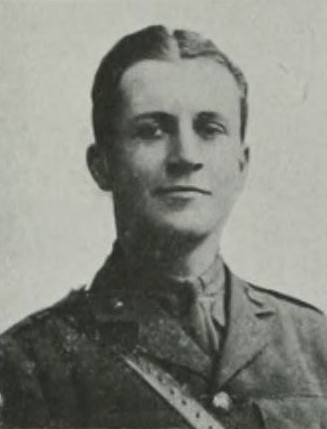
Charles Sealy King.
KING, EDWARD, Private, No. 7647, 1st Battn. Scots Guards; b. Marston, Bedford; enlisted 24 May, 1910; served with the Expeditionary Force in France and Flanders; was severely wounded in action in the arm and thigh, admitted to the 3rd London General Hospital, Wandsworth, 3 Nov. 1914, and died there on the 16th of that month.
KING, EDWARD, Signal Boy, J. 22608, H.M.S. Aboukir; lost in action in the North Sea, 22 Sept. 1914.
KING, FREDERICK ARTHUR, Private, No. 1949, 3rd Battn. (Royal Fusiliers) London Regt. (T.F.), s. of John King, of 97, Sumatra Road, West Hampstead, Bootmaker, by his wife, Mary, dau. of Charles Chaffey; b. South Hampstead, 8 Feb. 1898; educ. Broomleigh Street Council School, West Hampstead; joined the 3rd Battn. London Regt. June, 1914, and was killed in action at Neuve Chapelle, 10 March, 1915; unm. Lieut. Reeves in giving some particulars of the action wrote: “F. A. King was under me when he was killed, I saw him lying right on top of the captured German trench—I believe he was killed by a high explosive, because I noticed his face was black. He was quite a good youngster.”
KING, HARRY, Stoker, 1st Class (R.F.R., B. 7995), S.S. 103737, H.M.S. Hogue; lost in action in the North Sea, 22 Sept. 1914.
KING, HENRY WILLIAM, Stoker, R.N.R., 1419U., H.M.S. Aboukir; lost in action in the North Sea, 22 Sept. 1914.
KING, HORACE ANDREW, A.B. (R.F.R., Ch. B. 9004), 190503, H.M.S. Cressy; lost in action in the North Sea, 22 Sept. 1914.
KING, JAMES, Private, No. 4444, 3rd (Reserve), attd. 1st Battn. Royal Inniskilling Fusiliers, s. of John King, of Blackhill, Cookstown, Millworker, b. Clogog, Cookstown, co. Tyrone, Aug. 1893; educ. Cookstown; joined 3rd Inniskilling Fusiliers, 8 Aug 1914; left for the Dardanelles with a draft for the 1st Battn., and died 14 Aug. following, of wounds received at Suvla Bay; unm.
KING, NICHOLAS MAINGER, Stoker, R.N.R., U. 1640, H.M.S. Hawke; lost when that ship was torpedoed in the North Sea, 15 Oct. 1914.
KING, ROBERT NEAL, Capt., 1st Battn. Lincolnshire Regt., only s. of the late Robert King, M.D., F.R.C.P., London, by his wife, Esther, dau. of Thomas Case; b. in London, 14 Sept. 1874; educ. Rugby; gazetted 2nd Lieut., 1st Lincolns, from Militia, 6 June, 1896; promoted Lieut. 31 July, 1899, and Capt. 19 Nov. 1904; served in the Nile Expedition, 1898, and was present at the Battle of the Atbara (medal; Egyptian medal with clasp); in the South African War, 1902, where he was employed with Mounted Infantry in operations in the Transvaal and Cape Colony, April and May, 1902, and in the Orange River Colony, Jan. to March, 1902 (Queen’s medal with four clasps); and from 24 Dec. to 31 Dec. 1901, was on special service. He retired 21 June, 1911, and was placed in the Reserve of Officers, but rejoined his regt. on the outbreak of war; left for France, Sept. 1914, and was reported killed in action at Wystchaete, 1 Nov. following. Capt. King m. at St. George’s, Hanover Square, London, 19 Dec. 1910, Klara Alice Fanny, 2nd dau. of Robert Shand Kynoch Shand, of Hillside, co. Kincardine, and the Linn Keith, co. Banff, and had two sons: Robert McKerrell, b. 24 Nov. 1911, died 3 Nov. 1914; and Philip Marshall, b. 23 March, 1914.
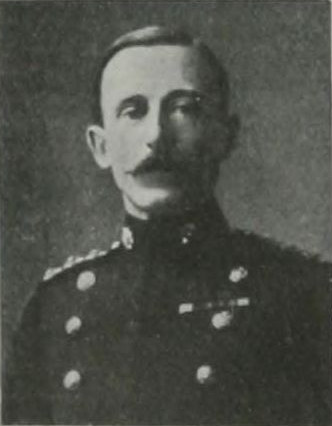
Robert Neal King.
KING, SAMUEL, A.B. (R.F.R., B. 5284), 203896, H.M.S. Good Hope; lost in action off Coronel, on the coast of Chili, 1 Nov. 1914.
KING, SIDNEY HORACE, Stoker, 1st Class, K. 15574, H.M.S. Pathfinder; lost when that ship was sunk by a mine, about 20 miles off the East Coast, 5 Sept. 1914.
KING, THOMAS, Sailmaker, 175250, H.M.S. Good Hope; lost in action off Coronel, on the coast of Chili, 1 Nov. 1914.
KING, WILLIAM, Stoker, 1st Class, S.S. 110209, H.M.S. Aboukir; lost in action in the North Sea, 22 Sept. 1914.
KINGSTON, SYDNEY, S.B.S., 2nd Class, 351152, H.M.S. Pathfinder; lost when that ship was sunk by a mine, about 20 miles off the East Coast, 5 Sept. 1914.
KINKEAD, RICHARD CROFTON GEORGE MOORE, M.B., M.Ch., B.A.O. Capt., Royal Army Medical Corps, attd. 10th Royal Hussars, only s. of Richard John Kinkead, of Galway, M.D., Dublin, J.P., Professor, Queen’s College, Galway, by his wife, Emily, dau. of John Hubert Moore; b. Galway, 12 June, 1883; educ. Erasmus Smith’s School, Galway; Portora Royal School, Enniskillen; Queen’s College, Galway, and Royal University of Ireland, where he graduated, M.B., M.Ch. and B.A.O. While a student at the University he joined and went through a course of training in the South of Ireland Yeomanry (now the South Irish Horse). After serving for a year as house surgeon to the Coventry and Warwickshire Hospital, he passed into the R.A.M.C., being gazetted Lieut., 31 July, 1909, and promoted Capt. 31 Jan. 1913. He was stationed in the Cork district, Ireland, 1909–11, and in South Africa, Jan. 1912, to Sept. 1914, when he was recalled to England with the regular troops and attd. to the 10th Royal Hussars. He left for France with that regt. which formed part of the 3rd Cavalry Division, 7 Oct. 1914, and was killed in action at Klein Zillebeke, during the 1st Battle of Ypres on the 31st of the same month; unm. Lieut.-Col. Barnes, commanding the 10th Hussars, wrote: “He was a gallant officer and loved and respected by all ranks of the 10th Hussars. I especially asked that he might go to the war with the regt. and so I feel that fate has scarcely been kind.” Major the Hon. C. B. O. Mitford, D.S.O., of the same regt. wrote: “He with two other officers got one of my men and myself out of the trenches at considerable personal risk. He was just as cool helping the wounded under fire as if he was in a surgery. I hope it may be some slight consolation to you to know how he will be missed in the regiment and that his good work was appreciated by all.” Major, afterwards Lt. Col. Shearman, wrote: “You will be proud to know that he was possessed of great personal courage and his one thought here was his duty and care of the wounded, which he in many cases personally collected. Your son was buried by the Rev. C. S. Ensell, in the cemetery at Ypres. His grave is next that of Lord Charles Nairne, who was killed at the same time.” And a colonel of the R.A.M.C. wrote: “Capt. Kinkead was regarded as a daring and fearless soldier, with strikingly attractive qualities, and was immensely popular with the men of the regiment. Over and over again he risked his life in the discharge of his duties in the field.”
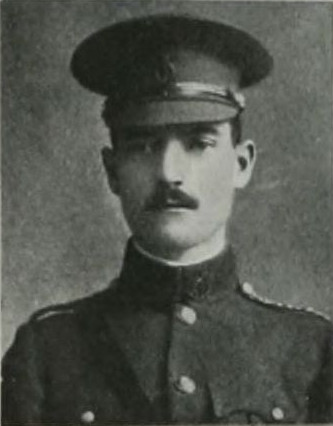
R. C. G. M. Kinkead.
KINNAIRD, HON. DOUGLAS ARTHUR, Master of Kinnaird, Capt., 2nd Battn. Scots Guards, eldest s. of Arthur Fitzgerald, 11th Lord Kinnaird, K.T., by his wife, Mary Alma Victoria, dau. of Sir Andrew Agnew, of Lochnaw, 8th Baronet; b. Rossie Priory, Inchture, co. Perth, 20 Aug. 1879; educ. Cheam School, Surrey; Eton, and Trinity College, Cambridge (B.A. 1901, M.A. 1905); gazetted 2nd Lieut. 3rd Scots Guards, 22 May, 1901. and promoted Lieut. 1 Feb. 1904, and Capt. 3 Feb. 1912; transferring to the 2nd Battn. when the 3rd was disbanded; went to Antwerp with his Battn. in the 7th Division; served through the retreat from that place and was killed in action, 23 Oct. 1914, during one of the numerous rearguard actions, to protect the retirement of the Belgian Army. Buried with another officer at Zonnebeke Farm, near Poligne, Belgium; unm. Capt. Kinnaird was in the Volunteer Corps at Eton and Cambridge, and travelled much on the Continent to study Art and Literature. In 1906, he went to East Africa for big game shooting, and made a large collection of heads and trophies. He also visited India for the Coronation Durbar at Delhi in 1911.
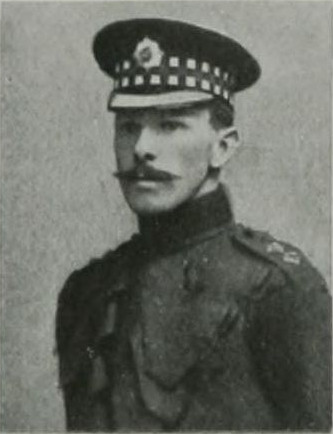
Douglas Arthur Kinnaird.
KINNAIRD, FRANCIS JOSEPH, Capt., 4th Battn. South Staffordshire Regt., 2nd s. of the late Francis Henry Kinnaird, of London; b. London, 16 March, 1875; educ. privately; obtained a commission in the 4th South Stafford in 1907; passed the School of instruction and qualified as Instructor of Musketry; became Capt. 4 Nov. 1910; went to France 16 March, 1915; was wounded in action at Richebourg, 16 May, 1915, and died in King Edward’s Hospital, London, 10 June, following; buried at Astley, Worcestershire. He m. in London, 5 Oct. 1901, Gertrude (16, Titchfield Terrace, Regent’s Park, N.W.), dau. of Robert Green, and had a dau.: Mary Gertrude, b. 21 Sept. 1904.
KIPLING, THOMAS WILLIAM, Seaman, R.N.R., 4772 B., H.M.S. Hogue; lost in action in the North Sea, 22 Sept. 1914.
KIRKBY, BERTRAM JAMES, 1st Writer, 220342, H.M.S. Hawke; lost when that ship was torpedoed in the North Sea, 15 Oct. 1914.
KIRBY, HENRY JOHN, Stoker, 1st Class (R.F.R., B. 8167), S.S. 103966, H.M.S. Hogue; lost in action in the North Sea, 22 Sept. 1914.
KIRBY, JOHN RUSSELL, Private, No. 2517, 13th Battn. (Princess Louise’s Kensington), The London Regt. (T.F.), eldest s. of the late John William Kirby, of Ivy House, Wortham, co. Suffolk, Farmer, by his wife, Annie M., dau. of John Rash; b. Wortham, 13 Nov. 1886; educ. Eye Grammar School; was a Motor Bodymaker at Messrs. Barkers & Co., Kensington; volunteered after the outbreak of war and joined the Kensingtons, 1 Sept. 1914; left for France, 7 Feb. 1915, and died at No. 2 Stationary Hospital, Boulogne, 27 March, 1915, of wounds received at Neuve Chapelle on 10–12 March. Buried at Boulogne; unm.
KIRK, ALAN, Gunner, No. 57708, 49th Battery, Royal Field Artillery, 2nd s. of John Robert Kirk, of Belton, near Doncaster, Schoolmaster, by his wife, Betsy, dau. of John Rookledge; b. York, 13 June, 1891; educ. Ackworth Church School, of which his father was head master; joined Pontefract Battn. King’s Own Yorkshire L.I. (T.F.), ... 1909; enlisted R.F.A., June, 1909; left for France, Aug. 1914, and was killed in action at the Battle of the Aisne, 13 Sept. following. Buried midway between Braine and Chessemy; unm.
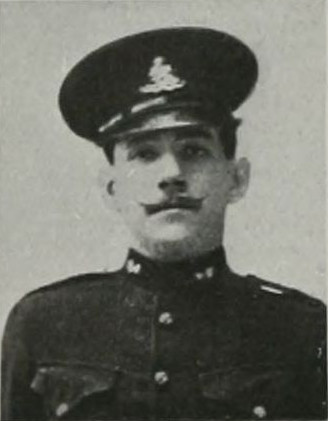
Alan Kirk.
KIRK, GERALD, 2nd Lieut., 5th Battn. The King’s Own Royal Lancaster Regt. (T.F.), 3rd s. of the late Alfred Samuel Kirk of Greenwood Leghe, Ingleton, and of Leeds, and the only s. by his 2nd wife, Isabella Ann, widow of William Norman Greenwood and dau. of Richardson Balderstone; b. Bramley, near Leeds, 14 July, 1883; educ. Ilkley and Pocklington, but after the declaration of war enlisted in the King’s Own, 2 Sept. 1914, was gazetted 2nd Lieut. in the same, 3 Jan. 1915. At the Second Battle of Ypres the 5th Battn. of the King’s Own were with the Canadians in the great charge on Friday, 23 April, and Lieut. Kirk was severely wounded and died on the night of the following day at Poperinghe. Col. Lord Richard Cavendish wrote: “He was mortally wounded when bravely leading his men against a very strong position of the enemy. Although he had only been in the Battn. a comparatively short time he had endeared himself to us all, and he will be deeply mourned and long remembered. He had proved himself an extremely efficient officer.” Capt. Gerald W. Sharpe wrote: “He died a noble and gallant death, leading his platoon across an absolute inferno of shot and shell, he was wounded through the chest by a bullet. Four of his men carried him back to the dressing station where he was made as comfortable as possible and he was the first to be sent off in the motor ambulance.” He was buried in the hospital cemetery at Poperinghe. Kirk was the well-known amateur centre half-back, and had played for both Bradford City and Leeds City. He was the first Hon. Secretary of the Ingleton Conservative Club, and the originator and first Hon. Secretary of the Ingleton Farmers’ Association, etc., and a sidesman at St. Mary’s Church. He was also an ardent follower of the Vale of Lune Hounds, an excellent shot, and a keen cricketer and tennis player. He m. at Casterton, near Kirkby Lonsdale, 21 April, 1909, Jane, dau. of Edmund Capstick, of Barnoldswick, Burton-on-Lonsdale; s.p.
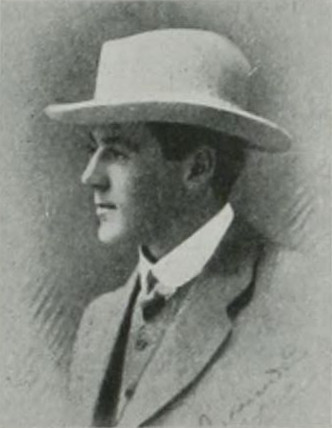
Gerald Kirk.
KIRK, RANDAL, Private, No. 8716, 1st Battn. Coldstream Guards, only s. of the late Bruce Kirk, of Newland, Hull, by his wife, Cecilia (49, Linnaeus Street, Hull), dau. of the late Thomas Clarke, of Goole, and grandson of the late William Kirk, of Hull, Printer; b. Hull, 22 Sept. 1885; educ. The Crossley and Porter School, Halifax; was nine years (1900–09) in the Hull Rating Department, Posterngate, and for six years held the rank of Sergt. in the Hull Rifles (Cyclist Corps); joined the 1st Coldstream Guards the day previous to King Edward’s death, 1910, and served three years with the Colours; rejoined the battn. on the outbreak of war; left for France with the Expeditionary Force, 13 Aug. 1914, and died a prisoner of war in the German XV Army Corps Hospital at Laon, 27 Sept. 1914, of wounds received in action during the first days of the retreat from Mons; unm.
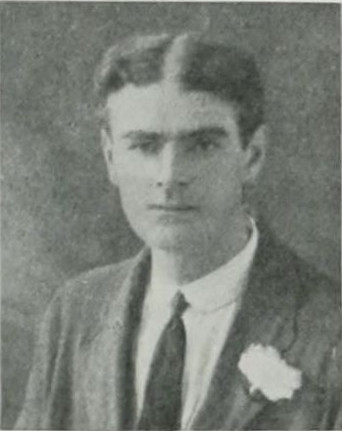
Randal Kirk.
KIRKLAND, THOMAS LINDSAY, Petty Officer, 170934, H.M.S. Hogue; lost in action in the North Sea, 22 Sept. 1914.
KIRKPATRICK, ALEXANDER DOUGLAS, Lieut., 3rd Battn. Canadian Expeditionary Force (1st Canadian Contingent), s. of Alexander Mainwaring Morris Kirkpatrick, of 204, Rusholme Road, Toronto, by his wife, Caroline Adelaide, dau. of Col. George Taylor Denison, the Veteran Canadian Cavalry leader and writer on Imperial Defence; b. Toronto, 1 Jan. 1891; gazetted Lieut. in Governor General’s Body Guard, 10 July, 1910, transferred to the 2nd Regt. (Queen’s Own Rifles of Canada), 14 Aug. 1914, went overseas with the 3rd Battn. of the Canadian Expeditionary Force, 26 Sept. following, and was killed in action, near St. Julien, during the Second Battle of Ypres, 23 April, 1915; unm.
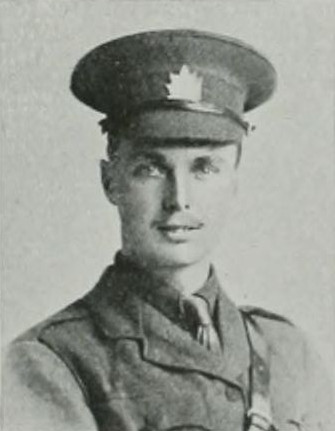
Alexander D. Kirkpatrick.
KITCHING, ABNER PERCIVAL, Private, No. 8620, 1st Battn. Coldstream Guards, eldest s. of Abner Kitching, of Crouch Farm Highworth; b. Chadlington, co. Oxon, 1883; enlisted 28 Feb. 1910; left for France with the Expeditionary Force, Aug. 1914; and died 24 Sept. following, of wounds received at the Battle of Mons on 23 Aug. Buried, Military Cemetery, Netley. He m. in Swindon, 14 April, 1914, Elizabeth, dau. of William Collins, of the Buildings, Highworth, and had a dau., Elise, b. posthumous, 12 March, 1915.
KLITZ, EVELYN ANTHONY, Private, No. 9512, 5th Battn. (London Rifle Brigade) The London Regt. (T.F.), yst. s. of William Lawson Klitz, of 88, High Street, Lymington, co. Hants, by his wife, Ellen, dau. of Thomas Gossling; b. Lymington, 7 Nov. 1894; educ. Gillingham Grammar School; joined the London Rifle Brigade early in 1913; volunteered for Imperial service on the outbreak of war; and died at the Rawal Pindi Hospital, Wimereux, near Boulogne, 12 March, 1915, of wounds received in action on the preceding 12 Feb. at Ploegsteert. Buried in a private grave in Wimereux Cemetery; unm. Private Klitz was one of the company of the London Rifle Brigade who took part in the march in full kit from the Duke of York’s Column to the Aquarium at Brighton, on 18 April, 1914, in 14 hours 23 mins., thereby breaking the world’s record. For this feat he was awarded a bronze medal.
KLOSS, SIDNEY ALBERT EDWARD, Stoker, 1st Class, 310981, H.M.S. Good Hope; lost in action off Coronel, on the coast of Chili, 1 Nov. 1914.
KNIGHT, ALBERT ALFRED, Stoker, 1st Class, K. 11029, H.M.S. Pathfinder; lost when that ship was sunk by a mine, about 20 miles off the East Coast, 5 Sept. 1914.
KNIGHT, HENRY ARTHUR, Stoker, 1st Class (R.F.R., B. 3397), S.S. 101168, H.M.S. Good Hope; lost in action off Coronel, on the coast of Chili, 1 Nov. 1914.
KNIGHT, HENRY CHARLES, Stoker, Petty Officer (R.F.R., B. 2701), 160065, H.M.S. Hogue; lost in action in the North Sea, 22 Sept. 1914.
KNIGHT, JOSEPH, Chief Stoker (R.F.R., A. 1363), 128345 (Port.), H.M.S. Hogue; lost in action in the North Sea, 22 Sept. 1914.
KNIGHT, STEPHEN, Leading Stoker, 1st Class (A. 1584), 126510, H.M.S. Good Hope; lost in action off Coronel, on the coast of Chili, 1 Nov. 1914.
KNIGHT, THOMAS, Leading Stoker (R.F.R., B. 3041), 307737, H.M.S. Good Hope; lost in action off Coronel, on the coast of Chili, 1 Nov. 1914.
KNOCKER, ARTHUR PAGET, Capt., 1st Battn. Hampshire Regt., only s. of Col. Herbert Paget Knocker, of Bushey Ruff, Eastbourne, late R.E., by his wife, Maud, dau. of Major-Gen. Philip Ravenhill, C.B., R.E.; b. Kensington, 3 Aug. 1889; educ. Eastbourne College and the Royal Military College, Sandhurst; gazetted 2nd Lieut. to 1st Hampshires, 18 Sept. 1909; promoted Lieut. 9 Aug. 1911, and temp. Capt. 15 Nov. 1914; left for France, 22 Aug. 1914, and was killed in action at Ploegsteert, 8 Feb. 1915. Buried, Ploegsteert Cemetery; unm.
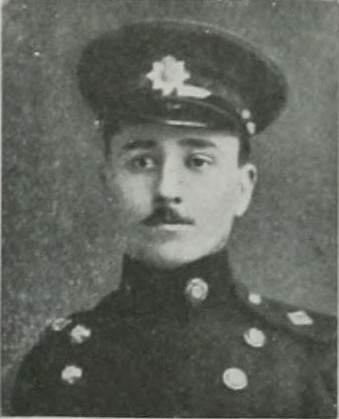
Arthur Paget Knocker.
KNOTT, HENRY, Stoker, Petty Officer, 354781, H.M.S. Good Hope; lost in action off Coronel, on the coast of Chili, 1 Nov. 1914.
KNOWLES, JONATHAN EDWARD, Capt., 4th Battn. Middlesex Regt. eldest s. of the late Edward Sugden Knowles, and grandson of the late Jonathan Knowles, of Rawdon, co. York; b. Sandgate, Queensland, Australia, 21 May, 1882; educ. Sedbergh School; joined the 2nd Vol. Battn. West Yorkshire Regt., as 2nd Lieut.; served with the 4th Durham L.I. (Militia) in the South African War, 1902, and took part in the operations in the Orange River Colony, and Cape Colony, Feb. to 31 May, 1902 (Queen’s medal with three clasps); gazetted 2nd Lieut. to 1st Middlesex, 4 July, 1903, and served with his Battn. in India, Burma and at Aden; promoted Lieut. 14 Jan. 1906, and Capt. 1 Feb. 1914, when he was transferred to the 4th Battn.; went to France with the Expeditionary Force, Aug. 1914, in which the 4th “Diehards” formed part of the 8th Brigade (3rd Division), and was killed in action at the Battle of Mons, on the 23rd of the same month. Buried in Cemetery at Maisieres. He m. at St. Peter’s Church, Bexhill, Sussex, 3 June, 1909, Viva Brabazon, dau. of the late C. F. Bagot, and had three children: Jonathan Maynard, b. 11 Oct. 1913; Nina Mary, b. 21 April, 1910; and Viva Joan, b. 14 Aug. 1912.
KNOWLES, WILLIAM ALFRED, A.B., 239360, H.M.S. Hogue; lost in action in the North Sea, 22 Sept. 1914.
KNOX, RALPH, Private, No. 9748, 1st Battn. The Royal Scots (Lothian Regt.), eldest s. of Ralph Knox, now serving as a private in the Canadian Highlanders, by his wife, Isabella, 2nd dau. of John Flood; b. Berwick-on-Tweed, 9 May, 1888; educ. Boys’ National School there; enlisted 9 Oct. 1906: went to France 23 Dec. 1914, and was killed in action near Ypres, on the night of the 14–15 May, 1915, being shot by a sniper while engaged in carrying rations to the trenches; unm.
KOCH, WILLIAM JAMES, Trooper, No. 2518, Surrey Yeomanry (Queen Mary’s Regt.) (T.F.), yst. s. of Oswald Hugo Koch, of 24, Cranmer Road, West Croydon, by his wife, Frances (24, Cranmer Road, West Croydon), dau. of William Wood, of Shirley; b. Croydon, 25 July, 1896; educ. Brighton Road Board Schools, Croydon; was a Grocer’s Assistant with Francis of Brixton; volunteered and joined the Surrey Yeomanry, 6 Jan. 1915, and died at 73, King’s Avenue, Clapham, 5 Feb. following, from injuries caused by a fall from his horse two days previously. Buried Mitcham Road Cemetery, Croydon; unm.
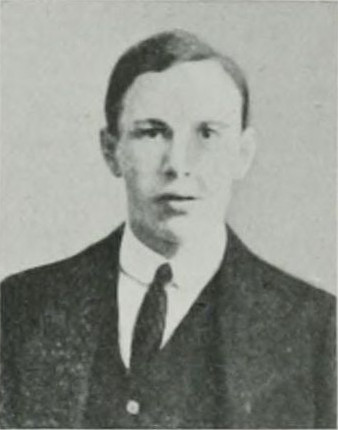
William James Koch.
KYDD, JAMES PHILLIP, Leading Seaman, 215363, H.M.S. Aboukir; lost in action in the North Sea, 22 Sept. 1914.
KYLE, ROBERT BRUCE, Private, No. 1781, 1/14th Battn. (London Scottish), The London Regt. (T.F.), yr. s. of the late John Kyle, M.I.C.E., Resident Engineer, Harbour Works, Colombo, Ceylon, by his wife, Agnes (100, Station Road, Barnes, London, S.W.); b. Colombo, 30 April, 1893; educ. Kelvinside Academy, Glasgow, and Royal High School, Edinburgh; was a member of the foreign staff of the Hong Kong and Shanghai Bank; joined the London Scottish Jan. 1913; volunteered for Imperial service on the outbreak of war; left for France, 15 Sept. 1914, and was killed in action in the charge of the London Scottish at Messines, 1 Nov. following. He was at first reported missing, and it was not until the 15 Feb. 1915, that definite news that he had fallen was received. He was unm.
KYNOCH, COLIN SMITH, 2nd Lieut., 6th Battn. Durham L.I. (T.F.), 2nd s. of Robert Kynoch, of Stocksfield-on-Tyne, by his wife, Jennie, dau. of Silvanus Smith; b. Newcastle-on-Tyne, 8 Sept. 1883; educ. at a Private School, Newcastle-on-Tyne; was a Traveller in the Corn and Flour Trade; volunteered on the outbreak of war and was gazetted 2nd Lieut. 6 Oct. 1914; went to France, 19 April, 1915, and was killed in action near St. Julien, Ypres, 26 April, 1915. Buried near Hill 60; unm.
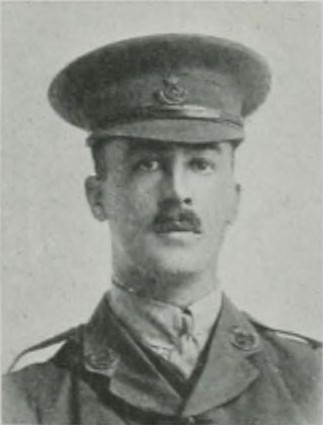
Colin Smith Kynoch.
KYTE, FREDERICK CHARLES, Private, No. 9332, 1st Battn. Coldstream Guards, s. of James Kyte, of Horton, near Devizes, co. Wilts, a pensioner, Royal Marines, by his wife, Eliza Jane, dau. of James Wiltshire; b. Easterton, co. Wilts, 9 Dec. 1893; educ. Easterton National School; joined 1st Coldstream Guards, 18 Nov. 1911; went to France with the Expeditionary Force in Aug. 1914; was wounded and invalided home in Nov.; returned to the Front, 17 Dec., was reported missing after the fighting at Givenchy, 22 Dec. following, and is now assumed to have been killed in action that day; unm.
LACEY, CHARLES, Gunner, R.M.A. (R.F.R., B. 1250), late R.M.A. 11447 H.M.S. Hogue; lost in action in the North Sea, 22 Sept. 1914.
LACEY, GEORGE, Stoker, 1st Class (R.F.R., B. 4724), S.S. 104080, H.M.S. Good Hope; lost in action off Coronel, on the coast of Chili, 1 Nov. 1914.
LACK, PERCY EDMUND, Stoker, 1st Class (R.F.R., B. 4868), S.S. 104284, H.M.S. Good Hope; lost in action off Coronel, on the coast of Chili, 1 Nov. 1914.
LACY, FRANCIS PRIOR, M.C., Capt., Westmorland and Cumberland Yeomanry, attd. 170 Coy. Royal Engineers, s. of Dyson Lacy, Hobart, Tasmania, by his wife, Francis Amelia, dau. of Capt. J. Irwin, R.N.; b. Mackay, North Queensland, Australia, 28 Jan. 1887; educ. Stubbington, also Felsted, Essex, England, and the Royal School of Mines, Kensington, London; on the outbreak of war volunteered for foreign service, 14 Oct. 1914, and was killed by a counter mine, 13 Aug. 1915; unm. He was mentioned in Sir John French’s Despatches [London Gazette, 23 June, 1915], and awarded the Military Cross.
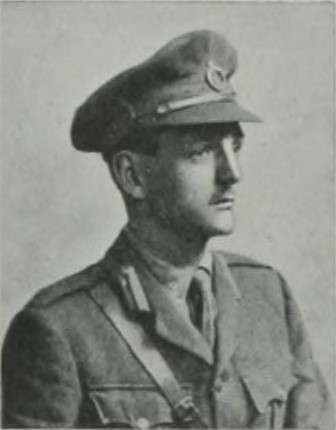
Francis Prior Lacy.
LACY, FREDERICK, Private, No. 11087, Royal Marines, only s. of Frederick Lacy, Sweep; b. 1882; lost in the North Sea on H.M.S. Cressy, 22 Sept. 1914. He m. at Stepney Parish Church, 19 Oct. 1913, Sarah Catherine (115, Shandy Street, Stepney, E.), dau. of Thomas John Dobson, and had a dau., Sarah Elizabeth, b. 24 June, 1915.
LADD, ERNEST WILLIAM, A.B., J. 18430, H.M.S. Pathfinder; lost when that ship was sunk by a mine, about 20 miles off the East Coast, 5 Sept. 1914.
LADD, ROBERT JOHN, Seaman, R.N.R., 3295 A., H.M.S. Cressy, s. of the late Edward Ladd, of Southwold, Mariner, by his wife, E. (3, School Green, Southwold); b. Southwold, 13 Nov. 1888; educ. National Schools there; joined the R.N.R. in 1909; lost in action in the North Sea when H.M.S. Cressy was torpedoed, 22 Sept. 1914; unm.
LADDS, FREDERICK, Seaman, R.N.R., 3435C, H.M.S. Aboukir; lost in action in the North Sea, 22 Sept. 1914.
LAFONE, CLAUDE ALEXANDER, D.S.O., Capt., 2nd Battn. Devonshire Regt., elder s. of Alfred William Lafone, of Springfield, Walton-on-Thames, by his wife, Harriet, dau. of the Rev. James Lawrence, M.A., b. Hanworth, co. Middlesex, 24 Feb. 1877; educ. Harrow; gazetted 2nd Lieut, to 2nd Devons from 3rd Devon Militia, 1 Dec. 1897; promoted Lieut. 9 March, 1899, and Capt. 20 Dec. 1901; served in the South African War, 1899–1902; took part in the Relief of Ladysmith, including action at Colenso; in operations of 17–24 Jan. 1900, and action at Spion Kop; in operations of 5–7 Feb. 1900, and action at Vaal Kranz; in operations on Tugela Heights (14–27 Feb. 1900), and action at Pieters Hill; in Natal, March to June, 1900, including action at Laing’s Nek (6–9 June); in the Transvaal, 30 Nov. to 31 May, 1902 (mentioned in Despatches [London Gazette, 10 Sept. 1901], Queen’s medal with five clasps and King’s medal with two clasps); went to France, 8 Nov. 1914, and on 26 Jan. following was awarded the D.S.O., “for conspicuous gallantry on the night of 18 Dec. 1914, near Neuve Chapelle, in capturing a trench from the enemy” [London Gazette, 18 Feb. 1915], and was killed in action at the Battle of Neuve Chapelle, 12 March, 1915; unm.
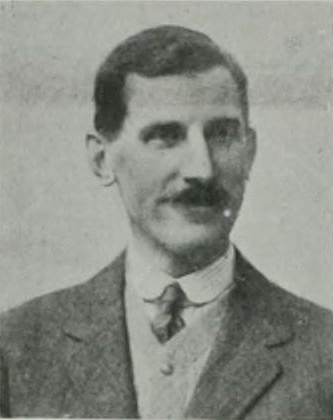
Claude A. Lafone.
LAIDLAW, CHARLES GLASS PLAYFAIR, Private, No. 3375, D Coy. 1/14th (The London Scottish), The London Regt. (T.F.), 5th s. of the late Dr. Robert Laidlaw, M.D., F.R.C.S.E., sometime Medical Government Officer in the Seychelles Islands, by his wife, Elizabeth (Woodside, Grantchester Meadows, Cambridge), dau. of Patrick Playfair, of Ardmillan, co. Ayr; b. Stoke Newington, London, N., 13 Dec. 1887; educ. The Perse School, Cambridge, from which in Dec. 1906, he was elected to an Entrance Scholarship for Natural Science at St. John’s College. At school he was football capt., sergt. in the cadet corps, a member of the cricket team, and head of the school. While still at school he played water polo for the university when the team was one short. Later he played, lacrosse for his college and sometimes for the University. He commenced residence in Oct. 1907. He obtained a First Class in Part 1 of the Natural Science Tripos in 1909, and in June of that year was elected a Foundation scholar of the College. He took the Second Part of the Tripos in 1910, obtaining a First Class for Botany. In June, 1911, he was elected a Hutchinson Student of the College, and took up research in Plant Physiology at the Botany School of the University, under the direction of Mr. F. F. Blackman, the University Reader in Botany. The subject of his research was an electrical method of determining carbon dioxide in relation to photo-synthesis. In 1912 he was elected by the governing body of Gonville and Caius College to a Frank Smart Studentship, a recognition of the promising nature of his investigations. At the same time he was offered a Research Scholarship by the Board of Agriculture and Fisheries; after some hesitation he accepted this latter offer, which necessitated his removal to London. From the autumn of 1912, until the outbreak of war, Laidlaw worked at the Imperial College of Science and Technology, under the direction of Prof. V. H. Blackman. Here he entered on an investigation of the Physiological conditions of plants forced under glass, working also at the effect of temperature on the rate of growth of a fungus, Sclerotinia libutiana. On the outbreak of war he volunteered and joined the London Scottish as a Private, 21 Oct. 1914, and after a period of training, embarked at Southampton with a draft of some 600 officers and men for the 1st Battn., 10 March, 1915. On Good Friday, 2 April, his (D) Coy. were in some barricades at Richebourg l’Avoué, south of Neuve Chapelle. After having been in the trenches all night, he was smoking after breakfast in what seemed a perfectly safe place, when a stray bullet passed through a sandbag and penetrated the right side of his chest. To his comrades the wound seemed a slight one, and after first aid was given he was removed to No. 3 Field Ambulance, near Bethune. There it was discovered that internal hæmorrhage had set in, and he died in the early hours of the morning on 3 April, 1915, and was buried in Bethune Cemetery.
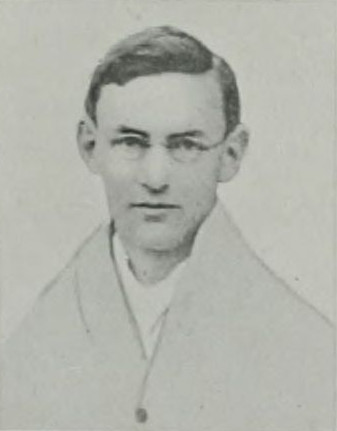
Charles Glass P. Laidlaw.
LAING, THEODORE, Private, No. 2131, 1/14 Battn. (The London Scottish) London Regt. (T.F.), elder s. of William Arthur Laing, of Dalmahoy, Horsell, Woking, an old member of the London Scottish, by his wife, Lucy Glanvill, dau. of William Walters; b. Tooting Graveney, 16 May, 1897; educ. City of London School, where he was for two years in the O.T.C.; enlisted in his father’s old regiment the day before the declaration of war, 4 Aug. 1914; went to the Front with the Expeditionary Force, 15 Sept. and fell in the charge of the London Scottish at Messines, 1 Nov. 1914. His Capt. wrote: “Your brave son was shot through the head, and death must have been almost instantaneous. He was one of our keenest soldiers in the company, and his loss will be greatly felt by all his comrades with whom he was a great favourite. I, personally, shall miss him intensely.” Though not 18, Laing was over 6 ft. in height, big and broad in proportion, also he was a first-class shot.
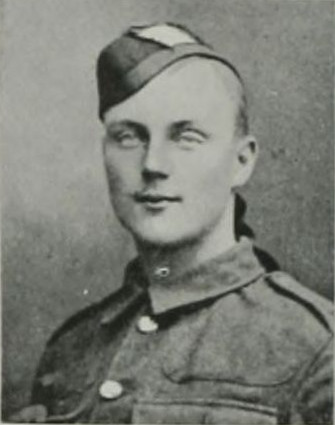
Theodore Laing.
LAIRD, JAMES, Stoker, R.N.R., S. 2852, H.M.S. Hawke, s. of John Laird, of 6, Ann Street, Greenock; lost when that ship was torpedoed in the North Sea, 15 Oct. 1914.
LAKE, TOM, A.B. (R.F.R., Ch. B. 2598), 169200, H.M.S. Aboukir; lost in action in the North Sea, 22 Sept. 1914.
LAMBERT, CHARLES HENRY, Private, No. 2136, A Coy., 1st Battn. Monmouthshire Regt. (T.F.), only s. of Charles Lambert, of Newport, Monmouth, by his wife, Louis, dau. of Charles Henry Collins; b. Loughborough, co. Leicester, 14 April, 1895; enlisted two days after the declaration of war, 7 Aug. 1914, and was killed in action in France, 23 March, 1915; unm. A letter, evidently written shortly before his death, in which he says: “We have just finished our four days in the firing line, and our casualties are very small,” was found on him and sent to his mother.
LAMBERT, CHARLES HENRY, Lieut., A.V.C. attd. 58th Brigade, R.F.A., eldest s. of John Henry Lambert, of Redmount, Ballinasloe, co. Galway, J.P., by his wife, Adelaide, dau. of William Tombes Dewè; b. Redmount, Ballinasloe, 20 July, 1882; educ. privately, and when war broke out had been for some years with Mr. H. S. Persse, the well-known trainer at Chattis Hill, Stockbridge, Hants. He joined the Army, May, 1915, and was appointed temporary Lieut. in June 1915; left for Egypt in May, 1915, and died in the General Hospital, Alexandria, 16 Aug. 1915, two weeks after a severe operation, while on active service; unm. He was buried at Alexandria. Lieut. Lambert was a good all-round sportsman; and rode several point-to-point winners.
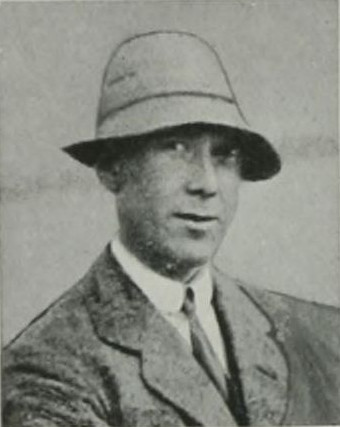
Charles Henry Lambert.
LAMBERT, FRANCIS HENRY, Lieut., 2nd Battn. Hampshire Regt., only s. of Fitzgerald Gage Lambert, of Rockbourne, Salisbury, Civil Engineer (retired), by his wife, Nina Marie Louise, dau. of the late Francis Bradley Dyne, of Gore Court, Kent, and grandson of the late Capt. Edward Henry Gage Lambert, R.N. [3rd s. of Sir Henry John Lambert, 5th Bart.], by his wife, Renira Anna (who m. secondly Admiral the Hon. Fitzgerald Foley), dau. of the Rev. Richard Fortescue Purvis, LL.B.; b. Province of Lucknow, India, 17 Oct. 1895; educ. Charterhouse and the Royal Military College, Sandhurst; gazetted 2nd Lieut. to the Hampshires, 1 Oct. 1914, and was attached to the 3rd (Reserve) Battn. until 26 Dec. following, when he went to France to join the 1st Battn.; was accidentally wounded there, and returned to England on sick leave and remained until 29 April, when he left for the Dardanelles in charge of a draft to the 2nd Battn.; was promoted Lieut. 27 May following; was wounded in the British attack on the Krithia-Achi-Baba position, Gallipoli, on 5 June, and taken on board the hospital ship “Somali,” where he died on the 7th. Buried at sea; unm.
LAMBERT, JACK FELLOWS, 2nd Lieut., 2nd Battn. King’s Royal Rifle Corps, eldest and only surviving s. of the late Ernest Lambert, Financier (d. 1898), by his wife, May (23, Terlingham Gardens, Folkestone), dau. of the late Hon. James Israel Fellows, Agent-General for New Brunswick (d. 1894); b. Coombe, Malden, co. Surrey, 3 Sept. 1891; educ. Marlborough, and Merton College, Oxford, where he was in King Edward’s Horse; was manager of a cocoanut estate in the Malay States when war broke out; came home and applied for a commission and was gazetted 2nd Lieut. to the K.R.R.C., 27 April, 1915; went to France in May, was in action near Ypres early in June; and was killed in the counter-attack on the German position at Hooge, 30 July, 1915; unm. He was at first reported missing, and it was not until March, 1916, that he was officially returned as killed. His Commanding Officer wrote: “He was a splendid Platoon Commander and his men loved him.”
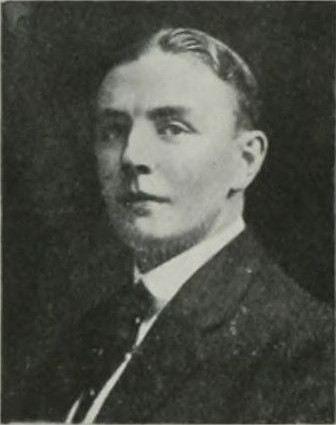
Jack Fellows Lambert.
LAMBERT, JOHN MOUNSEY, Capt., 3rd (Reserve), attd. 1st Battn. Northumberland Fusiliers, only s. of the late Major-Gen. George Craster Lambert, of Bolton Hall, Alnwick, late 101st Royal Bengal Fusiliers, by his wife, Isabella, 3rd dau. of Major Alexander Browne, of Doxford Hall, Chathill; b. Breamish House, Alnwick, co. Northumberland, 21 Dec. 1883; educ. Mr. Moore’s School, Alnmouth, and Wellington College; joined the Northumberland Militia, now the 3rd (Reserve) Battn. Northumberland Fusiliers, 1903, promoted Lieut. 1 Nov. 1906, and Capt. 29 Aug. 1914; went to France, 30 Aug. 1914, when he was attached to the 1st Battn. of his regt., and was killed in action at Neuve Chapelle, 27 Oct. following. Buried near where he fell; unm.
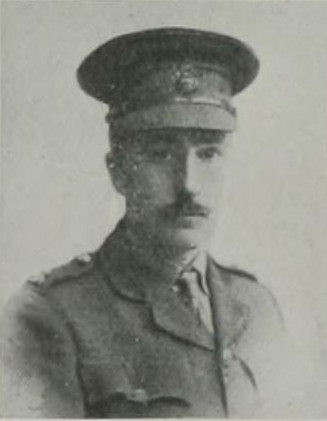
John Mounsey Lambert.
LAMBERT, STAMFORD LEIGH, Private, No. 2106, 1st East Anglian Field Ambulance, R.A.M.C. (R.F.), 29th Division, 4th s. of John Lambert, of 86, Chesterton Road, Cambridge, late Postmaster of that town, by his wife, Annie M., dau. of John Mostock; b. Lincoln, 10 Sept. 1890; educ. Perse School, and Training ship Worcester; served in the Milne and Ellerman and Bucknall S.S. lines as 3rd officer; joined the 1st East Anglian Field Ambulance, 28 Sept. 1914; left for the Dardanelles with the 29th Division, 21 March 1915; was present at Beach W., Gallipoli, during the landing on 25 April and following days, at the actions of 24 June and 4 July, near Krithia and Gully Ravine, and at the Aug. landing at Suvla Bay, and the subsequent operations, and was killed in action at Suvla Bay, 26 Aug. 1915. Buried Suvla; unm. On the day preceding his death his name was sent up for mention in Despatches for his work during the campaign. One of his officers wrote: “He was a brave, fearless fellow, one of the best boys we had in my section.” And another: “Voicing the opinion of the whole corps, he was one of the most popular men, ready to assist in anything which was required, and to help anybody who was in trouble.”
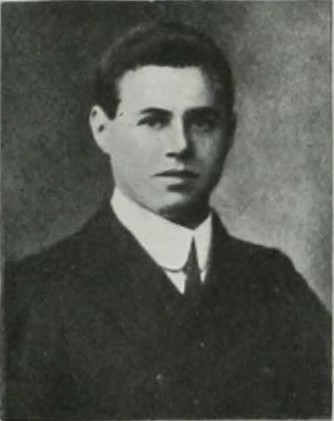
Stamford Leigh Lambert.
LAMBERT, STEPHEN HENRY, Private, R.M.L.I., Po. 10268, H.M.S. Good Hope; lost in action off Coronel, on the coast of Chili, 1 Nov. 1914.
LAMBRE, JOHN, Chief Shipwright, 344348, H.M.S. Cressy; lost in action in the North Sea, 22 Sept. 1914.
LAMKIN, CHARLES AMBROSE, Stoker, 1st Class (R.F.R., Ch. B. 7786), S.S. 103257, H.M.S. Aboukir; lost in action in the North Sea, 22 Sept. 1914.
LAMONT, HENRY McCUAIG, Private, No. 9410, D Coy., 1st Battn. The Royal Scots (Lothian Regt.), 2nd s. of John Lamont, of 125, Norfolk Street, Glasgow, by his wife, Maggie, dau. of Henry McCuaig, of Queensland, formerly of Islay; b. Port Ellen, Kildalton, Islay, 18 April, 1888; educ. Kinning Park Public School, Glasgow; enlisted, in Oct. 1906, and served seven years with the Colours and then passed into the Reserve, and obtained employment in the G.P.O., but on the outbreak of war rejoined his regt.; left for France with the Expeditionary Force (9th Brigade, 3rd Division), and was killed in action at the Battle of Le Cateau, 26 Aug. following.
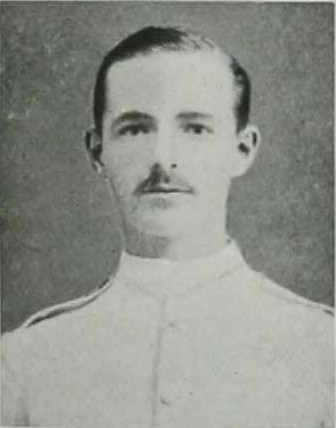
Henry McCuaig Lamont.
LAMPARD, TOM SAMUEL, Stoker, 1st Class, S.S. 111443 (Ports.), H.M.S. Cressy; lost in action in the North Sea, 22 Sept. 1914.
LANCHBURY, ALFRED, Sergt., No. 5402, 3rd Battn. Coldstream Guards, 2nd s. of Alfred Lanchbury, of 81, Grange Road, Longford, near Coventry, by his wife, Sarah Ann, dau. of James Blackford; b. Coventry, 13 April, 1883; educ. Foxford Council School; enlisted 19 Feb. 1904; appointed L.-Corpl. 29 Nov. 1905; Corpl. 1 Jan. 1907; L.-Sergt. 24 Sept. 1907, and Sergt. 5 Feb. 1913; served in Egypt, 6 Jan. 1909, to 23 March, 1911, and with the Expeditionary Force in France and Flanders, 12 Aug. 1914, to 27 Sept. 1915, on which day he was killed in action, near Vermellen, during the Battle of Loos. He m. in London, 3 Oct., Ida Margaret (33, St. Thomas Road, Longford, Coventry), dau. of Frederick (and Margaret) Simmonds, and had three children: Donald Crawford, b. 4 June, 1913; Norah Ida, b. 15 Sept. 1909: and Muriel Rosamund, b. 15 Nov. 1914. His brother, L.-Sergt. W. C. Lanchbury, was also killed in action (see following notice).
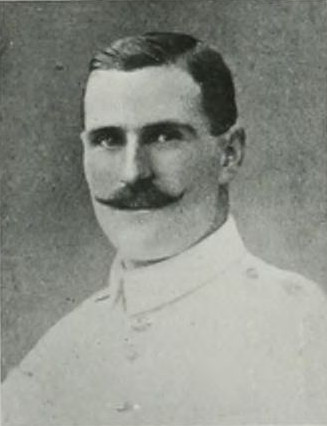
Alfred Lanchbury.
LANCHBURY, WILLIAM CHARLES, L.-Sergt., No. 8711, 1st Battn. Coldstream Guards, 4th s. of Alfred Lanchbury, of 81, Grange Road, Longford, near Coventry, co. Warwick, by his wife, Sarah Ann, dau. of James Blackford (see preceding notice); b. Longford aforesaid, 9 Oct. 1889; educ. Foxford Council School; enlisted 28 April, 1910; appointed L.-Corpl. 9 Jan. 1912; Corpl. 21 Aug. 1913, and L.-Sergt. 7 Aug. 1914; went to France with the Expeditionary Force, 12 Aug. 1914; and was reported wounded and missing after the fighting on the 25th of that month during the retreat from Mons; and is now assumed to have been killed in action that day; unm.
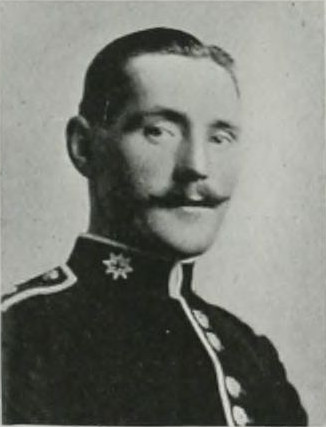
William Charles Lanchbury.
LANCHESTER, THORNTON, Seaman, R.N.R., 1577C, H.M.S. Hogue; lost in action in the North Sea, 22 Sept. 1914.
LANDELLS, JOHN OLIVER, E.R.A., R.N.R., 244 E.B., H.M.S. Hawke; lost when that ship was torpedoed in the North Sea, 15 Oct. 1914; m.
LANDEN, JAMES WILLIAM, Stoker, 1st Class, R.F.R., B. 2871, 308019, H.M.S. Good Hope; lost in action off Coronel, on the coast of Chili, 1 Nov. 1914.
LANDER, WILLIAM ERNEST, Chief Shipwright, 340787, H.M.S. Pathfinder; lost when that ship was sunk by a mine, about 20 miles off the East Coast, 5 Sept. 1914.
LANE, FRANK EVERETT, Ordinary Seaman, J. 16811, H.M.S. Pathfinder; lost when that ship was sunk by a mine, about 20 miles off the East Coast, 5 Sept. 1914.
LANE, JOHN HENRY, Stoker, 1st Class (R.F.R., Ch. B. 8033), 293067, H.M.S. Cressy; lost in action in the North Sea, 22 Sept. 1914.
LANE, JOHN WILLIAM, Stoker, 1st Class (R.F.R., B. 9786), S.S. 107274. H.M.S. Hogue; lost in action in the North Sea, 22 Sept. 1914.
LANG, HENRY ASTELL, Major, 4th Battn. Worcestershire Regt., yst. s. of the late George Lukis Lang, of the Indian Civil Service, by his wife, Louisa Wynyard, dau. of Henry Godfrey Astell, of Ickwell House, Biggleswade; b. Biggleswade, co. Bedford, 12 March, 1874; educ. Summerfields, near Oxford; Marlborough College, and Corpus Christi College, Cambridge; gazetted 2nd Lieut. Worcestershire Regt. Dec. 1895; and promoted Lieut. 10 May, 1899, Capt. in Sept. 1900, and Major 24 May, 1913; was Adjutant of his Battn. 23 Nov. 1904, to 22 Nov. 1907; A.D.C. to Sir Henry Fane Grant, Governor of Malta, 1906–8; served (1) in the South African War from 1899 to 1901; took part in advance on Kimberley, including actions at Modder River, and Magersfontein; operations in the Orange Free State, Feb. to May, 1900, including actions at Paardeberg (17 to 26 Feb.); Poplar Grove and Dreifontein; operations in the Orange River Colony, May to 29 Nov. 1900, including action at Bothaville; operations in the Transvaal, 30 Nov. to Dec. 1900, in the Orange River Colony, Dec. 1900, and in Cape Colony, Dec. 1900 to March, 1901 (slightly wounded; Queen’s medal with five clasps); and (2) with the Mediterranean Expeditionary Force; took part in the landing at the Dardanelles, 25 April, 1915, and was killed in action there, 6 June, 1915; unm. Buried in Gulf Ravine, Gallipoli. Major Lang was mentioned in Gen. Sir Ian Hamilton’s Despatch of 22 Sept. [London Gazette, 5 Nov.] 1915. A brother officer wrote in Berrows Worcester Journal: “It is not stretching a point to say that seldom has there been in the regt., a more popular officer with all ranks than the late Major Harry Lang, who fell in action at the Dardanelles. Possessing a marked charm of manner, he endeared himself to all men. He was a fine sportsman; at polo he was a bold and fine player. He rode hard and hit hard from the moment the ball was thrown in till the bell rang. As a cricketer and capt. of the 4th Worcestershires cricket team, he did yeoman service for his side, and led them to many victories. His loss will be much felt throughout the whole regt. As a soldier he was respected by and for his smart appearance and knowledge of his duties. He served with distinction in the South African War, and in the most adverse circumstances was always bright and cheerful. He was Adjutant to Col. Edwards, now commanding at the Depôt, when the Col. commanded the 4th Battn.,” and another: “He was the first up to every trench, armed with a walking stick; walking straight across to prospect amidst a perfect hail of bullets, and then would saunter back to his troops and head them forward. Never was he excited—fear he knew not; courage and confidence flowed from him to all of us.” Major Lang was a very keen fisherman and naturalist. He did a great deal of big game shooting in Nepal, Kashmir and the Tirai and secured several exceptionally good heads of gond, barasingh, and sambhur, besides tigers, leopards and bears.
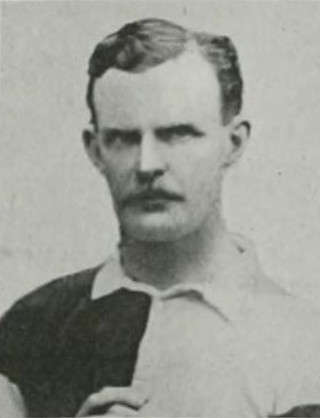
Henry Astell Lang.
LANG, VIVIAN, Officer’s Steward, 1st Class, 356268 Devonport, H.M.S. Good Hope; lost in action off Coronel, on the coast of Chili, 1 Nov. 1914.
LANG, WILLIAM BRYNMER, Capt., 1/5th (Renfrewshire) Battn. Argyll and Sutherland Highlanders (T.F.), yr. s. of William Lang, of Elmbank, Gourock, Quarrymaster and Contractor, by his wife, Margaret Jane, dau. of Alexander Robertson, of Chesterfield, Gourock; b. Gourock, co. Renfrew, 26 April, 1882; educ. Greenock Academy; served with the 1st Vol. (now the 5th Territorial) Battn. Argyll and Sutherland Highlanders, 15 Sept. 1899, to 22 March, 1905; was given a commission as 2nd Lieut. 5 May, 1906; and promoted Lieut. 9 April, 1911, and Capt. 1 Nov. 1914; volunteered for Imperial service on the outbreak of war, left for the Dardanelles, 31 May, 1915, and was killed during the attack on the Krithia-Achi-Baba position, 12 July following; unm.
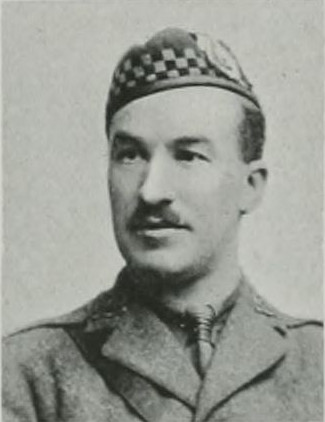
William Brynmer Lang.
LANGFORD, ALBERT GEORGE, A.B., (R.F.R., I.C. 509), 235942, H.M.S. Good Hope; lost in action off Coronel, on the coast of Chili, 1 Nov. 1914.
LANGFORD, ARTHUR, Private, No. 1394, 4th Battn. L.I., Australian Imperial Force, 4th s. of John Langford, of 34, Cross Row, Westmoor, Killingworth, near Newcastle-on-Tyne, by his wife, Elizabeth, dau. of Archibald Whitehead; b. Spittal, Berwick-on-Tweed, 9 Sept. 1890; educ. Blaydon and Gateshead Council Schools; went to Australia, 28 Aug. 1914, and worked as a Miner; volunteered and joined the Commonwealth Expeditionary Force in Dec. 1914; left for Egypt with the main force, Feb. 1915; took part in the landing at Gaba Tepe, Gallipoli, 25 April, and died of wounds between that date and 28 April following; unm.
LANGFORD, WALLACE, A.B. (R.F.R., Ch. B 6017), 182043, H.M.S. Aboukir; lost in action in the North Sea, 22 Sept. 1914.
LANGHAM, WILLIAM FREDERICK, Rifleman, No. 1564, 1/6th (Rifle) Battn. King’s Liverpool Regt. (T.F.), 2nd s. of the late Horton Henry Langham, Chief Officer s.s. William Cliff, by his wife, Florence Edith, yst. dau. of John Coulson of Manchester, Solicitor; b. Liverpool, 24 Jan. 1896, educ. Seamen’s Orphanage, Newsham Park, Liverpool; was a Clerk in Liverpool Gas Co.; joined the 1/6th Liverpools, about March, 1914; volunteered for Imperial service and went to France, 24 Feb. 1915, and was killed in action near Ypres, 3 May following. Buried south of Verbranden Molen; unm. One of his comrades wrote: “It was a great shock to us when this (? news) was passed to us that Freddie had been killed. He was a splendid chap, liked by all, so everything possible was done to give him a decent burial.” A Church worker in Liverpool wrote: “He was a member of the St. Mary Magdalene’s Church Choir and a Sunday School teacher; in the Church his valuable help and cheery presence will be sorely missed.” His brother, Horton Egerton Langham, R.F.A., is now (1916) on active service.
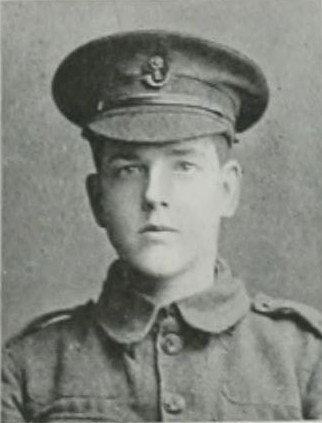
William F. Langham.
LANGLANDS, ALAN, 2nd Lieut., 1st Battn. South Wales Borderers, 2nd s. of the late Major John Shakespear Langlands, 43rd Oxfordshire L.I., sometime Adjutant, Montgomeryshire Militia, by his wife, Lucy Alice (now wife of Major Charles Harold Longfield Beatty, of Borodale, co. Wexford, D.S.O.), dau. of the late Edward Peck; b. Longrood, Rugby, 25 Sept. 1895; educ. Stubbington and Wellington College; gazetted 2nd Lieut. 3rd South Wales Borderers, 7 Oct. 1914; transferred to the 1st Battn., went to France in March, 1915, and was killed in action near Bethune, 9 May, 1915; unm. Buried at St. Vaast’s Post.
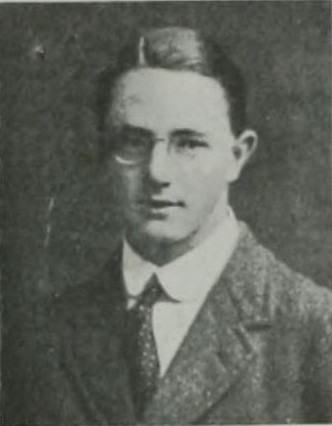
Alan Langlands.
LANGLEY, WILLIAM, Gunner, R.M.A. (R.F.R., I.C. 27), 9807, H.M.S. Good Hope; lost in action of Coronel, on the coast of Chili, 1 Nov. 1914.
LANGRIDGE, FRANCIS BERTRAM, Private, No. 10/1553, Canterbury Battn. New Zealand Expeditionary Force, s. of Harry Montague Langridge, of 16, River Bank, Wanganui, New Zealand, formerly of Sussex, England; b. Westport, New Zealand, 3 Nov. 1891; educ. Wanganui District Boys’ School; enlisted after the outbreak of war and left for Egypt in Feb. 1915, with the third reinforcements; was for some time a L.-Corpl. in the Wellington Battn., but on being transferred to the Canterbury Battn. had to go back to the ranks; took part in the landing at the Dardanelles, 25 April, and was killed in action, 8 May, 1915; unm. His brother, Sergt.-Major J. W. Langridge, was twice wounded at the Dardanelles.
LANGRISH, HENRY WILLIAM, Stoker, 1st Class, K. 13463 (Ports.), H.M.S. Cressy; lost in action in the North Sea, 22 Sept. 1914.
LANSLEY, WILLIAM, Stoker, 1st Class, 301754, H.M.S. Good Hope; lost in action off Coronel, on the coast of Chili, 1 Nov. 1914.
LARBY, WALTER, Stoker, 2nd Class, K. 20455, H.M.S. Good Hope; lost in action off Coronel, on the coast of Chili, 1 Nov. 1914.
LARDNER, RODERICK DONALD, Yeoman of Signals, 221290, H.M.S. Pathfinder; lost when that ship was sunk by a mine, about 20 miles off the East Coast, 5 Sept. 1914.
LARKING, CHARLES ALFRED, A.B. (R.F.R., Ch. B. 9130), 208699, H.M.S. Cressy; lost in action in the North Sea, 22 Sept. 1914.
LARVIN, JAMES, Private, No. 10562, 6th Battn. East Yorkshire Regt., s. of Thomas Larvin, of No. 3, Marsh Street, off Scott Street, Hull, co. York, builder for Levitts, Contractors, by his wife, Mary Elisabeth; b. Hull; educ. St. Paul’s Schools there; was an employee of Messrs. Crosslands, Stevedores, at the Hull Docks; enlisted after the outbreak of war, 18 Aug. 1914; trained at Belton Park, Grantham; went to the Dardanelles, and was killed in action there, 21 Aug. 1915; unm.
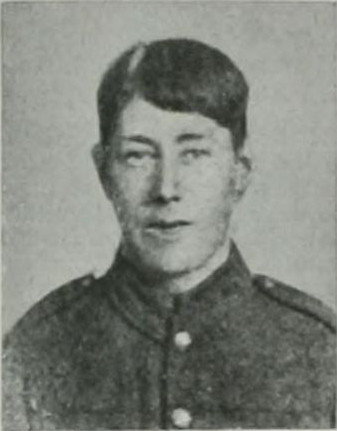
James Larvin.
LARSON, OKEN FRANK, Gunner, R.M.A. (R.F.R., I.C. 31), 8553, H.M.S. Good Hope; lost in action off Coronel, on the coast of Chili, 1 Nov. 1914.
LASHBROOK, HENRY CHARLES, Petty Officer, 177834, H.M.S. Hogue; lost in action in the North Sea, 22 Sept. 1914.
LASLETT, FRANK ROLAND, Officer’s Steward, 2nd Class, L. 1791, H.M.S. Cressy; lost in action in the North Sea, 22 Sept. 1914.
LATHAM, CHARLES EDWARD, Stoker, Petty Officer, 288526, H.M.S. Good Hope; lost in action off Coronel, on the coast of Chili, 1 Nov. 1914.
LATTA, CHARLES KEITH, Lieut., 2nd Battn. The Gordon Highlanders, 3rd s. of the late John Latta, of 17, Royal Circus, Edinburgh, S.S.C., by his wife, Margaret, dau. of the late John Jopp, writer to the Signet; b. Edinburgh, 2 Dec. 1889; educ. Edinburgh Academy and Royal Military College, Sandhurst; gazetted 2nd Lieut., 6 Nov. 1909, and promoted Lieut. 10 Aug. 1911; killed in action near Ypres, 29 Oct. 1914; unm. His Commanding Officer, Col. Uniacke, in notifying his death, wrote: “He gave his life for his country in a gallant fight which was necessary for the safety not only of his own regt. but of a larger force.... He has always proved himself a fine example, and you may well be proud of him as we are, and also all those of his own command. He is a great loss to us and the Army.”
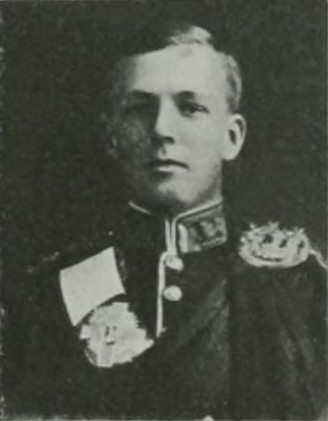
Charles Keith Latta.
LAUDER, STANISLAUS JOSEPH, Private, No. 4070, 14th Battn. (London Scottish) The London Regt. (T.F.), s. of the late Charles Lauder, Supt. Royal Alfred Sailors’ Home, Bombay; b. Bombay, 8 Nov. 1885; educ. St. Mary’s College, Bombay, and London School of Medicine; served with the Red Crescent Medical Mission in Tripoli for seven months in 1912, and with the British Red Cross in Montenegro during the Balkan War, was present with the Montenegrin Army during the siege and capture of Scutari; received the Order of Danilo (3rd Class) from the King of Montenegro, and the British Red Cross Medal with clasp; joined the London Scottish, 5 Dec. 1914, and volunteered for foreign service; went to the Front in July, 1915, and died of wounds received while attending wounded men under fire, 14 Oct. 1915; unm. He was buried in the soldiers’ cemetery at Lapugny, near Bethune.
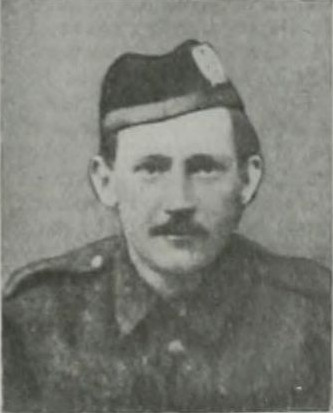
Stanislaus J. Lauder.
LAURENCE, ANDREW, Sapper, No. 11982, 38th Coy. R.E., s. of the late Andrew Laurence, of Craiglockhart Terrace, Edinburgh, Mason, by his wife, Christina B., dau. of David Brunton, of Kinross; b. Muckhart, co. Perth. 16 Nov. 1882; educ. Muckhart School; served in the South African War with the 3rd Vol. Battn. Royal Scots (Queen’s medal with three clasps); joined the R.E., 11 Nov. 1902; went to France, 7 Sept. 1914, and died in Motor Ambulance, 27 May, 1915, of wounds received in Belgium the same day. Buried in field adjoining the Convent School, Brandholk; unm.
LAURENCE, EDWARD JAMES, Private, No. 1945, 1/8th Battn. The Middlesex Regt. (T.F.), s. of William George Laurence, of 9, Argyle Road, Teddington, by his wife, Maria, dau. of Alexander Mellish; b. Windsor, 2 Nov. 1892; educ. Teddington Public School; was a Barman; enlisted at Hampton about 1912; volunteered for foreign service on the outbreak of war in Aug. 1914; went to France, 8 March, 1915, and died of wounds received in action at the Battle of Loos, 25 Sept. 1915; unm.
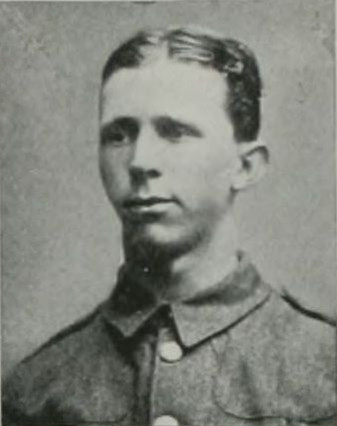
Edward James Laurence.
LAURIE, NATHANIEL JOHN, Rifleman, No. 3224, 1/12th Battn. (The Rangers) The London Regt. (T.F.), only s. of Robert Turner Laurie, of 153, Eswyn Road, Tooting, S.W., Corrector of the Press, by his wife, Amy, dau. of John Saunders; b. London, 3 April, 1891; educ. L.C.C. Schools; was a Clerk to Advertisement Contractors; joined The Rangers, 14 Sept. 1914; went to France on Christmas Day following, and died at Casualty Clearing Station, near Rouen, 29 April, 1915, of wounds in the head caused by fragments of high explosive shell received on the 26th at St. Jean during the Second Battle of Ypres. Buried in Bailleul Cemetery; unm. A comrade wrote of him: “In all that he did Laurie acted as a soldier and a gentleman.” Private Laurie was an active Free Church worker, chiefly amongst children.
LAVERTY, DANIEL, Stoker, 1st Class (R.F.R., B. 10565), S.S. 108512. H.M.S. Hawke; lost when that ship was torpedoed in the North Sea, 15 Oct. 1914.
LAW, JOHN THOMAS, Private, R.M.L.I., Ch. 15121, H.M.S. Pathfinder; lost when that ship was sunk by a mine, about 20 miles off the East Coast, 5 Sept. 1914.
LAW, PAUL, Private, No. 1650, 1/4th Battn. West Riding Regt. (T.F.), s. of Joe Law, of Luddenfoot. Halifax, Teamer; b. Lower Oldfield, Luddenfoot, 1 Sept. 1895; educ. National School there; joined 1/4th West Ridings, March, 1914; volunteered for Imperial service on the outbreak of war, and was killed in action 10 May, 1915, being shot by a sniper; unm.
LAW, PERCY PEACOCK, A.B. (R.F.R., B. 9963), S.S. 2587, H.M.S. Hawke; lost when that ship was torpedoed in the North Sea, 15 Oct. 1914.
LAW, THOMAS PAKENHAM, 2nd Lieut., 2nd Battn. Irish Guards, 3rd s. of the late Thomas Pakenham Law, K.C., by his wife, Amelia Catherine (Elsinore, Howth. co. Dublin), dau. of Horace Rochfort, of Clogremane, co. Carlow; b. Dublin, 27 May, 1879; educ. Trinity College, Dublin, where he took his degrees in Arts and Law; called to the English Bar, Lincoln’s Inn, 1905, and practised at the Chancery Bar; gave up this on the outbreak of war and was gazetted 2nd Lieut., 2nd Irish Guards, 4 June, 1915; went to France and was mortally wounded at the Battle of Loos, 27 Sept. following, dying three hours later. Buried in a garden at Loos; unm.
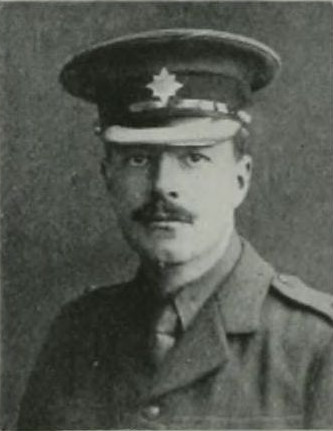
Thomas P. Law.
LAWES, FREDERICK JOHN, Private. No. 10693, 1st Battn. Coldstream Guards, s. of Benjamin Lawes, of Swanington, near Norwich, Labourer, by his wife, Susanna Elizabeth, dau. of George Carr; b. Swanington, 17 July, 1889; educ. Elementary Church School, there; worked on the land from the time he left school until he enlisted, except for two years (1911–13), when he worked in a coal pit at Newcastle-on-Tyne; enlisted in April, 1914, and was killed in action at Ypres, 29 Oct. 1914; unm.
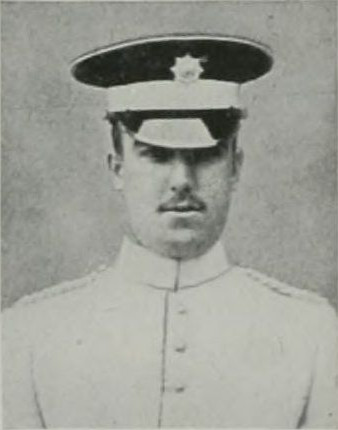
Frederick John Lawes.
LAWRENCE, CHAS. EDWARD, Stoker, 1st Class, S.S. 110970, H.M.S. Hawke; lost when that ship was torpedoed in the North Sea, 15 Oct. 1914.
LAWRENCE, CHARLES SAMUEL, Stoker, 1st Class, K. 6360, H.M.S. Cressy; lost in action in the North Sea, 22 Sept. 1914.
LAWRENCE, CHRISTOPHER HAL, 2nd Lieut., 6th (Reserve), attd. 2nd Battn. King’s Royal Rifle Corps, yr. s. of the late Hon. Henry Arnold Lawrence, by his wife, Constance Charlotte (9, Chantry House. Eccleston Street, S.W.), only surviving dau. of the late Rev. George Irving Davies, Rector of Kelsale, Suffolk, and grandson of John, 1st Baron Lawrence; b. Harrington Gardens, London, S.W., 11 Nov. 1893; educ. Eton and Trinity College, Cambridge, where he was a member of the University O.T.C.; applied for a commission on the day war was declared, and was gazetted 2nd Lieut. 6th K.R.R.C. 15 Aug. 1914; went to France, 20 Sept. 1914, where he was attached to the 2nd Battn. of his regt. (2nd Brigade, 1st Division), and was killed in action during the Battle of the Aisne, 13 Oct. 1914, being shot by a sniper. Buried at Bourg, near Troyon; unm. His only brother, Lieut. M. E. Lawrence, was killed in action near Givenchy, 10 Jan. 1915 (see his notice).
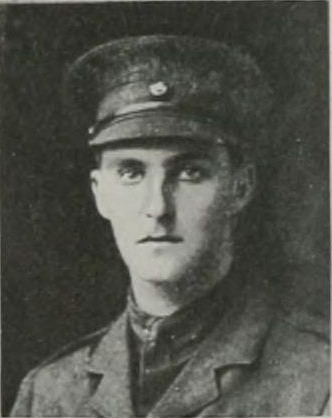
Christopher H. Lawrence.
LAWRENCE, EDGAR ERNEST ALBERT, A.B. (R.F.R., B. 3634), 191271, H.M.S. Good Hope; lost in action off Coronel, on the coast of Chili, 1 Nov. 1914.
LAWRENCE, GEORGE ALBERT, A.B. (R.F.R., Ch. B. 5216), 179879, H.M.S. Cressy; lost in action in the North Sea, 22 Sept. 1914.
LAWRENCE, MALCOLM EYTON, Lieut., 6th (Reserve), attd. 2nd Battn. King’s Royal Rifle Corps, only surviving s. of the late Hon. Henry Arnold Lawrence, by his wife, Constance Charlotte (9, Chantrey House, Eccleston Street, S.W.), eldest surviving dau. of the late Rev. George Irving Davies, Rector of Kelsale, Suffolk, and grandson of John, 1st Baron Lawrence; b. Harrington Gardens, London, S.W., 10 March, 1889; educ. Eton; received a commission as 2nd Lieut. in the 3rd (Reserve) Battn. King’s Own Yorkshire L.I., 1 Oct. 1908, and served for one year; went to British Columbia in Feb. 1910, where he bought and cleared land, built a house and was latterly given Government employment (sub-warden of the Isles); enlisted in the 88th Victoria Fusiliers on the declaration of war and came over with the first contingent of the Canadian Expeditionary Force; was gazetted 2nd Lieut. 6th K.R.R.C. 4 Nov. 1914, and promoted Lieut. 1 Jan. 1915; went to France 3 Dec. 1914, where he was attached to the 2nd Battn. and was killed in action near Givenchy, 10 Jan. 1915, while leading his men in a charge. Buried in village of Cuinchy; unm. His Commanding Officer wrote: “On reaching the position he found that a brother officer, who had led another storming party, was in need of assistance as he had lost more than half his men. Lawrence dashed over the intervening 70 yards with some of his men, and was no doubt responsible for getting back his brother officer who was now left alone and would have been cut off.”
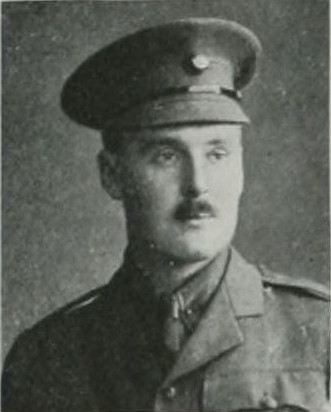
Malcolm E. Lawrence.
LAWRENCE, WILLIAM, Leading Stoker (R.F.R., B. 9794), 297574, H.M.S. Hogue; lost in action in the North Sea, 22 Sept. 1914.
LAWRIE, ERNEST NORMAN, 2nd Lieut., 13 Battn. (Princess Louise’s Kensington Rifles) London Regt. (T.F.), s. of John Lawrie, Managing Director of Whiteleys’, London, by his wife, Elizabeth, dau. of John Elliott; b. West Hampstead, 30 April, 1893; educ. County School, Richmond, and Haberdashers’ School, Cricklewood; entered the employment of Messrs. Elkington, of Regent Street, in Feb. 1912; enlisted in the Kensingtons a few days after the commencement of war, 10 Aug. 1914, and after training at Abbots Langley left to join the British Expeditionary Force at the Front, 31 Oct. He was gazetted 2nd Lieut, in his own regt., 3 April, 1915; was present at the Battle of Neuve Chapelle, and was killed in action at Aubers Ridge, near Fromelles, 9 May, 1915; unm. His body was not recovered as the spot where he fell remained in the possession of the Germans. Major H. J. Stafford, writing on behalf of the Colonel, said: “He met his death leading his men in the true British way, and under circumstances as exacting as any that troops could be called upon to face. I knew your son very well, as prior to his gaining his commission he was attached to me as my runner, and was constantly with me. I soon discovered his fearless nature, and his devotion. As an officer he had already won the esteem of all ranks, and showed great promise as a leader of men.” An interesting account of how he captured a German flag appeared in the “Daily Mirror” of June 9, 1915.
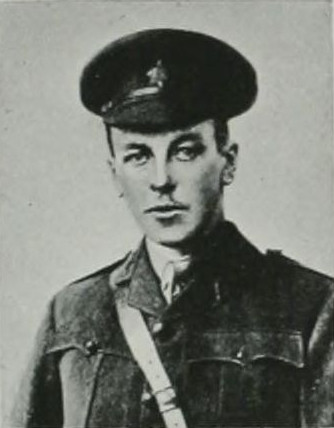
Ernest Norman Lawrie.
LAWRIE, JAMES BLACK, E.R.A., 1st Class, 268155, H.M.S. Cressy; lost in action in the North Sea, 22 Sept. 1914.
LAWSON, FREDERICK HENRY, Capt., 5th Battn. Northumberland Fusiliers (T.F.), eldest s. of Frederick Lawson, of Dalton, co. Northumberland, late of Nelthorpe, Gosforth, Merchant, by his wife, Eleoner Francis, dau. of the late John Walker; b. Newcastle-on-Tyne, 23 July, 1887; educ. Durham Grammar School; served his articles with Messrs. Newcomb and Newcomb, Architects, of Newcastle, and was afterwards with Mr. Arthur Stockwell, of that City; joined the Northumberland Yeomanry in 1907; gazetted 2nd Lieut., 5th Northumberland Fusiliers, 15 May, 1909; promoted Lieut. 17 July, 1910, and Capt. 1 Nov. 1912; volunteered for Imperial service on the outbreak of war; went to France, 13 April, 1915; and was killed in action at St. Jean, near Ypres, 24 May following; unm. His Col. wrote: “Capt. Lawson was one of my best officers, thoroughly capable and reliable.”
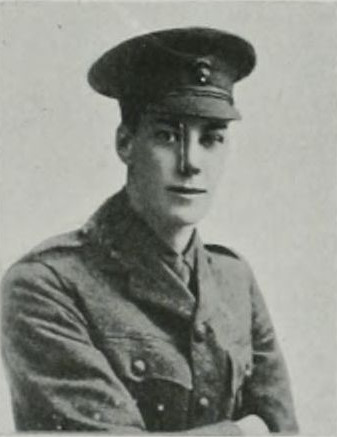
Frederick Henry Lawson.
LAWSON, WILLIAM, Leading Stoker (R.F.R., B. 2433), 290533, H.M.S. Good Hope; lost in action off Coronel, on the coast of Chili, 1 Nov. 1914.
LAWTON, JOSEPH SYDNEY, Stoker, 1st Class (R.F.R., Ch. B. 9403), 296679, H.M.S. Cressy; lost in action in the North Sea, 22 Sept. 1914.
LAWTON, WILLIAM, Stoker, 1st Class (R.F.R., Ch. B. 9652), S.S. 106992, H.M.S. Cressy; lost in action in the North Sea, 22 Sept. 1914.
LAYDON, WILLIAM, Private, No. 9332, 3rd Battn. Coldstream Guards, s. of John Laydon, of 17, Dunns Terrace, Byker, Newcastle-on-Tyne, by his wife, (——), dau. of William Wild, of Newcastle; b. Byker, Newcastle-on-Tyne, 22 Sept. 1882; educ. St. Dominic’s Catholic School there; enlisted 22 Oct. 1911, and was killed in action at Soupir, during the Battle of the Aisne, 14 Sept. 1914; unm.
LAYTON, FRANK THOMAS, Stoker, 1st Class (R.F.R., B. 10003), S.S. 107616, H.M.S. Hogue; lost in action in the North Sea, 22 Sept. 1914.
LAZENBY, ARTHUR, A.B., J. 4916, H.M.S. Cressy; lost in action in the North Sea, 22 Sept. 1914.
LEA, THOMAS LAMPIT, A.B. (R.F.R., B. 5043), 201762, H.M.S. Good Hope; lost in action off Coronel, on the coast of Chili, 1 Nov. 1914.
LEACH, GERALD KEMBALL, Lieut., 6th (Service) Battn. Border Regt.; 2nd s. of the late Arthur Francis Leach, of 34, Elm Park Gardens, London, S.W., Charity Commissioner, by his wife, Emily Archer, dau. of S. Kemball Cook; b. London, 10 Aug. 1883; educ. Ashdown House, Forest Row, Sussex, from which he obtained a scholarship at Bradfield College, where he was senior Prefect and Captain of the Association Football Team, afterwards gaining an exhibition at Magdalene College, Cambridge, where he rowed in the College boat; was in the Association Football and Cricket teams, and became a Lieut. in the University O.T.C. He was appointed an assistant in the Chinese Maritime Customs in 1904, and was quartered successively at Chefoo, Wuhu, Peking, Hankow, and Changsha. He resigned his appointment in Jan. 1915, in order to return home and join the army and was gazetted 2nd Lieut. 6th Border Regt., 1 March, 1915; left for the Dardanelles with the 11th (Northern) Division, 1 July following, and was killed in action at Suvla Bay, Gallipoli, on 10 Aug., during the operations which followed the landing on the 6th and 7th; unm.
LEADER, FRANCIS WILLIAM MOWBRAY, Capt., 2nd Battn. Connaught Rangers, elder s. of Francis Henry Mowbray Leader, of Classas, Coachford, co. Cork, late Lt. Royal Field Artillery, by his wife, Agnes Letitia, dau. of Thomas Broderick; b. Plymouth, 6 Nov. 1881; educ. Eastman’s Royal Naval Academy, and in France and Germany; joined the Manchester Militia as 2nd Lieut. 1901, and served with them in the South African War, 1901–2, taking part in the operations in Cape Colony, Oct. 1901, and in Orange River Colony, Oct. 1901 to 31 May, 1902 (Queen’s medal with four clasps), being specially recommended by his Colonel for a regular commission; was gazetted 2nd Lieut., 1st Connaught Rangers, 28 Jan. 1903, and promoted Lieut. 30 Dec. 1905 and Capt. 1 Aug. 1914; served with the 1st Battn. for several years in India, and after its return home was attached to the West African Frontier Force, and saw service in Southern Nigeria, 1909–10 (medal with clasp); was at home on leave when war broke out, went to France with the Expeditionary Force in Aug. 1914, and was killed in action while in command of a rearguard of 50 men covering the retirement of his regt. at Le Cateau, 26 Aug. following. A prisoner of war in Germany wrote: “Got back to cross road with some stragglers and French wounded, and found Capt. Leader and 50 men with Turner left as rearguard to the battn. Joined them, and we started to gain the rest when suddenly we received news of two battns. of Germans on our right and quite close. Soon after we came under a hot fire from them, and poor Leader was killed.”
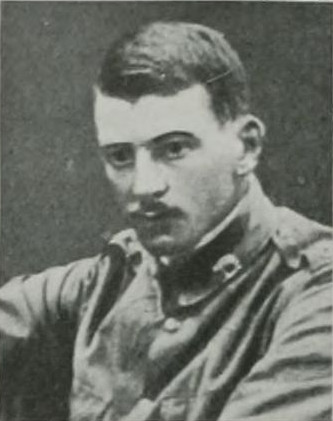
Francis W. M. Leader.
LEAKES, BERTRAM ALFRED, A.B. (B. 3610), S.S. 979, H.M.S. Good Hope; lost in action off Coronel, on the coast of Chili, 1 Nov. 1914.
LEAMAN, JOSEPH HERBERT, Boy, 1st Class, J. 26743, H.M.S. Hawke; lost when that ship was torpedoed in the North Sea, 15 Oct. 1914.
LEARY, THOMAS, Stoker, 1st Class (R.F.R., B. 3391), S.S. 101169, H.M.S. Good Hope; lost in action off Coronel, on the coast of Chili, 1 Nov. 1914.
LEATHER, CHRISTOPHER, Lieut., 3rd (Reserve), attd. 1st. Battn. Northumberland Fusiliers, 6th and yst. s. of the late Frederick John Leather, of Middleton Hall, Belford, co. Northumberland, J.P., by his wife, Gertrude Elizabeth Sophia (The Friary, Tickhill, co. York), dau. of the Rev. Charles Walters, M.A. Oxon; b. The Friary, Tickhill, 15 July, 1882; educ. Hazelwood, Limpsfield, and privately; received a commission as Lieut. in the 3rd Battn. Durham L.I. (Militia), 23 Dec. 1899; served in South African War, Jan. 1900 to May, 1902, being att. to the Mounted Infantry. For his services he was given a regular commission in the 1st Battn. Northumberland Fusiliers, and received the Queen’s medal with three clasps and the King’s medal with two clasps. He retired in 1904; but on the outbreak of the European War rejoined his old regt., 20 Aug. 1914; went to France, where he was attd. to the 1st Battn., and was killed in action near Neuve Chapelle, 26 Oct. following. Buried behind the trenches, near Neuve Chapelle; unm. He was an enthusiastic motorist and fisherman, and is described as “a good officer and friend.” He was one of six brothers, all of whom served both in South Africa and in the European War. The third and fifth brothers were also killed in action (see their notices), and the second and fourth, Capt. P. C. du Sautoy Leather and Lieut.-Col. Kenneth J. Walters Leather, were severely wounded, and the eldest, Major G. F. T. Leather, Northumberland Fusiliers, is now (1916) on active service.
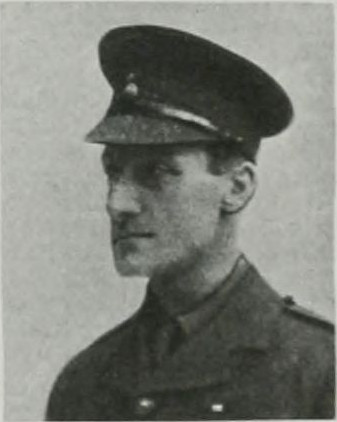
Christopher Leather.
LEATHER, EDWARD WILBERFORCE, Capt., 2nd Battn. Yorkshire Regt., attd. 2nd King’s Own Yorkshire L.I., 5th s. of the late Frederick John Leather, of Middleton Hall, Belford, co. Northumberland, J.P., by his wife, Gertrude Elizabeth Sophia (The Friary, Tickhill, co. York), dau. of the Rev. Charles Walters, M.A., Oxon; b. The Friary, Tickhill, 23 Nov. 1879; educ. Hazelwood Preparatory School and Wellington College; joined the 3rd Battn. Yorkshire Regt. (5th West Yorks Militia) in 1899, and was promoted Lieut. 13 Dec. 1900; served in the South African War, 1899–1900, 1902 (Queen’s medal with two clasps and King’s medal with two clasps), and retired in 1904. On the outbreak of the European War in Aug. 1914, he at once rejoined his regt.; was promoted Capt. 1 Feb. 1915; went to the Front, 11 Nov. 1914, attd. to the 2nd King’s Own Yorkshire L.I., and was killed in action at Hill 60, 18 April, 1915; unm.
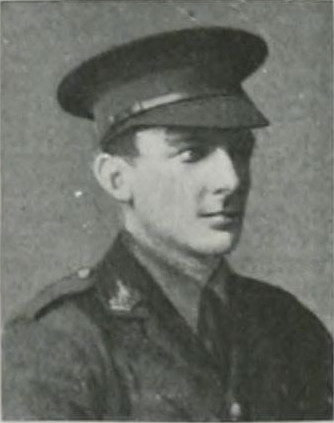
Edward W. Leather.
LEATHER, ERNEST ARTHUR, Major, Northumberland Fusiliers, 3rd s. of the late Frederick John Leather, of Middleton Hall, Belford, co. Northumberland, J.P., by his wife, Gertrude Elizabeth Sophia (The Friary, Tickhill, co. York), dau. of the Rev. Charles Walters, M.A. Oxon; b. at South Penge, co. Surrey, 18 Oct. 1868; educ. privately; joined the 5th Militia Battn. of the Northumberland Fusiliers as 2nd Lieut., 23 May, 1900; and served at Malta during the South African War, 1900 (medal), retired with the rank of Capt. in 1910, but on the outbreak of the European War in Aug. 1914 joined his old regt., and obtained his Majority 20 Oct. following; went to France, 11 Jan. 1916, and was killed in action near Fleurbaix, 10 Feb. 1916. Buried at La Croix Marechal. He m. at Hexham Abbey, 25 Oct. 1904, Mildred Louise, dau. of Charles Augustus Harrison, of Beacon Grange, Hexham, and had two children: Vivien Mildred, b. 22 March, 1907; and Anne du Sautoy, b. 13 Sept. 1913.