The Roll of Honour. (continued 2)
Reading edition
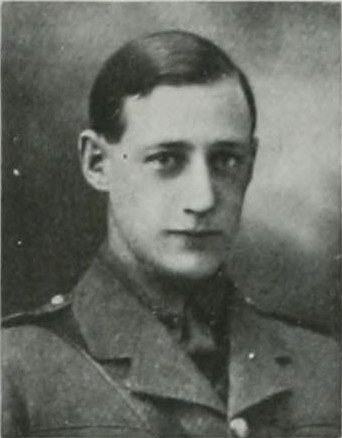
Elphinstone D’Oyley Aplin.
APPLEYARD, WALTER D’ANCIE, Private, No. 14789, D Coy., 7th Battn. Royal Dublin Fusiliers, 3rd s. of William Appleyard, one time secretary to the National Children’s Hospital, Dublin (d. 5 April, 1903), by his wife, Mary (32, Sandford Road, Dublin), dau. of Stuart Corrie Chambers; b. Dublin, 21 Dec. 1884; educ. High School, Dublin, where he won honours, prizes, and exhibitions, and was afterwards employed in the Irish Land Commission. On the outbreak of war enlisted in the 7th Battn. Royal Dublin Fusiliers, and left for the Dardanelles with D Coy. 10 July, 1915, arriving at Gallipoli 6 Aug. and landing at Suvla Bay on Saturday, the 7th inst. The moment they landed the troops were in action, and D Coy. leading they advanced over the open plain a target for heavy shell fire and snipers, at evening driving the Turks out at the point of the bayonet and capturing Hill 53. Private Appleyard escaped without a scratch, though a bullet passed through the leg of his trousers. Later he was with three or four men in a small post without ammunition; the enemy were throwing bombs on them. It was while throwing back these bombs that he was shot through the heart, 16 Aug. 1915, on the ridge Kislagh Dagh. He was buried in Gallipoli at the foot of Dublin Hill (Hill 53); unm. Letters from his comrades are unanimous in extolling his bravery, devotion to duty, self-sacrifice, and good comradeship. His brother, George, is now (1916) serving with the Leinsters at the Front.
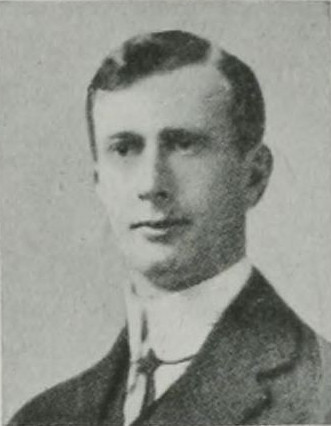
Walter D’Ancie Appleyard.
ARBUTHNOT, KENNETH WINDHAM, Major, 2nd Battn. Seaforth Highlanders, 6th s. of William Reierson Arbuthnot, late of Plawhatch, East Grinstead, co. Sussex, by his wife, Mary Helen, dau. of Philip Anstruther, late Colonial Secretary of Ceylon (by his wife, née Stewart-Mackenzie, of Kintail, granddau. of Francis Lord Seaforth, and a descendant of the Sir Walter Scott who originally raised the Seaforth Highlanders); b. 23 July, 1873; educ. privately, at Bath College and Sandhurst; obtained a commission as 2nd Lieut. in the Seaforth Highlanders, 19 July, 1893, and was promoted Lieut. 3 July, 1895; Capt. 29 April, 1900; Brevet Major 22 Aug. 1902; and Major 10 June, 1909. He took part in the operations in Chitral in 1895, serving with the Relief Force and receiving the medal with clasp; and with the Sudan Expedition, 1893. He was present at the Battle of Khartoum, and for his services received the King’s medal with clasp and the Egyptian medal. In the South African war, 1901–2, he was employed with the Mounted Infantry, taking part in the operations in Cape Colony (Feb. 1901), the Orange Free State (Feb.-March, 1901), and the Transvaal (March, 1901–31 May, 1902). He was mentioned in Despatches [London Gazette, 29 July, 1902], given the brevet of Major and the Queen’s medal with five clasps. After his return to England he acted as Adjutant of the 4th Volunteer Battn. of his regt., 10 Aug. 1907, to 31 March, 1908, and of the Territorials, 1 April, 1908, to 9 June, 1909, and was Brigade-Major, Gordon Infantry Brigade (Scottish Command), 12 Oct. 1911, to 9 Aug. 1914. On the declaration of war he rejoined his regt., went to the Front in Nov., and was killed in action at the second Battle of Ypres, 25 April, 1915. He was buried on the left side of the St. Jean-St. Julien Road, about 1,000 yards south of St. Julien. Major Arbuthnot m. on 26 April, 1911, Janet Elspeth, dau. of Major Sinclair Wemyss, Gordon Highlanders, and had two children: John Wemyss, b. 11 Feb. 1912, and Robert Michael Wemyss, b. 9 March, 1914.
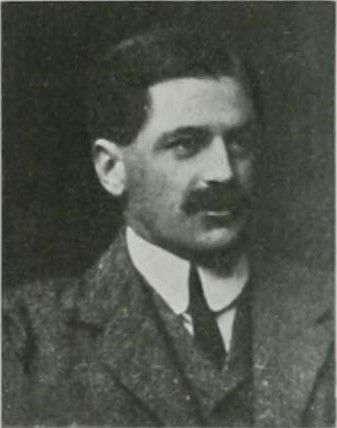
Kenneth W. Arbuthnot.
ARCHER, FRED, Private, No. 5229, 2nd Battn. Coldstream Guards, s. of Charles Archer, of 163, St. Anne’s Well Road, Nottingham; b. Nottingham; enlisted 24 Oct. 1903; served with the Expeditionary Force in France and Flanders from 12 Aug. 1914, and was killed in action at Rental, 28 Oct. 1914.
ARCHER, GEORGE, Private, No. G 8965, 4th Battn. The Middlesex Regt.; served with the Expeditionary Force in France and Flanders; killed in action, 10 Oct. 1915.
ARCHER, JOHN WILLIAM BUTTS, Lieut., The Buffs (East Kent Regt.), only s. of the Rev. George Archer, Rector of Stilton, Peterborough, by his wife, Beatrice, dau. of Capt. William Pitt Butts, The Buffs; b. Longfield, Halifax, co. York, 14 March, 1890; educ. Stubbington, in France, and at the Royal Military Academy, Woolwich; gazetted 2nd Lieut. 5 Oct. 1910, and Lieut. 9 March, 1912; served at Singapore 1910–12, and in India, 1912–14. Recalled to England at the outbreak of war, he arrived home late in Dec. and spent a few days at his home at Stilton before proceeding to France on 16 Jan. The regt. was at once moved up to the firing line, he was wounded in the fighting at Ypres 15 Feb. 1915, and died the following day; unm. The story of his death is told in a letter of his Commanding Officer. It appears that on the night of 15 Feb. (almost exactly a month after he went to France), Lieut. Archer was sent out with his men to the relief of a regiment which was holding a trench which had been attacked by the Germans in the dark. He succeeded in fighting his way to the trench at the expense of half his men and of his own gallant life. The effort to hold the trench was successful. It was Lieut. Archer’s task thus to take the lead in the counter-attack which the Brigade made to retake the trenches which had been lost, but the other regiments were so badly knocked about by a bitter shell fire that they could not get up to support him and his gallant little handful of men, and so the work was splendidly done by this small company themselves. When he fell, mortally wounded, they carried him at enormous risk to themselves, into a dug-out in the trench, and here he died about twenty-four hours afterwards, for it was impossible to get him out of the trench and into hospital in face of the terrible fire which was maintained.
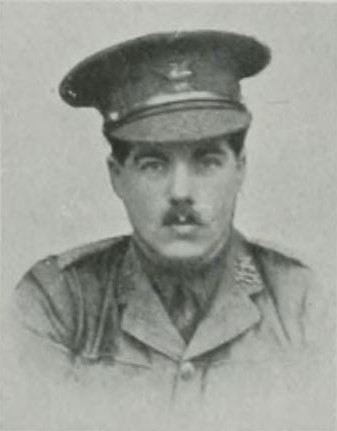
John William Butts Archer.
ARCHIBALD, WILLIAM, Major, 2nd Lowland Field Co., R.E. (T.F.), 29th Division, s. of the late William Richmond Archibald, of Mossend, Schoolmaster; educ. at Glasgow High School; was with Messrs. William Jacks & Co., of Glasgow, iron and ore merchants; joined the old 2nd Lanarkshire R.E.V. after the Boer war, and in 1908, when the Volunteers were reorganised, became attached to the Works Company of the Lanarkshire Fortress Engineers at Bellshill, being given the rank of Lieut. Subsequently after the disbandment of this unit, he was posted as supernumerary to the 2nd Lowland Field Co., became Captain, 12 Sept. 1914, and Major Commanding 26 Jan. 1915; served with the Mediterranean Expeditionary Force at the Dardanelles; was wounded on the evening of the 18 June, 1915, while on his way to visit the section officers, and died the same day. A brother officer wrote: “The death of Major Archibald is a great loss to the country; he was an exceptional soldier and officer.” Major Archibald m. at Dundyvan, Coatbridge, co. Lanark, 9 Aug. 1911, Helen Gibson, dau. of the late James Mitchell, of Coatbridge, iron master and had issue two daus.: Margaret Allan, b. 5 June, 1912, and Elizabeth Campbell McLellan, b. 25 Sept. 1914.
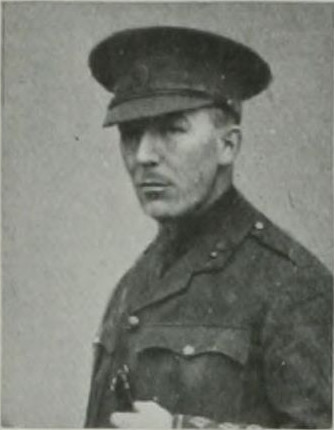
William Archibald.
ARGENT, WILLIAM ROBERT, A.B. (R.F.R., B. 10426), 229038, H.M.S. Hogue; lost in action in the North Sea, 22 Sept. 1914.
ARLAIN, EDWIN, Stoker, H.M.S. Good Hope; lost in the action off Coronel, on the coast of Chili, 1 Nov. 1914.
ARMES, JOHN HENRY, A.B., R.F.R., B. 1756, 211569, H.M.S. Good Hope; lost in the action off Coronel, on the coast of Chili, 1 Nov 1914.
ARMITAGE, THOMAS WILLIAM, Ch. E.R.A., 1st Class, 157690, H.M.S. Cressy; lost in action in the North Sea, 22 Sept. 1914.
ARMSTRONG, ELLERAY FRANCIS, L.-Corpl., No. 63046, 3rd Battn., Canadian Expeditionary Force, only s. of Elleray Armstrong, of Eastmoor Drive, Carlton, Nottingham, by his wife, Jane Davidson, dau. of the late Walter Watson Walker, of Manchester; b. Stretford, near Manchester, 9 Feb. 1893; educ. Elmswood College and Sale Grammar School; went to Canada in 1912, and settled down to business in Montreal, returning for a short visit in June, 1914, for a deferred celebration of his twenty-first birthday; volunteered after the outbreak of war, and enlisted, 9 Nov. 1914; came over with the Second Contingent, landing in England, 7 March, 1915; went to France, 1 May, and was killed in action at Givenchy, 16 June, 1915, during an attack on the German lines. He was buried near Givenchy, 500 yards east of Duck’s Bill; unm. His commanding officer wrote that he “was a grand soldier and man.”
ARMSTRONG, GEORGE LEIGHTON, Private, No. 18186, 1st Battn. Royal Welsh Fusiliers, s. of the late Edward Armstrong, 16th (Queen’s) Lancers, by his wife, Isabella (Methuen Street, Wavertree), dau. of John Smart, and grandson of the late Col. Edward Armstrong, of Bedford; b. at Edge Hill, Liverpool, 3 March, 1884; educ. at Sefton Park School; joined the Army after the outbreak of war, 22 Nov. 1914, and died of wounds at Neuve Chapelle, 15 March, 1915; unm.
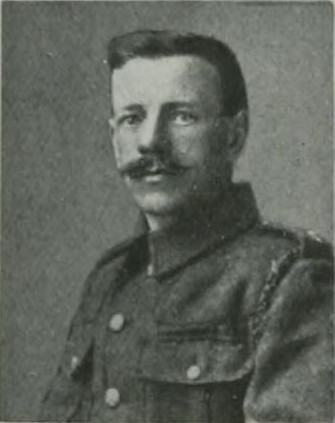
George L. Armstrong.
ARMSTRONG, JAMES, Stoker P.O., 294264 H.M.S. Pathfinder; lost when that ship was sunk by a mine, about 20 miles off the East Coast, 5 Sept. 1914.
ARMSTRONG, JOHN, A.B., J. 3996, R.N., killed in action at Tsing-tau, 22 Aug. 1914, on board H.M. Destroyer Kennet while engaged in chasing the German Destroyer S 90.
ARMSTRONG, ROBERT, Private, No. 2706, 2nd Battn. Coldstream Guards, s. of Robert Armstrong; b. Marylebone, London; enlisted 1 June, 1899; served in South Africa, 23 May, 1900, to 6 Oct. 1902 (Queen’s medal with three clasps: “Belfast,” “Cape Colony,” “Orange Free State”; and King’s medal with two clasps: “South Africa, 1901,” “South Africa, 1902”); and with the Expeditionary Force in France and Flanders, 12 Aug. 1914, to 13 Feb. 1915, when he was killed in action at Cuinchy. Buried in the rear of the trenches there. He m. at Marylebone Parish Church, 1 Jan. 1905, Elizabeth (56, Ashmill Street, Lisson Grove, N.W.), dau. of (—) Leonard, and had four children: Charles, b. 1 Jan. 1908; Thomas, b. 1 May, 1914; Elizabeth, b. 4 Oct. 1905; and Annie, b. 1 Nov. 1909.
ARNELL, JAMES ALEXANDER, Private, No. A. 34446, 10th, formerly 50th, Battn., Canadian Expeditionary Force, 2nd s. of John Arnell, of Calgary (who joined the 56th Battn., 1 May, 1915, as a Military Policeman, and died on active service at Calgary, 27 Dec. following), by his wife, Jessie G. (805, Fifth Avenue, West Calgary, Alberta), dau. of (—) Taylor; b. Calgary, 25 Oct. 1894; educ. Calgary, Woodstock College, Ontario, and Mount Royal College (diploma), Calgary; joined the Canadian Expeditionary Force, 23 Jan. 1915, and was killed in action in France, 30 Sept. 1915, by a rifle grenade; unm. His commanding officer wrote speaking highly of his conduct. He was a keen sportsman, and had won two medals for Rugby football.
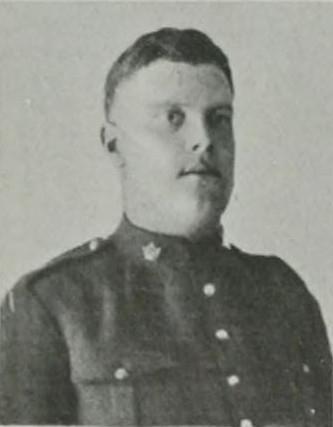
James Alexander Arnell.
ARNOLD, CHARLES EDGAR, Stoker, 1st Class (R.F.R., Ch. B. 9600), S.S. 106981, H.M.S. Cressy; lost in action in the North Sea, 22 Sept. 1914.
ARNOLD, FERDINAND FRANCK WILLIAM, Capt. 1st Batt. Suffolk (The 12th) Regt., elder s. of Franck Thomas Arnold, of the University College of South Wales, M.A. Trin. Coll. Cambridge, by his wife Edith Maud, dau. of Samuel William Kelly, and grandson of the Rev. Charles Thomas Arnold, of Rugby; b. Penarth, near Cardiff, 19 March, 1888; educ. Rugby, and after going through Sandhurst, was gazetted to the 1st Battn. of the Suffolk Regt., 29 Aug. 1906, being promoted Lieut., 6 Mar. 1909, and serving with the Battn. in Malta and Egypt. When war broke out, he was in Khartoum, and acted as Italian Censor, for which he received a letter of thanks from the Sirdar. In Dec. 1914, he was given his company, and on going to the Front in Jan. was appointed Machine-gun Officer to the 84th Infantry Brigade, but afterwards returned to regimental work, taking command of a double company owing to shortage of officers. He was killed in action, near Zonnebeke not far from Ypres, being shot in the trenches, which were enfiladed by the enemy, 23 April, 1915; unm.; buried in the garden of a farmhouse, near Zonnebeke. Capt. Arnold belonged to an old Suffolk family, from a branch of which Dr. Arnold of Rugby was also descended. Many of his forebears served with distinction in the Royal Navy. Capt. Thomas Arnold distinguished himself in 1718 by boarding and taking the colours of the Spanish flagship Royal St. Philip, which are still in the possession of his family. The son of the latter, Thomas Arnold, sailed round the world as midshipman on the Centurion, under Lord Anson, and in 1782, and Aldous Charles Arnold (great-great-grandfather of Capt. F. F. W. Arnold) was present as midshipman in the Royal William at the Siege of Gibraltar. Capt. Arnold was a keen sportsman, and letters from brother officers bear witness to the value that was set upon him in the regt., both as a soldier and as a friend. One wrote: “He was always merry and cheerful, even under the most adverse circumstances, and set an example to officers and men alike.” The late Major Maycock, D.S.O. (late of the 1st Suffolks), wrote as follows: “As you know, your son was my subaltern for two years, and I had the highest opinion of his ability as a soldier. He was a thoroughly keen and efficient officer, and would have gone far had he been spared. I am expecting to go to the Front immediately, and if I rejoin the 1st Battn. I shall miss your son very much. I felt I must write to you both to say how grieved I was to hear of your loss, and to let you know the high opinion I had of your son, personally and professionally.”
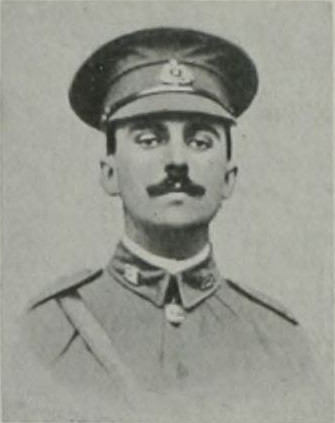
Ferdinand F. W. Arnold.
ARNOLD, HARRY RICHARD, Private, No. 13058, 2nd Battn. Coldstream Guards; eldest s. of Harvey Arnold, of 251, High Street, Henley in Arden, co. Warwick, boot and shoe maker, by his wife Ellen, dau. of John Mills, of Yew Tree View, Henley in Arden; b. Henley in Arden, 3 Feb. 1895; educ. Council School there; enlisted 5 Oct. 1914; went to the Front, 7 April, 1915, and was killed in action at Cambrin, by a rifle grenade which fell in the trench, badly wounding him in the back, and breaking his left leg, 6 July, 1915; unm. He was buried at Cambrin. Capt. Lloyd, writing to Mrs. Arnold, said that though her son had not been out long, he had proved himself an excellent soldier, and that by his death the Company had lost one of its best and pleasantest members.
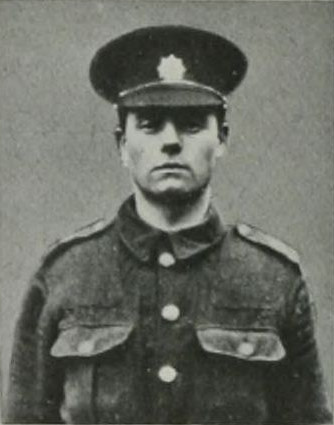
Harry Richard Arnold.
ARNOLD, HENRY, Stoker, 1st Class (R.F.R., B. 9798), 297700, H.M.S. Hogue; lost in action in the North Sea, 22 Sept. 1914.
ARNOLD, ROBERT, Private, R.M.L.I., Ch. 16953, H.M.S. Aboukir; lost in action in the North Sea, 22 Sept. 1914.
ARTHUR, CHARLES, Rifleman, No. 1770, 9th Battn. (Queen Victoria Rifles) The London Regt. (Machine Gun Section), only s. of the late Richard Arthur, for several years manager at Messrs. Busvines, 4, Brook Street, London, W. [2nd son of James Arthur, of Great Treveryan Farm, Tynardreath, Cornwall], by his wife Emily (Pentillie, Lostwithiel, co Cornwall), dau. of the late Alderman Charles Taylor Cheesman, of Hove, Sussex; b. Regent’s Park, London, N.W., 2 July, 1890; educ. Brighton Grammar School and London Orphan School, Watford, at which latter he passed all the local Cambridge Exams, (three with honours), also earning the scholarship given by Mr. J. Debenham for two years’ tuition in Switzerland; he was in the employ of Messrs. Debenham & Co., of Wimpole Street; joined Queen Victoria’s in 1908, and on the outbreak of war in Aug. 1914, volunteered for foreign service. He was killed in action near Ypres, 5 Jan. 1915, being buried at Neuve Eglise; unm. When at Watford he was Captain of the 1st Eleven cricket team. He also won the championship for swimming, and while in Switzerland gained a diploma for football. At Messrs. Debenham’s Sports Ground he won the silver cup in a tennis tournament.
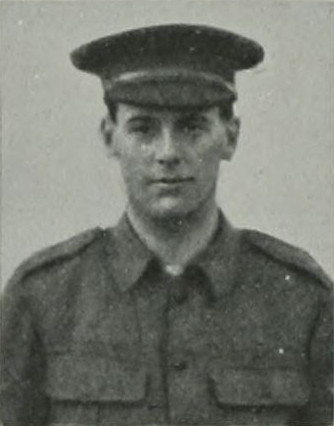
Charles Arthur.
ARTHUR, HERBERT GEORGE, Private, No. 1357, D Coy., 1st (Royal Fusiliers) Battn. The London Regt., 3rd s. of Harry Reginald Arthur, of 5, Kingswood Avenue, Kilburn, by his wife, Lydia Arthur, dau. of Benjamin Wyatt; b. Kilburn, N.W., 7 Nov. 1895; educ. Kingsgate Road L.C.C. School there, where he was top boy of the school in chemistry, and afterwards obtained a berth in the Haberdashers’ School, Cricklewood, as science master’s assistant. He remained here for three years, and then went to Messrs. Burroughs & Wellcome, chemical manufacturers, Dartford, where he was employed until the outbreak of war. He had joined the 1st Battn. London Regt. in 1911, and, volunteering for active service, left with his regt. for Malta, 4 Sept. 1914, and returned after having passed as a first-class shot. After a few days’ leave, he went to France, and was killed in action, 17 May, 1915; unm. His officer, Lieut. H. A. Eiloart, wrote: “He died a soldier’s death in the face of the enemy, being shot in the head and dying instantaneously while firing from our trench. He was in my Half-company and in my platoon from the time we left for Malta up to the time of his death, and I feel his death most keenly, both as a soldier and a man.” His two elder brothers are now (1916) serving in the Army: Gunner H. Arthur, R.M.A., on board H.M.S. Colossus, and Corpl. J. R. Arthur, with the 1st Australian Expeditionary Force.
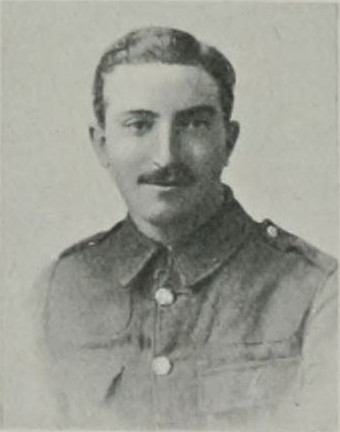
Herbert George Arthur.
ARTHUR, RICHARD VICTOR, L.-Corpl., No. 8118, 3rd Battn. Coldstream Guards, 4th s. of John Meredith Arthur, of 46, Aston Lane, Handsworth, Grocer, by his wife, Emma Jane; b. Shirley, co. Warwick, 9 Feb. 1892; educ. Small Heath Secondary School, Birmingham; enlisted on or about 5 Oct. 1908, and was killed in action at Landrecies, 8.30 p.m., 25 Aug. 1914, during the retreat from Mons. He m. at St. Michael’s Church, Camberley, 27 July, 1912, Margaret Emily (12, The Mews, Watchetts Road, Camberley), dau. of Thomas Herridge, of Camberley, and had two sons: Richard John, b. 23 Nov. 1913, and Victor George, b. 28 Jan. 1915.
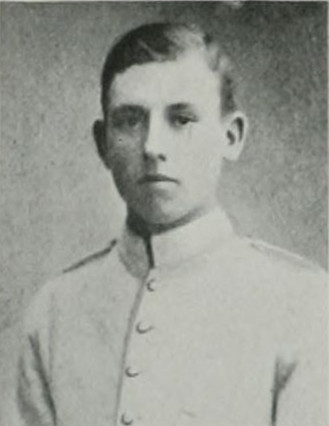
Richard Victor Arthur.
HARRIS-ARUNDELL, JOHN D’AUVERGNE, Sergt., No. 25911, 14th Battn. (1st Royal Montreal Regt.), Canadian Expeditionary Force, 2nd s. of the late Robert Harris-Arundell, of Halifax, Nova Scotia, by his wife, Elizabeth Blanche, dau. of the late John D’Auvergne Dumaresq, C.M.G., Acting Administrator of the Government of Lagos, W. Africa, and grandson of the late William Reinfred Harris-Arundell, of Lifton, co. Devon, England; b. Fairmont, Martin co., Minnesota, U.S.A., 14 May, 1889; went to Halifax, Nova Scotia, with his family at the age of five; educ. Collegiate School, Windsor, N.S., and joined the staff of the Royal Bank of Canada in 1905, and when war broke out in Aug. 1914, was in Montreal. He was at the time a Corpl. in the Victoria Rifles of Montreal, and volunteered at once for active service, and on 24 Aug. his regt., then called 1st Royal Montreal Regt., went into training at Valcartier Camp. On the night of 23 Sept. they left for Quebec, where they embarked for England, arriving in Plymouth on 14 Oct., and after training at Salisbury, left for France on 5 Feb. At the Battle of Langemarcke on 24 April, 1915, he was shot through the heart while helping Lieut. Whitehead, who was wounded in the foot, to cross 200 yards under withering fire; unm. The ground was captured by the enemy, and Sergt. Arundell’s body was never recovered.
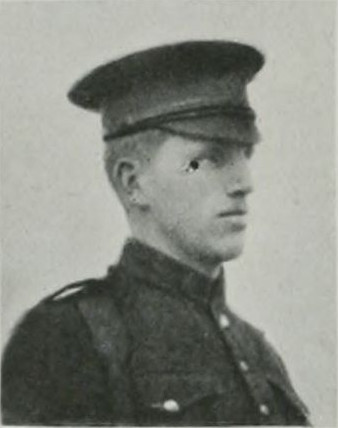
John D’A. Harris-Arundell.
ASBURY, ARTHUR GERARD, Sapper, No. 45044, 3rd Field Coy., Canadian Divisional Engineers, s. of Joseph Asbury, bank accountant; b. Burton-on-Trent, 13 Oct. 1889; educ. Burton Grammar School and Hymers’ College, Hull; enlisted on the outbreak of war, Aug. 1914, and d. of wounds in No. 14 General Hospital, at Wimereux, 21 May, 1915; unm.; buried there, No. 496.
ASCOTT, VINCENT JOHN DAWSON, Volunteer, Nyasaland Volunteer Reserve, s. of Capt. William Ascott, A.V.C., of West Bridge, Bideford, by his wife Frances Annie, dau. of the late William John Keyte; b. 26 Aug. 1892; educ. at Allhallow’s School, Honiton. Volunteered for active service, 3 Aug. 1914. He was killed in action at Karonga, Nyasaland, 9 Sept. 1914; unm. The official account states: “Field Force advanced from Karonga on afternoon of 8th. Enemy in strength of about 400 appears to have evaded our Force, and at sunrise on the 9th attacked Karonga, which was defended by Bishop in charge of a few K.A.R.’s and Resident, with police, in all about 55 natives and 8 civilians. This small garrison very gallantly resisted the attack for three hours until relieved by Column 3 under Capt. Griffiths. They drove off and pursued the enemy, who left 2 officers and 40 native soldiers dead on the field. Casualties in Karonga: Webb, slightly wounded; 1 askari killed and 4 wounded. Entire British Force came into action later. Enemy fought with great determination, and had to be dislodged by repeated bayonet charges, but ultimately fled towards Songwe. Total German losses: 8 officers killed and 2 wounded and captured with Medical Officer; two field guns and three Maxims captured. British losses: killed, Caldecott and Ascott; since died of wounds, Manning and Merriman; seriously wounded, Muirhead, Garnett, Mason, Sinclair; slightly wounded, Barton, Ness; missing, Williams and Harvey. All reports speak highly of gallantry of all engaged.” His Commanding Officer, in a letter of sympathy to his parents, wrote: “Your son died a gallant death firing one of the Maxim guns in the battle of Karonga, on 9 Sept.... I feel his loss doubly, as he was one of my Planter neighbours, and a very close friend.” Another comrade, writing to his aunt, wrote: “The whole of Nyasaland will be grieving that one so popular as a true English sportsman will never play again in those games in which he so much excelled. Zomba has lost a fine athlete and gained a noble hero.” He was mentioned in despatches [London Gazette, 3 Aug. 1916] for gallant and distinguished service in the field “while working maxim guns under heavy fire with coolness and effect.”
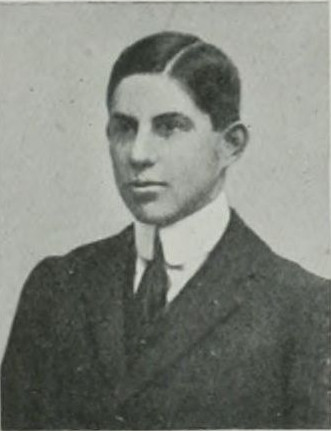
Vincent J. D. Ascott.
ASCROFT, ROBERT GEOFFREY LEES, 2nd Lieut., 1/10th Battn. The Manchester Regt. (T.F.), only s. of the late James Henry Ascroft, of Oldham, Solicitor (d. 1900), by his wife, Mabel Gertrude, dau. of John Lees, of Primrose House, Oldham, Cotton Spinners, and nephew of the late Robert Ascroft, M.P.; b. Oldham, 25 April, 1896; educ. Charterhouse, and on the outbreak of war volunteered and was gazetted 2nd Lieut. 25 Aug. 1914; went to the Dardanelles, May, 1915, and was killed in action there, 4 June, 1915. His commanding officer wrote: “Geoffrey was absolutely fearless and had endeared himself to all ranks by brave deeds which he had performed previously. His comrades all speak of his pluck and say, ‘he did not know what fear was.’” His brother-in-law, 2nd Lieut. J. B. Emmott, of the same regt., was killed in action the same day.
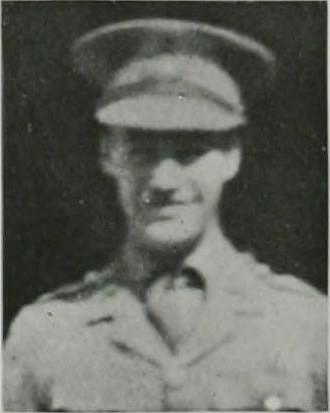
Robert Geoffrey L. Ascroft.
ASH, BASIL DRUMMOND, Lieut., R.N., and Flight Lieut., R.N.A.S., s. of the Rev. Cyril Alfred Drummond Ash, B.A., Keble College, Oxford. Incumbent of Saxton, Tadcaster, co. York, by his wife, Hester Elizabeth, dau. of the late F. J. Alexander, B.C.S., India; b. Southport, Queensland, Australia, 16 May, 1890; educ. Preparatory School, Arlington House, Brighton, and Mr. Foster’s School, Stubbington, Fareham, Hants; joined the Royal Naval College, Dartmouth, as a Cadet, 18 Sept. 1905, and became sub.-Lieut. 12 Sept. 1910, and Lieut. 1 Oct. 1912; served as Midshipman in H.M.S. Dreadnought (Flagship of Admiral Sir Francis Bridgeman, Home Fleet), Prince of Wales (Flagship of Admiral Prince Louis of Battenberg, Atlantic Fleet); and Africa (Capt. Leveson, Home Fleet); as sub-Lieut. and Lieut. in H.M.S. Philomel and Espiègle, in the Persian Gulf, Oct. 1911, to Nov. 1913; and in the R.N.A.S., 27 Jan. 1914, to 29 Sept. 1914, on which latter day he was lost in Seaplane 77 off the coast of Scotland, while engaged in scouting for German submarines. All his commanding officers testified to his ability as a Naval Officer. He was unm.
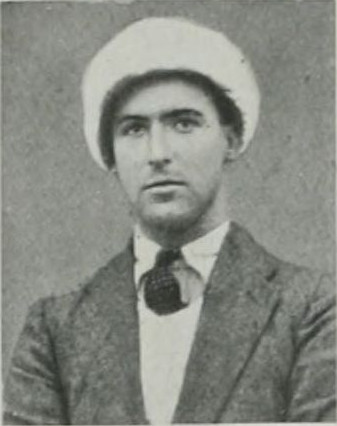
Basil Drummond Ash.
ASH, WILFRID JOHN, Lieut., 3rd Batt. Middlesex (Duke of Cambridge’s Own) Regt., s. of Herbert Edward Ash, of Keilawarra, Warlingham, Surrey, Solicitor; b. Croydon, 29 July, 1890; educ. Littlejohn’s, Greenwich; Haileybury and Sandhurst; gazetted 2nd Lieut., 2nd Battn. Middlesex Regt., 5 Oct. 1910; exchanged to 3rd Battn., then at Lebong, India, July, 1911; promoted Lieut., 23 July, 1913. Lieut. Ash was in England on leave when war broke out. He was recalled to rejoin his regt. at Cawnpore, and sailed for India in September. Two or three days before Christmas Day, 1914, he was back again in England with the 3rd Middlesex, who had come over as a complete unit. He went with the regt. to France in January, 1915, and was killed in action on the afternoon of Sunday, 14 Feb. 1915, between Ypres and St. Eloi, while leading his men in a successful counter attack against the enemy’s trenches. Col. E. W. R. Stephenson, Commanding the 3rd Battn. Middlesex, wrote that he “died gallantly leading his men in an attempt to capture a trench that had fallen. Previous to this, he saved the life of my nephew, Moller, who had been severely wounded, and after placing him in a place of safety, he again entered the fight.... He nobly did his duty, and we deplore his loss.” Private Worsfold also wrote: “On the afternoon of Sunday, 14 Feb., we were ordered to attack a position occupied by the enemy, north-west of Ypres and west of the canal ... on the morning of the same day we had been badly cut up, and the Surreys, who afterwards came up in support, opened to let us through. Lieut. W. J. Ash, who had been previously wounded in the arm, was still leading up to the last moment.”
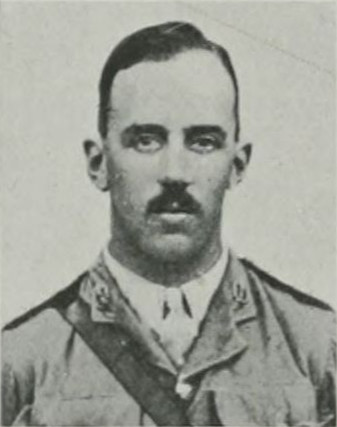
Wilfrid John Ash.
ASHBY, GEORGE, Stoker, H.M.S. Good Hope; lost in the action off Coronel, on the coast of Chili, 1 Nov. 1914.
ASHTON, EDWARD STANLEY JOHN CHARLES, Corpl., No. 1248, Army Service Corps, elder s. of Charles Ashton, of 21, Endymion Road, Finsbury Park, by his wife, Alice Elyzabeth Sophia, dau. of George Nelson Howlett; b. Finsbury Park, 19 June, 1894; educ. Ealing Grammar School, and St. Frances Xavier’s College, Bruges; joined the Army at the outbreak of the war, 11 Aug. 1914, and died at St. Bartholomew’s Hospital, London, 16 June, 1915, from heart failure caused by rheumatic fever contracted while at the Front; unm.
ASHTON, EDWIN, Rifleman, No. 1667, 1/12th Battn. (The Rangers) The London Regt., former Engineers’ apprentice, s. of Edwin Ashton, fancy leather worker; b. Peckham, 7 April, 1895; was a Scout and Patrol Leader from 13 years of age to 18, when he joined the Rangers; killed in action at Zonnebeke, 20 April, 1915. Cart. Jones wrote: “He was hit by a bullet on the evening of the 20th, and died soon afterwards. We buried him that night in a small wood behind our trench. He was a man for whom I had a great liking; a good soldier, and he died doing his duty.”
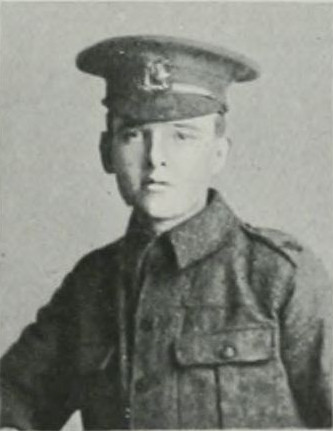
Edwin Ashton.
ASHURST, JAMES, Stoker, 1st Class (R.F.R., B. 4246), S.S. 102939, H.M.S. Good Hope; lost in the action off Coronel, on the coast of Chili, 1 Nov. 1914.
ASHWORTH, EDMUND, Leading Stoker, 311053 (Dev.), H.M.S. Good Hope; lost in the action off Coronel, on the coast of Chili, 1 Nov. 1914.
ASKEW, HENRY ADAM, Capt., 2nd Battn. Border Regt., elder s. of the late Canon Edmund Adam Askew, Rector of Greystoke, Cumberland, by his wife, Mary Penelope (Bushby House, Greystoke, Cumberland), dau. of the late Rev. Henry James Feilden, Rector of Kirk Langley, and grandson of the late Henry William Askew, of Conishead Priory, co. Lancaster, and Glenridding, co. Cumberland, J.P., by his wife, Lucy, dau. of the Right Rev. and Hon. Hugh Percy, D.D., Lord Bishop of Carlisle; b. Greystoke Rectory, 8 Sept. 1881; educ. Aysgarth, Harrow, and the Royal Military College, Sandhurst; gazetted 2nd Lieut., 2nd Battn. Border Regt. 8 May, 1901; joined his battn. in South Africa in the Sept. following, and took part in the operations in the Transvaal, Nov. 1901–2 (Queen’s medal and three clasps); promoted Lieut. 5 Sept. 1903. On his return to England he went through two courses with Mounted Infantry and the Gymnastic course (certificate 1908); Assistant Superintendent of Gymnasium at Devonport for the Southern Command, 3 Aug. 1909–13, when he rejoined his regt. On the outbreak of war he received his company, 23 Aug. 1914, was appointed Transport Officer, and went to the Front with the Expeditionary Force. On the death of the Adjutant, Capt. Andrews (26 Oct.), he took over his duties, and as Adjutant was with his Colonel when wounded, and assisted in carrying him back, becoming then second in command; and from 25 Nov. to 3 Dec. was in command, his Colonel sending in his name as “doing exceptionally well.” He was killed on 19 Dec. 1914, in a night attack on the German trenches at Sailly. He was at first reported as wounded and missing, but was later found to have been killed. He was twice mentioned in Despatches by F.M. Sir John French. A private wrote home to a friend: “There was one officer called Capt. Askew. I was right against him when he got shot. I shall never forget him; the last words he uttered were, ‘Stick it lads, stick it Borders,’ and then he got killed. It happened on the top of their trenches.” Another writes that he was in the trench. The Germans buried him behind their first line of trenches, and erected a cross on which they inscribed in German. “To a brave British officer, Border Regt.” This information was obtained during the truce on Christmas Day, when Lieut. Nunnerly, 3rd Bedfords, was sent by the Commanding Officer of the Border Regt. in answer to a German officer, who passed over the badge from the cap of Capt. Askew. He m. at St. Cuthbert’s Church, Carlisle, 25 April, 1908, Winifred Lucy, dau. of Col. Thomas Angelo Irwin, of Lynehow, Carlisle, Solport, co. Cumberland, D.L., and had issue 2 sons and a dau.; Henry Cuthbert Adam, b. 21 Sept. 1909; David, b. 16 June, 1913; and Winyfred Anne, b. 19 Jan. 1911.
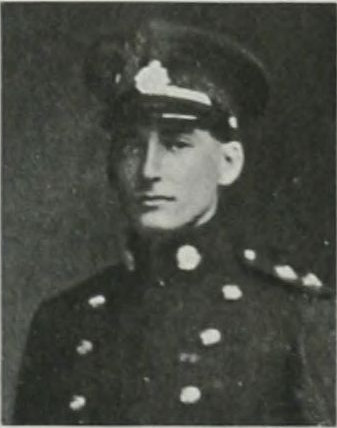
Henry Adam Askew.
ASKEW, JOHN HENRY, Sergt., R.M.L.I., Ports. 11610, H.M.S. Good Hope; lost in the action off Coronel, on the coast of Chili, 1 Nov. 1914; m.
ASLIN, GEORGE, Private, No. 1941, C. Co., 1/8th Battn. Middlesex Regt. (T.F.), s. of George Aslin, of Melrose Villas, 7, Avenue Road, Hampton, Bootmaker, by his wife, Fanny, dau. of Edward Busby, R.M.; b. Gosport, co. Hants, 31 Dec. 1891; educ. Hampton Council School; was a Fitter’s Labourer; joined the Middlesex Territorials, Feb. 1913; went to France, 8 March, 1915, and was killed in action at Frezenberg, 11 May following; unm.
ASSITER, ALFRED, Chief Yeoman of Signals, 168358, H.M.S. Aboukir; lost in action in the North Sea, 22 Sept. 1914.
ATCHESON, JOHN, Private, No. 9474, 2nd Battn. Durham L.I., 2nd s. of the late Hugh Atcheson, of Jarrow, Machine Planer, by his wife, Mary (Carley Place, Southwick, Sunderland), dau. of Michael Benson; b. Monkwearmouth, Sunderland, co. York, 24 May, 1894; educ. St. Banett’s, Sunderland; enlisted Oct. 1910; and after serving his time with the Colours joined the Special Reserve, and was employed at Thomson’s Yard, Sunderland. He was called up on mobilisation, 5 Aug. 1914, and was killed in action at Ypres, 1 June, 1915; unm. His elder brother, Private Samuel Atcheson, is now (1916) serving with the Expeditionary Force in France.
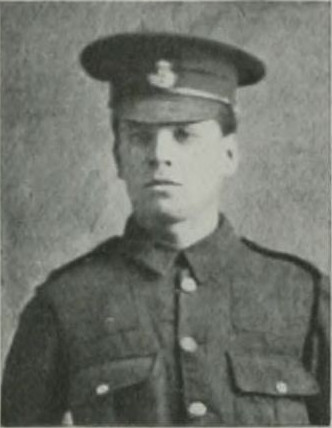
John Atcheson.
ATKIN, JOHN CLAUDE, R.M.L.I., Ch. 7931, H.M.S. Cressy; lost in action in the North Sea, 22 Sept. 1914.
ATKINS, EDMUND JOSEPH, Leading Seaman, 222044, H.M.S. Cressy; lost in action in the North Sea, 22 Sept. 1914.
ATKINS, FRANK STANLEY, Private, No. 12608, 1st Battn. Coldstream Guards, 2nd s. of William Edward Atkins, of Gravesend, co. Kent, Nurseryman and Florist, by his wife, Elizabeth Hollwey, dau. of William Hollwey, of Chilcompton, Bath; b. Gravesend, 30 July, 1892; educ. Christ Church School there, and then entered the service of the P. & O. Steamship Co. He joined the Garrison Artillery at the age of eighteen, and on the declaration of war enlisted in the Coldstreams, 15 Sept. 1914, and was killed at Cuinchy on 25 Jan. 1915, in his first action. He was buried where he fell, 500 yards from Cuinchy Church, and a cross marks the spot. He was spoken of as a keen soldier, who never failed to do his duty.
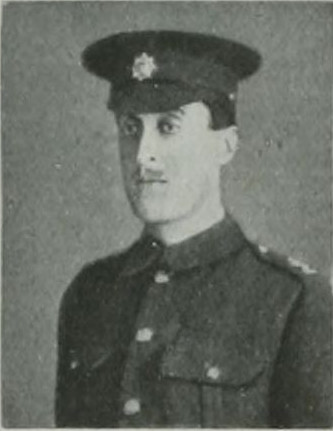
Frank Stanley Atkins.
ATKINS, JAMES, A.B. (R.F.R., B. 3519), 162449, H.M.S. Hogue; lost in action in the North Sea, 22 Sept. 1914.
ATKINS, JOHN, A.B. (R.F.R., B. 4569), S.S. 1544, H.M.S. Good Hope; lost in the action off Coronel, on the coast of Chili, 1 Nov. 1914.
ATKINSON, ALFRED GEORGE, A.B., 193724, H.M.S. Hawke; lost in action in the North Sea, 15 Oct. 1914; m.
ATKINSON, ANDREW GEORGE, Private, No. 798, 25th Infantry Battn., Australian Imperial Force, s. of George Andrew Atkinson, Solicitor, and Coroner for North Fermanagh; b. Ballyshannon, co. Donegal, 12 March, 1891; educ. Conway College and Jones School, Lispoole Abbey, Enniskillen; went to Australia; enlisted in the Australian Force in Dec. 1914, following the outbreak of war; was wounded in action in the fighting at Anzac, near Hill 971 (Sari Bair), and died in No. 19 General Hospital at Alexandria, 27 Nov. 1915; unm. Buried in Chatby Cemetery, near Alexandria (Grave No. 1883).
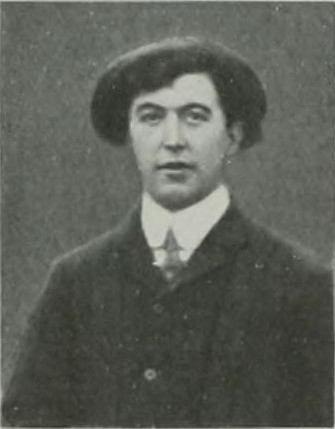
Andrew George Atkinson.
ATKINSON, WILLIAM JOSEPH, R.N.R., No. 3672C, s. of Joseph Atkinson, Merchant Seaman, by his wife, Jessie, dau. of Isaac Thomas, of London; b. Hull, 8 Aug. 1873; educ. St. Paul’s Street School, Hull; was formerly employed in the weekly boats, and was delegate for the Sailors’ and Firemen’s Union; was called up on mobilisation, 2 Aug. 1914, and lost his life on the Cruiser Hogue, torpedoed in the North Sea, 22 Sept. 1914. He m. at St. Paul’s Church, Hull, 15 Jan. 1900, Lucy Anne (7, Kingston Street, Hull), dau. of John Scarborough, of Spilsby, Lincolnshire, shoemaker, and had issue a son and six daus.: John, b. 11 March, 1910; Jessie, b. 8 Oct. 1900; Lucy, b. 17 Nov. 1901; Annie, b. 11 Aug. 1902; Muriel, b. 17 Aug. 1905: Mildred, b. 10 April 1908; and Charlotte, b. 19 Sept. 1911. Had Atkinson lived throughout the year 1915 he would have received a medal for fifteen years’ service in the R.N.R.
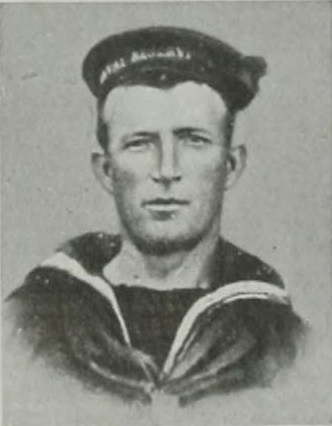
William Joseph Atkinson.
ATKINSON, WILLIAM NOEL, Capt. and Adjutant 2nd Battn. 10th Gurkha Rifles, eldest s. of the late Rev. Augustus William Atkinson, Principal of the Lawrence Memorial School, Ootacamund, by his wife, Mary Louisa (Mountain View, Ootacamund, Nilgiris, S. India), dau. of Brinard Antony Daly, Tonyville, Yercand, Shevaroy Hills, Madras Presidency, S. India; b. Calcutta, 21 Nov. 1883; educ. Bedford Grammar School and Sandhurst, from which latter he passed out fifth with honours in Feb. 1902. He was gazetted to the unattached list for the Indian Army, 21 Jan. 1903, being temporarily attached to the Durham L.I., and was posted to the 72nd Punjabis in Aug. 1904, and to the 1st Battn. of the 10th Gurkhas the following year. He was promoted Lieut. 21 April, 1905, and Capt. 21 Jan. 1912, and appointed Adjutant 1 Oct. following. He did valuable work in helping to raise the 2nd Battn. of his regt. in 1908, to which battn. he was appointed Q.M., his Col. placing on record his appreciation of all the “solid excellent work done in recruiting for the battalion.” The 10th Gurkhas were sent to Egypt in Oct. 1914, and Capt. Atkinson received his baptism of fire at Toussoum on 4 Feb. 1915, when he took part in the repulse of the attempted Turkish invasion. In May the regt. was sent to the Dardanelles; he was present during the severe fight on the 28th of that month and was killed in the trenches on the following day by a sniper while encouraging his men to repel a fierce counter-attack of the Turks on their freshly seized trenches. His death was instantaneous, and he was buried on the hillside where he fell, the grave being marked by a heap of stones and a wooden cross bearing his name, etc. “His loss is irreparable to the regt.,” wrote his Col., and he was mentioned in Sir Ian Hamilton’s Despatch of 22 Sept. 1915. “A good sportsman and a good rider, well read and untiring in energy. A thorough all round soldier, whose judgment is always sound and to the point. Is on the Staff College list, and should make in the future a most reliable Staff Officer. His profession is his first thought, and his power of imparting knowledge is quite above the normal. A most able officer, of whom I cannot too highly speak, and a general favourite,” was the verdict of one of his chiefs. He was unm.
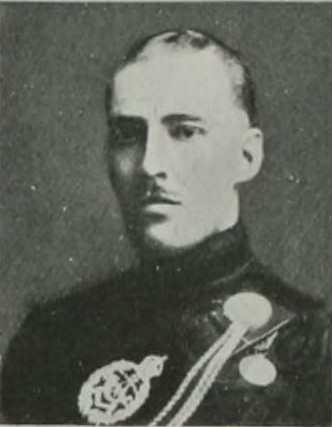
William Noel Atkinson.
ATTERBURY, WILLIAM JAMES, Private, No. 9583, 1st Battn. East Surrey Regt., eldest s. of William Atterbury, of 3, Spencer Road, Mitcham; b. Carshalton, co. Surrey, 7 Oct. 1888; enlisted 5 June, 1908; served with the Expeditionary Force in France from 7 Oct. 1914, and was killed in action there, 24 Nov. following.
ATTLEE, JAMES MERVYN, Private, No. 3152, 1st/23rd Battn. The London Regt., only surviving s. of James Attlee, of Hillcrest, Chart Lane, Reigate, formerly partner in the firm of C. & J. Attlee, Tooting Brewery, by his wife, Elizabeth, dau. of William Thomas Butler; b. Wandsworth, 6 June, 1883; educ. New College, Eastbourne, and Crystal Palace School of Engineering, where he won the medal of the School of Art, Science, and Literature. Held a good position in the Reinforced Concrete Engineering Co., but on the outbreak of war threw this up and enlisted, 19 Sept. 1914. He was killed in action at Givenchy, 26 May, 1915, in the attack on the German trenches led by Major Streatfeild, and was buried at Festubert; unm.
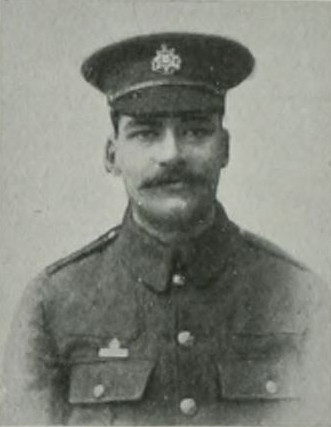
James Mervyn Attlee.
ATTREALL, ALBERT, Corpl., No 8032, 2nd Battn. The Sussex Regt.; served with the Expeditionary Force in France and Flanders; killed in action at Richebourg l’Avoué, 9 May, 1915.
ATTREE, BENJAMIN, Private, No. 8745, 2nd Battn. The Sussex Regt., s. of Cornelius Attree, of 88, Beaconsfield Avenue, Toronto, Canada; served with the Expeditionary Force in France and Flanders, and died of wounds, 27 Jan. 1915.
ATTREL, ERNEST CHARLES, Boy, 1st Class, J. 27515 (Ports.), H.M.S. Hawke, s. of Frank Attrel, of 2, Bampfield Terrace, Southern Cross, Portslade, Brighton; lost in action in the North Sea, 15 Oct. 1914.
ATTWATER, RICHARD, Leading Stoker, (R.F.R., Ch. B. 8422), 294694, H.M.S. Cressy; lost in action in the North Sea, 22 Sept. 1914.
ATTWOOD, ALGERNON FOULKES, Capt., 4th Battn. Royal Fusiliers, only s. of Llewellyn Carless Foulkes Attwood, of Pandy, co. Monmouth, and of Llay Gresford, co. Denbigh, J.P., and his wife, Rachel Edith, dau. of Arthur Alexander Corsellis, of Wandsworth, co. Surrey; b. Wandsworth, 17 May, 1880; educ. Haileybury and Christ Church College, Oxford; gazetted 2nd Lieut. (as a University candidate) in 4th Battn. Royal Fusiliers, 4 May, 1901; promoted Lieut. 15 Oct. 1904, and Capt. 1 March, 1912. In the spring of 1914, after undergoing a course of instruction in aviation at Upavon, he was recommended for an appointment in the Royal Flying Corps, but rejoined his regt. on its mobilisation in Aug. of that year. This was one of the first units of the British Expeditionary Force to arrive on the Belgian frontier in that month. He took part in the Battle of Mons, the retreat to the Marne, and the subsequent advance to the Aisne. On 14 Sept. 1914, however, he was reported severely wounded and missing, and it was afterwards ascertained that at Vailly, near Soissons, at the Battle of the Aisne, “while skilfully and gallantly withdrawing his men from an advanced position which could not be held he was hit twice in rapid succession and fatally wounded.” He d. unm., and was the only male of the last generation of the family of Attwood, formerly of Hawne House, Corngreaves Hall, and The Leasowes, Worcestershire.
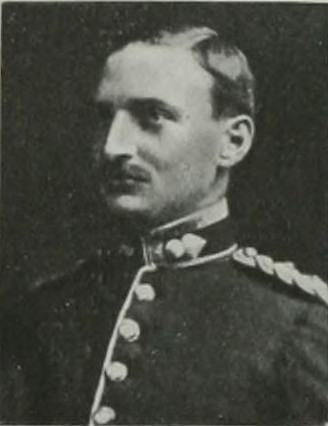
Algernon Foulkes Attwood.
ATTWOOD, ARTHUR, Private, No. G 7559, 3rd Battn. Middlesex Regt., s. of James Attwood, of Dale View, Hackney, near Matlock; served with the Expeditionary Force in France and Flanders, and was killed in action, 30 Sept. 1915.
ATTWOOD, ARTHUR CHARLES, Gunner, R.F.R., 26, Immed. Class, H.M.S. Good Hope; lost in the action off Coronel, on the coast of Chili, 1 Nov. 1914.
ATTWOOD, CHARLES, Private, No. 26, 8th Battn. (90th Winnipeg Rifles) Canadian Expeditionary Force, eldest s. of Henry Mark Attwood, Superintendent of Police, Somerton Division, Somerset, by his wife, Emma Matilda, dau. of the late James Coles Taylor, of Weston-super-Mare; b. Bishopsworth, near Bristol, 5 Oct. 1893; educ. at various schools in Nailsea, Chard, Taunton, and Somerton, and was afterwards apprenticed to Mr. J. G. Williams, Somerton, to learn the trade of printing. At the termination of his indenture he left for Canada, where at the outbreak of war he held a good position as a printer in Winnipeg, Canada. He immediately volunteered, and joined the 90th Winnipeg Rifles on 6 Aug. 1914, coming over with the first Canadian Contingent. After training at Salisbury during the winter he went to the Front, 10 Feb. 1915 (sailed from Avonmouth), was slightly wounded by a splinter at Neuve Chapelle, but, in his own words when writing home, “It was not enough to stop me,” and took part in the memorable charge at Ypres on 23 April, 1915, when the Canadians, in spite of heavy odds, recaptured the guns which the retirement of the French before the asphyxiating gas (then used for the first time) had left in the hands of the Germans. He was killed in action at Langemarck the following day, and as the trenches held by his company had to be evacuated shortly afterwards his body was not recovered. Attwood was a fine athlete and a member of the Somerton Rifle Club, and later of the Winnipeg Rifle Club. He was unm.
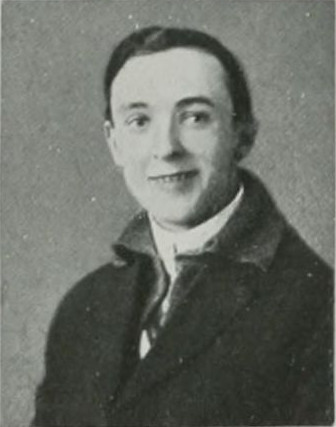
Charles Attwood.
AUBIN, ALFRED CHARLES, Capt., East Lancashire Regt. (attd. West African Field Force), s. of Alfred Jackson Aubin, of Belle Vue, Lower King’s Cliff, Jersey, by his wife, Christiana Spark; b. 16 Oct. 1878; educ. Bedford Grammar School and Oxford Univ.; gazetted 2nd Lieut. from the Militia to the East Lancashire Regt. 21 April, 1900, and promoted Lieut. 11 Sept. 1901, and Capt. 12 Feb. 1913; served in South Africa with the Mounted Infantry as a Railway Staff Officer, 1899–1902, taking part in the operations in the Transvaal and Orange Free State (Queen’s medal with three clasps and King’s medal with two clasps); employed with the West African Frontier Force (local Capt. 11 Jan. 1911) from July, 1904, to Feb. 1909, and again from Jan. 1911; killed in action at Garua, in the Cameroons, 30 Aug. 1914; unm.
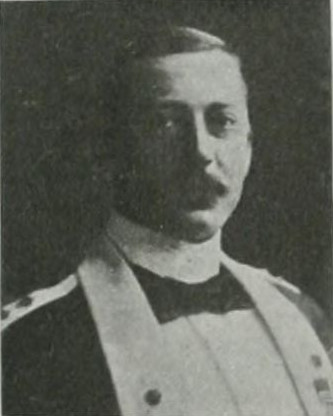
Alfred Charles Aubin.
AUSTEN, WILLIAM FRANK, Ord. Seaman, J. 13723, H.M.S. Pathfinder; lost when that ship was sunk by a mine, about 20 miles off the East Coast, 5 Sept. 1914.
AUSTIN, CYRIL FREDERIC, 2nd Lieut., 2nd Battn. Queen’s Royal West Surrey Regt., yst. s. of the late Louis Frederic Austin, of 48, Woodstock Road, Bedford Park, W., the well-known journalist, by his wife, Wilhelmina, dau. of Richard Robinson, C.E.; b. Bedford Park, W., 6 Oct. 1884; educ. in Belgium and Germany; was on Reuter’s editorial staff, and had been a member of the Artists’ Rifles since 1907. Went to the Front with them in Oct. 1914, and was given his commission as 2nd Lieut. in the Queen’s 15 Nov. following; served continuously in the trenches during the winter of 1914–15, came home for the week-end in Feb. for his marriage, returning to the Front the following day, and was killed in action at Neuve Chapelle, 10 March, 1915; buried at Laventie. While serving at the Front he sent home several graphic sketches of soldier life, which were printed as “From a subaltern in the trenches.” He was mentioned for important and dangerous reconnaissance work in ascertaining the whereabouts of enemy saps by F.M. Sir John French in his Despatch of 31 May, 1915. The Medical Officer of the battn., writing with reference to his death, said: “For some time he and his men occupied a small position of the utmost importance to our line, a position constantly sniped and bombarded by the enemy. I well remember going down to see a wounded man in this isolated post after the German trench mortars had blown the defences about their ears. Austin—wet, muddy, but cheerful—crawled out of the ruins and displayed the utmost concern about his wounded man. Brave, cool, and fearless himself, he would go out of his way to show me a safe way out of the trenches and where I could avoid ploughing through too much mud and water. I was talking to him a few minutes before he was hit, and it was a terrible blow to me that when I was called to him his condition was such that no treatment was available.” While a member of the Artists’ Rifles Sec. Lieut. Austin won cups with the Tent Pitching Team, and for five years was in the Bayonet Team, taking part in the Naval and Military Tournament at Olympia in 1913 and 1914, and winning many spoons and cups. The chairman of Reuter’s at the annual general meeting on 3 June, 1915, described him as “one of our most promising young editors.” He m. at St. Ippolyt’s, Herts, 27 Feb. 1915, Margaret Elizabeth (Gosmore, Hitchin), elder dau. of Samuel Bridgman Russell, of Gosmore, Hitchin, Herts.
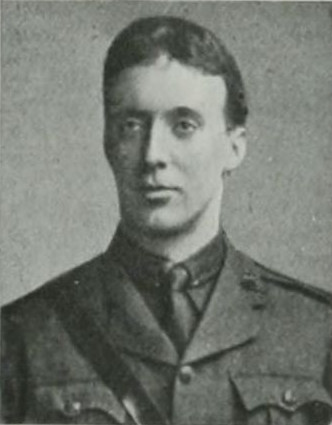
Cyril Frederic Austin.
AUSTIN, FREDERICK WILLIAM, Private, No. 9726, 2nd Battn. Royal Scots, s. of Edward Austin; b. Birmingham, 13 Dec. 1884; educ. St. Mary’s Schools there; served seven years in India; went to France with the first Expeditionary Force, and was killed in action during the retreat from Mons, 26 Aug. 1914; unm.
AUSTIN, GEORGE, Stoker, R.N.R., 514 V., H.M.S. Cressy; lost in action in the North Sea, 22 Sept. 1914.
AVELING, LANCELOT NEVILLE, Lieut., 1st Battn. Connaught Rangers, only s. of Neville Clifford Aveling, temporary Capt. R.F.A., by his wife, Evelyn Mary, of St. Germans Hall, Norfolk, dau. of Capt. Hurton Barker, of Needham House, near Wisbech, and grandson of Stephen Thomas Aveling, of Restoration House, Rochester; b. Rochester, 20 March, 1892; educ. Gresham’s Holt School; was for four years in the O.T.C., and shot at Bisley for school; joined the Surrey (Queen Mary’s Own) Yeomanry 1911, and the Special Reserve of Officers (3rd Connaught Rangers) 13 June, 1913, and passed third in qualifying examination for Regular Army on mobilisation, being gazetted 1 Sept. He left with the Expeditionary Force for the Front at the end of August; was wounded (two bullet wounds) at the Battle of the Aisne, 14 Sept.; again at Ypres, 7 Nov. (mentioned in Despatches, Feb. 1915); and a third time at the same place, 26 April, and d. in hospital at Hazebrouck three days later, being buried in the cemetery there; unm. His colonel wrote: “He was such a splendid officer and so charming a fellow. He is, indeed, an almost irreparable loss to my battalion.... He came to us with a very high reputation from the 2nd Battalion, and more than made it good. Gen. Egerton had especially asked for your boy’s services for the day as orderly officer.”
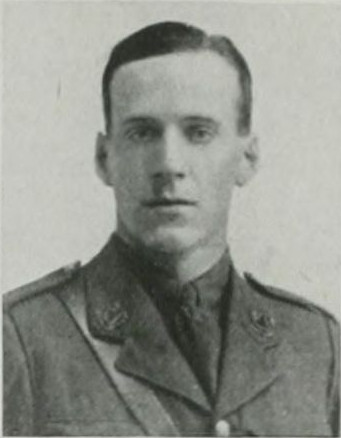
Lancelot Neville Aveling.
AVERILL, ALBERT, Private, No. 9974, 1st Battn. North Staffordshire Regt., s. of Alfred John Averill, Officer’s Waiter, 11th South Staffs. Regt., by his wife, Hannah, dau. of Hiram Pritchard; b. Hanley and Stoke (N. Stafford), 6 Aug. 1891; educ. Cauldon Road Elementary School there, enlisted in Sept. 1913; served with the Expeditionary Force in France, and was killed in action at Armentières, 2 Nov. 1914; unm.
AVIS, HARRY, Stoker, 1st Class (R.F.R., B. 4659), S.S. 103859, H.M.S. Good Hope; lost in the action off Coronel, on the coast of Chili, 1 Nov. 1914.
AVIS, RALPH CUTTS, Yeoman of Signals (R.F.R., Ch. B. 6683), 191425, H.M.S. Cressy; lost in action in the North Sea, 22 Sept. 1914.
AVIS, WILLIAM, Sergt., R.M.L.I., Ch. 10913, H.M.S. Pathfinder; lost when that ship was sunk by a mine, about 20 miles off the East Coast, 5 Sept. 1914.
AWDRY, CAROL EDWARD VERE, 2nd Lieut., 2nd Battn. Royal Munster Fusiliers, s. of the Rev. Vere Awdry, Vicar of Ampfield, Romsey, by his wife, Mary Louisa, dau. of Edward Desborough Man; b. Broad-Hinton Vicarage, co. Wilts, 11 June, 1894; educ. Marlborough House School, Hove (April, 1903–Dec. 1907), Marlborough College (Foundation Scholar, Jan. 1908–June, 1912), and Royal Military College, Sandhurst (G Coy., June, 1912–June, 1913); gazetted 2nd Lieut. to the Munster Fusiliers, Sept. 1913; joined the 2nd Battn. at Aldershot, 15 Oct. 1913; went to the Front with them 13 Aug. 1914, and was killed in action near Etreux, 27 Aug. 1914, during the retreat from Mons. Writing to his father, the senior surviving officer, Capt. H. S. Jervis, who was himself taken prisoner, said: “Your boy lost his life that day while leading his men against overwhelming odds. The Army was at the time withdrawing, and the battn. was occupying an important position covering the movement. In order to better safeguard the retreat of the remainder our withdrawal was delayed by some hours. We were attacked on three sides, and when we moved off finally it was found that the greatly superior forces of the Germans had enabled them to cut us off from our main body. Faced by odds of 6 or 8 to 1 we put up the best fight we could until compelled by fire from all sides to surrender. C Coy—to which your son belonged, of course—was chosen to watch our right rear (on the north-east) as the battn. withdrew to the south, and Capt. Rawlinson selected your son to take his platoon (No. 9) out to an exposed position the far end of a village named Fesmy, through which our line of retreat lay. He performed the duty in a most able manner, and although harassed with a nasty fire, he held on until the battn. withdrew, and then rejoined with his little force intact. It was a commendable performance, worthy of one of far greater age and experience than your son. His company then continued the withdrawal until we came to the next village (Oisy), when it was detailed to act as rearguard. Again they were sharply engaged by largely increased forces this time, but they gallantly held their own, your son again holding a detached position at an important cross roads, and again the battn. was able to withdraw in safety. Your boy’s party was the last to come in, and though he lost a few men he saved many more. It was now six o’clock (p.m.), and it was now discovered that we were cut off from the main body. The battn. shook out to the attack in an endeavour to break through, every officer doing good work, your son no less than the others. With sword drawn he led his men in support of the attack which was in progress in front (to the south), and as he advanced he fell shot through the lungs. His death was painless and practically instantaneous. He was buried with his eight brother officers who fell the same day, 28 Aug. 1914. I write as a prisoner in German hands. The grave is near the railway station of Etreux, 400 yards to north of the level-crossing, right-hand side of the road.” It seems clear that from the first the situation was so critical that to enable the Army to escape the sacrifice of a regt. might possibly prove to be inevitable. Major Charrier, in command of the Munsters, fully recognised this, and, according to a survivor, in the absence of definite orders to retire, felt it his duty to hold on to the last at all costs. Though they had had two little “scraps” with the Germans lasting a few minutes on 24 and 26 Aug., the Munsters’ first serious fighting was on the 27th. The morning was very misty, and while waiting for the Germans a German aeroplane came over them, quite close, about 10 a.m. It flew back at once, and shortly afterwards a heavy fire was opened on them, rendering their position untenable. They therefore retired through Fesmy, where Awdry with his platoon held a detached position and succeeded in holding the Germans back till the regt. was safe, and then rejoined. He received a slight flesh wound here. Next they came to Oisy. Here they had to cross a canal, a little distance in rear of which was an important cross roads. Attacked in flank, in danger of being cut off in front, a cavalry attack now threatened them in rear, and Awdry was sent to the cross roads with his platoon. He left about 12 men under a sergt. at the canal bridge while he with the rest went forward and succeeded in holding the Germans at bay for some three-quarters of an hour. The sergt. and nearly all the detachment at the bridge were killed, and a corpl. went forward to get instructions, and as he got up he saw Awdry put his hand up to his chest and fall. Private C.... says he was hit high up on the left side. The corpl. thought he was killed, and as nearly all that party were hors de combat he returned to the bridge, where, finding no one left, he thought all was over and escaped as best he could with a few stragglers who joined him and worked round to St. Quentin, where they eventually joined the remnant of the regt. (about 260) who had escaped destruction or capture. Awdry was not, however, killed then, and held on; but his numbers were so reduced that he signalled for reinforcement, and though none could be sent then, he refused to leave the post till assured that the battn. was safe. Eventually a few men from another platoon came to his help, and finally they retired and rejoined, his party being the last to come in. Then about 6 p.m. the battn. found themselves attacked on three sides, and it was now in the last desperate attempt to break through that Awdry got his fatal wound, in the forehead. Private C. ... was again close to him, and though himself slightly wounded managed to get him back near the road, and was putting his own field dressing on the wound when his left shoulder was shattered and he fell over and Awdry fell on the top of him, and so about an hour later died in his arms. They lay there all night till a burial party composed of captured men of the Munsters under German guards brought them in. The nine officers of the Munsters who fell that day were buried in one grave, and the N.C.Os. and men in another, side by side, near the railway station of Etreux, on the right hand side of the road, 400 yards north of the level-crossing. A German Pastor read a funeral service over them and the Germans put up crosses to mark the spot. Two memorial windows have been put up in St. Mark’s Church, Ampfield, in memory of 2nd Lieut. Awdry and officers, N.C.O.s and men of the Munsters who fell that day.
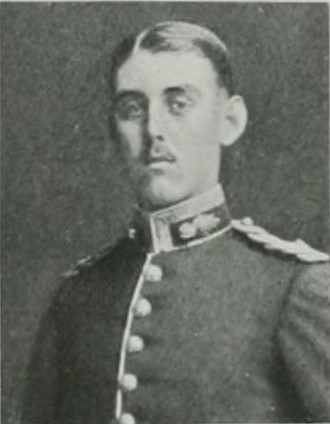
Carol Edward Vere Awdry.
AXON, WALTER HENRY, Ship’s Corpl., 1st Class, R.F.R., A. 1230, late Ports., A. 2045, 128826, H.M.S. Hawke; lost in action in the North Sea, 15 Oct. 1914; m.
AXUP, VICTOR EMMANUEL, Leading Signaller, 215587, H.M.S. Pathfinder; lost when that ship was sunk by a mine, about 20 miles off the East Coast, 5 Sept. 1914.
AYLING, WILLIAM, L.-Corpl., No. 9330, 1st Battn. Hampshire Regt., s. of Horace Ayling, of Stubbington Lane, Stubbington, Fareham, Hants, Cowman, by his wife, Anne, dau. of Edward Etherington; b. Hindhead, co. Surrey, 18 Dec. 1895; educ. Fareham and Crofton Elementary School; enlisted April, 1912; went to France, 12 Aug. 1914; was seriously wounded near Ypres, 7 Nov. 1914, by a wounded Prussian, and was invalided home; but returned to the Front in May, appointed L.-Corpl. June, and was killed in action at Ypres, 9 July, 1915; unm. His commanding officer wrote that “he was killed instantly by a shell which burst in a trench”; adding, “He was an excellent fellow.... He was buried behind the trench. I am afraid it was only a rough grave, as we left that night.”
BABER, THOMAS EDWARD, Petty Officer (N.S.), 154395, H.M.S. Hawke; lost in action in the North Sea, 15 Oct. 1914; m.
BACHELOR, FRANK, Gunner, R.M.A., 12282, H.M.S. Hogue; lost in action in the North Sea, 22 Sept. 1914.
BACK, JOHN RICHARD, A.B. (R.F.R., Ch. B. 2843), 199592, H.M.S. Cressy; lost in action in the North Sea, 22 Sept. 1914.
BACON, BASIL KENRICK WING, Major, D Coy., 1st Battn. Worcestershire Regt., 4th s. of Kenrick Verulam Bacon, of The Lodge, Hale, Farnham, J.P., late Capt. Worcestershire Regt. (with which he served in the Indian Mutiny, 1857–8), by his wife, Jessie, dau. of the late T. Wing, Gray’s Inn; b. Eastbourne, 28 May, 1872; educ. United Services College, Westward Ho! was gazetted as 2nd Lieut. to the 2nd Battn. of the Worcesters, from the Militia, 4 Oct. 1893, and promoted Lieut. 14 Dec. 1896, and Capt. 14 Feb. 1900, and Major 1 April, 1909. When the Boer war broke out he was with his regt. in Bermuda. They came home to Aldershot in order to mobilise, and then went to South Africa. He served with the 2nd Battn. in the South African war of 1899–1902, took part in the operations in Cape Colony, south of the Orange River, 1899–1900, including action at Colesberg (1 Jan.-12 Feb.); in the Transvaal, west of Pretoria, and Orange Free State, May-Feb. 1901, and in the Orange Free State, Feb.-May, 1902; was mentioned in Despatches [London Gazette, 10 Sept. 1901], and obtained the Queen’s medal with three clasps, and the King’s medal with two clasps. After the war he continued to serve with the 2nd Battn. in South Africa, subsequently moving with it to Ceylon and thence to India. He obtained his Majority in the 3rd Battn. at Dover, but afterwards was posted to the 1st, which was at Cairo when the European War broke out. He was killed in action at Neuve Chapelle, 13 Dec. 1914; unm. A memorial brass was erected in Hale Parish Church by the N.C.Os. and men of his company “in token of their esteem and affection.”
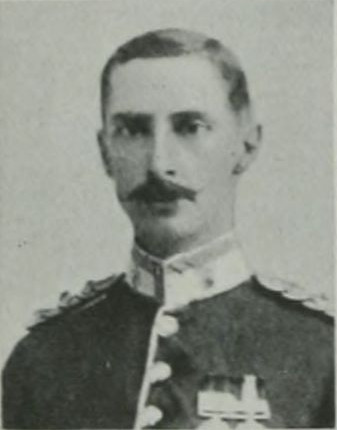
Basil Kenrick Wing Bacon.
BADDELEY, EDWARD LAWRENCE, Major, 8th Battn. Lancashire Fusiliers (T.F.), eldest s. of the late John Bratton Baddeley, of Whalley, co. Lancaster, M.D., by his wife, Marion (afterwards wife of Charles Edward Emmet, of Southport), dau. of (—) Brewer; b. Whalley, 12 July, 1870; educ. at Macclesfield, and was admitted a solicitor in June, 1893, but did not practise, being secretary to Messrs. W. T. Glover & Co., of Trafford Park, Manchester, Cable Makers. Major Baddeley joined the Halifax (1st Volunteer Battn. Duke of Wellington’s) Volunteers as a Private in 1888, and obtained his commission, 21 March, 1900, in the 3rd Volunteer Battn. The King’s Liverpool Regt., and afterwards transferred into the Lancashire Fusiliers; Southport Volunteers, 13 June, 1903; and on 24 Jan. 1914, obtained his majority in the 8th Territorial Battn. of the Lancashire Fusiliers. On the outbreak of war he volunteered for Imperial service, went out to Egypt with the Mediterranean Expeditionary Force, and was killed in action at Gallipoli, 6 June, 1915, being then second in command. He helped to form one of the first cycle corps in England. He held the Volunteer Long Service medal. Major Baddeley was a leading member of the Southport Yachting Club. He m. at Halifax, 4 July, 1911, May, only dau. of John Oakley, of Halifax, M.D., J.P.; s.p.
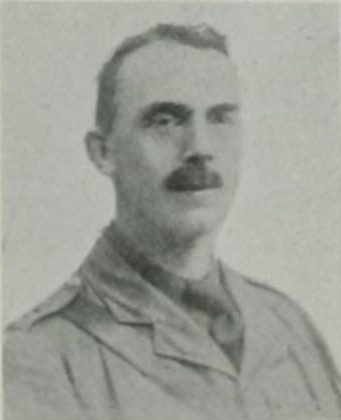
Edward L. Baddeley.
BADDELEY, LIONEL RICHARD LOGAN, Corpl., No. 11/566, Queen Alexandra’s 2nd Squadron, Wellington Mounted Rifles, New Zealand Expeditionary Force, s. of Richard Baddeley, of Kakatahi, Wanganui, New Zealand, Runholder, by his wife, J..., dau. of Thomas Logan Williamson, grandson of Capt. Frederick Clinton Herman Stuart Baddeley, 40th Regt., and great-grandson of General Frederick Henry Baddeley, R.E.; b. Wanganui, New Zealand, 4 Dec. 1887; educ. Wanganui College. On the outbreak of war he joined the New Zealand Expeditionary Force, Aug. 1914, and was killed in action at the Dardanelles on 20 May, 1915; unm.
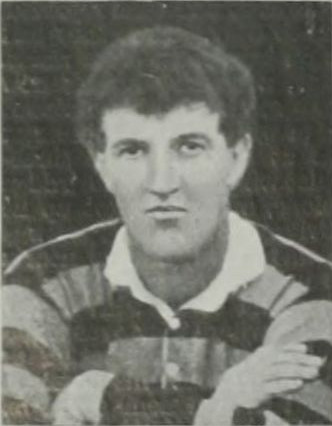
Lionel R. L. Baddeley.
BADDER, SIDNEY JOSEPH, A.B., J. 6017, H.M.S. Hogue; lost in action in the North Sea, 22 Sept. 1914.
BADENOCH, JAMES, Leading Stoker, R.F.R., Ch. B. 9396, 296586, H.M.S. Cressy; lost in action in the North Sea, 22 Sept. 1914.
BAGLEY, ARTHUR DAVIES, Private, No. 107, 5th Battn. Australian Imperial Force, s. of Frederick Bagley, Master Draughtsman, by his wife, Ann, dau. of the late Stephen Davies; b. Broseley, co. Salop, 22 Nov. 1889; educ. there, and emigrated to Australia in 1911. At the outbreak of war he volunteered, and was killed in action during the landing operations in Gallipoli, 25 April, 1915; unm. A comrade writing said that he was shot through the head by a sniper whilst going to the assistance of a wounded officer.
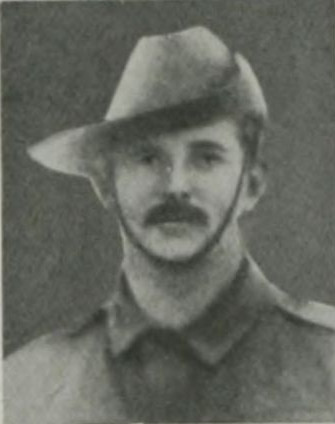
Arthur Davies Bagley.
BAGSHAWE, LEONARD VALE, Capt., 3rd Battn. King’s Own Scottish Borderers, yr. s. of Rev. William Vale Bagshawe, of Moorlands, Calver, Sheffield, formerly Assistant Master at Repton School, Master of the Uppingham Lower School, Vicar of Isel and Rector of Pitchford, by his wife, Alice Katharine, dau. of Edward Otto Partridge; b. Highfield, Uppingham, 30 Nov. 1877; educ. Lower School, Uppingham, Shrewsbury, and Christ Church, Oxford. After taking his degree he entered the service of the Bombay Burma Trading Corporation, and later became one of their forest managers. Being home on leave when the war broke out he applied at once, with three other members of the company’s staff, for a commission in the King’s Own Scottish Borderers, and was gazetted 2nd Lieut. 30 Aug. 1914, and promoted Lieut. 9 Nov. following. He trained at Portland and Sunderland, left with a draft on 4 Dec., and was attached to the 1st Battn. Northumberland Fusiliers near Ypres, where, having acted as Capt. of his company for several months, he was gazetted to that rank 5 May, 1915. He was killed in action at Hooge, in Flanders, 16 June, 1915; unm. Lieut. Edward Partridge wrote from Ypres: “His example enabled his men to carry the position and retain it against counter attacks, and they all speak so highly of his pluck and resource.” And Private Pike, Northumberland Fusiliers, from the Base Hospital at Sheffield: “I was with your son when he got killed in the great charge at Hooge, near Ypres, on 16 June. I was very proud to be led by such a brave and noble man—for he led the company as if he were in the streets of England.” Private Pike also said that “Capt. Bagshawe and his men were in the fighting in March at St. Eloi, St. Julien, and Hill 60. One night he had 18 men in a trench which was shelled by the Germans preparatory to an attack; 16 men were killed or wounded. Capt. Bagshawe mounted the parapet and fired into the attacking enemy. He and his two men held the trench through the night until daylight caused the Germans to relinquish the attack.” The adjutant of his Battn. said: “... He was as popular with his men as with the officers.... He was from the first in a responsible position, which he filled with great energy and tact.... We were attacking, and I heard that he got into the first line of the enemy’s trenches, and I think he was hit in the actual assault. He will have been buried close to where he fell, which is just south of the Ypres-Roulers Railway, about three miles east of Ypres.” Capt. Bagshawe was a keen and successful all-round sportsman. At college he rowed in the eight and represented Christ Church in the crew which competed for both Thames and Ladies in 1897 at Henley. They were beaten in the semi-final of the Ladies Plate by Emmanuel, and in the final of the Thames Cup by Kingston after a good race.
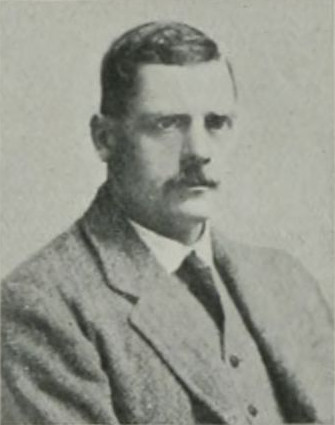
Leonard Vale Bagshawe.
BAILEY, ARCHIBALD ERNEST, L.-Corpl., No. 9592, 2nd Battn. East Kent Regt., s. of Samuel Bailey, of 16, Blackwall Road, Willesboro Lees, near Ashford; served with the Expeditionary Force in France; killed in action, 28 Sept. 1915.
BAILEY, ARTHUR EDWARD, Private, No. 9703, 1st Battn. Coldstream Guards, s. of William Bailey, of Hyam Cottages, Malmesbury, Wilts., Farm Labourer, by his wife, Annie, dau. of the late Matthew Clark, of Malmesbury; b. Brokenborough, near Malmesbury, co. Wilts., 2 Aug. 1890; educ. Malmesbury National School; enlisted 31 July, 1912, and was killed in the fighting round Ypres, Oct. 1914; unm.
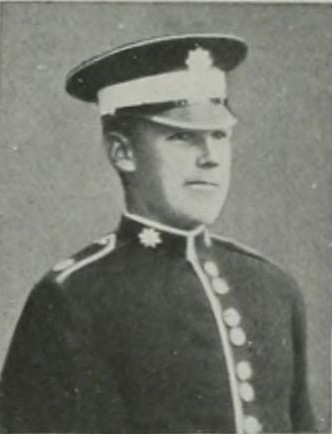
Arthur Edward Bailey.
BAILEY, FREDERICK JOSEPH, Acting Sergt.-Major, No. 4640, 1/5th Battn. The Royal Scots (T.F.); killed in action at the Dardanelles, 12 May, 1915.
BAILEY, GEORGE HENRY, Leading Seaman, 220337, H.M.S. Pathfinder; lost when that ship was sunk by a mine, about 20 miles off the East Coast, 5 Sept. 1914. His brother, Wallace J. Bailey, was lost in the Cressy.
BAILEY, JOHN JAMES, Private, No. 2280, 7th Battn. Durham L.I. (T.F.), only s. of the late (—) Bailey; b. Sunderland, co. Durham, ... Aug. 1887, and was employed at Foster’s Forge, Sunderland; joined the 7th (Territorial) Battn. of the Durham L.I., and trained at Gateshead; volunteered on the outbreak of war, and was killed in action “somewhere” in France, 15 May, 1915. He m. at Sunderland, 24 Aug. 1912, Elizabeth Jane (who died 16 June, 1914), dau. of William Chambers Farley, of Sunderland, Machine Driller, and had an only child, Catherine (15, Victoria Street, Southwick, Sunderland), b. 9 Jan. 1913.
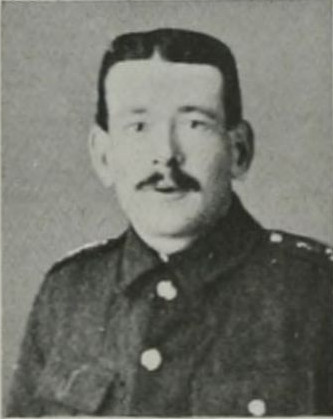
John James Bailey.
BAILEY, THOMAS DISMORE, Private, No. 3189, B Coy., 1/5th Battn. Duke of Wellington’s West Riding Regt., yr. s. of Samuel Bailey, Coachman to Mr. J. H. Sykes, of Bryancliffe, Edgerton, Huddersfield, by his wife, Selina, dau. of Thomas Dismore; b. Marsh, Huddersfield, 29 Dec. 1895; was a cutter’s apprentice at Messrs. Bairstow, Sons & Co., Ltd., Clothiers, but on the outbreak of war joined the Army as a Stretcher-bearer and First Aid Ambulance man, 6 Oct. 1914, and was killed while attending to the wounded at Fleurbaix at 12.15 p.m., 14 June, 1915; buried at La Croix Marchal; unm. Writing to his parents his Commanding Officer, Capt. J. E. Eastwood, said: “We had just had one man badly wounded, and your son as a stretcher-bearer was attending to him, when I heard that we had another man wounded higher up the trenches, so your son set off to attend to him, and while doing so was shot dead on the spot.” And Lieut. A. L. McCully, of the R.A.M.C., wrote: “As you know, I have not been very long in charge of the Ambulance Section, but I have heard nothing but praise of your son from Sergt. Flood and his late comrades. He was always willing to do his share of whatever was in hand, and the fact of his at once going out to a dangerous place to help a wounded man shows that he had the very highest conception of what his duty was.” He was a member of the choir at Holy Trinity, Huddersfield.
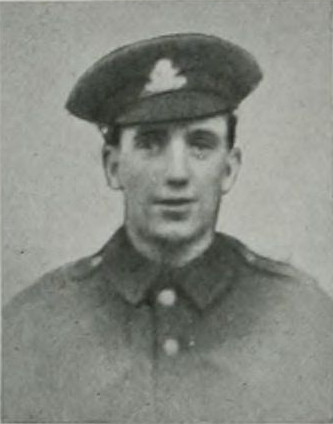
Thomas Dismore Bailey.
BAILEY, WALLACE JAMES, Seaman, R.N.R., 2467A, H.M.S. Cressy; lost in action in the North Sea, 22 Sept. 1914. His brother, George Henry, was lost in the Pathfinder.
BAILEY, WILLIAM, Stoker, 1st Class (R.F.R., B. 7729), S.S. 103118, H.M.S. Aboukir; lost in action in the North Sea, 22 Sept. 1914.
BAILEY, WILLIAM, Gunner, R.M.A. (R.F.R., B. 576), H.M.S. Aboukir; lost in action in the North Sea, 22 Sept. 1914.
BAILEY, WILLIAM HENRY, Stoker, 1st Class (R.F.R., Ch. B. 9459), S.S. 106853, H.M.S. Cressy; lost in action in the North Sea, 22 Sept. 1914.
BAILLIE, DOUGLAS ANDERSON, Leading Seaman, 230740, H.M.S. Aboukir; lost in action in the North Sea, 22 Sept. 1914.
BAILLIE, SIR GAWAINE GEORGE STUART, 5th Bart., of Polkemmet, Lieut., 2nd Dragoons (Royal Scots Greys), elder s. of the late Sir Robert Baillie, 4th Bart. (who commanded the Australian Squadron of the King’s Colonials), by his wife, Isabel (Polkemmet, Whitburn, Linlithgow), dau. of the late David Elliot Wilkie, of Ratho Byres, Midlothian; b. Victoria, Australia, 29 May, 1893; educ. St. David’s, Rufalt, Eton and Sandhurst; gazetted to the 2nd Dragoons, 4 Sept. 1912, being stationed at York till the war broke out. He went to France with the Expeditionary Force Aug. 14; was promoted Lieut., and was wounded in the hand in Aug., but insisted on returning to the firing line, although unable to use it. He was killed in action at Rebais on 7 Sept. 1914, when the onward rush of the Germans was stopped at the Marne. In the words of a brother officer: “Unable to draw any weapon himself, he died charging the enemy like the gallant English gentleman he was.” His body was brought home and buried in the family burial ground: unm. Numerous letters were received from his brother officers and the men of the regt. testifying to his gallantry and to the high esteem and popularity in which he was held by the whole regt.
BAILLIE, IAN HENRY, Capt., 4th Battn. Cameron Highlanders (T.F.), 3rd s. of the late Lieut.-Gen. Duncan Baillie, formerly of the Royal Horse Guards, by his wife, Anna Glentworth (Lochloy, Nairn, N.B.), dau. of the Rev. Gustavus Burnaby, of Somerby Hall, Leicestershire; b. Househill, co. Nairn, 3 Sept. 1870; educ. Wellington College; was for some time a Lieut. in 1st Lanark Rifle Volunteers, and on the outbreak of war was gazetted Capt. to the 4th Battn. of the Cameron Highlanders, 20 Nov. 1914. He was wounded at Festubert, 18 May, 1915, and d. in hospital at Rouen four days later; unm. An elder brother, Capt. Alan Baillie, Seaforth Highlanders, was killed at Atbara in 1898, and another brother, Major Hugh Baillie, D.S.O., of the Seaforth Highlanders, was wounded in the early part of the war, and has now (1916) a staff appointment abroad. A third brother, Major Duncan Baillie, 2nd Lovat Scouts, is serving abroad with the Mediterranean Expeditionary Force.
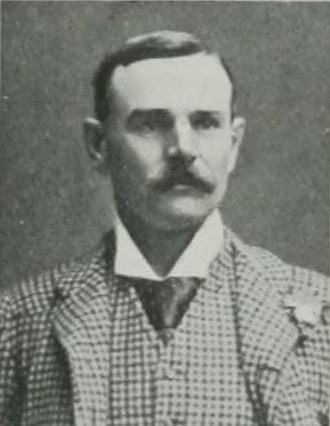
Ian Henry Baillie.
BAILWARD, THEODORE, Lieut., 26th King George’s Own Native L.I., 3rd s. of Thomas Henry Methuen Bailward, of Horsington Manor, co. Somerset, B.A. Oxford, J.P., C.C., by his wife, Margaret Eliza, dau. of Henry Hobhouse, of Hadspen House, Castle Cary, J.P.; b. Horsington Manor, 9 March, 1888; educ. Summerfields, near Oxford, Rugby and Sandhurst; received commission in Somerset L.I., then quartered at Poona, 1907. The following year he passed into the Indian Army, joining the 26th Native Cavalry at Bangalore, and in 1913 was appointed A.D.C. to the Governor of Madras (Lord Pentland), and became Master of the Ootacamund Hounds, which office he held until the outbreak of war, when he rejoined his regt. He was attached to the 7th Lancers, and with them joined the Indian Expeditionary Force in the Persian Gulf in March, and was killed, with two other officers and some men, at Imanzadeh Ali Ibuhussin, 18 miles due east of Awaz, when on a reconnaissance, 29 April, 1915. He was buried there; unm.
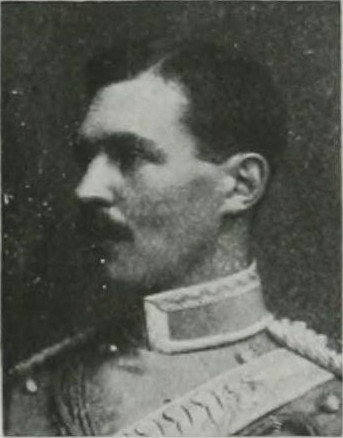
Theodore Bailward.
BAINBRIDGE, THOMAS LINDSAY, Lieut., 5th Battn. Northumberland Fusiliers, attd. Northumbrian Signal Coy. R.E., 3rd s. of the late Thomas Hudson Bainbridge, of Eshott Hall, co. Northumberland; b. Holmwood, Newcastle-on-Tyne, 24 April, 1882; educ. privately and Dr. Osborn’s, Colwyn Bay; qualified as an electrical engineer, and then entered the shipbuilding yard of Messrs. Swan, Hunter & Wigham Richardson, at Wallsend. He received his first commission in 1913 as commander of a signalling section, and was in the Special Reserve of Officers. On the outbreak of war he volunteered for Imperial service, and after being stationed at Blyth left for the Front about the middle of April, 1915, and was killed in action at Ypres on the 26th of that month; unm. The following is an extract from a letter read at the Newcastle Wesleyan Synod at Durham on 13 May: “Last night, after dark, we buried Lieut. Bainbridge and others. It was the most impressive ceremony I have ever attended. It was a beautiful moonlight night as we carried the bodies down the lines wrapped in blankets and lying on stretchers. As we passed each entrenched battn. the men stood to ‘Attention.’ At about a quarter of a mile from the trenches, on a piece of ground where about six other officers lie buried, we laid them to rest. The guns were roaring on every side, and the huge fire-balls the Germans threw into the air illuminated the sky. Lieut. Bainbridge was a plucky and good fellow.” Prior to Lieut. Bainbridge being gazetted to the 5th Battn. Northumberland Fusiliers he had held a commission in the Engineers Volunteers, and subsequently was a Cadet in the Senior Division, Durham University O.T.C. During his service in the 5th Battn. Northumberland Fusiliers he endeavoured to qualify himself in every way to become as efficient a soldier as possible, and with this in view he did a month’s tour of duty at the regimental depôt, receiving a good report on his work during that tour. He also prepared himself to qualify, and qualified in examination “B” for promotion to Capt. He took a month’s course in signalling at Bulford Camp, at the end of which he qualified most satisfactorily. After this he became battn. signalling officer, and never spared himself in bringing his signallers into as high a state of efficiency as possible in all branches of military signalling. He also became interested in “wireless,” and provided himself with an apparatus, which he studied with great zeal and ability. When the war broke out he commanded the Northumbrian Divisional Signalling Coy., and was consequently attached to the Northumbrian Divisional R.E. He was a popular officer with all ranks, was a keen rifle shot, and in 1913 won the revolver championship of Northumberland. He was also a very keen motorist, and, in fact, an all-round sportsman.
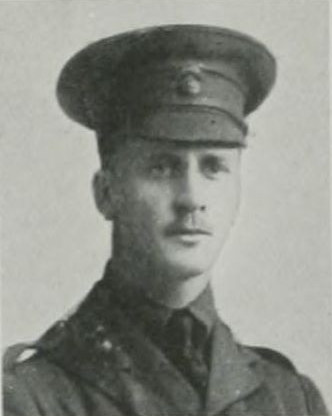
Thomas L. Bainbridge.
BAIRD, COLIN, Sergt., No. 2768, D Coy., 1st/14th Battn. (London Scottish) The London Regt., s. of Thomas Baird, of 25A, Wood Street, E.C., by his wife, Lucy Maria, dau. of Mark Williams; b. West Norwood, 5 Nov. 1886; educ. Lancaster College, West Norwood; killed in action near Loos, 13 Oct. 1915, while in charge of a party sent out to cut wire entanglements; unm.
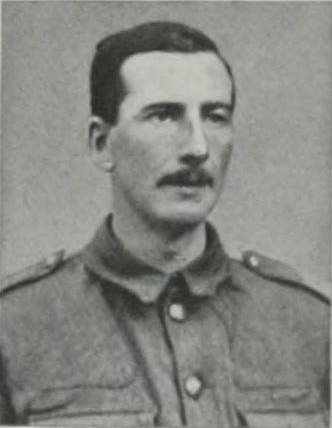
Colin Baird.
BAIRD, STANLEY CHARLES, Probationary 2nd Cook’s Mate, No. Ch. M. 7600, H.M.S. Cressy, 4th s. of George Alexander Baird, of 4, Pleasant View, Farnborough, of the Metropolitan Water Board, by his wife, Fanny, dau. of Francis Balchin; b. Farnborough, co. Kent, 11 June, 1893; educ. Farnborough Board School; joined the Royal West Kent Territorials, 1912; entered the Navy, 12 May, 1914; lost in H.M.S. Cressy in North Sea, 22 Sept. 1914; unm.
BAIRD, WILLIAM FRANK GARDINER, Capt., 4th Battn. Bedfordshire Regt., yr. s. of Sir William James Gardiner Baird, of Saughton Hall, Midlothian, 8th Bt., J.P., Lieut.-Col. Lothians and Berwickshire Imperial Yeomanry, formerly 7th Hussars, by his wife, the Hon. Arabella Rose Evelyn Hozier, dau. of James Henry Cecil, 1st Lord Newlands; b. Inch House, Liberton, Midlothian, 15 April, 1885; educ. Castlemount, Eton and Sandhurst. Served in the 7th Dragoon Guards and Scots Guards. On the outbreak of war he received a commission from the Reserve of Officers as Capt. in the 4th Bedfordshires, 11 Aug. 1914, and went to the Front attached to the 1st Lincolnshire Regt. He d. 5 Nov. 1914, in hospital at Boulogne, from wounds received in action, and was buried there. Capt. Baird m. at Ware, 24 Nov. 1910, Violet Mary, dau. of the late Richard Benyon Croft, of Fanham’s Hall, and had three children: James Richard Gardiner, b. 12 July, 1913; William Henry Gardiner, b. 11 Oct. 1914; and Lilias Mary, b. 26 Sept. 1911.
BAKER, EDWARD JAMES, P.O., 1st Class, 164169, H.M.S. Pathfinder; lost when that ship was sunk by a mine, about 20 miles off the East Coast, 5 Sept. 1914.
BAKER, EDWIN JOSEPH, A.B. (R.F.R., B. 6773), 189515, H.M.S. Hogue; lost in action in the North Sea, 22 Sept. 1914.
BAKER, FREDERICK WILLIAM, Sergt., No. 44, 54th Field Coy., R.E., s. of the late Frederick William Baker, of 118, Denmark Road, and Commercial Road, Lowestoft, General and Shipsmith, by his wife (—), dau. of (—) Naunton; b. Lowestoft, 8 Dec. 1876; educ. there; was apprenticed to his father, and was an old Volunteer in the Lowestoft Rifles; joined the R.E. as a sapper at Chatham, 2 March, 1895; served in the Bermudas, Canada, at Aldershot and in South Africa, and with the Expeditionary Force in France; killed in action near Fleurbaix, 7 Jan. 1915, being shot by a sniper. He was buried at Fleurbaix on the Bois Grenier Road. Sergt. Baker held the Long Service and Good Conduct medal with the crossed guns, and Lieut.-Col. D. S. MacInnes, D.S.O., wrote: “Sergt. W. Baker, when I knew him, was section sergt. of the 54th Field Coy., R.E. He was particularly capable and resourceful, and inspired great confidence in the men of his section. His bravery when making wire entanglements in the face of the enemy, and in other dangerous work was beyond all praise.” He m. at Broadstairs, 26 Nov. 1904, Maud Elizabeth (The Ridge Cottage, Crawley Hill, Camberley), dau. of William Fisher, Dockyard Pensioner, and had issue three sons and two daus.: Frederick William Naunton, b. 25 Nov. 1906; Montague Reginald, b. 1 Aug. 1908; Robert Naunton, b. 15 July, 1913; Elsie Maud, b. 29 Sept. 1905; and Irene Naunton, b. 23 Oct. 1910.
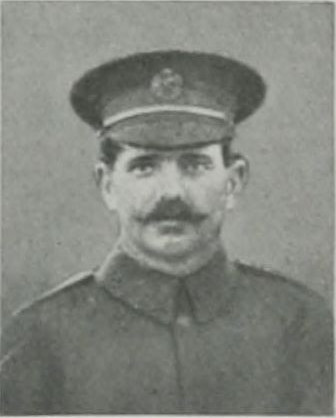
Frederick William Baker.
BAKER, GEORGE BRANDON, Elect. Art., 3rd Class, M. 399, H.M.S. Pathfinder; lost when that ship was sunk by a mine, about 20 miles off the East Coast, 5 Sept. 1914.
BAKER, HENRY TILLET, Armourer, 345914, H.M.S. Good Hope; lost in the action off Coronel, on the coast of Chili, 1 Nov. 1914.
BAKER, JAMES HENRY, Rifleman, No. 971, 8th Battn. (Post Office Rifles) The London Regt., 2nd s. of Samuel Baker, of Frinton-on-Sea, Essex, ex-Police Constable, by his wife, Harriet, dau. of Thomas Durrance; b. Stoke-by-Nayland, Suffolk, 21 Aug. 1875; educ. St. Andrew’s School, Clapham. He was a postman, and had done 25 years’ service at Brixton. He joined the old 24th Middlesex Volunteers in 1896, and afterwards passed into the Post Office Rifles. On the outbreak of war he volunteered with his battn. for foreign service, and d. of wounds received in action at Festubert, 26 May, 1915. A comrade wrote “he was wounded severely in my company on Wednesday night (25th) at Festubert, and have just now received official information that he died in Bethune Hospital on the 26th, and was buried in Bethune cemetery. I knew he was terribly wounded, but did not think he was dangerously wounded, as I had the sad task of attending to his wounds; the latter were in both legs, from the knees downwards.” And his Colonel, in writing to express his sympathy with Mrs. Baker, spoke of the “Many kind things he did to help one.” Baker m. at St. Saviour’s, Brixton, 12 Jan. 1901, Eliza Susan (114, Cornwall Road, Brixton Hill, S.W.), dau. of Alfred Mills, of Thurlow, Suffolk, and had two children: James Alfred, b. 7 Dec. 1904; Constance Sophia, b. 31 Dec. 1901.
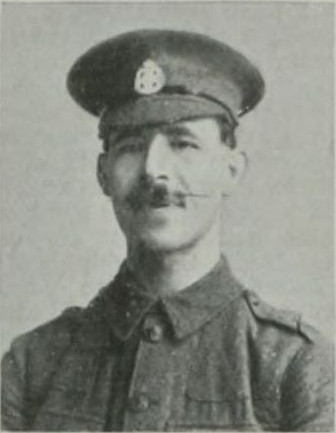
James Henry Baker.
BAKER, JOHN, A.B., No. 1402D, Royal Naval Reserve, H.M.S. Cressy; lost in action in the North Sea, 22 Sept. 1914.
BAKER, JOHN WILLIAM, Stoker, 1st Class (R.F.R., Ch. B. 5353), S.S. 100106, s. of the late Daniel Baker, Labourer; b. Chislet, Kent, ... 1868; educ. there; joined the Navy 1904; was called up at the outbreak of the war, and was lost in the North Sea when H.M.S. Cressy was torpedoed 22 Sept. 1914. He m. at Chislet, 17 April, 1906, Margaret A., dau. of ..., and had three children: John William Henry, b. 1910; Annie, b. 1907; and Ivy, b. 1908.
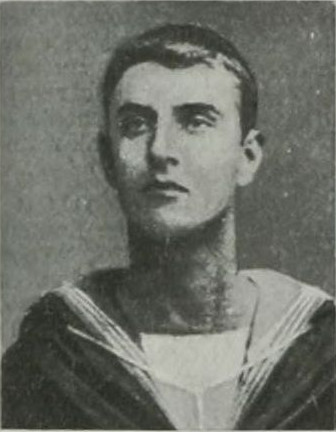
John William Baker.
BAKER, MARSHALL, A.B. (R.F.R., B. 3734), 166055, H.M.S. Aboukir; lost in action in the North Sea, 22 Sept. 1914.
BAKER, OSBERT CLINTON-, Lieut.-Col., 1st Battn. Royal Irish Rifles, 3rd s. of the late William Clinton-Baker, of Bayfordbury, co. Herts., by his wife, Edith Mildmay Ashhurst (Bayfordbury, Hertford), dau. of the Rev. Henry Lewis Majendie, Vicar of Great Dunmow, co. Essex; b. Bayfordbury, 25 Sept. 1869; educ. at Winchester and the Royal Military College, Sandhurst, receiving his first commission in the Royal Irish Rifles 1 March, 1890. He obtained his step 18 Nov. 1894, and his company 24 Feb. 1900, being promoted to field rank 22 Sept. 1906, and succeeding to the command of the 1st battn. of his regt. 15 March, 1915, on the death of Lieut.-Col. G. B. Laurie, who fell in action at Neuve Chapelle. From Jan. 1896 to 31 Dec. 1899 he was Adjutant to his regt. and from Feb. 1905 to Sept. 1906 he occupied a similar position in the Militia. He served in the South African War, and in May, 1902, obtained the command of the 21st Battn. of the Mounted Infantry, and held that position until the end of the war, receiving the Queen’s medal with three clasps, and the King’s medal with two clasps. After this he was for some years in India and Burmah, accompanying his regt. as 2nd in command to the front in Nov. 1914. Lieut.-Col. Clinton-Baker was one of four officers R.I.R.—out of 22—who passed unhurt through Neuve Chapelle. He was killed in action during the abortive attack near Fromelles on 9 May, 1915. The battn. had to face a perfect inferno of machine guns and rifle fire as soon as they mounted their own parapet after the lifting of the guns. It appears that after the Rifles had carried the first line of trenches allotted to them, and had advanced to the road beyond, the enemy concentrated a terrible fire on them. The General in command of the Brigade was killed and a battn., which was to have come up and relieved the Rifles, was not sent forward. The Rifles held on to the position and were being enfiladed, when Lieut.-Col. Clinton-Baker took a party to the right flank to prevent this, a similar party being sent to the left. It was when he was with his party, which was practically annihilated, that he was shot. A good cricketer, fine shot and keen polo player, he, with other officers, won for his regt. King George’s Cup for polo at Aden in 1914. He was unm.
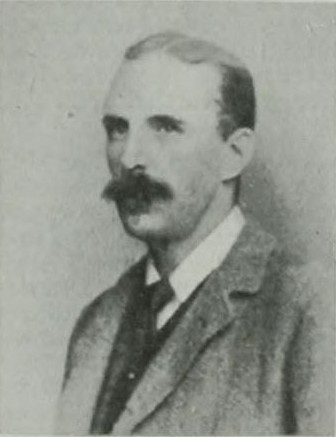
Osbert Clinton-Baker.
BAKER, WILLIAM HENRY, Ordinary Seaman, S.S. 4754, H.M.S. Aboukir; lost in action in the North Sea, 22 Sept. 1914.
BAKER, WILLIAM JOHN, Blacksmith, 341057, H.M.S. Aboukir; lost in action in the North Sea, 22 Sept. 1914.
BALCOMBE, FREDERICK, Stoker, P.O., 276783, H.M.S. Hawke; lost in action in the North Sea, 15 Oct. 1914; m.
BALDING, ROBERT, A.B. (R.F.R., B. 6413), 190103, H.M.S. Aboukir; lost in action in the North Sea, 22 Sept. 1914.
BALDOCK, WILLIAM ROBERT, Stoker, 1st Class, K. 14609, H.M.S. Pathfinder; lost when that ship was sunk by a mine, about 20 miles off the East Coast, 5 Sept. 1914.
BALDWIN, ANTHONY HUGH, Brig.-Gen. Comdg., 38th Infantry Brigade, late Manchester Regt., only s. of James Baldwin, of Smithies Bridge, Clitheroe, co. Lancaster, by his wife, Ann, dau. of James Part; b. Stratford-on-Avon, co. Warwick, 30 Sept. 1863; educ. Clitheroe Grammar School and Giggleswick; obtained his first commission as Lieut. in 1st Manchester Regt. from the Militia, 14 May, 1884, being promoted Capt. 3 Feb. 1892; Major 15 Dec. 1900; Lieut.-Col. 17 Feb. 1908; substantive Col. 4 Oct. 1911; Col. 13 Aug. 1914; and Brig.-Gen. 24 Aug. 1914. He joined the 2nd Battn. in India in 1888, served with it at Agra, Meerut and Dinapore, and was Adjutant from 5 July, 1891, to 4 Aug. 1895 when he returned to England. From 14 Nov. 1898, to 13 Nov. 1903, he was Adjutant of the 6th (Militia) Battn., and was at the depôt at Ashton-under-Lyne until July, 1902, when he went out with this battn. to South Africa, and took part in the operations in the Orange River Colony, March to 31 May, 1902, receiving the King’s medal with three clasps. On his return in Sept. he served with the 2nd Battn. at Aldershot, Cork, Alderney, Portsmouth and Mullingar, and in 1910 returned to India to command the 1st Battn. He was present at the Delhi Durbar (medal), and 1 June, 1914, retired on half-pay. On the outbreak of the European War he offered his services and was given the command of the 38th Infantry Brigade, 13th Division, 5 Sept. 1914, which he trained at Tedworth, Winchester and Blackdown, and took to the Dardanelles on 14 June, 1915. He was killed at its head on 10 Aug. 1915, in an attack on Chanak, about a month after landing. The Brigade after his fall were forced to retreat, and his body was not recovered. The A.D.C. to the Divisional General wrote: “He died in the front line leading his Brigade—he died as a gallant English gentleman, beloved, honoured, respected and mourned by all. He met his death as I am sure he must have wished, absolutely in the front line of his splendid Brigade.” And the Brigade Machine Gun Officer: “In General Baldwin the Brigade has lost a wonderfully capable leader, cool and collected in the moment of danger, always ready with a cheery word and a smile to help those who, not having his nerve, were not so collected as he. In quiet times a more charming and considerate officer could not be found. His kindness and consideration for the junior members of his staff, and indeed for everybody, down to the merest drummer boy, were wonderful, and he held the heart and affection of every man he commanded.” Gen. Baldwin m. in London, Emily Seabrooke, dau. of the late Thomas Dyson, of the Bank of Bengal, and had issue: Mary Violet, d. 25 June, 1913; and Betty, b. 1 Sept. 1899.
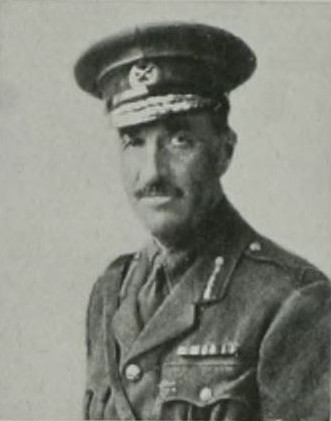
Anthony Hugh Baldwin.
BALDWIN, JOSIAH, Stoker, R.N.R., 2537T, H.M.S. Cressy; lost in action in the North Sea, 22 Sept. 1914.
BALL, ALBERT RANSOME, Lieut., A Coy., 10th Battn. 2nd Brigade, Canadian Expeditionary Force, s. of William Lee Ball, of 155, Wellington Crescent, Winnipeg, by his wife, Nellie Lenore, dau. of William M. Ransome; b. Richmond, P. Quebec, Canada, 21 April, 1891, removing with his parents to Winnipeg in 1903, and was educ. there and at Trinity College School, Port Hope, Ontario. He was engaged in commercial pursuits, but on the declaration of war felt it his duty to join the Colours, and enlisted in the 106th Winnipeg L.I., which was united with the 103rd Calgary to compose the 10th Battn. They left Quebec with the first Canadian Contingent in Oct. 1914, and after training on Salisbury Plain during the winter, went to France in Feb. 1915. At the Battle of St. Julien the 10th Battn. was assigned the post of honour, and led the memorable charge on the night of 22–23 April, which is said by Sir John French “to have saved the situation.” In the action Lieut. Ball was mortally wounded, and he died in No. 7 Stationary Hospital at Boulogne on the 29th of that month; unm. His body was taken back to Canada for burial.
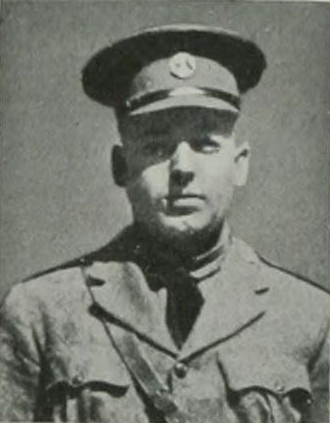
Albert Ransome Ball.
BALL, JAMES, Sergt., 11659 (Plym.), H.M.S. Hawke; lost in action in the North Sea, 15 Oct. 1914; m.
BALL, SOLOMON, Stoker, H.M.S. Good Hope; lost in the action off Coronel, on the coast of Chili, 1 Nov. 1914.
BALL, WILLIAM ORMSBY WYNDHAM, M.B., Lieut., R.A.M.C., s. of the late Henry Wyndham Ball, of the Registry of Deeds Office, Dublin; b. Dublin, 27 Sept. 1889; educ. St. Andrew’s College and Dublin University; obtained his colours on the Hockey XI. two years in succession, and represented Ireland in six international hockey matches. Gazetted Lieut. R.A.M.C., 24 Jan. 1913, and on the outbreak of war was attached to the 2nd Battn. S. Staffords, and proceeded to the Front with them 13 Aug. He was killed by a shell at Sonpir on the Aisne, 26 Sept. 1914, when attending the wounded there, being buried at Sonpir Farm; unm.
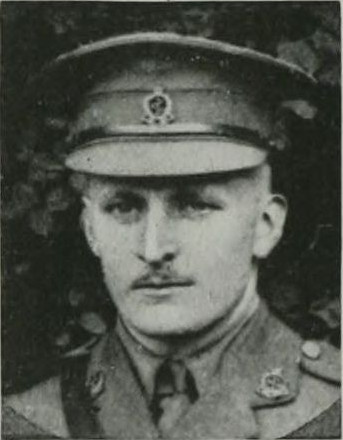
William Ormsby Wyndham Ball.
BALL, WILLIE, A.B. (R.F.R., B. 10509), 226180, H.M.S. Hogue; lost in action in the North Sea, 22 Sept. 1914.
BALLAM, GEORGE, Stoker, 1st Class, K. 6060, H.M.S. Good Hope; lost in the action off Coronel, on the coast of Chili, 1 Nov. 1914.
BALLANTYNE, DANIEL, Private, No. 4264, 2nd Battn. Royal Scots, s. of the late Daniel Alexander Ballantyne, of 38, India Place, Edinburgh, Watchmaker, by his wife, Jane, 3rd dau. of Angus Kennedy; b. Stockbridge, Edinburgh, 18 March, 1878; educ. Hamilton Place School, Edinburgh; enlisted in the Royal Scots, 1 Oct. 1896, and spent six years in India and eight years in the Reserve. He joined the National Reserve, and transferred about 1912 to the Kames Gunpowder Works (Messrs. Curtis’s & Harvey, Ltd.), and raised branches of the National Reserve in Kames, Tighnabruaich and Millhouse. On the outbreak of war in Aug. 1914, he got up rifle competitions in aid of the local Red Cross Society, and received the thanks of the Society for the sum of money he thereby raised. He re-enlisted in his old regt. in Sept., and while at Glencorse did good recruiting work. He went to the Western Front in Jan. 1915, and died 27 April of wounds received in action at Hill 60, and was buried at La Clytte Reninghelst, Belgium. He had been in the trenches on Thursday, the 26th, until midnight, when he left to have a cup of tea, and while partaking of it a bullet entered his left shoulder passing across the back and injuring his spine. He was taken down to the hospital, but only lived a few hours. His letters from the trenches were published in “The Buteman and West Coast Chronicle.” In the last one written on the 21st, just five days before his death, he said: “You were asking how we could be so cheery in the trenches. Well, it’s like this. There is no use in being sad, and the cheerier you are the better, for one never knows when it may be his turn to stop laughing for a long, long time. We do not think on half the things those at home bother about, and consider our duty our ordinary course of work, as it certainly is; and there you are! Some may not come back, but we get accustomed to that thought, and think nothing of it. It may be our turn next, but we know that if it does come we have tried to the best of our ability to do our duty to our people at home and King and country.” Ballantyne m. at Edinburgh, 16 Oct. 1906, Mary Jane (187, Gala Park Road, Galashiels), dau. of the late James Donaldson, and had a son and five daus.: Daniel, b. 23 Oct. 1911; Jane Kennedy, b. 29 March, 1908; Alice Weddell, b. 24 April, 1909; Mary Alexandrina, b. 17 July, 1910; and Margaret Inglis, b. 19 Jan. 1913.
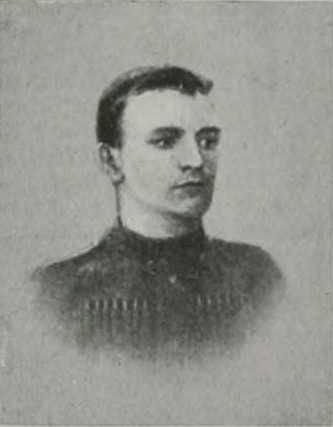
Daniel Ballantyne.
BALLANTYNE, THOMAS, Private, No. 7114, 1st Battn. Northumberland Fusiliers, s. of Thomas Ballantyne; b. Dunston-on-Tyne, 28 Feb. 1886; educ. St. Dominic’s Schools, Newcastle-on-Tyne; joined the 5th Battn. Northumberland Fusiliers, 22 June, 1905, and re-enlisted 2 Aug. 1908. On the outbreak of war he was drafted to the 1st Battn. at the Front, and was killed in action at Neuve Chapelle, 1 March, 1915. He m. at Newcastle-on-Tyne, 6 June, 1906, Margaret Nathans (44, Byron Terrace, Shieldfield, Newcastle), dau. of C. H. Dagg, and had issue two sons and two daus.: Thomas Hubert, b. 28 Jan. 1907; Edward, b. 3 Nov. 1912; Sarah Elizabeth, b. 16 Aug. 1910; and Margaret Alina, b. 12 Dec. 1914. Private Ballantyne held several certificates for service.
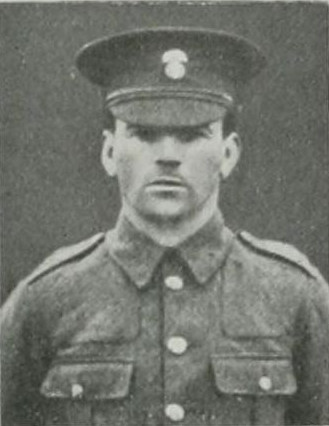
Thomas Ballantyne.
BALLARD, CHARLES FREDERICK, Commander, R.N., yr. s. of the late Lieut.-Col. John Fane Ballard, Duke of Cornwall’s L.I., by his wife, Mary (The Grove, Kingston Blount, Oxford), dau. of Arthur Henry Clerke Brown, of Kingston Blount, Oxford; b. Rock, Washington, co. Sussex, 23 March, 1879; educ. Herbert Bull’s, Westgate-on-Sea, and Littlejohn’s, Blackheath. Joined the Britannia in 1892, passing in eighth; became Midshipman, Jan. 1895; Sub-Lieut., July, 1898; Lieut., Nov. 1900, and Commander, June, 1913. Served in China, 1900, as Sub-Lieut. on the Aurora, and was present at the taking of Tientsin, being mentioned in Despatches and specially promoted. He was appointed to the Formidable in Aug. 1913, and was lost in that vessel 1 Jan. 1915. Commander Ballard was last seen on the bridge of the Formidable with Capt. Loxley. He had previously superintended getting the boats out, and had ordered as much wood as possible to be thrown overboard for the men to cling to. A survivor narrates that he met the Commander, who told him to tell everybody to keep cool. He then gave the command to get the boats out. He m. at St. Mary Abbotts, Kensington, 15 July, 1913, Violet Hazel, dau. of Admiral Sir Cecil Burney, K.C.B., K.C.M.G., and had one dau., Margaret Charley, b. 29 Dec. 1914.
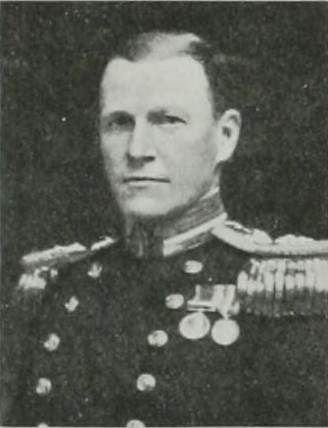
Charles Frederick Ballard.
BALMAIN, JOHN, Officer’s Steward, 3rd Class, L. 4470, H.M.S. Pathfinder; lost when that ship was sunk by a mine, about 20 miles off the East Coast, 5 Sept. 1914.
BAMFORD, EDWIN SCOTT, Capt. and Adjutant, 1st Battn. York and Lancaster Regt., yst. s. of the late Arthur Bamford, of Misterton Hall, Lutterworth, by his wife, Annie (who re-m. Capt. the Hon. Harold Brooke Hawke), dau. of John Nash, of Chicago; b. Bromborough, co. Chester, 23 April, 1885; educ. Uppingham and afterwards in Switzerland, and joined the 3rd (Militia) Battn. Leicestershire Regt., from which he passed into the York and Lancaster Regt. 6 July, 1907, becoming Lieut. 1 Feb. 1909. In that year he passed the Signalling Course at Poona, and obtained a certificate for Field Telephoning; in 1911 he took the Musketry and Machine Gun Course at Satara, and in 1912 the Physical Training and Swordsmanship at Poona, where he was Gymnastic Superintendent for eight months, serving altogether seven years (1908–14) in India. On 12 March, 1913, he was appointed Adjutant of his battn. with which he joined the Expeditionary Force in France in Jan. 1915. He had been promoted Capt. 5 Sept. 1914, and was mortally wounded in action on his birthday, 23 April, 1915, during a charge at the second Battle of Ypres, and d. at the Poperinghe Clearing Station the following day. The following abbreviated account of the circumstances attending his death was received from a brother officer: “On the morning of April 22 the battn. was resting—the men playing football—when the French troops came hurrying back completely overcome by asphyxiating gases. Immediately, on their own initiative without any command, our men fell in and moved off by companies from trenches near St. Jean, with fixed bayonets, across open country in broad daylight, with only two guns to support them, to fill in the gap left by the French, which the Canadians were unable to protect with their flank. They made the attack through a hail-storm of high velocity shell fire and machine guns at short range, which nearly wiped out the whole battn., leaving 300 out of the original 1,200. In spite of the heavy casualties, they pushed on, as a Canadian officer remarked: ‘As if they were on parade,’ and eventually reached a field which was under still heavier fire. At the top of the field was a hedge on which the enemy’s fire was concentrated; very few of the battn. got past it. It was here that the Colonel was killed outright and Capt. Bamford, having done magnificent work during the whole attack, was mortally wounded. Some days after, Gen. Plumer came to see the few survivors and congratulated them on their gallant attack. Had it not been made the Germans would have broken through. To use the General’s own words: ‘They had saved the situation.’” Capt. Bamford was a keen sportsman and a first-class shot. He m. London, 1 Jan. 1913, Lulu, only dau. of the late Edwin Whitney Smith, of Bath; s.p.