The Roll of Honour. (continued 21)
Reading edition
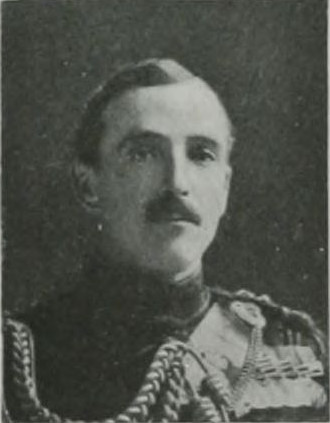
John Edmond Gough.
GOUGH, RICHARD, Private, No. 2488, 3rd Battn. The Monmouthshire Regt. (T.F.), s. of James Gough, of Cwm; enlisted on the outbreak of war; went to France in Feb. 1915, and was killed in action at Ypres, 8 May following; unm.
GOULD, ALBERT STANLEY, Stoker, 1st Class, K. 5313, H.M.S. Good Hope; lost in action off Coronel, on the coast of Chili, 1 Nov. 1914.
GOULD, CLAUDE, Acting Chief Yeoman of Signals, 199951; H.M.S. Hogue; lost in action in the North Sea, 22 Sept. 1914.
GOULD, JOHN, Stoker, 1st Class (R.F.R., B. 4424), S.S. 103418, H.M.S. Good Hope; lost in action off Coronel, on the coast of Chili, 1 Nov. 1914.
GOULD, JOHN MILLS, Private, No. 1135, N.E.R. Coy., 17th (Service) Battn. Northumberland Fusiliers, 2nd s. of George Gould, of Warnford House, Thoralby Aysgarth, co. Yorks, Boarding-House Keeper and Farmer, by his wife, Isa, dau. of the late John Mills, of Sunderland, Shipbuilder; b. Masham, co. Yorks, 18 Feb. 1889; educ. Driffield and Thoralby; and was a Clerk in the N.E.R. Stationmaster’s office at Ferrybridge; enlisted 5 Jan. 1915, and died at Ferrybridge, co. Yorks, of pneumonia contracted while training; unm.
GOULD, LIONEL BERTRAM, Shipwright, 1st Class, 342695, H.M.S. Good Hope; lost in action off Coronel, on the coast of Chili, 1 Nov. 1914.
GOULD, RICHARD WALTER, Stoker, 1st Class (R.F.R., B. 3249), S.S. 100944, H.M.S. Good Hope; lost in action off Coronel, on the coast of Chili, 1 Nov. 1914.
GOULD, ROBERT STEPHEN, A.B. (R.F.R., B. 10033), 226881, H.M.S. Hogue; lost in action in the North Sea, 22 Sept. 1914.
GOULD, ROLAND, A.B. (R.F.R., B. 4305), S.S. 1383, H.M.S. Good Hope; lost in action off Coronel, on the coast of Chili, 1 Nov. 1914.
GOVER, FREDERICK THOMAS, Officer’s Steward, 3rd Class, L. 4894, (Devon.), H.M.S. Good Hope; lost in action off Coronel, on the coast of Chili, 1 Nov. 1914.
GOWER, ARTHUR JOSEPH, Private, No. 2423, 1/10th Battn. The Middlesex Regt. (T.F.); eldest s. of Joseph Gower, of 31, Delorme Street, Fulham Palace Road, S.W., Fitter’s Mate, by his wife, Emma, dau. of Thomas Dicheson; b. Walworth, London, S.E., 4 Aug. 1896: educ. Everington Street Council School, Fulham; was Booking Clerk at Down Street Station; enlisted 28 Aug. 1914, went to India with his regt. 29 Oct. 1914, and died at Jalapahar, India, 5 June, 1915, of pneumonia, contracted while on active service; unm.
GOWER, FRANK HERBERT HENRY, Private, R.M.L.I., Po. 12685, H.M.S. Good Hope; lost in action off Coronel, on the coast of Chili, 1 Nov. 1914.
GRACE, JOHN LEYBOURNE, Trooper, No. 11/264, Wellington Mounted Rifles, New Zealand Expeditionary Force, only s. of the late Nathaniel Grace, of Gladstone, Carterton, Sheep Farmer, by his wife, Emily (Carterton, New Zealand), dau. of James Sexton; b. Gladstone, Carterton, Wairarapa, New Zealand, 4 Nov. 1895; educ. High School there, and Wellington College; was learning sheep farming; volunteered on the outbreak of war and joined the Wellington Mounted Rifles, 12 Aug. 1914; left for Egypt with the main force, 16 Oct.; went to the Dardanelles, May, 1915, and was killed in action there, 30 May, 1915; unm. His Chaplain wrote: “Your boy has fallen at his post like a good soldier, fighting against overwhelming odds. One of our outposts was cut off for a long night and day, and extricated on Sunday evening. Happily the enemy was desperately afraid of our boys or not one would have returned alive, as it was your son was killed in action along with others.”
GRAHAM, CYRIL, Lieut., 5th Battn. Border Regt. (T.F.), eldest s. of Capt. John Graham, manager of the London Joint Stock Bank, at Whitehaven, by his wife, Allie, dau. of Joseph Saudert Barnes; b. Bank House, Aspatria, Cumberland, 8 Sept. 1895; educ. St. Bee’s School; obtained a commission in the 5th (Cumberland) Battn. of the Border Regt. (T.F.), 13 June, 1913; volunteered on the outbreak of war for Imperial service; went to France 1st Nov. 1914; was promoted Lieut. April, 1915; took part in the Second Battle of Ypres in Whitsun week and was shot by a sniper, 27 May, 1915, the day his Battn. was relieved. He was buried in the grounds of a Chateau at Potyje; unm. His Commanding Officer wrote: “Your son was a most promising young officer and is a very great loss to us all. He was a great favourite with his brother officers and his men had implicit trust in him.”
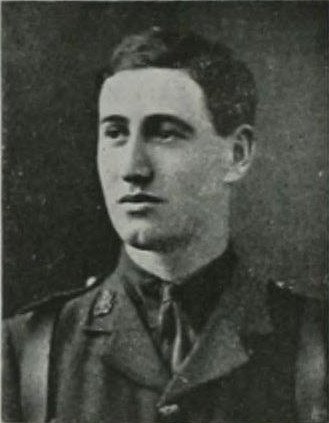
Cyril Graham.
GRAHAM, DAVID, Stoker, 1st Class, 307260, H.M.S. Hogue; lost in action in the North Sea, 22 Sept. 1914.
GRAHAM, HENRY, Private, No. 7931, 3rd Battn. Northumberland Fusiliers, s. of the late Ralph Graham, of Jarrow-on-Tyne, by his wife, Mary (52, Pearson Place, Jarrow), dau. of Alexander (and Jane) Coulter; b. Jarrow-on-Tyne, 14 Oct. 1890; educ. Dunn Street Council School there; enlisted 21 June, 1908; served six years with the colours, then worked as a Labourer at Hawthorns Leslies; was called up on the outbreak of war, 6 Aug. 1914; went to France in Sept., and was killed in action in France, 1 March, 1915; unm.
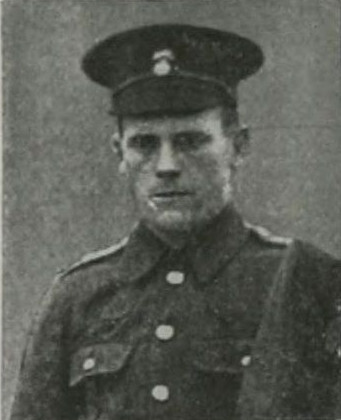
Henry Graham.
GRAHAM, JAMES, Ordinary Seaman, J. 12576, H.M.S. Pathfinder; lost when that ship was sunk by a mine, about 20 miles off the East Coast, 5 Sept. 1914.
GRAHAM, JOHN, Jun., Capt., 10th Battn. (Liverpool Scottish) King’s Liverpool Regt. (T.F.), elder s. of John Graham, of Mohrcroft, Aigburth Drive, Liverpool, and the Croft, Hoylake, Sugar Refiner, by his wife, Mary Gilkison, dau. of James Allan, of Glasgow; b. at Liverpool, 3 April 1877; educ. Marlborough, and became a partner in the firm of Macfie & Sons, the well-known Sugar Refiners of Liverpool. He had joined the old Liverpool Scottish Volunteers in 1900 and continued with them after they became the 10th Territorial Battalion of the King’s Liverpool Regt., retiring with the rank of Capt. On the outbreak of war in Aug. 1914, he immediately rejoined as a Private and was given a Commission as Lieut., 25 Sept., and promoted Capt. 13 April, 1915; went to France, Oct. 1914, and was killed in the great charge of the Liverpool Scottish near Hooge, 16 June, 1915; unm. He was mentioned in Despatches [London Gazette, 22 June, 1915] by F.M. Sir John (now Lord) French, for gallant and distinguished conduct in the field. Though good at racquets and cricket, it was as a golfer that Capt. Graham was best known in the sporting world. He was in the first flight of amateur golfers, and had attained international honours, and, while never getting further than the Amateur Championship semi-final, he had won most of the Club and open prizes. The Times said: “Not only was he one of the very finest of amateur golfers, but his most delightful and modest nature had endeared him to everyone who ever met him. ‘Jack’ Graham will be remembered in golfing history as the one really great player who never won a championship. It would not be right to call him an unlucky golfer. He had good chances and a natural genius for the game, but there was something in his temperament that prevented him from playing his best game in the crucial rounds towards the end of a championship. It was certainly not lack of courage in the ordinary sense of the word. No one who knew him could doubt that, and he has given the finest and most conclusive proof to the contrary. But the strain of hard matches day after day always proved too great a strain on his powers of endurance, and though he five times reached the final of the Amateur Championship he never got any farther. He was more successful as a score player than a match player. Only last year at Sandwich he won the St. George’s Vase at Sandwich by truly magnificent golf; his record in the Hoylake medals was one of many successes and he several times finished first amateur on the list of the Open Championship. On one occasion in particular at Muirfield he finished immediately after the great ‘triumvirate’ and gave Taylor, who was drawn with him, one of the most agitating days of his long career. Capt. Graham was a great golfer. He could not but have been sometimes disappointed on account of his comparative lack of success, and he knew that his friends at Hoylake were more bitterly disappointed on his behalf than he ever was on his own. Not only did no word of complaint or excuse ever escape him, but he never for one moment fell into the opposite error of pretending that he did not care. He took his ups and downs with perfect modesty and quietness, and was always interested in the play and the success of others. At Marlborough he distinguished himself at football, cricket and racquets, and if he had had time to play might have made a name for himself as a cricketer, but he always worked very hard at his business. Indeed he played comparatively little golf, but it was remarkable how he could so constantly play a very fine game with so little practice—an occasional Saturday afternoon and perhaps an evening walk on the links with two clubs under his arm, being apparently all the practice that he needed.”
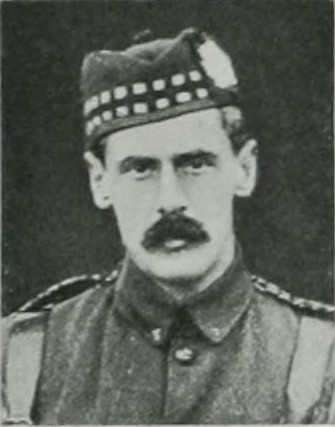
John Graham, Jun.
GRAHAM, MALCOLM HEWLEY, Lieut., 2nd Battn. Alexandra, Princess of Wales’s Own Yorkshire Regt., only s. of Hewley Smales Graham, of Oxley-Woodhouse, Huddersfield; b. New Mill, near Huddersfield, 22 Nov. 1894; educ. Repton and Pembroke College, Cambridge, where he was studying for the medical profession; on the outbreak of war volunteered and was gazetted to the 3rd Yorkshire Regt., 15 Aug. 1914; went to the Front the following March, and was there attached to the 2nd Battn. He was promoted Lieut., 2 Feb., 1915, and was killed in action at Givenchy, near La Bassée, 15 June, 1915, and was buried close to Givenchy Church; unm. His Colonel wrote: “He was most gallantly leading his platoon when he fell, shot through the neck. Your son was a most excellent officer, very keen and hard working and he will be a great loss to the battn. Please accept the deepest sympathy of all ranks in your great loss.” Lieut. Graham was a fine athlete. At Repton he shot at Bisley for his school, and at Cambridge he rowed in the “Lents” and “Mays,” and was in the boat that won the Clinker Fours. He also rowed at Henley in 1914, where his boat won the Ladies’ Challenge Plate, and he was elected a member of the Leander Club.
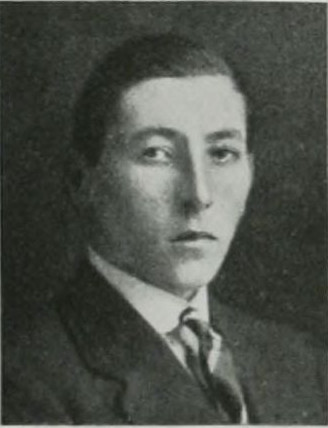
Malcolm Hewley Graham.
GRAHAME, JOHN GORDON, L.-Corpl., No. 1894, Honourable Artillery Company)(T.F.), yr. s. of the late Thomas Grahame, Canadian Government Agent for Scotland, by his wife, Margaret Elizabeth (Cumberland House, Horley, Surrey), only dau. of William Tyrwhitt, sometime of Nantyr Hall, Denbighshire, and grandson of the Rev. James Grahame, author of “The Sabbath”; b. Glaudhall, Chryston, Glasgow, 12 March, 1885; educ. Glasgow High School and Dulwich College; and was in the employ of Harris & Dixon, Shipowners; on the outbreak of war volunteered and joined the H.A.C. in Sept. 1914; went to France in Jan. 1915, and was killed in action near Ypres, 24 April, 1915; unm. He was buried behind the trenches of St. Eloi near Voormezeele, in the grounds of the Chateau of Elsinvelles. His Commanding Officer wrote that he was much loved and respected by all his platoon, and he as well as others would miss him both as a friend and a soldier.
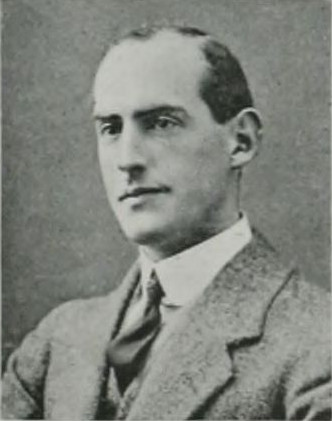
John Gordon Grahame.
GRAINGER, ALBERT VICTOR, Private, No. 2336, 4th Battn. The Suffolk Regt. (T.F), yst. s. of Henry Rampling Grainger, of 94, Kemball Street, Ipswich, Gardener, by his wife, Hannah, dau. of James Brown; b. Ipswich, 16 Oct. 1889; educ. St. John’s School there; and was a Boiler Maker; volunteered after the outbreak of war and enlisted in Sept. 1914; went to France, 6 Nov., and died, in No. 7 Clearing Hospital, 13 March, 1915, of wounds received in action at Neuve Chapelle on the 11th. He m. at Buckersham, 12 March, 1911, Grace (4, Tennyson Road, Ipswich), dau. of William Edward Colthorpe, and had two children; Albert Victor, b. 2 Jan. 1914; and Grace, b. 30 March, 1912.
GRAMSHAW, ROBERT WILFRED RALEIGH, 2nd Lieut., 2nd Battn. Royal Sussex Regt., only s. of the Rev. Robert Michael Oginski Gramshaw, of Fittleworth, Sussex, by his wife Emily, dau. of Dr. Richard Hughes, of Brighton; b. Enfield, Middlesex, 18 Dec. 1890; educ. at St. Cyprian’s, Eastbourne (1901–4), Charterhouse (1904–9), and at Exeter College, Oxford (1909–13). He gained a classical scholarship at Harrow in March, 1904, which he refused, and a junior classical scholarship at Charterhouse in June of the same year, which he accepted. On the expiration of his junior scholarship he gained a senior scholarship at the same school, and in 1909, his last year there, won the Thackeray and Elder prizes, a leaving exhibition, and the Talbot Medal and Exhibition. In the same year he gained an open classical scholarship at Exeter College, Oxford, being the senior scholar of his year. He read Honour Moderations and Literae Humaniores, obtaining a second class in both schools, and took his B.A. degree in 1913. He took a keen interest in rowing, and was spare man for both his College Torpid and Eight, only doctor’s orders forbidding him an actual place in the boat. He had intended to take Holy Orders, and had been awarded a Liddon Studentship, but on the outbreak of war, was offered and accepted a commission in the 3rd Royal Sussex Regt., 15 Aug. 1914. He left for France on 1 Jan. 1915, where he was attached to the 2nd Battn. of the Regt., and was seriously wounded when leading his platoon in an attack on the German trenches at La Bassée on the evening of the 25 Jan. 1915, and died in hospital two days later; unm. Buried in Béthune Cemetery. His Commanding Officer wrote: “He died a soldier’s death of wounds received in a very brilliant little operation, by which our brigade recaptured some important ground which had been lost earlier in the day.”
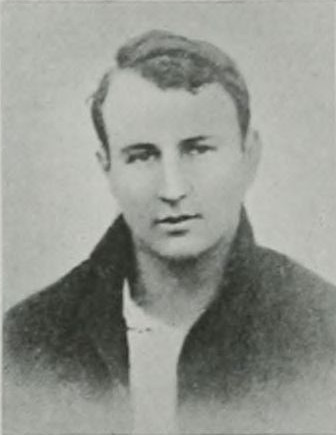
Robert W. R. Gramshaw.
GRANGER, JOHN ROBERT CLIFFORD, A.B. (R.F.R., B. 2563), 208749, H.M.S. Good Hope; lost in action off Coronel, on the coast of Chili, 1 Nov. 1914.
GRANT, DUNCAN, 2nd Lieut., 2nd Battn. Queen’s Own Cameron Highlanders, eldest s. of Archibald Grant, by his wife, Anne (Nevis Cottages, Fort William), dau. of Angus McMillan; b. Fort William, Inverness, 8 July, 1880; educ. Fort William Public School, afterwards being in the service of the Scottish Meteorological Society at their Ben Nevis Station. He joined the Camerons in Nov. 1899, and was posted to the 2nd Battn. at Gibraltar, leaving there with a draft for the 1st Battn. in South Africa, and served through that campaign, 1899–1902, and received the Queen’s medal with five clasps (Cape Colony, Orange River Colony, Transvaal, South Africa 1901, 1902). On the conclusion of the South African campaign, he returned with his Battn. to England, but after two years in various stations in Scotland and Ireland, offered himself for foreign service and was sent to the 2nd Battn. then doing duty in Natal. He afterwards accompanied his regiment to China, and from there to Bangalore, India, and was present at the Delhi Durbar (medal). On the outbreak of the European War he held the rank of Coy. Sergt.-Major, being stationed near Poona, and before leaving India was offered a commission in his own company, which he accepted and was gazetted, 14 Dec. 1914, proceeding to France about a week later. He was killed by a shell during the bombardment of Hill 60, Ypres, 28 April, 1915, and was buried at Zillebeke, near Ypres, Belgium; unm. Lieut. Grant was mentioned in F.M. Sir John (now Lord) French’s Despatch of 31 May, 1915, for gallant and distinguished service in the field.
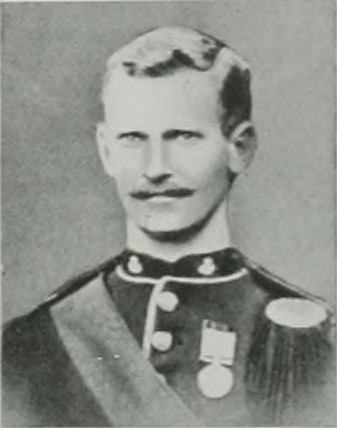
Duncan Grant.
GRANT, ERNEST WILLIAM, Private, No. 3311, 12th Battn. (The Rangers) The London Regt. (T.F.), yr. s. of William James Grant, of 7, Courtfield Mews, Courtfield Gardens, South Kensington, Private Chauffeur, by his wife, Alice Louisa; b. London, 16 June, 1896; enlisted 17 Dec. 1914, following the outbreak of war; was wounded in the trenches, 3 May, 1915, and died on board the hospital ship Salta during the crossing from France, 19 May following. He was buried in the military cemetery at Netley. Before joining he remarked to his mother: “I am not quite military age, but I have thought a lot about this war, and I feel it my duty to go, as I am a big, strong boy, and there will be plenty that can’t go.” His elder brother served in the 8th Battn. (Post Office Rifles) The London Regt. with the British Expeditionary Force in France.
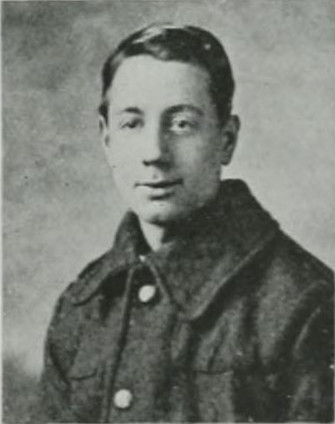
Ernest William Grant.
GRANT, HAROLD CHARLES, Private, No. 2553, 1/7th Battn. The Middlesex Regt. (T.F.), 2nd s. of James Duff Grant, of 63, Nelson Road, Stroud Green, N.; b. Highbury, 9 June, 1883; educ. Crouch End School; was a Clerk with Messrs. Leslie Booth & Booth, Chartered Accountants [both partners, W. L. Booth and A. M. Booth, were Territorial officers, and both were killed in action]; after the outbreak of war, enlisted 3 Sept. 1914; went to Gibraltar, and then to France, and died in a Field Hospital near Sailly, 16 June, 1915, from wounds received in action the previous day. His Platoon Officer wrote: “Your son was hit in the head on Thursday morning and became unconscious. He died in hospital at 10 o’clock on Friday morning, never having regained consciousness.... I shall never be able to replace your son in my platoon”; and the Chaplain (the Rev. Richard Griffiths): “We buried him this afternoon [near Sailly] in a little soldiers’ cemetery with pretty green hedges around it, and a little orchard beyond.” He was unm.
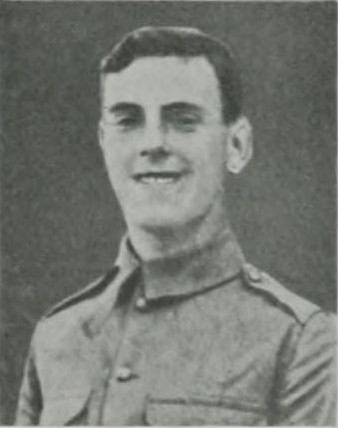
Harold Charles Grant.
GRANT, JAMES, Drummer, No. 976, 13th (Princess Louise’s Kensington) Battn. The London Regt. (T.F.), 6th s. of James Albert Grant, of 131, Kilburn Lane, Willesden, N.W., by his wife, Anne, dau. of (——) Clark; b. Kensington, W.; educ. Board School, Buckingham Terrace, Kensington, W.; was a keen member of the Cadet movement, and was a Lieut. in the Knightsbridge (St. Paul’s) Co.; joined the Kensingtons on the organisation of the Territorial Force; volunteered on the outbreak of war for foreign service; left for the Front, Nov. 1914, and was killed in action at Neuve Chapelle, 10 March, 1915; unm.
GRANT, THOMAS, Private, No. 2243, 8th Battn. The Middlesex Regt. (T.F.), s. of William Grant, of 61, Albany Road, Brentford, Hawker; b. Brentford, co. Middlesex, 5 Nov. 1894; educ. St. John’s School there; joined the Middlesex Territorials in March, 1914; volunteered for foreign service and mobilized 6 Aug. 1914; went to France and was killed in action there, 11 May, 1915; unm.
GRANT, THOMAS, A.B. (R.F.R., B. 6993), 196834, H.M.S. Hogue; lost in action in the North Sea, 22 Sept. 1914.
GRATTAGE, SAMUEL THOMAS, Leading Stoker (R.F.R., Ch. B. 10246), 299157, H.M.S. Aboukir; lost in action in the North Sea, 22 Sept. 1914.
GRAVETT, CHARLES DAVID, Ordinary Seaman, R.N.V.R. (Sussex 1/334), H.M.S. Hawke, s. of George Gravett, of 19, Coleridge Street, Hove; lost when that ship was torpedoed in the North Sea, 15 Oct. 1914.
GRAY, ALBERT JOHN, Ordinary Seaman, J. 22930, H.M.S. Cressy; lost in action in the North Sea, 22 Sept. 1914.
GRAY, JAMES, Major, 4th Battn. The Royal Scots (Lothian Regt.) (T.F.), s. of the late Robert Sclater Gray, of Leechman and Gray, Leith, Distiller and Wine Broker, by his wife, Barbara Mann, dau. of (——) Peterson; b. 22 March, 1875; educ. Royal High School, Edinburgh, and was a Wine Broker and Distiller. He joined the old 5th Highland Coy. of the Queen’s Edinburgh Rifles, afterwards the 4th Territorial Battn. of the Royal Scots, in 1891, and received his commission in 1896; was promoted Lieut., 1898, and Capt., 1901, and Major, 1 May, 1913, after which he was placed in the Reserve of Officers. On the outbreak of war he volunteered for Imperial Service; left for Egypt 19 May; went to the Dardanelles, and was killed in action there, when 2nd in command of his Battn. 28 June, 1915. Buried at Krithia. Colonel Younger, late Commanding Officer 4th Battn. Royal Scots, wrote: “None but myself can know how large a part James Gray played in the training of the Battn. in the first few months of the war. Only those who have had the experience can know the trials and difficulties which Territorial Commanding Officers were faced with on suddenly becoming professional soldiers. The help and strength I received from Major Gray were beyond all praise.” Major Gray had the Coronation Medal and the Long Service Medal. He m. at St. Cuthbert’s Parish Church, Edinburgh, 4 Jan. 1912, Grace E. (28, Scotland Street, Edinburgh), dau. of the late Robert Naismith, of Leith; s.p.
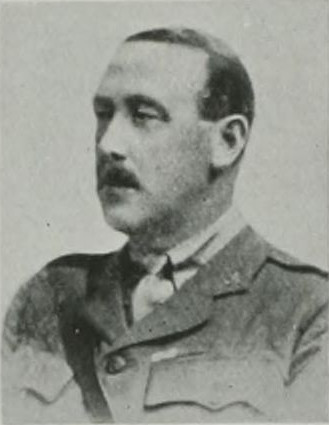
James Gray.
GRAY, MARY SUTHERLAND BROWN, Sister in charge of a Ward, Hospital Auxilliare 301, Abbaye de Royaumont, dau. of James Gray, of Oakleigh Lodge, Leven, Fife, Secretary of the Fife Coal Co., by his wife, Mary Sutherland, dau. of William Brown, Manager of the Colliery of Oakley, near Dunfermline; b. Oakleigh, Dunfermline, 17 Nov. 1869; educ. privately in Scotland and then trained as a nurse at the Edinburgh Royal Infirmary; and after leaving there nursed among the working classes at Kilmarnock and later at Crief; on the outbreak of the European War she went to France with her sister, Miss Margaret Gray, in Nov. 1914, and helped to found the Scottish Women’s Hospital for French wounded soldiers at Royaumont Abbey, Seine et Oise, and died there while engaged in her duties, 25 Jan. 1916. The Secretary of the Hospital, Miss Cicely Hamilton, wrote: “She was essentially a woman of character, a humorous, brave individual, a woman who over-worked with a smile and wore herself out as if the process amused her. She laughed with her men while she worked for them, she had the charm of good manners—those real good manners that come without teaching at the dictation of real good nature. She was buried in the cemetery at Asnieres-sur-Oise to the distant mutter of guns.”
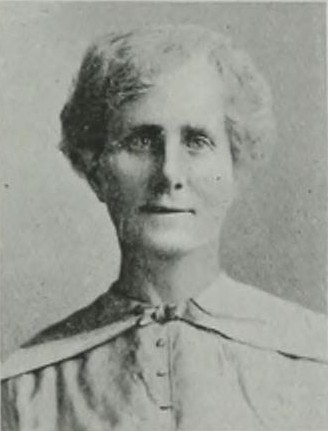
Mary S. Brown Gray.
GRAY, PHILIP, Leading Cook’s Mate, M. 1818, H.M.S. Aboukir; lost in action in the North Sea, 22 Sept. 1914.
GRAY, ROBERT HENRY, Private, No. 1157, 24th Battn. 6th Infantry Brigade, Australian Imperial Force, eldest s. of Horace Frederick Gray, Chauffeur, by his wife, Annie Eliza (Goddingog, Llanfairfechan, N. Wales), dau. of Charles Henry Lowe; b. Rilton Mews, Brompton Road, London, 16 April, 1891; educ. Llanfairfechan National School; went to Australia 27 Aug. 1914; was a Valet and Footman; enlisted 15 April, 1915; left for Egypt 7 May, 1915, and was killed in action at Anzac, Gallipoli, 16 Sept. 1915; unm.
GRAY, WILLIAM, Private, No. 7969, 2nd Battn. Canadian Expeditionary Force, 6th s. of the late Henry Gray, of 3, Queen’s Road, Aberdeen, J.P., Merchant, by his wife, Helen Mackay, dau. of George Mackay, Aberdeen; b. Aberdeen, 1 Jan. 1882; educ. Aberdeen Grammar School and University Art Classes; went to Winnipeg, Canada, in 1903, and afterwards settled at Vancouver, B.C., as a Real Estate Agent; enlisted in the C.E.F. on the outbreak of war; left Valcartier for England with the 2nd Battn. 1st Brigade Contingent; went to France, Jan. 1915, and was killed in action by a bullet through the brain, 23 April, 1915; unm.
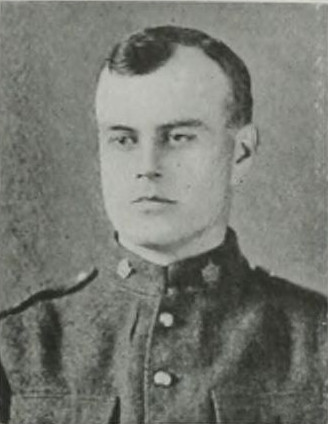
William Gray.
GRAY, WILLIAM JAMES, Private, No. 426330, 10th Battn. Canadian Expeditionary Force, 3rd s. of Thomas Gray, of Simpson, Saskatchewan, Canada, by his wife, Margaret Helen, dau. of Joseph Moore, of Caulmet Island, Quebec; b. Thorne Centre, P. Quebec, 26 Jan. 1894; educ. Quebec; was a Farmer; volunteered after the outbreak of war and enlisted in the 46th Battn. at Regina, 26 Jan. 1915; left Camp Sewell, Manitoba, with the 200 men of the 46th Battn., sent as reinforcements 30 June; trained at Shorncliffe with the 32nd Battn.; went to France between 1–5 Sept., and was there drafted to the 10th Battn., and died in No. 2 Casualty Clearing Station, at Bailleul, 1 Oct. 1915, of wounds received in action the previous day; unm.
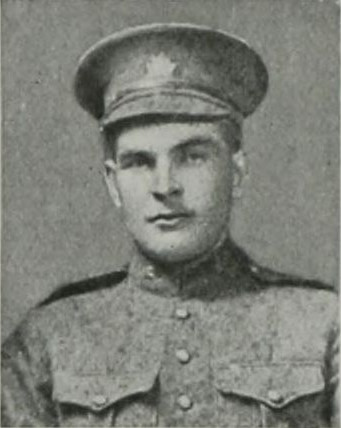
William James Gray.
GRAY, WILLIAM THOMAS, Private, No. 19749, 4th Battn. King’s Liverpool Regt., s. of William Gray; b. Kirkdale, Liverpool, 3 Aug. 1879; educ. Ashfield Street Board School there; was a Carter; joined the 6th King’s Liverpool Volunteer Regt. 12 July, 1897; volunteered for the South African War, 9 March 1900; served in that campaign one year and 79 days (medal with three clasps), invalided home; retired 20 Dec. 1902; on the outbreak of the European War re-enlisted 11 Sept. 1914, killed in action at Hill 60, 27 April, 1915. He m. at Liverpool, 8 Jan. 1907, Elizabeth (3, Penrose Street, Everton, Liverpool), dau. of James Thompson, and had issue three daus.: Florence, b. 28 Jan. 1910; Edith, b. 3 Feb. 1911; and Gladys, b. 20 Sept. 1915.
GRAZEBROOK, CHARLES ALVEREY, Capt., 6th, att. 1st, Battn. The King’s Royal Rifle Corps, 3rd s. of Francis Grazebrook, of Stourton Castle, Stafford, by his wife, Isabella Mary, dau. of George Grazebrook; b. Dudley, 5 Sept. 1887; educ. Marlborough College and Sandhurst; gazetted to the 3rd K.R.C.C., 7 Feb. 1908, and promoted Lieut. 1 April, 1911; joined his regiment at Crete, where he served for a year or so, then went with it to Malta, and India, where he was stationed at Dagshai till 1912, when he came home. He retired in the beginning of 1914, and joined the Special Reserve, but on the outbreak of war immediately rejoined and was promoted Captain, 14 Aug. 1914. He took out a draft to the 1st K.R.R.C., 10 Nov. 1914, and was in the North of France all the winter. He was reported wounded and missing, 10 March, 1915, and was later unofficially reported killed in action on that date. Ordered to charge the enemy trenches near Givenchy that day, “He led his men magnificently, they covered themselves with glory and their charge will always be remembered as one of the finest deeds of the regt. Everyone says they were magnificent,” so wrote his Commanding Officer. He m. at St. Mary Abbots, Kensington, 18 April, 1912, Katherine Arthur Mary Violet, dau. of Arthur Percy Hickman, of Hagley, co. Worcester, and had a daughter, Diana Katherine Mary, b. 19 May, 1913.
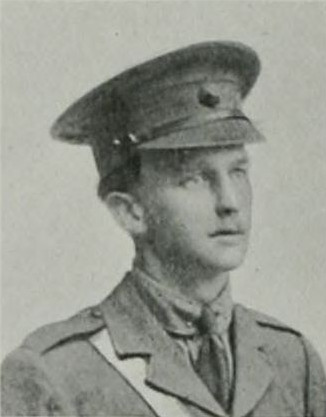
Charles A. Grazebrook.
GREAR, JAMES, Private, No. 637, 1st Battn. 1st Infantry Brigade Australian Expeditionary Force, 4th s. of the late John Grear, of the firm of John Milner & Co., Iron Merchants, Manchester, by his wife, Alice; b. Mobberley, Chester, 21 Nov. 1891; educ. Mobberley and Urmston Secondary Schools; went to Sydney, Australia, in 1911, and was a Farmer with his brothers; enlisted immediately on the outbreak of war in Aug. 1914, and was killed in action at the Dardanelles, 10 May, 1915; unm. Four other brothers are (1916) on active service, two with the Australian Field Artillery, one in training with the Infantry Reserve, and the other as 1st Class Stoker, R.N.
GREATHEAD, CLARENCE ROYAL, Private, No. 1850, 4th Battn. Northumberland Fusiliers (T.F.), Machine Gun Section, only s. of George William Greathead, of Cleadon, North Eastern Railway Official, by his wife, Ada, dau. of William Greig, of West Hartlepool; b. West Hartlepool, 5 June, 1897; educ. Henry Smith College there; was an apprentice with Messrs. Grabham & Co., Newcastle-on-Tyne; enlisted after the outbreak of war in Sept. 1914; went to France in April, and was killed in action near Ypres, at 5.30 a.m., 16 June, 1915, while in charge of a machine gun. Buried at Wieltge; unm. His officer wrote: “He was a brave, fearless soldier, and will be missed by his battalion. We had him carefully buried and a cross bearing his inscription marks the place.”
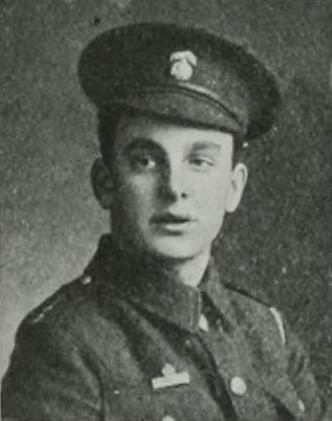
Clarence Royal Greathead.
GREAVES, BENJAMIN HERBERT, Private, No. 3024, 8th (Liverpool Irish) Battn. King’s Liverpool Regt. (T.F.), s. of (—) Greaves; b. 28 Dec. 1883; educ. Oxford; enlisted soon after the outbreak of war in Oct. 1914, went to France, and was killed in action, 16 June, 1915. He m. at Brounton Hill, Liverpool, 6 June, 1908, Constance (11, Woolman Road, Blackpool), dau. of (—), and had three children: Charles Walter, b. 18 Aug. 1909; Leslie Herbert, b. 14 Feb. 1915; and Dorothy Irene, b. 5 May, 1911.
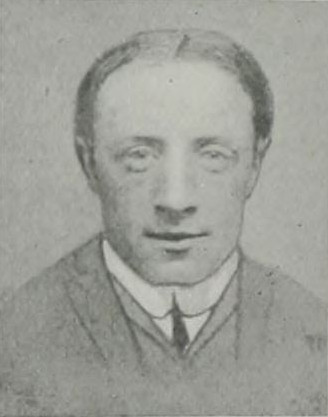
Benjamin H. Greaves.
GREEN, ALBERT, Stoker, 1st Class, K. 14516, H.M.S. Aboukir; lost in action in the North Sea, 22 Sept. 1914.
GREEN, ALBERT, Private, No. G6084, 3rd Battn. Middlesex Regt.; served with the Expeditionary Force in France, etc.; died at Rouen, 19 April, 1915, of wounds received in action.
GREEN, ALBERT JOHN, Private, No. G. 695, 2nd Battn. Royal West Surrey Regt.; served with the Expeditionary Force in France, etc.; killed in action near Fleurbaix, 18 Dec. 1914; m.
GREEN, ARTHUR, Seaman, R.N.R., 4873A, H.M.S. Cressy; lost in action in the North Sea, 22 Sept. 1914.
GREEN, ARTHUR ADELBERT LINGARD, Sergt., No. 2623, Lord Strathcona’s Horse (Royal Canadians), Canadian Expeditionary Force, elder s. of Lieut.-Col. Alfred Lingard Green, D.S.O., formerly Commdg. 3rd V. Battn. Bedfordshire Regt., by his wife, Isabel, dau. of the late Robert Thorburn, of Vancouver, British Columbia; b. Oatlands, Fort Qu’Appelle, N.W. Territory, Canada, 3 June, 1889; educ. Quy Vicarage, near Cambridge, and St. Edward’s School, Oxford, and on leaving there went to British Columbia, where he joined the British Columbia Horse. He was promoted Sergt. after a very short period, and when war was declared, finding that the B.C. Horse were not going out as a regt., immediately joined Lord Strathcona’s Horse as a Private, but was soon promoted to Sergt.; came over with the first contingent, and died in the 16th General Hospital, Le Treport, France, 16 July, 1915, of wounds received in action at Givenchy. Buried in the Military Cemetery, Le Treport; unm.
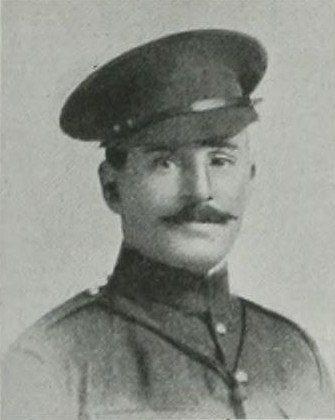
Arthur A. L. Green.
GREEN, CHARLES WILLIAM, Stoker, 1st Class, 195688, H.M.S. Cressy; lost in action in the North Sea, 22 Sept. 1914.
GREEN, ERNEST, Private, No. 2308, Brecknockshire Battn. South Wales Borderers (T.F.), s. of Joseph Green, of 77, Watton, Brecon, late Q.M.-Sergt., 2nd Battn. South Wales Borderers; b. Brecon, 14 Jan. 1887; educ. National School there; enlisted after the outbreak of war, 5 Sept. 1914; went to Egypt, and then to Aden; and died of heatstroke during the forced march through the Desert, to La Hy and back on 4 July, 1915. Private Green was a well-known Mid-Wales football player. His three brothers, Sergt. Frank Green, Royal Marines, who took part in defence of Antwerp; Private Harry Green, South Wales Borderers; and Private Monty Green, Brecknockshire Regt., are (1916) on active service.
GREEN, CLIFFORD WHITTINGTON, Capt. 1st Battn. Royal Berkshire Regt., only s. of Ernest Henry Green, of Bayworth Manor, Bagley Wood, co. Berks, by his wife, Maud, dau. of Col. George John Charles Whittington, C.B.; b. West Lavington, co. Wilts, 16 Aug. 1890; educ. Cothill House, Radley College, and Lincoln College, Oxford; joined the 3rd Militia Battn. of the Berkshires in 1912 as 2nd Lieut.; promoted Lieut., and on the outbreak of war received a regular commission in the same regt. 14 Aug. 1914. He joined the 1st Battn. in France on 27 Nov., served with them through the winter campaign, 1914–15, including the fight at Givenchy, 22 Dec., also through the spring operations and at Richebourg, 20 May, 1915, where he distinguished himself leading his company in the attack, being promoted tempy. Capt. He died in hospital at Lillers, 27 June, 1915, of wounds received in action at Cambray, near La Bassée, the preceding day; and was buried at Chocques Military Cemetery; unm. A brother officer writing of him said: “Capt. Whittington Green was a brave officer, and one whose first thought was always for his men.” At the time he was killed he was directing his men to take cover, as the enemy had started shelling the headquarters. He played hockey for the Berkshire and Oxfordshire county teams.
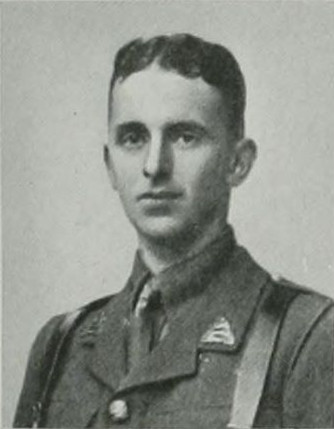
Clifford Whittington Green.
GREEN, FREDERICK, A.B. (B. 4154), 200824. H.M.S. Good Hope; lost in action off Coronel, on the coast of Chili, 1 Nov. 1914.
GREEN, HORACE EDWARD, Private, R.M.L.I., Ch./16692, H.M.S. Aboukir; lost in action in the North Sea, 22 Sept. 1914.
GREEN, HERBERT WILLIAM, Corpl., No. 9185, 1/5th South Staffordshire Regt. (T.F.), 3rd s. of Arthur John Green, of West Bromwich, Builder, by his wife, Annie, dau. of John Berry; b. West Bromwich, co. Stafford, 19 Nov. 1894; educ. Lodge Estate Schools there; was an Engineer; enlisted 4 Sept. 1914; promoted Corpl. Jan. 1915; went to France 1 March, 1915; and was killed in action near Hill 60, 25 Aug. 1915, while observing the effect of our artillery fire on the enemy’s trenches; unm. He was well-known in the Birmingham District as a fine swimmer and was a clever amateur dramatic actor.
GREEN, JAMES THOMAS, Private. No. 14405, 4th (Reserve) Battn. Coldstream Guards, only s. of James Green, of the Royal Lodge Gardens, Windsor Great Park, Gardener to the Hon. Lady Ellis, by his wife, Annie, dau. of the late Thomas Martin; b. The Gardens, Royal Lodge, 17 March, 1893; educ. Royal Schools, Windsor Great Park; enlisted 29 Dec. 1914; invalided home 29 Jan. 1915, and died 5 Feb. 1915, of spotted fever contracted while training at Caterham; unm. Buried at St. Jude’s Cemetery with full military honours.
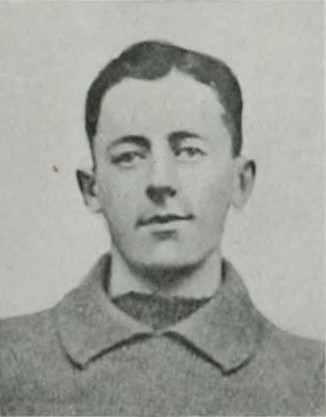
James Thomas Green.
GREEN, JOHN EDWARD, Stoker, 1st Class (R.F.R., B. 4229), S.S. 103203, H.M.S. Good Hope; lost in action off Coronel, on the coast of Chili, 1 Nov. 1914.
GREEN, PERCY ERNEST, Seaman, R.N.R.. 4171A, H.M.S. Hogue; lost in action in the North Sea, 22 Sept. 1914.
GREEN, SAMUEL JAMES, Stoker, 1st Class (R.F.R., B. 7761), 292356, H.M.S. Hawke; lost when that ship was torpedoed in the North Sea, 15 Oct. 1914; m.
GREEN, THOMAS MICHAEL, Stoker, P.O. (R.F.R., Ch. B. 9821), 297718, H.M.S. Cressy; lost in action in the North Sea, 22 Sept. 1914.
GREEN, WILLIAM LAMBEY THORNE, Private. R.M.L.I., Ch./17611, H.M.S. Cressy; lost in action in the North Sea, 22 Sept. 1914.
GREEN, WILLIAM STANLEY, A.B., J. 2660, H.M.S. Aboukir; lost in action in the North Sea, 22 Sept. 1914.
TOWNSEND-GREEN, HENRY RUSSELL, Capt., 1/16th Battn. (Queen’s Westminster Rifles) The London Regt. (T.F.), eldest s. of James Henry Townsend-Green, of 5, Addison Road, Kensington, and Chesham, Bucks, P.P.A.I., F.S.I., by his wife, Cornelia Augusta, dau. of the late Samuel W. Russell; b. Kensington, 31 Jan. 1890; educ. Uppingham, and was by profession a Surveyor. He obtained a commission as 2nd Lieut. in the Queen’s Westminster Rifles, from the Uppingham O.T.C., 30 Jan. 1908, and became Lieut., 1 Nov. 1910, and Capt., 26 Sept. 1914. In 1910 he secured a place in the King’s Hundred at Bisley, and passed the Hythe School of Musketry in 1912, with distinction in the Maxim Gun Course. On the outbreak of war he volunteered for Imperial service; left for France, 1 Nov. 1914, and was killed in action near Armentières, 3 March, 1915, only a few days after returning from a week’s leave in London. Buried at Armentières; unm. The Adjutant of his Battn. wrote: “He was one of those people who inspire confidence, and I have always felt that if we were asked to send out any party of men under an officer needing more than ordinary intelligence, decision, and coolness, I should unhesitatingly have chosen him; he has ever since he came out here been the man one felt one could rely on in any emergency”; and his Commanding Officer wrote: “He was always one of our very best, keenest, and most capable officers, his work and his mark will remain in the Regt. which he loved so well, and which loved him so well and in which his memory will always be so affectionately cherished.”
GREENAWAY, SIDNEY, Private, R.M.L.I., Ch./13484, H.M.S. Pathfinder; lost when that ship was sunk by a mine, about 20 miles off the East Coast, 5 Sept. 1914.
GREENER, WILLIAM ERNEST, A.B., 234657, H.M.S. Aboukir; lost in action in the North Sea, 22 Sept. 1914.
GREENHALGH, EDWARD, E.R.A., 1st Class, 269845, H.M.S. Cressy; lost in action in the North Sea, 22 Sept. 1914.
GREENHAM, ERNEST ALBERT, Leading Seaman (R.F.R., B. 8820), 209091, H.M.S. Hawke; lost when that ship was torpedoed in the North Sea, 15 Oct. 1914; m.
GREENLAND, FREDERICK JOHN, A.B., 197040, H.M.S. Hogue; lost in action in the North Sea, 22 Sept. 1914.
GREENSTREET, ROBERT SMITH, Private, No. 2535, 3/4th Battn. Queen’s Royal West Surrey Regt., s. of the late Richard Reynolds Greenstreet, of Lydd, Kent, Fisherman, by his wife, Mary Ann, dau. of (—) Smith; b. Hythe, 8 June, 1880; educ. Lydd; was a Fisherman; enlisted 23 Sept. 1914, and died in No. 2 Division War Hospital, Selhurst, 5 Oct. 1915, of illness contracted while training. He m. at Beckenham, 16 Oct. 1904, Beatrice Annie (109, Ecclesbourne Road, Thornton Heath, Surrey), dau. of Charles Albert, and had three children: Beatrice Elizabeth, b. 1 Sept. 1905; Florence Edith, b. 12 June, 1909; and Emily Winifred, b. 6 June, 1914.
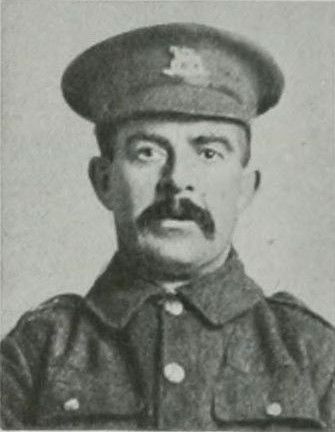
Robert S. Greenstreet.
GREENWOOD, ALFRED EDWARD, Stoker, 2nd Class, S.S. 115507, H.M.S. Good Hope; lost in action off Coronel, on the coast of Chili, 1 Nov. 1914.
GREENWOOD, GEORGE JESSE FRANCIS, Sergt., No. 89, 4th Battn. Suffolk Regt. (T.F.), eldest s. of George Joseph Greenwood, Foreman at Messrs. Brackett & Co., Engineers, Colchester, by his wife, Emma Ann, dau. of John James Butler, of Chelmsford; b. Colchester, 7 Sept. 1883; educ. Colchester Bluecoat School; and for many years up to Aug. 1914, held a position of trust with Brown & Co., Timber Merchants, Ipswich. He joined the 1st Vol. Battn. Suffolk Regt. (which in 1907 became the 4th Territorial Battn. of the Suffolks) 6 Feb. 1900, and reached the rank of Sergt. On the outbreak of war volunteered for foreign service, and went to France 6 Nov. 1914; was home on a few days’ leave in April, returning to the Front on the 6th, and was killed in action near Neuve Chapelle, three days later, 9 April, 1915. Lieut. Pretty wrote: “At the time he met his death he was just turning away from examining the enemy’s position through his glasses, and was necessarily exposing himself to some risk. He was doing his duty cheerfully and bravely.... His body rests in a military graveyard [at Rouge Croix] about half a mile behind the firing line.” Sergt. Greenwood was a well-known member of the Felixstowe Rifle Club, and a prize winner at the county meeting, and had the Volunteer Long Service Medal. He m. at St. Botolph’s Church, Colchester, 2 Sept. 1907, Nellie May (53, Newton Road, Ipswich), eldest dau. of George Woods, of Colchester, and had two children: George Charles, b. 24 June, 1908; and Millicent Alice, b. 11 April, 1912.
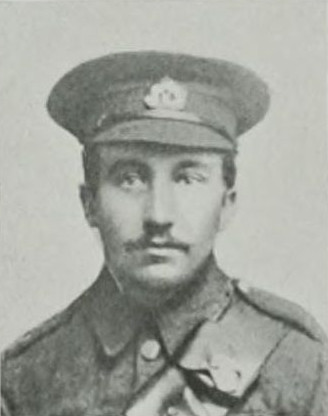
George J. F. Greenwood.
GREENWOOD, JAMES, Stoker, 1st Class (R.F.R., B. 4866), S.S. 104269, H.M.S. Good Hope; lost in action off Coronel, on the coast of Chili, 1 Nov. 1914.
GREENWOOD, JOHN FRANCIS BERNAL, Lieut., 1st Battn. King’s Own (Royal Lancaster) Regt., eldest s. of Lieut.-Colonel Joseph Greenwood, R.E., by his wife, Clara, dau. of John Bernal, of Albert Lodge, Limerick; b. Limerick, 22 March, 1885; educ. Military College, Plymouth; joined the Army, 13 July, 1903, and was given a commission 18 Jan. 1908, and promoted Lieut. 21 May, 1911. He served in India, 1908 till Nov. 1912, and while there obtained Cavalry Higher Equitation (with Royal Dragoons, Lucknow, 1 Oct. 1909), Mounted Infantry (Umballa 1911–12), and Supply and Transport (Rawal Pindi) Certificates, and commanded a section in the Mounted Infantry School, Umballa. He passed Higher Standard examinations in Hindustani (24 April, 1911), and Pushtu and Lower Standard Persian (13 July, 1911), and held a certificate as an interpreter in French (gained June, 1914). In Jan. 1913, he was seconded for two years’ service with the Army Pay Department, but rejoined his Regt. in Jan. 1915, being attached to the 3rd Battn. from which he was drafted to the 1st Battn. at the Front in April. He was killed in action at St. Julien, during the Second Battle of Ypres, Sunday, 2 May, 1915, and was buried by the Germans about 2 miles N.E. of Ypres. Major Wilson wrote: “On 2 May, at about 3 p.m., the enemy used gas, and under cover of the gas they advanced (about 700 strong) against a position (a farmhouse) held by 10 men of C Coy. 1st Battn. Lieut. Greenwood, a Corpl. and three men, all of C Coy., rushed to the farmhouse (about 200 yards) to assist the 10 men holding the farm. The enemy continued their advance under rifle and machine gun fire to within 300 yards of our position and placed their maxim guns behind a hedge. During the attack Lieut. Greenwood, using his revolver, and the men with rifles, accounted for a good number of the enemy. Lieut. Greenwood, after using all his revolver ammunition, took up a rifle and fired a few rounds, when he was shot in the head by enemies’ maxim gun. His death was instantaneous. The enemy having partly surrounded our small party, we were eventually ordered to retire as it was impossible for so few men to hold the position any longer. His body was unavoidably left behind together with about 10 men. He showed great gallantry during the fighting.” He m. at the R.C. Garrison Church, Lucknow, India, 20 July, 1910, Frances Mary Georgina, eldest dau. of the late James Watson Anderson, of Saltburn-by-Sea, York, and of Bacon’s Crescent, Exeter, Devon, and had one child, Henry Vincent Bernal, b. 16 Aug. 1911.
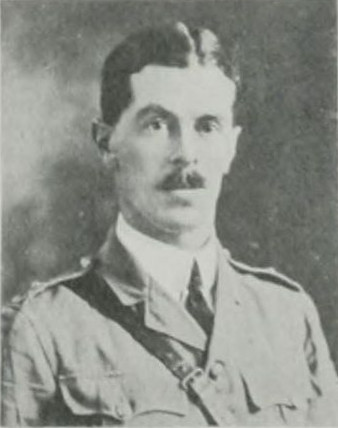
John F. B. Greenwood.
GREENWOOD, LEWIS LEONARD, A.B. (R.F.R., Ch. B. 8929), S.S. 2077, H.M.S. Cressy; lost in action in the North Sea, 22 Sept. 1914.
GREENWOOD, ROBERT, L.-Corpl., No. 6222, A Coy. 1st Battn. 1st Brigade, Canadian Expeditionary Force, eldest s. of the late Robert Greenwood, of Camberwell, by his wife, Rosetta, dau. of (—) Burley, and gdson. of Edwin Greenwood, of 244, Haydons Road, Wimbledon, S.W.; b. Leytonstone, Essex, 25 Jan. 1895; educ. John Ruskin Council School, Camberwell; went to Canada in Feb. 1914, and settled at Thamesford, Ontario, as a Farmer’s help; volunteered on the outbreak of war and joined the Canadian Expeditionary Force in Aug. 1914; came over with the first contingent in Dec. 1914; trained at Bustard Camp, Salisbury; went to France, Feb. 1915, and was killed in action at, or near, Givenchy, 15 June, 1915, being blown to pieces by a shell; unm.
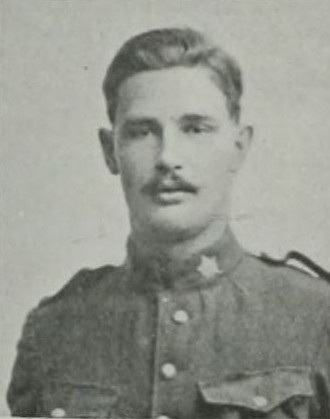
Robert Greenwood.
GREER, WILLIAM, Stoker, 1st Class (R.F.R., B. 7916), S.S. 103607, H.M.S. Hawke; lost when that ship was torpedoed in the North Sea, 15 Oct. 1914; m.
GREGORY, BERT WALTER, A.B., J. 699, H.M.S. Laurel; killed in action in the Heligoland Bight, 28 Aug. 1914.
GREGORY, CHARLES ARTHUR, Private, No. 20023, C Coy., 11th Battn. (Pioneers) King’s Liverpool Regt., 2nd s. of Tom Jackson Gregory, of London, Master Mariner, by his wife, Helena; b. Liverpool, 18 Aug. 1893; educ. Our Lady of Mount Carmel School there; enlisted 17 Sept. 1914, and on the night of 21 June, 1915, while in the trenches, off the Menin Road, one and a-half miles from Ypres, was shot through the head by a sniper. He was taken to Bailleul Casualty Clearing Station, where he died the following day, and was buried in the military annex to Bailleul Cemetery (Grave No. 1420). He m. at Liverpool, 29 Dec. 1914, Catherine, dau. of Thomas Standish, of Liverpool.
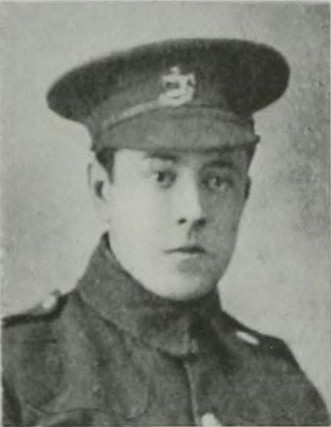
Charles Arthur Gregory.
GREGORY, ERNEST, Leading Seaman, 209700, H.M.S. Good Hope; lost in action off Coronel, on the coast of Chili, 1 Nov. 1914.
GREGORY, JAMES WILLIAM, A.B. (R.F.R.), B. 3896), 185803, H.M.S. Hawke; lost when that ship was torpedoed in the North Sea, 1914; m.
GREGORY, NATHANIEL, Stoker, 1st Class, K. 12747 (Ports.), H.M.S. Cressy; lost in action in the North Sea, 22 Sept. 1914.
GREGORY, THOMAS, Officer’s Cook, 2nd Class, L. 3030 (Ports.), H.M.S. Pathfinder; lost when that ship was sunk by a mine, about 20 miles off the East Coast, 5 Sept. 1914.
GREGSON, DAVID WALKER, Private, No. 6221, 1st Battn. 1st Brigade, Canadian Expeditionary Force, s. of John Gregson, of Fergus, Ontario, Canada; b. West Garafraxa, Wellington Co., P. Ontario, 10 June, 1898; educ. Fergus, Ontario; enlisted 16 Aug. 1914, and was killed in action at Ypres between 22–30 April, 1915. He was buried beside a house in a small garden seven miles S.E. of Ypres.
GREIG, JOHN WILLIAM HENRY, 2nd Lieut., attd. 25th Punjab Cavalry, Frontier Force, 5th s. of Hunter Hepburn Greig, of 71, Heathfield Road, Wandsworth Common, S.W., formerly of Perth, by his wife, Phœbe Jane, dau. of Alexander Elliot, of Kelso; b. Perth, 6 May, 1886; educ. Perth Academy and Denstone College, Stafford, and was a member of the staff of the Chartered Bank of India. He had joined the Indian Army Reserve of Officers, and after the outbreak of the war was attached (Feb. 1915) to the 25th Punjab Cavalry at Calcutta. He was killed in action at Tochi Valley, near Miranshah, North Western India, 26 March, 1915, while fighting against the Zadrai Tribes, and was buried at Miranshah; unm. His 6th brother, the Rev. George Anthony Greig, Chaplain to H.M.S. Russell, died at Malta Royal Naval Hospital, 28 April, 1916, from gas poisoning, caused by the Russell striking a mine the previous day.
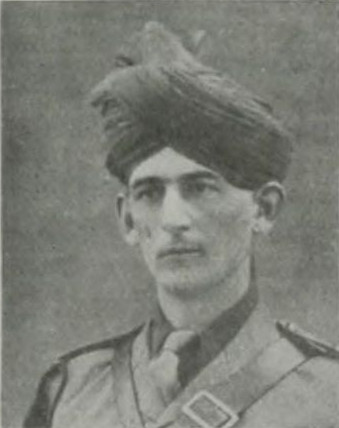
John W. H. Greig.
GREIG, STEWART, L.-Corpl., Ch./15295, H.M.S. Hogue; lost in action in the North Sea, 22 Sept. 1914.
GRENFELL, FRANCIS OCTAVIUS, V.C., Capt., 9th Lancers, 8th s. of the late Pascoe Du Pre Grenfell, of Wilton Park, Beaconsfield, by his wife, Sophia, dau. of Vice-Admiral John Pascoe Grenfell, Brazilian I.N., and nephew of Francis Wallace, 1st Baron Grenfell, P.C., G.C.B.; G.C.M.G., Field-Marshal; b. Hatchlands, Guildford, 4 Sept. 1880; educ. Eton (Mr. Durnford’s House, 1894–99); received a commission in the 3rd (Militia) Battn. Seaforth Highlanders, 13 Dec. 1899; gazetted 2nd Lieut. King’s Royal Rifle Corps, 4 May, 1901, and Lieut. 28 Jan. 1905; transferred to 9th Lancers 6 May, 1905; promoted Capt. 7 Sept. 1912; was Adjutant 1 Nov. 1912 to 13 Jan. 1914; served (1) in the South African War, 1901–2; took part in operations in Cape Colony and Transvaal, 1901, and in those in Orange River Colony, Jan. to 31 May, 1902 (Queen’s medal with five clasps); and (2) with the Expeditionary Force in France and Flanders; was twice mentioned in Despatches [London Gazette, 20 Oct. and 16 Nov. 1914] by F.M. Sir John French, and was killed in action, after being twice wounded at Hooge, 24 May, 1915; unm. He was awarded the Victoria Cross “For gallantry in action against unbroken infantry at Audregnies, Belgium, on 24 Aug. 1914, and for gallant conduct in assisting to save the guns of the 119th Battery, R.F.A., near Doubon, the same day,” being the first officer to receive it in the European War. At Eton he was in the Cricket XI in 1899, and Master of the Beagles. Like his brother, Capt. R. N. Grenfell, he was one of the finest polo players of his day. He did much for modern polo with his brother, was in the Champion side several times, and was instrumental in forming the Old Etonians Polo Team, which at one time was nominated as the Polo Cup Challenger. One of the best known men in the army, he enjoyed a popularity that few men achieve.
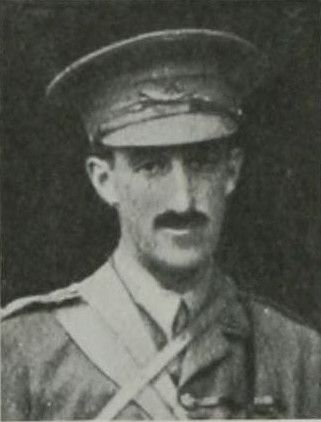
Francis Octavius Grenfell.
GRENFELL, HON. GERALD WILLIAM, Lieut., 8th (Service) Battn. The Rifle Brigade, 2nd (and at the time of his death elder surviving) s. of William Henry, 1st Baron Desborough, K.C.V.O., by his wife, Ethel Anne Priscilla, Lady of the Bedchamber to H.M. the Queen, dau. of the Hon. Julian Henry Charles Fane, and granddau. of John, 11th Earl of Westmorland; b. 4, St. James’s Square, London, S.W., 29 March, 1890; educ. Eton (where he gained an entrance scholarship and the Newcastle scholarship) and Balliol College, Oxford (where he obtained the Craven scholarship in 1911), and was about to be called to the Bar; volunteered after the outbreak of war and was gazetted 2nd Lieut. 8th Rifle Brigade, 12 Sept. 1914; served with the Expeditionary Force in France and Flanders from May, 1915, and was killed instantaneously by machine gun fire at Hooge, Flanders, 30 July, 1915, while leading a counter-attack; unm. Capt. A. C. Sheepshanks wrote: “He died splendidly, leading his men over open ground up hill in the face of a tremendous fire from machine guns. His Platoon Sergt. saw him pitch forward with a bullet in the head, and thinks he was hit again in the side as he fell. He must have been killed instantaneously as he was not seen to move afterwards. Both as his company commander and his friend I shall miss him enormously. His platoon all loved him, and he had somehow inspired them with a fighting spirit, and it was only a few days ago that I told the Col. that Bill’s platoon was the best fighting platoon I had”; and A. A. Tod, second in command of the 8th Battn.: “We were great friends, and though I didn’t know him before he joined, I, like all the others, was immediately drawn to him by his delightful personality. I know you must be inundated with letters, so feel rather diffident about adding to the number, but somehow it seems to help to write about a dear friend that has gone. We all loved Billy, and his men, to my certain knowledge, adored him. It couldn’t have been otherwise, because ever since he went to France he was always to the fore, and what the men always like, never expected them to do anything he couldn’t do himself. His gallantry was remarkable, and fear was a word he didn’t know the meaning of. As you know, he died at the head of his men leading a counter-attack. It’s but poor consolation, but I am positive that of all deaths it is the one he would have chosen.... That was a fearful day, and no one can describe the horror of seeing 20 officers and well over 500 men fall in one Battn. in about 14 hours.” His elder brother, Capt. J. H. F. Grenfell, and twin cousins, Capt. F. Grenfell, V.C., and Capt. R. N. Grenfell, were also killed in action, and his yst. and only surviving brother, the Hon. Ivo G. W. Grenfell, is now with the Coldstream Guards. His sister, the Hon. Monica Grenfell, is a Red Cross Nurse in France.
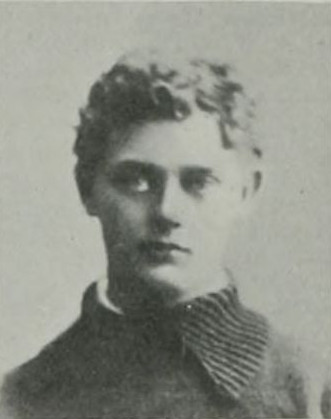
Hon. Gerald Wm. Grenfell.
GRENFELL, HON. JULIAN HENRY FRANCIS, Capt., 1st (Royal) Dragoons, D.S.O., eldest s. and h. of William Henry, 1st Baron Desborough, K.C.V.O., by his wife, Ethel Anne Priscilla, Lady of the Bedchamber to H.M. the Queen, dau. of the Hon. Julian Henry Charles Fane, and granddau. of John, 11th Earl of Westmorland; b. 4, St. James’s Square, London, 30 March, 1888; educ. Eton and Balliol College, Oxford; gazetted 2nd Lieut. 1st Dragoons, 15 Sept. 1909 (24 Aug. 1910); and promoted Lieut. 6 Oct. 1911; temporary Capt. 15 Nov. 1914, and Capt. 31 Jan. 1915; served with the Expeditionary Force in France and Flanders from 7 Oct. 1914; was mentioned in F.M. Sir John French’s Despatch of 20 Nov. 1914–14 Jan. 1915 [London Gazette, 17 Feb. 1915] for gallant conduct in the field; was severely wounded in the head by shrapnel, 13 May, while reconnoitring near Ypres, and died in hospital at Boulogne, 26 May, 1915; unm. He had made a special study of reconnaissance work, and was awarded the D.S.O. [London Gazette, 1 Jan. 1915] for having on 17 Nov. “succeeded in reaching a point behind the enemy’s trenches, and making an excellent reconnaissance, furnishing early information of a pending attack of the enemy.” A poem, “Into Battle,” written by him in the trenches appeared in “The Times,” and of it Sir W. Raleigh, Professor of English literature at Oxford, wrote: “I don’t know if you really know that Julian’s poem is one of the swell things in English literature. It is safe for ever, I know it by heart, and I never learned it. It has that queer property which only the best poems have, that a good many of the lines have more meaning than there is any need for, so that new things keep on turning up in it.” At Eton he ran well in the steeplechase in 1905, and at Oxford rowed in the college crew. In 1907 and 1908 he was three in the Balliol eight in the Ladies Challenge Plate, and in the following year he was bow in the Balliol four which won the Wyfolds at Henley, and rowed for the O.U.B.C. coxswainless fours. He was a member of the Belsize Boxing Club and proved himself a formidable opponent. His chief sport was shooting. His next brother, Lieut. G. W. Grenfell, and his cousins, Capt. F. Grenfell, V.C., and Capt. R. N. Grenfell, were also killed in action (see their notices).
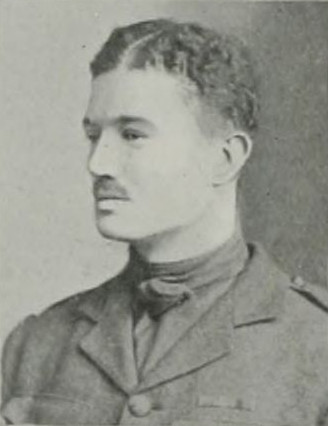
Hon. Julian H. F. Grenfell.
GRENFELL, RIVERSDALE NONUS (“RIVY”), Capt. Buckinghamshire Yeomanry (Royal Bucks Hussars), att. 9th Lancers, 9th and yst. s. of the late Pascoe Du Pre Grenfell, of Wilton Park, Beaconsfield, by his wife, Sophia, dau. of Vice-Admiral John Pascoe Grenfell, Brazilian I.N., and nephew of Francis Wallace, 1st Baron Grenfell, P.C., G.C.B., G.C.M.G., Field-Marshal; b. Hatchlands, Guildford, 4 Sept. 1880; educ. Eton; received a commission as Lieut. in the Royal Bucks Hussars, 1 Sept. 1908, and was promoted Capt. Aug. 1914; served with the Expeditionary Force in France and Flanders from 18 Aug., att. to the 9th Lancers, and was killed in action at Vendresse during the Battle of the Aisne, 14 Sept. 1914; unm. He was one of the best known players in English polo. He was a member of the Hurlingham Committee, which is the governing body of the game, and was among the best Nos. 1 in English polo during the past decade. He played twice in English teams that beat Ireland, and was No. 1 in the Roehampton side that won the Championship Cup in 1909, while three years before he was one of the Freebooters who secured the championship. In 1909 he organised an Old Etonians team, which played a prominent part in London polo. With his twin brother, Francis, he played in the final match for the House Football Cup in 1898, when Durnford’s won by a narrow margin. He was whip of the Beagles, Francis being Master of the Beagles at Eton. He was Founder, Chairman and Treasurer of the Islington branch of the Invalid Children’s Aid Association, and a Memorial Fund is being raised to endow this branch, now called the Francis and Rivy Grenfell Branch. His twin brother and his two cousins were also killed in action in the European War, while his elder brother, Pascoe St. Leger, was killed in the Matabele War, 1896, and his seventh brother, Robert Septimus, Lieut. 12th Lancers, was killed at Omdurman, 4 Sept. 1898.
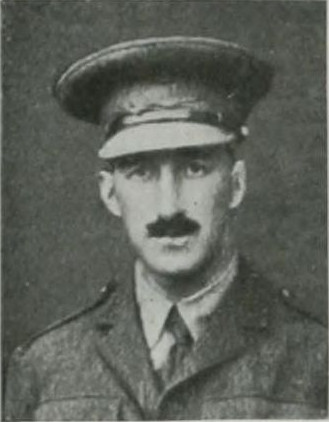
Riversdale N. Grenfell.
MORGAN-GRENVILLE, THE HON. RICHARD GEORGE GRENVILLE, Master of Kinloss, Capt., 1st Battn. The Rifle Brigade, eldest s. of the late Major Luis Ferdinand Courthope Morgan-Grenville, York and Lancaster Regt., by his wife, Mary, 11th Baroness Kinloss, Lady of the Crown of India, dau. of Richard Plantagenet, 3rd and last Duke of Buckingham and Chandos, 10th Lord Kinloss, P.C.; b. Chandos House, London, 25 Sept. 1887; educ. Eton and Sandhurst; gazetted to the 1st Battn. Rifle Brigade, 24 Jan. 1906, and promoted Lieut. 22 Jan. 1910, and Capt. 5 Aug. 1914; went to France with the Expeditionary Force; was twice wounded, but each time recovered and returned to the Front; was twice mentioned in Despatches by F.M. Sir John (now Lord) French [8 Oct. 1914, and 10 Jan. 1915] for gallantry in the field, and was recommended for the D.S.O., but was killed in action at Ploegsteert, 19 Dec. 1914. He was unm., and was buried in the wood there. His brother, Lieut. the Hon. Thomas G. B. Morgan-Grenville, 4th Battn. Rifle Brigade, is now (1916) on active service.
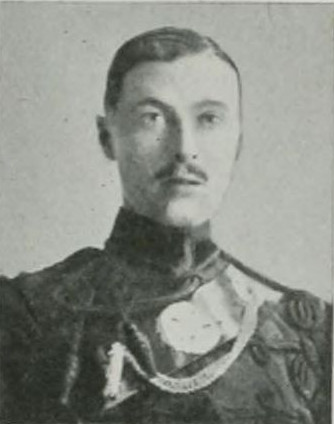
R. G. G. Morgan-Grenville.
GREY, GERALD, Stoker, 1st Class (R.F.R., B. 3266), S.S. 100998, H.M.S. Good Hope; lost in action off Coronel, on the coast of Chili, 1 Nov. 1914.
GRIERSON, SIR JAMES MONCRIEFF, K.C.B., C.V.O., C.M.G., Lieut.-Gen., R.A., eldest s. of the late George Moncrieff Grierson, of Glasgow, by his wife, Allison, dau. of George Lyon Walker, of Garemount, Dumbartonshire; b. Glasgow, 27 Jan. 1859; educ. Glasgow Academy, and the Royal Military Academy, Woolwich; gazetted Lieut., R.A., 9 Oct. 1877, and promoted Capt. 20 Jan. 1886; Major 11 Dec. 1895; Brevet Lieut.-Col. 12 Dec. 1895; Brevet Col. 1 March, 1900; Col. 28 Oct. 1901; Major-Gen. 12 Feb. 1904, and Lieut.-Gen. 6 May, 1910; was D.A.Q.M.G., Indian Contingent, Expeditionary Force, Egypt, 9 Aug. to 17 Oct. 1882; on special service with the Expeditionary Force, Suakim, 20 Feb. to 5 March, 1885; D.A.A. and Q.M.G., Egypt, 6 March to 12 June, 1885; Station Staff Officer, 1st Class, Bengal, 17 Feb. to 7 July, 1889; D.A.A.G. (Intel.) H.Q. of Army, 1 July, 1890, to 14 July, 1894; Brigade Major, R.A., Aldershot, 1 Jan. 1895 to 19 Feb. 1896; Military Attaché, Berlin, 1 March, 1896, to 2 Feb. 1900; on special service, South Africa, 3 Feb. to 27 Feb. 1900; A.A.G. South Africa, 28 Feb. to 23 Aug. 1900; Staff Officer (graded D.A.G.), China, 24 Aug. 1900 to 21 Oct. 1901; A.Q.M.G., II Army Corps, 28 Oct. 1901 to 3 Sept. 1902; Chief Staff Officer (Brig.-Gen. on Staff), II Army Corps, 4 Sept. 1902 to 11 Feb. 1904; Director of Military operations, Army H.Q., 12 Feb. 1904 to 5 Oct. 1906; Major-Gen., 1st Division, Aldershot Army Corps, and G.O.C., 1st Division, Aldershot Command, 6 Oct. 1906, to 6 Aug. 1910, and G.O. Commanding-in-Chief, Eastern Command, 4 April, 1912, to Aug. 1914; Hon. Col., 2nd London Brigade, R.F.A., 1912–14; A.D.C. Gen. to H.M. the King, 1 July, 1914, and Commander of the 2nd Army Corps of the Expeditionary Force in France, Aug. 1914; created M.V.O. (4th Class), 23 Nov. 1899; C.B., 29 Nov. 1900; C.M.G., 26 June, 1902; C.V.O., 1 July, 1904; and K.C.B., 19 June, 1911; served in Egyptian War, 1882; took part in action at Kassassin 9 Sept., and Battle of Tel-el-Kebir (mentioned in Despatches [London Gazette, 2 Nov. 1882]; medal with clasp; Khedive’s Bronze Star; 5th Class Medjidie); with Sudan Expedition, 1885; took part in actions at Hasheen, and on 26 March, and advance on Tamai (mentioned in Despatches [London Gazette, 25 Aug. 1885]; clasp); with Hazara Expedition, 1888; was D.A.Q.M.G., 2nd Brigade (mentioned in Despatches; medal with clasp; Brevet of Lieut.-Col.); in South African War, 1899–1900; took part in operations in Orange Free State, Feb. to May, 1900. including actions at Poplar Grove, Dreifontein, Vet River (5–6 May), and Zand River; operations in the Transvaal, May-June, 1900; including actions near Johannesburg, Pretoria, and Diamond Hill (11 June); operations in the Transvaal, east of Pretoria, July-16 Aug. 1900 (mentioned in Despatches [London Gazette, 10 Sept. 1901]; Queen’s medal with four clasps); in China, 1900; including service as British Military representative on the Staff of the Commander-in-Chief of the Allied Forces (medal, C.B.); and died on active service, of heart failure, while travelling in a train in France, 17 Aug. 1914; unm. Gen. Grierson made a reputation with the 3rd and 4th Divisions at manœuvres. During the manœuvres in Cambridgeshire in 1912, he so concealed the 4th Division that it remained entirely lost so far as the opposing side was concerned, until it developed its fighting line in action on a flank. The Division made a long march, and when hostile aircraft came near it the troops halted and took shelter in woods, ravines and hedges, remaining perfectly still. The guns and wagons were covered with sheets, hay, straw, and so on, and the aircraft failed to discover the presence of the force. He was again complimented by Sir John French on those in Northamptonshire in 1913. He was the author of many works on Military subjects, including “Armed Strengths of Armies of Russia, Germany and Japan,” published by the War Office; “Staff Duties in the Field,” “Handbooks of the Russian Army,” and “Records of the Scottish Volunteers, 1859–1908.”
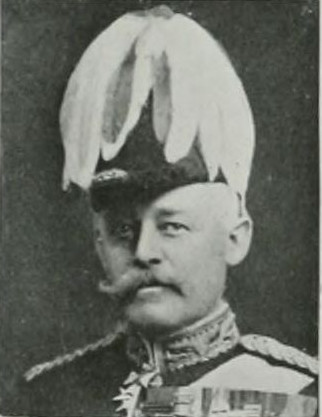
James Moncrieff Grierson.
GRIEVE, WILLIAM PERCIVAL, 2nd Lieut., 3rd Battn. Duke of Cambridge’s Own (Middlesex Regt.), yst. s. of William Grieve, of 13, Fenchurch Avenue, London, and Rockcliffe, Dalbeattie, by his wife, Margaret, dau. of the late Rev. George Hodgkinson, of Louth; b. Croydon, 11 Nov. 1885; educ. St. Andrew’s School, Eastbourne, Cheltenham College, and Edinburgh University. On the outbreak of war he joined the 2nd King Edward’s Horse as a Trooper, received a commission in the 5th Middlesex Special Reserve, 14 Nov. 1914, and was transferred from that battn. to the 3rd Middlesex; served in France and Flanders, and was killed in action near Ypres, 14 Feb. 1915; unm.
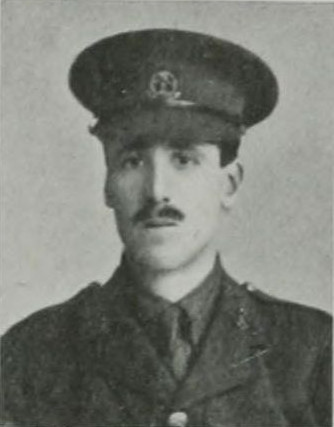
William Percival Grieve.
GRIFFIN, ERNEST JOHN, Stoker, 1st Class S.S. 111025, H.M.S. Good Hope; lost in action off Coronel, on the coast of Chili, 1 Nov. 1914.
GRIFFITH, THOMAS FRANCIS, Gunner, R.M.A., 9569, R.F.R., B. 1266, H.M.S. Aboukir; lost in action in the North Sea, 22 Sept. 1914.
GRIFFITH, JOHN GWYNNE, Major, 32nd Lancers, Indian Army, and Brigade Major, 9th Cavalry Brigade, 3rd s. of the late Lieut.-Col. John Gilbert Erskine Griffith, of Fairfield House, Cheltenham, and Hodges, Jamaica, by his wife, Fanny Augusta (Newland, Coleford, Gloucester), dau. of George Harrison; b. Taraghur, Ajmere, India, 23 June, 1874; educ. Stubbington House School, and Dulwich College; joined the 3rd Militia Battn. South Wales Borderers in 1893; gazetted from it 2nd Lieut. to the Unattached List, Indian Army, 28 Nov. 1894; served his year with the 2nd Durham L.I. at Poona, and then was posted to the Indian Staff Corps, 2nd Bombay Lancers, 24 Feb. 1896, and promoted Lieut. 28 Feb. 1897; Capt. 28 Nov. 1903; and Major 28 Nov. 1912. He was successively on plague duty, Bombay; officiating Inspecting Officer, Imperial Service Cavalry, Kathiawar, and Military Attaché, Bombay Command H.Q., and was one of the eight senior subalterns selected for service in South Africa, and was temporary Capt. commanding 63rd Imperial Yeomanry from 1 Jan. to 23 March, 1902. He took part in the operations in the Transvaal and Orange River Colony, and was awarded the Queen’s medal with four clasps, and then returned to India and resumed his post as Military Attaché for another year. He was then S.S.O., Nasirobad; Officiating Brigade Major, Kamptee, for nine months; S.S.O. and Cantonment Magistrate, Pachmahri, for a year; Brigade Major, Jubbulpore, 23 Feb. 1906 to 14 Feb. 1909; and then passed through the Staff College, Quetta. In 1911 he went to Australia for two years and acted as Director of Military Training on the Headquarters Staff, Melbourne, and was so successful that the Australian Government asked for an extension of his services, which was granted for another year. The Hon. W. M. Hughes, Prime Minister and Minister of Defence, writing to his widow on hearing of his death, said: “Major Griffith’s extensive military knowledge, his capacity and soldierly attributes, combined with his charming personality, provided an inspiring example and earned him the respect of all ranks of the Australian Army”; and Gen. Kirkpatrick and Major-Gen. Chauvel both expressed their high appreciation of his services to the Commonwealth during the critical period of Australian Military development. He returned to India in 1913, and was home on leave when war broke out. He joined the 7th Cavalry Reserve at Tidworth, and on 18 Oct. was gazetted D.A.A. and Q.M.G., 2nd Cavalry Division, becoming Brigade Major, 9th Cavalry Brigade, by special request of the General Officer Commanding; went to France, 20 Oct. 1914, and was killed instantaneously, S.E. of Ypres, 24 May, 1915, while giving orders to his Brigade. Gen. Greenly wrote: “He was a brave, good soldier, an unfailing cheery companion, and the kindliest and most sympathetic of friends, the sort of English gentleman who has made the Empire what it is,” and added, “the loss to me is not only that of a perfectly invaluable staff officer, but of a very great friend, with whom I have been associated now, as you know, for a very considerable time, both on the staff together of the 2nd Cav. Div. and in this Brigade. On active service one gets to know one’s friends in a few months or sometimes even days in a way which years of peace would never bring. I can only say that in these months of sometimes hard and strenuous time I have got to know and value and love your husband in a way which it is difficult to convey to you”; and a brother officer: “The old regt. fairly bursts with pride even when we are saddest. I never saw anything like the feeling shown by the Indians, they all loved Johnnie, even as we all looked forward to the day when he got command. What a wonderful C.O. he would have made.]” Major Griffith was mentioned in F.M. Sir John (now Lord) French’s Despatch of 31 May, 1915, for gallant and distinguished service in the field. He m. at Cheltenham, 15 June, 1899, Florence Ethel (29, Park Place, Cheltenham), dau. of the late Major George Anthony Aufrère Baker, 6th Bengal Cavalry; s.p.
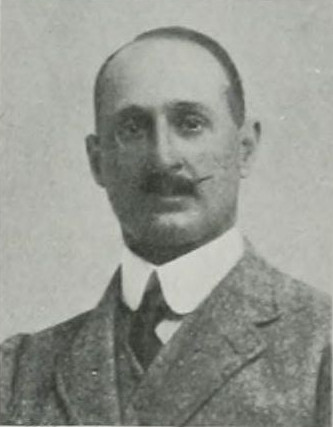
John Gwynne Griffith.
GRIFFITHS, ALLEN RHYS, 2nd Lieut., 53rd Battery, R.F.A., elder s. of Llewellyn Edward Griffiths, of Great Abshot House, Titchfield, formerly of Drayton Park, Longparish, by his wife, Bertha Mina, dau. of Thomas Allen Hickley, of Walton-on-Thames; b. Rookley House, King’s Somborne, Hants, 15 March, 1893; educ. Horris Hill, Newbury; and Winchester College; was a tea planter in Ceylon when war broke out, but came home immediately and enlisted in the Rifle Brigade in Dec. 1914; was given a commission, being gazetted 2nd Lieut. R.F.A. 27 Feb., 1915; went to France early in July, and was killed in action near Ypres, 9 Aug. 1915; unm.
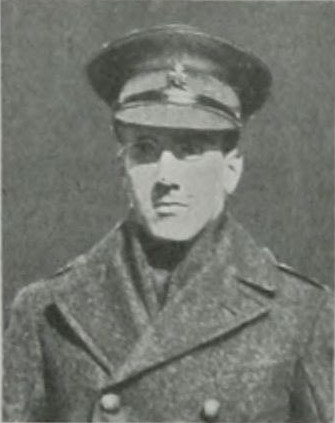
Allen Rhys Griffiths.
GRIFFITHS, BASIL GWYNNE, Sergt., No. 41567, 56th Battery, Royal Field Artillery, s. of Isaac Griffiths, D.C.M., Quartermaster-Sergt. (W.O.), Welsh Regt. (who served in the Boer War, with the South Wales Borderers, and was mentioned in despatches and awarded the Distinguished Conduct medal), by his wife, Sarah Ann, dau. of Martin Walsh, of Kilrane, co. Wexford, Farmer; b. Aldershot, 16 Jan. 1892; educ. Intermediate School and Christ’s College, Brecon; enlisted in Jan. 1906; was promoted Sergt., Aug. 1914; went to France, Aug. 1914, and was killed in the fighting around Hooge, near Ypres, 3 Nov. 1914; unm. Major B. Crozier, commanding 56th Battery, R.F.A., wrote: “He was killed while in charge of his gun ... and was buried by his comrades the same evening, at the same spot as three other men of his battery, at the edge of a wood about 800 yards south of the village of Ekstenest. I served with him previously in the 47th Battery and had a great regard for him. He did well while out here and will be a great loss to the battery, which he served so well. He was always so cheery and helped to cheer many when depressed.” Sergt. Griffiths was an expert “Rough-Rider,” swimmer and boxer.
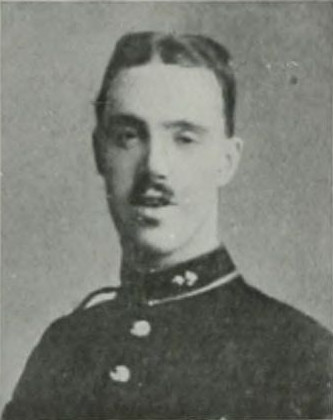
Basil Gwynne Griffiths.
GRIFFITHS, GEORGE HENRY WHITMORE, Private, No. 12946, 25th Battn. Royal Fusiliers Frontiersmen, eldest s. of the late George Summers Griffiths, Barrister-at-Law, Middle Temple, by his wife, Emma Lucy, dau. of the late Henry H. Cowper, H.M.’s Consul-General at Havanah, and grandson of the late Lewis Griffiths, of Marl Hill, Cheltenham, J.P.; b. Handsworth, near Birmingham; educ. Whitby, and Stamford Grammar Schools; at the age of thirteen went to sea as an apprentice in the Merchant Service, and when the South African War broke out joined the 18th Hussars and served through that campaign. He was awarded the Queen’s medal with five clasps, and on his return married and settled down in Wiltshire. When the European War started he immediately tried to rejoin his old regt., but finding that it already contained its full complement he enlisted in the 25th Fusilier Frontiersmen. He was killed in action at the Battle of Bukoba, German East Africa, 22 June, 1915. He had volunteered for a dangerous duty which he fulfilled at the cost of his own life, thereby saving the lives of many of his comrades. Gen. T. wrote: “It will be a consolation to you all to know that he died in such a gallant way.... The War Office ruled some time ago that no posthumous honours, except the V.C. were to be granted during this war, so that many gallant men, including your brave brother, are ineligible for posthumous D.C.Ms. Should at any time the rule be revised, I will remember what your gallant brother did for his country”; and Col. D.: “His company held an advanced position close up to the enemy; they were suffering loss from a machine gun posted on a small hill. Several men volunteered to work round and try to silence this gun. Griffiths was the first to volunteer. The bravery and dash of these volunteers was beyond all praise, but unfortunately most of them were either killed or wounded whilst successfully carrying out what they started to do. They saved many lives of their comrades. He and other brave comrades were buried in Bukoba alongside the Fort, with full military honours. We have marked the spot.” He m. at Lavington, Wiltshire, 8 Oct. 1906, Alice Riddell (Down View, West Lavington, Wilts), dau. of Edwin Burgess, of St. John’s Wood, London, Artist, and had two sons: George Edwin, b. 10 July, 1907, and John Whitmore, b. 15 May, 1913.
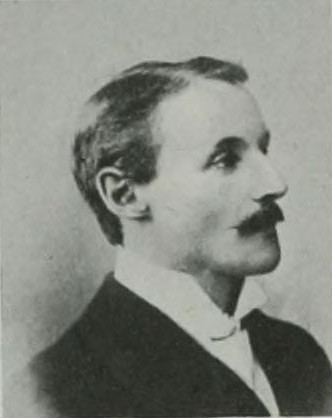
George H. W. Griffiths.
GRIGSON, FRANCIS HENRY, 2nd Lieut., 9th (Service) Battn. Royal Warwickshire Regt., only s. of the late Henry Francis Grigson, of Watton, Norfolk, Accountant, by his wife, Gertrude Alma, dau. of William Cooper, of Bury St. Edmunds, M.D.; b. Watton, co. Norfolk, 1 Oct. 1890; educ. Gorse Cliff School, Boscombe, Hants, and Lancing College, Sussex; and on leaving there went to London in Nov. 1908, to learn accountancy. In May, 1910, he went to Ceylon, where he spent several years tea planting, and in the early part of 1913 joined the firm of George Steuart & Co., of Colombo. On the outbreak of war in Aug. 1914, he gave up his post with them and returned to England at the end of the year. He was gazetted 2nd Lieut. to the 9th Warwickshires, 1 Feb. 1915; left for the Dardanelles on 19 June, and was killed in action at Anzac Cove, 9 Aug. 1915, during the fighting for Hill 971 (Sari Bair); unm. One of his officers, Major Gordon, wrote (20 Aug.): “I feel I cannot resist writing to tell you how sadly we all (such as survive) feel the loss of your brother. He was most popular with officers and men alike and was such a capable officer”; and again (Oct. 1): “I made your brother Regimental Transport Officer whilst at Helles, and he was invaluable in managing the pack mules (often under fire) and getting up our water, rations, etc.”; and another (Capt. Agar): “The circumstances of his death were given me by another of my subalterns who had charge of the company after I was ‘knocked out.’ They had been ordered to advance up a hill, which could only be done in single file; the subaltern in charge led the way, when they suddenly came under a heavy fire from machine guns, which made further progress impossible. The subaltern in charge ordered the company down the hill under cover, and whilst doing so was himself badly wounded and left behind. When the men had got back under cover, your brother and the wounded officer’s servant crawled up again and tried to bring him in; they bandaged him up as best they could, when your brother was hit and instantly killed. There is no doubt that if he had not been killed he would have been rewarded for his gallant action.”
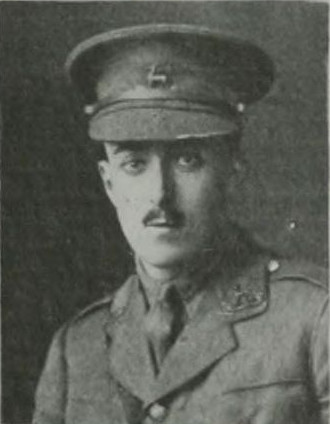
Francis Henry Grigson.
GRIFFITHS, JOHN, A.B. (R.F.R., Ch. B. 9826), 207832, H.M.S. Cressy; lost in action in the North Sea, 22 Sept. 1914.
GRIFFITHS, WALTER HENRY, Private, R.M.L.I., Ch./17349, H.M.S. Aboukir; lost in action in the North Sea, 22 Sept. 1914.
GRIMBLE, WALTER, E.R.A., 2nd Class, 271598, H.M.S. Aboukir; lost in action in the North Sea, 22 Sept. 1914.
GRIMSHAW, CECIL THOMAS WRIGLEY, B.A., D.S.O., Major, 1st Battn. Royal Dublin Fusiliers, 6th s. of the late Thomas Wrigley Grimshaw, C.B., M.D., M.A., Registrar-General for Ireland, by his wife, Sarah Elizabeth (The Lodge, Waterbeach, Cambridgeshire); b. Dublin, 22 Oct. 1876; educ. Eastmans’ School, Southsea, and Trinity College, Dublin (B.A.); joined the 5th (Militia) Battn. Royal Dublin Fusiliers in Dec. 1893, and was gazetted 2nd Lieut., 15 May, 1897, and promoted Lieut., 28 Dec. 1898; Capt., 14 July, 1904; and Major, 14 Dec. 1914. He served through the South African War, 1899–1902, being employed with the Mounted Infantry, and was present at the action at Talana and took part in the operations east of Pretoria, July-Nov. 1900, and in the Orange Free State and the Transvaal. He was twice mentioned in Despatches [London Gazette, 10 Sept. 1901, and 29 July, 1902], and was awarded the Queen’s medal with three clasps and the King’s medal with two clasps, and the Distinguished Service Order. In 1903 he took part in the operations in the Aden Hinterland, and on 11 Dec. 1911, was appointed Adjutant of his Battn. He left England with the Mediterranean Expeditionary Force, 15 March, 1915, took part in the landing at the Dardanelles, 25 April, 1915, and was killed in action the same day at Sedh-el-Bahr, being at the time in command, the Colonel, Adjutant and other officers having been shot in the boats. He was shot in the head while leading the remnants of the regt. in a charge up the hill. He m. at St. Mary Abbots, Kensington, 3 Oct. 1906, Agnes Violet (Hawera, Dunsford, Surrey), dau. of George Benton Alderson, of Alexandria, and had three children: Thomas Cecil, b. 6 July, 1907; George Cecil, b. 8 Sept. 1910; and David Cecil, b. 13 Oct. 1915.
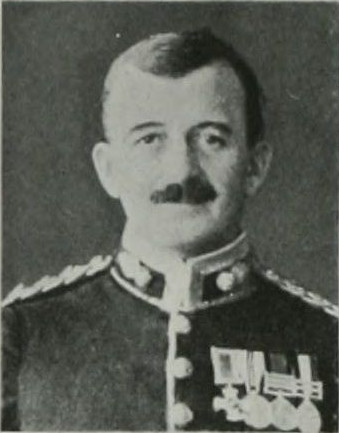
Cecil T. W. Grimshaw.
GRIST, ROBERT GEORGE, A.B. (R.F.R., Ch. B. 3397), 191485, H.M.S. Aboukir; lost in action in the North Sea, 22 Sept. 1914.
GROMETT, CHARLES, Sergt., No. 8713, 1st Battn. East Yorkshire Regt., 2nd s. of Charles Gromett, by his wife, Sarah (Bridge Street, Downham, Market), dau. of Michael Walsh; b. Downham Market, co. Norfolk, 26 June, 1888; educ. there; enlisted 22 Oct. 1907; became Sergt. 20 Aug. 1914; went to France with the Expeditionary Force, 6 Sept.; was wounded in the thigh at the Battle of the Aisne, 20 Sept., and died 26 Sept. 1914, at St. Nazaire Hospital. He m. at St. Mary’s Church, Beverley, co. Yorks, 1 Dec. 1913, Edith (2, Victoria Villas, Queens Gate Road, Beverley), yst. dau. of the late George Marshall Cobb; s.p.
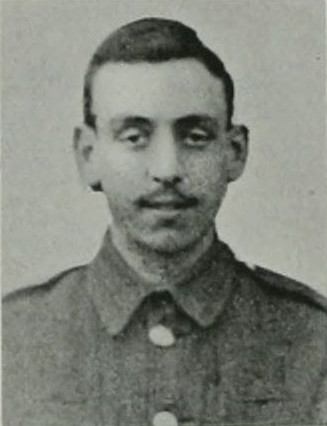
Charles Gromett.
GROOM, WILLIAM SYDNEY, Acting Chief Petty Officer, 165578, H.M.S. Hawke; s. of Charles Groom, of 58, Prospect Place, Woolwich; lost when that ship was torpedoed in the North Sea, 15 Oct. 1914.
GROOME, FRANK, Private, No. 221, 17th Battn. 5th Brigade, Australian Imperial Force, s. of Frederick Groome, of 7, Queen’s Avenue, Watford West, Herts, Printer, by his wife, Mary Ann Elizabeth, dau. of William Saunders, of Walthamstow, Essex, Bricklayer, and grandson of John Groome, of the City of London, Cordwainer; b. Upper Sydenham, S.E., 21 March, 1895; educ. Sydenham Hill Council School; began life as an assistant at Mudie’s Library and later was assistant operator at the Watford Cinema; emigrated to Australia, 21 March, 1914, and became a farm hand to Mr. John Paton, of Mundarloo, Tumblong. After the outbreak of war he enlisted in the Australian Imperial Force, Feb. 1915; was drafted to Egypt, and from there to the Dardanelles, where he was severely wounded in the head by a bomb; he was admitted to the 1st Australian General Hospital, Cairo, 9 Sept. 1915, and died there 6 Oct. following; unm.
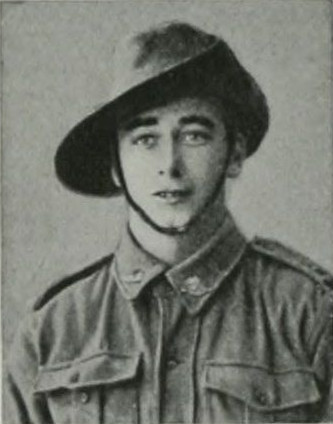
Frank Groome.
GROOME, STANLEY GEORGE, Corpl., No. 207, 5th Battn. (London Rifle Brigade) The London Regt. (T.F.), 2nd s. of William Groome, of 317, Bethnal Green Road, E., Boot and Shoe Manufacturer, by his wife, Mary Ann, dau. of George William Wilcox; b. London, 10 Feb. 1888; educ. Sir John Cass Foundation School, Minories; was on the Stock Exchange, but on the outbreak of war threw up his position and enlisted in the London Rifle Brigade, 31 Aug. 1914. He went to France on 13 Jan. 1915, and during the spring and summer of 1915 was with his company in the trenches at Plugsteert, St. Eloi, Ypres and Poperinghe. In the autumn of the same year he worked on the lines of communication and it was on returning to the trenches for the first time that he was accidentally shot at Poperinghe, 3 Dec. 1915. He was buried in the soldiers’ cemetery close to the main line between Hazebrouck and Poperinghe. An iron cross sent out from England, subscribed for by the men of his old platoon, and engraved “In memory of a good comrade,” marks the spot. Capt. C. W. Trevelyan, London Rifle Brigade, wrote: “I visited the grave, and when Sergt. Ford came back from leave he took out and placed on the grave a very nice iron cross as a small tribute of affection from some of the members of No. 4 Platoon. We all felt that we had lost one of our best and most trusted friends.” Groome was a good athlete, and was a member of the Leytonstone Rugby and the Albion Rowing Clubs. He was a great lover of Nature and all Nature’s gifts.
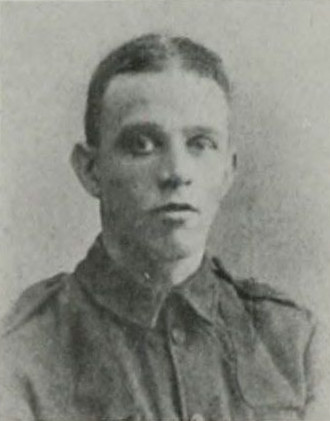
Stanley George Groome.
GROVES, FRANCIS NEVILLE, Lieut., 3rd Battn. Monmouthshire Regt. (T.F.), s. of John Francis Groves, of 5, Llanthewy Road, Newport, Monmouth, F.R.I.B.A., Architect to Lord Tredegar, by his wife, Frances Matilda, dau. of Albert Gill, of Blandford; b. Newport, Monmouth, 7 July, 1889; educ. Intermediate School there; obtained his commission in the 3rd Battn. Monmouthshire Regt., 9 Sept. 1914, joining it at Northampton and afterwards going to Cambridge. He was promoted Lieut., 23 Nov. 1914, and in Feb. 1915, was sent with his regt. to Flanders, and was killed in action at Frezenberg, near Ypres, 8 May, 1915; unm. The division in which the Monmouthshire Regt. was placed assisted very materially in defeating the furious attack of the German forces on 8 and 9 May, in which all battns. of the regt. suffered so heavily. Major W. S. Bridges, now Lieut.-Col., the senior officer left after the battle, wrote that he met his death whilst holding, with his company, a trench under the most terrific shell fire, and in a letter to his father, said: “I did not know him for long, only since my joining the battn., but long enough to have realised his value as an officer and that he had a high opinion of his sense of duty.” Col. H. Worsley Gough, who was wounded early in the action, stated that he fell doing his duty very gallantly, and that he could not speak too highly of his work as an officer of his battn., and that his untimely death was a great loss to the regt. and was deeply deplored by all who were privileged to serve with him.
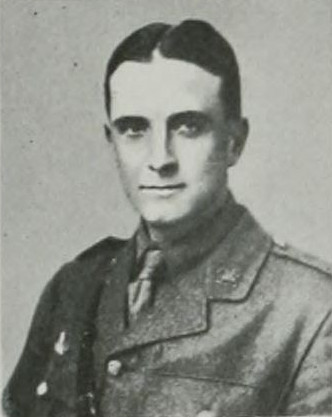
Francis Neville Groves.
GROVES, GEORGE, Private, No. 9432, 2nd Battn. The Royal Scots, s. of George Groves, Office Porter, H.M. Office of Works, Windsor Castle, by his wife, Fanny, dau. of Henry Deaton, of Eton; b. Clewer, near Windsor, 12 March, 1888; educ. Windsor National School; enlisted 22 Nov. 1904; served 10 years; went to France, 12 Nov. 1914, and was killed in action at Petit Bois, near Kemmel, France, 14 Dec. 1914; unm.
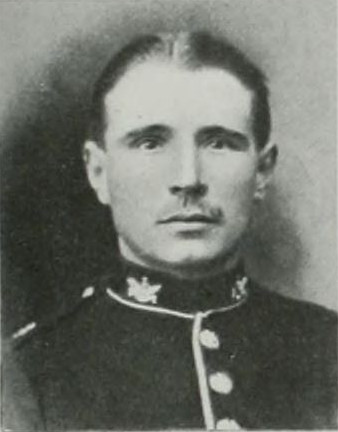
George Groves.
GROVES, GEORGE, Leading Seaman, 211975, H.M.S. Good Hope; lost in action off Coronel, on the coast of Chili, 1 Nov. 1914.
GRUBB, WALTER BOUSFIELD WATKINS, Lieut.-Commander, R.N., and Gunnery Lieut., s. of Lieut.-Col. Alexander Grubb, of Elsfield House, Hollingbourne, Kent, late Royal Artillery, by his wife, Sara Mary, dau. of the late Rev. Henry George Watkins, Vicar of Potters Bar, Middlesex; b. Knockrobin, co. Wicklow, 1 July, 1879; educ. The Grange, Cowes (Rev. A. Watson), and H.M.S. Britannia, 1892–95, and appointed Midshipman, H.M.S. Trafalgar, 1895, and promoted Sub-Lieut. July, 1898, Lieut. Jan. 1901, Gunnery Lieut. 1 Jan. 1907, and Lieut.-Commander, Jan. 1909. He was appointed to H.M.S. Cressy as gunnery officer, March, 1914, and was lost in the North Sea when that ship was torpedoed by a German submarine, 22 Sept. 1914. He had King Edward’s Coronation medal. He m. at St. James’ Church, Clapham Park, 22 April, 1914, Marguerite Evelina Fairlie, only child of Dr. J. J. McWhilter Dunbar, of Hedingham House, Clapham Common, S.W., and had a son, Walter Dunbar Watkins, b. 3 June, 1915.
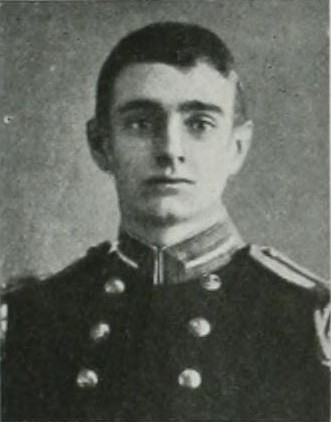
Walter B. W. Grubb.
GRUCHY, ARTHUR GORDON, B.A., Private, No. 74040, Machine Gun Section, 28th Battn. Canadian Expeditionary Force, 3rd s. of Charles Gruchy, of Jersey, now farming at Strassburg, Saskatchewan, Canada, formerly of the firm of Redfern’s, of Paris, by his wife, Mary A..., dau. of (—) Hicks, of London; b. Asnières, Seine, France, 16 Jan. 1889; educ. first at Asnières, then in England, and in 1905 went to Canada with one of his brothers. He entered the University of Saskatchewan in 1912, and became a member of the affiliated Presbyterian College, taking the Arts course preparatory to his theological training. During the long summer vacations he performed valuable services on various mission fields, and he obtained his B.A. degree in May, 1915. He had enlisted in Oct. 1914, and left Canada with the second contingent, and was accidentally drowned, 7 July, 1915, while bathing near Shorncliffe, where his battn. was in training. Lieut. Manville, Commanding Officer, Machine Gun Section, wrote: “Your son, Sir, was a splendid soldier, and I had just some few days ago appointed him to the most important post on the section. I feel his death creates a vacancy that cannot be replaced, for his work and personality were such that he endeared himself to all of us.”
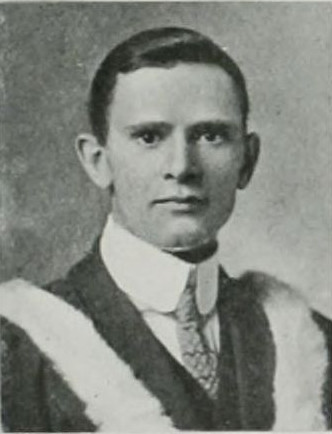
Arthur Gordon Gruchy.
GRUNDY, GEOFFREY STEWART, Private, No. 1362, No. 1 Coy. Honourable Artillery Coy., only s. of George Graham Stewart Grundy, of Whernside, Headingley, Leeds, Iron and Steel Merchant, by his wife, Joanna, only dau. of George Taylor, of Leeds and Ripon, and grandson of the late Edmund Grundy, of Bridge Hall, Bury; b. Leeds, co. York, 1 Dec. 1886; educ. Rugby, and on leaving there was articled to Messrs. Barr, Nelson & Co., Solicitors, of Leeds. He was admitted a Solicitor in Jan. 1911, and at the time war broke out was with Messrs. Spyer & Sons, Austin Friars, E.C. He immediately volunteered and joined the H.A.C., 6 Aug. 1914; went to France, 19 Sept. 1914, and was killed in action near Ypres, 11 April, 1915; unm. He was buried in the grounds of the Château Elzenwalle, Voormezeele. His Platoon Commander, Capt. M. M. Schiff, wrote: “He was a great favourite, as he was always so cheerful and bright, under the worst conditions. He was on guard at the time, in the trench, that is, standing with his head above the parapet, keeping a look-out against the Germans. Unfortunately, a shot caught him, and his death was practically instantaneous. He suffered no pain at all. He was taken down by the stretcher bearers, and was buried next evening in the grounds of a chateau, some distance behind the line”; and a comrade (Private M. Phillips, who was killed exactly one month later, 14 May): “We had a most terrible time on the above-mentioned night, the Huns mined a trench on our left, and that started it, rifles, machine guns, artillery, trench mortars and a few other atrocities, and for about three-quarters of an hour we were very lively. It died down after a bit; but, unfortunately, during that time poor old Grundy went under (my special chum, of whom I was very fond, and I have mentioned him many times to you in my letters); he was on the ‘look-out’ and took a bullet straight through the head, dying instantaneously; it was perfectly awful, as he was next to me in the trench, and was joking and laughing up to the very minute. He was such a topping good fellow.”
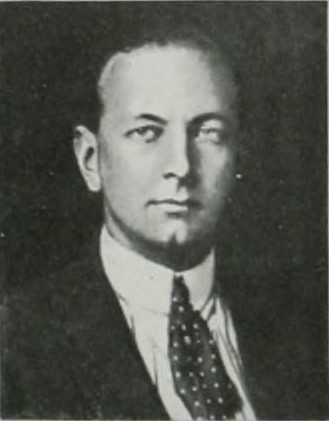
Geoffrey Stewart Grundy.
GRUNDY, GEORGE EDWARD, Lieut., 9th (Service) Battn. Royal Warwickshire Regt., yr. s. of the late Rev. William Grundy, Headmaster of Malvern College, by his wife, Margaret (School House, Abingdon), dau. of Adam Mitchell, of Heathcot, Kincardineshire; b. School House, Warwick, 26 Feb. 1883. He was educ. at Malvern College, where he got his cricket colours. He won a Classical Scholarship at Brasenose College, Oxford, and took a second class in Classical Moderations. He was captain of his College cricket and football elevens and represented the University at golf for three years, being captain of the team in 1906. He played cricket for the Authentics. For a year he was a master at Pocklington School, and while there he played cricket for the Yorkshire Gentlemen. In 1908 he was appointed to Haileybury College and became House master of “Batten.” He was appointed 2nd Lieut., Haileybury College O.T.C., 16 Nov. 1910, and, volunteering on the outbreak of war, was gazetted Lieut. to the 9th Warwicks, 4 Sept. 1914. He left for Dardanelles in H.M.S. Royal Edward, June, 1915, and was killed in action in the front trenches at Gallipoli, 22 July, 1915; unm. He was buried in Trolley Ravine, on the edge of the Ægean Sea. A wooden cross was put up by the men of his regt. Col. Palmer, who was killed two days later and buried beside him, wrote: “He was one of my best officers. He was always thinking of the welfare of his men and was much loved by his comrades, who could not fail to appreciate his unselfish devotion to their interests.” Major Gordon, who succeeded Col. Palmer in command of the regt., wrote: “Mr. Grundy was a splendid officer, energetic, capable, cheerful and brave.” His influence with his men is illustrated by the following extract from a letter: “He does everything for us and we would do anything for him.” A brother officer concludes his letter: “Let it be some consolation that his end was worthy of his life and that he left behind him an example that we should like to follow.” The Master of Haileybury College wrote of him: “He was a keen scholar; he was a fine athlete; but what we loved him for was the boyish laugh, the unfailing cheeriness, the constant goodness of his heart. He had that real charm of ‘personality’ which is given to but few men; but it is perhaps the best of God’s good gifts. I cannot put my feelings better than in the words one wrote to me: ‘All the sunshine seems to have gone out with Grundy’s death.’”
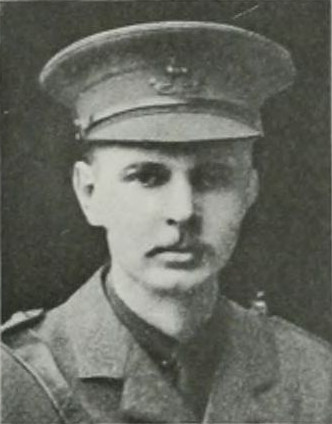
George Edward Grundy.
GRUNDY, THOMAS, Private, R.M.L.I. (R.F.R., Ch. B. 1442), H.M.S. Cressy; lost in action in the North Sea, 22 Sept. 1914.
GRYLLS, DESSE EDGAR, Stoker, R.N.R., 1849U, H.M.S. Aboukir; lost in action in the North Sea, 22 Sept. 1914.
GUERNSEY, HENEAGE GREVILLE FINCH, LORD, Capt., 1st Battn. Irish Guards, eldest s. and h. of Charles Wightwich, 8th Earl of Aylesford, by his 2nd wife, Ella Victoria, widow of Capt. James Wingfield Linton, of Hemingford, Hunts, yst. dau. of John Ross, of Benena Abbots; b. 2 June, 1883; educ. Eton; joined the Militia, Aug. 1901; gazetted 2nd Lieut. Irish Guards, 4 June, 1902, and was promoted Lieut. 1 Sept. 1904; served in St. Helena during South African War, 1901 (Queen’s medal); was A.D.C. to Governor and Commander-in-Chief of Gibraltar, 1 Sept. 1905; retired 1906, became Capt. Warwickshire Yeomanry, Aug. 1910; and Capt., Reserve of Officers, 15 April, 1914; rejoined the Irish Guards on the outbreak of war; went to France, 12 Aug. 1914, and was killed while leading his coy. into action at Soupir, 14 Sept. 1914. He m. at St. Michael’s, Chester Square, London, 11 June, 1907, the Hon. Gladys Cecil Georgina, née Fellowes (9, Sussex Square, W.), 2nd dau. of William Henry, 2nd Baron De Ramsey, and had a son, Heneage Michael Charles, Lord Guernsey. His brother-in-law, Major Eustace Crawley, 13th Hussars, was killed in action, 2 Nov. 1914.
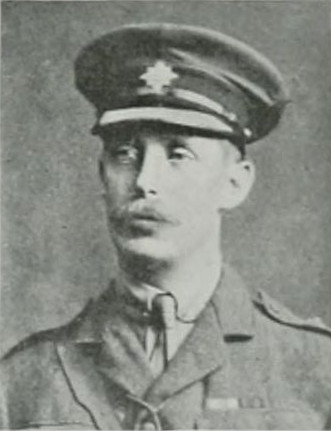
Lord Guernsey.
GUEST, RICHARD THOMAS, Acting E.R.A., 4th Class, M. 1103, H.M.S. Hawke; lost when that ship was torpedoed in the North Sea, 15 Oct. 1914.
GUEST, SUNNY FRANK, A.B. (R.F.R., Ch. B. 10259), 239771, H.M.S. Cressy; lost in action in the North Sea, 22 Sept. 1914.
GUILL, RAYMOND JAMES, Petty Officer Telegraphist, J. 269, H.M.S. Pathfinder; lost when that ship was sunk by a mine, about 20 miles off the East Coast, 5 Sept. 1914.
GUMBRELL, CHARLES EDWARD LEOPOLD, A.B. (B. 1630), 206977, H.M.S. Good Hope; lost in action off Coronel, on the coast of Chili, 1 Nov. 1914.
GUMMER, FRANK EDWARD, A.B. 232154, H.M.S. Hawke; lost when that ship was torpedoed in the North Sea, 15 Oct. 1914.
GUNN, FREDERICK, A.B. (R.F.R., B. 8687), 206529, H.M.S. Hawke; lost when that ship was torpedoed in the North Sea, 15 Oct. 1914.
GUNN, JOHN ANGUS, Private, No. 3781, 3rd Battn. Coldstream Guards, eldest s. of Peter Gunn, of Monkwearmouth, Sunderland, by his wife, Alice dau. of James Ridley; b. ——; enlisted 18 Sept. 1900, and served 12 years; re-enlisted 17 Feb. 1915; went to France 7 May following, and was killed in action at Cambrin, 21 June, 1915, while on sniping duty. He m. Mary Ellen (26, Washington Street, Sunderland), dau. of (—). His 3rd brother, Peter, was killed in action, 29 Oct. 1914 (see his notice), and his 2nd brother, James, is now (1916) on active service with the R.F.A. The yst. brother, Albert, Durham L.I., was wounded at Ypres, 28 June, 1915, and invalided home.
GUNN, JOHN HEDLEY, Corpl., No. 3160, 13th Battn. (Princess Louise’s Kensington Battn.) The London Regt. (T.F.), only s. of James Hedley Gunn, of 54, Solent Road, West Hampstead, one of the Head Office Staff of the Prudential Assurance Company and retired Colour-Sergt. of the original 4th Middlesex Rifle Volunteers (Kensington Rifles), with long service (24 years) medal, by his wife Sarah Jane, dau. of the late James Downer, of Alum Bay, Isle of Wight; b. West Hampstead, 23 Aug. 1890; educ. privately and at the Haberdashers’ School, passed the Students’ and Intermediate Examinations, becoming an Associate of the Auctioneers and Estate Agents’ Institute, and was in business as Managing Clerk of a firm of auctioneers and surveyors. After the declaration of war he joined the Kensingtons, 3 Sept. 1914, and was killed in action at Aubers Ridge, Fromelles, 9 May, 1915; unm. He was last seen leading his platoon and calling out, “Come on, boys of A Coy.—let them have it!”
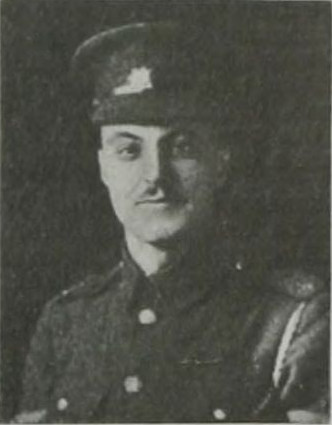
John Hedley Gunn.
GUNN, PETER, Private, No. 7007, 1st Battn., Coldstream Guards, 3rd s. of Peter Gunn, of Monkwearmouth, Sunderland, by his wife, Alice, dau. of James Ridley; b. Sunderland, 12 June, 1886; educ. Garden Street School there; enlisted 2 Nov. 1906; went to the Front with the first Expeditionary Force, and was reported missing after the heavy fighting at Ypres on 29 Oct. 1914. Later his widow was advised from Geneva that he was on the German list as dead, and he is now assumed to have been killed on the above date. He m. at All Saints’, Clapton, 15 Jan. 1910, Margaret (86, Bayston Road, Stoke Newington, N.), dau. of John Simons, and had two sons: Peter, b. 18 June, 1911; and John, b. 23 April, 1913.
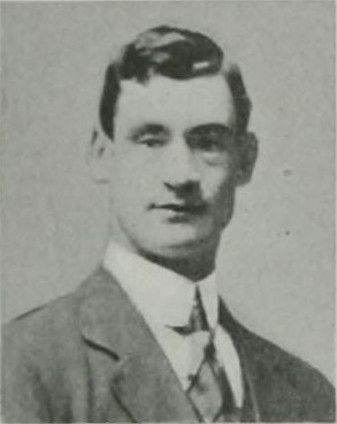
Peter Gunn.
GUNTER, HENRY THOMAS, Stoker, 1st Class, K. 7275, H.M.S. Good Hope; lost in action off Coronel, on the coast of Chili, 1 Nov. 1914.
GURDEN, WILLIAM, Private, R.M.L.I., Ch./17119, H.M.S. Cressy; lost in action in the North Sea, 22 Sept. 1914.
GURNEY, BERNARD FRANK, Private, No. 1536, 3rd Battn. Australian Imperial Force, 5th s. of James Gurney, of Chalfont St. Giles, F.S.I., by his wife, Elizabeth, dau. of the late James Stratton, of Princes Risborough; b. Chalfont St. Giles, Bucks, 16 March, 1890; educ. Selhurst Park College, Norwood, and on leaving there was articled to an elder brother, R. G. Gurney, P.A.S.I., Ledbury; emigrated to New South Wales in 1910, and took up farming; volunteered on the outbreak of war in Aug. 1914, and joined the Commonwealth Expeditionary Force; left for Egypt with the main Force in the 1st Brigade; took part in the landing at the Dardanelles, 25–26 April, 1915, and was killed in action there three days later, on the 29th; unm. Buried at Anzac.
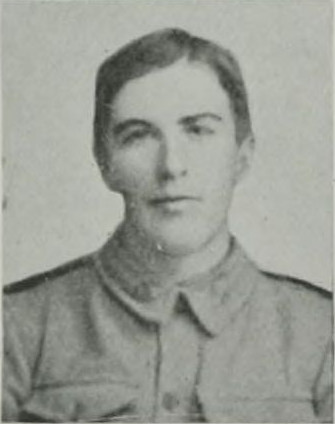
Bernard Frank Gurney.
GURR, JOHN HENRY, Ship’s Corpl., 1st Class, No. Ch. 190332, Royal Navy, 3rd s. of John Gurr, of 2, Galley Hill Road, Northfleet, Kent, General Dealer, by his wife, Elizabeth, dau. of William Bullock; b. College Street, Northfleet, Kent, 20 Jan. 1881; educ. Board School there; joined the Navy, 7 Aug. 1896; was promoted ship’s Corpl., Sept. 1907, and was lost in the North Sea when H.M.S. Cressy was torpedoed by a German submarine, 22 Sept. 1914. He m. at St. Mark’s Church, Gillingham, Kent, 13 Aug. 1905, Eva (14, Melbourne Road, Chatham), dau. of Arthur Robert Sutcliffe, of Rochester, and had three children: John Arthur, b. 30 Sept. 1906; George Herbert, b. 27 Sept. 1908; and Thelma, b. 17 Oct. 1910.
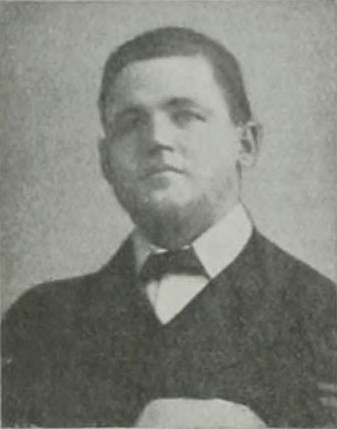
John Henry Gurr.
GURR, STEPHEN, Second Cooper, 296892. H.M.S. Pathfinder; lost when that ship was sunk by a mine, about 20 miles off the East Coast, 5 Sept. 1914.
GUTHRIE, WILLIAM CAMPBELL, Petty Officer, 156609, H.M.S. Hogue; lost in action in the North Sea, 22 Sept. 1914.
GUTTRIDGE, DAVID WILLIAM, Private, R.M.L.I., Ch./15789, H.M.S. Cressy, lost in action in the North Sea, 22 Sept. 1914.
GUY, ARTHUR CHARLES JOHN, A.B. (R.F.R., Ch. B. 2606), 181667, H.M.S. Aboukir; lost in action in the North Sea, 22 Sept. 1914.
GUY, HARRY ALBERT, A.B. (R.F.R., Ch. B. 6191), 181815, H.M.S. Aboukir; lost in action in the North Sea, 22 Sept. 1914.
GUY, WILLIAM, Stoker, 1st Class, S.S. 109628, H.M.S. Pathfinder; lost when that ship was sunk by a mine, about 20 miles off the East Coast, 5 Sept. 1914.
GWYDIR, THE VERY REV. CANON ROBERT BASIL, O.S.B., Acting Chaplain, R.N., Rector of St. David’s, Swansea, only child of the late Robert Clarke Gwydir, of Cartron, Longford, by his wife, Sarah Annie (20, Quex Road, West Hampstead), dau. of Benjamin Jackson; b. Cartron aforesaid, 20 Jan. 1867; educ. Breewood, co. Stafford, and the English College, Douay (1878–87), and on leaving there went to Belmont Monastery, Hereford. After spending four years here he returned to Douay, where he distinguished himself as a clever professor in classics and English, and by his exceptional intellectual gifts. In 1899 he started his career as a mission priest at St. Augustine’s, Liverpool, and after some time there he was moved to St. David’s, Swansea, and later became Rector, and in 1914 was made a Canon of the Diocese of Newport. When war began Canon Gwydir immediately offered his services as a Naval Chaplain, these were accepted, and he left Swansea in Sept., and after serving in several ships, was appointed to H.M. Hospital Ship Rohilla, and was drowned when that ship was wrecked off the Yorkshire coast, 30 Oct. 1914, when on her way to Belgium to bring back wounded soldiers. It is stated that when the impact came Canon Gwydir was on deck. He realised the danger immediately and hurried below to the sick-bay where a man (Naval Gunner) lay helpless with a fractured leg. He had hardly gone below when a huge wave struck the vessel and damaged her so severely that the infirmary was flooded. The Canon being drowned before he could complete his noble task. His body was recovered same day when the ship finally broke up. He was buried in the Benedictine Priory at Belmont. An eloquent preacher and a brilliant scholar, he read a paper at the National Catholic Congress at Cardiff in July, 1914, and had also read one before the International Eucharistic Congress at Vienna.