The Roll of Honour. (continued 22)
Reading edition
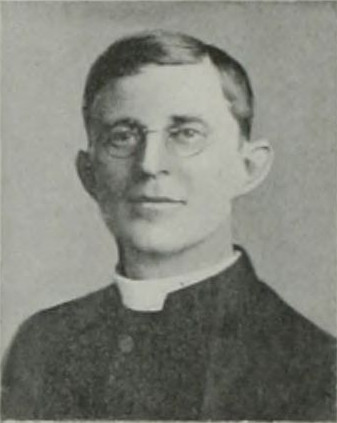
Robert Basil Gwydir.
GWYNNE, JOHN FITZGERALD, M.B., Ch.B., Capt., Royal Army Medical Corps, elder s. of the late Charles Nelson Gwynne, M.D., M.A. (Trinity College), Senior Surgeon of Christ Hospital, Sheffield, by his wife, Grace Maunsell (11, Prince of Wales Mansions, Battersea Park, S.W.), dau. of Samuel Hanna, Resident Magistrate, co. Wicklow; b. Sheffield, 29 Aug. 1888; educ. Stancliffe Hall, co. Derby (1899–1901), Loretto, Musselburgh (Choral Scholarship, 1901–6), and Sheffield University (Scholar M.B. 1906–11); was House Surgeon at Sheffield Royal Infirmary, 1911–13, and afterwards Assistant Medical Officer of the Southwark Union Infirmary, East Dulwich. He first served in the Territorial Force, in which he was gazetted Lieut. 3 June, 1912, being transferred to the Royal Army Medical Corps 3 Feb. 1914, and was promoted Capt. 30 March, 1915. On the outbreak of war he served with Field Ambulance in Flanders, and was attached to 1st Hampshire Battn. at Ligny, 2 Sept. 1914. He was killed in action in the execution of his duty at Ypres, 9 July, 1915; unm.; and was buried in Division IV Cemetery, Bosinghe. The “Hampshire Regimental Journal” (Aug. 1915), says: “We have to record another heavy loss to this battn., which has suffered so many. Our ‘doctor,’ Capt. Gwynne, was shot through the head by a sniper when on an errand of mercy. On the night of 8–9 July, the battn. was relieved ... in the trenches captured by the brigade from the Germans on the 6th. Capt. Gwynne went up to the trenches shortly after daybreak, to ascertain whether all the wounded had been evacuated. Several had not been observed in the dark, and he attended to each of them. He was informed that a bomber of the Rifle Brigade was lying with his hand blown off in a shallow trench, which was not approachable in daylight. Reckless as ever of his personal safety when a wounded man was in question, he proceeded there and had accomplished his task, when a sniper shot him through the head. Capt. Gwynne, with one exception, was the senior member of the battn. in point of service out here, he having joined us at the Chateau de Fontenelles, near Ligny, during the retreat. We all considered him as one of the battn., and for a long time he had been performing the thankless task of Mess President. A friend of all, with the true sympathy to suffering, as all doctors have, we regarded his death as our last and one of our greatest sacrifices to the Ypres salient.” A brother officer wrote: “Gwynne seems to have made an enormous reputation for his courage. The whole district round here resounds with his name. The men who knew him here will talk of him to their dying day. I’ve heard of him all along the Front now. Everywhere he has been excellent at his work, and made a tremendous reputation for courage. And it requires courage to do the things he has done.” Capt. Gwynne was mentioned in F.M. Sir John French’s Despatch of 14 Jan. 1915, and was awarded the Military Cross. The incident which won him this decoration was the rescue of a soldier under heavy shell fire, whose leg he saw was shot off by a “Jack Johnson,” whilst his comrade was blown to pieces. Capt. Gwynne instantly rushed out and carried the man to safety. His yr. and only brother, Lieut. Owen Perrott Gwynne, 92nd Punjabis, was killed on active service at Mesopotamia six months later at the age of 25.
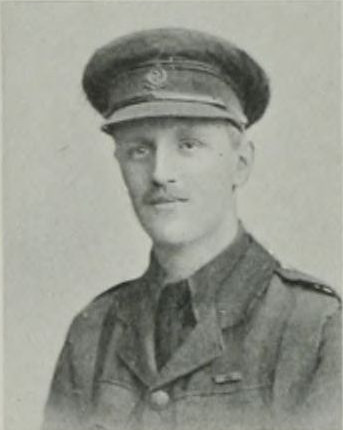
John Fitzgerald Gwynne.
GWYNNE, OWEN PERROTT, 2nd Lieut., 92nd Punjabis, Indian Army, s. of the late Charles Nelson Gwynne, M.D., M.A., Senior Surgeon, Christ Hospital, Sheffield, etc., by his wife, Grace Maunsell (11, Prince of Wales’ Mansions, Battersea Park, S.W.), dau. of the late Samuel Hanna, Resident Magistrate, co. Wicklow; b. Sheffield, 19 May, 1890; educ. Lorretto, Musselburgh (1903–7) and afterwards had five years’ training in engineering at the Sheffield University Technical School and with Vickers, Maxim & Co., Sheffield. On leaving there in 1913 he was appointed Engineer to the Dunsinane Tea Plantation, Ceylon. On the outbreak of the European War he joined the Ceylon Planters’ Rifle Corps, 7 Sept. 1914, and was sent to Suez. He was gazetted 2nd Lieut. to the 92nd Punjabis, 7 Jan. 1915; accompanied the relief Expedition sent to Mesopotamia, 11 Dec. 1915, and was killed in action there, 7 Jan. 1916, being shot through the head while in charge of two machine guns at Sheik Saad, on the Tigris; unm.
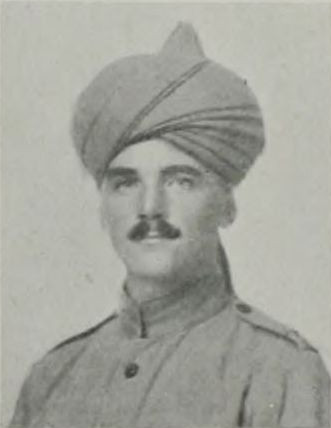
Owen Perrott Gwynne.
HABBLETT, HAROLD, Private, No. 396, B Coy., 16th Battn. 4th Brigade, Australian Imperial Force, 2nd s. of the late George Habblett, of Goole, Platelayer on North Eastern Railway, by his wife, Hannah, dau. of Anson Bowskin, of Barrow-on-Humber, Lincolnshire; b. Goole, co. York, 1 March, 1892; educ. Skelton; emigrated to Western Australia in 1911; worked in the bush; volunteered on the outbreak of war; left for Egypt with the second contingent; took part in the landing at the Dardanelles, 25 April, 1915, and died at sea on board H.M. Hospital Ship Gascon, 4 May following, of wounds received in action there.
HACK, CHARLES EDWARD, Capt., 1st Battn. Connaught Rangers, 2nd s. of the late William Lionel Frederick Hack, of Silk Willoughby, by his wife, Emily Elizabeth Louisa (The Cottage, Thruxton, Andover), dau. of the Rev. Jacob Montagu Mason, Rector of Silk Willoughby (by his wife, Louisa Maria, eldest dau. of Sir Joseph Burke, of Glinsk, 11th Bart.); b. Silk Willoughby, co. Lincoln, 29 Aug. 1877; educ. Bedford School, and was gazetted 2nd Lieut. to 1st Connaught Rangers from the Sligo Artillery (Militia), 1 Dec. 1897; and promoted Lieut. 9 April, 1900, and Capt. 17 May, 1904. He served in the South African War, 1899–1902, took part in the advance on and relief of Ladysmith, including the action at Colenso; the operations of 17–24 Jan. 1900, and action at Spion Kop; operations of 5–7 Feb. 1900, and action at Vaal Kranz; operations on Tugela Heights (14–27 Feb. 1900, including the assault of Hart’s Hill, when the Connaughts’ casualties were over 600), and action at Pieter’s Hill, operations in Natal, March to April, in Cape Colony, April; in the Orange Free State, May; and in the Transvaal, May and June, and east of Pretoria, July to Dec. 1900, including action at Riet Vlei; also in those in Cape Colony and the Orange Free State, Dec. 1900 to June, 1901, and in Cape Colony, June, 1901, to 31 May, 1902, and was mentioned in Despatches [London Gazette, 10 Sept. 1901], and awarded the Queen’s medal with five clasps and the King’s medal with two clasps. From June, 1911, to 1914, he was Adjutant of his battn. in India, and had the Delhi Durbar medal, and on the outbreak of war left for France with the Indian Expeditionary Force, under Lieut.-Gen. Sir James Willcocks, in Sept. 1914. He was killed in action while leading an attack on the German trenches near Laventie on the night of 4–5 Nov. following; unm. He fell in the enemy’s trench, and his body was not recovered. His commanding officer, Lieut.-Col. Ravenshaw, C.M.G., wrote: “No braver or more well-liked officer ever served in the Connaught Rangers, and though personally I only knew him for a short time, there was no officer in the regt. of whom I had a higher opinion.” And the Acting Adjutant wrote: “It is useless to try and express what we feel, to all of us as it were he represented the battn.”
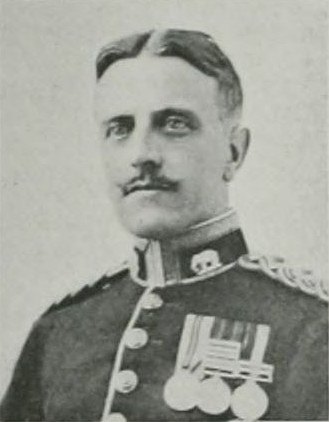
Charles Edward Hack.
HACKER, ARTHUR ALFRED, Trooper, No. 13/487, 3rd Auckland Mounted Rifles, New Zealand Expeditionary Force, s. of Thomas Hacker; b. Swindon, co. Wilts, 29 Dec. 1886; educ. Sandford Street School there; went to New Zealand; volunteered and joined the New Zealand Expeditionary Force in the autumn of 1914; left for Egypt in Oct., took part in the landing at the Dardanelles, 25 April, 1915, and was killed in action there, 19 or 26 May following; unm.
HACKETT, JOHN HENRY, 2nd Yeoman of Signals (R.F.R., B. 2433), 205808, H.M.S. Good Hope; lost in action off Coronel, on the coast of Chili, 1 Nov. 1914.
HADFIELD, WILFRID JOHN MACKENZIE, Lieut., 2nd Battn. (Prince of Wales’ Volunteers) South Lancashire Regt., only s. of Major-Gen. Charles Arthur Hadfield, by his wife, Florence Elizabeth, dau. of the late Rev. Octavius Bathurst Byers, Vicar of Christ Church, Croydon; b. Southsea, 11 Jan. 1889; educ. Norman’s Preparatory School; “The New Beacon,” Sevenoaks; Repton School; “Army School,” Stratford-on-Avon, and the Royal Military College, Sandhurst; gazetted 2nd Lieut. to the South Lancashire Regt. 6 Nov. 1909, and promoted Lieut. 17 April, 1912; went to France with his battn. as Battn. Transport Officer, and was seriously wounded in the Battle of the Marne on 6 Sept., dying in the Civil Hospital at Angers, France, four days later, 10 Sept. 1914; unm. Buried in cemetery at Angers the following day, the French garrison attending and rendering full military honours. Lieut.-Col. C. Wanliss, commanding his battn., wrote: “He was a splendid officer, and his loss to the regt. is irreparable. He worked day and night with the transport, and had he lived would certainly have received special recognition”; and Lieut.-Col. G. Ashworth, who succeeded to the command, declared: “Whenever he was ordered to do anything he did it thoroughly, and put all his energies into it.” Brig.-Gen. D. G. Prendergast, who had previously for four years commanded the battn., wrote from Cairo: “Wilfrid was a splendid soldier and an English boy. I took the greatest interest in him because I could see he meant to go ahead and rise to the top of his profession if possible.” Lieut. Hadfield was a keen rifle shot, and winner of the first prize at the Officers’ Competition, Salisbury Rifle Meeting, in July, 1914.
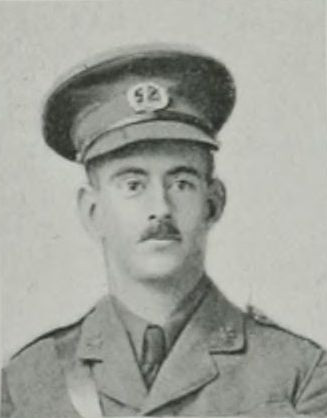
Wilfrid John M. Hadfield.
HADLEY, ALFRED THOMAS, S.P.O. Stoker, P.O., 305457, H.M.S. Good Hope; lost in action off Coronel, on the coast of Chili, 1 Nov. 1914.
HAGGARTY, PATRICK, Private, No. 16717, A Coy., 11th (Service) Battn. The Royal Scots, s. of John Haggarty; b. Greenock, 2 Nov. 1885; educ. St. Mary’s Public School there; enlisted 24 Dec. 1914; and was killed in action at Ypres, at 8 a.m., 4 July, 1915, by a shell. “He had just drawn his breakfast and was on his way back to his part of the trench, when a high explosive shell came over and struck him in the mouth, killing him and the Sergt. of his Coy. They were both buried beside the Headquarters about 30 yards from where they were killed.” His commanding officer, Capt. R. Wemyss-Campbell, wrote that “he was a good soldier and did his duty to the last.” He m. at Greenock, 17 Feb. 1911, Helen (34, Shaw Street, Greenock), dau. of (—) (and Mary, née McIntyre) Sweeney; s.p.
HAGUE, JAMES, Private, No. 10890, 2nd Battn. Durham L.I., s. of the late George W. Hague, of Newcastle, by his wife, Katie; b. Newcastle, 4 June, 1884; educ. Gateshead; was a Miner; served six years in the Army; re-enlisted 3 Oct. 1914; went to France 24 Nov. 1914, and was killed in action 12 June, 1915. He m. at Mount Pleasant, Gateshead, 4 June, 1904, Jane (21, Derwent View, Rowlands Gill, Newcastle), dau. of the late John (and Isabella) Holmes, and had five children: John, b. 8 Feb. 1907; Katie, b. 2 Oct. 1905; Florence, b. 29 July, 1909; Maud, b. 18 Sept. 1912; and Jenny Armentières, b. 4 June, 1915.
HAGUE, OWEN CARSLEY FREDERIC, Lieut., 7th Battery, 2nd Brigade, Canadian Field Artillery, eldest s. of Frederic Hague, of Montreal, Advocate, by his wife, Mary, dau. of Samuel Carsley, of Montreal; b. Montreal, 23 Feb. 1889; educ. High School, Montreal, and McGill University, where he took the degree of B.Sc. in 1909, and M.Sc. in 1914. He was an electrical engineer, and practiced his profession in Montreal. He joined the 2nd Brigade, Field Artillery, in 1912, and with the rest of that Brigade volunteered for active service as soon as the first Canadian Contingent was formed, going to the Front with the 7th Battery. His brigade took part in the severe fighting in April and May, 1915, near Ypres. It was on 2 May he was killed. On the morning of that day he was near his battery on the bank of the Yser Canal, St. Julien, with Lieut. Helmer, of Ottawa, when a German heavy shell burst near them. Lieut. Helmer was killed instantly, and Lieut. Hague died that evening. He was buried at Hazebrouck; unm. Col. J. J. Creelman, commanding the 2nd Brigade, wrote as follows: “It is with extreme regret that I write with regard to the death of your son, and let me express my sincere sympathy with you in your great loss. Between 22 and 28 April, when I went into hospital, Owen had done really wonderful work as Section Commander and Forward Observing Officer. His work was splendid, and he showed an absolute disregard of personal safety at those times when his duties required that he expose himself. When in hospital at Rouen I took occasion to write to General Burstall calling attention officially to your son’s excellent services and marked bravery during the first six days of the fight at Ypres.”
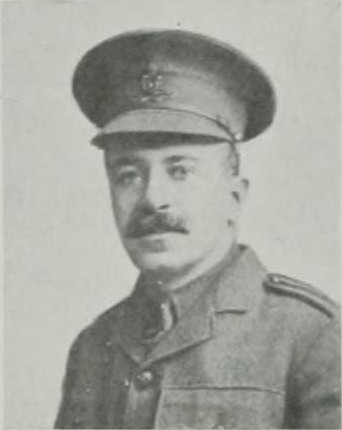
Owen Carsley F. Hague.
HAIGH, JOHN HARRY, Stoker, 1st Class (R.F.R., B. 4803), S.S. 104151, H.M.S. Good Hope; lost in action off Coronel, on the coast of Chili, 1 Nov. 1914.
HAINES, ALEXANDER CRICHTON COOPER, Lieut., 2nd Battn. Royal Dublin Fusiliers, only s. of John Crichton Haines, of St. James’s Gate, Dublin, London Manager, Messrs. A. Guinness, Son & Co., Ltd., by his wife, Caroline Anne, elder dau. of Austin Damer Cooper, of Drumnigh House, St. Douloughs, co. Dublin, J.P.; b. Dublin, 9 Dec. 1894; educ. Cholmeley House, Eastbourne, and Elstow School, Bedford; volunteered as a motor despatch rider in Sept. 1914, and after a week at Chatham and another at Aldershot, went straight to the Front. He was given a commission as 2nd Lieut. in the Royal Dublin Fusiliers, 1 Nov. 1914, and was promoted Lieut. in April, 1915; was dangerously wounded at St. Julien during the Second Battle of Ypres, 25 April, 1915, and was put into a “Jack Johnson” crater by some men of his platoon and lay there many hours before being picked up by the ambulance. He died of wounds at No. 7 Base Hospital, Boulogne, 8 May following, and was buried in the military cemetery there; unm.
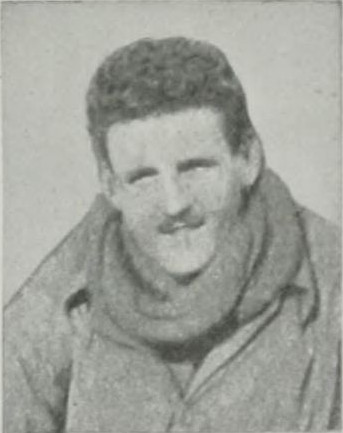
Alexander C. C. Haines.
HALDANE, ROBERT PATRICK, Lieut., 6th (Perthshire) Battn. Black Watch, eldest s. of Sir William Haldane, of 55, Melville Street, Edinburgh, and Foswell, Auchterarder, co. Perth, W.S., Crown Agent for Scotland, by his wife, Edith, dau. of Thomas Nelson, of Ach-na-Cloich, Argyleshire, and nephew of Richard Burdon, 1st Viscount Haldane of Cloan; b. Edinburgh, 21 July, 1893; educ. Edinburgh Academy, and Balliol College, Oxford; gazetted 2nd Lieut. 12 Aug. 1914, and promoted Lieut. 26 Jan. 1915; went to France 2 May, 1915, and died in the Field Hospital at Locon, 13 June, 1915, of wounds received the same day in the trenches near Festubert, France. Buried in the British Military Cemetery at Locon; unm.
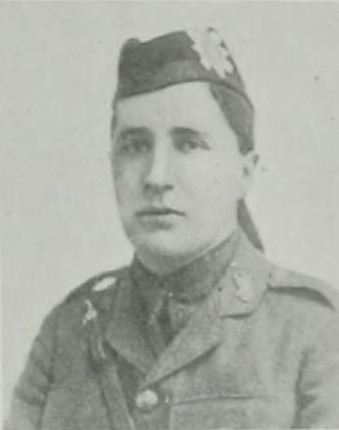
Robert Patrick Haldane.
HALE, FREDERICK THOMAS, Rifleman, No. 2466, 9th Battn. (Queen Victoria Rifles) The London Regiment (T.F.), 2nd s. of Thomas Gardiner Hale, of Salisbury, Woodriffe Road, Leytonstone, by his wife, Beatrice Mary, dau. of the late Edgar Adams, of Brixton; b. New Cross, London, S.E., 29 April, 1892; educ. privately, and Leyton Technical Institute, and on leaving there entered the service of Henry S. King & Co., Bankers, 65, Cornhill; volunteered on the outbreak of war, and joined the Queen Victoria Rifles in Aug. 1914; went to the Front, 27 March, 1915, and was killed in action at Hill 60, 21 April, following; unm.
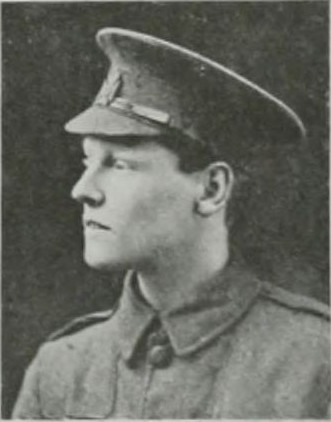
Frederick Thomas Hale.
HALEY, RICHARD ERNEST, Chief Shipwright, 166625, H.M.S. Aboukir; lost in action in the North Sea, 22 Sept. 1914.
HALFACRE, HENRY, A.B. (R.F.R., B. 3269), S.S. 787, H.M.S. Good Hope; lost in action off Coronel, on the coast of Chili, 1 Nov. 1914.
HALIBURTON, BORTHWICK, Sapper, No. 4/1247, 1st Field Coy. New Zealand Engineers, yst. s. of the late Thomas Haliburton, Milton, Estate Overseer, by his wife, Isabella, dau. of the late George Bruce, of Haddington; b. Dunoon, co. Argyle, 15 July, 1888; educ. Dunoon; went to New Zealand in April, 1910, and settled at Napier, Hawkes Bay; was a Road Contractor; volunteered for Imperial Service after the outbreak of war and joined the New Zealand Expeditionary Force in Oct. 1914; left for Egypt with the second reinforcements; went to the Dardanelles, 12 April, 1915, and was killed in action there, 11 Dec. 1915; unm. Buried in Connaught Valley Cemetery, Gallipoli.
HALL, ALBERT, Leading Stoker (R.F.R., B. 4562), 293310, H.M.S. Good Hope; lost in action off Coronel, on the coast of Chili, 1 Nov. 1914.
HALL, ARCHIE CLYDE, Private, No. 18775, No. 4 Coy. 1st Battn. Canadian Expeditionary Force, eldest s. of the late (—) Hall, by his wife Lydia Ann (2, Brookline Avenue, East Lynn, Mass., U.S.A.), dau. of Joseph Lambertson, of Marblehead, Mass.; b. Brocton, Mass., 13 June, 1893; educ. Taunton, Mass., and Charlestown, Mass.; worked several years for the N.B. Durkee laundry and the Allerton laundry, both of East Lynn, and on the outbreak of the European War in Aug. 1914, immediately joined the Canadian Expeditionary Force. He left Canada with the first contingent in Oct.; went to France in Jan. 1915, and was killed in action at Festubert, 26 May, 1915, by a shell; unm.
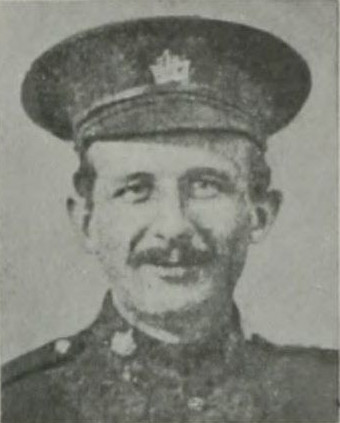
Archie Clyde Hall.
HALL, ARTHUR, A.B., 197316 Chatham, H.M.S. Good Hope; lost in action off Coronel, on the coast of Chili, 1 Nov. 1914.
HALL, ARTHUR GORDON, Capt., 2nd Battn. Bedfordshire Regt., s. of Edward Hall, of 17, Southfields Road, Eastbourne, formerly of Santaveri, Mysore, India, by his wife, Annie, dau. of William Ferguson, of Banbridge, co. Down, and grandson of Arthur Hall, of the Madras Civil Service; b. Shimogah, Mysore, India, 20 Nov. 1879; educ. Brailfield College (May, 1891–July, 1897); joined the Militia Battn. of the Middlesex Regt., and on 20 May, 1899, passed into the Bedfordshire Regt., then in Dublin; became Lieut. 5 April, 1900; Capt. 6 Dec. 1906, and Adjutant, 6 June, 1909; served in the South African War, 1899–May, 1902, with the Mounted Infantry; took part in the operations in Cape Colony, 1899–1900, and in the fighting at Colesburg (1 Jan.-12 Feb. 1900) and in those in the Orange Free State, Feb.-Nov. 1902, including the actions at Wittebergen and Witpoort (mentioned in Despatches [London Gazette, 10 Sept. 1901], Queen’s medal with two clasps and King’s medal with two clasps). After the close of the South African Campaign, he served with his regt. at Gibraltar and Bermuda and then again in South Africa, whence they were ordered home on the outbreak of war. He was killed on the seventh day of the First Battle of Ypres, 26 Oct. 1914; unm. The Adjutant of the regt. wrote he was “killed by a sniper while in the trenches. I am told he was looking through his glasses for the sniper when he was shot. The bullet entered his neck and killed him instantly. His was a very great loss to the Army and to the battn. especially, he was always so cool under fire and so careful of his men”; and in another letter his Sergt.-Major (now 2nd Lieut. F. J. Whitemore) said: “A and D Coys. of our regt. were ordered to take up positions in the firing line (this was at the first engagements at the First Battle of Ypres). The attack was carried forward to a certain point ... the forward movement was duly carried out, with the loss of Capt. Bassett, of A Coy., wounded, also of about 36 other officers and men killed and wounded. Capt. Hall, at great risk to himself, proceeded to give what help was possible to all the officers and men of A Coy., and after seeing all the wounded back, the Capt. and I took up a position in advance, whilst the battn. entrenched in the rear, and the words he said were to the effect that if possible we must have revenge for the loss that was inflicted on Capt. Bassett and his company. After waiting for some time, satisfaction was obtained by dropping three out of a patrol of six. After the event we had a very rough time, being continually under shell fire and fighting with heavy odds against us—it would be impossible to enumerate the acts of bravery ... by all ranks of our company, needless to say Capt. Hall being the first to set the example. The night before his death he was talking with me over the previous night’s attack and remarking how lucky the company was to get back safely with so few casualties, and at that time he passed a few remarks on what to do in the event of him becoming a casualty. Unhappily he became one the following morning about 8.20 (this was on the morning of 26 Oct. 1914). At the time we were sitting in the trench talking over our escape earlier in the morning ... when a stray bullet struck him and he instantly fell on me, and on examining him I found the vein of the right side of the neck was severed and he never spoke a word after being struck, and as nothing further could be done, he was buried where he fell. Capt. Wetherell and Corpl. Crouch and myself know the exact spot where he was buried. Previous to this incident, no night passed without he and I going round the company to look after the welfare of his men, and on most occasions bullets were striking all around him, and I never once saw him show any signs of fear.”
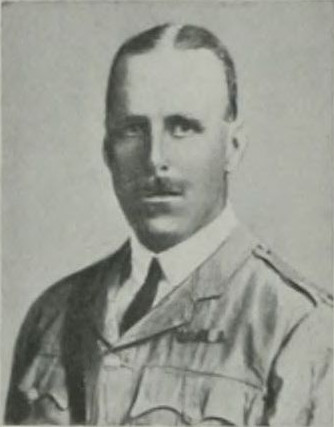
Arthur Gordon Hall.
HALL, BURTON HOWARD, Capt., 98th Infantry, Indian Army, yr. s. of the Rev. Samuel Howard Hall, M.A., Rector of Sproatley, Hull, and Senior Divisional Chaplain (1st Class) T.D., 49th (W.R.) Division (who retired after 27½ years’ service in the vol. and T.F., including mobilisation and active service in France and Belgium, 20 Aug. 1915), by his wife, Helen Hamilton, dau. of Dr. Burton Kendell, of Heath House, near Wakefield, J.P.; b. Chesham, co. Bucks, 10 Jan. 1882; educ. Twyford School, near Winchester, Haileybury College, and the Royal Military College, Sandhurst; gazetted 2nd Lieut. Yorkshire Regt. 8 Jan. 1901, and promoted Lieut. 19 Feb. 1904; transferred to 98th Infantry, Indian Army, the same year, and became Capt. 8 Jan. 1910; took part in the expedition to German East Africa, and was killed in action there, at Tanga, 4 Nov. 1914. He m. at Grove Park Church, Chiswick, 11 July, 1907, Lucie Gertrude, dau. of the late Thomas Bannerman Grainger, and granddau. of the late Thomas Bannerman Grainger, of Bridge House, Cuckfield, Sussex, and had two daus.: Mollie Helen Valerie, b. 20 May, 1908; and Aline Betty, b. 4 Jan. 1911.
HALL, EDWARD, E.R.A., 2nd Class, 271121, H.M.S. Good Hope; lost in action off Coronel, on the coast of Chili, 1 Nov. 1914.
HALL, ERNEST ALBERT, Stoker, 1st Class, S.S. 111024, H.M.S. Pathfinder; lost when that ship was sunk by a mine about 20 miles off the East Coast, 5 Sept. 1914.
HALL, FREDERICK, Private, No. 6779, 2nd Battn. Coldstream Guards, 4th s. of George Hall, of Wickham Market; b. Wickham Market, co. Suffolk, 15 May, 1884; educ. National School there; enlisted, 22 May, 1906; served three years with the Colours, then joined the Reserve; mobilised 5 Aug. 1914; went to France with the Expeditionary Force, 12 Aug. following, and was killed in action at Zonnebeke, 23 Oct. 1914. He m. at Lopen, 28 Oct. 1909, Rosa (Pear Tree Cottage, Lopen Seavington, Somerset), dau. of William Harris, and had three children: William Frederick, b. 3 May, 1910; Ethel Florence, b. 1 Oct. 1912; and Winifred May, b. 29 April, 1915.
HALL, GEORGE WALTER, Stoker, P.O. 309236, H.M.S. Pathfinder; lost when that ship was sunk by a mine, about 20 miles off the East Coast, 5 Sept. 1914.
HALL, GEORGE WILLIAM, Stoker, 1st Class, K. 3209 (Ports), H.M.S. Aboukir; lost in action in the North Sea, 22 Sept. 1914.
HALL, GERALD PERCY, Lieut., 2nd Battn. Highland Light Infantry, 2nd s. of Robert Hall, of Glen Mervyn, Glanmire, co. Cork, by his wife, Isabel Travers, dau. of the Very Rev. R. W. Forrest, D.D., Dean of Worcester; b. Glanmire, 11 Feb. 1894; educ. Clifton College; gazetted 2nd Lieut. 4th (Extra Reserve Battn.), 23 Aug. 1913, and promoted Lieut. 21 Aug. 1914; went to France on the outbreak of war, and was killed in action at Ypres, 13 Nov. 1914; unm.
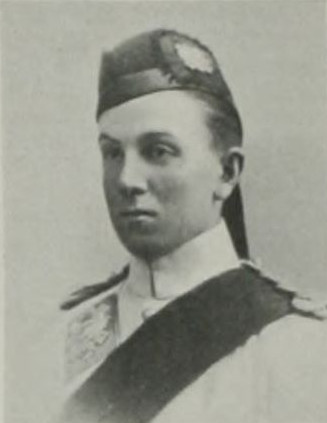
Gerald Percy Hall.
HALL, HARRY FRANK, A.B. (R.F.R., B. 5034), 180634, H.M.S. Hogue; lost in action in the North Sea, 22 Sept. 1914.
HALL, HENRY, A.B., 223106, H.M.S. Hawke; lost when that ship was torpedoed in the North Sea, 15 Oct. 1914.
HALL, HENRY JOSEPH, Private, No. 81347, 30th Battn. Canadian Expeditionary Force, s. of James Hall, of 146, Maynard Street, Halifax, Nova Scotia; b. Halifax, N.S., 1889; educ. there: joined the Canadian Militia about 1913, and on the outbreak of war in Aug. 1914, volunteered for service overseas; left Canada with the first contingent, and was killed in action, 22 Nov. 1915; unm.
HALL, JOHN FREDERICK, Stoker, 1st Class, K. 11551, H.M.S. Pathfinder; lost when that ship was sunk by a mine, about 20 miles off the East Coast, 5 Sept. 1914.
HALL, SYDNEY ALBERT, Stoker, 1st Class (R.F.R., B. 4056), S.S. 103873. H.M.S. Good Hope; lost in action off Coronel, on the coast of Chili, 1 Nov 1914.
HALL, THOMAS ALLISON, Armourer’s Crew, M. 3951, H.M.S. Cressy; lost in action in the North Sea, 22 Sept. 1914.
HALL, THOMAS HOWARD, Private, No. 10798, 3rd Battn. Coldstream Guards, eldest s. of Thomas Hall, of 47, Broadwell Road, Oldbury, Worcester, Blacksmith, by his wife, Annie, dau. of Dixon Parsons; b. Cradley Heath, co. Stafford, 19 July, 1894; educ. Oldbury National Schools; enlisted 16 July, 1914; went to France, 24 Oct. and was killed in the heavy fighting at Guivenchy Brickfields, 6 Feb. 1915; unm.
HALL, WALTER CHARLES NELSON, Leading Cook’s Mate, M. 922, H.M.S. Cressy; lost in action in the North Sea, 22 Sept. 1914.
HALL, WILLIAM, Rifleman, No. 5312, 2nd Battn. The Rifle Brigade, 3rd s. of the late Charles Hall, of Macclesfield, by his wife, Jane (28, Bridge Street, Macclesfield), dau. of George Lane, of Bollington Cross, co. Cheshire; b. Macclesfield, co. Cheshire, 9 Nov. 1895: educ. Hurdsfield Boys’ School there; enlisted Jan. 1914; went to France in Nov. and was killed in action, near Neuve Chapelle, 9 May, 1915, while bomb throwing; unm. A comrade wrote: “Although he was but a youngster, he was a little hero all through and knew no fear.”
HALL, WILLIAM FREDERICK, Stoker, 1st Class (R.F.R., Ch. B. 9080), 294862, H.M.S. Aboukir; lost in action in the North Sea, 22 Sept. 1914.
HALLAM, WALTER, D.C.M., Private, No. 7540, 2nd Battn. Coldstream Guards, s. of Samuel Hallam, Private Estate Steward; b. Horsham, co. Sussex, 11 May, 1886; enlisted 25 Nov. 1907; killed in action at Rentel Woods, 11 Nov. 1914. The officer to whom he acted as servant wrote: “We were holding the trenches in front of Ypres in a wood just by a place called Rentel. There was a German attack in progress, and they were firing hard at that part of the line. Hallam, with his accustomed fearlessness, was firing, with his head well above the parapet, and was most unfortunately shot right through the head.” He was awarded the Distinguished Conduct Medal, 17 Dec. 1914, the official record [London Gazette, 17 Dec. 1914], stating that he “always volunteered and carried out successfully duties of an extraordinary dangerous character, such as sniping and patrol work. Has shown great qualities of nerve and resource in difficult situations.” He m. at Paddington, 13 Dec. 1913, Harriette Matilda, dau. of Henry George Shore, and had a dau., Lily Edith Walter Jessie, b. 12 Aug. 1914.
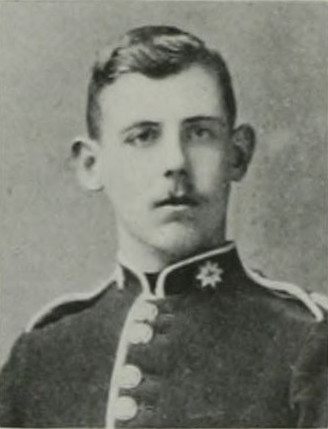
Walter Hallam.
HALLAN, ROWLAND, Stoker, 1st Class, K. 11413 (Ports), H.M.S. Cressy; lost in action in the North Sea, 22 Sept. 1914.
HALLER, JOHN HENRY LYLE, Lieut. and posthumous Capt., 3rd (Reserve), attd. 2nd, Battn. East Surrey Regt., elder s. of George Haller, of Langham House, 197, Albany Street, Regent’s Park, N.W., and 52, Leadenhall Street, E.C., Chemical Merchant, by his wife, Agnes Mary, dau. of the late David Watts, of 17, Albert Road, Regent’s Park; b. Regent’s Park, London, N.W., 21 Dec., 1894; educ. Merchant Taylors’ School, and Lancing College, and afterwards in France and Germany. Intended for a commercial career in connection with applied science, he worked for some time in the laboratory of Dr. Danysz at the Pasteur Institute in Paris, and attended a full course of lectures in the same institution, besides doing practical work in a manufacturing laboratory. At Lancing he had joined the O.T.C., and was gazetted 2nd Lieut. to the 3rd East Surreys, 11 May, 1912. and served for six months in Ireland with the 1st Battn. of that Regt.; gazetted Lieut. to the Special Reserve of the 3rd Battn 3 May, 1913, he rejoined the 1st Battn. on the outbreak of war and went to France in Sept. 1914. There he was transferred to the 2nd Battn. and was killed in action near Lindenhock, Flanders, 12 March, 1915; unm. Capt. S. P. White, 1st East Surreys wrote: “I had known Lyle before the war, and for a time he was my subaltern out here. I never had a better officer serving with me or a braver comrade. Soon after our 2nd Battn. came out, they had great losses in officers, and needing experienced officers to help them tide over their temporary difficulties. Lyle was ordered by name by the Corps Headquarters to be transferred. This battn. lost a good officer then, and one of the cheeriest and best of companions, and now the regt. is the poorer.” Capt I. L. Le Fleming, temporarily commanding 2nd East Surreys, wrote: “Lieut. Haller was shot through the head by a German bullet, whilst himself firing over the parapet at the Germans. His death was instantaneous. Lieut. Haller had just been recommended by me for promotion to the rank of Capt. and the letter was in my pocket-book when he was shot. I valued his services immensely, and in him I have lost a most gallant and competent officer. He was also my subaltern in the 1st Battn. at the end of Oct. last year. Lieut. Haller was buried in Kemmel Churchyard, Belgium [Grave No. 12],” and Lieut. Gudon, 2nd East Surreys: “I was within a few yards of your son when he died. He was killed about 4.20 p.m. on March 12, whilst actually firing at a German from over the parapet. The exact place was about 120 yards south of Lindenhoek and about 150 yards N.E. of a hamlet called Sparnbrook.” He was gazetted Capt. 9 April, 1915, to rank as from 2 Feb. and was mentioned in F.M. Sir John (now Lord) French’s Despatch of 31 May, 1915, for gallantry in the field.
COPY.
Temp. Capt. (Acting Major)
CECIL CHARLES HATFIELD HALL, D.S.O.
On the afternoon of the 26th April, orders were received that all enemy machine gun nests and snipers were to be killed or captured in VILLERS BRETONNEUX, and this duty was assigned to a certain unit in the Brigade to carry out.
Major Hall happened to arrive at the railway station in the above village when the last of the enemy were being dealt with.
The enemy suddenly opened up with a very heavy barrage on the railway station, and a call was made for 20 men of the Durham L.I. to reinforce another unit in a house which was about 50 yards from the railway embankment. Major Hall immediately got on to the railway, and displaying the utmost coolness and disregard for personal danger, got together some men with a L.G. and M.G., and led them forward over the embankment and across a road, which was being badly sniped, to the assistance of the Regt. occupying a house, and firing on an enemy M.G.
This Officer again returned from the house and brought forward more men, and at the same time took across a most important message from Brigade H.Q., and at this time the occupied house was then being shelled very heavily by the enemy, he again came back to the railway, and took across to the French troops on the right a message as to the dispositions, etc., of our own men, he then returned for the third time to the house, and organised the men he had led across, and rendered most valuable services in withdrawing men of another unit and helping the wounded.
Without doubt, the cool and brilliant example set by this Officer at a very critical moment inspired all the men with the greatest confidence.
B. C. JAMES, Lieut.-Colonel,
Cmdg. 22nd Bn. Durham L.I. (Pioneers).
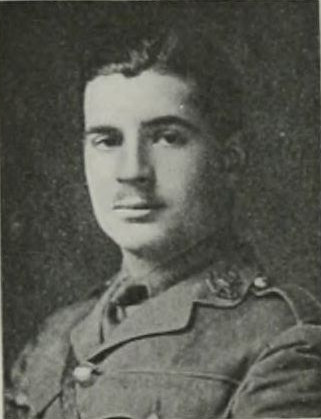
John H. L. Haller.
HALLETT, ARTHUR, Ship’s Steward’s Assistant, M. 1451, H.M.S. Aboukir; lost in action in the North Sea, 22 Sept. 1914.
HALLETT, THEO BENNETT, Trooper, No. 1884, Royal Horse Guards, yst. s. of the late George Henry Hallett, for many years H.B.M. Vice-Consul at Ghent, by his wife, Clara, dau. of the late John Lewis, of St. Albans; b. Ghent, 22 Feb. 1897; educ. L’Athenée Royal, Ghent; after the German occupation came to England with his family, 21 Aug. 1914; volunteered and enlisted in the Royal Horse Guards, Oct. 1914; went to France, April, 1915, and was killed in action on the Menin Road, Hooge, near Ypres, 13 May, 1915, while crossing an open space with his regt. with three machine-guns firing on them; unm.
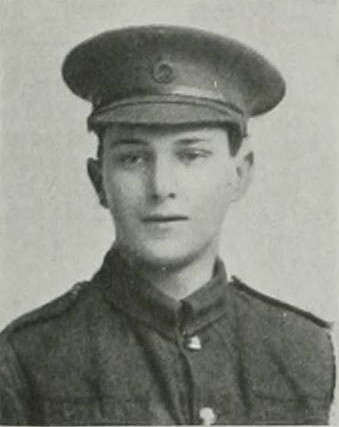
Theo Bennett Hallett.
HALLETT, WILLIAM, Leading Seaman, 202703, H.M.S. Hogue; lost in action in the North Sea, 22 Sept. 1914.
HALLIDAY, JAMES STOREY, A.B. (R.F.R., B. 5791), 177204, H.M.S. Hawke; lost when that ship was torpedoed in the North Sea, 15 Oct. 1914; m.
HALLIDAY, JOHN ALEXANDER, Capt., 11th Hussars, eldest s. of the late John Halliday, of Chicklade House, co. Wilts (d. 13 Feb. 1915), by his wife, Maria (d. 25 Feb. 1916), dau. of Richard Brown, of Ebbw Vale, Monmouth; b. 10 April, 1875; educ. Harrow and Trinity College, Cambridge; was gazetted 2nd Lieut. from Militia to the 11th Hussars, then in India, 5 Jan. 1898, and promoted Lieut. 3 March, 1900, and Capt. 18 March, 1905; served in the South African War on the Staff as Special Service Officer, 25 July to 22 Aug. 1901, and as Signalling Officer, 23 Aug. 1901 to 14 June, 1902 (Queen’s Medal with five clasps); was Adjutant 11th Hussars, and afterwards of the Leicestershire Yeomanry; went to France with the Expeditionary Force, 15 Aug. 1914; served through the retreat from Mons, the Battle of the Marne, the 1st Battle of Ypres, &c., and died in the Duchess of Westminster’s Hospital at Le Touquet, 13 Nov. 1914, of wounds received in action at Messines, 31 Oct. previously; unm. Capt. Halliday was a good all-round athlete, and was in both cricket and football elevens at Harrow; capt. of the Gymnasium eight; champion heavy weight boxer for the Public Schools Competition at Aldershot, 1894, and threw the hammer for Cambridge in the University Sports, 1896–7. He was well known in the hunting-field in Ireland and South Wiltshire.
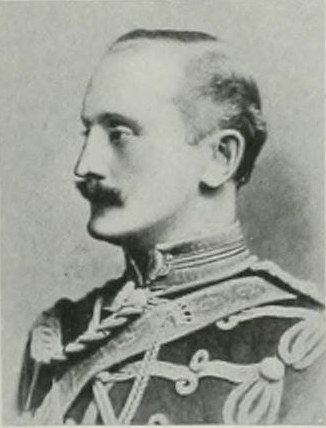
John Alexander Halliday.
HALSALL, EDWARD, Private, No. 3817, 10th Battn. (Scottish) King’s Liverpool Regt. (T.F.), only surviving s. of Frederick Halsall, of Hougoumont, St. James’ Road, New Brighton, co. Chester, General Merchant, by his wife, Caroline Elizabeth, dau. of Frederick (and Caroline) Middleton; b. Rock Ferry, co. Chester, 27 Oct. 1882; educ. Wallasey Grammar School; joined the Liverpool Scottish when the Battn. was first formed and served five years. He was in business with the Johnstone Line, Liverpool, and on the outbreak of war when some of their ships were taken over by the Government for military purposes, asked for and obtained permission to join the s.s. Rowanmore to assist in transport work. At the end of two months the Rowanmore was recalled and he then rejoined his old regt., and though offered a commission elected to serve as a private. He left for France in Jan., and was shot by a sniper in action near Ypres, 17 March, 1915; unm. Halsall was a member of the New Brighton Football Club and of the West Cheshire Yachting Club, and in connection with the latter had held the cup and won several prizes; he was also a keen golfer.
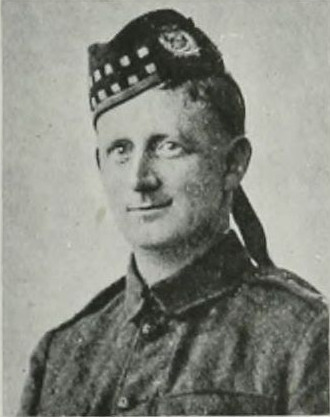
Edward Halsall.
HALSEY, JOHN, Stoker, Petty Officer (R.F.R., B. 3747), 299252, H.M.S. Good Hope; lost in action off Coronel, on the coast of Chili, 1 Nov. 1914.
HALSTEAD, ARTHUR FREDERICK, Lieut., 15th Rifle Brigade, attached to 1st Battn. Royal Dublin Fusiliers, only s. of Arthur Frederick Halstead, of Sale, co. Chester, M.I.Mech.E., A.C.I.S.; b. Rosario de Sante Fé, Argentine Republic, 26 May, 1893; educ. High School, Sale, and Shrewsbury School; was an articled pupil with the firm of Jones, Crewdson and Youatt, of Manchester, chartered accountants, but enlisted in the 8th Rifle Brigade following the outbreak of war, 30 Aug. 1914; was given a commission two months later, 1 Nov., and promoted Lieut. the 14th of that month. He was killed in action on the night of 28–29 June, 1915, during a counter-attack by the Turks on the British lines, and was buried on the west side of the Saghir (Dene) Mullah, Gallipoli; unm. His commanding officer wrote to his father that on this occasion “he was sent out with a platoon to reinforce the left of our line.... It was a very dark night and a very unfortunate one, as we lost 10 officers killed and one wounded”; and added: “The regt. being in the open and enveloped by Turks, I should like to tell you it was due to the gallantry of your son and other officers on that flank that a very serious situation did not arise.” Sergt. P. Doyle, No. 7 Platoon, X Coy., in sending Lieut. Halstead’s identity disc, said “his untimely end created a terrible blow to us (the platoon), who absolutely idolised and admired him for his fearlessness. There is scarcely a day that passes in the trenches but what his name is not mentioned in loving memory by those with whom he came in contact.” Lieut. Halstead was a fine athlete and had won his colours at Shrewsbury both for long distance running and cricket. He was a member of the Liverpool Ramblers, Brooklands Cricket Club and Sale Golf Club.
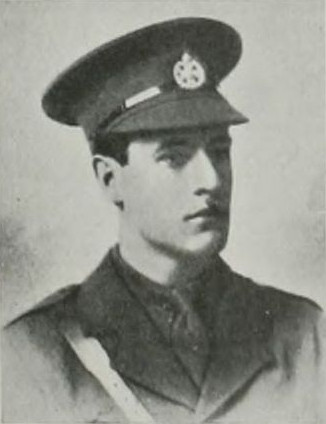
Arthur Frederick Halstead.
HAMBRIDGE, WILLIAM, Private, No. 399 No. 1 Coy., 9th Battn. The Middlesex Regt. (T.F.), s. of Thomas Hambridge, of Oxford, Gas Stoker, by his wife, Frances, dau. of William Harper, of Oxford; b. Chelsea, 9 Nov. 1871; educ. Edinburgh Road Board School, Notting Hill; enlisted about 1887; and served 10 years with the colours, buying his discharge in 1897; joined the National Reserve on its inception; rejoined the colours 29 Dec. 1914; and died in the Military Hospital, Neasden, 4 April, 1915, of syncope. He m. at Christ Church, North Kensington, 29 Dec. 1889, Emma Elizabeth (16, Appleford Road, North Kensington), dau. of Robert Rogers, and had eight children; William. L.-Corpl., No. 6347, 3rd Dragoon Guards, now on active service, b. 9 Nov. 1890, m.; Frederick Thomas, b. 6 April, 1893, m.; Joseph Robert, b. 17 Aug. 1905; Amy Emma, b. 6 May, 1895, m. to a sailor; Elizabeth Rose, b. 9 Aug. 1897, m. soldier; Eleanor Mary, b. 20 Feb. 1900; Ada Alexandra, b. 1 Dec. 1902; and Vera Grace, b. 26 March, 1914.
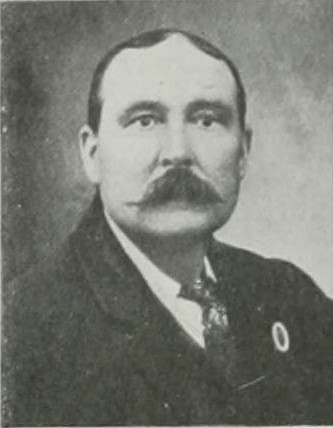
William Hambridge.
HAMER, HUBERT JAMES TUDOR, Lieut., 108th Infantry, attached 101st Grenadiers, Indian Army, 2nd s. of the late John Parry Hamer, of Glan-yr-Afon Hall, co. Salop, J.P. (formerly 8th King’s Regt.), by his wife, Sarah Margaret (Bronheulog, Llansilin, Oswestry), dau. of the late Owen Davies Tudor, Barrister-at-Law; b. Glan-yr-Afon Hall aforesaid, 12 Feb. 1883; educ. privately owing to delicate health; enlisted in the Royal Welsh Fusiliers in 1904, having previously held a commission as 2nd Lieut. in the 4th (Militia) Battn. of that regt.; served for three years in the ranks, and was gazetted 2nd Lieut. to his father’s old regt., the King’s Liverpool Regt., 28 Aug. 1907. He obtained his transfer to the Indian Army in Feb. 1909, entering the 108th Infantry, in which he was promoted Lieut. 28 Nov. following. In Sept. 1914, he was attached to the 101st Grenadiers (link battn. to the 108th Infantry) for service in East Africa, and was killed in action at Tanga while leading his men in the attack on that place, 4 Nov. 1914. The official communiqué states that “as an important German railway terminus was reported to be weakly held, a force was sent from British East Africa to seize it. On the evening of 2 Nov. one and a-half battns. were landed within 2 miles of the place and at once advanced. This small force became heavily engaged just outside the town, but as the enemy were in much superior strength it was compelled to fall back and await reinforcements. At 11 a.m. on the 4th the attack was renewed. When within 800 yards of the position the troops engaged came under very heavy fire. On the left flank, in spite of heavy casualties, the 101st Grenadiers actually entered the town and crossed bayonets with the enemy. The North Lancashire Regt. and Kashmir Rifles on the right pushed on in support under very heavy fire, and also reached the town, but found themselves opposed by tiers of fire from the houses, and were eventually compelled to fall back to cover, 500 yards from enemy’s position. The losses were so heavy and the position so strong that it was considered useless to renew the attack, and the force re-embarked and returned to its base to prepare for future operations. From recent reports just received the total casualties in this unsuccessful operation were 795, including 141 British officers and men.” Lieut.-Col. Baldock, 108th Infantry, wrote that Hamer was “a very able and zealous officer, and it is only a few weeks ago that the good work done by him in the training of the regimental signallers was the subject of favourable comment in regimental orders. As his commanding officer I always found him keen on his work and honest and straightforward in all his actions, in fact, a true officer and a true gentleman, whose loss will be deeply felt by the regt.”; and Capt. M. L. A. Gompertz, 108th Infantry, attached 101st Grenadiers, in a letter giving particulars of the action, wrote: “Unfortunately the regt. was widely extended and we were on opposite flanks, so that I can only give you hearsay news about your son, and as after the engagement, which was extremely heavy, we had to retire, we were unable to recover our dead, who were buried by the Germans (who treated our wounded with the greatest courtesy and kindness). I could not see his body. We lost seven British and six native officers, but one of the native officers who was with your son escaped, wounded. He tells me your son was leading his men on when he was shot in the throat and died instantaneously.” Two of his brothers are on active service: John Lawton Parry Hamer, of Glan-yr-Afon Hall, Lieut., 4th Battn. King’s Shropshire L.I. from 1909, now Capt. 2nd Garrison Battn. King’s Liverpool Regt.; and Lieut.-Commander Richard Lloyd Hamer, R.N., lately Flag Lieut.-Commander to Vice-Admiral Sir Richard Peirse, Commander-in-Chief, East Indies.
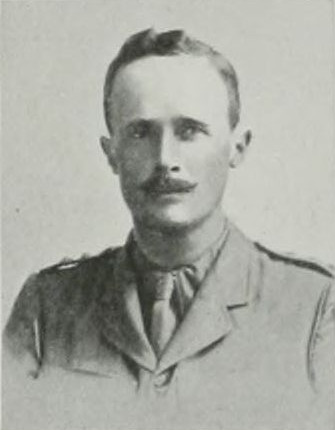
Hubert James T. Hamer.
HAMER, WILLIAM SHADRACH, A.B., 215151, H.M.S. Good Hope; lost in action off Coronel, on the coast of Chili, 1 Nov. 1914.
HAMILTON, CHARLES, Stoker (Native), H.M.S. Good Hope; lost in action off Coronel, on the coast of Chili, 1 Nov. 1914.
HAMILTON, FREDERICK CHARLES, A.B. (R.F.R., Ch. B. 6099), 192278, H.M.S. Aboukir; lost in action in the North Sea, 22 Sept. 1914.
HAMILTON, JOHN GEORGE, Stoker, R.N.R., 2128T, H.M.S. Aboukir; lost in action in the North Sea, 22 Sept. 1914.
HAMILTON, ROBERT, JOHN, Stoker, 1st Class (R.F.R., B. 8575), S.S. 104942, H.M.S. Hawke; lost when that ship was torpedoed in the North Sea, 15 Oct. 1914.
HAMILTON, ROBERT PEAT, Private, No. 29555, 16th Battn. (Canadian Scottish) Canadian Expeditionary Force, only s. of William Mackintosh Hamilton, of Forres, co. Moray, draper, by his wife, Helen Anne, dau. of Robert Peat of Forres, Solicitor; b. Forres, 16 Aug. 1881; educ. Forres Academy; was for several years in the office of Messrs. T. & R. Ranken, W.S., Edinburgh, and passed as a solicitor before going to Canada in 1913. He enlisted at Vancouver on the outbreak of the war in Aug. 1914; came over with the first contingent in Oct., trained on Salisbury Plain during the winter; went to France Feb. 1915, and was killed in action, near Ypres, 22 April, 1915. He was a Brother of the Lodge of Edinburgh (Mary’s Chapel) No. 1. He m. at Edinburgh, 1 Nov. 1914, Mary Cowie Ford, yst. dau. of the late Robert Lawrie, of Edinburgh.
BUCHANAN-BAILLIE-HAMILTON, ARTHUR, Capt., 1st Battn. Seaforth Highlanders, 2nd surviving s. of the late John Baillie Buchanan-Baillie-Hamilton, of Arnprior, co. Perth, J.P., D.L. [gt.-gdson. of the Hon. George Baillie, of Jerviswood, yr. brother of Thomas, 7th Earl of Haddington], by his wife, Catherine Elizabeth Grace (Cambusmore, Callander, and Strathyre), only dau. and heir of Alexander Buchanan, of Arnprior; b. Cambusmore, Callander, co. Perth, 2 June, 1876; educ. Winchester. On the outbreak of the Boer War he joined the City of London Imperial Volunteers in Jan. 1900, taking part in operations in the Orange Free State, the Transvaal (including actions near Johannesburg, Pretoria, Diamond Hill, and Lydenberg), and Cape Colony (Queen’s medal with five clasps). Gazetted 2nd Lieut. to the Seaforth Highlanders (Ross-shire Buffs), 22 May, 1901, he was employed with the West African Frontier Force from Nov. 1902 to March, 1906, rendering signal service in the Kano-Sokoto Campaign (medal and clasp), and was promoted Lieut. 17 April, 1905, and received his company 8 Nov. 1911. From March, 1911, to March, 1914, he was Adjutant of the 6th Battn. Black Watch, Perthshire Territorial Force. Arriving with his regt. in Flanders in Oct. 1914, he was constantly in the trenches from that date, including the fighting before and at Neuve Chapelle, till he fell leading his company into action at the commencement of the attack on Festubert, 9 May, 1915. Buried south of Neuve Chapelle, close to the La Bassée Road. Capt. A. B.-Baillie-Hamilton was mentioned in F.M. Sir John French’s Despatch of 31 May, 1915. He m. at St. John’s Episcopal Church, Edinburgh, 8 March, 1906, Ina Erskine, dau. of Sir Malcolm McNeill, C.B., Edinburgh, and niece of the late Sir John McNeill, of Colonsay, K.C.B., K.C.M.G., V.C.; s.p. Two of Capt. B.-Baillie-Hamilton’s brothers, Commander M. B.-Baillie-Hamilton, R.N., and Major N. A. B.-Baillie-Hamilton, Black Watch, are now (1916) serving with the Forces.
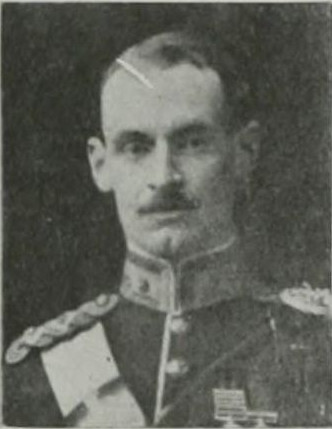
A. B.-Baillie-Hamilton.
HAMMOND, FREDERICK, Stoker (R.F.R., Ch. B. 926), 283493, H.M.S. Aboukir; lost in action in the North Sea, 22 Sept. 1914.
HAMMOND, GEORGE THOMAS, A.B. (R.F.R., B. 7153), 192160, H.M.S. Hogue; lost in action in the North Sea, 22 Sept. 1914.
HAMMOND, GILBERT PHILIP, 2nd Lieut., 2nd Battn. King’s Own Scottish Borderers, elder s. of the late Frederick Hammond, formerly a partner in the firm of Hammond & Co., Bankers, of Newmarket, by his wife, Florence Amy (The Cottage, Great Finborough), dau. of the Rev. John Denny Gilbert, Chedgrove Manor, Norfolk; b. Newmarket, co. Cambridge, 24 Nov. 1891; educ. Sandroyd, Cobham, Surrey, and Culvers Close, Winchester, where he played football for Commoners XV’s, and was described by the school magazine as one who is “never beaten and knows no fear”; gazetted 2nd Lieut. 2nd K.O.S.B. from Special Reserve, 4 Dec. 1912; was in Dublin with his regt. during the street fighting in July, 1914, and gave evidence at the subsequent inquiry; went to France with the Expeditionary Force the following month, and was killed at the Battle of Le Cateau, 27 Aug. 1914, his Coy. being cut off during the retreat; unm. A brother officer wrote: “He showed great bravery in the fight at Mons, and saved three women from a house under very heavy shell fire.”
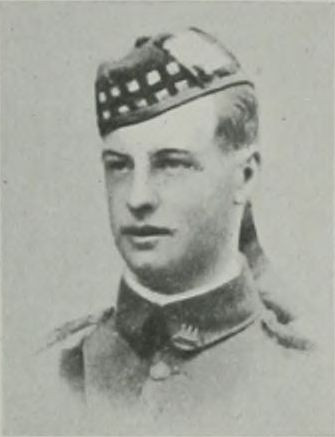
Gilbert Philip Hammond.
HAMMOND, HARRY, Blacksmith, 341183, H.M.S. Hogue; lost in action in the North Sea, 22 Sept. 1914.
HAMMOND, MARK, A.B. (R.F.R., B. 1379), 197787, H.M.S. Good Hope; lost in action off Coronel, on the coast of Chili, 1 Nov. 1914.
HAMMOND, SAMUEL HENRY, A.B., 195418 (Chatham), H.M.S. Good Hope; lost in action off Coronel, on the coast of Chili, 1 Nov. 1914.
HAMMOND, THOMAS VERRAN, Private, No. 406, 2nd Battn. Australian Imperial Force, 2nd s. of William Charles Hammond, of Clyde, Australia, by his wife, Ellen, dau. of (—) Verran; b. Orange, New South Wales, 21 July, 1894. On the outbreak of war he enlisted in the Australian Imperial Force, and left with the 2nd Battn. for the Dardanelles, where he was wounded in action. He died, after having his leg amputated, at Valletta Hospital, Malta, 24 July, 1915, and was buried in Malta; unm.
HANCOCK, ALBERT EDWARD, Boy, 1st Class, J. 24704 (Ports.), H.M.S. Hawke; lost when that ship was torpedoed in the North Sea, 15 Oct. 1914.
HANCOCK, CHARLES WILLIAM, Private, R.M.L.I., 7691 (R.F.R., Ch. B. 1050), H.M.S. Cressy; lost in action in the North Sea, 22 Sept. 1914.
HANCOCK, ERNEST WILLIAM, Signalman, 236455, H.M.S. Cressy; lost in action in the North Sea, 22 Sept. 1914.
HANCOCK, JOHN, Ordinary Seaman, R.N.V.R. (Sussex), 296, H.M.S. Hawke; lost when that ship was torpedoed in the North Sea, 15 Oct. 1914.
HANCOCK, RALPH ESCOTT, D.S.O., Lieut., 1st Battn. Devonshire Regt., only s. of Francis Escott Hancock, of Ford, Wiveliscombe, Somerset, by his wife, Guita, dau. of Patrick Vans Agnew Reid; b. Llandaff, co. Glamorgan, 20 Dec. 1887; educ. Rugby; gazetted 2nd Lieut. 2nd Battn. Devonshire Regt. 29 Jan. 1908, and promoted Lieut. 1 Feb. 1911; served with his regt. at Crete, Malta, and Alexandria, returning to the depôt at Exeter in 1912; went to France, 30 Aug. 1914, and was killed in action at Festubert, 29 Oct. 1914, whilst endeavouring to reinforce another company who were in difficulties. He was mentioned in F.M. Sir John (now Lord) French’s Despatch of 14 Jan. 1915, and was awarded the D.S.O., having “on 23 Oct. displayed conspicuous gallantry, in leaving his trench under very heavy fire, and going back some 60 yards over absolutely bare ground to pick up Corpl. Warwick, who had fallen whilst coming up with a party of reinforcements. Lieut. Hancock carried this non-commissioned officer to the corner of a haystack, and then returned to his trench.” At Rugby he played for two seasons in the first XI, and at Malta played in the polo team that won the Regimental Cup, and also captained the Army Polo Team v. the Navy at Malta. He won several prizes for rifle shooting, and played cricket and football for the County of Somerset. He was a well-known follower of the West Somerset and East Devon Foxhounds, and won the East Devon Heavyweight Point-to-Point in 1913 and 1914, on horses taught and trained by himself. He m. at Milverton, 17 Sept. 1913, Mary Hamilton, dau. of the Rev. Philip Palfrey Broadmead, of Olands, Milverton, Somerset, and left a son, Patrick Frank, b. 20 June, 1914.
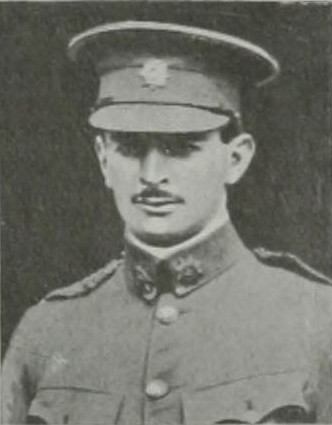
Ralph E. Hancock.
HANCOCK, WALTER, Corpl., No. 1603, 14th Battn. (Mounted Military Police) Australian Imperial Force, only s. of the late William George Hancock, of 379, High Street, Brentford, Refreshment House Keeper, by his wife, Fanny (27, Wingfield Place, Halfway Street, Sidcup, Kent), dau. of William Holness, of Hartford; b. Mile End Road, London, 26 Feb. 1887; educ. Private School (Mrs. Saunders), Brentford; went to Australia, 23 April, 1912, and settled at Sandringham; volunteered on the outbreak of war, and enlisted in the Commonwealth Force, Sept. 1914; left for Egypt, Jan. 1915, and died in No. 15 General Hospital, Alexandria, 8 Jan. 1916, of enteric fever contracted while on active service; unm.
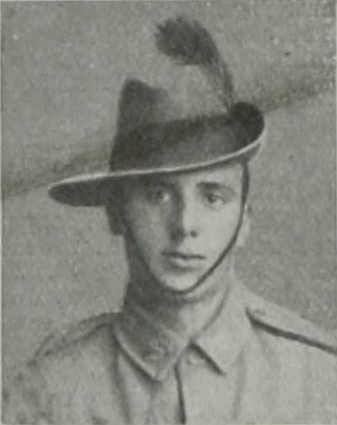
Walter Hancock.
HANDFIELD, CHARLES REGINALD, Corpl., No. 579, Natal Light Horse, 6th s. of the late Frederick Oliver Handfield, by his wife, Mary Ellen (Hampton, near Melbourne), dau. of Edward Tatham, of Leeds, England; b. at South Yarra, Melbourne, 26 Aug. 1878; educ. East Malvern Grammar School; went to South Africa 1901, joined the Natal Light Horse 1914 at outbreak of war, and died of wounds received at the Battle of Gibeon, German South-West Africa, 6 May, 1915; unm.
HANDLEY, THOMAS FREDERICK JAMES, Driver, No. 2225, Kent Fortress R.E. (T.F.), s. of the late Thomas Richard Handley, East Surrey Regt. (who died at Moori River, 29 May, 1900, in the South African War), by his wife, Eliza; b. Old Kent Road, London, S.E., 23 April, 1896; educ. High Brooms Council School, Tunbridge Wells; was in the employ of the Tunbridge Wells Co-operative Society; enlisted 25 May, 1915; left England for the East 20 Sept. 1915, and was drowned in a collision in H.M.S. Hythe, 28 Oct. 1915; unm.
HANDS, ARTHUR, A.B. (R.F.R., Ch. B. 1393), 126838, H.M.S. Cressy; lost in action in the North Sea, 22 Sept. 1914.
HANDYSIDE, GEORGE, Stoker, 1st Class (R.F.R., B. 4304), S.S. 102571, H.M.S. Good Hope; lost in action off Coronel, on the coast of Chili, 1 Nov. 1914.
HANES, GEORGE, C.P.O., 151083, H.M.S. Good Hope; lost in action off Coronel, on the coast of Chili, 1 Nov. 1914.
HANKINSON, HARRY, Stoker, 1st Class, S.S. 109526, H.M.S. Cressy; lost in action in the North Sea, 22 Sept. 1914.
HANLON, WILLIAM, A.B. (R.F.R., B. 2161), 228961, H.M.S. Good Hope; lost in action off Coronel, on the coast of Chili, 1 Nov. 1914.
HANNA, JOHN WEIR, Leading Seaman, S.S. 2626, H.M.S. Good Hope; lost in action off Coronel, on the coast of Chili, 1 Nov. 1914.
HANNAN, HENRY MONTEITH, Jun., Lieut.-Col., 1/8th Scottish Rifles (The Cameronians) (T.F.), s. of Lieut.-Col. Henry Monteith Hannan, of 2, Huntly Gardens, Glasgow, formerly 8th Scottish Rifles, by his wife, Elizabeth, dau. of Francis Hay Thomson, of Glasgow, M.D.; b. Glasgow, 9 Jan. 1874; educ. Kelvinside Academy, and was a member of the firm of Stewart & Lloyd, of Glasgow. Like his father and five brothers, he began his military career in the 1st Lanark Rifle Volunteers, about 1894. He joined A Coy. 1st L.R.V., and was for two years a member of the mounted detachment of that regt., during which time he took the Army Ambulance Certificate and passed his Sergt.’s Proficiency Examination. He afterwards joined the 4th Lanark Rifle Volunteers, now the 8th Scottish Rifles; received a commission as Lieut. 13 March, 1895, and had charge of D Coy. for several years, and on being promoted Capt. 16 Jan. 1901, was reposted to his old F Coy. On the outbreak of the South African War he reverted for the time being to the rank of lieut. in the 2nd Volunteer Service Company of the 2nd Battn. Scottish Rifles, and served through that campaign, 1901–2. He took part in the operations in Cape Colony and the Orange Free State, April, 1901; in the Transvaal, April to Sept. 1901, and on the Zululand Frontier of Natal, Sept. to Oct. 1901, and received the Queen’s medal with five clasps and the honorary rank of Lieut. in the Army, 23 June, 1902. On his return home he underwent courses of training at Maryhill and Hythe, and was appointed Brigade-Major of the Scottish Rifle Brigade, 22 May, 1905, which appointment he held for six years. On 2 Nov. 1907, he attained his Majority. On the formation of the Territorial Force his appointment was extended until 1911, when he became second in command, and two years later, 12 Feb. 1913, was gazetted Lieut.-Col. Commanding the 8th Scottish Rifles. When the European War began he volunteered for foreign service, and left with his regt. for the Dardanelles, 17 May, 1915, and was killed in action at Cape Helles, 21 June, 1915. Brigadier-General W. Scott-Moncrieff (since killed in action), wrote to his widow: “I looked on Col. Hannan as perhaps the best Commanding Officer in my Brigade, and I am sure that we shall all feel his loss very deeply. It may perhaps be a little comfort to you to know how well he has done his duty since we landed here, but especially in the last two days, whilst he has been in the front trenches. We were tried a little high, as we had to take over the trenches, knowing little of trenchwork, immediately after a pretty sharp fight. The people we relieved were too dead tired to hand things over very regularly, and after taking over in the afternoon we were told to expect a Turkish attack at sunset. I found, however, that the 8th Scottish Rifles were thoroughly ready for any amount of Turks. Col. Hannan’s arrangements and organisation were excellent, and it was perhaps a pity that the Turks did not attack that night. I have paid a visit each day to Col. Hannan, and found him always with a thorough command of the situation, always cheerful and quite ready to stop in his very uncomfortable dug-out as long as he might be required to be there. This morning, I hear, he was watching a French attack through his glasses, and then stepped off the banquette, putting his hands into his pockets, when a bullet pinged over the traverse and caught him in the neck just below the ear. It passed clean through his neck, and he fell unconscious. He died very soon, never recovered consciousness, and had no pain. Deep as your grief must be, you will always have reason for pride in that your husband, without being a professional soldier, has twice from the highest patriotic motives undertaken risks which only rightly appertain to the regular soldier, that he has done his duty to the satisfaction of all, and that he has died a straight clean soldier’s death, deeply regretted by all his brother officers of the 156th Brigade whatever their rank.” Col. Hannan took the keenest interest in every branch of soldiering, and was most assiduous and successful in recruiting for the Glasgow Territorial regts. and managed to make spare time to help the Boys’ Brigade and the Boy Scouts. He was a military member of the City of Glasgow Territorial Force Association, and president of the Glasgow Division of the Boy Scouts, and had the Territorial Decoration and the Long Service Medal. He m. at Ayr, 14 Sept. 1912, Francis Ada (30, Highburgh Road, Beaumont Gate, Glasgow), only dau. of the late David Ramsay Thomson, of Melbourne and Walhalla, Gippsland, Australia; s.p.
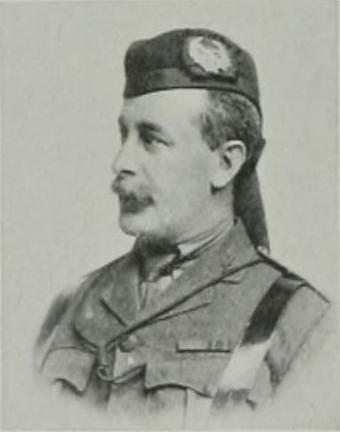
Henry M. Hannan, Jun.
HANRAHAN, THOMAS FREDERICK, Private, No. 634, 1st Battn. Australian Imperial Force, s. of the late Joseph John Hanrahan, by his wife (now wife of (—) Buckles, of 28, Great Barlow Street, High Street, Marylebone, W.), dau. of (—); b. Marylebone, London, 16 Aug. 1886; educ. St. James’ C.E. School there; went to Australia, and volunteered on the outbreak of war in Aug. 1914, and joined the Commonwealth Expeditionary Force; left for Egypt with the main body; took part in the landing at the Dardanelles, 25 April, 1915, and according to the official statement was killed in action there on 2 May. A friend and comrade, Private W. J. Pastoors, however, gives the date as 25 April. Writing 9 Nov. 1915, he said: “As I was not clear about the exact time and place where he was hit, I referred your letter to Coy. Sergt.-Major Wicks. He gave me full particulars as follows: On 25 April, that memorable day of landing in Gallipoli, our Coy. went into action, and Tom being with me in the advance, we reached the fire line together, and he occupied a position slightly on my left, forming part of a line that held a long ridge all that day. The position we held was well over the ridge and a couple of hundred yards down the slope. It was an impossible position for stretcher-bearers to work upon, and a man who could not crawl away himself would have to wait for nightfall and help, as it was the duty of every able-bodied man to push forward. We suffered heavily from the enemy’s fire all the time, and at 2 o’clock, being shot in the arm myself, I had to withdraw. At 2.30 a shell burst, caught Tom, our officer, and a number of our men, and it appeared that Tom was mortally wounded. Nothing could be done to move him, but what could be done by bandaging him up was done. Shortly after, the officer, Mr. May, was hit again, and this time disabled, but he managed to retire. Tom was then sinking fast, and that night when the rest pushed forward, Tom had passed away. After the big attack by the Turks on 19 May, an armistice was granted on the 24th. Poor Tom was buried on that day, 24 May, 1915. The Burial Service was conducted by Chaplain McKenzie.” He was unm.
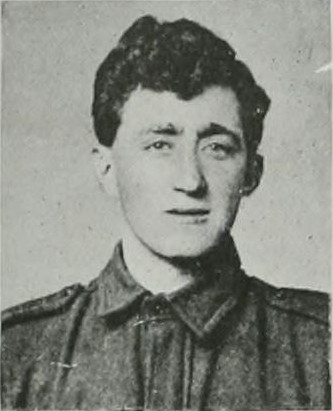
Thomas F. Hanrahan.
HANSEN, ELWIN, Trooper, No. 11/286, Wellington Mounted Rifles, 3rd s. of John Frederick Adolph Hansen, of Mangapapa, New Zealand, Farmer; b. Gisborne, 11 Nov. 1892; educ. Gisborne and Kaiti Schools; was Manager of a sheep farm at Pouawa, for Mr. T. Fraser; volunteered on the outbreak of war and joined the New Zealand Expeditionary Force; left Gisborne with the main body for Egypt in Oct.; went to the Dardanelles in May, 1915; was wounded and reported missing along with 31 others of the Wellington Mounted Rifles, after the big advance on Hill 871 on 27 Aug.; and later was returned as killed in action there, 28 Aug. 1915; unm. His brother Rudolph enlisted with him, but after 11 weeks in camp was sent back as under age, but is now on active service. Another brother, Lionel, left with the third reinforcements and was wounded at the Dardanelles.
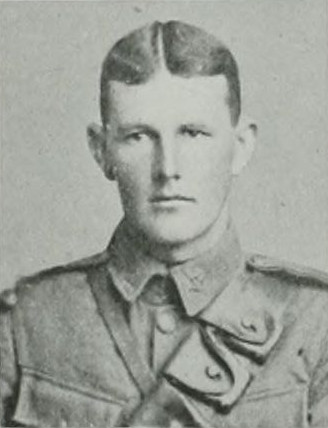
Elwin Hansen.
HANSFORD, WILLIAM GEORGE EDWARD, Leading Cook’s Mate, 347552, H.M.S. Good Hope; lost in action off Coronel, on the coast of Chili, 1 Nov. 1914.
HANSON, ERNEST, Stoker, 1st Class (R.F.R., B. 4314), S.S. 103168, H.M.S. Good Hope; lost in action off Coronel, on the coast of Chili, 1 Nov. 1914.
HARDACRE, ARTHUR, Private, No. 5827, 2nd Battn. East Lancashire Regt.; native of Burnley; killed in action at Neuve Chapelle, 12 March, 1915, aged 37.
HARDEN, ALLAN HUMPHREY, Capt., 2nd Battn. Oxford and Buckinghamshire L.I., 2nd s. of the late Lieut.-Col. John Edward Harden, of the Munster and Leinster Fusiliers, by his wife, Alice Mary (Lexden Villa, Shrub End, Colchester), dau. of the late Major-Gen. Edwin Henry Atkinson, Madras Army, and gdson. of the late John William Harden, Barrister-at-Law, Inner Temple, Judge of the Chester County Court, by his wife, Angelina, 2nd dau. of Sir John Salusbury Piozzi-Salusbury, of Bryn-bella, co. Flint; b. Ealing, 23 March, 1881; educ. Colchester, and Dulwich College; joined the 4th Battn. Middlesex Regt. 6 Sept. 1899; gazetted 2nd Lieut. to the Oxford and Buckinghamshire L.I. 5 Jan. 1901; was promoted Lieut. 2 Sept. 1903, and Capt. 22 Jan. 1910; served through the South African War, 1899–1902; took part in the operations in Cape Colony, Dec. 1900 to Jan. 1901, and in those in the Orange River Colony, Jan. 1901 to 31 May, 1902 (Queen’s medal with two clasps and King’s medal with two clasps); and with the Expeditionary Force in France and Flanders from 12 Aug. 1914 to 21 Oct. 1914, on which date he was killed instantly by a sniper between the villages of Langemarck and Roelcappel while bravely leading his company into action at the First Battle of Ypres. His body was placed in a farmhouse, which in the course of the action was destroyed by fire. His commanding officer, Col. Davies, wrote: “Your son was one of the best company commanders I have ever seen. He was very good in peace, and the war gave him more opportunities of showing how a company should be commanded. I had noticed his good work and the great trouble he took from the very first, and I have great hopes that his name may be mentioned in the next Despatches. He was commanding his company in an attack, and had shown great skill in conducting the advance. At the moment he was killed I was talking to him about the next thing to do, when a chance bullet hit him in the head. He is a great loss to us, for he was a fine soldier. He was fearless in action and always did the right thing.” And Capt. Blewitt wrote: “He was never downhearted in the depressing days of that retreat from Mons, and was so brave and capable in all the jobs we were given to do. I shall always be proud to have served under him, and had absolute confidence in his judgment and arrangements”; while Lieut. Tolson declared him to have been the best officer he had ever served under. “I shall never expect to serve under a better one, and he inspired confidence in us all.” Capt. Harden was mentioned in F.M. Sir John (now Lord) French’s Despatch of 14 Jan. 1915. He m. at Holy Trinity Church, Brompton, 3 July, 1905, Daisy, only dau. of the late Capt. G. Scott, late Scots Greys, and had a son and dau.: Robert Allan George, b. 11 Sept. 1908; and Daphne, b. 20 Aug. 1910.
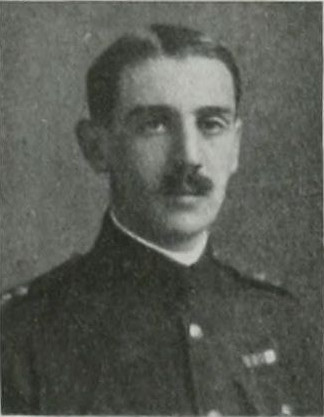
Allan Humphrey Harden.
HARDES, JOHN, Private, No. 2438, 13th Battn. (Princess Louise’s Kensington) The London Regt. (T.F.), 3rd s. of the late Alfred Hardes, 4th Hussars, by his wife, Matilda, dau. of William Loose; b. Fulham, S.W., 3 Sept. 1895; educ. Ashburnham Higher Grade School, Chelsea, S.W., and being left an orphan at 16, made his home with Mr. and Mrs. Satchell, of Marlborough Buildings, with the former of whom he went to Canada in 1912 to work on the Canadian railways. Returning to England in 1914, he was employed by Messrs. Bull, Builders, Vauxhall, but when war was declared volunteered and joined the Kensingtons, 1 Sept 1914. He went to France, 6 Jan. 1915, and died in No. 7 Clearing Station, 12 March, 1915, from wounds received at Neuve Chapelle on the 10th; unm. A comrade wrote: “It happened in the morning of the bombardment of Neuve Chapelle, where we were in the support trenches. We were all mad with excitement, and it appears that while Jack was jumping up to see the effect of our shells a sniper shot him through the head.” Buried in Merville Cemetery. When 15 he joined the Christ Church Chelsea Athletic Club, and became a member of the Young Men’s Class, and on his return to England he rejoined and played for the second eleven of the Melton Cricket Club, which won the Cup in the 4th Division of the Clapham Common League.
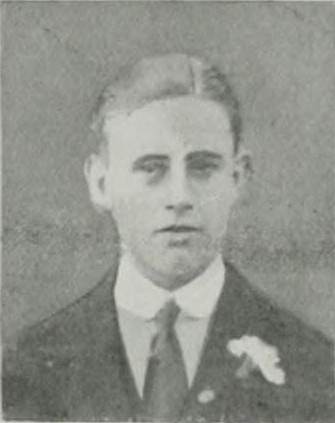
John Hardes.
HARDING, ALFRED, Private, No. 2124, 3rd Battn. Australian Imperial Force, s. of Worthing Harding, of 53, Lewisham Avenue, Lewisham Road, Smethwick, Labourer; b. Blue Street, Walsall, 14 Feb. 1903; educ. Smethwick and Handsworth Council Schools; emigrated to Australia in March, 1914; volunteered and enlisted, 8 Oct. following; and died in Malta, 21 July, 1915, of sunstroke received while on active service at the Dardanelles, 15 July, 1915; unm.
HARDING, ERNEST FRANK, Private, No. 1630, 7th Battn. The Middlesex Regt. (T.F.), yr. s. of George Edwin Harding, of 68, Clonmell Road, Tottenham, by his wife, Beatrice Emma, dau. of the late Richard Flawn, formerly of the Metropolitan Police; b. Friern Barnet, co. Middlesex, 17 April, 1895; educ. St. James’s School there and Downhills (Tottenham) Council School; was a Pianoforte Maker; joined the Middlesex Territorials in the early part of 1912, and was recalled with his battn. from his third annual training on the outbreak of war and sent to Gibraltar, Sept. 1914; returned to England, Feb. 1915, and was sent to France in March, 1915, and was killed in action at Fauquissart, France, 17 June, 1915; unm. He was buried in the Rue Tilleloy there (Graveyard Square M 24A 9.7., Map 36, 3rd Ed.). The Sergt. of his platoon wrote: “He was shot in the side whilst on water-carrying fatigue early this morning, and died less than half an hour after being struck.... He was under me all through his career as a soldier, and was one of the oldest men, as regards service, in my platoon. He will be missed by all as a hard working and efficient soldier and a true comrade.”
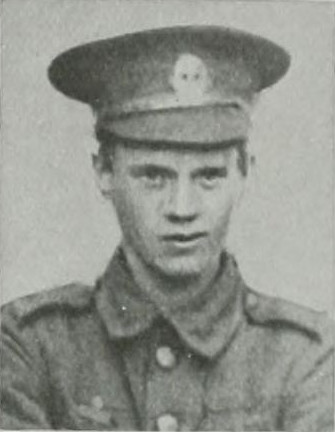
Ernest Frank Harding.
HARDING, GEORGE, Chief Stoker, 285296, H.M.S. Good Hope; lost in action off Coronel, on the coast of Chili, 1 Nov. 1914.
HARDING, HARRY, Private, No. 9244, 2nd Battn. Coldstream Guards, s. of Harry Harding, of 17, Rhoda’s Terrace, Strickland Street, Hull, by his wife, Mary Ann; b. Hull, 15 Nov. 1894: educ. Daltry Street Board School there; enlisted 2 Sept. 1911, went to France 10 Aug. 1914, and died in No. 11 General Hospital at Boulogne, 3 Nov. 1914, of wounds received in action near Ypres, 26 Oct.; unm. Buried in Boulogne Cemetery.
HARDING, LIONEL COX, 2nd Lieut., 5th Mountain Battery, R.G.A., eldest surviving s. of the late Judge Herbert Olive Denman Harding, Madras Civil Service (who was murdered on the verandah of the District Court, 22 Feb. 1916), by his wife, Sophia Louisa, dau. of Col. H. W. H. Cox; b. Westward Ho, Devon, 23 Aug. 1895; educ. Westward Ho Junior School, Blundell’s, Tiverton, and Royal Military Academy, Woolwich; gazetted 2nd Lieut. Royal Garrison Artillery from Woolwich, 17 Nov. 1914; left for the front with the 5th Mountain Battery, 8 Feb. 1915, and served with the Expeditionary Force in France, Feb.-June, 1915. At Neuve Chapelle, after the capture of the village, he spent the rest of the day under fire building bridges across trenches and channels. On the evening of the 15 June he successfully took his gun up a shell-swept road and got it into position. Next morning he bombarded and destroyed a German trench opposite for an hour and a half. His gun was then damaged and he had to retire. He got all his men away safely and was himself leaving when he was struck by shrapnel in ten places. He lay in the trench till evening, unconscious most of the time—only woke twice—once to inquire how the battle was going and once to wish to help his men to put on the gas masks. He was removed to hospital that night, and died on the evening of the 18th; unm. He was buried in a separate grave (No. 1360) in the British Military portion of the Cemetery at Bailleul.
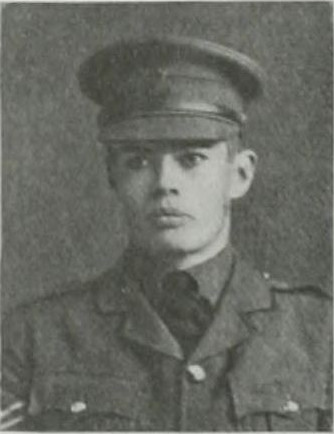
Lionel Cox Harding.
HARDING, PERCY, A.B., 221776, H.M.S. Hawke; lost when that ship was torpedoed in the North Sea, 15 Oct. 1914.
HARDING, STANLEY CUTHBERT, Sapper, Divisional Engineer, R.N.D., s. of Edwin Banks Harding, of Manchester, Chartered Accountant, by his wife, Eliza Gertrude, dau. of Jasint Colson, Professor of Music; b. Trunk Farm, co. Hants, 1 April, 1886; educ. Collegiate School, Aldershot; enlisted 22 Sept. 1914, following the outbreak of war; served with the Mediterranean Expeditionary Force, and died of enteric on H.M.S. Dongola, 24 Aug. 1915; unm. He was buried at sea between Malta and Gibraltar. The Major-Gen. wrote, speaking highly of his zeal and devotion to duty, and a testimonial from General Paris was presented to him on the field at Gallipoli on 29 July, 1915.
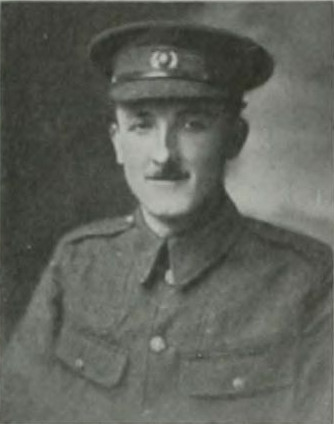
Stanley Cuthbert Harding.
HARDISTY, WILFRED, Boy, 1st Class, J. 22817, H.M.S. Pathfinder; lost when that ship was sunk by a mine, about 20 miles off the East Coast, 5 Sept. 1914.
HARDMAN, GEORGE, Stoker, Petty Officer, H.M.S. Good Hope; lost in action off Coronel, on the coast of Chili, 1 Nov. 1914.
HARDY, LEONARD BASIL, Lieut., 2nd Battn. Worcestershire Regt., only s. of Basil Edward Hardy, of 66, Ladbroke Grove, London, W., Solicitor, by his wife, Janet, dau. of Dr. Leonard Yelf, of Moreton-in-Marsh; b. Kensington, 19 March, 1895; educ. Wootton Court, near Canterbury; Radley College, where he was Prefect and head of his house, Colour-Sergt. in the O.T.C., in which he obtained Certificate A., and represented the school at both cricket and football; and the Royal Military College, Sandhurst; gazetted to the Worcestershire Regt. on 30 Sept. 1914, temporarily joining the 5th (Reserve) Battn., then stationed at Plymouth, 1 Oct. 1914. He was promoted Lieut. on 15 Nov. 1914, and went to France on 1 Jan. 1915, where he was attached to the 2nd Battn. He was killed in action at Festubert, 11 Feb. following, while in command of two platoons in the front trenches, and was buried at Gorre Chateau, near Bethune; unm. He was very popular in the Regt. amongst both officers and men, and letters from his superior officers speak of him in very high terms.
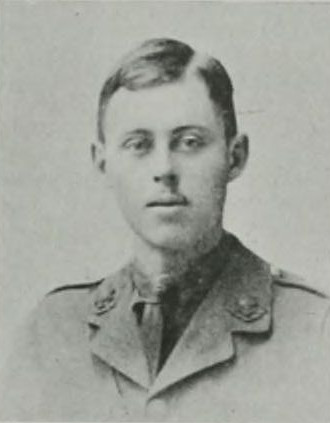
Leonard Basil Hardy.
HARDY, RICHARD JOHN, Private, No. 760, C Coy., 1st Newfoundland Regt., 2nd s. of James Hardy, Tallyman and Weighmaster, at Goodridge & Sons, by his wife, Elizabeth, dau. of Abram Bartlett, of Brigus, Newfoundland; b. St. John’s, Newfoundland, 28 Sept. 1894; educ. Bishop Field College there; was an Engineer at Reid; volunteered after the outbreak of war and joined the Newfoundland Expeditionary Force, 16 Dec. 1914; left for England, 5 Feb. 1915; went to the Dardanelles, 20 Aug., and died on the Hospital Ship Neuralia, 14 Oct. 1915, of wounds received in action there; unm. Buried at sea.
HARDY, VICTOR HARRIOTT, Lieut., 1st Battn. York and Lancaster Regt., att. 1st Battn. Lincolnshire Regt., yst. s. of the late Capt. Harmer Hardy, 18th Hussars (who served with the 97th Regt. in the Crimea), by his wife, Helena Hester (now wife of Arthur Nightingale), of West Hill, Sandown, Isle of Wight, dau. of John Jacob Cruywagen, of Newlands, and nephew of the late Major-Gen. Frederick Hardy, C.B., Col., York and Lancaster Regt., b. London, 26 June, 1887; educ. Farnborough Park and Eastman’s Royal Naval Academy; was at first intended for the Navy, but after Lord Selborne nominated him was found to be a fortnight too old, so he instead applied for a commission in the Army. He was given a commission as 2nd Lieut. in the Militia, 1 March, 1907, and was gazetted to the York and Lancaster Regt., 20 March, 1909, and was at Blackdown with the 2nd Battn. until Sept. of the same year, when he left for India to join the 1st Battn. at Quetta; was promoted Lieut. 4 Oct. 1911, and after three years in India, returned home for a while; he then went back in Sept. 1912, and having served there a year, fell a victim to some climatic illness, and was invalided home, during which time he passed the examination for promotion to Capt. On mobilisation he was ordered to the 65th Regimental District, Pontefract, and was selected for duty with the 6th (Service) Battn. of his regt. at Belton Park, near Grantham. After the Lincolnshire had had some severe losses he was sent to the Front with a draft of the 1st Battn. of that regt., about 30 Sept.; served in France and Flanders, and was, it is believed, killed in an attack on a strong German position across a tract of open country, 27 Oct. 1914. He was buried at Neuve Chapelle; unm. Lieut. Hardy was keen on all forms of sport, especially riding, and was very fond of animals; he won the Regimental Cup in the Officers’ races while in the Special Reserve, and when a 2nd Lieut. carried the King’s Colours on the occasion of the visit of King George and Queen Mary to India for the Coronation Durbar. While a boy, Lieut. Hardy won the First Prize in Sandown in a demonstration to celebrate King Edward’s coronation in 1902.
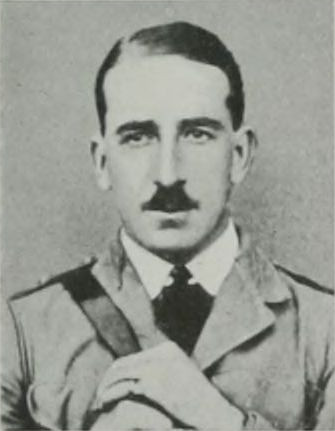
Victor Harriott Hardy.
HARDY, WILLIAM FRANK, Private, No. 179, 1st Newfoundland Regt., eldest s. of George Francis Hardy, of 60, Monroe Street, St. John’s, Newfoundland, by his wife, Elizabeth, dau. of William Reid; b. St. John’s, 23 Sept. 1893; educ. Springdale Street School, St. John’s, was a Truckman; enlisted after the outbreak of war in Aug. 1914; left for England, 4 Oct. 1914; went to the Dardanelles, and was killed in action there, 23 Sept. 1915; unm.
HARE, ALBERT HENRY, Private, R.M.L.I. (R.F.R., B. 1863), Ch./11963, H.M.S. Hogue; lost in action in the North Sea, 22 Sept. 1914.
HAREWOOD, GEORGE, Stoker (Native), H.M.S. Good Hope; lost in action off Coronel, on the coast of Chili, 1 Nov. 1914.
HARGRAVE, GEOFFREY LEWIS, Private, No. 41, 13th Battn., 4th Infantry Brigade, Australian Imperial Force, only s. of the late Lawrence Hargrave, of Sydney, N.S.W., Engineer, by his wife, Margaret (Wunulla Road, Woollahra Point, Sydney), dau. of David Johnston, of Sydney; b. Sydney, 21 March, 1892; educ. Sydney Grammar School; was an Engineer; enlisted soon after the outbreak of war, Sept. 1914; left for Egypt in Dec.; took part in the landing at the Dardanelles, 25 April; and was killed in action there about 24 May, 1915, being buried in Anzac Cove; unm.
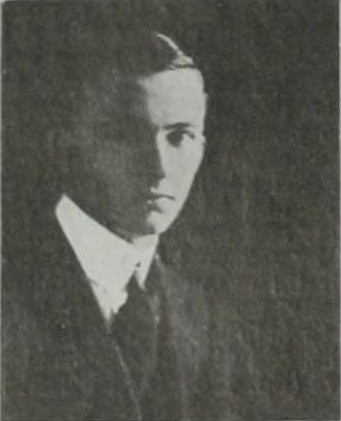
Geoffrey Lewis Hargrave.
HARGREAVES, HARRY, Private, R.M.L.I. (R.F.R.), Ch./1762. H.M.S. Hawke; lost when that ship was torpedoed in the North Sea, 15 Oct. 1914.
HARGREAVES, ROBERT, Private, No. 12/307, 6th Hauraki Coy., Auckland Infantry Battn., New Zealand Expeditionary Force, s. of the late Peter Hargreaves, of Napier; b. Waipawa, New Zealand, 15 Dec. 1879; educ. Napier, Hawkes Bay; volunteered on the outbreak of war and joined the New Zealand Expeditionary Force in Sept. 1914; left for Egypt, 16 Oct., and was killed in action during the landing at the Dardanelles, 25 April, 1915; unm.
HARKER, WILLIAM, Stoker, 1st Class (R.F.R., B. 4915), S.S. 104332, H.M.S. Good Hope; lost in action off Coronel, on the coast of Chili, 1 Nov. 1914.
HARLAND, REGINALD WICKHAM, Capt., 2nd Battn. Hampshire Regt., 7th s. of the Rev. Albert Augustus Harland, Vicar of Harefield, Uxbridge, by his wife, Louisa Ellen, dau. of Henry Wilson; b. Harefield Vicarage, co. Middlesex; educ. Temple Grove, East Sheen, Wellington College, and Royal Military College, Sandhurst; gazetted 2nd Lieut. Hampshire Regt., 22 April, 1903, and promoted Lieut. 22 Dec. 1905, and Capt. 9 Aug. 1911; went to France, 20 Aug. 1914, and was killed in action at Ploegsteert, 30 Oct. following; unm. Buried in the churchyard there. A brother officer wrote: “It was a day of very hard fighting, in spite of very heavy fire he continued to watch with his field glasses the movements of the enemy in order to direct the fire of his men, when a bullet struck him in the head.” Capt. Harland won Lord Roberts’ Prize at Sandhurst as winner of the competition at drill.
HARLAND, WILLIAM JAMES, Seaman, R.N.R., A. 4422, H.M.S. Hogue; lost in action in the North Sea, 22 Sept. 1914.
HARLAND, WILLIAM THOMAS, A.B. (R.F.R., Ch. B. 6014), 226744, H.M.S. Aboukir; lost in action in the North Sea, 22 Sept. 1914.
HARLEY, GEORGE ALEXANDER, Stoker, 1st Class, K. 22631, H.M.S. Pathfinder; lost when that ship was sunk by a mine, about 20 miles off the East Coast, 5 Sept. 1914.
HARLING, WILLIAM JAMES, Leading Signalman (R.F.R., B. 1057), 143377, H.M.S. Hawke; lost when that ship was torpedoed in the North Sea, 15 Oct. 1914.
HARLOW, THOMAS HENRY, Acting Leading Stoker, 311600, H.M.S. Pathfinder; lost when that ship was sunk by a mine, about 20 miles off the East Coast, 5 Sept. 1914.
HARMAN, CHARLES EDWARD, Brevet Colonel and Lieut.-Col. Commanding 9th (Service) Battn., Royal Dublin Fusiliers, s. of the late James Harman, of Great Marlow, co. Bucks, by his wife, Anna Louisa, dau. of Capt. Smith, of Bath; b. London, 10 June, 1855; educ. Victoria College, Jersey; gazetted Sub-Lieut. 82nd Foot, 21 Sept. 1874; transferred to 89th Foot (2nd Royal Irish Rifles), 28 Aug. 1875: promoted Lieut. 21 Sept. 1875; Capt. Connaught Rangers, 30 March, 1881; Major, 21 Jan. 1890; Lieut.-Col. 8 Feb. 1898, and Brevet Col. 8 Feb. 1902; was Adjutant 89th Foot, 30 Nov. 1878 to 29 March, 1881, and of the 3rd Battn., 16 Sept. 1882, to 15 Sept. 1887: was sometime second in command of the 1st Connaught Rangers, and from 1898 to 1902 was in command of the 2nd Battn. in India, where he was for a short time A.A.G. in the Bombay Command, and in Sept. 1902, was appointed Acting Brigadier-General, Southern Command, India; was on Extra Regimental Employment, 27 Nov. 1902 to 13 Aug. 1904, when he retired. On the outbreak of the European War he at once offered his services, and on 7 Sept. 1915, was given the command of the 9th (Service) Battn. of the Royal Dublin Fusiliers, and died at Buttevant, Ireland, 5 Jan. 1915, while on service with his regt. He m. at St. James, Dublin, 2 Aug. 1883, Edith Jane Gertrude, only dau. of the late George Edward Newland, Commandant and Inspector-General, R.T.C., and had two children: Henry Newland Harman, 2nd Lieut., R.F.A., now (1916) on active service in France, b. 9 Jan. 1886, m. 15 Jan. 1914, Sidney Georgina, eldest dau. of Lieut.-Col. James Lowry Cole Acton, and has two children: Ruth Edith, b. South Africa, 14 Nov. 1914, and Cicely Elizabeth, b. 6 March, 1916; and Lilian Ethel, m. 22 Sept. 1904, Col. E. P. Smith, R.F.A., who was killed in action at the Dardanelles.
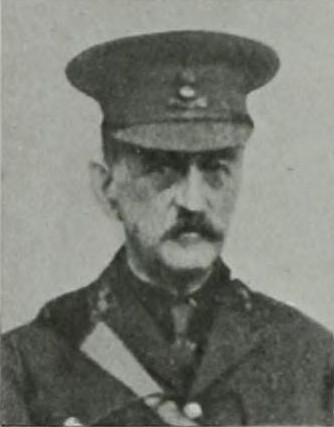
Charles Edward Harman.
HARMAN, GEORGE MALCOLM NIXON, D.S.O., Major, 2nd Battn. The Rifle Brigade, eldest s. of the late Lieut.-General Sir George Harman, K.C.B., by his wife, Helen Margaret, dau. of John Tonge, of Starboro’ Castle, Edenbridge; b. London, 14 Nov. 1872; educ. Marlborough and Sandhurst; gazetted 2nd Lieut., Rifle Brigade, 7 Nov. 1891; promoted Lieut. 11 Oct. 1893, Captain, 1 Jan. 1898, and Major, 26 June, 1907; was employed in Uganda with the King’s African Rifles, 19 Jan. 1900, to 9 Nov. 1904, being engaged on the Anglo-German Boundary Commission, west of Victoria Nyanza, 8 July, 1902, to 9 Nov. 1904; took part in the Expedition under Col. Delm-Radcliffe into the Lango country, and was mentioned in Despatches [London Gazette, 12 Sept. 1902], and awarded the medal with clasp, and the D.S.O., for exceptional services both military and political. On returning home in 1905 he was posted to the 4th Battn. Rifle Brigade at Chatham, and later joined the 2nd Battn. in India. On the outbreak of war he came home with his Battn., went to France, 6 Nov. 1914, and was killed in action at Laventie, 27 Nov. following, by a shell; buried in the cemetery there. He m. at St. Mary Abbotts, Kensington, 21 Oct. 1913, May, eldest dau. of Evan Davies Jones, of 6, Addison Road, W., and Pentower, Fishguard, co. Pembroke; s.p.
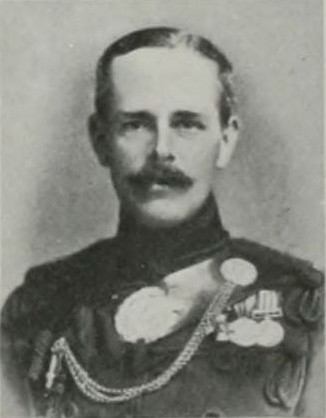
George M. N. Harman.
HARMAN, HERBERT REGINALD, Private, No. 669, 9th Battn. Australian Imperial Force, only child of the late Herbert James Harman, of Windsor, by his wife, (—), dau. of (—) Butler; b. Windsor, co. Berks, 17 Dec. 1882; educ. St. Stephen’s, Clewer, Windsor; was a Private in the old Volunteer Battn. (The Buffs), East Kent Regt., being for three or four years battn. shot, previous to his departure for Australia. There he was a motor mechanic at Lismore, N.S.W., but on the outbreak of war he enlisted and left with the first contingent of the Commonwealth Expeditionary Force for the Dardanelles. He died there on the S.S. Ionian, 6 May, 1915, from wounds received in action, and was buried at sea. A comrade stated: “I saw him at Gaba Tepe, at 2 o’clock, in the thick of the fight, doing his duty manfully.” Private Harman m. at Holy Trinity Church, April, 1908, Susanna Elizabeth (16, Albany Place, Cowgate Hill, Dover), sister of Private H. C. Hart, who died of wounds, 17 Jan. 1916 (see his notice), and dau. of John William Hart, Master Mariner, and had one son: John Herbert Granville, buried 4 April, 1909. His brother-in-law, Private H. C. Hart, of The Buffs, was killed in the Persian Gulf (see notice).
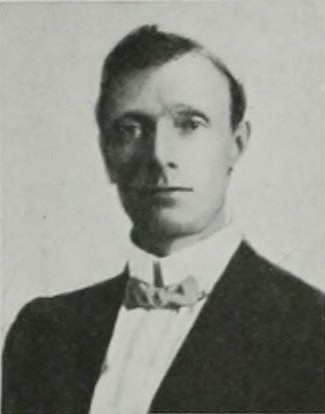
Herbert Reginald Harman.
HARMAN, JOHN BOWER, 2nd Lieut., R.F.A., only s. of the late Lieut.-Col. James Frederick Harman, R.A., by his wife, Ellen S. (22, Egerton Terrace, S.W.), dau. of late James Norris of Castle Hill, Bletchingley; b. Blackheath, 24 April, 1893; educ. St. Christopher’s, Eastbourne; Charterhouse, and the Royal Military Academy, Woolwich, where he was placed 2nd for riding and obtained the Benson Memorial Prize and Cup; gazetted to the R.F.A., 19 July, 1912; went to France with the Expeditionary Force, 15 Aug. 1914, and was killed in action at the Battle of Le Cateau, 26 Aug. following; unm. He was mentioned in F.M. Sir John (now Lord) French’s Despatch of 14 Jan. 1915, for “gallant and distinguished service in the Field.” He was devoted to hunting. While stationed at Bulford, the winter before the war, he obtained his Flying Certificate. He wished to join the Flying Corps, but was not allowed to leave his Battery (29th) as he had so little service.
STAFFORD-KING-HARMAN, EDWARD CHARLES, Capt., Irish Guards, eldest s. of Sir Thomas Stafford, of Rockingham, co. Roscommon, 1st Bart., C.B., J.P., D.L., by his wife, Francis Agnes, only surv. child of the late Col. the Right Hon. Edward Robert King-Harman, of Rockingham, P.C., M.P.; b. Belfast, 13 April, 1891; educ. Eton and Sandhurst; gazetted to the Irish Guards, 9 Sept. 1911, and promoted Lieut. 11 June, 1912, and Capt. 15 Nov. 1914; went to France, 20 Sept. 1914, and was killed in action at Klein Zillebeke, 6 Nov. following. “He came to Mr. Vaughan’s house in 1904. Even as a Lower Boy he had a quiet dignity, which made him as much respected as he was liked, and this was always a characteristic which gave him a certain distinction wherever he went. Though he was much hampered by ill-health, he gained the House Colours, and many will remember his dashing game. In 1910, he was in the Shooting VIII, and a Colour-Sergt., and brought the Section Cup to his House, in the same year winning the Scott Cup and Bucks County Cup. No boy had ever a higher standard of conduct; devoted to all manly sport (he kept a pack of harriers in Ireland after he left Eton), and full of Irish humour, he had at the same time the refinement of mind of a saint, though few knew the thoughts which underlay his life. Any boy who was weak found in him a protector, and his presence was a silent rebuke to all meanness” (Eton College Chronicle). He m. at the Guards Chapel, Wellington Barracks, 4 July, 1914, Olive, only child of Capt. Henry Pakenham-Mahon, of Strokestown Park, co. Roscommon, Ireland, and had a daughter, Lettice Mary, b. 10 April, 1915.
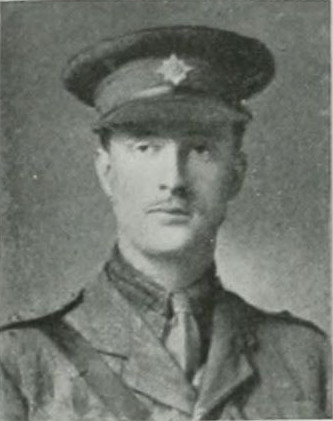
Edward C. S.-K.-Harman.
HARMER, HORACE WILLIAM, E.A., 3rd Class, M. 3062, H.M.S. Good Hope; lost in action off Coronel, on the coast of Chili, 1 Nov. 1914.
HARNEY, JOHN, E.R.A. (R.N.R.), 1038 E.A., H.M.S. Aboukir; lost in action in the North Sea, 22 Sept. 1914.
HARPER, GEORGE EDWARD, Private, R.M.L.I., P.O. 14886, H.M.S. Good Hope; lost in action off Coronel, on the coast of Chili, 1 Nov. 1914.
HARPER, WILLIAM JAMES, Stoker, 1st Class (R.F.R., B. 8353), S.S. 104430, H.M.S. Hawke; lost when that ship was torpedoed in the North Sea, 15 Oct. 1914; m.
HARPER, WILLIAM PERCIVAL JOSEPH, Stoker, 1st Class, 235017, H.M.S. Pathfinder; lost when that ship was sunk by a mine, about 20 miles off the East Coast, 5 Sept. 1915.
HARRELL, HERBERT WILLIAM, Stoker, P.O., 287426, H.M.S. Cressy; lost in action in the North Sea, 22 Sept. 1914.
HARRIES, ERIC GUY, Capt., Machine Gun Section, 1/7th Royal Welsh Fusiliers (T.F.), yst. s. of Thomas Davies Harries, of Grosvenor House, Aberystwyth, F.R.C.S., M.R.C.P. (London), J.P., by his wife, Annette, dau. of Lionel Benson, of Royal Avenue, Chelsea, and grandson of David Harries, of Llaneast, near Fishguard; b. Grosvenor House, Aberystwyth, co. Cardigan, 30 Oct. 1892; educ. Highgate School, London, and on leaving there served his apprenticeship as an engineer at the Cambrian Railway Works, Oswestry. He received a commission in the 7th (Merioneth and Montgomery Territorial) Battn., Welsh Fusiliers, 1 April, 1913, was promoted Lieut. 2 Sept. 1914, and Capt. April, 1915; went to the Dardanelles, July, 1915, was mortally wounded on Chocolate Hill, Suvla Bay, 10 Aug. 1915, and died on board the Hospital Ship Euripides, on the 17th; unm. Buried at Mudros East, Lemnos (Grave 49). His commanding officer, Col. Jelf-Reveley, wrote: “I am proud to say that your son’s behaviour on Aug. 10 under fire has been most favourably reported on by several officers. He was perfectly cool, and led his men like a veteran.”
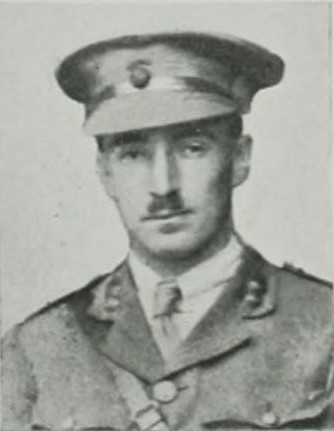
Eric Guy Harries.
HARRINGTON, JOHN JOSEPH, 1st Class Air Mechanic, No. 486, Royal Flying Corps, s. of John Harrington, of Newport, co. Monmouth, Master Plasterer; b. there 24 Feb. 1888; educ. St. Mary’s Roman Catholic School in that town; joined the Royal Monmouth Engineers in 1905 as a Sapper, obtained his discharge in 1908; for some time drove the mail between Tredegar and Newport, and was afterwards employed at the British and Colonial Aeroplane Company’s works at Filton, Bristol. He joined the Royal Flying Corps, 20 Nov. 1912, and was killed in action in the fighting around Ypres, 13 Nov. 1914; unm. He was buried at a farm 1,000 yards north of Zillebeke, south-east of Ypres.
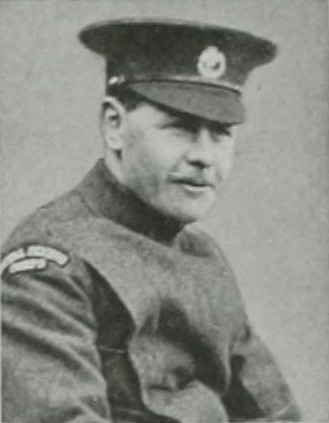
John Joseph Harrington.
HARRIS, ALFRED HENRY, Petty Officer, Tel., 239886, H.M.S. Good Hope; lost in action off Coronel, on the coast of Chili, 1 Nov. 1914.
HARRIS, ARTHUR, Private, No. 11622, 3rd Battn. Coldstream Guards, s. of James Harris, of Chaffecombe, Chard, Somerset, Farm Bailiff, by his wife, Elizabeth, dau. of John Keener; b. Ottery St. Mary, co. Devon, 26 Dec. 1889; educ. there; was a Mason’s Labourer; enlisted 2 Sept. 1914; went to France 21 Dec. 1914, and was killed in action at Vermelles, Belgium, 4 Oct. 1915; unm.
HARRIS, BERTRAM PAGE, L.-Corpl., No. 263, Machine-gun Section, 13th Battn., 4th Infantry Brigade, Australian Imperial Force, only s. of Page Harris, of St. Leonards-on-Sea, Sussex, by his wife, Sarah Lucy; b. St. Leonard-on-Sea, 12 Nov. 1887; educ. National School there; went to Australia in 1912, and was up country when war was declared, and at once went to Sydney to join the Commonwealth E.F. then forming; left for Egypt in Dec. 1914; took part in the landing at the Dardanelles, 25 April, 1915, and was killed in action at Gaba Tepe four days later, 29 April; unm. His officer wrote that he was universally liked and respected by his section; as a soldier, he considered he had no better man, adding “he was the senior number in his gun crew and was the first man into their gun position after the long and distressing struggle from the shore forward, and he was our first casualty.”
HARRIS, CHARLES EDWIN, Acting Chief Yeoman Signalman, 186240 Devon, H.M.S. Good Hope; lost in action off Coronel, on the coast of Chili, 1 Nov. 1914.
HARRIS, ERNEST GEORGE, E.R.A., 2nd Class, 271658, H.M.S. Good Hope; lost in action off Coronel, on the coast of Chili, 1 Nov. 1914.
HARRIS, FREDERICK ALBERT, Petty Officer (T.), 173534, H.M.S. Good Hope; lost in action off Coronel, on the coast of Chili, 1 Nov. 1914.
HARRIS, GEORGE, A.B. (R.F.R., B. 3716), 185125, H.M.S. Good Hope; lost in action off Coronel, on the coast of Chili, 1 Nov. 1914.
HARRIS, HENRY JOHN, Petty Officer, 155005, H.M.S. Cressy; lost in action in the North Sea, 22 Sept. 1914.
HARRIS, JOHN AUGUSTE EMILE, L.-Corpl., No. 2251, 2nd Battn. Australian Imperial Force, and 2nd Lieut. Sydney Senior Cadets, eldest s. of Alfred Thomas Harris, of 165, Denison Street, Waverley, Sydney, New South Wales, Pharmacist, by his wife, Camille Marie, dau. of Henri Prudhomme, Lieut. French Navy; b. Sydney, 6 Oct. 1899; educ. at the Cleveland Street High School there. On 31 Jan. 1913, in his 14th year, he was registered among the senior cadets, Sydney, in compliance with the Commonwealth Defence Act; was promoted Corpl. 1 May, 1914; passed and promoted to Colour-Sergt. 17 June, 1914, and passed for 2nd Lieut. 28 March, 1915, his appointment being confirmed a few days before he enlisted, so that he was the youngest commissioned officer in the Australian Commonwealth Forces. He enlisted on 2 June, 1915, and as he had passed in Musketry as “Marksman” in the cadets, his former training held good, and he only remained a few days in the Liverpool Training Camp, and left Sydney on 16 June, as L.-Corpl. of the sixth reinforcements for the 2nd Battn. of the 1st Infantry Brigade. He was about a fortnight in Cairo and was hurried off to Gallipoli, arriving at Anzac and joining his battn. on 5 Aug. Next day, 6 Aug., he took part in the big charge on, and capture of, the Turkish trenches at Lonesome Pine, and was officially reported killed in action on 8 Aug. The officer in charge of the sixth reinforcements, Lieut. La Touche, wrote to his mother from the transport in the Mediterranean: “Your son, L.-Corpl. Harris, is with me, and I shall try to keep him with me throughout the campaign. He is a gallant little fellow, with the greatest of military virtues—faithfulness—and as such is of very great assistance to his officers. If he had only a few years more to his credit, he would make a fine officer. Meanwhile he is doing his duty without a thought of self, and will serve his country as an Australian gentleman should. I will try to keep him with me, and to see after him so far as I can. Of course, my power is very limited, but we are both in God’s hands, and He doeth all things well.” [Lieut. La Touche was killed on 6 Aug.] Lieut.-Col. Cass, commanding the 2nd Battn., wrote: “But you may rest assured that he took part in one of the outstanding features of the Gallipoli fighting, and did his duty well.” Like many other Australian boys, he was full of enthusiasm in military matters, but his career was an all too brief one. He was only 15 years and 10 months old when he died. “Purpureus cum flos succisus aratro.”
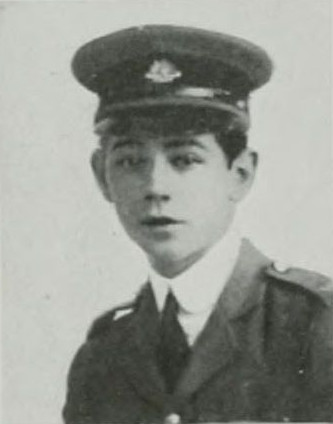
John Auguste E. Harris.
HARRIS, JOHN FREDERICK, Private, No. 14902, 1st Battn. The Welsh Regiment, s. of the late John Henry Harris, Shoemaker, by his wife, Agnes Florence, dau. of Gabriel Evans; b. Neath, 11 March, 1894; educ. Council Schools there; was a steelworker; enlisted at the outbreak of war, 29 Aug 1914; went to France, Jan. 1915, and died at Zillebeke, 8 May, 1915, of wounds received in action there on the 3rd; unm. Buried Hazebrouck Cemetery. He was a member of St. Thomas’ Choir, Neath.
HARRIS, JOSEPH WALTER, Lieut. 3rd (Reserve) Battn. Lincolnshire Regt. (attd. 1st Battn.), s. of George Harris, of Swallowbeck, Lincoln, Secretary of the Lincoln Co-operative Society, by his wife, Sarah Ann, dau. of John Thacker; b. Lincoln, 19 June, 1889; educ. Lincoln Grammar School, at which he won a scholarship from an elementary school, and Nottingham University where he was a member of the O.T.C.; graduated B.Sc. with First-class Honours, London University, 13 Dec. 1911; devoted himself to chemical research and became F.I.C. 15 May, 1914; gazetted 2nd Lieut. 3rd Lincolns, from the Nottingham University, O.T.C., 15 Aug. 1914; promoted Lieut. 30 Jan. 1915; went to France 2 Dec. 1914, was attached to the 1st Battn. of his Regt.; and was killed in action at Hooge, 3 June, 1915. He m. at Grimsby, 3 Oct. 1914, Mabel (Swallowbech, Lincoln), dau. of Joseph Laughton, of North Somercotes; s.p.
HARRIS, LANCELOT GRAHAM, Private, No. 1112, 1st Battn. Honourable Artillery Company, only s. of Robert Jefferson Harris, of 21, Alexandra Road, Finsbury Park, London, formerly of Mysore, India, Coffee Planter, by his wife, Maud Ellen, dau. of Orlando Edmonds, of Northfields House, Stamford, Lincolnshire, J.P.; b. Lymington, co. Hants, 17 May, 1894; educ. Denstone College (1908–13, 6th Form Prefect; Sergt. in O.T.C.; shot at Bisley for school); Berlin (1913); and Sidney Sussex College, Cambridge (1913–14, to which he obtained an open Exhibition); joined the Honourable Artillery Company two days after the declaration of war, 7 Aug. 1914, left for St. Nazaire, 19 Sept.; was in the trenches from October until 27 April, 1915, when he was mortally wounded at Dickebusch by shell fire, having both legs broken, and died there the following day, and was buried at La Clyte Cemetery; unm. His Platoon Commander wrote: “His bravery was absolutely magnificent, he was perfectly splendid all the way through—thoroughly keen, and willing to do anything. My platoon has lost a good soldier and a favourite companion”; and a comrade, writing to his own father, said: “I am very sorry to say they killed a young fellow called Harris, one of the old stagers of St. Nazaire. He Was frail looking and slim, and quite a boy, with an almost girlish face, but had the spirit of a bulldog and the soul of a saint. The grit with which he stuck the hardships of the winter, and his continual cheeriness and helping of others, when he was almost done up himself, used to make me proud to be in the regt. with him. When a spirit of such temper as that of young Harris is lost from among us, I tell you it leaves a very big gap indeed.”