The Roll of Honour. (continued 29)
Reading edition
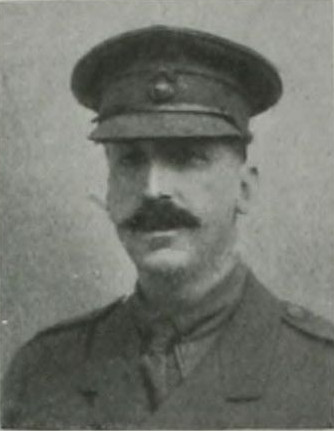
Ernest Arthur Leather.
LEATHWOOD, JOHN PEARSON, Petty Officer (N.S.), 219283, H.M.S. Aboukir; lost in action in the North Sea, 22 Sept. 1914.
LE BRUN, CHRIS, Stoker, 2nd Class, K. 21950, H.M.S. Good Hope; lost in action off Coronel, on the coast of Chili, 1 Nov. 1914.
LECKIE, MALCOLM, D.S.O., Capt., Royal Army Medical Corps, attd. 1st Northumberland Fusiliers, yr. surviving s. of James Blyth Leckie, of Monkstown, Crowborough, co. Sussex, and Peebles, formerly of Blackheath, co. Kent, by his wife, Selina, dau. of Robert Bousfield; b. Eltham, co. Kent, 18 April, 1880; educ. Blackheath Preparatory School, privately abroad, and Guy’s Hospital; gazetted Lieut., R.A.M.C., 4 Feb. 1908, and promoted Capt. 4 Aug. 1911; was attd. to the Egyptian Army from 1 Feb. 1910 to Feb. 1914, and served in Upper Egypt, the Soudan, and in an expedition up the Blue Nile; went to France with the Expeditionary Force in Aug. 1914, being attd. to the 1st Northumberland Fusiliers (9th Brigade, 3rd Division), and died at Frameries, near Mons, on the 28th of that month, of wounds received there on the 24th. Buried in the cemetery at Frameries; unm. He was awarded the D.S.O. [London Gazette, 8 Dec. 1914] “for gallant conduct and exceptional devotion to duty in attending to the wounded at Frameries, where he was himself wounded.” Capt. Leckie was one of the best hockey players of his day. He was a member of the Blackheath Hockey Club, and Captain of Guy’s Hospital Club when there; played for the Kent Hockey Club, for the Army, and for England against France. He was a descendant of the Leckies of the Barony of Leckie in Stirlingshire, 1352. One of his ancestors, Sir Walter Leckie, of King Charles VII of France’s Bodyguard, commanded the Scottish troops at the Battle of Lagny on 10 Aug. 1432—the last exploit of the Maid of Orleans—when these troops were instrumental in the utter defeat of the English under the Duke of Bedford. Sir John French, in his first Despatch, said that for the advance from the Marne his left wing rested on Lagny.
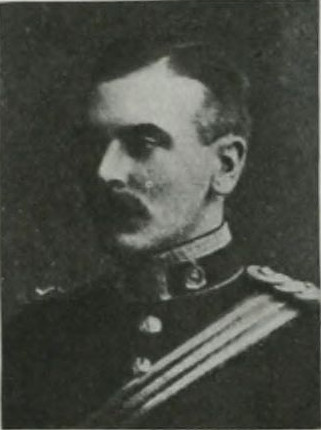
Malcolm Leckie.
LEDGER, FREDERICK, A.B. (R.F.R., B. 4248), 220386, H.M.S. Good Hope; lost in action off Coronel, on the coast of Chili, 1 Nov. 1914.
LEDGER, RAYMOND KIRWOOD, Lieut., 6th (Reserve) Battn. Rifle Brigade, attd. 1st Royal Welsh Fusiliers, 4th s. of the Rev. Charles George Ledger, M.A., Vicar of St. Paul’s, Tupsley, co. Hereford, by his wife, Isabel Mary, dau. of the Rev. George Henry Kirwood; b. Hereford, 26 Oct. 1891; educ. Marlborough (Scholar), and Wadham College, Oxford (graduated B.A. with honours in Modern History, and was Captain of his college tennis, hockey and Association football teams); gazetted 2nd Lieut. 6th Rifle Brigade, 15 Aug. 1914, and promoted Lieut., 19 Dec. 1914; went to France 13 Nov. 1914; was attached to 1st Royal Welsh Fusiliers, and was killed in action near Neuve Chapelle, 13 April, 1915, being shot by a sniper while in the trenches. He was buried the same night near Picantin, side by side with Lieut. Gladstone; unm. His Commanding Officer wrote: “He had done more reconnaissance work than any other officer in the battn. He volunteered for everything possible, and carried out successfully whatever he set himself to do. What he did at the Battle of Neuve Chapelle was characteristic; he volunteered to go and find where the 21st Brigade was when it had got out of touch with his own Brigade (the 22nd). The way he took was sprinkled with the dead bodies of those who had tried, before him, to get across; he managed to do it and returned with valuable information. He was away seven hours.” He was mentioned in Sir John (now Lord) French’s Despatch of 31 May, 1915.
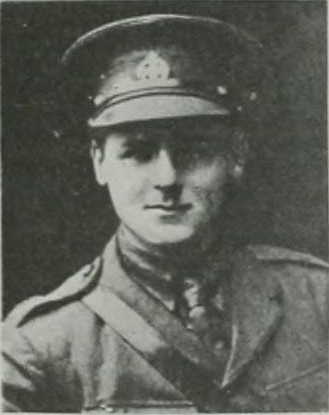
Raymond K. Ledger.
LEDIARD, FRANCIS, Private, No. 7948, B Coy., 2nd Battn. The Royal Scots, s. of the late Henry Lediard, of Birmingham, Cab Proprietor, formerly a Police Constable in the Birmingham Force, by his wife, Sarah; b. Birmingham, 25 Nov. 1867; educ. St. Thomas Church Schools there; was a Cab Driver in Birmingham, but enlisted in the Royal Scots in 1902; served eight years with the Colours and four years with the Reserve, during which time he held a good position in a motor garage in Birmingham; was called up on mobilisation, 5 Aug. 1914; rejoined his old regt.; went to France about 18 Aug., and was killed in action on the 26th, during the retreat from Mons; unm.
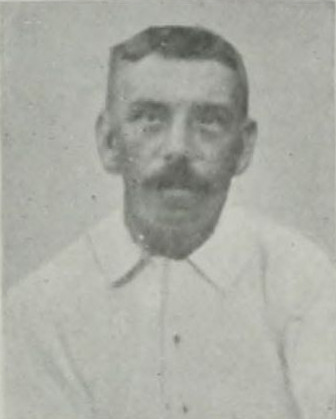
Francis Lediard.
LEE, ALBERT ALFRED, Private, No. 2132, A Coy., 1/8th Battn. The Middlesex Regt. (T.F.), eldest s. of Alfred Lee, of 16, Waltham Road, Southall, Basketmaker, by his wife, Ann, dau. of Ruben Kempster; b. Southall, 29 Dec. 1896; educ. Featherstone Road Boys’ School there; was employed in the Boxmaking Department of Messrs. Otto Monsted, Ltd., Margarine Works, Southall; joined the 1/8th Middlesex Territorials in April, 1913; mobilised from the training camp on the outbreak of war in Aug. 1914; volunteered for foreign service; went to Gibraltar with his regt. in Sept.; returned to England in Feb. 1915; went to France, 8 March, and was killed in action at Zonnebeke, 1 May, 1915, during the Second Battle of Ypres; unm. Buried there. Capt. A. H. Woodbridge, Officer Commanding A Coy., wrote: “It is with infinite regret that I write to tell you of your son’s death, which occurred in the fighting near Ypres on 1 May. In your great grief it may be some comfort to you to know that he suffered no pain and met his end nobly doing his duty.”
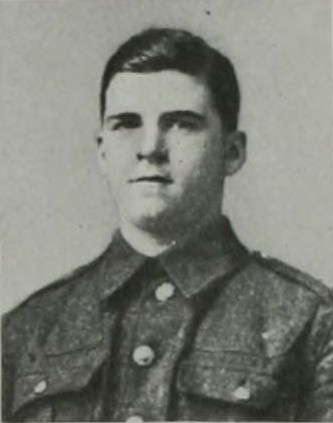
Albert Alfred Lee.
LEE, CHARLES, Private, No. 5086, 2nd Battn. East Lancashire Regt., eldest s. of Samuel Herbert Lee, of Alnwick Street, Burnley, by his wife, Margaret Ann, dau. of William Whittaker; b. Burnley, 20 Feb. 1893; educ. St. Peter’s School there; joined 2nd East Lancashires, 16 May, 1912, previously to which he was employed at Towneley Collieries; went to France, 1 Dec. 1914, and was killed in action at Neuve Chapelle, 12 March, 1915; unm.
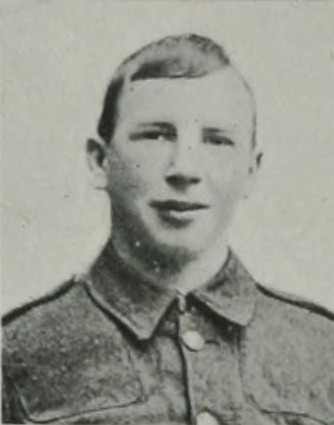
Charles Lee.
LEE, CHARLES, Stoker, Petty Officer (R.F.R., B. 3954), 155422, H.M.S. Hawke; lost when that ship was torpedoed in the North Sea, 15 Oct. 1914; m.
LEE, GEORGE FRANCIS, Stoker (R.F.R., Ch. B. 5473), 301936, H.M.S. Aboukir; lost in action in the North Sea, 22 Sept. 1914.
LEE, LENNOX CLELAND LEE, 2nd Lieut., 1st Battn. Irish Guards (Special Reserve), elder s. of Lennox Bertram Lee, of How Caple Court, near Ross, co. Hereford, by his wife, Edith, dau. of the late Malcolm MacLellan, of Clairmont Gardens, Glasgow; b. Knutsford, co. Chester, 27 March, 1893; educ. St. David’s, Reigate; Eton, and the Royal Military Academy, Woolwich; and when war broke out was awaiting examination for the Diplomatic Service; was gazetted 2nd Lieut. Irish Guards (Special Reserve), 15 Aug. 1914; went to France, Nov. 1914, and was killed in action at Cuinchy, 1 Feb. 1915. Buried there; unm.
LEE, LEWIS (DICK), L.-Corpl., No. 9915, 6th Battn. Lincolnshire Regt., 2nd s. of George Lee, of 26, Trafford Street, Scunthorpe, Steel Worker, by his wife, Florence, dau. of Richard Walker; b. Crowle, co. Lincoln, 23 Sept. 1890; educ. Scunthorpe; was employed in steel works; enlisted after the outbreak of war, Aug. 1914; trained at Frensham Camp, Farnham; went to the Dardanelles in June, and was killed in action at Suvla Bay, 29 Aug. 1915; unm. Two of his brothers are (1916) on active service.
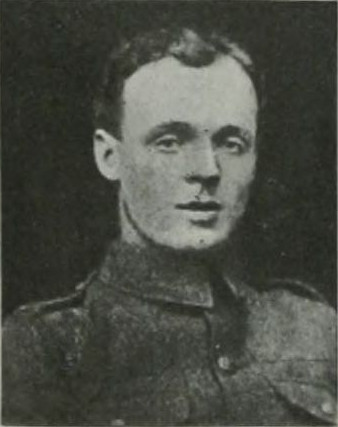
Lewis Lee.
LEE, REGINALD, alias THOMAS, L.-Corpl., No. 1574, 5th Battn. Australian Imperial Force, s. of Thomas Lee, of Elsted, Sussex, Police Constable, by his wife, Ellen; b. Brighton, 29 Jan. 1895; educ. Amberly, Bognor, and Funtington, co. Sussex; enlisted in the Royal Garrison Artillery, 9 Nov. 1910, and served three years, taking his discharge while at Simon’s Town, Cape Colony, 9 May, 1913; he then went to Adelaide, and was getting on well when war was declared. He immediately joined the Commonwealth Expeditionary Force, and after a short period of training at Melbourne, was sent to Egypt and from there to the Dardanelles, where he was wounded by a shell while fetching up ammunition and died on board the Hospital Ship Royal George, between Alexandria and Malta, 16 May, 1915; unm.
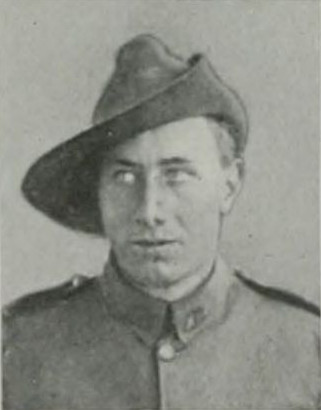
Reginald alias Thomas Lee.
LEE, WILLIAM, Stoker, 1st Class (R.F.R., Ch. B. 9000), S.S. 105811, H.M.S. Cressy; lost in action in the North Sea, 22 Sept. 1914.
LEECH, WILLIAM LEONARD BOGHURST, Rifleman, 1/9th Battn. (Queen Victoria’s Rifles) The London Regt. (T.F.), only s. of the late Arthur Herbert Leech, M.R.C.S.E., L.S.A. (who was in practice at Woolpit and afterwards at Broseley, where he died in 1894), by his wife, Annie Madeline (28, Egerton Gardens, West Ealing, W.), dau. of William Philip Boghurst; b. The White House, Woolpit, co. Suffolk, 22 Nov. 1887; educ. Epsom College; passed his A.R.I.B.A. in June, 1913, and was assistant in the firm of Messrs. Wratten and Godfrey, London; volunteered on the outbreak of war, but was five times refused at the recruiting station on account of wearing glasses, and acted as Special Constable from Aug. to Nov. 1914, when he was at last accepted by Queen Victoria’s Rifles, and joined the 1st Battn.; trained at Crowborough Camp, where he twice refused Corporal’s stripes, as he thought it would keep him in England longer; went to France with a draft, 27 March, 1915; was severely wounded in the head on 8 April, 1915, and died at Overcliff Red Cross Hospital, Westcliff-on-Sea, on 14 May following; unm.
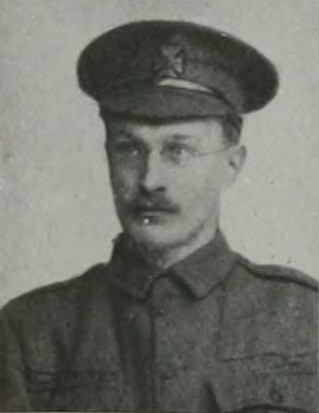
William L. B. Leech.
LEEK, WILLIAM, A.B., 218963, H.M.S. Aboukir; lost in action in the North Sea, 22 Sept. 1914.
LEES, EDMUND HASTINGS HARCOURT, Capt., 2nd Battn. Border Regt., s. of Thomas Orde Hastings Lees, of Guilsborough, co. Northampton, Barrister-at-Law, formerly Chief Constable of that county; b. Northampton, 21 Dec. 1875; educ. Marlborough, Royal Academy, Gosport, and Sandhurst; gazetted 2nd Lieut., 2nd Border Regt., 5 Sept. 1896, promoted Lieut. 10 Feb. 1900, and Capt. 24 June, 1906; was Adjutant to a Territorial Battn. (The Artists’ Rifles), 19 Oct. 1909 to 20 Oct. 1912; served in the South African War, 1899–1901; took part in operations in Cape Colony, south of Orange River, 1899; in Natal, 1899; relief of Ladysmith, including actions at Colenso; operations of 17 to 24 Jan. 1900, and action at Spion Kop; operations of 5 to 7 Feb. 1900, and action at Vaal Kranz; operations on Tugela Heights (14 to 27 Feb. 1900), and action at Pieter’s Hill; operations in the Orange Free State, April and May, 1900; operations in the Transvaal, June, 1900; in the Transvaal, east of Pretoria, July, 1900; in the Transvaal, west of Pretoria, July to Nov. 1900, in Orange River Colony, May, 1900; in Cape Colony, north of Orange River, May, 1900; in the Transvaal from 30 Nov. 1900 (was wounded and mentioned in Despatches [London Gazette, 10 Sept. 1901], received Queen’s medal with six clasps); and with the Expeditionary Force in France and Flanders from Sept. 1914 to 26 Oct. 1914, was killed in action at Ruiseek, near Ypres (whilst defending Calais) on the latter date. An officer referring to this action wrote: “Our men fought desperately from nine o’clock till six, when the Germans withdrew, and our little remnant was ordered to retire. We have only about 400 men left out of over 1,000 and hardly any N.C.O’s.”
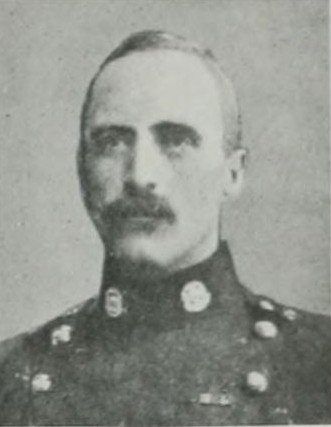
Edmund Hastings H. Lees.
LEES, PERCY BERESFORD, 2nd Lieut., 2nd Battn. Northamptonshire Regt., s. of Col. Charles Percy Lees, of Herne Lodge, Oundle, co. Northampton, by his wife, Anna Madeleine, dau. of Edward Whetham Allpress; b. Newton Hall, Middlewich, co. Chester, 12 June, 1890; educ. Wellington College and the School of Mines, Camborne, where he took his degree; was engaged in mining in Canada when war broke out, and at once returned to England, applied for a commission, and was gazetted 2nd Lieut. 3rd Northamptons, 14 Oct. 1914; went to France, 1 March, 1915, where he joined the 2nd Battn., and was killed in action at the Battle of Neuve Chapelle, 12 March, 1915. Buried at Neuve Chapelle; unm.
LEES, THOMAS PRIOR, Major, 9th Battn. (Queen Victoria’s Rifles) London Regt. (T.F.), 2nd s. of the late Alfred Lees, by his wife, Rosa Matilda, dau. of Thomas Flood; b. at the Old Priory, Bedford, 3 Sept. 1874; educ. Bedford Modern School and Clare College, Cambridge (M.A. and 8th Senior Optime). Entered the Home Civil Service, Senior Division, and was Assistant Secretary, Civil Service Commission, Burlington Gardens. Joined the old Victoria and St. George’s Rifles, 22 May, 1889; became Capt., March, 1905, and Major, 15 Aug. 1913; obtained Special Certificate, Chelsea Barracks, and passed the Army examinations for Field Rank (distinguished). He volunteered with the officers of his regt. for active service during the South African War, but only a limited number were required, and he remained in England. Volunteered for the present war, landed in France, 5 Nov. 1915. The battn. went straight into the trenches and was afterwards attached to 13th Infantry Brigade. On 17 April the brigade was detailed for the capture of “Hill 60.” The fighting was so severe during the 17th, 18th and 19th that the West Kents, Scottish Borderers, Yorks L.I and West Riding Regts., who had fought magnificently, were withdrawn and another brigade brought up. The Queen Victoria’s had been occupied in carrying munitions to the front trenches, but miraculously escaped with few casualties. They were not relieved with their brigade. On the night of the 20th the enemy took the trenches on the top of the hill, and Major Lees counter-attacked with two companies, the rest of the battn. being held in reserve in dug-outs near the foot of the hill, where they were subjected to a terrible bombardment lasting for hours. Major Lees’ night assault was successful. He then found he was the senior officer left alive on the hill and reorganised the defence. The German artillery and machine-gun fire was continuous, save when they launched repeated infantry attacks against our trenches. About 5 a.m. on the 21st, Major Lees had gone to the most exposed trench held by the Bedford Regt., in which there were nearly 300 of our killed and wounded. The enemy were assaulting, showering grenades into the trench and sweeping the parapet with machine-gun fire. It was at this critical moment that he was shot through the head and heart, only 10 yards from the Germans, while shouting orders to hold on. He fell off the parapet into the arms of a Sergt. of the Bedfords and never spoke again. The N.C.Os. and riflemen were heroic. Out of the 150 men with Major Lees all were killed and wounded, except 20 who were still holding on with 2nd Lieut. Wolley, V.C., when relieved by the Devons and Camerons. Lieut.-Col. Shipley, C.M.G., wrote to his brother, Major Lees, late 3rd South Wales Borderers: “He died like a hero, having retaken and made good a position of primary importance which the enemy were on the point of re-occupying. His last gallant charge was, as he would have wished it, to the assistance of his county regt., the Bedfordshires. The last words I heard him speak as he led his company off into the trenches were: ‘Now, remember, if anyone is wounded, the others must carry on. If I am hit, go on.’ It was his initiative and courageous behaviour that has enabled us to hold on to the position. I cannot even attempt to tell you what a stupendous loss his is to the regt. and myself, but we must console ourselves by remembering and trying to emulate your brother’s unswerving devotion to duty and the unflinching gallantry shown by him in all times of stress; his life so earnestly devoted to others will live in our memories for all time.” He was buried in the larch wood near Hill 60.
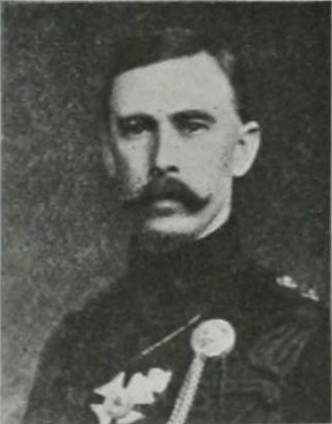
Thomas Prior Lees.
LEGGAT, WILLIAM, 2nd Lieut., 7th Battn. The Cameronians (Scottish Rifles) (T.F.), eldest s. of James Leggat, of 89, Wilson Street, Glasgow, Wholesale Provision Merchant, by his wife, Jane, dau. of Robert Carswell, of Duncarnock, Newton Mearns; b. Strathbungo, Glasgow, 29 Jan. 1883; educ. Bellahouston Academy, Glasgow; was a Wholesale Provision Merchant in Glasgow, served four years with the Dumbartonshire Rifle Volunteers until they were disbanded on the organisation of the T.F.; received a commission as 2nd Lieut. in 7th Cameronians, 21 March, 1914; volunteered for Imperial service on the outbreak of war; left for the Dardanelles, May, 1915, and died at Malta, 2 July following, of wounds received in the Allied attack on the Krithia-Achi Baba position, Gallipoli, on 28 June. Buried Pieta Cemetery, Malta; unm.
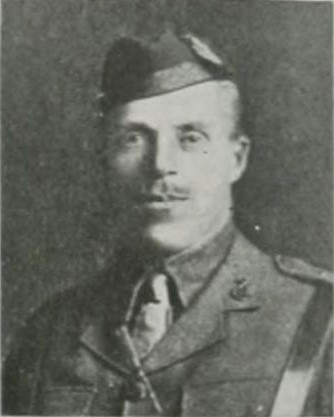
William Leggat.
LEGGATT, EDWARD, E.R.A., 1st Class (Pensioner), 159975, H.M.S. Good Hope; lost in action off Coronel, on the coast of Chili, 1 Nov. 1914.
LEGGE, RONALD GEORGE, Capt., 2nd Battn. Devonshire Regt., 7th and yst. s. of the late Hon. Charles Gounter Legge, H.M. Inspector of Constabulary, by his wife, Mary, eldest dau. of the late Very Rev. Thomas Garnier, Dean of Lincoln, and grandson of William, 4th Earl of Dartmouth; b. Southgate, co. Middlesex, 4 July, 1878; educ. Sherborne School; served with the 59th Coy. Imperial Yeomanry in the South African War, 1900–1 (Queen’s medal with four clasps); was gazetted 2nd Lieut. 2nd Devons, 23 April, 1902; and promoted Lieut. 13 March 1906, and Capt. 15 Nov. 1914; was Adjutant to the Territorial Force, 30 April, 1910, to 29 Oct. 1913; went to France, 5 Nov. 1914, and was killed near Neuve Chapelle, 18 Dec. following. He m. at Holy Trinity Church, Exmouth, 19 Nov. 1910, Phyllis Mildred, dau. of the Rev. Mortimer Ford, of Yarcombe, co. Devon, and had a son, Rupert Mortimer, b. 8 Sept. 1911.
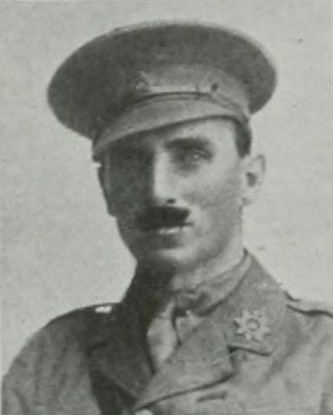
Ronald George Legge.
LEGGE, STAFFORD HENRY, Private, No. 847, 16th (Service) Battn. The Middlesex Regt.; served with the Expeditionary Force in France, etc.; killed in action, 1 March, 1915.
LEGGETT, ALAN RANDALL AUFRÈRE, Lieut., 1st Battn. Prince of Wales’s North Staffordshire Regt., yst. s. of Lieut.-Col. Frederick Octavius Leggett, of Underhill House, Cheriton, co. Kent, late Army Ordnance Dept., by his wife, Maria (Minnie), dau. of Thomas Browning; b. Delce Grange, Rochester, co. Kent, 31 May, 1893; educ. Oxford Preparatory School, Tonbridge School, and the Royal Military College, Sandhurst, where he was Hon. King’s Cadet, 1911–12; gazetted 2nd Lieut., 1st North Staffords, 4 Sept. 1912, and was promoted Lieut. 18 Sept. 1914; went to France, 4 Sept. 1914, and was killed in action in the trenches near Armentières, during the First Battle of Ypres, 31 Oct. 1914. Buried St. Martin’s Churchyard, Cheriton, Kent; unm. He was mentioned in Sir John French’s Despatch of 20 Nov. 1914–14 Jan. 1915 [London Gazette, 17 Feb. 1915], in respect of an action on 20 Oct. 1914, when he was sent with his platoon to support the Leinster Regt., which was hard pressed, and by “his steadiness, good leadership, and well considered action held up the enemy’s attack and enabled the offensive to be resumed.” His commanding officer wrote: “He did his duty cheerfully and fully, without a thought of self.”
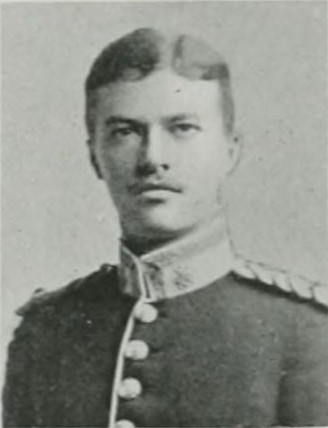
Alan Randall A. Leggett.
LEGGETT, GEORGE, Stoker, R.N.R., 2068U, H.M.S. Cressy; lost in action in the North Sea, 22 Sept. 1914.
LEGGETT, GEORGE, Private, R.M.L.I., Ch./15320, H.M.S. Aboukir; lost in action in the North Sea, 22 Sept. 1914.
LEIGH, ALBERT EDWARD, L.-Corpl., No. 9814, 1st Battn. Middlesex Regt.; served with the Expeditionary Force in France, etc.; killed in action, 25 Sept. 1915.
LEIGH, CHANDOS, D.S.O., Major, 2nd Battn. King’s Own Scottish Borderers, elder s. of the late Hon. Sir Edward Chandos Leigh, K.C., K.C.B., by his wife, Katherine Fanny (Knuston Hall, Irchester, Northants; 45, Upper Grosvenor Street, W.), dau. of the late James Rigby, of Moss House, Lancashire, D.L., and gdson. of Chandos, 1st Lord Leigh; b. 29 Aug. 1873; educ. Harrow and Cambridge; gazetted 2nd Lieut., 2nd King’s Own Scottish Borderers, from the Militia, 29 May, 1895, and promoted Lieut. 22 Sept. 1897, Capt. 1 April, 1901, and Major, 17 June, 1914; served (1) in the South African War, 1900–2, employed with the Mounted Infantry; took part in the advance on, and relief of, Kimberley; operations in Orange Free State, 1900, including actions at Paardeberg, Poplar Grove, Houtnek (Thoba Mountain), Vet River and Zand River; operations in the Transvaal, May–June, 1900, including actions near Johannesburg and Diamond Hill; operations in Orange River Colony, 1900, including actions at Wittebergen and Bothaville; and in operations in the Transvaal, Orange River Colony and Cape Colony, 30 Nov. 1900 to 31 May, 1902 (mentioned in Despatches [London Gazette, 10 Sept. 1901]. Queen’s medal with five clasps, D.S.O.); (2) with the Egyptian Army, 17 April, 1902, to 1912; took part in Bahr-el-Ghazal Expedition against the Nyam-Nyam Tribes 1905–6 (Egyptian medal with clasp; Medijidich and Osmanich Orders); and (3) with the Expeditionary Force in France and Flanders from 13 Aug. 1914; was reported missing and wounded after the Battle of Mons, 23 Aug. 1914, and died at Boussu shortly afterwards. When last seen, though severely wounded, he told his men to go on and never mind him, as the enemy were in great strength, and it was imperative to get back to blow up the canal bridge against their advance. Major Leigh was a fine horseman and polo player, winning his regimental cup the year he joined the Army. He was well known with the Meath, Pytchley and other packs, won honours in the open jumping at the Dublin Horse Show, and headed the winning record for steeplechase riders, both amateurs and professional, on the Cairo Turf. He m. 6 June, 1912, Winifred Madeline, dau. of the late Rt. Hon. Arthur Frederick Jeffreys, of Burkham, Hampshire, P.C., M.P.; s.p.
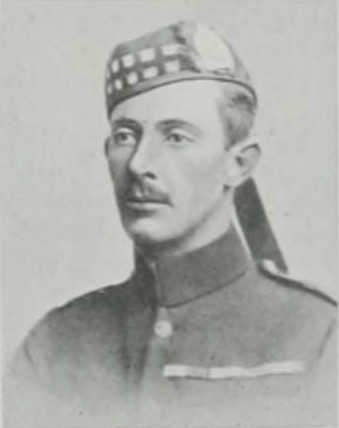
Chandos Leigh.
LEIGH, CHARLES, Petty Officer, 174539, H.M.S. Hawke; lost when that ship was torpedoed in the North Sea, 15 Oct. 1914; m.
LEIGH, EDWARD, Major, 2nd Battn. Hampshire Regt., yr. s. of the late Francis Augustine Leigh, of Rosegarland, co. Wexford, Ireland, J.P., D.L., formerly Lieut., 10th Hussars, by his wife, Augustine, dau. of Charles Perrier, of Metz, Lorraine; b. Rosegarland, 25 Aug. 1867; educ. St. Columba’s, co. Dublin; gazetted 2nd Lieut., from the Militia, to the Hampshire Regt., 9 May, 1888; and promoted Lieut. 4 Jan. 1890, Capt. 22 April, 1894, and Major, 22 July, 1905; joined the 2nd Battn. at Chatham in 1888, but transferred in 1897 to the 1st Battn. then serving on the Indian Frontier at Mooltan, Lundi Kotal, Peshawar, etc.; volunteered for active service in the South African War, in which he was employed with the Mounted Infantry, taking part in the operations in the Transvaal, 30 Nov. 1900 to Jan. 1902; in Orange River Colony, Dec. 1900 to Oct. 1901; in Cape Colony, Feb. to March, 1901; commanded the 7th (Hampshire) Mounted Infantry in the operations against De Wet, until he was severely wounded at Onverwacht, near Ermelo, 4 Jan. 1902 (mentioned in Despatches [London Gazette, 25 April, 1902], Queen’s medal with three clasps and King’s medal with two clasps); was Adjutant to 4th (Volunteer) Battn. Hampshire Regt., from 20 May, 1904, to 21 July, 1905, when, on promotion to the rank of Major, he rejoined 2nd Battn. as second in command and served with it (temporarily commanding at various times during 1909, 1912, 1913, 1914, and at the time of his death) whilst in Bermuda, South Africa, Mauritius, India and Gallipoli; left for the Dardanelles, 19 March, 1915; took part in the landing there on 25 April, and was killed in action during the Turkish attack on the Allied trenches S.W. of Krithia, Gallipoli, on the night of 1–2 May, 1915. Buried close to where he fell. Major Leigh m. at Christ Church, Lancaster Gate, London, 11 April, 1912, Mary Meade (Ladies’ Empire Club, 69, Grosvenor Street, W.), only dau. of the Hon. Sir John Buchanan, of Clareinch, Claremont, South Africa, LL.D., Knight of Grace of St. John of Jerusalem, and had a son, Edward Buchanan, b. at Vacoas, Mauritius, 19 June, 1913.
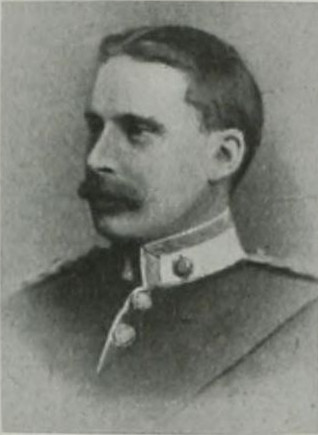
Edward Leigh.
LEIGH, EDWARD HENRY, Lieut., 2nd Battn. The Rifle Brigade, yr. s. of the late Hon. Sir Edward Chandos Leigh, K.C., K.C.B. (who died suddenly, 18 May, 1915, three days after hearing of the death of his last surviving son), by his wife, Katherine Fanny (Knuston Hall, Irchester, Northants; 45, Upper Grosvenor Street, W.), dau. of the late James Rigby, of Moss House, Lancashire, D.L., and grandson of Chandos, 1st Lord Leigh; b. 14 July, 1888; educ. Harrow and Cambridge; gazetted Lieut., 2nd Battn. The Rifle Brigade, 17 April, 1913; left with his regt. for France, Nov. 1914, and was killed in the attack upon the Aubers Ridge, 9 May, 1915; unm. Lieut. Leigh was mentioned in F.M. Sir John (now Lord) French’s Despatch of 5 April [London Gazette, 22 June], 1915.
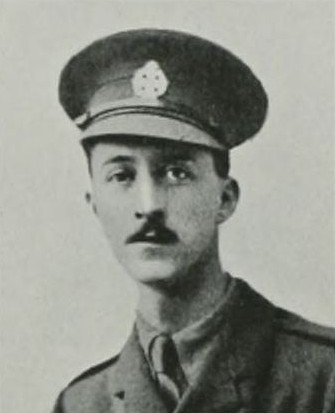
Edward Henry Leigh.
LEIGH, THOMAS HORATIO ALFRED, Private, No. 5624, 3rd Battn. Coldstream Guards, yr. s. of Samuel Leigh, of Jubilee Terrace, New Road, Armitage, co. Stafford, Potter, by his wife, Annie, dau. of William Dissington, of Cobridge, Staffs.; b. Armitage, 25 May, 1886; educ. Elementary School there; enlisted 21 July, 1904; served in Egypt, 16 Jan. 1908, to 23 March, 1911, where he was attached to the Camel Corps, and was one of a company sent up the Nile to suppress a native rising; passed into the Reserve, 20 July, 1912; called up on the outbreak of war, 5 Aug. 1914; went to France with the Expeditionary Force, 21 Aug. 1914, and was killed in action at Soupir, 14 Sept. 1914; unm. Buried on the battlefield. He had two good conduct badges, and two first-class badges for shooting, and had passed classes in swimming.
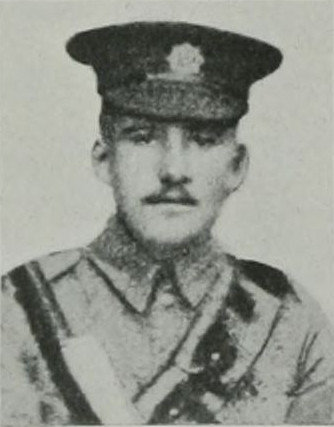
T. H. A. Leigh.
LEIVERS, JOHN ROBINSON, A.B. (R.F.R., B. 5638), 229452 (Ports.), H.M.S. Hawke; lost when that ship was torpedoed in the North Sea, 15 Oct. 1914.
LE MARCHAND, JOHN WHARTON JONES, Lieut., 56th Rifles, Frontier Force, Indian Army, attd. 1/6th Gurkha Rifles, s. of Walter John Le Marchand, District Supt. of Punjab Police, by his wife, Lucy, dau. of J........ G...... Jones, P.W.D., Punjab, India; b. at Gujranwalla, Punjab, 30 Dec. 1887; educ. Bedford Grammar School, and Royal Military College, Sandhurst; gazetted 2nd Lieut. (unattd.), 25 Jan. 1908; posted to Indian Army, 14 March, 1909, and promoted Lieut., 25 April, 1910; served on N.W. Frontier of India, 1908, including the operations in the Mohmand country and engagement at Mutta (medal with clasp), and with the Expeditionary Force at the Dardanelles, 1915; killed in action at Sari Bagh, 9 Aug. 1915; buried on the field. Col. Sir Cecil Allanson, commanding the 1/6th Gurkha Rifles, wrote: “Your son was killed with this regt. on 9 Aug. Every single officer in it was killed or wounded; he only joined it about 20 July and we only came under fire after a three weeks’ rest on 5 Aug. The following brief report is what the regt. did and what I have said (in my diary) about your son. No words of mine can express my admiration for his gallantry, his magnificent compliance with difficult orders and his superb control of men whom he hardly knew and who hardly knew him. His death is an example to all on the Peninsula.... The following are the entries referred to: ‘7 Aug.—Advance towards the Ridge 791, 6th Gurkhas leading, Le Marchand leading them; reach a height about 450. Few casualties through skilful use of ground. 8 Aug.—Advance to Hill 791 to within 100 yards. No digging in took place as ground extremely hard and we dare not move. Through the night we had to retain an immensely difficult position with the Turks right above us, every man in the regt. in the firing line. 9 Aug.—Attacked at dawn on the portion of the Ridge 791 in front of us, which was successfully carried, though subsequently evacuated. The position of the night before was held throughout the day.’ The reference made to Lieut. Le Marchand in report sent in to 90th Indian Brigade was as follows: ‘Lieut. Le Marchand led the leading double company to the attack on 7 and 8 Aug.; he had only been with the regt. 15 days and did not know the Goorkha language. His great personal gallantry gave him an extraordinary influence over his men, and he stopped two further rushes of the enemy on the night of the 8th and 9th in a most gallant manner. He remained on the Ridge 791 till the very last and was killed gallantly tackling single handed a large number of Turks.’ The only officer actually unwounded at this moment was Capt. Phipson, I.M.S., who succeeded in obtaining your son’s body and gave it a proper burial that night as near the spot he died as possible, and we have very carefully marked the position.... His death was absolutely instantaneous and painless, as he was shot through the base of the brain”; and in his report to the Colonel of the 5/6th Rifles he said: “Le Marchand’s conduct on the 6th, 7th, 8th and 9th was superb. We were very short of officers, and during that time he never had a wink of sleep and very little food or water. No commanding officer could have been better served. No regt. could have wished for a better officer to maintain its reputation. We alone succeeded in getting on the key of the local position, and we fought for three days and three nights and were never for one second out of fire throughout that time. We lost 100 per cent. of our officers and 45 per cent. of our fighting strength in men. It would be a long story to give you all the details, but before Le Marchand died (a few minutes) he placed his foot on the long ridge which surrounds this Peninsula, and had we been able to stay there it would have been splendid. It was no fault of ours whatever that we could not. Gen. Godley, in congratulating the regt., said that had Le Marchand lived he would have recommended him for the V.C.” In his official report of the battle, Sir Cecil wrote: “Lieut. J. W. J. Le Marchand, 56th Rifles, Frontier Force, attd. 1/6th Gurkha Rifles, led the leading double company to the attack on the 8th and 9th. He had only been with the regt. 15 days and did not know the language. His great personal gallantry gave him an extraordinary influence over his men, and he stopped a forward rush of the enemy on the night of the 8th and 9th in a most gallant manner. He was shot dead immediately after landing his company up on the ridge after two days and two nights continuous fighting, during the whole of which time a steady advance was made. No officer could have done finer work than he did and the regt. is deeply indebted to him for his great personal gallantry. I can only thank your regt. for sending us so fine an officer and regret extremely that he should have lost his life with us.”
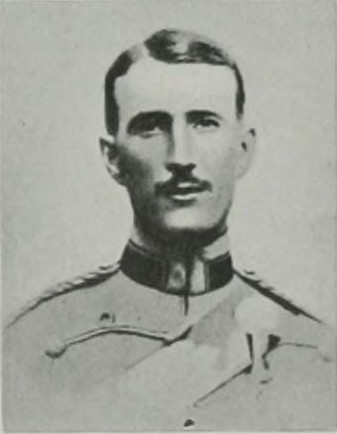
John W. J. Le Marchand.
LE MARCHANT, LOUIS ST. GRATIEN, D.S.O., Lieut.-Col., 1st Battn. East Lancashire Regt., 6th and yst. s. of the Rev. Robert Le Marchant, Rector of Little Risington, by his wife, Eliza Catherine, dau. of D. Tupper, of Guernsey; b. Little Risington, co. Gloucester, 2 Dec. 1866; educ. Somerset College, Bath, and privately; gazetted Lieut. to the East Lancashire Regt., from the Gloucestershire Militia, 10 Nov. 1886, and promoted Capt. 11 Dec. 1895, Major, 11 April, 1906, and Lieut.-Col. 23 Sept. 1913; was Adjutant, 1st Battn., 29 Oct. 1898 to 28 Oct. 1902; Brigade Major, India, 9 July, 1906, to 1 March, 1908, and D.A.A.G., India, 2 March, 1908, to 3 July, 1910; served (1) with the Chitral Relief Force, 1895 (medal with clasp); (2) in the South African War, 1900–2; took part in the operations in the Orange Free State, Feb. to May, 1900, including actions at Karee Siding, Vet River (5–6 May), and Zand River; operations in the Transvaal, May and 30 Nov. 1900 to Oct. 1901, including action near Johannesburg; and operations in Orange River Colony, Oct. 1901 to 31 May, 1902 (Queen’s medal with three clasps, King’s medal with two clasps, D.S.O.); and (3) with the Expeditionary Force in France and Flanders, Aug. to 9 Sept. 1914 (mentioned in Despatches by F.M. Sir John (now Lord) French, 9 Oct. [London Gazette, 18 Oct.] 1914), and was killed in action at La Ferté sous Jouarre, during the Battle of the Marne, 9 Sept. 1914; unm.
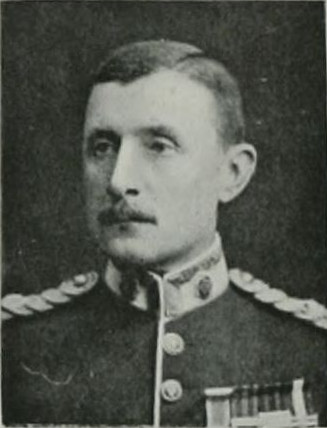
Louis St. G. Le Marchant.
LE MASURIER, JOHN EDWARD, Gunner, No. 2708, 3rd Brigade Ammunition Column, 3rd F.A. Brigade, 1st Australian Division, 2nd s. of Charles Henry John Le Masurier, of 3, Elizabeth Terrace, Tower Road, Jersey, Seaman, by his wife, Alice, dau. of Philip Edward Beaugié; b. St. Heliers, Jersey, 19 Aug. 1889; educ. National Boys’ School there; went to Australia, 19 Aug. 1910, and worked as a Steam Navvy on the North Coast Railway at Telegraph Point, N.S.W.; volunteered for Imperial service on the outbreak of war in Aug. 1914, and joined the 3rd Ammunition Column, Australian Imperial Force; left for Egypt, 18 Oct. 1914; went to the Dardanelles in April, 1915, and was killed in action there, 29 May following, while attached to the Indian Mountain Battery; unm. A comrade wrote: “He was killed in action on the evening of 29 May by a shrapnel shell. There was only a small party of us together. We were attached to an Indian Mountain Battery looking after field telephones and doing such work as the Indians could not do, and they could not speak English. I cannot say how sorry we were to lose Jack, as he was one of the best—in fact, what we call, a white man. He was recommended for the D.C.M. for keeping up communications under heavy fire the morning of 29 May, but do not know if it ever went through. We buried him at night on the top of a high headland overlooking the sea at Anzac. The head is known as Pluggy’s Plateau, and was the first place taken on the morning of the Australian landing.”
LE MESURIER, ALFRED CLIVE, Lieut., 12th Indian Cavalry, attd. 33rd Q.V.L.H., yst. s. of the late Col. Andrew Alfred Le Mesurier, C.B., Commandant of the 8th Battn. King’s Liverpool Regt., by his wife, Kate Josephine (Jersey, Channel Islands), dau. of William Henry Vyse, of Cornwall; b. Weymouth, co. Dorset, 8 Sept. 1888; educ. Victoria College, Jersey, and Wellington College, co. Bucks; settled in Upper Assam as a tea planter; joined the Assam Valley Light Horse; obtained a commission in the 12th Indian Cavalry after the outbreak of war, 30 Oct. 1914; went to Mesopotamia early in Feb., attd. to the 33rd Q.V.L.H., and was killed in action there, 29 April, 1915; unm. He was buried beside Major M. H. Anderson, 33rd Q.V.O.L.C., and Lieut. Bailward, 26th K.G.O.L.C., at Brackey, some 30 miles from Ahwaz, near the Karum River, in Persia. It appears that two squadrons were sent out on a reconnaissance some 15 miles from camp. They were met by Arabs, who pretended to be friendly, and warned them that the Turkish army were only three hours’ march away and to go back. They went back about one mile and watered their horses, and stayed there for some time. When the squadrons had finished watering their commander mounted the men and, wheeling them about, marched them off. The hostile Arabs, who had been collecting round under the cloak of the friendlies, opened fire. More mounted Arabs closed in, and Lieut. Le Mesurier was hit and fell from his horse, killed.
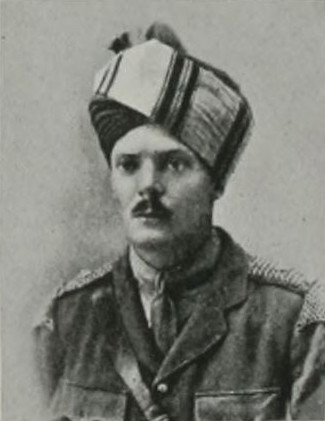
Alfred Clive le Mesurier.
LEMMON, MONTAGUE HAGUE, Private, No. 1001, Honourable Artillery Coy. (T.F.), yst. s. of the late John Lemmon, of Chichester, by his wife, Martha Elizabeth (afterwards wife of Arthur William Wyatt, of South Gate), dau. of Jonas Hague; b. Chichester, 23 June, 1887; educ. Prebendal School there; was a member of the London Staff of the Liverpool and London and Globe Insurance, Co., Ltd.; volunteered and joined the H.A.C. on the outbreak of war in Aug. 1914; trained at Headquarters and Aveley Park; went to France in Sept. 1914, and died at Bailleul, 8 June, 1915, of wounds received in action at Ypres on the 5th; unm. Buried at Bailleul.
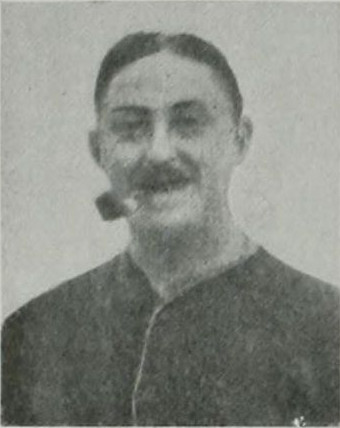
Montague Hague Lemmon.
LEMON, JOHN EDWARD, Stoker, R.N.R., 1375S, H.M.S. Aboukir; lost in action in the North Sea, 22 Sept. 1914.
LENCH, JAMES SYDNEY, A.B. (R.F.R., Ch. B. 93), 145290 (Ports.), H.M.S. Cressy; lost in action in the North Sea, 22 Sept. 1914.
LEONARD, ALFRED, A.B. (R.F.R., B. 5112), 207650, H.M.S. Good Hope; lost in action off Coronel, on the coast of Chili, 1 Nov. 1914.
LEONARD, THOMAS, Private, R.M.L.I., Ch. 16977, H.M.S. Hawke; lost when that ship was torpedoed in the North Sea, 15 Oct. 1914.
LE PAGE, EDMOND JOHN, A.B., B. 4180, S.S. 1351, H.M.S. Good Hope; lost in action off Coronel, on the coast of Chili, 1 Nov. 1914.
LE SUEUR, CLEMENT GEORGE, Private, No. 3158, 1/5th Battn. Seaforth Highlanders (T.F.), only child of Clement George Le Sueur, of 155, Chevening Road, Brondesbury Park, N.W., Clerk in the War Office, by his wife, Ellen, dau. of Thomas Cull, and grandson of Clement Le Sueur, late of Jersey; b. Hampstead, N.W., 23 March, 1893; educ. Kilburn Grammar School and King’s College, London; was a Clerk in the Metropolitan Water Board; volunteered and joined the Seaforth Highlanders, 7 Sept. 1914; went to France, 1 May, 1915, and was killed in action while on sentry duty in the trenches near Laventie, 17 July, 1915; unm. His company officer wrote: “I hear from his comrades in the ranks that he was a fine soldier, and that his never failing good spirits helped others over the many depressing times we have here”; and the Church of England Chaplain: “It fell to my lot to lay him to rest in the little soldiers’ cemetery [by the roadside, Rue de Bacquerot], not far from Laventie. I know how greatly he is missed and mourned.” A comrade also wrote: “It should be some consolation to you to know that Clem’s high character and good spirits stood the very searching test that this life out here enforces with complete success. His loss was keenly felt by all who had been brought into contact with him”; and the magazine “Aquarius” referred to him as follows: “Mr. Le Sueur entered the service (Metropolitan Water Board) in 1910. He possessed marked ability and great business aptitude and a successful future seemed in store for him.”
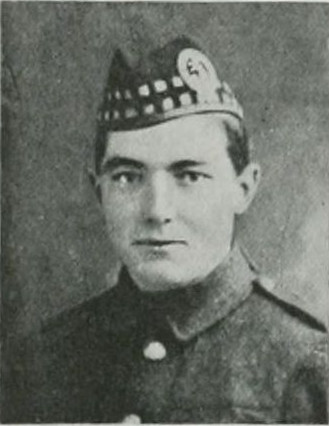
Clement George Le Sueur.
LESTER, JOHN, Stoker, Petty Officer, 283924, H.M.S. Good Hope; lost in action off Coronel, on the coast of Chili, 1 Nov. 1914.
LETFORD, WILLIAM EDWARD, Stoker, 1st Class, K. 3739 (Ports.), H.M.S. Hogue; lost in action in the North Sea, 22 Sept. 1914.
LEVERINGTON, WILLIAM EDWARD, Stoker, 1st Class, K. 2677, H.M.S. Pathfinder; lost when that ship was sunk by a mine, about 20 miles off the East Coast, 5 Sept. 1914.
LE VESCONTE, JOHN THOMAS, Stoker, 1st Class, 302978, H.M.S. Good Hope; lost in action off Coronel, on the coast of Chili, 1 Nov. 1914.
LEVI, KEITH MAURICE, Capt., A.A.M.C., attached as Regimental Medical Officer to the 2nd Battn. Hampshire Regt. 29th Division, yst. s. of Joseph Levi, of Liverpool Buildings, 153, William Street, Melbourne, formerly of Lulinghi, Princes Street, St. Kilda, J.P., by his wife, Katherine S. dau. of Maurice C. Davies, and gdson. of the late Hon. Nathaniel Levi, M.L.C.; b. St. Kilda, Victoria, 6 Oct. 1890. He was educated at Cumloden and Melbourne Church of England Grammar School, afterwards proceeding to the Melbourne University. He was a student at Ormond College and took his M.B. degree in April, 1914. Whilst at the University he took great interest in the Sports Union and was for some time Capt. of B grade hockey team and played in inter-varsity matches. He was also a member of the University Rifles. After graduating in medicine he was appointed a Resident Medical Officer at the Melbourne Hospital, and later on joined the Staff of Perth Public Hospital. Volunteering for active service on the third day after war was declared, he served as Medical Officer at Blackboy Camp, W.A. and afterwards at the Broadmeadows Camp, Victoria. He left Victoria on Feb. 6 for Egypt, with the Light Horse reinforcements, and was stationed at the First Australian General Hospital, Heliopolis, for two months. Proceeding thence to the Dardanelles he was for a time on hospital ships bringing wounded back from Lemnos to Alexandria. He was sent to organise a rest camp on the island of Imbros, and it was from there on June 29th he was ordered to Cape Hellas, and attd. to the 2nd Hampshire Regt. 29th Division, as Regimental Medical Officer. Major J. G. Bell, R.A.M.C., Acting Director of Medical Services, 29th Division, wrote: “I am writing to you about your son’s death. Being separated as he was from his own Australian Troops, it is possible that no one else may write you any particulars. He joined this division (29th) and was placed in medical charge of the 2nd Hampshire Regt. This suited him; he liked his work and became most popular with the regt. He was one of the best regimental Medical Officers in the Division. On the 6th of this month [Aug.] the brigade to which his regiment belonged became engaged and suffered severe casualties. He worked splendidly just behind the firing line all that afternoon and all night getting back the wounded, dressing and attending to them. At about 6.30 on the morning of the 7th when his work was practically over, and he was standing with another officer, a Turkish shrapnel shell fell close to him killing him dead, together with some five other men. He was buried where he fell, next to a Captain of the Hants, with two officers of the Essex Regt. close by. He is buried in an open nullah. I saw his grave this morning, and a suitable cross is being put up this afternoon by the regt. Your son’s death is a great loss; he took such an interest in his work, was so keen about it, and had done so well”; and in a letter to his mother, Lieut. and Q.M. A. Smith, of the Hampshire Regt. wrote: “I was within two yards of your son when he was killed. I am the Quartermaster of this Battn. and knew your son more intimately than anyone else in the Battn. as we were almost always together. All the officers and men liked and respected him for his calmness and coolness in all the trials and dangers of this campaign; I am asked to convey to you and yours the sincere condolence of the officers of this Battn. in your great bereavement, and I am sure it will be of great comfort to you to know that he was killed instantaneously and did not suffer any pain. On Aug. 6 an attack was made by our Brigade on the Turkish trenches, your son being in the same place as myself. When the attack was launched about 3.45 p.m. the wounded began to come in and they came through the Battn. Dressing Station all night, about 220 officers, non-commissioned officers and men were dressed (their wounds being attended to) and sent down to the base, your son working continuously all through the night. At 6.45 a.m. we were ordered to move back and a fresh battn. was sent to relieve us, your son and myself were having some breakfast before starting (as the dressing station was being taken over and cleaned up), when a high explosive shell came from the enemy and exploded close to us, killing three, and wounding four, all of whom had been attending on the wounded. Your son was amongst the killed, a piece of the shell killing him instantaneously. He was buried in a separate grave close to the spot where he was killed, a stone with his name marking the spot.” Col. A. Thackeray Beckwith, Commanding Officer 2nd Hampshire Regt., also wrote: “Though I was not present on 7 Aug. when he was killed I heard exactly about it from Lt. & Q.M. A. Smith of my Battn. who was with him, and I know the spot intimately. Your son had worked like a Trojan, attending to the very large number of wounded in the attack of 6 Aug., and with the Quartermaster and about five other N.C.Os. and men was curiously enough in a hollow just behind the front trench where no shells had ever pitched before, when two shells came down quite close to each other, a piece of one hitting your son in the chest, killing him instantaneously by shock and not by laceration. His loss was a very great one to us, he had done sterling work for the Battn. and in spite of the danger was never absent from our trenches, used most conscientiously to go round them seeing to all the sanitation, attending the wounded, etc. And on one particular occasion went out of his way to help bring in a wounded Canadian officer from a dangerously exposed place.” Capt. Keith M. Levi was mentioned in General Sir Ian Hamilton’s Despatch of 11 Dec. 1915 [London Gazette, 28 Jan. 1916]. He was unm.
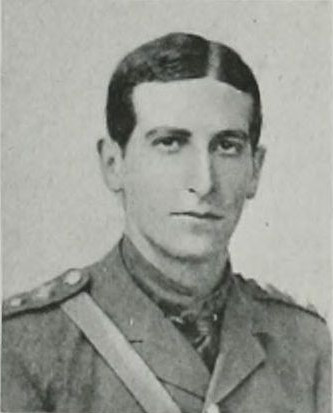
Keith Maurice Levi.
LEVINGE, SIR RICHARD WILLIAM, 10th Bart. of Knockdrin, D.L., co. Westmeath, Lieut., 1st Life Guards, eldest s. of Sir William Levinge, of Knockdrin Castle, 9th Bart., by his wife, Emily Judith (Knockdrin Castle, Westmeath), 2nd dau. of Sir Richard Sutton, 4th Bart.; b. Ryde, I.W., 12 July, 1878; educ. Eton; gazetted 2nd Lieut., 8th Hussars, 27 May, 1899; transferred to South Irish Horse and served with them in the South African War, 1900–1; took part in the operations in the Transvaal, east of Pretoria, July to 29 Nov. 1900, and in those in the Transvaal, Dec. 1900 to Jan. 1901, and received the Queen’s medal with three clasps. He succeeded his father 17 April, 1900, and on his return from South Africa retired from the Army, but offered his services again immediately the European War broke out, and was gazetted Lieut. to the Reserve of Officers, 8th Hussars, 19 Aug. 1914, and posted to the 1st Life Guards, 1 Sept. following. He went to France, 4 Oct. 1914, and was killed in action at Ypres, 24 Oct. 1914. Col. Stanley, 1st Life Guards, wrote: “The trenches were very small, and your husband was passing from one to another when he was shot dead by a bullet in the neck. I need hardly tell you the awful shock it has given the squadron officers and men, and the loss of one to whom we were devoted will remain with us for ever. Your husband knew no fear, and was always so ready and willing to help me in any way he could with the squadron.” He m. at St. George’s, Hanover Square, W., 15 Feb. 1910, Irene Marguerite (10, Hans Place, London, S.W.), elder dau. of the late John Henry Charles Pix, of Bradford, Yorks, and had an only son, now Sir Richard Vere Henry Levinge, of Knockdrin Castle, 11th Bart., b. 30 April, 1911.
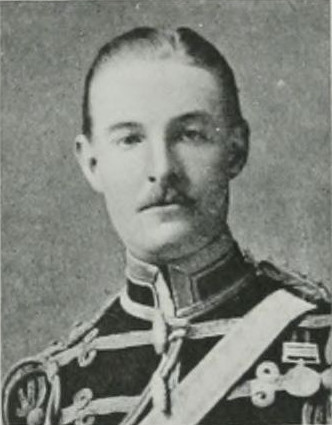
Richard William Levinge.
LEVISTON, JOSEPH JAMES, Private, R.M.L.I. (Ports.), 12740, H.M.S. Good Hope; lost in action off Coronel, on the coast of Chili, 1 Nov. 1914.
LEVITT, LOFTUS GEORGE, Leading Seaman, 218265, H.M.S. Good Hope; lost in action off Coronel, on the coast of Chili, 1 Nov. 1914.
LEWCOCK, ALGERNON GEORGE, Private, R.M.L.I., Ch. 16871, H.M.S. Cressy; lost in action in the North Sea, 22 Sept. 1914.
LEWES, ERNEST, Chief Stoker, 276271, H.M.S. Good Hope; lost in action off Coronel, on the coast of Chili, 1 Nov. 1914.
LEWES, PRICE VAUGHAN, C.B., D.S.O., Capt., R.N., 2nd s. of Col. John Lewes, of Llanlear, co. Cardigan, The Buffs (who served through the Crimean War), by his wife, Mary Jane, dau. of the Rev. Charles Griffith; b. Llanlear aforesaid, 27 Feb. 1865; educ. Reading, H.M.S. Britannia, and the Royal Naval College, Greenwich; entered the Royal Navy, 1878; and became Lieut. 1888; Commander 1898, and Capt. 1905. He served in China, 1885–88, and in the operations against the Somalis in British East Africa for the murder of Mr. Hamilton, an officer of the East African Company, and the relief of two Englishmen on board the s.s. Kenia in the Juba River, and as Sub-Lieut. of H.M.S. Blanche, landed at Kimayu, Zanzibar, in command of 40 volunteers from that ship and so successfully led this small force, exposed as it was to the attack of 150 riflemen and 600 spearmen, that they captured and destroyed the village of Magareda, up the Juba River, succoured the Englishmen and struck so decisive a blow against the enemy that a punitive expedition was rendered unnecessary. For this service he received the D.S.O., and the general Africa medal with Juba River clasp, and was officially thanked by Government. In 1898, being in command of H.M.S. Hazard and Senior Naval Official, Crete, he landed during the Moslem attack on 6 Sept., and after heavy fighting rescued and brought off the Col. commanding the troops and his soldiers, and for this he was again thanked by Government, and promoted Commander. From 1907 to 1909, he served on the Pacific Station, and was afterwards Deputy Commissioner, Western Pacific, and was officially thanked for his services as such by the New Zealand Government. He received the C.B. on the King’s birthday, 1913. On the outbreak of the European War in Aug. 1914, he was on sick leave, but immediately resumed command of his ship, H.M.S. Superb, but in the beginning of Nov. was invalided home and died in the Naval Hospital at Devonport, 10 Nov. 1914. He m. in London, 30 April, 1894, Anne Josephine, dau. of Lieut.-Col. J. G. M. Tulloch, 21st (Royal Scots) Regt., and had a son, Martyn Vaughan, Lieut., 3rd Welsh Regt., attd. R.F.C., b. 21 April, 1895; killed in flying accident, 15 July, 1916.
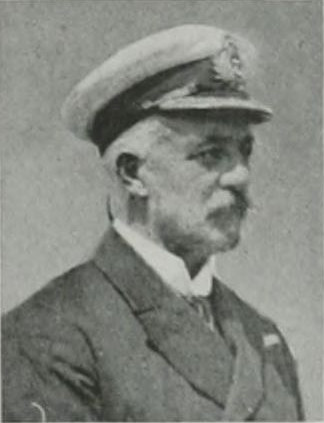
Price Vaughan Lewes.
LEWINGTON, ALFRED CHARLES, Private, No. 1637, 3rd Battn. (Royal Fusiliers) The London Regt. (T.F.), s. of George Lewington, of 14, Eresbury Road, Kilburn, Lamplighter; b. Kilburn; joined the Royal Fusiliers about 1912, and was killed in action at Neuve Chapelle, 10 March, 1915. Three of his brothers served with the Expeditionary Force.
LEWINGTON, WILLIAM, Yeoman of Signals, 188764, H.M.S. Good Hope; lost in action off Coronel, on the coast of Chili, 1 Nov. 1914.
LEWIS, ALFRED EDWARD, Leading Stoker, 302447, H.M.S. Pathfinder; lost when that ship was sunk by a mine, about 20 miles off the East Coast, 5 Sept. 1914.
LEWIS, CHARLES VERNON, Lieut., 11th (Service) Battn. (2nd Gwent), South Wales Borderers, 2nd s. of Thomas Charles Lewis, of The Sycamores, Conway, by his wife, Catherine Maria Lloyd, dau. of Thomas Lloyd Roberts, of Garthgyman, near Ruthen; b. Frondeg, Bangor, 14 March, 1883; educ. Rydal Mount School, Colwyn Bay; served three years with the Denbighshire Yeomanry, and afterwards represented Messrs. Harrisons and Crosfields, Tea Merchants, London; joined the South Wales Borderers after the outbreak of war, Sept. 1914, and died at Weymouth, 18 Aug. 1915, after an operation for appendicitis, contracted while in training. He m. at Langbank, Renfrewshire, 16 June, 1915, Edith Isabel Collingwood, dau. of the Rev. Archibald B. D. Alexander, D.D., of Langbank; s.p.
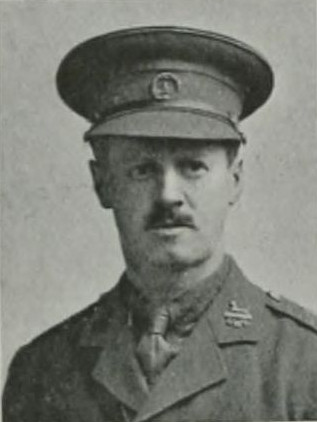
Charles Vernon Lewis.
LEWIS, DAVID, Stoker, 1st Class (R.F.R., Ch. B. 9616), S.S. 106974, H.M.S. Cressy; lost in action in the North Sea, 22 Sept. 1914.
LEWIS, DAVID WILLIAM, A.B. (R.F.R., B. 4638), S.S. 1630, H.M.S. Good Hope; lost in action off Coronel, on the coast of Chili, 1 Nov. 1914.
LEWIS, EDWIN CHARLES, Petty Officer, 195389 (Chatham), H.M.S. Good Hope; lost in action off Coronel, on the coast of Chili, 1 Nov. 1914.
LEWIS, GEORGE ARTHUR DUNALLEY, 2nd Lieut., 4th Battn. South Staffordshire Regt., attd. 1st Battn. Royal Warwickshire Regt., elder s. of Col. Arthur William Drummond Lewis, of 31, Midvale Road, Jersey, by his wife, Emilie Mary, dau. of Mark Morris, and grandson of the late Hon. Arthur James Lewis, Advocate-General of Bombay, ..., member of Council, ..., and of Guestling Lodge, Sussex; b. St. Helens, Hastings, 24 Jan. 1895; educ. Victoria College, Jersey, where he was for four years a member of the O.T.C.; was employed as a Clerk in the Capital and Counties Bank at Weymouth, but on the outbreak of war obtained a commission in the South Staffords, 3 Oct. 1914; trained at Jersey; passed through a machine-gun course during the winter and was machine-gun instructor to the battn.; went to France in May, 1915, when he was attached to the 1st Royal Warwicks, and was killed in action, 8 July, 1915, just after having got his men into position to go to the relief of the Lancashire Fusiliers; unm. He was buried on the banks of the Yser Canal, north of Ypres and south of Pilken. The officer commanding the 1st Warwicks wrote: “We all admired him, he had made himself very popular and we all deplore his loss. His Adjutant, Company Commander and servant all speak in the highest praise of his character, bravery and cheerfulness when under fire, and that he was a fine soldier, and beloved by all ranks.”
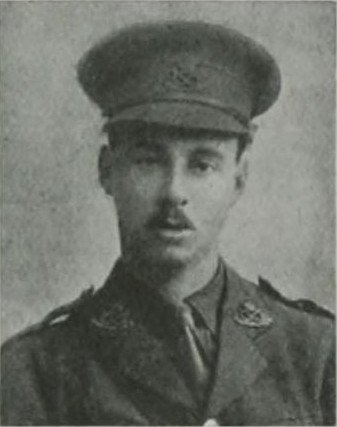
George Arthur D. Lewis.
LEWIS, HARRY FRANCIS, Stoker, Petty Officer (R.F.R., Ch. B. 3891), Ch./174438, H.M.S. Cressy; lost in action in the North Sea, 22 Sept. 1914.
LEWIS, HENRY, A.B. (R.F.R., Ch. B. 6215), 187617, H.M.S. Aboukir; lost in action in the North Sea, 22 Sept. 1914.
LEWIS, HENRY EDWARD, A.B., J. 20038, H.M.S. Pathfinder, lost when that ship was sunk by a mine, about 20 miles off the East Coast, 5 Sept. 1914.
LEWIS, HERBERT BENJAMIN THOMAS, Corpl., No. 16296, 2nd Battn. Northamptonshire Regt., 3rd s. of the late Robert Lewis, of Hackleton, Northampton, Farmer, by his wife, Mary, 2nd dau. of the late Benjamin (and Elizabeth) Thomas, of Waunfawr Farm, Llanboidy, near Whitland, South Wales; b. Whitland, 22 March, 1879; educ. Northampton Grammar School; was Managing Clerk for Mr. J. S. Campion, Auctioneer and Valuer, Northampton; enlisted in the 3rd Northamptonshire Regt. 31 Oct. 1914, afterwards transferring to the 2nd Battn.; went to France, 2 March, 1915, and was killed in action at Aubers Ridge, 9 May, 1915; unm. Lieut. Haldane wrote: “I am sorry to say that details as to what happened on 9 May are very hard to get, but I do know that Herbert B. T. Lewis advanced with his company in the attack. They were the leading company, and he with many of his company were caught by machine-gun fire, and were killed whilst advancing to the enemy’s trench. I was very sorry to lose him, as I had already noticed him when inspecting his company, and had realised what a very excellent N.C.O. he was, and had hoped he would have been spared to rise to much higher rank, which he deserved.”
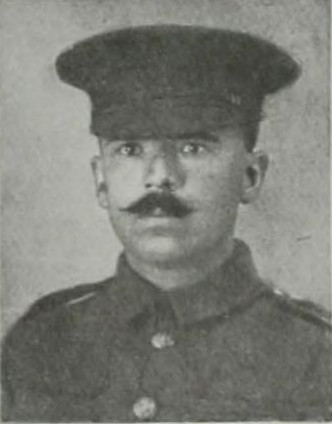
Herbert B. T. Lewis.
LEWIS, ISAAC, Stoker, 1st Class (R.F.R., B. 10496), S.S. 108181, H.M.S. Hawke; lost when that ship was torpedoed in the North Sea, 15 Oct. 1914.
LEWIS, JAMES WILLIAM, Stoker, 1st Class (R.F.R., B. 7473), S.S. 102603, H.M.S. Hawke; lost when that ship was torpedoed in the North Sea, 15 Oct. 1914; m.
LEWIS, JOSEPH, Private, R.M.L.I. (R.F.R.), Ch. 7208, H.M.S. Hawke; lost when that ship was torpedoed in the North Sea, 15 Oct. 1914; m.
LEWIS, WILLIAM HENRY, Private, No. 2019, 5th Battn. Welsh Regt. (T.F.), eldest s. of the late Daniel Lewis, by his wife, Mary (26, Castle Street, Dowlais); b. Dowlais, co. Glamorgan, 12 Aug. 1892; educ. Elementary Schools there, and was a Blacksmith at the Dowlais Iron Works; served with the Welsh Territorials for four years, and rejoined, 10 June, 1914; volunteered for foreign service on the outbreak of the European War; went to the Dardanelles, 14 July, 1915, and was killed in action there, 2 Sept. following; unm.
LIBBITER, ALFRED, Stoker, 1st Class, K. 9591, H.M.S. Aboukir; lost in action in the North Sea, 22 Sept. 1914.
LICKFOLD, EDWARD, Private, No. 2160, 11th Battn. 3rd Infantry Brigade, Australian Imperial Force, s. of John Lickfold, of Billinghurst, co. Sussex, by his wife, Catherine, dau. of Henry Criswick; b. Southampton, 27 Feb. 1878; educ. Wokingham Church School; went to Perth, West Australia, in 1907, and joined the Australian Imperial Force early in 1915; left for Egypt; went to the Dardanelles, and was killed in action at Suvla Bay, 6 Aug. 1915; unm.
LIDBETTER, ALBERT WILLIAM, Boy, 1st Class, J. 24716 (Ports.), H.M.S. Hawke, s. of William Lidbetter, of 13, Holden Cottages, Broadwater, near Worthing; lost when that ship was torpedoed in the North Sea, 15 Oct. 1914.
LIDDELL, CHARLES, A.B. (R.F.R., B. 3631), 186862, H.M.S. Hawke; lost when that ship was torpedoed in the North Sea, 15 Oct. 1914; m.
LIDDLE, FRANK CHARLES, Private, No. 9166, 2nd Battn. East Surrey Regt.; served with the Expeditionary Force in France, etc.; died 26 March, 1915, of enteric fever, while on active service.
LIEBERT, FREDERICK ALEXANDER CHARLES, Capt., North Somerset Yeomanry (T.F.), only s. of John Frederick Liebert, by his wife, Lena Henrietta, dau. of Jean Spreet de Bay, and grandson of Edmund Liebert, of Swinton Hall, co. Lancaster; b. Bruges, Belgium, 9th March, 1882; educ. there, and Beaumont College, and on leaving there received a commission as 2nd Lieut. in the 3rd Dragoon Guards, from which he retired in 1905, and joined the North Somerset Yeomanry (T.F.), as a 2nd Lieut., 20 Dec. 1905, being promoted Capt., 5 Aug. 1914; volunteered for foreign service on the outbreak of war; went to France 2 Nov. 1914, and was killed in action during the First Battle of Ypres, 17 Nov. following. Buried in Ypres Cemetery. The particular action in which he lost his life was the first action in which the North Somerset Yeomanry took a prominent part, was only over a space of ground some 500 yards square and B Squadron, led by Capt. Liebert, held the first of a series of trenches, upon which a vigorous shell fire of an appalling character was directed. The Germans got to within 15 yards of the trenches, but the attack was repelled, with very heavy losses to them. Letters from his Colonel and brother officers testify to his valuable services as an officer, his high sense of duty combined with much cheerfulness in difficulties and also to the great respect and affection his squadron had for him. Capt. Liebert was Assistant Secretary to the Blackmore Vale Hounds and Secretary to the Wincanton Races; was devoted to hunting, a keen golfer and cricketer, and Freemason. He m. at Pinhoe, 21 July, 1905, Frances (The Elms, Charlton Musgrove, Wincanton, co. Somerset), yr. dau. of Arthur Chamberlayne Chichester, of Gipsy Hill, Pinhoe, co. Devon; s.p.
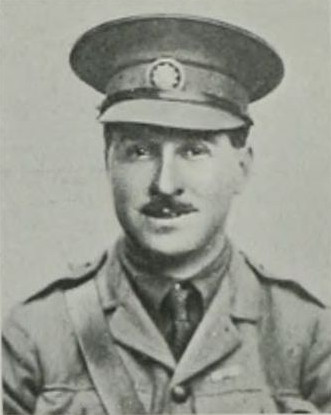
Frederick A. C. Liebert.
LIFTON, ALBERT HUMPHREY, Shipwright, 1st Class, 342645, H.M.S. Cressy; lost in action in the North Sea, 22 Sept. 1914.
LIGHT, ARTHUR PERCY, Ship’s Steward’s Assistant (Pensioner), 148076, H.M.S. Hogue; lost in action in the North Sea, 22 Sept. 1914.
LIGHTWOOD, JAMES, Leading Seaman, 233265, H.M.S. Aboukir; lost in action in the North Sea, 22 Sept. 1914.
LIHOU, THOMAS ELISHA, A.B. (B. 3473), 226505, H.M.S. Good Hope; lost in action off Coronel, on the coast of Chili, 1 Nov. 1914.
LILLY, EDWARD AUGUSTUS, Private, No. 8582, 2nd Battn. Coldstream Guards; b. co. Warwick; served with the Expeditionary Force in France and Flanders; killed in action, 8 Oct. 1914; m.
LILLIE, JAMES, Private, No. 904, 18th Battn. Australian Imperial Force; served in Egypt and at the Dardanelles; died 30 Aug. 1915, of wounds received in action there.
LILLEY, ALBERT EDWARD, Stoker, 2nd Class, K. 21849, H.M.S. Pathfinder; lost when that ship was sunk by a mine, about 20 miles off the East Coast, 5 Sept. 1914.
LINCOLN, WILLIAM HARRY, Petty Officer (N.S.), 208647, H.M.S. Cressy; lost in action in the North Sea, 22 Sept. 1914.
LINDLEY, HARRY, A.B., J. 2174, H.M.S. Hawke; lost when that ship was torpedoed in the North Sea, 15 Oct. 1914.
LINDRIDGE, CHARLES MALCOLM, Private, No. 10023, 2nd Battn. The Queen’s Royal West Surrey Regt., s. of Edwin Lindridge, of Spitzbrook Cottage, Marden, Kent; served with the Expeditionary Force in France, etc.; reported missing 29 Oct. 1914, and now assumed to have been killed in action on or about that date.
LINDSAY, ALEXANDER CAMERON, Private, No. 2462, 1/9th Battn. The Royal Scots (T.F.), s. of the late William Lindsay, Clothier, by his wife, Jane (55, Montpelier Park, Edinburgh), dau. of Alexander Cameron; b. Edinburgh, 18 Aug. 1895; educ. George Heriot’s School; joined the Royal Scots after the outbreak of war, Sept. 1914; went to France, 23 Feb. 1915, and was killed in action during the 2nd Battle of Ypres, 23 April, 1915, while helping a wounded schoolfellow after being twice wounded himself. Buried near St. Jean, two and half miles N.E. of Ypres.
LINDSAY, DAVID SAUNDERS BROWN, Boy, 1st Class, J. 26630 (Devon.), H.M.S. Hawke; lost when that ship was torpedoed in the North Sea, 15 Oct. 1914; m.
LINDSAY, GEORGE LAWRENCE, Chief Stoker, 176607, H.M.S. Good Hope; lost in action off Coronel, on the coast of Chili, 1 Nov. 1914.
LINDSAY, JAMES HARPER, Capt., No. 1 Coy., Forth Royal Garrison Artillery (T.F.), yr. s. of the late James Lindsay, J.P., by his wife, Ann (Edzell Lodge, Inverleith Terrace, Edinburgh), dau. of James Harper, of Edinburgh; b. Edinburgh, 15 April, 1885; educ. Edinburgh Institution; was a partner in firm of Wm. Lindsay & Son, Cannon Mills, Edinburgh; joined the R.G.A. as 2nd Lieut. 1905; promoted Lieut., 1909, and Captain, 1 June, 1913; was called up on the outbreak of war in Aug. 1914, and died in Craigleith Military Hospital, Edinburgh, 24 June, 1915, from the result of injuries received in a motor accident, while on service; unm. He was a keen Rugby footballer and played for the Edinburgh Institution F.P’s. for ten years, six of which he was captain of the team, and on retiring from play he was elected to the Scottish Rugby Union, of which body he was a member until his death. He took great interest in his artillery work, and took his company, which was qualified to shoot for the King’s Cup, to the Isle of Wight for the contest.
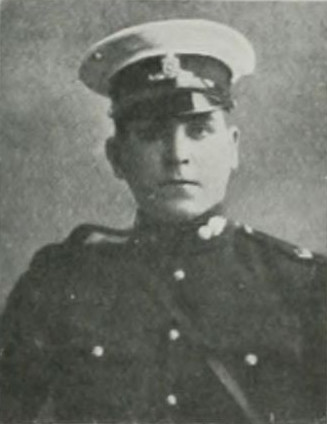
James Harper Lindsay.
LING, GEORGE BATTELY, Rifleman, No. Y211, 4th Battn. King’s Royal Rifle Corps, 2nd s. of the late William Page Ling, of Auckland, New Zealand, Farmer, by his wife, Christina Morrison (252, Spring Road, Ipswich), dau. of George Mitchell, of Alloa, and grandson of the late William Girling Ling, of Brooks Hall Road, Ipswich; b. Auckland, 4 Jan. 1891; educ. Ipswich Municipal Secondary School; was an Ironmonger; joined the King’s Royal Rifles after the outbreak of war, 29 Aug. 1914; went to France, 5 Dec. 1914, and was killed in action at Festubert, 10 May, 1915; unm.
LING, WILLIAM, Corpl., No. 8008, 2nd Battn. Northamptonshire Regt., s. of Samuel Ling, of Theberton, Suffolk, by his wife, Maria; b. Lowestoft, 20 April, 1888; educ. Board School there; enlisted 6 June, 1906; served in Malta and Egypt, from 18 Jan. 1911 to Oct. 1914; and with the British Expeditionary Force in France and Flanders, from Nov. to 10–14 March, 1915, between which latter dates he was killed in action at Neuve Chapelle. He m. at St. Margaret’s Church, Lowestoft, 8 Dec. 1910, Barbara Ellen, 3rd dau. of Edward Cannell, of Lowestoft; s.p.
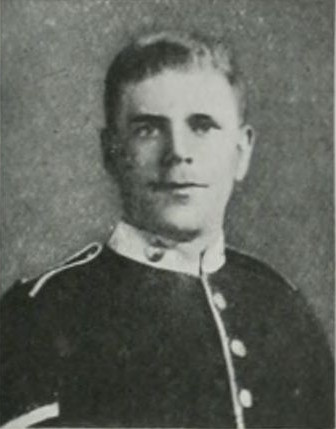
William Ling.
LINNEY, ALFRED, Petty Officer, 2nd Class, R.F.R. (B. 1996), 194089, H.M.S. Good Hope; lost in action off Coronel, on the coast of Chili, 1 Nov. 1914.
LINSDELL, HENRY, A.B. (R.F.R., Ch. B. 3328), 162235, H.M.S. Aboukir; lost in action in the North Sea, 22 Sept. 1914.
LINTERN, ALFRED TENNYSON, Private, No. 13189, 2nd Battn. Coldstream Guards, 3rd s. of Edward George Lintern, of Hill Side Road, St. George’s, Bristol, Foreman under the Bristol Council, by his wife, Clara (144, Two Mile Hill, Kingswood, Bristol), dau. of the late James Hicks, of St. George’s, Bristol; b. Bristol 18 July, 1892; educ. Summer Hill Board School, St. George Glou, Bristol; was for three years a member of the 6th (Territorial) Battn. of the Gloucestershire Regt., and in 1912 joined the Metropolitan Police Force. After the outbreak of war he enlisted, 14 Oct. 1914; went to France, 28 April, 1915, and was killed in action near Laventie, 29 Dec. 1915; unm. Buried Fauquissart.
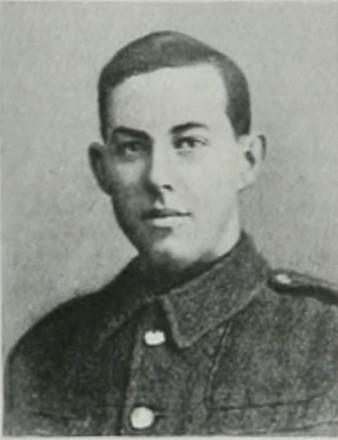
Alfred T. Lintern.
LINTON, JOHN THOMAS, Stoker, 1st Class (B. 2539), 303386, H.M.S. Good Hope; lost in action off Coronel, on the coast of Chili, 1 Nov. 1914.
LINTON, WILLIAM, Private, No. 11369, 2nd Battn. Scots Guards, yst. s. of John Paterson Linton, of Knowepark, Heriot, co. Midlothian, by his wife, Mary, dau. of John Anderson, Blainslie; b. Knowepark aforesaid, 15 Aug. 1896; educ. Heriot Public School, Dalkeith, and Lasswade Secondary Schools, and was about to enter upon his college and University course when war was declared; enlisted in the Scots Guards, 22 Sept. 1914; went to France, 31 March, 1915, and died a prisoner of war in the German Field Hospital at Seclin, 21 May, 1915, from wounds received in action at Festubert on the 18th. It is said that he was one of the 80 Scots Guards who, at Festubert, sold their lives so dearly and fell to a man, after firing their last cartridge. At Heriot School he won all the chief prizes of his years, including a Secondary Education Bursary, open to the county, and at Dalkeith and Lasswade Schools the Intermediate and Junior Students’ Certificates respectively. As a rifle shot he did yeoman service to the Heriot Ride Club in their interclub matches, won the club championship (Mathison Cup) twice, and at the International Meeting in Glasgow he won the cup as boy champion of Scotland and the same cup at Edinburgh in the following year.
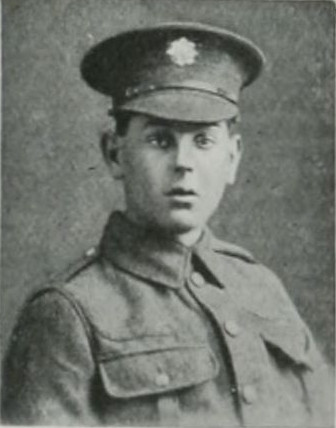
William Linton.
LINTORN, JOHN THOMAS, Gunner, R.M.A. (R.F.R., B. 1288), late R.M.A., 9658, H.M.S. Hogue; lost in action in the North Sea, 22 Sept. 1914.
LINTOTT, ALBERT EDWARD, L.-Corpl., No. 7987, 1st Battn. Coldstream Guards; b. co. Sussex; served with the Expeditionary Force in France and Flanders; killed in action, 8 Sept. 1914; unm.
LINTOTT, CHARLES FRANK, Private, No. 8776, 2nd Battn. Queen’s Royal West Surrey Regt.; served with the Expeditionary Force in France and Flanders; killed in action at Zonnebeke, 21 Oct. 1914.
LION, THOMAS EDWARD, Private, No. 265, 3rd City of London Field Ambulance, R.A.M.C. (T.F.), only s. of Juan Joaquin Lion, of 28, Frognal, Hampstead, N.W., Agent, by his wife, Anna, dau. of Henry Boehmer; b. Stanmore, co. Middlesex, 23 Jan. 1895; educ. Lower School of John Lyon, Harrow-on-the-Hill; was a member of the staff of the Royal Mail Steam Packet Co.; volunteered and joined the R.A.M.C. (T.F.), after the outbreak of war, 5 Sept. 1914; went to France, 16 Jan. 1915, and died at a Field Hospital, 28 Sept. 1915, of wounds received during the Battle of Loos. Buried in Bethune Cemetery. His section officer wrote: “He was one of those upon whom one could always rely to undertake any duty at any time and to do it well and cheerfully, and with good will. He was one of those competent men in whom his officers always had confidence, and they were never disappointed. He died gallantly in this battle, being hit by a shell in the trenches at the very outset, and died the same night in the Field Hospital. Two other members of his stretcher squad were killed at his side. He fell doing his duty and after having done it well for many months.”; and a friend: “He was a fine fellow in every sense of the word, always ready to do anything, and there is not a man in the Corps that was not cut up about it.”
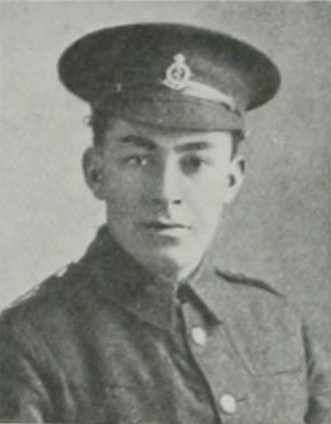
Thomas Edward Lion.
LIPSETT, WILLIAM ALFRED, Barrister-at-Law, Private, No. 20330, 10th Battn. Canadian Infantry, yst. s. of the late Robert Lipsett, Ballyshannon, Ireland; b. at Ballyshannon, 29 Jan. 1886; educ. St. Andrew’s College, Dublin, and Trinity College, Dublin. He was a member of the Irish Bar, but in the spring of 1914 went out to Canada and was engaged in legal work in Calgary, Alberta. Two days after war broke out he volunteered, enlisting as a private, and refusing a commission. He came home with the 1st Canadian Contingent, and went to France with them in Feb. 1915. He was killed on the night of 22–23 April, 1915, at the Second Battle of Ypres during the charge of the 10th and 16th Canadian Battns. on the wood to the west of St. Julien. It will be remembered that these regts. charged through the wood, against far superior numbers, under the heaviest machine-gun fire, and actually reached a point 500 yards in advance of the wood, retaking the four British guns which had been lost in the afternoon of 22 April. Unfortunately the casualties were very high. The 10th Battn. went into the wood 1,000 strong, and came out only 200 strong. Mr. Lipsett played a gallant part in this attack. As Major Ormond, who took over command of the 10th Battn. after Col. Boyle was killed, wrote: “I saw Lipsett the night that he was killed; we went into action charging the wood west of St. Julien at 11.50 p.m., April 22. The Grenadiers were grouped on our left flank and did exceptionally well, Lipsett being one of them. As soon as we had taken the trench, they continued along to the left until they were stopped. Lipsett like the others was very cool and appeared to have no fear. They were subject to the most severe machine-gun fire I have known, but pressed on until all were killed and wounded. I regret to say that as he was killed within 10 or 15 yards from the German redoubt at the corner of the wood we were unable to recover his body. He was an excellent soldier.” His Adjutant also wrote: “He was a gallant soldier and is deeply regretted by all ranks,” and again, “He rendered valuable service to his Battn. and is universally regretted.” His eldest brother, Captain Lewis R. Lipsett, also a member of the Irish Bar, is (1916) serving in the Army Service Corps, with the Expeditionary Force in France. His cousin, Brigadier-General Lewis J. Lipsett, formerly of the Royal Irish Regt., was appointed a C.M.G. for his services at the Second Battle of Ypres, while in command of the 8th Battn. Canadian Infantry.
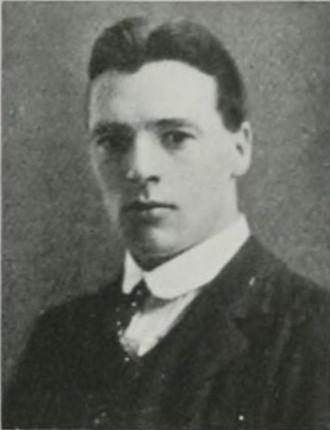
William Alfred Lipsett.
LIPTROTT, ERIC CARR, Lieut., 6th Jat. L.I., only s. of the Rev. Boulton Brander Liptrott, M.A., Vicar of St James’s, Teignmouth, co. Devon, by his wife, Louisa Constance, dau. of George Carr, of Greenlawalls, Northumberland; b. Plymouth, 14 Oct. 1887; educ. Sutton Valence, and the Royal Military College, Sandhurst; was attd. to the West Yorks; gazetted 2nd Lieut., unattached Indian Army, 17 Aug. 1907, and promoted Lieut. 17 Nov. 1909; was attd. to the West Yorks Regt. for his first year, then joined the 6th Jats.; served in the Mohmand Expedition of 1908, with the West Yorkshire Regt. (medal), and with the Expeditionary Force in France and Flanders from 20 Oct. to 26 Nov. 1914, on which later date he died in the Casino Hospital at Boulogne, from wounds received in action at Festubert on the 21st; unm. Buried in the New Cemetery at Boulogne. Col. H. I. Roche, Commanding Officer of the 6th Jats., wrote: “It was with the deepest sorrow we heard of your son’s death, and you have the sympathy of all his brother officers in the sad loss you have sustained. We hoped so much he was going to be spared as, though he had sustained a very severe wound, there seemed some hope he might pull through. He is a great loss to the regt. as he had been doing so particularly well, and indeed, he had been specially brought to notice for his gallant behaviour in an attack on the night of 16 Nov.”; and Major P. H. Dundas: “I am very sorry indeed to see from the papers that your son succumbed to his wound. He had been my subaltern since 1911, and I never wish to have a better. He was always keen, full of energy and cheery as possible at anything he was asked to do. Four days before he was hit he helped me in a night attack on some German trenches, and it was very largely due to his cool leading of the left half of the attack that we brought the affair off successfully. Believe me you have the sincerest sympathy of the whole regt. in your loss.” He was the best revolver shot of his year at Sandhurst, and also represented Sandhurst against Woolwich in the revolver shooting competition. He was an expert at all games, especially golf, rugby football, for which he gained his cap at Sutton Valence, and tennis, for which he also won two firsts at the Teignmouth Tournament in 1914, and when in India he captained the West Yorkshire Rugby football team which won the cup at Lahore.
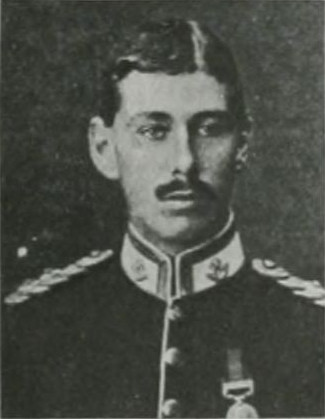
Eric Carr Liptrott.
LITSON, CHARLES, Private, R.M.L.I., Ch. 17688, H.M.S. Cressy; lost in action in the North Sea, 22 Sept. 1914.
LITTLE, ANDREW (DREW), 2nd Lieut., 9th Battn. Durham L.I. (T.F.), yr. s. of the late Andrew Little, of Hexham, Miller and Corn Merchant, by his wife, Sarah, dau. of John Shanks; b. Hexham, 25 May, 1886, educ. Bilton Grange, Harrogate; was with his brother John George Little, joint Managing Director of Messrs. A. & G. Little, Ltd., Millers, and a partner in the County Roller Flour Mills at Hexham, but on the outbreak of war joined the Army. He was gazetted 2nd Lieut. 3 Nov. 1914, left Newcastle for the Front, 19 April, 1915, and was killed in action near Ypres, six days later (Sunday, 25 April); unm. Writing to his mother, Capt. J. E. Raine of the B Coy. said: “He died at the head of his platoon, leading his men in an advance. We were being shelled and I had just walked up to him to say something, when a shell burst. Death was instantaneous, and we buried him later in a little churchyard near Voloerenhook, Belgium, and marked the place with a cross. This was Sunday, about 6 p.m. Nothing could have been better than the magnificent way in which he behaved throughout the few days we were in this zone.” Little was a playing member of the Tyneside Athletic Association, took a keen interest in lawn tennis, and acted as joint secretary of the annual open tournament promoted by the above Association. Alongside with his brother, Mr. J. C. Little, he regularly used to figure in the matches of the Tynedale Hockey Club, and for several years represented Northumberland County.
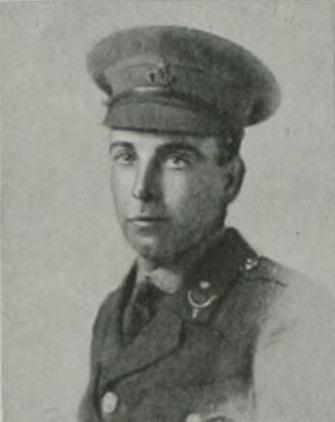
Andrew Little.
LITTLE, WILLIAM ERIC, Private, No. 2594, 1/15th Battn. (Civil Service Rifles) The London Regt. (T.F.), 2nd s. of William Little, of Nile House, Whitley Bay, Northumberland, Tea Dealer and Provision Merchant, by his wife, Annie, dau. of the late W. Aynsley, of Consett, J.P.; b. Whitley Bay, 12 Oct. 1896; educ. Park County Council Schools there and Rutherford College, Newcastle; passed his examination for the Civil Service and was appointed to National Health Insurance Office, London; joined the Civil Service Rifles in Sept. 1914; went to France, 17 March, 1915, and died at St. Omer Hospital, 6 April, 1915, of cerebro-spinal meningitis. Buried in the French Souvenir Cemetery, St. Omer. His Lieut. wrote: “Your son was a good soldier and did his duty, and I personally am very sorry to lose him. He was always in the leading four of my platoon, and I used to love his merry face. He died as soldier; he was ready, and that is all a soldier can do.”
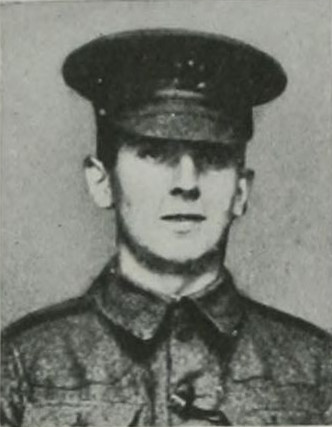
William Eric Little.
LITTLEHALES, RICHARD, Private, No. 11988, 3rd Battn. Coldstream Guards, yst. s. of the Rev. Walter Gough Littlehales, of 21, Princes Avenue, Muswell Hill, N., Clerk in Holy Orders, by his wife, Mary, dau. of the Rev. J. E. Robinson, Vicar of Chieveley, Berks; b. Bulvan Rectory, near Romford, co. Essex, 21 Sept. 1881; educ. Forest School, Walthamstow, and Chelsea Technical College, where he trained as an engineer; after working for several well-known firms, joined the staff of the East Surrey Traction Co.; volunteered and enlisted in the Coldstreams in Sept. 1914; went to France, 22 Jan. 1915, and died at Netley Red Cross Hospital, 13 June, 1915, of shell wounds received in action at Givenchy, 22–25 April; unm.
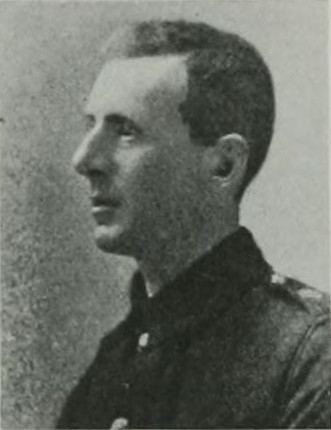
Richard Littlehales.
LITTLEJOHN, ERIC GEORGE, Private, No. 2596, 1/5th Battn. The Royal Scots (T.F.), eldest s. of George Littlejohn, of 245, Dalkeith Road, Edinburgh, Commercial Traveller, by his wife, Christina, dau. of William Gardner; b. Edinburgh, 30 Nov. 1894; educ. George Heriot’s School; was an employee in the firm of Messrs. Dowell, of George Street, Edinburgh, but after the outbreak of war joined the Royal Scots, Sept. 1914; volunteered for foreign service; went to the Dardanelles, 6 May, and was killed in action there, 28 June, 1915. Letters from his officers and comrades all speak of his popularity, courage and soldierly capabilities. He was a football player at George Heriot’s School, played forward for his Battn.’s Rugby XV during the winter 1914–15, and was one of the team that secured the second Gold Medals at the Military Sports at Melrose in April, 1915. His yr. brother, Sapper Arthur William Gardner Littlejohn, is (1916) on active service with the City of Edinburgh (Fortress) Royal Engineers.
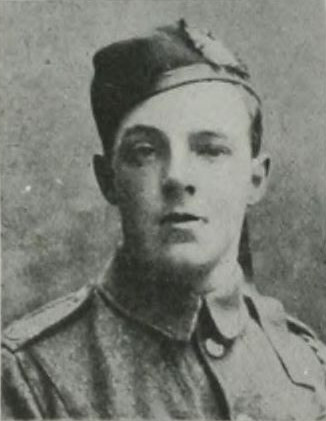
Eric George Littlejohn.
LITTLEWOOD, ARTHUR FRANCIS BEWICKE, Corpl., No. 1603, 1st Battn. Pioneer Section, Honourable Artillery Coy. (T.F.), 2nd s. of the Rev. Elijah Harrison Littlewood, of Lingfield Lodge, East Grinstead, co. Sussex, formerly vicar of Biggleswade, co. Beds, by his wife, Julia Fanny, dau. of Henry Bellmam; b. Peterboro’, 18 July, 1884; educ. Haileybury and Oriel College, Oxford, where he was a member of the O.T.C., was Assistant Master at Haywards Heath and Eastbourne; volunteered and joined the H.A.C. on the outbreak of war in Aug. 1914; went to France, 18 Sept. following; worked for six months on the communication lines, and was then sent to the firing line, where he was attd. to the Pioneer Section, and it was while in command of this section that he died at No. 23 General Hospital, Etaples, 7 July, 1915, of wounds received in action at Ypres on the 5th; unm. Buried at Etaples. His Capt. wrote: “He was a very fine fellow, and will be a great loss to me,” and a comrade: “He was one of the nicest fellows I ever knew, and men of many regiments thought the same. He had been promoted Corpl. since he came out and was thought very highly of.” At Haileybury he played for the 1st XI and for the Rugby XV.
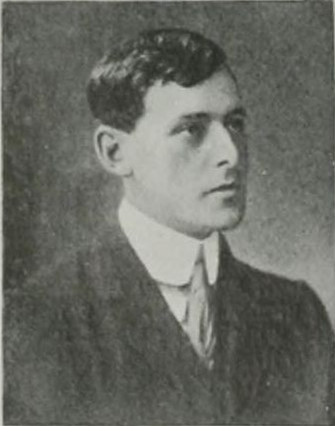
Arthur F. B. Littlewood.
LIUNSTIE, PERCY, Stoker, H.M.S. Good Hope; lost in action off Coronel, on the coast of Chili, 1 Nov. 1914.
LIVINGSTONE, WESTLEY, A.B. (R.F.R., B. 3031), 197062, H.M.S. Hogue; lost in action in the North Sea, 22 Sept. 1914.
LLOYD, EDWARD RAYMOND, Capt. and Adjutant, 2nd Battn. Royal Inniskilling Fusiliers, elder surviving s. of Lieut.-Col. Edward Lloyd, of Bedford, late Indian Cavalry, by his wife, Mary Katharine, dau. of the Rev. John Harding; b. 13 Nov. 1882; educ. Bedford Grammar School and Sandhurst; gazetted 2nd Lieut. 1st Battn. of the Inniskillings, 22 Oct. 1902, promoted Lieut. 1 Jan. 1905, and subsequently transferred to the 2nd Battn. then in Egypt, of which corps he was successively assistant adjutant and (29 Aug. 1911) adjutant. He received his coy. 21 Feb. 1912, went to the Front with the Expeditionary Force in Aug. 1914, was wounded in the fighting about Cambray Le-Cateau on 26 Aug. and died of wounds in the hospital at Cambray, 3 Dec. following; unm. He was mentioned in F.M. Sir John (now Lord) French’s Despatch of 8 Oct. for gallant and distinguished service in the field. A good all-round sportsman, he represented his school in the Public Schools Boxing Competition held at Aldershot in 1899, and was a keen follower of the hounds and a frequent rider in point-to-point hunt steeplechases. He was also a good shot both with gun and rifle.
LLOYD, FREDERICK ALLAN, Bugler, R.M.L.I., Ch./18106, H.M.S. Aboukir; lost in action in the North Sea, 22 Sept. 1914.
LLOYD, FRANK, Gunner, R.M.A., 12644, H.M.S. Aboukir; lost in action in the North Sea, 22 Sept. 1914.
LLOYD, GEORGE, Stoker, 1st Class, 298028, H.M.S. Hogue; lost in action in the North Sea, 22 Sept. 1914.
LLOYD, GERALD AYLMER, Capt., 1st Battn. The Welsh Regt., yr. s. of Francis Aylmer Lloyd, of Eastwood, Bridgwater Road, Weybridge; b. London, 17 April, 1888; educ. Cheltenham College, and the Royal Military College, Sandhurst; gazetted 2nd Lieut. Welsh Regt., 19 Sept. 1908; and promoted Lieut. 1 April, 1911, and Capt. 16 Nov. 1914; passed through the Hythe Musketry School with distinction in 1912; served in the Camel Corps, Egypt, 1912–13; was Adjutant of the Missouri Volunteer Rifles in India from March to Aug. 1914; returned to England in Dec. 1914; went to France, 14 Jan. 1915, and was killed in action near Ypres, 16 Feb. 1915; unm. Buried at Chateau Rosendal. His brother, Lieut. Francis Charles Aylmer Lloyd, Highland L.I., died of wounds, 8 Oct. 1915.
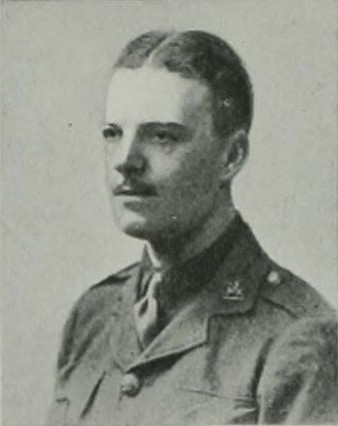
Gerald Aylmer Lloyd.
LLOYD, LEWIS JOHN BUCKNALL, Lieut., Acting Capt., 2nd Battn. King’s Shropshire L.I., only s. of John Bucknall Lloyd, of Dorrington Grove, Shrewsbury, J.P., by his wife, Adela Maud, dau. of the late Percival Spearman Wilkinson, of Mount Oswald, Durham, J.P.; b. Toronto, Kansas, U.S.A., 19 Sept. 1886; educ. Charterhouse and the Royal Military College, Sandhurst; gazetted 2nd Lieut. in the 1st Battn. Shropshire L.I., 9 Oct. 1907, and promoted Lieut., 24 July, 1912; transferred to the 2nd Battn. in 1912 and served with it at Trimulgherry, Secunderabad, India, returning to England in Nov. 1914; went to France, 19 Dec. 1914, and from early in March, 1915, was acting Capt., and was killed in action during the Second Battle of Ypres, 28 April, 1915, while leading an attack on a German trench near Zillebeke; unm. He was last seen wounded and leaning against the wire of the German trench he was charging. Buried near Zillebeke.
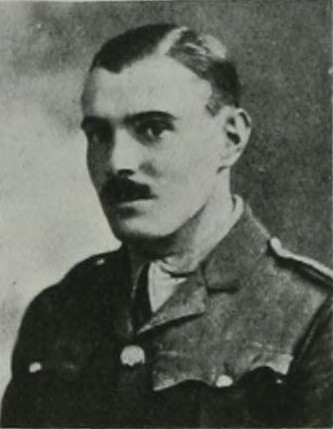
Lewis John B. Lloyd.
LLOYD, THOMAS, Stoker, 2nd Class, S.S. 115871, H.M.S. Good Hope; lost in action off Coronel, on the coast of Chili, 1 Nov. 1914.
LLOYD, WALTER, Capt., 8th (Service) Battn. Royal Welsh Fusiliers, 2nd s. of Thomas Lloyd, of Leghorn, Italy, and of Minard, co. Argyle, by his wife, Anne, 2nd dau. of John Campbell, of Kilberry, Argyleshire; b. Casa Mansi, Bagni-de-Lucca, Italy, 17 July, 1874; educ. Farnborough School and Wellington College; gazetted 2nd Lieut. to the Royal Welsh Fusiliers, from the Militia, 24 June, 1896; and promoted Lieut. 21 April, 1898, and Capt. 1 Jan. 1905; served in Malta; Cairo; Crete, where, during International occupation, he acted as Interpreter at the sittings of the International Committee; Hong Kong; and India; was Adjutant of Volunteers from Jan. 1905 to 31 March, 1908, and of Territorial Force from 1 April to 9 July, 1908; joined the Reserve of Officers; was called up on the outbreak of war in Aug. 1914, and posted to the 8th Battn. Royal Welsh Fusiliers; went to the Dardanelles, 28 June, 1915, and was killed in action at Anzac, Gallipoli, 7 Aug. following, while leading his coy. in an attack on a Turkish trench. Buried at Quinn’s Post. He m. at St. John’s Cathedral, Hong Kong, 8 Nov. 1899, Phyllis, 2nd dau. of Admiral Sir Francis Powell, K.C.M.G., C.B., and had two daus.: Phyllis Joan, b. Hong Kong, 25 Sept. 1901; and Alma, b. at Minard Castle, Argyleshire, 21 May, 1904.
LLOYD, WALTER REGINALD, Lieut.-Col., 1st Battn. Loyal North Lancashire Regt., 5th and yst. s. of the late Sampson Samuel Lloyd, of Dolobran, co. Montgomery, and Janoway Hill, co. Surrey, M.P. for Plymouth (1874–80), and South Warwickshire (1885–86), Chairman of Lloyd’s Bank, and yr. s., by his 2nd wife, the late Marie Wilhelmine Sophie Christine (Danesrood, Guildford), dau. of Lieut.-Gen. Frederick William Menckhoff, Prussian Army; b. at The Farm, Sparkbrook, Birmingham, 18 Aug. 1868; educ. Eton, and the Royal Military College, Sandhurst; gazetted 2nd Lieut. 2nd North Lancashire Regt., 22 Aug. 1888; and promoted Lieut. 21 June, 1891; Capt. 2 Dec. 1895; Major 1 June, 1906; and Lieut.-Col. (two days before his death) 12 Sept. 1914; was Adjutant, 3 July, 1897, to 3 July, 1901; served in the South African War with 1st Battn., 1901–02; took part in the operations in the Transvaal, July, 1901, to March, 1902, and in those in Cape Colony, March to 31 May, 1902 (Queen’s medal with four clasps); and with the Expeditionary Force in France and Flanders, from Aug. 1914, and was killed in action during the Battle of the Aisne, 14 Sept. following; unm. He rowed in the Eton Eight in 1886.
LOBB, RICHARD JAMES, Leading Carpenter’s Crew, No. M. 2882, R.N.; killed on H.M.S. Highflyer in action with the Kaiser Wilhelm der Grosse, off the Ouro River, on the West African Coast, Aug. 1914.
LOBJOIT, WILLIAM BENJAMIN, Private, No. 3474, 2/10th Battn. Middlesex Regt. (T.F.), eldest s. of William Benjamin Lobjoit, of 1, Glebe Street, Chiswick, W., Plumber, by his wife, Alice, dau. of John Philip Buckland; b. Chiswick, 20 Dec. 1894; educ. Hogarth Boys’ School there; was a Milk Carrier; enlisted, 5 April, 1915; left England with his Regt. for the Dardanelles on 17 July, 1915, and was killed in action at Gallipoli, 14 Aug. following; unm.
LOCK, WILLIAM HENRY, A.B. (R.F.R., B. 3845), 231925, H.M.S. Good Hope; lost in action off Coronel, on the coast of Chili, 1 Nov. 1914.
LOCKE, ARCHIBALD CHARLES, Stoker, 1st Class (R.F.R., Ch. B. 7470), S.S. 102630, H.M.S. Aboukir; lost in action in the North Sea, 22 Sept. 1914.
LOCKE, WILLIAM, Private, No. 13927, 3rd Battn. Middlesex Regt., s. of Henry Locke, of 44, Gloster Road, Upper Edmonton; served with the Expeditionary Force in France; killed in action, 11 May, 1915.
LOCKSMORE, RICHARD JAMES, Private, No. 9867, 2nd Battn. Royal West Surrey Regt.; served with the Expeditionary Force in France; killed in action, 16 May, 1915; m.
LOCKWOOD, MARK, Private, No. 7346, 3rd Battn. Coldstream Guards; b. co. York; served with the Expeditionary Force in France and Flanders; died in No. 4 Clearing Hospital, Coulommiers, 9 Sept. 1914, of wounds received in action. Buried at Boitron in a field adjoining road, and a cross erected; unm.
ELIOTT-LOCKHART, PERCY CLARE, D.S.O., Lieut.-Col. Commanding 59th Scinde Rifles, Frontier Force, only s. of Col. William Eliott-Lockhart, of Glentromie, Camberley, Royal (Madras) Artillery (died 23 Aug. 1915), by his wife, Ada Clare, dau. of Henry Clan Cardew, Lieut., 94th Regt.; b. Kamptee, India, 21 Sept. 1867; educ. Somerset College, Bath, and the Royal Military College, Sandhurst; gazetted 2nd Lieut. (unattd.) Indian Army, 23 Nov. 1887; served for one year with the King’s Own Scottish Borderers, and then for two years (1888–90) with the Indian Staff Corps, 14 Nov. 1890; was appointed to Queen Victoria’s Own Corps of Guides in 1892; and became Capt. 23 Nov. 1898; Major 23 Nov. 1905, and Lieut.-Col. 16 Nov. 1913; served (1) as Brig. Transport Officer in the Waziristan Expedition, 1894–95 (medal with clasp); (2) with the Chitral Relief Force, 1895, present at storming of the Malakand Pass (medal with clasp); (3) on the N.W. Frontier of India, 1897–98; took part in the defence, and relief of, Malakand; the relief of Chakdara, Malakand; operations in Bajaur and in the Mamund country; Utman Kiel and Buner (mentioned in Despatches [London Gazette, 5 Nov. 1897], medal with two clasps, D.S.O.); (4) in China, 1900 (medal); (5) in East Africa, 1903–04 as D.A.A. and Q.M.G., 2nd Brigade. Somaliland Field Force; took part in operations in Somaliland; action at Jidballi (again mentioned in Despatches [London Gazette, 2 Sept. 1914], medal with two clasps): and (6) with the Expeditionary Force in France, in command of the 59th Scinde Rifles from 28 Jan. 1915, and died 12 March, 1915, from wounds received in action at Neuve Chapelle, a few hours previously. Buried about a mile to the west of Neuve Chapelle. He m. at High Leigh, Cheshire, 26 April, 1905, Katherine Mary, dau. of James Worrall, of High Leigh, and had two children: William, b. 11 Feb 1906; and Katharine Clare, b. 3 March, 1909.
LOFT, ALMA JAMES, Stoker, R.N.R., 1847U, H.M.S. Hogue; lost in action in the North Sea, 22 Sept. 1914.
LOFTS, BERNARD, Private, No. 1966, 6th, attd. 8th Battn. The Royal Scots (T.F.), eldest s. of Alfred Lofts, of Amersham, co. Bucks, Provision Merchant, by his wife, Isabel, dau. of William Hicks, of Looe, Cornwall; b. Canonbury, N., 20 April, 1891; educ. Watford Grammar School, and Bethany House School, Goudhurst, co. Kent; was apprenticed to the drapery trade at Uxbridge; and was successively employed by Eaden and Lilley, Cambridge; Hitchcock Williams, St. Paul’s Churchyard; and C. Jenner and Co., Edinburgh; joined the Royal Scots after the outbreak of war, 2 Sept. 1914; went to France, 2 Nov. 1914, and was killed in action at Festubert, 16 May, 1915; unm. Buried near Festubert.
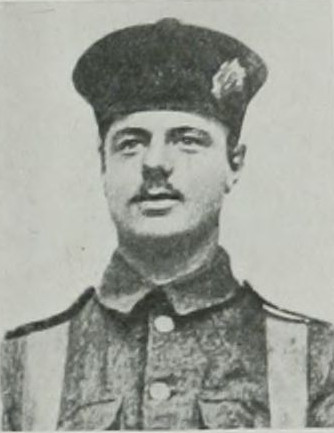
Bernard Lofts.
LOFTS, JAMES, Stoker, Petty Officer, 306070, H.M.S. Hawke; lost when that ship was torpedoed in the North Sea, 15 Oct. 1915; m.
LOGAN, JAMES AIRD, A.B., 215575, H.M.S. Cressy; lost in action in the North Sea, 22 Sept. 1914.
LOGAN, JOHN, Stoker, 1st Class (R.F.R., Ch. B. 9595), S.S. 106972, H.M.S. Cressy; lost in action in the North Sea, 22 Sept. 1914.
LOMAX, GERALD DAVID, Lieut. 3rd Battn. The Welch Regt., 2nd s. of the late Capt. David Alexander Napier Lomax, Welch Regt. (killed in action at Driefontein, 10 March, 1900 during the South African War), by his wife, Annette (now wife of Major Frank Towle, of 3, Clarence Terrace, Regent’s Park, N.W.); b. Manorbier, co. Pembroke, 6 Jan. 1895; educ. Marlborough College; gazetted 2nd Lieut., The Welch Regt., 15 Aug. 1914, and promoted Lieut. 14 March, 1915; went to France, 12 March, whilst there was attd. to the 2nd Royal Berkshire Regt., and died in the hospital barge, 11 May, 1915, of wounds received in action at Fromelles two days previously; unm. Buried at Estaires, in the English Cemetery. His Doctor wrote: “We did all we could to make him comfortable, but his wounds were so severe that medically speaking he never had a chance; fortunately he suffered very little pain, and died as I fancy he must have lived, bravely thinking of others more than himself.” His brother, Capt. C. E. N. Lomax, also Welch Regt., is now (1916) on active service, being a Temporary Major in the Manchester Regt.
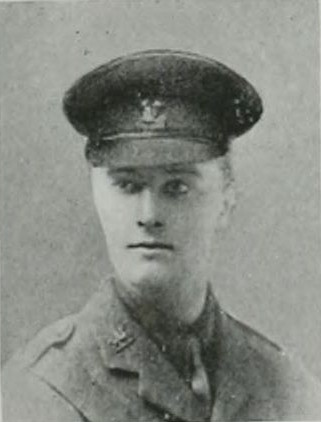
Gerald David Lomax.
LOMAX, HARRY, Private, No. 2164, 2nd Battn. 1st Infantry Brigade, Australian Imperial Force, 2nd s. of Robert Lomax, of 4, Birmingham Street, Bolton, Mechanic, by his wife, Elizabeth, dau. of Joseph Smith; b. Bolton, co. Lancaster, 10 Jan. 1885; educ. St. Matthew’s Church of England Schools and Bolton Municipal Secondary School; sometime employed at the Bolton Post Office; emigrated to New Zealand in Sept. 1909, and later went to Sydney, Australia, where he was a member of the Lancashire Association; volunteered for Imperial service, 4 May, 1915, and joined the 2nd Battn. Australian Imperial Force; left for Egypt, 16 June, 1915; went to the Dardanelles, 1 Aug., and was killed in action there, 6–9 Aug. 1915, during the fighting at Lone Pine; unm.
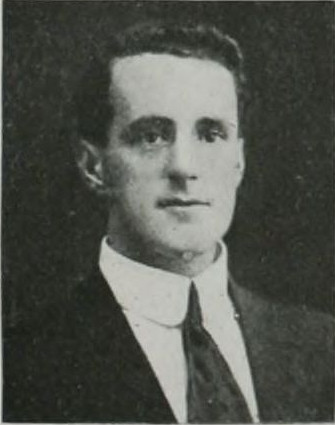
Harry Lomax.
LONG, FREDERICK RICHARD RANDOLPH, Bugler, R.M.A., 10307, H.M.S. Good Hope; lost in action off Coronel, on the coast of Chili, 1 Nov. 1914.
LONG, JOHN EDWARD, Stoker, 1st Cl. (R.F.R., Ch. B. 7397), S.S. 102426, H.M.S. Aboukir; lost in action in the North Sea, 22 Sept. 1914.
LONG, STEWART SHACROFT, Leading Seaman, 231412, H.M.S Pathfinder; lost when that ship was sunk by a mine, about 20 miles off the East Coast, 5 Sept. 1914.
LONGBOURNE, WILLIAM LOUIS JENNINGS, 2nd Lieut., 5th Battn. The Queen’s Royal West Surrey Regt. (F.), 4th surviving s. of the late Charles R. V. Longbourne, of Ripsley, co. Sussex, by his wife, Caroline Elizabeth Ainslie, dau. of the late Rev. and Hon. James Norton, of Anningsley Park, co. Surrey [4th son of Hon. Fletcher Norton, a baron of the exchequer in Scotland, and gdson. of Fletcher, 1st Baron Grantley, P.C.]; b. Ripsley, 24 Aug. 1887; educ. Malvern College, passed all the Law examinations for a Solicitor; gazetted 2nd Lieut. 5th Battn. The Queen’s, 9 May, 1914, promoted Lieut., took part in the landing at Suvla Bay on the early morning of 9 Aug. 1915, and in the subsequent attack on Chocolate Hill, the same day; while leading his platoon in the attack he was badly wounded when near the top of the hill, but refused to allow his men to help him, telling them to go on. Afterwards, owing to the cross fire and nature of the country, it was found impossible to get to him and he was never seen again.
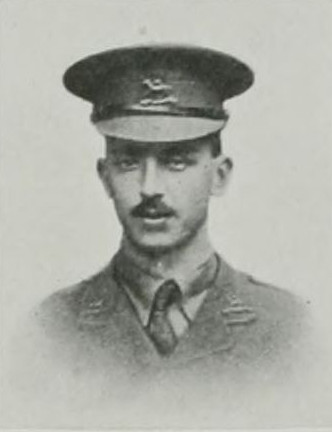
William L. J. Longbourne.
LONGHURST, CHARLES, Private, No. 10029, 2nd Battn. Queen’s Royal West Surrey Regt., s. of Charles Longhurst, of 68, Regent Street, Whitstable, Kent; served with the Expeditionary Force in France and Flanders; killed in action at Gheluvelt, 29 Oct. 1914.
LONGMAN, FREDERICK, Lieut., 4th Battn. Royal Fusiliers, 2nd s. of Charles James Longman, of Upp Hall, Braughing, Ware, and 39, Paternoster Row, London, E.C., M.A., J.P., Publisher, by his wife, Harriet Ann, 2nd dau. of Sir John Evans, K.C.B., F.R.S.; b. Norfolk Square, London, 9 May, 1890; educ. Harrow and Pembroke College, Cambridge; joined the Hertfordshire Territorials in 1910; gazetted 2nd Lieut., Royal Fusiliers, 13 Feb. 1912, and promoted Lieut. 24 Aug. 1914; went to France 13 Aug.; was wounded in the arm at the Battle of the Marne, but rejoined his regt. after a short stay at a base hospital, and was killed in action at Herlies, 18 Oct. following; unm. On this day his regiment was holding the village of Le Riez close to Herlies and he was resting in a farm with some brother officers, when a shell burst over this house. Lieut. Longman ran to put on his equipment and join his men; but another shell exploded just outside the window, and a pellet struck him in the temple, killing him instantaneously. His Colonel (since killed in action) wrote: “Please accept my deepest sympathy and be consoled with the thought that his work on active service was as sound and valuable as his conduct has been brave and dutiful. His rapid return to duty after the wound received after crossing the Marne marked him specially as a genuine soldier, and his loss will be very much felt by all of us, professionally and socially.” A brother officer also wrote: “He was always cheery, and it did us all good to see the way he did his job, and never grumbled at anything. He was one of the gallantest fellows I ever saw, and nothing ever frightened him. We are all proud of him, and his name will always go on in the Regiment’s history as a hero”; and another said he noticed, on the retreat from Mons, how he carried far more than his share of the necessaries, and constantly cheered his men by word and example in their temporary depression. While at Harrow, he was a member of the School Corps, and of the Football XI in 1907, in which year he was also a Dolphin and champion featherweight boxer. He was a member of the O.T.C. at Cambridge, and later held a commission in the Hertfordshire Territorial Regt., for which he recruited a section of 41 men in the neighbourhood of his home at Braughing. He was an active member of the local rifle club and gave much time to training lads from the village school at the miniature range, some of whom became excellent shots. In the army he devoted himself to training his men in shooting and boxing, and represented his battn. in the competition for the Army championship at rifle shooting. In regard to his boxing in the Southern Command Boxing Meeting of 1914, the judge remarked that his fight was the finest thing he had ever seen, and held it up to the men as an example of British pluck and endurance.