The Roll of Honour. (continued 7)
Reading edition
BRASIER, LEONARD GEORGE, Petty Officer, 2nd Class (R.F.R., B. 2406), 219840, H.M.S. Good Hope; lost in the action off Coronel, on the coast of Chili, 1 Nov. 1914.
BRASS, WILLIAM, Corpl., No. 6/807, South Canterbury Battn., New Zealand Expeditionary Force, s. of James Gilles Brass, of Kirkwall, Farmer, by his wife Isabella Balfour, dau. of James Bews; b. Harray, Orkney, 27 Dec. 1889; educ. Rendall Parish School, Orkney, went to New Zealand in Dec. 1908, enlisted at Christchurch on the outbreak of war, left with the main force and was killed in action at the Dardanelles, 26 April, 1915; unm. Brass was the well-known Mount Cook Guide, and had been a member of the Scottish Garrison Artillery before going to New Zealand. He was a personal friend of Richmond, the guide who was lost with Mr. King in the descent from Mount Cook. Brass, with Mr. Turner, made an ascent on the same day, and the two parties were to have met on the top. They passed over the avalanche which killed the others, tracing their steps down to it. Subsequently it was Brass who found the mangled body of Richmond, and his great strength was a considerable factor in bringing it down to the hut in that terrible journey in which the guides had to take it in turns to carry it on their backs down a mountain side in the dark, a feat which seems almost incredible when the place is gone over in the daylight.
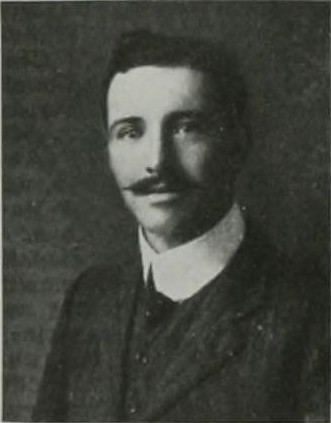
William Brass.
BRATTLE, WILLIAM, Chief Stoker, 277368, H.M.S. Cressy; lost in action in the North Sea, 22 Sept. 1914.
BRAY, CECIL HERBERT, Private, No. 2801, 1/9th Battn. (Queen Victoria’s Rifles) London Regt., s. of Thomas Bray, Engineer’s Draughtsman, by his wife, Frances, dau. of John Drewry Codling; b. Harringay, N., 22 Nov. 1892; educ. Haverstock Hill Orphanage; enlisted two days after the declaration of war, 7 Aug. 1914; served with the Expeditionary Force in France and Flanders, and was killed in action at Voormezeele, near St. Eloi, 17 July, 1915; unm.
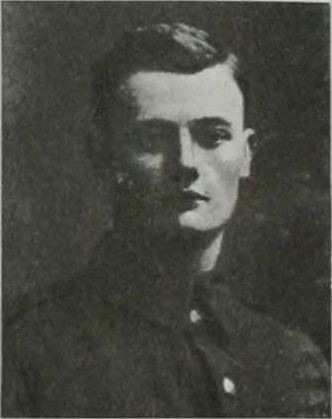
Cecil Herbert Bray.
BRAY, GEORGE, A.B., 216585, H.M.S. Pathfinder; lost when that ship was sunk by a mine, about 20 miles off the East Coast, 5 Sept. 1914.
BRAY, DERRICK REGINALD PAMPHILON, Corpl., No. 1553, 1st Battn. (Royal Fusiliers) The London Regt. (T.F.), only s. of Reginald Alfred Bray, of 49, Orlando Road, Clapham Common, S.W., formerly of Jersey, by his wife, Lissa, dau. of the late Stephen Algir Pamphilon, of Lea Hall, Hatfield Broad Oak, Harlow, co. Essex; b. Clapham Common, 20 Sept. 1895; educ. private school, and Wix’s Higher Grade School; joined the 1st City of London Regt. 7 April, 1913; on the outbreak of war volunteered for foreign service, was sent to Malta for five months, and proceeded to France, 10 March, 1915. He was killed in action at Aubers Ridge, 9 May, 1915, and was buried in Rue Pettilon, near Picantin; unm. His commanding officer wrote: “At the time he was gallantly leading his section in an advance under very severe fire, and by his death, we all realise that we have lost a brave comrade, who has done his duty and whom we all miss dreadfully. His sense of duty was most real, as events have proved.” Corpl. Bray was very proud of the fact that every man of his family of fighting age joined the colours early in the war. His uncle, Lieut. Ede, Royal Marine Artillery, was mentioned in Despatches while serving with the Egyptian Army in 1896.
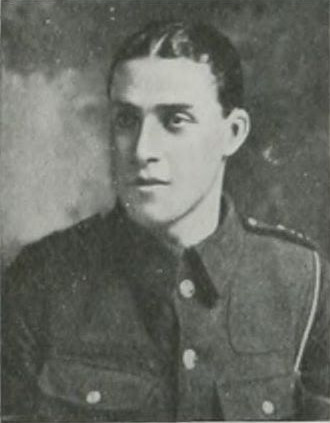
Derrick R. P. Bray.
BRAY, HORACE, Private, No. 9241, 3rd Battn. The Middlesex Regt.; served with the Expeditionary Force in France, etc.; killed in action, 16 April, 1915; m.
BRAZIER, ALFRED, Private, No. 9499, 2nd Battn. East Surrey Regt., s. of James Brazier, of 22, Stewarts Lane, Battersea; served with the Expeditionary Force in France, etc.; killed in action, 25 April, 1915.
BRAZIER, BENJAMIN WILLIAM, Corpl., No. 8949, 2nd Battn. Oxfordshire and Buckinghamshire L.I., eldest s. of Wallace Brazier, Lieut. and Quartermaster 6th Service Battn. and late Regimental Sergt.-Major 2nd Battn. Oxfordshire and Buckinghamshire L.I., by his wife, Mary Jane (4, Pentland Villas, Juniper Green, Midlothian), dau. of William Paddon, late R.N.; b. Bareilly, N.W.P., India, 30 Nov. 1893; educ. Cowley, and East Oxford Council School, Oxford; joined the 2nd Oxfordshire and Buckinghamshire L.I. in Sept. 1908, attended the Kneller Hall Royal School of Music from Oct. 1913 till Aug. 1914, and on the outbreak of war rejoined his battn., served in France and Flanders; was twice wounded, the second time at the Battle of the Aisne, and was killed in action during the night attack, 15–16 May, 1915, at Richbourg L’Avoue; unm. His company commander wrote: “During the time I was out in France he was in my company, and I looked upon him as a promising N.C.O. He was always cheerful, ready to help in anything there was to be done, and during the three rather hard days fighting, 21–23 Oct., he did a lot of most excellent work, and looked after the men round him admirably. Everyone who knew him will miss him, and the regt. has lost a N.C.O. who would in time have risen to the highest rank. He was a gallant lad,” and the Quartermaster: “He was a brave lad, the best of soldiers, and would, I am certain, had he been spared, have risen to a high position. There is not one but will mourn his loss.” Corpl. Brazier was a keen sportsman and football player, in which latter sport he won two medals.
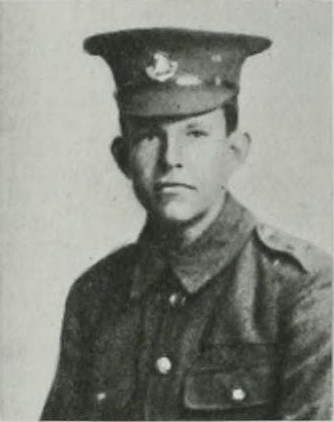
Benjamin W. Brazier.
BRAZIER, FREDERICK OWEN, Private, No. 3198, 5th (Cinque Ports) Battn. Royal Sussex Regt. (T.F.), s. of Frederick Brazier, of 29, St. George’s Road, Hastings; served with the Expeditionary Force in France, etc.; killed in action, 9 May, 1915.
BRAZIER, JAMES, Private, No. 6282, 1st Battn. East Surrey Regt.; served with the Expeditionary Force in France and Flanders; killed in action, 26 Oct. 1914; m.
BRAZIER, WALTER ERNEST, Stoker, 1st Class, Chatham, 311704, H.M.S. Laertes; killed in action in Heligoland Bight, 28 Aug. 1914.
BREACH, JOHN, Private, No. 4770, 5th Dragoon Guards, 3rd s. of William Breach, of Lowestoft, Fishing Smack Owner, by his wife, Sarah; b. Lowestoft, 5 April, 1879; educ. at the Board and Technical Schools there; joined the Army, 16 April, 1898; served with his regt. in India, and went through the Boer War, for which he was awarded the medal. At the outbreak of the European War he was farming in Canada, and was recalled to join his regt. He died of wounds received in action at Hill 60, in 13 General Hospital, Boulogne, 11 June, 1915. He m. at Kirkley Parish Church, Lowestoft, 28 March, 1910, Agnes Maud (Ivydene, Kitchener Road, Ipswich), yst. dau. of John William Hadenham, of Ipswich, District Superintendent Insurance Company; s.p. Private Breach was a lifelong abstainer, a keen football player, and an expert cricketer, and held several good conduct medals. His three brothers are all now (1916) on active service.
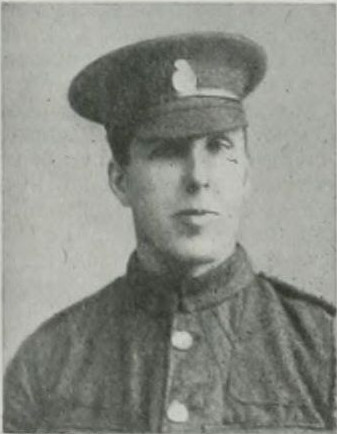
John Breach.
BREAM, CHARLES, Drummer, No. 7248, 1st Battn. Northamptonshire Regt., s. of Charles William Bream, of Nassington, co. Northants; b. Nassington, 5 Dec. 1883; educ. there; joined the 1st Northamptons (D Coy.), 1903, and saw active service on the Indian Frontier in 1904, for which he received two medals and two bars. He afterwards became a Police Constable in the Durham County Constabulary, and was stationed at South Moor, in the Lancashire and Consett Petty Sessional Division, when he was called up on the outbreak of war. He left with his regt. for France, 17 Aug. 1914, taking part in the retreat from Mons and several other engagements, and was killed in a bayonet charge at Festubert, 21 Dec. 1914. In a letter to a friend at South Moor he said: “You will have heard about the battle on the Aisne. We were in the trenches for a month, and the first week it never ceased raining, and we had to stick it.” Later, writing from Festubert, he said that they had had several engagements with the Prussian Guard, but had got through them, doing six bayonet charges in ten days. He m. at Yarwell, Nassington, 8 Oct. 1913, Carrie, dau. of (—) Mould, of Nassington.
BRECKELL, RALPH LEICESTER, 2nd Lieut., 3rd Battn. (Prince of Wales’ Volunteers) South Lancashire Regt., attd. 2nd Battn. Lancashire Fusiliers, 2nd s. of Edward John Blease Breckell, of Holmdene, Alexandra Road, Waterloo, near Liverpool, by his wife, Emilia Mary, only child of the late Charles Oddie, of Everton, Liverpool; b. West Derby, near Liverpool, 16 April, 1890; educ. Ellesmere College, Shropshire; was Resident Secretary in Liverpool for the British Crown Insurance Company, but on the outbreak of war joined the 18th Service Battn. King’s Liverpool Regt. in Sept. 1914, and was gazetted 2nd Lieut. to the 3rd South Lancashires, 20 Feb. 1915, being later attached to the 2nd Lancashire Fusiliers at the front; killed in action on the canal between Pilkem and Boesinghe, during the severe fighting between 5 and 9 July, 1915; unm. His orderly, Private E. Murphy, wrote: “He died fighting like a true English gentleman, being in charge of a party of bomb throwers who held on to such a purpose that they were piling themselves on top of one another, and I am very pleased to tell you that he did not suffer more than a minute, just calling my name like this, ‘Oh, Murphy’; then I caught him and laid him down and as near as I could make out he said a few prayers, and then passed peacefully away looking as if he had gone to sleep,” and added that he was killed by a piece of shrapnel in line with his left shoulder striking his heart.
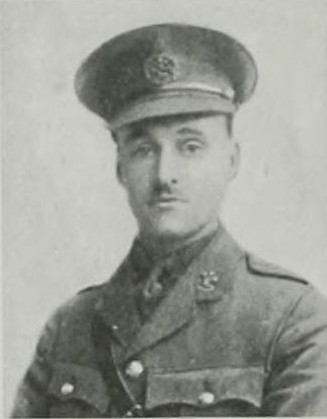
Ralph L. Brecknell.
BREED, GEORGE ALFRED, Private, No. 444310, 55th Battn. Canadian Expeditionary Force, s. of the late William Breed, Farm Labourer, by his wife, Julia (Papworth Everard, Cambridge), dau. of James Paine, of Croydon, co. Cambridge; b. Hatley St. George, co. Cambridge, 14 Feb. 1892; educ. there, and at Papworth Everard; went to Canada, 1 March, 1912; volunteered for service overseas on the outbreak of war, and died in the Military Hospital at Bramshott, Liphook, Hants., 10 Dec. 1915, of influenza contracted while going through his course of training; unm.
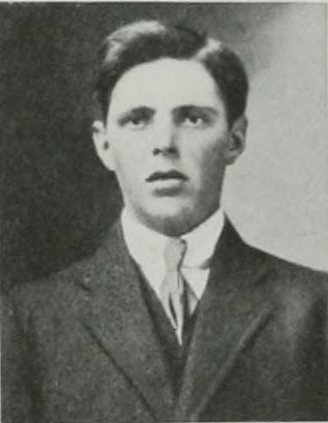
George Alfred Breed.
BREEZE, JOHN, Private, No. 10505, 1st Battn. South Wales Borderers, s. of John Breeze, of 6, Durham Street, Grangetown, Cardiff, Labourer, by his 1st wife, Caroline, dau. of Thomas Morris; b. Tenbury, co. Worcester, 9 March, 1887; educ. National School, Monmouth; enlisted in 1911; killed in action at Langemark, 21 Oct. 1914; unm.
BREMER, FRANCIS AUGUSTUS, A.B. (R.F.R., B. 3921), 167964, H.M.S. Hawke; lost in action in the North Sea, 15 Oct. 1914; m.
BREMNER, HENRY SADLER, Private, No. 138, 2nd Battn. Australian Imperial Force, 3rd s. of James Bremner, of 137, Canongate, Edinburgh, by his wife, Jane, dau. of Robert Sadler, of North Shields; b. Edinburgh, 30 Oct. 1885; educ. Milton House School there; went to Australia in 1912; enlisted on the outbreak of war, and was killed in action at Gallipoli, 2 May, 1915; unm.
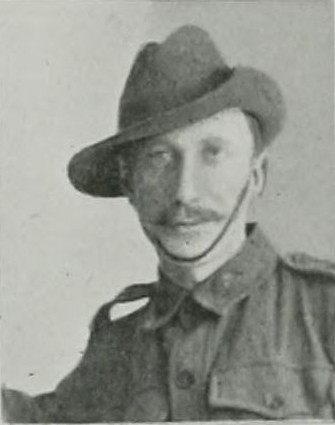
Henry S. Bremner.
BREMNER, JAMES, Private, No. 8834, 1st Battn. The Royal Scots, s. of John Bremner, of Edinburgh, by his wife, Elizabeth, dau. of James Wilson; b. Edinburgh, 30 Sept. 1886; educ. there; enlisted in Jan. 1904, and served three years with the Colours, acting part of the time as Assistant Schoolmaster at the Depôt (Glencorse). At the outbreak of war he was in the employ of the North British Railway Co. at Edinburgh; was called up on mobilisation in Aug. 1914, and was killed in action at Messines, 16 Nov. 1914, by a shell when entering a trench; unm.
BRENAN, BYRON EDWARD, 2nd Lieut., 2nd Battn. Gloucestershire Regt., yst. s. of Edward Vincent Brenan, of Poulton, Sneyd Park, Bristol, late Commissioner Chinese Imperial Maritime Customs (died July, 1915), by his wife, Marion Mabel, dau. of Major-Gen. John Thornhill Watson, B.S.C.; b. Hong-Kong, 22 March, 1895; educ. Clifton College, was in the O.T.C. there; joined the Army on the outbreak of war, and was gazetted 2nd Lieut. 3rd (Reserve) Battn. Gloucestershire Regt. 15 Aug. 1914. On 19 March he was attached to the 2nd battn. at the front, and was killed while leading his men to repair a trench which had been absolutely destroyed by a shell, 18 April, 1915; buried at Ypres; unm.
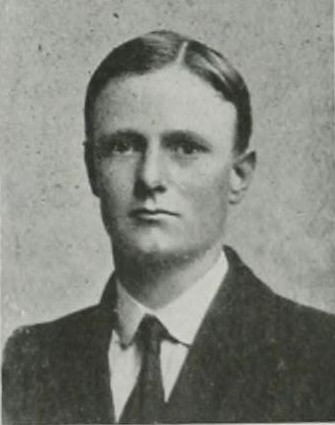
Byron Edward Brenan.
BRENCHLEY, ARTHUR, Leading Seaman, 215494, H.M.S. Aboukir; lost in action in the North Sea, 22 Sept. 1914.
BRENCHLEY, GEORGE CHARLES, A.B. (R.F.R., B. 6640), 223932, H.M.S. Aboukir; lost in action in the North Sea, 22 Sept. 1914.
BRENCHLEY, ROBERT HENRY, 1st Class P.O. Blacksmith, No. 156247, H.M.S. Cressy, s. of Henry Brenchley, of St. Peters, Thanet, by his wife, Elizabeth, dau. of James Epps; b. 25 Jan. 1868; educ. St. Peter’s National School; served in the Navy for twenty-two years, and in 1912 became an attendant at the Broadstairs Cinema. On the outbreak of the war was recalled, 3 Aug. 1914, and was lost on H.M.S. Cressy, 22 Sept. 1914. He m. at Broadstairs, 11 Nov. 1903, Louisa (20 Albion Street, Broadstairs), dau. of Henry Mawlings of Walford, near Ross, co. Hereford, and left a dau., Mary Louise, b. 7 May, 1905.
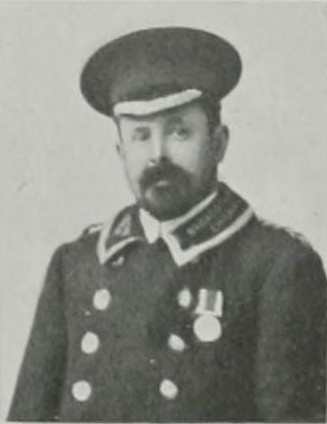
Robert Henry Brenchley.
BRESLIN, ANDREW, Private, No. 3103, 1st Battn. Irish Guards, s. of Patrick Breslin, of Ballyorr, near Londonderry, Labourer; b. St. Johnston, co. Donegal, 4 Dec. 1885; enlisted Aug. 1908, served with the Expeditionary Force in France, and was killed in action during a charge on a strong enemy position, 1 Nov. 1914; unm.
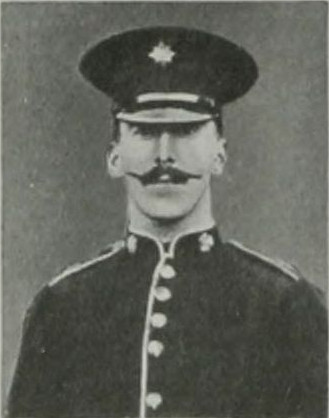
Andrew Breslin.
BRESLIN, PETER, Stoker, 1st Class (R.F.R., Ch. B. 8656), S.S. 105078, H.M.S. Cressy; lost in action in the North Sea, 22 Sept. 1914.
BRETT, CHARLES, A.B., 162505, H.M.S. Good Hope; lost in action off Coronel, on the coast of Chili, 1 Nov. 1914.
BRETT, CHARLES, Private, No. 1707, 4th Battn. Australian Imperial Force, s. of Walter Brett, of Lodge Farm, Wingfield, Harleston, Norfolk, Farmer, by his wife, Sarah Jane, dau. of the late John Welsh Berry, of Great Yarmouth; b. Styleham, Suffolk, 22 Oct. 1886; educ. Brockdish Council School, Norfolk; emigrated to Australia in July, 1911; joined the Commonwealth Expeditionary Force, 9 Jan. 1915, and was killed in action between 9 and 11 Aug. 1915, at Gallipoli; unm.
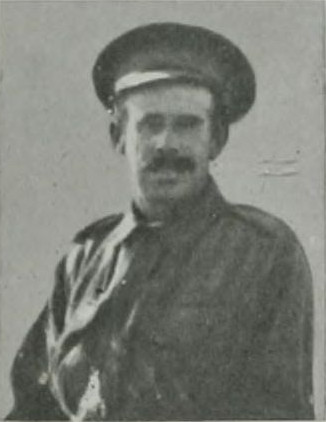
Charles Brett.
BRETT, CHARLES ARTHUR HUGH, D.S.O., Lieut.-Col., 2nd Battn. The Suffolk Regt., eldest s. of the late Lieut.-Col. Arthur Brett, A.P.D., formerly of the 2nd Dragoon Guards (Queen’s Bays), by his wife, Georgina, dau. of Hugh Hannay, Paymaster R.N. (who served through the Napoleonic War and was taken prisoner at Verdun in 1812); b. Muttra, India, 28 March, 1865; educ. privately and at Sandhurst; entered the Army as Lieut. 9 May, 1885; was promoted Capt. 15 June, 1894; Major, 24 Feb. 1906, and Lieut.-Col., 24 Feb. 1914. From Jan. 1895–Jan. 1899, he was Adjutant of the 1st Battn. of the Suffolk Regt., and of the 4th Battn. at Ely in 1900, and from Dec. 1909 to Dec. 1912 was in command of the Depot at Bury St. Edmunds. He served in the Hazara Expedition in 1888 and received the medal with clasp, and in the South African War, 1899–1901. He was in command of one of the four companies of the 1st Suffolks which, on 5 Jan., made the night attack on a ridge in the Colesberg district, and when they suffered repulse he found himself in charge of the party of 107 which was cut off, and after making a gallant resistance, until their ammunition gave out, and during which Capt. Brett was severely wounded, had no alternative but to surrender. After his release he rejoined his regt. and saw service in the operations east of Pretoria, and in the Orange River Colony, from July to Oct. 1900. He was mentioned in the general’s despatches [London Gazette, 10 Sept. 1901], and received the Queen’s medal with three clasps, and also the D.S.O. On the outbreak of the European War he went to France with the first Expeditionary Force, and was killed in action at Le Cateau, France, 26 Aug. 1914. The 2nd Battn. of the Suffolks arrived at Le Cateau about 7 p.m. on the 25th, and bivouacked at the barn, and made themselves comfortable for the night, although the Germans were following close on their heels. The remainder of the Brigade was fairly close at hand. On the 26th the Suffolks had breakfast at 3 a.m., and fell in at 4 a.m. to take up their allotted positions, which were about half a mile to their rear. Two of the battns. (Nos. 3 and 4) of the Brigade were to occupy the trenches which had already been prepared for them, and the Suffolks (No. 1 Battn.) and the 4th Battn. of the Brigade was placed in reserve. Afterwards the Suffolks were moved out in front of the battery and No. 4 Battn. to the right, to protect the guns. The Suffolks had barely taken up their position and commenced to use the web equipment entrenching tool when the Germans opened fire on the battery and dropped a shell right among them. The fight developed and the regt. hung on, protecting the guns, but had to put up with a good deal of shelling which was intended for the battery. They also came in for a good deal of enfilading fire from the German guns. This went on for several hours. It was very difficult to feed the firing line with ammunition, especially when the German infantry drew near. Our infantry and maxim guns simply mowed them down, but still they pressed on, and for a time they recoiled, and then came on again. The battery at one time was firing at them at about 800 yards range, and some of our men, especially of C Coy. (Capt. Orford), got hit with our own shells. Nothing could show itself in the open without drawing a terrible fire from the enemy. The first line of transport was ordered to retire and get away the best way it could. The batteries and the infantry brigade stuck to their positions, and continued the fire, hoping to be reinforced, as General Sir Charles Fergusson had given out that 40,000 French troops were expected. Eventually the order to retire was given, but the old Suffolks had little ammunition left, and the casualties were enormous; very few men were able to retire. In the early part of the fight about 50 wounded Suffolks were carried to the dressing station and to the field hospital. These, together with the other wounded, were shown as “missing,” with the exception of Col. Brett, who was killed early in the fight by a shell. Col. Brett was buried on the battlefield and was mentioned in F.M. Sir John French’s Despatch of 7 Sept. 1914. A brother officer wrote: “If ever there was a commanding officer that I would wish to have gone on service with, it was he whose loss we now mourn. The one consolation is that he fell as a soldier at the head of his regt. for whom he did so much, and who, everyone of them, looked up to him, admired him. and tried to follow his grand example in everything. His life was noble and straight, and his death was the same. We of the regt., or what is left of it, mourn his loss as the best of comrades”; and another one wrote: “I don’t suppose there was a single commanding officer in the service more beloved by the officers and men. We had all so looked forward to his getting command, and were delighted at the prospect of serving under him. His loss to the regt., as it is to you, is absolutely irreparable.... It will be a long time before we cease to grieve for a gallant soldier, and one of the best and kindest of men.” One of his former subalterns also wrote: “I thought I would like to write to you to tell you that I was his subaltern that night at Colesberg in 1900 when he was shot, and to say that he was a very gallant fellow. Though shot through the lungs, he kept up command of his Coy., and actually charged the Boer trenches in this state, until he fell exhausted from loss of blood. I have no doubt he was just as brave in France when he met his glorious death, and I write these few words in the hope that should they be shown to his wife, it may console her just a little to know that there are a few of his comrades of that night left, who will remember him always as one of old England’s most gallant sons.” Col. Brett was fond of travel and astronomy, and joined when on leave Sir W. Christie’s party to Sfax, Tunisia, 1905, to witness the Eclipse, and received thanks from the Admiralty for his assistance to the Astronomer Royal. During other leave he visited Mesopotamia, and was interested in exploring Muscat, Bagdad, Babylon, and other places. He m. at St. Mary-at-the-Walls Church, Colchester, 6 Jan. 1909, Enid Geraldine (The Cottage, Lexden, Colchester), eldest dau. of the late Lieut.-Col. Harry Hamersley St. George, Senior Ordnance Officer, Scottish District (and sister of Lieut. G. S. W. St. George, 1st Gurkha Rifles, who was killed in action, 27 April, 1915, see his notice), and had one dau., Ione Moncrieff St. George, b. 10 Oct. 1909.
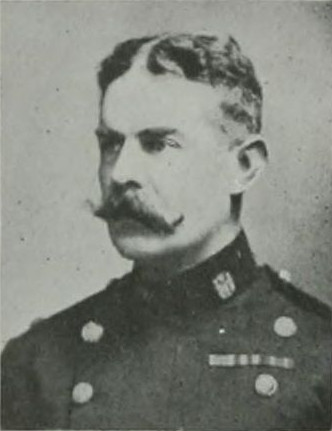
Charles Arthur H. Brett.
BRETTELL, SAMUEL THOMAS, Petty Officer (N.S.), 210526, H.M.S. Aboukir; lost in action in the North Sea, 22 Sept. 1914.
BREWER, FRANK, A.B., 207025 (Ports.), H.M.S. Hawke; lost in action in the North Sea, 15 Oct. 1914; m.
BREWER, JOHN HAROLD, Private, No. 169, 6th Battn. Australian Imperial Force, s. of John Brewer, late Worcester Regt., by his wife, Emily Isabella Margery, dau. of John Harley Bedford, late Superintendant of Post Offices, Bombay Presidency; b. Poona, India, 7 June, 1892; educ. Church School, Liskeard, Cornwall, and on leaving there served as an errand boy with Mr. Rapson, the Mayor for three years there; joined the Duke of Cornwall’s L.I. in 1908, and two years later emigrated to Australia, where he was employed at the Parkside Tannery, Preston, until the outbreak of the war when he joined the Commonwealth Expeditionary Force. He was killed in action in Gallipoli, 8 May, 1915; unm.
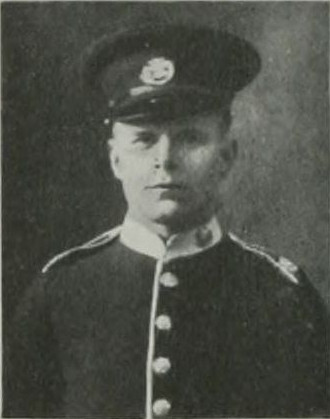
John Harold Brewer.
BREWER, WILLIAM ARTHUR, Private, No. 10398, 1st Battn. Wiltshire Regt., 2nd s. of George Brewer, of 81, Shamrock Cottage, Chippenham, by his wife, Sarah, dau. of William Neate, of 42, Wood Lane, Chippenham; b. Chippenham, co. Wilts, 19 May, 1893, and educ. British School there; an old Territorial he enlisted in the Wilts Regt. 1 Sept. 1914; and was killed in action at Ypres 13 Nov. 1914; unm. A comrade wrote: “The officer called for volunteers to rush a road, and he was the first to leave trench, and by so doing was killed with a Maxim gun.” Private Brewer was a well-known Wiltshire footballer, and was formerly a captain of Chippenham Town, but in 1913 signed on for Swindon and played one match with the first eleven.
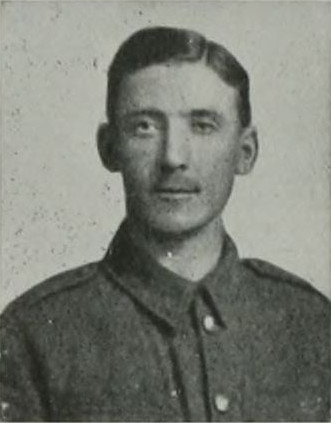
William Arthur Brewer.
BREWIN, WILLIAM HENRY FRANK, Private, No. 1749, 7th Battn, Middlesex Regt. (T.F.), eldest s. of William Henry Brewin, of 90, St. Loys Road, Bruce Grove, Tottenham, by his wife, Louisa, dau. of Richard Henry Calvert; b. Stoke Newington, 12 May, 1896; educ. Earls Mead School there; joined the Middlesex Territorials about 1911; volunteered for foreign service Aug. 1914; went to France the last week in Feb., and was killed in action there, 13 April, 1915; unm.
BREWSTER, HERBERT JOHN, Ship’s Corpl., 1st Class (R.F.R., B. 4774), 169829, H.M.S. Hogue; lost in action in the North Sea, 22 Sept. 1914.
BRIAN, HERBERT CECIL, 2nd Lieut. 59th Battery, Royal Garrison Artillery, eldest s. of Hyla Edwin Brian, Military School, Cairo, and of Holmbury, Berkhampstead, by his wife, Annie, dau. of Charles Elliott; b. Abbassieh, Cairo, Egypt, 23 Dec. 1891; educ. Berkhampstead School, and Royal Military Academy, Woolwich; gazetted to the 18th Battery 20 Dec. 1912, with which he served in England until June, 1914, when he left to join the 59th Battery in India, and returned the following Dec. to Portsmouth, and went from there to the Front early in March, 1915. He was present and took part in the action of Neuve Chapelle, and was killed in action near Fromelles, while performing the duty of forward observing officer in the trenches, 9 May, 1915. He was unm. and was buried in an orchard near where he fell. His commanding officer wrote of him: “He was a splendid officer and absolutely fearless in the execution of his duty.”
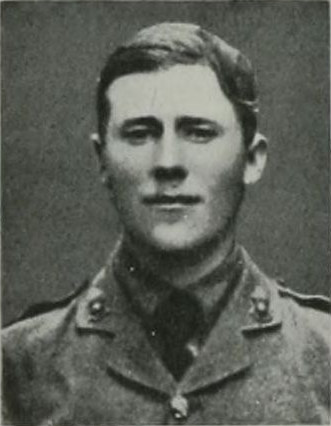
Herbert Cecil Brian.
BRICE, HENRY COPELAND, Lieut., 4th Battn. Leicestershire Regt. (T.F.), only s. of Francis Strange Brice, of Middlemeade, Stoughton Drive, Leicester, J.P., by his wife, Margaret Alice, dau. of Thomas Henry Downing; b. Leicester, 28 Nov. 1893; educ. Mill Hill School, London; received his commission as 2nd Lieut. 10 May, 1913. When war was declared he volunteered for Imperial Service, was gazetted Lieut., 22 Oct. 1914, and died at Bailleul, France, 12 June, 1915, of wounds caused by the premature explosion of a rifle grenade at Dranoutre, Belgium. He was buried at Bailleul. His commanding officer wrote: “I cannot forbear saying how profoundly I regret his death, and how great a loss he is to the battn. He was the Grenade Officer and had charge of the bomb throwers. His work in that position was of a high quality. He was absolutely fearless, and I believe that his men would have followed him anywhere. He was of the type of which leaders are made, and the Army can ill afford to lose such men.”
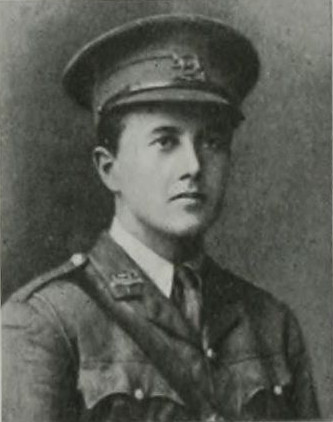
Henry Copeland Brice.
BRICKETT, RALPH, Stoker, 1st Class (R.F.R., Ch. B. 7013), S.S. 101618, H.M.S. Cressy; lost in action in the North Sea, 22 Sept. 1914.
BRICKWOOD, ARTHUR CYRIL, Lieut., 1st Platoon, A Company, 1st Battn. York and Lancaster Regt., elder s. of Sir John Brickwood, of Southsea and Hindhead, by his 2nd wife, Jessie, dau. of the late John Cooper, of Burghfield; b. Southsea, 1 Nov. 1896; educ. Twyford, near Winchester, and Charterhouse; entered Sandhurst, Feb. 1914; gazetted to York and Lancaster Regt., 30 Sept. and was engaged on coast defence at Cleadon and South Shields. On 2 Feb. 1915, he took out drafts of Argyll and Sutherland Highlanders to France, and on arrival was sent to Rouen Hospital suffering from a sharp attack of influenza. On recovery he rejoined, and was in and out of the trenches seven times. He was taken ill in the trenches with septic throat, 11 April, and was sent back to the base hospital at Boulogne, where, after two operations, he died 15 April, 1915; buried at Grayshott.
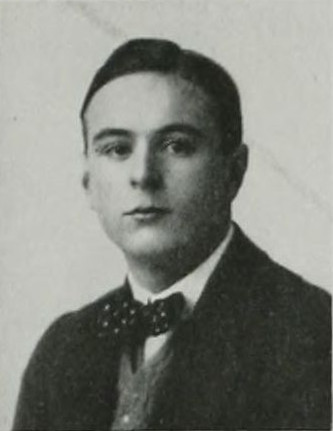
Arthur Cyril Brickwood.
BRIDGELAND, HUBERT EDWARD, Private, No. 11478, 1st Battn. Coldstream Guards; 5th s. of the late John George Bridgeland, of St. Leonards-on-Sea, Carpenter, by his wife Eliza (16 Silverlands Road, Silver Hill, St. Leonards-on-Sea), dau. of George Dearing, of St. Leonards-on-Sea; b. Hastings, 8 Feb. 1897; educ. Tower Road Board School; enlisted the last week in Aug. 1914; went to France 8 April 1915, and was killed in action at Vermelles, 27 Sept. 1915; unm. A comrade wrote: “It was while we were advancing that he met his fate, a shell exploding just in front of him, the shock proving fatal. He was neither hit nor wounded, it was purely the shock.”
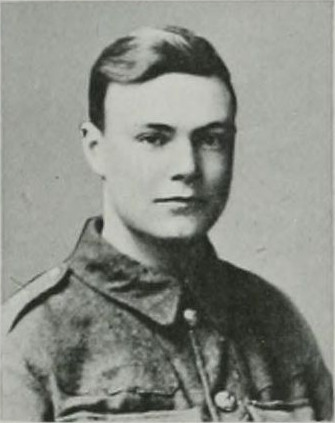
Hubert Edward Bridgeland.
BRIERLY, ALWIN HUARD, Private, No. 1281, 25th Battn., 7th Brigade, Australian Imperial Force, s. of the late Sir Oswald Walters Brierly, Marine Painter to Her Majesty Queen Victoria, by his 2nd wife, Louise Marie, eldest dau. of Louis Huard, of 37, Onslow Square, S.W., and Brussels; b. London, 26 Jan. 1877; educ. in London; went to South Africa as a lad in 1895, and after some years there left for New Zealand, and finally settled in Australia about 1907. After the outbreak of war he volunteered for Imperial service, and enlisted at Mackay, North Queensland, in Oct. 1914, and after training at Enogerra Camp, Brisbane, from March to Aug. 1915, left for Egypt with the second reinforcements. He died in No. 27 General Hospital at Mudros, 1 Jan. 1916, from uremia, brought on by exposure in the trenches, and was buried in the cemetery there; unm.
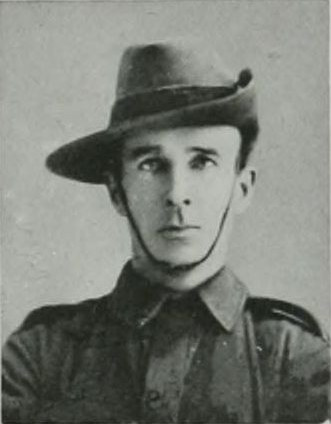
Alwin Huard Brierly.
BRIGGS, CHARLEY, Private, No. 6479, 1st Battn. West Yorkshire Regt., 1st s. of Samuel Briggs, of 1, Ganny Yard, Elland Road, by his wife, Emma; b. Brighouse, co. York, 9 Jan. 1886; educ. there; enlisted 7 Aug. 1902, and was killed in action 1½ miles S.E. of Tyron, 20 Sept. 1914. He m. at Southowram, 13 Aug. 1910, Emma Jane (5, Elland Road, Brookfoot, Brighouse, co. York), dau. of (—), and had three daus., Mary, b. 9 Feb. 1911; Mabel, b. 5 Jan. 1913; and Muriel, b. 6 Oct. 1914.
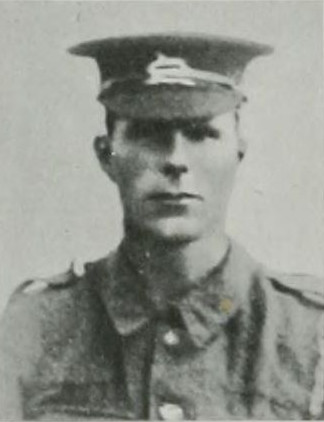
Charley Briggs.
BRIGGS, GEORGE CLARK, Capt., 1st Battn. Royal Scots Fusiliers, only s. of Francis Briggs, of Huntington, near Haddington, Teak Merchant and Shipowner, by his wife, Esther White, dau. of James Munro, of Moffat, M.D. [by his wife (—), dau. of Dr. George Smith, Fleet Surgeon, R.N., who at one time served with Nelson]; b. at Edinburgh, 4 March, 1878; educ. Edinburgh Academy, Malvern College and Clare College, Cambridge; gazetted 2nd Lieut. to the 1st Battn. of the Royal Scots Fusiliers, 3 May, 1899, and promoted Lieut. 24 Feb. 1900, and Capt. 18 April, 1915. He served in the South African War, 1899–1902, taking part in the Relief of Ladysmith and was taken prisoner at Colenso, but was released on the entry of Lord Roberts into Pretoria. He was sent with Boer prisoners to Ceylon. On his return he took part in the operations in the Transvaal, west of Pretoria, including the actions at Frederickstad, 17–25 Oct. 1900, and was employed with the Rand Rifles from Dec. 1901, to June, 1902, and was then chosen for the Mounted Infantry. For his services he received the Queen’s medal with four clasps and the King’s medal with two. He afterwards served in India, again in South Africa and accompanied the first Expeditionary Force to France. He was killed in action at Vailly-sur-Aisne, 14 Sept. 1914, while extracting his men out of a position from which they had to retire. Capt. Briggs was mentioned in F.M. Sir John (now Lord) French’s Despatch of 8 Oct. 1914, for gallant conduct during the retreat from Mons. Corpl. T. Gibson and Private Cox of the Royal Scots Fusiliers, both home wounded, related in The Scotsman of 17 Oct. the following incident: “In the retreat from Jemappes the Germans were pressing the Fusiliers closely, and towards evening the coy. reached the village, dead beat after a long march. Capt. Briggs got the men together and gave the order to fix bayonets. At the same time he spoke a few patriotic words with regard to the regt. and its illustrious history, pointing out that it had never been known to surrender. The Capt. said he was prepared to make a last stand and with bayonets fixed the men waited on the enemy coming through. The last stand was not needed, however, as the Germans did not press home their advantages.”
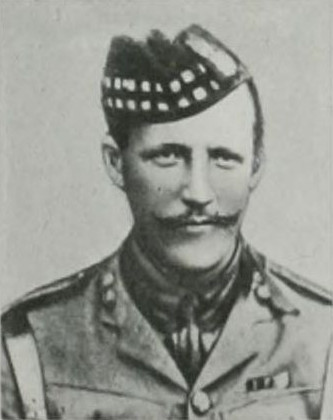
George Clark Briggs.
BRIMBLE, CYRIL GEORGE MICHAEL, Private, No 72029, Machine Gun Section, 27th Battn. (Winnipeg L.I.), 6th Brigade, Canadian Expeditionary Force; 4th and yst. s. of Edward Henry Brimble, of Milton, Weston-super-Mare, retired Banker, by his wife, Agnes Edith, dau. of George Shadbolt, P.R.M.S.; b. Fish Ponds, co. Gloucester, 11 Sept. 1888; educ. Lewisham School, Weston-super-Mare; went to Canada in March, 1911, and settled at Winnipeg. In Feb. 1915, he volunteered and joined the Winnipeg L.I., and was killed in action at Neuve Eglise, 16 Oct. 1915, being the first of his battn. to fall; unm. He was buried in Locre churchyard the following day with full military honours.
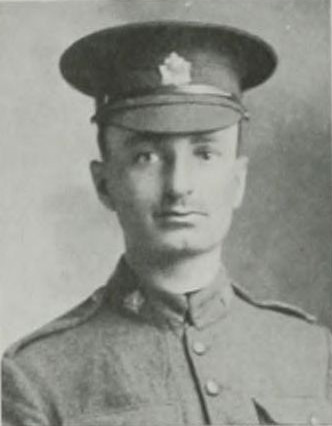
Cyril G. M. Brimble.
BRIMBLECOMBE, THOMAS, Private, No. 91133, 7th (Service) Battn. Royal West Surrey Regt.; served with the Expeditionary Force in France, etc.; killed in action, 13 Aug. 1915.
BRINDLE, JAMES, Private, No. 17367, 2nd Battn. King’s Own Royal Lancashire Regt., s. of Hugh Brindle, of 29, Pickup Street, Blackburn, by his wife, Jane Eliza, dau. of Henry Tomlinson; b. Blackburn, 16 Sept. 1893; educ. Holy Trinity School there; prior to the outbreak of the war was employed as a weaver in Sparrow’s Mill, Quarry Street; joined the Army 25 Jan. 1915, and was killed in action at Ypres, 8 May, 1915; unm. Five of his brothers are, or were, on active service, Private Joseph Brindle, 3rd Battn. East Lancashires; Ewen, 4th Battn. East Lancashires; and Alfred, Lancashire Fusiliers, are serving in France; George is in the Navy; and the yst., Private Thomas Brindle, Scottish Rifles, has been discharged, having had his finger blown off at the Battle of the Aisne.
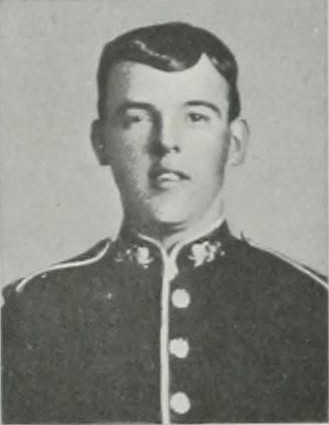
James Brindle.
BRINDLEY, THOMAS LESLIE ST. JOHN, Private, No. 12037, 2nd Battn. Coldstream Guards; b. Worcester; served with the Expeditionary Force in France, etc.; killed in action at Cuinchy, 1 Feb. 1915; unm.
BRINGLOE, THOMAS, L.-Corpl., No. 470, 1/5th. Battn. (The Buffs) East Kent Regt. (T.F.), 5th s. of the late John Bringloe, of Cranbrook, co. Kent, by his wife, Mary (Lauriston, High Street, Cranbrook), dau. of Henry Curry of Foulden, Norfolk; b. Didlington, co. Norfolk, 6 April, 1891; educ. Didlington and Cranbrook National Schools, and was Gardener to Col. Alexander; joined the Cranbrook Territorials in 1906; volunteered for active service on the outbreak of war in Aug. 1914; left for India (Kamptee) in Oct. 1914; went to Mesopotamia, Dec. 1915; and died 8 Jan. 1916, from wounds received in action at the Battle of Sheikh Saad, the previous day; unm. He was bugler to Col. Munn-Mace.
BRISTOW, ARTHUR THOMAS, Gunner, R.M.A., 10280, H.M.S. Good Hope; lost in action off Coronel, on the coast of Chili, 1 Nov. 1914.
BRISTOWE, ROBERT OWEN, Lieut., 2nd Battn. Devonshire Regt., only s. of the late Stanley Bristowe, Member of the London Stock Exchange, by his wife, Ethel (now wife of William Henry Harrison, of 13, Oakley Street, Chelsea, S.W.), dau. of John Pike, and grandson of Robert Henry Bristowe, of Wavertree, Sydenham Hill, S.E.; b. Sydenham, 5 Sept. 1888; educ. Parkfield, Haywards Heath; Charterhouse, and Sandhurst; gazetted 2nd Lieut. to the Devonshire Regt., 14 Oct. 1908, and joined at Plymouth 21 Nov. following; served in Crete, Malta and Egypt, and was promoted Lieut. 4 May, 1911. He obtained a “distinguished” in both the rifle and machine gun courses at the Hythe School of Musketry between Jan. and March, 1913, and was Acting Adjutant in Cairo and at the front. When the European War broke out he was home on leave from Cairo and was sent to the camp at Saltash, Cornwall. He rejoined his battn. on its return from Egypt, and proceeded with it to the front on 5 Nov. 1914; came home on short leave 21 Jan. 1915, returning to the front on the 27th of the month, and was killed in action at Neuve Chapelle, 10 March, 1915; unm. He was mentioned for gallant and distinguished conduct in the field in F.M. Sir John French’s Despatch of 5 April, 1915 [London Gazette, 22 June, 1915]. The second in command of the battn. wrote: “His loss to the regt. is immense, and to me, personally, more than I can say...; he was always so cheery, and the whole of the officers, N.C.O.’s and men of the battalion share your grief.... He was cool and collected as he always was under all circumstances, and he led his platoon splendidly.” The officer commanding his company at the time said: “To me it seems impossible that such a catastrophe could have happened to the most wonderful nature I have ever met. His death has left all of us that remain in the battn. simply stupefied.... You will remember that he took his platoon over that machine gun and rifle swept ground, losing half his platoon, and when they arrived at the German trench the remnants laid down under the German parapet, while Bob knelt up and fired from two to three dozen shots at Germans who were firing at our troops advancing further to the left. There seems no doubt at all that he accounted for some dozen and a-half of them, until one of them spotted him and hit him behind the left ear.... Only 18 men out of 53 now remain of his platoon ... more than one gulped down a lump when reminded of their beloved officer and friend. They just loved the old lad. I have never known any person so universally admired and loved as he was by everyone”; adding: “his advance greatly helped to cause the whole German line to retire.” A private wrote: “I feel sure that I am expressing not only my own thoughts but those of my comrades of the platoon which has had the honour of serving under the leadership of so brave a gentleman as the late Lieut. Bristowe. It is hardly necessary for me to add that his loss is most keenly felt by us all.” The platoon sergt. wrote: “I trust you can now realise how bravely and fearlessly our gallant leader met his death, not caring about himself as long as he could make the attack successful.” His cousin, Private Stanley Bristowe, died on active service 18 June, 1915 (see following notice).
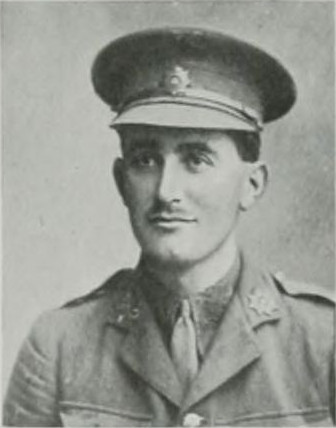
Robert Owen Bristowe.
BRISTOWE, STANLEY, Private, No. 2063, Hon. Artillery Company, eldest s. of Percy Robert Bristowe, of Roundwood, Hutton, Essex, member of the London Stock Exchange, by his wife, Elizabeth Frances Mary, dau. of Henry Edward Milner (late of) Woodlawn, Kingswood Road, Norwood, and grandson of Robert Henry Bristowe, of Wavertree, Sydenham Hill, S.E.; b. Waverley, Bromley, Kent, 29 May, 1893; educ. Charterhouse; joined the Hon. Artillery Company in Sept. 1914, and died in hospital, St. Omer, France, of illness contracted while on active service in France, 18 June, 1915. He was buried in the Souvenir Cemetery, St. Omer; unm. His cousin-german, Lieut. R. O. Bristowe, was killed in action 14 March, 1915 (see preceding notice).
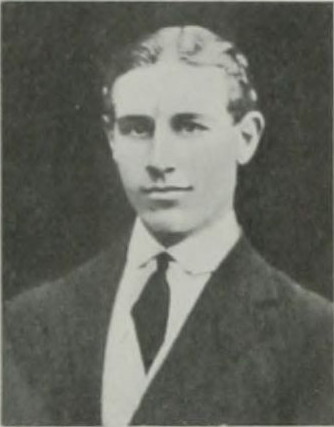
Stanley Bristowe.
BRITT, ALBERT HENRY, Private, No. 3245, 1st Battn. Coldstream Guards; enlisted 16 Jan. 1900; served in South Africa, 7 Nov. 1901 to 4 Oct. 1902 (Queen’s medal with three clasps), and with the Expeditionary Force in France and Flanders, 11 Sept. to 29 Oct. 1914; was reported missing on the latter date, and is now assumed to have been killed in action 29 Oct. to 2 Nov. 1914. He m. Rose (1, The Row, Elmdon Heath, Salihill, Birmingham) and had six children.
BROAD, EDWARD, Stoker, Petty Officer, 281620, H.M.S. Hawke; lost in action in the North Sea, 15 Oct. 1914; m.
BROAD, GEORGE ALFRED, Private, No. 7751, 2nd Battn. East Kent Regt. (The Buffs); served with the Expeditionary Force in France, etc.; killed in action, 18 Oct. 1914; m.
BROAD, WALTER, Sergt. Shoemaker, No. 5641, 3rd Battn. Coldstream Guards, s. of George Broad, of North Evington, Leicester; b. Leicester, 3 Jan. 1883; educ. there; served with the 3rd Battn. Leicester Regt. in the South African War (Queen’s medal with two clasps “Cape Colony,” “South Africa, 1902”); enlisted in the Coldstream Guards, 8 Aug. 1904; became L.-Corpl. 3 Oct. 1905; Corpl. 5 Jan. 1909; Sergt. and Sergt. Shoemaker 26 July, 1913; served in Egypt 29 Sept. 1906, to 20 Oct. 1908, and with the British Expeditionary Force in France and Flanders from 12 Aug. 1914, and was killed in action at the Battle of Mons, 16 Sept. 1914. He m. at St. Peter’s Church, Mount Sorrell,—Aug. 1910, Nellie (170, Main Street, Mount Sorrell, Leicestershire), dau. of Harry Rudkin, of 170, Main Street, Mount Sorrell, and had two children: Walter, b. 29 Oct. 1914; and May, b. 2 May, 1912.
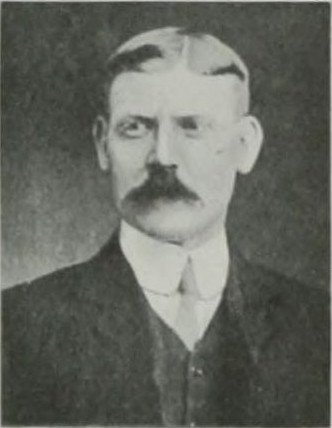
Walter Broad.
BROADHURST, JOSEPH HENRY, Stoker, 1st Class (R.F.R., B. 6723), S.S. 101291, H.M.S. Hawke; lost in action in the North Sea, 15 Oct. 1914.
BROADRICK, JAMES GEORGE, Stoker, 1st Class (R.F.R., B. 4540), 282164, H.M.S. Hogue; lost in action in the North Sea, 22 Sept. 1914.
BROADWAY, HUGH ALEXANDER, Lieut., R.E., eldest s. of Alexander Broadway, Magistrate and Landowner in the Punjab, India, by his wife, Lizzie Welford, dau. of Kinsey Beaumont Thomas, of Upton, co. Worcester; b. Mussoorie, India, 23 June, 1891; educ. Watson’s College, Edinburgh, and Royal Military Academy, Woolwich; obtained his commission, 25 July, 1912. On the conclusion of the usual two years’ course at the S.M.E., he volunteered for India, and was sent to Gosport in July, 1914, for an electric lighting course prior to embarkation. On the outbreak of war, Broadway was at first employed in hutting the troops for coast defence, and then on some miscellaneous work at Netley Hospital and in the Southampton district, to his great and natural disappointment. But it was not for long, and in Nov. he was ordered to report at Chatham for service in a field company to be sent to the front, where he afterwards served in the 15th Field Coy. under Major P. K. Betty, R.E., to which he appears to have been transferred at the front. Here Broadway was specially commended for good work in design and execution of defences in an important position, christened “Port Arthur,” and specially commended for the excellent and gallant work carried out by himself and his section of the 15th Coy. R.E. by the Brig.-Gen. commanding the 24th Infantry Brigade, through the Headquarters of the 8th Division in March, 1915. The 10 March saw Broadway preparing the defences of a post captured outside Neuve Chapelle, and in the afternoon of that day he was bending down in an exposed position to bandage one of his sappers who had been shot when he was himself hit in the shoulder, and the bullet injured his spine. He was immediately carried to the dressing station and sent out to the base hospital, but eventually died there on 30 March. Hugh Broadway was specially fond of Rugby football among games, was a keen soldier, and very popular with his fellows, and put all his energy into the subject in hand. Many letters testify similarly to that of the Major commanding his company, who wrote: “Your son, during the short time he was in the company, endeared himself to us all, and worked hard at whatever he undertook,” and his all too brief career was crowned by his posthumous mention in F.M. Sir John French’s Despatch of 31 May, 1915, “for gallant and distinguished service in the field.”
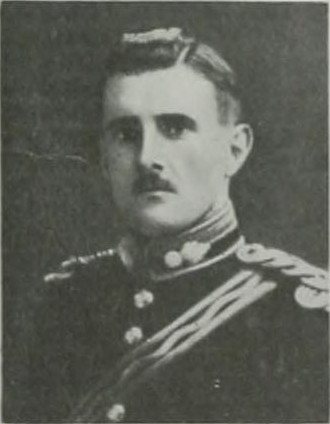
Hugh A. Broadway.
BROADWELL, THOMAS, Private, No. 6675, 2nd Battn. East Yorkshire Regt., 2nd s. of Robert Broadwell, of Hull, Blacksmith, by his wife, Annie Elizabeth, dau. of Thomas Peterson; b. Hull, 5 Sept. 1876; educ. Blundell Street Board School there; served for six or seven years in the 1st East Yorks Rifle Volunteers; worked for 21 years with Charles Hatfield, of Hull, Coal Merchant, and after the latter’s death in 1912, for himself as a coal dealer; was called up on the outbreak of the war (11 Aug. 1914), and was killed in action at Neuve Chapelle, 9 April, 1915. He m. at Sculcoates Parish Church, Hull, Lily (7, Walter’s Terrace, West Parade, Hull), dau. of William Atkinson, and had five children: Robert William, b. 8 March, 1903; Harry, b. 29 May, 1904; Laura, b. 7 Feb. 1899; Lily, b. 27 Sept. 1907; and Muriel, b. 2 July, 1912.
BROADWOOD, MAXIMILIAN FRANCIS, 2nd Lieut., 1st Battn. The Queen’s Own West Kent Regt., s. of Francis Broadwood, of Hever Court, Singlewell, Gravesend, and his wife, Mary Sylvia, dau. of the late Maximilian Hammond Dallson, of Hamptons, co. Kent, J.P., and grandson of the late Thomas Broadwood, of Holmbush, co. Sussex; b. Brunswick Place, Hove, co. Sussex, 1 April, 1893; educ. Evelyns (G. T. Worsley), Hillingdon, Uxbridge; Wellington College, Berks; and the Royal Military College, Sandhurst; obtained his commission as 2nd Lieut. in the Queen’s Own Royal West Kent Regt. 4 Sept. 1912, and joined the 1st Battn. in Dublin 9 Oct. following. He was killed in action near Wasmes, during the retreat from Mons, 24 Aug. 1914; unm. Col. Martyn, the officer commanding the battn. at the time of his death and during his two years’ service, wrote: “He was a boy with a future before him; was beloved by us all, always cheerful, and a great loss not only to his family but to his regiment and his country. He was killed at the same time as Major Bereford and Capt. Phillips, both in his company, which had been sent to help another battn. in difficulties.”
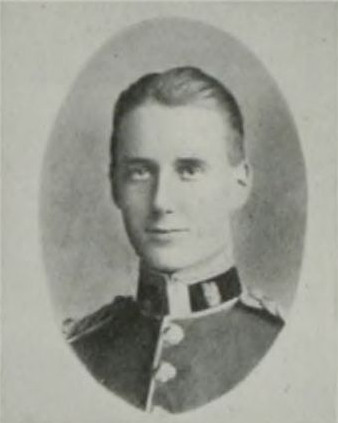
Maximilian F. Broadwood.
BROCK, JOHN, Shipwright, 1st Class, 344374, H.M.S. Hawke; lost in action in the North Sea, 15 Oct. 1914; m.
BROCK, JOHN RAMSAY, L.-Sergt., No. 28957 16th Battn. (72nd Seaforth Highlanders), Canadian Expeditionary Force; only s. of George Dunning Brock, of Greattree Estate, Chagford, Devon, by his wife, Seraphina Wagstaff dau. of Andrew Devoy Ramsay; b. Brantford, Ontario, 21 Sept. 1876; educ. Lapford College, North Devon; went to Canada in Aug. 1903, and was a builder, but on the outbreak of war enlisted, 18 Aug. 1914; came over with the first contingent, Oct. 1914, went to the front Feb. 1915, and was killed in action at Festubert between 18 and 20 May, 1915. He m. at Chagford, Devon, 19 Nov. 1894, Rose Edith (1860, 14th Avenue East, Vancouver, B.C.), 2nd dau. of William Lyddon, of Portland House, Chagford, and has two sons and three daus.: Jack Ramsay, b. 31 March, 1904; Roy Dunning, b. 29 July, 1906; Rita Ramsay, b. 30 April, 1900; Violet Palmer, b. 10 Oct. 1901; and Emily Wilfreda, b. 14 April, 1911.
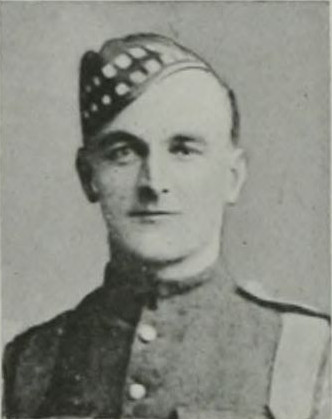
John Ramsay Brock.
BROCKBANK, SIEGFRIED HARRISON, Private, No. 2559, 7th Battn. Middlesex Regt. (T.F.), only s. of James Harrison Brockbank, by his wife, Nettie Carpenter (the distinguished violinist known as Madame Nettie Carpenter), dau. of Dr. Wesley M. Carpenter, of New York; b. Highgate, 4 Feb. 1895; educ. Westminster Cathedral Choir School, and after spending five years there went to St. Edmund’s as a church student in Sept. 1908. He was placed in the 2nd School of Rudiments, but showing more than average ability, was promoted to the 1st School of Rudiments at the beginning of the spring term, 1909. At the end of the year, feeling that he had no vocation to the priesthood, he left the college and returned to the Choir School, where he remained for about a year. In Oct. 1910, he entered the Civil Service, but only remained there 18 months, as by that time a position in a London bank was offered him, which he accepted. In this profession he was making rapid progress when the war broke out. Cheerfully sacrificing all future prospects, he was among the first to join the New Army, enlisting in the 7th Middlesex Territorials on 10 Aug. Owing to previous experience in the Civil Service Cadet Corps, where he had obtained the rank of colour-sergt., he was dispensed from preliminary training, and on 2 Sept. he left England to take up garrison duty at Gibraltar. After six months spent at the Mediterranean fortress, he returned to London about the middle of Feb., and on 12 March left for active service in France. In a letter dated 27 May, 1915, he wrote: “Before the scourge, as we call the attack we made or helped to make on the 9 May, I had been feeling rather seedy for some time back, but I recovered just in time, and was luckily feeling fit. On the 7th I took part in what ‘Eye-witness’ in The Times of the 13th describes as a brilliant little affair of outposts, which took place in front of our trenches. The next platoon to us was holding the head of a sap, a sort of trench that ran from our lines slant-wise up to within 30 yards of the German trench. On the night of the 7th some Allemands raided the head and got in, but were speedily put to flight. We had sustained a few casualties, but they left four dead on the spot. While it was going on a wounded fellow of ours rushed up and said that the Germans were inside the sap. You can imagine the feelings with which I, one of the first to reinforce, went up to this sap in the pitch darkness, expecting every moment to find the Germans in possession. Luckily it was all over, except for an anxious all-night watch. The next evening was filled with preparation for the attack. Wire-cutting parties, ladder carrying parties, grenadiers, and lastly the assaulting troops coming in at night. We were moved a little in rear occupying a redoubt. After our bombardment we saw our fellows going over the parapet, their bayonets gleaming in the lovely sunshine—a stirring sight. We heard they had carried three lines of enemy trenches. Then the Germans shelled us, being the supports, and I think the strongest of us got terrified as the shells burst all around us. We were all heartily glad when in the evening the order came to man the trenches, and we found our fellows had been beaten back. The trench (our firing trench) was full of the remnants of the battns., and the whole air alive with hubbub. The Germans turned a heavy machine gun fire on to us, and the artillery started sending red-hot shells across the black sky. Morning revealed many painful sights, but we were glad to hear that the French had advanced considerably at the same time as we made our attack. We had drawn their reinforcements to us. I do not think our casualties were over heavy, as very many wounded crawled back under cover of night, and they will mostly recover. I have taken on a job the nature of which I must not mention, which precludes me from the trenches for a little while.” This it afterwards transpired was to learn grenade throwing, some 200 yards behind the firing trenches. On 5 June, the enemy finding the range of the French headquarters by means of their aeroplanes, subjected them to heavy shell fire. He fell covered with wounds, and expired a few minutes later from shock without regaining consciousness. Writing to his mother, his Capt. said: “He was always bright and cheerful and a thoroughly good soldier, and was liked and respected by officers and men alike. His company put a small wooden cross on his grave with I.H.S. upon it, which they took from a ruined church near by, knowing he was a Catholic.”
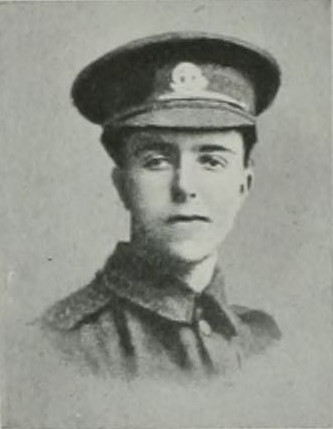
Siegfried H. Brockbank.
BROCKELBANK, LAURENCE SEYMOUR, Lieut., 3rd, attached 1st, Battn. King’s Own Royal Lancaster Regt., s. of George Seymour Brockelbank, of Elm Lodge, Blackheath, member of the London Stock Exchange, by his wife, Julia, dau. of the late Henry Turner, of Court Lodge, Knockholt, Kent; b. Eliot Park, Blackheath, 21 Sept. 1892; educ. Lindesfurn, Lee and Tonbridge School; entered the army as 2nd Lieut. 3rd Battn. King’s Own, 5 May, 1914, and is believed to have been killed at the Battle of Cambray, 26 Aug. 1914, being reported missing from that date. Lieut. Douglas C. Robinson wrote, 1 Nov. 1914: “On 26 Aug. all the young officers had been accounted for except your boy. Some of the Lancashire Fusiliers told me when they went up to clear away the wounded that they saw a very young-looking officer, the description of which tallied with your son, lying dead absolutely next to our Colonel (Col. Dykes). Unfortunately we could not get up to them afterwards.” From a statement made to the Rev. Gabin McFadyeen, of Saltash, by Private Copperwhaite, who had for some time acted as Lieut. Brockelbank’s servant, it appears that the “King’s Own” had been surprised by the German machine guns and lost heavily. Lieut. Brockelbank led his men heroically after he had been wounded, but a retreat became necessary, and while that was in progress he was killed instantaneously by the bursting of a shell. According to the list compiled by Capt Davy, R.A.M.C., he was buried at Hautcourt, between Cambray and Le Cateau. He was gazetted Lieut. 2 Feb. 1915; unm.
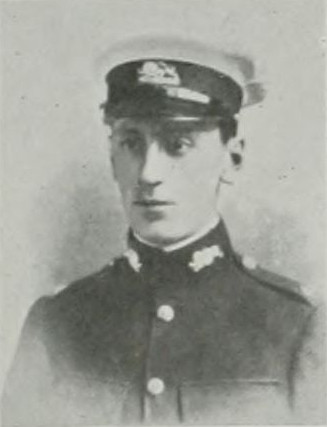
Laurence S. Brockelbank.
FITZHERBERT-BROCKHOLES, THOMAS JOSEPH, Capt., 2nd Battn. Rifle Brigade, eldest s. of William Joseph Fitzherbert-Brockholes, of Claughton Hall, Garstang, co. Lancaster, J.P., D.L., C.A., by his 2nd wife, Blanche Winifred Mary, dau. of the late Major-Gen. the Hon. Sir Henry Hugh Clifford, V.C., K.C.M.G., C.B.; b. London, 4 May, 1887; educ. The Oratory School, Edgbaston, and New College, Oxford; gazetted to 3rd Battn. Rifle Brigade, then in England, 24 June, 1908, but exchanged in July, 1910, to the 2nd Battn. then at Calcutta; was promoted Lieut. 15 Feb. 1911, became Adjutant 21 Feb. 1914. On the outbreak of war he returned with his battn. to England (Oct.), and went with it to the Front early in Nov., and was promoted Capt. on the 15th of that month. He was wounded on 20 Dec., but not seriously, and was able to remain on duty, and was on constant service with his battn. in the trenches (with the exception of a short leave of seven days) until the Battle of Neuve Chapelle, when the 2nd Battn. was given a leading part in the attack, and was the first to get through the village on 10 March and entrench themselves on the far side of it. Two days later he was shot through the head while directing the fire of a machine gun in beating off a violent counter-attack, and died 14 March without recovering consciousness. Capt. Fitzherbert-Brockholes was mentioned for his services in F.M. Sir John French’s Despatch of 31 May. When in India he secured a special certificate at the School of Signalling at Kasauli, and a First Class at the School of Musketry. He was very keen and good at games and all kinds of sport, did excellent work in the cricket field for the Oxford University Authentics and the Green Jackets, and played polo for his regiment. All who came in contact with him spoke in the highest terms of his efficiency as a soldier, of his absolute fearlessness, and of his consideration for others.
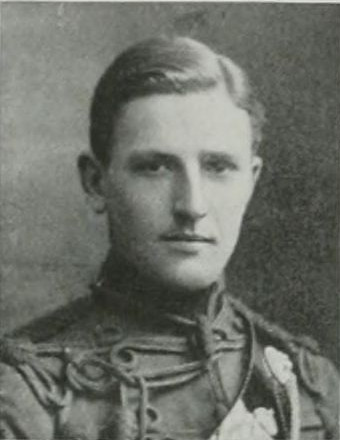
T. J. Fitzherbert-Brockholes.
BROCKIE, DAVID, Private, No. 75230, A Coy., 29th (Vancouver) Battn. Canadian Expeditionary Force, elder s. of the late Thomas Brockie, of Hawthornside, Hawick, co. Roxburgh, Farmer, by his wife, Anne Henderson, dau. of the late William Renwick, of Byrecleuch and Chapel Mains, co. Berwick; b. Hawthornside afsd., 1 Dec. 1878; educ. Hobkirk Public School, and Teviot Grove Academy, Hawick, and after a business training went to India, where he was for seven years with Whitaway, Laidlaw & Co. After a brief visit home he went to Vancouver about 1911, and after the declaration of war volunteered and joined the 72nd Seaforth Highlanders of Canada in Oct. 1914. He was transferred to the 29th Battn., came over with the second Contingent, went to France, 17 Sept. 1915, and was mortally wounded on 4 Nov. following, and died two days later in No. 2 Clearing Station at Bailleul. He was buried in the cemetery there; unm. For going to his assistance when he fell wounded and carrying him to a place of safety while under heavy fire, L.-Corpl. Alfred J. Hourston was awarded the D.C.M.
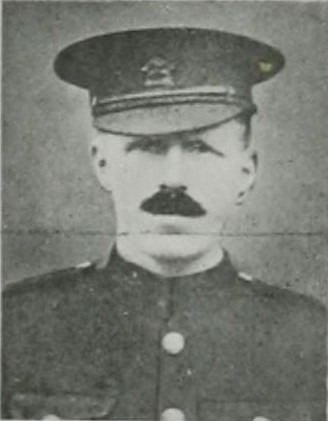
David Brockie.
BROCKLEHURST, EDWARD HENRY, Capt., 6th (Rifle) Battn. The King’s Liverpool Regt. (T.F.), 5th s. of the late Henry Brocklehurst, of Sefton Park, Liverpool, by his wife, Ellen, dau. of William Hutchings; b. Waterloo, near Liverpool, 15 May, 1878; educ. Harrow, and became a chartered accountant. He joined the volunteers in 1900 and was made Capt. of the 6th Battn. King’s Regt. 22 June, 1910, when he secured the certificate of proficiency qualifying him for higher rank. He was on the Special Reserve of officers, and had been gazetted as regimental instructor of musketry a short time before war broke out. He immediately volunteered for foreign service, and was killed while leading a charge at Hill 60, near Ypres, 5 May, 1915; unm.
BROCKLESBY, DENNIS, Armourer’s Crew, M. 6674, H.M.S. Good Hope; lost in action off Coronel, on the coast of Chili, 1 Nov. 1914.
BROCKWELL, WILLIAM JAMES, Stoker, Petty Officer, K. 2386, H.M.S. Aboukir; lost in action in the North Sea, 22 Sept. 1914.
BRODIE, EWEN JAMES, 11th of Lethen and Coulmony, co. Nairn, D.L., Capt., 1st Battn. Queen’s Own Cameron Highlanders, 2nd and only surviving s. of the late James Campbell John Brodie, 9th Laird of Lethen and Coulmony, Lord Lieut. of co. Nairn, by his wife Fanny Sophia Constance, dau. of Edmund Thomas Wedgwood Wood, of Henley Hall, co. Salop; b. at Lethen, 17 July, 1878; educ. Harrow and Trinity College, Cambridge; gazetted as 2nd Lieut. from the Militia to the 2nd Battn. of the Cameron Highlanders, 26 May, 1900, and was promoted Lieut. 22 Jan. 1902, and Capt. 3 May 1911. He served in the Mediterranean, Africa and China, and from 1909 to 1913 was Adjutant to Lovat Scouts (T.F.), when he rejoined the 1st Battn. of the Camerons at Edinburgh Castle. On the outbreak of war, in Aug. 1914., he went to the Front with the Expeditionary Force, took part in the Battle of the Aisne, and all the fighting preliminary to the First Battle of Ypres, and fell in action, in the encounter with the Prussian Guards at Ypres, 11 Nov 1914. At the time of his death he was acting as Adjutant of his battn. and was one of the only three survivors of the officers of the regt. who had left Edinburgh Castle ten weeks before. He was buried near some men of his regt., close to the spot where he fell. He m. 4 Jan. 1911, Marion Louisa, eldest dau. of William Stirling, of Fairburn and Monar, co. Ross, and had three children, David James, b. 27 Oct. 1911; Peter Ewen, b. 6 May, 1914; and Helen Charlotte, b. 22 June, 1913.
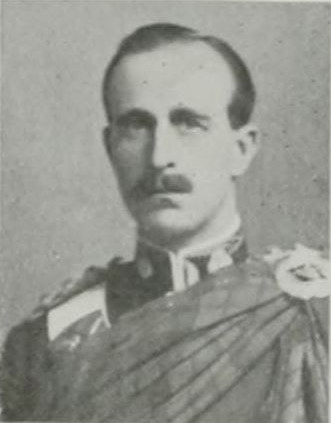
Ewen James Brodie.
BROMLEY, CUTHBERT, Major and Adjutant, 1st Battn. Lancashire Fusiliers, s. of the late Sir John Bromley, C.B., J.P., formerly of the Exchequer and Audit Department, Somerset House, afterwards Accountant General of the Board of Education, by his wife, Marie Louise (Sutton Corner, Seaford, Sussex), dau. of the late Richard Bowman, of Maidenhead; b. Earl’s Terrace, London, W., 19 Sept. 1878; educ. St. Paul’s School and received a commission as 2nd Lieut. in the Lancashire Fusiliers from the Militia, 4 May, 1898, and was promoted Lieut. 28 Dec. 1898. In Sept. 1899, he was sent from Aldershot to Malta and received his company, 15 June, 1901. It is interesting to note the fact that when he received his company he was barely twenty-two, and he and a junior Subaltern (Gaspard de Coligny Le Marchant) are said to have been the two youngest captains in the British Army. While in Malta, the South African War broke out, and in order to be fully qualified he and Capt Le Marchant joined the Malta Mounted Infantry, but as his Commanding Officer (Capt. Hamilton) fell ill, he had to remain behind in Malta temporarily to take his place. In 1901–3 Major Bromley was seconded for service with the West African Frontier Force, and took part in the punitive expedition in the Aro country, and had the West African (S. Nigeria) 1901–2 and Aro medals with clasps. While in Southern Nigeria he gained the Royal Humane Society’s Certificate for saving a native’s life from drowning, by holding him up 8½ hours in the water. During 1906–7, he was Superintendent of Gymnasia, Irish Command, but resigned this post to rejoin his own regt. the Lancashire Fusiliers, and in 1909 went with it to India, serving for some time as Transport Officer. He was appointed Adjutant, 4 May, 1914, and took keen interest in the regimental sport and in organising the men’s games. His regt., with others from India, arrived in England 13 Jan. 1915, and started on the Dardanelles Expedition on 15 March, 1915; he was in the 29th Division and his Brigade (the 86th Infantry) was the first to land on W. Beach (Lancashire “Landing”) on that memorable 25 April, their duty being to cover the disembarkation of the rest of the Division. An officer who was there said, “Bromley and Needham were always forward, leading and cheering on; all were good, but then were splendid.” On 28 April, Major Bromley was wounded in the thigh, and when examined by the doctors was found to have been wounded in the back on the day of the landing. After three weeks in hospital, he rejoined his regt. on the Gallipoli Peninsula and was again wounded by shrapnel in the foot on 28 June. An officer wrote: “He was wounded at the beginning of the charge from our trenches. When he was picked up he made the men help him forward to lead the attack.” After six weeks in hospital at Cairo and at Troodos, he started from Alexandria for Cape Hellas on the ill-fated Royal Edward, with a draft of sixty-four men, as senior military officer “Commanding the troops on board.” The ship was torpedoed in the Aegean Sea and sank in about 4½ minutes, on 14 Aug. 1915. Major Bromley had not been well that morning, having a touch of fever and was the last to jump overboard. He was injured in the head by wreckage and rendered partially unconscious, and but for that would undoubtedly have had strength to swim to the Hospital Ship Sudan. His fate was the more tragic as from boyhood he had always been such an expert swimmer, and when at Malta swam five miles, from there to the Island of Gozo. His Commanding Officer wrote: “So passed one of the bravest officers I have known, my friend for years, and one of the most popular men in the regt.” He was mentioned in Gen. Sir Ian Hamilton’s Despatch of 20 May [London Gazette, 5 Aug.], 1915, and had been gazetted temporary Major [London Gazette, 3 Aug. 1915] to rank as from 6 June. He was unm.
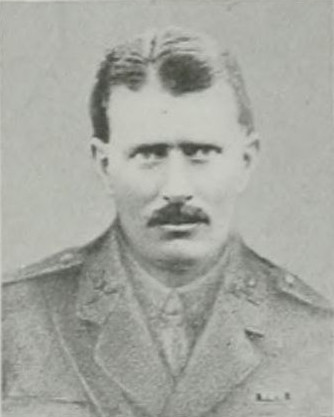
Cuthbert Bromley.
BROMLEY, HERBERT ASSHETON (Jett), Lieut., No. 3 Coy., 7th Battn (1st British Columbia Regt.), Canadian Expeditionary Force, yst. s. of the late Sir Henry Bromley, 5th Bt., by his wife, Ada, only child of Westley Richards; b. Stoke Newark, 16 Oct. 1879; educ. Farnborough and Eton, was Private Secretary to his brother, Sir Robert Bromley, Bt., Administrator of St. Christopher and Nevis (1905–6) and afterwards to the Hon. James Dunsmuir, Lieut.-Gov. of British Columbia; joined the 88th Fusiliers at Victoria, B.C., when that battn. was formed three years ago; on the outbreak of war volunteered for service overseas, was gazetted Lieut. on formation of Canadian Expeditionary Force, 21 Sept. 1911, and was killed in action at the second Battle of Ypres, 24 April, 1915; unm. Describing his death, a comrade said: “He was badly wounded in the trenches, but leaped out and led his men in a magnificent charge, calling out ‘we have got to win, follow me.’ He was quite alone away in front of his men and died a glorious death.” His Company Commander, Major R. C. Cooper, wrote to the Editor as follows: “I would, as the late Lieut. H. A. Bromley’s Company Commander, like to express my very high appreciation of him, both as an officer with the welfare of his men at heart, and as a personal friend. Mr. Bromley was invaluable to me in France with his intimate knowledge of the language and customs. His men were devoted to him and missed him greatly when wounded in the head on the 16 March at Fleurbaix. He returned to us on 27 March and remained with the battn. up to ‘Our Day’—doing duty in the trenches from the 14 to the 19 April, two days in billets and then the gas and subsequent heavy fighting. In Victoria, B.C., he was a member of the 88th Victoria Fusiliers, some time as a Company Officer and the remainder as Adjutant. He served with the regt. in the coal strikes at Nanaimo, Vancouver Island, 1913–14. On the outbreak of war he was one of the first officers selected for Active Service, being posted to my company, left for Valcartier, 28 Aug. 1914, and for England, 27 Sept. 1914, arriving at Plymouth, 15 Oct. 1914—four months of rain at Salisbury Plain and then to France. We all mourn ‘Brom.’ as a pal and soldier. His last idea, and his was a forlorn hope, was to charge and scupper some of the Boches before going under himself. His platoon on 21 April lost twenty-one killed, sixteen wounded, three prisoners and eight wounded and prisoners. This record tells of his work.”
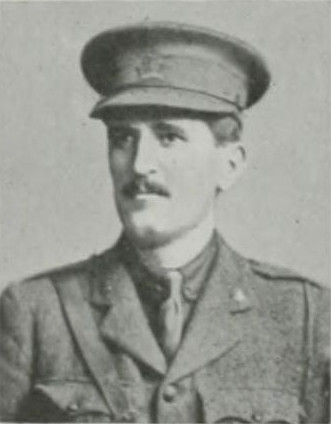
Herbert Assheton Bromley.
BROOKE, JAMES ANSON OTHO, V.C., Capt., 2nd Battn. The Gordon Highlanders, eldest s. of Capt. Harry Vesey Brooke, of Fairley, Countesswells, co. Aberdeen, J.P., D.L., late 92nd Gordon Highlanders, by his wife, Patricia, only child of James Gregory Moir Byres, of Tonley, co. Aberdeen, and gdson. of the late Sir Arthur Brinsley Brooke, of Colebrooke Park, co. Fermanagh, 2nd Bt., M.P.; b. Fairley, Aberdeenshire, 3 Feb. 1884; educ. Wellington and Sandhurst, and received his commission as 2nd Lieut. in the Gordon Highlanders, 11 Oct. 1905, and joined the 1st Battn. at Cork in November. The following year he was promoted Lieut. (5 Aug. 1907) and transferred to the 2nd battn. in India, where he served till 1913. He was present at the Delhi Durbar and as Senior Subaltern he was one of the officers who received new colours from King George, and was awarded the Durbar medal. In 1913, the regt. went to Egypt and were stationed there till the outbreak of war, when (Oct. 1914) they were ordered to the Front. Lieut. Brooke was the Senior Subaltern and acting as assistant Adjutant. The 2nd battn. of the Gordons landed at Zeebrugge and after many days’ severe fighting, the regt. along with the rest of the Division found themselves on 29 Oct. attacked by very superior forces at Gheluvelt. Here it was that Lieut. Brooke was killed, having, as his Col. wrote, by his gallantry “saved the situation.” The Germans having broken through, he changed the formation of the line three times and finally led an assault on, and captured an important trench at a most critical moment. For this he was mentioned in Despatches and awarded the Victoria Cross, the official record stating: “For conspicuous bravery and great ability near Gheluvelt on 29 Oct. in leading two attacks on the German trenches under heavy rifle and machine-gun fire, regaining a lost trench at a very critical moment. He was killed on that day. By his marked coolness and promptitude on this occasion Lieut. Brooke prevented the enemy from breaking through our line at a time when a general counter-attack could not have been organised.” At Sandhurst he was Capt. of the Shooting Eight, was senior Colour-Sergt. of the College, won the Sword of Honour, tied for the Saddle, etc. He was unm.
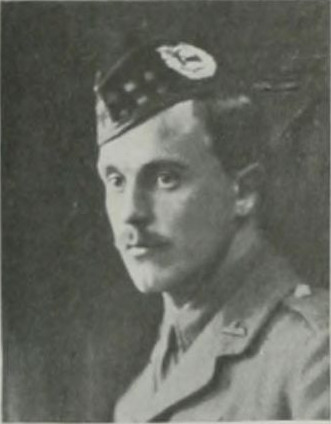
James Anson Otho Brooke.
BROOKE, VICTOR REGINALD, C.I.E., D.S.O., Major, 9th (Queen’s Royal) Lancers, 5th s. of the late Sir Victor Alexander Brooke, of Colebrooke, 3rd Bt. by his wife, Alice Sophia (Villa Ballenia, St. Jean de Luz, B.P., France), 2nd dau. of Sir Alan Edward Bellingham, 3rd Bt.; b. 53, Eaton Square, London, 22 Jan. 1873; educ. at Pau, Basses Pyrénées and at Storrington, and obtained his commission as 2nd Lieut. in the 9th Lancers, 12 Dec. 1894, and became Lieu. 29 April, 1896, Capt. 6 May, 1901, Major 7 June, 1905, and temporary Lieut.-Col. 1 June, 1907. He served in the South African War, 1899–1902, where he greatly distinguished himself. He took part in the advance on, and relief of, Kimberley, including the actions at Belmont, Enslin, Modder River and Magersfontein, and in the operations in the Orange Free State from Feb. to May, 1900, including the actions at Paardeberg, Poplar Grove, and Karee Siding, and was A.D.C. to the Lieut.-Gen. commanding the Headquarters staff in South Africa from Nov. 1901 to Sept. 1902. He was wounded in the Transvaal, and was twice mentioned in despatches [16 April, 1901, and 31 May, 1902], and was awarded the Distinguished Service Order, the Queen’s medal with four clasps and the King’s medal with two. From 1902 to 1907 he was A.D.C. and then Assistant Mil. Secretary to Lord Kitchener, and was sent by him to Kabul in 1904, and afterwards became Mil. Secretary to the Viceroy of India (Lord Minto), and was made a C.I.E. in 1910. He returned with Lord Minto Dec. 1910, and served with his regt. at Canterbury and Tidworth. On the outbreak of the European War he went to France with the Expeditionary Force and died in hospital at Compiègne of wounds received in action during the retreat from Mons, 29 Aug. 1914; unm. The following appreciation by “A Friend” appeared in the Daily Telegraph of 12 Sept. 1914: “It was a fine ending to a fine life, Victor Brooke was known, if only as Military Secretary in India, to thousands; but it was by tens of thousands that he was liked and loved. He was almost the first man wounded in the South African War. The writer picked up the diary of a wounded Boer, in which was set down the enemy’s regret that so good a friend and fighter had been as they thought killed. Upon my conscience, I believe that the Boers who wounded him in 1899 will take an intentional and bitter revenge for his death in 1914, when they came to grips with the Germans in South West Africa. As to the manner of his death and burial, there is something to be recorded. He died on the night of 29 Aug. and he was buried early next morning at Chateau d’Annel, near Compiègne. The house had been turned into a hospital by Mrs. Depew, to whom most men who speak English will be glad to pay in full a willing debt of gratitude whenever and wherever the claim is presented. They left at eleven on the same day. I now quote the words of others: ‘The estate carpenter made his coffin, and one of the old men on the estate dug his grave. After the burial the old man said to Mrs. Depew, “Regardez, Madame.” He pointed out a gravestone to the north of the grave, which had the inscription underneath the date, 1870, “Chevalier de la Legion d’Honneur.” It belonged to one of the family which owned Chateau d’Annel in those days, all of whom were buried there. Beside them the old grave-digger thought it right to lay Victor Brook—Chevalier de la Legion d’Honneur indeed.”
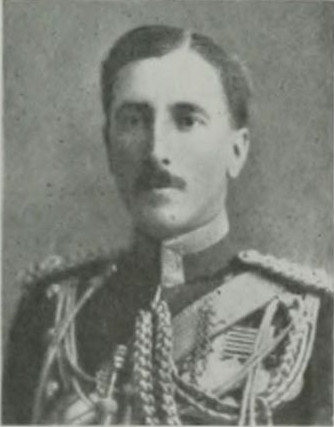
Victor Reginald Brooke.
BROOKE, VIVIAN CYRIL, Private, No. 98, A Coy., 12th Battn., 3rd Infantry Brigade, Australian Imperial Force, 2nd s. of the late Robert Parkinson Brooke, of Tasmania, formerly of India, Indigo Planter, by his wife, Amy (Rialannah, Swanston Street, New Town, Hobart, Tasmania), b. New Town, Tasmania, 19 June, 1887; educ. Queen’s College and Friend’s High School, Hobart, Tasmania; was a cashier in the Commonwealth Bank, Hobart, but on the outbreak of war volunteered and enlisted 20 Aug. 1914. He left for Egypt with the first Expeditionary Force; took part in the landing at Gaba Tepe on 25 April, 1915, when the 12th Battn. held the post of honour as covering party; was wounded and taken prisoner on that occasion and died a prisoner of war in the Turkish Military Hospital at Biga, Asia Minor, 9 May, 1915; unm.
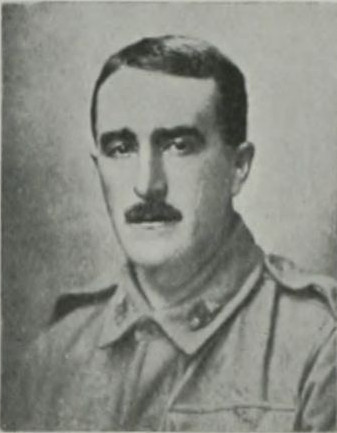
Vivian Cyril Brooke.
BROOKE, WALTER, Sergt., 6506, 26 Coy. R.E., s. of Alfred Brooke, of Oxford Road, Mistley, by his wife, Elizabeth, dau. of George Scott, of Sutton; b. Lawford, co. Essex, 3 Feb. 1885; educ. Mistley Wesleyan School; enlisted in the R.E. in 1899, and was killed in action by a shell, 10 Nov. 1914; unm.
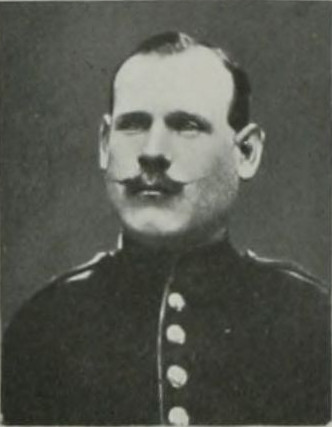
Walter Brooke.
BROOKER, HORACE BRIAN, Rifleman, 9th (Queen Victoria’s Rifles) London Regt., only s. of Horace Sidney Brooker, of Queen’s Road, Weybridge, Draper and Outfitter, by his wife, Kate, dau. of John Jonas Couzens; b. Weybridge, 20 June, 1888; educ. St. James School there, and enlisted in the 9th London Regt. 21 Aug. 1914, going into camp three days later. He was home only once subsequently, for a few hours, immediately preceding his departure for the front on 2 Nov. After a fortnight’s training in France, he went with his regt. straight into the firing line, and there he remained, with intervals of relief, right up to the memorable fight for possession of Hill 60, where he was killed in action, 21 April, 1915; unm. In his last letter, dated 14 April, he referred to a visit of Zeppelins which had dropped 11 bombs within 200 yards of the regt., making holes 24 ft. in diameter. A comrade (Rifleman Barry) wrote: “I have been closely associated with Brian since we came out in November last, and during the dreary months of bad weather in the trenches his cheery influence did much to keep us going. There is not the slightest doubt that the hill would have been lost but for the timely arrival of our regt. and the courage shown both by officers and men, who were determined to hang on like grim death, even when some men of other regts. were beginning to give way. No. 1 platoon had to get out of the trenches and charge across the open and occupy a small German trench in front, and it was while doing this that Brian was killed.” Brooker was a well-known Surrey athlete, he had captained the Weybridge Football Club for several seasons, and achieved international A.F.A. honours, thrice accompanying representative teams to the Continent.
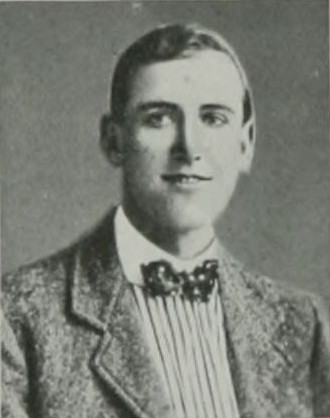
Horace B. Brooker.
BROOKER, WILLIAM JAMES, A.B. (R.F.R., B. 1282), 199598, H.M.S. Good Hope; lost in action off Coronel, on the coast of Chili, 1 Nov. 1914.
BROOKING, CHARLES WILLIAM, Leading Seaman, 234617, H.M.S. Aboukir; lost in action in the North Sea, 22 Sept. 1914.
BROOKS, ALFRED HAROLD, Private R.M.L.I. (R.F.R., Ch. B. 1888), late Ch./12955 H.M.S. Cressy; lost in action in the North Sea, 22 Sept. 1914.
BROOKS, AUGUSTUS, Private, No. 27310, C Coy. 15th Battn. (48th Highlanders of Toronto), Canadian Expeditionary Force; b. about 1889; was admitted to Dr. Barnardo’s Homes, 16 Oct. 1895; emigrated to Canada in July, 1898, and settled at Riga, North-West Territory, the reports received concerning him being “uniformly good over the whole period of his stay in Canada”; volunteered for service overseas on the outbreak of war in Aug. 1914; left Canada with the first contingent in Oct.; went to France, Feb. 1915; was wounded in the left shoulder at Langemarck, and was in hospital for a time, and was killed in action at Ypres, 23 April, 1915; unm.
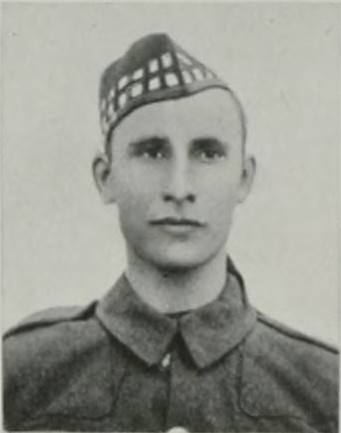
Augustus Brooks.
BROOKS, GEORGE, Stoker, 1st Class (R.F.R., B. 4515), S.S. 103523, H.M.S. Good Hope; lost in action off Coronel, on the coast of Chili, 1 Nov. 1914.
BROOKS, JAMES VINCENT, Private, No. 6/203, C Coy., Canterbury Infantry Battn., New Zealand Expeditionary Force, s. of James Brooks, of 88, Valley, Wakefield, Nelson, New Zealand, Farmer; b. Wakefield, New Zealand, 3 July, 1894; educ. there; volunteered and joined the New Zealand Expeditionary Force, 18 Aug. 1914; left for Egypt with the main body in Oct.; took part in the landing at the Dardanelles, 25 April, 1915, and was killed in action there, 8 May following; unm.
BROOKS, ROWLAND CAUSER, 2nd Lieut., 1/6th Battn. The Manchester Regt (T.F.), 2nd s. of Buckley Brooks, of The Manor House, Hale Barns, co. Chester, by his wife, Anna, dau. of Henry Causer, of Melbourne, Victoria; b. Cheetham, Manchester, 12 April, 1892; educ. Merton House, Penmanmaur, and Dean Close, Cheltenham; gazetted 2nd Lieut. 2/6th Battn. Manchester Regt. 31 Oct. 1914; joined the 1st Battn. in Egypt early in 1915, and proceeded with it to the Dardanelles. He was killed in action, whilst leading his men in the famous charge at Krithia on 4 June, 1915, from which only five officers and less than 200 men returned out of the 6th Battn.; unm.
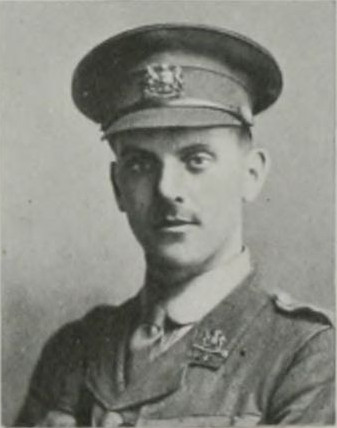
Rowland Causer Brooks.
BROOKSBANK, HUGH GODFREY, Lieut., 2nd Battn. Alexandra, Princess of Wales’ Own Yorkshire Regt., 3rd s. of Edward Clitherow Brooksbank, of Healaugh Old Hall, Tadcaster, late Major, Yorkshire Artillery, by his wife, Katherine Graham, dau. of the late Hugh Morris Lang, of Broadmeadows, Selkirk, and grandson of Edward Brooksbank, Lord of the Manor and Patron of Healaugh; b. 24 Nov. 1893; educ. Radley; received his commission in the Yorkshire’s, 5 Feb. 1913, and was promoted Lieut. 15 Nov. 1914. He was severely wounded at the first Battle of Ypres, 2 Nov. 1914, and died in London 16 Dec. following; unm. He was twice mentioned in F.M. Sir John (now Lord) French’s Despatches [16 Jan. and 31 May, 1915] for conspicuous gallantry in the field, and writing of his conduct at Ypres the senior officer of the regt. said: “A braver lad never stepped this earth; he was left in command of B Coy. when all his seniors had been shot. He commanded it like a veteran and on two occasions was largely responsible for the regt. being saved. He has been recommended for decoration.”
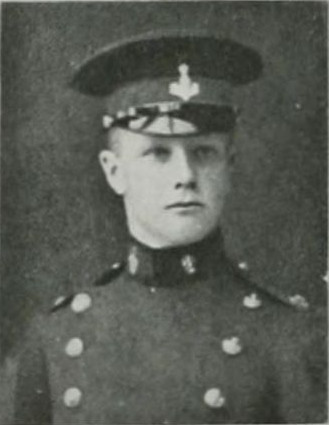
Hugh Godfrey Brooksbank.
BROOMHAM, WILLIAM, Leading Seaman (R.F.R., B. 2605), 172555, H.M.S. Cressy; lost in action in the North Sea, 22 Sept. 1914.
BROSTER, JESSEP, Ship’s Cook, 343743, H.M.S. Hogue; lost in action in the North Sea, 22 Sept. 1914.
BROTCHIE, ROBERT TRAILL, Surgeon, R.N.V.R., only s. of James Brotchie, of Swanney, Orkney, Tea Merchant, by his wife, Janet Catharine, dau. of Richard Brotchie, of Yorkshire; b. Crouch End, London, 29 Aug. 1885; educ. St. Paul’s School, London, and the London Hospital; served in the British Red Crescent Expedition in Tripoli, 1912, for which he received a medal; joined R.N.V.R. 13 Nov. 1913, and before being called up on 4 Aug. 1914 was in practice in Tarbert Loch, Tyne. He was lost on board H.M.S. Bulwark when that ship was blown up at Sheerness, 26 Nov. 1914. He m. at Kingston-on-Thames, 6 July, 1910, Theo., 4th dau. of Robert Horne, of Kendal, co. Westmoreland, and had three children: Lindsay Drummond, b. 10 Jan. 1912 (deceased), Jean Muriel and Joan Dora, twins, b. 27 May, 1913.
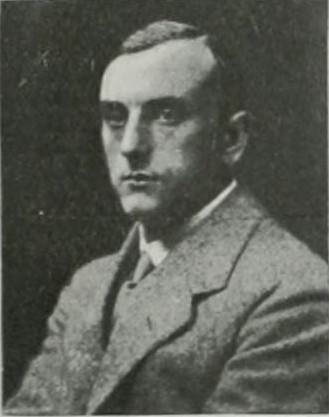
Robert Traill Brotchie.
BROTHERSTON, ROBERT THOMAS, Private, No 2605, 7th Durham L.I., 2nd s. of James Brotherston, of Rowlandson Terrace, Sunderland, engineer, by his wife, Jeannie, dau. of Alexander Henderson; b. Sunderland, 26 Dec. 1894; educ. Cowan Terrace Juvenile School, and Argyle House School, Sunderland; joined the 7th Durham L.I. 6 Sept. 1914, and died at the Stationary Hospital, Boulogne, 5 May, 1915, of wounds received in action. He was buried in the East Cemetery there; unm.
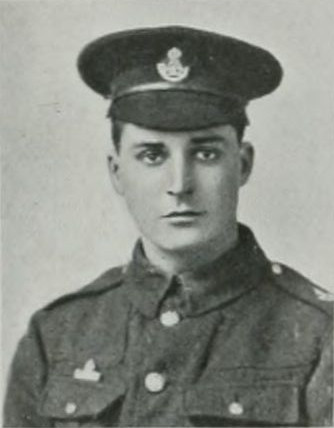
Robert T. Brotherston.
BROTHERTON, RICHARD, Private, No. 6015, 1st Battn. Coldstream Guards, 1st s. of Richard Brotherton, of 34, Lindum Avenue, Lincoln, formerly an Engine Driver, Great Northern Railway, by his wife, Betsy, dau. of John Graves; b. Lincoln, 2 Feb. 1881; educ. St. Peter at Gowts public school there; enlisted 18 Jan. 1905, and served three years with the colours, then joining the Huddersfield Borough Police Force. On mobilization, 5 Aug. 1914, he was called up, went to France with the Expeditionary Force, and was reported missing after the fighting at Ypres, 29 Oct. 1914, and is assumed to have been killed on or about that date. He m. at Lincoln, 24 May, 1908, Fanny (8, Fairfield Street, off Monk’s Road, Lincoln), yst. dau. of the late George Brown, of Poolham Hall, Horncastle, and had a posthumous son, George Richard, b. 9 (d. 31) Jan. 1915.
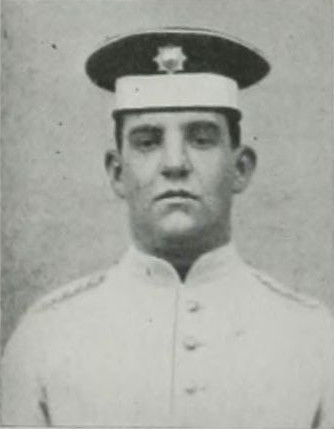
Richard Brotherton.
BROUGH, HUGH, Stoker, 1st Class (R.F.R., B. 4819), S.S. 104209, H.M.S. Good Hope; lost in action off Coronel, on the coast of Chili, 1 Nov. 1914.
BROUGHTON, ERNEST CHAMIER, Lieut.-Col., 3rd Battn. York and Lancaster Regt., s. of Robert John Porcher Broughton, M.A., Cambridge, Solicitor by Royal Appointment to the Coldstream Guards; b. London 3 June, 1858; educ. Harrow and Sandhurst; entered the Army as a Sub-Lieut. in the 6th Foot in Nov. 1876, and was transferred to the 65th (2nd North Riding) Foot in Jan. 1878, and served with them in India. In 1884 his regt. was ordered home, but were disembarked at Suakim, and took part in the Soudan Campaign, including the Battles of El Teb and Tamai. He got his company in 1885 and field rank in 1894 when he was posted to the 2nd Battn. York and Lancaster Regt. (the old 84th) in South Africa and subsequently served in Mauritius and India till 1901, when he retired. Immediately on his arrival home he joined the 3rd Battn. (Doncaster Militia) of his old regt. as a Capt. Three months later he was appointed Major for service in the South African War, and at the close of that campaign reverted to a company command. In 1908 he was again promoted to field rank, thus gaining the unusual distinction of being three times a Major. Three months later he received the honorary rank of Lieut.-Col., and 20 April, 1909, was promoted to substantive rank to command the 3rd York and Lancaster Special Reserve, and had two extensions of service. He died in the Armstrong College Military Hospital, Newcastle-on-Tyne, 17 Dec. 1914, while in command of his regt. then on east coast defence duty. Col. Broughton m. at Brighton, 2 Feb. 1888, Jane Henrietta King (The Cedar, Castle Donington, near Derby), dau. of Major Benjamin Bloomfield Keane, Ceylon Rifles, by his wife, Rebecca Kate, dau. of Capt. Harloe Dennis, of Galway, but had no issue. For over 25 years he was Editor of the regimental journal, “The Tiger and the Rose.”
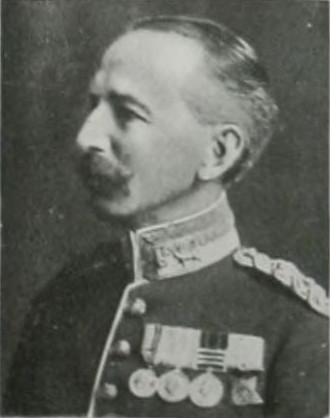
Ernest C. Broughton.
BROWN, ALBERT EDWARD, Officer’s Steward, 2nd Class, L. 4305, H.M.S. Aboukir; lost in action in the North Sea, 22 Sept. 1914.
BROWN, ALBERT MOORE, Private, No. 5011, 1st Battn. Coldstream Guards, 3rd s. of Edward Brown; enlisted 16 Feb. 1903, went to France with the Expeditionary Force in Aug. 1914, was wounded on 14 Sept., and was first reported as missing on 2 Jan. 1915, and later, to have been killed on that date. He m. at Offenham, 16 May, 1914, Emma (Offenham, near Eversham), dau. of James Clarke.
BROWN, ALBERT VICTOR. D.C.M., L.-Corpl., No. 4943, 2nd Battn. Coldstream Guards, s. of Edward Brown, of 34, Cemetery Road, Forest Gate; b. co. Middlesex; enlisted as a Boy, 2 Jan. 1903; became a Driver 5 Aug. 1908, and L.-Corpl. 26 May, 1914; served with the Expeditionary Force in France and Flanders from 12 Aug. 1914; was awarded the Distinguished Conduct medal [London Gazette, 17 Dec. 1914] “for gallantry on 28 Sept. 1914, in assisting to remove into safety the wounded who were lying exposed in the open,” and was killed in action at Rentel, 5 Nov. following. He was mentioned in F.M. Sir John (now Lord) French’s Despatch of 8 Oct. [London Gazette, 9 Dec.] 1914.
BROWN, ALBERT WILLIAM, Private, No. 63087, 3rd Battn. (Canadian Grenadier Guards) Canadian Expeditionary Force, s. of Albert Charles Brown, of Balsham, co. Cambs., by his wife, Mary, dau. of James Purkiss; b. Balsham, 19 Aug. 1889; educ. County Council school there, and went to Canada, 22 March, 1912. He had joined the Canadian Grenadiers in June, 1913, and on the outbreak of war volunteered for foreign service, came over with the 2nd Contingent, and after a period of training at Shorncliffe went to the Western front. He had only been in France a month when he was killed in action, 26 May, 1915; unm.
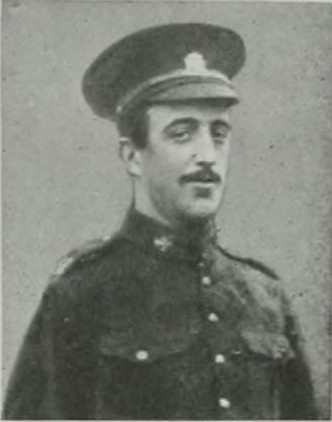
Albert William Brown.
BROWN, ALEXANDER BALFOUR, Private, No. 9695, 1st Battn. Scots Guards, s. of William Brown, of Newlyle, co. Forfar; b. Ceres, Coupar, co. Fife; enlisted 2 Sept. 1914; served with the Expeditionary Force in France, etc.; killed in action, 25 Jan. 1915.
BROWN, ARTHUR EDWARD, Sergt., No. 692, 3rd Dragoon Guards (C Squadron), yst. s. of Thomas Brown, of Barlby, near Selby, Farmer; b. Kirkdeighton, 1889; educ. Barlby; enlisted about 1907, and when war was declared was in Egypt with his regt. He came home, went to the Front on 9 Nov., was wounded in action at Poperinghe on the 16th, and died two days later, 18 Nov. 1914. He m. at Aldershot, (—), and left one dau.
BROWN, ARTHUR KENNISH, Private, No. 6188, 7th Platoon, 2nd Coy., 1st Battn., Canadian Expeditionary Force, s. of the late Rev. William Cowell Brown, by his wife, Fannie (20, Wellington Road, Brighton), dau. of William Isaac Lefeaux; b. Dalston, London, 22 May, 1878; educ. Coopers’ Company School, London, and Manor House School (Dr. Maxwell’s), Clapham; went to Canada in April, 1913; enlisted at London, Ontario, about a fortnight after war was declared; came over with the 1st Contingent, and after training on Salisbury Plain during the winter, went to France in Feb. 1915, and was killed in action near Festubert, 23 May, 1915; unm. The following report in connection with his death was sent by the Canadian Record Office: “On the night of 23–24 May our company was out on a working party. The work in question was the digging of a trench in front of the firing line. The men were working in pairs, and I was detailed with Private Brown. After working for about three hours, we were observed by the enemy, who immediately opened on us with artillery fire. The first shell landed four feet in front of me and a piece of the casing struck Private Brown in the head, killing him instantly. I cannot say what was done with his body, but I understand that the company holding the front line brought it in early the following morning. I believe he was buried in rear of our first line trench. This was at Festubert. It is impossible to give map location of the spot referred to.”
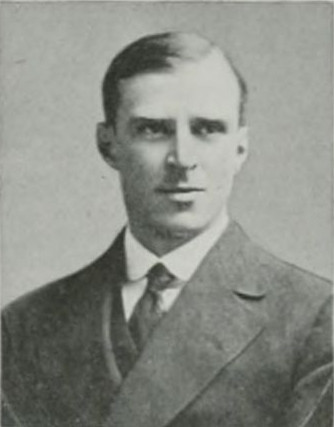
Arthur K. Brown.
BROWN, BERTRAM, Private, No. 2524, 1/9th Battn., Royal Scots (Highlanders) (T.F.), s. of late George Brown, by his wife, Christina Jane Adie (15, Warrender Park Terrace, Edinburgh), dau. of the late William Mitchell, of Leith; b. Leith, 27 Sept. 1892; educ. Edinburgh: prior to the outbreak of war was serving as 2nd Engineer on the s.s. Glitra, which was sunk by U-17, being one of the first of our merchant ships to suffer that fate. Brown and his comrades were compelled to row to the Norwegian coast in their boats. A week later (31 Oct.) he enlisted in the “Dandy Ninth,” and was shot by a sniper at Ypres, 9 April, 1915, when entering the trenches with supplies; unm.
BROWN, CHARLES, Private, No. 5171, 2nd Battn. Coldstream Guards, s. of John Brown, of Wookey, Wells, Somerset; b. co. Somerset; enlisted 24 Aug. 1903; served with the Expeditionary Force in France and Flanders from 12 Aug. 1914; killed in action at Rentel, 8 Nov. 1914; unm.
BROWN, CHARLES ALFRED, Trooper, No. 830, Royal Canadian Dragoons, Canadian Expeditionary Force, s. of Charles Ambrose Brown, of 93, Harcourt Avenue, Toronto, Canada (who served with the 12th York Rangers in the Fenian raid, 1866); by his wife, Elizabeth, dau. of John J. Lunan; b. Markham, York, co. Ontario, 1 March, 1883; educ. Toronto; joined the 1st Canadian Garrison Artillery at Halifax, N.S., in Feb. 1900, and after serving two years, came home and enlisted in the 3rd Canadian Mounted Rifles for service in South Africa, being given the rank of Corpl. He afterwards served in the Royal North West Mounted Police, and was one of the body of picked men sent over to attend the Coronation of King George and received the Silver Coronation Medal. On the outbreak of the European War, he re-enlisted 19 Aug. 1914; came over with the first contingent, 1 Oct. 1914; went to France April, 1915, and was killed in action at Messines, 20 Sept. 1915; unm.
BROWN, EDWARD, Private, No. 81105, 8th (formerly 32nd) Battn., Canadian Expeditionary Force, 3rd s. of George Edward Brown, of Lloydminster, Saskatchewan, Canada, formerly cashier at the Woolley and North Gawber Collieries, Barnsley, now farming at Lloydminster, by his wife, Louisa, dau. of Richard Horner, of Outwood, New Wakefield; b. Darton, near Barnsley, co. York, 5 Aug. 1888; educ. Darton Grammar School and St. Mary’s Church School, Barnsley; went to Canada with his family, with the Barr party of Colonists, leaving Liverpool, 30 March, 1903, and reached what is now known as the Lloydminster District in the following May, after trekking about 200 miles from Saskatoon, the nearest railway point at that time. After the outbreak of war he volunteered and enlisted at Lloydminster, 10 Nov. 1914; came over in March, 1915, went to the Front 26–27 April, 1915; was seriously wounded on the night of 20–21 May, 1915, at or near Festubert, and died on the 23rd; unm. He was buried in the ground of Hinges Chateau.
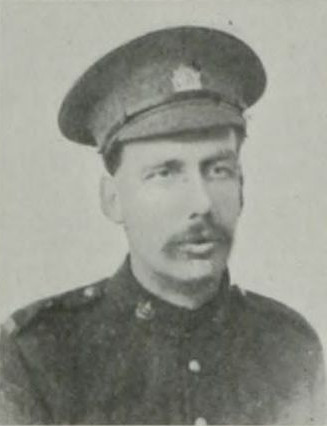
Edward Brown.
BROWN, FREDERICK GEORGE, Stoker, 1st Class, K. 15571. H.M.S. Pathfinder; lost when that ship was sunk by a mine, about 20 miles off the East Coast, 5 Sept. 1914.
BROWN, FREDERICK JAMES, Private, R.M.L.I. (Ports.), 7549, H.M.S. Good Hope; lost in action off Coronel, on the coast of Chili, 1 Nov. 1914.
BROWN, FREDERICK WILLIAM, Private, No. 10327, 3rd Battn. Coldstream Guards, s. of William Brown, of 2, Treadway Road, Hackney Road, N.E.; b. co. Middlesex; served with the Expeditionary Force in France, etc.; killed in action at Cuinchy, 6 Feb. 1915.
BROWN, GEORGE, Stoker, Petty Officer, 306510, H.M.S. Hawke; lost in action in the North Sea, 15 Oct. 1914; m.
BROWN, GEORGE, Private, No. 7870, 1st Battn. Scots Guards, s. of William Brown, of Burnside Cottage, Newmill, Keith; b. Keith, co. Banff; enlisted 24 March, 1911, aged 20; served with the Expeditionary Force in France, etc.; reported missing, 11 Nov. 1914; unm.
BROWN, GEORGE FREDERICK, Stoker, 1st Class, K. 15562, H.M.S. Pathfinder; lost when that ship was sunk by a mine, about 20 miles off the East Coast, 5 Sept. 1914.
BROWN, GEORGE SHIPTON, L.-Corpl., R.M.L.I. (Ports.), 10513, H.M.S. Good Hope; lost in action off Coronel, on the coast of Chili, 1 Nov. 1914.
BROWN, GEORGE WILLIAM, Private, No' 8563, 1st Suffolk Regt., 2nd s. of Frederick William Brown, of Chaplin’s Cottage, Caple St. Mary, near Ipswich, formerly of Gosbeck, Suffolk, Shepherd, by his wife, Mary Ann, dau. of William Dye, of Helmingham; b. Stowmarket, Suffolk, 12 Aug. 1893; educ. Ashbocking and Gosbeck schools; joined the Army 18 June, 1912, and was killed in action 7 May, 1915; unm.
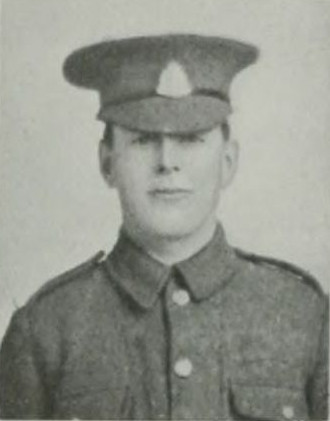
George William Brown.
BROWN, HARRY JAMES, Seaman, R.N.R., 4010A, H.M.S. Aboukir; lost in action in the North Sea, 22 Sept. 1914.
BROWN, HEDLEY, Stoker, 1st Class, K. 15474, H.M.S. Aboukir; lost in action in the North Sea, 22 Sept. 1914.
BROWN, HENRY AUGUSTUS, A.B. (R.F.R., B. 10013), 206254, H.M.S. Hogue; lost in action in the North Sea, 22 Sept. 1914.
BROWN, HERBERT HENRY, Bugler, R.M.A., 11965, H.M.S. Aboukir; lost in action in the North Sea, 22 Sept. 1914.
HURST-BROWN, DUDLEY, 2nd Lieut., R.F.A., yst. s. of W. Hurst-Brown, of Hurstbourne, 62, Oxford Gardens, W.; b. 8 June, 1897; educ. at Cardwallis, Maidenhead, and Winchester, where he was in the O.T.C. It had been intended that he should proceed to Oxford in the autumn, but war breaking out in the interval, he offered his services and received his commission in the Special Reserve on 11 Aug. 1914. He was at the Front five months, during which time he went through some of the most severe fighting, but escaped injury until receiving his fatal wounds in action in Flanders, 15 June, 1915. He died the same day; unm. In a letter received the day before his death he stated how glad he was he went to the Front, although the fighting was becoming something frightful, and that he saw but little chance as a junior officer of ever getting safely home again, and concluded the letter with the famous Latin epitaph of Horace, “Dulce et decorum est pro patria mori.”
BROWN, JAMES, Stoker, 1st Class (R.F.R., B. 8655), S.S. 105081, H.M.S. Cressy; lost in action in the North Sea, 22 Sept. 1914.
BROWN, JAMES, Stoker, H.M.S. Good Hope; lost in action off Coronel, on the coast of Chili, 1 Nov. 1914.
BROWN, JAMES CARTMELL DENNISON, 2nd Lieut., 5th Battn. Durham L.I. (T.F.), yr. s. of Sir Frank Brown, of Norton Priory, Stockton-on-Tees, D.L., by his wife, Charlotte, dau. of John Hedley, of South Hetton, co. Durham; b. Stockton-on-Tees, 2 Sept. 1893; educ. Rugby (1907), and Pembroke College, Cambridge (1912). On the outbreak of war he at once applied for a commission, and was gazetted 2nd Lieut. to the Durham L.I., 28 Aug. 1914. He went to France on 17 April, 1915, for divisional training, but consequent on the German attack with asphixiating gas his division was at once pushed to the front and engaged, and took part in the fighting around Ypres, 23 and 25 April, 1915. On Sunday, 25 April, he was wounded twice. He was first treated at Poperinghe Hospital, then removed to Hazebrouck, where he died on 27 April, 1915. His Colonel wrote: “He was one of the best officers we had, and did his duty to the last. On the day he was hit he had done valuable reconnaissance work in the morning, and, when hit, had taken part in a very good little attack. Although wounded in two places, he showed his pluck by returning unhelped to our lines. It is only by such examples as this that we may hope to conquer the enemy and keep up the tradition of the country.” A brother officer also wrote: “We all liked him very much, he was such a cheerful fellow, and so conscientious that I knew that anything entrusted to him, however slight or wearisome, would be properly carried out.” The Medical wrote: “He was a tremendous favourite with us all, and I can say I never had to attend to a pluckier lad.” His elder brother, Lieut. Frank D. Brown, of the same battn., was wounded near Ypres in May, 1915, and is again (1916) on active service.
BROWN, JOHN ALEXANDER, Rifleman, No. 3215, 17th Battn. (Poplar and Stepney Rifles) The London Regt. (T.F.), s. of William Brown, Corpl., A Coy. 1st Battn. (London Irish) The London Regt. (with 28 years’ service), by his wife, Sarah; b. Old Street, Shoreditch, 10 April, 1876; educ. St. John’s Road Higher Grade School there; served 12 years with the London Irish, and after the outbreak of war joined the Poplar and Stepney Rifles, 10 Sept. 1914; was wounded at the Battle of Loos, 25 Sept. 1915, and died in King George’s Hospital, Stamford Street, 21 Nov. following. He m. at Hoxton, 4 Jan. 1897, Alice Rosina (18, Hemsworth Street, Hoxton), dau. of John Brown, and had seven children: John Alexander, b. 2 Aug. 1902; George Arthur, b. 22 March, 1905; William Charles Joseph, b. 3 April, 1907; Alice Rosina, b. 23 July, 1897; Minnie, b. 18 Sept. 1900; Florence Marion, b. 22 Sept. 1910; and Blanche Mabel, b. 16 Sept. 1912.
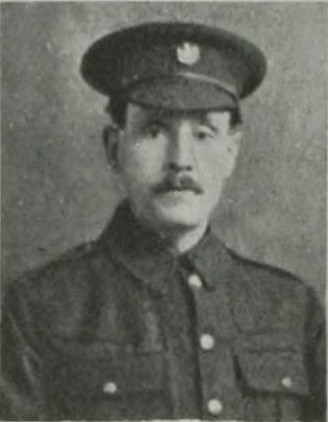
John Alexander Brown.
BROWN, JOHN EDWARD GUY, Lieut., 1st Battn. The Queen’s Own Royal West Kent Regt., yst. s. of Alexander Francis Garden Brown, of Magonet-Stoke Gabriel, co. Devon, by his wife, Charlotte Mary, dau. of James William Alston, of Stockbriggs, co. Lanark; b. Swindrigemuir, co. Ayr, 28 Aug. 1892, and was educ. at Bradfield College. He received his commission in the 2nd Battn. of the Royal West Kent Regt., then in India, on 20 Sept. 1911, when just 19. Having been applied for in 1913, as an officer for the 64th Pioneers by the Commandant, he successfully passed two examinations in Indian languages, winning thereby a substantial prize given by the Indian Government, and intended to pass the final in the autumn of 1914. He became Lieut. on 1 July, 1914, and was at home on leave when war broke out. He was then attached on its formation to the 6th Service Battn. of the Royal West Kents in the new army. In Oct. 1914, in consequence of the heavy losses sustained by the 1st Battn. in the Battle of Ypres, he was sent out to join it, but by an error in the Army List copied in the newspaper accounts he was given as attached to the Royal Berkshire Regt. On leaving the 6th Battn. his commanding officer wrote: “I am very sorry to lose your son; he did very good work while with my battn. and I can ill afford to lose him. However, his work will bear its fruit in the future.” He spent the winter in the trenches between Messines and Zillebeke and went through some heavy fighting in Nov. when the battn. lost so many officers, that he, though a junior, had to act as company commander during the months of Dec. and Jan. During this time in the trenches he passed a course of instruction under the R.E. officer attached to the battn. which qualified him as a regimental scout and bomb officer, a post he held at the time of his death. He was killed in action at Hill 60, near Zillebeke, Flanders. 22 Feb. 1915; unm. His commanding officer, Col. P. M. Robinson, wrote: “I regret your son’s death immensely, he was a gallant man and a good officer, always ready to do rather than to talk. He had won my admiration on several occasions during the time I have been commanding this battn., and I had a very high opinion of him. I much regret his career has been cut short”; and Capt. Molony (who joined the battn. in Feb. from the reserve of officers): “During the short time I knew your son I acquired a very real respect and a great liking for him. This being my first experience of trench work, he really commanded the company, while I watched his methods and learnt from him. I was very much struck by his thorough efficiency as well as his imperturbable courage. Having left the Army nearly eight years ago and never before having been in action, I badly wanted someone to put me in the way of it. No one could have done it more thoroughly and at the same time tactfully than your son. During this time he was offered and accepted the very honourable, but at the same time dangerous position of battn. scout officer. I did not like it much because it would mean that I should very often be deprived of his assistance, but I heard the commanding officer, when discussing his suitableness, say among other things ‘He is as brave as a lion.’ He is a great loss to the regt. and his qualities would have carried him very far in his profession had he been spared. I hope it will be some consolation to you to know that he did not suffer. When I heard he was hit I went to him at once. He was quite unconscious, and remained so until he died, perhaps some two minutes later.” Speaking of his death, the Adjutant said: “He was setting a splendid example, and, regardless of danger, was walking about laughing at the bombs, and greatly encouraging his men by his behaviour.”