The Roll of Honour. (continued 49)
Reading edition
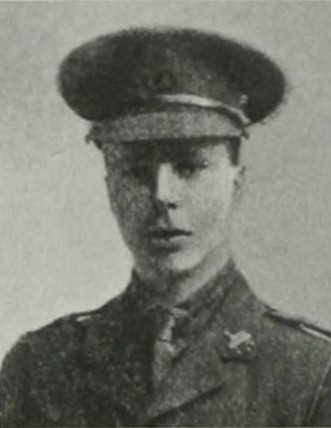
D. A. Addams-Williams.
DE COURCY-WILLIAMS, ALMERICUS JOHN FALKINER (ERIC), 2nd Lieut. 5th, attd. 4th, Battn. Middlesex Regt., only s. of John Almericus de Courcy-Williams, of St. Etchens, Killucan, co. Westmeath, M.A., M.B., B.Ch. T.C.D., by his wife Frideswide Catherine Emily, dau. of Robert Smyth, Portlick Castle, Athlone, J.P., and grandson of Surgeon-Major John William Williams, of Killucan, co. Westmeath, M.A., M.D., by his wife, Emily Letitia, née de Courcy, sister of Michael William, 32nd Lord Kingsale; b. Greenhills, Killucan, 4 May, 1895; educ. Roysses School, Abingdon, and Royal Military College, Sandhurst; gazetted 2nd Lieut. to the 2nd Battn. West India Regt., July, 1914; transferred to the Middlesex Regt., 20 Aug. 1914; went to France with the 4th Battn., 6 Sept.; took part in the fighting at Septmouts near Soissons, 14 Sept.; joined the 1st Battn. at Venizel, but returned to the 4th Battn. at Courcelles, 1 Oct.; took part in the march from the Aisne to Vieille-Chapelle, and the battle there, 12–15 Oct. where he was the only officer in his coy. not wounded, and died at Bethune, 21 Oct. 1914, of wounds received in action two miles from Aubers while commanding his coy. in the front line of trenches, the previous day, during the First Battle of Ypres. Buried in Bethune Cemetery. His Colonel wrote: “He was such a promising boy, and we were all proud of him and shall miss him much.” Another officer wrote: “I can tell you all ranks were very sorry, as he was a brave soldier and was a great favourite with all, and likely to have a bright army career.” A wounded soldier who was in the trenches with Lieut. de Courcy-Williams said that he frequently exposed himself to danger while exhorting his men not to waste ammunition, but to shoot straight. He was fatally wounded while aiming a rifle in the trenches trying to get a sniper who was picking off his men, and his last words were, “Men, give it them.”
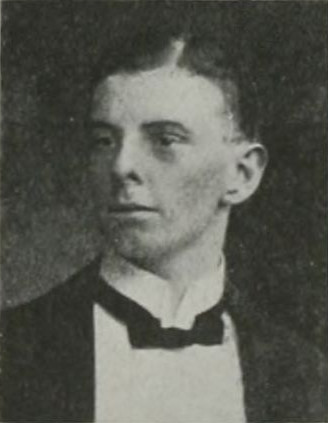
A. de Courcy-Williams.
WILLIAMSON, ALBERT JOHN, Stoker, 1st Class, Ch. 154287, R.F.R., B. 1366, H.M.S. Hawke; lost when that ship was torpedoed in the North Sea, 15 Oct. 1914; m.
WILLIAMSON, DAVID MILLAR, Petty Officer, 216842, H.M.S. Hogue; lost in action in the North Sea, 22 Sept. 1914.
WILLIAMSON, FREDERICK, Stoker, 1st Class, 302086, H.M.S. Good Hope; lost in action off Coronel, on the coast of Chili, 1 Nov. 1914.
WILLIAMSON, PETER, Private, No. 881, 12th Battn. 3rd Brigade, 1st Division, Australian Imperial Force, s. of Matthew Williamson, of Ollaberry, Shetland; Seaman; b. Edinburgh, 29 March, 1891; educ. Ollaberry, and Lerwick, Shetland; went to Australia; volunteered on the outbreak of war and joined Commonwealth Expeditionary Force, Aug. 1914; left for Egypt with the main force in Oct.; went to the Dardanelles, and died on board H.M.S. Delta, 9 Aug. 1915, of wounds received in action there. Buried at sea. He m. at Edinburgh, Jessie, dau. of (—) Sutherland, of Latheron, Crofter, and had three children: Peter, b. ——; Lizzie, b. 5 Jan. 1893, and Maggie, b. 30 Nov. 1894.
WILLIAMSON, ROBERT, Private, No. 14054, 1st Battn. Royal Scots (Lothian Regt.) served with the Expeditionary Force in France, etc.; killed in action at Voorstraat, 30 Jan. 1915.
WILLIAMSON, ROBERT HAMILTON, 2nd Lieut., 118th Heavy Battery, Royal Garrison Artillery, only surv. s. of Dr. George Williamson, of 256, Union Street, Aberdeen, by his wife, Constance, dau. of A. H. Gunn; b. Stonehaven, co. Kincardine, 27 Sept. 1893; educ. Glenalmond, and was gazetted 2nd Lieut. 3rd (City of Aberdeen) Battery, 1st Highland Brigade, R.F.A. (T.F.), June, 1911, and promoted Lieut. ... June, 1913. After being attd. for a year to a Regular Battery of Field Artillery, he gained a commission in the Royal Garrison Artillery at the Military Competitive Examination in April, 1914, and was gazetted to the 118th Heavy Battery, R.G.A., 10 June following. He left for France early in Nov. 1914, and died in the Allied Force Base Hospital, Boulogne, 27 Dec. 1914, of wounds received at Fauquissart, near Laventie, on the 6th, while making a sketch of the enemy’s position for his battery from an advanced observation post in a ruined church tower; unm. Buried Allenvale Cemetery, Aberdeen. The commanding officer, 8th Brigade of Heavy Artillery, in which he served, wrote: “I had a great personal liking for him and thought very highly of him, both professionally and as regards his general disposition and demeanour with his other brother officers and the men, who all liked him;” and the officer commanding his battery wrote: “I shall never forget your boy, either for his own personal qualities or for what he had done for the battery.”
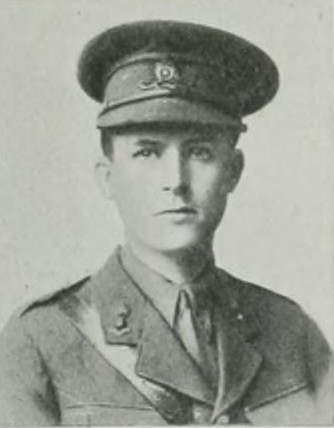
Robert H. Williamson.
WILLINGALE, SIDNEY GEORGE, Petty Officer (N.S.), 197386, H.M.S. Aboukir; lost in action in the North Sea, 22 Sept. 1914.
WILLIS, GEORGE, Private, R.M.L.I., Po./12561, H.M.S. Good Hope; lost in action off Coronel, on the coast of Chili, 1 Nov. 1914.
WILLIS, THOMAS, A.B. (R.F.R., Ch. B. 3672), 160183, H.M.S. Aboukir; lost in action in the North Sea, 22 Sept. 1914.
WILLIS, WILLIAM BRIAN DE LAVAL, Corpl., No. 12289, 3rd Auckland Regt. (Countess of Ranfurly’s Own), New Zealand Expeditionary Force, eldest s. of the Ven. William Newcombe de Laval Willis, formerly for 35 years Vicar of Cambridge and Archdeacon of Waikato, New Zealand, by his wife, Mary Agnes, dau. of the late G. H. Clarke, of Micheldever, Hants, England; b. the Vicarage, Cambridge, New Zealand, 17 May, 1888; educ. the Cambridge District High School and St. John’s Collegiate School, Auckland; entered the Survey Department of the New Zealand Government in Feb. 1906. When war broke out in Aug. 1914, he obtained leave to temporarily resign his post and enlisted as a Private in the 3rd Auckland Regt., of which he was immediately made Corpl. He left New Zealand with the First Expeditionary Force 16 Oct. 1914, took part in the repulse of the Turkish attack on the Suez Canal in Feb. 1915, and in the landing at Gaba Tepe on April 25 and for 10 days was in the thick of the fight. On May 5 when re-embarking with 400 others for Cape Helles he was shot in the lungs. After considerable delay he reached Alexandria on 10 May, but died at the Deaconess Hospital there two days later; unm. He was buried in the Military Cemetery at Alexandria. His Colonel (Plugge) was near him when wounded, and helped temporarily to dress his wounds. Writing subsequently, he described him as “an ideal soldier, and as plucky as could be,” and said also that “he had done magnificent work.” One of his comrades wrote: “You would feel proud if you could hear the way all his men spoke of him, and they all said the same.” The Prime Minister of New Zealand writing as Minister of Lands said, “As an officer of the Lands and Survey Department he showed the greatest promise, and his assiduity to his responsible duties occasions a great loss not only to the Public Service, but also to the Dominion.” The Under-Secretary wrote also “His record in the Department was of the highest.” In the district in which he was last engaged in survey work, a public movement was made, and a memorial brass erected in the Manganui Hospital, and a number of beds attached to the Memorial.
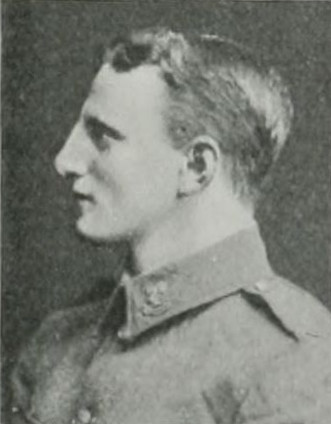
W. B. De Laval Willis.
WILLS, GEORGE EDWARD LEONARD, Stoker, 1st Class, K. 11282, H.M.S. Hawke; lost when that ship was torpedoed in the North Sea, 15 Oct. 1914.
EARDLEY-WILMOT, FREDERICK LAWRENCE, Lieut., Princess Patricia’s Canadian L.I., only s. of Col. Arthur Eardley-Wilmot, of Westernlea, Westward Ho! and Hales Hall, Cheadle, co. Staffordshire, late R.F.A., by his wife, Mary Blanche, only dau. of Clement Thomas Sneyd-Kynnersley, of Loxley Park, and Highfields, co. Stafford, and grandson of Major-Gen. Frederick Marrow Eardley-Wilmot, R.A. [2nd son of Sir John Eardley-Wilmot, 1st Bart.]; b. Portsmouth, 25 Feb. 1895; educ. Cheltenham and Toronto University (Oct. 1913 to Aug. 1914); volunteered on the outbreak of war and was gazetted Lieut., P.P.C.L.I. 22 Sept. 1914; came over with the first contingent in Oct. 1914; was appointed Machine Gun Officer, Feb.; went to France when his regt. joined the 20th Brigade (27th Division), and was killed in action in the trenches at St. Eloi, 18 March, 1915; unm.
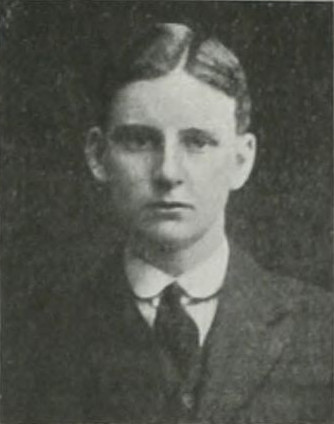
F. L. Eardley-Wilmot.
WILMSHURST, WILLIAM JESSE, Driver, No. 826, 1/3rd Kent (Fortress) Royal Engineers (T.F.), eldest s. of Jesse Wilmshurst, of 15, Standen Street, St. John’s, Tunbridge Wells, Engine Steerer for Kelsey’s, brewers, by his wife, Catherine, dau. of Charles Hallett; b. Tunbridge Wells, 3 Sept. 1895; educ. at St. John’s Boys’ School there; was working at Kelsey’s, brewers, when mobilised; joined the Kent (Fortress) R.E. Oct. 1911; left England for the Dardanelles, and was drowned on H.M.S. Hythe, 28 Oct. 1915, when that ship was sunk in the Ægean Sea; unm. Major Ruston, himself saved from the ship, wrote: “The whole event was so sudden and so unexpected, and the time the Hythe remained afloat after the collision was so short, that it is practically impossible to say what happened to individual men. Many of the drivers must have been injured in the collision, as the other vessel struck their part of our vessel, and brought down our foremast.... From what I know of the drivers, and your son in particular, I am sure he died bravely.” His brother, Albert Edward Wilmshurst, was also on the Hythe, but was rescued.
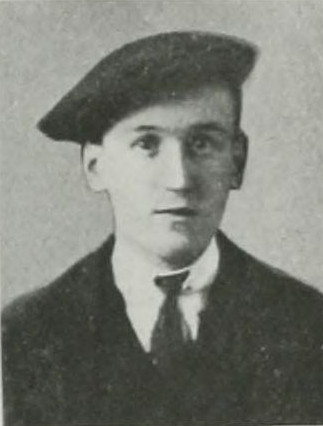
William Jesse Wilmshurst.
WILSON, ALBERT PATTERSON, A.B. (R.F.R., B. 6304), 224462, H.M.S. Hawke; lost when that ship was torpedoed in the North Sea, 15 Oct. 1914; m.
WILSON, ALLAN, A.B. (R.F.R., Ch. B. 9740), 205388, H.M.S. Cressy; lost in action in the North Sea, 22 Sept. 1914.
WILSON, DOUGLAS HENRY VERNON, Lieut., R.N., H.M.S. Bulwark, yst. s. of the late Charles Pooley Wilson, formerly Lieut. Indian Navy, and Principal Officer of the Board of Trade, London District, by his wife, Claudia Wilson (Highland Road, Upper Norwood, S.E.), dau. of James T. Secretan; b. Upper Norwood, 19 Dec. 1885; educ. Dulwich College and H.M.S. Britannia (where he won Champion Featherweight Cup in Boxing, Aug. 1901); entered the Navy as a Naval Cadet on H.M.S. Formidable, 15 Sept. 1901, became Midshipman, 30 Nov. 1901; Sub-Lieut. 30 April, 1905; and Lieut. 1 Oct. 1907; served the whole of her first commission on H.M.S. Formidable on Mediterranean Station; when Lieut. on H.M.S. Venus attended Mr. Winston Churchill as A.D.C. to Mombasa, and on the same ship went to Quebec for the Tercentenary Festival in 1908; appointed to H.M.S. Glory 30 Oct. 1913; transferred to H.M.S. Bulwark 29 July, 1914; and was lost when that ship was blown up off Sheerness on the morning of 26 Nov. following. He m. at Weymouth, 17 Oct. 1914, Evelyn Maud, dau. of Thomas Charles Hooman, of Lilliput, Dorset; s.p.
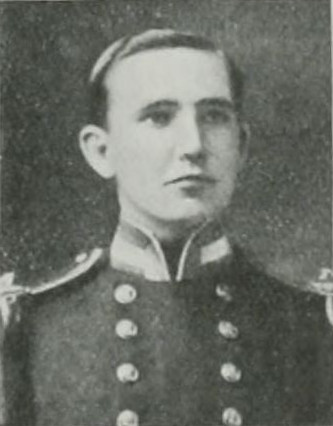
Douglas H. V. Wilson.
WILSON, EDWARD HENRY, Rifleman, No. 2056, 9th Battn. (Queen Victoria’s Rifles) The London Regt. (T.F.), only s. of Henry Edward Wilson, of 45, Durham Road, East Finchley, by his wife, Alice, dau. of Robert Pritty; b. Tufnell Park, N., 17 May, 1895; educ. Owen’s School, Islington, and on leaving school, entered the Head Office of the London City and Midland Bank; volunteered on the outbreak of war and joined the Queen Victoria’s Rifles, Aug. 1914; left for France 4 Nov. following, being attached to the machine-gun section of his battn.; took part in the capture of Hill 60, when the machine-gun section of the Q.V.R.’s rendered excellent service; and was killed in action by shell fire near Wieltje, at the beginning of the Second Battle of Ypres, 24 April, 1915. Buried in the garden of a cottage 200 yards S.E. Battn. H.Q., Wieltje. His officer, Lieut. Brian Fargus, who was himself killed on New Year’s Day, wrote in Dec. 1914: “Wilson accompanies me voluntarily whenever I go out on a prowl round the lines or up to some dangerous point. He knows no fear and has turned himself into my bodyguard; he is a splendid fellow and I think no end of him.” And the Sergt. in charge of the machine-gun section wrote of his fearlessness of danger and conscientious attention to duty, and of the very good work he had done at Hill 60. He was a member of the Blackheath Harriers and had won a number of prizes at athletic meetings; he was also a keen cricketer and football player and an enthusiastic yachtsman.
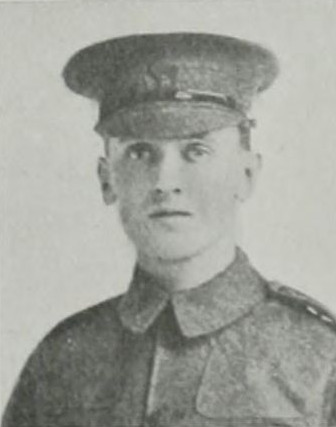
Edward Henry Wilson.
WILSON, ENNIS NORMAN, A.B. (R.F.R., Ch. B. 9005), 196524, H.M.S. Cressy, lost in action in the North Sea, 22 Sept. 1914.
WILSON, ERNEST, Private, R.M.L.I., Ch./16978, H.M.S. Hawke; lost when that ship was torpedoed in the North Sea, 15 Oct. 1914.
WILSON, EWEN HOLMES HUMPHREY JAMES, Lieut., 1st Battn. The Black Watch (Royal Highlanders), only s. of the late James Humphrey Wilson, of Shona, Ayr, by his wife, Katherine Campbell, dau. of John Gordon MacMillan; b. Ayr, 18 June, 1892; educ. Harrow; gazetted 2nd Lieut. 14 Feb. 1912; and promoted Lieut. 16 May, 1914; left for France with the Expeditionary Force in Aug. 1914, his battn. forming part of the 1st Brigade, and was killed in action at Sablonnières during the Battle of the Marne, 8 Sept, following; unm. Buried at Sablonnières. His Major wrote: “His Coy. will miss him, and so do we all, as he had endeared himself to all his brother officers and comrades,” and a corpl. in his platoon: “He died leading the men who adored him.” At Harrow he played cricket and football for his house, and was a Colour-Sergt. in the O.T.C. at Sandhurst.
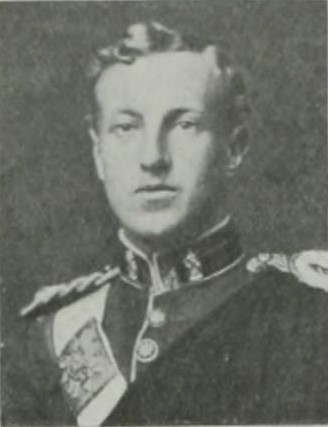
Ewen H. H. J. Wilson.
WILSON, GEORGE, Stoker, H.M.S Good Hope; lost in action off Coronel, on the coast of Chili, 1 Nov. 1914.
WILSON, HARRY, Private, No. 1278, 14th Battn. Australian Imperial Force; served in Egypt and at the Dardanelles; killed in action, 27 April 1915.
WILSON, HARRY, Leading Seaman, 233319, H.M.S. Aboukir; lost in action in the North Sea, 22 Sept. 1914.
WILSON, HUGH STANLEY, 2nd Lieut., 8th Battn. Worcestershire Regt. (T.F.), 4th s. of the Rev. James Maurice Wilson, D.D., Canon of Worcester, formerly Head Master of Clifton College, and afterwards Vicar of Rochdale and Archdeacon of Manchester, by his wife, Georgina Mary, dau. of the late Admiral John Talbot; b. at the School House, Clifton College, Bristol, 28 Nov. 1885; educ. Clifton College and King’s College, Cambridge; was an assistant Master at Rugby School; volunteered on the outbreak of war and joined the 8th Worcesters as a Private in Aug. 1914; was given a commission as 2nd Lieut., 29 Oct. following, and was killed in action in France, 14 Sept. 1915. Buried in the English Military Cemetery, Hébuterne, Pas de Calais, France; unm.
WILSON, JAMES, Stoker, 1st Class (R.F.R., B. 10493), S.S. 108189, H.M.S. Hawke, s. of James Wilson, of 63, Britannia Street, Belfast; lost when that ship was torpedoed in the North Sea, 15 Oct. 1914.
WILSON, JOHN, Private, R.M.L.I. (R.F.R., Ch. 15442), H.M.S. Hawke; lost when that ship was torpedoed in the North Sea, 15 Oct. 1914; m.
WILSON, JOHN JOSEPH DEXTER, Boy, 1st Class, J. 27512 (Ports.), H.M.S. Hawke, s. of Joseph Wilson, of 22, High Street, Waterloo, Pilsley, co. Derby; lost when that ship was torpedoed in the North Sea, 15 Oct. 1914.
WILSON, ROBERT, Private, R.M.L.I., Ports. 7473, H.M.S. Good Hope; lost in action off Coronel, on the coast of Chili, 1 Nov. 1914.
WILSON, ROBERT SYM, Capt., 1st Battn. Seaforth Highlanders, eldest s. of the late Andrew Hay Wilson, Agent, Royal Bank of Scotland, Leith, by his wife, Anne Wood (11, Drummond Place, Edinburgh), dau. of Christopher Wood, of Leith; b. Leith, 17 Nov. 1876; educ. Edinburgh Academy and Trinity College, Glenalmond, Perth; gazetted 2nd Lieut. 1st Seaforth Highlanders from the Militia, Dec 1897, and promoted Lieut. 9 Dec. 1899, and Capt. 11 April, 1902; served through the South African War, 1899–1902; took part in the advance on Kimberley, including action at Magersfontein (wounded); the operations in the Orange Free State, May 8 to Jan. 1901, and Jan. to March, 1902; those in the Cape Colony, Feb. and March, 1901, and Aug. 1901 to Jan. 1902, and in the Transvaal March to Aug. 1901, and March 31 to May, 1902 (Queen’s medal with three clasps and King’s medal with two clasps). Between 1907 and 1910 he was employed as Adjutant, first to the Volunteers and afterwards to the Territorial Force. On the outbreak of war Capt. Wilson was in India with his battn. He sailed for France with the Dehra Dun Brigade (Meerut Division) of the Indian Expeditionary Force in Sept. 1914, and was killed in action at Neuve Chapelle, 8 Nov. following. He m. at Murrayfield, Midlothian, 5 Nov 1902, Harriet Evelyn (Hawthornbank, Murrayfield), 2nd dau. of the late Alfred William Pearce, of Broughty Ferry, and had three children: Andrew Ripley, b. 13 Jan. 1904; Ronald Christopher, b. 15 May, 1905; and Marjorie Anne, b. 25 July, 1912.
WILSON, SAMUEL OLSON, A.B. (R.F.R., B. 9787), S.S. 2446, H.M.S. Hogue; lost in action in the North Sea, 22 Sept. 1914.
WILSON, WILFRED, A.B., 212496, H.M.S. Cressy; lost in action in the North Sea, 22 Sept. 1914.
BOWES-WILSON, GEORGE HUTTON, Capt., 4th Battn. The Yorkshire Regt. (T.F.), s. of Thomas Bowes-Wilson, of Enterpen Hall, Hutton Rudby, Yorkshire; b. Newcastle-on-Tyne, 26 April, 1877; educ. Clifton College, and New College, Oxford (B.A.); joined the 4th Territorial Battn. of the Yorkshires from the Volunteers on the organisation of the Territorial Force in 1907, and was promoted Capt. 1 March, 1913; volunteered for foreign service on the outbreak of war; and was killed in action, near Ypres, 17 June, 1915. Buried at Vlamertinghe. He m. at St. Peter’s Church, Harrogate, 29 Sept. 1908, Nora Dulcie, only child of the late Herbert Linney, and had a son, Maurice Desmond, b. 6 June, 1912, d. 17 March, 1915.
WIMHURST, ARTHUR DANIEL, Stoker, 1st Class, 364229, H.M.S. Good Hope; lost in action off Coronel, on the coast of Chili, 1 Nov. 1914.
WIMSETT, FREDERICK THOMAS, Private, No. 2280, 83rd Field Ambulance, 27th Division, R.A.M.C. (T.F.), 3rd s. of William George Wimsett, of 2, Hilda Terrace, Ham Hill, Snodland, co. Kent., by his wife, Emma, dau. of Richard May; b. Larkfield, 10 Dec. 1896; educ. Snodland National School; was working at Snodland Paper Mill; joined the Territorials 2 July, 1914, and was at his first training camp on Salisbury Plain when they were ordered to return, owing to the outbreak of war in Aug. 1914. He immediately volunteered for foreign service, trained at Maidstone, Canterbury, Sittingbourne and Windsor; went to France, 6 March, 1915, and died in No. 11 General Hospital, Boulogne, 13 May, 1915, from a wound in the head, received while picking up the wounded on the 11th. He was buried in the English part of the Cemetery there.
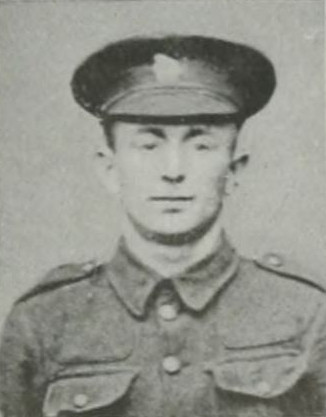
Frederick T. Wimsett.
WINDEBANK, ROBERT PERCY, A.B. (R.F.R., B. 4075), 190016, H.M.S. Good Hope; lost in action off Coronel, on the coast of Chili, 1 Nov. 1914.
WINFIELD, STUART JAMES, L.-Corpl., No. 9956, 1st Battn. East Kent Regt. (The Buffs), s. of James Stratton Winfield, of 17, Boden Road, Gillingham; served with the Expeditionary Force in France, etc.; killed in action, 18 Oct. 1914.
WINDLE, JOHN, Officers’ Steward, 1st Class, L. 2085, H.M.S. Aboukir; lost in action in the North Sea, 22 Sept. 1914.
WING, MATTHEW, Private, R.M.L.I. (R.F.R., Ch. B. 2016), H.M.S. Aboukir; lost in action in the North Sea, 22 Sept. 1914.
WINGATE, THOMAS PATERSON, Capt., 2nd Battn. King’s Own Scottish Borderers, only s. of the late Paterson Wingate, of Glasgow, Shipbuilder, by his wife, Jessie Crawford (18, Westbourne Terrace, Glasgow), dau. of John Bruce Murray, of Glasgow; b. Woodcroft, Glasgow, 7 Feb. 1877; educ. Kelvinside Academy, Glasgow, and Glasgow University (B.Sc. 1899); gazetted 2nd Lieut. to 2nd King’s Own Scottish Borderers, then in India, 4 May, 1898, and promoted Lieut. 21 April, 1900, and Capt. 24 Jan. 1906; served in the South African War, 1899–1902, with the King’s Royal Rifle Corps; took part in the operations in Natal, 1899, including actions at Rietfontein and Lombard’s Kop; the defence of Ladysmith, including action on 6 Jan. 1900; operations in Natal, March-June, 1900; in the Transvaal, east of Pretoria, July to 29 Nov. 1900, and in the Transvaal, 30 Nov. 1900, to March, 1901; and was Railway Staff Officer (graded Staff Lieut.), 4 May, 1900, to 4 May, 1901, and Military Landing Officer (graded Staff Capt.), 5 Sept. 1901, to 30 June, 1903 (mentioned in Despatches [London Gazette, 8 Feb. 1901], Queen’s medal with two clasps and King’s medal with two clasps). At the close of the war he joined his regt. in India and returned with it to Glasgow; and from 9 March, 1912, to 9 March, 1915, was Adjutant to the 3rd (Reserve) Battn. at the Depôt, Berwick-on-Tweed, and after mobilisation in Aug. 1914, at Portland. He went to France, 16 March, 1915, in charge of a draft for the 2nd Battn., which had formed part of the first Expeditionary Force (13th Brigade, 5th Division), and was killed in action at Hill 60, 18 April, 1915, the day after the 2nd King’s Own Scottish Borderers and the 1st West Kents had stormed the Hill; unm. Col. Sladen, D.S.O., commanding 2nd King’s Own Scottish Borderers, himself wounded on this occasion, wrote: “He was such a brilliant soldier and such a good comrade in every way. His loss is a great loss to the regt., and the Army can ill afford to lose such as he was. Hill 60 has indeed taken a heavy toll of this regt.” And the following appeared in the Regimental Orders, 23 April, 1915: “It is with very great regret that the commanding officer has to announce to the battn. the death of Captain T. P. Wingate, the late Adjutant, who was killed in action on 18 April, 1915. In his magnificent soldierly qualities and his self-sacrificing devotion to duty the late Capt. Wingate has set a standard which all ranks may well endeavour to attain.”
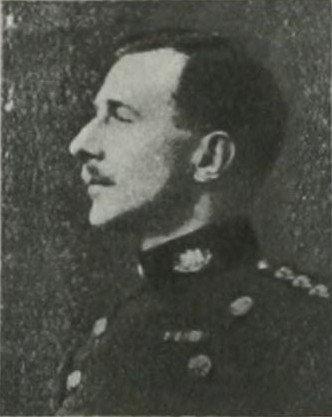
Thomas Paterson Wingate.
WINGFIELD, JOSEPH, Stoker, 1st Class, 310594, H.M.S. Pathfinder; lost when that ship was sunk by a mine, about 20 miles off the East Coast, 5 Sept. 1914.
WINKS, LAWRENCE, Sergt., No. 11/457, 2nd Wellington Mounted Rifles, 5th s. of John Winks, of Hawera, New Zealand, by his wife, Mary Jane Amon, who was a dau. of the late Thomas Amon, of Rangitikei, N.Z.; b. Hawera, 19 Dec. 1891; educ. Normanby; enlisted the day following the declaration of war, 6 Aug. 1914, and died 6 June 1915, of wounds received in action during the fighting at No. 3 Port, Gallipoli, on 31 May; unm.
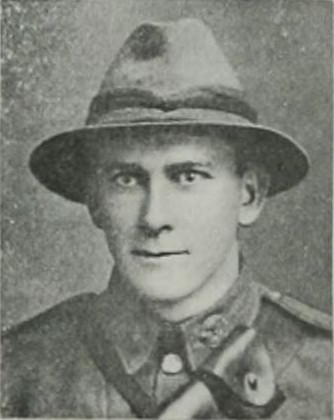
Lawrence Winks.
WINKWORTH, HARRY, Chief Ship’s Cook, 176650, H.M.S. Hawke, s. of Stephen Winkworth, of 17, St. Clement Street, Winchester; lost when that ship was torpedoed in the North Sea, 15 Oct. 1914.
WINMILL, JOHN, Stoker, 1st Class, K. 4702, H.M.S. Good Hope; lost in action off Coronel, on the coast of Chili, 1 Nov. 1914.
WINN, ARTHUR, Capt., 3rd (Reserve), attd. 2nd. Suffolk Regt., only s. of Arthur Thomas Winn, of the Uplands, Aldeburgh, Suffolk, Barrister-at-Law, Middle Temple, by his wife, Constance, dau. of Henry Hicks, of Weybridge, Surrey; b. Ewell, co. Surrey, 13 April, 1884; educ. Eton; gazetted 2nd Lieut. to the 3rd Suffolk Territorials, April, 1902, and promoted Lieut., and Capt. 23 Aug. 1913; volunteered on the outbreak of war; went to France, Aug. 1914, attd. to the 2nd Suffolks, and was killed in action near Soissons, 9 Sept. 1914; unm.
WINN, ROBERT CHARLES, A.B. (R.F.R., Ch. B. 9831), 213622, H.M.S. Cressy; lost in action in the North Sea, 22 Sept. 1914.
WINN, THOMAS, Private, No. 12897, 3rd Battn. Coldstream Guards, s. of Thomas Henry Winn, by his wife, Selina Harriet; b. 1873; enlisted 28 Sept. 1914, and died 29 June, 1915, in No. 23 General Hospital, Etables, of wounds received in action at France. He m. at St. Mark’s, Bow, E., 4 June, 1899, Emma (137, High Street, Homerton), dau. of Walter Elson, and had five children: Henry, b. 27 Jan. 1905; Selena, b. 12 Aug. 1902; Alice, b. 26 Jan. 1907; Martha, b. 6 Aug. 1909; and Caroline, b. 2 June, 1913, and d. 29 June, 1915.
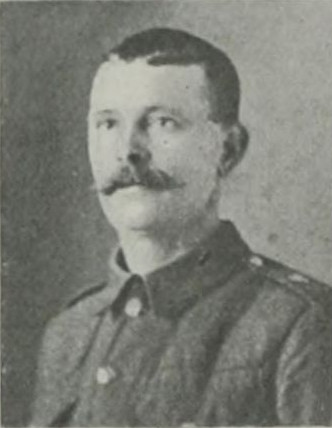
Thomas Winn.
WINSHIP, ERNEST, Boy, 1st Class, J. 25790, H.M.S. Hawke; lost when that ship was torpedoed in the North Sea, 15 Oct. 1914.
WINSHIP, JOHN, Stoker (R.N.R.), V. 282, H.M.S. Hawke; lost when that ship was torpedoed in the North Sea, 15 Oct. 1914; m.
WINTER, WILLIAM, A.B., 230420, H.M.S. Aboukir, lost in action in the North Sea, 22 Sept. 1914.
WINTERBOTTOM, JACK HUDSON, Boy, 1st Class, J. 26734 (Ports.), H.M.S. Hawke; lost when that ship was torpedoed in the North Sea, 15 Oct. 1914.
WINTERSON, GEORGE, Private, No. 9876, 2nd Battn. Coldstream Guards, s. of Thomas Winterson, of Weir Cottages, Chirton, near Devizes, by his wife, Ann; b. Chirton, co. Wilts, 8 Oct. 1894; educ. Patney School there; enlisted in the 3rd Battn., Wiltshire Regt. in 1910; transferred to the Coldstreams, 6 Dec. 1912; went to France 12 Aug. 1914, and was killed in action at Rentel, Belgium, 5 Nov. following. Buried there. He m. at Holy Trinity Church, Windsor, 7 July, 1914, Minnie Jane (75, Hatherley Road, Reading, Berks), dau. of William Collyer, and had a son, Frederick Williams, b. 12 July, 1915.
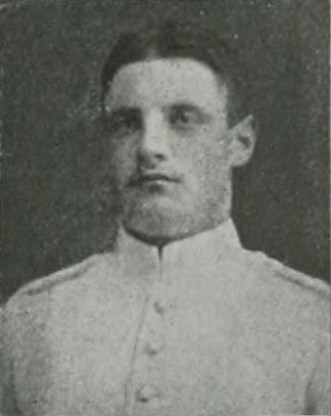
George Winterson.
WINTON, ALBERT EDWARD, A.B. (R.F.R., B. 6841), 194785, H.M.S. Hawke; lost when that ship was torpedoed in the North Sea, 15 Oct. 1914; m.
WINTON, JOHN, L.-Corpl., No. 9376, 2nd Battn., East Yorkshire Regt., eldest s. of John Winton, of East Ferring, Worthing, Council Labourer, by his wife, Charlotte, dau. of Charles Pelham, of Angmering; b. Sutton, co. Sussex, 25 Feb. 1886; educ. Ferring Church of England School; was a Barman and Nurseryman; enlisted in Dec. 1909; served in India 1912–14; was recalled with his Regt. to England after the outbreak of the European War; arrived in England on Christmas Eve; went to France, 17 Jan. 1915, and was promoted L.-Corpl., previous to being killed in action, 22 May, 1915; unm.
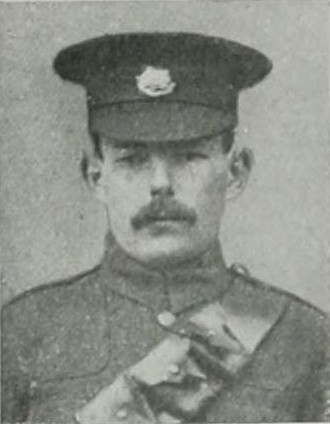
John Winton.
WINWOOD, GEORGE, A.B., J. 2550, H.M.S. Arethusa; killed in action in the Heligoland Bight, 28 Aug. 1914.
WINWOOD, WILLIAM, A.B. (R.F.R., B. 4966), S.S. 1786, H.M.S. Good Hope; lost in action off Coronel, on the coast of Chili, 1 Nov. 1914.
WIRE, JOHN BERTRAM, Private, No. 2047, 11th Battn., Australian Imperial Force, 2nd s. of John Benjamin Wire, of 35, Borthwick Road, Stratford, co. Essex, retired Builder; by his wife, Eliza, dau. of Nicholas (and Grace) Oldreive; b. Stratford, co. Essex; educ. Commercial and Civil Service College, Forest Gate, and emigrated to Australia in Sept. 1907, where he had two years training at the Australian Government College for Agriculturists. On the outbreak of war he gave up his farm of 420 acres; enlisted in the Commonwealth Expeditionary Force; left for Egypt in April; went to the Dardanelles in June, and was killed in action in a bayonet charge 1 Aug. 1915, his battn. having been ordered by Lieut.-General Birdwood to clear the trenches opposite Tasmania Post. Buried at the rear of the battn. lines next to his Lieut.; unm. Private Wire gained distinction at the West Ham Technical Institute in Bookkeeping and a 1st Class Certificate from the Society of Arts, Manufacture and Commerce, of London.
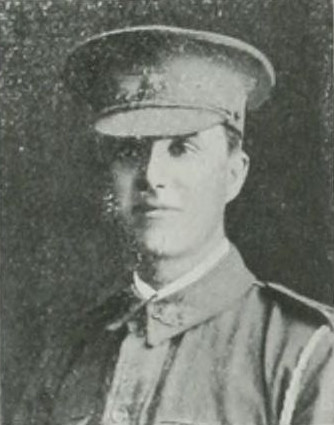
John B. Wire.
WISE, ARTHUR ERNEST, Steward, H.M. trawler Argyll, s. of the late Robert Wise, of Gainsborough; b. Newport, Isle of Wight, 30 Nov. 1873; educ. Bristol; joined H.M. cutter Argyll, 5 March, 1915, and was lost when she was torpedoed, 15 June, 1915. He m. at Bristol, 7 Aug. 1893, Maude (1, Auckland Terrace, Gillett Street, Hessle Road, Hull), dau. of the late Frank Lewis; s.p.
WISEMAN, PHILIP JAMES, A.B. (R.F.R., B. 4902), 204779, H.M.S. Good Hope; lost in action off Coronel, on the coast of Chili, 1 Nov. 1914.
WITTER, JAMES, Private, No. 742, 11th Battn. 3rd Brigade, 1st Division, Australian Imperial Force, s. of Andrew Witter, of Kiltyferagle, Cloghan, co. Donegal, Farmer, by his wife, Mary, dau. of John McDermott; b. Kiltyferagle, 9 May. 1887; educ. Cloghan National School; went to Australia, 11 May, 1911; worked on the gold fields; volunteered on the outbreak of war and joined the Commonwealth Expeditionary Force, Aug. 1914; left for Egypt in Nov.; took part in the landing at the Dardanelles, 25 April, 1915, and died on 26 May, 1915, of wounds received in action there; unm. His Company Commander wrote: “He had been in my company from its inception and I found him a fine reliable soldier, full of pluck and good nature. He was wounded in the trenches by a shell, and although he received prompt attention, it seems that he was too badly hit to recover. My company formed part of the first landing force of 1,500 men, and your son took part in this action. You have read the reports in the papers, and from that you can see what each man had to put up with. Some of my men informed me that during the first few days he carried several men under fire. Unfortunately he has lost his own life. Still you can look with pride on his record, which was a good one indeed.”
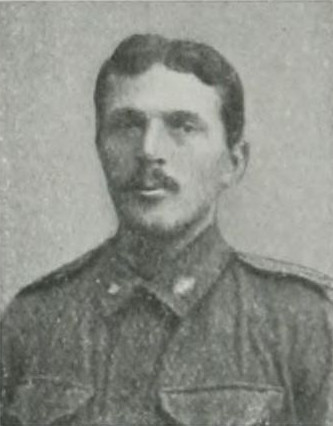
James Witter.
WOGAN, JOHN HENRY, Stoker, 1st Class (R.F.R., B. 3770), S.S. 101411, H.M.S. Good Hope; lost in action off Coronel, on the coast of Chili, 1 Nov. 1914.
WOLSELEY, WILLIAM SPENCER JOSEPH, 2nd Lieut., 3rd Battn. East Lancashire Regt., 6th s. of Edward Talbot Wolseley, of Maryland, Ascot, formerly Capt. 3rd Staffordshire Militia, by his wife, Florence Mary, 3rd dau. of Edward Joseph Weld, of Lulworth Castle, Dorset, and nephew of Sir Charles Michael Wolseley, of Wolseley, 9th Bart.; b. Holme Chase, Weybridge, co. Surrey, 23 March, 1886; educ. St. Augustine’s College, Ramsgate; went to Canada in March, 1913, but on the outbreak of war came home and was gazetted 2nd Lieut. from the Reserve of Officers to the 3rd Battn. East Lancashires, 15 Aug. 1914. He went to France with his regt. on 15 Feb. 1915, and was killed in action at Neuve Chapelle, 10 March, 1915; unm. His yst. brother, Robert Francis Joseph, who was commissioned in the same battn. at the same time, was wounded at Ploegsteert on 4 Feb. 1915, and his 2nd brother, Hubert Joseph, was killed in action at Elandslaagte, during the South African War, 27 Oct. 1899, while serving with the Imperial Light Horse.
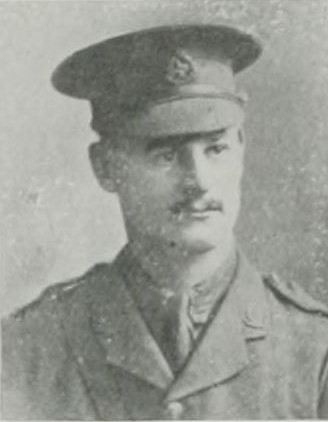
William S. J. Wolseley.
WOLSTENHOLME, WILLIAM, Stoker, 1st Class, S.S. 109673, H.M.S. Good Hope; lost in action off Coronel, on the coast of Chili, 1 Nov. 1914.
WOMBWELL, ROBERT BERTIE, Sergt., No. 8207, 2nd Battn. Suffolk Regt., 2nd s. of Robert Wombwell, of Lower Holbrook, Ipswich, Hay Binder, by his wife, Elizabeth Louise, dau. of William Buttle; b. Holbrook, co. Suffolk, 16 March, 1892; educ. there; enlisted in 1910; went to France with the Expeditionary Force, Aug. 1914; served through the retreat from Mons, and was killed in action, 25 Nov. 1914; unm. His Chief Officer, Capt. V. C. de Crespigny, wrote: “He was a brave man and died a soldier’s death, and I cannot say how sorry we all are. He had had narrow escapes, having had amongst other things, a bullet through his clothes, and as his Company Commander I knew him well. Good men such as he are scarce. When sick before, he refused to go to hospital till ordered to do so.”
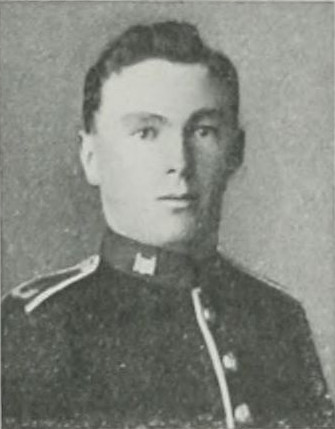
Robert Bertie Wombwell
WOOD, ALFRED JOSEPH, Private, No. 1817, 2/9th Battn. Middlesex Regt. (T.F.), eldest s. of Arthur Henry Wood, of 29, Devonshire Road, Pinner Road, Harrow, Civil Servant, by his wife, Ellen Elizabeth, dau. of Alfred Brown of Roxeth, Harrow; b. Finsbury Park, London, 17 June, 1895; educ. Lower School of John Lyon, Harrow; was a Dental Mechanic; enlisted after the outbreak of war, 31 Aug. 1914; trained at Sittingbourne, was attd. 2/10th Middlesex, went to the Dardanelles, 18 July, 1915; took part in the heavy fighting at Suvla Bay during Sept. 1915, and died in Alexandria Government Hospital, 16 Oct. from dysentery, contracted after six weeks in the trenches; unm. He was buried at Chatby Cemetery, Alexandria.
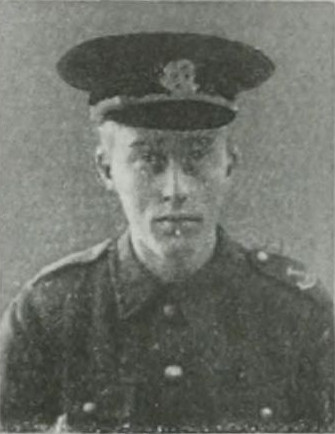
Alfred Joseph Wood.
WOOD, ARCHIBALD ALEXANDER, Plumber’s Mate, M. 5490, H.M.S. Pathfinder; lost when that ship was sunk by a mine, about 20 miles off the East Coast, 5 Sept. 1914.
WOOD, CHARLES EDMUND, Capt. and Adjutant, 1st Battn. Royal Welsh Fusiliers, yr. s. of Edward John Wedg Wood, of Meece House, near Stone, Staffordshire, by his wife, Lettice, 3rd dau. of the late Charles Challinor, of Basford; b. Watford, co. Herts, 23 Dec. 1884; educ. at Elstree Hall, Stoke-upon-Trent, Staffs., Harrow and Sandhurst; gazetted 2nd Lieut. 8 Jan. 1905, and promoted Lieut. 27 Nov. 1909, and Capt. 11 April, 1913, and was Adjutant to the 5th (Territorial) Battn. at Flint from 20 Oct. 1913 to Nov. 1914, when he left for France to join his own battn., which formed part of the 22nd Infantry Brigade, 7th Division, under General Sir Thomson Capper. He was acting Adjutant and 2nd in Command at the time of his death, and was killed in action at the Battle of Neuve Chapelle, 11 March, 1915; unm. Buried at Fauquissart, near Laventie. He was mentioned in F.M. Sir John French’s Despatches of 31 May, 1915, being incorrectly described there as of the 2nd Battn. Capt. Wood was a keen and zealous officer, well spoken of by his Divisional General and all who came in contact with him. He was well known in the hunting field with the North Staffordshire and other packs.
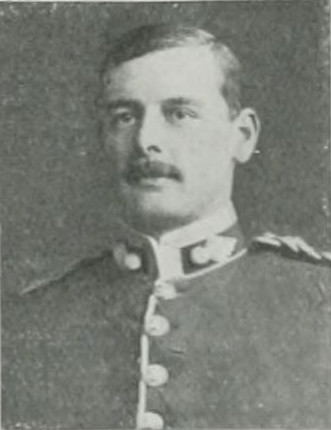
Charles Edmund Wood.
WOOD, CHARLES WILLIAM, A.B., J. 11863, H.M.S. Aboukir; lost in action in the North Sea, 22 Sept. 1914.
WOOD, EDGAR ADRIAN, Signalman (R.F.R., B. 2104), 206288, H.M.S. Good Hope; lost in action off Coronel, on the coast of Chili, 1 Nov. 1914.
WOOD, FRANK, A.B. (R.F.R., B. 10376), 204911, H.M.S. Hogue; lost in action in the North Sea, 22 Sept. 1914.
WOOD, GEORGE DOUGLAS HARRY, Midshipman, Royal Naval Reserve, and A.D.C. to Capt. Kennedy, H.M.S. India, yr. s. of the late George Wood, of Gordon Terrace, Edinburgh, Wholesale Boot Factor, by his wife, Annie Champion (9, Fountainhall Road, Edinburgh), dau. of Capt. William Bastard, of Padstow, Cornwall; b. Edinburgh, 7 Dec. 1897; educ. Edinburgh Academy and H.M.S. Conway; was appointed Midshipman (temp.), R.N.R., 24 March, 1915, and posted to H.M.S. India, and was lost when that ship was sunk in the North Sea, 8 Aug. 1915.
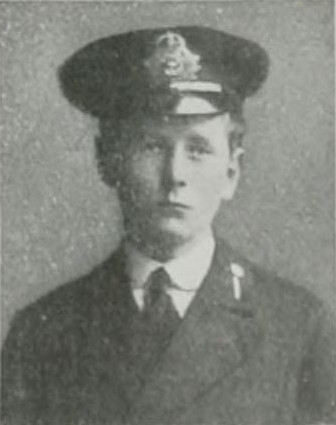
George Douglas H. Wood.
WOOD, GEORGE WILLIAM, Stoker, 1st Class (R.F.R., B. 9617), S.S. 106983, H.M.S. Hawke; lost when that ship was torpedoed in the North Sea, 15 Oct. 1914.
WOOD, HARRY, Private, No. 5562, 2nd Battn. Scots Guards, s. of John Wood, Cloth Drawer, by his wife, Emma, dau. of James Broxombe; b. Burley, Leeds; educ. Church Schools there; enlisted 31 Aug. 1904; passed into the Reserve, 1907, then went into the Police Force, North Riding, at South Bank; was called up on mobilisation; went to France with the Expeditionary Force in Aug.; was wounded at the Aisne, 14 Sept., and was home for six months, returned to the Front 19 April, 1915; was again wounded at the Battle of Festubert, and died at No. 13 Stationary Hospital, Boulogne, 19 May, 1915, of wounds received in action at Festubert two days previously. He was buried at Boulogne. Private Wood m. at Middlesbrough, 1908, Edith Mary Ellen (4, Rockcliff Street, Ventnor Street, Kirkstall Road, Leeds), dau. of John Hughes, and had three children: John Henry, b. 26 Oct. 1908; Rowland George, b. 11 Feb. 1912; and Ivy, b. .. June, 1910.
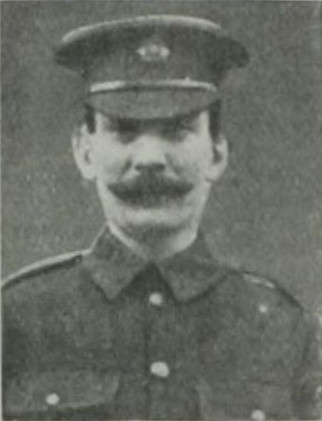
Harry Wood.
WOOD, JAMES MACGREGOR, Private, No. 7941, 2nd Battn. The Argyll and Sutherland Highlanders, eldest s. of James Wood, of 11, Maxwell Street, Edinburgh, by his wife, Emily Mary, dau. of William Fraser, of New York; b. Edinburgh, 20 July, 1882; educ. North Merchiston, South Morningside and Bruntsfield Board School there; joined the 3rd Royal Scots, was for some time in the 8th Provisional Battn. of the Argyll and Sutherland Highlanders, joining the 1st Battn. in Jan. 1900. He was three years with the Colours, then passed into the Reserve and was a Postman at the G.P.O. in Edinburgh when war was declared; went to the Front in Aug. 1914, with the 2nd Battn., and was killed in action at Ploegsteert, 10 Nov. 1914. He was a member of St. Matthew’s Parish Church, Edinburgh. Wood m. at Morningside, 4 Oct. 1909, Martha (25, Stewart Terrace, Edinburgh), dau. of Patrick Currie, of Ballymena, co. Down, and had two children: James, b. 27 March, 1911; and Robert MacGregor, b. Sept. d. Oct. 1912.
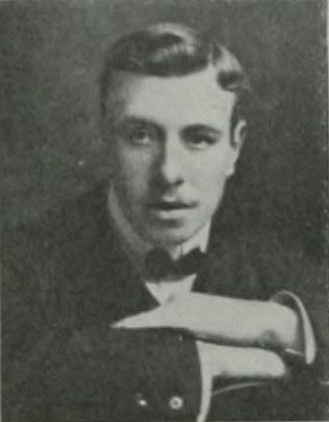
James MacGregor Wood.
WOOD, JOHN, Chief Stoker, 279879, H.M.S. Pathfinder; lost when that ship was sunk by a mine, about 20 miles off the East Coast, 5 Sept. 1914.
WOOD, JOSEPH, Acting Leading Stoker (R.F.R., B. 4528), 305734, H.M.S. Good Hope; lost in action off Coronel, on the coast of Chili, 1 Nov. 1914.
WOOD, LEOFRIC, Private, No. 2049, 11th Battn. 3rd Brigade, Australian Imperial Force, 4th s. of Frederic Wood, of Wrington, co. Somerset, Solicitor, by his wife, Amy Elizabeth, dau. of George Pizey, late of Clevedon, Somerset, M.R.C.S.; b. Wrington, 22 Aug. 1894; educ. Clarence School, Weston-super-Mare; was for some time in the Accountant’s Office of the British Imperial Tobacco Co. at Bedminster, but in April, 1912, went out to Western Australia; volunteered after the outbreak of war, and enlisted in the Commonwealth Expeditionary Force, 27 Jan. 1915, did three months’ training at Perth; sailed for Fremantle with the 5th reinforcement for the 11th Battn. in April, arrived at Cairo towards the end of May, and landed on the Gallipoli Peninsula 15 June, and after six weeks in the trenches died from dysentery, 2 Aug. 1915; unm. Three of his brothers are with the Colours, Dubric as a motor-cyclist despatch rider, with the Expeditionary Force in France, Godric with the R.E., in France, and Wilgric, O.T.C., Bristol, and a fourth brother, Yetric Wood, is a Midshipman R.N.R., training on H.M.S. Excellent at Portsmouth.
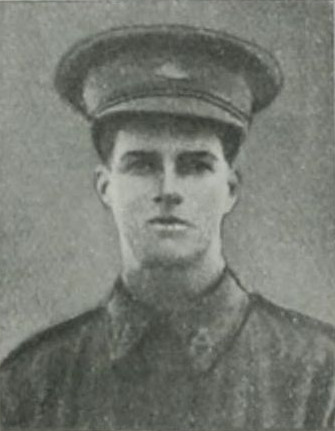
Leofric Wood.
WOOD, ROBERT, Stoker, Petty Officer (R.F.R., A. 1933), 161053, H.M.S. Hogue; lost in action in the North Sea, 22 Sept. 1914.
WOOD, THOMAS, Leading Seaman (R.F.R., B. 9935), 215158, H.M.S. Hawke; lost when that ship was torpedoed in the North Sea, 15 Oct 1914.
WOOD, WILLIAM, Corpl., No. 2300, 1/17th Battn. (Poplar and Stepney Rifles) The London Regt. (T.F.), 3rd s. of Arthur Wood, of 260, Oxford Street, Stepney, E., Bricklayer, by his wife, Mary Ann, dau. of the late William Whale; b. Mile End Road, London, E., 12 Nov. 1894; educ. Trafalgar Square, White Horse Lane, and Cooper’s Company School, Bow; was a Clerk at C. & E. Morton’s, Ltd., Milwall; enlisted, 1 Sept. 1914; went to France in March, 1915, and was killed in action in the attack on Hill 70 during the Battle of Loos, 25 Sept. 1915; unm. The Sergt. of his platoon wrote of him saying that “he fought like a man until the end, and was cheerful throughout.” While at school he won the Junior County Scholarship 1906, and passed the Oxford Senior Local Exam. at the age of 16.
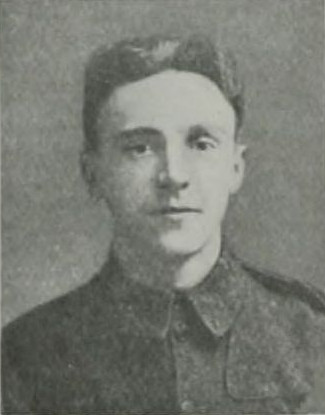
William Wood.
CARTER-WOOD, JOSEPH ALLAN, Lieut., 2nd Battn. Coldstream Guards, only s. of Joseph Edmund Carter-Wood, of Skinburness Tower, Silloth, co. Cumberland, by his wife, Evelyn Alice, dau. of Brig.-Gen. Alexander William Adair, of Heatherton Park, Somerset, late Coldstream Guards, who served in the Crimea; b. London, 3 Nov. 1884; educ. at Mr. Burgess’ School, Epsom, and Uppingham; gazetted 2nd Lieut. Coldstream Guards, 10 Oct. 1914, and promoted Lieut.; went to the Front, 22 Jan. 1915, and was killed in action at Cuinchy, 1 Feb. 1915; unm. Buried in the military graveyard there. His Commanding Officer, Col. Pereira, wrote: “Your son had only been in the battn. about a week, but in that short time his company commander, Capt. Leigh-Bennett, had found him a most useful and invaluable officer”; and Col. R. Drummond Hay: “For even though your boy had been in the regt. such a short time he had shown what good metal he was made of, and in spite of his health was already a very valuable addition to our strength. Some few of our youngsters showed themselves born soldiers from the first, and he was one of the few.” Lieut. Carter-Wood was a good landscape painter, and had had several pictures hung in the Royal Academy and other exhibitions; he was also a keen fisherman and game shot.
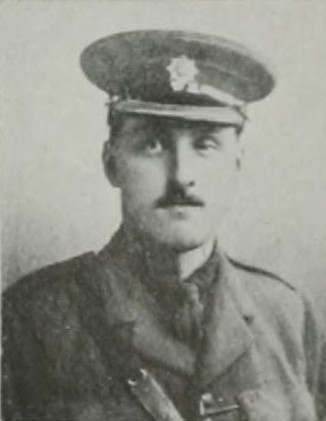
Joseph A. Carter-Wood.
WOODFORD, WILLIAM THOMAS, A.B. (R.F.R., B. 2050), 205828, H.M.S. Good Hope; lost in action off Coronel, on the coast of Chili, 1 Nov. 1914.
WOODGATE, CHARLES ARTHUR, R.N.R., Skipper, 217 W.S.A., H.M. steam-drifter Linsdell; reported missing after the sinking of the Linsdell by a mine, 30 miles off the East Coast, 3 Sept. 1914.
WOODHOUSE, GEORGE, A.B., J. 10624, H.M.S. Laurel; killed in action in the Heligoland Bight, 28 Aug. 1914.
WOODLAND, HERBERT EDWIN, Boy, 1st Class, J. 26779, H.M.S. Hawke; lost when that ship was torpedoed in the North Sea, 15 Oct. 1914.
WOODNUTT, GEORGE HENRY, Private, No. 11559, 1st Battn. Coldstream Guards, s. of George Woodnutt, of 16, Brewer Street, Brighton; b. co. Sussex; served with the Expeditionary Force in France; killed in action, 4 March, 1915. Buried 500 yards past the Le Touret turning on right of Bethune-Richebourg Road via Rue du Bois; unm.
WOODROFF, HENRY, Private, No. 1426, 1 Coy. 14th Battn. 4th Brigade, Australian Imperial Force, 2nd s. of the late James Woodroff by his wife, Jessie Sarah (27 E Block, Peabody Buildings, Shadwell, E.), dau. of James Maclachlan; b. Stepney, 12 April, 1883; educ. Broad Street School, Ratcliffe, E. Was employed for some years at a cork manufacturers, afterwards went to Australia, where he worked in an iron foundry. He enlisted in the Australian Imperial Force, 29 Nov. 1914, and died of fever, in the Base Hospital, Egypt, 19 July, 1915; unm.
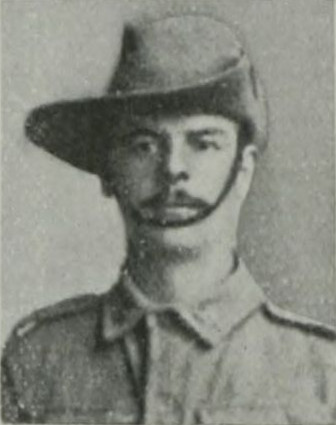
Henry Woodroff.
WOODROFFE, KENNETH HERBERT CLAYTON, Lieut., 6th Battn. Rifle Brigade, attd. 2nd Battn. The Welsh Regt., 3rd s. of Henry Long Woodroffe, of Thorpewood, Branksome Avenue, Bournemouth, by his wife, Clara, 3rd dau. of the late Henry Clayton; b. Lewes, co. Sussex, 9 Dec. 1892; educ. Rose Hill School, Banstead, Marlborough College, and Pembroke College, Cambridge (Classical Exhibitioner); obtained a commission as 2nd Lieut. in the Cambridge University O.T.C. Oct. 1912, and was gazetted to the 6th Rifle Brigade, 15 Aug. 1914, and promoted Lieut. April, 1915; went to France early in Nov., being attd. at the Front to the 2nd Welsh, and was killed in action during an attack on the German trenches at Neuve Chapelle, 9 May, 1915; unm. He was mentioned in Sir John (now Lord) French’s Despatch of 5 April-31 May [London Gazette, 22 June, 1915]. Capt. Gilbey wrote: “Your son was killed yesterday in an attack near Neuve Chapelle. He was with the leading platoon, and was the man to get nearer the German front line trenches than any other. He was killed in the way that every soldier would wish to be killed, leading his platoon gallantly in the attack. His death was quite instantaneous; he was shot through the head. By his death I personally have lost a very good and true friend, and the regt. a fine and most gallant officer. At Festubert before Christmas he commanded one of our companies in an attack with great success, for which his name was included in our list of recommendations sent in to the Brigade. Later at Givenchy, against the German attack on 25 Jan., he brought up his platoon under heavy fire, leading his men most gallantly.” At Marlborough College he was Senior Prefect. Capt. of the O.T.C., Athletic Champion, member (Capt. 1912) of the cricket XI, 1909–12; football XV and hockey XI. In his school days he was a good bat as well as bowler, and it was his all-round cricket and leadership that turned the match at Lord’s against Rugby in 1912. When he went to Cambridge he was more or less content to concentrate his cricket on his bowling. It is exacting work to bowl on those plumb wickets at Fenner’s, but the Hon. Harry Mullholland was satisfied with Woodroffe, and gave him his “Blue” as a freshman, 1913, and he took six wickets in his first (1913) Oxford and Cambridge match at Lord’s. He played cricket as fast bowler for Hants C.C.C. in 1912 v. South Africans (5 wickets); and for Sussex C.C.C. in 1914.
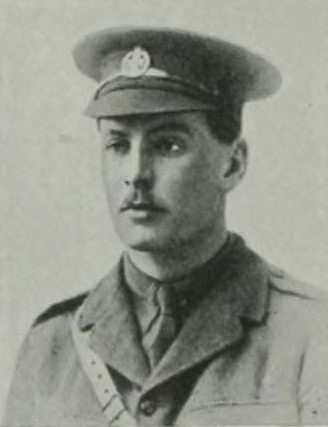
Kenneth H. C. Woodroffe.
WOODROFFE, LESLIE, M.C., Capt., The Rifle Brigade, 2nd s. of Henry Long Woodroffe, of Thorpewood, Branksome Avenue, Bournemouth, by his wife, Clara, 3rd dau. of the late Henry Clayton; b. Lewes, co. Sussex, 17 Oct. 1885; educ. Junior House, Brighton College, Marlborough College, and University College, Oxford (Classical Scholar), and on leaving there became an assistant master at Shrewsbury School, where he remained until the outbreak of war in Aug. 1914. He had received a commission as Lieut. (unattd. List, T.F.), 1 July, 1910, and was in the Shrewsbury School O.T.C., and immediately volunteered for foreign service. He was gazetted Capt. 8th Rifle Brigade, 27 Dec. 1914; went to France in May, 1915; was severely wounded at Hooge in July, and was only able to return to his regt. 1 June, 1916; was again wounded on the day of his arrival, and died in hospital from these wounds on the 4th; unm. Buried near Bethune. He was awarded the Military Cross for gallantry in the field at Hooge, 1915. While at Marlborough College he was head of the school, and was in the cricket XI and football XV; at Oxford he took a first-class in Mods, and a second class in Lt. Hum. His two brothers, Kenneth and Sidney Woodroffe, V.C., were also killed in action (see their notices.)
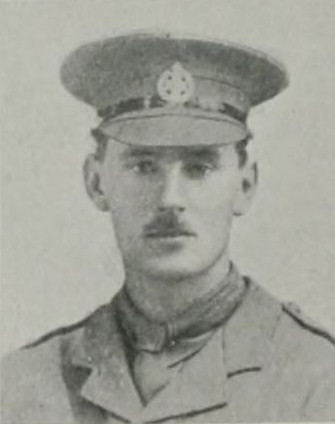
Leslie Woodroffe.
WOODROFFE, SIDNEY CLAYTON, V.C., 2nd Lieut., 8th (Service) Battn. The Rifle Brigade, 4th and yst. s. of Henry Long Woodroffe, of Thorpewood, Branksome Avenue, Bournemouth, by his wife, Clara, dau. of the late Henry Clayton; b. Lewes, co. Sussex, 17 Dec. 1895; educ. Rose Hill School, Banstead; Marlborough College, gained a Classical Scholarship at Pembroke College, Cambridge; gazetted 2nd Lieut., 8th Rifle Brigade, 23 Dec. 1914; went to France 25 May, 1915, and was killed in action at Hooge, Flanders, 30 July, 1915; unm. He was awarded the Victoria Cross [London Gazette, 6 Sept. 1915] “For most conspicuous bravery on 30 July, 1915, at Hooge. The enemy having broken through the centre of our front trenches, consequent on the use of burning liquids, this officer’s position was heavily attacked with bombs from the flank and subsequently from the rear, but he managed to defend his post until all his bombs were exhausted, and then skilfully withdrew his remaining men. This very gallant officer immediately led his party forward in a counter-attack under an intense rifle and machine-gun fire, and was killed whilst in the act of cutting the wire obstacles in the open.” At Marlborough he was Senior Prefect, Capt. of the O.T.C., and member of the football XV (1912–13–14), hockey XI and cricket XI. Lieut.-Col. R. C. Maclachlan wrote: “Your younger boy was simply one of the bravest of the brave, and the work he did that day will stand out as a record hard to beat; later I will try to get you a more or less definite account. When the line was attacked and broken on his right he still held his trench, and only when the Germans were discovered to be in rear of him did he leave it. He then withdraw his remaining men very skilfully right away to a flank and worked his way alone back to me to report. He finally brought his command back and then took part in the counter-attack. He was killed out in front, in the open, cutting the wire to enable the attack to be continued. This is the bald statement of his part of that day’s action. He risked his life for others right through the day and finally gave it for the sake of his men. He was a splendid type of young officer, always bold as a lion, confident and sure of himself too. The loss he is to me personally is very great, as I had learnt to appreciate what a sterling fine lad he was. His men would have followed him anywhere.” His elder brothers, Lieut. K. H. C. Woodroffe and Captain L. Woodroffe, were both killed in action (see their notices).
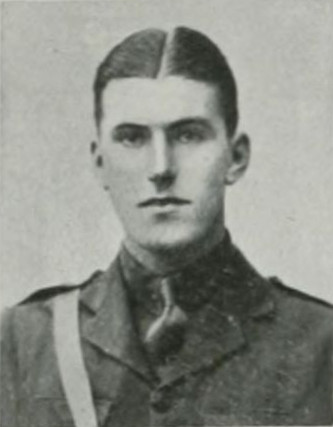
Sidney Clayton Woodroffe.
WOODROFFE, WILLIAM JOHN, Private, R.M.L.I., 8842 (R.F.R. Ch. B. 816), H.M.S. Aboukir; lost in action in the North Sea, 22 Sept. 1914.
WOODS, ARTHUR WILLIAM, Stoker, 1st Class, Chatham, S.S. 105687, R.F.R., B. 8977, H.M.S. Hawke; lost when that ship was torpedoed in the North Sea, 15 Oct. 1914; m.
WOODS, BASIL HAMILTON, 2nd Lieut., 1st East Lancs. Field Coy. Royal Engineers (T.F.), elder surviving s. of William Henry Woods, of Ravenstone, Hale, Cheshire, Mechanical Engineer, by his wife, Norah, dau. of Charles Greville Williams, F.R.S., F.C.S.; b. Chorlton-cum-Hardy, near Manchester, 18 Aug. 1891; educ. Repton School (where he was a Sergt. in the O.T.C.), and Oriel College, Oxford, was given a commission in the Reserve of Officers, which he resigned early in 1914 to take one in the East Lancashire Territorial Division, R.E., 16 April, 1914; went to Egypt with the East Lancashire Division in Sept. following, and was killed along with a number of N.C.Os. and men, 17 Dec. 1914, while on active service on the Suez Canal, by an explosion on a launch, supposed to be caused by a German mine, and was buried with full military honours in the Suez Cemetery.
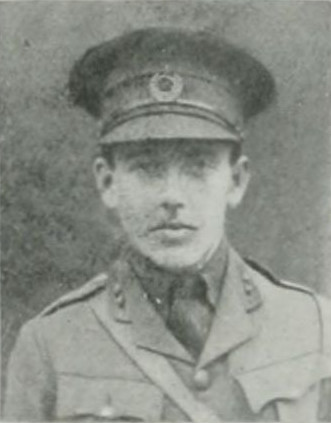
Basil Hamilton Woods.
WOODS, CHARLES, Stoker, R.N.R., 1676U, H.M.S. Aboukir; lost in action in the North Sea, 22 Sept. 1914.
WOODS, EDWARD WILFRED, Signal Boy, J. 24461, H.M.S. Pathfinder; lost when that ship was sunk by a mine, about 20 miles off the East Coast, 5 Sept. 1914.
WOODS, MAURICE, Seaman, R.N.R., 5005A, H.M.S. Aboukir; lost in action in the North Sea, 22 Sept. 1914.
WOODWARD, WILLIAM, Private. R.M.L.I., Ch./11382, H.M.S. Hawke; lost when that ship was torpedoed in the North Sea, 15 Oct. 1914.
WOODWARD, WILLIAM BERNARD, Stoker, 1st Class (R.F.R., B. 4608), S.S. 103734, H.M.S. Good Hope; lost in action off Coronel, on the coast of Chili, 1 Nov. 1914.
WOOKEY, FREDERICK MAURICE, A.R.C.S.I., 2nd Lieut., 1st Battn. Royal Irish Regt., only surviving s. of Frederick Wookey, of Weston Lodge, Leixlip, co. Dublin, J.P., a member of the firm of Wookey & Son, Ltd., Washed Flock Manufacturers, by his wife, Fanny, dau. of Colin McCalman; b. Rathmines, co. Dublin, 1 July, 1887; educ. privately; Campbell College, Belfast, where he won two scholarships; and the Royal College of Science, Dublin, passing in with a scholarship and obtaining the distinction of a pass “with credit” in 13 of the 16 examinations, and was awarded the Diploma of Associateship in the Faculty of Engineering. After this he went to Sir Howard Grubb’s for about a year, thence to the British Westinghouse Co., Manchester, for practical knowledge of all kinds of engineering, in order that he might qualify himself to take charge of his father’s factory, Electric Lighting, etc. Here he for some time worked for Mr. Bissett in the Large Machine Drawing Office, and was afterwards transferred to Production Department where he remained until 1913, when he returned to Leixlip. He was first Secretary and then Director of Wookey & Sons, but gave up everything when war was declared. He joined the O.T.C. about 6 Aug. and on Tuesday, 8 Sept. 1914, enlisted as a Motor Despatch Rider in the Reserve Signal Corps of the Royal Engineers, leaving for Chatham that day. He was given a commission at the Front, dated 14 Feb. 1915, and learning from his Commanding Officer that they wanted to fill up the gaps caused by casualties he joined the 1st Battn. of the Royal Irish, though he could have come home for training either in the Artillery or Royal Engineers. He was fatally wounded, when leading his company at St. Eloi on 15 March, 1915, after his Commanding Officer, Col. Forbes, had been wounded at Cross Roads, and died at No. 2 Clearing Hospital, Bailleul, on Friday the 19th. He was buried in the military portion of the cemetery there on Tuesday morning the 23rd; unm. Writing to his father the Acting Adjutant, Lieut. T. E. H. Taylor, said: “Two motives prompt me in writing to you concerning the death of your son, 2nd Lieut. F. M. Wookey. One is that I wish to do so in my official position as Adjutant (Acting) of this battn. and the other is that I wish to tell you how proud I am of the perfect coolness and gallantry with which your son advanced with his men, up that fir-swept street of St. Eloi, until he was wounded. In common with all old Campbell College boys, I am proud to be able to say I was a schoolfellow of your son’s. Your son was with “C” Coy.—Commanded by Major Lillie with another subaltern, called Gordon-Ralph. In the hurried rush into the village of St. Eloi, under a very heavy fire, our companies got very scattered. Major Lillie collected some of his company, and advanced to the assault. Your son, also, got together as many as he could, and went, at the head of his men, straight for the barrier held by the Germans. Our assault had to be made, straight up the street, in the face of a deadly fire from rifles and machine-guns, both in front and on our right flank. I was with the Commanding Officer, and helped him to a place of safety when he was wounded, during which time the assault had advanced further up the street. When I returned from carrying Col. Forbes back to safety, I found that the assault had been checked by the enemy’s fire. We had then reached to within 30 yards of the enemy’s barricades, but all in front had been either killed or wounded, and those who could do so proceeded to occupy the houses on both sides of the street. In this first rush Major Lillie was killed—also Lieuts. Fottrell and Ford, and your son was severely wounded—evidently by machine-gun fire—in the legs. I did not see him, myself, but this was reported to me by a survivor who returned, and had seen your son fall. No one could get up to the killed and wounded, as the Germans kept up a heavy fire, and, by means of their flare lights, they could see the slightest move on our part. Just before dawn, on the 15th, some men who had got into a ruined house just opposite where your son fell, were able to get to him, and brought him in from the street behind the end of the house. He was then safe from the enemy’s fire. The poor fellow lay there all that day—no one could get back from that place with him. Next day the Germans allowed us to take back some of our wounded, and we brought him in to the dressing station, from where he was sent to No. 2 Clearing Hospital, Bailleul. I spoke to him, while he was being carried in, asked him how he felt, and he answered, in his quiet, cheery way, “These are great lads, to bring me back now.” He did not seem to be in any pain at all, in spite of one of his ankles being completely severed by the machine-gun fire. I went back later, to the dressing station to see him, and found that all his wounds had been dressed, and that he was sleeping peacefully on a stretcher. The doctors feared that the shock of his wounds would prove fatal, but hoped for the best. That was the last I saw of your son. I can realise what his loss means to you, and all his family. Our present Commanding Officer has asked me to try and express to you how very much we all sympathise with you in your sad bereavement. His death has been a most noble one. His example, which he set to the men who followed him that night, to almost certain death, was one of the features of the fight of which all of us are most proud.”
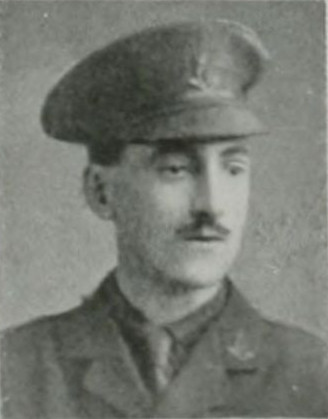
Frederick M. Wookey.
WOOLF, NATHAN, Rifleman, No. 2520, 17th Battn. (Poplar and Stepney Rifles) The London Regt. (T.F.), s. of Morris Woolf, of 14, Lincoln Street, Bow, E.; b. Commercial Road, E., 5 Aug. 1894; educ. Jews’ Free School, Birmingham; joined the week after mobilisation; served with the Expeditionary Force in France, and was killed in action at Loos, 17 Sept. 1915: unm.
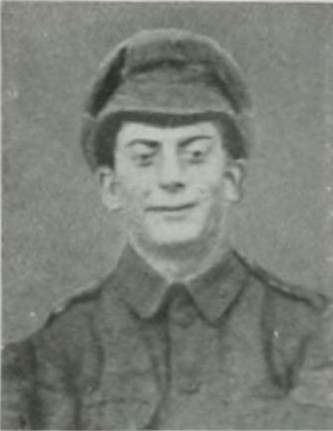
Nathan Woolf.
WOOLLEY, GEORGE FRANK, Private, R.M.L.I., Ch. 7925, H.M.S. Hogue; lost in action in the North Sea, 22 Sept. 1914.
WOOLLEY, WILLIAM ALFRED, Stoker, 1st Class (R.F.R., Ch. B. 1169), 279527, H.M.S. Aboukir; lost in action in the North Sea, 22 Sept. 1914.
WOOTTEN, ALFRED, Private, No. 6995, 2nd Battn. Coldstream Guards, s. of the late Richard Wootten, of Somersham, by his wife, Rebecca, dau. of James Ruff, of Somersham; b. Somersham, co. Hunts, 14 July, 1885; educ. there; enlisted at Lincoln, 23 Oct. 1906, and after serving seven years with the Colours, was transferred to the Army Reserve, 23 Oct. 1913, with “Exemplary” character. On mobilisation he rejoined, 6 Aug. 1914, went to France with the Expeditionary Force, 9 Aug. 1914, and died in No. 4 Clearing Hospital at Braisne, 1 Oct. 1914, from wounds received in action at Troyon, on 29 Sept. during the Battle of the Aisne. Brig.-Gen. H. W. Studd, Coldstream Guards, wrote: “No more faithful, true, and gallant soldier gave his life for his country. He did his duty as a Guardsman and lived and died a Coldstreamer.” He m. at Stansted, Essex, 10 April, 1909, Florence (3, Gray Street, Manchester Square, W.), dau. of William Perry, of Stanstead, and had two children: Alfred Frank, b. 29 Nov. 1911; and Florence Pamela, b. 4 March, 1910.
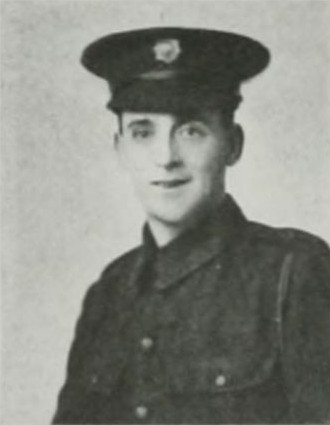
Alfred Wootten.
WOOTTON, JAMES FREDERICK, Seaman, R.N.R., 2522B, H.M.S. Cressy; lost in action in the North Sea, 22 Sept. 1914.
WORDSWORTH, ALEXANDER GERALD, Capt., 2nd Battn. Middlesex Regt., 5th s. of the Rev. John Wordsworth, Vicar of Allhallows, Mealsgate, Cumberland, and formerly a Capt. in the same regt., by his wife, Rose Geraldine, dau. of the Rev. Alexander Williams, M.A., Rector of Upcerne, Dorset; b. Gosforth Rectory, co. Cumberland, 28 Oct. 1880; educ. Charney Hall, Grange-over-Sands, and Loretto School, Musselburgh; gazetted 2nd Lieut. 2nd Middlesex from the Cumberland Militia, 29 Jan. 1902, and promoted Lieut. 4 May, 1904, and Capt. 6 March, 1912; and was Adjutant, 9 March, 1912, to 9 March, 1914; served in South Africa, 1902, took part in operations in Transvaal, May (Queen’s medal with three clasps), and with the Expeditionary Force in France and Flanders, from 7 Nov. to 6 Dec. 1914, on which day he was killed in action in the trenches near Laventie. Buried in the orchard of a farmhouse, La Flinque, near Laventie; unm.
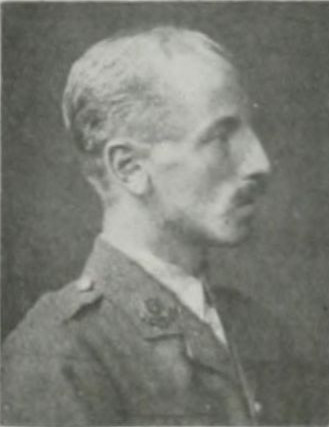
Alexander G. Wordsworth.
WORSFOLD, EDWARD, Private, No. 2385, 2/4th Battn. Queen’s Royal West Surrey Regt. (T.F.), s. of George Worsfold, of Thorley Cottage, Pyrford, near Woking, Cowman, by his wife, Mary Ann, dau. of Richard Woolger; was a Gardener; b. Pyrford aforesaid, 15 Nov. 1895; educ. Pyrford Council School; enlisted 10 Aug. 1914; left England for the Dardanelles July, and was killed in action there, 9 Aug. 1915; unm.
WORSFOLD, STEPHEN, Private, No. 20175, Supery. Coy. 2/5th Battn. Queen’s Royal West Surrey Regt. (T.F.), eldest s. of the late William Worsfold, of Holmwood, Dorking, by his wife, Betsy Ann, dau. of (—). Tidy; b. South Holmwood, 4 Sept. 1871; educ. there; was a Gardener; served for sometime with the 2nd Vol. Battn. The Queen’s R.W. Surrey Volunteers; was called up after the outbreak of war, 19 Oct. 1914, with the Veteran Reserve, and died suddenly at Chilworth, 1 Jan. 1916, of syncope, while changing guard. He m. at Dorking, 26 Oct. 1901, Lilian Caroline (5, Cotmandene Square, Dorking, Surrey), yst. dau. of James Howard, of Dorking, and had five children: Stephen Noel, b. 25 Dec. 1912; Adelaide Lilian, b. 25 May, 1902; Gladys Emma, b. 2 Aug. 1904; Evelyn Louise, b. 27 Sept. 1906; and Norah Eileen, b. 12 April, 1915.
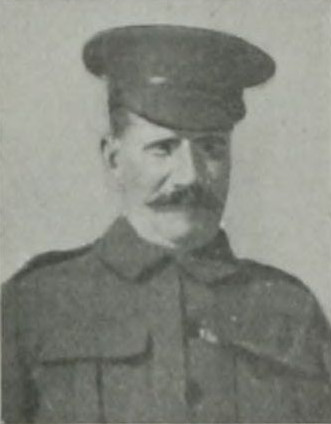
Stephen Worsfold.
WORSLEY, CHARLES SACKVILLE PELHAM, LORD, Lieut., Royal Horse Guards (The Blues), eldest s. and heir of Charles, 4th Earl of Yarborough, P.C., by his wife, Marcia Amelia Mary, suo jure 7th Baroness Fauconberg, and 13th Baroness Conyers; b. London, S.W., 14 Aug. 1887; educ. Eton and the Royal Military College, Sandhurst; gazetted 2nd Lieut. 5 Oct. 1907, and promoted Lieut. 6 Oct. 1908; was extra A.D.C. to Gen. Sir Douglas Haig, K.C.B., G.C.B., Aldershot command, from 1912 to 1913, when he rejoined his regt.; went to France with the Expeditionary Force in one of the special brigades, and was given the command of the machine-gun detachment, for which work he had been specially trained; and was killed in action at Zandvoorde, Flanders, 30 Oct. 1914. On this day the Germans attempted a general offensive on the whole front from Nieuport to Arras, and there was severe fighting to the south of Ypres, in which region Zandvoorde was one of the Allies’ points d’appui. After the engagement Lord Worsley was reported missing, and for some time was believed to be a prisoner, but later evidence of his death in action this day was received. He was gazetted Capt. after his death, 15 Nov. 1915. He m. at St. Margaret’s, Westminster, 31 Jan. 1911, the Hon. Alexandra Vivian, dau. of Hussey Crespigny, 3rd Baron Vivian P.C., G.C.M.G.; s.p.
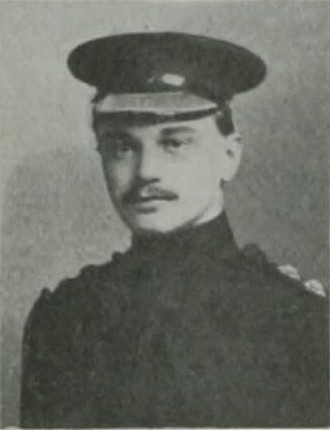
Lord Worsley.
WORTABET, JOHN CECIL, Private, No. 1625, 9th Battn. 3rd Brigade, Australian Imperial Force, only s. of Emin Whiting Wortabet, of Babbacombe, Torquay, co. Devon, formerly an Official of the Imperial Ottoman Bank, by his wife, Emma Elizabeth (Marie), dau. of Michael Constantinidi, of Liverpool and Nicosia, Cyprus, and grandson of the late Dr. John Wortabet; b. Nicosia, Cyprus, 1 Nov. 1886; educ. The High School, Glasgow, and Bath College; and on leaving there in 1904, joined the Cairo Branch of the Imperial Ottoman Bank, but in 1909 went to Australia and settled in Queensland as an Assistant in a Station; volunteered for Imperial service on the outbreak of war, and joined the 9th Battn. A.I.F., left for Egypt with the third reinforcements, 13 Feb. 1915; went to the Dardanelles, 29 April, 1915, and died on the hospital ship Gascon, 14 May following, of wounds received in action at Gaba Tepe on the previous day; unm. He was a good shot and an accomplished horseman.
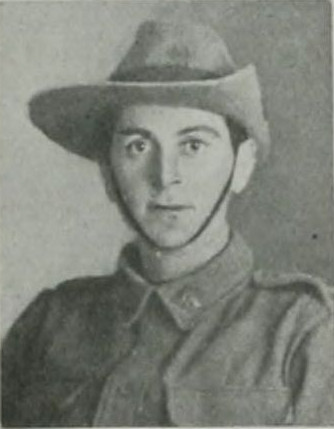
John Cecil Wortabet.
WORTH, JOHN ALFRED, Stoker, 1st Class (R.F.R., Ch. B. 9273), S.S. 106472, H.M.S. Cressy; lost in action in the North Sea, 22 Sept. 1914.
WORTHINGTON, ARTHUR TOM, A.B. (R.F.R., B. 1316), 203289, H.M.S. Good Hope; lost in action off Coronel, on the coast of Chili, 1 Nov. 1914.
WRATTEN, WILLIAM HENRY, Boy, 1st Class, J. 24625, H.M.S. Hawke; lost when that ship was torpedoed in the North Sea, 15 Oct. 1914.
WRAY, HERBERT JOHN, Leading Seaman (R.F.R., B. 1647), 191296, H.M.S. Good Hope; lost in action off Coronel, on the coast of Chili, 1 Nov. 1914.
WRIGHT, ALBERT GEORGE, Petty Officer, 2nd Class (R.F.R., B. 2091), 173141, H.M.S. Hawke, s. of James Wright, of Canewdon, near Rochford, co. Essex; lost when that ship was torpedoed in the North Sea, 15 Oct. 1914.
WRIGHT, ALLAN O’HALLORAN, Capt. and Adjutant, 1st Battn. Royal Irish Rifles, yst. s. of the late Frederick Wright, Consul at Adelaide, by his wife, Frances Jane (Clanferzeal, Redhill, Surrey), dau. of the late Major Thomas Shuldham O’Halloran, 97th Regt.; b. Adelaide, South Australia, 27 April, 1886; educ. St. Peter’s College, Adelaide, and Bedford Grammar School; served some time in the Bedfordshire Royal Engineers (Volunteers), and joined the Sussex Royal Garrison Artillery (Militia) in 1903, was promoted Lieut. 1905, and entered the regular army as 2nd Lieut., 1st Royal Irish Rifles, 29 May, 1907, being promoted Lieut. 22 Jan. 1909, and Capt. 15 Nov. 1914; was Adjutant from 1 Jan. 1913; served in the South African War, 1899–1900, with the Mounted Rifles (Queen’s medal with three clasps); and with the Expeditionary Force in France and Flanders from Oct. 1914 to 13 March, 1915, on which date he was killed in action at Neuve Chapelle; unm. He was mentioned in F.M. Sir John (now Lord) French’s Despatch of 31 May [London Gazette, 22 June], 1915, for gallant and distinguished service in the field. Gen. A. Lowry Cole wrote of him: “We have all lost a dear comrade and a good soldier, who met his death assisting his Col. to lead his Battn. against the enemy.” He was Scout Officer of his Battn., also Instructor of Musketry, Signalling and Gunnery. Went in extensively for polo and all sports, and for music, and composed Military marches and other compositions. He was in action before 14 years of age in the Boer War.
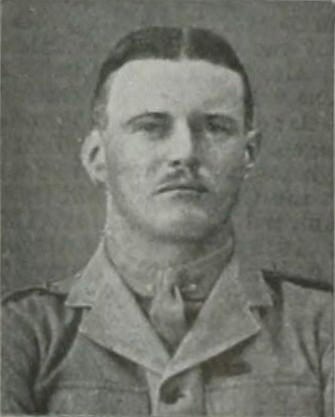
Allan O’Halloran Wright.
WRIGHT, CHARLES, A.B. (R.F.R., B. 7555), 189743, H.M.S. Hawke; lost when that ship was torpedoed in the North Sea, 15 Oct. 1914.
WRIGHT, EDWARD, A.B., 213768, H.M.S. Aboukir; lost in action in the North Sea, 22 Sept. 1914.
WRIGHT, EDWIN, Capt. Prince of Wales’s, 3rd Dragoon Guards, only surviving child of James Walker Wright, M. Inst. C.E., London, late Chief Engineer Public Works Department, Assam, India, and Secretary to the Chief Commissioner of Assam, by his wife, Catherine, dau. of Joseph Hodgson, of Crofton Mills, Blyth, Northumberland; b. Jalandhar, Punjab, 27 Nov. 1879, came to England, 1883; educ. Bedford Grammar School and Greenwich Naval College, entered the Royal Marine Artillery, as 2nd Lieut., 1 Sept. 1897, promoted Lieut. 1 July, 1898, and left Greenwich, 30 June, 1899. He passed his torpedo course (H.M.S. Vernon), in 1900, and was appointed to H.M.S. Repulse (Channel Fleet), 22 Dec. 1900, till Dec. 1901. On leaving this ship he became Assistant Adjutant in his branch, Jan. 1902, a post he gave up on his promotion to the rank of Capt. 3 Dec. 1904. In the following year (1 Aug.) he took up the Adjutancy of the South-East of Scotland Royal Garrison Artillery Militia, a post for which his big-gun training fitted him. He resigned the Adjutancy 11 Aug. 1908, was placed on half-pay and served as A.D.C. to Admiral Sir Day Bosanquet, Governor of South Australia, from Feb. 1909 to Jan. 1911. Returning to England he took the opportunity offered him of going into the cavalry at the foot of the captains’ list in the 3rd Dragoon Guards at a time when the training of cavalry was exercising the minds of the authorities. He served with the regt. at Aldershot and Hounslow and subsequently at Cairo, till sent to join the Expeditionary Force in France after the outbreak of war. He was killed in action at Ypres, 17 Nov. 1914. His death is thus described in a letter from a comrade: “The Prussian Guard were attacking and some of them rushed into some cottages between Wright’s trench and the next squadron trench; he rushed out of his trench with some men, and killed them all in the cottages, accounting for five himself. He then went back to his trench and took up a rifle and started shooting at the Germans in front, but a piece of bullet took a piece of his left thumb away, and damaged the rifle. This misfortune was followed by the bursting of a shell which killed him.... His squadron took the brunt of the attack, and he was responsible for a splendid piece of work in repulsing it....” His body was taken to Ypres that night and buried in the churchyard there the following day. Splendid testimony of his devotion to his men is given in a letter from Private O’Brien, who writing to his wife said: “There are many instances of bravery I saw myself. One in particular was that of Capt. Wright of my squadron who crept out under a heavy artillery and rifle fire to try and bring in two wounded men. He succeeded in bringing back to the trench Jack Lavery, who had been shot. He also bandaged up and placed in safety L.-Corpl. Fraser, who had the back of his head blown off by a shell.” Capt. Wright m. at Adelaide, South Australia, 21 Sept. 1910, Christine Margret, dau. of Thomas Elder Barr-Smith, of Birksgate, Glen Osmond, Adelaide; s.p. He was well known as a polo player and at Hurlingham was on the “four” mark.
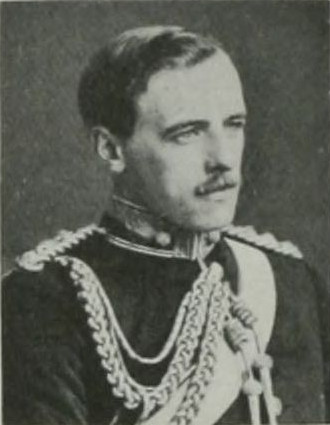
Edwin Wright.
WRIGHT, HARRY THOMAS, A.B. (R.F.R., B. 5706), 203886, H.M.S. Good Hope; lost in action off Coronel, on the coast of Chili, 1 Nov. 1914.
WRIGHT, HUGH STAFFORD NORTHCOTE, Capt., 2nd Battn. 8th Gurkha Rifles, 2nd s. of the late Frederick Wright, for many years senior superintendent and later Inspector General of Police in Berar, India, by his wife, Frances Louisa (Kilcor Castle, Fermoy, co. Cork), dau. of the late Henry Edmund Goodhall, of Sherwood Lodge, Upper Norwood; b. Akola, Berar, India, 14 Dec. 1877; educ. Chigwell School, Chigwell, Essex (Rev. Canon R. D. Swallow), and later at Heidelberg College. He was on plague duty in India, when the South African War broke out, and enlisted in Lumsden’s Horse, sailing from Calcutta 27 Feb. 1900. He obtained his commission in the Army Service Corps, 9 Aug. 1900. Col. Lumsden, in writing to his mother, said: “The pleasure was mine in recommending your boys [Capt. Wright’s younger brother enlisted at the same time] for their commissions. They turned out excellent troopers and fought loyally for Queen and Country; I have no doubt they will do equally well in the future. They are much indebted to General Tucker, who strongly supported my recommendation at Headquarters.” He was promoted Lieut. 1 Nov. 1901, and Capt. 15 Sept. 1909; took part in operations both in the Transvaal and the Orange Colony; entered Pretoria with Lord Roberts, receiving the Queen’s medal with three clasps, and the King’s medal with two clasps, and returned to England in Nov. 1902. After a course at Aldershot, he was sent on duty to Cork, and from there to India for five years, arriving at Bombay 22 Jan. 1904; in 0ct. 1905, he went to Rawal Pindi for manœuvres in connection with the Prince of Wales’ visit; and from 1906–1908 he commanded 13th Mule Corps at Poona, returning to England in Jan. 1909, when he commanded the 15th Coy. A.S.C. at Bulford Camp, Salisbury, till 1912. On 19 April, 1912, he exchanged into the Indian Army, and left England for India the same month, joining the 2nd Battn. 8th Gurkha Rifles at Lansdowne, Himalayas. While here he passed for his Majority, and also in Kushura, the Ghurka language. On 22 Aug. 1914, he left India, embarking at Karachi for France on the S.S. Erinpura, and wrote: “We are now a convoy of 42 transports, all travelling two cables length of each other, H.M.S. Dartmouth in charge. It is really a most impressive sight, and at night looks like a white city.” They arrived at Marseilles 12 Oct. 1914, and were attached to the Meerut Division under Major-General Keary. The regt. went into action at Ypres on the night of the 29th Oct. and Capt. Wright was killed in action on the following day; unm. His Commanding Officer sent the following account of the engagement: “At 10 p.m. on the 29th he (Capt. Wright) got his Coy. in the advanced trench, next to that occupied by Capts. Hartwell and Hayes-Sadler. During the night his trench was attacked twice to my knowledge as I was with him during one attack, and with his Double Company Commander Major Wake, in the supporting trench during the other. He did all that man could do to keep his Command in hand, and acted with the greatest courage and coolness. During the very trying shell fire to which these trenches were subjected from 7 a.m. to 1 p.m. on the 30th Oct., he did all it was possible to do. During this time he was wounded, but continued to command his men. When the furious attack developed, it was mainly directed on to his trench and that held by Capt. Sadler. He repelled line after line of the enemy, and held on till a very large proportion of his men had been killed or wounded, and till he himself was killed. What could a man do more? A soldier can do no more than die at his post—game to the last!” General Sir George Richardson wrote: “I had the honour of knowing your boy at Poona, when I was G.O.C. 5th Division, and formed the very highest opinion of him, socially and officially. We all loved him as a first class sportsman and a first class soldier”; and Major-General H. D. Keary, Commanding Meerut Division, wrote: “Professionally I was astonished at the rapidity with which he picked up his profession as an officer in a Gurkha Regt. in surroundings entirely foreign to anything he had previously seen, his previous service having been mostly in the Army Service Corps. I did, in fact, make a special note in the first Annual Confidential Report I wrote of him of my appreciation of the aptitude he had shown in this respect. Throughout the time he served under me, he showed the greatest zeal and capacity, and was an officer in whom I had the greatest confidence, and acknowledge that whatever work he had to do would be well and conscientiously done. He was a good soldier and died a soldier’s death, fighting against fearful odds and under every possible disadvantage.” Capt. Wright was far above the average both at polo and tennis, and played tennis for his Corps (A.S.C.) in Regimental Tournaments at Queen’s Club, twice being in the final; he also had the reputation of being an excellent shot. Once in Central India, while on a shooting expedition, he was walking with his elder brother and a few natives single-file along a narrow path through a thick jungle, when they came face to face with a huge tiger. Capt. Wright shot the animal dead, and saved what might have been a catastrophe; the skin of the tiger, after being cured, was found to measure from end to end, 12 feet.
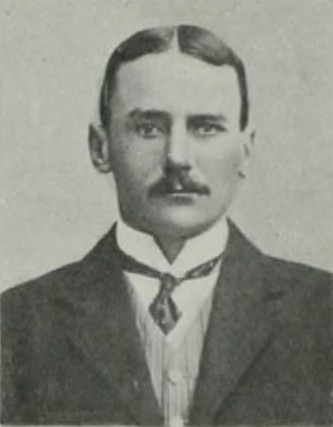
Hugh S. N. Wright.
WRIGHT, JOHN, A.B. (R.F.R., Ch. B. 3267), 187388, H.M.S. Cressy; lost in action in the North Sea, 22 Sept. 1914.
WRIGHT, JOHN HUTTON, Private, No. 11431, 3rd Battn. Coldstream Guards, s. of Albert Henry Wright, of 25, Grange Road, Small Heath, Birmingham; b. co. Warwick; served with the Expeditionary Force in France and Flanders; died at Bethune, 10 Jan. 1915, of wounds received in action. Buried in town cemetery there; unm.
WRIGHT, LAWRENCE WILLIAM, Eng. Lieut. R.N., only s. of the late Lawrence Wright, of Orwell, Coatham, by his wife, Mary Livingstone (Orwell, Coatham, Redcar, Yorks), dau. of John Whyte; b. Middlesbrough, 4 Oct. 1880; educ. Coatham Grammar School, La Chatelaine College, Geneva, and the Durham College of Science; was an Engineer and volunteered his services after the outbreak of war and was gazetted Eng. Lieut. (temp.) and appointed H.M.S. Bulwark, 11 Sept. 1914; and was lost when that ship was blown up off Sheerness, 26 Nov. 1914; unm.
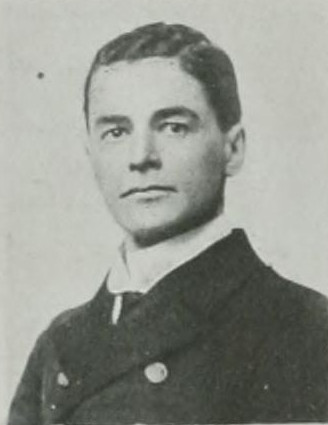
Lawrence W. Wright.
WRIGHT, LEONARD FREDERICK HALL, Stoker, 2nd Class, K. 19544, H.M.S. Aboukir; lost in action in the North Sea, 22 Sept. 1914.
WRIGHT, SYDNEY, L.-Corpl., No. 2610, 9th Battn. (Queen Victoria’s Rifles) The London Regt. (T.F.); joined the Queen Victoria Rifles 14 Sept. 1914; went to France 3 Nov. 1914, and was killed in action at Hill 60, 20 April, 1915; unm. Buried Larch Wood, 1, 29, Reference Map Belgium, 28, 1/40,000.
WRIGHT, THOMAS, Lieut., 2nd Battn. Royal Berkshire Regt., eldest s. of Stephen Wright, of Ruskington, Lincolnshire, Farmer, by his wife, Agnes, dau. of J. Christian, of Barrow House, Rutland; b. Ruskington, 6 July, 1889; educ. Christ’s Hospital School, Lincoln, and King’s College London (Associate; B.Sc.; A.I.C.); was a Demonstrator in Chemistry; joined King Edward’s Horse in Feb. 1913; gazetted 2nd Lieut. 2nd Berkshires, 24 Dec. 1914; left for France 29 Mar. 1915; and was killed in action 2 May, 1915, in the neighbourhood of Fauquissart, near Laventie, while on a reconnoitring patrol; unm. Buried in the Fauquissart Cemetery. His Commanding Officer, Major R. P. Harvey, wrote: “He was on duty in the trenches with his platoon and had taken out a sergt. and a man to reconnoitre a trench half way between the opposing lines. At 8 p.m. he returned to report that he had seen footmarks leading to the enemy’s trench. About 10 p.m. he asked permission to go on the next patrol as this was a duty which he particularly liked, and was allowed. While peering in the darkness, both he and the sergt. who was with him showing their heads above a flimsy parapet, a volley from the enemy was fired and your son was struck through the head, heart and wrist. He fell dead without a sound. The sergt. was unable to move him, but returned and reported. A brother subaltern and three men at once set out to find his remains which they brought down to headquarters by midnight. He was laid to rest in the little cemetery of Fauquissart where some 30 men of his Battn. lie. Having trained your son at Portsmouth when he joined this battn., I can testify personally to the loss the regt. has sustained in the death of a most promising young officer. One who was always willing, quite reliable, and of a most placid and cool temperament in danger.”
WRIGHT, THOMAS, Private, No. 20061, 4th Battn. East Kent Regt. (The Buffs) (T.F.), eldest s. of William Worley Wright, of Bexhill, by his wife, Ellen; b. Bexhill, 19 April, 1854, enlisted in Oct. 1915, and died at Faversham, 30 Dec. 1915, of pneumonia, contracted while in training. He m. at the Baptist Church, Erith, 6 July, 1890, Fanny (60, Kingsley Road, Maidstone), dau. of William Town; s.p.
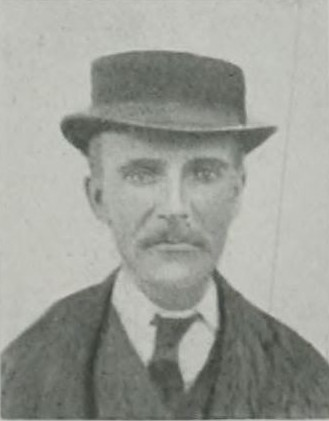
Thomas Wright.
WRIGHT, WILLIAM, L.-Corpl., No. 8820, 4th Battn. Middlesex Regt.; served with the Expeditionary Force in France; killed in action, 17 Jan. 1915.
WRIGHT, WILLIAM, E.R.A., R.N.R. 425EB, H.M.S. Cressy; lost in action in the North Sea, 22 Sept. 1914.
WRIGHT, WILLIAM, Leading Stoker (Coastguard), 306457 (Dev.), H.M.S. Cressy; lost in action in the North Sea, 22 Sept. 1914.
WRIGHT, WILLIAM HENRY, Private, R.M.L.I., Ch. 17936, H.M.S. Pathfinder; lost when that ship was sunk by a mine, about 20 miles off the East Coast, 5 Sept. 1914.
WROUGHTON, MUSGRAVE CAZENOVE, 2nd Lieut., 12th (Prince of Wales’s Royal) Lancers, only s. of William Musgrave Wroughton, of 77, Chester Square, London, S.W., and of Creaton Lodge, co. Northampton, by his wife, Edith Constance, dau. of Henry Cazenove, of Lilies, Aylesbury, and nephew of Philip Wroughton, of Woolley Park, co. Berks, M.P., J.P., D.L. (see The Plantagenet Roll, Mortimer-Percy, Vol. 1. p. 203); b. in London, 1 Oct. 1891. He was educ. at Harrow and at Christchurch, Oxford, and during his school and college vacations was a keen follower of the Pytchley Hounds, of which pack his father was master for many years. On leaving Harrow he received a commission in the Northamptonshire Yeomanry, and in 1912 he accompanied Sir Robert Baden-Powell as A.D.C. on his world tour in connection with the Boy Scouts’ movement. After serving for four years in the Northamptonshire Yeomanry, he was given a commission in the Special Reserve, 12th Lancers, as 2nd Lieut. (on probation) in Oct. 1913; the appointment was confirmed after his death, to date from 29 Oct. 1914. In Aug. 1914, he accompanied his regt. to the Front, and was mentioned in Sir John French’s Despatch of 14 Jan. 1915, for gallant and distinguished service in the field. He was killed in action near Ypres, 30 Oct. 1914, and was buried in Kemmel Churchyard, Belgium; unm.
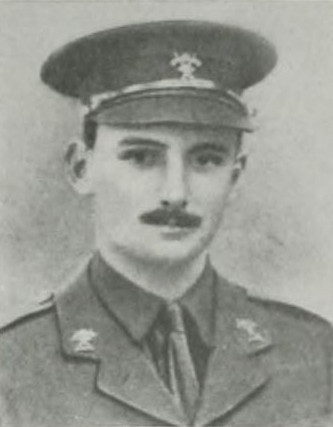
M. C. Wroughton.
WYATT, ERNEST JOHN, Stoker, 1st Class, 307234, H.M.S. Good Hope; lost in action off Coronel, on the coast of Chili, 1 Nov. 1914.
WYKES, WILLIAM, Private, No. 2912, 2/10th Middlesex Regt. (T.F.), 3rd s. of Henry Wykes, of 29, West View Road, Hemel Hempstead, Herts, Builder’s Manager, by his wife, Henrietta Adela Louisa, dau. of Laurance Rose; b. Hemel Hempstead, 16 May, 1892; educ. Council School there; was a Draper; volunteered and enlisted in Oct. 1914; went to the Dardanelles in July, 1915; took part in the landing at Suvla Bay, Gallipoli, and died in Hospital at Alexandria, 1 Nov. 1915, of dysentery contracted in the trenches. Buried in Chatby Military Cemetery; unm.
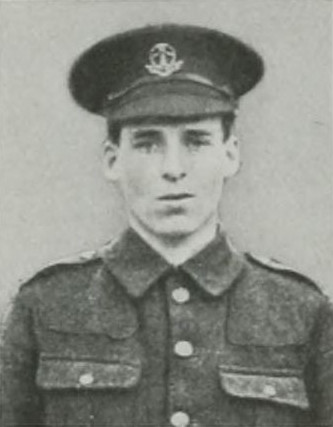
William Wykes.
WYLD, GEORGE RICHARD, Capt., 3rd (Reserve) Battn. Wiltshire Regt., attd. 1st Berkshire Regt., only s. of the Rev. Edwin George Wyld, Vicar of Melksham, Wilts, Canon of Salisbury, by his wife, Mary Caroline, eldest dau. of Sir Hungerford Pollen, 3rd Baronet; b. Woodborough, co. Wilts, 8 July, 1879; educ. Marlborough, and on leaving there entered the Stock Exchange. He served through the South African War, 1899–1902, with the 13th Middlesex V.R.C. (now the Queen’s Westminsters) and received the Queen’s medal with four clasps, and was appointed an Hon. Lieut. in the Army, 1 July, 1901. When the European War broke out he was on the Reserve of Officers and immediately volunteered for foreign service, and after being attached to the King’s Royal Rifle Corps, 19 Aug. 1914, was gazetted Capt. 3rd Wilts Regt., 7 Oct. following. He went to France with the 7th Division, attd. to the 1st Berkshires, Oct. 1914, and was killed in action at Givenchy 24 Dec. 1914; unm. The Chaplain wrote: “He was most popular with his brother officers of the Berkshire Regt., and was considered very efficient in his duty, and it was whilst bravely doing his duty in trench at Givenchy that he was mortally wounded by a bullet.”
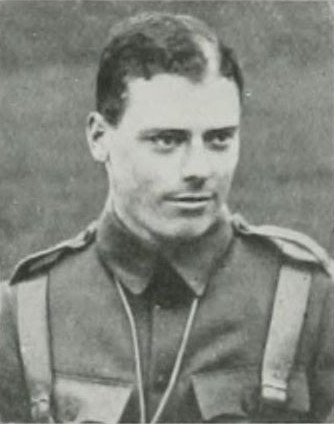
George R. Wyld.
DOUGHTY-WYLIE, CHARLES HOTHAM MONTAGU, V.C., C.B. C.M.G., Lieut.-Col., Royal Welsh Fusiliers, elder s. of Henry Montagu Doughty, of Theberton Hall, Suffolk, J.P., formerly R.N., by his wife, Edith Rebecca, only child of David Cameron, Chief Justice of Vancouver Island; b. 23 July, 1868; educ. Winchester and Sandhurst (1888–89); gazetted 2nd Lieut. Royal Welsh Fusiliers, 21 Sept. 1889, and promoted Lieut., 23 Sept. 1891; Capt. 9 Sept. 1896; Major 21 Aug. 1907, and temp. Lieut.-Col. 31 March, 1914; served (1) in the Black Mountain Expedition, 1891 (severely wounded; medal with Hazara clasp); (2) with the Chitral Relief Force as transport officer on the Staff of Gen. Gatacre, 1895 (medal with clasp); (3) with the Nile Expedition, 1898–9, being employed with Egyptian Army, 22 May, 1898, to 1 March, 1900; was Brigade Major, Infantry Brigade, Flying Column: took part in the Battle of Khartoum, and in the operations resulting in the final defeat of the Khalifa (twice mentioned in Despatches [London Gazette, 30 Sept. 1898, and 30 Jan. 1900]: Sudan medal; Egyptian medal with three clasps; order of the Medjidieh); (4) in the South African War, 1899–1900; in command of a Battn. of Mounted Infantry; took part in operations in the Orange Free State, May-29 Nov. 1900, including actions at Wittebergen (1–29 July), and Vredefort (severely wounded; Queen’s medal with three clasps); (5) at Tien-Tsin, where he raised a regt. of Mounted Infantry; and (6) as Special Service Officer with Somaliland Field Force, 14 Jan. 1903, to June, 1904 (medal with clasps). From 26 Sept. 1906 to 3 Dec. 1909, he was acting Vice-Consul at Mersina and Konia, Asia Minor, and during his tenure of this appointment occurred the massacre by the Turks of Armenians at Adana. Of his services on this occasion, a correspondent wrote: “On his own responsibility he assumed the practical command of the city of Adana, and his courage and capacity saved the lives of hundreds—indeed, it was believed by those best able to judge, thousands—of many nationalities. Wearing his military uniform, he rode through the town with a half company of Turkish troops, compelling the raging mob to stop the killing, and posting guards over particular houses. His right arm was broken by a bullet, but this did not prevent him from riding out again, and in the second and worst outbreak of massacre again saving more hundreds of lives. The then British Ambassador at the Porte, Sir Gerard Lowther, afforded him a generous meed of support and encouragement, and Major Doughty-Wylie’s services were recognised by the award of the C.M.G. He also received the warm thanks of many foreign Governments and public bodies. He afterwards organised a system of relief to the destitute—22,000 persons, exclusive of refugees in his own house, and exclusive also of the inmates of three hospitals which were managed by Mrs. Doughty-Wylie. On 4 Dec. 1909, he was appointed Consul at Adis Ababa, Abyssinia, where he rendered important services, acting as Chargé d’Affaires for considerable periods. Being home on leave in 1912, he was, with the consent of the Government, appointed Director-in-Chief of the Red Cross units with the Turkish Forces during the Balkan War, and from 29 Aug. to 21 Dec. 1913, was British representative on the International Commission for the delimitation of the Southern Frontier of Albania, of which Commission he was elected President. For his services he received the Companionship of the Bath, and the second class of the Medjidieh from the Sultan. On his return to England he was appointed to the General Staff (2nd grade), and in 1915 went to the Dardanelles on the Staff of Sir Ian Hamilton. During the landings at the Beaches 25 and 26 of April, 1915, he represented the Staff in the steamship River Clyde, which had been specially prepared for running on shore on V Beach, and which carried 2,200 troops of the 29th Division. This landing had almost failed, owing to the raking Turkish fire from the Castle and village and both sides of the bay, and no progress was made on the 25th, in spite of the desperate valour of the Munster and Dublin Fusiliers and the Hampshire Regt., but on the 26th Col. Doughty-Wylie obtained leave to land, and collecting the brave survivors of the above-named regts., with the assistance of Capt. Walford, organised an attack, and in some hours’ fighting took the Castle and village of Sedd-el-Bahr, and finally led his handful of troops in a bayonet charge up Hill 141, since known as Col. Doughty-Wylie’s Hill. The Turks fled before them, and they occupied the old Fort on the crest, but Col. Doughty-Wylie fell at the moment of victory. An eye witness wrote: “All he carried was a small cane and from a band he wore round his arm the men gathered he was Staff Officer. He walked about in the open under a continuous fire, talking to the men, cheering them up, and rallying them together. Then when all was ready for the bayonet charge, he placed himself in front of them all, and armed simply with a small cane led them in a great charge up the hill. No braver man ever lived. He had no business to be there as a Staff Officer, but the loss among officers in landing had been so great and the necessity for making headway quickly was so essential, that he felt his duty lay in leading the men, so he went forth fearlessly to his death and the hill will be a lasting monument to his self-sacrifice and great valour. The magic of his personality and example infused the men with new resolution and they pressed the attack home.” For his services on the occasion he was awarded the Victoria Cross, the official record stating [London Gazette, 23 June, 1915]: “On 26 April, 1915, subsequent to a landing having been effected on the beach at a point on the Gallipoli Peninsula, during which both Brig.-Gen. and Brigade Major had been killed, Lieut.-Col. Doughty-Wylie and Capt. Walford organised and led an attack through and on both sides of the village of Sedd-el-Bahr on the Old Castle at the top of the hill inland. The enemy’s position was very strongly held and entrenched, and defended with concealed machine guns and pompoms. It was mainly due to the initiative, skill and great gallantry of these two officers that the attack was a complete success. Both were killed in the moment of victory.” Col. Doughty-Wylie m. 1 June, 1904, Lilian Oimara, widow of Henry Adams-Wylie, Lieut. Indian M.S., and eldest dau. of the late John Wylie, of West Cliffe Hall, co. Hants; s.p. He assumed the additional name of Wylie by Deed Poll in 1904.
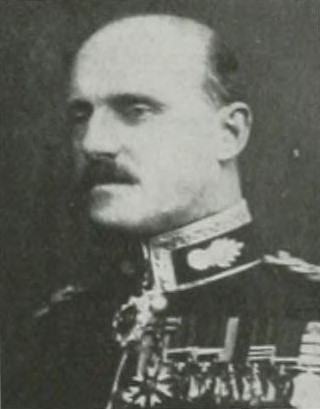
C. H. M. Doughty-Wylie.
WYLLIE, HENRY, Pte., No. 2547, 6th Battn. Highland Light Infanttry; s. of A. Wyllie, of 181, East Main Street, Armandale; served with the Mediterranean Expeditionary Force; killed in action in Gallipoli, 12 July, 1915.
WYLLIE, JAMES, L.-Corpl., No. 7409, 5th Battn. Royal Scots Fusiliers; served with the Mediterranean Expeditionary Force; killed in action in Gallipoli, 12 July, 1915.
WYLLIE, JAMES BULLOCH, Private, No. 12/2162, Auckland Infantry Battn., New Zealand Expeditionary Force, s. of A. Wyllie, of Belmont Road, Quinfoes Green, Midlothian; served in Egypt and at the Dardanelles; reported missing, 8 Aug. 1915, and now assumed to have been killed in action that day.
WYLLIE, SIDNEY ALFRED, Private, No. 3382, 1st Battn. (Royal Fusiliers) The London Regt. (T.F.), 2nd s. of Frederick William Wyllie, of 105, Kirkwood Road, Peckham (now on service in France), by his wife, Alice, dau. of Alfred Charles Yates; b. Port Sunlight, Cheshire, 13 June, 1899; educ. Stafford Street Wesleyan Council School, Peckham, S.E., was a Clerk; volunteered and joined the 1st London Regt., 9 Jan. 1915; went to France 16 April, and was killed in action there, 9 May, 1915; unm.
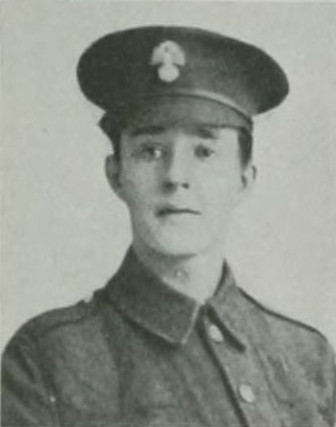
Sidney A. Wyllie.
WYLLIE, WILLIAM, Stoker, 1st Class, 308390, H.M.S. Pathfinder; lost when that ship was sunk by a mine, about 20 miles off the East Coast, 5 Sept. 1914.
WYNDER, JOHN, L.-Corpl., No. 6570, 2nd Battn. East Kent Regt.(The Buffs), s. of William Wynder, of 37, Staunton Street, Deptford; served with the Expeditionary Force in France; killed in action, 3 May, 1915.
WYNN, WILLIAM, Private, No. 17348, 2nd Northumberland Fusiliers, eldest s. of Michael Wynn, of Southwick-on-Wear, Caulker, by his wife, Margaret, dau. of Thomas Storey, of Southwick; b. Southwick, 29 Jan. 1880; educ. Board School there; was employed at Priestman’s Yard, Sunderland, and was Secretary of the Southwick Football Club; enlisted 11 Feb. 1915, and trained at Newcastle and East Boldon. After the Battle of Hill 60 at Ypres on 24 May, 1915, he was officially reported missing and is now assumed to have been killed that day. He m. at Southwick Parish Church, 1 Jan. 1907, Ada (15, Ogle Terrace, Southwick-on-Wear), dau. of Edward Arthur Hatley, of Southwick, and had three children: Michael, b. 10 Dec. 1913; William, b. 29 June, 1915; and Ruth, b. 15 April, 1912.
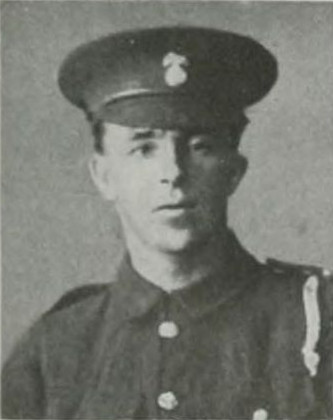
William Wynn.
WYNNE, EDWARD, Private, No. 1425, 13th Battn. Australian Imperial Force; a native of co. Gloucester; served in Egypt and at the Dardanelles; killed in action, 9 Aug. 1915.
WYNTER, FRANCIS CONSTANTINE WILLIAM, Lieut., 2nd Battn. Oxfordshire and Buckinghamshire L.I., yst. s. of the late Philip Henry Massie Wynter, of The Hays, Ramsden, co. Oxon, Capt. Bengal Army, and for 35 years a Queen’s Foreign Service Messenger, by his wife, Constance Louisa, dau. of the Hon. Constantine Augustus Dillon [4th s. of Henry Augustus, 13th Viscount Dillon]; b. The Hays aforesaid, 25 April, 1888; educ. Cothill; Harrow and Hertford College, Oxford (of which he had a Founder’s Kin Scholarship); received a University commission as 2nd Lieut., Oxford and Bucks L.I., 19 May, 1911, and was promoted Lieut. 22 March, 1914, and Tempy. Capt. Sept. 1915; joined 2nd Battn. at Aldershot, and was posted to the 1st Battn. in India, 7 Feb. 1912; was appointed General Staff Officer (third grade), Indian Expeditionary Force, Dec. 1914, and was killed in action at Ctesiphon, 22 Nov. 1915; unm. His eldest brother, Capt. P. C. Wynter, was killed in France in April (see his notice).
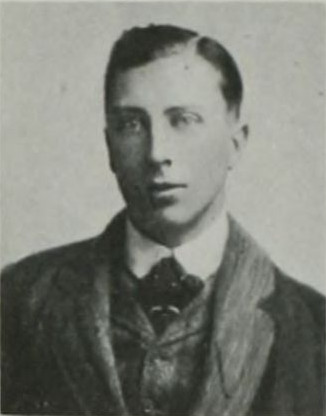
Francis C. W. Wynter.
WYNTER, PHILIP CECIL, Capt., 1st Battn. East Surrey Regt., eldest s. of the late Philip Henry Massie Wynter, of The Hays, Ramsden, co. Oxon, Capt., Bengal Army, and for thirty-five years a Queen’s Foreign Service Messenger, by his wife, Constance Louisa, dau. of the Hon. Constantine Dillon, 7th Dragoon Guards and 17th Lancers [4th s. of Henry, 13th Viscount Dillon]; b. London, 31 Jan. 1880; educ. Harrow; gazetted 2nd Lieut. to 1st East Surreys from the Militia, 4 Dec. 1901, and joined his battn. at Lucknow the following year; promoted Lieut. 30 Nov. 1903, and Capt. 26 Jan. 1910; went to France the end of Oct., was invalided home the beginning of Dec. and returned to France 18 Feb., and was killed in action at Hill 60, 20 April, 1915; unm. He was a first-rate horseman and a good cricketer and played for the Free Foresters. His yst. brother, Capt. F. C. W. Wynter, was also killed in action (see his notice).
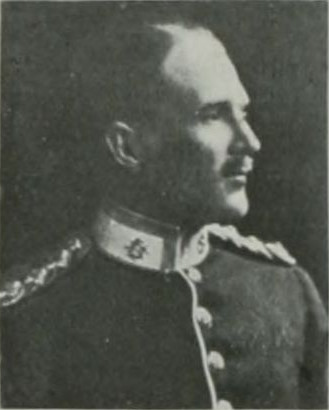
Philip C. Wynter.
YARD, JOSEPH, Stoker, H.M.S. Hood Hope; lost in action off Coronel, on the roast of Chili, 1 Nov. 1914.
YARDE, FRANK, L.-Sergt., No. 3197, 3rd Battn. Coldstream Guards, only s. of Page Yarde, of Buckland St. Mary, near Chard, by his wife, Susan, dau. of James Yarde; b. Staple Hill, Buckland St. Mary, Chard, co. Somerset, 3 June, 1880; educ. Buckland St. Mary village school; enlisted 8 Jan. 1900; became L.-Corpl. 9 Nov, 1914; Corpl. 11 April 1915, and L.-Sergt. 12 July following; served in South Africa, 26 Nov. 1901, to 6 Oct. 1902 (Queen’s medal with three clasps); in Egypt, 29 Sept. 1906 to 29 Jan. 1908; and with the Expeditionary Force in France and Flanders from 30 Aug. 1914 to 28 Sept. 1915, and was killed in action that day, near Vermelles, during the Battle of Loos. He was in a hastily dug trench in the firing line, when a shell burst and the nose cap caught him just above the forehead, killing him instantly. Letters from his comrades speak very highly of his conduct and of how much he was loved and respected by all. He was buried at the foot of the western slope of Hill 70, 300 yards from the village of Hulluch, Belgium. He m. at St. George’s, Hanover Square, W., 1905, Agnes Mary (Drill Hall, London Road, Camberley), yst. dau. of the late James (and Elizabeth) Knight, of Marden, near Devizes, and had issue: Frank, b. 2 May, 1906; William James, b. 11 April, 1909; Walter Cameron, b. 29 Aug. 1911; John, b. 13 May, 1914; and Margaret Elizabeth, b. 9 Dec. 1912.
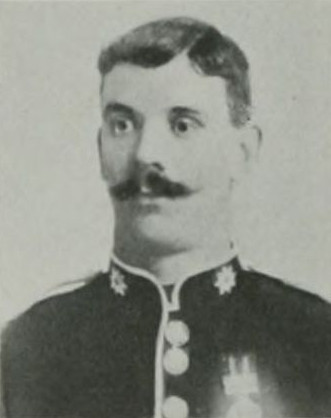
Frank Yarde.
YARDLEY, FREDERICK GEORGE, 2nd Lieut., 8th (Service) Battn. North Staffordshire Regt., yst. s. of Joseph Yardley, of the Cedars, Bescot, Walsall, by his wife, Ann, dau. of Joseph Cockram; b. Darlaston, 19 Oct. 1887; educ. King Edward’s High School, Birmingham and Queen’s College, Oxford, where he graduated in 1910; was for three years classical master at Bishop’s College School, Lennoxville, Canada, and then went to Vancouver, and entered the legal profession; volunteered for Imperial Service on the outbreak of war and joined the 16th Canadian Scottish (72nd Highlanders); came over with the 1st Contingent in Oct. 1914; was given a commission as 2nd Lieut. in the 8th North Staffords, 9 Jan. 1915; went to France, 17 July, and died in Hospital at Calais, 17 Sept. following, of wounds received whilst superintending trench digging operations near Neuve Chapelle on 22 Aug.; unm.
YARROW, ERIC FERNANDEZ, 2nd Lieut., 7th Battn. Argyll and Sutherland Highlanders (T.F.), yst. s. of Alfred Fernandez Yarrow, of the Homestead, Hindhead, Surrey, Engineer and Ship Builder, by his wife, Minnie Florence; b. Blackheath, London, S.E., 5 Jan. 1895; educ. St. Andrew’s School, Eastbourne; The School, Oundle, Northamptonshire, and Trinity College, Cambridge, where he was on the outbreak of the war. He joined the Argyll and Sutherland Highlanders 16 Sept. 1914; and was killed in action near Ypres, 8 May, 1915. Buried on canal bank, near Ypres. He was mentioned in F.M. Sir John (now Lord) French’s Despatch of 31 May, 1915, for gallant and distinguished service in the field.