The Roll of Honour. (continued 46)
Reading edition
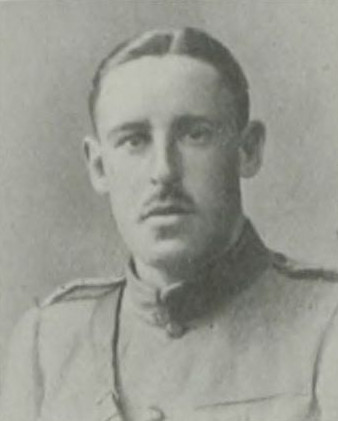
Frederick Harding Turner.
TURNER, GEORGE EDWARD, W.T. Operator, 1st Class, H.M.S. Hogue; lost in action in the North Sea, 22 Sept. 1914.
TURNER, HARRY, Stoker, 1st Class (R.F.R., B. 4686), 293608, H.M.S. Good Hope; lost in action off Coronel, on the coast of Chili, 1 Nov. 1914.
TURNER, JAMES, E.R.A., 1st Class, 269658, H.M.S. Cressy; lost in action in the North Sea, 22 Sept. 1914.
TURNER, JOSEPH WILLIAM, Stoker, 1st Class (R.F.R., B. 8020), S.S. 103639, H.M.S. Hogue; lost in action in the North Sea, 22 Sept. 1914.
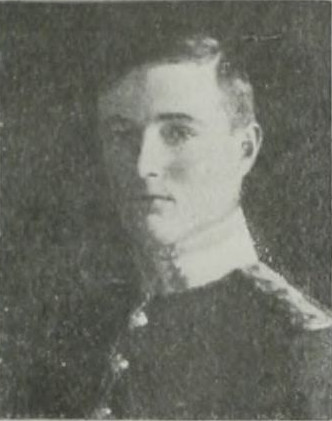
TURNER, JOHN REGINALD, Lieut., 3rd (Reserve), attd. 1st Battn. Dorsetshire Regt., s. of John Mayer Burrow Turner, of Hartshill, Bournemouth, Solicitor; b. Stoke-on-Trent, co. Stafford, 20 Nov. 1892; educ. Bournemouth School, and on leaving there was articled to his father and had passed the Intermediate Law Examination when war broke out. He was given a commission as 2nd Lieut. in the 3rd Dorset Special Reserve Battn. 12 Dec. 1911, and became Lieut. 1 May, 1913, and on the declaration of war volunteered for foreign service. He was attd. to the 1st Dorsets (15th Brigade, 5th Division) and went to France with the Expeditionary Force in Aug. 1914; took part in the Retreat from Mons, the Battles of the Marne and the Aisne, and was killed in action near Festubert, on the Pont Fixe Road, 13 Oct. 1914, on which day the 1st Dorsets sustained 400 casualties, 130 of them being killed. Buried in an orchard west of the Post Office of Pont Fixe; unm. Lieut.-Col. Bols, C.B., D.S.O., commanding 1st Dorsets, wrote: “Practically the whole of B Coy. was destroyed on that awful 13th. We were all so very fond of him; he was always cheery and such an excellent soldier, qualities which he displayed to the full on the days following the 9th Sept, when he was left as senior officer in his company.” Capt. A. L. Ransome, 1st Dorsets, wrote: “Your son was one of our most promising young officers. His two previous Coy. Commanders were loud in his praises. He showed a power of command and common sense far above the average of his age and service.” Lieut. Turner held the office of Hon. Sec. to the Bournemouth and District Law Students’ Society, and had each year since its inception won the prize awarded to the best speaker amongst its members.
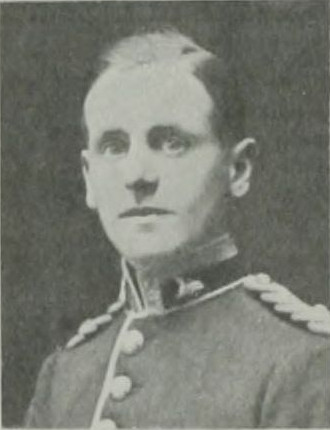
John Reginald Turner.
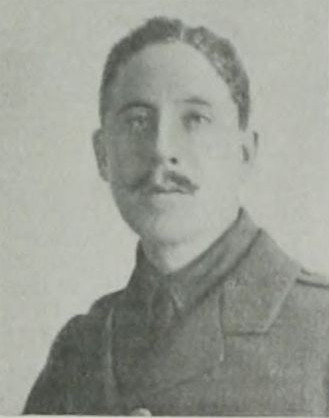
TURNER, MONTAGUE ALWEYNE FISHER, L.-Corpl., No. 3532, 2nd Battn. Northumberland Fusiliers, 5th s. of Alweyne Turner, of Kobe, Catherine Road, Surbiton, late Government Advocate, of Lahore, India, by his wife, Violet Frances, dau. of Deputy Surgeon-Gen. Thorp; b. in Gulmery, Kashmir, 3 July, 1893; educ. Lancing College; enlisted 14 April, 1913; went to France in Jan. 1915, and was killed in action 25 April, 1915, being shot through the head in the trenches at Cross Roads, east of Zonnebeke, by a sniper. Buried at the Zonnebeke Dressing Station; unm. A writer in the regimental journal said: “It is only necessary to record two or three instances of gallantry displayed by our comrades to show what our men are, when it comes to the crucial point, and these are only a few of many. The first to be mentioned is the gallantry of our bomb-throwers under L.-Corp. M. Turner during the attack on Hill 60 on the 21–22 April. They went to work like one man, and soon had the enemy on the move. The coolness and bravery of Turner was one outstanding feature and we believe he was highly commended for the excellent work performed by his bomb-throwing party.”
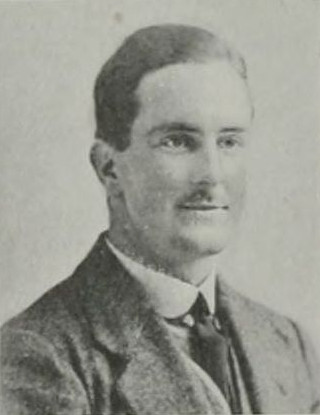
Montague A. F. Turner.
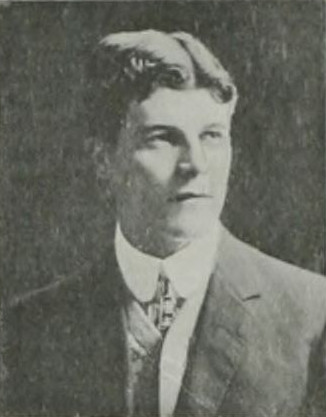
TURNER, NOEL PRICE JAMES, Lieut. 3rd (Reserve), attd. 1st, Battn. South Wales Borderers, elder s. of the late Rev. John James Turner of Pentreheylin, Llandysilio, Montgomeryshire, by his wife, Harriett Augusta, dau. of Richard Price Harrison; b. Richmond, co. Surrey, 7 Dec. 1878; educ. Charterhouse and Keble College, Oxford; served in South African War as a trooper in the Montgomeryshire Imperial Yeomanry (Queen’s medal with four clasps); and on the outbreak of the European War enlisted in the 3rd South Wales Borderers, 19 Aug. 1914, and was gazetted 2nd Lieut. to that battn. (Special Reserve of Officers) 4 Sept. following. He left for France, 19 Dec., and was attd. to the 2nd Welsh, with whom he served until March 1915, when he was attd. to the 1st Battn. of his own regt. He died in hospital at Bethune, 9 May following, of wounds received in action near that place on 9 May. Buried in Bethune Cemetery. He was mentioned in F.M. Sir John (now Lord) French’s Despatches of 31 May, 1915 [London Gazette, 22 June, 1915], for distinguished conduct while attd. to the 2nd Welsh. Lieut. Turner was a prominent public man in Montgomeryshire; a former member of the Montgomeryshire County Council; High Sheriff, 1909; and the owner of the Pentreheylin Estate. He resided at Sylfaen Hall, Welshpool. He m. at Guilsfield, near Welshpool, 25 Sept. 1902, Minnie, 2nd dau. of the late Edward Beck, of South Gippsland, Australia, and had two sons: John James, b. 5 Sept. 1907; and Richard Price, b. 16 Dec. 1908. A nephew of his, 2nd Lieut. Alan Langlands, of the 3rd South Wales Borderers, and also serving with the 1st Battn., was killed in action the same day.
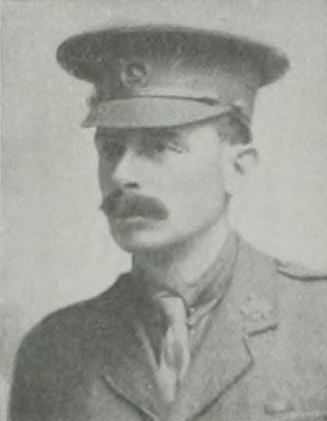
Noel Price James Turner.
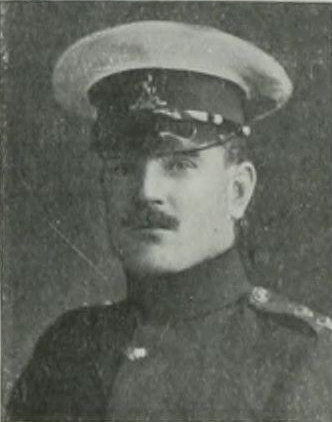
TURNER, RICHARD CHASE, Lieut.-Com., R.N., 2nd s. of Edward Turner, of Sherbourne Lodge, Leamington, retired I.C.S., by his wife, Georgiana, dau. of T. A. N. Chase, late I.C.S.; b. Madora, South India, 12 Jan. 1884; educ. Stubbington House, Fareham, Hants; entered H.M.S. Britannia in 1898, and became Midshipman, 1900; Sub-Lieut. 1903; 1st. Lieut. 1905 and Lieut.-Com. 31 Dec. 1914; served on H.M. ships Ocean, Triumph, Swiftsure, Pandore (1908–11 on South African Station), and Blonde (1911–13), and was appointed Gunnery Lieut. to H.M.S. Pegasus, 1 March, 1913. The Pegasus rendered useful services after the outbreak of war, including the destruction of the Wireless Station at Dar-es-Salaam carried out under Lieut.-Com. Turner’s command, and when attacked by the German cruiser Konigsberg off the coast of Zanzibar on 20 Sept. 1914 was having her boilers cleaned. In this action Lieut.-Com. Turner was mortally wounded and died the same day in hospital at Zanzibar. He was unm. and was buried in the English Cemetery there. The Commander of the Pegasus wrote: “In a small ship of this sort everything depends on the tact, energy, straightforwardness and professional knowledge of the 1st Lieut., with all of which he was so highly endowed. The men loved him, and would have done anything that was humanly possible to bring him success. The little ship, though old and out-classed, was kept as fit as was possible to do anything that was required, and it was due to him to a great extent that she was able to get about as she did in the early part of the war.” He was a Freemason, and was Master of Lodge No. 900, Simon’s Town, Kilwinning, Cape Colony.
TURNER, ROBERT NATHANIEL, Leading Seaman, 179019, H.M.S. Good Hope; lost in action off Coronel, on the coast of Chili, 1 Nov. 1914.
TURNER, WALTER, Private, No. 1204 (Barton Coy.), 1/5th Battn. Lincolnshire Regt. (T.F.), s. of Charles Henry Turner, of Halton Villa, New Holland, Hull, Signal Lineman, G.C. Railway, by his wife, Mary Ann, dau. of the late George Parker; b. New Holland, co. Lincoln, 19 July, 1893; educ. there; was an Engine Cleaner, G.C. Railway; joined the Lincolnshire Territorials, 5 March, 1911, and on the outbreak of war in Aug. 1914 at once volunteered for foreign service; trained at Luton and Stanstead, Aug. 1914 to Feb. 1915. during which time he was orderly to Lieuts. Fieldsend and Riggall; went to France, 26 Feb.; was doing his third period in the trenches when he was taken ill with spotted fever and died 15 days later in No. 10 Stationary Hospital, St. Omer, 27 April, 1915; unm. Buried in the Souvenir Cemetery there. Capt. Wilson wrote: “Personally I feel his death very much, as he was one of the members of my company who had been with me for several years, and was one of the original band who joined from New Holland, and who have all turned out to be splendid fellows. I liked him very much—he was a good soldier and he must have been a good son”; and Lieut. Fieldsend: “I can assure you that no man in the company was more popular and more respected by both officers and men than your son.” Lieut. Riggall also said: “He was an excellent man, one of the best and nicest in the company. He was always cheerful and willing, never grumbled and would do anything for anyone. We shall all feel his loss intensely and myself especially.”
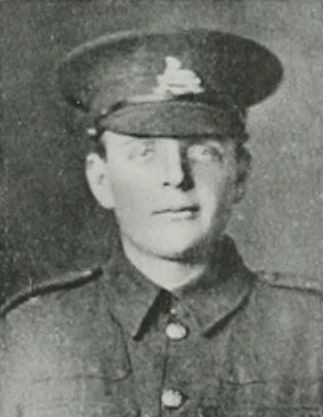
Walter Turner.
TURNER, WILLIAM, A.B. (R.F.R., Ch. B. 1459), 114371, H.M.S. Cressy; lost in action in the North Sea, 22 Sept. 1914.
TURNER, WILLIAM, Leading Stoker, 288305, H.M.S. Good Hope; lost in action off Coronel, on the coast of Chili, 1 Nov. 1914.
TURNER, WILLIAM STEWART, Lieut., 1/10th (Liverpool Scottish) Battn. King’s Liverpool Regt. (T.F.), elder s. of William Neil Turner, of Mossley Hill Drive, Sefton Park, Liverpool, by his wife, Jessie Stewart, dau. of the late Thomas Holder, of Liverpool, J.P.; b. Liverpool, 19 March, 1883; educ. Greenbank School, Liverpool, and Sedbergh (Mr. Wilson’s House, 1898–1901), and on leaving there entered the firm of Turner & Dunnett, of Liverpool, of which his father is senior partner. In Aug. 1914, when war broke out, he enlisted in the Liverpool Scottish and received his commission in the Reserve Battn. 17 Nov. just before the regt. left for the Front. He was in England when his yr. brother, Lieut. F. H. Turner, was killed in action, and it was immediately after this that he proceeded to the Front (18 Jan. 1915), where, following upon a petition from the men, he was attd. to the platoon with which his brother had been so popular an officer. He was killed in action while leading his men in the advance on Bellewarde Farm, Hooge, 16 June, 1915. They had just captured a German trench, when a heavy shell burst, killing him and Sergt. J. B. Jones instantly He had been promoted Lieut. May, 1915, and was unm. Like his brother, Lieut. W. S. Turner was a keen athlete. He was in the cricket, and Rugby football teams at both Greenbank and Sedbergh, and gained both his cricket and football colours the year he left Sedbergh, being a useful three-quarter and a good cricketer. Afterwards he played regularly at cricket and football for the Liverpool Club, and was captain of the latter club in the season 1909–10. In 1908 the two brothers did a remarkable performance against Sedbergh in the Old Sedberghian Match; in the first innings W. S. took 5 wickets for 8 runs and F. H. 5 for 16, then after scoring 66 runs between them, they took 9 wickets in the second innings, F. H. taking 7 for 26 and W. S. 2 for 10—in all taking 19 wickets for 60 runs.
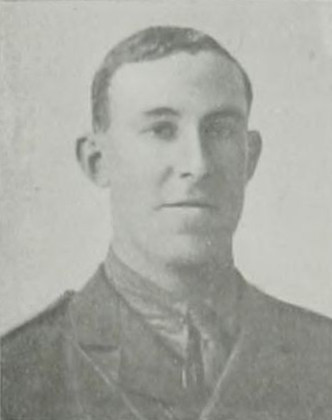
William Stewart Turner.
TURNER, WILLIAM THOMAS, Private, R.M.L.I., Po./12728, H.M.S. Good Hope; lost in action off Coronel, on the coast of Chili, 1 Nov. 1914.
TURNOR, CHRISTOPHER RANDOLPH, Lieut., 10th Royal Hussars, 2nd s. of Algernon Turnor, of 9, Clarges Street, Mayfair, W., C.B., J.P., late Financial Secretary to the Treasury, and Private Secretary to the Earl of Beaconsfield from 1874 to 1880, by his wife, Lady Henrietta, née Stewart, 6th dau. of Randolph, 9th Earl of Galloway, and grandson of Christopher Turnor, of Stoke-Rochford, co. Lincoln, J.P., D.L., M.P.; b. 37, Pont Street, London, S.W., 16 Aug. 1886; educ. at the Rev. the Marquis of Normanby’s Private School at Mulgrave Castle; Eton, and Christ Church, Oxford; gazetted 2nd Lieut., 10th Hussars, 30 Dec. 1908, and promoted Lieut. 17 Sept. 1910; joined his regt. at Rawal Pindi, India, in Jan. 1909; served with it there and in South Africa, returning to England in Sept. 1914. The 10th Hussars embarked at Southampton on 6 Oct. 1914, and landed at Ostend on the 8th, and were immediately engaged in the fierce struggle near Ypres which stemmed the advance of the Germans to the coast. Lieut. Turnor was killed in action in the trenches at Zandvoorde, near Ypres, on 26 Oct. 1914, while trying to locate with his glasses an enemy’s field gun, and was buried in the Churchyard at Zandvoorde, quite close to the village Church, a cross marking his grave. His Col. wrote of him: “He was a universal favourite, and a very good officer, and is a great loss to the regt. and to the country”; and the Major: “He is a very great loss to us as an educated and thoroughly grounded soldier and officer, and also from his personal charm, which endeared him to all ranks.” The Eton Chronicle, recording his death, said: “He was a boy of strong character, high principles, and considerable ability.” He was a keen all-round sportsman, a good rider to hounds, and fond of shooting, especially big game shooting, which latter pursuit he followed successfully in Kashmir, Central India, and British East Africa. He was devoted to his profession, a great student of Military History, as well as a lover of books and music. He was unm.
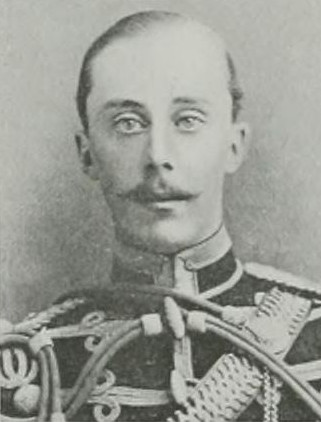
Christopher R. Turnor.
TURPIN, THOMAS COBB, Ch. E.R.A., 1st Class, 268940, H.M.S. Pathfinder; lost when that ship was sunk by a mine, about 20 miles off the East Coast, 5 Sept. 1914.
TURRELL, ALFRED, Private,No. 2347, 1/7th Battn. The Middlesex Regt. (T.F.), s. of Robert Charles Turrell, of East Finchley, Mason, by his wife, Jane, dau. of Thomas Hill; b. Finchley, London, 7 Nov. 1888; was a Labourer, Priory Road, High Street, Hornsey; enlisted 4 Aug. 1914, and was killed in action in France, 21 March, 1915. He m. at Holloway, 31 Jan. 1909, Lillian, dau. of Edward Maton, and had two children: William George, b. 18 Nov. 1915; and Alice Louisa, b. 8 March, 1910.
TURRELL, ARTHUR SIDNEY, Boy, 1st Class, J. 23459 (Ports.), H.M.S. Hawke; lost when that ship was torpedoed in the North Sea, 15 Oct. 1914.
de TUYLL, BARON MAURICE ARTHUR, Capt., 10th Royal Hussars, yr. s. of the late Baron Carlo de Tuyll, Lieut., Royal Gloucestershire Hussars, by his wife, Louise Emily (now wife of Henry Somerset, 9th Duke of Beaufort), dau. of William Henry Harford, of Oldown, co. Gloucester, D.L.; b. London, 1 Nov. 1888; educ. Pinewood School, Farnborough, Stubbington (being originally intended for the Navy), privately with Mr. W. Trevor, Lathbury, Newport Pagnell, and the Royal Military College, Sandhurst; gazetted 2nd Lieut. 19 Sept. 1908, and promoted Lieut. 20 Nov. 1909, and Capt. 1 Jan. 1914; went to France with regt. Oct. 1914, and was killed in action near Ypres, Thursday, 13 May, 1915; unm. He was leading his squadron in a counter-attack that morning and fell when crossing road from Ypres to Menin. He was buried in the garden of the Château de Poljitze.
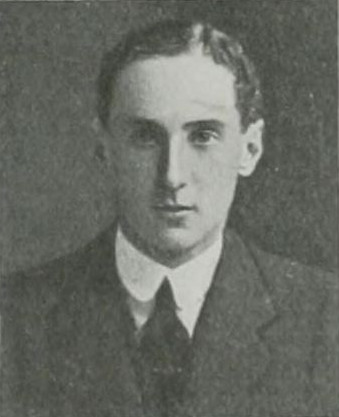
Baron M. A. de Tuyll.
TWEDALE, JOHN JAMES, Stoker, 1st Class (R.F.R., B. 7339), 308093, H.M.S. Hogue; lost in action in the North Sea, 22 Sept. 1914.
TWINE, ARCHIBALD, A.B. (R.F.R., B. 2291), 225355, H.M.S. Good Hope; lost in action off Coronel, on the coast of Chili, 1 Nov. 1914.
TWINE, ERNEST HARRY, A.B. (R.F.R., B. 4857), 195908, H.M.S. Good Hope; lost in action off Coronel, on the coast of Chili, 1 Nov. 1914.
TWORT, JACK, Chief Stoker, 170842, H.M.S. Hogue; lost in action in the North Sea, 22 Sept. 1914.
TYLER, ELIAS GEORGE, Stoker, 2nd Class, K. 21415, H.M.S. Pathfinder; lost when that ship was sunk by a mine, about 20 miles off the East Coast, 5 Sept. 1914.
TYLER, JOHN COLLETT, 2nd Lieut., 122nd Battery, Royal Field Artillery, yr. s. of Col. John Charles Tyler, of 8, Cambridge Road, Colchester, late Royal Engineers, by his wife, Florence Mary, only dau. of the late General Sir Alexander Robert Badcock, K.C.B., C.S.I., and gdson. of the late Sir Henry Whateley Tyler, M.P., and great-gdson. of General Sir Charles Pasley, K.C.B., R.E. (the father of Lady Tyler), who founded the School of Military Engineering at Chatham, and who in early life was extra A.D.C. to Sir John Moore at the time of his death and burial at Corunna; b. Roorkee, India, 9 Dec. 1893; educ. Wellington College, where he was head of the school and captain of football, and the Royal Military Academy, Woolwich, where he was senior under-officer and obtained the Sword of Honour, July, 1914, the Commandant in his report on that occasion, observing that he would specially mention Senior under-officer J. C. Tyler, who had shown in his present responsible position that he possessed in a high degree those qualities which were looked for in the best type of officer; gazetted 2nd Lieut. R.F.A. 17 July, 1914, and joined at Woolwich, 9 Aug. 1914, left for Dundalk, Ireland, on the 10th, and embarked for France on the 17th, and was killed in action at Hill 60, 18 April, 1915; unm. The Major Commanding his battery wrote on 21 April: “There is a big battle going on here now which started at 7 p.m. on the 17th, John and I went forward that day to observe. I had to send John and a signaller on by night, to the newly captured trench to let me know if the Germans were counter-attacking and to observe by day. This job he did in his usual gallant way. Three times he came back to me under heavy fire and great difficulties to mend the telephone wires. He was shot at dawn, a rifle bullet clean through the forehead. He died as he lived, doing his duty gallantly and well. Had he lived he would have certainly had the D.S.O. He was killed in the foremost trench captured from the Germans. Just after he was killed the Germans re-took the trench and held it for about 12 hours. We then took it back again.” And the General Officer Commanding wrote a few days later: “I had already sent in his name for good service. His cheery, gallant example was worth everything at these times.”
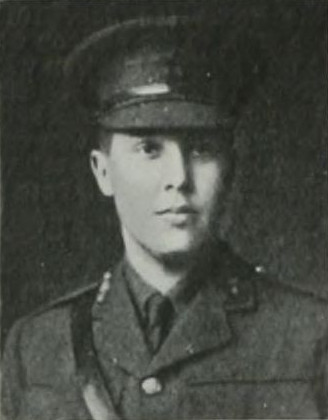
John Collett Tyler.
TYNDALL, JOSEPH CHARLES, Lieut., 4th Battn. Royal Dublin Fusiliers, 2nd s. of the late Joseph P. Tyndall, of 2, Eaton Square, Monkstown, Solicitor; b. Dublin, 18 May, 1892; educ. Castleknock College, co. Dublin; joined the Special Reserve, Royal Dublin Fusiliers, 17 Oct. 1910; and was gazetted Lieut. 20 April, 1912; afterwards went to Australia; but on the outbreak of war returned home and rejoined his old Battn.; went to France and was attd. to the 2nd Royal Irish Rifles in Jan. 1915, and was killed in action at Kemmel, 2 March, 1915, after a fortnight in the trenches; unm. His elder brother, Surgeon William Tyndall, R.A.M.C., is now (1916) on active service in France.
UDEN, FREDERICK EDWIN, A.B., J. 7028, H.M.S. Aboukir; lost in action in the North Sea, 22 Sept. 1914.
UNDERHAY, GEORGE THEODORE, Leading Seaman (R.F.R., Ch. B. 8930), 222560, H.M.S. Cressy; lost in action in the North Sea, 22 Sept. 1914.
UNDERHILL, CLARENCE GORDON, Leading Seaman, 208615, H.M.S. Good Hope; lost in action off Coronel, on the coast of Chili, 1 Nov. 1914.
UNDERHILL, FREDERICK TOM, Private, No. 1109, 5th Battn. (London Rifle Brigade) The London Regt. (T.F.), eldest s. of the late Frederick Tom Underhill, of Aptor Marldon, co. Devon, by his wife, Emily (6, Killieser Avenue, Streatham Hill, S.W.), dau. of James Stidston; b. Aptor Marldon, 22 July, 1886; educ. Bancrofts School, Essex, and was afterwards employed in the City. On the outbreak of war he enlisted in the West Kent Yeomanry, and was later transferred to the London Rifle Brigade, with which he went to the Front, 6 Nov. 1914. He saw five months of service with his regt. in France and Flanders, and was killed in action in the Ploegsteert trenches, 29 March, 1915, having been nominated for promotion just previous to his death. He was buried in the Rifle Brigade cemetery, in the Ploegsteert Wood; unm. Letters from his officers and comrades all testify to his wonderful cheerfulness under the greatest of discomforts, his helpfulness, and his readiness for any and every fatigue duty. His brother, Lieut. G. Underhill, 9th Devons, is now (1916) on active service.
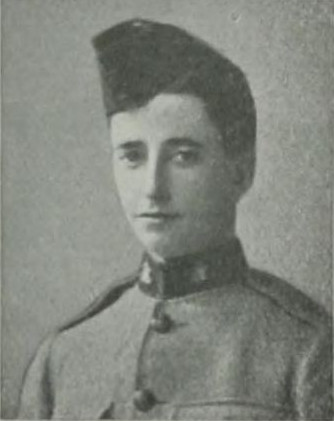
Frederick Tom Underhill.
UNDERHILL, RAYMOND BENWELL, Private, No. 1685, 13th Battn. (Princess Louise’s Kensingtons) The London Regt. (T.F.), 2nd s. of William Richardson Underhill, Watchmaker and Jeweller, by his wife, Annie (123, Holland Park Avenue, W.), dau. of James Benwell, of Knightsbridge; b. Kensington, W., 9 Oct. 1881; educ. St. Mary Abbotts Higher Grade School there; joined the 4th Middlesex Volunteers afterwards, in 1907, the 13th London Territorials, and served eight years; went to Canada in March, 1907; returned to England in 1909, and went into business as a watchmaker and jeweller at 39, Earl’s Court Road, Kensington; rejoined his old regt. immediately war was declared; volunteered for foreign service; went to France in Oct., and died at No. 6 Clearing Station, Merville, 11 Feb. 1915, from appendicitis contracted while on active service; unm. Buried in Merville Cemetery, France (Grave No. E 10)
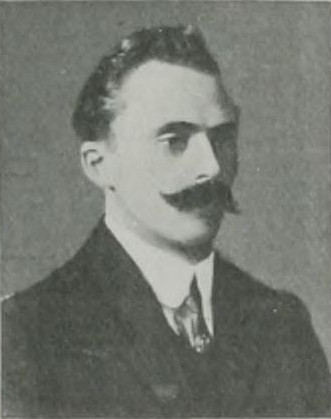
Raymond B. Underhill.
UNDERWOOD, JOSEPH SAMUEL GEORGE, Ordinary Signalman, J. 17076, H.M.S. Pathfinder; lost when that ship was sunk by a mine, about 20 miles off the East Coast, 5 Sept. 1914.
UNWIN, ROBERT, HENRY, Leading Signalman (R.F.R., B. 3500), 164358, H.M.S. Hawke; lost when that ship was torpedoed in the North Sea, 15 Oct. 1914.
UPFOLD, WILLIAM HENRY, Stoker, 1st Class (R.F.R., B. 1797), 353621, H.M.S. Hawke; lost when that ship was torpedoed in the North Sea, 15 Oct. 1914; m.
UPRICHARD, CHARLES EDWARD, Stoker, 1st Class (R.F.R., B. 10810), S.S. 108911, H.M.S. Hawke; lost when that ship was torpedoed in the North Sea, 15 Oct. 1914.
UPTON, HON. ERIC EDWARD MONTAGU JOHN, Capt. and Adjutant, 2nd Battn. King’s Royal Rifle Corps, elder s. and heir of Henry Edward Montagu Dorington Clotworthy, 4th Viscount Templetown, of Castle Upton, Templepatrick, co. Antrim, by his wife, Lady Evelyn, née Finch Hatton, dau. of George William, 10th Earl of Winchilsea and Nottingham; b. Steventon, co. Hants, 8 March, 1885; educ. at Eton (Mr. H. E. Luxmoore’s) and Sandhurst. He passed out of Sandhurst with honours, was gazetted 2nd Lieut. 16 Aug. 1905, and joined the 2nd Battn. King’s Royal Rifles in India, being promoted Lieut. 3 Oct. 1908, and returning with them in 1910. He was assistant Adjutant, 1910–13, and was appointed Adjutant, 1 Jan. 1914. On the outbreak of war the 2nd Battn. mobilised on the Chobham Ridges and went out under Lieut.-Col. Pearce Serocold in the 2nd Infantry Brigade under Major-Gen. Bulfin. Capt. Upton served through the retreat from Mons, the Battles of the Marne and the Aisne. He was wounded at the first Battle of Ypres, was twice mentioned in Despatches, 31 May and 30 Nov. 1915 [London Gazette, 22 June, 1915, and 1 Jan. 1916], and promoted Tempy. Capt. 15 Nov. 1914. He was killed near Rue de Bois during the action of 9 May, 1915. His Colonel wrote of him: “Besides being an exceptionally gallant officer, the work he has done for the battn. will live and be felt by it for years. I need hardly say there was no more popular officer in the regt., and I personally have lost a very dear and loyal friend, and those who knew him well realised that his character and abilities had marked him out for a great career in the Service.” A good cricketer and football player, and an experienced big game shooter in India, and deeply devoted to his regt., he had a remarkable power of gaining the affection of all with whom he came in contact, rich and poor alike, and his loyalty to his friends was one of his most marked characteristics. He was unm., and was buried in the Soldiers’ Cemetery, near the Rue de Bois, Richebourg St. Vaast. His yr. brother, the Hon. Henry Upton, is now (1916) on active service as a 2nd Lieut. in the Royal East Kent Yeomanry.
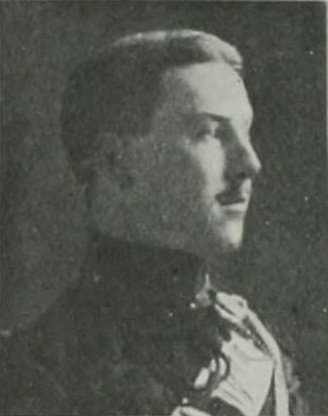
Hon. E. E. M. J. Upton.
UPTON, RICHARD, Sergt., No. 2356, The Royal Flying Corps, 3rd surviving s. of the late Capt. Richard Upton, 4th Battn. Sherwood Foresters (Derbyshire Regt.), and of the Political and Secret Department of H.M. India Office, by his wife, Harriet Frances (92, Tooting Bee Road, S.W.), dau. of the late Richard Clayton Strelley, of Oakerthorpe, co. Derby; b. Finchley, 11 Sept. 1881; educ. privately, and deciding upon a sea career, passed through the stages of his apprenticeship in a sailing boat, and eventually became a captain and master mariner in the Straits S.S. Service, L.F., being regarded as the commodore of the fleet of 17 boats. While home on leave in July, 1914, he obtained his first-class flying ticket in the Grahame-White School of Flying, and on the outbreak of war in Aug. 1914, joined the Legion of Frontiersmen; went to France, where he did good work as a free lance with the Red Cross Society. He then joined the R.F.C., was promoted Sergt., and died in Tidworth Military Hospital, 3 May, 1915, of pneumonia, contracted while on active service; unm.
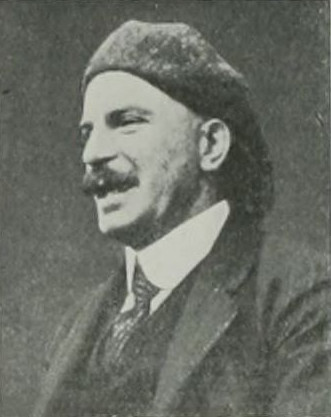
Richard Upton.
UPTON, WILLIAM JAMES THOMAS, Acting Leading Stoker, K. 19637, H.M.S. Cressy; lost in action in the North Sea, 22 Sept. 1914.
UREN, GEORGE THOMAS, L.-Corpl., No. 8/1149, 14th Otago Regt., New Zealand Expeditionary Force, s. of William Uren, of Clyde, Otago Central, New Zealand, formerly of St. Ives; b. Clyde, Otago, New Zealand, 2 April, 1887; educ. there; was by trade a Printer; volunteered on the outbreak of war; joined the New Zealand Expeditionary Force 28 Aug. 1914, and was killed in action in Gallipoli, 2 May, 1915; unm. He was a well known athlete in Central Otago and was a member of the C.U. Fire Brigade.
URQUHART, EDWARD FREDERICK MALTBY, Capt., 1st Battn. The Black Watch (Royal Highlanders), only s. of the Rev. Edward William Urquhart, of 82, Elm Park Gardens, London, S.W., M.A., formerly Vicar of King’s Sutton, co. Northampton, by his wife, Caroline Mary, dau. of William Harris, of Plumley, Bovey Tracey, Devonshire; b. Edinburgh, 26 Jan. 1877; educ. West Bournemouth and Cheltenham College; gazetted 2nd Lieut. Royal Highlanders, 20 Feb. 1897, and promoted Lieut. 24 May, 1899, and Capt. 17 April, 1902; served in the South African War, 1901–2; took part in the operations in the Transvaal, Dec. 1901, and in those in the Orange River Colony, Dec. 1901, to 31 May, 1902 (Queen’s medal with four clasps), was assistant superintendent of gymnasia in the Irish command, 9 Nov. 1906 to 19 Feb. 1907, and superintendent of the same, 20 Feb. 1907 to 9 Nov. 1910, and later Inspector of Physical Training, Northern Army, India, from March, 1913, to date of his death; went to France, 22 Sept. 1914, and was killed in action at Pilken, 23 Oct. following, during the fighting in the Ypres salient; unm. Buried in Boesinghe Churchyard.
USHER, SEBASTIAN, A.B. (R.F.R., B. 4074), 220488, H.M.S. Good Hope; lost in action off Coronel, on the coast of Chili, 1 Nov. 1914.
USSHER, BEVERLY, Capt., 1st Battn. Prince of Wales’s Leinster Regt. (Royal Canadians), 2nd s. of the Rev. Richard Ussher, Vicar of Westbury, Brackley; b. Catton Hall, Burton-on-Trent, 4 Aug. 1879; educ. St. Edward’s School, Oxford (1891–98), and Wadham College, Oxford (1898–1900); gazetted 2nd Lieut., Leinster Regt., 23 May, 1900, and promoted Lieut. 9 Aug. 1902, and Capt. 1 April, 1910; was Adjutant, 3 May, 1906, to 2 May, 1909, and officer, Coy. Gentlemen Cadets, and Instructor at the Royal Military College, Sandhurst, 21 Sept. 1912, to May, 1915; joined the 2nd Battn. at Barbados in Aug. 1900; served in Jamaica and St. Lucia; in the South African War, 1902; took part in the operations in the Orange River Colony, Feb. to March, and in the Transvaal, March to 31 May, 1902 (Queen’s medal with four clasps), and subsequently in India for two years and then at Devonport and in Ireland. After the outbreak of the European War he was appointed Staff Officer on the Staff of General Doran; left for the Dardanelles in May as Staff Capt. to the 88th Brigade in the famous 29th Division; was acting Brigade-Major, and was killed there 19 June, 1915. An officer wrote: “On the night of 18–19 June, a battn. of the 42nd Division was attacked and lost two or three trenches. The Turks got in behind our line, and were firing into the backs of the Royal Scots, who were holding the right of the 88th Brigade position. The counter-attack of the 42nd Division hung fire; so about 2 a.m. we decided to make one ourselves. Capt. Ussher was sent to the support trench of the Worcestershire Regt. who were in rear of the Royal Scots. The situation was serious and involved. Communication by telephone with the Royal Scots was interrupted owing to the wire being cut. It was necessary to have clear reports sent back. The Worcestershire Regt. had lost all their regular senior officers, and were, on this night, commanded by a Ceylon Planter. Capt. Ussher was told to see that co-ordinated action was arranged between the Royal Scots and Worcestershire Regt. and to send reports on the situation; but on no account to lead any attempt which was not his work under the circumstances. He took his orderly with him who subsequently told me what occurred. The action to be taken was agreed upon. The Royal Scots charged from their trenches simultaneously with a coy. of the Worcestershire Regt., re-took from the Turks the trenches they had seized, followed on and took and held a Turkish trench. There was a close fight with the bayonet which lasted 15 minutes. A German officer was killed. When the Worcestershire Regt. were in the act of jumping out of the trench preparatory to charging, Capt. Ussher was in the trench with Capt. Allen, D.A.A.Q.M.G. 142nd Division (Hampshire Regt.). I understand that he moved, still in the trench, to give room, and as he stood up he was struck in the head by a bullet, and died in a few minutes without becoming conscious. He was brought back to a spot near our Brigade Headquarters, and buried by the Chaplain. The grave is on the open upland from which can be seen the Dardanelles and Asia. A large cross had been made and marked and placed at the head. Wild flowers grow there,” and the Chaplain: The bearing is 310 from South Corner of White House to South Corner of the Cemetery. At St. Edward’s he was in the XI from 1895 to 1898, when he was capt., and in the XV from 1894 to 1897, when he was capt. He was one of the most brilliant of our cricketers. He headed the batting averages in 1897, and won the average ball twice in both cases with fine scores. Twice he scored for the school a century, and his record of cricket at St. Edward’s ends with the perfectly played 120 which he made against it in the Jubilee Match. He was a member of the S.E.S. Society. He also represented Wadham both at cricket and football. He m. at Jullundur, India, 26 March, 1906, Ethel, dau. of the Rev. Henry Martin, Vicar of Stockton-on-Tees, and Canon of Durham, and had three children: John Beverly, b. 6 Nov. 1913; Stephen Beverly, b. 17 Sept. 1915; and Kathleen Mary, b. 28 Feb. 1910. His brother, Capt. S. Ussher, was killed in France (see following notice).
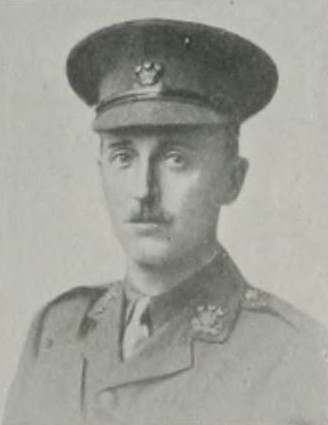
Beverly Ussher.
USSHER, STEPHEN, Capt., 129th Duke of Connaught’s Own Baluchis, 3rd s. of the Rev. Richard Ussher, Vicar of Westbury, Brackley; b. 52, Eaton Place, S.W., 4 Oct. 1882; educ. St. Edward’s School, Oxford, and the Royal Military College, Sandhurst (20 Sept. 1901 to 30 July, 1903); gazetted 2nd Lieut., unattd., Indian Army, 27 Aug. 1902; served with the 1st Battn. King’s Shropshire L.I. (with which he went to India), 27 Aug. 1902 to 25 Feb. 1903; The Buffs, 26 Feb. 1903 to 13 Oct. 1903, and the 2nd East Lancashires, 14 Oct. 1903 to 4 July, 1904; was posted to the 129th Baluchis, 5 July, 1904, and promoted Lieut. 5 Dec. following, and Capt. 27 Aug. 1911; was Double Coy. Officer, 7 July, 1904; Off. Adjutant, 11 Nov. 1908, to 27 June, 1909, and Adjutant, 28 June, 1909, to 15 Aug. 1913; was present at the Delhi Coronation Durbar (medal, 24 June, 1911); went to France with the Indian Expeditionary Force, Sept. 1914, and was killed in action at Givenchy, 16 Dec. 1914; unm. The 129th Baluchis were ordered to make an attack on the German trenches at Givenchy near La Bassée on the early morning of the 16th. Capt. Ussher was in charge of the Machine-Gun Section of the Regt. The attack at first succeeded, but later the Germans brought up two machine-guns quite close, and by this means prevented any reinforcements coming forward to assist the first attacking party which had gained the Germans’ first line of trenches. Capt. Ussher, seeing what damage the German machine-guns were doing, tried to direct the fire from his guns on to theirs, and while looking over the parapet so that he could direct the fire effectively was hit by a bullet in the centre of his forehead. He died at once without recovering consciousness, and was buried the next day at Beuvry, near Bethune. His last words before he was killed were “Keep down, keep down,” to a brother officer who was with him. The 129th Baluchis were the first Indian Regt. to go into action, and one of the men received one of the two first V.C.’s ever granted to the native troops.
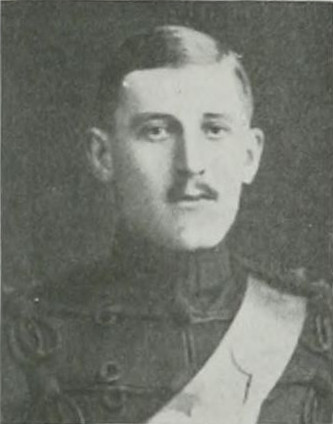
Stephen Ussher.
VACHELL, RICHARD TANFIELD, Capt., 1st Battn. Northumberland Fusiliers and Royal Flying Corps, only s. of Horace Annesley Vachell, of Beechwood, Bartley, Southampton, Author and Dramatist, by his wife, Lydia, dau. of Chauncy Hatch Phillips, of San Luis Obispo, California; b. San Luis aforesaid, 29 June, 1890; educ. Harrow and Royal Military College, Sandhurst; gazetted 2nd Lieut. in the 1st Battn. Northumberland Fusiliers, 13 June, 1910; promoted Lieut. 27 Nov. 1913, and Capt. in July, 1915; joined the 1st Battn. at Gharial in the Murree Hills in 1910, and served with it continuously, except for a short period in 1912, when he acted as A.D.C. to Lord Sydenham, the then Governor of Bombay, until the outbreak of war in Aug. 1914, when he proceeded with it to France. He took part in the retreat from Mons, but was wounded in Oct. and invalided home. Shortly after returning to the Front he joined the Flying Corps as an observer, again returning to England in April to train for his pilot’s certificate, which he obtained in June, 1915. He returned to France at the end of July, and died at Choques, 1 Aug. 1915, of wounds received on 31 July, being buried in the military cemetery there; unm. Capt. Vachell was a good all-round sportsman. While at Harrow he was a member of the football eleven and fifteen; was an ardent Skihari, and represented the regt. at polo in the Jubbulpore Tournament in 1912. He contributed several articles to the St. George’s Gazette under the nom de plume of “The Sprouter,” notably “With the American Section at the Delhi Durbar,” which exhibited his strong sense of humour. He was mentioned in F.M. Sir John (now Lord) French’s Despatch of 14 Jan. [London Gazette, 17 Feb.] 1915.
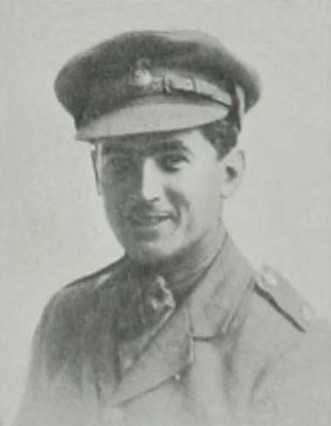
Richard Tanfield Vachell.
VALLENTIN, JOHN FRANKS, V.C., Capt., 1st Battn. South Staffordshire Regt., only s. of the late Grimble Vallentin, of The Manor House, Walthamstow, by his wife, Lucy (33, Prince of Wales Mansions, S.W.), dau. of Col. John Finnis, 11th Bengal Native Infantry Regt. (killed at Meerut, 10 May, 1857, the first victim of the Mutiny); b. in London, 14 May, 1882; educ. Wellington College; served in the South African War, 1901–2, with the Sussex Militia, taking part in the operations in Orange River Colony, April to Dec. 1901, and in the Transvaal from that time until May, 1902 (Queen’s medal with five clasps); gazetted 2nd Lieut. to the Royal Garrison Regt., 29 July, 1903; transferred to 1st South Staffords, 7 June, 1905, and promoted Lieut. 7 Sept. 1907, and Capt. 12 June, 1909. He went to France, 5 Oct. 1914, and was wounded on 31 Oct. at Ypres, and taken to hospital, where he was detained. On 2 Nov., on hearing Major Loder Symonds had been killed, he insisted on coming out of hospital to take command of what was left of the regt., the Col. having been seriously wounded on 31 Oct. He was killed in action at Zillebeke, 7 Nov. following; unm. The regt. on this occasion, with the remains of the Queen’s Regt., captured six machine guns, and recaptured the trenches which had previously been lost by the French. The machine guns captured on this occasion were destroyed and buried. He was awarded the V.C. posthumously “for conspicuous bravery on 7 Nov., at Zillebeke, when leading the attack against the Prussian Guard under a very heavy fire, he was struck down, and on rising to continue the attack, was immediately killed. The capture of the enemy’s trenches which followed was in a good measure due to the confidence which the men had in their captain, arising from his many previous acts of great bravery and ability.” Lieut.-Col. Ovens, C.M.G., commanding 1st South Staffords, wrote: “Capt. Vallentin’s splendid heroism and unfaltering courage and determination have been justly rewarded with the Victoria Cross. He was Captain of our Polo Club and the best player in the regt. He was a specialist in musketry, and a first-rate all-round man. At manœuvres and in the field General Officers have commented on the excellence of his work. The Chief Engineer of the 7th Division told me Capt. Vallentin’s scheme of defence and his trenches were the best he had seen. He was wounded and in hospital at Ypres on 6 Nov. 1914, and hearing the regt. was making an attack that night, he came out of hospital and took command. He was again wounded whilst leading his men forward, and was instantly killed. His is a great loss to his splendid old regt., and is deeply regretted by all who knew him.”
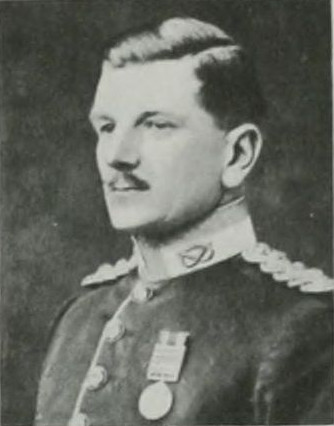
John Franks Vallentin.
VANE, JOHN, Stoker, Petty Officer, 305666, H.M.S. Good Hope; lost in action off Coronel, on the coast of Chili, 1 Nov. 1914.
VANRENEN, ARTHUR SAUNDERS, Lieut.-Col., 5th (Service) Battn. Royal Inniskilling Fusiliers, eldest surviving s. of the late Gen. Donald Campbell Vanrenen, Indian Army, by his wife, Julia (9, Lansdowne Place, Cheltenham), dau. of the late J. S. Sullivan, Bengal Medical Service; b. Meerut, India, 14 Dec. 1862; educ. Cheltenham; entered the Militia in 1879; was gazetted Lieut. from it, to the Lincolnshire Regt., 12 May, 1883; and promoted Capt. 23 Dec. 1893; served with Malay States Guides, 19 Nov. 1897–1908, being acting Commandant from 1905. He retired from the Lincolnshire Regt. on 3 Jan. 1903, but on the outbreak of war in Aug. 1914 offered his services, and was gazetted Major, 7th Battn. of that regt., 23 Sept. following, and Lieut.-Col. commanding 5th Royal Inniskilling Fusiliers, 3 March, 1915; went to the Dardanelles, 10 July, 1915, and was killed in action at Kapanya Dagh, 15 Aug. 1915, after the landing at Suvla Bay. He was buried on the hill where the battle took place. He m. at Bruges, Belgium, 28 Oct. 1897, Louisa Frances (Holmhurst, Bideford), dau. of Edwin Empson Isemonger, Colonial Treasurer of the Straits Settlements, and had two children: Esmé Mildred, b. 2 Aug. 1898; and Joyce Marguerite, b. 12 May, 1903.
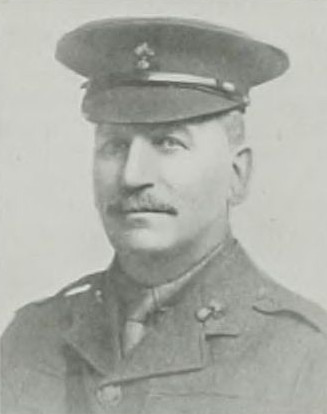
Arthur S. Vanrenen.
VANSON, ROBERT WILLIAM, A.B. (R.F.R., Ch. B 9073), 199912, H.M.S. Cressy; lost in action in the North Sea, 22 Sept. 1914.
VARLEY, HORACE WILLIAM, A.B. (R.F.R., B. 4856), S.S. 1766, H.M.S. Good Hope; lost in action off Coronel, on the coast of Chili, 1 Nov. 1914.
VARLEY, WILLIAM, Private, No. 11284, 1st Battn. Coldstream Guards, s. of James Varley, of Church, Accrington; b. co. Lancaster; served with the Expeditionary Force in France and Flanders; killed in action, 25 Jan. 1915.
VARNEY, JOHN, Pte., No. 9360, 2nd Battn. East Surrey Regt.; s. of John Varney, of 18, Mitchells Road, Richmond; served with the Expeditionary Force in France; killed in action 15 Feb. 1915.
VASSALLI, ALFRED JEROME, Corpl., No. 305, 2nd King Edward’s Horse, s. of John Vassalli, of Scarborough, Jet Ornament Manufacturer, by his wife, Hannah, dau. of William Hardy; b. Whitby, co. York, 27 Aug. 1881; educ. Scarborough; was an officer in the Merchant Service, and was training with the Naval Reserve when the South African War broke out; volunteered, went with the naval guns to the Relief of Ladysmith, and took part in the operations in the Transvaal and Orange Free State and Natal (Queen’s medal with five bars), and was for some time despatch rider for Gen. Bethune, in whose cavalry regt. he afterwards served. He was a Naval Reservist, and on the outbreak of war was called up, but failed to pass the medical examination, and, being anxious to serve his country, joined the 2nd King Edward’s Horse, and was promoted Corpl. His health, however, broke down, and he died in King Edward VII Hospital, Windsor, 1 Oct. 1914, from pneumonia contracted while in camp at Slough. He was a Rural District Councillor at Drigg, Cumberland. He m. at Scarborough 3 Sept. 1902, Anne Pembroke (Derwent House, Drigg, Holmrook, Cumberland), dau. of Frederick Reynolds, of the Inland Revenue Department, and had three children: Frederick John, b. 10 Nov. 1911; Annie Reynolds, b. 1 Feb. 1904; and Jessie Irene, b. 30 Dec. 1905.
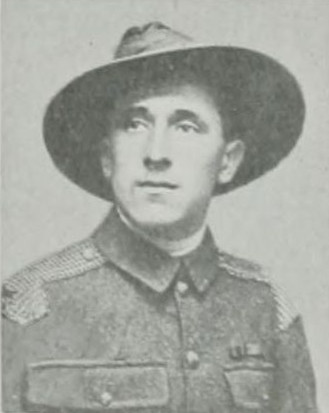
Alfred Jerome Vassalli.
JONES-VAUGHAN, EVAN NANNEY, Capt., 2nd Battn. Royal Welsh Fusiliers, yr. s. of Major-Gen. Hugh Thomas Jones-Vaughan, of Llwydyn, Carnarvonshire, C.B., Col.-in-Chief of the Loyal North Lancashire Regt. (who served through the Indian Mutiny), by his wife, Eva, dau. of the late Rev. Evan C. Owen, of Hengwrtucha, Merionethshire, and Aberhirriaeth Hall, T.L., J.P.; b. Llwydyn, 5 Sept. 1885; educ. Wellington and Sandhurst; gazetted 2nd Lieut. 2nd Royal Welsh Fusiliers, 22 Feb. 1905; and promoted Lieut. 4 Dec. 1909, and Capt. 19 April, 1913; left for France, 10 Aug. 1914; and was killed in action not far from the village of Vertouquet, near Armentières, 26 Oct. following, by the explosion of a shell (but reports differ), which also killed two Lieuts., a Sergt. and two men of his battn. Buried 600 metres from the spot where he fell; unm. His commanding officer wrote: “I have lost a most gallant and capable officer and a very dear companion.”
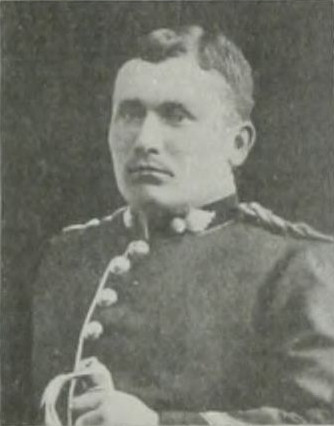
Evan N. Jones-Vaughan.
VAVASOUR, LIONEL ORMISTON, Lieut., 2nd Battn. North Staffordshire Regt., 2nd s. of Albert Carter Vavasour, M.A., J.P., of Weston Manor, Otley, co. York, by his wife, Eliza, dau. of C. H. Dawson, J.P., Weston Hall; b. Killwick Hall, Beverley, 29 Aug. 1889; educ. Rugby; gazetted 2nd Lieut. to the North Staffordshire Regt. 28 May, 1910, from the Special Reserve, and promoted Lieut. 28 Dec. 1913; went to India with his regt. in 1912, and died at Gharial, 24 July, 1915, while on active service; unm. Lieut. Vavasour was a keen sportsman, a clever cricketer, and while at school won several silver cups, especially for the eight miles’ race. In the regt. he found cricket and football “going to pieces,” but soon established a revival of keen interest, and regularly made his century with his team. He was the crack shot of his regt., and sent many trophies home to witness to his prowess with the rifle, including the heads of three urial and three chinkara from Kashmir, which was said to be the biggest bag an officer had ever secured there.
Lionel Ormiston Vavasour.
VEITCH, FRANCIS, Stoker, 2nd Class, S.S. 115773, H.M.S. Hogue; lost in action in the North Sea, 22 Sept. 1914.
VENN, ERNEST ALBERT, A.B. (R.F.R., B. 1393), 201717, H.M.S. Good Hope; lost in action off Coronel, on the coast of Chili, 1 Nov. 1914.
VENNER, HENRY, Stoker, 1st Class (R.F.R., B. 4893), S.S. 104302, H.M.S. Good Hope; lost in action off Coronel, on the coast of Chili, 1 Nov. 1914.
VENNING, EDWIN GERALD, Capt., 3rd, attd. 1st, Battn. The Suffolk Regt., yst. s. of the late Rev. Edwin James Venning, Chaplain in Cassel, Germany, by his wife, Amy, dau. of William Lawrence; b. Southsea, 7 June, 1883; educ. St. Edmund’s, Canterbury, and afterwards took up acting. From about 1911, he travelled in the provinces with touring companies, playing important parts, and when war broke out in Aug. 1914, he was acting at Brighton. He at once volunteered, and enlisted in the Royal Sussex Regt. in Sept. and was subsequently gazetted Lieut. 3rd Suffolks, 1 Jan. 1915, and promoted Capt. 9 June, 1915; went to the Front, 3 May, 1915, and was killed in action at Ypres, 6 Aug. following; unm. Buried in Locre Churchyard. Sergt. Major Utting, in writing to his sister, said: “Your brother, Capt. Venning, was my company officer, and he has treated myself and the men of my company in such a manner that he has gained a respect that will last as long as there is a man of the present B Coy. alive.”
Edward Gerald Venning.
VERCO, WALTER JOHN, Private, R.M.L.I. (R.F.R.), Ch./10669, H.M.S Hawke; lost when that ship was torpedoed in the North Sea, 15 Oct. 1914.
VERCOE, HENRY STEVEN, Officers’ Steward, 3rd Class, L. 4863, H.M.S Hogue; lost in action in the North Sea, 22 Sept. 1914.
VEREKER, ROBERT HUMPHREY MEDLICOTT, 2nd Lieut., 2nd Grenadier Guards, 2nd s. of George Medlicott Vereker, of Sharpitor, near Salcombe, South Devon, J.P. for co. Galway, Freeman of the City of Dublin, late Capt. Kildare Militia, by his wife, Frances Gore, eldest dau. of Robert Manders, of Landscape, Dundrum, co. Dublin, and grandson of the Hon. John Prendergast Vereker [3rd son of John Prendergast, 3rd Viscount Gort]; b. Dublin, 15 Oct. 1894; educ. Cheam, Osborne Naval College and Sandhurst; gazetted 2nd Lieut. to 2nd Grenadier Guards, 17 Sept. 1913, and joined his battn. the following month at the Tower of London; went to France with the Expeditionary Force, Aug. 1914, and was killed in action during the desperate night battle at Landrecies, on the 25th of the same month. Buried at Landrecies; unm. The Rev. Benjamin G. O. Rorke, Chaplain to the Forces, wrote: “You have probably already heard that your brave son met his death in action on the 25th inst. while trying to draw Corpl. Bacchus of his regt. out of the range of the German fire. Corpl. Bacchus, who was wounded, is now convalescent, and, if spared, can tell you all about it. He showed me the exact spot at Landrecies, on the town side of the railway level-crossing, on the left of the road. It was a brave man’s death. There were in his pocket a silver flask from his mother and his own ‘Onoto’ diary. I gave them into the custody of the medical officer, Major Fry (brother of C. B. Fry), to take charge of for you. He was buried in the next grave to Lord Hawarden and the Hon. Windsor Clive on the one side, and eight men of the Coldstream Guards on the other, and on the same occasion we erected a rough wooden cross inscribing the names. The following day the wife of the ‘Garde Cimetière’ brought me a wooden cross of a more substantial kind, and I left instructions for the names to be painted on it; it was her own thought and her own tribute. Mme. Bocquet, The Pharmacie, Grande Rue, Landrecies (a very kind lady), undertook to see this done. I have heard from the regt. how much he is missed. He died like a brave man. This will be a great consolation to you.” The house and grounds at Sharpitor were lent to the Red Cross Society for the duration of the war by Mr. and Mrs. George Vereker in memory of their son.
VERGE, ARTHUR, Capt., A.A.M.C., attd. 6th Light Horse, Australian Imperial Force, 2nd s. of Austral Verge, of Kempsey, Macleay River, New South Wales, Grazier, by his wife, Matilda Jane, dau. of Henry Flavelle, of Hamilton Terrace, London; b. Kempsey, 12 Feb. 1880; educ. The King’s School, Parramatta, where he was Burton Exhibitioner in 1898, and St. Paul’s College within Sydney University, where he graduated M.B., Ch.M., in 1905; was for two years (1905–6) resident medical officer at Sydney Hospital; then proceeded to England, where he attended the leading London hospital skin departments, and took courses in Bacteriology and Vaccine Therapy. After a post graduate course at Edinburgh University he qualified F.R.C.S. there in 1908, and then visited Paris, Vienna, Prague and Berlin, and attended the skin clinics and took courses in the treatment of skin diseases under Sabarand, Brocq, Thebierge, Albaran (Paris), Finger, Rheil, Oppenheim, Kapsammer (Vienna), Blaschko, Josephs and Wasserman (Berlin). Returning to Edinburgh, he was appointed Clinical Assistant to the Skin Department for three months, and later non-resident house physician for one year (1909–10), at the Royal Infirmary, and while holding these positions had charge of the X-Ray department, and the radium treatment under Dr. Cranston Low. He took a six months’ course in Vaccine Therapy and Bacteriology of the Skin at the Royal College of Physicians, and in 1910 published in the “British Medical Journal” (31 Dec.) an article on “The Treatment and Diagnosis of Lupus Vulgaris by Tuberculin Ointment.” He then returned to Australia and practised as a skin specialist in Sydney, and in 1911 obtained the position of Hon. Assistant Physician for Diseases of the Skin at the Royal Prince Alfred Hospital there. On the outbreak of war he volunteered for Imperial service, and was given a commission as Capt. A.A.M.C., 2 Oct. 1914; left Sydney as medical officer to the 6th Light Horse with the second reinforcements, and died in No. 17 General Hospital, Alexandria, 8 Sept. 1915, of dysentery contracted while on active service with his regt. at Anzac Cove; unm. He represented both King’s School and St. Paul’s College in cricket, football, tennis and rowing. He played with the University Union Football Team, and was full-back for three seasons. He played full-back for New South Wales against Queensland in 1902 and 1904, and while in the old country played rugger with Blackheath and other Rugby clubs. Dr. Verge was also a capital all-round cricketer, and at one time was the most successful bowler at the University. He played in two matches against Melbourne University, scoring 10 and 2, and taking two for 22 and six for 20 in 1903; and scoring 4 and 5, and taking four for 70 and three for 69 in 1904. His yr. brother, Dr. C. A. Verge, is now with No. 32 General Hospital, Mesopotamia Expeditionary Force.
Arthur Verge.
VICAT, HORATIO JOHN, Lieut., 1st Battn. Queen’s Own Royal West Kent Regt., eldest surviving s. of the late Horatio Nelson Vicat, of Sevenoaks, by his wife, Miriam Frances Kate (East Lodge, Sevenoaks), dau. of Henry Augustus Prevost Holland, of Quebec, Canada [grandson of Capt. Samuel Holland, R.A., A.D.C. to General at the capture of Quebec, and afterwards Surveyor General of Quebec and Director of Surveys in British North America]; b. Melbourne, P. Quebec, Canada, 24 June, 1885; educ. Cheltenham College and the Royal Military College, Sandhurst; gazetted 2nd Lieut. Royal West Kents, 25 Jan. 1905, and promoted Lieut. 26 May, 1908; was seconded for service with the West African Frontier Force (Gold Coast Regt.), from Nov. 1910 to Oct. 1912; went to France with the Expeditionary Force, 21 Aug. 1914, and was killed in action near Missy, during the Battle of the Aisne, 13 Sept. 1914. He was in command of his company when they were forming advanced guard to the Brigade and he was leading his men down to make good a bridge-head which was held by the enemy when they opened fire with a machine-gun, and he was killed instantly. Buried 300 yards East-South-East of Missy Bridge on the south side of the river; unm.
Horatio John Vicat.
VIGUS, ROBERT EDWARD, Private, R.M.L.I. (R.F.R.), Ch. 8507, H.M.S. Hawke; lost when that ship was torpedoed in the North Sea, 15 Oct. 1914; m.
VILES, WILLIAM, Gunner, R.M.A., 13533, H.M.S. Aboukir; lost in action in the North Sea, 22 Sept. 1914.
VILLIS, LEYSHON, Trooper, No. 748, 18th Light Horse, 3rd Brigade, Australian Imperial Force, s. of George Villis, by his wife, Mary Ann (Hayes Cottages, Sully, near Cardiff), dau. of Leyshon Watkin; b. Mountain Ash, co. Glamorgan, 17 April, 1893; educ. Sully; went to Australia, 1 Dec. 1911; volunteered and enlisted following the outbreak of war, 15 Nov. 1914, and was killed in action at the Dardanelles, 7 Aug. 1915; unm.
VINALL, CHARLES COBDEN, A.B. (R.F.R., B. 3591), S.S. 957, H.M.S. Good Hope; lost in action off Coronel, on the coast of Chili, 1 Nov. 1914.
VINALL, EDWARD ARTHUR, A.B. (R.F.R., B. 3504), S.S. 1184, H.M.S. Good Hope; lost in action off Coronel, on the coast of Chili, 1 Nov. 1914.
VINCE, DAN, A.B. (R.F.R., Ch. B. 9107), 234619, H.M.S. Cressy; lost in action in the North Sea, 22 Sept. 1914.
VINCENT, THOMAS ERNEST, Blacksmith’s Mate, M. 3134, H.M.S. Hogue; lost in action in the North Sea, 22 Sept. 1914.
VINCENT, WILLIAM, Private, No. 6540, 3rd Battn. Coldstream Guards, eldest s. of William Offer Vincent, of Garsdon, by his wife, Fanny, dau. of Charles Vincent; b. Garsdon, co. Wilts, 6 May, 1883; educ. Lea National School; enlisted 8 Jan. 1906, and was killed in action at Villers Cotteretts, 1 Sept. 1914, being buried at Rue de la Reine on the 4th. He m. at Ampeny St. Peter, co. Gloucester, Elizabeth (Garsdon, Malmesbury, Wilts), dau. of Edwin Wheeler, and had issue: Francis William, b. 17 July, 1911; William Charles, b. 29 Sept. 1912; and Joan, b. (posthumous) 21 Dec. 1914.
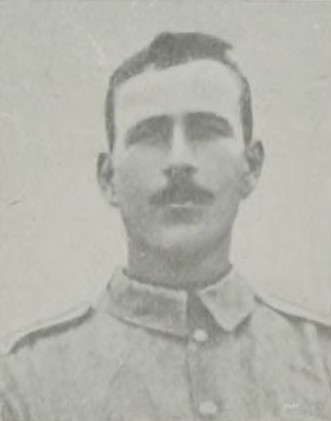
William Vincent.
VINE, RICHARD, Private, R.M.L.I. (R.F.R.), Ch. 9739, H.M.S. Hawke; lost when that ship was torpedoed in the North Sea, 15 Oct. 1914; m.
VINEY, CECIL HENRY, 2nd Lieut., 2nd Battn. Northamptonshire Regt., only s. of Cecil T. Viney, of Bromley, Kent; b. 24 May, 1891; educ. South Lodge, Enfield Chase, and Westminster, and then entered the Royal Academy School of Painting, where he was still a student in Aug. 1914, when war was declared. He immediately volunteered for Imperial Service and was given a commission in the Special Reserve of Officers, Northamptonshire Regt. 15 Aug. 1914, and later posted to the 2nd Battn. He went to France and was killed in action near Festubert, 9 May, 1915; unm.
VINEY, PHILIP ERNEST, Capt., 1st Battn. Leicestershire Regt., 2nd s. of Josiah Ernest Viney, of Cintra, Swanage, formerly of Harcourts, Chertsey, M.D., L.R.C.P. Lond., M.R.C.S. Eng.; b. 23 April, 1888; received his commission as 2nd Lieut. in the Leicesters, 8 Feb. 1908, and was promoted Lieut. 16 May, 1910, and Capt. 24 Aug. 1914. He served with the 1st Battn. at Shorncliffe, and later with the 2nd Battn. at Belgaum, and 5 Oct. 1911, was seconded for service with the Gold Coast Regt., and did good work in West Africa. He was A.D.C. to Sir Hugh Clifford, but on the outbreak of war came home and rejoined his regt., and died in the field hospital at Bailleul, 17 Dec. 1914, of wounds received in action; unm.
VINNALL, EDWARD ARTHUR, A.B., S.S. 1184, R.F.R., B. 3904, H.M.S. Good Hope; lost in action off Coronel, on the coast of Chili, 1 Nov. 1914.
VIVIAN, CHARLES AUGUSTUS, Brevet Lieut.-Col., 15th (Ludhiana) Sikhs, Indian Army, 3rd and yst. s. of the late Col. Aylmer MacIver-Campbell, formerly Vivian, of Asknish, C.B., D.L., J.P., Bengal S.C., by his wife, Margaret Agnes (Asknish House, Lochgair, co. Argyle), elder dau. and co. h. of Col. James Duff MacIver-Campbell, of Asknish; b. Dalhousie, India, 28 July, 1874; educ. Clifton College and Sandhurst; gazetted 2nd Lieut (unattd. list) Indian Army, 30 Aug. 1893; was attached to the Gordon Highlanders for his first year; joined the Indian Staff Corps, 27 Jan. 1895, and was promoted Lieut. 30 Nov. 1895, Capt. 30 Aug. 1902, and Major, 30 Aug. 1911; served (1) with the Chitral Relief Force, 1895 (medal with clasp); (2) on the N.W. Frontier of India, 1897–8, including operations on the Samana and in the Kurram Valley during Aug. and Sept. 1897, and those of the Flying Column in the Kurram Valley, under Col. Richardson, 20 Aug. to 1 Oct. 1897 (two clasps); (3) in the Tirah Expedition, 1897–8; including actions of Chagree Kotal and Dargai; the capture of the Sampagha and Arhanga Passes; reconnaissance of the Saran Sar and action of 9 Nov. 1897; and operations of the Waran Valley, and action of 16 Nov. 1897 (clasp); and (4) with the Expeditionary Force in France and Flanders, Oct. 1914 to 27 April, 1915. Delayed by illness in Egypt, he did not join his regt. at the front until Oct. and was wounded in Dec. He returned to duty in Jan. and was mentioned in Sir John (now Lord) French’s Despatch of 14 Jan. 1915, and promoted Brevet Lieut.-Col. 18 Feb. following, for service in the field. In the Battle of Neuve Chapelle, where his regt. took a leading part, he was again wounded, but refused to leave his men and remained in the trenches under very heavy fire. He was killed in action near St. Julien, during the 2nd Battle of Ypres, 27 April, 1915. About 5.30 p.m., under cover of a bombardment of the Sirhind Brigade, the 1st Highland Light Infantry, and the 15th Sikhs were ordered to advance, but were met with such a terrific fire that a check ensued. Col. Vivian had to rush with his company over a fire swept zone to join the remainder of his regt. Just as he arrived he was shot through the body. An officer wrote: “I think that Col. Vivian was the bravest man I ever met—he seemed absolutely fearless of bullets, and his patrol work in front of our trenches at night was really wonderful. He inspired all the Sikh officers and men of his company with the greatest confidence, and made them nearly as fearless as himself. Once there was a house 30 yards in front of our trenches and it obscured our field of fire. The regt. who occupied the trenches before we did, said that they had tried to pull down the house, but had had to give up the attempt, because the enemy fired on them. Col. Vivian called for volunteers of his company to assist him to demolish the house. The whole company to a man volunteered—he chose the requisite number and in two days the house was flat; although they worked in daylight, not a single man was hit. I shall never forget the thrill of admiration I had for him when he volunteered to go behind the German line for two or three nights and reconnoitre the German position at La Bassée, but I was very relieved when the General would not allow him to go. Each time that he was wounded he insisted on going on with his work; any ordinary man would have been very shaken. We have lost a very dear friend, and England one of her bravest soldiers.” Col. Abbott, writing to The Pioneer about the Tirah Campaign, said: “Your report, moreover, makes no mention of the very gallant and prompt manner in which, when Capt. Lewarne’s party was rushed from the wood, the next one was brought up to his aid by Lieut. Vivian. The second party also got to close quarters with the enemy and to them must be accredited a large proportion of the Afridi losses on that occasion.” He m. at Portsmouth, 30 Aug. 1906, Mary Hastings, eldest surviving dau. of the late Joseph Studholme, of Ballyeighan, King’s Co., J.P., and had three children: Aylmer Studholme, b. 17 Aug. 1909; John, b. 30 Aug. 1913; and Margaret Ruth, b. 25 June, 1907.
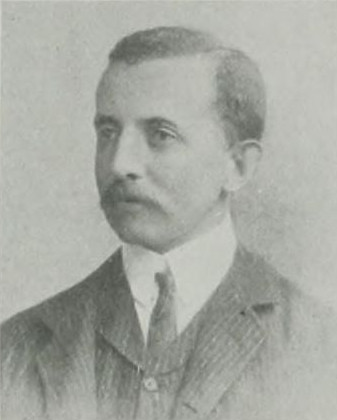
Charles Augustus Vivian.
VISCOUNT, JOHN THOMAS, Private, No. 1065, D Coy. 1st Newfoundland Regt., s. of Charles B. Viscount, of Dunville, Placentia, Newfoundland, by his wife, Hannah, dau. of Jane Norman; b. Cape Shore, Newfoundland, 23 March, 1895; educ. Dunville afsd.; was a Fisherman; volunteered after the outbreak of war and joined the Newfoundland Expeditionary Force, 14 Jan. 1915; left for England, May, 1915; went to the Dardanelles, Sept. 1915, and died on board the Hospital Ship Valdivia, 30 Oct. 1915, of wounds in the head received in action there. Buried at sea, Long. 23,26 E., Lat. 36,43 N.; unm.
VYVYAN, WALTER DRUMMOND, Lieut., 2nd King’s Shropshire Light Infantry, elder s. of Capt. Richard Walter Comyn Vyvyan, of Trewan, St. Columb. Cornwall, late 2nd Battn. The Welsh Regt. and Temp. Lieut.-Col. 21st (Reserve) Battn. of the same, by his wife, Mary, dau. of Edward Sladen Foster, of Dowsby, co. Lincoln; b. Bath, co. Somerset, 20 March, 1887; educ. Bedford Grammar School and the Royal Military College, Sandhurst; gazetted 2nd Lieut. King’s Shropshire L.I. 4 May, 1907, and promoted Lieut. 19 March, 1910; went to France, 21 Dec. 1914, and was killed in action at St. Eloi, Belgium, 2 March, 1915; unm. He was mentioned in F.M. Sir John (now Lord) French’s Dispatch of 5 April [London Gazette, 22 June], 1915, for gallant and distinguished conduct in the field.
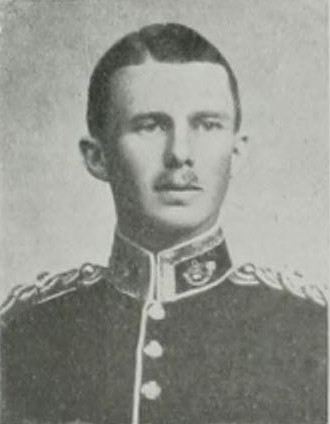
Walter D. Vyvyan.
WACHER, GEOFFREY GIBBINGS, Sergt., No. 517, 1/16th Battn. (Queen’s Westminster Rifles), The London Regt. (T.F.), yst. s. of the late Alfred Wacher, of the Anchor Brewery, Bermondsey, S.E., and Herne Bay, by his wife, Lucy Durant, dau. of Henry Gibbings, of North Tawton, Devon; b. Bermondsey, 25 April, 1891; educ. St. Anne’s School, Redhill, Surrey; was for some years in the employ of Chas. Morgan & Co., Paper Manufacturers, London; joined the Queen’s Westminsters, 22 Jan. 1909; volunteered for Imperial Service, Aug. 1914, and left for France, as Corpl. 1 Nov. 1914; promoted Sergt. June, 1915, and placed in charge of the machine-gun section, to which he had been transferred in Jan.; and was killed in action 9 Aug. following; unm. The Queen’s Westminsters were in support during the attack on Hooge on 9 Aug., and, after this had proved successful, occupied the first line trenches. During the severe bombardment by the enemy’s artillery which followed, our men took refuge in dug-outs. There were a large number of casualties, and Sergt. Wacher gave up his place of safety to some wounded men, and a few minutes later was killed by a shell. He had done valuable work with his battn. before war broke out, during its period of training, and more especially at the Front. One of his officers wrote: “He was one of the most popular fellows in the battn. among all ranks, and his loss is considered a regimental catastrophe”; and another wrote: “Ever since he went to the guns he had done excellent work as well as winning the affections of all the section.” He had been recommended for a commission by his Commanding Officer, and expected to return to England any day to take up his new duties, but owing to the heavy fighting could not be spared. An elder brother, Lieut. Walter Ronald Wacher, is (1916) on active service with the 2nd Royal Berkshires.
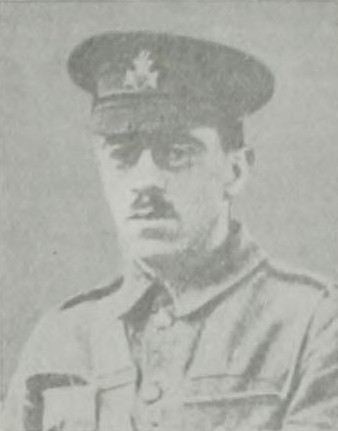
Geoffrey G. Wacher.
WACKETT, FREDERICK JAMES, Petty Officer, 2nd Class (R.F.R., Ch. B. 3158), 151740, H.M.S. Aboukir; lost in action in the North Sea, 22 Sept. 1914.
WADDY, JOHN RAYMOND, B.A., M.R.C.S., L.R.C.P., Lieut., R.A.M.C., 2nd s. of Lieut.-Col. Waddy, late Commanding 2nd Somerset L.I., and grandson of Gen. Sir Richard Waddy, K.C.B., 50th Regt.; b. Weston-super-Mare, co. Somerset, 15 Feb. 1886; educ. Clifton College; Pembroke College, Cambridge, and King’s College Hospital; qualified M.R.C.S., and L.R.C.P. (London) 1912; volunteered on the outbreak of war, and was given a commission as temporary Lieut., R.A.M.C., 11 Aug. 1914; served with the Expeditionary Force in France, and was killed in action by a stray bullet, Bois de Ploegsteert, 17 March, 1915; unm. Buried in Somerset Cemetery, Ploegsteert Wood. He was mentioned in F.M. Sir John (now Lord) French’s Despatch of 14 Jan 1915, and was awarded the Military Cross, 18 Feb. 1915. An officer of the Somersets wrote: “We were all, both officers and men alike, absolutely devoted to him; he was brave as a lion, and always ready to help anybody who needed him; no name will go down in the history of the regt. with more honour than his, for everybody loved him and realised his sterling qualities.” And the Chairman of the King’s College Hospital: “Both at King’s College, London, and at King’s College Hospital, your son was held in the highest esteem by all who knew him. As you know, he finished a brilliant career at the hospital by obtaining the senior scholarship of this year, and was forthwith appointed House Surgeon to Professor Sir Watson Cheyne; the latter appointment he fulfilled to the complete satisfaction of his seniors, and during his residence in hospital he considerably enhanced that high reputation he had already gained.”
WADE, FREDERICK WALTER, Private, No. 13069, 2nd Battn. The Suffolk Regt., eldest s. of Frederick William Wade, of Hall Cottage, Foxhall, near Ipswich, Farm Horseman, by his wife, Edith Florence, dau. of the late Joseph Goodchild; b. Bromeswell, near Woodbridge, 24 Sept. 1895; educ. Bucklesham; enlisted on the outbreak of war, 2 Sept. 1914, served with his regt. in France and Flanders, died from wounds received in action, 21 June, 1915, and was buried in the Civil Cemetery at Bailleul; unm.
WADE, STAMPER PLASKETT, Ch. E.R.A., 2nd Class, 269679, H.M.S. Good Hope; lost in action off Coronel, on the coast of Chili, 1 Nov. 1914.
WADE, THOMAS, Private, No. 2565, 1/7th Battn. London Regt. (T.F), s. of John William Wade, of 150, Lansdowne Road, Dalston, by his wife, Emily, dau. of (—) Parker; b. Hackney, 2 June, 1890; educ. Wilton Road School, Dalston; volunteered for Imperial service, and joined the 7th London in Sept. 1914, and went to France, 17 March, and died in hospital at Bethune, 5 April, 1915, of wounds received in action, 3 April. Buried in the Town Cemetery, Bethune; unm.
WADKINS, WILLIAM FERDINAND, A.B., J. 3223, H.M.S. Laurel; killed in action in the Heligoland Bight, 28 Aug. 1914.
WADSWORTH, ALFRED CHARLES, Private, No. 12/1820, 16th Waikato Regt. New Zealand Expeditionary Force, only s. of the late John Wadsworth, of 10, Pelham Road South, Gravesend, Kent, Watchmaker and Jeweller, by his wife, Alice (10, Pelham Road South, Gravesend, Kent), dau. of John Hawes; b. Cheshunt, co. Herts. 3 Sept. 1889; educ. Christ Church School, Wanstead; volunteered for Imperial service on the outbreak of war and joined the New Zealand E.F., 15 Dec. 1914; left for Egypt, 13 Feb. 1915; took part in the landing at the Dardanelles, 25–26 April, 1915, and was reported missing on 8 May following, and is now assumed to have been killed in action there between those dates; unm.
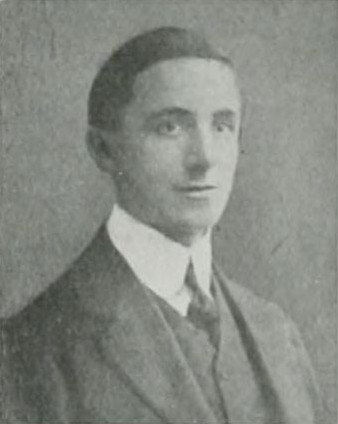
Alfred C. Wadsworth.
WADSWORTH, THOMAS EDWIN, Private, No. 9537, 1/5th Battn. (London Rifle Brigade) The London Regt. (T.F.), 2nd s. of John Edwin Wadsworth, of 13, Beech Hall Road, of Highams Park, Essex, an employee of the British Bank of South America, Moorgate Street, by his wife, Helen, dau. of Thomas Brown, Baughurst, Hants, Farmer; b. Southfields, S.W., 1 March, 1896; educ. Central Foundation School, Cowper Street, E.C., and on leaving there entered the service of Samuel Montagu & Co., of Old Broad Street, E.C., and was a junior in the bullion department when war broke out. He had joined the London Rifle Brigade, 18 March, 1913, and at once volunteered for active service, and went to the Front with his regt. 4 Nov. 1914. On 27 April he left the shelter of his trench in order to succour a wounded stretcher-bearer, and assist him to the rear. Soon after his return to the firing line he was wounded by the splinter of a shell. As there was a scarcity of stretchers he insisted on walking in order that other wounded men might be carried. The walking caused him to lose a considerable quantity of blood, and he reached the base in a very weak condition. He died in Netley Hospital, 8 May, 1915, and was buried in Ilford Cemetery; unm. A Memorial Tablet was placed in St. Stephen’s Church, Coleman Street, where he was formerly a chorister, with the following inscription: “This tablet is erected in affectionate memory of T. Edwin Wadsworth, by the staff of Samuel Montagu & Co., of 60, Old Broad Street, to whom he had become endeared by his winsome ways and eager and faithful discharge of daily duties. One of the youngest in the ranks of the London Rifle Brigade, he responded instantly to the call of his King and Country, endured with fortitude the rigours of the winter campaign in Flanders, and whilst repelling an attack of the enemy on 27 April, 1915, received wounds which proved mortal. Fragile in frame, his body proved unequal to retain his brave young spirit, which returned to Him who gave it. He finished his earthly course 8 May, 1915, within a brief span of 19 years and 2 months, and now awaits another Trumpet Call. ‘Greater love hath no man than this, that a man lay down his life for his friends.’ Jno. XV. 13.”
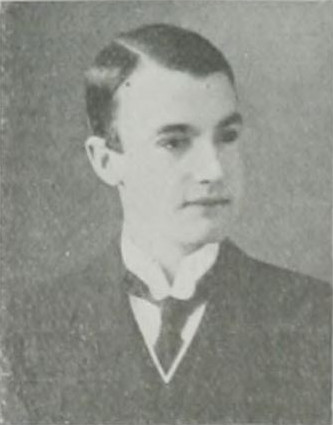
Thomas E. Wadsworth.
WAGLAND, ISAAC WILLIAM, A.B. (R.F.R., B. 3885), 186631, H.M.S. Hawke; lost when that ship was torpedoed in the North Sea, 15 Oct. 1914; m.
WAGSTAFF, ALFRED, Private, No. 114, 6/2, 3rd Battn. Coldstream Guards, 4th s. of William Wagstaff, of Thorpe, near Thrapston, Northampton, by his wife, Emily Ann, dau. of Kidman Giddings, of Long Stow, Cambs.; b. Thorpe, co. Northants, 14 Sept. 1891; educ. Lilford School, near Oundle; worked in copper sheds on L. & N.W.R. at Birmingham; enlisted, 5 Sept. 1914; went to France, 28 Jan. 1915, and was killed in action at Vermelles, 30 Sept. 1915; unm. His four brothers, Samuel, William, Albert Kidman, and Jack, and a nephew, Reginald R. Wagstaff, are (1916) all on active service.
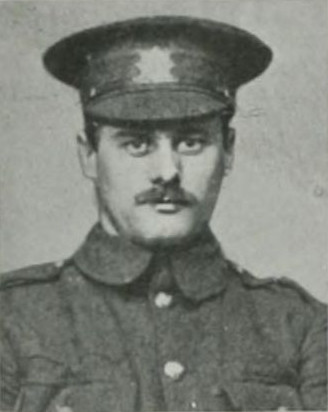
Alfred Wagstaff.
WAITE, CHARLES WILLIAM, 2nd Yeoman of Signals (R.F.R., B. 1542), 169682, H.M.S. Hawke; lost when that ship was torpedoed in the North Sea, 15 Oct. 1914; m.
WAITT, GEORGE GREENHILL, Boy, 1st Class, J. 27506 (Devonport), H.M.S. Hawke; lost when that ship was torpedoed in the North Sea, 15 Oct. 1914.
WAKEFIELD, ARTHUR JAMES, Private, No. 11319, 2nd Battn. East Yorkshire Regt., s. of Walter John Wakefield, of 2, Eleanor’s Terrace, Oxford Street, Hull, by his wife, Georgina, dau. of Robert Handcock; b. Wincolmlee, Hull, 22 Nov. 1890; educ. Lincoln Street School; was an oilmiller in the employ of Messrs. Chambers & Fargus; enlisted in the East Yorks after the outbreak of war, 2 Sept. 1914; went to France, 27 Jan. 1915, and was killed in action at Ypres, 23 April, 1915. He m. at Hull, 1 Oct. 1910, Maria (2, Eleanor’s Terrace, Oxford Street, Hull), dau. of Edward Scott, and had two children: Lily, b. 2 March, 1912; and Lottie, b. 4 April, 1914.
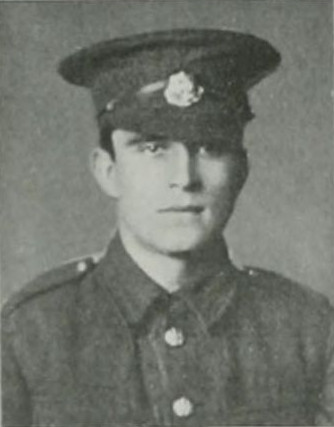
Arthur J. Wakefield.
WAKELIN, JOHN BINHAM, L.-Corpl., No. 1734, 1/7th Battn. (City of London) The London Regt. (T.F.), only s. of John Wakelin, an employee at Queen’s College, Oxford, by his wife, Elizabeth Georgina, dau. of Alfred Barnes Cook; b. Oxford, 17 Dec. 1881; educ. Wesleyan School there; was employed at the Whitechapel Infirmary; joined the 2nd Volunteer Battn. Oxfordshire L.I. 22 Jan. 1900, serving with them till Dec. 1904, and the Queen’s Own Oxfordshire Hussars, 5 Jan. 1905, serving till 4 Jan. 1908. On the outbreak of war he resigned his post at Whitechapel and joined the 7th London Regt.; went to France, 18 March, 1915, and was killed in action at Festubert, 7 May, following; unm. Buried at Bethune.
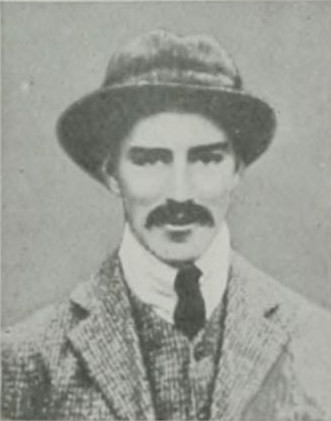
John Binham Wakelin.
WAKEMAN, EDWARD OFFLEY ROUSE, 2nd Lieut. 1st Battn. Grenadier Guards, yr. s. of Sir Offley Wakeman, of Yeaton Peverey, Shrewsbury, and Rorrington Lodge, Chirbury, Shropshire, 3rd Bart., D.L., J.P., by his wife, Catherine, dau. of Sir Charles Henry Rouse Boughton, 11th Bart.; b. Downton Hall, near Ludlow, 15 Jan. 1889; educ. Eton, and St. John’s College, Oxford (B.A. 1912); was employed by the University in agricultural research and afterwards by the Board of Agriculture as Special Investigator, which position he resigned to join the Guards in Dec. 1914; was gazetted 2nd Lieut. 4 Jan. 1915; went to France in April and was killed in action at the Battle of Festubert, 16 May, 1915, while leading his platoon in an attack on the German trenches; unm. He was buried on the field of battle near Richebourg l’Avoué. His Commanding Officer wrote: “He had been with us a short time but amply long enough for us and his company to realise that in him we have lost a man and a gallant officer, and a good comrade. He was killed in the way we all hope to be killed (if it is willed that we are to be), that is gallantly leading men of the Brigade of Guards.” Lieut. Wakeman was mentioned in F.M. Sir John (now Lord) French’s Despatch of 30 Nov. 1915 [London Gazette, 1 Jan. 1916].
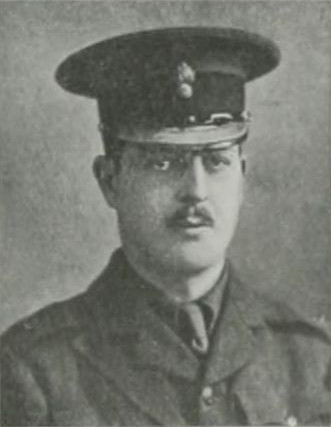
Edward O. R. Wakeman.
WAKINSHAW, JAMES WILLIAM, Sapper, No. 51464, Royal Engineers, 3rd s. of James Wood Wakinshaw, of Wolsingham, Publican, by his wife, Sarah, dau. of John Clark, of Whitton Park, co. Durham; b. Southwick-on-Wear, co. Durham, 31 March, 1891; educ. National School there; was employed at Pickersgill’s Yard, Sunderland, and resided at 43, Wear Street, Southwick, and had been for five years a member of the Durham Territorial R.G.A.; enlisted 10 Sept. 1914, for the period of the war; trained at Chatham and in Ireland; went to the Dardanelles with the Mediterranean Expeditionary Force, and died 15 Aug. 1915, of wounds received in action at Suvla Bay; unm. Wakinshaw was a good oarsman, winning many prizes, including the Molly Pratt Cup, four tankards, four medals, etc.
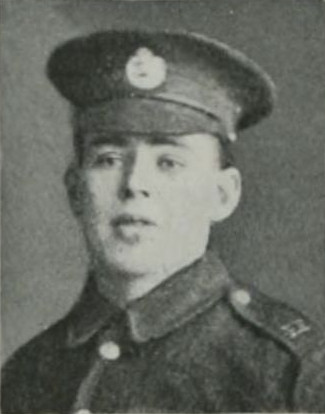
James W. Wakinshaw.
WALBURN, WILLIAM ARTHUR, Private, No. 1637, 4th Battn. Australian Imperial Force, s. of William Walburn, of 3, Portland Terrace, Redcar, co. Yorks, retired Hotel Proprietor, by his wife, Alice Helen, dau. of the late John Davison, of Redcar; b. Crakehall, near Bedale, co. York, 7 Aug. 1881; educ. Kirkleatham Private School; went to Australia in Oct. 1914, following a severe illness, and on his arrival found his health so much improved that he was able to join the Commonwealth E.F. at Sydney, 15 Dec. 1914; left Sydney for Egypt the following Feb.; took part in the landing at the Dardanelles, 25 April, 1915, and in every engagement with his regt. till 3 Aug. when he was seriously wounded in the great charge at Lone Pine Ridge; and died in No. 17 General Hospital, Alexandria, three days after admission, 15 Aug. 1915. Buried in Chatby Military Cemetery there. He m. at Redcar Parish Church, 23 Sept. 1903, Annie, dau. of the late William McNaughton, and had a son, William Cecil, b. 29 Jan. 1909.
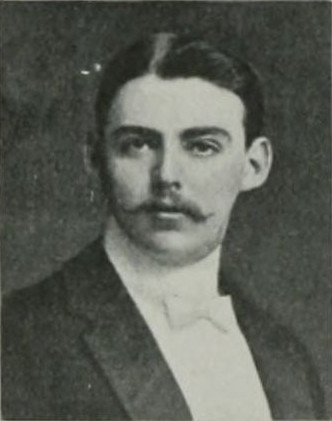
William A. Walburn.
WALDECK, FREDERICK, A.B. (R.F.R., Ch. B. 1506), 185963, H.M.S. Aboukir; lost in action in the North Sea, 22 Sept. 1914.
WALDUCK, LUKE, Private, No. 8050, 1st Battn. Oxfordshire and Buckinghamshire L.I., 2nd s. of John Walduck, of Westbury, Brackley, Railway Labourer, by his wife, Ann, dau. of Edmund Coleman; b. Drayton Parslow, co. Bucks, 16 Feb. 1886; educ. Mixbury, Oxon; enlisted 10 Oct. 1905, and was killed in action at St. Julien, France, 1 Nov. 1914; unm.
WALFORD, HENRY, Officer’s Steward, 2nd Class, L. 2829, H.M.S. Good Hope; lost in action off Coronel, on the coast of Chili, 1 Nov. 1914.
WALFORD, HERBERT ASHFORD, Private, No. 2026, 1/14th Batt. (London Scottish) The London Regiment (T.F.), eldest s. of the late Thomas Charles Walford, of Maidenhead, Mineral Manager, Great Western Railway, by his 1st wife, Mary Ann Ashford, dau. of Thomas Hobbs, of Tiverton; b. Southall, co. Middlesex, 26 Feb. 1889; educ. Maidenhead College; was on the staff of Messrs. Eveson & Co., Coal Merchants; joined the London Scottish, Feb. 1914; volunteered for foreign service on the outbreak of war; went to France, 15 Sept. 1914, was reported missing after the charge of the London Scottish at Messines, 31 Oct. following, and is now assumed to have been killed in action on that date. He was unm. His younger brother, Private L. F. Walford, who was in the same battn. was wounded and taken a prisoner on this occasion and died the next day (see following notice).
WALFORD, LESLIE FRANCIS, Private, No. 2048, 1/14th Battn. (London Scottish), The London Regt. (T.F.), second s. of the late Thomas Charles Walford, of Maidenhead, Mineral Manager, Great Western Railway, by his 1st wife, Mary Ann Ashford, dau. of Thomas Hobbs, of Tiverton; b. Southall, 6 Aug. 1891; educ. Maidenhead College; was Clerk to Wm. Cory’s, Mark Lane; joined the London Scottish, May, 1914; volunteered for Imperial Service on the outbreak of war; went to France, 15 Sept. 1914; was wounded and taken prisoner during the charge of the London Scottish at Messines, 31 Oct. 1914, and died the following day; unm. Buried at Messines-Wytschaete.
WALFORD, OLIVER ROBSON, 2nd Lieut., 1st Battn. Hampshire Regt., elder s. of the late Col. William Swordes Walford, of Warden Lodge, Totland Bay, Isle of Wight, R.A., by his 1st wife, Mary Ella, dau. of George Robson, of Altwood, Maidenhead Thicket; b. Warden House, Weymouth, co. Dorset, 25 June, 1895; educ. Connaught House, Weymouth; Charterhouse, and Sandhurst; gazetted 2nd Lieut. to the Hampshires, 13 Jan. 1915; went to France, 25 Jan., and was killed in action at the Second Battle of Ypres, 26 April, 1915; unm.
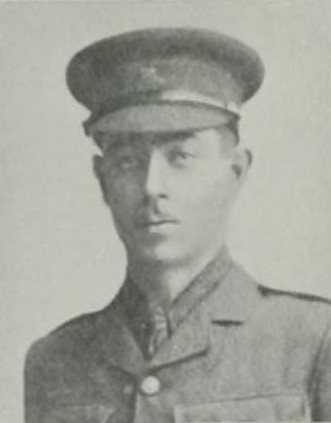
Oliver Robson Walford.
WALKER, ALFRED LEVI, Private, No. 14450, 2nd Battn. Grenadier Guards, yst. s. of the late Walter George Walker, of Hackett Lane, Thornbury, co. Glos., Butcher, by his wife, Sophia (Crossways, Thornbury), dau. of Henry Honeyborne; b. Easton Hill, Thornbury, 10 March, 1889; educ. Board School there; enlisted in 1909, and was killed in action near Ypres, 10 Nov. 1914; unm.
WALKER, ANTHONY THORNTON, 2nd Lieut., 8th (Service) Battn. Rifle Brigade, 2nd s. of John Walker, of Bawtry, co. York, by his wife, Dorothy Mary, dau. of Thomas Taplin Wickham, of Bideford, N. Devon; b. Bawtry, 9 May, 1894; educ. Dulwich Preparatory School, from which he obtained a scholarship to Uppingham School, and from Uppingham secured an open scholarship and exhibition at University College, Oxford; joined the Public Schools Battn. Middlesex Regt. Aug. 1914, and was given a commission as 2nd Lieut. in the 8th Rifle Brigade, 2 Dec. following; left for France, 25 July, 1915, and was killed in action at Hooge, 30 July, 1915, the day after he joined his battn. in the trenches; unm. At Uppingham he was captain of football, and played for his college at Oxford. He was also very musical, and was leader of the orchestra at Uppingham.
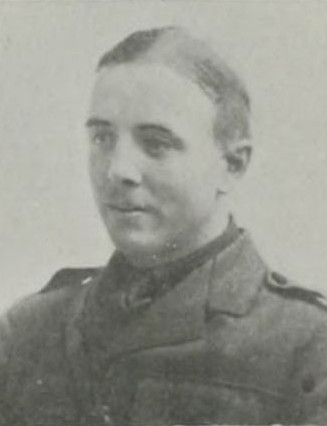
Anthony Thornton Walker.
WALKER, ARCHIE NORMAN, L.-Corpl., No. 924, 13th Battn. 4th Infantry Brigade, Australian Imperial Force, 6th s. of Robert Percival Hoar, of 22, Quanza Street, Beach, East London, South Africa, by his wife, Cornelia Isabella (Nellie) Hoar, dau. of Peter Fostin; b. Cathcart, South Africa, 4 April, 1893; educ. East London; went to Australia in 1914; joined the Commonwealth Expeditionary Force, 22 Sept. 1914; left with the second reinforcements, and died 23 May, 1915, of wounds received in action at the Dardanelles; unm. He was buried at sea from H.M. Hospital ship Nevasa in lat. 36.49N, long. 1° 2E.
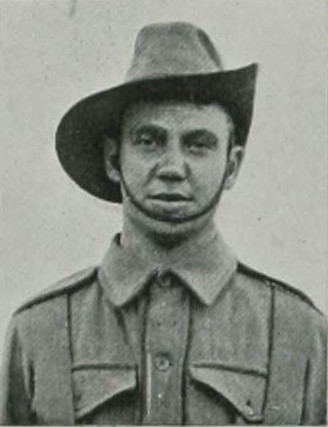
Archie Norman Walker.
WALKER, CHARLES, A.B. (R.F.R., B. 3752), S.S. 1069, H.M.S. Good Hope; lost in action off Coronel, on the coast of Chili, 1 Nov. 1914.
WALKER, EDMUND BASIL, 2nd Lieut., 1st Battn. Royal West Kent Regt., 2nd s. of the Rev. George Sherbrooke Walker, M.A., Rector of March, by his wife, Jessie Elizabeth, dau. of Edward Carter, of Hazelwood, Edgbaston; b. Birmingham, 8 Aug. 1888; educ. The Towers, Portinscale, Keswick; Sherborne School, and Emmanuel College, Cambridge, and soon after leaving college, went as a master to Sherborne Preparatory School. On 23 March, 1912, he was gazetted 2nd Lieut. to the Dorsetshire Regt. (Special Reserve), and after war broke out joined his regt. at the Front, afterwards transferring to the 1st Battn. Royal West Kents, and was given a commission in that regt. 2 Jan. 1915; took part in the heavy fighting for Hill 60, near Ypres, and was killed in action there, 18 April, 1915; unm. He had been called upon to undertake the Senior Captain’s duty and he volunteered for the post of danger with the machine-guns on Hill 60, near Ypres. He was on the Hill all through the awful night of Saturday 17, when so many fell—with two officers under him, and in the early morning, just as day was breaking, their company was relieved. They had left the ridge of the hill, when with his usual devotion to duty he suddenly said to his fellow officer: “You go on—I’ll follow in a minute,” and turned back again, explaining that he wanted to make sure all was right for the relief company just coming to take their place. So he went back—and in doing this, lost his own life, for he was shot dead. He was buried in the little military cemetery near Ypres. Major Dunlop, officer in command of the Battn., wrote: “I found your son of great assistance to me, as he was not only devoid of fear, but was an exceptionally keen officer, and, I am sure, would have made a great name for himself had he survived. Anyone who knew him could not help admiring him.” An officer, working with Lieut. Walker when he was killed, wrote: “on all sides I heard mention of his bravery. He stood on the top of the hill, directing operations, and was actually handling the machine-gun at the time he was shot in the throat, and died instantly. He had volunteered for the post of danger.” Lieut. Walker was mentioned in F.M. Sir John (now Lord) French’s Despatch of 5 April, 1915. He was in the O.T.C. at both Sherborne and Cambridge, and after his two years of teaching, spent a year in promoting Boy Scout work, and was organising secretary to the Great Rally at Birmingham in 1913.
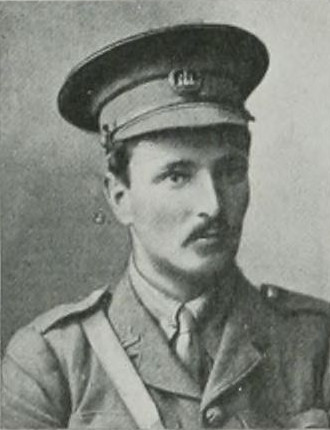
Edmund Basil Walker.
WALKER, EDWARD HENRY, A.B., 163583, H.M.S. Hawke; lost when that ship was torpedoed in the North Sea, 15 Oct. 1914; m.
WALKER, HENRY CLEMENT, Stoker, Petty Officer, 308726, H.M.S. Cressy; lost in action in the North Sea, 22 Sept. 1914.
WALKER, JAMES, Private, No. 1780, 1/9th Battn. Durham L.I. (T.F); b. Newcastle-on-Tyne, 23 Aug. 1891; educ. Gateshead-on-Tyne; enlisted in the Durham L.I., 21 April, 1914; served with the Expeditionary Force in France and was killed in action on the outskirts of Ypres, 3 May, 1915. Buried in the Chateau grounds, west of Brielin, on the Poperinghe Road. He m. at the Roman Catholic Church, Dunston, 26 Dec. 1912, Mary (189, Rose Street, Gateshead), dau. of John Quinn, and had a child.
WALKER, JOHN JAMES, Corpl., No. 51512. R.F.A.; served with the Expeditionary Force in France; died from wounds received in action, 25 Aug. 1914.
WALKER, JAMES THOMAS, A.B. (R.F.R., B. 6224), 203795, H.M.S. Good Hope; lost in action off Coronel, on the coast of Chili, 1 Nov. 1914.
WALKER, ROBERT, Stoker, 1st Class (R.F.R., Ch. B. 7858), 292549, H.M.S. Aboukir; lost in action in the North Sea, 22 Sept. 1914.
WALKER, SAMUEL REID, Private, No. 1876, A Coy. 1/9th Battn. (Highlanders) Royal Scots (T.F.), yst. s. of John Walker, of Wentworth, Newmarket Road, Norwich, by his wife, Jane, dau. of Samuel Reid, of St. George’s, Norwich; b. Norwich, 13 Feb. 1893; educ. Belle Vue and King Edward VI Middle School, Norwich; apprenticed to the Drapery Trade, first at Mr. Moll’s, Norwich, then to Messrs. Bryant and Bryant, St. Ives, Hunts, and lastly to Messrs. Jenners, Edinburgh; volunteered and joined 1/9th Royal Scots (A Coy.), 6 Aug. 1914; left for France, 24 Feb. 1915, and died at No. 8 Hospital, Bailleul, 27 April following, of wounds received four days previously during the Second Battle of Ypres. Buried Bailleul Cemetery; unm. Corpl. W. M. Clarke wrote: “I thought it would perhaps comfort you to know how much he was appreciated by his comrades, and how great a shock his death was to them. His bright face and willingness made him a valued man in my section and won him everybody’s affection. Our only consolation, and I hope it may be yours also, is that he died like a man fighting for the Old Country.”
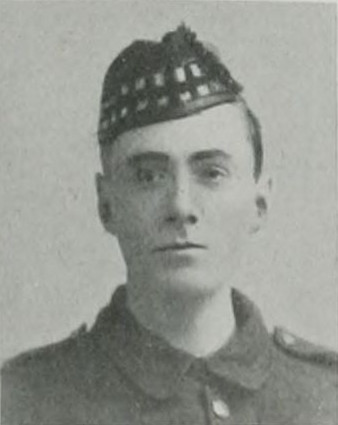
Samuel Reid Walker.
WALKER, THOMAS, Private, No. 2395, 1/7th Battn. The Black Watch (T.F.), s. of Alexander Middleton Walker, of Middleton Place, Crossgates, co. Fife, Miner, by his wife, Margaret, dau. of the late Thomas Young, of Leven; b. Fordell, Dalgetty, co. Fife, 13 Feb. 1884; educ. Crossgates Public School; served as a grocer in Dunfermline Co-operative Society for nearly five years, then enlisted in the Royal Scots, 2 Jan. 1902; obtained his discharge by purchase, 11 July following, and was employed in the mines; re-enlisted in the Black Watch after the outbreak of war, 15 Sept. 1914; went to France, 1 May, 1915, and was killed in action at Festubert, 16 June, 1915; unm. Buried there. His Captain wrote: “We were being subjected to a terrible bombardment during an attack on the Germans, and Tom along with L.-Corpl. Somerville were sitting in a dug-out sheltering from the fire, when a high explosive shell hit it, smashing in the roof. Both were killed immediately, and without suffering any pain. All the men exhibited great courage during the day and none more than your son, who was always a worker, doing his share and always willing to help others.”
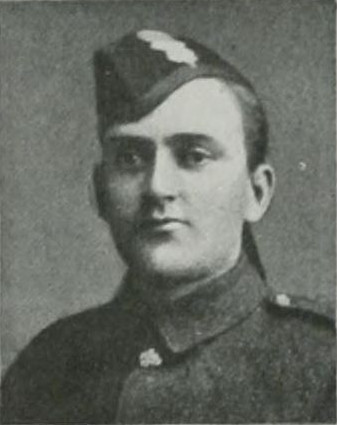
Thomas Walker.
WALKER, WILLIAM ARCHIBALD SMAIL, Major, 46th Punjabis, Indian Army, 2nd s. of the late Major-Gen. Alexander Walker, C.S.I., R.A., Director-General of Ordnance in India, 1890–97, by his wife, Anne Yewdale Lambert, dau. of Commander William Archibald Smail, R.N.; b. Dum-Dum, India, 31 Oct. 1874; educ. Dulwich College and Sandhurst; gazetted 2nd Lieut. unattd. Indian Army, 10 Oct. 1894; was attd. to the 1st Somerset L.I. for his first year; entered the Indian S.C. 10 Jan. 1896, and was promoted Lieut. 27 Nov. 1897; Capt. 10 Oct. 1903, and Major 10 Oct. 1912; served with the 45th Sikhs and then with the 40th Pathans, and was posted to the 46th Punjabis on their formation; took part in the operations on the N.W. Frontier of India, 1897–8, including the Defence of Malakand, action at Landakai, and operations in Bajaur (medal with two clasps), and in the Tirah Expedition 1897–8 (clasp), and was afterwards employed with the King’s African Rifles, 25 Nov. 1903 to 10 May, 1906. After the outbreak of the European War, he was sent in Jan. 1915, with a double coy. to British East Africa and attd. to the 130th Baluchis (King George’s Own). He was commanding a section of the outpost line with headquarters at Mzima on the Tsava River. While visiting sentry groups with an escort of seven men on 12 April, he came on the spoor of a large party of Germans. He followed this up for some way in order to locate the enemy. In returning he was ambuscaded by a smaller party of Germans who were following the main force, and he and two men were shot. He was buried on the banks of the Tsava River—the grave was marked by a cairn of stones; the two men who fell with him are buried by his side. A brother officer wrote: “I knew him for a fearless man. He was with my regt. in the Tirah Expedition, 1897—I have never met a braver soldier”; and another: “His escort, Dogras and Gurkhas, five of whom managed to get away, all bear great testimony to his fearlessness and gallantry. He gave the orders with his last breath for his men to scatter; such is necessary in the bush. He is a great loss to us and to our country—we can ill spare such men.” He m. at Peshawar, N.W.P., 30 April, 1913, Marion Balfour, yst. dau. of the Rev. Frederick William Crick, M.A., Rector of Litton Cheney, Dorset, and had a dau., Anne Margaret, b. 21 Jan. 1914.
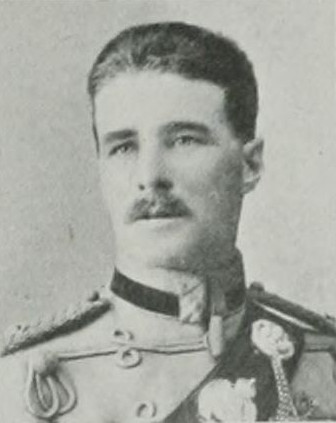
William A. S. Walker.
BANES-WALKER, FREDERICK CECIL, Lieut., 3rd, attd. 2nd Battn. Devonshire Regt., eldest s. of Harry Banes-Walker, of Verriers, North Petherton, Somerset, B.A., C.C., Director of Brewery Companies, by his wife, Mary Alexandra, dau. of Frederick S. Barker; b. Northgate House, Bridgwater, co. Somerset, 19 June, 1888; educ. Mr. Coplestone’s, Exmouth, Devon, and Tunbridge School, and was gaining a business experience at the Ashton Gate Brewery. He enlisted in the Gloucestershire Regt. on the outbreak of war in Aug. 1914, but was offered a commission in the Devons a few weeks later, and was gazetted 2nd Lieut. to the 3rd Reserve Battn. of that Regt. 7 Oct. 1914, and subsequently attd. to the 2nd Battn. (23rd Brigade, 8th Division), of which he became a Machine-Gun Officer. He went to France, 15 March, 1915; was promoted Lieut., and was killed in action near Fleurbaix, 9 May, 1915; unm. Buried in a cemetery on the Rue Petillon, about 3,500 yards south of Fleurbaix. His Commanding Officer wrote: “Your son was killed in action early Sunday morning, 9 May, as we were advancing under heavy cross-firing. He was in charge of our machine-gun section, and had done extremely well. He was very popular with all ranks, and will be greatly missed.” Lieut. Banes-Walker was well-known in sporting circles being a fine rider to hounds. He played cricket for Somerset, and hockey for Gloucestershire.
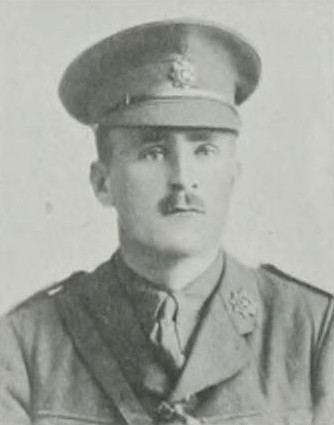
Frederick C. Banes-Walker.
GORDON-WALKER, CHARLES NIGEL, Lieut. and Adjutant, 10th (Service) Battn. South Staffordshire Regt., attd. 8th Battn. Manchester Regt. (T.F.), yst. s. of the late Frederick Alexander Walker, of Gravesend, Kent, by his wife, Grace Marion (23, Holbein House, Sloane Square, London, S.W.), dau. of the late David Alexander Gordon, of Culveman and Greenlaw, co. Kirkcudbright, and of Hong Kong; b. Milton-next-Gravesend, co. Kent, 3 July, 1889; educ. Westminster School; was in the firm of Messrs. Gilman & Co., Merchants of Hong Kong, and 18, St. Swithin’s Lane, London, E.C., and was Corpl. in the Scouts Company, Hong Kong Volunteer Corps; gazetted 2nd Lieut., 10th South Staffords, 21 Nov. 1914, and appointed Adjutant to the battn. 21 Nov. 1914; attd. to 8th Manchester (T.F.), May, 1915; left for the Dardanelles from Plymouth, 15 May, and was killed in action in Gallipoli 7 Aug. following; unm.
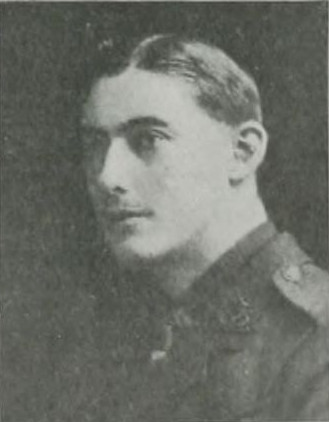
Charles N. Gordon-Walker.
WALL, JOHN THOMAS, Private, No. 5743, 1st Battn. Coldstream Guards; b. co. Warwick; enlisted 30 Sept. 1904; served with the Expeditionary Force in France and Flanders from 11 Sept. 1914; died in No. 4 Clearing Hospital, Poperinghe, 29 Oct. 1914, of wounds received in action. Buried Poperinghe New Cemetery.
WALLACE, ANDREW, Capt., 1/4th Battn. King’s Own Scottish Borderers (T.F.), eldest s. of James Wallace, of Castle View, Prestonpans, Headmaster of Prestonpans Public School, by his wife, Barbara, dau. of John Guthrie Smith, of Newmilns, Ayrshire, Manufacturer; b. Prestonpans, 3 Feb. 1875; educ. Prestonpans Public School; George Heriot’s School, Edinburgh, and Edinburgh University, where he was Gold Medallist in Anatomy, and completed his medical course when he was only twenty. After being assistant to Dr. Nuttall of Leicester for three years, he went as Ship’s Doctor to China and Japan on the S.S. Glen Avon, which was wrecked off Hong Kong on her homeward voyage; and then practised for fifteen years in Coldstream, where he took a prominent part in Ambulance Association Work, and in the Territorials. He joined the 2nd Vol. Battn. K.O.S.B. (afterwards the 4th Territorial Battn. of the Scottish Borderers) in 1902 and became Lieut. 8 Aug. 1903, and Capt. 11 April, 1906; and volunteered for Imperial service on the outbreak of war. He left for the Dardanelles on 21 May, 1915, and was killed in action at Krithia, Gallipoli, 12 July following; unm. Of his nine brothers, Capt. W. E. Wallace is in France with 8th Battn. Royal Scots, Capt. H. S. Wallace is in Egypt with the Notts and Derby Mounted Field Ambulance Bde., and Cadet R. H. Wallace presently training with University Corps, Bristol. His second youngest brother, Harold S. Wallace, with 8th Battn. Royal Scots, was killed in France, 8 April, 1915, at Picantin, near Laventie.
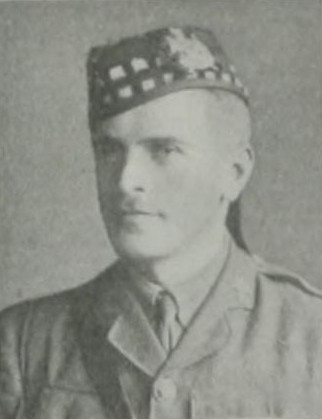
Andrew Wallace.
WALLACE, HAROLD SYDNEY, Private, No. 893, 8th Battn. Royal Scots (T.F.), 9th s. of James Wallace, of Castle View, Prestonpans, Headmaster of Prestonpans Public School, and a younger brother of Capt. Andrew Wallace (see preceding notice), by his wife, Barbara, dau. of John Guthrie Smith; b. Prestonpans, 29 Nov. 1892; educ. Prestonpans Public School; George Heriot’s School, Edinburgh, and Skerry’s College; was an Officer of Customs and Excise; joined the 8th Territorial Battn. of the Royal Scots in 1912; volunteered for foreign service after the outbreak of war; went to France, 2 Nov. 1914, and was killed in action at Picantin, near Laventie, 8 April, 1915; unm. Buried Rue Tilleloy, Laventie.
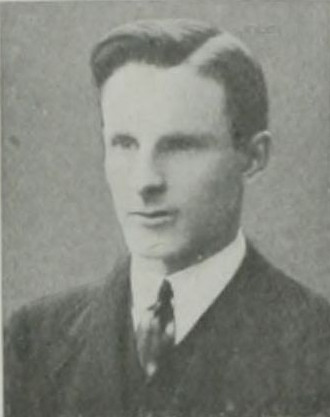
Harold S. Wallace.
WALLACE, HENRY ATHOLL CHARLES, Capt., 10th Battn. 2nd Brigade, Canadian Expeditionary Force, eldest s. of the late Henry Wallace, of Trench Hall, co. Durham, J.P., for many years Agent to the Earl of Ravensworth; by his wife, Jessie (139, Ware Road, Hertford), dau. of Charles Ellis, of New York, U.S.A.; b. Trench Hall, Gateshead-on-Tyne, 1879; educ. Uppingham College; served in the South African War with the Northumberland Imperial Yeomanry, 1900–1901 (Queen’s medal with two clasps); emigrated to Canada in 1902, and after farming in Manitoba for a short time, turned his attention to real estate; joined the 106th Winnipeg L.I. in Winnipeg, Canada; volunteered for Imperial service on the outbreak of war and was appointed Capt. 10th Battn. (Winnipeg L.I.); came over with the 1st Contingent in Oct. 1914; trained on Salisbury Plain during the winter; went to France early in Feb. and after serving in the trenches for two months, was killed in action at Langemarck, 22 April, 1915. He always took a keen interest in military matters, and belonged in Canada to the Veterans’ Brigade, composed of men who had served their country in any part of the world. He m. at St. Mary’s, Gateshead-on-Tyne, 1903, Winifred (194, Hill Street, Norwood Road, Winnipeg, Manitoba, Canada), dau. of the late Thomas Archer, of the Dunston Engine Works, Dunston-on-Tyne, a well-known engineer and inventor, and had two children: Henry Archer Harold, b. 3 April, 1906; and Dorothy Laura, b. 15 March, 1909.
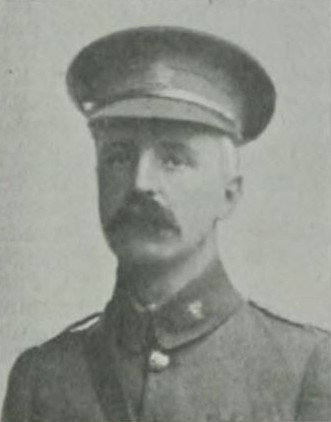
Henry A. C. Wallace.
WALLACE, JAMES, Stoker, 1st Class (R.F.R., B. 4924), S.S. 104347, H.M.S. Good Hope; lost in action off Coronel, on the coast of Chili, 1 Nov. 1914.
WALLACE, JOHN, Private, No. S./7097, 2nd Battn. Middlesex Regt.; served with the Expeditionary Force in France; killed in action, 10 Feb. 1915.
WALLACE, JOHN ROGER (ION), 2nd Lieut., 1st Battn. Royal Scots Fusiliers, yr. s. of Roger William Wallace, of 36, Campden Hill Gardens, Kensington, K.C., by his wife, Sarah, dau. of John Thornton; b. Kensington, 25 June, 1895; educ. at School House, Rugby, and Oriel College, Oxford; joined the Artists’ Rifles as a Private when war began, and went to France with them, 26 Oct. 1914. He was given a commission, 15 Dec. 1914, being gazetted 2nd Lieut. to the 2nd Battn. Royal Scots Fusiliers. The same month he was invalided home after an attack of pleurisy caught in the trenches, and early this year (1915), after taking out a draft of men from Ayr, was transferred to the 1st Battn. of his regt. He was killed in action, near Ypres, 22 April, 1915, and buried in the Military Cemetery, Dickebusch, Belgium; unm. His commanding officer wrote: “His pluck and unselfishness will always be remembered in the Scots Fusiliers. His one idea was that the men wounded at the same time should be cared for first. Both in his life and death he was a splendid example.”