The Roll of Honour. (continued 32)
Reading edition
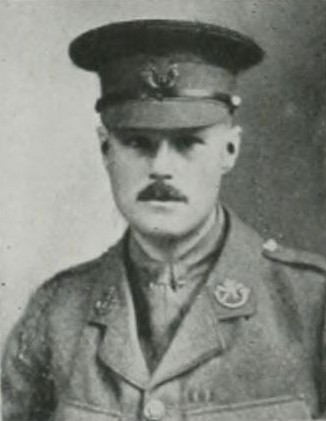
John Edward Marshall.
MARSHALL, PERCY STANLEY THOMAS, Private, No. 7905, 1st Battn. Lincolnshire Regt., 2nd s. of William Marshall, of 4, Lochinvar Street, Balham, S.W., late Trooper, Royal Horse Guards, by his wife, Lucy Jane, dau. of William Bartholomew Pestete, of Bacton. Norfolk; b. Southwark, S.E., 11 April, 1891; educ. Cavendish Road School, Balham; enlisted in the Lincolnshire Regt. in Jan. 1907; served seven years with the Colours, and then joined the Reserve; mobilised on 5 Aug. 1914; went to France with the Expeditionary Force, and died at Jemappes, 11 Sept. following, of wounds received in action there, 23 or 24 Aug.; unm. Buried in the garden of the Institute of St. Ferdinand, Jemappes.
MARSHALL, ROGER, 2nd Lieut., 2nd Battn. Durham Light Infantry, yst. s. of Lieut.-Col. Anthony Marshall, of Annstead, Chathill, Northumberland, late 3rd Battn. Northumberland Fusiliers; b. Annstead afsd., 25 Jan. 1891; educ. privately; joined the Special Reserve, R.F.A., 10 Aug. 1910; was granted Aviator’s Certificate of the Royal Aero Club. 30 April, 1913; passed Army Examination, March, 1914; gazetted 2nd Lieut, to the 2nd Durham L.I., 15 July, 1914, and joined 6 Aug. 1914; went with his battn. as part of the 6th Division to France in Sept., and was killed in action at the Battle of the Aisne, 20 Sept. 1914, only four days after his arrival at the Front; unm.
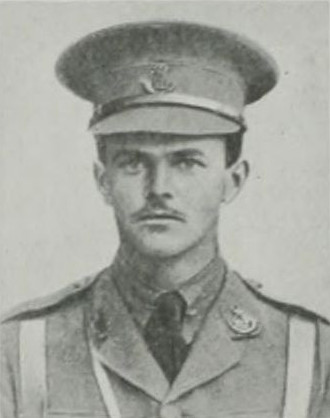
Roger Marshall.
BURT-MARSHALL, WILLIAM MARSHALL, Capt., 2nd Battn. Argyll and Sutherland Highlanders, yst. s. of the late James Burt-Marshall, of Luncarty, co. Perth, J.P., by his wife, Katherine, dau. of the late David Bannerman, J.P.; b. Luncarty, 14 July, 1887; educ. at Rugby, where he was in the XI and XV (playing half-back), Steward of Athletics, and winner of the School Mile and passed into Sandhurst in 1906. He was in the XV of 1906–7, captaining the team of 1907 when they beat Woolwich by a score which was a record up to that period. He was also in the XI of 1908. On 19 Sept. 1908 he was gazetted to the 2nd Battn. Argyll and Sutherland Highlanders then in South Africa, where they remained until Jan. 1910, when the regiment returned to Scotland. He was promoted Lieut., 10 Sept. 1910. On 9 Aug. 1914 the Argyll and Sutherland Highlanders left Fort George for France, and from then onwards were in the thick of all the fighting. They were personally complimented by Sir John French on their performance in the Battle of Le Cateau. In Sept. Lieut. Burt-Marshall was in command of A Coy., which command he held, save for one short period, until he fell. Capt. H. Clark, writing of him, said “All through the retreat he was strong of heart and untiring in devotion to duty. All the way back towards Paris, and right up again to the Aisne, he was with his men, encouraging and influencing them, and gradually the company grew to its original strength again. On 8 Nov. a special duty in Ploegsteert Wood was detailed to us. The capture of an advanced German trench which had proved a veritable thorn in the British side was imperative, and the 93rd were asked to do what others had already tried to do and failed. All through the 9th the battn. lay in the wood shelled at intervals; the attack was ordered for that night, three companies were to advance from different points against the enemy trench, and while our guns were paving the way for the assault we silently moved forward to our allotted positions. When the shelling stopped the attack crept closer, but the German flare lights showed up our line and we rose and dashed for the trench. He was at the head of his men and led the charge. He ran right up to the German barbed wire, was hit and fell, but rose again and dashed on to the parapet where he fell again. No one could get up to him, and those who were able crawled back to reform with the remnants of the companies.” For some months it was hoped that news might come that he was a prisoner, but on 8 Feb. the War Office reported that Capt. Burt-Marshall had died of wounds in a German Field Hospital at Quesnoy on 17 Nov. 1914.
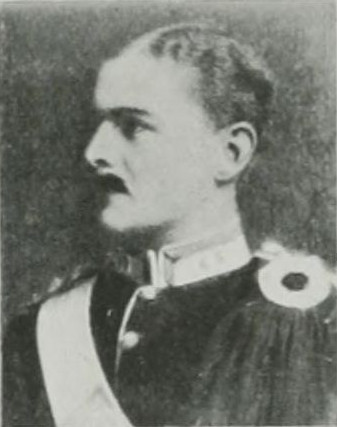
William H. Burt-Marshall.
MARSON, HERBERT, Stoker, 1st Class K. 14685 (Ports.), H.M.S. Aboukir; lost in action in the North Sea, 22 Sept. 1914.
MARSON, JOHN CHARLES, 2nd Lieut., 8th (Service) Battn. The Welsh Regt. (13th Divisional Pioneers), only s. of the Rev. Charles Latimer Marson, Vicar of Hambridge, Somerset (died 3 March, 1914), by his wife, Clotilda (86, Oakwood Road, Golders Green, N.W.). dau. of Dr. Peter Bayne, author of “Chief Actors of the Puritan Revolution,” etc., and gdson. of the Rev. Charles Marson, Vicar of Clevedon; b. 62, Gower Street, London, 15 April, 1896; educ. Eastington, Clevedon; Honiton Grammar School; Sherborne (1910–13), and matriculated at Emmanuel College, Cambridge, in the latter year. As he, however, wished to become a naval architect, he changed to Glasgow University, and spent a year between there and Fairfield Shipbuilding Works. At Sherborne and Glasgow University he had belonged to the O.T.C.’s, and he was offered a commission the day war broke out, and at once signed on for foreign service. On 1 Sept. 1914, he was gazetted 2nd Lieut., and after a month’s training at Barry Camp, was drafted into the 6th Battn. of the Loyal North Lancashires. He was for some months in training at Jellalabad Barracks, Tidworth. Early in 1915 the officers of the 6th North Lancashires who had any engineering experience were invited to volunteer for the 13th Pioneer Division of the Welsh Regt. Marson at once responded and migrated to Tournay Barracks, Aldershot, where he stayed in training until his regt. left for the Dardanelles on Tuesday, 15 June, 1915. They were nearly five weeks at Lemnos before crossing to the Peninsula. On 7 Aug. he wrote to his mother from the trenches:—“To-night is a supreme test of the men of K.s Army. Numbers are bound to be killed. This may be the last letter. However, I have a conviction it will not be yet.” Early on the following morning (Sunday) he was killed in action with the Anzacs. He was shot through the forehead and killed instantaneously on the summit of Chunuk Bair. Capt. Gordon Williams, his commanding officer, wrote: “He was a great favourite with us all, and he made an excellent officer, always showing plenty of keenness and was never, if I may so say, without a cheery smile on his face. We had to hold a hill that day with the New Zealanders against terrific counter attacks, and your son, throughout the action, behaved magnificently, finally to be shot down, bayonet and rifle in hand, surrounded by Turks. His men brought him in, and Lieut. Gwyther had him placed on a stretcher during the fight, but he died at once, and could only be buried then and there, right in the midst of the fighting. We all feel his death awfully, and that of our brother officers who fell that day. The hill was lost next day by the regts. that relieved us, so there our dead officers and men lie buried by the Turks who are very chivalrous in this respect. The regt. earned a great name for itself that day, but suffered severely”; and Lieut. Evan B. Gwyther: “He died leading his men on, and yards in front of all; and he was last seen alive fighting 10 or 15 Turks all by himself. He did not know what fear was, and everybody admired his pluck, and was amazed at his courage. There wasn’t a man in his platoon that could speak too highly of his courage, pluck and determination. I am glad to tell you his sufferings were nil, as he died the moment he fell.” The Lieut.-Col. (J. A. Bald) also wrote: “I was unfortunately wounded myself that day before the regt. as a whole went into action, and so missed what I had been looking forward to so keenly, namely, to go into action with them all, and also could not see how all my brave officers led their men, but I did hear that the last seen of your son was, that he was gallantly leading his platoon in the face of what must have been a very severe fire, rifle in hand, more than ready to do his share. I always looked on him as absolutely without fear and knew, when it came to the point, he would show himself a good leader. The regt. lost many good officers it could ill spare, who will be a loss both to it and the Army at large. Your son before the fighting began showed himself a keen officer and did some very hard work for me when we were at Lemnos.” Major H. Lynn Stevens, Adjutant of the 8th Welsh, wrote: “It will be a source of never-ending pride to know that your son died fighting most gallantly in a hand-to-hand attack upon the enemy at the summit of Chunuk Bair. He would not suffer restraint, but charged forward outstripping everybody in his resolve to do his duty.”
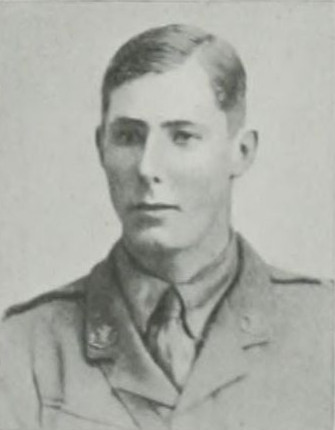
John Charles Marson.
MARTIN, ALBERT HENRY, Private, No. 2107, 1/7th Battn. The Middlesex Regt. (T.F.), only s. of John Martin, of Capel House Lodge, Turkey Street, Waltham Cross, Herts, Gardener, by his wife, Emily, dau. of John and (Ann) Savage; b. Romford, co. Essex, 11 Aug. 1895; educ. Forty Hill, Enfield and Ramsbury, Wilts; was employed in the garden at Capel House; joined the Middlesex Territorials, 6 March, 1914; volunteered for foreign service on the outbreak of war, 5 Aug. 1914; went to France, 12 March, 1915, and died at No. 6 Casualty Clearing Station, Merville, 15 May, 1915, of wounds received in action at Aubers Ridge, 9 May previous; unm. Buried in Merville Cemetery.
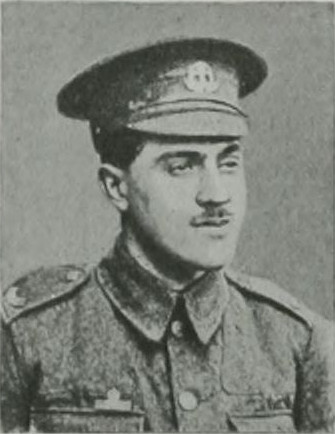
Albert Henry Martin.
MARTIN, ARTHUR THOMAS, Private, R.M.L.I., Ch./16124, H.M.S. Cressy; lost in action in the North Sea, 22 Sept. 1914.
MARTIN, AYLMER RICHARD SANCTON, Lieut.-Col. Commanding 2nd Battn. King’s Own Royal Lancaster Regt., s. of the late Rev. H. Martin, Vicar of Thatcham, Newbury, Berkshire; b. Newbury, co. Berks, 19 Nov. 1870; educ. Bradfield College, and Sandhurst; gazetted 2nd Lieut, to the Royal Fusiliers, 4 March, 1891, and Lieut. 26 June, 1892 and later the same year transferred to the Royal Lancaster Regt.; became Capt. 25 Jan. 1900, Brevet Major 29 Nov. 1900, Major 8 Sept. 1906, and Lieut.-Col. 13 Dec. 1912; served through the South African War, 1899–1901, including the relief of Ladysmith and the actions at Spion Kop, Vaal Kranz, Tugela Heights (14–22 Feb. 1900, wounded) and Laing’s Nek, and acted as Adjutant to the 2nd Battn., 2 Nov. 1899 to 8 Jan. 1900, and 25 Jan to 15 Sept. 1900 (twice mentioned in Despatches [London Gazette, 8 Feb. and 10 Sept. 1910], Queen’s medal with six clasps, Brevet of Major). On his return to England, after passing through the Staff College he was attached to the General Staff at the War Office from 1904 to 1906 and from 1907 to 1912 was Deputy Assistant Adjutant General, Scottish Command. In 1912 he was given the command of the 2nd Battn. of the King’s Own, then in India. Col. Martin was killed in action at Frezenberg during the fighting around Ypres, 8 May, 1915. He m. at Surbiton, 21 July, 1896, Mary Beatrice, dau. of General Charles Terrington Aitchison, C.B., Indian Army, and had a dau., Eileen, b. 15 Oct. 1898.
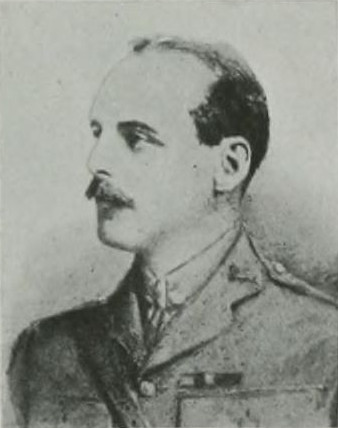
Aylmer R. S. Martin.
MARTIN, BASIL CUTHBERT DANVERS, 2nd Lieut., 13th (Service), attd. 4th, Battn. The Worcestershire Regt., only s. of the Rev. Henry Basil Martin, Rector of Pudleston, Leominster, co. Hereford, by his wife, Gertrude May, eldest dau. of the Rev. Thomas Hannington Irving Child, formerly Rector of Stratton, co. Gloucester; b. Sunhill Ranch, Loomis, Placer Co., California, U.S.A., 6 Oct. 1896; educ. Wolborough Hill School, Newton Abbott, South Devon, and Lancing College, Sussex; gazetted 2nd Lieut. 13th Worcesters, 14 Dec. 1914; went to the Dardanelles, 20 May, 1915, where he was attached to the 4th Battn., and was killed in action there, 4 June following; unm. His commanding officer wrote: “I was not near him at the time, but those who were said that he showed perfect coolness and courage all the time. During the few days he was with us I especially noticed him for his keenness and desire to get on and feel very sure that if he had been spared he would have done well.” While at Lancing he was a keen member of the O.T.C., shooting twice at Bisley, where he helped to gain the Cadets’ Challenge Trophy in 1913, and the Public Schools Rapid in 1914, besides gaining several other medals at school, his first being Lord Roberts’s Miniature Rifle Clubs Society, which he won at Wolborough Hill School at the age of 13.
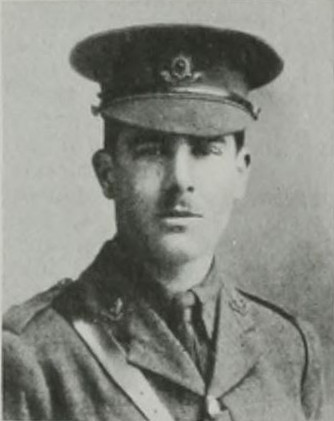
Basil C. D. Martin.
MARTIN, CECIL TAYLOR, Assistant Clerk, R.N., elder s. of George Martin, of 4, Park Terrace, Silloth, L.R.C.S.I., L.R.C.P.I., by his wife, Margaret Emily, dau. of Robert Taylor; b. Silloth, co. Cumberland, 15 June, 1897; educ. Preparatory School there, Cherbourg, Malvern, and St. Bee’s School, Cumberland; joined the Navy as Assistant Clerk, 1 Aug. 1914; was appointed to H.M.S. Monmouth, and was lost when that ship was sunk in the battle off Coronel, on the coast of Chili, 1 Nov. 1914.
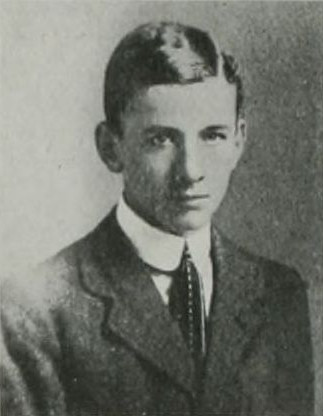
Cecil Taylor Martin.
MARTIN, CHARLES, Private, No. 8758, 2nd Battn. Royal Sussex Regt.; served with the Expeditionary Force in France; killed in action, 30 Oct. 1914; m.
MARTIN, CHARLES EDWARD JOHN, Private, No. 7974, 1st Battn. Queen’s Royal West Surrey Regt., s. of Charles Martin, of 41, Ashbrooke Road, Upper Holloway; served with the Expeditionary Force in France, etc.; died, 4 Dec. 1914, of wounds received in action.
MARTIN, CHARLES HERBERT GEORGE, M.A., F.Z.S., Lieut., 3rd Battn. Monmouthshire Regt. (T.F.), only s. of the late Edward Pritchard Martin, of The Hill, Abergavenny, Mining Engineer and Colliery Owner, by his wife, Margaret, dau. of C. H. James, of Merthyr; b. Dowlais, co. Glamorgan, 5 Oct. 1882, and was educ. at Eton and Magdalen College, Oxford, where he obtained a high standard of efficiency in biology and obtained his degrees. He was demonstrator in Zoology to the University of Glasgow, and Lecturer at Oxford, and was well-known at Cambridge and at Naples, and was a scientist of European reputation. At Glasgow he joined the University O.T.C. and was gazetted 2nd Lieut. unattd. (T.F.), 12 Oct. 1909, and posted to the 3rd Monmouths, 5 June, 1912. He was promoted Lieut. 29 Aug. 1914, being subsequently machine-gun officer. On the outbreak of war he volunteered for foreign service, and was killed in action N.E. of Ypres, 2 May, 1915. He was buried between St. Julien and Freezenberg. He published several books on protozoology. When war broke out he was preparing papers for the Rothamsted Experimental Station, Harpenden. He was also an ardent all-round sportsman, a keen follower of the Monmouthshire Hounds, and was Master of the Crickhowell Harriers. He m. at St. Mary’s Church, Abergavenny, 11 June, 1912, Beatrice Elise (The Hill, Abergavenny), only child of Ferdinand Packington John Hanbury, of Nantoer, Abergavenny, J.P., D.L., co. Monmouth, and had a son, Charles Edward Capel, b. 21 April, 1913.
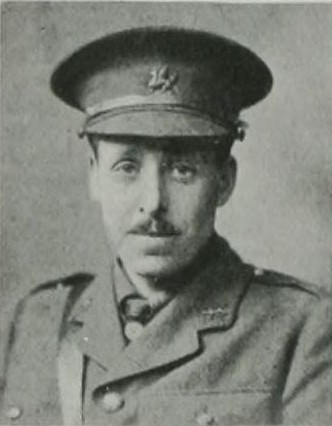
Charles H. G. Martin.
MARTIN, HERBERT EDWARD, A.B., J. 11840, H.M.S. Laurel; killed in action in the Heligoland Bight, 28 Aug. 1914.
MARTIN, JOHN, Private, No. 7875, 1st. Battn. Royal West Kent Regt., s. of John Martin, of 79, Mill Road, Lewisham; served with the Expeditionary Force in France, etc.; killed in action, 26 Oct. 1914.
MARTIN, JOHN WILLIAM, Stoker, 1st Class, K. 7909, H.M.S. Good Hope; lost in action off Coronel, on the coast of Chill, 1 Nov. 1914.
MARTIN, JOSEPH EDWARD, Chief Stoker, (R.F.R., A. 1793), 152383, H.M.S. Hawke; lost when that ship was torpedoed in the North Sea, 15 Oct. 1914; m.
MARTIN, WILLIAM, Stoker, 1st Class, K. 11808, H.M.S. Aboukir; lost in action in the North Sea, 22 Sept. 1914.
MARTIN, WILLIAM HERBERT, Private, No. 1522, E Coy. 7th Battn. Middlesex Regt. (T.F.), only s. of William Albert Martin, of 10, Shakespeare Road, Edmonton, Labourer at Woolwich Arsenal, by his wife, Isabella, dau. of Robert Rawlinson; b. Sawston, co. Cambridge, 8 June, 1896; educ. Bruce Grove Board Schools, Tottenham; was a Carpenter and Joiner; joined the Middlesex Territorials in June, 1912; volunteered for foreign service on the outbreak of war in Aug. 1914; trained at Sittingbourne; went to Gibraltar, 7 Sept. 1914, and died in the Military Hospital there, 23 Jan. 1915, after undergoing an operation for appendicitis, contracted on service; unm.
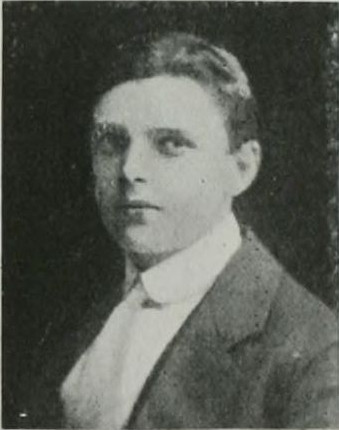
William Herbert Martin.
WOOD-MARTIN, FRANCIS WINCHESTER, Capt., 1st Battn. Suffolk Regt., 4th and yst. s. of Col. William Gregory Wood-Martin, of Cleveragh, co. Sligo, A.D.C., J.P., D.L., by his wife, Frances Dora, dau. of Roger Dodwell Robinson, of Wellmount, co. Sligo, J.P.; b. London, 27 Feb. 1880; educ. Cheltenham; gazetted 2nd Lieut., 1st Battn. Suffolk Regt., 12 Aug. 1899; promoted Lieut. 30 Aug. 1900, and Capt. 11 Feb. 1906; served in the South African War, 1899–1902; took part in the operations in Cape Colony, south of the Orange River, 1899–1902, including actions at Colesberg (1–5 Jan.) being taken prisoner, but was released in the following June when Lord Roberts entered Pretoria. He was appointed Station Officer in the Transvaal and took part in the operations east of Pretoria, July-29 Nov. 1900, and in the Transvaal, Dec. 1900–31 May, 1902, receiving the Queen’s medal with three clasps and the King’s medal with two clasps. On the outbreak of the European War he served with his regt. in the Expeditionary Force, and was killed in action near Ypres, 17 Feb. 1915; unm. His elder brother, Capt. J. I. Wood-Martin, was killed at Neuve Chapelle, 12 March, 1915 (see following notice), and a memorial was erected to their memory in St. Anne’s Parish Church, Strandhill, and in the Cathedral at Khartoum.
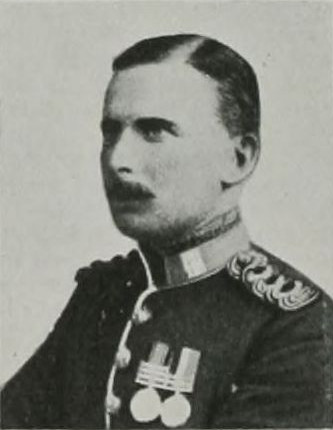
Francis W. Wood-Martin.
WOOD-MARTIN, JAMES ISIDORE, Capt., 2nd Battn. Northamptonshire Regt. (58th), eldest s. of Col. William Gregory Wood-Martin, of Cleveragh, co. Sligo, A.D.C., late R.G.A. and 44th Regt., etc. (see preceding notice); b. 3 Sept. 1874; gazetted 2nd Lieut., 2nd Battn. Northamptonshire Regt., 20 Feb. 1895; promoted Lieut. 23 Feb. 1898, and Capt. 2 June, 1903; served with the Mounted Infantry in the South African War, 1899–1902; took part in operations in the Orange Free State, Feb. to May, 1900; operations in the Transvaal west of Pretoria, July to Nov, 1900; including action at Venterskroon (7–9 Aug.), operations in the Orange River Colony, May to Nov. 1900; including actions at Lindley (1 June), and Rhenoster River; operations in the Transvaal, May, 1901, to May, 1902 (severely wounded, Queen’s medal with three clasps, and King’s medal with two clasps). On the conclusion of the war he was attached to the Egyptian Army, 4 April, 1903, to 3 April, 1913, being Lieut.-Col. Commanding the 9th and 11th Sudanese. In 1905, he took part in the operations in the Sudan against the Nyam Nyam tribes in the Bahr-el-Ghazal Province (Egyptian medal with clasps). On the outbreak of the European War he left with his regt. for the Front, served in France and Flanders, and was killed in action, while leading his men in a charge against the enemy, near Neuve Chapelle, 12 March, 1915; unm. His yr. brother, Capt. F. W. Wood-Martin, was killed, 17 Feb. 1915 (see preceding notice).
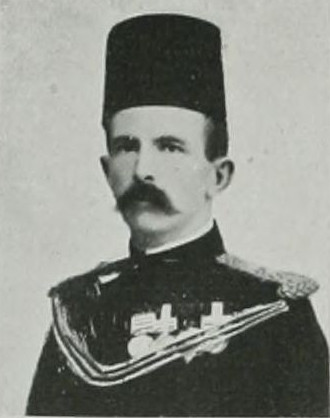
James I. Wood-Martin.
MARTYN, EDWARD THOMAS, A.B. (R.F.R., B. 8487), 194645 Chatham, H.M.S. Good Hope; lost in action off Coronel, on the coast of Chili, 1 Nov. 1914.
MARVIN, HENRY, A.B. (R.F.R., B. 8452), 203011 Chatham, H.M.S. Good Hope; lost in action off Coronel, on the coast of Chili, 1 Nov. 1914.
MASEFIELD, ROBERT, Major, 1st Batt. King’s Shropshire L.I., eldest s. of Valentine Vickers Masefield, of Akaroa, New Zealand, by his wife, Isabel, dau. of (—) McKay, of Pigeon’s Bay, New Zealand, and nephew and adopted s. of Col. Robert Taylor Masefield, C.B., formerly commanding 4th Battn. Shropshire L.I., late of Ellerton Hall, Newport, Salop, and now of Woodbury, Devon; b. Gough’s Bay, Canterbury, New Zealand, 24 May, 1872; educ. Marlborough (Crescent), 1884–90, and the Royal Military College, Sandhurst; gazetted 2nd Lieut. to 2nd Battn. King’s Shropshire L.I., 18 June, 1892, and shortly after posted to the 1st Battn. at Hong Kong, going with it to India; became Lieut. 21 Aug. 1895, and Capt. 9 June, 1901; joined the 2nd Battn. in South Africa in 1902, took part in the operations in the Transvaal, March 31 to May, 1902 (Queen’s medal with two clasps) and returned with it to India on the close of the campaign; promoted Major at Secunderabad, 18 Sept. 1912. On the outbreak of the European War he was home on furlough, and was ordered to join the 1st Battn. at Tipperary, 8 Aug. 1914. They proceeded to the Front on 8 Sept. and were in the trenches on the Aisne, near Vailly. On 12 Oct. the Shropshires were moved north to help to bar the first rush on Calais, and during the following days—hastily entrenched and holding an extended front in flat country—had to beat back incessant and determined attacks from superior numbers. On 24 Oct. Major Masefield, commanding A Coy., was also left 2nd in command of the battn., and was killed in the trenches near Bois-Grenier, between Armentières and Lille. Of his death on that day his Capt. wrote: “It was in the trenches of A Coy. We had been fighting hard for five days, and D Coy. had lost all their officers except one, so at 12 o’clock I was taken from A to go to D Coy. trenches. I said good-bye, and he took my seat. It was there at about 4.30 p.m. he was killed instantaneously by shrapnel shell in the back.” Many tributes to his memory were received from his brother officers and men, and his feelings for them may be best expressed in his own words, in almost his last letter: “The men are splendid, always cheery—full of thrust and ready for anything—we cannot do enough for them.” A Private in A Coy. wrote: “His last thoughts were for his men, his last words telling us to keep our heads down as much as possible”; and a Sergt.: “It was a critical time as another strong attack was expected ... he himself was (standing against the traverse) watching the front ... cheering his men and preventing any signs of possible panic or unnecessary risk at a most nerve-trying time.... He died, as he had lived, a gallant gentleman.” Brother officers wrote: “You know we all loved him, from the Colonel down to the newest recruit....” and “we always said the regt. would be all right as long as Masefield was with it”; and his Colonel (himself wounded): “Always cheery and ready for work under all conditions, he will be hard to replace.” A fine soldier and sportsman, he was a first-class shot, both big and small game, and a keen fisherman, and he also excelled in all games, in most of which he played for his regt. He m. at Farnham, co. Surrey, 2 July, 1908, Esmé, dau. of Col. Henry Spencer Wheatley, C.B. (late 3rd Gurkhas), of the Knoll, Farnham; s.p.
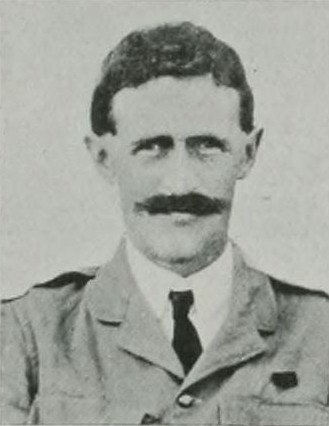
Robert Masefield.
MASON, ALBERT EDWARD, Ordinary Seaman, J. 16559, H.M.S. Pathfinder; lost when that ship was sunk by a mine, about 20 miles off the East Coast, 5 Sept. 1914.
MASON, ANDREW NIMMO, Private, No. 919, 2nd Battn. Gordon Highlanders; b. Edinburgh, 14 Oct. 1893; educ. Morningside Board School there; was employed as a Vanman with Messrs. Buchan, Dairymen, of Balcarris Street, Edinburgh; enlisted 22 Feb. 1912; went to France in Sept. 1914, and was killed in action at Ypres, 2 Nov. following.
MASON, ARTHUR, Rifleman, No. 2367, A Coy, 1/18th Battn. (London Irish Rifles), The London Regt. (T.F.), yst. s. of Joseph Mason, of 11, Tower Terrace, Wood Green, N., by his wife, Sarah, dau. of Thomas Hammond, of Lower Guiting; b. Wood Green, N., 4 Feb. 1883; educ. Higher Grade School there; was a Mercantile Clerk; enlisted in the 2nd Battn. of the London Irish Rifles, 2 Sept. 1914, and trained with them at the White City, London, and Reigate; later he volunteered for the 1st Battn. then at St. Albans, and left with them for France on 10 March, 1915. He was killed in action during the famous charge made by the London Irish at the Battle of Loos, 25 Sept. 1915; unm.
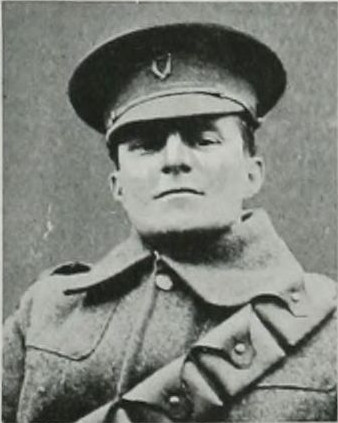
Arthur Mason.
MASON, EDWARD, 2nd Lieut. 3rd (attached 2nd) Battn. Northamptonshire Regt., the distinguished ’Cellist and Conductor; only s. of Jeremiah Mason, of 1, Ingoldsby Mansions, West Kensington, and Coventry, by his wife Sarah, dau. of William Sutton, of Kenilworth; b. Coventry, 24 June, 1878; educ. privately in Coventry and in Germany; began his musical life as a chorister in St. Michael’s Church, during the period Dr. A. H. Brewer was organist and choirmaster, and when he entered the Royal College of Music, he had already gained some proficiency as a violinist, ’cellist and pianist. In the course of his studentship he won several exhibitions, and obtained his diploma of Associateship. On leaving there, he was, in 1897, appointed assistant to Dr. C. H. Lloyd at Eton, a post he held until the outbreak of the war. He made his first appearance in London as a ’cellist at the Bechstein Hall in 1900, and was well-known both as a soloist and as a quartet player at Chamber concerts in London and the country. He was a Director of, and principal ’cellist in the New Symphony Orchestra, which he conducted on its first appearance at the Queen’s Hall, in 1906, and was engaged in the orchestras of most of the principal musical festivals. In 1907, he established the Edward Mason Choir, formed principally in order to produce new works by the younger British composers, who by his death lost a good friend. Following the outbreak of war, he joined the Universities and Public Schools Battn. early in Sept., received his commission 24 Feb. 1915; went to France at the end of March, and was killed in action near Fromelles, 9 May. In a letter to his father, a brother officer said: “He was killed gallantly leading his men in the attack on 9 May against the German trenches”; and his platoon sergt. wrote that Mr. Mason’s detachment came under a devastating fire from German machine guns near Fromelles, and that he fell in a hail of bullets. His portrait was hung in the music school at Eton, where he taught so long and so successfully. Another portrait hangs in the Students’ Room of the Royal College of Music. The R.C.M. Magazine for No. 3 Term, 1915, says: “Edward Mason, the man, had many lovable qualities, which endeared him to his friends. He was generous-hearted, good-humoured, and at all times a charming companion. He hated any kind of pose or pretence, and might be described as the antithesis of the conventional musician of the ‘long-haired’ variety.” “He was a fine fellow, and one of the best musicians I ever knew,” wrote Dr. C. H. Lloyd, his former chief at Eton. “And all who knew Edward Mason well will endorse this very apt and true summary of his qualities.” He m. at Ealing 14 Aug. 1905, Jessie, (the violinist and leader of the Grimson String Quartet) dau. of Samuel Dean Grimson.
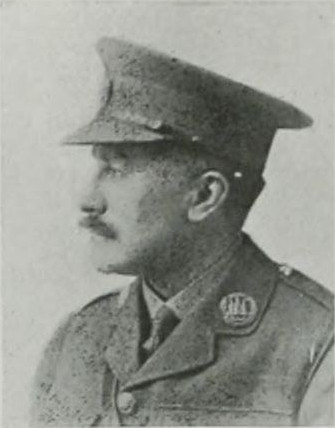
Edward Mason.
MASON, GEORGE, Private, R.M.L.I. (R.F.R.), Ch. 7021, H.M.S. Hawke; lost when that ship was torpedoed in the North Sea, 15 Oct. 1914; m.
MASON, HENRY THOMAS, Chief Stoker, 170258, H.M.S. Hogue; lost in action in the North Sea, 22 Sept. 1914.
MASON, JAMES, Private, No. 5779, 3rd Battn. Coldstream Guards, s. of James Mason, by his wife, Elizabeth, dau. of Charles Lincoln; b. Sprowston, co. Norwich, 14 May, 1886; enlisted 18 Oct. 1904; served in Egypt, 29 Sept. 1906 to 20 Oct. 1908, and with the Expeditionary Force in France and Flanders, from 12 Aug. 1914, and was killed in action at Landrecies, 25 Aug. 1914. He m. at Norwich, 19 Aug. 1911, Clara (7, Pearces Fields, Sprowston, Norwich), dau. of James Hazelton, and had a dau., Clara Ada, b. 5 Feb. 1913.
MASON, JOHN, Petty Officer, 1st Class, 196093, H.M.S. Cressy; lost in action in the North Sea, 22 Sept. 1914.
MASON, JOHN, Color-Sergt., R.M.L.I., Ch. 7778. H.M.S. Cressy; lost in action in the North Sea, 22 Sept. 1914.
MASON, THEOPHILUS, Drummer, No. 1614, 2nd Battn. Coldstream Guards, yst. s. of Theophilus Mason, of 3, Pitley Place, Walworth, S.E., retired Policeman: b. New Kent Road, London, S.E., 23 Feb. 1884; educ. Sayer Street Board School; enlisted as a Drummer, 2 May, 1898; went to France, 12 Aug. 1914, and was killed in action at Cuinchy Brickfields, 1 Feb. 1915. Buried in Cuinchy Cemetery (Grave No. 14 F). Sergt.-Drummer A. Douglas of his battn. wrote to the widow; “I feel I must write and tell you how sorry we all feel for you in your sad bereavement. It may be some consolation to you to know that your husband died like a hero and a true soldier. He always had my deepest respect, and I with the remainder of the drummers feel his loss very deeply.” He m. at St. Stephen’s Church, Walworth, S.E., 1 Nov. 1902, Ellen (14, Russell Street, Windsor), dau. of Charles Eagle, of 39, Eltham Street, Walworth, S.E., and had five children: Theophilus, b. 26 May, 1904; Charles, b. 15 April, 1907; Horace, b. 17 April, 1910; Ellen, b. 23 Nov. 1905; and Muriel Irene, b. 12 March, 1913.
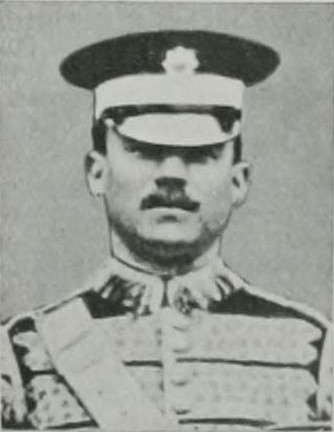
Theophilus Mason.
MASON, WALTER TROWER, Shipwright, 342914, H.M.S. Aboukir; lost in action in the North Sea, 22 Sept. 1914.
MASON, WILLIAM, Leading Seaman (R.F.R., B. 3625), 133388, H.M.S. Hawke; lost when that ship was torpedoed in the North Sea, 15 Oct. 1914; m.
MASSEY. CHARLES THOMAS, Chief Petty Officer (W.T.O.), R.N.R., H.M.S. Aboukir; lost in action in the North Sea 22 Sept. 1914.
MASSIE, JOHN HAMON, D.S.O., Major, Royal Garrison Artillery, yr. s. of Edward Richard Massie, of Coddington, Cheshire, and Annefield, Gresford, North Wales, formerly Lieut. 78th Highlanders, by his first wife, Baroness Olga Marie, dau. of Baron von Wessenberg-Ampringen and granddau. of Henry, Baron von Wessenberg-Ampringen, formerly Austrian Ambassador, at St. James’, and grandson of Admiral Thomas Leche Massie; b. Eaux Chaudes, Basses Pyrenees, France, 10 June, 1872; educ. Stubbington House (Mr. M. Foster), and the Royal Military Academy, Woolwich; gazetted 2nd Lieut. 1 May, 1892; promoted Lieut. 1 May, 1895; Capt. 19 Jan. 1900, and Major, 15 Feb. 1913; served in Chitral, 1895, with the Relief Force (medal with clasp); and in the South African War, 1900–2, attd. to the Transport Department; took part in the operations in the Orange Free State, Feb. to May, 1900; operations in the Transvaal in May and June, 1900, including actions near Johannesburg and Diamond Hill; operations in the Orange River Colony, May to 29 Nov. 1900, including action at Wittebergen; operations in the Transvaal, 30 Nov. 1900 to March, 1902, and those in the Orange River Colony, March to 31 May, 1902 (mentioned in Despatches [London Gazette, 17 Jan. 1902], Queen’s medal with four clasps and King’s medal with two clasps, D.S.O.); was Instructor at the Royal Military Academy from 1 Jan. to 11 Sept. 1904; Commander of a company of Gentleman Cadets there from 12 Sept. 1904 to 31 Dec. 1908, and Staff Capt. School of Gunnery, Shoeburyness, Nov. 1910 to Aug. 1914; went to France with the Expeditionary Force, 9 Oct. 1914, and died in the Field Ambulance, near Ypres, 15 Nov. following, of wounds received in action on the 13th, when in command of the 26th Battery, Heavy Artillery. Buried in Ypres Cemetery. Major Massie m. at Southsea, co. Hants, 3 Sept. 1903, Maria Margaret, elder dau. of Major-Gen. Ernest Archibald Berger, late 10th (The Lincolnshire) Regt.; s.p.
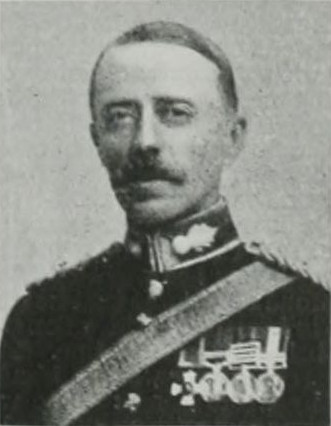
John Hamon Massie.
MASTER, CHARLES LIONEL, Capt., 2nd Battn. Royal Irish Rifles, s. of the late William Edward Master, of Kotmalie, Ceylon, Tea Planter, by his wife, Jeanette, dau. of Samuel Newson Gissing, nephew of Harcourt Master, of Rotherhurst, Liss, co. Hants, grandson of Lieut.-Col. Harcourt Master, 1st Dragoon Guards, and 4th Queen’s Own Light Dragoons, and great-grandson of Lieut.-Col. Harcourt Master, 52nd Foot; b. in Ceylon, 24 March, 1881; educ. Bradfield College; joined the Royal Irish Rifles from the Louth Militia, as 2nd Lieut. 5 Jan. 1901; promoted Lieut. 28 March, 1905; Adjutant, 25 Jan. 1908; and Captain, 28 June, 1908; served in the South African War, taking part in the operations in the Orange Free State and Transvaal, Aug. 1901–May, 1902 (Queen’s medal with five clasps). On the outbreak of the European War, he went out with his regt. to France, took part in the retreat from Mons, and the subsequent engagements prior to meeting his death in action at La Couture, on 12 Oct. 1914, from a shrapnel shell, when leading his coy. in the attack. He was buried at Vielle Chapelle; unm. He was mentioned for distinguished conduct in the field in Field-Marshal Sir John French’s despatch of 8 Oct. 1914. Capt. Master was much beloved by both officers and men, as will be seen from the following extracts from letters received since his death. The wife of his late Colonel wrote: “As Capt. Master was my husband’s Adjutant, we got to know him so well, and he was invaluable to my husband being such a dependable, able soldier”; and an officer: “His death was a dreadful blow to me, as it was to us all, and we shall miss him terribly, and mourn him always. It is no exaggeration to say that he was beloved by officers and men alike, for we recognised his great ability and worth, and I know that Col. Bird thought very highly of him as a thoroughly sound and reliable soldier. Had he lived, I am sure he would have done particularly well in this war, and he has already been mentioned in despatches.” Capt. Master was a keen sportsman, being a member of his football eleven at school, and after joining his regiment kept up his interest in the game, and did his utmost to inculcate the love of pure sport amongst his men. It was owing in a large measure to his tuition and untiring efforts that the Royal Irish Rifles turned out a team which was a tower of strength for several years in regimental contests, and had the proud distinction of winning the Army Cup. He was also devoted to hunting, and whenever the opportunity occurred he might be seen out with the various packs in the neighbourhood in which his regt. happened to be quartered.
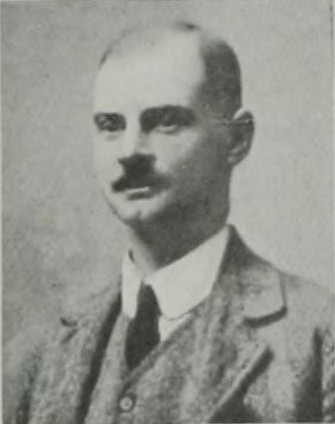
Charles Lionel Master.
MASTERS, TREVOR MONRO HOARE, Midshipman, R.N., eldest s. of the late Lieut. Charles Monro Masters, R.N., late H.M.S. Cressy (died 21 Aug. 1902), by his wife, Susan (now wife of Capt. William Firth Slayter, R.N.), dau. of (—), of New Zealand, and gdson. of Canon James Hoare Masters, of The Close, Chichester; b. Sydney, N.S.W., 13 May, 1895; educ. privately (Rev. C. Royle, Stanmore Park, near Harrow); entered the Navy, became Midshipman in Jan. 1911, was appointed to H.M.S. Formidable, Nov. 1914, and was lost when that ship was sunk in the English Channel, 1 Jan. 1915; unm.
SMITH-MASTERS, GEORGE ARTHUR, 2nd Lieut., 6th (Service) Battn. The Bedfordshire Regt., yst. s. of the Rev. John Ernest Smith-Masters, M.A., Vicar of South Banbury, formerly Vicar of Stewkley, Bucks, and Rural Dean of Mursley, by his wife, Eliza Margaret, dau. of Samuel Swinton Melville, I.C.S., and grandson of the late Rev. Allan Smith-Masters, of Camer, Kent, J.P.; b. Kidmore End, co. Oxon, 29 Dec. 1894, and after receiving his early education at Eversley School, was elected to a scholarship at Haileybury College. He matriculated at Keble College, Oxford, in Jan. 1914, intending to prepare for Holy Orders, but on the outbreak of war applied for a commission, and was gazetted 2nd Lieut. from the Oxford University O.T.C. on 21 Aug. 1914, and left England with his regt. 30 July, 1915. He had always taken a great interest in the Church Lads’ Brigade, and had been appointed Lieut. in the 5th Oxford Cadet Corps (C.L.B.) in July, 1914. In the early days of the war he was, with his father, in charge of the lads of the Stewkley Coy. of C.L.B. in their work of guarding bridges on the main line of the London & North Western Railway by day and night. He went out near midnight on 19 Aug. 1915, along with a Sergt. to endeavour to locate shots which were endangering the lives of his men employed in digging trenches, and was shot through the heart by a sniper. His Colonel wrote to his mother: “Your dear son was a favourite with us all, and there was not an officer or a man who stood with me round his grave who did not feel they had lost a personal friend. He was such a charming boy, a God-fearing, straight-living English boy. An English gentleman, he died doing his duty, a very brave action. Col. des Vœux, who commands the operations there, said that nobody but one of the best and bravest would have attempted to do what your son wished to do.” His company officer wrote: “One thing you will be proud to know is that he died doing his duty in an exceptionally brave manner, not in broad daylight, when it is easier to be brave, but in the dead of night, a mile behind the firing line. The whole of his company was able to attend his last parade, when we laid him to rest yesterday evening.” A drummer of his company wrote home: “He was a great favourite with us all, both with the other officers and with us men. He was the best officer in the battn.; he was something like a brother might be, and was missed quite as much.” He was buried in the English cemetery at Dranoutre, the Service being taken by the Senior Chaplain of the Brigade. The General and officers from all the regiments in the Brigade were present, his uncle, Col. J. S. Melville, commanding 8th E. Lancs. Regt., attending as chief mourner.
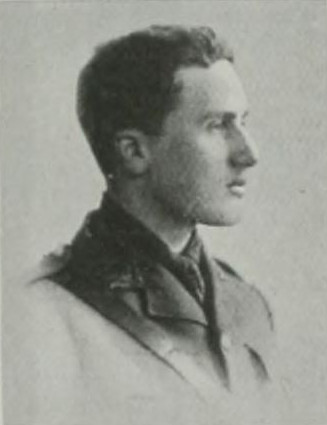
George A. Smith-Masters.
MATHER, JAMES, Private, No. 8884, 2nd Battn. Coldstream Guards, s. of James Charles Mather, of 25, Fraser Street, Bolton, Labourer, by his wife, Elizabeth, dau. of Ralph Hough, Stripper and Grinder; b. Halliwell, Bolton, co. Lancaster, 17 Nov. 1890; educ. Brownlow-fold Council School; enlisted 3 Oct. 1910, and was killed in action at Rentel, Belgium, 2 Nov. 1914; unm.
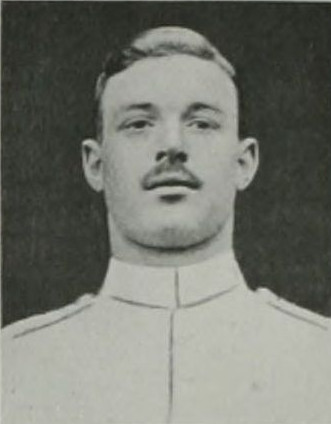
James Mather.
MATHER, JOHN KEARSLEY, Lieut., 1st Battn. York and Lancaster Regt., 5th s. of Arthur Mather, of Avonhill, Cheltenham, by his wife, Ethel Madeline, dau. of the late Rev. Charles Francis Willis, M.A.; b. Cheltenham, 25 Jan. 1890; educ. Cheltenham College, and the Royal Military Academy, Woolwich (Sandhurst Division); gazetted 2nd Lieut. to the 1st York and Lancaster Regt. 18 Sept. 1909, and joined his battn. at Quetta, India, in the following Dec.; served in India five years, being promoted Lieut. 8 Dec. 1911; came home with his battn. in Dec. 1914; went to France, 15 Jan. 1915, and was killed in action by shell fire near Ypres, 18 Feb. 1915, and buried at Verbranden Molen; unm.
MATHERRON, EDWARD JOHN, Stoker, 1st Class (R.F.R., Ch. B. 8050), S.S. 103773, H.M.S. Cressy; lost in action in the North Sea, 22 Sept. 1914.
MATHESON, JOHN RODERICK FLETCHER, Private, No. 8919, 1st Battn. Highland L.I., s. of the Rev. Dugald Matheson, United Free Church of Scotland, Minister of Tarbat; b. Kiltearn, co. Ross, June, 1880; educ. Tarbat Old Public School and Inverness; enlisted in the Highland L.I. in 1909, served through the South African War, and obtained his discharge in 1913. On the outbreak of war he was in Canada, but immediately re-enlisted, came over with the 1st Canadian Contingent, obtained his transfer to his old regt.; went to the Front at the end of Dec. 1914, and was killed in action at Neuve Chapelle, 12 March, 1915. He m. at Winnipeg, Canada, 1909, Bella, dau. of D. M. Davidson, of co. Inverness, but had no children.
MATHEWS, ALFRED FELTON, Rifleman, No. 2657, 12th Battn. (The Rangers) The London Regt. (T.F.), s. of William Felton Mathews, of Highworth, Wilts, by his wife, Emily, dau. of John Shewry, of Southampton; b. 2 Sept. 1894; educ. Carlton Road Council School and Polytechnic, Regent Street; and was on the staff of Messrs. H. I. Nicoll & Co., of Regent Street, London, W., when war broke out, but was intending to enter a missionary college as a student. He joined the Rangers on 5 Sept. 1914, went to France on the following Christmas Day, and was killed in action near Ypres on 5 May, 1915. He was acting as a stretcher-bearer when a shell burst close to him, wounding him in the arm; but he pluckily refused to give in until quite exhausted, when he laid his groundsheet down and fell asleep. Shortly afterwards, another shell came and killed him. Buried in the grounds of the Asylum, Ypres; unm.
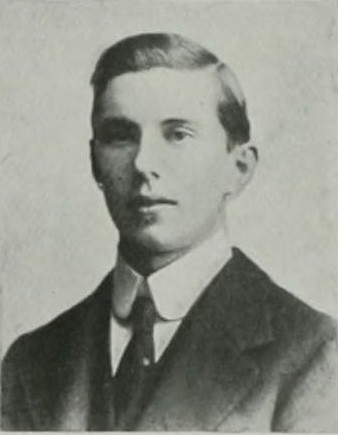
Alfred Felton Mathews.
MATHURIN, JOHN, Stoker, H.M.S. Good Hope; lost in action off Coronel, on the coast of Chili, 1 Nov. 1914.
MATHWIN, DOUGLAS GATECLIFF, 2nd Lieut., 1/9th Battn. King’s Liverpool Regt. (T.F.), only surviving s. of the late Henry Mathwin, of Bickerton House, Birkdale, Southport, Schoolmaster, M.A., by his wife, Agnes (3, Bickerton Road, Southport), dau. of John William Gatecliff; b. Bickerton House, afsd., 9 June, 1885; educ. Bickerton House School; and was a Chartered Accountant; on the outbreak of war he applied for a commission, was gazetted 2nd Lieut. to the 1/9th Liverpools, 11 Nov. 1914; went to France, 12 March, 1915, and was killed in action near Richebourg l’Avoué on 9 May, 1915, being buried behind the trenches; unm. He was acting captain at the time of his death.
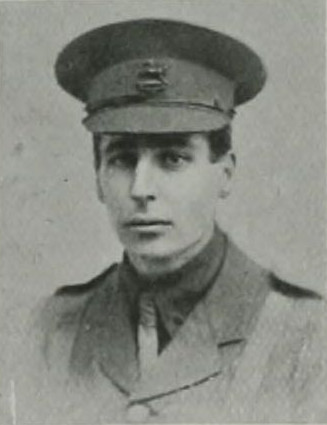
Douglas Gatecliff Mathwin.
MATRAVERS, GEORGE, Stoker, 1st Class (R.F.R., B. 3204), S.S. 100832, H.M.S. Good Hope; lost in action off Coronel, on the coast of Chili, 1 Nov. 1914.
MATSON, CLIFFORD, Stoker, 1st Class, K. 10394, H.M.S. Good Hope; lost in action off Coronel, on the coast of Chili, 1 Nov. 1914.
MATTHEWS, CHARLES HENRY, Private, No. 5533, 1st Battn. Coldstream Guards, s. of William Henry Matthews, of 42, Butlin Street, Nechells, Birmingham, Millwright, by his wife, Frances; b. 24 June, 1885; educ. Cromwell Street Council School; enlisted 30 April, 1904; went to France, 17 Aug. 1914, and was reported missing after the severe fighting on 29 Oct. 1914, on which day the 2nd Coldstreams and the rest of the 1st Division were at one time driven from their trenches near Gheluvelt; and is now assumed to have been killed on that day. He m. at St. Clement’s Church, Nechells, 3 Oct. 1909, Charlotte (18, Brighton Grove, Great Francis Street, Birmingham), dau. of Samuel Woodin, Painter, and had two children: Charles Henry, b. 9 Feb. 1915, d. 9 Jan. 1916; and Edna Francis, b. 9 Dec. 1910.
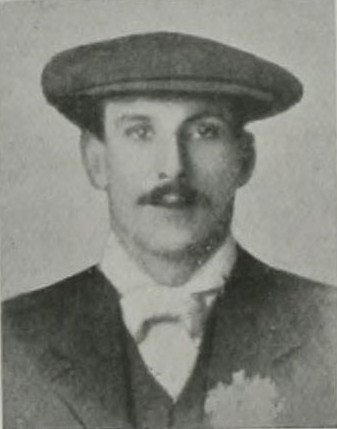
Charles Henry Matthews.
MATTHEWS, FRANCIS, Stoker H.M.S. Good Hope; lost in action off Coronel, on the coast of Chili, 1 Nov. 1914.
MATTHEWS, FRANK, Private, R.M.L.I., Ch./12178, H.M.S. Hawke; lost when that ship was torpedoed in the North Sea, 15 Oct. 1914; m.
MATTHEWS, FRANK GEORGE, Midshipman, R.N., yr. s. of Brig.-Gen. Frank Broadwood Matthews, of Old Raven House, Hook, co. Hants, C.B., D.S.O., late commanding 2nd Battn. The King’s Own Regt., and his wife, Edith Mabel Warner, dau. of the late Ralph George Price, of 26, Hyde Park Gardens, London, W.; b. Lichfield, co. Stafford, 9 Feb. 1898; educ. Parkside, Ewell, Surrey (Mr. A. Vaughan Pott); Royal Naval College, Osborne, and Royal Naval College, Dartmouth; entered the Navy, 1 Aug. 1914; was appointed to H.M.S. Cressy, and was lost when that ship was torpedoed in the North Sea, 22 Sept. following.
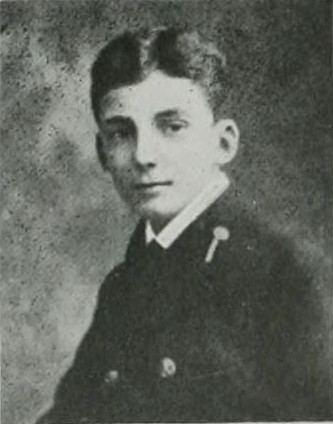
Frank George Matthews.
MATTHEWS, HAROLD CAREY, Major, 4th Battn. Alexandra, Princess of Wales’ Own Yorkshire Regt. (The Green Howards) (T.F.), eldest s. of Frederick William White Matthews, of Low Hall, Sinnington, Yorks, J.P., formerly manager of Barclay’s Bank, at Leyburn; by his wife, Ellen Georgiana, dau. of the late Rev. Hewett Carey; b. Hawes, Wensleydale, co. York, 25 April, 1879; educ. The School, Aysgarth, Yorks, entered Barclay’s Bank, and at the time of the outbreak of war was second in charge of their Market Weighton Branch. He had joined the London Rifle Brigade as a Private in 1897, and was afterwards given a commission as 2nd Lieut. in the 4th Yorks Regt., and served in the South African War in command of the 2nd Service Company of that Regt. For his services he received the Queen’s medal with five clasps and was made an Hon. Lieut, in the Army, 26 July, 1902. He was promoted Capt. 30 April, 1904, and on the outbreak of the European War volunteered for foreign service, and was gazetted Major, 29 Aug. 1914. He left for France on 17 April, and was killed in action at St. Julien, north of Ypres, a few days later, 25 April, 1915. His Commanding Officer wrote: “He was killed in action leading his men in work which earned the compliments of the General.” Major Matthews m. at Dringhouses Parish Church, York, 12 July, 1911, Marjory Phyllis, yst. dau. of Gervas Woodhouse, of 196, Mount Vale, York, and had issue: Frederick Gervas, b. 24 Dec. 1912; and Marjory Phyllis, b. posthumous, 13 Oct. 1915.
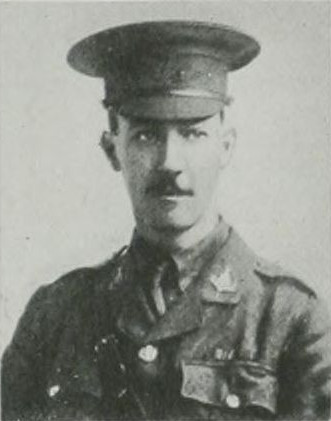
Harold Carey Matthews.
MAUGHAN, JOHN, Mechanician, 284270, H.M.S. Good Hope; lost in action off Coronel, on the coast of Chili, 1 Nov., 1914.
MAULE, ROBERT, Lieut., 5th, attd. 1st Battn. The Royal Scots (Lothian Regt., T.F.), only s. of Sir Robert Maule, of Ashbrook, Edinburgh, J.P., by his wife, Janet, dau. of Robert McIntosh, of Leith; b. at Trinity, Edinburgh; 1884; educ. Morrison’s Academy, Crieff; the Leys School, Cambridge, and Christ’s College, Cambridge (M.A. 19..); and on leaving the University joined his father’s firm, Robert Maule & Son, Princes Street, Edinburgh, and became a director in 1913. He obtained a commission as 2nd Lieut. in the 5th (Queen’s Edinburgh Rifles), Royal Scots, 24 Nov. 1912, and on the outbreak of war volunteered for foreign service; was promoted Lieut. 16 Sept. 1914, and attd. to 1st Battn.; went to Egypt with his Battn. in March, 1915, and was there nominated by his Commanding Officer, Col. J. T. A. Wilson, to command the section to form an escort to the Commander-in-Chief, Gen. Sir Ian Hamilton, but at his own request was allowed to rejoin his regt.; went to the Dardanelles in May, and was killed in action there, 29 May, 1915; unm. His brother-in-law, Capt. Edgar Walker, 1st East Yorks, was also killed in action.
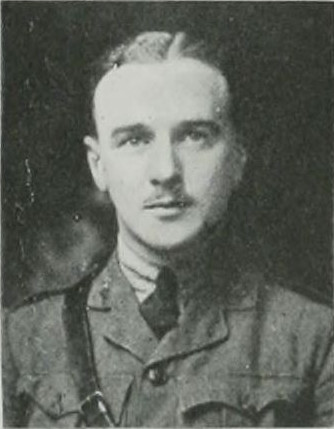
Robert Maule.
MAUNDER, LEONARD, Rifleman, No. 7692, 3rd Battn. The Rifle Brigade, s. of Henry Maunder; b. Downley, High Wycombe, co. Bucks, 29 Aug. 1883; enlisted in March, 1899; served in France and Flanders from 9 Sept. to 29 Sept. 1914, and was killed in action on the latter date. Buried the Quarries by Champs d’Ering, near Soupir. He m. at St. Peter’s, Winchester, 2 Aug. 1909, Ada Susan (2, Middle Brook Street, Winchester), dau. of Alfred Charles Dillow, and had a son Leonard Charles, b. 12 June, 1910.
MAURICE, FRANCIS DENNISON, Lieut., 1st (Canterbury) Battn. New Zealand Expeditionary Force, eldest s. of Frank Augustus Maurice, of 41, Alma Square, St John’s Wood, London, N.W., R.A.M., Can. Coll., Professor of Music and Singing, by his 1st wife, Gertrude, dau. of John Gibbs Hart, of Christchurch, New Zealand, and great-grandnephew of the Rev. Peter Maurice, D.D., Rector of Oxford; b. Linwood, Christchurch, New Zealand, 4 Aug. 1891; and was educ. at Temuka High School, and Canterbury College, New Zealand. He was a brilliant scholar, winning the Junior Scholarship at the age of 12, coming out third of the whole of Canterbury, and the Senior two years after, coming out second. He matriculated when 15 years of age, so he paid for all his education; and at the age of 18 was assistant master at Burnham Industrial School; and at 19, Head Master at Longridge, Southland. He was five years in the Senior Cadets, and was gazetted 2nd Lieut. on the formation of the New Zealand Universal Training Army, and Lieut. just before the war broke out, and had passed his captaincy examination. He volunteered for Imperial service, left New Zealand for Egypt with the first reinforcements on R.M.S. Athenic in the following Oct.; took part in the landing at the Dardanelles, 25–26 April, and died 10 May, 1915, on H.M.S. Braemar Castle, of wounds received two days previously in Gallipoli. He was buried at sea; unm. For over two years he was a master of the Waimate District High School, where a memorial tablet was erected to his memory. He was an enthusiastic hockey player and instructor; his Waimate ladies’ team of six-a-side winning the championship, and was on the Committee of the South Canterbury Hockey Association.
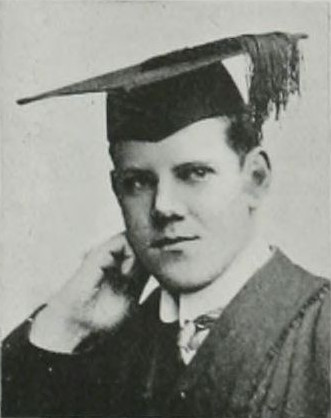
Francis D. Maurice.
MAW, WILLIAM FRANCIS, A.B., J. 12612, H.M.S. Good Hope; lost in action off Coronel, on the coast of Chili, 1 Nov. 1914.
MAXTED, THOMAS, A.B. (R.F.R., B. 7844), S.S. 1471, H.M.S. Hawke; lost when that ship was torpedoed in the North Sea, 15 Oct. 1914.
MAXWELL, AYMER EDWARD, Younger of Monreith, Lieut.-Col. Commanding 4th (Collingwood) Battn. 1st brigade, R.N. Division, only surviving s. of the Rt. Hon. Sir Herbert Maxwell, 7th Bart., P.C., F.R.S.; b. Edinburgh, 26 Oct. 1877; educ. Eton and Sandhurst; gazetted to the Grenadier Guards, 8 Sept. 1897; served in South African War 1899–1900; took part in the advance on Kimberley, including the actions at Belmont and Enslin (Queen’s medal with clasp); invalided home, 1900; and retired with rank of Captain, 4 Sept. 1907, joining the Reserve of Officers; Capt. Lovat’s Scouts (Yeo.), 1911. On mobilisation, Aug. 1914, he immediately rejoined the Grenadier Guards, and subsequently volunteered for service as Adjutant and second in command in the newly-formed Royal Naval Division. He received command, with the rank of Lieut.-Col. of the Collingwood Battn. then in camp at Walmer, and with it accompanied the expedition to Antwerp. He was wounded in the head by the first shell of the bombardment of 8 Oct. after four days and nights of ceaseless exertion, almost entirely without sleep or rest, and died the following day in the Military Hospital there, being buried in the garden. The officer commanding the Brigade, wrote: “His death is a severe loss to my brigade. I personally have lost a friend, the whole brigade has lost one of its finest officers. His energy, earnestness and singleness of purpose inspired his whole Battn., and both his officers and men were animated by his fine spirit from the moment he assumed command of them.” He was gazetted temporary Lieut.-Col. Royal Marines (10 Nov.) after his death. Colonel Maxwell was a J.P., D.L. and County Councillor for Wigtownshire, a Director of the Crichton Royal Institution and author of various works and articles on sporting subjects. He m., London, 20 Oct. 1909, Lady Mary Percy, dau. of Henry George, 7th Duke of Northumberland, K.G., P.C., by his wife, Lady Edith Campbell, eldest dau. of George, 8th Duke of Argyll, K.G., K.T., P.C., and had issue three sons and a dau.: Aymer, b. 7 Dec. 1911; Eustace, b. 24 Feb. 1913; Gavin, b. 15 July, 1914; and Christian, b. 31 July, 1910.
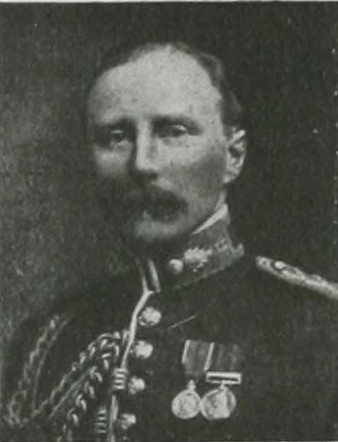
Aymer Edward Maxwell.
MAXWELL (alias ROBERTS), BERTRAM JESSE, Chief Petty Officer, No. 282914, R.N., s. of Louisa (now wife of Robert Roberts, of 19, Clarendon Road, Havant), dau. of the late George Maxwell; b. Eastbourne, co. Sussex, 10 May, 1878; educ. St. Faith’s, Havant, was adopted and brought up by his stepfather; entered the Navy under the name of Roberts, 1896; but afterwards resumed his own name; served in China (medal); and was lost in H.M.S. Invincible in the Battle off Jutland, 31 May, 1916. He m. at Langrish, 31 April, 1904, Agnes, dau. of Thomas (and Annie) Nash, of Stroud, Petersfield, and had two daus.: May, b. 11 April, 1906, and Gladys, b. 14 Sept. 1913. His half brother, L.-Corpl. F. W. Roberts was killed in the landing at the Dardanelles, 25 April, 1915 (see his notice).
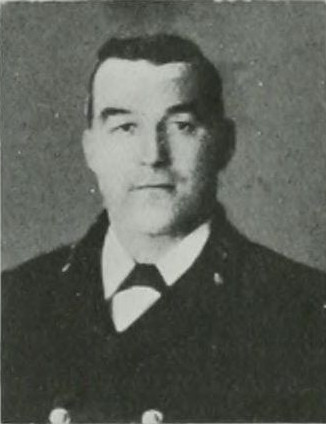
B. J. Maxwell (alias Roberts).
MAY, EDWARD THOMAS, Petty Officer (C.G.), 142724 (Dev.), H.M.S. Hawke; lost when that ship was torpedoed in the North Sea, 15 Oct. 1914; m.
MAY, FRANK JUBILEE, Stoker, 1st Class (B. 4586), S.S. 103696, H.M.S. Good Hope; lost in action off Coronel, on the coast of Chili, 1 Nov. 1914.
MAY, JOHN, Ordinary Seaman, J. 16137, H.M.S. Pathfinder; lost when that ship was sunk by a mine, about 20 miles off the East Coast, 5 Sept. 1914.
MAY, JOHN EDWARD, Private, R.M.L.I. (R.F.R.), Ch. 8452, H.M.S. Hawke; lost when that ship was torpedoed in the North Sea, 15 Oct. 1914; m.
MAY, SIDNEY CHARLES, Sapper, No. 1507 Kent (Fortress) R.E. (T.F.), s. of William May, of Elm Cottage, Oxonhoath, West Peckham, Tonbridge; b. Oxonhoath aforesaid; educ. there; joined the Navy, 27 Oct. 1914; and was lost when H.M.S. Hythe was sunk in the Ægean Sea, 27 Oct. 1915; unm.
MAY, WILLIAM, Private, R.M.L.I. (R.F.R., Ch. B. 1089), H.M.S. Aboukir; lost in action in the North Sea, 22 Sept. 1914.
MAY, WILLIAM RICHARD, Stoker, 1st Class (R.F.R., B. 10340), S.S. 108083, H.M.S. Hogue; lost in action in the North Sea, 22 Sept. 1914.
MAYCOCK, GEORGE, Stoker, 1st Class (B. 4858), S.S. 104278, H.M.S. Good Hope; lost in action off Coronel, on the coast of Chili, 1 Nov. 1914.
MAYLIN, FREDERICK FRANCIS, Boy, 1st Class, J. 26753, H.M.S. Hawke; lost when that ship was torpedoed in the North Sea, 15 Oct. 1914.
MAYNARD, DANIEL, Private, R.M.L.I. (R.F.R., Ch. B. 862), H.M.S. Aboukir; lost in action in the North Sea, 22 Sept. 1914.
MAYNARD, JOHN WILMOT, 2nd Lieut., 3rd Battn. King’s Royal Rifle Corps, yr. s. of Edmund Anthony Jefferson Maynard, of Hoon Ridge, co. Derby, J.P., by his wife, Margaret Blanche, elder dau. of Robert Sacheverell Wilmot-Sitwell, of Stainsby House, Derbyshire, J.P., D.L.; b. Eastbourne, 8 June, 1896; educ. St. Peter’s Court, Broadstairs, and Harrow; gazetted 2nd Lieut. to the King’s Royal Rifle Corps, 23 Dec. 1914; went to France in March, 1915, and was killed in action during the second Battle of Ypres, 24 April, 1915. Buried in the north-west corner of the Polygone de Zonnebeke Wood, 5 miles due east of Ypres.
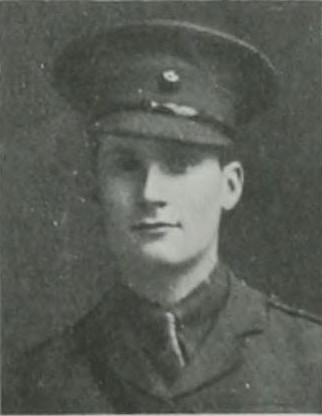
John Wilmot Maynard.
MAYO, GEORGE PATRICK, Petty Officer, 210642, H.M.S. Good Hope; lost in action off Coronel, on the coast of Chili, 1 Nov. 1914.
MEAD, BERNARD WALLACE, 2nd Lieut., 4th Battn. Royal Fusiliers, yst. s. of Henry John Mead, of 27 Ladbroke Gardens, Kensington, W., Solicitor, by his wife, Edith Charlotte, dau. of the late Rev. Joseph Gifford, Vicar of Newport, Barnstaple; b. Kensington, W., 2 Aug. 1893; educ. Cranleigh School, and on leaving joined the staff of the Sun Fire Office. He had belonged to the 28th London Regt. (Artists’ Rifles) for some years, and on the outbreak of war, volunteered for foreign service and went to France with them in Oct. 1914. He was gazetted 2nd Lieut. on the unattached list, 5 April, 1915, and immediately afterwards appointed to the 4th Royal Fusiliers, a corps which had been in the thick of the fighting since the Battle of Mons. On the night of 30 May, 1915, near Ypres, he received orders to relieve another officer in a trench about 25 yards from the German lines. While on his way, accompanied by his Capt. and a N.C.O., the party met two other officers belonging to another Corps. The enemy sent up a flare and opened fire upon the group of five and Lieut. Mead fell mortally wounded. He died three days later (2 June) at Bailleul, and was buried in the Military Cemetery there; unm.
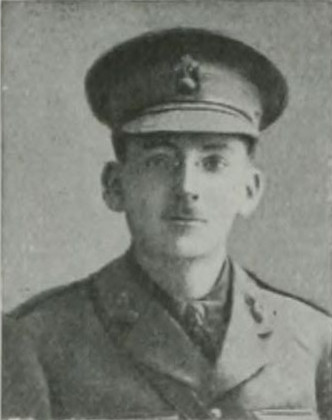
Bernard Wallace Mead.
MEAD, CHRISTOPHER, Lieut., A Coy. 2nd Battn. East Surrey Regt., 2nd s. of John Phillips Mead, of the firm of Mead & Co., 2, King’s Bench Walk, Inner Temple, and of St. Mary’s, Teddington, Solicitor, by his wife, Maud Helen Kate, dau. of Samuel King Church; b. Fopstone Road, Earl’s Court, S.W., 10 May, 1888; educ., Street Court, Westgate-on-Sea, and Charterhouse (Bodeites); was admitted a Solicitor in 1913, and was a junior partner in his father’s firm; joined the Inns of Court O.T.C. in 1910, and after serving in it four years, joined the Reserve. He rejoined on the outbreak of war in Aug. 1914; was gazetted 2nd Lieut. to the 4th Battn., East Surrey Regt., 15 Aug., and promoted Lieut. 8 Sept. [London Gazette, 11 Nov.], 1915; trained at Devonport; went to France, 11 May, 1915, and was there attached to the 2nd Battn.; served through the gas attack on Whit Monday, his regiment being in the front trenches, and was shot in the temple by a bullet in July, but remained on duty at the time; was given five days’ leave in Aug., and was killed in action in the assault on the Hohenzollern Redoubt, Vermelles, 28 Sept. 1915, while leading a bombing party of A Coy., and after having been throwing bombs incessantly for over three hours; unm. His Commanding Officer, Col. F. Montague Bates, wrote: “Your son was killed by a bomb on the 28th. He was commanding A Coy. at the time of his death and was gallantly leading a bombing party of his men forward when he was hit by a German bomb and killed instantaneously. I thought a great deal of him, he was an excellent soldier, daring and gallant; he was beloved by his men and popular with all ranks; his loss to me as commanding officer is a great blow. He was brave as a lion and died a glorious death”; and in a later letter: “Your boy was killed by a bomb in a trench leading out of the Hohenzollern Redoubt; he was running up a trench towards the Germans, who were in the same trench, and throwing bombs and driving the Germans back. He, of course, was in the thickest of the fighting.” Capt. A. Dowler of his regt. wrote: “Doubtless you know how popular Mead was with everybody and his work in the Hohenzollern would undoubtedly have earned him some distinction”; and Major F. Clifford, of The King’s Liverpool Regt., wrote from Egypt: “Today the Colonel of the East Surrey Regt. was here, he told me that young Mead had behaved in a very gallant manner and that he probably would be awarded some posthumous honour.” Lieut. Mead was mentioned in Sir John (now Lord) French’s Despatch of 30 Nov. 1915 [London Gazette, 1 Jan. 1916], for conspicuous gallantry in the field. At Charterhouse he was in the Cricket and Football Elevens in 1906. His brother, Corpl. G. P. Mead, died on active service (see following notice), and two surviving brothers are now (1916) serving with the British Forces.
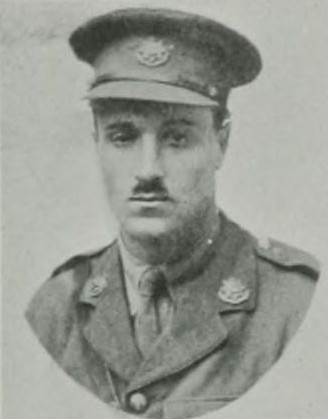
Christopher Mead.
MEAD, GEOFFREY PHILLIPS, Corpl., No. 54268, Despatch Rider, 32nd Signal Section, Royal Engineers, 3rd s. of John Phillips Mead, of the firm of Mead & Co., 2, King’s Bench Walk, Inner Temple, E.C., and of St. Mary’s, Teddington, Solicitor, by his wife, Maud Helen Kate, dau. of Samuel King Church; b. London, 28 Oct. 1892; educ. Street Court, Westgate-on-Sea, and Charterhouse (Bodeites), where he matriculated in the first class; studied surveying, and held a post under the Egyptian Government Survey Dept. from March, 1912, to Sept. 1914, when he returned to England to join the Army. He enlisted as a Motor Cyclist Despatch Rider, and after training at various camps, went to the Eastern Front in Aug. 1915, and died while on active service in the Military Hospital at Alexandria, 2 Dec. 1915, of pneumonia, following enteric fever, which he contracted while carrying despatches in Egypt; unm. He was buried with military honours at Chatby Cemetery, Alexandria. His brother, Lieut. C. Mead, was killed in action two months previously (see preceding notice).
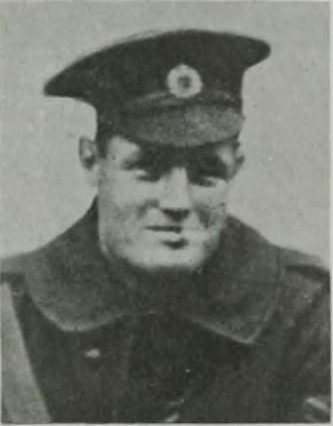
Geoffrey Phillips Mead.
MEAD, HENRY GEORGE FREDERICK, D.C.M., Private, No. 6926, 4th Battn. Middlesex Regt., s. of Henry Robert Mead, Carpenter; b. Edgware, 1 April, 1882; educ. Kilburn; served eight years with the Colours, and five and a half with the Reserve; took part in the South African War, 1899–1902 (Queen’s medal with four bars), and was called up from the Reserve on the outbreak of war in Aug. 1914; served with the Expeditionary Force in France, and was killed in action, 5 Nov. 1914. Buried in Croix Barbée Cemetery. He was awarded the Distinguished Conduct Medal [London Gazette, 1 April, 1915] “for conspicuous gallantry on 5 Nov. 1914, near Neuve Chapelle, in attempting to rescue a wounded non-commissioned officer from in front of the enemy’s trenches. He was killed in the attempt.” He was also given the Russian medal of St. George (3rd class). He m. at St. Anne’s Church, Wandsworth, 10 Oct. 1909, Ethel Maud (84, Larch Road, Bedford Hill, Balham), eldest dau. of the late J. E. Sheldon, Private, No. 3446, 2nd Battn. Coldstream Guards, and had two children: Henry Edwin, b. 8 April, 1912; and Ethel Violet Lilly, b. 21 July, 1910.
MEADOWS, ERNEST, Private, No. 1188, 14th Battn. Australian Imperial Force, s. of William Henry Meadows, of 61, Mountford Street, Sparkhill, Birmingham, Baker; b. Vaughan Street, Birmingham, 26 Sept. 1883; educ. Clifton Road Church School there; went to Australia, 9 March, 1914; enlisted on the outbreak of war; served in Egypt and at the Dardanelles, and died in the General Hospital, Alexandria, 14 Aug. 1915, of wounds received in Gallipoli; unm.
MEADOWS, JAMES HORATIO, Leading Stoker (R.F.R., Ch. B. 488), 278492, H.M.S. Aboukir; lost in action in the North Sea, 22 Sept. 1914.
MEAKIN, HERBERT, Gunner, No. 26735, 75th Battn. R.F.A., s. of Jacob Meakin, of 18, Vine Street, Rotherham, Bricklayer, by his wife, Maggie, dau. of Neri (and Elizabeth) Irons, of Ilkeston; b. at Nottingham, 7 May, 1884; educ. Rotherham; enlisted R.F.A., 3 Sept. 1902, and on completing his term of service with the Colours was employed as a cleaner of machinery in a mill at Huddersfield. On the outbreak of war he rejoined his battery, and was killed in action near Ypres, 24 April, 1915. Buried near Ypres. He m. at Huddersfield, 13 April, 1906, Susannah (11, Heath House, Golcar, near Huddersfield), dau. of James David Giles, Stone Mason, and had a dau., Katie, b. 29 June, 1912.
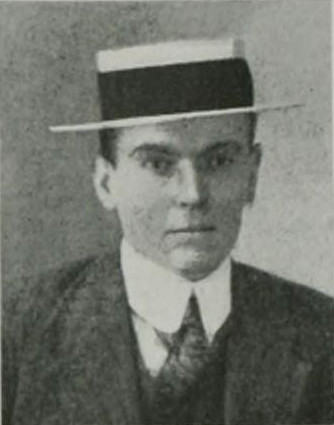
Herbert Meakin.
MEAKINGS, JAMES WILLIAM, Rifleman, No. 1625, 2nd Battn. The Rifle Brigade, only s. of John William Meakings, of 305, Brantford Road, Ipswich, Carpenter, formerly for 19¾ yrs. in the R.A., by his wife Ellen, dau. of William Firman, for 33½ yrs. a member of the Ipswich Borough Police Force; b. Shoeburyness, co. Essex, 25 Feb. 1888; educ. Bramford Road School, Ipswich; enlisted in the 4th Battn. Rifle Brigade, 26 March, 1906, and afterwards transferred to the 3rd Battn., then stationed at Malta. In Dec. 1907, he left Malta to join the 2nd Battn. in India, where he remained until his battn. was ordered to France on the outbreak of war. He was killed in action at Neuve Chapelle, between 10 and 14 March, 1915; unm. A comrade wrote of him: “There was no better soldier in the British Army.” He belonged to the Army Temperance Association in India, and received two medals. He was also in the Garrison Military Police at the Delhi Durbar.
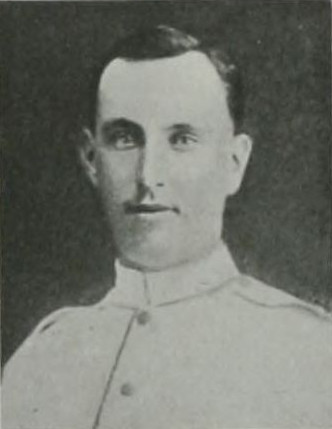
James William Meakings.
MEARNS, WILLIAM MELLIS, M.B., Surgeon, R.N., eldest s. of William Mearns, of Berwick Road, Gateshead, M.A., M.D., V.D., J.P., late Lt.-Col. R.A.M.C. (T.F.), now attached Royal Engineers, by his wife, M. A., dau. of John Mellis, Surgeon; b. Gateshead-on-Tyne, co. Durham, 7 Dec. 1884; educ. Aldenham School, Elstree, Herts, and Aberdeen University, graduating M.B., Ch. B., 1908. He entered the Navy the same year; served in H.M. Ships Pembroke, 1909; Action, 1909–10; Redbreast, in the Persian Gulf, 1910–11; Pembroke, 1911; Teal, in the Upper Yangtse River, China, 1911–14; and had only returned from abroad ten days when the European War broke out. He was ordered to join H.M.S. Formidable, and was lost when that ship was sunk in the Channel, 1 Jan. 1915; unm.
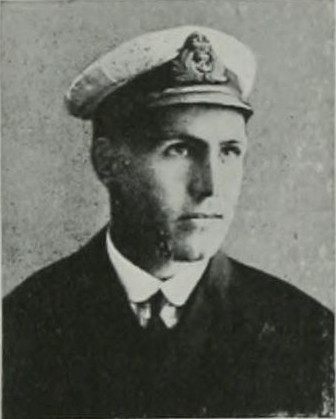
William Mellis Mearns.
MEAUTYS, THOMAS GILLIAT, Lieut., 1st Battn. Prince of Wales’s Own West Yorks Regt., elder s. of Thomas Arrowsmith Meautys, of Hammonds Place, Burgess Hill, Sussex, Barrister-at-Law, Middle Temple, M.A. Oxon, J.P., Surrey, for some time Chairman of the Wimbledon Petty Sessional Division, by his wife, Ellen Gertrude, 3rd dau. of Gilliat Hatfield of Morden Hall, Morden, Surrey, b. Wimbledon, co. Surrey, 13 June, 1889; educ. Marlborough, and the Royal Military College, Sandhurst (1908); gazetted 2nd Lieut. to the 2nd West Yorkshires, 18 Sept. 1909, but transferred to the 1st Battn., and went to India in Dec. following. He was promoted Lieut. 9 July, 1910. In Sept. 1914 he went with his Battn. which formed part of the 18th Brigade, in the 6th Division, to France to reinforce the Expeditionary Force, then on the Aisne, and was in charge of the machine gun section. He died on the 22nd of that month of wounds received on the 20th, during the Battle of the Aisne, and was buried in Troyon Churchyard. A brother officer wrote: “He was conspicuous for his bravery and coolness under fire.... He conveyed an officer of the Horse Guards (who was wounded and afterwards died) back under cover, although he was under fire the whole time.” While at Marlborough he was in the Rugby Football XV (1906); won the School Boxing Competition in his class in two successive years, and represented Marlborough in the Public Schools’ Competition at Aldershot. He m. at the Parish Church, Hambledon, Hants. 16 June, 1914, Norah Nell, only dau. of the late Herbert Hotblack, of Brighton, and had a son, Thomas Gilliat, b. posthumous 29 April, 1915.
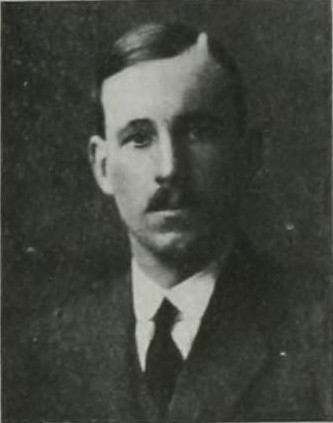
Thomas Gilliat Meautys.
MEDHURST, JOHN EDWIN, Stoker, 1st Class (R.F.R., Ch. B. 7839). 298939, H.M.S. Aboukir; lost in action in the North Sea, 22 Sept. 1914.
MEDHURST, WILLIAM RICHARD, Leading Stoker, 8958 R.F.R., O.N. 291342, Royal Navy, eldest s. of William Gayner Medhurst, of Leytonstone, by his wife, Charlotte, dau. of (—) Weller; b. Old Ford, 18 April, 1881; educ. Leyton; joined Royal Navy, 1 Feb. 1899; and was lost in H.M.S. Cressy when that ship was torpedoed in the North Sea, 22 Sept. 1914. He m. at West Ham, 1 Oct. 1995, Ellen Rose (55, West Road, Portway, West Ham), dau. of Robert Taylor Jamieson, of 56, Woodstock Road, Upton Park, E., and had three children: William Albert, b. 23 Aug. 1907; Edward George, b. 19 June, 1909; and Ellen Beatrice, b. 16 Aug. 1912.
HASTINGS-MEDHURST, FRANCIS LESLIE, 2nd Lieut., 2nd Battn. Worcestershire Regt., s. of the late Francis Hastings-Medhurst, of 20, Hampstead Lane, Highgate, N., by his wife, Mary (11, St. Dunstan’s Road, Baron’s Court, W.), dau. of the Rev. Robert Leslie Morris, of Rothes, Hampton Hill; b. 7, Campden Hill Square, Kensington, 28 July, 1895; educ. Malvern College (where he was house prefect) and the Royal Military College, Sandhurst (Prize Cadet), and was to have entered the Indian Army, but on the outbreak of war, he was gazetted as 2nd Lieut. to the Worcestershires, 14 Aug. 1914. He went to France, 26 Aug. 1914, and was killed in action at Illies, near La Bassée, 17 Oct. 1914. On this occasion the Worcesters had suffered severely, and he had volunteered to go for reinforcements. He was almost in safety when he was killed by a maxim gun, but fortunately the forces coming up saw him and were in time to succour the few left alive. He had been wounded in the head three days previously, but refused to go into hospital, owing to shortage of officers. He was buried by his men the same night, 700 yards north-west of Illies Church; unm. His Colonel wrote to his widowed mother that he was a most promising officer, loved by all his men, and a real loss to his regiment; and another officer wrote: “We all loved him, and his men were very fond of him and would go anywhere with him. He was always so cheerful and extremely cool in action. As an officer remarked to me, ‘an awfully nice fellow, a most promising soldier and one we can ill afford to lose.’”
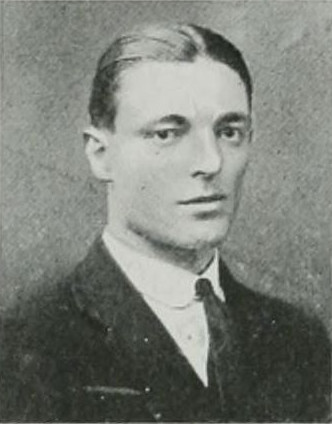
F. L. Hastings-Medhurst.
MEDLAND, WILLIAM HARRY WILSON, Stoker, 1st Class (R.F.R., B. 4864), S.S. 104067, H.M.S. Good Hope; lost in action off Coronel, on the coast of Chili, 1 Nov. 1914.
MEEHAN, FRANCIS JAMES, Private, No. 981, 12th Battn. (15th North Auckland Infantry Regt.) New Zealand Expeditionary Force, 2nd s. of Thomas Meehan, of Queen Street, Feilding, New Zealand, Carrier, formerly of Waterford, Ireland, by his wife, Annie, dau. of the late Bernard Maynes, of Terraquin, Omagh, co. Tyrone, Farmer; b. Feilding, 30 Sept. 1888; educ. at the State School there; was employed for some years at the firm of Grey & Menzies, Auckland. After the outbreak of war, enlisted 23 Aug. 1914; was severely wounded in action at the Dardanelles, 29 April, 1915, and died in the 17th General Hospital at Alexandria 5 May following; unm. Writing to his mother the Rev. J. McMenamin, R.C. Chaplain, N.Z.F., said: “Frank arrived here fit and well with his regt. on Sunday, 25 April, and carried himself bravely through the first four days’ terrible fighting. Then, on Thursday, 29 April, he was stooping down in a trench when a bullet entered his head. He was rendered unconscious mercifully.... Everything possible was done for him, and he was taken away to hospital in Alexandria without any delay.” He was buried at the Chatby Military Cemetery [Grave No. 235).
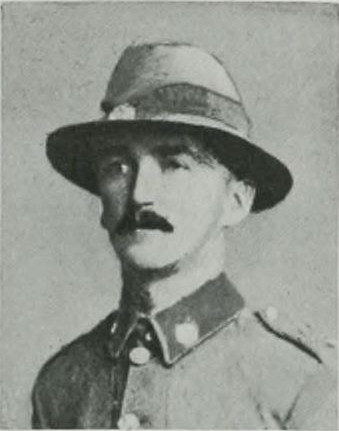
Francis James Meehan.
MEEHAN, WILLIAM, C.E.R.A., 124820, H.M.S. Aboukir; lost in action in the North Sea, 22 Sept. 1914.
MEEKER, CHARLES EDWARD, Ordinary Seaman, J. 20933, H.M.S. Pathfinder; lost when that ship was sunk by a mine, about 20 miles off the East Coast, 5 Sept. 1914.
MEGAW, WILLIAM CECIL KENNEDY, M.C., Capt., 1st Battn. Norfolk Regt., yr. s. of Kennedy Megaw, of 18, Chesham Road, Brighton, by his wife, Mary Augusta, dau. of (—) Zouche; b. Farnborough, co. Kent, 8 May, 1885; educ. Wellington College, and Royal Military College, Sandhurst; gazetted 2nd Lieut. to the Norfolk Regt., 16 Aug. 1905; promoted Lieut. 20 March, 1908, and Capt. 26 March, 1913; served as Adjutant of his regt. from 1910–13; went to France, Aug. 1914, and was killed in action near Ypres, 31 March, 1915; being buried by the ramparts of Ypres. He served as acting Adjutant from the Battle of Mons till the time of his death, and was awarded the Military Cross for gallantry [London Gazette, 18 Feb. 1915]; and twice mentioned in Sir John French’s Despatches [London Gazette, 17 Feb. and 22 June, 1915]. Capt. Megaw m. at St. Mark’s Church, South Farnborough, 1 Oct. 1913, Alice May (Rhudlan, West Hove, near Brighton), elder dau. of Col. John Samuel Gaussen, of Hollymouth, South Farnborough, co. Hants; s.p.
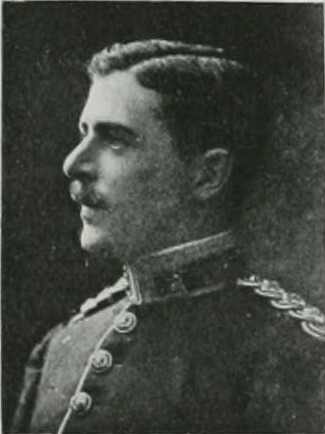
William C. K. Megaw.
MEHEUX, GEORGE THOMAS SHELTON, Leading Seaman (R.F.R.. B. 9701), 233279, H.M.S. Hawke; lost when that ship was torpedoed in the North Sea, 15 Oct. 1914.
MEIKLEJOHN, KENNETH FORBES, Lieut., 1st Battn. Cameron Highlanders, 2nd s. of Lieut.-Col. John Forbes Meiklejohn. of 147, Victoria Street S.W., late R.H.A., by his wife, Edith Mary, dau. of Thomas Dives, and grandson of the late Rev. Robert Meiklejohn, of Strathdon, Aberdeenshire; b. at Woolwich, 18 June, 1885; educ. Rugby and passed 3rd into the Royal Military College, Sandhurst; gazetted 2nd Lieut. 1st Cameron Highlanders, 27 Feb. 1904, and promoted Lieut. 13 Sept. 1909; was appointed Adjutant, 13 March, 1913; went to France with the Expeditionary Force in Aug. 1914; served through the retreat from Mons and the Battle of the Marne, and was killed in action at the Battle of the Aisne, 25 Sept. 1914. On that day what was left of the 1st Camerons—they had lost 17 officers and 500 men in the action of the 14th—had moved up to relieve the 1st Black Watch in the trenches just west of the village of Beaulne, and the battn. headquarters occupied one of the caves in the chalk of the plateau. During the morning a German shell fell on the top of the cave and buried the inmates, amongst whom was Lieut. Meiklejohn, and five officers and some 30 men were subsequently found dead, including Capt. D. N. Miers, then temporarily in command of the battn., Capt. A. G. Cameron, of Lochiel, Capt. Napier Cameron, and Lieut. Meiklejohn, who was buried in the grounds of the Chateau of Verneuille. Lieut. Meiklejohn had qualified as first class interpreter in both Russian and French. He m. at Edinburgh, 14 April, 1914, Sybil Maud, only dau. of John Charles Stewart, of Kinlochmoidart and Glenmoidart, co. Inverness, J.P., and had a son, Kenneth Mathew, b. posthumous, 14 Jan. 1915.
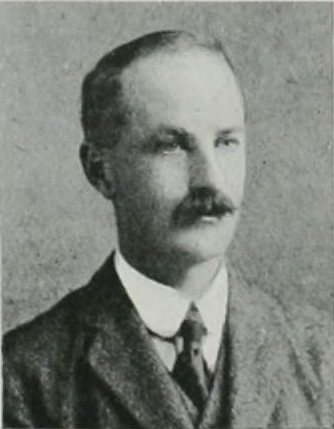
Kenneth F. Meiklejohn.
MELIA, EDWARD, Corpl., No. 705, 15th Battn. Australian Imperial Force, s. of P. Melia, of Liverpool; served in Egypt and at the Dardanelles; killed in action, 2 May, 1915.
MELLETT, MARTIN, Stoker, 1st Class (R.F.R., B. 4459), S.S. 103473, H.M.S. Good Hope; lost in action off Coronel, on the coast of Chili, 1 Nov. 1914.
MELLISH, CHARLES HERBERT, Stoker, 1st Class, K. 11127, H.M.S. Good Hope; lost in action off Coronel, on the coast of Chili, 1 Nov. 1914.
MELSON, JOHN RAITHBY, L.-Corpl., No. 11754, 2nd Battn. Coldstream Guards, s. of Tom Melson, of 4, Whostenholme Place, off Powell Street, Sheffield, by his wife, Jemima, dau. of John Richardson; b. Sheffield, 15 Aug. 1889; educ. St. John’s National School, there; was a Rigger by trade; enlisted soon after the outbreak of war, 7 Sept. 1914; went to France, 21 Jan. 1915, and died in No. 10 Stationary Hospital, St. Omer, 5 Aug. 1915, of wounds received in action, 11 July, and was buried in the French Souvenir Cemetery at St. Omer; unm.
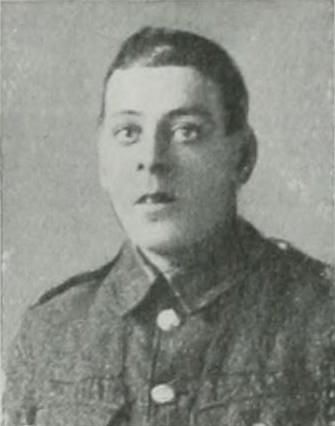
John Raithby Melson.
MELSON, ROBERT, Private, No. 11564, 3rd Battn. Coldstream Guards, yr. s. of Tom Melson, of 4, Whostenholme Place, Powell Street, Sheffield, by his wife, Jemima, dau. of John Richardson; b. Sheffield, co. York. 21 Jan. 1894; educ. St. John’s National School, Sheffield; was a Steel Warehouseman; enlisted 6 Sept. 1914; went to the Front, 21 Jan. 1915, and was killed in action at the Battle of Cuinchy, 7 Feb. following, and buried in Bethune Churchyard. Belgium; unm. He was the younger of the two brothers, but the first to be killed.
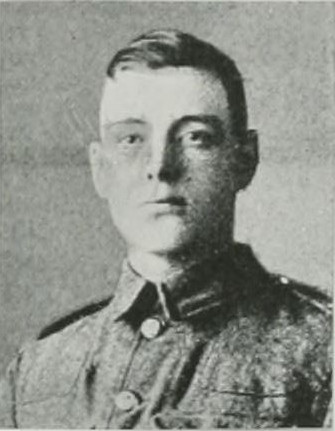
Robert Melson.
MELVILLE, WILLIAM, Private, No 14481, King’s Coy., 1st Battn. Grenadier Guards, s. of Hugh Melville, of Portgower, Helmsdale, co. Sutherland, by his wife, Betsy, dau. of James Morrison, of Scourie; b. Portgower afsd., 15 Oct. 1886; educ. Portgower School; was a member of the Edinburgh City Police, and later of the Metropolitan Police; joined the Grenadier Guards in Sept. 1909; was selected as one of the special guards at the Coronation of King George; serving three years with the Colours, he was placed on the Reserve for 10 years, and emigrated to Canada in 1912, where he joined the Winnipeg Police, being rapidly promoted to the rank of detective. On the outbreak of the European War he was called to rejoin his regiment; left for England, 17 Aug. 1914; went to France, 8 Sept.; took part in the severe fighting till 12 Jan. 1915, when he got entangled in barbed wire around a German trench, and was so wounded that he was removed to hospital; rejoined his regt. 5 March, and died in No. 7 Casualty Clearing Station, 13 March. 1915. from wounds received in action the previous day at the battle of Neuve Chapelle; unm. Buried in Merville Cemetery. A brass tablet to his memory, subscribed for by his comrades, was placed in the Central Police Station at Winnipeg.
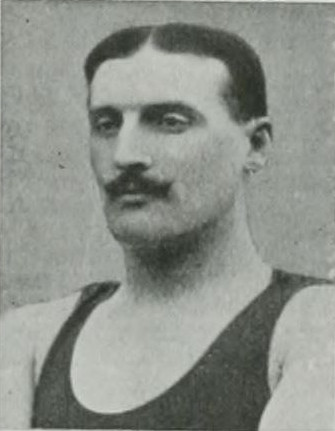
William Melville.
MEMBREY, EDWARD JOHN, S.S.A., M. 7318, H.M.S. Good Hope; lost in action off Coronel, on the coast of Chili, 1 Nov. 1914.
MERCER, ARCHIBALD ARIEL, Major, 2nd Battn. Dorset Regt., 2nd s. of the late Charles Mercer, of Lansdowne Lodge, Weymouth, by his wife, Grace Ewart (Weymouth), dau. of Edward Clark; b. Uxbridge, 24 Feb. 1875; educ. Marlborough and the Royal Military College, Sandhurst; gazetted 2nd Lieut. to the 1st Battn. Dorset Regt. then stationed at Wellington, Madras, 16 March, 1895; and promoted Lieut. 12 July, 1897; Capt. 19 Nov. 1901, and Major 19 Nov. 1913. He served with the 1st Dorsets in the Tirah Campaign of 1896–97, taking part in the actions at Chagru and Dargai, in the capture of the Sampagha and Arhanga passes and in the reconnaissance of the Saran Sar, where he was severely wounded on 9 Nov. 1897, and received the Tirah Medal with two clasps. He afterwards joined the 2nd Battn. of his regt. in India, and in Nov. 1914, sailed with the Poona Brigade, of which the 2nd Dorsets formed part, for the Persian Gulf. He was killed in action at Sahil, near Basra on the Shat-el-Arab, on the 17th of that month, and was buried at Sahil. Major Mercer was a qualified musketry instructor and a first-class interpreter of Hindustani. He m. at Ugley, Essex, 14 Aug. 1913, Margaret Edith, dau. of William Augustus Tennant, of Orford House, Ugley, and had a dau., Ariel Margaret, b. posthumous, 30 Nov. 1914.
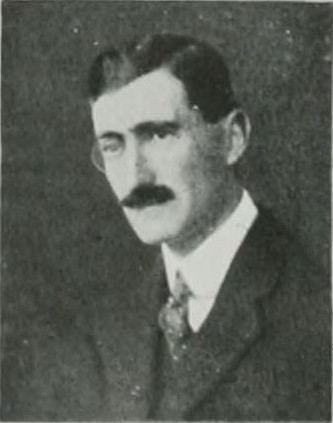
Archibald Ariel Mercer.
MERCER, EDWARD ALLAN, Stoker, 1st Class, K. 14665 (Ports.), H.M.S. Aboukir; lost in action in the North Sea, 22 Sept. 1914.
MERCER, ERIC CAMERON, 2nd Lieut., Indian Army, attd. 2nd Battn. Lancashire Fusiliers, 5th surviving s. of Col. Charles Archibald Mercer, of Belgrave House, Dover, Indian Army (ret.), late 4th Gurkha Rifles, by his wife, Helen E., eldest dau. of the late Major-Gen. J. S. Rawlins, Indian Army, formerly 1st Gurkha L.I.; b. Bakloh, Punjab, India, 17 Nov. 1894; educ. Junior School, Westward Ho, co. Devon, Dover College, and the Royal Military College, Sandhurst; gazetted 2nd Lieut. Indian Army, unattd. List, 15 Aug. 1914, and attd. to the 2nd Battn. Lancashire Fusiliers; went to France, 8 Sept. 1914, and was killed in action at Meteren, near Bailleul, 13 Oct. 1914; unm. He was buried in a field there, belonging to M. Cokelaere. At Dover College, he was in the football XV, 1910–11–12, and the hockey XI, 1911–12–13, and at Sandhurst he was in the 2nd football XV, 1913–14.
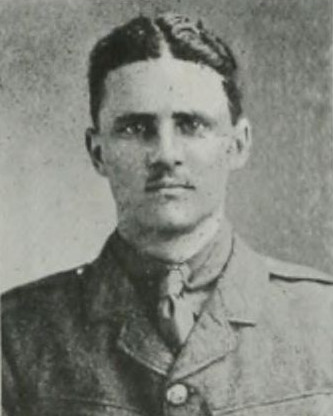
Eric Cameron Mercer.
MERCER, GEORGE EDWARD, Private, No. 8237, 2nd Battn. Seaforth Highlanders, s. of Thomas Mercer; enlisted in the Seaforths; took part in the Somaliland Expedition 1902–4 (medal); was afterwards employed on the Lancashire and Yorkshire Railway at Bolton Road Goods Station; was called up with the Reserve on the outbreak of war in Aug. 1914; served with the Expeditionary Force in France, etc., and died 25 April, 1915, of wounds received in action. He m. St. Luke’s Church, Blackburn, 5 Sept. 1912 (—), dau. of (—) Gibson, and had a son, Harold, b. 2 Oct. 1913.
MERCER, WALLER CARPENTER, Rifleman, No. 3246, 16th (Queen’s Westminster Rifles) Battn. The London Regt. (T.F.), s. of Peter Brit Mercer (died 4 Aug. 1894), by his wife, Mary Jane (“Merton,” Plympton Avenue, Brondesbury, N.W.), dau. of Thomas Hooper; b. London, 5 Oct. 1885; educ. Philological School, Marylebone, N.W.; enlisted on the outbreak of war, served with his regt. in France and Flanders, and was killed in action, being shot through the head while on sentry duty in the trenches, at Houplines, near Armentières, 9 April, 1915. He was buried in the Military Cemetery there; unm.
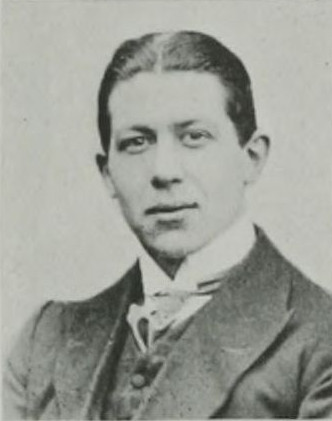
Waller Carpenter Mercer.
MERCHANT, WILLIAM, A.B. (R.F.R., Ch. B. 2559), 207436, H.M.S. Aboukir; lost in action in the North Sea, 22 Sept. 1914.
MERRETT, ALBERT JOHN, A.B. 236732, H.M.S. Good Hope; lost in action off Coronel, on the coast of Chili, 1 Nov. 1914.
MERRETT, JOSEPH WILLIAM, Stoker, 1st Class (R.F.R., B. 3281), S.S. 101000, H.M.S. Good Hope; lost in action off Coronel, on the coast of Chili, 1 Nov. 1914.
MERRICK, CHARLES, Stoker, 1st Class (R.F.R., B. 4529), S.S. 103702, H.M.S. Good Hope; lost in action off Coronel, on the coast of Chili, 1 Nov. 1914.
MERRILEES, STUART, Private, No. 10228, Northumberland Fusiliers, 4th s. of James Merrilees, of 42, Coomassie Road, Crofton, Blyth, Plasterer, by his wife, Mary, dau. of James Gilroy; b. Blyth, co. Northumberland, 6 Aug. 1897; educ. there; enlisted 22 Sept. 1914; went to France, 19 Sept. 1915, and was killed in action there, 11 Feb. 1916, being shot by a sniper while working in a triangle trench; unm. His brother, William, was killed, 15 Feb. 1915.
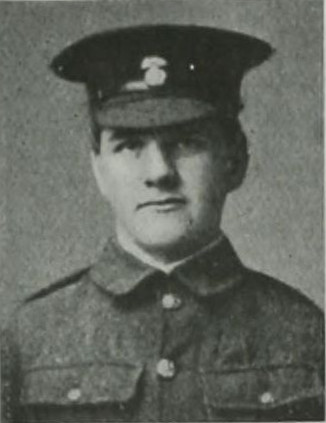
Stuart Merrilees.
MERRILEES, WILLIAM, Private, No. 3086, 2nd Battn. Northumberland Fusiliers, 3rd s. of James Merrilees, of 42, Coomassie Road, Crofton, Blyth, Plasterer, by his wife Mary, dau. of James Gilroy; b. Blyth, co. Northumberland, 14 Feb. 1893; educ. Wright Street School there; enlisted in the Northumberland Fusiliers in 1910; went to France 18 Jan. 1915, and was killed in action, 16 Feb. 1915, after delivering a message; unm. Capt. O. B. Foster, commanding C Coy., wrote: “He had volunteered to come back from the trenches in broad daylight under a heavy fire to take back a message to battn. headquarters, that ammunition was urgently required. He accomplished this dangerous duty successfully, being slightly wounded in the arm on the way. While at battn. headquarters where his wound had been attended to by the doctor, a shell struck the building in which he was, a fragment of it hit him on the head, killing him instantly. Had he lived he would have probably been awarded the medal for Distinguished Conduct in the Field.” And again, after saying that a “strong recommendation” had been forwarded to the authorities, giving full particulars of his brave act, added: “He certainly well deserved it. Since I wrote I found he took a further message by means of which our artillery, which had been firing in a wrong direction, was directed at the proper place; this was the means of saving a number of our men’s lives. In any other war but this he would certainly have gained a V.C., but, as you can imagine, a terribly high standard of courage is required to win anything now. We had a very hard time with our company, but lately things have been a little easier. As we are not now in the same district, I can give you the following information: Your son was buried by a farmhouse 2½ miles south of Ypres; the farm is south of the Ypres-Comines Canal, and is 1,200 yards south-east of Chateau Langrof. This may enable it to be traced after the war. A cross was erected over it.”
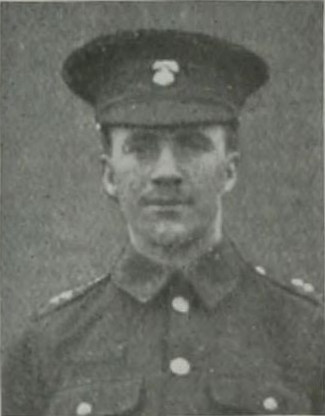
William Merrilees.
MERRIMAN, GORDON, Volunteer, Nyasaland Volunteer Reserve, yr. s. of Thomas Mark Merriman, of 96, Finchley Road, N.W., and 3, Mitre Court, Temple, E.C., Solicitor, by his wife, Ellen Charlotte, dau. of Matthew Marshall; b. Hampstead, N.W., 5 Feb. 1885; educ. St. Andrews, Eastbourne, Uppingham, and Trinity Hall, Cambridge; and was a Planter in Nyasaland, where he owned the Nanglukutichi Estate, near Blantyre. He was a member of the Nyasaland Volunteer Reserve, serving with the Nyasaland Field Force, and was in charge of a Maxim gun which he was working when wounded in an encounter with the Germans at Karonga, and died 9 Sept. 1914; unm. He was buried at Karonga, N.W. of Lake Nyasa. He was mentioned by the Governor of Nyasaland in his Despatch of 1 Nov. 1915 [London Gazette, 3 Aug. 1916], for gallant and distinguished service in the field “while working Maxim guns under heavy fire with coolness and effect.”
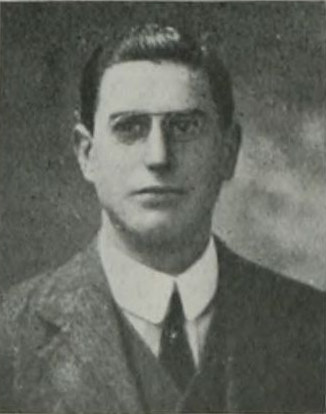
Gordon Merriman.
MERRITT, CECIL MACK, Capt., 16th Battn. (Canadian Scottish, 72nd Seaforth Highlanders), Canadian Expeditionary Force, last surviving s. of Lieut.-Col. William Ingersoll Merritt, of 6, Sumner Place, South Kensington, London, late 30th (East Lancashire) and 4th Manchester Regts., by his wife, Mary Beatrice, 3rd dau. of Major-Gen. Frank Adams, C.B., and granddau. of Henry Cadwallader Adams, of Anstey Hall, co. Warwick, J.P., D.L.; b. St. Catharine’s, Ontario, Canada, 6 Jan. 1877; educ. St. Paul’s School, London; went to Canada in 1895, and joined the Royal Grenadier (Militia) Regt. in 1896. He was one of the few who went into Dawson in the rush of ’98 over the Edmonton trail, the journey taking him two years. After leaving the Yukon he returned to England and was for a short time on the London Stock Exchange. He went to Vancouver in 1904, and when the 72nd Regt. Seaforth Highlanders of Canada was formed in Nov. 1910, he was appointed one of its senior Capts. He received his Majority in that Regt. 13 Oct. 1914. He was on Major-Gen. Sir Sam Hughes’s Staff during his visit to the Imperial Army manœuvres in 1912, and on the outbreak of war at once volunteered for Imperial service, and was given command of a coy. in the 16th Battn. “Canadian Scottish,” 1st Canadian Division. He went with them to France in Feb. 1915, and was present at the Battle of Neuve Chapelle. On 22 April, 1915, during the Second Battle of Ypres he was leading his coy. in the charge made by the Canadian Scottish near St. Julien, to check the first rush of the Germans after their gas attack, when he was wounded in the leg. He refused to leave his men, and with them occupied the German trenches. Next morning he was killed while encouraging his men during a counter-attack. He was mentioned in F.M. Sir John (now Lord) French’s Despatch of 31 May, 1915, for gallant and distinguished service in the field. His commanding officer, Col. R. E. Edwards Leckey, wrote: “Cecil Merritt was one of the finest officers I ever knew. He was wounded in the charge, but not severely, and still continued to lead his men on. He remained in the trenches we had captured, and when a counter-attack was threatened he got up to shoot over the parapet with his revolver. It was then he received his fatal wound. No one could have been braver and no one could have led his men better than he did. His name has been submitted for the Military Cross”; and brother officers speak of his “personal bravery and spirit of dash and tenacity,” and of the admiration which his men had for him; and a Private wrote: “He was wounded twice but would not expose his men to be carried back to the dressing station, and after some hours in the captured trenches heard there was a counter-charge from the Germans, and it was then he received the fatal shot in his head.” At St. Paul’s he took a leading part in the school life, being captain of the football XV. He was one of the first captains of the well-known Harlequin Rugby Football Club. He m. at Vancouver, B.C., 4 Dec. 1905, Sophie Almon, eldest dau. of the Hon. Sir Charles Hibbert Tupper, K.C.M.G., and had two sons and a dau.: Charles Cecil Ingersoll, b. 10 Nov. 1908; Francis William, b. 16 Aug. 1913; and Beatrice Ormonde, b. 14 Feb. 1907.
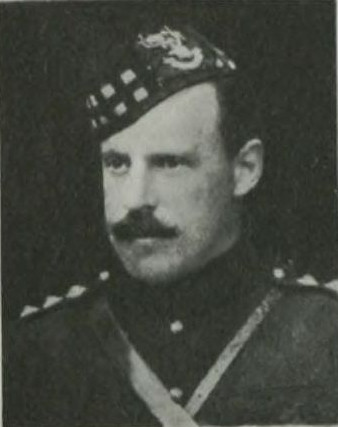
Cecil Mack Merritt.
MERRITT, HENRY, A.B. (R.F.R., B. 2400), 201016, H.M.S. Good Hope; lost in action off Coronel, on the coast of Chili, 1 Nov. 1914.
MESSAGE, EDGAR, Private, No. 2479, 5th Battn. Royal Sussex Regt. (T.F.), s. of Herbert Message, of The Old School House, Rush Lake Green, Warbleton, Sussex, by his wife, Miriam, dau. of the late Thomas Rumery, of Warbleton; b. Rush Lake Green, 30 April, 1893; educ. Warbleton National School; enlisted 9 Sept. 1914; went to France, 21 Feb. 1915, and was killed in action at Richebourg, 9 May following, being shot through the head; unm. Buried in cemetery at Richebourg.
MESSAM, JOHN WILLIAM, Private, R.M.L.I., Ch./16830, H.M.S. Pathfinder; lost when that ship was sunk by a mine, about 20 miles off the East Coast, 5 Sept. 1914.
METCALFE, RICHARD, Master-at-Arms, 159487, H.M.S. Aboukir; lost in action in the North Sea, 22 Sept. 1914.
METHUEN, WILLIAM, Private, No. 7902, 2nd Battn. Royal Scots, s. of William Methuen, of Edinburgh, late 78th Seaforth Highlanders, by his wife, Mary, dau. of William Hamilton; b. Stockbridge, Edinburgh, 23 Sept. 1878; educ. North Merchiston School; enlisted 21 Jan. 1901, and was killed in action in Belgium, 14 Dec. 1914. He m. at Edinburgh, 1906, Margaret (10, McLeod Street, Edinburgh), dau. of the late James Bathgate, of Edinburgh, and had four children: James, b. 11 April, 1914; Alison, b. 5 Nov. 1906; Mary, b. 16 Dec. 1907; and Agnes, b. 16 June, 1912.
MICKELS, THOMAS EDWARD, S.S.A., M. 2159, H.M.S. Hawke; lost when that ship was torpedoed in the North Sea, 15 Oct. 1914.
MIDDLETON, JOHN LIDDLE, Private No. 2731, 1/8th Battn. Durham Light Infantry (T.F.), yst. s. of Thomas Middleton, of 38, South Burns, Chester-le-Street, co. Durham, Brewery Mason, by his wife, Margaret, dau. of the late George Brown, of Washington, co. Durham; b. Chester-le-Street, 8 May, 1895; enlisted 12 Sept. 1914, following the outbreak of war; was wounded in the fighting at Ypres on 26 April, 1915, by a gunshot wound in the head, and taken prisoner, and is stated to have laid for 36 hours in a greenhouse without water or care. He died of his wounds at Ostneeuw Kerke, Belgium, two days after his twentieth birthday, 10 May, 1915; unm.
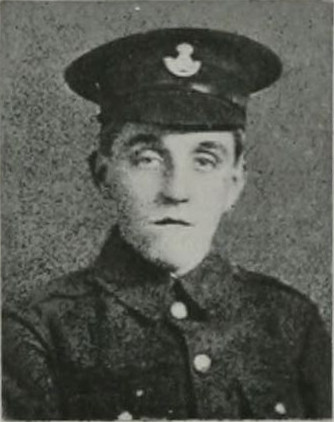
John Liddle Middleton.
MIDMER, HARRY GEORGE, A.B., No. S.S. 2026, Ch. R.F.R. B8844, R.N. eldest s. of George Midmer, of Mabbs Hill, Stonegate, Ticehurst, Roadman, by his wife, Emily, dau. of Henry Taylor, of Horsham; b. Stonegate, Ticehurst, 10 Oct. 1888; educ. there; joined the Navy, 29 July, 1907, and was lost in H.M.S. Cressy, when that ship was torpedoed in the North Sea, 22 Sept. 1914; unm.
MIELL, CHARLES FREDERICK, A.B. (R.F.R., Ch. B. 10220), 183675, H.M.S. Cressy; lost in action in the North Sea, 22 Sept. 1914.
MIGHALL, CECIL CHARLES NEWMAN, Sergt., No. 560, 16th (Queen’s Westminster Rifles) Battn. The London Regt. (T.F.), yst. s. of the late William Mignall, of East Grinstead, by his wife, Mary Ann (now wife of William Prodger, of 53, Brook Hill Road, Woolwich), dau. of Charles Newman, of Findon, near Worthing, Sussex; b. East Grinstead, co. Sussex, 3 Aug. 1890; educ. East Grinstead Council Schools, and entered the employ of Messrs. Pugh & Co., of 16, Buckingham Palace Road, as a Clerk in 1906; joined the Queen’s Westminster Rifles in 1908, became L.-Corpl., 1910; and, passing the examination, was promoted to Corp., 1911. On the outbreak of war, he volunteered for foreign service, was promoted Sergt.; went with his regt. to the Front, and was killed in action, in the trenches at Houplines, France, 7 Feb. 1915; unm. Letters from his Commanding Officer and others speak highly of his capabilities and great courage. Sergt. Mighall took part in the pageant held by the regt. at Chelsea in 1913, and he also held the Trollope Cup.
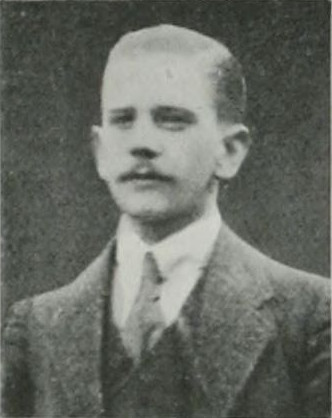
Cecil C. N. Mighall.
MILES, DAVID, Private, No. 1126, 2nd Battn. Royal Sussex Regt., eldest s. of David Miles, of Malt House, Llanblethian, Cowbridge, Quarry Labourer, by his wife, Angelina, dau. of Thomas Bond; b. Cadoxton Barry, co. Glamorgan, 15 Dec. 1897; educ. Denas Powis National School; enlisted, 4 Sept. 1914; went to France, 11 Jan., and was killed in action at Richebourg St. Vaast, 9 May, 1915. He was a great favourite in the regt. and his officers described him as a fearless and efficient soldier; unm.
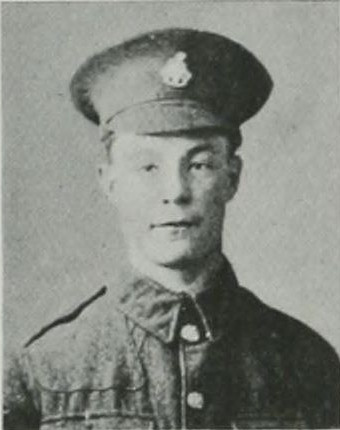
David Miles.
MILEY, JOHN, Stoker, R.N.R., 804U, H.M.S. Cressy; lost in action in the North Sea, 22 Sept. 1914.
MILLAR, ARTHUR JAMES, Capt., 3rd, attd. 1st Battn. Royal Irish Fusiliers, 2nd s. of James Millar, of 87, Eglantine Avenue, Belfast, F.C.I.S., by his wife, Jane Isabella, dau. of William Hardie, of Edinburgh; b. Belfast, 10 Sept. 1890; educ. Methodist College and Queen’s University there, where he attended the medical course, and served for over three years in the O.T.C., from which he joined the Special Reserve of Officers, and was attd. as 2nd Lieut. to the 3rd Battn. Royal Irish Fusiliers, 25 May, 1912; promoted Lieut. 21 Nov. 1914, and Capt. 10 April, 1915; joined his regt. on the outbreak of war in Aug. 1914; went to France with a draft in Sept.; was in the trenches during the winter, 1914–15, and was killed in action near St. Julien, 25 April, 1915; unm. An officer wrote: “He met his soldier’s death gallantly leading his platoon forward against very heavy rifle and machine-gun fire—the way he led his platoon was splendid. Almost the last act under this fire was to crawl over and bandage a man of his platoon who had been wounded, and was certainly one of the most gallant things I have ever seen done. It was almost immediately after this that he was so very unfortunately killed. His name was sent forward prior to the 25th for his excellent work during the whole time he was out here, and has now been sent forward for his most gallant conduct on the 25th, and I only hope he will get the reward he so thoroughly deserves. He is buried with his men where he fell on the field between the villages of Fortuin and St. Julien, north-east of Ypres. His name will ever be remembered in the regt. and its glorious annals.”
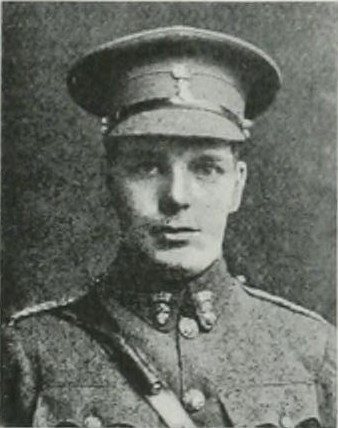
Arthur James Millar.
MILLAR, JOHN JAMES, Ordinary Seaman, J. 25646 (Ports.), H.M.S. Cressy; lost in action in the North Sea, 22 Sept. 1914.
MILLAR, JOHN TROTTER, Private, No. G 5023, 2nd Battn. Middlesex Regt., yr. s. of William Millar, of 107, Trinity Road, Edinburgh, formerly of St. Margaret’s, Musselburgh, and of 7, Gladstone Place, Stirling, by his wife, Elizabeth, dau. of John Trotter, of Stirling, Merchant; b. Stirling, 14 May, 1878; educ. Stirling High School; was a Head Cashier; enlisted, Sept. 1914; went to France, 4 Jan. 1915, and was killed in action at Neuve Chapelle, between 10 and 14 March, 1915; unm.
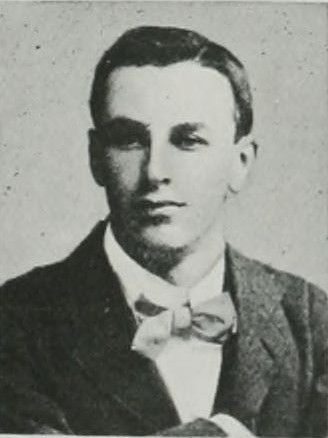
John Trotter Millar.
MILLER, ALEXANDER, Private, No. 2564, 3rd Battn. Royal Scots (Lothian Regt.), s. of Margaret (32, Victoria Street, Dunbar), dau. of Peter Miller; b. Dunbar, 24 Dec. 1892; educ. Dunbar Burgh School; enlisted 13 July, 1914; went to France and was killed in the trenches in France on 21 Feb. 1915. He was an outworker before enlisting.
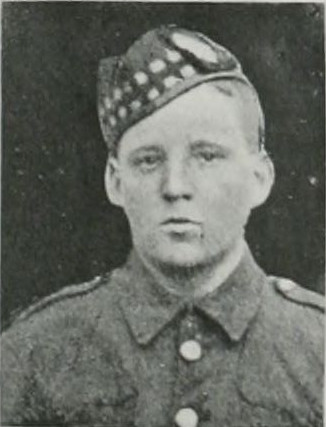
Alexander Miller.
MILLER, ARTHUR WILLIAM, Stoker, 1st Class, 289617, H.M.S. Cressy; lost in action in the North Sea, 22 Sept. 1914.
MILLER, EDWARD, Probationary 2nd Cook’s Mate, M. 7799, H.M.S. Aboukir; lost in action in the North Sea, 22 Sept. 1914.
MILLER, ERNEST CHARLES WILLIAM, Private, No. 8959, 1st Battn. Coldstream Guards, s. of William Henry Miller, of Framfield, Carter, by his wife, Sarah Jane (Wilmington, Polegate, Sussex), dau. of Joseph Wood; b. Framfield, co. Sussex, 6 Dec. 1893; educ. Wilmington, Sussex; enlisted, 10 Jan. 1911, and was reported missing after the fighting at Ypres, 2 Nov. 1914, and is now assumed to have been killed on that date.
MILLER, ERNEST CYRIL, Capt., 3rd (Reserve), attd. 1st Battn. Loyal North Lancashire Regt., 3rd s. of the late William Pitt Miller, of Merlewood, Grange-over-Sands, Lancashire, and of Thistleton, Kirkham, Lancashire, by his wife, Emilie Mary (Merlewood, Grange-over-Sands); b. Grange-over-Sands afsd., 13 June, 1878; educ. Harrow and Trinity College, Cambridge; gazetted 2nd Lieut. 3rd Royal Lancashire Militia (now the 3rd Special Reserve Battn. Loyal North Lancashires), 1902; promoted Lieut. July, 1905, and Capt. 2 June, 1906. On the abolition of the Militia, he was transferred to the Special Reserve of Officers. He was called up to his Regt. on the outbreak of war, and was attd. to the 1st Battn.; went to France, 20 Sept. 1914, and was killed in action near Pilken, in Flanders, during the First Battle of Ypres, 23 Oct. 1914. He was buried near a farm between Pilken and Bixschoote. Capt. Miller m. at Copdock, Suffolk, 5 Nov. 1913, Dulcie Katharine, yst. dau. of Arthur Montague Bernard, of Copdock, Ipswich; s.p.