The Roll of Honour. (continued 34)
Reading edition
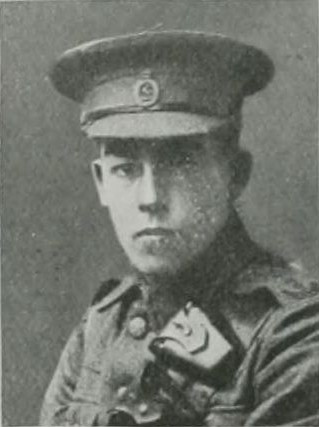
Edgar Douglas Morton.
MORTON, HENRY, Private, No. 1790, 1st Sussex Yeomanry, 3rd s. of the late Thomas Morton (who served 21 years in India with the 2nd Bengal Fusiliers, and received the Good Conduct medal, etc., and afterwards for 15 years on the staff of the old Wicklow Rifles); b. Wicklow, 15 Dec. 1867; educ. Wicklow Church School; enlisted in the Royal Artillery, 15 June, 1887; transferred into the Grenadier Guards, 1 Oct. following, and was posted to the 3rd Battn. He served through the South African War, 1899–1902, receiving the Queen’s medal with six bars (Belmont, Modder River, Dreifontein, Johannesburg, Diamond Hill, Belfast) and the King’s medal with two bars (1901, 1902), and obtained his discharge at his own request in Sept. 1906, after being with the Colours 19 years and 87 days, when he was awarded the Long Service and Good Conduct medal. He was servant to Capt. Weller-Poley, re-enlisted in the Sussex Yeomanry the day war was declared; went to the Dardanelles with the Mediterranean Expeditionary Force in Sept., 1915, and was killed in action, 13 Nov. 1915; unm. He was buried in Anglesea Gully, Gallipoli. Writing to his brother, Mr. George Morton, of 4, North Road, Prestwich, Manchester, Capt. Weller-Poley said: “I feel that I have lost a true friend and trusted servant who can never be replaced,” and Mr. Thomas Weller-Poley, of Chichester, J.P.: “Your brother Henry had been with us so long and was so much liked and respected by everyone, that the news of his death is a genuine sorrow to us and to the whole establishment.”
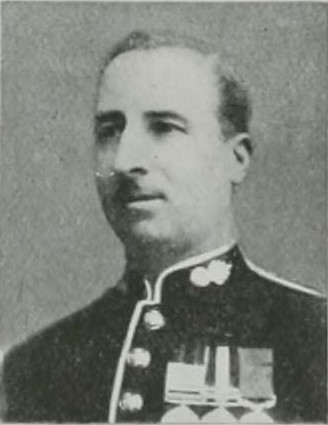
Henry Morton.
MORTON, JAMES FAIRFAX AMPHLETT, 2nd Lieut., 6th (Reserve Battn., attd. 2nd, King’s Royal Rifle Corps, 2nd s. of James Amphlett Morton, of Puxton House, Kidderminster, by his wife, Edith Mary, dau. of the Rev. John Garland, Vicar of Ombersley, Worcestershire; b. Puxton House, afsd., 6 May, 1892; and was educ. at Repton and Clare College, Cambridge, where he rowed stroke in his college boat in the May Races, 1914. On the outbreak of war he at once applied for a commission through the University O.T.C. and was gazetted 2nd Lieut. to the 7th (Service) Battn. K.R.R.C., early in Sept. 1914. After spending three weeks at a training camp for officers at Royston, Herts, he joined his battalion at Aldershot, but was subsequently transferred to the 6th (Reserve) Battn. at Sheerness. He left for France at the end of Nov. 1914, and was attached to the 2nd K.R.R.C. (2nd Brigade, 1st Division). He was killed in action near La Bassée, 10 Jan. 1915, during a counter-attack by the enemy to recover one of their trenches against which he had just led a successful assault. Buried in a garden at Cuinchy; unm. He was mentioned in F.M. Sir John (now Lord) French’s Despatch of 31 May [London Gazette, 22 June], 1915.
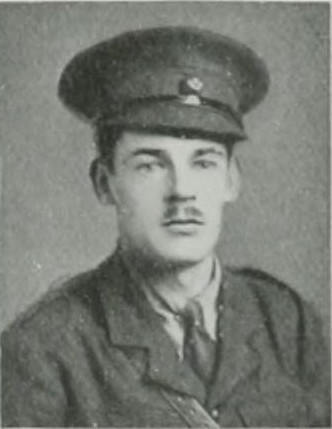
James F. A. Morton.
MORTON, WILFRED, Private, No. 2581, 1/7th Battn. Durham Light Infantry (T.F.), eldest s. of William Morton, of 47, Otto Terrace, Sunderland, Quantity Surveyor, by his wife, Evelyn Mary, dau. of Lancelot Steel; b. Sunderland, 1 Dec. 1895; educ. Great Ayton, Sunderland, and Ackworth; was a pupil in his father’s office; enlisted 6 Sept. 1914; went to the front, 19 April, 1915, was wounded and taken prisoner at Hooge, on Whit Monday, and was afterwards officially reported to have died, whilst a prisoner of war, in the Krieg Lazarette, Rossclare, 30 May, 1915, from wounds, and was buried at Rossclare; unm.
BOYD-MOSS, ERNEST WILLIAM, D.S.O., Major, 4th, attd. 9th, Battn. Worcestershire Regt., yr. s. of the late Matthew Henry Moss, of Belsize, Worthing; b. 26 Sept. 1876; educ. Tonbridge; gazetted 2nd Lieut. to the 1st Battn. Worcestershire Regt. from the Militia, 1 Dec. 1897; promoted Lieut. 2 Jan. 1900; Capt. 6 Feb. 1901, and temp. Major of the Battn., 22 Oct. 1914; was attd. to the West African Frontier Force, 12 Nov. 1904, to 11 July, 1907; served (1) in West Africa, 1898–9; took part in the operations in Sierra Leone (medal with clasp); (2) in the South African War, 1900–2, took part in the operations in the Orange Free State, Feb. to May, 1900; operations in Orange River Colony, May to 29 Nov. 1900, including actions at Ladybrand, 2–5 Sept, for which he was awarded the D.S.O.; operations in the Transvaal, Jan.-June, 1901; operations in Orange River Colony, 30 Nov. 1900–Jan. 1901, and June, 1901–Feb. 1902 (mentioned in Despatches [London Gazette, 10 Sept. 1901]; Queen’s medal with three clasps and the King’s medal with two clasps); and (3) with the Mediterranaean Expeditionary Force at the Dardanelles, and was killed in action at Sari Bair, 10 Aug. 1915. Major Boyd-Moss m. at Christ Church, Gorakhpur, U.P., India, Mary Elizabeth Grace (Elsie), dau. of Frank Middliton Howard, of Zehra, Gorakhpur, aforesaid, and had a son, Deryck Frank, b. 11 April, 1913.
MOSS, HERBERT, Private, No. 126, A Coy., 8th Battn. Australian Imperial Force, eldest s. of Herbert Moss, of 182, Queen’s Road, Upton Park, by his wife, Emily Ann, dau. of the late John Samuel Field; b. New Eltham, co. Kent, 29 June, 1894; educ. Stock Street Schools, Albert Road, Plaistow; went to Australia, 6 May, 1912, and when war broke out was employed on a farm belonging to Mrs. J. Greenbank, in Snake Valley, Victoria. He at once volunteered and joined the Commonwealth Expeditionary Force; sailed for Egypt; took part in the landing at the Dardanelles 25 April, 1915, and was killed in action there the same day, being shot through the forehead in a charge; unm. Letters from his former employer and from his officers and comrades speak very highly of him.
MOSS, HORACE GEORGE, Signalman, J. 12422, H.M.S. Pathfinder; lost when that ship was sunk by a mine, about 20 miles off the East Coast, 5 Sept. 1914.
MOSS, SAMUEL, A.B. (R.F.R., Ch. B. 3653), 177261. H.M.S. Aboukir; lost in action in the North Sea, 22 Sept. 1914.
MOTRONI, PETER GEORGE, Private, No. 8727, 2nd Battn. Suffolk Regt., 2nd s. of Anthony Motroni, of 14, Permit Office Street, Ipswich, by his wife, Carmela, dau. of Dominico Marcantonio, of Atina, Italy; b. Colchester, co. Essex, 1 July, 1895; educ. St. Pancras R.C. School, and St. Mary’s Convent School, Ipswich; enlisted 4 April, 1913; went to France, 11 Sept. 1914, and was killed in action at Hooges, near Ypres, 19 July, 1915; unm.
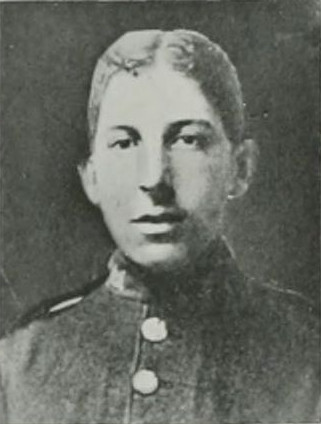
Peter George Motroni.
MOTRONI, UMBERTO AMEDIE, Corpl. No. 1756, Suffolk Regt., 3rd s. of Anthony Motroni, of 14, Permit Office Street, Ipswich by his wife, Carmela, dau. of Dominico Marcantonio, of Atina, Italy; b. at Ipswich, 1898; enlisted 7 Oct. 1913; went to France, 6 Nov. 1914, was promoted Corpl. in March, 1916, and was killed in action, 15 July, 1916; unm.
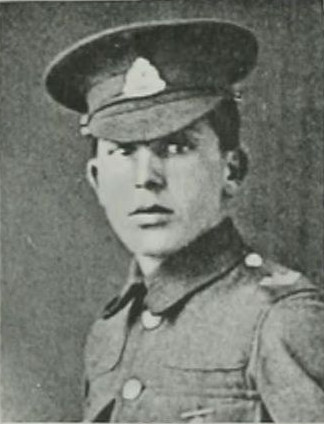
Umberto Amedie Motroni.
MOTT, GEORGE, Chief Petty Officer (N.S.) (R.F.R., A. 1944), 148075, H.M.S. Hogue; lost in action in the North Sea, 22 Sept. 1914.
MOUCHER, THOMAS HENRY, Stoker, 1st Class (R.F.R., B. 4009), 291032, H.M.S. Good Hope; lost in action off Coronel, on the coast of Chili, 1 Nov. 1914.
MOULD, ALBERT ARTHUR, Rifleman, No. 1487, 12th Battn. (The Rangers) The London Regt. (T.F.), only s. of William Arthur Mould, of 3, Buckingham Terrace, Notting Hill, W. (who served for 25 years with the 18th Middlesex Volunteers), by his wife, Emily, dau. of George Harris, Jeweller; b. London, 6 Feb. 1891; educ. Buckingham Terrace Public School; was a Porter at a Court Milliner’s, joined the Rangers in Sept. 1910; volunteered for foreign service on the outbreak of war in Aug. 1914; went to France in Dec. following, and died in the 2nd Eastern General Hospital, Brighton, 25 May, 1915, of wounds received in action during the Second Battle of Ypres; unm.
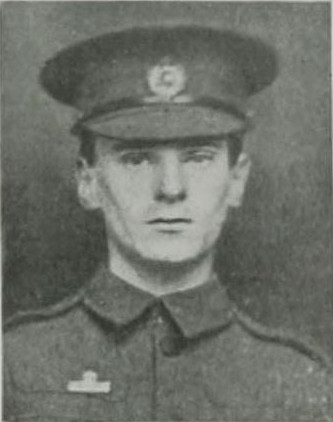
Albert Arthur Mould.
MOULL, WILLIAM DANIEL, Chief Sick Berth Steward, 350416, H.M.S. Hogue; lost in action in the North Sea, 22 Sept. 1914.
MOUNTAIN, GEORGE, Acting Leading Stoker, 306050, H.M.S. Hawke, s. of James Mountain, of 3, Thomas Street, Craghead; lost when that ship was torpedoed in the North Sea, 15 Oct. 1914.
MOXEY, CHARLES GEORGE, A.B. (R.F.R., B. 6819), S.S. 1043, H.M.S. Hawke; lost when that ship was torpedoed in the North Sea, 15 Oct. 1914.
MUCHALL, GEORGE WILLIAM STEWART, 2nd Lieut., 2nd Battn. The King’s Own Royal Lancaster Regt., s. of the late Colour-Sergt. William Angus Muchall, who served for 21 years in the 8th Battn. King’s Liverpool Regt.; b. Orford Barracks, Warrington, 12 June, 1881; enlisted in the King’s Own, 4 Jan. 1901, reached the rank of Colour-Sergt., and was serving with his Regt. in India when the European War broke out in Aug. 1914. He came home with his regt., reaching England at Christmas; was given a commission as 2nd Lieut., in the 2nd King’s Own, 9 Jan. 1915; went to France, and was killed in action in the desperate fighting on the Frezenberg Ridge, near Ypres, 8 May, 1915. Lieut. Muchall was three years Battn. Champion shot, and in 1909 he won the J. H. Steward Jewel for judging distance at Bisley, and was fourth in the grand aggregate. He m. at Scotforth Church, Lancaster, 6 Jan. 1906, Elizabeth (15, Cheltenham Road, Lancaster), dau. of William Jackson, of 15, Cheltenham Road, Lancaster, and had three children: William J., b. 18 Feb. 1907; George, b. 13 Aug. 1914; and Lilian M., b. 6 April, 1911.
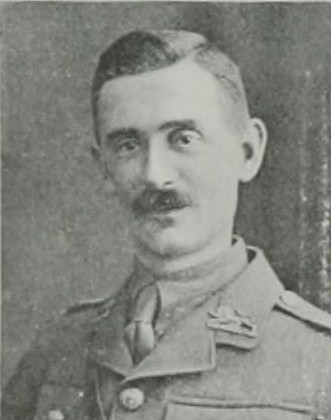
George W. S. Muchall.
MUDDIMAN, OLIVER, L.-Corpl., No. 4868, 1st Battn. Coldstream Guards, 4th s. of the late Alfred Muddiman, 3rd Battn. Rifle Brigade, by his wife, Kate, dau. of William and Sarah Burgess; b. Winchester, 1 June, 1883; educ. Winchester Council School; enlisted 22 Oct. 1902; promoted L.-Corpl., 9 Aug. 1914; went to France with the Expeditionary Force, 21 Aug., and was reported wounded and missing after the fighting at La Cour de Soupir on the Aisne, 14 Sept. 1914, and is now assumed to have been killed on that date. He m. at Fulham, 5 Oct. 1907, May Louise (19, Dunton Road, Leyton, Essex), dau. of John Charles Everett, Engine Driver, G.N.R., and had two sons: Oliver, b. 17 July, 1908; and Eric Charles, b. 31 Jan. 1914.
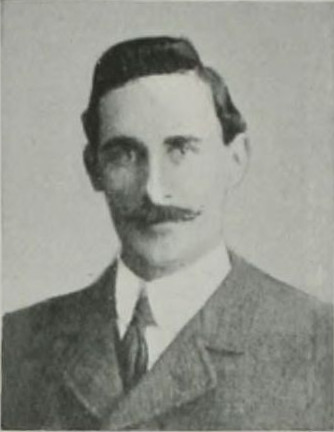
Oliver Muddiman.
MUDFORD, WALTER, Bombardier, R.M A. (R.F.R., I.C. 15), 9004, H.M.S. Good Hope; lost in action off Coronel, on the coast of Chili, 1 Nov. 1914.
MUIR, GEORGE CHALMERS, Stoker, 1st Class (R.F.R., B. 5821), 285210, H.M.S. Hawke; lost when that ship was torpedoed in the North Sea, 15 Oct. 1914; m.
MUIR, GEORGE WATSON, Midshipman, R.N., elder s. of Andrew Gray Muir, of 17, Grosvenor Crescent, Edinburgh, writer to the “Signet,” by his wife, Mary Elizabeth, dau. of Thomson Henderson, of Leghorn, and great-grandson of the Rev. John Muir, of St. Vigeans, co. Forfar; b. Edinburgh, 2 May, 1899; educ. Edinburgh Academy; Stubbington, Hampshire; and the Osborne and Dartmouth Royal Naval Colleges; appointed to H.M.S. Monmouth, 14 Aug. 1914, and was lost when that ship was sunk in action in the battle off Coronel, on the coast of Chili, 1 Nov. 1914.
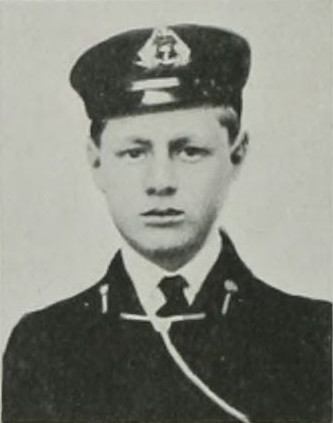
George Watson Muir.
MUIRHEAD, JAMES GRAHAM, Private, R.M.L.I., Ch./17214, H.M.S. Cressy; lost in action in the North Sea, 22 Sept. 1914.
MULADY, ALFRED, Stoker, 1st Class, K. 5091, H.M.S. Pathfinder; lost when that ship was sunk by a mine, about 20 miles off the East Coast, 5 Sept. 1914.
MULHOLLAND, ARTHUR, 2nd Ship’s Steward, 344220, H.M.S. Good Hope; lost in action off Coronel, on the coast of Chili, 1 Nov. 1914.
MULLEN, EDWARD, Stoker, 1st Class (R.F.R., B. 9230), S.S. 106287, H.M.S. Hawke; lost when that ship was torpedoed in the North Sea, 15 Oct. 1914.
MULLIGAN, ALEXANDER, Private No. 7462, 1st Battn. Royal Inniskilling Fusiliers, s. of Alexander Mulligan, of 16, Newport Street, Dublin, by his wife, Sarah Jane, dau. of Adam Russell; b. Ellen Field, Drumcondra, Dublin, 16 Sept. 1882; educ. St. James’ Schools, Dublin; joined the Army, 22 Dec. 1902, and was killed in action, being shot through the head at the Battle of the Aisne, 13 Sept. 1914. He m., Dublin, 15 Jan. 1908, Elizabeth Beatrice (12, St. John’s Cottages, High Road, Kilmainham, Dublin), dau. of the late John Sadleir, and had issue a son and dau., Alexander John, b. 14 June, 1911, and Annette Rosabella, b. 14 June, 1909.
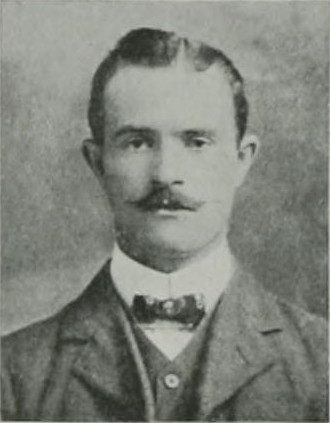
Alexander Mulligan.
MULLINS, JOHN OLLIS, 2nd Lieut., 6th (Reserve) Battn. Middlesex Regt., attd. Royal Flying Corps, 3rd s. of the late Edwin Roscoe Mullins, of London, Sculptor, by his wife, Alice, dau. of the late John Pelton, of Croydon; b. London, 6 March, 1892; educ. University College School, London (where he was captain of the school, and Colour-Sergt. of the O.T.C.); gazetted 2nd Lieut. 2 April, 1913; attd. to the 6th Middlesex, 6 Aug. 1914, transferred to Royal Flying Corps, 1 Feb. 1915, and was killed in an aeroplane accident at Upavon, 29 March, 1915, while going through a course of instruction there; unm. His Adjutant wrote that he was “a promising young officer, who in his short career in the 6th Middlesex had already shown a marked capacity for the handling of men.”
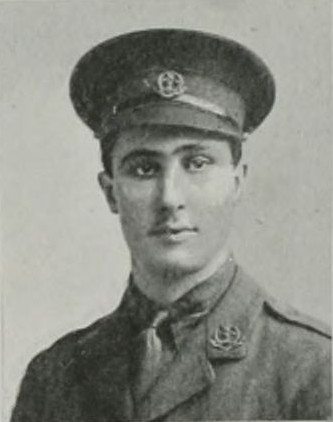
John Ollis Mullins.
MULLOY, JOHN THOMAS, Signalman, (R.F.R., B. 5053), 204138, H.M.S. Hawke; lost when that ship was torpedoed in the North Sea, 15 Oct. 1914.
MUMFORD, GEORGE, Officer’s Cook, 2nd Class, L. 4183, H.M.S. Hawke; s. of George Felix Mumford, of 28, Albury Grove Road, Waltham Cross; lost when that ship was torpedoed in the North Sea, 15 Oct. 1914.
MUMFORD, HARRY, A.B., J. 13954, H.M.S. Aboukir; lost in action in the North Sea, 22 Sept. 1914.
MUNBY, ERNEST JOHN, 2nd Lieut., 1st East Anglian Field Coy., R.E. (T.F.), 2nd s. of the late Rev. George Frederick Woodhouse Munby, Rector of Turvey, Bedford (1869–1905), by his wife, Harriet Louisa, dau. of the Rev. Canon Linton; b. Turvey Rectory, 19 May, 1875; educ. Rugby and Stevens Institute, Hoboken, New Jersey, U.S.A., where he took his degree as Mechanical Engineer, and became M.Am. S.M.E. and A.I.M. and M. As a Mining Engineer, he worked in Colorado and Borneo, and was subsequently engaged with Lord Cowdray (then Sir Weetman Pearson) in constructing the tunnel under the Hudson River to New York. He was afterwards employed by the Gardner Electric Drill and Hammer Company, and had latterly been engaged at the St. John’s Mine, Montezuma, Colorado. On the outbreak of war he returned to England and applied for a commission. He was gazetted 2nd Lieut. to the 1st East Anglian Coy., R.E., 14 Sept. 1914; went to France at the end of Dec., and was killed in action near Bethune, 31 Jan. 1915, being buried at Le Touret. He m. at Croydon, 7 Nov. 1905, Emily Louisa Ann, widow of Capt. Herbert Turner Turner Emery, of Baddow Park, Essex, and dau. of Charles Henry Coxhead; s.p.
MUNDAY, JAMES, Stoker, 1st Class (R.F.R., B. 10124), S.S. 107841, H.M.S. Hogue; lost in action in the North Sea, 22 Sept. 1914.
MUNDEN, WILLIAM, A.B. (R.F.R., A. 3767), 148102, H.M.S. Good Hope; lost in action off Coronel, on the coast of Chili, 1 Nov. 1914.
MUNN, DUNCAN, Painter, 2nd Class, 183670, H.M.S. Pathfinder; lost when that ship was sunk by a mine, about 20 miles off the East Coast, 5 Sept. 1914.
MUNN, GEORGE ANDERSON, Shipwright, 1st Class, 340648, H.M.S. Pathfinder; lost when that ship was sunk by a mine, about 20 miles off the East Coast, 5 Sept. 1914.
MUNRO, DAVID SINCLAIR, Sergt., No. 8/678, 4th (Otago Infantry) Battn. New Zealand Expeditionary Force, s. of Sinclair McKay Munro, of 21, Selwyn Road, N.E. Valley, Dunedin (a native of Wick, Caithness), Storeman; b. Dunedin, N.Z., 13 Aug. 1895; educ. N.E. Valley School, Dunedin; volunteered and enlisted, 13 Aug. 1914; was promoted Sergt.; left for Egypt with the Main Body in Oct.; took part in the landing at the Dardanelles, 25 April, 1915, and was killed in action there, 9 May following, being shot through the temple in an attack on a Turkish position. Buried, Cape Helles, Gallipoli; unm.
MUNRO, ROBERT WILLIAM, Farrier, No. 13/106, 4th Troop, 3rd Regt. Auckland Mounted Rifles, New Zealand Expeditionary Force, s. of John Alexander Munro, of Clevedon, Blacksmith, by his wife, Maria, dau. of Franz Bartosh, and great grandson of Robert Munro, who served through the Peninsula War; b. Clevedon, Auckland, New Zealand, 28 Dec. 1893; educ. there; joined the 3rd Regt. of the Auckland Mounted Rifles, 1 Aug. 1914, and was killed in action in Gallipoli, 18 May, 1915; unm.
MUNRO, RODERICK, E.R.A., 4th Class, M. 4519, H.M.S. Hawke; lost when that ship was torpedoed in the North Sea, 15 Oct. 1914.
MUNTON, FRANK BOUGHTON, Sergt., No. 1958, 13th (Princess Louise’s Kensington) Battn. The London Regt. (T.F.), eldest s. of Field Boughton Munton, of 10, Uxbridge Road, Shepherd’s Bush, Ironmonger, by his wife, Jenny, dau. of George Blair, of Queen’s Road, Bayswater; b. Shepherd’s Bush, 23 Jan. 1869; educ. Westbourne Park School, and was a Builder by trade. He joined the 18th Middlesex Volunteers in 1899. This, on the introduction of the Territorial system, became the 10th County of London Regt., and for some years he was Sergt.-Instructor of the Maxim-Gun Team, and was Quartermaster-Sergt. when the regt. was disbanded in 1912. Much of the work which the disbandment entailed fell to his share, and he was presented with a silver cup and a set of silver spoons by his old comrades. On the outbreak of war, notwithstanding that he was 45 years of age, he at once volunteered, and joined the Kensingtons as a Private, leaving a well-established business and large family to do so. He was promoted Sergt. early in March, 1915; went to France, 3 Nov. 1914, and was killed in action by machine-gun fire on 9 May, 1915, in the attack delivered by the 8th Division upon the German position at Fromelles and the northern part of the Aubers Ridge, on which occasion the Kensingtons most brilliantly distinguished themselves and sustained heavy losses. He was a first class shot and his Commanding Officer wrote saying how greatly his help would be missed, adding, “he was invaluable to me.” He m. at St. James Norlands, London, 14 Feb. 1890, Elizabeth (23, Caxton Road, Shepherd’s Bush, W.), dau. of Charles Hazard, and had three sons and five daus.: Frank Boughton, b. 25 Dec. 1899; Clifford Arthur, b. 17 April, 1904; Ernest Percy, b. 30 May, 1906; Jeannette Frances, b. 13 July, 1891; Constance May, b. 17 April, 1894; Irene Elizabeth, b. 27 May, 1897; Phyllis, b. 28 Nov. 1901; and Marjorie Joyce, b. 1 April, 1910.
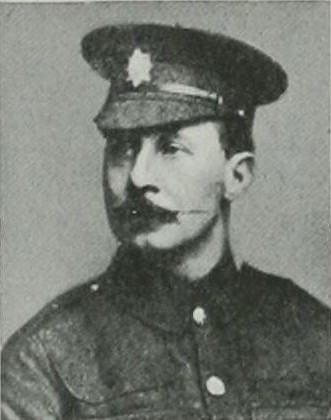
Frank Boughton Munton.
MURGATROYD, WALTER ERNEST, Stoker, 1st Class, K. 14723, H.M.S. Aboukir; lost in action in the North Sea, 22 Sept. 1914.
MURIEL, SIDNEY HERBERT FOSTER, Capt., 1st Battn. The Border Regt., only s. of the late Rev. William Carter Muriel, Vicar of Fulham (d. 30 March, 1916), by his wife, Lucie, 2nd dau. of the late Edmond Foster, of Cambridge; b. Cambridge, 9 Sept. 1877; educ. St. George’s, Harpenden, Westminster, and the Royal Military College, Sandhurst; gazetted 2nd Lieut. 1st Border Regt. 16 Feb. 1898, and promoted Lieut. 27 Aug. 1901; and Capt. 13 April, 1909. From 1 Oct. 1904, to 30 Sept. 1907, he was Adjutant of his battn. and of the Territorial Force from 13 April, 1909, to 12 April, 1912. He served with his regt. in the South African War, 1899–1902, took part in the operations in Cape Colony, South of the Orange River, 1899; operations in Natal, including the relief of Ladysmith and operations of 17 to 24 Jan. 1900 (slightly wounded 20 Jan.); operations in the Orange Free State, April to May, 1900; operations in the Transvaal, June, 1900, and in the Transvaal, east of Pretoria, July, and west of Pretoria, July to Nov. 1900, and in the Transvaal from 30 Nov. 1900, in which he was slightly wounded, and afterwards in the operations in the Orange Free State, Transvaal and Cape Colony. For his services he was mentioned in Despatches [London Gazette, 29 July, 1902] and received the Queen’s medal with four clasps and the King’s medal with two clasps. In 1915 the Border Regiment formed part of the 29th Division of the Mediterranean Expeditionary Force, and Capt. Muriel left England with his regt. on 8 March, took part in the landing at the Dardanelles on 25–26 April, 1915, and was killed in action there four days later (30 April); unm. Buried near Sedd-el-Bahr.
MURPHY, CHRISTOPHER FOWLER, Lieut., 2nd Battn. Oxfordshire and Buckinghamshire L.I., yr s. of the Rev. Canon Richard William Murphy, M.A., Rector of Clifden, Connemara, and formerly of Tuam, by his wife, Mary Louisa, dau. of the late Christopher Mulvany, C.E.; b. Dublin, 17 May, 1889; educ. Abbey School, Tipperary, and Trinity College, Dublin; gazetted 2nd Lieut. to the Oxford and Bucks L.I., from the R.F.A., Special Reserve, 7 Dec. 1910; promoted Lieut. 22 Jan. 1914; went to France, 27 Sept. 1914, and was killed in action at the First Battle of Ypres, 21 Oct. 1914, while leading his company in an attack; unm. He was buried near Ypres on the road to St. Julien and Poelcapelle. Lieut.-Col. Davies, in command of the 2nd Battn., wrote: “He will be a great loss to us both personally and as a soldier. He died gallantly doing his duty in leading his men on to the attack”; and Lieut. Wingfield: “He died bravely a brave man’s death, and his last moments made me very proud of him as a brother officer.”
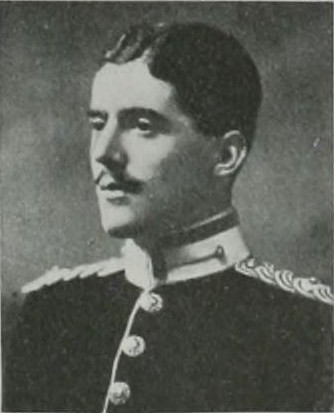
Christopher F. Murphy.
MURPHY, GEORGE PATRICK, Stoker, 2nd Class, K. 21976, H.M.S. Good Hope; lost in action off Coronel, on the coast of Chili, 1 Nov. 1914.
MURPHY, JOACHIM, Private, No. 696, C Coy. 1st Newfoundland Regt., eldest s. of Joseph Murphy, of St. John’s, Newfoundland, by his wife, Ellen, dau. of Patrick Dunn, of Mundy’s Pond; b. St. John’s, aforesaid, 16 July, 1896; educ. Christian Brothers School there; and on leaving in 1908 entered the employ of the Colonial Cordage Company; volunteered on the outbreak of war and joined the 1st Newfoundland Regt., 2 Sept. 1914; left for England, 4 Feb. 1915, went to the Dardanelles, 16 Oct. and died on board the Hospital Ship Morea, 7 Nov. 1915, of wounds received in action on the 5th. Volunteers were called for to go to the assistance of some men on Cariboo Hill; Murphy formed one of them and though they were successful in their object, they suffered heavily—Murphy was hit in eight or nine places. He was buried at sea; unm.
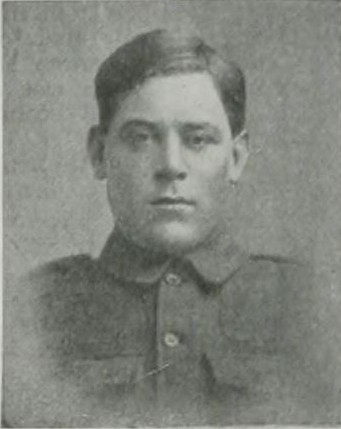
Joachim Murphy.
MURPHY, JOHN, Private, No. 189, 25th Battn. Australian Imperial Force; s. of John Murphy, of Keane’s Lane, Boherbee, Tralee, co. Kerry, by his wife, Julia, dau. of (—) Tobin; b. Tralee, Aug. 1885; educ. Strand Street School there; was for nine years in the employ of Messrs. Baily, of Tralee, Government Contractors, and went to Brisbane about 1910; on the outbreak of war joined the Australian Expeditionary Force, and was killed in action at Apex Chailak Dere, Gallipoli, 7 Oct. 1915; unm. He was buried there the same evening at 7.30 p.m. His brother Maurice was killed at the Battle of Mons, and his uncle Michael at Ypres. Another uncle served with the Expeditionary Force in France, was wounded and invalided home, and later was sent to the Dardanelles.
MURPHY, JOHN CORNELIUS MATTHIAS, Bugler, R.M.L.I., Ch./17860, H.M.S. Cressy; lost in action in the North Sea, 22 Sept. 1914.
MURPHY, JOHN FRANCIS, Ship’s Cook, 347632, H.M.S. Hawke; lost when that ship was torpedoed in the North Sea, 15 Oct. 1914.
MURPHY, MAURICE, Private, No. 10158, 2nd Battn. Royal Munster Fusiliers, s. of John Murphy, of Keane’s Lane, Boherbee, Tralee, co. Kerry, etc. (see under Private John Murphy); b. at Boherbee, Tralee, 1896; killed in action at the Battle of Mons, Aug. 1914; unm.
MURPHY, MICHAEL, L.-Corpl., No. 2786, 1st Battn. Royal Munster Fusiliers, s. of John Murphy, of Tralee, and uncle of John and Maurice Murphy (see their notices); b. Tralee about 1884; educ. Christian Brothers School there, and was killed in action at Ypres, 12 Nov. 1914. He m. at Tralee, Ellenor Hannah (2, Keane’s Lane, Boherbee, Tralee), dau. of (—), and had two children.
MURPHY, THOMAS, Stoker, 1st Class (R.F.R., 1.C. 589, late B. 8132), S.S. 103963, H.M.S. Cressy; lost in action in the North Sea, 22 Sept. 1914.
MURPHY, WALTER LEONARD, Private, No. 407, B Coy., 1st Newfoundland Regt., s. of John Joseph Murphy, of 20, Buchanan Street, St. John’s, Newfoundland, Checker, Reid Newfoundland Railway Co., by his wife, Alice, dau. of Peter Hamilton, of Carbonear, Newfoundland; b. Harbour Grace, Newfoundland, 6 April, 1897; educ. Roman Catholic Academy there, and Christian Brothers’ (Holy Cross) Schools, St. John’s; was in the employ of Messrs. James Baird, Ltd., of St. John’s, but on the outbreak of the European War resigned his post and joined the 1st Newfoundland Regt. 16 Aug. 1914; left for England on steamship Florizel, 4 Oct. 1914, and died at Mudros, 29 Sept. 1915, of dysentery contracted while on active service in Gallipoli; unm. He was a keen student, and won many prizes and honours in his schools; was a pianist of no mean ability, a good all-round sportsman and an expert in amateur photography. His brother, Private Michael Patrick Murphy, Canadian Infantry, is now (1916) on active service in France.
MURRAY, ALEXANDER, Private, No. 535, 5th Battn. Seaforth Highlanders (T.F.), yr. s. of the late Donald Murray, of The Poles, Dornoch, by his wife Isabella (The Poles, Dornoch, Sutherland), dau. of Lewis Grant; b. Bernarmin, Clyne, co. Sutherland, 19 May, 1895; educ. Dornoch; joined the 5th Seaforths, March, 1912; went to France, 1 May, 1915, and was killed in action near Festubert, 8 June, 1915; unm.
MURRAY, ALEXANDER, Stoker, R.N.R., S. 2883, H.M.S. Hawke; lost when that ship was torpedoed in the North Sea, 15 Oct. 1914.
MURRAY, ARTHUR JAMES, Stoker, 1st Class (R.F.R., B. 4800), S.S. 104146, H.M.S. Good Hope; lost in action off Coronel, on the coast of Chili, 1 Nov. 1914.
MURRAY, CHARLES JOHN, Lieut., 1st Battn. Coldstream Guards, 3rd s. of Charles Archibald Murray, of Taymount Stanley, co. Perth [grandson of David William, 3rd Earl of Mansfield, K.T.], and only s. by his second wife, Blanche, 5th dau. of Sir Thomas Moncreiffe, 7th Bart.; b. Taymount, co. Perth, 1 Dec. 1881, educ. Haileybury College; joined the Black Watch Militia in Dec. 1899; gazetted Lieut. Coldstream Guards, 4 Dec. 1901; and promoted Lieut. 7 Sept. 1904; served in the South African War, 1902; took part in operations in Cape Colony in May (Queen’s medal with two clasps); was A.D.C. to High Commissioner and Commander-in-Chief, N. Nigeria, 10 March, 1907, to 6 May, 1908, to Governor and Commander-in-Chief, N. Nigeria, 7 May, 1908 to 1909, and subsequently to Governor of East African Protectorate, 1909–12, when he resigned his commission to take up farming, and the breeding and training of horses there. On the outbreak of war he returned to England, and rejoined the Coldstream Guards at Windsor, 19 Sept. 1914; left with his regt. for France, 7 Oct. following, and was killed in action when leading an attack on Poezelhoek, near Ypres, 26 Oct. 1914; unm.
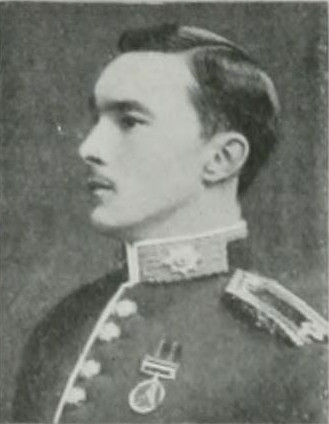
Charles John Murray.
MURRAY, FANE WRIGHT STAPLETON, Capt., 12th Royal Lancers, eldest s. of the late Col. Charles Edward Gostling Murray, of Whitton Park, Hounslow, and the Moat, Charing, Kent, J.P., D.L. [grandson of the Right Rev. Lord George Murray, Bishop of St. David’s, 2nd s. of John, 3rd Duke of Atholl, K.T.], by his 2nd wife, Margaret Frances Elizabeth, only dau. of the Rev. John William Conant; b. Whitton Park, Hounslow, 16 Oct. 1879; educ. Eton; gazetted 2nd Lieut. to the 12th Lancers from the Militia, 20 Dec. 1899, and promoted Lieut. 3 Oct. 1900, Capt. 27 Nov. 1907; served in the South African War, 1899–1902, taking part in the operations in the Transvaal and Cape Colony (Queen’s medal with five clasps); and with the Expeditionary Force in France and Flanders, 1914, and was shot through the heart in the trenches at Wytchaete, between St. Eloi and Messines, 30 Oct. 1914. As immediately after he fell, the 12th Lancers were obliged to abandon their trenches, his body was never recovered. He was unm.
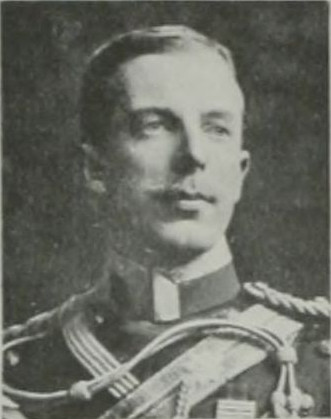
Fane W. S. Murray.
MURRAY, JOHN THOMAS, Leading Stoker, S.S. 102034 (Portsmouth I.C. 243), R.N., and Sergt., No. 5664, Legion of Frontiersmen, eldest s. of Joseph Murray, of 8, William Street, Lintz Colliery, Burnopfield, co. Durham, member of the Legion of Frontiersmen, formerly 3rd Northumberland Fusiliers, by his wife, Mary Elizabeth; b. North Shields, 25 May, 1886; educ. Leazes Board School (where he was one of the most brilliant scholars turned out by its headmaster, Mr. Abbott, J.P., who said that his late scholar “was a credit and reward of many anxious years of toil”); in the Tanfield U.D., co. Durham, afterwards being employed in the Lintz Colliery. Joined the Royal Navy, 10 Jan. 1906, his first ships being in rotation: the Nelson (in which he won the Gold Cross Guns and Gold Star), Brazen, Albermarle, Prince of Wales, Cressy, submarine A.E. 1, the Glasgow, and lastly, in 1906, the Good Hope, on which ship he was serving when she made her record cruise of 30,000 miles, also when she formed one of the squadron representing England at Jamestown Exposition; was one of the Good Hope crew presented by Princess Christian with a shield, on behalf of the women of South Africa, and one of the Guard of Honour to the German Emperor in 1908. After leaving the Navy he joined the Legion of Frontiersmen in Dec. 1911, the commanding officer, Col. Driscoll, D.S.O., writing to Sergt.-Major Harding, of Sunderland, “Use this man, he will be a credit to you; he is an ideal Frontiersman.” He was not long in being made Trooper, Corpl., and finally Sergt., and organised the North-West Durham subunit of the Legion, becoming its Chief Recruiting and Organising Officer and Hon. Secretary. On the outbreak of war he rejoined the Good Hope, and was killed in action when that ship was sunk with H.M.S. Monmouth in the battle off Coronel, 1 Nov. 1914; unm. He had the Good Conduct badge, the St. John’s Ambulance certificate, etc., and had a good knowledge of French, Spanish, Hindustani and Zulu; also possessed certificate in mining engineering, and had taken a deep interest in ornithology and history.
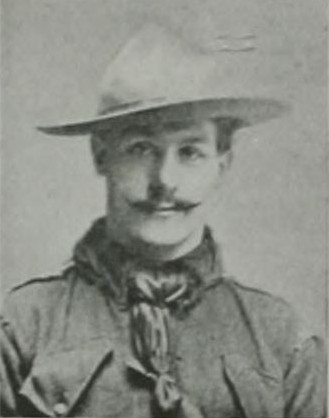
John Thomas Murray.
MURRAY, PATRICK MAXWELL, Lieut., 2nd Battn. Sherwood Foresters (Notts and Derby Regt.), only surviving s. of Arthur Turnour Murray, of Lincoln’s Inn, Barrister-at-Law, and Red Towers, Melton, Suffolk, and of Nora Alice, dau. of the late Hugh Maxwell, of The Elgin Mills Company, Cawnpore; b. 1, Radnor Place, Hyde Park, London, 24 April, 1890; educ. Gisburne House, Watford (W. H. Wright), 1898–1903; Repton (The Priory, H. Vassall), 1903–08, and Woolwich (Sandhurst Detachment), 1908–09; received commission, 18 Sept. 1909, joined Oct. 1909, went through musketry and machine gun course at Hythe, 1911, and qualified in both; Assistant Adjutant, 1911–14; promoted Lieut., 16 Aug. 1911; while at Repton he shot at Bisley, 1906, in the team which won the rapid-firing prize, and also in 1907 and 1908, and his house team won the House Challenge Shield for shooting in 1908 and the House Drill Shield in 1907 and 1908. He also won prizes at the school sports (150 yards, and hurdles). During his Assistant Adjutancy the shooting of his battn. improved, and the following prizes were won:—(a) Seymour Challenge Cup—team snap-shooting at Western Rifle Meeting, 1911; (b) Young Able Seamen and Soldiers’ Cup—teams under two years’ service, 1911; (c) Evelyn Wood Cup—time march ending with ball-firing at unknown ranges, 1912; (d) Judging Distance Shield, 1912; (e) Fairfax Cup—Western Rifle Meeting, 1913. As to the Evelyn Wood Cup, the “Regimental Annual,” 1913, says: “Lieut. Murray commanded the team and led them over the previously unknown nine miles of country with excellent judgment.” He was killed in action on Sunday, 20 Sept. 1914, at the Battle of the Aisne, while retaking a trench captured by the enemy by a ruse from another regt. In this section five officers were killed and nine wounded. His Capt. wrote: “He did so well on that dreadful Sunday—perfectly cool and collected the whole time.” His Colonel, who had reported of him in the highest terms at the last inspection, said: “His death was in every way worthy of the man he had proved himself to be, and his life was freely given in the noblest of causes. After a very dashing advance in which he was one of the first to gain the trenches from which the enemy had driven another British corps, he was there killed instantaneously while encouraging his men and watching every turn of the fight at his own peril.” All accounts agree that the 2nd Sherwoods saved a dangerous situation. He is buried near Troyon.
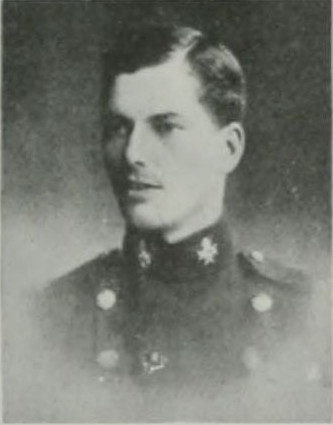
Patrick M. Murray.
MURRAY, PETCHELL BURTT, Flight Sub-Lieut., R.N.R., Royal Naval Air Service, attd. H.M.S. Pembroke, yr. s. of George Irving Murray, of Broad Oak Park, Worsley, member of Home Defence Corps VII, by his wife, Janie, dau. of William Lees; b. Didsbury, co. Lancaster, 27 July, 1884; educ. Eccles Grammar School, Sedbergh School, and Manchester Technical College, afterwards going to Germany for a time, and then entering his father’s business. He and his brother early devoted themselves to aviation, and in 1912–13, produced an aeroplane of their own construction. In 1911 he gave a lecture on the future of the hydro-aeroplane, in which he foreshadowed the lines of development, and was one of the first half-dozen to obtain his flying certificate off water (at Windermere). On 29 July, 1914, he applied for a commission in the Royal Naval Air Service, and was gazetted Flight Sub-Lieut. on 13 Sept. following, and attd. to H.M.S. Pembroke. He had attained an unusual degree of proficiency for his experience when he was killed in an accident at Rushall Down, Salisbury Plain, 4 Nov. 1914. He was returning to the Central Flying School, Upavon, after making a trial flight in a high speed B.E. Army biplane, when he was overtaken by a dense fog, which, it is assumed, prevented him from seeing the ground to regulate his descent. Flight Sub-Lieut. Murray was a member of the Executive Committee of the Manchester Cavendish Society, a society formed to enlist the help of young men of education in public work, and he gave much time and service to the work in connection with the Collyhurst Recreation Rooms in that City, and was immensely popular with the poor lads of Collyhurst.
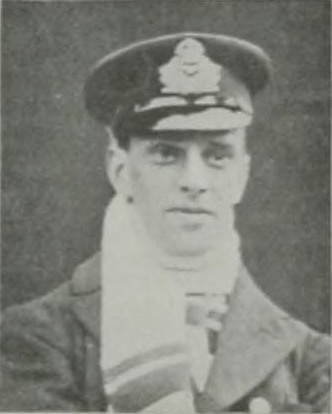
Petchell Burtt Murray.
MURRAY, RUPERT AURIOL CONANT GOSTLING, Capt., 1st Battn. Seaforth Highlanders, 3rd s. of the late Col. Charles Edward Gostling Murray, of Whitton Park, Hounslow, and the Moat, Charing, Kent [gdson. of the Right Rev. Lord George Murray, Bishop of St. Davids, 2nd s. of John, 3rd Duke of Atholl, K.T.], by his 2nd wife, Margaret Francis Elizabeth, only dau. of the Rev. John William Conant; b. Whitton Park, Hounslow, 29 Sept. 1882; educ. Eton; gazetted 2nd Lieut. Seaforth Highlanders, 22 Oct. 1902, and promoted Lieut. 15 Jan. 1908. and Capt. 22 Oct. 1914; went to France from India, and died in Lilliers Hospital, 11 March, 1915, from wounds received in action the previous day at Neuve Chapelle. Buried in Lilliers Cemetery. He m. at Pluckly, Ashford, Kent, 12 Aug. 1913, Ivy Maud, eldest dau. of Sir Henry Edward Dering, 10th Baronet, and had a son, Antony Ian Rupert, b. 13 June, 1914. His eldest brother, Capt. Fane Murray, was killed in action 30 Oct. 1914.
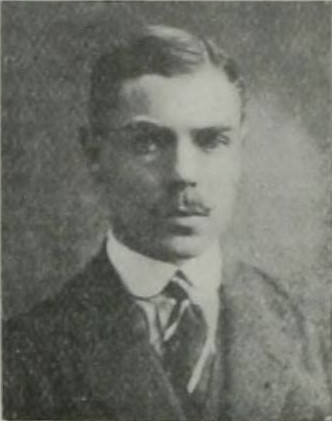
Rupert A. C. G. Murray.
MURRAY, THOMAS, Stoker, 1st Class (R.F.R., I.C. 243), S.S. 102034, H.M.S. Good Hope; lost in action off Coronel, on the coast of Chili, 1 Nov. 1914.
MURRAY, WALTER, Stoker, 1st Class (R.F.R., Ch. B. 9576), S.S. 106966, H.M.S. Cressy; lost in action in the North Sea, 22 Sept. 1914.
MURRAY, WALTER STANLEY, Private, No. 2221, 1/4th Battn. East Yorkshire Regt. (T.F.), yst. s. of Richard Henry Murray, of 93, St. George’s Road, Hull, Shipping Clerk (retired), by his wife, Martha, dau. of Joseph Williams, of that town; b. Hull, 30 Dec. 1877; educ. Bridlington and Hull; was for 15 years a clerk in the firm of Messrs. Beckett & Sons, of Hull; enlisted on the first call for recruits, 1 Sept. 1914, trained at Hull and Newcastle; left for France, 17 April, 1915, and went straight up to the trenches; took part in the Second Battle of Ypres, in which occasion his battn. sustained heavy casualties and was subsequently complimented by Sir John (now Lord) French on the gallantry it had displayed; and was accidentally shot by one of his own comrades in the trenches near Ypres, 11 June, 1915; unm. His Commanding Officer, Capt. W. T. Wilkinson, wrote expressing the deep sorrow of himself and the battn. at the loss of “so fearless and gallant a soldier.”
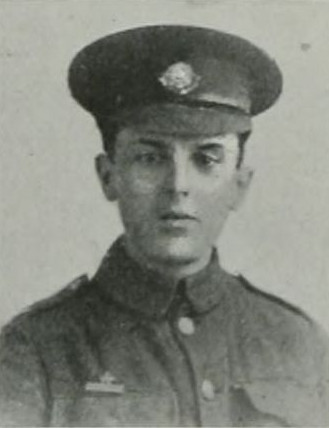
Walter Stanley Murray.
MURRAY, WILLIAM EDWARD, Capt., 1st Battn. Gordon Highlanders, 3rd s. of Surgeon Lieut.-Col. John Murray, of 12, Ashburn Gardens, S.W.; b. Hong Kong, China, 23 Dec. 1880; educ. Wellington College and Sandhurst; gazetted 2nd Lieut. 8 Jan. 1901, and posted to the 1st Battn. Gordon Highlanders, 9 March following; promoted Lieut. 30 May, 1904; served in the South African War, 1901–2; took part in operations in the Transvaal, June, 1901, to 31 May, 1902; in Orange River Colony, Dec. 1901, and in Cape Colony, May, 1901 (Queen’s medal with clasp); was attd. to West African Frontier Force, 12 March to 28 Sept. 1904. He retired from active service in 1906 following an attack of blackwater fever, contracted in West Africa, and joined the Reserve of Officers from which he was gazetted to the 3rd Special Reserve Battn. of his regt. 4 Oct. 1913. On the outbreak of war he immediately rejoined his regt. at Aberdeen, was promoted Capt. 10 Aug. 1914; and after guarding the wireless station there for three weeks, was, on Aug. 31, sent with a draft of 100 men, to join the 1st Battn. at the Front. They had suffered so heavily during the retreat from Mons that the remnants were sent back to the base and Capt. Murray and his draft were temporarily attd. to the 2nd Seaforths. He joined them at Juarre before the crossing of the Marne. “They were a splendid lot of fellows,” wrote Sergt. A. H. Fraser of the 2nd Seaforths from Broadwater Hospital. “We had some very trying marches, following up the retiring Germans until we came to the crossing of the Aisne. We crossed the river on the night of 13 Sept. under cover of darkness and took up a position on the heights of the north bank of the river near Soissons. The following morning when dawn broke, we found ourselves within a thousand yards of the German position. They were not long before they made their presence felt, and we had to dig ourselves into the face of the bank under a heavy shell fire. Capt. Murray was beside me and dug himself in with my entrenching tool, but he did not occupy it very much for I saw him out on the road giving his men advice to entrench themselves, and this, whilst shrapnel was whistling about his ears, at which he only laughed. Later on, after our Colonel was killed, Capt. Murray was ordered to reinforce a part of our line, and with these words, ‘Come on the Gordons,’ he went up with about half of his party, and in less than ten minutes I was informed he was killed. Every man of his party expressed deepest sympathy for his death; they felt it very keenly. Personally, I have never seen a man so cool under fire before or since. His name, I am sure, will be remembered in my regt. when all our battles are fought over again.” His last words, addressed to a private who was binding up the wound in his head, were: “You must hold on here at all costs,” and when, after nearly two days, they were relieved, only seven of Capt. Murray’s draft remained in a fighting condition. Brig.-Gen. A. Haldane, Commanding 11th Brigade, wrote: “The Gordons, under Capt. Murray, advanced with the greatest coolness and dash under a very heavy and accurate shrapnel fire. Their officer was killed but they went forward and won the admiration of the Seaforth Highlanders. They are as fine a draft as I have ever seen, and it is with great regret that I part with them. They are true Gordon Highlanders—sans peur et sans reproche”; and the Adjutant, Capt. E. Campbell: “Early on the morning of the 11th we took up a position north of the Aisne just before light. We had not time to entrench properly, and throughout the day were shelled. As an attack was anticipated, the Commanding Officer strengthened the firing line and half the men under Murray were sent up into the firing line. Almost immediately he was killed, his death being instantaneous, I believe. He was buried in a rough coffin that night about 12.30 a.m. within a quarter of a mile from where he fell. On one side of him we buried Col. Sir E. Bradford and on the other Lieut. Williamson of my regt. They all had rough crosses placed over their graves, and several others were buried there. In fact, I think it has been railed off now as a small cemetery. It is a very pretty spot on the slope of the hill overlooking the Aisne Valley, towards Soissons, quite close to a farm called La Montague Ferme, just above Buey de Long.” He m. at the Royal Bavarian Chapel, London, 31 July, 1906, Lilias Caroline Drummond Leslie (The Manor House, Littlehampton, Sussex), only dau. of Edward Drummond, of St. James’ Place, late Bengal Civil Service, and had three children: Edward John, b. 17 June, 1907; Sybil Lilias, b. 21 June, 1909; and Mary Katherine, b. 8 Sept. 1910.
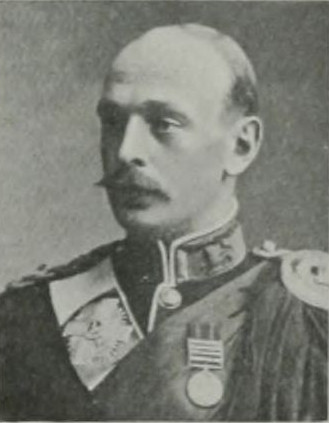
William Edward Murray.
MUSGRAVE, ANDREW BREMNER, Private, No. 2408, 3rd Battn. 1st. Infantry Brigade, Australian Imperial Force, eldest s. of Edgar Musgrave, of Bradford, Chartered Accountant, by his wife, Catherine Wares Rittie, dau. of James Bremner, of Kirkhill, Wick, Caithness; b. Bradford, York, 21 Dec. 1887; educ. Bradford Grammar School, where he won a Scholarship in 1900; was engaged in the woollen trade, and in 1911 went to Melbourne; when war broke out he enlisted in the Australian Expeditionary Force at Sydney in Oct. 1914, and was killed in action during the landing in Gallipoli on 25 April, 1915; unm. Writing to his mother, Capt. C. H. Howel Price said: “He was killed in action on 25 April the day of landing on the peninsula of Gallipoli, whilst nobly doing his share of the work allotted to us.... He was a great favourite in his company.”
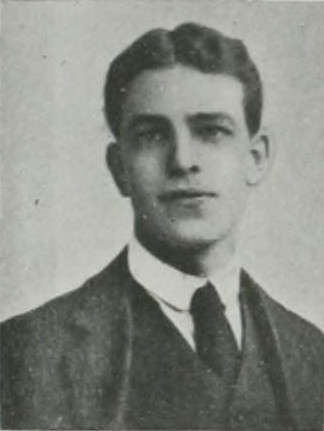
Andrew B. Musgrave.
MUSGROVE, WILLIAM, A.B. (R.F.R., B. 10429), 205575, H.M.S. Hogue; lost in action in the North Sea, 22 Sept. 1914.
MUSHETT, FRANK, Private, No. 1730, 5th (Cinque Ports) Battn. Royal Sussex Regt. (T.F.); served with the Expeditionary Force in France; died 17 April, 1915, of wounds received in action.
MUSKETT, ALFRED, A.B., J. 1475, H.M.S. Hogue; lost in action in the North Sea, 22 Sept. 1914.
MUSSETT, JOHN WILLIAM, Seaman, R.N.R., B. 2633, H.M.S. Aboukir; lost in action in the North Sea, 22 Sept. 1914.
MUSSETT, WILLIAM HENRY, Acting Leading Stoker, 297573, H.M.S. Hogue; lost in action in the North Sea, 22 Sept. 1914.
MUSSO, JOSEPH, Private, No. 10550, 4th Battn. Middlesex Regt., s. of Joseph Musso, of 74, Canal Road, Mile End; served with the Expeditionary Force in France, died on active service, 4 Nov. 1914.
MUSSON, JOHN HARDY, 2nd Lieut., 2nd Battn. The Queen’s Royal West Surrey Regt., eldest s. of Samuel Peter Musson, of Kinnaird House, Upper Norwood, by his wife, Naomi, dau. of Abraham Hardy; b. Streatham, 21 Aug. 1894; educ. Stanley House School, Cliftonville, Margate; King’s School, Canterbury (member of the O.T.C.; in the first boat, first athletic team, and second football team); Lycée Faidherbe, Lille (2nd prize for public school fencing); Lille University (diploma 1914); London University, and the Royal Military College, Sandhurst; gazetted 2nd Lieut. to the 2nd Queen’s, 17 Feb. 1915; went to France, 24 May, and was killed in action near Bethune on 19 July following; unm. Buried at St. Vaast Post, near Bethune. He was mentioned in F.M. Sir John (now Lord) French’s Despatch of 30 Nov. 1915; and his Commanding Officer wrote “The battn. has lost a brave and valuable young officer.”
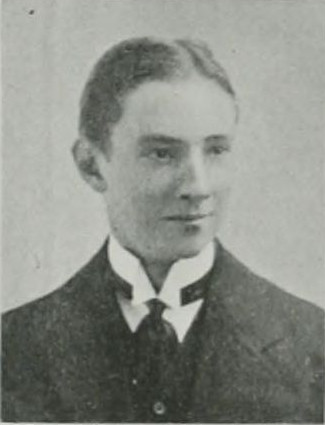
John Hardy Musson.
MUSTARD, ALEXANDER, L.-Corpl., No. 1160, 5th Battn. Australian Imperial Force; b. Elgin, co. Moray, 5 March, 1886; educ. Urquhart Public School, Morayshire; went to Australia; volunteered and joined the Australian Imperial Force, 5 Oct. 1914; took part in the landing at the Dardanelles, 25 April, 1915, and was killed in action there, 10 May following; unm. His commanding officer wrote that he very gallantly volunteered to go for his comrades with the water bottles slung across his shoulders, and was shot by a sniper when quite close to the well.
MYDDELTON, EDWARD GEOFFREY, 2nd Lieut., 3rd Battn. Suffolk Regt., only surviving s. of Edward Brackenbury Myddelton, of Bank House, Wellingborough; b. Boston, 22 Aug. 1893; educ. Lancing, Wellingborough, and Jesus College, Cambridge, where he was in the Officers’ Training Corps, and was gazetted 2nd Lieut., 3rd Battn. Suffolk Regt., 4 June, 1913. On the outbreak of war he went to the front with the 2nd Battn., was in the retreat from Mons, and was unofficially reported killed at Le Cateau on 26 Aug. 1914. Coy. Sergt.-Major Crack, of the Suffolks, who was taken prisoner in this action, writing from Sennelager, 15 Jan. 1915, says: “I am very sorry to say that 2nd Lieut. Myddelton was killed about 12 o’clock on Aug. 26; also his platoon Sergt. was killed at the same time, both by the same shrapnel. The men of his platoon were all very much grieved to have lost their leader, as they were all very fond of him.” Lieut. Myddelton had passed the first part of the Mathematical Tripos with 1st Class honours.
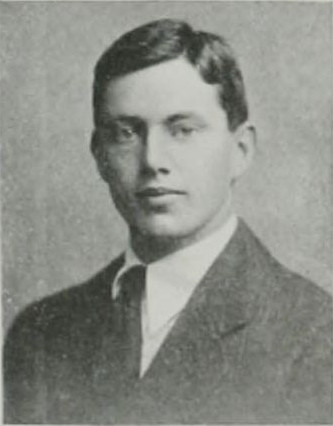
Edward G. Myddelton.
MYER, ERNEST ALEX, Major, 6th (City of London) Battn. The London Regt. (Rifles) (T.F.), 4th s. of Sydney Myer, of Southampton, by his wife, Sophy Alex, dau. of Montagu Alex, of Hereford; b. Southampton, 23 Nov. 1874; educ. St. John’s Wood School, and University College School, London, and was admitted a Solicitor in 1897, practising at 46–47 London Wall, E.C. He was a keen volunteer, and soon after leaving the University College School, joined the Victoria Volunteer Regt. which was afterwards amalgamated with the St. George’s Rifles; and on 26 Nov. 1901, received a commission in the 2nd London Rifles, which became the 6th City of London Rifles on the organisation of the Territorial Force. He was promoted Capt. in 1898, and on the outbreak of war at once volunteered for foreign service. He received his Majority, 5 Aug. 1914, and during the arduous months of training was for a considerable period in command of the Battn. The 2nd London Division, to which he was attached, left for the Front, 20 March, 1915, and he was killed in action near Givenchy, 3 April following, being struck by shrapnel while passing through the trenches on inspection duty with Col. Simpson. Buried at Cuinchy close to where he fell. In a letter to Mrs. Myer, Col. Simpson wrote: “This Battn. has lost an officer who cannot be replaced—he was loved and respected by all ranks. Our country has lost a fine English gentleman, who had a very keen sense of duty and the determination to do it. He died the death of the brave soldier that he was.” He was an authority on apprenticeship (published a text book on apprenticeship entitled “Apprenticeship Law”), and acted for many years as hon. solicitor to the Industrial Department of the Jewish Board of Guardians, to the Apprenticeship and Skilled Employment Association, and to the Apprenticeship Committee of the Women’s University Settlement; he was one of the founders of the Brady Street Club in East London. Major Myer was called “The Boys’ Friend.” He was very keenly interested in their welfare, and many a boy in good and lucrative situations to-day owes it only to his help. In a quiet unassuming way he did splendid service for the Boys’ Clubs, and for the young men belonging to them, and never spared himself where the lads’ interest and welfare were concerned. Many of the old members and others have cause to be grateful to him for a start in life, and many for valuable help in other ways. The Maidenhead Club Scouts, too, owe their foundation to him, being the first troop in the country to be completely fitted out, and he was always keenly interested in their welfare. On one occasion he went out of his way, and went specially to visit their camps at Gosport to see that the boys were well provided for. He m. at Bayswater Synagogue, London, Emmy (123, Inverness Terrace, Bayswater), dau. of Charles (and Jeanette) Jacob; s.p.
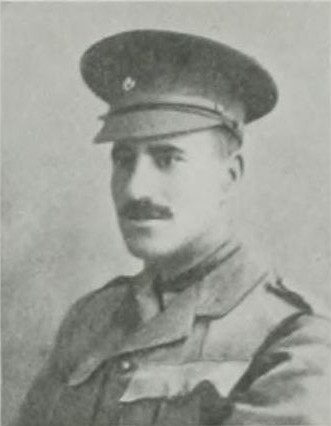
Ernest Alex Myer.
MYERS, GEORGE MAURICE, Private, No. 2250, 7th Battn. London Regt. (T.F.), only s. of Henry Myers, Wholesale Tobacconist (died 1908), by his wife, Amelia, dau. of J. B. George, of Paris; b. Regent’s Park Road, N.W., 10 April, 1894; educ. Kilburn Grammar School; enlisted early in Sept. 1914, following the outbreak of war; went to the Front, March, 1915, was badly wounded on the night of 12 Sept. following, and died two days later (14 Sept.) in No. 18 Casualty Clearing Station; unm. His commanding officer, Capt. C. J. Salkeld Green, wrote that he had been “marked for promotion when opportunity arose” and that “when he received his wounds he was on a working party on a very important piece of work.” He was buried at Lapugnoy, near Bethune. Lieut. Sydney Frankenburg, in a letter to Mrs. Myers, said: “He was buried in accordance with Jewish ritual in a part of the soldiers’ cemetery set apart for Jews. I performed the ceremony yesterday [15 Sept.] afternoon, and also spent some hours with him before his death. To show you the esteem that your son was held in by his comrades and officers I may mention that a party of soldiers from his platoon of their own free will marched several miles to attend his funeral. His Coy. Commander was present.”
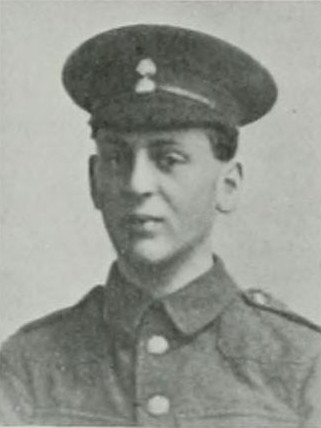
George Maurice Myers.
MYERS, SIDNEY, Boy, 1st Class, J. 24128, H.M.S. Hawke; lost when that ship was torpedoed in the North Sea, 15 Oct. 1914.
MYLAM, ALFRED CLAUDE, Rifleman, No. 1728, 12th Battn. (The Rangers) The London Regt. (T.F.), 3rd s. of Henry Mylam, of 441, King’s Road, Chelsea, Ironmonger, by his wife, Elizabeth, dau. of George Henry Cornwall; b. Chelsea, 29 May, 1889; educ. St. Mark’s College School there; was a Solicitor’s Clerk; joined the Rangers in Sept. 1913; volunteered for foreign service on the outbreak of war in Aug. 1914; went to France, 24 Dec. 1914, and died at St. Julien, 26 April, 1915, of wounds received in action while advancing to relieve the Canadians; unm. Buried at Hazebrouck.
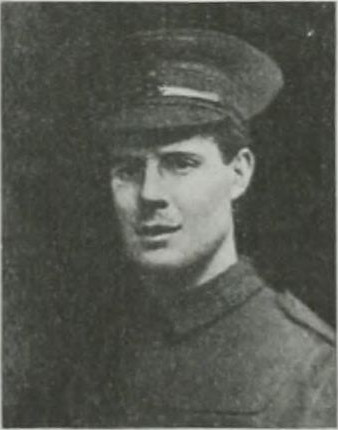
Alfred Claude Mylam.
NAIRN, WALTER, Bugler, No. 1366, 7th Battn. Durham Light Infantry (T.F.), 4th s. of the late John Nairn, of Southwick-on-Wear, Fruiterer, by his wife, Isabella (23, Grosvenor Street, Southwick-on-Wear), dau. of Benjamin Cook, of Monkwearmouth; b. Southwick, 12 Dec. 1895; educ. Board School there; joined the 7th Territorial Battn. of the Durhams, 26 March, 1911, and was employed at Priestman’s Yard, Sunderland; volunteered for foreign service after the outbreak of war, and was killed in action “somewhere” in France, 22 June, 1915, by a sniper; unm. His four brothers are all on active service, a fact upon which their mother was complimented by H.M. the King.
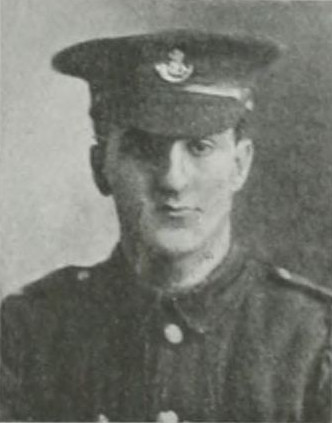
Walter Nairn.
MERCER-NAIRNE, LORD CHARLES GEORGE FRANCIS, C.V.O., formerly Fitzmaurice, of Meikleour and Tullybeagles, co. Perth, and of Aldie, co. Kinross, Major, 1st Royal Dragoons, yr. s. of Henry Charles, 5th Marquis of Lansdowne, K.G., P.C., G.C.S.I., G.C.M.G., G.C.I.E., etc., by his wife, Lady Maud Evelyn, née Hamilton, C.I., V.A, Extra Lady of the Bedchamber to H.M. Queen Alexandra, 7th and yst. dau. of James, 1st Duke of Abercorn, K.G.; b. London, 12 Feb. 1874; educ. Eton; gazetted 2nd Lieut. to 1st Dragoons from the Royal Scots Militia, 29 May, 1895; and promoted Lieut. 2 Feb. 1898, Capt. 27 June, 1901, and Major 30 June, 1910; was A.D.C. to G.O.C. the Forces in Ireland, 29 May, 1897, to 19 Oct. 1899; A.D.C. to Commander-in-chief (F.M. Earl Roberts), 3 Jan. 1901 to 11 Feb. 1904; Equerry-in-Ordinary to King George V when Prince of Wales, 1 April, 1909, to 6 May, 1910, and to His Majesty, 10 June, 1910, to Sept. 1914; created C.V.O. 1911; served (1) in the South African War, 1899–1900; took part in the relief of Ladysmith, including action at Colenso; operations of 17 to 24 Jan. 1900, and action at Spion Kop; operations of 5 to 7 Feb. 1900, and action at Vaal Kranz; operations on Tugela Heights, 14 to 27 Feb. 1900, and action at Pieters Hill; operations in Natal, March, 1900, and in the Orange Free State, May, 1900 (Queen’s medal with four clasps); and (2) with the Expeditionary Force in France and Flanders from 6 Oct. to 30 Oct. 1914, on which date he was killed in action near Klein Zillebeke, Ypres. He was awarded the Legion of Honour by the French President for gallantry in the field. He m. at Calcutta, 20 Jan. 1909, Lady Violet Mary, née Elliot-Murray-Kynynmound (11, Hyde Park Terrace, W.), yst. dau. of Gilbert John, 4th Earl of Minto), K.G., P.C., G.C.S.I., G.C.M.G., and had issue, George John Charles, now of Meikleour, etc., b. 27 Nov. 1912, for whom H.M. King George V was sponsor; and Mary Margaret Elizabeth, b. 6 Feb. 1910, for whom H.M. Queen Mary was sponsor.
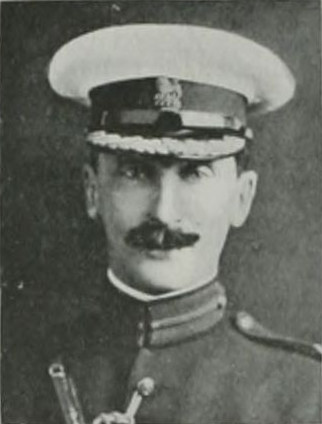
Lord Charles Nairne.
NAISH, WILLIAM CHARLES GATTON, A.B. (R.F.R., B. 6656), 196269, H.M.S. Hogue; lost in action in the North Sea, 22 Sept. 1914.
NAISMITH, PERCY THOMAS, Private, No. 1543, C Coy., 14th Battn. (London Scottish) The London Regt., eldest s. of Thomas Naismith, of 589, Romford Road, Woodgrange, and Thomas Street, Burdett Road, E., formerly of Eastfield, Leith, Licensed Victualler; b. Poplar, 17 March, 1894; educ. Thomas Street School, Burdett Road, and Pitman’s, Southampton Row; joined the London Scottish; served with the Expeditionary Force in France, etc., and died in Boulogne Hospital, 11 Nov. 1914, of wounds received in the charge of the London Scottish at Messines on 30 Oct. Buried in Boulogne Cemetery; unm.
NANCARROW, JOHN VIVIAN, Capt., 4th Battn. Yorkshire Regt., York and Durham Infantry Brigade, Northumbrian Division T.F., eldest s. of George Bennett Nancarrow, of Ravenscroft, Grove Hill, Middlesbrough, a partner in the firm of W. B. Peat & Co., Chartered Accountants, by his wife, Charlotte Alice, dau. of Capt. Josiah Thomas; b. Middlesbrough, 6 June, 1885; educ. Leys School and King’s College, Cambridge (M.A., LL.B.); admitted a Solicitor, 1909, and became Secretary to the Middlesbrough Chamber of Commerce. He joined the 1st Vol. Battn. Durham L.I. in 1907, was later attached to the Northumberland Fusiliers at Newcastle and then to the Duke of Cornwall’s L.I., before settling in Middlesbrough where he became Lieut. in the 4th Yorks, and after passing through a school of instruction, was promoted to the Captaincy in the latter part of 1913. On the outbreak of war he undertook Imperial service obligations and landed in France with his Battn. in the middle of April 1915; they were immediately hurried up to the front in consequence of the French troops north of Ypres having been “gassed” on 22 April, and on the afternoon of the 24th were ordered to attack the German lines near the village of Fortuin, near St. Julien, a few miles north-east of Ypres. During the day. Capt, Nancarrow was seen cheering on his men, and in the advance, he stopped to bind up the wound of a Private who had fallen and then hurried forward. After making several rushes at the head of his men towards the enemy’s position, he was shot and died almost instantaneously. His Colonel wrote of him that “he behaved like a hero.” Capt. Nancarrow had taken a very active part in the Boy Scouts’ movement in connection with the settlement in Newport Road, Middlesbrough. He was engaged to be married to Miss Elsie Harkess of Stokesley.
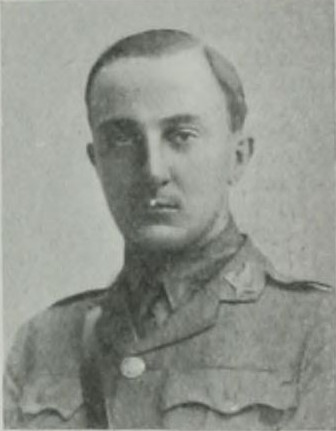
John Vivian Nancarrow.
NASH, EDWARD RADCLIFFE, Capt., 16th Lancers, elder s. of Lieut.-Col. Edward Nash, of Ballycarty, Tralee, co. Kerry, and 56, Sloane Street, London, S.W., J.P., late Essex Regt., by his wife, Constance, dau. of John Radcliffe, of Moorfield, Withington, J.P.; b. London, 9 June, 1888; educ. Mr. Bull’s Preparatory School, Westgate-On-Sea (1898–1902), Eton (1902–July, 1905), and Sandhurst, into which he passed in Sept. 1905, at the earliest possible age, giving up for the sake of seniority all that another two years at Eton would have meant to him; gazetted 2nd Lieut., 16th Lancers, 29 Aug. 1906, and promoted Lieut. 15 Jan. 1909, and Capt. 10 Oct. 1914; went to France with the Expeditionary Force in Aug. 1914; took part in the retreat from Mons, the Battles of the Marne, and the Aisne, and the First Battle of Ypres, and was killed in action near Ypres, 21 Feb. 1915, when the 16th Lancers suffered severely through the blowing up of a trench; unm. At the time of his death he was acting Adjutant of his regt. Capt. Nash was a splendid all-round sportsman. At Eton he distinguished himself as a long distance runner and as a “wet-bob,” and in 1905 won the Junior Sculls and stroked his Junior House Four up to “head,” the last time that the colours of Miss Evan’s were seen on the River; while at Sandhurst he proved himself a remarkable athlete, winning against competitors considerably older than himself the equivalent of the “Victor Ludorum” Cup. After joining the 16th Lancers he ran twice in the Army Championship for the mile, being second on each occasion with practically no training, but he devoted himself chiefly to riding, and was one of the finest horsemen in the Army. He was well known at Olympia, and was one of the team which represented Great Britain at the last Olympic Games at Stockholm in 1912. He was first and second in successive years at the Grafton Point-to-Point, won his Regimental Light Weight Steeplechase on two occasions, and was “placed” at a number of other meetings at which he rode. As conspicuous for dash, energy and endurance in war as in sport, he was the ideal cavalry officer and appeared to have a distinguished career before him. His exuberant vitality found expression in all that he said or did, and one who knew him well observed, on hearing that he had been killed: “Of all the deaths in this war, his death is the hardest to realise.” Capt. Nash was mentioned in Sir John (now Lord) French’s Despatch, of 8 [London Gazette, 19] Oct. 1914. His younger brother, Capt. L. C. Nash, died of wounds 28 Sept. following (see following notice).
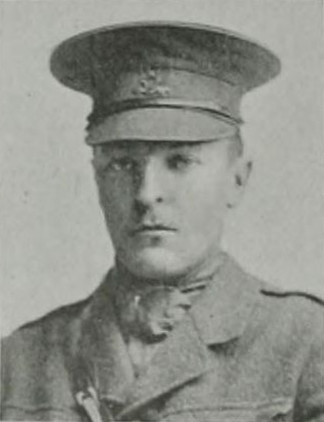
Edward Radcliffe Nash.
NASH, LLEWELLYN CHARLES, 2nd Lieut. (temp. Capt.), 2nd Battn. King’s Royal Rifle Corps, yr. s. of Lieut.-Col. Edward Nash, of Ballycarty, Tralee, co. Kerry, and 56, Sloane Street, S.W., J.P., late Essex Regt., by his wife, Constance, dau. of John Radcliffe, of Moorfield, Withington, J.P.; b. Cefn Ila, Usk, co. Monmouth, 23 June, 1895; educ. at Wixenford (Mr. Morton’s), Eton (Mr. Mill’s House, Jan. 1910–July, 1914), and the Royal Military College, Sandhurst; gazetted 2nd Lieut., 2nd King’s Royal Rifle Corps, 11 Nov. 1914, and Lieut. 1 Aug. 1915; left for France in Jan. 1915; took part in the Battles of Neuve Chapelle and Festubert; was promoted Capt. 12 July, and died in hospital at Lozinghem, 28 Sept. 1915, of wounds received in action near Vermelles on the 25th, the first day of the Battle of Loos. He was wounded early in the morning of the 25th, but was not found until late in the afternoon, and one of his brother officers wrote: “The fact that we found him wounded almost through the German wire shows the splendid determination and courage with which he went forward.” He was mentioned in Despatches by F.M. Sir John French [London Gazette, 1 Jan. 1916], and a General officer under whom he served wrote: “He was Battn. bombing officer and easily the best in the Division, and was constantly sent for when they wanted advice on the subject.” Buried at Lozinghem, near Lillers; unm. At Eton he was a Sergt. in the O.T.C., a whip to the Beagles, and won the School Sculling in 1914, being ninth man of the Eight that year. In all branches of sport he was keen, especially excelling as a fisherman. A writer in the King’s Royal Rifle Corps Chronicle said: “To know “The Fat Boy” as Nash was affectionately called, was to love him. Always cheery and keen for work, he set a magnificent example to those under him. If he was in charge of a party working in the trenches he buckled to and worked harder than anyone else. At Eton he had the reputation of working his hardest at work or play, and this reputation he fully justified while he was in the Regt. His character was eminently fitted for the stern combination of work and sport entailed by active service, and his success as a soldier is shown by the fact that at the age of 20, with less than a year’s service, he had already been gazetted to the rank of Capt.” His elder brother, Capt. E. R. Nash, was killed in action near Ypres, 21 Feb. 1915.
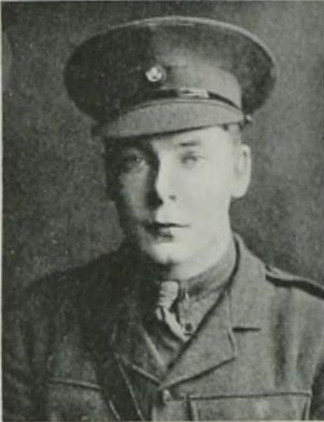
Llewellyn Charles Nash.
NASH, WILLIAM GEORGE, Private, No. 2346, 1/8th Battn. The Middlesex Regt. (T.F.), eldest s. of William Nash (now Sergt. No. 110331, in the 1st Labour Battn. Royal Engineers, on active service in France), by his wife, Ellen, dau. of the late George Williams, of Hawley; b. Hampton Hill, co. Middlesex, 10 April, 1895; educ. there; was a Chauffeur and Student in the S.C.S.; enlisted 25 Feb. 1914; went to France, 8 March, 1915, and was killed in action, in the German trenches, at the Battle of Loos, 25 Sept. 1915, while bomb throwing; unm.
NASMYTH, JAMES THOMAS HUTCHINSON, Capt., 10th Battn. Canadian Expeditionary Force, 4th s. of John Nasmyth, of Mount Forest, by his wife, Jane P., dau. of John Morrison; b. Mount Forest, Ontario, Canada, 23 Aug. 1874; joined the 46th Durham Regt. about 1900, and, after going through a course of instruction at the Stanley Barracks, Toronto, was given a commission as Lieut., two years later, and promoted Capt. in 1912, after taking a second course; volunteered for Imperial Service on the outbreak of war, and was appointed Lieut. 10th Battn. 22 Sept. 1914; served with the Expeditionary Force in France and Flanders; was promoted Capt. at the Front; and was killed in action near St. Julien, 23 April, 1915, during the heroic stand of the Canadians at the beginning of the Second Battle of Ypres. He m. at Janetville, Ontario, Canada, 22 Oct. 1896, Emma Amelia, dau. of Christopher Armstrong, of Janetville; s.p.
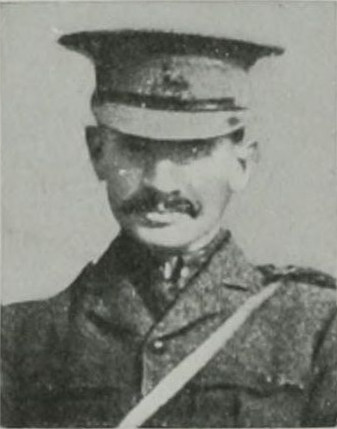
James T. H. Nasmyth.
NATTON, REUBEN WALTER, Private, No. 1005, Royal Army Medical Corps, 3rd s. of James Natton, of Stockton-on-Tees, Shipyard Labourer, by his wife, Margaret Elizabeth, dau. of James Jeffries, of Stockton-on-Tees; b. Thornaby-on-Tees, co. Durham, 17 March, 1889; educ. New Board School there; enlisted there in the Coldstream Guards in Aug. 1905, but was bought out the following October; in June, 1906, he enlisted in the R.A.M.C. and after serving three years passed into the Reserve and found employment at Doxford’s Yard, Sunderland; on mobilization, 5 Aug. 1914, he was called up, went to France with the first Expeditionary Force and was wounded at Ypres in November; invalided home to Wandsworth Hospital he was found unfit for further active service and was placed on the Hospital Ship Neuralia; on the voyage out to Bombay he contracted fever and was landed at Alexandria, where he died at No. 15 General Hospital, 2 June, 1915, and was buried in the Chatby Military Cemetery near there. He m. at Haswell Parish Church, 27 July, 1908, Rosina (14, John Street, Southwick-on-Wear), dau. of Thomas Brown, of Easington, and had four children: Reuben Walter, b. 18 Oct. 1910; Robert William, b. 19 Sept. 1914; Rosina, b. 3 May, 1909; and Margaret, b. 29 Feb. 1912.
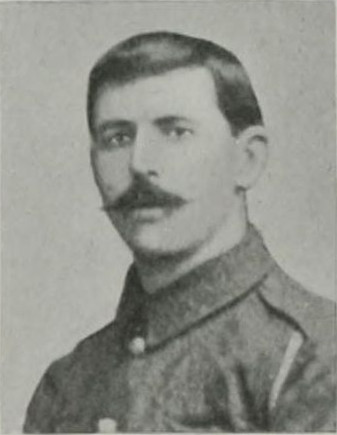
Reuben Walter Natton.
NAYLOR, CLARENCE EDGAR, A.B., 209926 (Ports.), H.M.S. Hawke; lost when that ship was torpedoed in the North Sea, 15 Oct. 1914; m.
NAZARETH, JOHN XAVIER, Officers’ Cook, 2nd Class, L. 694, H.M.S. Good Hope; lost in action off Coronel, on the coast of Chili, 1 Nov. 1914.
NEAL, HENRY JOSEPH, A.B., 194903, Chatham, H.M.S. Good Hope; lost in action off Coronel, on the coast of Chili, 1 Nov. 1914.
NEALE, ROY GORDON KING, A.B., J. 6046, H.M.S. Cressy; lost in action in the North Sea, 22 Sept. 1914.
NEARY, HENRY FRANK, A.B. (R.F.R., Ch. B. 9031), S.S. 2128, H.M.S. Cressy; lost in action in the North Sea, 22 Sept. 1914.
NEAVE, ARUNDELL, Major, 16th (The Queen’s) Lancers, yr. s. of the late Sir Arundell Neave, 4th Bart., by his wife, the Hon. Gwyn Gertrude, née Hughes (Llysdulas, Amlwch, Anglesey), yst. dau. of William Lewis, 1st Lord Dinorben; b. London, 2 July, 1875; educ. Evelyn’s, Uxbridge, and Eton; gazetted 2nd Lieut. 16th Lancers, from the Royal Anglesey R.E. Militia, 11 May, 1898, and promoted Lieut. 17 Oct. 1899; Capt. 1 April, 1903, and Major 19 Dec. 1914; served (1) in South Africa War, 1900–2; took part in the relief of Kimberley; operations in Orange Free State, Feb. to May, 1900, including actions at Paardeberg (17–26 Feb.), Poplar Grove; operations in the Transvaal, west of Pretoria, Aug. to Sept. 1900; in Orange River Colony, Sept. to Nov. 1900, and Feb. to June, 1901; operations in Cape Colony, Dec. 1900, to Jan. 1901, and July, 1901, to 31 May, 1902 (Queen’s medal with three clasps, King’s medal with two clasps); and (2) with the Expeditionary Force in France and Flanders; was mentioned in Despatches by F.M. Sir John (now Lord) French, 17 Sept. [London Gazette, 19 Oct.] 1914; and died, 21 Feb. 1915, of wounds received while leading his squadron into action near Ypres the same day. Buried in Ypres Cemetery. He was made a Knight of the Legion of Honour for gallantry in the field. Major Neave was a fine horseman and a good all-round sportsman.
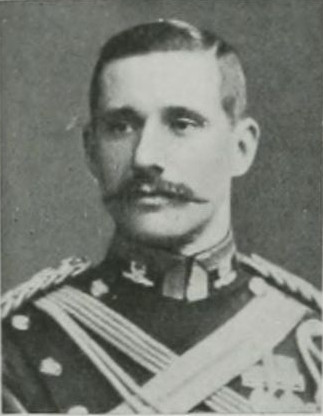
Arundell Neave.
NEILL, CHARLES, Stoker, 1st Class (R.F.R., Ch. B. 9342), S.S. 106586, H.M.S Cressy; lost in action in the North Sea, 22 Sept. 1914.
NEILL, JOHN THOMAS, Petty Officer, 171483, H.M.S. Hawke; lost when that ship was torpedoed in the North Sea, 15 Oct. 1914; m.
NEILL, WILLIAM, Chief Ship’s Cook (Pensioner), 147941, H.M.S. Hogue; lost in action in the North Sea, 22 Sept. 1914.
NEILSON, WILLIAM, Regt. Sergt.-Major, No. 25, 5th Battn. 2nd Infantry Brigade, 1st Victorian Contingent, Australian Imperial Force, eldest s. of the late William Neilson, of Ashgillhead, Dalserf, by his wife, Grace, dau. of James Copland; b. Muirkirk, co. Ayr, 30 Nov. 1864; educ. Blackwood, co. Lanark; enlisted in the King’s Own Scottish Borderers, Oct. 1882, and served nine years with them in India (Queen’s medal with one clasp); joined the Scottish Horse when the South African War broke out, and served through that campaign (Queen’s medal with four clasps). After spending four years in business in Glasgow, he went to Australia in Sept. 1911, settled at Melbourne and later at St. Kilda, but on the outbreak of the European War, again enlisted in the Australian Imperial Force; left for Egypt with the main force; arrived at the Dardanelles in April, and was killed in action there, 19 May, 1915. Buried at Gaba Tepe. He m. at Dalserf, co. Lanark, 1 Dec. 1893, Janet Penman (12, Moodie Place, St. Kilda, Victoria, Australia), dau. of Thomas Renwick, of Dalserf, and had six children: William, b. 27 May, 1899; John Renwick, b. 6 March, 1902; Abram Renwick, b. 10 Dec. 1906: Janet Douglas, b. 23 Aug. 1894; Grace Copland, b. 18 Dec. 1896; and Isabel Renwick, b. 5 July, 1903.
NEKREWES, DAVID SMITH, Private, No. 2024, A Coy., 3rd Battn. Monmouthshire Regt. (T.F.), 2nd s. of the late David Smith Nekrewes, of 3, Carisbrook Road, Maindee, Newport, Monmouth, by his wife, Ellen, dau. of Michael Buckley; b. Newport, 20 July, 1883; educ. Shaftesbury School, Newport. He enlisted at Abergavenny on the outbreak of war, proceeded with his regt. to France on 16 Feb. 1915, and was killed in action at Frezenberg, 16 May, 1915; unm. Private Nekrewes was well known in South Wales as an athlete. He represented his school on two occasions in the School’s Swimming Championship, and also in the School’s Gymnastic Competition; he also played Rugby football for Bridgend, Glam., and (three-quarter), Pontypridd, Mountain Ash, Pontypool, and Glamorgan County. He met with considerable success as a sprinter.
NELIS, JAMES EDWARD THORNHILL, Lieut., 5th (Service) Battn. Royal Inniskilling Fusiliers, only s. of Lieut.-Col. James Alexander Nelis, of 1, Seaview Terrace, Donnybrook, late I.M.S., by his wife, Anna, dau. of the late Cudbert Bensley Thornhill, C.S.I., Indian Civil Service; b. Abbottabad, India, 31 Dec. 1891; educ. at Haileybury; gazetted 2nd Lieut. 5th Inniskilling Fusiliers, 26 Sept. 1914, and promoted Lieut. 19 Nov. following; left for the Dardanelles, 10 July, 1915, and was killed in action there, 15 Aug. following; unm.
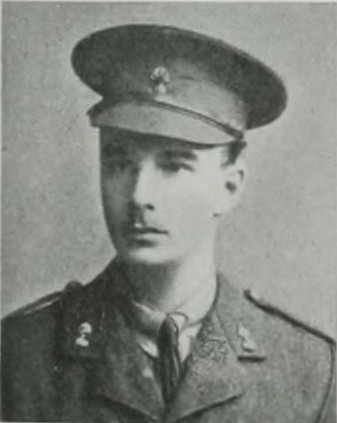
J. E. T. Nelis.
NELSON, GEORGE, Private, No. 1162, 1st Battn. Coldstream Guards, s. of Francis Nelson, of 2, Stafford Street, East End, Sunderland; b. Sunderland; educ. St. John’s School there; enlisted in the Coldstreams after the outbreak of war, 26 Aug. 1914; served with the Expeditionary Force in France, etc., and died a prisoner of war in No. 2 German Field Hospital, 25 Feb. 1915, of frozen feet; unm. Buried at Pont à Vendin.
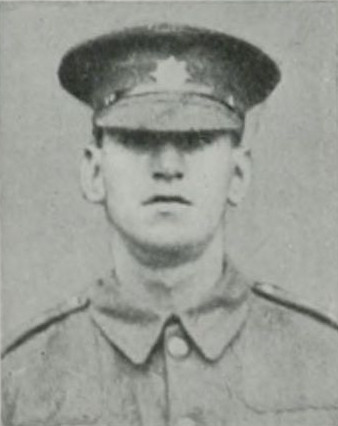
George Nelson.
NESMITH, JAMES, Capt., 5th Battn. Argyll and Sutherland Highlanders (T.F.), eldest s. of the late James Nesmith of Glencairn, Port Glasgow, Accountant, by his wife, Catherine (Glencairn, Port Glasgow), dau. of Donald Gillies, of Craigenterue, Argyleshire; b. Glasgow, 17 July, 1881; educ. Greenock Academy, and Glasgow University; was a Solicitor practising in Glasgow; joined the E Coy. (Port Glasgow) of the 1st Renfrew Volunteer (afterwards the 5th Territorial) Battn. Argyll and Sutherland Highlanders, 10 April, 1900, and was given a commission as 2nd Lieut. 29 Nov. 1905, and promoted Lieut. 22 Feb. 1911, and Capt. 13 July, 1912; volunteered for Imperial service on the outbreak of war, left for the Dardanelles, 28 May, 1915; and was killed in action during the British attack on the Krithia-Achi Baba position, Gallipoli, 12 July following. Buried on the field; unm.
NESS, GORDON STUART, Lieut., 3rd (Reserve), attd. 1st Battn. Royal Scots Fusiliers, yst. and only surviving s. of the late Patrick Ness, of Braco Castle, Perthshire, by his wife, Charlotte Jane Wells (19, Dawson Place, Notting Hill Gate, W.), dau. of Stephen Powell; b. London, 4 Nov. 1885; educ. Westminster School, and Clare College, Cambridge; was elected an underwriting member of Lloyds in 1909; joined the 3rd Battn. (Royal Ayr and Wigtown Militia) Royal Scots Fusiliers, as 2nd Lieut. 7 April, 1906, and was promoted Lieut. 9 Dec. 1909; went to France 11 Sept. 1914, attached to the 1st Battn. of his Regt.; and was killed in action during the 1st Battle of Ypres, 11 Nov. 1914. Buried near Ypres. He m. in London, Gladys, dau. of Charles Ernest Gwynne Harrison; and had a son and daughter: Patrick, b. 15 June, 1914; and Marguerite Gordon, b. 3 June, 1915.
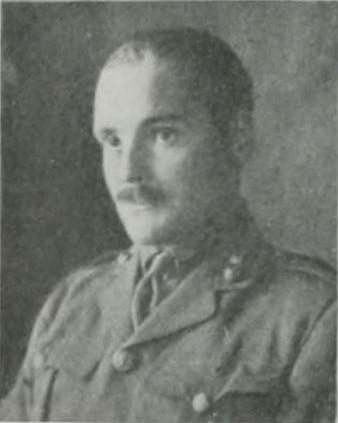
Gordon Stuart Ness.
NEVE, BASIL HOVENDEN, Acting Chief E.R.A., 2nd Class, 270424, H.M.S. Pathfinder; lost when that ship was sunk by a mine, about 20 miles off the East Coast, 5 Sept. 1914.
NEVE, WILLIAM CHARLES, Petty Officer (N.S.), 184688, H.M.S. Cressy; lost in action in the North Sea, 22 Sept. 1914.
NEVETT, THOMAS ALFRED, L.-Corpl., No. 13041, 5th Battn. King’s Shropshire L.I., yst. s. of William Berber Nevett, of Cotsbrook Hall, co. Salop, by his wife, Emily, dau. of the late Richard Jones, of Norton, co. Salop; b. Sansaw, co. Salop, 24 June, 1895; educ. Elleray Park, Wallasey, and Shrewsbury School (1911–13), and on leaving there took up an agricultural life, but on the outbreak of war volunteered and joined the King’s Shropshire L.I. with several other Salopians. After some months of training he was placed in the battn. machine-gun section, and went with this unit to France in May, 1915. During the violent attacks and counter-attacks around Hooge in Aug. he was wounded on the 9th by a shell which destroyed his gun, and on the way to the dressing station he received another and more severe wound from shrapnel, resulting in spinal injury and paralysis, from which he died in Edmonton Military Hospital, 10 Sept. 1915; unm. The Headmaster of Shrewsbury said of him: “He was one of those unselfish boys whose real goodness gives them an influence out of all proportion to their prominence in school life.” His eldest bro., Sergt. W. P. Nevett, was killed at the Dardanelles landing (see his notice).
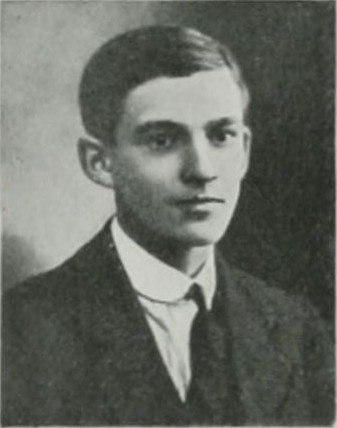
Thomas Alfred Nevett.
NEVETT, WILLIAM PERCY, Sergt., No. 851, 12th Battn. Australian L.I., Australian Imperial Force, eldest s. of William Barber Nevett, of Cotsbrook Hall, co. Salop, by his wife, Emily, dau. of the late Richard Jones, of Norton, co. Salop; b. Sansaw, co. Salop, 4 June, 1889; educ. Bridgnorth Grammar School and Birmingham University and after securing first-class in the Engineering Course, 1906–9, became Assistant Engineer to the Miners’ Water Supply, Perth, Western Australia. On the outbreak of war he joined the Australian L.I., and having been a member of the O.T.C. at Birmingham University, was set immediately to train recruits. He left for Egypt in Nov. 1914, and while there was offered a commission in the New Army at home but declined it, preferring to stay with his comrades. He was killed in action during the landing of the Australians at Sedd-el-Bahr, Gallipoli, 25 April, 1915; unm. The Sergt.-Major of his battn. wrote: “Nevett was on the left flank on the Sunday we effected a landing here, and at this point the fighting was particularly heavy. Your brother was hit in the firing line, and was carried to a place of more safety by Private Michie, another of our good men since killed. The wound was so serious that before the stretcher-bearers could get him to the beach, he died. He was one of our most efficient and popular N.C.O.’s, and my best friend.”
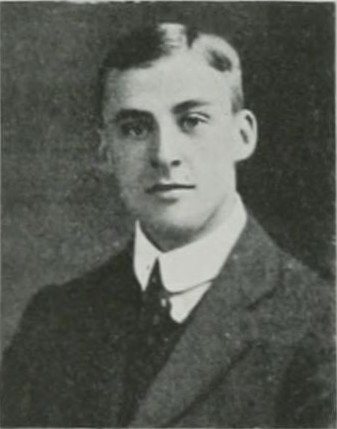
William Percy Nevett.
NEW, ALEXANDER HERBERT, Private, No. 5712, 3rd Battn. Coldstream Guards, eldest s. of Harry New, of Bournemouth, by his wife, Theresa, dau. of (—) Hazel; b. Ringwood, co. Hants, 5 June, 1886; educ. at Bournemouth; enlisted 12 Sept. 1904; served in Egypt, 29 Sept. 1906, to 14 Feb. 1908; went to France, 12 Aug. 1914, and was killed in action at La Tretoire, 8 Sept. 1914, being buried in the wood there. His company officer wrote saying that he was a good soldier, and fought gallantly, and cheerfully carried out the hard marching of the first three weeks of the campaign; also how well he helped to maintain the reputation of the Coldstream Guards and the British Army. He m. at St. Luke’s, Burton, Christchurch, 18 April, 1910, Fanny (67, Forton Road, Gosport), only dau. of Charles Langrish; s.p.
NEWBURY, WILLIAM JOHN, Chief Ship’s Cook, 165257, H.M.S. Hawke; lost when that ship was torpedoed in the North Sea, 15 Oct. 1914.
NEWBY, GEORGE EDWIN, A.B. (R.F.R., B. 2629), 207242, H.M.S. Good Hope; lost in action off Coronel, on the coast of Chili, 1 Nov. 1914.
NEWCOMBE, THOMAS, Stoker, 1st Class, K. 10707 (Ports.), H.M.S Hogue; lost in action in the North Sea, 22 Sept. 1914.
NEWHAM, ARTHUR JOHN, Petty Officer (N.S.), 208884, H.M.S. Aboukir; lost in action in the North Sea, 22 Sept. 1914.
NEWMAN, CHARLES HENRY, A.B. (R.F.R., B. 2948), S.S. 264, H.M.S. Good Hope; lost in action off Coronel, on the coast of Chili, 1 Nov. 1914.
NEWMAN, CORMIE AUBREY, E.R.A., 3rd Class, M. 1478, H.M.S. Good Hope; lost in action off Coronel, on the coast of Chili, 1 Nov. 1914.
NEWMAN, FRANCIS, A.B. (R.F.R., B. 2512), 201770, H.M.S. Good Hope; lost in action off Coronel, on the coast of Chili, 1 Nov. 1914.
NEWMAN, HARRY, Private, R.M.L.I. (R.F.R.), Petty Officer, 6325, H.M.S. Hawke; lost when that ship was torpedoed in the North Sea, 15 Oct. 1914; m.
NEWMAN, HENRY, Stoker (Native), H.M.S. Good Hope; lost in action off Coronel, on the coast of Chili, 1 Nov. 1914.
NEWMAN, RICHARD HARRY, Chief Petty Officer, Tel. 183585, H.M.S. Pathfinder; lost when that ship was sunk by a mine, about 20 miles off the East Coast, 5 Sept. 1914.
NEWMAN, SAMUEL, Stoker, R.N.R., S. 1706, H.M.S. Hawke; lost when that ship was torpedoed in the North Sea, 15 Oct. 1914.
NEWMAN, STANLEY FRANCIS, Sergt., No. 1093, Essex Yeomanry, 3rd s. of Francis Newman, of Moor Hall, Thorley, Bishop’s Stortford, Farmer, by his wife, Emily, dau. of Richard Stock; b. Moor Hall, Thorley, co. Hertford, 18 July, 1885; educ. Bishop’s Stortford College; served six years in the Essex Yeomanry, 1906–12; then went to Singapore and later to Australia, where he was farming; returned to England in July, 1914, and when war broke out the following month, immediately rejoined his old regt. and volunteered for foreign service. He went to France, 28 Nov. 1914, and was killed in action in an attack on the German trenches at Ypres, 13 May, 1915; unm. The Capt. commanding C Squadron wrote: “The regt. was sent up to reinforce the infantry at this part of the line about a week ago. On the 13th the Germans succeeded in taking a bit of our line and the regt., together with the two other regts. of our Brigade, was ordered to retake it. They had to advance 500 yards of open ground, most of it going under a very heavy fire from shells, rifle, and machine-gun fire. Your son reached the enemy’s trenches safely, and helped to recapture them, but a few minutes later he was shot while standing near Mr. Holt who was also wounded. His death is a great blow to us all, officers and men alike, and he leaves a place in the Squadron which will be hard to fill. Everybody agreed that he was one of the very best N.C.Os. in the regt. and his troop would do anything for him.” And Trooper H. J. Tucker writing to his father said: “Will you just break the news on my behalf, that my two comrades, Sergt. Stanley Newman and Corpl. Frank Bird, have both been killed in action during a great charge, which took place two days ago. When there was a roll call the whole regt. had 168 casualties—killed, wounded and missing; amongst them our Colonel and many officers.”
NEWMAN, WILLIAM HENRY, Acting Chief Stoker, 293000, H.M.S. Aboukir; lost in action in the North Sea, 22 Sept. 1914.
NEWMAN, WILLIAM HERBERT, Private, No. 3082, 1/8th Battn. Middlesex Regt. (T.F.), eldest s. of William Harry Newman, of 15, Marlow Road, Southall, Police Sergeant, by his wife, Gertrude, dau. of Thomas Betts, for 53 years on L. & N.W.R.; b. Haggerston, N., 23 June, 1895; educ. Featherstone Road Boys’ School, Southall; was a clerk with Messrs. Kearby & Sons, Rubastic Road, Southall; joined the Middlesex Territorials, 5 Sept. 1914; volunteered for foreign service; trained at Hampton and Staines; left for Gibraltar, 1 Feb. 1915; went to France at the end of July; took part in the Battle of Loos, 25–26 Sept. and was killed in action near La Bassée, 19 Oct. 1915; unm. Buried at Wye Farm.
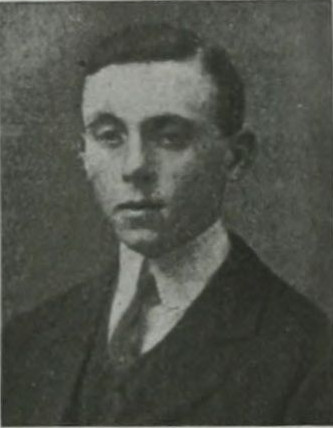
William Herbert Newman.
NEWPORT, WILLIAM JAMES, Private, R.M.L.I., Ch. 13141, H.M.S. Hawke, s. of James Newport, of The Green, Beyton, Bury St. Edmunds, co. Suffolk; lost when that ship was torpedoed in the North Sea, 15 Oct. 1914.
NEWSHAM, CHARLES, Private, No. 2763, 16th Platoon, C Coy., 9th (Highlanders) Battn. Royal Scots (T.F.), eldest s. of Robert Newsham, of 6, Broadway, Withington, Manchester, a buyer for Ralli Bros., of Manchester, by his wife, Agnes, dau. of John Gorrie, Manchester; b. Cheetham, Manchester, 16 May, 1885; educ. Cheetham Higher Grade School; was a buyer for Ralli Bros., and a member of the Manchester Royal Exchange. On the outbreak of war he joined the Royal Scots with his great friend Gerard G. S. Frost (who was afterwards killed during the same bombardment as himself), 10 Nov. 1914, and after training at Edinburgh and Kilmarnock, left for the Front towards the end of Feb.; he lost his life during the bombardment of Ypres, three shells dropping into the billets of his company, killing him and six of his comrades, 7 April, 1915. He was the first member of the Manchester Royal Exchange killed in the war.
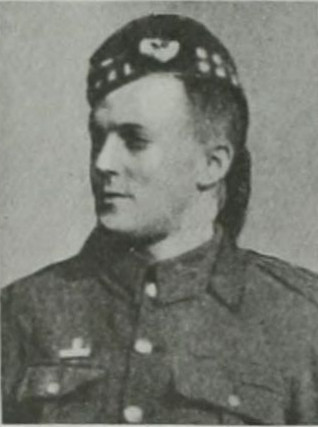
Charles Newsham.
NEWSHAM, RICHARD, Stoker, 1st Class, K. 13680, H.M.S. Cressy; lost in action in the North Sea, 22 Sept. 1914.
NEWSTEAD, GEORGE POPE, Major, 2nd Battn. Suffolk Regt., and Tempy, Lieut.-Col. Sierra Leone Battn., West African Frontier Force, only s. of James Newstead, of Ashby Manor, Horncastle, co. Lincoln, by his wife, Louisa Anne, dau. of George Pope; b. Bristol, 23 Sept. 1875; educ. Rugby School (1889–94, where he was in the cricket eleven and football fifteen, and won the Athletic Sports’ Challenge Cup) and New College, Oxford; gazetted 2nd Lieut. 2nd Suffolks, 15 May, 1897, and promoted Lieut. 24 June, 1899, Capt. 15 March, 1905, and Major, Nov. 1914; served in the South African War, 1899–1902, being employed with the Mounted Infantry; took part in the operations in Cape Colony, south of the Orange River, 1899–1900, including action at Colesberg (1–6 Jan.); in the Orange Free State, April and May, 1900; in the Transvaal, May and June, 1900, including actions near Johannesburg and Pretoria; in the Orange River Colony, May to 29 Nov. 1900; in the Transvaal, 30 Nov. to Dec. 1900; and in the Orange River Colony, Jan. 1901, to 31 May, 1902 (Queen’s medal with three clasps and King’s medal with two clasps); seconded for service with the West African Frontier Force, 16 Sept. 1905; served with the Sierra Leone Battn. at Freetown and in the bush under Major Palmer until 26 Oct. 1909; then returned to England and rejoined the 2nd Suffolks, but in Aug. 1910, he again went to West Africa, and on 1 April, 1913, was promoted Tempy. Lieut.-Col. He died at Bare, Cameroons, West Africa, 5 March, 1915, of wounds received at Stoebel’s Farm on the previous day. Buried at Bare. Describing the action, an officer wrote: “On 4 March, 1915, I was with the advanced guard, which the colonel was commanding, and we came under a very hot fire—he, his Adjutant and myself being all together for about half an hour. He then ordered me to take our Maxim gun back a little way, and came with me to select a new position for it. After this he left me and went forward to the right under a very heavy fire to make further dispositions, and I lost sight of him; but about five minutes later his Adjutant ran past me and called out that he himself was hit in the face and that the Colonel had been shot in the side.” He m. Maude Aileen, dau. of the late Col. Hanley, R.E.; s.p.
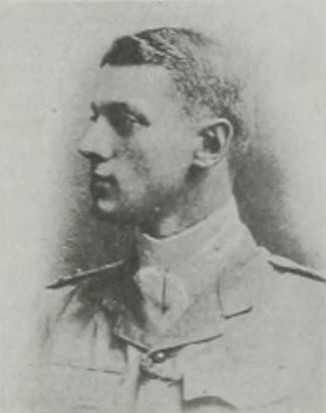
George Pope Newstead.
NEWTH, WALTER JOSEPH, Trooper, No. 11/495 2nd Queen Alexandra’s Squadron, Wellington Mounted Rifles, New Zealand Expeditionary Force, 5th s. of George Charles Newth, of Sandy Farm, Luckington, Chippenham, Wilts, Farmer, by his wife, Charlotte Mary, dau. of J. H. Harris; b. Sandy Farm, Luckington, Chippenham, co. Wilts, 23 April, 1891; educ. Village School there; left home in July, 1912, to take up farming in New Zealand; volunteered on the outbreak of war and enlisted Sept. 1914; left with 2nd reinforcements, and was killed in action at Gallipoli, 27 Aug. 1915; unm.
NEWTON, ERNEST, Armourer’s Crew, M. 2643, H.M.S. Good Hope; lost in action off Coronel, on the coast of Chili, 1 Nov. 1914.
NEWTON, FREDERICK, L.-Corpl., No. 9311, 3rd Battn. Coldstream Guards; b. Warwick; served with the Expeditionary Force in France and Flanders; died at Coulommieres, 9 Sept. 1914, of wounds received in action. Buried in Cemetery there; unm.
NEWTON, GEORGE HENRY, A.B. (R.F.R., B. 6696), S.S. 968, H.M.S. Hawke; lost when that ship was torpedoed in the North Sea, 15 Oct. 1914.
NEWTON, WILLIAM HENRY, Gunner, R.M.A., 13524, H.M.S. Aboukir; lost in action in the North Sea, 22 Sept. 1914.
NIBLETT, HENRY, Stoker, 1st Class, 225960, H.M.S. Good Hope; lost in action off Coronel, on the coast of Chili, 1 Nov. 1914.
NICHOLL, CHRISTOPHER BENONI, Lieut., 5th Battn. Canadian Expeditionary Force, yst. s. of the late Rev. Edward Powell Nicholl, of Ogmore, Manitou, Manitoba; formerly vicar of Ascott-sub-Wychwood, co. Oxon, and recently Incumbent of Mission of St. Luke, Pembina Crossing, Manitoba, by his wife, Sarah, dau. of John Jenkyns, of Llanblethian, Glamorgan, and grandson of the late Right Hon. John Nicholl, of Merthyr Mawr, co. Glamorgan; b. Leighton Buzzard, co. Bedford, 15 Dec. 1881; educ. Manitoba Public Schools, and St. John’s Collegiate School, Winnipeg; was a Chemist; received a commission as Lieut. in the 16th Saskatchewan Light Horse, Nov. 1911; and on the outbreak of war at once volunteered for Imperial service, and was appointed Lieut. 5th Battn. 22 Sept. 1914; came over with the first contingent in Oct. following; went to France, 25 May, and died in No. 3 Casualty Clearing Hospital, Bailleul, 30 July, 1915, of wounds received on the 29th, when on night patrol near Ploegsteert, examining the wire entanglements in front of the trenches; unm. In the Battn. journal his comrades wrote of him: “A quiet and unostentatious officer was Lieut. Nicholl. But he was one whose conscience was keen for good service ... those who were privileged to know him knew an honest heart and a nature entirely true and faithful.”
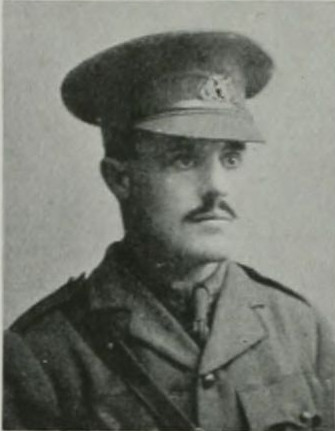
Christopher B. Nicholl
NICHOLAS, GEORGE ARTHUR, No. 2101, A Coy., 1/4th Battn. Royal Sussex Regt. (T.F.), eldest s. of James Nicholas, of Limehurst Lodge, Haywards Heath, Gardener, by his wife, Ruth Mary, dau. of George Mitchell; b. Wivelsfield, co. Sussex, 31 May. 1895; educ. St. Wilfred’s School, Haywards Heath; was a Butcher’s Assistant, enlisted 31 Aug. 1914; left with the Mediterranean Expeditionary Force, 16 July, 1915, and was killed in action in Gallipoli, 11 Sept. 1915; unm.
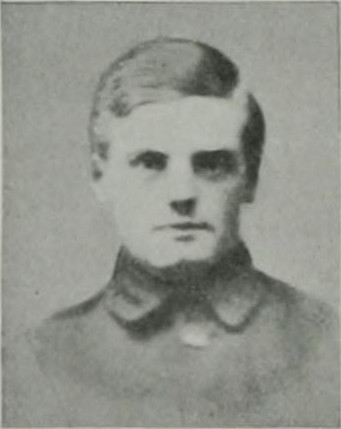
George Arthur Nicholas.
NICHOLAS, ROBERT STANLEY, Private, R.M.L.I. (R.F.R., 1871), late Ch./12017, H.M.S. Hogue; lost in action in the North Sea, 22 Sept. 1914.
NICHOLLS, HARRY, Chief Armourer, 151366, H.M.S. Cressy; lost in action in the North Sea, 22 Sept. 1914.
NICHOLLS, HENRY ARTHUR, Private, No. 8777, 2nd Battn. Coldstream Guards, s. of the late James Nicholls, of Birmingham; b. Birmingham. 19 Feb. 1895; educ. Highfield Road School there; enlisted 30 June, 1910, served three years with the Colours, and then entered the employ of the G.W.R. as a carman. On the declaration of war, 5 Aug. 1914, he was called up, went to the Front with his regt. and served through the retreat from Mons, the Battles of the Aisne and the Marne, and all the severe fighting from 26 Oct. to 20 Nov. when in the words of the Brigadier-General Commanding the 4th (Guards) Brigade, “the Coldstreams held their line intact under hardships and strain that it is impossible to describe.” During these four weeks they had occupied trenches dug on a hill full of natural springs, and which were “undrainable, and constantly full of water above the knee for 23 days. The gale of about 2 Nov. cleared the wood in which they were, of every particle of cover, the trees having been all pierced through by shrapnel and bullets. Hand grenades thrown at them were, on one occasion when they did not explode, picked up and hurled back again, and they finally rejoined the Brigade on the right flank of this part of the British line on 17 Nov. in as good heart as the day they left England.” On 20 Nov. they were withdrawn for a short rest, but were soon back in the firing line and Nicholls died of wounds received in action the same day at La Bassée, 31 Jan. 1915, and was buried in Cuinchy Churchyard. He m. at Walworth, London, 29 June, 1913, Helen Adelaide (119, Albany Road, Camberwell, S.E.), dau. of (—) Ware, and had a dau., Phyllis May, b. 30 April, 1914.
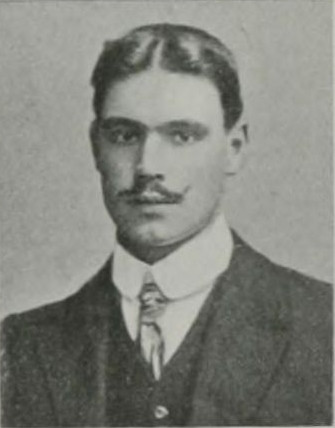
Henry Arthur Nicholls.
NICHOLLS, JOHN WILLIAM ERNEST, Boy, 1st Class, J. 26610, H.M.S. Hawke; lost when that ship was torpedoed in the North Sea, 15 Oct. 1914.
NICHOLLS, WILLIAM CHARLES, Private, No. 19427, 1st Battn. The Welsh Regt., s. of William Charles Nicholls, Sailor; b. Penzance, 7 Dec. 1880; educ. National School there, enlisted following the outbreak of war, 15 Nov. 1914, served in France with the Expeditionary Force, and was killed at Zillebeke, 25 May, 1915. He m. at Penzance, 22 Sept. 1901, Alice Maud, dau. of George James Pidwell, and had six sons: William Charles, b. 4 Nov. 1901; George James, b. 30 Jan. 1905; Richard John, b. 26 Oct. 1907; Stephen, b. 18 Nov. 1909; Arthur Reginald, b. 26 Nov. 1912; and Edward Harvey, b. 22 Oct. 1914.
NICHOLLS, WILLIAM JAMES, Chief Stoker, 170482, H.M.S. Good Hope; lost in action off Coronel, on the coast of Chili, 1 Nov. 1914.
NICHOLSON, ARTHUR KNIGHT, 2nd Lieut., 18th (Queen Mary’s Own) Hussars, only s. of Herbert Nicholson, of Ridborough Hall, Tunbridge Wells, J.P., C.C., by his wife, Stella, dau. of Edward W. Knight; b. Helena, Montana, U.S.A., 6 Oct. 1893; educ. St. Andrew’s, Harrow, and Sandhurst; gazetted 2nd Lieut., 18th Hussars, 22 Jan. 1913; went to France, Aug. 1914; and was killed in action at St. Eloi, 31 Oct. following. Buried near Chateau Hollebeke; unm.
NICHOLS, WALTER, Stoker, 1st Class, 310744, H.M.S. Aboukir; lost in action in the North Sea, 22 Sept. 1914.
NICHOLS, WILLIAM HENRY, Stoker (R.F.R., Ch. B. 4613), 173115, H.M.S. Aboukir; lost in action in the North Sea, 22 Sept. 1914.
NICHOLSON, BASIL LEE, Lieut., 3rd Staffordshire Battery, North Midland Brigade, R.F.A. (T.F.), yst. s. of Sir Arthur Nicholson, of Highfield Hall, Leek, co. Stafford, J.P., C.C., by his wife, Marianne Lee, dau. of Robert Falkner, of Kersal; b. Highfield Hall, 24 Oct. 1890; educ. Malvern, Rugby, and afterwards in Germany and Switzerland, joined the Territorial Force shortly after its formation, served with the Expeditionary Force in France and Flanders, and was killed in the trenches near Ypres, while making observations, 24 July, 1915; unm. He was buried in the Dranoutre Churchyard. Col. Sir Hill Child, Bart., wrote: “He was shot through the head this afternoon, when on duty as observing officer in the trenches. His brother (who was wounded the previous Wednesday) is quite heart-broken, as indeed we all are. I have always considered your two sons the two best young officers in my brigade.” His two brothers, Capt. A. Falkner Nicholson and Capt. Malcolm Nicholson, are both (1916) serving with the R.F.A.
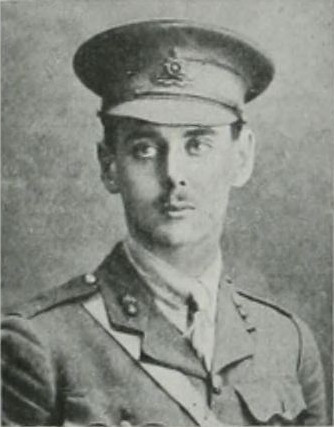
Basil Lee Nicholson.
NICHOLSON, DAVID BEVERIDGE, Private, No. 3035, 1/5th Battn. (Queen’s Edinburgh Rifles) Royal Scots (Lothian Regt.) (T.F.), 2nd s. of Rev. Thomas Brown Nicholson, of Chalmers Street, Dunfermline, Minister of the United Free Church of Scotland, M.A., by his wife, Barbara Stevenson, dau. of the late David Beveridge, of Kingskettle; b. Hamilton, co. Lanark, 22 Dec. 1895; educ. Dunfermline High School, and was afterwards engaged as an apprentice with Oliver Melville, Robb & Scott, Electrical Engineers, Dunfermline and Kirkcaldy. In Dec. 1914 he enlisted in the Queen’s Edinburgh Rifles, and was chosen as one of a draft in May, 1915, to go to Gallipoli to strengthen the 5th Royal Scots, reaching there just before the heavy fighting in which that regt. so distinguished itself. He took part in the famous charge of 28 June, 1915, and was thereafter reported missing, until 7 March, 1916, when he was posted as killed in action; unm. A comrade wrote: “I knew him well and I was much attached to the young lad. We had talks together and shared our dug-outs together often and on the awful day, we went over the parapet together. I was wounded in the attack and he went on, so, of course, from that time I knew nothing further. I shall ever treasure the memory of him, and shall ever think of him as the brave young lad who did not seem to know fear.” “I have put my faith in God, and am ready for whatever happens,” he wrote, in one of his last letters.
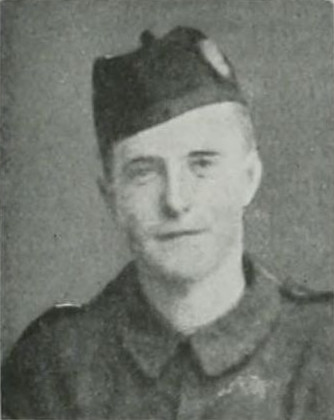
David B. Nicholson.
NICHOLSON, JOHN BEVERIDGE, Private, No. 2253, 1/4th (City of Dundee) Battn. The Black Watch (Royal Highlanders) (T.F.), eldest s. of the Rev. Thomas Brown Nicholson, M.A., Minister of the Chalmers Street United Free Church, Dumfermline, by his wife, Barbara Stevenson, dau. of the late David Beveridge, of Kingskettle, Manufacturer; b. Hamilton, 24 May, 1894; educ. High School, Dumfermline; was a journalist and a member of the literary Staff of John Leng & Co., Dundee; volunteered on the outbreak of war and joined the 1/4th Black Watch, 10 Aug. 1914; left for France on Tuesday, 23 Feb. 1915, and was killed in action near Festubert, 12 July following, being shot by a sniper while repairing the trenches at midnight. Buried, Grave No. 7, Row H, Sheet, France, Bethune, Square R. 32d. 7.5; unm. Capt. E. Leslie Boase, commanding D Coy. to which he belonged (himself killed in France in Aug. 1916), wrote: “He was to me not only a comrade-in-arms, but also a friend. I have known young Nicholson to volunteer for a very dangerous bit of work, and keep at it unflinchingly till finished without, so to speak, turning a hair. He went at Neuve Chapelle twice with me, his Capt., on quite a dangerous errand of mercy—voluntarily, and if anything had been necessary to assure me of his bravery, I had it then. His death came like a cruel blow to me.” A comrade, L-Corpl. W. C. Andrews, wrote: “There was not a man in the platoon who was not his friend. I knew him and liked him in civilian days, but it was out here, amid hardships and dangers, that I learned how splendid in manhood he was; how fine and fearless in thought and act. I never knew him do or say a mean thing. He was the very soul of chivalry. Long shall we miss his cheery laughter, his little acts of exquisite courtesy and thoughtfulness.” Another comrade, L.-Corpl. Joseph Lee, wrote: “He passed to his death in the fearless manner in which he faced all that was uncongenial to one of his refined and artistic disposition in our present environment.” The editor of “Answers,” wrote: “As fine a fellow as ever donned a Black Watch kilt; he sent home several of the most realistic letters from the firing-line that have been published since the outbreak of the war.” And the “Dundee Advertiser” remarked: “It is indeed a singularly promising career which has been cut short. While yet a mere boy, he had acquired a bright, clear and forcible style of writing; he had both fancy and wit; he had read much and felt a keen interest in all human affairs. His achievement already was considerable, and there can be no doubt that, with matured powers and wider experience, he would have attained distinction as a journalist and writer of fiction. Some of his poems written at the Front have won high praise from qualified critics for their fine feeling and delicate phrasing, while his prose descriptions of battlefield scenes are full of vigour.” Among his writings may be mentioned his recruiting appeal “A call from the trenches,” which was printed in pamphlet form and given away by the military authorities in street distribution; some charming verses entitled “On hearing a lark singing at dawn in the trenches,” and a poem of singular beauty, “The Crucifix,” which has been widely cited and which would alone suffice to stamp the writer as a poet of a very high order. His brother David was also killed in action (see his notice).