The Roll of Honour. (continued 19)
Reading edition
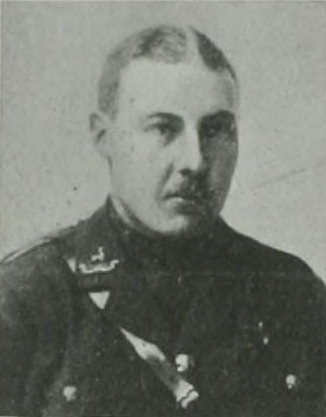
John Francis.
FRANCIS, JOHN, Stoker, 1st Class (R.F.R., B. 2086), 290778, H.M.S. Good Hope; lost in action off Coronel, on the coast of Chili, 1 Nov. 1914.
FRANCIS, WILLIAM SAMUEL, Private, R.M.L.I., Ch./17236, H.M.S. Hawke; lost when that ship was torpedoed in the North Sea, 15 Oct. 1914.
FRANKLIN, ALBERT EDWARD, Private, No. 1752, 1st Battn. Australian Expeditionary Force, s. of George Franklin; b. Poplar, London, E., 25 Nov. 1892; educ. Daubeney Road School, Clapton Park; went to Australia, 18 June, 1914, and settled at Glen Innes, New South Wales; enlisted in Jan. 1915; left with the fourth reinforcements, and was killed in action at the Dardanelles, 10 Dec. 1915; unm. He was buried on the slope of the hill where he fell, overlooking Anzac Bay.
FRANKLIN, ARTHUR, Chief Stoker, 286935, H.M.S. Hogue; lost in action in the North Sea, 22 Sept. 1914.
FRANKLIN, BENJAMIN, A.B. (R.F.R., B. 3262), 164423, H.M.S. Aboukir; lost in action in the North Sea, 22 Sept. 1914.
FRANKLIN, WILLIAM THOMAS, Seaman, R.N.R., 4902B, H.M.S. Cressy lost in action in the North Sea, 22 Sept. 1914.
FRANKS, JABEZ, Stoker, 1st Class (R.F.R., Ch. B. 8075), S.S. 103825, H.M.S. Cressy; lost in action in the North Sea, 22 Sept. 1914.
FRASER, ALEXANDER, V.D., Lieut.-Col., 1/4th Battn. Queen’s Own Cameron Highlanders (T.F.), eldest s. of the late Alexander Fraser, Provost of Inverness, Agent of the Commercial Bank of Scotland there, by his wife, Elizabeth (Island Bank House, Inverness), dau. of the Rev. John Spray, M.A., Vicar of Kinneagh, Ireland; b. Beauly, co. Inverness, 6 May, 1865; educ. the Royal Academy, Inverness, Inverness College and Edinburgh University, and was admitted a Solicitor on 25 March, 1890, and made a Notary Public on 18 Oct. 1892. He practised in Inverness and became Senior Partner in the firm of Fraser & Ross of that town. He joined the ranks of the 1st Volunteer Battn. of the Cameron Highlanders, 9 May, 1883, and served with them until 10 Nov. 1887, and with the Q.R.V.B. Royal Scots from 20 Feb. 1888 to 13 Nov. 1889, and received a commission as 2nd Lieut. in the former, 17 May, 1890. He was promoted Lieut., 20 Dec. 1890; Capt., 10 Aug. 1898; Hon. Major, 5 April, 1902; Major, 25 Feb. 1905; and from 24 Feb. 1909 to 23 Aug. 1913, was Lieut.-Col. Commanding. He then retired and joined the Reserve of Officers (T.F.). On the outbreak of the European War he immediately volunteered for foreign service and rejoined, 19 Sept. 1914, on a reserve unit being formed at Inverness; and his successor in command of the 4th, being incapacitated for active service by an accident, he was re-appointed Lieut.-Col. Commanding, 29 Oct. following. He went to the Front with his Battn. in Feb. 1915, and was killed in action at Festubert, France, 18 May, 1915. On the 16th, the first day of the British attack on the German trenches south of La Bassée, the 4th Camerons were in reserve, and occupied trenches and dug-outs made by themselves, about 1,000 yards behind the British line, and on the afternoon of the 17th were ordered forward to the attack, and moved via the village of Festubert up to the trenches captured by the British the day before. The objective was a long trench, previously a communication trench, but now used as a fire trench by the enemy, with a group of houses on the enemy’s right. Two Battns. were ordered to attack, and the Camerons were allotted the houses and the portion of the trench next them; the other Battn. being on the right. Our artillery bombarded the enemy during the day and at 7.30, just as dark was coming on, the attack was launched. They had to advance over what was apparently a perfectly level piece of greasy ground, about 800 yards across, but which was found to be intersected by deep ditches full of water. The Battn. on the right suffered so severely that they had to fall back, and some of D Coy. had to retire with them, but the remainder successfully rushed the enemy’s trench. Every effort was immediately made to put it in a state of defence, but the houses had not been captured and our supports failed in the dark to find the trench where the Battn. was, and when, just at dawn, the Germans made a strong counter-attack and assailed both flanks with hand-grenades, Col. Fraser saw that it could not be held and ordered a retreat. He himself refused to leave his post of danger before the last of his men was away, and just as he was starting to go he was shot at the edge of the ditch. The Chaplain, in a letter to Mrs. Fraser, wrote: “Shortly after I joined the Battn. as Chaplain, we were ordered to take up a certain position. The date was 11 May. The Battn. waited there in reserve until last night. At four o’clock in the afternoon the order came to march out to —— and turn due east. The front British trench was reached without any casualties, and, led by your brave husband, the gallant Camerons crossed over the backbone right into the German trench. It had been evacuated by the enemy, but a communication trench was still held by them, leading to their reserve trenches. The task allotted to our Battn. was to cut off the German retreat from this communication trench. Officers and men behaved like immortal heroes.... Lieut. ——, A Coy. told me that he saw Col. Fraser at an advanced point. He was then wounded, but was giving orders. Lieut. ... was sent with orders to another point, and when he returned he could find no further trace of the Colonel. When the Battn. had to fall back under a withering fire and the roll was called, there was still no word of the Colonel. At 11 a.m. to-day Dr. Lindsay and I went out to look for him, and though we reached to within a few hundred yards of the spot, no trace of him could be found.... In the few days that I had been with the Battn. I was led to cherish the profoundest admiration for your husband. He was a wise leader, a considerate commander, and one of the finest men that I ever had the good fortune to meet.... I was very much struck with the religious note in his life, and it is a source of inspiration to me to recall how earnestly he counselled his men to guard against all manner of excesses.... It will comfort you to know that the Brigadier-General told me that the Camerons crowned themselves with glory.” He was twice mentioned in Despatches by F.M. Sir John (now Lord) French (31 May, 1915, and 15 Oct. 1915). Col. Fraser was Factor for the Estates of Culloden and Ferintosh; a military member of the County Territorial Force Association for Inverness; a member of the Town Council of Inverness, and for some time a Magistrate; Clerk to the Deacons Court of the United Free High Church; President of the Sanitary Association of Scotland, 1912–13; convenor of Public Health Committee of Inverness, and secretary of the northern branch of the Royal Arboricultural Society. He was Right Worshipful Master of St. John’s Lodge of Freemasons, Inverness, and Provincial Grand Treasurer of Inverness-shire. He passed the School of Musketry, Hythe, 18 Oct. 1899, and had certificates for Tactics (May, 1892), Organisation and Equipment (May, 1903), and Military Topography (Nov. 1903). He had the Long Service medal, the Volunteer Decoration, and the Coronation medal (1911). Col. Fraser m. at the West Parish Church, Inverness, 27 April, 1893, Ella (Westwood, Inverness), only dau. of the late Col. Duncan Menzies, Blarich, Sutherland, Scotland, who for many years commanded the 1st Sutherland Highland Rifle Volunteers, and left two sons and seven daus.: Duncan Menzies, b. 15 April, 1894; Alexander Redmond Hugh, b. 25 Jan. 1908; Elizabeth Sibell, b. 9 June, 1896; Mary Millicent, b. 14 March, 1898; Muriel Jess, b. 26 June, 1900; Alexandra Dorothy, b. 1 Jan. 1903; Eleanor Beatrice Stewart, b. 31 Dec. 1905; Margaret Iris, b. 30 July, 1910; and Frances Alice Murray, b. 10 Nov. 1912. Col. Fraser’s elder s. Menzies obtained a commission in the Royal Engineers (S.R.) at the outbreak of the war and is now (1916) Lieut. in the 75th Field Company R.E. attd. to the Guards Division in France.
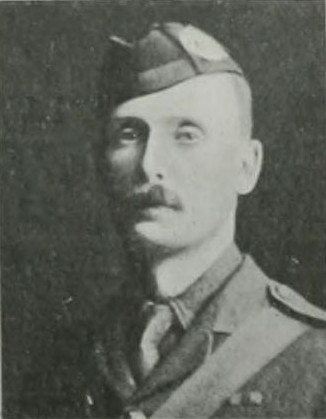
Alexander Fraser.
FRASER, DONALD ALEXANDER, Trooper, No. 862, 1st Light Horse, Australian Imperial Force, 2nd s. of the late William Fraser, by his wife, Mary (Loloma, Barry Street, Neutral Bay, Sydney, N.S.W.), dau. of John Oswald, of Melbourne, Victoria; b. Louth River, Darling, New South Wales, 15 Feb. 1889; educ. Scotch College, Melbourne; joined the Commonwealth Expeditionary Force, 12 Jan. 1915, left Australia with the fourth reinforcements and was killed in action at Suvla Bay, 7 Aug. 1915; unm.
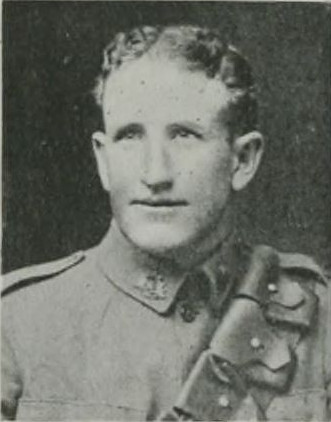
Donald Alexander Fraser.
FRASER, GEORGE JAMES, Private, No. 2276, 4th Battn. (Royal Fusiliers) The London Regt. (T.F.), eldest s. of James Fraser, of 3, Reeves Place, Hoxton, N., Labourer, by his wife, Flora, dau. of William Nixon; b. Bethnal Green, 13 Dec. 1892; volunteered following the outbreak of war and joined the 4th London Regt., 22 Aug. 1914; went to France, 5 Jan. 1915, and was killed in action at Hill 60, 27 April, 1915; unm.
FRASER, THE HON. HUGH JOSEPH, M.V.O., Major, 2nd Battn. Scots Guards, 2nd s. of the late Simon, 15th Lord Lovat, by his wife, Alice Mary (Beaufort Castle, Beauly), dau. of Thomas Weld Blundell, of Ince Blundell; b. Beauly, co. Inverness, 6 July, 1874; educ. Fort Augustus Abbey School. Inverness-shire; gazetted 2nd Lieut. from the Militia to the Scots Guards, 12 Dec. 1894, promoted Lieut. 15 Nov. 1897, Capt. 16 March, 1901, and Major 12 June, 1907, and served in the South African War, 1900–2; took part in the operations in the Orange Free State, May to 29 Nov. 1900, including actions at Biddulphsberg and Wittenbergen (1–29 July), also in those there and in the Transvaal, 30 Nov. 1901 to 31 May, 1902, and was mentioned in Despatches [London Gazette, 10 Sept. 1901], and received the Queen’s medal with three clasps and the King’s medal with two clasps; was Adjutant in Lovat’s Scouts (Imperial Yeomanry) from 1 April, 1903 to 31 July, 1907, and Aide-de-Camp to the Viceroy of India from Nov. 1910 to April, 1913. On the outbreak of war with Germany he went to the Front with the 2nd Battn. Scots Guards, which formed part of the 7th Division, and was killed in action in the 1st Battle of Ypres, 27 Oct. 1914; unm. He was made a M.V.O. (4th Class) 1912.
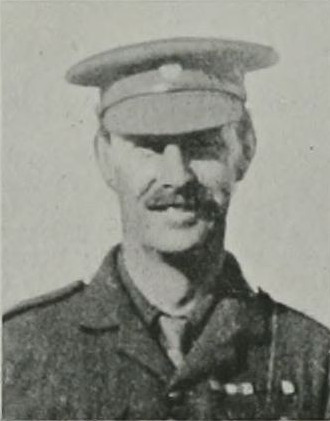
The Hon. Hugh J. Fraser.
FRASER, JAMES HOWIE, Lieut., 2nd Battn. Gordon Highlanders, only s. of Edward Cleather Fraser, C.M.G., Member of the Council of Government, Mauritius, and a Partner in the firm of Ireland, Fraser & Co., of Port Louis, by his wife, Mary Josephine, dau. of the late Thomas Howie, and gdson. of the late James Fraser, of Newfield, Blackheath Park; b. Blackheath, London, 4 April, 1888; educ. Summerfields, near Oxford, Rugby and the Royal Military Academy, Woolwich, out of which he passed first in Summer Term 1907, with prizes for Tactics and Military Engineering; gazetted 2nd Lieut. to the Gordon Highlanders, 9 Oct. 1907, and promoted Lieut. 20 March, 1909; joined the 2nd Battn. in India, and served with it there and in Egypt, and with the Expeditionary Force in France and Flanders, and was killed in action 30 Oct. 1914, in the attack on Zillebeke Farm House. He was unm. and was buried at Klein Zillebeke. Lieut. Fraser was mentioned in F.M. Sir John (now Lord) French’s Despatch of 14 Jan. [London Gazette, 17 Feb.] 1915, for gallant and distinguished service in the field.
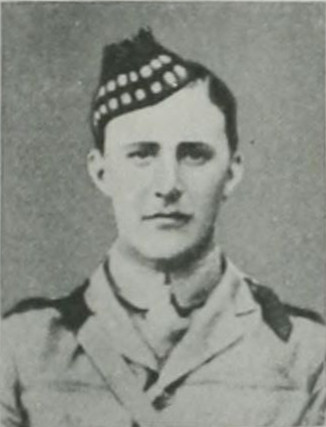
James Howie Fraser.
FRASER, JAMES O’NEILL, Private, No. 1341, 5th Battn. Australian Imperial Force, eldest s. of Evan Fraser, of 4, Caledonian Place, Newton, Cambuslang, Lanarkshire, Railway Signalman, by his wife, Sarah, dau. of John O’Neill; b. Beith, co. Ayr, 6 June, 1894; educ. Hallside School, Cambuslang, and after being for some time a clerk with the Caledonian Railway Co., emigrated to Australia in April, 1914, to take up farming. On the outbreak of war he enlisted in the Australian Expeditionary Force; left for Egypt, 1 Feb. 1915; took part in the landing at the Dardanelles, 25–26 April, 1915, and was killed on the latter day; unm.
FRASER, LACHLAN HENRY VEITCH, Lieut., 4th Battn. The Middlesex Regt., yst. s. of Major Francis Fraser, of Tornaveen, co. Aberdeen, by his wife, Alexia Mary Beatrice de Dombal, dau. of Capt. John Henderson MacDonald, of Caskieben, co. Aberdeen, 78th Highlanders; b. Tornaveen, 22 April, 1894; educ. Malvern and Sandhurst; gazetted to the 4th Battn. Middlesex Regt. 8 Aug. 1914, and promoted Lieut. 15 Nov. following; went to France, Sept. and was killed in action in the trenches at Ypres, 24 Feb. 1915; unm. Buried at Goderzom Farm, Vierstraat. He was mentioned in F.M. Sir John (now Lord) French’s Despatch of 14 Jan. [London Gazette, 17 Feb.] 1915, for gallant and distinguished service in the field.
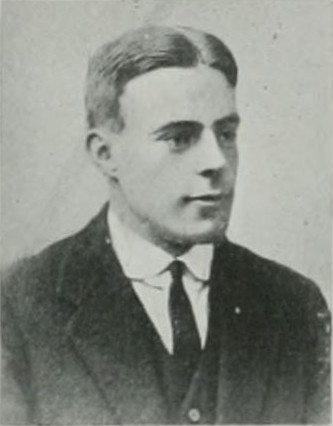
Lachlan H. V. Fraser.
FRASER, ROBERT, Private, No. 8313, 2nd Battn. Highland L.I., only s. of Robert Fraser, of Glasgow, by his wife, Mary; b. Glasgow, 1881; educ. Dobbies Loan School there; enlisted in the 3rd Battn. Highland L.I.; served through the South African war and retired in 1905 with the rank of Corpl.; re-enlisted in the 2nd Battn. on the outbreak of the European War; went to France in Nov. 1914; was wounded at Neuve Chapelle and again at Hill 60, and was killed in action at Givenchy, 25 Sept. 1915. After the fighting that day he was officially reported “Missing,” but on 29 Nov. a letter was received by a wounded comrade who stated that he saw him buried that night. He m. at Glasgow, 25 May, 1906, Mary (130, Taylor Street, Townhead, Glasgow), dau. of James McLaughlan, of Glasgow, and had four children: Robert, b. 22 Dec. 1908; James, b. 6 Oct. 1913; Mary, b. 23 March, 1907; and Janet, b. 13 Jan. 1912.
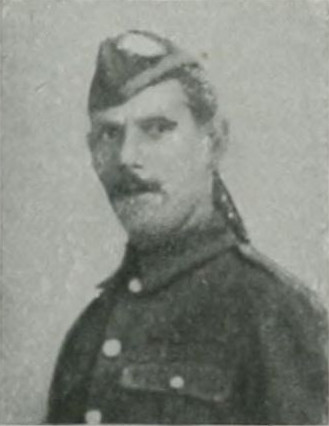
Robert Fraser.
FRASER, WILLIAM ST. JOHN, Lieut.-Commander, Royal Navy, 4th s. of Sir Thomas Richard Fraser, of Drumsheugh Gardens, Edinburgh, and Druimbeg, Acharacle, co. Argyle; M.D., F.R.S., LL.D., Professor of Materia Medica and of Clinical Medicine in the University of Edinburgh; Hon. Physician to the King in Scotland, by his wife, Susanna Margaret, dau. of the Rev. Robert Duncan; b. Edinburgh, 18 Sept. 1883; educ. Edinburgh Academy and Stubbington House, Fareham; entered the Navy, Britannia, 1898; became a midshipman, 1899; and was promoted Sub-Lieut., 1902, Lieut. 1904 and Lieut.-Commander, 1912; served in China, 1899–1902, on board the Endymion (medal), and in the European War, 1914–15, and was killed while on active service in the North Sea, near Heligoland, Jan. 1915, in command of Submarine E 10, which was destroyed with all hands. Admiral Sir George Warrender wrote: “I knew him well, for he was with me in the Shannon and I admired and respected him as one of the finest of our young officers.” He m. at Colinton, Midlothian, 9 April, 1908, Kathleen Lilias (Colinton, Midlothian), dau. of Capt. Abel Chapman, 19th Hussars, and had two daus.: Mary Kathleen, b. 16 Aug. 1911; and Rachel Margaret, b. 22 Jan. 1913.
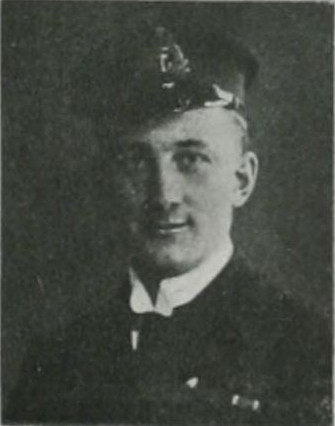
William St. John Fraser.
FREDERICK, HENRY, Stoker (Native), H.M.S. Good Hope; lost in action off Coronel, on the coast of Chili, 1 Nov. 1914.
FREDERICK, JOHN EDWARD, Gunner (R.F.R., I.C. 43), H.M.S. Good Hope; lost in action off Coronel, on the coast of Chili, 1 Nov. 1914.
FREDERICKS, WILLIAM, A.B., 198858, H.M.S. Cressy; lost in action in the North Sea, 22 Sept. 1914.
FREEBOROUGH, CHARLES HENRY, Leading Seaman, 228949, H.M.S Aboukir; lost in action in the North Sea, 22 Sept. 1914.
FREEMAN, CHARLES WILLIAM CHRISTOPHER, Stoker, 1st Class, K. 15937, H.M.S. Pathfinder; lost when that ship was sunk by a mine, about 20 miles off the East Coast, 5 Sept. 1914.
FREEMAN, GEOFFREY WILLIAM, Private, No. 1201, 5th Battn. (London Rifle Brigade) The London Regt. (T.F.), eldest s. of William Edward Freeman, of 77, North Side, Clapham Common, S.W., L.D.S., R.C.S. Eng., Dental Surgeon, by his wife, Maud, dau. of the late John Hopkins, of Sydney, N.S.W.; b. Narrabri, New South Wales, 11 Sept. 1896; came to England with his parents, 1903; educ. Manor House School, Clapham Common; and when war broke out was studying to enter Guy’s Hospital. He immediately volunteered and joined the London Rifle Brigade, 4 Nov. 1914, and, after training at Crowboro’ and Haywards Heath, went to France, 12 March, 1915. He wrote home regularly and cheerfully, his last letter being dated 8 May when the battn. was resting from a long spell in the trenches. A day or two later they were rushed up to take part in the Second Battle of Ypres, and he was one of the gallant band of nine who were with Sergt. D. W. Belcher when he won his V.C. on 13 May. Sergt. Belcher, with his handful of men, elected to remain and endeavour to hold a portion of an advanced breastwork south of the Wieltje-St. Julien Road, which was under heavy bombardment from the enemy’s artillery, after the troops near him had been withdrawn, and there is little doubt that the bold front shown by Sergt. Belcher and the few men with him prevented the enemy from breaking through and making a flank attack on one of the divisions. They held on during the whole day, and at nightfall reinforcements came up and the position was saved. Unfortunately, however, Freeman was killed during the course of the day. He had volunteered to take a message under heavy fire to Capt. Somers Smith of the L.R.B.; the message was taken and delivered, but almost immediately a shell burst and he and all around him were killed. He was named in Battn. Orders, and 2nd Lieut. A. G. Sharp wrote; “He was always popular wherever he went, and everyone who came in contact with him, liked him. During the whole time I knew him I never met one person who had anything but good to say of him. In his last term at Manor House he won the Gold Medal, and everyone who was with him during his short but glorious career in the Army says that they have lost in him a great pal. During his whole life he upheld the traditions of his school, which was very dear to him, and he died as every Manorian would wish to die. Truly when one thinks of him one is convinced that Manor House makes no idle boast when she says that all her sons are ‘Sportsmen and true gentlemen.’”
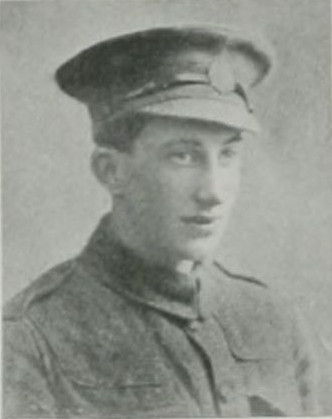
Geoffrey W. Freeman.
FREEMAN, JAMES, A.B. (R.F.R., B. 3402), 217667, H.M.S. Good Hope; lost in action off Coronel, on the coast of Chili, 1 Nov. 1914.
FREER, ALEXANDER, Private, No. 7890, 1st Battn. Highland L.I., 6th s. of George Freer, of 18, Cameron Street, off New City Road, Glasgow, by his wife, Barbara Park, dau. of William Ferris, of Dundee, Carpenter; b. Glasgow, 31 June, 1894; educ. Oakbank School there; was an apprentice shipwright with Messrs. Berdmore & Dalmuir; enlisted 30 Jan. 1914; went to France, 4 Jan. 1915, and was killed in action at Neuve Chapelle, 12 March, 1915. His yst. brother, Robert, died on active service (see his notice), and of his other brothers, James and John are both on active service, the former with the Argyle and Sutherland Highlanders and the latter at Salonika.
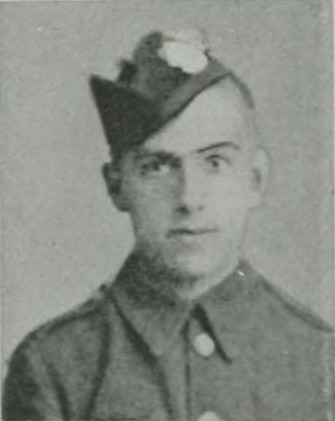
Alexander Freer.
FREER, LEACROFT HOWARD, Sapper, No. 5089, 1st Coy. (6th North Vancouver Engineers), Canadian Engineers, 2nd s. of the late Howard Freer, of Bidford Grange, Warwickshire, by his wife, Gertrude Louisa (Port Hammond, P.O., British Columbia, Canada), dau. of Peter Davis, of Bickmarsh Hall, co. Warwick; b. Bidford Grange, co. Warwick, 26 Aug. 1884; educ. Bedford Grammar School; went to Canada in 1903, farming, afterwards taking up carpentering; volunteered on the outbreak of war and joined the North Vancouver Engineers, 11 Aug. 1914; came over with the first contingent; went to the Front in Feb. 1915, and was killed in action at Givenchy, 15 June, 1915, by shell-fire; unm. A comrade wrote: “On the evening of 15 June, the Canadians were making an attack, a party of engineers, including your son and myself, were waiting with some infantry in a communication trench immediately behind our front line for the word to go forward. Before the word came a large German shell exploded quite close to us, killing seven of our men, your son being one. He was killed instantly, as he was nearest to the explosion. Your son was thought much of by both officers and men. He was always so willing to help others. His services to the company will be greatly missed. He was so capable, being able to turn his hand to such a variety of works”; and another: “He was the ideal type of an Englishman, I always thought, and I know that everyone who had anything to do with him liked and admired him.”
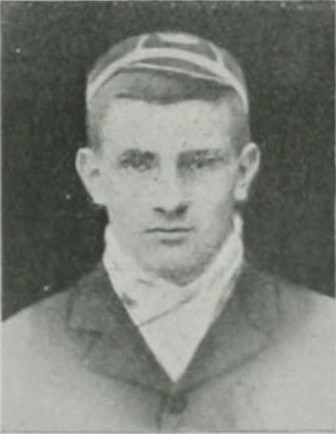
Leacroft Howard Freer.
FREER, ROBERT, Private, No. 3351, 3/5th Battn. Highland L.I. (T.F.), 7th and yst. s. of George Freer, of 18, Cameron Street, off New City Road, Glasgow, by his wife, Barbara Park, dau. of William Ferris, of Dundee, Carpenter; b. Glasgow, 28 Oct. 1897; educ. Oakbank School there; was an apprentice with a boat builder; enlisted 7 April, 1915, a month after his brother Alexander was killed at Neuve Chapelle, and died in the Military Hospital at Ripon, 26 Dec. 1915, of pneumonia contracted while training; unm.
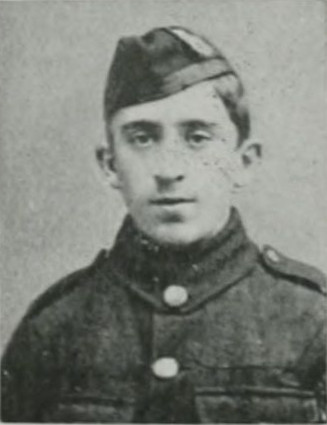
Robert Freer.
FREIGHT, STANLEY GEORGE, Corpl., No. 123, 1/4th Royal West Surrey Regt. (T.F.), 2nd s. of Edward James Freight, of 40, Windmill Road, Croydon, Builder, by his wife, Jessie, dau. of Samuel Cross, of Frome, Somerset, Farmer; b. Brixton, 1884; educ. Croydon; was a Builder and Decorator in partnership with his father; joined the 4th Surrey Territorials in 1908; volunteered for foreign service on the outbreak of war in Aug. 1914; went to India with his regt. 29 Oct. 1914, and died on active service at Lucknow, 1 May, 1915, of enteric fever; unm.
FRENCH, ALFRED, Private, R.M.L.I., Po./11057, H.M.S. Good Hope; lost in action off Coronel, on the coast of Chile, 1 Nov. 1914.
FRENCH, ARTHUR ROBERT, Boy, 1st Class, J. 26373 (Ports.), H.M.S. Hawke; lost when that ship was torpedoed in the North Sea, 15 Oct. 1914.
FRENCH, FREDERICK, A.B. (R.F.R., B. 2469), 196044, H.M.S. Good Hope; lost in action off Coronel, on the coast of Chili, 1 Nov. 1914.
FRENCH, HERBERT, Private, No. 7145, 1st Battn. (33rd Regt.) 1st Brigade, Canadian Expeditionary Force, s. of John French; b. Kimer, co. Sussex; enlisted as a Driver (No. 40744) in the R.F.A. about 1894, and was 18 years with the Colours; served in the Sudan (medal), 1897–98, and in the South African War (medal with two clasps), 1899–1902; went to Canada about 1912 and settled at Vingham, Ontario; volunteered on the outbreak of war and joined the Canadian Expeditionary Force, 16 Aug. 1914; came over with the first contingent Oct., and died on service in Bulford Manor Hospital, 24 Dec. 1914, following an operation. He m. at Brighton, Sussex, 22 April, 1894, Jane (Broughdale Avenue, London, Ontario), dau. of Harry Hayles, and had six children: Hezekiah George, b. 7 June, 1878, m. with three children; Harry, b. 8 April, 1883; Herbert John, b. 21 June, 1900, now (1916) on active service in France; George, b. 9 Aug. 1910; Daisy, b. 9 Dec. 1897; and Maude Gladys, b. 4 March, 1903.
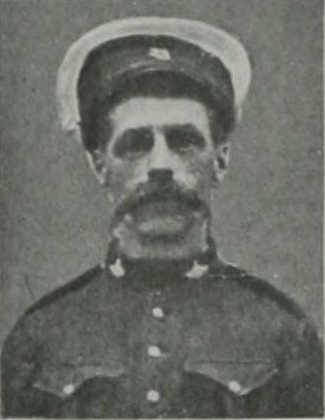
Herbert French.
FRENCH, JOHN EDWARD, A.B. (R.F.R., B. 10100), 202476, H.M.S. Aboukir; lost in action in the North Sea, 22 Sept. 1914.
FRENCH, JOSEPH ROBERT, Private, R.M.L.I., Ch./16365, H.M.S. Cressy; lost in action in the North Sea, 22 Sept. 1914.
FRENCH, VALENTINE DOUGLAS, 2nd Lieut., 5th (Service) Battn. Shropshire L.I., 3rd s. of [the Hon.] John French, of Miramar, Queenstown, Resident Magistrate, J.P. [2nd s. of Charles, 3rd Baron De Freyne], by his wife, Nani, dau. of Valentine Blake Dillon; b. Peatra House, Frenchpark, co. Roscommon, 3 Jan. 1889; educ. Jesuits College Limerick; gazetted to the 5th Battn. Royal Munster Fusiliers, 9 April, 1906; but retired in 1907 and became Manager of the Shelford Rubber Estate at Klang, Malay States. On the outbreak of war he returned home and received a commission in the 5th King’s Shropshire L.I., 10 March, 1915; went to France with his regt. 20 May, and died 16 June, 1915, of wounds received in action, and was buried in Dickebusch Churchyard, at the corner of the south wall of Sanctuary; unm. Capt. H. Measor wrote: “When we knew at the last moment before leaving England that he was coming with us, all of us, and we C Coy. officers in particular, were delighted that we should have him with us. His wonderful good spirits and cheeriness at all times was a tonic of inestimable value to those of us who are not blessed with as stout a heart and as great courage as he was. I last saw him standing in a field which was swept with a hail of shrapnel, cheering the men of his platoon on, and seeing them all into the comparative safety of a concentration trench before he took any advantage of the cover himself, and even after he was hit I am told that he went on encouraging his men and giving them heart.” Lieut. French’s elder brother was wounded in the same action, and has since died of his wounds. His cousins-german, Lord De Freyne and the Hon. George French, were killed in action a few weeks previously.
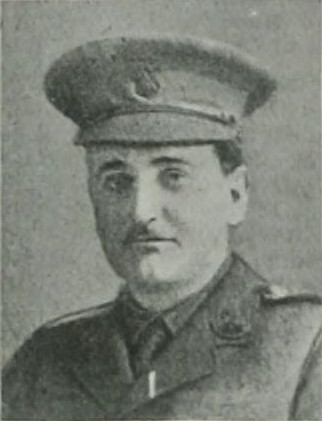
Valentine Douglas French.
FRICKER, ALFRED HENRY, Private, No. 6463, 1st Battn. Coldstream Guards, s. of George Fricker, of Wookey Wells, Somerset, by his wife, Elsie; b. Radstock, co. Somerset, 4 Aug. 1885; educ. Radstock and Wells; enlisted 5 Dec. 1905; went to France, 12 Aug. 1914, and was killed in action at Chivy, France, 14 Sept. 1914. He m. at Wells, 20 March, 1909, Emily (63, Thomas Street, Miskin, Mountain Ash, Glamorgan), dau. of William John Berryman, and had three children: George William Henry, b. 3 Feb. 1910; Alfred John, b. 16 June, 1913; and Ellen Norah, b. 17 Jan. 1911.
FRICKER, BASSELL SAXE, Private, No. 3/894, Ambulance Division, New Zealand Expeditionary Force, s. of the late Henry Charles Fricker, of Greymouth, New Zealand; b. Greymouth, 22 March, 1884; educ. Greymouth High School; volunteered for Imperial service after the outbreak of war; left New Zealand with the sixth reinforcements, and was drowned while on active service in H.M.S. Marquette, 23 Oct. 1915; unm. He was a keen sportsman and powerful swimmer, and held several medals for swimming.
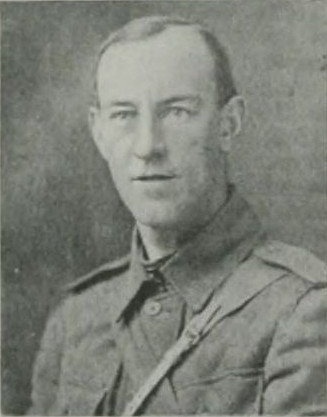
Bassell Saxe Fricker.
FRICKER, JOSEPH HENRY, Stoker, 1st Class, S.S. 110662 (Ports.), H.M.S. Cressy; lost in action in the North Sea, 22 Sept. 1914.
FRIEND, GEORGE BURTON TADDY, Capt., 6th (Service) Battn. (The Buffs) East Kent Regt., eldest s. of the late James Taddy Friend, of Northdown, D.L., by his wife, Mary Stewart (Northdown, Isle of Thanet, Kent), dau. of George Irvine, of Bruckley House, Mossley Hill; b. Northdown, afsd., 1 Oct. 1879; educ. Wellington House, Westgate-on-Sea and Harrow; gazetted to the 1st Battn. E. Kent Regt., from the Rifle Brigade Militia, 7 March, 1900, and promoted Lieut. 2 Nov. 1900; served with his regt. in India 1900 to 1903, retiring in 1906 to take up farming. At the outbreak of war in Aug. 1914. he rejoined his old regt. and was gazetted Capt. to the 6th Battn. 1 Oct. 1914. He went to France, 1 June, 1915, and was killed in action in Flanders, 25 July, 1915, while with a party repairing barbed wire entanglements in front of the trenches. He m. 1 June, 1906, Susie Frances Selby, 2nd dau. of the late Richard Copley, of Thrapston, co. Northants, and had two sons: James Irvine, b. July, 1907, d. 17 Aug. 1911; and Geoffrey Francis, b. 26 Jan. 1909. His three brothers are (1916) on active service.
FRIEND, HARRY EDWIN, Boy, 1st Class, J. 27538, H.M.S. Hawke; lost when that ship was torpedoed in the North Sea, 15 Oct. 1914.
FROGGATT, ALEXANDER, Private, R.M.L.I., Ch./15598, H.M.S. Aboukir; lost in action in the North Sea, 22 Sept. 1914.
FROST, EDMUND LIONEL, Lieut., 4th Battn. South Lancashire Regt. (T.F.), only s. of Edmund Frost, of Chesterfield, Meads, Eastbourne, M.D., Mast. Surg., etc., by his wife, Mary Elizabeth, 2nd dau. of the late Walter Theobalds, of Birkenhead, Cheshire; b. Lasswade, Midlothian, 30 May, 1891; educ. Dover College Junior School, and Uppingham, where he was a Præposter, Captain of Games, Captain of the School Football and Hockey teams, Captain of his House (Fircroft), and Champion Heavy Weight Boxer; and Trinity College, Cambridge. He passed his “Little Go” at the age of 16, but remained at Uppingham till old enough to go to Cambridge. He graduated with honours in the Natural Sciences Tripos, 1912, and during his three years there, he obtained sixteen medals, two silver spoons, a cup, and three oars, for Boxing, Rifle and Revolver Shooting and Sports. He was the ’Varsity champion heavy weight boxer in 1910, for which he received his half blue, and gained another half blue for Rifle Shooting. He only became a “wet bob” his last year, but so excellent an oarsman was he that he narrowly missed inclusion in the Cambridge Crew of that year; as it was, he was awarded the Trial Eights Cup. He was Captain of the ’Varsity Revolver Team and obtained the ninth place in the International Revolver Championship, N.R.A., at Bisley in 1912; he made a remarkable record in marksmanship with a revolver, by scoring 82 out of a possible 84, under service conditions. On leaving Cambridge he became actively associated with the firm of Messrs. Peter Stubs, Ltd., File and Steel and Tool Manufacturers, Warrington, of which his uncle, Mr. F. A. Frost, was Chairman and Managing Director. The following year, 1913, he went to France with the object of perfecting his knowledge of the language and coming into touch with the Continental trade of the Company. He received a commission in the 4th (Territorial) Battn. South Lancashire Regt., 1 Nov. 1912, and on the outbreak of war volunteered for foreign service, was promoted Lieut. 24 Sept. 1914; went to France 11 Feb. 1915, and was killed in action at Hooge, Flanders, 16 June, 1915; unm. On this occasion his Battn. with three other regts. assaulted the German position at Hooge, and carried three trenches at the point of the bayonet, and the Brigadier-General, addressing the Battn. after the battle, said: “The Battalion did splendidly. You have proved that the 4th South Lancashires can never be broken.” Lieut. Frost was shot through the head, and though he lived three-quarters of an hour, never regained consciousness. He was buried in Sanctuary Wood, near Ypres. Major Crosfield wrote: “I was speaking to him only ten minutes before, and though we were in the thick of it, he was just as bright and cheery as ever. The whole Battalion mourns his loss.” The Rev. W. Bracecamp, Chaplain to the Battn., wrote: “When the Battalion left to make the charge he was thoroughly cheery and said to me, ‘Good-bye, Padre. We shall soon meet again.’ Your son was one of the finest characters it has ever been my privilege to meet. He was beloved by officers and men alike. His fine physique, his noble character, endeared him to everybody. He was one of the noble fellows whose life could not be spared, but he has voluntarily laid it down in a noble cause for God, King, and Country.” Lieut. Frost had travelled a great deal in company with his father, both in Europe, America, and the Far West.
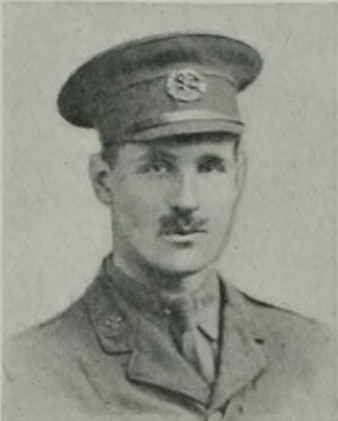
Edmund Lionel Frost.
FROST, GERARD GARTON STACY, Private, No. 2692, 16th Platoon, D Coy., 9th (Highlanders) Battn. Royal Scots (T.F.), eldest s. of Charles Edward Frost, of 30, St. Mark’s Terrace, City Road, Lakenham, Norwich, Private House Agent for Bullard & Sons, Ltd., Brewers, by his wife, Annie; b. Lakenham, Norwich, 20 Nov. 1884; educ. Norwich, and had been in business in Manchester, holding a very good position with Vincent Smethurst there. After the outbreak of war he joined the Royal Scots with his great friend Charles Newsham (who was afterwards killed by the same shell as himself), 10 Nov. 1914, and after training at Edinburgh and Kilmarnock, left for the Front towards the end of Feb.; he lost his life during the bombardment of Ypres, three shells dropping into the billets of his company and killing him and six of his comrades as they lay sleeping, 7 April, 1915. He was buried on the ramparts of Ypres close to the Porte de Lille; unm. Lieut.-Col. R. S. Blair, commanding 9th Royal Scots, wrote: “He died a soldier’s death, and we are grateful and proud of his courage and devotion to duty and his Corps.” Private Frost was a member of the Cheadle Golf Club, and was well known in the amateur rowing world of the North, being for two or three years captain of the Didsbury Rowing Club, the junior four of which he stroked to victory at the Northwich, Agecroft and Lancaster regattas in 1912. He was also on the committee of the Norwich Swan and Dolphin Swimming Clubs and winner of many swimming trophies; his two younger brothers are in a Canadian regt.
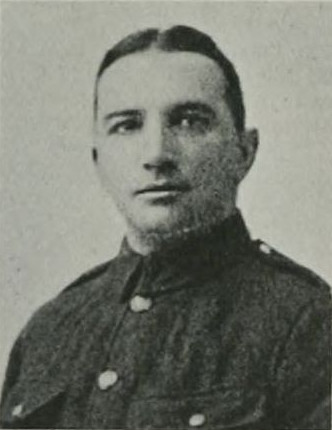
Gerard G. Stacy Frost.
FROST, KENNETH, 2nd Lieut., 1st Battn. Royal West Kent Regt., yr. s. of Ralph Frost, of Wandsworth Common, London, Managing Director of J. Miles & Co., Ltd., 68–70, Wardour Street, member of the Westminster City Council, by his wife, Sarah (died 1895), dau. of John Bolton, of Manchester; b. London, 28 April, 1892; educ. Reading School, and afterwards entered the employ of a firm of wholesale stationers in London. He joined the Artists’ Rifles in 1909, and on the outbreak of war volunteered for foreign service, and as a corporal left with his Battn. for France, 22 Oct. 1914. Three months later he was given a commission in the South Staffordshire Regt., being transferred to the 1st Battn. Royal West Kent Regt., 16 Feb. 1915, and was killed in action at Zillebeke, Flanders, 22 Feb. 1915; unm. His Commanding Officer in the South Staffordshire Regt. described him as one of the promising young officers in his command both for resource and bravery.
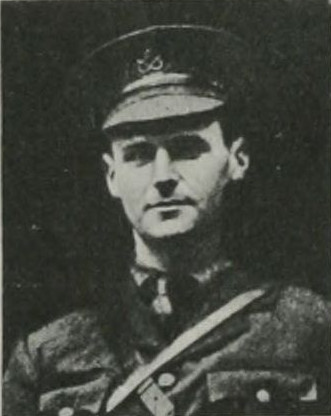
Kenneth Frost.
FRY, HORACE, Stoker, 1st Class (R.F.R., B. 7348), 291257, H.M.S. Aboukir; lost in action in the North Sea, 22 Sept. 1914.
FRY, JAMES, Sergt., No. 7267, 1st Battn. Coldstream Guards, 2nd s. of the late John Fry, of Timsbury, Bath, Farm Labourer and ex-soldier, by his wife, Emily; b. Southstoke, co. Somerset, 21 Oct. 1889; educ. Marksbury National School, near Bath; enlisted 24 Feb. 1907; went to France with the Expeditionary Force; killed in action at Langemarck, near Ypres, during the Battle of the Aisne, 23 Oct. 1914. He m. at Greenwich, Amelia Ann (100, Brookmill Road, St. John’s, S.E.), dau. of Henry George Shephard, and had two children: James Arthur George, b. posthumous, 12 Dec. 1914; and Ida Edith, b. 30 April, 1913.
FRYER, EDWIN SAMUEL, Rifleman, No. 2902, B Coy. 9th Battn. (Queen Victoria Rifles) The London Regt. (T.F.), 3rd London Infantry Brigade, only surviving child of Samuel Fryer, of the Harvest Home, Bury Cross, Alverstoke, Hants, Beer Retailer, by his wife, Mary Anne, dau. of James Day, of Manwell, Somersetshire; b. London, 20 Jan. 1887; educ. Archbishop Tenison’s Grammar School, London; and after a short time in the Civil Service, left at the age of 21 to enter a private firm. On the outbreak of war he volunteered and joined the Queen Victoria Rifles, 2 Sept. 1914; went to France 4 Nov., and was killed in action at Lindenhock, 18 Dec. 1914; unm. Buried at Lindenhock, Belgium. His Commanding Officer wrote: “He always did his duty well and cheerfully under often very trying conditions, and showed a fine spirit, setting a splendid example to the rest of the men, by whom he was much liked and respected, and who, in common with myself, will feel his loss very much.” He was a Freemason and a highly esteemed member of the Equitable Friendly Society, having been Worthy Master during the year 1912.
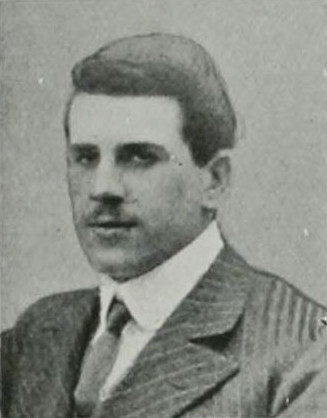
Edwin Samuel Fryer.
FRYER, ERNEST GEORGE, Sub-Lieut., R.N.R., s. of the late Robert Edward Fryer, of Bristol, by his wife, Mahala Rebecca (now widow of the late Thomas Alfred Paczensky, of Abberton Glebe, near Colchester), dau. of David Rhamm, of Wisbech; b. Writtle, Chelmsford, co. Essex, 20 Jan. 1887; educ. St. James’ Collegiate School, Jersey; entered the P. & O. S. N. Company’s Service about 1908, and was a Second Officer when the war broke out. He was appointed a Probationary Midshipman, 25 July, 1905, rank confirmed in 1908, and became Sub-Lieut. in 1912; commissioned to H.M.S. Triumph, 4 Aug. to 4 Sept. 1914, he was placed on the German H.A.L. Frisia and navigated her with a prize crew from the neighbourhood of Tsing-tau to Wei-hai-Wei. On 4 Sept. he was placed on board H.M. Destroyer Jed, which proceeded to the Eastern Mediterranean, where, in Feb. 1915, he was appointed to H.M.S. Vengeance. On 12 June he was sent with a party to blow up a rock at the entrance to an island harbour in Asia Minor, when some accident caused a hose of gun-cotton to ignite. Several of the party were badly burnt and the boat had to be abandoned. Fryer died on board H.M.S. Vengeance three days later, 15 June, 1915, and was buried at sea, off the coast of Mitylene; unm.
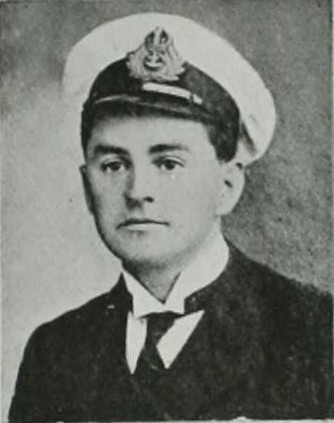
Ernest George Fryer.
FRYER, NORMAN MOODY, Private, No. 13740, 5th (Western Cavalry) Battn. Canadian Expeditionary Force, s. of the late Thomas Henry Fryer, of Wells, co. Norfolk; b. West Kensington, London, 1895; educ. Gorleston High School, Suffolk; went to Canada; joined the 16th Light Horse, and on the outbreak of war in Aug. 1914, volunteered for service overseas; left with the First Contingent of the Canadian Expeditionary Force in Oct.; went to the Front in Feb. and was killed in action at Festubert, 24 May, 1915; unm.
FUCHSBALG, MAURICE MARCELLE, Private, No. 1450, Honourable Artillery Coy., only s. of Edward Bernard Fuchsbalg, of Ovingdean, Trinity Road, Tulse Hill, S.W., Managing London Partner of Schenker & Co., by his wife, Adele, dau. of the late Edward Frankel, of Vienna; b. Brixton, S.W., 29 May, 1888; educ. Dulwich College, and on leaving there spent four years in Austria, Belgium and France, and then entered his father’s business in London, where he held an important post when war broke out. He joined the Honourable Artillery Coy., 21 Aug. 1914; went to France, 27 Dec. 1914; was wounded in action at Ypres and admitted to the Canadian Stationary Hospital at Le Touquet, 15 Feb. 1915, and died there on the 23rd; unm. Buried in the Cemetery there.
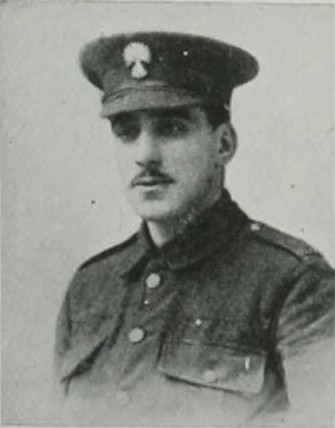
Maurice M. Fuchsbalg.
FULCHER, FREDERICK, Stoker, 1st Class, K. 4450, H.M.S. Hawke, s. of Charles Fulcher, of Easton, Wickham Market, co. Suffolk; lost when that ship was torpedoed in the North Sea, 15 Oct. 1914.
FULFORD, WILLIAM IRA, Private, No. 109346, 4th Canadian Mounted Rifles, 3rd s. of Henry York Fulford, of Silcote, Ontario, Canada, by his wife, Mary Ann, dau. of the late Samuel Greenfield; b. Sydenham, Grey co., Ontario, 29 Nov. 1888; educ. Owen Sound and Toronto; was a first class mechanic and was employed in the Russell Automobile Factory of Toronto; enlisted 12 April, 1915; left Canada with a draft for the 2nd Contingent, went to the Front about 1 Nov. 1915, and was killed in action near Ypres 1 Dec. 1915, by a shell which burst over the tent he was then in. He was buried at Chateau Rosenburg (grave E. Ref. B. 670, 11); unm. His officers all spoke highly of him, one wrote: “As his troop officer I found your son to be a thorough soldier, always dependable and filled with a patriotic desire to do the most for his country.”
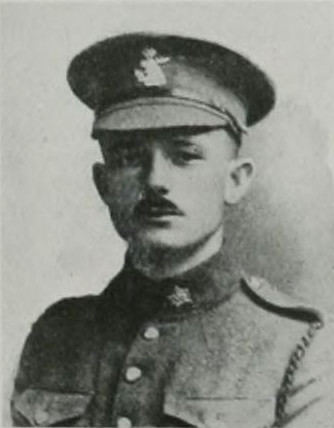
William I. Fulford.
FULLER, COLIN MELVILLE, Private, No. 2271, H Coy. 1/4th Battn. Seaforth Highlanders (T.F.), yst. s. of Robert Henry Fuller, of 10, Epsom Road, Croydon, Tea Merchant, by his wife, Janet Hellen Innes, dau. of Colin Wright, of Perthshire; b. Croydon, co. Surrey, 13 Sept., 1894; educ. there; was in the Motor Trade; volunteered on the outbreak of war, and enlisted Aug. 1914; went to France in November, 1914, and was killed in action at the battle of Neuve Chapelle, 11 March, 1915; unm.
FULLER, FRANK ALEXANDER, Private, No. 1676, 1/8th Battn. The Middlesex Regt. (T.F.), 3rd s. of Alfred Fuller, of 11, Laurel Villas, New Road, Bedfont, Middlesex, Gardener, by his wife, Belinda, dau. of William Bowden; b. Hoddesdon, co. Herts, 4 Jan. 1894; educ. Ivor Heath, Bucks; was a gardener; joined the Middlesex Territorials in 1912, and on the outbreak of war volunteered for foreign service; went to France in March, 1915, and was killed in action at Zonnebeke in the fight for Hill 60, 26 April, 1915; unm. His brother Thomas, 1/8th Middlesex, was killed in action the same day as himself (see his notice), and four other brothers are now on active service: William, Bombardier, No. 55760, R.F.A.; James, Private, No. 77739, R.H.A.; Harry, Private, No. 1281, Royal Fusiliers; and Victor, No. 10881, Army Cyclist Corps.
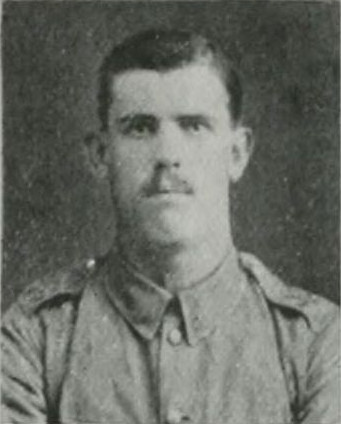
Frank Alexander Fuller.
FULLER, HARRY, Ship’s Corpl. 1st Class, 208912, H.M.S. Good Hope; lost in action off Coronel, on the coast of Chili, 1 Nov. 1914.
FULLER, JAMES, A.B. (R.F.R.. B. 5769), 179913, H.M.S. Hogue; lost in action in the North Sea, 22 Sept. 1914.
FULLER, LEONARD, Private, No. 1170, Princess Patricia’s Canadian Light Infantry, 5th s. of the late Alfred Fuller, of Ramsey, co. Hunts. J.P. and Alderman of Hunts County Council, by his wife, Augusta Elizabeth, dau. of Charles Pope Bates, of Ramsey, M.R.C.S.; b. Ramsey, co. Hunts, 2 Sept. 1881; educ. Aldenham School, Herts; went to Canada in 1912, and settled at Montreal as a Real Estate Agent; volunteered on the outbreak of war and joined P.P.C.L.I. in Aug. 1914; came over with the 1st Contingent in Oct.; trained on Salisbury Plain during the winter; went to France, Dec. 1914, and died at Dickebusch, Belgium, 8 March, 1915, from wounds received in action at St. Eloi. He was buried in the Regimental Cemetery at Dickebusch; unm.
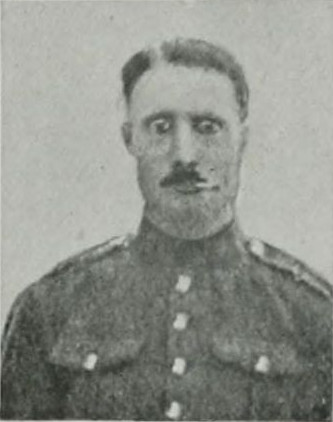
Leonard Fuller.
FULLER, THOMAS, Private. No. 7681, 1/8th Battn. The Middlesex Regt. (T.F.), s. of Alfred Fuller, of 11, Laurel Villas, New Road, Bedfont, Middlesex, Gardener, by his wife, Belinda, dau. of William Bowden; b. Hoddesdon, Herts, 27 Oct. 1889; educ. Iver, Bucks; was employed on the Metropolitan Railway; joined the Middlesex Territorials in 1912, and on the outbreak of war volunteered for foreign service; went to France in March, 1915, and was killed in action at Zonnebeke in the fight for Hill 60, 26 April, 1915.
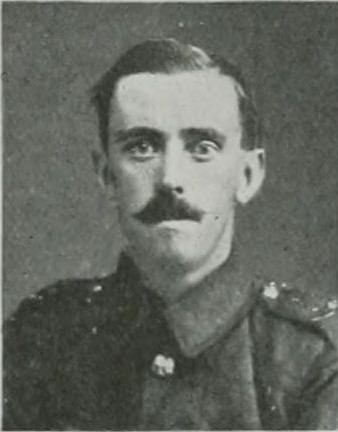
Thomas Fuller.
FULLER, WILLIAM JOHN, Stoker, 1st Class, S.S. 106984, H.M.S. Hawke; lost when that ship was torpedoed in the North Sea, 15 Oct. 1914.
FULLICK, ROBERT STANLEY, Stoker, 1st Class, K. 13038 (Po.), H.M.S. Aboukir; lost in action in the North Sea, 22 Sept. 1914.
FUNNELL, THOMAS EDWARD, Leading Stoker, Coast Guard, 299136 (Po.), H.M.S. Aboukir; lost in action in the North Sea, 22 Sept. 1914.
FUREY, IGNATIUS, Private, No. 1312, 1st Newfoundland Regt., s. of George Furey, of Harbour Main, Newfoundland, Fisherman and Farmer, by his wife, Margaret, dau. of Michael Murray; b. Harbour Main, aforesaid, 29 July, 1896; educ. High School there; joined the Newfoundland Expeditionary Force, 27 March, 1915; left for England, 27 April, 1915; served at the Dardenelles, and died in the Third Canadian Stationary Hospital at Mudros, Gallipoli, 7 Dec. 1915, of tetanus and frostbite; unm.
FURNESS, ARTHUR, Sapper, No. 20130, 55th Coy. Royal Engineers, 2nd s. of George Furness, of 64, Gibraltar Road, Halifax, Fruit Merchant and Commission Agent, by his wife, Mary Ellen, dau. of George Hodson; b. Halifax 5 Dec. 1889; educ. Halifax Council School; enlisted in May, 1910, and when the war broke out had been stationed at Singapore for three years. He was ordered home with his regt., went to France in Dec. 1914, and was killed in action at Fauquissart, 21 March, 1915; unm.
FURPHY, GEORGE HENRY, A.B. (R.F.R, Ch. B. 10045), S.S. 2611, H.M.S. Cressy; lost in action in the North Sea, 22 Sept. 1914.
FURSE, GEORGE ARMAND, Capt., Royal Field Artillery, 2nd s. of the late Edmund Furse, of Alphington, Frimley, co. Surrey, by his wife, Lydia, dau. of Fred King; b. Rhode Island, Providence, U.S.A., 21 Feb. 1880; educ. Cheltenham and Woolwich; gazetted to F. Battery, R.H.A., 23 Dec. 1898, and promoted Lieut. 15 Feb. 1901, and Capt., 116th Battery, 29 April, 1907. In 1909 he was appointed to V Battery in India, and after three years came home to do a musketry course. When war broke out he was posted to the 60th Battery. R.F.A., and went to France with the 2nd Division, 17 Aug. 1914. He died at Verneuil, 16 Sept. 1914, of wounds received at the Battle of the Aisne the previous day, and was buried near Bourg. Capt. Furse unm. at Rawal Pindi, Punjab, India, 2 March, 1905, Hazel (Little Cranford, Strawford, Winchester), dau. of the late Elton Forrest, D.C. of Forests [by his wife, Emily, dau. of the Rev. Frederick Wickham, 2nd Master of Winchester College], and had three daus.: Lilian Emilée, b. 2 April, 1906; Aileen Armanda, b. 24 Aug. 1910; and Mélanie Hazel, b. 1 June, 1912.
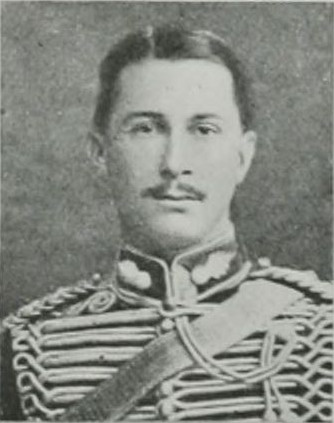
George Armand Furse.
FUTRILL, CHARLES, Private, No. 5270, 3rd Battn. Coldstream Guards, 3rd s. of George Futrill, of The Stalls, Salter Lane, Redditch, Worcestershire, Ostler, by his wife, Fanny; b. Bewdley, co. Worcester, 25 Dec. 1884; educ. Board School, Stratford-on-Avon; was employed at Coventry Gas Works; enlisted, 8 Dec. 1903; served in Egypt 29 Sept. 1906 to 21 Oct. 1907; went to France, 12 Aug. 1914, and was killed in action at Soupir, 14 Sept. 1914. He m. at St. Peter’s Church, Coventry, 9 June, 1908, Sarah Ann (14, Pridmore Road, Foleshill, Coventry), yst. dau. of William Southam, of Helmdon Green, co. Northampton; s.p.
FUTTER, FRANK CHARLES, Private, No. 10554, 3rd Battn. Coldstream Guards, s. of Charles Futter, of The School House, Burnham Thorpe, King’s Lynn, co. Norfolk, Tilemaker; b. Burnham Thorpe, 31 July, 1895; educ. there; enlisted 1913; and was killed in action at Cuinchy. 11 May, 1915; unm.
FYFIELD, JAMES, Private, R.M.L.I., Po. 8479, H.M.S. Good Hope; lost in action off Coronel, on the coast of Chili, 1 Nov. 1914.
FYSH, WILLIAM, Seaman, R.N.R., 2986A, H.M.S. Aboukir; lost in action in the North Sea, 22 Sept. 1914.
FYSHE, FRANCIS, Lieut., 7th Battery, 2nd Brigade, Canadian Field Artillery, Canadian Expeditionary Force, 3rd s. of the late Thomas Fyshe, General Manager, Merchants Bank of Canada, by his wife, Airs, dau. of Thomas Leigh Leonoweus; b. Halifax, Nova Scotia, 7 Dec. 1894; educ. Creighton School, Montreal, and the Royal Military College, Kingston; gazetted Lieut. Canadian Field Artillery, 1 Aug. 1914; volunteered for Imperial Service on the outbreak of war; came over with the First Contingent, 3rd Oct. 1914; went to France, 15 June, 1915, and was killed in action near Messines, 27 Nov. 1915; unm. Buried at Romarin, Belgium.
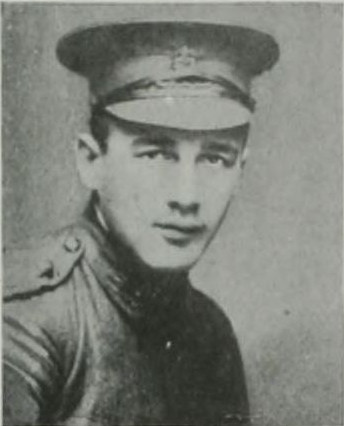
Francis Fyshe.
FYSON, OLIVER, Private, No. 29546, 16th (Canadian Scottish) Battn. 3rd Infantry Brigade, Canadian Expeditionary Force, s. of the Right Rev. Philip Kemball Fyson, late Bishop in Hokkaido, Japan, and now Rector of Elmley Lovett, Droitwich, by his wife, Eleanor, dau. of Richard Lee Furley; b. Hull, 25 Oct. 1884; educ. C.M.S.H. Limpsfield and Loretto School; went to Canada in 1906, and settled at Vancouver; volunteered on the outbreak of war, 5 Aug. 1914, and came over with the First Contingent in Oct. 1914; trained on Salisbury Plain, during the winter of 1914–15; went to France, Feb. 1915, and was killed in action near Langemarck, 22 April, 1915; unm.
GABBETT, EDMOND POOLE, Lieut.-Commander, R.N., eldest s. of the late Edmond Richard Gabbett, M.I.C.E., by his wife, Annie Eva May, dau. of Capt. Poole Gabbett, 31st Regt.; b. Old Charlton, co. Kent; educ. Mr. William White’s School, Bognor; entered the Navy as a Cadet 15 May 1901, was appointed to H.M.S. Hannibal 1 June following, became Midshipman 15 June 1901, Sub-Lieut. 15 Aug. 1904; became Lieut. (N.) 15 Feb. 1906, and Lieut.-Commander 15 Feb. 1914; was appointed Navigating Lieut. H.M.S. Cressy, 1 Aug. 1914, and was lost when that ship was torpedoed and sunk in the North Sea, 22 Sept. 1914; m.
GABELL, JAMES, Private, No. 15551, 10th Battn., Canadian Expeditionary Force; s. of (—) Gabell; b. 12 April. 1886; joined the band of the 16th Lancers as a boy, and served 12 years, obtaining his discharge in March, 1913; went to Canada in April, 1914, enlisted there on the outbreak of war in Aug. 1914; came over with the 1st contingent, Oct. following; went to France in Feb., and was killed in action at Festubert, 21 May, 1915; unm.
GADSEN, WALTER SAMUEL, Private, R.M.L.I., Ch. 7531, H.M.S. Hawke; lost when that ship was torpedoed in the North Sea, 15 Oct. 1914.
GAFFNEY, LÉON ARTHUR, 2nd Lieut., 6th (Service) Battn. Royal Munster Fusiliers, eldest s. of William Gaffney, of Slough, by his wife, Violet Alice, dau. of the late William Huggins; b. Shepherd’s Bush, London, 27 July, 1895; educ. Borlase School, Marlow, and New College, Oxford; gazetted 2nd Lieut. from the University O.T.C. to the Royal Munster Fusiliers 22 Aug. 1914; landed with his battn. at Suvla Bay, 6 Aug. 1915, and fell mortally wounded by a bullet through the abdomen, while leading a bayonet charge on the morning of the 12th. He died at Tenedos the same day; unm. His commanding officer wrote: “We were holding an advanced position on the crest of a ridge, and the Turks were attempting to dig themselves in very close to us under cover of darkness. C Coy, in which your son was, was detailed to attack them with bombs just before dawn. The attack was carried out and their trench was occupied.... Your son fell mortally wounded while most gallantly leading a bayoneting party. He was carried in by a captain of the Royal Engineers.” Further particulars were furnished by the captain in command of the company holding the post, who said that “Lieut. Gaffney was brought into my trench. He was quite conscious and very brave, as he was suffering until the doctor eased the pain with a little morphia. There was a heavy fire still against us, and your son said not to risk any lives getting him away, a brave and thoughtful act on his part. Of course our stretcher bearers wanted to do their work, and really the Turks seem rather to respect a stretcher as no one was hit.” A brother officer of C Coy. adds this tribute: “I can truly say that he was one of the best fellows, most genial, unselfish, and at the same time most capable, that I had the privilege of working with. He was admired and respected alike by his fellow officers and men. I had an opportunity of seeing him under fire on a few occasions, and his bravery, coolness and cheeriness proved him to be indeed one of the fairest flowers of British manhood.”
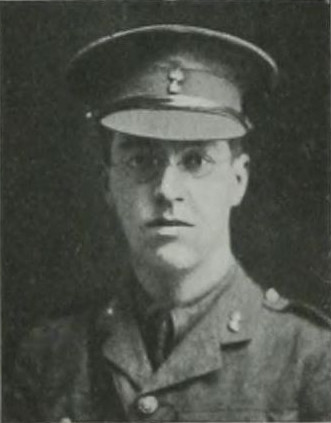
Léon Arthur Gaffney.
GAGE, ALFRED, Stoker, 1st Class, L. 10655, H.M.S. Good Hope; lost in action off Coronel, on the coast of Chili, 1 Nov. 1914.
GAIGER, ARTHUR ALFRED, A.B. (R.F.R., Ch. B. 10307), 212286, H.M.S. Cressy; lost in action in the North Sea, 22 Sept. 1914.
GAILEY, EDWARD JOSEPH, A.B. (R.F.R., B. 10139), 210045, H.M.S. Hogue; lost in action in the North Sea, 22 Sept. 1914.
GAITLEY, ARTHUR, Stoker, 1st Class (R.F.R., B. 3528), 301057, H.M.S. Good Hope; lost in action off Coronel, on the coast of Chili, 1 Nov. 1914.
GALBRAITH, DONALD JAMES FINDLAY, Lieut., 9th Battn. (Glasgow Highlanders) Highland Light Infantry (T.F.), only s. of John Alexander Galbraith, of Lindsaylands, Biggar, co. Lanark, by his wife, Mary Rogerson McKnight, dau. of James Findlay, Merchant; b. Glasgow, 13 May, 1892; educ. Kelvinside Academy, Glasgow; and Glenalmond; obtained a commission in the 9th Highland Light Infantry (T.F.), 18 Jan. 1911, and was promoted Lieut. April, 1913; volunteered for foreign service on the outbreak of war; went to France, Nov. 1914, and was killed in action, near Bethune, 25 Jan. 1915; unm. Buried in the grounds in the Chateau de Gorre, near Bethune.
GALE, MARMADUKE HENRY LITTLEDALE, Major, 8th Cavalry, Indian Army, elder s. of the late Marmaduke Henry Littledale Gale, Proprietor Indigo Estate, Pundoul, Bengal, by his wife, Anna (Rayne Place, Rayne, Essex), dau. of Malcolm Neynoe Macleod; b. Muzufferpur, Bengal, India, 3 March, 1873; educ. Wellington and Sandhurst; gazetted to the Royal Welsh Fusiliers, 10 Oct. 1894, and promoted Lieut. 30 Oct. 1896; transferred to the Indian Army in 1897, and became Capt. 10 Oct. 1903, and Major, 10 Oct. 1912; commanded a Camel Corps 1903–6; took part in the Mohmond Expedition on the North-West Frontier, India, 1908 (medal with clasp); was on General Pilcher’s Staff, 1909–10, then rejoined his regt. and in 1913 was appointed Squadron Commander in the 8th Cavalry. He was shot at Jhansi, 28 June, 1915, in the execution of his duty, by two Mahommedan Sowars of the regt., who had been warned to proceed to the Front with a draft the same afternoon. Major Gale was a very good linguist, and had passed in higher and lower Hindustani, Punjabi, Arabic, and Pashtu, and was author of “Hindustani for Beginners.” He m. at the Cathedral, Calcutta, 11 June, 1900, Alice Maude, dau. of John Connell, and had a dau., Helen Alice, b. 9 July, 1901.
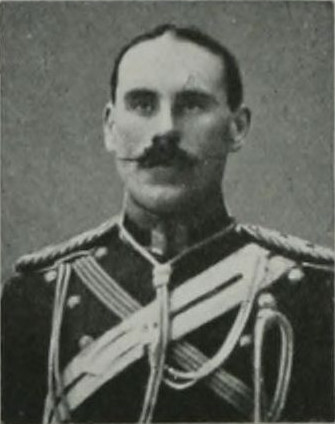
Marmaduke H. L. Gale.
GALLAGHER, WILLIAM AUGUSTINE, B.A., Capt., 2nd Battn. East Lancashire Regt., only surviving child of William Gallagher, of 1, Charlemont Place, Armagh, Solicitor, by his wife, Margaret, dau. of Thomas C. Ward, of Holywood, co. Down; b. at Armagh, 9 Dec. 1882; educ. Clongowes Wood College, co. Kildare, and Trinity College, Dublin, where he graduated B.A. in June 1906; and was gazetted 2nd Lieut. to the East Lancashires, 29 Aug. 1906, and promoted Lieut. 26 Sept. 1908, and Capt. 5 Aug. 1914. He served for five years (1906–1911) in India, and then went to South Africa, where he was attd. to a Mounted Infantry Battn. at Harrismith till 1913, when he rejoined his regt. at Wynberg, near Capetown, and was employed on the Capetown defence works. After the outbreak of war the General Officer there selected him to bring home the horses of the 10th Hussars, a duty which he performed with great care. The horses were landed in excellent condition, and with but trifling loss. For this arduous duty he was specially thanked. On his return to this country he was sent to Hursley, near Winchester, and attached to the 8th Division, and whilst there General Carter selected him as machine-gun officer on his staff. He went to France early in Nov. 1914 and saw much service there; his last letter to his mother, written a day before his death, stated that he was at very hard work and would not be able to write for some time. The next day (11 March) the Battle of Neuve Chapelle was fought, and at night he was sent with orders to the brigade commanders engaged in the firing-line, a duty attended with great danger, as the roads were swept with shell fire. A shell burst over himself and the orderlies who accompanied him. Capt. Gallagher was struck on the side of the head with a fragment of a shell, and his death was instantaneous; the orderlies were untouched. He was buried the next day in an orchard near Neuve Chapelle, under heavy shell fire from the enemy; unm. General Carter, in sending particulars of his death, described Capt. Gallagher as “A truly gallant officer and one of the best fellows he ever knew.” He further stated that “he had done such good work with the brigade that he had great pleasure in bringing it under the notice of the General Officer Commanding the 8th Division. All the staff appreciated his kindness of heart, his cheery good fellowship and undaunted gallantry.” He was mentioned in F.M. Sir John (now Lord) French’s Despatches [London Gazette, 22 June, 1915] for gallant and distinguished service in the field.
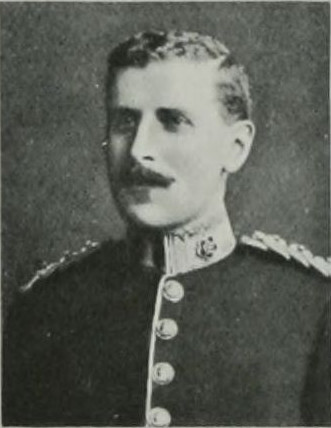
William A. Gallagher.
GALLANT, JOSEPH, Private, No. 69366, 26th Battn. Canadian Expeditionary Force, s. of Sylvain Gallant, of Shives, Athol, New Brunswick; b. Bloomfield, Queens co., Prince Edward Island, 2 March, 1895; educ. there; volunteered after the outbreak of war and joined the Canadian Expeditionary Force, 5 Feb. 1915; and was killed in action in Belgium, 13 Oct. 1915; unm.
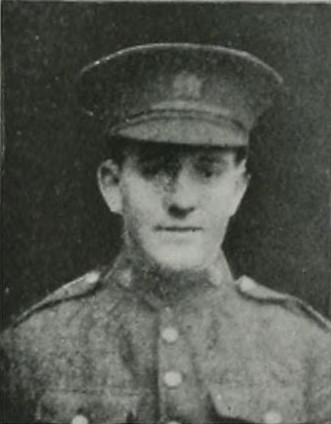
Joseph Gallant.
GALLERY, JOHN RICHARD, Private, No. 6828, 1st Battn. Coldstream Guards, 2nd s. of Henry Gallery, of 303, Bolton Road, Small Heath, Birmingham (who served 12 years in the 5th Dragoon Guards), by his wife, Martha, dau. of Richard Butler; b. Curragh Camp, Dublin, 1886; educ. Brookfields Board School; joined the Coldstream Guards, 25 June, 1906, and after serving his time received an excellent character from his Commanding Officer, who wrote: “This man has been with me since 1911, during which time I have found him without exception to be an unusually hard-working and trustworthy man. He was with me throughout the training season of 1912 as telephone clerk, a post which he filled to my entire satisfaction, despite the great calls made upon his energy and zeal which such a post frequently necessitates;” rejoined on mobilisation 5 Aug. 1914; went to France about 15 Aug. and was killed in action there 6 Sept. 1914; unm. He was a 1st class signaller.
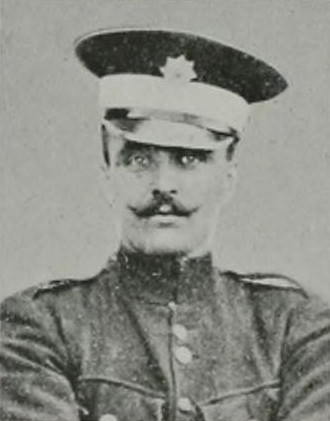
John Richard Gallery.
GALLOWAY, ARCHIBALD WILSON, Signalman, 232376, H.M.S. Pathfinder; lost when that ship was sunk by a mine, about 20 miles off the East Coast, 5 Sept. 1914.
PAYNE-GALLWEY, PHILIP FRANCIS, Lieut., 21st Lancers, attached 9th Lancers, 2nd s. of the Rev. Francis Henry Payne-Gallwey, M.A., Rector of Sessay, Thirsk, by his wife Florence Kate, 2nd dau. of Col. Arthur Lowry Cole, C.B., 17th Regt. [Earl of Enniskillen coll.,] and great grandson of Gen. Sir William Payne-Gallwey, 1st Bart.; b. Kirby Knowle Rectory, 7 March, 1893; educ. West Downes and Winchester College; gazetted 2nd Lieut. Nov. 1912, promoted Lieut. 5 Aug. 1914, and attached to the 9th Lancers 12 Aug. following. He was killed in action at Messines, 31 Oct. 1914; unm.
GALPIN, HAROLD ERNEST SYDNEY, Bugler, Ch. 17926, H.M.S. Hogue; lost in action in the North Sea, 22 Sept. 1914.
GALPIN, WILLIAM FRANK, Rifleman, No. 9365, 5th Battn. (London Rifle Brigade), The London Regt. (T.F.), 2nd s. of William Henry Galpin, of 11, Montrose Terrace, Plymouth, Timber Salesman, by his wife, Mary Elizabeth, dau. of John Hocking Francis, of Penzance; b. Plymouth, 1 Sept. 1890; educ. Lipson House School, Plymouth, and obtained Honours in Cambridge Local Exam.; became a quantity surveyor on the staff of H.M. Office of Works, Westminster; was a Scout Master and received the Baden Powell Warrant, dated 7 June, 1910; joined the (Territorial) Battn. Duke of Cornwall’s L.I. at Bodmin, in 1911, but in 1913 transferred to the London Rifle Brigade; volunteered for Imperial service on the outbreak of war; went to France, 4 Nov. 1914, where he was attached to the 11th Brigade (4th Division), and was killed in action 13 May, 1915, at Wieltje, during the 2nd Battle of Ypres, the same day Sergt. Belcher of his Battn. won the V.C. The London Rifle Brigade had been subjected to a terrific bombardment for nearly three weeks, and its strength had been reduced to less than 200 men. He was buried near Ypres; unm.
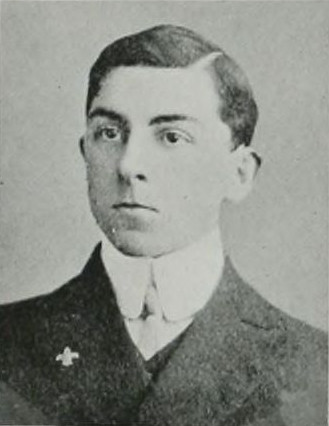
William Frank Galpin.
GAMBLE, JAMES, A.B. (R.F.R., B. 3895), 189970, H.M.S. Hawke; lost when that ship was torpedoed in the North Sea, 15 Oct. 1914.
GAMBLE, RICHARD MAURICE BROOKS, 2nd Lieut., 1/7th Battn. King’s Liverpool Regt. (T.F.), eldest s. of Richard Keene Gamble, of 51, Fitzwilliam Square, Dublin, Carriglea, Greystones, co. Wicklow, and Derrinboy House, Kilcormac, King’s Co., B.L., J.P., President of the Chamber of Commerce, Dublin, by his wife, Hannah Maria, dau. of Maurice Brooks, of Oaklawn, co. Dublin, J.P., D.L., and gdson. of the late Richard William Gamble, of Killooly Hall, King’s Co. and 51, Fitzwilliam Square, Dublin, Q.C., County Court Judge, Ireland; b. at Leeson Park, Dublin, 16 July, 1893; educ. M. Le Penton’s School, Dublin, afterwards at Tonbridge School, Kent, and Trinity College, Dublin, where he had matriculated in Arts and Medicine, and was about to take his degree when war broke out. He was a member of the O.T.C., and immediately volunteered and was gazetted to the Liverpool Regt. 5 Sept. 1914. He went with his regt. to the Front in March, 1915, and was killed in action, when leading his men in an attack on the German trenches, at Richebourg, on the night of 15–16 May, 1915, and was buried at the Rue de Bois, half a mile south of Richebourg St. Vaast, with eight brother officers killed in the same attack; unm. His Commanding Officer thus described the circumstances: “We were ordered to take the German trenches.... Under heavy fire he led his men with the greatest bravery, and had reached the parapet of the German trenches when he fell with two Germans under him, death being instantaneous.” Lieut. Gamble obtained a silver medal for shooting when at school in Dublin, and was very keen on fishing and shooting.
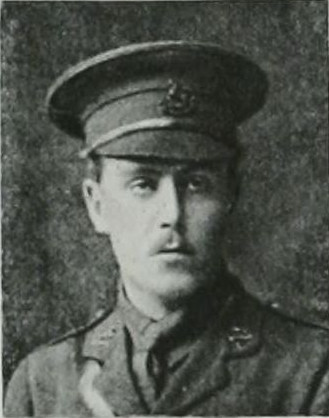
Richard M. B. Gamble.
GAMBLE, RICHARD SUMNER, 2nd Lieut., 7th (Service) Battn. East Lancashire Regt., eldest s. of Sidney Gompertz Gamble, some time Borough Surveyor of Grantham and since Feb. 1892, second in command of the London Fire Brigade, by his wife, Harriet Annie, eldest dau. of John Sumner, of Blyth, Coleshill; b. Grantham, 8 Oct. 1881; educ. at Coleshill School and Luneburg, Germany. On returning to England in 1899 he was apprenticed as mechanical engineer at the Hunslet Engine Works, Leeds, and afterwards continued his engineering studies at the Battersea Polytechnic. On 7 Jan. 1905, he left England to take up an appointment as Assistant Manager of the Kallina Tea Estate, India, afterwards holding similar positions at Konapara and Jellalpore. Owing to ill-health he returned to England in Oct. 1910. He, however, recovered and left in Dec. 1911, to take up an appointment as Assistant Manager of the Sungei Rubber Estate, Perak, F.M. States. He was an enthusiastic volunteer and attained the rank of Sergt. in the Leeds Rifles and the Surma Valley Light Horse. Being a good horse and swordsman he carried off many of the best prizes at their competitions. The news of the outbreak of war coincided with the end of the first period of his engagement in the Malay States. He therefore returned to England and at once placed his services at the disposal of the India Office, hoping that with his intimate knowledge of German, French, Hindustani, etc., and his great ability to control and manage the Coolies, he might be able to be of considerable use to the Indian troops, then on their way from India. On 16 Jan. 1915, he was gazetted 2nd Lieut., and was attached to the 7th Battn. East Lancashire Regt. He remained with this battn. at Cliveden, Somerset, until 24 March, 1915, when he received orders to report himself at Southampton, Havre, Rouen and Marseilles, where he was attached to the 6th Jat Light Infantry, Dehra Dun Division. On 30 April, with 14 other officers, he left for Boulogne, and was sent up to the Front on 12 May, and was transferred on 16 May to the 1st Gurkha Rifles, who were then in the trenches. The last letter received from him, dated 20 May, 1915, concludes with “I have just received orders to go and bomb some Germans out of a trench, so must say good-bye.” From subsequent information it appears that the actual attack took place on the night of 21–22 May in the trenches running through Ferme Du Bois, 3,000 metres north-east of Festubert and 2,500 metres south-west of Neuve Chapelle; 1,000 metres west of the main road from La Bassée to Estaires. The attack was a comparatively small local affair. He was leading and was described by the observation officer as being well in front of his men, and deliberately cut a large gap through the wire and then, thinking his men were just behind him, jumped over into the German trench. The German fire was so intensely hot that the men had to lie down, and never reached the trench; the casualties were all the European officers and 45 per cent. of the men killed and wounded. The India Office record “2nd Lieut. R. S. Gamble, 7th East Lancashire Regt., attached 1st Gurkha Rifles, officially reported missing, believed killed 22 May.”
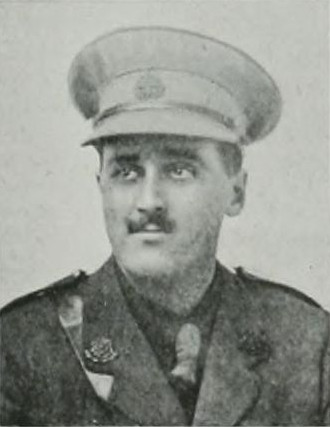
Richard Sumner Gamble.
GAMBRILL, JOHN, Chief Stoker, 167791, H.M.S. Hogue; lost in action in the North Sea, 22 Sept. 1914.
GAMMON, GEORGE WILLIAM, Stoker, P.O., 301382, H.M.S. Good Hope; lost in action off Coronel, on the coast of Chili, 1 Nov. 1914.
GAMMON, HARRY, A.B. (R.F.R., B. 3801), 231151, H.M.S. Good Hope; lost in action off Coronel, on the coast of Chili, 1 Nov 1914.
GAMMON, WILLIAM STANLEY ARGYLE, Private, No. 14107, 4th Battn. Coldstream Guards, eldest s. of William Gammon, of Divinity Road, Oxford, retired Civil Servant, by his wife, Eva Lizzie; b. Oxford, 26 Nov. 1893; educ. Cowley St. John’s Higher Grade School and City Technical School there; was for some time an apprentice with Mr. A. C. Vivian, Cornmarket Street, Oxford, and later with Mr. J. Vincent, High Street, Oxford, and previously to enlisting was with Messrs. Cowell & Co., Wholesale Stationers, etc., of Ipswich; enlisted 9 Dec. 1914; went to France, 7 Aug., and died in Hospital at St. Omer, 15 Sept. 1915, of acute pneumonia contracted while on active service. He was buried in the Souvenir Burial Ground one and a half miles from St. Omer; unm.
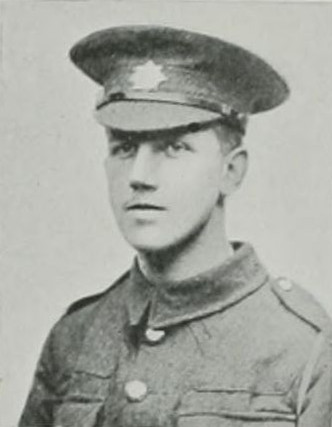
William S. A. Gammon.
GANDAR, BERTRAM JAMES, Petty Officer, 196244, H.M.S. Hawke; lost when that ship was torpedoed in the North Sea, 15 Oct. 1914; m.
GANDY, FREDERICK GEORGE, Sergt., No. 392, North Riding Battery, Royal Field Artillery, 2nd Northumbrian Brigade, 2nd s. of the late John Henry Gandy, of George Street, Whitby, Carver and Gilder, by his wife, Hannah; b. Little Gonerby, Grantham, 24 July, 1880; educ. St. Hilda’s R.C. School, Whitby, and was a Carver and Gilder. He joined the 1st East Riding R.G.A. Volunteers, 11 March, 1903, and afterwards the R.G.A. Territorials; was called up at the outbreak of the war, and volunteered for foreign service; went to France, 19 April, 1915; and was mortally wounded and gassed near Ypres on 24 May, and died in Hospital at Bailleul, 25 May, 1915. Buried in the New Military Cemetery, Bailleul. Sergt. Gandy m. at S. Hilda’s R.C. Church, Whitby, 3 Aug. 1900, Sussanah Theresa, dau. of the late Thomas Elliott; and had three sons and three daus.: George Gregory, b. 15 July, 1905; Frederick William, b. 24 Oct. 1907; Robert Henry, b. 13 Aug. 1911; Mary Gertrude, b. 2 Nov. 1901; Mary Josephine, b. 18 March, 1903; and Hannah Theresa, b. 2 Dec. 1909.
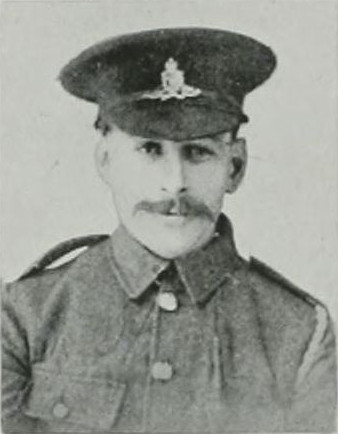
Frederick George Gandy.
GANT, HENRY, Sergt., No. 2310, 2nd Battn. (Royal Fusiliers) The London Regt. (T.F.), yst. s. of George Gant, of 24, Grove Street, Bath, Cab Proprietor, by his wife, Mary Sophia, dau. of Richard Stanley, of Cirencester; b. Bath, 22 March, 1880; educ. Bathwick Boys’ School there, and was a chemist with John Barker, Kensington. He served three years (1897–1900) with the 1st Somerset Light Infantry (Bath) Volunteers, and was afterwards for four years in the A.S.C. Woolwich Territorials. He served through the Boer War as Signaller in 27th Imperial Yeomanry (medal with three bars), and when the European War broke out, volunteered and joined the 2nd London Regt., 1 Sept. 1914. He was appointed Corpl., left for Malta three days later (4 Sept.); went to France in Jan. 1915; was promoted Sergt. in April, and died at Rouen, 26 May, 1915, of wounds received in action at Armentières on the 19th. Buried at St. Sever Cemetery, Rouen, France. He m. at Walcot, Bath, 7 June, 1903, Ada Emily (172, Trevelyan Road, Tooting, S.W.), eldest dau. of Harry Brewer, of Walcot, and had two sons and a dau.: Stanley Herbert, b. 15 June, 1905; Lewis Henry, b. 4 April, 1907; and Phyllis Margaret, b. 15 Dec. 1910.
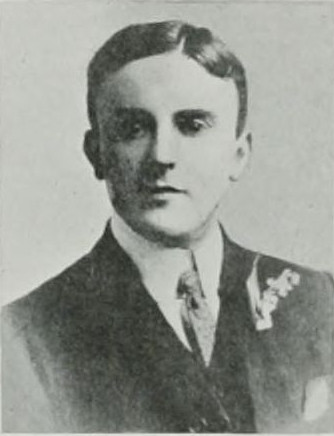
Henry Gant.
GARBUTT, CHARLES WILLIAM, Petty Officer, Tel., 230021, H.M.S. Good Hope; lost in action off Coronel, on the coast of Chili, 1 Nov. 1914.
GARD, ALFRED WILLIAM, Stoker, P.O., 311869 (Devon); H.M.S. Good Hope; lost in action off Coronel, on the coast of Chili, 1 Nov. 1914.
GARDINER, ALEC, Major, R.E., elder s. of Lieut.-Col. Richard Gardiner, of 28, Barkston Gardens, S.W., R.E. (ret.), by his wife, Agnes Hay, dau. of Major-Gen. Alexander Irving, C.B., Royal Artillery, who served right through the Siege of Sebastopol from start to finish; b. Ulwar, Rajputana, India, 28 June, 1873; educ. privately and at the Royal Military Academy, Woolwich; gazetted 2nd Lieut. to the R.E., 24 July, 1891, and promoted Lieut., 24 July, 1894, Capt., 24 July, 1902, and Major, 24 July, 1911. After completing the usual courses at Chatham he was ordered to India, and joined the Railway Branch of the Government of India, and continued to serve on the Construction and Administration of Railways up to the outbreak of the present War, with a short interval of war service at Suakin (British and Egyptian medals). When War was declared in Aug. 1914, Major Gardiner was officiating Agent (Chief Administrative Officer) of the Oudh and Rohilkund State Railway, and had been since 1909 Lieut.-Col. commanding that railway’s Volunteer Rifle Corps, devoting his spare time to training the Corps to a recognised state of efficiency while under his command. The services of Major Gardiner were placed at the disposal of the Military Department, and he was ordered to England, but was intercepted in the Mediterranean, and sent straight to the Front, where he was appointed a field engineer, and was mentioned in Despatches by F.M. Sir John (now Lord) French [London Gazette, 22 June, 1915]. He was reported to have been last spoken with near the fighting line on the morning of 20 Dec. 1914, when the Germans broke through and carried the British lines up to Givenchy village. He was included in the list of missing, and it was long hoped he might be in the enemy’s hands, but his fate was ultimately set at rest through the discovery of his body by the 176th Mining Company, R.E., during operations carried on by them in front of Givenchy. The body was exposed by the explosion of one of the German heavy shells, was identified, and was buried near the Red House, on the sunken road to Givenchy. All who knew him spoke highly of his untiring devotion to his work and duty. One of his senior officers wrote: “No braver or better soldier ever fought for England, and so nobly died—I knew him well—absolutely fearless for himself, his whole mind concentrated on the success of the undertaking, he nobly met his death. Not only at the Front but through the whole of his career work and duty came first. No man ever maintained such untiring zeal or devoted his life more unselfishly to the work he undertook for his country. His death is a grievous loss to all who knew him officially and unofficially.” He was a keen rifle shot, and interested himself in the members of his Volunteer Corps becoming first-class shots. In Oct. 1913 he was appointed to the Executive Council of the Bengal Presidency Rifle Association in recognition of his interest and work in connection with musketry. He attended the Annual Meetings held at Meerut, won the Field Officers’ Cup in 1912, and his teams of Volunteers won the Army versus Volunteers Competition. Major Gardiner was also conspicuous in connection with the work of St. John Ambulance Association in India, especially in the training of the men of the O.R. Ry. Vol. Rifles, teams of whom successfully carried off the Railway Shield in 1911, 1912, and 1913. In recognition of his services he was made a Serving Brother of the Order of St. John of Jerusalem and received the decoration of the order from the Viceroy of India. In the English Railway World Major Gardiner was known as having, in 1908, brought forward a system of cab signals and the automatic electrical control of moving trains as a safeguard against the failure of the human machine. He was a member of the Institution of Civil Engineers and also of the Institute of Electrical Engineers. He m. at Lucknow, 24 March, 1897, Edith May (The Retreat, Sutherland Avenue, Bexhill), dau. of Campbell Thomson, M.I.C.E., late Chief Engineer of the N.W. of India State Railway, and had three children: Richard, b. 28 Oct. 1900; John Campbell, b. 20 Nov. 1905; and Dorothy Agnes, b. 11 April, 1903.
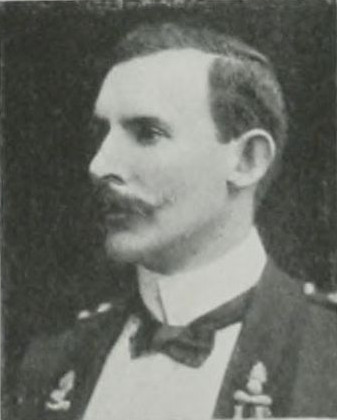
Alec Gardiner.
GARDINER, ANDREW, Private, No. 68450, 25th Battn. Canadian Expeditionary Force, s. of Michael Gardiner, of Reserve Mines; b. Reserve Mines, Cape Breton, Nova Scotia, 2 Feb. 1887; educ. Reserve Public School; was a Coal Miner and settled at Sidney Mines where he worked in No. 1 Colliery; volunteered after the outbreak of war and joined the 40th Battn., 25 Feb. 1915; was drafted to 25th Battn., 17 May, came over with one of the later Contingents, and died, 12 Nov. 1915, of wounds received in action on the 3rd. Sergt. Mowyr, 5th Brigade Mining Section, wrote: “We were in an exposed position, but the work we were engaged in had to be done, and required men of nerve—fearless men—to do it. With others we were getting along fine, when snipers picked off a couple of our brave fellows. I had to call for volunteers to replace the fellows who died. Scarcely before I gave the order than poor Andrew jumped forward and worked like a hero. Ho was only at the job but a short time, when a sniper’s bullet tore a hole across his forehead rendering him unconscious.... Andrew was one of the bravest boys in the regiment. He was admired and respected by all the officers and men, and was a general favourite with the crowd.” Gardiner was prominent in athletics, being well known player in the Reserve Mines ball team and later in the Sydney Mines’ Victorias. He m. at Sydney Mines, 15 Feb. 1908, Eveline (Crescent Street, Sydney Mines, Cape Breton, Nova Scotia), dau. of George Bonnar, and had four children: George W., b. 6 June, 1910; John Joseph, b. 13 Dec. 1914; Viola, b. 24 Oct, 1908; and Eveline, b. 19 Sept. 1912.
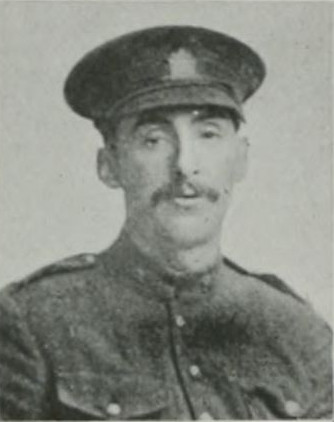
Andrew Gardiner.
GARDINER, ERNEST FREDERIC (ERIC), Private, No. 2312, Honourable Artillery Company, yr. s. of Frederic John Gardiner, J.P., co. Camb., Proprietor and Editor “Isle of Ely and Wisbech Advertiser,” by his wife, Amelia, dau. of Fredrick Charles Southwell, of Selborne House, Wisbech; b. Wisbech (Cambs), 22 April, 1892; educ. Barton School, Wisbech, and Mill Hill School, London; joined the H.A.C. after the outbreak of war, Sept. 1914, proceeded to the Front at the end of January, and was killed in action in the trenches at St. Eloi, Belgium, 20 April, 1915; unm. He was buried in the grounds of the Château d’Elzenwalle, near Ypres, on his 23rd birthday.
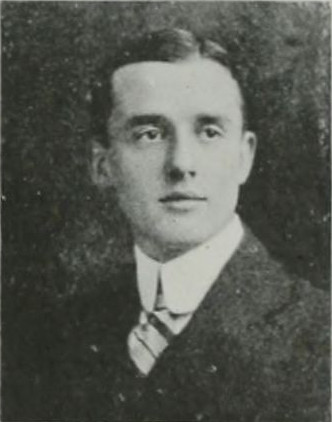
Ernest F. Gardiner.
GARDINER, FRED, Private, No. 77520, 15th Battn. (48th Highlanders), Canadian Expeditionary Force, 6th s. of the late James Gardiner, of Trowbridge, by his wife, Martha (9, Yerbury Street, Trowbridge), dau. of Charles Pitney; b. Trowbridge, co. Wilts, 25 Jan. 1886; educ. Church School there; was a G.W.R. Fireman; went to Canada in May, 1911; volunteered after the outbreak of War and joined the Canadian Expeditionary Force in Oct. 1914; came over with the 2nd Contingent on 20 Feb. 1915; trained at Shorncliffe; went to France, 2 May, and was killed in action at Festubert, 21 May, 1915; unm.
GARDINER, JOHN PHILIP, Private, No. 9312, 5th Battn. (London Rifle Brigade) The London Regt. O.F., s. of Edwin Gardiner, of 56, Alexandra Road, Hornsey, N., Warehouseman, by his wife, Edith Maria, dau. of George Lamb, of Compton, Wolverhampton; b. Esher, co. Surrey, 7 March, 1895; educ. Stationers’ School, Hornsey, and on leaving there entered the employ of Messrs. John Howell & Co., Ltd., of St. Paul’s Churchyard; joined the London Rifle Brigade, 12 Oct. 1912, and volunteered for foreign service on the outbreak of war; went to France, 4 Nov. 1914, and was killed in action at Le Gheer, 16 Feb. 1915; unm. He was buried in the Regimental Cemetery at Ploegsteert. His Capt. wrote: “He was always so plucky and cheery and a very good little soldier.”
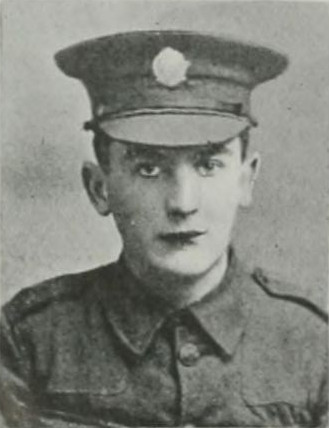
John Philip Gardiner.
GARDINER, LEWIS, Stoker, Petty Officer (R.F.R., Ch. B. 8458), 294842, H.M.S. Cressy; lost in action in the North Sea, 22 Sept. 1914.
GARDINER, PERCY HENRY, Stoker, 2nd Class, K. 22103, H.M.S. Good Hope; lost in action off Coronel, on the coast of Chili, 1 Nov. 1914.
GARDINER, WALTER ARTHUR, Private, R.M.L.I., 13308, H.M.S. Good Hope; lost in action off Coronel, on the coast of Chili, 1 Nov. 1914.
GARDNER, FREDERICK ALBERT, Private, R.M.L.I., Ch./17521, H.M.S. Cressy; lost in action in the North Sea, 22 Sept. 1914.
GARDNER, HENRY PATRICK, Chief Stoker, 276293, H.M.S. Good Hope; lost in action off Coronel, on the coast of Chili, 1 Nov. 1914.
GARDNER, JOHN, A.B. (R.F.R., B. 2431), 179552, H.M.S. Aboukir; lost in action in the North Sea, 22 Sept. 1914.
GARDNER, ROBERT MACGREGOR STEWART, Major, 1st Battn. The Gloucestershire Regt., 2nd s. of the late Francis William Gardner, of Thorpe, co. Surrey, Barrister-at-Law of the Middle Temple, by his wife, Jane, sister of General Sir Robert MacGregor Stewart, G.C.B., R.A., and dau. of John Stewart; b. Hornsey, co. Middlesex, 25 Aug. 1870; educ. Somerset College, and entered the Gloucestershire Regt. from the Militia 4 Feb. 1891, being promoted Lieut. 4 May, 1892; Capt. 24 Feb. 1900, and Major 25 July, 1914. He served with distinction through the South African War, 1899–1900, took part in the advance on, and relief of, Kimberley, and in the operations in the Orange Free State Feb. to May, 1900, including the actions at Paardeberg (17–26 Feb.), and Poplar Grove and Driefontein, and afterwards in operations in Natal, May-June, 1900. He was mentioned in despatches [London Gazette, 10 Sept. 1901], and received the Queen’s medal with four clasps. On the outbreak of the European War in Aug. 1914, Major Gardner went to France with the first Expeditionary Force, and was killed in action, at Gheluvelt, near Ypres, 31 Oct. 1914. His Colonel wrote: “We were heavily engaged on Oct. 31, and had to go to the assistance of the remainder of the Brigade. He dashed to the front with his company and was hit badly while leading them most gallantly. The previous day he also displayed the greatest bravery in penetrating to the front in making a counter-attack.” Another officer wrote of the valour and dash of his leading, adding: “He was always in front.” He m. at Clifton 25 Oct. 1910, Helen May Bridget, dau. of Charles Whitchurch Wasborough, of Clifton, and had two daus.: Stella Mary Bridget, b. 19 Nov. 1911; and Vere Daphne Stewart, b. posthumous, 11 Feb. 1915.
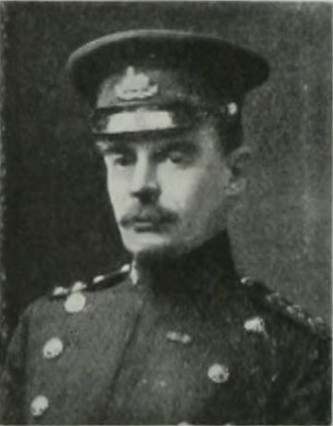
R. M. Stewart Gardner.
GARFIT, THOMAS NOEL CHENEY, Lieut., 2nd Battn. Durham L.I., 2nd s. of Thomas Cheney Garfit, of Kenwick Hall, co. Lincoln, by his 3rd wife, Gertrude Arabella, dau. of the Hon. Henry Lewis Noel, and granddau. of Charles, 1st Earl of Gainsborough; b. London, W., 9 Sept. 1891; educ. Wellington College, and Trinity College, Cambridge (B.A. June, 1914); gazetted 2nd Lieut. 3rd (Special Reserve) Battn. Durham L.I., 28 Sept. 1913; promoted Lieut. 2nd Battn., 23 Oct. 1914; went to the Front, 2 Jan. 1915, and was killed in action by a rifle grenade in the trenches near Armentières, 30 April, 1915. Buried in Houpline Military Cemetery, near Armentières; unm. His Capt. wrote: “During all the time he was in my company he did his duty splendidly and was a great favourite with the N.C.O. and men, who all miss him dreadfully.” Lieut. Garfit was very good at sports and games and played racquets for Wellington at Queen’s Club.
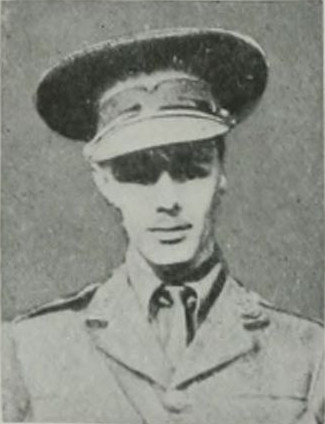
Thomas N. C. Garfit.
GARNIER, JOHN WARREN, Capt., 3rd, attd. 2nd, Battn. Queen’s Royal West Surrey Regt., 2nd s. of the late Rev. Thomas Parrey Garnier, Hon. Canon of Norwich, Rector of Cranworth, Norfolk, and fellow of All Souls’ College, Oxford [cadet of Garnier of Rookesbury, Hants], by his wife, the Hon. Louisa Warren, née Vernon, dau. of George John, 5th Lord Vernon; b. Cranworth, co. Norfolk, 2 June, 1877; educ. Haileybury College; gazetted 2nd Lieut. to the Queen’s, 16 April, 1901; served in the South African War, 1900–2, took part in the operations in Cape Colony, June, 1901, to March, 1902, receiving the Queen’s medal with three clasps, and retired with the rank of Capt. At the outbreak of the European War he rejoined his old regiment as Capt. 24 Sept. 1914, and was attd. to the 2nd Battn. for active service in Jan 1915. He went to France, 9 Jan. 1915, and died at the 1st London General Hospital, St. Gabriel’s College, Camberwell, 28 May, 1915, of wounds received in action at Festubert, 16 May; unm.
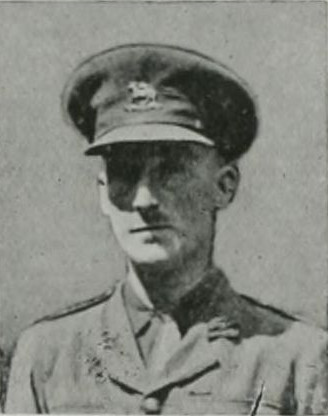
John Warren Garnier.
CARPENTER-GARNIER, JOHN TREFUSIS, Major, Scots Guards, eldest s. of John Carpenter-Garnier, of Rookesbury Park, Wickham, co. Hants, J.P., D.L., M.P. for South Devon, 1873–84; by his wife, the Hon. Mary, née Trefusis, 2nd dau. of Charles Rudolph, 19th Lord Clinton; b. Rookesbury Park afsd., 2 Feb. 1874; educ. Harrow and Christ Church, Oxford; entered the Royal Scots Militia in 1894, and was gazetted 2nd Lieut. to the Scots Guards, 26 Aug. 1896, and promoted Lieut. 13 April, 1898; Capt. 25 Oct. 1902, and Major 10 Oct. 1908, and was Adjutant 1903–05, and Regimental Adjutant 1906 to 1909. He served through the South African War, 1900–2; took part in the operations in the Orange Free State from May to Nov. 1900, including the actions at Biddulphsberg and Wittebergen, and subsequently in those in the Transvaal, and received the Queen’s medal with three clasps and the King’s with two. On the outbreak of the European War he went to France with his regt., which formed part of the first Expeditionary Force on 13 Aug. 1914; served through the retreat from Mons, and was killed in action at the Battle of the Aisne, 15 Sept. 1914; unm. He was buried at Vendresse, France.
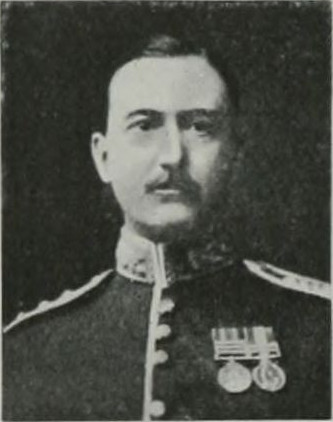
J. T. Carpenter-Garnier.
GARRETT, ALBERT ISAAC, Gunner, R.M.A., 9742 (R.F.R., I.C. 36) H.M.S. Good Hope; lost in action off Coronel, on the coast of Chili, 1 Nov. 1914.
GARRETT, WALTER GEORGE, Private, No. 4839, 2/8th Battn. Middlesex Regt. (T.F.), 3rd s. of the late Albert Garrett, by his wife, Clara (of Hambrough Terrace, Southall); b. Hayes, co. Middlesex, 3 Dec. 1884; educ. North Road School, Southall; enlisted 8 June, 1915; left England for the Dardanelles, 15 July, 1915, and died at Alexandria, 20 Dec. 1915, of pneumonia contracted while on active service; unm.
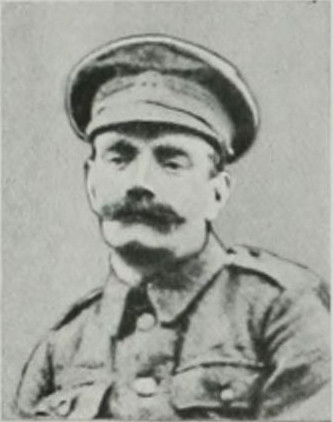
Walter George Garrett.
GARRETT, WILLIAM SYDNEY, Private, No. 1536, D Coy., 4th Battn. Suffolk Regt. (T.F.), yr. s. of William Patterson Garrett, of 192, Foxhall Road, Ipswich, Engineer’s Pattern Maker, by his wife, Elizabeth, dau. of the late Frederick Baker Goodall; b. Ipswich, 11 Nov. 1897; educ. Clifford Road Council School there, and was an Engineer’s Pattern Maker Apprentice; joined the 4th Battn. Suffolk Regt. 1914; went to France, 9 Nov. 1914; was killed in action at Givenchy, 21 Dec. following; unm. His Commanding Officer, Capt. M. F. Mason, wrote, speaking highly of him, adding that he had “been a credit to his Company and Regiment.”
GARROD, ARTHUR JAMES, Private, No. 9156, 1st Battn. Suffolk Regt., 2nd s. of William Garrod, of Bramford, Ipswich, Employee for 30 years at the Chemical Works, by his wife, Mary Anne, dau. of the late James Lay; b. Bramford, co. Suffolk, 17 Aug. 1896; educ. Voluntary School there; enlisted 10 Aug. 1914; went to France, 16 Jan. 1915, and was killed in action there, 24 April, 1915; and was buried on the Zonnebeke Road, near Ypres; unm. His brother was reported missing after the fighting on 8 May, 1915.
GARROD, CHARLES VALENTINE, A.B. (R.F.R., 9185), 200552, H.M.S. Aboukir; lost in action in the North Sea, 22 Sept. 1914.
GARROD, ROLAND PERCIVAL, 2nd Lieut., 6th Battn. (City of London Rifles) The London Regt. (T.F.), 4th and yst. s. of the late Herbert Baring Garrod, Barrister-at-Law, by his wife, Lucy Florence (13, Gainsborough Gardens, Well Walk, Hampstead), and gdsn. of Sir Alfred Baring Garrod, M.D., F.R.S.; b. West Hampstead, London, 31 May, 1895; and was educ. at Loudoun House School, St. John’s Wood, London, and Uppingham, which he entered as a scholar in 1909. He was elected to a Classical Scholarship at Clare College, Cambridge, and to the Archdeacon Johnson Exhibition at the same College, Dec. 1913. At Uppingham he had been a member of the O.T.C., and on the outbreak of War was given a commission, 26 Aug. 1914, in the 6th London Regt. He went to the Front, 16 March, 1915, and was killed in action while in charge of the machine-guns of his battn. at Festubert, France, 22 May, 1915, and buried in the English Cemetery there; unm. Lieut. Garrod was a cross-country runner of some mark in connection with Uppingham School Sports, and was also a good ’cello player and led the ’cellos in the Uppingham School Orchestra.
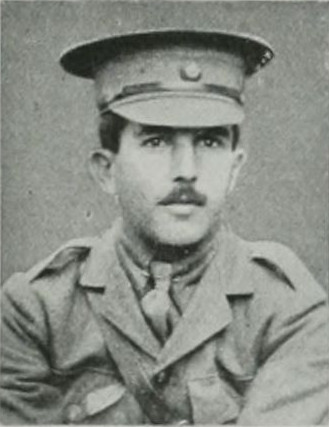
Roland Percival Garrod.
GARROWAY, ALFRED HENRY, Stoker, 1st Class (R.F.R., Ch. B. 7210), S.S. 101907, H.M.S. Cressy; lost in action in the North Sea, 22 Sept. 1914.
GARWOOD, BERTRAM, L.-Corpl., No. 10042, No. 1 Coy., 1st Battn. Coldstream Guards, s. of the late Capt. John Thomas Garwood, 22nd (The Cheshire) Regt., and his wife Ellen (1, Star and Garter Mansions, Riverside, Putney, S.W.), dau. of George Wakeling; b. Bedford, 17 June, 1892; educ. St. Augustine’s High Grade School, Kilburn; served in the Grenadier Guards, 18 Sept. 1909 to 2 Nov. 1909 (discharged “By Purchase”); the Coldstream Guards, 17 March to 3 Oct. 1910 (discharged “By Purchase”), and the Northamptonshire Regt., 27 Aug. 1911 (discharged “By Purchase”); re-enlisted in the Coldstreams, 26 March, 1913; appointed L.-Corpl. 21 Jan. 1914; went to the Front, 13 Aug. 1914, and was killed in action at Givenchy, 22 Dec. 1914; unm. Buried half a mile S.W. of Givenchy Church.
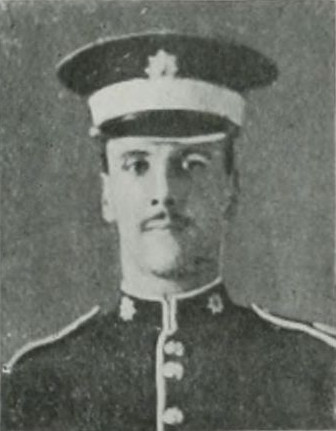
Bertram Garwood.
GATER, WALTER FREDERICK, Private, R.M.L.I., Ch. 17529, H.M.S. Cressy; lost in action in the North Sea, 22 Sept. 1914.
GATES, FREDERICK JOHN, A.B. (R.F.R., B. 4544), 202986, H.M.S. Good Hope; lost in action off Coronel, on the coast of Chili, 1 Nov. 1914.
GATES, WILLIAM, Private, No. G. 2654, 2nd Battn. East Surrey Regt., s. of Alfred Gates, of King Street, Cotton, Beds.; served with the Expeditionary Force in France, &c.; killed in action, 26 April, 1915.
GAUGHAN, JAMES, Private, No. 1794, 2nd Battn. The Royal Scots, eldest s. of James Gaughan, of 141, High Street, Dunbar, now an employee of the Dunbar Corporation, formerly Northumberland Fusiliers (who saw active service in Afghanistan), by his wife, Mary, dau. of Patrick McGuinness; b. Dunbar, 18 Nov. 1891; educ. Public School there; and was a General Labourer; joined the 3rd (Special Reserve Battn.) Royal Scots, in 1908, and on the outbreak of war transferred to the 2nd Battn.; went to the Front at end of Aug. 1914, and was killed in action at the Battle of Loos, 25 Sept. 1915; unm.
GAUNT, CECIL, Private, No. G. 10817, 3rd Battn. Royal Fusiliers, s. of Richard Gaunt, of 69, Rood Road, Walthamstow; served with the Expeditionary Force in France; killed in action, 30 July, 1915.
GAUTREY, GEORGE WILLIAM, Stoker, 1st Class (R.F.R., B. 2768), 300802, H.M.S. Good Hope; lost in action off Coronel, on the coast of Chili, 1 Nov. 1914.
GAUTREY, THOMAS ARTHUR, A.B. (R.F.R., B. 4911), 197584, H.M.S. Good Hope; lost in action off Coronel, on the coast of Chili, 1 Nov. 1914.
GAWLER, GEORGE VICTOR, Private, No. 2275, A. Coy., 4th Battn. (Royal Fusiliers) The London Regt. (T.F.), 3rd s. of George Edward Gawler (died 5 May, 1912), by his wife, Alice Mary Ann Matilda (83, Richmond Road, Barnsbury, N.), dau. of William Ingrey; b. Pentonville, 5 Jan. 1896; educ. Victoria Street Council School, Copenhagen Street, N.; was employed at the Home & Colonial Stores, Upper Street, Islington; volunteered and joined the 4th London Regt. on the outbreak of war in Aug. 1914; went to Malta and from thence to France, 23 Dec., and was killed in action at Ypres, 27 April, 1915; unm.
RATCLIFF-GAYLARD, CECIL CHARLES ALEXANDER, Private, No. 167, 2nd Battn. Head Quarters Staff, 1st Infantry Division, Australian Imperial Force, elder s. of James Ratcliff-Gaylard, of Clifton Park, Birkenhead, M.D., Hon. Assoc, of the Order of St. John of Jerusalem in England, by his wife, Jeannie, eldest dau. of Alexander Watt, of Aberdeen; b. The Ferns, Shildon, co. Durham, 17 Sept. 1889; educ. Aberdeen and Manchester Grammar Schools and King’s College, Taunton, co. Somerset; went to Australia in Sept. 1911, and when War broke out was Assistant Manager on a “Station” in New South Wales. He immediately volunteered, being one of the first 200 to enlist in New South Wales; left for Egypt, Oct. 1914; went to the Dardanelles, April, 1915, and was killed in action during the great attack by the Turks on the Australian positions north of Gaba Tepe, Gallipoli, 19 May, 1915, and was buried behind the firing line in Victoria Gully, S.E. of Shrapnel Valley; unm. Letters from his Adjutant, the Chaplain, and many comrades, all testify to his popularity, and ever-readiness to help others. One comrade wrote: “He died with that fine, soldierly, good-humoured smile on his face, which it always possessed. He was always happy, and we all loved him.” He was a keen sportsman, rode straight to hounds, and was an excellent shot. At Aberdeen he was a member of the Vol. Battn. Gordon Highlanders (Students’ Section, Aberdeen University), and was “Victor Ludorum” in his last year at school and a member of the Bisley Eight.
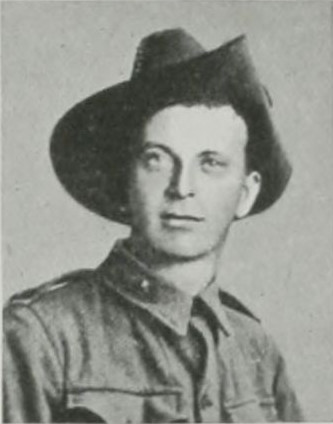
C. C. A. Ratcliff-Gaylard.
GEARD, FREDERICK JOHN PARSONS, Corpl., No. 47, Royal Flying Corps, 2nd s. of John Geard, of 45, Lascelles Road, Maxton, Dover, Stone Mason, by his wife, Amelia Emily, dau. of the late William Parsons, of Chislehurst, Kent; b. Mottingham, near Eltham, Kent, 1 Sept. 1892; educ. Herne Bay; enlisted in the Royal Engineers at Woolwich, 1 Sept. 1910, and after going through a course of training at Chatham was, in Jan. 1911, posted to the Balloon Section, R.E. at Aldershot. He then belonged to No. 1 Aeroplane Section (R.E.); was appointed Airman Rigger in Sept. 1911, and the following year transferred to the R.F.C. He was killed, while on active service, in an aeroplane accident at Peronne, France, 18 Aug. 1914; unm.
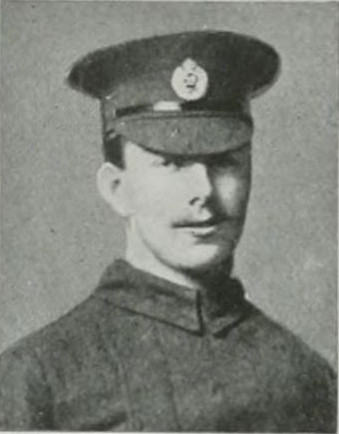
Frederick J. P. Geard.
GEARING, ALFRED, Stoker, 1st Class, 312042, H.M.S. Hogue; lost in action in the North Sea, 22 Sept. 1914.
GEDDES, AUGUSTUS DAVID, Col., 2nd Battn. (The Buffs) East Kent Regt., 3rd s. of Col. John Geddes, of 4, Suffolk Square, Cheltenham, late 44th and 76th Regts., by his wife, Madeline Mary, dau. of John Augustus Hessing; b. Dover, 6 June, 1866; educ. Cheltenham College, and Sandhurst; gazetted to the 2nd East Kent Regt. 5 Feb. 1887, promoted Lieut. 21 Nov. 1889, Capt. 25 Oct. 1895, Major, 4 April, 1903, Lieut.-Col. 7 Feb. 1911, and Col. 7 Feb. 1915, with Seniority from 15 June, 1914; was Adjutant, 16 Feb. 1898 to 8 April, 1900. He passed through the Staff College 1902 to Dec. 1903; served in the South African War, 1899–1901; was present at the actions of Klip Drift, and Paardeberg (27 Feb. 1900), where he was severely wounded, and received the Queen’s medal with three clasps. On his recovery he was Staff Officer to the base Commandant (graded D.A.A.G.) in South Africa, 9 April, 1900, to 5 Jan. 1902, and Staff-Captain, Intelligence Department at the War Office, 21 Jan. 1904 to 31 Jan. 1908, and General Staff Officer, 2nd Grade, 1 Oct. 1908 to 6 Feb. 1910. He had also passed as Interpreter in Russian. After the outbreak of the European War, he was in command of the 2nd Buffs, and went to the Front, 17 Jan. 1915, and was killed in action during the 2nd Battle of Ypres, 28 April, 1915, while in command of 4 composite battns. at St. Jean. He was mentioned in F.M. Sir (now Lord) John French’s Despatch of 31 May, 1915. He obtained a Junior Classical Scholarship at Cheltenham College, and a Senior in 1882, a Silver Medal for Classics and the Jex Blake prize for English Literature, and was Cox of his College Boat, 1881–83. He m. at All Saints’ Church, Dearne, co. Hants. 3 March, 1908, Vera Colville (residing at Oakley Hall), dau. of William Oswald Gilchrist, of Oakley Hall, Basingstoke: s.p. His two brothers, Brigadier-General John Gordon Geddes, C.B., R.A., and Lieut.-Col. George Hessing Geddes, C.B., R.A., are both (1916) on active service.
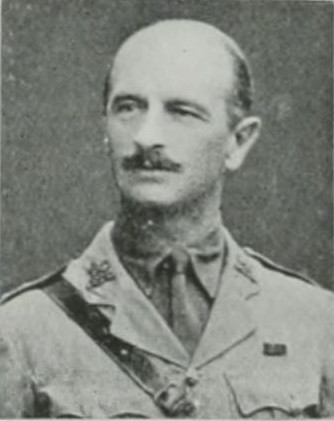
Augustus David Geddes.
GEDDES, WILLIAM, Leading Seaman (R.F.R., Ch. B. 10500), 209339, H.M.S. Cressy; lost in action in the North Sea, 22 Sept. 1914.
GEE, FREDERICK WILLIAM THOMAS, Stoker, 1st Class, K. 838, H.M.S. Hawke, s. of Charles Frederick Gee, of Mill House, Whitfield, Dover; lost when that ship was torpedoed in the North Sea, 15 Oct. 1914.
GEE, ROBERT FRANCIS McLEAN, 2nd Lieut., 3rd, attached 1st, Battn. Wiltshire Regt. (The Duke of Edinburgh’s), eldest s. of George Francis Gee, of Wellington, New Zealand, and of Te Whare, St. John’s Road, Eastbourne, by his wife, Mary Elizabeth, dau. of the late Hon. George Buckley, of Christchurch, New Zealand; granddau. of Capt. William Henry Buckley, 82nd Regt., and great-granddau. of Capt. William Buckley, Royal Scots Regt., who was killed at Quatre Bras; b. Wellington, New Zealand, 29 April, 1894; educ. at Wellington, New Zealand, and Eastbourne College, and had entered at Trinity College, Cambridge. He was in the Eastbourne College O.T.C., and having volunteered his services at the outbreak of the war, was given a commission in the 3rd Wiltshire Regt., 15 Aug. 1914. He joined on 3 Sept. 1914, and after four weeks’ training at Weymouth, was transferred to the 1st Battn. and went to France. He received his fatal wound—a sniper’s bullet in the head—a few days after his arrival at the firing line, during an attempt to capture the village of Ilies, and died at Netley Hospital, 27 Oct. 1914, being buried in Ocklynge Cemetery, Eastbourne; unm. His younger brother, Alan, is a Lieut. in the R.H.A.
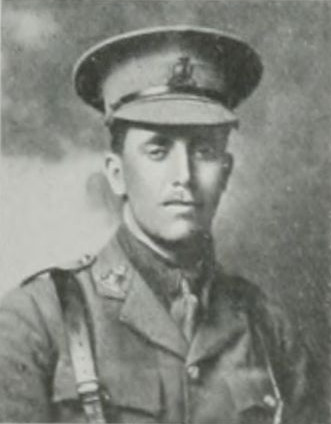
Robert F. McLean Gee.
GENERY, HUGH THOMAS WATSON, Stoker, 1st Class (R.F.R., B. 7382), S.S. 102512, H.M.S. Aboukir; lost in action in the North Sea, 22 Sept. 1914.
GENT, EDWARD, Stoker, 1st Class (R.F.R., B. 3823), S.S. 101485, H.M.S. Good Hope; lost in action off Coronel, on the coast of Chili, 1 Nov. 1914.
GEORGE, ALEC, Private, No. 21145, 7th Battn. Canadian Expeditionary Force, eldest s. of John George, of Granite House, Eversfield Place, St. Leonards-on-Sea, by his wife, Annie, dau. of Thomas Allen; b. Narborough, near Leicester, 3 Feb. 1893; educ. The Wyggeston School, Leicester; and became a Sanitary Engineer. He left for Canada 19 March, 1914, and settled at Winnipeg, but on the outbreak of war in Aug. 1914, immediately volunteered and joined the Expeditionary Force. After going through a course of training at Valcartier, he came over with the first Canadian Contingent on 15 Oct., went to the western front 27 April, and died 8 June, 1915, from wounds received in action on 6 June, 1915. He was buried at Lillers; unm. At Wyggeston, George was in the cricket XI and football XV, and afterward played both for Hendon and Golders Green, He won several medals for boxing, including one at the St. Pancras Boxing Club and one at Lark Hill—Canadians v. A.S.C.