The Roll of Honour. (continued 6)
Reading edition
BOLSTER, GEORGE EMIL, Major, R.F.A., eldest s. of the late Surg.-Major Thomas Gardiner Bolster, A.M.S., by his wife, Ludivina (44, Lebanon Park, Twickenham), dau. of the late Lieut.-Col. John Frederic Nembhard, Bengal Army; b. Dagshai, India, 21 July, 1876. His childhood was spent at the various places where his father happened to be serving—India 4½ years, Devonport 2½ years, and Halifax, N.S., 5 years, during the whole of which time his mother was his sole instructress. On returning from Canada in 1888, he was sent to Ipswich School, and in 1883 passed direct into the Royal Military Academy, Woolwich. At the final examination two years later he passed out sixth on the R.A. list, and was awarded the prize for artillery. Gazetted on 2 Nov. 1895, he was promoted Lieut. 2 Nov. 1898, Capt. 1 Sept. 1901, and Major 17 Feb. 1912. Most of his time as subaltern was spent in Northern India, where he acted for two cold seasons as Staff Officer of the late Brig.-Gen. R. Purdy, R.A. The 36th Battery, to which he was posted on promotion, came home early in 1903, and was stationed at Newbridge, Ireland, where he was at once made Adjutant of the 35th Brigade, which post he held for over three years. In 1909 he was appointed Staff Capt. R.A., 5th Division Irish Command, but vacated that appointment in 1911, on being nominated for the Staff College. On completing the course, he was posted to the 106th Battery in South Africa. Recalled to England on the outbreak of war, his battery joined the camp of the 7th Division at Lyndhurst, and with it proceeded to Belgium. They were in the advance to Ghent to support the Naval Division from Antwerp, and the Belgian Army, and shared the hardships of the subsequent retreat to Ypres. He was killed in the historic stand which the 7th Division made near that place, 23 Oct. 1914. His engagement to Coralie, elder dau. of Col. Thomas de Burgh, of Oldtown, Naas, was announced one month before his death. Lieut.-Col. D. Fasson, commanding 22nd Brigade, R.F.A., wrote: “As a battery commander, he was hard to beat, and I certainly have never met a keener soldier. His whole heart was in his work.”
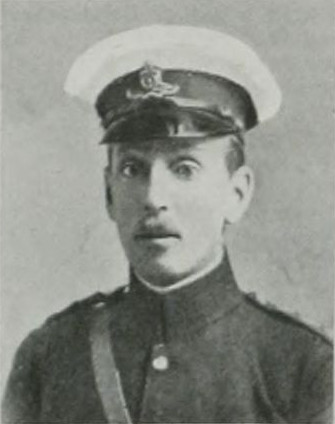
George Emil Bolster.
BOLTON, CHARLES, 1st Class Stoker (R.F.R., Ch. B. 8166), S.S. 103986, s. of William Bolton, by his wife, Louisa (Towns End, New Buckingham, near Attleboro’, Norfolk), dau. of Robert Duffield; b. Scole, 7 Oct. 1888; educ. there; joined the Navy 1906, and was lost in the North Sea when H.M.S. Cressy was torpedoed, 22 Sept. 1914; unm.
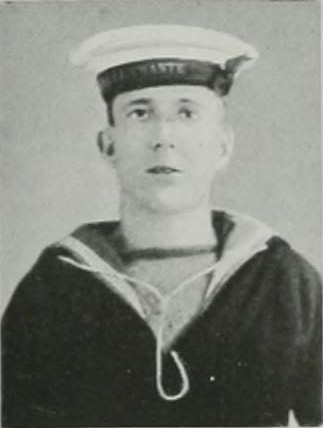
Charles Bolton.
BOLTON, ERNEST JAMES, Private, No. 10221, 3rd Battn. Coldstream Guards, s. of George Moore Bolton, of 60, East Street, Coventry; b. Warwick; served with Expeditionary Force in France, etc.; killed in action between 21 Oct. 1914 and 5 Feb. 1915; unm.
BOLTON, GEORGE, Stoker, 1st Class, K. 6944, H.M.S. Pathfinder; lost when that ship was sunk by a mine, about 20 miles off the East Coast, 5 Sept. 1914.
BOLTON, HARRY HARGREAVES, Capt., 5th Battn. East Lancashire Regt. (T.F.), eldest s. of Henry Hargreaves Bolton, of Heightside, Newchurch-in-Rossendale, co. Lancaster, J.P., Colliery Owner, by his wife, Florence Eliza, dau. of Thomas Allen, of the Manor House, Thurmaston, Leicester; b. Accrington, co. Lancaster, 9 Feb. 1886; educ. Mostyn House School, Parkgate; and at Shrewsbury School, and after being at home for a short time, gaining some knowledge of the working of collieries, he went to Wigan, and attended for two years a course of mining instruction, part of which consisted of practical work underground in the mines of the Wigan Coal and Iron Company, Ltd., afterwards returning to Accrington Collieries to gain further experience, with a view to sitting for examination for the first-class mine manager’s certificate. This he obtained in Dec. 1912. Soon after, on the retirement, through ill-health, of the late Mr. James Whittaker, he was appointed to the responsible position of agent for the Accrington Collieries of Messrs. George Hargreaves & Co., of which his father was managing partner. He joined the 5th (Territorial) Battn. of the Manchesters at Bolton in 1905, which was then the 1st Battn. Volunteers, but on his return to Accrington he transferred to the 5th Battn. of the East Lancashires, and having passed the school of instruction for qualification to the Regular service, was given his commission as Capt. 25 July, 1911. On the outbreak of war he and his brother both volunteered for foreign service, and went out with their regt. from Burnley to Egypt in Sept. 1914, and on 5 May, 1915, to the Dardanelles. He wrote home from the transport on that day, and nothing more was heard until a telegram was received to say that he had been wounded on Whit Monday, 24 May, 1915, shot in the head, and he died without gaining consciousness the same day. Capt. Bolton took a great interest in the work of the Lancashire and Cheshire Coal Owners’ Rescue station, formed for the purpose of rescuing men at underground explosions, going through the course of training instruction with the Accrington Collieries rescue team, and obtained a certificate for competency. At the time of the Hulton Colliery explosion he took a team of men over fully equipped with the necessary appliances and went underground to help in the work required after the explosion. He was also a keen supporter of the National Service League, and was Secretary for the Accrington district. Closely associated with St. Augustine’s Church and School, Huncoat, he took a boys’ class in the Sunday School there regularly up to the time of his marriage. He m. at Habergham Church, Burnley, 1 June, 1911, Helen Oliver, dau. of Alexander Drew, of Holme Lodge, Burnley, J.P., and they lived at High Brake, Accrington, and had two children: George Henry Hargreaves, b. 14 Feb. 1914; and Rhona Helen Allen, b. 2 April, 1915. Capt. Bolton’s next brother, Lieut. John Bolton, was also killed at the Dardanelles (see his notice), and his two younger brothers, Lieut. Maurice Bolton and Lieut. Geoffrey Bolton, and his brother-in-law, Lieut. Douglas Hacking, Conservative candidate for Chorley, are now (1916) on active service.
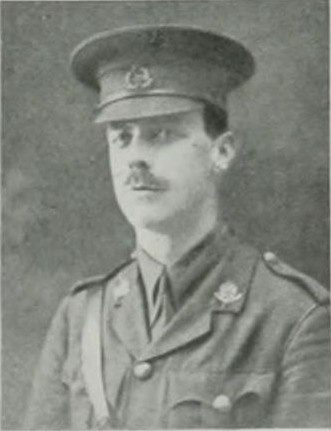
Harry Hargreaves Bolton.
BOLTON, JAMES FREDERICK, Private, R.M.L.I. (R.F.R., B. 1909), late Ch. I/12380, H.M.S. Hogue; lost in action in the North Sea, 22 Sept. 1914.
BOLTON, JOHN, Lieut., 5th Battn. East Lancashire Regt. (T.F.), 2nd s. of Henry Hargreaves Bolton, of Heightside, Newchurch-in-Rossendale, co. Lancaster, J.P., etc. (see preceding notice); b. Accrington, co. Lancaster, 6 Jan. 1889; educ. Tonbridge School, and Manchester University. On leaving the latter, where he took the three years’ mining engineering course, he was engaged at the Accrington and Rossendale Collieries, of which his father was Managing Director, and after a short time was placed in charge of the commercial department at Accrington, and was soon recognised as a capable and energetic business man. He was given a commission as 2nd Lieut. in the 5th (Territorial) Battn. of the East Lancashires, 19 June, 1913, and volunteered for Imperial service on the outbreak of war. His regt. went out to Egypt in Sept. 1914, and while there he took a special course in scouting under Gurkha officers, and was made Scout Master of the battn. He received his Lieutenant’s commission 6 May, 1915, and sailed for the Dardanelles the same day. He was killed by a shell which fell in the front line trenches, in the bombardment before the advance on Krithia, 4 June. After his death his father received from General Douglas, commanding 42nd Division, the following card of congratulation which had been sent to him, but before it reached him he had been killed: “The General Officer commanding the 42nd (East Lancs.) Division congratulates Lieut. J. Bolton, 1/5 Battn. East Lancs. Regt. on the gallant action performed by him on 12 May, 1915. Signed C. O. W. Douglas, M. Genl. Commd., 42nd Division.” The action referred to was fetching ammunition from the base under fire of the enemy, when the battn. ran short in the trenches. He was unm. and was buried at Ghurka Bluff, Gallipoli.
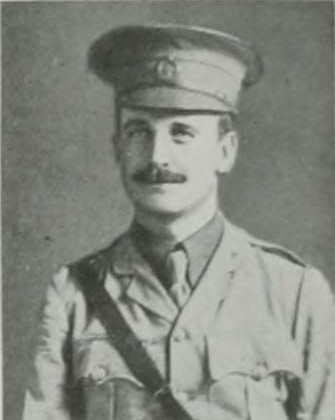
John Bolton.
BOLTON, JOHN, Private, No. 2575, 1st Battn. Coldstream Guards; b. co. Lancaster; enlisted 1 April, 1899; served in South Africa, 9 Aug. 1900 to 4 Oct. 1902 (Queen’s medal with three clasps and King’s medals with two clasps); and with the Expeditionary Force in France, etc., from 11 Sept. 1914; died in No. 4 Clearing Hospital, Braisne, 8 Oct. following, of wounds received in action; m.
BOLTON, JOSEPH CROOK, Private, No. 25689, 14th Battn. (Royal Montreal Regt.), Canadian Expeditionary Force, s. of (—) Bolton; b. Clitheroe, 3 June, 1883; educ. Royal Grammar School there; went to Canada in Oct. 1912, and was a painter; on the outbreak of war in Aug. 1914, enlisted, came over with the first contingent in Oct.; went to the Front, 10 Feb. 1915, and died 23 April, 1915, of wounds received in the great Canadian Charge at St. Julien. He was buried in Vlamertinghe Churchyard, Belgium. He m. 20 May, 1907, Emma (52, Eshton Terrace, Clitheroe, Lancs), dau. of (—) Rushton, and had two children: Frank, b. 12 May, 1910; and Marjorie Esther, b. 4 Nov. 1908.
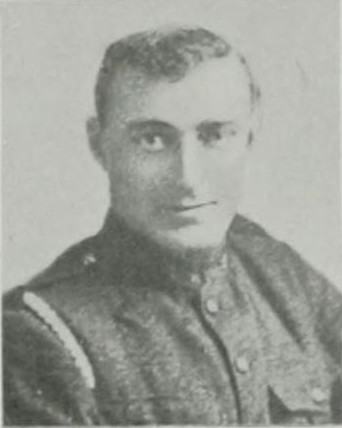
Joseph Crook Bolton.
BOLTON, WILFRED, Private, No. 260, 15th Battn. Australian Imperial Force, s. of (—) Bolton, of Normanton, Yorkshire; killed in action at the Dardanelles, 18 May, 1915.
BOLTON, WILFRID, Sub-Lieut. R.N.V.R., Collingwood Battn., R.N.D., 2nd s. of Henry Lushington Bolton, of The Sanctuary, Westminster, and The Gables, Crowborough Beacon, Sussex, Solicitor, by his wife, Chloe, dau. of James Richard Gordon; b. Porchester Terrace, London, 26 May, 1897; educ. at The Grange, Crowborough; Parkfield, Haywards Heath; Osborne and Dartmouth. On leaving Dartmouth in April, 1914, he was rejected for the Navy on account of a slight defect in sight. On the outbreak of war joined the R.N.V.R., and was killed in Gallipoli, 4 June, 1915.
BOLTON, WILLIAM, L.-Corpl., No. 15252, 2nd Battn. Royal Scots (Lothian Regt.); served with the Expeditionary Force in France, etc.; killed in action at Kemmerl, 29 May, 1915; m.
BON, ROBERT, Private, No. 2399, 2nd Battn. Royal Scots (Lothian Regt.); served with the Expeditionary Force in France, etc.; killed in action at Croix Barbée, 15 Oct., 1914.
BOND, JOSEPH, Private, No. 10752, 1st Battn. Coldstream Guards, 1st s. of Joseph Bond, of 44, Brough Street, Derby, Warder, Derby Prison, by his wife, Kate, dau. of the late Thomas Gordon, of Derby; b. Derby, 1 March, 1895; educ. St. Joseph’s R.C. School there; was for some time a Porter at the Great Northern Railway Station at Derby, and enlisted 1 June, 1914. He was sent to France 9 Oct. following, was severely wounded in the fighting around Ypres, 19 Nov. 1914, and died at No. 4 Clearing Hospital two days later. He was buried in the Military New Cemetery at Poperinghe; unm.
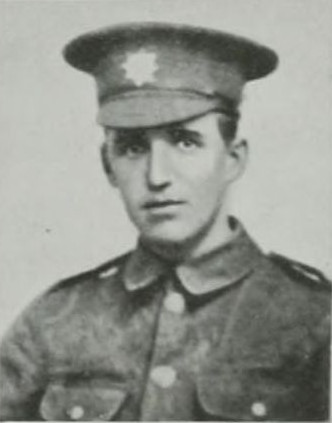
Joseph Bond.
BOND, OLIVER HUGH DEVEREUX, Sapper, No. 2074, 1/1st Kent Field Coy., R.E., only s. of the late David Bond, of Bovey Tracey, South Devon, by his wife, Harriett (Watford, near Rugby, Northamptonshire), dau. of Hugh Devereux; b. South Kensington, 4 June, 1891; educ. Long Buckby (Rugby) Council School; was a Plumber; enlisted 22 May, 1915, and went to the Dardanelles 23 Sept. 1915. He was mortally wounded by a Turkish shell when returning from a day’s work in the trenches, at Lala Baba, Suvla, 1 Dec. 1915, and died an hour later. The doctor who attended him said: “He was one of the bravest lads I have had under my notice during the war,” and his N.C.O. wrote: “He did not know what fear was.” He was buried in the Reserve Area, 2nd Mounted Division, south of Chocolate Hill; unm.
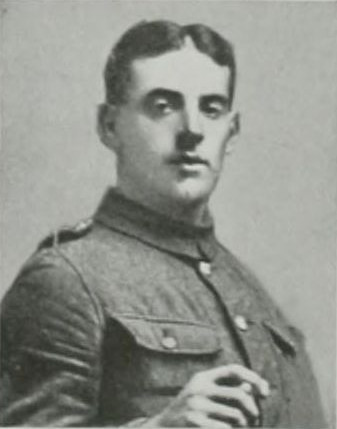
O. H. D. Bond.
BOND, SAMUEL, Stoker, 1st Class (R.F.R., B. 3693), S.S. 101259, H.M.S. Good Hope; lost in the action off Coronel, on the coast of Chili, 1 Nov. 1914.
BOND, THOMAS MORGAN, 2nd Lieut., 11th Battn. Royal Irish Rifles, late Private, No. 9973, 5th Battn. (London Rifle Brigade) The London Regt., yst. s. of Major Thomas Morgan Bond, of 37, St. James’ Square, Holland Park, W., R.A.M.C. (retired), by his wife, Martha Francis, dau. of Alexander Meiklejohn, of Greenock; b. Belfast, 12 Oct. 1896; educ. Christ’s Hospital, Horsham, Sussex; enlisted in the London Rifle Brigade on 10 Aug. 1914, five days after the declaration of war, and at once joined his battn. for training at Crowborough. He left for France on 4 Nov., served in the trenches through the winter and was killed in action at the Second Battle of Ypres, 2 May, 1915, aged 18 years and 7 months; unm. He was gazetted as 2nd Lieut. to the Royal Irish Rifles, 10 May, to rank as from 10 March, but did not live to take up his commission.
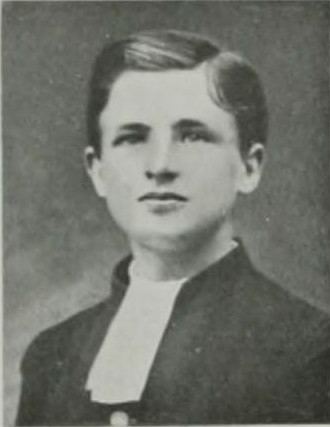
Thomas Morgan Bond.
BOND, WALTER, Stoker, 1st Class (R.F.R., B. 7905), S.S. 103590, H.M.S. Aboukir; lost in action in the North Sea, 22 Sept. 1914.
BONE, HARRY, Gunner, R.M.A., 12056, H.M.S. Hogue; lost in action in the North Sea, 22 Sept. 1914.
BONE, WILLIAM GEORGE ALFRED, Private, No. 1652, 1/4th Battn. (Royal Fusiliers) The London Regt. (T.F.), 1st s. of William George Bone, of 253, Seward Street Buildings, Goswell Road, E.C., by his wife, Ada Rose; b. St. Luke’s, London, E.C., 29 Aug. 1895; educ. L.C.C. Central School; enlisted Aug. 1913, and was killed in action in Flanders, 27 April, 1915; unm.
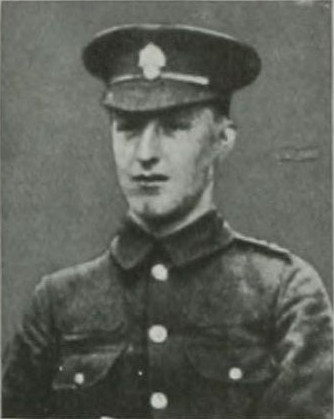
William G. A. Bone.
BONFIELD, JAMES GEORGE, Private, R.M.L.I., Ch./14967, H.M.S. Hawke; lost in action in the North Sea, 15 Oct. 1914; m.
BONIFACE, VICTOR GORDON JOHN, Leading Seaman, 204435, H.M.S. Good Hope; lost in the action off Coronel, on the coast of Chili, 1 Nov. 1914.
BONNAR, WILLIAM McGREGOR, Trooper, No. 726, 6th Australian Light Horse, 3rd s. of William Bonnar, of 51, Braid Avenue, Edinburgh, Joint General Manager, New Zealand and Australian Land Company, Ltd., by his wife, Mary Strachan Baird, dau. of John Calderwood; b. Edinburgh, 31 March, 1890; educ. George Watson’s College there, which he left in 1909, deciding to take up stock farming. After some training in Lauderdale he left Scotland for Australia, where he spent four years on a large sheep and cattle station in New South Wales. Soon after the outbreak of war he joined the Commonwealth Expeditionary Force in Dec. 1914, proceeded in March, 1915, with reinforcements of his regt. to Egypt, and two months later crossed to Gallipoli. He had volunteered for bombing work, and while engaged in this was severely wounded and died on the hospital ship Sicilia two days later, 13 June, 1915, being buried at sea three miles off Gaba Tepe; unm.
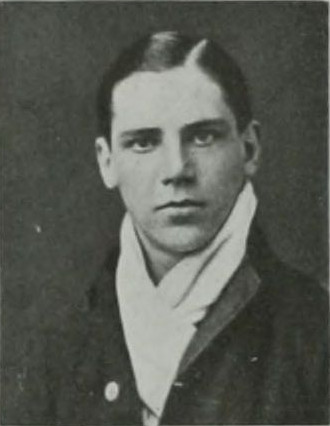
William McGregor Bonnar.
BOONE, CHARLES FREDERICK DE BOHUN, Capt., 2nd Battn. Essex Regt., eldest s. of the late Col. Frederick Browne Boone, H.E.I.C.S., by his wife, Mary Frederica, dau. of Major-Gen. Wavell, F.R.S; b. Nagode, India, 16 May, 1870; educ. Haileybury, and Oriel College, Oxford; gazetted 2nd Lieut. 13 July, 1892, and promoted Lieut. 30 Sept. 1896, and Capt. 9 Oct. 1900; was Adjutant of Volunteers from Sept. 1902 to Nov. 1906, and was afterwards attached to the staff of the Royal Military College, Sandhurst; served with the relief force in the Chitral campaign (medal with clasp), 1895; in the South African War, 1900–2, being employed with the mounted infantry; took part in operations in the Orange Free State, Transvaal (May-Oct. 1900 and again Nov. 1901–May 1902), and in Cape Colony, south of the Orange River (Jan. 1901); present at the actions at Vet River (5–6 May, 1900), the Zand River, Diamond Hill (11–12 June), Belfast (26–27 Aug.), Frederickstad (17–25 Oct.), and at Colesberg (1–29 Jan. 1901), etc. (mentioned in Despatches [London Gazette, 10 Sept. 1901], Queen’s medal with four clasps and King’s medal with two clasps); and with the Expeditionary Force in France and Flanders, Aug.-Sept. 1914; wounded at the Battle of the Marne, and died in the Lycée Pasteur, Neuilly-sur-Seine, 23 Sept. 1914; unm.
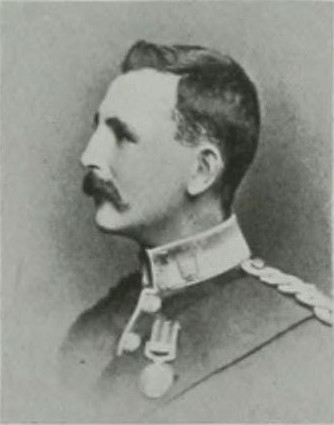
C. F. De Bohun Boone.
BOORER, WALTER JAMES, Trooper, No. 1839, West Kent Yeomanry, eldest s. of Walter George Boorer, of High Street, Cobham, Surrey, Printer and Publisher, formerly of Dorking, by his wife, Rachel, dau. of the late Samuel Butler of Tooting, Surrey; b. Dorking, co. Surrey, 15 Jan. 1897; educ. St. Martin’s National School, Dorking; volunteered and enlisted in the West Kent Yeomanry, Whit Monday, 24 May, 1915; left England for the Dardanelles in Sept., and was killed in the trenches there, 8 Nov. 1915. He was buried in his regimental cemetery in Y Ravine at Helles, Gallipoli. His Major wrote: “Your son and another man were both killed by the same shell, which came down the trench in which they were in. Death was almost instantaneous, and he could have suffered no pain. He had not been long in my squadron, but during the time he was with me he did his duty as a soldier, and displayed great courage under fire.”
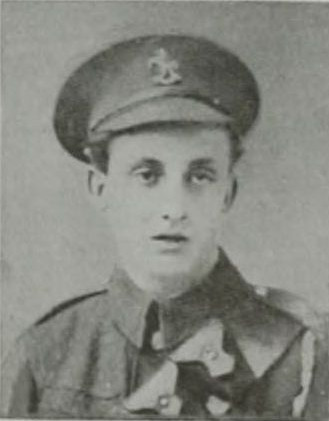
Walter James Boorer.
BOORMAN, CYRIL ADLINGTON, Trooper, No. 801, posthumous Lieut. B. Squadron West Kent Yeomanry (T.F.), only child of Frederick William Boorman, of Gravesend, Solicitor and Commissioner for Oaths; b. Gravesend, 11 Sept. 1891; educ. King’s School, Rochester, where he held a King’s Scholarship; joined the West Kent Yeomanry in 1913, and on mobilization volunteered for foreign service with them, but died at home of cerebro-spinal meningitis, contracted while in training at Westbere, near Canterbury, 3 March, 1915. He was gazetted as 2nd Lieut. R.E. 27 March, to rank as from 1 March (prior to death). Lieut. the Hon. A. R. Mills wrote: “He joined the troop with me in 1913, and was under me for two trainings and, of course, since mobilisation, and was one of my most efficient men—intelligent, keen, and a first-rate soldier, and I feel sure would have made a most excellent officer.” Mr. Boorman was in his school cricket eleven for several years and captain of the football eleven; he also held the record for the long jump at the school sports, and was a member of the Gravesend Cricket and Rowing Clubs. He had matriculated at London University and passed the A.M.I.C.E. examination.
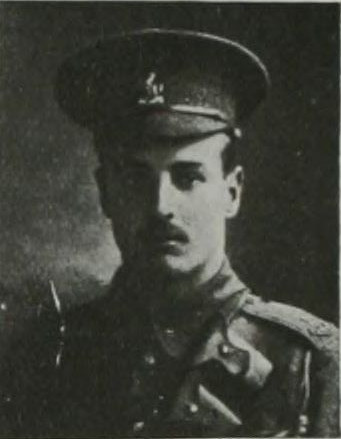
Cyril Adlington Boorman.
BOOT, ARTHUR, Private, No. 1076, 7th Battn. 2nd Infantry Brigade, Australian Imperial Force, eldest s. of George Arthur Boot, of Risley House, 1 Berridge Road East, Nottingham, by his wife, Mary Kate, dau. of Mark Spink Shaw; b. Robin Hood’s Chase, Nottingham, 29 April, 1893; educ. Grosvenor School. He joined the Nottingham Royal Horse Artillery (T.F.) as a driver (No. 328), 27 June, 1911, and obtained his discharge 30 Sept. 1913, after which he went to Australia. On the outbreak of war, he enlisted in the 7th Battn. of the Commonwealth Expeditionary Force, left with his battn. for the Dardanelles, was dangerously wounded in the head in action there, 9 May, 1915, and died on board the hospital ship Nevasa on the 27th of that month; unm. He was buried at sea. His two brothers are now (1916) on active service, the elder, Leonard, with the Red Cross in France; the yr., George Harold, as Lieut. in the 15th Sherwood Foresters in France.
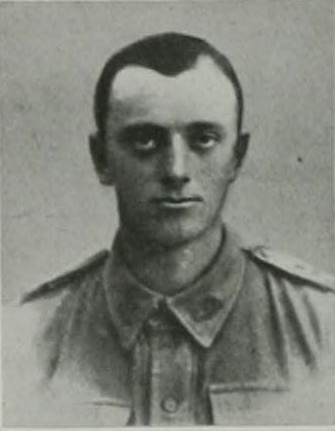
Arthur Boot.
BOOTH, GEORGE THOMAS, Boy, 1st Class, J. 24708 (Ports.), H.M.S. Hawke; lost in action in the North Sea, 15 Oct. 1914.
BOOTH, JOHN, Stoker, 1st Class, K. 10630 (Ports.), H.M.S. Hogue; lost in action in the North Sea, 22 Sept. 1914.
BOOTH, ROLAND HARTLEY, Boy, 1st Class, J. 24104 (Ports.), H.M.S. Hawke, s. of Arthur Newsome Booth, of 177, Newsome Road, Huddersfield, co. York; lost in action in the North Sea, 15 Oct. 1914.
BOOTH, THOMAS, Private, No. 21338, 4th Battn. Canadian Expeditionary Force, s. of Thomas Henry Booth, of 46, Ball Haye Road, Leek, Leather Merchant, by his wife, Emily, dau. of Thomas Bamford, of Stafford; b. Leek, co. Stafford, 24 Feb. 1877; educ. Leek Grammar School; was for some time manager of his father’s leather warehouse; joined the 2nd Manchester Volunteers in 1896, and the 1st Coy. North Staffordshire Volunteers in 1900, and served with them until their disbandment on the organisation of the Territorial Force in 1907; went to Canada in June, 1912, and was in the employ of the Hudson Bay Co., at Winnipeg; volunteered and joined the Canadian Expeditionary Force on the outbreak of war; came over with the first contingent, Oct. 1914; trained on Salisbury Plain during the winter; went to France, 31 March, 1915; was shot by a sniper while being relieved from the trenches at Ploegsteert, 2 Sept., and died of wounds in the Northern General Hospital, Leicester, on the 30th of that month. Buried in the family vault at Leek; unm.
BOOTH, TOM, Stoker, 1st Class, K. 9662, H.M.S. Good Hope; lost in the action off Coronel, on the coast of Chili, 1 Nov. 1914.
BOOTHAWAY, ARTHUR, Private, No. 9127, 2nd Battn. Coldstream Guards, only s. of Alonzo Boothaway, of Central Avenue, Wigston Magna, co. Leicester. Hosiery Framework Knitter, by his wife, Maria, dau. of William Vann; b. Wigston Magna, 4 Jan. 1892; educ. Board School there; enlisted 28 May, 1911, and at the time of the outbreak of war was serving as a valet at King Edward VII Hospital, Grosvenor Gardens, W. He went through the retreat from Mons, was wounded on 7 Nov. 1914, but recovered and returned to the trenches on 24 Dec., and was killed in action near Festubert, 3 Jan. 1915, while being relieved from the trenches. He was buried in the soldiers’ cemetery, Rue du Bois, Bethune (Richebourg Road, Row B, Grave 17); unm.
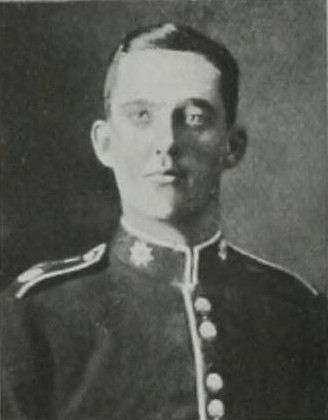
Arthur Boothaway.
BOOTHBY, JAMES ROBERT, Lieut.-Commander R.N.V.R., No. 4 Squadron Armoured Cars, formerly Lieut., Royal Scots, 2nd s. of the late Alexander Cunningham Boothby, of St. Andrews, by his wife, Madeline (now wife of Alexander Rigaud Wilson Wood, of 7, Abbotsford Crescent, St. Andrews), dau. of Frederick Lewis Maitland Heriot, of Ramornie, co. Fife; b. Springfield House, Cupar, Fife, 17 Jan. 1883; educ. St. Salvators, St. Andrews, and Glenalmond College, Perthshire. In May, 1900, he joined the Fife Artillery Militia. He served in the 24th Battn. Imperial Yeomanry during the South African War, receiving medal with five clasps. He rejoined the Fife Artillery in 1903 and was subsequently appointed to the Royal Scots and served in India. When the regt. came home he resigned owing to temporary ill-health and went to Vancouver. On the outbreak of war he returned to England and obtained a commission in the Armoured Car Division. He was killed in action on 1 May, 1915, at Gallipoli, the day after landing at Gaba Tepe. His commanding officer wrote: “I can only say this, that every officer and man in the Armoured Car Force simply loved Jim Boothby. I never want a more loyal, good-hearted and good-natured second in command than he was. His own men saw that he had, what perhaps few out there got, a proper burial.” He was unm.
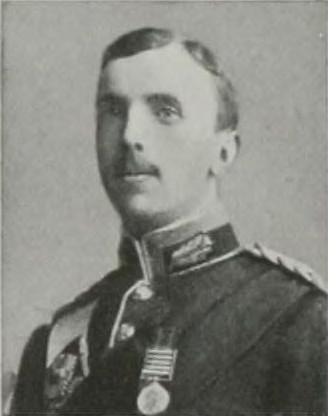
James Robert Boothby.
BOREHAM, CHARLES WILLIAM, Stoker, 1st class (R.F.R., B. 4450), S.S. 103462, H.M.S. Good Hope; lost in the action off Coronel, on the coast of Chili, 1 Nov. 1914.
BOSANQUET, LIONEL ARTHUR, of Cleddon Hall, co. Monmouth, Lieut.-Col., 9th Battn. The Sherwood Foresters (Notts, and Derby Regt.), eldest s. of the late Arthur Bosanquet, of Cleddon Hall, J.P., I.C.S., Judge, Bombay Presidency, by his wife, Matilda, dau. of Col. Andrew Crawford, and grandson of Augustus Henry Bosanquet, of Ossidge, Southgate, H.E.I.C.S.; b. Southgate, co. Herts., 29 Jan. 1862; educ. Mr. Rose’s private school, Ramsgate, and Harrow; and the Royal Military College, Sandhurst; gazetted Lieut. to the Sherwood Foresters, 10 March, 1883, and promoted Capt. 8 May, 1892, and Major 9 May, 1903. He served in the Tirah Campaign 1897–8, took part in the operations in the Bazar Valley (25–30 Dec. 1897), the action at Dargai, and in the capture of the Sampagha and Arhanga Passes, receiving the medal with two clasps; and retired in 1911. On the outbreak of war he rejoined and was given command of the 9th (Service) Battn. of his regt., 26 Oct., 1914. He went out to the Dardanelles and was in action from the 23 July to 22 Aug. 1915. He was wounded on 9 Aug. but rejoined in a week and was killed in action 22 Aug. 1915. Col. Bosanquet was killed (believed by machine guns) in Dead Man’s Gully, while leading his battn. To quote from a General’s letter, whose brigade found and buried his body: “He must have done well, for he was close up to the enemy, ahead of most of his men, who were stretched out behind him, never a one with his back turned, and all in perfect alignment.” He was mentioned in Sir Ian Hamilton’s Despatch of 11 Dec. 1915 [and published in the Supplement to the London Gazette dated 28 Jan. 1916], for gallant and distinguished service in the field. Col. Bosanquet m. at Crockham Hill, Kent, 31 Aug. 1892, Alice Emily (7, Springfield Place, Bath), 2nd dau. of the Rev. John Erskine Campbell-Colquhoun, of Killermont and Garscaddon, co. Dumbarton, M.A., J.P., D.L., formerly Vicar of Southwold and Crockham Hill, and granddaughter of the late John Campbell-Colquhoun, of Killermont and Garscaddon, by his wife, the Hon. Henrietta Maria, née Powys, dau. of Thomas, 2nd Lord Lilford, and had issue: Cicely Alice Colquhoun, b. 25 Nov. 1893; and Eveline Louise Emmeline, b. 11 Jan. 1899.
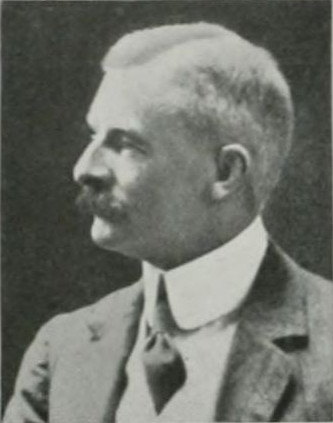
Lionel A. Bosanquet.
BOSANQUET, SIDNEY COURTHOPE, 2nd Lieut., 5th Battn. The Middlesex Regt., elder s. of Charles John Bosanquet, of Stokesay, Kidbrook Park, Blackheath, Electrical Engineer, by his wife, Edith, elder dau. of the Rev. John Lloyd, of Llanvapley, co. Monmouth, and grandson of the late Rev. Edward Stanley Bosanquet, Rector of Bolingbroke, co. Lincoln, and great nephew of the late Samuel Richard Bosanquet, of Forest House and Dingeston Court, co. Monmouth, J.P., D.L.; b. Belvedere, co. Kent, 15 July, 1894; educ. St. Lawrence’s College, Ramsgate; received his commission 1 Sept. 1914, and was killed in action at Houplines, near Armentières, 16 Dec. 1914; unm.
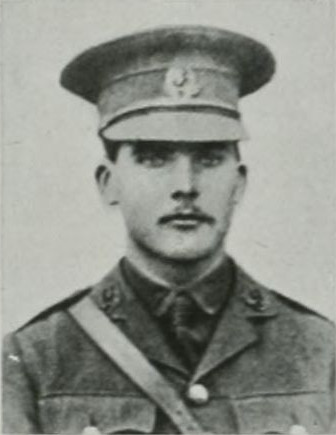
Sidney Courthope Bosanquet.
BOSEMAN, JOHN, Private, No. 631, 1st Light Horse, Australian Imperial Force; a native of co. Armagh, Ireland; volunteered on the outbreak of war; killed in action at the Dardanelles, 7 Aug. 1915.
BOSHER, CHARLES WALTER, Corpl., No. 2446, 1/7th Battn. The London Regt. (T.F.), only s. of Walter John Bosher, of 8, High Street, Egham, by his wife, Winifred Birkett, dau. of Henry Channing; b. Egham, co. Surrey, 2 Sept. 1884: educ. at Cranleigh School, Surrey; was in business with father as a corn and coal merchant; joined the 1/7th City of London Regt. early in Sept. 1914, and after training at Watford during the winter, went to the Front, 17 March, 1915. He came safely through the Battle of Loos (25 Sept.), and was killed in action three weeks later at Hulluch, 19 Oct. 1915, by the explosion of a trench mortar; unm. His cousin, Corpl. R. F. Bosher, who joined the Colours the same day was killed by the same explosion (see following notice).
BOSHER, RONALD FREDERICK, Corpl., No. 2449, 1/7th Battn. The London Regt. (T.F.), s. of Ellington Bosher, of Lewes, Sussex, by his wife, Alice, dau. of Arthur Garratt; b. Lewes, co. Sussex, 24 March, 1893; educ. at Lewes Grammar School; was a farmer’s assistant; joined the 7th City of London Regt. early in Sept. 1914, and after training at Watford during the winter, went to the Front, 17 March, 1915. He came safely through the Battle of Loos (25 Sept.), and was killed in action at Hulluch, 19 Oct. 1915; unm. His cousin, Corpl. C. Bosher, who joined the Colours the same day, was killed at the same time (see previous notice).
BOSWELL, BENJAMIN, Private, No. 5784, 1st Battn. Coldstream Guards, s. of Benjamin Boswell, Blacksmith; b. Small Heath, Birmingham, 25 Dec. 1886; educ. Ada Street Council School there; enlisted in the Royal Warwickshire Regt., purchasing his discharge from it in 1902. On 4 Oct. 1903, he joined the Coldstream Guards, and died of wounds received in action at the Battle of the Aisne, 15 Sept. 1914. He m. at Christ Church, Sparkbrook, Birmingham, 16 April, 1911, Lily, dau. of William Herrick, of Small Heath; s.p.
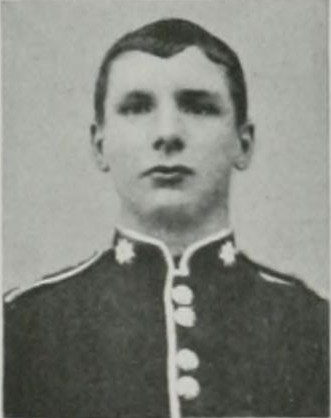
Benjamin Boswell.
BOSWELL, JOSEPH NORMAN, Boy, 1st Class (Dev.), J. 29552, H.M.S. Formidable; lost when that ship was torpedoed and sunk in the English Channel, 1 Jan., 1915.
GARNETT-BOTFIELD, ALFRED CLULOW FITZGERALD, Lieut., 1st Battn. South Wales Borderers, yr. s. of the late William Egerton Garnett-Botfield, of Decker Hill, and The Hut, Bishop’s Castle, co. Salop, J.P., F.G.S., by his wife, Elizabeth Clulow (Decker Hill, Shifnal, etc.), dau. of John Howard-McLean, of Aston Hall, co. Salop, and gdson. of the late Rev. William Bishton Garnett-Botfield, of Decker Hill, co. Salop, and Haughton Hall, co. Chester, M.A., J.P.; b. Bishop’s Castle, 16 June, 1892; educ. Eton (Mr. Churchill’s House), and Trinity College, Cambridge, and was up at Cambridge for the Long Vacation when war was declared. He volunteered the same day, and was given a commission in the Rifle Brigade, 15 Aug. 1914. After a course of training at Sheerness he was sent to the Western Front in Nov., and on arrival there was attached to the South Wales Borderers, and was subsequently (22 Jan. 1915) transferred to that regt. He served through the fighting at Festubert, Givenchy, La Bassée and Neuve Chapelle, where he several times had his clothes pierced with bullets but escaped unwounded, and was killed in action at Richebourg L’Avoué, 9 May, 1915; unm., and was buried there. He had been promoted Lieut. in March. Writing to his mother, his company officer, Capt. A. C. Lloyd, said: “Your very gallant son fell in action on the 9th (Sunday). His platoon was ordered out to an advanced trench under protection of our artillery fire. The order was given to advance from there, and though heavy maxim gun fire was coming from the German lines, he at once and without any hesitation gave the command, ‘Prepare to advance.’ I was myself hit and just saw him leap out of the trench, only to fall at once instantaneously killed. I have recommended him for his gallant conduct, and only hope that an official recognition of his qualities as a soldier will receive due mention.... A more efficient subaltern than your son could not be found, always ready for any work however hazardous, and always most cheerful. The men all loved him, and would have followed him anywhere, as they always knew he could lead them.” And his commanding officer, Major A. I. Reddie, wrote: “On the 9th an assault in the early morning had been attempted on the enemy’s trenches. This was unsuccessful, so another was made in the afternoon, when our battn. were detailed to carry it out in one part of the line. Your son’s platoon during the artillery bombardment had to crawl along an old trench in front of the breastwork in order to get nearer the enemy’s lines. This they had to do under heavy fire, but succeeded so far. When the time came for the assault your son jumped up to lead his men, and was shot at once before he got any distance. Several attempts were made at night to recover his body, but owing to the enemy’s fire it was found impossible to do so before we were relieved at midnight; but it is still hoped to do so, and we had arranged to bury all the officers in an orchard near a place called ‘Windy Corner.’” His body was afterwards recovered and “buried on the 10th in the evening by being carried across our trench on one of the bridges used for the ditch ... about 300 yards on the left of the cinder track. The ditch between our line and the German line is the most permanent guide. This ditch, about 4 feet deep and 16 feet wide, runs parallel to our line, then at right angles to this into the German. The spot would be about 250 yards to our left of this junction and 40 yards from this point back in the direction of the Rue du Bois.” At Cambridge he was in the first Third Trinity boat. He stroked the winning University Trial Eight two years in succession, and with Mr. A. Drewe won the Foster-Fairbairn Pairs in the record time of 8 min. 35½ secs. He was also a keen tennis and hockey player. He was intensely musical, much of his spare time being spent at the organ. He was a member of Third Trinity, Leander and Viking Rowing Clubs, and but for the war would more than possibly have stroked the University boat in 1915. One who knew him very intimately at Cambridge as an engineering student wrote to his mother of him: “Your son was one of the best types produced by Eton and Trinity College, Cambridge, a type we can very ill afford to lose.... He was much honoured, respected ... and loved by all oarsmen, and many hoped he might in his last year have obtained the coveted ‘Blue.’ As engineer he displayed a great ability in practical things and a thorough understanding of machines and men. An untimely end through his fearless bravery has robbed us of one of the very finest of the coming generation.”
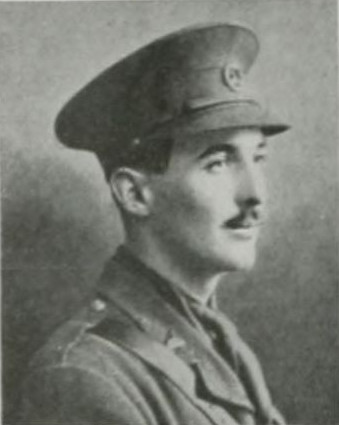
A. C. F. Garnett-Botfield.
GARNETT-BOTFIELD, CHARLES SIDNEY, Capt., Bedfordshire Regt., elder s. of the Rev. Charles Ramsey Garnett-Botfield, M.A., Vicar of Moreton, Oswestry, co. Salop, by his wife, Ida Mary, dau. of Thomas Aldersey of Aldersey, co. Chester, and gdson. of the Rev. William Bishton Garnett-Botfield, of Decker Hill, co. Salop, and Haughton Hall, co. Chester, M.A., J.P.; b. Rochdale, 5 Oct. 1887; educ. Rossall and Royal Military College, Sandhurst; gazetted 2nd Lieut. Bedfordshire Regt. 8 Feb. 1908, and promoted Lieut. 5 March, 1910, and Capt. 2nd Battn. 15 Sept. 1914. He died at Boulogne, 14 Dec. 1914, from wounds received in action at Ypres, 30 Oct. 1914, and was buried at Moreton; unm. Capt. Garnett-Botfield was mentioned in F.M. Sir John French’s Despatch of 14 Jan. 1915, for gallant and distinguished conduct in the field.
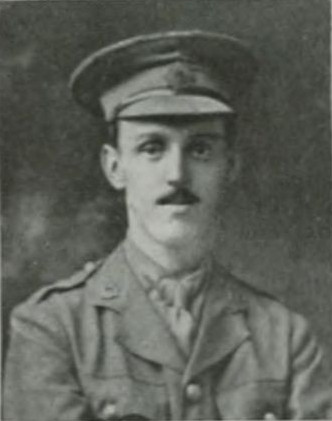
Charles Sidney Garnett-Botfield.
BOTHWELL, WILLIAM, Private, No. 18312, 13th (Service) Battn. Royal Scots (Lothian Regt.), s. of William Bothwell, of 10, Bogside Place, Easter House, Lanarkshire; served with the Expeditionary Force in France; died in the Canadian General Hospital, Camiers, 4 Oct. 1915.
BOTLEY, ALBERT WICKSTEAD, A.B., Ch. J. 10692, H.M.S. Formidable; lost when that ship was torpedoed in the English Channel, 1 Jan. 1915.
BOTTGER, ABBIN ERNEST HENRY, Private, No. 7774, 1st Battn. Highland Light Infantry; served with the Expeditionary Force in France, etc.; killed in action at Neuve Chapelle, between 11–18 March, 1915.
BOTTING, EDWARD CHARLES, Private, No. G. 915, 6th (Service) Battn. East Kent Regt., s. of John Botting, of 12, Wheatley Terrace, Erith, Kent; b. Battersea, S.W., 20 July, 1893; enlisted 4 Sept. 1914; served with the Expeditionary Force in France, etc.; killed in action, 13 Oct., 1915.
BOTTING, GEORGE, Private, No. G. 71, 7th (Service) Battn. East Surrey Regt., s. of Joseph Botting, of Cowdry Cottage, Midhurst, Sussex; served with the Expeditionary Force in France, etc.; killed in action, 8 Oct. 1915.
BOTTOMLEY, ALBERT, Private, No. 2010, 4th Battn. Manchester Regt.; was employed at Messrs. Platt Brothers & Co.’s Works, Oldham; enlisted early in 1914; served with the Expeditionary Force in France, etc.; killed in action at Neuve Chapelle, 14 March, 1915, aged 25.
BOTTOMLEY, THOMAS REGINALD, B.A., Lieut., 1st Battn. East Yorkshire Regt., eldest s. of Thomas Bottomley, of 25, Norman Road Thornton Heath, co. Surrey, formerly of Ripponden, Halifax, by his wife, Ellen, eldest dau. of the late Peter Whiteley, of Liverpool; b. Ripponden, co. York, 17 Oct. 1887; educ. Rishworth Grammar School, and St. John’s Training College, Battersea, and from the latter was appointed as a teacher by the Croydon Educational Committee in 1909. He was connected mainly with the Oval Road Boys’ School, and with his boys he was a great favourite and an intimate friend, joining in all their sports and gaining their confidence in every way. As an internal student of London University he graduated Bachelor of Arts in 1913 and had intended to take the Honours Degree examination in 1915. It was while at London University that he entered the Officers’ Training Corps, in which he spent three years until April, 1914, when he accepted a commission as 2nd Lieut. in the 1st East Yorkshires. He entered barracks in June, left for the Front the beginning of Sept. a few days after his marriage, and was killed in action at the Battle of the Aisne, 23 Sept. 1914. He was elected to membership of the South London Harriers in 1911, and was known mostly to the cross-country members, having been a regular attendant at headquarters. He avoided racing not being keen on it, nevertheless he finished 26th in the match against the Ranelagh Harriers in 1912. He m. at Cambridge, 29 Aug. 1914, Eveline Mary, only dau. of William Henry Gibson, of The Hollins, Sowerby Bridge; s.p.
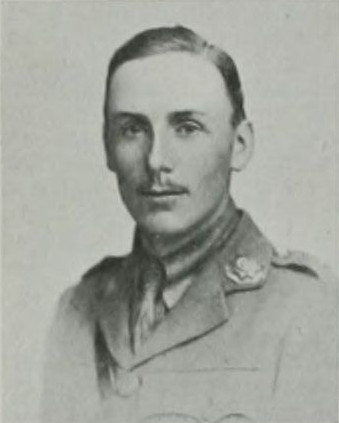
Thomas R. Bottomley.
BOUCHER, HAROLD ERNEST, Private, No. 7065, 3rd Battn. Coldstream Guards, s. of the late Arthur Boucher, by his wife, Helena, dau. of James Whitehouse; b. Birmingham, 17 Aug. 1886; enlisted in 1st Battn. 28 Dec. 1906, and exchanged into the 3rd Battn. when he went to Egypt, serving seven years with the colours. On the outbreak of war he was called up from the Reserve, and died at Viviers, Landrecies, 2 Sept. 1914, of wounds received in action. He m. at Windsor, 4 Dec. 1912, Gertrude Annie (4, Park View, Winson Street, Dudley Road, Birmingham), dau. of George Hawkins, and had two children: Frances Annetta Gregson, b. 11 Oct. 1913; and Kathleen Gertrude Magdalen, b. (posthumous) 27 April, 1915.
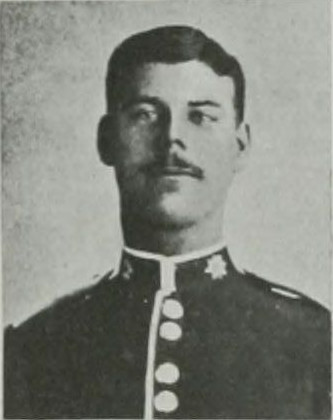
Harold Ernest Boucher.
BOUGHTON, ERNEST GEORGE, Rifleman, No. 3226, No. 2 Platoon, 1/17th Battn. (Poplar and Stepney Rifles) The London Regt., 3rd s. of Horace John Boughton, of 15, Auckland Road, Bow, E., by his wife, Ann, dau. of George Parrot; b. Bow, London, E., 22 May, 1896; educ. Chisenhale Road Council School; was a Shop Assistant; enlisted 11 Sept. 1914; went to France, 9 March, 1915, and died in hospital at Bethune, 15 May, 1915, of wounds received in action at La Bassée the previous day; unm. Buried in Bethune Cemetery. His Platoon Officer, Lieut. W. A. Piercey, wrote: “He was wounded to-day. He was struck twice by a German sniper while out of the trench under my orders. Rifleman Gowers, who was with him, acted in a very cool and soldierly way in assisting his comrade under fire, and your son bore up most bravely under the pain and discomfort inevitable in being brought in under such circumstances. We have every reason to be proud of them both.”
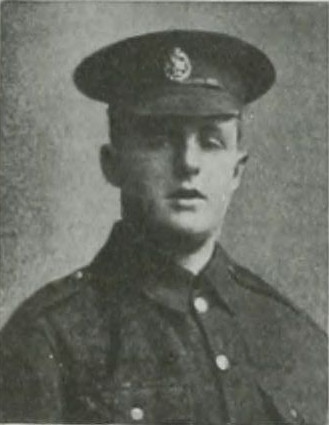
Ernest George Boughton.
BOULDEN, REUBEN WILLIAM HENRY, Leading Seaman, 237607, H.M.S. Aboukir; lost in action in the North Sea, 22 Sept. 1914.
BOULOGNE, JORDAN, Stoker (Native), H.M.S. Good Hope; lost in the action off Coronel, on the coast of Chili, 1 Nov. 1914.
BOULT, THOMAS, Corpl., No. 1639, Princess Patricia’s Canadian Light Infantry; a native of Seaham Harbour, Durham; went to Canada from West Hartlepool about 1910; volunteered on the outbreak of war and joined Princess Patricia’s Light Infantry; was severely wounded at Ypres, where he had a leg shot off, and died in hospital at Boulogne, 15 May, 1915. Three of his brothers are on service, two in the Army and one in the Navy.
BOULTON, JAMES FORSTER, Midshipman, R.N., H.M.S. Monmouth, yr. s. of Alexander Claude Forster Boulton, of 28, Ranelagh Avenue, Barnes, J.P., Barrister-at-Law, Inner Temple, formerly M.P., North Hunts, by his wife, Florence Marion, dau. of Henry Harmes; b. Putney, 3 April, 1899; educ. Willington School, Putney, and the Osborne and Dartmouth Royal Naval Colleges. He was appointed to H.M.S. Monmouth on the outbreak of war, as a Naval Cadet, and was advanced to the rank of Midshipman only a few days before he was lost in the sinking of H.M.S. Monmouth, while in action off the coast of Chili, 1 Nov. 1914. Entering Willington School as its youngest boy in May, 1905, he left it as head boy at Christmas, 1911, after being head of Form V and prize-winner the previous July. Having entered Osborne Royal Naval College in Jan. 1912, he was second of his year at Easter and first of his year at Midsummer. He was top in bookwork in the Christmas term, and third in the final order for the year. He played for the Soccer XI in various “forward” positions. In the following year he won the fly-weight boxing, and passed out second of the 70 Cadets of his “year.” In Jan., 1914, he entered Dartmouth College, where he was also first in bookwork in his first term. His aggregate position at both colleges was generally second—a highly creditable record when one remembers the number of Cadets.
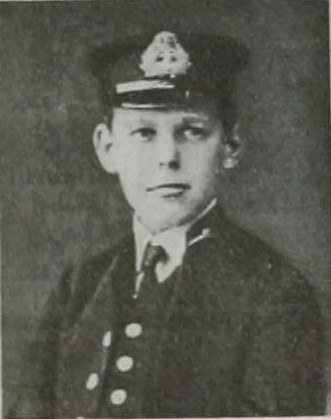
James Forster Boulton.
BOURGES, JOHN (JEAN), Private, No. 67214, 25th Battn. Canadian Expeditionary Force, s. of Gabriel Bourges, of Cancale, Ille et Vilaine, France; b. Cancale, 3 May, 1890; educ. there, and left France on a French fishing vessel in 1904 for Canada, and on account of ill-treatment remained there and worked as a sailor, and never returned to France until he came with the Canadian Expeditionary Force. On the outbreak of war in Aug. 1914, he at once volunteered, crossed to France in Sept., and was killed in action 27 Dec. 1915, by the bursting of a shell in his trench; unm. He was buried in the cemetery of the 25th Battn. by the Rev. Father Doyen, of the 5th Brigade.
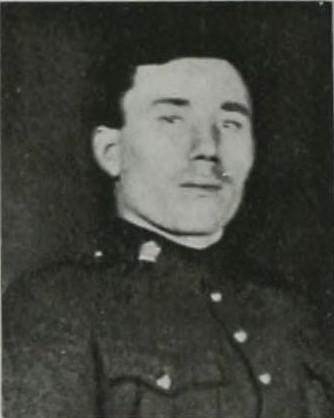
John (Jean) Bourges.
BOURKE, BERTRAM WALTER, Capt., 5th, attd. 2nd, Battn. Royal Dublin Fusiliers, only surviving s. of the late Major William Henry Bourke, of Heathfield, Ballina, co. Mayo, Connaught Rangers, by his wife, Sarah Louisa, dau. of James John Young; b. 9 Dec. 1882; educ. in Saint Servant, France; served with the Royal Engineers (Militia) from which he exchanged into the 5th Battn. Royal Dublin Fusiliers in 1904; passed the school of instruction for employment with the Regular Forces, and obtained the rank of Capt. 24 Feb. 1912. He left for the Front on 2 May, 1915, was attached to the 2nd Battn. Royal Dublin Fusiliers, and was killed in action while gallantly leading his men near Ypres, just a week later, 9 May, 1915. Capt. Bourke m. at Stapletown, Carlow, 19 April, 1913, Eileen, dau. of George Neville Usher, of Carlow, and had two daus.: Vivienne Neville, b. 29 Jan. 1914; and Patricia Bertram, b. 4 Nov. 1915.
BOURKE, EUSTACE GEORGE WALTER, Capt. and Adjutant, 1st Battn. King’s Royal Rifle Corps, eldest s. of Walter Longley Bourke, of Monycrower, Maidenhead, late Major, Duke of Lancaster’s Own Imperial Yeomanry, by his wife, Ethel Kathleen Jane, only dau. of the late Capt. John W... Freeman, of Rockfield, co. Hereford, 16th Regt., and grandson of Rev. the Hon. George Wingfield Bourke, M.A., [4th s. of Robert, 5th Earl of Mayo]; b. 24 June, 1888; educ. at Mr. Arnold’s School at Wixenford, Uppingham and Sandhurst, and received his commission as 2nd Lieut. in the 1st Battn. King’s Royal Rifle Corps, 6 Feb. 1909, becoming Lieut. 20 Aug. 1912, and Capt. 18 May, 1915. For some time he was A.D.C. to the Lord-Lieutenant of Ireland, and was appointed A.D.C. to the Governor-General of South Africa, but was unable to proceed with Lord Buxton to take up the appointment on account of the outbreak of the war. He went out to the Front on 12 Aug. 1914, being in command of the machine-gun section of his battn. He was with his battn. during the retreat from Mons and on the Aisne. Near Ypres, on 26 Oct., he received a bullet wound in the foot, and was sent home. Subsequently he was appointed Adjutant of the 6th (Reserve) battn. of his regt., which appointment he might have retained until the end of the war but for his own determination to go again to the Front. Early in May he was transferred as Adjutant to the 9th Battn., and on the 20th of that month he again proceeded to the Front. “20 May. Just off,” he wrote. “We shall be in France before you get this. I can’t understand myself. I expected when the time came I should be sorry to go. However, I slept like a top last night, no worries, so far no fears. Everything seems to me to be quite all in the day’s work. It’s odd when you think of it.” He was promoted Capt. on 18 May, though not gazetted until a few weeks later. Capt. Bourke was killed in the first action in which the 9th battn. was engaged, and within half a mile of the spot where he was wounded in October. The battn. was ordered forward and marched up a railway cutting in full view of a German observation balloon. Within a few minutes they were being heavily shelled, and one burst close to Capt. Bourke and his servant (Rifleman S. Chater), who were together; the latter was blown into the air, but neither was injured. Capt. Bourke turned back to see if his man was hurt, and they then made for some small dug-outs in the side of the cutting. Before they could take cover, however, another shell fell close to them, and Capt. Bourke was badly hit. Chater again escaped unhurt, though he afterwards suffered so severely from shock that he had to be invalided home. Chater ran off under heavy fire to fetch a doctor, and succeeded in bringing one back in a very few minutes, but only to find that Capt. Bourke was already dead. Chater remained with him for several hours in the hope of being able to bring his body in, but this was impossible. It was, however, recovered the next day, and he was buried in a cemetery close to Ypres, where a wooden cross, put up by his Colonel and some of his brother officers, marks his grave. Col. Chaplin (himself killed shortly afterwards), in writing to Capt. Bourke’s father, said: “I cannot express to you how very deeply we feel his loss. He was most conscientious and a very useful officer, and did his duty admirably. I fear his loss to the battn. and to myself is almost irreparable.” And Major Hope (2nd in command), in another letter said: “I should like to add that I myself only knew your son for about a month, but that was quite long enough to become devoted to him and to appreciate his sterling qualities both as a man and as a soldier. I believe it was the same throughout all ranks of the battn., to which his loss is indeed irreparable. I was in the same mess with him, and he was always so cheery and capable in any difficulty. Chater, his servant, is heart-broken, and has gone to hospital.” Capt. Eric Benson also wrote: “In the short time he was with us he did so much for the battn. and helped everyone. We all miss him more than I can say, both as a soldier and as a friend.” Like so many of the Bourke family, he was devoted to hunting. In regimental point-to-point races, too, he never missed a chance of a plucky ride for a place, and many will remember how well he was often carried by his charger “Maxim Gun.” The charm of his personality is vividly illustrated in the lifelike description of him written by a friend, and here quoted: “He was still a boy, though already in the Army and an A.D.C., when I first knew him, about four years before his death. He retained to the last day I saw him before he went out to the war for the second time the light-hearted look of amusement at life of a typical boy, and his open expression, curly brown hair, and big humorous brown eyes heightened this first impression, but as time went on and things were discussed with and before him and, incidentally, his own experience and plans, it was striking to see how often he summed up a question in a few words modestly and often lightly spoken. Then, when it came to decisions, whilst almost turning the laugh against himself, he was clear as to his own course of action, and this invariably included consideration for and loyalty to others. He seemed to see his way without question. His handsome, healthy face and figure and look of high spirits seemed to put up the temperature when he came into a room.”
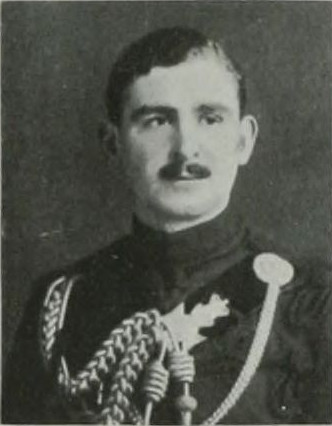
Eustace G. W. Bourke.
BOURKE, JAMES PATRICK, Private, No. 93, 1st Australian Light Horse, 2nd s. of James Bourke, Private Estate Steward, by his wife, Elizabeth, dau. of Hugh Wallis; b. Kilfrush, co. Limerick, 23 Nov. 1880; educ. National School, Hospital; went to Australia in June, 1907; enlisted after the outbreak of war and was killed in action at the Dardanelles, 26 June, 1915. He m. at Hospital, 10 Sept. 1905, Mary, eldest dau. of Loughlin Doran, of 26, Deyne Avenue, Rusholme, Manchester, and had a dau., Mary Elizabeth, b. 23 Nov. 1906.
BOURNE, ERNEST, Stoker, 1st Class (R.F.R., B. 4221), 294840, H.M.S. Aboukir; lost in action in the North Sea, 22 Sept. 1914.
BOURNS, CHARLES, Lieut., 6th, attd. 4th, Battn. The Rifle Brigade, yr. s. of Charles Bourns, of Boley, Lichfield, formerly of West Hill, Oxted, Physician, by his wife, Florence, dau. of Edward Walker, of West Hill, Oxted, and Araluen, Eastbourne; b. West Hill, Oxted, 7 Aug. 1881; educ. Merchant Taylors’ School and St. John’s College, Oxford (M.A.), and was an Assistant Master at Repton when war was declared. Being a member of the Repton O.T.C., he obtained a commission as 2nd Lieut. in Oct. 1914, and was promoted Lieut. in the Rifle Brigade, 22 Jan. 1915. He was killed in action near Hooge, 25 May, 1915; unm. He was an Oxford (Rugby football) Blue in 1903.
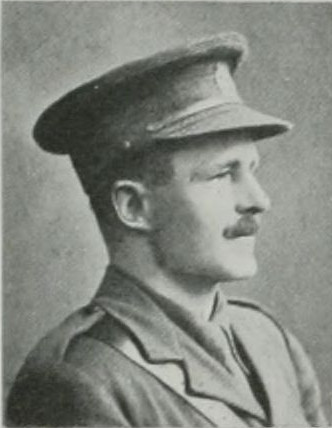
Charles Bourns.
BOUTLE, SYDNEY, A.B. (R.F.R., B. 2047), 209405, H.M.S. Good Hope; lost in the action off Coronel, on the coast of Chili, 1 Nov. 1914.
PLEYDELL-BOUVERIE, JACOB EDWARD, Lieut., King’s Royal Rifle Corps, only s. of the late Hon. Duncombe Pleydell-Bouverie, of Coleshill House, by his wife, Maria Eleanor (Coleshill House, Highworth, Wilts.), dau. of Sir Edward Hulse, 5th Bt., and grandson of Jacob, 4th Earl of Radnor; b. Sherburn Lodge, Watlington, co. Oxford, 12 July, 1887; educ. Evelyns, Uxbridge; St. Vincents, Eastbourne; Eton, and Sandhurst; gazetted 2nd Lieut. 4th Battn. King’s Royal Rifles, 8 Feb. 1908; joined his battn. at Colchester, and left with them for India in 1909. He was promoted Lieut. 23 Jan. 1911, returning to England the same year. On the outbreak of war, after some weeks at Sheerness, he went out with a draft on 30 Aug., arriving at St. Nazaire 1 Sept., 1914. He left there to join the 2nd Battn. in billets at Paynon, 20 Sept., and was posted to D Coy., taking command of 13 and 14 platoons. The battn. remained at or near Paynon till 18 Oct., when they were moved to Ypres. They were in the trenches from 22–24 Oct. when they returned to billets in Ypres. On 27 Oct. they went into reserve trenches in a wood just east of Hooge, and on 29th advanced to reinforce the 3rd Brigade at Gheluvelt. Lieut. Pleydell-Bouverie was hit 31 Oct. while ordering a counter attack, was carried to the rear under fire by Riflemen Taylor, Scott, Alcott and Quick, and from the field hospital was sent by train to Boulogne. He died early in the morning of 1 Nov. in No. 13 stationary hospital where he had been admitted a few hours before and was buried in the English cemetery there; unm.
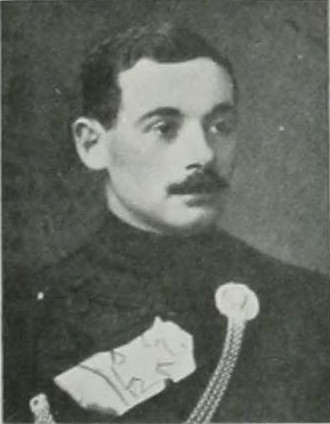
J. E. Pleydell-Bouverie.
BOWDEN, ALBERT JOHN, Leading Stoker (R.F.R., A. 890), 123326, H.M.S. Hogue; lost in action in the North Sea, 22 Sept. 1914.
BOWDEN, EDWARD RATCLIFFE, Lieut., 6th Battn. Northumberland Fusiliers (T.F.), s. of Thomas Bowden, of Sheriff Mount, Gateshead Fell, co. Durham, J.P., head of the firm of Thomas Bowden, Sons & Nephew, of Newcastle-on-Tyne and Manchester, Chartered Accountants; b. 28 April, 1889; educ. Corchester Preparatory School, Sedbergh, and Pembroke College, Cambridge (B.A.), was a member of the O.T.C. at Cambridge, and received a commission in the Northumberland Fusiliers 1910, being promoted Lieut. 25 Dec. 1912. He died of wounds received in the action at Ypres, 28 April, 1915, and was buried at Abbeville; unm.
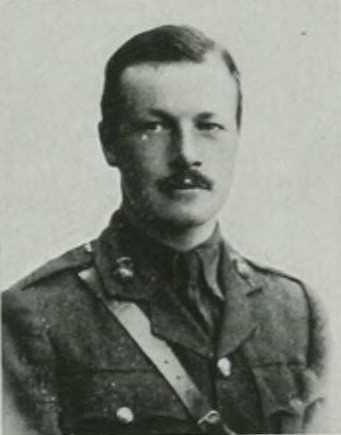
Edward Ratcliffe Bowden.
BOWELL, FREDERICK JAMES, Leading Seaman (R.F.R., B. 2088), 162995, H.M.S. Hawke; lost in action in the North Sea, 15 Oct. 1914; m.
BOWEN, CUTHBERT EDWARD LATIMER, Assistant District Superintendent, East African Police, Lieut., attd. King’s African Rifles, elder s. of the Rev. Thomas James Bowen, Vicar of St. Nicholas, Bristol, by his wife, Susan Elvina, dau. of John Williams, of Ty-ar-y-Graig, Swansea; b. at All Saints’ Vicarage, Swansea, 23 Sept. 1881; educ. at Box Grove, Guildford, and Rugby. He joined the 3rd (Royal Surrey Militia) Battn. of the Queen’s during the Boer campaign, and did duty at Guildford depôt during the 1900 embodiment, and in South Africa. After the peace of Vereeniging he was gazetted into the Regular Army and posted to the 1st Battn. of the Queen’s, then stationed on the North-West Frontier of India. In 1904 he was transferred to the West India Regt., and served with the 1st Battn. in Jamaica under Col. A. R. Loscombe. In 1905 he was employed under the Colonial Office, and became an assistant superintendent of police in the East African Protectorate and was serving under Major W. F. S. Edwards, the Insp.-General, when war broke out. He was attached to the King’s African Rifles, and fell on 1 Dec. 1914, at Utendi, in the Nyanza Province. His body was recovered and brought to British territory and buried at Utendi. The following message was received from Col. Edward, D.S.O.: “Mr. Bowen’s loss not only to the Police Force but to a large number of personal friends, will be most severely felt. I deem it to be the wish of all that their condolences should be inseparable from the high tribute of praise of the commanding officer that Mr. Bowen evidently lost his life in a gallant attempt to capture Susuni Hill. Concerning myself, I feel that I have lost both a gallant and true friend.” He m. at Nairobi, British East Africa, 25 May, 1907, Alice May, dau. of (—) Swift, and had two daus.: Kathleen Elvina, b. 25 March, 1908; and Dorothy Starbuck, b. 25 Jan. 1911.
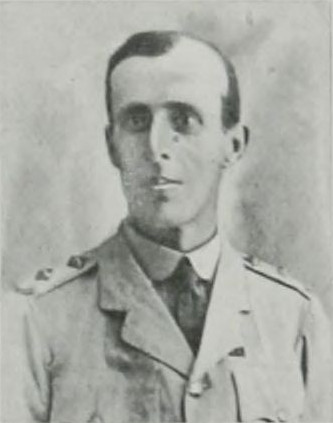
Cuthbert E. L. Bowen.
BOWEN, EDWARD, Signaller (R.F.R., B. 2774), 230362, H.M.S. Good Hope; lost in the action off Coronel, on the coast of Chili, 1 Nov. 1914.
BOWEN, GEORGE FREDERICK, A.B. (R.F.R., B. 2434), 169906, H.M.S. Aboukir; lost in action in the North Sea, 22 Sept. 1914.
BOWEN, HENRY, Rifleman, No. 3265, B Coy., 21st Battn. (1st Surrey Rifles) The London Regt. (T.F.), 3rd s. of Charles Richard Bowen; b. Camberwell, 17 Nov. 1893; was a Clerk, but after the outbreak of war joined the Surrey Rifles, 25 Jan. 1915, and was killed at Festubert at 6 a.m., 9 May, following being shot through the temple by a sniper; unm.
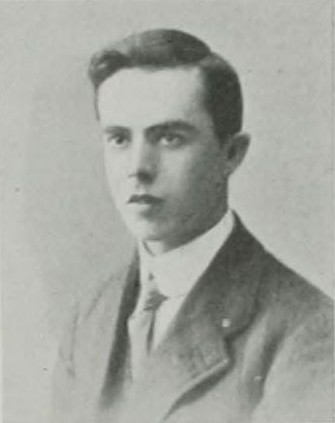
Henry Bowen.
BOWERS, PERCIVAL CONWAY, Private, No. 9664, 2nd Battn. Lincolnshire Regt., s. of the late John Bowers (who served 22 years in the Army with the Yorks and Lancs., and d. 25 Aug. 1915), by his wife, Ann (Queen Street, Frodingham, Scunthorpe, Lincs.), dau. of (..); b. Broughton, co. Lincoln, 13 June, 1895; enlisted 9 Dec. 1913, and was killed in action, being shot by a sniper, 21 Feb. 1915. He was buried at a farm on the north side of the Rue Wasselot, south-east of Rue Bacqueort; unm.
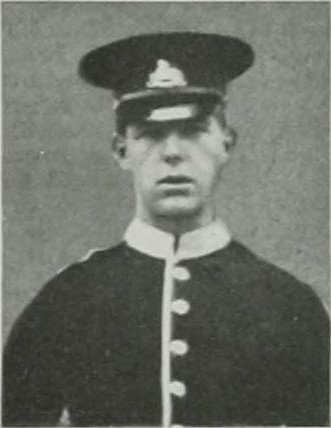
Percival Conway Bowers.
BOWES, ROBERT EDWARD, Officers’ Steward, 3rd Class, L. 5306, H.M.S. Hogue; lost in action in the North Sea, 22 Sept. 1914.
BOWES, WILLIAM EDWARD, Stoker, R.N.R., 2652T, H.M.S. Hogue; lost in action in the North Sea, 22 Sept. 1914.
BOWLBY, GEOFFREY VAUX SALVIN, Capt., Royal Horse Guards (The Blues), 6th but 2nd surviving s. of the late Edward Salvin Bowlby, of Gilston Park, Harlow, Essex, and Knoydart, Inverness, J.P., D.L., by his 2nd wife, Elizabeth, dau. of Robert Vans-Agnew, of Barnbarroch, and Sheuchan, co. Wigtown; b. London, 1 Dec. 1884; educ. Eton, and joined the Royal Horse Guards from the Militia (King’s Own Scottish Borderers) as 2nd Lieut., 9 March, 1904. He was promoted Lieut. 1 Feb. 1905, and Capt. 6 May, 1908. He went to Ireland in 1909 as A.D.C. to Sir Neville Lyttleton, returning to his regt. in Sept. 1910 to take over the Adjutancy which he held to Sept. 1913. On the outbreak of war he was sent to France in advance of the composite regt., as billeting officer to the 4th Cavalry Brigade, rejoining his regt. the day before the battle of Mons. After the fight at Wytschaete, 29 Oct.-1 Nov. 1914, Capt. Bowlby was the senior officer left and took over command of the composite regt. for a short time, until each squadron went back to its own regt. On rejoining the “Blues” he commanded the A Squadron. He was killed leading his squadron in a charge across 1,000 yards of open country north of Bellewarde Farm, during the 2nd Battle of Ypres, on the afternoon of 13 May, 1915. His commanding officer wrote: “I cannot tell you what a loss he is to the regt.; he was as gallant as he could be and a magnificent soldier. He was so keen and energetic and proud of his squadron, of which he took the greatest care.” Capt. Bowlby was a fine polo player, and enjoyed great popularity at the London grounds. In his day there were few to surpass him in skill and dash. For several seasons he was No. 1 in the Blues’ team, and in two years (1910 and 1912) he helped the side to win the Inter-Regimental Cup at Hurlingham. The other members of those victorious sides were: Capt. Lord Alastair Innes-Ker, Capt. H. E. Brassey, and Capt. J. F. Harrison. Capt. Bowlby was in the team again in 1913 and in 1914, but his regt. was in both years beaten by the 1st Life Guards. He m. at Holy Trinity Church, Sloane Street, 18 Oct. 1911, the Hon. Lettice, née Annesley, 4th dau. of Arthur, 11th Viscount Valentia, C.B., M.V.O., and had two children: John Edward Richard, b. 8 May, 1914; and Elizabeth Mary, b. 3 Feb. 1913.
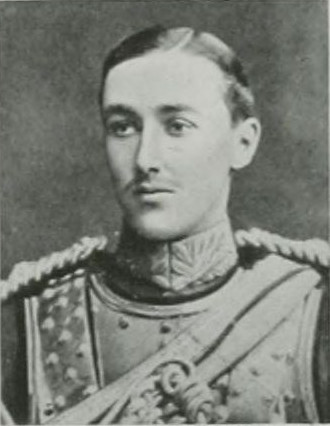
Geoffrey V. S. Bowlby.
BOWLEY, HARRY EDWIN, Private, No. 9913, 2nd Battn. Coldstream Guards, s. of Harry Edwin Bowley, Private 2/4th Battn. Royal Sussex Regt. (now on active service), by his wife, Eliza May (41, Bentham Road. Brighton), dau. of John Winder, of Brighton; b. Brighton, 25 June, 1894; educ. St. Luke’s Terrace Board School there; was for some time a telegraph boy at the Brighton Post Office; enlisted 1 Jan. 1912; went to France with the Expeditionary Force, and during the retreat from Mons was sent with a dispatch but never returned, and is assumed to have been killed in action at Villers Cotterets, 1 Sept. 1914.
BOWMAN, FREDERICK, Seaman, R.N.R., 1793C, H.M.S. Aboukir; lost in action in the North Sea, 22 Sept. 1914.
BOWMAN, JAMES, A.B. (R.F.R., Ch. B. 3771), 180916, H.M.S. Cressy; lost in action in the North Sea, 22 Sept. 1914.
BOWYER, CHARLES ALEXANDER, A.B. (R.F.R., B. 7440) S.S. 1330, H.M.S. Hawke; lost in action in the North Sea, 15 Oct. 1914; m.
BOWYER, WILLIAM HENRY, A.B., 215065, H.M.S. Good Hope; lost in the action off Coronel, on the coast of Chili, 1 Nov. 1914.
BOX, FREDERICK JAMES, Stoker, 1st Class, S.S. 112109, H.M.S. Hawke; lost in action in the North Sea, 15 Oct. 1914.
BOX, JOSEPH WILLIAM, A.B. (R.F.R., Ch. B. 2822), 175583, H.M.S. Cressy; lost in action in the North Sea, 22 Sept. 1914.
BOXALL, CARYL LERMITTE, Capt., 2nd Battn. The Hampshire Regt., yr. s. of Alleyne Alfred, 1st Baron Boxall, of 14, Cambridge Square, Hyde Park, W., by his wife, Mary Elizabeth, dau. of the late James Henry Lermitte, of Knightons, J.P., and nephew of Mr. Boxall, K.C., Recorder of Brighton, and of the late Col. Sir Charles Boxall, K.C.B.; b. at 14, Cambridge Square, W., 26 Dec. 1887; educ. Eton (1901–6) and Sandhurst; received his commission in the 2nd Hampshires, 9 Oct. 1907, and was promoted Lieut. 1 April, 1911, and Capt. 4 Oct. 1914. He served in South Africa, Mauritius and India, and with the Mediterranean Expeditionary Force. Landed from the River Clyde with the 29th Division, and died of wounds received in action following the landing at the Dardanelles on 25 April, 1915. He was unm. A brass plaque to the memory of this officer was erected in the south aisle of St. Peter’s, Cowfold, Sussex.
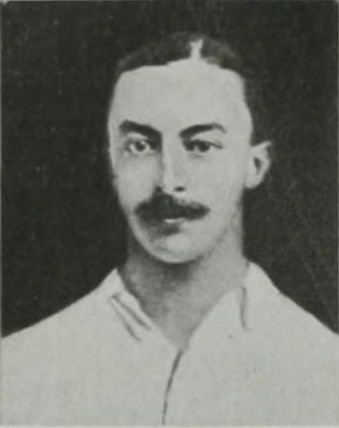
Caryl Lermitte Boxall.
BOXALL, CHARLES BERT, A.B. (R.F.R., B. 3515), 210631, H.M.S. Good Hope; lost in the action off Coronel, on the coast of Chili, 1 Nov. 1914.
BOXWELL, FRANCIS JEFFARES TILSON, A.B. (R.F.R., B. 3598), 188877, H.M.S. Good Hope; lost in the action off Coronel, on the coast of Chili, 1 Nov. 1914.
BOYCE, JOHN HENRY, Trooper, No. 1626, Buckinghamshire Yeomanry (Royal Bucks Hussars), only s. of Henry Boyce, of Woodford Green, Essex, and grandson of the late Henry Boyce, of the Leman School, Beccles, Suffolk; b..........., 1889; joined the Royal Bucks Hussars early in Oct. 1914; left England for Egypt just before Easter, 1915; went to the Dardanelles early in June, and was killed in a charge at Suvla Bay, 21 Aug. 1915; unm.
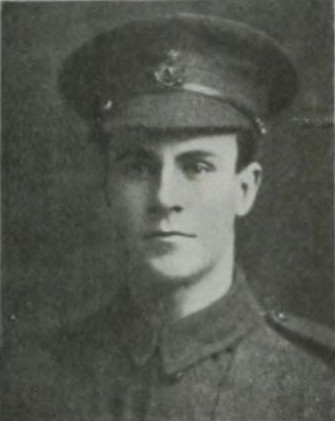
John Henry Boyce.
BOYD, DAVID, A.B., 229233, H.M.S. Good Hope; lost in the action off Coronel, on the coast of Chili, 1 Nov. 1914.
BOYD, HAROLD ALEXANDER, 2nd Lieut., 2nd Battn. Royal Inniskilling Fusiliers, only s. of Dr. Alexander James Boyd, of The Manor House, Ware, co. Herts (who served for 13 years in the 1st (Herts) Vol. Battn. Bedfordshire Regt., and retired as Capt. in 1902), by his wife, Constance Mary, dau. of Brackenbury Comyns Berkeley, of Collett Hall, Ware, and grandson of the late Samuel Boyd, of Illerton, Killiney; b. at The Manor House, Ware, 19 Jan. 1895; educ. at the Preparatory School, Castle Park, Dalkey (co. Dublin), Rugby, and Trinity College, Cambridge, where he was studying medicine at the time of mobilisation and had passed his first M.B. examination at the end of his first year. He had joined the Royal Inniskilling Fusiliers in April, 1913, as a Special Reserve officer, and was called up for service and at first put on Coast Defence duty at Lough Swilly, co. Donegal, being afterwards sent to France on 31 Aug. He was killed in action at Crecy, 7 Sept. 1914, during the Battle of the Marne; unm. Corpl. W. Poots wrote: “On the morning of Monday, 7 Sept., we were reinforced by a draft of a hundred men from the depôt in Ireland under Lieut. Boyd, and continued the advance all day. In the evening the Inniskillings had to find the outposts at a village to which we had come—on the right being an open road with a row of apple trees, and on the left a clear open plain. In the distance, about 1,000 or 1,200 yards, was a broad belt of woods and shrubs, from which came rifle and big gun fire. This took us by surprise. We lined out and retaliated, but their shelling was terrific, and we had no artillery with us. Our officers were trying to find the range and had no cover from the shells, thus exposing themselves, notably Mr. Boyd, who was standing by an apple tree by the right of the road. He was struck on the body by shrapnel and killed instantly; also Private Cousins, and 14 wounded. We continued all night in this position. In the morning the enemy had retired.” 2nd Lieut. Boyd was a fine athlete, gaining his colours at Rugby in football, swimming, shooting and cross-country running; and he also won the Royal Humane Society’s medal and Dr. Duke’s cup for life-saving competition. At Cambridge he was a member of the First Trinity Boat Club, and in 1914 he won the swimming championship of his regt. at Aldershot.
BOYD, NIGEL JOHN LAWSON, 2nd Lieut., 1st Battn. The Black Watch, yr. s. of William Boyd, of 26, Inverleith Place, Edinburgh, Writer to the Signet, Member of the King’s Body Guard for Scotland (R.C.A.), by his wife, Laura, dau. of the late John Crerar, of Halifax, Nova Scotia, and grandson of the late Sir John Boyd, of Maxpoffle, co. Roxburgh, by his wife, Isabella, 2nd dau. of John Lawson, 14th Laird of Cairnmuir, co. Peebles; b. Edinburgh, 14 Sept. 1894; educ. Cargilfield School, Midlothian, Winchester College and the Royal Military College, Sandhurst. In passing into the latter he obtained a Prize Cadetship, and in passing out he was fourth on the list. He was gazetted 2nd Lieut. to the Black Watch, 25 Feb. 1914, and joined the 1st Battn. at Oudenarde Barracks early in March. After the declaration of war he left Aldershot with his regt. in the beginning of Aug. for France, and took part with it in the memorable retreat from Mons to the Marne. He was fatally wounded on the morning of 14 Sept., his birthday, during the early days of the great Battle of the Aisne. From a description which he subsequently gave when in hospital in Rouen to his father, it appears that in the early morning of 14 Sept., which was misty, the Black Watch were acting in concert with the Cameron Highlanders on the banks of the Aisne, and found themselves opposed to a strong force of the Germans, and came under a very severe fire. Lieut. Boyd with his platoon had been directed to take up a position, and it had been indicated to him that it must be held at all costs. The Germans continued to press on in overpowering numbers at that point, and they could see them within 100 yards. He stated that he had personally fired 10 rounds at them with a rifle, and afterwards emptied his revolver at them. The shrapnel, machine gun and rifle fire at the time was terrific. The enemy continued to press on from all sides. He was standing up and had drawn his Claymore, and in turning to the side to give a signal to those of his men who survived he was hit. The bullet struck the scabbard of his Claymore, glanced off it, entered the left hip and lodged in the bladder. After that he said the Germans rushed the position. Words are unnecessary, and no effort of the imagination required to show that this young officer and his small force of men had made a gallant stand against overpowering odds, and that they had acted in accordance with the best traditions of their grand old regt. When on the ground wounded he asked a German who was passing for assistance, but all that the man did was to threaten to shoot him. After that he stated that he pretended to be dead when other Germans passed. Some time after this a party of the Cameron Highlanders appear to have been in the vicinity, and he was observed by the late Capt. Napier Cameron of that regt. Capt. Cameron gallantly went under fire to his assistance, and carried him to the shelter of a lane some distance in the rear. Lieut. Boyd told his father that he owed his life at the time to Capt. Cameron, as the ground on which he had fallen was swept afterwards by a terrible cross fire, and if he had been left there he could not possibly have survived. He lay where Capt. Cameron had put him for 16 hours in the rain. A stretcher party of the Gloucestershire Regt. found him and brought him in. Afterwards he was for 36 hours in a cattle truck being taken to the Base hospital. The officers in charge of No. 8 General Hospital, Rouen, and the Rev. W. G. Arrowsmith, one of the Chaplains, there stated that the whole of the time in that cattle truck, and afterwards in the hospital, he had never complained, and had shown extraordinary fortitude, and that the example shown had the most wonderful effect upon the wounded men there. An instance told was this: a Quartermaster-Sergt., who was badly wounded and was suffering a lot, had been calling out a great deal, and disturbing the other men. After they had tried to soothe him without effect he was told that in the next ward there was a young officer of the Black Watch who was far worse than he was, and who never complained at all. After that the man was quiet. Although very severely wounded, great hopes were entertained of Lieut. Boyd’s recovery, as he had been operated upon successfully. But it was not to be, as he collapsed suddenly in the early morning of 12 Oct., the immediate cause of death being a blood clot. As he died in hospital his body was brought back to Scotland in the hospital ship St. Patrick. The Headquarters, Scottish Command, arranged for a military funeral, which took place in the Dean Cemetery, Edinburgh, on 19 Oct. From earliest boyhood he had taken the keenest interest in all outdoor sports. He played in the “Houses fifteen” matches at Winchester. At cricket he was a fair performer, and at golf a Scratch player. He was a good rider, a keen fisherman, and an excellent shot both with the gun and rifle. He represented Winchester College at Bisley in 1911, when he shot for the Cadet Trophy, and was again at Bisley in 1912, when he was in the Winchester “eight.” It had been his greatest ambition from earliest childhood to be in the Black Watch.
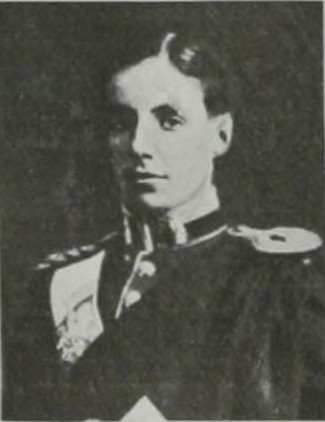
Nigel John Lawson Boyd
BOYD, PERCY GERNON, Private, No. 3158, 10th (Liverpool Scottish) Battn. King’s Liverpool Regt., eldest s. of Samuel Boyd, of 19, Hale Road, Liscard, Cheshire, Accountant and Secretary, Liverpool Shipping Company, by his wife, Emma, dau. of William Ker, of Liverpool; b. Egremont, Wallasey, co. Chester, 1 Sept 1890; educ. Liscard High School, and joined the Army on the outbreak of the war Aug. 1914. He died from shell wounds received in action at Locre, Flanders, 22 Jan. 1915, and was buried in the churchyard there; unm. Major N. S. Anderson, D.S.O., wrote: “He was in my company (No. 1) and was under my command. I was thoroughly satisfied with all his work. He was a good soldier.” And a comrade wrote: “He was a real good soldier, and a very brave one too. It was only the night before Lieut. Turner was killed that he was out with him putting barbed wire in front of the trenches.” He was an active and keen footballer, being a member of the Liscard Old Boys’, Brompton, and other clubs, and won the mile handicap at his school annual sports.
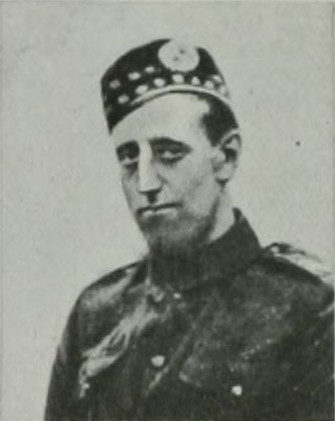
Percy Gernon Boyd.
BOYLE, HON. JAMES, Capt., Royal Scots Fusiliers, 2nd surviving s. of David, 7th Earl of Glasgow, G.C.M.G., by his wife, Dorothea Elizabeth Thomasina, dau. of Sir Edward Hunter-Blair, 4th Bt.; b. Shewalton, co. Ayr., 11 March, 1880; educ. Wanganui College, New Zealand, and Trinity Hall, Cambridge, and joined the Ayrshire Militia 27 May, 1898, and served through the South African War, 1901–2, part of the time with mounted infantry and for some time on staff duties, receiving the Queen’s medal with five clasps. In 1903 he joined the Regulars and was gazetted as 2nd Lieut. to the Royal Scots Fusiliers, becoming Lieut. 6 June, 1906, and Capt. 10 April, 1912. From 1908–9 he was extra Aide-de-Camp to the Governor of Victoria, and from 1909–11 Aide-de-Camp, and later, 1912–14, A.D.C. to Gen. Sir H. Smith-Dorrien, Commander-in-Chief of the Southern Command. He was killed in action at Chateau Warneton, near La Bassée, on 18 Oct. 1914 (being officially reported wounded and missing for seven weeks, until a letter was received from a German officer who reported he was buried at Chateau Warneton). He m. in London, 15 Sept. 1908, Katherine Isabel Salvin (Marston House, Banbury), sister of Capt. Geoffrey Vaux Salvin Bowlby, Royal Horse Guards, killed in action 13 May, 1915, and dau. of the late Edward Salvin Bowlby, of Gilston Park, Herts, and had three children: Patrick John Salvin, b. 21 April, 1910; Edward James, b. 26 Feb. 1912; and Belinda Margaret Graeme, b. 4 Dec. 1913.
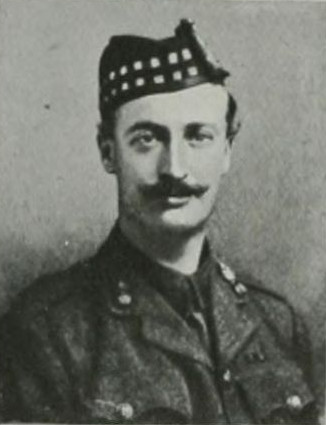
Hon. James Boyle.
BOYLE, THOMAS, Private, No. 15645, 13th (Service) Battn. Royal Scots (Lothian Regt.), s. of Thomas Boyle, of 33, Lyons Lane, Port Glasgow; served with the Expeditionary Force in France, etc.; killed in action at Hooge, 27 Sept. 1915.
BOYLE, THOMAS WILLIAM, Private, No. 10345, 1st Battn. Coldstream Guards, only s. of William Boyle, Coldstream Guards, by his wife, Bridget (102, Marian Street, Gateshead, co. Durham), dau. of Thomas Jackson; b. Gateshead, 18 July, 1896; enlisted 4 Sept. 1913; died of wounds received in action at Ypres, 23 Oct. 1914; unm.
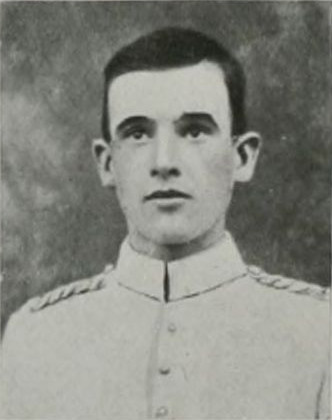
Thomas William Boyle.
BOYLE, WILLIAM, Private, No. 14602, 4th Battn. Middlesex Regt.; served with the Expeditionary Force in France, etc.; died 4 Nov. 1914, while a prisoner of war.
BOYS, CHARLES HENRY, A.B. (R.F.R., Ch. B. 9527), 200302, H.M.S. Cressy; lost in action in the North Sea, 22 Sept. 1914.
BRABAZON, HON. ERNEST WILLIAM MAITLAND MOLYNEUX, D.S.O., Staff Capt., 3rd Battn. Coldstream Guards, 4th and yst. s. of Reginald, 12th Earl of Meath, P.C., K.P., by his wife, Lady Mary Jane Maitland, only surviving dau. of Thomas, 11th Earl of Lauderdale, G.C.B.; b. Richmond, co. Surrey, 22 March, 1884; educ. Dover College and Sandhurst; gazetted 2nd Lieut. 2nd Battn. Coldstream Guards, 9 Jan. 1904, promoted Lieut. 5 Sept. 1906, and Capt. 3rd Battn. 4 April, 1912. On the outbreak of war he went to the front with his regt., was attached to the Staff, and was killed in action near La Bassée, 17 June, 1915. He was buried in Cambrin Cemetery, near where he fell. Capt. Brabazon was mentioned in F.M. Sir John French’s Despatch [London Gazette, 1 Dec. 1914], in the following terms: “Has shown conspicuous efficiency in Staff duties and in keeping up communication with a long line of front composed of many units, where communication was often difficult. He has carried and delivered messages under fire with promptness and dispatch.” For these services he received the D.S.O. Lord Cavan, commanding the Guards’ Brigade, wrote: “We simply loved him. I can never tell you what he was to me, not only as a Staff Officer but as a friend. He was priceless, invaluable and never wearying in his work for the Brigade.” And Col. J. R. Drummond Hay, commanding Coldstream Guards: “By his death the Army, as well as the regt., has lost heavily.” He was keen on musketry and sport and a good shot. He m. at the Guards’ Chapel, Wellington Barracks, S.W., 29 Oct. 1912, Dorothy Mary, yst. dau. of Col. Horace Ricardo, of Bramley Park, Surrey, C.V.O.; s.p. His three brothers are now (1916) on active service: Col. Lord Ardee, C.B., in command of the 1st Battn. Irish Guards, has been wounded; Capt. the Hon. Arthur Brabazon, on special service in Egypt; and Major the Hon. Claud Brabazon, of the Irish Guards, now in the Royal Flying Corps.
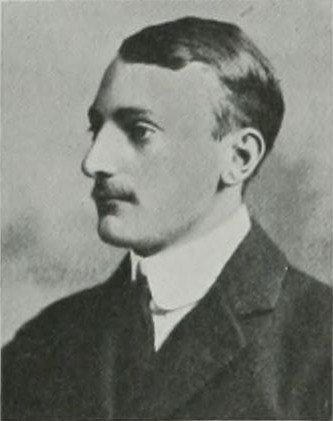
Hon. E. W. M. M. Brabazon.
BRABROOK, ARTHUR HENRY, Sergt., 1/3rd Battn. (Royal Fusiliers) City of London Regt. (T.F.), 2nd s. of Frederick Joseph Brabrook, of Bury St. Edmunds, Fish Merchant, by his wife, Emma; b. Bury St. Edmunds, 18 Jan. 1879; educ. St. John’s Church School. He joined the 18th Middlesex V.R.C. (Paddington Rifles) in 1904, which became the 10th Battn. of the London Territorials. He became Colour-Sergt. of D Coy. in 1912, in which year the battn. was disbanded and transferred to Hackney. This was too far away, so with his Capt. (now Major Prance) and other men he formed a Paddington Coy., attached to the 3rd Battn. of the London Regt., and received the rank of L.-Sergt. He went through the School of Instruction at Chelsea and received a certificate and was promoted Sergt. When the battn. was mobilised in Aug. 1914 they were sent to guard railway stations for a month, and he was stationed at Arlesford with his section. On 4 Sept. 1914, he sailed for Malta, and after Christmas went to France, and served through the Battles of Neuve Chapelle and La Bassée, where he had a narrow escape, a shell bursting, knocking him down and burying him under some bricks. He died 10 May, 1915, of wounds received at Festubert, and was buried in Bethune Cemetery. Capt. C. E. Rochford wrote: “He was killed through a shell bursting while advancing in an attack on a German trench. He has been with me ever since we left England, so I knew him well. He was a splendid man and a splendid soldier.” He m. at. North Kensington, 5 Sept. 1908, Clara Louisa (322, Ladbroke Grove, W.), 2nd dau. of Robert Wollington, of Ladbroke Grove, W., Builder, and had two children: Ralph Robert Arthur, b. 15 March. 1914; and Beatrice Caroline, b. 23 Sept. 1909.
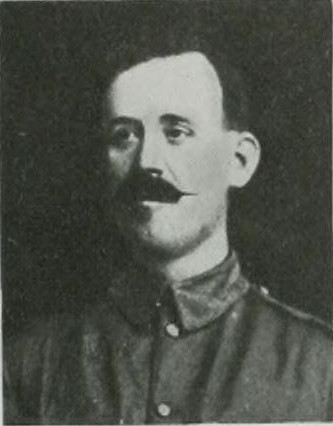
Arthur Henry Brabrook.
BRACEY, HUMPHREY ALFRED, L.-Corpl., No. 1768, 21st Battn. (1st Surrey Rifles) The London Regt. (T.F.); b. Stoke Newington, 6 Sept. 1891; elder s. of Alfred Bracey, of Ashcroft, 30 Seymour Gardens, Ilford, by his wife, Bertha, dau. of William James Hagger, b. ....; educ. Grocer’s Company School, Hackney Downs, and County High School, Ilford, and was in the employ of Parrs’ Bank when war broke out. He enlisted in the 1st Surrey Rifles, 8 Aug. 1914, went to the front 15 March, 1915, and was killed in action at Festubert, 25–26 May, 1915; unm. His commanding officer, Capt. A. Hutchinson, wrote that he was exceptionally popular with all ranks and that he, personally, regretted the “loss of a very promising and fearless N.C.O.” And “Parrs’ Bank Magazine,” in recording his death, said: “At the outbreak of war he was one of the first to offer his services to his country. In the departments in which he was formerly employed, he was ever ready to assist his colleagues, and was a most generous and jovial companion. His absence will be especially noticed on balance nights, settling days, &c., when the heavy work was much lightened by his ready wit and humour. He was also well known in the rifle section of the Sports Club, where he was one of the best shots.”
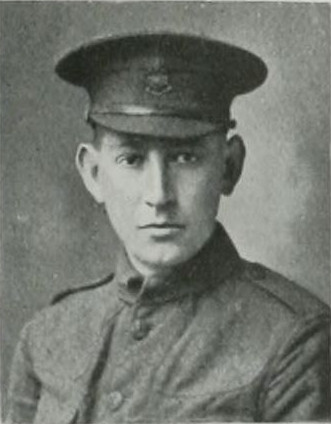
Humphrey Alfred Bracey.
BRACHER, GEORGE, Private, No. 9139, 2nd Battn. Coldstream Guards, s. of Matthias Bracher of Gerrards Farm, Favant, near Salisbury; b. co. Wilts; served with the Expeditionary Force in France, etc.; killed in action at Rentel, 12 Nov. 1914; unm.
BRACKEN, JOHN, Private, No. G. 773, 8th (Service) Battn. Royal West Surrey Regt.; served with the Expeditionary Force in France, etc.; killed in action, 26 Sept. 1915; m.
BRACKSTONE, HENRY, Corpl., No. 7248, 1st Battn. East Surrey Regt.; served with the Expeditionary Force in France, etc.; killed in action, 20 April, 1915; m.
BRADBURY, EDWARD CHAPNESS, Private, No. 9409, 2nd Battn. Coldstream Guards, 2nd s. of Samuel Bradbury, of 65, Queen Street, Palfrey, Walsall, by his wife, Annie, dau. of William Baker; b. Walsall, 18 Dec. 1893; educ. Palfrey School, Walsall, and on leaving there was employed by Neville Bros. as a Portmanteau Lock Maker. He enlisted 18 Jan. 1911, and three months before war was declared was transferred to the 2nd Life Guards, but then transferred back to his old regt., and was killed in action by a shell in an attack on a farmhouse, 16 Nov. 1914; unm.
BRADBURY, EDWARD KINDER, V.C., Capt., L Battery, Royal Horse Artillery, only s. of the late Judge James Kinder Bradbury, J.P., Fellow of Caius College, Cambridge, by his wife, Grace (Parkfield, Altrincham, Cheshire), dau. of the Rev. Edward Dowling; b. Bowden, co. Chester, 16 Aug. 1881; educ. St. Ninian’s, Moffat, Marlborough College and Woolwich; gazetted to the Royal Field Artillery, 2 May, 1900, and promoted Lieut. 3 April, 1901, and Capt. 4 Feb. 1910. He joined the 125th Battery in Ireland, and in the later stages of the South African War obtained a commission in Fincastle’s Horse, with which he served on active service, obtaining the Queen’s medal with two clasps. After the close of that campaign he returned to Ireland, but in 1905 went to Uganda, and served with the 4th Battn. of the King’s African Rifles till Aug. 1906, when he was invalided home after severe fever. Coming home, he was transferred to the R.H.A., and on the outbreak of war went to France with the Expeditionary Force. At Néry, near Compiegne, on the last day of the retreat from Mons (1 Sept. 1914), L Battery, while covering the retreat, was attacked by a strong German force with ten field guns and two Maxims. Three British guns were brought into action, but two were quickly silenced. Capt. Bradbury and his men served the remaining gun so well, however, that all but one of the German guns were silenced; and when L Battery was relieved this gun was captured. “Bradbury,” writes an artillery officer, recounting this story, “was the real hero. He got the gun into action and gave the orders. Mundy knelt on one side and did ranging officer, and Brad., Campbell and Giffard, with the Battery Sergt.-Major, Gunner and Driver, served the gun. Brad. had one leg taken off above the knee, but still went on; Campbell ... was killed; Mundy was hit in both legs; the Major, coming back hastily, was hit in the throat as he arrived. Bradbury had his other leg taken off. Giffard was badly wounded, and still they kept the last gun firing, and when I Battery and the other Brigade came up they found that the Germans had left their guns and bolted.” Capt. Bradbury, who was unm., was buried in the cemetery at Néry. He was mentioned in F.M. Sir John (now Lord) French’s Despatch of 7 Sept. [London Gazette, 19 Oct. 1914], and was awarded the Victoria Cross “For gallantry and ability in organising the defence of L Battery against heavy odds at Néry on 1 Sept.” A General wrote: “Your son was simply beloved by us all from me, his General, down to the last joined subaltern. He was very nearly four years under my command, and I looked upon him as one of the most brilliant officers I had ever come across, one who, had God willed it, had a great career in front of him, and the manner in which he met his death fighting a single gun to the end after the loss of one leg was worthy of him.”
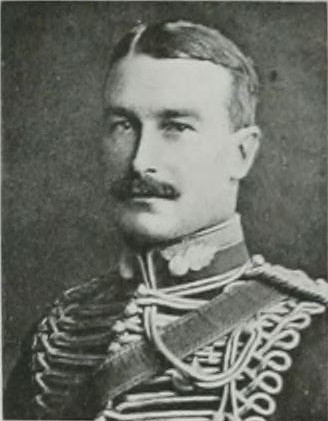
Edward Kinder Bradbury.
BRADDOCK, ARTHUR LESLIE, Assistant Paymaster, R.N.R., H.M.S. Cressy, s. of William Braddock, of Sydney, New South Wales, Chartered Accountant, by his wife, Alice, dau. of (—) Norman, Dental Surgeon; b. Adelaide, South Australia, 22 Feb. 1877; educ. Adelaide; joined the Royal Naval Reserve, Jan. 1908, and was appointed Assistant Paymaster, 3 Feb. 1911, with seniority of 30 Jan. 1908. He was appointed to the Cressy 1 Aug. 1914, and was lost when that ship was torpedoed in the North Sea, 22 Sept. 1914. He m. at Liverpool, 15 July, 1912, Jeannie Scott (19, Huskisson Street, Liverpool), dau. of the late Capt. William Henry Burt; s.p.
BRADDOCK, HARRY, Stoker, 1st Class, K. 13669 (Ports.), H.M.S. Cressy; lost in action in the North Sea, 22 Sept. 1914.
BRADFORD, ARTHUR JESSE GEORGE, L.-Corpl., No. 766, B Coy., 16th Battn. Australian Imperial Force, elder s. of the late Arthur Jesse Bradford, of Clapton, N.E., by his wife, Gabriella (now a nurse, of 106, Valkyrie Road, Westcliffe-on-Sea), dau. of Jesse Witts, of Gloucester; b. Plaistow, co. Essex, 14 Nov. 1895; educ. London Orphan School, Watford; joined the (Temperley & Co.) Merchant Service when 16; then settled in Bunbury, Western Australia (1913), and when war broke out was in the Bush, engaged in the lumber trade. He immediately volunteered; left for Egypt with the Second Reinforcements in Dec. 1914; took part in the landing at the Dardanelles, 25 April, 1915, and was killed in action there the same day; unm. His yr. brother, Edward Lionel Bradford, L.-Corpl., No. 142397, No. 1 Co., R.E. (Signal Service), is now (1916) on active service.
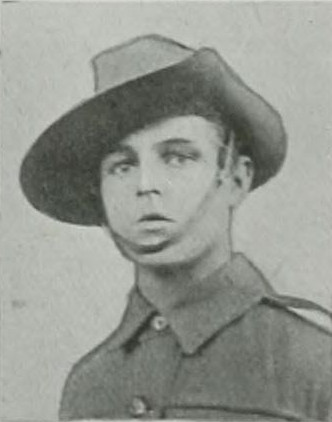
Arthur Jesse G. Bradford.
BRADFORD, SIR EVELYN RIDLEY, 2nd Bt., Lieut.-Col. 2nd Seaforth Highlanders, eldest s. of Sir Edward Ridley Colborne Bradford, 1st Bt., some time (1890–1903) Commissioner of Police of the Metropolis, and an extra Equerry to His Majesty the King, by his 1st wife, Elizabeth Adela, dau. of Edward Knight, of Chanton House, Alton; b. India, 16 April, 1869; educ. Eton and Sandhurst; gazetted 2nd Lieut. 22 Aug. 1888, and promoted Lieut. 11 June, 1890, Capt. 3 July 1895, Major 26 June, 1902, Brevet Lieut.-Col. 10 May, 1913, and Lieut.-Col. 10 June, 1913. He served with the Soudan Expedition in 1898, being present at the Battles of the Atbara and Khartoum, and on the staff in the South African War, 1899–1902. He took part in the operations in the Orange Free State from May to 29 Nov. 1900, including actions at Poplar Grove, and Driefontein, and Witteberjer (1–29 July), and during the operations in Cape Colony, Feb.-March, 1901. His services were twice mentioned in Despatches [London Gazette, 7 May and 10 Sept. 1901], and in addition to the Queen’s medal with four clasps and the King’s medal with two clasps, he received his brevet majority and was placed on the list of officers considered qualified for staff employment in consequence of service on the Staff in the field. At the time of the outbreak of the European War he was in command of the 2nd Battn. of the Seaforths, the old 78th, and took them out from Shorncliffe in Brig.-Gen. J. A. L. Haldane’s 10th Infantry Brigade, which was brought up from the lines of communication in France to cover the retirement of the Expeditionary Force on Cambray. This duty was performed in the centre of the line by Major-Gen. Snow’s 4th Division, consisting of the 10th, 11th and 12th Infantry Brigades. These units broke the front of the German pursuit, and suffered in consequence. as the 1st and 2nd Army Corps fell back. He was killed in action at the Battle of the Aisne, 14 Sept. 1914, and was buried at Bucy Le Long, near Soissons. Sir Edward Bradford was a famous cricketer and played many fine games for Hampshire and the Army with Major Poore and Capt Wynyard, of the Staff College, as contemporaries, the last time he played in the County Eleven being against Surrey, at Aldershot, in 1902. He m. at Colgate, Faygate, Sussex, 25 Nov. 1909, Elsie Clifton, 3rd dau. of Col. James Clifton Brown, and had three children: Sir Edward Montagu Andrew, now 3rd Bt., b. 30 Nov. 1910; Ridley Lewkenor, b. 11 April, 1912, and Donald Clifton, b. 22 May, 1914.
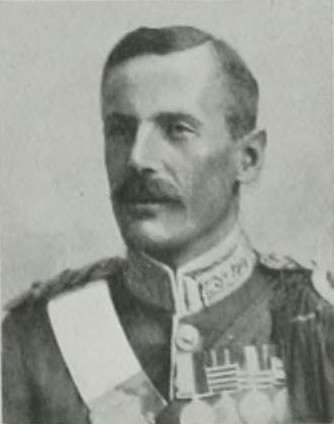
Sir Evelyn R. Bradford.
BRADFORD, GEORGE RICHARD, 2nd Engineer, No. 773, H.M. trawler Tern, s. of William Bradford, Labourer; b. 1878; was lost in the trawler Tern off the west coast of Scotland, 23 Feb. 1915, while mine sweeping. He m. at Hull, 28 June, 1898, Alice Edith (78, Day Street, Hessle Road, Hull), dau. of Robert Dibnah, Lamplighter, and had two sons, George Thomas, b. 16 Feb. 1904, and Charles Henry, b. 5 April, 1912.
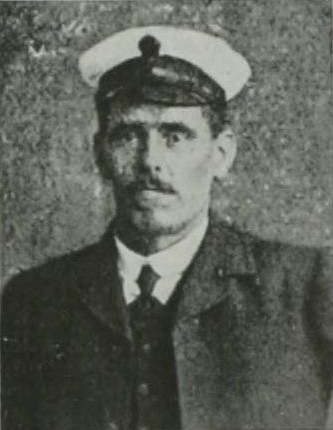
George Richard Bradford.
BRADLEY, ERIC JATINGA, Private, No. 140, 5th Battn. (London Rifle Brigade) The London Regt., eldest s. of James Bradley, of Grovehill, Suckley, co. Worcester, Tea Planter; b. London, 28 June, 1892; educ. Rottingdean, Rugby and Pembroke College Cambridge (Honours); entered at the Inner Temple, but on the outbreak of war at once enlisted; he proceeded with his battn. to France 4 Nov., and was mortally wounded with four others in the early morning of 5 Dec. by shrapnel, which burst on the parapet of the trench. He died the same day at No. 2 Clearing Hospital, Bailleul, being buried in the cemetery there (No. 149); unm.
BRADLEY, REGINALD JOHN, Private, R.M.L.I., Ch./17049, H.M.S. Hawke; lost in action in the North Sea, 15 Oct. 1914.
BRADLEY, THOMAS, Trooper, No. 13/296, Auckland Mounted Rifles, New Zealand Expeditionary Force, s. of Benjamin Bradley, of Christchurch, formerly of co. Lincoln; b. Papains, Christchurch, New Zealand, 16 June, 1884; educ. Christchurch High School; joined the Mounted Rifles, 10 July, 1914; went to the Dardanelles in May, and was killed in a night attack at Gaba Tepe, Gallipoli, 19 May, 1915; unm. He was buried on Walker’s Ridge there.
BRADSHAW, FRANK SEYMOUR, Capt., 1st Battn. Prince Albert’s Somerset L.I. (the old 13th), only s. of the late Major Frank Boyd Bradshaw (13th Somerset L.I.), by his wife, Catherine Douglas, dau. of Capt. Loftus Nunn, late 99th Regt., and great-grandson of Gen. Lawrence Bradshaw, some time commanding 13th L.I.; b. Weston-super-Mare, co. Somerset, 4 Dec. 1883; educ. East Sheen, Harrow and Sandhurst; gazetted 2nd Lieut. 23 Jan. 1904, and promoted Lieut. 12 June, 1906, and Capt. Nov. 1914. He was killed in action at Ploegsteert Wood, 19 Dec. 1914, and was buried near Somerset House there; unm. One of Capt. Bradshaw’s men wrote: “His death is much regretted by the whole company, because they could always trust him. He would never send his men where he would not go himself. He was an exceptionally brave man, and knew his work, and it will be very difficult to find his equal.”
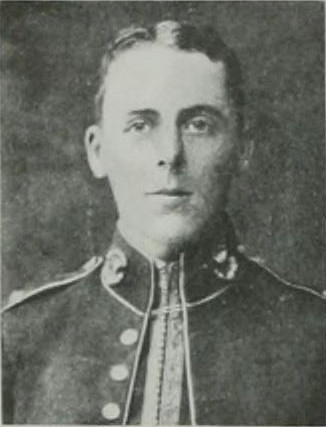
Frank Seymour Bradshaw.
BRADSHAW, GEORGE RAMSON, Stoker, 1st Class, E. 12797 (Ports.), H.M.S. Hogue; lost in action in the North Sea, 22 Sept. 1914.
BRADSHAW, MATTHEW, Private, R.M.L.I., Ch./12547, H.M.S. Aboukir; lost in action in the North Sea, 22 Sept. 1914.
BRADY, EDMUND, L.-Corpl., No. 9118, 2nd Battn. The Royal Scots, 3rd s. of Patrick Brady, of 102, Waterloo Street, Crumpsall, Manchester, Labourer, by his wife, Anne; b. Miles Platting, Manchester, 2 Sept. 1881; educ. St. Edmund’s R.C. School there; enlisted 9 Dec. 1904, and served eight years in India, winning a silver spoon for shooting. An attendant at the Crumpsall Workhouse when war was declared, he was called up, and was killed instantaneously in action, during the advance at Loos, 25 Sept. 1915, being struck in the forehead by a bullet; unm.
BRAIK, JOHN, Sergt., No. 22961, 12th, later 4th, Battn. Canadian Expeditionary Force, s. of the late Adam Braik, of Kemnay, co. Aberdeen, Mill Owner, by his wife, Helen, dau. of John Ingram; b. Garthy, co. Aberdeen, 5 Oct. 1868; educ. Kemnay Public School, and was a mill owner. He joined the 4th Volunteer Battn. of the Gordon Highlanders in 1880, and obtained a commission in the same in 1896. On the outbreak of the South African War he enlisted as a Private in the 2nd Scottish Horse and served through the latter part of that campaign, receiving the medal. He was subsequently attached to the R.G.A. as Instructor of Military Signalling, and was shooting in the wilds of British Columbia when the European War began. He immediately hastened several hundred miles through the North-West to the nearest recruiting office and volunteered for service. He was offered a commission in the second contingent, but declined to wait, and was one of the last recruits entered for the first contingent, and came over with them in Oct., crossing to France in Feb. He subsequently returned to England to convey machine guns to the Front, and was given charge of one on his return. He was seriously wounded 18 June, 1915, by a shrapnel shell which burst above his gun, and was invalided to England, where he died in the Royal Herbert Hospital, Woolwich, 5 Aug. following. He was buried in Heroes Corner, Greenwich Cemetery.
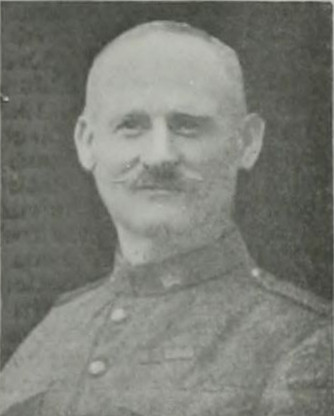
John Braik.
BRAITHWAITE, JOSEPH, Stoker (Native), H.M.S. Good Hope; lost in the action off Coronel, on the coast of Chili, 1 Nov. 1914.
BRAMALL, HORACE, Acting E.R.A., 4th Class, M. 7357, H.M.S. Aboukir; lost in action in the North Sea, 22 Sept. 1914.
BRAMLEY, HAROLD, 2nd Lieut., 2/5th King’s Own Yorkshire Light Infantry (T.F.), previously L.-Corpl. (C Squad.) Leicestershire Yeomanry, 2nd s. of the Rev. Cyril Richard Bramley, M.A. (Oxon.), Vicar of St. John’s, Donisthorpe with Moira (St. Hilda); b. Manchester, 9 Feb. 1894; educ. St. John’s School, Leatherhead, 1904; devoted himself to farming, and after a two years’ course on a farm in Snarestone, went to Canada for nine months to see the conditions of farming there; returning in Dec. 1913, he went to Kidlington, near Oxford, to take charge of a farm, but on the outbreak of war immediately rejoined the Leicestershire Yeomanry (in which he had been 1911–12); went with them to the Front in Nov. 1914, was in several engagements, being promoted L.-Corpl. Feb. 1915, and 2nd Lieut. a week before he was killed in action near Ypres, 13 May, 1915; unm.
BRAND, ERNEST STANLEY, Capt., Royal Fusiliers, attd. West African Rifles, s. of William Burmann Brand, of 19, Linzee Road, Hornsey, N.; b. Stoke Newington, 3 Dec. 1878; educ. Charterhouse; received his commission as 2nd Lieut. in the 3rd Battn. Royal Fusiliers from the Militia, 4 Jan. 1899, and was promoted Lieut. 27 Jan. 1900, and Capt. 19 Oct. 1904. He was seconded for service with the Chinese Regt. at Wei-hai-Wei from 20 April, 1901, to 19 April, 1906; was employed with the West African Regt. from 14 July, 1906, to Dec. 1910, and again from 19 Sept. 1912. On the outbreak of the European War he was ordered to the Cameroons and was acting second in command when killed in action during the fighting around Jabassi on 8 Oct. 1914; unm. He was buried at Dibandi. A picture of the cross erected to his memory appeared in the Sketch for 5 June, 1915. Capt. Brand was a clever Chinese linguist.
BRANDON, JOHN COOPER, 340733, H.M.S. Hogue; lost in action in the North Sea, 22 Sept. 1914.
BRANTINGHAM, GEORGE, E.R.A., 1st Class, 155692 (Ports.), H.M.S. Aboukir; lost in action in the North Sea, 22 Sept. 1914.
BRASH, PRENTISE STEPHEN, Petty Officer, 180365, H.M.S. Pathfinder; lost when that ship was sunk by a mine, about 20 miles off the East Coast, 5 Sept. 1914.
BRASHAW, JOSEPH ARTHUR, Capt., 16th Battn. Australian Imperial Force, 3rd s. of Harry Brashaw, of Perth and Dudley House Farm, Kwelkam, Kununoppin, West Australia, by his wife, Sebra, dau. of John White, of Coventry, and nephew of Joseph White, of The Woodlands, Cowper Road, Bournemouth; b. Woalingham, New South Wales, 1891; educ. Bunbury, West Australia; joined the forces as a cadet when 17 years of age, and was later transferred to the Militia. He worked his way up through the ranks and received his lieutenancy in 1913. On the outbreak of war he volunteered for Imperial Service, and was sent to Melbourne to assist in training the New Forces. Here he contracted typhoid fever, and returned to West Australia, leaving for the front in charge of reinforcements for the 16th Battn. He arrived in time to take part in the historic landing at the Dardanelles on 25 April, 1915, and was subsequently wounded during the heavy fighting on 17 May. When convalescent he was given the opportunity of being invalided to England as his foot had not fully recovered, but pleaded to be allowed to rejoin his unit, and returned to duty on 17 July, being gazetted Capt. on the 29th. Nine days later, on 7 Aug. 1915, he was killed in action at Suvla Bay; unm.
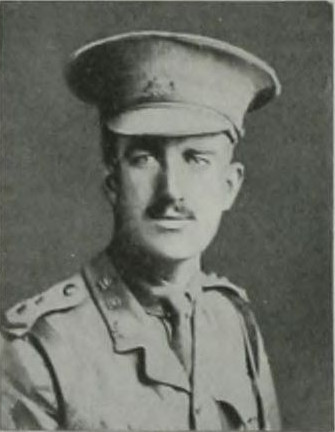
Joseph Arthur Brashaw.
BRASHIER, WILLIAM, Private, No. 2436, D Coy., 1/7th Battn. Durham L.I., 2nd s. of James Brashier, by his wife, Sarah, dau. of Hugh McKee; b. Durham, 20 Jan. 1895; educ. there; enlisted after the outbreak of the war, and died in hospital at Boulogne, 14 May, 1915, of wounds received in action; unm.