The Roll of Honour. (continued 37)
Reading edition
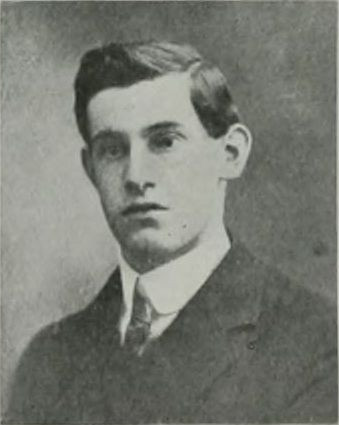
Stanley Brace Peart.
PEAT, WILLIAM McDONALD, Private, No. 10299, 2nd Battn. the Scots Guards, 2nd s. of Colin Peat, of 7, Roseburn Terrace, Edinburgh, formerly of Ratho, Midlothian, by his wife, Isabella, dau. of William McDonald, of Barflat, Aberdeenshire, Farmer; b. Edinburgh, 11 Feb. 1896; educ. Brunsfield and Roseburn Public Schools, Edinburgh; enlisted 1 Sept. 1914; went to France 16 Feb. 1915, and was killed in action by a shell near Givenchy, 14 June, 1915. He was buried along with seven of his comrades just where he fell, after a charge at Festubert, where his coy. were nearly all killed or wounded. He had been picked as reserve stretcher-bearer but did not have the opportunity of performing the duties assigned to him.
PECKHAM, BERTRAM, Leading Stoker (R.F.R., B. 2854), 301582, H.M.S. Good Hope; lost in action off Coronel, on the coast of Chili, 1 Nov. 1914.
PECKER, HENRY CYRIL, Lieut., 3rd. attd. 1st, Battn. The Royal Scots, 4th s. of Major and Quartermaster George Pecker, of Workington, co. Cumberland (now on active service with the Border Regt. (T.F.)), by his wife, Alice Charlotte, dau. of Septimus Radclyffe; b. Shrewsbury, 8 Oct. 1894; educ. St. Bees School, where he was a member of the O.T.C., and on leaving there entered the St. Helen’s Colliery Co.; joined the General Reserve of Officers of the 3rd Border Regt. as 2nd Lieut., 17 May, 1913, and on the outbreak of war in Aug. 1914, was drafted to the Royal Scots; went to France in Oct., was wounded at Ypres in Dec., but returned to his Regt. in March; was promoted Lieut. 29 April, and was killed in action at Hooge, by a shell, the following day, 30 April, 1915. Buried in Hooge Chateau. His school magazine wrote of him: “A keen sportsman, a charming companion, a gentleman in its fullest sense, he could not fail to win his way in his Regt., as he had done at School and in professional life.” He was unm.
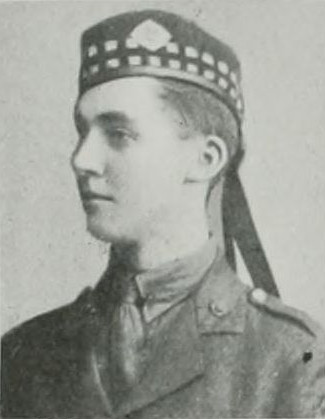
Henry Cyril Pecker.
PECKSON, JOSEPH WILLIAM, Leading Signalman (R.F.R., Ch. B. 9055), 196514, H.M.S. Cressy; lost in action in the North Sea, 22 Sept. 1914.
PEDDEL, SYDNEY EDGAR, Sergt., No. 8918, 5th Battn. (London Rifle Brigade) The London Regt. (T.F.), 4th s. of Edward James Peddel, of 33, Cardonzo Road, Caledonian Road, Holloway, N., Coach Trimmer, by his wife, Sarah Elizabeth, dau. of Isaac Salter, of Southampton; b. Salisbury, co. Wilts, 1 July, 1888; educ. St. James’s Church School, Holloway; was employed in a city stockbroker’s office; joined the L.R.B. in 1907; volunteered for foreign service on the outbreak of war in Aug. 1914; went to France 1 Nov. following; took part in several trench attacks; came home on leave 21 Feb. 1915; returned to the firing line on the 28th, and was killed in action at Ploegsteert, 10 April following, unm. Buried in the L.R.B. Cemetery in the wood there. 2nd Lieut. A. Bryan White wrote: “Although I had only been his platoon commander for a very short time, I have known Sergt. Peddel for many years, and feel that I have not only lost a good N.C.O. but a very old friend. He was liked and respected by every man in the battn., and would have made an excellent officer had his commission gone through sooner.” Sergt. Peddel was well known in North London as an indefatigable athlete. He was a leader of the Gymnasium connected with St. James’s Church, Holloway, and the possessor of several medals won in various competitions. He took part in the Territorial sports at Stamford Bridge in 1913, when the London Rifle Brigade beat the London Scottish in the Marathon in the record time of 1 hour 33 mins. 37 secs.—a remarkably fine achievement. Sergt. Peddel was then a L.-Corpl. In April, 1914, when the L.R.B. made the forced march from London to Brighton, Corpl. Peddel (to which rank he had been promoted) was pacemaker, and assisted to set up a new record for long-distance marching, the Foreign Legion’s record of 50 miles in 15½ hours being easily beaten. The time occupied by the L.R.B. to do the 52½ miles was 14 hours 23 mins. (marching time 12 hours 44 mins.). Sergt. Peddel secured several prizes in L.R.B. contests. He won a silver cup in the school of arms competition 1913, bayonet v. bayonet, and another cup in the five miles race in the same year. He was also a member of the Orion Harriers, the Archway Harriers, the Crouch End Cyclist Club, and the Alexandra Park Tennis Club.
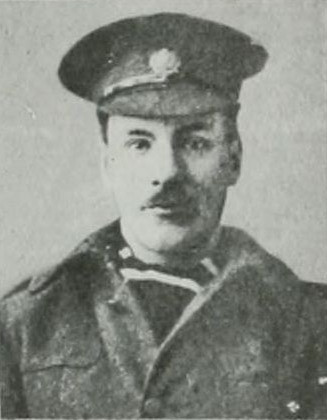
Sydney E. Peddel.
PEDDER, PERCY JAMES, Private, No. 7759, 2nd Battn. The Border Regt., eldest s. of (—) Pedder; was for some time in South Africa; returned during the Balkan War, and went to Greece with the British Red Cross. On the outbreak of the European War he volunteered and joined the 2nd Border Regt.; went to France with his Regt. in the 7th Division, and was killed in action 24 Oct. 1914, while assisting a wounded comrade. Coy. Sergt.-Major Stuart Davenport wrote: “I am able to inform you from an eyewitness who was next to him when he was killed that he died a hero in a trench at a traverse.... A man was hit by a shrapnel; no one would go and help him at the moment—as shell after shell was coming in at that particular spot. Pedder went and had succeeded in bandaging him up when he was struck behind the left ear by one bullet from a shell, which penetrated his brain. He died at once and said not a word, and he was buried that night, a cross was put on his grave.” He m. Annette (26, Palatine Road, Stoke Newington, N.), dau. of (—).
PEEL, ALAN RALPH, Capt., South Wales Borderers (24th Regt.), eldest surviving s. of Herbert Peel, of Taliaris Park, co. Carmarthen, J.P., D.L., by his wife, Mary Susannah Ainsworth, dau. of the late Capt. William Lee, R.M.L.I.; b. Taliaris Park, 7 July, 1886; educ. Cheltenham College and Sandhurst; gazetted 2nd Lieut. to the South Wales Borderers, 24 Jan. 1906, became Lieut. 1 Dec. 1907, and Capt., 12 Sept. 1914; served with the 1st Battn. in India, 1907–9, and at Pretoria, 1910; attached to the South African Mounted Infantry, Feb. 1911, and quartered at Harrismith and Bloemfontein to 1912, in which year he was seconded to the West African Frontier Force (Nigerian Regt.). Returning home on furlough in 1914, he was the same year seconded for service with the Nigerian Mounted Infantry, and left again for West Africa in June; he was killed in action, leading a bayonet charge, at Kosseoa, near Marna, North Cameroons, 17 Nov. 1914; unm. His Commanding Officer wrote as follows: “I had made application for him to join me, knowing his ability. You have the honour of knowing no soldier could have met a more gallant death, viz., at the head of his men, leading them to the charge and showing an example of great bravery. He was buried with all honours by the Capt. of the French company with whom he was operating at the time.” The latter wrote: “I paid the funeral honours ... to the two brave English officers, MM. le Capit. A. R. Peel and Lieut. Percival, who fell on the field of honour while giving to their men an example of great bravery.” The Commandant of the Nigerian Regt. wrote as follows: “To lighten your great sorrow you have the honour of knowing that your son died in a manner worthily upholding the finest traditions of the Service, and setting an example of valour to the whole regt., among whom he was so deservedly known as a brave and upright officer and the best of good comrades.” Capt. A. R. Peel was a thorough all-round sportsman, a good rider and polo player.
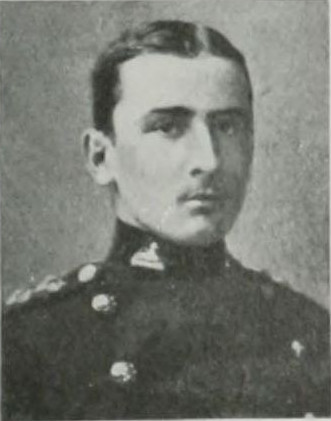
Alan Ralph Peel.
PEELING, HARRY COURTLAND, Officer’s Cook, 1st Class, 365838, H.M.S. Hawke, s. of Joseph Peeling, of Gardener’s Lodge, Wickham Place, near Witham, co. Essex; lost when that ship was torpedoed in the North Sea, 15 Oct. 1914.
PEET, JOHN EDWARD GRIMSTON, 2nd Lieut., 9th (Service) Battn. The Queen’s Royal West Surrey Regt., elder s. of James Henry Peet, of Perry Hill, Worplesdon, co. Surrey, M.D., by his wife, Winifred, dau. of the late Major Henry Grimston Hale, 11th Hussars; b. Huddersfield, co. York, 24 April, 1895; educ. St. George’s College, Weybridge, and Douay Abbey, Woolhampton; enlisted in the Berkshire Yeomanry, 25 Sept. 1914; gazetted 2nd Lieut. in the Royal West Surrey Regt., 9 Feb. 1915 and was accidentally killed in a motor cycle collision at Guildford on the 27th while on service. Lieut.-Col. J. B. Kerslake wrote: “We had great expectations of him, and in no case have I recommended a commission with more confidence. His premature death is a loss not only to his family but to his country. In your great loss we, indeed, sympathise most deeply. Your only consolation can be that he met his death while serving his country, and doing his duty to the fullest.” And Brig.-Gen. Andrew L. Macfies, Commanding 1st South Lancashire Brigade: “The class of instruction to which your son belonged is attached to my brigade. He was, therefore, to some extent under my command, and I understand showed every promise of becoming a good officer.”
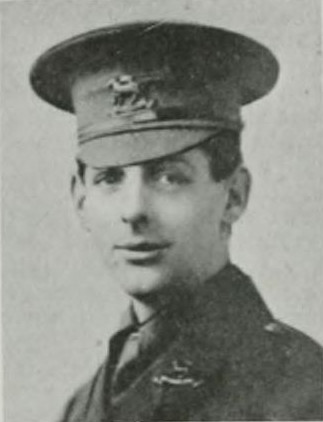
John Edward G. Peet.
PELHAM, HENRY ALFRED, Stoker, 1st Class, K. 9409, H.M.S. Good Hope; lost in action off Coronel, on the coast of Chili, 1 Nov. 1914.
PELHAM, HON. HERBERT LYTTLETON, Lieut. and Adjutant, 2nd Battn. Royal Sussex Regt., 4th and yst. s. of Francis Godolphin, 5th Earl of Chichester, by his wife, Alice, née Carr Glyn (Oldland, Keymer, Sussex), dau. of George Carr, 1st Baron Wolverton; b. Lambeth Rectory, London, 3 April, 1884; educ. by the Rev. A. Tabor, Cheam; Charterhouse; and Rev. V. Scott, South Lynn, Eastbourne; joined the Duke of Connaught’s Own Hampshire and Isle of Wight Royal Garrison Artillery (Militia), 12 April, 1902; gazetted 2nd Lieut., Royal Sussex Regt., 3 June, 1904; joined the 2nd Battn. at Malta, 5 Aug. 1904; served in Crete during the insurrection and later on the International Tribunal there; and in Belfast 1907 during riots; promoted Lieut. 26 Sept. 1908; passed first “distinction” in musketry and over 95 per cent. in machine gunnery courses at Hythe, 25 Sept. 1909; appointed Adjutant 18 Dec. 1911; took Brevet Certificate, and was accepted for Royal Flying Corps, 9 April, 1914; specially commended for work of mobilisation, Aug. 1914; left for France as Senior Lieut. and Adjutant, 2nd Battn., with 2nd Division, 1st Army Corps, 12 Aug. 1914, became acting Capt. after the death of Capt. Jemmet Browne, 12 Sept., and was killed in action 14 Sept. following, during the Battle of the Aisne; unm. The 2nd Royal Sussex were in reserve at Mons, and formed part of the rearguard during the retirement from that place, and then became the vanguard of the 1st Army, when the Germans turned, before the Battle of the Marne. Major-Gen. E. H. Bulfin wrote: “I ordered the Sussex to pass on and seize the ridges north of the village of Priez.... 10 Sept., for the good work done that day I sent in Pelham’s name for recognition. 14 Sept. Pelham with a handful of men of the Sussex held on to the Chemin des Dames, and it was here that he lost his life, working the machine guns, and he died one of the most brave and gallant gentleman it has ever been my honour to know. A fine capable officer who put his duty before everything, and by his self-sacrificing devotion set a splendid example to us all. By his death the Regt. has suffered a terrible loss and the Army has lost a most capable officer, who would have gone far in his profession.” His commanding officer. Major E. V. B. Green, wrote: “Your son died a soldier’s death in the forefront of the fighting on the 14th. I have sent you in a separate package a testament which was found on him, and I am sorry that there is nothing more to send. We have lost a much-loved comrade who we all felt had a promising career before him, in fact, perhaps I cannot do better than quote to you the words in which his name has gone forward for mention in despatches. ‘Lieut. and Adjutant the Hon. H. L. Pelham. I saw this officer two or three times under heavy fire conveying orders and encouraging the troops. He was killed in an advanced position, assisting with the machine guns, several of the detachment having been knocked out. In him the Army have lost a most promising officer. His work during mobilisation and during the campaign has been deserving of the highest praise.’” and again later: “I wish I could give you further details regarding your son, but the circumstances of the battle on the 14th, the first day of the Aisne, were such that we were not able to hold to the foremost ground to which we got that day, and indeed although we have been here a month to-day, we have never got back on the actual ground on which your son was killed. I am being perfectly honest with you, as I judge you wish me to be. We know where your son fell, in the forefront of the battle, but we do not know as yet where he lies. The Germans, doubtless, have buried him, and when we move forward we shall, I hope, be able to give you fuller particulars. I am very pleased to be able to tell you that I have heard to-day that the President of the French Republic has awarded your son the Legion of Honour. For this he was recommended previous to his death. It will be, I am sure, a solace to you to know that his worth has received this recognition. Like many of his forbears, he has given his life for his country, and has not lived in vain.... No! It was not at Moulines. The action was fought between a place called Vendresse and Cerney, and your son was killed just on the edge of the latter place. He was with Mr. Dashwood in a farmhouse with the machine guns when the building was destroyed by a shell.... Mr. Dashwood tells me that his death was instantaneous, and that he was struck by a piece of shell and was thus saved from suffering.” He was awarded the Croix de Chevalier of the Legion of Honour “for conspicuous gallantry in the field between 23 Aug. and 31 Aug.”
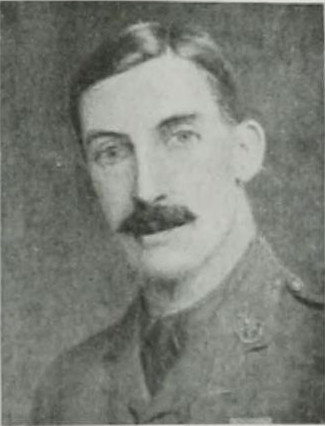
Hon. Herbert L. Pelham.
PELLETT, GEORGE ALBERT VICTOR, Stoker, 1st Class, K. 10403 (Ports.), H.M.S. Hogue; lost in action in the North Sea, 22 Sept. 1914.
LEIGH-PEMBERTON, THOMAS EDWARD GEOFFREY, Lieut., 13th Battn. (Princess Louise’s Kensington) The London Regt. (T.F.), only s. of Wilfred Leigh-Pemberton, of Wrinsted Court, Sittingbourne, Barrister-at-Law, by his wife, Alice Augusta, dau. of the late Capt. David Rolland Erskine, 92nd Highlanders [2nd s. of Sir David Erskine, of Cambo, 1st Bart.], and grandson of Sir Edward Leigh-Pemberton, of Torry Hill and Wrinsted, co. Kent, K.C.B.; b. Wrinsted Court aforesaid, 15 Nov. 1893; educ. Rugby and Christ Church, Oxford, where he was in the O.T.C.; was, at the outbreak of war, learning business with the firm of Antony Gibbs & Sons; appointed 2nd Lieut. in the Kensingtons, 12 May, 1914, and promoted Lieut. 1 Sept. following; volunteered for foreign service on the outbreak of war in Aug.; went to France at the beginning of Nov., and was killed in action near Laventie, 11 Jan. 1915; unm. Buried at Estaires. His commanding officer, Lieut.-Col. F. G. Lewis, wrote: “I feel I must write and tell you how all my officers will mourn his loss most deeply. His capacity and his popularity made everybody like him; he was a real good fellow in every way, and he has made a gap which we can never quite fill. I am sorrier than I can say”; and Major-Gen. Sir A. Turner: “He was a most excellent and conscientious young officer, and a great loss to his battn., in which he was a great favourite.” Capt. Thompson also wrote: “He was a really good officer, always cheerful, and of the very greatest assistance to me in the trying work of the trenches. The battn. has lost a good officer and all the officers a valued friend”; and Sergt. Stiles: “Lieut. Leigh-Pemberton was very much liked and respected by every man he came in touch with. One of our bravest officers; he considered his men; in fact, he used to take four hours duty whilst his sergeant slept, and the sergeant used to take two hours’ duty whilst he (the Lieut.) slept. He would at any time carry the pack of any man who was knocked up. I’m sure any of our men would have followed him through fire and water. His death was a great shock to the whole battn.” He was fond of sports of all kinds and hunted a small pack of harriers of his own.
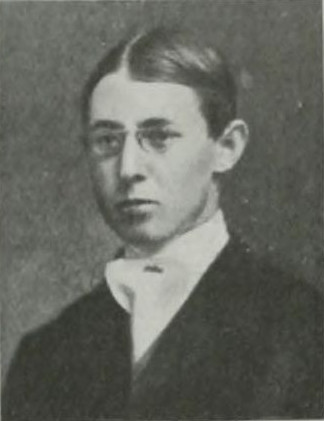
T. E. G. Leigh-Pemberton.
PENDALL, WILLIAM ALBERT, Private, No. 13657, 13th (Service) Battn. The Royal Scots (T.F.), eldest s. of Albert Pendall (now serving in France as a Gunner with the R.G.A.), by his wife, Mary Jane (14, Usk Road, York Road, Battersea), dau. of Henry Brown; b. Wandsworth Common, 8 Dec. 1898; educ. St. John’s Schools, Battersea; was a Butcher; enlisted, 17 April, 1915; went to France, 4 Oct. 1915, and was killed in action there, 9 Dec. 1915; unm.
PENDER, JAMES (HAMISH) GRANGER GEILS, 2nd Lieut., 3rd. attd. 2nd Battn. The Gordon Highlanders, eldest s. of Major James Pender, of Ardnoe, St. Catherine’s, co. Argyle, 8th Argyll and Sutherland Highlanders, by his wife, Janet Helen Maude, dau. of the late Thomas Geils, of Geilston and Ardmore, Dumbartonshire; b. St. Catherine’s, 19 July, 1892; educ. Larchfield Academy, Helensburgh; Edinburgh Academy, and Edinburgh University; gazetted 2nd Lieut. to the 3rd (Reserve) Battn. Gordon Highlanders, 17 Oct. 1914; went to France, 13 Feb. 1915, and was killed in action at Neuve Chapelle between 11–13 March, 1915; unm. A brother officer wrote: “He was shot through the head on the morning of the 11th trying to urge his men to keep their heads down and take cover, and his death was instantaneous. He died for his country and no mistake, and long will we all remember his cheery face”; and another: “He died thinking only of his men’s safety and not of his own, and was one of the most gallant among many gallant officers who died that day. As we were being enfiladed the men were in a very dangerous position, he shouted to them to get right in, as they could not hear, he stood up and signalled to them. He was shot through the head.”
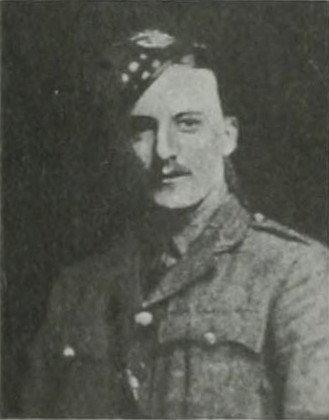
James G. G. Pender.
PENFOLD, GEORGE HENRY, Acting Chief Petty Officer, 164841, H.M.S. Hawke; lost when that ship was torpedoed in the North Sea, 15 Oct. 1914; m.
PENGELLEY, HAROLD, Private, No. 9707, 1st Battn. East Surrey Regt., s. of Samuel Pengelley, of 2, York Road, Uxbridge; served with the Expeditionary Force in France, etc.; died 6 Nov. 1914, of wounds received in action.
PENMAN, WILLIAM, Private, No. 10614, 2nd Battn. Scots Guards; b. Falkirk, enlisted 8 Sept. 1914, aged 24; served with the Expeditionary Force in France, etc.; killed in action, 16 May, 1915.
PENN, ALFRED EDWARD, A.B., R.N.R., 2453A, 3rd s. of Stephen Penn (died 1 March, 1912), by his wife, Elizabeth; b. Deal, 17 Sept. 1891; lost with his brother on H.M.S. Cressy, 22 Sept. 1914: unm.
PENN, JOSEPH LIVELY, Private, No. 2879, 1st Battn. Coldstream Guards, 5th s. of William John Penn, of Leamington Spa, by his wife, Elizabeth, dau. of Patrick Lively of Liverpool; b. Leamington Spa, 23 Feb. 1882; educ. there; enlisted in the Coldstreams in Aug. 1899; served for a short period in the South African War, and with the Expeditionary Force in France and Flanders from early in Sept. to 29 Oct. 1914, on which latter date he was killed in action at Ypres. He m. 1906, Anne, dau. of William Oldham, of Sheffield, and had two sons: Joseph, b. 1 June, 1907, and Ernest, b. 1 Sept. 1910.
PENN, LEWIS SYDNEY, A.B., R.N.R., 2451A, 2nd s. of Stephen Penn (died 1 March, 1912), by his wife, Elizabeth; b. Deal, 1 July, 1889; was serving with his two brothers on board H.M.S. Cressy when that vessel was torpedoed by submarines off the coast of Holland, 22 Sept. 1914; unm. The elder brother, Hubert, was saved after being two hours in the water.
DOUGLAS-PENNANT, HON. CHARLES, Lieut., 1st Battn. Coldstream Guards, 3rd s. of George Sholto Gordon, 2nd Lord Penrhyn, and yr. s. by his 2nd wife, Gertrude Jessie (37, Lennox Gardens, S.W.), yst. dau. of the Rev. Henry Glynne, Rector of Hawarden; b. at Wicken, Northants, 7 Oct. 1877; educ. Evelyn’s, Eton, and Sandhurst; gazetted 2nd Lieut., Coldstream Guards, 8 Sept. 1897, and promoted Lieut. 5 Feb. 1899; served in South African War, 1899–1902; took part in the advance on Kimberley, including actions at Belmont, Enslin, Modder River and Magersfontein; operations in the Orange Free State, including actions at Poplar Grove, Driefontein, Vet River (5–6 May) and Zand River; operations in the Transvaal, May-June, 1900, including actions near Johannesburg, Pretoria, and Diamond Hill (11–12 June); operations in the Transvaal, east of Pretoria, July to 29 Nov. 1900, including actions at Belfast (26–27 Aug.), operations in Orange River Colony, Nov. 1900, and in Cape Colony, Nov. 1900 to 31 May, 1902 (twice mentioned in Despatches [London Gazette, 26 Jan. 1900, and 10 Sept. 1901]; Queen’s medal with six clasps, King’s medal with two clasps); was A.D.C. to Major-Gen., 8th Division, 3rd Army Corps, and to Major-Gen. 8th Division, Irish Command (Sir Reginald Pole-Carew), 9 Nov. 1903 to 1905; retired and joined the Reserve of Officers, 22 Feb. 1905; rejoined his regt. on the outbreak of war; went to France, 11 Sept. 1914; was reported missing after the fighting near Gheluvelt, 29 Oct. following, and is now assumed to have been killed in action there that day. He m. at St. Michael’s, Chester Square, 28 Jan. 1905, Lady Edith Anne, née Dawson (Soham House, Newmarket), dau. of Vesey, 2nd Earl of Dartrey. His elder brother, Capt. the Hon. G. H. Douglas-Pennant was killed in action, 11 March, 1915, and his nephew, Lieut. the Hon. A. G. S. Douglas-Pennant, Grenadier Guards, was reported wounded and missing, 29 Oct. 1914.
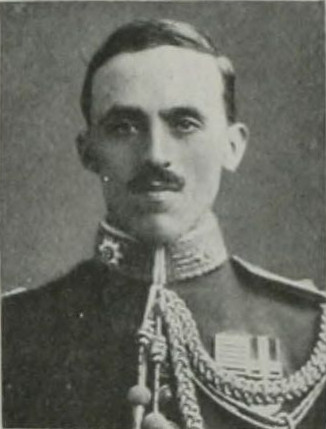
Hon. C. Douglas-Pennant.
DOUGLAS-PENNANT, THE HON. GEORGE HENRY, Capt., 1st Battn. Grenadier Guards, 2nd s. of George Sholto Gordon, 2nd Lord Penrhyn, and elder s. by his 2nd wife, Gertrude Jessie (37, Lennox Gardens, S.W.), yst. dau. of the Rev. Henry Glynne, Rector of Hawarden; b. Torquay, 26 Aug. 1876; educ. Evelyn’s and Eton; gazetted 2nd Lieut., Grenadier Guards, from the Militia, Oxfordshire and Buckinghamshire L.I., 1 Dec. 1897; promoted Lieut. 12 July, 1899, and Capt. 1905; served in the South African War, 1900–2; took part in the operations in the Orange Free State, April-May, 1900; operations in Orange River Colony, May to 29 Nov. 1900, including actions at Biddulphsberg and Wittebergen (1–29 July); operations in the Transvaal, Feb.–March, 1901, also those in Orange River Colony, Dec. 1900 to Feb. 1901, and March, 1901 to 31 May, 1902, when he was employed as Signalling Officer (mentioned in Despatches [London Gazette, 10 Sept. 1901]; Queen’s medal with three clasps and King’s medal with two clasps); was A.D.C. to Lieut.-Gen. Sir Leslie Rundle, Commanding-in-Chief, Northern Command, 1903–7, and in 1908 joined the Reserve of Officers. On the outbreak of the European War he was north of Gilgit, N. Kashmir, but at once returned to England, rejoined his old regt. in Sept., went to France in Nov., and was killed in action at Neuve Chapelle, 11 March, 1915, while leading the King’s Coy., Grenadier Guards, into action; unm. Buried there. He was mentioned in F.M. Sir John (now Lord) French’s Despatch of 31 May, 1915 [London Gazette, 22 June, 1915]. He took great interest in fox hunting, salmon fishing and big game hunting, and had travelled in East Africa, the Soudan, India, Turkistan, Persia, Canada, Alaska, etc. He left his collection of trophies, heads, skins, and specimens of game, to the National Museum, Wales, at Cardiff. His brother, Lieut. the Hon. Charles Douglas-Pennant, was killed in action, 29 Oct. 1914.
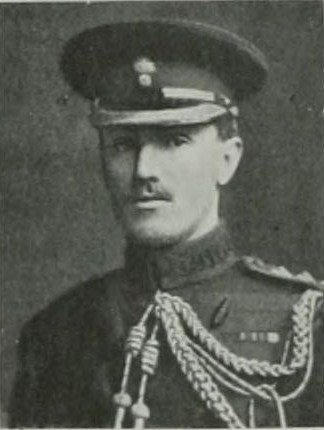
Hon. G. H. Douglas-Pennant.
PENNELLS, CHARLES PERCY, Private, No. 85, 16th Battn. Australian Imperial Force; served in Egypt and at the Dardanelles; killed in action, 27 May, 1915.
PENNEY, JOHN EDWIN, A.B. (R.F.R., B. 5060), 213157, H.M.S. Hogue; lost in action in the North Sea, 22 Sept. 1914.
PENNY, HENRY, Private, No. 7528, 1st Battn. Royal West Kent Regt.; served with the Expeditionary Force in France, etc.; killed in action 22 Jan. 1915; m.
PENNY, WILLIAM, Chief Signal Boatswain, R.N., 2nd s. of James Penny, by his wife, Christina, dau. of (—) Gunn; b. Benares, Bengal, 11 June, 1864; entered the Royal Navy, 26 Aug. 1879, as a boy in H.M.S. Resistance; was drafted to the Impregnable, 30 Aug. 1879, and then to the Inconstant, in which ship he escorted the King, when Prince George, round the world. He served in the Egyptian Campaign, 1882, for which he received the medal and clasp. He also served in the following ships: Duke of Wellington, Victor Emanuel, St. Vincent, Northumberland, Active, Victory and Royal Oak, and was promoted Signal Boatswain, 8 July, 1896. He afterwards served in the Ramillies under Admiral Hopkins until July, 1899; when he was appointed to the Vivid for the Signal School until 1903, then to the Revenge, flagship of Admiral Wilson, with whose staff he transferred to the Exmouth until 1907, when he was appointed to the Victory for Signal School 1907–1910. He was promoted Chief Signal Boatswain, 4 June 1909, and served in H.M.S. Prince of Wales, under Admiral Jellicoe, 1910 to 1911. On the outbreak of the European War in 1914 he was appointed to the Good Hope, flagship of Vice-Admiral Sir Christopher Craddock, C.B., M.V.O., and was killed in action off Coronel, on the coast of Chili, 1 Nov. 1914. He m. at St. John’s, Bognor, 26 Aug. 1893, Elizabeth Jane (Argyll Road, Bognor), eldest dau. of William Smith, late Chief Officer of Coastguards, and had two children: Gertrude Ethel, b. 14 June, 1896, and Dorothy Marguerite, b. 15 Jan. 1909.
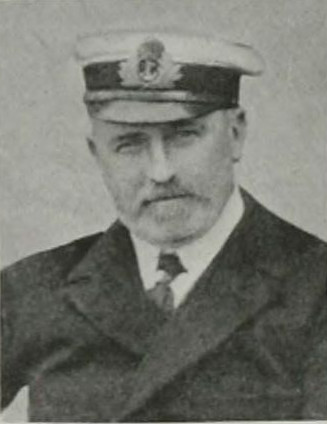
William Penny.
PENSON, REGINALD, Private, No. 2391, 2nd Battn. (Royal Fusiliers) The London Regt. (T.F.), s. of Frederick Penson, of 8, Burns Street, Mansfield, Nottingham, by his wife, Mary Ann, dau. of Israel Dook; b. Leicester 11 April, 1887; educ. at Gainsboro’; was an employee in the Army and Navy Stores at Westminster; volunteered and joined the Royal Fusiliers, 6 Sept. 1914; went to Malta with his Battn., 9 Sept.; proceeded to France, 30 Dec., and was killed in action near Armentières, 16 May, 1915; unm. Buried at Ferme-de-la-Buterne, Chapelle d’ Armentières. Capt. R. Henman wrote: “It is with the deepest regret I have to inform you that your son was killed this morning whilst observing the effect of artillery fire. I would like to offer you my most sincere sympathy as well as that of the whole company. We shall all miss your dear son most awfully, as his genial manner, his courage, and his willingness to do any work made him loved by everyone.” Private Penson was a fine vocalist and won a £100 scholarship in London for singing.
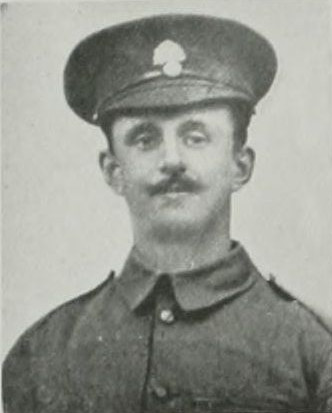
Reginald Penson.
PENTER, EDWARD SYDNEY, Petty Officer, 159207, H.M.S. Monmouth; lost in action off Coronel, on the coast of Chili, 1 Nov. 1914.
PEPPER, JAMES WILLIAM THOMAS, B.A., Private, No. 793, 1/5th Battn. (The London Rifle Brigade) The London Regt. (T.F.), only s. of James William Pepper, of 15, West Cliff, Whitstable, Local Secretary and Correspondent at Whitstable for the Kent Education Committee, by his wife, Emma Maria, dau. of John Harlow; b. Whitstable, co. Kent, 2 July, 1891; educ. Simon Langton School, Canterbury, and Goldsmiths’ College, London (B.A. 1912), and on leaving there was for several months a supplementary teacher for the Kent Education Committee, later being appointed certificated teacher at Bridge Road Council School, Harlesden, under the Willesden Education Committee, who wrote highly of his influence and of his ability. On the outbreak of war in Aug. 1914, he volunteered for foreign service and joined the London Rifle Brigade in Sept.; went to France with the first draft to join the 1/5th Battn., on active service in Flanders, in Jan. 1915; served in the trenches from Jan. to April; retired to the rear after Easter for a rest, but was suddenly ordered up with his regt. to the support of the Canadians at the Ypres salient, and was killed in action there, 26 April, 1915; unm. Buried at Fortuin, near St. Julien. He obtained a Junior County Scholarship at ten years of age and later a County Bursary; was especially interested in history and languages, and at the time war was declared was making a special study of Anglo-Saxon, and Old English. During his last two years at College he played successfully as a member of the College Rugby Team, and was also interested in cricket.
PEPPIATT, WILLIAM HENRY, Private, No. 9556, 5th Battn. (London Rifle Brigade) The London Regt. (T.F.), 2nd s. of the late William Robert Peppiatt, by his wife, Emily Elizabeth, dau. of the late Charles Giles; b. Stoke Newington, London, 2 Nov. 1888; educ. Bancroft’s School, Woodford Wells; entered the service of the London & North-Western Railway Co. in 1907, and when war broke out was in the General Manager’s office at Euston; he had joined the London Rifle Brigade in 1912, and volunteered for foreign service in Aug. 1914; went to France in Nov. and died at Ploegsteert, 5 Feb. 1915, of wounds received in action there the previous day; unm. Buried in the London Rifle Brigade Cemetery, Ploegsteert, Major C. Burnell, the officer commanding his company, wrote: “I personally feel very much his loss, he was one of those always willing to help and always cheerful even when things were at their worst.” He was one of the team of his regt. which won the Territorial Marathon in 1913, and one of the contingent from the London Rifle Brigade which marched to Brighton in record time. He was also an expert bayonet fighter.
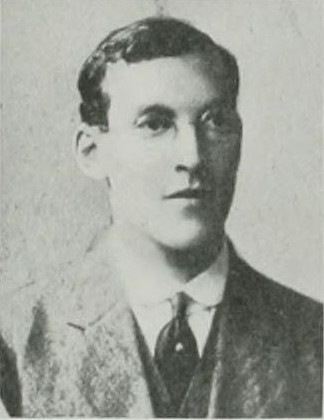
William Henry Peppiatt.
PEPYS, FRANCIS, D.S.O., 2nd Lieut., 2nd Battn. Oxfordshire and Buckinghamshire Light Infantry, 2nd s. of Capt. Arthur Pepys, of Knowle House, Budleigh Salterton, late 60th Rifles, by his wife, Margaret, dau. of the Rev. John Lomax; b. Budleigh Salterton, co. Devon, 2 April, 1891; educ. Charterhouse; gazetted 2nd Lieut. in the Oxfordshire and Buckinghamshire L.I., 24 May, 1913; went to France with the Expeditionary Force, 13 Aug. 1914; took part in the retreat from Mons, the Battles of the Marne and the Aisne, and the repulse of the Prussian Guards at Ypres, 11 Nov. and was killed in action the following day by the bursting of a shell; unm. Buried at Zonnebeke. 2nd Lieut. Pepys was awarded the D.S.O. for conspicuous good work on 3 Nov. “in advancing from his trench and assisting in driving away a party of the enemy who were commencing to dig a new trench within thirty yards of his own. Thirty of the enemy were shot down on the occasion.” He was also mentioned in F.M. Sir John (now Lord) French’s Despatch of 14 Jan. 1915. His elder brother, 2nd Lieut. John Pepys, was killed in action at Mons, 23 Aug. 1914 (see following notice).
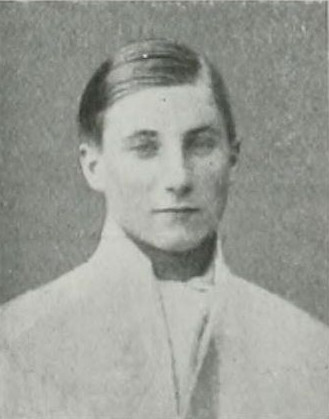
Francis Pepys.
PEPYS, JOHN, 2nd Lieut., 2nd Battn. King’s Own Yorkshire Light Infantry, eldest s. of Capt. Arthur Pepys, of Knowle House, Budleigh Salterton, late 60th Rifles, by his wife, Margaret, dau. of the Rev. John Lomax; b. Budleigh Salterton, co. Devon, 7 May, 1890; educ. Charterhouse, and the Royal Military College, Sandhurst: gazetted 2nd Lieut. King’s Own Yorkshire L.I., 9 Nov. 1910; went to France with the Expeditionary Force, 14 Aug. 1914, and was killed in action at Mons, on the 23rd, three hours after going into action as machine-gun officer; unm. Buried at Wasmes. His younger brother, 2nd Lieut. Francis Pepys, D.S.O., was killed in action at Ypres, 12 Nov. 1914 (see preceding notice).
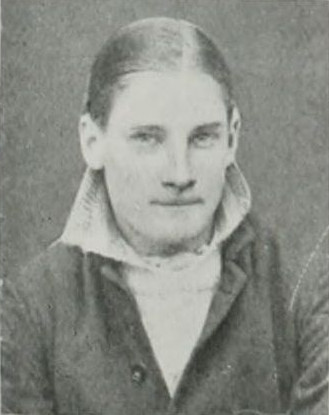
John Pepys.
PEPYS, REGINALD WHITMORE, Capt., 2nd Battn. Worcestershire Regt., yst. s. of the Rev. Herbert George Pepys, M.A., Hon. Canon of Worcester Cathedral (Florence Court, Torquay) by his wife, Louisa Harriet, dau. of John Whitmore Isaac, of Boughton Park, co. Worcester, and grandson of the Right Rev. Henry Pepys, D.D., Bishop of Worcester [yr. brother of Charles Christopher, 1st Earl of Cottenham]; b. Hallow Vicarage, Worcester, 3 Jan. 1883; educ. Haileybury College, and the Royal Military College, Sandhurst; gazetted 2nd Lieut., Worcestershire Regt., 18 Jan. 1902, and promoted Lieut., 2 July, 1904, served with the West African Regt. from 19 Sept. 1908 to 12 May, 1913, obtaining his company, 24 May, 1913, in which year he rejoined the Worcestershire Regt., and was appointed to the 2nd Battn.; went to France with the Expeditionary Force in Aug. 1914, and died in hospital at Chateau de Vermeil, 21 Sept. following, of wounds received in action the previous day, during the Battle of the Aisne. The Adjutant wrote: “He was shot while leading his men in a very hot corner. He was doing his duty to the full extent: he could do no more. He was shot through the chest, and I eventually carried him to the hospital, badly hit, but quite cheerful. He was commanding A Coy. when he was killed, as Capt. Carr, who came out in command of that company, was killed two days before. He is buried in the beautiful grounds of the Château de Vermeil, which was used as a temporary field hospital”; and Sergt. Hill: “Our first place to go for was an empty trench, which we occupied under heavy gun and rifle fire; but it was an absolute death-trap for anyone to show themselves. During this time, I can assure you that Capt. Pepys gave his orders with the coolness as though he had been at Aldershot. After a time there was a break in the fire, and then came the final order to charge, and the Captain jumped up, revolver and sword in hand, to lead the company forward, and I was with him. His wounds were caused by a rifle bullet hitting him in the chest. We were all pleased to think that we had Capt. Pepys posted to take command of the company after the death of our previous commander, the late Capt. Carr, and the whole company deeply regretted that he had been taken from us so soon.” Capt. Pepys m. at Iffley Church, near Oxford, 27 July, 1914, Maud Mael, dau. of William Foster, of Beechwood Iffley; s.p.
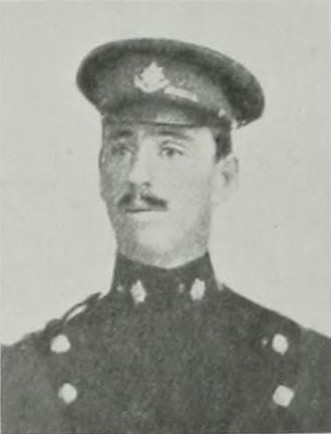
Reginald W. Pepys.
PERCY, HENRY EDWARD, Private, No. 750, Honourable Artillery Company, elder s. of Josceline Hugh Percy, of 49, Talbot Road, Highgate [grandson of the Right Rev. Lord Hugh Percy D.D., Bishop of Carlisle, yr. brother of George, 5th Duke of Northumberland], by his wife, Grace Anne, dau. of Edward Percy Thompson; b. Southampton, 6 Aug. 1893; educ. Darlston Court, Swanage, and St. Bees School, Cumberland; was in Equity and Law Life Assurance Office, Lincoln’s Inn Fields; joined the H.A.C. in Feb. 1913; volunteered for foreign service on the outbreak of war in Aug. 1914; went to France 18 Sept. 1914, and was killed in action near Kemmel, 25 Feb. 1915; unm. Buried at Kemmel.
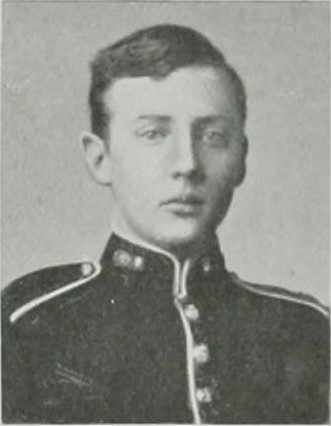
Henry E. Percy.
PERCY, LEONARD SIDNEY, Private, No. 1623, 1st Battn. (Royal Fusiliers) The London Regt. (T.F.), s. of Charles John Percy, of 16, Stuart Road, West Kilburn, by his wife, Elizabeth, dau. of H. Kent; b. Salisbury, co. Wilts, 13 Aug. 1896; educ. St. Mark’s School, Marleborne; was a Milkman; joined the Royal Fusiliers in 1913; volunteered for foreign service on the outbreak of war in Aug. 1914; trained in Malta for six months; went to France, 10 March, and died in the Australian Hospital, Wimereux, 14 Oct. 1915, of wounds received in action during the Battle of Loos, 26 Sept.; unm. Buried at Wimereux.
PERCY, WILLIAM REGINALD MINSHULL, Private, No. 9755, 5th Battn. (Rifle Brigade) The London Regt. (T.F.), s. of John Henry Percy, of Bod Meurig, Rhyl, by his wife, Catherine, dau. of William Minshull, of Mold; b. Southport, 4 Feb. 1895; educ. Epworth College, Rhyl, and then entered the office of the Prudential Society. On the declaration of war in Aug. 1914, he joined the London Rifle Brigade, and was killed in action near Ypres, 27 Feb. 1915; unm. Buried near St. Julien. His Capt. wrote of him as a great loss, “he was so cheery with a sort of Irish wit about him that made him excellent company.” One of his comrades wrote: “The whole battn. was under heavy shell fire at the time, and you will be glad to know that Reggie behaved magnificently during the whole period. He was in fact one of the most popular fellows in the platoon.” A writer in the Ibis said: “Clean-minded, high-spirited, with a charm of manner that captivated all with whom he came in contact, he was the embodiment of joyous youth. The cruel eclipse of this bright life has cast a shadow which only the years in their course can lighten.” From the Headmaster of Epworth College: “Many old Epworthians will remember the skilful drawings executed by W. R. M. P. His caricatures were the best this school have ever produced. All of us, masters and boys, at one time or another provided him with subjects for his friendly but critical pencil. The men of his company were fortunate in having a comrade so vivacious, and so full of kindly humour. Their testimony and that of the officers of the battn. show the high regard in which he was held, and to this testimony we add our tribute of esteem and affection.”
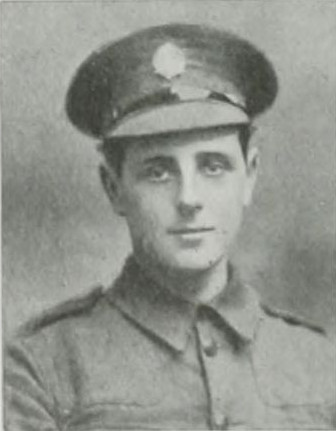
William R. M. Percy.
PERHAM, JOHN, Stoker, 1st Class, K. 14848, H.M.S. Cressy; lost in action in the North Sea, 22 Sept. 1914.
PERKINS, ALEXANDER, Leading Seaman, 227224, H.M.S. Cressy; lost in action in the North Sea, 22 Sept. 1914.
PERKINS, ARTHUR, A.B. (R.F.R., Ch. B. 10386), 203819, H.M.S. Cressy; lost in action in the North Sea, 22 Sept. 1914.
PERKINS, CHARLES EDWARD, Stoker, 1st Class (R.F.R., Ch. B. 9009), S.S. 105825, H.M.S. Aboukir; lost in action in the North Sea, 22 Sept. 1914.
STEELE-PERKINS, CYRIL STEELE, Lieut., 1st Battn. The King’s Own Royal Lancaster Regt., only surviving s. of George Chapman Steele-Perkins, of 30, Weymouth Place, Portland Place, W., and Kingsdown, near Deal, M.D., by his wife, Alice, dau. of Edward Chapman, of Sydney, New South Wales; b. Streatham, S.W., 27 Feb. 1887; educ. St. Paul’s School, London University and Sandhurst; from which latter he was gazetted 2nd Lieut. 1st Battn. Royal Lancashire Regt. 8 Feb. 1908, and promoted Lieut. 12 Sept. 1911. On the outbreak of war he went with that regt. to the Front, and was killed in action at Haucourt, between Cambray and Le Cateau, France, 26 Aug. 1914; unm. In an article headed “Our Troops Under Fire,” in “The Times,” 8 Sept. 1914 the writer said: “Then there was Lieut. Steele-Perkins, who died one of the grandest deaths a British officer could wish for. He was lifted out of the trenches wounded four times, but, protesting, he crawled back again and remained there till he was mortally wounded.” The following account appeared in “The Scout,” 26 Sept. 1914, p. 54: “On Aug. 26, 1914, The King’s Own Royal Lancaster Regt. was very heavily engaged. One of the greatest heroes of the fight was Lieut. Steele-Perkins. As the German hordes advanced, he—one of the few officers left—walked along the trenches, encouraging the men to do their utmost. No fear had he of danger. What the men could face he was willing to endure. A shell exploded, wounding him severely, and he was carried out of the trenches, protesting loudly. No sooner had he been carried to safety than he crawled back to the trenches; while he could move he would be with his men—they needed his presence to spur them on. ‘Ah,’ said one of his sergeants, ‘he was a proper man, he was. We would do anything for him.’ Four times he was lifted out of trenches, badly wounded, and four times he crawled back again, more feeble each time—nothing but actual physical weakness would keep him from sharing the dangers of his men. Then came the end—from a shell bursting overhead.”
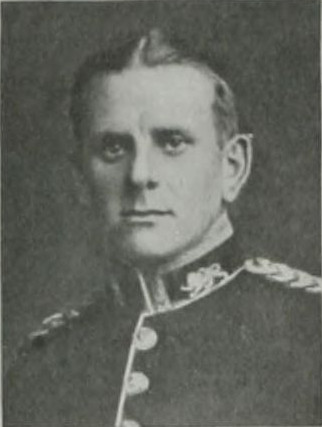
Cyril S. Steele-Perkins.
PERRETT, ERNEST, Petty Officer, 206389, H.M.S. Good Hope; lost in action off Coronel, on the coast of Chili, 1 Nov. 1914.
PERRETT, WILLIAM NELSON, Boy, 1st Class, J. 24698, H.M.S. Hawke, s. of Frederick Nelson Perrett, of 265, Dale Street, Chatham; lost when that ship was torpedoed in the North Sea, 15 Oct. 1914.
PERRY, ALFRED HENRY, Leading Telegraphist, J. 867, H.M.S. Good Hope; lost in action off Coronel, on the coast of Chili, 1 Nov. 1914.
PERRY, ARTHUR THEODORE, Private, No. 3/140, New Zealand Army Medical Corps, s. of Arthur Perry, of Northampton; b. Wellington, New Zealand, 4 May, 1886; educ. at Southampton, England; then returned to New Zealand; joined the New Zealand Army Medical Corps after the outbreak of war, 15 Aug. 1914; left Egypt for the Dardanelles 12 April, 1915; took part in the landing on the 25th April, and was killed in action there, 22 May, 1915; unm. Buried in the English Cemetery, Gallipoli. Lieut.-Col. C. M. Begg, commanding N.Z. Field Ambulance, wrote: “He was a very hard worker and was a general favourite in the company. During the time we have been under fire here, he was indefatigable in his attention to the wounded and never hesitated to expose himself in the course of his duties. May it be some comfort to you to know he died doing his duty;” and a comrade: “He died after a month of the most heroic and unselfish work given for the sake of others. He met this noble end as he had lived—a Christian, and by his patience and unselfish endeavours was loved by us all.”
PERRY, EVELYN WALTER COPLAND, 2nd Lieut., Royal Flying Corps (Special Reserve), only child of the late Walter Copland Perry, Barrister-at-Law, by his wife, Evelyn Emma (29, Thurloe Square, S.W.), sister of Lieut.-Col. Horace Robert Stopford, Coldstream Guards (killed in action at the Modder River, 28 Nov. 1899), and only dau. of the late Robert Stopford [grandson of James, 2nd Earl of Courtown, K.P.]; b. at 5, Manchester Square, London, 4 Dec. 1890; educ. St. David’s (Mr. Joyce’s), Reigate; Ripton, and Trinity College, Cambridge, and on leaving there worked at the Royal Aircraft Factory from Feb. 1911 to Aug. 1912. He obtained his aviation certificate (No. 130) on a Valkyrie monoplane at Hendon, 30 Aug. 1911; was gazetted 2nd Lieut., R.F.C. (S.R.), 21 March, 1913, and obtained his certificate as a First Class Pilot, Upavon, 13 Aug. following. On 1 Aug. 1914, he received orders to join the R.F.C. at Netheravon, which he did on 5 Aug., and attd. to the 3rd Squadron he flew with it to Dover on 12 Aug. The following day 42 aeroplanes flew to Amiens, whence he wrote but one letter, full of his extreme enjoyment in these flights, and adding that he was to keep the fine machine he had been using; but apparently these hopes were not realised and he had to give it up. He was killed instantaneously together with his pilot, H. E. Parfitt, on Sunday, 16 Aug 1914, on leaving Amiens, on a B.E. 8 machine, being the first British officer to lose his life on active service in France in the European War. The machine apparently stalled at about 150 ft., and caught fire on reaching the ground. He was buried in the cemetery at St. Acheuil, the following day; unm. Flight Commander P. Shepherd, R.N., wrote: “I knew your son both at Eastchurch and Upavon, and we have lost from the Flying Corps a most gallant officer.” Lieut. Perry did a considerable amount of flying while on the staff of the Royal Aircraft Factory on their early experimental machines, including testing a hydroplane at Fleet. On leaving the Royal Aircraft Factory he joined Mr. Sopwith at Brooklands, and flew very well on his old “Burgess-Wright” with the “Gnome” engine. He left Mr. Sopwith to take an Avro biplane to Portugal, where he put the machine through its tests for the Portuguese Army. In the course of these tests he flew over Lisbon and eventually, owing to engine failure, made a wonderfully skilful forced landing in the Tagus, without any injury to machine, or himself or his passenger even getting their feet wet. On his return to England Mr. Perry, in conjunction with Mr. Beadle, started building aeroplanes on their own account, and produced a small biplane on Avro-cum-B.E. lines, but with many original points, which flew extremely well (this was afterwards purchased by the Admiralty). Mr. Perry next started aviation works at Twickenham, and produced the interesting and beautifully made flying boat which was one of the features of the last Olympic Show.
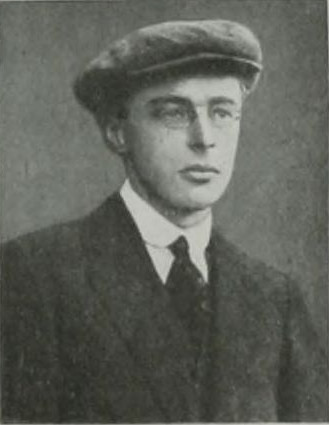
Evelyn Walter C. Perry.
PERRY, GEORGE HENRY, Leading Stoker, 1245, H.M.S. Cressy; lost in action in the North Sea, 22 Sept. 1914.
PERRY, GEORGE HERBERT GRESLEY, Capt., 2nd Battn. West Yorkshire Regt., only s. of Brigadier-General Hugh Whitchurch Perry, late R.A., Army Ordnance Department, by his wife, Minna Grace, dau. of Edward Reid Nelson Druce, of Victoria Park, near Dover; b. Plumstead, near Cape Town, 6 Aug. 1893; educ. Hillside, West Malvern, Haileybury College and Sandhurst; gazetted 2nd Lieut., West Yorkshires, 4 Sept. 1912, and promoted Lieut. 14 Aug. 1913; was wounded on 12 March, 1915, during the counter-attack at Neuve Chapelle, and died in No. 7 Stationary Hospital, at Boulogne, 15 March following; unm. He was mentioned for gallantry in the field by F.M. Sir John (now Lord) French, in his Despatch of 31 May, 1915, and his Commanding Officer, Major P. L. Ingpen, wrote of him: “He was hit during the German counter-attack on 12 March, 1915, while pluckily working his machine guns. I need hardly say that he will be a great loss to the regt. and one that cannot easily be replaced. It was owing to his disposition of his guns that the regt. was able to beat off the attack with great loss to the enemy. In my report I mentioned him for special commendation and it was forwarded by the Brigadier.” Although he had been at the Front some months, this was his first engagement.
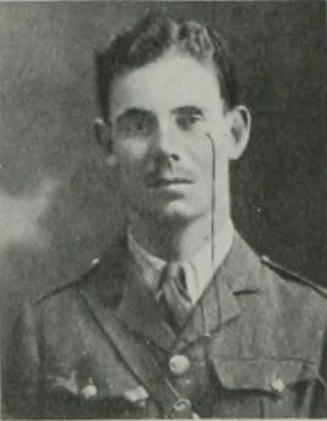
George H. G. Perry.
PERRY, WILLIAM, Private, No. 6668, 3rd Battn. Coldstream Guards, s. of Thomas Perry, of 38, Chester Street, Wolverhampton, Foreman Tinsmith, by his wife, Jane, dau. of James Darling, of Birmingham; b. Wolverhampton, co. Stafford, 10 March, 1881; educ. St. Andrew’s School there; enlisted 1905; served three years with the Colours, and six with the Reserve; mobilised 4 Aug. 1914; went to France in Aug., and was killed in action at Poperinghe, during the First Battle of Ypres, 10 Nov. following; unm. Buried in Poperinghe Cemetery.
PERSSE, CECIL DE BURGH, Lieut., 7th (Princess Royal’s) Dragoon Guards (attd. Irish Guards), 4th and yst. s. of the late Henry Sadleir Persse, of Glenarde and Kiltullagh, co. Galway, J.P., by his wife, Eleanor Alice, dau. of Col. Thomas Seymour, of Ballymore Castle, co. Galway, J.P.; b. 17 July, 1875; educ. Cheltenham College and Trinity College, Cambridge, from which he took his degree. In the South African War (1899–1902) he served with the Warwickshire Imperial Yeomanry, and took part in the operations in the various Colonies, later receiving a commission in the 7th Dragoon Guards. For these services he received the Queen’s medal with three clasps, and the King’s medal with two clasps. When the Boer War was concluded he settled down in Government employment for a while. He received a commission in the Reserve of Officers of the 7th Dragoon Guards, 10 April, 1912, and on the outbreak of the European War rejoined his old regt. but as the infantry regts. were more in need of officers than the cavalry, he volunteered to exchange into the infantry, and was transferred to the Irish Guards, served with them in France and Flanders, and was seriously wounded in the head, in action in Flanders, 18 May, 1915. He was brought home to Netley Hospital, and seemed at first to be making satisfactory progress towards recovery, but some weeks later it was necessary to perform an operation; blood poisoning afterwards supervened and he died there on Monday 19 July; unm. He was buried in the Hospital Cemetery.
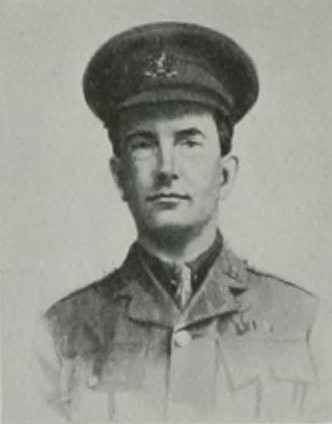
Cecil de Burgh Persse.
PERSSÉ, RODOLPH ALGERNON, 2nd Lieut., Reserve Battn. The Rifle Brigade, attd. 2nd Battn. King’s Royal Rifle Corps, only s. of the late Robert Algernon Perssé, of Creg Clare, co. Galway, J.P., by his wife, the Hon. Eleanor Laura Jane, née Gough (Creg Clare, Ardrahan, co. Galway), only surv. dau. of George Stephens, 2nd Viscount Gough; and grandson of the late Dudley Perssé, of Roxborough, co. Galway. D.L.; b. Roxborough, aforesaid, 12 May, 1892; educ. Eton and Magdalen College, Oxford, where he had just completed his second year when war broke out; obtained a commission in the Rifle Brigade, 26 Aug. 1914, joining the Reserve Battn. at Sheerness; went to France, 16 Oct.; was there attd. to the 2nd Battn. King’s Royal Rifle Corps, and was killed in action at Cuinchy, 1 Jan. following, during a night attack; unm. Buried there. He was mentioned in F.M. Sir John (now Lord) French’s Despatch of 14 Jan. 1915. His commanding officer wrote: “He had taken his platoon to attack a position early on the morning of 1 Jan., and after the position was taken it was found to be untenable, and the whole force was ordered back to their trenches. It was here that poor Perssé was killed. He was an exceptionally gallant boy, and we shall miss him very much. I had already submitted his name for his gallant behaviour near Ypres.” A brother officer also wrote: “What a splendid, brave, cool officer he was, he never flinched or wavered in his most gallant spirit, and his absolute fearlessness and pluck were grand, and were of the greatest value to his men. He will, indeed, be sadly missed, for he made himself so popular with all ranks”; and another: “He was without exception the bravest officer I have ever seen, and the best. His men would do anything for him. This is not only my own opinion, for I know that it was shared by every officer in the mess.” He was a fine all-round athlete and a first-rate shot. He played in the Eton eleven in July, 1911. At Oxford he did well in the Freshmen’s sports of 1913; won the Magdalen Grind; rode in the Intervarsity Point-to-Point, and was whip to the Magdalen Beagles. The President of Magdalen wrote of him: “He is indeed a loss to us here, young and old. Among the first and bravest, he has given his all, even himself. His bright, vivid, daring, high-spirited chivalrous personality had endeared him to us all.”
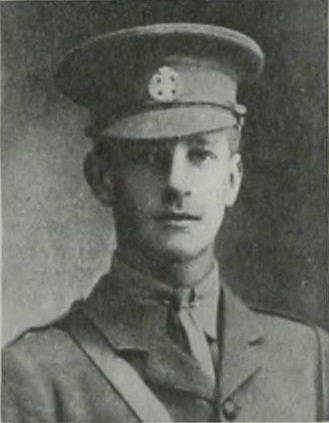
Rodolph Algernon Perssé.
PERYER, ALBERT EDWARD, Stoker, Petty Officer, 306704, H.M.S. Pathfinder; lost when that ship was sunk by a mine, about 20 miles off the East Coast, 5 Sept. 1914.
PESKETT, CHARLES EDWARD, Stoker, 1st Class, K. 4392, H.M.S. Good Hope; lost in action off Coronel, on the coast of Chili, 1 Nov. 1914.
PETER, SAMUEL VICTOR, A.B. (R.F.R., B. 1879), 201829, H.M.S. Good Hope; lost in action off Coronel, on the coast of Chili, 1 Nov. 1914.
PETO, CLEMENT HENRY, Capt., 10th (Prince of Wales’s Own Royal) Hussars, 4th and yst. s. of William Herbert Peto, of Dunkinty, Elgin, by his wife, Kate, dau. of Sir Robert Palmer Harding, and grandson of the late Sir Samuel Morton Peto, 1st Bart.; b. London, 8 July, 1884; educ. Harrow and Sandhurst; received his commission in the 10th Hussars, 3 Feb. 1904. and was promoted Lieut. 22 Oct. 1905, and Capt. 17 Sept. 1910, passing the same year the Musketry Course at Changli Sali, also in Telephony and Hindustani, L.S. Pt. II. He served with his regt. in France and Flanders, and was killed in action while in command of C Squadron at the First Battle of Ypres, 17 Nov. 1914. The Germans had made a strong attack and he had allowed them to come within five yards of his trench, before giving the order to fire. He then led his Squadron in pursuit of the retreating enemy and was shot through the head by a sniper. The Colonel of his regt. wrote: “There was no better soldier in the Army or a better fellow than your son. Personally I was very fond of him and so was everyone in the regiment, whether officers or men. All the time he was under me I have never known him cavel, or grumble, at any order, however unpleasant.” The officer commanding the regt. on the 17 Nov. wrote that he met his death commanding his own Squadron which he had trained so well in South Africa, in repelling a fierce attack of the Germans which his Squadron repulsed with heavy loss. Private Sparks, 14th Hussars, wrote to the “Kent Messenger,” 26 Dec. 1914. “We came under a very heavy shell and rifle fire from a very short distance in front. Lord Alastair Innes Ker carried me a long way and must have been almost exhausted when I saw two officers jump out of the trench and run towards us. They dragged me to the trench by the arms. Private Saintsbury, 13th Hussars, caught me as they pushed me into the trench. One of them bound me up as well as he was able in the dark and gave me a drink from his flask. The officers were two brothers, Capt. C. and Lieut. K. Peto, 10th Hussars. Capt. C. Peto, I am sorry to say, has since been killed in the great attack on Ypres. He was a very brave officer. “He was mentioned in F.M. Sir John (now Lord) French’s Despatch of 14 Jan. 1915 [London Gazette, 17 Feb. 1915], for gallant and distinguished service in the field. Capt. Peto was a great hunter and travelled from India through Kashmir and Turkestan to Siberia, accompanied only by natives, and shot splendid specimens of ovis ammion, ovis poli (51½ inches), markhor, ibex, barasingh, etc. He also shot lions in Northern Rhodesia; and rode many winners in regimental races at Rawal Pindi and Mhow (Winning Post, 12 Dec. 1914).” He was unm., and was buried in Ypres Cemetery.
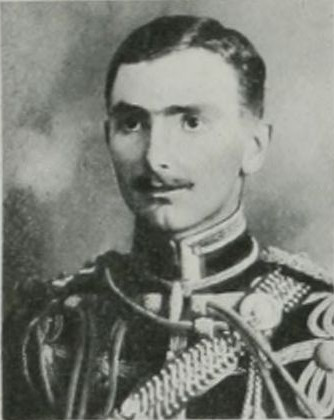
Clement Henry Peto.
PETTY, FRANK, Gunner, R.M.A. (R.F.R., B. 1171), H.M.S. Aboukir; lost in action in the North Sea, 22 Sept. 1914.
PETTY, JAMES RICHARD, Private, No. 3199, 2/6th Battn. East Surrey Regt. (T.F.), only s. of Richard Petty, of 4, Cleveland Road, New Malden, by his wife, Helen; b. New Malden, co. Surrey, 12 June, 1880; educ. Elm Road Boys School there; was a coal porter; joined the East Surrey Territorials, 26 April, 1915; and died in the Military Hospital, Kingston-on-Thames, 31 March, 1916, from pleurisy contracted while on active service. He m. at New Malden Church, 3 April, 1904, Charlotte (87, Northcote Road, New Malden, dau. of William Lambden, Henley-on-Thames, and had three children; Robert James, b. 15 Nov. 1909; Herbert John, b. 25 Nov. 1912; and Dorothy May, b. 20 July, 1906.
PHELAN, JOHN HENRY, Stoker, 1st Class (R.F.R., Ch. B. 5716), S.S. 1000695, H.M.S. Aboukir; lost in action in the North Sea, 22 Sept. 1914.
PHAYRE, CHARLES FREDERICK, Lieut., 2nd Battn. Royal Munster Fusiliers, 2nd s. of Lieut.-Col. Richard Phayre, of Belganm, Woking, D.L., J.P., late of the Alexandra Princess of Wales’s Own Yorkshire Regt., by his wife, Frances Anne, dau. of the late John Jasper Leigh Bayly, and grandson of the late Gen. Sir Robert Phayre, G.C.B.; b. Bangalore, East Indies, 26 May, 1891; educ. St. Clair, Walmer; Repton, and the Royal Military Academy, Woolwich (Sandhurst Coy.); gazetted 2nd Lieut., Royal Munster Fusiliers, 5 Oct. 1910, and promoted Lieut. 22 April, 1914; went to France with the Expeditionary Force in Aug. 1914, and was killed in action during the retreat from Mons, on the 27th of the same month. The 2nd Battn. Royal Munster Fusiliers formed the rear guard of the 1st Brigade, 1st Division, on 27 Aug., and were cut off during the retreat from Mons. They made a gallant stand and retired fighting for three hours. His Capt., who was taken prisoner, wrote: “I ordered a charge, and the company dashed forward, ‘Dicky’ well in front of the right half. We were met by a blasting fire, and numbers of the men fell. He got within 30 yards of the enemy’s trench and there was shot dead, falling with his head towards the enemy, 10 yards in front of his men. Only two men besides myself reached the trench alive.” He was buried at Etreux, with eight of his brother officers who fell in the same action; unm. His brother, Lieut. Richard Herbert Phayre, was killed in action at Ypres, 26 Oct. 1914 (see following notice).
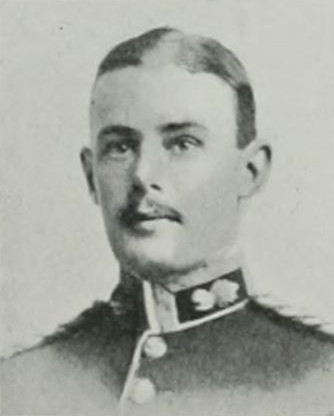
Charles Frederick Phayre.
PHAYRE, RICHARD HERBERT, Lieut., 2nd Battn. Alexandra Princess of Wales’s Own Yorkshire Regt., eldest s. of Lieut.-Col. Richard Phayre, of Belgaum, Woking, D.L., J.P., late of Alexandra Princess of Wales’s Own Yorkshire Regt., by his wife, Frances Anne, dau. of the late John Jasper Leigh Bayly, and grandson of the late Gen. Sir Robert Phayre, G.C.B.; b. Farnboro’. co. Hants, 31 March, 1890; educ. St. Clair, Walmer; Repton, and the Royal Military College, Sandhurst; gazetted 2nd Lieut., Yorkshire Regt., 11 Dec. 1909, and promoted Lieut. 1 April, 1911; went to France with the Expeditionary Force in Oct. 1914, and was killed in action during the first Battle of Ypres, on the 26th of the same month; unm. Buried at Gheluvelt. He was gazetted temporary Capt. after his death, 9 Dec. 1914, to rank as from 15 Nov. His brother, Lieut. Charles Frederick Phayre, was killed in action during the retreat from Mons, 27 Aug. 1914 (see preceding notice).
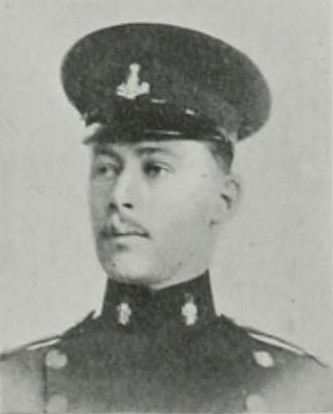
Richard Herbert Phayre.
PHILIPPS, IVOR JOHN DOUGLAS, Capt., 16th (Service) Battn. Cheshire Regt., only s. of the late George Gray Stuart Philipps, Chamberlain to the Earl of Moray, by his wife, Mary Frances, 2nd dau. of William Hobson Moubray, of Otterston and Cockairnie, Fife, Commander R.N., J.P., D.L.; b. Portobello, Edinburgh, 8 July, 1882; educ. Ardvreck, Crieff; and Loretto, Musselburgh; joined the Black Watch (Militia) on 31 Jan. 1900, and in 1902 was attd. to the 3rd York and Lancaster Regt. for service in South Africa. He was awarded the Queen’s medal with two clasps, and on his return resigned his commission, but when the European War broke out, at once offered his services, and was gazetted Lieut. in the Reserve of Officers, 19 Aug. 1914. He was for some time Assistant Recruiting Officer at Birkenhead, Cheshire, and was promoted Capt. (temp.), 16th (Service) Battn. Cheshire Regt., 10 Dec. 1914. He caught a chill while on a route march, and died of double pneumonia at Prenton, Cheshire, 8 March, 1915. Letters from his brother officers speak of his intrepid courage, his capability, and the respect and affection he inspired. He m. at St. Mary Cathedral, Edinburgh, 9 July, 1908, Amy Constance Violet, sister of 2nd Lieut. Evan R. H. K. Macdonald (killed in action, 20 Sept. 1914, see his notice), 2nd dau. of Keith Norman Macdonald, of 21, Clarendon Crescent, Edinburgh, M.D., F.R.C.P.E., and had an only child: Reginald Ivor Carew Keith, b. 3 June, 1909.
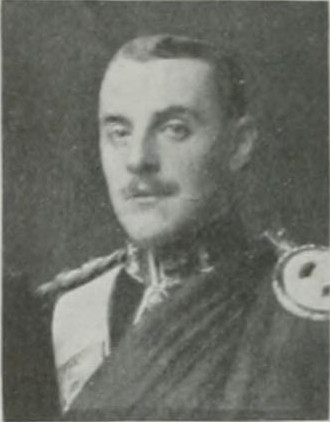
Ivor John D. Philipps.
PHILIPS, JOSEPH DOUGLAS, Lieut., 1st Battn. The Buffs, East Kent Regt., 2nd s. of Major James Joseph Philips, of Rosecourt, Gladstone Road, Broadstairs, late Army Veterinary Corps, by his wife, Elizabeth Mary Charlotte, dau. of James Gould, of South Norwood; b. Woolwich, 3 March, 1886; educ. Selhurst Park College, South Norwood, and by Army coach at Blackheath; gazetted 2nd Lieut. 1st Battn. The Buffs, 20 March, 1907, and promoted Lieut., 1 Sept. 1910; served in the West African Frontier Force in Nigeria from 9 March, 1910, for over four years; was home on leave when war began, and immediately relinquished the remainder and volunteered for field service with his regt.; rejoined at Fermoy, Ireland; went to France with the Expeditionary Force in Aug. and was killed in action whilst leading his platoon at Bois Grenier, 20 Oct. 1914; unm. Buried near Radinghem Ridge, about two miles from Bois Grenier. The previous day he had distinguished himself by carrying several wounded out of the trenches under fire.
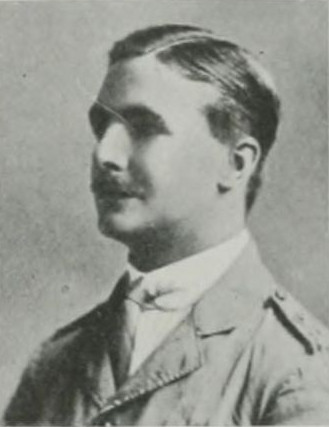
Joseph Douglas Philips.
PHILLIP, HARRY, Private, R.M.L.I. (R.F.R.), Ch. 10503, H.M.S. Hawke; lost when that ship was torpedoed in the North Sea, 15 Oct. 1914; m.
PHILLIPS, CHARLES, Stoker, 1st Class (R.F.R., B. 3607), S.S. 101254, H.M.S. Good Hope; lost in action off Coronel, on the coast of Chili, 1 Nov. 1914.
PHILLIPS EDWARD ALEXANDER, Leading Signalman (R.F.R., Ch. B. 8614), 199553, H.M.S. Aboukir; lost in action in the North Sea, 22 Sept. 1914.
PHILLIPS, EDWARD HAWTIN, D.S.O., Major, 28th Battery Royal Field Artillery, eldest s. of the late John Hawtin Phillips; b. London, 22 Feb. 1876; educ. Wellington College; gazetted 2nd Lieut., R.A., from the Militia, 16 Jan. 1897, and promoted Lieut. 16 Jan. 1900; Capt. 11 March, 1902; and Major March, 1915, when he transferred to the R.F.A. from the R.H.A.; was Adjutant from 4 Dec. 1908 to Nov. 1909; was employed with West African Frontier Force, 22 April to 28 Oct. 1900, and again 23 Jan. 1904 to 16 Nov. 1905; served (1) with Protectorate Expedition during operations in Sierra Leone 1898–9 (medal with clasp); (2) in Northern Nigeria, 1900, with Kaduna Expedition (twice slightly wounded; mentioned in Despatches [London Gazette, 4 Dec. 1900] clasp); (3) in West Africa, 1900, during operations in Ashanti for Relief of Kumassi (severely wounded; again mentioned in Despatches [London Gazette, 4 Dec 1900]; medal with clasp; D.S.O.); (4) in South African War, 1901–2; took part in operations in Orange River Colony, Jan. to March, 1902; and in those in Cape Colony and the Transvaal in command of pom-pom Section, March to May, 1902 (wounded; a third time mentioned in Despatches [London Gazette, 18 July, 1902], Queen’s medal with five clasps); (5) in Northern Nigeria, 1904, during operations against the people of Semolika (medal with clasp); and (6) in command of the 28th Battery with the Meerut Division, Indian Expeditionary Force in France and Flanders, 1914; was wounded in action near La Bassée during the 1st Battle of Ypres, 5 Nov. 1914, three days after reaching the front, and died at Chocques the following day; unm. Buried in Bethune Cemetery. The Inspector-General of Artillery (F. Mercer) wrote: “There was no man in all the Artillery which is under my control belonging to this force whom I would have selected before him for any duty which called for all the highest personal qualifications of a soldier; it was the same in India, if I wanted anything done, or tried. I always knew that it could be in no better hands than his. As a most gallant soldier and gentleman, a thorough sportsman, and a true friend, he will be very deeply regretted by the regt.; and you will, I trust, forgive me, a perfect stranger, for intruding on your grief to say how much we shall all feel his loss. It would be selfish to express my own personal sorrow, but I know that all the Artillery in India, as well as in this force, would like you to feel how very deeply we sympathise with you in your very great sorrow, and how much we shall all miss him, the best type of Artillery officer and the finest example to the boys who were fortunate enough to serve under him.” He was a keen and bold rider to hounds, and recently he took his pilot’s certificate at Brooklands for flying, notwithstanding a stiff arm and hand from having been badly mauled by a tiger in 1911, in the Central Provinces, India. His brother, Capt. R. N. Phillips, died of wounds, 27 Dec. 1914 (see his notice).
PHILLIPS, GEORGE HENRY, Private, No. Ch. 17397, Royal Marine L.I., 4th s. of William Henry Phillips, of 61, Blandfields Street, Balham, by his wife, Lucy Jane, yst. dau. of the late James Jewson, of Eau Brink, Norfolk; b. Wandsworth Common, S.W., 15 Nov. 1895; educ. Hearnville L.C.C. School, Balham, S.W.; joined the Royal Marine L.I., 29 April, 1912; went through a course of training at the Royal Marine Barracks, Deal, also Royal Marine Barracks, Chatham, and was lost in H.M.S. Cressy when that ship was torpedoed in the North Sea, 22 Sept. 1914. His three brothers, Corpl. William James Phillips, Royal Marine L.I., Gun-Layer, H.M.S. Jupiter; A.B. Eric Wilton Phillips, Gun-Layer, H.M.S. Thunderer, and A.B. Leonard Charles Phillips, Gun-Layer, H.M.S. Foyle, are all (1916) on active service.
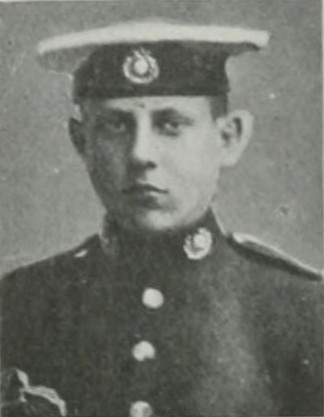
George Henry Phillips.
PHILLIPS, HENRY, Seaman, R.N.R., 3514 A., H.M.S. Cressy; lost in action in the North Sea, 22 Sept. 1914.
PHILLIPS, RALPH NOEL, Capt., 2nd Battn. Royal Welsh Fusiliers, 2nd s. of the late John Hawtin Phillips; b. London, 26 Dec. 1877; educ. Wellington College, and Trinity College, Cambridge; gazetted 2nd Lieut., 1st R.W.F. 24 Jan. 1900, and promoted Lieut. 22 Jan 1903, and Capt. 2 May, 1910; was Adjutant, 7th Cheshire Territorials, 11 April, 1911 to 10 April, 1914, and was attached to the Chinese Regt. at Wei-hai-Wei, 3 Nov. 1904 to 1 Oct. 1906, when it was disbanded; served (1) in South Africa, 1900–2; was for sometime transport officer with Gen. Barton’s Brigade; took part in operations in the Transvaal 30 Nov. 1900 to Jan. 1902, and March to 31 May, 1902, and in those in the Orange River Colony, Jan. to March, 1902 (Queen’s medal with three clasps; King’s medal with two clasps); and (2) with the 19th Brigade, British Expeditionary Force, in France and Flanders, from 12 Aug. 1914; took part in the retreat from Mons; the Battle of the Aisne, and was wounded in action near Fleurbaix, 3 Nov. following, during the First Battle of Ypres, and died of wounds in London, 27 Dec. 1914. He was mentioned in F.M. Sir John (now Lord) French’s Despatch of 20 Nov. 1914 [London Gazette, 17 Feb. 1915], for gallant and distinguished service in the field. Capt. Phillips m. at Bridgnorth, Shropshire, July, 1911, Margaret, only dau. of W. H. Farmer, of Gatacre Park, Bridgnorth; s.p. His elder brother, Major E. H. Phillips, died of wounds 6 Nov. 1914 (see his notice).
PHILLIPS, STEPHEN ARLA, Armourer, 340270, H.M.S. Aboukir; lost in action in the North Sea, 22 Sept. 1914.
PHILLIPS, THOMAS HAROLD, Private, No. 199, 2nd Light Horse, Australian Imperial Force, eldest s. of the late David Phillips, by his wife, Sarah (Arfyn, Picton Place, Carmarthen), dau. of Thomas Thomas; b. Carmarthen, 14 April, 1889; educ. Carmarthen County School; joined the Territorial Force in 1909, and served three years as Sergt. in the 7th Welsh (Cyclists) Battn., was for five years in the service of the National and Provincial Bank at Barry, co. Glamorgan, after which he went to Australia, and on the outbreak of war enlisted at Brisbane, 2 Sept. 1914; left for Egypt, 22 Sept.; went to the Dardanelles 8 May, 1915, and died 14 May, following, of wounds received in action at Anzac. Buried, Anzac Beach, Gallipoli; unm. His Commanding Officer, Lieut.-Col. Charles V. Stodart, wrote: “Your son has always been willing and ready to do his share of the work, and has cheerfully put up with our many hardships.”
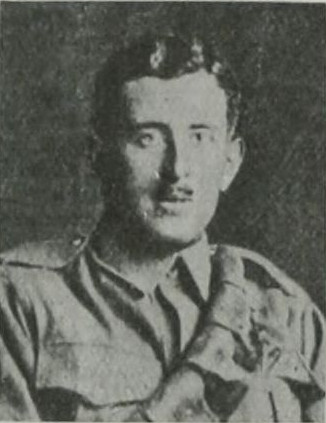
Thomas H. Phillips.
PHILLIPS, WILLIAM, Private, R.M.L.I., Ports./15609, H.M.S. Good Hope; lost in action off Coronel, on the coast of Chili, 1 Nov. 1914.
PHILLIPSON, ALBERT, Stoker, Petty Officer, 174277, H.M.S. Hawke; lost when that ship was torpedoed in the North Sea, 15 Oct. 1914.
PHILLIS, HENRY JOHN, Stoker, 1st Class, K. 5453, H.M.S. Good Hope; lost in action off Coronel, on the coast of Chili, 1 Nov. 1914.
PHILPOTT, HORACE HENRY, Stoker, 2nd Class, K. 21845, H.M.S. Pathfinder; lost when that ship was sunk by a mine, about 20 miles off the East Coast, 5 Sept. 1914.
PHILPOTT, WALTER, Stoker, 1st Class, K. 5016, H.M.S Pathfinder; lost when that ship was sunk by a mine, about 20 miles off the East Coast, 5 Sept. 1914.
PHIPPS, WILLIAM HEWETT, Stoker, 1st Class (R.F.R., B. 7552), 291888, H.M.S. Hawke; lost when that ship was torpedoed in the North Sea, 15 Oct. 1914.
PICKBURN, FRANK, Private, R.M.L.I., Ch. 15391, H.M.S. Hawke; lost when that ship was torpedoed in the North Sea, 15 Oct. 1914.
PICKERING, EDWARD JOHN, Leading Stoker (R.F.R., B. 4551), 293241, H.M.S. Good Hope; lost in action off Coronel, on the coast of Chili, 1 Nov. 1914.
PICKERING, THOMAS GEORGE, Stoker, 1st Class (R.F.R., B. 3728), S.S. 101346, H.M.S. Good Hope; lost in action off Coronel, on the coast of Chili, 1 Nov. 1914.
PICKERSGILL, ALBERT EDWARD, 2nd Cooper, 294295, H.M.S. Hawke; lost when that ship was torpedoed in the North Sea, 15 Oct. 1914; m.
PIDWELL, CHARLES, A.B. (R.F.R., Ch. B. 951), 166221, H.M.S. Cressy; lost in action in the North Sea, 22 Sept. 1914.
PIDWELL, CHARLES JAMES, Chief Shipwright, 340922, H.M.S. Aboukir; lost in action in the North Sea, 22 Sept. 1914.
PIGDEN, ARTHUR RONALD, Private, No. 9563, 1/5th Battn. (London Rifle Brigade) The London Regt. (T.F.), s. of George Alexander Pigden, of 23, Albert Road, Stroud Green, Hornsey, Town Councillor, by his wife, Matilda; b. Barnsbury, 25 Feb. 1894; educ. Stroud Green School, Hornsey County School and Clark’s College; joined the Boy Scouts in 1908, the King’s Royal Rifles Cadet Corps, 1911, and the London Rifle Brigade May, 1913. On the outbreak of war he volunteered for foreign service, left England with the L.R.B. 2 Nov. 1914, and within a week was in the trenches, where they remained over Christmas, fraternising with the Saxons who were in the trenches 80 yards in front of them that day. In April, 1915, the Regt. was resting at Armentières, when the Canadians were gassed, and they were rushed up through Ypres to their support, marching 17½ miles with full packs in 4½ hours. Writing home on 28 April, Pigden said, “Threw away all my souvenirs on march, only souvenir am now anxious about is myself,” and the following day: “Am going out to repair telephone wire under fire to-night, so cheer oh!” He was on signalling duty in a dug-out at Fortuin with four others for fifteen days, and though all other parts of the line were being hit, their little dug-out escaped until 2 May, 1915, when he was killed by the bursting of a shell; unm. A comrade wrote: “We were sent up to relieve the Canadians when gassed, there was a heavy bombardment going on which lasted 15 days; as you can imagine our wires were continually being broken by the shelling and it was almost an hourly occurrence for one of our five to run out and repair them, and even deliver the message by hand, we five did this perilous work in rotation, and strange to say none of us were touched while on this task, although other stations were losing heavily meanwhile. Your son was hit by a shell in the left hand on the last day before retirement, and in the afternoon another shell burst among us, I was only stunned, and ran for stretcher-bearers, but it was too late, they declared your son dead on arrival.”
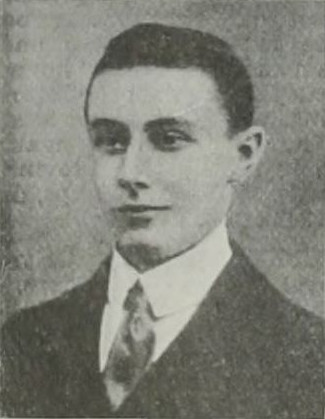
Arthur Ronald Pigden.
PIGOTT, GERALD WELLESLEY, 2nd Lieut., 127th Battery Royal Field Artillery, only child of Lieut.-Col. Wellesley George Pigott, of Blackmore House, co. Essex, J.P., commanding 12th Battn. Rifle Brigade (now on active service), by his wife, Helen Louise, only dau. of the late Capt. Thomas Donaldson, 3rd K.O. Hussars, by his wife, Helen Louisa Elizabeth, eldest dau. of Richard Andrew Hyacinth Kirwan, of Bawnmore, co. Galway, J.P., and grandson of the Rev. Wellesley Pigott, M.A., Rector of Fugglestone-cum-Bemerton [4th s. of Sir George Pigott, 1st Bart.]; b. South Weald, co. Essex, 3 Sept. 1890; educ. West Downs, Winchester (1905–10), Wellington College (1910–13), and the Royal Military Academy, Woolwich (Feb. to July, 1914); gazetted 2nd Lieut. 3rd Battn. Essex Regt. 15 Aug. 1914; transferred to the Royal Field Artillery, 15 Jan. 1915, and posted to the 127th Battery at the Front in March; served in France and Flanders, and was wounded at Brielen, during the 2nd Battle of Ypres, 13 May, 1915, by shrapnel, which struck him in the head. He was taken to the dressing station and from there conveyed to No. 2 Clearing Station at Bailleul, where he died, 14 May, 1915. Buried in the British Officers’ Cemetery, Bailleul; unm. The Officer Commanding the 29th Brigade, R.F.A., wrote: “He was such a good lad, and had the making of a most capable officer, and he will be greatly missed”; and the Officer Commanding 127th Battery: “I am sure if your boy had lived he would have made a very good soldier; he was very keen and had plenty of pluck.”
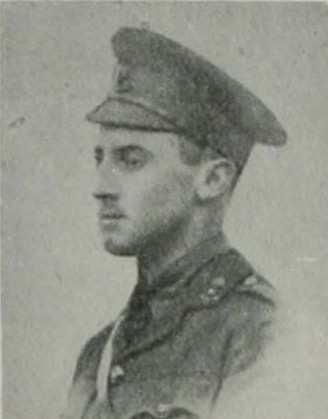
Gerald Wellesley Pigott.
PILBEAM, LEWIS, A.B. (R.F.R., B. 2074), 212013, H.M.S. Good Hope; lost in action off Coronel, on the coast of Chili, 1 Nov. 1914.
PILCHER, THOMAS PERCY, Lieut., 2nd Battn. The Rifle Brigade, 2nd s. of Major-Gen. Thomas David Pilcher, C.B., now (1916) commanding the 17th Division, by his 1st wife, Kathleen Mary, dau. of Col. Thomas Goune, 17th Lancers; b. Farnborough, co. Hants., 25 Oct. 1893; educ. Wellington College, and the Royal Military College, Sandhurst; gazetted 2nd Lieut., The Rifle Brigade, 4 Sept. 1912, being then the youngest officer in the Army, and was promoted Lieut. 16 Nov. 1914; joined his regt. in Rawal Pindi, India, in Nov. 1912; served with the Expeditionary Force in France from Oct. 1914 until he was killed in action at Neuve Chapelle, 12 March, 1915, while leading his platoon; unm. Buried in the Cemetery there. He was mentioned in F.M. Sir John (now Lord) French’s Despatch of 31 May, 1915, for good reconnaissance work, and gallant leading of his platoon. His commanding officer, Lieut.-Col. Stephens, his Brigadier, Brig.-Gen. Lowry-Cole (since killed in action) and his Divisional Commander, Major-Gen. F. J. Davies, C.B., all bore tribute to his ability, courage, high sense of duty and his popularity with both his brother officers and his men.
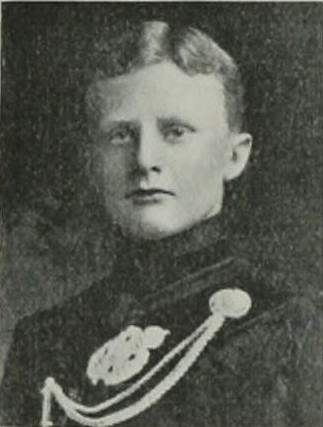
Thomas Percy Pilcher.
PILLAR, SAMUEL, Private, No. 9437, 2nd Battn. Coldstream Guards, 3rd s. of the late William John Pillar, by his wife, Bessie (Hughenden House, Queen Street, Dawlish, co. Devon), dau. of George Henry Collings; b. Dawlish, 13 Jan. 1894; educ. there; enlisted, 11 Jan. 1912; went to France, 14 Aug. 1914, and was killed in action at Rentel, 8 Nov. following; unm.
PILLAR, WILLIAM HENRY, A.B., 224285, H.M.S. Hogue; lost in action in the North Sea, 22 Sept. 1914.
PILLING, WALTER, A.B., 214963, H.M.S. Aboukir; lost in action in the North Sea, 22 Sept. 1914.
PINCHIN, JOHN HERBERT, Sergt., No. 5235, 1st Battn., The Wiltshire Regt.; b. Devizes, co. Wilts, 12 May, 1882; educ. Market Lavington and Easterton Elementary Schools, enlisted in Dec. 1898; promoted Sergt., July, 1914; served in the South African War, 1899–1902 (Queen’s medal with three clasps and King’s medal with two clasps), and with the Expeditionary Force in France and Flanders from 16 Aug. 1914 to 22 Sept. 1914, on which latter date he was mortally wounded during the Battle of Mons, and died in the 1st Northern General Hospital, Newcastle-on-Tyne, 23 Oct. following; unm.
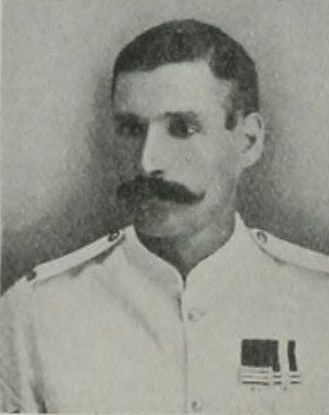
John H. Pinchin.
PINLDEBURY, WALTER, A.B. (R.F.R., Ch. B. 5415), 180820. H.M.S. Cressy; lost in action in the North Sea, 22 Sept. 1914.
PINK, JOSEPH, Gunner, R.M.A. (R.F.R., B. 501), late R.M.A. 5791, H.M.S. Hogue; lost in action in the North Sea, 22 Sept. 1914.
PINK, SIDNEY EDWARD, Stoker, 1st Class, K. 12242, H.M.S. Hogue; lost in action in the North Sea, 22 Sept. 1914.
PIPER, EDWARD JAMES, E.R.A., 1st Class (Pensioner), 148209, H.M.S. Cressy; lost in action in the North Sea, 22 Sept. 1914.
PITHER, JAMES HERBERT, C.E.R.A., 1st Class (Pensioner), 160538, H.M.S. Hogue; lost in action in the North Sea, 22 Sept. 1914.
PITKIN, STANLEY, Private, No. 8/462, 8th Southland Coy., Otago Infantry Battn., New Zealand Expeditionary Force, 5th s. of Edwin Pitkin, of Whaddon, Bucks, Agricultural Stockman, by his wife, Annie, dau. of Robert Reynolds; b. Whaddon, co. Bucks, 8 Sept. 1894; educ. National School there; went to New Zealand in 1911, and settled at Dipton, Southland, N.Z., as an Agricultural Worker; joined the New Zealand Territorials in 1912; volunteered for Imperial service on the outbreak of the European War in Aug. 1914; left for Egypt; took part in the landing at the Dardanelles, 25 April, 1915, and died on H.M. Hospital Ship Dongola, 7 May, 1915, of wounds received in action in a bayonet charge there on the 2nd.
PITT, GEORGE ROBERT, Private, R.M.L.I., Ch. 16457, H.M.S. Hogue; lost in action in the North Sea, 22 Sept. 1914.
PITT, JOHN, A.B. (R.F.R., B. 5268), 203612, H.M.S. Hogue; lost in action in the North Sea, 22 Sept. 1914.
PLATER, WILLIAM JOHN, Private, No. 8980, 1st Battn. Coldstream Guards, 3rd s. of William John Plater, of Ichnield Cottage, Little Kimble, co. Bucks, Cowman, by his wife, Jane; b. Great Kimble, 2 July, 1891; educ. there; enlisted 27 Jan. 1911; went to France, 12 Aug. 1914, and was killed in action, 4 Oct. following; unm. Lieut. Beckwith Smith, D.S.O., wrote: “I knew Private Plater well, as practically throughout his soldiering he was under my command. He was in my platoon throughout, and I can only say that I wish every man in my platoon and in the British Army had been like him. During the retreat from Mons he suffered the most frightful blisters on his feet, but I never once heard him grumble and he never fell out. He was one of the 50 men I took with me on the night of 4 Oct. 1914, when I was told off to try and take two German trenches at the point of the bayonet. These two trenches were one behind the other, and the first one was not more than 100 yards from our own. This first was unoccupied, but the second one was full of Germans, and Private Plater was killed on reaching the parapet of this trench. We got into the trench and killed all the Germans in it, but were unable to hold it, as there were a lot more Germans coming up. I tell you all this because I did not see Private Plater killed myself, and as we retired we were unable to bring his body away with us. The men who were actually next to him both stopped to make sure he was dead before leaving him. Will you please convey to Private Plater’s sister my own personal grief at the loss of such an excellent soldier. The company, the regt., and, in fact, the whole army feel the loss of such men, as they are hard to replace. He died a death of which every soldier and every Coldstreamer is proud. Every man who took part in that charge that night was worthy of a D.C.M.”
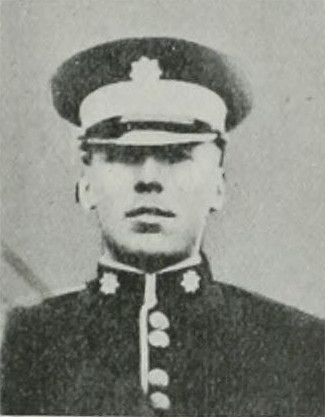
William John Plater.
PLAYFAIR, LAMBERT, Lieut., 1st Battn. Royal Scots, attd. 1st Squadron Royal Flying Corps, only s. of Harry Playfair, of Siloni Bari Tea Estate, North Lakhimpur, Upper Assam, India, by his wife, Jessie, dau. of the late A. P. Sandeman, and grandson of the late Lieut.-Col. Sir Robert Lambert Playfair, K.C.M.G., LL.D., by his wife, Agnes (18, Queen’s Gardens, St. Andrew’s, Fife), dau. of Major-Gen. Thomas Webster, of Balgarvie, co. Fife; b. Dibrugarh, Assam, India, 7 Dec. 1893; educ. at Oakham, and passed into Sandhurst with a Prize Cadetship, 14 Jan. 1912; gazetted 2nd Lieut. Royal Scots, 5 Feb. 1912, joined the 2nd Battn. in March, and afterwards the 1st Battn. at Allahabad; left India with his Regt. for England in Oct. 1914, and in March, 1915, entered the Royal Flying Corps as observer on active service. On 6 July, 1915, when engaged in signalling to our guns the positions of the enemy’s batteries, his aeroplane was assailed first by one German machine and then by another. These were driven off in turn whenever they ventured to approach, Lieut. Playfair in the intervals resuming his observation duties—then the two German machines which had the great advantage of superior speed, made a combined assault but rather than give way he ordered an attack on the two, although he had only five rounds left. He was shot through the heart and his body was skilfully brought back to our lines by his pilot, 2nd Lieut. O. D. Filley, who afterwards received the Military Cross for this engagement. He was buried in Vlamertinghe Military Cemetery, Belgium; unm. His Colonel wrote that he was an unusually capable officer, that his death was heroic, and that it was indeed an honour to have had such an officer under one’s command. His Major reported that he was extraordinarily brave, feared absolutely nothing, loving fighting in the air, and was such an example of grit and ability that his death was a great loss to the squadron, and added that he “knew of no one who could gather so much information from a single reconnaissance as Lieut. Playfair.”
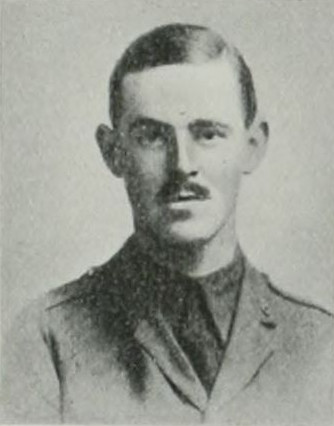
Lambert Playfair.
PLAYFAIR, HON. LYON GEORGE HENRY LYON, Capt., 126th Battery, 29th Brigade, R.F.A., only s. and h. of George James, 2nd Baron Playfair, C.V.O., Brigadier General and Hon. Col. 2nd Highland Brigade, R.F.A., by his 2nd wife, Augusta Mary, dau. of Henry Thomas Hickman, of Chorlton House, Leamington; b. London, 19 Oct. 1888; educ. St. Andrew’s, Eton and the Royal Military Academy (where he passed in second); gazetted 2nd Lieut. R.F.A. 18 Dec. 1908, Lieut. 18 Dec. 1911, and Capt. 18 Dec. 1914; served with the Expeditionary Force in France and Flanders, and was killed in action near Zonnebeke, while acting as observing officer for his battery, in a trench close to the German lines, 20 April, 1915; unm. One of his gunners wrote of him: “A finer officer or better gentleman, it would be hard to find.”
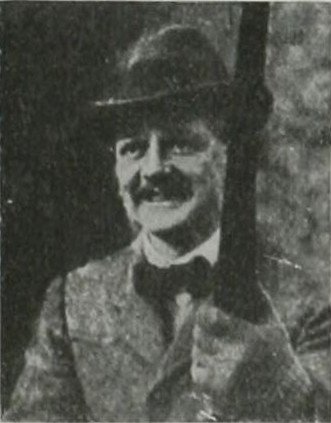
Lyon G. H. L. Playfair.
PLEACE, WILLIAM GEORGE, Corpl., R.M.L.I., 12239 (R.F.R., Ch. B. 1553), H.M.S. Cressy; lost in action in the North Sea, 22 Sept. 1914.
PLUMB, ARTHUR EDWARD, Private, R.M.L.I. (R.F.R.), Ch. 9435, H.M.S. Hawke; lost when that ship was torpedoed in the North Sea, 15 Oct. 1914; m.
PLUMB, WILLIAM, Private, R.M.L.I., Ch. 12774, H.M.S. Pathfinder; lost when that ship was sunk by a mine, about 20 miles off the East Coast, 5 Sept. 1914.
PLUME, GEORGE, Master-at-Arms (R.F.R., Ch. A. 1814), 350101, H.M.S. Aboukir; lost in action in the North Sea, 22 Sept. 1914.
MANSEL-PLEYDELL, EDMUND MORTON, of Whatcombe, co. Dorset, Lieut., 3rd (Reserve) Battn. Dorsetshire Regt., attd. 3rd Battn. Worcestershire Regt., elder s. of the late Lieut.-Col. Edmund Morton Mansel-Pleydell, of Whatcombe, co. Dorset, J.P., D.L., 12th Lancers (died 13 Oct. 1914), by his wife, Kathleen Emily (Croft House, Botley), 4th dau. of the late Sir Thomas Francis Grove, 1st Bart.; b. Bangalore, India, 23 Dec. 1886; educ. Wellington, and Sherborne; was for some time a Lieut. of the Royal Agricultural Contingent, Senior Division, O.T.C. (T.F.), and on the outbreak of war was given a commission as 2nd Lieut. in the Dorsetshire Regt., 30 Nov. 1914; trained at Wyke Regis until 25 Jan. 1915, when he was ordered to Rouen, and there transferred to the Worcestershire Regt.; proceeded to the front, 2 March, and was killed in action at Kemmel, during the Battle of Neuve Chapelle, on the 12th, while leading his platoon in a charge against the German trenches; unm. Buried there. His Col. wrote: “He was my most promising officer, and would have, had he lived, I am certain, distinguished himself.” He was a well-known footballer, forward member of the London Devonians, Lennox, Richmond, Trojair and Stund Clubs; a good rider to hounds, and polo player, a successful cricketer and shot, and a pig sticker while in Morocco.
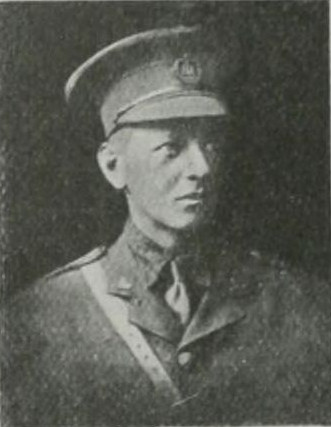
E. M. Mansel-Pleydell.
PLUMMER, ARCHIBALD ALFRED, Private, No. 8652, 2nd Battn. Lincolnshire Regt., s. of William Plummer, Labourer; b. Bungay, co. Suffolk, 9th May, 1892; enlisted in the 3rd Battn. Norfolk Regt. 28 Jan. 1909, was transferred to the Lincolns and was killed in action with the Expeditionary Force in France, 10 March, 1915; unm.
PLUMMER, ARTHUR HENRY, 2nd Lieut. 5th Battn. The King’s Liverpool Regt. (T.F.), 3rd. s. of the Rev. Francis Bowes Plummer, Rector of Halewood and Hon. Canon of Liverpool, by his wife, Edith Mary, dau. of Rev. Canon Barker, Rector of Hexham; b. Walton-on-the-Hill, 5 Nov. 1891; educ. Trent College, Derbyshire, (Jan. 1901 to July, 1910, holding a scholarship for the last five years), and Trinity College, Oxford (Oct. 1910 to June, 1914), where he studied medicine and gained the first place in the 2nd Class Honours List of the Final School of Physiology. After the outbreak of war in Aug. 1914, he tried to secure some position in the Army where he could make use of his medical knowledge. Failing to realize his hopes, he applied for a commission in the 5th Battn. Liverpool Regt. (T.F.), and was gazetted 2nd Lieut. 19 Oct. After four months at Blackpool, with the reserve unit, he was, in Feb. 1915, transferred to the Service Battn. at Canterbury, and shortly afterwards (21 Feb.) left England to join the First Army in France. For four months he was engaged in hard fighting in the trenches near Bethune and, to use his own words, “was often as nearly blown to pieces as possible.” He was killed in the late afternoon, 17 May, 1915, in action near Festubert. Writing to his father, the Commanding Officer said: “He was killed whilst occupying with his platoon our foremost trench, doing his duty gallantly and fearlessly. In addition to his military command, he was throughout the long battle indefatigable in his attention to the wounded, and his medical skill brought timely relief to many a stricken comrade. His fine manly character and kindly disposition had already endeared him to all of us.” Capt. H. K. S. Woodhouse, commanding C Coy., wrote: “After a very hard morning, my company was told to go in support of another regt. and your son accompanied me with his platoon. I left him to go to some other duties, and did not see him again alive.... He was shot in the neck while he was directing some men to their places, and the bullet must have touched his spine, for he fell and was unconscious for an hour before he died.... He was buried in the rear of the English fire trench, alongside his platoon sergeant, who was killed earlier in the day.” While at Trent he was a member of the O.T.C. (1906–1910), Senior Prefect, Gold Medallist and Captain of Cricket and Football (1909–1910).
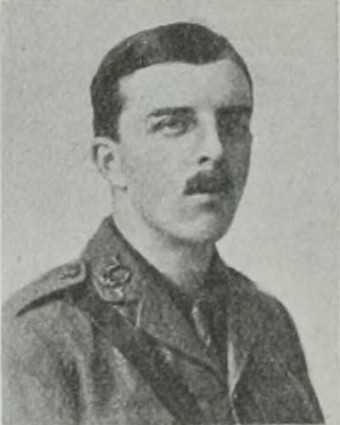
Arthur Henry Plummer.
PLUNKETT, GERALD, B.A., Barrister-at-Law, Sub-Lieut., A Coy., Collingwood Battn. Royal Naval Division, yst. s. of Patrick Joseph Plunkett, of 14, Palmerston Road, Dublin, and grandson of the late Walter Plunkett, of Bryne House, co. Meath; b. Dublin, 11 Aug. 1887; educ. Belvedere College (S.J.), Dublin (where he took honours each year in Intermediate Examinations), and New College, Oxford (B.A.); was called to the Irish Bar, 1910, and was a member of the North-West Circuit; joined the Trinity College O.T.C. on the outbreak of war, and was given a commission, 20 Oct. 1914; served with the Mediterranean Expeditionary Force at the Dardanelles, and was killed in action there, 4 June, 1915. He was Platoon Commander and gallantly led his men in the attack on the Turkish position that day, cheering them on to the last. He was emptying his revolver into the Turks when he was shot in the head, and killed instantly; unm.
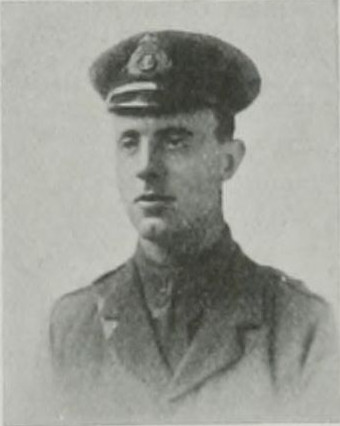
Gerald Plunkett.
POCOCK, FRANK WILLIAM, Sergt., No. 1851, 13th Battn. (Princess Louise’s Kensington) The London Regt. (T.F.), eldest s. of Frank Pocock, of 14, Tadema Road, Chelsea, by his wife, Rose Hannah, dau. of John Vickers; b. Chelsea, 11 Sept. 1891; educ. Harwood Road Council School, Fulham, was a Timber Merchant’s Salesman; joined the Kensingtons 24 Feb. 1909; completed his term of service 23 Feb. 1914, but on the outbreak of war in Aug. following rejoined his regt. on the 6th; volunteered for foreign service; went to France on 3 Nov., was wounded in the ear at Neuve Chapelle on 16 March, and was killed in action at Festubert, 9 May, 1915, while leading his platoon from one German trench to another; unm. Buried there. Lieut. Penn wrote that he “faced the enemy unflinchingly and died a noble soldier’s death.”
POCOCK, WILLIAM JONATHAN, Stoker. 1st Class (R.F.R., B. 4447), S.S. 103463, H.M.S. Good Hope; lost in action off Coronel, on the coast of Chili, 1 Nov. 1914.
PODD, JOHN EDMUND, Sergt., No. 106, 4th Battn. Suffolk Regt. (T.F.), 2nd s. of Henry Podd, of 23, Wykes Bishop Street, Ipswich, by his wife, Mary Ann, dau. of Daniel Button; b. Ipswich, 13 Oct. 1885; educ. Cavendish Street School, St. Clement’s, Ipswich; was a Machinist at Stoke Foundry, Ipswich; joined the Suffolk Territorials, 2 Sept. 1902; volunteered for foreign service on the outbreak of war; went to France, 8 Nov. 1914, and was killed in action at Neuve Chapelle, 12 March, 1915. He m. at Butley Church, co. Suffolk, 12 May, 1913, Kate Edith Elizabeth (15, Cobbold Street, Ipswich), dau. of David Mayhew, of Butley, and had a son: John Edmund, b. posthumous 10 June, 1915.
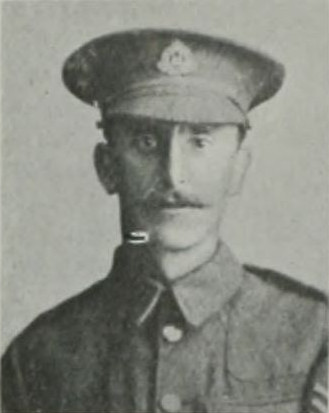
John Edmund Podd.
POINTER, WILLIAM, A.B., 220380, H.M.S Aboukir; lost in action in the North Sea, 22 Sept. 1914.
POLING, CHARLES WILLIAM, Bombardier, R.M.A. (R.F.R., I.C. 32), H.M.S. Good Hope; lost in action off Coronel, on the coast of Chili, 1 Nov. 1914.
POLLARD, CLIFFORD, Boy, 1st Class. J. 23543 (Ports.), H.M.S. Hawke; s. of William Pollard, of 15, Greenfield Road, Holmfirth, near Huddersfield; lost when that ship was torpedoed in the North Sea, 15 Oct. 1914.
POLLARD, EDWARD BRANCH, Lieut., 8th (Service) Battn. King’s Own Scottish Borderers, attd. 176th Coy. Royal Engineers, yst. s. of George Richard Macintosh Pollard, of Burns Cottage, Moffat, co. Dumfries, M.D., by his wife, Grace, dau. of the Rev. J. Macfarlane. LL.D.; b. Clapham, co. Surrey, 1 March, 1883; educ. Royal School of Mines, and on finishing his mining and metallurgical course went to the Mundydroog mines, Mysore, in Oct. 1907, where he was in the Mounted Rifles Coy. of the Kola Gold Fields Volunteers. When war was declared in Aug. 1914, he was in Northern Nigeria. As soon as practicable he threw up his mining appointment, returned to England in Nov. 1914, and was given a 2nd Lieutenancy in the 8th Battn. King’s Own Scottish Borderers, 6 Dec. 1914, being promoted Lieut. 27 Jan. 1915. He was for some time Transport Officer at Borden Camp, but on 17 April, 1915, was seconded to the 176th Coy. R.E., and sent to do mining operations in the North of France. On 7 July six of his men were entombed in a tunnel by the explosion of a German shell. He immediately organised a rescue party under heavy fire, and his men were subsequently saved by a brother officer. In order to get at some timber which had to be moved, he himself got up on the top of the debris, thereby exposing himself to the snipers, and was shot in the forehead, from which wound he died at Abbeville, on the 26th; unm. Buried in Moffat Cemetery. His Adjutant wrote: “His conduct in this necessary but dangerous work was beyond all praise. I reported the whole incident, and trust his conduct will receive due award.” In 1905 he gained the Remanet Scholarship, and in 1907 won the Edward Matthey Prize; obtained his A.R.S.M. in the same year, and was also a M.Inst.M.M. In 1907 he was selected by the Institute of Mining and Metallurgy for Post-Graduate Course in various parts of the world.
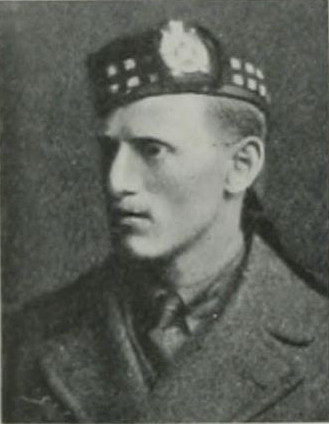
Edward Branch Pollard.
POLLARD, GEOFFREY BLEMELL, Lieut., 119th Battery. R.F.A., elder s. of Alfred William Pollard, Assistant Keeper of Printed Books, British Museum, by his wife, Alice, dau. of George Francis Gloyns England, of Crediton; b. Kensington, 5 April. 1888; educ. King’s College School, Wimbledon, and St. Paul’s School, Hammersmith, where he was head of the Army Side, Captain of Shooting, Lieut. of the Cadet Corps, and Captain of his House. Passed 2nd into Woolwich in 1906 (thereby gaining an exhibition from his school), joined the 146th Battery, R.F.A., in 1908, transferred subsequently to 40th and 119th. Qualified as a 1st Class Interpreter in French, 1910. During the retreat from Mons, between Elouges and Dour, “he was in the very hottest on the very first day and behaved splendidly” (letter from Brigadier-General Headlam), helping Major E. W. Alexander and Capt. Francis Grenfell (both of whom obtained V.C.’s for their work that day) to manhaul the guns of the 119th when it was impossible to get the horses to them. He was killed while on observation duty in advance of his battery, 24 Oct. 1914, and buried the following day in the Churchyard at La Couture. He was mentioned in F.M. Sir John (now Lord) French’s Despatch of 14 Jan. 1915. His war-letters “printed for friends” 1915, under the title: “On Active Service.”
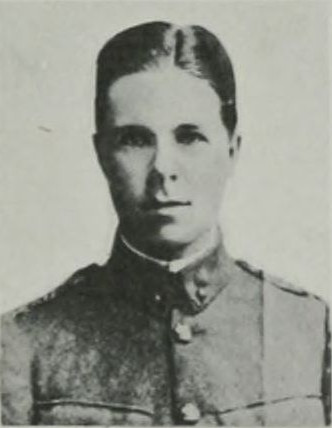
Geoffrey Blemell Pollard.
POLLARD, HOWARD, Proby., 2nd Cook’s Mate, M. 7798, H.M.S. Hogue; lost in action in the North Sea, 22 Sept. 1914.
POLLEY, ALFRED CHARLES, A.B. (R.F.R., B. 2949), 179128, H.M.S. Good Hope; lost in action off Coronel, on the coast of Chili, 1 Nov. 1914.
POLLEY, HARRY, Private, No. 941, 15th Battn. Australian Imperial Force, eldest s. of David Polley, of Woodstock, Brambletye Road, Earswood, co. Surrey, Gardener, by his wife, Lucy Rebecca, dau. of Shadrach Fairs; b. Redhill, co. Surrey, 13 Feb. 1875; educ. St. Matthew’s Schools there; was for some time a Grocer’s Assistant at Home and Colonial Stores, Edgware Road; went to Australia in 1909, and settled at Lismore, New South Wales, working as a Cowman and General Hand; volunteered for Imperial service on the outbreak of European War in Aug. 1914, and joined the 15th Battn. A.I.F.; left for Egypt in Dec.; went to the Dardanelles 1 June, 1915, and died on the Hospital Ship Maheno, 29 Aug. following, of wounds received in action at Suvla Bay the previous day; unm.
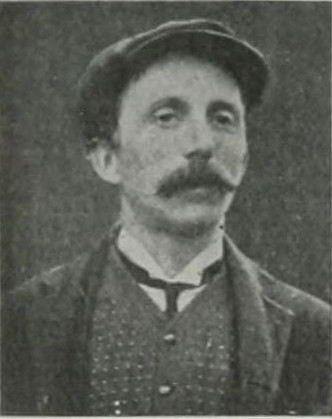
Harry Polley.
POLLOCK, FREDERICK ROBERT, Lieut., 1st Battn. Coldstream Guards, elder s. of the late Robert Erskine Pollock, of Avening Court, co. Gloucester, K.C., J.P., Barrister-at-Law, by his wife, Mary Viner, only dau. and heiress of Frederic Carl Playne, of Avening Court, aforesaid, Capt. 1st Battn. Rifle Brigade (who served through the Crimean War and Indian Mutiny), and grandson of Robert John Pollock, Barrister-at-Law, Lieut. 8th Madras Cavalry [2nd son of the Right Hon. Sir Frederick Pollock, 1st Bt.]; b. 74, Queens Gate, S.W., 24 Oct. 1885; educ. Eton College and Royal Military College, Sandhurst; gazetted 2nd Lieut. Coldstream Guards, 13 Aug. 1904, promoted Lieut. 15 June, 1907, and from 29 Dec. 1909 to Feb. 1914, served with the West African Frontier Force. On the outbreak of the European War he went to France with the Expeditionary Force, and served through the retreat from Mons, the Battles of the Marne and the Aisne, and was killed while leading his men in an attack near Langemarck, Belgium, 23 Oct. 1914; unm.
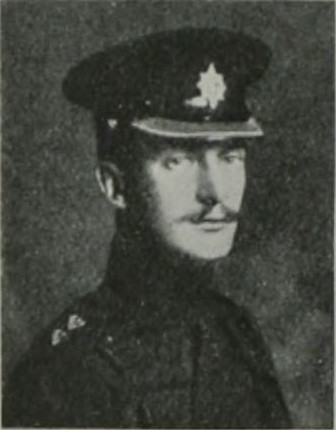
Frederick Robert Pollock.
POLLOCK, MARTIN VINER, LL.B., Barrister-at-Law, 2nd Lieut., 2nd Battn. South Wales Borderers, 2nd and only surviving s. of the late Robert Erskine Pollock of Avening Court, Avening, co. Gloucester, and 74, Queen’s Gate, K.C. (see preceding notice); b. 74 Queen’s Gate, S.W., 15 May, 1888; educ. Eton College and Trinity College, Cambridge; was called to the Bar at the Middle Temple in Nov. 1910, and went to the Oxford Circuit. He was given his commission in the 3rd (Reserve) Battn. of the South Wales Borderers, 15 Aug. 1914, and afterwards transferred to the 2nd Battn. He left with his regt. for the front in March, 1915, and was killed in action while leading his men in an attack near Richebourg St. Vaast, France, 9 May, 1915; unm.