The Roll of Honour. (continued 44)
Reading edition
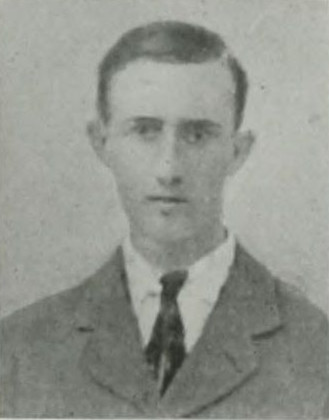
James Augustus Stewart.
STEWART, JOHN STEWART, 2nd Lieut. and Signalling Officer, 1/5th Battn. Argyll and Sutherland Highlanders (T.F.), only s. of William Stewart, of Benview, Gourock, M.B., C.M., D.P.H., M.O.H., by his wife, Margaret, dau. of the late John Kirkland, of Rutherglen; b. Gourock, co. Renfrew, 20 Oct. 1894; educ. Greenock Academy, and Glasgow University (where he was in the O.T.C.), and was studying medicine when war broke out in Aug. 1914. He was given a commission in the Argyll and Sutherland Highlanders as a 2nd Lieut., 6 Nov. 1914; went to the Dardanelles, 1 June, 1915, and died on H.M. Hospital Ship Rewa, 15 July following, from wounds received in action after the charge at Achi Baba on the 13th; unm. Major Clapperton-Stewart, 1/5th Argyll and Sutherland Highlanders, wrote: “We had a very bad time on 12 July, and all the officers and men did well, but none better than John. He had a lot of dangerous and important work, getting the telephones across, and he did it well and fearlessly, coming through the attack unhurt. He was wounded on the head next morning by a sniper at 6 a.m. He is a boy with great backbone and lots of character and I do hope has been spared, but if not, your boy at least played the man”; and a friend: “You have a great sorrow in losing your son. but you have a great deal to help you to bear it, for everyone that speaks of your dear boy has some act of kindness to tell you he had done for them.” A tribute from the Ashton U.F. Church, Gourock, by the Rev. George Rae, M.A., states; “Lieut. Stewart, who has given his life in the service of his country in the cause of Justice and Righteousness, was known to most of us from his youth up, and by all who knew him highly esteemed. He was a singularly pure-minded and clean living young man; one who wore the white flower of a blameless life. He was also of a singularly lovable nature, a son of whom any parents might be proud. Having resolved to enter the medical profession he was quietly pursuing his studies when war broke out, preparing to save men’s lives and not destroy them, but a sense of duty compelled him to give up what promised to be a successful medical career to serve his country, as a soldier in her hour of need. To his military training he gave himself in the same whole-hearted manner that he had done whatever he undertook. He had a brief bright life. He died from wounds received in battle at the Dardanelles. His warfare is accomplished yet over such a death there rests, with mystic brightness, the graciousness of the sacrifice.”
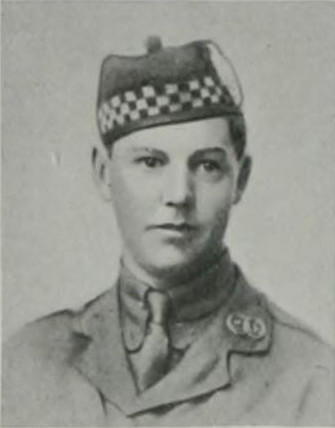
John Stewart Stewart.
STEWART, WILLIAM HENRY, Stoker, 1st Class, 310491, H.M.S. Pathfinder; lost when that ship was sunk by a mine, about 20 miles off the East Coast, 5 Sept. 1914.
STEWART, WILLIAM VICTOR, 2nd Lieut. 1st Battn. Monmouthshire Regt. (T.F.), only s. of William Stewart, of Brodawel, Caerleon, co. Monmouth, Mining Engineer, President of the South Wales Institute of Engineers, and late Chairman of the South Wales Coal Owners’ Association, by his wife, Margaret, dau. of Hopkin John, of Tonypandy, Glamorgan; b. Abertillery, co. Monmouth, 10 Jan. 1897; educ. Blundell’s School, Tiverton; enlisted, 28 Aug. 1914, and was killed in action at Festubert, near Ypres, 8 May, 1915; unm. On the previous evening the 1st Monmouths had been moved up into the trenches, in which it was found there was little shelter. The battn. was thereupon engaged throughout the whole of the night in improving the trenches. At daybreak the enemy commenced fiercely bombarding the 1st Monmouths, and continued doing so all the morning until about mid-day, when they broke through our lines to the right of Mons, and it was then that Lieut. Stewart was killed by a bullet wound in the forehead. An incident which occurred on the day of the charge at Neuve Chapelle (12 March, 1915) is thus related in a letter which appeared in the “South Wales Argus” of 13 April, 1915: “Our time at the redoubt was 24 hours, and our next 24 hours was spent at a farm about half a mile from the line. It was at this point that I essayed my most dangerous exploit. Our Capt. asked for volunteers to carry ammunition to the trenches as their stock was getting exhausted. No sooner had the words been spoken than the volunteers were ready and I am pleased to say I was one of them. First we had to get back to headquarters to obtain the ammunition. Well, our party, under the direction of Lieut. Stewart, safely fulfilled this part of our duty. Then our task began in earnest, and slowly we approached the danger area along the road. On arriving at a certain point our officer, Lieut. Stewart, ordered us to open the boxes and carry 10 bandoliers each. Truly this was far more favourable for moving about, and at this juncture we crept on to the side of the road and then right into the ditch. What with the heavy going, the excitement of being spotted, I can tell you it was far from pleasant. Step by step we advanced until we got to the communication trench, which was also knee deep in water. Still keeping up heart and receiving encouragement from our officer, we plodded on. With our goal in sight we were spotted, and didn’t the lead fly! Still, there were no hits and we arrived safely, every man completely exhausted. After a brief spell we soon revived, only to stop with damp pants for some eight or nine hours, until darkness set in, when we marched back to our billets.”
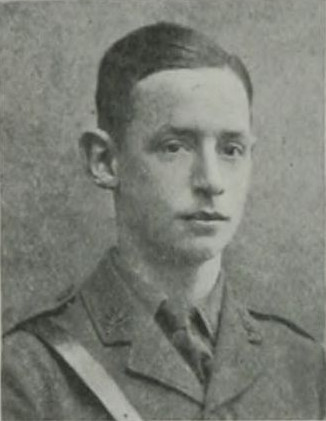
William Victor Stewart.
STIFF, HARRY, Private, No. 13118, 1st Battn. Suffolk Regt., s. of William Stiff, of Wickhambrook, co. Suffolk, Agricultural Labourer, by his wife, Sarah Ann, dau. of William Willingham; b. Chedburgh, near Bury St. Edmunds, co. Suffolk, 16 Sept. 1886; educ. Hargrave, and served for six years in the 3rd Battn. Suffolk Regt., being discharged with exemplary character. On the outbreak of war he re-enlisted in the 1st Battn. Suffolk Regt., served in France and Flanders, and was killed in action south of Ypres, 18 Feb. 1915; unm.
STILES, GEORGE, Cooper, 340278, H.M.S. Cressy; lost in action in the North Sea, 22 Sept. 1914.
STILING, WILLIAM CHARLES HENRY, Signalman, No. 216012, Royal Navy, H.M.S. Monmouth, eldest s. of the late Charles Henry Stiling, of The Minories, by his wife, Phœbe (7, Circus, Minories, Aldgate, E.), dau. of William Thomas Pugh; b. St. George’s, E., 1 Dec. 1885; educ. Sir John Cass’ School, Minories; enlisted in the Devonshire Regt., 25 June, 1901, but was claimed out by his mother (29 June), being only 15½, and then in the 5th Battn. Rifle Brigade, but was again claimed out; joined the Navy as a Boy (2nd class), 19 July, 1901; became Boy (1st class), 5 June, 1902; Signalman, 2 Dec. 1903; Ordinary Signalman, 1 Oct. 1907; Signalman, 26 Nov. 1907; served in H.M.S. Impregnable, Vivid, Royal Oak, Cambridge, Hogue, Cornwall, Mars, Hibernia, Crescent, Orontes, Egmont, Sutlej and Monmouth (appointed 30 July, 1914), and was lost on H.M.S. Monmouth when that ship was sunk in the battle off Coronel, on the coast of Chili, 1 Nov. 1914; unm. His brother, Thomas Edward, Leading Seaman, served at the Dardanelles on the Swiftshire, and is now (1916) on active service on H.M.S. Royal Oak in the North Sea.
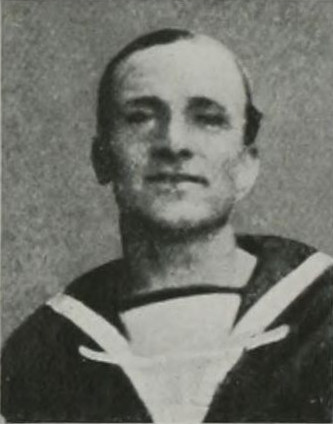
William C. H. Stiling.
STIRLING, JAMES, Capt., 3rd, attd. 1st, Battn. The Cameronians (Scottish Rifles), eldest s. of Col. James Wilfrid Stirling, of The Grange, Rockbeare, Devon, now commanding 72nd Brigade, Royal Field Artillery, by his wife, Cecil Mary, dau. of Major-Gen. Dixon Edward Hoste, C.B., R.A.; b. Hong Kong, 7 June, 1884; educ. Wellington College and the Royal Military College, Sandhurst; gazetted 2nd Lieut. to the 2nd Cameronians, 22 April, 1903, and promoted Lieut., 5 Oct. 1907; retired in 1911 and joined the 3rd Battn. at Hamilton for Special Reserve duty; appointed Capt., — 1912; rejoined on the outbreak of war; went to the Front from England, 6 Oct. 1914, where he was attached to the 1st Battn., and was killed in the trenches near Armentières, 2 Jan. 1915; unm. His Colonel wrote: “The loss of your dear son is irreparable.... As his late commanding officer I deeply feel his sad but glorious end; he was one of the most honourable, conscientious and reliable of all my officers.” A bronze tablet was placed in Rockbeare Parish Church to the memory of himself and his younger brother, Lieut. W. D. Stirling, R.N. (see following notice).
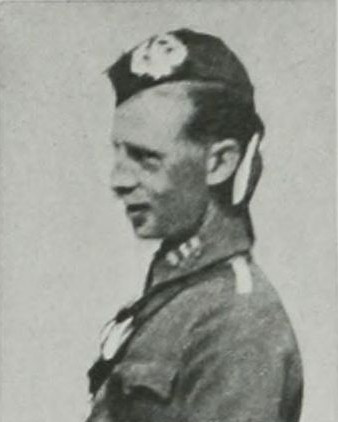
James Stirling.
STIRLING, WILFRED DIXON, Lieut., Royal Navy, s. of Col. James Wilfrid Stirling, of The Grange, Rockbeare, Devon, now commanding 72nd Brigade, Royal Field Artillery, by his wife, Cecil Mary, dau. of Major-Gen. Dixon Edward Hoste, C.B., R.A.; b. Pennycross, near Devonport, 12 Sept. 1886; educ. Cheltenham College, and passed direct into H.M.S. Britannia in 1901 and passed out 5th in his term in Dec. 1902, having been awarded the Diploma of Honour as selected Candidate of his term for His Majesty’s medal; entered the Navy as Midshipman, 16 Dec. 1902; promoted Sub-Lieut., 15 March, 1906, and Lieut., 16 June, 1907; served as Midshipman in H.M.S. Bacchante, under Capt. (afterwards Admiral Sir) Christopher Cradock; qualified as Navigating Officer in 1907, and acted in that capacity successively in H.M. ships Ringdove, Media, Attentive and Grafton; was Instructor in Navigation to Cadets at Dartmouth, Jan. 1913, to Aug. 1914; appointed Navigating Lieut., H.M.S. Monmouth (Capt. Brandt), Aug. 1914, and was lost when that ship was sunk in the battle off Coronel, on the coast of Chili, 1 Nov. 1914; unm. From many appreciative letters the following sentence is taken from that of a brother officer: “His was a glorious example, and if anything can lessen the terrible sorrow you and Col. Stirling are suffering it must be the knowledge that his life was well lived and his duty nobly done.”
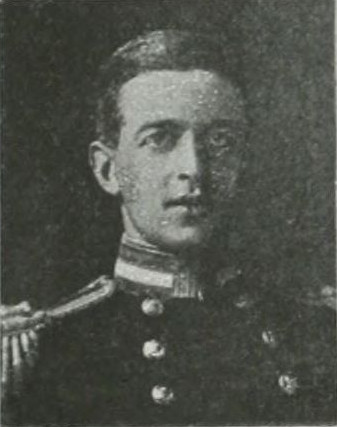
Wilfred Dixon Stirling.
STOCK, FREDERICK ERNEST, Drummer, No. 1137, B Coy., 4th Battn. The East Yorkshire Regt. (T.F.), 3rd s. of James Stock, of 87, Brunswick Avenue, Hull, formerly of Ramsgate, late Sergt. in the 1st Norfolk Artillery Volunteers at Great Yarmouth, by his wife, Charlotte, dau. of James Wright, of Great Yarmouth; b. Hull, co. York, 19 Aug. 1894; educ. Christ Church School there, and was a member of the St. Paul’s Church Lads’ Brigade. A Coppersmith by trade, he served his apprenticeship with Messrs. George Clark & Sons, Waterhouse Lane, where his brother, Herbert, who is now (1916) on active service, was also employed. He enlisted in the Hull Rifles in 1910, and was in training at Newcastle on the outbreak of war, when he immediately volunteered for foreign service. He went with his regt. to the Front, took part in all the engagements of his battn., witnessed some of the most severe battles in Flanders, and was killed in action at Ypres, 29 June, 1915, and was buried in R.E. Farm, near Wulverghem (Ref. 1/40,000, Map N 35d 9–7); unm. A comrade wrote: “He was shot through the head at 4.15 a.m. on 28 June, and died at 4.40 a.m. the same day. I was with him all the time waiting for him to come round, but he went without gaining consciousness.”
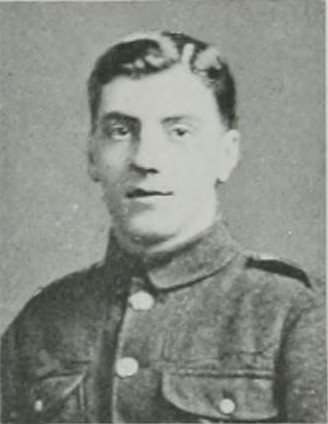
Frederick Ernest Stock.
STOCKDALE, CECIL, Private, R.M.L.I., Po./12872, H.M.S. Good Hope; lost in action off Coronel, on the coast of Chili, 1 Nov. 1914.
STODDART, SYDNEY, Sergt., Machine-gun Section, 10th (Service) Battn. Durham L.I., only s. of Edward Stoddart, of 3, Brantwood Terrace, Tindale Crescent, Bishop Auckland, Cordwainer, by his wife, Margaret, dau. of the late Joseph Brown; b. Barnard Castle, co. Durham, 21 Sept. 1889; educ. there; and was afterwards a Ticket Collector at Crook Station, North Eastern Railway; volunteered on the outbreak of war and enlisted in the 10th Durham L.I., 12 Aug. 1914; went to France, 19 May, 1915, was promoted Sergt. on or about 29 May, and was killed in action at Ypres, 21 July, 1915; unm. Buried in the 43rd Brigade Cemetery there. Lieut. John B. Rosher wrote to his mother: “I know so well what a splendid fellow he was, as he has been in my machine-gun section so long. Always cheery under the most adverse circumstances, and always ready to help in every way possible. He is a great loss to my section, and I feel that his loss is a personal one. We have worked the gun together several times, and I had many opportunities of admiring his coolness and courage.”
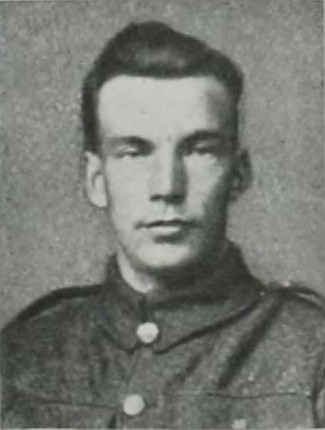
Sydney Stoddart.
STOKELL, ROBERT, Boy, 1st Class, J. 25783 (Ports.), H.M.S. Hawke; lost when that ship was torpedoed in the North Sea, 15 Oct. 1914.
STOKER, FREDERICK WILLIAM, Ordinary Seaman, S.S. 4905, H.M.S. Aboukir; lost in action in the North Sea, 22 Sept. 1914.
STOKES, ALFRED EDGAR, E.R.A., 4th Class, M. 7616, H.M.S. Hogue; lost in action in the North Sea, 22 Sept. 1914.
STOKES, ARTHUR EDWARD, A.B. (R.F.R., B. 4120), S.S. 1320, H.M.S. Good Hope; lost in action off Coronel, on the coast of Chili, 1 Nov. 1914.
STOKES, HALDANE DAY, M.V.O., Lieut., 2nd Battn. King’s Own Royal Lancaster Regt., only s. of Lieut.-Col. Henry Haldane Stokes, of Devonshire House, Cowley, co. Oxford, late R.A.M.C., by his wife, Florence, dau. of Samuel Browne, and grandson of the late Lieut.-Col. Patrick Day Stokes, of Tralee, co. Kerry; b. Dublin, 21 Sept. 1885; educ. Tonbridge School; joined the Earl of Derby’s 3rd Royal Lancaster (Militia) Regt. in 1904, and received a regular commission in the 2nd Battn. 6 July, 1907, and was promoted Lieut. 26 June, 1910; served in India, and returned with his regt. after the outbreak of the European War, landing in England 23 Dec. 1914; left for the Front 15 Jan. following, and was killed in action near Ypres, 17 Feb. 1915; unm. Buried at Zillebeke. He received the fifth class of the Victorian Order in June, 1905, when only 19 years of age.
STOKES, THOMAS WILLIAM, A.B., 238670, H.M.S. Aboukir; lost in action in the North Sea, 22 Sept. 1914.
STONE, BERTIE EDWARD, Leading Signalman, 229302, H.M.S. Cressy; lost in action in the North Sea, 22 Sept. 1914.
STONE, CECIL DOUGLAS, Ordinary Signalman, J. 14500, H.M.S. Pathfinder; lost when that ship was sunk by a mine, about 20 miles off the East Coast, 5 Sept. 1914.
STONE, GEORGE ALFRED, Sail Mate, (R.F.R., A. 2937), 132084, H.M.S. Good Hope; lost in action off Coronel, on the coast of Chili, 1 Nov. 1914.
STONE, JAMES WILLIAM, Private, N. 5510, 2nd Battn. Coldstream Guards, 1st s. of the late James Stone, Maltster, by his wife, H. (43, Albert Street, Horncastle), dau. of John Would; b. Horncastle, co. Lincoln, 1 March, 1883; educ. there; was a Maltster and Labourer before he enlisted in the Coldstreams, 7 April, 1904; went to France, 26 Aug. 1914, and was killed in action at Rentel 12 Nov. following. Buried in the woods there. He m. at Horncastle, Harriet (43, Albert Street, Horncastle), dau. of John Would, and had a son, James Walter, b. 12 July, 1913.
STONEHAM, LOUIS, Private, R.M.L.I. (R.F.R., B. 868), late Ch. 11705, H.M.S. Hogue; lost in action in the North Sea, 22 Sept. 1914.
STONEHOUSE, CHARLES BROWELL, Private, No. 13612, 6th (Service) Battn. E. Yorks Regt., 7th and yst. s. of John James Stonehouse, of Sunderland, Bricklayer, by his wife, Ann, dau. of Ann Browell, of Sunderland; b. Bishopwearmouth, co. Durham, 2 Jan. 1878; educ. there; was employed at the Hylton Colliery; enlisted 16 Oct. 1914; trained at Grantham, arrived at the Dardanelles, 6 Aug., and was killed in action there three days later, 9 Aug. 1915. He m. at Southwick-on-Wear, 31 July, 1904, Ada Jane (30, Nelson Street, Southwick-on-Wear), dau. of John Griffin, of Sunderland, and had issue: Charles Browell, b. 15 Jan. 1909; Thomas, b. 26 Feb. 1914; Margaret, b. 22 May, 1905; Christine, b. 19 July, 1906; Lilian, b. Nov. 1907; Annie, b. 22 Aug. 1910; and Ada Jane, b. 19 May, 1915.
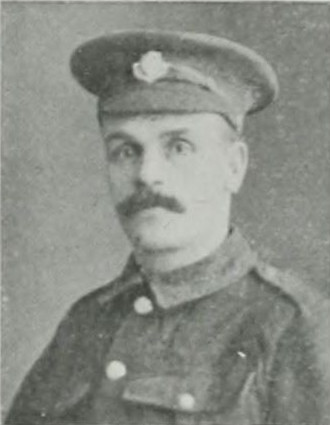
Charles B. Stonehouse.
STONEMAN, HENRY CHARLES BRYANT, Pensioner, Carpenter’s Mate, 145536, H.M.S. Hawke; lost when that ship was torpedoed in the North Sea, 15 Oct. 1914.
STOPHER, JAMES FREDERICK, Stoker, 1st Class (R.F.R., Ch. B. 7731), S.S. 103115, H.M.S. Aboukir; lost in action in the North Sea, 22 Sept. 1914.
STORER, RAYMOND TRITTON, Private, No. 237, 5th Battn. (London Rifle Brigade) The London Regt. (T.F.), yr. s. of Henry Norris Storer, of Belle Grove, Welling, Kent, Market Gardener and Fruit Grower, by his wife, Ellen Eliza, dau. of William Rush Tritton; b. Welling, 16 Feb 1894; educ. Hope Lodge, Welling, and Roam School, Greenwich, and on leaving the latter entered the employ of Mr. V. A. Litkie, Diamond Merchant. On the outbreak of war he volunteered for foreign service, and joined the London Rifle Brigade, 31 Aug 1914, and after six months’ training at Haywards Heath and Crowborough, sailed for France on his twenty-first birthday. They were sent up to the trenches, and he was killed two months later at the second Battle of Ypres, 26 April, 1915. It was on this occasion that a General, speaking of the London Rifle Brigade, remarked that he had never seen a finer regiment. Storer was buried at Fortuin; unm.
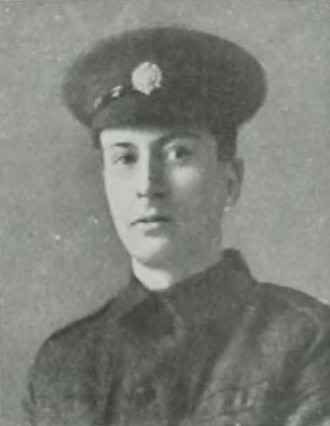
Raymond Tritton Storer.
STOREY, GEORGE ARTHUR, Stoker, 1st Class (R.F.R. Ch. B. 5735), S.S. 100704, H.M.S. Aboukir; lost in action in the North Sea, 22 Sept. 1914.
STOWE, CHARLES WILLIAM HARVEY, A.B., S.S. 4086, H.M.S. Pathfinder; lost when that ship was sunk by a mine, about 20 miles off the East Coast, 5 Sept. 1914.
STRACHAM, WALLACE, Leading Stoker, K. 1435, H.M.S. Good Hope; lost in action off Coronel, on the coast of Chili, 1 Nov. 1914.
STRACHAN, HUGH, Private, No. 3472, 1st Battn. The Black Watch (Royal Highlanders), 5th s. of the late James Strachan, Ploughman, by his wife, Jean, dau. of John Ross; b. Johnshaven, near Montrose, 16 Jan. 1870; educ. Montrose Public School; enlisted in the Black Watch, and served under Gen. Wauchope, and was invalided home with malarial fever and discharged just before the South African War; became a Signalman on the North British Railway; re-enlisted in his old regt. after the outbreak of war, 2 Sept. 1914; left for the Front with the 1st Battn. in Nov. 1914, and was killed in action at La Bassée, 25 Jan. 1915. Private Strachan was a first-class shot. He m. at Edinburgh, 13 Oct. 1899, Isabella (3, South Gayfield Lane, Edinburgh), dau. of the late Donald Robertson, and had two children: Hugh, b. 16 July, 1900; and Eleanor, b. 16 Oct. 1902.
STRANGE, ARNOLD JOHN WARD, Private, No. 2190, 5th (Cinque Ports) Battn. The Royal Sussex Regt. (T.F.), only s. of Charles James Strange, of Brackleigh, Crowborough, Sussex, retired Farmer, by his wife, Mary Jane, dau. of Thomas Ward; b. Silsworth Lodge, Crich, Rugby, 8 Sept. 1896; educ. King Charles’ School, Tunbridge Wells. On the outbreak of war joined the Sussex Territorials and signed on for foreign service, 14 Aug. 1914; went to France, 18 Feb. 1915, the battn. being held in reserve for the 2nd Sussex; selected as sniper for his platoon, 4 March, 1915; mortally wounded by a shell on Sunday, 17 Oct. 1915, and died the following day at Sailly-au-Bois; unm. Buried in the military cemetery at Louvercourt. His commanding officer spoke highly of him, describing him “as most intelligent, a keen soldier, always ready to volunteer for everything, brave as a lion and a splendid shot.”
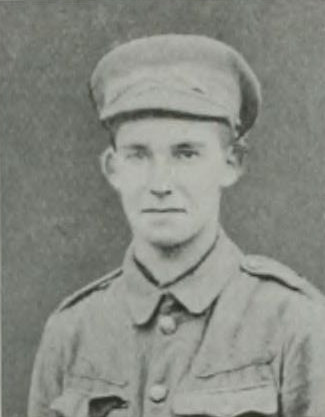
Arnold John W. Strange.
STRANGER, RICHARD HENRY, Lieut. and Adjutant, 1st Battn. The Sherwood Foresters (Notts and Derby Regt.), only s. of Richard John Stranger, of Franchise, Burwash, Sussex, Yeoman and Land Owner, by his wife, Wilhelmina Key, dau. of the late Melchior George Klingender, of Waterloo, Liverpool; b. Court House, North Molton, Devon, 19 Dec. 1889; educ. The Hermitage, Bath, and Allhallows, Honiton; joined the Royal Sussex Militia, 6 Jan. 1908, and was appointed to the Sherwood Foresters, then at Secunderabad, India, 28 May, 1910. He was promoted Lieut. 10 Aug. 1912, and became Adjutant, 31 July, 1913. On the outbreak of war he returned to Europe with his regt. and died, 13 March, 1915, of wounds received in action at Neuve Chapelle, being buried in Boulogne Cemetery; unm. Lieut. Stranger was mentioned in Sir John (now Lord) French’s Despatch of 31 May, 1915, for gallant and distinguished conduct in the field.
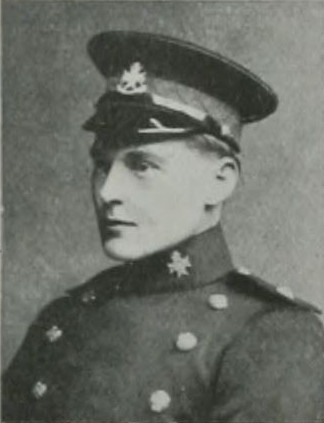
Richard Henry Stranger.
STRATFORD, THOMAS, 2nd Yeoman of Signals (R.F.R., B. 317), 149993, H.M.S. Hogue; lost in action in the North Sea, 22 Sept. 1914.
STRATTON, EDWIN VICTOR, Stoker, 1st Class, K. 13889, H.M.S. Hogue; lost in action in the North Sea, 22 Sept. 1914.
STRATTON, WILLIAM, Stoker, 1st Class, K. 5454, H.M.S. Good Hope; lost in action off Coronel, on the coast of Chili, 1 Nov. 1914.
STRAW, WILLIAM HENRY, Boy, 1st Class, J. 27544, H.M.S. Hawke; lost when that ship was torpedoed in the North Sea, 15 Oct. 1914.
STREET, WILLIAM HENRY, Stoker, 1st Class (R.F.R., B. 3119), S.S. 100752, H.M.S. Good Hope; lost in action off Coronel, on the coast of Chili, 1 Nov. 1914.
STREETER, WILLIAM HENRY, Gunner, R.M.A. (R.F.R., I.C. 30), H.M.S. Good Hope; lost in action off Coronel, on the coast of Chili, 1 Nov. 1914.
STREVENS, FRANCIS, A.B., J. 6277 (Ports.), H.M.S. Aboukir; lost in action in the North Sea, 22 Sept. 1914.
STRICKLAND, CHARLES (alias HAYDON, J.), A.B. (R.F.R., Ch. B. 713), 104408, H.M.S. Cressy; lost in action in the North Sea, 22 Sept. 1914.
STRIKE, STANLEY GEORGE, Private, No. 1455, 1st Battn. (Post Office Rifles) The London Regt. (T.F.), s. of George Barham Strike, Post Office Pensioner; b. London, 21 Oct. 1891; educ. Havist Road Council School, Queen’s Park, W.; killed in action at Festubert, 24 May, 1915; unm. Buried on the field of battle. A comrade wrote he “was shot through the head and died instantly.... Stan had to lie with several others behind a ridge to keep the ‘gentlemen in grey’ from becoming too troublesome, and while there was sniped.... I can only say that he died doing his duty and none of us can do more.”
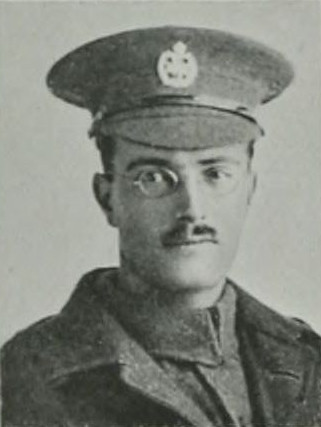
Stanley George Strike.
STRONELL, EDWARD, Gunner, R.M.A., 10738, H.M.S. Good Hope; lost in action off Coronel, on the coast of Chili, 1 Nov. 1914.
STRONG, ALBERT VICTOR, A.B. (R.F.R., Ch. B. 2133), 191308, H.M.S. Aboukir; lost in action in the North Sea, 22 Sept. 1914.
STRONG, FREDERICK JAMES, Stoker, 1st Class, 310788 (Dev.), H.M.S. Good Hope; lost in action off Coronel, on the coast of Chili, 1 Nov. 1914.
STRONGMAN, WILLIAM JAMES, Private, No. 12/910, Auckland Infantry Battn. New Zealand Expeditionary Force, s. of William S. Strongman, of Coromandel, Auckland, New Zealand, Engine Driver; b. Coromandel, 1 Jan. 1895; educ. Coromandel District High School; volunteered for Imperial service on the outbreak of war, and left for Egypt in Oct. 1914; took part in the landing at the Dardanelles, 25 April, 1915, and was killed in action there 8 May following; unm.
STROUD, WILLIAM EDWARD, Shipwright, 115268 (Ports.), H.M.S. Cressy; lost in action in the North Sea, 22 Sept. 1914.
STUART, JOHN, Private, No. 18161, No. 1 Coy., 3rd Battn. Grenadier Guards, s. of John Stuart, of 16, Bridge Street, Wigan, Collier, by his wife, Ellen; b. Wigan, co. Lancs., 19 Dec. 1883; educ. St. Joseph’s School, Wigan, and afterwards worked as a Miner at the Moss Hall Collieries. After the outbreak of war he enlisted in the 3rd Battn. Grenadier Guards, 7 Sept. 1914, and was killed in action, being shot through the head by a sniper while filling sand bags, at Neuve Chapelle, 3 April, 1915; unm.
STUART, PERCY CHARLES, Private, R.M.L.I., Ch./14085, H.M.S. Pathfinder; lost when that ship was sunk by a mine, about 20 miles off the East Coast, 5 Sept. 1914.
STUBBINGTON, WILLIAM CHARLES, A.B., 231916, H.M.S. Good Hope; lost in action off Coronel, on the coast of Chili, 1 Nov. 1914.
STUBBS, ALBERT CHARLES WILLIAM, A.B., J. 760, H.M.S. Aboukir; lost in action in the North Sea, 22 Sept. 1914.
STUBBS, BERNARD CASTLE, Private, No. 2655, 9th Battn. (Queen Victoria Rifles) The London Regt. (T.F.), 3rd s. of the late Charles Stubbs, of 20, Grafton Road, Worthing, by his wife, Kate Marian (141, Gladstone Road, Watford, Herts.), dau. of Thomas Henry Castle; b. Worthing, 6 March, 1891; educ. Slough School (1899–1907), and on leaving there entered the London offices of the Union Castle Line; volunteered on the outbreak of war and joined the Queen Victoria Rifles, Sept. 1914; went to France with a draft for the 1st Battn. in Feb., and was sent direct to the firing line; took part in the fight on Hill 60, during the night of 20–21 April, under Lieut. G. H. Woolley, who then gained the first Victoria Cross conferred on a Territorial officer; was wounded in the head by a piece of shell, 22 June, 1915, and died in the Receiving Hospital, Bailleul, without recovering consciousness; unm. At Slough he was head boy of the school during his last few terms, the holder of a cup for the school championship at “fives,” and the winner of the swimming medal of the school. He later captained the Old Boys’ Football Team.
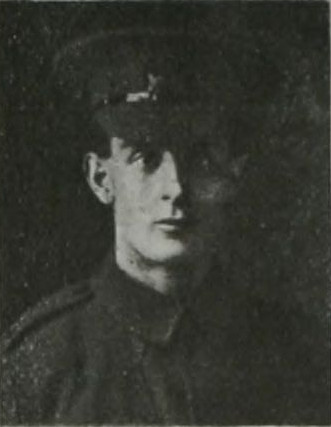
Bernard Castle Stubbs.
STUBBS, HERBERT CLAUDE, Gunner, R.M.A. (R.F.R., B. 819), late R.M.A. 5329, H.M.S. Hogue; lost in action in the North Sea, 22 Sept. 1914.
STUBBS, JOHN DUNCAN, Midshipman, R.N., elder s. of Thomas Duncan Henlock Stubbs, of Nunthorpe, Yorkshire, Major, North Riding Heavy Battery, 13th Brigade, R.G.A. (now on active service in France), by his wife, Margaret Isobel, dau. of Arthur Buchannan, of Guisborough, Yorkshire; b. Coatham, Redcar, co. York, 24 June, 1899; educ. Coatham Grammar School; Pembroke Lodge, Southbourne, and the Osborne (entered May, 1912), and Dartmouth Royal Naval Colleges, and had just completed one term at the latter college when war broke out, and the Cadets from the college were sent to various ships on active service. As senior he took a party of nine Cadets of his term to Chatham, where they joined the Aboukir, and in a few days time he went to sea as acting Midshipman. Shortly afterwards the Cadets were all promoted Midshipmen. He was attd. to the Gunnery Lieut., and was in charge of four 12-pr. guns. Life on board was much to his liking, writing home he described it as “the most glorious time of my life.” On 22 Sept. the Aboukir was the first ship to be torpedoed; everyone came on deck, as it was obvious that the vessel was sinking. Stubbs noticing that one of the other Midshipmen was not on deck went below to look for him, he found the boy asleep (he had just come off watch), woke him up, and brought him on deck. As one of the officers wrote: “It took some pluck to do this with the ship heeling over and likely to go at any moment.” Stubbs swam in the direction of the Hogue, but before he reached her she was torpedoed also and sank very quickly. He then swam towards the Cressy, and while in the water in company with another Midshipman of the Aboukir, they came across a drowning man calling for help. They went to his assistance and succeeded in holding him up for some time, telling him what to do to help himself, but as the man was unable to do as they told him, they were obliged to leave him as they could hold him up no longer. They got to the Cressy where they received dry clothes and hot cocoa, and were in the sick bay when the Cressy was struck the first time. They went on deck, and when the second torpedo struck the ship they took to the water again. Stubbs was seen in the water clinging to some wreckage some time afterwards, but when the rescuing boats came along he had disappeared. According to an Artificer of the Hogue the following incident took place after the Cressy was sunk: A man was calling for help some distance away, the Artificer saw two Midshipmen on a plank not far from the man, later he saw the boys leave the plank they were on and swim towards the man. The latter seized the boys, then there was a short struggle and all three disappeared. The Artificer was then only a few yards away, he saw the boys clearly, and from his description and from the fact that all the other Midshipmen were accounted for, it is thought that almost certainly the boys referred to were Midshipmen Stubbs and Riley. One of the officers of the Aboukir wrote saying of Stubbs: “He was of the greatest assistance to me, in fact I could not have done without him. It was impossible for him to tell a lie. He was always cheerful no matter what time of day or night, nor how rough the sea was.” And again he wrote: “There were many fine things done that day, but none finer than his. He was one of the best and truest boys I ever met.” He early showed signs of great promise; at Pembroke Lodge he held a high place in the school, and was also good at all games. He played for the school in both the cricket and football teams, and in the school sports won every open event, taking the Sports Challenge Cup with the maximum number of marks. In the words of his headmaster: “He was one of God’s perfect little gentlemen.” At the R.N.C., Osborne, he was promoted Cadet captain on completion of his third term at the college, he played for the college at cricket, being given his colours in 1913, and won the prize for the best field in the college. He passed out of the college head of his term, being awarded the Admiralty’s prize for the Cadet obtaining the highest aggregate number of marks in all subjects, including engineering and seamanship.
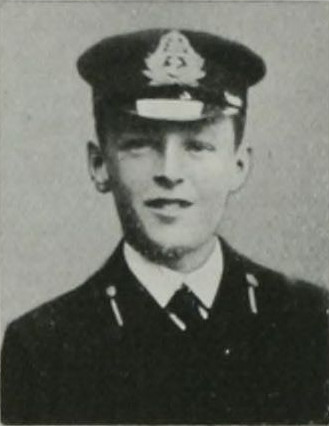
John Duncan Stubbs.
STUBLEY, FREDERICK, Gunner, R.M.A. (R.F.R., I.C. 38), H.M.S. Good Hope; lost in action off Coronel, on the coast of Chili, 1 Nov. 1914.
STUCKEY, FREDERICK, Major, 6th (Hauraki) Regt., New Zealand Expeditionary Force, s. of the late Samuel Stuckey, of Christchurch, New Zealand (a native of Somersetshire, England); b. Christchurch, New Zealand, 8 April, 1877; educ. Nelson College (where he was winner of the Gymnastic and Swimming Championships); travelled in Europe for two years to qualify himself in French and German, and on his return joined the New Zealand T.F.; became Capt. 13 May, 1912; volunteered for Imperial service after the outbreak of war and was appointed Capt. 6th Regt. New Zealand Expeditionary Force, 1 Sept. 1915, and later Major; left for Egypt with the main body in Oct.; took part in the landing at the Dardanelles, 25 April, 1915, and was thereafter missing, and is now assumed to have been killed in action the same day. The Col. wrote: “The last I saw of him was as he was gallantly leading his company up a ridge that ran to the left of Shrapnel Gully, and later in the day it was reported that he had been severely wounded (through the stomach, and if I remember correctly, through the chest), and that his men were unable to get him back. My report to the A.A.G. was ‘missing and severely wounded, believed killed,’ but as rumours were about that he had been taken off to a hospital ship, this was altered to wounded. Personally, I do not think there is any chance that he is a prisoner in the hands of the Turks”; and an officer of the 3rd Auckland Regt.: “At the time he was wounded I was on the look-out for any New Zealand officers, especially those I knew. I was on duty on an Auxiliary Hospital Ship Lutzow. I had two trips in her, and we arrived in Alexandria in company with many other ships, all of which I visited each time. I had heard the Major was severely wounded, and was especially looking out for him, but never found a trace of him having landed back in Egypt, where practically all the wounded went. Neither could I find him in any hospital in Alexandria. I did hear that he was in a Cairo hospital, but on further enquiries could not trace him. I also asked our Base Commandant at Alexandria to make a thorough search, which I am sure he did. Several of the Hauraki men told me they had seen the Major put on board a lighter on the Anzac Beach, and I am quite prepared to believe this. It is more than probable that he died before reaching the hospital, and was taken away in a mine sweeper and buried at sea, without his name being noted in the fearful rush of wounded which came from shore the first day or two.... The Major was very popular with men and officers alike, in fact almost the most popular, he was always so fair.” He was unm.
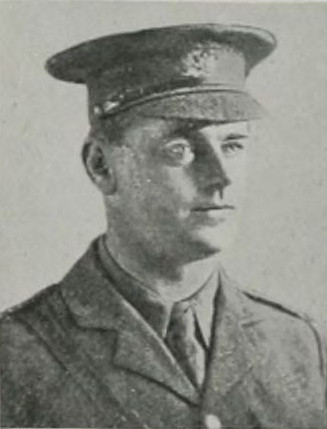
Frederick Stuckey.
STUDD, LIONEL FAIRFAX, Clerk in Holy Orders, and Capt. 12th Battn. (The Rangers) The London Regt. (T.F.), 3rd s. of John Edward Kynaston Studd, M.A. Camb., President and Chairman of the Polytechnic, Regent Street, by his wife, Hilda, dau. of Sir Thomas William Brograve Proctor-Beauchamp, 4th Bt., and the Hon. Caroline Esther Waldegrave, dau. of Granville George, 2nd Lord Radstock; b. 2, Cavendish Place, London, W., 16 May, 1891; educ. at Winchester and Trinity College, Cambridge, where he took Honours in History. He then studied for a year at Ridley Hall, where he was a double prizeman. On leaving Cambridge in 1913 preparatory to taking Orders in the following spring, he threw in his lot with the Polytechnic, in whose work he had always been interested, and to which he had ever given his help, notably in connection with the Christmas Dinner Fund and the Scottish Holiday Tours in Edinburgh. During the winter session of 1913–14 Capt. Studd, who had strong inclinations for a missionary life, determined to render himself more efficient by a course of practical business training. He entered as a student at the Polytechnic Business Training School, studying accounts, and then entered the accounts department, where he helped with the books. During this time he became a regular member of the second hockey team and a constant attendant at the weekly Bible classes. He joined the 12th Battn. of the London Regt. as a Subaltern in the “Poly” Coy., 15 Nov. 1909. On Trinity Sunday, 1914, he was ordained a Minister of the Church of England in St. Paul’s Cathedral by the Bishop of London, and commenced his work as a curate at St. James’s, Holloway, under the Rev. J. C. Banham. Here he worked assiduously during the summer months, and letters from the parish show that even in that short time he had gained the respect and affection of the very large congregation that worshipped there. Towards the end of the summer he had seriously thought of giving up his place in the 12th London Regt., and only held on hoping to be permitted to have a few more drills with his “Poly” friends, and perhaps to go to camp with them. Before any further steps could be taken war was declared, and he felt it to be his duty to continue with his regt. He was gazetted Capt. on 2 Sept. 1914. This promotion, to his great regret, severed his connection with the “Poly” company, and though he had a few “Poly” boys in his company, he was able to see comparatively little of his old friends. For several weeks he was in charge of the guard at Waterloo station, and received the thanks of those in authority for the efficient way in which the work was done. He and his company were in the trenches near Ypres on the night of 13 Feb. 1915. The following day a severe attack was made on the trenches, and he was struck by shrapnel in the head and died without suffering. The company received great praise for the steady way in which they had faced serious trouble. His old company were not in action on that day, but took their place under fire on the following day, the 15th, and then it was that their chief, Major V. R. Hoare, lost his life. They were buried in the same grave in a field adjoining the Cimetière de Menin, about half a mile east of Ypres, where they had previously been billeted. His commanding officer, Col. A. D. Bayliffe, wrote: “Lionel was one of my best officers and universally popular with all ranks in the battn. He and Vin have been laid side by side in the cemetery just outside the town where we were quartered at the time [Ypres]. ‘In death they were not divided.’ It may be of some slight comfort to you, in your great distress, to know that the result of their good work in the past was shown in the gallant conduct and bearing of the ‘Poly’ lads and enabled them to stand firm and endure their ordeal so splendidly.”
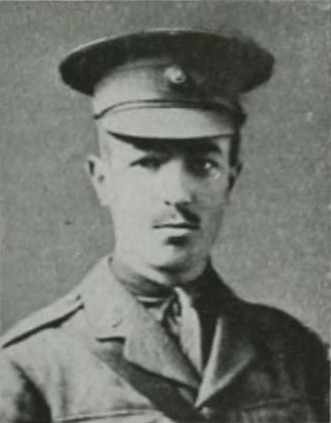
Lionel Fairfax Studd.
STUMBLES, HORACE GEORGE, Corpl., No. 990, D Coy., 25th Battn. 7th Infantry Brigade, Australian Imperial Forces, s. of Thomas George Stumbles, of 10, Godolphin Terrace, Devonport, Royal Naval Outfitter, by his wife, Kate Ellen, dau. of William Rockett; b. Stoke, Devonport, 17 July, 1892; educ. Devonport High School; went to Australia in June, 1911; enlisted 15 Feb. 1915, proceeded to the Dardanelles, where he was severely wounded in right leg, and died of dysentery and compound fracture of leg on board H.M.S. Aquitania, 20 Oct. 1915; buried Mudros East; unm.
STURROCK, ALBERT GEORGE, E.R.A., 4th Class, M. 6666, H.M.S. Good Hope; lost in action off Coronel, on the coast of Chili, 1 Nov. 1914.
STURROCK, DAVID DUFF, Corpl., No. 1845, 9th Battn. Argyll and Sutherland Highlanders (T.F.), elder s. of Peter Sturrock, of Drummaird, Lenzie, L.R.C.P., and S. Ed., Lieut. R.A.M.C. by his wife, Helen Amelia, dau. of James Swirles, of Edinburgh; b. Jedburgh, 15 Sept. 1894; educ. Jedburgh Grammar School and Lenzie Academy; was an Analytical Chemist; joined the 9th Territorial Battn. of the Argyll and Sutherland Highlanders, 13 April, 1913; volunteered for foreign service on the outbreak of war; went to France, 19 Feb. 1915; was wounded 18 March, 1915, but returned to duty 9 May, and was killed in action at the 2nd Battle of Ypres, on the 10th; unm. Buried near Ypres.
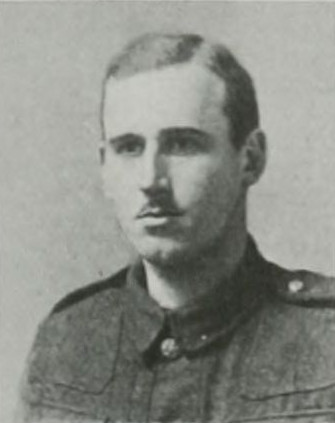
David Duff Sturrock.
STYANCE, ARTHUR, Stoker, 1st Class (R.F.R., Ch. B. 9385), S.S. 106626, H.M.S. Cressy; lost in action in the North Sea, 22 Sept. 1914.
STYLES, FREDERICK ERNEST, Lieut., 2nd Battn. Royal Munster Fusiliers, eldest s. of the late Frederick Styles, of Preston, Lancashire, and 49, Westbourne Terrace, Hyde Park, W., by his wife, Helena Alice Wellington (124, Knightsbridge, S.W.; Blackmoor, Four Elms, Kent), widow of Capt. L. B. A. Poynter, 7th Hussars, and dau. of John Brophey; b. 27 Jan. 1884; educ. Harrow and Sandhurst; gazetted 2nd Lieut. to the Munster Fusiliers 13 May, 1903, and promoted Lieut. 9 Jan. 1906. He retired in April, 1914, but rejoined his regt. just before the outbreak of war. He was killed in action at Etreux, 27 Aug. 1914; unm. Capt. Wise, the Adjutant of the regt., writing to Mrs. Styles, said: “You will already have heard that poor Fred was shot on Thursday, 27th inst. At the time he was gallantly leading his men under a heavy fire, and had he survived would certainly have been mentioned in despatches. I was not actually present when he was hit, but I have been told by those who were on the spot that his death was painless and instantaneous. When I saw him a few minutes later he was lying peacefully as though asleep. As this letter will be censored by the German authorities, I am unable to give you any details as to the action, or the situation of the battlefield. All the officers who fell were buried in one grave, and a service was conducted by a German clergyman.” An interesting account of the doings of the Munsters and of their great stand this day will be found under the notice of Lieut. C. E. V. Awdry. The eight officers who fell this day were buried by the Germans in one grave, and the N.C.Os. and men in another, side by side, near the railway station of Etreux, on the right-hand side of the road, 400 yards north of the level crossing. They also erected crosses to mark the spot.
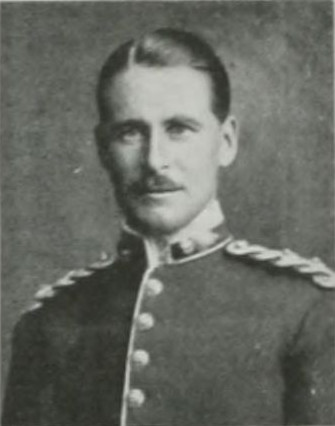
Frederick Ernest Styles.
STYLES, FREDERICK GEORGE, Private, R.M.L.I., Ch. 13796, H.M.S. Pathfinder; lost when that ship was sunk by a mine, about 20 miles off the East Coast, 5 Sept. 1914.
STYLES, HARRY, Private, No. G3872, 2nd Battn. Royal West Surrey Regt., s. of George Styles, of Albury, Surrey; served with the Expeditionary Force in France, etc.; killed in action at Festubert, 16 May, 1915.
STYLES, JOHN, Private, No. 6484, 3rd Battn. Coldstream Guards, 3rd s. of Harry Styles, of Alderton, near Chippenham, co. Wilts, by his wife, Martha; b. Corston, co. Wilts, 13 Oct. 1883; educ. Malmesbury Public School; enlisted in the Wiltshire Regt. 25 March, 1901; became L.-Corpl. 19 May, 1904, and Corpl. 23 June, 1904; transferred to the Coldstreams, 13 Dec. 1905; served during the South African War, guarding prisoners at St. Helena, 20 June, 1901, to 11 Sept. 1902 (medal); and in Egypt, 31 Oct. 1907 to 23 March, 1911, and returned to England for King George’s Coronation; was called up with the Reserves on the outbreak of war in Aug. 1914; went to Franco with the Expeditionary Force, 12 Aug. and was killed in action at Soupir, 14 Sept. 1914, during the retreat from Mons; unm. Private Styles received the cross guns and stripe.
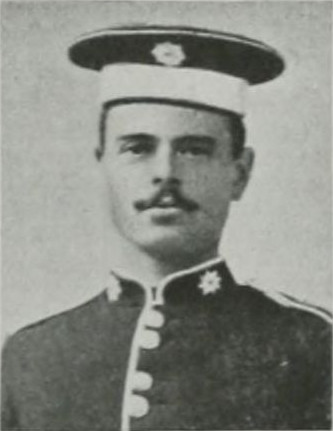
John Styles.
SULIVAN, PHILIP HAMILTON, 2nd Lieut., 2nd Battn. Royal Munster Fusiliers, 4th s. of Col. Ernest Frederic Sulivan, now commanding 10th (late commanding 4th) Battn. East Surrey Regt., formerly of the Hampshire Regt., by his wife, Florence Mary, dau. of James Houldsworth, of Coltness, Lanarkshire; b. Mayfield Hall, Ashbourne, co. Derby, 27 Aug. 1894; educ. Malvern, and the Royal Military College, Sandhurst; gazetted 2nd Lieut., Royal Munster Fusiliers, 25 Feb. 1914; went to France, 13 Aug. 1914, and was killed in a rearguard action at Etreux, France, 27 Aug. following, during the retreat from Mons. Buried by the Germans at cross roads, near Etreux, with eight of his brother officers who fell the same day; unm.
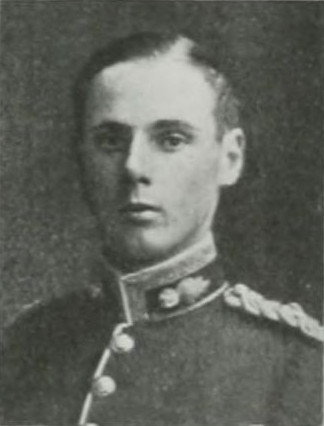
Philip Hamilton Sulivan.
SULLIVAN, BARTHOLOMEW, E.R.A., 4th Class, M. 4733, H.M.S. Hawke; lost when that ship was torpedoed in the North Sea, 15 Oct. 1914.
SULLIVAN, JOHN JAMES, Private, No. 6585, 3rd. Battn. Coldstream Guards, s. of George Sullivan, by his wife, Jane, dau. of George Parsons; b. co. Surrey, 5 Jan. 1887; educ. Dockhead School, Bermondsey; was a Brushmaker; enlisted 29 Jan. 1906; served seven years with the Colours and two on Reserve, including five years (29 Sept. 1906 to 23 March, 1911) in Egypt; went to France, 12 Aug. 1914; was killed in action at Villers Cotterets, 1 Sept. 1914, and was buried in the churchyard there. Private Sullivan m. at the Parish Church, Mortlake, 26 Dec. 1911, Caroline Harriett (26, Hampton Square, Sheen Lane, Mortlake), dau. of Henry Joseph Parsons, and had a son, Thomas Joseph, b. 19 July, 1914.
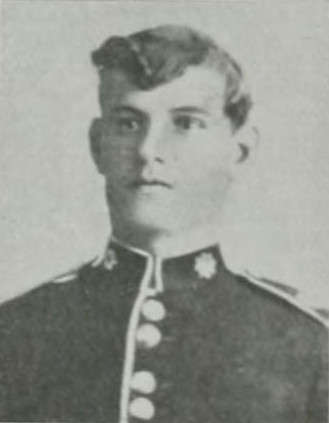
John James Sullivan.
SUMMERS, SYDNEY, Stoker, 1st Class (R.F.R., B. 4403), S.S. 103389. H.M.S. Good Hope; lost in action off Coronel, on the coast of Chili, 1 Nov. 1914.
SUMMERS, WILLIAM WIGAN, L.-Corpl., No. 81, Army Medical Corps, Australian Imperial Force, 2nd s. of George Summers, of Norton, Warwickshire, Clay Worker, by his wife, Mary Jane; b. Measham, co. Derby, 1 June, 1887; educ. York Road Schools, Church-Gresley, Derbyshire, and on leaving school went to Shirebrook, Derbyshire, and worked in the collieries, and was a Local Preacher; went to Australia in 1913; volunteered on the outbreak of war and joined the Ambulance Corps; left for Egypt with the main force; died 28 June, 1915, of wounds received during the landing at Suvla Bay; unm.
SUMMERSCALES, PERCY, Private, No. 1465, 3rd Battn. Australian Imperial Force, s. of John Summerscales, of Asset Common, Yorkshire; b. Thornhill, co. York, 10 June, 1881; educ. there; went to Australia; volunteered on the outbreak of war; served in Egypt and at the Dardanelles, and was killed in action during the fighting at Lone Pine, 9 Aug. 1915; unm.
SUTCH, FREDERICK WILLIAM, Rifleman, No. 2315, 16th Battn. (Queen’s Westminster Rifles) The London Regt. (T.F.), 2nd s. of Charles Strugnell Sutch, of 45, Antill Road, South Tottenham, S.E., by his wife, Clara, dau. of Henry Robert Blake, of Birmingham; b. Tottenham, London, 6 Dec. 1894; educ. The Grammar School there; entered the employ of the London Telephone Service as a Clerk in 1912, and was a member of the Civil Service Cadets, only resigning in conformity with the demands of the age limit, with the rank of Sergt.; joined the Queen’s Westminsters soon after the outbreak of war, in Sept. 1914; went to France, 2 Nov., and died in Nottingham Hospital, 4 April, 1915, after undergoing three operations rendered necessary by wounds received in action at Houplines on 6 Jan.; unm. He was a keen sportsman and an enthusiastic yachtsman, and was the means of saving life on the River Lea.
SUTHERLAND, GEORGE ALEXANDER, Private, No. 3238, 1/14th Battn. (London Scottish) The London Regt. (T.F.), s. of Alexander Gair Sutherland, Superintendent, Metropolitan Police, Vine Street Station, Piccadilly, W., by his wife, Mary, dau. of A. Rugg, of Bower, Caithness, Scotland, Farmer; b. Hammersmith, 27 Sept. 1886; educ. South Western Polytechnic, Chelsea; was employed at H.M. Patent Office as assistant clerk; joined the London Scottish on the outbreak of war, 9 Sept. 1914, and was subsequently seven months in the firing line, during which time, according to a letter received from his commanding officer, he proved an excellent and cheery soldier. He was killed in a charge at Hulluch, near Loos, 13 Oct. 1915; unm.
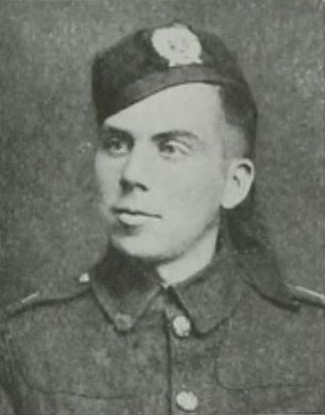
George A. Sutherland.
SUTHERLAND, GEORGE LACEY, A.B. (R.F.R., B. 7437), S.S. 1329, H.M.S. Hawke; lost when that ship was torpedoed in the North Sea, 15 Oct. 1914; m.
SUTHERLAND, JAMES McKAY, Corpl., No. 2737, 3rd, attd. 1st, Battn. The Royal Scots, eldest s. of Thomas William Sutherland, Pipe Major 3/6th Highland L.I., by his wife, Catherine (43, Eaglesham Street, Glasgow), dau. of Duncan McLaren, late of Callander, Perthshire; b. Edinburgh, 17 Oct. 1896; educ. Lambhill Street School, Glasgow; enlisted in Sept. 1913; went to the Front with the 2nd Battn. of his regt. 3 Oct. 1914, and was wounded in action at La Bassée in Nov. and invalided home. After undergoing an operation in hospital at Oxford, he had a month’s leave, and then went back to Weymouth, from which place he went to France in March with a draft for the 1st Battn. He died in hospital at St. Omer, 22 April, 1915, of wounds received in action at Hill 60 on the 18th, and was buried at St. Omer.
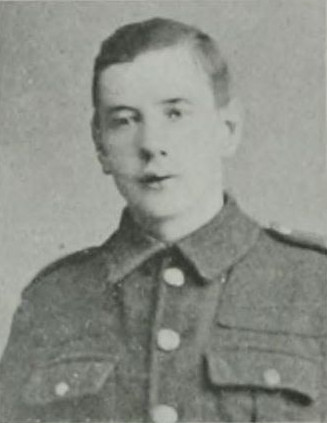
James McK. Sutherland.
SUTHERLAND, JOHN, L.-Corpl., No. 2030, College Coy., 6th Battn. The Royal Scots, s. of John Sutherland, of Meadowmill, Tranent, East Lothian, by his wife, Annie, dau. of James Wise; b. Meadowmill, Tranent, 6 Sept. 1888; educ. public school there, and Boroughmuir Higher Grade School, Edinburgh; was a teacher at Lauriston Public School, Falkirk; joined the 6th Volunteer Battn. of the Royal Scots, 29 Jan. 1906, and served with them till 31 March, 1908, when he passed into the 4th Battn. (T.F.); in 1910 he was transferred to the College Coy. of the 6th Battn. and served four years; after the outbreak of war he rejoined on 6 Sept. 1914, and with them volunteered for foreign service; they were attached to the 4th Battn. and left for the Dardanelles in May, 1915. He was wounded in action at Krithia, 28 June, 1915, and died the following day; unm.
SUTHERLAND, JOHN, Private, No. 10539, 2nd Battn. The Royal Scots, s. of John Sutherland, of 15, West Port, Edinburgh, Labourer; b. Fountainbridge, co. Edinburgh; educ. Cranston Street; enlisted in the Royal Scots, 18 Oct. 1909; went to the Front in Aug. 1914, and was killed in action at Vermelles, 24 Nov. 1914; unm.
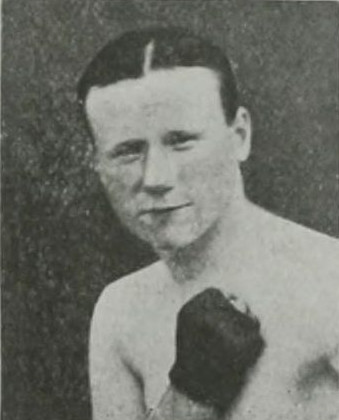
John Sutherland.
SUTTIE, HENRY, A.B., 223301, H.M.S. Cressy; lost in action in the North Sea, 22 Sept. 1914.
SUTTON, FERGUS ALGERNON, Lieut., 2nd Battn. South Lancashire Regt., 2nd s. of Algernon Charles Sutton, of Hamsted House, Chidham, Chichester, and Woodcroft, Tunbridge Wells, a great grandson of Sir Richard Sutton, 1st Bt., M.P., Under Secretary of State, 1766–72, by his wife, Winifred Alice, dau. of William Edwin Cotton Fell, of Lochrin, Edinburgh; b. Chidham, Chichester, 26 Aug. 1891; educ. Tonbridge School; joined the 5th Battn. (Cinque Ports) of the Royal Sussex Regt., and became Lieut. 2 Aug. 1913. From the Territorial Force he was gazetted as 2nd Lieut. to the South Lancashire Regt. 10 June, 1914, and was promoted Lieut. 15 Nov. the same year. On the outbreak of war he went to France with the Expeditionary Force, was present at the retreat from Mons and at the Battles of the Marne and the Aisne, at which latter he was wounded. After returning home in Nov. 1914 he again left for the Front in the following Jan., and was killed in action near Ypres, 26 Feb. 1915; unm. He was buried at Kemmel, in the military cemetery. At Mons Lieut. Sutton made a gallant attempt to save a machine gun in a trench from which they had to retire; while he and another man were lifting the gun out, the Germans brought one of their own machine guns to the head of it, and starting to fire, killed his companion. Capt. B. Evans, after Lieut. Sutton’s death, wrote to his parents: “Your son was an extremely gallant man, and I, as his company officer, wrote twice to the authorities recommending him for the D.S.O. If any one in this war has deserved this distinction, he most certainly did so. In my experience, I have met many gallant young fellows, but I never remember having met a young officer who was always so cool and collected under every circumstance as he was. His indifference to danger was remarked by all of us. His loss is a great one to the regt. and he will be missed by all of us who know him.”
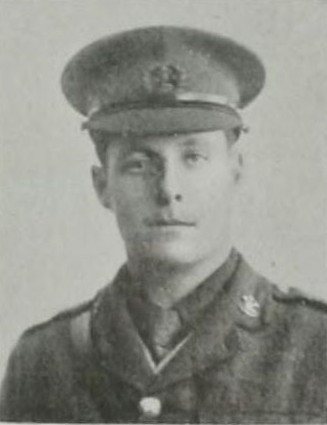
Fergus Algernon Sutton.
SUTTON, JAMES THOMAS, A.B. (R.F.R., B. 3795), 191412, H.M.S. Good Hope; lost in action off Coronel, on the coast of Chili, 1 Nov. 1914.
SUTTON, HUBERT, L.-Corpl., No. 1757, A Squadron, Surrey Yeomanry (T.F.), only s. of Oswald Walker Sutton, of 17, Rosebery Avenue, E.C., and 2, Fernwood Avenue, Streatham, S.W., by his wife, Hannah Fletcher, dau. of Alexander Grossmann; b. Clapham, S.W., 25 Oct. 1892; educ. St. John’s, Brixton, and Alleyn’s, Dulwich; was a Commercial Traveller; joined A Squadron, Surrey Yeomanry, Nov. 1913; volunteered for foreign service on the outbreak of war and transferred to C Squadron, Surrey Yeomanry; left England for Egypt, 20 March, 1915; arrived at the Dardanelles 3 Aug. and died on shipboard, 22 Aug. 1915, of enteritis contracted in the Gallipoli trenches; unm. Fond of sport, he was at the same time much interested in literature and was a good writer, and a posthumous work entitled “Fragments of Verse” was published by his parents.
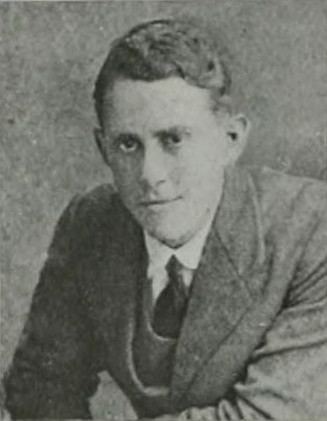
Hubert Sutton.
SUTTON, THOMAS, A.B. (R.F.R., Ch. B. 10131), 204339, H.M.S. Cressy; lost in action in the North Sea, 22 Sept. 1914.
SWAINLAND, WILLIAM OSBORNE, Stoker, 1st Class, 304300, H.M.S. Hogue; lost in action in the North Sea, 22 Sept. 1914.
SWAN, ANDREW CAMPBELL, Private, No. 7376, 1/4th Battn. King’s Own Scottish Borderers (T.F.), eldest s. of Walter Johnston Swan, of Reston, co. Berwick, Tailor and Clothier, by his wife, Mary Rose, dau. of William Rose, of Duns; b. Reston, 5 July, 1896; educ. Reston Public School; volunteered and enlisted, 23 Nov. 1914; left for the Dardanelles, 25 May, 1915, and died on the hospital ship Asturias, 13 July, 1915, of wounds received in action the previous day; unm. Buried in Base Cemetery at Cape Helles.
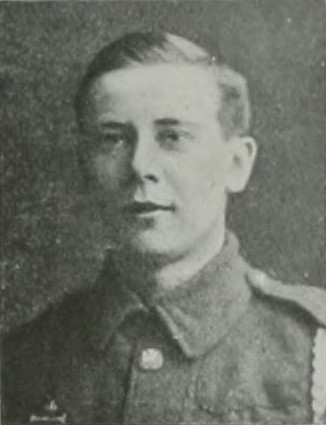
Andrew Campbell Swan.
SWAN, GEORGE, Private, No 15479, 1st Battn. Royal Fusiliers, s. of David Swan, of 21, Sloan Street, Leith, by his wife, Helen, dau. of Robert Fairweather; b. Bathgate, co. Linlithgow, 25 Aug. 1878; educ. Bathgate Academy; enlisted in the 2nd Battn. Queen’s Own Cameron Highlanders, 5 Nov. 1899; served in the South African War, 1899–1902, with the 1st Battn. (Queen’s medal with five clasps); transferred to the 1st Battn. Royal Fusiliers in 1913; went to France, 9 Sept. 1914, and was killed in action at Chapelle d’Armentières, 18 Oct. 1914; unm. Buried there. His brother, Pioneer James Blair Swan, was killed in action at the same place (see following notice).
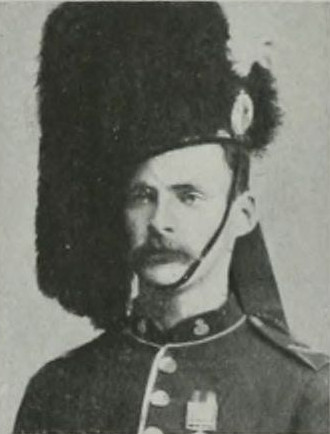
George Swan.
SWAN, JAMES BLAIR, Pioneer, No. 1975, 1/9th Battn. Royal Scots (Highlanders), yst. s. of David Swan, of 21, Sloan Street, Leith, by his wife, Helen, dau. of Robert Fairweather; b. Ballark House, Nairn, 19 Aug. 1893; educ. Leith; was a Joiner with Drysdale & Son, Leith; joined the Royal Scots on the outbreak of war, 11 Aug. 1914; trained at Edinburgh; went to France, 23 Feb. 1915, and was killed in action at Chapelle d’Armentières, 15 July, 1915; unm. 2nd Lieut. H. M. Wardrop wrote: “He was killed up here in the trenches while putting up barbed wire in front of the reserve trench. He was in the act of driving in a post when a stray bullet grazed his rifle and entered into his back, passing right through him. He suffered no pain, as he never regained consciousness and passed away just as we got him into the dressing station. We laid him to rest at 9.15 p.m. the next night and his body was carried to the little cemetery (at Chapelle d’Armentières) about three-quarters of a mile behind the trenches by four of his old comrades in the same section and platoon as he was before he went to the Brigade Pioneers; his body being covered with the Union Jack.... As his platoon officer I had a very high opinion of him, for he was a most useful man all-round. It was because of this that he was transferred to the Brigade Pioneers, where he continued to do excellent work.” His brother, Private George Swan, was killed in action at the same place, 18 Oct. 1914 (see previous notice).
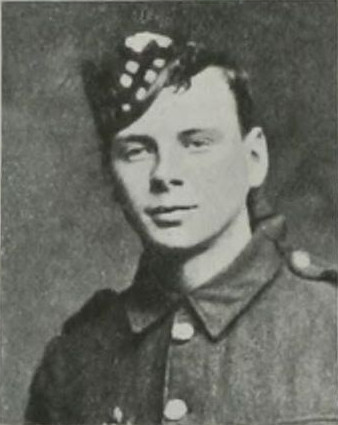
James Blair Swan.
SWAN, THOMAS GEORGE, Private, No. 3317, 1/3rd Battn. The Royal Scots, s. of Thomas Swan, Crimean Veteran; b. Athlone, 18 April, 1877; educ. Bells School, Leith; enlisted in the Royal Scots, 11 Dec. 1895; served through the South African War, 1899–1902 (Queen’s medal with clasps); obtained his discharge, 10 Dec. 1902, and joined the Reserve, completing his 16 years of service in 1911. On the outbreak of war he re-enlisted in his old regt., 19 Aug. 1914; served with the Expeditionary Force in France, and was killed in action at Hill 60, during the second Battle of Ypres, 21 April, 1915. He m. at St. Thomas’ Church, Leith, 27 Dec. 1907, Annie (3/2, Corporation Buildings, Leith), dau. of (—) Ferguson, and had five children: Thomas George, b. 6 March, 1911; Robert, b. 27 June, 1914; Mary, b. 6 Oct. 1906; Susan Jane, b. 31 Oct. 1908; and Janet, b. 23 June, 1912.
SWANN, JOHN DAVID LIVERMORE, A.B. (R.F.R., Ch. B. 9885), 220674, H.M.S. Cressy; lost in action in the North Sea, 22 Sept. 1914.
SWANN, THOMAS HENRY, Stoker, 1st Class (R.F.R., Ch. B. 7964), 292930, H.M.S. Aboukir; lost in action in the North Sea, 22 Sept. 1914.
SWANN, WILLIAM, Stoker, 1st Class, S.S. 109372, H.M.S. Pathfinder; lost when that ship was sunk by a mine, about 20 miles off the East Coast, 5 Sept. 1914.
SWEETING, WILLIAM, Stoker, 1st Class, K. 14608, H.M.S. Pathfinder; lost when that ship was sunk by a mine, about 20 miles off the East Coast, 5 Sept. 1914.
SWEETMAN, JOHN STANLEY, Capt., Toronto Home Guards, Canadian Militia, 3rd s. of Edward Sweetman, late of Ryde, I.W., Brewer, by his wife, Emily (42, Priory Road, Hampstead, N.W.), dau. of the late William Godden, of East Street, Southampton; b. Ryde, 28 July, 1890; educ. Hyde Upper Grade School; was an Accountant in the Bloor Bathurst Street Branch of the Home Bank of Canada; joined the Toronto Home Guards after the outbreak of war in Aug. 1914, and died in the General Hospital, Toronto, 12 Oct. 1914, from cerebral-spinal meningitis, contracted while undergoing a course of training; unm.
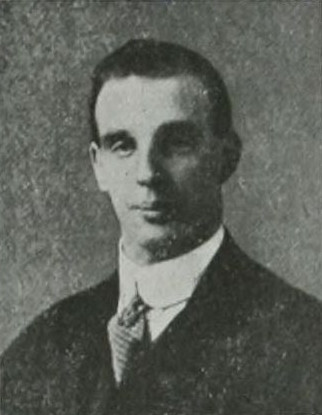
John Stanley Sweetman.
SWEETSUR, JAMES HENRY, Private, No. 1891, 7th Battn. Middlesex Regt. (T.F.), s. of Edward J. Sweetsur, of 58, Grove Road, Tottenham; served with the Expeditionary Force in France, etc.; killed in action, 22 March, 1915.
SWETENHAM, EDMUND, Lieut., 2nd Battn. Durham L.I., only child of Clement William Swetenham, of Somerford Booths, Congleton, co. Chester, late Lieut., R.N., by his wife, Louisa, yst. dau. of Ralph Creyke, of Rawcliffe and Marton Hall, Yorkshire; b. Somerford Booths aforesaid, 30 April, 1890; educ. Eastman’s Royal Naval Academy; Army School, Stratford-on-Avon, and the Royal Military College, Sandhurst; gazetted 2nd Lieut., 2nd Battn. Durham L.I., 20 April, 1910, and promoted Lieut. 1 Jan. 1914; went to the Front, 1 Oct. 1914, and was killed in action in the trenches at Rue du Bois, near Armentières, 27 Oct. following; unm. Buried there.
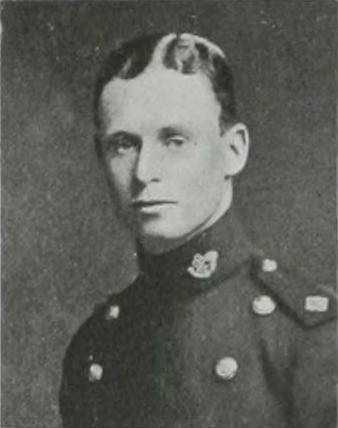
Edmund Swetenham.
SWIFT, JOSEPH, Private, No. 21026, 2nd Battn. Royal Scots (Lothian Regt.); served with the Expeditionary Force in France, etc.; killed in action at Ypres, 11 June, 1915.
SWIFT, PETER, Private, No. 9/1834, 3rd Battn. Royal Fusiliers; served with the Expeditionary Force in France, etc.; killed in action, 26 April, 1915; m.
SYMES, HAROLD, Driver, No. 2499, 1st Battery Home Counties Brigade, Royal Field Artillery (T.F.), eldest s. of Alfred Symes, of 48, East Street, Littlehampton, co. Sussex, Stonemason, by his wife, Kate, dau. of William Luxford, of Pulborough; b. Littlehampton, 2 June, 1896; educ. there; was a Butcher’s Assistant; enlisted 4 Oct. 1915, and was accidentally drowned at High Wycombe, 3 Dec. 1915, while in training there; unm.
SYMES, JOHN BORKWOOD, Boy, 1st Class, J. 26728 (Ports.), H.M.S. Hawke; lost when that ship was torpedoed in the North Sea, 15 Oct. 1914.
SYMMANS, JOHN, Gunner, R.M.A., 6749, B. 952, H.M.S. Aboukir; lost in action in the North Sea, 22 Sept. 1914.
SYMMS, CHARLES FULLERTON, Telegraphist, J. 3596, H.M.S. Aboukir; lost in action in the North Sea, 22 Sept. 1914.
SYMONDS, ALBERT HENRY, A.B., 214225, H.M.S. Hogue; lost in action in the North Sea, 22 Sept. 1914.
SYMONDS, EDGAR, Private, No. G6575, 8th (Service) Battn.; served with the Expeditionary Force in France; killed in action, 20 Oct. 1915; m.
SYMONDS, WILLIAM HARRY, Private, No. 12059, 2nd Battn. Suffolk Regt., 2nd s. of Spencer Symonds, of Badwell Ash, Bury St. Edmunds, Farmer, by his wife, Minnie, dau. of the late William Green Hatten, of Walsham-le-Willows; b. Badwell Ash, 13 May, 1894; educ. Albert College, Framlingham; enlisted on the outbreak of war, served with his regt. in France and Flanders, and was killed in action at the Battle of Hooge, 16 June, 1915; buried there in the Sanctuary Wood; unm. A brass tablet has been erected to his memory in the Parish Church at Badwell Ash.
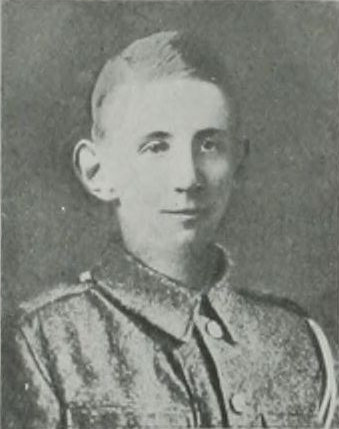
William Harry Symonds.
SYMONDS, WILLIAM PERCY, Stoker, 1st class, K. 5165, H.M.S. Monmouth; lost in action off Coronel, on the coast of Chili, 1 Nov. 1914.
SYMONS, ALFRED ALBERT, Stoker, 1st Class, K. 11325, H.M.S. Hawke; lost when that ship was torpedoed in the North Sea, 15 Oct. 1914.
SYMONS, HERBERT WILLIAM, Capt., 1st Battn. King’s Own Yorkshire L.I. (attd. Camel Corps), yr. s. of the late Lieut.-Col. Herbert Charles Symons, formerly commanding King’s Own Yorkshire L.I., by his wife, Ada Clara (Brooklands, Newport Pagnell, co. Bucks), dau. of Frederic Wells, of Oaklands, Chelmsford; b. Fulford, co. York, 17 Nov. 1884; educ. Uppingham; gazetted 2nd Lieut. to his father’s old regt. 13 Jan. 1904, joined at Aldershot, 15 Feb. following, and was promoted Lieut. 4 Sept. 1906, and Capt. 9 Sept. 1914. He was employed with the West African Frontier Force from 29 March, 1911, to 4 March, 1914, and was then attached to the Somaliland Camel Constabulary. He was killed in action at Shimber Berris, Somaliland, while serving with the Camel Corps, 19 Nov. 1914, and was buried at Little Bohotleh, Somaliland; unm. He had the Royal Humane Society’s testimonial for saving the life of a comrade in South Africa.
SYMONS, WILLIAM, Leading Seaman (R.F.R., B. 8056), 203642, H.M.S. Hawke; lost when that ship was torpedoed in the North Sea, 15 Oct. 1914; m.
SYNNES, THOMAS, Stoker, 1st Class (R.F.R., Ch. B. 7950), S.S. 103617, H.M.S. Aboukir; lost in action in the North Sea, 1914.
SYRED, FREDERICK ARTHUR, C.E.R.A., 1st Class, 149442, H.M.S. Aboukir; lost in action in the North Sea, 22 Sept. 1914.
SYRETT, JOHN, Leading Seaman, 235653, H.M.S. Pathfinder; lost when that ship was sunk by a mine, about 20 miles off the East Coast, 5 Sept. 1914.
RENNY-TAILYOUR, HENRY FREDERICK THORNTON, 2nd Lieut., 5th Field Company, Royal Engineers, yst. s. of Colonel Henry Waugh Renny-Tailyour, of Borrowfield, Forfarshire, and Shrewsbury House, Dublin, J.P., late R.E., by his wife, Emily Rose, dau. of John Wingfield Stratford, of Addington Park, West Malling, Kent; b. Homebush, Sydney, New South Wales, 31 July, 1891; educ. Arnold House, Llanddulas, and Rugby; gazetted 2nd Lieut. to the Royal Engineers, 20 Dec. 1912; went to France with the 5th Field Coy. R.E. 2nd Division, 1st Army Corps, 15 Aug. 1914; was wounded at the Battle of the Aisne, 14 Sept., but did not leave duty, and was killed in action at Ypres, 11 Nov. 1914, while leading his section against the Prussian Guards; unm. He was mentioned in F.M. Sir John (now Lord) French’s Despatch of 14 Jan. 1915, for gallant and distinguished service in the field.
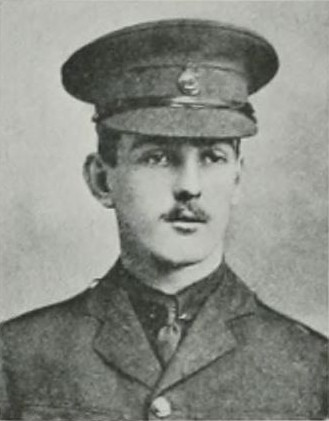
H. F. T. Renny-Tailyour.
TALBOT, EDWARD CHARLES, Capt. and tempy. Major, 47th Sikhs, Indian Army, 2nd s. of the late Major Francis Arthur Bouverie Talbot, of 89, Philbeach Gardens, S.W., late Oxfordshire L.I., by his wife, Alice Mary Beatrice, dau. of Gen. Edward Melville Lawford; b. Biggleswade, co. Bedford, 9 April, 1881; educ. Haileybury College; joined the Herts Militia, 2 April, 1900; gazetted 2nd Lieut. to the Bedfordshire Regt., 26 June, 1901, and promoted, Lieut., 23 March, 1904; transferred to the Indian Army, 23 April, 1904, and became Capt., 2 April, 1909; served in the South African War, 1900–02; took part in the operations in the Transvaal, west of Pretoria, July to 29 Nov. 1900; operations in the Orange River Colony; operations in Cape Colony, 30 Nov. to Dec. 1900, July to Aug. 1901, and Oct. to Nov. 1901; and those in the Orange River Colony, Aug. to Oct. 1901, and Nov. 1901, to 31 May, 1902 (Queen’s medal with three clasps and King’s medal with two clasps); and with his regt. with the Indian Expeditionary Force in France and Flanders, Sept. 1914. He was slightly wounded at Neuve Chapelle in March, but was able to remain on duty, and was made a tempy. Major in command of the regt., which he held till he was wounded at Ypres on 26 April, 1915, and died at Hazebrouck on the 29th, where he was buried. Capt. Talbot was mentioned in Field-Marshal Sir John (now Lord) French’s Despatch of 31 May, 1915. While at Haileybury he played in the Football XV. He m. at Weybridge, 30 Sept. 1908, Dorothy Maynard (Eridge, Teignmouth, South Devon), dau. of Sir William Gibbons, K.C.B., and had two children: Patricia Mary, b. 23 Dec. 1909; Iris Nonie, b. 26 Dec. 1913.
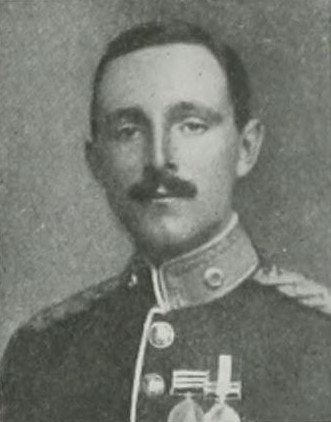
Edward Charles Talbot.
TALBOT, HUMFREY RICHARD, Lieut., 3rd Prince of Wales’s Dragoon Guards, yst. s. of Gustavus Talbot, of Marchmont House, Hemel Hempstead, Herts, by his wife, Susan, 2nd dau. of Robert Elwes, of Congham House, Norfolk, J.P., D.L., and grandson of Rev. the Hon. George Chetwynd-Talbot [bro. of Henry, 18th Earl of Shrewsbury]; b. Ceylon, 11 Sept. 1889; educ. Wellington College and Frieburg, Germany; gazetted 2nd Lieut. from the Militia to the King’s Liverpool Regt., then in India, 11 Dec. 1909; promoted Lieut., 16 Sept. 1912; transferred to 3rd Dragoon Guards, 26 Feb. 1913; left for France, 30 Oct. 1914, and was killed in action by shell fire near Ypres, 13 Nov. following. Buried in cemetery at Ypres; unm. He was a keen sportsman and was Master of Hounds at Lahore, 1912–13.
TALLACK, WILLIAM FRANCIS NECK, Private, No. 4815, 1/17th Battn. (Poplar and Stepney Rifles) The London Regt. (T.F.), s. of Richard Tallack, of Stepney, by his wife, Mary, dau. of (—) Jones; b. Stepney, 10 Oct. 18—; educ. Ben Jonson School there; joined the Poplar and Stepney Rifles, June, 1915; went to France in Oct., and was killed in action at Loos, 7 Jan. 1916, being buried there. He m. at Camden Town, N. 17 Dec. 1893, Clara Elizabeth (54, Cecil Road, Leytonstone), dau. of Robert Spinks, and had seven children: William James, Private, No. 2824, D Coy., 3/6th Essex Regt., b. 1895; Frank Robert, Private, No. 2825, 3/6th Battn. Essex Regt., b. 1897; Richard, b. 8 Dec. 1898; Hubert, b. 14 Nov. 1900; Frederick, b. 29 Dec. 1907; Lily, b. 13 Dec. 1902; and Clara, b. 13 Dec. 1905.
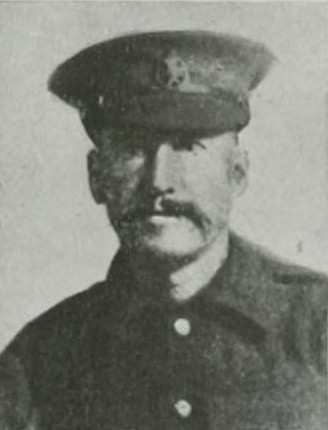
William F. N. Tallack.
TAMPIN, CHARLES THOMAS, Probationary, 2nd Cook’s Mate, M. 7603, H.M.S. Cressy; lost in action in the North Sea, 22 Sept. 1914.
TANNER, ERNEST EDWIN, Private, No. 2980, 1st Battn. Coldstream Guards, 3rd s. of John Tanner, of Cheltenham, Labourer, by his wife, Emma, dau. of John Wheeler; b. Cheltenham, co. Gloucester, 16 Sept. 1877; educ. Devonshire Street School there; was Labourer at Kynock’s Ammunition Works, Birmingham; enlisted in the Coldstreams, 2 Oct. 1899; served in the South African War 7 Nov. 1901, to 4 Oct. 1902 (medal with three clasps, “Cape Colony,” “S.A. 1901,” “S.A. 1902”), and with the Expeditionary Force in France and Flanders, 7 Oct. to 12 Nov. 1914, and died a prisoner of war in No. 3 German Field Hospital, 15th German Army Corps, Hallin, of wounds received in action. Buried at Hallin. He m. at Emmanuel Church, Bristol, 3 Aug. 1907, Lillie (10, Willway Street, St. Phillip’s, Bristol), 3rd dau. of Thomas Slocombe, of Bristol, and had one son, Arthur Thomas John, b. 23 June, 1908.
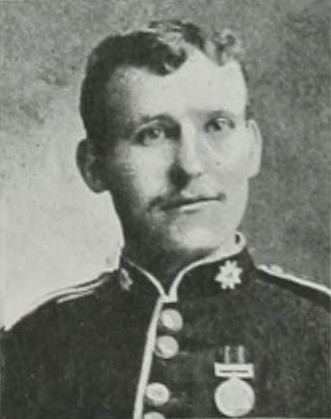
Ernest Edwin Tanner.
TANNER, RALPH EYRE, Capt., 1st Battn. The King’s Liverpool Regt., elder s. of Ralph Tanner, of 2, Little Dean’s Yard, Westminster Abbey, S.W., M.A., Senior Assistant Master at Westminster School, by his wife, Lucy Lawrence Le Grice, dau. of George Lewis Phipps Eyre; b. Regent’s Park, 16 July, 1885; educ. South Kensington Preparatory School; Westminster, and Sandhurst. He was gazetted on 16 Aug. 1905, as 2nd Lieut. to the King’s Liverpool Regt., which had formerly been commanded by his great-uncle, Major-Gen. Edward Tanner, C.B. He was promoted Lieut. 25 Sept. 1908, and Capt. 16 Sept. 1912, and served for a year with the 1st Battn. in India, 1908–9. On the outbreak of war he went to the Front with the Expeditionary Force, and was in the retreat from Mons, behaving in the first action in which the regt. was engaged, as his Colonel wrote, “with great coolness under a murderous fire.” On 14 Sept. 1914, during the Battle of the Aisne, while leading his company through thickly wooded country he was seriously wounded by a party of Germans upon whom they came suddenly. Owing to heavy shell fire it was impossible to move from the wood, and during the course of the day another shell, bursting near, killed the two stretcher-bearers and wounded Capt. Tanner again. By the devotion of his men he was carried back some 4 miles to the dressing station, where he was skilfully doctored by Major A. Martin Leake, V.C., who, like Capt. Tanner, was an old Westminster. After seven days he reached Versailles, where he died from his wounds at No. 4 General Hospital, 23 Sept. 1914. He was buried in the Cimitière des Guards with full military honours, a guard of honour being furnished by a detachment of French cavalry and a large number of French officers attending. Col. Bannatyne, who was afterwards himself killed, wrote: “We in the regt. are sustained by the knowledge that Capt. Tanner met his death when leading the van in a magnificent attack on the enemy, who were holding an enormously strong position. The regt. was advance guard to the whole Division.... Capt. Tanner and Capt. Feneran, both of whom were wounded, most gallantly sustained the honour of the King’s. Our great sorrow at his loss will consequently be mingled with pride at his most gallant conduct.” Letters from his brother officers and from privates in the regt. testified to the affection in which he was held and how deeply his loss was felt. Capt. Tanner m. at Westminster Abbey, 11 June, 1913, Edith Vere Marjorie, 4th and yst. dau. of John Henry Brodie, then of Chart’s Edge, Westerham, co. Kent, and had one son: Peter Ralph Eyre, b. 13 Sept. 1914.
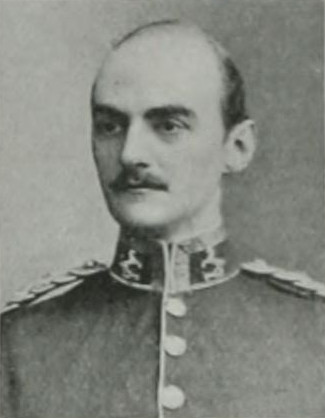
Ralph Eyre Tanner.
TAPLIN, ALFRED CHARLES, Gunner, R.M.A. (R.F.R., I.C. 76), H.M.S. Good Hope; lost in action off Coronel, on the coast of Chili, 1 Nov. 1914.
TAPLIN, PERCY CHARLES, Stoker, 1st Class, K. 7897, H.M.S. Good Hope; lost in action off Coronel, on the coast of Chili, 1 Nov. 1914.
TAPSFIELD, CLAUDE REGINALD, Bandsman, No. 704, 1/5th Battn. East Kent Regt. (The Buffs), 2nd s. of the late Frederick Tapsfield, for 18 years a member of the East Kent Yeomanry, by his wife, Laura Louisa (2, East Hill, Ashford, Kent), dau. of Valentine Munn (now the sole survivor of the first 80 men of the 1st East Kent Volunteers sworn in at Maidstone); b. Maidstone, co. Kent, 5 June, 1889; educ. British School, Ashford, and S.E.A. College, Wye; was a Newsagent and Tobacconist; joined the Kent Territorials in 1905; volunteered for foreign service on the outbreak of war; went to India with his regt. 29 Oct. 1914, and died on service at Pachmari, 1 June, 1915, following an operation for appendicitis; unm. Capt. F. Muckley wrote: “Tapsfield was not only a clever musician and good soldier, but was so well liked by every one of us for his cheerful good fellowship. He was attended to his grave by every man of the 5th Buffs stationed at Pachmari, and buried with military honours.”
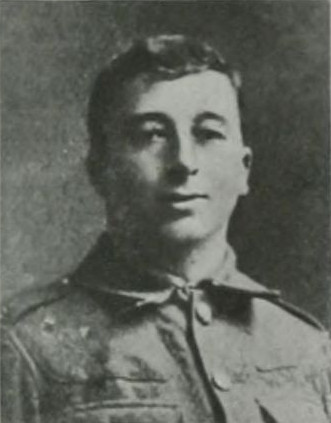
Claude Reginald Tapsfield.
TARN, MARK AITCHISON, Engine-Room Artificer, H.M.S. Aquarius, R.N., only s. of John Tarn, of Hornby Road, Bootle, Liverpool (formerly of Alston, Cumberland), Foreman Joiner, Messrs. J. Ellerman’s Engine Works, Liverpool, by his wife, Mary, eldest dau. of James Aitchison, of Melrose; b. Jarrow-on-Tyne, 1 Aug. 1894; educ. Christ Church Higher Grade and the Junior Technical Schools, Bootle, and was nominated by the local authority for training as Engine-Room Artificer on board H.M.S. Fisgard, Portsmouth, 31 Dec. 1909. Here he won the high esteem of his officers and comrades by his attention to duty and proficiency. On the outbreak of war he was appointed to H.M.S. Vernon, and later to H.M.S. Aquarius, and while serving on the latter at the Dardanelles was taken ill with acute dysentery. He was transferred to No. 15 Stationary Hospital, Mudros, Lemnos Island, and died 31 Aug. 1915, being buried in the cemetery there. Tarn was an all-round sportsman, being elected captain of the Rugby football team for three years, and won his cup in the final at Devonport. A memorial tablet was placed in St. Matthew’s Church, Bootle, where he served as a choir boy.
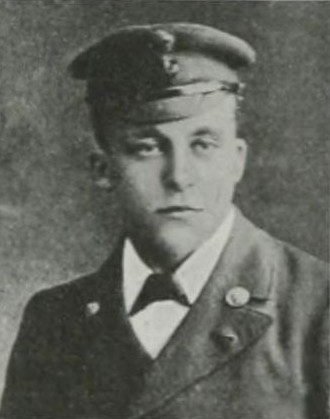
Mark Aitchison Tarn.
TARRANT, WILLIAM THOMAS, Ship’s Corpl., 1st Class (R.F.R., B. 9590), 209374, H.M.S. Hogue; lost in action in the North Sea, 22 Sept. 1914.
TATHAM, TREVOR HODGSON STANLEY, Lieut., Royal Navy, eldest s. of Stanley Tatham, of Montana, Bournemouth, member of the Institute of Naval Architects, by his wife, Frances Emma Constance (Montana, Branksome Park, Bournemouth), dau. of Michael Hodgson Tatham; b. Newcastle-on-Tyne, 16 Nov. 1887; educ. The Old Ride, Branksome Park, Bournemouth; Stubbington House, Fareham, and H.M.S. Britannia; entered the Navy and became Midshipman, 15 Feb. 1904; Sub-Lieut. 15 April, 1907, and Lieut. 15 July, 1908; served six years on H.M. ships Formidable, Duncan and Barham; was A.D.C. to Capt. Walker while a Midshipman on the Formidable; took part in the Somaliland Expedition, 1909 (medal); re-appointed to the Formidable (his first ship), 9 Aug. 1913; and was lost when that ship was torpedoed in the English Channel, 1 Jan. 1915.
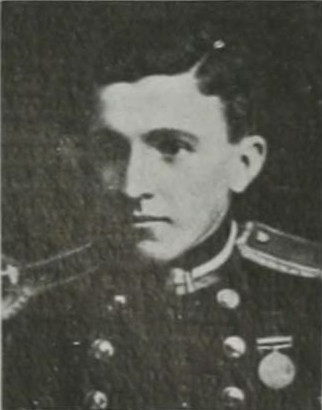
Trevor H. S. Tatham.
TATLER, ROBERT, Private, No. 1289, 1st Battn. Australian Imperial Force, s. of the late Robert Tatler, by his wife, Amelia (14, Longville Road, Newington Butts); b. Walworth, 30 Oct. 1891; joined the Australian Contingent on the outbreak of war; died at Netley Hospital, Southampton, 25 June, 1915; unm.
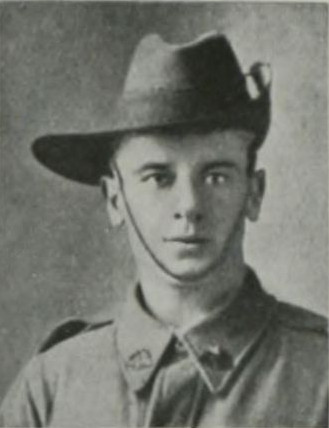
Robert Tatler.
TAVERNOR, JOHN, Private, No. 11599, 3rd Battn. Coldstream Guards, elder s. of Frederick Tavernor, of 6, Middle Friars, Stafford, Railwayman, by his wife, Hannah, dau. of Thomas Holmes; b. Rugeley, co. Stafford, 22 Feb. 1891; educ. Rugeley; was a Joiner by occupation; enlisted on 2 Sept. 1914; went to the Front, 22 Dec. following, and was killed in an attack on the German position at Cuinchy, Belgium, 6 Feb. 1915; unm.
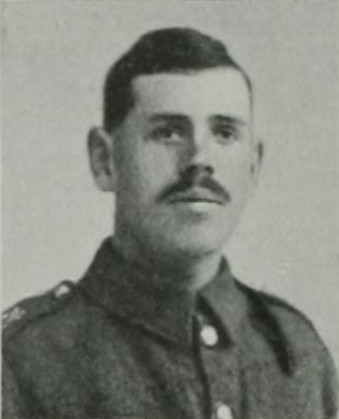
John Tavernor.
TAYLER, ERIC HARDWICK, 2nd Lieut., 1st Battn. York and Lancaster Regt., 2nd s. of Archdale Tayler, of Manurewa, Auckland, New Zealand, Accountant, by his wife, (—), dau. of J. G. Culpan, of Auckland; and grandson of the late Rev. Archdale Wilson Tayler, of Leeds, England; b. 15 Jan. 1894; educ. Auckland Grammar School; St. John’s College, Tanaka (where he held a Maria Blackett Scholarship), and Auckland University College. He received a commission in the Coast Defence Detachment of the 3rd (Auckland) Regt., 11 March, 1912, and in March, 1914, sat for the examination open to the Territorial Forces of Canada, South Africa, Malaya, and Australasia, for direct commissions in the regular Army. There were about 180 candidates, and Lieut. Tayler headed the list with 3,307 marks, out of the possible 4,500. He was gazetted 2nd Lieut. to the York and Lancaster Regt. 20 June, 1914, and left Auckland two days before the outbreak of war to join his regiment at Jubbulpore, India. From there they were ordered to England and went to the front early in 1915. After about a fortnight in the trenches he contracted pneumonia and was admitted to the Clearing Station at Hazebrouck, France, 31 Jan. 1915, and died 9 Feb. following of double pneumonia; unm.
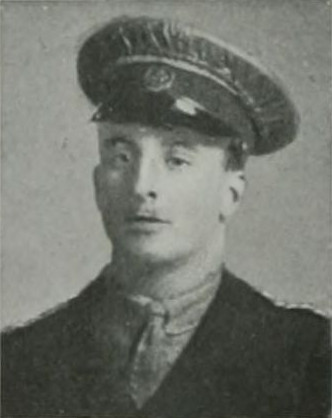
Eric H. Tayler.
TAYLOR, ARCHIBALD, Sergt., No. 7919, 2nd Battn. Royal Sussex Regt.; served with the Expeditionary Force in France; killed in action, 29 Jan. 1915.
TAYLOR, ARTHUR CUTHBERT BROOKE, A.M.I.C.E., Lieut., 6th Battn. Manchester Regt. (T.F.), 2nd s. of Col. Herbert Brooke Taylor, of The Close, Bakewell, Derbyshire, Solicitor, and his wife, Mary Taitt, dau. of the Rev. William Mallalieu; b. West Bank, Bakewell afsd., 15 March, 1888; educ. Lady Manners’ School, Bakewell; and Cheltenham College, and on leaving there took the Engineering Course at Manchester University, obtaining the Engineering Certificate. He afterwards joined the firm of Saunders & Taylor, Ltd., and was elected an Associate Member of the Institute of Civil Engineers. He obtained a commission as 2nd Lieut. in the 2nd Vol. Battn. of the Sherwood Foresters (Notts and Derby Regt.), and while serving with this battn. passed the Hythe Course with distinction, and was appointed to command the machine gun section. His method of adapting machine guns to mountain warfare when manœuvring in the North Derbyshire hills demonstrated the possibilities of machine gun warfare which the present war has so immensely developed. He was promoted Lieut. in Sept. 1907. The 2nd Vol. Battn. Sherwood Foresters was a 13-company battn., and when the Territorial scheme came into operation was nearly 1,500 strong. The reduction of the infantry quota of Derbyshire necessitated the reduction of the battn. to eight companies. As a result Lieut. Brooke Taylor reverted to the rank of 2nd Lieut. rather than retain his rank and pass to the reserve. As his business necessitated his residence nearer Manchester than Bakewell, he applied to be attached for training to the 6th Manchesters, and declining a captaincy in his old battn., was transferred as a Lieut. to this reg., in the spring of 1914. He was shortly afterwards appointed instructor of musketry to the battn., and held that position at the time of his death. On the outbreak of hostilities he volunteered and went to Egypt with the East Lancashire Division, and eventually to Gallipoli, where he landed early in May, 1915. He was killed in action there 4 June following; unm. A fortnight before, on the death of the senior Capt. of his company, he had been appointed second in command, and his Colonel wrote: “I do not think it would be possible to speak too highly of his character and qualities. During the time of training, from mobilisation up to the end of our time in Egypt, he was untiring in his special work of pushing on the musketry instruction of the men, and was always full of work, valuable ideas and suggestions. With his keenness and attractive character he could, of course, do anything with the men, and he had a large share in making the battn. the splendid fighting force it proved to be. No one was keener or more anxious to see service.” And a brother officer: “Brooke Taylor did the work of four men. His energy and fearlessness was an example to everyone.”
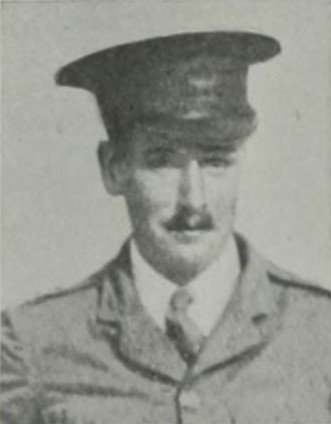
Arthur C. B. Taylor.
TAYLOR, CLEMENT HAROLD, Private, No. 1785, 1/15th Battn. Prince of Wales’ Own (Civil Service Rifles) The London Regt. (T.F.), 3rd s. of Francis Taylor, of 6, Church Street, Leominster, Postmaster there, by his wife, Florence Annie, dau. of the late John Andrew Brewer, of Poulteney Gardens, Bath; b. Chippenham, co. Wilts, 9 Aug. 1892; educ. St. Paul’s National School, and Wiltshire County Secondary School, Chippenham; was a Civil Service 2nd Division Clerk in Comptroller and Accountant General’s Department of the G.P.O.; joined the Civil Service Rifles, in March, 1914; was in camp when war was declared on 4 Aug. 1914; went to France, 17 March, 1915, and died there, 25 July, 1915, of wounds received from an accidental bomb explosion; unm. Buried at the Military Cemetery, Noeux-les-Mines. Lieut. Scott wrote that he was wounded on Saturday afternoon at about 3.30 p.m. and that although he lived till morning was unconscious the whole time, and continued: “It may be some consolation to you to know that he was one of the very best soldiers and one of the very best men in my platoon. He was always entirely reliable, and always willing and eager to undertake any job that was going. He proved his worth, especially on night patrols between our lines and the Germans, for which he would always volunteer whenever it fell to our platoon to furnish one. His loss is deeply felt by all his comrades whose admiration and affection he had soon won.” On the day before the accident he wrote to his mother: “The battalion has now done 16 days in the trenches and came out last night, I believe. I left on the 14th day with a small party to come here for a course of four days at a bombing school. Bombs are fast becoming a most important factor in trench warfare, so a good many men are being trained to use them. It is a nice change after a fortnight’s trench life, and very interesting, too.” Private C. H. Taylor, was a keen student of Economics, and in an examination held by the Society of Arts in 1914 he won first place in all England.
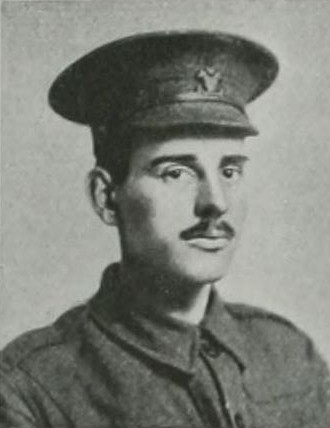
Clement Harold Taylor.
TAYLOR, DANIEL JAMES, A.B. (R.F.R., B. 1325), 201149, H.M.S. Good Hope; lost in action off Coronel, on the coast of Chili, 1 Nov. 1914.
TAYLOR, ERNEST, Painter, 1st Class, 166048, H.M.S. Aboukir; lost in action in the North Sea, 22 Sept. 1914.
TAYLOR, ERNEST EDWIN, Stoker, Petty Officer, Chatham 295559, H.M.S. Laertes; killed in action in Heligoland Bight, 28 Aug. 1914.
TAYLOR, FRANCIS ROBERT, Seaman, R.N.R., 2265B, H.M.S. Hogue; lost in action in the North Sea, 22 Sept. 1914.
TAYLOR, FRANK, E.R.A., 1st Class, 270109, H.M.S. Pathfinder; lost when that ship was sunk by a mine, about 20 miles off the East Coast, 5 Sept. 1914.
TAYLOR, GEORGE WILLIAM, Officers’ Steward, 2nd Class, L. 3147, H.M.S. Aboukir; lost in action in the North Sea, 22 Sept. 1914.
TAYLOR, HENRY, L.-Corpl., No. 9793, 1st Battn. Essex Regt., 6th s. of Thomas Joseph Taylor, of 4, Reed’s Bank, Ocklynge Road, Eastbourne, retired Civil Servant, by his wife, Mary White, dau. of the late Henry Seward; b. Tottenham, N., 8 June, 1892; educ. West Green Road Board School; joined the Middlesex Special Reserve about April, 1911, and transferred in Aug. following to the 2nd Essex; was sent with draft to Mauritius to join the 1st Battn. in Oct., 1913; left for the Dardanelles on the Caledonia from Avonmouth, 22 Feb. 1915; was appointed L.-Corpl. on the field, died through wounds received in action at the Saghir Dere, Gallipoli, 29 June, 1915; unm.
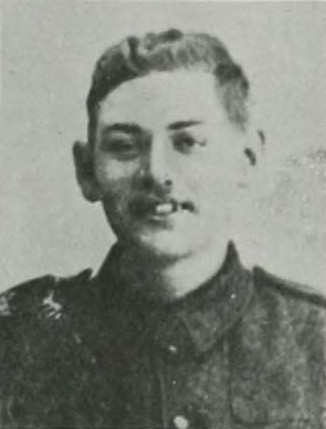
Henry Taylor.
TAYLOR, JOHN, Stoker, 1st Class (R.F.R., B. 3628), S.S. 101257, H.M.S. Good Hope; lost in action off Coronel, on the coast of Chili, 1 Nov. 1914.
TAYLOR, JOHN ALFRED, Boy, 1st Class, J. 26367 (Ports.), H.M.S. Hawke; lost when that ship was torpedoed in the North Sea, 15 Oct. 1914.
TAYLOR, LEO LAMBERT, Mechanician, 298742, H.M.S. Pathfinder; lost when that ship was sunk by a mine, about 20 miles off the East Coast, 5 Sept. 1914.
TAYLOR, MILES BRUNSKILL, Private, No. 7155, 3rd Battn. Coldstream Guards, s. of Thomas Taylor, for many years a railway guard on the London & North Western Railway, by his wife, Mary, dau. of Miles Thompson; b. Lancaster, 18 Oct. 1886; educ. Christ Church School, Lancaster; enlisted in the 3rd Battn. Coldstream Guards, 26 Feb. 1907. In the Reserve on the outbreak of war he was called up on mobilisation, 5 Aug. 1914; served in France and Flanders, passing unhurt through engagements at Mons, Landrecies, Lowey and Fontenay, but was seriously wounded by shrapnel, 8 Sept. 1914, and died at La Tretoire the same day. He m. at Christ Church, Lancaster, 30 Sept. 1912, Margaret (4, Trafalgar Road, Lancaster), yst. dau. of the late Robert Turner, of Maze Lisburn, Ireland, and had two daus.: Hilda Irene, b. 21 June, 1913; and Annie Norah Myles, b. 30 Dec. 1914. Three of his brothers are now (1916) on active service, and one a munition worker.
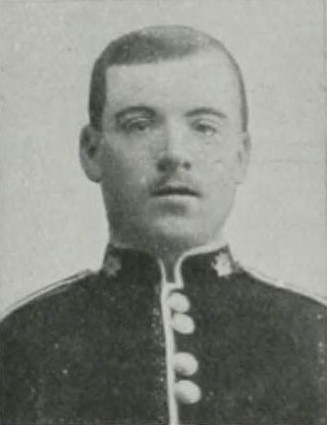
Miles Brunskill Taylor.
TAYLOR, RONALD FRANCIS, 2nd Lieut., 5th Battn. King’s Shropshire L.I. 4th s. of Alfred Taylor, of Starston Place, Harleston, Norfolk, J.P., by his wife, Anna Enfield, dau. of Septimus Dowson, of Southtown, Great Yarmouth; b. Starston Place, afsd., 29 Feb. 1888; educ. St. Andrew’s School (Rev. E. L. Browne), Eastbourne; Malvern College, and Pembroke College, Cambridge (B.A. 1909); and after a short period as an assistant master at St. Andrew’s School, joined the firm of Oslers, Birmingham; volunteered on the outbreak of war, and was gazetted 2nd Lieut. to the 5th Shropshire L.I. 28 Sept. 1914; went to France 21 May, 1915, and was killed in action near Ypres, 9 Aug. 1915, during the attack on Hooge. He was in command of an advance trench, a shell killing him instantaneously while he was endeavouring to bind up the wound of one of his corporals. Lieut. Taylor was a good athlete, and an all-round sportsman. He was a member of the Malvern College Cricket XI, and a fine shot.
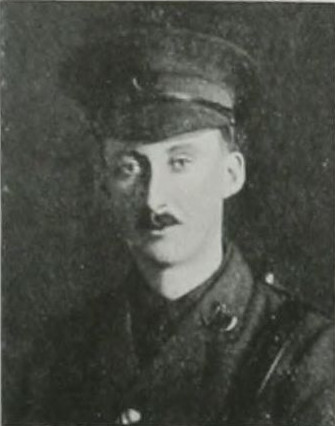
Ronald Francis Taylor.
TAYLOR, THOMAS, Sick Berth Steward (Pensioner), 121820, H.M.S. Cressy; lost in action in the North Sea, 22 Sept. 1914.
TAYLOR, THOMAS JOHN, Private, R.M.L.I. (R.F.R., B. 404), late Ch./6355, H.M.S. Hogue; lost in action in the North Sea, 22 Sept. 1914.
TAYLOR, WALTER, Stoker, 1st Class (R.F.R., B. 4250), S.S. 102958, H.M.S. Good Hope; lost in action off Coronel, on the coast of Chili, 1 Nov. 1914.
TAYLOR, WALTER WILLIAM, Rifleman, No. 604, 1/21st Battn. (1st Surrey Rifles), The London Regt. (T.F.), only s. of William Taylor, Verger and Guide at St. Paul’s Cathedral, by his wife, Clara, dau. of James Fensome; b. Brixton, London, S.W., 19 June, 1888; educ. St. Saviour’s School there; was a Porter in the Goods Department of the S.E. and C. Railway; joined the Surrey Rifles, 1 Aug. 1909; volunteered for foreign service on the outbreak of war in Aug. 1914; went to France, 12 March, 1915, and was killed in action at Givenchy, 25 May, 1915; being buried there. He m. at St. Paul’s Church, Herne Hill, S.E., 1910, Maud (99, Milkwood Road, Herne Hill), dau. of Ernest Ward, and had two children: Walter William, b. 17 June, 1913, and Maud Ethel, b. 11 Jan. 1911.
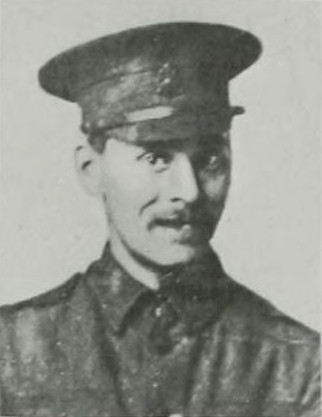
Walter William Taylor.
TAYLOR, WILLIAM, Private, R.M.L.I., Ch./13522, H.M.S. Hawke; lost when that ship was torpedoed in the North Sea, 15 Oct. 1914.
TAYLOR, WILLIAM JAMES, A.B. (R.F.R., B. 3554), S.S. 956, H.M.S. Good Hope; lost in action off Coronel, on the coast of Chili, 1 Nov. 1914.
GAWAN-TAYLOR, FRANCIS, 2nd Lieut., 2nd Battn. York and Lancaster Regt., 2nd s. of His Honour Judge (Henry) Gawan-Taylor, of Croftlands, Heads Nook, Cumberland, County Court Judge of Circuit No. 3, Cumberland and Westmoreland, by his wife, Rachel, 3rd dau. of the late Thomas Joseph Candler, of Low Hall, West Ayton, co. York; b. Darlington, 27 Aug. 1892; educ. Rossall (Scholar and Exhibitioner), and Sidney Sussex College, Cambridge (Scholar, 1913); was gazetted 2nd Lieut., 3rd Battn. York and Lancaster Regt. (Special Reserve), 16 Jan. 1915; was attd. to the 2nd Battn.; went to France, 1 June, 1915, and was killed in action near Hooge, 9 Aug. 1915, during the British advance north and west of Hooge; unm. Buried there. While at Rossall School he was a member of the O.T.C.; was a keen athlete and ran in the mile race for Cambridge in 1914, when the Oxonian, A. N. S. Jackson, beat him by eight yards. His Commanding Officer wrote of him: “Your son was one of my subalterns; he was a very promising young officer and was doing very well. We had to take some German trenches.... I had two subalterns hit on the way there, but your son was there after we got into their trench. It was while directing the consolidating of their trenches that he was hit by a bullet through both temples. The men of his platoon greatly regret his loss, as they had learned to love him.” He was engaged to be married to Alyson May Estcourt Boucher, dau. of the Rev. Canon Boucher, Rector of Frolesworth, Lutterworth.
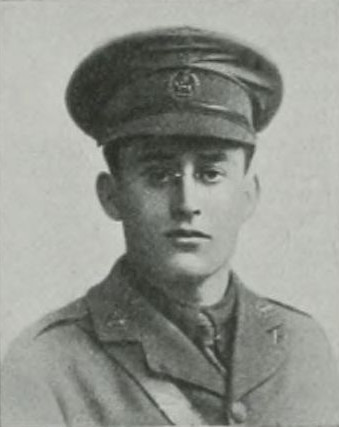
Francis Gawan-Taylor.
TEHAN, EDMUND FREDERICK, A.B. (R.F.R., B. 3718), S.S. 1029, H.M.S. Good Hope; lost in action off Coronel, on the coast of Chili, 1 Nov. 1914.
TEMPLE, JOHN, E.R.A., 1st Class, 270540, H.M.S. Hogue; lost in action in the North Sea, 22 Sept. 1914.
TEMS, WALTER EDGAR, Stoker, 1st Class (R.F.R., B. 7841), S.S. 103270, H.M.S. Hogue; lost in action in the North Sea, 22 Sept. 1914.
TENNANT, CHARLES GRANT, 2nd Lieut., 4th Batt. Seaforth Highlanders (T.F.), only s. of James Tennant, of Fairlie, Ayrshire, and formerly of Newcastle-on-Tyne, J.P., by his wife, Henrietta Grant, dau. of Alexander Andrew Fergusson; b. Lowfell, co. Durham, 23 July, 1882; educ. Charterhouse, Godalming, where he was a senior scholar, and Trinity College, Cambridge, where he was an exhibitioner; and on finishing his education, became a Director of the Tharsis Sulphur and Copper Co., Ltd., and of Alexander Fergusson & Co., Ltd., Glasgow, Lead Manufacturers. On the outbreak of war in Aug. 1914, he volunteered and joined the Public Schools Battn. and was gazetted 2nd Lieut. to the 4th Battn. Seaforth Highlanders, 1 Oct. 1914; went to France, 5 Nov. 1914, and was killed in action near Neuve Chapelle, 9 May, 1915; unm. His Commanding Officer wrote: “After less than four months soldiering his name was sent to the War Office for promotion to Capt.; that fact shows what a born soldier he was. On every occasion that we were under fire he was always the same, cool and collected. He declined promotion, as he wished to remain with the men with whom he had trained.”
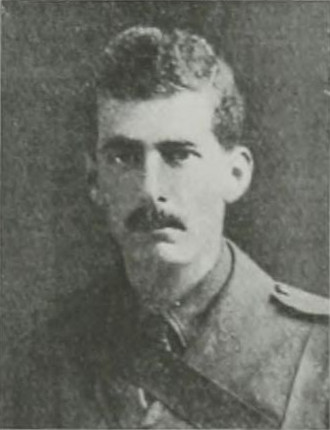
Charles Grant Tennant.
TERRY, CHARLES HENRY, Stoker, Petty Officer, 293803, H.M.S. Pathfinder; lost when that ship was sunk by a mine, about 20 miles off the East Coast, 5 Sept. 1914.
TERRY, FRANK ALBERT, Stoker, 1st Class, K. 15464, H.M.S. Aboukir; lost in action in the North Sea, 22 Sept. 1914.
TERRY, FREDERICK JOHN CORTORPASSI, Ordinary Signalman, J. 20300, H.M.S. Aboukir; lost in action in the North Sea, 22 Sept. 1914.
TERRY, HARRY, Sailmaker, 158515, H.M.S. Cressy; lost in action in the North Sea, 22 Sept. 1914.
TERRY, WILLIAM JOHN, A.B. (R.F.R., Ch. B. 9015), 208316, H.M.S. Cressy; lost in action in the North Sea, 22 Sept. 1914.
TESTER, THOMAS, A.B. (R.F.R., B. 4068), 190099, H.M.S. Good Hope; lost in action off Coronel, on the coast of Chili, 1 Nov. 1914.
TETLEY, ARTHUR NORMAN, L.-Corpl., No. 304, B Squadron, 8th Australian Light Horse, 3rd Brigade, Australian Expeditionary Force, 3rd s. of William Tetley, of Berwick, Gippsland, Victoria, Squatter, by his wife, Kate, dau. of Arthur Noyes; b. in Victoria, 19 Feb. 1889; educ. C. E. Grammar School, Melbourne; volunteered on the outbreak of war, being the first to do so in his district; left for Egypt with the main force; went to the Dardanelles 15 May; was wounded in action at Walker’s Ridge, Gallipoli, 7 Aug., and died at sea on board the hospital ship Delta, 8 Aug. 1915; unm. Sergt. C. H. Lyon wrote: “I saw a good deal of him over at Gallipoli, and he did splendidly from beginning to end. I know men in his troop thought a lot of him, and it was only owing to lack of vacancies that he didn’t get rapid promotion. On June 23 Norman got shaken up pretty badly. The Turks were shelling us pretty heavily with French 75’s and high explosives. Where Norman was stationed they got it very badly; he wasn’t actually hit, but the shells bursting near him peppered his face with gravel. He got over it, however, without going away, but when the attack came on 7 Aug. he was very run down. From that I heard the doctor had advised him not to go out, but like many others he was keen on being with his troop and couldn’t stand the idea of being left behind. For three days we were expecting the attack, and on the evening of 6 Aug. we were taken out into the left hand sap on Walker’s Ridge. All night we sat there not knowing what moment we would be called on, and towards daylight the men-of-war and cruisers bombarded the Turkish trenches right in front of us. The 8th were divided into the 1st and 2nd lines of attack. A squadron and two troops out of B formed the 1st line (including Norman), and C Squadron with the other half of B formed into 2nd line. The 10th Regt. formed the 3rd and 4th. The Turkish trenches were about 25 yards from us, and the whole front not more than 150 yards long. At 4.30 a.m. the bombarding stopped and the attack commenced. Owing to a misunderstanding, my troop was late in moving up, and just as we got into the front sap, our officer was shot through the hand and retired. I was left in charge, and being unable to jam past the men, jumped up and ran round to the front of the sap, calling on them to follow, but just as we got out, the 1st line fell back, nearly all wounded, with orders to retire. As we dropped back into the sap, I saw Norman lying just out in front, and with the assistance of others, got him in and laid him on the bottom of the trench. His leg was in a fearful state, a machine-gun had got on to him, but he stood it wonderfully and a 10th man applied first aid. The stretcher bearers were fearfully busy, and we were in an out of the way place and he had to lie there over two hours before it was possible to get him away. The loss of blood must have been very great. Of 318 of our our men that went out that morning, 154 were killed, and 80 odd wounded. The Turks had 34 machine-guns playing on the narrow strip between the trenches, and only one of our men, a sergt. in A Squadron, ever reached their trenches. All but two of our officers that went out were killed, including Col. White, Major Retford, and our Adjutant.”
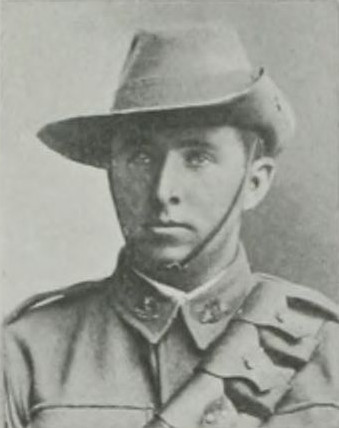
A. Norman Tetley.
TEUMA, GIOVANNI, Officer’s Steward, 3rd Class, Chatham 356340, H.M.S. Arethusa; killed in action in Heligoland Bight, 28 Aug. 1914.
THACKERAY, ALFRED WILLIAM, A.B., J. 6865, H.M.S. Good Hope; lost in action off Coronel, on the coast of Chili, 1 Nov. 1914.
THAKE, WILLIAM, Private, R.M.L.I., Ch./12817, H.M.S. Hawke; lost when that ship was torpedoed in the North Sea, 15 Oct. 1914.
THAL, MORRIS MARCUS VAN, Rifleman, No. Z2641, B Coy., 25th Brigade, 8th Division, Rifle Brigade, Interpreter to Commanding Officer, only child of Marcus van Thal, of 91, Addison Gardens, Kensington, employee at the War Office, by his wife, Marie, dau. of Meyer Poole; b. Catford, co. Kent, 10 Oct. 1897; educ. St. John’s College, Southend-on-Sea, Brussels, and Hanover, and passed the Senior Cambridge Local Exam., with also oral French and German, 1913; enlisted in the Rifle Brigade, 11 Sept. 1914; went to France, March, 1915, and was killed in action at Fromelles, 9 May, 1915. Corpl. Leigh Knight wrote: “I was your son’s section commander, and am very sorry to have to tell you that I myself saw him fall. He was a good soldier, and when we charged he went forward very gallantly. He was killed by a German shell, and it was practically instantaneous death”; and Rifleman E. Allen wrote: “On 9 May we made an attack on Fromelles, where I saw your son carrying a machine-gun into action. I could not say whether he was killed, but I saw him go under, when I was wounded.”
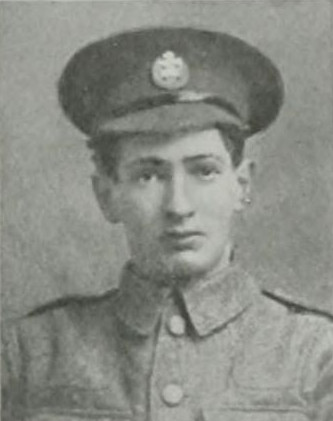
Morris Marcus van Thal.
THEOBALD, WILLIAM GEORGE MORLEY, Private, No. 792, No. 2 Coy. 14th Battn. 4th Infantry Brigade, Australian Imperial Force, eldest s. of George Theobald, of Littleport, Cambs, Superintendent of Fen Drainage, Littleport, and Downham District, by his wife, Hannah Jackson, dau. of James Hardwick, of Ipswich, Queensland, Australia; b. Little Downham, Isle of Ely, 12 Nov. 1894; educ. March (Cambs.) Grammar School; joined the Cambridgeshire Territorials in 1913; went to Australia, 18 April, 1914, and when war broke out volunteered and joined the Commonwealth Expeditionary Force at the end of Oct., 1914; left Melbourne for Egypt with the 2nd Reinforcements, 23 Dec. 1914; took part in the landing at Cape Helles, Gallipoli, 25 April, 1915, and was killed in action at 10 the same morning while out sniping with four others. He was unm. A comrade wrote: “He was not out long before he was shot, but he did some good work before he was hit.” Another comrade wrote: “Every one of us was grieved when poor Tommy was killed, for all were agreed that Tommy was a gentleman.”
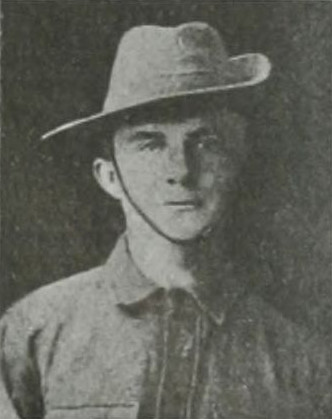
William G. M. Theobald.
THICK, JOHN CHARLES, Gunner, R.M.A., 12173, H.M.S. Aboukir; lost in action in the North Sea, 22 Sept. 1914.
THOMAS, ANDREW READ, Chief Armourer, 340547, H.M.S. Aboukir; lost in action in the North Sea, 22 Sept. 1914.
THOMAS, AUBREY JOCELYN NUGENT, Capt., 1st Battn. Lancashire Fusiliers, elder s. of Jocelyn H. W. Thomas, of Belmont, Carlow, Ireland, formerly Capt., Scots Fusiliers Guards; b. Belmont, co. Carlow, 23 Sept. 1888; educ. Harrow and Sandhurst; gazetted 2nd Lieut., 1st Lancashire Fusiliers, 16 Aug. 1905, and promoted Lieut. 29 May, 1909, and Capt. 20 Jan. 1915; served with the Mediterranean Expeditionary Force, and was killed in action during the landing of the Lancashire Fusiliers at Beach W., Gallipoli, 25 April, 1915; unm.