The Roll of Honour. (continued 3)
Reading edition
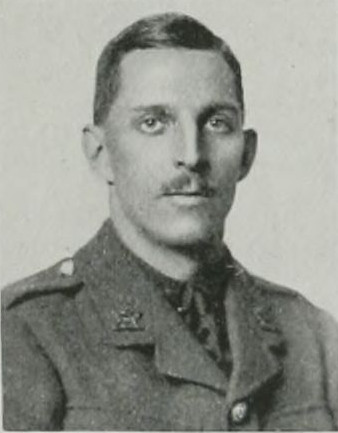
Edwin Scott Bamford.
BAMPTON, WILLIAM, 2nd Ship’s Steward, 347283, H.M.S. Cressy; lost in action in the North Sea, 22 Sept. 1914.
BANBURY, CHARLES WILLIAM, Capt., Coldstream Guards, only s. of the Rt. Hon. Sir Frederick George Banbury, of Warnford Place, Highworth, co. Wilts., 1st Bt., M.P. for the City of London, by his wife, Elizabeth Rose, dau. and co-heir of the late Thomas Barbot Beale, of Brettenham Park, co. Suffolk; b. 19, Grosvenor Street, London, W., 11 Feb. 1877; educ. Eton and University College, Oxford; gazetted to the Coldstream Guards, 9 Aug. 1899, and promoted Lieut. 16 Feb. 1901, and Capt. 27 March, 1909. He served in the South African War, receiving the Queen’s medal with three clasps, and the King’s medal with two clasps. From March, 1909–Aug. 1910, he served as A.D.C. to the General Officer Commanding 1st Division, Aldershot Command, and from March, 1912, to the General Officer Commanding-in-Chief, Eastern Command. He d. at Soupir, near Soissons, 16 Sept., 1914, from wounds received in the Battle of the Aisne two days previously, and was buried at Soupir. He m. at the Guards’ Chapel, 29 April, 1913, Joseph Marguerite (Wadley Manor, Faringdon, Berks), dau. of Jose Reixach, and had a son and a daughter: Charles William, b. 18 May, 1915, and Mary Heritage, b. 28 March, 1914. Capt. Banbury won the Grand Military Gold Cup at Sandown, riding Capt. Christie Miller’s Sprinkle Me two years in succession, 1909 and 1910, and also the Grand International Steeplechase on the same. He won the Aldershot Gold Cup, and the United Service Hunter’s Cup both twice on horse Noble Roy, and the Coldstream Plate twice (1903 and 1904) on his own horse Casino, and once (1911) on Noble Roy, besides many other races. He rowed in the University College four and in the eight, and played polo for the Coldstream Guards.
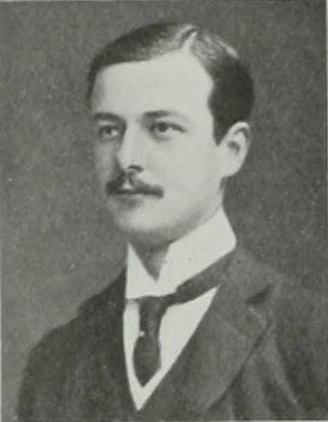
Charles William Banbury.
BANFIELD, GEORGE, Stoker, 1st Class (R.F.R., B. 4170), S.S. 102835, H.M.S. Good Hope; lost in the action off Coronel, on the coast of Chili, 1 Nov. 1914.
BANKES, EDWARD NUGENT, Capt., 3rd Battn. Royal Dublin Fusiliers, 5th and yst. s. of the late Henry Hyde Nugent Bankes, of Wraysbury, co. Bucks, by his wife, the Hon. Lalagé, née Vivian, dau. of Richard Hussey, 1st Lord Vivian, P.C., G.C.B., and grandson of the Right. Hon. George Bankes, of Kingston Hall, Dorset, M.P.; b. Wraysbury, 3 Oct. 1875; educ. Charterhouse. During the South African War he served in the ranks with Lumsden’s Horse, and was afterwards employed with Imperial Yeomanry; took part in the operations in the Orange Free State and Transvaal, May, 1900, including action near Johannesburg, and in those in the Transvaal, March, 1901, to Jan. 1902, and was mentioned in Despatches [London Gazette, 20 Aug. 1901], and awarded the Queen’s medal with five clasps. He was given a commission as 2nd Lieut. in the 2nd Dragoon Guards (the Queen’s Bays), 25 Dec. 1901; became Lieut. 25 Dec. 1902, and Capt. 12 Sept. 1908, and was Remount Officer in South Africa, 29 Sept. 1905, to 12 March, 1907, and Staff Officer there, 13 March, 1907. He retired 4 Dec. 1912, and joined the 3rd (Special Reserve) Battn. of the Dublin Fusiliers. On the outbreak of the European War he was called up, and joined the 2nd Battn. in France on 16 March, 1915, and was killed in action near St. Julien, 26 April following. He was buried close to a farm about 500 yards on the Ypres side of St. Julien. His commanding officer wrote: “He came safely through our big action of 25 April against the village of St. Julien, some 3 miles north of Ypres. He was with me throughout the day of the 25th, while we dug in on the ground gained on that day. I left him in command of the battn. on the night of the 25th, as I was slightly wounded myself. He was instantaneously killed by a rifle bullet on April 26th, during an attack made by another Brigade sent up to our assistance. He behaved with the greatest gallantry on 25 April, leading his men all the time.” He m. at Pietermaritzburg, Natal, 19 Feb. 1906, Lettice Adelaide, eldest dau. of Charles Wriothesley Digby, of Meriden Hall, near Coventry [great-great-great-grandson of William, 5th Lord Digby], and had issue a son and two daus.: John Digby Hyde, b. 16 Nov. 1906; Adelaide Margery Dora, b. 21 Feb. 1908; and Lettice Monica, b. 12 April, 1909.
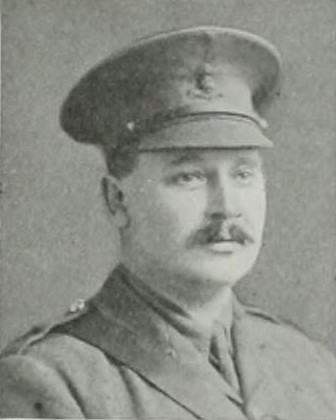
Edward Nugent Bankes.
BANKS, FRED LAKEMAN, Corpl., No. 370, 5th Battn. (London Rifle Brigade) The London Regt., 2nd s. of Frederick Seymour Banks, of 4, St. John Street, Bedford Row, W.C., Commission Agent, by his wife, Elizabeth, dau. of (—) Belsham; b. Doughty Street, Mecklenburgh Square, London, 20 Jan. 1874; educ. Whitgift Grammar School, and on leaving school entered his father’s business. He joined the London Rifle Brigade in 1892, and served all through the South African War in the C.I.V. Mounted Infantry, receiving the medal with four bars. On the outbreak of the European War he rejoined the Brigade with his old schoolfellow, J. L. Hampton, and arrived in the trenches about the middle of November. He was shot and died on 13 May 1915, near Ypres. Writing to his parents, the officer commanding his company stated that Hampton (who met his death ten days before Banks did) and he well helped to maintain a fine tradition by their spirit and experience, and that it was almost impossible to write any sort of appreciation of what those two men were to their company. They many times gave their officer comfort and courage in difficult times, and he adds, “When we get into the tight places again I know that many of us who had been taught by him will think of Freddy Banks and his cheery confidence, and take courage.” On more than one occasion he was offered a commission, but preferred to remain in the ranks alongside his comrades. At the Whitgift Grammar School athletic sports he won the mile on three occasions, 1889, 1890 and 1891. A fourth win was obtained in 1893 when he secured the Old Boys’ mile. He joined the Cadet Corps, and won the Spencer Cup for the champion shot of the Public Schools at Bisley in 1891, scoring 33 out of a possible 35 at 500 yards. He also won the Easty silver medal. He won the Whitgift Veterans in 1896. In 1892 he made a brave attempt to rescue a boy who had fallen into the river at Rainham. He was competing for his Regimental Bronze Badge at the time, and was waiting his turn to fire, when he plunged into the river and, after diving repeatedly, recovered the lifeless body of the boy. He afterwards resumed his shooting, and obtained second place, being beaten by only one point. He received the Royal Humane Society’s certificate on vellum and a bronze medal, being also complimented by Lord E. Pelham Clinton (at an inspection by the Duke of Cambridge) on his deed. Corpl. Banks won the D Coy. Waldegrave Challenge Cup three times, when it became his, as also did the Moger Cup similarly thrice won. He shot in the winning team for the “Daily Telegraph” Cup in 1897 and 1898. On his return from the South African War the late Sir Walter Gilbey, Bt., presented him with a massive silver cup “as a token in appreciation of services rendered to his country.”
BANKS, GEORGE EDWARD, Stoker, P.O., 287551, H.M.S. Pathfinder; lost when that ship was sunk by a mine, about 20 miles off the East Coast, 5 Sept. 1914.
BANKS, PERCY D’AGUILAR, Capt., Queen Victoria’s Own Corps of Guides, attd. 57th Wildes Rifles, only s. of Col. Samuel Henry O’Brien Banks, of 9, Eaton Place, Brighton, by his wife, Katherine Rosa, dau. of the Rev. John Burton D’Aguilar, late Senr. Chaplain of H.M. Forces; b. Bath, 9 May, 1885; educ. St. Peter’s, Weston, and Cheltenham College and Sandhurst; gazetted 2nd Lieut. 2nd Battn. Wiltshire Regt., 10 Oct. 1903; joined 16 Nov. following, and left for India to join the 1st battn. in April, 1904. He was appointed to the Guides the following year; promoted Lieut. 10 Jan. 1906, and Capt. 10 Oct. 1912. He was A.D.C. to the Hon. A. D. Younghusband, C.S.I., Commissioner in Sind during the visit of the King, then Prince of Wales, to India in 1906, and afterwards served as transport officer with the Chitral Relief Force in Aug. 1907. He was killed 26 April, 1915, during the second Battle of Ypres only 50 yards from the German lines; unm. On this day Wilde’s Rifles were in the front line of the Ferozepore Brigade. Capt. Banks’ double company guides formed centre, and he, the only English officer, led them. The position to be assaulted was an extremely strong one, and the assaulting force laboured under heavy disadvantages. It had been impossible to reconnoitre the ground in a satisfactory manner, and little was known of the exact position of the German line beyond the fact that it was somewhere on the opposite ridge about 1,500 yards distance. The ground was devoid of cover, and rose slightly for the first 500 yards, then dipped and ended in a gradual upward slope towards the German position which commanded the whole line of advance. On crossing the first ridge the regt. came under an absolute tornado of fire of every description—shrapnel, machine-gun, rifle, and, last but not least, high explosive shells filled with asphyxiating gas. From this point onwards the men began to fall rapidly, but still the gallant regt. pushed on. The murderous nature of the fire can be gauged by the fact that when the bottom of the slope was reached, at a point some 900 yards from the start, the Commanding Officer, Major Willams, and four of his colleagues had been severely wounded. Still the attack was pressed to a point about 80 yards from the German trenches. Here Major Duhan, Capt. Mackie and Capt. Banks were all killed, as were also two of the Indian officers. Capt. Banks’ orderly, a Sikh named Bhan Singh, had been severely wounded in the face early in the action. In spite of this he insisted in following Capt. Banks till he was killed. As soon as darkness set in, in the face of the appalling fire, and severely wounded as he was, his one thought was to bring back the body of his officer. Weak as he was from loss of blood, he staggered along carrying the body until he fell from exhaustion. They were both brought in, and Capt. Banks was buried near a farm house two miles north-east of Ypres. For this act of devotion and gallantry Bhan Singh received the Indian D.S.M. and later a Russian decoration. Col. Egerton wrote: “We were all very fond of him in the Guides, and he had a great many other friends besides who will feel his loss very keenly I am sure. His men were also very fond of him, and were following him bravely when he fell. His name was, of course, brought to notice by Col. Gray, and I was proud and glad to endorse his mention, and I know that it was passed on by the next higher authority, the Divisional Commander.” A brother officer also wrote: “Many of the Eusafzai Pathans who were with him, and actually in the advance in which he was killed, are back here wounded or invalided, and I have spoken to many of them, the Subadar, one Afzal Khan, in particular. The very genuine love they had for him and their admiration for his great personal pluck and power as a leader is apparent in everything they say about him, and the Subadar broke down altogether when telling me of him. He says that not the smallest detail relating to the men’s comfort was overlooked, and that in fact they really had a father to command them. I’ve never seen any native express such genuine sorrow at the loss of one of their sahibs.” Capt. Banks was mentioned for conspicuous bravery in F.M. Sir John (now Lord) French’s despatch of Jan. 1, 1916. He was a good all-round athlete and sportsman. At Cheltenham he won the school rackets and fives, and he was in the eleven both there and at Sandhurst. After making a score of 131 for the Somerset Colts, he played for the Somerset County Eleven. He also played cricket for the Army against the Rest at Lahore in 1904. A fine polo player, he twice in 1913 led the Guides to victory, and also the same year took part in a tour in Germany, playing for the Frankfurt team, which won three events—the Challenge Cup, Champion Cup, and Ladies’ Cup.
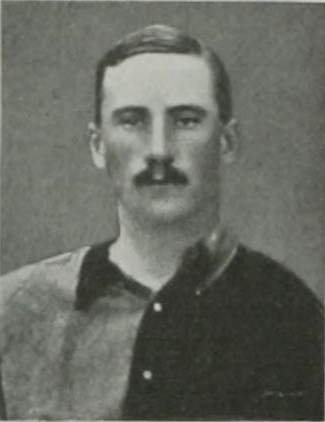
Percy D’Aguilar Banks.
BANNAN, JAMES CHARLES, Private, No. 79897, 31st Battn. Canadian Expeditionary Force, s. of Joseph Cope Bannan, of Kilkenny, Ireland, ex-Sergt. Royal Irish Constabulary, by his wife, Mary, dau. of Edward McElveny, ex-Insp. M.D. Police; b. Kilkenny, 24 Feb. 1894; educ. Model National School there. Went to Canada 10 March, 1913, and after the outbreak of war enlisted at Calgary in Oct. 1914; came over with the 2nd Canadian Contingent; went to France 14 Sept. 1915, and was shot by a sniper 6 Nov. 1915; unm.
BANNER, FREDERICK SIDNEY, Private, No. 2515, 10th Battn. (Liverpool Scottish) The King’s Liverpool Regt. (Gun Section), eldest s. of William Banner, of 113, Bridge Road, Litherland, Liverpool, by his wife, Emma, dau. of the late Thomas Oswald Rudge; b. Litherland, near Liverpool; educ. at St. Philip’s and afterwards at Seaforth High School; enlisted 1912; killed in action at Ypres, 1 April, 1915; unm. Buried in an enclosed burial ground 700 yards west of Verbranden Molen.
BANNER, JOSIAH, Private, No. 4138, 3rd Battn. Coldstream Guards, s. of William Banner, of Birmingham, Wheelwright, by his wife, Elizabeth, dau. of (—) Herbert; b. Birmingham, 29 Oct. 1879; educ. at St. Anne’s Boys’ School, Duddeston, Birmingham; enlisted in the Coldstream Guards, 12 March, 1901, and served in Egypt, Sept. 1906–Jan. 1909, and with the Expeditionary Force in France and Flanders 1914, and was killed in action at St. Julien, 3 Nov. 1914. He is believed to have been buried in the Rentel Woods, close to St. Julien. He m. at Birmingham, 24 April, 1909, Bertha Elizabeth Charlotte Sophia (4, County Terrace, Pears Road, Hounslow), dau. of James Kingston Merrick, of Hounslow, and had two sons, Joseph James, b. 29 April, 1910, and William Albert Kingston, b. 26 Oct. 1913.
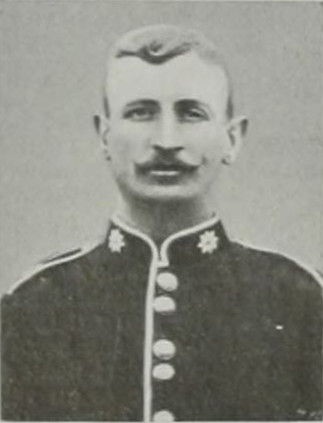
Josiah Banner.
BANNER, SYDNEY ALFRED, Private, No. 1501, 13th Battn. Australian Imperial Force, s. of Alfred James Banner, of 17, Francis Road, Hay Hill, Birmingham; b. Small Heath, Birmingham, 25 Nov. 1893; educ. at the Red Hill Road Board School there; went to Australia; enlisted towards the end of 1914; killed in action at the Dardanelles during a night attack, 2 May, 1915; unm.
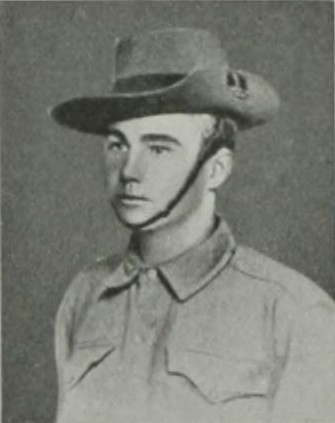
Sydney Alfred Banner.
BANNERMAN, ORIEL WILLIAM ERSKINE, Capt., 15th Lancers (Cureton’s Mulatnis), Indian Army, 2nd s. of the late Gen. William Bannerman, C.B., 104th Wellesley’s Rifles [great-grandson of Sir Patrick Bannerman, 3rd s. of Sir Alexander Bannerman, of Elsick, 1st Bt.], by his wife, Louisa Constance (6, Lansdowne Crescent, Cheltenham), dau. of Robert Goddard, of Monkstown; b. Bombay, 13 Dec. 1877; educ. Cheltenham College and Sandhurst; joined the Indian Army, 27 July, 1898, was promoted Lieut. 27 Oct. 1900, and Capt. 27 July, 1907, and from Oct. 1903–07 was A.D.C. to Major-Gen. G. Henry, Divn. Commander at Meerut. He was severely wounded in action at Givenchy, 20 Dec. 1914, and d. in hospital at Boulogne, 3 Feb. following. He was buried in the cemetery there. He m. at Mussoorie, 14 Sept. 1907, Emilie Henriette, 2nd dau. of the late Capt. Charles Lousada, of Shelburne Hall, Cheltenham; s.p.
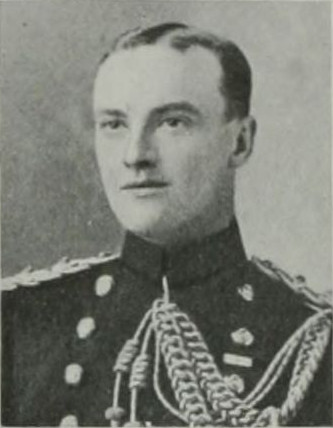
Oriel William Erskine Bannerman.
BANNING, PERCY STUART, Capt., 2nd Battn. Royal Munster Fusiliers, only child of Lieut.-Col. Stephen Thomas Banning, of 50, Kensington Mansions, Earl’s Court, LL.D., late Royal Munster Fusiliers, by his wife, Isabel Margaret, dau. of the late Rev. Denis Moriarty; b. at Yorktown, co. Surrey, 22 June, 1887; educ. Westward Ho! Bath College and Royal Military College, Sandhurst, and received his commission in the Munsters, 19 Sept. 1908, being gazetted Lieut. 19 March, 1910, and Capt. (posthumously), 30 Aug. 1914. He went to the front with the first Expeditionary Force as battn. transport officer, and was killed in action at Ypres, Belgium, 4 Nov. 1914, while attached to Sir Douglas Haig’s staff. Capt. Banning was an all-round athlete and a good cross-country runner. While at Sandhurst he won the two miles in the Woolwich and Sandhurst Sports in record time. He was also a first-rate horseman, and won the point-to-point race at the Mounted Infantry School in Jan. 1911. He m. 25 March, 1913, Mona Mary, only dau. of the late Alfred Chaplin, of Henfield, Sussex; s.p.
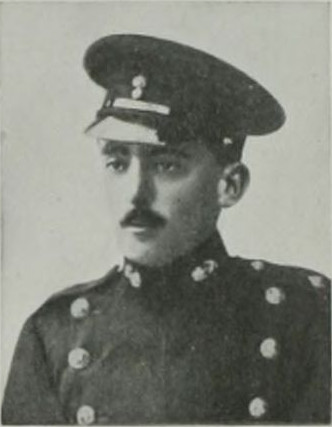
Percy Stuart Banning.
BANON, HAROLD OLIVER, Private, No. 77982, 7th (British Columbia) Battn. Canadian Expeditionary Force, 3rd s. of Capt. A. T. Banon, of the Manali Orchards, Kulu, Punjab, India, late Bengal Staff Corps; b. Manali, Kulu, afsd., 2 June, 1890; went to Canada, 1 March, 1910; volunteered from the Canadian Naval Volunteers, and enlisted after the outbreak of war; came over with the second contingent, 14 Feb. 1915; went to France, 29 April, 1915, and was killed by a shell in the trenches near Petit-pond, Ploegsteert, near Messines, 19 Oct. 1915; unm. Buried at the Canadian Cemetery, Chateau Rosenberg. He was wounded on 23 May, 1915, at Festubert when 60 men volunteered to attack the Germans with bombs. Of these 58 were killed or wounded, and only two returned unwounded. Capt. W. Holmes, who led the party, got the Military Cross for leading on this occasion.
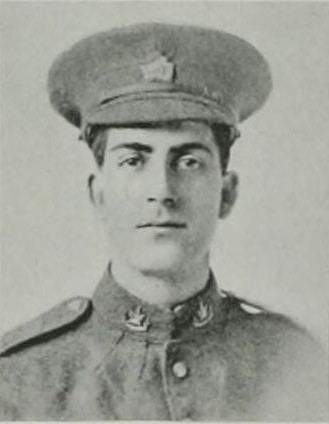
Harold Oliver Banon.
BARBER, ALFRED EDWARD, A.B. (R.F.R., 8817), 205320, H.M.S. Aboukir; lost in action in the North Sea, 22 Sept. 1914.
BARBER, CYRIL FREDERIC, Major, Royal Marine L.I., 3rd s. of the late Ven. Edward Barber, Archdeacon of Chester, and Canon of the Cathedral, and Rector of St. Bridget with St. Martin’s, Chester, by his wife, Edith Sarah (St. Bridget’s, Hall Place Gardens, St. Albans), dau. of the Rev. Thomas Evetts, Hon. Canon of Christchurch, Oxford, and Rector of Monk’s Risboro’, Bucks; b. Radley Vicarage, Abingdon, co. Berks., 18 Oct. 1876; educ. New Brighton (Miss Staley’s), Rossall and Greenwich, where he gained the Sword of Honour, being gazetted to the R.M.L.I. 1 Sept. 1895, and promoted Lieut. 1 July, 1896, Capt. 27 May, 1901, and Major 11 April, 1915. In his examination for company officer he received special certificates with distinction in fortification and topography. He was appointed to the Naval Intelligence Department 1 Aug. 1906, and Intelligence Officer at Gibraltar in Aug. 1910. He also qualified as a first-class gunnery officer. He joined the Goliath 2 Aug. 1914, and was lost when that ship went down on 13 May, 1915. A fellow officer wrote: “I worked a great deal with your husband in the Goliath. He and I were together in the control top all day long during the majority of days in action since we came to the Dardanelles. I have made careful inquiries concerning your husband’s actions on the night of the accident, and there appears no doubt that he went from his cabin straight on to the marines’ mess deck and endeavoured to save the lives of his men by calling to them to keep quiet and not panic, and not to scramble for the ladder. He then, according to Sergt. Thorne, went still further along the mess deck. I imagine he was going to X3 casemate to try and get his men out. Anyhow he must have known by the heel the ship had on that he was going away from his own personal chance of safety. I heard yesterday when in London from the Capt. of Marines there that on the day of the accident or the day following your husband had received his promotion, and that Gen. Paris, in command of the Naval Brigade, has specially asked for him. I think it is to your husband that we all owe our escape from several sure disasters when on the East African coast. I have such a deep and lasting admiration for your husband, as we all had in the Goliath, and he was a real good friend to me. It was only the day before the loss of the Goliath that your husband went ashore into the French trenches on the right flank to confer with the officer in command concerning the position of some enemy snipers that were worrying them. He went there at considerable risk to his own life, but someone had to go, so he went without any hesitation, and ascertained what was wanted. This great war is taking its hourly toll of brave men, and your husband was one of the best, and he had done his share and more than his share for the country ere he too was called.” Major Barber m. in Spain, 5 March, 1912, Satunina Josepha, dau. of Manuel Morales; s.p.
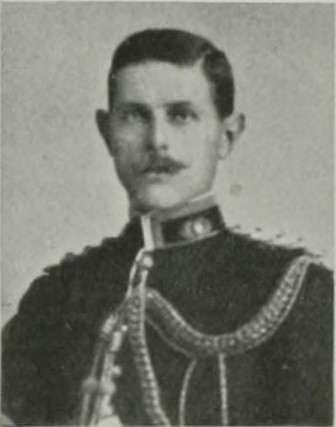
Cyril Frederic Barber.
BARBER, JAMES WILLIAM, Petty Officer, 183362, H.M.S. Good Hope; lost in the action off Coronel, on the coast of Chili, 1 Nov. 1914.
BARBER, ROBERT, Seaman, R.N.R., 4186A, H.M.S. Cressy; lost in action in the North Sea, 22 Sept. 1914.
BARCLAY, ALEXANDER, Private, No. 158, 1st Battn. 1st Brigade, Australian Imperial Force, only s. of Alexander Barclay, of 38, Braemar Place, Aberdeen, by his wife, Kate, dau. of John Davidson, M.A.; b. Aberdeen, 13 Feb. 1895; educ. Ashley Public School. He went to Australia in May, 1914, having previously served nearly four years in the Royal Engineers (T.F.), and at the outbreak of war volunteered, joined the Australian Imperial Force, and was killed in action at Gabe Tepe, 29 May, 1915; unm.
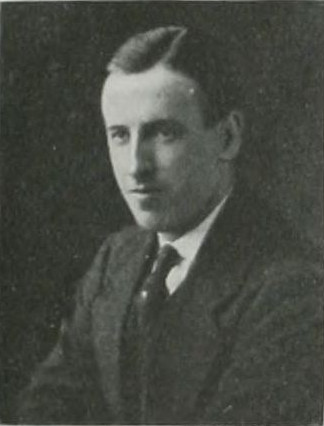
Alexander Barclay.
BARCLAY, ALLEN, 2nd Lieut., 170th Coy. R.E., eldest s. of Henry James Barclay, of Wapella, Silverdale, Sydenham, by his wife, Mary Allen, dau. of the late Allen Stoneham, Financial Secretary, Board of Trade; b. Penge, S.E., 17 Feb. 1887; educ. The Hall, Sydenham, Dulwich College and Birmingham University. On leaving Dulwich the master wrote: “He is a sound chemist. He works well and systematically; his conduct and industry have always been excellent.” He matriculated at Birmingham in 1905, and took the B.Sc. degree three years later, studying geology, on which he was particularly keen, under Prof. Lapworth. On going down from the University, “to which he has been a credit,” wrote Prof. Redmayne, he was granted a Post-Graduate scholarship, and went out to the Transvaal, where he spent three years as sampler, assistant surveyor and head surveyor to the Consolidated Langlaagte and the new Primrose Gold Mines, doing his work throughout in that thorough manner which was characteristic of his labours. “He has carried out his onerous and responsible duties in a manner very satisfactory to his employers, as well as to the Government Mines Department. Mr. Barclay is a man of high integrity, and is thoroughly capable and experienced. He is leaving at his own request in order to extend his mining experience beyond South Africa,” wrote the manager in 1912. He afterwards went to Burmah, Norway, Spain, etc. On the outbreak of war he applied as an old member of the O.T.C. for a commission, and while waiting for this enlisted in the Royal Engineers. He was soon promoted, quickly becoming L.-Corpl., Corpl. and Sergt. On 16 Nov. 1914, he was gazetted 2nd Lieut., and at the request of his commanding officer was appointed to the regt. in which he was serving. From this he was transferred to the Mining Corps on its formation in Feb. 1915, as an expert. Lieut. Barclay was killed by the exploding of a mine on 24 April, 1915; unm. His commanding officer, Capt. Preedy, in announcing his death, wrote as follows: “At the time of his death he was working underground with some of his men. The Germans exploded a mine, killing him and one of his N.C.Os. instantaneously. His men were very anxious to extricate his body to bury him, but having inspected the spot I was reluctantly compelled to forbid them to do so, as it would not have been possible without a very grave risk of losing further lives in the attempt. His body lies buried under about 15 feet of earth half-way between our trenches and the German trenches in the orchard just east of Givenchy.” Canon King, who had known him all his life, wrote: “A more unsullied boy I never came across, and though so retiring and humble, he had, and must have known he had, great gifts.”
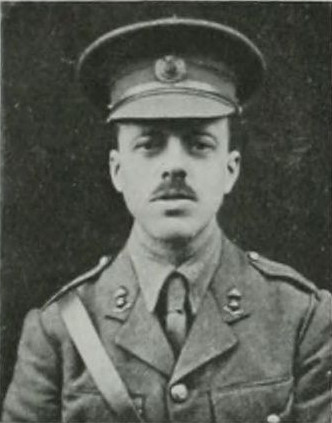
Allen Barclay.
BARCLAY, KENNETH, Private, No. 1547, G Coy., 1/14th Battn. (London Scottish) The London Regt., 3rd s. of Henry James Barclay, of Wapella, Silverdale, Sydenham, S.E., by his wife, Mary Allen, dau. of the late Allen Stoneham, Financial Secretary, Board of Trade; b. Sydenham, 31 Dec. 1892; educ. The Hall, Sydenham, and Dulwich College; joined the London Scottish, May, 1911; volunteered for foreign service on the outbreak of war, took part in the charge at Messines and the first battles of Ypres, and was killed in action, 12 Nov. 1914; unm. His colonel, writing, says: “No commanding officer could have had under his command a braver or more gallant soldier.” The bell of St. Philip’s Church, Sydenham, suitably inscribed, commemorates him, and a beautiful memorial in bronze and hammered ironwork was placed in the chancel of that church, where for years he sang in the choir. His elder brother, Lieut. Allen Barclay, was killed in action, 24 April, 1915 (see preceding notice).
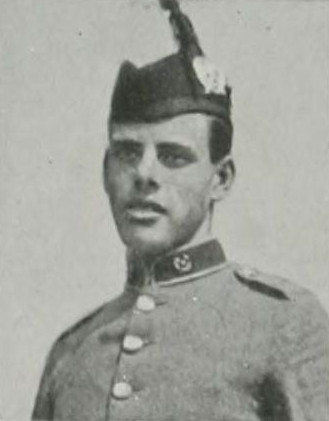
Kenneth Barclay.
BARCLAY, RAFE HEDWORTH MYDDELTON, 2nd Lieut., King’s Royal Rifle Corps, only s. of Hedworth Trelawny Barclay, Major 2/1 Leicestershire Yeomanry, formerly member of the Jockey Club and Clerk of the Course at Hurst Park [a cadet of Barclay of Urie], by his wife, Agnes Mary, yr. dau. of Richard Myddelton, of Chirk Castle, co. Denbigh; b. 31, Lennox Gardens, London. S.W., 14 Nov. 1892; educ. Rugby and Army College, Aldershot; joined the 3rd Battn. Wiltshire Regt. 1910, and was promoted Lieut. 2 Aug. 1913. He was gazetted to the King’s Royal Rifle Corps 10 June, 1914, accompanied the first Expeditionary Force to France, went through the retreat from Mons, and was killed in action at the Battle of the Aisne, 14 Sept. 1914, having previously been reported missing; unm.
BARDEN, JOHN, Stoker, 1st Class (R.F.R., Ch. B. 5332), S.S. 100101, H.M.S. Cressy; lost in action in the North Sea, 22 Sept. 1914.
BARDSLEY, LEONARD, Stoker, 1st Class (R.F.R., B. 3163), S.S. 100826, H.M.S. Good Hope; lost in the action off Coronel, on the coast of Chili, 1 Nov. 1914.
BARKER, CECIL MASSY ARBUTHNOT, 2nd Lieut., 6th (Service) Battn. Princess Victoria’s Royal Irish Fusiliers, 3rd and yst. s. of Samuel Lindsey-Bucknal Barker, of Belfast and Dublin, by his wife, Catherine Maude, dau. of the Rev. Moses Leatham, Rector of Langfield; b. Belfast, 21 Sept. 1895; educ. Campbell College, Belfast, and Trinity College, Dublin; a candidate for Holy Orders, he was gazetted from Dublin University O.T.C. to be 2nd Lieut. 6th Battn. Royal Irish Fusiliers, 22 Sept. 1914; left with his regt. for the Dardanelles, and was killed in action “when bravely leading his men in a splendid attack on a difficult position” at Sulva Bay, Gallipoli, 10 Aug. 1915; unm. His brother, the Rev. E. L. B. Barker, is now (1916) serving as Chaplain to the Ulster Division.
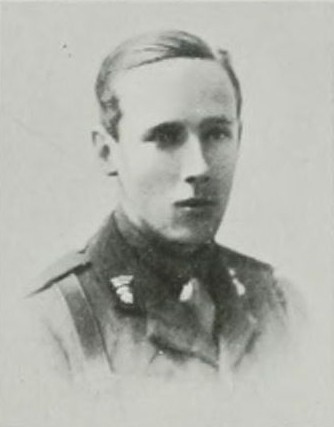
Cecil Massy Arbuthnot Barker.
BARKER, ERNEST, Leading Seaman, Collingwood Battn., Tyneside, 6/213, R.N.D., R.N.V.R., 2nd s. of John Barker, Lifton House, Newcastle, Assistant General Secretary of the Boilermakers’ Society and Iron and Steel Shipbuilders’ Society, a member of the Newcastle City Council, by his wife, Laura Jane, dau. of John Leeson, of Crewe, Chester; b. Horwich, near Bolton, Lancs., 13 May, 1895; educ. Council schools, Bolton and Newcastle; joined the Tyneside Naval Volunteers, Jan. 1914; killed in action in the Dardanelles, 4 June, 1915; unm. Seaman Barker was formerly in the employment of Messrs. R. Robinson & Co., Ltd., wholesale stationers, Clavering Place, Newcastle. His elder brother is now (1916) serving in France with the 19th (Commercial Battn.) Northumberland Fusiliers.
BARKER, GODFREY, Major, Royal Marine L.I., Drake Battn., R.N.D., 4th s. of Col. Sir Francis Barker, of Essex Lodge, Folkestone, late R.A., by his wife, Jessie, only child of the late John Foster; b. Malta, 13 Jan. 1883; educ. King Edward’s School, Birmingham, privately, and Royal Naval College, Greenwich; gazetted 2nd Lieut. R.M.L.I., 1 Sept. 1901, and promoted Lieut. 1 July, 1902, and Capt. 1 Sept. 1912. He served successively on board H.M.S. Firequeen, Magnificent, Exmouth, Victory, Europa, Powerful, Eclipse, Terrible, Hampshire, Prince George, Royal Arthur, and Prince of Wales, and received excellent certificates from his commanding officers. He had qualified as an instructor in physical training. At the outbreak of the war he was appointed Major and Adjutant of the Drake Battn., R.N.D., and was killed in action at Gallipoli, 28 April, 1915; unm.
BARKER, HERBERT, A.B. (R.F.R., B. 4600), S.S. 1379, H.M.S. Good Hope; lost in the action off Coronel, on the coast of Chili, 1 Nov. 1914.
BARKER, NOAH, Private, No. 4467, 3rd Battn. Coldstream Guards, yst. s. of the late William Barker, by his wife, Elizabeth; b. Ketley Sands, Wellington, co. Salop, 22 July, 1881; educ. Board School there; enlisted 21 Nov. 1901; served with the Expeditionary Force in France and Flanders from 26 Aug. 1914, and d. at Rentel, 11 Nov. 1914, of wounds received in action. He m. at Denaby, near Rotherham, Yorks, 12 Nov. 1905, Rose (10, Albert Street, South Kirkby, near Wakefield), dau. of Samuel Alfred Hodgetts, and had a dau.: Edith Florence, b. 13 Feb. 1906.
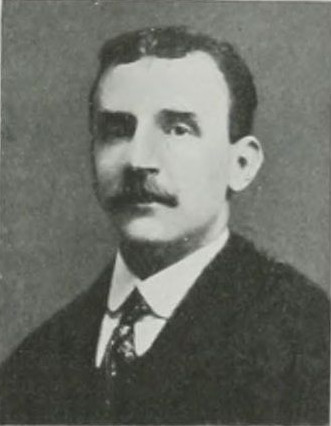
Noah Barker.
BARKER, WILLIAM, Stoker, 1st Class (R.F.R., B. 7987), S.S. 102800, H.M.S. Hawke; lost in action in the North Sea, 15 Oct. 1914; m.
BARKS, HERBERT, Private, No. 7281, 1st Battn. Coldstream Guards, only child of Abraham Barks, Wales Bar, co. York, by his wife, Emily; b. Clowne, co. Derby, 7 July, 1888; educ. Wales School, Wales Bar, Yorks; enlisted 3 June, 1907, and was killed in action at the Battle of the Aisne, 14 Sept. 1914. He m. at Hampstead, 27 Sept. 1913, Elizabeth Florence (48, Junction Road, Highgate, N.), dau. of Thomas Rumble, and had a posthumous child: Kathleen Elizabeth, b. 24 Sept. 1914. Two of his brothers-in-law, Private Charles Rumble and Gunner Fred Rumble, were killed in action.
BARKS, ISAAC, Private, No. 14293, 4th Battn. Middlesex Regt., s. of Isaac Barks, of 91, Pembroke Road, New Southport; served with the Expeditionary Force; killed in action at Kemmel, 28 Dec. 1914.
BARLEY, JOHN, Private, No. 8147, 1st Battn. Lincolnshire Regt., s. of Thomas Barley, of Broughton, Miner, by his wife, Sarah Ann, dau. of Robert Sharp, of Broughton; b. Broughton, 6 April, 1876; educ. there; enlisted in the Lincolnshire Regt., 24 Nov. 1893; served nine years in the Regulars and three in the Reserve, and saw service in Khartoum and Atbara (medal with two bars), South Africa (medal), and Soudan (medal with two bars). On mobilisation he was called up, served in France and Flanders, and was wounded in Nov. 1914; afterwards went back to the front, and d. of wounds received in action at Ypres, 27 Feb. 1915. Private Barley m. at Leeds, 21 April, 1905, Elizabeth Ann (7, New Broughton, near Brigg, Lincoln), dau. of William Hyke, and had one son and five daus.; Thomas William b. 3 Oct. 1905; Gladys Gwendolen, b. 21 Dec. 1906; Evylyn Kitty, b. 16 Oct. 1908; Nancy, b. 19 July, 1910; Amy Winifred, b. 10 Aug. 1912; and Joyce Attra, b. 14 July, 1914.
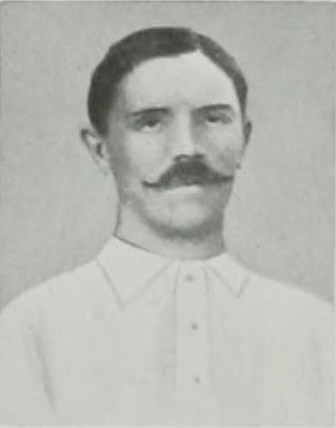
John Barley.
BARLING, HENRY WILLIAM, Chief Stoker, 281047, H.M.S. Aboukir; lost in action in the North Sea, 22 Sept. 1914.
BARLING, WILLIAM BINGHAM, 2nd Lieut., 3rd Battn. Worcestershire Regt., only s. of William Barling, of The Paddocks, Newnham-on-Severn, by his wife, Millicent, dau. of Seymour Bingham; b. at Newnham, co. Gloucester, 1892; educ. Beresford House, Gloucester; The Priory, Great Malvern; and Dean’s Close, Cheltenham, and on leaving the latter became a student at Wye College; was elected to a Fellowship of the Surveyor’s Institute, and became a member of the Inland Revenue Valuation Department at Gloucester, a post he held for three years. On the declaration of war he enlisted as a Private in the 5th Battn. of the Gloucesters about 12 Aug.; received his commission as 2nd Lieut. in the 6th Battn. Worcestershire Regt., 2 Dec. 1914, and was put on the Officers’ Reserve. He went to France on 19 Feb., and reached the firing line on 23 Feb., where he was attached to the 3rd Battn. of the regt. A wire from the War Office came on 16 March “reported missing, believed killed,” and the last authoritative information concerning his death was contained in a letter from his Colonel. The letter said when last seen Lieut. Barling was very bravely leading his platoon in a determined assault against an enemy’s trench, and was believed to be killed. A corpl. concerned in this particular advance reported he stumbled over an officer whom he believed to be Lieut. Barling. The trench, which a very few men succeeded in reaching, had to be evacuated at nightfall, and is still (1916) in the enemy’s hands. He was unm.
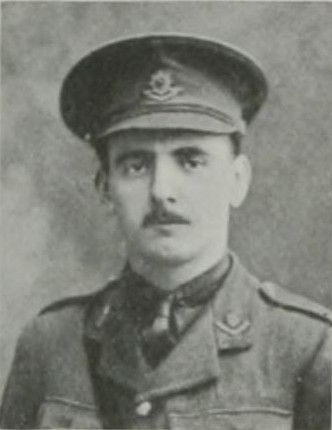
William Bingham Barling.
BARLOW, CHARLES ERNEST, Corpl. No. 964, 2nd Home Counties (T.F.) R.E., only s. of the late Joshua Barlow, by his wife, Maria, dau. of William Cann; b. Soho, London, 17 Nov. 1890; educ. St. Anne’s School there; was a chauffeur; enlisted Oct. 1914; went to the Front, 22 Dec. 1914, and died 30 June, 1915, of wounds received in action in France. He m. at Walthamstow, Essex, 18 Jan. 1914, Lilian (6, Church Street, Old Town, Bexhill-on-Sea), dau. of John Todd, and had issue a dau., Marie Lilian, b. 31 Jan. 1915.
BARLOW, JAMES WILLIAM, Stoker, 1st Class (R.F.R., Ch. B. 9666), S.S. 107176, H.M.S. Cressy; lost in action in the North Sea, 22 Sept. 1914.
BARLOW, THOMAS ARTHUR, Stoker, 1st Class, K. 11741, H.M.S. Aboukir; lost in action in the North Sea, 22 Sept. 1914.
PRATT-BARLOW, BERNHARD ALEXANDER, Commander R.N., elder s. of Charles James Pratt-Barlow, of Roxby, The Hoe, Plymouth, by his wife, Rosa Caroline, yr. dau. of the late William Gladstone, D.L., J.P., of 58, Queen’s Gate, London, S.W.; b. St. George’s Road, London, S.W., 10 Sept. 1874; educ. Brighton (Mr. W. R. Lee, of Norfolk Terrace), and Royal Naval College, Gosport; joined H.M.S. Britannia as a Naval Cadet in Jan. 1889, being rated midshipman three years later. He was promoted Sub-Lieut. 31 May, 1896, Lieut. 31 Aug. 1897, and Commander 31 Dec. 1908. As a naval cadet he served in the Trafalgar, flagship of Rear-Admirals Lord Walter Kerr, A. H. Markham, and C. G. Domvile, on the Mediterranean Station, July, 1891; the Warspite, flagship of Rear-Admiral Drummond, commanding “D” Fleet in the Naval Manœuvres of July, 1894; and the Active, flying the broad pennant of Commodore R. H. Harris, in the Training Squadron, Sept. 1894. He was Sub-Lieut. of the last-named ship, flying the broad pennant of Commodore G. L. Atkinson from May, 1896, to June, 1897, when he was appointed to the Royal yacht Victoria and Albert, in which he was present at the Diamond Jubilee Review at Spithead the same month. At the end of August following he was promoted to Lieut. and appointed to the Majestic, flagship of Admiral Sir Henry Stephenson in the Channel Squadron—the flag Capt. being Admiral Prince Louis of Battenberg, G.C.B. He was flag Lieut. to Admiral Sir Lewis Beaumont on the Pacific station, March, 1899, and on the Australian station to January, 1903. He commanded the destroyers Sturgeon, Contest and Osprey, all at Devonport, and in June, 1903, was appointed 1st Lieut. of H.M.S. Antrim. He was 1st Lieut. at the R.N. Barracks, Devonport, from July, 1907, to the end of 1908, when he was advanced to Commander. In that rank he commanded the destroyers Kale and Rattlesnake, both in the second Destroyer Flotilla, and was commander of H.M.S. Irresistible and of H.M.S. Centurion. He commanded H.M.S. Hawke in the Training Squadron at Queenstown from Jan. 1914, until she was commissioned for war service. Commander Pratt-Barlow lost his life in the North Sea, 15 Oct. 1915, when H.M.S. Hawke was torpedoed by a German submarine. After the sinking of H.M.S. Hawke, Capt. Charles J. Wintour, of H.M.S. Swift, wrote the following letter: “I was instrumental in picking up the survivors of the Hawke from the rafts, and I took them in the Swift to harbour. I at once asked one of the survivors as to the commander, and he told me that he had been on his (the survivor’s) raft, and seeing that there were too many men on the raft said: ‘There are too many men on the raft, I will swim to another.’ He was never seen again, but his self-sacrificing action was undoubtedly the means of saving others. I would like you to know how deeply I grieve at his loss, and also that you should know that his very last act was one of unselfish bravery.” He m. at Canon Ffrome, co. Hereford, 17 June, 1903, Dorothy Nesta, yr. dau. of the late Walter Baskerville, D.L., J.P., of Clyro Court, co. Radnor, and left a dau., Mary Pamela, b. 17 June, 1905.
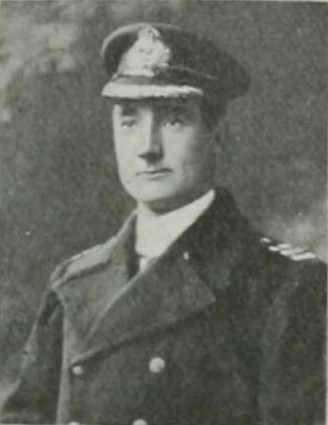
B. A. Pratt-Barlow, R.N.
BARNARD, PHILIP, Seaman, R.N.R. 35140, H.M.S. Hogue; lost in action in the North Sea, 22 Sept. 1914.
BARNARD, REUBEN GEORGE, Ship’s Steward, 341409, H.M.S. Hogue; lost in action in the North Sea, 22 Sept. 1914.
BARNARD, WILLIAM HENRY, Stoker, 1st Class, 287572, H.M.S. Cressy; lost in action in the North Sea, 22 Sept. 1914.
BARNARDIER, JAMES, Private, R.M.L.I. (R.F.R., B. 1768), Ch. 14072, H.M.S. Cressy; lost in action in the North Sea, 22 Sept. 1914.
BARNDEN, FREDERICK THOMAS, Stoker, 1st Class (R.F.R., B. 7435), S.S. 102658, H.M.S. Hawke; lost in action in the North Sea, 15 Oct. 1914.
BARNES, ARTHUR, Shipwright, 2nd Class, M. 6714 (Devon.), H.M.S. Hawke; lost in action in the North Sea, 15 Oct. 1914; m.
BARNES, ARTHUR FREDERICK, Private, No. 6462, 1st Battn. Coldstream Guards, s. of Alfred Barnes of 59, Hervey Park Road, Walthamstow; b. co. Essex; served with the Expeditionary Force in France and Flanders; d. 1 Oct. 1914, of wounds received in action; unm.
BARNES, CHARLES, Plumber, 346127, H.M.S. Cressy; lost in action in the North Sea, 22 Sept. 1914.
BARNES, CHARLES EDWARD, Private, No. 2187, 10th Battn. Middlesex Regt. (T.F.); d. in India 1 Sept., 1914, while on active service.
BARNES, DOUGLAS MESTON, Flight-Lieut., Royal Naval Air Service, s. of George Frederick Barnes, of Tulse Hill Park, A.S.I., by his wife, Elizabeth; b. Clapham, co. Surrey, 19 June, 1887; educ. Broomwood College there and privately. On completing his education, Lieut. Barnes entered the engineering profession, and was particularly interested in marine engineering and aircraft. He attained the position of manager of Smokeless Appliances, Ltd., an advisory and manufacturing company, of Victoria Street, Westminster. He resigned this on the outbreak of the war, and offered his services to the War Office and Admiralty. He received his commission as Flight Sub-Lieut. in the Naval Air Service, and was appointed to H.M.S. Pembroke on 12 Oct. 1914, was transferred to Hendon Flying Station in Nov. and gained his Pilot’s Certificate in Dec. Early in 1915 he was appointed to the staff and placed in charge of the mechanics at the station. Later on he was gazetted Flight-Lieut., and was promoted to the command at Hendon. At the time of his death he was designated to the command of the more important station at ..., and was about to take up his duties there. On the night of the first air raid on London, 31 May-1 June, Lieut. Barnes received warning of the approach of the Zeppelins at 11.30 p.m., and at once went out on a large Sopworth biplane. He sighted a Zeppelin at ..., and chased it for many miles in various directions ..., but finally lost it, and met his death at 2.30 a.m. in endeavouring to land in darkness and mist. The subjoined official account, furnished by the Admiralty, gives further particulars of Lieut. Barnes’ exploit: “This officer lost his life in a very gallant attempt to destroy a Zeppelin which was attacking London on the night of 31 May, and if only weather conditions had been a little more favourable it is likely that the result would have been quite as successful as in the case of Flight Sub-Lieut. Warneford’s complete destruction of a Zeppelin in the air in Flanders. The ascent was made in the dark, and it is probable that after chasing the Zeppelin he missed her owing to the hazy weather, and then found it necessary to land in order to find his position, and in doing so found himself surrounded by low-lying fog, entirely obscuring the ground. After a careful inspection it was found that the machine struck the ground at an abnormally high speed, bounced twice, and then turned over on its back completely, and there seems to be no doubt that Lieut. Barnes was killed outright.... It is felt that the highest praise is due to these officers who, in defence of their country, cheerfully carry out such hazardous flights at night under extremely dangerous conditions. (Signed) Murray F. Sueter, Commodore, R.N.” He was buried in Nunhead cemetery; unm.
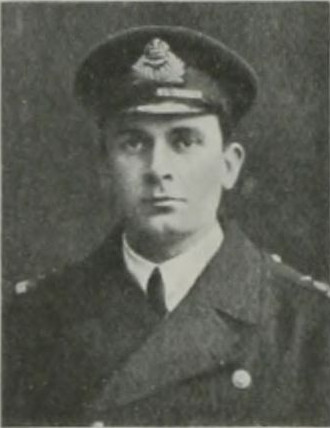
Douglas Meston Barnes.
BARNES, EDWARD ERNEST, Sergt., No. 65046, 24th Battn. (Victoria Rifles of Montreal), Canadian Expeditionary Force, s. of Frederick Barnes, of 21, Lasalle Street, Lachine, P.Q., Canada, by his wife, Jennie, dau. of William Sheppard, of Ipswich; b. Faversham, co. Kent, 18 July, 1892; educ. Davington School; went to Canada on 30 May, 1912, was employed at National Brick Co., Delson, Quebec; volunteered for Imperial service, and enlisted in Jan. 1915; left for England with the Second Contingent; went to France, 12 Sept. 1915, and was killed in action in Belgium, 18 Nov. 1915. He m. at St. Columbia Church, Montreal West, 1 April, 1915, Minnie Victoria (103, Effra Road, Haydon’s Road, Wimbledon), dau. of Frederick Grumbridge, of Wandsworth, ex-Detective Sergeant, Metropolitan Police; s.p.
BARNES, FREDERICK, S.P.O., 2nd Class (R.F.R., B. 4240), 167803, H.M.S. Hawke; lost in action in the North Sea, 15 Oct. 1914; m.
BARNES, FREDERICK FRANCIS (“Eric”), Private, No. 19991, 5th Platoon, 10th Battn., 2nd Brigade, Canadian Expeditionary Force, s. of Frederick Barnes, of Alexandra College, Shirley, Southampton, Officer in Mercantile Marine, by his wife, Amy Maude, dau. of William Francis Mayass; b. Alexandra College, Shirley, Southampton, 30 May, 1894; educ. Taunton School, Somerset; and was in the Canadian Bank of Commerce, first at Calgary and then at Youngstown, Alberta. He volunteered for Imperial service directly war was declared, came over to England with the first contingent, and after training on Salisbury Plain during the winter, left for the front on 10 Feb. He took part in the Battle of Neuve Chapelle and in the second Battle of Ypres, at the latter of which the 10th Battn. distinguished itself by recovering the wood of St. Julien, losing three-fourths of its strength and nearly every officer. At Festubert, on 22 May, 1915, the 10th Battn. recovered some trenches from the Germans, and while they were being made habitable, Barnes was struck by a shell and killed instantly. His commanding officer wrote: “He was a good soldier and a brave man.” He was unm.
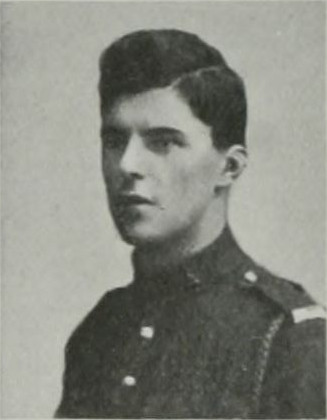
Frederick Francis Barnes.
BARNES, GEORGE WILLIAM, Private, No. 9548, 2nd Battn. East Kent Regt.; s. of Edmund Barnes, of 75, Gibbon Road, Peckham; served with the Expeditionary Force in France; killed in action 25 May, 1915.
BARNES, HERBERT PLUME, Stoker, 1st Class (R.F.R., B. 9615), S.S. 106968, H.M.S. Hawke; lost in action in the North Sea, 15 Oct. 1914; m.
BARNES, JOHN, Private, No. 10159, 1st Battn. Scots Guards; b. Carlisle; enlisted 5 Sept. 1914; served with Expeditionary Force in France and Flanders; reported missing 25 Jan. 1915.
BARNES, JOHN WILLIAM, Private, R.M.L.I. (R.F.R., B. 967), Ch. 7252, H.M.S. Cressy; lost in action in the North Sea, 22 Sept. 1914.
BARNES, PHILIP CHARLES, Officer’s Steward, 2nd Class, L. 2874, H.M.S. Hawke, s. of Thomas Barnes, of 48, Iffley Road, Oxford; lost in action in the North Sea, 15 Oct. 1914.
BARNES, SYDNEY JAMES, Boy, 1st Class, J. 24950, H.M.S. Arethusa; killed in action in the Heligoland Bight, 28 Aug. 1914.
BARNES, THOMAS, Blacksmith, 344039, H.M.S. Aboukir; lost in action in the North Sea, 22 Sept. 1914.
BARNES, WILLIAM, A.B. (R.F.R., B. 3907), 168377, H.M.S. Hawke; lost in action in the North Sea, 15 Oct. 1914; m.
BARNES, WILLIAM JOSEPH, Leading Seaman (R.F.R., B. 4580), 192725, H.M.S. Good Hope; lost in the action off Coronel, on the coast of Chili, 1 Nov. 1914.
BARNETT, JAMES, 2nd Lieut., 1/4th Battn. Royal Scots Fusiliers (T.F.), only child of Lieut.-Col. Hugh Barnett, of Hafton, Kilmarnock, co. Ayr, V.D., commanding 2/4th Royal Scots Fusiliers (T.F.), by his wife, Nellie, dau. of Hugh Barnett; b. Kilmarnock, 7 March, 1895; educ. Kilmarnock Academy, Irvine Royal Academy, and Glasgow University, where he distinguished himself as a prizeman in Logic, Latin, English and Political Economy, and was Secretary of the University Dialectic Society. He was gazetted 2nd Lieut. 4th Battn. of the Royal Scots Fusiliers, 14 Aug. 1913. On the outbreak of war the entire battn. volunteered for foreign service, and proceeded to the Dardanelles on 20 May, 1915. Lieut. Barnett fell while leading the charge in the battle of 12 July, 1915, at the head of his men and just as they reached the Turkish trenches. He was buried along with another officer near the spot where he fell. A cross bearing his name marks the spot. Lieut. Barnett, prior to joining his battn., acted as Lieut. and afterwards as Capt. of the Irvine Royal Academy Cadet Corps. He also was the first Boy Scout to be enrolled in Ayrshire, and was the patrol leader of the 1st Ayrshire Troop. His commanding officer wrote: “He was a brave lad throughout it all, and that was not the only instance. He showed himself on previous occasions full of bravery and determination and a true British officer, and we have lost one we can ill afford. I have had occasion to notice and admire his bravery since we came out here, but especially on the morning when Capt. L.... was killed. I had a very urgent and important message to send through and across a part that meant danger. He immediately volunteered when I asked for volunteers, and did the work splendidly. Throughout the whole time here, and on many trying occasions, he showed the true British blood of a brave and true soldier boy.” The Brig.-Gen. of the Brigade also wrote: “All who knew your son were unanimous in their praise of his devotion to duty and fearlessness. The regt. has lost a most valuable young officer, and one who will not be easily replaced.”
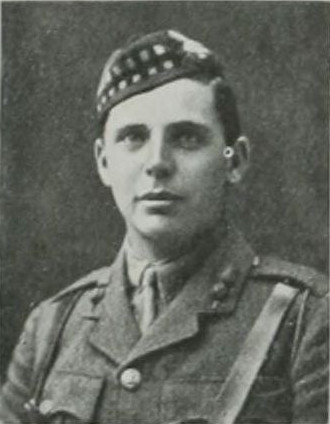
James Barnett.
BARNETT, KNIGHT, L.-Corpl., No. 184, A Coy., 1st Battn. Australian Imperial Force, s. of Arthur Nelson Barnett, of Sydney, N.S.W., Stipendiary Magistrate, by his wife, Ada Hargrave, dau. of Henry Breton, M.D.; b. Wentworth, N.S.W., 30 Dec. 1888; educ. Church of England Grammar School, North Sydney; was a surveyor, but on the outbreak of war volunteered, and joined the Commonwealth Expeditionary Force, leaving with the first contingent. He was wounded at the first landing of the Australians at Gallipoli on Sunday, 25 April, 1915, and was sent into hospital in Egypt. After convalescence he returned to the Dardanelles in time to take part in the charge at Lone Pine on 6 Aug., and was killed on that day while on observation duty in the first line of Turkish trenches; unm.
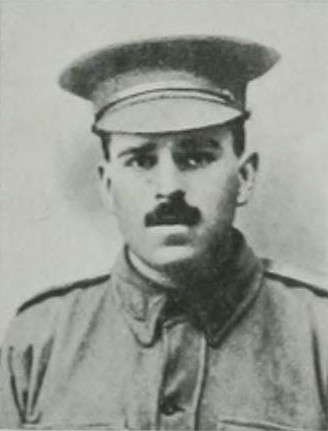
Knight Barnett.
BARNETT, WILLIAM, Private, No. 14739, 4th Battn. Coldstream Guards, s. of Isaac Barnett, of 8, Cradock Street, Loughborough (d. 12 Oct. 1915), by his wife, Sarah (d. 26 March, 1911), dau. of Samuel Bassford, of Burton-on-the-Wolds; b. Wymeswold, co. Leicester, 22 Feb. 1893; educ. there, and Loughborough; enlisted 29 Jan. 1915, and d. 11 Dec. 1915, of wounds received in action on the Western front by the bursting of a shell; unm.
BARNETT, WILLIAM STUART, Corpl., No. 27868, Signal Coy., R.E., only s. of the late William Barnett, of Sutton, Jeweller and Silversmith (died 5 Feb. 1895), by his wife, Louisa (1, Wickham Road, Sutton), only dau. of James Crute, of Honor Oak; b. Sutton, co. Surrey, 4 March, 1892; educ. Laleham House, Northdown, Margate; enlisted in the 9th Battn. (Queen Victoria’s Rifles) The London Regt., 12 Oct. 1910, promoted L.-Corpl. Aug. 1912, transferred to the R.E. May, 1914, and was killed in action at Doue, France, 7 Sept. 1914, while carrying despatches from General Headquarters to the 2nd Army Corps Signals. The Rev. O. S. Watkins, Wesleyan Chaplain to the Forces, says, in his book “With French in France and Flanders” (pp. 53–55): “I found the brave lad lying in a cottage in the village. Peasants told me that in the darkness he had lost his way, and had actually ridden through two villages occupied by the Germans until he was brought to a stand at Doue with a bullet through his heart. As soon as the Germans retired the villagers had lifted him tenderly into the cottage, straightened the fine young limbs into decent restfulness, and covered him with a clean white sheet. I found him, a bunch of newly gathered flowers on his breast, his face calm and determined, but looking strangely young. He was carried to his last long rest by old men belonging to the village—there were no young men, for all were serving with the Army—and as we passed through the streets women came from the houses and laid flowers upon the bier. Up the steep road we toiled, with many a stop to rest the ancient bearers. Ahead boomed the heavy guns in action, and below we could see the infantry advancing to the attack. At last we reached the hill-top, crowned by its little church and peaceful graveyard. We laid him in his shallow grave, the peasants, with heads uncovered, listening with reverence to the grand words of the Burial Service in a language they did not understand. Before the service was over shrapnel was bursting on the hill, and silently the peasants crept to the wall for shelter, their heads still uncovered. As the final ‘Amen’ fell from my lips, and I stood for a moment looking down on all that was left of that fine young manhood, one of the old men, forgetting his fear of the thundering guns, stepped to the graveside, and, as he cast earth upon the prone body with his hands, with wonderful dignity he addressed the sleeper. As far as I could understand his words he said: ‘You are a brave man and our friend. You have given your life for our country. We thank you. May you sleep well in the earth of beautiful France,’ and the others said ‘Amen.’”
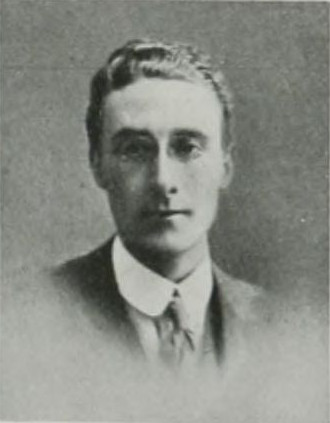
William Stuart Barnett.
BARNHARDT, FREDERICK JOHN, Private, No. A 2464, 1st Battn. Canadian Expeditionary Force, eldest s. of William Henry Barnhardt, of P.O. Station, Stratford, Ontario [of a family originally from Germany], by his wife, Ellen, dau. of James Neal, of Bristol; b. Norwich, Ontario, Canada, 19 Feb. 1893; educ. West Monkton Public School, Ontario, and the Central Business College, Stratford, Ontario; joined the 34th Battn. of the Canadian Expeditionary Force, 18 Jan. 1915, but volunteered for the first special detachment which left Canada on 18 June, arriving in England about 1 July, and was there transferred to the 1st Battn. as grenade thrower. He was killed in action somewhere in Belgium, 28 Nov. 1915, by a rifle grenade. On the night of his death he had specially volunteered to go to the first line trench, and letters from his officers and comrades unite in speaking highly of his work and conduct.
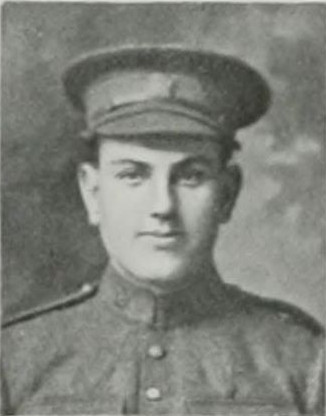
Frederick John Barnhardt.
BARON, THOMAS, Stoker, 1st Class (R.F.R., B. 3201), S.S. 100851, H.M.S. Good Hope; lost in the action off Coronel, on the coast of Chili, 1 Nov. 1914.
BARR, SAMUEL TUDOR, Lieut., 3rd King’s Own Hussars, only s. of Sir James Barr, M.D., LL.D., F.R.C.P., F.R.S.E., Consulting Physician, Liverpool Royal Infirmary, Lieut.-Col. R.A.M.C., by his wife, Isabella Maria, dau. of John Woolley; b. Liverpool, 2 May, 1883; educ. Liverpool College and Sandhurst; gazetted 2nd Lieut. 3rd Hussars, 18 Jan. 1902, and became Lieut. 6 June, 1906; served with his regt. in India and South Africa; came home on leave in Jan. 1909, and while on a holiday in Switzerland met with an accident, falling down a crevasse, from which his father succeeded in extricating him. They afterwards missed their way, were discovered by a search party of Swiss guides the following morning, and brought down in the afternoon. Tudor Barr suffered severely from frost bite and lost all his toes, nevertheless he rejoined his regt. in South Africa towards the latter part of the year, but finding the work too much for him in the then sensitive condition of his feet, he resigned in 1910. He then joined the South Irish Horse, and being a very keen and successful polo player, took a farm and trained polo ponies; this not being a financial success, he retired from the Army in 1912 and went to Rhodesia with the view of settling there. On the outbreak of war he at once came home, travelling 10,000 miles at his own expense. He reached England early in October, at once volunteered, and was gazetted Lieut. 25 Nov. 1914. He was first engaged training cavalry reserves at Shorncliffe, then joined the Reserve of his old regt., the 3rd Hussars, at Rouen, and from there attached to the 20th Hussars then in the trenches. He was killed in action, near Zillebeke, 23 Feb. 1915; unm. Col. Kennedy, of the 3rd Hussars, wrote: “In the old days in India, your son was always in my squadron, and he was a capital officer and one who, I am sure, would have been to the fore in this war, had he been spared. It was bad luck that when he came out we were full up with officers, and this is the reason why he volunteered to go temporarily to the 20th Hussars.... You grieve for an only son, and we for a brave and gallant comrade.” And Col. Edwards, of the 20th Hussars: “Your son had been attached to the 20th Hussars for some two months and did excellent work with us. He was a most energetic and keen officer, and had he been spared would, I am sure, have done very well indeed.” Another officer wrote: “A braver soldier or a truer friend never lived.”
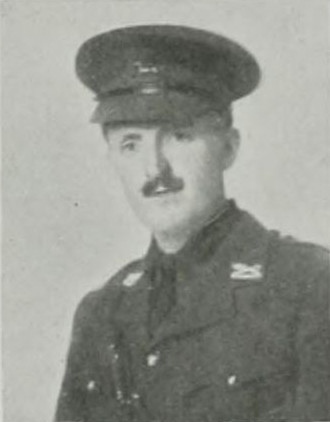
Samuel Tudor Barr.
BARR, THOMAS HENRY, Private, R.M.L.I., Ch. 11508, H.M.S. Cressy; lost in action in the North Sea, 22 Sept. 1914.
BARRASS, ALFRED LEONARD, Private, No. 6014, 3rd Battn. East Yorkshire Regt., eldest s. of Alfred Barrass, of Hull, Private, 3rd East Yorkshire Regt., by his wife, Gertrude, dau. of William Leonard Brown; b. Hull, 15 Sept. 1894; educ. Warnes Street Board School there; enlisted 23 June, 1911; placed on the Reserve, Dec. 1911; called up on the outbreak of war, and transferred to the 1st Battn. at the front. He was killed in action in France, 8 Dec. 1914, being shot by a sniper when fetching water; unm.
BARRATT, CHARLES WYLLY, Stoker, 1st Class (R.F.R., B. 3160), S.S. 100828, H.M.S. Good Hope; lost in the action off Coronel, on the coast of Chili, 1 Nov. 1914.
BARRATT, JAMES, Stoker, 1st Class (R.F.R., Ch. B. 9500), S.S. 106889, H.M.S. Cressy; lost in action in the North Sea, 22 Sept. 1914.
BARRATT, PERCIVAL JOHN, Stoker, 1st Class (R.F.R., B. 7811), S.S. 103275, H.M.S. Aboukir; lost in action in the North Sea, 22 Sept. 1914.
BARRETT, CHARLES JOHN CHARD, Capt., 1st Battn. Royal Scots Fusiliers, yst. s. of the late Major William Barrett, J.P., D.L., by his wife, Charlotte Maria Herring (Moredon, North Curry, Taunton), dau. of William Wheaton Chard, of Mount Tamar, Devon, and nephew of Col. John Rouse Merriott Chard, V.C., R.E., the hero of Rorke’s Drift; b. Moredon, North Curry, co. Somerset, 26 Aug. 1873; educ. at Eton and the Royal Military College, Sandhurst, where he won the riding prize, “The Saddle.” He was gazetted 2nd Lieut. in the Royal Scots Fusiliers, 10 Oct. 1894, becoming Lieut. 12 Nov. 1896, and Capt. 2 May, 1900, and was Adjutant of the 1st Battn. 12 Sept. 1903 to 7 March 1904. He served in the South African war, beginning with the operations in Natal in March, 1900, also in the operations in the Transvaal, the Orange River Colony, and the action of Ruidam. He also raised a company of Mounted Infantry on active service, and gained the Queen’s medal with three clasps. He was Adjutant of the 1st Volunteer Battn. of the Welsh Regt. from Jan. 1905 to 1908. While stationed in Dublin with his regt. in 1909 he won the Irish Grand Military at Punchestown with his horse Scarlet Runner. He had nearly completed four years as an officer of gentlemen cadets at Sandhurst, to which he was appointed, 1 Feb. 1911, and had raised a new company (L Coy.), which he was commanding when he was called to join the 1st Battn. of his regt. at the Front. He was killed in action at Hooge, near Ypres, 14 Nov. 1914, when in temporary command of the battn., and was buried in the grounds of Héronthage Château, Hooge. He was mentioned in Sir John French’s Despatch of 14 Jan. 1915, for gallant and distinguished service in the field. He m. at London, 26 Nov. 1904, Lena, only dau. of the late Albert Vaucamps, of 34, Queen’s Gate. His brother Donald, who was in the same regt., was accidentally drowned, 28 May, 1891, while fishing in the River Dee during the time he was serving on the Queen’s Guard of Honour at Ballater.
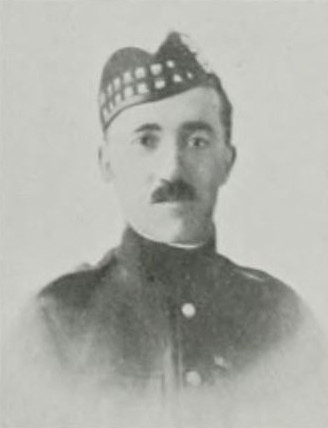
Charles John C. Barrett.
BARRETT, HUGH HENRY GUY, Private, No. 27589, 15th Battn. (48th King’s Canadian Highlanders) 3rd Infantry Brigade, Canadian Expeditionary Force, elder s. of William Henry Barrett, of 127, Kenilworth Court, Putney, by his wife, Florence Annie, dau. of James Redgrove; b. West Dulwich, London, 10 Sept. 1894; educ. Lynchmere School, Eastbourne, and Dover College. Being in Canada when war was declared, he volunteered immediately, enlisting at Grimsby, Ontario, 15 Aug. 1914, and came over with the 1st Canadian Contingent. He went through the heavy fighting at Ypres on 22–23 April, 1915, and was mortally wounded on Saturday, 24 April. It was on this occasion that the Germans first used asphyxiating gases which caused the French to retire and left the Canadian left exposed. The 48th suffered very severely. Barrett was removed to No. 13 General Hospital at Boulogne, where he died 27 April; unm. He was buried in Boulogne Eastern Cemetery.
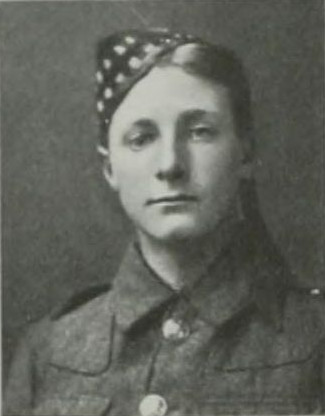
Hugh Henry Guy Barrett.
BARRETT, JOSEPH, Private, R.M.L.I., Ch. 8954, H.M.S. Cressy; lost in action in the North Sea, 22 Sept. 1914.
BARRETT, ROBERT SIMON, Private, R.M.L.I. (Ports.) 7048, H.M.S. Good Hope; lost in the action off Coronel, on the coast of Chili, 1 Nov. 1914.
BARRETT, WILLIAM, Seaman, R.N.R., A.E. 4468, H.M.S. Hogue; lost in action in the North Sea, 22 Sept. 1914.
BARRETT, WILLIAM GEORGE JOHN, Seaman, R.N.R. 2677B, H.M.S. Aboukir; lost in action in the North Sea, 22 Sept. 1914.
BARRINGTON, NOEL SCOT, Lieut. 1st Battn. Royal Irish Rifles, only s. of Fourness Barrington, M.S. (Edin.), F.R.C.S. (Eng.), Lecturer in Obstetrics, University of Sydney, Surgeon Royal Hospital for Women and Royal Prince Alfred Hospitals; b. Edinburgh, 20 May, 1892; educ. Mostyn House and Worcester College, Oxford (1912); gazetted as University candidate to be 2nd Lieut. Royal Irish Rifles, 26 Aug. 1914, and promoted Lieut. 23 Jan. following; killed in action at Neuve Chapelle, 10 March, 1915; unm.
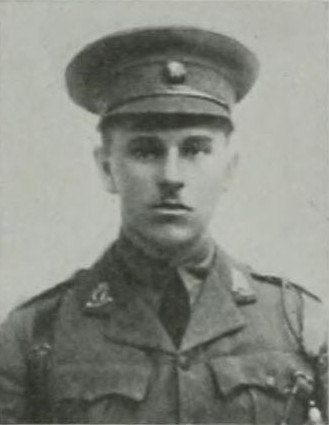
Noel Scot Barrington.
BARRY, JAMES, A.B. (R.F.R., 34 Immed. Class), 189368, H.M.S. Good Hope; lost in the action off Coronel, on the coast of Chili, 1 Nov. 1914.
BARRY, JOHN FRANCIS, Officer’s Steward, 3rd Class, L. 4274. H.M.S. Hawke; lost in action in the North Sea, 15 Oct. 1914.
BARSBY, GEORGE, A.B. (R.F.R., Ch. B. 9097), 210354, H.M.S. Cressy; lost in action in the North Sea, 22 Sept. 1914.
BARSON, PERCY, Stoker, 1st Class, K. 9083, H.M.S. Hogue; lost in action in the North Sea, 22 Sept. 1914.
BARSTOW, JOHN BAILLIE, Major, R.E., eldest s. of Henry Clements Barstow, of Hazelbush, York, late Bengal Civil Service, by his wife, Cecilia Clementina, 3rd dau. of Rev. the Hon. John Baillie, M.A., Canon Residentiary of York [brother of George, 10th Earl of Haddington]; b. Allahabad, India, 31 Oct. 1872; educ. Clifton College and Woolwich; gazetted 2nd Lieut. 24 July, 1891, and promoted Lieut. 24 July, 1894, Capt. 24 July, 1902, and Major 24 July, 1911. Killed in action near Bailly, 31 Aug. 1914; buried in the cemetery there. He m. at Killiney, 31 Oct. 1906, Ethel Constance, dau. of John Richards Orpen, of St. Leonard’s, Killiney, co. Dublin, M.A., Barrister-at-Law, and had three sons and one dau.: John Michael Orpen, b. 15 Dec. 1907; Henry Stewart Peregrine, b. 21 April, 1909; George Baillie, b. 29 Aug. 1912; Cecilia Mary Penelope, b. 11 Feb. 1914.
BARTER, HARRY STANLEY, Boy, 1st Class, J. 26050, H.M.S. Hawke; lost in action in the North Sea, 15 Oct. 1914.
BARTER, WILLIAM CHARLES, Stoker, P.O. (R.F.R., A. 891), 119878, H.M.S. Hogue; lost in action in the North Sea, 22 Sept. 1914.
BARTHROPP, SIDNEY ALFRED NATHANIEL SHAFTO, 2nd Lieut., 3rd Battn. Royal Sussex Regt., only s. of Major Alfred Shafto Barthropp, of Newport House, Essex (now serving on the Depôt Staff of the Norfolk Regt. at Britannia Barracks, Norwich), by his wife, Ellen Ada Wentworth, 2nd dau. of the late Capt. Sidney Wentworth Stanley, of Longstowe Hall, co. Cambridge, J.P., D.L., and nephew of the late Philip George Barthropp, for many years Master of the Essex and Suffolk Foxhounds; b. Kensington Court, W., 25 March, 1892; educ. at Winchester, where he played for “Commoners XVs.” in Nov. 1909, and at Trinity College, Cambridge. After taking his degree in Nov. 1913, he went to the Bishop’s Hostel, Farnham, Surrey, with the intention of studying for Holy Orders, and on the outbreak of war joined the 3rd Battn. Royal Sussex Regt. (Special Reserve) then at Dover. He subsequently joined the 2nd Battn. of the regt. in France, and had only been out there a fortnight when he was killed in action in the trenches in the brickfields, near Cuinchy, on 29 Jan. 1915. In announcing his death to his parents, Col. E. W. B. Green, officer commanding the regt., wrote: “He was killed on 29 Jan. during an attack by the Germans upon a portion of the line which we were holding and in which the company with which your son was serving put up a very gallant defence, and beat off a very determined attack. He died a soldier’s death in the very front of the fight. In him we feel we have lost a comrade who was bound to do well, and who, during the short time he had been with us, had endeared himself to all. He is buried in the graveyard at Cuinchy, near Bethune.” He was confirmed in his rank as 2nd Lieut. the day he was killed. Lieut. Barthropp was a thorough sportsman, and while at Cambridge whipped in to the Trinity Foot Beagles from March, 1911, until he left the University. Mr. Barthropp also whipped in to the Eastern Counties Otter Hounds from Aug. 1911, during the Mastership of Mr. Rose, until the retirement of the latter gentleman in Dec. 1914, when he succeeded Mr. Rose as Master, which position he occupied at the time of his death. His fondness for, and eager participation in, all sorts of outdoor pursuits earned him amongst his fellow students at Farnham the name of “The Squire,” and one of them, writing of the healthy and manly influence he exercised over men of his own age, said: “It is good to have been with him here.” He was unm.
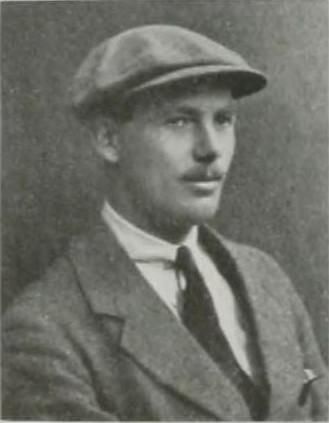
S. A. N. S. Barthropp.
BARTLETT, CHARLES FREDERICK, Seaman, R.N.R., 1858D, H.M.S. Aboukir; lost in action in the North Sea, 22 Sept. 1914.
BARTLETT, GEOFFREY EDWARD ROSE, Midshipman, R.N.R., elder s. of the late Edward Noel Napier Bartlett, J.P., co. Bucks, by his wife, Dorothy (St. Margaret’s Cottage, Penn, Bucks), dau. of Sir Philip Rose, 2nd Bt. of Rayners; b. London, 8 Oct. 1895; educ. St. John’s, Beaumont, Old Windsor; was for three years on H.M.S. Conway, and two years a cadet on the White Star s.s. Mersey, going round the world twice, 1912–13 and 1913–14; joined H.M.S. Bulwark 29 Aug. 1914, and was lost when that ship was blown up at Sheerness, 26 Nov. following. Bartlett was a great-great-grandson of Admiral James Noble, who served as Act.-Lieut. of the Agamemnon under Commodore Nelson in 1795, and was promoted to Commander in 1797 through the influence of Nelson after the battle of St. Vincent, where he was very dangerously wounded.
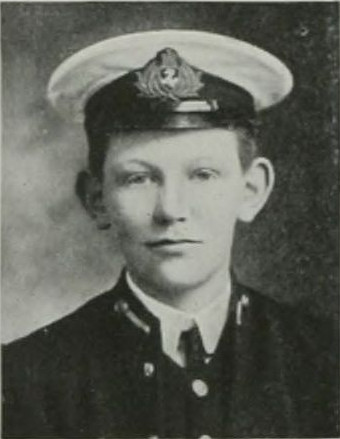
Geoffrey Edward R. Bartlett.
BARTLETT, HENRY ARTHUR, Stoker, 2nd Class, K. 21843, H.M.S. Pathfinder; lost when that ship was sunk by a mine, about 20 miles off the East Coast, 5 Sept. 1914.
BARTLETT, JOE, Armourer’s Crew (Pension, No. 19272), 135647, H.M.S. Hogue; lost in action in the North Sea, 22 Sept. 1914.
BARTON, ERNEST, Corpl., No. 7380, 1st Battn. King’s Shropshire L.I., s. of Thomas Barton, by his wife, Sarah Ann, dau. of James Crossley; b. Ashton-under-Lyne, 3 July, 1884; educ. St. Peter’s School there; enlisted 9 Sept. 1903; on outbreak of war was called up from the Reserve and was killed in action near Lille, 23 Oct. 1914. Major W. A. Payn (his commanding officer), writing to his widow, described how, on the evening of 22 Oct. they were in the trenches near Lille, with the Germans 600 yards away. When day broke on the 23rd they saw the Germans entrenching 100 yards away. Volunteers were called to creep up to the ditch to turn the Germans out with the bayonet, and Barton, with six others, volunteered at once, and proceeded to crawl towards the trench. They had not gone far when the Germans saw them, and opened fire. Barton unluckily was hit in the head and killed. Before the war Corpl. Barton was employed as a grinder at the Park Road Spinning Company’s Mill, Dukinfield, and was one of the bellringers at St. Peter’s Church, where a tablet has been erected to his memory. He m. at Ashton, 13 Jan. 1908, Mary Jane (195, Portland Street, Ashton-under-Lyne), dau. of the late John Edward Wolstencroft, and had issue a dau., Hilda, b. 17 Nov. 1911.
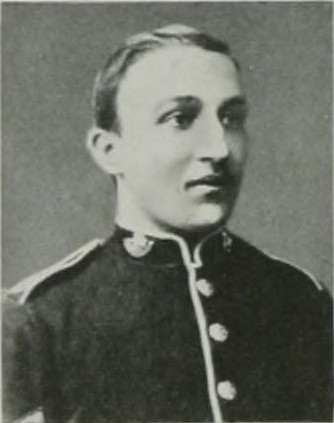
Ernest Barton.
BARTON, GILBERT JOHNSON, A.B. (R.F.R., Ch. B. 5356), S.S. 100, H.M.S. Cressy; lost in action in the North Sea, 22 Sept. 1914.
BARTON, HAROLD WILLIAM FERGUSON, 2nd Lieut., Royal Scots Fusiliers, yr. s. of the late William Thomson Barton, of Morriston, Elgin, by his wife, Clara (Woodstock, Camberley, Surrey), dau. of the late Very Rev. John Ferguson, Dean of Moray, Ross and Caithness; b. Morriston, Elgin, 5 Sept. 1893; educ. Stratheden House, Blackheath; Radley College; Mr. Tinniswood’s, Holmdale, Camberley; and the Royal Military College, Sandhurst; and was gazetted to the Royal Scots Fusiliers, 15 Aug. 1914. He went to France on 8 Sept., served on the Aisne and in Flanders, and was killed in action near La Bassée on or about 18 Oct. 1914. At first reported missing after the fighting that day, the news of his death was conveyed to his mother by a German officer, who wrote on a letter from her, no doubt found on his body, as follows: “Dear Mrs. Barton, Your son fell on the field of honour against our regt. I admired his courage after a very hard struggle against us. Your son will be buried near Castle Warneton, near Lille.—(Signed) Ewald, Lieut. Feldart. Regt. No. 7.”
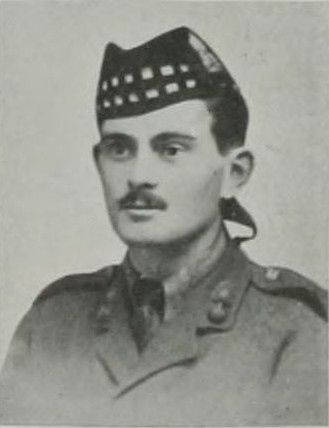
Harold William F. Barton.
BARTON, HENRY, Leading Stoker (R.F.R., B. 10176), 298707, H.M.S. Aboukir; lost in action in the North Sea, 22 Sept. 1914.
BARTON, JAMES THOMAS, Stoker, P.O. (R.F.R., A. 2315), 115754, H.M.S. Good Hope; lost in the action off Coronel, on the coast of Chili, 1 Nov. 1914.
BARTON, JOHN THOMAS, Stoker, 1st Class, K. 5046, H.M.S. Hawke; lost in action in the North Sea, 15 Oct. 1914.
BARTTELOT, NIGEL KENNETH WALTER, Lieut.-Commander, R.N., H.M.S. Liberty, 3rd Destroyer Flotilla, yr. s. of the late Sir Walter George Barttelot, 2nd Bt., 5th Dragoon Guards (killed in action South Africa, 23 July, 1900), by his wife, Georgiana Mary (now wife of Beville Molesworth St. Aubyn), only dau. of George Edmond Balfour, of The Manor, Sidmouth; b. Coates Castle, Fittleworth, Sussex, 9 April, 1883; educ. at “Fonthill,” East Grinstead; “Kivernells,” Lymington, and H.M.S. Britannia, Dartmouth. He joined the Navy, 15 Jan. 1899, becoming a Midshipman 15 May the same year, Sub-Lieut. 15 May, 1902, Lieut. 30 Sept. 1904, and Lieut.-Commander 30 Sept. 1912. He was appointed to the command of the destroyer Liberty, 7 March, 1914, and was killed in action off Heligoland Bight, 28 Aug. 1914. He was buried at Stopham. In the official report of their action, Commodore R. V. Tyrwhitt said: “H.M.S. Liberty.... The late Lieut.-Commander Nigel K. W. Barttelot commanded the Liberty with great skill and gallantry throughout the action. He was a most promising and able officer, and I consider his death a great loss to the Navy.” He m. at St. George’s, Hanover Square, 10 Jan. 1906, Dorothy Maud, dau. of the late Frederick Aldcroft Kay, and had a son: James Nigel Walter, b. 27 June, 1911.
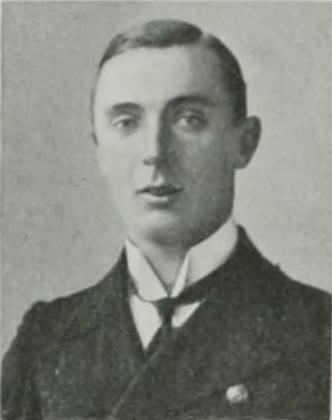
Nigel K. W. Barttelot.
BASHFORD, ALFRED, A.B. (R.F.R., B. 2682), 217071, H.M.S. Good Hope; lost in the action off Coronel, on the coast of Chili, 1 Nov. 1914.
BASKERVILLE, GILBERT THOMAS, Clerk, Royal Navy, yr. s. of the late Henry Spencer Baskerville, Fleet Paymaster, R.N., by his wife, Jane (4, Marlboro’ Villas, Gillingham, Kent), dau. of Thomas Wetherall Sproulle, M.D., and grandson of the late Commander Percival Baskerville, R.N.; b. Gillingham, 6 Oct. 1893; educ. Christ’s Hospital; entered the Navy, July, 1911, and was appointed to H.M.S. Highflyer, flagship in the East Indies. After the manœuvres in 1913, for which he was appointed to H.M.S. Euryalis, he joined the King George V. and was amongst those fêted at Kiel in June, 1914. In July the same year he was appointed to H.M.S. Cressy in order to qualify for his Assistant Paymaster examination, and was lost in the North Sea when that ship was torpedoed, 22 Sept. 1914; unm. He had the Persian Gulf medal.
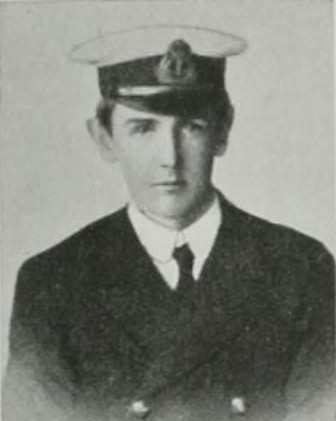
Gilbert Thomas Baskerville.
BASKERVILLE, HEDLEY, A.B. (R.F.R., B. 2418), 204437, H.M.S. Good Hope; lost in the action off Coronel, on the coast of Chili, 1 Nov. 1914.
BASNETT, JOHN, Corpl., No. 2801, D Coy., 8th (Service) Battn. Rifle Brigade, s. of John Basnett, of 14, Clement Street, Taylorson Street, Salford, Manchester, Labourer, by his wife, Emily, dau. of John Gallop; b. Bristol, 1 Sept. 1890; educ. Ordsall Board School, Salford; was employed at the Westinghouse Works, Trafford Park, but after the outbreak of war joined the Rifle Brigade, 31 Aug. 1914, and was killed in action at Hooge, 30 July, 1915; unm. His Capt., A. C. Sheepshanks, wrote that after the action he was found to be missing, and must have been struck down in the charge that day, adding: “He was turning out a most useful and reliable N.C.O.”
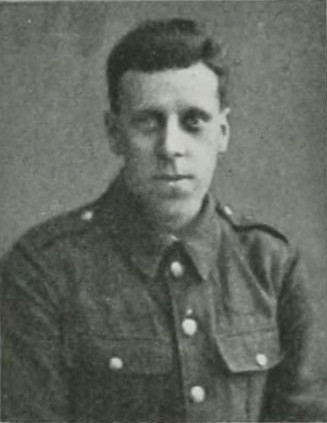
John Basnett.
BASS, HENRY, Private, R.M.L.I. (Ports.), 6800, H.M.S. Hawke; lost in action in the North Sea, 15 Oct. 1914; m.
BASSETT, VICTOR CHARLES, Boy, 1st Class, J. 26732, H.M.S. Hawke, s. of Isaac Bassett, of 12, Furnival Road, Sheffield; lost in action in the North Sea, 15 Oct. 1914.
BASTARD, REGINALD GEORGE, Officers’ Chief Steward, 362308 (Devon.), H.M.S. Good Hope; lost in the action off Coronel, on the coast of Chili, 1 Nov. 1914.
BASTARD, WILLIAM, Lieut., 2nd Battn. Bedfordshire Regt., s. of William Bastard, of Coltscombe, Slapton, near Kingsbridge, South Devon, by his wife, Helen, 2nd dau. of Joshua Edward Adkins; b. Coltscombe, 20 April, 1891; educ. Plymouth (Miss Tubbs’ preparatory school), Blundells’, and Exeter College, Oxford; gazetted 2nd Lieut. 22 Jan. 1913; was in South Africa at the outbreak of war, came home in Sept., was promoted Lieut. the 30th of that month, went to the front on 4 Oct., and was killed in action at Gheluvelt a few days later, 26 Oct. 1914; unm. He was mentioned in F.M. Sir John French’s despatch of 14 Jan. 1915, for gallant and distinguished service in the field. The following remarks were received by his mother from Col. Coates—6 Nov. 1914. “From the day he joined I recognised that your son was one of the best types of officers—very keen on his work, thoroughly sensible, and willing to take responsibility. I always had him in my eye as being well fitted for the Adjutancy later on.”
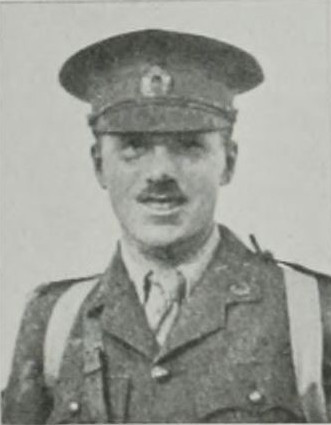
William Bastard.
BATCHELOR, BENJAMIN EDWIN, Stoker, 1st Class, S.S. 111822, H.M.S. Cressy; lost in action in the North Sea, 22 Sept. 1914.
BATCHELOR, GEORGE, A.B. (R.F.R., Ch. B. 5069), 177988, H.M.S. Cressy; lost in action in the North Sea, 22 Sept. 1914.
BATCHELOR, HAROLD JAMES, Flight Sub-Lieut., Royal Naval Air Service, 3rd s. of Capt. (—) Batchelor; was in the merchant service; obtained his commission Nov. 1914; was killed in the Dardanelles 11 May, 1915; unm.
BATE, THOMAS HENRY, P.O., 2nd Class (R.F.R., A. 1815), 134972, H.M.S. Hogue; lost in action in the North Sea, 22 Sept. 1914.
BATEMAN, CLAUDE JOHN, Private, No. 391, 7th Light Horse, Australian Imperial Force, s. of F. Bateman, of Wainfleet, Lincolnshire; killed in action at the Dardanelles, 2 June, 1915.
BATEMAN, FRANK, A.B., R.F.R. (B. 2845, S.S. 184), H.M.S. Good Hope; lost in the action off Coronel, on the coast of Chili, 1 Nov. 1914.
BATEMAN, WILLIAM THOMAS, Private, No. 748, 16th Battn. Australian Imperial Force; d. 15 May, 1915, of wounds received in action at the Dardanelles.
BATES, FRANK, Private, No. 2020, 4th Battn. Royal Sussex Regt. (T.F.); d. at Cuckfield 31 Jan. 1915, of heart failure, while training.
BATES, GEORGE, A.B. (R.F.R., Ch. B. 9776), 210136, H.M.S. Cressy; lost in action in the North Sea, 22 Sept. 1914.
BATES, JAMES CHRISTOPHER, Private, No. 11259, 1st Battn. Coldstream Guards, s. of Joseph Bates, of 113, Woodland Street, Smethwick, co. Stafford; served with Expeditionary Force in France and Flanders; reported missing 22 Dec. 1914, and now assumed to have been killed in action on that date.
BATES, STANES GEOFFREY, Capt., 7th Queen’s Own Hussars, and Adjutant, North Somersetshire Yeomanry, only s. of Gilbert Thompson Bates, tenant of Mells Park, Frome, Somerset, J.P. [2nd s. of Sir Edward Bates, 1st Bt., M.P.], by his wife, Charlotte Thaxter, dau. of George Warren, of Woolton; b. London, 2 June, 1884; educ. Farnborough, Winchester, and Sandhurst. He joined the 7th Queen’s Own Hussars, 22 April, 1903, and was promoted Lieut. 27 April, 1907, and Capt. 11 May, 1912. He spent two and a-half years in South Africa, and returned with his regt. in Dec. 1906, when they were quartered at Norwich and afterwards at Aldershot. In Oct. 1911 the regt. went to Bangalore, where he remained until July, 1913, when he returned to England on leave, shortly afterwards (1 Nov.) receiving the Adjutancy of the North Somersetshire Yeomanry. He went to the front with this regt. and was wounded at Vlamertinghe during the 1st battle of Ypres, 16 Nov. 1914, but was able to return to the front from the Base Hospital in a few days. At the 2nd battle of Ypres he was killed instantaneously in the trenches at Hooge by a shell explosion, 13 May, 1915; unm. He was buried there the same day, amid a few trees behind the line held by the North Somersets. For their conduct on this occasion the North Somersets were specially mentioned in Despatches. He was much beloved by his men in both regts., and his loss deeply regretted by his Colonel and brother officers in the 7th Hussars. A good all-round sportsman and well-known with the Blackmore Vale Hounds.
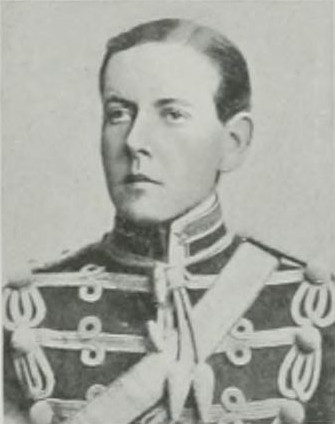
Stanes Geoffrey Bates.
BATES, STANLEY KNIGHT, Lieut., 5th Battn. The King’s Own (Royal Lancaster Regt.), yr. s. of Lieut.-Col. John Henry Bates, late 2nd in command of the same regt., formerly of Fir Bank, Penrith, Manager of the Penrith branch of the Liverpool Bank, by his wife, Sarah Eleanor, dau. of the late William Knight, of Milnthorpe, co. Westmorland; b. Morcambe, co. Lancaster, 19 June, 1897; educ. Lancaster Royal Grammar School in which he was House Prefect, and an Ashton House Exhibitioner. On the outbreak of war he obtained a commission in his father’s regt., 10 Aug. 1914, was promoted Lieut., 28 Dec. 1914, and went along with his father to France with his regt., 11 Feb. 1915. He was killed during the second Battle of Ypres in an advanced trench off the Zonnebeke River in front of Potijze at noon on Sunday, 9 May, 1915, while bringing food for the few men he had left with him. He was buried in front of the White Château, Potijze, near Ypres, where an iron cross was erected to his memory. Lieut. Bates took a great interest in the work of the O.T.C. from its commencement, obtained his colours in the Rugby team, and was also in the School Cricket team. A keen athlete, he was intended for the Army and was proud of the distinction of being the youngest full Lieut. in the Army; unm.
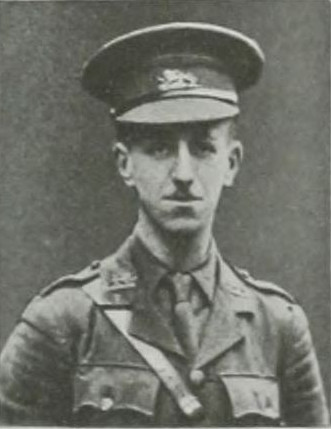
Stanley Knight Bates.
BATES, WILLIAM GEORGE HENRY, Capt., 1st Battn. (Prince of Wales’s) Leinster Regt., 2nd s. of the Rev. William Wheatley Bates, M.A., of Toronto, by his wife, Emily, dau. of Manasseh (and Emma) Leeson, extensive landowner of Canada; b. Thornhill, Toronto, 12 Oct. 1878; educ. privately, and Trinity College, Toronto. He enlisted in the Lancashire Fusiliers in 1901, hoping to see active service in South Africa, but the regt. was ordered to Crete and kept there until the conclusion of the campaign. After serving over two years in the ranks, he was given a commission, 7 Nov. 1903, in the Leinster Regt., and promoted Lieut. 15 Dec. 1906, and Capt. 21 Sept. 1912. He saw much foreign service, serving in Crete, Malta, Gibraltar, South Africa, Mauritius and India. In South Africa he was Instructor in the School of Musketry, and invented an automatic elevating and traversing machine gun gear, which is now (1916) being tested in the Hythe School of Musketry. On the outbreak of war Capt. Bates was in India, and arrived with his regt. in Flanders 21 Dec. 1914, holding the double command of Company and Brigade Machine Gun Officer. He went through all the heavy fighting for Ypres, and served continuously until he was killed in action, shot through the head near Ypres, 26 April, 1915. His commanding officer wrote: “Your husband was one of the bravest and most gallant men I know, and his death leaves a gap which cannot be filled. I can only add that he died like the gallant man he was.” A brother officer also wrote: “The regt. can say of him that he never asked a man to do a thing he would not do himself. He simply did not know fear, and would always tell us that dying was part of the game. It isn’t only we officers who admired him, but every man who knew him would have followed him anywhere—everywhere he he led.” He m. at St. Margaret’s Church, Warnham, co. Essex, 10 Aug. 1912, Mabel (Dent, Warnham, Sussex), yst. dau. of Hastings Castor Draper, and left a son and a dau.: Lionel William Leeson, b. 25 May, 1913, and Pamela Dorcas, b. 2 June, 1914.
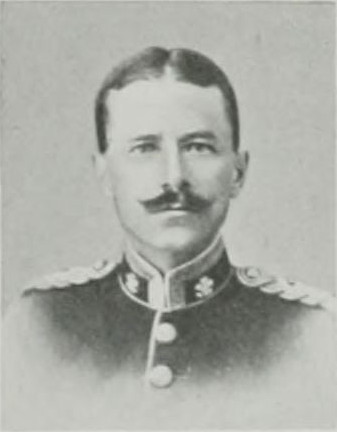
William George H. Bates.
BATEY, EDWARD HENRY, Stoker, 1st Class (R.F.R., B. 7358), S.S. 102501, H.M.S. Aboukir; lost in action in the North Sea, 22 Sept. 1914.
BATEY, ROBERT, Private., No. 1852, 1/7th (Leith Territorial) Battn. Royal Scots, yr. s. of Edward Batey, of 22, Ryehill Gardens, Leith, Linotype Operator, by his wife, Christina Allen, dau. of Thomas Morrison; b. Walworth, S.E., 7 Jan. 1897; educ. at Parson’s Green School, Edinburgh, and Broughton Higher Grade School, Edinburgh; enlisted on the outbreak of war, 31 Aug. 1914, and was killed in the railway accident near Gretna on 22 May, 1915; unm. He was buried in Rosebank Cemetery, Edinburgh.
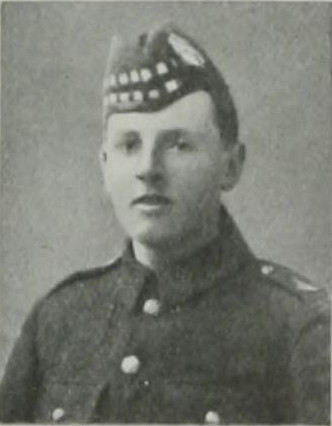
Robert Batey.
BATSON, ALFRED WILLIAM, Lieut. 2nd Battn. Duke of Cornwall’s L.I., only s. of William Lascelles Batson, of Dorking, Surrey, by his wife, Barbara Edwina, dau. of Edward Hugh Blakeney, M.D.; b. Dorking 25 Feb. 1887; educ. Fonthill, East Grinstead, Wellington College, and Sandhurst; was gazetted 2nd Lieut. to the Duke of Cornwall’s L.I., 9 Oct. 1907, and Lieut. 17 March, 1910. He served in Bermuda, South Africa (where he was attached to the Mounted Infantry), and Hong Kong. Soon after the outbreak of war his regt. was ordered home, and on the 19 Dec. 1914, was sent to France. Lieut. Batson was in charge of the machine-gun section, and on 24 Feb. 1915, he was commended by the Major-Gen. Commanding the 27th Division for distinguished service in the field. He was killed in action on the mount at St. Eloi, near Ypres, 14 March, 1915; unm. At Wellington College Lieut. Batson was in the Cricket Eleven and won Prince Christian’s prize for the best bowling average for that year, and also in Rugby football Fifteen won both prizes for the best kick of the season. While in South Africa he was a very keen Polo player.
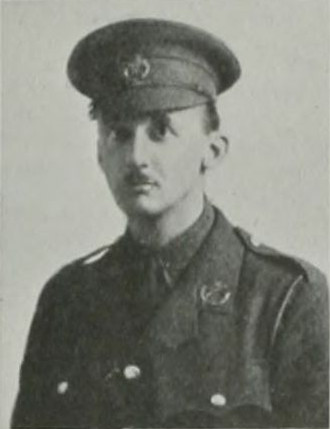
Alfred William Batson.
BATT, JOHN ALBERT, alias FRANK, Private, No. 477, 10th Battn. Australian Imperial Force, s. of John Albert Batt, Lighterman; b. London, 10 July, 1874; enlisted in S. Australia under the name of “Frank” Batt, 14 Aug. 1914; killed at the Dardanelles, 25 April, 1915. He m. at Bermondsey, London, 25 Dec. 1896, Jessie Mary (9, Woolfe Street, Dockhead, Bermondsey), dau. of William Brockwell, and had five children: John Albert (Private, 3596, 22nd Queen’s), b. 10 Oct. 1897; William, b. 28 July, 1900; Henry, b. 9 Feb. 1903; Christopher, b. 26 July, 1905; and Arthur, b. 14 Sept. 1907.
BATT, NORMAN HAROLD, Private, No. 10140, 2nd Battn. Sussex Regt., s. of William Batt, of 33, Alma Villas, St. Leonards; served with the Expeditionary Force; killed in action at Richebourg L’Avoué, 9 May, 1915.
BATTARBEE, HERBERT, Signaller, No. 1578, 4th Battn. East Yorkshire Regt. (T.F.), 3rd s. of Frederick Battarbee, of 60, Tadman Street, Hull, by his wife, Clara, dau. of John Wrigglesworth; b. Hull, 11 Feb. 1895; educ. St. Luke’s Street Church School there; joined the 4th East Yorks in March, 1912, and was killed in action in France, 24 April, 1915; unm.
BATTEN, ARTHUR, Private, No. 8162, 4th Battn. Middlesex Regt.; served with the Expeditionary Force in France, etc.; killed in action 12 Oct. 1914; m.
BATTEN, JOHN HENRY STRODE, Capt., 1st Battn. The King’s Liverpool Regt., elder s. of the late Col. John Mount Batten, of Upcerne, co. Dorset, and Mornington Lodge, West Kensington, C.B., J.P., Lord-Lieutenant co. Dorset (d. 1916), by his 1st wife, Margaret Annie (d. 1893), dau. of the Rev. John Brooks, Rector of Walton-le-Dale, co. Lancaster; b. Aldon, near Yeovil, co. Somerset, 23 Dec. 1875; educ. at Rossall and Trinity Hall, Cambridge, and after taking his B.A. degree, was gazetted to his father’s old corps, the King’s Liverpool Regt., 20 May, 1899, and promoted Lieut. 21 March, 1900, and Capt. 1 Dec. 1909. He served through the South African War, 1899–1902, being employed with the Mounted Infantry, and later was Supply Officer; took part in operations in Natal, 1899, including actions at Reitfontein and Lombard’s Kop; defence of Ladysmith, including action of 6 Jan. 1900; operations in Natal, March to June, 1900; operations in the Transvaal, Dec. 1900, to Oct. 1901; and in those of the Orange Free State, Oct. 1901, to 31 May, 1902, and received the Queen’s medal with two clasps and the King’s medal with two clasps. After the outbreak of the European War in Aug. 1914, he went to France with the first Expeditionary Force, and consistently did good work, his name being mentioned in F.M. Sir John (now Lord) French’s Despatch of 8 Oct. [London Gazette, 19 Oct.] 1914. “On a particular occasion,” 20 Sept., during the Battle of the Aisne, his Brigadier said, “quite regardless of himself, he encouraged and steadied the men on the right of his battn., and of the brigade when very heavily attacked, and when the situation at that point was critical. It was owing to his very gallant conduct on that occasion that the portion of the line held its own.” He was killed in action, 25 Oct. 1914, being shot through the heart while on his way from the trench to confer with his Commanding Officer. Gen. R. H. Davies wrote: “I should like you to know that he was looked upon by all who knew him as one of the very bravest of the brave, and that by his exceedingly gallant and cool conduct at the Battle of the Aisne he did a great deal to stop a rush and prevent what might easily have proved to be a disaster to our part of the line.” And Col. Stevenson: “He saved the whole line on 20 Sept. just by his grit. Nothing would move him from the line he had to take up in that awful wood fight when Kyrke Smith and others were wounded.... He was killed outright crossing a small gap in a hedge by some men hidden in a house about 500 yards away.... We buried him that night beside the Colonel in an orchard close to a farm outside the village where he was shot.” “I owe him a debt I can never repay,” wrote Lieut. P. C. Snatt, “if it had not been for his gallant work on 20 Sept. I should now be a prisoner, I was wounded and unable to get away, and it was Strode who saved the line retiring.” Capt. Batten m. Alberta, yr. dau. of P. Kavanagh, of 56, Queen’s Gardens, Lancaster Gate, M.D.; s.p.
BATTEN, JOSEPH, Private, No. 8323, 1st Battn. East Surrey Regt., s. of Richard Batten, of 120, Nelson Road, Hornsey, served with the Expeditionary Force in France, etc; killed in action 24 May, 1915.
BATTEN, WILLIAM HENRY, L.-Corpl., No. G. 321. 11th (Service) Battn., Middlesex Regt.; b. Hillingdon Heath, co. Middlesex, 22 Jan. 1888; volunteered and enlisted 11 Aug. 1914; served with the Expeditionary Force in France, etc., from May; d. 15 June, 1915, of wounds received in action; m.
BATTENBERG, HIS HIGHNESS PRINCE MAURICE VICTOR DONALD OF, K.C.V.O., Lieut. 1st Battn. King’s Royal Rifle Corps; yst. s. of H.R.H. Prince Henry of Battenberg, K.G., P.C. (who died on active service at sea, 20 Jan. 1896, of fever contracted during the Ashanti War), and of H.R.H. the Princess Beatrice (Princess Henry of Battenberg), yst. dau. of Her late Majesty, Queen Victoria; b. at Balmoral Castle, 3 Oct. 1891, and was educ. at Wellington, where he was a Lance-Corpl. in the O.T.C., and became one of the best marksmen at the College. He went to the National Rifle Association meeting at Bisley with the Wellington Shooting Eight which competed for the Ashburton Shield and other events. After leaving Wellington he went to Sandhurst, from which he was gazetted to a second lieutenancy in the King’s Royal Rifle Corps, 4 March, 1911. He was attached to the 1st Battn., then stationed at Gosport, as part of Brig.-Gen. H. H. Burney’s 9th Infantry Brigade. Prince Maurice came under the tuition of Lieut.-Col. R. S. Oxley and Capt. R. H. Seymour, and in due course was posted for duty to the 1st Battn. He served with this unit at Aldershot on transfer there into Gen. Davies’ 6th Infantry Brigade, and served under Lieut-Col. E. Northey in Salamanca Barracks, at the town end of the camp, and was senior 2nd Lieut. while there. He had been made a Knight Commander of the Royal Victorian Order, 19 June, 1911, and was promoted Lieut., 13 Feb. 1914. On the declaration of war he mobilised with his battn. at the town barracks in Aldershot and proceeded to France on 12 Aug. He proved himself possessed of sound soldierly qualities and was mentioned twice in Sir John (now Lord) French’s Despatches [London Gazette, 19 Oct. 1914, and 17 Feb. 1915] for gallantry in the field. At the crossing of the Aisne he was first over the bridge by which his battn. had to pass under heavy fire, and when Major Armytage led the line forward in a splendid charge he was in the thick of the fray. His name and that of Major Armytage were on every man’s lips in the battn. The following account of the action was given by Corpl. J. Jolley:—“Instead of retiring as we had been doing, on 5 Sept, we advanced five miles to Firoy. There was very fierce fighting, the German infantry advancing to within 800 yards of our artillery, and also in good rifle range. They were practically slaughtered, and hundreds of dead lay everywhere. Early in the morning of the 6th we were up and on the scent, the Guards being the advance guard for a change. Towards the afternoon they got in touch with the German rearguard at a place called by us and the Germans “The Valley of Death.” All the artillery possible was brought on to a ridge overlooking this valley, and played on the enemy, who could not get out of it in a hurry, and consequently got many casualties, the Guards capturing eighty men and five maxims, and losing only twelve men. We kept on going until we reached the heights overlooking Charly-sur-Marne. Here we took up our post about two miles from the enemy without knowing it. On the morning of the 7th the King’s Royal Rifles were the advance guard. We traversed a wood, and found that the enemy had camped on the other side. We could see the Germans making blockages on the bridge, preparing to blow it up, but on seeing us they made off, and as we had no artillery with us they got off free. The order then came that the bridge must be taken at once. When we got there we found that the bridge had three blockages, comprised of carts, furniture, glass, wire, etc. Prince Maurice of Battenberg was first man over, searching the house beyond all by himself. This was a brave act for an officer alone. The blockage was removed, and the battn. got across without a shot being fired. We went through Charly-sur-Marne, and halted about one mile on the other side for four hours, as the French were busy in action, and in the end they repulsed the Germans.” On 27 Oct. 1914, he was ordered to storm a German position and capture some guns which were doing a lot of damage. On the advance they came to a wood which was too thick for them to get through conveniently, and they had to cross an open field. Prince Maurice was leading his men across this open space when a shell fell and burst right by him. He knew that his injuries were mortal, and wished the men good-bye. He was carried to a field dressing-room, where he died. He was buried at Ypres on 30 Oct. about 3.30 p.m. “and not far away the German big guns were firing on our trenches, and our men were doing their best to put them out of action. The guns were making such a noise that you could not hear the Chaplain’s voice. It was a soldier’s funeral amidst the noise of battle,” wrote Capt. W. H. Dyer. The following eulogies were passed upon the Prince:—Sir John French: “The Army has lost a gallant officer, who was a fine example to all around him.” General Munro, Commanding the 2nd Division: “His Highness had throughout the campaign displayed a rare example of courage and fortitude to the men of his battn.,” and Sir Douglas Haig: “The Army loses a most gallant and valuable officer.” Prince Maurice supported the work of the Army Rifle Association and was also keen on polo, being in the Hurlingham handicap list. He did not play much, but he liked the game and was also fond of football, tennis, and motoring. He was also greatly interested in aviation, and made many flights as a passenger at Hendon. Prince Maurice was made a Freemason in the Heroum Filii Lodge, No. 3,404 (the Lodge of the Old Wellingtonians) on 21 June, 1912, and was installed Master of the Twelve Brothers Lodge, No. 785 Southampton, 22 April, 1914. His two brothers are (1916) on active service—Prince Alexander Albert with the Grenadier Guards and Prince Leopold with the 60th Rifles.
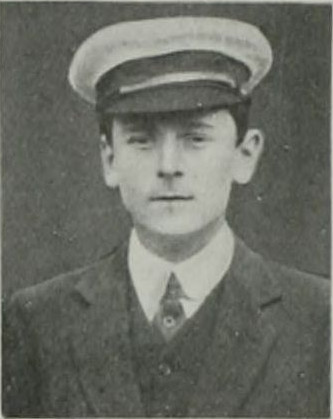
Prince Maurice Victor Donald of Battenberg.
BATTERHAM, JAMES, A.B. (R.F.R., B 6505), 204862, H.M.S. Good Hope; lost in the action off Coronel, on the coast of Chili, 1 Nov. 1914.
BATTERSBY, AUGUSTUS WOLFE, Lieut., 4th Battn. Connaught Rangers, 2nd s. of the late John Radcliff Battersby, of Loughbawn, Collinstown, co. Meath, J.P., Barrister-at-Law, by his wife, Augusta Helen, dau. of John Rynd, of Reynella, co. Westmeath; b. Loughbawn, 10 Feb. 1885; educ. Corring School, Kingstown, and Trinity College, Dublin (B.A.). He entered the Church 20 Feb. 1910, and was curate of Antrim Parish, co. Down, until he was gazetted to the 4th (Extra Reserve) Battn. of the Connaught Rangers, 14 April, 1914. He joined at Aldershot, 30 April, was promoted Lieut. 5 Dec. following, and was attached for service to the 2nd Battn. of the Nigerian Regt. He sailed for the Cameroons on the 17th of the same month; took part in operations at Wum Bidgas where he was slightly wounded, and died of dysentery at Duala, 8 June, 1915, and was buried in the cemetery there; unm.
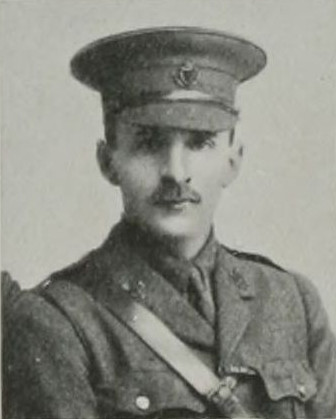
Augustus Wolfe Battersby.
BATTERSBY, CHARLES FREMOULT PRESTON, Capt., 113th Battery Royal Field Artillery, only s. of Major-Gen. Thomas Preston Battersby of Imber House, East Molesey, Principal Ordnance Officer, by his wife, Agnes Janet, dau. of the late John Evens; b. Castle Barracks, Enniskillen, 11 July, 1887; educ. King’s School, Canterbury, and Royal Military Academy, Woolwich; gazetted 2nd Lieut. 23 July, 1907, and became Lieut. 23 July, 1910, and Capt. 30 Oct. 1914. He was present at the retreat from Mons, the Battle of the Marne and in action for a long time on the Aisne. He was killed during the first bombardment of Ypres, 4 Nov. 1914, while a farm, in which he was billetted was being heavily shelled, he returned from his safety pit to release a horse which was tied up in the yard belonging to the farm, and he was killed by one of the shells while so doing. He was buried the following day in the cemetery at Ypres.
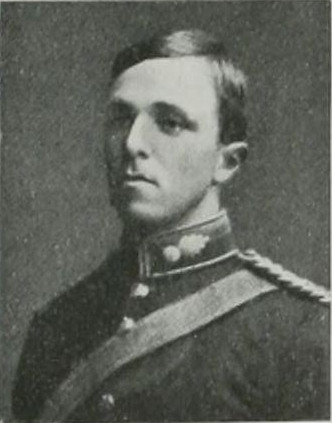
Charles Fremoult Preston Battersby.
BATTY, CHRISTOPHER, Leading Stoker, K. 3346, H.M.S. Good Hope; lost in the action off Coronel, on the coast of Chili, 1 Nov. 1914.
BATTY, WILLIAM HENRY, Corpl., No. 7780, 2nd Battn. Coldstream Guards, s. of William Batty, of Sheffield, late Scots Greys, by his wife, Helen; b. Sheffield, 13 Jan. 1889; educ. National School there; enlisted 1 April, 1908, served three years with the colours and then passed into the reserve, and joined the Sheffield Police. On the declaration of war, 5 Aug. 1914, he was called up, went to France, 8 Aug. 1914, and served through all the various engagements up to the 26th Dec. 1914, when he was severely wounded in action at La Bassee, while assisting a wounded comrade. He died in hospital at Boulogne, 19 Jan. 1915, and was buried in the cemetery there. He m. at Wadsley Bridge Church, 30 Jan. 1913, Lillian Moore (35 Fielding Road, Wadsley Bridge, Sheffield), dau. of John Parkin, of Sheffield, Accountant, s.p.