The Roll of Honour. (continued 8)
Reading edition
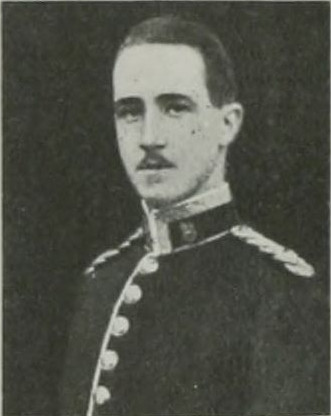
John Edward G. Brown.
BROWN, JOHN SAMUEL, Chief Armourer, 341170, H.M.S. Cressy; lost in action in the North Sea, 22 Sept. 1914.
BROWN, JOHN SAMUEL, A.B., 201534 (Chat.), H.M.S. Good Hope; lost in the action off Coronel, on the coast of Chili, 1 Nov. 1914.
BROWN, NORMAN, Private, No. 12/1569, 15th North Auckland Infantry, New Zealand Expeditionary Force, s. of Arthur Brown, formerly of co. Down, Ireland, by his wife, Mary (44, Springfield Road, Christchurch, New Zealand), dau. of Abernethy Patterson; b. Christchurch, New Zealand, March, 1881; educ. St. Alban’s School, Christchurch; volunteered Dec. 1914, and died of wounds at Gaba Tepe, 11 May, 1915; unm.
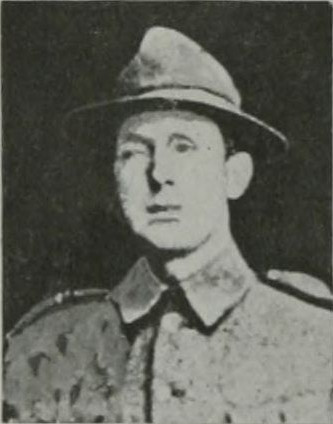
Norman Brown.
BROWN, NORMAN McLEOD, Sergt., No. 1057, 1/14th Battn. (London Scottish) The London Regt. (T.F.), s. of Robert Brown, of Kirkcaldy, co. Fife, Draper, by his wife, Mary Davidson, dau. of David Findlay; b. Kirkcaldy, 16 Nov. 1888; educ. High School there; entered the Civil Service and received an appointment in the India Office, where he was engaged till he volunteered for foreign service on the outbreak of war. He had been a member of the London Scottish for some seven years, went to France with them as a corpl., was promoted Sergt. at the Front, and at the time of his death had been recommended for a commission. He was shot in the trenches at Givenchy by a sniper, 24 Dec. 1914, and was buried in the cemetery there; unm.
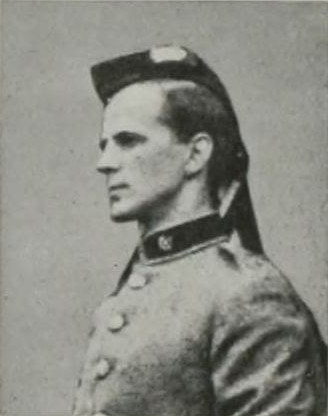
Norman McLeod Brown.
BROWN, OSCAR, Lieut., 7th Lancers, Indian Army, attd. 4th Dragoon Guards, 8th s. of the late William Hooper Masters Brown, of Highfield House, Sherborne, co. Dorset, by his wife, Mary, dau. of William James, of Pembroke, b. Sherborne, 20 May, 1888; educ. Sherborne School, and Sandhurst; gazetted to the 48th Northamptonshire Regt. 19 Sept. 1908, and promoted Lieut. 7 May, 1910. In Sept. 1912 he exchanged into the Indian Army, and joined the 7th (Hariana) Lancers. While riding for the Delhi Cup in 1913 his horse fell and injured him to such an extent that he was invalided home, and on the outbreak of the war, being still in England, he was attached to the 4th Dragoon Guards, going to France with them in Sept. 1914. He was killed in action by a shell at Ypres, 24 April, 1915, and was buried at Elverdinghe; unm.
BROWN, PHILIP GEORGE MORTIMER, Private, No. 9704, 5th Battn. (London Rifle Brigade) The London Regt. (T.F.), only s. of the late Frederick Robert Brown, Solicitor, by his wife, Emily Louisa (Thirlmere, Dukesthorpe Road, Sydenham, S.E.), dau. of George Phillips, of Beckenham, b. Sundridge Park, co. Kent, 15 Oct. 1896; educ. The Hall, Sydenham Preparatory School, and Dulwich College. He joined the London Rifle Brigade early in 1914, and on the outbreak of war was with his regt. at Eastbourne for the midsummer manœuvres. Volunteering for foreign service, he left with his regt. for France early in Nov. 1914, and was killed in action at Ypres, 3 May, 1915; unm. His commanding officer wrote: “He died doing his duty to the last, and was buried the same night. After he was slightly wounded himself, he spent all his time attending to other wounded friends, and it was whilst performing this duty that he was killed.”
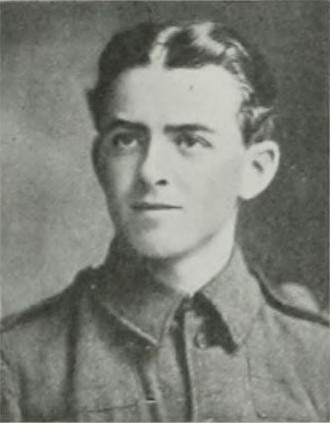
Philip G. M. Brown.
BROWN, WALTER GILBERT, Seaman, R.N.R., 13630, H.M.S. Aboukir; lost in action in the North Sea, 22 Sept. 1914.
BROWN (alias BROWNING), WILLIAM, Stoker, 1st Class (N.C.S.), 298889, H.M.S. Good Hope; lost in action off Coronel, on coast of Chili, 1 Nov. 1914.
WREFORD-BROWN, CLAUDE, D.S.O., Capt., 2nd Battn. 5th Northumberland Fusiliers (T.F.), 5th s. of the late William Wreford-Brown, by his wife, Clara Jane (5, Litfield Place, Clifton, Bristol), dau. of Henry Clark, M.D.; b. Clifton, 17 Feb. 1876: educ. Waynflete, Durdham Downs; Wells House, Malvern Wells; and Charterhouse. After serving in the Royal Warwickshire Militia, he obtained his commission as 2nd Lieut. in the 1st Battn. of the “Fighting Fifth,” 15 May, 1897, being promoted Lieut. 24 Nov. 1899, and Capt. 15 April, 1901. In 1898 he took part in the Soudan Campaign under Lord Kitchener, being present at the Battle of Omdurman and the capture of Khartoum (Queen’s medal and Egyptian medal with clasp). He was employed in the occupation of Crete in 1898, and then, under Lord Methuen, served throughout the South African War, 1899–1902. He took part in the advance on Kimberley, including the actions at Belmont, Enslin, Modder River and Magersfontein. Afterwards he took part in the operations in the Orange Free State (March-May, 1900) and in the Transvaal (July-Nov. 1900), including actions at Venterskroom and Rhenoster River. Twice mentioned in Despatches [London Gazette, 9 July and 10 Sept. 1901], he received the D.S.O. for his services at Lichtenburg and the Queen’s medal with four clasps and the King’s medal with two clasps. He was selected to represent his regt. at the Coronation of King Edward VII. In April, 1908, he was on the North-West Frontier of India, and while serving in the Mohmand Campaign was seriously wounded. On 4 Sept. 1912. he was appointed an instructor at the Royal Military College, Sandhurst, which post he filled until 17 Feb. 1915, when he joined the 2nd Battn. of his regt., then in France. Capt. Wreford-Brown was killed on the Menin Road, south of Ypres, 200 yards east of Wieltje Farm, north of Hooge, on Whit Monday, 24 May, 1915; unm. His regt. had been practically wiped out on the 13th, and when he heard of this he insisted on leaving Boulogne, where he was in hospital, and going back to reform the regt. He arrived at headquarters west of Ypres, Friday, 21 May, and there found 85 worn-out men of his battn., and about 450 of the 5th Fusiliers and Durham L.I., and 15 officers, a new draft which had just arrived, all from the same depôt. These he formed into a battn., and on Sunday, 23 May, was ordered to join the Brigade—only two clear days to form a new regt.! They marched between 15 and 29 miles on a sweltering hot day, losing several men on the way under shell fire. They arrived at Menin Road on Monday (Empire Day) the 24th; and were ordered out into support at 6 a.m. Wreford-Brown was commanding. At about 1 p.m. he received orders to advance to a certain point and attack a position which was allotted to him. The battn. shortly after leaving its support position came under heavy fire, and for a distance of two and a-half miles across country of open fields of buttercups, was continually under high explosive fire and shrapnel, machine and rifle fire. The regt. was formed up for the attack on the ridge which they took, but with very heavy casualties. Ten of the officers were wounded in this, leaving Wreford-Brown and two lieutenants. These and the remaining men dug themselves in, and on getting to the ridge they found the Germans very strong in a farm called Wieltje: it looked as if the Germans were on three sides of them. The regt. on the right could not be found, and two companies of the 5th were taking on three miles of Germans. At 7 p.m. he sent word as to his position and the heavy casualties. The answer came back: “You must try and take it and hold it at all costs.” One of the captains in the firing line who was wounded and lying in a ditch reports that Wreford-Brown told him to go back to hospital, and congratulated him on getting back to England wounded, and said: “Good-bye, old fellow, I shall not see you again. I am ordered to attack the place, it is hopeless, but I shall lead my men to it”; and with that he turned to his men and called for a rifle and bayonet and said: “Now we will make the final charge of the Mohicans,” which he did, leading the men. The Germans had 20 to 25 machine guns concentrated on them: Wreford-Brown fell 10 yards from the German trench mortally wounded. The remaining Lieut. reformed for a second attack and got wounded; the remaining few retired back to the trench behind the hedge, which they had dug after gaining the ridge. Only one officer got back safely, and he was with the machine gun a long way behind, which did not come into action. The regt. on the right had been delayed and came up afterwards. In the opinion of all he was shot several times and was certainly killed. Several attempts were made to recover his body, but it lay between two trenches of the Germans, and it was impossible owing to their withering fire. The Commander-in-Chief came round himself and thanked the survivors for their bravery. His brother officers bore general testimony to his capability and great courage. His brother, Capt. O. E. Wreford-Brown, died 7 July, 1916, of wounds received in action on the Somme.
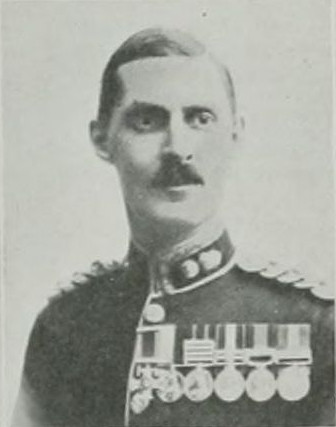
Claude Wreford-Brown.
BROWNE, ARTHUR GEORGE, 2nd Lieut., 2nd Battn. Notts. and Derbyshire Regt. (Sherwood Foresters), s. of the late John Barrett Browne, Bandmaster 2nd Royal Dublin Fusiliers, by his wife, Isabella Helen, dau. of the late Hon. Capt. A. J. White, Indian A.C. Dept.; b. Mount Abu, India, 2 Sept. 1889; educ. Laurence Military Asylum, Sanawar, India; joined the Army 2nd Sept. 1903, at the age of 14, and served in the band of the 1st Battn. of the Gloucestershire Regt. for eight years, when he became an N.C.O., and joined the ranks, later becoming Sergt. He received his commission for “services in the field,” 1 Oct. 1914, and was transferred to the Notts. and Derbyshire Regt. He was killed in action near Armentières, 20 Oct. 1914; unm.
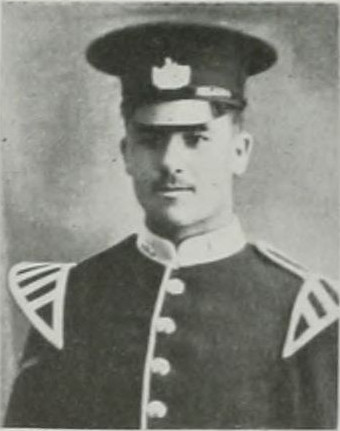
Arthur George Browne.
BROWNE, GORDON STEWART, Capt. and Adjutant, 1st Battn. Wiltshire Regt., 4th s. of Henry John Browne, of Grosvenor House, Faversham and Chatham, Merchant, by his wife, Emily Martha, dau. of George William Gill, of Rochester; b. Chatham, 15 May, 1890; educ. Haileybury and Sandhurst; gazetted to the Wiltshire Regt. 18 Sept. 1909; promoted Lieut. 26 Jan. 1911, and Capt. 25 Oct. 1914. He went to France with the Expeditionary Force, and was wounded at Caudry on the fourth day of the retreat from Mons, but recovered and returned to the Front. On 17 Nov. he was badly wounded during the fighting at Hooge and died at the Allied Forces Base Hospital, Boulogne, 27 Nov. 1914. His body was brought home and buried at St. Margaret’s Cemetery, Rochester. Capt. Browne, who was unm., was mentioned in F.M. Sir John French’s Despatch of 14 Jan. 1915 for “gallant and distinguished service in the field.”
BROWNE, HAROLD VERNON, Capt., Queen’s Own Dorset Yeomanry, yr. s. of Leonard Gilbert Browne, of Hoburne, Christchurch, co. Hants, formerly of Buckland Park, South Australia, by his wife, Helen Mary, dau. of Henry Strong Brice; b. Buckland Park, 25 Aug. 1885; educ. Hazlewood, Limpsfield and Wellington College. He resided from 1909–14 at Cheriton Manor, Templecombe, and after that at Preston House, Iwerne Minster. In 1908 he joined the Dorsetshire Yeomanry and became Lieut. 4 Oct. 1913, and Capt. July, 1915. On the outbreak of the war he volunteered for foreign service, and was sent on special service in July, 1915, from Egypt to Gallipoli, and was military landing officer at Suvla Bay all through the August landing. He was killed by a shell on the beach while doing his work of landing troops, 7 Sept. 1915, and was buried there. His commanding officer at Suvla Bay wrote: “I, like all who came in contact with him, had learnt to be very fond of and admire him. He was a splendid man and a brave soldier, who did not seem to know such a thing as fear or danger, and he met his death, I think and trust, a painless one, when nobly doing his duty, and actually giving an order in connection with it. He was a true and good soldier and died a soldier’s death.” He was a very fine all-round athlete, he played in the school cricket eleven at Wellington, and afterwards for Dorset County, was a first-class golfer and lawn tennis player, hunted regularly with the Blackmore Vale Hounds, and rode in many point-to-point races and steeplechases. Capt. Browne m. at St. Peter’s, Eton Square, 24 June, 1908, Doris (Preston House, Iwerne Minster, Blandford), elder dau. of John Tillard, of Blakeney, co. Norfolk, and had three sons and one dau.: Anthony Harold Scott, b. 21 April, 1909; Peter Francis William, b. 1 Jan. 1912; Nigel Philip, b. 20 Jan. 1913; and Ursula Patricia, b. 24 Nov. 1915.
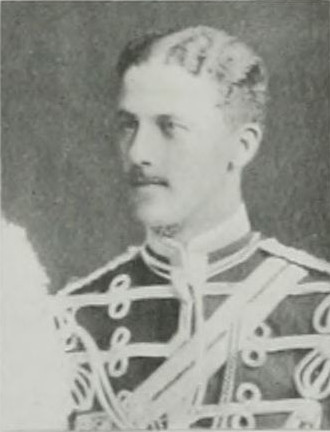
Harold Vernon Browne.
COLLIS-BROWNE, ALFRED ULICK, Lieut., 1st. Battn. King’s Own Yorkshire L.I., yst. s. of William Alfred Collis-Browne, of Monteagle, Godalming, Major (ret.) 5th Battn. Rifle Brigade; b. Byfleet, co. Surrey, 13 June 1889; educ. Killcott, Godalming; represented the R.M.A. at Association Football, 1908; joined the Yorkshire L.I. in South Africa, 1910, and was promoted Lieut. 27 July, 1914. On the outbreak of war he proceeded with his regt. to the Front, was appointed Machine Gun Officer, and was killed in action whilst making a reconnaissance of a trench at Ypres, 13 April, 1915. He was buried at Zonnebeke, near Ypres; unm. The Adjutant of his battn. wrote: “He was one of the pluckiest fellows I ever knew. Only a fortnight ago, in an action we had, the captain in the trenches reported how splendidly he worked his guns, and the good effect it had on his men, by whom he was greatly beloved.” He was mentioned in F M. Sir John French’s Despatch of 31 May [London Gazette, 22 June], 1915.
BROWNING, FRANK HERBERT, Stoker, 1st Class, K. 10905, H.M.S. Cressy; lost in action in the North Sea, 22 Sept. 1914.
BROWNING, JAMES ALEXANDER, Major, 2nd Dragoon Guards (Queen’s Bays), yr. s. of Edward Campbell Browning, of Rushden House, co. Northants, by his wife, Alice Louisa, dau. of C. Pratt Barlow; b. Onslow Square, London, 25 June, 1878; educ. Eton and Sandhurst; obtained his commission, 11 May, 1898, and was promoted Lieut. 16 Aug. 1899; Capt. 14 Sept. 1901, and Major 5 July, 1911. From 1906–09 he acted as Adjutant to the Queen’s Bays and was A.D.C. to the Inspector-Gen. of Cavalry in the early stages of the South African War, and in 1901–02 he took part in the operations in the Orange River Colony, the Transvaal and Cape Colony, for which he received the Queen’s medal with five clasps. On the outbreak of the European War he went to France with the Expeditionary Force, and was killed by a shell at Messines, 31 Oct. 1914, while in command of his regt. He was buried at Wulverghem, and was mentioned in F.M. Sir John French’s Despatches [London Gazette, 22 June, 1915], for gallant and distinguished service in the field. Capt. Browning m. at St. Mary’s Church, Higham Ferrers, co. Northants, 21 March, 1903, Lilian Brenda (Stonycroft, Aldershot), only dau. of Capt. Basil John Fisher, U.S.A., and had two sons: Geoffrey Alexander, b. 21 March, 1907; and Peter Campbell, b. 18 March, 1910.
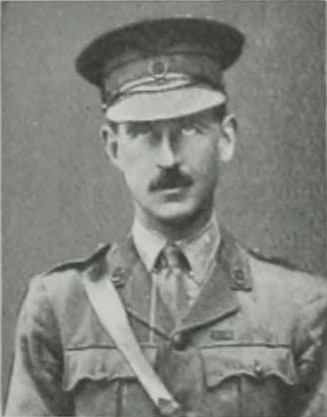
James A. Browning.
BROWNLEE, JAMES ALEXANDER, Petty Officer (N.S.), 185918, H.M.S. Aboukir; lost in action in the North Sea, 22 Sept. 1914.
BROWNLOW, MARK, E.R.A., 2nd Class, 271387, H.M.S. Good Hope; lost in action off Coronel, on the coast of Chili, 1 Nov. 1914.
BROYD, ERNEST JOHN, A.B. (R.F.R., B. 9569), 203287, H.M.S. Aboukir; lost in action in the North Sea, 22 Sept. 1914.
BRUCE, ALFRED, Private, No. 1239, 1/4th Battn. King’s Own Yorkshire L.I. (T.F.), 2nd s. of the late William Bruce, by his wife, Alice Annie (40, Chatsworth Place, Harrogate); b. Aldboro’, Borobridge, co. York, 17 May, 1893; educ. Grove Road Board School, and Technical School, Harrogate; entered the service of the Educational Offices, Wakefield, where he was on the permanent clerical staff, but after the outbreak of war enlisted in Sept. 1914. and was accidentally drowned with six other soldiers at Gainsborough in a pontoon accident, 19 Feb. 1915; unm. He won the West Riding County Minor Scholarship in May, 1904, and passed the Oxford Junior Examination at the age of 14.
BRUCE, GERVASE RONALD, Midshipman, R.N., s. of Percy Robert Bruce, of Downhill, co. Londonderry, and Clifton Hall, Notts, Major, South Notts Hussars, by his wife, Aletheia Georgina, dau. of the Right Hon. Sir Richard Horner Paget, of Cranmore Hall, Somerset, 1st Bart., P.C., and grandson of Lieut.-Col. Sir Hervey Juckes Lloyd Bruce, of Downhill, near Coleraine, and Clifton Hall, Nottingham, 4th Bart., late Coldstream Guards; b. London, 19 Jan. 1899; educ. Osborne and Dartmouth Colleges; mobilised from Dartmouth. Aug. 1914, and was killed in action in the Battle off Coronel, on the coast of Chili, by the sinking of H.M.S. Monmouth, 1 Nov. 1914.
BRUCE, JOHN ELLIOTT LIDDERDALE, R.A., Major, Royal Garrison Artillery, 2nd s. of Col. Elliott Armstrong Bruce, of Stenhouse, Barnstaple, Indian Army [grandson of Sir William Bruce, of Stenhouse, 7th Bart.], by his 1st wife, Mary Rebecca, dau. of the Rev. William Dawson; b. Rangoon, 10 Jan. 1870; educ. Carshalton House, Carshalton, Surrey; St. Paul’s School and Woolwich Academy; gazetted 2nd Lieut. Royal Artillery, 15 Feb. 1889, and promoted Lieut. 15 Feb. 1892, Capt. 19 July, 1899, and Major, 7 Aug. 1909; was D.A.A.G. for Royal Artillery in India, 29 March, 1906, to 31 May, 1907; Staff Capt., India, 1 June, 1907, to 16 March, 1908, and Brigade Major, India, 17 March, 1908, to 28 March, 1910; served (1) in Burma as Orderly Officer, 1891, with the Wuntho Expedition (mentioned in Despatches [London Gazette, 9 Feb. 1892] (medal with clasp); (2) with the Waziristan Expedition, 1894–5 (clasp); (3) in the operations in the North-West Frontier, India, 1897–8, with the Tochi Field Force (medal with clasp); (4) in South African War, 1900; took part in operations in the Transvaal, Orange Free State, and Cape Colony, March to Sept. (Queen’s medal with three clasps); (5) on North-West Frontier, India, 1908, as D.A.Q.M.G. (12–31 May) to Field Force during operations in the Mohmand country; and (6) with the Mediterranean Expeditionary Force at the Dardanelles, 1915; took part in the landing, 25 April, and was killed in action there 29 May following, being mentioned in Gen. Sir Ian Hamilton’s Despatches [London Gazette, 5 Aug. 1915]. Major Bruce m. at Tilford, Surrey, 12 Sept. 1900, Charlotte Mabel, yst. dau. of the late T. J. G. Johnstone, of the Ceylon Civil Service, and had two sons: John Charles Douglas, b. 2 Aug. 1902; and Henry Malcolm, b. 28 Feb. 1904.
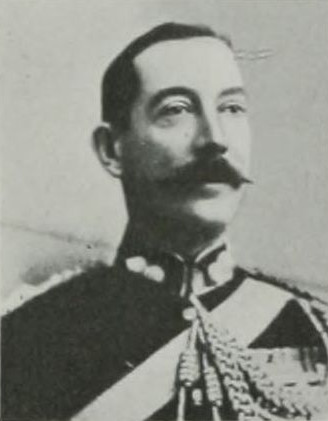
John Elliott L. Bruce.
BRUCE, JONATHAN MAXWELL, Major, 107th Pioneers, Indian Army, eldest s. of Richard Isaac Bruce, of Quetta, Teddington, C.I.E. late Commissioner in the Punjab (who received the thanks of the Indian Government on several occasions for distinguished frontier service), by his wife, Lilla, dau. of the Rev. John Beavor Webb, Rector of Dunderrow, co. Cork, and gdson. of Jonathan Bruce, of Miltown Castle, co. Cork; b. Dharmsala, India, 22 June, 1873; educ. Haileybury and Sandhurst; obtained his commission, 16 Jan. 1895, and was promoted Lieut. 16 April, 1897, Capt. 16 Jan. 1904, Double Company Officer 8 March, 1908, and Major 16 Jan. 1913. He saw active service on the North-West Frontier of India in 1897–8, taking part in the defence and relief of Malakand, the action at Landaki and the operations in the Mahmund Country, receiving the medal with two clasps. Major Bruce was killed in action at Festubert, 24 Nov. 1914, and was buried at Bethune. He m. at St. Alban’s Church, Teddington, 14 Sept. 1905, Mabel Waldron (Kenilworth, Seymour Road, Hampton Wick), 3rd dau. of Henry Trengronse, of Hampton Wick, J.P., and had two daus.—Mary Aileen, b. 5 May, 1908, Barbara Maxwell, b. 11 March, 1910.
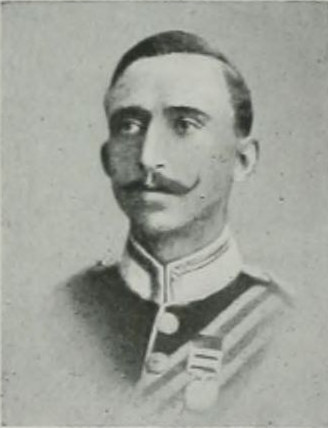
Jonathan Maxwell Bruce.
BRUCE, WILLIAM ARTHUR McCRAE, Lieut., 59th Scinde Rifles, Frontier Force, Indian Army, only s. of Col. Andrew McCrae Bruce, of Roch d’Or, Sanares, Jersey, C.B., Unemployed Supry. List, Indian Army; by his wife, Margaret Hay; b. 15 June, 1890; educ. Mr. Bickerstith’s Preparatory School, Netherwood, Hastings; Mr. Reynold’s Preparatory School, Cliff House, Southbourne, Hants; Victoria College, Jersey, and the Royal Military College, Sandhurst. Was a King’s Indian Cadet, and after passing out of Sandhurst in the autumn of 1909 was gazetted 2nd Lieut. on the unattached list for the Indian Army 29 Jan. 1910, and sailed for India in H.M. Troopship Plassy, on 11 Feb. from Southampton. On arrival in India he was ordered in join 5th Northumberland Fusiliers, to which regt. he was attached; after serving with them for one year he was posted to the 59th Scinde Rifles F.F. at Kohat, Punjab, and joined on 8 March, 1911. In 1911–12 he took part with his regt. in one or two small affairs against Wuzeerie Raiders. In 1912, he passed in musketry and signalling. In the autumn of 1913, he marched with his regt. from Kohat to Qullundur, arriving there on 17 Dec. 1913. In June, 1914, Col. Fenner, commanding the regt. wrote of him: “A big, fine and promising young officer of excellent ability. As Transport and Signalling Officer, has performed his duties with marked success. Personally popular, good at games and a fine rider. He is good tempered, has tact, judgment, self-reliance, reliability and common sense. His influence with officers and men is good, he is active and temperate.” In 1914, he was granted eight months’ leave to England where he arrived on 10 April. On the outbreak of war he was ordered to rejoin his regt. and sailed for India in H.M. Trooper Dongola on 10 Aug. On arrival in Egypt he was ordered to disembark and proceed to Cairo and await the arrival of his regt. With his regt, he arrived in Marseilles about 17 Sept. and in Oct. joined the fighting line. He took part in all the work done by his regt. until he was killed on 19 Dec. 1914. Major I. L. Leede, commanding the 59th Scinde Rifles F.F. wrote on 20 Dec. 1914: “I am deeply grieved to have to write and tell you that your son Lieut. Bruce was killed yesterday, during a night attack. He met his death in a German trench which we had taken, he was shot through the chest and killed instantly.... Until Col Fenner was killed, your son was my company officer, and I was very fond of him indeed, and I am more grieved than I can say to have to tell you of his death. I consider him to have been a young officer of most exceptional promise, and I have seen him under fire off and on for two months. Will you please accept the very sincere sympathy and condolence of the whole regt.” Capt. Anderson of 59th Scinde Rifles F.F. writing on 20 Dec. 1914, to Gen. J. R. B. Atkinson, said. “A N.C.O. of mine got back last night. He had been with Bruce, who was the first man into his part of the trench, and died most gallantly holding it. He (the N.C.O.) says he told his men to retire, but they said the Sahib had ordered them not to, so they died there.” Lieut. C. J. S. Le Cornu, 56th Punjab Rifles F.F. with the 33rd Div. Sig. Coy., writing on 27 Dec. 1914, said: “I had a long talk with Anderson, the Adjutant. He said to me: ‘If you are writing to Bruce’s people do tell them how very fond we all of us in the regt. were of him, and that he died doing an extremely plucky thing....’ He was leading a bombing party, ... and the men who were with and near him that night cannot speak too highly of him.... Every single officer and man in the 59th I saw to-day had a word of sympathy for you, and they one and all said how very pluckily your son had died.” Capt. Scales, attached to the 59th Scinde Rifles, who was very severely wounded in the same attack, wrote on 9 Jan. 1915: “Your son was with me just a minute or two before we left our trenches to attack the German trenches, he was in splendid spirits and ready for anything.... His loss will be felt by everyone in the regt. as he was the best of good fellows, and absolutely fearless.”
BRUMPTON, ERNEST WILLIAM, Gunner, R.M.A., 5923, (R.F.R., B. 547), H.M.S. Aboukir; lost in action in the North Sea, 22 Sept. 1914.
BRUNS, THOMAS JOHN, Stoker, 1st Class, K. 13363, H.M.S. Hogue; lost in action in the North Sea, 22 Sept. 1914.
BRYANT, CHARLES WILLIAM, Ordinary Seaman, J. 10225, H.M.S. Hogue; lost in action in the North Sea, 22 Sept. 1914.
BRYANT, HENRY EDWARD, Stoker, 1st Class (R.F.R., B. 4220), S.S. 102908 H.M.S. Good Hope; lost in action off Coronel, on the coast of Chili, 1 Nov. 1914.
BRYANT, JOHN WILLIAM, A.B. (R.F.R., Ch. B. 8959), 207950, H.M.S. Cressy; lost in action in the North Sea, 22 Sept. 1914.
BRYANT, RICHARD, Chief Armourer, 168951, H.M.S. Good Hope; lost in action off Coronel, on the coast of Chili, 1 Nov. 1914.
BRYANT, THOMAS HENRY, Armourer’s Crew, M. 7291, H.M.S. Hogue; lost in action in the North Sea, 22 Sept. 1914.
BINGHAM-BRYDEN, EDWARD CARRUTHERS, Private, No. 1137, D Coy., 4th Battn. Australian Imperial Force, only s. of the late Edward Carruthers Bryden, of Birklees, Goulburn, New South Wales, Dental Surgeon, by his wife, Anna Maria (Birklees, Goulburn, New South Wales), dau. of the late Henry Bingham, of Annagh House, co. Mayo [2nd s. of Robert Augustus Bingham, of Bingham Castle, co. Mayo]; b. Birklees, Goulburn, 30 July, 1894; educ. Goulburn and afterwards at an Agricultural College, and when war broke out was on a station learning farming previous to taking up land for himself; volunteered for Imperial service at the end of Aug. 1914; left for Egypt with the main force on the Euripides, 19 Oct. 1914; took part in the landing at the Dardanelles, 25 April, 1915, and was killed in action there the following day; unm. His company officer wrote: “He was in my company and under me since we left Sydney. I wanted you to know he died as a true soldier. His body was buried on the battlefield.”
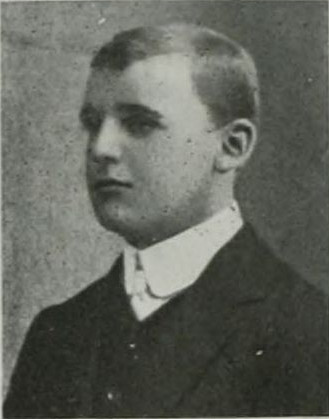
E. C. Bingham-Bryden.
BUCHANAN, DUNCAN ALLAN, Private, No. 1837, 1/8th Argyll and Sutherland Highlanders (T.F.), eldest s. of Thomas Watters Buchanan, of Oak Bank, Oban, Sheep Farmer, by his wife, Jane Cooper, dau. of the late William Allan, of Morningside, Edinburgh; b. Colisnacone Farm, Glencoe, co. Argyle, 19 Dec. 1894; educ. Oban High School; prior to the outbreak of the war was in the employment of Messrs. Hosack & Sutherland, Lawyers at Oban, but volunteered his services immediately and enlisted in the Cycle Corps of the 8th Argyll and Sutherland Highlanders, going with his regt. to Flanders in May. On 11 June, 1915, the Argyll and Sutherland Highlanders were in the trenches near Festubert, and as the men were short of rations, parties of ten from each platoon were organised to go to the rear for the purpose of obtaining food. No. 16 platoon, of which Buchanan was a member, went first. The firing trench was only between 50 and 100 yards from the enemy, and the men had to run about 100 yards across the open to get into the communication trench. When they were about half way across the Germans opened fire. Buchanan was badly wounded by a bullet in the thigh. He was brought home and died in Netley Hospital 6 July, following, from haemorrhage caused by the rupture of an artery. In all the letters from officers and comrades, also the nurses and orderlies, reference was made to his brightness and to his cheerful obliging disposition under all circumstances. He was unm.
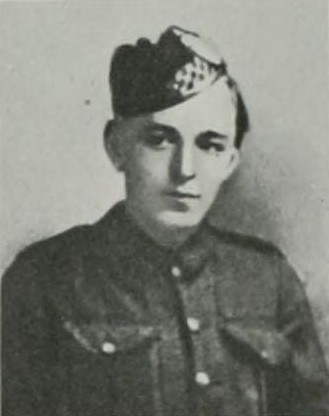
Duncan Allan Buchanan.
BUCHANAN, JAMES HERBERT, Lieut., 4th (Extra Reserve) Battn. Princess Victoria’s Royal Irish Fusiliers, attached 1st Battn. Leinster Regt., only s. of George Buchanan, of Prospect House, Ballyward, Banbridge, co. Down, retired teacher and farmer, by his wife, Elizabeth, dau. of Robert Ochiltree; b. Ballyward, 12 Aug. 1892; educ. Excelsior Academy, Banbridge, and Queen’s University, Belfast, where he studied with a view to entering the ministry of the Presbyterian Church. While at Queen’s University he was for three years a member of the O.T.C. and rose to the rank of Sergt. On 24 June, 1914, he was gazetted 2nd Lieut., being posted to the 4th Battn. Royal Irish Fusiliers. After joining he spent some time training at Carrickfergus, was promoted Lieut. 2 Nov. 1914, and on 16 Feb. left for France with a draft of 200 men. They arrived on the 18th and spent five days at the base. He was then attached to the Leinster Regt. and served with them in the trenches until 15 March, when he received his fatal wound. Writing of his death his Captain said: “On the evening of 14 March he led his men against a German trench, and with great valour took it and held it till morning when it was found to be untenable. At daylight the order was given to retreat, and while assembling his men he was shot twice through the body by snipers.” He was carried to the Field Hospital where he died next morning (16 March, 1915) at 11 o’clock and was buried the same evening in the officers’ cemetery at Dickebush. A commanding officer wrote: “To say that Lieut. Buchanan was loved by his men is not enough, they idolised him.”
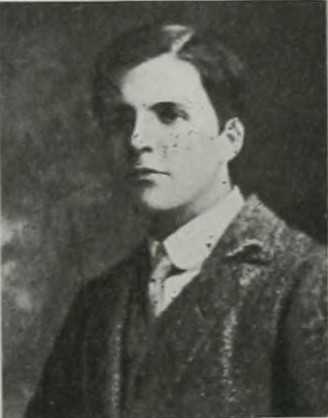
James Herbert Buchanan.
BUCHANAN, WILLIAM, Petty Officer, 1st Class, 166810, H.M.S. Hawke; lost in action in the North Sea, 15 Oct. 1914.
GRAY-BUCHANAN, CECIL GORDON, Trooper, 2nd Light Horse, Australian Imp. Force, yst. s. of Lieut.-Col. (Hon. Col.) James Ross Gray-Buchanan, of Eastfleld, Cambuslang, and Scotstoun, co. Lanark, late Commanding 3rd and 4th Battns. The Cameronians, and previously for many years with the 26th Cameronians; by his wife, Kate, dau. of James Farie, of Farme, co. Lanark, and grandson of Thomas Gray-Buchanan, of Ardoch and Scotstoun; b. Eastfleld, Rutherglen, 9 Sept. 1886; educ. Cargilfield School and Fettes College, Edinburgh; joined the Australian Light Horse on the outbreak of war, and was killed in action at the Dardanelles, 14 May, 1915. The Col. commanding the regt. wrote that he had had the opportunity of observing him on a good many occasions, both on shipboard and in Egypt, and his service was ever a credit to himself and his family and that he was seen to fall gallantly doing his duty to the last.
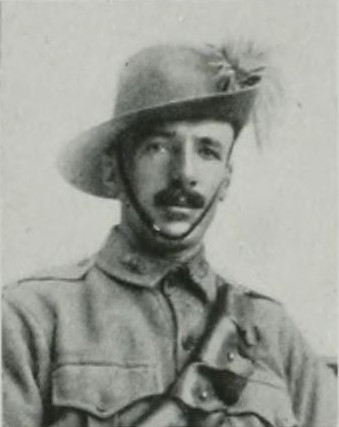
Cecil Gordon Gray-Buchanan.
GRAY-BUCHANAN, CLAUDE, Capt., 35th Sikhs, Indian Army, eldest s. of Lieut.-Col. Michael Rowand Gray-Buchanan, of Ettrick Dale, Isle of Bute, by his wife, Frederica, 7th dau. of Henry Stuart, of Montford, Isle of Bute [and granddau. of Rear-Admiral Lord George Stuart, C.B., 7th s. of John, 4th Earl, and 1st Marquis of Bute], and grandson of Thomas Gray-Buchanan, of Ardoch and Scotstoun: b. Timaru, New Zealand, 17 Feb. 1878; educ. Harrow and Sandhurst, out of which he passed first in 1898; when he was attached to the 1st Battn. Hampshire Regt. as a probationer for the Indian Army. He served with that regt. at Lundi Kotal (Khyber Pass) and on the North West Frontier of India from October, 1898 to October, 1899, when he was appointed to the 35th Sikhs, and promoted Lieut. 30 Oct. 1900. He served through the Waziri Campaign in 1901, for which he received the medal and clasp. He received his company, 20 July, 1907, and passed out of the Staff College, Quetta, in Dec. 1913. Early in Aug. he was appointed to the Headquarters Staff of the Royal Flying Corps, Expeditionary Force and on 2 Nov. 1914, was attached to the 8th Gurkhas. He was at first reported missing, but afterwards officially reported as having been killed in action near Festubert, 4 Nov. 1914. He m. at St. Augustine’s Church, Dumbarton, 2 July, 1914, Jane Cecilia Hope, only dau. of Major Robert Elmsall Findlay, of Boturich Castle, co. Dumbarton, s.p.
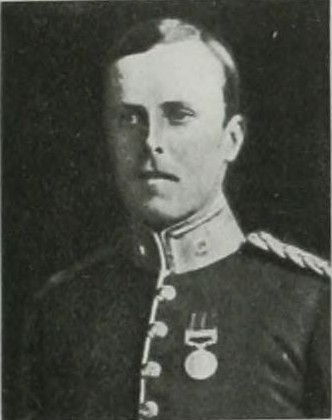
Claude Gray-Buchanan.
GRAY-BUCHANAN, WALTER BRUCE, Capt. and Adjutant, 2nd Battn. The Cameronians (Scottish Rifles), fourth s. of Lieut.-Col (Hon. Col.) James Ross Gray-Buchanan, of Eastfleld, Cambuslang, and Scotstoun. co. Lanark, late commanding 3rd and 4th battns. The Cameronians, and previously for many years with the 26th Cameronians; by his wife, Kate, dau. of James Farie, of Farme, co. Lanark, and grandson of Thomas Gray-Buchanan, of Ardoch and Scotstoun; b. Eastfield, Rutherglen, 20 Aug. 1885; educ. Cargilfield School and Fettes College, Edinburgh; gazetted 2nd Lieut. 3rd Battn. Cameronians, 16 Feb. 1905, transferred to 2nd Battn. 16 Feb. 1907, promoted Lieut. 13 Oct. 1909, and Capt. 3rd Nov. 1914, and appointed Adjutant 8 Feb. 1915. He was killed in action at Neuve Chapelle 10 March, 1915, and was buried there; unm. A comrade wrote: “One of those whose memories will never be forgotten and whose deeds will add to the glories of the old regiment.”
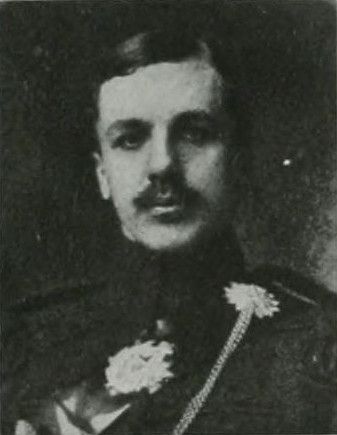
Walter Bruce Gray-Buchanan.
BUCK, FREDERICK, Petty Officer, 210184, H.M.S. Pathfinder; lost when that ship was sunk by a mine, about 20 miles off the East Coast, 5 Sept. 1914.
BUCK, THOMAS CYRIL, D.C.M., Sergt., No. 7584, 1st Battn. Coldstream Guards; s. of John Buck, of Frettenham, co. Norfolk, Agricultural Labourer, by his wife, Maria Buck, dau. of the late William Cooke, of Buxton; b. Frettenham, 3 Nov. 1891; educ. Elementary School there; enlisted at Norwich, 27 Dec. 1907; was promoted Sergt. in Sept. 1912; served with the Expeditionary Force in France, greatly distinguishing himself at Givenchy and again a week later near Gheluvelt, and was killed in action at Richebourg on the morning of 9 May, 1915, being hit by a shrapnel bullet. He was mentioned in F.M. Sir John (now Lord) French’s Despatch of 20 Nov. 1914 [London Gazette, 17 Feb. 1915], and was awarded the Distinguished Conduct Medal “For conspicuous gallantry and ability at Givenchy, 21 to 23 Dec. 1914, in going forward under heavy fire to select positions for machine guns, and subsequently for rescuing a wounded man who was lying out under fire. He also behaved gallantly on 29 Oct., near Gheluvelt, when in charge of machine guns.” Lieut. T. A. Tapp wrote: “As officer in charge of the machine gun section I feel I must write to you and tell you how dreadfully cut up we all are at losing Sergt. Buck, who had made a name for himself, not only for his machine gun section, which was the best in the Army, but also for his own great personal bravery and devotion to duty. I feel I shall never have any chance of getting another Sergt. even half so good as Sergt. Buck was,” and Col. J. A G. R. Drummond Hay, Commanding Coldstream Guards, writing at the wish of Col. Ponsonby said: “I will quote Colonel Ponsonby’s own words as they evidently convey the feeling in the battn. as to the conspicuously gallant manner in which Sergt. Buck has conducted himself throughout the war. ‘Sergt. T. Buck, who got the D.C.M. a little time ago and was my machine gun Sergt. was killed (this was in a big fight that took place on Sunday, 9 May). He will be a great loss. He has been right through the war, and was one of the bravest and coolest men under fire I have ever seen. I had already mentioned him twice before for that reason and was so glad when he was given D.C.M., which he had so well earned.’”
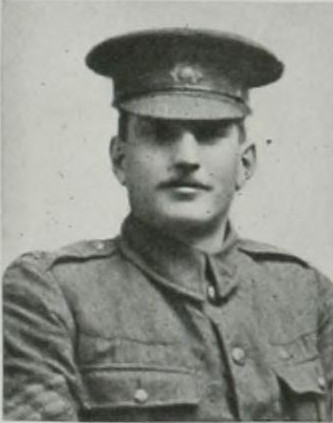
Thomas Cyril Buck.
BUCKETT, HENRY, Stoker, 1st Class, 309963, H.M.S. Aboukir; lost in action in the North Sea, 22 Sept. 1914.
BUCKINGHAM, ALBERT, Petty Officer (O.S.), 186259, H.M.S. Cressy; lost in action in the North Sea, 22 Sept. 1914.
BUCKINGHAM, ALFRED THOMAS, Private, R.M.L.I., Ch. 13830, H.M.S. Aboukir; lost in action in the North Sea, 22 Sept. 1914.
BUCKINGHAM, AUBREY WEBSTER, Major, 3rd Battn. Gordon Highlanders, 3rd s. of the late Joseph Hicks Buckingham, of Lancaster Gate, W., and Truro, by his wife, Lucy Webster, dau. of Benjamin Hallewell, of Leeds; b. London. 11 Oct. 1870; educ. Elstree, and Harrow; gazetted Lieut. in the London Scottish volunteers in 1892, and saw service in the South African War, 1899–1902. He took part in the operations in Natal in 1899 in command on volunteer details, and was afterwards appointed garrison adjutant at Green Point Camp, and for his services received the Queen’s medal with three clasps and the King’s medal with two clasps. He was given the rank of honorary Capt. in the Army, 31 May, 1901, and that of Major 11 Jan. 1902, and was attached to the 3rd Battn. (Reserve of Officers) of the Gordon Highlanders. He settled at Harrietsham in 1902, purchasing a large portion of the Stede Hill Estate and becoming lord of the manor. On the outbreak of war he was transferred to the 1st Battn. and went to the front on 6 Sept. 1914. He was killed in action near Hooge, 17 Nov. 1914. Major Buckingham m. at Harrietsham, 2 June, 1908, Mabel Felizardae (Harrietsham Manor, Kent), dau. of the late Col. Walter Reginald Rudge, of Stede Court, Harrietsham, R.A.; s.p.
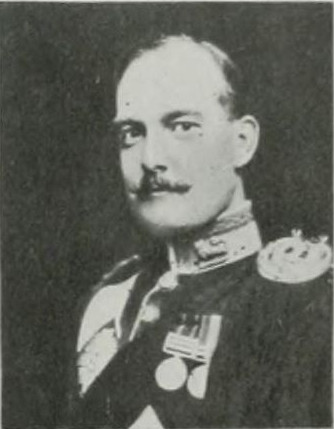
Aubrey W. Buckingham.
BUCKINGHAM, JAMES, Petty Officer (R.F.R., B. 10250), 181522, H.M.S Aboukir; lost in action in the North Sea, 22 Sept. 1914.
BUCKINGHAM, WILLIAM EDWARD, Stoker, Petty Officer, 280012, H.M.S. Good Hope; lost in action off Coronel, on the coast of Chili, 1 Nov. 1914.
BUCKLE, HENRY WHITE, Leading Seaman (R.F.R., B. 2775), 210616, H.M.S. Good Hope; lost in action off Coronel, on the coast of Chili, 1 Nov. 1914.
BUCKLEY, MOSES MILLER SHAW, Boy 1st Class, J. 24636 (Devon.), H.M.S. Hawke; lost in action in the North Sea, 15 Oct. 1914.
BUCKLEY, CLARENCE JAMES, Private, No. 69090, A Coy., 26th Battn., 5th Brigade, Canadian Expeditionary Force, s. of James Buckley, of 31, Suffolk Street, St. John West, New Brunswick; b. (—); educ. St. Patrick’s School, St. John West; was employed in the Canadian Pacific Railway Locomotive Works; volunteered on the outbreak of war, and enlisted in Oct. 1914, and died shortly after sunset on Wednesday, 13 Oct. 1915, from wounds received in action in France at 4 p.m.; unm. He was buried in the cemetery of the 26th Battn. His Lieut. wrote: “He was killed in action Wednesday last doing his duty. When wounded, even though he knew he had not a chance of recovering, he bore himself as a man.” And a comrade: “My work is First Aid in the field, and as I am a stretcher-bearer in C Coy., and was detailed for the support of A Coy. on the memorable 13 Oct., I was an intimate friend of your son, and carried him in from the field when he was wounded, and gave him the best care within my knowledge. He was very badly wounded, and after I had given him enough morphine to deaden his pain, I made him as easy as possible. I was terribly busy that day, but every time I came in I went over to where Clarence was lying to see if he was resting easy. You have every reason to be proud of your brave lad. Although he was mortally wounded he would say, ‘How goes it, Doc.’ (Doc. is my nickname here), and he always had a smile for me.”
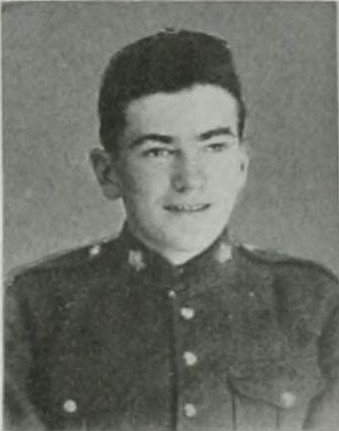
Clarence James Buckley.
BUCKNILL, JOHN CHARLES, 2nd Lieut., 4th Battn. Hampshire Regt. (T.F.), elder s. of John Townsend Bucknill, of Thomfield, near Bitterne, co. Hants., Lieut-Col. late R.E., by his wife, Catharine Raworth, only surviving child of William Rudkin Morris, of Luffenham, co. Rutland, and grandson of the late Sir John Charles Bucknill, M.D., F.R.S.; b. Ditton Hill, Surrey, 19 Oct. 1879; educ. Wellington College, and Emmanuel College, Cambridge (B.A.), and became an architect, studying in London and Italy. He practised at Southampton. At the outbreak of the war he applied for a commission, and finally obtained one, 12 Sept. 1914, in the 4th Battn. (T.F.) of the Hants Regt., and with it left for India, Oct. 1914: going to Mesopotamia in March, 1915. During the summer the battn. was quartered at Basrah, and the damp heat, often 110° F. in the shade, killed seven men by sunstroke, the older men and officers, including the subject of this memoir, his age being 36, only being able to stand it. Later the battn. took part in the advance up the Tigris and Euphrates, and in the affair at Gurma Safha and the engagement at Nasiriyeh, where only five officers of the battn. got through unwounded; Bucknill was one of them. Soon afterwards they were brought back to Kurna and sent up the Tigris, a party of the 4th Hants being employed on river work and assisting to clear the barrage, Bucknill as a yachtsman being usefully employed. At Amara they rested for some time to garrison this base, and for seven weeks he acted as paymaster, and subsequently as quartermaster. In the advance on Baghdad under Gen. Townshend one company took part, and the rest of the battn. went up with Gen. Aylmer’s relief force, and fought at the Battle of Filahey in support of the attack by the Black Watch and Seaforths. These battns. and the 4th Hants lost most of their officers and men killed and wounded, among whom Lieut. Bucknill was first reported as missing, 21 Jan. 1916, but on 12 April he was officially reported in England as “killed in action” 21 Jan. 1916. He was a most useful and keen officer, and much appreciated in his battn. He was mentioned in Sir John Nixon’s Despatches of 1 Jan. [London Gazette, 6 April, 1916] for services on Euphrates, 26 June-25 July, 1915, and on 17 April, 1916, it was announced that he had been granted the Military Cross by His Majesty the King. He m. at Bitterne, 22 Sept. 1908, Margaret Maria Mary, dau. of Clement Lister; s.p.
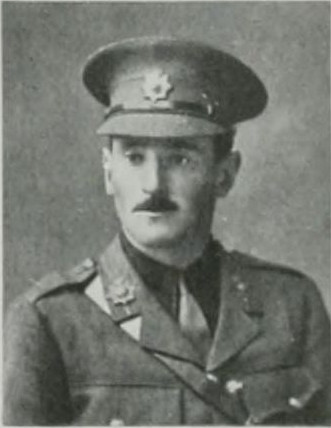
John Charles Bucknill.
BUCKNILL, LLEWELLYN MORRIS, Major, Royal Field Artillery, yr s. of John Townsend Bucknill, of Thomfield, near Bitterne, co. Hants, Lieut.-Col. late R.E., by his wife, Catharine Raworth, only surviving child of William Rudkin Morris, of Luffenham, co. Rutland, and grandson of the late Sir John Charles Bucknill, M.D., F.R.S; b. Notting Hill, London, 20 June, 1881; educ. Wellington College and Royal Military Academy, Woolwich; gazetted 2nd Lieut. to the R.F.A. 12 May, 1900, and promoted Lieut. 3 April, 1901, Capt. 13 Feb. 1910, and Major 30 Oct. 1914. He served in Northern Nigeria on special work, April, 1907–June, 1908, and with the 22nd Brigade in South Africa, Sept. 1912–Aug. 1914. The Brigade returned to Europe in August, and mobilised for war in the New Forest, forming part of the 7th Division which embarked for Belgium 5 Oct. 1914. He was promoted Major on the 30th, and soon after was appointed to command of the 105th Battery. On 16 May he was severely wounded in the spine. His signaller most gallantly carried him back under heavy fire, but early on the 18th he died in hospital at Bethune. He was buried in the town cemetery there. Major Bucknill was twice mentioned in F.M. Sir John (now Lord) French’s Despatches, first on 17 Feb. 1915, for his services during the early fighting at Ypres, and again on 1 Jan. 1916. Col. Alexander, V.C., Officer commanding 22nd brigade R.F.A., wrote: “Your husband was severely wounded whilst performing his duty in his usual fearless manner,” and Major H. W. Hill, R.F.A., wrote: “During the early part of the war I had the privilege of commanding the 105th Battery, and Major Bucknill was then my Capt. On all occasions he proved himself a most capable and conscientious soldier, full of dash and resource, and a very loyal comrade. His magnificent bravery at Ypres, and in the early days of November, near Gheluvelt, did not happen to be officially recognised, but was known and appreciated by his brother officers.... Major Bucknill will long be remembered by those who served with him.” Many other letters of a like nature from his brother officers and men were received by his widow and his father. Major Bucknill was a fine horseman, and when his Brigade went to Ireland in 1911 he became master of the regimental pack of harriers at Cahir. He was also a good shikar and captured some fine heads in N. Nigeria, although game was scarce. He was a scientific collector of coleoptera and lepidoptera, and able to interest professors at the British Museum. He m. at St. Michael’s Church, Hathersage, co. Derby, 24 Sept. 1913, Mary Ashton, dau. of the late Col. Ashton John Shuttleworth, of Hathersage Hall, co. Derby, R.A.; s.p.
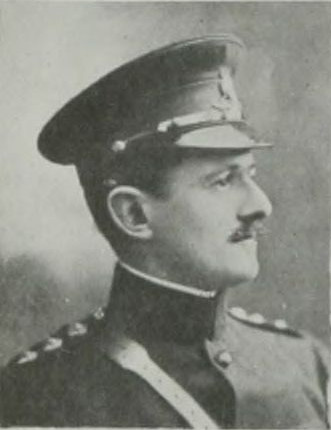
Llewellvn M. Bucknill.
BUCKNOLE, WALTER SAMUEL, Seaman, R.N.R., 4239A, H.M.S. Cressy; lost in action in the North Sea, 22 Sept. 1914.
BUCKTROUT, HORACE, Stoker, 2nd Class, K. 19976, H.M.S. Good Hope; lost in action off Coronel, on the coast of Chili, 1 Nov. 1914.
BUDD, WRINCH JOSEPH CHARLES, Lieut., 2nd Battn. South Wales Borderers, 2nd s. of Ebenezer Budd, of 84, Melrose Avenue, Norbury, co. Surrey, by his wife, Mary Maria, dau. of William Bristow, of Chelsea; b. 23 Sept. 1877; educ. United Westminster Schools; and in Feb. 1904 was appointed Chief Clerk in the employ of the Shanghai Municipal Council Electricity Dept. He was with the Queen’s Westminsters from 1894 to 1900, and passed for sergt., and served with the City of London Imperial Volunteers (M.I.) in South Africa, 1900. From 1905–8 he was a member of the Shanghai Volunteer Corps, and served with the reserve company from 1908 to 1914. At the outbreak of war he volunteered and was granted a commission in Shanghai on 14 Dec. 1914. On his arrival in England he was promoted Lieut. 22 Feb. 1915, and was attached to the 9th Battn. South Wales Borderers stationed at Pembroke Dock and left home with a draft for the East, at the end of May. He landed at the Dardanelles, 10 June, 1915, and was killed on 28 June following; unm. He won several prizes for shooting, and formed one of the Shanghai team at Bisley in 1901, and was a Freemason.
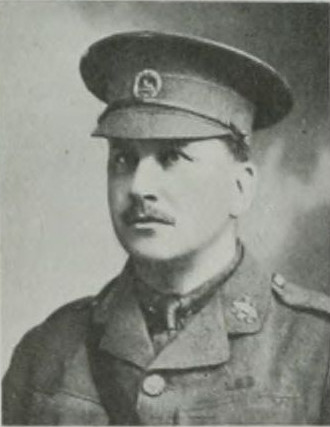
Wrinch J. C. Budd.
BUHAGIAR, CARMELO, Officers’ Steward, 1st Class, 360408, H.M.S. Hogue; lost in action in the North Sea, 22 Sept. 1914.
BULL, ALFRED GEORGE, A.B., 221911, H.M.S. Good Hope; lost in action off Coronel, on the coast of Chili, 1 Nov. 1914.
BULL, ARTHUR EDWARD, Fitter, No. 42616, 118th Battery, Royal Field Artillery, eldest s. of Edward Bull, Steward at the Bishop’s Stortford Golf Club, late Sergt.-Major, Rifle Brigade, by his wife, Annie Maria, dau. of Mathew Barnard; b. Farnham, co. Surrey, 27 Aug. 1890; educ. Army Schools; joined the Army, 5 March, 1906, and was trained as a fitter at the Ordnance College, Woolwich; he went to France with the Expeditionary Force in Aug. 1914, and was at first reported missing, and later killed in action. From one of the only two survivors of the two gun sections of the 118th Battery, who was exchanged as disabled in Feb. 1915, it was learnt that Bull was knocked over and killed on 27 Aug. 1914, as he was taking out a round from the ammunition boxes to hand up to the gun at Etreux during the retreat from Mons; unm.
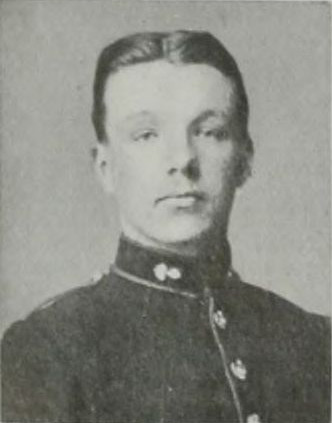
Arthur Edward Bull.
BULL, BERNARD WILLIAM, A.B. (R.F.R., B. 10511), 214140, H.M.S. Hogue; lost in action in the North Sea, 22 Sept. 1914.
BULL, GODFREY JOHN OSWALD, Lieut., 2nd East Lancashire Field Co., R.E., 3rd s. of Col. William Henry Bull, F.R.C.S., K.H.S., V.D., J.P., Assistant Director of Medical Services, South Midland Division, by his wife Emma Elizabeth Cherry, dau. of the late Edward Hoare Garole, of Ballinacurra House, Midleton, co. Cork; b. St. Oswald’s House, Stony Stratford, co. Bucks, 3 Aug. 1890; educ. Wellington College and Magdalen College, Cambridge (B.A. 1st class honours). On leaving Cambridge he became a pupil at the Westinghouse Works, Manchester, and joined the East Lancashire R.E. (T.F.) as a 2nd Lieut. 10 June, 1913, and was promoted Lieut. 7 Jan. 1914. He left for Egypt in Sept. 1914, and proceeded to the Dardanelles in the following May, was slightly wounded in the leg during the fighting that month, and was killed in action there 8 July following; unm. His Commanding Officer wrote: “He met his death early in the morning whilst surveying the work his men had been engaged upon during the night in order to send in his report which is called for each morning. Death was instantaneous, being shot through the brain by a sniper. Your son was a noble lad and a good soldier, and an untiring worker; if any man ever served his country well as a junior officer it was your son and our comrade.” His two brothers are now (1916) on active service, Capt. W. E. H. Bull with the Mounted Brigade, Field Ambulance, R.A.M.C. (T.F.), and Capt. H. C. H. Bull with the 8th Battn. King’s Own Yorkshire L.I.
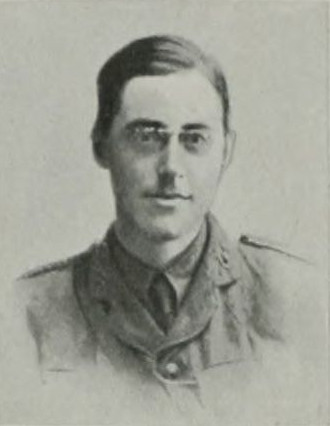
Godfrey John O. Bull.
BULL, HERBERT, A.B. (R.F.R., B. 2165), 215077, H.M.S. Good Hope; lost in action off Coronel, on the coast of Chili, 1 Nov. 1914.
BULL, PHILIP, Stoker, 1st, Class, K. 1422, H.M.S. Aboukir; lost in action in the North Sea, 22 Sept. 1914.
BULL, WILLIAM ALFRED, Stoker, 1st Class (R.F.R., B. 548), 280624, H.M.S. Hogue; lost in action in the North Sea, 22 Sept. 1914.
BULLER, FREDERICK DERICK EDWIN, Volunteer, East African Mounted Rifles, British East Africa, 3rd s. of Rev. George Buller, Rector of Oakford, Devon, by his wife, Margaret Mildred, dau. of Sir John William Hamilton Anson, 2nd Bt.; b. Burrough Green, Cambs., 14 July, 1891; educ. Eton, and Trinity College, Oxford. On going down from Oxford in 1913 he bought a large farm in British East Africa, and on the outbreak of the European War immediately volunteered his services and joined the King’s Mounted Rifles. He was killed in the fighting on 25 Sept. 1914 in the Ingito Hills between the Magadi Railway and the frontier. It appears that a German force of about 35 Europeans and 150 natives, with two Maxim guns, attacked a body of the East African Mounted Rifles (C Squadron), only 30 in number, commanded by Capt. Chapman. After one hour’s severe fighting in thick bush country the enemy were repulsed, and retired hastily towards Longido. At Eton Buller rowed in his house fours, and at Oxford he stroked the winning trial eight in his first year. He was unm.
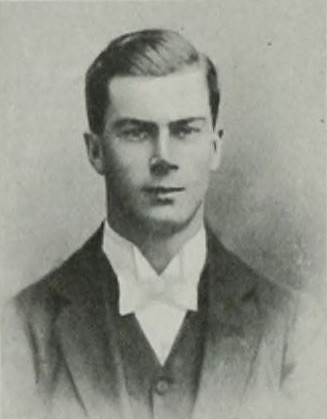
Frederick D. E. Buller.
BULLINARIA, HENRY WILLIAM, A.B. (R.F.R., Ch. B. 3766), 188856, H.M.S. Cressy; lost in action in the North Sea, 22 Sept. 1914.
BULLOCK, GEORGE WILLIAM, Gunner (R.F.R., Immed. Class 14), H.M.S. Good Hope; lost in action off Coronel, on the coast of Chili, 1 Nov. 1914.
BULMAN, THOMAS, Carpenter’s Crew, M. 4701, H.M.S. Good Hope; lost in action off Coronel, on the coast of Chili, 1 Nov. 1914.
BULPITT, WILLIAM ARTHUR, A.B. (R.F.R., B. 6089), S.S. 682 (Chat.), H.M.S. Good Hope; lost in action off Coronel, on the coast of Chili, 1 Nov. 1914.
BUNCE, CHARLES HENRY, Stoker, 1st Class (R.F.R., B. 1123), 158786, H.M.S. Hawke; lost in action in the North Sea, 15 Oct. 1914; m.
BUNCE, CHARLES RALPH THOMAS, Stoker, 1st Class (R.F.R., B. 7195), S.S. 102156, H.M.S. Hawke; lost in action in the North Sea, 15 Oct. 1914.
BUNCE, EDWARD, Chief Stoker (R.F.R., A. 1987), 163524, H.M.S. Hogue; lost in action in the North Sea, 22 Sept. 1914.
BUNCE, JOHN HENRY, Private, No. 2418, 15th Battn. (P.W.O. Civil Service Rifles) The London Regt. (T.F.), 2nd s. of Samuel Bunce, of 21, Dyson Road, Leytonstone, by his wife, Alice Amilia, dau. of Henry Allen; b. Forest Gate, co. Essex, 24 Aug. 1894; educ. Swaffield Road and Wadsworth Technical Institute; joined the Civil Service Rifles in Aug. after the outbreak of war and died of wounds received accidentally at a bomb instruction near Bethune, 24 July, 1915. He was buried in the cemetery Noeux des Mines; unm. His Capt. wrote: “Your son was a universal favourite—cheerful, willing, and a hard worker, and a very promising soldier”; and his platoon sergt.: “In the Army the best that can be said of any man is that ‘he is a good soldier.’ Without any hesitation I can say that your son had fully qualified for this high standard. He was well disciplined, obedient, and always ready to do anything he was called on to undertake; the mere fact that he was selected for instruction in bomb throwing shows that his superiors had a thorough confidence in his abilities.”
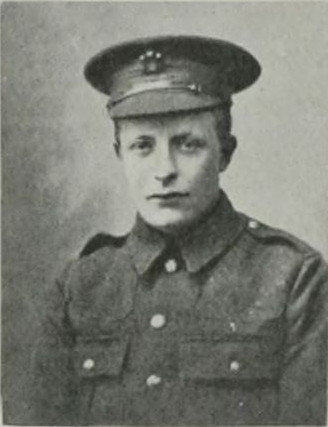
John Henry Bunce.
BUNN, GEORGE, Seaman, R.N.R., 5222B, H.M.S. Cressy; lost in action in the North Sea, 22 Sept. 1914.
BUNYAN, BENJAMIN JAMES, Ship’s Steward, 340125, H.M.S. Hawke; lost in action in the North Sea, 15 Oct. 1914.
BURBRIDGE, WALTER, A.B. (R.F.R., B. 794), S.S. 103586, H.M.S. Hawke; lost in action in the North Sea, 15 Oct. 1914.
BURCH, ARTHUR THOMAS, Private, No. 27, 8th Battn. (90th Rifles) Canadian Expeditionary Force, s. of George Burch, of Woodnesborough, co. Kent, Agricultural Labourer, by his wife, Mary Jane, dau. of the late William Oldfield; b. Woodnesborough, 20 Dec. 1887; educ. there; emigrated to Canada in July, 1910; enlisted on the outbreak of the war, Aug. 1914, and was killed in action at Ypres between 24–30 April, 1915; unm. He was at first reported missing, then in Aug. to have died, and finally (2 Dec. 1915) was officially stated to have been killed between the dates given above.
BURCH, WILLIAM JOHN, Petty Officer, 2nd Class (R.F.R., B. 229), 153490, H.M.S. Hogue; lost in action in the North Sea, 22 Sept. 1914.
BURCHELL, FRED, Private, R.M.L.I. (Ports.), 11716, H.M.S. Good Hope; lost in the action off Coronel, on the coast of Chili, 1 Nov. 1914.
BURCHELL, FREDERICK HUGH, A.B., J. 9672, H.M.S. Good Hope; lost in the action off Coronel, on the coast of Chili, 1 Nov. 1914.
BURCHETT, ARTHUR, Sergt., No. 7882, 3rd Battn. Coldstream Guards, s. of the late William Burchett, Labourer, by his wife, Eliza (Peal Common, Elstead), dau. of George Pullen, Farmer; b. Peal Common, Elstead, co. Surrey, 3 March, 1890; educ. National School there; enlisted 10 June, 1908, and served in Egypt 1909–11, and afterwards became a postman at Elstead. On the outbreak of war he was called up, went to France 12 Aug. 1914, and was killed in action at the Battle of the Aisne, 14 Sept. following, being buried at Soupir; unm. His brother, Private Thomas Burchett, No. 7285 (sometime a postman at Godalming), was officially reported missing, 30 Aug. 1914, and is (1916) a prisoner in Germany.
BURCHILL, THOMAS, Leading Stoker, 276152 (Dev.), H.M.S. Hogue; lost in action in the North Sea, 22 Sept. 1914.
BURDEKIN, GEOFFREY ERIC, 2nd Lieut., 3rd Battn. Notts and Derby Regt. (Sherwood Foresters), attd. 1st Loyal North Lancashires; yst. s. of Benjamin Thomas Burdekin, of Sheffield and Baslow, co. Derby, Solicitor, by his wife, Emily Jane, dau. of the Rev. Jeremiah Stockdale, Vicar of Baslow; b. Sheffield, 29 March, 1893; educ. Bramcote, Scarborough, Rugby and Woolwich. He was gazetted to the 2nd Battn. Dorsetshire Regt. 20 Sept. 1911, and served with it in India for two years. In 1913 he resigned his commission owing to ill-health, and was articled to his father as a solicitor. At the outbreak of the European War he applied for a commission, and was given one in the 3rd Reserve Battn. of the Sherwood Foresters, and was afterwards attached to the 1st Loyal North Lancashire Regt. with which he was serving when he was killed in action at Beuvry, 26 Jan. 1915. He was buried at a farm near Beuvry; unm. His Capt. wrote: “The circumstances under which your boy and many other valuable men lost their lives were perhaps the most unfortunate that can be imagined. We were some four miles distant from the firing line at the time, and it was one of three shells that happened to strike us when the battn. orderly room was being held in the morning. Being in temporary command, I was taking orderly room myself and was only some six or seven yards distant from the spot where the shell burst, and how I and the Adjutant, who was standing beside me, escaped I really don’t know, for men within a couple of yards of us were killed instantaneously. What I remember was a deafening crash, a blackness, and the noise of broken glass falling. As soon as the air had cleared of débris we saw the fearful havoc that had been caused. You have one great consolation, however. Your son was spared all pain and suffering, for death was absolutely instantaneous; also that he was buried. The inability to bury one’s dead owing to their having been killed on the ground between the opposing trenches has, I think, been one of the most horrible features of the war. It is, I think, unnecessary for me to assure you that your son maintained to the end the high traditions of a British officer and gentleman. We were together during the night attack on 31 Dec., and his coolness under a heavy fire was very marked. Although he did not belong to the Loyal North Lancashires but to his own county regt., yet he always took an interest in his men and was a zealous officer. On the very morning that he was killed, I had picked him out to take command of a company because I had the greatest confidence in him. He was always cheerful, and had endeared himself to us all. We feel the loss greatly.”
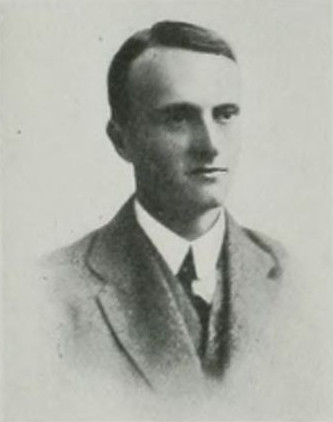
Geoffrey E. Burdekin.
BURDISS, WILLIAM, Stoker, R.N.R., 2985T. H.M.S. Aboukir; lost in action in the North Sea, 22 Sept. 1914.
BURDON, EDWARD, Pioneer. No. 110982, Royal Engineers, 3rd s. of Edward Burdon, of Southwick-on-Wear, Joiner, by his wife, Margaret, dau. of Richard Wake, of Southwick; b. Southwick, 26 Dec. 1873; educ. Southwick Board School, and was a miner. He enlisted for the period of the war, 29 July, 1915; went to France the following week; was invalided home, 16 Sept. 1915; and died on active service, 13 Oct. 1915, following an operation for appendicitis. He m. at St. Columbus, Southwick, 7 June, 1887, Isabella (18, Edward Murdis Street, Southwick, Sunderland), dau. of James Turnbull, of Southwick, and had seven children: Edward, b. 19 Sept. 1888; James, b. 28 Aug. 1889; Sidney, b. 2 May, 1903; Nicholas, b. 29 Dec. 1908; Thomas, b. 28 Dec. 1910; Mary, b. 7 May, 1905; and Jenny, twin with Thomas.
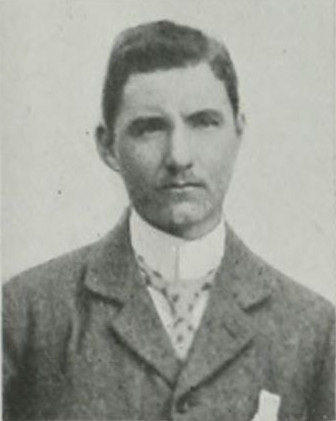
Edward Burdon.
BURGES, WILLIAM ARMSTRONG, Lieut., 1st Battn. Royal Irish Rifles, 2nd s. of the late Francis Lockie Burges, of Irwin House, Irwin, Western Australia, Squatter, and grandson of the late Francis Carleton Burges, of Fethard, co. Tipperary, M.D.; b. Irwin aforesaid, 3 June, 1889; educ. Campbell College, Belfast; Armagh Royal School, and Sandhurst; gazetted 2nd Lieut. 2nd Battn. Royal Irish Rifles, 20 April, 1910, transferred to the 1st Battn. 20 April, 1911, and promoted Lieut. 15 Oct. 1914; killed in action at Neuve Chapelle, while leading a charge of his platoon, 10 March, 1915; unm. Rifleman James Scott of this regt. wrote that in the attack on the German second line they “were met with a murderous fire from a machine gun which for an instant made our men waver. An officer, Lieut. Burges, leading our platoon, No. 8, B Coy., dashed into a stream of water which reached to his neck, and which ran parallel to the second German line wire entanglements. He called out as he plunged into the water: ‘Follow me, No. 8; be quick and we will capture that machine gun.’ Straight away every man followed this gallant officer. Once across the stream, ‘Form up, No. 8,’ and away we went towards the machine gun like hounds after the hare. We followed this officer over the German third line of trenches, and away in full cry towards the village of Neuve Chapelle, in our efforts to capture the accursed machine gun, which was playing the deuce with our men. Dashing forward to a wood on our right where the gun was concealed, our gallant officer received a bullet wound in the neck, which ended in his death.... As our Colonel said, by his dash and contempt of death, he brought victory to our arms and credit to our regt. At 12 noon our regt. found itself close up to the village, more advanced than any other regt. of the division, thanks to the gallant lead of a gallant officer.” Lieut. Burges was mentioned in F.M. Sir John French’s Despatch of 5 April [London Gazette, 22 June], 1915, for gallant and distinguished conduct in this action.
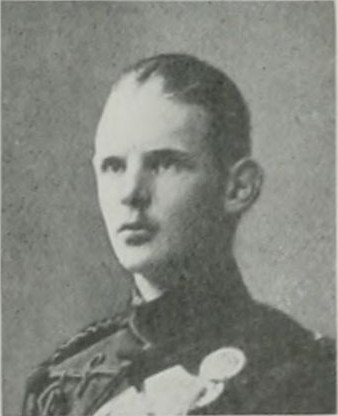
William A. Burges.
BURGESS, HERBERT WILLIAM, 1st Class Stoker, Ch/SS. 103633, R.F.R., B. 7981, R.N.R., s. of Charles Henry Burgess, of 2, Gills Cottages, Wouldham, Rochester, by his wife, Elizabeth, dau. of the late John Callhoming; b. Wouldham, 25 Jan. 1890; educ. National School there; joined the Navy 2 April 1906, and was lost on H.M.S. Cressy, 22 Sept. 1914, when that ship was torpedoed in the North Sea; unm.
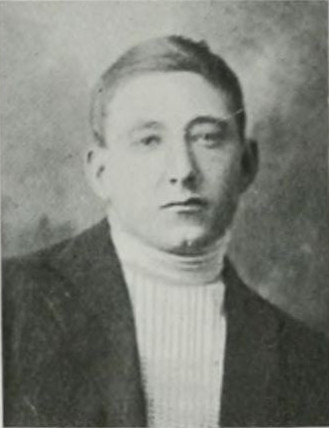
Herbert William Burgess.
BURGESS, JOHN DONALD, Volunteer, King’s East African Mounted Rifles, 3rd s. of Rev. Samuel Burgess, of 10, Holly Road, Edgbaston, by his wife, Annie, dau. of the late John Peed, of Whittlesey, Solicitor; b. Guilsborough, Northampton, 23 March, 1876; educ. Eastman’s Royal Naval Academy, Southsea. At the outbreak of the European War was the Engineer of the Magadi Soda Co., but immediately joined the King’s Mounted Rifles, and was killed in action at Ingito Hill, British East Africa, 25 Sept. 1914. His commanding officer wrote: “He was one of a party of 30 men who had followed up what was said to be a smaller party of Germans, but when they came up with them were found to consist of about 150 men with two maxims. The Germans opened fire at once, and for a time there was some little confusion. The four men of the Magadi Force, one of whom was your husband, stood fast, however, and returned the fire, and then our men rallied. This lasted for about 10 minutes, when the Germans started to advance. The officer in command decided that our men could not hold out, so he ordered a retirement, and Burgess and three others were told off to cover it. They lay down, taking cover as best they could, and when next day our men went out (the Germans having retired) all four were found dead, just as they had laid down; and if ever men gave their lives to save others, it was those four.” He m. at Christ Church, Woburn Place, London, 21 Oct. 1902, Ethel M., 2nd dau. of the late W. J. Roseby, of Doncaster, and left two daus.: Kathleen Constance and Joyce Averil.
BURGESS, RICHARD, A.B. (R.F.R., B. 10674), 238875, H.M.S. Hogue; lost in action in the North Sea, 22 Sept. 1914.
BURGESS, WILLIAM, Stoker, 1st Class, S.S. 111339, H.M.S. Cressy; lost in action in the North Sea, 22 Sept. 1914.
BURGESS, WILLIAM HENRY GEORGE, A.B. (R.F.R., B. 3611), 185552, H.M.S. Aboukir; lost in action in the North Sea, 22 Sept. 1914.
DE BURIATTE, JOHN PHILIP, 2nd Lieut., 2nd Battn. East Surrey Regt., yr. s. of William Warwick de Buriatte, of The Mill House, Wraysbury, co. Bucks, by his 1st wife, Mary, dau. of James Edmund Huxley, M.D., and niece of Prof. Huxley; b. Aylesford, Kent, 28 Oct. 1887; educ. Dulwich College, and Manchester University, where he studied in the Faculty of Technology, in chemical technology (paper manufacture) from 1905–8; joined the Artists’ Rifles in 1912, and went to France as Sergt. with them, 28 Oct. 1914; was given a commission in the 2nd East Surrey Regt., 14 Feb. 1915, and was killed in action leading his platoon at Lindenhoeck during the Battle of Neuve Chapelle, 12 March, 1915, and was buried 20 yards behind the trenches.
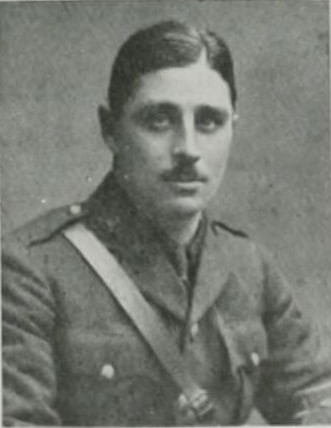
John Philip de Buriatte.
BURINI, CHARLES LEWIS, Sergt., No. 7510, 2nd Battn. Yorkshire Regt. (the “Green Howards”), s. of the late Sergt. Lewis Augustus Burini, for ten years drill instructor of the local company of the 2nd Vol. Battn. of the Yorkshire Regt., by his wife, Maria (Scorton, Darlington), dau. of William Winslow, of Trowbridge, co. Wilts (who served for 21 years in the Army); b. Norton, Malton, co. York, 2 Aug. 1891; educ. Bower Memorial Schools, Norton; enlisted 2 Oct. 1903, appointed L.-Corpl. 16 Feb. 1914, served in India for 15 months, in Africa for three years, and with the Expeditionary Force in France from 5 Oct. 1914 to 20 March, 1915, on which latter date he was severely wounded in the head in action at Neuve Chapelle, and died in No. 2 Stationary Hospital at Boulogne, 20 March following; unm. He was buried in the Casten Cemetery there, grave No. 136.
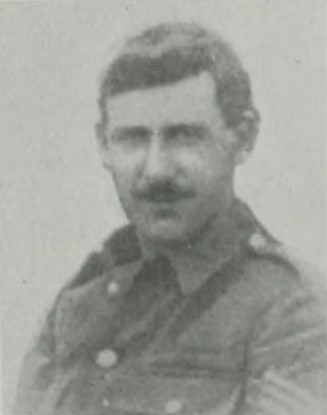
Charles Lewis Burini.
BURKE, CORNELIUS, Stoker, 1st Class (R.F.R., B. 7775), S.S. 103254, H.M.S. Aboukir; lost in action in the North Sea, 22 Sept. 1914.
BURKE, THOMAS, A.B. (R.F.R., Ch. B. 9051), S.S. 2130, H.M.S. Cressy; lost in action in the North Sea, 22 Sept. 1914.
BURKE, THOMAS CAMPBELL, Capt., 1st King George’s Own Gurkha Rifles, 2nd s. of Joseph Francis Burke, of Stratford-on-Avon, Civil Engineer, by his wife, Kate Marlow, dau. of the late William Cruickshank, Deputy Inspector-General of Hospitals (who served through the Crimean War, for which he received medal, and died at Simla during the Indian Mutiny); b. Stratford-on-Avon, 27 May, 1877; educ. Trinity College, Stratford-on-Avon and Sandhurst; gazetted 2nd Lieut., unattached, Indian Army, 4 Aug. 1897; served his first year with the Royal Irish Rifles; entered the Indian S.C., 23 Oct. 1898, and was appointed to the 125th (Napier’s) Rifles, being promoted Lieut. 4 Nov. 1889, and Capt. 4 Aug. 1906. He served in China in 1900 with the 122nd Rajputana Infantry during the Boxer Rebellion, receiving the medal, and was afterwards Assistant Inspector of Imperial Service Troops in Rajputana from 1903–6. After three years’ service as Adjutant of the Bangalore Volunteer Rifles (during which time he started the first corps of Boy Scouts in India); he was (26 March, 1912) transferred as Double Company Commander to the 1st Gurkha Rifles, then stationed at Dharmsala, Punjab. On the outbreak of the European War the regt. was ordered to France, but was detained for 10 weeks guarding the Suez Canal, and arrived at the Front late in Nov. 1914. He was killed in action at Festubert, 19 Dec. 1914. He was ordered to lead a party against a German advanced trench, but the men were waist deep in mud, and he was only able to get 24 ready to start, and with these and his subaltern, Lieut. Rundall (who was ordered not to go, but would not let his Capt. go alone), left the trench in broad daylight. The Colonel stated the action was most gallant, and recommended him for the V.C. The Brigade-Major officially reported that Capt. Burke and Lieut. Rundall were killed, and more than 50 per cent. other ranks hit. He m. at Agra, 1906, Ada Mary Jane, dau. of the Rev. J. Langshaw.
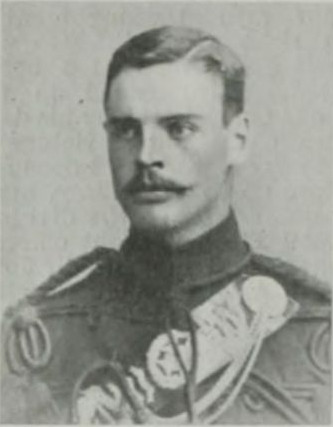
Thomas Campbell Burke.
BURKETT, WALTER, Private, No. 1976, machine gun section, 17th Battn. (Poplar and Stepney Rifles) The London Regt. (T.F.), s. of John Isaac Burkett, of 12, Remus Road, Old Ford, E., by his wife, Annie; b. Old Ford, Bow, 26 Dec. 1896; educ. Smeed Road Board School; enlisted, 8 Aug. 1914, and was killed in action at Morrock, France, on the night of 22 Sept. 1915, being shot through the body while with a working party; unm. Sergt. Morgan wrote of him as one of his best men and a general favourite.
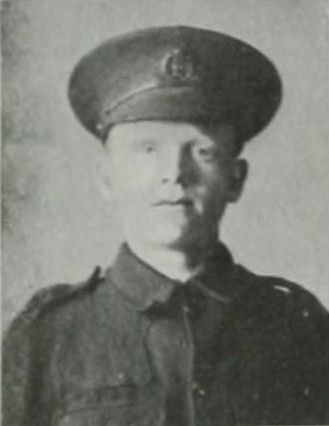
Walter Burkett.
BURN, JOHN, Private, No. 8806, 2nd Battn. Northumberland Fusiliers, s. of Thomas Burn, of 113, Conyers Road, Byker, Newcastle-on-Tyne, Labourer; b. Byker, 27 March, 1885; educ. Jubilee School, Byker Hill; was employed in Locke Blackett’s Lead Works, St. Anthony’s; joined the Army 29 Aug. 1914; died of wounds received in action at Ypres, 21 Feb. 1915, and was buried in the cemetery there. He m. at Byker 6 Aug. 1906, Mary Jane (113, Conyers Road, Byker, Newcastle-on-Tyne), dau. of Aaron, Richardson, and had three children: Thomas, b. 22 Nov. 1906; Margaret Richardson, b. 9 Oct. 1908; and Elizabeth Collins, b. 28 Dec. 1910.
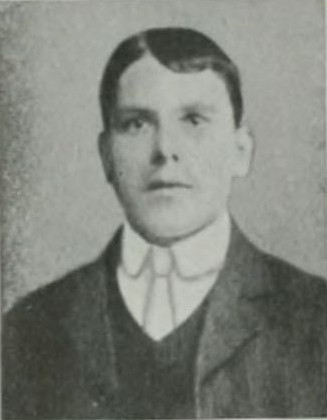
John Burn.
BURN, WILLIAM, Sergt., No. 8356, 1st Battn. Royal West Kent Regt. served with the Expeditionary Force in France, etc.; killed in action, 13 Sept. 1914; m.
BURNAND, CYRIL FRANCIS, 2nd Lieut., 1st Battn. Grenadier Guards, only s. of Charles Hubert Burnand, of 1, Cavendish Square, London, Banker, by his wife, Mary Tirzah, dau. of James Nelson, and grandson of Sir Francis Burnand, late Editor of “Punch”; b. at 1, Cavendish Square, London, 31 July, 1891; educ. Downside School, and Trinity College, Cambridge. When the war broke out he was in the General Superintendent’s department of the Midland Railway at Nottingham, but immediately offered his services and was given a commission in the Special Reserve of the Grenadier Guards, 18 Aug. 1914, and later appointed to the 1st Battn. at the front. He was killed in action near Neuve Chapelle, 11 March, 1915; unm. Lieut. Burnand was a Cambridge rowing “blue,” and Capt. of the 1st Trinity Rowing Club.
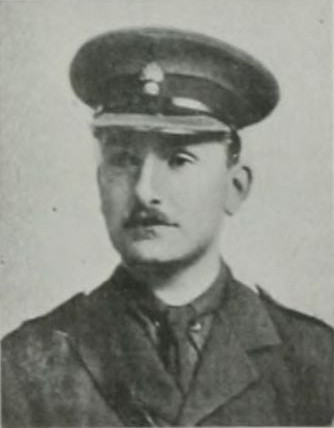
Cyril Francis Burnand.
BURNARD. LEONARD, Leading Stoker (R.F.R., Ch. B. 1153), 149707. H.M.S. Cressy; lost in action in the North Sea, 22 Sept. 1914.
BURNELL, GEORGE CUTHBERTSON, 2nd Lieut., 10th Battn. (Liverpool Scottish) King’s Liverpool Regt. (T.F.), yst. s. of the late Robert Burnell, of Egremont, co. Chester, by his wife, Mary (The Bungalow, Whitby, near Chester), dau. of John Cuthbertson, of Govan, M.D.; b. Egremont, co. Chester, 6 April, 1890; educ. Liscard High School; joined the Liverpool Scottish as a private the day war broke out, and after three months’ training at Edinburgh and Tunbridge Wells, went out with his battn., 31 Oct. 1914. He was given a commission in his own regt. 16 March, 1915. He was wounded at Hooge, 16 June, 1915, while leading his platoon in the famous charge of the Liverpool Scottish, and lay on the battlefield for two and a-half days, and at last crawled within sight of the British trenches, when an officer saw him and brought him in. He died at No. 7 Stationary Hospital, Boulogne, 24 June, 1915, from his wounds; unm. Lieut. Burnell played Rugby for the Cheshire XV for two seasons, and was a member of the Birkenhead Park Football Club.
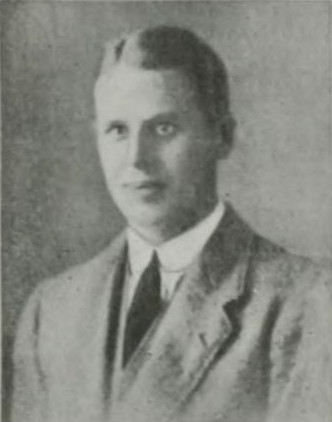
George C. Burnell.
BURNELL, JOHN SIDNEY, Private, No. 2321, 2nd Battn. (Royal Fusiliers) The London Regt. (T.F.), eldest s. of John Burnell, an employee of Watney, Coombe & Reid, Brewers, by his wife, Elizabeth (14, Castle Buildings Castle Lane, Westminster), dau. of James Woodland; b. Holborn, 7 Sept. 1891; educ. St. Albans, Holborn; enlisted on the outbreak of war, and was killed in action at Armentières, 19 May, 1915. He was buried in Esquingham Cemetery; unm. 2nd Lieut. Frank C. Langley, 2nd Battn. The London Regt., wrote from France: “He was engaged with other fellows filling sandbags when it happened, and he was awfully brave right up to the time he was sent to hospital. I was proud to feel that he was in my platoon”; and the Chaplain, 17th Field Ambulance, writing to his father, said: “Your son ... has died of a bullet wound received yesterday. It went through his right arm and into his stomach. An operation was attempted, but in vain. He did not suffer much pain, and was very calm and brave.” The following extract is from a letter to his mother, sent by L.-Corpl. A. N. Fegat, No. 2134, No. 9 Platoon, C Coy., 2nd Battn. London Regt.: “Your son, who was in my section, was wounded yesterday afternoon about 4 o’clock. He was working behind the trench when a bullet hit his arm, inflicting a cut 1½ inches long and ¾ inch deep. The bullet then ricochetted across his stomach, inflicting a very nasty wound. The doctor attended immediately and we soon got him to hospital. The news from there was very good at first, but later reports were not so hopeful, and the news came through this morning that he died peacefully at 6.30 a.m.”
BURNET, ROBERT, Lieut.-Col. and Sanitary Staff Officer, 1st Wessex Division, R.A.M.C. (T.F.), 4th s. of George Burnet, of Wigan, co. Lancaster; b. 9 Feb. 1875; educ. King William’s College, Isle of Man, and University College, Liverpool, graduating B.Sc. Hons. 1897, M.B., Ch.B., 1900, and M.Sc. 1904. Four years later he qualified D.P.H., Birmingham. After holding appointment as House Surgeon to the Rawcliffe Hospital, Chorley, he secured the appointment of Medical Officer of Health for the County Borough of Bury, and Medical Superintendent, Bury and District Joint Hospital Board, Fever and Smallpox Hospital, and Aitken Sanatorium for Consumption. Later he was appointed Medical Officer of Health for Cornwall and Principal Medical Officer, Cornwall Education Committee. He joined the R.A.M.C. (T.F.) in 1907, was for some time Capt. 2nd Wessex Field Ambulance, and in Feb. 1913 was promoted Major upon appointment as Divisional Sanitary Officer to the 1st Division. On the outbreak of war he joined his unit for active service, and was promoted Lieut.-Col. On the afternoon of Thursday, 28 Jan. 1915, he was riding between Newton St. Cyres and Exeter, accompanied by Col. H. J. Mackay, when his horse was frightened by some colts in a field near the roadway, and bolted. Half a mile further on Col. Burnet was thrown and died within a few minutes from injuries caused by a fracture of the skull. He was buried at Chorley, Lancashire, the family burial place. An order issued by Brig.-Gen. G. S. McD. Elliott, Commanding R.A.M.C. (T.F.), Wessex Division said: “Lieut.-Col. Burnet was an officer of very high professional attainments, and these he devoted unceasingly with never-failing energy and earnestness to the welfare of the Division. By his death the Army has been deprived of the services of an officer who can ill be spared, and those who knew him have lost a valued friend.” Col. Burnet was a Fellow of the Society of Medical Officers of Health, and a member of the British Medical Association, and had held the offices of Senior Steward in Phœnix Lodge of Honour and Prudence, No. 331, Truro, and of Junior Steward in the Royal Cornubian Chapter, No. 331, Truro, of Royal Arch Masons. He was author of “Poliomyelitis and Dust Nuisance,” in The British Medical Journal, 1911; and “Poliomyelitis, as illustrated by an English Epidemic,” Paris Health Congress, 1913. He m. at Whalley Range, Manchester, 2 April, 1903, Alice, 3rd dau. of Thomas Thornber, of Vivary Bridge, Colne, co. Lancaster, and Westbourne, Rusholme, Manchester, and had three children: Gordon, b. 29 Sept. 1904; Georgina, b. 28 Jan. 1906; and Monica, b. 12 June, 1912.
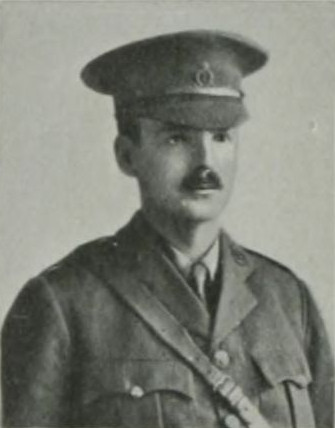
Robert Burnet.
BURNETT, CHARLES, A.B. (R.F.R., Ch. B. 10276), 204551, H.M.S. Cressy; lost in action in the North Sea, 22 Sept. 1914.
BURNETT, FRANCIS, Private, No. 8578, 2nd Battn. Scots Guards, s. of J. Burnett, of Slew House, Broadwood Widger, Difton, Devon; b. Ashwater, Holsworthy, co. Devon; enlisted 19 March, 1913; served with the Expeditionary Force in France, etc.; killed in action, 18 Dec. 1914.
BURNETT, GEORGE, Private, No. 7591, 1st Battn. Coldstream Guards, s. of George Burnett of Chichester; served with the Expeditionary Force; reported missing and now assumed to have been killed in action between 29 Oct. and 2 Nov. 1914.
BURNETT, NOEL FLETCHER, Private, No. 6/18, Machine Gun Section, 1st Canterbury Infantry Battn. New Zealand Expeditionary Force, yst. s. of James Burnett, M.Inst.C.E., Chief Engineer, New Zealand Government Railways, by his wife, Ellen, dau. of Wilson Gibson, of Waitangi Station, South Canterbury, New Zealand; b. Christchurch, New Zealand, 2 Dec. 1889; educ. Wellington College, Victoria College and Canterbury College (all New Zealand), where he was in his last term at the Engineering School when war broke out; volunteered and enlisted in the Expeditionary Force; left for Egypt with the main body in Oct. 1914; took part in the repulse of the Turkish attack on the Suez Canal in Feb. 1915; in the landing at the Dardanelles, 25–26 April, and in the great attack on Krithia, where he was severely wounded by a bullet in the lung; was six weeks in hospital at Alexandria, and was then invalided to England, where he was in various hospitals till Oct., when he rejoined at the Base Camp, Weymouth; went out with a draft, 15 Nov., and returned to the trenches early in Dec. and was shot at Chunock Bair, near Anzac, on the 13th of that month, and died the same day on board the hospital ship Dunluce Castle. Buried at sea between Anzac and Lemnos the same night; unm. His College Professor wrote: “He was a thoroughly sterling character, and commanded alike the respect and affection of his fellow-students and teachers. It was really his great influence which led to many College men enlisting after he had set the example. As a power for good and a standard for manliness amongst the students I shall greatly feel his loss.” He was a keen sportsman and athlete, member of his college football fifteen for three years, and secretary of the College Engineering Society.
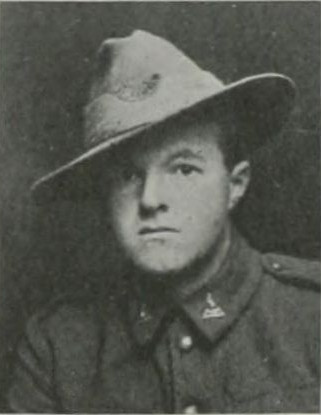
Noel Fletcher Burnett.
BURNHAM, CHARLES RICHARD, Private, No. 1791, 4th Battn. West Riding Regt., s. of John Burnham, Commercial Traveller; b. Halifax, 16 Oct. 1872; educ. there. He was a member of the National Reserve, and on the outbreak of war joined the 4th Battn. West Riding Regt., 8 Aug. 1914, and was killed in action in France, 4 May, 1915, while carrying rations and water from the headquarters to the trenches. He was buried in the Military Burial Ground, Sailly. He m. at the Parish Church, Halifax, 19 May, 1894, Mary Emma, dau. of Isaiah Tawton, and had a dau: Ivy Eastwood, b. 16 May, 1907.
BURNS, ALBERT HORACE, Private, No. 10720, 2nd Battn. Bedfordshire Regt., s. of Harry Walter Burns, of 97, Chingford Road, Walthamstow, Silversmith, by his wife, Emma Esther, dau. of Richard Rolph; b. Camden Town, 4 Feb. 1899; educ. Oldfield Road School, Willesden; joined the Army at the outbreak of the war, 11 Aug. 1914, and was killed in action at Festubert, 14 May, 1915, five days after his brother, Drummer Harry Walter Burns (see his notice); unm.
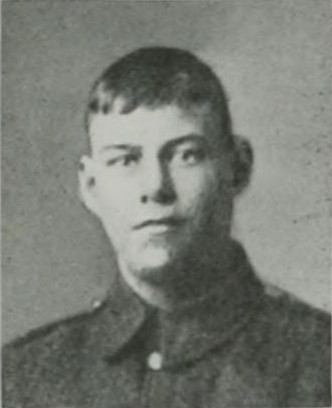
Albert Horace Burns.
BURNS, DAVID, Private, No. 9413, 1st Battn. Scots Guards; b. Keith, co. Banff; enlisted 23 Aug. 1914; served with the Expeditionary Force in France, etc., and died a prisoner of war, 27 Jan. 1915, and was buried at Pont-a-Vendin, Pas de Calais, by the German authorities.
BURNS, HARRY WALTER, Drummer, No. 1441, 3rd Battn. (Royal Fusiliers) The London Regt. (T.F.), s. of Harry Walter Burns, Silversmith, by his wife, Emma Esther, dau. of Richard Rolph; b. Kentish Town, London, 20 Nov. 1896; educ. Oldfield Road School, Willesden; enlisted 22 Feb. 1911, and was killed in action at Festubert, 9 May, 1915; unm.
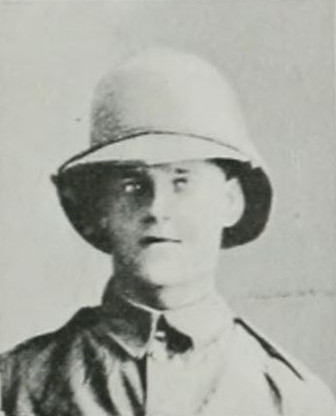
Harry Walter Burns.
BURNS, JOHN, Private, No. 77984, 15th Battn., Canadian Expeditionary Force, 2nd s. of the late Robert Burns, of Dublin, by his wife, Lizzie (20, Longford Street, Dublin); b. Dublin, 10 April, 1890; educ. there; went to Canada about 1907, and settled in Victoria, British Columbia; volunteered after the outbreak of war; joined the Canadian Expeditionary Force in Oct. 1914; came over with the second contingent; went to France, and was killed in action at Festubert, 20 May, 1915. Buried first line trenches, north-east of Festubert village, about 500 yards from church. He m. at Victoria, B.C., 16 Nov. 1912, May (Box 934 Nelson, British Columbia, Canada), dau. of Thomas Carlisle, and had a son: John Carlisle, b. 15 June, 1914.
BURNS, MICHAEL, Private, No. 5973, 2nd Battn, The Border Regt.; served through the South African War with the 1st Border Regt. (Queen’s medal with four clasps and King’s medal with two clasps), and with the Expeditionary Force in France, etc.; killed in action at Neuve Chapelle, 12 March, 1915; unm. Previous to the outbreak of the European War he was employed at the Ravensworth Colliery, Gateshead.
BURNS, THOMAS, Private, No. 10646, 3rd Battn. Coldstream Guards, s. of Patrick Burns, of 4, Spring Row, Knowle Park, Keighley, Yorkshire; served with the Expeditionary Force in France, etc.; reported missing 29 Oct. 1914, and now assumed to have been killed in action that day.
BURNS, WILLIAM, Private, No. 3321, 2nd Battn. Royal Scots (Lothian Regt.), s. of Thomas Burns, of 299, Hilltown, Dundee; served with the Expeditionary Force in France, etc.; died in the 13th General Hospital at Boulogne, 28 May, 1915, from wounds received in action.
BURNS, WILLIAM GORDON, L.-Corpl., No. 9217, 1st Section, 2nd Battn. Durham L.I., b. Dumfries, 14 Sept. 1885; educ. there; enlisted after the outbreak of war, 2 Sept. 1914, and was killed in action at Ypres, 5 Aug. 1915. He was buried north of Hop Store, just outside Vlamertinghe, on the Poperinghe Road. He m. at Wallsend-on-Tyne, Northumberland, Jennie (now training as a Nurse), eldest dau. of John Steele, of Wallsend-on-Tyne; s.p.
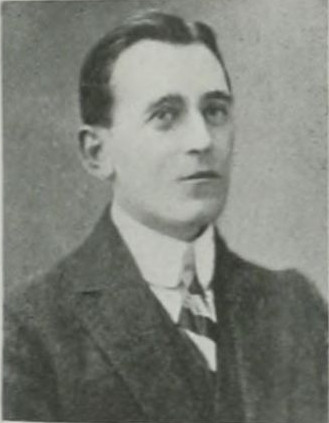
William G. Burns.
BURR, HAROLD, A.B., J. 2742, H.M.S. Aboukir; lost in action in the North Sea, 22 Sept. 1914.
BURRARD, NORMAN SIDNEY, Stoker, 1st Class, K. 14263 (Ports.), H.M.S. Aboukir; lost in action in the North Sea, 22 Sept. 1914.
BURRELL, ALEXANDER, Private, No. 13676, 1st Battn. Coldstream Guards, s. of John Richard Burrell, of 70, Victoria Street, Shotton Colliery, Durham, Miner, by his wife, Isabella, dau. of William Keen, of Haswell; b. Haswell, co. Durham, 2 May, 1894; enlisted at Sunderland, 14 Nov. 1914, and was killed in action near Vermelles, 29 Sept. 1915; unm.
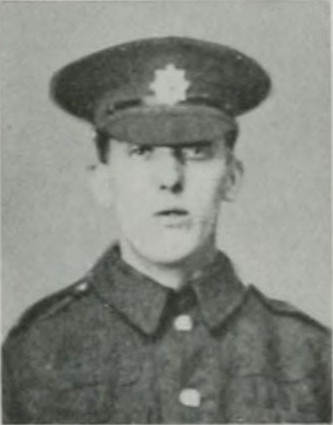
Alexander Burrell.
BURRELL, FREDERICK, A.B., 192688, H.M.S. Aboukir; lost in action in the North Sea, 22 Sept. 1914.
BURRELL, JOHN WILLIAM, Corpl., No. 1519, B Coy., 9th Battn. 3rd Infantry Brigade, 1st Division, Australian Imperial Force, s. of Richard William Burrell, of 46, Croyland Road, Lower Edmonton, N., Confectioner, by his wife, Louisa Matilda, dau. of George Watling; b. Islington, 19 Sept. 1895; educ. Chequer Street School, E.C.; went to Australia, and enlisted there in Aug. 1914, after the outbreak of war, and was killed in action at Gaba Tepe, Gallipoli, 28 June, 1915; unm. His elder brother was killed in France in Sept. (see following notice).
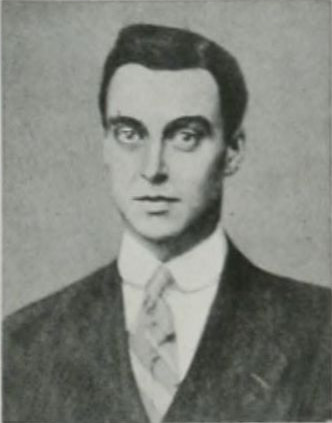
John William Burrell.
BURRELL, RICHARD GEORGE, Corpl., No. 1197, D Coy., 7th Battn. The London Regt., 47th London Division (T.F.), eldest s. of Richard William Burrell, of 46, Croyland Road, Lower Edmonton, N., and elder brother of the preceding; b. St. Luke’s, E.C., 13 July, 1893; educ. Chequer Street School, E.C.; enlisted in June, 1911, and was killed in action at the Battle of Loos, 25 Sept. 1915. He m. at Watford, 16 March, 1915, May, dau. of Henry Knowles, of King’s Road, Fairfield Road, Edmonton.
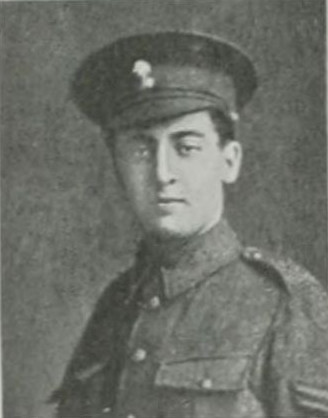
Richard George Burrell.
BURRELL, WILLIAM MATTHEW, of Broome Park, co. Northumberland, and Hampton Court, co. Hereford, Major, Northumberland Hussars Yeomanry, elder s. of William John Burrell, by his wife, Helena Elizabeth, 2nd dau. of Major Alexander Browne, of Doxford Hall; b. Glen Allen, Alnwick, co. Northumberland, 2 Feb. 1876; educ. Harrow; gazetted 2nd Lieut. 12th Royal Lancers, 15 May, 1897, and promoted Lieut. 1900, and Capt. 22 Nov. 1902; served in South African War, 1899–1902; took part in advance on, and relief of, Kimberley, including action at Maggersfontein; operations in the Orange Free State, Feb. to May, 1900; operations in the Transvaal, May and June, 1900, including actions near Johannesburg and Diamond Hill; operations in the Transvaal, west of Pretoria, July to 29 Nov. 1900; operations in the Orange River Colony, May to 29 Nov. 1900, including actions at Lindley, Bethlehem and Wittebergen; operations in the Transvaal, 30 Nov. 1900, to July, 1901; and in Cape Colony, July, 1901, to 31 May, 1902 (Queen’s medal with four claps and King’s medal with two clasps); and retired 15 May, 1907. He then joined the Northumberland Yeomanry Hussars; was Adjutant for three years, and became Major, 7 June, 1913. On the outbreak of war he was en route for France with his regt. when he contracted pneumonia at Southampton, and died of septic pneumonia at a nursing home in Bath, 10 Nov. 1914. He m. at Carham, 13 May, 1903, Nancy (Hampton Court, Leominster, Herefordshire), 2nd dau. of the late Charles Perkins, of Carham Hall, Coldstream, N.B., and Birkley Hall, co. Durham, and had four children: Michael, b. 8 July, 1909, d. 4 Jan. 1910; Charles Dominic (now of Broome Park), b. 11 Aug. 1914; Cornelia Mary, b. 12 Jan. 1911; and Philippa, b. 25 Aug. 1912.
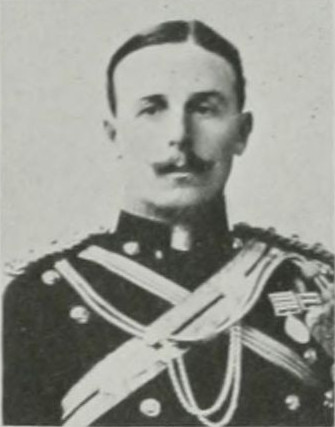
William Matthew Burrell.
BURRIDGE, ARTHUR CHARLES, L.-Corpl., East African King’s Mounted Rifles, elder s. of the late Arthur Francis Burridge, a Fellow of the Institute of Actuaries and a Vice-President of that Society, by his wife, Emily (Elmington, Bexley, Kent), dau. of Major-Gen. Charles James Green, R.E., for many years Chief Engineer of Mysore; b. Bedford Park, W., 7 Jan. 1883; educ. Rugby 1896–99, winning his house cup for running; entered Huth’s Bank 1899, and joined the Inns of Court Officers Training Corps; but in 1910 emigrated to British East Africa, where he took up a large tract of land; became a coffee planter, and started the raising of the Legion of Frontiersmen. On the outbreak of war he enlisted in C Squadron, King’s Mounted Rifles, was made L.-Corpl., and took part in the fighting along the British-German frontier during Sept. On 25 Sept. he was one of a small party, 30 in number, of the Rifles who were attacked in the Ingito Hills by a greatly superior force of the enemy, with two Maxim guns. After an hour’s severe fighting the enemy were driven off, but not until the Rifles had lost eight of their number killed, among them Mr. Burridge. The “Morning Post” for 1 Jan. 1915, contained a letter, in which the writer says: “One poor youngster in my section and mess got shot through the leg, and a man named Burridge attended him in the firing line and refused to retreat when the order was given. That was the last seen of either of them alive, for when we returned later the poor boy was found bayoneted through the neck and his companion shot through the head.” He was buried in the Ingito Hills the following day, and a handsome brass memorial tablet was placed in Bexley Parish Church.
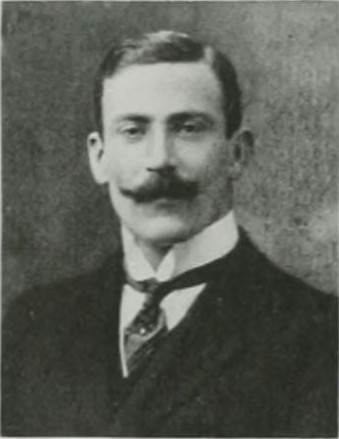
Arthur Charles Burridge.
BURRIDGE, FREDERICK WILLIAM, Private, R.M.L.I., Ch. 15303, H.M.S. Hawke, lost in action in the North Sea, 15 Oct. 1914; m.
BURRIDGE, HENRY GARDINER (Lal), Lieut., 107th Pioneers, Indian Army, s. of the late Lieut.-Col. Francis John Burridge, R.A. (2nd s. of the late William Burridge, of Bradford Court, West Somerset), by his wife, Kitty (The Croft, Lee-on-the-Solent), dau. of Capt. E. Stannard, R.H.A.; b. Bareilly, India, 20 Jan. 1890; educ. Winton House, Winchester, Wellington College (1902–8), and Sandhurst; gazetted 2nd Lieut. 8 Sept. 1909, he was attached to the North Staffordshire Regt. at Nowshera for a year, and on 31 Dec. 1910, was transferred to the Indian Army and posted to the 15th Ludhiana Sikhs; promoted Lieut. 8 Dec. 1911, he transferred to the 107th Pioneers in 1912, and was killed in action (being shot through the head) while ascertaining the extent of damage done by high explosives at La Bassée, 17 Nov. 1914; unm. He was buried in Bethune Cemetery, the men of his company carrying his body back some three miles. His Colonel wrote: “During the short time I knew him I got to recognise and admire his many qualities. He was always bright and jolly whatever his hardships might be, and I have seldom met a more unselfish fellow. He was always keen both at work and play, and was much loved by his men. Since we have been at the front I have much relied on his judgment, and he was my right hand. I miss him greatly. He had endeared himself to me.” At Wellington he was second of three brothers in the Anglesey, a school prefect, a member of the XI and XV, and a gentleman of the Hunt, and won the Challenge Cup in 1908. In 1908 he was passed for Sandhurst, but was sent to the infantry company attached to the R.M.A.
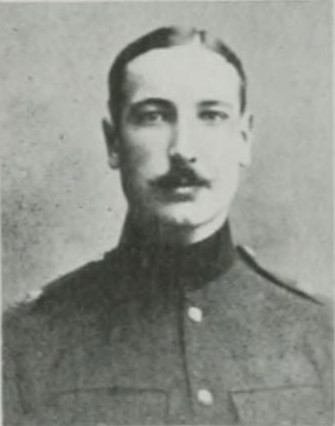
Henry G. Burridge.
BURRINGTON, HARLEY, Private, No. 13615, Grenade Coy., 2nd Infantry Brigade, Canadian Expeditionary Force, 4th s. of the late Gilbert George Burrington, of Bridgwater, co. Somerset, Bank Manager, by his wife, Amelia Frances (Burnham, co. Somerset), dau. of Edward Bryant; b. Bridgwater, 1 Dec. 1883; educ. Haileybury College; went to Canada in 1902; enlisted on the outbreak of war; came over with the first contingent in Oct. 1914; went to France in Feb.; was wounded when coming out of the trenches at Festubert, and died in the General Hospital at Boulogne, 23 July, 1915; unm. He was buried in the Eastern Cemetery there.
BURROW, THOMAS, Private, No. 20447, 10th Battn. 2nd Infantry Brigade, Canadian Expeditionary Force, s. of the late James Burrow, Water Bailiff (died 1905), by his wife, Agnes (Grange Fell, Grange Over Sands, co. Lancaster), dau. of John Rigg, of Hill Farm, Cartmel; b. Grange Over Sands, 5 May, 1893; educ. National School there; went to Canada in 1913, and settled in Alberta. He joined the 103rd Calgary Regt. in 1913, and after the outbreak of war volunteered for service oversea. He came to England with the first Canadian Contingent, was severely wounded at 3 p.m. on 20 March, 1915, in action at Neuve Chapelle, and died the following evening; unm. He was buried in Merivale Cemetery, France.
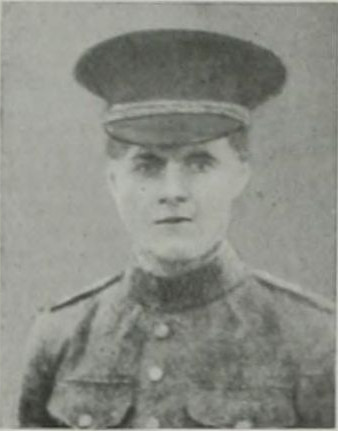
Thomas Burrow.
BURROWS, LEOPOLD CHARLES, A.B. (R.F.R., B. 10748), 203733, H.M.S. Hogue; lost in action in the North Sea, 22 Sept. 1914.
BURROWS, SAMUEL JOSEPH, Private, R.M.L.I. (Ports.), 12278, H.M.S. Good Hope; lost in action off Coronel, on the coast of Chili, 1 Nov. 1914.
BURSNALL, FRANCIS GEORGE, Stoker, R.N.R., 1734U, H.M.S. Cressy; lost in action in the North Sea, 22 Sept. 1914.
BURT, ROBERT WILLIAM, Stoker, 1st Class (R.F.R., B. 4559), S.S. 103678, H.M.S. Good Hope; lost in action off Coronel, on the coast of Chili, 1 Nov. 1914.
BURTON, ALFRED WILLIAM, Private, No. 7803, 1st Battn. North Staffordshire Regt., s. of the late William Burton; b. Haynford, 5 Feb. 1888; educ. there; enlisted 7 Dec. 1904; died 14 March, 1915, of wounds received in action at Neuve Chapelle two days previously. He m. at Haynford, 7 Oct. 1913, Edith Miriam, dau. of Charles Golding; s.p.
BURTON, JAMES ALBERT, Stoker, 1st Class (R.F.R., B. 7513), S.S. 102819, H.M.S. Aboukir; lost in action in the North Sea, 22 Sept. 1914.
BURTON, JOHN, Stoker, 1st Class, K. 10637 (Ports.), H.M.S. Hogue; lost in action in the North Sea, 22 Sept. 1914.
BURTON, REES THOMAS, Private, No. 64831, Royal Field Artillery, s. of the late William Burton (died 20 May, 1898); b. Tylorstown, co. Glamorgan, 26 Sept. 1888; educ. there; enlisted 24 March, 1911, and had finished his three years’ service just five months before the outbreak of war; he immediately rejoined and was killed in action in France between 11 and 14 Sept. 1914; unm.
BURTON, WILLIAM HARRY, Sergt., No. 1420, C Coy., 1st/14th Battn. (London Scottish) The London Regt. (T.F.), s. of Herbert Burton, of North Street, Atherstone, Foreman Hatter, by his wife, Annie, dau. of William Lucas; b. Atherstone, 15 March, 1887; educ. Atherstone Grammar School; joined the London Scottish 1910, and was killed in action at Vermelles, 27 May, 1915; unm. His Commanding Officer, Capt. Claud Low, wrote he “was killed by a shell at 10.15 this morning, in a trench about 2,000 yards east of Vermelles. At the moment of writing this letter your son has not been buried but I am making arrangements for this. If the shelling does not stop before nightfall it will be done then. It may interest you to know that when the shells commenced to strike in this section this morning, your son immediately took steps to get his men into safety, and it was in doing so, in the exercise of his duty as a non-commissioned officer, that he lost his life.”
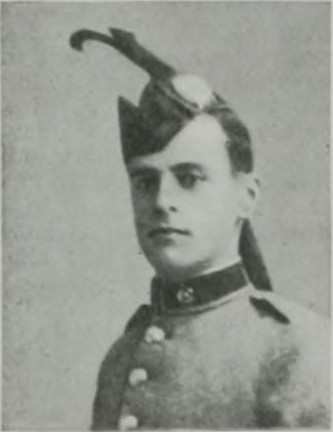
William Harry Burton.
BUSH, ARTHUR DOUGLAS, Private, R.M.L.I. (Ports.), 6857, H.M.S. Good Hope; lost in action off Coronel, on the coast of Chili, 1 Nov. 1914.
BUSH, CHARLES FREDERICK, Private, R.M.L.I. (R.F.R., B. 819), H.M.S. Cressy; lost in action in the North Sea, 22 Sept. 1914.
BUSHELL, WILLIAM THEODORE, L.-Corpl., No. 2816, A Coy., 16th Battn. (Queen’s Westminster) The London Regt. (T.F.), eldest s. of Arthur Forest Bushell, of 39, Moreton Place, Pimlico, S.W., and Biggin Hill, Westerham, Kent, by his wife, Sarah Ann, dau. of William Cooper, of Milton, Kent; b. Pimlico, 17 July, 1883; educ. Westminster Training College, and was for some 14 years in the employ of Messrs. J. W. Benson, Ltd., of Ludgate Hill. On 27 Feb. 1899, at the age of 15, he joined the 1st Cadet Battn. of the Queen’s Royal West Surrey Regt., and leaving them 11 Jan. 1900, joined the old 13th Middlesex Queen’s Westminster Volunteers 5 Nov. following, with whom he served till 8 Dec. 1904. After the outbreak of war he rejoined 2 Sept. 1914, and went to the Front at the end of Jan. The Westminsters were stationed at Houplines, near Armentières, until 28 May, when they were moved up to Ypres. At the Battle of Hooge they were in reserve and were heavily bombarded the whole time. Bushell was hit in the head by a piece of shrapnel shell, and was killed instantaneously at midnight on 16–17 June, 1915. He was unm., and was buried on the side of the Potjhe-Hooge Road, about half a mile from Potjhe. His Commanding Officer, Capt. Stanley Low, wrote: “He was killed by shrapnel whilst doing his duty nobly in the trenches. He was very popular and will be sadly missed by his comrades. I should like to say how well his brother (who recently joined us) behaved, by restraining his natural inclination to go to his brother’s assistance, and remaining on sentry go until someone came to relieve him”; and Lieut. R. S. Dickinson wrote of him as “One of the best soldiers” in his platoon. His third brother, Harry George, joined the Warwickshires on the outbreak of war, and was later transferred to the Westminsters, being with his brother when he was killed. He is now (1916) a 2nd Lieut. in the 10th Suffolks. His next brother, Arthur Frederick, is serving with the Army Service Corps.
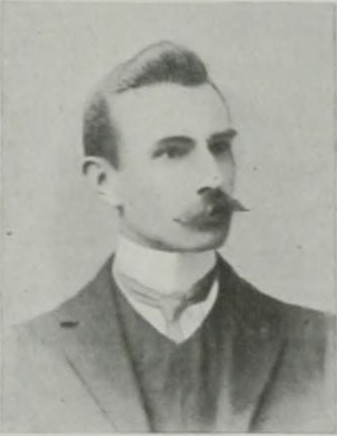
William T. Bushell.
BUSK, EDWARD TESHMAKER, Lieut., London Electrical Engineers (T.F.), s. of Thomas Teshmaker Busk, of Fords Grove, Winchmore Hill, and Hermongers, Rudgwick, co. Sussex, M.A., J.P., by his wife, Mary, dau. of Nathaniel Brindley Acworth, of the Hook, co. Herts, J.P., Chairman of Petty Sessions; b. Fords Grove afsd., 8 March, 1886; educ. Bilton Grange, Rugby, Harrow (Mr. Marshall’s House, 1900–04) and King’s College (Foundation Scholar), Cambridge, where he secured a 1st Class in Part 1 of the Mechanical Sciences Tripos (1907), and carried off the John Winbolt prize next year. He joined the staff of the Royal Aircraft Factory as Assistant Engineer in charge of physical experimental work on 10 June, 1912. There he devoted much of his time to the mathematics and dynamics of stable flight on the full size, as distinct from the model aeroplane. He introduced many valuable improvements, of which it is not permissible to give particulars at the present juncture, his work not being confined to the solution of aeroplane stability, but covering a wide and varied range. His valuable researches into the nature and cause of wind gusts and his work in connection with the offensive and defensive uses of aircraft in warfare may be specially mentioned. He also guided his branch in the production of aeroplane instruments, some of which were exhibited at the Royal Society in May and June, 1913, by permission of the Superintendent, Mr. Mervyn O’Gorman, C.B., Royal Aircraft Factory. By the autumn of 1913, Mr. Busk had carried his researches so far that complete stability without material loss of efficiency could be obtained for any aeroplane designed in accordance with his results. Such an aeroplane was then produced for the first time, and in Nov. 1913, he was able to make flights of several hours’ duration in winds up to thirty-eight miles per hour, without at any time using any balancing, controlling, or steering mechanism whatever, save for alighting purposes. He took Col. Seely on such an uncontrolled flight, and later on made demonstration flights before the King and Queen. The matter was introduced in practical form to the Royal Flying Corps by his taking his Commanding Officer, Col. Sykes, as passenger, from the Royal Aircraft Factory, Farnborough, to Salisbury Plain and back, while both passenger and flier, being freed from the use of controls, wrote notes and observations continuously throughout the journey. This trial was repeated by Col. now Gen. Brancker as pilot as well as many other officers. When at the Wilbur Wright Memorial Banquet (1914), Col. Seely made the first public announcement of his flight on the stable aeroplane produced at the Royal Aircraft Factory, the pilot’s name was veiled in anonymity, only a privileged few knowing that Lieut. Busk was, in fact, the designer of the R.E. 1 now known as B.E. 2C. He was flying over Laffan’s Plain in his own stable aeroplane on 5 Nov. 1914, when it was destroyed by fire at a height of some 800 ft. The cause of the accident is unknown, as he was engaged on experimental work of which he had not given information. Mr. Busk’s scientific attainments and versatility were shown by the variety of matters entrusted to him by the Superintendent of the Royal Aircraft Factory. He resembled other men of genius in the simplicity of his methods, and the speed at which he worked, and he was remarkable for the soundness of the scientific judgments he reached. His mother received the following letter from H.M. the King:—