The Roll of Honour. (continued 41)
Reading edition
RUXTON, WILLIAM RALPH, L.-Corpl., Imperial Light Horse, only child of Charles Harcourt Vernon Ruxton, of Rosmeath, Park Town, Johannesburg, Lieut., 4th South African Horse (now on active service in German East Africa), by his wife, Lauvetta Eliza, eldest dau. of the Rev. Ralph Daly-Cocking, M.A., Incumbent of Holy Trinity, Brighton, and grandson of William Ruxton, of Ardee House, co. Louth, J.P., D.L.; b. Sylhet, Assam, India, 7 Sept. 1895; educ. Park Town School, Johannesburg (1904–6); Mowden School, Brighton (1906–9), and Haileybury College (1909–12), where he was in the O.T.C., and Matriculated at the London University in 1912; on leaving Haileybury entered the Staff of Electrical Works of the Victoria Falls Power Company in Johannesburg; joined the South African Defence Force in 1913, and on the outbreak of the European War in Aug. 1914, enlisted as a trooper in the Imperial Light Horse, being promoted L.-Corpl., in Sept., for plucky conduct under big shell fire at Kumos, N.W. Cape Province, in action against Maritz, leader of the Rebellion, and was killed in action against Kemp on the farm Rooidam, near Upington; unm. Buried there. His Squadron Officer wrote: “We have lost in your son a gallant gentleman whose memory will remain green in the hearts of his comrades.”
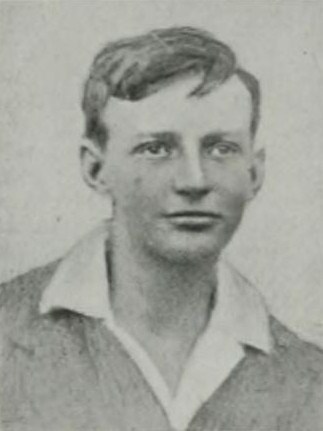
William Ralph Ruxton.
RYAN, CHARLES, Petty Officer (N.S.), 177312, H.M.S. Aboukir; lost in action in the North Sea, 22 Sept. 1914.
RYAN, GEORGE JULIAN, D.S.O., Capt. and Brevet Major, 2nd Battn. Royal Munster Fusiliers, 2nd s. of the late Lieut.-Col. George Ryan, Army Medical Service, by his wife, Louisa Clotilda (Ashby Cottage, Ryde, Isle of Wight), dau. of Major N. Colthurst-Brabazon, 83rd Regt. (R.I.F.); b. Tenby, co. Pembroke, 18 Sept. 1878; educ. Elizabeth College, Guernsey, and United Services College, Westward Ho!, North Devon; gazetted 2nd Lieut., Royal Munster Fusiliers, 8 Sept. 1897, and promoted Lieut. 11 March 1899, Capt. 9 June, 1906, and Brevet Major 7 Nov. 1908, being employed with the Egyptian Army from 6 Feb. 1903, to 15 Feb. 1910; served (1) in the South African War, 1899–1901; employed with the Mounted Infantry in the advance on Kimberley, including actions at Belmont and Modder River; operations in the Transvaal, June-29 Nov. 1900; operations in Cape Colony; operations in the Transvaal, 30 Nov. 1900–March, 1901, and those in the Orange River Colony, March-June, 1901 (mentioned in Despatches [London Gazette, 10 Sept. 1901]; Queen’s medal with five clasps, D.S.O.); (2) in the Soudan, 1905, with force sent against the Nyam Nyam tribes in the Bahr-el-Ghazal Province (mentioned in Despatches [London Gazette, 18 May, 1906]; Egyptian medal with clasp); (3) in the Sudan, 1906; took part in the operations at Talodi, in Southern Kordofan (clasp to Egyptian medal); (4) in the Sudan, 1908: in operations in the Blue Nile Province, then with force commanded by El Lewa Dickinson Pasha sent to punish the murderer of the Deputy Inspector and Police Commandant, who had been treacherously slain at Kamlin; and (5) with the Expeditionary Force in France and Flanders from 22 Aug. 1914; was promoted temp. Lieut.-Col. 22 Jan. 1915, and was killed in action at Givenchy, 23 Jan. 1915, when returning across the danger zone, after inspecting his men in the trenches, while in temporary command of the Battn. He was mentioned in F.M. Sir John (now Lord) French’s Despatch of 22 June, 1915. He was unm.
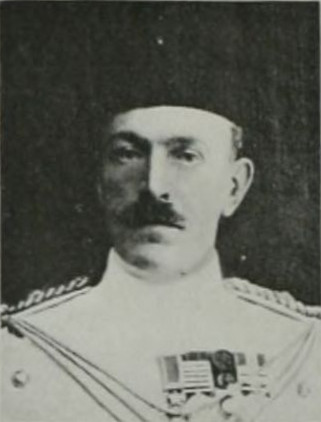
George Julian Ryan.
RYAN, JOHN JAMES, A.B., F.F. 3609, killed in action at Tsing-Tau, 22 Aug. 1914, on board H.M. Destroyer Kennet, while engaged in chasing the German destroyer S.90.
RYE, FREDERICK CLEMENT, Private, R.M.L.I. (R.F.R., Ch. B. 1183), H.M.S. Aboukir; lost in action in the North Sea, 22 Sept. 1914.
RYLANCE, WILLIAM HENRY, Stoker, 1st Class (R.F.R., Ch. B. 4190), 277713, H.M.S. Aboukir; lost in action in the North Sea, 22 Sept. 1914.
RYLANDS, REGINALD VICTOR, Capt. 1/7th Battn. Manchester Regt. (T.F.), elder s. of Richard Walter Rylands, of Ashburn Lodge, Worsley, Manchester, Solicitor, by his wife, Mary Elizabeth, dau. of Richard Isherwood, of Bolton; b. Eccles, 5 Nov. 1891; educ. All Saints’ School, Bloxham, and Shrewsbury School, and after spending a short time in Germany, went to Manchester University, taking his LL.B. in 1912. While there he served his articles as solicitor with his father’s firm, Messrs. Boote, Edgar, Grace & Rylands, of Manchester, Solicitors, and passed his final examination in June, 1914. He was three years in the Cadet Corps at Shrewsbury, was gazetted 2nd Lieut. 1/7th Battn. Manchester Regt. (T.F.), 18 July, 1910, attained the rank of Lieut. 5 Jan. 1912, and received his Company, 26 Sept. 1914. Along with other units of the East Lancashire Territorial Division, his battn. went out to Egypt in the autumn of 1914, and for some time he commanded the detachment that guarded the important railway centre at Atbara, a position of great responsibility for a young officer of 23. He left Atbara, about Feb. 1915, for Khartoum and was later moved to Suez, going to the Dardanelles early in May, 1915, and was killed during a night attack at Gallipoli, 29 May, 1915; unm. Capt. Williamson wrote of him: “He has proved himself to be one of the finest officers that a regiment could have. You can well imagine the amount of grit in a man when he goes forward under heavy fire though badly wounded.... I say unreservedly that I am proud to be in the same regiment as such a man as that.” Lieut. George Chadwick, of the same battn. wrote: “The battn. was ordered to move on the night of 28 May and dig new trenches which the Manchester Brigade were to man on the day of the charge. Your son was on the left, in command of half the Company. We advanced about 11 o’clock, with a full moon which was not to our advantage; we crept to within about 150 yards of the enemy’s trench and started to dig in. A message came down the line that your son had been hit in the shoulder, a Sergt. that was near by gave him water and did everything that was possible, but the bullet must have got in to some vital spot, as he passed away in about five minutes. We put him to rest the next day in a grave in rear of our trench and put him a cross up made out of a periscope which had been broken by a sniper”; and A. E. Fawcus, Capt. and Act. Adjt. 1/7th Manchester Regt.: “On the night 28–29 May, B and D Companies of our Battn. were ordered to advance and dig ourselves in about 200 yards from the enemy’s trenches; this meant advancing across the open under fire for a distance of about 170 yards. Your son was on the extreme left of our Company and trying to get into touch with the Battn. on our left, but as they had failed to reach their proper place he was unable to do so. Unfortunately the moon rose, and as we had no cover were easily seen by the enemy who opened a hot fire on us.... The section he was with consisting of about eight men were cut off from our next trench and we did not get connected with them for about 48 hours. I was receiving verbal messages from him up to about 2 o’clock on 29 May, 1915, and then I heard he was seriously wounded. Unfortunately we were entirely cut off from our lines behind, as the communication sap was only completed after 72 hours and he in turn was cut off from us so that we could give him no assistance. An hour or two later I received a message to say that he was dead. I afterwards heard that he died in five minutes and never recovered consciousness after he was hit. It is difficult to say whether he was hit once only or by a machine-gun. I regret to say that we could not bury him until the third day as on the day after he was killed a party attempted to do so and one man was immediately killed. His men told me he was slightly hit during the advance but this did not deter him from leading his men splendidly. The operation was a difficult one and our casualties were severe, but thanks to the bravery of the men and their officers was successfully carried out.” A younger brother, 2nd Lieut. Harold B. Rylands, is now (1916) attached to the Lancashire Fusiliers, now in France.
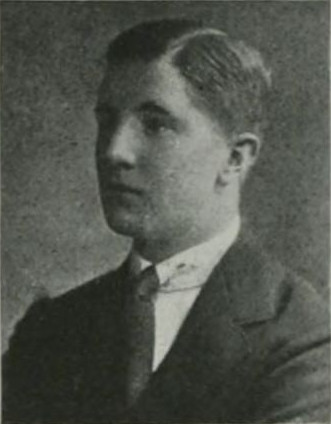
Reginald Victor Rylands.
STOPFORD SACKVILLE, GEOFFREY WILLIAM, Sub-Lieut., R.N.. 2nd s. of the late Col. Lionel Richard Stopford Sackville (Commanding 4th Battn. 1891–7), Rifle Brigade, by his wife, Constance Evelyn (Ecton, Northampton), dau. of Major George Gosling, and grandson of Sackville George Stopford Sackville, of Drayton House, co. Northants, M.P., J.P., D.L. [grandson of Rev. the Hon. Richard Bruce Stopford, 4th s. of James, 2nd Earl of Courtown, K.P., P.C.]; b. South Raglan Barracks, Devonport, 22 May, 1893; educ. St Peter’s Court, Broadstairs, and the Osborne (1906) and Dartmouth Royal Naval Colleges; served as Midshipman on H.M. ships St. Vincent, 15 May, 1911, to 14 Jan. 1912, Cornwallis, 15 Jan. 1912 to 29 Sept. 1913, and Invincible, 30 Sept. 1913 to 31 Dec. 1913; took 1st Class for Seamanship and did his three months course at Portsmouth in H.M. ships Victory, Excellent and Dryad; appointed Sub-Lieut., H.M.S. Hampshire, 30 May, 1914, but never joined, being sent to Britomart Gunboat on arrival at Hong Kong; and on the outbreak of war, 5 Aug. following, was with the rest of the crew drafted to H.M. Destroyer Ribble; served in that ship at the landing at the Dardanelles, 25 April, 1915; was severely wounded while superintending the landing of troops that day, and died 21 May following, in the Bombay Relief Fund Hospital, Alexandria; unm. Commander R. Wilkinson wrote: “Geoffrey was struck in the forehead standing aft, and superintending the disembarkation of soldiers, and cheering them up in his quiet manly way. He was always keen to go into action and to be doing something.”
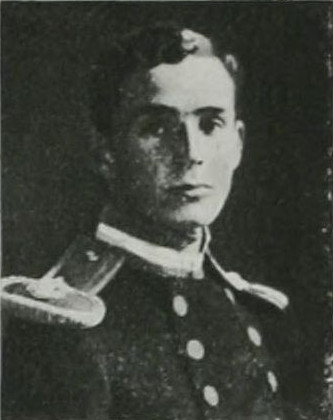
G. W. Stopford Sackville.
SADLER, ROBERT HENRY, Trimmer, 92 T.S., Trawler Section R.N.R.; lost when the mine sweeping Trawler No. 61 (Thomas W. Irvine, of North Shields) was sunk by a mine, Aug. 1914.
SADLER, WILLIAM, Stoker, 1st Class (R.F.R., Ch. B. 7474). S.S. 102594, H.M.S. Aboukir; lost in action in the North Sea, 22 Sept. 1914.
SADLER, WILLIAM EDWARD, 2nd Lieut., 3rd, attd. 2nd, Battn. South Lancashire Regt., eldest s. of William Frederick Sadler, of 41, Hampstead Lane, N., East India Merchant, by his wife, Ada Mary Barton, dau. of the late Z. F. Warren; b. Upper Clapton, 20 Sept. 1896; educ. Cranleigh School, and Highgate School, and on leaving the latter in May, 1913, entered the employ of Messrs. Price, Forbes & Co., of Lloyds. Having served 4½ years in the O.T.C., he applied for a commission on the outbreak of war, and was gazetted 2nd Lieut., 10th South Lancashires, 13 Nov. 1914, but quickly transferred to 3rd Battn.; went to France, 24 March, 1915, attd. to 2nd Battn., and was killed in action while deepening some partly made trenches on Hill 60, near Ypres, 8 May, 1915; unm. His Col. wrote: “He died gallantly, doing his duty. His company commander had a very high opinion of him. Shortly before he was hit I had been round his platoon in the trenches and thought what a cheerful, smart young fellow he was, and how well and bravely he was doing his duty,” and the Adjutant, Major (now Lieut.-Col.) Cotton: “He was a gallant lad, most deservedly popular and a thoroughly—especially I might say—promising young officer, keen, energetic, and reliable”; and numerous other letters from officers and friends bear testimony to his energy, capability, and great courage.
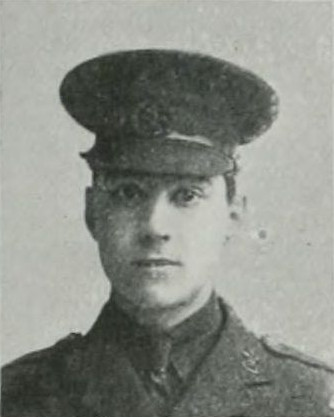
William Edward Sadler.
SAIGEMAN, JACK, A.B. (R.F.R., B. 4805), S.S. 1717, H.M.S. Good Hope; lost in action off Coronel, on the coast of Chili, 1 Nov. 1914.
ST. CLAIR, HON. CHARLES HENRY MURRAY, Capt., 1st Battn. Seaforth Highlanders, yr. s. of Charles William, 15th Baron Sinclair, formerly 57th Foot (with which he served in the Crimea and Indian Mutiny), by his wife, Margaret Jane, yr. dau. of James Murray, of Bryanston Square; b. 19 Dec. 1878; educ. Eton and Royal Military College, Sandhurst; gazetted 2nd Lieut. 2nd Battn. Seaforth Highlanders, 7 May, 1898, and promoted Lieut. 12 Dec. 1899; served in the South African War, 1899–1902, took part in the advance on Kimberley, was present with the Highland Brigade at Magersfontein, and also in the demonstration at Koodoosburgh against the right of the Boer position, and in the final scene at Paardeberg (17–26 Feb., mentioned in Despatches), Poplar Grove and Dreifontein; was attached to Brig.-Gen. Sir H. Rawlinson’s Column as signalling officer during the operations in the Orange Free State and Transvaal, 1900–1, including the actions at Wittebergen (1 to 29 July), and received the Queen’s medal with five clasps and King’s medal with two clasps. He became Capt. 19 April, 1902, served as Adjutant 2nd Battn. Seaforth Highlanders, June, 1903–6, was A.D.C. to Gen. Sir Bruce Hamilton, commanding 2nd Division at Aldershot, June, 1906–7, and Staff Capt. Scottish Command, 1908–12, in which last year he was posted to the 1st Battn. of his regt. then at Agra. He landed in France with the Indian (Meerut) Expeditionary Force, 13 Oct. 1914, and served in the north of France until the 20 Dec. following, when he was killed in action in the trenches near La Bassée; unm. He was mentioned in Despatches by F.M. Sir John French, 31 May, 1915. Capt. St. Clair was a member of the King’s Bodyguard for Scotland (Royal Company of Archers) and a Knight of the Saxe-Ernestine Family Order.
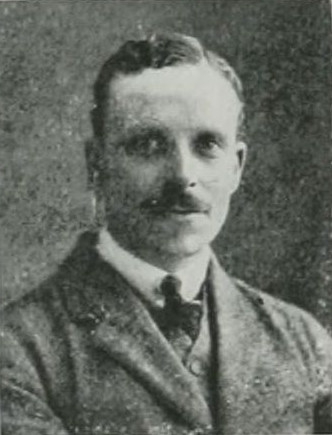
Charles H. M. St. Clair.
ST. GEORGE, GUY STANFORTH WEMYSS, Lieut., 1st Battn. King George’s Own, Gurkha Rifles, only surviving s. of the late Lieut.-Col. Harry Hamersley St. George, Senior Ordnance Officer, Scottish District, by his wife, Agnes Collin Wemyss (The Cottage, Lexden, Colchester), dau. of George Wright Loch; b. Colombo, Ceylon, 1 July, 1888; educ. Wellington College and Sandhurst: gazetted to the 1st Royal Scots Fusiliers, 19 Jan. 1907, and promoted Lieut. 19 April, 1909. In 1908 he was transferred to the Indian Army and was appointed to the 1st Gurkha Rifles. When the war broke out his regiment was sent first to Egypt, and then to France in Nov. 1914, where he was made Brigade Machine-Gun Officer. He was in action at Festubert and Neuve Chapelle, and became Adjutant on the death of Capt. Gilbert Kennedy. Lieut. St. George was mortally wounded at Ypres, 27 April, 1915, and died the following day, and was buried at Hazebrouck, France; unm. His Col. wrote to his mother: “Since Capt. Kennedy was shot, your son has been adjutant, and, as such, has been constantly with me and has endeared himself greatly to me. His death is a great shock to me; he was a most capable soldier, and a first-rate Adjutant, and he will be a very great loss to the regiment”; and Gen. Powell said: “His loss has been very much felt by the 1st. as he was so liked by his brother officers and so much thought of as a capable and promising officer. He appealed to me because of his keenness for rifle shooting; a great shot, a good marksman, and an enthusiastic sportsman.”
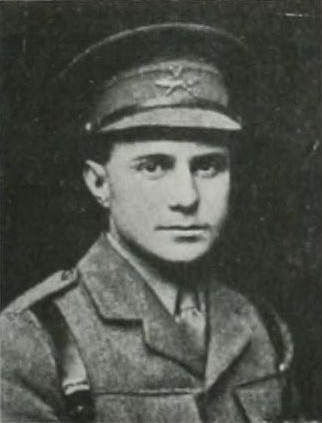
Guy S. W. St. George.
SAIT, JOHN, Private, No. 20248, East Surrey Regt. (T.F.), s. of Thomas Sait, of Red Lion Lane, Tolworth, Carpenter; b. Hammersmith, London, 19 March, 1863; educ. Tolworth; enlisted in the 2nd East Surreys, 24 June, 1878; served 7 years and 87 days with the Colours, and 4 years 278 days in the Reserve, obtaining his discharge, 23 June, 1890; took part in the Egyptian War, 1885 (medal with clasp and bronze star); rejoined 9 Nov. 1915; died in Knockaloe Camp, Isle of Man, 15 Jan. 1916, of double pneumonia contracted while on active service. He m. at Kingston-on-Thames, 1 July, 1887, Ellen (27, Cross Street, Hampton Hill, Middlesex), dau. of Charles Russell, Gamekeeper, and had six children: John Thomas, b. 22 Jan. 1889; Arthur Edward, b. 7 May, 1904; Henry James, b. 1 July, 1906; Margaret Ethel, b. 3 July, 1891; Florence May, b. 16 Dec. 1896; and Gwendoline, b. 22 Feb. 1897.
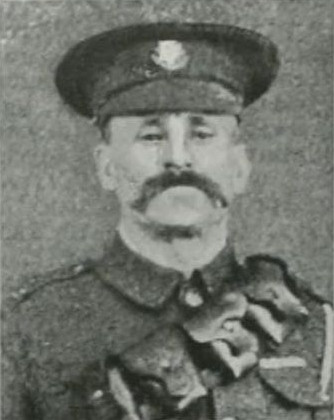
John Sait.
SALE, ALEXANDER GORDON, Lieut., King’s African Rifles, yr. s. of Richard Sale, of Barrow-on-Trent, Derbyshire, J.P., by his wife, Mary Alexina, dau. of Alexander Gordon, of Ashludie, Forfarshire, D.L., J.P.; b. Barrow-on-Trent, co. Derby, 14 Nov. 1894; educ. Horris Hill, and Repton School; went to British East Africa in Feb. 1914, and was on the Staff of Pauling & Co., Contractors for the Railway to the Magadi Soda Lake, but on the outbreak of war in Aug. of the same year joined a Pioneer Corps and was engaged in laying telegraph wires and making transport roads, until he was given a commission in the King’s African Rifles, in Jan. 1915. He was killed in action during his first engagement at Utegi, Nyanza Province, British East Africa, 9 March, 1915; unm. Buried on the border of German East Africa. While at Repton he was head of his house, a school prefect and a sergt. in the O.T.C., and obtained his colours for both cricket and football.
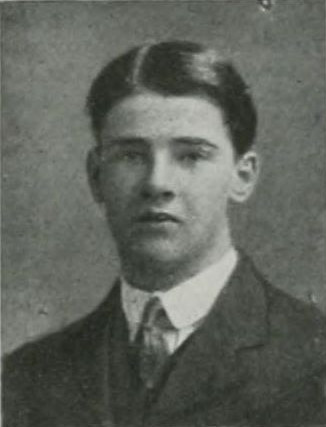
Alexander Gordon Sale.
SALE, FREDERICK HAROLD, Yeoman of Signals, 226735, H.M.S. Hogue; lost in action in the North Sea, 22 Sept. 1914.
SALES, HENRY, Stoker, Petty Officer 29, 4058, H.M.S. Pathfinder; lost when that ship was sunk by a mine, about 20 miles off the East Coast, 5 Sept. 1914.
SALMON, ALBERT, Stoker, 1st Class, 302930 (Ports.), H.M.S. Hogue; lost in action in the North Sea, 22 Sept. 1914.
SALMONI, FRED STANLEY, L.-Corpl., No. 791, 15th Battn. Australian Imperial Force, s. of William Salmoni, of 8, Elm Street, Cardiff; b. there 24 Dec. 1892; educ. Stacey Road Board School, Cardiff, emigrated to Queensland in 1912; on the outbreak of war enlisted in the Australian Contingent, and was killed in action at Gallipoli, 28 April, 1915; unm. On the morning of the 27th his platoon commander, Lieut. T. Robertson, with a party of thirty picked men (including Salmoni) went forward to occupy an outpost position in advance of the main line of defence. Early the following morning the enemy massed in large numbers opposite their position and demanded their surrender; this was refused, but as they were greatly outnumbered they had to retire, and only a few of the party succeeded in reaching the main line. Although killed on 28 April, his body was not found until the 24 May. He was buried in Shrapnel Valley, about one mile north-east of Gaba Tepe. Before going to Australia he was a member of the 14th Coy. of the Cardiff Boys’ Brigade.
SALT, THOMAS FREDERICK CYRIL, 2nd Lieut., 11th (Service) Battn. (2nd Gwent) South Wales Borderers, formerly Private, No. 3203, 3rd Battn. Monmouthshire Regt., only s. of Thomas Frederick Salt, of Gwentland, Abertillery, co. Monmouth, Colliery Proprietor, by his wife, Mary Ellen, dau. of the late John Carpenter, Colliery Proprietor; b. Arral House, Aberbeeg, co. Monmouth, 26 Oct. 1893; educ. County Intermediate School, Abertillery, and on leaving there was articled to Mr. W. Stewart, M.E., Managing Director of Messrs. Powells’ Tillery Colliery Co., with whom he served for four years; volunteered for foreign service on the outbreak of war in Aug. 1914, and joined the 3rd Monmouthshire Regt. (T.F.); trained at Northampton and Cambridge; went to France, Jan. 1915; was wounded in action at Neuve Chapelle, 15 March, 1915, and died in No. 8 Casualty Clearing Station, 3 April following; unm. Buried in Bailleul Cemetery. A comrade wrote: “From the time we went to Northampton to the fatal night he and I had been great pals, and during our stay in France we always slept and lived together. When he went away to hospital I was sadly alone, and felt his absence keenly. The evening he was shot his platoon was relieving us in the firing line, and it was within 20 yards of his destination that the blow came. As the men of his platoon were filing by me I heard someone say ‘Cyril is hit,’ and I immediately went out and found him, and in company with three other fellows took him to cover of our trench. The bullet had entered his temple right behind his right eye, and passed through parallel with his forehead. As soon as we got under cover another young fellow and I bandaged his wounds and sent for the ambulance. As the enemy’s fire at this time was very hot and our parapets were in places blown away, the work of our stretcher-bearers was much hindered, and as a consequence they were unable to move Cyril for about two hours. Meanwhile, I got coats, etc., and made him as comfortable as possible. At intervals I would talk and try to cheer him up, and it was honestly grand to see the way poor Cyril would try to pull himself together. He was a soldier in every sense of the word.... In losing Cyril, not only I but the whole regt. has sustained a great loss, and his absence caused quite a gloom over us all. With the officers as well as the men he was highly respected, and I don’t think in this world there was a more conscientious and upright fellow breathing. It will be gratifying, and I am positively certain a great joy to you, to know that he led a real Christian life, and died as you would have wished him. On more than one occasion he has prompted me, and was ever on the alert to do a good turn when he thought necessary. I cannot possibly say enough in his favour. He honestly was a genuine pal.... He laid down his life for freedom and the right, and his end was a glorious one.” He had been gazetted 2nd Lieut. to the 11th South Wales Borderers, 6 March, 1915, and he was on the point of returning to England to take up his commission when he was wounded.
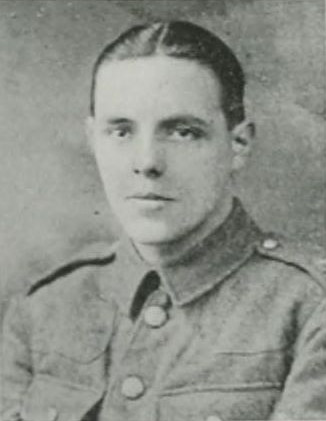
Thomas Frederick C. Salt.
SALTER, JOHN, Private, No. 1816, 10th Battn. Australian Imperial Force, 3rd s. of the late Charles Salter, by his wife, Henrietta (55, Albert Terrace, Cardigan Road, Leeds), dau. of Alexander Broughton; b. Leeds, 31 Jan. 1886; educ. Central High School there; was employed by the Leeds City Tramways, and was a Member of the Leeds Engineers (T.F.), 1905–7; went to Australia in Sept. 1912, and settled at Adelaide, S. Australia, as a Tramway Trust employee; volunteered for Imperial service after the outbreak of war in Aug. 1914, and joined the 10th Battn. in Dec.; left for Egypt in April, 1915; went to the Dardanelles in May, 1915, and was killed in action at Gaba Tepe, 16 June following; unm. Buried there.
SALTMARSH, WILLIAM, Private, No. 12461, 1st Battn. Coldstream Guards, s. of William Saltmarsh, of 17, Jacob Wells Mews, George Street, Manchester Square, London, W., Coachman, by his wife, Anne, dau. of William Wallis, of Shenfield, Brentwood, Essex; b. Hutton, co. Essex, 10 June, 1892; educ. St. Mary Abbotts School, Kensington; was a Brass Finisher; enlisted in the Coldstreams after the outbreak of war, 23 Sept. 1914; trained at Caterham, Surrey; went to France, 14 Feb. 1915, and died in No. 13 General Hospital, Boulogne, 25 March following, of wounds received in action at the Battle of Neuve Chapelle on the 20th; unm. Buried at Boulogne.
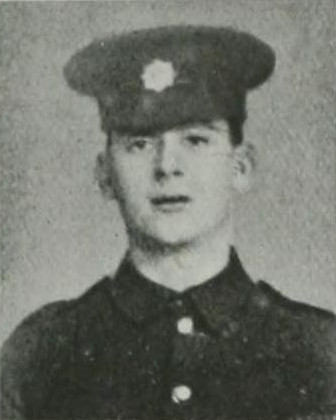
William Saltmarsh.
SALVESEN, EDWARD MAXWELL, 2nd Lieut., 2nd Battn. Royal Dublin Fusiliers, 2nd s. of Edward Theodore Salvesen, a Lord of Session with the title of Hon. Lord Salvesen, etc., by his wife, Isabelle, dau. of John Trayner, LL.D., Hon. Lord Trayner of the Court of Session; b. Crawford Priory, co. Fife, 30 Aug. 1891; educ. Cargilfield, Midlothian; Clifton College, and University College, Oxford, where he was a member of the O.T.C., and graduated with 2nd Class Honours in Law in Oct. 1914; enlisted as a trooper in Lovat’s Scouts in Sept. 1914, and after training with them for two months was given a commission in the Reserve Battn. of the Royal Dublin Fusiliers, Dec. 1914; went to France to join the 2nd Battn., 1 Jan. 1915, and was killed in action near St. Julien, 25 April following; unm. He was engaged to Kitty, dau. of Hugh Peake, of Lambton Hall, Hounslow.
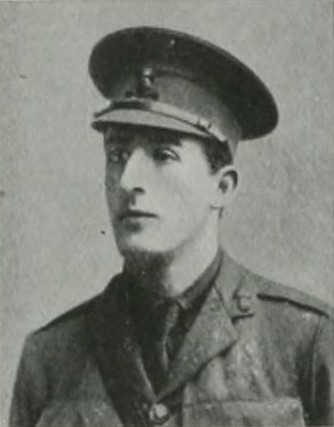
Edward Maxwell Salvesen.
SAMPSON, FREDERICK JOHN, Stoker, 1st Class, K. 14507, H.M.S. Pathfinder; lost when that ship was sunk by a mine, about 20 miles off the East Coast, 5 Sept. 1914.
SAMS, HARRY, Private, R.M.L.I., Ply. 4095 (R.F.R., Ch. B. 648), H.M.S. Aboukir; lost in action in the North Sea, 22 Sept. 1914.
SAMSON, WILLIAM HORACE, Leading Stoker, 182954, H.M.S. Pathfinder; lost when that ship was sunk by a mine, about 20 miles off the East Coast, 5 Sept. 1914.
SANDBACH, WILLIAM, Major, 6th (Service) Battn. King’s Own Royal Lancaster Regt., yst. and last surv. s. of the late Rev. Gilbert Sandbach, Rector of Upper Sapey, co. Hereford, J.P., by his wife, Margaret, dau. of Archibald Maxwell, and grandson of Samuel Sandbach, of Woodlands, co. Lancaster, and Hafodunos, Abergele, J.P.; b. Upper Sapey, 24 Oct. 1865; educ. Eton, and the Royal Military College, Sandhurst; gazetted 2nd Lieut. 7th Royal Fusiliers, 7 Feb. 1885; transferred into King’s Own Royal Lancaster Regt. in 1885, being promoted Lieut., and Capt. 21 Oct. 1895; served in India, Malta, Gibraltar, and through the South African War, 1899–1902; took part in relief of Ladysmith, including operations of 17–24 Jan. 1900, and action at Spion Kop (severely wounded); operations in the Transvaal, May–June, 1900; operations in Natal, April-June, 1900, including action at Laings Nek; operations in Orange River Colony, June, 1900; operations in the Transvaal, 30 Nov. to Dec. 1900, Feb. to March, 1901, and April to 31 May, 1902, and operations in Orange River Colony, Sept. to Nov. 1901 (mentioned in Despatches [London Gazette, 8 Feb. 1901]; Queen’s medal with four clasps, King’s medal with two clasps). He retired 15 July, 1903, and in 1907 bought the property of Hazelby, near Newbury, where he resided until the outbreak of war, when he immediately offered his services and joined the 6th (Service) Battn. of his regt. He was gazetted Capt. Reserve of Officers, 13 Sept. 1914, and promoted Major 24 Oct. following; left for Gallipoli, 12 June; landed at the Dardanelles about 10 July, and was killed in action during the attack on Chanak Bair, 9 Aug. 1915. Buried in the Gallipoli Peninsula, near the scene of action. The Adjutant, Capt. Birley, wrote: “I want to tell you what a noble death your gallant husband died. He was the first one of all to give us warning of the Turks’ attack about 4.45 last Monday morning. Quite early on in the engagement he got a terrible wound in the mouth, and I saw him in the firing line trying to give his men instructions as though nothing had happened. I begged him to go back to the Regimental Aid Post, to have his wound properly dressed, but he wouldn’t leave his men. The next I saw of him was taking ammunition boxes across the open to be refilled, and he was finally killed whilst rallying his men back into the trenches. He was shot through the heart, and must have died instantaneously.... I should just like to tell you that I am mourning the loss of a splendid comrade and brave brother-officer, and that the Battn. in general, and his own company in particular, was simply devoted to him.” He was mentioned in Sir Ian Hamilton’s Despatch of 11 Dec. 1915 [London Gazette, 28 Jan. 1916]. He m. at St. Mary’s Cathedral, Edinburgh, 1907, Helen Margaret (Hazelby, Newbury), yst. dau. of the late Rev. Canon Robert James Dundas, for 33 years Rector of Albury, near Guildford, and had three children: Peter Dundas, b. 17 Oct. 1907; Ralph Maxwell, b. 20 April, 1909; and Pamela Margaret, b. 11 Jan. 1910.
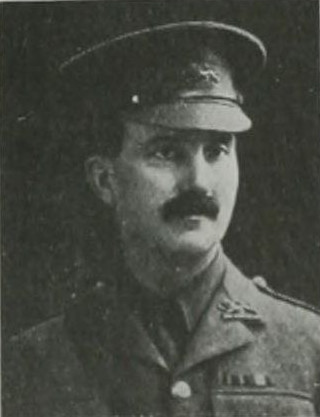
William Sandbach.
SANDERS, RICHARD INGERSOLL (JACK), Private, No. 26001, 14th Battn. (Royal Montreal Regt.), Canadian Expeditionary Force, 2nd s. of James Harris Sanders, of 110, Cannon Street, E.C., Merchant, by his wife, Marie Louise, dau. of James Ingersoll Day, of U.S.A.; b. Shenley, co. Herts, 21 April, 1891; educ. Temple Grove, East Sheen, and Wellington College, and on leaving there went to Germany, where he remained for just over a year. On his return to England he started in business with Messrs. Jardine, Mathesons, Merchants, London; went to Canada in Dec. 1911; was for a short time in the Bank of Montreal, and then in the British Trade Commissioners’ Office there, but subsequently entered the firm of A. K. Drury, of Montreal, and only left them on the outbreak of war in Aug. 1914, when he volunteered for Imperial service, and joined the 14th Battn., D Coy.; came over with the first contingent in Oct. 1914; went to France, 10 Feb. 1915, and was reported “wounded and missing” after the fighting near St. Julien, during the Second Battle of Ypres, 24 April, 1915, and is now assumed to have been killed in action on that date; unm.
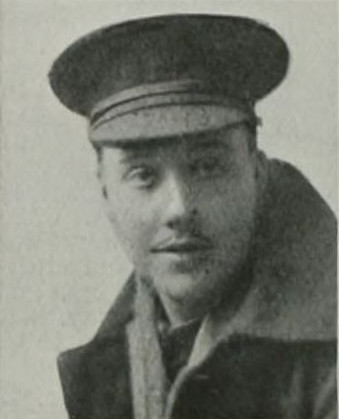
Richard Ingersoll Sanders.
SANDERSON, ARTHUR WATSON, T.D., Major, 1/7th Battn. The Royal Scots (Lothian Regt.) (T.F.), yst. s. of the late William Sanderson, of Leith, Distiller; b. Leith, 31 May, 1870; educ. Edinburgh Institution; was a Rectifier and British Wine Manufacturer; joined the 5th Vol. Battn., The Royal Scots, 9 Jan. 1895; and became Major (Special Reserve of Officer), 21 Dec. 1908; volunteered for foreign service after the outbreak of war; landed at the Dardanelles about 12 June, and was killed in action there, 28 June, 1915. He m. in 1905, Ethel C. (Lyne Villa, 252, Ferry Road, Edinburgh), dau. of the late Robert L. Watson, of Dundee, and had four children.
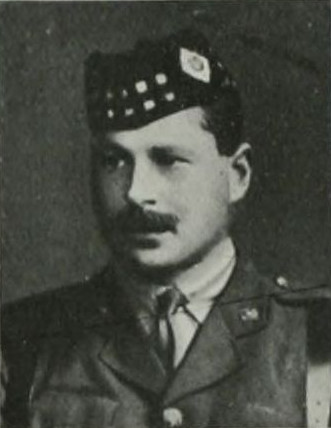
Arthur W. Sanderson.
SANDERSON, JOHN, A.B. (R.F.R., Ch. B. 9224), 202928, H.M.S. Aboukir; lost in action in the North Sea, 22 Sept. 1914.
SANDERSON, PHILIP NOEL, Capt., 1st Battn. King’s Own Scottish Borderers; 2nd s. of William John Sanderson, of Eastfield Hall, Warkworth, co. Northumberland, by his wife, Amy, dau. of Peter Wright, of Upper Clapton; b. at Newcastle, 24 May, 1887; educ. Marlborough and Sandhurst; received a commission in the 2nd Battn. King’s Own Scottish Borderers, 9 Oct. 1907, was promoted Lieut. 24 March, 1909; exchanged to the 1st Battn., and went with them to Khartoum and India. Here he made a special study of signalling, and when ordered to Ismailia, in Oct. 1914, was appointed to Gen. Wilson’s Staff, and the following month gazetted Capt. Returning to England during the equipment of the 29th Division, he was stationed at Rugby, whence he proceeded to the Dardanelles. He landed 25 April, fell mortally wounded on the 26th, and was taken to the hospital ship Guildford Castle, where he died the same day. He was buried at sea a mile off Cape Helles the next morning, with his Colonel, another officer, and six of his men. Capt. Sanderson m. at Lucknow, Doris, dau. of Charles Jordan, of Richmond, Yorkshire; s.p.
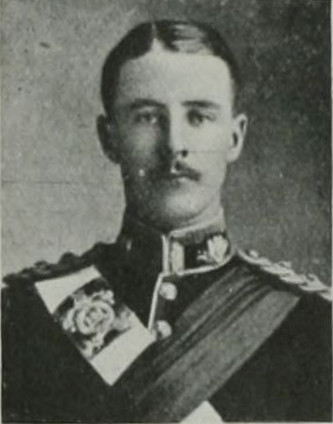
Philip N. Sanderson.
SANDHAM, JAMES FREDERICK, Sergt., No. 566, 1/3rd Battn. (Royal Fusiliers) The London Regt. (T.F.), only s. of James Sandham, of 6, East Block, Peabody Buildings, Chelsea, by his wife, Sophie, dau. of William Bryant; b. Chelsea, S.W., 19 Nov. 1888; was in the employ of Messrs. George Pulman & Sons, Printers, of High Street, Marylebone; joined B Coy. 1/3rd Battn. Royal Fusiliers, of which Mr. H. Pulman was Capt., 8 May, 1909; volunteered for Imperial Service, and left for Malta, 4 Sept. 1914; left there for France, 31 Dec. following, and died at the Clearing Hospital, Merville, 12 March, 1915, of wounds received in the Battle of Neuve Chapelle on the 10th. Buried in Merville Cemetery, Grave F 2. Capt. H. A. Moore, commanding D Coy., 1/3rd Royal Fusiliers, wrote he “died from wounds received while serving with my company in a charge which was successfully made against the German trenches in the afternoon of Wednesday, the 10th, during the recent Battle of Neuve Chapelle. It will be some comfort for you to know that Sergt. Sandham did his duty bravely, and fought and died like a true British soldier.” And a comrade wrote that the battn. had lost one of its best men, who had died like a hero, his last words being to kiss his boy and to tell his wife not to worry as he had done his duty. Sergt. Sandham m. at Marylebone Parish Church, 1911, Alice (16p, Sutton Dwellings, Chelsea, S.W.), dau. of William Brown, of 39B, Lewis Buildings, Chelsea, and had a son, Frederick Alfred, b. 18 Nov. 1911.
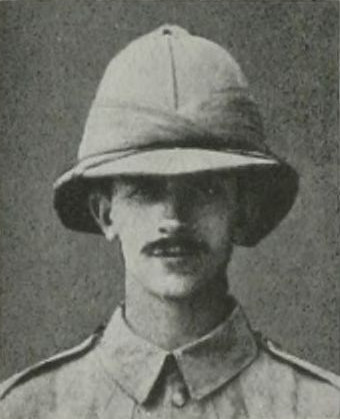
James Frederick Sandham.
SANDISON, JOHN BURNETT, Private, No. 16768, 1st Battn. The Royal Scots, eldest s. of Lewis Grant Sandison, of West Granton Road, Edinburgh, Printer, Compositor, by his wife, Isabella, dau. of John Burnett; b. Edinburgh. 6 Sept. 1882; educ. Board School there; volunteered for foreign service during the Boer War and enlisted in the Royal Scots; served there in South Africa, 1902 (medal); on leaving the Army went to America, and Canada, where he worked at various occupations in various places; returned to England, 1 Jan. 1915, and at once enlisted in his old regt.; went to France in March, and died in No. 8 Field Hospital, 23 June following, from wounds received in action at Ypres on the 21st; unm.
SANDS, HUGH, Stoker, 1st Class, S.S. 109990, H.M.S. Aboukir; lost in action in the North Sea, 22 Sept. 1914.
SANSOM, ROBERT ANDREW, A.B. (R.F.R., B. 855), 217455, H.M.S. Good Hope; lost in action off Coronel, on the coast of Chili, 1 Nov. 1914.
SANSOME, ARTHUR, A.B., 210412, H.M.S. Hawke; lost when that ship was torpedoed in the North Sea, 15 Oct. 1914.
SAPSTEAD, GEORGE FREDERICK, Private, R.M.L.I., Ch./12320, H.M.S. Aboukir; lost in action in the North Sea, 22 Sept. 1914.
SARFAS, ALBERT EDWARD, Petty Officer (N.S.), 166241, H.M.S. Good Hope; lost in action off Coronel, on the coast of Chili, 1 Nov. 1914.
SARGEANT, WILLIAM, Painter, 1st Class, 170798, H.M.S. Good Hope; lost in action off Coronel, on the coast of Chili, 1 Nov. 1914.
SARGEAUNT, ARTHUR FREDERICK, Lieut.-Col., Royal Engineers, eldest s. of Col. Richard Arthur Sargeaunt, of Aspley Guise, co. Beds, late R.E., by his wife, Emily Alberta, dau. of Charles Sargeaunt, J.P.; b. Bombay, 1 Nov. 1870; educ. Marlborough College, and the Royal Military Academy, Woolwich; gazetted 2nd Lieut. 14 Feb. 1890; and promoted Lieut. 4 Feb. 1893; Capt. 13 Feb. 1901; Major 14 Feb. 1910, and Brevet Lieut.-Col. for his services, 1915; served in the South African War, 1899–1902; took part in the operations in Cape Colony, 30 Nov. 1900–31 May, 1902 (Queen’s medal with clasp and King’s medal with two clasps); was instructor at the School of Military Engineering from 1 Oct. 1908 to 13 Feb. 1910; went to France, 8 Sept. 1914, in command of a Field Coy.; was subsequently appointed Commanding Royal Engineer of a Division, and was killed in action near Ypres, 31 July, 1915. Buried at Brandhoek. He was twice mentioned in F.M. Sir (now Lord) French’s Despatches [London Gazette, 17 Feb. and 22 June, 1915]. He m. at St. Thomas’s Church, Edinburgh, 9 May, 1906, Clare Marguerite, dau. of Andrew Smart, of Edinburgh, M.D., LL.D., F.R.C.P.E., and had two daus.: Hilda Clare, b. 13 Feb. 1907; and Aileen Marguerite, b. 18 Feb. 1909.
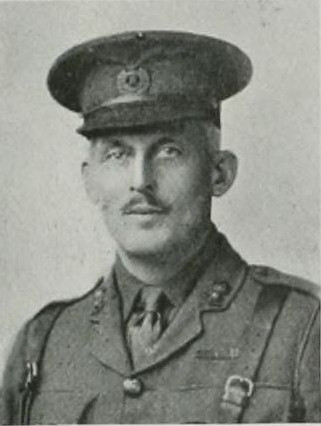
Arthur F. Sargeaunt.
SARGENT, ALFRED, Ch. E.R.A. (Pensioner, Pension No. 17108), 132356, H.M.S. Hogue; lost in action in the North Sea, 22 Sept. 1914.
SARGENT, FREDERICK, Chief Ship’s Cook, 149368, H.M.S. Aboukir; lost in action in the North Sea, 22 Sept. 1914.
SARGENT, HENRY BENJAMIN, Stoker, 1st Class, K. 17490, H.M.S. Pathfinder; lost when that ship was sunk by a mine, about 20 miles off the East Coast, 5 Sept. 1914.
SAUL, CHARLES THOMAS, Leading Signalman, 217688, H.M.S. Good Hope; lost in action off Coronel, on the coast of Chili, 1 Nov. 1914.
SAUNDERS, ARTHUR COURTENAY, Capt., 2nd Battn. Duke of Cornwall’s L.I., yr. s. of Lieut.-Col. Robert Erasmus Saunders, of Alton Pancras, Dorchester J.P., formerly of 1st Battn. 7th Royal Fusiliers, and of 3rd Battn. Dorsetshire Regt., by his wife, Edith Marion, dau. of Col. James William Graves, 18th Royal Irish Regt.; b. Rownhams House, near Southampton, 29 May, 1883; educ. Northwood House, near Winchester (Mr. T. Eastman), and Clifton College; gazetted 2nd Lieut. in the Duke of Cornwall’s L.I., from the Militia, 4 May, 1901; promoted Lieut. 6 July, 1904, and Capt. 26 Oct. 1911; was employed with the King’s African Rifles from 20 Oct. 1909, to Dec. 1914; served in the Somaliland Expedition, 1908–10 (medal with clasp); was in command of the Chebling Patrol against the Marakwet tribe Oct. and Nov. 1913 (mentioned in Despatches of 29 Dec. 1913); and of a force of the King’s African Rifles, when they repulsed a much stronger force of the enemy, including 50 Europeans with six Maxims, at Mizima on Tsavo River, 26 Sept. 1914. He rejoined his own regt., 25 Jan. 1915, and went to France, 6 March; and was killed in action at St. Eloi, 14 March, 1915; unm. Buried at Dickebusch about three kilometres from Ypres. On leaving the King’s African Rifles, Sir H. Conway Belfield, K.C.M.G., wrote to him: “As I understand you are rejoining your regt. at the expiration of your leave after five years’ service in the 3rd Battn. King’s African Rifles, I have pleasure in expressing to you my satisfaction at the efficient manner in which you have performed important duties in the British East Africa, and in commending you for the sterling and soldierlike qualities which you have exhibited. Your handling of your men in the recent skirmish at Mizima was most creditable, and is testimony to your skill as a tactician.” Lieut.-Col. H. D. Tuson, after the death of Capt. Saunders, wrote: “He had only arrived the previous day, and was commanding a company on the day the Germans attacked the trenches near St. Eloi, and during the attack was moving by a communication trench from one of his trenches to another when he was shot through the head and killed instantaneously,” and Major F. A. Dickenson: “He was doing extremely well when he was killed. When we were attacked in force he collected some of his men and rushed up a communication trench and held on for a long time, and so helped stave off the attack, which gradually dwindled away till we re-took the last trenches by a vigorous counter attack.” Lieut.-Col. B. R. Graham, Commanding 3rd King’s African Rifles, wrote from Nairobi: “I am very grateful for the sad details regarding your son’s death. He was a very gallant soldier who did not know the meaning of the word ‘fear’ and we all tender our very genuine sympathies in the loss you have suffered, and which we share,” and an officer who served with him in British East Africa: “I have known him for the last few years well. He was a soldier, a sportsman, and a man, and it was with grief I read of his death to-day.” He won the officers’ championship cup at the Garrison rifle meeting at Gibraltar in 1906, while serving with the Duke of Cornwall’s L.I., and played in the polo team of that Battn.
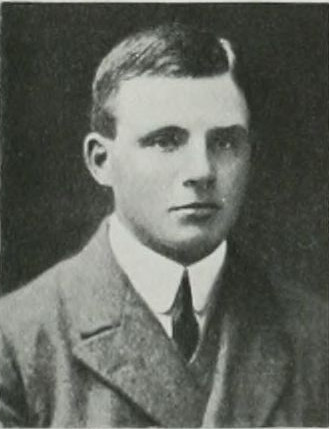
Arthur C. Saunders.
SAUNDERS, FREDERICK, Private, No. 9920, 3rd Battn. Coldstream Guards, s. of Edwin Saunders, of Cadbury, Thorverton, Farm Labourer, by his wife, Mary; b. Cadbury aforesaid, 31 May, 1893; educ. Cadbury School; was a Farm Labourer; enlisted in the Coldstreams, 1 Jan. 1913; went to France in Aug. 1914, and died in Aldershot Hospital, 11 Nov. 1914, of wounds received in action on 29 Oct.; unm.
SAUNDERS, RICHARD, A.B. (R.F.R., B. 3799), 202656, Chat., H.M.S. Good Hope; lost in action off Coronel, on the coast of Chili, 1 Nov. 1914.
SAUNDERS, ROBERT EDWARD, Leading Seaman (R.F.R., B. 4184), 193887, H.M.S. Hawke; lost when that ship was torpedoed in the North Sea, 15 Oct. 1914; m.
SAUNDERS, STANLEY ROLAND, L.-Sergt., R.M.L.I., Ports./11383, H.M.S. Good Hope; lost in action off Coronel, on the coast of Chili, 1 Nov. 1914.
SAUNDERS, WALTER LAYTON, Private, No. 7075, 3rd Battn. Worcestershire Regt., only s. of William Walter Saunders, of 136, Muirkirk Road, Catford (professionally known as Walter Fullerton, Humourist), Letter Sorter at G.P.O, by his wife, Anne, dau. of Thomas Morgan; b. at Walworth, S.E., 17 Oct. 1883; educ. Hollydale Road Board School, East Lambeth; enlisted in 3rd Worcesters, 8 July, 1902, and served three years with the Colours and nine with the Reserve; being for more than two years in the Officers’ Mess. His time with the Reserve expired on 7 July, 1914, but on the outbreak of war he volunteered for foreign service with his old battn., left for France, 30 Aug. 1914, and was killed in action near La Bassée, 27 Oct. following. He was much liked and esteemed in his regt. His commanding officer, on his leaving the service, wrote that he had found him “an excellent lad in every way.” He m. at St. Mary Magdalene Church, Southwark, 7 Jan. 1911, Olivia Sophia (49, Surrey Square, Walworth, S.E.), only dau. of William Monk Wheeler, and had a son: Walter Ernest Louis, b. 3 Oct. 1912.
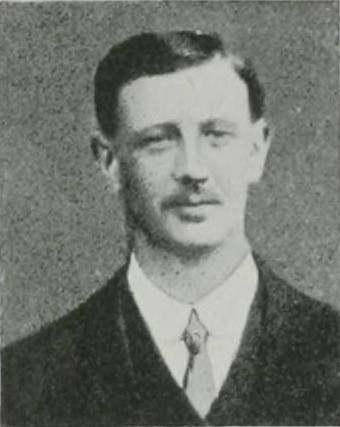
Walter Layton Saunders.
SAUNDERS, WILLIAM, Private, No. 10912, 1st Battn. Royal Dublin Fusiliers, s. of the late Richard Saunders; b. Dublin; educ. St. John’s School there; enlisted 5 Aug. 1910; joined the 2nd Battn. at Aldershot, and was drafted to the 1st Battn. in India; returned to England with his regt., arriving 23 Dec. 1914; went to the Dardanelles, 6 March, 1915, and was killed in action there, 14 May following; unm. Buried on the Beach there.
SAVAGE, ARTHUR HENRY, Private, No. 2000, 4th Battn. Royal Sussex Regt. (T.F.), s. of Henry Savage, of Sutton, Pulborough, Sussex. Gamekeeper to Lord Leconfield, by his wife, Ann, dau. of Henry Carver, of Tillington, Petworth, Sussex; b. Tillington, Petworth, co. Sussex; was a Gamekeeper on Lord Leconfield’s estate; enlisted 24 Aug. 1914; trained at Newhaven; left England with the Mediterranean Expeditionary Force, 10 July, 1915, and was killed in action at the Dardanelles, 12 Aug. 1915; unm. He was buried in a cornfield at Anafarta Sagir, 1:20,000, 105 H Furrow.
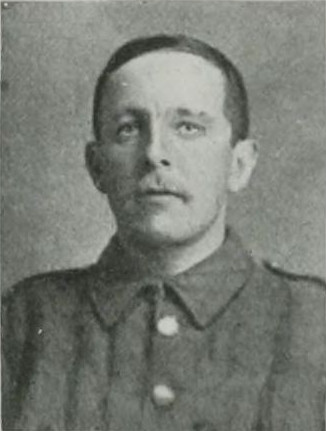
Arthur Henry Savage.
SAVAGE, EDWIN, Petty Officer (N.S.), 202244, H.M.S. Good Hope; lost in action off Coronel, on the coast of Chili, 1 Nov. 1914.
SAVAGE, HARRY, Chief Armourer, 340576, H.M.S. Aboukir; lost in action in the North Sea, 22 Sept. 1914.
SAVAGE, JOHN ARDKEEN, Capt., 1st Battn. Northamptonshire Regt., elder s. of the Rev. Francis Forbes Savage, Vicar of Flushing, Falmouth, by his wife Ethel Margaret; b. Chatham, 16 Sept. 1883; educ. Kelly College, Tavistock; obtained a commission as 2nd Lieut. in the 3rd (Militia) Battn. West Riding Regt., Oct. 1899, and served with it in the South African War, 1900–1, taking part in the operations in Cape Colony, Dec. 1900, to June, 1901 (Queen’s medal with four clasps); gazetted 2nd Lieut. to the Royal Garrison Regt., 22 Nov. 1902, and promoted Lieut. 30 May, 1904; transferred to the 1st Northamptons (then in India), 8 July, 1905, and became Capt. 28 March, 1912; served with the West African Frontier Force from June, 1909, to Nov. 1913; left for France, 12 Aug. 1914, and was killed in action near Troyon, during the Battle of the Aisne, 17 Sept. 1914; unm. Buried near Troyon.
SAVIN, THOMAS, Private, R.M.L.I., Ch. 13859, H.M.S. Hawke; lost when that ship was torpedoed in the North Sea, 15 Oct. 1914.
SAWKINS, CLAUDE THOMAS, Boy, 1st Class, J. 22753, H.M.S. Hawke, s. of Oscar Joseph Sawkins, of Kingsland Cottage, Fingringhoe, near Colchester; lost when that ship was torpedoed in the North Sea, 15 Oct. 1914.
SAWYER, THOMAS HENRY, M.A.A., 150159, H.M.S. Hawke; lost when that ship was torpedoed in the North Sea, 15 Oct. 1914; m.
SAXTON, HAROLD HENRY, Rifleman, No. 1641, A Coy., 16th (Queen’s Westminster Rifles) Battn. The London Regt. (T.F.), eldest s. of George Henry Saxton, of Church Street, Eastwood, co. Notts., by his wife, Mary Wilcockson, dau. of Henry Bircumshaw, and grandson of Henry Saxton, J.P.; b. Eastwood, 15 March, 1895; educ. Heanor Secondary School and Grosvenor School, Nottingham. Later he took up a business appointment in London with Messrs. Shoolbreds, when he was invited by the management to join A Coy. of the Queen’s Westminsters, of which Lieut.-Col. Rupert Shoolbred was commanding officer, and accepted. On the outbreak of war he wrote to his parents intimating that the Brig.-Gen. had promised the Grey Brigade for foreign service, when needed, and went on to say, “The Queen’s Westminster Rifles is one of the regts. that form the Grey Brigade, and practically all the fellows have volunteered to go abroad if necessary. I feel it my duty to do so, not because the others have done so, but because I am a trained man. I know a fellow has his duty to his home as well as his country, and if you say I have not to volunteer I shall not. Of course, I know you won’t want me to go, but it’s the same with every fellow, and someone must do it.” He went with his regt. to France early in Nov, and was killed in action, being shot through the head by a sniper at Armentières, 10 Dec. 1914; unm. He was buried in Chapelle d’Armentières Cemetery. His commanding officer wrote of him to his mother in the highest terms of appreciation, both as his commanding officer and as a member of the firm whose company was proud to include him amongst its members. Sergt.-Major A. H. Davis wrote to his father: “He was such a good chap, and had the making of a splendid soldier. He was very keen at everything he had to do.”
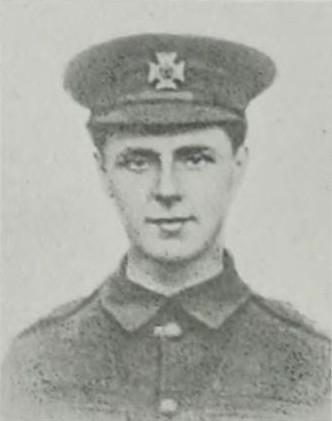
Harold Henry Saxton.
SAYER, ROBERT WILLIAM, Private, No. 10872, 2nd Battn. Durham L.I., eldest s. of James Sayer, of Sunderland, Labourer, by his wife, Margaret, dau. of William Burn Moore, of Sunderland; b. Millfield, Sunderland, 6th June, 1879; educ. Bishopwearmouth; enlisted in the 1st Durham L.I.; was seven years with the Colours and five with the Reserve; served through the South African War (Queen’s and King’s medals with bars for the relief of Ladysmith), 1899–1902, and in India; was then employed at Osborne, Graham; re-enlisted for the war, 5 Oct. 1914, and died 7 Aug. 1915, of wounds received in action at Ypres. He m. at St. Bennett’s, Sunderland, 1907, Agnes (8, Clarendon Street, Southwick-on-Wear), dau. of John Tunney, of Mayo, and had four children: John James, b. 7 March, 1912; Robert William, b. 23 Sept. 1914; Margaret Agnes, b. 1 Aug. 1907; and Emily, b. 13 Sept. 1909.
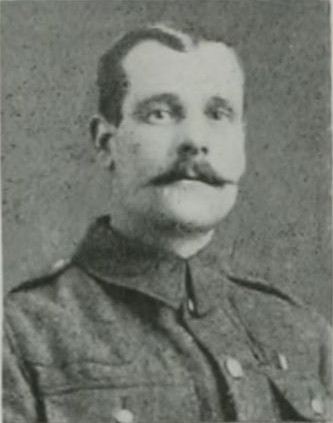
Robert William Sayer.
SAYER, STANLEY KILBOURNE, Ordinary Signalman, J. 21993, H.M.S. Cressy; lost in action in the North Sea, 22 Sept. 1914.
SCAMATON, PATRICK, Ship’s Steward’s Assistant, 347430, H.M.S. Aboukir; lost in action in the North Sea, 22 Sept. 1914.
SCARFE, JOHN WILLIAM (alias ERIC GREY), Chief Stoker, 177681, H.M.S. Cressy; lost in action in the North Sea, 22 Sept. 1914.
SCARTH, JOHN WILLIAM, Private, No. 10683, 2nd Battn. Coldstream Guards, 2nd s. of John William Scarth, of 10, Prospect Terrace, Neville’s Cross, Durham, formerly A.B., R.N., by his wife, Annie, dau. of the late Thomas Atkinson, Verger at Durham Cathedral; b. Durham, 27 Feb. 1895; educ. Crossgate Parish School there; enlisted 15 April, 1914, and died in No. 13 General Hospital at Boulogne, 15 Nov. 1914, of wounds received in action at Rentel on 29 Oct.; unm. Buried in Boulogne Cemetery.
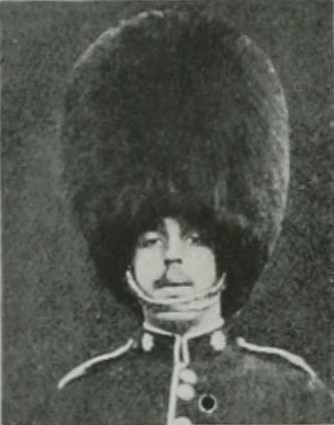
John William Scarth.
SCATCHARD, THOMAS, Capt., Royal Army Medical Corps, yst. s. of Thomas Edward Scatchard, of Boston Spa, co. York, M.R.C.S., L.R.C.P., by his wife, Martha, dau. of Robert Theakston; b. Boston Spa, 6 July, 1878; educ. Epsom College; gazetted Lieut. in the R.A.M.C., 31 July, 1905, and promoted Capt. 31 Jan. 1909; joined his regt. at Aldershot, where he served for 18 months, then proceeded to India and was there for 5½ years, being stationed at Lucknow, Agra, Kailana and Ranikhet; returned to England, and served the nine months’ course at Millbank, London, for promotion to Major, and then a year at Connaught Hospital, Aldershot, where he was when war was declared in Aug. 1914; went to France with the 26th Brigade, R.F.A., 16 Aug. 1914, and was killed in action near Sablonnières on 8 Sept. following. Buried in the Cemetery there. He m. at Agra, India, 12 Nov. 1907, Ada Mary, yst. dau. of Col. Hugh de la Motte Hervey, and granddau. of Gen. Hervey, C.B., and had a dau.: Phyllis May Lindsay, b. 20 Dec. 1908.
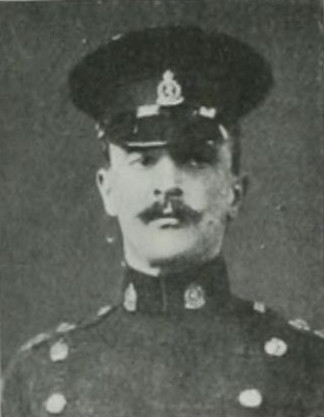
Thomas Scatchard.
SCHLEIDER, GEORGE JAMES WILLIAM, Rifleman, No. 1882, 1/21st Battn. (1st Surrey Rifles) The London Regt. (T.F.), s. of Jacob Thomas Schleider, of 2, Darlington Road, West Norwood, late R.E.; b. Dulwich, 12 March, 1898; educ. Gipsy Road School, West Norwood; volunteered and joined the 1st Surrey Rifles, 15 Aug. 1914; served with the Expeditionary Force in France, and was killed in action at Givenchy, 25 May, 1915, by the bursting of a shell.
SCHMIDT, HENRY, Car. Crew, M. 1936, H.M.S. Hawke, s. of Henry Schmidt, of 49, Bowen Road, Harrow, co. Middlesex; lost when that ship was torpedoed in the North Sea, 15 Oct. 1914.
SCHMIDT, HENRY JOHN, Corpl., No. 1047, 14th Battn., 4th Infantry Brigade, Australian Imperial Force, only s. of the late Henry Charles Schmidt, Baker and Confectioner, by his wife, Annie (now wife of William Godfrey Fish, of 70, Woodstock Street, Canning Town, London, Bootmaker), dau. of Eli Benn; b. Plaistow, London, E., 3 May, 1895; educ. Holy Trinity Schools there; went to Australia in 1912, and settled at Melbourne as a Clerk; volunteered for Imperial service on the outbreak of war in Aug. 1914; left for Egypt, 24 Dec. 1914; went to the Dardanelles, April, 1915, and was killed in action at Lone Pine, 7 Aug. 1915 following; unm. Buried there. Capt. Andrew Gillison, Chaplain to the 14th Battn. wrote: “After reaching the position by a night advance, the Battn. took up the post and dug in on the morning of that date. The enemy, who were holding a ridge opposite, were firing on our men, and Corpl. Schmidt was unfortunately hit by a bullet which passed through his body. He was very cheery and we thought he might pull through, but shortly afterwards he became unconscious and death ensued very speedily. He was such a bright cheery fellow and a general favourite ... [he] was buried with an officer and another comrade near the place where he fell.”
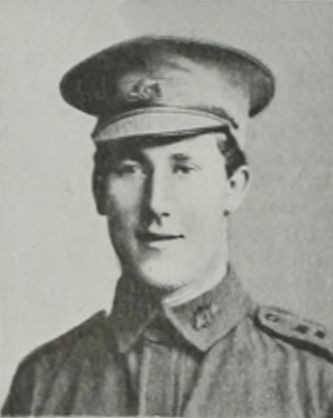
Henry John Schmidt.
SCHNEIDER, HERBERT HUGO, 2nd Lieut., Royal Engineers (S.R.), 2nd s. of Theodore Schneider, of Granville House, Overhill Road, Dulwich, S.E., Merchant; b. East Dulwich, 5 Feb. 1888; educ. Bedales School, Petersfield, Hants, and at the Crystal Palace School of Practical Engineering; was assistant to the firm of Messrs. Barry, Leslie & Egerton, 1907–9; elected a Graduate of the Institution of Mechanical Engineers, 1909, and an Associate Member, 1914; gazetted 2nd Lieut. to the Special Reserve of Officers, R.E., 8 Jan. 1910; went to West Africa, 1911, and served as Assistant Engineer on the Lagos Railway Northern Extension, Northern Nigeria; returned to West Africa in 1912, after leave of absence, as Assistant Engineer on the Sierra Leone Government Railway; appointed Surveyor to the Survey of Northern Nigeria, 1914, and was holding this post when war broke out; joined the West African Frontier Force, Sept. 1914, and was killed in action at Lum, near Molle Bridge, in the Cameroons, 5 Dec. following; unm. The General Officer Commanding wrote: “Lieut. Schneider was killed instantaneously. His loss is much felt, as, in addition to his attractive personality, he was a most capable young officer, and had done previously particularly meritorious work with the Royal Engineers.” Chief Engineer, Capt. Frank L. Giles, wrote: “He was always so cheery and bright, and yet his keenness and energy for his work were inexhaustible, and with this were combined technical skill and absolute thoroughness and reliability and complete fearlessness.”
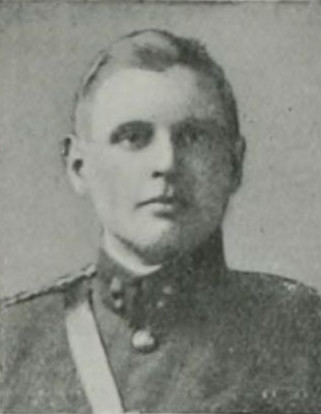
Herbert Hugo Schneider.
SCHOFIELD, THOS., A.B. (R.F.R., B. 2864), S.S. 186, H.M.S. Good Hope; lost in action off Coronel, on the coast of Chili, 1 Nov. 1914.
SCHREIBER, VIVIAN GEORGE EDWARD SPENCER, Midshipman, H.M.S. Monmouth, only child of the late Major Julian Meade Schreiber, 12th Battn. Suffolk Regt. (Vol.), by his wife Hilda Rose (Patcham Place, Patcham, Sussex), 2nd dau. of the late S. B. Abinger, of Hampton House, Hampstead, N.W.; b. Thames Ditton, co. Surrey, 21 Feb. 1899; educ. Holyrood House, Bognor (Naval Preparatory School), Osborne and Dartmouth; appointed Midshipman to H.M.S. Monmouth, flagship of Rear-Admiral Sir Christopher Cradock, 4 Aug. 1914, and was lost when the Monmouth was sunk in the battle off Coronel, on the coast of Chili, 1 Nov. following; unm.
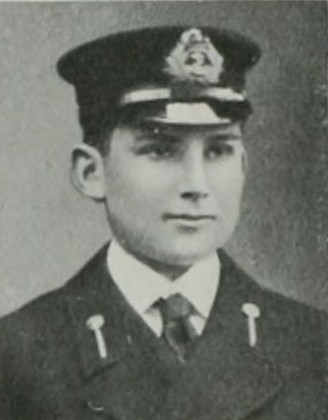
Vivian G. E. S. Schreiber.
SCHURER, LOUIS HENRY, Petty Officer, 1st Class (R.F.R., A. 1935), 134774, H.M.S. Hogue; lost in action in the North Sea, 22 Sept. 1914.
SCHWABEN, HENRY ROBERT, Private, No. 1984, 10th Battn. Middlesex Regt. (T.F.), attached 2nd Battn. Norfolk Regt., 3rd s. of the late Hans Walter Schwaben, Engineer and Artist (b. Gelsenkirchen, Germany; came to England with his parents in 1875, became denationalised in 1875, and died in London, 25 May, 1914), by his wife, Helena Geraldina (5, Fairfax Road, Bedford Park, W.), dau. of Peter Henry Jordan, 60th Rifles (who served through the Crimea and Indian Mutiny); b. Edinburgh, 17 July, 1889; educ. Birmingham and London; was a Traveller; served for some years in the King’s Royal Rifle Cadets, and then for three or four years in the Royal Bucks Hussars (Volunteers) Yeomanry; volunteered and enlisted in the 10th Middlesex, the second week in Aug. 1914; was one of 16 selected for the Scout Section of the battn.; went to India in Oct.; volunteered for service in the Persian Gulf in Feb. 1915; went there attached to the 2nd Norfolks, and died of dysentery while on active service, 29 July, 1915; unm. Buried at Asaui, 14 miles below Nasaryeh. An officer wrote: “I know that his section officer in the Middlesex thought very highly of him, and told me he was giving me one of his best men.”
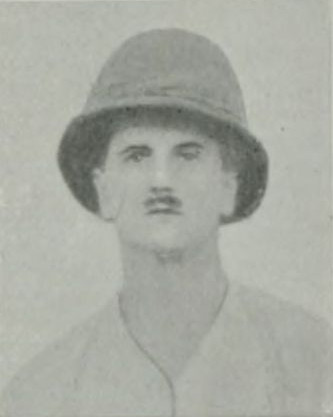
Henry Robert Schwaben.
SCINDEN, ALFRED, Private, R.M.L.I. (R.F.R., Ch. B. 846), H.M.S. Cressy; lost in action in the North Sea, 22 Sept. 1914.
SCOTT, ALEXANDER, Private, No. 9689, 1st Battn. Scots Guards; b. Barony, co. Lanark; enlisted 2 Sept. 1914; served with the Expeditionary Forces in France, etc.; killed in action between 4 and 12 Nov. 1914. He m. at Leith, 4 April, 1893, Rachel (3, Cavendish Place, Edinburgh), dau. of (—) Cavanagh, and had a son John, b. 9 Dec. 1902.
SCOTT, CHARLES, Seaman, R.N.R., 2930 A., H.M.S. Aboukir; lost in action in the North Sea, 22 Sept. 1914.
SCOTT, CHARLES EDWARD ARTHUR, Leading Seaman, 218970, H.M.S. Pathfinder; lost when that ship was sunk by a mine, about 20 miles off the East Coast, 5 Sept. 1914.
SCOTT, DAVID CAMERON, Private, No. 1389, 5th Battn. The Royal Scots (T.F.), s. of James Scott, of 2, Glenorchy Place, Edinburgh, Baker, by his wife, Isabella C.; b. Edinburgh, 29 July, 1895; educ. London Street School there; joined the Boys’ Brigade connected with the Greenock Parish Church; became Staff Sergt., and, in 1912, joined the Royal Scots (T.F.); volunteered for foreign service on the outbreak of war, 5 Aug. 1914; went to the Dardanelles, and was killed in action there, 27 May following; unm. Buried there.
SCOTT, EDWARD CLAUD, 2nd Lieut., 28th Coy. Royal Garrison Artillery, only surviving s. of the late Gen. Hugh Aboukir Scott, R.A., by his wife, Laura Millicent (The Garth, Winchester), dau. of Henry Wells Allfrey; b. Jersey, 15 May, 1892; educ. Repton; gazetted 2nd Lieut., R.G.A., 23 Dec. 1911; joined the 5th Siege Battery, 19 Feb. 1912; left for France, 27 Sept. 1914, and was killed in action near Armentières, 21 Nov. following. Buried at Fleurbaix, near Armentières; unm.
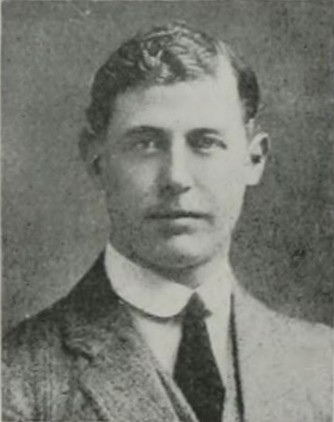
Edward Claud Scott.
SCOTT, FRANCIS WILLIAM, Sapper, No. 5203, Canadian Engineers, Canadian Expeditionary Force, late Lieut., R.N., yr. s. of the late Hon. Henry Robert Hepburne-Scott, of Knipton, Grantham, by his wife, Lady Ada, née Douglas Home (Nisbet Mill, Ancrum, Roxburghshire), dau. of Cospatrick, 11th Earl of Home; b. Springhill, Coldstream, 19 Aug. 1886; educ. Remenham, Henley-on-Thames, and Ascham School, Bournemouth; entered the Royal Navy as a Naval Cadet on H.M.S. Britannia, 24 May, 1901, became Sub-Lieut. March, 1907, and Lieut. 31 Dec. 1908; and was invalided out of the service in Aug. 1912, owing to deafness. He then went to British Columbia and when war broke out was at Kitselas, on the Skeener River, Prince Rupert. He immediately went to Vancouver City and joined the 1st Coy. Canadian Engineers. He came over with the first contingent, Oct. 1914; went to France, Feb. 1915, and died, 4 May, 1915, in Boulogne Hospital, from wounds received in action on the Ypres Canal two days previously. He was buried in the British Military Division, Boulogne Cemetery (Grave No. 1885); unm. He received the bronze medal of the Royal Humane Society for saving life at sea, 15 Jan. 1910, while acting as Lieut. on H.M.S. Hindustan off Spithead.
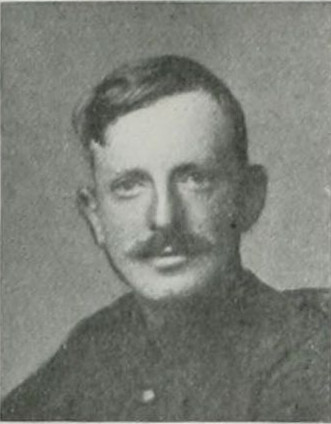
Francis William Scott.
SCOTT, GEORGE, L.-Corpl., No. 11518, A Coy., 2nd Battn. The Royal Scots (Lothian Regt.), s. of Charles Scott, of 2, Hawthorn Vale, Leith, Engineer, by his wife; b. Leith, 8 Aug. 1895; educ. North Fort Street School there; enlisted in the Royal Scots, 6 June, 1913; served with the Expeditionary Force in France, and was killed in action at Hooge, 26 Sept. 1915; unm.
SCOTT, HENRY FRANK, Private, No. 12490, 1st Battn. Somersetshire L.I., s. of Samuel Scott, of Lansdown View, Rush Hill, Bath, Labourer, by his wife, Lydia, dau. of William Green; b. Camerton, near Radstock, 25 Oct. 1890; educ. Church School there; enlisted Sept. 1914, and was killed in action in France, 27 April, 1915; unm.
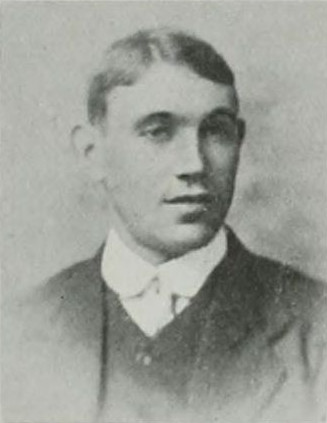
Henry Frank Scott.
SCOTT, RICHARD THOMAS FOLLIOTT, Lieut., 1st Battn. East Yorkshire Regt., eldest s. of the Rev. Richard Curtis Folliott Scott, Rector of Hulcote and Salford, co. Bedford, by his wife, Edith Marion, dau. of Thomas R. Wilson, of Newlands, Hitchin, co. Herts; b. Arlesey Vicarage, co. Bedford, 8 Dec. 1893; educ. The Knoll, Woburn Sands, and Lancing College; gazetted 2nd Lieut., East Yorkshire Regt., 17 Sept. 1913, and promoted Lieut. 30 Oct. 1914; went to France in Aug. 1914, and was killed in action near Hooplines, 16 March, 1915; unm. Buried in Hooplines Cemetery.
SCOTT, ROBERT FRASER, Private, No. 2086, 13th Battn. (Princess Louise’s Kensington) The London Regt. (T.F.), 4th s. of the late James Edward Scott, Shipbroker (died 10 June, 1915); b. London, 15 July, 1888; educ. City of London School; and on leaving there entered his father’s business; volunteered for foreign service on the outbreak of war in Aug. 1914, and joined the 13th London Regt.; served with the Expeditionary Force in France, and was killed in action at Laventie, 23 Dec. following; unm. Buried Aux Quatre Paroises, between Ypres and Armentières. An officer wrote: “He had all the ideal qualities of a good soldier, though he really should have been an officer; he was always cheerful, he did not care at all whether a task was dangerous or not, and he never shirked any duty. It was through doing his duty that he died, and I know, from what he said to me, that no death could have been nearer his choice.”
SCOTT, VICTOR, Private, No. 4054, 10th Battn. (Liverpool Scottish) The King’s Liverpool Regt. (T.F.), only s. of Frank Scott, of 42, Warbreck Road, Aintree, Capt. in Booth Steamship Co., by his wife, Mary Elizabeth, dau. of John Fulton; b. Liverpool, 28 March, 1894; educ. Skerry’s College there; was a Shipping Clerk; volunteered and joined the Liverpool Scottish, 11 Nov. 1914; went to France, 12 Feb. 1915, and was killed in action at Hill 60, 11 March, 1915, during the fighting in the Ypres salient; unm. Buried at Zillebeke.
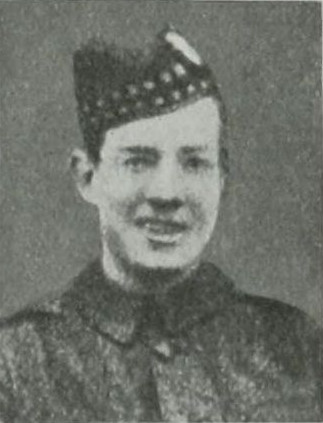
Victor Scott.
SCOTT, WALLACE, A.B. (R.F.R., B. 4984), S.S. 1805, H.M.S. Good Hope; lost in action off Coronel, on the coast of Chili, 1 Nov. 1914.
SCOTT, WILLIAM, Corpl., No. 1101, 1st Battn. The Black Watch (Royal Highlanders), only s. of William Scott, of 28, Glover Street, Perth, Assistant Stationmaster, North British Railway, Perth General Station, by his wife, Jessie, dau. of Thomas Tosh; b. Craigie, Perth, 26 Jan. 1890; educ. Western District School and Sharp’s Institution, Perth; was for some time a clerk in the firm of Messrs. Thomas & McLeish, Solicitors, Perth; enlisted in the Black Watch, 23 Dec. 1907; went to France, 13 Aug. 1914, and was killed in action near Bigshute, 23 Oct. following, during a charge on the German trenches; unm. He was a first-class shot, and for over three years had been clerk to the President of the Regimental Institute. He was also a good musician (organ and piano), being exceedingly fond of music.
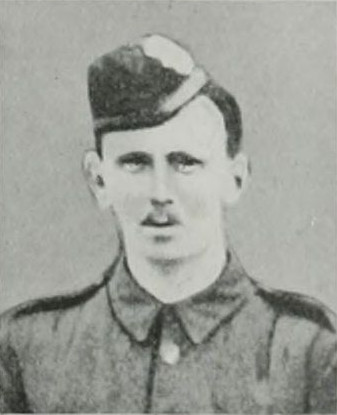
William Scott.
SCOTT, WILLIAM, Private, R.M.L.I., Ch./16447, H.M.S. Cressy; lost in action in the North Sea, 22 Sept. 1914.
SCOTT, WILLIAM LESLIE, Lieut., 1/5th (Buchan and Formartin) Battn. Gordon Highlanders (T.F.), elder s. of William Leslie Scott, of Peterhead, Solicitor, by his wife, Elizabeth Campbell, dau. of the Rev. James Lowe, Minister of Thornton; b. Peterhead, 24 Dec. 1892; educ. at home and at Peterhead Academy; was studying medicine at Aberdeen University, but after the outbreak of war received a commission as 2nd Lieut., and was gazetted to the 2/5th Battn. of the Gordon Highlanders, 24 Nov. 1914. He was transferred to the 1/5th Battn. 19 April, 1915, and was promoted Lieut. about the time that battn. joined the Expeditionary Force in France. He was killed in action during the fierce fighting that took place at and along the lines from Festubert, 16 June, 1915; unm. He was buried immediately behind the firing line, not far from Festubert village.
DAWSON-SCOTT, JOHN KEARSLEY, Capt., Royal Engineers, yst. s. of Gen. Robert Nicholl Dawson-Scott, of Brent House, Penrith, Col. Commandant, Royal Engineers, by his wife, Grace Mansel, dau. of John Whitlock Stradling-Carne; b. The Grove, Boltons, South Kensington, 18 May, 1883; educ. The Castle, Tonbridge; Tonbridge Grammar School, and the Royal Military Academy, Woolwich; gazetted 2nd Lieut. Royal Engineers, 31 July, 1902, and promoted Lieut. 26 Dec. 1904, and Capt. 31 July, 1913; was on home service, 1902–6, on foreign service at Cairo, 1906–11, and was appointed 2nd Assistant Instructor, School of Military Engineering, 24 April, 1912; went to France with the 1st Army Corps, attd. to the 5th Field Coy., R.E., in Aug. 1914, and was killed in action near Zonnebeke, 29 Oct. following, by a high explosive shell, while reconnoitring the German position at a distance of about 300 yards; unm. Buried there. Brig.-Gen. Rice wrote: “We R.E. of the 1st Army have had many severe losses during this battle near Ypres, but none that we deplore more than that of your boy,” and his commanding officer, Major North: “He was the most able assistant a company commander could hope for.” Capt. Dawson-Scott received the cross of Knight of the Legion of Honour for gallantry during the operations between 21–30 Aug. His eldest brother, Lieut. Geoffrey Nicholl Dawson-Scott, R.G.A., died on active service at Pretoria, 31 Dec. 1900, during the Boer War.
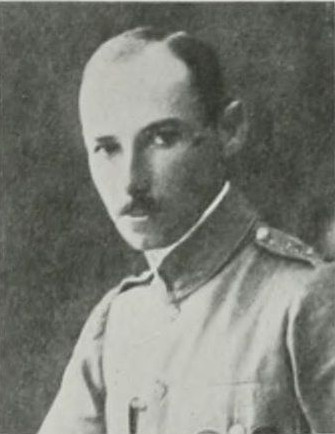
John K. Dawson-Scott.
SCOUGALL, ALEXANDER, Colour-Sergt., No. 5970, Royal Marine L.I., 3rd s. of the late George Scougall, of Peebles, by his 2nd wife, Agnes, dau. of George Kay, of Eloridgehill, Lanarkshire, and brother of William Scougall, Stationmaster, West Calder; b. Woodhouse, Manor Parish, co. Peebles, 25 May, 1873; educ. Manor, Walkerburn, and Peebles Public Schools; joined the Royal Marine L.I. at Edinburgh in Nov. 1890; did one year boy’s service; passed for Corpl. at Chatham, 13 July, 1894, with 98 marks, and was awarded First Class Certificate; and for Sergt. at Walmer, 31 March, 1896, obtaining 187 marks and a special certificate; served in the Orinoco River (in H.M.S. Fantome) during the dispute between the United States and Venezuela; in the South African War (medal), and in China, and on completing his 22 years’ service (Oct. 1912) entered the Shanghai Municipal Council’s Service. When the European War broke out he was an Inspector in the Shanghai Public Works Department, and immediately volunteered, but was not accepted until Oct. He left within 24 hours for London, but the Japanese boat by which he travelled took 65 days to do the trip (12,000 miles), being held up in the Indian Ocean for 10 days by the German Cruiser Emden. He took part in the landing at the Dardanelles, 25 April, 1915, and was killed in action at Quinn’s Post, Gaba Tepe, between 9 and 10 a.m. on 3 May following; unm. A comrade wrote: “Colour-Sergt. Scougall was an old pal of mine also, he being of about the same service as myself. He was well known at Chatham and we all regret his loss, and he is one of many veterans of ours who have gone. He was killed on Monday, 3 May, between 9 and 10 a.m. The shot entered his eye and death was immediate. Bugler Sillence of our Battn. was a few yards from him when he was hit, and I have gone over the day with him. We were ordered out at 4 a.m. to prepare an attack up a very steep ravine between two hills; the Turks held all the crests. It was hopeless to carry out. As soon as our troops got in view they were mowed down with M.G. and rifle fire, it was awful; time after time fresh troops went on but all suffered the same, nobody got to the objective, and we had to give it up. Our Battn. had over 300 casualties, all who tried suffered the same; the dead and wounded had to be left till dark. The wounded were got down by degrees; it took days to bury the dead. Every movement brought a deadly fire, they were within a 100 yards. This happened at Gaba Tepe where we reinforced the Australians and New Zealand forces on their first landing; we afterwards were shipped to this end, Sedd-ul-Bahr, and are having some tough work still. I expect we are in for a winter of it. Trench fighting is awful slow work, and you are kept on a tension all the time; the devils have plenty of grit and put up a fair fight, no gas or gas shells at present and no white flag incidents since the first, when we weren’t having any, and nipped them all. About the difference in date, many of the dead were not buried by our own people, and their effects are not gathered properly. They are reported missing until their bodies are found and identity discs are sent in; facts known to people near one get mixed or reported wrongly because it is impossible to thoroughly inquire into every case unless a doubt is raised. Dead often have to be left even for weeks when an attack fails. You may take my date as correct; it is the date in my book, also in the Battn. records. I don’t know where the other date came from, we had re-embarked and started afresh elsewhere before then, so it is obviously incorrect. I am an old China bird myself, but I came home in 1897,” and another: “He was killed on 3 May at Quinn’s Post; Gaba Tepe, where the Australians landed, and buried in a little trench with others of his comrades. You see he was some 300 to 400 feet up the cliffs, and it was practically useless bringing the dead down in the gully where we had to depend on water running. He was accorded a Christian burial, and a very decent one considering the time and space allotted. I myself buried 14 in one grave, and read the Burial Service.” Scougall had the Long Service, and Good Conduct medals. He was a good all-round sportsman, played cricket and football, and was in the winning tug-of-war team in Shorncliffe District Tournament in 1897.
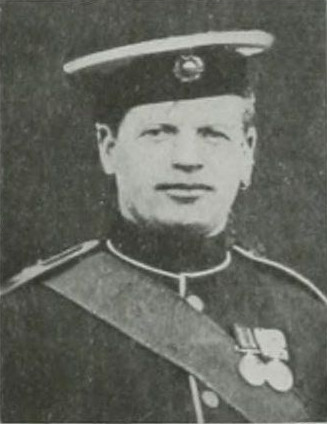
Alexander Scougall.
SCRIVENER, CYRIL ALFRED, Sapper, No. 4/344, New Zealand Field Engineers, s. of Alfred Thomas Scrivener, of Hamilton, New Zealand, Farmer; b. Stratford, New Zealand, 2 July, 1893; educ. Public schools there; joined the New Zealand Engineers in Sept. 1914; served in Egypt and at the Dardanelles, and died at Mudros, Lemnos Island, 13 June, 1915, of enteric fever contracted while on active service; unm. Buried there.
SCRUTTON, FRANK RICHARDS, Leading Seaman (R.F.R., B. 3347), 212547, H.M.S. Good Hope; lost in action off Coronel, on the coast of Chili, 1 Nov. 1914.
SCULLY, CHARLES RICHARD, E.R.A., 3rd Class, 345433, H.M.S. Hawke; lost when that ship was torpedoed in the North Sea, 15 Oct. 1914; m.
SEABROOK, JAMES HERBERT, 2nd Lieut. and Despatch Rider, attd., 5th Cavalry Brigade, 4th s. of William Seabrook, of the Nurseries, Chelmsford, by his wife, Elizabeth Mary Ann, dau. of James Pertwee (of a Huguenot family originally named Pertuis); b. Brent Hall, Boreham, co. Essex, 30 Oct. 1883; educ. Chelmsford College, was before the war associated with his father in the well-known horticultural business of Messrs. W. Seabrook & Sons, but on mobilisation volunteered as a Despatch Rider, was given a commission as 2nd Lieut., and attached to the 5th Cavalry Brigade. He left England with the Expeditionary Force, 12 Aug. 1914, and was killed in action at the Battle of the Marne, 10 Sept. 1914; unm. Buried at Grandelu, about 18 miles north-east of Meaux. Writing to his mother, Lieut. F. F. Blake, Commanding 5th Signal Corps, Royal Engineers, said: “Your son was killed yesterday, while carrying out his duty. He was sent to me some weeks ago as a motor cyclist despatch rider, and he had done splendid work for me and was immensely popular with all.... We were in touch with the Germans early in the morning and moved to turn their flank. I sent your son to Headquarters of 2nd Army with a message before this, and when he returned to the point of despatch, we had gone. He was told by another of my motor cyclists where we had gone, and which road to take, but he appears to have missed his way, coming in contact with the enemy. The end must have come very quickly and painlessly, as he was shot in the head, two other bullets also found their mark. All this we found later in the day, as we were in action all the forenoon, and I was not informed of his death till late in the evening, when I am glad to say we had gained a decisive success. Your son died a glorious death, which we must all be prepared for, doing his duty in the service of his country.”
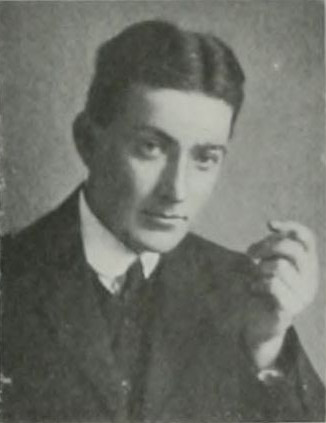
James Herbert Seabrook.
SEAGER, THOMAS, Stoker, Petty Officer, 294712, H.M.S. Hawke; lost when that ship was torpedoed in the North Sea, 15 Oct. 1914.
SEAMAN, HENRY, Private, No. 4608, 1st Battn. Coldstream Guards, s. of James Seaman; b. Westminster, 11 April, 1888; enlisted after the outbreak of war, 3 Sept. 1914; went to France, 4 Oct., and was reported missing between 29 Oct.-2 Nov. 1914, and is now assumed to have been killed between those dates. He m. at St. Andrew’s Church, Peckham, 8 March, 1914, Ellen (7, Blackhouse Street, Canterbury Road, Old Kent Road, S.E.), dau. of Joseph (and Ellen) Mackey, and had a dau.: Ellen, b. posthumous, 10 Feb. 1915.
SEAR, JOSEPH SACKVILLE, Private, No. 4359, 11th Battn. Australian Imperial Force, only s. of the late Frank Sear, Hay and Straw Dealer, by his wife, Sarah Ann, dau. of Thomas Kearsey, of Dustfield Farm, Charlbury, Oxon; b. Wendlebury, Oxon, 8 July, 1894; enlisted in the Australian Imperial Force, 25 June, 1915; proceeded with the 11th Battn. to the Dardanelles, and was killed there by a bomb, 6 Aug. 1915, only 48 hours after his arrival at the Front; unm.
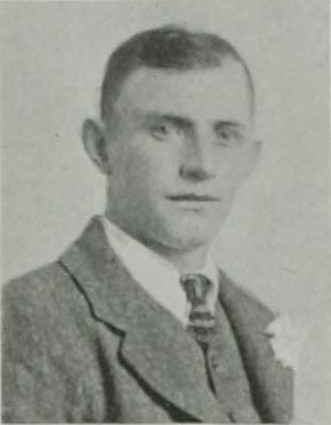
Joseph Sackville Sear.
SEARLE, GEORGE CHARLES, Leading Stoker, 302485, H.M.S. Hogue; lost in action in the North Sea, 22 Sept. 1914.
SEARLE, GEORGE WILLIAM AUGUSTUS, Boy, 1st Class, J. 25452, H.M.S. Hawke; lost when that ship was torpedoed in the North Sea, 15 Oct. 1914.
SEARLE, JOHN, Ship’s Corpl., 1st Class, 154450, H.M.S. Good Hope; lost in action off Coronel, on the coast of Chili, 1 Nov. 1914.
SEARLES, EDWARD GREGORY, A.B., J. 12270, H.M.S. Pathfinder; lost when that ship was sunk by a mine, about 20 miles off the East Coast, 5 Sept. 1914.
SECKER, GEORGE VANE, Private, R.M.L.I., Ch./17010, H.M.S. Hawke; lost when that ship was torpedoed in the North Sea, 15 Oct. 1914.
SEDGELEY, FRANK, A.B. (R.F.R., B. 8768), S.S. 2013, Chatham, H.M.S. Good Hope; lost in action off Coronel, on the coast of Chili, 1 Nov. 1914.
SEDGWICK, GEORGE, Stoker, R.N.R., 2057U, H.M.S. Aboukir; lost in action in the North Sea, 22 Sept. 1914.
SEELEY, WILLIAM ALFRED, Stoker, 1st Class, K. 13408, H.M.S. Hawke; lost when that ship was torpedoed in the North Sea, 15 Oct. 1914.
SEENEY, HUGH, Private, R.M.L.I., Ports./14615, H.M.S. Good Hope; lost in action off Coronel, on the coast of Chili, 1 Nov. 1914.
SEFTON, THOMAS HENRY, Stoker, 1st Class (R.F.R., B. 7882), S.S. 103314, H.M.S. Hawke; lost when that ship was torpedoed in the North Sea, 15 Oct. 1914.
SELBY, BEAUCHAMP HENRY, Capt., 5th Battn. Northumberland Fusiliers, eldest s. of Beauchamp Prideaux Selby, of Pawston, Mindrum, Northumberland, J.P., by his wife, Fanny, yst. dau. of the late Joseph Pocklington Senhouse, of Netherhill, Cumberland, J.P., D.L., and grandson of Prideaux Selby, of Pawston, J.P., D.L., by his wife, Harriet Elizabeth, dau. of Admiral Sir William Beauchamp-Proctor, 3rd Bart.; b. London, 4 June, 1882; educ. Harrow, and the Royal Military College, Sandhurst; gazetted 2nd Lieut., unattd., 8 Jan. 1901, and appointed to the Northumberland Fusiliers, 23 March following; promoted Lieut. 21 May, 1902, and Capt. 1 Oct. 1912; served on the North-West Frontier of India, 1908, taking part in the operations in the Mohmand country, and engagement at Matta (medal), and with the Expeditionary Force in France and Flanders, and died 21 Sept. 1914, from wounds received in action the previous day, near Vailly, during the Battle of the Aisne; unm. His Col. wrote: “You will doubtless have heard from the W.O. the sad news of your son’s death. It has been a sad blow to us all to lose such a gallant soldier, and good comrade. He was shot through the head in the trenches north of Vailly, on the 20th, and though he lingered for nearly 24 hours, he was quite unconscious, and his chance of recovery was looked upon as practically hopeless. He is buried close to where he fell.... Your son was one of the lion-hearted breed that are such a power in a regt. At the fight at Fromières, the day after Mons, he did very gallant work under a heavy fire to the great admiration of the O.C. 1st Lincolnshire Regt. with whom he was temporarily detailed. My brother officers all join in offering you our most sincere sympathy in the loss of your gallant son.”
SELLEN, ALBERT FREDERICK, Stoker, 1st Class, K. 8993, H.M.S. Pathfinder; lost when that ship was sunk by a mine, about 20 miles off the East Coast, 5 Sept. 1914.
SELLENS, GEORGE, Stoker, 1st Class (R.F.R., Ch. B. 9466), S.S. 105406, H.M.S. Cressy; lost in action in the North Sea, 22 Sept. 1914.
SELLICK, WALTER, Stoker, 1st Class, K. 11306, H.M.S. Pathfinder; lost when that ship was sunk by a mine, about 20 miles off the East Coast, 5 Sept. 1914.
SEMARK, WILLIAM RICHARD, Sergt., No. 9609, 3rd, attd. 2nd, Battn. East Kent Regt. (The Buffs), s. of Harry Semark, Cement Labourer, late Rifle Brigade, by his wife, Rose (57, Cuxton Road, Strood, Rochester), dau. of William Chappell, of Milton next Sittingbourne, Kent; b. York, 23 Dec. 1892; educ. St. Nicholas School, Strood; enlisted in Feb. 1910; was in the Special Reserve, going up for a month’s training each year, headquarters being at Canterbury; was called up on mobilisation, 4 Aug. 1914; went to Dover, where he was promoted Sergt., and was engaged in drilling recruits at Hythe and Dover during the winter; went to France, 6 March, 1915, and was killed in action at Hill 60, Ypres, 3 May following, during the gassing of the Canadian troops; unm. Three of his brothers are now (1916) on active service; two with the East Kent Regt. (both wounded), and one with the Royal Warwickshire Regt.
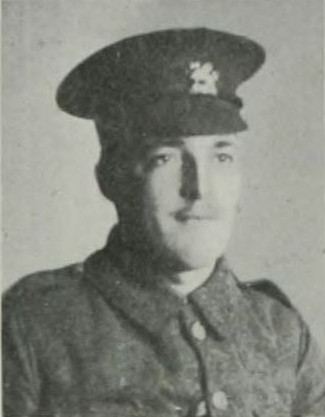
William Richard Semark.
SETTER, AUGUSTE ARTHUR LEOPOLD, Private, No. 8139, 1/2nd Battn. The Border Regt., 2nd s. of Thomas Setter, of Caterham, 2nd Battn. Coldstream Guards, by his wife, Emilia (The Lodge, Grove House, The Grove, Ealing, W.), dau. of Louis Cugny, of Ferreyre, Switzerland; b. Tower of London, 28 July, 1887; educ. Caterham Board School; enlisted in Nov. 1908; went to France about the 4 Oct. 1914, and was killed in action at Givenchy, 18 Dec. following. Buried there. His company officer wrote saying he was a thorough soldier and one of the best men in the company. He m. at Norwich, 3 Aug. 1914, Edith, dau. of (—) Gallant; s.p.
SETTERFIELD, CHARLES ALFRED, Stoker, 1st Class, K. 3322, H.M.S. Aboukir; lost in action in the North Sea, 22 Sept. 1914.
SETTERFIELD, EMMANUEL WILLIAM, Ch. E.R.A., 1st Class (Pensioner), 160543, H.M.S. Hogue; lost in action in the North Sea, 22 Sept. 1914.
SETTERFIELD, FRANK, A.B. (R.F.R., Ch. B. 6596), 184292, H.M.S. Cressy; lost in action in the North Sea, 22 Sept. 1914.
SEVERNE, HENRY FRANCIS, 2nd Lieut., 1/6th Battn. Sherwood Foresters, Nottinghamshire and Derbyshire Regt. (T.F.), eldest s. of Arthur De Milt Severne, of Wirksworth, Derbyshire, Solicitor, by his wife, Adelaide Elizabeth, dau. of the late John Hubbersty; b. Wirksworth, co. Derby, 16 Feb. 1892; educ. Riber School, near Matlock; Marlborough College (where he was in the O.T.C.), and the Royal School of Mines; joined the University of London Artillery in 1910 or 1911; volunteered on the outbreak of war and enlisted in E Coy. of the 6th Sherwood Foresters; was given a commission as 2nd Lieut. 2 Sept. 1914; went to France, 25 Feb. 1915, and was killed in action at Kemmel, Belgium, 10 May, 1915, being shot through the heart by a sniper; unm. Buried at Kemmel. He was mentioned in F.M. Sir John (now Lord) French’s Despatch of 31 May [London Gazette, 22 June], 1915, and recommended for saving the life of an officer on 27 April. On that day a small charge was exploded in a mine. Some hours afterwards a small party of Royal Engineers, consisting of a Sergt. and two Lieuts., entered the gallery. One Lieut., who was a little way behind the others, found them unconscious from the effects of gas. He ran back to the entrance and shouted for help. 2nd Lieut. Severne, who was standing near, without a moment’s hesitation, jumped down the shaft although, being a mining engineer, he well knew the danger. He helped the Lieut. to drag his brother officer along the gallery until the former also began to suffer from gas. He told him to go back and said that he would bring the unconscious man along. This he did, although his burden was a heavy one, until he was himself rendered unconscious. In the meantime other help had arrived, and all were brought round except the Sergt. It was undoubtedly due to 2nd Lieut. Severne’s prompt and gallant conduct that the life of one officer was saved and possibly that of the other. The late Capt Johnson, V.C., who was in charge of the party of Engineers, was filled with admiration and reported 2nd Lieut. Severne’s conduct for official recognition.
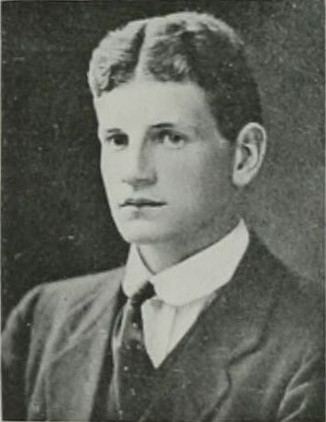
Henry Francis Severne.
SEWARD, FREDERICK, Stoker, 1st Class (R.F.R., B. 3004), S.S. 100460, H.M.S. Good Hope; lost in action off Coronel, on the coast of Chili, 1 Nov. 1914.
SEWELL, HENRY, Stoker, R.N.R., 1576 U., H.M.S. Cressy; lost in action in the North Sea, 22 Sept. 1914.
SEWELL, REUBEN JOHN, Petty Officer, 215836, H.M.S. Hogue; lost in action in the North Sea, 22 Sept. 1914.
SEWELL, SIDNEY DAVIES, Major, 3rd London Field Coy., Royal Engineers (T.F.), elder surv. s. of Col. Thomas Davies Sewell, of 29, Grosvenor Road, Westminster, S.W., F.R.A.S., Senior proprietor of the Broad Arrow and Naval and Military Gazette; clerk of the Spectacle-Makers’ Company and Secretary of its diploma scheme; late Commandant 4th Battn. The Essex Regt., by his wife, Elizabeth Sophia, eldest dau. of the late George Burt, formerly a Sheriff of the City of London; b. London, 12 Oct. 1875; educ. Tonbridge School; obtained a commission as 2nd Lieut. (Volunteers) 23 June, 1892; and was promoted Lieut. 23 June, 1894; Capt. 19 June, 1898, and Major 16 April, 1910; was in command of the 3rd London Field Coy. (T.F.), and volunteered for Imperial service on the outbreak of war in Aug. 1914; went to France in Jan. 1915, and was killed in action near Ypres, 18 Feb. 1915; unm. Buried there. Capt. Sewell was a long service volunteer and had the Territorial Decoration, and was a member of the London Territorial Force Association.
SEWELL, THOMAS, Private, R.M.L.I., Ch./15140, H.M.S. Hawke; lost when that ship was torpedoed in the North Sea, 15 Oct. 1914.
SEWELL, WILLIAM FANE DALZELL DALRYMPLE, Private, No. 2053, B Coy., 4th Battn. Seaforth Highlanders (T.F.), attd. Dehra Dun Brigade, Meerut Division, Indian Expeditionary Force, only s. of William George Dalrymple Sewell, of 20, Balcombe Street, N.W., by his wife, Edith Maud, dau. of the late Robert Dalzell, grandson of Col. Henry Fane Haylett Sewell, Indian Army, and great-grandson of the late Gen. Sir William Henry Sewell, K.C.B., Hon. Col. 79th Cameron Highlanders; b. Valparaiso, Chili, 24 March, 1896; came home to England, 11 May, 1906; educ. at Mr. Charles D. Pridden’s at Walton-cum-Felixstowe, Suffolk, and at Lancing College, Shoreham-on-Sea, Sussex. Joined the O.T.C. at Lancing, and rose to be Bugler L.-Corpl. in the band. Entered Great Northern Railway service, 1 May, 1913. Enlisted 4 Sept. 1914, joining regt. at Bedford, which left for France on 5 Nov. 1914, being the first Highland Territorial unit to cross. Killed in action at Neuve Chapelle on 11 March, 1915, while his battn. were pushing forward an attack in front of the Bois de Biez, he having been hit by shell. From all his superiors and comrades the highest testimony came of this boy, who was just completing his nineteenth year. A comrade wrote: “He was a popular and brave soldier, and we miss him exceedingly.” The officer commanding of B Coy. wrote: “He was a good soldier, and always carried out his orders promptly and well. We buried him on the field of battle.” His Major wrote: “Young Sewell is shaping well, is a favourite and will be a fine soldier. We’ve got our eye on him.” His Colonel wrote: “The boy’s associations with the regt. were of the very best kind from start to finish, and it was a very real pleasure to do anything I could for him as regards his commission.... The last time I saw your dear son alive was when I took him to see our General about his commission. Would that it had been possible for him to have got his commission before the fight. I know he would have made a good officer and done well for his King and Country.” In civil life his keenness for duty and the right was of the soundest. His chief superior on the Great Northern Railway wrote thus concerning him: “I deeply regret the tragic end of so young and promising a life. Your son was a most likeable fellow, and everyone with whom I placed him spoke most highly of his capability and personality. I can only hope you may be consoled by the thought that he died like a man, and in furthering the great cause so near to all our hearts. His letters are typical of all that is best and bravest in British youth.”
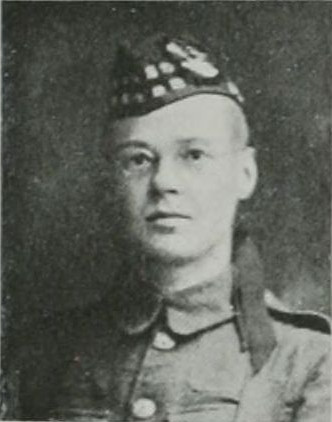
W. F. D. D. Sewell.
SEYMOUR, WILLIAM GEORGE, A.B. (Coastguard), 212477 (Ports.), H.M.S. Cressy; lost in action in the North Sea, 22 Sept. 1914.
SHADRAKE, CHARLES, Stoker, Petty Officer, 306734, H.M.S. Aboukir; lost in action in the North Sea, 22 Sept. 1914.
SHAFFOND, CHARLES, Gunner, R.M.A. (R.F.R., I.C. 85), H.M.S. Good Hope; lost in action off Coronel, on the coast of Chili, 1 Nov. 1914.
SHAKERLEY, ERIC PIERS, Capt., King’s Royal Rifles, yst. s. of Capt. Geoffrey Joseph Shakerley, of Weddington Hall, Nuneaton, late R.H.A., by his wife, Emma, 2nd dau. of Sir Richard Pierce Butler, of Ballin Temple, co. Carlow, 9th Bart.; b. Shrewsbury, 8 March, 1885; educ. Clifton College and Cooper’s Hill, 1904–6; and on leaving the latter accepted an appointment in the Soudan Irrigation Service in preference to entering the Indian Public Works Department, and went out to the Soudan in the autumn of 1906. A little later he was put in charge of the works then in progress in the Sudd region of the Upper Nile, and remained in charge of this work till he retired from the Service early in 1913, to join a firm of horticultural chemists at Alperton. For his services in the Soudan he received the Medjideh (4th class) in 1912. Immediately on the outbreak of war he applied for a commission in the Army, and was gazetted Lieut. in the 6th (Reserve) Battn. King’s Royal Rifles, 15 Aug. 1914, obtaining his Captaincy 24th Nov. following. After three months training with the regt. at Sheerness he left for the Front on 13 Nov. 1914, and was attached to the 1st Battn. then in the trenches. On 10 March, 1915, he commanded an assaulting party in an attack upon the enemy’s trenches at Givenchy. The party came under a heavy fire from rifles and machine guns suffering very severe casualties, notwithstanding which, headed by Capt. Shakerley, it succeeded in reaching the wire entanglements, which had not been breached, but here Capt. Shakerley was shot dead, 5 yards from the enemy’s trench; unm. Capt. Shakerley was mentioned in F.M. Sir John French’s Despatch of 22 June, 1915, for gallant and distinguished conduct in the field.
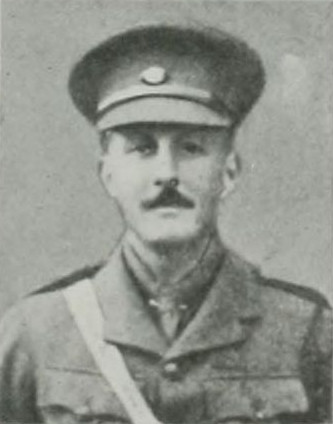
Eric Piers Shakerley.
SHANNON, IAN HERBERT CROAL, Private, No. 2713, 1/7th Battn. Black Watch (Royal Highlanders) (T.F.), elder s. of Rev. John Alexander Shannon, M.A., Minister of Balbirnie U.F. Church, Markinch, co. Fife, by his wife, Annie Molyson, dau. of the late James Croal, of the Haddington Courier; b. Balbirnie U.F. Manse, Markinch, 11 Feb. 1895; educ. George Watson’s College, Edinburgh; and Royal Technical College, Glasgow, of which latter he was an Associate, having taken his diploma in Electrical Engineering (with distinction) in the Spring of 1914; was in the employment of James Howden & Co., Engineers, Glasgow, when the war broke out, and immediately enlisted in 1/7th Battn. Black Watch, being attd. to the Machine Gun Section; went to France, 1 May, 1915, and was killed in action while dressing the wounds of a comrade at Festubert, France, 16 June, 1915; unm.
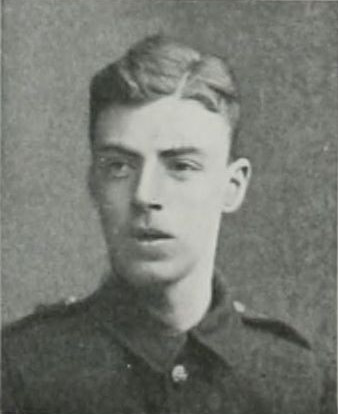
Ian Herbert C. Shannon.
SHANNON, WILLIAM HENRY, Colour-Sergt.-Major, No. 9019, 1st Battn. Royal Dublin Fusiliers, yst. s. of William Henry Shannon, of 42, Mountjoy Street, Dublin, late Corpl. 2nd Middlesex Regt., and Warder, Prisons Service, by his wife, Bridget, dau. of Rodger McGoldrick, of Dromahair, co. Leitrim; b. Rangoon, British Burmah, 15 March, 1882; educ. St. George’s and Marlboro’ Street National Schools, Dublin; was for a short time in the Prisons Service, then for about a year in the A.M. Corps; enlisted 5 Dec. 1902; served at Aldershot, Dublin, Butafant, Fermoy, Naas, and Gravesend, and was then posted to 1st Battn. in India; returned home end of Dec. 1914; went to the Dardanelles, 17 March, 1915, and was killed in action there, 12 July following. He m. at Gravesend Military Church, 18 Jan. 1915, Ada Amy (5, Albion Road, Gravesend), dau. of Charles Fennell, of 5, Albion Road, Gravesend; s.p.
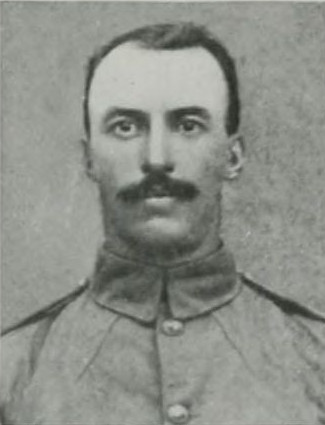
William Henry Shannon.
SHAPTER, LEWIS HENRY, Capt., 3rd Special Reserve (West Suffolk Militia) Battn. Suffolk Regt., s. of Lewis Shapter, of Barnfield Crescent, Exeter, M.D.; by his wife, Elizabeth Charlotte, dau. of Capt. Edgar Bayly, Suffolk Regt., and great grandson of Col. Richard Bayley, of the same regt., and nephew and adopted s. of Col. Charles Edward Brown, and of his wife, Frederica Louisa (Kahun, Talbot Hill, Bournemouth), née Bayly; b. Exeter, 7 Sept. 1886; educ. Stourwood College, near Bournemouth; obtained a commission in the West Suffolk Militia; promoted Lieut. 18 March 1905, and Capt.; had passed the School of Instruction and qualified as an Instructor of Musketry; served with the Expeditionary Force in France, attd. to the 1st Battn. Hampshire Regt., and was killed in action near Ypres, 31 Jan. 1915; unm. Buried in the Military Cemetery, Chateau Rosenberg, Croix le Blanc.
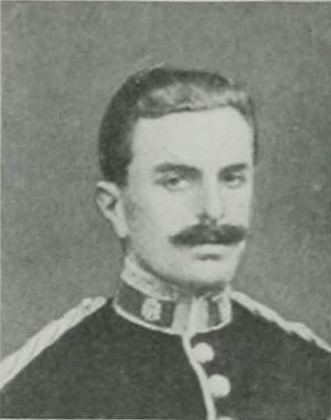
Lewis Henry Shapter.
SHARMON, FREDERICK, Chief Stoker (R.F.R., Ch. A. 2009), 163555, H.M.S. Aboukir; lost in action in the North Sea, 22 Sept. 1914.
SHARP, ARTHUR, Gunner, R.M.A., R.M.A. 12711, H.M.S. Aboukir; lost in action in the North Sea, 22 Sept. 1914.
SHARP, JOHN, Private, No. 2330, 1/8th Battn. The Middlesex Regt. (T.F.), s. of John Sharp, of 26, Gloucester Road, Hounslow Heath, Middlesex, Agricultural Labourer, by his wife, Louiza Annie, dau. of George Lovegrove; b. Station Road, Hounslow, 14 Sept. 1884; educ. there; was a Stone and Earthenware Carver; had joined the Middlesex Territorials, 11 Nov. 1913, and on the outbreak of war volunteered for active service; went to France, 8 March, 1915, and was killed in action at Poljitze, 23 May following; unm.
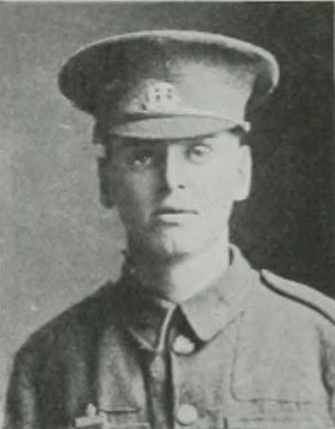
John Sharp.
SHARP, VIVIAN KING, Sapper, No. 67686, Royal Engineers, (Railway Section), yr. s. of Sidney Sharp, of The Grove, Ealing (formerly of Tangleymere, Chilworth, Surrey), Consulting Engineer, by his wife, Ellen Blanche, dau. of William Eager, of Whipley, Wonersh, Surrey; b. Surbiton, 6 Feb. 1891; educ. at Colet Court and St. Paul’s School, and was a keen oarsman and rowed in his House boat. In 1909 he entered the General Manager’s Office of the Great Western Railway, and from the outbreak of war was engaged on military work in connection with the railway. He volunteered for the Front in Nov. 1914, was accepted in March following, his detachment being sent to France at the end of the month. After much good work he was invalided into hospital on 12 June, sent over to England to the 1st London General Hospital on the 18th, and died on the 20th; unm.
SHARP, WILLIAM CHARLES JOHN, Private, R.M.L.I., Ch./12874, H.M.S. Hogue; lost in action in the North Sea, 22 Sept. 1914.
SHARRATT, SIMEON, Private, No. 11391, No. 3 Coy. 1st Battn. Coldstream Guards, s. of Simeon Sharratt, of 1, High Fields Road, Hinckley, Leicestershire, Felt Hat Maker, by his wife, Elizabeth; b. Nuneaton, 21 Sept. 1894; educ. Nuneaton and Hinckley Church Schools; was a Gardener; enlisted 3 Sept. 1914, went to France, 22 Dec., was wounded in action near La Bassée, 24 Jan. 1915, and died on the 26th; unm. He was buried at Bethune. Sergt. V. White wrote: “A Private Clarke was badly hit by a sniper on 24 Jan. 1915, and your son went to his assistance, when he was shot, probably by the same sniper, through the wrist and stomach.”
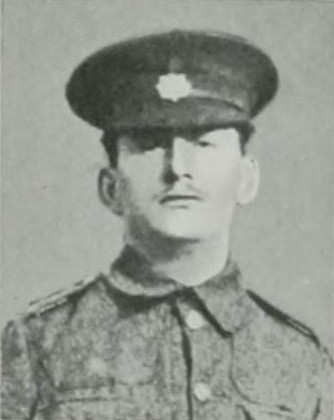
Simeon Sharratt.
SHATTOCK, MONTAGU DE MANCHA, Capt., No. 4 Coy., 16th Battn. (Queen’s Westminster Rifles) The London Regt. (T.F.), 3rd s. of Henry Foster Shattock, member of the London Stock Exchange, by his wife, Charlotte Rice (88A, Lexham Gardens, Kensington, W.), dau. of James Allerton; b. Broad Green, Croydon, co. Surrey, 9 Oct. 1867; educ. St. John’s, Hurstpierpoint, and King’s College, London, and was afterwards a member of the Stock Exchange. He enlisted in the Queen’s Westminsters in Nov. 1892, and after passing through the ranks as Corpl., Sergt and Colour-Sergt., obtained his commission as 2nd Lieut. 5 April, 1902, and was promoted Lieut. 6 June, 1903 and Capt. 21 March, 1905. He afterwards went through the Hythe musketry courses and became musketry instructor for the regt., under Lieut.-Col. A. Shoolbred, whose firm provides a company in the corps. He had resigned some time before the war broke out, but rejoined, and obtained his company again, 5 Aug. 1914. He went with his regt. to the Front, served in France and Flanders, and was killed in action, presumably by a German sniper, in the trenches near River Lys, Armentières, France, 9 Jan. 1915, and was buried there behind the trenches; unm. In 1905 he captained the team of the Queen’s Westminsters which defeated a team of the 7th New York National Guard at Bisley. In the following year he took a team to New York, the return match being won by the Americans.
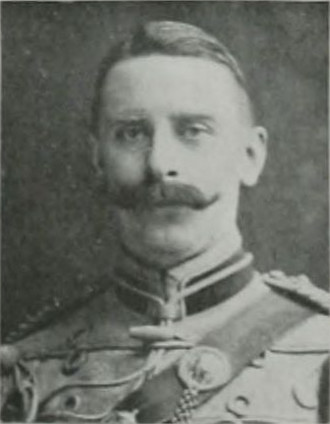
M. de M. Shattock.
SHATTOCK, THOMAS HENRY, E.R.A., 4th Class, M. 5731, H.M.S. Good Hope; lost in action off Coronel, on the coast of Chili, 1 Nov. 1914.
SHAVE, WILLIAM JAMES, A.B. (R.F.R., Ch. B. 5822), 187872, H.M.S. Aboukir; lost in action in the North Sea, 22 Sept. 1914.
SHAW, ALFRED, Private, No. 2023, 11th Battn. Australian Imperial Force, s. of John Hellawell Shaw, of 36, George Street, Milnsbridge, Huddersfield, by his wife, Mary Ann, dau. of William Wood; b. Marylebone, London, 13 June, 1871; educ. Huddersfield, co. York; went to Australia in March, 1910, and settled at Worsley Bush, Worsley, and worked on the Railways; joined the 11th Battn., 27 Jan. 1915; left for Egypt with the fifth reinforcements, 27 April; went to the Dardanelles, 1 July; and was killed in action there, 1 Aug. following, during an early morning charge; unm. Buried there.
SHAW, BERNARD HENRY GILBERT, Lieut., 2nd Battn. Prince of Wales’s Own West Yorkshire Regt., 2nd s. of the Right Rev. Edward Domett Shaw, Lord Bishop of Buckingham, D.D., by his wife, Agnes, dau. of Alfred Gilbey, of Wooburn Park; b. Bishop’s Stortford, co. Herts, 11 Oct. 1893; educ. Marlborough College (Foundation Scholar), and the Royal Military College, Sandhurst; gazetted 2nd Lieut. West Yorkshire Regt., 3 Sept. 1913, and promoted Lieut. 6 May, 1914; went to France 4 Nov. 1914, and was killed in action near Neuve Chapelle, 19 Dec. following; unm. His commanding officer wrote: “Your boy died most gallantly, fighting in a German trench, which had been taken during the night.” While at Marlborough he was in the cricket eleven, 1911, scoring 94 against Rugby at Lords, and at Sandhurst was captain of the hockey and cricket eleven. His yr. brother, Lieut. A. G. Shaw, Sherwood Foresters, was killed in action, 24 Dec. 1915; and his eldest brother, Lieut. E. A. Shaw, Oxford and Bucks L.I., fell in Oct. 1916. The only surviving brother, R. G. Shaw, is a Midshipman, R.N.
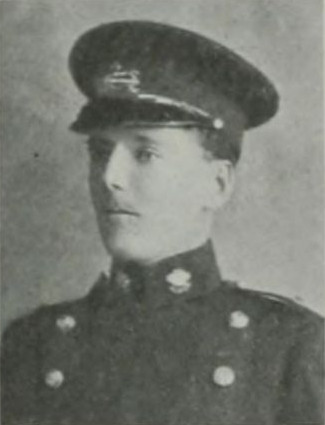
Bernard Henry G. Shaw.
SHAW, HUGH JAMES, Capt., 5th, attd. 1st, Battn. Royal Fusiliers, eldest s. of the late William Sissmore Shaw, of Madras, India, Merchant, by his wife, Violet Amy Yule (now wife of Robert Francis Chiappini de Winton, of The Grange, Folkestone), dau. of Major-Gen. Arthur Thaddeus Searle; b. Madras, India, 16 May, 1886; educ. Warren Hill, Eastbourne, and Harrow; obtained a 2nd Lieutenancy in the Special Reserve of the Royal Fusiliers in 1908; promoted Lieut. 1 Oct. 1910, and Capt. 26 Sept. 1914; went to France attd. to the 1st Battn. in Aug. 1914, and was killed in action near Fleurbaix, 12 Nov. following, being suffocated by falling earth in his dug-out; unm. Buried where he fell. His brother, Capt. R. P. Shaw, was killed in action at the Dardanelles, 27 Nov. 1915 (see his notice).
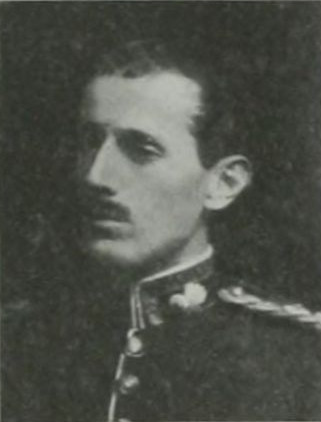
Hugh James Shaw.
SHAW, MANFRED SAMUEL, Private, No. 8820, 2nd Battn. Coldstream Guards, 2nd s. of the late Joseph Camm Shaw, by his wife, Mary Ann (now wife of William Sedgwick, of 50, Station Road, Handsworth, Birmingham), dau. of Manfred Ball, Farmer; b. Sheffield, 26 April, 1893; educ. Handsworth, Birmingham; was employed at the Lorry Works; enlisted in the Coldstreams, 12 Aug. 1910; served three years with the Colours, then joined the Reserve; was called up on mobilisation in Aug. 1914; went to France, 12 Aug. 1914, and was killed in action at St. Vaast, Belgium, 11 Jan. 1915; unm. Buried near Richebourg St. Vaast. His brother, Corpl. Jesse Shaw, is now (1916) serving with the R.G.A.