The Roll of Honour. (continued 13)
Reading edition
COTTON, PHILIP, Private, No. 6746, 2nd Battn. Royal Irish Regt., s. of Thomas Cotton, Chimney Sweep; b. New Ross, co. Hereford, 1885; educ. there; served 13 years in the Royal Irish Regt. (India medal, 1895); re-enlisted after the outbreak of war, 21 Sept. 1914; served with the Expeditionary Force in France, and was killed in the trenches by a flash of lightning, 22 May, 1915. He m. at New Ross, 20 May, 1907, Kate (2, Michael Street, New Ross), dau. of James Hennebury, of New Ross, and had three daus.: Anastatia, b. 1 Jan. 1908; Elizabeth, b. 1 Feb. 1912; and May, b. 27 Feb. 1915.
COTTON, SIDNEY, A.B. (R.F.R., B. 5176), S.S. 1858, H.M.S. Good Hope; lost in action off Coronel, on the coast of Chili, 1 Nov. 1914.
COTTON, THOMAS FREDERICK, Chief E.R.A., 1st Class (Pensioner), 149729 (Po.), H.M.S. Aboukir; lost in action in the North Sea, 22 Sept. 1914.
COTTRELL, GEORGE FREDERICK, 2nd Lieut. 108th Heavy Battery, R.G.A., s. of George Anderson Cottrell, of Allandale, Sandon Road, Edgbaston, by his wife, Mary Agnes, dau. of the late Alexander Smith, of Bingley, Yorks.; b. West Bromwich, co. Stafford, 27 Oct. 1892; educ. Bromsgrove School and King Edward’s School, Birmingham, where he was Colour-Sergt. in the O.T.C., and was awarded the Coronation medal as the best all-round boy. He entered the Royal Military Academy, Woolwich, and there was senior Sergt., and won prizes for infantry training and military law. He received his commission, 18 July, 1913, and until the outbreak of the war was stationed in the Isle of Wight. In Sept. 1914, he left for the Front, and was attached to an ammunition column of the Indian Army, being posted to the 108th Heavy Battery, R.G.A., in Jan. 1915. He was killed in action at Ypres, 11 May, 1915, and was buried in a railed off piece of ground used as a war cemetery, in the grounds of the chateau of the Gold Fish, Ypres; unm. A stained glass window, subscribed for by his brother officers friends, was placed in the church used by the R.G.A. at Freshwater, I.W. Lieut. Cottrell was one of the “shop” fifteen while at Woolwich, and afterwards was a member of the United Services Football Club, and also played for the Army and three counties on various occasions.
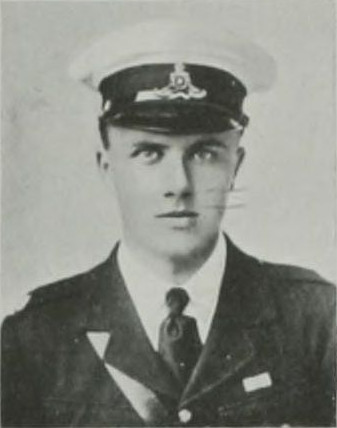
George Frederick Cottrell.
COTTRELL, WILLIAM, Private, No. 7305, 1st Battn. Worcestershire Regt., s. of Edward Cottrell, Iron moulder, by his wife, Phoebe, dau. of Joseph Dean; b. Tipton, co. Staffs, 26 Oct. 1884; educ. Council Schools there; enlisted 6 Nov. 1902, and was killed in action at Neuve Chapelle, 10–13 March, 1915; unm.
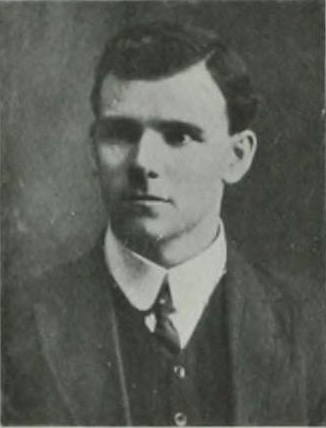
William Cottrell.
COTTRELL, WILLIAM GEORGE, Leading Stoker (R.F.R., B. 5209), 303575, H.M.S. Good Hope; lost in action off Coronel, on the coast of Chili, 1 Nov. 1914.
COUCH, HERBERT WILLIAM, Engineer Lieut.-Commander, R.N., 4th s. of James Couch, Major, late 2nd North Staffordshire Regt., by his wife, Helen, dau. of William Hollis; b. Malta, 3 Sept. 1879; educ. Mile End House School, Portsmouth, and Keyham College, Devonport. Entering the Navy in 1905 he was promoted Lieut.-Commander in Aug. 1913, and appointed in July, 1914, to H.M.S. Good Hope, on which he was killed in action, off the coast of Chili, 1 Nov. following. Engineer Lieut.-Commander Couch had the Messina medal. He m. at Portsmouth, 18 Dec. 1906, Edith Cecila (Grace’s Farm, Martyr Worthy, Winchester, Hants), dau. of the late Richard King, Royal Mail Contractor, and had a son and dau.: Richard John Hollis, b. 16 Nov. 1907; and Cecile Mary, b. 12 Nov. 1909.
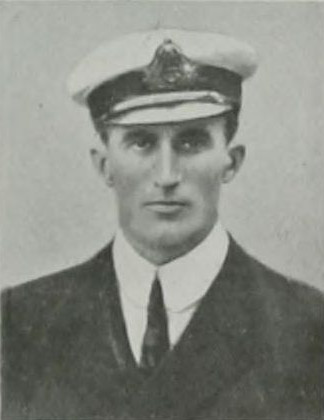
Herbert William Couch.
COULL, CHARLES WILLIAM, Leading Shipwright, 347244, H.M.S. Aboukir; lost in action in the North Sea, 22 Sept. 1914.
COULSON, JOHN, Private, R.M.L.I., Ch./17211, H.M.S. Hawke; lost when that ship was torpedoed in the North Sea, 15 Oct. 1914.
COULTART, WILLIAM PERCY, Stoker, 1st Class, K. 16961, H.M.S. Aboukir; lost in action in the North Sea, 22 Sept. 1914.
COUNTER, WILLIAM GILL, Private, R.M.L.I., 13098 (R.F.R., B. 1831), H.M.S. Aboukir; lost in action in the North Sea, 22 Sept. 1914.
COUPER, WALTER, Private, No. 9128, 4th Coy., 2nd Battn. Coldstream Guards, 2nd s. of William Clark Couper, of 36, St. Mary’s Road, Watford, Herts, Police Constable, by his wife, Harriet, dau. of Henry Gulliver; b. Kensington, W., 24 March, 1892; educ. St. James’ School, Norlands, Notting Hill; joined the 1st Battn. Herts Regt. (T.F.) in May, 1909, and enlisted in the Coldstreams, 7 June, 1911; served three years with the Colours, and then passed into the Reserve, from which he was called on the outbreak of war. He went to the Front with the Expeditionary Force, and died in No. 11 General Hospital, Boulogne, 10 Nov. 1914, of wounds received in action on the 2nd. He was buried in Boulogne Cemetery (Grave No. c/19). A comrade wrote: “On 1 Nov. Corporal Palmer was wounded in the arm, and Walter took him to hospital. Walter did not come back till mid-day on Monday, the 2nd. I met him in the communication trench, and he had two letters for some one in another platoon. The Sergt. of this other platoon was behind him, so he had to turn round in the trench. The trench being rather narrow he had to show his head above the top. No sooner did his head show above the trench when a German sniper shot, and the bullet cut the side of his head where he had a bald patch. I obtained help at once, and our machine gun officer bound the wound up for him. He was then taken away on a stretcher. On 23 Oct. our platoon held a line of trenches from which the Queen’s (Royal West Surrey) had retired. It was open ground, and the bullets were whizzing over us pretty rapid. About 80 yards in front of us lay a fellow of the Queen’s, badly wounded. Seeing that he couldn’t crawl in, Couper ran out to him, cut his equipment off, and with the help of Corpl. Palmer, who had run out afterwards, got the wounded fellow on his back. He then carried him in by himself. There were only a few of us who saw this, and hardly any one else heard about it. There are a good many brave actions done out here which nobody hears about. I think if any one deserves the D.C.M. it is Private Couper.” His elder brother, Corpl. W. F. Couper, 4th Middlesex Regt., was taken prisoner at the Battle of Mons, and is now (1916) confined at Senneläger.
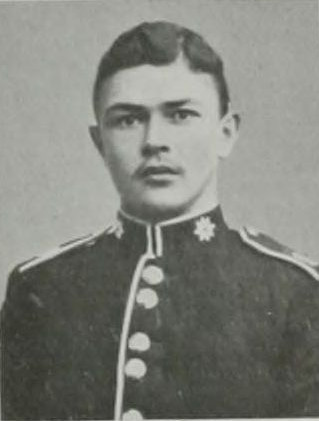
Walter Couper.
COUPLAND, HENRY, Lieut., 5th Battn. King’s Own Royal Lancaster Regt. (T.F.), only s. of Lieut.-Col. Henry Coupland, of Stonewell, Lancaster, V.D., 5th Battn. King’s Own Royal Lancaster Regt., now commanding the National Reserves at Lewes, Sussex, by his wife, Lilliere, dau. of Charles Innocent; b. Lancaster, 15 Dec. 1894; educ. Royal Lancaster Grammar School; gazetted 2nd Lieut. 5th Battn. King’s Own Royal Lancaster Regt., 1 Jan. 1914, and promoted Lieut. 2 Dec. following; served in France and Flanders, and died from wounds received in action, near Ypres, at the Clearing Station, Bailleul, 24 April, 1915; unm. He was buried in the cemetery at Bailleul.
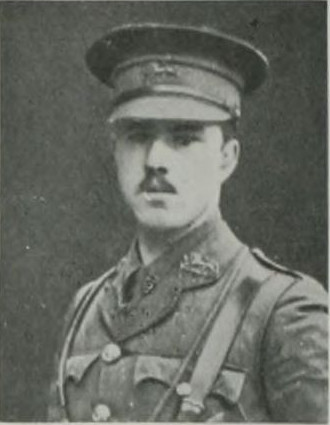
Henry Coupland.
COURCOUX, WILLIAM, A.B. (R.F.R., B. 2879), S.S. 196, H.M.S. Good Hope; lost in action off Coronel, on the coast of Chili, 1 Nov. 1914.
COURT, CHARLES, Leading Stoker (R.F.R., B. 9663), 297567, H.M.S. Hogue; lost in action in the North Sea, 22 Sept. 1914.
COURT, FREDERICK WILLIAM, Chief Armourer, 340995, H.M.S. Aboukir; lost in action in the North Sea, 22 Sept. 1914.
COURT, WILLIAM HUBERT ROYLANCE (ALGY), Capt., 9th (Queen’s Royal) Lancers, only s. of William Roylance Court, of Manor House, Middlewich, co. Chester, J.P., Barrister-at-Law, by his wife, Mary Carlaw, eldest dau. of Sir Andrew Barclay Walker, 1st Bart., of Osmaston Manor, co. Derby; b. Osmaston Manor, aforesaid, 26 Sept. 1885; educ. Wixenford Preparatory School and at Eton; gazetted 2nd Lieut. from the Royal Garrison Artillery Militia to the 9th Lancers, 6 July, 1907; became Lieut. 4 March, 1910, and Capt. 23 April, 1913, and was for a lengthy period stationed with his regt. at Potchefstroom, South Africa. When the war broke out in August the 9th Lancers were at Mooltan Barracks, Tidworth, from whence they proceeded direct to France, being among the first contingent of the British Army to take part in the fighting in Belgium. It will be remembered that in the early stages of the war in particular the 9th Lancers did splendid work, and in his letters home Capt. Roylance Court related some stirring incidents. About Dec. he was wounded in the foot by shrapnel, and after being in hospital for a short time came home for a few days. On 24 May, 1915 (the day he fell), Capt. Roylance Court was second in command of B Squadron, the senior officer being Capt. Francis O. Grenfell, V.C. The force occupied trenches near Hooge, some 60 to 80 yards from those of the enemy. Capt. Court was in the act of communicating by telephone with the Base regarding the enemy’s gas attack and the general situation, when he was shot through the head and killed instantly. Capts. Grenfell, Noel Edwards and many men fell that day. The Adjutant of the 9th Lancers, when writing to a friend some time after the 24th, referred to the incidents and said: “It certainly was a bad day, but the regt. came out with much praise from everybody. This is some consolation to us for the loss of a great many friends, and in spite of losses the reputation of the regt. increases. ‘Algy’ did a particularly gallant thing on the day he was killed. When reinforcements were required he went down from the fire trenches through a terrific shell fire (any messengers we sent on this day were killed or wounded) and led up a company of the Buffs, showed them where they were wanted. They suffered severely on the way, having to cross about 2,000 yards of very open ground, which was swept by an absolute curtain of shell fire.” Capt. Roylance Court was buried during the night after the battle in the churchyard at Vlamertinghe, in Flanders, close to the grave of Capt. Grenfell, whose remains were interred at the same time. He was a very capable officer and a thorough sportsman, and when on leave was a familiar figure in the Cheshire Hunt, of which his father was joint-Master for four years. He was an enthusiastic polo player, and won several point-to-point races for his regt. and several of his friends. Golf was another sport of which he was very fond.
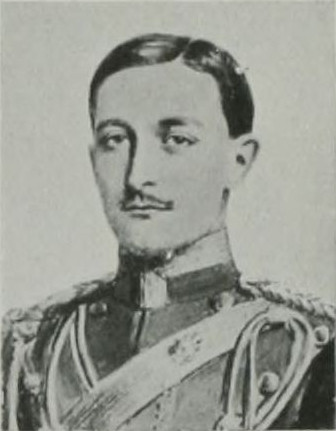
W. H. R. (A.) Court.
COURTIS, ERNEST GEORGE, Chief Gunner, R.N., s. of James Courtis, Engine Fitter, by his wife, Mary Catherine, dau. of Walter Perry Jenkins; b. Cornwall, 3 March, 1873; educ. St. James’ School, Keyham, Devonport; joined the Navy, 7 Dec. 1888, and reached Warrant rank, 1 Nov. 1898. He served on the Algerine during the Boxer rebellion in China, 1900, being Gunnery Officer of that ship during the bombardment of the Taku Forts. In the latter part of the engagement the starboard after 3-pr. quick-firing gun recoiled off the netting, fracturing almost all the small parts of the machinery and breech mechanism. He remounted it in a position (from which it was effectively used) in the Captain’s cabin in less than 15 minutes. Later, having observed a line of electric observation mines ahead, he put off in a dinghy with one man, and personally performed the dangerous service of destroying five of the mines by cutting wires, removing detonators and primers, and sinking the mines, thus probably saving many lives. He was subsequently landed in charge of two of the ship’s 4-inch quick-firing guns, and accompanied them to the Tientsin lines, where they were urgently required to outrange the enemy; afterwards took one gun some 4 miles from the supports and base and mounted it under a brisk shell fire, continuing in command of that gun during the remainder of the bombardment and capture of Tientsin City. At Sin-Ho he was appointed Transport Officer, which post he held for four months and was promoted Chief Gunner 1 Nov. 1913. He had the China medal (1900) with two bars. Chief Gunner Courtis lost his life on the occasion of the sinking of H.M.S. Clan McNaughton, 3 Feb. 1915. He m. at Belmont Wesleyan Church, Devonport, 12 Feb. 1900, Gertrude, dau. of Charles Montague, and had a son and dau.: Geoffrey Ernest Montague, b. 2 April, 1907; and Gertrude Ellen Mary, b. 1 Sept. 1904.
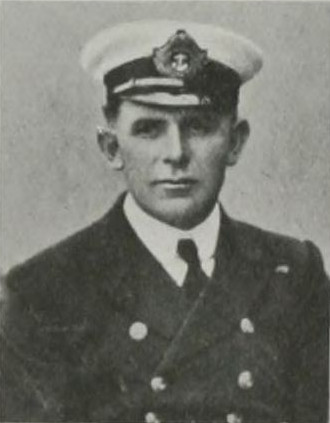
Ernest George Courtis.
COURTNEY, JOHN HENRY, alias JOHN HENRY ALFRED ADKINS, Stoker, 1st Class (R.F.R., B. 9614), S.S. 106961, H.M.S. Hawke; lost when that ship was torpedoed in the North Sea, 15 Oct. 1914; unm.
COUSENS, ARTHUR, Seaman, R.N.R., 2403C, H.M.S. Aboukir; lost in action in the North Sea, 22 Sept. 1914.
COUSINS, JAMES, Private, No. 8490, 2nd Battn. Royal Inniskilling Fusiliers, s. of William Cousins, of Lurgan, by his wife, Mary, dau. of Robert Guiney; b. Dollingstown, Lurgan, co. Down ..., March, 1892; educ. National School there; enlisted 1 Jan. 1906; served two years in China, and was killed in action at the Battle of the Aisne, 7 Sept. 1914; unm. On that evening the Inniskillings went out to take up an outpost line. Just before they reached the Ferme de la Grande Lodge they met a small force of Uhlans, which they drove off and closed up again, not suspecting that any more of the enemy were near, and while in close order two batteries opened fire at 1,200 yards. The company was immediately formed for attack, but the enemy’s fire was terrific for a short time, and it was here that Lieut. Boyd and Private Cousins fell. They were buried that night in a corner of a field in which the farmhouse of La Ferme des Arceries stands.
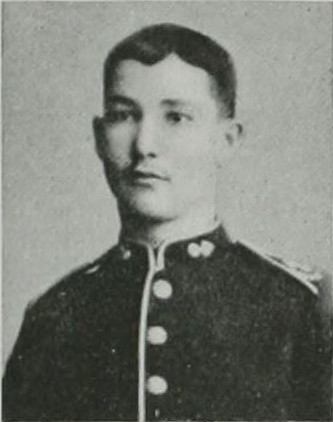
James Cousins.
COVER, FRANK, Stoker, 1st Class, K. 41, H.M.S. Hawke; lost when that ship was torpedoed in the North Sea, 15 Oct. 1914.
COWAN, ANDREW GALBRAITH, Major, 74th Punjabis, Indian Army, 2nd s. of the late Hugh Cowan, Advocate, Sheriff Substitute of Renfrew and Bute, by his wife, Williamina, dau. of the late Andrew Galbraith, Lord Provost of Glasgow, 1857–60; b. Belmont, Paisley, 26 Aug. 1876; educ. Paisley Grammar School, Trinity College, Glenalmond, and the Royal Military College, Sandhurst, and was gazetted 2nd Lieut. to the Unattached List for the Indian Army, 20 Jan. 1897. He was at first posted to the Duke of Connaught’s 129th Own Baluchis, but was later transferred to the 74th Punjabis. He was promoted Lieut. 20 April, 1899, and Capt. 20 Jan. 1906, and served for one year (1911–12) on the staff of the Quartermaster-General at Simla. On 27 March, 1913, he was appointed Double Company Commander, and when the European War broke out was with his Double Company at Hong Kong. In Dec. 1914, he was attached to the 53rd Sikhs for service with the Indian Expeditionary Force, and went with them to Egypt, where he was promoted Major. At a parade of troops there on 12 April he was formally presented with the bronze medal of the Royal Humane Society which had been awarded him in recognition of gallantry in going to the assistance of a native officer of his regt. at great risk to his own life during a bathing parade in Hong Kong Harbour. He died while on active service at Suez on 1 June, 1915, and was buried there. He m. at Madras, Dec. 1903, Rosalind, dau. of the late Hon. Mr. Justice Lewis Moore, I.C.S., Judge of the High Court, Madras, and had two children: Hugh, b. 25 Oct. 1904; and Rosalind Eileen, b. 22 April, 1907.
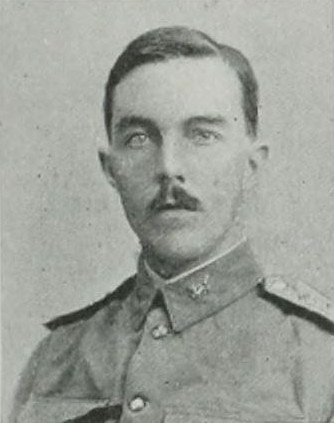
Andrew Galbraith Cowan.
COWAN, ROBERT CRAIG, 2nd Lieut., 3rd Battn. The Royal Scots, elder s. of Robert Craig Cowan, of Eskhill, Inveresk, co. Midlothian, by his wife, Mabel Agnes, dau. of Robert Orr, of Cowdonhall, and gdson. of Charles William Cowan, of Loganhouse; b. Craigiebield, Penicuik, co. Midlothian, 5 March, 1894; educ. Cargilfield, Cheltenham, and Pembroke College, Cambridge; joined the Army on the outbreak of war, being gazetted to the 3rd Battn. The Royal Scots from the O.T.C. 15 Aug. 1914. He was killed in action at La Plinche during the Battle of Ypres, 24 Oct. 1914, while attached to the 2nd Battn. The Royal Scots, and was buried at Chapigny, near Neuve Chapelle; unm. His commanding officer wrote: “We miss him not only as a comrade, but as a very gallant boy, who has set a noble example of courage and fearless execution of his duty.”
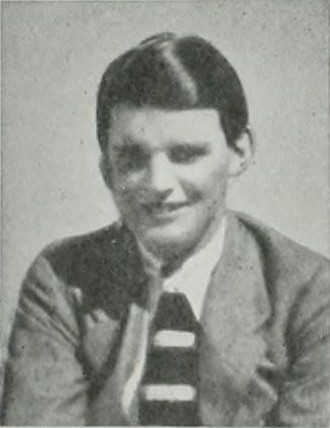
Robert Craig Cowan.
COWARD, LESLIE GRAHAM, Capt., 1st Battn. Duke of Cambridge’s Own Middlesex Regt., yst. s. of the late Christopher Thomas Coward, of Limehouse, L.F.P.S.G., L.S.A., by his wife, Emily (Park Lane, Stoke Newington), dau. of James Bennett; b. Limehouse, 1 Feb. 1890; educ. Owen’s School, Islington, and University of London (matriculated 1906). His health having broken down while he was reading for the Intermediate B.A., he secured a clerkship under the London County Council. On the outbreak of war he volunteered for foreign service, and having been a member of the London University O.T.C., was given a commission as 2nd Lieut. in the 5th Special Reserve Battn. of the Middlesex Regt. 15 Aug. 1914. Transferred later to the 1st Battn., he was promoted Lieut. 1 Jan. 1915, and Capt. 3 April, 1915. He was killed in action at Flanders, 25 Sept. 1915; unm. Writing to his mother, Col. F. Rowley said he “was killed yesterday while gallantly leading his platoon to storm German trenches. His death was instantaneous, and he could not have suffered any pain. I have had the privilege of knowing him for some months, and as his colonel had formed a very high opinion of him. He was very keen and devoted to his duty, and had done a lot of most excellent work while he was with the regt.” The regt. lost very heavily on this occasion, 12 officers being killed, 1 missing and 5 wounded. He was buried with four others in a little churchyard at Cambrin.
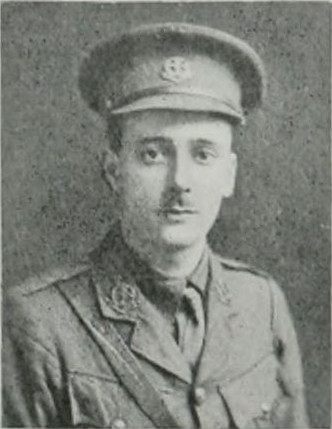
Leslie Graham Coward.
COWELL, CLAUDE, Leading Seaman, 223743 (Devon.), H.M.S. Good Hope; lost in action off Coronel, on the coast of Chili, 1 Nov. 1914.
COWLEY, JAMES, A.B. (R.F.R., B. 3874), 190567, H.M.S. Hawke; lost when that ship was torpedoed in the North Sea, 25 Oct. 1914; m.
COWLING, WALTER SIDNEY, Private, No. 16990, 7th Battn. (1st British Columbia Regt.) Canadian Expeditionary Force, 3rd s. of the late William Frederick Cowling, by his wife, Sarah Maria (64, St. Anne’s Road, Tottenham, London, N.), dau. of Benjamin Charles Osborne; b. Hackney, 8 Sept. 1891; educ. Stamford Hill Board School; went to Canada 22 Feb. 1910, and settled at Revelstoke, B.C., and worked as locomotive fireman on the freight trains that went up the Rockies; enlisted in Aug. 1914, after the declaration of war, and was killed in action at Messines, 27 Sept. 1915, by shell fire. He was buried in Ploegsteert Woods.
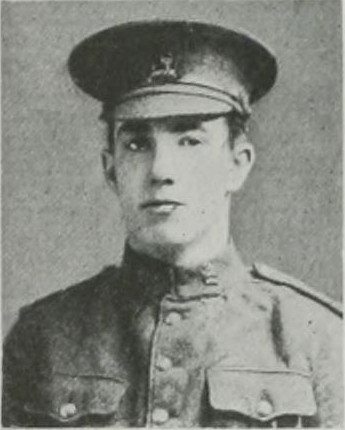
Walter Sidney Cowling.
COWNIE, JOHN BURNETT, Coy. Q.M. Sergt., No. 7711, 2nd Battn. Welsh Regt., s. of Francis Sonley Cownie, of Edinburgh, S.S.C.; b. Edinburgh, 24 Sept. 1886; educ. Edinburgh; joined the Army, 25 Nov. 1902, and was killed in action near Gheluvelt, Belgium, 29 Oct. 1914. 2nd Lieut. Hewett wrote: “He was with my platoon when he was killed.... He was a splendid fellow, as plucky as you make them, and a very fine leader and organiser. He would have made his mark and name in this war had he lived. He was also a first-class sniper. He met his death in the trench on my left flank, trying to locate a machine gun. He was in front of the others, and it was owing to this that we could not get his body in, though a Sergt. and myself tried. However, about 30 yards from it we got caught by machine gun fire and had to get back. He was killed outright and suffered no pain. He is a great loss to us all.” He was mentioned in F.M. Sir John French’s Despatch of 7 Sept. [London Gazette, 20 Oct. 1914.]
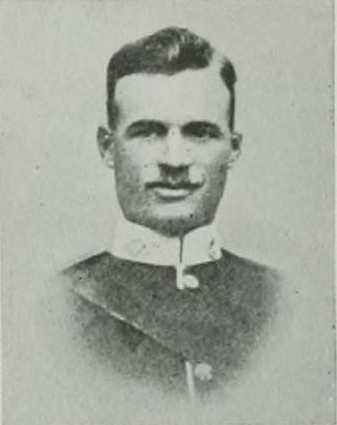
John Burnett Cownie.
COX, ALAN EDWARD GEORGE, Ordinary Telegraphist, No. 15439, H.M.S. Cressy, 1st s. of William Edward Cox, of 138, Chingford Road, Walthamstow, Metropolitan Police Constable, by his wife, Clara Louisa, dau. of the late William McNally; b. Devonport, 30 Nov. 1895; educ. William Morris School, Walthamstow; joined the Navy, 10 Jan. 1911, and was lost when H.M.S. Cressy was torpedoed in the North Sea, 22 Sept. 1914; unm. Letters from surviving comrades to the parents tell how he remained bravely at his post until the last moment. He had been specially promoted to be Telegraphist by Capt. Johnson on 1 Sept., and was a very promising operator. After leaving the training ship Impregnable, he served in several ships as wireless boy, and his first rating as Wireless Operator was on the ill-fated Cressy.
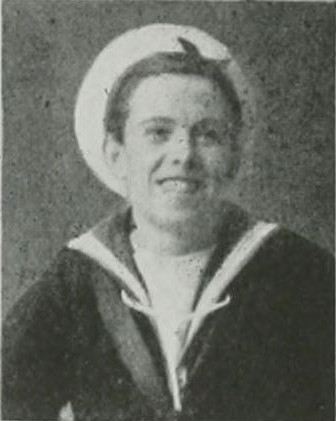
Alan Edward George Cox.
COX, ANTHONY, Stoker (R.F.R., B. 978), 281549, H.M.S. Aboukir; lost in action in the North Sea, 22 Sept. 1914.
COX, CHARLES, Chief Ship’s Cook, 344105, H.M.S. Good Hope; lost in action off Coronel, on the coast of Chili, 1 Nov. 1914.
COX, CHARLES ALBINE, A.B. (R.F.R., B. 5348), 194734, H.M.S. Good Hope; lost in action off Coronel, on the coast of Chili, 1 Nov. 1914.
COX, ERNEST WILKIN, Private, No. 12/710, 16th Infantry Battn. New Zealand Expeditionary Force, 5th s. of Edmund Blatchford Cox, of Roto-o-Rangi, Cambridge, Auckland, New Zealand, by his wife, David Ann, dau. of Robert Wilkin, of Christchurch, New Zealand; b. Hamilton, Waikato, Auckland, 11 April, 1893; educ. Waikato; was employed on his father’s property; volunteered and joined the New Zealand Expeditionary Force, on the outbreak of war in Aug. 1914; left for Egypt with the Main Body in Oct.; embarked for the Dardanelles, 12 April, 1915, and was killed in the landing at Gaba Tepe on the 25th of that month; unm. He was a great athlete, with a strong inclination for engineering.
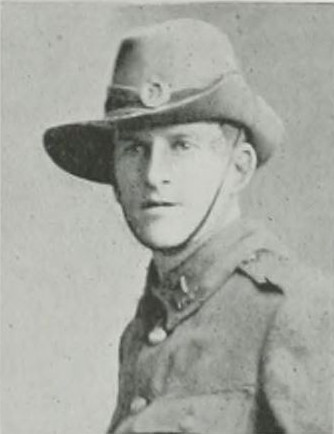
Ernest W. Cox.
COX, FRANCIS THOMAS, Ch. E.R.A., 1st Class, 268129, H.M.S. Good Hope; lost in action off Coronel, on the coast of Chili, 1 Nov. 1914.
COX, FRANCIS WILLIAM, A.B. (R.F.R., I.C. 668), 195409, H.M.S. Good Hope; lost in action off Coronel, on the coast of Chili, 1 Nov. 1914.
COX, HARRY, Seaman, R.N.R., 4978B, H.M.S. Cressy; lost in action in the North Sea, 22 Sept. 1914.
COX, HORACE RAYMOND, Private, No. 1125, 10th Battn. Australian Imperial Force; 3rd s. of William Cox, Butcher, by his wife, Ada Cox (26, Brock Street, Kirkdale, Liverpool), dau. of Henry Boden; b. Kirkdale, Liverpool, 12 May, 1893; educ. Westminster Road Schools, and Training Ship Indefatigable; was for sometime in the employ of the White Star Line, and emigrated to Australia in August, 1910. He joined the Commonwealth Expeditionary Force on the outbreak of war; was wounded in the landing at the Dardanelles, 25 April, 1915, and died in Hospital at Cairo, 8 May following; unm.
COX, HUBERT POMEROY, Rifleman, No. 2089, 1/16th (Queen’s Westminster Rifles) Battn. The London Regt. (T.F.), 3rd and yst. s. of the late Henry Cox, Permanent Way Inspector, Great Western Railway, by his wife, Kate (158, Darnley Road, Gravesend, Kent), dau. of the late Henry Courteen, of Redbrook, co. Monmouth; b. Weston-super-Mare, co. Somerset, 5 March, 1891; educ. Watford. He enlisted in the Queen’s Westminster Rifles on the day war was declared, went out to France with his regt. 3 Nov. 1914, and passed through all the critical fighting of Nov. and Dec., until he was killed in action by a shell at Chapelle d’Armentières Town Hall, 19 Dec. 1914. He was buried in the military cemetery, Armentières; unm. The following is an extract from a letter from the officer commanding his platoon: “He had done so well in the company since he joined and proved himself a hard worker and a good soldier.” And his Sergt. wrote, describing his death: “The battn. had come out of the trenches, and A Coy. were in their billet (Town Hall) when the shell burst. We were all so sorry about it for he was very much loved by all his comrades.” He was a man of splendid physique, taking an active part in all athletic games. At the school sports during his last term he carried off no fewer than 13 prizes and medals.
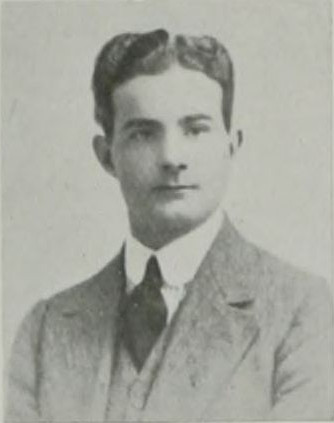
Hubert Pomeroy Cox.
COX, RICHARD ARTHUR, A.B. (R.F.R., Ch. B. 9957), S.S. 2497, H.M.S. Cressy; lost in action in the North Sea, 22 Sept. 1914.
COX, SWITHIN JOHN, Third Writer, 347960, H.M.S. Pathfinder; lost when that ship was sunk by a mine, about 20 miles off the East Coast, 5 Sept. 1914.
COX, SYDNEY DOUGLAS, Private, No. 2130, 6th Battn. Australian Imperial Force, yst. s. of Harry Cox, of 20, Manners Road, Ilkeston, Derby, formerly of Aldershot and Andover, retired Printer and Stationer, by his wife, Elizabeth, dau. of Joseph Stephenson, of Burley Road, Leeds; b. Stratford-on-Avon, co. Warwick, 7 Aug. 1891; educ. Broomy Hill Academy, Hereford; relinquished a lucrative position on the Midland Railway and went to Australia to take up farming in May, 1910, commencing as a farm hand at Stratford, Gippsland, and after three years being placed in charge of the farm. When the call of the Motherland was heard “down under,” he instantly responded, was enrolled in the 2nd, but was afterwards transferred to the 1st, Australian Contingent, took part in the repulse of the Turkish attack on the Suez Canal, and was killed in action at the Dardanelles, 8 May, 1915; unm. He was a good linguist, being able to speak two or three languages fluently.
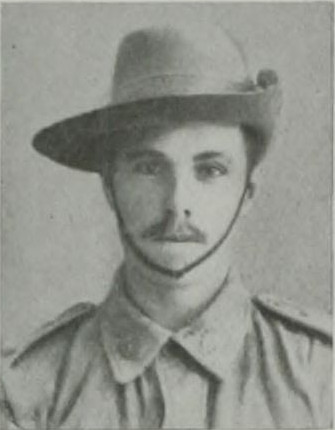
Sydney Douglas Cox.
COX, THOMAS, L.-Corpl., No. 11359, 1st Battn. Coldstream Guards, s. of Charles William Cox, of 3, Folkestone Road, Swindon, Foreman, Swindon Suridge Works, late Private, Grenadier Guards, by his wife, Eliza, dau. of Thomas Jenings, of Ossett, Essex; b. Swindon, co. Wilts, 29 Oct. 1894; educ. King William Street Church School there; enlisted in the 3rd (Special Reserve) Battn. of the Wiltshire Regt., 9 May, 1910, and passed into the 2nd Battn. 21 Oct. 1910, obtaining his discharge, 30 Jan. 1911. He was then employed in the Great Western Railway Works at Swindon until the outbreak of war, when he enlisted in the Coldstreams, 29 Aug. 1914. He was wounded in action at Givenchy, 23 Dec. 1914, and died in hospital at Wimereux on 29 Dec. 1914; unm.
COX, WALTER, Private, No. 6964, 3rd Battn. Coldstream Guards, s. of William Cox, by his wife, Maria (Alveston, Stratford-on-Avon), dau. of (—); b. Alveston, co. Warwick, 15 Oct. 1885; educ. Tiddington, near Stratford-on-Avon; enlisted at Birmingham, and was officially reported as wounded and missing after the fighting at Landrecies, 23 Aug. 1914, and is now assumed to have been killed in action on that day.
COX, WILLIAM GEORGE, Ship’s Cook, 347466, H.M.S. Good Hope; lost in action off Coronel, on the coast of Chili, 1 Nov. 1914.
COXHEAD, GUY TEMPLETON, Gunner, R.M.A., 7834 (R.F.R., 767), H.M.S. Aboukir; lost in action in the North Sea, 22 Sept. 1914.
COYLE, JAMES, Stoker, R.N.R., 1970S, H.M.S. Cressy; lost in action in the North Sea, 22 Sept. 1914.
COYNE, JAMES, Stoker, 2nd Class, K. 19994, H.M.S. Good Hope; lost in action off Coronel, on the coast of Chili, 1 Nov. 1914.
WALLACE-CRABBE, KEITH GEORGE, Capt., 14th Battn. Australian Expeditionary Force, 4th s. of George Wallace-Crabbe, of Gordon, Byrom Street, St. Kilda, Australia, Legal Manager, by his wife, Theresa, dau. of Francis Frederick Cluny, H.M.C., Adelaide, and step-brother of Douglas Wallace-Crabbe, of 34, Buller Road, Longsight, Manchester; b. Melbourne, 28 July, 1894; educ. Trinity Grammar School, Kew, Victoria, and held a good position in a large business firm. He had joined the 46th (Brighton Rifles) Regt. Australian T.F., some time prior to the war, and on the outbreak of war was a Captain and at once volunteered for Imperial service. He stood 6 feet 2 inches, and was given a commission as Lieut. of the 14th Battn. Australian Imperial Force, left Australia with the second reinforcements, and after some time in Egypt was sent with his battn. to the Dardanelles, where he took part in the landing on 25 April, and was almost continuously in action for six months. He was the officer in command when Corpl. Jacka won his Victoria Cross at Quinn’s Post, and throughout every action that followed showed conspicuous bravery. Writing to his father from Gallipoli on 20 May, he gave the following account of the incident: “We have just passed through two very strenuous days and nights here. The Turks were heavily reinforced, and made an attack on our position, and we inflicted terrible loss on the attackers. One little incident during the attack may interest you. The Turks, eight in number, got into a small section of our trench, and as I was near we had to clear them out. Lieut. Boyle was wounded, and Lieut. Hamilton killed in tackling the same job, before I came on the scene. I got four boys, who made a rush at them, but were repulsed with two wounded. Then I made as if we were going to attack again, and threw some grenades at them, and the L.-Corpl. whom I have written the memorandum about rushed in at the other end and fired ten shots. The copy enclosed is what I have written to get Jacka a medal for conduct. The General was greatly pleased with the way the attack was repulsed right along, and Major Rankine, who was in command of our trench, got great praise. All of us were personally congratulated by General Godley, Brigadier Monash and Col. Courtney. This is an extract from my report to headquarters: ‘I beg to report that at 5 a.m. on 19 May L.-Corpl. Jacka, No. 4 Coy., 14th Battn. Australian Imperial Force, under my instructions, rushed in at one end of the trenches whilst I had a party engaging them at the other end, and shot seven Turks who had forced and obtained a section of our trenches. L.-Corpl. Jacka and a party of four had tried a previous bayonet rush, but were repulsed with two casualties to us.’” Capt. Crabbe was mainly responsible for the ascendancy which the 4th Brigade established on the enemy in bomb fighting. He was killed while leading a desperate charge at Hill 60 at Suvla Bay, Gallipoli, 24 Aug. 1915; unm. “Men who saw this gallant officer lying dead,” wrote Sergt. Jacka, “say that he died with a sweet smile on his face. ‘Killed in action’ was, perhaps, all that you were told, but what death is there as noble as this, when you meet it while leading your men in the thick of battle and fighting for your King and country against such odds? The attack was made by 100 men from the 14th Battn., 100 from the 13th and 50 from the 16th. Lieut. Crabbe had been promoted to Capt. just previous to this, and being such a brave, cool officer he had charge of the men. It was in this ill-fated charge that he met his death. It was a desperate attack, and while leading his men, a smoking revolver in his hand, he fell, shot through the head. His sad and untimely death is greatly mourned by us. He was a great favourite with all the men who knew him, and had made a name for himself as a gallant leader, and had he lived through this engagement a very high honour would have been conferred upon him.” He wrote a treatise on platoon drill, and invented a new system of throwing hand grenades, and dealing with enemy grenades.
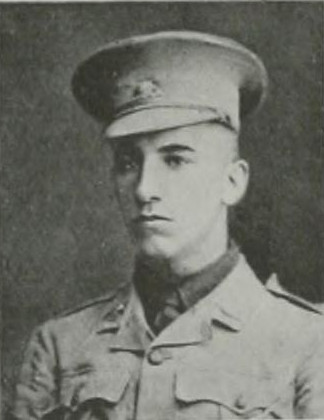
Keith Wallace-Crabbe.
CRABTREE, WILLIAM, 2nd Lieut., 8th (Service) Battn. Lincolnshire Regt., only s. of the late William Henry Robinson Crabtree, Civil Engineer, by his wife, Helen (39, Thome Road, Doncaster), dau. of John William Blagbrough, of Manchester; b. Doncaster, 20 May, 1895; educ. North Eastern County School, Barnard Castle, and afterwards started his training at the Brodsworth Colliery, with the view to becoming a mining engineer. On the outbreak of war he applied for a commission, and meantime joined as a private in the Public School camp, then stationed at Epsom, where he stayed only a few days, when he was gazetted to the 8th Battn. Lincolnshire Regt., 22 Sept. 1914. He was killed in a taxi-cab accident while training, 10 Feb. 1915; unm.
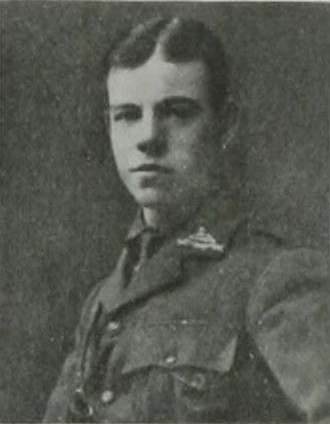
William Crabtree.
CRACKNELL, FREDERICK, Gunner, 7885, R.M.A., H.M.S. Good Hope; lost in action off Coronel, on the coast of Chili, 1 Nov. 1914.
CRADOCK, SIR CHRISTOPHER GEORGE FRANCIS MAURICE, K.C.V.O., C.B., Rear-Admiral, A.D.C. to His Majesty the King, 4th s. of the late Christopher Cradock, of Hartforth, co. York, by his wife, Georgina, dau. of Major Gordon Duff, 92nd Highlanders; b. Hartforth, Richmond, co. York, 2 July, 1862; educ. Richmond Grammar School, and Amyat Burney’s, Gosport; entered the Royal Navy 15 Jan. 1875; became Sub-Lieut. 21 Dec. 1881; Lieut. 30 June, 1885; Commander, 31 Aug. 1896; Capt., 18 April, 1901, and Rear-Admiral, 24 Aug. 1910; served during British occupation of Cyprus, 1878; present as Midshipman H.M.S. Pallas at hoisting by that ship of the Union Jack at Paphos and Limasol, 1878; in Upper Egypt, 1884; landed as Sub.-Lieut. with Naval Brigade for garrison duties; and with the Eastern Sudan Field Force as A.D.C. to the Governor-General of the Red Sea; present at the Battle of Tokar, 19 Feb. 1891, and subsequent occupation of Affafit (mentioned in Despatches; medal with Tokar clasps; Khedive’s Bronze Star; 4th Medjidie); was First Lieut. H.M.S. Dolphin on the occasion of the rescue by that ship of the officers and crew of the Brazilian corvette Almirante Barroza, which was totally wrecked off Ras Dib, 1892; Lieut. in Royal Yacht, 1894–6; when Commander H.M.S. Alacrity, commanded the Allied landing party at the storming and capture of the Taku forts, 17 July, 1900, and subsequently commanded the British Naval Brigade, and directed the British, American, Italian, and Japanese forces, on the advance to, and relief of, Tientsin, and in the relief of Sir Edward Seymour’s column at Siku (noted for promotion for gallantry; medal with Taku clasp); present with Naval Brigade at the capture of the Peiyang Arsenal, Tientsin, 27 June, 1900 (Relief of Pekin Clasp; 2nd Class Order of the Crown of Prussia with swords); created C.B., 26 June, 1902, and M.V.O. (4th Class), 21 April, 1903, on the occasion of the visit of King Edward VII to Malta; decorated with the Royal Spanish Order of Naval Merit, 1906; awarded Testimonial of the Royal Humane Society for jumping overboard at night in Palmas Bay, Sardinia, 1904, and saving the life of a drowning midshipman; was Flag Capt. to Admiral Sir Baldwin Walker, commanding the cruisers which found and shadowed the Russian Fleet after the Dogger Bank Incident; Naval A.D.C. to His Majesty King Edward VII, 9 Feb. 1909 to 24 Aug. 1910; Rear-Admiral of the Atlantic Fleet (3rd Battle Squadron) Aug. 1911, to Aug. 1912; was at Gibraltar when the P. & O. s.s. Delhi, with the Duke and Duchess of Fife and their daughters on board, stranded off Cape Spartel, on the night of 12 Dec. 1911; received the appreciation of the Lords Commissioners of the Admiralty for “courage and energy displayed” on this occasion, and was created a K.C.V.O. (28 Feb. 1912), and awarded the Silver Medal of the Board of Trade for saving life; Commanding Training Squadron, 1912, to 8 Feb. 1913; appointed Rear-Admiral and Senior Naval Officer, West Atlantic (4th Cruiser Squadron), 8 Feb. 1913; hoisted his flag on H.M.S. Good Hope (Armoured cruiser) after the outbreak of war, and was lost in action off Coronel, on the coast of Chili, 1 Nov. 1914. The Official report states “During Sunday, 1 Nov. the Good Hope, Monmouth, and Glasgow came up with the Scharnhorst, Gneisenau, Leipzig, and Dresden. Both squadrons were steaming south in a strong wind and considerable sea. The German squadron declined action until sunset, when the light gave it an important advantage. The action lasted an hour. Early in the action both the Good Hope and the Monmouth took fire, but fought on until nearly dark, when a serious explosion occurred on the Good Hope, and she foundered.... The action appears to the Admiralty to have been most gallantly contested, but in the absence of the Canopus the enemy’s preponderance of force was considerable.” A Public Memorial was put up in York Minster: another at Dungavel Private Chapel by the Duke and Duchess of Hamilton; a window at Gilling Church by Countess Fitzwilliam, and a tablet at Gilling Church by the Family. He was author of “Sporting Notes in the Far East,” “Wrinkles in Seamanship or a help to Salt Horse,” “Whispers from the Fleet,” etc., etc. He was unm.
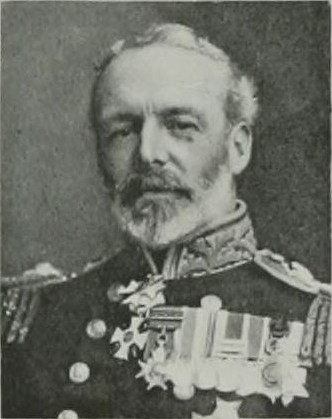
Sir C. G. F. M. Cradock.
CRAGG, GEOFFREY ETHELBERT, Solicitor, Sergt., No. 1745, 5th Battn. Queen’s Royal West Surrey Regt. (T.F.), s. of the late Anthony Richard Cragg. Estate Agent to Sir Jeremiah Colman, Gatton Park, of Warleigh, Eversfield Road, Reigate, Surrey, and Author of “Hints to Young Valuers” and many other works, by his wife, Alice Louise, dau. of the late Norcliffe William Glendinning, of Ambleside; b. Hereford, 25 Feb. 1888; educ. Hoe Preparatory School and Reigate Grammar School; served his articles with Morrison and Nightingale, of Reigate and Redhill, and was admitted a solicitor in July, 1910. He was appointed Deputy Coroner for East Surrey in 1912, and was probably the youngest Deputy Coroner in the country. He had joined the Royal West Surrey Territorials in 1912, and when war broke out was in training with his regiment on Salisbury Plain. He immediately signed on for the period of the war, and was sent to India with his regt. Cragg was one of those who volunteered for service in the Persian Gulf, when, in Aug. 1915, a call was made for a further draft of men from the 5th Queen’s to join the 2nd Norfolks, then in Mesopotamia, and his keenness is shown by the fact that he was willing to revert to the rank of Corpl. in order to go. He took part in the action on 27–28 Sept., and died of dysentery, at Kut-el-Amara, 17 Oct. 1915; unm. Col. Brodrick wrote to Mrs. Cragg: “Your son was a splendid fellow. His devotion to duty at all times was wonderful. We shall miss him terribly, but he died, as he would have wished, doing his duty, and the regt. is proud of him.”
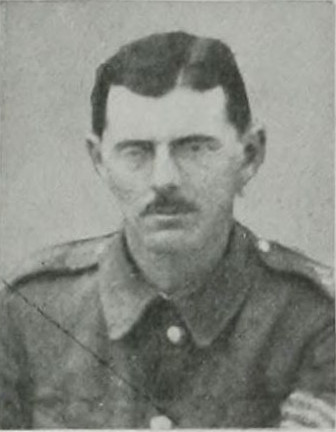
Geoffrey Ethelbert Cragg.
CRAMPTON, CHARLES THEODORE, Stoker, P.O. 294717, H.M.S. Hawke; lost when that ship was torpedoed in the North Sea, 15 Oct. 1914; m.
CRANE, CHARLES EDWARD, 2nd Lieut., 1st Battn. Duke of Cornwall’s L.I., eldest s. of Charles Arnold Crane, of The Reddings, Cheltenham, by his wife, Georgina, dau. of the Rev. Thomas Walker, Rector of Abbots Morton, Worcestershire; b. Birlingham, co. Worcester, 18 Feb. 1892; educ. Oakfield, Rugby, Cheltenham College, and Sandhurst; gazetted to the 1st Battn. Duke of Cornwall’s L.I. 4 Sept. 1912, and served with his regt. in Ireland in the spring of 1914 in connection with the troublous time in Belfast. On the outbreak of war he went with his regt. to the Front, was wounded in the Battle of the Aisne, 14 Sept. 1914, and died from wounds, at Mont de Soissons Farm, four days later, being buried near Mont de Soissons, between the village of Nampteuil-sous-Muret and Serches, 7 miles from Soissons, and 1 mile from Serches, overlooking the Valley of the Aisne; unm. His commanding officer, Lieut.-Col. M. N. Turner, in writing to his father, paid a high tribute to his worth and courage: “Your boy was absolutely brave and good. We were all so very fond of him, and he was such an excellent officer. He was absolutely fearless, and one of the best.” An officer wrote: “He was hit on 14 Sept, when doing real good, brave work. He did his work before he was hit, and it took a bit of doing. Another good soldier and leader, and another gallant officer! We miss him very much; we all liked him so tremendously.” Sergt. Blaclock declared that “He was always to the front in the call of duty, and the men who have had the honour to serve with him at home or on the battlefield will, I am sure, always feel proud of him, and he will always be remembered as one of the bravest and best.” And L.-Corpl. J. Horan, 1st Duke of Cornwall’s L.I., wrote: “I had the pleasure of serving with your gallant son. All through the famous retreat from Mons it will always live in my memory his kindness to me; that was when we started the advance. He picked me up where I was lying by the road one night and put me in an ambulance wagon, and also another Private; we both owe our lives to him. He was most kind and considerate in all his orders, and would never ask his men to go to any place he would not go himself. We had trying times, especially on 26 Aug., when he took us out of the village Le Chateau. I don’t remember him losing any of his platoons. It was a dreadful ordeal, for they were firing upon us in all directions. His conduct was brilliant in the extreme; it was his coolness that got us out of it. I cannot express his kindness, for on the retreat I have seen him carrying the men’s rifles. He would give us chocolates and cigarettes, or whatever he had he would give to any one. I cannot speak too highly of him.” Numerous other letters refer to him in like terms of admiration and respect.
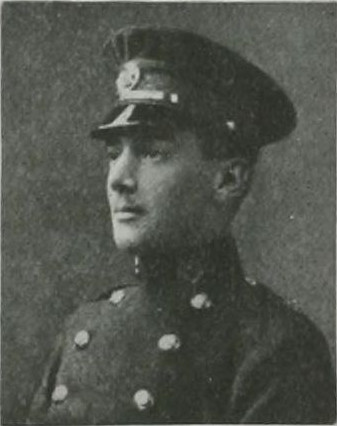
Charles Edward Crane.
CRASCALL, COULSON HENRY, A. B. (R.F.R., Ch. B. 2577), 177293, H.M.S. Cressy; lost in action in the North Sea, 22 Sept. 1914.
CRAVEN, EDWARD, Stoker. 1st Class (R.F.R., B. 7125), S.S. 101858, H.M.S. Aboukir; lost in action in the North Sea, 22 Sept. 1914.
CRAVEN, THOMAS, Deckhand, R.N.R., 1386 D.A., Royal Naval Reserve; b. Cleckheaton, co. York, 26 Feb. 1872; educ. Church Schools, Liversedge, co. York; was in the employ of Messrs. Hillyer, of Hull; joined the Royal Naval Reserve at the outbreak of war, and was drowned in the North Sea by falling overboard during a gale, while surveying on H.M. armed trawler Viola in the North Sea, 7 Nov. 1914. He was buried with naval honours at Lerwick; unm.
CRAVEN, THOMAS, Stoker, P.O. (R.F.R., A. 1917/), 154699, H.M.S. Hogue; lost in action in the North Sea, 22 Sept. 1914.
CRAWFORD, ALEXANDER PRATT, Private, No. 7049, 1st Battn. Queen’s Own Cameron Highlanders, 2nd s. of Charles Crawford, of Leith, Wine and Spirit Merchant, by his wife, Agnes Lumsden (11, Annfield, Newhaven), dau. of the late Peter Seton, of Edinburgh; b. Leith, 17 Feb. 1887; educ. at Trinity Academy, Leith; enlisted 29 Sept. 1904, and was killed in action at the Aisne, 14 Sept. 1914; unm.
CRAWFORD, EDWARD, Lieut., 3rd Battn. Royal Inniskilling Fusiliers, 7th surviving and yst. twin s. of the late Robert Crawford, of Stonewold, Ballyshannon, C.E., D.L., Professor of Engineering in Trinity College, Dublin, 1882–87, by his second wife, Anna, dau. of the late Thomas Troubridge Stubbs, of Ballyshannon; b. Stonewold, Ballyshannon, co. Donegal, 23 Nov. 1880; educ. Portora Royal School, Enniskillen, and Cheltenham College; gazetted 2nd Lieut. 4th (now the 3rd) Battn. Royal Inniskilling Fusiliers, 30 April, 1906, and promoted Lieut. 14 July, 1908. He went to the Front, Oct. 1914. and was attached to the 2nd Battn. Royal Irish Rifles in Flanders; he was invalided home in Dec. 1914, having contracted frostbite in the trenches. On recovery he again went to the Front, where he was attached to the 2nd Battn. Royal Irish Regt., and died at the British Hospital, Wimereux, France, 27 May, 1915, as the result of gas poisoning and wounds received while in action about 25 May. He was buried in the cemetery at Wimereux; unm.
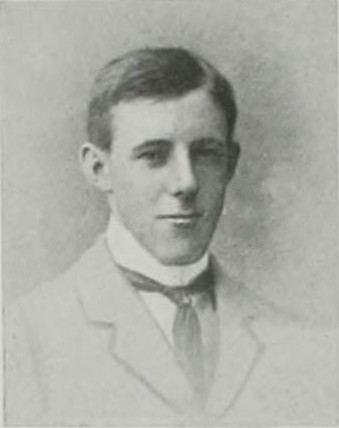
Edward Crawford.
CRAWFORD, HUGH, A.B. (R.F.R. B., 10852), S.S. 2908, H.M.S. Hawke; lost when that ship was torpedoed in the North Sea, 15 Oct. 1914; m.
CRAWFORD, RICHARD GILPIN, Lieut., Princess Patricia’s Canadian L.I., s. and only child of William C. Crawford, of Tilbury, Kent co., Ontario, President of the Windsor, Essex and Lake Shore Railway, a member of the Municipal Council of Tilbury for 23 years and Chairman of the Council for 13 years, by his wife, Annie, dau. of Richard Thompson Gilpin, of St. Mary’s, Ontario; b. Tilbury, 12 Jan. 1892; educ. Common and High School in Tilbury, Upper Canada College, Toronto, and The Royal Military College, Kingston, being a Graduate there. He joined the 1st Canadian Contingent in Aug. 1914; left with it for England in Sept. following, and after being attached to the 9th Battn. at Salisbury, England, proceeded to France, 25 March, 1915, and was transferred to Princess Patricia’s Canadian L.I. He was twice wounded in the engagement at Bellewarde Lake, 8 May, 1915, and died in the Clearing Hospital at 2 p.m. the day following. He was buried at Bailleul, France; unm. Lieut. Crawford was recommended for distinguished service in the field by Major-Gen. Snow, commanding 27th Division, Canadian L.I., on account of his bravery in remaining under a very heavy shell and rifle fire to dig out some of his comrades from under their machine guns. The officer commanding Princess Patricia’s Canadian L.I. (Hugh L. Niven) wrote to his father: “Lieut. Crawford was wounded early in the morning of 8 May at Bellewarde Lake by a piece of high explosive shell that lit in the trench where he was attending to his duties. He was carried by four of the men of his company, who were exposed to heavy shell and machine gun fire, to a dug-out some 100 yards in rear. He was there properly bandaged by the medical orderlies and made comfortable. About noon the same day a large high explosive shell fell on the dug-out and Lieut. Crawford was again wounded, this time on his right foot. He was got out of this dug-out at once and taken to another one to the left, and was taken to our dressing station at dusk by the stretcher-bearers, and sent on from there in an ambulance to the closest hospital about 9 miles away, and he died there from his wounds. I saw a great deal of Lieut. Crawford, and I say in all sincerity that this regt. lost one of its most promising officers. His bravery was most remarkable, and his officers and men reported this to me on several occasions. He did not know what it was to be nervous even under the heaviest shell fire, and on the morning of 4 May, when they were shelling his trench, he dug out the machine gun section which were completely buried by a shell, and although several fell within 10 feet of him he never even noticed them, but continued digging as if he were miles away from harm. I was with him at the time, and it was worth while to listen to the men he helped to rescue telling him what they thought of his action. This is only one of many cases where he displayed the greatest gallantry. In fact, he was idolised by his men, and the whole regt. mourns one of the bravest soldiers that ever lived. When he was so seriously wounded he objected to any one making a fuss over him, and was always telling the orderlies to attend to some one else, and, as he was going away, he said he would be back right away, just as soon as he could get out of the hospital.”
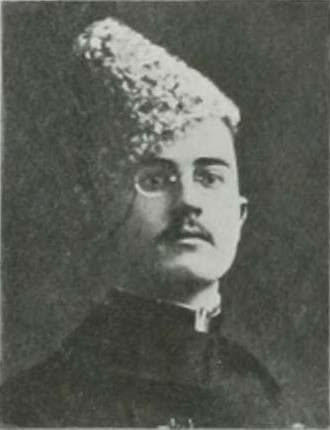
Richard Gilpin Crawford.
CRAWFORD, WILLIAM JOHN, Sergt., No. 7791, 3rd Battn. Coldstream Guards, s. of William Frederick Crawford, Chintz Glazer; b. Camden Town, 8 March, 1889; enlisted 9 April, 1908; served in Egypt, 6 Jan. 1909, to 11 March, 1911, and with the Expeditionary Force in France and Flanders; was wounded at Landrecies in Aug. 1914, and invalided home, returning to the Front, 7 April, 1915, and was killed in action at Cambrin, 8 July, 1915, by a rifle grenade. He m. at Clapton, 7 March, 1915, Clara Annie (94, Dunlace Road, Clapton, London), dau. of Alfred Leonard Hughes, of London; s.p.
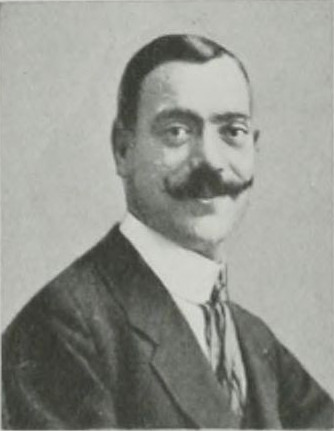
William John Crawford.
CRAWHALL, FRITZ PORTMORE, 2nd Lieut., 6th Battn. King’s Royal Rifle Corps, yr. s. of the Rev. Edmund Isaac Laroche Crawhall, Vicar of Herriard, co. Hants, and later of Granton, co. York, by his wife, Isabella Duncan, dau. of Capt. James Grant, R.N.; b. Ryde, Isle of Wight, 15 Aug. 1897; educ. “Cordwalles,” Maidenhead, and Winchester College (scholar), and received his commission in the 6th King’s Royal Rifle Corps, 15 Aug. 1914. After the action at Neuve Chapelle on 10 March, 1915, he was officially reported “missing,” but his Capt. stated that he saw him fall dead in a German trench. He was captain of the College VI at Winchester, 1912–13 and 1913–14, and open classical postmaster of Merton College, Oxford.
CRAWLEY, ARTHUR EDWARD, Private, No. 10723, 1st Battn. Royal Scots, 4th s. of Alfred Thomas Crawley, of 14, Queen’s Road, Peckham, London, Printer, by his wife, Emma, dau. of T. Bennet; b. Bloomsbury, London, W.C., 23 March, 1891; educ. Colls Road L.C.C. School, Peckham; enlisted 10 Aug. 1910; served in India, 7 Oct. 1911 to Oct. 1914, and with the Expeditionary Force in France and Flanders, 19 Dec. 1914 to 22 Jan. 1915, on which latter date he was killed in action at Veirstraat; unm.
CRAWLEY, HAROLD, Stoker, 1st Class (R.F.R., B. 7549), S.S. 102735, H.M.S. Aboukir; lost in action in the North Sea, 22 Sept. 1914.
CRAWLEY, JAMES, Private, No. 12042, 3rd Battn. Coldstream Guards, 3rd s. of the late John Crawley (died 1900), by his wife, Mary Ann (5, Puddle Dock, Willmington, Dartford, Kent), dau. of John Austin; b. Battersea; was a Farm Labourer; enlisted 9 Sept. 1914; went to France, 17 March, 1915, and was killed in action near Givenchy, 10 Aug. 1915; unm.
CRAYFORD, VICTOR, Private, R.M.L.I., Ch./9027, H.M.S. Cressy; lost in action in the North Sea, 22 Sept. 1914.
CREAGH, AUBREY OSBORNE, Capt., 120th Rajputana Infantry, Indian Army, s. of Major-Gen. William Creagh, Indian Army, and gdson. of General Sir Michael Creagh, K.H.; b. St. Leonards-on-Sea, 18 Sept. 1883; educ. The Grange, St. Leonards-on-Sea; Southlea; Great Malvern; United Services College, Westward Ho (1897–1900); and Royal Military College, Sandhurst (1901); gazetted 2nd Lieut. unattd. 18 Jan. 1902, and promoted Lieut. 18 April, 1904, and Capt. 12 July, 1911. Left for India in March, 1902, and was attd. to the Suffolks at Karachi, and later transferred to the Cheshires at Quetta. After a year with them he was appointed to the 120th Rajputana Infantry at Poona (10 April, 1903), going afterwards to Baroda; served on detachment duty at Buxa, N.E. Bengal, and commanded a detachment of 50 men of the 120th at Gyantse, Tibet, from Aug. 1909, to May, 1911, where he guarded the British Trade Agency. When war broke out he was on leave in Chumba (beyond Kashmir), and only heard of it on reaching Simla, receiving orders to rejoin his regt. He landed in the Persian Gulf in Nov. 1914, took part in the capture of Basra and the fight at Sahil on 17 Nov., after which the regt. was entrenched at Kurna for several weeks. Capt. Creagh was killed in the Battle at Shaiba, 14 April, 1915, being shot through the head. His commanding officer wrote: “He fell while leading his double company in the fiercest action that has taken place in this campaign; the regt. was well in the thick of it all, and finally participated in the bayonet charge at the end of the battle. Young Creagh has helped to create a name for this regt. which will not be forgotten. The regt. attacked a strong position over very open country, losing nearly 200 in casualties out of about 660.” He was buried on the battlefield; unm.
CREAN, THEODORE, Capt., 1st Battn. Northamptonshire Regt., attached No. 4 Squadron, Royal Flying Corps, only s. of the late Richard Crean, of Manchester, M.D., by his wife, Lucy Mary (Chester), dau. of Peter Bohngard; b. Manchester, 23 Oct. 1880: educ. Stonyhurst, and Gonville and Caius, Cambridge; received a commission in the 6th (Militia) Battn. of the Lancashire Fusiliers, Sept. 1900, and joined his regt. in South Africa in Jan.; served through the South African War, March, 1901 to 1902, receiving the Queen’s medal with five clasps. He then passed into the Regulars, being gazetted 2nd Lieut. to the 3rd Battn. of the Lancashire Fusiliers, 30 April, 1902, and promoted Lieut. 20 May, 1904, and transferred to Northants Regt. in May, 1908, and obtained his company, 14 June, 1913. He was attached to the West African Regt., 27 Oct. 1905 to 28 Sept. 1911, and was employed with the West African Frontier Force from 19 Feb. 1913; returning to England just before the outbreak of war. He was attached to the Royal Flying Corps, 4 Sept. 1914, and was shot down in an aeroplane while signalling to the artillery near Ypres, 26 Oct. 1914. He was buried at Gheluvelt, Flanders; unm. His commanding officer wrote: “Your son had done awfully good work with us, and at the moment of his death was doing splendidly in observing our artillery and signalling to them from the air. They had to fly low owing to clouds and were under a heavy fire. Your son and the pilot were killed instantly.”
CREASER, WALTER, Stoker, 1st Class (R.F.R., Ch. B. 9275), S.S. 106492, H.M.S. Cressy; lost in action in the North Sea, 22 Sept. 1914.
CREES, ERNEST JAMES, Chief Shipwright, 341595, H.M.S. Hogue; lost in action in the North Sea, 22 Sept. 1914.
CREIGHTON, ROBERT, Stoker, 1st Class (R.F.R., B. 10097), S.S. 107757, H.M.S. Hawke; lost when that ship was torpedoed in the North Sea, 15 Oct. 1914.
CRESSWELL, ERNEST ALAN, Corpl., No. 2205, 9th Battn. (Queen Victoria’s Rifles) The London Regt. (T.F.), s. of Walter Cresswell, of North Villa, The Vale, Hampstead, by his wife, Jessie, dau. of Robert Henderson, Miniature Painter; b. Elstree, co. Herts, 29 March, 1892; educ. Hampstead, and was a decorative designer of great promise. Immediately war was declared he joined the Queen Victoria Rifles, went to France, 24 Jan. 1915, and was wounded at the capture of Hill 60 in April, 1915, being with Lieut. Woolley (the first Territorial officer to win the V.C.) when he gained that distinction. He had only rejoined his regt. a few days after being in hospital when he was killed in action near St. Eloi, 4 June, 1915; unm. He was buried at Elyenwalle Chateau, in Wood H (35b, Reference Map, Belgium, 28’/40,000). The papers appointing him Sergt. had just been made out when he was killed.
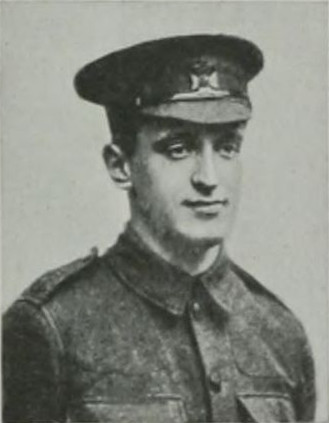
Ernest Alan Cresswell.
CRESSWELL, JOHN LESLIE, Private, R.M.L.I. (Ports.), 15838, H.M.S. Good Hope; lost in action off Coronel, on the coast of Chili, 1 Nov. 1914.
CREW, WILLIAM THOMAS, Private, R.M.L.I. Ch./9398, H.M.S. Hawke; lost when that ship was torpedoed in the North Sea, 15 Oct. 1914.
CRICHTON, GERALD EDGECUMBE, Private, No. 1928, 4th Battn. Australian Imperial Force, 2nd s. of the late William Crichton, of 18, Rotton Park Road, Edgbaston, Birmingham, by his late wife, Bessie Eleanor, dau. of the late George Edgecumbe; b. Edgbaston, 8 Oct. 1886; educ. Edgbaston Preparatory School and King Edward’s School, Birmingham; went to Australia in Dec. 1907, and settled at Galong, N.S.W.; joined the Commonwealth Expeditionary Force in Feb. 1915, and was killed in action in a Turkish trench during the attack in Lone Pine district, Gallipoli, 6–7 Aug. 1915; unm.
CRICHTON, HUBERT FRANCIS, Major, Irish Guards, only s. of Col. the Hon. Charles Frederick Crichton, of Mullaboden, Ballymore, late Grenadier Guards, by his wife, Lady Madeline, née Taylour, 2nd dau. of Thomas, 3rd Marquis of Headfort, K.P., P.C., and grandson of John, 3rd Earl Erne, K.P.: b. 95, Eaton Square, London, 17 Dec. 1874; educ. Eton and Sandhurst, and was gazetted to the Grenadier Guards, 15 Jan. 1896. He was promoted Lieut. 12 March, 1898, and two years later transferred to the Irish Guards, becoming Capt. 6 Oct. 1900, and Major, 25 March, 1908. He served with the Nile Expedition, 1898, being present at the Battle of Khartoum (medal with clasp), and in the South African war, 1902, when he was employed with the Imperial Yeomanry in the operations in Cape Colony; for this he received the Queen’s medal with two clasps. From 19 May, 1900, to 31 Dec. 1901, he had been Adjutant of the Irish Guards, and from 23 Oct. 1902, to 14 Feb. 1905, was A.D.C. to the Commander, 1st Army Corps. Aldershot. The Irish Guards formed part of the original Expeditionary Force to go to France, and Major Crichton was killed in action at Villers Cotterets, 1 Sept. 1914. He was mentioned in F.M. Sir John (now Lord) French’s Despatch of 7 Sept. 1914, for gallant and distinguished service in the field. He m. London, 14 July, 1903, Esther, dau. of Llewellyn Saunderson, of Kingstown, co. Dublin, and had two daus.: Doris Madeline, b. 29 May, 1904; and Enid Irene Adelaide, b. 27 Feb. 1907.
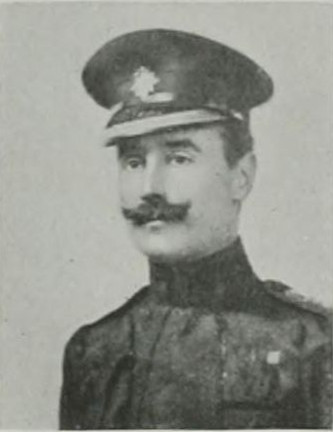
Hubert Francis Crichton.
CRICHTON, JOSEPH MICHAEL SMITH, Private, No. 2199, 16th Battn. Australian Imperial Expeditionary Force, 4th s. of Alfred James Crichton, of Sunderland, by his wife, Ann (28, Sidecliff Road, Roker, Sunderland), dau. of Joseph Michael Smith; b. Sunderland, co. Durham, 16 March, 1889; educ. at Redby School, and went to Australia in April, 1912, where he took up farming. After the outbreak of war he joined the Commonwealth Expeditionary Force in April, 1915, went to Egypt with the 16th Battn. in July, and was killed in action on Lone Pine, 8 Aug. 1915; unm. He had volunteered with some other Australians and Indians on some very hazardous work when he met his death. His Adjutant said of him “That he always did excellent work, but, more particularly on the day of his death.”
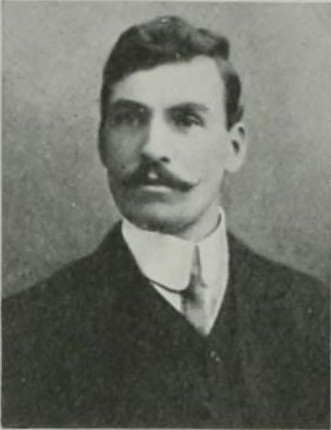
Joseph M. S. Crichton.
CRIPPS, GEORGE, A.B., 206557, H.M.S. Aboukir; lost in action in the North Sea, 22 Sept. 1914.
CRIPPS, SPENCER HARRY, Petty Officer, R.N.V.R., London 1/3501, Drake Battn. Royal Naval Division, only s. of William Henry Cripps, of Bradford-on-Avon, Draper; b. Buckingham, 24 June, 1882; educ. Bath; served in the South African War (medal), and on the outbreak of the European War, joined the R.N.V.R. in Sept. 1914, and was killed in action at the Dardanelles, 25 May, 1915. Lieut. Edward H. S. Bligh wrote: “He has been a great help to me ever since I first took charge of the 16th Platoon, and it did not take me long to single him out; it was not long before I was able to recommend him for the promotion he so well deserved. Just before his death I had lost him from the platoon, as he had been put in command of another platoon, and he was at the head of his men when he came under heavy fire and fell dead on 25 May, with a bullet through his brain. I was able to go out after dusk and to bury his body.” He m. at St. George’s Church, Brondesbury, 13 Feb. 1915, Winifred Louise, dau. of John Butler, of 8, Blenheim Gardens, Cricklewood; s.p.
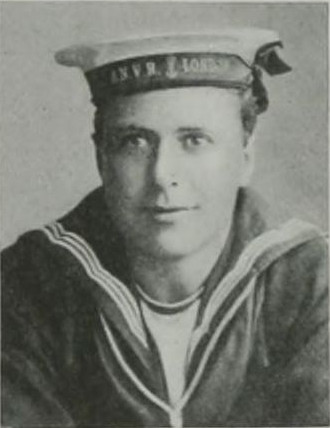
Spencer Harry Cripps.
CRISP, JAMES FREDERICK, Seaman, R.N.R., 3607C, H.M.S. Aboukir; lost in action in the North Sea, 22 Sept. 1914.
CRITCHER, ALBERT, Private, R.M.L.I., Ch./17494, H.M.S. Hogue; lost in action in the North Sea, 22 Sept. 1914.
CRITCHLEY, SIDNEY HERBERT, Shipwright, 2nd Class, 345723, H.M.S. Good Hope; lost in action off Coronel, on the coast of Chili, 1 Nov. 1914.
CROCK, THOMAS, P.O., 2nd Class (R.F.R., B. 4674), 158554, H.M.S. Aboukir; lost in action in the North Sea, 22 Sept. 1914.
CROCKER, FREDERICK CYRIL, Sergt., No. 1865, No. 4 Platoon, 6th Battn. Northumberland Fusiliers (T.F.), s. of Lieut. John Crocker, of Claremont, Portishead, Somerset, formerly of Lerwick and Stornoway, R.N., Divisional Officer of Coast Guards, Southend Division, by his wife, Annie, dau. of the late James Bardsley; b. Stornoway, Isle of Lewis, 22 Dec. 1887; educ. Tate School, Wexford, and Anderson Institute, Lerwick, Shetland, and prior to the outbreak of war was an Officer of Excise at Gateshead. He joined the Northumberland Fusiliers at the beginning of 1914, volunteered for Imperial service when war began, was severely wounded in action at St. Julien, 26 April, 1915, while leading the platoon in a bayonet charge after his platoon officer, Lieut. Garton, had fallen, and died in the East Suffolk Hospital, Ipswich, 1 June, following. He m. at Glasgow, 10 June, 1911, Janet, dau. of Peter Macleod, of Stornoway, and had two daus.: Patricia Joan Mary, b. 28 April, 1912; and Annie Valerie, b. 4 Feb. 1915.
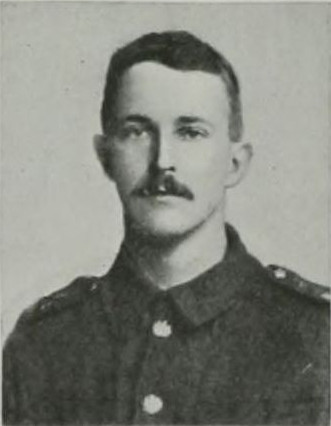
Frederick Cyril Crocker.
CROCKFORD, CHARLES, P.O., 1st Class., 198167, H.M.S. Hawke; lost when that ship was torpedoed in the North Sea, 15 Oct. 1914.
CROFTON, CHARLES WOODWARD, Major, 9th (Service) Battn. Worcestershire Regt., formerly North Staffordshire Regt., s. of the Rev. Henry Woodward Crofton, formerly H.M. Chaplain at Rangoon and Simla, by his wife, Janette, dau. of Charles Butter, of Ingateston, Essex (attd. 5th Dragoon Guards as Medical Officer in Battle of Waterloo); b. Rugby, 8 Nov. 1864; educ. Haileybury and Oxford Military College, and received his commission as Lieut. from the Militia to the North Staffordshire Regt. (the old 98th), 25 Nov. 1885, and became Capt. 6 March, 1895, and Major, 14 March, 1905. He served in the Dongola Expedition (Egyptian medal with clasp), 1896, and was Station Staff Officer of the first grade in India from 6 July, 1902, to 31 May, 1904, and Brigade Major from 1 June, 1904, to 31 March, 1905. He had retired 6 Dec. 1913, but after the declaration of war immediately placed his services at the disposal of the War Office, and on 31 Aug. was gazetted to the 9th Worcesters as second in command to Lieut.-Col. M. H. Nunn. He went out with the Mediterranean Expeditionary Force, and was killed in action at Suvla Bay, 10 Aug. 1915. A brother officer wrote: “I can assure you your husband was a great credit to our Army, fearless and brave. He was never happy unless in a position to be at the head of our regt., and at the time he was killed we were in a very tight corner, and it meant at the time British determination to withhold the severe Turkish attack, and he was one of those to show a great example to the men.” Major Crofton m. at Mussoorie, India, 26 Dec. 1901, Catherine Mary (Culverley, Goda Road, Littlehampton), dau. of the late Charles Frederick Waverley Stowell, and had two children: Hugh Charles Henry, b. 19 Feb. 1915; and Kathleen Louisa, b. 23 Dec. 1902.
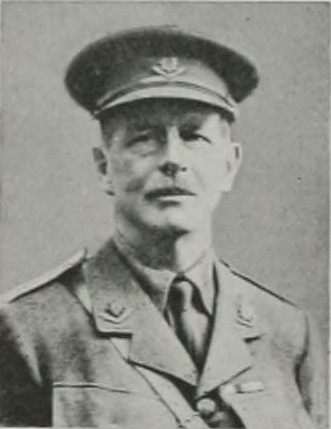
Charles Woodward Crofton.
CROMIE, MAURICE FRANCIS, 2nd Lieut., 3rd, att. 2nd, Battn. Hampshire Regt., 2nd s. of the late Capt. Charles Francis Cromie, C.M.G., 37th Regt., Consul-General for Congo Free State at the time of his death, by his wife, Joanna Angela (Alresford, Hants), dau. of Julian Bargus Yonge, of Otterbourne, Hants, J.P., M.A. [Cadet of Yonge of Puslinch, Devon]; b. London, 29 July, 1895; educ. Blundell’s, Tiverton, and Dover College, where he was in the O.T.C.; obtained his commission, 15 Aug. 1914, and was killed in action at Gallipoli, 4 June, 1915: unm. His commanding officer wrote: “Lieut. Cromie’s loss was really a bitter blow to the regt. I had only known him a few days, and he had charge of the machine guns. When we went up to the front trenches prior to the assault he came twice with me on expeditions, and was so keen and cheerful about it all that I got him to come and live in my dug-out, and there we stayed together until the day. How it happened I do not know, but what I do know is that his guns arrived in the nick of time and later were instrumental in saving the situation.”
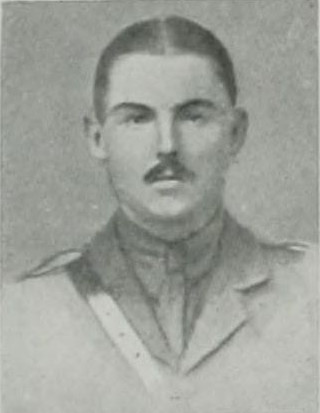
Maurice Francis Cromie.
CRONK, FRIEND, A.B. (R.F.R., B. 3574), 187623, H.M.S. Good Hope; lost in action off Coronel, on the coast of Chili, 1 Nov. 1914.
CRONK, WILLIAM GUY, 2nd Lieut., 3rd Battn. (The Buffs) East Kent Regt. att. King’s Royal Rifle Corps, only s. of William Henry Cronk, of Suffolk Place, Sevenoaks, by his wife, Winifred Ruth, dau. of Lieut.-Col. C. N. Kidd; b. Sevenoaks, co. Kent, 28 April, 1893; educ. Eton and the Royal Military Academy, Woolwich; gazetted 2nd Lieut. 3rd Battn. East Kent Regt., 14 March, 1914, and attd. to the King’s Royal Rifles; went to France early in Oct., and was killed in action two miles S.E. of Zonnebeke, 26 Oct. 1914, while leading his platoon in an attack on the enemy trenches; unm.
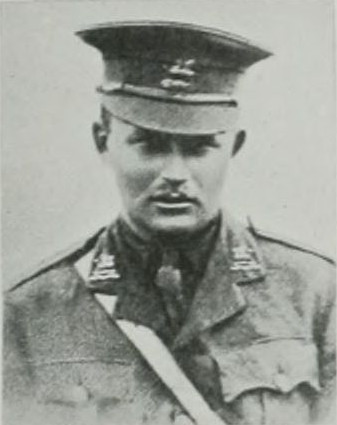
William G. Cronk.
CROOK, ALBERT GEORGE, A.B. (R.F.R., B. 5113), 196640, H.M.S. Good Hope, lost in action off Coronel, on the coast of Chili, 1 Nov. 1914.
CROOK, JOSEPH, Painter, 2nd Class, M. 3641, H.M.S. Good Hope; lost in action off Coronel, on the coast of Chili, 1 Nov. 1914.
CROSBY, JOHN CLIFFORD, A.B., Ch. J. 2146, H.M.S. Cressy, only s. of the late Robert Crosby, Constable, North Riding Police Force, by his wife, Eleanor (112, Holden Street, Grangetown, Yorkshire), dau. of James Pease; b. Halifax, 18 May, 1892; educ. Grangetown Council School; joined the Navy, 11 Aug. 1908, and was lost in the North Sea when H.M.S. Cressy was torpedoed, 22 Sept. 1914; unm.
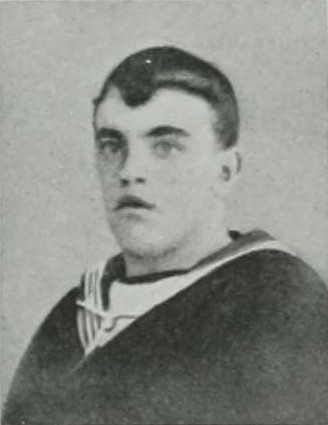
John Clifford Crosby.
CROSLAND, JOHN HENRY, A B. (R.F.R., B. 1661), 205430, H.M.S. Good Hope; lost in action off Coronel, on the coast of Chili, 1 Nov. 1914.
CROSLEY, CECIL, 2nd Lieut. and Acting Adjutant, 5th (Service) Battn. Royal Irish Fusiliers, formerly 5th Lancers, s. of John Mechi Crosley, of 5–6, Great Winchester Street, E.C., Stockbroker and member of the London Stock Exchange, by his wife, Mary May, dau. of E. Candler, of Bexhill; b. Purley, co. Surrey, 29 Oct. 1892; educ. Uppingham School, and then proceeded to the McGill University, Montreal, with the idea of taking up engineering. Abandoning this, he returned to England in 1913 and joined his father. He had joined the Reserve of Officers, 23 July, 1913, and on the outbreak of war was given a commission as 2nd Lieut. in the 5th Lancers, Aug. 1914 and trained with them at Dublin. Being anxious, however, to go to the Front, he transferred to the 5th Royal Irish Fusiliers in May, 1915, and went out to the Dardanelles with them. He took part in the historic landing at Suvla Bay, was appointed Acting Adjutant early in August, and was killed in action at Keretch Tepe on the 16th of that month; unm. Shortly before his death. Lieut.-Gen. B. Mahon wrote; “Your Commanding Officer and Brigade Commander have informed me that you have distinguished yourself by good conduct in the field. I have read their report with much pleasure and have forwarded it to higher authority for recognition;” and Capt. E. M. Ilwaine wrote to his father: “From the moment we landed (at Suvla Bay) under shrapnel fire I was struck by your son’s coolness. He volunteered to remain beside the barge in which we came ashore, organised a party and unloaded the ammunition and stores in it, although the Turkish gunners had got the range and were shelling it steadily. Whenever I saw him during the few rests we had I found him cheery and apparently quite happy in his work, and I noticed that he had quite obtained the confidence of the men of his platoon, who followed him willingly. Personally I soon learned to put absolute trust in his knowledge and judgment, and he took over the command of the company when I was wounded. Two of our officers who were wounded after I was, both made exactly the same remark to me while on the hospital ship, ‘Crosley is doing good work.’” And later (12 Feb. 1916) he wrote again; “I have received a letter from one of our officers—Bennett—who was near your son when he was killed. With the exception of Bennett all the officers present were wounded, went to hospital in Alexandria or Malta, and rejoined the regt. in Serbia direct from hospital. I quote Bennett’s letter. The occasion he refers to is the one mentioned in Sir Ian Hamilton’s despatch, when he says that the 5th Battn. held on to the ridge until only one officer was left, and then retired when ordered to do so from the rear. I might mention that Cecil was appointed Adjutant—after Kelly, the Adjutant, was hit—some days previously.” On Monday, 16 Aug., we advanced up a ridge overlooking the Bay of Saros. This ridge was Keritch Tepe Sert, and sloped down to the water’s edge. Our officers going into action were Johnson, Crosley, Bartley, Duggan, Fitzgerald, Blood, Figgis Kidd and myself. Kidd followed B Coy, with first half of D, and I followed with the remaining two platoons of D. I met Crosley when we got into position, and he instructed me to send D along to Kidd and take command of B, as both Duggan and Blood had been hit. B Coy. were lining a ridge and firing half left. The remainder were a little ahead and lining the ridge facing inland, also holding a small trench at right angles to the ridge and on the sea side of it. It was in this little trench that Crosley, Hartley, Sergt.-Major Mulligan and many others were killed. I was not actually in this place, but Fitzgerald and Kidd explained it clearly afterwards. Crosley, Hartley and Mulligan were all hit in the head. At about 8.30 p.m. we were instructed that we were to withdraw, and that two naval boats—which had helped us with their fire all day—would commence to shell the enemy at 8.45 p.m. The enemy were on a little knoll and entrenched about 20 or 15 yards in front of the trench we held. We withdrew in good order. Fitzgerald and Kidd were in the little trench all day, and, indeed, Fitzgerald got a bullet through his helmet at the same spot, for it was very closely sniped. Crosley was not up in this position for long, but was passing along the line and learning how matters stood. When I reached the position and was talking to Crosley two aeroplanes were overhead dropping bombs about, and he told us that the fumes from one bomb were all about him as he bandaged up Blood, who was hit in the shoulder. I chatted to him for a time, and he wanted me to take one of his famous automatic pistols, but as I had a rifle I refused. From where we were on to the ridge the ground sloped right to the sea, and this slope was covered with thick scrub, which scrub was fairly full of snipers, so we had a fire on both sides and plenty of shells. Crosley was, of course, very cheery, and his last word to me was ‘Keep down and don’t expose yourself. There are all sorts of things flying about here.’ I left him arranging about water and ammunition with Mulligan. I heard from Kelly, in Alexandria, something of how well Crosley had done, and from all he told me I am not surprised to see his name in the Despatch. He would seem to have merited that honour highly. This is the only first hand information I have been able to secure. If I obtain any more I shall forward it to you.” He was mentioned in Gen. Sir Ian Hamilton’s Despatch of 11 Dec. 1915 [London Gazette, 28 Jan. 1916]. At Montreal he was instrumental in introducing and organising Rugby rules for the University football matches and was prominent in boxing, winning the amateur middle-weight championship of Canada. On his return to England he became a member of the London Rowing Club, and represented that club in eights at Henley and other Regattas.
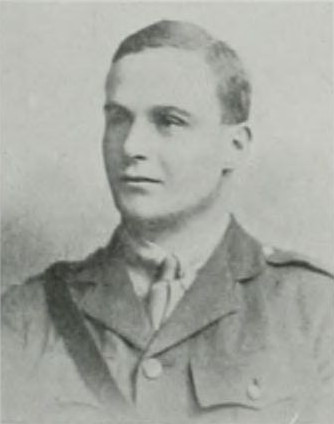
Cecil Crosley.
CROSS, DANIEL, Private, No. 81195, 2nd Battn. Canadian Expeditionary Force, s. of the late (—) Cross, and gdson. of Daniel Cross, of Harleston, co. Northants; b. Harleston, 9 July, 1894; educ. there; went to Canada in March, 1911, and settled at Killarney, Manitoba; joined the Canadian Expeditionary Force after the outbreak of war, and came over with the first contingent, going to the Western Front in April, 1915. He died on Active Service in No. 11 General Hospital, Boulogne, 25 Aug. 1915, of appendicitis. He was buried in the English cemetery there; unm.
CROSS, DAVID RONALD, M.C., Lieut. 16th (The Queen’s) Lancers, only s. of Adam Cross, of Brixworth Hall, co. Northampton, by his wife, Annie, dau. of David Guthrie; b. Midlothian, 18 Oct. 1889; educ. Marlborough and Christ Church, Oxford, at which latter he took his degree with honours. He was gazetted 2nd Lieut. 16 Lancers, 16 Aug. 1911, and promoted Lieut. 16 April, 1913. On the outbreak of war he went to France with his regt., was wounded in Oct., but after being in England for a few weeks rejoined, and was killed in action near Ypres, 21 Feb. 1915; unm. Lieut. Cross was twice mentioned in F.M. Sir John French’s Despatches [London Gazette, 20 Oct. 1914, and 17 Feb. 1915], and was awarded the Military Cross [London Gazette, 18 Feb. 1915]. He was a smart rider to hounds, and was well known in the Pytchley country. In 1914 he won his two regimental races at the Curragh, Lord Annaly’s Cup at the Pytchley point-to-point races, and at Punchestown the two military steeplechases in April.
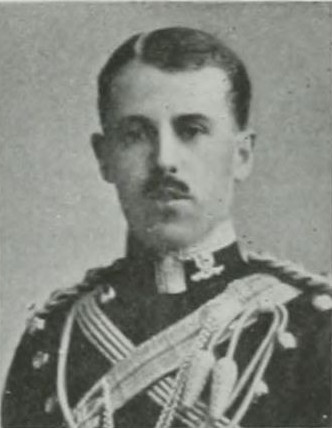
David Ronald Cross.
CROSS, EDWIN, Officer’s Cook, 2nd Class, 141381, H.M.S. Hogue; lost in action in the North Sea, 22 Sept. 1914.
CROSS, WILLIAM CHARLES, Stoker, 1st Class (R.F.R., B. 4853), S.S. 104223, H.M.S. Good Hope; lost in action off Coronel, off the coast of Chili, 1 Nov. 1914.
CROSSIN, EDWARD, Stoker, 1st Class, K. 6960, H.M.S. Hawke; lost when that ship was torpedoed in the North Sea, 15 Oct. 1914.
CROUCH, JOHN WILLIAM, Ordinary Seaman (R.N.V.R.), 5/193 (Sussex), H.M.S. Hawke; lost when that ship was torpedoed in the North Sea, 15 Oct. 1914.
CROUSAZ, CECIL FRANCIS, Lieut., 1st Battn. South Staffordshire Regt., yst. s. of William de Prelaz Crousaz, of 8, de Beauvoir Terrace, Guernsey, jurat of the Royal Court, Guernsey, by his wife Emma Arnold, dau. of John LeCappellain; b. Guernsey, 7 Dec. 1888; educ. Elizabeth College (Sandhurst entrance), Guernsey; gazetted 2nd Lieut. 1st Battn. South Staffordshire Regt. 6 Nov. 1909, and promoted Lieut. 28 March, 1912. He served with both the 1st and 2nd Battns. of his regt. in South Africa and Gibraltar, and was killed in action at Zonnebeke, near Ypres, 31 Oct. 1914. Buried at Hooge; unm. His commanding officer, Col. R. M. Ovens, wrote to his father: “Your boy was in command of our scouts and was a most valuable officer—energetic and keen, and a splendid disciplinarian. His exceptional strength and keenness made him a great asset to his regt. I last saw your boy leading his men forward near Gheluvelt Village, under a heavy fire, and encouraging them by voice and example. He was a brave and determined soldier.” He won the featherweight boxing championship at Aldershot in 1913.
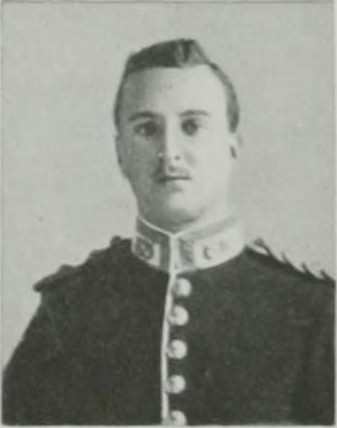
Cecil Francis Crousaz.
CROWTHER, LESLIE TAYLOR, 2nd Lieut., 1/5th Battn. The Duke of Wellington’s West Riding Regt. (T.F.), 3rd s. of Norman Crowther, of Viso House, Huddersfield, by his wife, Gertrude, dau. of John Henry Sykes, of Huddersfield, J.P.; b. Viso House, Huddersfield, 27 Sept. 1892; educ. Wild’s, Huddersfield, and after leaving school taught there for a time, and after his death his master wrote: “Leslie was such a splendid boy, so vigorous and cheerful, so conscientious and reliable, and it must have been so constant a joy to you both to see how by his own steady efforts he was making his way to a good position in life, and winning the respect of all with whom he had to deal.” He had joined the 1/5th (Territorial) Battn. of the West Riding Regt. in 1909, and volunteering for Imperial service after the outbreak of the war, was gazetted 2nd Lieut. in the same, 21 Oct. 1914. He went to France with his regt., and was killed in action at Fleurbaix, 15 June, 1915, during a reconnaissance. His company officer, Lieut.-Col. Wilson, wrote: “When I recommended your son for a commission I felt certain I was doing the right thing, and I am pleased to say he has turned out a thoroughly efficient officer and keen soldier. The N.C.Os. and men in his platoon had become very much attached to him, and would follow him anywhere. Our loss is also very great. Every officer in the battn. admired and loved him.... He was always keen to go patrolling, and did his work well” and the following particulars were given by Lieut. A. B. Stott, who writing 16 June said: “Yesterday afternoon a reconnaissance was decided on. The party was to consist of Capt. Wheatley, Lieut. Leslie Liddell, and two men. During the evening Capt. Wheatley’s foot went very sore, so I took his place. Just before we left Leslie asked to be included in the party.... We got about 120 yards out from our trench quite easily. As the grass was very dry I then decided to go on alone with a man for about 40 yards more. I left Leslie and Liddell to guard our left flank. We were just about to return to them when we heard revolver shots, and a German patrol in full flight. Unfortunately. this was not the only patrol out, and another German patrol threw a bomb which gave Leslie his death wound. There was naturally some trouble to get him back to the lines, but he was carried in by a stretcher party, covered by a strong party of men, but he was dead before the lines were reached. The Doctor said that nothing could have saved him, and that he must have been unconscious almost from the first. He was buried the same day in the corner of a field, a quarter of a mile behind the firing line, where the officers and men of the 5th and 7th Duke’s have been buried, and lies near to his old school friend, 2nd Lieut. L. M. Tetlow. Ten officers and 20 men of his own company attended to the simple ceremony which marks these occasions, together with a number of men of his old A Coy., and Col. Wilson officiated at the service.... As my sub. in old C Coy., and as a platoon commander in D Coy., he has always been a splendid and devoted officer.” The D.C.M. was afterwards conferred on Sergt. Convoy for this act, he being in charge of the stretcher bearers.
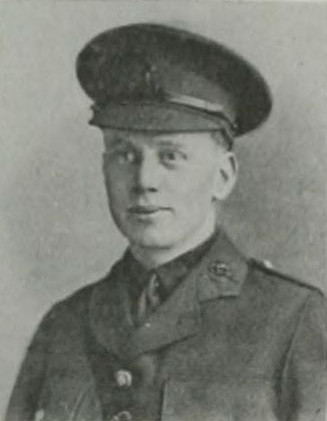
Leslie Taylor Crowther.
CROXSON, HENRY THOMAS, 1st Class Ship’s Corpl., No. 350161, H.M.S. Formidable, s. of the late Jonathan Croxson, of Ipswich; b. Ipswich, 31 Dec. 1869; educ. there; entered the Navy, 31 July, 1888, and was lost on H.M.S. Formidable, 1 Jan. 1915. He received the Long Service and Good Conduct medal, 27 Nov. 1903. He m. at St. Matthew’s Church, Ipswich, 26 Oct. 1896, Mary Ann (156, Cauldwell Hall Road, Ipswich), dau. of John Hindle, of Ipswich, and had one dau.: Ethel May, b. 23 Feb. 1898.
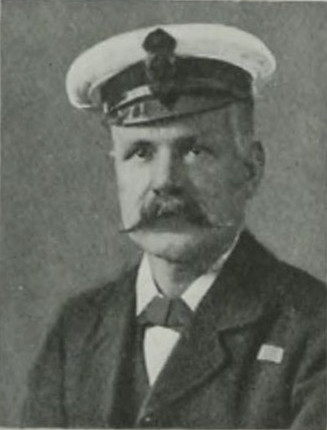
Henry Thomas Croxson.
CROZIER, JAMES CYRIL BAPTIST, 2nd Lieut., 2nd Battn. Royal Munster Fusiliers, only s. of the late Rev. Henry Wilcocks Crozier, Vicar of St. Matthew’s, Stockport, M.A. (T.C.D.), by his wife, Susan Sinclair, dau. of James Spence, J.P., Birkenhead, and gdson. of the Rev. Baptist Barton Crozier, of Rockview House, Ballyhaise, co. Cavan, B.A.; b. Bowden, co. Chester, 24 Oct. 1890; educ. Loretto School, Edinburgh, leaving there for Edinburgh University, where he studied medicine for two years. He was gazetted to the 3rd Royal Scots (Special Reserve), 10 July, 1912, from which regt. he was transferred to the 2nd Battn. Royal Munster Fusiliers, 10 June, 1914, and was killed in action during the retreat from Mons, near Etreux, 27 Aug. 1914; unm. In a letter to Archbishop Crozier, Primate of All Ireland, Capt. H. S. Jervis (a prisoner in Germany) described in detail the trying day through which the regt. passed on 27 Aug., being eventually cut off from the main body, and proceeded: “B Coy. extended at once, and an attack on the enemy’s position commenced. Your nephew was on the left—or east—of the attacking company, and was very much to the fore; a part of A Coy. extended the line eastwards, continued by my men (D Coy.) The enemy was holding a railway cutting in front of us, so D Coy. tried to rush this, the remainder of the men in that part of the field helping with rifle fire. Owing to lack of cover all my men in this part of the field save two were shot down before the hedge was reached, and the attempt failed. Crozier pushed on ahead of his men, clambered out of a hollow lane which he had just reached, and recklessly exposing himself in the open, shouted out, ‘There they are; come on, men,’ at the same time pointing out the enemy. As he ceased speaking he fell, killed instantaneously by a bullet through the body. It was noticed that he never moved once he fell. It is, therefore, a sad consolation to know that his death was painless, and he died with words on his lips which any of his brother officers would have been proud to be their last also.”
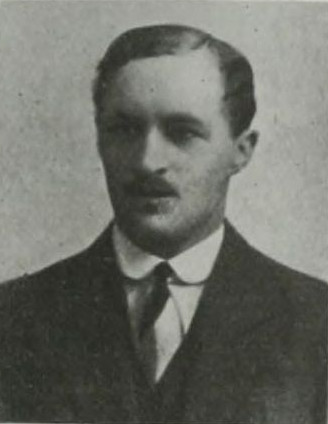
James Cyril B. Crozier
CROZIER, WILLIAM KERR, L.-Corpl., No. 9576, Machine Gun Section 2nd. Battn. Royal Scots, eldest s. of the late Walter Wright Crozier, by his wife, Robina (13, Tolbooth Wynd, Leith), dau. of the late William Kerr, of Leith; b. Portobello, 22 March, 1887; educ. Couper Street School there; enlisted 1905; served three years with the Colours, then passed into the Reserve, and worked as a Plaiter’s Labourer; rejoined on mobilisation 4 Aug. 1914; went to France Sept. 1914, and was killed in action at Loos, 25 Sept. 1915; unm. Sergt. C. Hiles wrote: “When we charged the Germans he was in charge of a machine gun team. His gun was put out of action and poor Will came back to me for another gun. He had to cover over 600 yards of ground beaten by murderous shell and rifle fire, for this act he has been recommended for the D.C.M. After getting his gun he went back to the trenches we had captured from the Germans. Just as he was about to enter the trenches he got wounded. He got his gun in action, and when he was found he was beside my gun. He was a good soldier and a very promising non-commissioned officer, and had he lived he would probably have been promoted.”
CRUIKSHANKS, ALEXANDER, Stoker, 1st Class, K. 12869, H.M.S. Cressy; lost in action in the North Sea, 22 Sept. 1914.
CRUISE, PETER, Stoker, 1st Class, S.S. 111533 (Ports.), H.M.S. Aboukir; lost in action in the North Sea, 22 Sept. 1914.
CULLINAN, ROBERT HORNIDGE, B.A., Barrister-at-Law, Capt., 7th Battn. Royal Munster Fusiliers, 2nd surviving s. of John Cullinan, of 6, Bindon Street, Ennis, Solicitor, by his wife, Martha Frances, dau. of the Rev. Francis Faris, Rector of Dovena, co. Wicklow; b. Ennis, co. Clare, 9 Aug. 1881; educ. Tipperary Grammar School, and having obtained Senior Erasmus Smith Exhibition, entered Trinity College, Dublin, in Oct. 1899. Here he gained numerous honours and prizes in History and Political Science and Logic, and obtained on leaving a Senior Moderatorship with gold medal for History and Political Science. He was called to the Irish Bar in Trinity Term, 1904, and was a member of the Munster Circuit. On the outbreak of war he offered his services and secured a commission in Sept., being gazetted Lieut. to the 7th Munsters, 18 Nov. 1914, and as Tempy. (afterwards confirmed) Capt. 27 Feb. He was killed in action after the landing at Suvla Bay, 8 Aug. 1915; unm. Major Drage, commanding C Coy., wrote: “Capt. Cullinan, C Coy., with D on its left, and the 6th Munsters on the right of it, had to advance early on Saturday afternoon along, below and parallel to a high ridge, on which were many skilful Turkish snipers. Your son, on the 7th, commanded the first line of C Coy., and went on leading his men under heavy fire most determinedly and gallantly, till he got to an open patch, where he was struck down, mortally wounded. 2nd Lieut. Bennett bravely went to his side, to find Capt. Cullinan riddled with five or six bullets and dead.” And Major Hendricks: “I was in the firing line with him not half an hour before he was shot. We were in a thunder storm together and were wet to the skin. Suddenly I received an order to reinforce our other battn. on a flank, and sent Major Drage’s company, to which your son belonged, to carry out the duty. Your son died, as he had lived, a noble hero, never thinking for one moment of himself, telling the men to go on and leave him. He was then shot through the head. His death was practically instantaneous. After the 12 months I have known your son, I must say I looked on him as a dear pal, and one of the best officers in the regt. He had endeared himself to one and all.” At Dublin University he was a member of the Rugby football club, and played for the first fifteen for three years, obtaining his colours in the year 1900–1, and was also record secretary of the University Historical Debating Society.
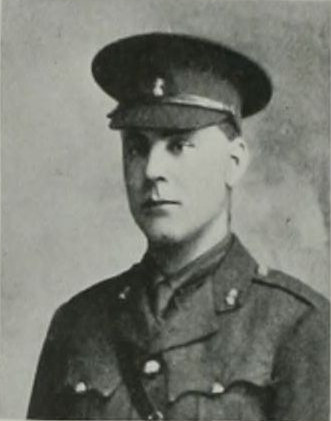
Robert Hornidge Cullinan.
CULLIP, ALEXANDER GEORGE HOLLIS, Bugler, R.M.L.I. (Ports.), 16865, H.M.S. Good Hope; lost in action off Coronel, on the coast of Chili, 1 Nov. 1914.
CUMMING, COLIN EDWARD, M.A. (Hons. Edin.), Lieut., 103rd Battery, R.F.A. 31st Brigade (28th Division), 2nd s. of Robert Charles Cumming, of Edinburgh, formerly of Stafford, retired Bank Manager, by his wife, Margaret, dau. of the late David Duff, of Calcutta, and grandson of the late Capt. John Cumming, 26th (Cameronians), 4th (King’s Own) and 80th Foot; b. Stafford, March, 1890; educ. at Royal High School, Edinburgh, 1902–7 (“Dux” in 1907 and gold medallist in Latin, Greek and French), and Edinburgh University (M.A. with first-class honours in Classical Literature, 1911). At the University, where he was highly esteemed and beloved, he was an active member of the O.T.C., and got his commission in the R.F.A. Reserve, 16 Sept. 1909. While preparing for the Indian Civil Service he was offered an engineering cadetship in the Transvaal gold-mining industry, and, solely with a view to the family interests, he accepted this, relinquishing his Indian aspirations, and went to Johannesburg in 1913. His one year in Africa gave promise of rare success, but, at his country’s call, he gained permission to come home with the Imperial troops, and, going straight to the Scottish R.F.A. headquarters, was gazetted 2nd Lieut. 22 Sept. 1914, and was soon selected as Adjutant. Appointed to the 103rd Battery, then stationed at Winchester, where he did further strenuous work, he accompanied the Battery to the Front in Jan. 1915. He was killed in action by shell near Ypres, 24 Feb. 1915; unm. The Major in command (now Lieut.-Col. Hope, D.S.O.), wrote that they had been shelled for about an hour. Their dug-out was hit, and when the Major, himself wounded, became conscious, Cumming was trying to help him out of the débris when another shell arrived and they were both knocked senseless. Lieut. Cumming died during the night in hospital, never having regained consciousness. He was buried in the cemetery at Poperinghe. After his death he was gazetted to a full Lieutenancy, to rank as from 8 Dec. 1914.
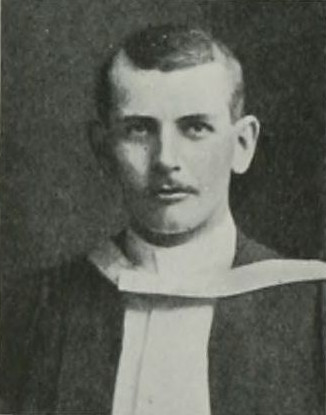
Colin Edward Cumming.
CUMMING, THOMAS SUMMERS, Private, No. 14807, A Coy., 12th Battn. The Royal Scots, s. of Archibald Matheson Cumming, of 9, Dobbies Loan, Glasgow, by his wife, Barbara, dau. of Walter Buchanan; b. Glasgow 3 June, 1896; educ. there; enlisted Sept. 1914, and was killed in action at Loos, 25 Sept. 1915; unm. From information supplied by the Red Cross, it appears that he was shot through the head when he had just got over our own parapet preliminary to the charge.
CUNLIFFE, THOMAS HENRY WITHERS, Capt., 1st Battn. Lancashire Fusiliers, only s. of the late Robert Ellis Cunliffe, of The Croft, Ambleside, Solicitor, by his wife, Helen (The Croft, Ambleside), dau. of Henry Sharp, of Townend, Deepcar, Yorks; b. Pendleton, Manchester, 9 July, 1885; educ. Bilton Grange and Rugby; obtained his commission in the Lancashire Fusiliers from the Militia, 29 Nov. 1905, and was promoted Lieut. 6 Feb. 1910, and Capt. 17 March, 1915. Capt. Cunliffe was with his regt. in India when war broke out, and proceeded with it to Gallipoli, where he was killed in action on Gurkha Bluff, 4 June, 1915, while in charge of the machine gun section of his regt. He was buried in the regimental cemetery at Lancashire Landing; unm. Col. Ormond, Lancashire Fusiliers, wrote: “His handling of the machine guns, in the position after the Turks had been charged, was, I understand, masterly. He was well in front of the line screened from the enemy’s view by a bushy shrub. His guns pointed across the front of our position, so that when the Turks charged at night he raked their ranks right and left. His knowledge of his work, his command of his company and his great natural gifts marked him out for a great career.... The very gallant Cunliffe worked his machine guns and was killed. His great courage and skill had been of the utmost value in the operations.... Capt. Cunliffe was launched into deep water at the landing on the Peninsula, and swam to shore fully equipped with rifle and pack under heavy fire, a feat which only a very fine swimmer could have accomplished. His guns could not be landed, but he collected his gun teams on the beach and marched them up to fill the gap between Capt. Haworth and Capt. Shaw’s detachments, so linking up the battn. and restoring its internal communications.”
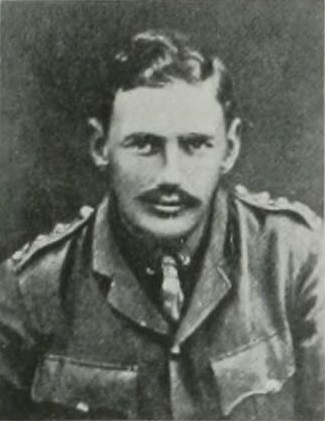
Thomas H. W. Cunliffe.
PICKERSGILL-CUNLIFFE, JOHN CUNLIFFE, of Cobb Court, Cootham, Pulborough, Sussex, Capt., 6th, attached 4th, Battn. Worcestershire Regt., elder s. of the late Charles Pickersgill-Cunliffe, of Beacon Hill Park, Hindhead, Surrey, by his wife, Audrey (Crossways, Cootham, Pulborough, Sussex), dau. of Charles Hoskins Master, and nephew of Harry Pickersgill-Cunliffe, of Staughton Manor, Huntingdon; b. Barrow Green House, Oxted, co. Surrey, 27 Jan. 1884; educ. Haileybury College; joined the Sussex Militia in 1898, and served in the South African War, 1901–2, receiving the Queen’s medal with clasp. He was gazetted to the 2nd Worcesters from the Militia, 4 July, 1903, and promoted Lieut., 4 April, 1907; served in Africa, Ceylon and India, and retired 1 July, 1913. He went on the Cape to Cairo Motor Expedition, arriving at Cape Town, 5 Aug. 1913, and leaving Broken Hill, Jan. 8, 1914. On mobilization, 4 Aug. 1914, he rejoined his old regt., was promoted Capt., 1 Sept., went to France, 27 Aug. 1914, and was wounded in action near Lille, 24 Oct. following, and invalided home. On recovery he left 12 May, 1915, to join his regt. at the Dardanelles and was killed in action there 4 June, 1915; unm. A comrade who was with him at the time he was killed wrote: “Cunliffe arrived with a few men who wavered under the hot fire, but he jumped on the parapet and told them he would show them the way. There he stood with the bullets whistling all round him while they climbed over. Later on as he was looking over the parapet a bullet struck him in the head and he died with a smile on his face and a cheery word for his men at the head of the advance”; and the Colonel: “If he had been spared I am confident he would have earned great distinction. I was not very near when the regiment made their most successful attack and all accounts tell of his coolness and dash, he is a great loss to us.” He was a keen sportsman and big game shot.
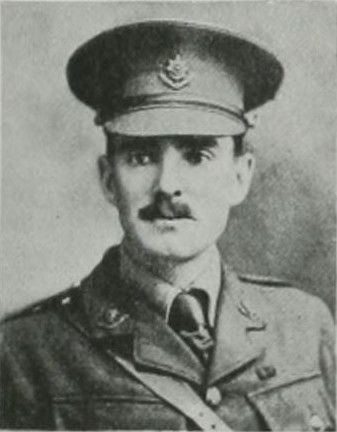
J. C. Pickersgill-Cunliffe.
CUNNINGHAM, JOSEPH, Private, No. 18044, 4th Battn. (The King’s) Liverpool Regt., s. of Mark Cunningham; b. Liverpool, 24 Aug. 1893; educ. St. Anthony’s School there; enlisted following the outbreak of war, Sept. 1914; was wounded in the chest, and died in Boulogne Hospital 10 days later, 10 May, 1915; unm.
CUNNINGTON, ERNEST, Stoker, P.O., 304513, H.M.S. Good Hope; lost in action off Coronel, on the coast of Chili, 1 Nov. 1914.
CURRIE, JOHN MCLEAN, Private, No. 46131, D Coy., 15th Battn. (48th Highlanders), 3rd Brigade, Canadian Expeditionary Force, 3rd s. of John David Currie, of Windsor, Nova Scotia, High Sheriff for Hants co., by his wife, Bessie, dau. of the late James Cutting, of Truro N.P.; and gdson. of the late John Currie, D.D., Professor of Hebrew, Pine Hill Theological College, Halifax, Nova Scotia; b. Maitland, Hants Co. N.S., 18 Oct. 1896; educ. Maitland High School and Windsor Academy, N.S.; enlisted in No. 1 Coy. Royal Nova Scotia Regt. (17th Battn. Canadian Expeditionary Force), in Aug. 1914, on the declaration of war; left Windsor for Valcartier, P.Q. on the 20th of that month, went to England with the first Contingent in Oct.; trained on Salisbury Plain during the winter and after the 17th Battn. was disbanded, joined the 15th Battn. (48th Highlanders) under Col. John Currie; went to France in Feb., and was killed in action at Langemarck, 23 April, 1915; unm.
CURRIE, THOMAS, Private, R.M.L.I., Ch./11225, H.M.S. Aboukir; lost in action in the North Sea, 22 Sept. 1914.
CURRIE, WILLIAM PERRY, Gunner, No. 42467, 2nd Brigade, Canadian Field Artillery, Canadian Expeditionary Force, s. of Bartlett Lingely Currie, of Niagara on the Lake, Ontario, by his wife, Martha J., dau. of Valentine Haines; b. Niagara-on-the-Lake, Lincoln, co. Ontario, 15 July, 1895; educ. Niagara afsd.; was a Painter; volunteered on the outbreak of war and joined the Canadian Expeditionary Force, Aug. 1914; came over with the 1st Contingent in Oct.; went to France 7 April, was wounded in action at St. Julien, and died in Cambridge Hospital, Aldershot, 4 May, 1915; unm.
CURRY, JOHN WILLIAM, Private, No. 1644, Royal Marine L.I. (Reserve), eldest s. of Henry Curry, Drill Instructor, by his wife, Martha, dau. of James Slack; b. Kilburn, 5 April, 1880; educ. Nunhead Passage School; joined the Marines, 28 April, 1898; served on H.M. ships Majestic, Ocean and Empress of India, and two years at Devonport Dockyard, obtaining his discharge, 1 June, 1906, with the highest character. He was called up from the Reserve on mobilisation, and was lost on H.M.S. Cressy, 22 Sept. 1914. He m. at Peckham, S.E., 19 Dec. 1900, Mary Ann (41, Herman Road, Old Kent Road, S.E.), dau. of George Stout, and left five children: Henry William Felix, b. 20 Sept. 1904; John R. J., b. 20 Dec. 1905; Benjamin, b. 19 April, 1912; Sydney, b. 14 Sept. 1915; and Ivy Ethel, b. 1 June, 1902.
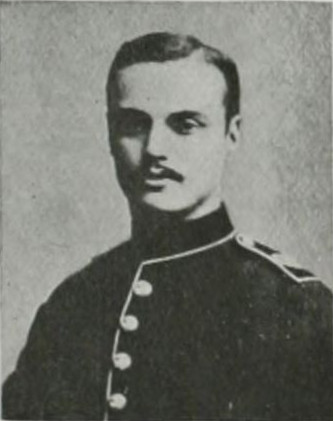
John William Curry.
CURRY, LEON HALL, Capt., 42nd Battn. (affiliated to the Black Watch), Canadian Expeditionary Force, s. of the Hon. Nathaniel Curry, of Montreal, Canada, Senator, President of the Canadian Car and Foundry Co., by his wife, Mary, dau. of David Hall; b. Amherst, Nova Scotia, 21 Oct. 1885; educ. Acadia University, Wolfville, N.S., and was an official of the Canadian Car and Foundry Co. He had received a commission as Lieut. in the 5th Royal Highlanders of Canada (Militia), 2 Jan. 1913, and after the outbreak of war in Aug. 1914, volunteered and was gazetted Capt. 42nd Battn. in March, 1915. He left Canada 10 June, 1915, crossed to France early in Oct., went into the trenches with his company, 19 Oct. 1915, and was killed the same night, with two brother officers, by the bursting of a trench mortar. His Colonel wrote: “He was one of the most reliable and painstaking officers, who by his intelligence and thoroughness could always be depended upon to carry through successfully any duty that might be given to him, we all realise we have lost a most valuable officer as well as a true friend and lovable companion.” He was buried in the English cemetery at Armentières, and a stone was erected by his brother officers and company. He m. at Wimbledon, England, 9 July, 1913, Marion, dau. of John McKeen, Manager of the Bank of Nova Scotia, Halifax, N.S., and had a son, b. 21 April, 1914, died in infancy.