The Roll of Honour. (continued 12)
Reading edition
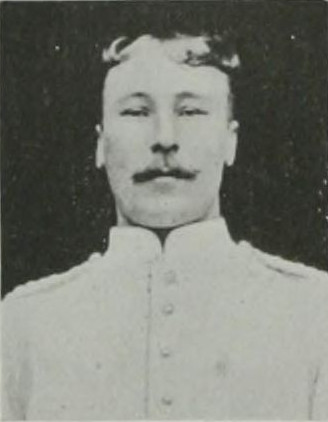
William Charles Cole.
COLEMAN, GEORGE HENRY, Stoker, 2nd Class, K. 21846, H.M.S. Pathfinder; lost when that ship was sunk by a mine, about 20 miles off the East Coast, 5 Sept. 1914.
COLEMAN, GEORGE MANSFIELD, Seaman, R.N.R., 3356A, H.M.S. Cressy; lost in action in the North Sea, 22 Sept. 1914.
COLEMAN, JOHN MORRIS, Private, No. 9832, 1st Battn. East Kent Regt. (The Buffs), s. of James Coleman, of 10, Erith Street, Dover; served with the Expeditionary Force in France, etc., died at Braisne 24 Sept. 1914, from wounds received in action.
COLEMAN, SAMUEL GEORGE, Stoker, 1st Class (R.F.R., B. 4380), S.S. 103358, H.M.S. Good Hope; lost in the action off Coronel, on the coast of Chili, 1 Nov. 1914.
COLEMAN, THOMAS BARNES, Private, No. 561, No. 1 Coy., 14th Battn. 4th Brigade, Australian Imperial Force, 2nd s. of Frank Coleman, of Marsh Green, Brighstone, Isle of Wight, Labourer, by his wife, Elizabeth, dau. of George Barnes; b. Marsh Green, 17 July, 1888; educ. National School, Brighstone; emigrated to Victoria in 1913, joined the Commonwealth Expeditionary Force after the outbreak of war, and was killed in action at Walker’s Ridge, north of Anzac Cove, Gallipoli, between 26 and 28 Aug. 1915; unm.
COLEMAN, WILLIAM, Acting Leading Stoker, K. 9090, H.M.S. Pathfinder; lost when that ship was sunk by a mine, about 20 miles off the East Coast, 5 Sept. 1914.
COLEMAN, WILLIAM ALBERT, Rifleman, No. 7512, 1st Battn. King’s Royal Rifles, only s. of Albert William Coleman, of Ipswich, Builder, by his wife, Emily, dau. of Thomas Whitmore; b. Ipswich, 4 May, 1886; educ. there; enlisted 10 May, 1906; went to France 20 Aug. 1914; was taken a prisoner at Ypres, 4 Nov. 1914, and d. of fever at the prisoners’ camp, Gustrow, Mecklenburg, 24 Jan. 1915. He m. at St. Luke’s Church, South Norwood, 18 Oct. 1913, Laura Harriet (19, Southcote Road, South Norwood), dau. of James Holdstock and had a dau., Evelyn Laura, b. 28 July, 1914.
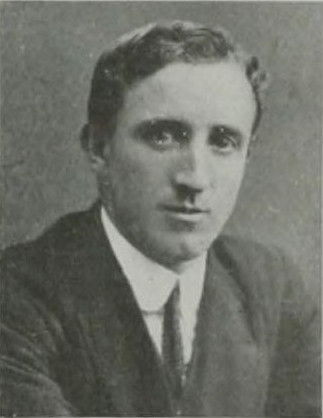
William A. Coleman.
COLENUTT, ALBERT EDWARD, Stoker, 1st Class, K. 14944 (Ports.), H.M.S. Aboukir; lost in action in the North Sea, 22 Sept. 1914.
COLES, CHARLES GEORGE, Private, No. 1946, E. Coy., 4th Battn. Suffolk Regt. (T.F.), s. of James Coles, formerly of Hadlow, Kent, by his wife, Elizabeth, dau. of William Sewell; b. Deptford, London, 12 Sept. 1886; educ. Lucas Street Board School there; joined the Volunteer Force in 1903, and was later transferred to the Territorials. On the outbreak of war he enlisted in the 4th Battn. Suffolk Regt., and was killed in action at Neuve Chapelle, 11 March, 1915. Private Coles m. at Leiston, Suffolk, 4 March, 1911, Beatrice Mary (30, Paradise Place, Leiston, Suffolk), dau. of Thomas Chilvers, and had one son, Charles James Thomas, b. 11 Aug. 1911.
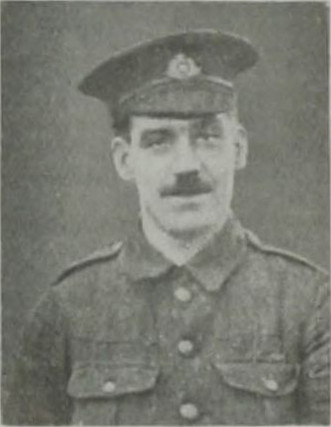
Charles George Coles.
COLES, EDGAR RALPH, Capt., 3rd (Prince of Wales’) Dragoon Guards, 2nd s. of Ernest Harry Coles, of Arnolds, Holmwood, co. Surrey, by his wife, Adela Caroline, dau. of James Heslop Powell; b. Caterham, co. Surrey, 13 May, 1889; educ. Hazlewood (Limpsfield), Marlborough, and at Magdalene College, Cambridge, whence, having taken his degree, he entered the Army as a University candidate, being gazetted 2nd Lieut. to the 3rd Dragoon Guards, 23 Feb. 1910. He was promoted Lieut. 28 March, 1911, and Capt. 18 Nov. 1914; was with his regt. in Cairo for two years, returning to England in the summer of 1914, when he went to Aldershot to learn signalling. On the outbreak of war he left with his regt. for the Front, served in France and Flanders, and was killed in action in the trenches near Hooge, late on the night of 12 May (the eve of his twenty-sixth birthday). He was buried at Witte Poort Farm, two miles east of Ypres; unm. Capt. Coles was mentioned in F.M. Sir John French’s Despatch of 14 Jan. 1915, for exceedingly good work in carrying messages and maintaining communication under heavy shell fire at Zillebeke in Nov. 1914. His commanding officer, Major Burt, wrote: “His gallantry had already been recognised by the authorities, and his splendid example and comradeship will be greatly missed by all ranks in the regt.” Lieut. Holt, Acting Adjutant, 3rd Dragoon Guards, said: “His gallantry was an inspiration to his men,” and his soldier servant, Private Harvey, who had been with him ever since he joined the Army: “He was one of the coolest officers that was ever under fire.”
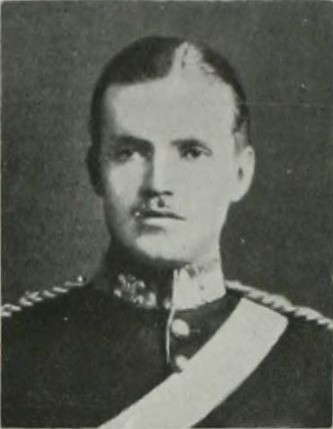
Edgar Ralph Coles.
COLES, EWART JOHN, Private, No. 876, 1/6th Battn. East Surrey Regt. (T.F.), attd. D. Coy. 2nd Battn. Norfolk Regt., s. of the late William Coles, House and Church Decorator [b. Cheddar, co. Somerset], by his wife, Eliza Ellen (7, Wilton Avenue, Richmond, Surrey), dau. of James Summerhayes; b. Paddington, London, 9 Aug. 1893; educ. Holy Trinity Church School, Richmond, Surrey, and was in the employ of the Pearl Assurance Co. He had joined the East Surrey Territorials in March, 1908, and on the outbreak of war volunteered for foreign service; mobilised 4 Aug. 1914; went to India 29 Oct. 1914, and in Sept. 1915, left with the British Expeditionary Force for the Persian Gulf, and was killed in action at Ctesiphon, 22 Nov. 1915; unm. Writing to Mrs. Coles, Lieut.-Col. A. P. Drayson said: “I have known your son for a good many years, and have always looked upon him as the right stamp of soldier, always willing, smart and keen in any work he had to do,” adding that he felt that by his death they had “lost one of the best men in the regt.”
COLES, ROBERT, L.-Corpl., No. 7043, 2nd Battn. Coldstream Guards, s. of William Coles, of Eton Place, High Street, Crediton, by his wife, Emma, dau. of the late William Williams, of Llanvihangel, near Monmouth; b. Shobrooke, Crediton, co. Devon, 26 Jan. 1887; educ. there; enlisted 1907, and was killed in action at the Battle of the Aisne, 18 Sept. 1914, being buried in Soupir Cemetery; unm. He was well known as a crack shot, having taken part in the Army Competition at Bisley on several occasions, and had won a number of cups and medals.
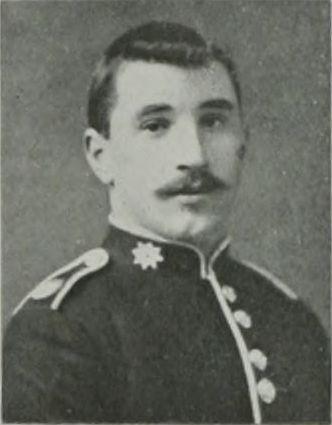
Robert Coles.
COLLES, ARTHUR GROVE, Capt., 4th Battn. Royal Dublin Fusiliers, only s. of Alexander Colles, of 3, Elgin Road, co. Dublin, Inspector, Registrar of Petty Sessions Office, Dublin Castle, by his wife, Georgina, dau. of Robert George Cullin; b. Dublin, 12 Feb. 1891; educ. St. Andrew’s College, Dublin; joined the 4th (Extra Reserve) Battn. Royal Dublin Fusiliers, 11 Nov. 1910, and was gazetted Lieut. April, 1912, and Capt. Dec. 1914. He was attached for a year to the Connaught Rangers at the Curragh. Shortly after the outbreak of war he was sent to the Front with the 1st Battn. Royal Irish Rifles, to which regt. he was gazetted 2 March, 1915. Capt. Colles fought at Neuve Chapelle, 10–12 March, 1915, and was killed in action in the village of that name on the last-mentioned date. He was buried in the orchard of the château at Neuve Chapelle; unm. Letters from his brother officers and the men of his battn. all bear testimony to his great capabilities and his fearlessness in the face of danger. A brother officer says that the last he saw of him was “charging for all he was worth at the head of his men.”
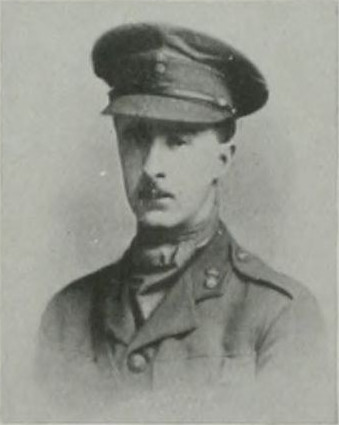
Arthur Grove Colles.
COLLET, CHARLES HERBERT, D.S.O., Lieut., Royal Marine Artillery, and Flight Commander, Royal Naval Air Service, 2nd s. of James Francis Herbert Collet, of Millbrook, Southampton, late of the Public Works Department of the Government of India, Engineer, by his wife, Teresa, dau. of Francis (and Teresa) Pilley; b. Calcutta, 4 Feb. 1888; educ. Elizabeth College, Guernsey, and Dulwich College, London, S.E.; joined the Royal Marine Artillery, 1 Sept. 1905, and was promoted Lieut. 1 July. 1906, and transferred to the Naval Wing of Royal Flying Corps in 1913, in which he was gazetted Flight Commander 23 Feb. 1915. On the outbreak of war he served on the Western Front, taking part in the defence of Antwerp until the evacuation, and subsequently at the Dardanelles. On 23 Sept. British aeroplanes of the Naval Wing delivered an attack on the Zeppelin sheds at Düsseldorf. Conditions were rendered very difficult by the misty weather, but Flight Lieut. Collet, as he then was, flying a Sopwith tractor biplane, made a long flight, and dropped three bombs on the Zeppelin shed, approaching within 400 ft. His machine was struck by one projectile, but he returned safely to his point of departure. For this exploit, which was the pioneer exploit of its kind, he received the Distinguished Service Order, and the Director of the Air Department of the Admiralty, in a memorandum dated 11 Oct., described the “feat as notable—gliding down from 6,000 ft., the last 1,500 ft. in mist, he finally coming in sight of the airship shed, when at a height of 400 ft., and when only a quarter of a mile distant”; adding “The importance of this incident lies in the fact that it shows that in the event of further bombs being dropped into Antwerp or other Belgian towns measures of reprisal can certainly be adopted, if desired, to almost any extent.” He was twice brought down in France, but managed to escape; on the first occasion being forced to alight between the firing lines. On the second occasion, his engine being damaged by shrapnel over the German lines, he had to volplane, just managing to reach the Belgian lines, and coming under fire from both sides, as the Belgians mistook him for a German and seized him as a prisoner. In the Dardanelles he participated in the landing on the Gallipoli Peninsula, 25 April, 1915, and engaged in several combats with hostile aeroplanes. He lost his life in the Eastern Mediterranean while on patrol duty, by an accident to his aeroplane resulting from engine failure, 19 Aug. 1915; unm. For his gallantry in endeavouring to rescue Capt. Collet, Michael Sullivan Keogh, Chief Petty Officer, H.M.S. Ark Royal, received the Albert Medal (2nd Class), the official record [London Gazette, 14 Jan. 1916], being as follows: “On 19 Aug. 1915, an aeroplane, piloted by the late Capt. C. H. Collet, D.S.O., R.M.A., was ascending from Imbros Aerodrome, and had reached a height of 150 ft. when the engine stopped. The machine was upset by the powerful air currents from the cliffs, and fell vertically to the ground, while the petrol carried burst into flames, which immediately enveloped the aeroplane and pilot. Chief Petty Officer Keogh, upon arriving at the scene of the accident, at once made an attempt to save Capt. Collet by dashing into the midst of the wreckage, which was a mass of flames. He had succeeded in dragging the fatally injured officer nearly clear of the flames when he was himself overcome by the burns which he had received from the blazing petrol.” Capt. Collet was regarded as one of the best naval airmen, having first attracted attention by his flying on the big biplane bought by the Admiralty from the Deutsche Flugzeug Werke of Leipzig in 1913. Early in 1914 he had this machine equipped with a huge petrol tank in place of the passenger’s seat, and started from Plymouth on a non-stop flight to John o’ Groats. He was brought down by engine trouble at Grimsby, but the flight stood as a British “record” for distance across country. While stationed at the Royal Naval Flying School at Eastchurch, Collet was the first officer in the Naval Air Service to loop the loop. A General officer with whom he served for a time on observation duty at the Dardanelles, wrote of him to his father in the highest terms. He held several trophies for boxing and shooting; he was a winner of the Navy and Marine light-weight boxing championship, and was in the final for the Army and Navy light-weight championships. He received the Distinguished Service Order 21 Oct. 1914, and was twice mentioned in Despatches: first by the Admiralty [London Gazette, 21 Oct. 1914], and again by F.M. Sir John (now Lord) French [London Gazette, 17 Feb. 1915]. He was unm.
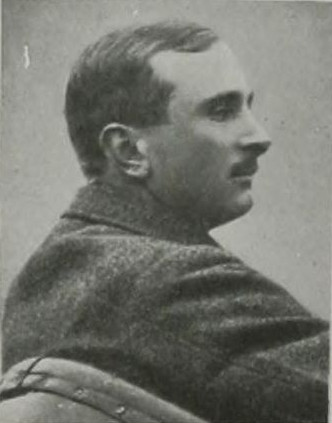
Charles Herbert Collet.
COLLETT, FREDERICK WILLIAM, A.B. (R.F.R., B. 4691), S.S. 1669, H.M.S. Good Hope; lost in the action off Coronel, on the coast of Chili, 1 Nov. 1914.
COLLIER, ALFRED ERNEST, A.B. (R.F.R., B. 2529), 215083, H.M.S. Good Hope; lost in action off Coronel, on the coast of Chili, 1 Nov. 1914.
COLLIER, FREDERICK HENRY, Private, No. 9986, 1st Battn. East Kent Regt. (The Buffs), s. of Charles Collier, of 3, Beach Street, Dover; served with the Expeditionary Force in France, etc.; killed in action, 25 Oct. 1914.
COLLIER, GEORGE, Private, No. 9822, 1st Battn. Royal West Kent Regt.; served with the Expeditionary Force in France, etc.; killed in action, 5 May, 1915; m.
COLLIER, THOMAS, Private, R.M.L.I., 10587, H.M.S. Hawke; lost when that ship was torpedoed in the North Sea, 15 Oct. 1914; unm.
COLLINGE, WILLIAM, Private, No. 9986, 1st Battn. Scots Guards; b. Leyland, co. Lancaster; enlisted 2 Sept. 1914, aged 20; served with the Expeditionary Force in France, etc.; reported missing after the fighting on 25 Jan. 1915.
COLLINGS, WALLACE, Private, No. 1627, 2nd Battn. South Lancashire Regt., 6th s. of Henry Bence Collings, of 16, Stour Street, Kirkdale, by his wife Helen, dau. of John Rowe, of Exeter; b. Liverpool, 20 July, 1895; educ. Council Schools there; enlisted 4 Oct. 1911, and was killed in action at Neuve Chapelle, 27 Oct. 1914; unm.
COLLINGWOOD, WILLIAM, Private, No. 6540, 2nd Battn. King’s Own Scottish Borderers, 3rd s. of the late John Collingwood, of Denton Burn, Scotswood, Northumberland, Coal Miner, by his wife, Eleanor, dau. of William Millar; b. Newburn, co. Northumberland, 25 Nov. 1876; educ. Denton Burn, and was afterwards employed at the Montagu Colliery, Denton Burn; enlisted in the King’s Own Scottish Borderers at Berwick-on-Tweed, 31 Oct. 1898, and served with them through the South African War, being present at operations in Paardeberg, Johannesburg and Cape Colony, for which he received the Queen’s and King’s medals and five bars, also a certificate for good services in the Mounted Infantry, 26 May, 1903. On the outbreak of the European War he was called to the Colours 4 Aug. 1914; left with the 2nd Battn. King’s Own Scottish Borderers for France 15 Aug.; was in the Battle of Mons and the retreat to Compiègne, after which he returned home for a time on sick leave. He left again for the Front at the end of Oct., and was in the First Battle of Ypres and several subsequent engagements in Belgium, and was killed in action by shrapnel shell bursting in trench at the Second Battle of Ypres, 5 March, 1915. He was buried at Zillebeke, near Ypres. Private Collingwood m. at Newcastle-on-Tyne, 6 March, 1909, Mary Jane (98, Delaval Road, West Benwell, Newcastle), eldest dau. of Jacob Heslop, and had a son and two daus.: George Heslop, b. 13 Nov. 1911; Winifred, b. 11 Oct. 1909; and Eleanor, b. 1 April, 1914.
COLLINS, CHARLES JAMES, A.B. (R.F.R., B. 1175), 194403, H.M.S. Good Hope; lost in action off Coronel, on the coast of Chili, 1 Nov. 1914.
COLLINS, CHRISTOPHER, Able Seaman, No. 4727, R.N.R., 3rd and yst. s. of Christopher Collins, of 5, Ulster Lane, Drogheda, Sailor, by his wife, Mary; b. Drogheda, 27 May, 1886; educ. Christian Brothers’ School there; joined the Navy in 1906, and was lost in the North Sea, when H.M.S. Cressy was torpedoed, 22 Sept. 1914; unm.
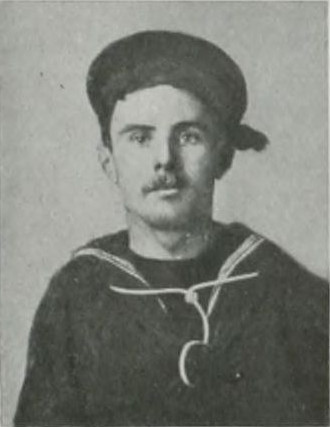
Christopher Collins.
COLLINS, DAVID, P.O., 1st Class, 208619, H.M.S. Cressy; lost in action in the North Sea, 22 Sept. 1914.
COLLINS, EDWARD, Stoker, 1st Class (R.F.R., B. 3932), S.S. 101811, H.M.S. Good Hope; lost in action off Coronel, on the coast of Chili, 1 Nov. 1914.
COLLINS, EDWARD WILLIAM ELGER, Private, No. 7077, 1st Battn. Coldstream Guards; b. co. Sussex; served with the Expeditionary Force in France, etc.; killed in action 25 Oct. 1914; unm.
COLLINS, ERNEST GEORGE STEPHEN, Gunner, R.M.A., 11488, H.M.S. Aboukir; lost in action in the North Sea, 22 Sept. 1914.
COLLINS, HARRY, Sqdn. Sergt.-Major, No. 2358, Lord Strathcona’s Horse (R.C.), Canadian Expeditionary Force, only s. of the late John Collins, Staff-Sergt., Royal Marine Artillery (who saw service in New Zealand war, and was champion shot of the British Army in 1877), by his wife, Clara Ann (14, St. Philip’s Terrace, Gratton Road, Cheltenham), dau. of William Minnell, of Fratton, Portsmouth; b. Fort Cumberland, Portsmouth, 22 April, 1877; educ. Amersham (Bucks) Commercial School; enlisted in the 3rd Dragoon Guards, July, 1896, and served 12 years. He was through the South African War (medal with two clasps), 1900–2, and after retiring, emigrated to Canada in 1908. There he was for some time in the North-West Mounted Police, and in May, 1912, joined Lord Strathcona’s Horse as a Corpl. He was made Sqdn. Sergt.-Major in June, 1914; volunteered for Imperial service on the outbreak of war in Aug.; came over with the first contingent, went to the Front in April, 1915, and was killed in action at Neuve Eglise, 26 July, 1915, by a shell as he was leaving the trenches. He was buried with full military honours in Neuve Eglise churchyard, “just over the wall near the tree”; unm.
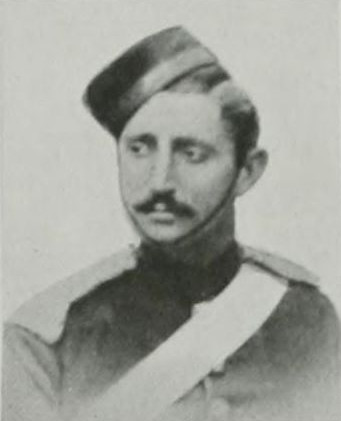
Harry Collins.
COLLINS, HARRY, Private, No. 2631, 1/4th Battn. Queen’s Royal West Surrey Regt. (T.F.), s. of Charles Collins, of 53, Stretton Road, Addiscombe, Decorator; b. East Grinstead, co. Sussex, 28 May, 1892; educ. Croydon Council School; enlisted 24 Oct. 1914; and d. in Amarah Military Hospital, 26 Oct. 1915, while serving in the Persian Gulf, and was buried in the British Cemetery there; unm.
COLLINS, HENRY SILVESTER, A.B. (R.F.R., B. 4458, I.C. 238), 233478, H.M.S. Good Hope; lost in action off Coronel, on the coast of Chili, 1 Nov. 1914.
COLLINS, HERBERT CHARLES, Boy, 1st Class, J. 25469 (Dev.), H.M.S. Hawke; lost when that ship was torpedoed in the North Sea, 15 Oct. 1914.
COLLINS, JOHN, A.B. (R.F.R., B. 5107), 199840, H.M.S. Good Hope; lost in action off Coronel, on the coast of Chili, 1 Nov. 1914.
COLLINS, RICHARD, Corpl., No. 9882, 1st Northumberland Fusiliers, s. of the late (—) Collins, and nephew of Mrs. Collins, of 7, Tower Street, Harrogate; b. Brentford, co. Middlesex, 24 May, 1885; enlisted in 1904, and after serving in the Northumberland Fusiliers for eight years, joined the East Riding of Yorkshire Constabulary in Sept. 1912. On the outbreak of war, 5 Aug. 1914, he was recalled to his regt. and went to France with the Expeditionary Force, 9 Sept. 1914, and was killed in action at Ypres, 6 Nov. 1914; unm. Corpl. Collins had served with his regt. in India, and had taken part in some frontier fighting, for which he had a medal. He was one of the best shots in the regt.
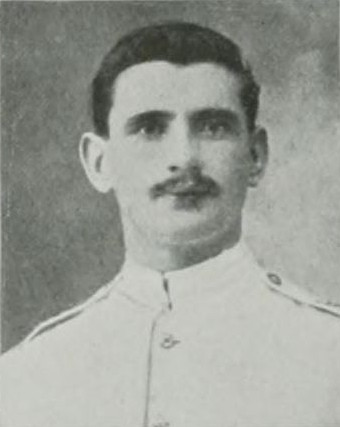
Richard Collins.
COLLINS, SAMUEL, Ordinary Seaman, J. 23622 (Dev.), H.M.S. Aboukir; lost in action in the North Sea, 22 Sept. 1914.
COLLINS, STANLEY BERTRAM, Naval Schoolmaster, M. 4740, H.M.S. Hawke, s. of William Collins, of 46, West Side, Wandsworth Commons, S.W.; lost when that ship was torpedoed in the North Sea, 15 Oct. 1914.
COLLINS, THOMAS, Stoker, 1st Class, S.S. 106440, H.M.S. Pathfinder; lost when that ship was sunk by a mine, about 20 miles off the East Coast, 5 Sept. 1914.
COLLINS, WILLIE GEORGE, Leading Signalman (R.F.R., Ch. B. 1562), 115537, H.M.S. Cressy; lost in action in the North Sea, 22 Sept. 1914.
COLLISSON, CEDRIC HAZLEDINE, Sergt., No. 16846, 7th Battn. (1st British Columbia Regt.), Canadian Expeditionary Force, 3rd s. of the late Rev. Sydney Garbett Collisson, Vicar of Bradford-on-Avon, and Minor Canon of Bristol Cathedral, by his wife, Sophy (8, Westfield Park, Bristol), dau. of the Rev. William Hazledine, Vicar of The Temple Church; b. Bristol, 24 Aug. 1887; and was educ. Warminster Grammar School (1 Jan. 1898–July, 1906) and Bristol University. He entered the teaching profession, was a Lieut. in the Devon Territorials, and in 1910 proceeded to Canada, where he joined the staff of the University School at Victoria. There he was offered and accepted a Lieutenancy in the 88th Victoria Militia Regt., in which he served until the outbreak of the European War, obtaining his Captain’s certificate. In order that he might at once proceed to England with the first Canadian Contingent, he resigned his commission and enlisted in the 7th Battn. British Columbia Regt., and was immediately promoted Sergt. He came over with the first contingent in Oct. 1914; went to France in Feb. 1915, and was mortally wounded in action at Hill 60 on 24 April, 1915, and died two days later. He was unm.
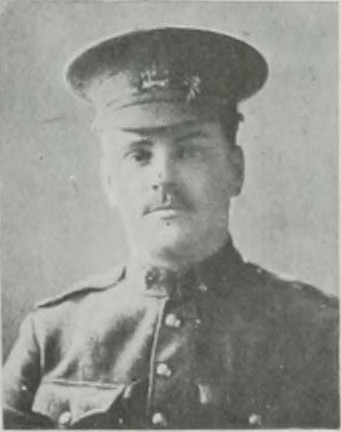
Cedric Hazledine Collisson.
COLSON, WILLIAM JOHN, Sergt., No. 6285, 1st Battn. (West Ontario Regt.), Canadian Expeditionary Force, eldest s. of Corpl. John Colson, R.F.A., by his wife, Ellen, dau. of George Weller, of Wilmington; b. Erith, co. Kent, 25 Nov. 1878; educ. Erith Board School; enlisted in the R.F.A. 1 Dec. 1896; served 16 years—seven years with the Colours and nine years with the Reserve—including four and a-half years abroad; obtained his discharge, 30 Nov. 1912; went to Canada, 30 Oct. 1913; was employed at Ford’s Motor Works, Windsor, Ontario; on the outbreak of war joined in the West Ontario Regt., and was appointed Sergt.; came over with the first contingent in Oct. 1914, and was stationed at Bustard Camp, Salisbury, during the winter of 1914–15; went to the Front, 6 Feb. and was killed in action at Ypres, 24 April, 1915, when the Canadians so gallantly “saved the situation.” He was buried in a grave with 16 others on the east side of the Ypres to Pilkem Road, near the shrine about 400 yards from where the pontoon bridge crosses the road. He m. at All Saints’ Church, Belvedere, Kent, 5 Aug. 1905, Emily (32, Upper Grove Road, Belvedere, Kent), yst. dau. of Richard Spicer, of Belvedere, and had five children; Cyril Arthur, b. 27 March, 1906; Albert William, b. 10 April, 1913; Kathleen Adelaide, b. 13 Dec. 1907; Winifred Emily, b. 10 Aug. 1909; and Margaret Ellen, b. 21 July, 1911.
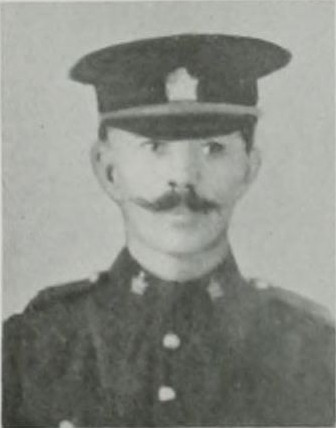
William John Colson.
BOWEN-COLTHURST, ROBERT MACGREGOR, Capt., 4th (Special Reserve), attd. 1st, Battn. Leinster Regt., 2nd s. of the late Robert Walter Travers Bowen-Colthurst, of Oak Grove, etc., J.P., by his wife, Georgina de Bellasis (Oak Grove, Killinardrish, co. Cork), only dau. of Alfred Greet, of Dripsey House, co. Cork, J.P.; b. Oak Grove, Killinardrish, co. Cork, 15 Sept. 1883; educ. Harrow and Trinity College, Cambridge, and on leaving the latter in 1905 joined the staff of the Lord Lieutenant of Ireland, first as assistant private secretary, and later as vice-chamberlain, which post he held until 1912. He then undertook work in connection with the Irish Department of Agriculture, and later succeeded the Earl of Carrick as Inspector for Irish Agricultural interests in Great Britain, which post he held until the outbreak of war. Acting on his conviction that every man ought to be trained in time of peace for the defence of the country, he had joined the 4th (Special Reserve) Battn. of the Leinsters in 1910, received his Lieutenancy, 12 March, 1912, and, volunteering for Imperial service, was gazetted Capt. 14 Aug. 1914. He went to the Front on 5 March, 1915, and was killed in action on the 15th of that month at St. Eloi. Lieut.-Col. C. B. Prowse, commanding 1st Leinster Regt., wrote: “The battn. had to retake some trenches which had been lost by another regt., and your husband bravely led his men and took and occupied the trench as he was ordered to. But early the following morning he was shot through the head over the parapet of a trench, and died, I hear, without pain—in fact, death was instantaneous. During the few days he was with us he had done splendid work and behaved most gallantly, and the men would follow him anywhere, and I do greatly sympathise with you and yours in your loss, and the regt.’s loss, too. I am sending your husband’s name to the General for ‘gallant conduct,’ and I also enclose a note which he wrote previous to the night attack, which was to be given to you.” And a brother officer: “I know Col. Prowse has written to you, but I think, perhaps, you might like to hear a second account of everything that happened. It might throw fresh light on details that you have heard from the commanding officer. Your husband arrived up here last Thursday week, 11 March. We were just going to start our eight days’ tour of duty in the trenches and were marching to them. He, with Capt. Radcliff from the 5th Battn., joined just about 5 p.m., when we were having a halt for tea. I remember how delighted I was to see him again, as he had always been so good to me, and it was just like a link with home seeing him again. He and Capt. Radcliff came with us into the trenches, your husband taking command of A Coy. We came out of the trenches again on Saturday night, arriving in our billets about 2 a.m. on Sunday morning, the 14th. I did not see much of him that day, as we were all sleeping off the effects of the 48 hours in the trenches. About 4.30 p.m. in the afternoon of Sunday, the 14th, a tremendous bombardment by our guns started. We were very soon turned out and hurried up to a ruined village not far behind the trenches. We learned that the Germans had captured our trenches, and it was decided that we must counter attack at 2 a.m. on Monday morning. Your husband was detailed with his company to recapture a trench, No. 20. He was full of keenness and enthusiasm about it, as he was always about everything. Just before midnight, before we started off, I met him in the dressing station, where he gave a letter to Dr. Kenny, our medical officer, asking him to send it to you by registered post if he was killed. The medical officer said ‘Nonsense,’ not to talk that way, as he would not be killed. Your husband replied cheerfully that it did not worry him a bit, only he wanted the letter sent if he were. After that we started off. He was ahead of me. About 12.45 I caught him up with my company, and gave him a lot of empty sandbags we had been carrying for his company. This was about 500 yards from the enemy’s trenches, and the bullets were flying about. I said ‘Good-night,’ wishing him the best of luck. He was very cheery and happy then. That is the last time I saw him alive. From Coy. Sergt.-Major Kershaw, whose home address is 22, Clarendon Street, Bradford, I got the following details. He was with your husband the whole time. At 2 a.m. they charged and captured the trench, any Germans who were in it running away; but after some time found they were being so hotly fired on into the trench from the right flank that they decided to fall back into a trench just behind. As they did this a young subaltern, named Buchanan, of the Irish Fusiliers, who was attached to A Coy., was badly wounded. As soon as your husband got his company into a trench behind, he, with the Coy. Sergt.-Major and a volunteer, went back under heavy fire and brought Buchanan into the trench. By the time it was 5.15 a.m., just daylight. At 5.30 a.m. the Sergt.-Major saw a lot of men retiring out of the left flank of the trench they were in, and went to see what it meant. Your husband followed him. They were walking along inside the trench, but your husband’s head must have been exposed (his height was 6 feet 4 inches), for a bullet came over the parapet and went right through his head. He knew nothing about it, but just dropped, death being instantaneous. It would seem almost as if he had a premonition of his death, as several times he repeated to his Coy. Sergt.-Major, ‘Be sure, if I am shot, that you bury me where I fall, as I am too big and heavy for the men to carry in.’ Up to the very end he was always thinking of others. He was buried as soon as it was dark on Monday evening, 15 March, in a little plot of ground on the left hand side of the road just as you leave the ruined village of St. Eloi for Ypres. This spot is exactly opposite the last ruined cottage on the right as you leave the village. We are going back to this post to-morrow evening for another eight days’ work. I am getting the Battn. Sergt.-Major—Sergt.-Major Shaw—who buried him, to point me out the spot, so that I will know should I ever return alive. I can then tell you exactly. A wooden cross with his name and regt. will be put up to mark the place. I am very glad to say I understand the commanding officer is recommending your husband for the D.S.O. for the good work he did that night.” He m. at. Bilton, near Rugby, 7 Dec. 1907, Winifred, dau. of the late Rev. Charles Frederick Cumber West, Vicar of Charlbury, Oxford, and had a son and three daus.: Charles Patrick Russell, b. 25 Feb. 1913; Peggy Winifred Isabel, b. 2 Aug. 1909; Honor Georgina Beatrice, b. 13 Sept. 1911; and Marian Elizabeth Hope, b. 12 Oct. 1914.
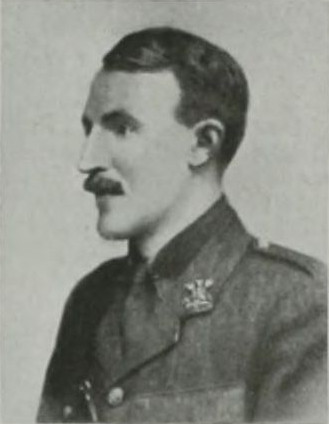
R. M. Bowen-Colthurst.
COLUMBUS, FRED, Private, No. 912, D. Coy., 1st Newfoundland Regt., 2nd s. of Frank Columbus, of Shallop Cove, St. George’s Newfoundland, by his wife, Susan, dau. of Peter Benoit, of Flat Bay, Newfoundland; b. Shallop Cove aforesaid, 18 April, 1893; educ. Shallop Cove and Grand River, Newfoundland; was a Lumberman; joined the Newfoundland Expeditionary Force, 3 Jan. 1915; left for England in March, went to the Dardanelles, 19 Aug. 1915, and died at Alexandria, Egypt, 9 Oct. 1915, of wounds received in action at Gallipoli on the 1st (?); unm. Buried in the Chatby Military Cemetery at Alexandria.
COLVIN, ROBERT ALEXANDER, Capt. and Adjutant, 2nd Battn. West Yorkshire Regt., s. of the late John C. Colvin, of Sutton Veney, co. Wilts: b. 5 Nov. 1889; gazetted 2nd Lieut. West Yorkshires, 18 Sept. 1909, and promoted Lieut. 2 July, 1909, and appointed Adjutant 1 Aug. 1913; served with the Expeditionary Force in France, and was killed in action on the Western Front, 12 March, 1915; unm.
COLYER, REGINALD JAMES, Leading Seaman, 194323, H.M.S. Aboukir; lost in action in the North Sea, 22 Sept. 1914.
COMYN, WILLIAM NUGENT, L.-Corpl., No. 119777, 2nd Battn. The Wiltshire Regt., s. of Francis Sarsfield Comyn, Master Mariner, by his wife, Eliza Jane (209, Alcester Road, King’s Heath, Birmingham), dau. of George Barber, and only gdson. of the late Capt. William Nugent Comyn, R.N. [descended from the Comyns of co. Clare]; b. Upton Park, London, 27 Feb. 1881; educ. privately in Birmingham; was independent; volunteered on the outbreak of war, and enlisted in the Wiltshires at Lavington, 8 Sept. 1914, trained at Weymouth; was promoted L.-Corpl. Nov. 1914, went to France 12 Dec., and was killed in action at Neuve Chapelle, 12 March, 1915; unm.
CONDRON, EDWARD, Stoker, P.O. (R.F.R., B. 8605), 295103, H.M.S. Aboukir; lost in action in the North Sea, 22 Sept. 1914.
CONDUITT, ROBERT BRUCE, 2nd Lieut., 1st Battn. Seaforth Highlanders, yr. s. of Henry Walter Conduitt, of 38, St. Alban’s Road, Edinburgh, late Examiner of Public Works Accounts, India, by his wife, Agnes Lennox, dau. of Robert Bruce; b. Allahabad, United Provinces, India, 13 April, 1890; educ. Edinburgh Academy and Fetter’s College, Edinburgh; was by profession a banker, and had been attached to offices in Scotland, Canada and India. He served in the Queen’s Edinburgh Rifle Volunteers for a year, and in the 4th Battn. Royal Scots (T.F.) for the same length of time, and joined the 14th Battn (London Scottish) The London Regt. 4 Aug. 1914, the day before the declaration of war. He went with them to France on 19 Sept. 1914, and served in the trenches throughout the winter of 1914–15. On 3 April he was given a commission in the Seaforth Highlanders, and joined on the 12th, being killed in action in the front line of trenches close to Neuve Chapelle four days later, 16 April, 1915. He was buried in the cemetery at Vieille Chapelle; unm. Capt. A. R. Baillie Hamilton, 1st Battn. Seaforth Highlanders, wrote: “Although he had only joined my company the day we moved into the trenches (12th), I saw a great deal of him during the few days, and I formed a very high opinion of him, and was congratulating myself on having such a nice lad posted to me. He seemed to get on exceptionally well with the men, and I have overheard several nice things said of him by them. He had the makings of a really efficient officer.”
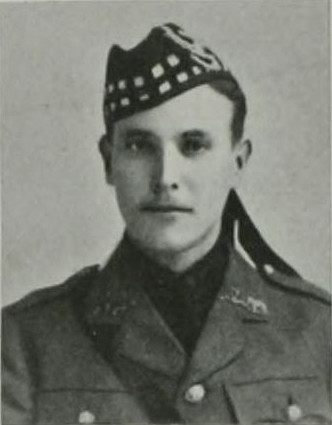
Robert Bruce Conduitt.
CONGDON, RICHARD HENRY, Stoker, P.O., 2nd Class (R.F.R., A. 1829), 123974, H.M.S. Hogue; lost in action in the North Sea, 22 Sept. 1914.
CONN, GEORGE DENHOLM, Private, No. 24466, 13th Battn. (5th Royal Highlanders of Montreal), 3rd Brigade, Canadian Expeditionary Force, s. of Neil Stalker Conn, of Stevenston, by his wife ... (Park Avenue, Brockville, Ontario, Canada), dau. of Robert Montgomery; b. Ardrossan, co. Ayr, 10 March, 1896; educ. Public School, Saltcoats; went to Canada, 10 March, 1911; enlisted in Aug. 1914, on the outbreak of war; left with the first contingent in Oct., and after training on Salisbury Plain during the winter, went to France in Feb., and was killed in action at the Battle of Langemarck, 24 April, 1915; unm.
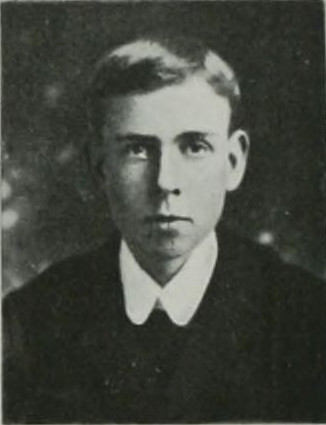
George Denholm Conn.
CONNELL, GILBERT, Private, No. 2387, 1/5th West Yorkshire Regt. (T.F.), 3rd s. of Joseph Connell, of 6, Barlow Terrace, Denison Road, Selby, Churchwarden at Selby Abbey, by his wife, Celia; b. Selby, co. York, 10 April, 1892; educ. Abbey Church School there; served his apprenticeship as a fitter and engineer at Messrs. Cochrane & Sons, Ltd., shipbuilders, Selby, and on the outbreak of war joined the 1/5th West Yorkshires in Sept. 1914. He was killed by a grenade at Ypres, 21 July, 1915, two Harrogate Territorials, who were in the trench with him, also meeting their death from the same explosive. He was unm., and was buried just behind the trenches. His commanding officer wrote: “He was an excellent and cheery soldier.” One of his brothers is at the Front, and the other has joined the Army.
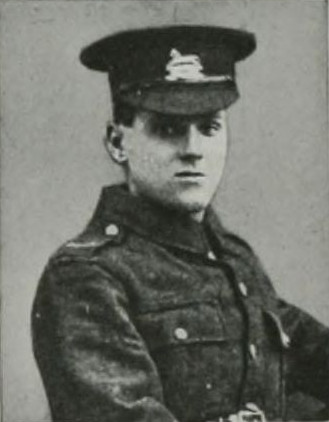
Gilbert Connell.
CONNELLAN, PETER MARTIN, Capt. and Local Major, 1st Battn. Hampshire Regt., only s. of Major James Hercules Fitzwalter Henry Connellan, of Coolmore, Thomastown, co. Kilkenny, J.P., D.L., formerly Hon. Col. 5th Royal Irish Regt. and Capt. Hampshire Regt., by his wife, Laura Elizabeth, dau. of Richard Ussher Roberts; b. Sale, co. Chester, 19 Feb. 1882; educ. Harrow, and was gazetted 2nd Lieut. to the 1st Hampshires (then in India), 8 Jan. 1901, being promoted Lieut. 30 Nov. 1903, and Capt. 9 May, 1907. He served in Aden, 1903–4, took part in the operations in the hinterland, and acted as signalling officer to the brigade under Brig.-Gen. Scallon with the Boundary Delimitation Commission, and was present at the attack by Arabs on the camp at Awabil; also in the expedition against the Kotaibis. He was Adjutant to the 1st Battn. Hampshire Regt., 23 Oct. 1906, to 22 Oct. 1909, and of the Hampshire depot and 3rd Battn. from 23 Jan. 1911, to Jan. 1914, when he rejoined the 1st Battn. at Colchester. The Battn. left for the Front in the 11th Brigade, 4th Division, in the third week of Aug. 1914, and was closely engaged in covering the British retirement from Mons, the Division earning the warm approval of the Commander-in-Chief. Capt. Connellan bore a very conspicuous part in holding the railway line near Caudry on 26 Aug., being under heavy fire all day in a most exposed position, also in the retirement on Ligny, and subsequent engagements. On 7 Sept. 1914, he was promoted Tempy. Major (a rank which he continued to hold until he fell), and given the command of his battn., which he retained during the engagements at the Marne and the Aisne. After being relieved by the French near Buez-le-Long on 4 Oct. the Brigade was engaged in the neighbourhood of Armentières, to the north-east of which Major Connellan fell (shot through the neck by shrapnel) on 20 Oct., when second in command of his battn. He was buried at Pont-de-Nieppe. Major Connellan was twice mentioned in Despatches (London Gazette, 9 Dec. 1914, and 17 Feb. 1915), and especially recommended for promotion and reward by his Brigadier, who described him as one of his ablest commanders and a born soldier. He was a keen sportsman, a fine rider, very fond of hunting and salmon fishing, also of games; was a member of the battn polo team, and a good player of hockey, tennis, Badminton, etc. He held the Bronze Medal of the Royal Humane Society for saving one of the men of his regt. from drowning. Major Connellan m. at St. Thomas’ Church, Winchester, 18 Oct. 1911, Winifred (New Empress Club), 3rd dau. of the late Arthur Niblett, formerly of Haresfield Court, co. Gloucester; s.p.
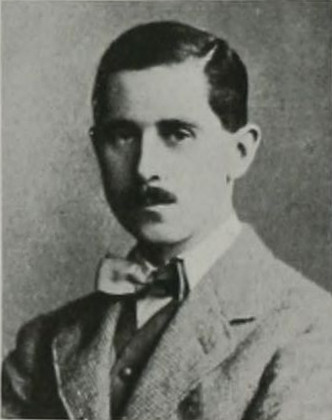
Peter Martin Connellan.
CONNER, RICHARD, Major, 2nd Battn. Gloucestershire Regt., 2nd s. of the late Capt. Daniel Conner, of Ballybricken, Monkstown, co. Cork, Royal Marine L.I., J.P., by his wife, Emily, dau. of Henry Steigen Berger, of 30, Cleveland Square, Hyde Park; b. Ballybricken aforesaid, 29 Dec. 1868; educ. St. Edward’s School, Oxford, and the Royal Military College, Sandhurst; received his commission as 2nd Lieut. in the Gloucesters, 11 Feb. 1888, and was gazetted Lieut. 3 July, 1889, Capt. 26 May, 1897, and Major, 25 Oct. 1907; served through the South African war, 1899–1902, took part in operations in Natal, 1899, including actions at Rietfontein and Lombards Kop (slightly wounded), and afterwards on Staff as Station Officer and as Commandant at Kaffir River Bridge, also in operations in the Orange Free State and the Transvaal, July, 1901, to 31 May, 1902, mentioned in Despatches and awarded the Queen’s medal with three clasps, and the King’s medal with two clasps; and with the Expeditionary Force in France and Flanders from Dec. 1914, to 9 May, 1915, when he was wounded and taken prisoner at Ypres, and died in London, 7 Sept. 1915, after exchange as an incapacitated prisoner of war; unm.
CONNETT, HENRY, Gunner, R.M.A. (R.F.R., B. 885), H.M.S. Aboukir; lost in action in the North Sea, 22 Sept. 1914.
CONNOLLY, EDWARD, Corpl. No. 90396, R.F.A., 3rd s. of Thomas Connolly, of 16, Mary Street, Sunderland, Riveter, by his wife, Frances, dau. of Peter Patrick, of Sunderland; b. Southwick-on-Wear, 7 Nov. 1890; educ. National School there; was employed at Priestman’s, Sunderland; joined the R.G.A. (T.F.) and rose to the rank of Sergt., taking his discharge in June, 1914, as medically unfit; rejoined 16 Aug. following for the period of the war, and died of wounds, 12 Dec. 1915, received in a farmhouse near Ypres; unm. He was buried in O-Beal Cemetery.
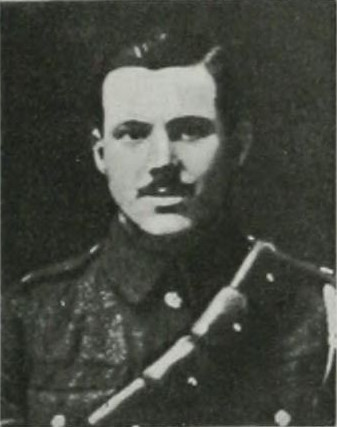
Edward Connolly.
CONWAY, JOHN, L.-Corpl. No. 73535, D Coy., 28th Battn. Canadian Expeditionary Force, eldest s. of Patrick Conway, of Ivy Cottage, Ennistymon, co. Clare, ex-Sergt. Royal Irish Constabulary, by his wife, Hanna, dau. of William O’Sullivan, Bonane, Kenmare, co. Kerry; b. Iries, Castletownbere, co. Cork, 13 July, 1874; educ. Bantry and Castletownbere; enlisted in the Grenadier Guards about 1894, and served with the Sudan Expedition, including the Battle of Omdurman and the capture of Khartoum; and through the South African war, 1899–1902 (receiving three medals). He then went to Canada about 1906 and settled in Ottawa, and was working on the railroad, but on the outbreak of the European war joined the Canadian Expeditionary Force, came over with the second contingent, and was killed in action in Belgium, 17 Oct. 1915; unm. He was in charge of a machine gun, when a shell fell within 15 yards of his post, killing him and three more instantly. His commanding officer, Major C. R. Hill, wrote: “He was a splendid soldier, and on the 16th had been promoted L.-Corpl. He died at his post, and no man could do more.”
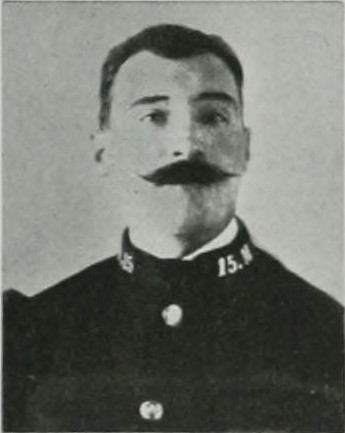
John Conway.
CONWAY, JOHN CHARLES, Mechanician, 282316, H.M.S. Hawke; lost when that ship was torpedoed in the North Sea, 15 Oct. 1914; unm.
COOK, ALFRED JOHN, A.B., 211035, H.M.S. Aboukir; lost in action in the North Sea, 22 Sept. 1914.
COOK, BERNARD HENRY, Rifleman, No. 2361, 12th Battn. (The Rangers) The London Regt. (T.F.), only s. of Frederick Thomas Cook, of Harleston; b. Harlesden, N.W., 11 Dec. 1895; educ. Upper Latymer School, Hammersmith, and the Polytechnic, Regent Street; joined The Rangers, Sept. 1914, and was killed in action at Ypres, 15 Feb. 1915, being buried in Menin cemetery, near St. Eloi. He was just finishing his three years’ course as an architectural student.
COOK, EDGAR PRESTON, Corpl., No. 6780, 1st Battn. Canadian Expeditionary Force, s. of Robert Cook, of Loring, Ontario, Canada, by his wife, Rovy, dau. of John Currie; b. 6 Feb. 1896; educ. Loring Public School; enlisted 23 Sept. 1914; came over with the first contingent in Oct.; went to the Front, 7 Feb. 1915; was commended by his Commanding Officer, 4 June, 1915, for gallant and distinguished conduct in the field at the Battle of St. Julien, and promoted Corpl., and was killed in action at Festubert, France, 15 June, 1915; unm.
COOK, EDWARD, Private, R.M.L.I., Ch./1323, H.M.S. Cressy; lost in action in the North Sea, 22 Sept 1914.
COOK, EDWARD, Private, No. 2642, 1/7th Battn. Durham L.I. (T.F.), 2nd s. of George Cook, of Thornley, Fruiterer and Florist, by his wife, Annie, dau. of John Peel; b. Thornley, co. Durham, 12 Jan. 1891; educ. Council School there, Henry Smith’s Secondary School, Hartlepool, and the Training College for Teachers, Sunderland, 1909–11, and having obtained his certificate was appointed assistant master at the Thornley Council School, which post he held at the outbreak of war. While going through his course at Sunderland Training College he had joined the Territorial Battn. of the Durham L.I., and on 9 Sept. 1914, volunteered for Imperial service. He left Gateshead for France on 19 April, and on arrival the Durham L.I. were immediately sent up to the trenches at Ypres, and he was killed in action there on Whit Monday, 24 May, 1915; unm. His body was found six weeks afterwards in front of the first line of trenches and buried by a comrade. His yr. brother, Private Percy Cook, Durham L.I., also a trained teacher, was killed in action on the Somme, 27 July, 1916.
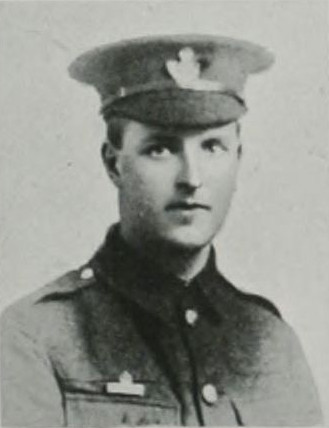
Edward Cook, Durham L.I.
COOK, EDWARD PERCY, Bugler, R.M.L.I., Ch./17952, H.M.S. Cressy; lost in action in the North Sea, 22 Sept. 1914.
COOK, ERNEST VICTOR, Private, No. 656, 90th Winnipeg Rifles, Canadian Expeditionary Force, 2nd s. of Thurstan Cook, of 16, Killarney Road, Wandsworth, S.W., formerly of Ryder Street, St. James’, Military Boot Maker, by his wife Lucy, dau. of John Palmer; b. Wandsworth, 16 May, 1887; educ. Sir Walter St. John’s School, Battersea, and on leaving school entered the employ of Messrs. Tyser & Co., shipping insurance agents, and afterwards of Lloyds. Leaving for Canada in Nov. 1910, he was for a time at Montreal, and then went to Winnipeg. When war was declared in Aug. 1914, he immediately joined the 90th Winnipeg Rifles, and came to England with the first Canadian contingent, which arrived at Plymouth, 14 Oct. 1914. After training on Salisbury Plain during the winter months, he went to the Front early in 1915, and during the heavy fighting at Ypres, 22–25 April, suffered badly from gas poisoning, but recovered and was in the trenches again in May. He was hit by shrapnel at the Battle of Festubert on 20 May, 1915, and died a few hours later, being buried in Bethune Town Cemetery; unm.
COOK, FRANCIS JOSHUA, Cook’s Mate, M. 2956, H.M.S. Good Hope; lost in action off Coronel, on the coast of Chili, 1 Nov. 1914.
COOK, FREDERICK, Private, No. 10356, 2nd South Wales Borderers, only s. of William Cook, of 15, Tre-Edwards, Rhymney, Brewery Worker, by his wife, Annie, dau. of Aaron Powell; b. Rhymney, 11 Aug. 1891; educ. there; enlisted 23 Feb. 1910; served in South Africa, 31 Jan. 1912–3 Oct. 1912; North China, Oct. 1912 (including Battle of Tsing-Tau); and with the Mediterranean Expeditionary Force, and was killed in action at the Dardanelles, 25 May, 1915; unm.
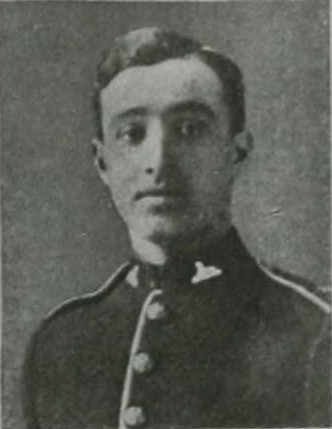
Frederick Cook.
COOK, FREDERICK WILLIAM, Private, No. 7105, A Coy., 1st Battn. Norfolk Regt., 2nd s. of Arthur Cook, of 30, Long Street, Ipswich, by his wife, Amelia, dau. of James Thorrington; b. Ipswich, 12 Nov. 1891; educ. there; joined the Special (Army) Reserve in 1911; d. 11 July, 1915, from wounds received in action at Blauvepoort, near Ypres; unm. His Commanding Officer, 2nd Lieut. Kenney, writing on 12 July, said: “He was working in the trenches the night before last when a bullet struck him in the back, afterwards passing through his side and arm,” adding: “He is a great loss to the regt. but died a noble death in doing the finest thing any man can do—giving his life for the sake of his country.”
COOK, HAROLD, Private, No. 113, 21st Battn. 6th Brigade, Australian Imperial Force, s. of the late James Cook, of Stockwell, Marble Mason (who d. 1889); b. Stockwell, London, 30 July, 1885; educ. Stockwell College; went to Australia, 5 Dec. 1913, and settled at Melbourne; enlisted there in Feb. 1915; served in Egypt and at the Dardanelles and d. of pneumonia in No. 15 Base Hospital, Alexandria, 28 Dec. 1915; unm.
COOK, HARRY JAMES, Stoker, 1st Class, S.S. 113688, H.M.S. Good Hope; lost in action off Coronel, on the coast of Chili, 1 Nov. 1914.
COOK, ROBERT, Stoker, 1st Class, K. 8030, H.M.S. Good Hope; lost in action off Coronel, on the coast of Chili, 1 Nov. 1914.
COOK, WILLIAM EDWARD, Seaman, R.N.R., 3171 C., H.M.S. Cressy; lost in action in the North Sea, 22 Sept. 1914.
COOK, WILLIAM GEORGE, L.-Corpl., No. 1916, 1/5th Battn. The Queen’s Royal West Surrey Regt. (T.F.), 2nd s. of Alfred Henry Cook, of Bank Cottage, South Ascot, by his wife, Mary Jane, dau. of William Rew Maunders, of Bristol; b. Warfield, co. Berks, 25 May, 1890; educ. Rangleigh Elementary School, Windsor Forest; was a carman for Mr. Corbett, Builder, Bagshot; joined the Surrey Territorials, 19 Feb. 1909; volunteered for foreign service after the outbreak of war, and was sent with his battn. to Lucknow, where he was promoted L.-Corpl. In May, 1915, a call was made for a draft of men from the 5th Queen’s to join the 2nd Norfolks, then engaged in operations in the Persian Gulf, and Cook was one of those who volunteered. He was drowned in the Tigris, 6 Aug. 1915, when on duty; unm.; an officer wrote that he was one of the best of their N.C.Os. and that he “was full of keenness at his work and cheeriness on the march, and an excellent example of smartness both on and off duty.”
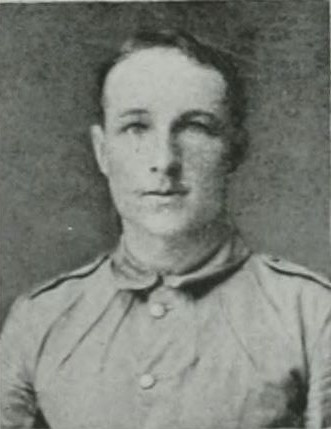
William George Cook.
COOKE, ALBERT EDWARD, Coy. Sergt.-Major, No. 8455, 1st Battn. Duke of Cornwall’s L.I., s. of Edward Cooke, of 35, Langton Street, Cathay, Bristol, retired Army Warrant Officer and Barrack Master, late M.W.D., India, by his wife, Elizabeth Catherine, dau. of W. Davis; b. Bareilly, India, 6 Sept. 1889; educ. Military School, India, and Secondary School, Gloucester; enlisted in the 1st Battn. Duke of Cornwall’s L.I. 20 Aug. 1906, and served seven years with the Colours and then passed into the Reserve. He held the Army Acting Schoolmaster’s certificate, and as long as the rules permitted he had charge of the Depot Military School at Bodmin, Cornwall. On leaving the Army he joined the City of London Police Force, and was attached to the Clock Lane division until called up on the outbreak of the war, 5 Aug. 1914. He was killed in action in France on 4 June, 1915; unm. The officer commanding (Lieut.-Col. M. Turner), 1st Duke of Cornwall’s L.I., wrote that he “Was killed in action early yesterday morning (Friday). He was accompanying the company commander, Capt. B. Woodham, D.S.O., round the trenches—the night was a very dark one—and was shot in the head, dying shortly afterwards. The medical officer informs me that he could not have felt any pain whatever, which may be a comfort for you to know. I myself had known your son for some years, and he was at Bodmin with me when I commanded the depot. His loss is very deeply deplored by all here—officers, N.C.O.’s, and men. He was one of the finest, if not the finest, N.C.O. in the battn., utterly fearless and daring, a splendid disciplinarian, and an all-round good fellow. He is a great loss to the battn. and to the country. He had been recommended by Major Canton (he was in command when I was home wounded) for a commission, and we are all sorry that he did not live to receive it. He was buried yesterday (Friday) afternoon in our regimental cemetery here, a charming little spot, and I and several officers and as many men as could be spared attended the funeral. I trust you will accept the deepest sympathy of the battn., of which your son was one of the best, in your bereavement. He died like a soldier for his King and country.” Of his three brothers, Lieut. J. H. Cooke, 11th Battn. Australian Imperial Force, was killed in action at the Dardanelles landing; Corpl. W. D. Cooke, of 5th Divisional Cyclist Coy., is now (1916) a prisoner of war in Germany; and Sergt. A. W. Cooke was (16 Sept. 1914 to 4 Jan. 1915) Drill Instructor to the 15th Gloucesters, and was then with the 13th and later with the 16th Battns., returning to Police duty 6 Jan. 1916.
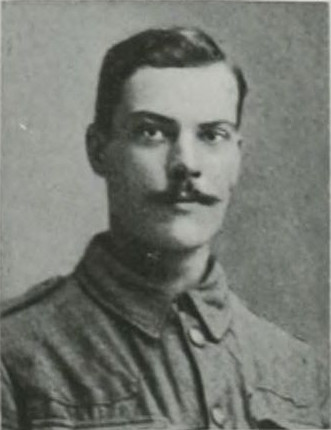
Albert Edward Cooke.
COOKE, JOSEPH HENRY, Lieut., 11th Battn. Australian Imperial Force, s. of Alfred Edward Cooke, of 35, Langton Street, Cathay, Bristol, retired Army Warrant Officer, and Barrack Master, late M.W.D., India, by his wife, Elizabeth Catherine, dau. of W. Davis; b. Dinapore, India, 26 Oct. 1882; educ. in Military Schools in India; enlisted in the Lancashire Fusiliers in 1899, and served with them 12 years; went to Western Australia and settled at Wickepin; volunteered on the outbreak of war; was made Sergt. and later promoted Lieut.; served at the Dardanelles, and was killed in action there 2 May, 1915. He m. at Malta, Rosie (Wickepin, Western Australia), dau. of (—) Peffers, and had three children. His brother, Coy. Sergt.-Major A. E. Cooke, was also killed in action.
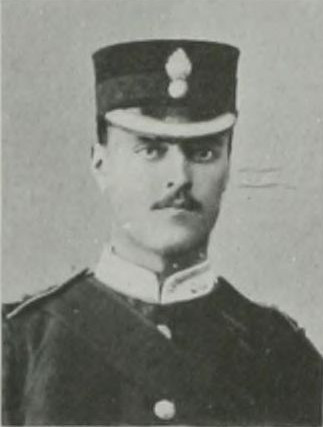
Joseph H. Cooke.
COOKSLEY, ARTHUR GEORGE, Gunner, R.M.A. 8388, H.M.S. Aboukir; lost in action in the North Sea, 22 Sept. 1914.
COOLEY, FRANK, Stoker, 1st Class (R.F.R., Ch. B. 9339), S.S. 106582, H.M.S. Cressy; lost in action in the North Sea, 22 Sept. 1914.
COOLEY, JAMES, Stoker, 1st Class (R.F.R., B. 4035), S.S. 102438, H.M.S. Good Hope; lost in action off Coronel, on the coast of Chili, 1 Nov. 1914.
COOLEY, WILLIAM JAMES, Private, R.M.L.I., Ch./7606 (R.F.R., B. 880), H.M.S. Cressy; lost in action in the North Sea, 22 Sept. 1914.
COOLING, JOHN JOSEPH, Private, No. 379, 2nd Battn. Australian Imperial Force, 2nd s. of John Joseph Cooling, of Windgates, co. Wicklow, by his wife, Sarah, dau. of Thomas Boyd; b. Windgates, 31 Jan. 1891; educ. Bray National School; went to Australia in 1910 and settled at Sydney. On the outbreak of war he volunteered and joined the Commonwealth Expeditionary Force in Sept. 1914, leaving for Egypt with the first contingent. He was severely wounded on 26 April during the historic landing at the Dardanelles, and was invalided back to Cairo, but rejoined his unit in July. Shortly afterwards he was reported as missing, and later was officially stated to have been killed in action between 6 and 9 Aug. 1915; unm.
COOLLEDGE, JOHN HENRY, Leading Stoker, Ch./305541, R.F.R. B. 8475, 2nd. s. of Job Coolledge, of Purleigh, Essex, Shoemaker, by his wife, Sarah; b. Purleigh, 25 July, 1882; educ. there; joined the Navy in Sept. 1902, and was lost on H.M.S. Cressy, 23 Sept. 1914. He m. at Leigh-on-Sea, 29 July, 1911, Alice H. (4, Reginald Cottages, High Street, Leigh-on-Sea), dau. of Walter Carey; s.p.
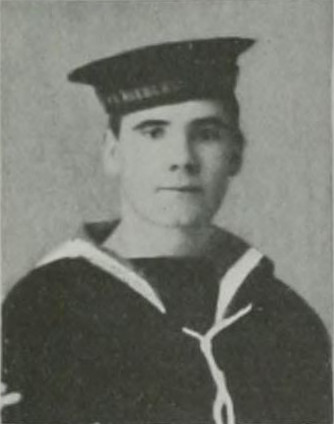
John Henry Coolledge.
COOMBES, ALBERT, Private, R.M.L.I., 11496, H.M.S. Good Hope; lost in action off Coronel, on the coast of Chili, 1 Nov. 1914.
COOMBES, ARTHUR ROBERT, Private, No. 1920, 3rd Battn. Australian L.I., s. of James Coombes, of Hammersmith, by his wife, Emily; b. Hammersmith, 20 Jan. 1895; educ. St. Paul’s C.E. School there; joined the Australian Imperial Force after the outbreak of war, and was killed in the fighting at Lone Pine, Gallipoli, on 7 Aug. 1915; unm.
COOMBES, CECIL ROBERT, Private, No. 4215, 14th Battn. (The London Scottish). The London Regt. (T.F.), 1st s. of James Robert Coombes, of 35, Knollys Road, Streatham, S.W., Madras Provincial Civil Service, late Presidency Magistrate, Madras, and Treasury Officer, Salem, by his wife, Camellia Ruth, dau. of Sergt. Stephen Pincott, 1st Madras Fusiliers; b. Cuddalore, South India, 18 March, 1897; educ. Champion Hill School, Denmark Hill (1905–6), Doveton Protestant College, Madras (1906–13), and Birkbeck College (1914); joined the London Scottish for Imperial Service, 2 Jan. 1915; went to the Front, 4 July, 1915; was severely wounded in the stomach in the attack on the Hohenzollern trenches during the Battle of Loos, 25 Sept. 1915, and died in the 2nd Field Ambulance the following day; unm. He was buried in the British cemetery at Vermelles. While in India, 1906–13, he was a Boy Scout, then a cadet, and finally a Volunteer in the Madras Volunteer Guards. A keen sportsman and shot, he was captain of Doveton College football and hockey teams, prefect of the school, and sub-editor of the school magazine. He had been selected and trained for the machine gun section, and successfully passed the snipers’ test, for eventual employment in that capacity.
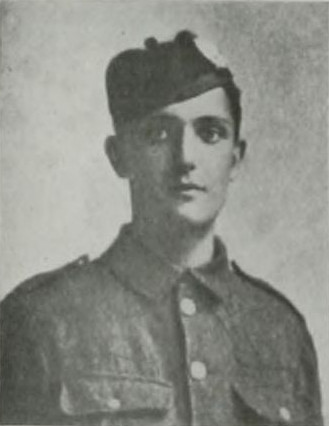
Cecil Robert Coombes.
COOMBS, ARTHUR ERSKINE GURNEY, Lieut., R.N., elder s. of Richard Samuel Gurney Coombs, of Church House, Oundle, by his wife, Kathleen Maria, dau. of Adolphe Philippe de Chastelain; b. Kensington, 3 Feb. 1888; educ. Oundle School; entered H.M.S. Britannia as a cadet, Jan. 1903, at the head of the list; appointed Midshipman, H.M.S. Ocean (China Station), April, 1904; transferred to H.M.S. Goliath (Mediterranean Station), 1905, and to H.M.S. Illustrious, March, 1907; appointed to Royal Naval College, Greenwich, for special course, April, 1908, and obtained four 1st classes; promoted Sub-Lieut. 30 July, 1908, and appointed to H.M.S. Dee (Destroyer), Jan. 1909; promoted Lieut. 30 April, 1909; appointed to H.M.S. Hindustan (Battleship), Sept. 1909, and to H.M.S. Dryad for navigation course, Jan. 1910; qualified as Lieut. (Navigating), and appointed to H.M.S. Essex (Cruiser), Aug. 1910, and to H.M.S. Blanche (Cruiser), Feb. 1911; transferred to H.M.S. Foresight (Light Cruiser), March following, and appointed to H.M.S. Diamond (Cruiser), Nov. 1912; and as Navigating Lieut. to H.M.S. Juno, Dec. following; appointed for first class ship’s course in navigation at Portsmouth, Jan. 1914, and obtained first place in examination; appointed Navigating Lieut. to H.M.S. Hawke, Feb. 1914, and was lost in the North Sea, 15 Oct. 1914, when that Cruiser was torpedoed. At the time of the attack Lieut. Coombs was on navigating duty on the bridge with the Capt. (Williams), and they remained there together until the ship sank. Coombs was subsequently seen in the water by survivors among the crew, but is presumed to have perished from the cold. He was unm.
COONEY, JOHN DANIEL, Private, No. 2486, 6th Battn. Manchester Regt. (T.F.), 2nd s. of John Patrick Cooney, J.P., by his wife, Mary (Garranlea House, Cahir, co. Tipperary), dau. of Daniel Joseph Geary; b. Cahir, 20 Aug. 1889; educ. Rockwell College and Blackrock College, Ireland; enlisted in the Manchester Regt. on the outbreak of war, went with his battn. to the Dardanelles, and was killed in action at Gallipoli, 29 May, 1915. He had been nominated for a commission, against his express wishes, just before his death; unm. Private Cooney played Rugby football regularly for the Manchester City Club and Lancashire County. He was a good boxer and a first-rate athlete, winning many prizes at 440 and 880 yards.
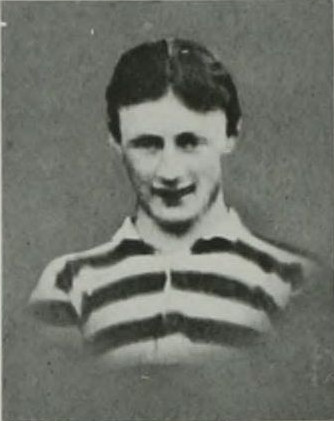
John Daniel Cooney.
COOPER, ALBERT, Stoker, 1st Class (R.F.R., B. 4085), S.S. 102471, H.M.S. Good Hope; lost in action off Coronel, on the coast of Chili, 1 Nov. 1914.
COOPER, ALFRED, Private, No. 9720, 2nd Battn. The Royal Scots (Lothian Regt.); served with the Expeditionary Force in France, etc.; killed in action at Croix Barbée, 15 Oct. 1914; m.
COOPER, ANDREW, Private, No. 14288, 4th Battn. The Middlesex Regt.; served with the Expeditionary Force in France, etc.; died at Zolobes, 14 Oct. 1914, of wounds received in action.
COOPER, EDWARD WYNDHAM, A.B. (R.F.R., Ch. B. 5932), 215711, H.M.S. Cressy; lost in action in the North Sea, 22 Sept. 1914.
COOPER, ERNEST, Private, No. 10041, 4th Battn. Middlesex Regt.; served with the Expeditionary Force in France, etc.; killed in action, 30 Aug. 1914.
COOPER, ERNEST ROBERT, Stoker, R.N.R., 1202T, H.M.S. Hogue; lost in action in the North Sea, 22 Sept. 1914.
COOPER, HANWAY, Sub-Lieut., R.N., yst. s. of the late William Cooper, M.A. Oxford, by his wife, Marion (Gravel Hill, Boxmoor, co. Herts), dau. of the late Major James German, of Maywood, Sevenoaks, J.P., D.L., grandson of John Cooper, of The Oaks, Preston, co. Lancs, and great-great-nephew of Admiral Sir James Hanway Plumridge, who fought in the Crimea; b. Hampstead, co. Middlesex, 2 May, 1892; educ. St. Christopher’s School, Eastbourne, the Royal Naval College, Osborne (entered 12 Jan. 1905), and Britannia College, Dartmouth; and was promoted Acting Sub-Lieut. 15 Sept. 1912, and Sub-Lieut. 15 Nov. following. He served on H.M. ships Commonwealth (15 Sept. 1909–14 Sept. 1910), Rattlesnake (15 Sept. 1910–14 Nov. 1910), Warrior (15 Nov. 1910–4 April, 1911), Britannia (14 Sept. 1911–2 Sept. 1912, “a zealous, hard-working officer”), Dryad (3 Sept.-9 Oct. 1912), Circe (10 Oct. 1912–6 March, 1914, “has carried out the duties of executive officer with zeal and ability”), Pembroke (7 March–22 March, 1914), and Shannon (23 March–30 July, 1914, “a very capable and promising officer”), and on the outbreak of war was appointed to H.M.S. Monmouth. He was killed in the naval action off Coronel, on the coast of Chili, when the Monmouth and Good Hope were lost with all hands, 1 Nov. 1914. Sub-Lieut. Cooper was to have been promoted to the rank of Lieut. 15 Nov. following his death.
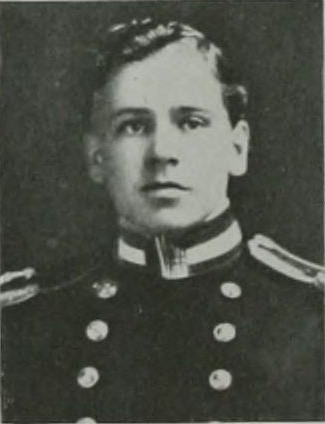
Hanway Cooper.
COOPER, HENRY, Private, No. 10894, 4th Battn. Middlesex Regt.; served with the Expeditionary Force in France, etc.; died on active service, 4 Nov. 1914, of enteric fever.
COOPER, JAMES HAMILTON, Private, No. 8551, 2nd Battn. East Kent Regt. (The Buffs), s. of Alfred Cooper, of The Lilac, Plantation Road, Hextable; served with the Expeditionary Force in France, etc.; died 29 May, 1915, of wounds received in action.
COOPER, JOHN, Fleet Paymaster, R.N., yr. s. of James Cooper Cooper, formerly Tuthill, of Cooper Hill, Clarina, co. Limerick, J.P., by his first wife, Mary, dau. of Charles Pickering, of Roebuck, co. Dublin; b. Cooper Hill, 4 July, 1869; educ. Burney’s School, Gosport; joined the Navy as an Assistant Clerk in 1886, becoming Paymaster in 1900, Staff Paymaster in 1904, and Fleet Paymaster, 1 Feb. 1908. He served in H.M. Yacht Osborne from 1899–1902, and was afterwards Secretary to Admiral Custance in the Venerable, and to Admiral Sir Charles Briggs in the Lord Nelson and the Dreadnought. He joined H.M.S. Monmouth, 1 Aug. 1914, and was lost in action when that ship was sunk in the Battle off Coronel, 1 Nov. 1914. He m. at St. Peter’s, Cranley Gardens, S.W., 5 June, 1905, Marguerite Sutherland (Chiltern House, Chesham), dau. of the late Capt. Francis Sutherland, Royal Scots Greys, and had three children: James Francis, b. 5 May, 1906; John Christopher, b. 15 May, 1907; and Elizabeth Mary, b. 20 Feb. 1909.
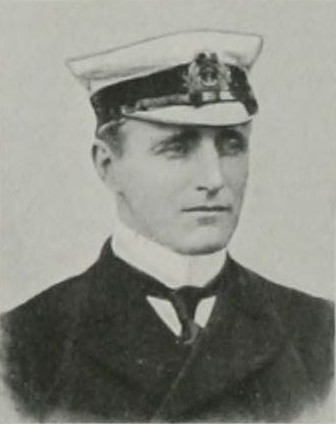
John Cooper.
COOPER, LEONARD GOSSE, 2nd Lieut., 4th (Service) Battn. South Wales Borderers, yst. s. of Walter Percy Cooper, of Ambleside, Abergavenny, Managing Director of Seargeant Bros., Ltd.; b. Abergavenny, 15 June, 1892; educ. Llandovery College, and Jesus College, Oxford, where he won a classical scholarship and also a Goldsmith’s Exhibition, and was placed in the first class in Honour Classical Moderations in 1914. On the outbreak of war he applied for a commission, and was gazetted to the South Wales Borderers, 29 Aug. 1914, accompanied the Mediterranean Expeditionary Force to the Dardanelles, and was killed in action 9 Aug. 1915; unm. He was buried in the 29th Field Ambulance Cemetery, at the mouth of the Aghyl Dere, Gallipoli, near Col. Gillispie and Major Sir Lennox Napier. Capt. C. E. Kitchen, commanding the C Coy., wrote: “It was early on 9 Aug. that the Turks attempted a surprise attack upon us where we were holding a very difficult position which we had not time to properly strengthen. My company had to occupy a rough knoll, covered with scrub, and in the semi-darkness it was very difficult to see the enemy. I immediately ordered up two platoons—No. 12 (your son’s) and No. 11 (Mr. Miller’s)—and was successful in keeping back the Turks. Unhappily Leonard, whilst gallantly leading and encouraging his men, was shot through the body, and passed away almost at once.” The regt. was congratulated by Sir Ian Hamilton for their conduct on this day.
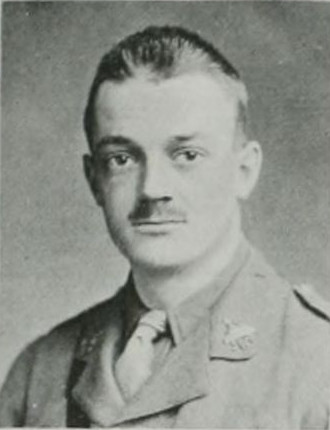
Leonard Gosse Cooper.
COOPER, STANLEY JAMES, Armourer’s Crew, 228727, H.M.S. Aboukir; lost in action in the North Sea, 22 Sept. 1914.
COOPER, THOMAS, Stoker, 1st Class, K. 14542, H.M.S. Pathfinder; lost when that ship was sunk by a mine, about 20 miles off the East Coast, 5 Sept. 1914.
COOPER, THOMAS WILFRED, Private, No. 12629, 4th (Service) Battn. South Wales Borderers, 2nd s. of George Cooper, of Joyford Hill, Coleford, by his wife, Jessie, dau. of George Taylor, of Joyford Hill; b. Coleford, co. Gloucester, 13 April, 1890; was employed at the Connop Collieries; volunteered and enlisted, Aug. 1914; served with the Mediterranean Expeditionary Force at the Dardanelles from 29 June, 1915, to 10 Aug. 1915, on which latter date he was killed in action there; unm.
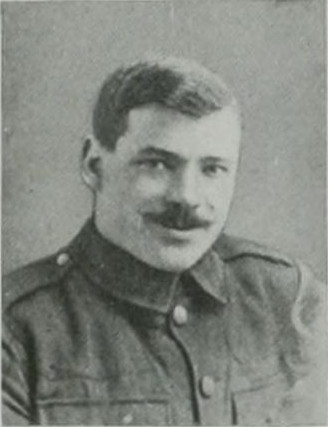
Thomas W. Cooper.
COPE, HARRY FITZGERALD, Private, No. 81177, 8th Battn. (90th Winnipeg Rifles), Canadian Expeditionary Force, 3rd s. of Gilbert Augustus Cope, of Russell, Manitoba, Canada, Farmer, formerly of Tralee, co. Kerry, and Sydenham, co. Kent, Organist of St. Michael’s, Lower Sydenham, 1882–88, by his late wife, Annie, dau. of the late William Burley, of Hastings, Sussex; b. Kilmalkeader Farm, Russell Co., Manitoba, 8 May, 1896; educ. Londonderry, near Russell, and Russell High School; joined the 32nd Manitoba Light Horse on its formation in May, 1913; trained at Sewell, 1913–14; volunteered for overseas service on the outbreak of war in Aug. 1914, and was drafted to the 32nd Battn. Canadian Expeditionary Force, at Winnipeg; came over with reinforcements for the first contingent, 17 Feb. 1915; trained at Shorncliffe Camp; went to the Front, 29 April, 1915; transferred to 8th Battn., 8 May (his 19th birthday); wounded in the left shoulder in action at Givenchy, 21 June, 1915, by a piece of shrapnel, but remained in the trenches with his company; appointed Headquarters Runner to the Battn., 1 Aug.; killed in action at Ploegsteert, Belgium, about 11 p.m., 12 Sept. 1915, while repairing trench under fire, being shot near the heart. Buried in the 90th Rifles graveyard in Ploegsteert Wood; unm. Capt. L. Gysin wrote: “He had been so familiar and well-liked a figure amongst us, as he had always been a good soldier and seldom without a smile, that his death will be a great loss to us”; and Private C. Robin: “All the Russell boys, in fact all the boys who knew him, feel pretty bad. He was one of the best, always cheery and cool under fire.”
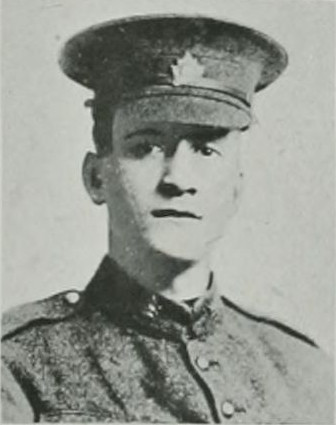
Harry Fitzgerald Cope.
BIDDLE-COPE, ANTHONY CYPRIAN PROSPER, 2nd Lieut., 1st Battn. King’s Shropshire L.I., s. of James Cyprian Biddle-Cope, formerly of Broadwood Hall, co. Salop, by his wife, Marie Louise, dau. of Edward Angell Saunders; b. London, 9 May, 1889; educ. Barnabite College, Florence, Italy; and was afterwards a Cadet on H.M.S. Conway, where he received the King’s gold medal. He was gazetted 2nd Lieut. 1st Battn. King’s Shropshire L.I., 10 Aug. 1910, and went to the Front with them on the outbreak of war. He was present when the general move of the British Army was made in Belgium and Northern France, and when the Germans made their first attempt to capture Calais, and was killed in action while saving the life of a friend, near Ypres, 26 April, 1915; unm. A Major of the 1st Battn. King’s Shropshire L.I., in a letter to his family, wrote: “The death of your son was not a surprise to me, for I knew it must only be a question of time before he was either killed or wounded seriously enough to lay him up for the rest of the war, for he was one of the bravest men I have ever met. I knew him first at the depot at Shrewsbury, when he first joined in 1910, and even then I was so much impressed with his pluck and his constant desire to do his duty in everything that I used to say that if ever I went on service I should rather have him to help me in a tight place than any other young officer I knew. When we were out on the Aisne, if ever there was any dangerous job that required to be done he would volunteer to do it, and yet the way he carried it out showed that he had caution and sense besides mere pluck. When he was first wounded, on 23 Oct., he came up to me with his hand bound up, and was all for leading a bayonet charge in daylight. The day before that he had walked across an open space of 50 yards to bring me a message, with the bullets spattering all around him, and nothing I could say would make him wait till dark before going back.” Another officer, who was wounded in the same engagement as that in which Lieut. Biddle-Cope met his death, wrote: “During the fight round Ypres two companies were ordered with the machine guns to reinforce a regt. who were having a very had time. On arrival there some selected men of our company were ordered to take a trench held by the Germans, and I was one of the officers, and while waiting to move out of our trench to attack, Biddle-Cope came up and chatted with me and wished me good luck; and I left my stick with him till I came back. The order to advance was given, and we charged, and just before we got to the enemy’s trench Biddle-Cope rushed by at a terrific pace, and was shot as he got to the enemy’s trench. When just in front of me he fired two shots from his revolver, and I think was again hit. I dropped down beside him and fired at the German who had shot, him, but can’t say whether I hit him or not. I myself had damaged my knee so severely that I could not walk at the time, and I saw no use trying to do any more, so collected the few men left—about five at the moment—and crawled back in. Biddle-Cope was machine gun officer, and should not have been there, but I can only think that he saw things were going badly and came out to help me.”
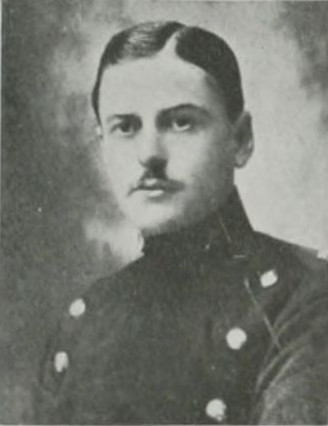
A. C. P. Biddle-Cope.
COPE, MICHAEL WILLIAM, Private, No. 6317, No. 3 Coy. 1st Battn. 1st Brigade, Canadian Expeditionary Force, s. of the late Michael Brown Cope, of The Corner House, Castledermott, co. Kildare, by his wife, Isabella, dau. of John Brown, of Woodlands, Castledermott; b. Castledermott, 1 Sept. 1892; educ. there; went to Canada, 24 May. 1912, and after a few months in Arkona, Thedford, Ontario, with his uncle, George Brown, J.P., became a clerk on the Canadian Pacific Railway at Windsor, Ontario. On the outbreak of war he enlisted and came to England with the first Canadian contingent, and after training at Salisbury during the winter, left for the Front, 7 Feb. 1915. He was killed in action between Bethune and La Bassée on the evening of 1 June, 1915; unm. A comrade wrote: “He was killed in one of the most daring attacks of this war. It commenced at 6 p.m. The hail of bullets and shrapnel which swept over our parapet was perfectly ranged; it was suicide to show oneself over the breastwork, for the enemy were less than 75 yards away. In spite of all, not a man hesitated. The whole platoon, of which William was one of my best chums, crossed the parapet with our heads down and a muttered prayer. We made straight for the German lines. We dropped into shell holes for a breather, and I glanced back and saw half of the boys (chums all of them since leaving Windsor, Ontario) lying dead and wounded. William, I afterwards learned, suffered no pain; his death was instantaneous. We had many debts to pay—Ypres, Festubert—and we alleged together to form one terrible effort, which carried us to their third line. William was with us through all our trouble at Ypres and Festubert, and has won the love and respect of us all. There are but few survivors left of the willing bands that landed in France last February.”
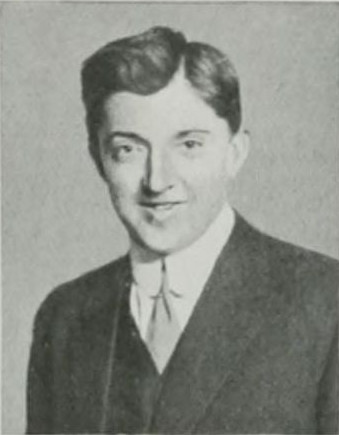
Michael William Cope.
COPELAND, TOM, Officer’s Steward, 1st Class, 357988, H.M.S. Pathfinder; lost when that ship was sunk by a mine, about 20 miles off the East Coast, 5 Sept. 1914.
COPELAND, WILLIAM GEORGE, A.B. (R.F.R., Ch. B. 10384), 206235, H.M.S. Cressy; lost in action in the North Sea, 22 Sept. 1914.
COPELAND, WILLIAM JOHN, Corpl., No. 10666, Machine Gun Section Wellington L.I., New Zealand Expeditionary Force, 2nd s. of Thomas Mercer Copeland, of 30, Liffeton Street, Wanganui, New Zealand, Building Inspector etc., for Wanganui Borough Council, by his wife, Emma; b. Wanganui, 23 Jan. 1890; and was educated at the District High School and at Mossten, Wanganui. He joined the Defence Cadets as a boy, winning a cup for shooting at the age of 15, and afterwards attained the rank of Lieut. of the Senior Cadets acting at Capt. for eighteen months, but had to resign on leaving Wanganui for New Plymouth to take up other work. He was a Mechanical Engineer and Motor Expert by trade and on the outbreak of war volunteered for Imperial Service and joined the Wellington Infantry Battn., 18 Aug. 1914. He left New Zealand with the Main Expeditionary Force, was promoted Corpl. while in Egypt on Christmas Day, 1914, and was killed in action at Gallipoli, 2 May, 1915; unm. Col. Malone wrote: “When on the death of all his superior officers I placed him in charge of my four machine guns and recommended him for a commission to be my Machine Gun Officer. He was trying to locate the Turk’s fire which was harassing them when he was shot,” adding that “it was an extremely plucky act.”
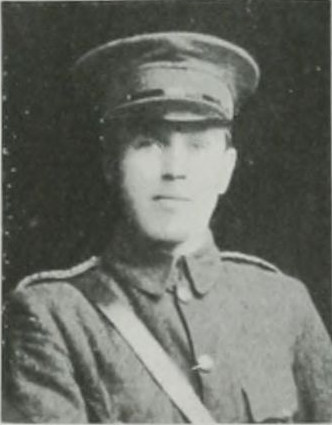
William John Copeland.
COPLAND, DUDLEY CHARLES JAMES, 2nd Lieut., 1st Battn. Sherwood Foresters (Nottinghamshire and Derbyshire Regt.), only s. of Charles Copland, Professor of Singing, R.A.M; b. Hampstead, 2 May, 1896; educ. St. Paul’s Cathedral Choir School and Denstone College; joined the 28th Battn. (Artists’ Rifles) The London Regt., and was gazetted to the Sherwood Foresters, 2 March, 1915. He was killed in action at Aubers Ridge, 9 May, 1915, being buried in the cemetery at La Cordonnierie.
COPLAND, LEONARD GEORGE, Ordinary Telegraphist, J. 14426, H.M.S. Good Hope; lost in action off Coronel, on the coast of Chili, 1 Nov. 1914.
COPLAND, MAURICE, Private, No. 2363, 5th (Cinque Ports) Battn. Royal Sussex Regt. (T.F.), s. of John Albert Copland, of Chelmsford, Solicitor, by his wife, Mary, dau. of Isaac King; b. Chelmsford, co. Essex, 21 Dec. 1876; educ. Chelmsford Grammar School, New College, Eastbourne, and Pembroke College, Cambridge; enlisted 8 Sept. 1914; proceeded with his regt. to the Front, and died in the Stationary Hospital, Boulogne, 21 March, 1915, while on Active Service; buried in Wimereux Military Cemetery, Boulogne Base, Grave No. 285; unm.
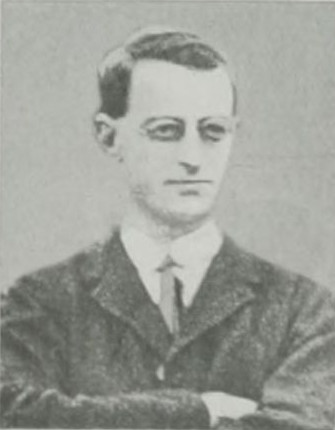
Maurice Copland.
COPPINGER, CYRIL DOUGLAS, Private, No. 12650, 1st Battn. Northamptonshire Regt., only s. of Col. Thomas Stephen Coppinger, of 168, Worple Road, Wimbledon, late 11th Regt., and Chief Paymaster, A.P.D. (who served in the Zulu war of 1879 and the last South African war), by his wife, Aldegonde Emily, dau. of Edward Thomas ffrench Beytagh, Q.C.; b. Maidstone, 26 July, 1890; educ. Wimbledon College, Edge Hill; was a journalist on the stall of the “Evening Standard,” and latterly a sub-editor on the staff of the Exchange Telegraph Co. On the outbreak of war he enlisted in the Northamptonshire Regt., joining the 1st Battn. at the Front, 2 Feb. 1915; he took part in the Battle of Neuve Chapelle, and was killed in action in a charge on the German trenches at the Aubers Ridge, between Richebourg l’Avoue and Festubert, 9 May, 1915; unm. He was buried north of the Rue du Bois, between Richebourg St. Vaast and Richebourg l’Avoue. In announcing his death, the “Pall Mall Gazette” stated: “He was a young man of great promise, and several of his short stories, which recently appeared in a number of London magazines, attracted considerable attention.”
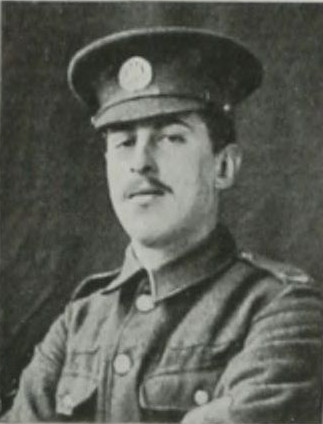
Cyril Douglas Coppinger.
COPPINS, HUGH JOSEPH, Stoker, 2nd Class, K. 15587, H.M.S. Pathfinder, lost when that ship was sunk by a mine, about 20 miles off the East Coast, 5 Sept. 1914.
CORBALLY, LOUIS WILLIAM, Capt., R.F.A., 3rd s. of the late Matthew James Corbally, of Rathbeale Hall, Swords, co. Dublin, J.P., D.L., by his wife, Sara Louisa, dau. of Thomas O’Kelly, of Bridge House, co. Kerry; b. Dublin, 27 May, 1876; educ. Stonyhurst and The Oratory School, Edgbaston; served with the Irish Hunt Yeomanry through the South African War (medal and clasps), and was gazetted Capt. R.F.A., 29 Sept. 1914. On the outbreak of the European War he left with the R.F.A. for the Front; served in France and Flanders, and died from wounds received in action, at Bailleul, near Ypres, 6 May, 1915. He m. at The Oratory, Brompton, London, 26 April, 1906, Nancy, 4th dau. of John Joseph Whyte, of Loughbrickland, co. Down, D.L., and had two sons and two daus.; Marcus, b. 29 Aug. 1907; Edward, b. 15 Jan. 1909; Dorothy, b. 25 June, 1910; and May, b. 29 Dec. 1912. A brother officer wrote: “Our position was on the railway about 4 miles N.E. of Ypres, and it was going back to see the first line ... about ½ a mile along the track that the shelling took place. It was more or less a chance shell but there was a good deal all three days. I can only repeat how much Capt. Corbally is regretted and missed by all ranks in the Battery. One has to censor their letters and the sympathetic allusions to him have been very touching. As you know the funeral was at Bailleul in France.”
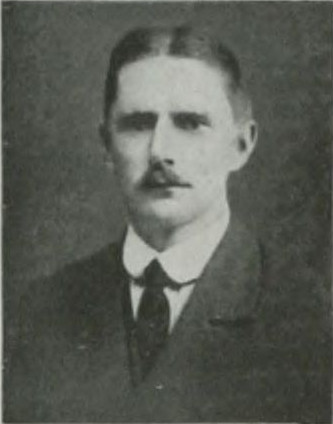
Louis William Corbally.
CORBET, SIR ROLAND JAMES, 5th Bart., Lieut., 3rd Battn. Coldstream Guards, yr. and only surviving s. of the late Sir Walter Orlando Corbet, of Moreton Corbet, 4th Bart., Capt., Coldstream Guards, by his wife, Caroline Douglas (now wife of Reginald Basil Astley, of Compton Beauchamp, Shrivenham), only child of the late Capt. James Affleck Stewart, of St. Fort, Fife, 11th Hussars; b. 19 Park Lane, W., 19 Aug. 1892; educ. Malvern and Sandhurst; suc. his father, 20 Dec. 1910; gazetted 2nd Lieut. 3rd Battn. Coldstream Guards, 22 Jan. 1913, and promoted Lieut. 9 Dec. 1914; served with the Expeditionary Force in France and Flanders, 1914–15, and was severely wounded at La Tretoire, near Rebais, on 8 Sept. and invalided home. From 28 Oct. to 22 Dec. 1914, he was on light duty at Windsor, returning to the Front on the latter date. On 6 Feb. 1915, he led successfully a most gallant attack on the Brickfields, for which he was mentioned in Despatches [London Gazette, 22 June, 1915], and was killed in action at Givenchy, France, 15 April, 1915; unm.
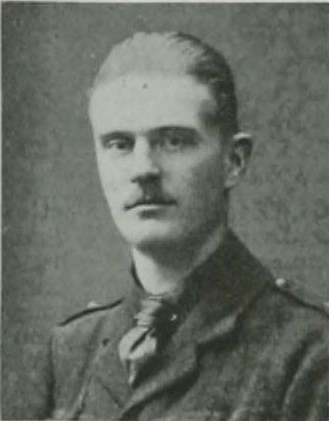
Sir Roland James Corbet.
CORBETT, GEORGE, Stoker, 2nd Class, K. 20391, H.M.S. Good Hope; lost in action off Coronel, on the coast of Chili, 1 Nov. 1914.
CORBETT, MICHAEL PATRICK, Leading Stoker, 305374, H.M.S. Pathfinder; lost when that ship was sunk by a mine, about 20 miles off the East Coast, 5 Sept. 1914.
CORBIN, ALONZO JOSEPH, Seaman, R.N.R., 4187A, H.M.S. Cressy; lost in action in the North Sea, 22 Sept. 1914.
CORBYN, VERNON HECTOR, Midshipman, R.N., only s. of the late Major Hector Corbyn, R.H.A., by his wife, Lylie Evelyn (Stair Lodge, Wokingham, Berks.), dau. of Samuel Orby Carey: b. Ely Court, Llandaff, 16 Jan. 1898; educ. “Fonthill,” East Grinstead, Osborne, 1911, and Dartmouth; joined H.M.S. Cressy, 3 Aug. 1914, with which he went down in the North Sea, 22 Sept. 1914.
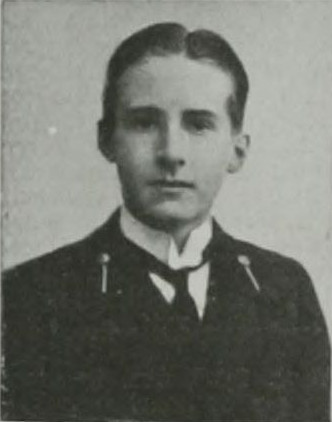
Vernon Hector Corbyn.
CORDER, ERNEST, Ordinary Seaman (R.N.V.R.), 297 (Sussex), H.M.S. Hawke; lost when that ship was torpedoed in the North Sea, 15 Oct. 1914.
CORDER, HUGH GERALD ANNERLY, Lieut., 2nd Battn. The Welsh Regt., only surviving s. of Major Arthur Annerly Corder, of Glendoone, Havant, Hants., A.O.D., D.A.D.O.S. (who served with the Mediterranean Expeditionary Force at the Dardanelles), by his wife, Lucy Ellen, dau. of George Armitage; b. Maesyneuadd Hall, co. Merioneth, 24 Jan. 1894: educ. Plymouth College and Sandhurst; was gazetted 2nd Lieut. in the Welsh Regt. 17 Sept. 1913, and promoted Lieut. 4 Nov. 1914; went to France with the original Expeditionary Force, took part in the retreat from Mons and the Battles of the Aisne, the Marne and Ypres, being wounded by shrapnel at the latter place on 2 Nov. and was invalided home. He returned to the Front on 9 April, and was killed while leading his men into action at Richebourg l’Avoue, 9 May, 1915; unm. He was buried in the British cemetery near Rue de Bois.
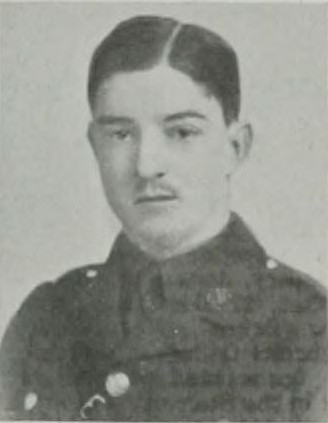
Hugh Gerald A. Corder.
CORDWELL, WILLIAM SAM, Gunner, R.M.A. 7989 (R.F.R., B. 1103), H.M.S. Aboukir; lost in action in the North Sea, 22 Sept. 1914.
COREN, EDWARD WALKER, 2nd Lieut., Royal Field Artillery, only s. of the late John William Coren, of Guyscliffe, Gloucester, Solicitor; b. Gloucester 8 Feb. 1893; educ. Cheltenham College, and on leaving there did 12 months’ training at Aldershot with the R.F.A. Special Reserve. He then went to the Malay States, but on the outbreak of war returned, and was gazetted 2nd Lieut. in the Special Reserve of the R.F.A., 23 Dec. 1914, and into the Regular Army, 25 May, 1915. He went to the Front in March, and was severely wounded on the night of 14 June, 1915, while out with a party of men laying telephone wires. They had had to take shelter three times owing to the heavy shell fire. Lieut. Coren made a fourth attempt to finish the work, but he and three out of the four men with him were so severely wounded that they died the following day. The fourth man, a driver, was seriously wounded, but survived. He was buried at Ypres; unm. His Col. wrote speaking very highly of the work he had done while under his command. Coren was a good all-round athlete and sportsman. At Cheltenham he was a prefect and in the cricket eleven, and was considered a good bowler. He also played football and won the High Jump two years in succession. He was also an exceptionally good horseman.
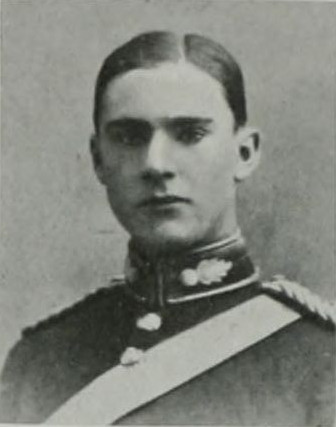
Edward Walker Coren.
CORFIELD, HARRY, Private, No. 6063, 2nd Battn. Scots Guards; b. Annagh, co. Mayo; enlisted 22 May, 1905; served with the Expeditionary Force in France and Flanders; killed in action, 16 May, 1915; unm.
CORK, JOHN HENRY, Leading Seaman, 223677, H.M.S. Cressy; lost in action in the North Sea, 22 Sept. 1914.
CORKE, ARTHUR NOEL, Rifleman, No. 1783, 1/18th (London Irish Rifles) Battn. The London Regt. (T.F.), 3rd s. of George Johnson Corke, of 9, Adelaide Road, Brentford, W., Commercial Traveller, by his wife, Clara Maria, dau. of the late John Boys; b. Chiswick, W., 25 Dec. 1893; educ. Gunnersbury College, Chiswick, and Rothschild School, Brentford; enlisted on 7 Aug. 1914, two days after the outbreak of war, served in France and Flanders, was wounded at Loos, 25 Sept. 1915, and died at Abbeville, 15 Oct. following, being buried there; unm. A comrade wrote: “Corke always had a quiet and gentlemanly air about him, and was thoroughly liked by all.... With regard to his life in the trenches, he did not seem to know the meaning of fear, and always took anything in that cool fashion of his which I have often envied during a heavy shelling.... In conclusion, one can say he was a good soldier, above all a good friend.” Four of his brothers joined the Army after war was declared: one the 10th Middlesex (T.F.), two the Australian Contingent, and a third the Queen Victoria Rifles.
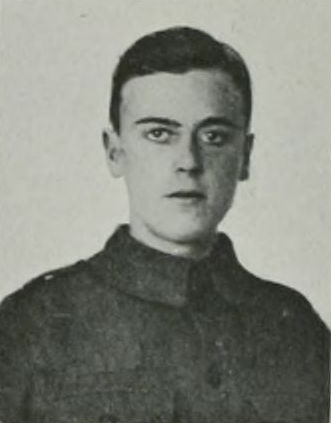
Arthur Noel Corke.
CORKRAN, REGINALD SEYMOUR, 2nd Lieut., 2nd Battn. Grenadier Guards, yst. s. of Col. Charles Seymour Corkran, of Chipstead, co. Surrey, late Grenadier Guards, by his wife, Florence, dau. of Sir Charles Lennox Peel, G.C.B., and gdson. of Charles Corkran, of Long Ditton, Surrey, by his wife, Georgiana Isabella, sister of the 5th Marquis of Hertford and dau. of Admiral Sir George Seymour; b. London, 28 June, 1890; educ. “Evelyns,” Uxbridge, and Eton. Was on the Stock Exchange, but on the outbreak of war enlisted in the Honourable Artillery Company, served eight months and was promoted Corpl. and Sergt., receiving a commission in 2nd Battn. Grenadier Guards, May, 1915. He served in France and Flanders, was seriously wounded in action by shrapnel, 7 June, 1915, and died in the Duchess of Westminster’s Hospital at Le Toquet, four days later; unm. He was buried at Chipstead, co. Surrey.
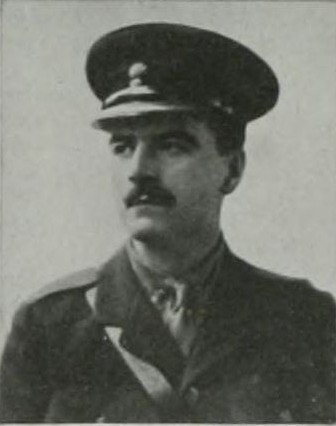
Reginald S. Corkran.
CORMICAN, HUGH PATRICK, Stoker, 1st Class (R.F.R., B. 10490), S.S. 108467 H.M.S. Hawke; lost when that ship was torpedoed in the North Sea, 15 Oct. 1914.
CORNER, ALBERT JUST, Private, No. 1416, 4th Battn. Cameron Highlanders (T.F.), 8th s. of William Corner, of Brockside, Drummond Road, Inverness, late Actuary, Savings Bank, Inverness, by his wife, Hedwig, dau. of Heinrich Wolfgang Just; b. Inverness, 27 July, 1895; educ. High School and Royal Academy there; joined the 4th Camerons 1913, and on the outbreak of war volunteered with his company, went to France, 19 Feb. 1915, and was killed in action at Neuve Chapelle, 12 March, 1915; unm. He had been trained for a bank life, and was a member of the Bankers’ Institute of Scotland. His elder brother, Otto, was also killed in action (see following notice).
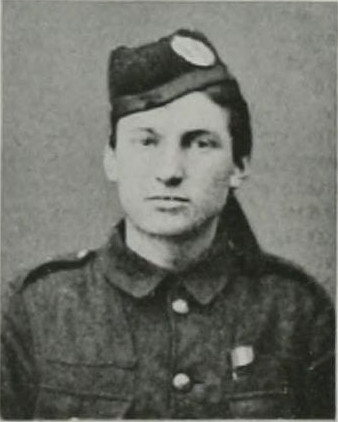
Albert Just Corner.
CORNER, OTTO HEINRICH, Private, No. 22979, 14th Battn. (Royal Montreal Regt.) Canadian Expeditionary Force, 6th s. of William Corner, of Brookside, Drummond Road, Inverness, etc. (see preceding notice); b. Inverness, 7 July, 1892; educ. High School and Royal Academy there, and went to Canada 14 Aug. 1913; on the outbreak of war he volunteered for Imperial service, and joined the Royal Montreal Regt., came over with the first contingent, and was killed in action at Ploegsteert, 7 July, 1915; unm. Like his brother, he had been trained for a bank life, and was a member of the Bankers’ Institute of Scotland.
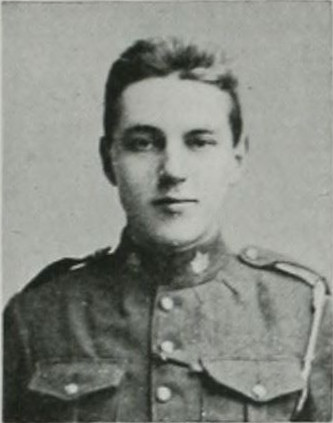
Otto Heinrich Corner.
CORNER, STEPHEN HENRY, A.B., No. 118, Royal Naval Brigade, 4th s. of John Corner, of 5, James Armt Street, Sunderland, by his wife, Maria, dau. of John Tucker, of Sunderland; b. Southwick-on-Wear, co. Durham, 28 July, 1892; educ. Council Schools there; was a miner; enlisted in the Durham L.I. 23 Aug. 1914; was later transferred to the Naval Brigade; served through the Antwerp Expedition and with the Mediterranean Expeditionary Force, and was killed in action in Gallipoli, 15 June, 1915; unm.
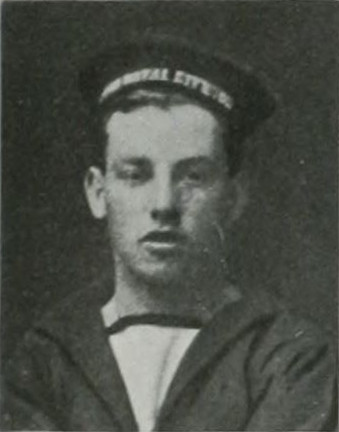
Stephen Henry Corner.
CORNICK, DANIEL, Officer’s Cook, 1st Class, L. 989, H.M.S. Good Hope; lost in action off Coronel, on the coast of Chili, 1 Nov. 1914.
CORNISH, CHARLES LAWSON, Lieut. 2nd Battn. Highland L.I., yr. s. of the late Henry Cornish, Barrister-at-Law and Co-Proprietor of the “Madras Mail,” India (died 7 June, 1915), by his wife, Emily Henrietta (Glastonbury, Lovelace Road, Surbiton), dau. of Charles William Engelbach; b. Brighton, 13 Aug. 1887; educ. Stoke House, near Slough, Charterhouse, and Trinity College, Cambridge (B.A.), from which he entered the Army as a University candidate. He was for some time attached to the King’s Own Yorkshire L.I., and was gazetted 2nd Lieut. Highland L.I. in June, 1909, to rank as from 18 Sept. 1909. At the beginning of 1914 he resigned his commission, and was gazetted to the Reserve of Officers. On the outbreak of war he rejoined his regt., and was with it in the retreat from Mons, and through the Battles of the Marne, the Aisne and round Ypres, and was killed in action near the last-named town, 13 Nov. 1914; unm. He was buried alongside the Passchendael-Becelaere Road.
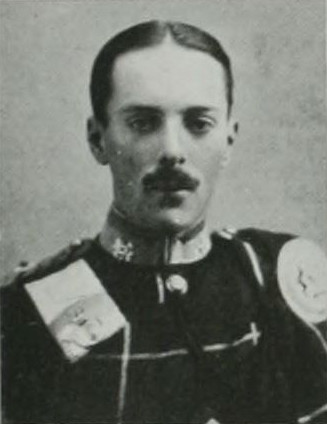
Charles Lawson Cornish.
CORNISH. HENRY GEORGE WILLIAM, A.B., J. 1249, H.M.S. Good Hope; lost in action off Coronel, on the coast of Chili, 1 Nov. 1914.
CORNWALL, GEOFFREY, Private, No. 1667, 5th Battn. Royal Sussex Regt. (T.F.), s. of (—) Cornwall; b. .. June, 1896; educ. Hadlow Down (Sussex) School; was employed by Mr. H. Morriss, of Stonebridge; joined the 5th (Territorial) Battn. of the Royal Sussex Regt. about 1913; volunteered for foreign service on the outbreak of the war, and went to France 9 March, 1915, and was killed in action in the charge of the Sussex Regt. at Richebourg, 9 May, 1915; unm.
CORNWELL, ABIJAH, Sergt., No. 981, 1/8th Battn. Middlesex Regt. (T.F.), 2nd s. of Eliphaz Cornwell, by his wife, Caroline (66, Queen’s Road, Southall, Middlesex), dau. of Joseph Brown; b. Southall, co. Middlesex, 5 Oct. 1877, and had been for some nine years in the employ of the Southall Gas Works when war broke out. He had joined the Southall Coy. of the Middlesex Territorials in 1908, and had risen to the rank of Sergt. He immediately volunteered for foreign service, and after going to Gibraltar with his regt., returned to England and went to France, 8 April, 1915; was wounded during the fighting at Ypres on Whit Monday, 24 May, 1915, and died in No. 13 Stationary Hospital at Boulogne on the following Friday morning, the 28th. He was a well-known and popular cricketer and footballer. He first played for the Norwood Green Cricket Club, later played for a short period for the St. James’ Electric Light Co. eleven, and then in 1906 joined the Brentford Gas Works cricket team, with which he continued to play for eight years. He m. at St. John’s Church, Southall, 8 Sept. 1900, Minnie Flora (66, Queen’s Road, Southall, Middlesex), dau. of William Cullen, and had six children: Eva Caroline, b. 31 March, 1901; Minnie Faith, b. 9 Dec. 1902; Dorothy Kate, b. 23 Dec. 1904; Ethel Mary, b. 19 July, 1906; Edith Florence, b. 20 Aug. 1908; Ida Ruth, b. 10 Dec. 1912 (d. 1915).
CORREGAN, THOMAS HOWARD, Bomber, No. 1037, Grenade Corps, A Coy., 8th Battn. (Winnipeg Rifles), Canadian Expeditionary Force, 3rd s. of the late Thomas Howard Corregan, of Nirvana Glen, Whitemouth, Manitoba, Canada, Merchant and Inventor, by his wife, Alice, dau. of William Henderson, of Kildonan, Manitoba; b. Springfield, Manitoba, 9 Oct. 1886; educ. Winnipeg High School; and American College, Chicago, U.S.A.; was a conductor in the employ of the Canadian Pacific Railway; volunteered and joined the Winnipeg Rifles on the outbreak of the European War, 15 Aug. 1914, and came over with the first contingent in Oct. 1914; went to France, Feb. 1915; was appointed a Bomber, 1 March, and was killed in action at Festubert, 24 May following, while leading and encouraging his bombing party with the rally call “Come on boys, follow me.” After clearing an enemy trench, he went on although wounded to capture a machine gun. His Major wrote: “I have seen, heard and read of many stories of brave conduct of our men, but what those who returned tell me of your son, is equal to any act for which men are decorated. He led the attack of the whole battn. engaged, and really took the position which we still hold. He was still leading in the gallant dash to silence the machine gun, but this cost him his life. Nothing could equal the manner in which he went after the Germans that morning, as calm as though he were out for a morning walk. We old boys of his company all believe that Corregan’s action easily won the V.C.” He was a good all-round sportsman.
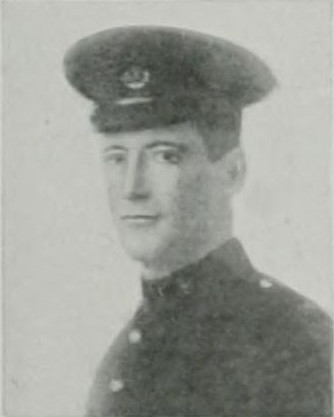
Thomas Howard Corregan.
CORTIS, JOHN HALSTEAD, 2nd Lieut., 3rd, att. 2nd, Battn. Wiltshire Regt., eldest s. of Arthur Brownhill Cortis, of Outspan, Downview Road, Worthing, by his wife, Lilian, dau. of Henry Alexander Papps; b. Worthing, 21 Dec. 1894; educ. United Service College, and Christ’s Hospital, where for two years he was in the Bisley Shooting Team. He afterwards entered the employ of the Capital and Counties Bank, and had passed the final examination of the Bankers’ Institute in all but two subjects. After the declaration of war he threw up his post and joined the Public Schools and University Corps, afterwards passing through Sandhurst, where he was promoted to Sergt. of his company and obtained his commission, 17 March, 1915. He went to France on 25 May, and was killed in action by a shell, while leading an attack on the German trenches at Givenchy, 15 June, 1915; unm. His battn. was not in this attack but he had volunteered to take the place of an officer who was ill. In this action out of eight officers only one returned and he was wounded in three places, and of the two companies every other man was wounded. His Col. wrote: “I took the greatest fancy to your boy when he joined us. He was extremely keen to go into action and was a first-rate soldier. The regt. feel the loss of such men as this; when we are able to do so we will erect a cross over his grave.”
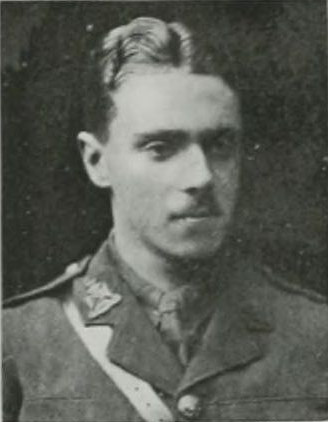
John Halstead Cortis.
COSENS, HAROLD STANLEY FREDERICK, Lieut., 1st Battn. East Yorkshire Regt., only s. of Frederick George Cosens, of Bacton, co. Norfolk, and 7 Observatory Gardens, Kensington, W., by his wife, Fanny Louisa Elizabeth, dau. of Thomas Henry Ambrose, of Copford, Essex, and Manchester Square, London; b. Kensington, 2 Dec. 1889; educ. St. Paul’s School and the Royal Military College, Sandhurst; gazetted to the East Yorkshire Regt. 18 Sept. 1909, and promoted Lieut. 28 Feb. 1912. He was killed in action at Neuve Chapelle, 28 Oct. 1914; unm. Major W. Boyle wrote: “He was my subaltern, and I never want a better, always cheery and ready for any work that came in his way, and to take on any hard job, even when out of his turn, as often happened when I wanted a man I could trust to do any difficult or jumpy piece of work. I could not want for a nicer, more cheery and hard-working officer to soldier with.... The exact circumstances are these: He had led his men to retake some trenches from the Germans, and had carried out his work successfully, and was actually in the trench, doing a kindly act to one of the enemy, who wanted to surrender, when a sniper shot him from another direction. It is extremely painful to write thus, as it was sheer bad luck! My company are very cut up indeed. He died a gallant gentleman.” He was very keen on the Boy Scout movement, and the Vicar of St. Agatha’s (the Rev. Everard Digby) records in St. Agatha’s “Messenger” for Dec. 1914: “The year before last he gave up every evening of his two months’ leave to go down to different troops in East London to teach our scouts signalling. To give up every evening, to forego such luxuries as dining out, theatres, etc., for the whole of his furlough, involved no little self-sacrifice, but he never missed once, and he was so thoroughly good tempered and patient that even the stupidest boys managed to learn a good deal from him. The fruit of all is seen in the number of our lads serving with the Colours to-day. Several of the fellows he taught are now Army or Navy Signallers, and one or two are wearing the stripes of an N.C.O. as the result of his self-sacrificing labours. One thing was certain, whether they picked up more quickly or not, every Boy Scout he taught was a better chap for knowing him.” Lieut. Cosens had been on several occasions employed with the Mounted Infantry, and had passed with distinction through the schools of Signalling and Musketry.
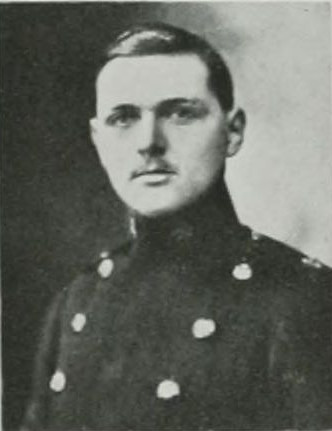
Harold Stanley F. Cosens.
COSTELLO, PETER, Stoker, R.N.R., 2108S., H.M.S. Cressy; lost in action in the North Sea, 22 Sept. 1914.
COSTELLOW, WILLIAM JAMES, Stoker, 1st Class, K. 14616, H.M.S. Pathfinder; lost when that ship was sunk by a mine, about 20 miles off the East Coast, 5 Sept. 1914.
COSTIN, BRUCE DUFFUS, Lieut., 1st Battn. The Prince of Wales’s Own West Yorkshire Regt., only s. of John Duffus Costin, of New South Wales, and his wife, Adele (now wife of Walter Hobson, of Tan-y-bryn, Bangor); b. Strathfield, New South Wales, 20 June, 1889; educ. Bedford and Sandhurst; received his commission in the West Yorkshires, 18 Sept. 1909, and was promoted Lieut. 16 April, 1910. He died in hospital at Boulogne, 24 Oct. 1914, from wounds received in action on 20 Oct. at the Battle of Ypres, and was buried in Boulogne Cemetery. His commanding officer wrote: “You know without my telling you what a favourite he was with all ranks of the regt. and how we shall all miss him. He had done splendidly throughout the war, and was invaluable to us. He was always cool and cheery under fire, quite fearless, and had done very well on the 20th under an appalling shell fire. He is a great loss in every way to the regt. and the mess, so keen on both work and play, and the Rugby team will be nothing without him.” And the Chaplain: “He was a splendid officer, and a splendid man. I had many opportunities for forming an estimate of his character, for I knew him well, and I know he was a man of highest qualities and ideals, brave, honourable, respected by all who knew him, and loved by his brother officers and men under his command. His loss is a loss to the whole Army, and the cutting off of a keen soldier, who had promise of a brilliant career.” Lieut. Costin was good at all sports, a splendid rider and a keen follower to hounds in the South Staffordshire country. He played Rugby for the college fifteen at Sandhurst and for Rosslyn Park, and was capt. of the regimental football team. At Sandhurst he was in the winning teams for rifle and revolver shooting, and for riding.
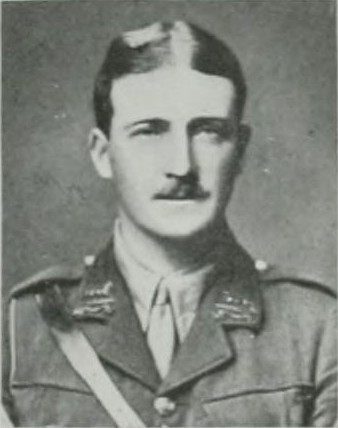
Bruce Duffus Costin.
COTTAM, HARRY FREDERICK, E.R.A., 2nd Class, 271794, H.M.S. Aboukir; lost in action in the North Sea, 22 Sept. 1914.
COTTER, JOHN JOSEPH, Leading Seaman, 194875, Devonport, H.M.S. Good Hope; lost in action off Coronel, on the coast of Chili, 1 Nov. 1914.
COTTINGHAM, HERBERT, A.B. (R.F.R., B. 6015), 210795, H.M.S. Aboukir lost in action in the North Sea, 22 Sept. 1914.
COTTON, HENRY ALBERT, Boy, 1st Class, J. 26631, H.M.S. Hawke; lost when that ship was torpedoed in the North Sea, 15 Oct. 1914.