The Roll of Honour. (continued 47)
Reading edition
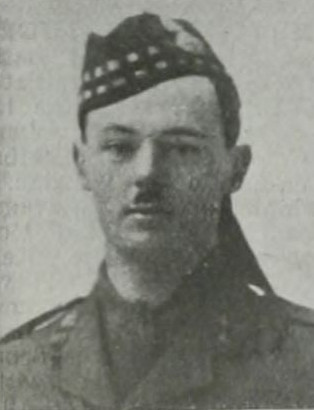
John Roger Wallace.
WALLACE, JOSEPH, Leading Stoker, 282825, H.M.S. Aboukir; lost in action in the North Sea, 22 Sept. 1914.
WALLACE, THOMAS, Acting Corpl., No. 7349, 1st Battn. Royal Scots (Lothian Regt.); served with the Expeditionary Force in France; killed in action at Ypres, 12 May, 1915.
WALLACE, WILLIAM JOSEPH, Private, No. 7865, 1st Battn. East Kent Regt. (The Buffs); served with the Expeditionary Force in France; killed in action, 14 Dec. 1914.
BURGOYNE-WALLACE, DOUGLAS BURGOYNE, Lieut., 7th Duke of Connaught’s Own Rajput L.I., Indian Army, elder s. of Frederick Burgoyne Burgoyne-Wallace, of Beechmont, Cheltenham, by his wife, Hannah, dau. of Robert Watson, of Victoria Park, co. Ayr, and gdson. of the late Gen. Hill Wallace, C.B., R.H.A., by his wife, Harriet, dau. of Capt. Frederick Burgoyne, R.N. (who was present at the Battle of Cape St. Vincent); b. Edinburgh, 12 June, 1893; educ. Cheltenham College, and the Royal Military College, Sandhurst; and was gazetted 2nd Lieut. to the unattd. list for the Indian Army, 12 Aug. 1912. He was attached to the 2nd Battn. Norfolk Regt. at Belgaum for a year, and was posted to the 7th Rajputs 2 Nov. 1913, being promoted Lieut. Nov. 1914. He left India with his regt. for the Persian Gulf in the same month and was reported as missing after the heavy fighting at Ahwaz, 2 March, 1915. He was unm. Whilst at Cheltenham College he gained the Gold Medal in 1910 presented by the Republique Francaise Ministère de l’Instruction Publique et des Beaux Arts for French competed for by all the Public Schools.
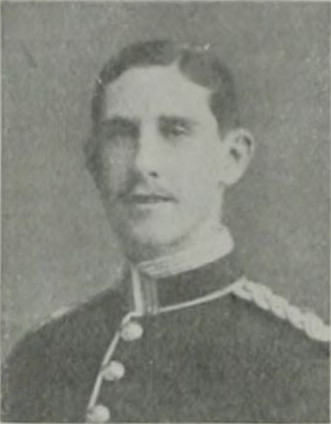
D. B. Burgoyne-Wallace.
WALLARD, WALTER, Private, R.M.L.I. (R.F.R., Ch. B. 1817), H.M.S. Cressy; lost in action in the North Sea, 22 Sept. 1914.
WALLER, GEORGE, Private, No. 3082, C Coy., 5th (Cinque Ports) Battn. Royal Sussex Regt. (T.F.), only s. of George Waller, of Uckfield Road, Ringmer, Lewes, Stockman to Mr. John Porter, Park Farm, Ringmer, by his wife, Ann, dau. of Henry Godcher, of Streat; b. Curd’s Farm, Barcombe, co. Sussex, 25 Nov. 1895; educ. Ringmer Council School, near Lewes; was Groom and Gardener to Mr. Moore Wellingham, Ringmer; enlisted 25 Nov. 1914; went to France, 12 Feb., and was killed in action at Richebourg, 9 May, 1915; unm.
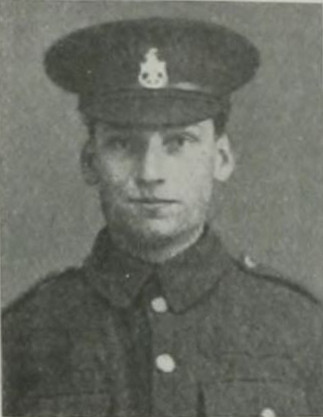
George Waller.
WALLER, HORACE EDMUND, Private, No. 1530, Princess Patricia’s Canadian Light Infantry, yr. s. of John Edward Hopkins Waller, of Rockvale, co. Tipperary, 172, Cromwell Road, London, S.W., and The Nook, Westgate-on-Sea, M.Inst.C.E., by his wife, Annette Elizabeth, dau. of Adolphe Naudé, and grandson of the late John Francis Waller, of Finoe House, co. Tipperary, LL.D., J.P., Barrister-at-Law, writer and poet; b. in London, 16 April, 1891; educ. the Towers, Wellington College, and Tonbridge School (Scholar), and on leaving there entered the Engineering Section of the University of London at King’s College, and was one of the earliest members of the O.T.C. In 1910 he went to Canada where he engaged in engineering, the principal work with which he was connected being the Hydro Electric installation of the Algoma Central Railway at Steep Hill Falls, Ontario, and the government survey of Strathcona Park, Vancouver Island, B.C. On the declaration of war he joined the 1st Contingent of Princess Patricia’s Canadian L.I. as a private, and after training in Canada, on Salisbury Plain, and at Winchester, left Southampton for France with his regt. to join the Expeditionary Force on Sunday, 20 Dec. 1914. Owing to his intimate knowledge of French and his experience as an engineer, he was detailed to act as interpreter and guide. He was frequently in the trenches, and although as a result of the severe conditions prevailing he developed dysentery, he would not be persuaded to rest. On 4 Feb. however, he was obliged to enter hospital at Boeschèpe, and he died there, 7 Feb. 1915; unm. He was buried in the churchyard at Boeschèpe with full military honours. Lieut. Crubbe wrote: “I must tell you as one of his company officers how great a loss to No. 4 he is. He was always an excellent soldier, and seemed to thoroughly realise how his superior education and position necessitated his being a good example, and in this he never failed. Since we have been actually fighting he was of great service as a company guide, and invariably showed the greatest courage and devotion to duty”; and Sergt. Phillips: “Everybody in No. 4 Coy. and anybody in other companies who knew him join you in mourning the loss of one of the best little fellows that ever lived, and one whom I am very proud to have called friend. He was the most popular man in the company.”
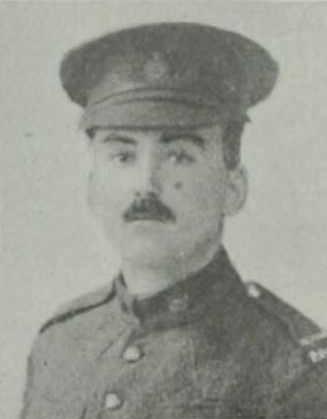
Horace Edmund Waller.
WALLER, JAMES, A.B., J. 8260, H.M.S. Laurel; killed in action in the Heligoland Bight, 28 Aug. 1914.
WALLER, WILLIAM JAMES, Private, No. 2467, 1/7th Battn. The Middlesex Regt. (T.F.), s. of William Charles Waller, of 121–123, Edgware Road, London, W., Master Tailor (died 2 Feb. 1916), by his wife, Alice Easter (123, Edgware Road, London, W.), dau. of James Waller, of Old Catton, Norwich; b. New Cross, London, 14 June, 1896; educ. Regent Street Polytechnic; was a student at Selfridges; enlisted in Aug 1914 on the outbreak of war; left for France, 12 March, 1915, and was killed in action, 7 May, 1915; unm. Buried in the Military Cemetery on the Rue Petillon, near Neuve Chapelle. Lieut. A. G. Groser wrote: “He was a universal favourite among the non-commissioned officers and men of No. 3 Platoon. ‘Best man in my section,’ his sergeant used to say to me. Among the men all spoke well of ‘Nobby,’ as they used to call him.... On the night of May 7, your son was in the party of 19 under myself which was to occupy an advanced trench 70 yards in front of the trenches, and within 70 yards of the German lines. We occupied this advanced trench at 8.30 p.m., and barely had the sentries been posted, when a party of over 24 Germans, bent on slaughter, appeared on all sides and attempted to rush this trench. They had crawled up under cover of darkness, then jumping up they fired at us and then rushed into close quarters. After a hand-to-hand fight lasting a few minutes, they were beaten off with the loss of seven killed and several wounded. But four of the platoon lay on the ground wounded, and three more had slight wounds. Your son with five others under Sergt. Hocking (who has since died of wounds) stood up and fought like the gentleman he was against fully 15 of the Germans. Facing the enemy who appeared in front, he was shot in the back by one of those who sprang up from the rear. Though four were badly wounded they went on fighting till they drove the Germans off, which undoubtedly went a long way to saving the position. He behaved like a gentleman and a hero, as I ever thought he would should such circumstances arise. He was conscious the whole time he was waiting for a stretcher, and I could tell from his face that he was in great pain. I talked to him and gave him water, and he answered back though very feebly. Then the stretcher came and he was carried to the billets right behind the trenches. Not a murmur or cry of pain came from him while lying in the trench in awful agony, because he was not half a hero but one throughout;” and Sergt. G. W. Scott, writing “at the unanimous request of the N.C.Os. and men of the Platoon” to “record the great affection which every man in this platoon had towards him, and the high esteem in which he was held by all who knew him, officers and men alike,” added: “About 9 o’clock p.m. on Friday, May 7, just as the day party was being relieved, the Germans rushed the sap. Our boys were absolutely taken by surprise, but rose to the occasion and succeeded in driving the Germans off, but not before your son was shot through the back and several others wounded. Poor ‘Nobby’ lived for a few hours and remained cheerful and brave to the end. His death actually occurred about 1 o’clock a.m. whilst he was being conveyed to the dressing-station.”
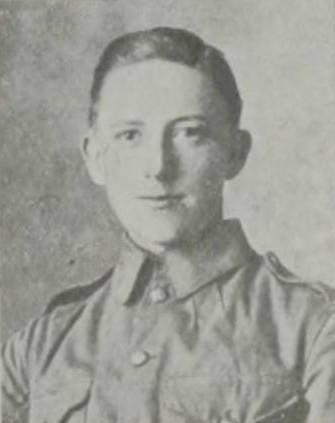
William James Waller.
WALLIS, FREDERICK, Private, No. 6251, 2nd Battn. Royal West Surrey Regt., s. of Frederick Wallis, of 55, Morecambe Street, Walworth; served with the Expeditionary Force in France; killed in action, 16 May, 1915.
WALLIS, HERBERT FRANCIS, No. G. 3330, 2nd Battn. East Surrey Regt.; served with the Expeditionary Force in France; killed in action, 27 April, 1915.
WALMESLEY, RICHARD, Lieut., attd. 2nd Battn. Alexandra, Princess of Wales’s Own Yorkshire Regt., only s. of John Walmesley, of Lucknam, co. Wilts, and the Hall of Ince, co. Lancaster; b. London, W., 21 Nov. 1890; educ. Eton and Magdalene College, Cambridge; gazetted 2nd Lieut. to the 3rd (Reserve Battn.) Yorkshire Regt. 13 Aug. 1910, and promoted Lieut. 1 May, 1912; was posted on the outbreak of war to the 2nd Battn.; went to France early in Oct. 1914, and was killed in action about the 21st of the same month, near Ypres. He was shot through the head, death being instantaneous and was the first of his regt. to fall. Lieut. Walmesley is described as a thorough soldier whom his men would have followed anywhere. He was also a keen sportsman and a well-known and fearless rider to hounds. He was Master of the Cambridge Harriers, 1912–13, and hunted with the Quorn, the Belvoir, and the Cottesmore, during the winter of 1913–14.
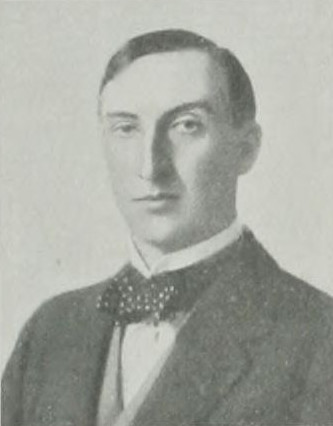
Richard Walmesley.
WALSH, ARCHIBALD, Private, No. 3796, 1st Battn. Coldstream Guards; enlisted 28 Feb. 1901; served in South Africa, 7 Nov. 1901, to 4 Oct. 1902 (Queen’s medal with three clasps); obtained his discharge, 14 Feb. 1903; re-enlisted. 7 Sept. 1914; went to France, 7 Oct. following, and was reported missing between 29 Oct. and 2 Nov., and is now assumed to have been killed in action between those dates; m.
WALSH, GEOFFREY PENNELL, Lieut., 3rd (Reserve), attd. 2nd Battn. Sherwood Foresters (Notts and Derby Regt.), elder s. of the late James Joseph Walsh, M.B., Fleet Surgeon, R.N. (who was lost on H.M.S. Good Hope in the battle off Coronel, 1 Nov. 1914), by his wife, Eveline Mary (44, Worthing Road, Southsea), eldest dau. of Charles Pennell; b. Sheerness, 28 Oct. 1892; educ. Eversley School, Southwold; St. Paul’s and Pembroke College, Oxford; gazetted 2nd Lieut. 3rd Sherwood Foresters, 15 Aug. 1914; promoted Lieut. 16 May, 1915; went to France, 16 May, 1915; was attd. to 2nd Battn. and was killed in action at Hooge, 9 Aug. 1915. Buried in Sanctuary Wood, Hooge; unm. His Commanding Officer wrote: “Though he had only been with us a few weeks, he was very popular with both officers and men, and he is a great loss to the service;” and his tutor from Pembroke College, Oxford, wrote: “He only gave us pleasure. From the first he took his full share of college life, his energies mostly given to the river. He leaves behind him a memory upon which it is a pleasure to dwell.”
WALSH, JAMES, Petty Officer (N.S.), 205302, H.M.S. Good Hope; lost in action off Coronel, on the coast of Chili, 1 Nov. 1914.
WALSH, JAMES, Acting Corpl., No. 12/1822, Auckland Infantry Battn., New Zealand Expeditionary Force; served in Egypt and at the Dardanelles, was reported missing after the fighting on 8 Aug. 1915, and is now assumed to have been killed in action on or about that date.
WALSH, JAMES JOSEPH, M.B., Fleet Surgeon, Royal Navy, H.M.S. Good Hope, yst. s. of the late Patrick James Walsh; b. Wexford, 29 Sept. 1863; educ. St. Peter’s College, Wexford, and the Royal University of Ireland; graduated. M.B. 1885, and was appointed Surgeon, Royal Navy, 20 Aug. of the same year; promoted Staff Surgeon, 20 Aug. 1897, and Fleet Surgeon, 20 Aug. 1901, and was lost in the sinking of H.M.S. Good Hope in the battle off Coronel, 1 Nov. 1914. He m. at St. Paul’s Church, Sheerness, Kent, 21 Jan. 1891, Eveline Mary (44, Worthing Road, Southsea), eldest dau. of Charles Pennell, and had two sons: Geoffrey Pennell, Lieutenant 3rd Sherwood Foresters, b. 28 Oct. 1892, killed in action at Hooge, 9 Aug. 1915; and Raymond Neville, b. 10 July, 1906.
WALSH, JOSEPH, Private, No. 5846, 1st Battn. Coldstream Guards, 3rd s. of Thomas Walsh, by his wife, Bridget, dau. of John Tyrrell, of Bolton; b. Earlestown, co. Lancashire, 3 Jan. 1885; educ. St. Patrick’s School, Bolton; enlisted 19 Nov. 1904; was called up from the Reserve on mobilisation, 5 Aug. 1914; went to France, 30 Aug. 1914. He was reported missing, 27 Oct. 1914, and is supposed to have been killed in action on that date. He m. at Nelson, 6 April, 1912, Florence Ellen (8, Eastbank Street, Barrowford, Nelson, Lancs.), dau. of Henry Edwards, of Madeley Salop, and had a dau. Norah, b. 19 March, 1913.
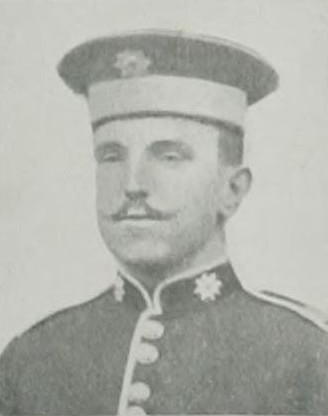
Joseph Walsh.
WALSH, PATRICK, Carpenter’s Crew, M. 1741, H.M.S. Pathfinder; lost when that ship was sunk by a mine, about 20 miles off the East Coast, 5 Sept. 1914.
CORMAC-WALSHE, EDWARD JOSEPH, Lieut., 2nd Battn Prince of Wales’) The Leinster Regt. (Royal Canadians), 4th s. of Edward Cormac-Walshe, of Castle Hill, Crossmolina, co. Mayo, D.L., by his wife, Annita, dau. of Henry Hodgens, of Beaufort, co. Dublin; b. Bath, 6 Feb. 1892; educ. Stoneyhurst and Trinity College, Dublin (B.A. 1912), and obtained a University commission, being gazetted 2nd Lieut. 2nd Leinsters, 19 Jan. 1913, and promoted Lieut. 7 May, 1913; went to France with his regt, which formed part of the 6th Division, 22 Sept. 1914, and died in No. 13 Base Hospital, Boulogne, 5 Nov. 1914, from wounds received in action on 20 Oct.; unm. The 6th Division was holding the Radinghem-La Vallée-Emnetières-Copingham-Premesques Railway Line, 300 yards east of Halte, and according to information received from a brother officer at Premesques, Lieut. Walshe volunteered to go with a despatch some distance, and when returning with the report to his superior officer (Capt. Maffett, who had meanwhile been killed) found himself under severe machine-gun fire, and sheltered behind a hay stack, which was 300 yards from his trench. After half an hour he emerged running head down, but received a mortal scalp wound. His Colour-Sergeant ran out and fetched him in, and after 18 hours in the trench he was removed to the dressing station. His Colonel wrote: “During the attack on Premesques on the 18 Oct. he led his platoon in a gallant and skilful manner, always the first up to show his men the way. During that night and following night, he worked hard getting his men entrenched. When we were counter-attacking on the morning of the 20th, he was wounded when apparently bringing a report to his Company Commander, Capt. Maffett, who had just been killed. Your son was a gallant officer, very popular with all ranks. We all deplore his loss.” At Stoneyhurst he was in the football fifteen and cricket eleven, and was for a short time before leaving Capt. of the Officer’s Cadet Corps.
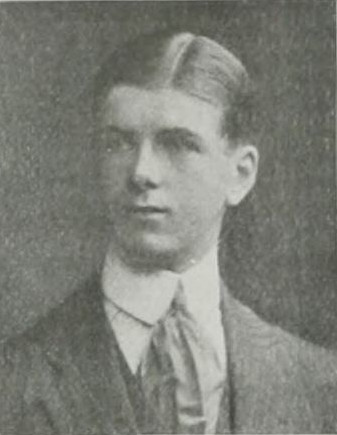
E. J. Cormac-Walshe.
WALTER, ARGYLE FRANCIS BRADFORD, Private, No. 2795, 13th (Princess Louise’s Kensington) Battn. The London Regt. (T.F.). eldest s. of the late Francis Edward Walter, of Hornsey, N., by his wife, Ellen Annie (65, Middle Lane, Crouch End, Hornsey, N.): b. Holloway, N., 9 March, 1893; educ. L.C.C. School, Duncombe Road, Holloway; was a Clerk in the Scottish Provident Association Institution, Lombard Street, E.C.; volunteered and enlisted in the Kensingtons on the outbreak of war; went with his battn. to France, 28 March, 1915, and was killed in action at Fromelles on Sunday morning, 9 May, 1915; unm. A comrade said that on Sunday morning the 13th were ordered to capture certain German trenches—three successive lines of them—and they carried out their orders with great gallantry and success. Between the second and third lines was an open field, across which the battn. had to rush. Private Walter was among those who succeeded in reaching the third trench unhurt. It was then discovered that the red flag which they carried with them to indicate to the British Artillery behind them the point they had reached in their advance, had been left behind inadvertently at the second line of trenches. The officer in command called for volunteers to return and fetch it. Before he had finished Private Walter was out of the trench racing back across the open field under heavy fire from the enemy. He was about five yards from the flag when he fell. So far as could be judged he was killed instantaneously, as he was never seen to move again.
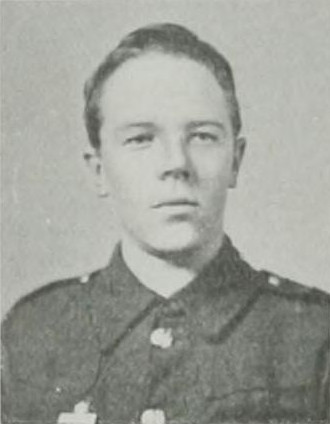
Argyle F. B. Walter.
WALTER, CHARLES RICHARD, Corpl., No. 1654, 4th Battn. (Royal Fusiliers) The London Regt. (T.F.), s. of the late Charles Walter; b. Haggerston; educ. Shap Street School there; joined the Royal Fusiliers in May 1911; volunteered for foreign service on the outbreak of war in Aug. 1914: served with the Expeditionary Force in France, and died in Boulogne Hospital, 3 May, 1915, of wounds received in action; unm. Buried at Boulogne.
WALTER, GEORGE WILLIAM, Private, R.M.L.I., Po. 15801, H.M.S. Good Hope; lost in action off Coronel, on the coast of Chili, 1 Nov. 1914
WALTERS, GEORGE, Stoker, 1st Class, K. 17428, H.M.S. Pathfinder; lost when that ship was sunk by a mine, about 20 miles off the East Coast, 5 Sept. 1914.
WALTERS, HENRY JAMES, C.P.O (N.S.), 179888, H.M.S. Good Hope; lost in action off Coronel, on the coast of Chili, 1 Nov. 1914.
WALTERS, VIVIAN ARTHUR WALKER, Leading Signalman, 228510, H.M.S. Pathfinder; lost when that ship was sunk by a mine, about 20 miles off the East Coast, 5 Sept. 1914.
WALTHAM, WILLIAM ERNEST, Private, No. 6423, 2nd Battn Coldstream Guards, 3rd s. of George Hamlin Waltham, of 3, Harold Street, Selby, by his wife, Ellen Eliza; b. Hull, 7 June, 1888; educ. Buckingham Street Board School there; was a Boilermaker; enlisted in the Coldstreams, 17 Nov. 1905; served three years with the Colours; went to France, 10 Aug. 1914, and died in No. 4 Field Ambulance, 9 Nov. following, of wounds received at the First Battle of Ypres that day. He was buried in the N.W. corner of the field, east of Château, 1½ miles west of Ypres, on the Vlamertinghe Road. He m. at the Congregational Church, Selby, 1911, Harriett (Staynor House, Denison Road, Selby, co. Yorks), 3rd dau. of William Cass, and had a son, William Ernest, b. 31 Jan. 1912.
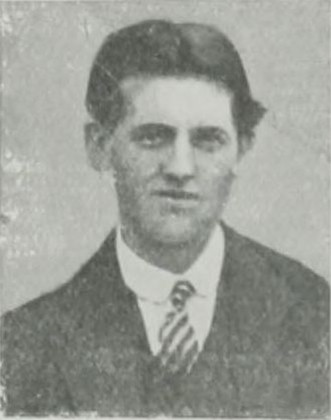
William E. Waltham.
WALTHO, THOMAS JAMES, Stoker, 1st Class (R.F.R., Ch. B. 5537), S.S. 100433, H.M.S. Aboukir; lost in action in the North Sea, 22 Sept. 1914.
WALTON, GEORGE HENRY, Sergt., R.M.A. (R.F.R., 0696), R.M.A. 4367, H.M.S. Aboukir; lost in action in the North Sea, 22 Sept. 1914.
WALTON, GEORGE WILLIAM, Private, R.M.L.I. (R.F.R.), Ch. 8670, H.M.S. Hawke; lost when that ship was torpedoed in the North Sea, 15 Oct. 1914; m.
WALTON, RICHARD CRAWHALL, Lieut., 1st Battn. 9th Gurkha Rifles, Indian Army; elder s. of Richard Walton, of 5, Croxteth Grove, Liverpool, Secretary in Liverpool Northern Assurance Co., Ltd., President of the Insurance Institute of Liverpool, and Fellow of the Chartered Insurance Institute, by his wife, Judith, dau. of the late Joseph Crawhall, of Newcastle-on-Tyne; b. Clifton, Bristol, 1 March, 1886; educ. Liverpool College, and passed into Sandhurst in 1905, being third on the list in that half-year’s examinations. A year later he passed out second in order of merit, with honours, and was placed first of the Cadets for the Indian Army, winning the coveted Norman medal, then presented for the first time. He was gazetted 2nd Lieut. to the unattached list for the Indian Army, 29 Aug. 1906, and promoted Lieut. 29 Nov. 1908; served his first year with the 1st Prince of Wales’ Own West Yorkshire Regt.; was posted to the 9th Gurkhas, 12 Nov. 1907; appointed Double Company Officer, 17 Nov. 1907, and Qr.-Mr. 18 Jan. 1914; left India with the Expeditionary Force for France on the outbreak of war, and was killed in action near Neuve Chapelle, during the first Battle of Ypres, 7 Nov. 1914; unm. Lieut. Walton was an all-round sportsman, and when in garrison at Chitral engaged in big game shooting, fine specimens of markhor, oorial, tahr, black and red bear, deer and leopard, being among his trophies. He was also an expert horseman and polo player, and was considered one of the best judges of ponies on his station. He rode Mr. Lee’s Ringette, the winner of the Murree Cup at the Gharial Races in 1907.
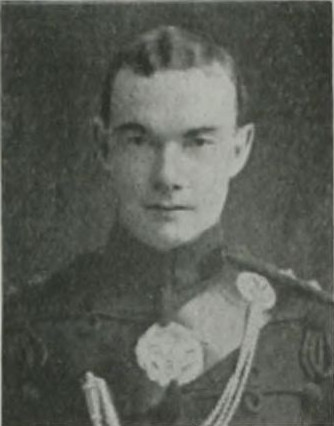
Richard Crawhall Walton.
WAND, THOMAS EDWARD, Private, R.M.L.I. (R.F.R), Ch./8521, H.M.S. Hawke; lost when that ship was torpedoed in the North Sea, 15 Oct. 1914.
WANDBY, WALTER, A.B. (R.F.R., B. 5312), S.S. 42, H.M.S. Hogue; lost in action in the North Sea, 22 Sept. 1914.
WANDS, ANDREW EASTON, L.-Corpl., No. 7689, 8th Battn. Highland L.I. (T.F.), attd. 1/7th Royal Scots (T.F.), s. of the late James Wands, of 65, Glasgow Road, Wishaw, by his wife, Elizabeth, dau. of Andrew Easton; b. Wishaw, co. Lanark, 18 Aug. 1893; educ. Berryhill School there; was Craneman G.I.S.W., Wishaw; joined the 8th Highland L.I., 1908, and served five years, rejoining, 15 Aug. 1914, after the outbreak of war; was attached to the 1/7th Royal Scots, and left with them for the Dardanelles 22 May, 1915, and was killed in action at the capture of the Sagir Dere, Gallipoli, 28 June, following; unm.
WARBURTON, JOHN ALFRED, Private, No. 6675, 2nd Battn. East Lancashire Regt., s. of the late Joseph Warburton, Cooper, by his wife, Emma (117, Walter Street, Blackburn); b. Blackburn, 10 Oct. 1882; educ. St. Matthew’s School there; enlisted 18 March, 1901; served through the South African War, 1901–02 (Queen’s medal), after which he proceeded with his regt. to India, but later returned to South Africa, where he was stationed until the outbreak of the European War; went to France 2 Nov., came through the action at Neuve Chapelle safely, but was killed the following day, 15 March, 1915, while trying to locate a German sniper; unm. While in India he scored many successes in regimental competitions.
EGERTON-WARBURTON, PIERS (PETER), Private, No. 903, 10th Light Horse (Western Australian) Regt., Australian Imperial Force, 4th s. of the late Rowland Egerton-Warburton, by his wife, Mary (Stonyhurst, Williams River, Western Australia), dau. of John M. Kail, and grandson of the late George Edward Egerton-Warburton, of St. Werburgh’s, Albany, Western Australia, sometime 51st Regt [5th s. of the Rev. Rowland Egerton-Warburton. of Warburton and Arley, co. Chester]; b. Perth, Western Australia, 13 July, 1892; volunteered and enlisted on the outbreak of war; left for Egypt in April; went to the Dardanelles in May, and died in No. 1 General Hospital, Alexandria, 19 Aug. following, of wounds received on the 9th in the great attempt to storm the Turkish positions, when the 8th and 10th Light Horse were almost annihilated; unm.
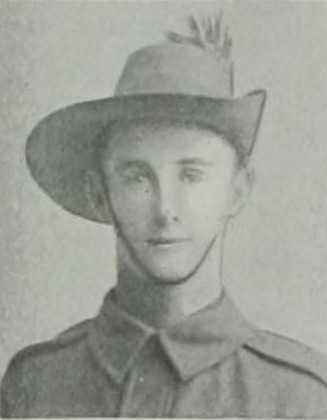
Piers Egerton-Warburton.
WARD, ARTHUR, Painter, 2nd Class, M. 6330, H.M.S. Hogue; lost in action in the North Sea, 22 Sept. 1914.
WARD, ARTHUR PERCY, 2nd Yeoman of Signals (R.F.R., B. 3850), 196305, H.M.S. Good Hope; lost in action off Coronel, on the coast of Chili, 1 Nov. 1914.
WARD, ARTHUR RENOLD, Private, No. 1196, 2nd Battn. (Royal Fusiliers) The London Regt. (T.F.), s. of the late (—) Ward, by his wife, Eliza (126, Commercial Road, Camberwell, S.E.); b. Walworth, S.E., 3 Sept. 1894; educ. Trafalgar Street Board School there; joined the 2nd London Regt. about Aug. 1912; volunteered for foreign service on the outbreak of war in Aug. 1914; went to France in Dec. and died 4 May, 1915, of wounds received in action; unm.
WARD, BASIL MIGNOT, Capt., 1st Battn. Essex Regt., yr. s. of Arthur John Hanslip Ward. V.D., D.L., Town Clerk of Harwich, and Col. 1st Suffolk and Harwich R.G.A. Vol. (which he raised and commanded 1899–1906), by his wife, Eleanor Katherine Mignot, only dau. of John Brown, of Altwood, Maidenhead; b. Dovercourt, co. Essex, 20 Feb. 1888; educ. The Tower School, Dovercourt; Felsted School and the Royal Military College, Sandhurst; gazetted 2nd Lieut., 1st Essex Regt., 8 Feb. 1908, and promoted Lieut., 25 Sept. 1911, and Capt., 26 April, 1915; served in Burma, India, and Mauritius; and with the Mediterranean Expeditionary Force; and was killed in action during the landing at the Dardanelles, 25 April, 1915; unm. Buried on the shore of Gallipoli, just above W. Beach. His Commanding Officer (who was himself killed a few days later) wrote: “He was such a good officer, and so much beloved by us all. It must indeed be terrible for you, but you have the consolation that he died fighting for his country, and no one could die a more noble death. He fell the first day we landed, but not before he had proved what a gallant fearless officer he was. In the Regt. we shall miss him dreadfully.” He was a Freemason, and a member of the Hanslip Ward Lodge, into which he was initiated by his father; he was also a member of the St. Nicholas Mark Lodge.
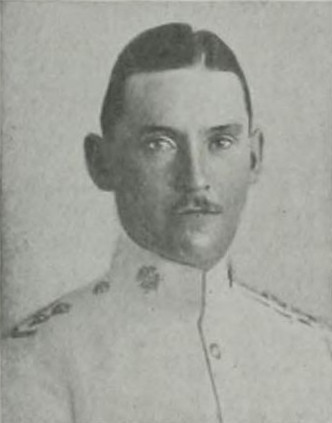
Basil Mignot Ward.
WARD, HENRY DE COURCY, Fleet Paymaster, R.N., 2nd s. of the late Commander Henry Purcell Ward, R.N., by his wife, Elizabeth, dau. of Robert Allan, of Springfield House, Havant, co. Hants, and grandson of Capt. Richard Ward, R.N.; b. Kingstown, co. Dublin, 4 July, 1862; educ. Vickerys, Southsea; entered the Navy 15 July, 1878, and became Paymaster in 1895 and Fleet Paymaster in Aug. 1903. He served on H.M. Ships Wolverine, Miranda and Rapid, Australian Station; H.M.S. Emerald, North American Station; H.M.S. Firebrand, China Station; and H.M.S. Triumph and Indomitable, Home Fleet; and was appointed to H.M.S. Cressy in Dec. 1913, being present on the latter at the action off the Bight of Heligoland, 28 Aug. 1914. He was lost in action in the North Sea, 22 Sept. 1914, when the Cressy was torpedoed and sunk by a German submarine. A survivor said: “Ward managed to reach a life-buoy, which was supporting the Doctor and Chaplain. When he found he could hold on no longer without taxing the strength of the others (our Chaplain, the writer says, could not swim), he slipped off, telling the others to save themselves, and sank with a cheery good-bye to us all.” And the Chaplain wrote: “The courage of Ward, the calmness with which he faced death was typical of the bravery of the rest.” Capt. Ozanne, R.M.L.I., another of the survivors, wrote: “I hope someone has told his wife what a fine thing he did. Ward passed me swimming hard. He was splendid, letting go a life-buoy which he had hold of, as our Chaplain, who couldn’t swim, was on it, and so was the Doctor, who was looking after him. He apparently thought they would get on better without him. He is a great loss, he kept things going in a wonderful way.” Fleet Paymaster H. de C. Ward was selected as one of the Naval interpreters to escort the officers of the French Fleet during the Entente Cordiale festivities in Aug. 1906, and was also chosen when the Indomitable took the Prince of Wales (now King George V.) to Quebec for the Tercentenary Celebrations in July, 1908. He m. at Kilmaronaig Lodge, Connel, co. Argyle, 10 July, 1900, Emelie Chisholm, 2nd dau. of the late Staff Surgeon Richard McClymont, R.N., by his wife, Anne Constance (who m. 2ndly Archibald Argyll Lochnell Campbell, 13th, of Lochnell), dau. of Inspector General (of Asylums) John Francis Fitzgerald, of Glenlee Lodge, Cheltenham; s.p. His brothers, Paymaster-in-Chief Charles A. Ward, R.N., and Col. W. R. Ward, Canadian Expeditionary Forces, are on service.
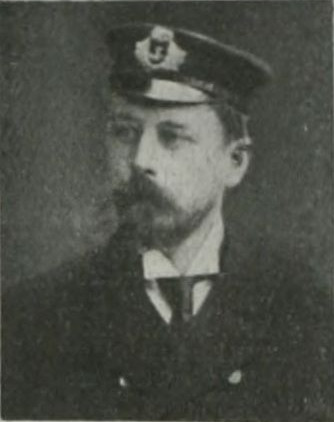
Henry de Courcy Ward.
WARD, HENRY, Private, No. 2010, 1st Battn. Coldstream Guards; b. co. Durham; enlisted 20 Sept. 1898; served in South Africa, 15 April, to 4 Oct. 1902 (Queen’s medal with two clasps), and with the Expeditionary Force in France from 11 Aug. 1914; killed in action, 22 Oct. 1914; m.
WARD, HERBERT ALFRED, Sergt., R.M.A., 5345, H.M.S. Hogue; lost in action in the North Sea, 22 Sept. 1914.
WARD, JAMES, L.-Corpl., No. 8066, 1st Battn. Oxfordshire and Buckinghamshire L.I., 1st s. of Stephen Ward, of Westbury, Brackley, co. Northampton, by his wife, Anne, dau. of William Merry; b. Brackley, 20 May, 1886; educ. Brackley National School; joined 2nd Oxford and Bucks, L.I., 21 Oct. 1905; left for France, 14 Aug. 1914, and was killed in action near Richebourg l’Avoué, 16 May, 1915; unm. Buried, Rue du Bois, near Richebourg l’Avoué.
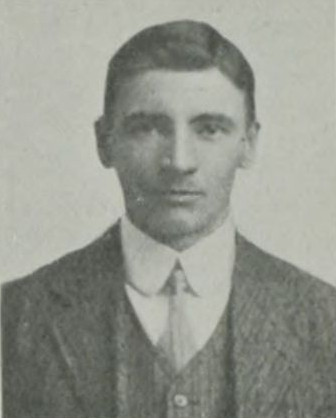
James Ward.
WARD, JOHN EDWARD, Private, No. 68, H Coy., 1/5th Battn. (London Rifle Brigade) The London Regt. (T.F.), only child of John Edward Ward, of 39, North Street, Ashford, Kent, employee of the South-Eastern Railway, by his wife, Kate Elizabeth, dau. of Charles Warner, of 39, North Street, Ashford, Kent; b. Ashford, 15 July, 1891; educ. Grammar School there, and on leaving secured an appointment at the Folkestone Branch of Lloyd’s Bank. After three years there he was given a special appointment at the Southsea Branch; remaining there for 13 months, he was then transferred to the Westgate Branch and from there to the head office in Lombard Street. Two days after the declaration of war (7 Aug. 1914) he joined the London Rifle Brigade, left England with it on 2 Nov. and was killed in action in the trenches at Ploegsteert, Belgium, 9 Dec., 1914; unm. His Company Officer, Capt. H. Macfeogh, wrote that by his death he “had lost one of the best men of his Company.” Ward had for many years been studying organ and piano, was a prize winner Trinity College, was assistant organist at Ashford Parish Church, was also a gifted accompanist on the piano and in great request at concerts. Was a choir boy at Ashford Parish Church for some years, soloist for two years until his voice broke. Resting from singing for some years, he again started by studying voice production under Mr. Fletcher of Folkestone, and later on under Mr. Franklin Clive, of London, and he developed a baritone voice of exceptional quality and power, and was seen in many provincial productions, and was heard to much advantage in the production of “The Geisha” at Portsmouth Theatre Royal by the Portsmouth Orpheus Society. In this production he played “Reggie Fairfax,” the part originally played in London by Mr. C. Hadyn Coffin. His first appearance on the concert platform was at the age of three, when he sang a little solo in a children’s operetta, and at intervals he appeared for years in many operettas and at many concerts, until his departure for the Front. He was a fine cricketer, and still holds the record for the Ashford Grammar School Eleven against club cricketers (not school cricket), viz., 168 not out, which he scored against the Ashford Drapers Cricket Club for the Grammar School in 1913. Another notable feat in his cricket career was 59 in the morning, l.b.w. out, and 59 in the afternoon, l.b.w. out, against a very strong combination Great Chart Cricket Club in 1910. His last season of cricket he played on the London grounds for the Private Banks C.C. and also for the Droits C.C. and scored up to the time of his enlistment in Aug., 9 runs short of 1,000 runs. This would have been, had he kept playing, his best season. He did not make a century in 1914 but scored 95, 98, 90 and 84, thus getting near it on four occasions. He topped the averages in all clubs he played for at some time of his cricket career, and was looked upon as a fine sporting bat by all good judges of the game.
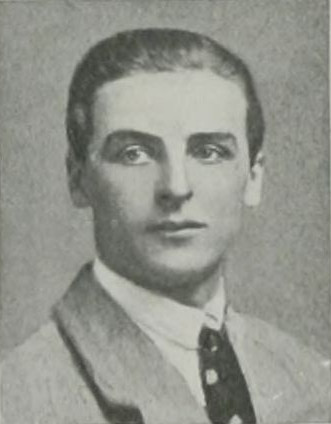
John Edward Ward.
WARD, THOMAS LEONARD, Private, No. 1859, 11th Battn. Australian Imperial Force, only s. of the late Henry Walter Ward, of 34, St. Paul’s Road, Camden Town, N., for many years an optician with Adam Hilger, Stanhope Street, N.W., by his wife, Mary Ann Elizabeth, dau. of William Bartlett; b. London, 28 March, 1890; educ. Camden Town National School and Ditcheat Council School; went to Australia, 28 Oct. 1911; bought property in Narrogin, and farmed for himself 633 acres at Corrogin, W.A.; joined the 11th Battn. Jan. 1914; sailed for Egypt with the fourth reinforcements; proceeded to the Dardanelles, 25 May, 1915, and died in the Military Hospital, Alexandria, 10 Aug. following, of wounds received in action at Shell Green, Anzac, on or about 5 Aug. Buried in Chatby Cemetery, Alexandria, Grave No. 1240; unm. A comrade wrote: “Tom’s first thought was for his comrades; he even went so far as sharing his water allowance at a time when every drop was a luxury.” Another wrote: “His fearlessness was noticeable even among ‘our set.’ He died the death he chose—one of many heroes.”
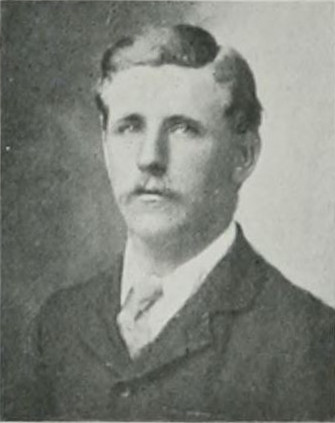
Thomas Leonard Ward.
WARD, WILLIAM GEORGE, A.B. (R.F.R., B. 1368), 194032, H.M.S. Good Hope; lost in action off Coronel, on the coast of Chili, 1 Nov. 1914.
WARDALE, CLARENCE, A.B. (R.F.R., C. 229), S.S. 1740, H.M.S. Good Hope; lost in action off Coronel, on the coast of Chili, 1 Nov. 1914.
WARDE, BRIAN EDMUND DOUGLAS, Lieut., 6th (Special Reserve), attd. 4th, Battn. Royal Fusiliers, 2nd s. of Major Charles Aprilis Warde, late 7th Dragoon Guards and 6th Battn. Royal Fusiliers, and now 2nd in command of 15th Battn. R.F., by his wife Felicia, dau. of James Richard Alexander Douglas, of Treaty House, Hounslow, F.R.C.S.; b. Hounslow, 29 July, 1894; educ. at Bilton Grange, Rugby; and Lancing College, Shoreham, where he was second classic, and Captain of his house. He was intending to go to Ceylon as a planter, but on the day war was declared applied for a commission and was gazetted 2nd Lieut. to his father’s old battn., 15 Aug. 1914, being promoted Lieut. 2 Feb. following. After training at Dover and taking part in the defences of the fortress, he left for the Front with a draft of the 4th Battn. on 29 Dec. He served with that Battn. at Ypres, St. Eloi, and elsewhere in Flanders, until his death in action at Hooge, near Ypres, 16 June, 1915. That day he was the last officer of his company unhurt. He had helped to take three lines of the enemy’s trenches, had then fallen back to the 2nd line again, where his wounded Capt. saw him, quite calm and unconcerned, leading a handful of men down the trench. He jumped on the parapet to fire at and bomb a party of the enemy, when he fell shot through the head. An hour later he died, never having recovered consciousness, and was buried in the trench where he was shot; unm. His Commanding Officer wrote of him: “He will be a great loss to us, he was always cheerful, was a very brave officer, and a real good leader of men.... He was sniped from the flank and killed dead.” Lieut. Warde was a splendid gameshot, and devoted to field sports and to nature generally. He possessed an excellent knowledge of French.
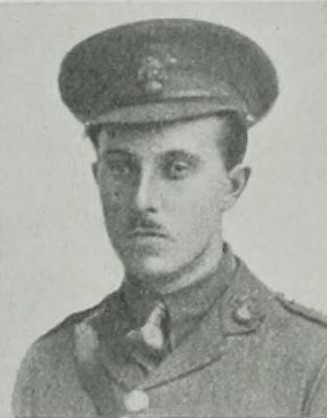
Brian E. D. Warde.
WARDEN, ERNEST, Boy, 1st Class, J. 24984 (Ports.), H.M.S. Hawke; lost when that ship was torpedoed in the North Sea, 15 Oct. 1914.
WAREING, HARRY, Stoker, 1st Class, K. 6370, H.M.S. Pathfinder; lost when that ship was sunk by a mine, about 20 miles off the East Coast, 5 Sept. 1914.
WARLOW, THEODORE WILLIAM, Lieut., 6th (Service) Battn. King’s Own Yorkshire L.I., elder s. of the Rev. George Edmund Warlow, M.A., Vicar of Ledsham, South Milford, Yorkshire, by his wife, Ellen Constance, dau. of Ferdinand Gozna Eiloart; b. St Anne’s Wycombe, Marsh, co. Bucks, 15 March, 1895; and was educ. at Doon House, Westgate-on-Sea, and Bradfield College, where he gained an Exhibition, was a Sergt. in the O.T.C. and obtained Certificate “A.” He left Bradfield, July, 1914, and was to have gone up to University College, Oxford, the following Oct., but on the outbreak of war he applied for a commission and was gazetted 2nd Lieut. to the 6th K.O.Y.L.I., 14 Aug. 1914, he was promoted Lieut. 25 Oct. following, went to France 21 May, 1915; and died at a stationary hospital, Boulogne, 28 July, 1915, of wounds received at Hooge on the 19th, while endeavouring to bring in a wounded Corpl. Buried at Boulogne; unm. Major E. H. Rigg wrote: “He was a good soldier, and his loss is deeply felt by all ranks,” and 2nd Lieut. R. G. Royle: “Being in the same company, I can bear personal witness to the great esteem his soldierly abilities and his remarkably sunny disposition have engendered amongst everybody.”
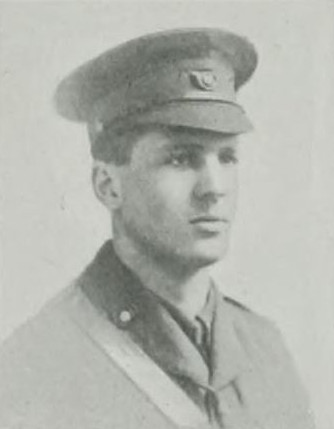
Theodore W. Warlow.
PICTON-WARLOW, WILFRED, Capt., 2nd Battn. Welsh Regt., and Royal Flying Corps, 7th and yst. s. of Col. John Picton Turbervill, formerly Picton-Warlow, of Ewenny Priory, Bridgend, Glamorgan, late Indian Staff Corps, by his 2nd wife, Eleanor, yst. dau. of Sir Grenville Temple, of Stowe, 10th Bart.; b. Laleston House, Bridgend, 6 April, 1884; educ. Clifton College; gazetted 2nd Lieut. to the 2nd Welsh from the Guernsey Militia, 28 Jan. 1903, and promoted Lieut. 28 Nov. 1906, and Capt. 7 June, 1913; attached Military Wing of the Royal Flying Corps as Flying officer, 14 Aug. 1913; and promoted Flight Commander, 1 May, 1914. On the outbreak of war he went to France with the Expeditionary Force, and on 20 Dec. 1914 left St. Omer for Dover. He was seen flying over Calais that same day, but nothing more was heard of him, and he is believed to have been drowned while crossing the Channel; unm.
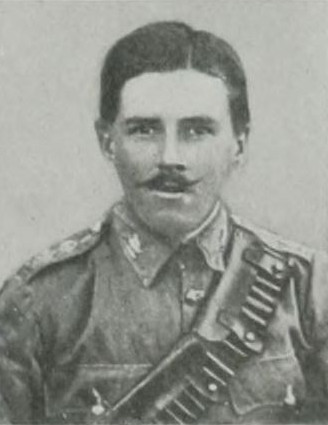
Wilfred Picton-Warlow.
WARNE, JAMES FELIX, Rifleman, No. 1966, 9th Battn. (Queen Victoria’s Rifles) The London Regt. (T.F.), s. of the late Charles Warne, Founder of the Southwark and Bermondsey Recorder, and brother to Frederick Warne, editor of the Bristol Free Press; b. Old Kent Road, S.E., 5 Oct. 1886; educ. Cobourg Road Council School there; was a Clerk with Messrs. Foster, Porter & Co., Wood Street, E.C.; volunteered on the outbreak of war, and joined the Queen Victoria Rifles, 7 Aug. 1914; went to France 4 Nov., and was killed in action at Ypres, 1 April, 1915, while on observation duty; unm. Buried in a railway cutting near Hill 60. Capt. H. Flemming wrote: “He had done excellent work since he has been in my company.”
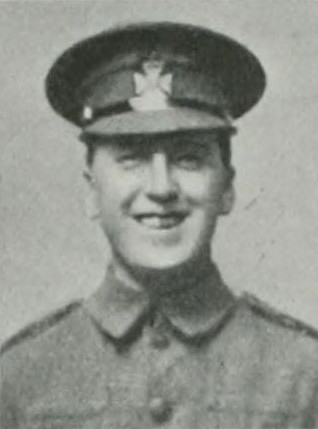
James Felix Warne.
WARNER, CORNWALLIS JOHN, Lieut., 3rd (Reserve), attd. 2nd Battn. Oxfordshire and Buckinghamshire L.I., 2nd s. of Col. Sir Courtenay Warner, 1st Baronet, C.B., M.P.; formerly Lieut.-Col. and Hon. Col. commanding the 3rd Oxford and Bucks L.I., Lord Lieutenant co. Suffolk, by his wife, Lady Leucha Diana, née Maude, 6th dau. of Cornwallis, 1st Earl de Montalt; b. Highams, Woodford Green, co. Essex, 1 Feb. 1884; educ. Eton and Christ Church, Oxford; called to the Bar, 1910, and in Dec. of that year unsuccessfully contested Salisbury as a Liberal; joined the 3rd Oxford and Bucks L.I. as 2nd Lieut., 25 July, 1906, and was promoted Lieut. 5 March, 1910; resigned May, 1914, but rejoined 26 Sept. following; went to France Dec. 1914, where he was attached to the 2nd battn. of his regt., and was killed in action at Richebourg l’Avoué, 16 May following. His Commanding Officer wrote: “I cannot say how I miss your son. He did such excellent work last spring that if he had been spared at Richebourg, as far as I am concerned, he would have commanded a company here ever since. There are a thousand and one jobs I would have given him to do, he was such a very useful and reliable officer in so many ways.”
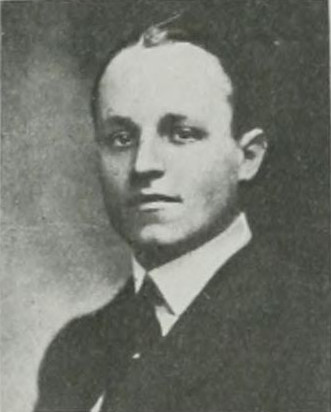
Cornwallis J. Warner.
WARNER, FREDERICK, Private, No. 8649, 1st Battn. Coldstream Guards, s. of Frederick Neville Warner, of Bentfield End, Stansted, co. Essex, Removal Packer, by his wife, Caroline Amelia, dau. of Henry Jarvis; b. Bethnal Green, London, 19 Jan. 1891; educ. London Council School; was a Cycle Fitter by trade; enlisted in the Coldstreams, 17 March, 1910; went to France with the Expeditionary Force, 12 Aug. 1914; served through the retreat from Mons, the Battles of the Marne and the Aisne, and was killed in action 25 Oct. 1914; unm.
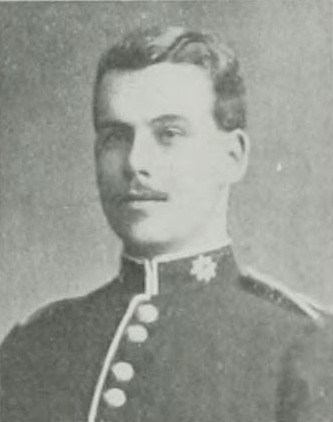
Frederick Warner.
WARNER, WILLIAM CHARLES, A.B., 207043, H.M.S. Good Hope; lost in action off Coronel, on the coast of Chili, 1 Nov. 1914.
WARNER, WILLIAM HENRY, Stoker, 1st Class (R.F.R., B. 4383), S.S. 103360, H.M.S. Good Hope; lost in action off Coronel, on the coast of Chili, 1 Nov. 1914.
WARREN, ARTHUR ERNEST, A.B., J. 8681, H.M.S. Good Hope; lost in action off Coronel, on the coast of Chili, 1 Nov. 1914.
WARREN, ERNEST WILLIAM, Petty Officer (R.F.R., B. 5689), 214567 Chatham, H.M.S. Good Hope; lost in action off Coronel, on the coast of Chili, 1 Nov. 1914.
WARREN, MARK, L.-Corpl., G. 153, 2nd Battn. East Kent Regt. (The Buffs); served with the Expeditionary Force in France; killed in action, 8 Feb. 1915.
WARREN, GEORGE WILLIAM, A.B. (Coastguard), 204414 (Ports.), H.M.S. Cressy; lost in action in the North Sea, 22 Sept. 1914.
WARREN, JAMES PERCY SOLTAU, Corpl., No. 511, 5th Battn. 2nd Infantry Brigade, Australian Imperial Force, eldest s. of the late William Warren, of Melbourne, Physician and Surgeon, by his wife, Charlotte Matilda (9, Lancaster Gate, Hyde Park, London, W.), dau of Henry Soltau, of Plymouth, Barrister; b. Melbourne, Australia, 23 May, 1883; educ. Scotch College there; was a Grazier; joined the Australian Imperial Force on the outbreak of the European War in Aug. 1914; left Australia in Sept. 1914 for training in Egypt, and was killed in action at Gallipoli, 25 April, 1915, during the landing there. His Company Officer, Capt. H. Carter, wrote: “He was a gallant soldier and we could ill afford to lose him. He was killed in our successful attempt to take the gun to the heights north of Gaba Tepe.” He m. at Kew, Melbourne, 19 Jan. 1909, Stella May (Bull Plains Station, Corowa, New South Wales), dau. of the late Edward James Rand, of Randwick, Sydney, New South Wales, and had three children: Cecil, b. 10 Nov. 1909; and Audrey and May (twins), b. 9 Feb. 1912.
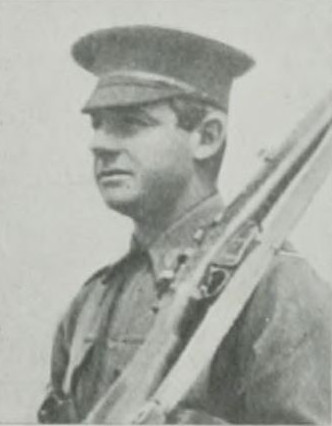
James P. S. Warren.
WARREN, JOHN ALEXANDER, Private, R.M.L.I., Po./16653, H.M.S. Good Hope; lost in action off Coronel, on the coast of Chili, 1 Nov. 1914.
WARREN, PATRICK, Private, No. 11041, 1st Battn. Scots Guards; b. Killarney, co. Kerry; enlisted 14 Sept. 1914, aged 30; served with the Expeditionary Force in France and Flanders; killed in action, 12 March, 1915. Buried at Le Touret and the spot marked by a cross.
WARREN, REGINALD DOUGLAS, Trooper, No. 2058, 1/1st Royal East Kent Mounted Rifles, 1/1st South Eastern Mounted Brigade, s. of Edward George Warren, of 32, Lyndhurst Road, Hove, by his wife, Elizabeth, dau. of Walter Sharp, of Kilnsea, Yorkshire; b. Cambridge, 20 Jan. 1895; educ. Berkhampstead and Brighton Grammar Schools; was on the staff of Messrs. Lloyds Bank at Cliftonville, Margate; enlisted in Sept. 1914; went to the Eastern front 25 Sept. 1915, and was killed in action at Gallipoli, 7 Dec. following, being buried in Y Ravine there; unm. Major A. Leach Lewis wrote: “The lad died fighting and in the best of spirits. It was about 8.15 a.m. on Tuesday last that he was endeavouring to hit a periscope in the Turkish trench, when a sniper shot him from another part of the line. Your son had made himself extremely popular being always keen, cheerful and amusing. We have lost a good comrade, whose loss we all regret.”
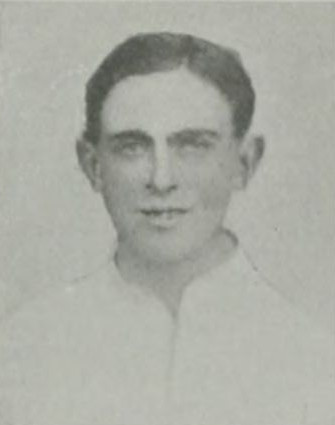
Reginald D. Warren.
WARREN, ROBERT, Boy, 1st Class, J. 25515, H.M.S. Hawke; lost when that ship was torpedoed in the North Sea, 15 Oct. 1914.
WARREN, SYDNEY CHAS., A.B. (R.F.R., B. 2789), 205935, H.M.S. Good Hope; lost in action off Coronel, on the coast of Chili, 1 Nov. 1914.
WARREN, WALTER, Sergt., No. 294, 1/28th Battn. (Artists’ Rifles) The London Regt. (T.F.), 2nd s. of the late Henry Warren, of Stevenage, co. Herts, by his wife, Clara, dau. of Thomas Phillips; b. Sloane Square, Chelsea, S.W., 11 July, 1877; educ. City of London School; was a member of the Baltic Exchange; joined the Artists’ Rifles in 1900; volunteered for foreign service on the outbreak of war; went to France with the 1st Battn., 26 Oct. 1914, and was killed in action at Neuve Eglise, 27 Nov. 1914; unm. On that morning the left half battalion had marched out to dig trenches in the artillery beaten zone, and shortly after commencing work came under fire of heavy German guns. Sergt. Warren and a comrade were killed by practically the first shot. His Colonel wrote: “The loss is ours as well as yours.... Your son was splendid and had the goodwill and affection of every man in the Corps”; and a fellow Sergt.: “There was no one but spoke well of him, and those of us Sergts. who were privileged to know him best feel the loss more than we can express. He was beloved by everyone, was always cheery, and always doing somebody a good turn.” Walter Warren.
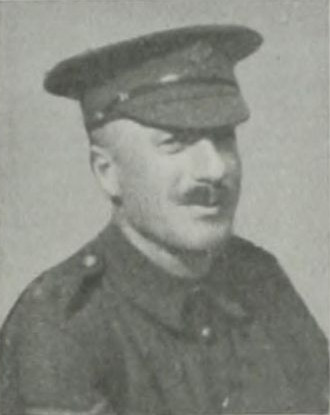
Walter Warren.
WARRENDER, ANDREW ROBERTSON, Stoker, 1st Class (R.F.R., Ch. B. 6334), 286718, H.M.S. Cressy; lost in action in the North Sea, 22 Sept. 1914.
WARTH, EDWIN FREDERICK, B.Sc., Sapper, No. 864, 1st Field Coy., R.N. Divisional Engineers, yst. s. of Hugo F. Warth, D.Sc., sometime Deputy Director Geological Survey of India; b. Mussoorie, U.P., India, 12 Aug. 1888; educ. privately, King Edward VI School, Birmingham (1899–1905); and Birmingham University (1905–10), where he graduated B.Sc. in Civil Engineering (1st Class). On leaving there he was from 1910 to 1913 with Messrs. Nuthall & Co., engaged in the construction of a pipe line from Thirlmere for the Manchester Water Supply. In 1913 he went to the Grand Canary and was there at the outbreak of war, surveying for the New Las Palmas Water Supply. He had to undergo an operation before he could offer himself for military service and did not reach England till Nov. Having been a member of the Birmingham University O.T.C. (1905–10), he applied for a commission, and was gazetted 2nd Lieut. 24 March, 1915, but having in the interval enlisted as a Sapper in the R.N.D.E. and left for the Dardanelles, he was unable to take it up. He was wounded in action in the Gallipoli Peninsula 16 May, 1915, and died in hospital at Alexandria, 25 June following; unm. He was buried there.
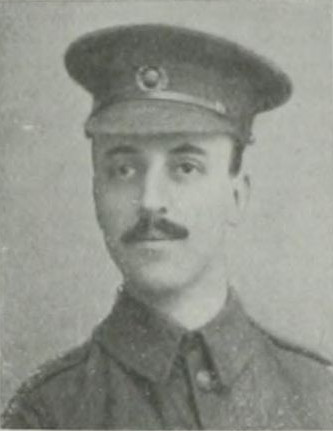
Edwin F. Warth.
WARTON, ROBERT INNYS BAKER, Sapper, No. 5233, 1st Field Coy., Canadian Engineers, Canadian Expeditionary Force, 4th s. of the late Matthew Henry Warton, of London, Solicitor, by his wife, Mary (Portsdown, Darley Road, Eastbourne), dau. of the late Capt. John Fenwick; b. Loughton, co. Essex, 19 Feb. 1879; educ. Marlborough, and afterwards passed law examinations for Solicitor; went to Vancouver, British Columbia, in 1903, there qualified as a Barrister and practised later at Atlin, going to Prince Rupert in 1910, where he went into partnership with Mr. W. E. Fisher, the firm employed by the Grand Trunk Pacific Railway Co.; joined the Canadian Engineers immediately on the outbreak of war in Aug. 1914 at Vancouver; came over with the first contingent in Oct.; went to the front in Feb. 1915, and was killed in action at the Second Battle of Ypres, 24 April, 1915, while guarding a bridge over the Yser Canal, north of Ypres; unm.
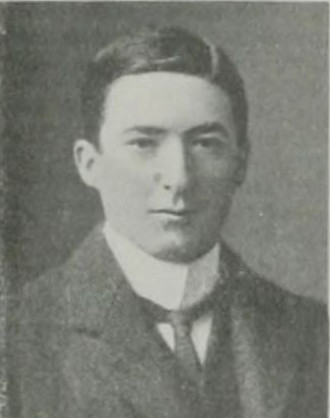
Robert Innys B. Warton.
WASSON, HENRY, Stoker, 1st Class (R.F.R., B. 7875), S.S. 103313, H.M.S. Hawke; lost when that ship was torpedoed in the North Sea, 15 Oct. 1914; m.
WATERFIELD, FREDERICK CHARLES, Capt. 45th Rattray’s Sikhs, attd. 15th Sikhs, Indian Army; yst. s. of the late Major-General Henry Gordon Waterfleld, C.B., 45th Rattray’s Sikhs, by his wife, Emily Scott (Harbledown, Canterbury), dau. of the late Edmund Scott Barber; b. Dulwich, 22 Sept. 1878; educ. Bedford Grammar School, and the Royal Military College, Sandhurst; gazetted 2nd Lieut. to the unattached list, Indian Army, 22 Jan. 1898; was attached to the 1st Gordon Highlanders, 7 April, 1898; joined the 45th Rattray’s Sikhs, 7 April, 1899; promoted Lieut. 22 April, 1900, and Capt. 22 Jan. 1907; took part in the China Expedition, 1900 (medal); served on the N.W. Frontier of India, 1908; took part in the operations in the Zakka Khel country, and those in the Mohmand country (medal with clasp); was in England on leave when war broke out, and served for three months with the 6th (Service) Battn. Royal West Kent Regt.; was attached to the 15th Sikhs, then in France, early in Nov. 1914; was wounded at the Battle of Neuve Chapelle, 12 March 1915; and again near Richebourg l’Avoué on 18 May following, and died in Bethune Hospital, 21 May, 1915. He was buried in the Town Cemetery there. A brother officer wrote: “I have known Charlie for fifteen years—we went to China together and were intimately associated in our work and our play, and linked by a friendship which distance and time could never affect. He was the very best type of English officer, as brave as a lion; of strong character, indomitable energy, and popular everywhere, without ever seeking popularity. A splendid soldier in every way.” In 1912–13 he accompanied the late Capt. Pritchard, 83rd Wallajahbad Light Infantry, in a journey of exploration beyond the frontier of Northern Burma. Capt. Pritchard was drowned while crossing one of the rivers and Capt. Waterfield brought the party back alone showing great courage and endurance under very difficult and dangerous conditions. He was awarded the MacGregor Memorial Silver Medal for his expedition, the honour coming a month after his death. Capt. Waterfield m. at Clayton, Sussex, 9 Jan. 1915, Ethel (Royston, Hassocks, Sussex), only dau. of the Rev. George Edward Roberts, of Royston, Hassocks, Sussex; s.p.
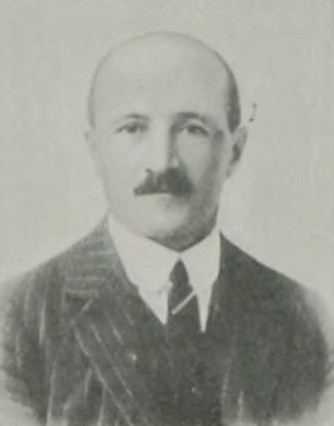
Frederick C. Waterfield.
WATERING, WILLIAM ERNEST, Coy. Sergt.-Major, No. 6717, 2nd Battn. The Royal Scots, 2nd s. of the late Arthur Fergerson O’Connor Watering, by his wife, Harriet (2, Roynham Street, North Heigham, Norwich), dau. of the late Arthur Fergus O’Connor, Sergt., 2nd Battn. The Royal Scots; b. Norwich, 17 April, 1881; educ. Heigham School there; enlisted in the Royal Scots, 17 April, 1899; became L.-Corpl. 19 Jan. 1901; Corpl. 20 June, 1902; Sergt. 29 Dec. 1906; Colour-Sergt. 1 Oct. 1913; and Coy. Sergt.-Major, 1 Oct. 1913; served in the South African War, 1899–1902 (Queen’s and King’s medals), and with the British Expeditionary Force in France and Flanders, Aug. to 15 Oct. 1914, on which latter date he was killed in action at Croix Barbée, and was buried at Vieille Chapelle, France. He m. at Newlands, Glasgow, 26 Dec. 1911, Elizabeth (died 15 Oct. 1913), dau. of John Burt, and had a son, William Burt Paterson, b. 15 Oct. 1913.
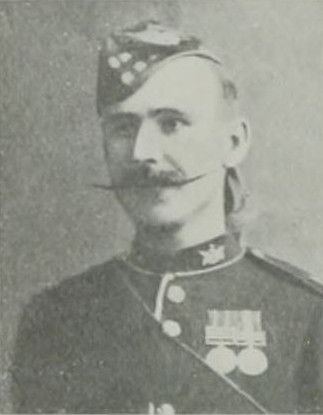
William Ernest Watering.
WATERMAN, LEONARD GORDON, Ordinary Seaman, J. 16648, H.M.S. Pathfinder, lost when that ship was sunk by a mine, about 20 miles off the East Coast, 5 Sept. 1914.
WATERMAN, ROBERT ALBERT, Boy, 1st Class, J. 26355, H.M.S. Hawke; lost when that ship was torpedoed in the North Sea, 15 Oct. 1914.
WATERS, ARTHUR DAVIS, Stoker, 1st Class, S.S. 111853, H.M.S. Hogue; lost in action in the North Sea, 22 Sept. 1914.
WATERS, GEOFFREY ERNEST, Private, No. 245, 1/5th Battn. (London Rifle Brigade) The Loudon Regt. (T.F.), 4th s. of the late John Waters, of Wimbledon, co. Surrey, by his wife, Alice (St. Denis, Parkwood Road, Bournemouth), dau. of John Freeman; b. Wimbledon, 12 Jan. 1896; educ. Merton Park C.E. School, where he gained a scholarship for Rutlish Science School (Sept. 1907 to July, 1912), and on leaving there entered the Banking Department of Messrs. T. Cook & Son, of Ludgate Circus, Tourist Agents. After the outbreak of war he joined the L.R.B. 24 Aug. 1914; went to the Front, 27 March, and died in No. 13 General Hospital, Boulogne, 9 May, 1915, from wounds received in action; unm. He was buried in the Military Cemetery at Boulogne. From Merton Park School he gained a scholarship to Rutlish, obtaining a first place for all Surrey. He won the Surrey County Junior Scholarship (1907–11), the Senior ditto (1911–12), and the John James School Scholarship (1910–12), and passed the London University Junior School Exam, with honours, July, 1910; the same Senior Exam, July, 1911, and the same Exam, with additional subjects again in 1912.
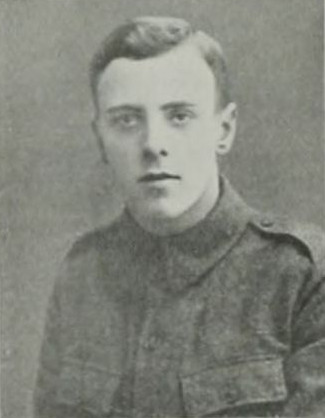
Geoffrey Ernest Waters.
WATERS, GEORGE ALEXANDER, Fleet Surgeon, R.N., s. of the late Eaton William Waters, of Tramore, co. Waterford, M.D., by his wife, Mary, dau. of William Edwards; b. Tramore, 28 Sept. 1862; educ. Tramore Boarding School and Waterford High School, and Queen’s (now University) College, Galway (1880–84, Exhibition in Mathematics), and having completed his medical studies in Dublin at the Carmichael College of Medicine, the Richmond, Whitworth and Hardwick Hospitals, and the Coombe Hospital, he graduated M.D., M.Ch., at the Royal University of Ireland in 1884. After a voyage to India in the Clan Matheson, he spent some 18 months in the Melrose plying between Cape Town and East African ports, and entered the Royal Navy, 17 Aug. 1887, being bracketed second place. He was promoted Staff Surgeon, 17 Aug. 1899, and Fleet Surgeon 1905, and served in the R.N. Hospital, Haslar, and H.M. ships Hearty (engaged in fishery protection in the North Sea, 1890); Boomerang (on Australian Station, 1891–94); Caledonia (Queensferry); Cockatrice (Danube, 1899); Psyche (West Indies); Illustrious (Channel, present at Brest fêtes, 1905), and Drake (accompanied Admiral of the Fleet Sir E. H. Seymour to the Hudson-Fulton celebration in New York, 1909), and was then appointed P.M.O. at Whale Island (H.M.S. Excellent), where he was when war broke out. He was appointed to H.M.S. Goliath (battleship, 12,950 tons, Capt. Thomas Shelford), Aug. 1914; early in Nov. she took part in the operations against the German light cruiser Königsberg, blocking her into the Rufigi River, where she was later destroyed; and on 1 Dec. with the light cruiser Fox, in the bombardment of Dar-es-Salaam, the capital of German East Africa, when she successfully disabled the many vessels in the harbour. Ordered to the Dardanelles in April, 1915, she helped to cover the landing on the Gallipoli Peninsula, and on 13 May, 1915, while engaged in protecting the right flank of the French Army, was struck by three torpedoes and sunk in two minutes. Only 166 survivors were picked up, Fleet Surgeon Waters being among those lost; unm.
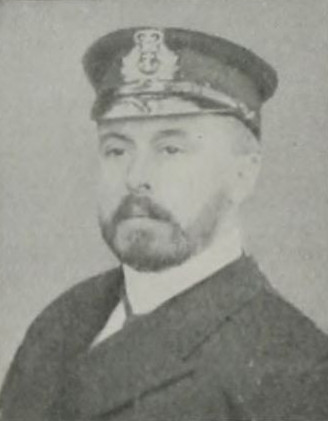
George Alexander Waters.
WATERS, THOMAS ROBERT, Chief Armourer, 341363, H.M.S. Hogue; lost in action in the North Sea, 22 Sept. 1914.
WATERS, WILLIAM DENNE, 2nd Lieut., 3rd Battn. Sherwood Foresters (Nottinghamshire and Derbyshire Regt.), only s. and surviving child of William Denne Waters, of Clarence House, Walmer, co. Kent, by his wife, dau. of the late George William Gill, of Rochester; b. 1 Aug. 1892; educ. Sir Roger Manwood’s School, Sandwich, where he was in the O.T.C., and having passed the Entrance Examination for the Army in June 1914, was gazetted to a 2nd Lieutenancy 15 Aug. of the same year. He was sent to France in Jan. 1915, and attd. to the 1st Battn. of the same regt., being seriously wounded at the Battle of Neuve Chapelle on 12 March, 1915. An officer of his regt., who wrote regretting his death, in describing the circumstances said: “He was in my old Company, which was ordered to charge a breastwork, and he was up and off, leading his men as he always did, but the whole lot were practically mown down by maxims.” Lieut. Waters died of his wounds the same night, and was buried in the Cemetery at Estaires; unm.
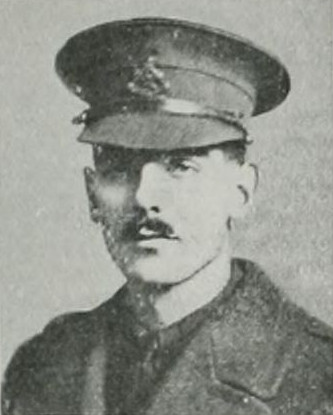
William Denne Waters.
WATERS, WILLIAM LESLIE, Lc.-Corpl., No. 10960, Machine-Gun Section, 2nd Battn. Coldstream Guards, 2nd s. of Arthur Waters, of 25, Mill Hill Road, Acton, W., formerly of Herstmonceaux, co. Sussex, by his wife, Kate Emma, dau. of Ralph Joanes, of Brighton; b. Preston Park, Brighton, 23 Nov. 1896; educ. Stanford Road School there and Hugh Myddelton Higher Grade School, Clerkenwell; enlisted, 15 Aug. 1914; was promoted L.-Corpl. end of Nov. 1914; went to the Front, 17 March, 1915, and died of enteric fever while on active service, in No. 6 Casualty Clearing Station, Lillers, France, 7 July, 1915. His Commanding Officer wrote: “Ever since he came under my command he proved himself an excellent non-commissioned officer in every way and was generally liked by his own men and the whole Machine-Gun Section.”
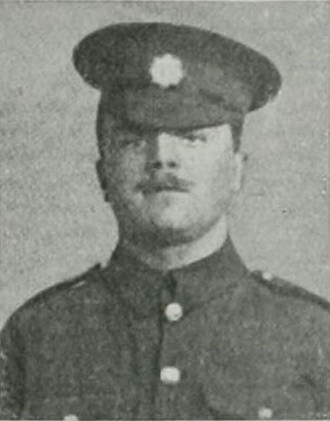
William Leslie Waters.
WATKINS, CHARLES HENRY, Drummer, No. 8495, 2nd Battn. Coldstream Guards, 3rd s. of William Henry Watkins, Sapper, No. 200567, R.E. (now on active service), late 2nd Battn. Coldstream Guards (served in the Egyptian Expedition, 1882), by his wife, Harriet Deborah, dau. of James Connor; b. Caterham, co. Surrey, 21 Dec. 1893; educ. Winslow and Aylesbury; enlisted in the Coldstreams Dec. 1910; went to France with the Expeditionary Force 15 Aug., and was killed in action at the First Battle of Ypres, 10 Nov. 1914, being shot through the head by a sniper while crossing from one trench to another, and was buried in a wood near Rentel, Belgium; unm.
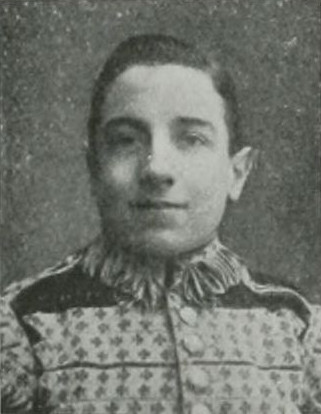
Charles Henry Watkins.
WATKINS, CHARLES ROBERT, Private, No. 9986, 5th Battn. (London Rifle Brigade) The London Regt. (T.F.), elder s. of Edwin Robert Watkins, of Sladmore, Priory Avenue, High Wycombe, Surveyor, Member of Auctioneers’ and Land Agents’ Institute, by his wife, Henrietta, dau. of the late Walter Skull; b. High Wycombe, 19 Sept. 1891; educ. Royal Grammar School there (where he won a Major County Council Scholarship) and matriculated at London University with honours, subsequently becoming an Artist Designer for W. H. Smith & Sons, of Kingsway, Publishers. He joined the London Rifle Brigade the day after war was declared (5 Aug. 1914), went with it to France the first week in Nov., and was killed in action in the front trenches, outside Ploegsteert Wood, Flanders, 3 Feb. 1915; unm. He was buried on the side of the Armentières road, south of Ploegsteert Village. At the time of his death he had been recommended for a commission, and was shortly to have returned to take up his appointment. “A young man of great ability, considered by his employers to be a genius and with every prospect of a highly successful career.”
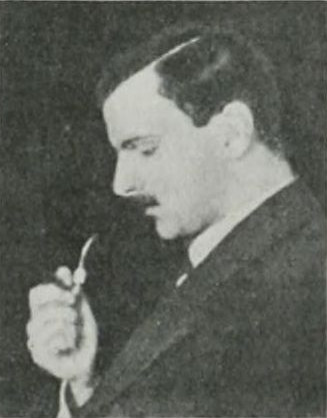
Charles Robert Watkins.
WATKINS, ILTYD EDWIN MAITLAND, Capt., 2nd Battn. The Monmouthshire Regt. (T.F.), only s. of John Maitland Watkins, of Castle Parade House, Usk, Monmouthshire, Solicitor; b. Usk, 25 March, 1890; educ. Downside School, near Bath, and King’s College, Cambridge; B.A. (Law Tripos) 1911, LL.B. June, 1911, and passed Solicitor’s Final Examination in June, 1914. He joined the 2nd Battn. Monmouthshire Regt. as 2nd Lieut. 25 March, 1909, and was promoted Lieut. 8 Feb. 1912, and Capt. 15 July, 1914, and was Signal Officer, Welsh Territorial Division Signal Coy. On the outbreak of war he volunteered for Imperial service; went to France, 2 Feb. 1915, and was killed in action near St. Julien, during the Second Battle of Ypres, 7 May, 1915; unm. His Commanding Officer, Lieut.-Col. E. B. Cuthbertson, C.M.G., M.V.O., wrote: “He was killed in the morning of the 7th, just at the end of the German attack, and his death was instantaneous and painless. Of his qualities as a soldier and a gentleman I cannot speak too highly; cheerful, gallant and unselfish, he died as he would have chosen to die with his face to the enemy and in the middle of the men whom he loved and commanded so well. We buried him on the battlefield [at La Brique St. Jean, north of Ypres]. His loss is deeply deplored by all ranks.”
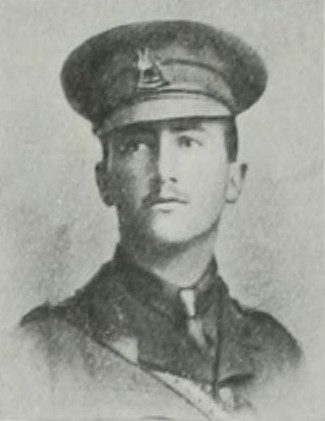
Iltyd E. M. Watkins.
WATKINS, WILLIAM JOHN, A.B. (R.F.R., B. 1636), 200436, H.M.S. Good Hope; lost in action off Coronel, on the coast of Chili, 1 Nov. 1914.
WATSON, ALEXANDER, Private, No. 16999, C Coy., 13th (Service) Battn. The Royal Scots, s. of Thomas Watson, by his wife, Esther; b. Strathaven, 10 June, 1886; educ. Ballgreen Public School; was a Tailor; enlisted in the Royal Scots, 4 Jan. 1915; went to France, 10 July, 1915, and was killed in action at the Battle of Loos, 26 Sept. 1915. He m. 3 June, 1910, Annie (18, Ballgreen, Strathaven), dau. of Robert Orr, and had two children: Thomas, b. 5 May 1912; and Jeanie, b. 3 Aug. 1910.
WATSON, ALFRED JAMES, Gunner, R.M.A., 8439 (R.F.R., I.C. 46), H.M.S. Good Hope; lost in action off Coronel, on the coast of Chili, 1 Nov. 1914.
WATSON, CEDRIC GORDON, Lieut. 2nd Battn. Princess Charlotte of Wales’ Royal Berkshire Regt.; only s. of Gilbert Watson, of the End House, St. Andrews, Fife, by his wife, Eva, dau. of Henry Minchen Chase, I.C.S.; b. Kenilworth, co. Warwick, 30 Aug. 1895; educ. Haileybury College and Sandhurst; gazetted 2nd Lieut. Berkshires, 25 Feb. 1914, was promoted Lieut. 5 Jan. 1915, and for a time attd. to the East Surrey Regt. but had rejoined his own regt. at the time of his death. He was killed in action while gallantly leading his platoon in a frontal attack under “terrible conditions” at Fromelles, 9 May, 1915; unm.
WATSON, DAVID GALLOWAY, M.A., M.B., Ch.B. (Edin.), Lieut., R.A.M.C., attd. 2nd Battn. Bedfordshire Regt., s. of John Watson, of 19, West Mayfield, Edinburgh, Headmaster Broughton Higher Grade School and Junior Student Centre, Edinburgh, by his wife, Agnes, dau. of David Galloway, of Edinburgh; b. West Calder, Midlothian, 18 Nov. 1889; educ. at the Royal High School, Edinburgh, where he was dux, in a brilliant year, and at Edinburgh University, where he first studied with a view of entering the Church, but eventually turned aside to medicine. After graduating in 1913, he became House Surgeon to Mr. Alexis Thomson at the Royal Infirmary, Edinburgh, and later Senior House Surgeon at King Edward VII Hospital, Windsor, which he left to join the R.A.M.C. on the outbreak of war. He was gazetted temporary Lieut. 10 Aug. 1914, and went to the Front immediately thereafter. He was wounded by fragments of high explosive shell, 17 May, 1915, when bringing in wounded men from the trenches taken from the Germans at Festubert and died very suddenly at the Duchess of Westminster’s Hospital at Le Touquet, Paris-Plage, 5 June, 1915; unm. He was the first officer buried in the British Cemetery at Etaples. Dr. Watson was mentioned in F.M. Sir John (now Lord) French’s Despatches of 30 Nov. 1914, for gallant and distinguished conduct in the field at Neufchatel and Festubert. At his university, as well as taking a uniformly high place as a student, he was well known in the Union, and as a President of the Dialectic Society, but even better as a prolific contributor to the University Journalism; he was Joint-Editor of The Gambolier when that light-hearted weekly was in the heyday of its first success, and he was for a year or two a member of the Editorial Committee of The Student, acting as Deputy-Editor (and frequently as Editor) in 1912–13. He used to devote much of his time (for a considerable period at least two evenings every week) to social work in the University Settlement, delighting especially in playing with the children and telling them stories. One of his most successful efforts, a popular exposition of Physical Methods in Therapeutics, is included in a volume published by Messrs. T.C. & E.C. Jack. Another little work entitled “Waiting Night Sketches” with a memoir and a Personal Impression was printed for private circulation at the Darien Press, Edinburgh, 1916.
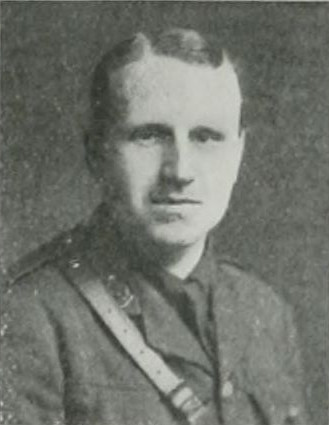
David Galloway Watson.
WATSON, GEORGE JOSEPH, Leading Stoker, 298094, H.M.S. Pathfinder; lost when that ship was sunk by a mine, about 20 miles off the East Coast, 5 Sept. 1914.
WATSON, GEORGE WILLIAM, Leading Stoker (R.F.R., Ch. B. 8159), 293612, H.M.S. Cressy; lost in action in the North Sea, 22 Sept. 1914.
WATSON, JAMES WILLIAM, Private, R.M.L.I. (R.F.R., Ch. B. 1978), H.M.S. Aboukir; lost in action in the North Sea, 22 Sept. 1914.
WATSON, JOHN ROBERT, Seaman, R.N.R., 4751A, H.M.S. Aboukir; lost in action in the North Sea, 22 Sept. 1914.
WATSON, LOUIS TALBOT, Capt., 1st Battn. Worcestershire Regt., 3rd s. of Col. Richard Talbot Watson, of Honeybrook House, Franche, Kidderminster, V.D., J.P., and formerly O.C. 1st Vol. Battn. Worcestershire Regt., by his wife, Harriet Elizabeth, dau. of James Morton; b. Kidderminster, 7 March, 1881; educ. Clifton College, and Sandhurst; gazetted 2nd Lieut. unattd. 8 Jan. 1901; posted to the 3rd Battn. Worcestershire Regt. 9 March following, and promoted Lieut. 26 April, 1902 and Capt. 22 Jan. 1909; served in the South African War, 1901–2, being employed with the Mounted Infantry; took part in the operations in Cape Colony, Orange River Colony and the Transvaal (Queen’s medal with five clasps). He then transferred to the 2nd Worcesters and served with this battn. in Africa, Ceylon and India, re-transferring to the 1st Battn. on 22 Jan. 1909. He left for France early in Nov. 1914, and was killed in action at the Battle of Neuve Chapelle, 11 March, 1915. He m. at Arreton, Isle of Wight, 28 Sept. 1911, Margaret Amy, 2nd dau. of William Hartshorne Shorthose, of Stickworth Hall, Arreton, and had a dau., Diana Marion, b. 12 June, 1912.
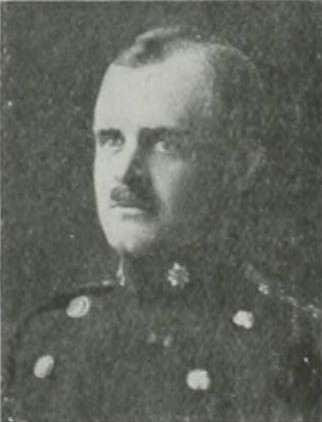
Louis Talbot Watson.
WATSON, ROBERT, a Private, No. 2083, 1/4th Battn. Royal Scots (T.F.), yst. s. of Robert Watson, of Gilmerton Dairy, Midlothian, Dairyman, by his wife, Catherine, dau. of Alexander Anderson, of Lanarkshire; b. Midlothian, 20 Jan. 1890; educ. Public School there, and was afterwards employed as an assistant ironmonger. He enlisted on the outbreak of war, and was killed in action at the Dardanelles, while assisting a wounded comrade into safety, 28 June, 1915; unm.
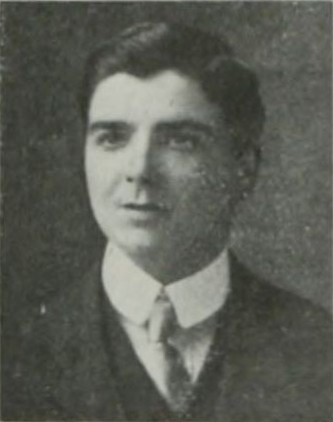
Robert Watson.
WATSON, THOMAS, Private, No. 2333, 4th Battn. The Royal Scots (T.F.), s. of the late Thomas Watson (died March, 1916), Law Clerk, by his wife, Lillias Barrie (19, India Street, Edinburgh), dau. of William Walker; b. Edinburgh, 4 Dec. 1890; educ. Daniel Stewart’s College there; served his apprenticeship as a Chartered Accountant with Messrs. Carter Greig & Co., C.A., Edinburgh, and after being admitted a member of the C.A. Society received an appointment with Messrs. Price, Waterhouse & Co., Accountants, London. He joined the 4th (Territorial) Battn. of the Royal Scots in 1909, and served with it until he left Edinburgh, but on the outbreak of war returned, and rejoined his old regt. and volunteered for foreign service; went to the Dardanelles in May, 1915, and was killed in action there, 28 June following; unm.
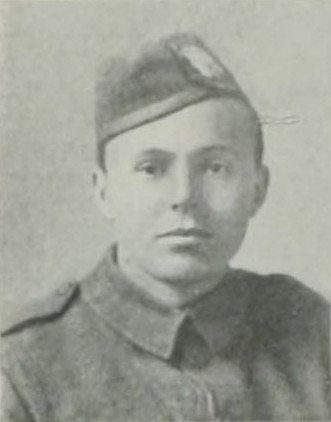
Thomas Watson.
WATSON, TOM, A.B., J. 7935, H.M.S. Good Hope; lost in action off Coronel, on the coast of Chili, 1 Nov. 1914.
WATSON, WILLIAM EDWARD, Ordinary Seaman, J. 27778, H.M.S. Aboukir; lost in action in the North Sea, 22 Sept. 1914.
WATT, GEORGE HIMPHILL, A.B., 220630, H.M.S. Hawke; lost when that ship was torpedoed in the North Sea, 15 Oct. 1914.
WATT, GEORGE MURTAGH, Private, No. 1422, 1/7th Middlesex Regt. (T.F.), 2nd s. of George Watt, of 11, The Grove, Crouch End, late Sergt. 2nd King’s Liverpool Regt., now a Customs Watcher, by his wife, Adelaide Nuletta, dau. of the late John Parsons, of Leek; b. Colchester Barracks, 15 April, 1895; educ. Crouch End Council School, and was an employee on the G.N.R.; joined the Middlesex Territorials, 12 Dec. 1911; volunteered for foreign service on the outbreak of war; went to France, 11 March, 1915, and was killed in action at Neuve Chapelle, 26 March, 1915; unm. Buried in the field adjoining Madame Surchelle Descamps’ farm at Sailly.
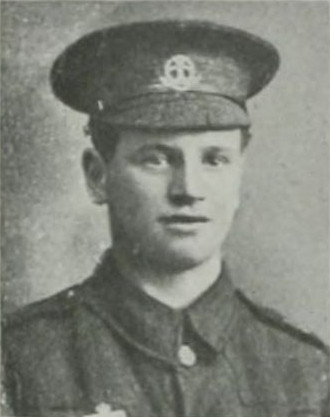
George Murtagh Watt.
WATTS, ALFRED GEORGE BERTRAM, Boy, 1st Class, J. 23432, H.M.S. Hawke, s. of Alfred Watts, of Farndish Road, Irchester, Wellingborough; lost when that ship was torpedoed in the North Sea, 15 Oct. 1914.
WATTS, FRANK WILLIAM, Private, No. 8854, 1st Battn. Bedfordshire Regt., yr. s. of Thomas Watts, of Langridge Farm, Nazeing, by his wife, Lucy, dau. of John Wright; b. Sherington, co. Bucks, 23 June, 1887; educ. Nazeing Schools; enlisted in the 2nd Battn. of the Bedfords, 7 Jan. 1907, served seven years with the Colours, then passed into the reserves, but, war breaking out a few months later, he was recalled and attd. to the 1st Battn. He went to France with the First Expeditionary Force, served in France and Flanders during the winter of 1914–15, and was shot by a sniper as he was going on duty at a listening post, 16 March, 1915; unm. The bullet entered just below the heart and he only lived 15 minutes. He was buried in the woods about 1½ miles from Ypres and about half a mile from the Chateau de Rosendale. A cross with his name marks the spot.
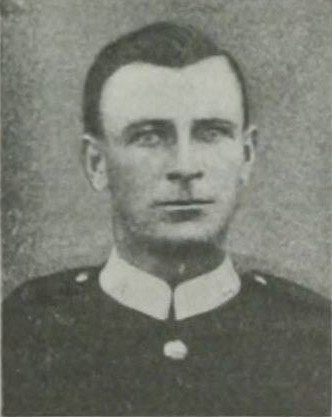
Frank William Watts.
WATTS, JAMES, Stoker, 1st Class (R.F.R., Ch. B. 7920), S.S. 103428, H.M.S. Aboukir; lost in action in the North Sea, 22 Sept. 1914.
WATTS, JAMES ROBERT, Private, No. 2458, 1/2nd Battn. The Monmouthshire Regt. (T.F.), s. of Aldwyn Watts, of 26, Railway Terrace, Griffithstown, co. Monmouth, Haulier in the employ of the Panteg Urban District Council, by his wife, Sarah, dau. of John Thornton, of Gladestry, Herefordshire; b. Kings Pyon, co. Hereford, 4 Oct. 1896; educ. Griffithstown Council School; was employed at the Panteg Steel Works; enlisted after the outbreak of war, 8 Sept. 1914; went to France in Nov. 1914, and was killed in action at Le Bizet, Belgium, 12 March, 1915; unm. Col. Cuthbertson, commanding the 2nd Monmouthshires, wrote: “Your son was killed on the 12th of this month, and a more gallant soldier never lived. He is buried in a soldiers’ cemetery not very far from the trenches where he met his death, and a careful record of his place of burial is being kept. A small cross with his name has been put up to his memory:” and one of his comrades wrote: “We all found him a jolly and good-hearted lad, and a very brave soldier. He feared nothing, but always thought of his duty to his country, of which he carried out to the last.”
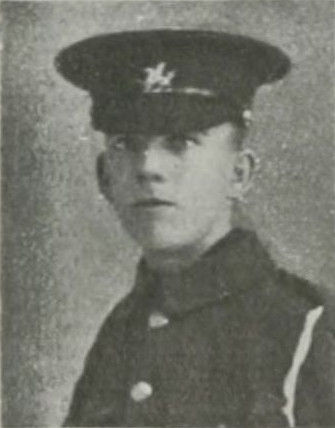
James Robert Watts.
WATTS, VICTOR KERRIDGE, A.B. (R.F.R., Ch. B. 9418), 203441, H.M.S. Cressy; lost in action in the North Sea, 22 Sept. 1914.
WAUGH, DAVID, Private, No. 9246, 2nd Battn. Royal Scots (Lothian Regt.); s. of Thomas Waugh, of 2, Salisbury Square, Edinburgh; served with the Expeditionary Force in France; killed in action at Voorstraat, 28 March, 1915.
WAUD, LIONEL DOUGLAS, Lieut., D Coy., 1st Battn. East Lancashire Regt., 2nd s. of Major Williams Henry Waud, late Royal Fusiliers, by his wife, Denise Caroline (sister of Baroness de la Bori de la Batut), dau. of the late Charles Maire, of Mantoche Haute Farm, France, and niece and adopted dau. of Pierre Francois, 1st Count Maire; b. Cranleigh Court, Guildford, 5 June, 1895; educ. at The Army School, Holyport (Maidenhead), and the Royal Military College, Sandhurst, from which he passed out first and was gazetted 2nd Lieut. to the East Lancashires, 8 Aug. 1914, and promoted Lieut. 1 Nov. 1914. He joined his regt. on the 19th and went with it to France on the 27th of that month; served through the subsequent fighting on the Aisne and the Marne, and was killed in action near Armentières, 8 Nov. 1914, being buried in Le Gheer Road, Ploegsteert Wood. Lieut. Waud was mentioned in F.M. Sir John (now Lord) French’s Despatch of 14 Jan. [London Gazette, 17 Feb. 1915], for gallant and distinguished conduct at Le Gheer. Writing to Major Waud, Capt. Melville Richards, of the 1st East Lancashires, said: “His only fault was he would take risks. He was too tall for the trenches, and wouldn’t trouble to stoop. He was very brave, and his action—which I remember well—of running along knocking down the rifles of his men, to make them fire low, was one of the finest things I have seen out here.” It happened that a Morning Post correspondent, some time after the incident referred to, was able to get a description of the circumstances from a German officer who was wounded on that occasion. It happened at Le Gheer. Respecting the assault made by the Guard on the English lines (wrote the correspondent) here is what I was told by one who took part in the action: “Towards evening we were ordered to advance. We marched forward without taking cover, confident enough, because not a shot came from the British trench. We thought it had been abandoned after the terrible bombardment to which it had been subjected all day long. Shouting ‘Hurrah,’ we rushed forward to seize it, but we had not gone more than 100 metres before our whole front is stricken down by a volley from a point much nearer than the trench we had been shelling and in addition to this terrible infantry fire the British quick-firing guns are brought into play, and simply mow our men down. We had been shelling an unoccupied trench, and had done no damage to the place where the enemy actually was hidden. Hence it is not surprising that our ‘assault’ should have proved to be—for us—a veritable massacre.” It was here that the late Lieut. Waud distinguished himself. When the mitrailleuse fire from the German attack began and there was a momentary loss of fire-control of his own company, Lieut. Waud, to regain control, sprang from the trenches, and ran in front of them, with the flat of his sword, struck down the men’s rifles, and so prevented the Germans finding out where the trenches really were. A brother officer wrote that his men “trusted him as a good and a brave leader,” adding: “He and I held an advanced trench before his end, and though he was younger than myself, I can say he was a great moral support to me. In conversation on the day of his death, he told me he was prepared to give the utmost for his Country, and that his one regret if that were required was that it would be a great shock to his parents.” He represented the Royal Military College in revolver shooting, for which he held the record score. He also represented Sandhurst in the bayonet competition at the Royal Military Tournament at Olympia, for which he obtained third prize.
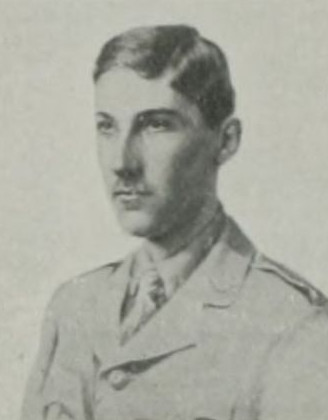
Lionel Douglas Waud.
WAUDLEY, HARRY, Driver, No. T/3/026409, Army Service Corps, s. of John Waudley, Ganger Platelayer on Hull and Barnsley Railway, by his wife, (—), dau. of Isaac Hornby, Roos, Holderness; b. Preston-in-Holderness, 26 June, 1891; educ. Anlaby National School, Hull; was a Farm Labourer with Mr. Richardson, Swanland; enlisted in the A.S.C., 12 Oct. 1914; went to Egypt in March, and died in No. 15 General Hospital, Alexandria, 30 June, 1915, of disease contracted while on active service; unm. Buried in Chatby Cemetery there (Grave No. 1125).
WAY, FRANCIS MAXWELL, Trooper, No. 7/772, 1st Mounted Rifles (Canterbury Yeomanry Cavalry), New Zealand Expeditionary Force, 3rd s. of George Edward Way, of Christchurch, New Zealand, F.P.A.N.Z., F.I.A.N.Z., by his wife, Emma Kate, dau. of the late Richard James Strachan Harman, one of the founders of, and for some years Deputy Superintendent of, Canterbury Province, and nephew of the Rev. John Pearce Way, D.D., late Headmaster of Rossall, and for two years stroke of the Oxford eight; b. Christchurch, New Zealand, 22 Dec. 1895; educ. Christ’s College there, and then engaged in farming pursuits, first for eighteen months in the Back Blocks, Kaitieke, King Country, and then for eight months on Mount Torlesse Sheep Station, Canterbury, where he was when war broke out. He immediately enlisted, left for Egypt with the second reinforcements, 15 Dec. 1914; went to the Dardanelles, June, 1915, and died on Anzac Beach, 8 Aug. 1915, of machine gun wounds received in action on Bauchop’s Ridge, Gallipoli; unm.
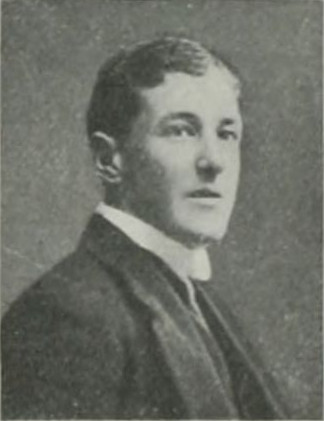
Francis Maxwell Way.
WAYTH, SIDNEY ALFRED, Private, No. 2342, 7th Battn. London Regt. (T.F), only s. of the late Edward Wayth, Mining Engineer, by his wife, Beatrice Elizabeth (now wife of Edward Steeles, of 54, Oxford Road, Harrow), dau. of James Spinks; b. Stoke Newington, N., 3 April, 1896; educ. Greenhill Council School, Harrow, gained a certificate for the London School of Economics and Political Science on “The Law of Carriage of Railway”; was a Clerk in the Great Northern Railway at King’s Cross; joined the Territorial Force after the outbreak of war, 8 Sept. 1914, and was killed in action at Festubert, 16 May, 1915. His Coy. Sergt.-Major wrote: “I can assure you he was liked by all and was a good soldier.”
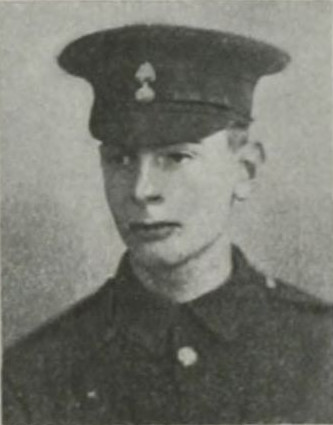
Sidney Alfred Wayth.
WAYLING, THOMAS, Private, No. G. 1902, 2nd Battn. East Surrey Regt.; served with the Expeditionary Force in France, etc.; killed in action, 25 March, 1915.
WEAKE, ERNEST ALBERT, Private, No. 8340, 2nd Battn. Coldstream Guards; b. co. Warwick; served with the Expeditionary Force in France and Flanders; died at No. 5 Stationary Hospital, Le Mans, France, 10 Nov. 1914, of wounds received in action; unm.
WEARMOUTH, ISAAC NORMAN, Private, No. 8434, 1st Battn. Coldstream Guards, s. of Joseph Wearmouth, of James Street, Stanhope, Durham; b. co. Durham; served with the Expeditionary Force in France and Flanders; died in No. 13 General Hospital, Boulogne, 6 Nov. 1914, of wounds received in action. Buried Boulogne Cemetery.
WEATHERILL, EDWARD THEAKER, 2nd Lieut., 7th (Service) Battn. Royal Dublin Fusiliers, yr. s. of Capt. John Weatherill, of 6, Ailesbury Road, Dublin, Shipowner, by his wife, Margaret, dau. of Archibald Mackenzie; b. Dublin, 19 March, 1887; educ. at St. Andrew’s College, Dublin; Fettes College, Edinburgh; and Armstrong College (Durham University), Newcastle-on-Tyne, where he obtained at the age of 20 his B.Sc. degree in Naval Architecture and Engineering, and, after serving his time as a Marine Engineer, gained his First Class Certificate, and subsequently became a Partner in his father’s firm of Shipowners. At its formation in Sept. 1914, he joined the “Football” Coy. of the 7th Royal Dublin Fusiliers (having previously been a Member of the Monkstown and Lansdowne Football Clubs), and was elected by the Coy. to be Sergt. of the Machine Gun Section. On his being gazetted 2nd Lieut. in March, 1915, he was transferred from “D” Coy. to “B” Coy. of the same Battn. He left for the Dardanelles 9 July, 1915, and in the last letter received from him, dated 14 Aug. 1915, said: “We got here a week to-day, and I expect you will have heard by now all we have done so far. We landed under a very heavy shrapnel fire. Russell and I were left behind on the boat to load the stores of the Battn., and before we landed our first wounded started to come back. Then an old Taube flew over, dropped a bomb—which just missed us by inches—and gave those on shore the range, so we got shelled before we even got into the lighter. They did not hit us, however. We then landed and had to unload the boat on the beach. They got the range of us all right and we had some very narrow shaves. My water bottle was hit. Luckily we had no casualties. I will not tell you any more till I get home, except that all my fellows have behaved splendidly, and one, P. Quinn, has been mentioned. He was out sniping with me from an advanced trench on Thursday, and we got four of their snipers, so I recommended him this morning.... I am fit and well, and so far have been very lucky.” He was killed in action at Suvla Bay 16 Aug. 1915; unm. Letters received from officers and men alike testify to his gallant conduct. Capt. J. Lucie Smith, B Coy., wrote: “He bore himself in a most gallant manner, and at ‘Chocolate Hill’ brought in five wounded men under fire, for which deed I believe he has been mentioned in despatches.” Lieut. R. Douglas, Machine Gun Officer: “From the moment we landed he was splendid. He was in the thick of all the worst fighting round Hill 53 (the original position taken by our Battn.), he was seen one day carrying five different wounded men of ours under terrible fire, leaving his own trench each time to do so. It was on the early morning of Monday last, the 16th, that he was killed during a bomb attack by the Turks. At the time he was hit he was rallying some men of another battn. who were breaking up. He succeeded in getting them back, and so saved the position for us, but in doing so he was killed. No praise could be too high for the manner in which he fought, lived and died out here; he was wonderful.” L.-Corpl. Fraser, Machine Gun Section, now Lieut. in Connaught Rangers: “We had a very severe shelling on landing, and your brother distinguished himself on several occasions for bravery, leaving the trenches and bringing five wounded men under fire. On other occasions he displayed his fearlessness of danger also. I need hardly say his deeds have commanded the admiration and respect of everyone”; and Sergt. Charles E. Sawyer, B Coy.: “He was a fearless leader and a good friend to us all. The event of Lieut. Weatherill’s death needs some explanation. We were ordered to take up a position on a long ridge overlooking the sea, and ‘B’ Coy., with Engineers, had to dig a fire trench from the top down to the sea, and occupy it in the front line. In going towards this position in firing line formation No. 2 platoon became detached from the remainder of the Coy., the night being so dark. Mr. Weatherill then ordered us under cover while he went out to look for our Coy. He went to the top of the ridge, where the Royal Irish Fusiliers were keeping the right flank and found they had lost all, except one wounded, of their officers, and the men in a state of depression. Lieut. Weatherill returned to us and told me to go with him to where the Royal Irish Fusiliers were posted, and ordered me to find their N.C.O.’s and rouse the men as much as possible. I found they had only one L.-Corpl., and after some persuasion got the men to keep a look-out to ensure their own and our safety. We were thanked by their poor wounded officer and were returning to our platoon when Mr. Weatherill stopped and told me he felt it was his duty to stay with the Royal Irish Fusiliers, and ordered me back to take command of No. 5 and join up with the Coy. as soon as possible. He wished me good-bye and to do our best, and left me. That was the last I saw of him alive. Next morning the fighting was very great and I heard the Royal Irish Fusiliers were being badly pressed and I went to the top of the ridge and learned from one of their men that Mr. Weatherill had been killed at daybreak (only a few yards from his great friend Lieut. Russell). I must say I was with Mr. Weatherill from the moment of landing in that terrible advance round Salt Lake and other places, and can truly say that a more brave and cool officer never took men into action in that awful Peninsula, and he fell in the knowledge that he was doing his duty and died as only a gentleman and a British Officer can die.”
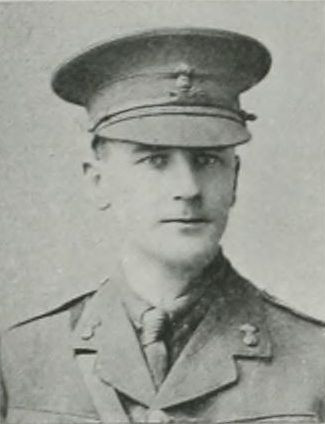
Edward T. Weatherill.
WEAVER, ALBERT, Leading Stoker, 308507, H.M.S. Aboukir; lost in action in the North Sea, 22 Sept. 1914.
WEAVER, GEORGE, Stoker, 1st Class, 312062, H.M.S. Laurel; killed in action in the Heligoland Bight, 28 Aug. 1914.
WEAVER, WALTER, Private, No. 8655, 1st Battn. Coldstream Guards, s. of the late John Weaver, of Child Pitt, Newport, Shropshire, by his wife, Mary (Oak Cottage, Bicton Heath, near Shrewsbury), dau. of the late Edward Broome, of Hill End Farm, Lydbury, Salop; b. Crudgington, co. Salop, 12 Oct. 1890; educ. Lilleshall Public School, Newport, co. Salop, was a Porter, Rowton House, Newington Butts, London; enlisted in the Coldstreams in March, 1910; went to France 12 Aug. 1914, and was reported missing during the Battle of the Aisne, 14 Sept. 1914, and is now assumed to have been killed in action on that date; unm.
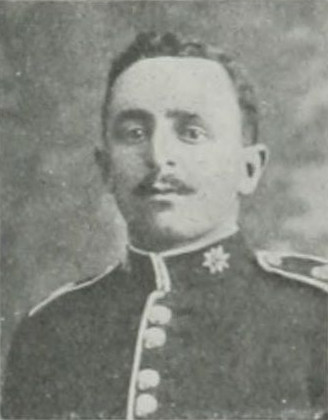
Walter Weaver.
WEBB, ALBERT, Private, 846, 11th Battn. Australian Imperial Force; served in Egypt and at the Dardanelles; killed in action, 15 May, 1915.
WEBB, ARTHUR STUART, Sergt., No. 11533, 1st Battn. King’s Royal Rifles, elder s. of Arthur Stuart Webb, the well-known Hampshire and Glamorgan professional cricketer, by his wife, Ethel E. (45A, Mersham Road, Thornton Heath); b. St. Helier’s, Jersey, 31 March, 1894; educ. Southampton Grammar School; enlisted on the outbreak of war, and was promoted Sergt. 1 Feb. 1915. He went with his regt. to the front, served in France and Flanders, and was killed in action, at Neuve Chapelle, 10 March, 1915; unm. Sergt. Webb, who was himself a keen cricketer, belonged to a well-known sporting family; one of his uncles played for Kent, and another was Fred Webb, the ex-jockey, who won the Derby in 1873. His father is now (1916) on service with the Royal Fusiliers. A comrade wrote: “I was present at Neuve Chapelle when your eldest son got killed. He was a brave fellow, and led his platoon until he got to the German’s barbed wire. We were unable to get him into our trenches; but he died like a hero.” His younger brother, Sergt. C. F. Webb, was killed 16 May, 1915 (see his notice).
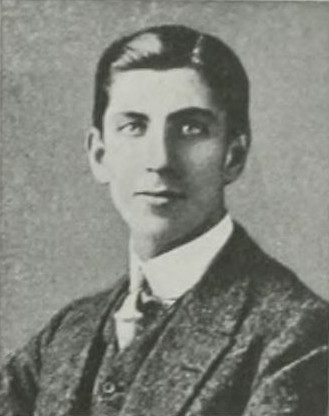
Arthur Stuart Webb.
WEBB, CHARLES ELIJAH JAMES, Probationary 2nd Cook’s Mate, M. 7800, H.M.S. Cressy; lost in action in the North Sea, 22 Sept. 1914.
WEBB, CHARLES FREDERICK, Sergt., No. 11428, 1st Battn., King’s Royal Rifles, yr. s. of Arthur Stuart Webb, the well-known professional cricketer, etc. (see above notice); b. Newport, Isle of Wight, 3 Feb. 1896; educ. Southampton Secondary School; enlisted in Sept. 1914, was promoted Sergt. March, 1915, a week after his brother’s death, and died from wounds received in action at Givenchy, 16 May, 1915, succumbing while on his way to the Field Ambulance; unm. His Qr.-Mr. Sergt. G. Knaggs, wrote to his father, at the request of Section Officer Major Barton Frere: “His Battn. attacked the German trenches on the night, 15–16 May, and captured them. Your son was seen to fall wounded, and although his wounds may then have been slight ones, it is possible that he was more severely hit on proceeding to the rear. In any case it is only too evident that he did not reach the Field Ambulance.”
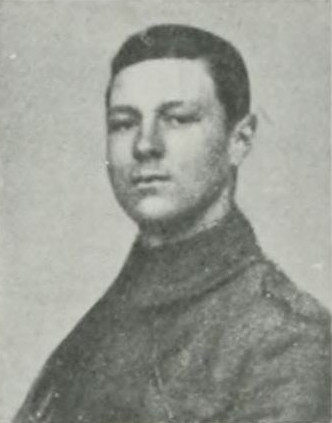
Charles F. Webb.
WEBB, EDGAR DORRINGTON, Sergt., No. 1164, 21st Battn. (1st Surrey Rifles) The London Regt. (T.F.), s. of Walter Edward Webb, Capt. 14th Battn. (London Scottish), The London Regt., late King’s Own Scottish Borderers by his wife, Annie Elizabeth, dau. of Charles Powell; b. Devonport, 5 June, 1891; educ. Dumfries Academy, and Dulwich College, London; was a clerk in the Bank of England, May, 1910, to Aug. 1914; joined the 1st Surrey Rifles in June, 1910; volunteered for foreign service on the outbreak of war; went to France, 15 March, 1915; and was killed in action at Brewery Post Trench, near Rue de l’Epinette, Pas de Calais, 5 May, 1915. Buried in British Cemetery, Rue du Bois, near Bethune. Sergt. Webb m. at St. Leonard’s Church, Streatham, London, S.W., Annie Florence, dau. of Arthur Henry Cornish; s.p.
WEBB, EDWARD CHARLES HARRY, 2nd Lieut., 3rd (Reserve), attd. 1st Battn. Lincolnshire Regt., only s. of Edward Webb, of Cosham House, Cosham, co. Hants and Hindugalla, Peradeniya, Ceylon, Tea Planter, by his wife, Mary Quarry, dau. of William Charles Whitham, of Warangalla, Ceylon; b. Hindugalla, 18 Dec. 1894; educ. Haileybury College; passed into Sandhurst in Aug. 1914, and was gazetted 2nd Lieut. to the Lincolns, 10 Nov. 1914. He was killed in action at Neuve Chapelle, 10 March, 1915, and buried in an orchard with other officers and men of the regt.; unm.
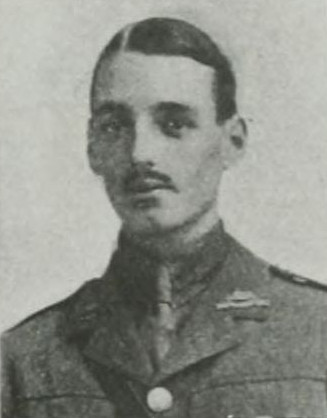
Edward C. H. Webb.
WEBB, JAMES, E.R.A., 2nd Class, 270880, H.M.S. Aboukir; lost in action in the North Sea, 22 Sept. 1914.
WEBB, JOHN BOYER, Lieut., 4th Battn. Prince of Wales’ North Staffordshire Regt., attd. 1st. Battn. The Bedfordshire Regt., only s. of Capt. Charles Boyer Webb, of Elford House, Tamworth, late 4th Battn. North Staffordshire Regt. (died 26 Feb. 1916), by his wife, Adela Dorothy, dau. of Colonel Arthur Blundells, 3rd East Kent Regt., and grandson of the late Colonel Charles John Webb, who for some time commanded the same regt. (4th N. Staffs); b. near Tamworth, 8 June, 1894; educ. Harrow and Trinity College, Cambridge. He was gazetted to the 4th Battn. North Staffordshire Regt. 7 Aug. 1914, being quartered at Guernsey till 16 March, 1915, when he was attached to the 1st Bedfords, and promoted Lieut. 1 April following. He was killed in action at Hill 60, near Ypres, 21 April, 1915; unm.
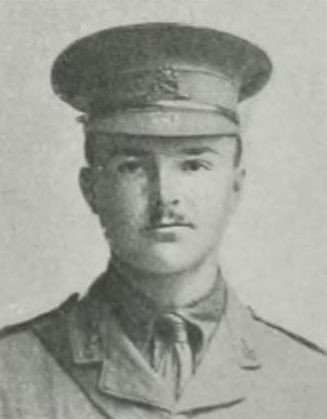
John Boyer Webb.
WEBB, JOSEPH, A.B. (R.F.R., B. 2556), 199206, H.M.S. Good Hope; lost in action off Coronel, on the coast of Chili, 1 Nov. 1914.
WEBBER, CHARLES HENRY, A.B. (R.F.R., B. 3852), 197166, H.M.S. Good Hope; lost in action off Coronel, on the coast of Chili, 1 Nov. 1914.
WEBBER, EDWARD CHARLES, Clerk, Royal Navy, H.M.S. Good Hope, only s. of Edward Samuel Webber, of 18, Taswell Road, Southsea, M.B. Cantab, by his wife, Edith, dau. of Dr. John Brickwell; b. Sutton Valence, co. Kent, 13 May, 1894; educ. Portsmouth Grammar School, where he was Captain of the Games, 1910 and 1911, and Sergt. in the O.T.C.; entered the Navy, 15 July, 1911; appointed Clerk, 15 July, 1912; appointed to the staff of Rear-Admiral Sir Christopher Cradock, 25 Feb. 1913; and went down in H.M.S. Good Hope in the Battle off Coronel, on the coast of Chili, 1 Nov. 1914; unm.
WEBBER, HAROLD PERCIVAL, L.-Corpl., No. 2398, 2nd Battn. (Royal Fusiliers) The London Regt. (T.F.), 5th s. of William Webber, retired Coy. Secretary, for 43 years in the service of John Board & Co., Ltd., of Dunball, Bridgwater, Cement, Lime, Brick and Tile Manufacturers; b. Puriton, Bridgwater, co. Somerset, 7 May, 1889; educ. Collegiate School, Bridgwater; was apprenticed for three years to J. P. Curtis, of High Street, Weston-super-Mare, Ironmonger, with whom he stayed for a few months; after which he was with John Walsh, Ltd., of Sheffield, for about three years, and then entered the employ of John Barker & Co., Ltd., of Kensington, London, being one of the first batch of young men who enlisted from that establishment on the outbreak of war; after training in Malta, he went to France, arriving at Marseilles the first week in Jan. 1915, and was killed in action near l’Epinette, Armentières, 13 March, 1915; unm. Lieut.-Col. Attenborough wrote: “He was shot through the head and died instantaneously. His death was a great loss to his Coy., in which he was very popular, and was a loss to the battalion as he was a very promising soldier. He is buried with others of his comrades in a cemetery prepared for soldiers near a large farmhouse just behind our trenches.”
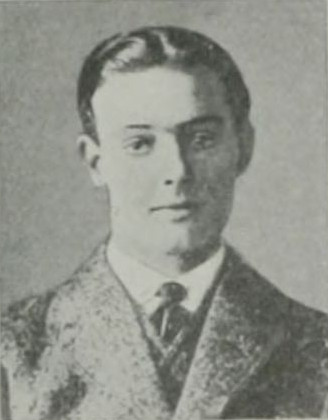
Harold P. Webber.
WEBBER, HAROLD VICTOR, 2nd Lieut., 1st Somerset L.I., yst s. of the late Sergt.-Major William Webber, Somerset L.I. (who d. 6 July, 1915, the same day as his son was killed); by his wife, Elizabeth (Jellalabad, Holway Road, Taunton), dau. of Thomas Laver; b. Taunton, co. Somerset, 22 Oct. 1895; educ. Huish Grammar School there; enlisted in the Somerset L.I. 9 April, 1912; was promoted Corpl. 15 July, 1914; Sergt. 31 Oct. 1914; and gazetted 2nd Lieut. on the field, 14 Feb. 1915; went to France 22 Aug. 1914; served through the fighting at Ligny; the retreat from Mons; the Battles of the Marne and the Aisne; afterwards proceeding to Belgium with his regt., and took part in the 1st Battle of Ypres and the fighting in the Ploegsteert Woods. In Feb. 1915, he came home on leave, and in May was seriously wounded and again sent home, but returned to the front 7 June, and was killed in action on the Yser Canal, 6 July, 1915, while leading his platoon; unm. Major G. Fleming wrote: “Your son died as a gallant officer and soldier should at the head of his men and whilst performing a particularly dangerous and arduous task. We, with the Rifle Brigade, attacked the German trenches at 6 a.m. on the 6th inst., and your son had to dig communication trenches across the open from our trenches to the captured trenches. He was killed very soon after he had got his men into position lined up across the open. There must be great comfort to you in knowing that he died so gallantly and a soldier’s death in action is much to be coveted. We all miss him terribly as he was always so cheerful and willing to do anything in his power to help others and to perform his duty.” 2nd Lieut. Webber’s eldest brother, Sergt. W. T. Webber, was killed in France in Nov. 1914, and his two other brothers, Col.-Sergt. S. A. Webber and Col.-Sergt. J. S. Webber, are now (1916) on active service.
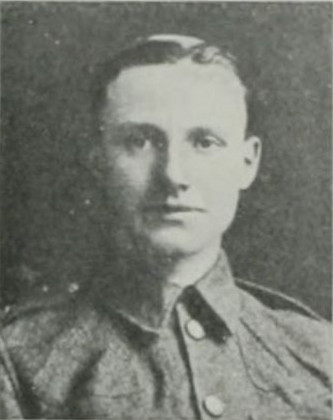
Harold Victor Webber.
WEBBER, HUGO, A.B. (R.F.R., B. 1683), 200656, H.M.S. Good Hope; lost in action off Coronel, on the coast of Chili, 1 Nov. 1914.
WEBBER, JOHN, Private, No. 7611, 1st Royal Welsh Fusiliers, s. of the late James Webber, of Bootle, Liverpool, by his wife, Mary Ann; b. Bootle, co. Lancaster, 14 Feb. 1879; educ. New Ferry, co. Chester; enlisted and served three years with the Colours; was a Labourer; rejoined 5 Aug. 1914; went to France, 16 Sept. 1914, and was reported missing after the heavy fighting on 29 Oct. 1914. He m. at Birkenhead, 1906, Myra (50, Teddesley Street, Walsall), dau. of Charles Jones, and had four children: James Edward, b. 8 April, 1907; John, b. 8 March, 1914; Myra, b. 29 Jan. 1909; and Gladys May, b. 21 Sept. 1911.
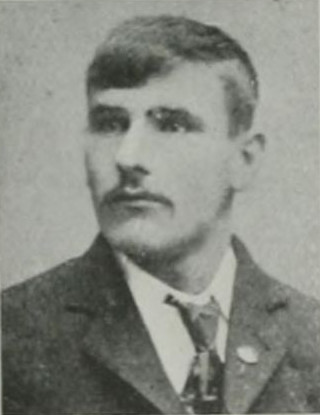
John Webber.
WEBSTER, COLIN AILESBURY, Private, No. 1253, No. 1 Coy., 1st Battn. Honourable Artillery Co., only s. of Henry Ernest Webster, of 21, Kingsley Avenue, West Ealing, and the National Bank, Notting Hill Gate, W. (well-known in the swimming world as handicapper to the Otter Swimming Club); by his wife, Kate Minnie, dau. of William Ailesbury Bull; b. Bayswater, 13 May, 1894; educ. Acton County School, on leaving which he was employed on the Stock Exchange; joined the H.A.C., 8 Aug. 1914; left for France 18 Sept. 1914; and was killed in action near Wulverghem, 25 Nov. following; unm. Buried in the garden of a farmhouse at Wulverghem. A sergt. of his Coy. wrote: “He has been a thoroughly good soldier throughout, and I can assure you we all (No. 1 Coy.) lament his loss.” Like his father he was a fine swimmer and at the close of the season of 1914, stood second for the average prize of the Otter Swimming Club. He was also a keen Rugby football player and a member of the Ealing Rugby Football Club.
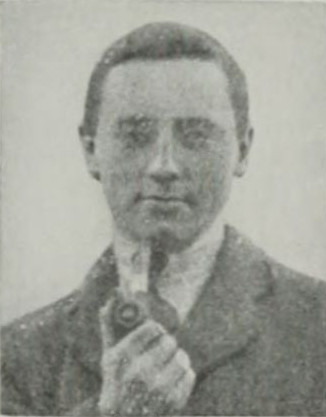
Colin A. Webster.
WEBSTER, HARRY, Electrical Artificer, 2nd Class, 347541, H.M.S. Pathfinder; lost when that ship was sunk by a mine, about 20 miles off the East Coast, 5 Sept. 1914.
WEBSTER, JESSE, Petty Officer (N.S.), 201748, H.M.S. Cressy; lost in action in the North Sea, 22 Sept. 1914.
WEDDERBURN, ROBERT HAMILTON MACLAGAN, 2nd Lieut., 3rd (Reserve), attd. 1st Battn., The Cameronians (Scottish Rifles), yst. s. of the Rev. Laurence Craigie Maclagan Wedderburn, Minister of the United Free Church of Scotland, at Madderty, Crieff, by his wife, Gertrude Elizabeth, dau. of the late Lt.-Col. James Maxwell, C.B., sometime Acting Governor of the Gold Coast; b. Madderty Free Church Manse, co. Perth, 30 April, 1893; educ. at George Watson’s College, Edinburgh, and Edinburgh University (M.A. April, 1914); was L.-Corpl. in his school O.T.C., and Sergt. of the machine-gun team of the University O.T.C., and obtained Certificates A and B; gazetted 2nd Lieut. from the Special Reserve of officers, to 3rd Cameronians, 15 Aug. 1914; joined in Sept, and trained with them at the Nigg Camp, Ross-shire; left for Rouen in charge of 95 men, 1 Jan. 1915, was there attached to the 1st Cameronians then in the trenches near Armentières, and was killed in action in the trenches near Bois Grenier early in the morning of 3 Feb. following; unm. Buried beside Capt. Stirling in the village of Bois Grenier. His Commanding Officer, Lieut.-Col. P. N. Robertson, C.M.G., wrote: “Owing to the very short time he was with us, I had not seen your son personally very much, but I am informed that he was most keen in his work, and always did his very best to carry out efficiently every duty that was given him to do. He was at the time superintending the erection of a traverse of sandbags in the trenches, when he was shot through the brain by one of the enemy’s snipers,” and the Officer Commanding 3rd Battn., Major Luard, published the following order: “It is with the deepest regret that the Commanding Officer has to announce the death (killed in action) of 2nd Lieut. R. H. M. Wedderburn, of this Battn., and at the time serving with the 1st Battn. Though the late 2nd Lieut. Wedderburn was comparatively a short time with his battn., he was well-known for his exceptional keenness and the loss to this battn. is deeply felt by all.”