The Roll of Honour. (continued 5)
Reading edition
BIBB, GEORGE FREDERICK, Armourer, 342183, H.M.S. Hogue; lost in action in the North Sea, 22 Sept. 1914.
BIBBY, JOHN PATRICK, Lieut. 2nd Battn. The Cameronians (Scottish Rifles), 2nd s. of Col. Alfred Bibby, late 4th Hussars; b. 9 Nov. 1892; gazetted 2nd Lieut. from the Special Reserve to the 2nd Cameronians, 10 Dec. 1913, and promoted tempy. Lieut., 15 Nov. 1914; served with the Expeditionary Force in France, etc.; killed in action there 10 March, 1915; unm.
BICKERTON, FREDERICK RICHARD, Sergt., No. 1110, A Coy. 1st/3rd Battn. (Royal Fusiliers) The London Regt. (T.F.), s. of Samuel Richard Bickerton, of 58, Moray Road, Tollington Park, N., Builder’s Clerk, by his wife, Fanny Cinclar, dau. of John Spiller Standen, late of 60, Moray Road, Tollington Park, N.; b. 22 Sept. 1893; educ. Montem Street Elementary and Higher Grade Schools (passed Oxford Local Junior Exam. 1908, with 3rd class honours); was a shipping clerk in the City of London, and joined the 3rd City of London Regt. in 1911. On the outbreak of war he was sent to guard the railway line near Fleet, Hants, and from thence to Malta for four months, reaching France in Jan. 1915. He went through the Battle of Neuve Chapelle where his Coy. were badly cut up, was promoted Sergt. in March, 1915, and was afterwards slightly wounded but recovered and rejoined. He died at No. 7 Casualty Clearing Station 18 Aug. 1915, from wounds received in action at Aubers Ridge, and was buried in Merville Cemetery, France (Grave H. 46); unm. His Commanding Officer, Capt. Noel, wrote: “I can honestly say that he was a fine soldier. I especially owe him a debt of gratitude, because if it had not been for him, I should probably not be alive now. I was rather badly wounded at Neuve Chapelle, and your son bandaged me up under heavy fire; he then practically carried me and put me in a shell hole, and later in the day came back to me when my life was in danger from shells, and helped to carry me back to our lines. I mentioned his name to the Colonel directly I was able to write, and he would surely have earned some decoration if he had lived, because both in the trenches and at Neuve Chapelle he showed great bravery and indifference under fire. He was popular all round and regretted by everyone, and I am proud to say he was in my company.”
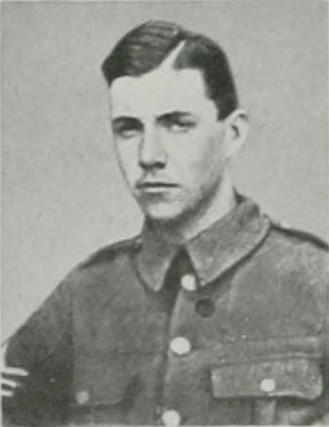
Frederick R. Bickerton.
BIDDLECOMBE, EDWARD GEORGE, Sergt., R.M.A., 8781, H.M.S. Aboukir; lost in action in the North Sea, 22 Sept. 1914.
BIGGE, HON. JOHN NEVILLE, Capt., King’s Royal Rifle Corps, only s. and h. of Arthur John, 1st Lord Stamfordham, P.C., G.C.I.E., G.C.V.O., K.C.B., Private Secretary to his Majesty the King, by his wife, Constance, dau. of the late Rev. William Frederick Neville, Vicar of Butleigh, Somerset; b. London, 14 Oct. 1887; educ. Evelyn’s, Eton and Royal Military College, Sandhurst; was Page of Honour to Queen Victoria and to King Edward VII., and on leaving Sandhurst obtained his commission as 2nd Lieut. 4th Battn. King’s Royal Rifle Corps, at Colchester, 6 Oct. 1906, afterwards proceeding with them to India. He became Lieut. 10 March, 1909, was for a short time acting A.D.C. to the Earl of Minto when Viceroy of India, and to Viscount Hardinge for the Coronation Durbar; was transferred to the Egyptian Army, 8 July, 1913, and appointed A.D.C. to Sir Reginald Wingate, Gov.-Gen. of the Sudan and Sirdar of the Egyptian Army. On the outbreak of war he was unable, according to the conditions of service, to leave the Egyptian Army, but in Sept. 1914, he was appointed A.D.C. to Gen. the Hon. Julian Byng, then nominated to the command of the 3rd Cavalry Division of the Expeditionary Force. He landed at Ostend on 7 Oct., was promoted Capt. 1 March, and remained on Gen. Byng’s Staff until the end of April, 1915, when at his own request he returned to regimental duty and joined the 1st Battn. King’s Royal Rifle Corps, then attached to the 6th Brigade, 2nd Division. On the occasion of the night attack carried out by the 1st Army on 15–16 May, he was in command of the C Company. Soon after the advance began he was seen to be wounded in the leg, but refused assistance from one of his men, said he was all right, and told the rifleman to go on. He was never seen again.
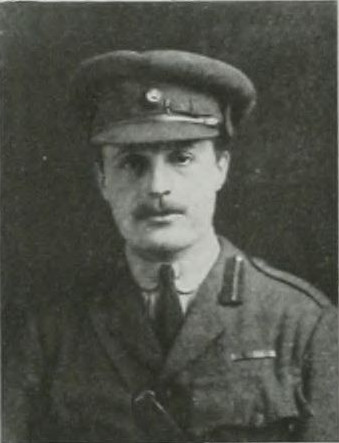
Hon. John Neville Bigge.
BIGGS, GEORGE EDWARD, Private, No. 26058, 14th Battn. (Royal Montreal Regt.), Canadian Expeditionary Force, 5th s. of the late Edward Biggs, of Rainham, Essex, by his wife, Eliza; b. Dagenham, co. Essex, 27 Jan. 1885; educ. Rainham; emigrated to Canada in 1910, and settled in Toronto. He enlisted immediately on the outbreak of the war in Aug. 1914, came over with the first Canadian Contingent, and after training during the winter on Salisbury Plain, left for France, 3 April, 1915. He was eighteen days in the trenches during the Battle of Hill 60, and was killed in action at Richebourg, 20 May, 1915, while acting as bomb thrower, and was buried near Festubert. He m. at Rainham, 17 Aug. 1907, Daisy Constance (Anglo Cottages, Purfleet, Essex), 2nd dau. of Frederick Allen; s.p.
BILLING, CHARLES GEORGE, Capt., Royal Marine L.I., Chatham, attached to Deal Division, eldest s. of the late Rev. George Billing, M.A., sometime (1871–88) missionary under the S.P.G. at Ramnad, Madras and Calcutta, afterwards vicar of Sturry and Platt, by his wife, Caroline Flora (28 Bromley College, Bromley), dau. of the Rev. Joseph Gabbett, co. Limerick, Ireland; b. Ramnad, Madura District, Madras, 15 May, 1882; educ. King’s School, Canterbury, Dover College and Greenwich. He received his commission in the Royal Marines, 1 Jan. 1901, and was promoted Lieut., 1 Jan. 1902, and Capt., 1 Jan. 1912. Served on the China Station, 1903, West Indies, 1906, the Mediterranean, 1908, the Pacific, 1912, etc., and received pilot’s certificate in Flying Corps, Oct. 1913. He was appointed to the H.M.S. Doris, 1914, and was stationed near Ascension Island till April, 1915, when he came home. He left Plymouth for the Dardanelles, 10 May, 1915, and was killed in action, 13 June following; unm.
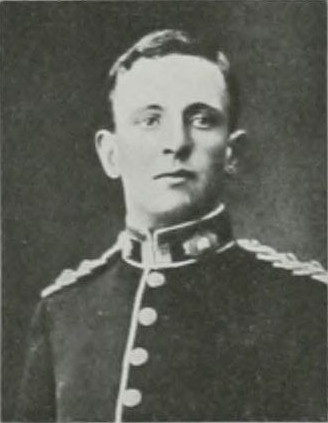
Charles George Billing.
BILLING, SAMUEL ALFRED, No. 2449, 16th Battn. (Queen’s Westminster Rifles) The London Regt. (T.F.), s. of George Timothy Billing, of 22, Ribblesvale Road, Hornsey, Inspector, Finsbury Borough Council; b. London, 16 Feb. 1896; educ. Stationers’ School, Crouch End, was an articled clerk to the Borough Accountant of Hornsey, but on the outbreak of war enlisted, 27 Aug. 1914, and was killed in action at Houplines, near Armentières, France, 27 Feb. 1915; unm. A comrade wrote: “His grave is here ... a mile from the firing line, a simple white cross with the simplest inscription, and the plaque bearing the regimental arms and the grand old Latin phrase, ‘Dulce et decorum est pro patriâ mori.’”
BILLINGTON, LESLIE CHARLES, 2nd Lieut., 4th, attached 2nd, Battn. Lancashire Fusiliers, only s. of Charles Billington, of Heimath, Longport, co. Stafford, Metallurgist, by his wife, Annie Jane, dau. of George Richard Cockhead; b. Wolstanton, co. Stafford, 25 Dec. 1895; educ. Bishop’s Stortford College, and entered Manchester University as an engineering student in Oct. 1913. He was in camp with the University O.T.C. at the outbreak of war, and was gazetted 2nd Lieut. to the 4th Battn. of the Lancashire Fusiliers, 14 Oct. 1914. On going to the Front he was attached to the 2nd Battn., and was killed in action during the taking of German trenches at Pilken, near Ypres, 6–9 July, 1915; unm. Writing on Aug. 1, Major Bowes said: “I have been making enquiries from the N.C.Os. and men of his platoon, and from what I can gather he was leading a party of men up to the German trenches during the violent attack which lasted from July 6 to the 9th. His party was told off as bomb throwers. He fell on the parapet of the trenches and nothing was recovered from his body. One thing I can say and that is, he showed the greatest courage, and never flinched when he was told off for the dangerous job. It was a most ghastly time for us all, and during those three days and four nights we lost ten officers killed and eight wounded, including the Commanding Officer and Adjutant, and all the captains except one, and eighty-five men killed and 234 wounded and missing. The place where this fight took place is called Pilken, about three miles N. of Ypres. It was brought about this way. One of the German trenches was in such a position as to enfilade the front trench occupied by the Rifle Brigade. This regt. with the Somersets were told off to take this trench, which they did on the morning of 6 July. My battn. relieved these two regts. on the 6th (midnight) and occupied the captured German trench. We had orders to hold the trench at all costs. The Germans counter attacked on the morning of the 7th with heavy artillery and bomb throwers, but in spite of heavy odds against us we held that trench for three whole days, until we were relieved at midnight on the 9th by another brigade. The regt. covered itself with honour in those three days, and it was due to such fine young fellows as your boy that we were able to hold our own”; and a few days later Corpl. Brereton wrote: “We were holding some trenches captured from the Germans, and our platoon, which was ably commanded by your son, were in support to the firing line. We were subjected to a very heavy shell fire, and early on your son inspired confidence in his men by the way he assisted in digging several of our men out who had been buried with debris, thereby saving, I know, two men’s lives from suffocation, for which we all admired him. It is the most nerve-trying time you can get, to be under heavy shell fire, especially fresh out from England, but your son seemed to overcome it straight away, and turned out a brick, as it were. On the afternoon of the 7th we were ordered to reinforce the front line, and when we arrived there learned that our bomb throwers had retired from the advanced saphead temporarily, being short of bombs. The Germans had occupied it, so your son was ordered by Capt. Blencowe, who was in command (the Col. and several of our senior officers having got wounded), to retake the trench. I was the corpl. in charge of the section he selected to go with him. He led us up fearlessly, he himself yards in front of any of his men, and I saw him get up to the parapet and empty his revolver, then jump in the trench, and after the trench was retaken, he was most unfortunately hit with a shell, dying a brave soldier’s death, staunch and fearless to the end. His platoon greatly feel the loss of so gallant an officer, and offer you their most sincere sympathy in your sad loss.”
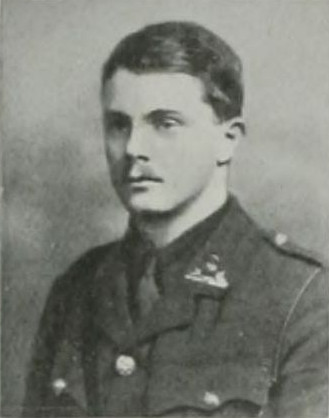
Leslie Charles Billington.
BILNEY, EDWIN ARTHUR, Private, No. 2975, 4th Battn. Suffolk Regt. (T.F.), eldest s. of A. Bilney, of Brandeston, Suffolk; was a Gardener; volunteered for foreign service after the outbreak of war; served with the Expeditionary Force in France, etc.; died in the Clearing Hospital, 17 May, 1915, of wounds received in action, aged 22.
BILTON, JOSEPH, Private, No. 6030, 3rd Battn. Coldstream Guards, s. of Septimus Bilton, of 73, Arundel Street, Holderness Road, Hull, formerly of the N.E.R. Coy., by his wife, Mary, dau. of Samuel Seague, Naval Pensioner; b. Hull, 1 Nov. 1887; educ. Fish Street Council School there; enlisted in 1903 and served for eleven years, then became Labour Master at the York Workhouse and held this position when called up on the outbreak of war; killed in action at Soupir, 16 Sept. 1914; unm. His brother, Septimus, enlisted after the outbreak of war and is now (1916) on active service.
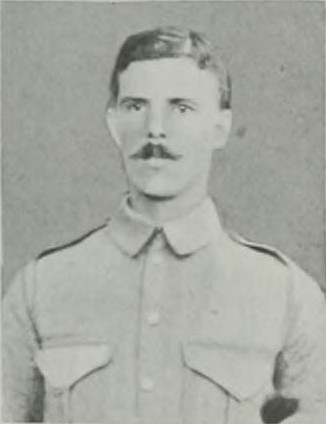
Joseph Bilton.
BINDLEY, HORACE, Private, No. 15594, 1st Battn. The Middlessex Regt., s. of William Bindley, of 104, Ber Street, Norwich; served with the Expeditionary Force in France, etc.; killed in action, 1 Sept. 1915.
BINGHAM, CHARLES HENRY, Private, No. 9057, 2nd Battn. East Kent Regt. (The Buffs), s. of Henry Bingham of 1, Park Road, Beaver, near Ashford; served with the Expeditionary Force in France, etc.; killed in action 14 Feb. 1915.
BINGHAM, CHARLES JEFFREY SLADE, Private, No. 20745, 10th Battn. Canadian Expeditionary Force, 3rd s. of the late Richard Charles William Bingham, of Bingham’s Melcombe, co. Dorset, J.P., Lieut.-Col., Dorsetshire Regt., by his wife, Georgina (28a, Barons Court Road, West Kensington), dau. of William Stuckey Wood, of Charlton Musgrove, Wincanton, late Capt. 7th Dragoon Guards, and grandson of Col. Charles Bingham, Royal Artillery Dep. Adj.-Gen.; b. Bingham’s Melcombe, co. Dorset, 12 Dec. 1893, and was educ. at Clifton College, from which he went to Canada in 1910, and at the outbreak of the war joined the 10th Battn. Canadian Expeditionary Force. While in camp at Valcartier he contracted cerebro-spinal meningitis and was landed at Plymouth on 15 Oct. 1914, in a very serious condition, and taken to the 4th Southern Military Hospital, where he died on 6 Jan. 1915; unm. Four of his brothers are now (1916) on active service, Richard Charles Otho with the Ceylon Engineers in Ceylon; John Richard, 2nd Lieut., R.F.C., late H.A.C.; Humphrey Richard, Lieut., R.F.A. (awarded the Military Cross, in Jan. 1915); and William Philip, 2nd Lieut., R.F.C., all with the Expeditionary Force in France.
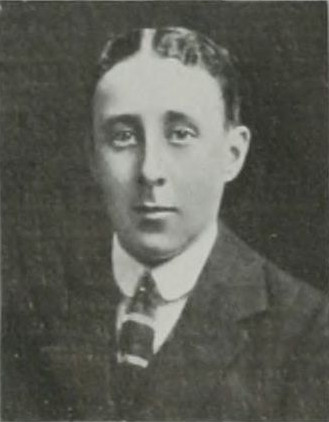
Charles Jeffrey Slade Bingham.
BINGHAM, FRANK MILLER, Capt., 5th K.O.R. Lancaster Regt., 2nd s. of the late John Joseph Bingham, M.D., by his wife, Kate Laura, dau. of John Yardley Robinson; b. Alfreton, co. Derby, 17 Sept. 1874; educ. St. Peter’s, York, and obtained medical degree of M.R.C.S., L.R.C.P. at St. Thomas’s Hospital, London. He joined the Territorials in 1909, being gazetted Lieut. 26 Nov. 1910, and was promoted Capt. 2 May, 1914. He took part in the fighting round Ypres in the early part of May, and had three days furlough to visit his wife and children, and was killed the day after returning to the Front while on reconnoitring work near Ypres, 22 May, 1915. He was buried in Sanctuary Wood. Capt. Bingham was a well-known practitioner in Lancaster, and formerly played cricket for Derbyshire County and Rugby football for Blackheath. He m. at St. Margaret’s, Westminster, 12 Dec. 1900, Ruth Morley (Lindow Cottage, Lancaster), dau. of Alfred Evans Fletcher, late Chief Inspector of Albrali Works, and had three children: Thomas Fletcher, b. 8 July, 1902; Joan Fletcher, b. 15 July, 1905; and Jill Fletcher, b. 22 April, 1911.
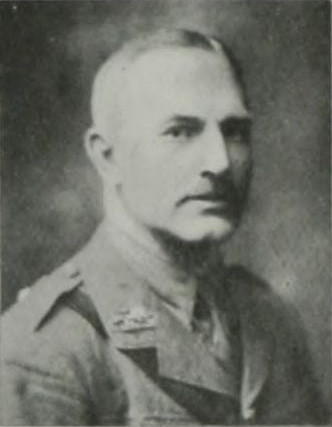
Frank Miller Bingham.
BINGLEY, JOHN WILLIAM, Stoker, 1st Class (R.F.R., Ch. B. 9100), S.S. 105260, H.M.S. Cressy; lost in action in the North Sea, 11 Sept. 1914.
BINSTEED, GERALD CHARLES, Major, 2nd Battn. “Pompadours” Essex Regt., only s. of the late Major Charles Henry Frederick Binsteed, 52nd Oxfordshire L.I. and 1st Madras Lancers, by his wife, Consuelo (Hanover Court, Hanover Square, W.), dau. of Gerald de Wilton, Surgeon-Major, Indian Medical Service; b. Cairo, 7 Aug. 1885; educ. Wellington College and Sandhurst; gazetted to the Essex Regt., 20 May, 1905, promoted Lieut., 6 March, 1910, and Capt., 15 Nov. 1914; served with the Mounted Infantry at Longmoor and Malta, and was Scouting Intelligence Officer at the Curragh. In May, 1914, he was appointed for Special Employment at the War Office, but after the outbreak of war, went to the Front with his Regt., was gazetted Major 18 March, and was killed in action at Le Gheer, 8 April, 1915; unm. Capt. Binsteed greatly distinguished himself by his gallantry in the field, and was twice mentioned in F.M. Sir John French’s Despatches [London Gazette, 4 and 10 Dec. 1914], and was one of the first officers to receive the Military Cross [London Gazette, 1 Jan. 1915]. At Wellington he represented his school at Bisley and was winner of the mile race, and at Sandhurst took the Sword of Honour and passed out first. He also won the Subalterns’ half mile at Malta and the Officers’ mile race in the All Ireland Military Athletic Meeting at the Curragh. Capt. Binsteed was an able linguist, and passed as an interpreter in French, Russian and Chinese, and was a member of the Geographical Society, China Society, and Asiatic Society, and a contributor to the China Year Book, “The Far Eastern Review,” etc.
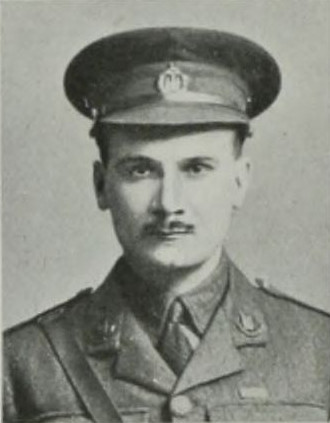
Gerald Charles Binsteed.
BIRCH, ARTHUR, Leading Stoker, K. 9930, H.M.S. Good Hope; lost in the action off Coronel, on the coast of Chili, 1 Nov. 1914.
BIRCH, ARTHUR EDWARD, Stoker, 1st Class, K. 7353, H.M.S. Pathfinder; lost when that ship was sunk by a mine, about 20 miles off the East Coast, 5 Sept. 1914.
BIRCH, WILLIAM JOSEPH, Private, R.M.L.I. (R.F.R., B. 1166), H.M.S. Cressy; lost in action in the North Sea, 22 Sept. 1914.
BIRCH, WILLIAM ELRIC HAWTHORNE, 2nd Lieut., Duke of Cornwall’s L.I., 2nd s. of Richard Birch, of London Bank Chambers, Newcastle, New South Wales; b. Hawthorne, Victoria, Australia, 29 March, 1886; educ. Geelong, Australia; gazetted 2nd Lieut. to the Duke of Cornwall’s L.I., 18 Sept. 1914, and was killed in action at Hooge, 31 July, 1915. He had previously held a commission in the Australian Imperial Forces, and his commanding officer wrote: “He is a very great loss to the battn., as his knowledge of sketching and surveying were invaluable. He was always cheery and brave, and was an excellent leader of men.” Lieut. Birch m. at Aldershot, 1 May, 1915, Mabel (35, Braidwood Road, Catford, S.E.), 3rd dau. of John Lewis, of Catford, S.E.; s.p.
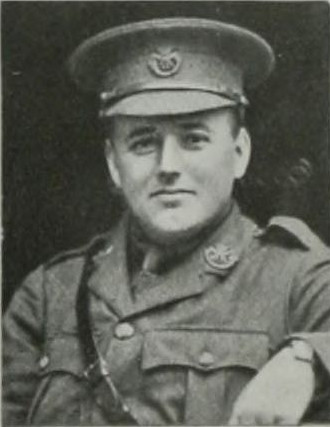
William Elric H. Birch.
BIRCHALL, ARTHUR PERCIVAL DEARMAN, Lieut.-Col. Commanding 4th Battn. Canadian Expeditionary Force, and Capt. Royal Fusiliers, 2nd s. of the late J.... Dearman Birchall, of Bowden Hall, co. Gloucester, by his wife, Emily, dau. of John Towitt, of Harehills, Leeds; b. Bowden Hall, 7 March, 1877, and was educ. at Eton and Magdalen College, Oxford. He obtained a University Commission, being gazetted 2nd Lieut. to the Royal Fusiliers (City of London Regt.), 23 May, 1900, and was promoted Lieut. 11 April, 1902, Capt. 1 Oct. 1908, Major, and Lieut.-Col. 22 Sept. 1914. From 25 March, 1904, to 24 March, 1907, he was Adjutant of the Royal Fusiliers, and on 15 April, 1910, was seconded for service with the Royal Canadian Regiment, and later he was on the Instructional Staff, Western Canada. In Aug. 1914, he was invalided home from Canada, but recovered sufficiently to rejoin the 1st Canadian Contingent in Nov., and acted as Staff Capt. to the 1st Brigade. Always popular and a keen and most efficient officer he was appointed to the colonelcy of the 4th Canadians in February, and was killed in action in the attack on the Pilkem Ridge, near Ypres, 23 April, 1915; unm. Speaking of this action F.M. Sir John French said: “The Canadians had many casualties, but their gallantry and determination undoubtedly saved the situation. Their conduct has been magnificent throughout”; and the Official Report from the Canadian Record Officer at the Front was as follows: “The fighting continued without intermission all through the night, and to those who observed the indications that the attack was being pushed with ever-growing strength, it hardly seemed possible that the Canadians, fighting in positions so difficult to defend, and so little the subject of deliberate choice, could maintain their resistance for any long period. At 6 a.m. on Friday (April 23) it became apparent that the left was becoming more and more involved, and a powerful German attempt to outflank it developed rapidly. The consequences, if it had been broken or outflanked, need not be insisted upon. They were not merely local. It was therefore decided, formidable as the attempt undoubtedly was, to try and give relief by a counter-attack upon the first line of German trenches, now far, far advanced from those originally occupied by the French. This was carried out by the Ontario 1st and 4th Battns. of the 1st Brigade, under Brig.-Gen. Mercer, acting in combination with a British brigade. It is safe to say that the youngest private in the ranks, as he set his teeth for the advance, knew the task in front of him, and the youngest subaltern knew that all rested upon its success. It did not seem that any human being could live in the shower of shot and shell which began to play upon the advancing troops. They suffered terrible casualties. For a short time every other man seemed to fall, but the attack was pressed ever closer and closer. The 4th Canadian Battn. at one moment came under a particularly withering fire. For a moment—not more—it wavered. Its most gallant commanding officer, Lieut.-Col. Birchall, carrying, after an old fashion, a light cane, coolly and cheerfully rallied his men, and, at the very moment when his example had infected them, fell dead at the head of his battn. With a hoarse cry of anger they sprang forward (for, indeed, they loved him) as if to avenge his death. The astonishing attack which followed, pushed home in direct frontal fire made in broad daylight, by battns. whose names should live for ever in the memories of soldiers, was carried to the first line of German trenches. After a hand-to-hand struggle the last German who resisted was bayoneted, and the trench was won. The measure of this success may be taken when it is pointed out that this trench represented in the German advance the apex in the breach which the enemy had made in the original line of the Allies, and that it was 2½ miles south of that line. This charge, made by men who looked death indifferently in the face—for no man who took part in it could think that he was likely to live—saved, and that was much, the Canadian left. But it did more. Up to the point where the assailants conquered or died, it secured and maintained during the most critical moment of all the integrity of the Allied line. For the trench was not only taken, it was held thereafter against all comers, and in the teeth of every conceivable projectile, until the night of Sunday, the 25th, when all that remained of the war-broken, but victorious battns. was relieved by fresh troops.” Major R. Hayter, Brigade-Major, 1st Canadian Brigade wrote: “Your brother, Percy, fell on the 23rd, leading his battn. in the first Canadian counter-attack on the 23rd made by the French, British, and 1st and 4th Canadian battns., just east of the Ypres Canal. His battn. lost all its officers but four, and some 560 casualties other ranks, but they never wavered and got into the enemy’s line, saved the day, and prevented the enemy’s advance south along the east bank of the canal. We are still being desperately engaged, and I cannot write much, but I am sure you will be glad to hear that he has been recommended for the Victoria Cross. He was wounded, had his wound dressed, was wounded again, yet would go on, and fell, leading the charge which took the trenches.... I had a written message from him timed 4.20 p.m. acknowledging an order, and I hope some day to be able to give it to you. His loss has been the greatest blow the contingent could have had. Loved by all, and worshipped by his officers and men, we feel that it was his personal magnetism alone which kept his regt. together, and enabled them to hold what they had gained. All our deepest sympathies are with you and your family, but his end could not have been more glorious”; and the following tribute from an old friend appeared in “The Times” (29 April, 1915): “The claim to have been the most popular officer in the Army is a large one, and may be advanced in the name of many a candidate. But it is probable that all who in any true sense had made Birchall’s acquaintance will claim that no officer could have been more deeply, and probably none more widely, beloved and admired. At Eton, at Magdalen, and for fifteen years in the Army, he was for ever winning to himself friends by the simple but irresistible charm of his nature—by his manliness and sportsmanship, his humour and high spirits, his enthusiasm for his profession as in general for the better things of life. Joining the newly-formed 4th Battn. of the Royal Fusiliers during the South African War, as a university candidate, he became closely identified with its fortunes for some ten years; and he was largely responsible for raising it to the high level of the older battns. of that famous regt. Beloved alike by his brother officers and men, he was equally prominent as a leader in soldiering and in sport: in the field of manœuvre as in the football, the hockey, the hunting, but especially the cricket field he always played a fine sporting game. After ably fulfilling the second adjutancy of his battn., he received the singular distinction of being selected—one of two officers from the whole Army—to be attached to the Canadian Forces, according to a scheme for the mutual benefit of both services. In Canada, he inevitably won through to the same affectionate and admiring popularity as at home. His period of appointment was extended, he was appointed to the Staff, and was given an almost transcontinental district of supervision. The characteristic energy which he threw into this work in the unaccustomed climate caused a temporary breakdown in his health, and bitter was his grief, on returning to England, shortly before the outbreak of war, to find himself entirely forbidden on medical grounds to take for the present the share in active service for which he had keenly prepared and eminently fitted himself. To such advantage, however, did he make use of his time, even of sickness, that, in the intervals of being visited by a constant stream of devoted friends from two continents, he compiled the admirable little manual for the use of regimental officers in the present emergency training, which he entitled “Rapid Training of a Company for War” (Gale & Polden, Aldershot). This book rapidly attained a wide success, and was brought up to date in a second (and subsequent) edition, just as he himself, recently promoted Major, was appointed first a staff Captain in the Canadian Expeditionary Force, and in immediate succession given command of the 4th Canadian Infantry a few days before it sailed for the front.” Col. Birchall resided at Saintbridge House, Gloucester. His brother, Capt. J. Dearman Birchall is (1916) serving with the Royal Gloucestershire’s Hussars Yeomanry.
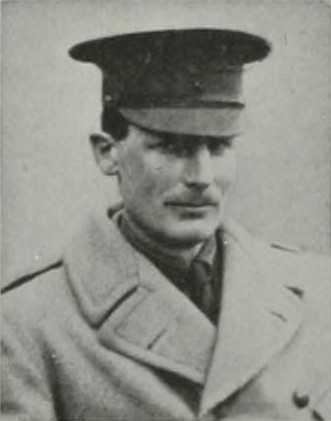
Arthur P. D. Birchall.
BIRD, CUTHBERT, Private, No. 588, 13th Battn. Australian Imperial Force; volunteered on the outbreak of war; killed in action at the Dardanelles, 1 May, 1915.
BIRD, EDWARD, Private, No. 11984, 1st Battn. Coldstream Guards, s. of William Bird, of 14, Albert Terrace, Stafford; served with the Expeditionary Force in France and Flanders; was reported missing 25 Jan., 1915, and is now assumed to have been killed in action that day.
BIRD, EDWARD, Stoker, 1st Class (R.F.R., Ch. B. 9529). S.S. 106902, H.M.S. Cressy; lost in action in the North Sea, 22 Sept. 1914.
BIRD, FRANCIS CLIFFORD, 2nd Lieut. 3rd Battn. King’s Shropshire L.I., elder s. of Francis Bird of Cotswold, Winchcombe, co. Gloucester, by his wife, Mary, dau. of the late Joseph Tibbits, of Warwick; b. Cotswold, Winchcombe, 21 June 1895; educ. King William’s College, Isle of Man, and Cheltenham College, where he was a member of the O.T.C. On the outbreak of war he volunteered, was gazetted 2nd Lieut., 15 Aug. 1914, went to the Front in Jan. and was killed in action near St. Eloi, 2 March, 1915. He was buried at Voorezelle; unm.
BIRD, FRANK EDWARD, Corpl., No. 476, C Squadron Essex Yeomanry, eldest s. of Frederick Bird, of Thorley, Herts, by his wife, Fanny Alberta, dau. of George, Fowler; b. Thorley, 25 March, 1893; educ. Hockerill Boys’ Practising Schools; joined Essex Yeomanry as a Trumpeter in Nov. 1909, and having completed his four years’ service, rejoined for a further period. He was killed in action, near Ypres, 13 May, 1915; unm. He was mentioned in Despatches for bravery and coolness under fire, and Capt. R. G. Proby, commanding the Stortford Troop, writing to his father, said: “He took part with the rest of the Stortford Troop in a very gallant attack on the German lines. The attack succeeded, but unfortunately our losses were heavy—he is among the number. I need hardly say how sorry I am to have to tell you this news. His death will be very greatly felt by the whole squadron, and especially by his friends in the Stortford Troop, with whom he was very popular. It will be some consolation to you to know how bravely he fell.”
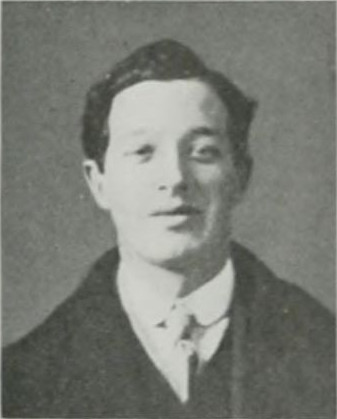
Frank Edward Bird.
BIRD, STEPHEN CARMEN, Private, No. 67193, B Coy., 25th Battn., 2nd Division, Canadian Expeditionary Force, s. of the late Stephen Bird, Lieut. 93rd Battn. (died 9 Dec. 1895), by his wife, Augusta (Amherst, Nova Scotia), dau. of William Bird; b. Mapleton, Nova Scotia, posthumous, 24 April, 1896; educ. Amherst High School; was employed in the Offices of Canada Car Co., Amherst; volunteered on the outbreak of war and joined the Canadian Expeditionary Force, 9 Nov. 1914; came over with the 2nd Contingent, 29 May, 1915; went to France, 15 Sept. and was killed in action there, 8 Oct. 1915, by the explosion of a mine; unm. A comrade wrote: “He was a friend at all times and under all circumstances, no one need wish a better friend, we all loved him and we all mourn his loss.” And another: “He had splendid courage, and when urged to fall back a little further a few minutes before the explosion occurred his reply was ‘I am staying right here.’” Private Bird was a keen athlete and a base-ball player.
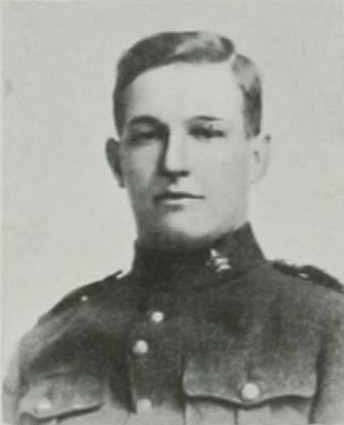
Stephen Carmen Bird.
BIRD, WILFRED STANLEY, M.A. Oxon, Lieut., 6th (Reserve), attached 2nd, Battn. King’s Royal Rifle Corps, s. of the Rev. Henry George Bird, M.A., Rector of Newdigate, co. Surrey, by his wife, Henrietta Maria, dau. of William Greenham, of Hendford House, near Yeovil, J.P.; b. Yiewsley Vicarage, co. Middlesex, 28 Sept. 1883. He commenced his education at the Grange (Preparatory) School, Eastbourne, where he captained the cricket and football teams, and was an immense favourite with the masters and boys alike. He later proceeded to Malvern and entered the College at the time Canon Sidney James came to be Headmaster. There he represented his College in cricket, fives and football. His company also won the College Cup for military drill. In 1902 he was entered at New College, Oxford, and his early promise of being a leading sportsman was fully realised. He represented Oxford in cricket on three successive seasons, and was Captain of the Oxford side in 1906. He was a member of the Middlesex Team, though circumstances prevented him from playing in more than two or three matches during the season. He played for the Gentlemen against the Players, and was asked to represent England in South Africa and Australia. He was an extremely careful and good batsman, but specially excelled as a wicket keeper, and one of the best known captains in England said: “He is the best wicket keeper I ever saw.” After leaving Oxford, where he won for himself many friends, he became a master at Ludgrove. It was here that he spent the last eight years of his life. His record there is a fulfilment of the promise of his early days at Eastbourne and Malvern, and his keenness on everything to do with Ludgrove, and his willingness to put himself out for others, endeared him to masters and boys alike. He was immensely happy there and it was a terrific struggle to answer the call, but he never failed to recognise his duty. A member of the O.T.C., he was gazetted Lieut. to the 6th Battn. of the King’s Royal Rifle Corps, 29 Dec. 1914, and was afterwards attached to the 2nd Battn. at the Front. He was killed, 9 May, 1915, while gallantly leading his platoon near Richebourg St. Vaast; unm. His Major wrote of him: “Bird was gallantly leading his men when he was shot, and died instantly.” He adds: “Bird was a splendid fellow, and a very promising officer and very popular with officers and men alike. I am more than sorry to lose him.”
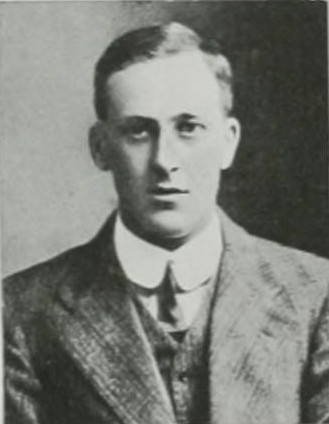
Wilfred S. Bird, M.A.
BIRRELL, GEORGE HENRY GORDON, 2nd Lieut., 9th (Dumbartonshire) Battn. Argyll and Sutherland Highlanders (T.F.), eldest s. of Col. John Birrell, of Allander House, Milngavie, co. Dumbarton, late 9th Battn. Argyll and Sutherland Highlanders and Army Service Corps (Highland Division), by his wife, Grace Marguerite, dau. of George William Masson Buish, of Salto, B.O.; b. Milngavie afsd., 2 Feb. 1893; educ. Loretto, gazetted to his father’s old regt., 3 Nov. 1914, and joined at the Front in Feb. 1915. On 10 May, 1915, during the second Battle of Ypres, the Battn., which formed part of the .. Brigade, received orders to take and hold a line of trenches near Hooge; this they did, but at considerable loss. Lieut. Birrell was killed during the advance, while gallantly leading his platoon under heavy shell fire. He was unm., and was buried in Zouave Wood, near Hooge.
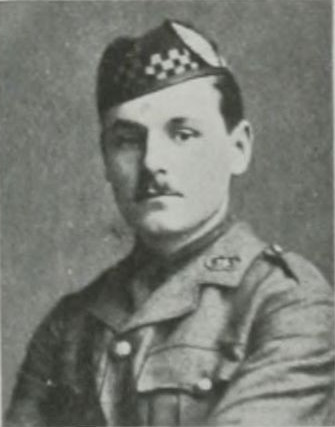
George Henry Gordon Birrell.
BIRRELL, KENNETH, Private, No. 11106, 2nd Battn. The Royal Scots (Lothian Regt.), only s. of W. Birrell, by his wife, Alsie (10, Merchant Street, Edinburgh), dau. of (—) Reid; b. Stockbridge, Edinburgh, 15 Jan. 1895; educ. Glen Street Roman Catholic School there; enlisted 2 April, 1912, and was killed in action during the retreat from Mons, 26 Aug. 1914; unm.
BISHOP, ALBERT EDWARD, Signal Boy, J. 24353, H.M.S. Hawke; lost in action in the North Sea, 15 Oct. 1914.
BISHOP, CHARLES HENRY, Stoker, 1st Class (R.F.R., B. 3816), 187061, H.M.S. Good Hope; lost in the action off Coronel, on the coast of Chili, 1 Nov. 1914.
BISHOP, EDWIN MAURICE, Lieut., 3rd Battn. Dorsetshire Regt., attached King’s Own Yorkshire L.I., elder s. of Edwin Bishop, of Gosport and Swanwick, Sugar Merchant, by his wife, Janette (The Lawns, Swanwick, near Southampton), dau. of the late Knowles Richardson, of Littlehampton and Portsmouth; b. Gosport, 19 June, 1891; educ. Bradfield College; gazetted 2nd Lieut. 3rd Battn. Dorsetshire Regt., 21 June, 1912, and promoted Lieut. 1 May, 1913. On the outbreak of the European War, he left for the Front, 8 Sept. 1914, being attached to King’s Own Yorkshire L.I., and was killed in action at Illies, France, 18 Oct. 1914; unm. His Capt. wrote: “We started attacking yesterday morning at 6.20 a.m., and your son was leading his platoon with the firing line. I heard about mid-day that he had been killed; he was found by one of the other subalterns, and there is no doubt that he was killed instantaneously. We had all got very fond of him in D. Coy. We all feel his loss very deeply. Poor fellow! this was his ‘Baptism of Fire’; he was leading his platoon most gallantly when he was shot”; and Sergt. Beeching: “We started the attack and advanced under a very heavy fire from the enemy till we gained a ridge where we all laid down. Mr. Bishop then rose up on his hands and knees and was in the act of passing a message along the line when he was hit; the bullet had entered his forehead and had come out at the base of his skull”; and Sergt. Spooner spoke of him as: “One who during his short stay with us had won the greatest admiration and respect from his men.” His yr. brother, Private G. S. Bishop, A.S.C., died on active service, 10 April, 1915 (see his notice).
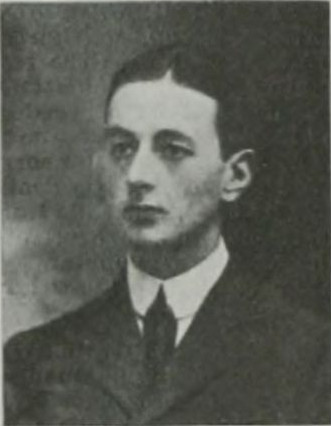
Edwin Maurice Bishop.
BISHOP, FREDERICK HENRY, Leading Seaman, 229715, H.M.S. Cressy; lost in action in the North Sea, 22 Sept. 1914.
BISHOP, GEORGE SPENCER, Private, No. 31591, 178 Coy Army Service Corps (Motor Transport), yr. and only surviving s. of Edwin Bishop, of Gosport and Swanwick, etc. (see previous notice); b. Swanwick, 17 Oct. 1892; educ. Bradfield College; learned motor engineering at Adams’ Engineering Works, Bedford; enlisted in the Army Service Corps (Motor Transport) in Dec. 1914, trained at Grove Park Barracks and afterwards at Reading, where he died of cerebro-spinal meningitis, after a week’s illness, 10 April, 1915. He was brought home and buried in Sarisbury Churchyard. A brass tablet to his memory was put up in the church by the officers, non-commissioned officers, and men of his company. The Major stated that “He was a very smart soldier and much liked by all his Company.”
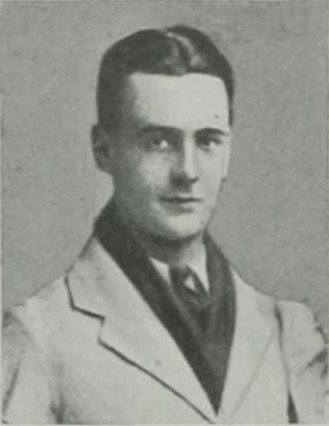
George Spencer Bishop.
BISHOP, JAMES, A.B., 229797, H.M.S. Pathfinder; lost when that ship was sunk by a mine about 20 miles off the East Coast, 5 Sept. 1914.
BISHOP, WILLIAM, Leading Stoker (R.F.R., B. 10705), 300546, H.M.S. Hogue; lost in action in the North Sea, 22 Sept. 1914.
BISS, FREDERICK ERNEST, Private, No. 2733, 1/8th Battn. Middlesex Regt. (T.F.), s. of Frederick Biss, of 25, Werley Avenue, Dawes Road, Fulham, S.W., by his wife, Emma, dau. of Ernest Roylance; b. Shoreditch, 13 May, 1896; educ. Fulham Palace Road Board School; was a Labourer; joined the Territorials about 1911; volunteered for active service on the outbreak of war in Aug. 1914; went to France, 9 March, 1915, and was killed in action in a trench at the Battle of Loos, 25 Sept. 1915; unm. He was buried at Wye Farm, near Loos, with others of his comrades.
BITTEN, FREDERICK, Officers’ Steward, 3rd Class, L. 4948, H.M.S. Hawke; lost in action in the North Sea, 15 Oct. 1914.
BLACK, CUTHBERT THOMAS, A.B., 224922, H.M.S. Hogue; lost in action in the North Sea, 22 Sept. 1914.
BLACK, FRANK HENRY, Capt., 4th. attached 1st. Battn. Royal Warwickshire Regt., elder s. of Francis Black, of Fairview, Great North Road, Finchley, R.B.A., A.R.C.A., Hon. Sec. of the Royal Society of British Artists, late Principal of the L.C.C. Camden School of Art, etc., by his wife, Annie Beatrice, dau. of the late John Smith, of the firm of John Smith, Ltd., 131, London Wall, and grandson of the late Horatio Black, of Nottingham; b. London, 1 Dec. 1887; educ. City of London School, and in Paris; joined the Artists’ Rifles as private in 1907, afterwards accepting a commission (20 Jan. 1912) which he resigned in June, 1914, owing to business pressure. On the outbreak of the war he volunteered, and there being no vacancy in his old Coy (A) of the Artists he accepted a commission in the 4th Battn. of the Royal Warwickshire Regt., 18 Aug. 1914. He was afterwards attached to the 1st Battn., being sent to it in France in Sept. After some weeks at the base, St. Nazaire, they went up to the firing line in Flanders, arriving on 26 Oct. He spent the whole winter in the trenches. He was promoted Lieut. 1 Nov. 1914, and Capt 1 Jan. 1915, and was killed in action at St. Julien, 25 April, 1915, during the 2nd Battle of Ypres; unm. His commanding officer, Col. A. J. Poole, wrote: “He was killed on 25 April gallantly leading his men against the German trenches. He was the greatest favourite with us all, and all our sympathy goes out to you in your sad bereavement. Personally, I feel I have lost a great friend, and one that I shall never be able to replace as one of my officers. Unfortunately, we have been unable to recover his body at present, but will make every endeavour to do so”; and Private H. Roberts, writing from hospital, said: “On Sunday, 25 April, about 4 a.m., Capt. Black gave the order to advance and take the lines of trenches in front of us. We had advanced the biggest part of the ground under heavy fire, when the Capt. was shot through the head. It was impossible for any of us to render him any aid, as death was instantaneous. I daresay you will have read that he was posted wounded and missing, but I am sorry to say he was killed, as I was only a few yards away from him when it happened. The reason the Capt. was posted missing was because he was so near the enemy’s trenches when he fell. Capt. Black was one of our most popular officers, and his death was deeply felt amongst the boys of the Coy. with whom he was a great favourite.” Capt. Black held the Challenge Cup for highest efficiency for one year, and gained a number of silver spoons for shooting, and was very popular with his Coy. He was a member of the School of Arms, and took a great interest in A Coy.’s camp at Datchet in 1912, 1913, and 1914, being one of the chief movers in the formation of that club.
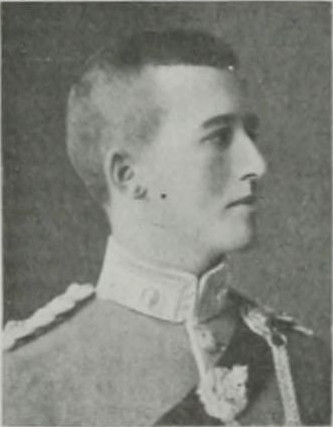
Frank Henry Black.
BLACK, HENRY, Private, No. 10008, 1st Battn. Scots Guards; b. Mid Calder, Edinburgh; volunteered and enlisted 1 Sept. 1914, aged 25; reported missing after the fighting on 25 Jan. 1915.
BLACK, JAMES WILLIAM McKAY, Private, No. 2089, 1/5th Battn. Royal Scots, elder s. of John Black, of 15, Mertoun Place, Edinburgh, Blacksmith, by his wife, Christina, dau. of William McKay; b. Edinburgh, 15 Sept. 1883; educ. Gillespie’s School there; served his apprenticeship as an engineer in Edinburgh; on 18 Jan. 1909, was appointed an assistant in Edinburgh Weights and Measures Department; passed the Board of Trade Examination held in Glasgow on the 15–16 Nov. 1911; commenced his duties as an Inspector of Weights and Measures 16 Feb. 1912; appointed an officer under the Petroleum Acts, the Explosive Act and the Fabric Misdescription Act, 16 May, 1914; enlisted on the outbreak of the war, 29 Aug. 1914; and was reported killed in action in Gallipoli, 28 April, 1915; unm.
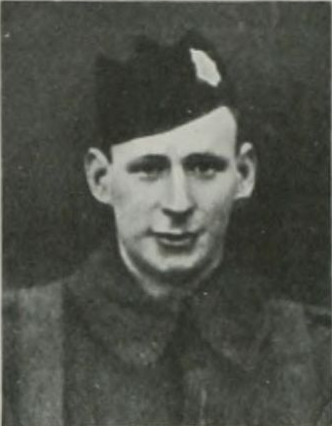
James William McKay Black.
BLACK, ROBERT, L.-Corpl., No. 12109, 2nd Battn. Highland Light Infantry; served with the Expeditionary Force in France, etc.; reported wounded and missing 24 Oct. 1914, and now assumed to have been killed in action on that day.
BLACK, THOMAS, Private, No. 10674, 1st Battn. The Royal Scots, 2nd s. of the late Thomas Black, Calender Worker, and formerly a Private in the Black Watch, by his wife, Agnes (5, Ramsey Street, Dundee), dau. of Jack Fields; b. Dundee, 23 Sept. 1892; educ. Mitchel Street Public School there; was for some time employed as a rope spinner in Messrs. Halket & Adams’ Rope Works, Dundee, and enlisted in the Royal Scots, 7 June, 1910. He was drafted to the 1st Battn. in India, and on the outbreak of the European War came home with his regt. and was killed in action in France, 12 May, 1915; unm.
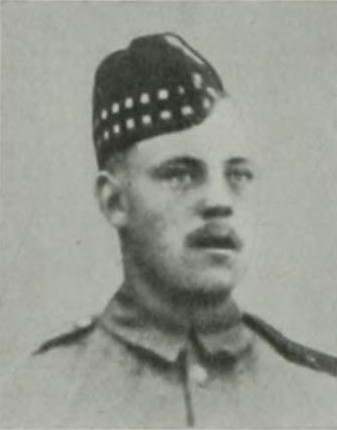
Pte. Thomas Black.
BLACK, WALTER CAIRNS, L.-Corpl., No. 2164, 14th Battn. (London Scottish) London Regt., s. of James Black, Bookbinder’s Manager; b. Edinburgh, 10 June, 1888; educ. Daniel Stewart’s College, Edinburgh; joined on mobilisation 4 Aug. 1914, was promoted L.-Corpl. for tending wounded under fire and general good conduct in the field, and was killed in action at Givenchy, 22 Dec. 1914; unm. Black was by profession a chemist and druggist, qualifying at Edinburgh, 1910; was for some time assistant to Mr. H. Dixon, of Russell Gardens, S.W., and later joined the staff of Messrs. Allen and Hanbury, of Lombard Street.
BLACK, WILLIAM, Private, No. 11521, 2nd Battn. Scots Guards, s. of James Black, of 12, Wilkies Lane, Dundee; b. Aberdeen; volunteered and enlisted 4 Oct. 1914, aged 19; served with the Expeditionary Force in France, etc.; reported missing, 18 May, 1915.
BLACK, WILLIAM, Sergt., No 11302, 2nd Battn. Highland L.I., 4th s. of Jeremiah Black, by his wife, Matilda, dau. of Joseph Lowry; b. Craigywarren, Ballymena, co. Antrim, Ireland, 28 Jan. 1890; educ. Craigywarren National School; enlisted in April, 1909, promoted Sergt., Nov. 1914, served with the Expeditionary Force in France and Flanders, and was killed in action on the Rossitier Road in the Village of Zonnebeke, five or six miles from Ypres, 14 Nov. 1914; unm.
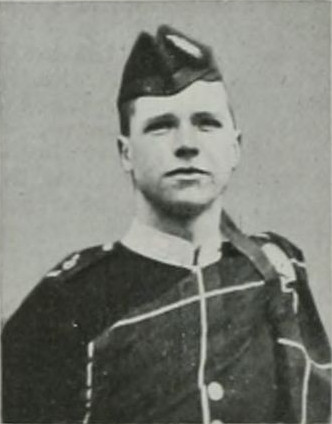
Sergt. William Black.
BLACK, WILLIAM, Private, No. 22764, 11th Battn. The Royal Scots, 2nd s. of George Black, of Buckhaven, by his wife, Helen, dau. of Adam Addison; b. Howtown, co. Clackmannan; educ. Cowdenbeath, Fife; was a miner; enlisted 9 May, 1915, and was killed in action near St. Julien, 15 Oct. 1915, by the explosion of a mine under the trench where he was on sentry duty. He m. at Buckhaven, Fife, 1 Jan. 1908, Isabella Gordon (Randolph Street, Buckhaven), dau. of George Cargill, and had three children: George Gordon, b. 22 Feb. 1909; William, b. 26 March, 1915; and Mary Keddie, b. 6 Aug. 1911.
BLACKBURN, EDWARD, Private, No. 12548, 1st Battn. Coldstream Guards; b. York; served with the Expeditionary Force in France, etc.; killed in action at Richebourg, 12 March, 1915; m.
BLACKBURN, HORACE, Private, No. 8393, 2nd Battn. Scots Guards, s. of (—) Blackburn, of 5, Sheridan Street, Wakefield Road, Bradford; b. Bradford; enlisted 31 Aug. 1912, aged 21; served with the Expeditionary Force in France, etc.; reported wounded and missing, 20 Oct. 1914.
BLACKBURN, JOSEPH EDWARD, Leading Seaman, 226195, H.M.S. Hogue; lost in action in the North Sea, 22 Sept. 1914.
BLACKER, CECIL FRANCIS, Lieut., 2nd Battn. Connaught Rangers, yr. s. of Major Frederick Henry Blacker, late 4th Queen’s Own Hussars, by his wife, Anna, dau. of Sir Joseph Bazalgette, C.B.; b. ...; educ. May Place, Malvern Wells, and Wellington College, Berks (Purnell’s 1903–06); was at the R.M.C. 1908, entered the Army, Nov. 1909, gazetted Lieut. Jan. 1911, being 2nd in command of the Brigade Cyclist Corps when he went to the Front. He was severely wounded at the Battle of Mons, 23 Aug. 1914, and died at Netley Hospital, 6 Sept. following; he was buried at Maudins, Naas; unm.
BLACKER, GEORGE FREDERICK, 2nd Lieut., 3rd, attached “A” Coy. 2nd, Battn. Northamptonshire Regt., only s. of Arthur Edward Blacker, L.R.C.P., L.R.C.S., by his wife, Harriet Sophia Williams, dau. of the late Henry Robbins Dew, M.R.C.S., L.R.C.P., Assistant Staff Surgeon to Lord Raglan in the Crimean War, and gdson. of the late George Frederick Blacker, of Midsomer Norton, M.R.C.S., L.S.A.; b. Bristol, 13 July, 1893; educ. Bristol Grammar School, was at the outbreak of war about to commence his medical studies, but at once applied for a commission and was gazetted to the Northamptons from the Bristol O.T.C., 28 Oct. 1914. He went to the Front, 30 March, and was killed in action at the Battle of Aubers Ridge, 9 May, 1915; unm. He was at first reported missing, but later his body was recovered and buried near an orchard about 300 yards south-west of the junction of Rue Petillon and the road from Sailly to Fromelles. The delay in recovering his body was due to the fact that the spot where he fell was in the open near the enemy’s lines, and was fiercely contested for many days. All the five officers in his company were killed on the same day, and most of the men were either killed or wounded by maxim gun fire in what his commanding officer described as: “a very gallant attempt to close with the enemy.” 2nd Lieut. G. F. Friendship, writing on behalf of the commanding officer to Dr. Blacker, said that: “Blacker with his Coy. took part in an attack we made on the German lines. As the Northamptons attacked, they were met by a perfect hail of bullets, machine and rifle fire. Nothing could live in it, and I am sorry to say, we lost a big number of men and officers. Your son acted most gallantly and was seen, before he was hit, shouting to his men to come on”; and Lieut. H. W. Carritt, one of the very few officers who came safely through that terrible charge, states that Lieut. Blacker led his platoon bravely, choosing the dangerous flank, and sending his sergt. to lead that which was less perilous. He died close to the enemy’s position in a brave attempt to lead his men over what proved practically insurmountable obstacles.”
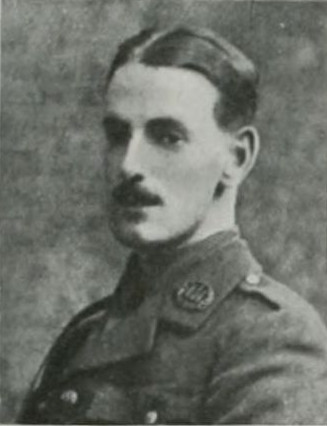
George F. Blacker.
BLACKER, WALTER, Shipwright, 1st Class, 345996, H.M.S. Good Hope; lost in the action off Coronel, on the coast of Chili, 1 Nov. 1914.
BLACKETT, WILLIAM STEWART BURDETT, of Arbigland, co. Dumfries, and Manton Grange, Oakham, co. Rutland, Capt., Leicestershire Yeomanry, late Grenadier Guards, eldest s. of the late Capt. Archibald Campbell Steuart Blackett, R.N., by his wife, Clara Blanche Harriet, eldest dau. of Lieut.-Col. Charles Sedley Burdett, Coldstream Guards, and nephew and heir of Christopher Edward Blackett, of Arbigland, J.P., Lieut.-Col. 26th and 93rd Regts. and Coldstream Guards [a cadet of the family of Blackett, of Wylam, co. Northumberland]; b. London, 24 Oct. 1873; educ. Wellington and Sandhurst; joined the 3rd Grenadier Guards 8 May, 1895, becoming Lieut. 12 Feb. 1898, and Capt. 1901. He served through the South African War, 1899–1902, in the 8th Division under General Rundle, was present at the Battle of Biddulphsberg, and received the Queen’s medal with two clasps and the King’s with two clasps. He retired in 1903, but on the outbreak of war joined the Leicestershire Yeomanry, and was gazetted 15 Aug. 1914. He went to France with the Expeditionary Force, was wounded in action near Ypres on 20 Nov. 1914, and died in a French hospital at Poperinghe 24 Nov. following, and was buried there. He m. at Staplestown Church, Carlow, 6 April, 1907, Kathleen Prudence Eirene (Arbigland, Dumfries), dau. of Beauchamp Frederick Bagenal, of Benekerry House, co. Carlow, D.L., and had a son, Christopher William Stewart Blackett, now of Arbigland, b. 27 April, 1908.
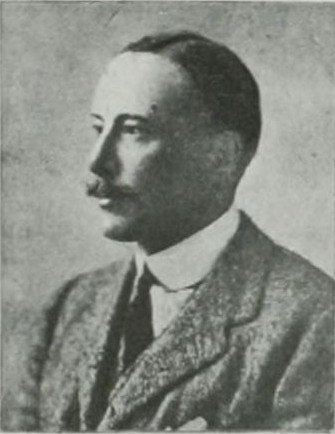
William S. B. Blackett.
BLACKLAY, FRANCIS PETTICREW, Private, No. 21065, 16th Battn. (Canadian Scottish), Canadian Expeditionary Force, s. of James Blacklay, of 13, Marlborough Street, Londonderry, Managing Director of William Thompson & Co., Ltd., Londonderry; b. Londonderry, 5 May, 1893; educ. Foyle College there; and on leaving there went to Canada and entered the employ of the Canadian Bank of Commerce at Winnipeg, being later transferred to Longham and Delisle, Sask. This he left in April, 1915, to join the Canadian Expeditionary Force. He was killed in action, 26 Oct. 1915, while on duty round a German battleplane which had fallen in the British lines, and was buried near Wulverghem; unm.
BLACKLEY, JOHN, L.-Corpl., No. 657, 3rd Battn. The Royal Scots, s. of the late William Blackley, Shiprigger, by his wife, Phyllis, dau. of Robert Muir, Gardener; b. Edinburgh, 5 April, 1887; educ. London Road National School there; enlisted about 1906, and was killed in action at Wolverehem, 11 Sept. 1914. He m. at Leith, 15 Feb. 1909, Mary Ellen, 4th dau. of Andrew Dalziell, and had two children: John, b. 9 June, 1913; and Anna, b. 12 Oct. 1911.
BLACKMAN, JOHN THOMAS, Private, No. 258, Princess Patricia’s L.I., Canadian Expeditionary Force, s. of the late John Blackman, Sergt., 33rd West Riding Regt., by his wife, Mary (5, Best Town, Cage Lane, Chatham), dau. of Patrick Lyons; b. Lucknow, India, 11 April, 1881; educated Chatham; enlisted in the Grenadier Guards, and after serving five years went to Canada, 4 April, 1910, and on the outbreak of war volunteered for Imperial service. He was killed in action at Hill 60, 4 May, 1915; unm.
BLACKMAN, THOMAS, Sapper, No. 1544, Royal Engineers, eldest s. of William James Blackman, of 86, Church Street, Ore, Painter; b. Hastings, co. Sussex, 23 Nov. 1873; was a Painter; enlisted, 13 Oct. 1914; went to the Front, 22 Dec. 1914, and was killed in action, 5 March, 1915. His Capt. wrote: “He was carrying out last night some dangerous work in front of our trenches and was hit by a stray bullet.” He m. 1st, at Ore, Hastings, Laura (died 12 July, 1910), dau. of William Holewell, labourer; and 2ndly, at the same place, 7 Oct. 1911, Philly Jane (60, Fairlight Road, Ore, Hastings), dau. of William Mepham, Naval Pensioner, and had three children by his 1st wife: Thomas William, b. 24 May, 1907; Rose, b. 2 July, 1908; and Laura, b. 20 Feb. 1910.
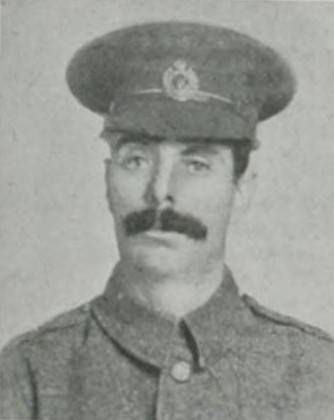
Thomas Blackman.
BLACKSTONE, WILLIAM, Seaman, R.N.R., 3700A, H.M.S. Hogue; lost in action in the North Sea, 22 Sept. 1914.
BLAKE, AUGUSTUS EDWARD, C.P.O. (R.F.R., A. 2043), 153991, H.M.S. Aboukir; lost in action in the North Sea, 22 Sept. 1914.
BLAKE, HENRY, Private, No. 1835, 118th Battn. Middlesex Regt. (T.F.), 2nd s. of David Blake, of Grange View, Chalfont St. Peters, by his wife, Maria, dau. of James Butcher; b. Chalfont St. Peters, co. Bucks, 2 May, 1892; educ. National School there; joined the 8th Middlesex Territorials, Sept. 1912; mobilised 5 Aug. 1914, and volunteered for foreign service; served at Gibraltar, 3 Sept. 1914, to Feb. 1915, and with the Expeditionary Force in France and Flanders, 8 March, to 26 April, 1915, on which date he was killed in action at Zonnebeke during the second Battle of Ypres; unm.
BLAKE, JOHN EDWARD, A.B. (R.F.R., B. 2641), 205973, H.M.S. Good Hope; lost in the action off Coronel, on the coast of Chili, 1 Nov. 1914.
BLAKE, LOUIS CHARLES, Private, No. 27168, B Coy., 15th Battn. (48th Highlanders) Canadian Expeditionary Force, s. of Harry George Blake, of 689, Ontario Street, Toronto, Canada, Gasfitter, by his wife, Louisa, dau. of Charles Henry Stiling, of Walworth; b. Camberwell, London, 22 Jan. 1888; went to Canada with his parents when one year old in 1889; educ. Sackville Street Public School, Toronto, and was a Fourth Book Scholar. He served with the 12th York Rangers from 7 June, 1904, to 18 May, 1912, when he obtained his discharge with an excellent character. He then served for a short time with the A.S.C., and joined the 48th Highlanders in 1913, and on the outbreak of war in Aug. 1914, was one of the first to volunteer for service overseas. He left with the first contingent in Oct. 1914; trained on Salisbury Plain during the winter; went to the Front in Feb. 1915, and served continuously until 5 Dec. 1915, when he was killed in action at 10.5 p.m. at King Edward Terrace (Ration Farm), France, by a high explosive shell. He was buried there; unm. His brothers, Corpl. Edward Blake, 19th Battn., and Private Harry Blake, 74th Battn., are now (1916) on active service.
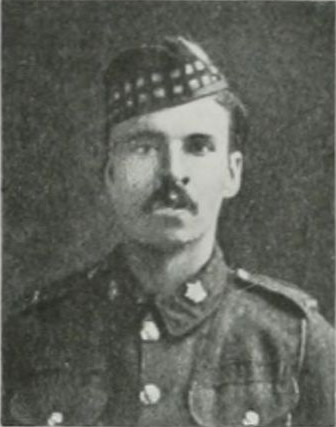
Louis Charles Blake.
BLAIR, SIDNEY BARCLAY, 2nd Lieut., 3rd, attd. 2nd, Battn., Royal Warwickshire Regt., 3rd s. of John Blair, of Bidston House, Wigan, J.P., M.D., by his wife, Elizabeth, dau. of F.... Love, of The Priory, Grosmont, co. York; b. Wigan, 20 Aug. 1885; educ. Wigan and Warminster Grammar Schools, and Giggleswick School, where he won his colours and became a corpl. in the O.T.C. He matriculated at Liverpool University in 1913, and passed his first professional examination in medicine shortly after the outbreak of war. Volunteering, he was gazetted to the 3rd Battn. of the Warwickshire Regt., 19 Nov. 1914, and on going to France in March was transferred to 2nd Battn. He was killed in action at Festubert by a shell between the 1st and 2nd line German trenches, whilst leading his platoon, 16 May, 1915, and was buried at Le Touchet; unm. His colonel wrote: “He died gallantly leading his platoon attacking the Germans, 16 May.” His Adjutant: “I always found him so willing and always ready to be of service. His loss will be greatly felt in the regt.” His Capt.: “Your son belonged to my company, and he was killed between the 1st and 2nd line German trenches. His platoon was the first of the battn. to attack, and he led them most gallantly.”
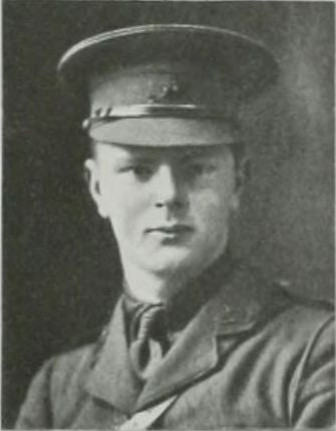
Sidney Barclay Blair.
BLAKEWAY, COL. THE REV. PHILIP JOHN THOMAS, M.A., T.D., Chaplain, 4th London Mounted Brigade, 2nd Mounted Division, and Vicar of Walberton, Arundel, s. of Philip Edward Blakeway, of 29, Clifton Gardens, Folkestone, by his wife, Maria, dau. of John Wootton; b. London, — March, 1865; educ. Malvern, and Magdalen College, Oxford, and on leaving the latter in 1884 received a commission in the 8th Hussars and joined the regt. in India. After six years he sent in his papers, went back to Magdalen College, Oxford, and took his degree and was ordained Deacon in 1891 and priest in 1893. After holding curacies at Camberwell, Lambeth and Battersea, he was for seven years Chaplain to the Earl of Lathom, and in 1902 became temporary Chaplain to the Forces at Chichester Barracks. In 1903 he was appointed to the rectory of All Saints’, Hastings, and in 1907 to the Vicarage of Walberton. Since 1893 he had been Chaplain to the Middlesex Hussars (1st County of London), and when war broke out he applied to go to the Front, and was appointed 1st Class Chaplain with the rank of Colonel. He went out to Egypt with one of the first drafts of troops, and died on active service at Ismailia, 16 June, 1915, of heart failure. He m. at Old Windsor, 10 Aug. 1893, Sibyl Agnes (The Cottage, Halnaker, Chichester), dau. of Francis Ricardo, of The Friary, Old Windsor, and 44, Portman Square, W., J.P.; s.p.
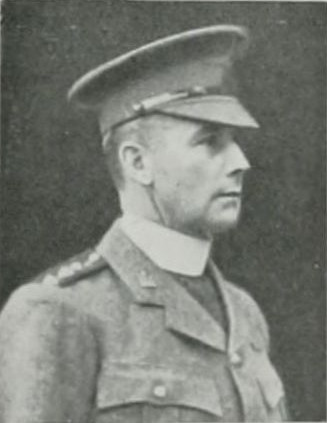
Rev. P. J. T. Blakeway.
BLAKEY, GEORGE HENRY, A.B., J. 7104 (Ports.), H.M.S. Hogue; lost in action in the North Sea, 22 Sept. 1914.
BLANCHETT, CHRISTOPHER, Sergt., No. 18159, 3rd Battn. Canadian Expeditionary Force, s. of Frederick Blanchett, of Whitehill Cottage, Wootton Bassett, by his wife, Mary, dau. of James Curry, of North Curry, co. Somerset; b. Wootton Bassett, co. Wilts, ....; educ. Council School there; enlisted in the Wiltshire Regt.; served through the South African war, afterwards going to Canada in April, 1913. After the outbreak of war he joined the Canadian Expeditionary Force in Aug. 1914, and was killed in action at Ducks’ Bill, France, 19 June, 1915. He m. at Wootton Bassett, 11 April, 1903, Mildred Ellen, dau. of William Sainsbury, of Wootton Bassett, and had a son and two daus.: Stuart, b. 19 Jan. 1912; Zita Mary Asenatte, b. 2 May, 1907; and Mildred Christina, b. 22 May, 1909.
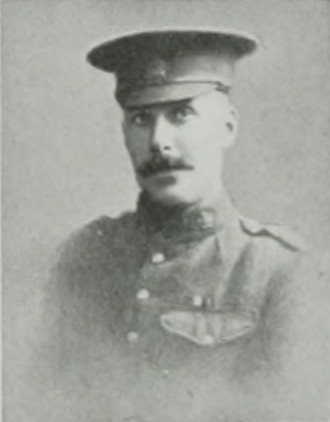
Christopher Blanchett.
BLAND, CHARLES ERNEST WILLIAM, D.S.O., Capt., 3rd, attd. 2nd, Battn. King’s Own Scottish Borderers, s. of Horatio Bland, of Stretton House, near Alfreton, co. Derby, Capt. (ret.) King’s Own Scottish Borderers, by his wife, Fanny Louisa (Stretton House, Alfreton, Derbyshire), dau. of William Henry Duff; b. New Wandsworth, co. Surrey, 21 Aug. 1881; educ. Marlborough and Sandhurst; joined the Scottish Borderers, 20 Jan. 1900, served in the Boer War, and was present at the actions at Vet River and Zand River, those near Johannesburg and Pretoria, and at Zillikats Nek (Queen’s medal with three clasps and King’s medal with two clasps); became Capt. 9 March, 1908, and retired 26 Oct. 1910, being gazetted to the 3rd (Reserve) battn. of his regt. On the outbreak of war he rejoined, was attached to the 2nd battn. with which he went to the Front, was twice mentioned in despatches by F.M. Sir John French, and awarded the D.S.O. 18 Feb. 1915, and was killed in the action around Ypres, 23 April, 1915. He is believed to have been buried near Pilkem. Major D’Ewes Coke wrote: “The actual event which gained him the D.S.O. was when we were holding trenches in front of Ypres in Nov. His trench was several times attacked by Prussian infantry, as well as being subjected to very heavy fire from minewerfers and artillery, but he stuck to it and defended his trench with great bravery.” He m. at the Parish Church, Maynooth, co. Kildare, Ireland, 22 Oct. 1910, Isabella, dau. of William Browne-Lecky, of Ecclesville, co. Tyrone, and had a dau.—Patricia, b. 24 April, the day after her father was killed. Capt. Bland was well known in the hunting field, and was frequently out with the Cottesmore and Belvoir packs.
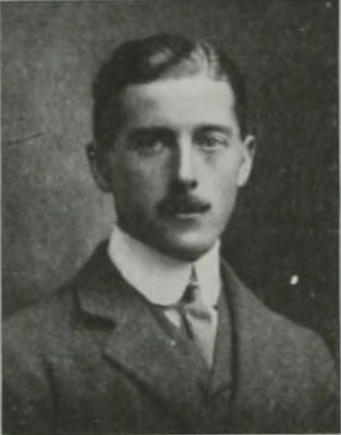
Charles E. W. Bland.
BLAND, PERCY, Junior Sick Berth Reserve Attendant, M. 8633, H.M.S. Cressy; lost in action in the North Sea, 22 Sept. 1914.
BLANDFORD, GEORGE JOHN, Chief Armourer, No. Ch. 340800, R.N., s. of Martin Blandford, Leading Stoker on the Royal Yacht Victoria and Albert; b. Ewer Common, Gosport, 18 Sept. 1876; educ. Alverstoke School; was for many years at the Chatham Gunnery School; joined the Cressy on the outbreak of war, and was lost with that ship 22 Sept. 1914; unm. He had the Good Conduct medal.
BLANDFORD, HENRY, Private, No. 2253, 8th Battn. Middlesex Regt. (T.F.); served with the Expeditionary Force in France, etc.; died of wounds, 9 Sept. 1915.
BLANDFORD, THOMAS HENRY, Private, No. 9247, 2nd Battn. Coldstream Guards, s. of Thomas Henry Blandford, of 19a Skelbrook Street, Earlsfield, S.W.; b. co. Surrey; served with the Expeditionary Force in France, etc.; killed in action at Boiseron, 8 Sept. 1914; unm.
BLANFORD, CHARLES EDWARD, Major, R.G.A., 30th Indian Mountain Battery, 3rd s. of Thomas Blanford, of 4, The Grove, Highgate, N., by his wife, Amy, dau. of Frederick Simpson; b. Kensington, W., 16 March, 1874; educ. Highgate School and Royal Military Academy, Woolwich (Sept. 1891–93); gazetted 2nd Lieut. R.A., 1 Jan. 1894, promoted Lieut. 1 Jan. 1897, Capt. 9 April 1900, and Major—Oct. 1914; joined at Portsmouth, and after nine months there and at Gordon Hill, Isle of Wight, went out to India in Oct. 1894, and was attached to a heavy battery at Ferozepore. He served in India for 21 years with the exception of the period of the South African War, when he was given ordnance work at Kimberley (Queen’s medal with clasp) and for a short time (six weeks) at Spike Island, Ireland, before going to Kimberley; died of wounds received the same day, 11 July, 1915, near Nasiriyeh in the Persian Gulf, while commanding a section of the battery on rafts. His commanding officer wrote: “He has been such a tower of strength to me that I cannot say it often enough. Always ready for work and never complaining. He has had several hard tasks and carried them through most successfully.... The State has indeed lost a gallant and invaluable officer whose continual watchword was Duty.” A comrade wrote: “It is an irreparable loss to us, and his place will not be easy to fill; he was always ready to do anything, but what I have always admired most about him has been his pluck, courage and indifference to danger.” He m. at Eastbourne, 24 Sept. 1912, Vida May (28, Milnthorpe Road, Eastbourne), dau. of Albert Henry Trenchard, of Eastbourne, and had a son, Edward Oliver Trenchard, b. Thandiani, near Abbottabad, N.W.F.P., India, 4 Sept. 1913.
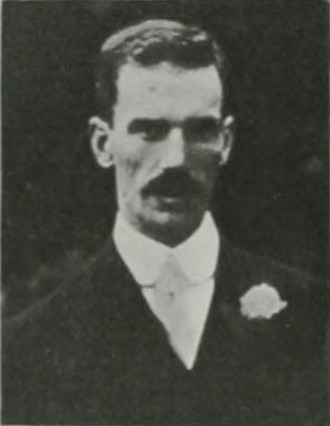
Charles E. Blanford.
BLANK, WILLIAM JOHN HENRY, E.R.A., 1st Class, 268654, H.M.S. Monmouth; lost in action off Coronel, on the coast of Chili, 1 Nov. 1914; m.
BLANSHARD, PHILIP ARTHUR, Private, No. 11466, 2nd Battn. Coldstream Guards, 4th s. of Henry Brand Blanshard, of 4, Finsbury Grove, Fountain Road, Hull, by his wife, Alice, dau. of the late George Hurdman of Hull, hairdresser; b. Hull, 18 Sept. 1894; educ. Park Road Board School there; was in the employ of the Hull Corporation (Sanitary Dept.), enlisted 4 Sept. 1914; left England for the Front, 21 Jan. 1915 and died in the 1st Field Hospital, at 3.30 p.m. 2 Feb. following, of shell wounds received in action at Cuinchy near La Bassée. He was buried in Bethune Town Cemetery.
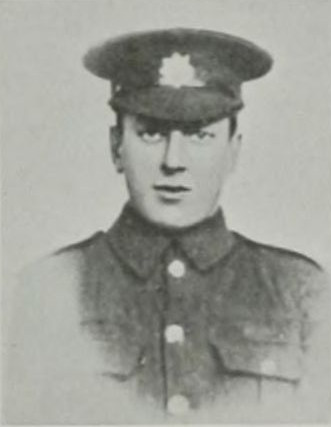
Philip Arthur Blanshard.
BLATCHFORD, ALBERT, Acting Leading Stoker, (Dev.), K. 10989, s. of Joseph Blatchford, of 2, Weslet Terrace, Ipplepen, near Newton Abbot; lost in action when H.M.S. Goliath, was sunk at the Dardanelles, 13 May, 1915.
BLATCHFORD, ALBERT GEORGE, Shipwright, 1 Ch. 170876, H.M.S. Formidable; lost when that ship was torpedoed in the English Channel, 1 Jan., 1915; m.
BLATHERWICK, HENRY THOMPSON, Boy, 1st Class, J. 26731 (Ports.), H.M.S. Hawke; lost in action in the North Sea, 15 Oct. 1914.
BLATHWAYT, GERALD WYNTER, Capt., Royal Field Artillery, yr. s. of Arthur Pennington Blathwayt, member of the London Stock Exchange, and of Northwood Grange, R.S.O., Middlesex, by his wife, Mary Constantia, dau. of the late John Thorp, of Maldon, Essex; b. Belvedere, Kent, 30 June 1879; educ. Aldenham School, Herts; gazetted 2nd Lieut. from the Kent Artillery Militia, to the Royal Artillery, 22 Dec. 1898, promoted Lieut. 16 Feb. 1901, and Capt. 18 July, 1906. He served in the South African War and received the Queen’s medal with three clasps. From 1906 to 1909 he served as Brigade Adjutant, and from 1910 to Jan. 1914 was Garrison Adjutant, Eastern Command. At the outbreak of war Capt. Blathwayt went with his Battery to France and was in the retreat from Mons to the Marne. He was killed at the Battle of the Aisne, near Verneuill, 14 Sept. 1914, and was buried in the garden of the Chateau there. Major Barker, commanding the battery, in communicating his death wrote: “In him the Army has lost a gallant officer and myself and his other companions in the Brigade a beloved comrade and friend.” While at Woolwich he took an active part in the Garrison cricket and was Hon. Sec. of the club. He was recently elected a member of the “Band of Brothers,” and was member of the Junior United Service Club. He m. at St. Stephen’s, Gloucester Road, London, 26 Oct 1911, Margaret Aline (20, The Court Yard, Eltham), younger dau. of the late Charles Pickersgill-Cunliffe, of Cobb Court, Cootham, Sussex, and had two daughters, Madeleine Margaret, b. 12 July, 1912, and Elizabeth, b. 16 Feb. 1914.
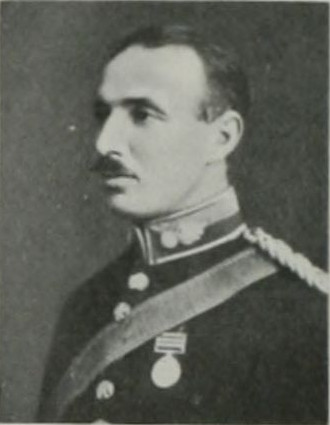
Gerald Wynter Blathwayt.
BLEASE, HARVEY, Capt., 15th (Service) Battn. The King’s Liverpool Regt., elder s. of Walter Blease, F.C.A., of Messrs. Blease & Sons, Chartered Accountants, by his wife, Mary, dau. of the late James Harvey, of Salford; b. Liverpool, 29 Aug. 1882; educ. Parkfield School, Liverpool, and Sedbergh, Yorks, and afterwards entered his father’s firm and took great interest in the educational schemes of the Institute of Chartered Accountants. After the declaration of war he applied for a commission and was gazetted Lieut. to the 15th Battn. of the King’s Liverpools, 12 Nov. 1914, and promoted Capt. 15 Jan. 1915. He went out with the Mediterranean Expeditionary Force, and was there attached to the 7th Lancashire Fusiliers. He was killed in action at the Dardanelles, 7 Aug. 1915. Capt. Blease enjoyed a reputation as a batsman while at Sedbergh and later took part in the Old Boys’ annual tours. For fourteen years he was identified with the Sefton Park Club, during eleven of which he was captain, and for whom he gave many brilliant displays in Lancashire and Cheshire cricket. He was also an excellent cross-country runner. He m. at Liverpool, 15 Sept. 1910, Dorothy Stanley (Rostherne, Blundellsands, near Liverpool), 2nd dau. of the late Stanley Blease, of Liverpool, and had two children, Helen Margaret, b. 12 July, 1911; and Barbara Mary, b. 28 June, 1914.
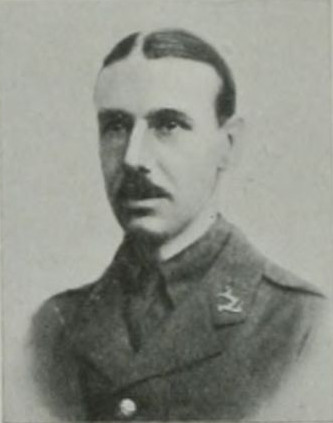
Harvey Blease.
BLEES, JOHN, Private, No. 712, Princess Patricia’s Canadian L.I., Canadian Expeditionary Force, s. of the late John Peter Blees, of Jabalpur, India, by his wife, Mary Ann (24, Sandileigh Avenue, Withington, Manchester), dau. of James Bowden; b. Jabulpur, Central India, 25 Feb. 1889; educ. Dulwich College; went to Canada in 1900 and settled at Edmonton; on the outbreak of war volunteered and joined Princess Patricia’s L.I.; came over with the first contingent in Oct. 1914; crossed to France in Feb. and died 11 May, 1915, of wounds received in action near Ypres on the 8th; unm. One of his officers wrote: “He was wounded in the engagement on 8 May, in which engagement all the officers were either killed or wounded. The regt. endured an extremely heavy bombardment. How severe it was and how gallantly our boys stuck to their trenches and held back the Germans can only be told in the future, when military consideration will not restrict correspondence, suffice it to say that this regt. held out so gallantly and against such odds that Sir John French came down to personally thank the regt. for what they did that day. On that day every man was a hero, but some were conspicuous even here. Your son was helping the wounded out and binding their wounds when he was struck, a shrapnel caught him in the abdomen, but even with this desperate wound he was game and was carried out still cheery and encouraging the boys to stick it.” He was buried in the regimental burial ground at Hazebrouck.
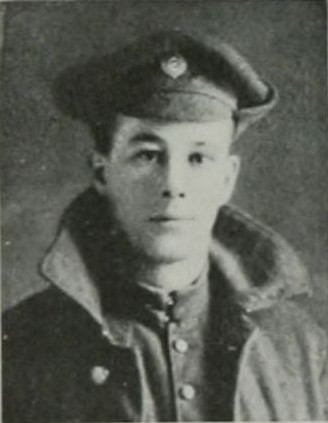
John Blees.
BLIGH, ERIC, 2nd Lieut., 3rd Battn., attached 2nd Battn., the East Lancashire Regt., s. of William Bligh, of Caterham Valley, co. Surrey, by his wife, Lilian Josephine, dau. of William Lafone, of Monte Video; b. Caterham Valley, 30 Dec. 1894; educ. The Dene, Caterham, Sherborne School, where he was a member of the junior O.T.C. with the rank of Lance-Corpl. and Christ’s College, Cambridge, where he was a private in the senior O.T.C. Medical. After the declaration of war he applied for a commission and was gazetted 2nd Lieut. to the 3rd Battn. of the East Lancashires, 15 Aug. 1914. He joined the 2nd Battn. at the Front, 7 March, 1915, served through the Battle of Neuve Chapelle and was killed in action opposite Fromelles, 9 May, 1915, in the assault on Aubers Ridge. His commanding officer, Major Maclear, wrote: “Your son was shot by a German machine gun whilst leading his platoon in an assault on the German trenches opposite Fromelles on Sunday, 9 May, death being instantaneous. Your son was only with us a short time, but we were all very fond of him, and you have the consolation of knowing that he could not have died a nobler death.” He was promoted Lieut. after his death to rank as from 13 Feb. 1915, and was buried on the road from Sailly to Fromelles.
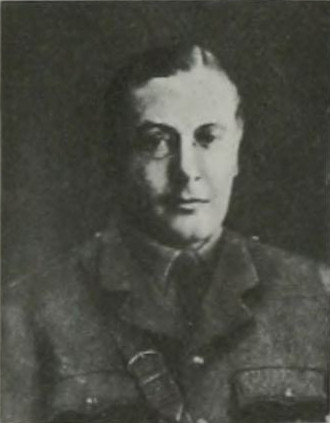
Eric Bligh.
BLIGHT, CHARLES, Corpl., No. 3/5971, 1st Battn. Somerset L.I., s. of the late Charles Blight; b. London; and was killed in action, 19 Dec. 1914. Prior to the war he was employed as a Collier at the Cambrian Pits, Clydach Vale. He m. in Bath (—), and had two sons: Charles and Stanley.
BLISS, CHARLES, Major, 2nd Battn. 1st (King George’s Own) Gurkha Rifles, Indian Army, 2nd surviving s. of Sir Henry (William) Bliss, of The Abbey, Abingdon, K.C.I.E., J.P., late Indian Civil Service, by his 1st wife, Mary, dau. of Edmund Rendle; b. at Dindigul, Madras Presidency, 31 Dec. 1871; educ. Clifton, Heidleberg and Sandhurst; and obtained his first commission in the North Staffordshire Regt., 5 June, 1891; transferred two years later to the Sherwood Foresters (Notts and Derby Regt.), of which he was promoted Lieut. 4 July, 1896. In the Dec. following he joined the Indian Staff Corps, becoming Capt. 10 July, 1901. After a period with the 43rd (later the 8th) Gurkha Rifles and the Assam Military Police, he was appointed double-company commander of the 1st Gurkha Rifles, 5 Dec. 1908, and obtained his Majority 5 Dec. 1909. In 1903–4 he saw service in Tibet, being present in the action at Niani, and during the operations at and around Gyantse, and in the march on Lhassa, being slightly wounded. His services were mentioned in Despatches [London Gazette, 13 Dec. 1904], and he received the medal with clasp. Major Bliss commanded various punitive expeditions in the Nagar Hills, on the North-West Frontier, between 1907 and 1911, and from 1911 to 1913 was in command of escorts on several political, survey and exploration missions on the North-West Frontier. He had the Abor, Indian Police and Durbar medals, and in 1914 was made a C.I.E. On the outbreak of the European War he came to Europe with his regt., and died at Lille, 22 Dec. 1914, of wounds received in action at Festubert on the 20th. He was mentioned in F.M. Sir John (now Lord) French’s Despatch of 5 April [London Gazette, 22 June], 1915, for gallant and distinguished conduct in the field. Major Bliss m. at St. Paul’s, Knightsbridge, 11 April, 1901, Mabel Emmeline, eldest dau. of Col. Thomas M. Maxwell, late Sherwood Foresters, and had a dau., Lorna, b. 31 Aug. 1905.
BLISSETT, WILLIAM HENRY, Private, No. 18317, 3rd Battn., 1st Infantry Brigade, Canadian Expeditionary Force, s. of Edward Blissett, of Bath, Butler, by his wife, Elizabeth (9, Coleman Street, Brighton), dau. of Samuel Wills, of Liss, Hants; b. Paddington, 16 Dec. 1885; educ. Gordon Memorial Schools, Diss Board School and Priory Road School, Hastings, and was then apprenticed as a carpenter to Mr. Harvey, King’s Road, St. Leonards. In 1907 he went to Canada, and after a year in Ontario, settled in Alberta, where on the outbreak of war he enlisted. He came over with the 1st Contingent, in Oct. 1914, and after training at Salisbury and Shorncliffe, went to the Front in May and was killed in action in the trenches, 8 Nov. 1915, by a bullet. He was buried in Wulverghem Cemetery; unm.
BLOFELD, D’ARCY FRANK, 2nd Lieut., 2nd Life Guards, only s. of Frank Blofeld, of Dunster Lodge, Alcombe, West Somerset, by his wife, Leslie Blanche, only dau. of Major Thomas Perkins, R.H.A., H.A.C., of Doverhay Place, Porlock, Somerset; b. Dunster Lodge, afsd. 21 April, 1890; educ. St. Michael’s (Mr. Hawtrey), Westgate-on-Sea, and Eton (Mr. E. L. Churchill’s House, 1903–8), where he won the Junior Pulling in his last year. He served three years with the Eton College Volunteers, but ill health prevented his going on to Sandhurst, and he spent several years in the Argentine, where he became interested in the breeding and schooling of polo ponies. He was living at Staverton, near Cheltenham, when war broke out, and immediately joined the Gloucestershire Yeomanry. On 9 Sept. he was gazetted to the 3rd Reserve Regt. of Cavalry, and took up his duties at Canterbury. He was posted to the Household Cavalry on 24 Oct. and joined his regt., the 2nd Life Guards, at Windsor. On 7 Nov. he went to Flanders, and served with his regt. in the trenches, and just before Christmas he came home on seventy-two hours’ leave. His second experience of the trenches was early in Feb., after which he obtained a week’s leave, but was recalled in four days, and from then until his death, near Ypres, on 12 May, he was at the Front. He and four other officers were killed instantaneously by an explosive shell. He had won the liking of his brother officers, and the confidence of his men. Mr. Blofeld was fond of all sport, he was a finished horseman and a most promising polo player. He was a member of the Cheltenham and West Somerset Polo Clubs, his handicap being 5 goals Hurlingham, 1914. He hunted with the Devon and Somerset Staghounds and the West Somerset Fox Hounds since early boyhood, and during the time he was at Staberton, with the Cotswold Hunt. He was greatly beloved by all who knew him and was a fine example of how quickly a good sportsman can become a good soldier. His Col. wrote: “As a horsemaster he was invaluable to me, and the fact that he had been chosen for the duty in which he met his death, proves that his Squadron leader relied on him.”
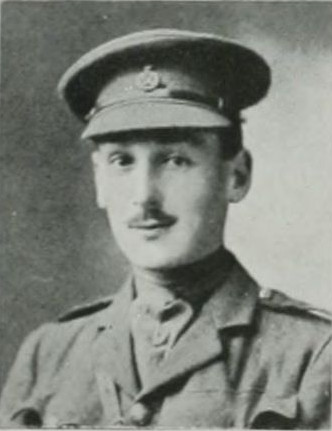
D’Arcy Frank Blofeld.
BLOMFIELD, CHARLES GEORGE MASSIE, Major, 1st Battn. Royal Warwickshire Regt., elder s. of Rear-Admiral Sir Richard Massie Blomfield, K.C.M.G., for twenty-eight years in charge of the Port of Alexandria and afterwards Director-General of all Egyptian Ports, etc., by his wife, Rosamund Selina, 2nd dau. of the late Right Rev. Charles Graves, D.D., Lord Bishop of Limerick, and nephew of Alfred Perceval Graves, author of “Father O’Flynn,” and the “Irish Ballad,” etc., and of Charles Larcom Graves, Assistant Editor of the “Spectator,” and a member of the Inner Round Table of “Punch”; b. London, 19 June, 1878, brought up at Port House, Alexandria, Egypt, until nine years of age; educ. Stubbington House School, Farnham, Cheltenham College and Sandhurst; received his commission as 2nd Lieut. in the Warwicks, 6 April, 1898, and was gazetted Lieut. 28 Dec. following, Capt. 16 Nov. 1901, and Major 19 Dec. 1914. He joined his regt. at Chatham and was sent to Malta, and in the following year (1899) to South Africa, and served through that campaign, 1900–2. He was employed with the Mounted Infantry, took part in the operations in Cape Colony, South of the Orange River (1900), in the Orange Free State, April to Nov. 1900, and in the Transvaal, 30 Nov. 1900, to 31 May, 1902, and received the Queen’s medal with three clasps, and the King’s medal with two clasps. On the close of the campaign he took over drafts to India to the 2nd Battn. at Bangalore. He then joined his parents at Assuan for the opening of the Great Dam, and was afterwards stationed in Ireland, where he continued his polo and hunting. He had meanwhile qualified as an interpreter of foreign languages and from May, 1905, to June, 1906, was attached to the Egyptian Army, and spent about a year in the Soudan, then rejoining his regt. at Aldershot. He became adjutant of the 4th (Special Reserve) Battn. of his regt. 31 Jan. 1912, a post he held for 3½ years, and after the declaration of war, did excellent work in preparing drafts for the front. He was posted to the 1st Battn., and joined the Expeditionary Force in France, 5 May, 1915, and fell, mortally wounded by a bullet through the head, 9 June, at 5 p.m. Gen. Landon, Royal Warwick Regt., wrote: “The regt. has sustained a loss indeed, which it will be hard to get over, and one it can ill afford. He was a most valuable officer and I know everyone loved him”; and Col. Poole, Commanding 1st Battn.: “His loss to me as one of my Coy. Commanders is irreparable. I had the highest opinion of him as a soldier, and he was worth anything in these hard times. We all mourn his loss.” He was on the staff of the “Army and Navy Gazette” and his humorous little work “The Young Officer’s Guide to Knowledge” cheered many a man in the hum-drum life of the trenches. A good violinist, he raised the band of the Special Reserve at Warwick. Major Blomfield m. at St. Paul’s, Wimbledon Common, 5 Oct. 1907, Hirell, elder dau. of the late James Clarence, of Castle Towers, Wimbledon Common, and had issue, Charles Clarence Massie, b. Aug. 1908 (d. in infancy), and Richard Beverley Massie, b. 25 June, 1913.
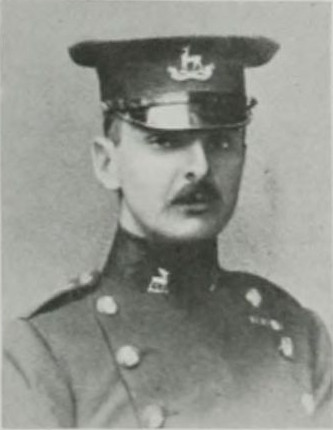
Charles G. M. Blomfield.
BLOOM, JOSEPH HENRY, Private, R.M.L.I. (Ports.), 6876, H.M.S. Good Hope; lost in the action off Coronel, on the coast of Chili, 1 Nov. 1914.
BLOOMFIELD, SIDNEY HERBERT, A.B., J. 8083, H.M.S. Pathfinder; lost when that ship was sunk by a mine, about 20 miles off the East Coast, 5 Sept. 1914.
BLOUNT, JAMES WILLIAM, C.E.R.A., 2nd Class, 269403, H.M.S. Good Hope; lost in the action off Coronel, on the coast of Chili, 1 Nov. 1914.
BLOXAM, JOSEPH, Private, No. 1732, 5th Battn. Australian Imperial Force, 4th s. of Thomas Bloxam, of Outram Street, Leicester, Framework Knitter, by his wife, Ann, dau. of Thomas Bowby; b. Leicester, 24 Oct. 1878; educ. Cottage Homes, Counterthorpe, Leicestershire; enlisted in the Leicestershire Regt. 20 years ago, and after serving his time went to Australia in 1910. On the outbreak of war he joined the Australian Imperial Force, and was killed in action at Gallipoli, 7 Aug. 1915; unm.
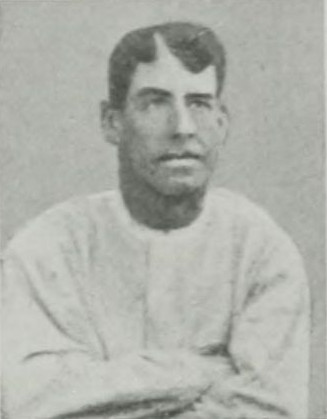
Joseph Bloxam.
BLOXSOM, WILLIAM JABEZ, Petty Officer, 1st Class, 164154, H.M.S. Hawke; lost in action in the North Sea, 15 Oct. 1914.
BLUE, DOUGALL, Capt., 3rd, attached 2nd, Battn. Scottish Rifles (The Cameronians), s. of Dugald Blue, of Glasgow; b. Glasgow, 10 June, 1878. He graduated M.A. at Glasgow in 1900, and three years later he accepted a scholastic appointment in Rhodesia. Whilst there he organised and commanded the first Cadet Corps ever formed in that country. He also held a commission in the Southern Rhodesian Volunteers. Returning to Glasgow in 1910, he became classical master in the High School, and received a commission in the School’s Contingent of the Officers’ Training Corps. In 1913, he became classical master in Hutchesons’ Grammar School, and there organised a Cadet Corps, which was affiliated to the 7th Battn. Scottish Rifles, Capt. Blue being appointed its first commanding officer. When the war broke out he received a captain’s commission in the 3rd Scottish Rifles, 3 Dec. 1914, proceeding shortly afterwards to France where he was attached to the 2nd Battn. Scottish Rifles. He was wounded in action near Fromelles, 9 May, 1915, and died two days later, and was buried in Merville Cemetery. He m. at Airdrie, 6 Jan. 1915, Katharine Armit, dau. of Thomas Swan, of Springhill House, Airdrie, Banker; s.p.
BLYDE, MICHAEL JOHN, Private, No. 280, 1st Newfoundland Regt., 4th s. of John Blyde, of 49, Fleming Street, St. John’s, Newfoundland, employee of St. John’s Municipal Council, by his wife, Mary, dau. of Philip Grouchy, Fisherman, and grandson of George Blyde (who served through the Crimean War, and after completing his 21 years’ service settled at St. John’s, Newfoundland); b. St. John’s afsd., 19 Feb. 1895; educ. Christian Brothers’ Schools there; was a member of the Catholic Cadet Corps and the local Boys’ Brigade, and also a Bugler in the local corps of the Legion of Frontiersmen; and on the outbreak of the European War volunteered for Imperial service with the 1st Newfoundland Regt.; left for England, 6 Oct. 1914; went to the Dardanelles, 20 Aug. 1915, and died 26 Sept. 1915, of wounds received in action at Gallipoli; unm.
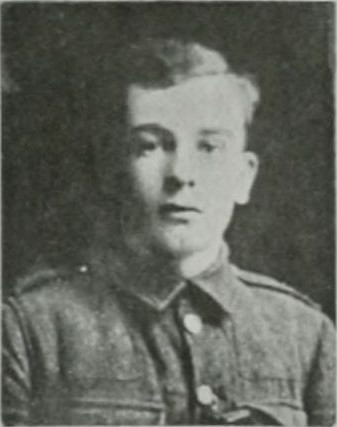
Michael John Blyde.
BLYTH, REGINALD CROMMELIN POPHAM, Capt., 1st Battn. Gloucestershire Regt., attd. 2nd Battn. Royal Fusiliers, only s. of the Rt. Rev. George Francis Popham Blyth, D.D., late Bishop in Jerusalem and the East, by his wife, Mary, dau. of Col. James Arden Crommelin, R.E., and gdson. of the Rev. George Blanshard Blyth, by his wife (—), dau. of Col. Samuel Taylor Popham, 28th (now Gloucestershire) Regt., who served on the Duke of Wellington’s Staff [nephew of Gen. William Popham, who took Gwalior, and of Admiral Sir Home Popham, whose signalling code, still in use in the Navy, was used by Nelson for his famous signal to the Fleet at Trafalgar]; b. Darjeeling, India, 24 June, 1877; educ. St. Edward’s School, Oxford, and Brasenose College, Oxford; entered the Gloucestershire Regt. from the Militia 18 April, 1900; gazetted Lieut. 25 Oct. 1903, and received his company 14 Jan. 1911. Served in South Africa 1899–1900, taking part in the operations in Natal and the Orange Free State, and received the Queen’s medal with clasp. Capt. Blyth was with his regt. in India for some years, and acted as Divisional Staff Signalling Officer. In 1908 he was attached to the Egyptian Army for service in the Sudan, and was made a Bey. On the outbreak of the European War he was attached to the Royal Fusiliers, and was killed in action in Gallipoli, 4 June, 1915. He m. in London, 2 Aug. 1911, Norah (18, St. Leonard’s Road, Bexhill-on-Sea), dau. of Louis Edmund Hassells Yates, of Crawley, Sussex, and had one son, Lionel Popham, b. 16 June, 1912.
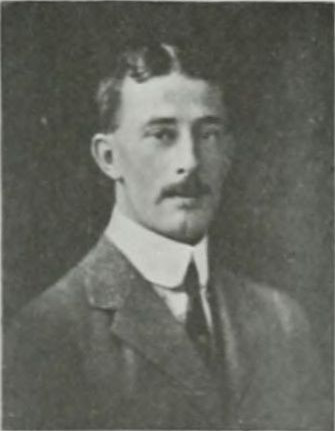
Reginald C. P. Blyth.
BOAG, HUGH, Stoker, P.O. (R.F.R., Ch. B. 4547), 279684, H.M.S. Cressy; lost in action in the North Sea, 22 Sept. 1914.
BOARDMAN, ALBERT, Gunner, R.M.A., 10135, H.M.S. Aboukir; lost in action in the North Sea, 22 Sept. 1914.
BOATMAN, JAMES, Trimmer, 39810, H.M.S. Clan McNaughton; lost in that ship, Feb. 1915.
BOBBETT, ALFRED, Stoker, 2nd Class, K. 19166, H.M.S. Monmouth; lost in action off Coronel, on the coast of Chili, 1 Nov. 1914.
BOBBINS, HARRY, Private, No. 6899, 1st Battn. Middlesex Regt.; served with the Expeditionary Force in France, etc., died 13 Jan. 1915, of wounds received in action; m.
BOCK, ROBERT HENRY, Stoker, 1st Class, S.S. 111828, H.M.S. Pathfinder; lost when that ship was sunk by a mine, about 20 miles off the East Coast, 5 Sept. 1914.
BODDY, TOM, Private, No. 8170, 1st Battn. East Yorkshire Regt., s. of the late John Thomas Boddy, of 69, West Parade, Hull, E. Yorks., Chronometer Maker to the Wilson Line of steamers, by his wife, Mary Artis, dau. of Capt. Ambrose White, R.N.R.; b. Hull, 22 Nov. 1887; entered the Army 13 July, 1905, served at home from 1905–7, and in India from 1907–13; returned to England in Dec. 1913, and joined the Special Reserve; mobilised 4 Aug. 1914, went to the front 7 Sept. 1914, was killed in action at La Courronne during the Battle of the Aisne, 16 Oct. 1914; unm. The commander of the section in which Boddy was serving writes: “My section under my command were sent out on point duty to the battn., that is about 200 yards in front, so as to prevent surprise. Tom and I were working as one pair in the centre, and I split up the others, ten men on each flank; we went along nicely until we came to the village of La Courronne, when we sighted a few Germans. These we drove along in front of us, for a distance of about half a mile. We then saw the enemy advancing towards us in large numbers, and a long shot wounded one of my men; we then took cover behind a house, and opened rapid fire to check their advance. I sent two men back immediately for reinforcements, another man was wounded, so this left me with only six men, and the enemy were within 400 yards of us, so I again sent for reinforcements which never came, so I made up my mind to try and get the wounded away with my remaining men, and I am sorry to say that it was whilst Tom and I were firing to cover the rescue party that poor Tom was killed.”
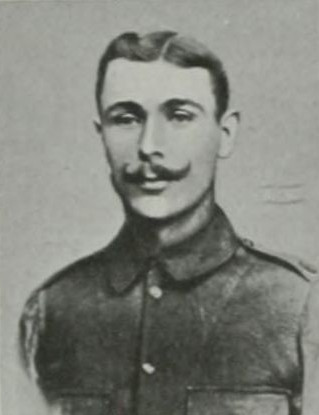
Tom Boddy.
BODIMEADE, HENRY CHARLES, Private, No. 3776, 7th Battn. The Middlesex Regt. (T.F.); served with the Expeditionary Force in France, etc.; killed in action, 10 June. 1915; m.
BODKIN, GEOFFREY, A.B., 182664, H.M.S. Cressy; lost in action in the North Sea, 22 Sept. 1914.
BODY, WILLIAM HENRY, Chief Armourer, No. 5853, R.N., s. of John Body, Butcher (late Farmer); b. St. Cleer, near Liskeard, ... 1864; educ. Pelynt and Duloe, co. Cornwall; entered the Navy 28 June, 1886, served nearly three years on H.M.S. Firebrand, and on his return home was stationed at Devonport for some considerable time on H.M.S. Cambridge and H.M.S. Defiance; afterwards he served for about three years on the Penelope at the Cape of Good Hope, later went to China, and was for two and a-half years on the Tamar. He retired on a pension in 1908, but on the outbreak of war was called up and appointed to H.M.S. Majestic, and lost his life when that ship was torpedoed at the Dardanelles, 27 May, 1915, his body was picked up and interred at Sel-el-bahr. He m. at Talland Parish Church, near Looe, Cornwall, 19 Nov. 1891, Janie (196, Pasley Street, Stoke Devonport), dau. of Hugh Littleton, of Polperro, co. Cornwall, Builder, and had four sons and a dau.: William Maurice, b. 27 Aug. 1892, d. 25 Aug. 1911; Frederick Littleton, b. 10 Sept. 1893; Leonard Hugh, b. 28 Feb. 1899; Owen John, b. 12 June, 1907; and Doris May, b. 9 Feb. 1901. Body held the Good Conduct Medal.
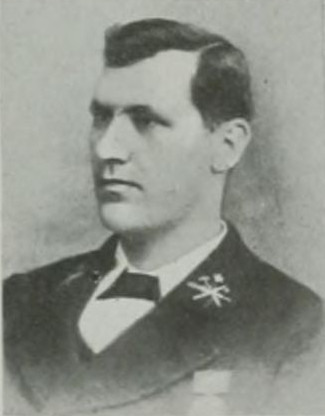
William Henry Body.
BOEATER, ALFRED, Private, No. 6994, 2nd Battn. Royal West Surrey Regt.; served with the Expeditionary Force in France, etc.; killed in action, 18 Dec. 1914.
CRAWLEY-BOEVEY, EDWARD MARTIN, Capt., 1st Battn. Royal Sussex Regt., 2nd s. of the late Sir Thomas Hyde Crawley-Boevey, 5th Bart., by his wife, Frances Elizabeth, dau. of the Rev. Thomas Peters, Vicar of Eastington; b. Flaxley Abbey, co. Gloucester, 26 March, 1873; educ. Rugby and Royal Military College, Sandhurst, and was appointed 2nd Lieut. in the Royal Sussex Regt., 6 March, 1895, being promoted Lieut. 31 July, 1897, and Capt. 17 Dec. 1902. He served in the South African War, 1900–2, taking part in the actions at Houtnek, Vet River (5–6 May), Zand River, Johannesburg, Pretoria, Diamond Hill, Wittenbergen, and Ladybrand, for which he received the Queen’s medal with four clasps and the King’s medal with two clasps, and was mentioned in despatches. In 1902 he was chosen to represent his regt. at the Coronation of King Edward VII, and came home with a detachment from the Cape, and afterwards served in East Africa, 1908–10 (Somaliland medal with clasp). After the outbreak of the European War he was sent from Dover on 11 Nov. 1914, with a draft of 200 men of the 4th Royal Fusiliers to France, and was with that regt. when he was killed in action, near Bailleul, 24 Dec. 1914. He was a noted marksman, and a very gifted draughtsman, and was greatly esteemed by all ranks. He m. at Christchurch, Mayfair, London, 31 Oct. 1905, Rosalie Winifred (Thorwald, Godalming, Surrey), yr. dau. of Col. George Conrad Sartorius, C.B., and granddau. of the late Admiral of the Fleet Sir George Rose Sartorius, G.C.B., and had a son, Richard Martin, b. 31 July, 1907.
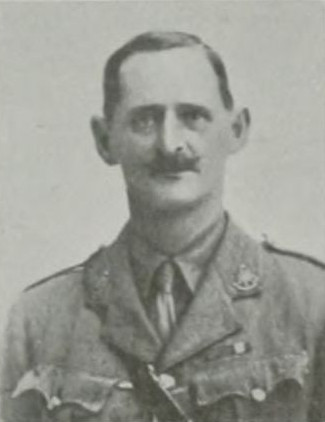
E. M. Crawley-Boevey.
BOLD, HAROLD EDWARD, Stoker, 1st Class, K. 8978; H.M.S. Monmouth; lost in action off Coronel, on the coast of Chili, 1 Nov. 1914.
BOLES, HASTINGS FORTESCUE, 2nd Lieut., 17th Lancers, attd. Royal Flying Corps, elder s. of Lieut.-Col. Dennis Fortescue Boles, of Watts House, near Taunton, M.P., Master of the West Somerset Foxhounds, now commanding 3rd Battn. Devonshire Regt.; b. London, 21 June, 1895; educ. Evelyns, Eton and Sandhurst; received a commission as 2nd Lieut. in the 17th Lancers, 16 Dec. 1914, and joined the Reserve Battn. at the Curragh for training. In April he offered himself to the Royal Flying Corps as an Observer, and was accepted and appointed to duty with the Expeditionary Force in the North of France, and had some narrow escapes in reconnaissance duty, in which two of his pilots were seriously injured. Very early on the morning of 24 May he was engaged in making a reconnaissance over the German lines, when he was hit by a shot from an enemy anti-aircraft gun. The wound was seen to be extremely serious, but 2nd Lieut. Boles did not lose consciousness. When the machine returned to its base he was at once attended to by the surgical staff, placed under an anaesthetic and operated on, but died in the evening of the same day without recovering consciousness. The manner in which he met his death is best described in a letter from his commanding officer, Lieut.-Col. W. G. Salmond, who wrote: “Your son was very severely wounded in the head to-day by anti-aircraft fire whilst carrying out a reconnaissance. It occurred about 4.30 a.m. this morning. The wound was through the side of his head from front to rear. He was put under an anaesthetic. He was so plucky. When he was wounded he turned round to his pilot, Lieut. Bell Irving, smiled, and waved his hand, and when he came down I met him and he smiled again. He was conscious all that time, and even got out of the aeroplane, although he could hardly have been able to understand then. It is so distressing to have to write to you these things, but I thought you would rather hear them and know what grit he showed.” The machine was hit from the ground, where the enemy was concentrated in great force before the attack at Ypres—between Bercelaire and Dadizeele—at a height of over 7,000 ft. Lieut.-Col. W. G. Salmond also wrote again: “I cannot tell you how much we feel his loss. He was so quiet in all his work, which was always of the very best. I think few people realise what dangers our Observers have to face in the air. It is seldom that a machine returns from a reconnaissance without being hit. Your son showed no sign of the strain; he was always so cheery, ready and intelligent. He was by far the best at photography in the air this squadron or any squadron is likely to produce. In this he was as quick as lightning. He made up his mind in a moment that the area he was ordered to photograph was the area he was actually over at the time—no easy task—and took the photographs in succession at such a rate that the pilot had no need to turn and go over the ground again. When we were going to attack Hill 60 he took some photographs that morning of some German trenches and which were unknown to us, and was able to let our artillery know before attacking. The results he obtained were of the best the Flying Corps has produced. Photography of the German trenches are of tremendous value, and the results of his work were of very great value indeed to our Army. Only the day before his death he had been up photographing, and on his return showed me the back of his hand, which had been grazed by anti-aircraft splinter. He laughed at it. I am having these last photographs he took—which show the anti-aircraft shell actually fired at the machine bursting beneath, as well as the country he was asked to take—redone, so as to send to you when this war is over, as they are splendid examples of his skill and bravery. He was very gallant, and an example to us all.” He was buried at Bailleul; unm.
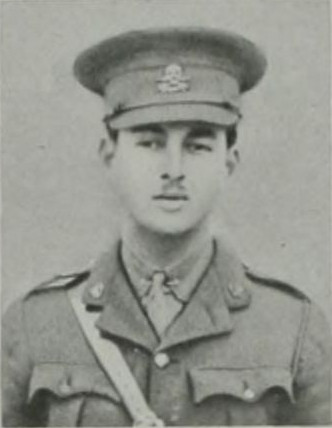
Hastings Fortescue Boles.
BOLITHO, FLEETWOOD JOHN, P.O., 1st Class, 167341, H.M.S. Clan McNaughton; lost in that ship, Feb. 1915.
BOLITHO, WILLIAM TORQUILL MACLEOD, Lieut., 19th Hussars, elder and only surviving s. of William Edward Thomas Bolitho, of York House, Penzance, and Hannaford, Ashburton, D.S.O., J.P., Banker, Major 1st Devon Yeomanry, now Lieut.-Col. Commanding 2/1st battn. of the same [a cadet of Bolitho of Trewidden], by his wife, Ethel Grace, 2nd dau. of Robert Bruce Æneas Macleod, of Cadboll, co. Cromarty, and Invergordon Castle, co. Ross, J.P., D.L., Comm. R.N.; b. Pendrea, Penzance, co. Cornwall, 13 Nov. 1892; educ. Warren Hill, Eastbourne, and Osborne and Dartmouth Royal Naval Colleges. He passed into Osborne College at 12¾ years old, and was given a remove from his own term to a term above, which was only very specially done. He continued to be head of his term, and passed out of Osborne and Dartmouth Colleges with top marks. He joined H.M.S. Cumberland at Devonport in Jan. 1909, and also passed out first from there after a six months’ cruise, taking three prizes. He was then appointed to H.M.S. Commonwealth as midshipman with four months’ seniority; he served in H.M.S. Cochrane and in H.M.S. Bellerophon, when he left the Navy of his own accord. As midshipman in the Bellerophon he won the Stoddart Cup for boat sailing, presented by Admiral Sir John Jellicoe. He then joined the Army by the Special Reserve, serving four months with the 11th Hussars at Aldershot, and passing into the Army by examination at Portsmouth in April, 1913; he was gazetted 2nd Lieut. to the 19th Hussars 23 May, and joined 24 June, 1913. On the outbreak of war he crossed to France with B Squadron on 23 Aug. 1914, and served with it throughout the winter and spring. He was killed in action near Chateau Hooge, 24 May, 1915; unm. His Major, writing to his father, said: “Your son is a great loss to us, his name had been sent in for special mention after the operations on 13 May, when he found himself temporarily in command of the squadron, and made very good use of his opportunity.”
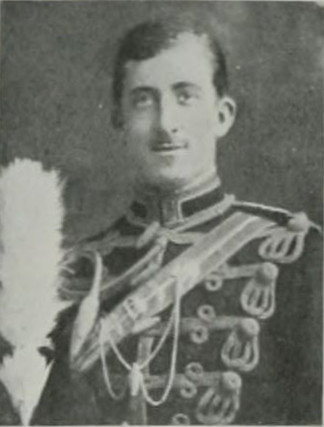
William T. M. Bolitho.
BOLLAND, THEODORE JULIAN, Major, 9th Battn. King’s Liverpool Regt. (T.F.), late 16th Rajputs; b. 9 Jan., 1870; gazetted 2nd Lieut. unattached from the Militia 23 Nov. 1892, and after serving with the Manchester Regt., was appointed to the Indian Staff Corps, 27 Feb. 1894; joined the 16th Rajputs; promoted Lieut. 23 Feb. 1895, but was obliged to resign owing to severe attacks of malaria; went on half pay 26 April, 1900; and retired 11 June, 1902; volunteered for service when war broke out, and was gazetted Capt. 2nd Queen Victoria’s Rifles (6th London Regt.) 6 Sept., 1914; exchanged into the 9th Liverpools in March, 1915, went to France a few days later, was promoted Major on the 30th and was killed in action there 9 April following.