The Roll of Honour. (continued 31)
Reading edition
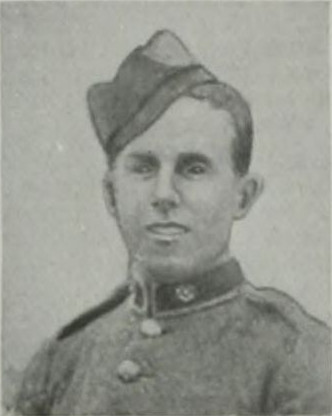
Alistair Allan Maclean.
MACLEAN, ANDREW DE VERE, Capt., 1st Battn. East Surrey Regt., only surviving s. of Kaid Sir Harry Maclean, of Tangier, Morocco; b. Morocco City, 18 Oct. 1882; educ. Wellington; and served with the Militia in the South African War. 1901–02 (Queen’s medal with five clasps); and was gazetted 2nd Lieut, to the 1st East Surreys, 28 April, 1902. He was promoted Lieut. 2 April, 1904. and Capt. 1910, and retired 23 April, 1913, when he joined the Special Reserve. He rejoined his Battn., in Dublin, on the outbreak of war; went with the 14th Brigade to France, and was killed in action at Missy-sur-Aisne, 19 Sept. 1914, and was buried there. He m. at Bombay, 20 Nov. 1907, Dulce (Westlands, Ewhurst, Surrey), only dau. of the late Major-Gen. T. J. Maclachlan, R.H.A.; s.p.
MACLEAN, ANGUS ROBERT, Private, 1363, 1st Battn. Australian Imperial Force. 3rd s. of Angus Maclean, of Korrumburra, Victoria, by his wife, Isabella, dau. of George McGregor; b. Deep Creek, Victoria, 16 June, 1889; volunteered on the outbreak of war and joined the Commonwealth Expeditionary Force in Aug. 1914; served in Egypt and at the Dardanelles, took part in the landing and was killed in action there, 17 July, 1915; unm.
MCLEAN, CHARLES, Private, No. 2583, 2nd Battn. (Prince of Wales’ Volunteers) South Lancashire Regt., s. of Michael McLean; b. Liverpool, 34 years ago; educ. St. Sylvester School, Liverpool; enlisted following the outbreak of war, 11 Aug. 1914, and died of wounds received in action at Neuve Chapelle, 13 March, 1915; buried Bailleul Cemetery. He m. Liverpool, 8 Aug. 1906, Sarah, dau. of Felix Grimes, of Liverpool, and had five children: Michael, b. 2 June. 1907; Felix, b. 17 March. 1909; Gerard, b. 15 Jan. 1913; Sarah, b. 14 March, 1911; and Mary, b. 8 April, 1915.
MCLEAN, WILLIAM, Seaman, R.N.R., R.N.R. 5329A, H.M.S. Hogue; lost in action in the North Sea. 22 Sept. 1914.
MACLEHOSE, NORMAN CRAWFORD, Lieut., 8th Battn. (Post Office Rifles) London Regt. (T.F.), yr. s. of Norman Macmillan MacLehose, of 18, Harley Street, London, W., and of Little Heath, Berkhamsted, Herts, M.B., Ophthalmic Surgeon, by his wife, Olive, dau. of the late Alexander Macmillan, Publisher; b. London, 21 April, 1889; educ. at Rugby, where he was “King’s Medallist,” and at Balliol College, Oxford, where he graduated B.A., with 2nd Class honours in Modern History, 1911; was a student of the Inner Temple and a member of the staff of the “Umpire’s Office” in connection with the Insurance Act (Part II for Unemployment). For some time after leaving Oxford he resided at, and worked for, Toynbee Hall, and he kept up his connection with that institution until the war broke out. He joined the Inns of Court O.T.C. in 1912, and in the following year obtained a commission as 2nd Lieut. in the Post Office Rifles. On the outbreak of war he volunteered for foreign service, and was promoted Lieut., 19 Aug. 1914. He left for France with his battn. in March, 1915, and was killed in action at Festubert on 26 May following; unm. He was buried at Lindez Farm, Festubert. In a letter written a few days before his death he said; “Well, the war is a bad business, but there are compensations. People had so often told us the race was degenerate that I had almost begun to wonder whether it was not true, but I know now.... Some of our fellow’s used to grouse and seem soft in England, but there is no doubt about them here. They are made of the right stuff, as I believe the whole nation is.” His commanding officer wrote of him: “He was a very valuable officer and will be greatly missed”; and a brother officer said: “His men loved him.”
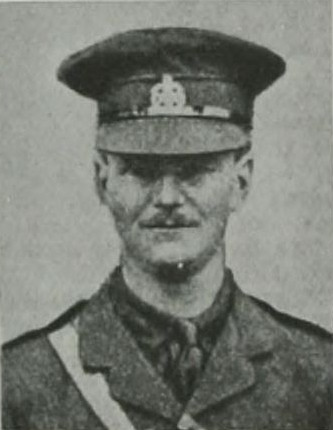
Norman C. Maclehose.
MACLENNAN, IAN DOUGLAS, Sergt., No. 2690, 5th Battn., Seaforth Highlanders (T.F.), only s. of the Rev. George Robert Maclennan, M.A., Parish Minister of Thurso, by his late wife, Barbara Johnston, dau. of the late Robert Johnston, Jeweller, Glasgow; b. Campbeltown, co. Argyle, 16 April. 1894; educ. St James School, and George Watson’s College, Edinburgh; won the medal for junior vocalists at the “mod” of “An Comunn Gaidhealach” in 1907; and on leaving Edinburgh in 1911 entered the Thurso Branch of the Commercial Bank of Scotland, and was an active and enthusiastic worker in his father’s church at Thurso. He joined the 5th Battn., Seaforth Highlanders (T.F.) in May, 1911; volunteered on the outbreak of war for foreign service; was promoted Sergt. 19 April, 1915; went to France on the following Saturday, and was killed in action at 6.30 on the evening of 15 June, 1915, in an attack upon the German trenches a few miles N.N.E., Festubert; unm. His chaplain, the Rev. D. Macfarlane, wrote: “Sergt. Maclennan was killed in action last night when our battn. had severe losses. His coy. (C) was chosen to lead an attack, and he with several others, among them two of the officers, were cut down by machine gun and shell fire. He always willingly led the praise for me at the coy. services. On Friday afternoon I had a service with his coy. in preparation for the trench work and its hazards, and he led the hymns for us so lustily. He was an influence for good among the men, and was most highly respected and beloved by his own coy.” A comrade wrote: “Everyone here has great reason in feeling very proud of Ian. I saw him last just before we left the trench to charge, and as usual, he was cheerily talking to us and looking as cool as could possibly be. It is a comfort for you to know that Ian’s remains have had a very decent burial just behind the trench from which we charged, and a Sergt. from B Coy. has put up a very neat cross on the grave.” Another comrade paid the following tribute to his memory: “Happiness was one of his great possessions, he was never downhearted. He was one to march with or to rest with, a man in a hundred to fight alongside, for he had the two essential qualities of a good comrade—great spirits, and ceaseless unselfishness. His death, like his life, was a glorious one, and I am sure that he met it as he met good and bad fortune alike—with a smile.”
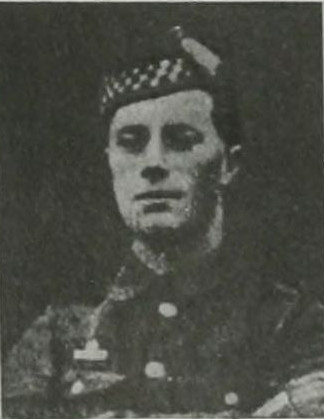
Ian Douglas Maclennan.
MACLEOD, ALASTAIR RODERICK, Lieut., “Y” Battery, R.H.A., yr. s. of Simon John Fraser Macleod, of 26, Albert Hall Mansions, Kensington. S.W., K.C., one of H.M. Commissioners of the Board of Control, by his wife, Catherine Florence, dau. of the late William Nelson, of Salisbury Green, Edinburgh; b. 44, Gloucester Place, Hyde Park, W., 20 Jan. 1892; educ. Cheltenham, and the Royal Military Academy, Woolwich; gazetted 2nd Lieut., R.F.A., 23 Dec. 1911; appointed to 135th Battery, and promoted Lieut. 23 Dec. 1914. He proceeded with his battery to France in Aug. 1914, his brigade being attached to the 4th Division, and took part in the memorable retreat from Mons to Melan, and subsequently in the general advance and the Battles of the Marne and the Aisne. While on observation duty for his battery in our first line trenches near Le Gheir before daybreak on the morning of 21 Oct., the trenches were captured by a battn. of the 104th Saxon Regt. and he himself and some 40 men made prisoners. They were well treated by their captors and placed in the cellars of a convent for protection from the bombardment of their own guns, and later in the day, when a counter-attack recovered the lost trenches, were released. In Nov. he was wounded by shrapnel in the shoulder and got concussion from the effects of high explosive shells, and was invalided home. He rejoined at Woolwich in Jan. 1915, and getting his “jacket” was in March appointed to “Y” Battery, R.H.A., and proceeded to the Dardanelles with the 29th Division. He was mortally wounded at Beach W, Gallipoli, 25 April, 1915. Having been selected on 23 April by the officer in command of the R.H.A., of the Division to act as observation officer to certain of the ships, whose guns were to cover the landing of the troops near Cape Helles, he, with his servant and five signallers, went on board the Caledonia, and on the morning of the 25th he and his men landed with the Lancashire Fusiliers at Beach W, between Capes Tekke and Helles, to control and direct the fire of the warships. Lieut. Macleod was the only R.H.A. officer to participate in this gallant feat of arms. Our men suffered heavily while still on the water, and, on landing, came up against unbroken lines of barbed wire, while, from the cliffs, snipers and concealed machine-guns and quick-firers rained death upon them. Lieut. Macleod and his signallers, with the exception of one, who fell severely wounded directly he left the boat, succeeded in crossing the beach and gaining some shelter on the cliffs; but, in attempting to move forward to a more commanding position, he was mortally wounded by a pom-pom bullet. Just after being hit, he sent off a military message to the Fleet, ending with the words: “I’m done for!” His servant, Gunner McCarthy, raised him up and dragged him into some slight shelter, and he was within a short time placed in a boat and taken to H.M.S. Euryalus, but died as he was being lifted on board. He was buried at sea the following day together with 16 other officers, the Brigadier-General and all the officers of the Headquarters’ staff being present; unm. The officer commanding his battery in France wrote: “I had an extremely high opinion of the boy, both as a friend and an officer, and the regt. has lost one of a type which is rare to find. He combined every virtue that one could wish to find; a charming companion, very popular with the officers and equally so with the men, and they had a great respect for him. Hard working, always thorough at his duties and keen on his profession, he was an absolutely straight gentleman. His one fault I fear may have been his undoing, and that was his total disregard for his own safety”; and the Colonel commanding the R.H.A. Brigade at the Dardanelles wrote: “He had a particular charm about him with his very boyish appearance and manner, and I had taken a great liking to him. His selection for so important a job is a sufficient proof of what was thought of him as an officer. The desperate enterprise succeeded on that beach, and you, with many others, will have your grief tempered by pride in one of the most glorious achievements of this war.” Lieut. Macleod was a fine rider, and on 25 April, 1914—exactly a year before his death—won the Bar Point-to-Point Open Steeplechase on his own horse in a field of 23. He was known to his intimates as “Hamish.”
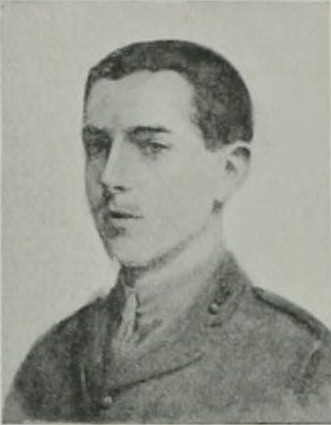
Alastair R. Macleod.
McLEOD, ARCHIBALD ALASTAIR, Capt., 1st Battn. Gloucester Regt., 3rd s. of the late Lieut.-Gen. William Kelty McLeod, Col., The Highland L.I., by his wife, Emilie Godfrey, dau. of the late James Thomson, of Gibraltar, nephew of the late Lieut.-Gen. Sir John McLeod, G.C.B., Col., Black Watch, and gdson. of the late Col. Alexander McLeod, C.B., 61st Regt.; b. Singapore, 3 June, 1877; educ. Wimbledon School, the Oxford Military College, and the Royal Military College, Sandhurst; gazetted 2nd Lieut., 2nd Battn. Gloucestershire Regt., 8 Sept. 1897, and promoted Lieut. 24 Feb. 1900, and Capt. 13 Oct. 1905; served (1) in the South African War, 1900–02, was employed with Mounted Infantry, took part in relief of Kimberley operations in the Orange Free State, Feb. to May, 1900, including actions at Paardeberg (17–26 Feb.), Poplar Grove, Dreifontein, Houtnek (Thoba Mountain), Vet River (5–6 May) and Zand River, operations in the Transvaal, May and June, 1900, including actions near Johannesburg, Pretoria and Diamond Hill (11–12 June), operations in the Transvaal, west of Pretoria, July to 29 Nov. 1900, operations in Orange River Colony, May to 29 Nov. 1900, including actions at Wittebergen (1–29 July), Bothaville, Caledon River (27–29 Nov.), in Cape Colony, south of Orange River, 1900, and in Cape Colony, north of Orange River, operations in Orange River Colony, 30 Nov. 1900 to Aug. 1901, and Oct. 1901 to 31 May, 1902, and operations in Cape Colony, Feb. to March, 1901, and Sept, to Oct. 1901 (Queen’s medal with six clasps, King’s medal with two clasps); (2) in Nigeria being employed with West African Frontier Force, 29 Sept. 1906 to 1908, when he joined 1st Battn.; and (3) with the Expeditionary Force in France and Flanders, 1914; went to the Front with the 1st Division, was present at the Battles of the Aisne and the Marne, and was killed in action while leading his Coy. in an attack on a farm held by tin-Germans, 2 Nov. 1914. Capt. McLeod was distinguished in musketry, and had the Special Certificate of signalling granted to him at Pretoria in June, 1904. His Coy. were winners of the Douglas Shield (a Regimental trophy) in 1912. His recreations were hunting, polo and shooting. He m. at the Chapel Royal, Savoy, 18 June, 1914, Marie Jeanette Amelia, yst. dau. of Lord Henry Fitzwarrine Chichester, and gdson. of Edward, 4th Marquis of Donegall; s.p.
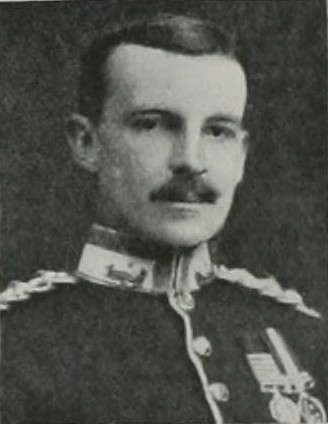
Archibald A. McLeod.
MACLEOD, DAVID FERGUSON, L.-Corpl. No. 270, 1st Battn. Australian Imperial Force, s. of the late David Ferguson Macleod, of 29, Polworth Gardens, Edinburgh, and of the General Post Office, by his wife, Isabella, dau. of Henry John Gibson, Aberdeenshire; b. Edinburgh, 12 Sept. 1889; educ. George Heriot’s School; went to Australia, Oct. 1913, and settled at Sydney, New South Wales; was a Secretary; joined the Australian Imperial Force on the outbreak of the European War; took part in the landing at the Dardanelles, 25 April, 1915, and died on the hospital ship Devanha, 10 Aug. 1915, of wounds received in action after Lone Pine, 9 Aug. 1915; unm. He was buried at sea 10 miles south-east of Mudros Harbour, Lemnos Island.
MACLEOD, IAN BREAC, Lieut., 2nd Battn. The Black Watch, only s. of the Rev. Roderick Charles Macleod, Vicar of Mitford, Morpeth, by his wife, Katharine Louisa, dau. of the Rev. William Edward Jelf, of Caerdeon, Dolgelly, and gdson. of Norman Macleod of Macleod, of Dunvegan Castle, Isle of Skye, J.P., D.L., 22nd chief of his clan; b. Bolney, co. Sussex, 4 Sept. 1893; educ. Harrow, and the Royal Military College, Sandhurst; gazetted 2nd Lieut. to the Black Watch, 4 Sept. 1912, and promoted Lieut. 9 Sept. 1914; joined the 2nd Battn. in India, Nov. 1912, with it went to France in Oct. 1914, and was killed in action in the trenches near Neuve Chapelle, 17 April, 1915; unm. Buried in the cemetery at Veille Chapelle. Col. Harvey wrote: “Your son was a most excellent young officer, and since the Battn. has been in France he has done most sterling work, especially when his Coy. Commander was wounded before Christmas—a time which tried all ranks very highly. Your son was killed while he was carrying out his duties in the trenches, and I understand died without pain.” And Major Wauchope: “Believe me that for all great and important qualities such as truthfulness, courage, kindliness, a most ready sympathy (most rare in one so young), consistent unselfishness—in all these he was, I believe, superior to most.... I have seen no one more cool and collected in hours of great danger.... As his Capt., and I do indeed trust as his friend, I can say there are few indeed I know who have qualities that are so ‘becoming to an officer and a gentleman.’ You can guess how all the men loved ‘Mr. I. B.’ All who knew him, officers and men, mourn his loss. I do not think he ever had an unkind thought for anyone, but it is only since the war began I understood his value as an officer.”
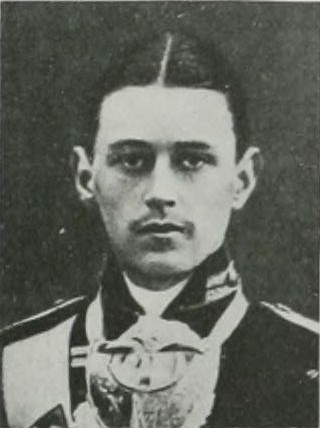
Ian Breac Macleod.
McLEOD, DUNCAN, Leading Seaman (R.F.R., B. 9671), S.S. 201449, H.M.S. Hawke; lost when that ship was torpedoed in the North Sea, 15 Oct 1914.
MACLEOD, TORQUIL HARRY LIONEL, Midshipman, R.N., H.M.S. Goliath, 2nd s. of Roderick Willoughby Macleod, of Invergordon Castle and Cadboll, co. Cromarty, and 10, Ovington Gardens, London, formerly Capt., Cameron Highlanders (who served in the Egyptian Campaign of 1882), by his wife, Alice Olivia, 2nd dau. of Edward Tierney Gilchrist Darell; b. Invergordon Castle, aforesaid, 11 Sept. 1899: educ. Hillbrow, Eastbourne, and the Royal Naval Colleges, Osborne and Dartmouth; joined H.M.S. Goliath as a Naval Cadet, 1 Aug. 1914, and was drowned when that battleship was sunk by a torpedo from a Turkish destroyer in the Dardanelles, 12 May, 1915. His Commander, H. Peel-Ritchie, V.C., wrote of him: “All the time he was my A.D.C. I had every reason to be more than pleased with his keenness and zeal and the cheery way he did everything. He was a great favourite with officers and men, and I feel sure that, as he had made such a very good start, he would very quickly have made his mark in the Service.”
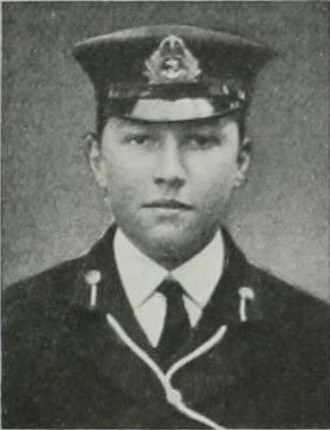
Torquil H. L. Macleod.
McLOUGHLIN, FRANCIS, Stoker, 1st Class, K. 3640, H.M.S. Aboukir; lost in action in the North Sea, 22 Sept. 1914.
McMILLAN, ALEXANDER, Driver, No. 5/692 A., New Zealand Army Service Corps, New Zealand Expeditionary Force, eldest s. of the late Archibald McMillan, Farmer, by his wife (—), dau. of Andrew Gilmour, of Waipawa, Hawkes Bay, New Zealand, Engineer and Surveyor; b. Kumeroa, 26 Feb. 1888; educ. Waipawa District High School; enlisted on the outbreak of war in Aug. 1914, left for Egypt with the Main Expeditionary Force, and died of enteric fever, 3 Nov. 1915, in the 17th General Hospital, Alexandria, and was buried there; unm. He was a most prominent cricketer and Rugby football player, and prior to his departure from New Zealand represented the New Zealand Expeditionary Force in a football match against the Christchurch Rugby Team.
McMILLAN, JAMES, Blacksmith (Pensioner), 163582, H.M.S. Hogue; lost in action in the North Sea, 22 Sept. 1914.
McMULLEN, THOMAS. Sergt., No. 7360, 2nd Battn. Coldstream Guards, yst. s. of the late William McMullen, of 40, Bell Street, Sunderland, Labourer, by his wife, Emily, dau. of Richard Copping; b. Sunderland, 8 May, 1889; educ. St. Joseph’s there and Albert Road School, Darlington; was a Shipyard Labourer; enlisted, 28 July, 1908, and reached the rank of Sergt. after about five years’ service; went to France with his battn. in Aug. 1914; took part in the Battle of Mons and the other engagements in which the 2nd Coldstreams so greatly distinguished themselves, and was mentioned in Field-Marshal Sir John (now Lord) French’s Despatch of 31 May [London Gazette, 22 June], 1915, for gallant conduct in the field. He was killed in action at Cuinchy, 1 Feb. 1915, in the same affair in which L.-Corpl. Michael O’Leary, 7th Irish Guards, won the V.C. Buried at Cuinchy; unm. Immediately the news of his death was received, one of his brothers, John McMullen, a married man with three children, enlisted in the Royal Engineers, in order that the family might still be represented in the Army, but was invalided out after six months’ service.
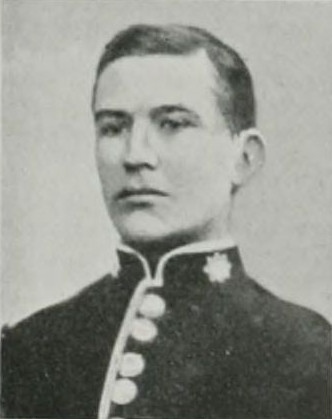
Thomas McMullen.
McMURRAN, HENRY, Stoker, 1st Class (R.F.R., Ch. B. 7687), S.S. 103004, H.M.S. Cressy; lost in action in the North Sea, 22 Sept. 1914.
McNALLY, JAMES, Stoker, 1st Class (R.F.R., B. 9696), S.S. 107103, H.M.S. Hawke; lost when that ship was torpedoed in the North Sea, 15 Oct. 1914.
McNAMARA, JAMES, A.B., 196451 (Dev.), H.M.S. Hawke; lost when that ship was torpedoed in the North Sea, 15 Oct. 1914; m.
McNEALE, FRANK HANSFORD, Petty Officer, Tele. 233305, H.M.S. Hawke; lost when that ship was torpedoed in the North Sea, 15 Oct. 1914.
McNEALY, MATTHEW, Stoker, 1st Class (R.F.R., B. 637), 281510, H.M.S. Hawke; lost when that ship was torpedoed in the North Sea, 15 Oct. 1914; m.
McNEILL, HENRY GEORGE, Trooper, No. 735, 10th Australian Light Horse, 3rd Brigade, Australian Imperial Force, 3rd s. of John O’Brien McNeill, of 13, Diamond (—), Londonderry, by his wife, Eleanor, dau. of Charles Howard Cullen, of Drumbawn, Newport, co. Tipperary; b. Queenstown, co. Cork, 10 Jan. 1896; educ. there and Mallow, co. Cork; went to Western Australia early in 1914 with the intention of taking up farming, but gave this up on the outbreak of the European War and joined the 10th Australian Light Horse at Perth, 5 Jan. 1915; went to Egypt, 9 March, and, after training there, volunteered to go as an Infantryman with his regt. to the Dardanelles; served there from 14 May to 7 Aug. 1915, on which date he was killed in action at Walker’s Ridge during the famous charge of the Light Horse. A comrade wrote: “It was on the morning of 7 Aug. when our unlucky regt. and another charged from Walker’s Ridge, and almost all got wiped out. When we had to retire back to the trenches that we started from, I looked for your son and to my sorrow could see him lying a few yards out. I watched him for a few minutes and could not see him move. I knew that he had given his life doing his bit. We could not get him in until it got dark, as it was only 50 yards off the Turkish trenches and it was death to show your hand over the trench. But that night we got him and several more in and carried them down to our medical station. We could not bury them that night, as we could not be spared from the firing line for long, but the next night we carried your son down and gave him a decent burial, our Army Chaplain reading the burial service and saying a short prayer. We mounded his grave up with stones and put a small wooden cross at the head of it with his name and regt. on it.” His 2nd brother, Corpl. John Elder McNeill (No. 7266), serving with the R.A.M.C., then attd. to the 2nd Inniskilling Fusiliers in France, was officially announced to have been awarded the D.C.M. the same day as his brother was killed, and his eldest brother, Gunner Charles Simpson McNeill (No. 31907), Royal Garrison Artillery, is also at the Front. Of his mother’s brothers, two served in the South African War and four are now on active service.
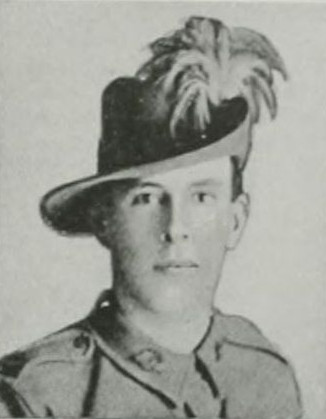
Henry George McNeill.
MACNEILL, WILLIAM MACKINNON, 2nd Lieut., 16th Lancers, 2nd s. of the late Duncan Macneill, of Winchester House, Old Broad Street, E.C., by his wife, Louisa Lucia, 4th dau. of Sir Andrew Agnew, of Lochnaw Castle, 8th Baronet, Wigtonshire; b. Tyndale House, Wimbledon Common, 7 March, 1890; educ. Repton; gazetted 2nd Lieut. to the 16th Lancers (Special Reserve) from the Carmarthenshire Militia, 22 June, 1909; obtained his Pilot’s Certificate, qualifying to serve as a flying officer, 1 Jan. 1913; went to France, Aug. 1914, and was killed in action at Mont des Cats, near Hazebrouck, 12 Oct. 1914, being buried in the Monastery there; unm.
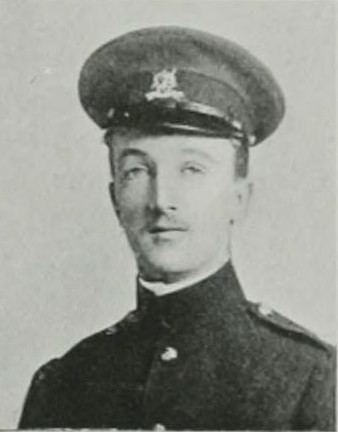
William M. Macneill.
MACNICOL, HORATIUS BONAR, 2nd Lieut., 1/10th Royal Scots (T.F.), elder s. of the late Rev. Duncan Clarke Macnicol, B.D., United Free Church Minister of Stockbridge, Edinburgh, by his wife, Emily Florence (74, Grange Loan, Edinburgh), dau. of the Rev. Horatius Bonar, of Grange, Edinburgh, D.D.; b. Glasgow, 13 April, 1896; educ. Edinburgh Academy, and Trent College, Derbyshire; gazetted 2nd Lieut. to the 1/10th Royal Scots, 17 April, 1915, and was drowned in Belhaven Bay, Dunbar, 30 July, 1915, in a gallant attempt to save a private named Watson, of his battn., who had been seized with cramp; unm.
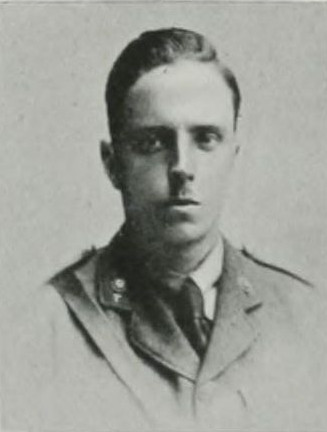
Horatius Bonar Macnicol.
MACNIVEN, ROBERT, Private, No. 606, 4th Battn. Australian Imperial Force; a native of co. Lanark; served in Egypt and at the Dardanelles; killed, 6–9 Aug. 1915.
McNULTY, JAMES, Private, No. 3385, 1st Battn. Royal Scots (Lothian Regt.); a native of co. Sligo; served with the Expeditionary Force in France, etc.; killed in action near Ypres, 15 May, 1915.
McNULTY, PETER, Private, No. 1455, 1/4th Battn. East Lancashire Regt. (T.F.), s. of the late John McNulty (died 8 March, 1912), by his wife, Ellen (37, Eldon Place, Blackburn), dau. of (—) Ingham; b. Blackburn, 25 April, 1894; educ. St. Albans Higher Grade School there; was an engineer; joined the Lancashire Territorials in Nov. 1912; volunteered for foreign service on the outbreak of war in Aug. 1914; left for Egypt in Sept. following; served at the Dardanelles, and died 1 July, 1915, of wounds received in action there; unm. Buried in Cape Helles Cemetery.
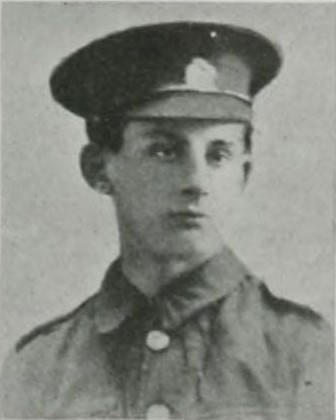
Peter McNulty.
McPHERSON, DONALD, Private, R.M.L.I., Ch./13741, H.M.S. Cressy; lost in action in the North Sea, 22 Sept. 1914.
MACPHERSON, DUNCAN STUART ROSS, Lieut., 7th, attd. 2/8th, Gurkha Rifles, only child of Surgeon-Gen. William Grant Macpherson, Army Medical Service, C.B., C.M.G., K.H.P., by his wife, Elizabeth Anne, dau. of J. Clunas, of New Orleans and Nairn; b. Bushey Heath, co. Herts, 23 Aug. 1889; educ. Westminster, Fettes College, and Royal Military College, Sandhurst; gazetted 2nd Lieut., unattd. List, 20 Jan. 1909; served his first year in India with the 2nd Black Watch; was appointed to the Indian Army, 11 March, 1910, and promoted Lieut. 20 April, 1911; served in India with the 7th Gurkha Rifles at Quetta and, during the winter of 1912–13, on the Persian Frontier; was in England on leave when war was declared in Aug. 1914, and was appointed Assistant Adjutant of the 8th (Service) Battn. The Black Watch at Aldershot, where he took an active part in the training of the battn. He went to France early in Nov. 1914, and was attd. to the 8th Gurkha Rifles. They were in the trenches at Festubert until the night of 22 Nov., when they were relieved. Shortly afterwards the enemy attacked and took the line of trenches they had handed over, and the battn. was ordered to return and counter-attack on the 23rd; this they did, eventually regaining the lost positions. It was during this attack that Lieut. Macpherson was killed while in command of the leading coy.; unm. Buried at Bethune. Lieut. Macpherson was a keen golfer and polo player, and had passed the examination for promotion to Capt. with distinction.
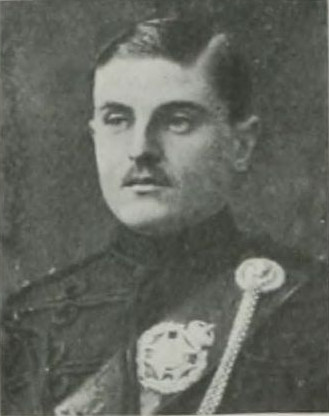
Duncan S. R. Macpherson.
MACPHERSON, JOHN, Cadet, R.N., elder s. of John Lumsden Macpherson, Lieut.-Col. commanding 7th (Reserve) Battn. The Gordon Highlanders, T.D., Solicitor, by his wife, Mabel Jeanie, dau. of the late Rev. Robert Nimmo Smith, L.L.D., Minister of the First Charge of Haddington; b. St. Andrews, Fifeshire, 6 Nov. 1898; educ. Clifton Bank, St. Andrews and privately; entered Osborne in Sept. 1911; joined H.M.S. Bulwark from Dartmouth on the outbreak of war, and was lost when that ship was blown up at Sheerness on 26 Nov. 1914; unm.
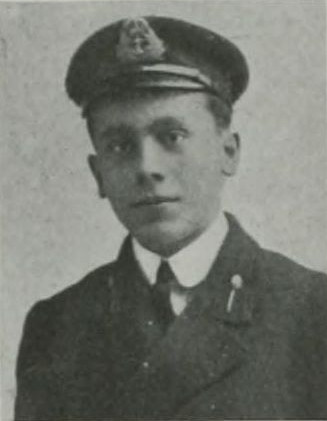
John Macpherson.
McCRAE, GEORGE, Capt., 6th Battn. Royal Scots (T.F.), attd. 1/4th Royal Scots, eldest s. of Col. Sir George McCrae, of Torluish Grange, Edinburgh, Vice-President of the Local Government Board for Scotland, and Commanding Officer 16th (Service) Battn. Royal Scots, by his wife, Elizabeth Cameron, dau. of William Russell; b. Edinburgh, 10 Dec. 1883; educ. George Watson’s College, Edinburgh, and on leaving there entered his father’s firm, Messrs. McCrae (Ltd.), Hosiers, of Princes Street, Edinburgh, of which he became managing director. On 23 May, 1898, at the age of 15, he joined the 4th Royal Scots (Volunteer), afterwards the 6th Royal Scots (T.F.), as a bugler; he became a private, 23 May, 1901, 2nd Lieut., 12 June, 1901, Lieut., 22 April, 1903, and Capt., 26 Sept. 1905. Volunteering for Imperial Service on the outbreak of war, he was transferred to the 1/4th Royal Scots and placed in charge of a double company. He left with a draft of this battn. for the Dardanelles in April, 1915, and was killed in action during an attack on the Turkish position on the Saghir Dere, Gallipoli, on 28 June, 1915. He was first wounded in the leg, but continued to lead his men on, until he was shot through the head and killed instantly. He was buried in the battlefield. “A keen and hard-working officer,” said the “Watsonian”; “his cheery and generous disposition made him popular alike with men and officers. On the voyage out, at a time of great danger, he insisted on giving his lifebelt to a private. His men here, who are left, will miss him.” He m. at Glasgow, 24 Sept. 1910, Jemima, dau. of Alexander Ross, of that city; s.p. Two of his brothers are (1916) on active service, Lieut. W. K. McCrae, in the 1st Lowland R.G.A., and Capt. K. McCrae, in the Cameron Highlanders.
MACRAE, IVOR ALEXANDER, 2nd Lieut., 3rd, attd. 2nd, Battn., King’s Own Scottish Borderers, only s. of Donald MacDonald MacRae, of Stenhouse, Thornhill, co. Dumfries, by his wife, Rosalie, dau. of the late Edward Lloyd, of Sittingbourne; b. Stenhouse aforesaid, 8 March, 1895; educ. Aldro, Eastbourne, and Harrow (The Grove); gazetted 2nd Lieut. to the 3rd Battn. K.O.S.B., 10 Jan. 1914, and attached to the 2nd Battn. for training at Dublin, 14 April following; went to France, 8 Sept. 1914, and died at Bethune, 14 Oct. 1914, of wounds received in action near Cuinchy, the previous day, while leading his platoon. They had been ordered to drive the enemy out from an entrenched position and during the attack nine-tenths of his men were killed or wounded. He was buried in Bethune Cemetery; unm.
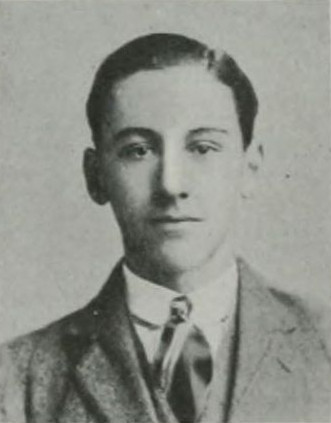
Ivor Alexander MacRae.
MACRAE, KENNETH CHARLES ERNEST, L.-Corpl., No. 1348, 14th Battn. (The London Scottish) The London Regt. (T.F.), 3rd s. of the late Kenneth Macrae, of Durham Road, East Finchley, N.W., by his wife, Frances Gertrude (18, White Hall Park, Hornsey Lane, N.), dau. of Henry Double, of Ramsgate; b. Highgate, 5 June, 1893; educ. Highfield, Muswell Hill; was a Civil Servant, Somerset House; joined the London Scottish in Sept. 1910; volunteered for foreign service on the outbreak of war; went to France with his battn. in Sept. 1914, and died of wounds in the 13th Hospital at Boulogne on 26 Nov. following. He was shot in the spine by a German sniper at Ypres; unm.
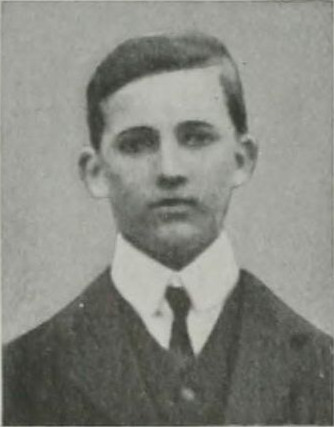
Kenneth C. E. Macrae.
MACRAE, VICTOR CHARLES JAMES, Corpl., No. 5327, 4th Battn. Gordon Highlanders (T.F.), 3rd s. of Donald Macrae, of 123, Blenheim Place, Aberdeen, formerly Station Master of Plockton, Ross-shire, by his wife, Jane, dau. of Alexander Ferguson, of Inverness, Goldsmith; b. Inverness, 12 Oct. 1892; educ. Plockton Public School, Aberdeen Grammar School, and Aberdeen University, where he graduated in classics with 1st Class honours and was captain of the University Shinty Club and won his blue; had been in the Territorial Battn. of the Gordon Highlanders but had retired. On the outbreak of war he re-enlisted, 2 Oct. 1914; went to France, 22 Feb. 1915, and was killed in action at Frierstraghte, Belgium, 21 April, 1915, while succouring a wounded comrade; unm. His Commander wrote of him as one of his best non-commissioned officers, and Major G. H. Smith, of the 4th Gordons, wrote: “Your son was a brave soldier, and it was just characteristic of him that he gave his life for his comrade. He was shot through the heart while attempting to lift up a wounded comrade and hold a cup of water for him to drink.”
MACREIGHT, ARTHUR WILLIAM JAMES, Lieut., 18th Battn. (London Irish) The London Regt. (T.F.), eldest s. of Albert Francis Henry Macreight, of The Cottage, Gammaton, North Devon, by his wife, Alma Jane, dau. of the late Joseph Ede Hamley; b. Kenython, St. Just-in-Penwith, Cornwall, 21 Jan. 1892; educ. Worcester Royal Grammar School, and H.M.S. Worcester, Thames Nautical Training College, and was for 18 months a Cadet on board the British Indian steamship Chyebassa. He joined the London Irish Rifles as 2nd Lieut. 9 June, 1913, on the outbreak of war volunteered for foreign service, and went to the Front with his regt., but was invalided home, and died at Bournemouth, 23 Nov. 1915, after undergoing several operations; unm.
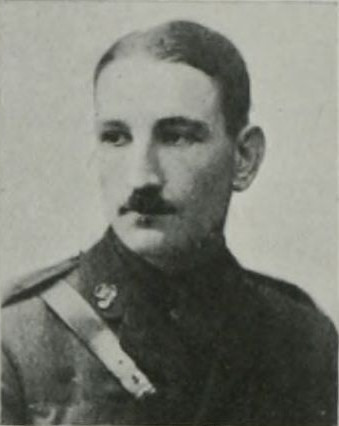
Arthur W. J. Macreight.
McSPARRON, WILLIAM GEORGE, Private. No. 541, 2nd Battn. Australian Imperial Force, 2nd s. of George McSparron, of Straidarran, co. Derry, Farmer, by his wife, Jane, dau. of Matthew Millar; b. Straid, afsd., 16 June, 1891; educ. Tyrglasson National School; went to Australia in 1912, and was working in Sydney when war broke out; volunteered and joined the Commonwealth Expeditionary Force; left for Egypt, 18 Oct. 1914; took part in the landing at the Dardanelles, 25 April, 1915, and was wounded shortly afterwards; returned to duty in June, and was killed in action in the fight for the Lone Pine trenches, between 6–9 Aug. 1915; unm.
MACSWAN, ANGUS, Private, No. 6247, 2nd Battn. Seaforth Highlanders, 4th s. of the late Donald MacSwan, Diver to the Leith Dock Commission, by his wife, Flora (139, Great Junction Street, Leith), dau. of the late Ronald Macdonald, Registrar, of Sleat, Skye; b. South Leith, 16 Dec. 1881; educ. Dr. Bell’s School there; enlisted in the Seaforth Highlanders, 23 Aug. 1898; served with the 2nd Battn. through the South African War, 1899–1902 (Queen’s medal with three clasps and King’s medal with two clasps); after this campaign transferred to the 1st Battn. in India; obtained his discharge, 28 Sept. 1905, and joined the Reserve; was called up on mobilisation in Aug. 1914, and rejoined the 2nd Battn.; went to France, 16 Sept. 1914, and was killed in action at St. Julien, 25 April, 1915, while acting as orderly to the Capt. of B Coy.; unm. He was buried at a farm close to where he fell. Private MacSwan was a good all-round sportsman; was a marksman; a great footballer, and a member of the Regimental XI when they were the champions of India in 1905.
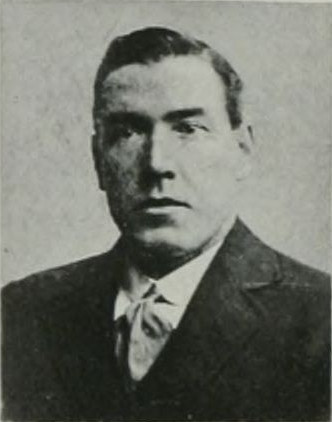
Angus MacSwan.
McTURK, HORATIO ANDREW DAVID, Trooper, No. 1269, Essex Yeomanry, yst. s. of Robert McTurk, of Frieze Hall, South Weald, Brentwood, Essex, Farmer, by his wife, Janet, dau. of John Crawford, of Sproulston, co. Renfrew; b. Frieze Hall afsd., 12 March, 1896; educ. High School, Brentwood; enlisted Sept. 1914; went to the Front, Dec. 1914, and was killed in action at Ypres in the famous charge of the 8th Cavalry Brigade, the 10th Hussars, the Blues and the Essex Yeomanry, on 13 May, 1915; unm.
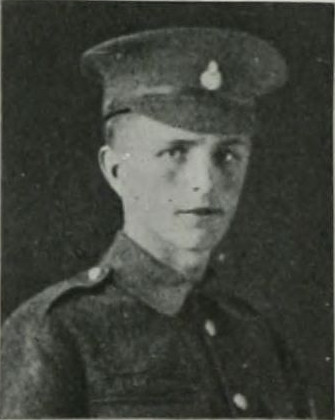
Horatio A. D. McTurk.
McVEIGH, GEORGE, Seaman, R.N.R., 4826B, H.M.S. Cressy; lost in action in the North Sea, 22 Sept. 1914.
McVEY, JAMES, Gunner, 11425, R.M.A., H.M.S. Good Hope; lost in action off Coronel, on the coast of Chili, 1 Nov. 1914.
McVITTIE, GEORGE HENRY, 2nd Lieut. 2/4th Battn. The Border Regt. (T.F.), eldest s. of Richard McVittie, of 34, Brunswick Square, Penrith, Boot and Shoe Merchant, by his wife, Jane, dau. of Henry Hill, of Carlisle; b. Penrith, 24 Sept., 1895; educ. Brunswick Road Council School, Penrith; Penrith Grammar School (Sept. 1908 to July, 1914, Scholar), and Christ College, Cambridge (Exhibitioner); was given a commission as 2nd Lieut. in the Border Regt. 4 Jan. 1915; left for India on 6 March, 1915, on H.M. Transport Dongola, and died on active service on H.M. Transport Tunisian the following day of strain and exposure caused by a collision between the Dongola and another ship in the Bristol Channel. He was unm.; and was buried at sea with full Military honours off the Scilly Isles. Col. Haswell wrote: “It is very sad that such a promising boy should be cut off so early, and the only comfort I can give you is that he did not suffer any pain, but quietly slept away. He was a good lad, keen at his work, and would have made a good soldier. We wrapped him in the Union Jack this afternoon (8 March), and buried him in the Atlantic.” While at the Grammar School he passed the Oxford Junior Local in 1910, the Senior in 1911, and took second-class honours in 1912. Having chosen the scholastic profession, Mr. McVittie in March, 1913, took the teacher’s preliminary certificate, with distinction in mathematics and geography, and taught for a year at the Boys’ National School. Prior to going Cambridge he was extremely anxious to respond to his country’s call and enlist as a private, but as the arrangements for going to Cambridge had been completed he went there and joined the Officers’ Training Corps. As a boy he was an enthusiastic member of the Penrith Boy Scouts, and he was also keenly interested in the Penrith Y.M.C.A.
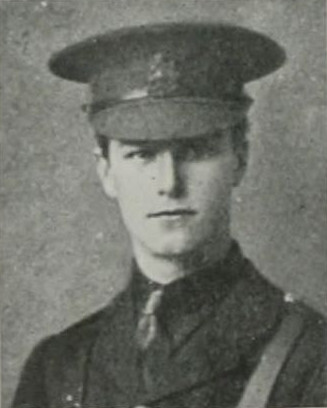
George H. McVittie.
MACWHINNIE, NORMAN HENRY, D.C.M., Regimental Sergt.-Major, No. 5177, 2nd Battn. King’s Own Scottish Borderers, only s. of James Tait Macwhinnie, of Ayr, Marine Engineer, by his wife, Elizabeth (14, St. Michael Street, Dumfries), dau. of the late John Carruthers, of Maxwellbank. Kirkcudbrightshire; b. Glencaple, co. Dumfries, 9 Aug. 1877; educ. St. Joseph’s College, Dumfries, subsequently entering the office of Charles M’Kie, the Sheriff clerk. He attached himself to the Dumfries Volunteers, and as soon as he had reached the age of 18 joined the 1st Battn. of the Scottish Borderers at York, 22 Jan. 1895, being promoted Corpl. in October the following year. During the South African war he accompanied his regt. to the Front and served with Lord Roberts’ column all the way to Pretoria, passing through the campaign without a scratch, and receiving the Queen’s medal with three clasps, and the King’s medal with two clasps; he also took part in the engagement at Karee Siding, near Bloemfontein, in which the Scottish Borderers were badly cut up, and for this gained the Distinguished Conduct Medal. In Jan. 1900 he became Sergt., in the following year Colour-Sergt., and while stationed at Cairo in 1908 Quartermaster-Sergt., having in the meantime seen service in Egypt and the Soudan; his final promotion came when he left Khartoum to take up the Sergt.-Majorship of the 2nd Battn. King’s Own Scottish Borderers at Berwick in 1910. On the outbreak of war he was offered a commission, but preferred to stay with his regt., with which he proceeded to the Front, being killed in action at the Aisne River, 13 Sept. 1914. He was buried about two miles from Saarcy. Sergt.-Major Macwhinnie was mentioned in F.M. Sir John French’s Despatch of 9 Oct. 1914, and was awarded the Military Cross and the French Medaille Militaire; he also held the regulation medal for long service and good conduct, and King George’s Coronation Medal. He m. at the Roman Catholic Chapel, Belfast, 28 April, 1904, Caroline Christina, dau. of William Hart, 1st Class Staff Sergt.-Major, A.S.C., and had a son and dau.: Norman, b. Cairo, 29 Jan. 1908; and Elizabeth Madge, b. Colchester, 1 Dec. 1905.
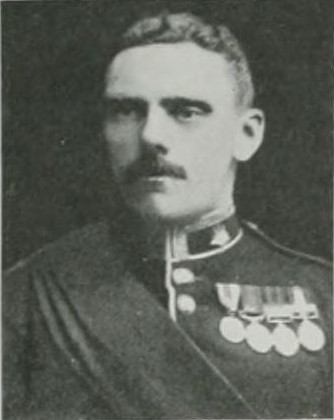
Norman H. Macwhinnie.
McWHIRTER, HUGH WALTER, Private, No. 902, 1st Newfoundland Regt., s. of Henry McWhirter, of Humbermouth, Bay of Islands, Newfoundland, by his wife, Lottie, dau. of Henry Lilsed Harris; b. New Richmond, Quebec, 18 March, 1894; educ. Bay of Islands; volunteered and joined the 1st Newfoundland Regt. in 1915; left for Britain 20 March, 1915, went to the Dardanelles, 19 Sept., and was killed in action there, 22 Sept. 1915; unm.
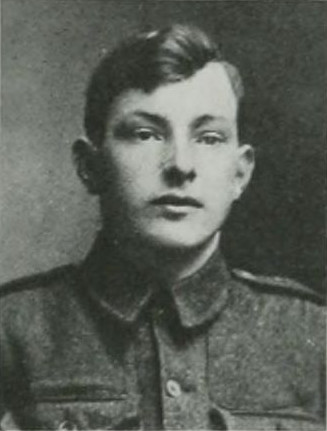
Hugh Walter McWhirter.
MACWILLIAM, JAMES JULIAN GORDON, Lieut., 1st Battn. Gordon Highlanders, only child of James MacWilliam, of 22, Forbes Road, Edinburgh, Solicitor in the Supreme Courts of Scotland, by his wife, Ella Julie de Lorn, dau. of Charles William Gordon MacDougall; b. Edinburgh, 16 Aug. 1895; educ. Edinburgh Academy and the Royal Military College, Sandhurst; gazetted 2nd Lieut. in the Gordon Highlanders, 15 Aug. 1914, and promoted Lieut., 11 Dec. following; was for some time A.D.C. to Major Oakeley, Commandant of the O.T.C. at Barry Camp; went to France about 10 Sept.; joined his battn. at Fère-en-Jardenois; marched to La Bassée early in October, and was wounded by shrapnel on the 12th; rejoined the battn. about 19 Nov., when he took over his coy. temporarily, and was killed in action at Maedelsted Spur, Wytschaete, 14 Dec. 1914, while leading his platoon. His Commanding Officer, Major Baird, wrote: “On 14 Dec. three companies of his battn. were ordered to attack a German trench. Your boy’s coy. was one of these. The artillery previously bombarded the German trench, and it was hoped that it would have been made practically untenable. So far from this proving to be the case, as soon as our men advanced they were met by a terrific fire, through which they pushed forward in spite of heavy losses to within fifty yards, and in some places nearer still, of the German trench. It was when your boy was gallantly rising to lead his men for a final rush from this forward position that he was shot through the head and killed instantly. These are the particulars given me by a sergt. who was with the body of men under your son and who saw him fall. The Germans’ fire was so heavy that our men, in spite of their splendid advance, could not assault and carry the trench; their losses during the advance had been terrible, yet they hung on all day from 8 a.m. till dusk, and then had to withdraw. It was to my deep regret impossible to bring your boy’s body back for burial. Even after dark, the Germans kept up a heavy fire at this very close range, but he was lying so near the German trench that there is no doubt that they will have taken him behind their lines and buried him. I cannot express sufficiently the deep sorrow which I, and all of us, feel at the loss of a brother officer, who, though but so recently joined, had already on more than one occasion shown his sterling value. I have felt it my duty to bring to official notice the gallant manner in which your son was leading his men when he met his death. I know how little there is I can say that can bring consolation to you in your great sorrow, and will only add that your son’s death occurred in an action which, though it failed in its purpose, has been as fine an exhibition of sacrifice and determination as any in the annals of this regt., and I hope that you may be able to feel that your boy has died in covering himself with glory.” And Sergt. P. Benzies (since killed) on behalf of the N.C.Os. and men of C Coy., wrote: “On the morning of 14 Dec., the Gordon Highlanders made a glorious charge, two platoons of C Coy. leading, the other two to support. Your son was in charge of Nos. 9 and 11 Platoons which led, and, when the order came to advance, he was the first out of the trenches; smiling and waving his stick, he encouraged his men on. When we had got to within fifty yards of the German trenches we had to lie down for a minute to get our breath before the final assault. It was when he raised his head to give the order to advance that he was killed. He died instantaneously, and therefore suffered no pain. You ought to be very proud of yourself to have had such a gallant son, for he was a thorough hero, and we all admired him very much. I was also with your son when he was wounded on 12 Oct. 1914. I gave him a snapshot photograph, which was taken about the beginning of Oct., and which I hope he sent home. He gave a few of us cigarette lighters just a few days before the charge, and we all treasure them very much now.” Another officer writing home said: “Poor young MacWilliam, who had just rejoined after recovering from a wound, was shot dead through the head. I have since then taken over temporary command of C Coy., and in drawing up a report of its work during the day of the attack (14 Dec.) find that the men speak in the most glowing terms of the bravery of George and Mr. MacWilliam, and of the gallant way in which they led up their men to the advance under heavy machine gun and rifle fire. In fact the Commanding Officer has expressed extreme satisfaction and praise for the altogether splendid way in which they led their men in face of overpowering odds. Although victory was not achieved, the glory of unselfish bravery, such as reaches the highest achievements of the British Army, is attached to the names of the men who took part in that charge.” At Edinburgh Academy he was a L.-Sergt. in the O.T.C., and a member of the Shooting VIII, and shot for his school at Bisley.
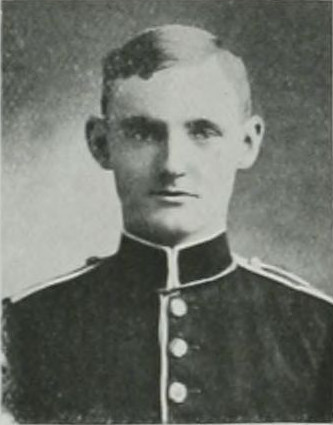
James J. G. MacWilliam.
MADDANS, FREDERICK, Private, No. G6535, 3rd Battn. Middlesex Regt.; served with the Expeditionary Force in France; killed in action, 3 May, 1915; unm.
MADDEN, THOMAS HYLTON, 2nd Lieut., 1st Battn. King’s Liverpool Regt., only s. of the Ven. Thomas John Madden, Archdeacon of Liverpool, and Vicar of St. Luke’s Church there, by his wife, Jane, dau. of William Henry Horrocks, M.D.; b. Liverpool, 30 April, 1895; educ. Liverpool College and was to have entered Emmanuel, Cambridge, in Oct. 1914, but war breaking out he gave up his studies and applied for a commission. He had joined the Liverpool College O.T.C. in 1909, and at 16 commanded a coy. of the “King’s” Cadets under the late Lieut.-Col. A. T. S. MacIver. He was gazetted 2nd Lieut., 5th Battn. King’s Liverpool Regt. (Reserve of Officers), 2 Aug. 1914; mobilised 5 Aug. following, and after training at Seaforth left there for the Front, 29 Sept.; reaching the firing line, 13 Nov. He received a regular commission in the 1st Battn. of his regt., 2 Feb. 1915; led the charge of his platoon against the German trenches on 10 March following, and was in the act of throwing a bomb over the barbed wire entanglements when he was shot down by a machine gun and fell mortally wounded. The Adjutant (Capt. S. E. Norris) wrote: “He fell leading his platoon in an assault on the German trenches at Givenchy about 8.15 yesterday (10 March). Capt. Feneran and Lieut. Young were also killed, and Lieut. Millar (all the officers of your son’s Coy., A) was wounded. From the evidence of the few men who returned I am sure they were all killed instantly. The whole history of the British Army has nothing finer to show than the work of A Coy. yesterday. Col. Carter was wounded, so I am writing this for him. Your son was one of the most promising young officers in the regt.”; and a Capt. of the 5th King’s: “On 10 March there was a general attack by the whole of the 1st Division, and on the whole it succeeded. The 6th Brigade, of which ‘The King’s’ Liverpool Regt. formed part, attacked at Givenchy, and in the attack by his regt. Hylton led the second party on the left. The first party had come under exceptionally heavy fire, and he must have known that he had to face more than the usual risk. He never faltered nor hesitated. He led his men well, and fell a victim to machine-gun fire. I think he must have died instantaneously. When the history of this war comes to be written, the story of ‘The King’s’ charge at Givenchy will rank equally with any of its heroic deeds in the past. The attack of our brigade failed, and the King’s Royal Rifles, the Liverpools and the South Staffords lost heavily in officers and men. But the force of their attack caused the Germans to bring reinforcements to Givenchy, and enabled success to be achieved elsewhere.” He was mentioned in F.M. Sir John (now Lord) French’s Despatch of 31 May, 1915, for gallant and distinguished service in the field. A memorial tablet and window has been placed in St. Luke’s Church, Liverpool, and a memorial tablet in Christ Church, Southport.
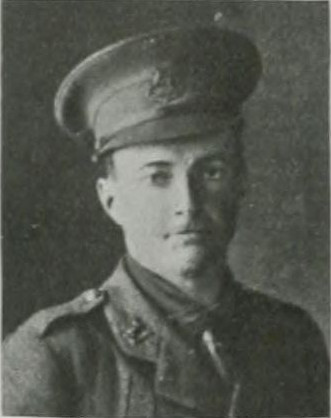
Thomas H. Madden.
MADDISON, ALFRED, Boy, 1st Class, J. 26723 (Ports.), H.M.S. Hawke, s. of James Arthur Maddison, of 7, Railway View, Dringhouses, near York; lost when that ship was torpedoed in the North Sea, 15 Oct. 1914.
MADDOCK, THOMAS HENRY, Private, No. 10066, 1st Battn. Royal Scots, s. of George Maddock, of Stratford, by his wife, Sarah, dau. of Thomas Henry Rand; b. Stratford, co. Essex, 21 March, 1890; educ. Carpenter’s Road Council School there; enlisted 19 July, 1907; went to France, 30 Jan. 1915, and died at a Clearing Station on 27 Feb. 1915, of wounds received at St. Eloi the previous day. He was buried in Bailleul Cemetery; unm.
MADIGAN, JAMES FRANCIS JOSEPH, Private, 12 1703, Auckland Infantry Battn., New Zealand Expeditionary Force; volunteered for Imperial service after the outbreak of war; joined his unit at the Dardanelles, 8 May, 1915, and was killed in action, 8 June following.
MAGEE, RICHARD EDWARD, Master-at-Arms, 164813, H.M.S. Pathfinder; lost when that ship was sunk by a mine, about 20 miles off the East Coast, 5 Sept. 1914.
MAGILL, HUGH, L.-Corpl., No. 11355, 1st Battn. Highland L.I., s. of Hugh Magill, of 17, Ardenlea Street, Bridgeton, Glasgow; served with the Expeditionary Force in France, etc.; killed in action at Neuve Chapelle, 11–18 March, 1915.
MAGUIRE, CHARLES, Private, No. 8081, 2nd Battn. Scots Guards, s. of James Maguire, of Newton Farm, East Wemyss, Fife; b. Carnoustie, co. Forfar; enlisted 13 Nov. 1911; served with the Expeditionary Force in France and Flanders; dangerously wounded in the spine in action; admitted to hospital at Aldershot, 6 Nov. 1914, and died there, 12 July, 1915.
MAHONEY, WILLIAM, Private, No. 12317, 2nd Battn. The Welsh Regt., s. of John Mahoney, of Convent Street, Bandon, co. Cork, by his wife, Elizabeth, dau. of William Gilman; b. Convent Hill, Bandon, co. Cork; educ. Convent School, Bandon; enlisted in the Royal Munster Fusiliers, and served nine years with the Colours, going through the South African War, for which he received the Queen’s medal with three clasps. He then enlisted in the Royal Garrison Artillery at Tralee, 4 April, 1901, and served his time in Halifax. On the outbreak of the European War he again enlisted in the 2nd Welsh, 22 Aug. 1914; went to France, 2 Dec. 1914, and was killed in action at Festubert, 24 Dec. 1914. He m. at the R.C. Church, Dowlais, 29 Aug. 1897, Emily (29, Greenfield Terrace, Penydarren, near Merthyr), dau. of William Mitchell, and had two children: Daniel, b. 17 June, 1905; and Minnie, b. 11 June, 1898. While with the Munster Fusiliers Mahoney was a prominent regimental athlete.
MAHONY, FREDERICK HENRY, Capt., 1st Battn. Cheshire Regt., only s. of Capt. Frederick Henry Mahony, late York and Lancaster Regt., for some years Adjutant of the Royal Military School of Music, Kneller Hall, Hounslow, by his wife, Elizabeth Mary, dau. of Lawrence Cahill; b. Lucknow, 24 Aug. 1874; educ. Dover College, and by Mr. Miller Maguire, the Army Tutor, etc.; enlisted in 1892 in the York and Lancaster Regt., and served for five years in the ranks. He was gazetted 2nd Lieut. to the 1st Cheshires, 24 Aug. 1898, and promoted Lieut., 2 June, 1900, and Capt., 10 Feb. 1906; served in the South African War, 1900; took part in the operations in the Orange Free State, Feb. to May, attd. to the A.S.C., including actions at Dreifontein, Vet River, (5–6 May), and Zand River; in the Transvaal, May to June, including actions near Johannesburg, Pretoria and Diamond Hill (11–12 June), and in the Transvaal, East of Pretoria, July to Nov., including action at Belfast (26–27 Aug.), etc. (Queen’s medal with five clasps); was employed with the West African Frontier Force, 28 Nov. 1900 to 9 July, 1904, first in Northern Nigeria, during operations against the Emir of Yola, 1901 (medal with clasp), and subsequently in Southern Nigeria with the Aro Expedition 1901–2 (clasp). From 8 Jan. 1906 to 31 March, 1908, he was Adjutant of the Durham L.I. Volunteers and of the Territorial Battn., 1 April, 1908, to Jan. 1909. He went to France with his battn. which formed part of the 15th Brigade, under Major-Gen. Count Gleichen, in Aug. 1914, and which he commanded in Oct. during the first desperate fighting in which the 2nd Army Corps was engaged in the neighbourhood of La Bassée. During this time he led a successful bayonet charge under very heavy artillery fire, and showed excellent coolness and courage, and was complimented by General Count Gleichen on the excellent work of his battn. On 22 Oct., near La Bassée, while on his way to give orders to some men in the trenches, he was mortally wounded by a bullet from a German sniper, who fired at him from a cottage window, over 1,000 yards distant, the bullet striking him in the shoulder and penetrating to the lungs. He was removed to the Clearing (114) Hospital at Bethune, where he died a couple of hours after his arrival. Before starting on his fatal journey to the trenches he had been asked, “Why not send a man with the message?” to which he replied: “I won’t ask a man to do what I won’t do myself.” He was buried in Bethune Cemetery. Capt. Mahony was mentioned in F.M. Sir John (now Lord) French’s Despatches of 14 Jan. 1915. He had been strongly recommended for the D.S.O. by General Count Gleichen, and according to information received by his relatives from the War Office this honour would have been duly awarded him had he lived. He m. at St. Mary Abbots, Kensington, 12 July, 1905, Ethel, dau. of John Paterson, of 42, Holland Park, W., and 1, Wallbrook, City, and had issue: Frederick Henry Patrick, b. 11 Feb. 1911; and Cynthia Patricia, b. 14 March, 1909.
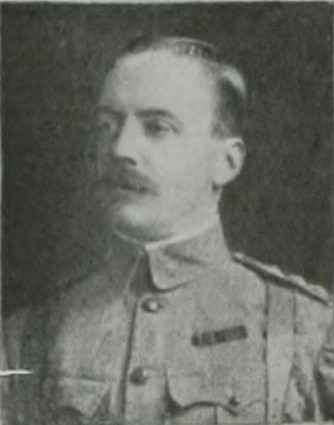
Frederick Henry Mahony.
MAINE, JOSEPH LESLIE, Corpl., No. 10399, 7th (Service) Battn. Gloucestershire Regt., s. of Thomas Maine, by his wife, Elizabeth Ann, dau. of Thomas Preece; b. Grangetown, Cardiff, 1 Aug. 1888; educ. Grange Schools, Cardiff; enlisted, Aug. 1914; promoted Corpl., 26 Sept.; served with the Mediterranean Expeditionary Force in the 13th Division at the Dardanelles from 17 June to 8 Aug. 1915, on which date he was killed in action there. He was a well-known member of the Bream Rugby Football Club. He m. at the Baptist Chapel, Parkend, 26 Dec. 1912, Hannah (Breams Tufts), dau. of Thomas Preece.
MAINWOOD, WILLIAM RICHARD, Sergt., R.M.L.I., 10397 (R.F.R., Ch. A. 666), H.M.S. Aboukir; lost in action in the North Sea, 22 Sept. 1914.
MAIR, JOHN, Private, No. 3334, 2nd Battn. Royal Scots, 2nd s. of Walter Mair, of Church Street, Newarthill, Motherwell, by his wife, Annie Glen, dau. of (—) Buchanan; b. Newarthill, co. Lanark, 13 May, 1880; educ. there; enlisted 12 Nov. 1901; went to France, 6 Oct. 1914, and was killed in action at Messines, 17 Nov. 1914. He m. at Forsyth, Newarthill, 8 April, 1910, Annie (now wife of James Reid, of 25, Drygate Street, Larkhall), dau. of John Dobbie, and had three children: Mary Sneddon, b. 26 June, 1910; Annie Glen Buchanan, b. 29 Jan. 1911; and Margaret Dobbie, b. 8 Dec. 1913. He was awarded the Second Class Certificate of Education, 9 April, 1908, and had the Mounted Infantry Certificate.
MAIRS, ALEXANDER, Stoker, 1st Class (R.F.R., B. 7130), S.S. 101872, H.M.S. Hawke, s. of John Mairs, of Kellswater Station, Randalstown, co. Antrim; lost when that ship was torpedoed in the North Sea, 15 Oct. 1914.
MAISEY, FRANK DOUGLAS, Rifleman, No. 2326, 9th Battn. (Queen Victoria’s Rifles) The London Regt. (T.F.), 2nd s. of the late Arthur George Maisey; b. London, 28 Feb. 1893; educ. Commercial Travellers’ Schools, Pinner; enlisted in Sept. 1914; went to France, March, 1915; and was killed in action at Hill 60 21 April following, on the occasion on which the Q.V.Rs. so greatly distinguished themselves, and 2nd Lieut. Geoffrey H. Woolley of that battn. won the V.C.; unm.
MAISEY, WALTER SRAFFORD, A.B. (R.F.R., Ch. B. 8384), 203623, H.M.S. Aboukir; lost in action in the North Sea, 22 Sept. 1914.
MALCOLM, JAMES (HAMISH) WADDELL, 2nd Lieut., 5th (City of Glasgow) Battn. Highland L.I. (T.F.), s. of John Malcolm, of 3, Kensington Gate, Dowanhill, Glasgow, Shipowner and Shipbroker, by his wife, Margaret Black, dau. of the late James Waddell, of Airdriehill; b. Hillhead, Glasgow, 19 Sept. 1894; educ. Kelvinside Academy, Glasgow; gazetted 2nd Lieut. 9 April, 1913; on the outbreak of war volunteered for foreign service with the battn., and was killed in action at the Dardanelles, 12 July, 1915; unm. He was mentioned in Gen. Sir Ian Hamilton’s Despatch of 11 Dec. 1915 [London Gazette, 28 Jan. 1916], for gallantry in the field. Writing to his father, July 16 his Colonel stated: “A Coy. was detached as support to the 6th Highland L.I., and early on the evening of the 12th was ordered up to reinforce that battn. which had captured several trenches, but was held up at one advanced trench running diagonally across its front. Our men carried the near end of the trench, but the Turks retained the far end, and for a long time the struggle raged up and down at very close quarters between hurriedly constructed barriers of sand bags. Major Downie was severely wounded early in the fight, and for some time Hamish was the only officer of the company at that part of the trench. The men all speak in the highest terms of his pluck and the manner in which he cheered them on and kept them at it. They say that he fainted from exhaustion, but as soon as he came to, insisted on getting forward again although he was urged to rest for a little. A good deal of hand grenade work was going on on both sides, and he set the example of picking up the enemy’s grenades and throwing them back. Eventually he was struck by a grenade which exploded and killed him on the spot.”
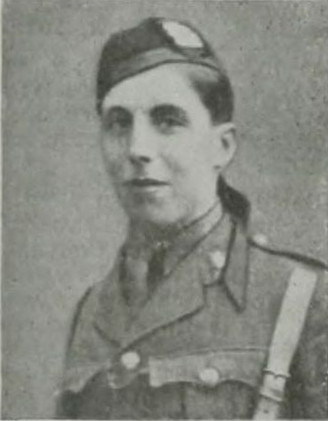
James Waddell Malcolm.
MALET, HUGH ARTHUR GRENVILLE, Lieut., 2nd Battn. King’s Own Scottish Borderers, elder s. of Allan Arthur Grenville Malet, of The Butts, Harrow-on-the-Hill, M.I.C.E., Madras P.W.D. (ret.), Deputy Chief Engineering Inspector, Local Government Board, by his wife, Elizabeth Anne, dau. of William Lysaght, of Beechmount, co. Cork; and gdson. of the late Lieut.-Col. George Grenville Malet, 33rd (old 3rd) Queen’s Own Bombay Light Cavalry [killed in action at Bushire in the Persian War, 1857; 4th s. of Sir Charles Warre Malet, 1st Bart., F.R.S., F.S.A.]; b. Duggirala, Kistua, India, 22 Sept. 1892; educ. Harrow, and Caius College, Cambridge; was in the O.T.C. at School and College, and on entering the Inner Temple in 1913; joined the Inns of Court Squadron; volunteered for active service the day war was declared, and obtained a Special Reserve Commission in, and joined, the 3rd Battn. King’s Own Scottish Borderers, Aug. 1914, and was given a commission as a University Candidate in the Connaught Rangers, 26 Sept. 1914, but at the special request of the Col., 3rd King’s Own Scottish Borderers, was transferred to them; was promoted Lieut. 15 Nov. following; joined the 2nd Battn. of his regt. 26 Nov., and was killed in action at Hill 60, during the Second Battle of Ypres, 18 April, 1915; unm. Buried at Hill 60. An officer wrote: “Everyone here speaks very highly of him. And they all say he was absolutely fearless. I understand his name was sent in for ‘mention in Despatches’ for some very useful work he did in scouting. Those who were present on Hill 60 say that he was killed while trying to take a communication trench which was held by German bomb-throwers. I am told he was killed instantaneously, which is a blessing. I am really proud to have known him.” A wounded Private of his platoon wrote from a Base Hospital: “At the request of Major Bindloss, R.A.M.C., I will endeavour to the best of my ability to describe to you how your son conducted himself during his period of active service. I cannot say for certain when he joined us out here, but it was either the end of Nov. or the first days in Dec. that he was posted to No. 3 Platoon of A Coy., which I belonged to. I know we were not exactly delighted at the time, for he just looked like a young boy, and we of No. 3 did not like the idea of being led into action by a lad whom we thought had no experience, but he was not with us many days when we changed our opinion regarding him. It was our first turn in wet trenches when we began to take a little more notice of him. He came amongst us cheering us up and giving us all the help he possibly could to make things more comfortable until we were relieved. The next time we went in, your son, at a very great risk to himself, went about looking for different ways into the trench, so that we should not have to go through the communication trenches which were full of water, and he always found a way which took us into the trench with dry feet, which meant a great deal to our comfort. He was always the same every time we went into the trenches. The comfort of the men came first; this continued during the hard winter which we put in. Spring came, and with it dangerous work. Your son was always the first to volunteer, in fact he was the only officer in A Coy. who ever did any of that work. He used to go out in front of the trench scouting along with six men, perhaps he would stay out one hour, perhaps two, and then again I’ve known him stay out from 8 o’clock at night until 4 in the morning, trying to find out who were in front of us. Then came the order we were to help at Hill 60. We lay in dug-outs while our artillery shelled the Hill; the Germans replied; the air seemed to be alive; it was awful, but we sat tight until the hour arrived, 7 a.m. It was then the Hill went up; it was like a huge crater, and shook the earth for miles around. We then advanced on the Hill, and, of course, we took it. We could not see a German anywhere, but bullets and bombs came amongst us, doing frightful damage. Your son then said, ‘Follow me, men, I’ll find the Germans for you.’ We went after him, he found them, but I regret to say, they found him first. His death was instantaneous, he suffered no pain. Madam, your son died a hero, and he should have had the V.C., but unfortunately there was no one there to recommend him for same. His death was deeply regretted, not only by the men of his platoon, but by every man who was left alive in his Coy. We not only lost our best officer, but we had lost a friend.” The Medical Officer, after taking a statement from two wounded men of his platoon, wrote; “Lieut. Hugh Malet took command of the trench, and in less than an hour he was killed in an exactly similar way by a rifle bullet. His death was instantaneous. He fell within five yards of the place where Capt. Wingate was lying.... Lieut. Malet was considered by these men to be a wonderfully brave officer, he invariably volunteered for all dangerous duties; quite recently he had gone out four nights in command of scouts in front of the British trenches to try and capture German ‘listening’ posts and snipers who were suspected of using explosive bullets. The two men said that we men always said that he would either get a V.C. or be killed; Lieut. Malet used to come back from these night scouting expeditions covered from head to foot in mud, from the ditches he had crawled through.”
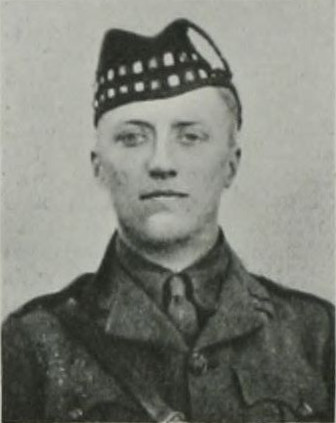
Hugh Arthur G. Malet.
MALKIN, PERCY, Private, No. G. 2941, 2nd Battn. East Surrey Regt.; served with the Expeditionary Force in France, etc.; killed in action, 8 May, 1915.
MALLINS, CLAUDE JOSEPH O’CONOR, 2nd Lieut., 2nd Batt. Connaught Rangers, eldest s. of the late Capt. Frederick William Mallins, 3rd East Lancashire Regt., by his wife, Eliza (now the wife of Henry O’Connell-Fitzsimon, of 31, Pembroke Road, Dublin), yst. dau. of the late Roderic Joseph O’Conor, of Milton, co. Roscommon, J.P.; b. Dublin, 3 Oct. 1894; educ. Stonyhurst College, Wimbledon, and Sandhurst; was gazetted from the Reserve of Officers to the Connaught Rangers, 14 Aug. 1914; went to France with the Expeditionary Force on 2 Sept. and was killed close to Mollemsarrelhoek, near Ypres, while directing the fire of his platoon, 2 Nov. 1914; unm. He had been acting as Adjutant for some weeks. His Commanding Officer wrote deploring the loss of a very valuable officer who “knew no fear.”
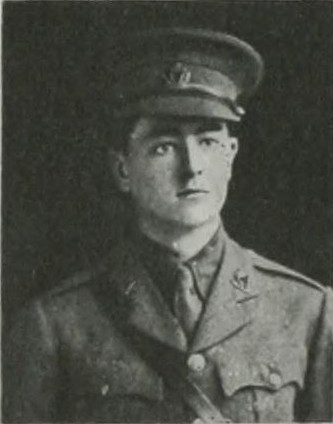
C. J. O’Conor Mallins.
MANCER, ARTHUR JAMES, A.B. (R.F.R., B. 3083), 210896, H.M.S. Good Hope; lost in action off Coronel, on the coast of Chili, 1 Nov. 1914.
MANDERS, NEVILLE, Col., Army Medical Staff, yst. s. of the late Major Thomas Manders, 6th Dragoon Guards (Carabineers), afterwards Adjutant, P.W.O., Royal Wiltshire Yeomanry, by his wife, Catherine, dau. of John Hacking; b. Marlborough, co. Wilts, 12 Dec. 1859; educ. Marlborough College, and after qualifying (with honours) as L.R.C.P. (Lond.), and M.R.C.S. (Eng.), entered the Army Medical Service as a Surgeon, 2 Aug. 1884; was gazetted Major, R.A.M.C., 2 Aug. 1896, and promoted Lieut.-Col 2 Aug. 1904; and Col, 21 Dec. 1910; served in the Suakim Campaign, 1885 (medal with clasp, Khedive’s Bronze Star), and with the Burmese Expedition of 1887–89, in which he was severely wounded (medal with two clasps); was Senior Medical Officer, Ceylon, 1908 to 1911, and at the Curragh, 1912 to Dec. 1913, and was appointed Deputy Director of the Medical Service in Egypt, 21 Dec. 1913, a position which he retained until Jan. 1915, when he was, by special request, attd. to the Headquarters Staff of the Australian and New Zealand Forces as A.D.M.S., going with them to the Dardanelles in April, 1915. He was killed in action at Anzac, Gallipoli, 9 Aug. 1915, during the attack on Sari Bair, and was buried on the beach at No. 3 Post. Gen. Sir Alexander Godley, General Officer Commanding, New Zealand and A Division, wrote: “He had endeared himself to us all, and had so thoroughly identified himself with this force and had been such a help to us, that his loss will be irreparable. I can hardly say how much I shall miss him and all the help he gave me. He was killed while making plans for the relief of the wounded, on the field in the execution of his duty, and I only hope it may be some slight consolation to you to know this, and to know how highly we all thought of him, and how much we shall miss him both as a Staff Officer and a comrade.” Col. Manders was a prominent Entomologist, having done much research work in that branch of science. He was a Fellow of the Entomological Society, and a Fellow of the Zoological Society, and the Bombay Natural History Society. He m. at St. Michael’s, Colombo, Ceylon, 15 Sept. 1900, Maude Braybrooke (Glenthorne, Dorset Road, Bexhill-on-Sea), only child of Frederick William Vane, I.S.O., Ceylon C.S. (retired), and of Louisa Frances, his wife, and had a dau., Una Jim Chester, b. 1 Nov. 1901.
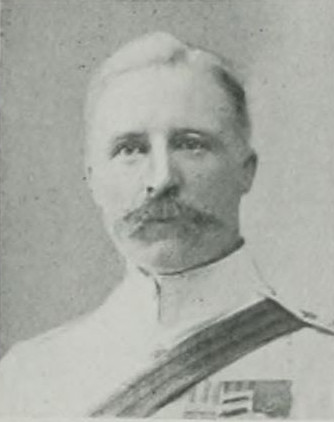
Neville Manders.
MANLEY, HERBERT JOHN, Gunner, No. 2/330, New Zealand Field Artillery, s. of the late John Manley, of Rathdrum, co. Wicklow, Ireland, for over 30 years Relieving Officer under Rathdrum Board of Guardians (who died 11 Dec. 1910), by his wife, Maria, dau. of the late Arch Manning Greenane; b. Rathdrum, co. Wicklow, 20 June, 1892; educ. Rathdrum High School; went to New Zealand with his mother and brothers and sisters after his father’s death in 1910, and after the outbreak of war joined the Expeditionary Force, 2 Oct. 1914, and was killed instantaneously in action at Gallipoli, 2 May, 1915, being shot through the heart; unm. He was buried in a gully near the sea, close to the spot where he fell, and a wooden cross was erected by his comrades.
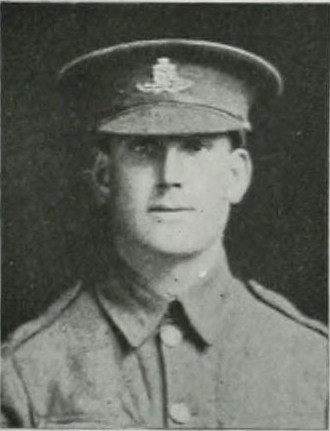
Herbert John Manley.
MANLEY, JOHN DUNDAS, 2nd. Lieut., 26th Field Coy. Royal Engineers, eldest s. of the late Herbert Manley, of West Bromwich, M.D., Barrister-at-Law, by his wife, Alice (1, Bank Mansions, Golders Green, London, N.W.), dau. of Capt. Robert Thomas Dundas, R.N.R.; b. West Bromwich, co. Stafford, 24 Jan. 1892; educ. Cheltenham College and Emmanuel College, Cambridge; gazetted 2nd Lieut. on probation, to the Special Reserve of the Royal Engineers, 21 June, 1913, and confirmed in that rank, 5 Aug. 1914; went to France with the 26th Field Coy. R.E., attd. to the 1st Division, of the Expeditionary Force, 14 Aug. 1914, and was killed in action, during the Battle of the Aisne, 26 Sept. following, and was buried in Vendresse churchyard about a mile from the spot where he fell; unm. An oak cross set in stone and bearing his name and rank was erected by the men of the 26th Coy. Major H. L. Pritchard, D.S.O., R.E., wrote: “I cannot tell you how much all the officers of the 26th Coy. sympathise with you in your bereavement, and how much we mourn the loss of your son, while to me, his commanding officer, it is a serious handicap to lose such a brave and valuable officer. It will also, I hope, be some consolation to you to know that the General, under whose orders he was working (having been detached from me), had several times on days just prior to his death told me how much your son was helping him, and what a good fellow he was. In fact, the General appreciated his services as much as I did;” and Lieut.-Col. A. L. Schreiber, R.E., D.S.O.: “I feel that I must write to tell you of the high opinion that had been formed of your boy. He had been in charge of a section of his company detached with the front line of the 3rd Brigade, and the General (Loudon) and his Staff Officer, Major Grant, both expressed to me their great sorrow at his loss, and their appreciation of the excellent work he had done for them. I had personally come specially in contact with him several times since he was detached, and was much impressed with the excellent spirit in which he was carrying out his independent duties. There must be this consolation that his death must have been instantaneous ... also there is the feeling, of which you should be proud, that he was killed actually on the field of battle while in the execution of his duty, and he had borne his share of the great hardships the company had gone through, and was much appreciated by his brother officers.”
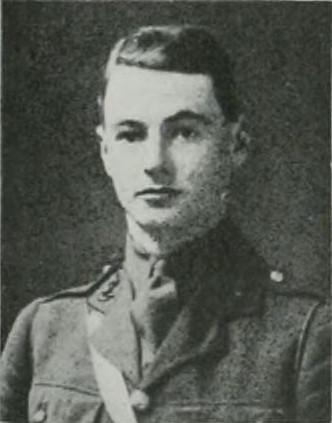
John Dundas Manley.
MANN, ERNEST WALTER CHARLES, Private, No. 9489, 2nd Battn. Suffolk Regt., eldest s. of Albert Mann, of 61, Rosebery Road, Ipswich, Sawyer, by his wife, Ellen; b. Westbourne, near Ipswich, 1878; enlisted in the Suffolks at the age of 18, and served eight years with the Colours and four in the Reserve, and after the outbreak of war rejoined his old regt. in Sept. 1914; went to France, in Nov., and was killed in action at La Bassée, 8 Jan. 1915. He m. at Holy Trinity Church, Ipswich, 2 Dec. 1905, Ethel Frances (12, Benhall Green, Saxmundham), dau. of Thomas Holland, and had a son: Ronald Albert, b. 27 June, 1912.
MANN, HOWARD WILLIAM, Corpl., No. 11617, 12th (Service) Battn. King’s Liverpool Regt., s. of George Mann, of Blakeney, co. Glos., Wood Sawyer; b. Blakeney, 17 Nov. 1877; educ. Council School there; enlisted in the Monmouth R.E. (Militia) in April, 1895; served for two years and five days, and obtained his discharge by purchase, July, 1897; later became a member of the Cyclist Coy. Liverpool Battn. National Reserve, and on the outbreak of war re-enlisted in the Liverpool Regt., Aug. 1914; died of pneumonia at Aldershot, 21 Dec. 1914. He m. at Gloucester, 24 Dec. 1898, Sarah Jane, dau. of John Papps, of Stroud; s.p.
MANN, REUBEN, Stoker, 2nd Class, K. 22131 (Ports.), H.M.S Hawke, s. of William Mann, of Bishops Itchington, Leamington Spa; lost when that ship was torpedoed in the North Sea, 15 Oct. 1914.
MANN, WILLIAM HORACE, Sergt., R.M.L.I., Ch. E. 13136, H.M.S. Aboukir; lost in action in the North Sea, 22 Sept. 1914.
MANNERING, ARTHUR LIDSTONE, Cook’s Mate, M. 5540, H.M.S. Cressy; lost in action in the North Sea, 22 Sept. 1914.
MANNING, ALFRED, Private, No. 1618, 12th Battn. (The Rangers) The London Regt. (T.F.), s. of the late Alfred Manning, Coal Porter; b. Canning Town, E., 27 Aug. 1895; educ. Cyprus Place Council School, New Beckton, E.; joined the Rangers, 12 June, 1912; volunteered for foreign service on the outbreak of war; went to France with his Battn. at the end of Dec. 1914, and died of wounds received in action at the Second Battle of Ypres, 24–26 April, 1915; unm.
MANSFIELD, JOHN RICHARD, A.B., 213674 (Ports), H.M.S. Aboukir; lost in action in the North Sea, 22 Sept. 1914.
MANSFIELD, THOMAS RICHARD, A.B. (R.F.R., B. 5775), S.S. 487, H.M.S. Hogue; lost in action in the North Sea, 22 Sept. 1914.
MANSFIELD, WILLIAM, Stoker, Petty Officer, 276756, H.M.S. Pathfinder; lost when that ship was sunk by a mine, about 20 miles off the East Coast, 5 Sept. 1914.
MANSON, MAGNUS MURRAY, Rifleman, No. 1999, A Coy. 1/21st (1st Surrey Rifles), London Regt. (T.F.), 4th s. of James Alexander Manson, of 4, Cornwall Avenue, Church End, Finchley, author and journalist, by his wife, Margaret Emily, dau. of Charles Deering; b. at Herne Hill, London, 30 Sept. 1891; educ. Alleyn’s School, Dulwich; was a Clerk, first in the Education Department of the London County Council and, secondly, in the London Office of the Guaranty Trust of New York; joined the 1st Surrey Rifles on the outbreak of war in Aug. 1914; went to France, 15 March, 1915, and was killed in action at Richebourg L’Avoué, 9 April, 1915; unm. He was buried the same day in the little churchyard there behind the firing line. Capt. Quintin Walford, his Coy. Officer, wrote: “His loss is much felt by his comrades of ‘A’ Coy. and by me. He was conscientious and hard working, and died doing his duty for his King and Country.”
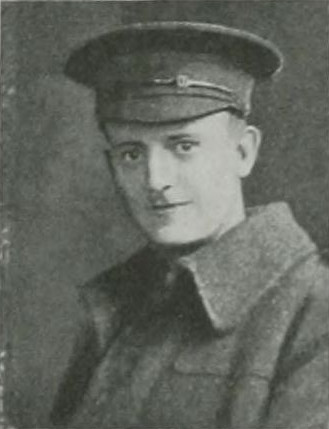
Magnus Murray Manson.
MANT, WILLIAM, S.P.O., 306427. H.M.S. Good Hope; lost in action off Coronel, on the coast of Chili, 1 Nov. 1914.
MAPLESTONE, JAMES WILLIAM, Stoker, 1st Class (R.F.R., B. 1857), 290210, H.M.S. Good Hope; lost in action off Coronel, on the coast of Chili, 1 Nov. 1914.
MAPPLETHORPE, CLAUDE, Rifleman, No. 1508, 12th Battn. (The Rangers) The London Regt. (T.F.), 2nd s. of Frank Mapplethorpe, of 9, Delamere Terrace, Paddington. Tailor, by his wife, Annie, dau. of Alexander Mould; b. Lumley Street, Oxford Street, W., 5 May. 1892; educ. Camble Street Council School, N. Paddington; was by trade a Tailor; joined the Rangers about 1912; volunteered for foreign service on the outbreak of war; went to France in Dec. 1914, and died in the 5th General Hospital, Rouen, on 2 July, 1915, of wounds received at St. Julien, near Ypres, on 3 May. He was buried in the cemetery at St. Sever, Rouen; unm. His brother Frank, serving in the same battn., was wounded and taken prisoner on 8 May. Their platoon sergt. wrote of them: “Both brothers did some splendid work while we were in the trenches, and stood by me like bricks.”
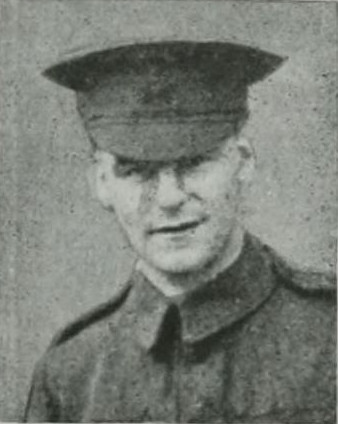
Claude Mapplethorpe.
MARDELL, EDWARD, Private. R.M.L.I., Ch. 16690, H.M.S. Hogue; lost in action in the North Sea, 22 Sept. 1914.
MARKER, RAYMOND JOHN, D.S.O., Col., Coldstream Guards, 1888–1913. Staff Officer, eldest s. of Richard Marker, of Combe, Honiton, co. Devon. J.P., D.L., late Capt. 1st Devon Yeomanry, by his wife, the Hon. Victoria Alexandrina, née Digby, eldest dau. of Edward, 9th Baron Digby; b. Upcerne Manor, Dorchester, 18 April, 1867; educ. Evelyns Preparatory School, Eton, and the Royal Military College, Sandhurst; gazetted 2nd Lieut. Coldstream Guards, 15 Nov. 1888, and promoted Lieut., 29 Sept. 1890; Capt. 1st Battn. 24 Jan. 1898; Brevet Major, 26 June, 1902; Major, 29 Nov. 1903; Lieut.-Col. 2nd Battn. 11 March, 1911, and Col. 5 Aug. 1914; was Adjutant, Coldstream Guards, 7 March, 1892, to 6 March, 1896; A.D.C. to Gov. and Com.-in-Chief (Sir Joseph West Ridgway), Ceylon, 7 March, 1896, to 5 Dec., 1897; A.D.C. to Viceroy of India, 6 Jan. 1899 to 9 March, 1900; on special service in South Africa, 7 April, 1900, to 8 March, 1901; and A.D.C. to General Officer, Com.-in-Chief the Forces, South Africa, 9 March, 1901, to Sept. 1902; served through that campaign; took part in the operations in the Orange Free State, April to May, 1900, including actions at Vet River and Zand River; operations in the Transvaal, May to June, 1900, including actions near Johannesburg, Pretoria, and Diamond Hill; operations in the Transvaal, East of Pretoria, July to Aug. 1900, including action at Belfast; operations in Orange River Colony, Sept. to 29 Nov. 1900 and 30 Nov. to Dec. 1900; operations in Cape Colony, Dec. 1900 to March 1901, and operations in the Transvaal, March, 1901, to 31 May, 1902 (three times mentioned in Despatches [London Gazette, 23 April, 7 May, and 10 Sept. 1901]; Brevet of Major, Queen’s medal with five clasps, King’s medal with two clasps, D.S.O.; placed on list of officers concerned qualified for stall employment, in consequence of services on the Staff in the Field); was in charge at Vereeniging during deliberations of Boer Generals and with Col. (afterwards Major-Gen.) Hubert Hamilton brought home peace despatches to Windsor, June. 1902; A.D.C. to Com.-in-Chief, East Indies, 28 Nov. 1902 to 30 April, 1904; Private Secretary of State for War (Mr. Arnold Foster), 1 Jan. 1905 to 18 Oct. 1905; A.D.C. to Com.-in-Chief East Indies, 5 Nov. 1905 to 27 Oct. 1906; General Staff Officer, 2nd Grade, Home Counties Division, E. Command, 1 April, 1908 to 12 June, 1910; in command of 2nd Battn. Coldstream Guards, March 1912 to Nov. 1913; A.Q.M.G. Aldershot Command, 29 Nov. 1913 to Aug. 1914; A.A. and Q.M.G. 1st Army Corps, British Expeditionary Force, in France; served through the retreat from Mons, the Battles of the Aisne and the Marne (twice mentioned in Despatches [London Gazette, 19 Oct. 1914, and 17 Feb. 1915]; Cross of Officer of the Legion of Honour); was wounded at Ypres, 4 Nov. 1914, and died at Boulogne on the 13th. Buried at Gittisham, Honiton. He m. at the Guards Chapel, Wellington Barracks, 21 Nov. 1906, Beatrice Minnie Shrieve, 3rd dau. of Sir Thomas Jackson, of Stansted House, Essex, 1st Bart., and had a son: Richard Raymond Kitchener, b. 18 June, 1908.
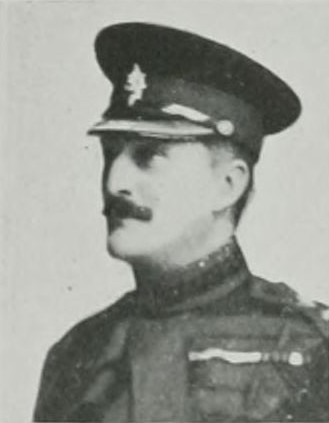
Raymond John Marker.
MARKHAM, ALLAN, S.P.O. (R.F.R., B. 8683), 295344, H.M.S. Hawke; lost when that ship was torpedoed in the North Sea, 15 Oct. 1914.
MARKHAM, JOHN ADDIS, Capt., 1st Battn. The East Yorkshire Regt., eldest s. of Thomas Markham, of Popenhoe, Wisbech, Norfolk, by his wife, Henrietta Jane, dau. of William Addis, of London; b. Faulkner House, Walpole-St.-Peter, Wisbech, 31 Dec. 1886; educ. Dover College; gazetted 2nd Lieut. to the 1st East Yorkshires from the Militia, 27 May, 1908, and promoted Lieut. 3 Sept. 1910. He was appointed temporary Capt. 15 Nov. 1914, and this rank was made substantive, 6 Feb. 1915. He went to France with the 6th Division in Sept. 1914, and was mortally wounded by a sniper’s bullet in the trenches near Armentières, 7 May, 1915, and died two hours later, being buried in Le Bizet Convent; unm. Major I. L. I. Clarke, commanding 1st East Yorkshires, wrote: “I looked upon Markham as my most reliable Company Commander, always cheery and a splendid example to all under him. He was beloved by his men, and exceedingly popular with his brother officers”; and Private John Brady, of his company: “He was the gentleman who led my platoon to the trenches on the Aisne, the platoon that was the first to come under the fire of the Germans’ famous coalboxes. He laughed at those shells, bucked us up, making us so that we could not do anything else but follow him.” Capt. Markham was a fine horseman, and in 1913 he won the East Yorkshire’s Regimental Point-to-Point Race, on his horse, Loretto.
MARKILLIE, EDGAR JOHN, Private, No. 944, Machine Gun Section, 13th Battn. Australian Imperial Force, eldest s. of the late John Adam Markillie, Mayor of Camberwell in 1908, by his wife, Frances J. (85, Norbury Crescent, Norbury), dau. of Thomas Morris, of Harrow, Tailor; b. Peckham, 1 Dec. 1890; educ. Bellingdon Road Higher Grade School, South London School, Camberwell, and Clarke’s College, Lewisham; went to Sydney, New South Wales, 3 Aug. 1912, and on the outbreak of war volunteered and joined the Australian Expeditionary Force, and was killed in action at the Dardanelles, Aug. 1915; unm. He had gained accountancy examination just before enlistment, also examination in book-keeping, first class. He excelled in sport of all kind, and was one of the crack shots of the second Australian contingent. His brother, Ernest Stuart, was killed in Belgium (see his notice).
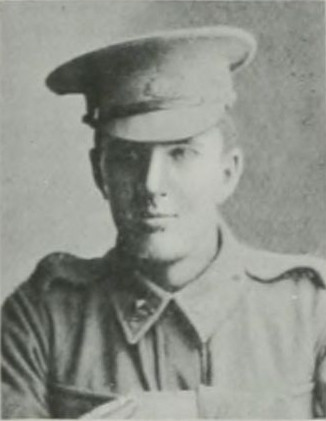
Edgar John Markillie.
MARKILLIE, ERNEST STUART, Private, No. 156, 5th Battn. (London Rifle Brigade) The London Regt. (T.F.), 3rd s. of the late John Adam Markillie, Mayor of Camberwell in 1908, by his wife, Frances J. (85, Norbury Crescent, Norbury), dau. of Thomas Morris, of Harrow, Tailor; b. Peckham, 24 March, 1895; educ. Bellingdon Road Higher Grade School, and South London School, Camberwell; was a Clerk in the London County and Midland Bank, 1913–14; volunteered and enlisted on the outbreak of war, Sept. 1914; went to France, Nov. 1914, and was killed in action at Bailleul, 18 Jan. 1915, while fixing barbed wire; unm. He was in first Rugby team, and was a fine swimmer. His brother, Edgar John, was killed at the Dardanelles (see his notice).
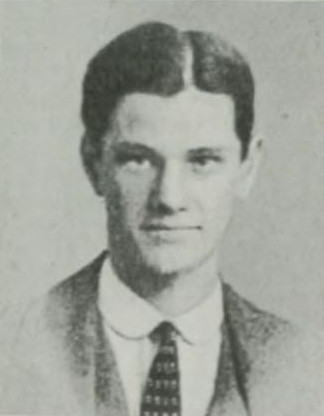
Ernest Stuart Markillie.
MARKQUICK, ARTHUR CHRISTIAN, Boy, 1st Class, J. 23520, H.M.S. Hawke; lost when that ship was torpedoed in the North Sea, 15 Oct. 1914.
MARLER, ALBERT WALTER, Officer’s Steward, R.N.V.R., Sussex 1/305, H.M.S. Hawke, s. of Albert Marler, of 116, Montgomery Street, Hove; lost when that ship was torpedoed in the North Sea, 15 Oct. 1914.
MARQUER, TOUSSAINT MARYS, Shipwright, 2nd Class, 342455, H.M.S. Good Hope; lost in action off Coronel, on the coast of Chili, 1 Nov. 1914.
MARROW, EDWARD ARMFIELD, Capt. and Adjutant, 1st Battn. King’s Own Scottish Borderers, only surviving s. of the late Major Peter Marrow, of the King’s Dragoon Guards, by his wife, Mary (Belhaven Hill, Dunbar), dau. of the Rev. Alexander Stewart, Rector of Liverpool; b. Blantyre, co. Lanark, 26 Sept. 1883; educ. Summerfields, near Oxford, Harrow, and the Royal Military College, Sandhurst; gazetted 2nd Lieut. to the K.O.S.B., 18 Jan. 1902, and promoted Lieut. 24 Jan. 1906, and Capt. 1 April, 1910; served with the 2nd Battn. in India, 1902–06; was at the depot at Berwick-on-Tweed from 1908 to 1912, and then joined the 1st Battn. in India, and was appointed Adjutant, 15 May, 1914. He returned with his Battn. to England on 31 Dec. 1914, and was at Rugby till 17 March, 1915, when they embarked for the Dardanelles, took part in the landing at Y beach, Gallipoli, on 25 April, 1915, and was killed in action at Y Beach the following day. He was buried just above the landing place there. He m. at Norham, Berwickshire, 11 Jan. 1911, Constance Marion (Belchester, Coldstream), 2nd dau. of the late Lieut.-Col. Bloomfield Gough, 9th Lancers, and had three children: Peter, b. 11 Jan. 1913; Edward Charles Gough, b. posthumous, 21 Nov. 1915; and Margaret Constance, b. 29 Nov. 1911, died in infancy.
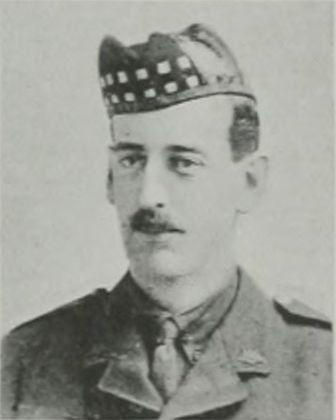
Edward Armfield Marrow.
MARSH, ARTHUR, Acting E.R.A., 4th Class, M. 3940, H.M.S. Pathfinder; lost when that ship was sunk by a mine, about 20 miles off the East Coast, 5 Sept. 1914.
MARSH, CECIL FRANK, Private, No. 14953, 10th (Service) Battn. Hampshire Regt., s. of William John Marsh, a Painter, working on Sir George A. Cooper’s Hursley Park Estate, by his wife, Mary, dau. of Hilbert Whitmarsh; b. Winchester, 15 Aug. 1897; educ. Church of England School, Ampfield; enlisted, 4 Jan. 1915; killed in action at the Dardanelles, 21 Aug. following; unm.
MARSH, HENRY HERBERT STANLEY, Major, 4th London Field Coy., R.E. 2nd London Division (T.F.), only s. of Thomas Herbert Marsh, of London, Engineer and Manufacturer, by his wife, Agnes Amelia, dau. of Thomas Towers, of Ontario, Canada; b. Toronto, Canada, 26 Oct. 1875; and was educ. Kent House, Eastbourne, and Faraday House. He began work as an engineer under Sir Benjamin Baker, and in 1897 was appointed Assistant Engineer to the City and South London Railway; subsequently he worked for Sir Alexander B. W. Kennedy; was a member of the Engineers’ Lodge of Freemasons, of the Institute of Electrical Engineers, and of the Junior Institution of Engineers, and Vice-President of the Faraday House Old Students’ Association. He obtained a commission in the 1st Middlesex R.E. (Volunteers) in March, 1900, and served in the South African War in command of the 2nd Service Section of that regt., for which he was mentioned in Lord Kitchener’s Despatch of 29 July, 1902, and received the Queen’s medal with five clasps, and was gazetted an Hon. Lieut. in the Army, 1902. He afterwards commanded the Telegraph Coy. 2nd London Divisional Engineers (T.F.), for several years, and was gazetted Capt. 3rd London Field Coy. 3 Aug. 1913, and Major, 4th London Field Coy. 10 Sept. 1914. On 14 March, 1915, he went with his company to France, and was wounded by a shell at Cuinchy, April, 1915, while superintending a working party under fire, and died the following day. He was buried in Bethune Town Cemetery. The A.A. and G.M.G. wrote “We have lost in your husband not only a friend, but a really good officer, whose value lay in his keenness and conscientious sense of duty.” He m. at St. Jude’s, South Kensington, 20 April, 1904, Grace Marie (86, Lansdowne Road, London, W.), 2nd dau. of the late Francis Cheyne Hare, late 53rd Regt. and had issue: Thomas Francis Herbert, b. 9 Nov. 1905; Agnes Marie, b. 1 June, 1908, and Margaret Grace, b. 19 May, 1912.
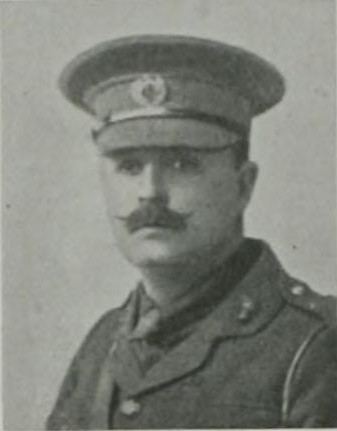
Henry H. S. Marsh.
MARSHALL, ALBERT FRANK, Plumber, 340898, H.M.S. Aboukir; lost in action in the North Sea, 22 Sept. 1914.
MARSHALL, ALFRED ERNEST, Leading Stoker, 293716, H.M.S. Good Hope; lost in action off Coronel, on the coast of Chili, 1 Nov. 1914.
MARSHALL, ARTHUR, A.B. (R.F.R., B. 4648), 212798, H.M.S. Good Hope; lost in action off Coronel, on the coast of Chili, 1 Nov. 1914.
MARSHALL, AUGUSTUS DE LA PERE, 2nd Lieut., 2nd Battn. East Lancashire Regt., 2nd s. of the late John Harcourt Hamilton Marshall, by his wife, Blanche Isabella (73, Muswell Road, Muswell Hill, N.), dau. of Augustus De la Pere Robinson, of Cloughkeating Castle, co. Tipperary; b. Melbourne, Australia, 23 Nov. 1892; educ. Seapoint High School, Cape Town, and Bedford Modern School. He joined the 28th London Territorials (Artists’ Rifles), 16 April, 1912, and on the outbreak of war volunteered for foreign service, and went to France, 26 Oct. 1914. He was given a commission as 2nd Lieut., and was posted to the 2nd East Lancashires, 27 March, 1915. He was killed in action during the attack on Aubers Ridge, near Fromelles, 9 May, 1915; and was buried in “Cameron Lane,” off the La Bassée Road, near Neuve Chapelle; unm. He was a keen cricketer and hockey player. He won his Second Cricket XI when at Bedford, was Capt. of the Royal Mail Steam Packet Cricket Club, and Vice-Capt. of the Bowes Park Hockey Club.
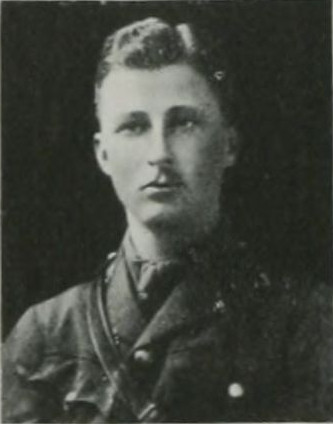
Augustus De la P. Marshall.
MARSHALL, EVELYN SAFFREY, Capt., 9th (Service) Battn. Royal Warwickshire Regt., 6th s. of the Rev. Edward Thory Marshall, M.A., Vicar of Sutton-in-the-Isle, Hon. Canon of Ely, by his wife, Lucy Charlotte Emma, dau. and co-heiress of the Rev. Charles Henry Knight, of Barrells, Warwickshire; b. Manea, Isle of Ely, 28 Jan. 1887; educ. Stancliffe Hall School and Repton; and Camborne School of Mines; volunteered on the outbreak of war, and joined the Empire Battn. Royal Fusiliers, Sept. 1914, as a Motor-cycle Despatch Rider; was given a commission as 2nd Lieut. Royal Warwickshire Regt. 25 Jan. 1915, and promoted Capt. 7 Aug. 1915; left for Gallipoli, 19 June, 1915, and took part in both evacuations at the end of the year; was specially mentioned for gallant and distinguished conduct in the field, in Gen. Monro’s Despatches from the Dardanelles; joined Mesopotamian Relief Force, March, 1916, and died in Hospital on 6 April of wounds received the previous day at Falahiyeh (El Hannel); unm. In reporting his death, Col. Gordon wrote: “We are all most deeply grieved. He led his company most gallantly at Falahiyeh, and in no small measure contributed to the brilliant success and capture of the Turkish trenches. He was one of the noblest men I have ever known, brave to a fault, modest, warmhearted, cheerful when everyone else was depressed, enduring and the most capable leader of men. His company was devoted to him, and all wanted to stay by him on his stretcher.” A brother officer wrote: “At Suvla, when most people fell sick, he was one of the mainstays of the battn., and kept things going when most others were ready to give in. I can remember how at one time he hung on with great grit against an overcoming sickness which would have sent others down to the hospital ship.” Another letter said: “All his men worshipped him, and would have followed him anywhere.” An officer wounded in Gallipoli told how Capt. Marshall practically saved his life by ripping the fleecy lining out of his coat and sending him down to the hospital in it. His brother, Capt. J. E. Marshall, was also killed in action (see his notice).
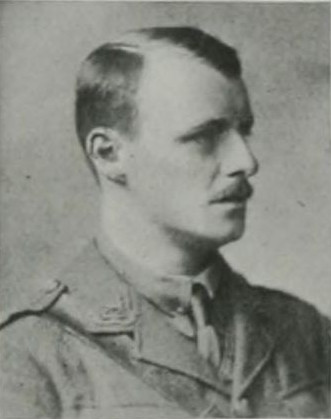
Evelyn Saffrey Marshall.
MARSHALL, GEORGE FREDERICK, Private, No. 11469, 2nd Battn. Coldstream Guards, 3rd s. of John William Marshall, by his wife, Isabella (41, Curzon Street, Birmingham), dau. of William Hoare; b. Birmingham, 30 May, 1890; educ. Cowper Street Council School there; was a Brass Polisher; enlisted 5 Sept. 1914; went to the Front, 5 Jan. 1915, and was killed in action at Cambrin, 9 July, 1915, by a rifle grenade while on sentry duty; unm. An officer of his battn. wrote to his brother: “He was killed by a rifle grenade which fell into the trench close by him, but as he was shot through the heart death must have been instantaneous and quite painless.... Ever since I have known him, some three months, your brother did well in everything, being one of the first to volunteer for a patrol about five weeks ago, and, which is a more difficult thing than any momentary act of bravery, whether in the trenches or in billets, he invariably did his duty cheerfully and willingly, an excellent example to all. He will be buried in Cambrin Churchyard, a village close to Bethune.”
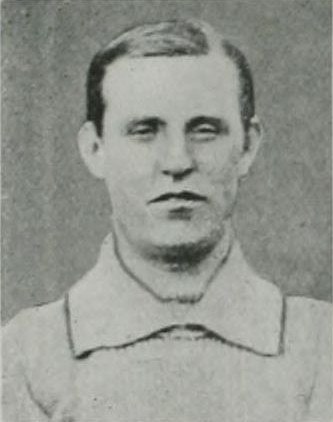
George Frederick Marshall.
MARSHALL, GEORGE GARTH, Lieut., 11th Hussars, 2nd s. of Victor Alexander Ernest Garth Marshall, of Monk Coniston, co. Lancaster, by his wife, Victoria Alberta Alexandrina, eldest dau. of Gen. the Hon. Sir Alexander Hamilton-Gordon, K.C.B., M.P., and granddau. of George, 4th Earl of Aberdeen, K.G., K.T., P.C., Prime Minister (1852–55); b. South Kensington, 6 Dec. 1884; educ. Marlborough; joined the Lancashire R.F.A. (Militia) in 1904, and was gazetted 2nd Lieut. to 11th Hussars, 20 Dec. 1907, and promoted Lieut. 16 Sept. 1909. He was stationed in Dublin, and afterwards at Shorncliffe and Aldershot, and was appointed A.D.C. to Gen. Sir E. H. Allenby, K.C.B., commanding Cavalry Corps just before the outbreak of war. He went to France in Aug. 1914, served in the retreat from Mons, the advance to the Aisne, and the movement to the Calais front, and was killed in Ypres by a shell while carrying a despatch to Gen. Haig, commanding 1st Army Corps, on 6 Nov. 1914. Gen. Allenby wrote: “He was a devoted A.D.C., indefatigable and capable.” A brother officer wrote: “If there is a consolation it is in the memory of his example, which will always live with us who knew him,” and Gen. Hamilton Gordon, commanding at Aldershot, said: “We all loved him.” He was unm.
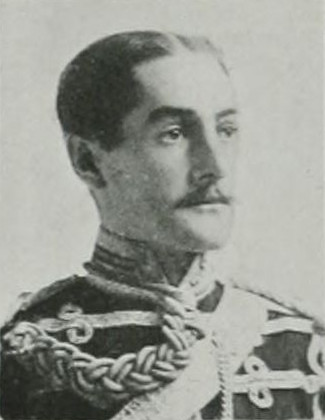
George Garth Marshall.
MARSHALL, ISAIAH, Stoker, 1st Class (R.F.R., Ch. B. 9597), S.S. 106977, H.M.S. Cressy; lost in action in the North Sea, 22 Sept. 1914.
MARSHALL, JENNER STEPHEN CHANCE, 2nd Lieut., 2nd Battn. Oxfordshire and Buckinghamshire L.I., only s. of the late Jenner Guest Marshall, of Westcott Barton Manor, co. Oxford, J.P., by his wife, Grace Eleanor (now wife of the Rev. George Miller, Rector of Teffont Ewyas, near Salisbury), dau. of A. de Peyster Chance, of Wheatfields, Worcester, J.P.; b. Hagley, co. Worcester, 1 June, 1895; educ. Connaught House, Weymouth Verites, Charterhouse, and the Royal Military College, Sandhurst; gazetted 2nd Lieut. to the 2nd Oxford and Bucks L.I., 17 Sept. 1913; went to France with his Battn., which formed part of the 5th Brigade, in Aug. 1914, and died on 23 Oct. following, of wounds received on the 21st. near Langemarck, Ypres. Buried in Ypres Cemetery; unm.
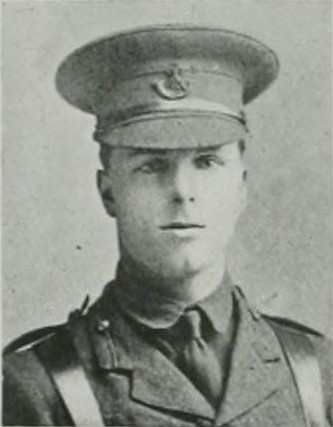
Jenner S. C. Marshall.
MARSHALL, JOHN EDWARD, Capt., 1st Battn. Duke of Cornwall’s L.I., 2nd s. of the Rev. Edward Thory Marshall, M.A., Vicar of Sutton-in-the-Isle, Hon. Canon of Ely, by his wife, Lucy Charlotte Emma, dau. and co-heiress of the Rev. Charles Henry Knight, of Barrells, Warwickshire; b. Coveney, Isle of Ely, 3 June, 1881; educ. Llandaff Cathedral School and Repton; gazetted 2nd Lieut. in the Royal Garrison Regt. from the Militia, 28 Jan. 1903; promoted Lieut. Duke of Cornwall’s L.I. 17 Oct. 1906, and Capt. 30 Aug. 1914; served in the South African War, 1901–2; took part in the operations in Orange River Colony, Dec. 1901 to Feb. 1902, and in Cape Colony, Feb. to 31 May, 1902 (Queen’s medal with three clasps); with the West African Regt. from 29 Aug. 1908 to 2 April, 1913, and with the Expeditionary Force in France and Flanders from 18 Dec. 1914 to 30 March, 1915, on which latter date he was killed in action at Kemmel; unm. Buried there. Brig.-Gen. J. S. Maude, commanding 4th Infantry Brigade, wrote: “I just wanted as General Commanding the Brigade to bear testimony to the splendid work which has been done by your gallant son since he has been with us. It was not my good fortune to know your son intimately, but I had noted him especially on several occasions for his quiet unassuming manner, a characteristic which is often associated with more sterling qualities. He was in every respect a thoroughly capable and efficient officer; he fell as a gallant soldier at the head of his men, a brilliant example of personal bravery and devotion to duty”; and Major H. T. Cantan: “He is a great loss to the regt., being a very smart officer, and one of my best company commanders, a man to whom I had hardly to express my wishes before the matter was done or placed in hand. He had always shown great bravery, and did not, I think, know fear. I only hope that my boys will grow up with the same pluck and endurance.” Capt. W. T. Brooks also wrote: “My regard for your son was sincere, and I admired greatly the way he handled his men under very trying circumstances. His loss to me is very great, and to our regt. of which we are so proud.... I must say again what a severe loss we have suffered, for your son was not only a fine officer, who looked well after his men and feared nothing, but when out of the trenches he kept people going.” A yr. brother, Capt. E. S. Marshall, 9th Royal Warwicks, died of wounds in Mesopotamia, 6 April, 1916.