The Roll of Honour. (continued 11)
Reading edition
CHILES, STANLEY MOORE, Leading Seaman, 210508 H.M.S. Aboukir; lost in action in the North Sea, 22 Sept. 1914.
CHILMAN, EDWARD RENNE, Seaman, R.N.R., 37453, H.M.S. Hogue; lost in action in the North Sea, 22 Sept. 1914.
CHILTON, FRANK, Lieut., 13th (Service) Battn. Argyll and Sutherland Highlanders, only s. of Dr. Charles Chilton, M.A., D.Sc., LL.D., etc., Professor of Biology, Canterbury College, New Zealand, by his wife, Elizabeth, dau. of John Jack; b. Port Chalmers, New Zealand, 27 Sept. 1892: educ. West Christchurch District High School, Waitaki Boys’ High School and Edinburgh University, where he was a member of the O.T.C. Prior to the outbreak of war Lieut. Chilton was studying medicine, but he immediately applied for and received a commission in the 3rd Battn. Argyll and Sutherland Highlanders, 15 Aug. 1914; was promoted Lieut., 31 Oct. 1914, and transferred to the 13th (Service) Battn., and left for the Dardanelles in May, 1915, being attached for service to the 2nd Hampshires. He was killed in action there, 4 June, 1915; unm.
CHILTON, FREE, Stoker, 1st Class (R.F.R., B. 7510), S.S. 102823, H.M.S. Aboukir; lost in action in the North Sea, 22 Sept. 1914.
CHILVERS, PERCY ERNEST, Gunner, R.M.A., 13375, H.M.S. Aboukir; lost in action in the North Sea, 22 Sept. 1914.
CHING, HUGH (alias HUGH WILLIAM POWER), Private, No. 1631, 9th Battn. (Queen Victoria’s Rifles) The London Regiment (T.F.), only s. of Richard Ching, of 180, Esywn Road, Tooting, London, by his wife, Annie; b. London, 25 Jan. 1887; educ. Stockwell Board School, was an Advertising Expert and Agent; joined Queen Victoria’s Rifles in 1912; volunteered for foreign service on the outbreak of war in Aug. 1914; went to France, Oct. 1914, and died in Hospital at Ypres, 26 March, 1915, of wounds received in action at Ypres two days previously. Buried in the ramparts of Ypres. His Capt. wrote: “All who knew your husband appreciated him very much, he was in every way a good soldier, no higher praise can be given to a man”; and 2nd Lieut. K. Lloyd wrote: “I only joined the 1st Battn. here in Jan., but he was then on the list of ‘staunch ones,’ which my platoon sergt. gave me. Ever since that first night when he took out a listening patrol, he has been a great rock of comfort to me. It is just the men like him that give such a feeling of confidence to us when we feel a touch of downheartedness. I am glad to say I was able to go back to him for a moment after he had been hit and the last I heard of him was his calling ‘Good luck’ to his friends as they filed past him along the path.” He m. at Manchester, 2 May, 1914, Pollie (Meadowside, New Mills, Derbyshire), 4th dau. of James Henry Pimley; s.p.
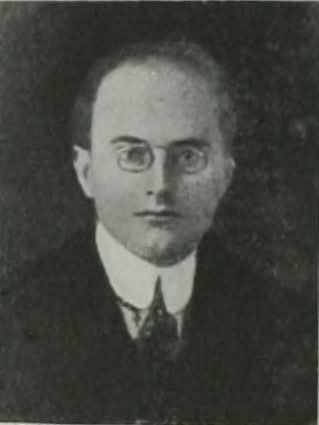
H. Ching (alias H. W. Power
CHIPCHASE, CHARLES WILSON, Private, No. 4333, 2nd Battn. Coldstream Guards, s. of Thomas Chipchase, of Hull, by his wife, Sarah, dau. of Charles Leadley; b. Scott Street, Hull, 12 Sept. 1880; educ. Charterhouse Lane Board School; enlisted 19 Aug. 1901; went to France with the Expeditionary Force, 12 Aug. 1914, and was killed in action at Rentel, Belgium, 5 Nov. 1914, being buried in Rentel Wood. He m. at St. Saviour’s Wilmington, Hull, 10 June, 1906, Elizabeth (31, Poplar Avenue, Poplar Road, Hull), dau. of Edward Pritchard, and left four children: Charles Edward, b. 2 Sept. 1907; Percy Pritchard, b. 15 Feb. 1909; Stanley Pritchard, b. 18 Nov. 1910; and David William, b. 20 Nov. 1912.
CHISHOLM, ALEXANDER, A.B. (R.F.R., B. 4308), 188284, H.M.S. Hawke; lost when that ship was torpedoed in the North Sea, 15 Oct. 1914; m.
CHISIM, JOHN, Stoker, 1st Class (R.F.R., B. 9121), S.S. 105949, H.M.S. Hawke; lost when that ship was torpedoed in the North Sea, 15 Oct. 1914.
CHISNALL, GEORGE HENRY, M.B., B.S. (Lond.), F.R.C.S. (Eng.), Lieut., R.A.M.C., s. of Charles Henry Chisnall, of Frating Abbey, Colchester, co. Essex, by his wife, Eugénie Ellen (Frating Abbey, Colchester), dau. of Thomas Patrick Hitchcock, of Lavenham, co. Suffolk; b. Great Bentley, co. Essex, 4 April, 1886; educ. Framlingham College, Suffolk, and The London Hospital Medical College. He received his commission as temporary Lieut. in the R.A.M.C. on 6 Aug. 1914, having qualified in 1908, and taken the M.B. (Lond.) in 1910. Leaving England on the outbreak of war, he was attached to and started work in the surgical ward of No. 7 General Hospital set up at Amiens. This had to be abandoned in the retreat from Mons, and he was afterwards attached to the 1st Battn. Cameron Highlanders. He was struck by a shell while attending the wounded in the open during an engagement north of Ypres, and died the following day, 24 Oct. 1914, in hospital at Elverdinghe. He was buried in the churchyard there. He was the only Chisnall at that time on the British Medical Register, and the first F.R.C.S. to fall in the war.
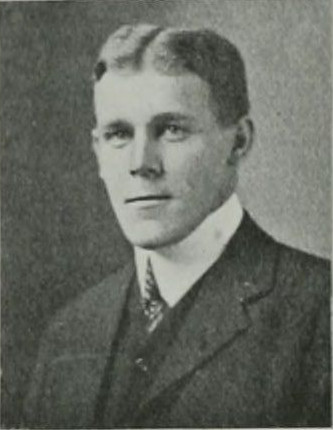
George Henry Chisnall.
CHITTENDEN, FRANK, A.B. (R.F.R., B. 5685), 186140, H.M.S. Hogue; lost in action in the North Sea, 22 Sept. 1914.
CHIVAS, EDWIN JOHN, Private, No. 27051, 15th Battn. (48th Canadian Highlanders), Canadian Expeditionary Force, s. of William Hay Chivas, of 74, Chisley Avenue, London, Ontario (who served for 16 years in the 3rd Battn. Gordon Highlanders and then settled in Canada), b. Fraserburgh, co. Aberdeen; educ. there; went to Canada with his parents in 1901; volunteered on the outbreak of war in Aug. 1914; left with the first Contingent in Oct.; went to the Front in Feb., and was killed in action at St. Julien, Belgium, 24 April, 1915; unm. Sergt. L. D. Anderson, A. Coy. 15th Battn., who was invalided back to Canada after this action, gave the following account: “I was in charge of the fort in which he was, and we retired together after being forced out by the gas fumes in the Battle of St. Julien, 24 April. Twenty or more of us lay all day under a terrible shell fire, being unconscious for most of the time, from early morning—5 o’clock—till dusk. At dusk, I being the senior, and having come to my senses, decided that we must start to gain shelter or else we should all be lost, as our breathing was coming harder and I felt I was becoming worse. I crawled over to him and braced him up, with my arms around him, telling him that we would try to get across two fields to a road; here I felt we might get water or aid. Your son’s strength had so far gone that he could walk but a very few paces and then dropped to the ground. Whether he died then or later I cannot tell you, as I, with two others, forced my way till I lay exhausted, only to be rescued by two artillerymen and brought back to life in the hospital. Your son was very much beloved by all his comrades and always was cheery and happy. We slept side by side for a long time, and so I knew him very well. When on several occasions, as I was accustomed to read from the ‘Book’ on Sundays, I forgot, your son would remind me, and our little group would sit in a quiet corner and have a quiet read of some of St. Paul or the Ninety-first Psalm. Your son was a good and true soldier.” His three brothers are all on active service, two with the Divisional Ammunition Column, and the third as a baker in the A.S.C.
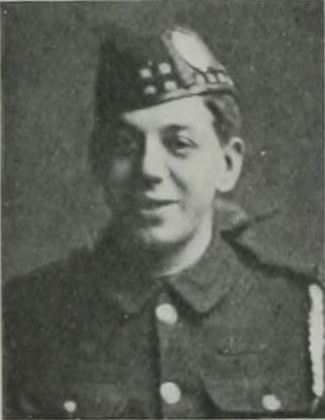
Edwin John Chivas.
CHOLMLEY, GEORGE FRANCIS, Lieut.-Commander, R.N., 2nd s. of Alfred John Cholmley, of Place Newton, Rillington, co. York, by his wife, Mary Anne, dau. of the Rev. Francis Simpson, of Foston, co. York; b. Place Newton, 1 Sept. 1882; educ. Summerfield’s 1893–5, and Mann’s Preparatory School for Navy 1895–7; joined the Britannia, 1897, was appointed to the Barfleur, Rear-Admiral Penrose Fitzgerald’s flagship, on the China Station in Sept. 1898, and served through the China War, for which he received the medal; was on the Niobe from Dec. 1900, to May, 1902, and after passing through Greenwich, entered the submarine service in 1903. He was serving as Sub-Lieut. with A 1 when she was sunk in 1904. On the day she was lost he had been sent to take temporary charge of another submarine, and was returning to A 1, about 4.30 p.m., when no trace of her could be found. After the A 1 was raised he was given six months’ promotion, being made Lieut. and put in command of her; afterwards commanded B, C and D boats, and from Feb. 1907, to March, 1909, served on the Bedford on the China Station, and in July of the latter year was appointed to the command of Submarine C 27. On 31 March, 1912, he was promoted Lieut.-Commander, and in May appointed to the Alecto for duty with submarines, and in 1913 received an expression of the Lords of the Admiralty’s high appreciation of the way in which he had handled his ship when towing H.M.S. Jackal into Dundee Harbour during a storm. He was given command of Submarine E 3 in June, 1914, and was killed in action in the Bight of Heligoland, 18 Oct. 1914. In Sept. he picked up a German seaplane which had been in the water for 20 hours about 30 miles off the Island of Borkum, and after destroying the remains of the seaplane he brought the officer and his mechanic as prisoners to Harwich. Lieut.-Commander Cholmley m. at St. Saviour’s Church, Mayfair, London, 9 Sept. 1911, Violet Penelope Munro (Hillcot, Shakespeare Road, Worthing), dau. of Robert James Trown Thomson, Indian P.W.D., by his wife, May Forbes, dau. of the Very Rev. Principal William Robinson Pirie, D.D., Aberdeen; s.p.
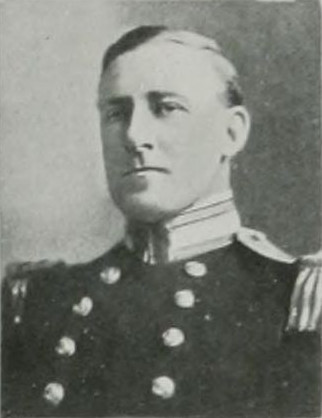
George Francis Cholmley.
CHOLMONDELEY, CHARLES ALMERIC JOHN, Capt., 2nd Battn. Border Regt., yr. s. of the late Lord Henry Vere Cholmondeley (2nd s. of William Henry Hugh, 3rd Marquis of Cholmondeley), by his wife, Frances Isabella Catherine, 2nd dau. of Lieut.-Col. the Hon. George Augustus Spencer [2nd s. of Francis Almeric, 1st Baron Churchill, and gdson. of George, 4th Duke of Marlborough]; b. London, 5 March, 1880; educ. Charterhouse; gazetted to the Border Regt. from the Militia, 4 April, 1900, and promoted Lieut. 4 Jan. 1902, and Capt. 23 July, 1910. In the Army Exercise at Northampton, 1913, Capt. Cholmondeley had a small command in the skeleton force under Major-General Munro, which operated so well from Daventry Heights. He was killed in action near Ypres, 28 Oct. 1914; unm.
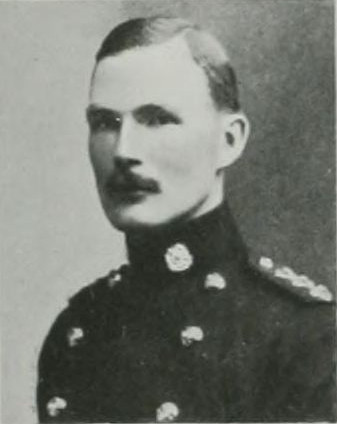
C. A. J. Cholmondeley.
CHORLEY, DUDLEY CECIL, Assistant Paymaster, R.N.R., 2nd s. of Charles John Chorley, of The Grange, Woodcote Valley Road, Purley, Wine Merchant, by his wife, Florence, dau. of William John Noad: b. Dulwich, 7 July, 1889; educ. St. Dunstan’s College; spent several years in Chili, Peru, Bolivia, and other parts of South America; was afterwards connected with the Union-Castle Line of steamships, and became their youngest purser, being in charge of the Gloucester Castle. On the outbreak of war he joined the Royal Naval Reserve as an Assistant Paymaster, 8 Sept. 1914; was commended by the commander of his first ship, H.M.S. Royal Arthur, and after three months’ service in this cruiser was appointed Assistant Paymaster (in charge) on H.M.S. Bayano, the youngest then holding that office in His Majesty’s Fleet. The Bayano left Glasgow on a Wednesday, and was torpedoed the following morning at 5 a.m., 11 March, 1915. His body was never recovered. He was a member of the Purley Cricket and Lawn Tennis Clubs, and a good sportsman. His marriage was fixed for his next return to port.
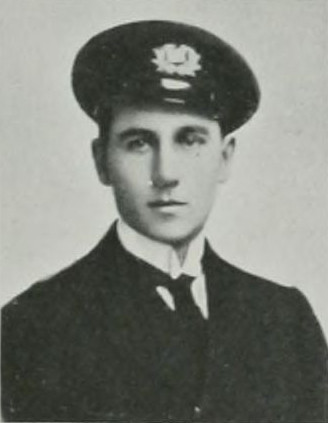
Dudley Cecil Chorley.
CHOWN, HERBERT, Private, R.M.L.l. (R.F.R., B. 1828), 186777, H.M.S. Aboukir; lost in action in the North Sea, 22 Sept. 1914.
CHRISTOPHER, LEONARD DE LONA, Capt., 40th Pathans, Indian Army, elder s. of Major-General Leonard William Christopher, C.B., Indian Army (retired), of Harcourt House, Camberley, by his wife, Florence, 4th dau. of the late Major-Gen. Charles Stuart Lane, C.B., and gdson. of the late Major-Gen. Leonard Raisbeck Christopher; b. Mansfield, Iver Heath, co. Bucks, 21 Oct. 1883; educ. Wellington College and Royal Military College, Sandhurst; gazetted 2nd Lieut. to the North Staffordshire Regt. then in India, 9 Jan. 1904; was promoted Lieut. 2 March, 1905, being the same month transferred to the Indian Army and posted to the 40th Pathans. He obtained his company 9 Jan. 1913; was Adjutant 12 April, 1911, to April, 1915, and took part in the operations in the Mohmand country (medal with clasp), 1908. On the outbreak of the European War he came home with his regt., served in France and Flanders, and was killed in action in the Second Battle of Ypres, 26 April, 1915; buried in a farm three-quarters of a mile north-east of the village of St. Jean. His colonel wrote: “The regt. was in the first line of attack, and had to cross over open ground for over 1,000 yards under a fearful fire of machine guns and shells, both front and flank.... A native officer of ours near him loosened his belt for him, and Chris said “Mehrbani” and died.... He performed his duty nobly to the end.” And a brother officer: “He was dearly loved in the regt., and died a very gallant death at the head of his men, and helped to make the regt. he loved so well famous in that reckless charge.” Capt. Christopher m. at East Barnet, co. Herts, 4 June, 1913, Edith Marian, 4th dau. of Albert Robinson Bulman, of Trevor Hall, East Barnet, co. Herts, late of Indian Civil Service.
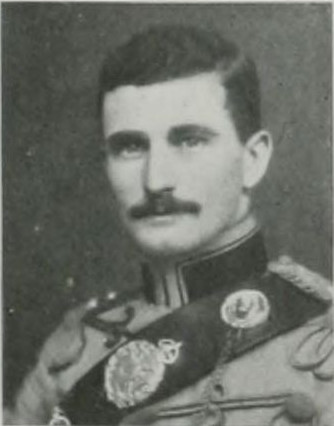
Leonard de L. Christopher.
CHRYSTIE, JOHN, Major, 3rd Battery, Medium Siege Artillery Brigade, R.G.A., 2nd s. of Col. George Chrystie, of Shortheath Lodge, Farnham, J.P., Supernumerary List, Indian Army, who served in the Indian Mutiny in 1858 (medal), by his wife, Helen Anne Thomasine, dau. of William Robertson Myers, Colonial Secretary, Jamaica; b. Mangalore, India, 9 March, 1872; educ. Surrey County School, Cranleigh, and Portsmouth Grammar School; gazetted 2nd Lieut. R.G.A. 24 July, 1891, and promoted Lieut. 24 July, 1894, Capt. 8 Nov. 1899, and Major 7 Oct. 1911, and was Adjutant in the Volunteer Forces, Nov. 1905, to March, 1907. He served in India with A Mountain Battery and R.G.A. from 1896 to 1905; was Instructor in Gunnery to the Hoogly Defences, 1901–5, and made three tours in Sierra Leone between 1907 and 1912 as Instructor in Gunnery. He left for France in command of No. 3 Battery, 1st Medium Siege Artillery Brigade, on 17 Sept. 1914; took part in the Battle of the Aisne, and on 12 Oct. was moved to the neighbourhood of Ypres. He was killed in action in the First Battle of Ypres at Zillebeke, near Ypres, on 17 Nov. 1914; and was buried in Ypres Cemetery. His colonel wrote of him: “He left behind him the lasting memorial of a shining example, of how we ought to live and die, and we shall not forget it. He came to this brigade at my invitation, stayed in it at my invitation, and so far as we all are concerned he remains in it for ever. We shall not see his like any more.” Major Chrystie was a keen sportsman, and won the Silver Spear of the Allahabad Tent Club in 1897 for pig sticking. His great-uncles, Lieut. John Chrystie, R.N., and Capt. Thomas Chrystie, R.N., served under Nelson. The former was in the Victory immediately before Trafalgar, but was transferred on promotion. The latter was at Trafalgar in the Defiance. His twin brother, Major George Chrystie, 25th Cavalry, Frontier Force, Indian Army, was killed in a raid on the North-West Frontier of India on 2 May, 1913. Major Chrystie m. at Christ Church, Lancaster Gate, London, 15 Jan. 1913, Mignonne Muriel Maude (5, Portland Terrace, Southsea), dau. of Charles Lennox Brice Cumming, late of the Indian Civil Service, and had a dau.: Leslie Mignonne Comyn, b. 6 June, 1914.
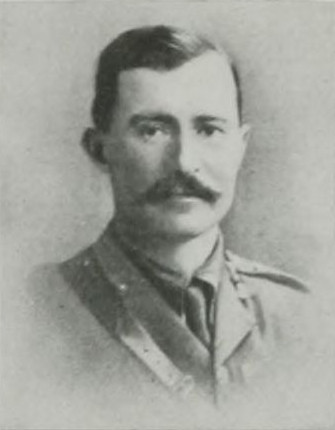
John Chrystie.
CHUDLEY, JOHN FREDERICK, Coy. Sergt.-Major, No. 330, 1st Battn. (Royal Fusiliers), The London Regt. (T.F.), eldest s. of John Chudley, by his wife, Lydia, dau. of Jesse Hattam; b. Sydenham, 8 Sept. 1875; educ. St. Mary’s School, Brook Green, London; enlisted in the 1st Royal Fusiliers (Volunteers) in 1894, and served through the Boer war, receiving the Queen’s medal with four clasps. On the outbreak of the European War he volunteered for foreign service, and died of wounds caused by an explosion of a bomb in the trenches at Merville, 12 June, 1915, and was buried in the cemetery there. He m. at St. Paul’s Church, Wimbledon Park, S.W., 29 Jan. 1910, Charlotte Susannah (206, Balvernie Grove, Southfields, S.W.), yst. dau. of James Thomas Mortimer, and had one dau., Doris, b. 13 April, 1912. Capt. Glover wrote: “I personally have known the Sergt.-Major for nearly thirteen years, and a soldier with a keener sense of duty and a man straighter in all dealings I have never met. By his death I have lost a friend and a comrade, and one who has never failed me in any circumstances.” Besides the South African medal, Sergt.-Major Chudley had the Territorial Force Efficiency Medal.
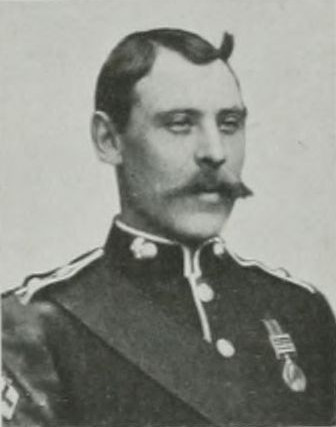
John Frederick Chudley.
CHURCHILL, DAVID EDWIN STANLEY, Private, R.M.L.I., Ch. 16325, H.M.S. Hogue; lost in action in the North Sea, 22 Sept. 1914.
CHURCHILL, JOHN WILFRED, L.-Corpl., No. 8109, 3rd East Yorkshire Regt., s. of Nehemiah Churchill; b. Netherton, near Dudley, 6 June, 1885; enlisted Jan. 1905, and was killed in action at Paradis, 18 Oct. 1914; unm.
CHUTE, CHALLONER FRANCIS TREVOR, Lieut., 2nd Battn. Royal Munster Fusiliers, 3rd s. of the late Francis Blennerhassett Chute, of Chute Hall, Tralee, co. Kerry, J.P., by his wife, Cherry Herbert (22, Ashburton Road, Southsea), dau. of Norcott D’Esterre Roberts, of Fitzwilliam Place, Dublin; b. Chute Hall, Tralee, 2 April, 1885; received his commission from the Militia in the Royal Munster Fusiliers, 28 Nov. 1905 and was promoted Lieut. 9 Feb. 1908. Reported “missing” after the Battle of Mons, it was afterwards officially announced that he was killed in action near Etreux, France, 27 Aug. 1914. Capt. H. S. Jervis, the senior surviving officer of the battn., gave the following account of the fight on 27 Aug. in which Lieut. Chute met his death: “The regt. was left in a somewhat exposed position, and the orders for a withdrawal seem to have gone astray. Chute, with his guns which he handled during the day with wonderful skill, covered the withdrawal of my company at mid-day. It was pouring with rain, and with entire disregard to personal comfort, characteristic of him, he lay down in six inches of water to manipulate his guns better. The Germans were crossing the front, and he never neglected an opportunity of delaying their advance. He withdrew them from one position to another all day, forming an invaluable escort to the two field guns we had attached to us. The withdrawal continued through a village at about 5.30 p.m., and at the other side of it he came into action again, firing right down the road, on both edges of which Capt. Rawlinson’s company was withdrawing. Owing to the help of your husband’s guns the company got safely through, and rejoined the battn. The enemy were now on three sides of us, and their artillery opened fire. Chute brought his machine guns back at the gallop along the road under a positive hail of lead. It was a splendid feat, and was successfully accomplished, and once again the guns were placed in position. We were now completely surrounded, and your husband crossed the road to try to find a target to aim at. As he crossed he was shot in the right side and thigh, and fell dead. Up to the last he was cheery and full of spirits as ever; in fact, he was the life and soul of the mess. He was looked upon as the best machine gun officer of the brigade, and his work during the day only served to confirm this view. Yesterday, the 28th, the Germans allowed us to send out a burial party of our own men, and they found Chuty and buried him with the eight other officers of the regt. who were killed in a grave separate from the men. He was buried with all his personal effects on him. His heavier kit is with the regimental transport, the only part of the regt. to escape.” Lieut. Chute m. 29 June, 1911, Maud Emily St. Clair, only dau. of the late Edward O’Brien Hobson, of Myler’s Park, co. Wexford, and had two sons: Desmond, b. 10 Aug. 1913; and Challoner, b. 18 March, 1915.
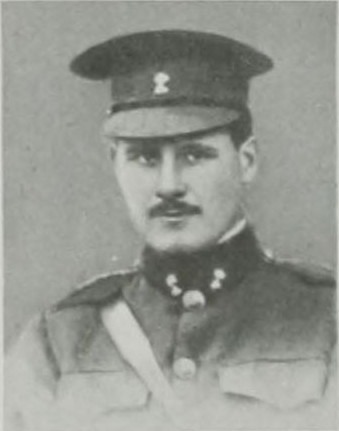
Challoner F. T. Chute.
CLAIR, WILLIAM, Stoker, R.N.R., 1406U, H.M.S. Hogue; lost in action in the North Sea, 22 Sept., 1914.
CLAPP, ALBERT GEORGE, Po. /16499, H.M.S. Good Hope; lost in the action off Coronel, on the coast of Chili, 1 Nov. 1914.
CLARE, SAMUEL JOHN, Stoker, 1st Class (R.F.R., B. 8218), 293806, H.M.S. Hogue; lost in action in the North Sea, 22 Sept. 1914.
CLARK, EDWARD, Private, No. 13619, 5th Battn. 2nd Infantry Brigade, Canadian Expeditionary Force. 4th s. of the late Edward Clark, of Morley, co. York (died 28 April, 1909), by his wife, Mary, dau. of William Walker Clark, of Morley; b. Morley, 8 Feb. 1888; educ. Queen Street Wesleyan School there; went to Canada about 1906, and settled first at Elkron, Manitoba, three years later moving further west to Swift Currents, Sask. He enlisted there on the outbreak of war in Aug. 1914, and came to England with the first Canadian contingent, arriving in Oct. After training at Salisbury during the winter he went to France in Feb. 1915, and was killed in action on Whit Monday, 24 May, 1915; unm. His company officer, Lieut. L. F. Page, wrote: “He has been under my command ever since the first days at Valcartier, and I got to know him very well. He was an excellent soldier, always willing, obliging and brave. His death, I know, was all he would have wished it to be. He was killed capturing a German position; his loss is greatly felt by us all. May we each die as fine a death as he did.”
CLARK, FREDERICK JAMES, Gunner, No. 57600, Royal Field Artillery, s. of James Clark, of 2, Philip Street, Bath; b. Tiverton, Bath, 2 Feb. 1891; educ. there; enlisted in May, 1909; served with the Expeditionary Force in France and Flanders, and was killed in action at Ypres, 31 Oct. 1914; unm. His brother is now (1916) serving with the 4th Somersets.
CLARK, HENRY WILLIAM, Rifleman, No. 2612, 17th Battn. (Poplar and Stepney Rifles) The London Regt., 3rd s. of Frederick Clark, of 42, Goldsmith Road, Hackney, by his wife, Elizabeth, dau. of Charles Callan; b. Bethnal Green, 19 May, 1893; educ. Haggerston; enlisted 3 Sept. 1914, was killed in the trenches 10 Nov. 1915, and was buried behind Lone Tree, near Hulluch, Loos; unm. Lieut. W. A. Clarke wrote that “He was always a good and devoted soldier, and did his duty splendidly.” And his comrades, in a joint letter of sympathy sent to his mother, said: “Owing to heavy rain the hole in the side of the trench in which he used to sleep when off duty collapsed, and he was buried under the heap of earth, although we made every effort to dig him out; but I am sorry to say he had passed away before we achieved our task. He was buried behind the old German line in front of Loos, which we captured in our recent attack, and a little wooden cross now marks the spot where he now lies in rest.”
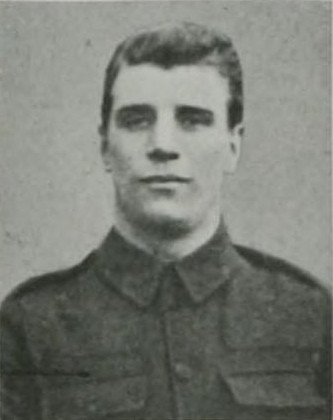
Henry William Clark.
CLARK, JOHN, Stoker, Petty Officer (R.F.R., Ch. B. 4915), 279038, H.M.S. Cressy; lost in action in the North Sea, 22 Sept. 1914.
CLARK, NELLIE, Sister, a nursing member of Lady Ralph Paget’s Serbian Relief Expedition, dau. of Thomas Clark, of Bilsley, Alford, co. Lincoln, by his wife, Elizabeth, dau. of James Tammos, of Hardley, Norfolk; b. Cumberworth, 6 March, 1888; educ. Bilsby County School; and was a private nurse, having passed all degrees. She joined Lady Ralph Paget’s first unit for Serbia, in Oct. 1914, and died at Skopje, Serbia, 25 Dec. 1914, of septic poisoning, contracted while performing her duty, and was buried there. Lady Ralph Paget wrote: “She was the best nurse we had, and was so very sweet and gentle that she was loved by every one who had the honour of knowing her. As for the wounded men she nursed they simply adored her, and it was touching to see their grief when they heard of her death.”
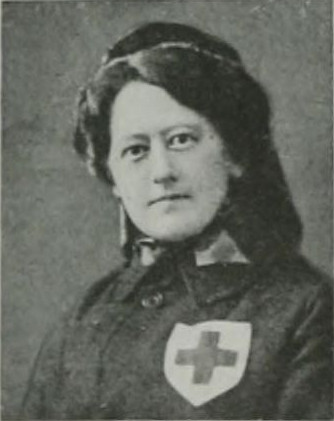
Nellie Clark.
CLARK, OWEN WALTER, Regimental Sergt.-Major, No. 5289, 2nd Battn. The Royal Scots, s. of Walter Clark, by his wife, Mary, dau. of (—) Humphreys, of Bow; b. at Bow, 30 Oct. 1877; educ. Bromley-by-Bow; enlisted in the 1st Royal Scots at Chatham in 1895, and after a short time at Edinburgh, and some years at the depot, Glencorse, was in 1903 drafted to the 2nd Battn., then at Kamptee, India. He returned from India in Oct. 1905, and on the occasion of the visit of the King and Queen to Edinburgh Castle in 1911 was, with three other N.C.Os., placed in charge of the Regalia. He also carried the new Colours which His Majesty presented to the battn. at Holyrood Palace on this occasion. The following year he was Worshipful Master of the Regimental Masonic Lodge, “Unity, Peace and Concord.” When war broke out he was Q.M. Sergt., and left Crownhill, Plymouth, with the 2nd Battn. for the Front on 13 Aug. 1914. He was granted first class Warrant rank, and promoted Regimental Sergt.-Major in Dec. 1914; was mentioned in F.M. Sir John (now Lord) French’s Despatch of 17 Feb. 1915, for gallant and distinguished service in the field, and was killed in action at Hooge, 14 July, 1915, within nine months of completing 21 years with the Colours. He had been presented with the Good Conduct Medal by General Sir H. Smith-Dorrien at Crownhill in 1913, and numerous letters from his officers show that he had made himself beloved and respected by all ranks. Sergt.-Major Clark m. at Walthamstow Parish Church, 5 May, 1900, Alice Maud Mary (735, High Road, Leyton, Essex), dau. of Edward Carr, of Leyton, Essex, and had four children: Percy, b. 13 March, 1901; Roland, b. 17 Oct. 1902; Ivy, b. 26 Sept. 1906; and Marjorie, b. 12 Sept. 1910.
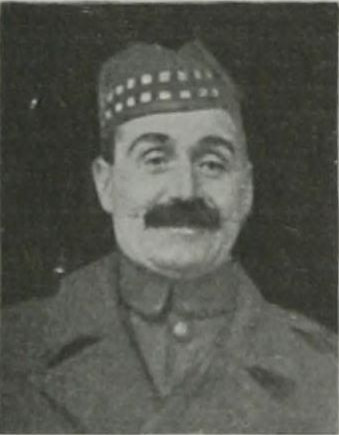
Owen Walter Clark.
CLARK, THOMAS WILLIAM, Stoker, 1st Class, K. 9966, H.M.S. Hawke; lost when that ship was torpedoed in the North Sea, 15 Oct. 1914.
CLARKE, ALBERT, Private, R.M.L.I., Ch. 14643, H.M.S. Pathfinder; lost when that ship was sunk by a mine, about 20 miles off the East Coast, 5 Sept. 1914.
CLARKE, ALGERNON PERCY, 2nd Lieut., 1/23rd Battn. The London Regt. (T.F.), 2nd and elder surviving s. of Joseph Percy Clarke, of 14, Hans Court, S.W., formerly of Buenos Ayres, M.Inst.C.E., by his wife, Elizabeth, dau. of the late Edward Glover; b. Buenos Ayres, Argentine Republic, 8 July, 1894; educ. at Marlborough College, and at the outbreak of war was an undergraduate at Pembroke College, Cambridge. From the O.T.C. Cambridge, he received his commission as 2nd Lieut. Territorial Force as from 29 Aug. 1914. He at once joined the 1st/23rd London Regt., and, volunteering for foreign service, trained with his regt. until 14 March, 1915, when they embarked for France. He went through a course of machine-gun instruction at St. Omer, France, and was made machine gun officer to his battn. After several months in the trenches he was badly wounded in both legs on 21 July, by a German shell which burst in the room where he and two other officers were resting, south of La Bassee, and he died on 24 July, 1915, at No. 1 Casualty Clearing Station, and was buried in the new cemetery at Chocques, France. Writing to his father, Lieut.-Col. Streatfield said: “I pray that you may be able to derive some comfort from the knowledge of how splendidly your boy has done since he has been out here. We all loved him, and the men of his platoon would have done just anything in the world he asked them to. By his good heartedness and cheeriness he had endeared himself to them in a way it has been the lot of few men to do.” Lieut.-Col. Lord Herbert A. M. Douglas Scott, D.S.O. (formerly commanding 1/23rd The London Regt.), wrote from the War Office, 29 July, 1915: “Your son was doing so extremely well under my command and I heard from Lieut.-Col. Streatfield the same good account of his work. Your loss is the country’s loss also.” His brother, Harold Percy, of the Rifle Brigade, was killed on 9 May, two and a-half months earlier (see his notice).
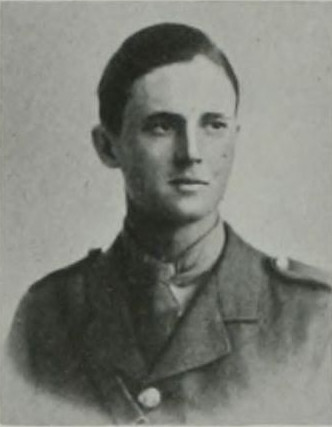
Algernon Percy Clarke.
CLARKE, AMBROSE CHILDS, 2nd Lieut., 4th Battn. Leicestershire Regt. (T.F.), elder s. of William Arthur Clarke, of The Homestead, Manor Road, Leicester, Solicitor, by his wife, Ruth Lilian, dau. of Charles Baimbridge Rendle, of Russell Road, Kensington, Surgeon; b. Stoke, Devonport, co. Devon, 12 July, 1896; educ. Stoneygate School, Leicester, King’s College Choir School, Cambridge, and Malvern College. At the outbreak of war he was in camp with the Malvern College contingent of the O.T.C., and returned to Leicester, receiving his commission two days afterwards, 6 Aug. 1914. He was killed in the trenches near Messines, 9 May, 1915, during a heavy bombardment. He was placing his men under cover, refusing to take shelter himself until all his men were out of danger, and he had just got his last men under cover when he was killed by a shell instantaneously. He was buried in what had formerly been “Packhorse Farm,” Wulverghem, at the back of the English lines near Bailleul. A brother officer, who has since been killed, wrote: “He honestly was one of the cheeriest, best, most capable and well-loved officers in the battn., especially taking his age into consideration.”
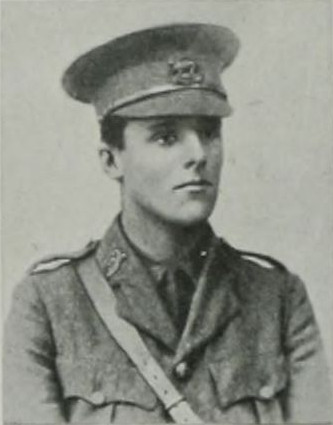
Ambrose Childs Clarke.
CLARKE, BASIL HEATHCOTE, Rifleman, No. 2336, 1/9th Battn. (Queen Victoria’s Rifles) The London Regt. (T.F.), yst. s. of Henry Heathcote Clarke, of 17, Birchwood Mansions, Muswell Hill, N., formerly of Durban, Natal, Journalist, by his wife, Florence Annie, dau. of Charles Samuel Clarke; b. Stamford Hill, N., 4 March, 1894; educ. Oakfield School, Crouch End, N.; was a member of the office staff of the London Electric Supply Corporation, Ltd., 25A, Cockspur Street, S.W., but on the declaration of war volunteered for Active Service, and enlisted in Queen Victoria’s Rifles, 3 Sept. 1914; landed in France, 23 Jan. 1915; served with the Expeditionary Force, and was killed in action near Wulverghem, 6 March, 1915, only two days after his twenty-first birthday; unm. He was buried in the military burial ground near Wulverghem Church. Coy. Sergt.-Major Ashton wrote: “He was on the look out at the time, and he was struck by a rifle bullet, and death was instantaneous.... He had only been with us such a short while, and we have lost a brave and good comrade.” Clarke was a server at St. Peter le Poer, Friern Barnet, and also assistant scout-master of the 91st London Troop.
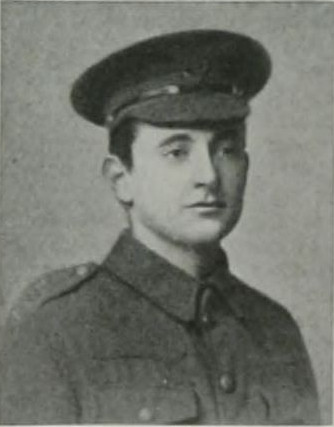
Basil Heathcote Clarke.
CLARKE, CHARLES PRIOR, A.B. (R.F.R., B. 1190), 205888, H.M.S. Good Hope; lost in the action off Coronel, on the coast of Chili, 1 Nov. 1914.
CLARKE, CHARLES WILLIAM, Leading Stoker (R.F.R., B. 6419), 298869, H.M.S. Good Hope; lost in the action off Coronel, on the coast of Chili, 1 Nov. 1914.
CLARKE, EDWARD THOMAS, Private, No. 27621, 15th Battn. (48th Highlanders) Canadian Expeditionary Force, eldest s. of Joseph Edward Clarke, of 26, Lagham Road, South Godstone, Surrey, Groom Gardener; by his wife, Eleanor, dau. of Mark Chapman; b. St. John’s Wood, London, 12 Dec. 1893; educ. Blindley Heath National School, Surrey; went to Canada on his fourteenth birthday in 1907, and settled at Sweetsburg, working as a farm hand. He joined the 13th Scottish Light Dragoons, and gained his certificate as Sergt.-Major at the Royal Cavalry School at St. Jean, Quebec, 15 Feb. 1913. On the outbreak of war he joined the 48th Highlanders as a Private, came to England with the First Canadian Contingent, and after training on Salisbury Plain during the winter, went to the Western Front, 11 Feb. 1915, and was killed in action at Ypres, 22–24 April, 1915; unm.
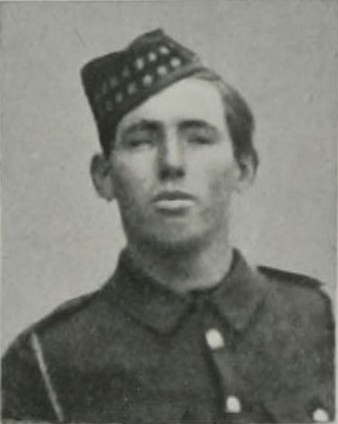
Edward Thomas Clarke.
CLARKE, ERNEST, Seaman, R.N.R., 5535A, H.M.S. Cressy; lost in action in the North Sea, 22 Sept. 1914.
CLARKE, FREDERICK WILLIAM, Stoker, 1st Class, 302310, H.M.S. Pathfinder; lost when that ship was sunk by a mine, about 20 miles off the East Coast, 5 Sept. 1914.
CLARKE, FREDERICK WILLIAM, A.B. (R.F.R., Ch. B. 9094), 201471, H.M.S. Cressy; lost in action in the North Sea, 22 Sept. 1914.
CLARKE, GEORGE RANKIN, Private, No. 271, B. Coy. 1st Newfoundland Regt., s. of Captain John Clarke, of Brigus, Newfoundland, Fisherman and Seafaring man; b. Brigus, Cape Breton, Newfoundland, 20 Oct. 1897; educ. Brigus Methodist Academy, and Methodist College, St. John’s; volunteered for Imperial service and joined the 1st Newfoundland Regt. after the outbreak of war, Sept. 1914, and d. in hospital at Mudros, 24 Nov. 1915, of dysentery contracted while on active service; unm.
CLARKE, HAROLD MARTIN, Barrister-at-Law, Lieut., 17th Battn. (Poplar and Stepney Rifles) The London Regt. (T.F.), only s. of George William Clarke, of The Glen, Forest Hill, S.E., Town Clerk of Stepney, by his wife, Alice Mary, dau. of William Edwin Hill; b. Kirby-le-Soken, co. Essex, 25 Feb. 1889; educ. Whitgift Grammar School, Croydon, and Clare College, Cambridge, and was called to the Bar (Middle Temple) in 1911. On 9 May, 1913, he obtained a commission as 2nd Lieut. in the Poplar and Stepney Rifles, and on the outbreak of war, 5 Aug. 1914, at once volunteered for foreign service and was promoted Lieut. 29 Aug. 1914; went to the Front with his regt. 9 March, 1915, and was killed in action at the Battle of Loos, 26–27 Sept. 1915. The following order was issued shortly before this action (sent to England after Lieut. Clarke’s death): “The Major-General wishes to place on record his appreciation of the good work which has been done during the last four months by the following instructors at the Divisional Bomb School: Instructor Lieut. Martin Clarke, &c.—Headquarters, 10.25 p.m.” At Whitgift he was Colour-Sergt. in the Cadet Corps, and in the History Sixth, and at Clare he received his Lent and May colours. Lieut. Clarke m. at St. Albans in 1914, Daisy Emily (120, Croxted Road, West Dulwich), dau. of Philip Early Fenton Keatch, of India; s.p.
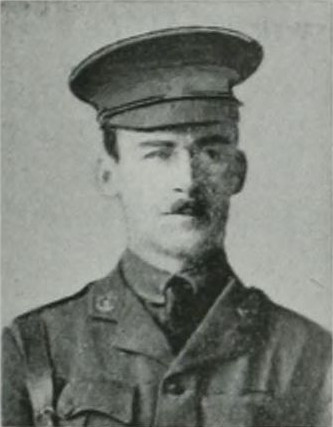
Harold Martin Clarke.
CLARKE, HAROLD PERCY, 2nd Lieut., 6th Special Reserve, attd. 2nd, Battn. The Rifle Brigade (The Prince Consort’s Own), eldest s. of Joseph Percy Clarke, of 14, Hans Court, S.W., formerly of Buenos Ayres, M.Inst. C.E., etc., by his wife, Elizabeth, dau. of the late Edward Glover; b. Rosario de Santa Fe, Argentine Republic, 18 March, 1888; educ. Marlborough College; trained as a civil engineer, and became an Associate Member of the Institution of Civil Engineers in 1913. He was constructing engineer on the Central Argentine Railway, and, arriving in England soon after the outbreak of war, he obtained through the Cambridge O.T.C. his commission in the Special Reserve of Officers as 2nd Lieut. from 15 Aug. 1914, joining the 6th Battn. Rifle Brigade at Sheerness. He went to the Front in November, but was shortly after invalided home with influenza and a slight attack of pneumonia. He rejoined the reserve battn. (6th) in February, 1915, and went to France, 17 March, where he was attached to the 2nd Battn., joining A Coy. He was killed on 9 May, 1915, in the attack on Fromelles and the Aubers Ridge as he was leading his platoon to take the German trenches. He was buried near Basseye, a little north of Kemmel, France. Almost all the officers of the battn. were casualties in this attack, but Capt. Nugent, company officer, 2nd Rifle Brigade, wrote: “Your son commanded his platoon with the greatest dash and gallantry, and showed himself to be a splendid officer.” He had already gained distinction in his professional career as a civil engineer, important works having been entrusted to his care, and was a keen sportsman in every way. His next brother, Algernon Percy, was killed also in France, two and a-half months later, July 24 (see his notice).
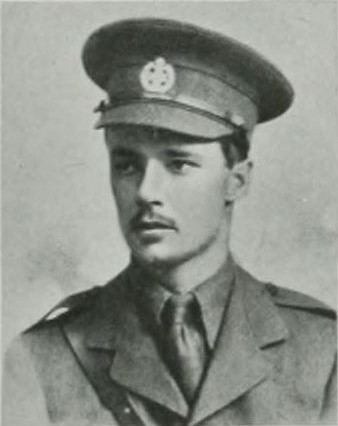
Harold Percy Clarke.
CLARKE, HERBERT CHARLES, Stoker, 2nd Class, K. 21948, H.M.S. Good Hope; lost in the action off Coronel, on the coast of Chili, 1 Nov. 1914.
CLARKE, HERBERT EDGAR, Stoker, 1st Class (R.F.R.B., 8114), S.S. 103947, H.M.S. Hawke; lost when that ship was torpedoed in the North Sea, 15 Oct. 1914; m.
CLARKE, HENRY HAMES, Chief Ship’s Cook (Pensioner), 153478, H.M.S. Hogue; lost in action in the North Sea, 22 Sept. 1914.
CLARKE, JAMES, A.B. (R.F.R., B. 5108), 175327, H.M.S. Hogue; lost in action in the North Sea, 22 Sept. 1914.
CLARKE, JAMES, Stoker, 1st Class, S.S. 109357, H.M.S. Cressy; lost in action in the North Sea, 22 Sept. 1914.
CLARKE, JAMES GEORGE, Officer’s Steward, 1st Class, L. 5276, H.M.S. Hawke; lost when that ship was torpedoed in the North Sea, 15 Oct. 1914.
CLARKE, MAURICE TREDWAY, Private, No. 29752, 10th Battn., 1st Division, Canadian Expeditionary Force, yr. s. of Tredway Sydenham Clarke, Barrister-at-Law, late of Lincoln’s Inn, by his wife, Constance, dau. of Edmund Dewar Bourdillon; b. Richmond, co. Surrey, 22 March, 1883; educ. Malvern College, Eastbourne College and St. Catherine’s College, Cambridge; went to Canada in June, 1905, and took up land near Eagle Butte, Medicine Hat, Alberta, and in 1910 obtained an appointment under the Dominion Forestry Department, which he held until Sept. 1913. On the outbreak of the European War in Aug. 1914, he volunteered for Imperial service; came over with the first contingent in Oct.; went to France, Feb. 1915; was slightly wounded in the early stages of the Second Battle of Ypres, and died 24 April, 1915, from injuries received whilst the ambulance was passing through Ypres; unm. He was buried at Vlamertinghe.
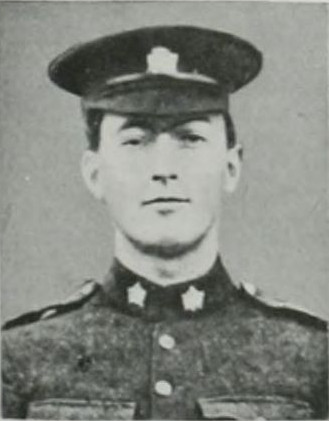
Maurice Tredway Clarke.
CLARKE, MONTAGU CHRISTIAN CUTHBERT, Lieut., 1st Battn. Argyll and Sutherland Highlanders, only s. of the late Montagu Charles Clarke, of the Southern Mahratta Railway, India, by his wife, Ada Georgina, dau. of Daniel Booth Rowbotham; b. Lindfield, co. Sussex, 3 Oct. 1893; educ. Radley College, and Sandhurst; gazetted 2nd Lieut. 1st Battn. Argyll and Sutherland Highlanders, 4 Sept. 1912, and promoted Lieut. 12 Dec. 1914. He was killed in action at Ypres, 8 May, 1915, and buried in graveyard of the temporary hospital on the Menin Road, about one mile from Ypres; unm.
CLARKE, MORDAUNT EDWARD LEONARD HANNAM, Lieut., 3rd Battn. Worcestershire Regt., yst. s. of the late Col. Francis Coningsby Hannam Clarke, C.M.G., R.A., sometime Surveyor-General of Ceylon, by his wife, Elizabeth Stainton (24, The Grove, Boltons, S.W.), dau. of S. W. Brown, F.R.C.S.; b. Bath, 13 Oct. 1884; educ. Marlborough College and University College Oxford; served first in the Kent Artillery from which he was gazetted 2nd Lieut. Worcestershire Regt., 29 May, 1907, and was promoted Lieut. 22 Oct. 1910, serving for the next 3 or 4 years as Scout Officer to his regt. On the outbreak of the European war he left with his regt. for France, and was shot through the head by a bullet from a shell at Candry, near Cambray, 26 Aug. 1914; unm. He was carried to the Civil Hospital at Marly, but never regained consciousness. He received the following “mention” in Aug. 1913:—“I am to inform you that the G.O.C. 7th Brigade, wishes you to know how much he appreciates your work as Scout Officer during Brigade training. As this matter was not mentioned at the Pow-Wow he desired that you should be informed at once.”
CLARKE, VICTOR, Leading Seaman (R.F.R., B. 8513), 194420, H.M.S. Hawke; lost when that ship was torpedoed in the North Sea, 15 Oct. 1914.
CLARKE, WILLIAM, Sergt., No. 308, A Coy., 2nd Battn. Lancashire Fusiliers, 2nd s. of George Clarke, pit top man, by his wife, Mary, dau. of George Kelk; b. Blyth, 4 June, 1885; educ. there and Austerfield; enlisted in May, 1903, and served eight years in India, Egypt and Malta, and was a Reservist when war broke out. He was gassed at the Battle of Hill 60, but recovered and was sent back to the trenches, and was killed in action at Ypres, 29 June, 1915, and was buried at La Brique, a mile and a-half away from Ypres, near Turco Farm. He had put his head over the parapet of the trench to aim at a German sniper, and was shot through the head, being killed instantaneously. 2nd Lieut. Granger wrote: “He was an excellent soldier, a splendid N.C.O., who took an interest in his work, and whatever he did he did well. He was as plucky a man as it is possible to meet. I deeply regret his death, and may say that there is no one else in the company whose loss would be more keenly felt.” Sergt. Clarke was mentioned for conspicuous bravery on the field. He also had six medals which he received while serving in India, etc. He m. at St. James’ Church, Doncaster, 3 Aug. 1913, Harriet (61, Concrete Cottages, Wombwell, near Barnsley), dau. of Thomas Schorah, and had twin children: Laurence and Doris (died 26 Aug. 1914), b. 4 July, 1914.
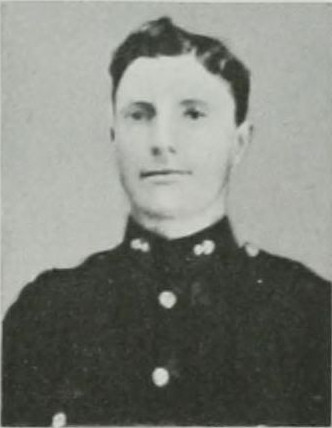
William Clarke.
CLARKE, WILLIAM, Stoker, 1st Class (R.F.R., B. 5843), S.S. 100711, H.M.S. Hawke; lost when that ship was torpedoed in the North Sea, 15 Oct. 1914.
CLARKE, WILLIAM, Private, R.M.L.I., Ch. 17297, H.M.S. Cressy; lost in action in the North Sea, 22 Sept. 1914.
CLARKE, WILLIAM JOB, A.B. (R.F.R., Ch. B. 10258), 208608, H.M.S. Cressy; lost in action in the North Sea, 22 Sept. 1914.
CLARKSON, ARTHUR EDWIN, Private, No. 1122, 8th Battn. (90th Winnipeg Rifles) Canadian Expeditionary Force, s. of Annie (now wife of Maurice Barker, of St. Rose du Lac, Manitoba, Canada, and relict of John Cahill, of Scarborough); b. Scarborough, co. York; educ. Scarborough Board School; went to Canada with his mother in June, 1903; volunteered on the outbreak of war, and enlisted at Portage la Perrée, Man., 14 Aug. 1914; left Canada with the first contingent in Oct.; went to the Front in Feb., and was killed in action at Langemarck, 25 April, 1915. He m. at St. Mary’s Church, Scarborough, 8 May, .... Sarah (21, Hadden Street, Aberdeen), dau. of (——) Newcombe; s.p. His half-brother, Private John Cahill, 45th Battn. Canadian Expeditionary Force is now (1916) on active service.
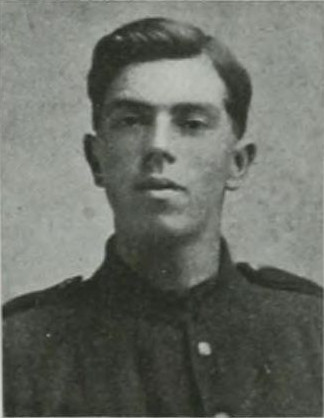
Arthur Edwin Clarkson.
CLARKSON, ERNEST, E.R.A., 4th Class, 272189, H.M.S. Good Hope; lost in the action off Coronel, on the coast of Chili, 1 Nov. 1914.
CLARKSON, FREDERICK WILLIAM, Lieut.-Commander, R.N., only s. of the late Col. Frederick William Clarkson, 39th Dorsetshire Regt., by his wife, Ella Rosa (who m. 2ndly, Col. Sir Augustus Riversdale Warren, 5th Bart., of Warren’s Court, co. Cork), dau. of Major-General John Octavius Chichester, 39th Regt.; b. Dorchester, 6 Oct. 1883; became a cadet H.M.S. Britannia, in 1899; Midshipman within four months, Sub-Lieut. in 1892, Lieut. in 1904 and Lieut.-Commander, 1912. He was lost in H.M.S. Hawke when that ship was torpedoed 15 Oct. 1914; unm.
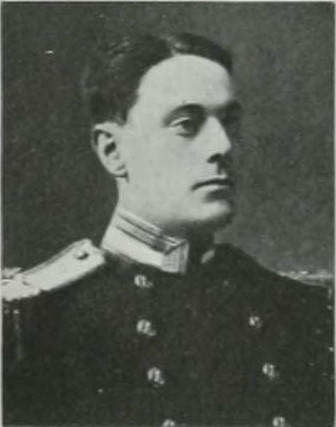
Frederick W. Clarkson.
CLARKSON, GERALD RICHARD, Corpl., No. 4, 525, Divisional Signal Coy., New Zealand Engineers, elder s. of the late Richard Potts Clarkson, M.A., Director of Technical Education, Hawkes Bay District, and Headmaster, Napier Technical College; by his wife, Rosina, dau. of (——) O’Shaughnessy, and nephew of John Bowes Clarkson, of Christchurch, New Zealand; b. Palmerston North, New Zealand, 26 Oct. 1893; educ. Normanby Public School, Stratford High School, and Napier Technical College; volunteered for Imperial service on the outbreak of war in Aug. 1914; left for Egypt with the main Expeditionary Force, and was killed in action at the Dardanelles, 24 May, 1915, while patrolling Telegraph Lines in “No Man’s Land”; unm. Buried with three other New Zealanders near where he fell before a general Cemetery was decided on.
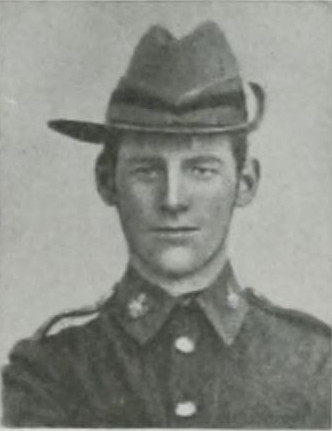
Gerald R. Clarkson.
CLARKSON, ROBERT, Signalman, 190401, H.M.S. Cressy; lost in action in the North Sea, 22 Sept. 1914.
CLARRICOATES, GEORGE HENRY, Stoker, P.O., 306293, H.M.S. Good Hope; lost in the action off Coronel, on the coast of Chili, 1 Nov. 1914.
CLAW, SIDNEY THOMAS, A.B. (R.F.R., B. 9334), H.M.S. Aboukir; lost in action in the North Sea, 22 Sept. 1914.
CLAXTON, EDWIN ARNOLD, Officer’s Steward, 2nd Class, Pensioner, 157283; reported missing after the sinking of H.M.S. Speedy by a mine 30 miles off the East Coast, 3 Sept. 1914.
CLAY, FRANK, Stoker, 1st Class (R.F.R., B. 3895), S.S. 101752, H.M.S. Good Hope; lost in the action off Coronel, on the coast of Chili, 1 Nov. 1914.
CLAY, FRANK, Stoker, 1st Class, S.S. 110996, H.M.S. Good Hope; lost in the action off Coronel on the coast of Chili, 1 Nov. 1914.
CLAY, HARRY, Stoker, 1st Class (R.F.R., B. 8970), S.S. 105678, H.M.S. Aboukir; lost in action in the North Sea, 22 Sept. 1914.
CLAYDON, JAMES LEMARQUE, Gunner, R.M.A. (R.F.R., B. 1105), R.M.A. 11040, 4th s. of William Tilbrook Claydon, of Cambridge, by his wife, Emily; joined the Royal Marine Artillery in Nov. 1904; purchased his discharge in March, 1911, and joined the Royal Fleet Reserve; was called up for service on the outbreak of hostilities, and was lost in action in H.M.S. Hogue in the North Sea, 22 Sept. 1914.
CLAYHILLS, GEORGE, D.S.O., Capt., 1st Battn. East Lancashire Regt., 4th s. of Thomas Clayhills, of Invergowrie, co. Forfar, and Thornton-le-Moor, co. York, by his wife, Elizabeth, dau. of John Rob, of Catton Hall, co. York; b. Darlington; educ. Cheltenham College and Trinity Hall, Cambridge. Received his commission and joined the 4th Militia Battn. of the Cheshire Regt. 8 Sept. 1896, from which he was gazetted 2nd Lieut. to the 1st Battn. East Lancashire Regt. 4 Jan. 1899; promoted Lieut. 4 June, 1900; and Capt. 8 Feb. 1908; and was Adjutant from April, 1906, to April, 1909. He went with his regt. to South Africa and served with the 8th Mounted Infantry during the war 1900–2, and took part in the operations at Paardeberg, and actions at Poplar Grove, Dreifontein, Karee Siding, Vet River and Zand River, being twice mentioned in Despatches [London Gazette, 10 Sept. 1901, and 17 May, 1902], and receiving the Queen’s medal with four clasps, and the King’s medal with two clasps, and the D.S.O. On the outbreak of the European War he left with his regt. for the Front, served in France and Flanders, took part in the retreat from Mons, the Battles of the Marne and the Aisne, and was killed in action at the first Battle of Ypres, 2 Nov. 1914; unm. He was buried about three miles north of Armentières, one mile east of the Ploegsteert-le Cheir Road.
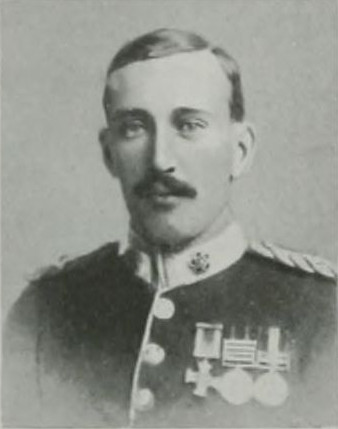
George Clayhills.
CLAYTON, ARTHUR GARDNER, Private, No. 18000, Princess Patricia’s Canadian L.I., 2nd s. of Arthur Gardner Clayton, of the Colonial Secretary’s office, Ceylon, by his wife, Lucy, dau. of the late Ven. R. Sutton, Archdeacon of Lewes and Vicar of Pevensey; b. Belize, British Honduras, 2 July, 1893; educ. King’s School, Bruton, co. Somerset, and was afterwards a clerk in the Saskatoon branch of the Bank of Montreal. On the outbreak of the European War he enlisted in Princess Patricia’s Canadian L.I., and was killed in action at Dickebusch, near St. Eloi, 15 Feb. 1915; unm.
CLAYTON, GERALD EDWARD CRIRIE, of Penarwel, Llanbedrog, M.A., Barrister-at-Law, 2nd Lieut., Royal Marines, R.N.D., only s. of Ralph Cririe Clayton (grandson of Ralph Clayton, of Leyland and Crooke Hall, co. Lancaster), by his wife, Caroline, only dau. of the late Lieut.-Gen. John Ffolliott Crofton; b. Liverpool, 27 Dec. 1879; educ. at Liverpool College and Worcester College, Oxford, where he graduated B.A. and M.A., and was called to the Bar (Inner Temple) in 1904. He was for three years a Lieut. in the Army Motor Reserve, but this corps was disbanded in Dec. 1913. After the declaration of war in Aug. 1914, he volunteered with his motor car as a Despatch Rider, and was given a commission in the Royal Naval Division, 24 Sept. 1914. He went to France and subsequently to Belgium, and was in the retreat from Antwerp in Oct. 1914, his motor car being the last British car but one to leave that city. On the return of the Naval Brigade he was stationed at the Crystal Palace training the Naval Reserves, and while on Active Service there in Feb. 1915, contracted epidemic cerebro-spinal meningitis, from which he died at The Little Manor, Hertingfordbury, 2 Sept. following. He m. at St. James’, Spanish Place, W., 28 April, 1908, Ione (Penarwel, Llanbedrog, Pwllheli, North Wales), dau. of Major Oscar William de Satgé de Thoren, 45th and 38th Regt., and granddau. of Oscar Joseph de Satgé, 13th Baron de Thoren, of the Château de Thoren, Pyr. Or., France, and had three children: Ralph Dominic de Satgé, b. 18 Feb. 1909; Aymar Sinclair Joseph de Satgé, b. 6 July, 1912; and Eveline Mary Alice de Satgé, b. 26 May, and died 10 June, 1910.
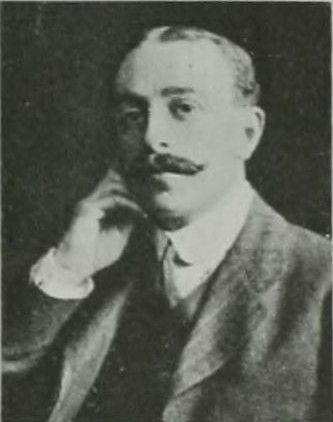
Gerald Edward C. Clayton.
CLAYTON, ROBERT WILLIAM, Private, R.M.L.I., Ch./13470, H.M.S. Pathfinder; lost when that ship was sunk by a mine, about 20 miles off the East Coast, 5 Sept. 1914.
CLAYTON, THOMAS, Stoker, 1st Class (R.F.R., B. 4542), S.S. 103649, I.C. 127, H.M.S. Good Hope; lost in action off Coronel, on the coast of Chili, 1 Nov. 1914.
CLEAVER, SIDNEY, Private, No. 7722, 1st Battn. Gloucester Regt., s. of Samuel Cleaver, by his wife, Mary; b. Bristol, 1884 or 1886; educ. Northgate Wesleyan School, Gloucester; enlisted 23 Aug. 1904; served for three years with the Colours, then passed into the Reserve; was employed prior to the outbreak of the war in the Celynen Colliery; mobilised 5 Aug. 1914; went to France, 12 Aug. and was killed in action at the Battle of the Aisne, 26 Sept. 1914. He m. at Gloucester, 30 Nov. 1909, Francis Sarah Ann (33, Swan Road, Kingsholme, Gloucester), dau. of Emanuel Charles Symonds, and had three daus.: Gwendoline Frances, b. 28 Dec. 1909; Mary Elizabeth, b. 13 Sept. 1911; and Iris May, b. 14 April, 1914. His Capt. wrote: “He was a plucky young soldier, always ready for anything—a man I could thoroughly trust. Only ten minutes before his death he had volunteered to go out with his platoon commander to reconnoitre some of the enemy trenches, a task requiring pluck, which was carried quite satisfactorily.”
CLELAND, MATTHEW, Stoker, 1st Class (R.F.R., B. 8945), S.S. 105660, H.M.S Aboukir; lost in action in the North Sea, 22 Sept. 1914.
CLEMENS, ARCHIBALD, A.B. (R.F.R., B. 10709), 208488, H.M.S. Hogue; lost in action in the North Sea, 22 Sept. 1914.
CLEMENTS, BERT RICHARD, L.-Corpl., No. 14488, 2nd Battn. Grenadier Guards, only surviving s. of William Clements, late of the King’s Royal Rifles (who served in the Afghan campaign and died 31 May, 1908), by his wife, Elizabeth (30, Brook Street, Barry Dock, Cardiff), dau. of William Western; b. Barry Dock, near Cardiff, 20 April, 1892; educ. Council Schools, Barry Dock; was for two years a telegraph boy at the Barry Dock Post Office; enlisted in the R.G.A., but being an only son was claimed out by his mother; then enlisted in the Grenadier Guards at Cardiff Barracks, 2 Jan. 1909; saw three years’ service with the Colours, and afterwards joined the Cardiff City Police Force. On the outbreak of war he was called up, 5 Aug. 1914, went through the retreat from Mons and the Battle of the Aisne, and was killed in action at Ypres by shrapnel, 7 Nov. 1914; buried at Zillebeke, near Ypres; unm.
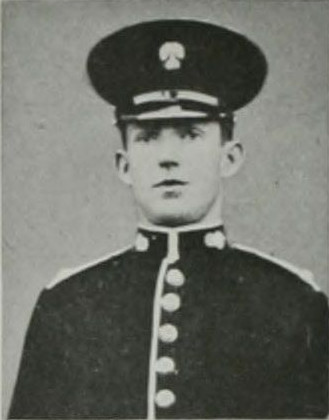
Bert Richard Clements.
CLEMENTS, BERTRAM SARGENT, Leading Seaman, 168315, H.M.S. Hogue; lost in action in the North Sea, 22 Sept. 1914.
CLEMENTS, JACK, Private, R.M.L.I., Ch./12014, H.M.S. Hawke; lost when that ship was torpedoed in the North Sea, 15 Oct. 1914.
CLEMENTS, THOMAS HAROLD, Trooper, No. 2803, 2nd Life Guards, s. of the late Robert Henry Clements, by his wife, Harriett (St. Mary’s Street, Monmouth), dau. of Richard Smith; b. Monmouth, 17 Oct. 1892; educ. Grammar School there (1907–1911), winning several scholarships. He joined the Army, 17 Oct. 1911, and went to the Front, 15 Aug. 1914. On the night of 12 May, 1915, he was in the trenches at Potijze, and was under very heavy shell fire for three hours. The trenches were blown in, and while returning to the support trenches, he was struck by shrapnel and killed instantly. He was buried at Potijze, 1 mile north-east of Ypres; unm. Trooper Clements was an excellent athlete, and one of the finest forwards of the school Rugby football team, his work in the open and at the line-outs being particularly good, besides being a fearless tackler. He also played several times for the Monmouth Rugby Club. While at the school he secured prizes at the sports, and in last year won the mile in 5 mins. 28 secs., and secured second place in the open hurdles. In 1910 he rowed in the school crew and also was a member of the crew in 1911 which defeated Hereford Cathedral School at Hereford by three lengths, this being the first victory for the Monmouth crew for some years. The triumphant crew led from the start. When Trooper Clements joined the Guards he interested himself in the regimental athletics and was a member of their team which was defeated in the final Army Cup, 1912–13 season. He was for many years a member of the parish church choir and also a server.
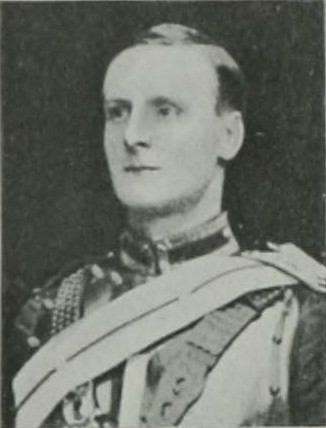
Thomas Harold Clements.
CLEMSON, GEORGE ERNEST, 1st Class Stoker, R.F.R.B., 8133, Ch/S.S. 103962, 4th s. of the late Thomas Thornhill Clemson, Cowman, by his wife, Ellen Matilda (Syneham, near Chipping Norton, Oxford) (College Farm, Milton-under-Wychwood, Oxon), dau. of Charles Stone; b. Idbury, 26 Aug. 1883; educ. Chilson, near Charlbury; joined the Navy, and at the time of the outbreak of war was a Reservist. He was lost in the North Sea when H.M.S. Cressy was torpedoed, 22 Sept. 1914; unm.
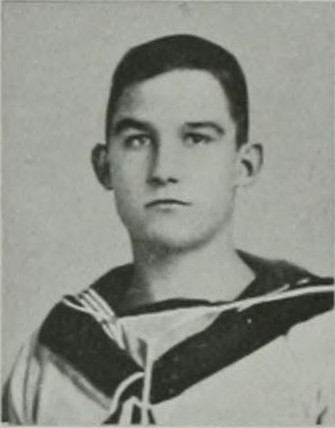
George Ernest Clemson.
CLERK, SMOLLETT DAVID MACGREGOR, Private, No. 1388, B Coy., 1/4th Battn. (Queen’s Edinburgh Rifles) Royal Scots, (T.F.), elder s. of Claude Louis Clerk, employed in the Eastern Extension Telegraph Co., Singapore, by his wife, Lily (158, Braid Road, Edinburgh), dau. of the late David Aitken, of Gourock, Scotland, Advocate, Solicitor and Notary Public, Straits Settlements; b. Singapore, 25 April, 1895; educ. George Watson’s College, Edinburgh, and in 1911 entered the National Bank of Scotland. On the outbreak of war, he enlisted in the Queen’s Edinburgh Rifles, Royal Scots, left with the 1/4th Battn. for the Dardanelles, and was killed in action at Gallipoli, 28 June, 1915; unm.
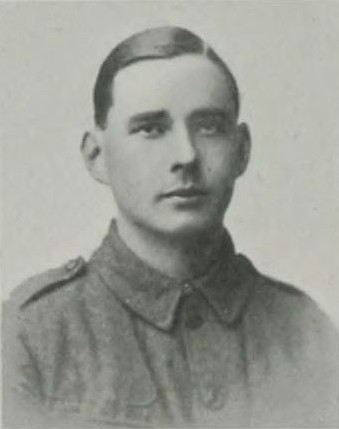
Smollett D. M. Clerk.
CLERY, CARLETON LUMLEY ST. CLAIR, 2nd Lieut., Indian Army, attached 4th Battn. King’s Liverpool Regt., elder s. of Col. Carleton Buckley Laming Clery, 104th Wellesley’s Rifles, Indian Army, C.B., by his wife, Jessie Violet, dau. of C. P. Fielon, and nephew of Lumley Clery, of Riverdene, Broxbourne; b. Burmah, 5 Dec. 1895; educ. Malvern College, and the Royal Military College, Sandhurst, when he passed into the Indian Army. On the outbreak of war he was attached to the 4th Battn. of the Liverpool Regt., 15 Aug. 1914; went to the Front, 5 March, 1915, and had only been there a week when he was killed in action, being struck by a shell at Richebourg St. Vaast, Flanders, 12 March, 1915; unm.
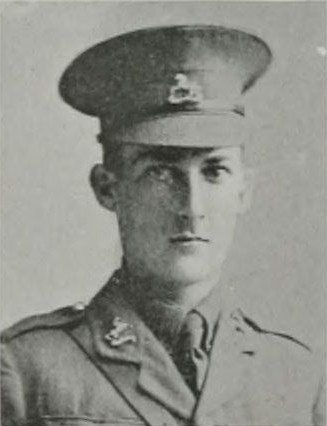
Carleton L. St. C. Clery.
CLEVERLEY, ALBERT ERNEST, Stoker, 1st Class, K. 15596, H.M.S. Good Hope; lost in the action off Coronel, on the coast of Chili, 1 Nov. 1914.
CLIFF, ARTHUR JAMES, Carpenter’s Crew, M. 4114, H.M.S. Good Hope; lost in the action off Coronel, on the coast of Chili, 1 Nov. 1914.
CLIFF, HERBERT THEODORE, Major, 3rd Battn. West Yorkshire Regt., yst. s. of William Dewhirst Cliff, of Meanwood Towers, Leeds, by his wife, Elizabeth, dau. of James Wade; b. Highfield House, Wortley, Leeds; educ. Cothill (Abingdon) and Repton College; joined the Militia in 1901, and was promoted Capt. Aug. 1901; when the Militia was disbanded he joined the Special Reserve of Officers, receiving his majority 19 May, 1913. He served in the South African war, and was specially selected for accelerated promotion, and remained as Musketry Inspector till the post was done away with; and also in the Mediterranean, receiving a medal. On the outbreak of the European war he rejoined, and left with his regt. for the Front at the end of Sept. 1914. On the morning of 13 Oct. he was wounded, but he fought gallantly and refused to give in, and officers present at the time spoke with great praise of his bravery. Later the same day he was killed by a shell. Major Cliff was a keen sportsman, and played frequently for the Yorkshire Gentlemen, of which cricket club he was a member for many years; he was also a regular follower of the Bramham Moor, York and Ainsty, and Lord Middleton’s hounds. He m. at Walton-on-Thames, Mary Alice, dau. of Arnold Trinder, of River House, Walton-on-Thames, and had a son, Anthony Dewhirst, b. 15 Aug. 1913.
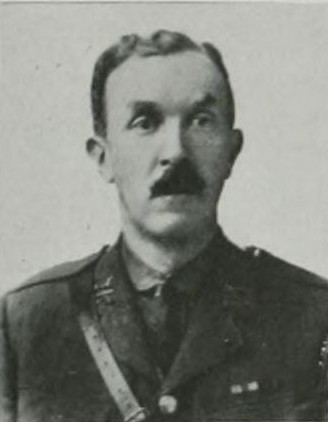
Herbert Theodore Cliff.
CLIFF, WALTER, A.B. (R.F.R. A. 3958), 144621, H.M.S. Good Hope; lost in action off Coronel, on the coast of Chili, 1 Nov. 1914.
CLIFFE, NICKOLAS HENRY, Private, No. 14700, Fort Garry Horse, attd. 10th Battn. Canadian Expeditionary Force, s. of the late William Cliff, of Fleece Inn, Preston, Publican, by his wife, Alice, dau. of John Burton; b. Preston, co. Lancaster, 15 July, 1881; enlisted in the Loyal North Lancashire Regt. at the time of the South African War, and served through that campaign, afterwards going to Canada and settling in Winnipeg. After the outbreak of the European War he joined the Canadian Expeditionary Force in Sept. 1914, and was killed in action at Festubert, 22 May, 1915; unm.
CLIFFORD (formerly WILLIAMS), ANTHONY CLIFFORD, B.A., M.B., B.C., M.R.C.S., L.R.C.P., Lieut., Reserve of Officers, 3rd Dragoon Guards, yst. s. of the late Rev. Henry Williams. M.A., C.M.S. Missionary in India, by his wife, Margaret, dau. of the Rev. John Bryant Clifford, Vicar of St. Matthew’s, Kingsdown, Bristol; b. Bristol, 13 July, 1888; educ. St. Oswald’s School, Clifton, and Marlborough; went to Emmanuel College, Cambridge, in 1900, when he took the name of Clifford. He belonged to the University O.T.C., and after taking his B.A. degree, went to Guy’s Hospital in 1909, where he took his M.B., and was gazetted 2nd Lieut. Reserve of Officers, 18 May, 1912. At the outbreak of war he had just qualified as a doctor, but was called up for active service; was attached to the 3rd Dragoon Guards; went to the Front as a machine-gun officer in May, and was killed in action at Hooge, 2 June, 1915. He was remounting his gun in a new position after the first position had been blown in, when he was shot through the head and killed instantly. Buried in the annexe of the churchyard at Vlamertinghe. Trooper W. Spencer in a letter home wrote: “A hundred shells fell in twenty minutes around our left Maxim gun. Lieut. Clifford timed them as cool as a cucumber, with his watch in his hand. This brave officer lost his life later in the day. Our officers worked like heroes. They were Capt. Holt and Lieut. Clifford.”
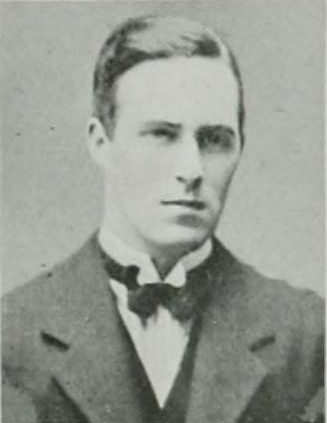
Anthony C. Clifford.
CLIFTON, FREDERICK CHARLES, E.R.A., 4th Class, 272033, H.M.S. Good Hope; lost in the action off Coronel, on the coast of Chili, 1 Nov. 1914.
CLIFTON, HAROLD NORTON, 2nd Lieut., 1st Battn. Coldstream Guards, yr. s. of William Edward Clifton, of 7, East India Avenue, London, E.C., Architect and Surveyor, and 12, Cambridge Square, Hyde Park, London, W., Fellow of the Royal Institute of British Architects and of the Surveyors’ Institution, by his wife, Isabel, dau. of the late James Nelson, of Carlisle; b. 32, Ashley Gardens, Westminster, 7 May, 1894; educ. St. Peter’s Court, Broadstairs, and Harrow; joined the Artists’ Rifles in 1913, and went with the Corps to France in Oct. 1914, as a Corpl., obtaining a commission in the Coldstream Guards, 1 Jan. 1915. He was severely wounded at Cuinchy, near La Bassée, 25 Jan. 1915, and died of his wounds in a German field hospital, 1 Feb. following, and was buried at Billy Berclau, near La Bassée; unm. At Harrow, 2nd Lieut. Clifton was in the Sixth Form, a school monitor, head of his house (Druries), a member of the football eleven, captain of the swimming and middle-weight boxer for the school for two years, competing in the Public Schools Competition at Aldershot. He was also a member of the Richmond Football Club.
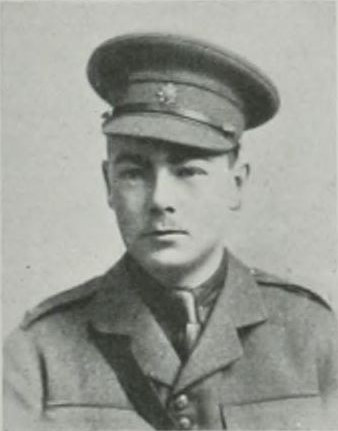
Harold Norton Clifton.
CLIFTON, HERBERT PERCIVILLE, Stoker, 1st Class (R.F.R., B. 4555), S.S. 103666, H.M.S. Good Hope; lost in the action off Coronel, on the coast of Chili, 1 Nov. 1914.
CLIFTON, THOMAS, Stoker, 1st Class, K. 2938, H.M.S. Cressy; lost in action in the North Sea, 22 Sept. 1914.
CLINTON, RICHARD, Stoker, Petty Officer, 296947, H.M.S. Aboukir; lost in action in the North Sea, 22 Sept. 1914.
CLOSE, MAX ARTHUR, Lieut., 1st Battn. Highland L.I., elder s. of George Arthur Close, of Westbury, East Finchley, N. by his wife, Sarah, dau. of the late William Swift, of Smethwick, Staffordshire; b. Stroud Green, co. Middlesex, 14 Sept. 1889; educ. Christ’s College, Finchley, and afterwards in France and Germany. He joined the 1st Battn. Artists’ Rifles in 1908, and on the outbreak of the war, volunteering for foreign service, was sent to France in Oct. 1914. He did his probationary work in the 2nd Border Regt. at Ypres in Nov. 1914, and was gazetted to the 1st Battn. Highland L.I., 1 Jan. 1915, and promoted Lieut. While gallantly leading his platoon in an attack from Neuve Chapelle on 12 March, 1915, he was hit in the head, and died shortly afterwards. He was buried outside the trenches, south-east of Neuve Chapelle; unm. Col. E. R. Hill, officer commanding 1st Highland L.I., wrote: “In him we mourn one more of those gallant fellows who responded so promptly to the call of duty and set an example to the country.” Lieut.-Col. H. A. R. May, officer commanding Artists’ Rifles, also wrote: “Your son unswervingly persisted in carrying out what he conceived to be his duty. He splendidly upheld all the best traditions of the British Army, and he won the esteem of all with whom he came in contact. His name will always be remembered by us with pride.”
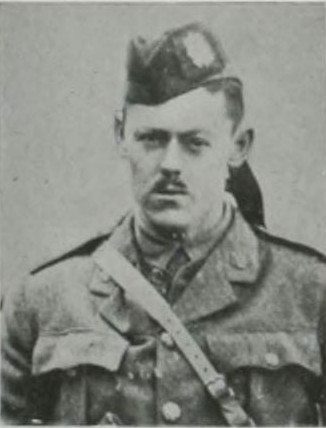
Max Arthur Close.
CLOUGH, ALEXANDER JAMES, Chief Stoker, 291102, H.M.S. Pathfinder; lost when that ship was sunk by a mine, about 20 miles off the East Coast, 5 Sept. 1914.
CLOUGH, THOMAS WOODHEAD, Private, No. 2017, C. Coy. 14th Battn. (London Scottish) The London Regt. (T.F.), only s. of Thomas Woodhead Lister Clough, of 8, Marsfield Terrace, West Bowling, Bradford, co. Yorks, retired Milk Dealer, by his wife, Alice (died 17 Feb. 1914), dau. of William (and Martha) Downes; b. West Bowling, 31 Dec. 1887; educ. Marshfield School, where he gained certificates entitling him to give lessons in shorthand, typing, etc.; and after serving 7 years with Messrs. Wright and Morgan, solicitors, Bradford and Shipley, secured an important position in their London Office. He had joined the Manchester Territorials, 15 Jan. 1912, and was transferred to the London Scottish, 31 Jan. 1914. On the outbreak of war the London Scottish at once volunteered for foreign service and were the first Territorial Force to go into action. In a letter to his father dated 30 Oct. (found subsequent to his death and forwarded 18 Nov.) he wrote: “Our regt. are now in the firing line. We joined it here yesterday. The big guns of the Germans are banging away whilst I am writing this letter. Sir John French has just sent for us. Good-bye. Don’t worry. Love to all. Your affectionate Son, Thomas.” He was mortally wounded in the great charge of the London Scottish at Messines, France, 31 Oct. 1914, and died at the 1st London General Hospital, St. Gabriel College, Camberwell, S.E., from gunshot wound in the groin, Sunday, 18 Nov. following, and was buried in Camberwell Borough Cemetery; unm. Lieut.-Col. Malcolm, commanding the London Scottish, wrote to Private Clough’s father: “No commanding officer could have had under his command a braver or more gallant soldier than your son, who so nobly gave his life for his country.” On this occasion F.M. Sir John French telegraphed to Col. Malcolm: “I wish you and your splendid, splendid regt. to accept my warmest congratulations and thanks for the fine work you did yesterday at Messines. You have given a glorious lead and example to all Territorial troops who are going to fight in France,” and in forwarding it Major-General E. H. Allenby, G.O.C. Cavalry Corps, wrote: “The behaviour of officers and men of the London Scottish was worthy of the best traditions of British Regular troops. Only their steadiness and courage saved a situation that was as difficult and critical to deal with as will ever occur.”
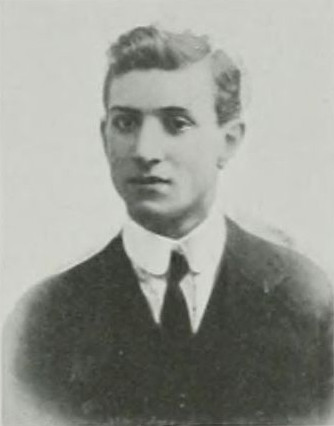
Thomas W. Clough.
CLOUGHLEY, JOSEPH ERNEST, Private, No. 47828, 15th Battn. (48th Canadian Highlanders), Canadian Expeditionary Force, s. of Thomas Henry Cloughley, of Barrie, Ontario, Canada; b. Colwell, Ontario, 31 March, 1893; enlisted in the 37th Battn. at Barrie in Dec. 1914; was transferred to the 17th Battn., on landing in England in June, and on 17 July was drafted to the 15th Battn. and sent to the Front. He died in No. 1 Canadian General Hospital, Etaples, 6 Nov., 1915, of wounds received in action. A comrade in writing home spoke of him as “such a brave, courageous fellow, ever found willing and ready to render assistance whenever necessary.”
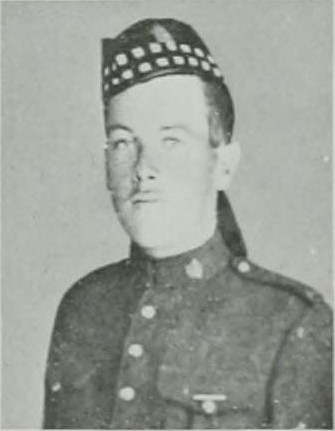
Joseph E. Cloughley.
CLOVER, REGINALD WILLIAM, A.B. (R.F.R. B. 6552), 202676, H.M.S. Aboukir; lost in action in the North Sea, 22 Sept. 1914.
CLUBLEY, IRIS, 1st Class, K. 9588, H.M.S. Hawke; lost when that ship was torpedoed in the North Sea, 15 Oct. 1914.
CLUTTERBUCK, HENRY, Capt., 1st Battn. King’s Own Royal Lancaster Regt., eldest s. of the late James Jacques Clutterbuck, of Hampton Lovett, Droitwich, formerly of Gloucester, by his wife, Elizabeth Anna, dau. of Rudolph Appell; b. Chacewater, Cornwall, 23 Jan. 1874; educ. King Edward’s School, Birmingham; enlisted in the Coldstream Guards, 28 July, 1893, became L.-Corpl. 22 June, 1894; Corpl. 22 May, 1896; L.-Sergt. 12 Dec. 1896; Sergt. 1 Dec. 1897, and Orderly Room Sergt. 1 Dec. 1897. He was gazetted 2nd Lieut. in the Yorkshire L.I. 25 Aug. 1900, and was promoted Lieut. 23 Nov. 1901, and Capt. in the Royal Lancashire Regt. 20 Nov. 1907. He served in the South African War, 1899–1902, being attached to the Army Service Corps from 1 June, 1901. He took part in the advance on Kimberley, including the actions at Belmont, Enslin, Modder River and Magersfontein. He was present during the operations in the Orange Free State, including those at Paardeberg (17–26 Feb.), and the actions at Poplar Grove, Driefontein, Karee Siding, Vet River (5–6 May) and Zand River. He was also in the operations in the Transvaal, May to Sept. 1900, and from Nov. 1900 to May, 1902, and received the Queen’s medal with six clasps and the King’s medal with two clasps. Capt. Clutterbuck was Adjutant to the King’s Own Malta Regt. from 20 June, 1904, to 9 July, 1909, and afterwards served in India, interesting himself in the welfare of the soldiers, and in encouraging temperance and thrift among them, and was commended by the Commander-in-Chief of India for his work. He was to have taken up the appointment of Garrison Adjutant at Bordon, 1 Oct. 1914, but on the outbreak of war, left for France, 21 Aug. and was killed in action at Haucourt, France, between Le Cateau and Cambray, 26 Aug. 1914, and was buried in the cemetery there. Capt. Clutterbuck was mentioned in F.M. Sir John (now Lord) French’s despatch of 21 Aug. [London Gazette, 19 Oct.], 1914, “for his conspicuous bravery under heavy shell fire, and his gallantry in leading bayonet charges.” A brother officer wrote: “On the fateful 20 Aug., Capt. Clutterbuck, Mr. ........ and self were in a village, and about 8.30 p.m. about 150 Germans made a night attack on us. Just when the attack was starting Capt. Clutterbuck came up with about 50 men to help, as things looked bad. Capt. Clutterbuck then performed an act of great gallantry; he personally led 15 men with Mr. ........ to drive about 50 of the Germans away from a church where our wounded were. They called upon Capt. Clutterbuck to surrender; he would not, and I am afraid was then instantaneously killed. He had absolutely no suffering and his body was taken into the church.... This act of Capt. Clutterbuck’s was most gallant, he would not entertain anybody else doing the noble work which he did, thereby saving the lives of most of us....” Another officer wrote: “I thought perhaps you might care to hear from me, as I was with your husband the whole of the first day. He and I lay under very heavy shell fire, with about 100 men, for the whole morning and afternoon, and it was entirely through his influence that we kept the men together at all. After dark we went down to a village in order to turn some Germans out with about 30 men, which was all we could collect. We met them there in force, your husband ordered and led a charge against them which was so successful and well led by him that we cleared the village. He was shot leading us against a party a great deal stronger than our lot, who were at one end of a street. Throughout the day he was perfectly marvellous and cheerful in the worst times, and the men have since told me when talking about it, that his coolness and gallantry in leading charges in the street fighting was extraordinary. Of course, he was exactly the sort of officer who has made our regt. as famous as it is.” He m. at Valletta, Malta, 27 April, 1908, Cora Gwendoline Rajaela, yst. dau. of the late Gerard Myburgh, of Orange Grove, Cape Town, Consul-General for the Netherlands in South Africa; s.p.
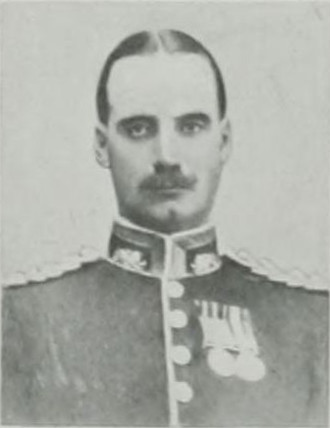
Henry Clutterbuck.
COARD, HENRY HAROLD, Private, No. 13245, B Coy., 1st Battn. King’s Own Yorkshire L.I., 2nd s. of John Henry Coard, Postman, Raheney, co. Dublin, by his wife, Annie, dau. of the late Henry Moore, of Dundrum, Dublin; b. Raheney, co. Dublin, 2 April, 1889; educ. Howth Road School, Clontarf; was foreman gardener to the Earl of Mar and Kellie at Alloa Park, but on the outbreak of war left and joined the Colours, 1 Sept. 1914; went to the Front in January, 1915, took part in the fighting at Neuve Chapelle and Hill 60 and the first and second Battles at Ypres, and was killed in action during the latter, near Hooge, 8 May, 1915; unm.
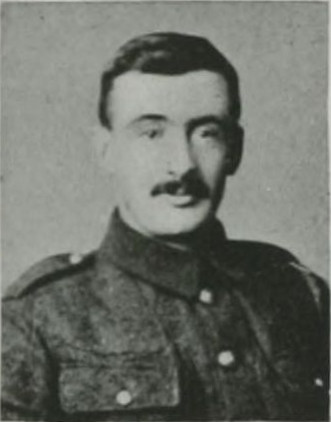
Henry Harold Coard.
COATES, GEORGE BERNARD, Private, No. 148, 5th Battn. 2nd Infantry Brigade, Australian Imperial Force, eldest s. of George Coates, of Sproatley, near Hull, Gardener; by his wife, Eleanor, dau. of W. Mason, of Hull; b. Wyton, Hull, East Yorkshire, 12 May, 1891; educ. Sproatley Endowed School; was for some time in the Halifax Territorials; went to Australia 6 June, 1913; joined the Australian Imperial Force at Melbourne on the outbreak of war and was wounded in the left arm at the landing at Suvla Bay on 25 April, 1915. He was invalided to Malta, but returned to the firing line about the end of July, and was killed in action at the Dardanelles, 9–10 Aug., 1915; unm.
COATSWORTH, EDGAR, Corpl., No. 8058, B. Coy., 2nd Battn. Royal Sussex Regt., 2nd s. of Arthur Thomas Coatsworth, of 20, Earl Street, Maidstone, a Corpl. in the National Reserve Guard; b. Maidstone, 5 Aug. 1887; educ. St. Faith’s Schools there; enlisted 16 Aug. 1904, and after serving seven years with the Colours, passed into the Reserve and became a postman at Marden, Kent. He was called up on the outbreak of war; was promoted Corpl. early in Jan. 1915; went to France and was killed in action at Richebourg l’Avoué, 9 May, 1915. His Coy. Sergt.-Major in a letter of sympathy to his wife said that he was killed whilst gallantly leading his men in the attack on the enemy’s trenches, and added “he was a great favourite of all the men of his platoon, who speak very highly of his conduct when under a very heavy shell fire.” He m. at St. Faith’s Church, Maidstone, 17 March (—), dau. of William Cummings, and had two children: Edgar, b. 5 July, 1912, and Marian, b. 21 Aug. 1913.
COBB, ARTHUR VICTOR JUBILEE, Signal Boy, J. 24845, H.M.S. Pathfinder; lost when that ship was sunk by a mine, about 20 miles off the East Coast, 5 Sept. 1914.
COBB, JOHN WILLIAM, Leading Seaman (R.F.R., B. 1345), 206567, H.M.S. Good Hope; lost in the action off Coronel, on the coast of Chili, 1 Nov. 1914.
COBBETT, ALBERT, A.B., J. 14137, Devonport, H.M.S. Good Hope; lost in action off Coronel, on the coast of Chili, 1 Nov. 1914.
COBBOLD, ROBERT HENRY WANKLYN, Lieut., 6th. attd. 2nd. Battn. (The Prince Consort’s Own) Rifle Brigade, eldest s. of the Rev. Robert Russell Cobbold, M.A., Rector of Hitcham, Ipswich, by his wife, Mary Elizabeth, dau. of the late Frederick Wanklyn, of Buenos Aires, and gdson. of the late Rev. Robert Henry Cobbold, Rector of Ross; b. Earl’s Barton Vicarage, co. Northampton, 3 Dec 1892; educ. King’s College Choir School, Marlborough College (Foundation Scholar and Junior Scholar), and at St. John’s College, Cambridge (Classical Scholar). At Cambridge he took an active part in the work of the O.T.C., and on the outbreak of war was given a commission in the Rifle Brigade, 7 Nov. 1914, to date from 14 Aug. To quote the “Eagle,” vol. xxxvi, Dec. 1914: “At the beginning of the term the task was a formidable one. There was plenty of enthusiasm, but very little experience—a mass of untrained material. But in R. H. W. Cobbold A Coy. had an almost ideal O.T.C. officer. The work which he did for the month before his knee got strong enough for him to take a commission in the Rifle Brigade was absolutely invaluable. When he went the most difficult part of the task was over.” He was promoted Lieut. 19 Dec. following; went to the Front, 13 May, 1915, where he was attached to the 2nd Battn. and appointed machine gun officer, and was killed in action near Fleurbaix, 9 Sept. 1915; unm. Major-Gen. H. Hudson, commanding 8th Division, wrote: “Your son had done excellent work whilst serving in this division, and was a most promising officer. You have every reason to be proud of his gallantry and devotion to duty.” And Lieut.-Col. F. Nugent, commanding 2nd Rifle Brigade: “Your boy was machine gun officer to this battn., and I had a special opportunity of knowing what a splendid fellow he was. Absolutely fearless, and a really fine leader of men. His machine gunners loved him, and would have followed him anywhere. A really good machine gun officer like him is rare.” At Cambridge he rowed in his college first boat.
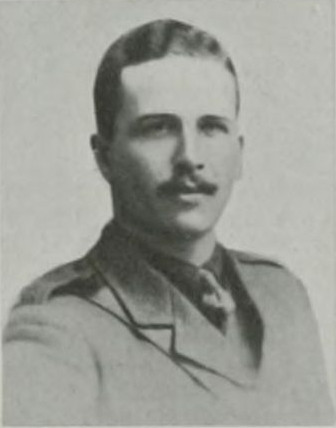
Robert H. W. Cobbold.
COBBY, WILLIAM ARTHUR, E.R.A., 3rd Class, 271735, H.M.S. Good Hope; lost in the action off Coronel, on the coast of Chili, 1 Nov. 1914.
COBERN, WESLEY VINCENT, Private, No. 8502, 3rd Rifle Brigade, 3rd s. of Thomas William Cobern, of 72, Parchment Street, Winchester, Merchant Tailor, by his wife, Agnes Eliza, dau. of George Drew; b. Winchester, 6 May, 1883; educ. Wesleyan Day School there; joined the 3rd Rifle Brigade, 27 June, 1901; and on the outbreak of war went out to France with the first Expeditionary Force. On the night of 17–18 Oct. 1914, the 3rd Rifle Brigade were billeted at a school near Armentières. On the early morning of 18 Oct. they were preparing breakfast when bugle sounded “Stand to Arms” at 5.30 a.m. The attack on a village called Prehencies commenced at 6. The railway from Armentières to Lille had to be crossed near Le Halte Station. Cobern was shot in the left arm, almost at the same time Sergt. Smith was shot in the head. He threw off his equipment and helped to bandage the Sergt.’s wound. Remembering that he had a scarf in his valise that would be useful, he went to where his equipment was lying on the railway, and was shot dead. He was buried with many others of the regt. who fell at the same time by the 139th Saxon Regt. of the German Army. There were 600 casualties on that day in the 3rd Rifle Brigade alone. His brother, L.-Corpl. W. G. Cobern died on active service, 13 June, 1915 (see following notice).
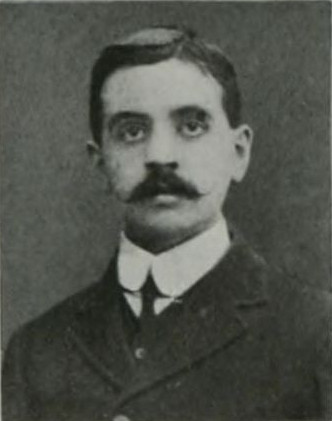
Wesley Vincent Cobern.
COBERN, WILFRID GEORGE, Corpl., No. 2570, 4th Battn. Hampshire Regt. (T.F.), eldest s. of Thomas William Cobern, of 72, Parchment Street, Winchester, Merchant Tailor, etc. (see preceding notice); b. Winchester, 1 Sept. 1878; educ. Wesleyan Day School there; served for over 10 years in the 1st Volunteer Battn. of the Hampshire Regt., and on the outbreak of the war joined the 4th Battn. of the Hants Regt. for foreign service, 6 Aug. 1914. He died of heat stroke at Basra, in the Persian Gulf, 13 June, 1915; unm.
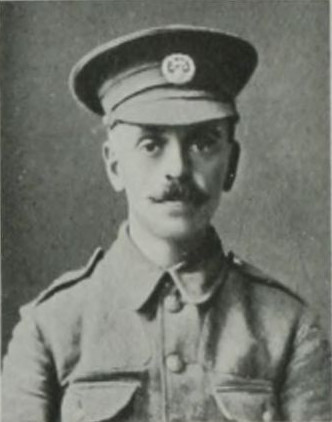
Wilfrid George Cobern.
COCHRAN, LIONEL FRANCIS ABINGDON, Capt., 72nd, attd. 92nd, Punjabis, Indian Army, 2nd s. of the late Col. Francis Cochran, 1st Hampshire Regt., who was Deputy Judge-Advocate under the late Lord St. Helier (then Sir Francis Jeune) during the South African war, by his wife, Amy Isabel Gray, eldest dau. of Abingdon Compton, Bombay Civil Service, and gdson. of Francis Cochran, of Balfour; b. Edinburgh, 20 March, 1882; educ. by private tutors and in Germany, where he was when the Boer war broke out. He joined the 3rd (Militia) Battn. Leinster Regt. at Queenstown when only 17 in Feb. 1900, and, proceeding with it to South Africa, served on the lines of communications, being twice given responsible posts and a commission from Lord Roberts in the Worcester Regt., and the Queen’s medal with three clasps. He was gazetted 2nd Lieut. 5 Jan. 1901, and promoted Lieut. 21 Dec. following, and after being first attached to the 1st Hants Regt., was transferred in 1901 to the Indian Army. He joined the 72nd Punjabis in Burmah, became double company officer, 7 July, 1905, received his company 17 Nov. 1909, and served with them until Sept. 1914, when he was selected to proceed with the 92nd Punjabis on Active Service. They were sent to guard the canal at Ismailia, and Capt. Cochran was killed in action while leading his men at Tussum on the Suez Canal, 4 Feb. 1915. He was buried at Ismailia; unm. He was specially mentioned in Gen. Sir John Maxwell’s Despatch of 16 Feb. 1915 [London Gazette, 21 June, 1916]. The officers of the 72nd Punjabis erected a mural tablet to his memory in St. Mary Bolton’s Church, S.W., and the officers of the 92nd Punjabis put up a cross and stone on his grave at Ismailia. Capt. Cochran was a great traveller, having gone nearly all over the world during his leave, and an expert motorist; also he was a fine horseman. He several times filled the appointment of Station Staff Officer and Cantonment Magistrate in India with great credit.
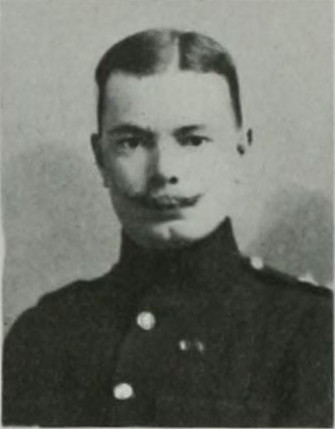
Lionel Francis A. Cochran.
COCHRANE, CHARLES, Private, No. 11101, 2nd Battn. Cameron Highlanders, s. of William Cochrane; b. South Shields, 21 April, 1889; educ. Drummond Street School, Edinburgh; was a Hairdresser; volunteered and enlisted 4 Sept. 1914, went to France in April, and died of wounds received in action at Neuve Chapelle 11 May, 1915. He m. 3 June, 1900, Catherine (2, Blackfriars St., Edinburgh), dau. of Owen Airlie, of 49, Drummond Street, Edinburgh, and had a son and three daus.: Francis, b. 24 May, 1906; Mary Jane, b. 8 April, 1901; Agnes, b. 10 Feb. 1910; and Maria, b. 3 May, 1911.
COCKAYNE, WALTER, Officer’s Cook, 3rd Class, L. 4215, H.M.S. Good Hope; lost in the action off Coronel, on the coast of Chili, 1 Nov. 1914.
COCKBURN, CHARLES JAMES, Lieut., 6th Jats L.I., Indian Army, yr. s. of the late Major Charles James Cockburn, Royal Warwickshire Regt., by his wife, Kate Alice (Bagshot, Surrey), dau. of the late John Waterer; b. Malta, 27 March, 1891; educ. Wellington College; gazetted 2nd Lieut., 3 Sept. 1910; was attd. to the Berkshire Regt. in India, and was transferred to the Indian Army, 29 Oct. 1911, and promoted Lieut. 3 Dec. 1912. He served in France with the Meerut Division, and afterwards in Mesopotamia, and was killed in action with General Aylmer’s Relief Force, 7 Jan. 1916. Lieut. Cockburn was amongst the first to receive the Military Cross. He m. at Cobham, Kent, 16 July, 1915, Helen, dau. of Laman Herbert Evans; s.p. His elder brother, Lieut J. Cockburn, was killed in action, 25 April, 1915.
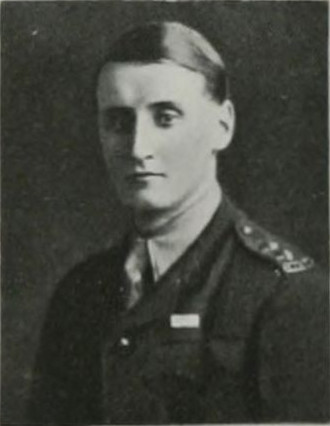
Charles James Cockburn.
COCKBURN, JOHN, 2nd Lieut., 1st Battn. Royal Warwickshire Regt., elder s. of the late Major Charles James Cockburn, Royal Warwickshire Regt., by his wife, Kate Alice (Bagshot, Surrey), dau. of the late John Waterer, of Bagshot; b. Malta, 3 March, 1890; educ. Wellington College. On the outbreak of war volunteered as a Despatch Rider, and was given a commission as 2nd Lieut. in his father’s old regt. 3 March, 1915. He was killed while leading his men into action at St. Julien, near Ypres; unm.
COCKER, EDGAR CHARLES, Private, No. 81163, 10th (late 32nd) Battn. Canadian Expeditionary Force, eldest s. of Edgar Charles Cocker, of Lintlaw, via Margo, Sask., Canada, Farmer and Stonemason, now Private, No. 887330, 188th Battn. Canadian Expeditionary Force (who served thirteen years with the 4th East Surrey Volunteers before leaving England), by his wife, Alice Jane, dau. of the late Charles Collier, of Homerton, London; b. Peckham, London, 9 Oct. 1895; educ. Peckham Park School, S.E.; Beachville, Ontario; and Yorkton, Sask.; volunteered for Imperial service on the outbreak of war, and enlisted, 7 Sept. 1914; left Canada with the second contingent, 22 Feb. 1915; went to France, 27 April, and was killed in action in the front line trench at Festubert on the morning of 21 May, 1915, by the bursting of a shell; unm. He was buried behind the trench close to where the second line trench crosses the head of Willow Road, and a cross marks the spot.
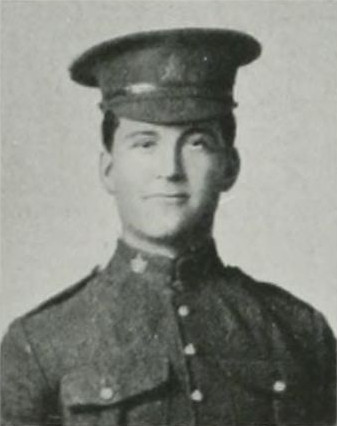
Edgar Charles Cocker.
COCKMAN, GEORGE, Stoker, 1st Class, K. 9045, H.M.S. Aboukir; lost in action in the North Sea, 22 Sept. 1914.
COCKRILL, ARTHUR, A.B. (R.F.R., B. 9255), S.S. 2208, H.M.S. Hawke; lost when that ship was torpedoed in the North Sea, 15 Oct. 1914; m.
COCKS, ALBERT, Sapper, No. 75, 2nd Signal Coy. (Headquarters Section), Royal Canadian Engineers, 4th s. of James Cocks, of Bexley Heath, Kent, formerly of Chenies, Builder (who was seven years with the 36th (now 18th) Middlesex Regt.); b. Putney, co. Surrey, 12 Dec. 1876; educ. Chenies, Rickmansworth, Herts, and was a Decorator. He joined the R.E. in 1900, and was attached to the 57th Field Coy. at Chatham, and won the Education (2nd class) Certificate, but after serving three years retired through ill-health. In 1910 went to Ottawa, Canada. There he joined the Governor-General’s Foot Guards, but afterwards transferred to the Canadian Engineers, and was attached to the 3rd Field Coy. When the European War broke out in Aug. 1914, he immediately volunteered for service overseas and joined the 2nd Divisional Signal Royal Canadian Engineers, and obtained the Army Signalling Certificate. He left for England with the second contingent in May, 1915, and was stationed at Shorncliffe till Sept. They were ordered to proceed to France on 8 Sept., and on the 4th of the month he was given leave to wish his relatives in London good-bye. At 8.30 p.m. the same day he was knocked down by a motor car at the corner of Parliament Street, Westminster, receiving a fractured skull and internal injuries. He was taken to Westminster Hospital, where he died after three operations, 21 Sept. 1915. He was buried at Kensal Green in the Canadian Government part. His commanding officer wrote: “His work with me was of the very best. He had proved a very valuable man, the like of whom our Empire could not afford to lose.” He m. at Christ Church, Ottawa, 3 June, 1914, Lillian, formerly of Toronto, dau. of the late Henry Hodges Weller; s.p.
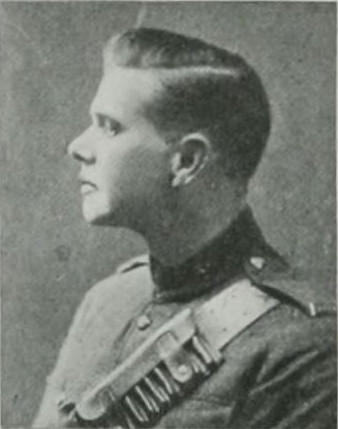
Albert Cocks.
CODD, HARRY CARR, Private, R.M.L.I., Ch./17530, H.M.S. Cressy; lost in action in the North Sea, 22 Sept. 1914.
CODLING, ALFRED INCH, A.B., 219051, Devonport, H.M.S. Good Hope; lost in action off Coronel, on the coast of Chili, 1 Nov. 1914.
COE, BARNABAS WILLIAM, Stoker, 1st Class (R.F.R., B. 1150), 276443, H.M.S. Hogue; lost in action in the North Sea, 22 Sept. 1914.
COE, HERBERT CLYDE, Leading Cook’s Mate, M. 20, H.M.S. Pathfinder, lost when that ship was sunk by a mine, about 20 miles off the East Coast, 5 Sept. 1914.
COHEN, GEORGE HUBERT, B.A., LL.B., Lieut 5th King’s Liverpool Regt. (T.F.), 3rd s. of Alderman Louis Samuel Cohen, of The Priory, St. Michael’s Hamlet, Liverpool, J.P., an ex-Lord Mayor of Liverpool, by his wife, May, dau. of the Hon. Louis Wolfe Levy, M.L.C., Sydney, N.S.W.; b. Liverpool, 26 Jan. 1878; educ. Cheltenham and Christ’s College, Cambridge, where he graduated with honours B.A., LL.B., in 1901. He was called to the Bar in 1903, and practised law in Liverpool in the Northern Circuit, and was a member of the Inner Temple. He had always been a keen Volunteer, having been a sergt. both in the Cadet Corps at Cheltenham College and in the C.V.R.U. at Cambridge, and was for many years in the Inns of Court O.T.C., and gained the Long Service medal. On the outbreak of war he was travelling in Norway, and hastened to England and immediately enlisted in the Public Schools Battn. of the Middlesex Regt., but within a week he was given (19 Sept. 1914) a Lieut.’s commission in the 5th Battn. King’s Liverpool Regt., in which his brother, Stanley, was Major. He went to France, Feb. 1915, and was killed in action at Festubert, 16 May, 1915; unm. His colonel, J. M. McMaster, wrote: “He died as glorious a death as any soldier could ever wish for or hope for, gallantly leading his men in a charge against the enemy’s trenches. It was a difficult and dangerous task, but he and his men went to the assault in the way we expect British soldiers to act, without fear or hesitation. We mourn his loss and respect his memory. His disposition was kindliness itself, and he had thoroughly endeared himself to us all. We took the German trench and more than 120 prisoners surrendered to us. Your son lies buried in all honour near the field of battle at Richebourg L’Avoué. I am sorry to say that Stanley (his yr. brother, Major, now (1916) Lieut.-Col. S. Cohen) incurred a wound, which I hope and believe is only slight, in voluntarily going out in the attempt to reach George and succour him. Capt. Fairclough, on the same errand of mercy, was also wounded.”
COKE, HON. ARTHUR GEORGE, Lieut., R.N.V.R., Armoured Cars Division, 2nd s. of Thomas William, 3rd Earl of Leicester, G.C.V.O., C.M.G., by his wife, the Hon. Alice Emily, née White, dau. of Luke, 2nd Lord Annaly; b. London, 6 April, 1882; educ. H.M.S. Britannia; joined the Navy, 1897, and retired with the rank of Lieut. after some six years’ service. On the outbreak of the war he obtained a commission of 2nd Lieut. in the 2nd County of London Yeomanry (Westminster Dragoons), 5 Sept. 1914, but was almost immediately transferred to the Royal Horse Guards, and served with that regt. in Flanders, including the first Battle of Ypres, until he was transferred as Lieut. to the Armoured Cars Division, R.N.V.R., in Jan. 1915. He was killed In action at the Dardanelles, 2 May, 1915. He m. in London, 10 May, 1906, Phyllis Hermione (Flaunden, Chesham, Bucks), only dau. of Francis Saxham E. Drury, of Pont Street, London, and had a son and dau.: Anthony Lovel, b. 14 Sept. 1909; and Deana Muriel, b. 7 Nov. 1907.
COKE, FREDERICK, A.B., 239092, H.M.S. Arethusa; killed in action in the Heligoland Bight, 28 Aug. 1914.
COKER, CADWALLADER JOHN, Lieut., 1st Welsh Regt., yr. s. of the late James Gould Coker, by his wife, Florence Emily (The Grove, Mayfield Sussex), 2nd dau. of Cotterill Scholefield; b. Somerset Place, Bath, 11 May, 1892; educ. Wellington College and Oriel College, Oxford; and was gazetted 2nd Lieut. to the 1st Welsh Regt. 15 Sept. 1914. He was promoted Tempy. Lieut. 14 Jan. 1915, and Lieut. 1 Feb. 1915; went to the Front, 5 March following, and was killed in action in the trenches at St. Eloi by a German sniper, 22 June, 1915, being buried in a military cemetery near Dickebusch; unm. He had previously been wounded at Hooge, 24 May, and the Medical Officer in writing of this said: “Your son was slightly wounded on Whit Monday in a street which was heavily shelled by the enemy. About 40 officers and men were hit in a short time. Mr. Coker refused all attention until the others were seen to, helped to carry and dress them, and set a magnificent example to the rest of the wounded by his pluck and coolness. It hardly struck me at the time, it was so entirely what one would have expected of him. He was a fine type of officer and gentleman.” At Wellington Lieut. Coker was a college prefect, in the cricket eleven and a gymnasium officer, and was a Sergt. in the O.T.C., which rank he also held in the O.T.C. at Oxford. He played cricket, hockey and football for his college at the latter place, and was in the shooting team. He was a member of Vincents, Authentics and Cryptics. Had he lived one day longer he would have obtained his temporary captaincy. His commanding officer wrote of him: “We were very sorry to lose your son, who was always most gallant and very popular.”
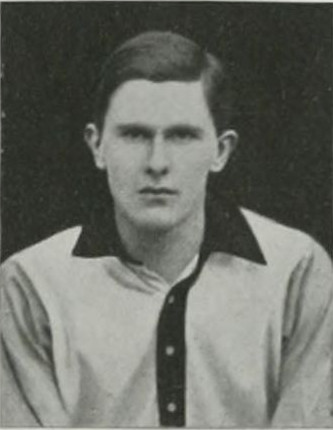
Cadwallader J. Coker.
COKER, HORACE, Stoker, 1st Class (R.F.R., B. 7715), S.S. 103095, H.M.S. Aboukir; lost in action in the North Sea, 22 Sept. 1914.
COLBOURNE, EDWARD JAMES, Private, No. 12/1594, 16th Auckland Infantry, New Zealand Expeditionary Force, elder s. of Robert James Colbourne, of 7, Clarendon Crescent, Leamington Spa, by his wife, Emily Florence; b. 8 Jan. 1892; educ. at Stanley House, Margate, and Solihull Grammar School; went to New Zealand in Dec. 1911; enlisted in the 16th Auckland Infantry, Nov. 1914; left on 13 Feb. with the third reinforcements, and was killed in Gallipoli on 8 May, 1915; unm.
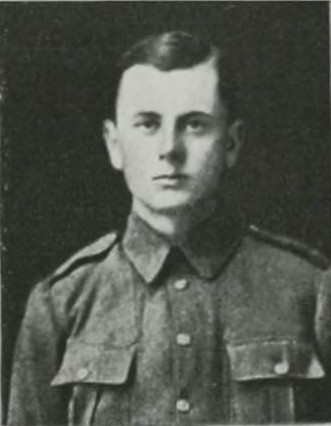
Edward James Colbourne.
COLBOURNE, ERIC KRABBÉ, M.C., 2nd Lieut., 3rd Royal Berkshire Regt., 3rd s. of Louis Colbourne, of Beckenham, Kent, M.D., by his wife, Henrietta Leonora, dau. of Charles Brehmer Krabbé; b. Buenos Ayres, 25 June, 1888; educ. Berkhamsted School; went to British Columbia in 1907 and settled in Victoria, but after the outbreak of war came home and was given a commission in the 3rd Berkshires, 19 Jan. 1915. He died at Choques, 27 June, 1915, of wounds received in action, and was buried in the military cemetery there. He was awarded the Military Cross [London Gazette, 24 July, 1915] for “conspicuous gallantry and devotion to duty at Cuinchy on the early morning of 22 June, 1915.” The Germans, following a gas attack, exploded a mine in front of one of our own in which was a Sergt. and about eight of our men, but owing to the gallant efforts of 2nd Lieut. Colbourne, another officer and a few men, who repeatedly went down among the fumes, all the men were rescued, although the rescuers suffered considerably. Lieut. Colbourne m. at Victoria, British Columbia, 31 Dec. 1912, Florence Marion, only dau. of George Gillespie, of Victoria, British Columbia; s.p.
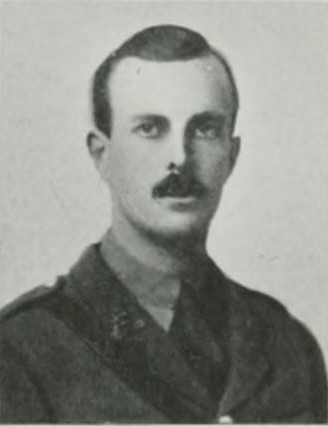
Eric Krabbé Colbourne.
COLE, ERNEST, A.B. (R.F.R., B. 2732), S.S. 58, H.M.S. Good Hope; lost in the action off Coronel, on the coast of Chili, 1 Nov. 1914.
COLE, FREDERICK, A.B. (R.F.R., B. 3834), 198991, H.M.S. Good Hope; lost in the action off Coronel, on the coast of Chili, 1 Nov. 1914.
COLE, FREDERICK GEORGE PARKER, E.R.A., 3rd Class, 272386, H.M.S. Good Hope; lost in action off Coronel, on the coast of Chili, 1 Nov. 1914.
COLE, FREDERICK THOMAS, Private, No. 61489, 3rd Battn. (Canterbury Infantry), New Zealand Expeditionary Force, 4th s. of Thomas Cole, of Butcombe Farm, Blagdon, Bristol, Farmer, by his wife, Anna, dau. of Benjamin Warford; b. Stock Farm, Langford, Bristol, co. Somerset, 29 Nov. 1881; educ. at Churchill Public School; was a farmer; left England for New Zealand, 25 April, 1913; volunteered on the outbreak of war and enlisted in the New Zealand Expeditionary Force in Nov. 1914; left for Egypt with the third reinforcements and was in action at Cape Helles and Anzac Cove from 12 May to 4 June, 1915. On the latter date he was one of a party of volunteers sent to clear and hold part of a Turkish trench at Quinn’s Post, and was among those killed in the attempt. He was unm.
COLE, GEORGE, A.B. (R.F.R., B. 9802), 213861, H.M.S. Aboukir; lost in action in the North Sea, 22 Sept. 1914.
COLE, GEORGE HENRY, Corpl., No. 8152, Signalling Section, 1st Battn. Bedfordshire Regt., eldest s. of Alma Cole, of Bramford Lane, Ipswich, Farm Labourer, by his wife, Annie, dau. of Joseph King; b. Sutton, Woodbridge, co. Suffolk, 12 Sept. 1886; educ. Bramford Road Board School, Ipswich; enlisted 14 Dec. 1904, and was killed in action at Hill 60, 16 Feb. 1915; buried at R.E. Farm, Wulverghem; unm.
COLE, SIDNEY LIONEL FLINN, Assistant Paymaster, Royal Naval Reserve, only child of William George Cole, Chief Constructor (Royal Corps of Naval Constructors) H.M. Dockyard, Sheerness, and late of H.M. Dockyard, Gibraltar, by his wife, Emma Elizabeth, dau. of John Robert Flinn; b. Sheerness, co. Kent, 14 July, 1888; and was educ. Portsmouth Grammar School, and Oliver’s Mile End House School, Portsmouth. He entered the services of the Capital and Counties Bank, Ltd., at Newton Abbot, Devon, in Feb. 1906, and afterwards served at Ashburton, Haslemere, and Andover, from whence, at the outbreak of war, he joined the Navy for the period of the war, 5 Nov. 1914. He first served on H.M.S. Duke of Albany, and afterwards in the mine-layer H.M.S. Princess Irene, and was lost when that ship was blown up in Sheerness Harbour, 27 May, 1915. With the exception of a stoker, every officer and man, to the number of 280, including 78 Dockyard workmen from Sheerness Dockyard, were lost. Cole was the only officer whose body was (9 June) recovered, and it was interred in the Isle of Sheppey Cemetery with Naval honours on 12 June, preparatory to which a short service was held in the Royal Dockyard Chapel at Sheerness, where 27 years before he had been christened. He was unm.
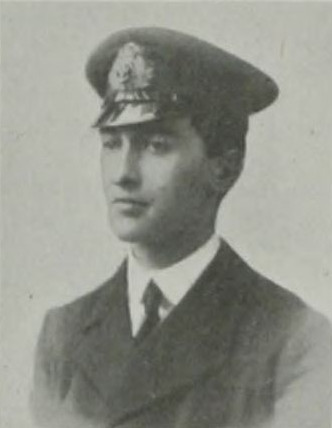
Sidney Lionel Flinn Cole.
COLE, WILLIAM CHARLES, Private, No. 4940, 1st Battn. Coldstream Guards, s. of Frederick Cole, of Long Newton, Tetbury, co. Gloucester, Labourer, by his wife, Mary Jane, dau. of Frederick Long, of Newton, near Tetbury; b. Bagpath, co. Gloucester, 21 March, 1880; educ. Cam, near Dursley; enlisted at Devizes, 30 Dec. 1902; served with the Expeditionary Force in France and Flanders, and died from shell wounds in left thigh, received in action, 27 Sept. 1914, being buried in Veill Arcy Cemetery. He m. at Tetbury, 28 Aug. 1912, Elizabeth Emily (New Church Street, Tetbury), dau. of William Baker, of Tetbury, and had a dau., Elizabeth Mary Florence, b. 3 Oct. 1912.