The Roll of Honour. (continued 24)
Reading edition
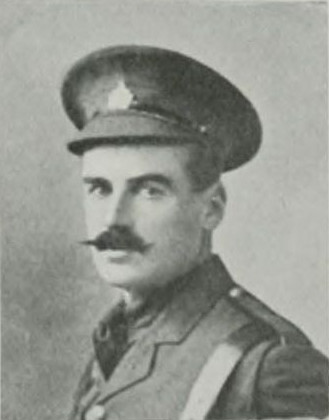
Joseph Grant Helliwell.
HELLYER, GEORGE PEABODY, Corpl., No. 1972, 1/5th Battn. King’s Liverpool Regt. (T.F.), only s. of John William Hellyer, of Western, Kirk Ella, E. Yorks, by his wife, Sally May, dau. of John Harris, of Brixham, Devon, and the nephew of Charles Hellyer, of Brixham; b. Hull, 24 Nov. 1889, and educ. by a private tutor there. He enlisted the day war was declared, 4 Aug. 1914; was promoted Corpl., and died of wounds received in action at Boulogne Hospital, France, 21 May, 1915, and was buried in the Boulogne English cemetery; unm. Sergt. Benbow, of his Coy., wrote: “I was with Corpl. Hellyer when he received his wounds. It happened on Sunday, 16 May, when our company were ordered to charge the German position in front of us. It was while charging that he received a slight wound in the foot which compelled him to drop down. I was bringing in wounded comrades when I found him and a brother N.C.O. dragging a wounded sergt. of another regt., and I went to their assistance. While doing so a Maxim gun was turned upon us and poor George got it all. One through the right thigh and two in the arm. We dressed him in the open field and then brought him safely to our trench. He was then carried out by the stretcher-bearers to the dressing station, and it was with deep regret we heard of him dying of his wounds. He was a true soldier and bore his wounds with great strength as we fetched him in. He gave us every assistance and did not murmur. He was quite conscious and cheerful. He was well liked by the men of his section and platoon, and we all feel his loss greatly.” His cousin, Lieut. Sidney H. Hellyer, was killed in action, 28 April, 1915 (see his notice).
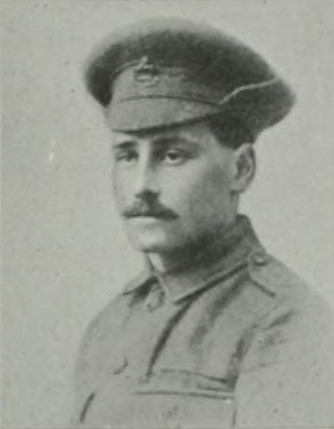
George Peabody Hellyer.
HELLYER, JAMES, Btn. Leading Stoker, C.G., 308293, H.M.S. Good Hope; lost in action off Coronel, on the coast of Chili, 1 Nov. 1914.
HELLYER, SIDNEY HANNAFORD, 2nd Lieut., 4th Battn. The East Yorkshire Regt. (Machine Gun Section) (T.F.), yst. s. of Charles Hellyer, of Wolborough, Brixham, Devon, formerly of Lamwath Hall, Sutton-on-Hull, J.P., late Managing Director of Hellyer’s Steam Fishing Co., Ltd., Hull, by his wife, Jane Elizabeth, dau. of Capt. William Hannaford; b. Hull, 15 Aug. 1889; educ. Malvern College; was a director and partner in the well-known firm of Hellyer’s Steam Fishing Co., Hull, leaving on the outbreak of war to join the Territorial Force. Having taken an active part in the Cadet Corps at Malvern College, he soon qualified for a commission, and was gazetted 2nd Lieut. 4th Battn. The East Yorkshire Regt. 12 Sept. 1914. The 4th East Yorks first went into action on 24 April, 1915, in the neighbourhood of Pilkem and St. Julien. In a letter, written 26 April, Lieut. Hellyer gave the following description of this action: “On Thursday night we got the order to parade in full marching order just as we were turning in, and we could tell from the bombardment that was going on that something was doing. We marched the men immediately from our various billets to our alarm post, which was a grass field adjacent to Battn. Headquarters in the little village, and were there ordered to lie down and sleep as we were. Dawn came, and we unstiffened our dew-damp limbs and got some coffee. I then commenced to shave, and was just wetting my brush when the order came to march off immediately. In went our mess tins and gear, rolled our coats, and marched down the road where (Friday morning) rations (a little tin of beef each, six biscuits, bacon, cheese, tea and sugar) were issued. A train of 40 London motor buses came up marvellously from somewhere, and we were run out to a town which was being heavily bombarded, where we lay down in some huts. At 2 a.m. on Saturday morning we were ordered out to line some trenches by a canal which were bombarded with shrapnel at about 8 a.m. At 11 a.m. we were marched to a concentration point under shrapnel fire, causing some casualties. At the point of concentration one of the Divisional Staff Officers ordered me back again to guide up as quickly as possible another battn. of our brigade, as the situation was critical. This I did in as quick time as I could, and I was lucky enough to get back with them to the concentration point before our battn. was in action. As soon as I arrived back our battn. went into action in the open (not in trenches) against a section of the enemy who were occupying a village on a ridge and who were backed by excellent artillery—by this time I was tired. The 4th East Yorks went into action at about 4 o’clock on that afternoon (Saturday, 24 April, 1915) for the first time in the history of the battn., and a bloody battle it was. We advanced in artillery formation across half a mile of open country and under a very heavy bombardment both of shrapnel and high explosive shells, and many men fell—fell absolutely heroically, there is no other word for it. I would never have believed that hardened men would have marched on under that bombardment, and these men, already very tired and two nights sleepless, having carried a load weighing 60–70 lbs. since we left Newcastle, and hardly having their boots off since that time, saw battle for the first time as if they were just going to the barber’s for a shave. Three times within 20 minutes a shell struck the ground near the men I have the honour to lead, once within 10 yards, and when the high explosive shells strike they dive into the earth and the end of the world seems to come. They blow a hole just about the size of the pond in the back field at Lamwath, and the contents of the hole are blown right up into the skies, much higher than a trawler’s mast, so high that one has to lie on one’s face what seems like 20 seconds until all the earth and fragments have fallen. When one strikes as near as that one is covered with earth, so that there is a little difficulty in rising under the weight of it. The noise deafens and slightly stuns one. One shell blew us down in a body without killing one of us. This bombardment went on incessantly, not a shell now and then, but all the time shells bursting, sometimes two or three coming near the same spot at once. After the third time we were covered with earth, and a man of mine shouted to me: ‘If these B——s don’t ring the bell soon we’ll go and give them their money back.’ After advancing 20 minutes thus the high explosive shells ceased, and we went into the zone of the rifle and machine-gun fire, still in daylight and over open fallow land. They never worried a bit, never faltered, never even laid down to the shrapnel, a moment longer than was essential; when they heard the shriek of a coming shell just walked determinedly on into the jaws of it. Col. Shaw was shot dead at about this stage. My Capt., B. Farrel, was shot through the heart a minute or two after. Major Thielmann met instant death, and the man who went to help him was shot as he rose to do it. When we had advanced in rushes sufficiently near to the village, bayonets were fixed, and the Germans went back from the village without waiting for the assault. It was then dusk. We collected our men, gathered up and carried back what poor fellows we could, and marched the remainder back to some trenches about 500 yards in rear, leaving the position to be occupied by other troops, who dug themselves in. We laid down in some shallow trenches in a wood in the rain that night too tired to eat. Next morning (Sunday) we called our rolls, and then marched our weary, stiff heroes to occupy some trenches about a mile away, 500 yards in rear of some trenches which were being heavily attacked. We had to march to these trenches over a shrapnel-swept road, doubling over the most dangerous portion—at this stage Major Easton and Capt. Easton were both slightly wounded in the head, just grazes and not serious—and resting in the ditches occasionally at the sides. The Germans saw that we were entering these unoccupied trenches and bombarded them heavily. The trench my platoon occupied was dug in a clean grass field. Before we had been in it one hour there was not a blade of grass to be seen growing for 30 yards in rear of it; the front of it we could not see. A dug-out at one end disappeared in the air. Another dug-out in which were Lieut. Grindell (a fellow-subaltern of A Coy.), myself and about five men was blown in on us. I had to extricate poor old Grindell from the wreckage, and his knees were badly bruised, but he will be about again in a day or two. As soon as dusk came they ceased shelling us, and we then set to and worked like blazes to rebuild the broken parts of the trench. We could also get some doubtful water then, and sent Grindell to the dressing station. Water has been our trouble. At 11 p.m. (Sunday night) we were ordered to come out of the trenches and march back to a rest camp five miles in rear, and a terrible march it was. The road was swept with shrapnel for three of the miles. The villages which in times of peace had been on it were mere broken skeletons of their former selves. Many of the houses were in flames. The road had great shell holes in it, which parties of men were filling in with the broken houses in order to make it passable for transport, which crossed it at the gallop. Capt. Morrill, at about this stage, I think, got three shrapnel holes in one leg. Dead horses, broken wagons, mules, and occasionally men, strewed the road throughout its length, and the smell of them was sickening. The men at this stage were so tired that every time we got into the ditches for a rest we had difficulty in waking them to move on again, even in the roar of the shell bursts; many were being helped along by their pals. At 1 a.m. this morning (Monday, 26 April) we arrived at this camp for our well-earned rest. We walked into our huts, put our heads on our packs, and fell asleep with the roar of the battle still going on, and our artillery, part of which has a position near here, roaring away for all it was worth. I woke 10 hours afterwards stiff and hungry, and with a thirst I haven’t yet succeeded in quenching, in spite of the eight pint-mugs of tea I have drunk at intervals to-day.” Two days later, 28 April, his platoon had orders to entrench west of Gedde’s detachment, between the canal and the Pilkem road, supported by a brigade of a north country Territorial Division, which had arrived from England only three days before. He was encouraging his men to dig themselves into the ground when a shell fell in their midst, killing four outright and wounding eight, including 2nd Lieut. Hellyer, who died in consequence of his wounds at No. 7 Stationary Hospital, Boulogne, France, 8 May, 1915; unm. His body was brought home and buried at Brixham, South Devon. Sergt. T. Hurd, A Coy., 4th Battn. East Yorkshires, thus wrote of his death: “No doubt you have heard of Lieut. Sidney Hellyer being wounded. I will tell you how it happened. We had been in the trenches two days, when we received orders to move nearer the enemy’s lines. Just as we reached the new position and were digging ourselves in, shrapnel shells burst right into the middle of our company, killing four outright and wounding eight, including Lieut. Hellyer, who had his arm blown off at the shoulder, the other arm, both legs and cheek injured. But wounded as he was, he would not let any one touch him until all the others had been attended to. I have never met a braver man in my life, and men in our platoon owed their lives to him time and time again by the way he handled them. After he fell he still exhorted his men to hurry up and cut themselves into the ground. I have gleaned that he was courageously fetched from the exposed position to the trench, where every possible care was exerted to alleviate his terrible sufferings. On a trench ambulance he was carried towards the clearing hospital, but in the darkness the bearers lost their way. No portion or stump of the left arm remaining, the men of the Medical Corps strove to stop the bleeding by pressing their fingers to the wounds. At the clearing hospital he dictated a letter to his parents, telling them he was wounded, but that he should find his way to England by easy stages, and not to worry about him. But not one word as to the terrible nature of his injuries nor of the awful sufferings during the tedious and prolonged transference from the battlefield to the hospital.” Numerous other letters from his superior officers and men attest in the highest terms his lovable qualities and ability as a leader of men in camp, in trench, and in action. His cousin, Corpl. G. P. Hellyer, also died of wounds (see his notice).
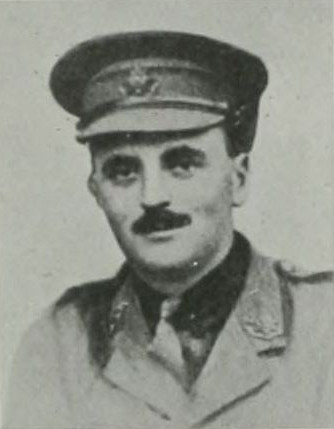
Sidney Hannaford Hellyer.
HELPS, FRANK BOVETT, Rifleman, No. 2471, 16th Battn. (Queen’s Westminster Rifles), The London Regt. (T.F.), 2nd s. of Edward William Helps, of Westleigh, Durleigh Road, Bridgwater, Incorporated Accountant, Overseer for Borough of Bridgwater, by his wife, Elizabeth, dau. of E. J. Bovett, M.R.C.V.S.; b. Westfield, Bridgwater, co. Somerset, 11 May, 1894; educ. Dr. Morgan’s School, Bridgwater, and Royal Grammar School, Colchester, and on leaving there was apprenticed to Mr. A. J. Beare, of Taunton, Draper, and after serving his time, went to the Brixton Bon Marché; enlisted, 11 Aug. 1914; went to France, 24 Jan. 1915, and was killed in action at Ypres, 23 July, 1915, while on outpost duty; unm.
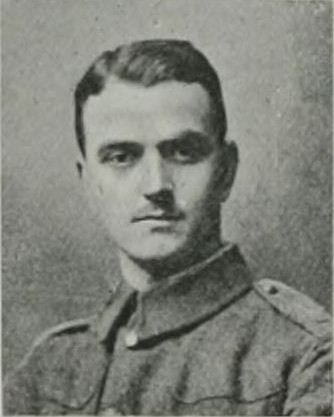
Frank Bovett Helps.
HELYAR, MAURICE HOWARD, Capt., Rifle Brigade, elder s. of Francis John Helyar, of 11, Royal Crescent, Bath, late Royal Bodyguard, by his wife, the Hon. Ursula Georgiana, née Addington, 2nd dau. of William Wells, 3rd Viscount Sidmouth; b. 78, Eaton Place, London, S.W., 18 Nov. 1879; educ. Horris Hill, and Eton; gazetted 2nd Lieut. to the Rifle Brigade, from the Militia, 20 Dec. 1899, and promoted Lieut. 18 Dec. 1900, and Capt., 30 May, 1905; served in the South African War, 1902 (Queen’s medal with clasp), and Somaliland, 1903 (medal with clasp), and with the Expeditionary Force in France, 21 Dec. 1914, to 25 Jan. 1915, and was killed in action near Ypres on the latter date, and buried at Dickebusche. Capt. Helyar m. at Winchester, 21 Nov. 1914, Vera, dau. of Edward Evans-Lombe, of Bylaugh Park, and Rickthorn, Norwich, and had a dau., Maureen Howard, b. (posthumous), 25 Aug. 1915.
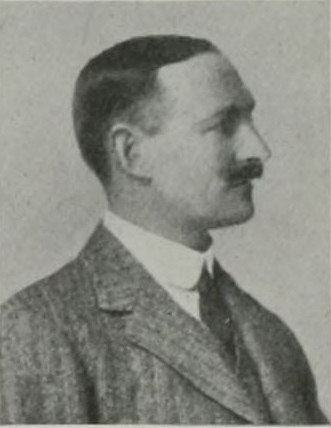
Maurice Howard Helyar.
HEMMING, FREDERICK THOMAS, Private, R.M.L.I. (R.F.R.), Ch. 14309, H.M.S. Hawke; lost when that ship was torpedoed in the North Sea, 15 Oct. 1914.
HENCHER, JOSEPH, Stoker, 2nd Class, K. 21848, H.M.S. Pathfinder; lost when that ship was sunk by a mine, about 20 miles off the East Coast, 5 Sept. 1914.
HENDER, JOHN HENRY, Stoker, 1st Class (R.F.R., B. 4914), S.S. 104378, H.M.S. Good Hope; lost in action off Coronel, on the coast of Chili, 1 Nov. 1914.
HENDERSON, ALEC STEWART, Capt., 1st Battn. (Royal Fusiliers) The London Regt. (T.F.), only s. of Robert Stewart Henderson, of 18, Rutland Gate, London, S.W., by his wife, Laura, dau. of John Cooper Forster; b. Dacca, Eastern Bengal, 28 Jan. 1888; educ. Eton, and Trinity College, Cambridge; joined the Territorial Force in 1908, and was gazetted Capt. Territorial Reserve of Officers, 25 July, 1913, and posted to the 1st City of London Royal Fusiliers in Aug. 1914, after the outbreak of war, his appointment to rank as from 5 Aug. After eight months in Malta he went to France with his regt. on 10 March, 1915, and was shot through the head, 24 April, 1915, by a stray bullet, while in a trench superintending the throwing of bombs on the barbed wire entanglements, and died the next day, 25 April; unm. He was buried at Sailly-sur-Lys. His Colonel wrote: “The regt. lost in him one of its best officers. I do wish to express to you my highest appreciation of what he did for the regt. through his conscientious work and great ability. As such his memory will live in the regt.”; and the Adjutant: “He was a universal favourite, his company really loved him. He was a good keen soldier, and we can ill afford to lose an officer of his experience.” He had qualified for appointment as instructor of musketry.
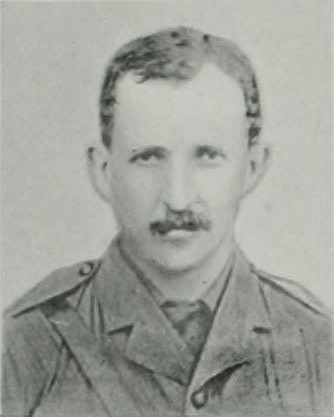
Alec Stewart Henderson.
HENDERSON, ALFRED CECIL, Private, No. 23150, 3rd Battn. (82nd Regt.), Canadian Expeditionary Force, s. of Henry William Henderson, of Union Road, Charlottetown, P.E.I., Canada, by his wife, Eudevilla, dau. of Francis Simmonds, of Crapaud, P.E.I.; b. Royalty Junction, Prince Edward’s Island, 12 April, 1895; joined the 82nd Regt. in 1911, and on the outbreak of war volunteered for service overseas, and left P.E.I. for Valcartier in Aug. 1914; came over with the first contingent in Oct., and was drafted into Princess Patricia’s C.L.I.; crossed to France, 16 Feb. 1915, and was killed in action from the concussion of a shell at Hooge, during the Second Battle of Ypres, 8 May, 1915; unm.
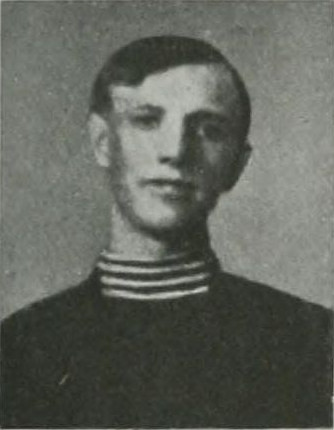
Alfred C. Henderson.
HENDERSON, JOHN McLUCKIE, Private, No. 13564, Telephone Section, 12th (Service) Battn. The Royal Scots, eldest s. of Thomas Brownlie Henderson, of Ballingry Place, Newmains, Lanarkshire, late of Hamilton, by his wife, Agnes, dau. of Alexander McKay; b. Burnbank, Hamilton, 28 Aug. 1897; educ. Glenlee Public School there, and at Fallin Public School, Stirling; enlisted, 4 Sept. 1914; went to France, 29 April, and was killed in the charge of the Royal Scots at Loos, 25 Sept. 1915, at the same time as his friend, John Baxter, who had enlisted with him. At Fallin School he won the Dux Medal, and was patrol leader in the Boy Scouts.
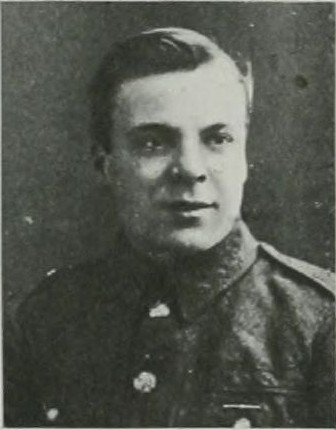
John M. Henderson.
HENDERSON, ROBERT HENRY, A.B. (R.F.R., Ch. B. 6216), 187023, H.M.S. Aboukir; lost in action in the North Sea, 22 Sept. 1914.
HENDERSON, WILLIAM SLATER, Armourer’s Mate, M. 4203, H.M.S. Cressy; lost in action in the North Sea, 22 Sept. 1914.
HENLEY, FRANK, Boy, 1st Class, J. 23584, H.M.S. Hawke; lost when that ship was torpedoed in the North Sea, 15 Oct. 1914.
HENLEY, FRANK, Stoker, 1st Class (R.F.R., Ch. B. 9147), S.S. 103968, H.M.S. Cressy; lost in action in the North Sea, 22 Sept. 1914.
HENLEY, GEORGE CHARLES, Stoker, 1st Class (M.) 304539, H.M.S. Good Hope; lost in action off Coronel, on the coast of Chili, 1 Nov. 1914.
HENNESSY, IVAN THOMAS, S.B.A., M. 877, H.M.S. Good Hope; lost in action off Coronel, on the coast of Chili, 1 Nov. 1914.
HENRY, CHARLES BURRELL, Leading Seaman, 172972, H.M.S. Pathfinder; lost when that ship was sunk by a mine, about 20 miles off the East Coast, 5 Sept. 1914.
HENRY, FRANK, Private, No. 2092, 1/5th Battn. Royal West Kent Regt. (T.F.), s. of William Henry, Bootmaker; b. 7 June, 1867; died at Jhansi, India, 21 July, 1915, of heatstroke, while on active service. He m. at Dartford, 17 Oct. 1914, Frances Annie (9, Priory Hill, Dartford, Kent), dau. of Harry Longhurst; s.p.
HENRY, JOSEPH, Stoker (Native), H.M.S. Good Hope; lost in action off Coronel, on the coast of Chili, 1 Nov. 1914.
HENRY, WALTER, A.B. (R.F.R., Ch. B. 4971), 200091, H.M.S. Cressy; lost in action in the North Sea, 22 Sept. 1914.
HENSELEIT, FREDERICK, Ordinary Seaman, J. 16799, H.M.S. Pathfinder; lost when that ship was sunk by a mine, about 20 miles off the East Coast, 5 Sept. 1914.
HENSHAW, WILLIAM FREDERICK, Sapper, No. 1617, 2nd Home Counties F.C., R.E. (T.F.), s. of William Frederick Henshaw; b. Ashford, co. Kent, 27 Aug. 1874; was a Bricklayer; served in South Africa with the 1st Cinque Ports Rifle Volunteer Corps (Sussex Regt.), 1901–02, and with the Expeditionary Force in France and Flanders, 22 Dec. 1914, to 20 April, 1915; took part in the attack on Hill 60, and was killed by a shell on returning to billets, 20 April, 1915. He m. at Crowborough, 16 Aug. 1902, Lilian Mary (23, Cornwall Road, Bexhill-on-Sea), dau. of George Martin, and had three children: Harold William George, b. 9 May, 1903; Arthur Roy, b. 21 June, 1907; and Gladys Evelyn May, b. 12 May, 1911.
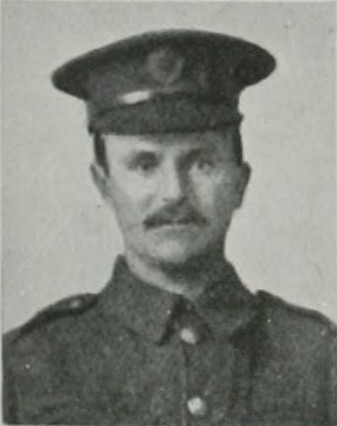
William F. Henshaw.
HENSON, HERBERT EDWARD, Ship’s Corpl., 1st Class, 187848, H.M.S. Hogue; lost in action in the North Sea, 22 Sept. 1914.
HENSON, LEONARD, Private, No. 7290, 2nd Battn. Coldstream Guards, s. of the late Frank Henson, of Loughborough, Labourer, by his wife, Ann; b. Loughborough, 7 Aug. 1890; educ. Emmanuel Boys’ School there; enlisted 11 June, 1907, served seven years and then joined the Leicestershire Constabulary, and at the time of the outbreak of the war was stationed at New Swannington. He rejoined on mobilisation, was wounded on 23 Sept. 1914, by a shell at the Battle of the Aisne, and died in Claridge’s Hotel, Paris, two days later; unm. The doctor wrote that he was brought in on the night of the 23rd, and that after being “very brave and patient, he passed away quietly at half-past four on Friday the 25th.” He was buried in the Plantin Cemetery; a company of French soldiers followed and fired the last shots.
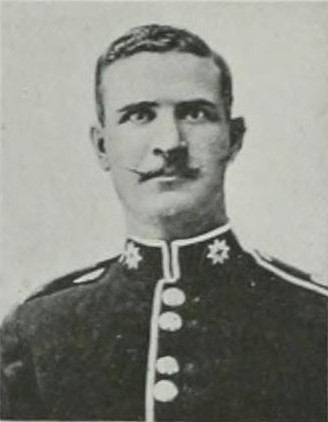
Leonard Henson.
HENSON, STANLEY BENSKIN, 2nd Lieut., 1st Battn. Somerset L.I., only s. of William John Henson, of 2, Derby Street, Mayfair, W., and Elmsett Hall, Wedmore, co. Somerset, Physician, by his wife, Minnie, dau. of the late George Niesigh, of Beckenham, Kent; b. Upper Norwood, 17 June, 1888; educ. King’s School, Bruton, Somerset, and Pembroke College, Oxford; and obtained a commission in the Colonial Police in 1909, and was stationed at Singapore and Penang. He joined the Special Reserve of Officers of the Somerset L.I., 17 Sept. 1913, and failing to obtain leave from the Straits Authorities, resigned his post there, came home to England at his own expense, and obtained a commission in the 1st Battn. Somerset L.I., in Oct. 1914; went to France in Nov., and was killed in action in an attack on the German trenches at Ploegsteert, 19 Dec. 1914. In this attack, made over 200 yards of open ground, he (in the words of his Commanding Officer) exhibited such dashing bravery that he outstripped his company by a full 20 yards, but fell with a bullet through his heart. Buried in Ploegsteert Wood; unm.
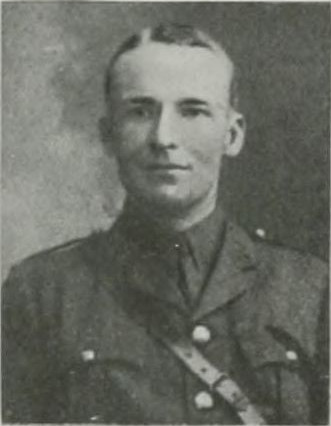
Stanley B. Henson.
HEPBURN, ARCHIBALD JAMES, Capt., 8th (Ardwick) Battn. Manchester Regt. (T.F.), only s. of William Archibald Hepburn, of Dane-in-Shaw, Elms Avenue, Lytham, Bleacher’s Manager, by his wife, Sarah, dau. of the Rev. William Burnett, of Half Morton, Dumfriesshire; b. Ramsbottom, co. Lancaster, 26 June, 1882; educ. Sedbergh Preparatory School and Manchester Grammar School; and from 1906 to 1914 was Manager under Bleachers’ Association, Ltd., of Hepburn & Co., Ltd., Square Works, Ramsbottom, succeeding his father in that position. On the institution of the Territorial Force, he obtained a commission in the 8th Battn. Manchester Regt. and received his Captaincy 5 Feb. 1913. On the outbreak of war he was in command of C Coy.; volunteered with his regt. for foreign service, and left for Egypt, as part of the East Lancashire Division, 10 Sept. 1914. Part of the battn. was ordered to Cyprus, 19 Oct. 1914, and till its return to Egypt three months later (including the annexation of the island, 7 Nov. 1914), Capt. Hepburn was officer commanding troops at Nicosia, the seat of Government. The Division left for the Gallipoli Peninsula, 2 May, 1915, and he was killed in action there, 29 May, 1915, being shot through the head while strengthening parapet of front line trench south of Krithia. He was buried at “Clapham Junction” military cemetery there. Capt. Hepburn qualified as a musketry instructor at Hythe in Nov. and Dec., 1911, and was well known as an amateur actor in the Manchester district. He m. at Altrincham, co. Chester, 28 Feb. 1911, Lilias Una, only child of Alfred Tarbolton, of Bowdon, co. Chester, and Manchester, J.P., Solicitor, and had a son and dau., Philip Archibald, b. 23 March, 1915; and Patricia, b. 6 March, 1915. At the outbreak of war they resided at 2, Crumpsall Green, Manchester.
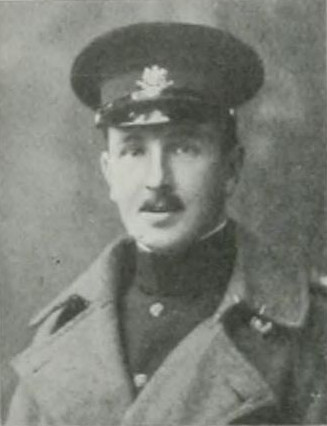
Archibald J. Hepburn.
HEPINSTALL, GEORGE, Private, No. 10959, 6th (Service) Battn. Yorkshire Regt., eldest s. of the late George Hepinstall, of Southwick-on-Wear, Riveter, by his wife, Mary Ellen (13, Brougham Street, Southwick-on-Wear), dau. of John Leach, of Southwick; b. Southwick, 15 Jan. 1894; educ. Southwick Board School; was employed at the Sunderland Bottle Works; enlisted 24 Aug. 1914, trained at Grantham and was killed in action at the Dardanelles, 21 Aug 1915; unm. The same day his great friend and schoolfellow, J. C. Robinson, with whom he had been brought up, enlisted, and gone to the front, was killed at Chocolate Hill.
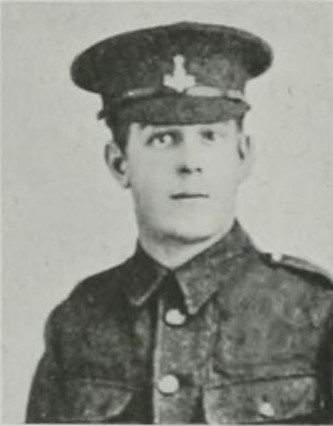
George Hepinstall.
HEPWORTH, PERCY, Stoker, 1st Class (R.F.R., B. 1843), 293062, H.M.S. Hawke; lost when that ship was torpedoed in the North Sea, 15 Oct. 1914; m.
HERBERT, ERNEST, A. B. (R.F.R., Ch. B. 2093), 189862, H.M.S. Aboukir; lost in action in the North Sea, 22 Sept. 1914.
HERBERT, FREDERICK DANIEL, Private, R.M.L.I., Po. 10169, H.M.S. Good Hope; lost in action off Coronel, on the coast of Chili, 1 Nov. 1914.
HERDMAN, ARTHUR WIDDRINGTON, Lieut., 1st Battn. King’s Own Shropshire L.I., only s. of the late Rev. Robert Morrison Herdman, Vicar of Holy Trinity, North Shields, by his wife, Mary (Sunnyholme, Ripon), dau. of Thomas Wearmouth, of Gainford; b. Holy Trinity Vicarage, North Shields, 31 Jan. 1886; educ. Trent College, and Corpus Christi College, Oxford; gazetted 2nd Lieut. 1st Shropshire L.I., 18 Sept. 1909, and promoted Lieut., 30 Oct. 1913; went to France with the 6th Division, Sept. 1914, and was killed in action near Lille. 25 Oct. following; unm. The Commanding Officer and Major of his regt., in their letters to his mother, spoke of his popularity with his men, and his orderly, who, when he was missing, went out to look for him and found him dead, and was himself wounded while looking for him. wrote: “When I told his men that he was dead they all took it very hard, because he was the best friend we ever had.” By his will Lieut. Herdman left £1,000 to the Council of Trent College, £500 to the K.S.L.I. Regimental Aid Society, a recreation ground for Ewhurst, and other bequests.
HERION, ARTHUR, Stoker, 1st Class (R.F.R., Ch. B. 9319), S.S. 106537, H.M.S. Cressy; lost in action in the North Sea, 22 Sept. 1914.
HERN, WILLIAM HENRY, Leading Stoker (Boatman, C.G.), 310613 (Dev.), H.M.S. Cressy; lost in action in the North Sea, 22 Sept. 1914.
HERON, WILLIAM, Sergt., No. 1753, 3rd Battn. Australian Imperial Force, 6th s. of Richard Heron, of Dryden Place, New York, Newcastle-on-Tyne, by his wife, Ada, dau. of Amos Wright; b. New Seaham, co. Durham, 2 Feb. 1891; educ. there; was in the Special Reserve; emigrated to Australia about 1913, and settled at Fremantle, West Australia: volunteered at the outbreak of war, and joined the Commonwealth Expeditionary Force; left for Egypt, 17 March, 1915; went to the Dardanelles about July, and died at sea, 11 Aug. 1915; unm.
HERRIDGE, WILLIAM, Gunner, R.M.A., 8569, H.M.S. Good Hope; lost in action off Coronel, on the coast of Chili, 1 Nov. 1914.
HERRING, EDWARD EDGAR, L.-Corpl., No. 939, D Coy., 3rd Battn. 1st Infantry Brigade, Australian Imperial Force, 4th s. of Gerard Edgar Herring, of Cromer, England, late Under-secretary for Mines Department, Sydney, N.S.W., by his wife, Caroline Elizabeth; b. Gladesville, New South Wales, 26 April, 1891; educ. Sydney Grammar School; was a Bank Accountant, and volunteered on the outbreak of war, and enlisted 20 Aug. 1914: left for Egypt with the 1st Division, 30 Oct. 1914; went to the Dardanelles, 25 April, 1915; was wounded in the assault on Lone Pine Hill, 6 Aug. 1915, and died of wounds on the hospital ship Delta, on the 9th; unm. Buried at sea.
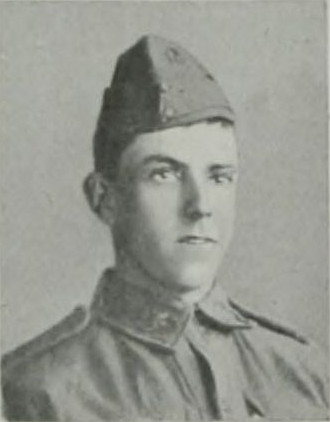
Edward Edgar Herring.
HESTER, WILLIAM HENRY, Chief Sick Berth Steward, 350550, H.M.S. Aboukir; lost in action in the North Sea, 22 Sept. 1914.
HETHERINGTON, JOHN ROBERT, Private, No. 10176, 1st Battn. Coldstream Guards, s. of Joseph Hetherington, of 49, Ancrum Street, Spital Tongues, Newcastle-on-Tyne, by his wife, Frances, dau. of William Pallan; b. Spital Tongues aforesaid, 5 May. 1896; educ. Newcastle Council School; enlisted 5 June, 1913; went to the Front 8 Oct. 1914, and was reported missing after the fighting at Givenchy, 25 Jan. 1915. Confirmation of his death was received in June, when Sergt. F. Millman reported that he had been by his side when he was mortally wounded and added, “he was a fine type of manhood and a credit to the regt.” He was unm.
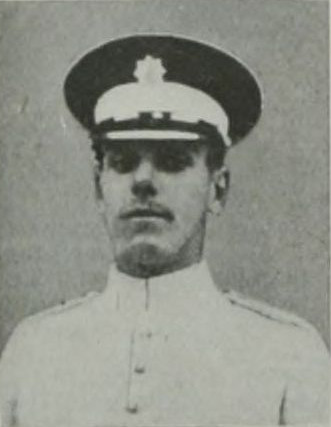
John Robert Hetherington.
HEWETSON, GEORGE HAYTON, Chaplain, R.N., elder s. of the late Rev. John Hewetson, Vicar of Chadworth, by his wife, Isabella (Dromore, Putney, S.W.), dau. of the Rev. George Henry Heslop; b. Chester, 26 Jan. 1877; educ. Bradfield and Worcester College, Oxford; entered the Royal Navy, 1 Aug. 1906, and was Chaplain H.M.S. Britannia, H.M.S. Minotaur, the Flagship of the China Squadron, Feb. 1910–12, and to the Royal Naval Barracks, Portsmouth, 1912 to July, 1914; appointed to H.M.S. Bulwark, 29 July, 1914; lost when that ship was blown up at Sheerness, 26 Nov. 1914. He m. at High Harrogate, 3 Feb. 1914, Lilian Mary (The Vicarage, High Harrogate), dau. of the Rev. Douglas Sherwood Guy, Vicar of Christchurch, High Harrogate, and had a dau., Mary Hayton, b. 10 Jan. 1915.
HEWETT, JOHN EDWARD, Private, No. 862. 1st/5th Battn. (London Rifle Brigade), The London Regt. (T.F.), only s. of the late George Hulbert Hewett, of 61, Rathcoole Gardens, Hornsey, N., a Mercantile Clerk in the employ of the British India Steamship Navigation Co., by his wife, Olivia, dau. of William Clarke; b. Highbury, N., 15 Jan. 1894; educ. Hornsey County School, enlisted 9 Sept. 1914, and was killed in action at Ypres, 28 April, 1915; unm. He was buried near Fortuin.
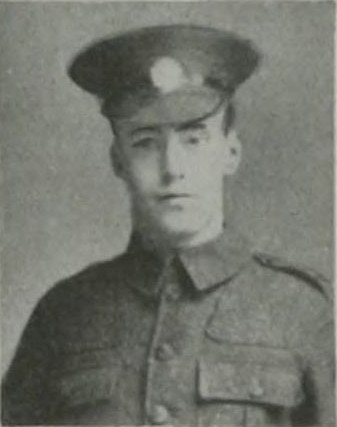
John Edward Hewett.
HEWITT, ERNEST HENRY, Lieut., 1/4th Battn. King’s Own Royal Lancaster Regt. (T.F.), 2nd s. of James Henry Hewitt, of Altamont, Bangor, co. Down, Ireland; b. Belfast, 5 Nov. 1885; educ. Bangor Grammar School; St. Jude’s School, Belfast; and the Royal Academical Institution, Belfast; was a member of the Queen’s University Officers Training Corps, and Vice-Capt. of the North of Ireland Rugby Football Club; offered his services to the War Office the day after war was declared; gazetted 2nd Lieut., 22 Aug. 1914; and Lieut. 1 Dec. 1914; went to France with his Battn. in April, 1915; took part in the attack on the enemy near Festubert, on the night of 15 June, 1915; was seen to fall on his left side, apparently mortally wounded, while heroically leading his men between the second and third German trenches, and not heard of since. He is officially reported missing. His Commanding officer wrote: “Lieut. Hewitt since he joined us has become the most popular officer in the Battn. He was a splendid soldier.” He was mentioned in Despatches by F.M. Sir John (now Lord) French [London Gazette, 1 Jan. 1916], for gallant and distinguished service in the field.
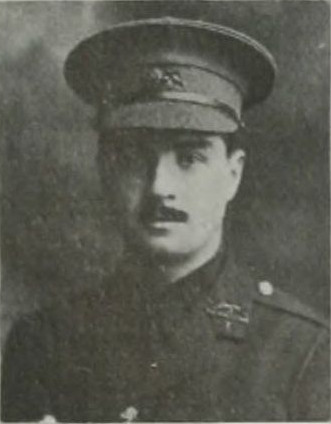
Ernest Henry Hewitt.
HEWITT, JAMES FRANCIS, Lieut., 1st Battn. The Cameronians (Scottish Rifles), eldest s. of the Hon. William James Hewitt, of St. Colme House, Aberdour, Fife [s. of 6th James, 4th Viscount Lifford], by his wife Evelyn Frances, yst. dau. of Lieut.-Gen. Francis Carey; b. Gatehouse-of-Fleet, co. Kirkcudbright, 22 Jan. 1888; educ. Winton House, Winchester and Haileybury College; gazetted 2nd Lieut. from the 3rd Battn. to the 1st Cameronians, 26 Feb. 1908, and promoted Lieut., 12 March, 1910; went to France, 26 Aug., and was killed in action at La Boutillerie during the first Battle of Ypres, 26 Oct. 1914, and was buried there; unm. His Colonel wrote: “We have lost one of our very best officers and most lovable of comrades. He was always so capable and keen at all work and sport.”
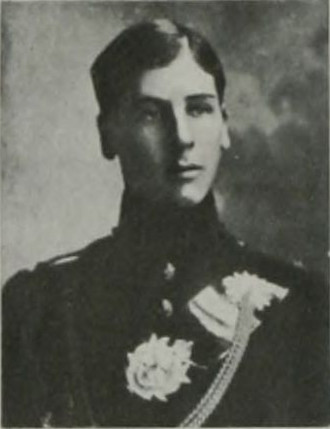
James Francis Hewitt.
HEWITT, ROBERT, Stoker, 1st Class, K. 8192, H.M.S. Hogue; lost in action in the North Sea, 22 Sept. 1914.
HEWITT, WILLIAM GEORGE, 2nd Lieut., 3rd Battn. The Royal Scots, 2nd s. of the Hon. William James Hewitt, of St. Colme House, Aberdour, Fife [6th s. of James, 4th Viscount Lifford], by his wife Evelyn Frances, yst. dau. of Lieut.-Gen. Francis Carey: b. Gatehouse-of-Fleet, co. Kirkcudbright, 7 June, 1892; educ. Edinburgh Academy and Christ Church, Oxford; gazetted from the Officer’s Training Corps to the 3rd Royal Scots, 7 Aug. 1914; went to France, 27 Sept. and was killed in action near Neuve Chapelle during the 1st Battle of Ypres, 13 Oct. 1914, while helping a wounded soldier; unm. Whilst at Christ Church he ran with the beagles, and eventually became 1st Whip; he was also a member of the “Loders Club,” and interested himself keenly in all sport. Of him it was said: “He was most charming in manner, and it was always a pleasure to be with him; he has died nobly, and in his short time has lived a simple, straight life.” His eldest brother, Lieut. J. F. Hewitt, was killed in action, 26 Oct. 1914 (see his notice).
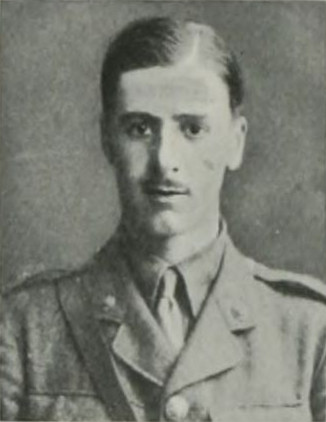
William George Hewitt.
HEWLETT, WILFRED ARTHUR, Chief Electrical Artificer, 2nd Class, 345053, H.M.S. Aboukir; lost in action in the North Sea, 22 Sept. 1914.
HEYS, ARTHUR, Petty Officer, 189420, H.M.S. Cressy; lost in action in the North Sea, 22 Sept. 1914.
HEYWORTH, HEYWORTH POTTER LAWRENCE, Capt., 2nd Battn. (98th) North Staffordshire Regt., only s. of the late Col. Lawrence Heyworth, Commanding 3rd Welsh Regt., by his wife, Rosina Kate (Colne Priory, Earl’s Colne), dau. of John Baskerville Mortimer, and grandson of Lawrence Heyworth, of Yewtree, Liverpool, J.P., M.P. for Derby, &c.; b. Wain Vaur, Risca, co. Monmouth, 20 Nov. 1877; educ. Aysgarth, Harrow, and Trinity College, Cambridge; received a commission in the 3rd South Wales Borderers (Militia), 1899, and was gazetted to the 2nd North Staffordshire Regt., 21 April, 1900, and promoted Lieut., 7 Jan. 1901, and Capt., 11 Sept. 1908. He served in the South African War, 1900–1902, taking part in the operations in the Orange Free State and in the Transvaal and Cape Colony, and received the Queen’s medal with three clasps and the King’s with two clasps. He went to India with his regiment in 1903, being stationed at Umballa, Multan and Peshawar, and was Master of the Peshawar Vale Hounds, 1911–12. In 1913 he returned to England on sick leave and retired on half-pay (21 Sept.), but on the outbreak of war in Aug. 1914, rejoined his old regt. and was appointed Adjutant of the 7th Battn. in Sept. They left for the Dardanelles in June, and he was killed in action there, near Sari Bair, 6 Aug. 1915, and buried in the Australian and New Zealand Cemetery, Gallipoli. His Commanding Officer wrote that he had proved “a very good adjutant,” and the second in Command: “He is a terrible loss to us, as he was quite the most popular man in the regt.” He m. at Partney Church, Lincolnshire, 21 Jan. 1915, Cecily Mabel (Dalby Hall, Spilsby, Lincolnshire), 2nd dau. of Major Bartholomew Claypon Garfit, of Dalby Hall, Lincolnshire, J.P.; s.p.
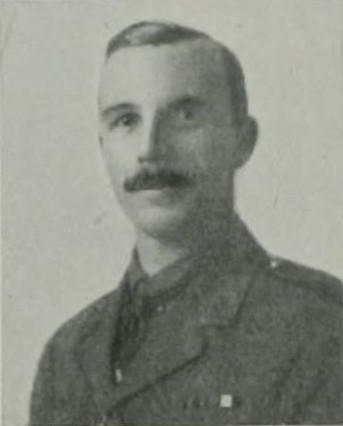
H. Potter L. Heyworth.
HIBBERT, SEPTIMUS, M.A., M.B., B.Ch. Oxon, Surgeon, R.N.V.R., s. of Charles George Hibbert, of Marenioh, Talbot Avenue, Bournemouth, Merchant, by his wife, Clara, dau. of John Heseltine; b. Brasted, near Sevenoaks, Kent, 31 July, 1886: educ. Tonbridge School, University College, Oxford, and St. George’s Hospital, London, where he was House Surgeon and Physician; joined the Navy on the outbreak of war, was appointed Surgeon to H.M.S. Formidable, and was lost when that ship was sunk in the Channel, 1 Jan. 1915; unm.
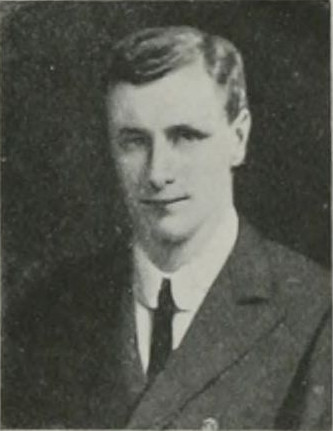
Septimus Hibbert.
HICKLING, EDWARD ROBERT EYRE, Lieut., 3rd Battn. Gloucestershire Regt., att. North Lancashire Regt., only s. of the late John Bird Hickling, by his wife, Clara (4, Chestnut Avenue, Bournemouth), dau. of the late Alderman Robert Eyre Applegate Eyres; b. Lymington, 17 Aug. 1895; educ. privately (Mr. John Murray); Langharne House School, Victoria Road, Southsea and Bournemouth School (Dr. Fenwick) where he joined the School Corps in Jan. 1908; becoming L.-Corpl. Sept. 1911 and Corpl. Jan. 1912. He was gazetted 2nd Lieut. to the 3rd Gloucestershires, 8 Oct. 1913; and promoted Lieut. in Aug. 1914; went to France in Sept., and was att. to the North Lancashire Regt. He died at No. 4 Clearing Hospital, Poperinghe, about 2 Nov. 1914, of wounds received in action, 27–28 Oct. A brother officer wrote: “On the night of the 23rd we were in billets at a village quite near to ..., when we got the order to go forward suddenly and turn the enemy out of some of our trenches which they had captured near ..., and so we pushed forward at dawn of the 24th, and came under fire, and then I was told off with Hickling to act as a left flank-guard while the rest of the Battn. advanced, and there he and I stayed with half a company (100 men) until about 7.30 a.m. Then we, in turn, had the order to advance, and went forward over the turnip fields and then out on to open ploughed land without a vestige of cover anywhere, and bullets flying round us like bees. Then as we got to within 300 yards of the enemy’s trenches I got hit just above the knee and was, of course, to all intents and purposes, ‘down and out.’ But I yelled to Hickling to take the men on. Whether he heard me or not I can’t say, but I saw him afterwards running forward with his men, and I was told later that he got through alright. Then I lay there for about seven or eight hours unable to move until some ambulance people came along about 4 p.m., and took me back on a stretcher, and when I got back I heard that Hickling had been badly shot in the hip.”
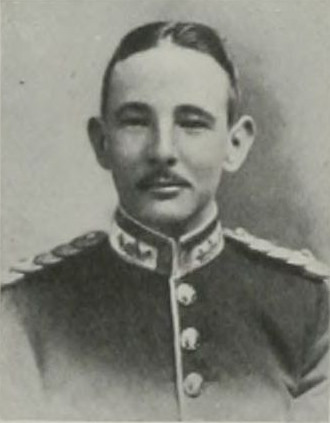
Edward R. E. Hickling.
HICKLING, WILLIAM CHARLES, Stoker, 1st Class (R.F.R., B. 3046), S.S. 100493, H.M.S. Good Hope; lost in action off Coronel, on the coast of Chili, 1 Nov. 1914.
HICKS, FREDERICK RICHARD, Lieut.-Col., 1st Battn. Hampshire Regt., only surviving s. of the late Francis Hicks, of Lanhainsworth, St. Columb, co. Cornwall, by his wife, Catherine, dau. of the late John Hicks; b. Plymouth, 10 Sept. 1871; educ. Sherborne and the Royal Military College, Sandhurst, and received his commission in the Hampshire Regt. 8 Oct. 1890, being promoted Lieut. 10 Aug. 1892; Capt. 17 April, 1898; Brevet-Major, 22 Aug. 1902; Major, 8 Aug. 1908; and Lieut.-Col. — Dec. 1914. He served in Uganda, 9 Jan. 1898, to 27 May, 1900 (medal), and was on Special Service in South Africa, 9 May to 26 July, 1900, being afterwards on the Staff of the Military Governor of Johannesburg (Major-Gen. Colin Mackenzie), and later (1 Dec. 1901 to 30 Nov. 1902) was employed with the Rand Rifles. For his services in this campaign he was mentioned in Despatches [London Gazette, 29 July, 1902], and received the Queen’s medal with three clasps and the King’s medal with two clasps. He served with the 2nd Hampshires at Malta and Bermuda, and with the 1st Battn. at Londonderry and Colchester, and from 10 Oct. 1909, to 8 March, 1912, was Brigade Major, 16th Brigade, Irish Command, and from 9 March, 1912, to 9 Oct. 1913, General Staff Officer (2nd Grade), Coast Defence, Southern Command. He was a Staff College Graduate, and a first-class interpreter. On the outbreak of the European War, he went to France, 22 Aug. 1914. and assumed command of the 1st Hampshires (the old 37th) after Col. Jackson was taken prisoner. He was wounded at Le Cateau a few days later (26 Aug.), and invalided home, but returned to the Front on 9 Nov. and was again wounded in action near Ypres on 8 May. He was sent home, and died in Guy’s Hospital, of enteric and wounds, 12 June, 1915. Col. Hicks m. at Winchester Cathedral, 2 Nov. 1903, Grace Winifred (Lanhainsworth, St. Columb, Cornwall), yst. dau. of the late Rev. William Henry Hewett, and had issue: John Nettleton, b. 3 May, 1906; Roger Bertram Nettleton, b. 27 Dec. 1909; and Mervyn Nettleton, b. 28 Jan. 1911.
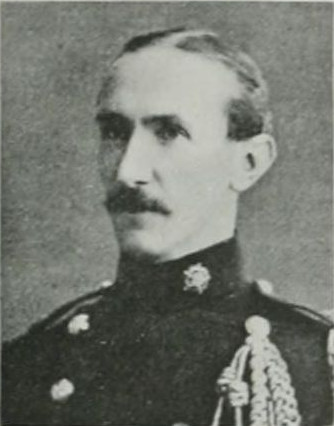
Frederick Richard Hicks.
HICKS, JAMES THOMAS WILLIAM, Private, No. 1849, 5th Batt. Royal Sussex Regt. (T.F.), s. of Albert Hicks, of 3, Clyde Villas, Ladbore Road, Rye, by his wife, Emma, dau. of James Tapp; b. Rye, co. Sussex, 16 Jan. 1895; educ. Rye Council School; enlisted 22 May, 1914; went to France 18 Feb. 1915, and died of wounds received in action at Cambray, 24 May, 1915; unm.
HICKS, WALTER GERALD, 2nd Lieut., 8th (Service) Battn. Royal Fusiliers, only s. of the late Walter Hicks, of St. Austell, by his wife, Kattie, dau. of the late Samuel William Cooke; b. St. Austell, co. Cornwall, 2 Oct. 1893; educ. Blundell’s, and London University (at both of which he was a member of the O.T.C.); was studying at the University when war broke out; obtained a commission in the 8th Royal Fusiliers, 26 Aug. 1914; went to France 31 May, 1915, and died at Armentières, 11 Aug. 1915 of wounds received while scouting. His Colonel wrote: “He was one of the most gallant boys I have ever met and would go anywhere and do anything. His men adored him, and his Captain could not speak too highly of him. He was intensely gallant and did not know the word ‘fear.’” A brother officer wrote: “His men worshipped him, and no words of mine can describe to you what he did for them. I remember the platoon from the very start, and had never thought it possible that it could have been brought up to the pitch of efficiency that he had attained. He set a fine example of cool courage to us all—officers and men.”
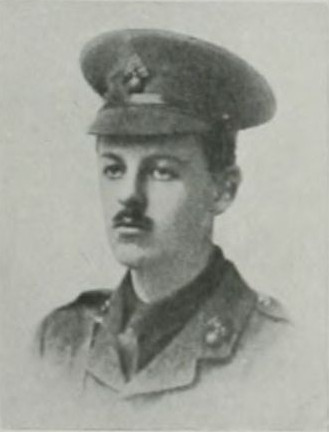
Walter Gerald Hicks.
HIGGINBOTTOM, FRANK, A.B. (R.F.R., B. 3228), S.S. 754, H.M.S. Good Hope; lost in action off Coronel, on the coast of Chili, 1 Nov. 1914.
HIGGINBOTTOM, THOMAS, Private, No. 1635, 14th Battn. Australian Imperial Force, s. of James Samuel Higginbottom; b. Salford, co. Lancaster, 10 Nov. 1886; educ. St. Bartholomew’s Schools there; and served four years in the Manchester Territorials; went to Australia early in 1914, and being there when war began, volunteered and joined the Commonwealth Expeditionary Force, 13 Sept. 1914; took part in the landing at the Dardanelles, 25 April, 1915, and served there continuously for four months, being killed in action, 25 Aug. 1915, and was buried in Australia Valley. He m. 12 Sept. 1909, Margaret Ann (9, Crokell Street, Salford), dau, of Timothy Leniham, and had issue three children: Thomas, b. 17 Jan. 1911; Stanley, b. 19 Feb. 1913; and Margaret, b. 1 July, 1910.
HIGGINS, FREDERIC, Shipwright, 1st Class, 345691, H.M.S. Hogue; lost in action in the North Sea, 22 Sept. 1914.
HIGGINS, HARRY, Private, R.M.L.I. (R.F.R., Ch. B. 1987), H.M.S. Aboukir; lost in action in the North Sea, 22 Sept. 1914.
HIGGS, CHARLES, Leading Stoker, 300794, H.M.S. Good Hope; lost in action off Coronel, on the coast of Chili, 1 Nov. 1914.
HIGH, GEORGE HENRY, Boy, 1st Class, J. 22784, H.M.S. Pathfinder; lost when that ship was sunk by a mine, about 20 miles off the East Coast, 5 Sept. 1914.
HILEY, HERBERT, Stoker, R.N.R., 2196S., H.M.S. Cressy; lost in action in the North Sea, 22 Sept. 1914.
HILDYARD, NONA MILDRED, Nurse, New Zealand Expeditionary Force, dau. of William Hildyard, of Lyttleton, New Zealand, by his wife, Betsy Ann, dau. of John (and Harriet) Libballie; b. Lyttleton aforesaid, 4 Nov. 1890; educ. Lyttleton Public Schools; entered the Christ Church Hospital, New Zealand, where she soon attracted the attention of her superiors, and on the outbreak of war was one of the nurses specially selected by the Government to go to the Front with the New Zealand Expeditionary Force. She left for Egypt 11 July, 1915, and was for some time engaged in the Base Hospital, Port Said. When the New Zealand troops were being transferred to Salonika, she sailed for that port with the other nurses of the hospital, and was lost on the troopship Marquetta, when that ship was torpedoed in the Gulf of Salonika 23 Oct. 1915. Doctors who were eye-witnesses of the disaster affirm that she displayed wonderful courage and fortitude, and sang “Tipperary” and “Are we downhearted? No!” to the last to keep up the spirits of her comrades.
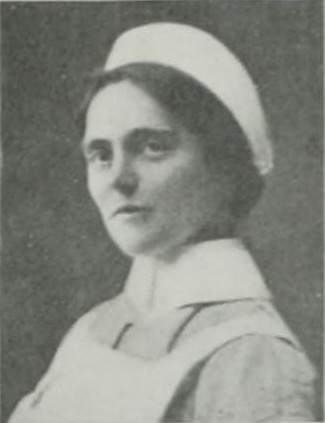
Nona Mildred Hildyard.
HILL, ALBERT, Stoker, 1st Class, 225607, H.M.S. Pathfinder; lost when that ship was sunk by a mine, about 20 miles off the East Coast, 5 Sept. 1914.
HILL, CHARLES HAYDOCK, Private, No. 28739, 16th Battn. (Canadian Scottish), Canadian Expeditionary Force, yr. s. of the late James Catesworth Hill, of Barnwood, Gloucester, by his wife, Frances, dau. of Charles Bird; b. Hereford, 5 Sept. 1890; educ. South-Eastern College, Ramsgate; qualified as an Electrical Engineer at the Central Technical College, London; went to Canada in 1912, and entered the employ of the British Electrical Co.; joined 50th Gordons at Victoria in 1913; volunteered on the outbreak of war, and enlisted in the Canadian Scottish; came over with the 1st Contingent in Oct. 1914; went to France, Feb. 1915, and died at No. 8 Casualty Clearing Station, 28 April, 1915, of wounds received in action the previous day near Ypres, when a shell took off his right leg. Buried in Bailleul Cemetery; unm.
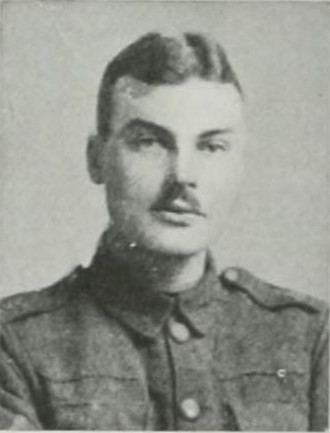
Charles Haydock Hill.
HILL, CHARLES WILLIAM JOHN, A.B. (R.F.R., Ch. B. 9149), 204395, H.M.S. Aboukir, lost in action in the North Sea, 22 Sept. 1914.
HILL, GEORGE, A.B. (R.F.R., B. 5058), S.S. 1835, H.M.S. Good Hope; lost in action off Coronel, on the coast of Chili, 1 Nov. 1914.
HILL, GEORGE PAYNE, Sergt., No. 391, North Riding Battery, 2nd Northumbrian Brigade, Royal Field Artillery (T.F.), 3rd s. of Thomas Hill, of West Pier, Whitby, Sculptor, by his wife, Catherine, dau. of John Waller; b. Whitby, co. Yorks, 27 May, 1884; educ. Mount School, Whitby; was a Monumental Mason; joined the Volunteer Force in Feb. 1903, and transferred to the Territorials in 1908. On the outbreak of war he volunteered for foreign service; went with his battery to the Front, Sunday, 18 April, 1915, and died in hospital at Bailleul, 24 May, 1915, from wounds received in action at Ypres the same day. The gun detachment under Sergt. Hill was completely wiped out by a bursting shell, all the men who belonged to the Scarborough section being killed, the Sergt. surviving for a short time only. The gun which was damaged was eventually saved and brought safely back to the British line, by a detachment of the Whitby Territorial Force, who were supplying the guns still in action with ammunition, amidst a veritable hail of bursting shells. He was buried in Bailleul Cemetery. He was mentioned in F.M. Sir John French’s Despatch of 30 Nov. 1915. Sergt. Hill m. at St. Mary’s Parish Church, Whitby, 5 June, 1907, Margaret, dau. of the late Thomas Stott, Mariner, and had three children: Thomas Stott, b. 25 July, 1910; George, b. 31 March, 1913: and Mabel, b. 2 Jan. 1909. He had been a ringer at Whitby Parish Church since the formation of a change ringing company in 1909: he had taken part in peals of Plain Bob Triples and Major, Grandsire Triples and Caters, and Kent Treble Bob Major and Royal, and previous to the outbreak of war was looking forward to scoring his first peal of Stedman Triples.
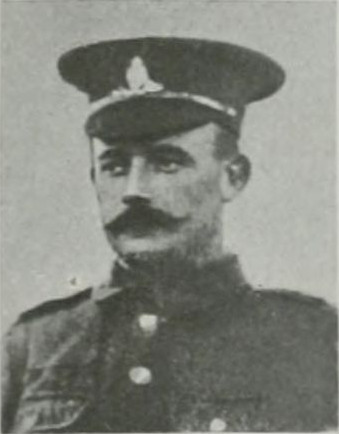
George Payne Hill.
HILL, LEONARD AUGUSTUS, Private, No. 1967, 1/8th Battn. The Middlesex Regt. (T.F.), s. of the late Edmund Hill, Engine Driver, G.W.R., by his wife Martha (38, Dudley Road, Southall Green, Middlesex), dau. of Richard Castle; b. Gloucester, 21 Sept. 1896; educ. Featherstone Road Boys’ School, Southall; was an Engineer; joined the Middlesex Territorials, 17 Feb. 1913; volunteered for foreign service on the outbreak of war in Aug. 1914; went to France, 8 March, 1915, and died in No. 10 Stationary Hospital, 29 April, 1915, from wounds received in action the previous day near Ypres. Sergt. A. Cornwell wrote: “He was one of my best men, and one of the most popular in the Coy.... Only two days before he shared the contents of his parcel amongst the boys. Always cheerful, always willing, one of the best of workers. We all miss him.... He was one of the first over the parapet after the Germans when he was killed.”
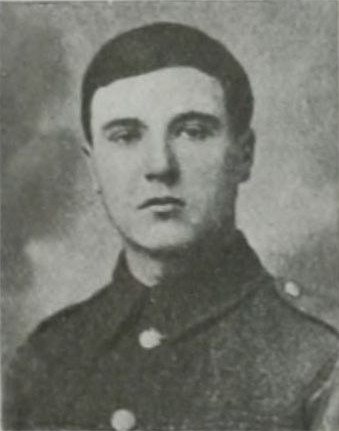
Leonard Augustus Hill.
HILL, LESLIE BROWNLOW, Private, No. 28744, 16th Battn. (50th Gordon Highlanders, of Canada), Canadian Expeditionary Force, s. of the late Elvis Ford Hill, of London, Cigar and Tobacco Merchant, by his wife, Marie Klara (620, Battery Street, James Bay, Victoria, British Columbia, Canada), dau. of the late John Mathias Lerner, of London, England; b. Portland Place, London, W., 1 July, 1889; educ. Margate College; served for a short period with the North Staffordshire Regt. and afterwards in the Royal Navy, and having received his discharge, went to Canada in 1913, and settled at Victoria, B.C.; joined the 50th Gordon Highlanders, 16 June, 1914, and when war broke out, immediately volunteered for Imperial Service. He left Valcartier, for England, 28 Sept. 1914; went to France, 22 Feb. 1915; came safely through the Battle of Ypres, 25 April, 1915, but was wounded in the trenches by a fragment of shell two days later (27 April), and died the same day in No. 8 British Field Ambulance; unm. He was buried in Vlamertinghe Cemetery, Ypres (B192, Sec. 4). His brother, Elvis Ford Hill, No. 9352, is now (1916) on active service with the R.A.M.C.
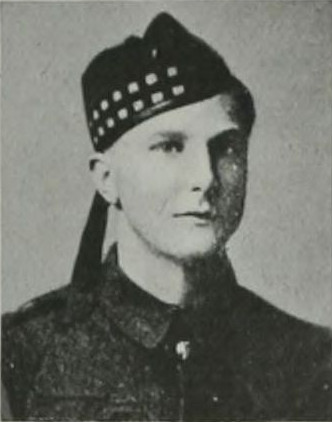
Leslie Brownlow Hill.
HILL, WALTER EDWARD, Lieut., 3rd Battn. North Staffordshire Regt., only s. of the late Rev. Charles Rowland Haydock Hill, Rector of Holy Trinity, Dorchester, and Canon of Salisbury, by his wife, Ellen Maria (68, King’s Gate Street, Winchester), 2nd dau. of Hon. Edward Bennet Wrottesley [5th s. of John, 1st Baron Wrottesley]; b. Dorchester, co. Dorset, 6 Sept 1892; educ. Winchester; gazetted 2nd Lieut. Special Reserve, 3 May, 1911, and promoted Lieut. 17 April, 1913; went to France 8 Sept. 1914, and was killed in action at the Battle of the Aisne, 25 Sept. 1914; unm. Buried in Soupir Churchyard.
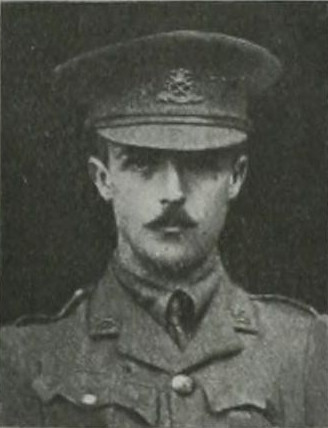
Walter Edward Hill.
HILL, WILLIAM DUDLEY, Capt., 3rd (Reserve), attd. 1st, Battn. Loyal North Lancashire Regt., yst. s. of Col. Frederick Jacob Ponsonby Hill, of Cambridge Lodge, Southbourne, Hants, late 1st Royal Scots (who served in the Crimea and Indian Mutiny), by his wife, Elizabeth Newnham, dau. of Solomon Watson, of Ballingarrane, co. Tipperary; b. Cheltenham, 24 March, 1882; educ. Saugeen Preparatory School, Bournemouth, and (owing to temporary failure of eyesight) privately; gazetted 2nd Lieut. to the 3rd South Lancashire Regt. 11 June, 1900, and transferred to the 1st North Lancashires, 4 May, 1901; served in the South African War (Queen’s medal with three clasps and King’s medal with two clasps), and retired, 9 Oct. 1903. On the outbreak of war he rejoined his Regt. and was promoted Lieut. 9 Oct. 1914, and Capt. 3 Feb. 1915; was stationed at Felixstowe with the 3rd Battn. Sept. 1914 to March, 1915, when he went to France attd. to the 1st Battn. and died in hospital at Bethune, 13 May, 1915, of wounds received in action on the 9th at Rue du Bois, during the advance against the Aubers Ridge. Wounded at the commencement of the attack, he remained at the head of his men, until, again wounded, he fell. He was buried in Bethune Cemetery. His Commanding Officer wrote: “In your husband the Battn. has not only lost a keen and valuable officer, but a friend who had endeared himself to us all by his kindly and sympathetic nature.” The Commanding Officer of the 1st Battn. to which he was attd., wrote: “He was wounded in the spine and stomach on Sunday last, gallantly leading his company into action ... his loss is deeply deplored by all of us.” Other letters from his brother officers and the men of his regt. testify to his great popularity. A Sergt. wrote: “We all loved and respected him.” Capt. Dudley Hill was a keen sportsman and was particularly interested in steeplechasing. He trained many winners under National Hunt Rules, and rode winners himself in South Africa. He m. at Farnham, Surrey, 21 April, 1903, Florence Rachel (River View, Marlow, Bucks), yst. dau. of the late William Snow Clifton, of Houghton, Hants, and had two sons: Patrick William Dudley, b. 1 July, 1904; and Anthony Ponsonby Dudley, b. 17 April, 1907.
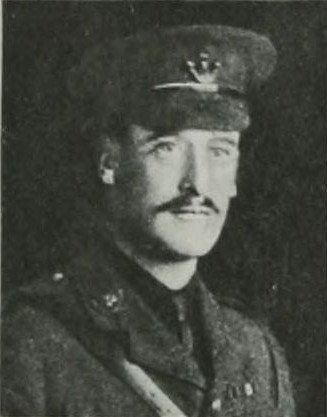
William Dudley Hill.
HILLAND, JOSEPH, Stoker, 1st Class (R.F.R., Ch. B. 9522), S.S. 106892, H.M.S. Cressy; lost in action in the North Sea, 22 Sept. 1914.
HILLIER, ERNEST ALFRED, Private, No. 9275, 1st Battn. Coldstream Guards, s. of Alfred Hillier, Gunner, No. 19392, No. 3 Battery, 1st Brigade, Lancashire Division, R.A.; by his wife, Mary (7, Sydney Place, Bathwick, Bath), dau. of John Martin, of Tiverton-on-Avon; b. Walcot, Bath, 3 June, 1892; educ. Bathwick Parochial School and the Blue Coat School, Bath; enlisted 13 Oct. 1911; went to France with the Expeditionary Force in Aug. 1914; served through the retreat from Mons, and was killed in action at the Battle of the Aisne, 4 Oct. 1914; unm. Buried at Braisne. He had the Crossed Flags for signalling.
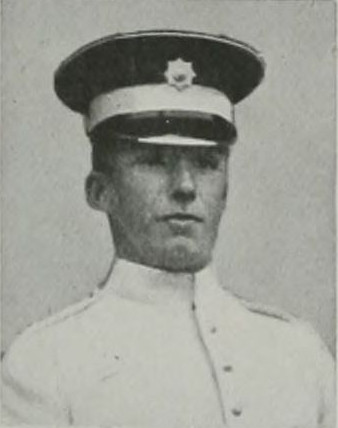
Ernest Alfred Hillier.
HILLIS, JAMES HERBERT, Leading Stoker, K. 4837, H.M.S. Pathfinder; lost when that ship was sunk by a mine, about 20 miles off the East Coast, 5 Sept. 1914.
HILLIS, SAMUEL DENYS, M.Sc., Private, No. 3583, 10th (Liverpool Scottish) Battn. King’s Liverpool Regt. (T. F.), s. of Samuel Hillis, of 2, Green Lawn, Rock Ferry, Cheshire, Cotton Broker, by his wife, Emma Melene, dau. of the late George Benjamin Keyworth, of Marr Grange, Doncaster; b. Liverpool, 9 Oct. 1892; educ. Birkenhead School and Liverpool University, where he graduated B.Sc. in the Chemistry Honours School in July, 1913, and after a year’s research in Metallurgy, obtained the degree of M.Sc.; volunteered on the outbreak of war, and joined the Liverpool Scottish in Sept. 1914; went to Flanders the following January, and was killed in action in the great charge at Hooge, 16 June, 1915; unm.
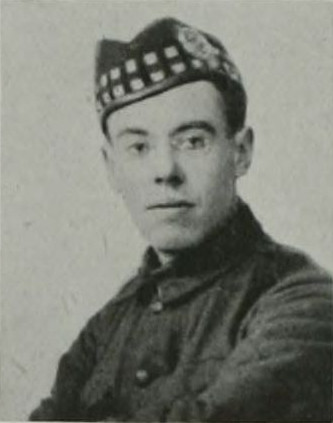
Samuel Denys Hillis.
HILLS, ALFRED THOMAS, Private, No. 1248, 8th Battn. (90th Winnipeg Rifles), Canadian Expeditionary Force, yst. s. of Charles Thomas Hills, of Hornchurch, Essex, by his wife, Emily, dau. of John Webb; b. Hornchurch, 14 May, 1891; educ. Hornchurch; went to Canada in Feb. 1911, and settled at Fort William; volunteered after the outbreak of war, and joined the Canadian E.F. at Fort William in Aug. 1914; came over with the first contingent; went to France, 9 Feb. 1915, and died at Oxford Military Hospital, 2 May, 1915, of wounds received in action at Ypres, 23 April. He m. at Romford, 21 Dec. 1914, Ada Agnes, dau. of George Miller, of Chelmsford; s.p.
HILLS, FREDERICK, Stoker, 1st Class (R.F.R., Ch. B. 7257), S.S. 102186, H.M.S. Aboukir; lost in action in the North Sea, 22 Sept. 1914.
HILLS, WILLIAM JESSE, Private, R.M.L.I., Ch./17045, H.M.S. Hawke; lost when that ship was torpedoed in the North Sea, 15 Oct. 1914.
HILLYER, THOMAS JAMES SELBY, Sergt., No. 46007, 13th Battn. (Royal Highlanders of Canada) Canadian Expeditionary Force, only s. of Thomas Frederick Selby Hillyer, of London, Butler in private service, by his wife, Annie, dau. of Malachi Davis; b. Winkfield, near Windsor, 29 Nov. 1878; educ. Cranbourne Ranelagh School; enlisted in the 2nd Lancashire Fusiliers, 4 June, 1895; served in the Soudan Expedition, 1898 (Queen’s medal with clasp, also Khedive’s Star), and in the South African War, 1899–1902 (Queen’s medal with three clasps, “Tugela Heights,” “Relief of Ladysmith,” “Transvaal,” and King’s medal with two clasps, “South Africa, 1901,” “1902”), and after leaving the Colours in 1903, was nine years in the Reserve, and was employed during that period as a postman in Winkfield village; went to Canada, 1912, and settled at Amherst, Nova Scotia; volunteered on the outbreak of war, and joined the Canadian Expeditionary Force in Aug. 1914, and came over with the first contingent, Oct. 1914; went to France, Feb. 1915, and was killed in action near Festubert, 21 May following. Buried at Festubert. He m. at Cranbourne, Winkfield, 1 June, 1903, Kate (Lovel Road, Winkfield, near Windsor), dau. of the late William Sharpe, of Cranbourne, Winkfield, and had three children: Thomas William Selby, b. 8 July, 1905; John Ernest, b. 11 Sept. 1912; and Joyce, b. 11 March, 1908.
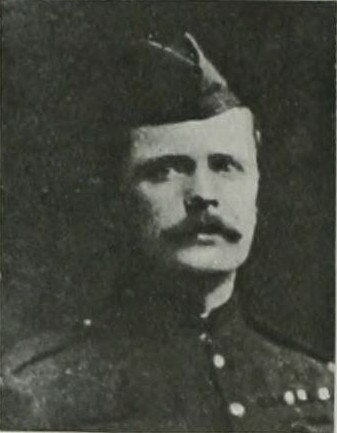
Thomas J. S. Hillyer.
HILSON, GEORGE WILLIAM, Private, No. 9910, 3rd Battn. Coldstream Guards, s. of Joshua Thomas Hilson, of 44, Middle Street North, Driffield, co. York, formerly Royal Marine Artillery, by his wife, Harriet, dau. of William Burriell; b. Driffield, co. York, 29 April, 1895; educ. National School there; enlisted 1 Jan. 1913; went to France, Aug. 1914; died of wounds in No. 4 Clearing Station, Lillers, 24 Dec. 1914, and was buried in the cemetery there; unm.
HILTON, HERBERT PHILIP, Capt., 3rd Battn. Middlesex Regt., eldest s. of Ernest P. Hilton, of 188, Cromwell Road, S.W.; b. Sydenham, 13 Aug. 1873; educ. Malvern College, where he was in the Cadet Corps, and went to Canada, and served with the North-West Mounted Police for four years. He then returned to England and studied for the Bar at the Inner Temple and Gray’s Inn. In 1899 he went to South Africa and joined Roberts’ Horse, being given a commission as 2nd Lieut. Middlesex Regt., 19 May, 1901, and promoted Lieut. 12 Oct. following. He served through that campaign 1899–1902; took part in the advance on, and relief of, Kimberley; the operations in the Orange Free State, Feb. to May, 1900, including the actions at Paardeburg (17–26 Feb.), Poplar Grove, Dreifontein, Karee Siding, Houtnek (Thoba Mountain), Vet River (5–6 May), and Zand River; operations in the Transvaal, May-June, 1900, including actions near Johannesburg, Pretoria, and Diamond Hill (11–12 June); operations in the Transvaal, west of Pretoria, July to 29 Nov. 1900; including actions at Zilkaats Nek, Elands River (4–16 Aug.), and Venterstroom (7–9 Aug.); operations in the Orange River Colony, May to 29 Nov. 1900, including actions at Lindley (26 June), Bethlehem (6–7 July), and Wittebergen (1–29 July); operations in the Transvaal and Orange River Colony, 30 Nov. 1900 to 31 May, 1902, and those on the Zululand Frontier of Natal, Sept. and Oct. 1901, and was mentioned in Despatches [London Gazette, 16 April, 1901] and awarded the Queen’s medal with six clasps and the King’s medal with two clasps. He was with his regt. in India when the European War broke out, and returned to England in Dec. 1914; went to France the following Jan., and was killed in action, near Ypres, 14 Feb. 1915. He m. at Singapore, 1911, Hylda (53, Kenilsworth Avenue, Wimbledon Park), dau. of (—), and had three children.
HILTON, THOMAS, Stoker, 1st Class (R.F.R., B. 4658), S.S. 103860, H.M.S. Good Hope; lost in action off Coronel, on the coast of Chili, 1 Nov. 1914.
HILTON, WILLIAM ERNEST, Stoker, 1st Class, K. 16301, H.M.S. Pathfinder; lost when that ship was sunk by a mine, about 20 miles off the East Coast, 5 Sept. 1914.
HINDMARSH, ALBERT, Private, No. 10268, 1st Battn. Coldstream Guards, 4th s. of the late Charles Hindmarsh, Fireman, Monkwearmouth Colliery, by his wife, Mary (28, Fulwell Road, Sunderland), dau. of James Archibald; b. Southwick-on-Wear, co. Durham, 25 Oct. 1893; educ. Southwick Board School; was a Miner, Monkwearmouth, enlisted 7 Aug. 1913; went to France, 10 Aug. 1914, and was killed in action at Ypres, 29 Oct. 1914; unm. His four brothers: Robert Hindmarsh, Private, No. 5454, 3rd Durham L.I.; William, Private, 14th Durham L.I.; John Hindmarsh, Driver, No. 690, R.G.A.; and Arthur Hindmarsh, Private, No. 15488, 14th Durham L.I. (wounded), are all on active service; and his brother-in-law, Thomas Elliott, Private, No. 14373, 10th Yorks, was killed in action.
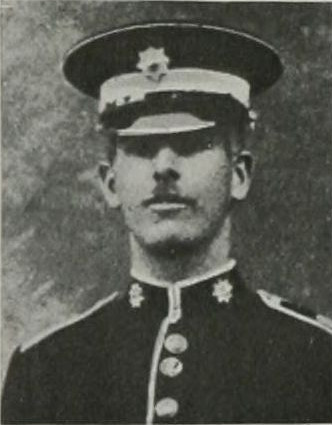
Albert Hindmarsh.
HINGSTON, FREDERIC LEONARD, Capt., 1st Battn. Duke of Cornwall’s Light Infantry, only s. of the late Frederic Hingston, of Cardiff, Banker, by his wife, Mary (St. Oswald’s, Selwyn Road, Eastbourne), dau. of Joseph Rome; b. Leicester, 6 June, 1877; educ. Llandaff Cathedral School and Malvern College; gazetted 2nd Lieut. from the Militia to the Duke of Cornwall’s L.I., 18 Oct. 1899, and promoted Lieut. 13 May, 1901, and Capt. 13 Feb. 1909; served in the South African War, 1900–1, and took part in the actions at Poplar Grove, Driefontein, Vet River, Zand River, Johannesburg, Pretoria, Diamond Hill and Belfast (mentioned in Despatches and Queen’s medal with six clasps); and with the Expeditionary Force in France and Flanders, 11 March to 26 April, 1915, and was killed in action on the latter date, during the second Battle of Ypres. The General commanding the Brigade wrote to Capt. Hingston’s widow: “I wanted, as Brigadier-General Commanding the Brigade, to tell you how very deeply and sincerely I sympathise with you in the heavy blow that has fallen upon you. Your husband belonged to a great Regt. which has given consistently splendid service throughout the campaign, and, if I may say so, he was one of the finest officers of a fine Regt. I had often spoken to your husband on the occasions of my frequent visits to the trenches, and had always been much struck by his earnestness and thoroughness, and by the keen interest which he took in all matters relating to his company and his men. To them I know his loss is a severe one, as it is indeed to all of us”; and a friend (“Eastbourne Gazette,” 26 May, 1915): “He was good and thorough in whatever he undertook. As an athlete he was just what a British Officer should be, strong, active, bold, enduring and honourable. In Switzerland he was well known as a remarkable fine ‘ski-er.’ In the winter, 1913–14, he had won the British Ski-ing Association Cup at Wengen; and he had won other trophies at this winter sport as well as at ice-hockey, at which he was an adept. He was also a keen lawn tennis player and golfer.” Capt. Hingston m. at St. James’, Piccadilly, 30 Nov. 1911, Essy, yst. dau. of the late Col. William Charles Plant, Indian Army; s.p.
HINMAN, ARTHUR GURR, Lieut., 15th Battn., 4th Brigade, Australian Imperial Force, 2nd s. of Arthur Hinman, of Moina, Elphin Road, Launceston, Tasmania, by his wife, Lucy Maud, dau. of William Gurr, of Launceston; b. Newstead, Launceston, Tasmania, 19 June, 1890; educ. at Launceston Church Grammar School, 1903–March, 1909, and on leaving there went to Ormond College, Melbourne University, for the course of Metallurgy and Mining Engineering. When he had finished his course there he did his practical work with the Mount Bischoff Tin Mining Company, Waratah, Tasmania, and took his degree of Bachelor of Mining Engineering at Melbourne University, 5 April, 1914. War breaking out the following Aug., he immediately volunteered for Imperial service; was given a commission, and left Melbourne for Egypt, 22 Dec. 1914. He took part in the landing at the Dardanelles, 25–26 April, 1915, and was killed in action at Quinn’s Post, 10 May, 1915; unm. On that night the 15th Battn. were ordered to carry the Turkish trenches directly in their front. This was accomplished but with heavy loss, and it was while gallantly leading his men in the charge that Hinman was shot dead. Writing to Mrs. Hinman, a brother officer, Capt. J. A. Good, said: “We landed, as no doubt you are aware, on the first day, and the various companies and platoons of the 15th Battn. were separated. Arthur’s platoon being out on the left, and apparently had a bad time. A few days after this we all rejoined the Battn., and took up our position on Pope’s Hill, but on the seventh day we were ordered to occupy the now famous position of Quinn’s Post. At this time he and I were the only officers of the original Tasmanian Companies in the 15th who remained, and often at night, as we sat in our dug-out, we wondered who would be the first to go, for it seemed impossible that we should remain long unwounded when so many had been hit. Arthur did splendid work on the post, and everyone sincerely regretted his death. The post was exceptionally difficult to hold owing to the close proximity of the Turkish trenches, which were only about 15 yards away in places. The position on the day prior to his death was as follows: The Turks held a line of trenches directly in front of our trenches; at either flank we were separated by about 50 yards, but in the centre our trenches were only 15 yards apart. Orders were issued that we were to go forward and occupy these trenches, and instructions were issued accordingly. Three parties, consisting of about 50 men each, were to be sent forward, one party to each flank and one to the centre. The intention being to occupy these trenches and dig communication trenches from our old lines to the new one. Lots were drawn by the Battn. officers to decide who would take charge of these parties, but Arthur drew a blank, and did not go with the first party, who had a comparatively easy time, as they surprised the Turks and captured the trenches, with the exception as we afterwards discovered of about 30 yards of trench in the left centre. Without capturing this extra line it was impossible to hold the remainder, and Arthur gallantly collected a number of men, and charged forward with the intention of securing this position. It was in this charge that he met his end. Although the conditions in Gallipoli were severe I never heard him once complain. He was ever ready and anxious to perform any work that was required. By his splendid work and control of his men (who speak highly of him and sympathise with you in your loss), he gallantly assisted to hold a position which was recognised by all as being the most difficult of all positions to hold”; and an officer of the 3rd L.H. Field Ambulance (Capt. G. Aberdeen) wrote: “The 15th Battn. had a bad time. It was owing to this fact that maybe none of them have been able to let you know details of Arthur that I am writing this. The 15th Battn. were stationed at Quinn’s Post, probably the most vulnerable and certainly the most dangerous part of our firing line, and had been stationed there almost since the day of landing. The Turkish trenches approach very closely to ours, at one spot being only 20 yards away. They are on the crest and we occupy the side of the hill. From the first day the position has been a real hell for our boys. A moment’s exposure meant a bullet, snipers, machine guns, shrapnel, high explosive, and hundreds of bombs are in almost daily use by the Turks in their endeavours to drive our men out of this important position. But in spite of the fact that about 40 officers and over 1,000 men out of a total of 1,400 have been hit, the 15th Battn. has never yielded up one inch of ground. The performance speaks for itself. Since our landing the Turks have been making persistent counter-attacks, and about 11 May they made a very determined and sustained one. At Quinn’s Post they were driven off time after time, and finally in a fine counter-attack our men went forward and seized their firing trenches. Arthur was in charge of ‘Supports’ who were brought up almost at once to dig in. Our men worked hard to make the trenches good. But the enemy had dug them very cleverly, and when daylight came commenced an enfilade of fire with hidden machine guns. The position soon became untenable. The order was given to retire to our own trenches, and our men obeyed it most unwillingly. Arthur saw all his own men safely started, but on the way back the hail of lead from the machine guns caught him, and in an instant he was gone. The Turkish losses had been so heavy that shortly after this fight they asked for an armistice to bury their dead. This was arranged. It may be some small comfort to you to know that Arthur’s body was recovered by his men, and that he was given a Christian burial by one of our Padres. He lies about 10 yards in front of No. 5 post, Quinn’s Post, a position which will be historic in Australian military history.” He was unm.
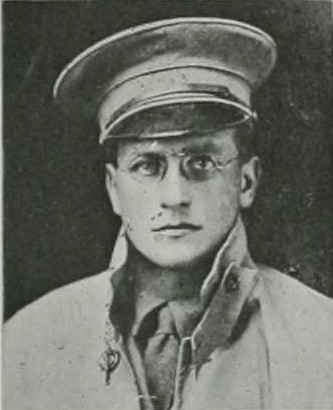
Arthur Gurr Hinman.
HINSON, OLIVER FRED, A.B. (R.F.R., Ch. B. 5073), 180810, H.M.S. Cressy; lost in action in the North Sea, 22 Sept. 1914.
HINTON, ERNEST HENRY, Officer’s Steward, 3rd Class, L. 3046, H.M.S. Cressy; lost in action in the North Sea, 22 Sept. 1914.
HINTON, SIDNEY ARTHUR, Acting Bombardier, R.M.A., 12189, H.M.S. Aboukir; lost in action in the North Sea, 22 Sept. 1914.
HINVES, ALFRED EDMUND, A.B. (R.F.R., Ch. B. 67213), 206243, H.M.S. Cressy; lost in action in the North Sea, 22 Sept. 1914.
HIPPISLEY, HAROLD EDWIN, 2nd Lieut., 1st. Battn. Gloucester Regt., yr. s. of William John Hippisley, of Northam House, Wells, Somerset, Land Agent, by his wife, Mary, dau. of the late Samuel Barnes, of Surlingham, Norfolk; b. Wells, 3 Sept. 1890; educ. King’s School, Bruton, Somerset, from which he passed the London University Matriculation Examination; and at the Royal Agricultural College, Cirencester, where he was Gold Medallist (Estate Management and Forestry), and obtained the National Diploma of Agriculture; admitted Professional Associate of Surveyors’ Institute and passed Fellowship Examination; gazetted 2nd Lieut. Special Reserve of Officers, Gloucester Regt., from the Royal Agricultural College, O.T.C. 3 Aug. 1912; and was attached to the 1st Battn. on the outbreak of war; went to France with the 3rd Brigade, 1st Division, of the Expeditionary Force in Aug. 1914; took part in the Battle of Mons, the subsequent retreat, the fighting on the Marne and the Aisne, and the advance into Belgium, and was killed in action at Langemarck, 23 Oct. 1914, on which occasion his platoon lost three-fifths of its strength, but succeeded in holding the position. Buried near Langemarck. He was an excellent all-round sportsman. He was capt. of the cricket and football teams at King’s School, Bruton, and of the cricket and hockey teams at the R.A.C., Cirencester, and played cricket and hockey for Somerset, and cricket for the United Kingdom. He m. at St. Cuthbert’s, Wells, 5 Aug. 1914, Ivy Gwendoline, dau. of the late J. Hussey Cooper, of the Lodge, Wheatley, Oxford; s.p.
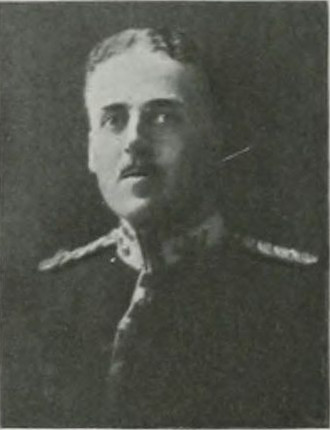
Harold Edwin Hippisley.
HIRST, EDWARD, Sick Berth Steward, 351015, H.M.S. Cressy; lost in action in the North Sea, 22 Sept. 1914.
HISCOX, THOMAS ANDREW, Private, No. 1369, 15th Battn. (Civil Service Rifles), The London Regt. (T.F.), eldest s. of William Thomas Hiscox, of H.M. Customs and Excise, and 18, Somerville Road, Bishopston, Bristol, by his wife, Jane E., dau. of Andrew Paterson, of Ayr; b. Charlestown, co. Cornwall, 4 Feb. 1891; educ. privately at Penzance and at Clark’s College, London; was appointed a 2nd Division Clerk in 1911, and when war began was a Clerk in the Treasury, Whitehall; joined the Civil Service Rifles in 1911; volunteered for foreign service; went to France, 17 March, 1915, and was killed in action at Festubert, 27 May following, being shot by a sniper while in an advanced trench; unm.
HITCHCOCK, EDWARD WILLIAM, Stoker, P.O. 308869, H.M.S. Pathfinder; lost when that ship was sunk by a mine, about 20 miles off the East Coast, 5 Sept. 1914.
HITCHEN, ARTHUR BENJAMIN, Rifleman, No. 2804, 1/7th Battn. (Leeds Rifles), West Yorkshire Regt. (T.F.), s. of John William Hitchen, of 35, Meanwood Street, Leeds, by his wife, Charlotte Adelaide, dau. of Charles Smith Butcher, of Leeds; b. Leeds, 18 Dec. 1896; educ. St. Peter’s Square Board School there; joined the Leeds Rifles, 19 Sept. 1914; went to the Front, 15 April, 1915, and was killed in action at Laventie, 7 May, 1915; unm.
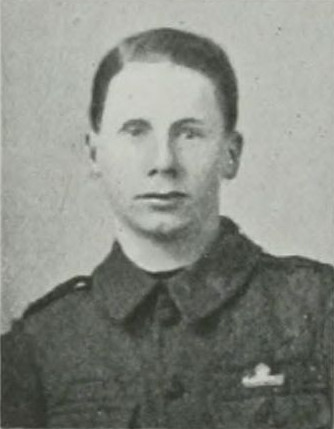
Arthur Benjamin Hitchen.
HITCHINS, HENRY WILLIAM ERNEST, Lieut.-Col., Commanding 1st Battn. The Manchester Regt., only s. of the late Major-Gen. Henry White Hitchins, R.E., and grandson of the late Lieut.-Gen. Benjamin Hitchins; b. London, 31 May, 1865; educ. privately and at the Royal Military College, Sandhurst; gazetted 2nd Lieut. to the 1st Battn. The Manchester Regt. (the Old 63rd), 25 Aug. 1886. He was promoted Capt. 11 May, 1895, and in Nov. 1897, was appointed Adjutant of the 3rd Volunteer (now the 9th Territorial Battn.) of his regt. In addition to his work us Volunteer Adjutant, he voluntarily performed the duties of Adjutant of the Depôt, and made great efforts throughout the district in recruiting. His organising powers were much appreciated by Col. Gunter, Commanding 63rd Regimental District, to whom he generally acted as staff officer. The number of volunteers increased from 600 to over 1,000, which fact proves his zeal and popularity. Later he commanded the Regimental Depot. To quote the local press: “As a Regimental Officer he enlisted the affection and respect of all with whom he had been associated. Officers and privates appreciated his high sense of duty, and loved him for his kindness of disposition and his chivalrous unselfish nature.” On 1 July, 1901, he obtained his Majority, and from 1 June, 1906, was second in command. He was thus 13 years and 9 months a Major, 8 years and 10 months of which as “appointed second in command;” his double period in that appointment being due to the absorbing of the senior second in command of the two battns., which were disbanded in 1906. During his 28 years of close association with the Regt., especially during his long period as Major and second in command, his zeal, good work and influence must have greatly helped to form the character and efficiency of the battn., qualities which were to be so splendidly demonstrated in France and Flanders. In 1906 Major Hitchins proceeded to India, serving with his old battn. the 1st Manchesters; was at Delhi for the Coronation Durbar; and for a time Commandant of the Pachmarhi Depot. On the outbreak of war in 1914, Major Hitchins was temporarily in Command of the 1st Battn., in the absence of the then Lieut.-Col. He was responsible for the mobilising of the battn. which left India with the Lahore Division at the end of August, and was first in action at Picantin on 23 Oct. 1914. In Nov. he was again in temporary command. The battn. had its full share of long and laborious work in the trenches, and on 20 Dec., at the critical fight for Givenchy, it was in action for 30 successive hours, and earned from the Gen. commanding the Lahore Division the name of “The Gallant Manchesters.” In his thanks to them and the 4th Suffolks, the Gen. paid a tribute to their “splendid work and gallant conduct first in recapturing some of the lost trenches at Givenchy on 20 Dec., then in holding those trenches on 21 Dec. against overwhelming attacks of the enemy.” He said: Givenchy was the most important point in the whole of the line held by the Lahore Division, and that its retention in our hands was due to the courage and steadfastness of the officers and men of those two brave battns. The General commanding the Indian Army Corps, addressing the 1st Manchesters, thanked them for “their very fine bit of work in the fight.” He described them as “a very gallant battn. holding the most important point on the right of the British line, and by their gallant conduct in holding on to it, rendering greater service than they probably realised.” Field-Marshal Earl Kitchener, in the House of Lords in Jan. 1915, in his survey of the then recent fighting, mentioned the engagement at Givenchy as the only important event of that period in which the British and German forces were concerned. At the taking of Givenchy, for which the battn. earned this praise, Lieut.-Col. (then Major) Hitchins was in actual command of three and a half out of four double companies of the Regt. During this action he was shot through the thigh. Arriving in England on Christmas Eve he was sent to hospital, where he received his Colonel’s thanks for his good work, and the valuable and very loyal assistance he had given him all along, and he expressed the hope that such “splendid services” would receive reward. On 1 April, 1915, he embarked again for the Front, and on the 19th the Commander-in-Chief inspected the 1st Manchesters, and spoke in the highest terms of their gallant behaviour, and congratulated Major Hitchins on being at the head of such “a splendid Battn.” Subsequently he was appointed to the Lieut.-Colonelcy of his own battn. (being gazetted two days before his death, to date from 10 March), and was in command at the Second Battle of Ypres. Col. Hitchins directed operations till on the night of 26 April, 1915, he was shot through the heart. He was carried by his men to a ruined farm house, where it was ascertained life was extinct. The imperturbable courage and coolness shown by Col. Hitchins impressed all ranks. To quote a brother officer, Capt. Buchan, D.S.O.: “The Colonel was as brave as a lion.” He is justly described as “the gallant Colonel of the Gallant Manchesters,” who met a soldier’s death whilst commanding with conspicuous bravery the battn. he loved so well, who trusted him so thoroughly, and who followed him so loyally to the death. A Military Memorial Service was accorded to Lieut.-Col. Hitchins at the depôt of his regt. at Ashton-under-Lyne, in the presence of the troops, the mayor and corporation and public bodies. Col. Hitchins was twice mentioned in despatches “for gallant and distinguished service in the field,” first on 31 May, 1915, and again on 1 Jan. 1916. General Sir Horace Smith-Dorrien specially named the 1st Battn. The Manchester Regt. as deserving of the highest praise for its great services at the end of April, at Ypres. General Sir James Willcocks, G.C.M.G., K.C.B., K.C.S.I., D.S.O., commanding Indian Army Corps, in his personal tribute, wrote: “I had the honour and pleasure of knowing Col. Hitchins and his glorious battn. of the Manchesters very well.... His zeal and affection for his corps were remarkable; he was a very fine specimen of a soldier and a man, and commanded one of the finest battns. I ever served with. It is impossible to beat them at anything, and I always felt sure that any task they had to perform would be carried through, no matter at what cost. Col. Hitchins died as he had always lived, doing his duty nobly.” Lieut.-Gen. Sir Henry Watkis, K.C.B., late commanding Lahore Division, thus expressed himself: “He was an officer whose soldierly qualities came to be recognised at once under the great test of active service.... No one more deserved the promotion he received than Col. Hitchins, who so gallantly led the repeated charges of the battn. which I was so proud to address as ‘The Gallant Manchesters’ on that occasion. Five months afterwards he again led his battn. against the enemy in the second Battle of Ypres.... In him the service and his country lost a very brave officer and gentleman.” Major-Gen. Carnegy, C.B., late commanding the Jullundur Brigade, in his long personal tribute, mentioned: “Col. Hitchins was known as a very gallant officer, frequently exposing himself at the call of duty in the trenches with almost reckless bravery, and consequently was greatly admired by the men. He died as a gallant British officer and gentleman, laying down his life for his country, and I feel I have lost a good friend and comrade.” To these and other great testimonies to his fine qualities as a soldier is added the knowledge that he won the confidence and devotion of his men. A message from His Majesty was received by the family again graciously expressing his sympathy and condolence, and informing them of His Majesty’s high appreciation of the services of the late Lieut.-Col. H. W. E. Hitchins. Col. Hitchins was a zealous Freemason and belonged to several lodges in England and in India. His favourite sport was hunting, he was known as a fine horseman, a keen judge of a good horse, an enthusiastic polo player, he was interested in racing and devoted to animals. Col. Hitchins was unm.
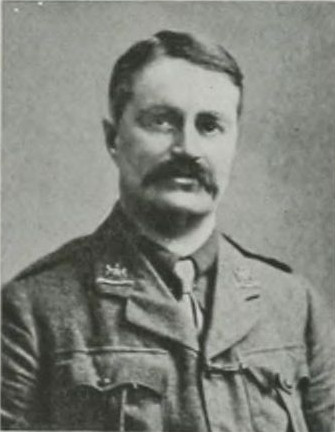
Henry W. E. Hitchins.
HOAD, HENRY JAMES WILLIAM, Cook’s Mate, M. 3079, H.M.S. Good Hope; lost in action off Coronel, on the coast of Chili, 1 Nov. 1914.
HOAD, PERCY EWART, Private, No. 2196, 1/5th Battn. The Royal Sussex Regt. (T.F.), s. of George Hoad, by his wife, Sarah (now wife of (——) Parsons, of White Cottage, The Strand, Rye), dau. of John Hoad; b. King’s Gate, Wittersham, co. Kent, 10 July, 1898; educ. Rye; enlisted 15 Aug. 1914; went to France, 10 July, 1915, and was killed in action there by a shell, 28 July following; unm.
HOARE, THOMAS, Private, No. 9067, 2nd Battn. The Buffs (East Kent Regt.), s. of James Hoare, of North Street, Sheldwick, Faversham; served with the Expeditionary Force in France, etc.; killed in action, 3 May, 1915.
HOARE, WILLIAM HENRY, A.B., 238331, H.M.S. Good Hope; lost in action off Coronel, on the coast of Chili, 1 Nov. 1914.
HOBAN, WILLIAM, Private, No. 6468, 3rd Battn. Coldstream Guards; b. Castlerea, co. Roscommon; enlisted 23 Nov. 1905; served in Egypt, 16 Jan. 1908 to 23 March, 1911, and with the Expeditionary Force in France and Flanders from 12 Aug. 1914; killed in action at La Tretoire, 8 Sept. following. Buried by the side of the road through La Tretoire Wood; unm.
HOBBS, ALFRED HERBERT, Signalman, No. 183651, R.F.R., Ch. 4295, R.N., 2nd s. of Harry Edward Hobbs, of 20, North Road, Brighton (for many years second officer of the Brighton Volunteer Fire Brigade), by his wife, Elizabeth, dau. of William Johnson; b. Upper Holloway, 20 Nov. 1877; entered the Navy, 1894; served in the Somaliland Expedition (medal); passed into the Reserve, 24 Nov. 1906, and was caretaker at the Croydon Gas Offices; mobilised Aug. 1914, and was lost on H.M.S. Cressy when that ship was sunk in the North Sea, 22 Sept. 1914. He m. at Spurgeon Tabernacle, West Croydon, 10 March, 1904, Frances Kate (102, Albert Road, Lower Addiscombe Road, Croydon), 2nd dau. of James Mugridge, of Brighton, and had four children: Herbert Lionel James, b. 13 May, 1913; Kathleen Eva Rose, b. 7 July, 1907; Vera Irene May, b. 24 March, 1909; and Eugenie Violet Joyce, b. 7 May, 1911.
HOBBS, FRANK MATTHEW, 2nd Lieut., 4th Battn. The Royal Fusiliers, only s. of Frank Henry Hobbs, of Carnarvon, Claremont Road, Tunbridge Wells, by his wife, Jane Ann, dau. of Matthew Vowles; b. Tunbridge Wells, co. Kent, 5 June, 1895; and was educ. at Ardingly College. There he was in the O.T.C., obtained Certificate A. and won the silver cup three years in succession for efficiency, also the silver medal, and was in the cricket XI and played goal for the College football team. He was also awarded the bronze medal for life saving from drowning, and the certificate as an instructor of the same. On 11 Dec. 1913, he was gazetted 2nd Lieut. to the 4th Royal Fusiliers, and went to France with the first Expeditionary Force on 13 Aug. following. He served through the retreat from Mons, the Battle on the Marne, and retirement on Paris, and was killed at Vailly, near Braisne, during the Battle of the Aisne, 14 Sept. 1914, by shrapnel wounds in the head; unm. The late Brigadier-General McMahon wrote of him: “He is a very great loss to me, as he has done his duty most nobly and gallantly, always calm and thoughtful, and a most excellent and promising officer.”
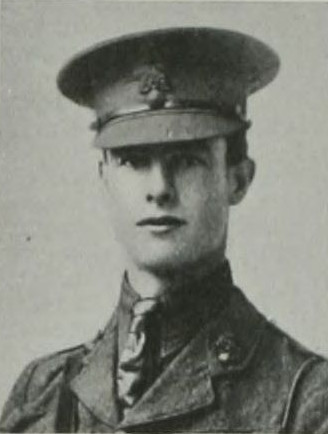
Frank Matthew Hobbs.
HOBBS, HERBERT, Leading Signalman (R.F.R., Ch. B. 4295), 193651 H.M.S. Cressy; lost in action in the North Sea, 22 Sept. 1914.
HOBBS, JAMES WILLIAM BIGGS, Gunner, R.M.A., 12509, H.M.S. Hogue; lost in action in the North Sea, 22 Sept. 1914.
HOBBS, JOHN, 2nd Lieut., 1st Battn. Royal Scots (Lothian Regt.), yst. s. of the late William Hobbs, of Toddington, co. Bedford, Butcher, by his wife, Millicent, dau. of John Carr; b. Toddington, 8 Feb. 1890; educ. Toddington National School; enlisted in Sept. 1908, in the Royal Scots, won his third, second and first certificates in the Army, and left for India in Oct. 1900; while there was sent to a college at Bangalore to qualify for the higher education, and received his certificate for acting schoolmaster. On the outbreak of war he returned to England with his regt. and was gazetted 2nd Lieut. 14 Dec. 1914, leaving for France 19 Dec. the same year. He died of wounds received in action at Armentières 28 June, 1915, and was buried at Bailleul. Lieut. Hobbs was mentioned in F.M. Sir John French’s Despatch of 31 May, 1915, for gallant and distinguished service in the field and received the Military Cross in June. He m. at St. Mary Bolton, South Kensington, 26 Nov. 1914, Helen Coote (8, Crown Road, Maldon), 2nd dau. of Arthur Brady, of Maldon, Essex; s.p. She is now a nurse at the Essex County Hospital.
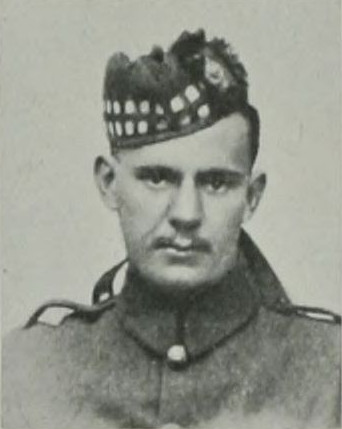
John Hobbs.
HOBBS, JOSEPH LEVINE, Sailmaker, 167871, H.M.S. Hawke; lost when that ship was torpedoed in the North Sea, 15 Oct. 1914; m.
HOCKING, FRANCIS JAMES, D.C.M., L.-Sergt., No. 1027, 1/7th Battn. The Middlesex Regt. (T.F.), only s. of William Hocking, of The Gardens, Copley Dene, Cholmeley Park, Highgate, Head Gardener, by his wife, Fanny, dau. of Richard Lovejoy; b. Kentish Town, N., 8 Oct. 1893; educ. Whittington School, Highgate Hill, and Acland Higher Grade School, Fortress Road, N.W.; and subsequently obtained an appointment at the Railway Clearing House; joined the 7th Middlesex Territorials, 3 Jan. 1910; volunteered for foreign service on the outbreak of war; left England with his battn. for Gibraltar, 4 Sept. 1914, returned to England 13 Feb. 1915; was appointed L.-Sergt. 9 March; went to France four days later; was severely wounded on 7 May, and died in the 1st London General Hospital, Camberwell, 18 May, 1915; unm. He was awarded the Distinguished Conduct Medal [London Gazette, 5 Aug. 1914] “For gallant conduct and resource on the night of 7 May, 1915, when with a party covering important new works between our own and the German lines. The enemy stalked the party, and rushed on them from flank and rear. L.-Sergt. Hocking continued to act with the greatest courage and coolness, although severely wounded, and gave a fine example to his men of steadiness and devotion to duty.” Capt. (now Major) S. C. Smith, Commanding “A” Coy., wrote: “I have known your son since he joined and I think can give no higher praise than to say he was thoroughly worthy of the rank he held; he was trusted and respected by all of us, both below and above him in military rank. Although under the recent double company organisation I did not, perhaps, come into such personal touch with him as I did before, nevertheless I was able to watch closely his military career, which was in every way as successful as it could possibly be; his platoon commander, Lieut. Groser, I know, respected him highly as a section commander. I saw him directly after the affair in which he was wounded and was struck by the heroic way in which he was bearing the pain of his wound, which one could see was, at the time, great. His behaviour during the fight was magnificent, and although wounded, he did much to help drive off the Germans; he has in consequence had his name sent in to Army Headquarters for special recommendation, and had he lived he would have had the satisfaction of knowing that he was not wounded in vain.” Lieut. Groser also wrote: “As you know I was with your son when he was wounded, and as his platoon commander, I was much in contact with him the whole time that we were in France, so that I probably knew him as well as anyone in the battn. He was a most valuable non-commissioned officer to me, and I always felt that he was absolutely to be relied upon, if at any time we should find ourselves in difficulties. The men in No. 3 platoon liked and respected him, and he was always a friend to every private, even the newest joined. On the night of 7 May, when he was lying wounded on the ground, he continued to fire at the Germans (who at that point were 15 against 7), and was largely instrumental in driving them off. I repeat that incident because that was typical of your son—he did not know when beaten, even when wounded and all odds against him.” He was buried in Highgate New Cemetery, with full military honours and a memorial was unveiled there, July, 1916.
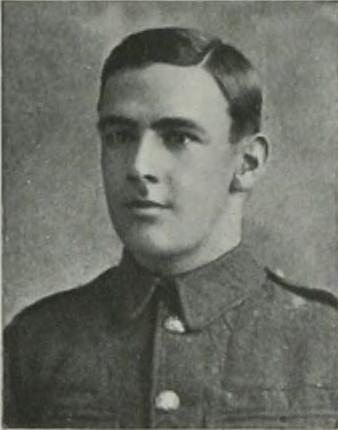
Francis J. Hocking.
HOCKING, WILLIAM JOHN, Private, No. 13506, 5th Battn. Canadian Expeditionary Force, eldest s. of the late William John Hocking, of St. Budeaux, Devonport, Coy. Sergt.-Major, R.E., by his wife, Annie (1, Waverley Villas, Vicarage Road, St. Budeaux, Devonport), dau. of Richard Slemon, of Bull Point; b. Halifax, Nova Scotia, 10 Sept. 1889; educ. Devonport; returned to Canada in 1905, and settled at Moose Jaw, Sask.; was a Clerk; joined the Canadian Expeditionary Force on the outbreak of war in Aug. 1914; came over with the first contingent in Oct.; went to France in Feb. following, and died at Rouen, 21 May, 1915, from wounds received in action at Hill 60, on 28 April. Buried at Rouen; unm.
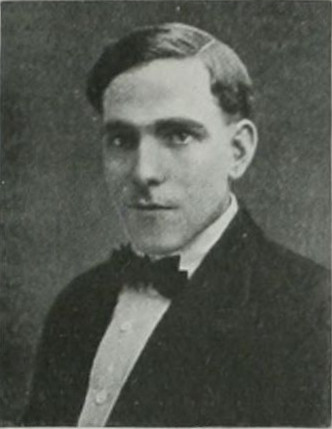
William John Hocking.
HODDEN, HENRY ERNEST, Private, R.M.L.I., Ch./12473, H.M.S. Hawke, s. of Thomas Hodden, of 66, Ifield Road, South Kensington; lost when that ship was torpedoed in the North Sea, 15 Oct. 1914.
HODGE, DORRIEN EDWARD GROSE, 2nd Lieut., 1st Battn. Suffolk Regt., 2nd s. of the Rev. Edward Grose Hodge, Vicar and Rural Dean of Paddington and Prebendary of St. Paul’s Cathedral; b. Anningsley Park, Chertsey, co. Surrey, 25 May, 1893; educ. Marlborough College (treble scholar) and Pembroke College, Cambridge (graduated with Classical Honours), was a member of the O.T.C., joined the army following the outbreak of war, gazetted 2nd Lieut. 29 Sept. 1914, and was killed in action near Ypres 27, April, 1915. Buried behind the trenches; unm.
HODGES, HAROLD, Private, No. 2948, 13th Battn. (Princess Louise’s Kensington) The London Regt. (T.F.), eldest s. of the late Robert Hodges, of Charmouth, Dorset, by his wife, Sarah (23, Redesdale Street, Chelsea, S.W.), dau. of James Turrell; b. London, 12 Oct. 1893; educ. Holy Trinity School, Chelsea; was a Clerk; joined the Kensingtons in Sept. 1914, after the outbreak of war; went to France, Feb. 1915, and was killed in action during the attack of the 8th Division on the German position at Fromelles and Aubers Ridge, 9 May, 1915; unm.
HODGES, HAROLD WARDALE, 2nd Lieut., 6th (Reserve) 2nd Battn. King’s Royal Rifle Corps, elder s. of Herbert Chamney Hodges, of Watton-at-Stone, Hertford, M.R.C.S., L.R.C.P. Lond. by his wife, Dora Katherine, dau. of the Rev. John Wardale, and nephew of Lieut.-Col. Aubrey D. T. P. Hodges, C.M.G., M.D. Lond., P.M.O. for Uganda and Director of Medical Supplies in East Africa; b. Watton-at-Stone, 14 Oct. 1893; and was educ. at Epsom College, at which he obtained senior, junior, and leaving scholarships, and Hertford College, Oxford, where he obtained an Exhibition, took “First” in Classical Moderations, and was made an Hon. Scholar. He was gazetted 2nd Lieut. 6th K.R.R.C. from the University O.T.C. 15 Aug. 1914; left for France in Dec. having been attd. to the 2nd Battn. (1st Division), which formed part of the 2nd Brigade, and was killed in action near Rue du Bois, during the advance on Aubers Ridge, 9 May, 1915; unm. His Commanding Officer wrote: “Hodges was one of my best subalterns, and is a very great loss to me. Besides being a first-rate officer, he was a charming boy and deservedly popular with his brother officers.” Lieut. Hodges excelled at all games, and represented both his school and his college at cricket, football, and hockey, and at Epsom was Captain of his hockey team.
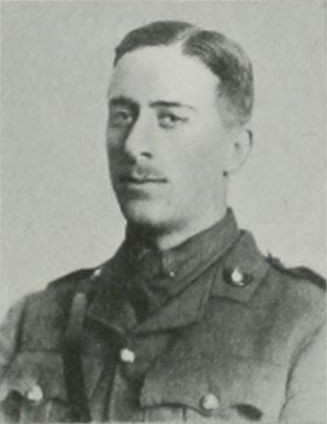
Harold Wardale Hodges.
HODGES, HENRY BURDEN, 2nd Lieut., 2nd Battn. King’s Own Yorkshire Light Infantry, yr. s. of John Frederick William Hodges, of Glenravel House, Glenravel, co. Antrim, J.P., by his wife, Mary, dau. of the late Henry Burden, M.D., F.R.C.S. (Eng.), and gdson. of the late Professor John Frederick Hodges, M.D., Queen’s College, Belfast; b. Newtownreda, Belfast, 13 Nov. 1895; educ. Mostyn House, Cheshire; Sherborne Preparatory, and Sherborne School, and the Royal Military College, Sandhurst; gazetted 2nd Lieut. 2nd Y.L.I., 23 Dec. 1914; went to the Front, 6 March, 1915, and after five weeks in the trenches was killed in action at Hill 60, 18 April following. He fell, as his Col. wrote: “Gallantly leading his men in a charge against the Germans.” The regt. lost six officers killed and seven wounded that night, and as they were forced to retire before they had time to bring in the dead and wounded and Hill 60 fell to the Germans shortly afterwards, his body was not recovered. He was a keen golfer and footballer, and had won several medals for swimming and life-saving. He also won the light-weight championship at the Public Schools Boxing Competition at Aldershot in April, 1914. His elder brother, Capt. J. F. Hodges, 2nd Battn. Royal Irish Fusiliers, was wounded at St. Eloi, and was mentioned in Despatches [London Gazette, 22 June, 1915] and awarded the Military Cross, 24 June, 1915.
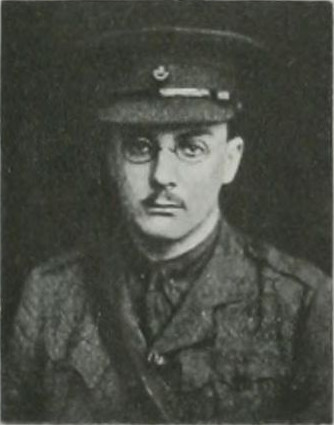
Henry Burden Hodges.
HODGES, HENRY THOMAS, Petty Officer, 1st Class, 183316, H.M.S. Hawke; lost when that ship was torpedoed in the North Sea, 15 Oct. 1914; m.
HODGES, WILLIAM SYDNEY, Corpl., R.M.L.I. (R.F.R., Ch. B. 916), H.M.S. Aboukir; lost in action in the North Sea, 22 Sept. 1914.
HODGKINSON, JOHN FRANCIS, Capt., 3rd (Prince of Wales’s) Dragoon Guards, only s. of John Grundy Hodgkinson, of Rose Hill Farm, Baslow, co. Derby, Farmer, by his wife, Elizabeth Catherine, dau. of Francis Walker, of Sheffield; b. 25 July, 1879; educ. Mount St. Mary’s College, Chesterfield, co. Derby; enlisted in the Bakewell Coy. of the old 2nd V. Battn. Sherwood Foresters, 21 March, 1901, was gazetted 2nd Lieut. 26 March, 1902, and Capt. of D Coy. of the same regt. in May, 1905. With a view to getting into the Regular Army he obtained his transfer to the 4th Battn. Royal Dublin Fusiliers, 11 Oct. 1906, and on 25 May, 1910, was gazetted Capt. to the 3rd Dragoon Guards. He served with his regt. in Cairo for two years, and on the outbreak of the European War returned with it to England, whence after a month spent on Salisbury Plain he proceeded to the Front at the end of Oct. A few days later he was severely wounded in the head by a bullet whilst in charge of the regimental machine guns at Zillebeke. He was removed to Boulogne, where he died in hospital 10 Nov. 1914, and was buried in Boulogne Cemetery; unm. Capt. Hodgkinson was a keen fisherman, a good shot, a good bat at cricket, and an excellent polo player. He was a man of no small parts, and amongst the list of his varied accomplishments had an excellent knowledge of French, Spanish and Russian; added to which he possessed a working knowledge of the Caffre and Hindustani languages. While at the Infantry School of Instruction, Dublin, 1907, he passed first on the list and was granted a special certificate.