The Roll of Honour. (continued 18)
Reading edition
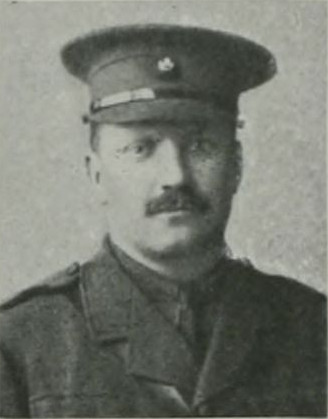
Leslie Benito Fisher.
FISHER, ROBERT, Leading Car. Crew, 344814, H.M.S. Pathfinder; lost when that ship was sunk by a mine, about 20 miles off the East Coast, 5 Sept. 1914.
FISHER, WILLIAM HENRY, Bandsman, No. 2710, 6th Battn. Welsh Regt. (T.F.), only s. of Ebenezer Fisher, of Cockett Farm, Cockett, labourer, by his wife Ann, dau. of William (and Rachel) Richards; b. Swansea, 2 April, 1888; educ. Plasmarsh Council School; was a brickmaker; joined the Army, 17 Nov. 1914; went to France, 7 March, 1915, and was killed in a motor lorry collision at Calais, 30 May, 1915, while on active service; unm.
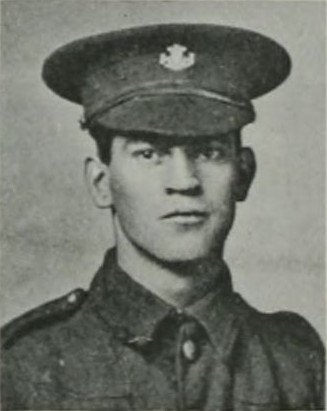
William Henry Fisher.
FISK, ALBERT ARTHUR, Boy, 1st Class, J. 26689, H.M.S. Hawke; lost when that ship was torpedoed in the North Sea, 15 Oct. 1914.
FITZCLARENCE, ARTHUR AUGUSTUS CORNWALLIS, Capt., 2nd Battn. Royal Fusiliers, and Adjutant, 15th Battn. (Civil Service Rifles) The London Regt. (T.F.), only s. of Henry Edward FitzClarence, of 41, Ovington Square, S.W., by his wife, Mary Isabel, only dau. of John Parsons, and gdson. of the Rev. Lord Augustus FitzClarence, Chaplain to Queen Victoria [4th s. of King William IV]; b. Ceylon, 16 March, 1880; educ. Radley College; enlisted in the City of London Imperial Volunteers on the outbreak of the South African War, and served in that campaign 1900; took part in the operations in the Orange River Colony, Feb. to March and May, 1900, and in Cape Colony, Feb. to March, 1900, and operations in the Transvaal, May, 1900, to Aug. 1901 (Queen’s medal with four clasps); recommended for a commission by Col. (now Gen. Sir) W. H. Mackinnon; gazetted 2nd Lieut. Royal Fusiliers, 4 Aug. 1900, and promoted Lieut. 11 Feb. 1904, and Capt. 22 Nov. 1909; was employed with West African Frontier Force, 12 Sept. 1903 to 29 July, 1908; served in South Nigeria, 1904–5, where he patrolled the unsettled portions of the Ibibio and Kwa country (medal with clasp), and in Northern Nigeria, 1906 (clasp); Adjutant Civil Service Rifles (15th London Regt., T.F.), 22 Nov. 1909 to 21 Nov. 1913; left for the Dardanelles, 4 June, 1915, and was killed there, 29 June, 1915. He was mentioned in despatches for conspicuous gallantry, in reorganising the defence, and keeping the Turks at bay until he was shot [London Gazette, 5 Nov. 1915]. He received his certificate for signalling in 1902; that for musketry on passing his examination at Hythe in the following year, and in 1909 he obtained one for gymnastics at the Aldershot Gymnasium. At Radley he rowed in the college boat at Henley, in 1896–7–8, being Capt. of the boats in 1898. He was also in the school football eleven. He rowed for Kingston both in the Eights and Fours, and he won the Wyfolds in 1902. He was a fine athlete— a good boxer and long-distance runner. In latter years he went in for fencing and sabre play, competing at the Royal Naval and Military Tournament and winning the second prize in the epee in 1913, and second prize in the sabre v. sabre in 1914. He m. at St. Paul’s, Knightsbridge, 7 April, 1910, Lady Susan, née Yorke, only dau. of John Manners, 7th Earl of Hardwicke; s.p. His cousin, Brig.-Gen. C. FitzClarence, V.C., was killed in action, 11 Nov. 1914.
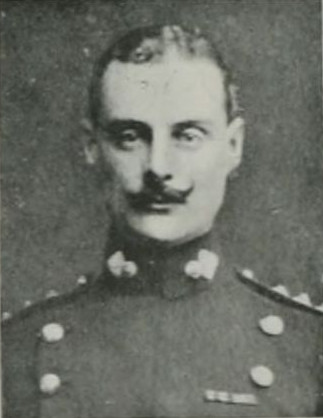
A. A. C. FitzClarence.
FITZCLARENCE, CHARLES, V.C., Brig.-Gen., formerly Lieut.-Col., Commanding Irish Guards, eldest s. of the late Hon. George FitzClarence, Capt., R.N., by his wife, Lady Maria Henriette, née Scott, eldest dau. of John Henry, 3rd Earl of Clonmell, and gdson. of George, 1st Earl of Munster [eldest s. of King William IV]; b. Bishop’s Court, co. Kildare, 8 May, 1865; educ. Eton and Wellington; gazetted Lieut. from the Militia to the Royal Fusiliers, 10 Nov. 1886; promoted Capt. 6 April, 1898; transferred to Irish Guards, 6 Oct. 1900; and became Brevet Major, 29 Nov. following; Major, 2 May, 1904; Lieut.-Col. 14 July, 1909; Col. 6 March, 1913; and Brig.-Gen. 5 Aug. 1914; served in South African War, 1899–1900; was Special Service officer with Protectorate Regt., 15 July, 1899, to 28 Aug. 1900, and Brigade Major, on Staff, 29 Aug. 1900 to 4 Feb. 1901; took part in defence of Mafeking (twice wounded; mentioned in Despatches [London Gazette, 8 Feb. 1901]; Brevet of Major; Queen’s medal with three clasps; decorated with the Victoria Cross for three specific acts of bravery [London Gazette, 6 July, 1900], viz.: on 16 Oct. 1899, taking with him about 50 unseasoned men of the Protectorate Regt., he went to the relief of an armoured train which was in difficulties. Capt. FitzClarence advanced his men under a furious fire. At one time the squadron was nearly surrounded but it was saved with few casualties through coolness and clever handling on the part of its leader. About a fortnight later he led a night sortie of 60 men and drove the Boers from their trenches at the point of the bayonet. On that night Capt. FitzClarence was the first to leap into the trenches sword in hand, and it is said that he himself killed four of the enemy and was wounded. On Dec. 26 he again distinguished himself in the action at Game Tree, where he was shot through the legs); Brigade Major, 5th Brigade, Aldershot Army Corps, 22 April, 1903 to 31 March, 1906; Brigade Commander, 5th London Infantry Brigade, and Mil. Member London Territorial Force Association; Lieut.-Col. Commanding Irish Guards, 14 July, 1913 to Aug. 1914; commanded 29th Brigade, 10th Division at Curragh from 23 Aug. to 22 Sept.; went to France, 23 Sept. and took over command of the First Guards Brigade, 27 Sept.; killed in action leading his Brigade in the night attack at Ypres, 11–12 Nov. 1914. He was specially mentioned in F.M. Sir John (now Lord) French’s Despatch of 20 Nov. [London Gazette, 30 Nov.] 1914, where he said: “His loss will be severely felt.” He m. at The Citadel Church, Cairo, 20 April, 1898, Violet (12, Lowndes Street, S.W.), 4th and yst. dau. of the late Lord Alfred Spencer Churchill, M.P., and granddau. of John, 6th Duke of Marlborough, and had two children: Edward Charles, b. 3 Oct. 1899; and Joan Harriet, b. 23 Dec. 1901. His twin brother, Edward, Capt., 1st Dorsetshire Regt. attached Egyptian Army, was killed in action at Abu-Hamed, 7 Aug. 1897, and his cousin, Capt. A. A. C. FitzClarence, was killed in action in Gallipoli, 29 June, 1915.
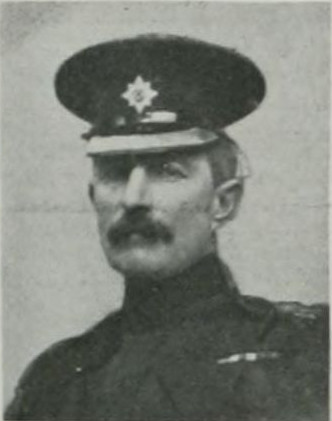
Charles FitzClarence, V.C.
FITZGERALD, EDWARD THOMAS, Private, R.M.L.I., Po./12363, H.M.S. Good Hope; lost in action off Coronel, on the coast of Chili, 1 Nov. 1914.
FITZGERALD, GERALD HUGH, Capt., 4th (Royal Irish) Dragoon Guards, only s. of the late Lord Maurice FitzGerald, of Johnstowne Castle, co. Wexford, by his wife, Lady Adelaide, dau. of George Arthur Hastings Forbes, 7th Earl of Granard, K.P., and grandson of Charles William, 4th Duke of Leinster, P.C.; b. Johnstowne Castle, 11 April, 1886; educ. Eton; joined the Royal North Devon Hussars (Yeomanry) in Nov. 1904; gazetted from them to the 4th Dragoon Guards, 11 Dec. 1907; promoted Lieut. 17 Nov. 1908, and Capt. 25 Nov. 1913; accompanied the Expeditionary Force to France; was slightly wounded during the first week in Sept., and fell shot through the head in the Battle of the Aisne when in charge of the machine gun section of his battn. 13 Sept. 1914; buried in the cemetery at Bourg. Col. R. L. Mullens, his commanding officer, wrote: “It happened early in the morning of the 13th. We were fighting in the village of Bourg-et-Comin, about 17 miles east of Soissons, which is about 63 miles north-east of Paris. Gerald was as always, working hard and doing good work with his maxims. Some Germans were on the canal bank about 500 yards away, and I had warned him and his men to keep their heads down. Some little time after I had to leave him to attend to other matters he was hit. Major Bridges was close to him at the time, but there was nothing to be done—the end was instantaneous.... His loss to the regt. is immense. He was universally popular and loved by his brother officers and men.” Capt. FitzGerald was a keen sportsman, a fine rider, and took great interest in polo. He m. at South Tidworth, 5 Aug. 1914, Dorothy Violet, yst. dau. of Spencer Charrington, of Winchfield Lodge, Winchfield, Hants; s.p.
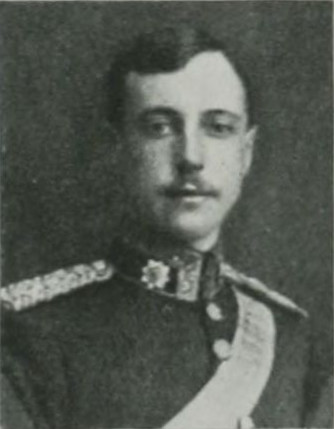
Gerald Hugh FitzGerald.
FITZGERALD, JAMES, Chief Yeoman of Signals (R.F.R., A. 1818), 147643, H.M.S. Hawke; lost when that ship was torpedoed in the North Sea, 15 Oct. 1914; m.
FITZGERALD, JOHN MARTIN, Private, No. 295, A Coy., 1st Newfoundland Regt., 2nd s. of the late John Fitzgerald, of St. John’s, Newfoundland, Cooper (died 24 Aug 1886), by his wife, Mary Ann (20 Carter’s Hill, St. John’s, Newfoundland), dau. of John Patrick Crowdell; b. St. John’s aforesaid, 19 Sept. 1884; educ. Convent of Mercy (1892–93), and St. Bonaventure’s College (1893–1901; Scholarship 1899; Graduate Druggist 1901) there; entered the employ of Mr. J. J. Canning, Druggist, 1 March, 1901, and on the latter’s death in April, 1913, became Manager of the business and so continued until 30 June, 1914, when he started a business of his own at 90, New Gower Street; volunteered for Imperial service on the outbreak of war, and joined the 1st Newfoundland Regt., 8 Sept. 1914, sacrificing his newly started business; left for England, 3 Oct. 1914; went to the Dardanelles, leaving Aldershot, 19 Aug. 1915, and arrived in Egypt 19–20 Sept.; was attached to the Ambulance Section of the Regt., and acted as dispenser and dresser with Dr. Frew, R.A.M.C.; killed in action there 1 Dec. 1915, while binding up the wounds of a comrade. Buried in No. 52 Borderers Ravine 117. J.S. Surgeon-Capt. Frew wrote: “I feel I must tell you of the noble death he died this morning. Some men were shot by snipers behind our lines this morning, and though, as dispenser, he might have sat still and let the stretcher bearers bring in the wounded, he was on his feet at once and rushed out to render first aid services. In so doing he fell a prey to the deadly snipers. While he was dressing Sergt. McLeod, he was wounded, but still went on with his work, receiving, unfortunately, three or four more wounds, one of which proved fatal.”
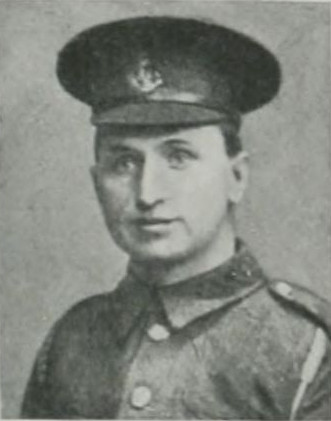
John M. Fitzgerald.
FITZGIBBON, RICHARD APJOHN, Lieut., 128th Pioneers Indian Army, only s. of Harry Macaulay FitzGibbon, of Greystones, co. Wicklow, Barrister-at-Law, formerly Capt. and Instructor of Musketry in the 4th (late 5th) Battn. Connaught Rangers, and now serving on the Musketry Staff as Capt. and Brigade Musketry Officer, by his wife, Helen Rebecca, dau. of John Kellock Barton, Surgeon; b. Dublin, 5 July, 1889; educ. Strangway’s School, Dublin, Lickey Hills Preparatory School, Barnt Green, and Radley College, from which latter he entered Christ Church, Oxford, taking his B.A. degree in 1911. On 6 Jan. 1912, he was appointed to the Unattached List for the Indian Army, and—after serving for a year with the 3rd Battn. of the Royal Fusiliers in India—he was appointed a double company officer in the 128th Pioneers, 5 Jan. 1913, and later went through a course of engineering with the Sappers and Miners at Rurkee, India, becoming Lieut. 17 April, 1913. He was in charge of the escort to the Artillery Regt. near Tussoum, on the Suez Canal, and was attacked at about 3.30 a.m. 3 Feb. 1915, when the Turks attempted to cross the Canal. His men sank the first pontoon boat, but the second got across. Though wounded quite early in the fight, after a short retirement to the rear to bind up his wound he returned and continued to direct his men. Some two hours or so later it became necessary to transmit an important message to the commander of the artillery. Lieut. FitzGibbon undertook to take it himself, and crossing an open space of about a quarter of a mile—all the while exposed to heavy fire—he delivered the message. Not till then did he mention that he was wounded. His wound on receiving attention was found to be serious, and he was removed to the Signal House at Tussoum Ferry, where, after being bright and cheerful all day, he succumbed early next morning, 4 Feb. 1915. He was buried with full military honours in the Ismalia Cemetery, the New Zealanders furnishing the firing party (as his own regt. was at Serapeum). He was especially mentioned in Gen. Sir John Maxwell’s Despatch, dated 16 Feb. 1915 [London Gazette, 21 June, 1916], as follows: “128th Pioneers, Lieut. R. A. Fitzgibbon behaved with conspicuous gallantry. When severely wounded he ran a considerable distance under fire with a message to the 5th Egyptian Battery. He has since died of his wounds.” He was also mentioned in the second list of recommendations, dated Army Headquarters, Cairo, 19 Aug. 1915. Lieut. FitzGibbon, who was unm., was a keen sportsman, and twice coxed the Radley boat at Henley Regatta; he was also for a time cox of Christ Church, Oxford, and subsequently stroke of their second eight. He was a member of the Leander Rowing Club.
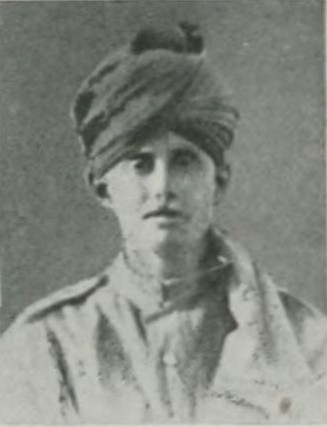
Richard Apjohn Fitzgibbon.
FITZHERBERT, CHARLES EDWARD, Private, No. 1496. 15th Battn. Australian Imperial Force, 2nd s. of Archibald Malcolm Fitzherbert, of St. George Maranoa, Queensland, by his wife, Bridget Agnes, dau. of Michael Lacken; b. Charleville, Queensland, 14 Feb. 1888; educ. Brisbane; enlisted in the Australian Expeditionary Force in Jan. 1915, and was killed in action at Gallipoli, 4 May, 1915; unm.
FITZMAURICE, MAURICE ALEXANDER ROSS GERALDINE, Lieut., R.E. 21st Field Coy., 3rd Sappers and Miners, Lahore Division, elder s. of the late John Day Stokes Fitzmaurice, Judge of Dharwar, Bombay Presidency, Indian Civil Service, by his wife, Emily Grace Ellen (The Haven, Haslemere), dau. of the late Professor Samuel Cooke, M.A., etc., Principal Coll. of Science, Poona, India; b. Satara, India, 9 June, 1892; educ. South Lodge, Lowestoft, Felsted School, Essex (where he gained entrance and leaving scholarships), and the Royal Military Academy, Woolwich; gazetted 2nd Lieut., R.E., 23 Dec. 1911; joined the School of Military Engineering, Chatham, 1 April, 1912, and on passing out in Dec. 1913, elected to go to India. He was promoted Lieut. 31 Jan 1914, and was attached to the 3rd Sappers and Miners, Kirkee, in March following. When war broke out he was employed as Garrison Engineer at Bareilly, and was recalled to the 3rd Sappers and Miners, Lahore Division, joining the 21st Field Company. He went to France with the Indian Expeditionary Force in Sept. 1914; was severely wounded in the fighting at Neuve Chapelle on 28 Oct. 1914, and was invalided home, the 20th and 21st Field Cos., 3rd S. and M., being specially mentioned in the despatch of 20 Nov. 1914. He returned to the Front on 19 Feb. 1915; took part in the storming of Neuve Chapelle Village on 10 to 15 March, and was with the Lahore Division in the fighting for Ypres at the end of April, 1915, being for a time in command of his company, all the other officers being wounded. He was killed when on night duty at an outpost near Neuve Chapelle, 6 Aug. 1915, by a stray bullet: unm. He was mentioned in F.M. Sir John (now Lord) French’s Despatch of 14 Jan. 1915, for gallant and distinguished service in the field, and his commanding officer. Col. Coffin, R.E. said of him: “His loss to us is very great; always devoted to his work and cheery, he was a great favourite with all with whom he came in contact.” His company commander, Capt. Rawlence, R.E., also wrote; “His loss will be deeply felt in the company in which he has always set such an example of hard work and cheery endurance. He was shot between the shoulders whilst supervising the construction of loopholes in a post just behind the firing line at 2 a.m. on 6 Aug.” He was buried in the Cemetery at Vieille Chapelle, side by side with Capt. Glenday, R.E., of the same company, who was killed two nights later, at the same spot.
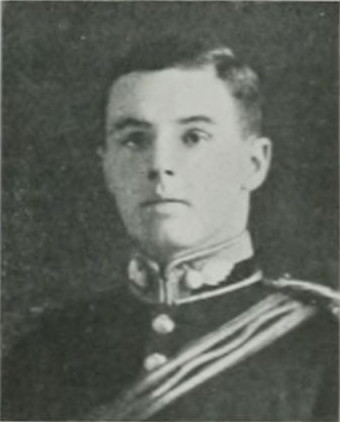
M. A. R. G. Fitzmaurice.
FITZPATRICK, WILFRED, Lieut., 5th Battn. Canadian Expeditionary Force, s. of the Rev. Henry Fitzpatrick, of Hyderabad, Deccan, India, Chaplain of St. George’s Church there; b. Hyderabad aforesaid, ... March, 1877; educ. in England and India; settled in Canada; served through the South African War as a trooper, and on the outbreak of the European War in Aug. 1914, joined the Canadian Expeditionary Force, and was killed in action during the Second Battle of Ypres, 24 April, 1915, being buried near where he fell; unm.
FITZROY, EDWARD, A.B. (R.F.R., B. 2509), 194087, H.M.S. Good Hope; lost in action off Coronel, on the coast of Chili, 1 Nov. 1914.
FLACK, FREDERICK JAMES, Gunner (R.F.R., B. 368), late R.M.A., 6403 H.M.S. Hogue; lost in action in the North Sea, 22 Sept. 1914.
FLAHERTY, ROY LESLEY, Private, No. 18495, 1st (Western Ontario) Battn., Canadian Expeditionary Force, 3rd s. of the late John Edward Flaherty, of St. John’s, New Brunswick, Canada, by his wife, Elizabeth, dau. of Patrick McGrath, of Cork, Ireland; b. St. Stephens aforesaid, 24 Dec. 1879; educ. St. Malachi’s School, St. John’s, N.B.; went West about 1907, and finally settled at Grouard, Alberta, and had a homestead of 160 acres at Dunvegan in that province, and land in Price River Crossing, Alberta. When war broke out in Aug. 1914, he was with a Dominion survey party in the Peace River district, 200 miles north of Edmonton, and, with eight of his comrades, he set out at once for Edmonton and joined the 9th (101st Edmonton Fusiliers) Battn. After training at Valcartier he was transferred to the 1st Battn., left with the first contingent of the Canadian Expeditionary Force in Oct., and after spending the winter on Salisbury Plain, went to the Front on 4 Feb. 1915. He took part in the actions at Neuve Chapelle, Hill 60, Langemarck, and was wounded in the thigh at the Battle of Festubert, 24 May, 1915, and died at Rawal Pindi, British General Hospital, Wimereux, two days later; unm. He once rode 700 miles from Missoula, Mont., over the mountains to Calgary, in 17 days, a feat which attracted some attention in the West. One of his brothers, Private Fred E. Flaherty, No. 111175, is now (1916) on active service in France, with the Hospital Staff, D Coy., 4th Battn., C.M.R., 8th Brigade.
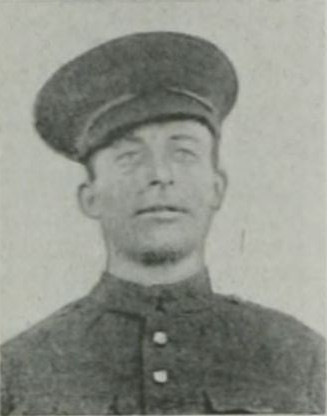
Roy Lesley Flaherty.
FLAXMAN, CHARLES, ALBERT, Stoker, 1st Class, 11031, H.M.S. Cressy; lost in action in the North Sea, 22 Sept. 1914.
FLAXMAN, WILLIAM, Corpl., No. 2666, 1st Life Guards, eldest s. of Arthur Charles Flaxman, of Burgh Castle, Suffolk, Thatcher and Reed-layer, by his wife, Eliza, dau. of Sergt. John Ellis, 52nd Oxford L.I. (who served in the Crimean War and lost his right arm in the Indian Mutiny); b. Bradwell, co. Suffolk, 26 Sept. 1888; educ. there; enlisted in the 1st Life Guards, 9th March, 1908, promoted Corp., 14 Oct. 1913; went to France, Aug. 1914, and was killed in action at Ypres, 13 May, 1915, by a shell; unm. His commanding officer wrote that he was “a real good soldier, and a great loss to B Squadron.”
FLEMING, GEOFFREY MONTAGUE MASON, M.B., T.C.D., Lieut., Royal Army Medical Corps, only s. of Alfred George Fleming, of Beechfield, Blackrock, co. Dublin, Deputy Cashier, Bank of Ireland; b. Wilton Lodge, Blackrock, co. Dublin, 8 Feb. 1890; and was educ. Avoca School, Blackrock, and Trinity College, Dublin, where he graduated with a Moderatorship in 1911, and subsequently obtained the degrees of M.B. and B.Ch. with honours. At the outbreak of the war he was House Surgeon of the Meath Hospital and Co. Dublin Infirmary, and volunteering was gazetted Lieut. R.A.M.C. 16 Aug. 1914. He was sent to Egypt to meet the Indian Troops, and was attached to the Lahore Indian General Hospital at Marseilles, Boulogne and Montreuil. Subsequently he joined the 26th Field Ambulance, was in the attack on Fromelles 9–10 May, 1915, and was killed in action near Givenchy, 16 June, 1915, while attending to the wounded. He was buried in the Guards Cemetery there; unm. His Col. wrote: “He was loyal and devoted to his profession and gallantly performed his duties with us. He had endeared himself to all of us, and we all deplore his loss most sincerely.”
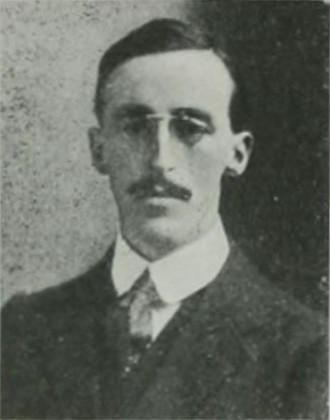
Geoffrey M. M. Fleming.
FLEMING, GEORGE JAMES, Officers’ Steward, 1st Class, L. 4352, Chatham, H.M.S. Good Hope; lost in action off Coronel, on the coast of Chili, 1 Nov. 1914.
FLEMING, MALCOLM JAMES HENDERSON, Lieut., 1/5th Battn. Argyll and Sutherland Highlanders (T.F.), only s. of James Fleming, of Kilmory, Skelmorlie, co. Ayr, J.P., by his wife, Jane, dau. of Andrew Henderson, of Glasgow, merchant, and grandson of James Fleming, of Newlandsfield, co. Renfrew, J.P.; b. Kilmory, 27 April, 1883; educ. Boutenburn Raspur School, Largs; and Fettes College, Edinburgh; afterwards going to Hanover for six months, and then to Lausanne for a like period, to perfect his German and French. He served his apprenticeship as an engineer with engineering firms in Paisley, and with Siemens, Berlin, and on returning home was offered a post with Messrs. Fleming, Reid & Co., Worsted Spinners, Greenock, and at the time of the outbreak of the war had become a sub-manager with them. He had joined the 5th Argyll and Sutherland Highlanders, 11 June, 1911, and obtained his commission as Lieut., 30 Oct. 1912, and on the outbreak of war volunteered for Imperial service. He left Dunfermline with his regt. for Egypt, 31 May, 1915; went to the Dardanelles at the end of June; was wounded at Achi Baba on 12 July, and died on board the hospital ship Asturias, 14 July, 1915. He had volunteered to lead a bombing party, and it was while doing that that he was hit. He was unm., and was buried at sea. His Commanding Officer wrote that “he went forth to the arduous work full of courage and determination and was an inspiration to his men.” After he was wounded he greatly lessened his chance of recovery by insisting on giving up his place to others at the dressing station. One of his men who met him being carried to the surgeon spoke to him saying: “Sir, I am sorry you have been hit.” Lieut. Fleming replied: “Marvellous charge. Glorious death.” Another wrote: “He was a splendid officer. He was daring, and feared not death. He was most thoughtful of his men.”
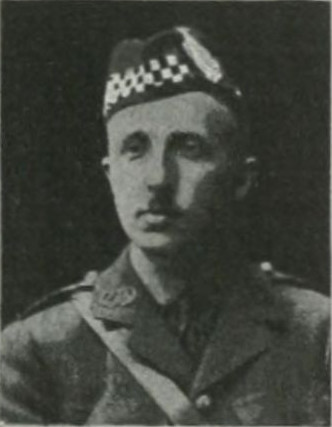
Malcolm J. H. Fleming.
FLETCHER, EDWARD, Private, R.M.L.I., Po./8922, H.M.S. Good Hope; lost in action off Coronel, on the coast of Chili, 1 Nov. 1914.
FLETCHER, FREDERICK GEORGE, Private, No. 1014, 8th Battn. (90th Winnipeg Rifles) Canadian Expeditionary Force, s. of Richard Fletcher, of Hill Farm, Steventon, co. Berks, Labourer, by his wife, Sarah, dau. of William Denton, of Steventon; b. Hill Farm, Steventon, 4 April, 1891; educ. there; went to Canada in July, 1913, and settled at Portage La Prairie as a mill hand; enlisted on the outbreak of war in Aug. 1914; came over with the first contingent in Oct. 1914, and trained on Salisbury Plain. He went to France, 17 Feb. 1915; served through the Battles of Ypres and Langemarck, when the Canadians, to use Lord French’s words, “saved the situation,” and was killed in action at Langemarck, 24 April, 1915, while returning from binding up a comrade’s wounds; unm.
FLETCHER, JOHN, Stoker, 1st Class, S.S. 110730 (Ports.), H.M.S. Hogue; lost in action in the North Sea, 22 Sept. 1914.
FLETCHER, REGINALD WILLIAM, 2nd Lieut., Royal Field Artillery, yst. s. of Charles Robert Leslie Fletcher, of Norham End, Oxford, formerly Fellow of All Souls’ and Magdalen Colleges; b. Oxford, 19 March, 1892; educ. Eton, and Balliol College, Oxford, and was gazetted, with a University Commission, to the 8th Brigade, R.F.A., on the day war was declared; went to France, 20 Aug., and was killed in action at Veldhoek, Belgium, 31 Oct. 1914, while serving with the 118th Battery. He was stroke of a Trial Eight at Oxford in three successive years, 1911–12–13, and also for four years stroke of his college boat; he rowed in the Leander Four at Henley Regatta in 1913, and in the Oxford University Eight in March, 1914.
FLETCHER, WALTER BELL, Private, No. 445, 4th Platoon Coy., 14th Battn. 4th Infantry Brigade, Australian Imperial Force, s. of James Fletcher, of 2, Fletcher Street, Cockermouth, by his wife, Isabella, dau. of John (and Elizabeth) Atkins; b. Cockermouth, co. Cumberland, 11 April, 1879; educ. Board School, Cockermouth, afterwards joining the Cockermouth Volunteers when 18 years of age. He went to Australia in 1911, and settled at Traralgon, Victoria, and on the outbreak of war he joined the Commonwealth Expeditionary Force; left for Egypt with the main force, and was killed in action at the Dardanelles, 5 May, 1915. He had been 10 days in the trenches at Gaba Tepe, and was shot by a sniper when going for water. He m. in Edinburgh 15 years ago, (—) (Ethel Street, Lock Park, Traralgon, Victoria, Australia), dau. of John Walker, of Portobello, and had three sons and two daus.: James, b. 1902; John William, b. 1906; Walter, b. 1908; Winifred, b. 1904; and Emily Isabel, b. 1913.
FLETCHER, WALTER GEORGE, 2nd Lieut., 2nd Battn. Royal Welsh Fusiliers, 2nd s. of Charles Robert Leslie Fletcher, of Norham End, Oxford, formerly Fellow of All Souls’ and Magdalen Colleges; b. Oxford, 7 Jan. 1888; educ. Eton (1901–6, rowed No. 7 in the Eton VIII. at Henley in 1906, and was Capt. of the School, 1906, and won the Jelf Verse Prize); and Balliol College, Oxford (1907–10, rowed in the Balliol College VIII. in 1907); was for six months in 1910–11 teacher of English in the Real-Gymnasium at Schleswig, and in the autumn of the latter year went as a classical master to Shrewsbury School. In September, 1913, he became an assistant classical master at Eton College, and on 22 Oct. 1913, was gazetted a 2nd Lieut. in the Eton O.T.C. On the outbreak of war he was selected as an interpreter in the Intelligence Corps (6 Aug. 1914). He went to the Front with the first contingent on Aug. 12, served through the retreat from Mons, and in the subsequent advance to the Aisne. In Sept. he was attached to the 2nd Battn. of the Royal Welsh Fusiliers, in which regt. he was constantly employed on patrol work, his accurate knowledge of German proving of great service. He was twice mentioned in F.M. Sir John (now Lord) French’s Despatches, those of 14 Jan. and 31 May, and was killed in action near Bois Grenier, France, 20 March, 1915; unm. His yst. brother, 2nd Lieut. R. W. Fletcher, was killed 31 Oct. (see his notice).
FLEURY, LEOPOLD M’CLINTOCK, A.B., No. T.Z./359, C Coy., Hood Battn., R.N.V.R. (2nd R.N. Brigade), 5th s. of the Rev. Louis Richard Fleury, of 4, Seafield Terrace, Castle Avenue, Clontarf, Dublin, M.A., late Rector of Kilworth Parish and Chaplain to the Forces at Kilworth Camp and Moore Park, by his wife, Alice Dora, dau. of the late Rev. Canon Robert Gilbert Eccles, and grandson of Capt. John Franquefort Fleury, 36th Regt.; b. The Glebe, Kilworth, co. Cork, 25 Feb. 1892; educated privately, Elphin Grammar School, and Dublin, and having just completed his course of Marine Engineering on the Tyne when war broke out, volunteered in the Hood Battn., R.N.V.R., in Oct. 1914. He left England with that corps for the Dardanelles in March, 1915, and was killed in action there, 6 May, 1915, being shot through the brain; unm. A comrade wrote: “He is deeply missed, as he was such a fine fellow, and he was very much liked both by officers and men.” An elder brother, Assistant Paymaster Richard Chenevix Fleury, is (1916) on the Staff of Vice-Admiral Sir F. D. Sturdee, on board his Flagship in one of the Squadrons of the Grand Fleet in the North Sea, while his two yst. brothers, John Charles, 4th Battn. New Zealand Rifle Brigade, and Hugo Valentine, 95th Battn. Canadian Expeditionary Force, are, respectively on active service in France and at Shorncliffe Camp, Kent.
FLINTOFF, ARTHUR JOHN, Private, No. 1121, 4th Battn. Australian Contingent, 5th s. of the late Churchill Flintoff, of Hill House, Alnwick, Dentist, by his wife, Susan H. (West House Haighington, Darlington), dau. of the Rev. Francis P. Gladwin Miss; b. Alnwick, co. Northumberland, 17 March, 1886; educ. Grammar School there, and Padcroft School, West Drayton; went to Australia in 1909, and on the outbreak of war joined the Australian Imperial Force, going to Egypt with the 4th Battn. in April, 1915, and shortly afterwards to the Dardanelles, where he was killed in action 1 May, 1915. He m. at Sydney, Australia, 13 June, 1913, Ida, dau. of the late (—) Reid; s.p.
FLINTOFT, JOHN WILLIAM, Private, No. 11658, 2nd Battn. Coldstream Guards, eldest s. of John Flintoft, of Lastingham, Sinnington, Hull, Stonemason, by his wife Mary Jane, dau. of Charles Ward; b. Lastingham, co. York, 26 Nov. 1891; educ. Darley Memorial School; was an Asylum Attendant; enlisted, 7 Sept. 1914; went to France, 22 Jan. 1915, and died in No. 1 Casualty Clearing Station, Choques, 6 Feb. 1915, of wounds received in action. Buried in Choques Cemetery.
FLIPP, CHARLES COLLINS, S.P.O. (R.F.R., B. 3465), 294461, H.M.S. Good Hope; lost in action off Coronel, on the coast of Chili, 1 Nov. 1914.
FLITTER, JESSE, Private, No. 10056, 1st Battn. Coldstream Guards, s. of David Flitter, of Drury Lane, Mortimer, Reading, Labourer, by his wife, Ellen, dau. of James Bushnell, late 33rd Regt. of Foot (with 21 years 7 months service); b. Mortimer, co. Berks; educ. there; enlisted 31 March, 1913; went to the Front with his regt. in Aug. 1914; was wounded while assisting some wounded comrades 7 Sept., and died at No. 10, Station Hospital, Orleans, 4 Oct. 1914, of wounds received in action at the Marne; unm. He was buried in the Grand Cemetière, Orleans.
Jesse Flitter.
FLOCKHART, ADAM, Boy, 1st Class, J. 27403 (Ports.), H.M.S. Hawke; lost when that ship was torpedoed in the North Sea, 15 Oct. 1914.
FLOOD, ARTHUR HENRY, Corpl., No. 25671, 14th Battn. (1st Grenadier Guards of Montreal), Canadian Expeditionary Force, 5th s. of Samuel Flood, late of Balham, Carpenter and Joiner; by his wife, Sophia; b. Balham, London,] 7 Jan. 1891; educ. there; went to Canada in June, 1911, and was an engineer with the Marconi Wireless Co. in Montreal, and gained his N.C.O. certificate; volunteered after the outbreak of war, left Canada with the first contingent in Oct. 1914; trained on Salisbury Plain during the winter; went to France, 10 Feb. 1915, and was killed in action in the attack on Hill 60, 29 April, 1915. He m. at Montreal, 15 Aug. 1914, Jennie Bowes (Delorimier Avenue, Montreal), dau. of the late William Brown, of Auldtree, Townend, Kilmaurs, Ayrshire, Hairdresser; s.p. Two of his brothers—Leonard John and Charles Percy—are now (1916) serving in the Royal Navy, and a third brother, Walter Christopher, is in the Grenadier Guards of Montreal.
FLOOK, THOMAS EDWARD, Private, No. 3119, 15th Battn. (Civil Service Rifles) The London Regt. (T.F.), s. of Joseph Thomas Flook, of 56, Crooke Road, Deptford, S.E., Paperhanger (for 22 years a member of the 3rd Vol. Battn. Queen’s Royal West Surrey Regt.), by his wife, Elizabeth, dau. of the late Thomas Lowe, Watchmaker and Jeweller, Citizen and Freeman of London; b. Rotherhithe, 2 June, 1893; educ. Deptford Park School and Christ’s Hospital, Horsham; and on leaving there became articled to Mr. William Strachan, F.S.A.A., of Messrs. Martin, Farlow & Co. He passed the preliminary examination in May, 1911, and took the first place and prize. At the intermediate examination in May, 1914, he was placed third, but was awarded the 1st prize, the first and second candidates being over age. After the outbreak of the war he joined the Civil Service Rifles in Sept. 1914, went to France, 17 March, 1915, and was killed in action at Festubert, 24 May, 1915; unm. He went out with a party of about 60 at 2 o’clock in the morning to carry some trench mortar bombs up to the breastworks. The last piece of road was under frequent shell fire, and the party sustained several casualties, Flook and two others being killed. His body was subsequently recovered, and buried at Festubert by two of his old schoolfellows, and a cross, with an inscription, was erected over his grave. His Platoon Sergt. (W. B. Lambert) wrote: “He was one of my best men, keen, willing and coolly bold.” Two of his brothers are (1916) on active service.
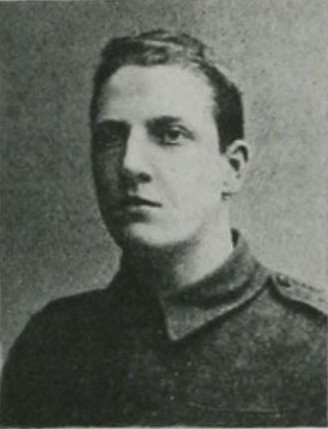
Thomas Edward Flook.
FLOWER, WILLIAM EVELYN FRANCIS DI DELLE, Lieut., 6th Hauraki Regt., Auckland Battn., New Zealand Expeditionary Force, s. of the late George Flower, by his wife, Annie (Heatherleigh, Alexandra Road, Parkstone, Dorset); b. Maida Vale, London, 26 Jan. 1885; educ. Winchester College, joined the New Zealand Territorials in Oct. 1912; was appointed 2nd Lieut. 24 Feb. 1913; volunteered for Imperial service on the outbreak of war; left for Egypt in Oct.; was promoted Lieut. there and was killed in action during the landing at the Dardanelles, 25 April, 1915. He m. at Renwicktown, Marlborough, New Zealand, 12 May, 1913, Margaret Isobel (Gray Street, Shortland, Thames, New Zealand), dau. of James Brydon, and had issue a son, Richard Evelyn, b. Oamaru, New Zealand, 22 Feb. 1914.
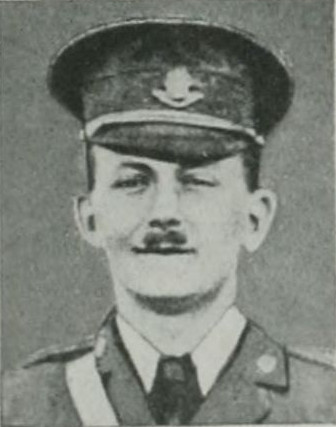
W. E. F. di D. Flower.
FLOWERDAY, SAMUEL, A.B., 219736, H.M.S. Liberty; died of wounds received in the Heligoland Bight, 28 Aug. 1914.
FLOWERS, GEORGE, Joiner, 341781, H.M.S. Good Hope; lost in action off Coronel, on the coast of Chili, 1 Nov. 1914.
FLOYD, WILLIAM, Colour-Sergt., No 6350, Royal Marine L.I., Marine Brigade, Portsmouth Battn., only s. of the late William Floyd, of 25, Haymarket, London, and York Road, Weybridge, for over 30 years with Messrs. Garrads & Co., Crown Jewellers, by his wife, Martha (Yarborough Villa, Sandown, Isle of Wight), dau. of Henry Jones, of Westbury Leigh, Wilts; b. Pimlico, London, 1 Sept. 1873; educ. Weybridge, Surrey, and after working for a few years with a firm of Goldsmiths in London, joined the Royal Marines, 23 April, 1894. He became Colour-Sergt. 1909, left England for France with Marine Brigade in the early days of the war, and returned to Dover after the fall of Antwerp; went to the Dardanelles the following March, took part in the landing there 25–26 April, and was killed in action, 10 June, 1915; unm. An officer wrote that “he felt he had lost a brother, let alone a comrade, as they had been together since the formation of the Battn.”; and another officer wrote of him as “a gallant and well-beloved old soldier whom the whole Battn. mourned.”
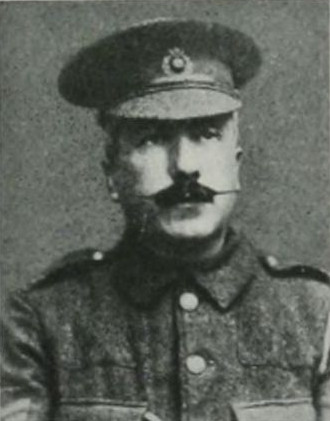
William Floyd.
FLUCKER, THOMAS, A.B., 213727, H.M.S. Pathfinder; lost when that ship was sunk by a mine, about 20 miles off the East Coast, 5 Sept. 1914.
FLUKE, ARTHUR CHARLES, Lieut., 116th Battery, Royal Field Artillery, elder s. of Arthur John Fluke, of Nunnery Road, Canterbury, by his wife, Sarah; b. Nasirabad, India, 9 Sept. 1891; educ. King’s School, Canterbury, and Royal Military Academy, Woolwich; gazetted 2nd Lieut., 19 July, 1912, and promoted Lieut. shortly before his death; went to France, 14 Aug. 1914, and was killed in action at Cuinchy, 10 Jan. 1915; unm. He met his death while rallying some men of another regt., their own officers having all been killed or wounded. Lieut. Fluke, with one N.C.O., stuck to his mortar, and continued to work it till it was put out of action, although he himself was wounded in four places, and then, unarmed and wounded as he was, he rallied the men who had been driven out of their trenches and led them back to the attack, only to fall himself by the fifth and fatal wound at the moment of success. Capt. Guy B. Oliver wrote: “I felt I must write you a few lines to tell how very greatly I feel for you in the terrible loss you have sustained. I am the only representative now in the Battery who has been with it since the beginning of the war, and before that at Aldershot, and the loss of your brave son has been a great personal loss to me, and as I know to all ranks in the Battery, for his presence had helped to reduce the various trials of this campaign. Much as we deplore his loss, the Battery is proud in the knowledge of the very gallant way your son conducted himself, and it is very sad indeed to think that he has not been spared to enjoy the honour he so richly deserved. Major Charlton has, I know, written to you and given you details. I am so sorry that none of us were with him at the last, but, as you know, the particular work he was on took him right away from the Battery. From what I can gather, he cannot have suffered much, and his death must have been almost instantaneous.” He was mentioned in F.M. Sir John (now Lord) French’s Despatch of 31 May, 1915, and Major C. A. Graham Charlton, Commanding 116th Battery, wrote he “was killed yesterday evening in rallying some men of the 60th Rifles, who were driven out of their trenches after all their officers had been killed or wounded. I have not heard many details yet, but, from what I hear, your son behaved in a very gallant manner, and, had he been spared, I am sure his heroism would have been rewarded. Many artillery officers have been trained in the use of trench mortars, and yesterday afternoon an order came for your son to proceed to the front trenches, occupied by the 60th Rifles, with one of these mortars. He had an artillery non-commissioned officer with him. There had been an attack earlier in the day, when this particular trench had been taken from the Germans. After dark the latter counter-attacked, and the 60th were driven out of their forward trenches after all their officers had been killed or wounded. Your son, however, with his N.C.O., stuck to his mortar and continued to work it, although he was wounded in four places. The mortar was then put out of action, and he then, wounded as he was, rallied some men of the 60th and led them back to the attack. He died, being wounded in five places. I cannot tell you how much all his brother officers feel his loss, and on behalf of them I send you our deepest sympathy. The only consolation I can offer you in your great sorrow is that he died a noble and gallant death, a credit to his Battery and his regt.” He was in the XI and XV at King’s School, Canterbury. He was third in the batting averages in 1908 with 38·23, second in 1909 with 30·11. and first in 1910 with 39·40. He was also in the XI at Woolwich, and was a member of the famous Woolwich Rugby XV in 1911, which K. F. Q. Perkins, of the Engineers, captained.
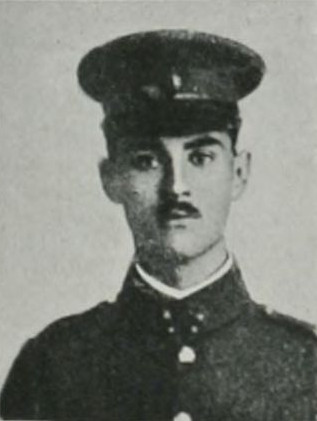
Arthur Charles Fluke.
FLUX, HENRY JOHN, A.B. (R.F.R., Ch. B. 9068), S.S. 2129, H.M.S. Cressy; lost in action in the North Sea, 22 Sept. 1914.
FLUX, HENRY JOHN, Leading Cook’s Mate, M. 65, H.M.S. Good Hope; lost in action off Coronel, on the coast of Chili, 1 Nov. 1914.
FLYNN, JAMES, Stoker, R.N.R., 1894T, H.M.S. Aboukir; lost in action in the North Sea, 22 Sept. 1914.
FOLEY, MARTIN, Private, No. 19717, 10th Battn. Canadian Expeditionary Force, s. of James Foley, of Kilmurry, Kenmare, co. Kerry, Shoemaker, by his wife, Margaret; b. Killarney, co. Kerry, 15 June, 1874; educ. there; went to Canada, 10 May, 1911, settled at Brandon, Manitoba, was a Butcher; enlisted, 4 Sept. 1914; went to France, 1 Feb. 1915, and was killed in action there, 21 May, 1915. He m. at Kenmare, 2 Sept. 1902, Elizabeth, dau. of Timothy Callaghan, and had five children: James, b. 8 Sept. 1903; Timothy, b. 20 Sept. 1904; Mary Angela, b. 15 Sept. 1906; Margaret, b. 20 June, 1908; and Elizabeth, b. 10 April, 1911.
FOLEY, THOMAS ALGERNON FITZGERALD, Lieut., 1st Battn. The Norfolk Regt., only s. of the late Vice-Admiral Francis John Foley, by his wife, Frances Jane (The Moat, Britford, Salisbury), dau. of De La Bère P. Blayne, and gdson. of Admiral the Hon. Fitzgerald Algernon Charles Foley [4th s. of Thomas, 3rd Baron Foley, P.C.]; b. Egerton Gardens, London, S.W., 29 Dec. 1889; and went to Eton (Mr. F. H. Rawlins’ and Mr. H. de Havilland’s Houses) in 1904. There he was in the Army Class, took prizes for history, mathematics, etc., and was in the O.T.C. From Eton he passed direct into the Royal Military College, Sandhurst, in 1908, passing first in order of merit in the Junior Trials; he was in the revolver team in 1909 which won many competitions, and he himself made the highest score against Woolwich. He passed sixth out of Sandhurst and was gazetted 2nd Lieut. in The Norfolk Regt. 18 Sept. 1909, joining the 1st Battn. at Brentwood, from which it went to Aldershot; there he shot successfully in several of the Aldershot rifle meetings, and was in the company’s team for the Inter-Regimental Grand Challenge Shield, which they retained, and was promoted Lieut. 14 Oct. 1911. On 3 Aug. 1914, his battn. being then at Holywood, Belfast, he was sent to take charge of Grey Point Fort; on the 6th he was recalled for mobilisation to his battn., and sailed with it for the Front, 14 Aug. 1914, landing at Havre. The battn. almost immediately proceeded to Dour in Belgium and was in action there. He took part in the retreat from Mons, and was in every action after proceeding to Dour, including Le Cateau, the Marne and the Aisne, till he fell at Festubert on 25 Oct. 1914. The following account of the circumstances of his death was given by the Colonel and others: “He had just made a most gallant advance to the trenches with his men under a very heavy fire, and had reached there safely. He was in the very foremost of the British lines when he fell, and he died at the head of his men, driving back a most desperate attack by overwhelming numbers of the enemy. He was buried, like a soldier, where he fell. The actual place where he was laid to rest is close to the most advanced trenches, as our line in that part of the battlefield has not advanced a yard since the day when he fell gallantly defending it.” Lieut. Foley was a keen soldier, an excellent shot and horseman. He was unm.
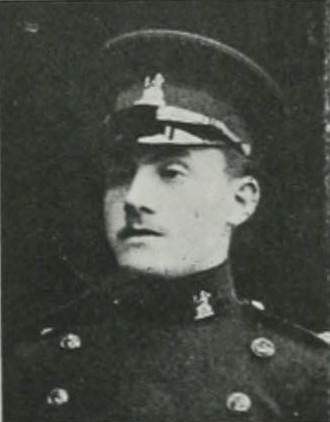
T. A. F. Foley.
FOLEY, THOMAS FRANCIS, Sick Berth Attendant, M. 5213, H.M.S. Aboukir; lost in action in the North Sea, 22 Sept. 1914.
FOLJAMBE, HUBERT FRANCIS FITZWILLIAM BRABAZON, Major, King’s Royal Rifle Corps, 3rd s. of the Right Hon. Francis John Savile Foljambe, P.C., by his wife, Lady Gertrude Emily, née Acheson. eldest dau. of Archibald, 3rd Earl of Gosford, K.P.; b. in London, 16 Nov. 1872; educ. Eton; gazetted to the King’s Royal Rifle Corps, 6 March, 1895, and promoted Lieut., 18 Feb. 1898, Captain, 20 July, 1901, and Major, 17 July, 1912. He served in the South African War, 1900–2; took part in the operations in Natal, May, 1900, also in those in the Transvaal, 30 Nov. 1900, to 31 May, 1902, and was for some time Commandant at Helvetia. For his services he was awarded the Queen’s medal with two clasps and the King’s medal with two clasps. When the European War broke out, Major Foljambe went out with the first Expeditionary Force in Aug. 1914; served through the retreat from Mons, and was killed in action on the Aisne, 14 Sept. 1914. Our troops had crossed the river and he was leading his men in a flanking movement when he fell. Major Foljambe was a typical regimental officer and Company Commander, sincerely attached to his men and by them deeply loved and implicitly trusted. His Colour-Sergt. wrote: “He was killed instantly. He was brave and I miss him. The men all loved him.” He was a good shot and rider, and a very keen cricketer, and played for the Eton Ramblers, Free Foresters and “Greenjackets.” He m. at Sprotborough, co. York, 16 Nov. 1909, Gladys, dau. of Gen. Robert Calverley Alington Bewicke-Copley, of Sprotborough Hall, co. York, C.B., J.P., D.L., and had a son, John Savile, b. 6 Oct. 1911.
FOLLOWS, ARTHUR, Private, No. 11742, 1st Battn. Coldstream Guards, s. of Richard Follows, of Sunny Bank, Ansley Village, near Atherstone, Miner; b. Norton Canes, co. Stafford; educ. Church Schools there; enlisted 9 Sept. 1914, and was killed in action at Guinchy, 25 Jan. 1915, the same day as his brother Richard, who had enlisted with him; unm.
FOLLOWS, RICHARD, Private, No. 11743, 1st Battn. Coldstream Guards, s. of Richard Follows, of Sunny Bank, Ansley Village, near Atherstone, Miner; b. Norton Canes, co. Stafford; educ. King Edward’s Grammar School, Nuneaton; enlisted 9 Sept. 1914, and was killed in action at Guinchy, 25 Jan. 1915, the same day as his brother Arthur, who had enlisted with him; unm.
FOOT, THOMAS, Stoker, 1st Class (R.F.R., B. 4259), S.S. 102948, H.M.S. Good Hope; lost in action off Coronel, on the coast of Chili, 1 Nov. 1914.
FOOTITT, JACK FREDERICK LIONEL, Boy, 1st Class, J. 27414, H.M.S. Hawke; lost when that ship was torpedoed in the North Sea, 15 Oct. 1914.
FORBES, DUNCAN, Corpl., No. 1003, D Coy., 12th Battn. 3rd Brigade, Australian Imperial Force, 5th s. of Roderick Forbes, of Muirton Cottage, Fairburn, Muir of Ord, Ross-shire, Gamekeeper, by his wife, Jessie, dau. of the late Duncan McKay, of Knockfarrel, Dingwall; b. Fairburn, aforesaid, 6 Jan. 1892; educ. Marybank School, Urray, Ross-shire; went to Western Australia in Oct. 1910, and settled at Pingelly; volunteered on the outbreak of war, and joined the Commonwealth Expeditionary Force; left for Egypt with the main force, was promoted Corpl., 25 April, 1915; landed at the Dardanelles, 25 April, 1915, and was killed there, 25 May, 1915, while returning to the trenches from patrol duty; unm. He was buried in Anzac Cove. Corpl. Forbes was mentioned in despatches by Gen. Sir Ian Hamilton for gallant and distinguished conduct in the field. Capt. J. A. W. Kayser, the Officer Commanding his Company, wrote: “Duncan was under my command since I took over the command, and my report on him is that he was a brave, trustworthy, honourable soldier and gentleman, and I cannot speak too highly of the way he carried out every mission entrusted to him”; and Archdeacon Richard, Chaplain, 12th Battn.: “His Company Commander told me yesterday, ‘I have lost one of my most reliable men. I have known him for nine months and I have never heard him say or seen him do anything that was unbefitting the character of a true soldier.’ His brother, T. Finlay Forbes, Private, No. 998, who enlisted in the same Company with him, has been missing since 2 May, 1915, and three other brothers are (1916) on active service, one being a 2nd Lieut. in the 1st Seaforths.
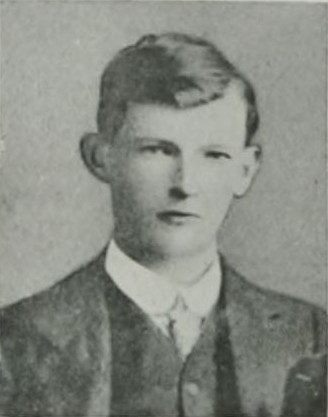
Duncan Forbes.
FORBES, GEORGE FRANCIS REGINALD, Lieut.-Col. Commanding 1st Battn. The Royal Irish Regt., eldest s. of the late Col. the Hon. William Francis Forbes, Resident Magistrate at the Curragh, by his wife, Phillis Gabriella, 2nd dau. of John Rowe, of Ballycross, co. Wexford, D.L., and grandson of George, 6th Earl of Granard; b. Castle Forbes, co. Longford, 6 Sept. 1866; gazetted 2nd Lieut. to the Royal Irish Regt. (which was raised by the 1st Earl of Granard in 1684) from the Militia, 6 July, 1889, and promoted Lieut., 25 March, 1891; Captain, 30 Jan. 1895; Major, 7 Sept. 1904; and Lieut.-Col., 12 March, 1912. He served through the Tirah Campaign, 1897–8, including operations on the Samana, and received the medal with two clasps; was Adjutant of the Bombay-Baroda Railway Volunteers, 17 May, 1899, to 16 May, 1904, and Staff Capt. No. 12 (South Irish) District, 1 June, 1905, to 31 May, 1909. He succeeded to the command of the 1st Battn., then serving in India, 12 March, 1912, and after the outbreak of war came home with his regt., Nov. 1914; went to France, 18 Dec. 1914, and died at Bailleul, 17 March, 1915, of wounds received at St. Eloi three days previously, and was buried at Bailleul. Col. Forbes was mentioned in Field-Marshal Sir John French’s despatch of 31 May, 1915, for distinguished conduct. He m. at Windsor, 4 Aug. 1904, Agnes Margaret, dau. of the late Walter Ewing Crum, of Thornliebank, Renfrewshire, and had a son, Walter Arthur Hastings Forbes, b. 18 Dec. 1905.
FORBES, SPENCER DUNDAS, Commander, R.N., yr. s. of the late George Edward Forbes, of Colinton, Queensland, by his wife, Louisa Lillias (4, Grosvenor Crescent, Edinburgh), dau. of Archibald Trotter, of Dreghorn, co. Midlothian; b. at Keswick, 29 May, 1874; educ. at St. Ninian’s, Moffat; Aysgarth, Yorks; and at Mr. Littlejohns’; entered the Royal Navy as a Cadet in 1887, and became a Midshipman two years later, serving in the Cordelia, on the Australian station, Feb. 1889, and in the Immortalité, in the Channel Squadron, Oct. 1891. As an acting Sub-Lieut. he was lent to the Galatea for the naval manœuvres of July, 1894, and in Feb. 1895, was confirmed as Sub-Lieut. and appointed to the Collingwood, on the Mediterranean Station. He became a Lieut. 30 Sept. 1896, and in the following month was transferred to the Melita on the same station. For nearly four years he was associated with the training service, as watch-keeper in the Volage, Dec. 1898, and in the Juno, Oct. 1899 (both in the training squadron), and as 1st Lieut. in the Cruiser, sailing training vessel for ordinary seamen in the Mediterranean, April, 1900, to Aug. 1902. After a short course at Whale Island he was first and (G.) of the Hermes in the Channel Fleet and as tender to the Royal Naval College, Osborne, April, 1903, and of the Eclipse, which relieved her in the latter duty, Jan. 1906. On 31 Dec. 1907 he was promoted Commander, and served in the Suffolk, in the Mediterranean Cruiser Squadron, from April, 1908, to May, 1910. In Sept. 1910, he joined the war course at Portsmouth, which was followed by a course at the Military Staff College, Camberley, Jan. to June, 1911. He was Commander of the London, as flagship of Rear-Admiral Cradock in the Atlantic Fleet, Aug. 1911, and of the Hibernia, as flagship of the same officer and of Rear-Admiral Thursby in the Third Battle Squadron, May, 1912, to Aug. 1913. During the last four months of 1913 he was member of a Committee, presided over by Rear-Admiral Hood, on the question of training young seamen and boys in sea-going ships. Previous to her being commissioned by Capt. Brandt at the end of July, he commanded the Monmouth, in the Third Fleet at Devonport, from 30 Jan. 1914, and went down in her when, with the Good Hope, Rear-Admiral Cradock’s flagship, she was lost in action off Coronel, on the coast of Chili, 1 Nov. 1914. He m. at Malta, 21 Feb. 1913, Ethel, yst. dau. of Col. Selby Walker, late of the Black Watch, and had a son, Spencer Malcolm Edward, b. 17 Nov. 1914.
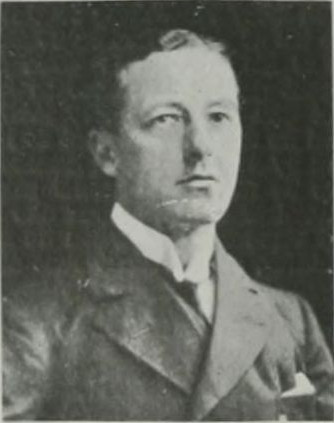
Spencer Dundas Forbes.
FORD, ATHOLE STANLEY, Rifleman, No. 1993, 16th Battn. (Queen’s Westminster Rifles) The London Regt. (T.F.), only s. of Stanley Ford, of 1, Ardlui Road, West Norwood, S.E., by his wife, Mary Elizabeth, dau. of William Armstrong; b. Dulwich, S.E., 9 March, 1896; educ. Dulwich College, where he was a corpl. in the O.T.C. and a member of the “Gym” Six; joined the Queen’s Westminsters for foreign service, 6 Aug. 1914, the day following the declaration of war; trained at Hemel Hempstead, went to France, 1 Nov. 1914, and was killed in action at Hooge, 9 Aug. 1915. One of his officers wrote that he “made a fine, plucky little soldier and was universally popular”; and his Corpl.: “He was a good lad, a fearless soldier, a splendid comrade—one I was proud to call my friend. By his courage, sympathy and cheerfulness, even under the most trying circumstances during all these months, he endeared himself to us all, and deeply we feel his loss.”
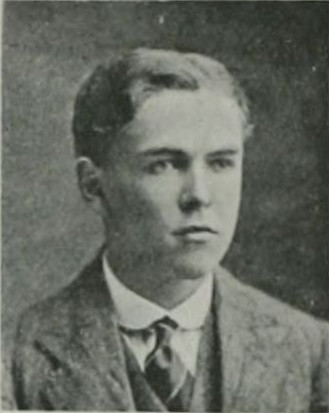
Athole Stanley Ford.
FORD, FRANCIS JOHN, Leading Seaman (R.F.R., 3592), 196782, H.M.S. Good Hope; lost in action off Coronel, on the coast of Chili, 1 Nov. 1914.
FORD, FRANK, Private, No. 6713, 1st Battn. Coldstream Guards, only s. of the late Elijah Ford, by his wife, Emily Jane (Bathpool, near Taunton), dau. of John Wilkins, of West Monkton, Somerset; b. Gosport, co. Hants, 21 March, 1888; educ. West Monkton, Somerset; enlisted 22 March, 1906, and served seven years with the Colours, then going to the Reserve. He joined the Cardiff City Police, and prior to the war was stationed at Canton. On mobilisation he rejoined, left Windsor for France on the last day of Aug. 1914, and was killed in action at Ypres, 25 Oct. 1914; unm.
FORD, GEORGE, Stoker, P.O., 285093, H.M.S. Good Hope; lost in action off Coronel, on the coast of Chili, 1 Nov. 1914.
FORD, HORACE FISHER (“RED”), Private, No 12982, 5th Battn. Canadian Expeditionary Force, eldest s. of George Robert Fitzroy Ford, of 2, Cavendish Mansions, Langham Street, W., by his first wife, Charlotte Diana, dau. of the late Capt. John Kendall, 4th West Yorkshire Regt.; b. Hitchin, co. Herts, 14 Dec. 1889; educ. privately; The Roan School, Greenwich, and St. Francis Xavier’s College, Bruges; went to Canada in 1906, and settled at Moose Jaw, and had been Sporting Editor of the “Moose Jaw Morning News” since 1912, and was, according to his editor, responsible for the initiation of clean sport into Western Canada. It was in the Y.M.C.A. building at Moose Jaw where his influence for good athletics was most felt. After the declaration of war he enlisted in the 27th Light Horse, under his friend Col. Tuxford, afterwards transferring with him to the 5th Battn.; left for England with the first contingent in Oct. 1914; went to the Front, 7 Jan. 1915, and was killed in action at Festubert, 24 May, 1915. Col. Tuxford wrote of him: “His conduct was always good and he never gave trouble; during the Battle of Festubert, when we took the German trenches and machine-gun emplacement at a cost of nearly 400 casualties, a position that had been attempted on three previous occasions by other units and failed; Ford was wounded, not seriously, and was walking down the trench to the dressing station when another shell caught and killed him. His death was instantaneous;” and in his letter to the “Moose Jaw Morning News,” chronicling the events of the Battle of Festubert, he said: “Private Ford came to me to enlist, and said he was determined in his course and that I could rely on him to ‘play the game.’ He died as he declared to me in my office ‘playing the game.’” The “Winnipeg Telegram” said: “‘Red’ Ford was a character of the great West, and in the days to come he will be remembered as a first-class sporting editor, a fighter and a hero.” His brother, Ernest Kendall Ford, is a Sub-Lieut. in the Royal Naval Division.
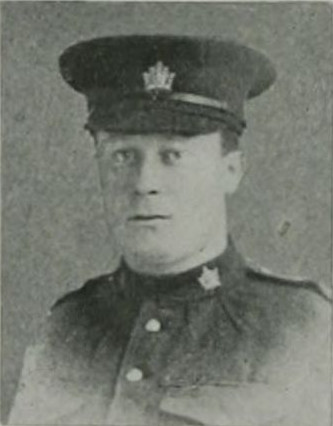
Horace Fisher Ford.
FORD, PERCY GORDEN, Rifleman, No. 3250, 9th Battn. (Queen Victoria Rifles) The London Regt. (T.F), 2nd s. of John William Fletcher Ford, of 57, Friday Street, London, E.C., and Rozel, Roydon, Essex, Linen Merchant, by his wife, Catherine, dau. of Thomas Strout; b. Hornsey, London, 11 Sept. 1891; educ. Tollingham School and Christ’s College, Finchley; was a Traveller; joined the Queen Victoria Rifles immediately on the outbreak of war, in Aug. 1914; went to France, 14 Feb. 1915, and was killed in action at Hill 60, Flanders, 24 April, 1915; unm. A comrade wrote: “He was in hospital when we went up to Hill 60, but joined us up there in the dug-outs when we had been relieved from the firing line. I remember him, Claude, coming up to me and saying, as we shook hands, ‘By Jove, Ashford, old man, I’m glad to see you; you fellows have had a rough time.’ Not a word about the narrow escape he had had with our transport in Ypres. We left on the Thursday morning, 10 men at a time; they were shelling us and it was dangerous to offer too large a target. We assembled outside the hospital at Ypres and Smith-Dorrien inspected us. We marched back to huts as we thought to a well-earned rest. The huts were not completed and we had to bivouac. About 6.30 p.m. we saw the French coming pell mell across country, a regular rout, we spoke to them and found they were retreating. We had to fall in and dig ourselves in by hedges in some fields near. We did not know which way the Germans were supposed to be coming, and had to change our position three times during the night. We were fagged out and had had no proper sleep since the Saturday previous—we couldn’t get much at Hill 60. At about 2.30 a.m. we had orders to stop digging; marched back some way and spent the remainder of the night in a field. In the morning we had to sit in ditches along the road, in order to be out of sight of aeroplanes, awaiting orders. The cookers came up and we had some tea, I remember as well as if it were yesterday; Percy gave me some of his condensed milk, and I sat down beside him and we laughingly arranged to go to Golder’s Green in the afternoon. Shortly afterwards we had to march off with the rest of the 13th Brigade, to which we were attached. We were in support on the banks of the Yser. The Canadians had driven the Germans back after the French retreat. During the night we had to go up to the firing line, but only for a few hours. The morning of Saturday found us on the banks of the Yser, awaiting orders. We had dug ourselves in as a protection against shrapnel. We moved off about 11 o’clock in single file along the banks of Yser, towards Ypres, then we cut inland and gradually wound our way forward, moving in zig-zag manner, taking as much advantage of hedges, etc., as we could. Shells were flying all around, but Percy was there then, and that was Saturday. Amy tells me you were told Friday; I feel certain that it was Saturday. Well, we must have marched about 3 to 4 miles and we then got right into the thick of it, it was raining shells. We deployed and were told to take shelter behind some semicircular parapets. The Germans seemed to have them taped and dropped shells right in amongst us. It was flat country and evidently they could see us approaching and shelled us very heavily indeed, the air was thick with shells. We advanced by short stages about 100 yards, and then I got hit by a shell in the right shoulder, and missed Percy then; he was in the right half platoon and I was in the left half, so that we got separated. Those that were comparatively lightly wounded were the fortunate ones, Claude. I am sorry that I cannot give you more news of Percy; the last I saw of him was coolly smoking a cigarette as we marched along over those fields in that awful hail of shells.” He was junior sidesman in the Wesleyan Methodist Church, Finchley.
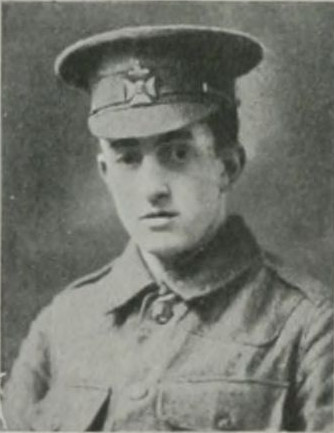
Percy Gorden Ford.
FORD, ROBERT JOHN, Private, R.M.L.I., 15137 (R.F.R., B. 1785), H.M.S. Aboukir; lost in action in the North Sea, 22 Sept. 1914.
FORD, WILLIAM FRANK, A.B., 212470, H.M.S. Good Hope; lost in action off Coronel, on the coast of Chili, 1 Nov. 1914.
FORD, WILLIAM GEORGE, A.B. (R.F.R., B. 1469), 211586, H.M.S. Good Hope; lost in action off Coronel, on the coast of Chili, 1 Nov. 1914.
FOREMAN, SAMUEL JOHN, Private, No. 1713, 12th Battn., Australian Imperial Force, 3rd s. of the late Samuel Foreman, Carter, by his wife, Anne; b. Ladywood, Birmingham, 27 Feb. 1875; educ. Foundry Road Board School there; went to Australia, and was an employee with the Commonwealth Salt Company in Kangaroo Island; enlisted shortly after the outbreak of war, and died at the 10th Australian Clearing Station, 14 June, 1915, of wounds received in action; unm.
FOREST, HENRY SCOTT, Private, No. 41781, 2nd Field Artillery Brigade, Canadian Expeditionary Force, 5th s. of John Forest, of Coaticook, Quebec, Canada, Farmer and Teamster, by his wife, Mary Ann, dau. of Neil McGeehan; b. Coaticook, Quebec, 8 Oct. 1897; educ. Coaticook Academy; enlisted July, 1914; left Canada with the first contingent; trained on Salisbury Plain during the winter; went to France, Feb. 1915, and was killed in action at Ypres, 25 April, 1915; unm. Buried on the St. Julien Road.
FORFEITT, FREDERICK WILLIAM LAWSON, Private, No. 2739, 1st Battn. Hertfordshire Regt. (T.F.), only s. of Frederick Joseph Forfeitt, of Medburn, Elstree, A.C.P., Schoolmaster, by his wife, Lucy Jane, dau. of Charles Cooper; b. Elstree, co. Herts, 22 July, 1889; educ. Medburn School (his father’s), and St. Alban’s School (Scholar and Member of the Cadet Corps), and on leaving there entered Messrs. Barclay’s Bank, St. Albans. After the outbreak of war he joined the 1st Hertfordshire Regt. 4 Sept. 1914, went to the Front 5 Nov. following, and died 20 May, 1915, of wounds received in action at Festubert the previous day; and was buried in Bethune Cemetery; unm. A letter from a comrade showed that he met his death in a most gallant fashion. His friend had been killed near him, and though sorely wounded he said: “Never mind me, have a look at poor old ‘Mal,’ I’m afraid he’s gone.” Another wrote: “I have never known a man bear a wound more bravely than he”; and his Capt., writing later, described him as being “much loved by us all, and one of the bravest men in his company.”
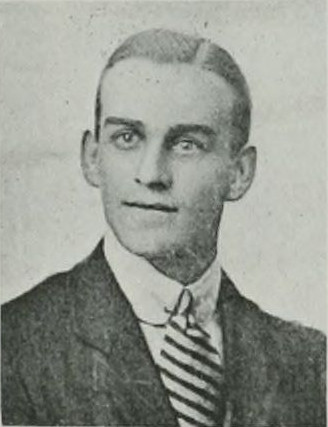
Frederick W. L. Forfeitt.
FORREST, JOHN, Private, No. 13451, 12th (Service) Battn. The Royal Scots, eldest s. of Robert Forrest, Engine Driver, by his wife, Isabella, dau. of Hugh Fraser; b. Leith, 4 Aug. 1890; educ. St. Thomas School, Leith; was a Riveter at Ramage & Ferguson’s; enlisted soon after the outbreak of war, 2 Sept. 1914; went to France, 11 May, 1915, and died of wounds received in action at Loos, 25 Aug. following; unm. 2nd Lieut. R. B. Stewart wrote: “Your son was wounded last night when he along with some others was carrying out a difficult piece of work in front of our trenches.... He was a fine and plucky fellow and a man in whom I could place my implicit trust. He was always one of the first to volunteer if there was any ‘ticklish’ work to be done.”
FORREST, WILLIAM LYON, Third Writer, M. 2759, H.M.S. Cressy; lost in action in the North Sea, 22 Sept. 1914.
FORRESTER, ADRIAN ANDREW, M.B., Fleet Surgeon, H.M.S. Implacable, only s. of William Forrester, of Glenmiln, Campsie Glen, co. Stirling, by his wife, Jessie Ann Hill, dau. of Archibald MacFarlane; b. Glenmiln, afsd., 20 Jan. 1874; educ. Larchfield, Helensburgh, co. Dumbarton, and Glasgow University, graduating M.B. in 1897; entered the Navy as a Surgeon, 8 Nov. 1898; and was promoted Staff Surgeon, 8 Nov. 1906, and Fleet Surgeon, 8 Nov. 1914. He was appointed to H.M.S. Implacable in Feb. 1914, and was killed in action at the Dardanelles 25 April, 1915. He married at Sydney, N.S.W., 20 Jan. 1904, Ruby Westwood, dau. of Charles Andrew Guesdon, of Hobart, Tasmania, and had a dau., Thelma Westwood b. 10 March, 1905.
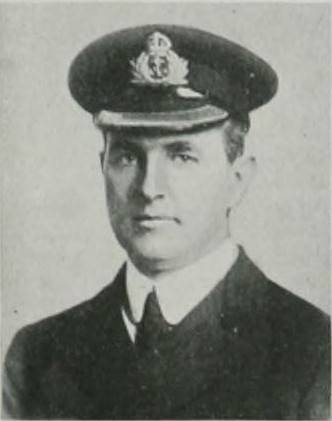
Adrian A. Forrester.
FORRINGTON, CHARLES HOARE, Signalman, J. 10092, H.M.S. Hawke; lost when that ship was torpedoed in the North Sea, 15 Oct. 1914.
FORSTER, ANDREW FORRESTER, Private, No. 1713, 11th Battn. Australian Imperial Force, 2nd s. of William Forster, of Mainsoflaig, Newluce, co. Wigtown, Farmer; b. Brownknowe, Nicolforest, co. Cumberland, 17 Sept. 1887; educ. Newluce and Stramuir; went to Australia; volunteered on the outbreak of war and joined the Commonwealth Expeditionary Force, 16 Aug. 1914; went to the Dardanelles and was killed in action there, 17 May, 1915, and buried behind the trenches; unm.
FORSYTH, ARCHIBALD JAMES, L.-Corpl., No. 10/1054, 9th (Hawkes Bay) Wellington Infantry Battn., New Zealand Expeditionary Force, s. of Archibald William Forsyth, of Gisborne, New Zealand [a native of Scotland]; b. Frasertown, Wairoa, Hawkes Bay, New Zealand, 6 Feb. 1894; educ. Frasertown, and High School, Gisborne, at which latter he passed the Junior Civil Service, and matriculated, gaining a first in Hawkes Bay Education Board. On leaving there he started teaching, and when war broke out was Assistant Master at Patutahi School, Gisborne. He was a Territorial and immediately volunteered and joined the New Zealand Expeditionary Force; left with the main body for Egypt in Oct.; took part in the landing at the Dardanelles, 25–26 April, and was killed in action there at Walker’s Ridge, 29 April following; unm. Chaplain Major Grant (since killed) wrote: “His time of service was soon over, but he was of the heroic band who climbed and conquered this hill.”
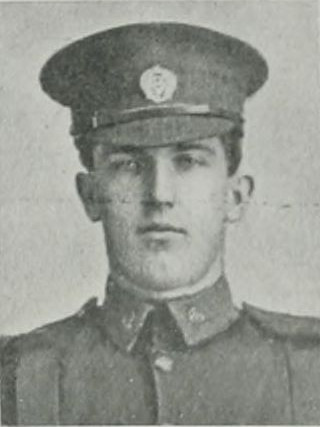
Archibald J. Forsyth.
FORSYTH, PETER, A.B., J. 19371, H.M.S. Pathfinder; lost when that ship was sunk by a mine, about 20 miles off the East Coast, 5 Sept. 1914.
FORTES, THOMAS, Sergt., No. 7687, 1st Battn. East Yorkshire Regt., s. of Harry Fortes, of 4, Clark’s Pace, Wilbert Lane, Beverley, by his wife, Mary Kidd, dau. of Philip Spencer; b. Cherry Tree Terrace, Grove Hill Road, Beverley, 25 Oct. 1888; educ. Minster School there; enlisted in the East Yorkshire Regt., 20 Nov. 1903, and joined the 1st Battn. at Shorncliffe; after a few months was drafted to the 2nd Battn. in Burmah, with which he served first in Burmah and after 1909, in India, till 1913, when he came home and rejoined the 1st Battn. at York. He was promoted Sergt., 6 June, 1914, and after the outbreak of war, went to France with the Expeditionary Force, 10 Sept., and was killed in action at Parride Hill, 28 Oct. 1914. He m. at Shorncliffe, 1904, Louisa, dau. of Henry Kent; s.p. His brother, Private William Fortes, No. 7651, was with him in this engagement and is still (1916) on active service.
FORTUNE, JAMES, Private, No. 6844, 3rd Battn. Coldstream Guards, 4th s. of the late Henry Fortune, of Foxham, co. Wilts, Platelayer on the Great Western Railway, by his wife, Hannah (Little Alne, Wooten Wowen, Birmingham), dau. of the late George Lovelock; b. Foxham, 5 Dec. 1887; educ. there; enlisted July, 1906, and served seven years with the colours, including two in Egypt, when he passed into the Reserve and obtained employment at Farnborough. On mobilisation he rejoined, went to the Front 12 Aug. 1914, served through the retreat from Mons and the subsequent engagements, on the Aisne and the Marne, and was killed instantaneously at Rentel, by a bullet while on sentry duty 27 Oct. 1914; unm. While living at Farnborough he was connected with the Gospel Mission and was an earnest worker and devoted Sunday School teacher.
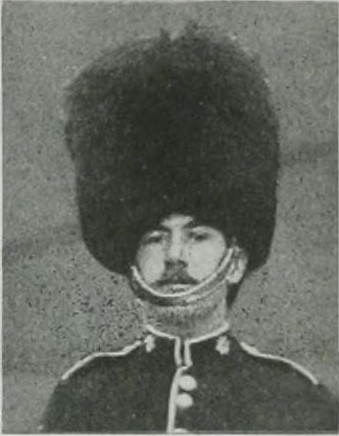
James Fortune.
FOSTER, ARCHIBALD COURTENAY HAYES, Lieut., Hampshire Regt., attd. 4th King’s African Rifles, 4th s. of the late Montagu H. Foster, of Stubbington House, Fareham, co. Hants, by his wife, Mary Henrietta Foster (The Lodge, Stubbington, Fareham), dau. of the Rev. Richard Foster Carter; b. Stubbington House afsd., 19 May, 1886; educ. Stubbington House and Cheltenham; gazetted 2nd Lieut. Hampshire Regt. 24 Jan. 1906; promoted Lieut. 19 Oct. 1907, and seconded for service with the King’s West African Rifles, 8 Oct. 1913; took part in the Jubaland campaign, 1914, and was killed in action at Marabu, British East Africa, 19 Sept. 1914; unm. It appears from the official report of this action that on the night of 6 Sept. orders were given for Lieut. Foster and A Coy. King’s African Rifles to start at dawn and regain touch with the enemy, Lieuts. Phillips and Hardingham, with 80 King’s African Rifles, to support him. No sign of the enemy was seen on the 7th or 8th. On the 19th the three section A Coy. 4th King’s African Rifles (Lieut. Foster, King’s African Rifles), with one maxim, one section Somali Mounted Infantry (Capt. Isaacson, East African Rifles, and Lieut. Miles, East African Mounted Rifles), “were occupying Campa Ya Marabu. The Somalis and mules were occupying a thorn boma ‘A.’ and the King’s African Rifles a similar boma ‘B.’ It was arranged between Capt. Isaacson and Lieut. Foster that, in case of attack, the mules were to be taken out of the boma ‘A’ and crossed over to the north bank of River Mol Turesh at point ‘D’ through bushes at point ‘E.’ A picquet, composed of Somalis, was posted at point ‘G.’ At 5.30 a.m. the enemy advancing up the river came into touch with the picquet at ‘G.’ Capt. Isaacson immediately ordered the mules across the river and then proceeded towards the picquet, shortly afterwards meeting a wounded Somali retiring on the boma, who reported the enemy to be in strength. The enemy, estimated at three or four white officers and rank and file, had now opened out on either side of the track at point ‘G’ and kept up a heavy fire; seven of the mules were hit in crossing the river. Lieut. Foster, on being informed that the enemy’s strength was only about 100, ordered his company to advance to bushes ‘E’—one section King’s African Rifles, one section Somalis, two sections King’s African Rifles on the right, with Capt. Isaacson and Lieut. Miles. The enemy kept up a very heavy fire to our front and left. As our men reached point ‘E’ Lieut. Foster was hit, but continued to urge on his men in a very gallant manner.... The whole action lasted about two hours, and from reports received later from the Masai the enemy appear to have retired in disorder.... This little action was fought with spirit and determination. Lieut. Foster died a gallant death, and the British officers and rank and file of the Somali section and A Coy. 4th King’s African Rifles gave him courageous support.”
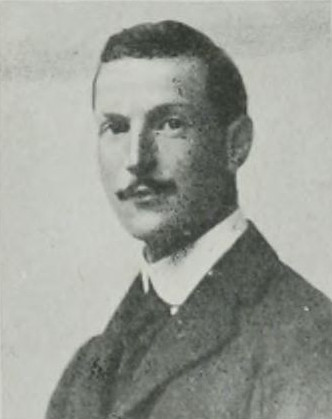
Archibald C. H. Foster.
FOSTER, ARTHUR CEDRIC, 2nd Lieut., 1st Battn. Grenadier Guards, yr. s. of Capt. Arthur Wellesley Foster, of Brockhampton Court, co. Hereford, M.A., J.P., D.L., T.D., late Master of the South Herefordshire Foxhounds (now serving as Brigade Instructor of Musketry, attd. to the Staffordshire Infantry Brigade), by his wife, Alice Madeline, dau. of the late Eben Dyer Jordan, of Boston, U.S.A.; b. Caton Green, co. Lancaster, 26 April, 1891; educ. at Remenham, Eton, and Exeter College, Oxford; entered the Diplomatic Service in Feb. 1914, and was for some time Hon. Attaché to the British Legation at Stockholm. When the European War broke out he was home on leave, and obtaining his release from the Foreign Office, volunteered and joined the Public Schools Battn., 18 Sept. 1914, from which he was gazetted 2nd Lieut. to the Grenadier Guards, 24 Oct. following. He went to France, 12 Jan. 1915; was wounded in action at Neuve Chapelle, 11 March, 1915, and died in Merville Hospital the following day; unm. He was buried in Merville Churchyard. He was a good all-round athlete, and at Eton won both the Junior and Senior Long Jump, the latter in 1909, when he created a record of 20 ft. 1 in. He also played frequently for the Hereford County Cricket Club. His brother, Lieut. Cuthbert Foster, R.M.A., is (1916) on active service.
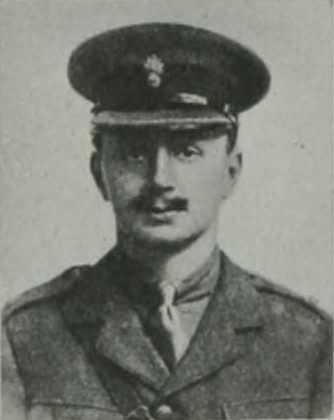
Arthur Cedric Foster.
FOSTER, DAVID, Stoker, 1st Class (R.F.R., Ch. B. 9343), S.S. 106620, H.M.S. Cressy; lost in action in the North Sea, 22 Sept. 1914.
FOSTER, FREDERICK, Petty Officer, 1st Class, R.N.V.R. (Sussex), 298, H.M.S. Hawke, s. of John Foster, of 4, Nelson Road, Hastings; lost when that ship was torpedoed in the North Sea, 15 Oct. 1914.
FOSTER, HERBERT KNOLLYS, 2nd Lieut., 1st Battn. Gloucester Regt., only s. of the Rev. Herbert Charles Foster, T.D., Vicar of Groombridge, co. Sussex, and Hon. Canon of Gloucester Cathedral, by his wife, Susan Edith, dau. of Rev. Prebendary Robert Shuttleworth Sutton, of Winkenhurst, Hellingly, formerly Rector of Rye, Sussex; b. All Saints’ Vicarage, Gloucester, 18 Oct. 1895; educ. Glyngarth Preparatory School, Cheltenham, Marlborough College, and Sandhurst; obtained his commission in the 1st Battn. Gloucester Regt. 8 Aug. 1914; went to France, 20 Sept. 1914, and was killed in action at Gheluvelt, near Ypres, Flanders, 29 Oct. 1914; unm.
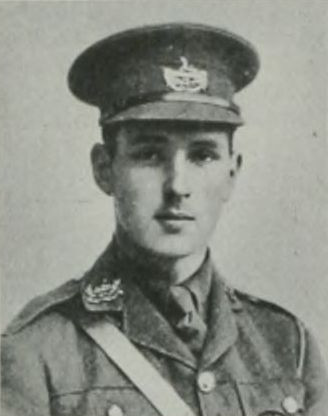
Herbert Knollys Foster.
FOSTER, JOHN, Stoker, 1st Class (R.F.R., B. 8497), S.S. 104740, H.M.S. Aboukir; lost in action in the North Sea, 22 Sept. 1914.
FOSTER, JOHN THOMAS, L.-Corpl., No. 12374, 10th (Service) Battn. Durham Light Infantry, eldest s. of Robert Foster, of 28, Wear Street, Southwick-on-Wear, Shipwright, by his wife, Dorothy Ann, dau. of John Rames; b. Southwick, co. Durham, 15 July, 1886; educ. National School there; was employed in a shipyard at Sunderland; enlisted 10 Aug. 1914; trained in Surrey, went to the Front in May and was killed in action in France, 31 July, 1915, and buried at Sanctuary Wood, near the dressing station; unm.
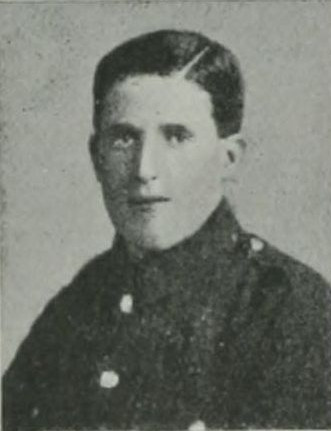
John Thomas Foster.
FOSTER, LAURENCE TALBOT LISLE, Lieut., 16th (Service) Battn. Durham Light Infantry, 4th s. of the Rev. Albert John Foster, Vicar of Wootton and Rural Dean of Haynes, by his wife, Edith Margaret, dau. of the Rev. T. A. Voules, Rector of Beercrocombe, Somerset: b. Wootton Vicarage, co. Bedford, 15 Feb. 1885; educ. Eastbourne College (Scholar); was a Forest Manager in the Bombay and Burma Trading Corporation; gazetted Lieut. 16th Durham L.I., 21 Nov. 1914; left England for the Dardanelles, 12 May, 1915, was attd. to the 5th Manchesters, and was killed in action at Anafarta 7 Aug. 1915; unm. His Colonel wrote: “As an officer he was splendid, always steadily doing his duty and quite fearless. He led his men with the utmost bravery, and was killed, as he would have liked to have been, at the head of his men, and without suffering. He is a great loss to the Battn. and you have every right to be proud of him, as we are.”
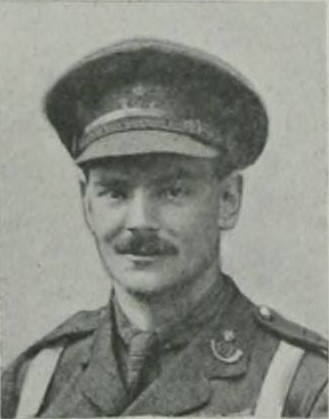
Laurence T. L. Foster.
FOSTER, ROBERT, Private, No. 8/137, Otago Infantry Battn. New Zealand Expeditionary Force, yst. s. of the late Edward Foster, of Lowburn Ferry, by his wife, Christine (Lowburn Ferry, via Cromwell, Central Otago, New Zealand), dau. of George Dalziell, of Shetland; b. Lowburn aforesaid, 10 Aug. 1894; educ. Lowburn Public School, and was engaged in farming. He volunteered for Imperial service six days after the declaration of war, joined the Otago Infantry Battn., 11 Aug. 1914, and left New Zealand with the main body. He took part in the landing at the Dardanelles on 25 April, and remained in the trenches until 4 Aug. 1915, on which day he was killed in action. His second brother, William, died on active service (see following notice), and his eldest and now only surviving brother is now (1916) on active service with the New Zealand Expeditionary Force.
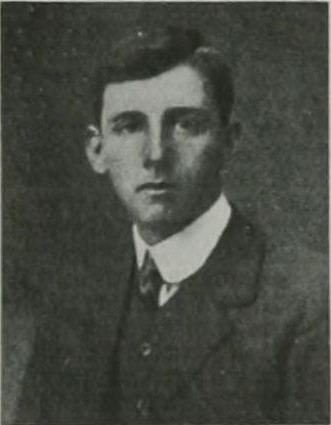
Robert Foster.
FOSTER, WILLIAM, Trooper, No. 9/698, Otago Mounted Rifles, New Zealand Expeditionary Force, 2nd s. of the late Edward Foster, of Lowburn Ferry, by his wife, Christina (Lowburn Ferry, via Cromwell, Central Otago, New Zealand), dau. of George Dalziell, of Shetland (see preceding notice); b. Dunedin, 25 May, 1888; educ. Lowburn Public School; volunteered for Imperial service after the outbreak of war, and joined the Otago Mounted Rifles, 10 Oct. 1914; left New Zealand with the second reinforcements and landed at Anzac on his 27th birthday. He served in the trenches for three months, when he was removed to Malta suffering from pneumonia, and afterwards contracted enteric fever and died at St. Andrew’s Hospital there, after four months’ illness, 16 Nov. 1915; unm. He was well known as a footballer, and before the declaration of war was for some years one of the representatives for Vincent County in the interprovincial Rugby matches.
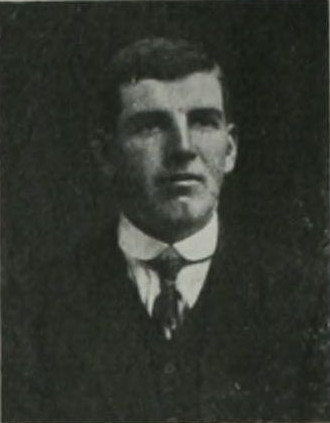
William Foster.
FOTHERINGHAM, ALEXANDER BOYNE, Leading Seaman, No. 2/2693, Anson Battn. R.N., yr. s. of John Fotheringham, of 34, Dudley Avenue, Leith, Baker, by his wife, Mary Ann, dau. of Alexander Boyne; b. Leith, 26 April, 1894; educ. Bonnington Academy, Leith, and George Heriot’s School, Edinburgh; and was employed as goods clerk in the Leith Walk branch of the Caledonian Railway until the outbreak of war. He had joined the R.N.V.R. in July, 1913, and after the outbreak of war was called up and attached to the Anson Battn. Royal Naval Division; served at Antwerp Sept. 1914, and afterwards at the Dardanelles, took part in the landing at Cape Helles, 26 April, and was killed in action there, 6 May, following; unm.
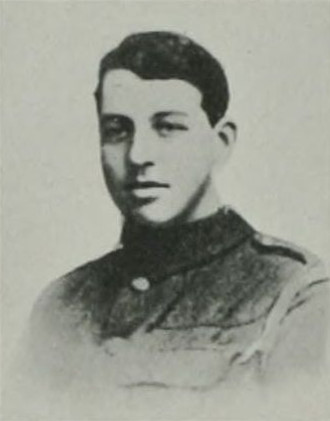
A. B. Fotheringham.
FOUCAR, CLEMENT AUGUSTE, Rifleman No. 1931, 9th Battn. (Queen Victoria Rifles) The London Regt. (T.F), 4th s. of the late Ferdinand Louis Foucar, of Rangoon and Moulmein, Burma, Teak Merchant [of a Huguenot family, who came from Proisy in Picardy, after the Revocation of the Edict of Nantes, 1685], by his wife, Martha, dau. of the late (—) Grasemann; b. Rangoon, 11 Sept. 1892; educ. privately and at Doncaster Grammar School, etc.; joined the Queen Victoria Rifles after the declaration of war, in Aug. 1914, and was killed in action on Hill 60, near Ypres, 21 April, 1915; unm.
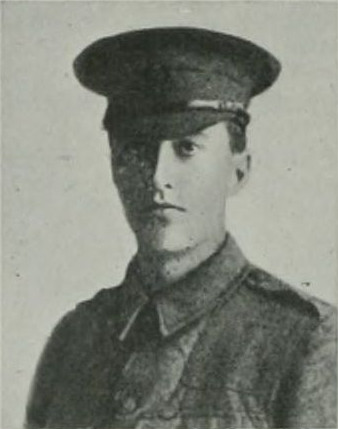
Clement Auguste Foucar.
FOULKES, HERBERT, Stoker, P.O. (R.F.R., Ch. B. 10294), 299552, H.M.S. Cressy; lost in action in the North Sea, 22 Sept. 1914.
FOUND, JOHN, Mechanician, Po./279973 H.M.S. Good Hope; lost in action off Coronel on the coast of Chili, 1 Nov. 1914.
FOURNIER, EMILE, Private, No. 26321, 14th Battn. (65th Regt.), 3rd Brigade, Canadian Expeditionary Force, s. of Adelard Fournier, of Hull, P.Q., Canada; b. Hull, aforesaid, 1 Feb. 1896; educ. Hull Brothers’ College, and with the Capucin Fathers at Ottawa; enlisted early in Aug. 1914, immediately after the declaration of war; left Canada with the first contingent in Oct.; went to France in Feb., and died in hospital at Rouen, 10 May, 1915, of wounds in the right leg received in action at Langemarck, 27 April; unm. His commanding officer, Capt. D. E. Serres, wrote that “he was one of his best men,” adding, “I praise you to have in your family such a courageous and brave child.”
FOWLER, CHRISTOPHER RICHARD, Private, No. 1465, 1st Battn. H.A.C., 2nd s. of Arthur Christopher Fowler, of 12, Grange Park, Ealing, W., Printer and Bookbinder, by his wife Laura Jennie, dau. of Richard Clarke Pauling, C.E.; b. London, 27 Feb. 1893; educ. Xavierian College, Mayfield, Sussex, and St. Edmund’s College, Old Hall, Ware, co. Herts; was apprenticed to his father as a Printer and Bookbinder through the Stationers’ Company; on the outbreak of war enlisted in the H.A.C.; served in France and Flanders, and was killed in action in Flanders, 13 March, 1915; buried at Lochre, nine miles from Ypres; unm. His Capt., Ernest Boyle, wrote: “An attack was made upon the German position, and our company held a trench immediately in front. We were subject to very heavy firing from German machine guns and your son was unhappily hit in the head. He was unconscious from the first and cannot have even been aware that he was hit, so he suffered no pain at all. He survived his wound some hours. As he still lived, as soon as it was dark he was taken away to the hospital, where he died, so I do not know whether he ever recovered consciousness, but I do not think he did. Two others of his company gave their lives for their country the same day ... Personally I had not known your son very long, as I have only recently joined his company, but I soon came to know him and greatly admired him. He was the heart and soul of the football teams, and I had a long talk with him on the morning of his death about future matches. He was so keen in all he did, so determined, so plucky and so willing, showing all those characteristics which endear a man at the front to his comrades and to his officers”; a Sergt., Geoffrey Ernst: “At the time we were supporting an attack by keeping up a heavy rifle fire on the German trenches, and unfortunately they turned a machine gun on us, which, I am afraid, was the cause of all our trouble. At the time, too, he was blazing away with his rifle most cheerily.” Private Brown also wrote to his own father: “During the last time up I have lost my great pal, Dicky Fowler.... We have had a very hot time, and this last time up we had twelve good days of it. Dick was hit on the Friday (12th inst.) in the afternoon and died early on Saturday morning. Glad to say the old boy lived long enough to be brought back to this village, as now he is buried in the churchyard. He was a grand fellow and such a ‘White man.’ We were always together, whether in the firing line or back here; naturally I feel his loss, but it must be cruel for his people and his girl. He hadn’t missed a single trench, and both he and I were proud of our record, but he could not have died a finer death, as his shoulder was hard against the parapet. This was how it happened. We were assisting in a charge by some well-known regulars (great pals of ours) by firing straight in front of us to keep the Huns opposite down below their parapet, and avoid them firing on our chaps, who were making the charge on our right. We were to fire straight and then sweep along to the left as our boys came along, but the blighters swept a machine gun along the top of our parapet and poor Dick got one right through the head. When I got to him he was unconscious and he never regained his senses. Of course I was with him until night, and then he was carried back on the stretcher. The bullet went right through his head and it was a marvel he lived so long, but he was a fine healthy chap and any amount of natural pluck.” Private Fowler was a keen sportsman and played cricket and football for the Neasden Sports Clubs.
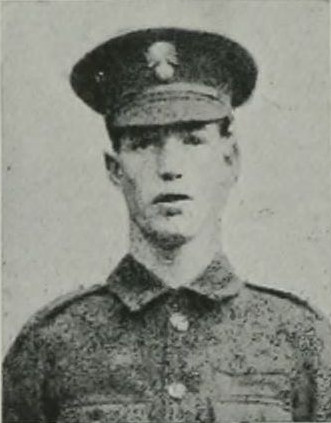
Christopher R. Fowler.
FOWLER, GEORGE, Transport Sergt., No. 128, 1/5th Battn. The Royal Scots (T.F.), 2nd s. of Colour-Sergt. George Fowler, of 55, Lochend Road West, Edinburgh (who served with the 5th Royal Scots for 35 years), by his wife, Elizabeth, dau. of Malcolm Kirk, of Musselburgh, Painter; b. Edinburgh, 25 Aug. 1887; educ. Regent Street Public School there; was a Clerk in Midlothian County Council; joined the 5th Royal Scots, then the Queen’s Edinburgh Rifle Volunteers, 16 Feb. 1905; volunteered for active service on the outbreak of war in Aug. 1914, left England for the Dardanelles on 21 March, 1915, and was shot by a sniper on 21 May, 1915, and died there the next day; unm. Buried at B. Line, W. Beach. Sergt. Fowler was the Battn. representative at the King’s Coronation in London, and was secretary of the Sports Committee (1912–13), the two years that the Battn. sports were held.
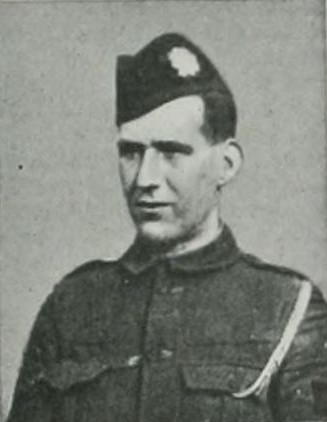
George Fowler.
FOWLER, THEODORE HUMPHREY, Corpl., No. 2446, Honourable Artillery Coy., s. of Oliver Humphrey Fowler, of Cirencester, M.D.; b. Cirencester, co. Gloucester, 25 Sept. 1879; educ. Lancing College; volunteered after the outbreak of war and enlisted in the Honourable Artillery Coy., 3 Oct. 1914; served with the Expeditionary Force in France, etc.; was wounded at Kemmel, and died in the County of London War Hospital, Epsom, 17 Aug. 1915; unm. His brother, Capt. R. C. Fowler, Northants Regt., is now (1916) on active service.
FOWLER, WILLIAM, Stoker, R.N.R., T. 2294, H.M.S. Hawke; lost when that ship was torpedoed in the North Sea, 15 Oct. 1914; m.
FOWLER WILLIAM HENRY, Private, No. 21600, 7th Battn. Canadian Expeditionary Force, 2nd s. of John Busteed Fowler, of 8, Sidneyville, Bellevue Park, Cork, Member of Cork Stock Exchange, and Insurance Agent, by his wife, Annie Louisa, dau. of William Henry Hill, B.E.; b. Summount, Cork, 7 Aug. 1893; educ. Cork Grammar School and University College Cork; went to Canada in Feb. 1912, and settled at Calgary, Alberta; was an official of the Bank of Commerce, volunteered on the outbreak of War, and enlisted, 11 Aug. 1914; left with the 1st Contingent in Oct. 1914; trained on Salisbury Plain during the winter of 1914–15; went to France, March, 1915, and was killed in action near Ypres, 27 April, 1915; unm. A comrade wrote: “I was right there when it happened, and we buried him. We had not time to do very much, for the bullets were flying all round us, but we wrapped him in his blanket, and we put a cross up.” His two brothers both enlisted when war was declared and served with the Canadian Expeditionary Force in France. Private Richard T. Fowler, Princess Patricia’s Light Infantry, was invalided home in Nov. 1915, and Private John G. Fowler, 5th Battn., was wounded at Festubert in May, 1915. Another brother, Frank R. Fowler, is now temporary 2nd Lieut. 3rd Leinsters.
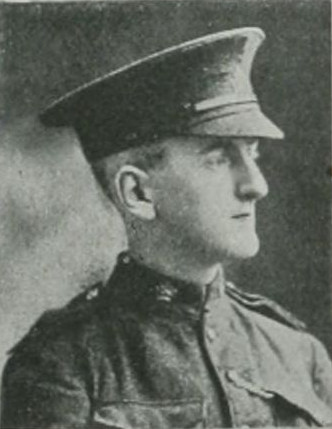
William Henry Fowler.
FOWLING, BERTIE EVELYN, Shipwright, 1st Class, 342885, H.M.S. Good Hope; lost in action off Coronel, on the coast of Chili, 1 Nov. 1914.
FOWLOW, RICHARD, Corpl., No. 886, D Coy., 1st Newfoundland Regt., eldest s. of Thomas Jenkins Fowlow, of Trinity East, Newfoundland, Owner and Master of 50-ton Fishing Schooner, by his wife, Elizabeth, dau. of John P. Fowlow; b. Trinity East aforesaid, 18 Jan. 1893; educ. High School there; was a Clerk in a Dry Goods Store; joined H Coy. of the Trinity East Church Lads Brigade, 4 Oct. 1912, was appointed L.-Corpl. the same year and promoted Corpl. in 1913; volunteered for foreign service after the outbreak of war, and joined the Newfoundland Expeditionary Force, Jan. 1915; left for England with the second contingent, 20 March, 1915; went to the Dardanelles, and died at Malta, 23 Nov. 1915, of typhoid contracted while on active service there; unm. Buried in Pieta, Malta (Row 8A, No. 6).
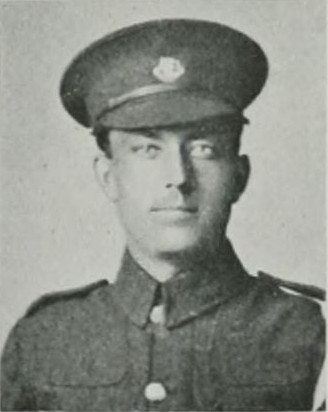
Richard Fowlow.
FOX, HARRY, Stoker, P.O., 301863, H.M.S. Cressy; lost in action in the North Sea, 22 Sept. 1914.
FOX, HARRY EDWIN, Leading Telegraphist, J. 6260, H.M.S. Cressy; lost in action in the North Sea, 22 Sept. 1913.
FOX, JOHN, Private, No. 12768, 4th (Service) Battn. South Wales Borderers, yst. s. of the late Arthur Fox, of Bradford, Yorks, Police Constable, by his wife, Ada S. (27, Layard Street, Splott, Cardiff), dau. of Maurice Devine, Army Pensioner; b. Bradford, 5 Aug. 1897; was employed as a boy at the Cardiff Cinema Theatre, which he left in May with an excellent character; enlisted Aug. 1914; served with the Mediterranean Expeditionary Force at the Dardanelles, from 4 July to 12 Aug. 1915, on which date he was killed in action there; unm. His brother, Private M. A. Fox, was killed in action in France (see following notice), and the only surviving brother, L.-Corpl. William Kenneth Fox, is serving with the A.S.C.
FOX, MAURICE ARTHUR, Private, No. 4634, 1st Battn. Royal Welsh Fusiliers, s. of Arthur Fox, of Bradford, Yorks, Police constable (see preceding notice), b. Bradford, 6 Jan. 18..; served three years with the Colours and then joined the Reserve; mobilised 5 Aug. 1914; went to France, 4 Oct. 1914, and was killed in action on the 20th of that month; unm.
FOX, WALTER HENRY, Lieut., 4th Battn. South Staffordshire Regt., attd. 2nd Battn. Bedfordshire Regt., elder s. of George Martin Fox, of Walsall, M.D., by his wife, Emily, dau. of Henry Vaughan, J.P.; b. Walsall, co. Stafford, 30 Nov 1895; educ. St. Ninian’s, Moffat, and Bromsgrave School, where he was in the O.T.C., and in the Cricket XI and Football XV; gazetted 2nd Lieut. to the South Staffordshires, 15 Aug. 1914, and promoted Lieut. ... April, 1915; went to France, 29 May, and there was attached to the 2nd Bedfords, and was killed in action at Givenchy, 16 June, 1915; unm. His Capt. wrote: “I feel that in losing him, I lose a very good subaltern and a very good and cheery comrade.” He was an enthusiastic golfer, and won numerous prizes.
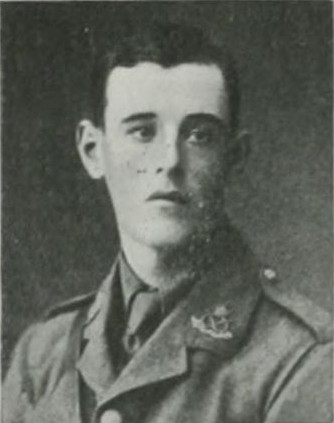
Walter Henry Fox.
FOX, WILFRID ARMSTRONG, 2nd Lieut., 1/4th Battn. Lincolnshire Regt. (T.F.), 2nd s. of the late George Fox, of Horncastle, by his wife, Mary H., dau. of Henry Nicholson; b. Horncastle, co. Lincoln, 12 Oct. 1892; educ. Clevedon House, Woodhall Spa; Aldenham School, and Keble College, Oxford, where he had just finished his second year when the war broke out; joined the 4th Lincolns, 4 Aug. 1914, serving as a Private until he received his commission in Oct. to rank as from 20 Aug. 1914; went to France, 1 May, 1915, and was killed in action at Zillebeke, 29 July, 1915; unm. Buried in Dranoute Churchyard. Lieut.-Col. Barrell, commanding 4th Lincolns, wrote: “During the time he was with us he endeared himself to everyone of us, and he had the makings of a very good officer”; and a Horncastle soldier: “The unfortunate death of Lieut. Fox occurred in these trenches. It would have been a job to find a more capable man in the battalion. His cheery manner was just the thing that’s wanted out here, and although he was not in our company and had not been with us very long, his loss was felt acutely by the whole of the battalion, who all appreciated his readiness to help in any concert or sport that was arranged to pass the evenings while we were resting. Most of us knew him as a Private, and all agree that he was a jolly good Private and an ideal officer.”
FOX, WILLIAM, Stoker, P.O., 172400, H.M.S. Good Hope; lost in action off Coronal, on the coast of Chili, 1 Nov. 1914.
FOX, WILLIAM ALFRED, Stoker, 1st Class (R.F.R., B. 7020), S.S. 101584, H.M.S. Hogue; lost in action in the North Sea, 22 Sept. 1914.
FOXELL, FREDERICK JAMES, Ship’s Corpl., 1st Class, 209944, H.M.S. Good Hope; lost in action off Coronel, on the coast of Chili, 1 Nov. 1914.
FOXTON, JAMES, Stoker, R.N.R., A. 3049, H.M.S. Hawke; lost when that ship was torpedoed in the North Sea, 15 Oct. 1914; m.
FOYER, WILLIAM, Petty Officer, 176217, H.M.S. Hawke; lost when that ship was torpedoed in the North Sea, 15 Oct. 1914; m.
FRAMPTON, JOHN THOMAS, A.B. (R.F.R., B. 3007), S.S. 350, H.M.S. Good Hope; lost in action off Coronel, on the coast of Chili, 1 Nov. 1914.
FRAMPTON, JOSEPH HENRY, Leading Stoker (R.F.R, B. 4207), 292170, H.M.S. Good Hope; lost in action off Coronel, on the coast of Chili, 1 Nov. 1914.
FRAMPTON, WALTER JOHN, Sergt., No. 648, 16th Battn., 4th Brigade, Australian Imperial Force, eldest s. of the late Walter Frampton, of the Civil Service, by his wife, Fanny (3, Lennox Mansions, Southsea, Hants), dau. of Edward Kirk Horn, of Adelaide, South Australia, and grandson of the Rev. Canon John Frampton, of the Priory, Tetbury, Gloucestershire; b. Adelaide, South Australia, 20 Dec. 1867; educ. St. Edward’s School, Oxford; enlisted as Pay-Corpl. in the Australian Expeditionary Force after the outbreak of war, about 14 Oct. 1914; left with his Battn. for Egypt in Jan.; took part in the landing at the Dardanelles on 25 April; was seriously wounded at Gaba Tepe on the 27th, and died in the 17th Royal General Hospital, Alexandria, 3 May, 1915. Buried in Chatby Military Cemetery, Alexandria: unm. Sergt. Frampton was most highly spoken of for his bravery by his commanding officers, who said that, but for his death, he would shortly have received his commission. A tablet to his memory was placed in the chapel of St. Edward’s School, Oxford.
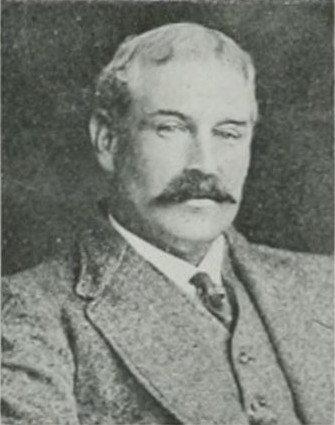
Walter John Frampton.
FRANCIS, ARTHUR, Private, No. 8146, 1st Battn. Dorsetshire Regt., s. of Job Francis, of 95, Abercynon Road, Abercynon, co. Glamorgan; b. Ashton Gate, Bristol, 4 Feb. 1895; educ. Board School there; enlisted 1 Sept. 1914; and died from the effects of gas poisoning at Hill 60, 4 May, 1915; unm.
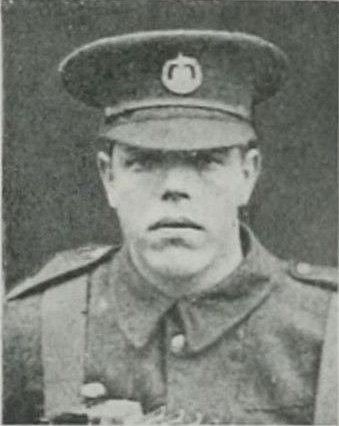
Arthur Francis.
FRANCIS, BASIL HUGH, 2nd Lieut., 3rd Battn. The Royal Scots, s. of Capt. Harold Hugh Francis, late Royal Scots; b. Firth House, Rosslyn, 8 Oct. 1895; educ. Rugby and University College, Oxford (admitted March, 1914), and on the outbreak of war was gazetted to his father’s old regiment, 14 Aug. He was killed in action near La Bassée, 4 Feb. 1915; buried Château de Gerve, near Bethune.
FRANCIS, GILBERT BRYAN, Private, No. 10/2138, Wellington Infantry, New Zealand Expeditionary Force, only s. of the Rev. David Francis, B.A., Vicar of Llandygwydd, Cardigan, R.D., by his wife, Amy, 3rd dau. of J. M. Bryan, of Northampton, M.D., F.R.C.S.; b. Llandygwydd Vicarage, 17 Oct. 1886; educ. Llandovery College; went to New Zealand, 4 Dec. 1912; enlisted, 15 Feb. 1915; left New Zealand with reinforcements, 12 June, 1915, and died of enteric fever at St. George’s Military Hospital, Malta, 13 Nov. 1915. Buried in Pieta Cemetery, Malta; unm.
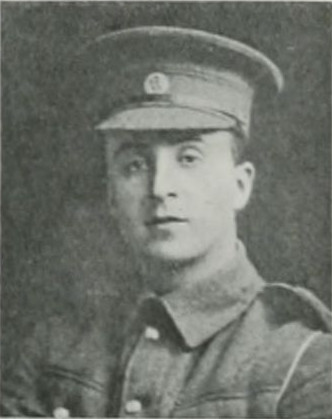
Gilbert Bryan Francis.
FRANCIS, HENRY WILLIAM, Private. No. 11133, 4th Battn. 1st Brigade, Canadian Expeditionary Force, elder s. of Henry Francis, of Georgetown, Ontario, Canada, by his wife, Barbara Wells, dau. of William James Saunders; b. Poplar, London, E., 6 Feb. 1897; educ. Hermit Road Council School, London, and Georgetown, Canada; started work at the age of 13 at the Barber Paper and Coating Mills; Georgetown, Ontario; volunteered 6 Aug. 1914, two days after the declaration of war; left. Canada with the first contingent; went to France, 6 Feb. 1915, took part in the various engagements, including the repulse of the German gas attack at Langemarck, until 17 June, 1915, when he was shot through the temple by a sniper, while taking a message down the trench. His Commanding Officer wrote: “As a soldier there was none braver and none who played the game more manfully than did Henry.”
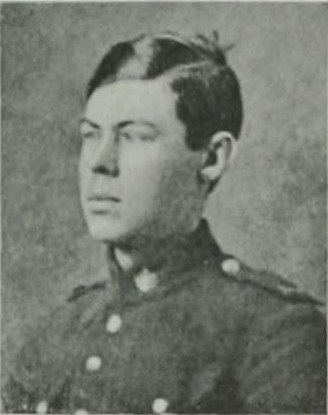
Henry William Francis.
FRANCIS, JAMES THOMAS, Private, R.M.L.I., Ch./11729, H.M.S. Hawke; lost when that ship was torpedoed in the North Sea, 15 Oct. 1914.
FRANCIS, JOHN, Capt., 1/5th Battn. Royal Warwickshire Regt. (T.F.), only child of John Horace Francis, of 7, Westbourne Road, Edgbaston, member of the firm of Deakin & Francis, Birmingham, and his wife, Ethel, yr. dau. of the late John William Botsford, of Manchester; b. Edgbaston, 30 June, 1887; educ. Uppingham and Gottingen, Germany; and was Director and Secretary of Deakin & Francis, Manufacturing Jewellers. He joined the 5th (Territorial) Battn. of the Warwicks on its organisation in 1907, and became Lieut., 30 Oct. 1909. On the outbreak of war he volunteered for Imperial Service; was promoted Capt., 5 Aug. 1914; went to France, 21 March, 1915, and was killed in action in France, 12 June, 1915, being shot by a sniper; unm. Buried in the 5th Battn. Warwicks Cemetery, White Gates, Petit Pont, Ploegsteert. The Col. of the battn. wrote: “He belonged to a fine battn. He was proud of the battn. and the battn. were proud of him,” and after remarking on the loyal spirit of the corps, pointing out that 900 of the 960 men volunteered for foreign service, continued: “It was the officers of the type of Johnny Francis, as he was known in the mess, that made the regt, what it was. Francis loved the regt., loved his company, and his men were devoted to him. Amidst 30 or 40 officers there are bound to be degrees of character, force and capacity, but in Francis I had a perfect soldier. As to character, he was the soul of honour, a disciplined officer, a true friend. He had a keen sense of justice and a sort of rough lovingkindness to his men which made them value him. As to force, he was a born commander, a leader of men. As to capabilities, he was clever, knew his job thoroughly and had a way of imparting his knowledge to his men, and he was hard-working; he was never idle. As to courage, there never was a braver man. He was not merely a brave fool who saw no danger. I think he was the kind of man who enjoyed danger. He would take a fearful punishment on the football field or in a boxing match with the utmost good temper. There was about him a joyous courage. I doubted some men’s courage, I doubted my own, but I never doubted his.” A Memorial Cross was erected in the Churchyard at Fladbury, and was dedicated by the Bishop of Worcester, June, 1916. Capt. Francis, who was the first officer to fall of the 5th and 6th Warwicks, was the great grandson of John Francis, who was the first man to be given a commission as Lieut. in the Volunteer movement of 1803. He was a well-known player for the Moseley Rugby Club.