The Roll of Honour. (continued 27)
Reading edition
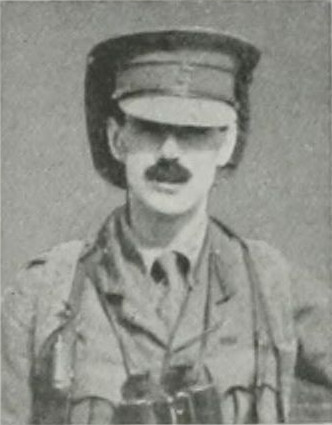
John Banks Jenkinson.
JENNINGS, ALLEN WILLIAM MARK, A.B. (R.F.R., Ch. B. 2401), 165648, H.M.S. Aboukir; lost in action in the North Sea, 22 Sept. 1914.
JENNINGS, ARTHUR, Stoker, 1st Class (R.F.R., Ch. B. 6422), 305498, H.M.S. Aboukir; lost in action in the North Sea, 22 Sept. 1914.
JENNINGS, FREDERICK, A.B., R.F.R., S.S. 2437, H.M.S. Cressy; lost in action in the North Sea, 22 Sept. 1914.
JENNINGS, FREDERICK SINCLAIR WILLS, Private, No. 63495, 23rd Battn., subsequently attd. 14th Reserve Battn., Canadian Expeditionary Force, eldest s. of Frederick Wills Jennings, of 8, Selborne Place, Hove, formerly of Ealing and Streatham, B.A., retired H.C.S.; b. Wandsworth Common, co. Surrey, 11 Nov. 1881; educ. St. Paul’s School (foundation scholar), Wren’s; Edinburgh University and Bangor University (Agricultural Department); after finishing his course there, he went to Canada and took up land in British Columbia, but on the outbreak of war volunteered for active service overseas with the West Mounted Rifles, 23rd Battn., at Calgary, 4 Nov. 1914. After training in Quebec, he came over with the Reserve Battn. of the 1st Contingent to Shorncliffe in March, 1915, went to the Front in May, and was shot through the head by a sniper while on duty in the trenches, near the Bois de Ploegsteert, Belgium, 6 July, 1915; unm. He was buried the same day in a small cemetery in Ploegsteert Wood. His Platoon Commander wrote: “He joined my platoon from the 23rd Regt. early in May, after the Battle of Ypres, and I was struck from the first by his cheerfulness, quiet obedience, and a striking devotion to duty in face of the many obstacles we have to contend with. He received his baptism of fire shortly after coming to this country at the Battle of Festubert, and was with us at Givenchy, coming successfully through these ordeals.” Jennings was in the 1st XV. at St. Paul’s, and joined the Cadet Corps during the South African War.
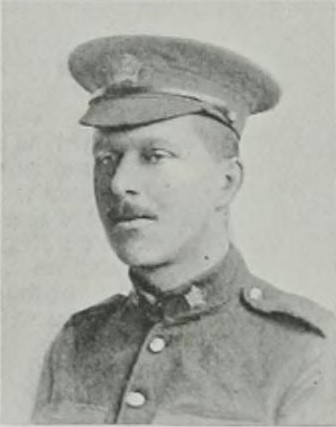
Frederick S. W. Jennings.
JENNINGS, JAMES, Stoker, R.N.R., 593V, H.M.S. Hogue; lost in action in the North Sea, 22 Sept. 1914.
JENNINGS, REGINALD JOHN, L.-Corpl., No. 2355, 18th Battn. (London Irish Rifles) The London Regt. (T.F.), yr. s. of William Jennings, of West View, Blagdon Hill, Taunton, by his wife, Mary Ann, dau. of Francis Lancashire, of St. Helier’s, Jersey; b. St. Helier’s, Jersey, 1 Feb. 1888; educ. Huish Grammar School, Taunton, and St. Mark’s College, Chelsea; was a Schoolmaster at Bridge Council Schools, Wealdstone; served in the 10th Middlesex Territorial Regt., 1907–11, and enlisted for Imperial service in Sept. 1914; left with his regt. for the Front, 9 March, 1915, served in France and Flanders, and was seriously wounded at Loos, 25 Sept. 1915, and died the day following. Buried in cemetery at Noeux les Mines; unm.
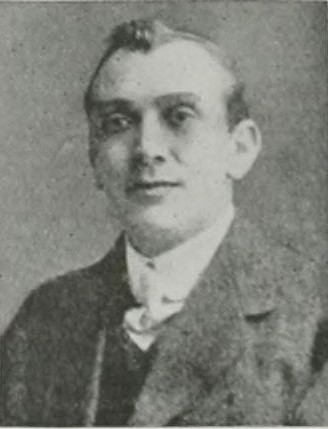
Reginald John Jennings.
JENNINGS, RICHARD LOUIS, A.B., 213174, H.M.S. Liberty; killed in action in the Heligoland Bight, 28 Aug. 1914.
JENNINGS, WILLIAM, Corpl., R.M.L.I., Ch. 13997, H.M.S. Hawke; lost when that ship was torpedoed in the North Sea, 15 Oct. 1914.
JENOURE, GEORGE ETHELREAD, Ordinary Signalman, J. 21192, H.M.S. Good Hope; lost in action off Coronel, on the coast of Chili, 1 Nov. 1914.
JEPHSON, JOHN NOBLE, Major, 6th (Service) Royal Munster Fusiliers, 2nd s. of the late Dep.-Inspector-General William Holmes Jephson, M.D., by his wife, Mary Harden, dau. of the late Major Horatio Nelson Noble, Indian Army, and grandson of the late John Jephson, of Limerick, J.P.; b. Bangalore, India, 8 Oct. 1864; educ. Norwood (Exeter), Newton Abbot College, Kelly College, and Sandhurst; gazetted to Manchester Regt. in 1885, joining the Indian Army (5th Bengal L.I.) in 1889. He obtained his majority in 1903, but becoming subject to malaria, retired from the Indian Army in 1905, and joined the Territorial force in Devon, with the Command of the 4th Wessex Brigade, R.F.A. He resigned this command shortly before the outbreak of war in 1914, when he again offered his services, and was appointed second in command of the 6th Royal Munster Fusiliers in Sept. 1914. He took part in the landing of that Regt. in Suvla Bay on 7 Aug. 1915, and in the subsequent fighting on the Karakol Dagh; on his own initiative he took an important position there, which was subsequently officially named “Jephson’s Post”; he was shot through the head on 15 Aug. while charging at the head of his men in the attack on Kiretch Tepe Sirt, and died of his wounds in Mudros Hospital on 29 Aug. 1915. His Colonel wrote of him: “From the first the loyalty he always showed to me, though junior to him in years, never slackened or failed; when we got into the active sphere of operations, his energy and keenness were marvellous; he practically alone captured an important height which the Brigadier always afterwards in his orders called ‘Jephson’s Post,’ and it was in the defence of this post that he was shot. For absolute dash and fearlessness he had not an equal, and his loss is irreparable.” He was mentioned in Sir Ian Hamilton’s Dispatch of 11 Dec. 1915 [London Gazette, 28 Jan. 1916], for good work done in Gallipoli. Major Jephson was a keen sportsman and a first-class shot. He m. at Lucknow, 20 Dec. 1890, Lilian Bell Bere, only child of the late Capt. Edward Septimus Wood, of the Indian Forests Department (formerly of the Argyll and Sutherland Highlanders), by his wife, Bessie Bella Gordon, dau. of the late Major B. Edward Baker Bere, 16th Lancers, and had issue two sons: Edward William Francis (gazetted to R.F.A. Feb. 1915), b. 5 Nov. 1897; and John Arthur Holmes, b. 13 March, 1902.
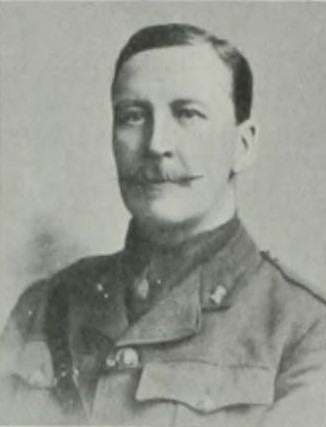
John Noble Jephson.
JEROME, JOHN WILLIAM, Gunner, R.M.A. (R.F.R., 1st Class), 7427, H.M.S. Good Hope; lost in action off Coronel, on the coast of Chili, 1 Nov. 1914.
JEROME, RALPH CHARLES, Corpl., No. 8502, 2nd Battn. Yorkshire Regt., yst. s. of Charles Jerome, of 15, Ormeley Road, Balham, Solicitor, Freeman of the City of London by purchase (1883), formerly a member of the New Malden Local Board, and afterwards a member of the L.C.C. for Brixton (1895–1901), by his wife, Florence Elizabeth (died in his absence at the Front), dau. of John Jacobs, of Basingstoke; b. Locksley Lodge, New Malden, 15 Feb. 1888; educ. Malden College, Merchant Taylors’ School, Dulwich College, and Margate College; enlisted at Stratford, Middlesex, on 25 Oct. 1906, aged 18 years 9 months, was seven years with the Army and five years on the Reserve; served with his Battn. at Cairo, Alexandria, Khartoum, and other places, and finally at Sialkot in the Punjab; returned to England and received his discharge with an exemplary character; rejoined his old regt. on the outbreak of war; left for France on or about 21 Nov. 1914, and was killed in action at the Battle of Neuve Chapelle, two miles west of Aubers, on the morning of 12 March, 1915. Buried on the field; unm. Sergt. Wrist, who stood beside him when he was shot, wrote: “He died a gallant death; the men of his section miss him very much,” and 2nd Lieut. H.S.R. Montesole of the Royal Sussex Regt., attd. 2nd Yorkshires, since killed in action, wrote that he was “always a good soldier, and died as a soldier should.”
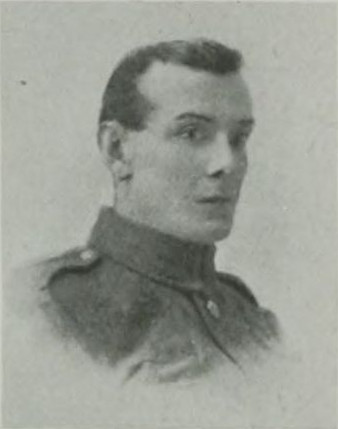
Ralph Charles Jerome.
JERRAM, HARRY ESCOMBE RAVENHILL, Midshipman, R.N., H.M.S. Hawke, 2nd s. of the Rev. Arnold Escombe Jerram, of St. Augustine’s Road, Edgbaston, Birmingham, M.A., S.P.G., Organising Secretary for the Midland Dioceses and late Vicar of Langford, co. Oxon, by his wife, Anna Christina, dau. of William Waldron Ravenhill, of the Inner Temple, Recorder of Andover; b. Bradley Vicarage, Huddersfield, 31 Aug. 1897; educ. Hinwick House, near Wellingborough, Osborne and Dartmouth; appointed Midshipman, H.M.S. Hawke, 14 Aug. 1914, and was lost when that ship was sunk by torpedo fire in the North Sea, 15 Oct. following. He was a cousin of Vice-Admiral Sir Thomas M. Jerram, K.C.B., late Commander-in-Chief on the China Station, and great-nephew of the late Right Hon. Harry Escombe, P.C., Q.C., M.L.S., Premier of Natal.
JERRED, FRANK, Private, R.M.L.I., 15184, H.M.S. Good Hope; lost in action off Coronel, on the coast of Chili, 1 Nov. 1914.
JESSE, ROBERT TURVILLE, A.B., 227397, H.M.S. Good Hope; lost in action off Coronel, on the coast of Chili, 1 Nov. 1914.
JESSOP, NAPIER ARNOTT, Lieut., 7th Battn. (1st British Columbia Regt.) Canadian Expeditionary Force, only s. of the late George Henry Jessop, of Crediton, Devonshire, by his wife, Ethel Marian, only dau. of the late John Frederick Bell, Capt. Loyal North Lancashire Regt.; b. Taunton, co. Somerset, 28 May, 1889; educ. private school at Bishop’s Stortford; went to Vancouver Island, British Columbia, in 1908, where he was first farming, and later went into real estate business, received a commission as Lieut. in 88th Victoria Fusiliers, 16 Sept. 1912, and served with them on strike duty at Nanaimo, B.C., from Aug. 1913 until the outbreak of war; appointed Lieut. in 7th Battn., Canadian Expeditionary Force, 22 Sept. 1914; came over with the first contingent in Oct. 1914; left for France, 10 Feb. 1915, and was killed in action near St. Julien during the heroic stand of the Canadians in the 2nd Battle of Ypres, 24 April, 1915; unm. His Commanding Officer wrote: “Lieut. Jessop was on the right of our battn. line, the section which was first surrounded, and which was later practically wiped out. Lieut. Jessop, all agree, was perfectly splendid under the fierce attack that was thrown against us that day. He was an inspiration to his men. There is not much to tell, for his platoon were in trenches throughout, and merely fought the Germans off by rifle fire. There was nothing spectacular about it, but it was the height of enduring courage.”
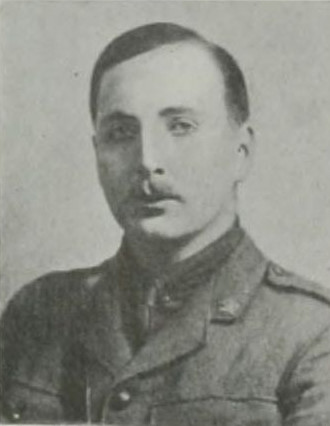
Napier Arnott Jessop.
JOB, BERNARD CRAIG KEBLE, 2nd Lieut., 3rd, attd. 1st Battn., The Queen’s Own Royal West Kent Regt., only s. of the Rev. Frederick William Job, Vicar of Lower Gornal, co. Stafford, by his wife, Emily Frances, dau. of William Young Craig, M.P., for N. Staffordshire (1880–85); b. Liverpool, 9 June, 1887; educ. Radley College; went to Liverpool to enlist in the Liverpool Scottish the day War was declared, 4 Aug. 1914, and was sworn in 6 Aug. He received his commission 1 Nov., went to the Front with a draft of the Royal Dublin Fusiliers, arriving in France on Good Friday, and a few days later was attd. to the 1st Battn. of his own regt. and was killed in action in the counter-attack on Hill 60, 18 April, 1915. Writing to his father, Major Robinson, commanding the 1st Battn., said: “He was shot by a bullet and died almost immediately on the morning of April 18 in the heavy fighting which followed our capture of a portion of the enemy’s position called Hill 60, 2½ miles S.E. of Ypres. I understand that he died almost instantly after being hit and that he could have felt no pain. It was not possible during the fighting to bury his body. I am, however, informed that all the dead have since been buried, so your son no doubt lies at rest among the other officers and men who fought with him. Your son had only joined this Battn. a few days before his death, but from the little I saw of him, I formed the opinion that he was a gallant and valuable officer.” Col. Sir Arthur G. Boscawen, of the 3rd Battn., wrote: “He was a universal favourite and the soul of courage, had he lived he would have made a very fine officer.”
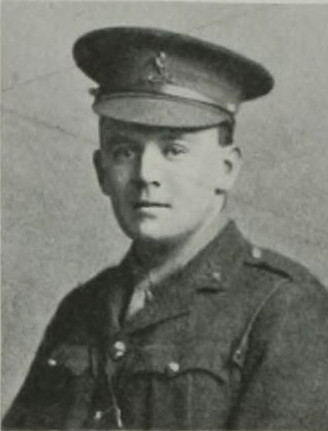
Bernard Craig Keble Job.
JOBBINS, THOMAS ARTHUR, Stoker, 1st Class (R.F.R., Ch. B. 7733), S.S. 103098, H.M.S. Aboukir; lost in action in the North Sea, 22 Sept. 1914.
JOHNSON, ALBERT, Ship’s Steward, 173611, H.M.S. Good Hope; lost in action off Coronel, on the coast of Chili, 1 Nov. 1914.
JOHNSON, ALBERT CHAPMAN, Private, No. 73915, 28th Battn. Canadian Expeditionary Force, Bombers’ Section, s. of John Johnson, of 44, Burton Stone Lane, Clifton, York, Gardener, by his wife, Elizabeth, dau. of James (and Ann) Chapman; b. Wiggington Grange, near York, 13 Nov. 1883; educ. Skelton, near York, and Eythorne, Kent; was for some time a telegraph messenger at the Post Office, York, and later an attendant first at the North Riding Asylum, and after Aug. 1910, at the Mimico Asylum, Canada, and afterwards was successively employed on the Canadian Pacific Railway, at a lumber camp, and on the Grand Trunk Railway; joined the 28th Battn. Canadian Expeditionary Force, 1 Oct. 1914, and came over with the 2nd Contingent in June, 1915; left for France, 17 Sept. 1915, and was killed in action during the advance from Loos, 8 Oct. following; unm. His Company Officer wrote of him as “a man ever ready to do his duty—no growler, but always bright and willing.”
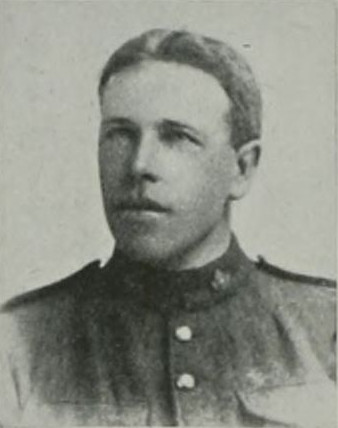
Albert Chapman Johnson.
JOHNSON, ALFRED ARTHUR, A.B. (R.F.R., B. 4543), S.S. 1613, H.M.S. Good Hope; lost in action off Coronel, on the coast of Chili, 1 Nov. 1914.
JOHNSON, DAVID, Private, R.M.L.I. (R.F.R., Ch. B. 282), H.M.S. Cressy; lost in action in the North Sea, 22 Sept. 1914.
JOHNSON, GEORGE ALBERT WILLIAM, Seaman, R.N.R., 5028B, H.M.S. Cressy; lost in action in the North Sea, 22 Sept. 1914.
JOHNSON, GEORGE GUMBRELL, Chief Stoker (R.F.R., A. 3069), 148022 (Ports.), H.M.S. Hogue; lost in action in the North Sea, 22 Sept. 1914.
JOHNSON, HERBERT WILLIAM, Shipwright, 2nd Class, 346902, H.M.S. Aboukir; lost in action in the North Sea, 22 Sept. 1914.
JOHNSON, JOHN, A.B. (R.F.R., Ch. B. 3644), 190781, H.M.S. Aboukir; lost in action in the North Sea, 22 Sept. 1914.
JOHNSON, JOSEPH, Private, No. 10411, 2nd Battn. Royal Scots Fusiliers, s. of James Johnson, of 1, Field Street, North Road, Darlington; b. Stockton-on-Tees, 20 Nov. 1889; educ. St. Patrick’s School, Coatbridge, Scotland; enlisted 2nd Royal Scots Fusiliers, 8 Aug. 1911; served with the Expeditionary Force in France and died a prisoner of war at Field Moorslede, Germany, 19 June, 1915, of wounds received at the Battle of Neuve Chapelle, on the preceding 12 March. Buried in Moorslede Parish Cemetery; unm.
JOHNSON, LUTHER VINCENT BURGOYNE, Capt., 8th Batt. Durham L.I. (T.F.), eldest s. of Major John Burgoyne Johnson, of Brockley, Saltburn-by-the-Sea, 8th Batt. Durham L.I., J.P., co. Durham; b. Middlemoor, near Richmond, co. York, 5 Sept. 1890; educ. Aysgarth School, Newton-le-Willows, Yorkshire; Charterhouse, Godalming; and King’s College, Cambridge (B.A.); joined the Hamsteels Company of the 8th Durham L.I., being gazetted 2nd Lieut. 8 April, 1910; Lieut. 12 May, 1912, and Capt. 12 Sept. 1914. He went to the Front in April, and was killed a few days later, in action at Grafenstafel Ridge, N.E. of Ypres, 25 April, 1915. At the outbreak of war Capt. Johnson was serving his articles as a solicitor with the firm of Messrs. Cochrane and Belk, of Middlesbrough. He was well known in cricket and football circles, and had qualified in musketry course and machine gun course (distinguished) at Hythe.
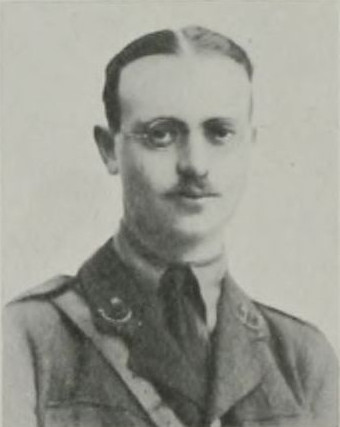
Luther V. B. Johnson
JOHNSON, RICHARD DIGBY, Major, 3rd, attd. 2nd Battn. Royal Dublin Fusiliers, yr. surviving s. of the late Edward Mayson Johnson, by his wife, Emma Jane (28, St. Mary’s, York), dau. of the late William Emmerson Bowman, and gdson. of the late Richard Johnson, of York, the well-known racing judge and handicapper in the North of England in the middle of the last century; b. York, 30 June, 1876; educ. St. Peter’s, York; joined the staff of the York City and County Bank at the age of 17, leaving it four years later for a tour round the world, and on his arrival at Capetown, the South African War broke out; he at once returned to England and obtained a commission in the 3rd (Militia) Battn. Royal Dublin Fusiliers, June 1900. He served with the 11th Mounted Infantry in the South African War, 1901–2; took part in the operations in the Transvaal, Aug. 1901 to 31 May, 1902; was invalided home with enteric fever, receiving for his services the Queen’s medal with four clasps. On returning home he qualified at Hythe, and became Instructor of Musketry to the Kildare Battn. and he was promoted Capt. 7 Oct. 1905, and Major 18 Dec. 1914. He went to France to join the 2nd Battn. of his regt. early in Dec.; was wounded near St. Julien, 25 April, 1915, and granted a week’s leave; rejoined his regt. on 10 May, falling in action a fortnight later, 24 May, 1915. He was mentioned in F.M. Sir John (now Lord) French’s Despatch, 31 May [London Gazette, 22 June] 1915. Major Johnson was a freeman of the City of York, and had the Coronation medal. He m. at St. Michael’s Church, Camberley, Surrey, 21 Sept. 1904, Claudine Trower (Camoys, Braintree), 6th dau. of Col. Theodore William Hogg, of Eastwick, Camberley, Surrey, late Indian Staff Corps, and had a son and dau.: Richard Edward Digby, b. 16 Dec. 1911; and Claudine Blanche Mayson, b. 8 July 1905.
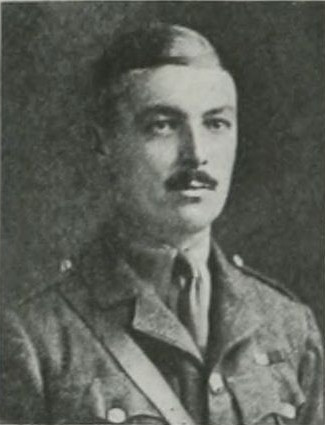
Richard Digby Johnson.
JOHNSON, ROBERT WARREN, Capt., R.N., H.M.S. Cressy, 2nd s. of the late Vice-Admiral John Ormsby Johnson, R.N., by his wife, Edith Renira, dau. of the Rev. Charles Edward Twyford; b. Dovercourt, co. Essex, 10 May 1867; educ. Cornwallis, Maidenhead, and Foster’s Naval Academy, Stubbington; entered the Service as a Cadet, 15 July, 1881; appointed Midshipman, 13 Nov. 1883; promoted Sub.-Lieut. 13 Nov. 1887; Lieut. 1 April, 1891; Commander, 31 Dec. 1904, and Capt. 31 Dec. 1910, and after the outbreak of war, was appointed to the command of H.M.S. Cressy. He was lost when that cruiser, together with the Aboukir and the Hogue, was sunk by torpedo-fire while engaged in patrolling off the Dutch coast on the morning of 22 Sept. 1914. One of the surviving officers of the ill-fated Cressy wrote: “Our Commander, Capt. Johnson, died like a hero; he had his confidential book lashed to his arm when he went down. He deserved ten Victoria Crosses, for he stopped on board until the last moment,” and Stoker William Wake, of Sunderland, another survivor, stated that the Capt. remained on the bridge until he was up to his neck in water, and that he was cheered again and again by the men as he sank out of sight. A Petty Officer wrote that the last he saw of the Capt. was when he called out to a young sailor and gave him the bit of plank on which he was supporting himself, remarking: “Here, you are a young chap, take this.” Capt. Johnson m. at Portsmouth, 11 July, 1906, Grace Isobel (Fintry Cottage, Warblington, Havant), dau. of the late Algernon Paley, Barrister-at-Law, and had two sons and a dau.: John Paley, b. 12 June, 1907; Peter Warren, b. 13 Nov. 1908; and Elisabeth Freda, b. 11 Sept. 1913.
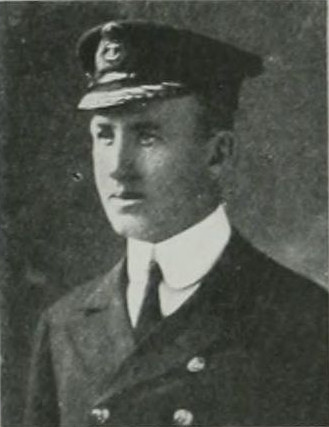
Robert Warren Johnson.
JOHNSON, THOMAS, Leading Seaman (R.F.R., Ch. B. 8948), 20661, H.M.S. Cressy; lost in action in the North Sea, 22 Sept. 1914.
JOHNSON, THOMAS, Private, No. 10850, 4th Battn. Middlesex Regt.; served with the Expeditionary Force in France and Flanders; killed in action 14 Oct. 1914.
JOHNSON, WALTER, Private, No. 6700, 1st Battn. Scots Guards; b. Warrington, co. Lancaster; enlisted 5 March, 1907; served with the Expeditionary Force in France and Flanders; killed in action, 26 Oct. 1914.
JOHNSON, WALTER, Private, No. 2831, 3rd Battn. Coldstream Guards; served with the Expeditionary Force in France and Flanders; reported missing after the fighting at St. Julien, 21 Oct. 1914, and later to have been killed on or about that date, and to have been buried by the German authorities in the Cemetery of Ehrenfriedhof 2, near Poelkapelle; m.
JOHNSON, WILLIAM GEORGE, Private, R.M.L.I., Ch. 15485, H.M.S. Hawke; lost when that ship was torpedoed in the North Sea, 15 Oct. 1914.
JOHNSON, WILLIAM HENRY, A.B. (R.F.R., B. 5231), 205964, H.M.S. Good Hope; lost in action off Coronel, on the coast of Chili, 1 Nov. 1914.
CROOM-JOHNSON, BRIAN, Lieut., 4th (Denbighshire) Battn. Royal Welch Fusiliers (T.F.), yst. s. of Harry Croom-Johnson, of the Elms, Wrexham, J.P., by his wife, Elizabeth Roden, dau. of the late George Bradley, of Wrexham, J.P.; b. Wrexham, 16 Sept. 1890; educ. Mostyn House School, Cheshire, and Clifton College (Spence’s House); after leaving school adopted the profession of an engineer and on the completion of three years’ articles was appointed Assistant Engineer to the Wrexham and East Denbighshire Water Company. He was given a commission as 2nd Lieut. 4th (Territorial) Battn. of the Welch Fusiliers, 3 May, 1913, and promoted Lieut. 8 Sept. 1914. He left for France 5 Nov. 1914, and on the 23 Dec. following was personally complimented by the General Officer Commanding for leading a party of 30 men laden with ammunition to the firing-trenches and carrying out this duty without a single casualty, though under fire the whole time; and on 25 Jan. 1915, he was one of three officers who, with a few men, recaptured a trench at Givenchy from which they had been ordered to retire and made prisoners 35 Germans, including two officers. He was killed in action at Richebourg l’Avoué, France, 9 May, 1915, while leading his company against the German trenches; unm.
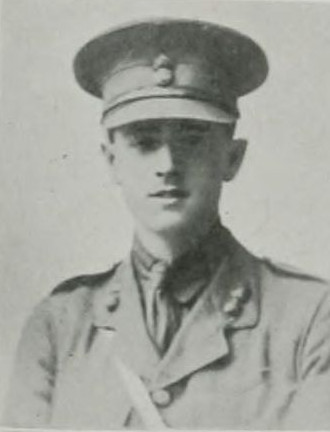
Brian Croom-Johnson.
VINER-JOHNSON, PERCY JOSEPH VINER, Capt., 3rd (Reserve), attd. 1st Battn. Wiltshire Regt., yr. s. of the late Joseph Viner Viner-Johnson, of Beech House, Market Lavington, co. Wilts, Capt. Imperial Yeomanry (who served in the South African War, 1900–1902), by his wife, Clara (The Nutgrove, Chew Magna, Bristol), dau. of the late Thomas Donders Perry, of Ealing; b. London 13 Oct. 1875; educ. St. Paul’s School; served in the 1st Vol. Battn. King’s Royal Rifle Corps from 1898 to 1902, when he went to South Africa, where he was for some time A.R.M. at Harrismith, and afterwards Relief Magistrate at various places in the Orange Free State. At home on leave when war broke out, he obtained permission from the South African Government, and was gazetted Capt. to 3rd Wiltshires, 18 Sept. 1914. He left for France on 24 Dec. 1914, when he was attd. to the 1st Battn. and commanded A Coy. and was killed in action at Spanbroek Molen, 12 March, 1915. Buried near Spanbroek Molen; unm. His Commanding Officer wrote: “He fell most gallantly leading his men. His conduct was so gallant and brave that, although he is now dead, I have recommended him for the D.S.O. In addition to being a very gallant and brave man, he was a most valuable officer, and his death is a very great loss to his regiment. As a comrade he has endeared himself to all his brother officers and men, and his death is deeply deplored by us all.” Capt. Viner-Johnson was mentioned in F.M. Sir John (now Lord) French’s Despatch of 31 May, 1915.
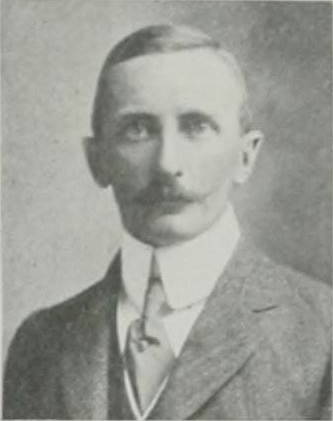
Percy J. V. Viner-Johnson.
JOHNSTON, BRUCE ALLEN, L.-Corpl., No. 69474, B Coy. 26th Battn. (New Brunswick Regt.) Canadian Expeditionary Force, s. of Andrew Charles Johnston, of Costigan, Victoria co., New Brunswick [b. there in 1849 of Scottish descent], by his wife, Sarah Jane, dau. of Henry Bowmaster; b. Costigan, 18 Nov. 1889, educ. Public School there; was a Farmer; enlisted 3 Sept. 1914, following the outbreak of war; left Canada with the Second contingent on 12 June, 1915, and died in Etaples, France, 13 Nov. 1915, from wounds in the head received in action on the 11th. He was unm. and was buried in the Camiers Road Cemetery, Etaples.
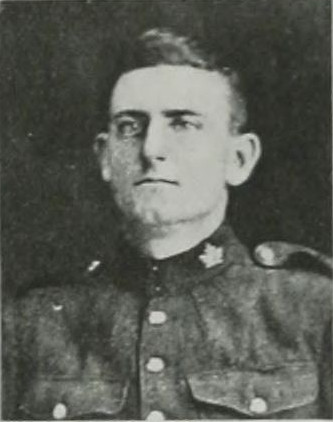
Bruce Allen Johnston.
JOHNSTON, GEORGE ALBERT, Leading Stoker (R.F.R., Ch. B. 4759), 293876, H.M.S. Cressy; lost in action in the North Sea, 22 Sept. 1914.
JOHNSTON, JAMES CECIL, Capt. and Adjutant, 6th (Service) Battn. Royal Irish Fusiliers, eldest s. of Robert Edgeworth Johnston, of Glencore House, co. Fermanagh, by his wife, Edythe Grace, dau. of John Reynolds Dickson, of Woodville and Tullaghan House, co. Leitrim; b. Glencore House, co. Fermanagh, 29 Dec. 1880; educ. Charterhouse and Sandhurst; gazetted 2nd Lieut. unatt. 8 Jan. 1901; posted to the 14th Hussars, 9 March following; served in the South African War, 1901–2, taking part in the operations in the Orange River Colony, Feb. to 31 May, 1902 (Queen’s medal with two clasps); and resigned his commission in 1903. He was Deputy Ranger of the Curragh of Kildare, 1910–12; Master of the Horse to the Earl of Aberdeen, Lord-Lieut. of Ireland, 1910–15; High Sheriff co. Fermanagh, 1910; and Private Secretary to Lord Aberdeen, 1912–15. On the outbreak of war he offered his services and was gazetted Capt. 6th Royal Irish Fusiliers, 28 Sept. 1914, being appointed Adjutant of the Battn., 20 Oct. following. He left for the Dardanelles with the 10th (Irish) Division, under Major-Gen. Sir Bryan Mahon, and was killed in action at Suvla Bay, Gallipoli, 9 Aug. following. His Commanding Officer, Lieut.-Col. F. A. R. Greer, wrote; “We reached the point we were making for, and your husband and I were trying to make out exactly how the situation was, when a shell from some sort of machine gun came over from our right front, caught me on the arm and exploded practically on him. His death, of course, was instantaneous. I saw that much before I had to clear out myself; there were none but dead and dying just there. It will comfort you to know he died a brave and gallant soldier, looked on by all of us as one of the best. I can safely add the sympathy of every officer and man to mine. He died at the farthest point the Battn. reached that day,” and a brother officer: “I saw Johnston in a redoubt early next morning and during Sunday (8 Aug.), like most of us, he was very tired that day, as we had no sleep and practically no food. He was in good spirits, however. His death has been a great blow to us, as he was very popular, and deservedly so, in the regt. He was confident that he would come back all right.” Capt. Johnston m. at Newcastle-on-Tyne, 28 Oct. 1903, Violet Myrtle (Rosemont, Booterstown, Dublin), dau. of Samuel Abraham Walker Waters, Assistant Inspector-Gen., Royal Irish Constabulary, and had three daus.: Myrtle, b. 7 March, 1909; Marjorie Helen, b. 18 Jan. 1911; and Mary Nuala, b. 29 May, 1914.
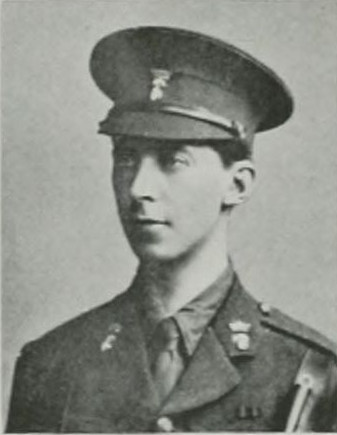
James Cecil Johnston.
JOHNSTON, JAMES HOGARTH, Private, No. 29230, G Coy. 14th Platoon, 16th Battn. (Canadian Scottish) Canadian Expeditionary Force, 2nd and only surviving s. of Patrick Johnston, of Broomhill, Fivemiletown, co. Tyrone, by his wife, Susan Elliot, dau. of the late James Hogarth Rutherfurd, of Kelso: b. Cecil Augher, co. Tyrone, 21 Dec. 1886; educ. Carntall, Clogher, N.S. and Portora Royal School, Enniskillen; worked for a time at Combe Barbour’s Engineering Works, and at those of McLean at Belfast: went to New Zealand in Nov. 1905 at the age of 19, and remained there five years; returned to Ireland, and nine months later went to Winnipeg, Canada; joined the Canadian Scottish at Winnipeg, Aug. 1914; came over with the 1st Contingent in Oct.; left for France 4 Feb. and was killed in action in the heroic charge of the Canadian Scottish near St. Julien, on the night of 23–24 April, 1915. at the beginning of the First Battle of Ypres; unm.
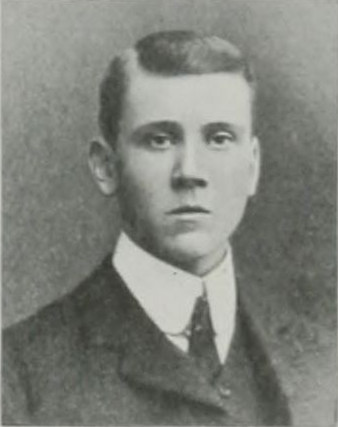
James H. Johnston.
JOHNSTON, REUBEN JOHN, Sick Berth Steward, 350469, H.M.S. Aboukir; lost in action in the North Sea, 22 Sept. 1915.
JOHNSTON, ROBERT, Armourer, 340521, H.M.S. Hogue; lost in action in the North Sea, 22 Sept, 1914.
JOHNSTON, WILLIAM, L.-Corpl., No. 407, 9th Battn. Australian Imperial Force; a native of co. Ayr; served in Egypt; took part in the landing at the Dardanelles, 25 April, 1915, and was killed in action there that day.
JOHNSTON, WILLIAM, A.B. (R.F.R., B. 5958), 188608, H.M.S. Hawke; lost when that ship was torpedoed in the North Sea, 15 Oct. 1914; m.
JOHNSTON, WILLIAM HENRY, V.C., Capt. and Brevet Major, R.E., 2nd s. of the late Major William Johnston. R.A.; b. at Leith, 21 Dec. 1879; passed into the Royal Military Academy, Woolwich, in 1897, and was gazetted to a commission in the Royal Engineers on 23 March, 1899, and promoted Lieut. 19 Nov. 1901, and Capt. 23 March, 1908. His first period of foreign service was passed in Gibraltar, from 1900 to 1905, during part of which time he was employed under the Intelligence Department. On his return to England he was attached to the Survey Department, and on leaving it in 1908 was gazetted as a General Staff Officer (3rd Grade) for service in China. From 11 July, 1908, to 26 Oct. 1911, he was employed in North China, travelling extensively, while engaged on Intelligence work, in the course of which he visited eleven of the eighteen provinces of China. During this time he was also employed in surveying the boundary of the New Territory of Hong Kong. In 1911 he was transferred to the South China Command as General Staff Officer. At the expiration of this period, 27 July, 1912, he was employed at the War Office for about 11 months (2 Sept. 1912 to 9 Aug. 1913), in the geographical section. He entered the Staff College, Camberley, in 1913, and began his course there in Jan. 1914. After the declaration of war he was posted to the 59th Field Coy. R.E., went out with the Expeditionary Force and served with it throughout the winter of 1914–5, including the retreat from Mons and the Battles of the Aisne, the Marne, Neuve Chapelle, 1st and 2nd Battles of Ypres, etc. He was four times mentioned in F.M. Sir John (now Lord) French’s Despatches [London Gazette, 19 Oct. and 25 Nov. 1914 and 17 Feb. and 22 June, 1915], and was awarded the Victoria Cross on 25 Nov. for conspicuous gallantry “at Misy on 14 Sept., when, under a heavy fire all day until 7 p.m., he worked with his own hands two rafts, bringing back wounded and returning with ammunition, thus enabling the advanced brigade to maintain its position across the river.” In March he was appointed to the command of the 172nd Coy., and on 2 May, Brigade Major of the 15th Infantry Brigade. He was made Brevet Major under date 3 June [London Gazette, 23 June, 1915], and was killed in action four days later near Ypres, 7 June, 1915; unm.
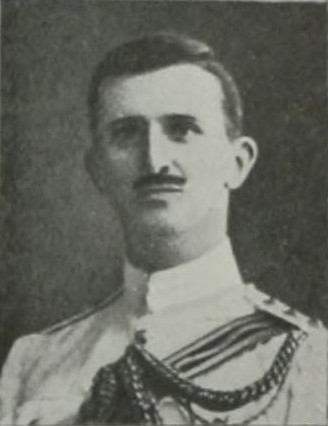
William Henry Johnston.
JOHNSTONE, MILLER, Private, No. 1078, B Coy. 2nd Battn. 1st Australian Expeditionary Force, yst. s. of the late Alexander Johnstone, b. Bannockburn, co. Stirling, 12 March, 1892; educ. Larbert, Stirling; went to Australia in Jan. 1913, and settled at Lockhart, New South Wales, as an Agriculturalist; volunteered on the outbreak of war and enlisted at Kennington, New South Wales, 27 Aug. 1914, took part in the landing at the Dardanelles, 25 April, and died of wounds on H.M. Hospital Ship Derfflinger, 29 April. The Chaplain wrote that Johnstone had carried a wounded Lieut. down to the shore to a place of safety and was returning to the firing line when he was hit and mortally wounded. He was taken on board the hospital ship the following day, and died at sea on his way to Alexandria; unm.
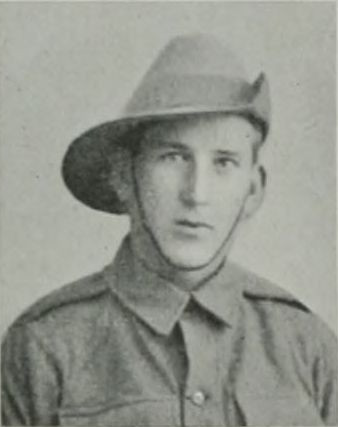
Miller Johnstone.
JOHNSTONE, PETER, Private, No. 2938, 2nd Battn. Royal Scots (Lothian Regt.); served with the Expeditionary Force in France, etc.; died 3 June, 1915, of wounds received in action near Ypres.
JOHNSTONE, WILLIAM, Private, No. 349, 2nd Battn. Royal Scots (Lothian Regt.); served with the Expeditionary Force in France, etc.; killed in action, 22 Dec. 1914.
JOHNSTONE, WILLIAM, Private, No. 8900, 2nd Battn. Scots Guards, s. of William Johnstone, of Newton Stewart, co. Wigton; b. Newton Stewart; enlisted 12 March, 1914; served with the Expeditionary Force in France, etc.; killed in action, 16 May, 1915.
HOPE-JOHNSTONE, WILLIAM GORDON TOLLEMACHE, Lieut., 4th Battn. Royal Fusiliers, formerly 32nd Lancers, Indian Army, 4th s. of William James Hope-Johnstone, of Brownleigh, Feltham [descended from the Hon. Charles Hope-Vere of Craigiehall, 2nd s. of Charles, 1st Earl of Hopetoun, K.T.], by his wife, Emily Mary, dau. of Capt. Edward Bailie, 10th Hussars; b. Esher, co. Surrey, 5 July, 1887; educ. Cheltenham and Sandhurst; received his commission as 2nd Lieut. in the 6th Dragoon Guards, Feb. 1907, and was promoted Lieut. May, 1909. He transferred to the Indian Army in Sept. 1912, with the rank of Squadron Officer in the 32nd Lancers and retired early in 1914. On the outbreak of war he volunteered and was given a lieutenancy in the 4th Royal Fusiliers, 5 Sept., left for France on 8 Oct. and was killed in action at Laventie on the 25th of that month. His next elder brother, Henry Murray, is now (1916) serving with the Royal Fusiliers.
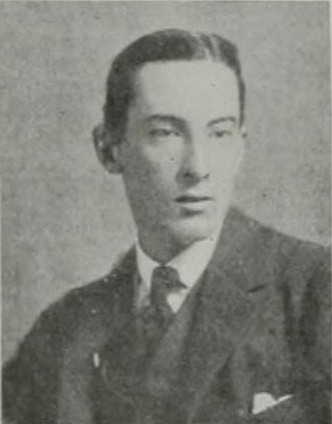
W. G. T. Hope-Johnstone.
JOLLIFF, JOHN, Seaman, R.N.R., 2928C., H.M.S. Hogue; lost in action in the North Sea, 22 Sept. 1914.
JOLIFFE, JOHN, Stoker, 1st Class, S.S. 109240, H.M.S. Pathfinder; lost when that ship was sunk by a mine, about 20 miles off the East coast, 5 Sept. 1914.
JOLLIFFE, WILLIAM JAMES, Stoker, 1st Class (R.F.R., B. 3133), 306590, H.M.S. Good Hope; lost in action off Coronel, on the coast of Chili, 1 Nov. 1914.
JONES, ADRIAN HERBERT, Private, No. 1632, 1/3rd Battn. (Royal Fusiliers) The London Regt. (T.F.), 2nd s. of Herbert Daniel Jones, of 35, Osterley Park Road, Southall, Clerk in charge of Telegraph Dept. G.W.R. Southall Station, by his wife, Selina, dau. of William Hughes, of the Park, Clee Hill, Ludlow, Salop; b. Shrewsbury, 6 May, 1895; educ. All Saints’ School, Shrewsbury, and Featherstone Road School, Southall; was a clerk in the employ of the Great Western Railway at the Hotel Paddington, and afterwards Clerk Great Northern Railway, at King’s Cross; joined 1/3rd Royal Fusiliers, July, 1912; volunteered for Imperial service on the outbreak of war and left for Malta at the end of 1914; proceeded to France, 2 Jan. 1915, and was killed in action at the Battle of Neuve Chapelle about 5.30 p.m. on 10 March following, during a successful attack on a part of the German trenches which had held out all day; unm. One of his officers wrote: “He died a very gallant death. The Army has lost a very brave soldier.” From information received by his relatives it would appear that in the charge in which he fell he showed conspicuous courage and sang froid, and that his last words were: “Come on; give me a leg up,” as he was getting over the German parapet. Private Jones had a fine voice and was a member of the choir of Holy Trinity Church, Southall. His elder brother, Gunner S. W. Jones, was drowned while on active service, 21 July, 1916.
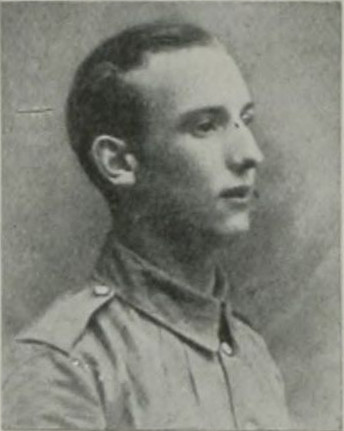
Adrian Herbert Jones.
JONES, ALFRED EDWARD, Stoker, 1st Class (R.F.R., B. 5794), S.S. 100725, H.M.S. Hawke; lost when that ship was torpedoed in the North Sea, 15 Oct. 1914.
JONES, ALFRED POOLE, Private, No. 2214, 1/24th Battn. (The Queen’s) The London Regt. (T.F.), 3rd s. of the late Arthur Daniel Jones, of 40, De Burgh Street, Cardiff, by his wife, Elizabeth Annie (now the wife of James Newton Paterson, of 5, Western Drive, Woodend Park, Grassendale Road, Liverpool), dau. of Jacob Lewis, Farmer; b. Cardiff, 4 Nov. 1890; educ. Higher Grade School, Cardiff; was in the milling and flour trade, first with Messrs. James Thomas Co., Newport, Isle of Wight, and latterly with Messrs. H. N. Bathgate & Co., London; joined the 24th London, 6 Aug. 1914; left for France, 8 March, 1915, and was killed in action at Givenchy, 26 May following, in an attack by his battn. and the 23rd London on the German trenches. Buried, Givenchy, in the Soldiers’ cemetery, about half a mile behind the trenches; unm. His Captain wrote: “We captured the trenches which were our objective, but lost over half the battn. in doing so. In C Coy. alone 44 were killed and 70 wounded.” A comrade wrote: “When Alf fell, I ran down the slope to see what I could do for him. He was lying on his back at the bottom. He said he was hit in the stomach, but would not let me attend to him. ‘Never mind about me, get on with the firing, lad,’ he said, and I had to, as our line was very thin then.” This was the action in which L.-Corpl. Keyworth, of the 23rd London, won the V.C., and several other decorations were earned by the officers and men of the two battns. engaged. Private Jones was a keen footballer and played for his regt. on many occasions.
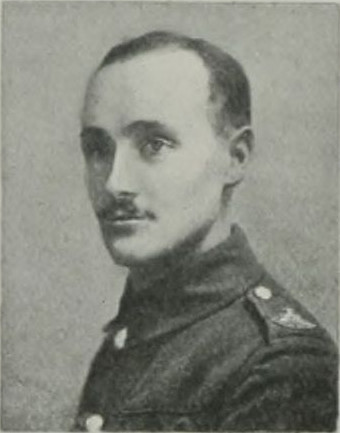
Alfred Poole Jones.
JONES, ARTHUR, Private, No. 65503, 24th Battn. (Victoria Rifles), Canadian Expeditionary Force, yst. s. of the late William Jones; b. Sedgeley, 27 Jan. 1884; went to Canada in June, 1912, and settled in Montreal. After the outbreak of war he volunteered for service overseas, joined the Victoria Rifles in Oct. 1914, and after a period of training came over to England in May, 1915; left for the Front, 15 Sept. 1915; and was killed in action in France in his dug-out by a shell, 12 Oct. 1915, and was buried in the Canadian Burial Ground; unm.
JONES, ARTHUR WILLIAM, Stoker, 1st Class, K. 14776, H.M.S. Pathfinder; lost when that ship was sunk by a mine, about 20 miles off the East Coast, 5 Sept. 1914.
JONES, ARTHUR WYNN, L.-Corpl., No. 2352, 1/5th Battn. the Welsh Regt. (T.F.), third and yst. s. of Thomas Jones, of The Hall, Llanfyllin, Solicitor, Town Clerk and Clerk to the County and Borough Magistrates, by his wife, Elizabeth Alice, dau. of the late Thomas Edwards, of Penybontfawr, Montgomeryshire; b. Llanfyllin, co. Montgomery, 23 March, 1880; educ. The Grammar School, Oswestry; was for many years Cashier in the National Provincial Bank, first at the Horsefield Branch, Bristol, and then at Cowbridge Branch, Glamorgan; enlisted soon after the declaration of war; was promoted L.-Corpl. 18 July, 1915; left England with the Mediterranean Expeditionary Force, and was killed in action at the Dardanelles, 10 Aug. 1915; unm.
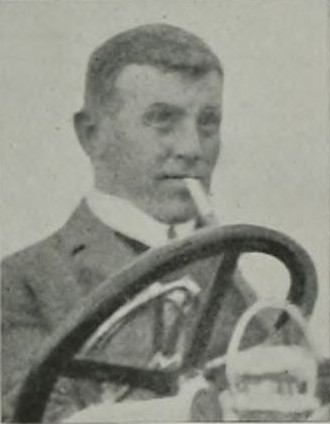
Arthur Wynn Jones.
JONES, CHARLES, Sergt.-Major, 5th Battn. Welsh Regt. (T.F.); served through the South African War (medal), and was afterwards employed at the Bedlinog Collieries; volunteered for foreign service after the outbreak of war; went to the Dardanelles; was promoted Sergt.-Major, and was killed in action there, 21 Aug. 1915. He m. Annie (Greenfield Terrace, Gellefaelog, Dowlais), dau. of (—), and had three sons, of whom David John is (1916) a Private in the 5th Welsh and served with his father at the Dardanelles.
JONES, ERNEST DAVID, Rifleman, No. 22874, 1st Battn. The Rifle Brigade, yst. s. of Thomas Bowen Jones, of 18, Stockfield Road, Streatham, S.W., by his wife, Alice Louisa, dau. of John Hazell, of Kensington; b. Dulwich, 22 Feb. 1887; educ. the South London School, Dulwich; enlisted 1st Rifle Brigade, 10 Sept. 1914; left for France in March, 1915, and was killed in action while taking part in an attack on the German trenches, near Hooge, 6 July following. Buried, Talna Farm; unm.
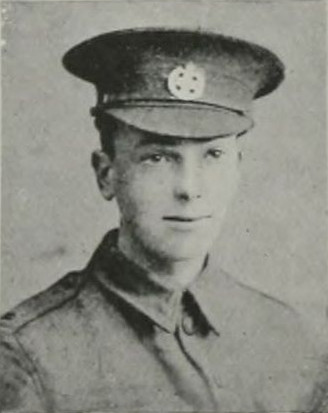
Ernest David Jones.
JONES, EDWIN, Private, No. 10968, 1st Battn. Coldstream Guards, s. of Edgar Jones, of 1, Grove Avenue, Lawley, Birmingham, Gas Stoker, by his wife, Annie, dau. of George Tyler; b. Birmingham, 16 April, 1896; educ. St. Matthew’s School, Lupin Street, Birmingham; enlisted, 13 Aug. 1914; left for France, 26 Nov. 1914; and was killed in action at Givenchy, 22 Dec. following; unm.
JONES, FENN, Petty Officer, 1st Class (R.F.R., A. 1919), 128745, H.M.S. Hogue; lost in action in the North Sea, 22 Sept. 1914.
JONES, FRANCIS GEORGE, Lieut.-Col. Commanding 1st Battn. Royal Inniskilling Fusiliers; eldest s. of the late Rev. Edward George Jones, of Cecilstown Lodge, Mallow, co. Cork, by his late wife, Eliza Wilhelmina, dau. of Abraham Symes; b. at Kilmurrey Rectory, 8 April, 1864; educ. Trinity College, Dublin; gazetted Lieut. Royal Inniskilling Fusiliers from the Militia, 16 Dec. 1885, and promoted Capt., 1 Feb. 1893; Brevet Major, 29 Nov. 1900; Major, 23 May, 1903; and Lieut.-Col., 19 Feb. 1914; was Assistant Superintendent of Signalling in Burma, 1892–3; Adjutant of his battalion, 31 Oct. 1894, to 30 Oct. 1898, and of the Militia, 1 Aug. 1901, to 22 May, 1903; took part (1) in the operations in the Northern Chin Hills, Burma, 1892–3 (medal with clasp); (2) in the operations on the North East Frontier, India, 1897–8, with Peshawar Column of 5th Brigade, Tirah Expeditionary Force, including operations in Bara Valley, 7 to 14 Dec. 1897 (medal with two clasps); and (3) in the South African War, 1899–1900; was Adjutant, 1st Battn. R.I.F., from 16 Dec. 1899, to 24 Feb. 1900; took part in the relief of Ladysmith, including action at Colenso; operations of 17–24 Jan. 1900, and action at Spion Kop; operations of 5–7 Feb. 1900, and action at Vaal Kranz; operations on Tugela Heights (14–27 Feb. 1900) etc. (twice mentioned in Despatches [London Gazette, 8 Feb. and 10 Sept. 1901]; Brevet of Major; Queen’s medal with three clasps); served in Crete, 1907, Malta, 1908–9, North China, 1909–12 and India, 1912–14, where he took over the command of the 1st Battn., 19 Feb. 1914. After the outbreak of war he brought the battalion home from Secunderabad in Jan. 1915, to Rugby, and left with it as part of the 29th Division, 87th Brigade, for Gallipoli, 17 March following; was in command during the landing at the Dardanelles on 25 April, and during the subsequent week’s severe fighting; was severely wounded near Krithia on 2 May, and died of his wounds three days later, 5 May, 1915; unm. He was mentioned in General Sir Ian Hamilton’s Despatch of 12 June [London Gazette, 5 Aug. 1915], for gallant and distinguished service in the field
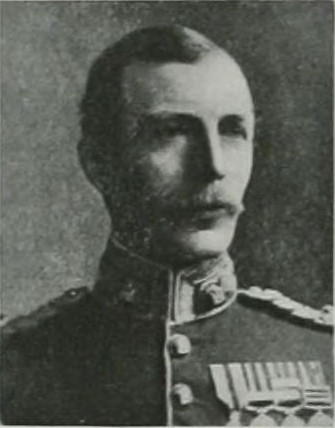
Francis George Jones.
JONES, FRED, Private, No. 2366, 2nd Battn. Monmouthshire Regt. (T.F.), s. of William David Jones, Miner; b. Upper Cwmbran, co. Monmouth; educ. Board Schools, Cwmbran; joined 2nd Monmouths, Sept. 1914, and was killed in action near Ypres, 8 May, 1915. He m. at Pontypool, Matilda, dau. of (—), and had five sons and two daus.
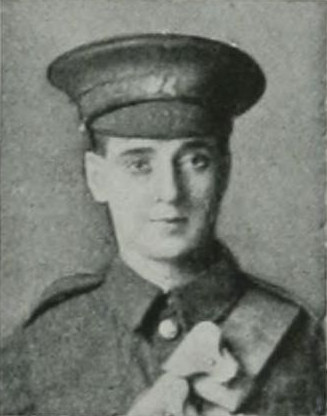
Fred Jones.
JONES, FREDERICK CHARLES, A.B., J. 15499, H.M.S. Good Hope; lost in action off Coronel, on the coast of Chili, 1 Nov. 1914.
JONES, GEORGE FREDERICK, Chief Petty Officer (N.S.), 172545, H.M.S. Cressy; lost in action in the North Sea, 22 Sept. 1914.
JONES, GEORGE WILLIAM, Stoker, 1st Class (R.F.R., Ch. B. 7306), S.S. 102172, H.M.S. Aboukir; lost in action in the North Sea, 22 Sept. 1914.
JONES, HARRY, Private, No. 38300, 5th Battn. Welsh Regt. (T.F.), 4th s. of the late Thomas Jones, of Brynhyfryd, Nelson; b. 1877; joined the 5th Welsh Territorials; served with the Expeditionary Force at the Dardanelles, and was killed in action, 13 Aug. 1915; unm.
JONES, HARRY DUKINFIELD, Private, No. 2504, Honourable Artillery Coy., yst. s. of Edward Dukinfield Jones, of Castro, Reigate, by his wife, Bertha, dau. of Holbrook Gaskell; b. Saõ Paulo, Brazil, 11 April, 1890; came to England when 12 years of age; educ. Liverpool College Preparatory School and Lancing College. From an early age he devoted himself to music, and decided to make it his profession, choosing the piano as his instrument. For about four years he worked in the Leschetizky method, under Mr. George Magrath. Early in 1912 he went to Vienna and studied under Frau Bree, with occasional lessons from Leschetizky himself. On his return to England in 1913 he continued his studies under Mr. Howard-Jones, at the R.C.M., taking singing as his second study. He joined the Honourable Artillery Coy. in Oct. 1914, went to the Front with a draft for the 1st Battn. at the end of Dec., in April was “doing very stiff work” somewhere near Ypres, and was killed in action in the charge of the Honourable Artillery Coy. at Hooge, 16 June, 1915; unm.
JONES, HENRY DAVID, Seaman, R.N.R., B. 5059, H.M.S. Cressy; lost in action in the North Sea, 22 Sept. 1914.
JONES, IAN MONTGOMERY, Private, No. 5137, 20th (Service) Battn. (3rd Public Schools) Royal Fusiliers, only s. of Thomas Abraham Jones, of 5, Chatsworth Road, Chorlton-cum-Hardy, Manchester, Branch Manager of the General Accident Company; by his wife, Marion, dau. of the late Rev. Wollaston Goode, M.A. [by his wife, Amelia Agnese, yr. dau. of Sir Charles Munro, 9th Baronet of Foulis, who served in the 85th Regt. under Wellington in the Peninsular War, 1811–14, being wounded at Badajos, and received the medal with clasps for Rodrigo, Badajos, Salamanca, Nives, Orthes, and Toulouse]; and grandson of Thomas Jones, of Montgomery, who joined the Montgomeryshire Yeomanry at the outbreak of the Crimean War; b. Cirencester, co. Gloucester, 11 June, 1897; educ. Bromsgrove School, where he was a member of the O.T.C., and made his mark as a Rugby football player; volunteered on the outbreak of war and joined the 1st unit of the 20th Royal Fusiliers, 12 Aug. 1914, and died at the 3rd General Military Hospital, Wandsworth, of cerebro-spinal-meningitis, contracted while on service, 20 March, 1915; unm. Buried in Southern Cemetery, Manchester, with full military honours. His Coy. Commander, Capt. T. L. Boyce, wrote: “He was a smart soldier, trusted by his officers and appreciated and liked by his comrades.” And a comrade wrote: “No man was, no man could be, better loved and respected, and no man ever merited our love and respect more than Ian.” He was gazetted 2nd Lieut. 5th Battn. Prince of Wales’ Leinster Regt., 29 Sept. 1914, but being only just 17, had asked that the appointment might be cancelled for a few months.
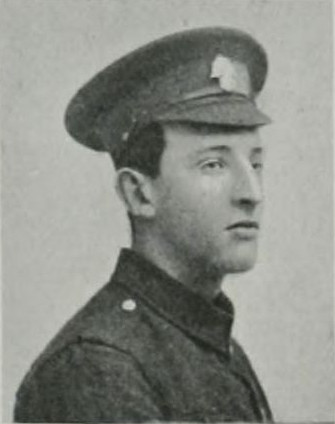
Ian Montgomery Jones.
JONES, JOHN, Private, R.M.L.I. (R.F.R., Ch. B. 1883), H.M.S. Aboukir; lost in action in the North Sea, 22 Sept. 1914.
JONES, JOHN RICHARD, Private, R.M.L.I., 4685 (R.F.R., Ch. B. 162), H.M.S. Cressy; lost in action in the North Sea, 22 Sept. 1914.
JONES, OCTAVIUS, Private, No. 1198, 13th Battn. Australian Imperial Force, 2nd s. of Edwin Jones, for 38 years a guard on Great Western Railway, by his wife, Martha; b. Snatchwood, Abersychan, near Pontypool, 8 Oct. 1881; educ. Snatchwood Schools, Abersychan; went to Australia, 11 May, 1911, enlisted in the Australian Imperial Force on the outbreak of war, and died from wounds received in action in Gallipoli, 22 May, 1915; unm.
JONES, ROWLAND SAMUEL, Private, No. 538, 2nd Battn. Monmouthshire Regt. (T.F.), eldest s. of Thomas Hanbury Jones, of 75, Monnow Street, Monmouth, Builder and Decorator, member of the Monmouth Town Council, by his wife, Rachel, dau. of Rowland Samuel Bevan, of Penlarken Farm, Pontypool, Mon.; b. Monmouth, 7 Dec. 1883; educ. St. Mary’s National School, Monmouth; was a Sanitary Plumber, etc.; joined the Monmouth Volunteers, which became, on the formation of the Territorial Force, the 2nd Monmouthshire Regt., 1902; volunteered for Imperial service on the outbreak of war and went into training with his battn. at Pontypool, although barely recovered from a serious cycling accident which befell him on the day of mobilisation; left for France, 5 Nov. 1914; served in the trenches throughout the following winter, and was highly complimented by his officers on his ability as a practical plumber in keeping the pumps in working order, and was placed in charge of 18 pumps; took part in the 2nd Battle of Ypres in which his battn. acquitted itself most gallantly and suffered severe losses, and died in the 3rd Casualty Clearing Station, at Bailleul, 16 June, 1915, of wounds received while on sentry duty at 5.30 a.m. on the 14th, near Ypres. The Rev. A. T. G. Fletcher, Chaplain to the Forces (C.E.), wrote that he was admitted to the Clearing Station unconscious, with a terrible wound in the head, caused by shrapnel, and died without recovering consciousness. He added: “I buried him in Bailleul Cemetery in grave No. 1313. A cross has been erected on his grave bearing his name and regimental number and giving the cause of his death. He died nobly, while bravely doing his duty.” Private Jones had been repeatedly offered promotion to non-commissioned rank, but had always refused it. He m. at the Parish Church, Newland, Gloucestershire, 31 Aug. 1909, Sarah, dau. of Herbert Furneyhough, of Highbury Farm, Newland, co. Gloucester, and had two sons and a dau.: Thomas Hambury Herbert, b. 28 May, 1910; Rowland Leonard, b. 17 Aug. 1911; and Dorothy Rachael May, b. 26 May, 1914, died 19 March, 1915. Two of his brothers, Hambury John Jones, Bombardier, No. 43491, R.G.A. (volunteered in Aug. 1914 from Bristol City Police Force); and Thomas Hambury Jones, Sergt., No. 1430, The London Regt. (Auditor in Exchequer and Audit Department, Whitehall), are now (1916) on active service in France, and the 4th, Leonard Hambury Jones, Cadet, Monmouth Grammar School Corps, has been medically rejected.
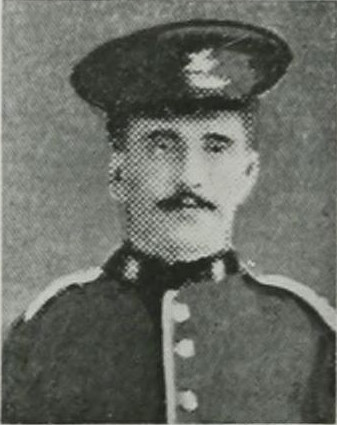
Rowland Samuel Jones.
JONES, SAMUEL WILLIAM JOHN, Driver, No. 935, Ammunition Column, 3rd Wessex Brigade, Royal Field Artillery, 2nd s. of Jabez Jones, of 52, Clifton Street, Swindon, co. Wilts; b. South Cerney, co. Gloucester, 6 Sept. 1887; educ. Swindon; joined the 3rd Wessex Brigade, Royal Field Artillery, from the Yeomanry in Feb. 1914; was thrown from a horse at Malmesbury, 23 Jan. 1915, while trying to catch another that had thrown his comrade, and died the following day. He m. at Winchcombe, co. Glos., 8 June, 1912, Alice, 3rd dau. of the late George Wasley, of Castle Street, Winchcombe, and had two children: Harry George, b. 14 March, 1913, and Winifred Mary, b. 6 Dec. 1914, d. 17 Dec. 1915.
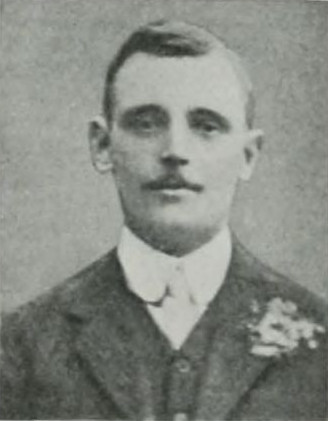
Samuel William J. Jones.
JONES, SYDNEY EVERARD, 2nd Lieut., 8th (Service) Battn. Pioneers The Welsh Regt., 2nd s. of William Henry Jones, of Bhim Tal Estate, Kumaon, U.P., India; b. Bhim Tal aforesaid, 4 Sept. 1892; was educ. at Naini Tal up to the age of 15, and then went to England, and after a little study matriculated at London, and joined The City and Guilds Institute, where he obtained the Diplomas of Mechanical and Electrical Engineering, and completed two years in the Civil Engineering Course. He was two years a Cadet in the Naini Tal Volunteer Rifles, and later for another two years was in the University of London O.T.C. On the outbreak of war he applied for a commission, and meanwhile joined the 3rd County of London Yeomanry as a trooper. In Nov. 1914, he was gazetted temp. Second Lieut. in the 8th Battn. The Welsh Regt., and qualified as a machine-gun officer at Erith. He proceeded to the Dardanelles for active service and on the 8th Aug. 1915, during the attack on Sari Bahr, his Battn. with New Zealanders took part in the storming of the Turkish position, from the crest of which they were relieved the following day. He was wounded early in the assault, but bound up his wound and rejoined his platoon. Later in the same day he was shot through the heart, while leading his men and he was buried in the Gallipoli Peninsula; unm. A Senior officer wrote: “I knew your brother well, and liked him immensely, and express my deep sympathy with you, and that of his men who were very fond of ‘Uncle Jack’ as they called him. He fell at the front of his men like the brave fellow he was.” His brother, Lieut. Bertram Owen Jones, is (1916) on active service with the South Wales Borderers.
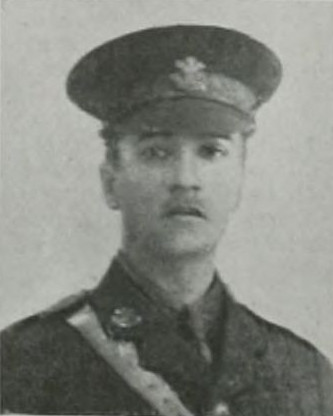
Sydney Everard Jones.
JONES, SIDNEY WILLIAM, Gunner, No. 816, Royal Horse Artillery (T.F.), eldest s. of Herbert Daniel Jones, of 35, Osterley Park Road, Southall, Clerk in charge of Telegraph Department, G.W.R. Southall Station, by his wife, Selina, dau. of William Hughes, of the Park, Clee Hill, Ludlow, co. Salop; b. Shrewsbury, 11 Nov. 1891; educ. All Saints’, Shrewsbury and Featherstone School, Southall; was employed as a Clerk at Otto Monsteds, Ltd., Margarine Works, Southall, and afterwards with Morgan & Sons, Linen Drapers, Cardiff; volunteered after the outbreak of war and joined Queen Victoria’s Rifles, 4 Nov. 1914; transferred to the Shropshire R.H.A. Dec. 1915, and was drowned at 9.30 a.m. 21 July, 1916, while bathing; unm. He is supposed to have been seized with cramp. He was buried at Southall with full military honours. Capt. Darling spoke very highly of him, describing him as one of the best lads he had, and saying that he was universally liked by all the battery. His yr. brother, Private A. H. Jones, was killed in action at Neuve Chapelle, 10 March, 1915.
JONES, STANLEY, Capt., 1st Batt. Royal Welsh Fusiliers, eldest s. of the late Sir Howard Sutton Jones, K.C.B., R.M.L.I., by his wife, Katherine, dau. of Major Adam von Beverhoudt, 58th Regt.; b. Plymouth, 26 Oct. 1880; educ. Cowley College, Oxford, and Hanover; after serving in the Militia was gazetted 2nd Lieut. in the Welsh Fusiliers, 5 Jan. 1901, promoted Lieut. 21 Sept. 1904, and obtained his coy. 21 Aug. 1911; served in China, with the West African Frontier Force, Oct. 1905 to May, 1910, and with the Expeditionary Force in France and Flanders, 1914 to May, 1915; he was wounded in October, and was killed at Festubert on the night of 16–17 May, when leading his coy. in an attack on the German trenches; unm. His Commanding Officer wrote: “His loss is a great one to the Regt. as he was an exceptionally able and keen officer. He was buried with seven of his brother officers,” between the Rue du Bois and the Rue de la Quinque, near Festubert.
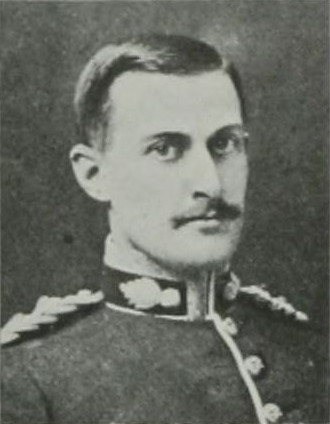
Stanley Jones.
JONES, WALTER, Private, No. 10/396, 7th Wellington Infantry Regt. New Zealand Expeditionary Force, s. of John Jones, of Gelli Fanw, Llanbedr, Crickhowel, co. Brecon, by his wife, Caroline, dau. of William Peters; b. Crickhowel, 23 April, 1893; educ. Crickhowel National School and Brecon County School; went to New Zealand in Sept. 1911; joined the New Zealand Expeditionary Force on its formation, 15 Aug. 1914, and died of wounds received in action at Gallipoli, 11 May, 1915; unm.
JONES, WALTER FREDERICK, A.B., J. 9034, H.M.S. Good Hope; lost in action off Coronel, on the coast of Chili, 1 Nov. 1914.
JONES, WILLIAM, Chief Yeoman Signalman (A. 2234), 115951, H.M.S. Good Hope; lost in action off Coronel, on the coast of Chili, 1 Nov. 1914.
JONES, WILLIAM, Gunner, 9582, R.M.A., H.M.S. Good Hope; lost in action off Coronel, on the coast of Chili, 1 Nov. 1914.
JONES, WILLIAM ERNEST, Signalman (R.F.R., B. 197), 143418, H.M.S. Good Hope; lost in action off Coronel, on the coast of Chili, 1 Nov. 1914.
JONES, WILLIAM JOHN, A.B. (R.F.R., Ch. B. 5270), 218593, H.M.S. Cressy; lost in action in the North Sea, 22 Sept. 1914.
JONES, WILLIAM PERCY, Private, No. 10493, No. 2 Coy. 2nd Battn. Coldstream Guards, yst. s. of Thomas Jones, of 70, Salop Road, Oswestry, by his wife, Annie, dau. of John Jones; b. Sweeney, near Oswestry, 7 Nov. 1892; educ. National School there; enlisted, 14 Nov. 1913; left for France, 22 Aug 1914, and was killed in action in the brickfields at Cuinchy, 13 Feb. 1915, being shot by a sniper. Buried at Cuinchy; unm.
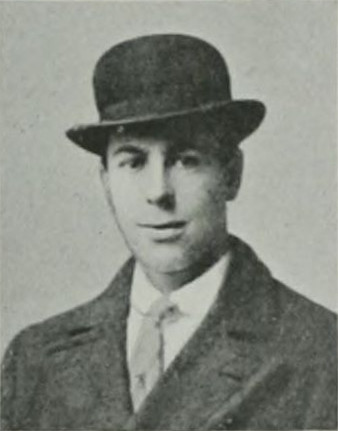
William Percy Jones.
JONES, WILLIAM WALTER, L.-Corpl., No. 506, 16th (Queen’s Westminster Rifles) Battn. The London Regt. (T.F.), s. of William Day Jones, of 18, Birley Street, Lavender Hill, S.W., Clerk at the Labour Exchange, by his wife, Mary Ann, dau. of Walter Shattock, of Taunton; b. Kensington, 19 Dec. 1886; educ. at Gideon Road, Lavender Hill, and St. Martin’s-in-the-Field’s Council Schools; was Head Clerk at the A.B.C. Coupler Co., Queen Anne’s Chambers, Tothill Street; joined the Queen’s Westminster Rifles in Oct. 1908; volunteered for foreign service on the outbreak of war; went to France in Nov. 1914, and was killed in action at Houplines, 14 Jan. 1915; unm. Sergt. Cecil C. N. Mighall wrote on the 16th: “During a heavy shelling of the German lines it was necessary for us to observe the result and it was in doing this that he was hit by a rifle bullet (through a loophole), death being instantaneous.” And Sergt. V. B. Finlayson: “He was easily the most liked N.C.O. in the company.” He was buried in the Military Cemetery there, side by side with Sergt. Mighall, who was killed shortly after.
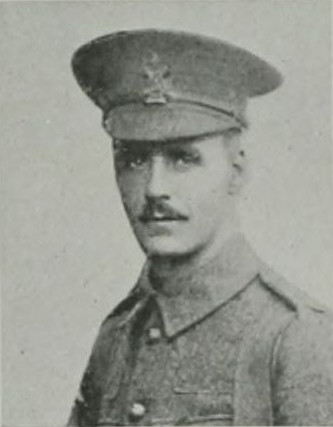
William Walter Jones.
EVAN-JONES, HILARY GRESFORD, Lieut., 1st Battn. Welsh Regiment, yr. s. of the Rev. Richard Evan-Jones, M.A., Vicar of Llanllwchaiarn, Newtown, co. Montgomery, Rural Dean of Cedewain, and Canon and Precentor of St. Asaph Cathedral, by his wife, Hannah Rose, widow of the late Samuel Richardson Bishop, of St. Helens, and dau. of the late Edward Evans of Bronwylfn, Wrexham, J.P. and D.L., and grandson of the late Rev. James Evan-Jones, M.A., formerly Vicar of Bagyillt, co. Flint; b. Llanllwchaiarn Vicarage, 22 Jan. 1889; educ. Charterhouse and Hertford College, Oxford, where he was Colour-Sergt. in the O.T.C., and won the Williams Prize which is given to the most efficient N.C.O. in the Corps, and was so enthusiastic in recruiting that he multiplied the strength of his College detachment by ten. He graduated B.A. in 1910, and on 5 Oct. of that year was gazetted 2nd Lieut. to the 1st Welsh, being promoted Lieut. 20 Nov. 1911. He was stationed at Cairo, Cyprus, Chakrata and Agra, and when war broke out was on his way to Cyprus, where he was to have been married at Troodos, on 28 Aug. 1914, to Nancy, only dau. of Major W. N. Bolton, late of the Wiltshire Regiment, Commissioner of Kyrenia, but his leave was cancelled, and he was recalled to rejoin his battn. with which he landed in England on 22 Dec. 1914. He left for France, 16 Jan. 1915, and to judge from a letter written shortly before he met his death, must have had some exciting experiences: “We have just finished our first eight days—divided between the supports and the firing line. I had the worst bit of trench to look after with my platoon and did all right, but had a good few casualties, considering the 96 hours I was actually up—two killed and nine wounded. I made two night expeditions by myself with some bombs, which I successfully dropped into the German trenches. During my first I met a German gentleman apparently at the same job as myself. My revolver accounted for him all right, as we were only two feet apart. The trenches are from 30 to 75 feet apart in most places and sometimes closer. We are now off on a four days’ rest, which is absolutely ripping. It is splendid to get out of the noise and to get some proper food and sleep. I think, if anything, I am rather enjoying this. Cold feet are the worst part of the show, but my men are all such rippers, it makes up for lots. I hate having them hit, otherwise it is quite cheery. I had a sing-song in my trench the other evening, which did not please the Germans. I sat in a chair, which collapsed, and I went straight to sleep where I lay. The strain is fairly big up there.” He was killed in action near Ypres, 16 Feb. 1915, and buried with two other brother officers, Capt. G. A. Lloyd and Lieut. R. T. B. Pope, who were killed the same day in the trenches, in the gardens of the Chateau Rosendal, three miles S.E. of Ypres. His Commanding Officer, Lieut.-Col. T. O. Marden, wrote: “I regret most deeply having to inform you of the death on the 16th inst., in the trenches, of your gallant son Hilary. As far as we can ascertain, his death was instantaneous from a rifle bullet, but many of his platoon were shot down at the same time, and there was no one in the trench who could give accurate information as to what happened. He is a great loss to us, as he was such a good soldier and so popular with all ranks. As you know, probably, he was selected to lead the Second Grenadier platoon, and had behaved so gallantly during his former turn of duty in the trenches, where he kept the spirits of his whole platoon up by his energy and enterprise, that I brought his name specially to the notice of the Brigadier. He crept out of the trenches alone on several occasions and threw bombs into the enemy’s trenches.” Lieut. Evan-Jones was a keen sportsman and a well-known figure in the hunting field in Montgomeryshire. He was also an excellent shot. At Cairo he made a considerable reputation as a polo player, and both in Cyprus and at Agra he was Master of the Hunt. Lieut. Evan-Jones was mentioned in Sir John (now Lord) French’s Despatch of 31 May, 1915. His elder brother, the Rev. Basil Evan-Jones, M.A. (Charterhouse and University College, Oxford), formerly curate of Gaulsfield, co. Montgomery, a well-known antiquary, and sub-editor of the Powysland Collections, resigned his curacy on the outbreak of the war and joined the Royal Welsh Fusiliers as a private, being gazetted 2nd Lieut. 15 Jan. 1915, Lieut. 1 Oct. 1915, and Capt. 10 June, 1916.
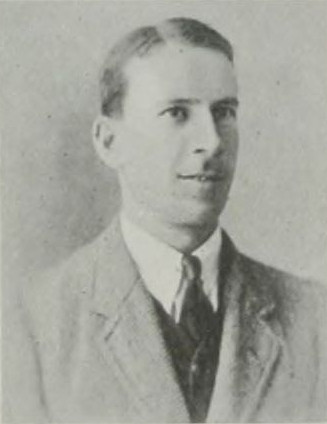
Hilary G. Evan-Jones.
LLEWELLYN-JONES, VIVIAN BRUFORD, 2nd Lieut., 3rd Battn. Suffolk Regt., att. 1st Welsh Regt., only s. of Arthur Llewellyn-Jones, of Ritherdon House, Upper Tooting, S.W., by his wife, Emelie Louise, dau. of Edward Round, of Streatham; b. Wallington, co. Surrey, 24 Sept. 1891; educ. Cranleigh School, Surrey; gazetted 2nd Lieut., 3rd Suffolks, 15 Aug. 1914; went to France, 22 Feb. 1915, att. 1st Welsh; was wounded on 18 April, and was killed in action near Ypres, 4 May, 1915; unm.
WYNNE-JONES, MORYS, Lieut., 54th Field Coy. Royal Engineers, only s. of the Rev. John William Wynne-Jones, of Treiorwerth, Anglesey, Vicar of Carnarvon, by his wife, the Hon. Jessie Frances née Bruce, dau. of Henry Austin, 1st Baron Aberdare; b. Carnarvon, 13 May, 1887; educ. Fonthill, Charterhouse, and Trinity College, Cambridge, where he rowed in his college boat and won his oar. He graduated B.A. 1909, and after passing his A.M. Inst. C.E. examination, was for nearly two years an engineer on the Cardiff Railway, under the late Lord Merthyr, being subsequently appointed one of the engineers of the Mexican Eagle Oil Co., at Tampico, Mexico. He had joined the Special Reserve of Officers of the Royal Engineers as 2nd Lieut. 26 June, 1912, and on the outbreak of war, without waiting to be summoned, he at once returned to England. He was promoted Lieut. 4 Oct. 1914; left for France 4 Oct. 1914, with the 7th Division, and was killed in action at Zandevoorde, during the 1st Battle of Ypres on the 29th of the same month; unm. Capt. (now Major) Guy Williams, commanding 54th Field Coy., wrote that they were called upon to counter-attack with the Yorkshire Regt. at a point where the Germans had broken through the British firing line. “Lieut. Wynne-Jones was leading his section when the enemy’s shrapnel found them, and he was killed instantaneously. The Coy. feel his loss very much. He understood his men and his job. I miss him personally as an excellent and most efficient subaltern and as a good friend.” Capt. R. M. Burgoyne, 2nd Royal Scots Fusiliers, now a prisoner in Germany, also wrote of two engineer officers, Lieut. Wynne-Jones and Lieut. J. M. Smeathman, who, he said, “Did a lot of good work for them, both as engineers and infantry, always being ready to take a rifle and bear a hand. They were two very gallant fellows.”
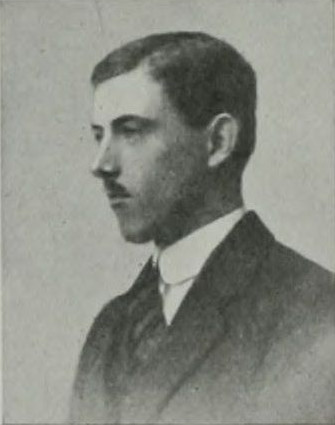
Morys Wynne-Jones.
DE JONGH, FRANK, Corpl., No. 2778, Lord Strathcona’s Horse, Canadian Expeditionary Force, 2nd s. of Francis de Jongh, of 6, Avenue Theatre, Lausanne, by his wife, Nellie, dau. of Henry Lahee, of Croydon; b. Lausanne, 22 June, 1889; educ. there; went to Canada in Sept. 1906, and settled at Montreal; joined Lord Strathcona’s Horse in Sept. 1914, came over in Oct. 1914; went to the Front, March, 1915, and died of wounds received in action at Messines, 6 Aug. 1915; unm. Buried at Neuve Eglise, Flanders. An officer wrote: “He was a splendid fellow and beloved by everyone with whom he came in contact and deservedly enjoyed a respect and love of which very few men can boast.”
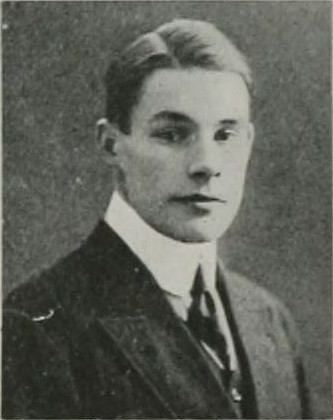
Frank de Jongh.
JORDAN, ALFRED, A.B. (R.F.R., Ch. B. 3733), 182347, H.M.S. Aboukir: lost in action in the North Sea, 22 Sept. 1914.
JORDAN, CHARLES WILLIAM, Seaman, R.N.R., 5111B., H.M.S. Cressy; lost in action in the North Sea, 22 Sept. 1914.
JORDAN, GEORGE GRAEME, Private, No. 2302, 1/14th Battn. (London Scottish) The London Regt. (T.F.), 2nd s. of George Silas Jordan, of 21, Blackheath Rise, Lewisham, Director of Edwards & Sons, Ltd., Dairy Farmers and Dairymen, by his wife, Cecilia Annetta, dau. of Theodore Brooke Jones, of Harrogate; b. Lewisham, S.E., 10 June, 1896; educ. Colf’s Grammar School, Lewisham Hill; was in business with Messrs. Yencken & Co., Tower Hill, Australian Merchants; joined the 2nd Battn. London Scottish, with his elder brother, 20 Aug. 1914; transferred to the 1st Battn. and left for France, 16 Sept. 1914, and died a prisoner of war in the Military Hospital, Aix-la-Chapelle (Aachen), 20 Nov. following, of wounds received in the first charge of the London Scottish at Messines on 1 Nov. Buried, Aix-la-Chapelle; unm.
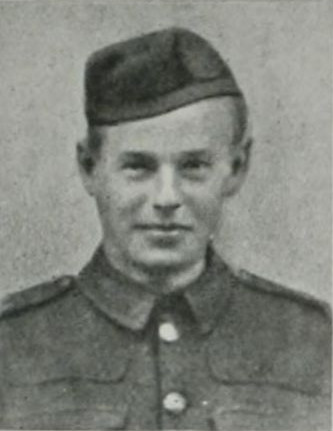
George Graeme Jordan.
JORDAN, WALTER JOHN LAVERNE, Trooper, No. 2254, 1/1st Sussex Yeomanry (T.F.), only s. of Alfred John Jordan, of Montreal, by his wife, Laverna (36, Tivoli Crescent, Brighton), dau. of Frederick Walter Yateman, of Bound’s Green, N., and Preston Park; b. London, 3 June, 1891; educ. Brighton Grammar School; was a Motor Engineer; joined Sussex Yeomanry, 16 Oct. 1914; left for the Dardanelles, 26 Sept. 1915, and died on board H.M. Hospital Ship Assaye 20 Dec. following, of wounds received in action in Gallipoli. A comrade (L. J. Cooke) wrote: “The regt. was ordered to move off to support troops in the trenches, this move was carried out whilst a heavy bombardment from both sides was in progress. Whilst the Sussex Yeomanry were marching up the Gully, high explosive shells were falling in the Gully; these shells were endeavouring to silence a British battery which was situated on the left of the Gully on the high cliff. One of these shells fell near to the Squadron your brother belonged to, and six of them were wounded. I was coming up in the rear of the regt. with the Doctor, and we had a message that some ‘boys’ had been hit. When we arrived on the spot we found three badly wounded and three slightly wounded. Your brother had received a severe wound situated at the base of the left lung, the wound was large enough to put a person’s fore finger and thumb in, being a triangular shaped wound, the sides of which were about 2½ inches. While the party were dressing the wounded three more shells exploded about 8 yards from us, the second of which was nearer to us than the other two, and this shell knocked us all over and blew the dressing off your brother’s back which we had just got clean and in position, and covering him with dirt. When the dust had cleared I expected to find everybody blown to pieces, and marvelled at my own lucky escape of only being down away about 6 feet ... I should like to mention that your brother was absolutely one of the best liked fellows in the regt., and had all sorts of nicknames. He was always so jovial, and he is greatly missed by all the old boys.” He was the half-mile champion of Sussex, and a member of the Brighton and County Harriers. Buried at sea, 1 mile off Cape Helles. He m. at Brighton, 14 Oct. 1913, Edith Sarah, dau. of (—) Raymond; s.p.
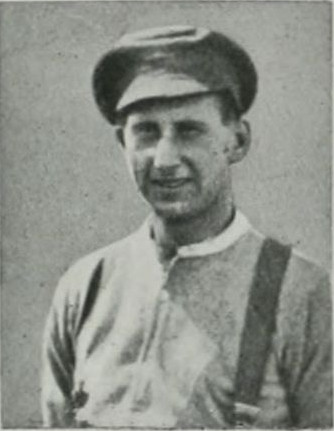
Walter John L. Jordan.
JORDAN, WILLIAM HENRY, Private, No. 5456, 1st Battn. Coldstream Guards; enlisted 5 March, 1904; served with the Expeditionary Force in France and Flanders from 21 Aug. 1914; killed in action on or about 29 Oct. 1914.
JOSEPHS, ARCHIBALD EDWIN, Private, No. 9614, 1st Battn. Coldstream Guards; served with the Expeditionary Force in France and Flanders; killed in action on or about 14 Sept. 1914.
JOSEPHS, CHERIBIM, Stoker, H.M.S. Good Hope; lost in action off Coronel, on the coast of Chili, 1 Nov. 1914.
JOSEPHS, GEORGE, Stoker, H.M.S. Good Hope; lost in action off Coronel, on the coast of Chili, 1 Nov. 1914.
JOSLIN, JOHN FRANCIS, Major, 2nd, attd. 1st, Battn. Royal West Kent Regt., only surviving s. of the late John Joslin, of St. Helier’s, Jersey, by his wife, Mary (7, Almorah Crescent, St. Helier’s Jersey), dau. of Francis Philip Cabot; b. St. Helier’s, 2 Sept. 1874; educ. Victoria College, Jersey; gazetted 2nd Lieut. 2nd Royal West Kents, from the Militia, 7 Dec. 1895, and promoted Lieut. 13 Nov. 1897; served in the South African War 1900–2, taking part in the operations in the Orange Free State, April to May, 1900; in the Orange River Colony, May to 29 Nov. 1900, including actions at Biddulphsberg and Wittebergen (1 to 29 July); in Cape Colony, south of the Orange River, 1900; in the Transvaal, Aug. to Sept. 1901, and April to 31 May, 1902; and in the Orange River Colony, 30 Nov. 1900 to Aug. 1901, and Sept. 1901 to April, 1902. For his service he was mentioned in Despatches [London Gazette, 29 July, 1901], and received the Queen’s medal with three clasps and the King’s medal with two clasps. He was promoted Capt. 7 Jan. 1903, and from 16 Nov. 1904 to 15 Nov. 1907 was Adjutant to his Battn. After passing through the Staff College he acted as Brigade-Major to Gen. Braithwaite at the Durbar, for which he received the medal, and was promoted Major 3 Sept. 1914. He left for France 24 Oct., and in Nov. became Commandant on the lines of communication. Having been attd. to the 1st Battn. of his regt., he led the storming party (1st West Kents and 2nd K.O.S.B.’s) which captured Hill 60 on the evening of 17 April, 1915, but after holding the hill all night and repulsing three counter-attacks, he was killed as the West Kents were being relieved in the early hours of the 18th. He was the last to leave the position, and was shot in the act of leaving, death being almost instantaneous. He was unm. A brother officer wrote of him: “And in action he was splendid, quite without fear, and able by his example to inspire and encourage those around him. But in your sorrow should mingle pride, for to the very end he did his duty right well, and did much to keep the regimental standard of self-sacrifice as high as it now is. And such records never die.”
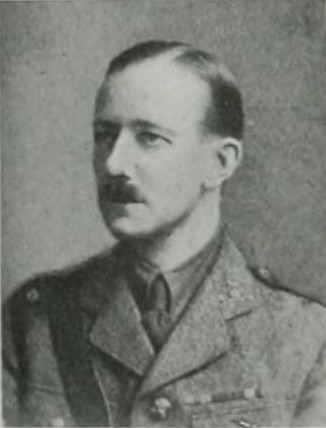
John Francis Joslin.
JOURNEAUX, WILLIAM FRANCIS, Stoker, 2nd Class, K. 21979, H.M.S. Good Hope; lost in action off Coronel, on the coast of Chili, 1 Nov. 1914.
JOYCE, LEUI HAROLD, Boy, 1st Class, J. 25447, H.M.S. Hawke; lost when that ship was torpedoed in the North Sea, 15 Oct. 1914.
JUDGE, FREDERICK DAVID, L.-Corpl., No. 8439, 2nd Battn. Coldstream Guards, 3rd s. of George Judge, of 54, Yarmouth Road, Watford, Gardener, by his wife, Mary, dau. of James Brown; b. Sarratt, co. Herts, 8 Feb. 1888; educ. there; enlisted, 12 Aug. 1909, served three years with the Colours and then took up his trade again as a Printer, until called up on mobilisation, 4 Aug. 1914. He went to France with the 1st Expeditionary Force, served through the retreat from Mons and the Battles of the Aisne and the Marne, and was killed in a bayonet charge at Cuinchy, near La Bassée, 1 Feb. 1915, being buried in Cuinchy Cemetery; unm.
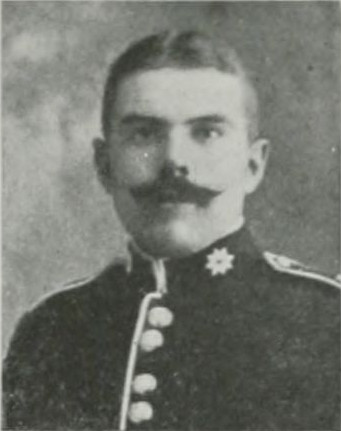
Frederick David Judge.
JUKES, RONALD WORTHINGTON, Sub-Lieut., Collingwood Battn. Royal Naval Division, only surviving s. of the Rev. Worthington Jukes, Rector of Shobrooke, near Crediton, co. Devon, by his wife, Emily, dau. of (—) Crossley, of Belfast; b. Shobrooke Rectory, 10 Dec. 1892; educ. Crediton Grammar School and King’s College, Taunton, and afterwards trained on H.M.S. Worcester for the Mercantile Marine, which he entered 12 April, 1911; gazetted Sub-Lieut. R.N.D. 14 Nov. 1914; left for the Dardanelles, 12 May, 1915, and was killed in action in Gallipoli during the attack on the Krithia-Achi Baba position, 4 June, following; unm. Lieut.-Commander West, of the Collingwood Battn. wrote: “Your son was one of our best platoon commanders.” And Petty-Officer Finnigan, of his Platoon (11th Platoon, C Coy.), wrote: “He had been last seen fighting gallantly with a few men, against the enemy, who had cut them off, the enemy being in such force that rescue was impossible.”
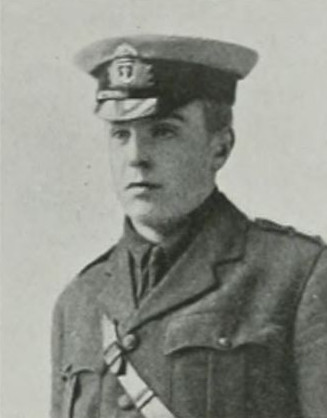
Ronald W. Jukes.
JULIETTE, PHILIP, Stoker (Native), H.M.S. Good Hope; lost in action off Coronel, on the coast of Chili, 1 Nov. 1914.
JULIN, THOMAS FAWCETT, Colour-Sergt., R.M.L.I., 17057, H.M.S. Good Hope; lost in action off Coronel, on the coast of Chili, 1 Nov. 1914.
JUPE, BRUCE DUNNING, Acting E.R.A., 4th Class, M. 784, H.M.S. Good Hope; lost in action off Coronel, on the coast of Chili, 1 Nov. 1914.
JUPP, GEORGE, A.B. (R.F.R., B. 2524), 215170, H.M.S. Good Hope; lost in action off Coronel, on the coast of Chili, 1 Nov. 1914.
JURY, WILLIAM, Private, R.M.L.I. (R.F.R.), Ch. 8886, H.M.S. Hawke; lost when that ship was torpedoed in the North Sea, 15 Oct. 1914; m.
JUSTICE, MAURICE, Plumber’s Mate, 310303, H.M.S. Hogue; lost in action in the North Sea, 22 Sept. 1914.
JUSTICE, PERCY HAROLD, 1st Class Machine Gunner, No. 9032, 1st Battn. Coldstream Guards, 2nd. s. of Caleb William Justice, of Napton, Rugby, co. Warwick, by his wife, Janie, dau. of the Rev. Ravenor Edward Rose, of Colyton, co. Devon; b. Napton, 23 June, 1890; enlisted, in March, 1911, went to France with his regt. in Aug. 1914, and was killed in action at Cuinchy, 24 Jan, 1915; unm. He was buried 25 yards S.W. of the Railway Bridge over the Canal, 400 yards N.W. of Pont Fixe, Cuinchy. His Commanding Officer, Lieut. T. A. Tapp, wrote: “I was in charge of the machine-gun section for some months in France, and among a splendid team your boy and W. Wright stood out as the two most brilliant members: poor Wright was killed on 25 Jan., and I feel it will be impossible ever to replace him and your boy. They could neither have been more perfect as machine gunners, or more brave, and always first to wish to take the place of danger. Your boy was killed on 24 Jan. by a chance shot in the head, just south of the La Bassée Canal, where he was with the machine gun, in a very dangerous and important position. I had come to feel I should always be safe to be able to get up my guns under no matter what fire, and have them brilliantly served as long as I had these two men with me. I had spent some months continuously with them, and now not only feel I have lost two irreplaceable men, but also two friends. Your son died doing his duty as he had always done, most gallantly.” Justice was one of the winning team for the Machine-gun Cup in 1913.
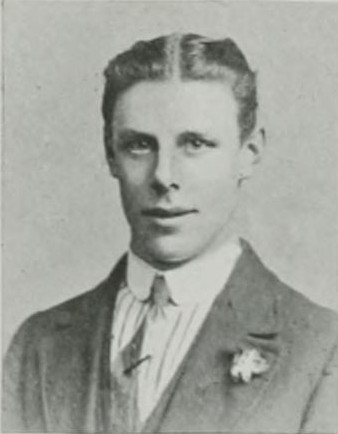
Percy Harold Justice.
KADWELL, WILLIAM, Corpl., R.M.L.I., Ch./13957, H.M.S. Aboukir; lost in action in the North Sea, 22 Sept. 1914.
KAIN, STANLEY, S.B.S., 250914, H.M.S. Good Hope; lost in action off Coronel, on the coast of Chili, 1 Nov. 1914.
KALLAWAY, EDGAR, Private, No. 6761, 1st Battn. Coldstream Guards, yst. s. of the late James Kallaway, of 46, Grays Road, Taunton, by his wife, Jane, dau. of John Lewis, of Bridgwater; b. West Monkton, Taunton, co. Somerset 19 Sept. 1886; educ. Taunton; enlisted, 2 May, 1906; served three years with the Colours and then went to Canada in 1913 and settled in Manitoba. On the declaration of war he was called up, arrived in England, 7 Sept. 1914, and left for France, 7 Oct. following. His last post card was written on 26 Oct. In the action at Ypres, on the 29th of that month, the 1st Battn. suffered very heavily, and after it Kallaway was reported missing. He is now assumed to have been killed that day; unm.
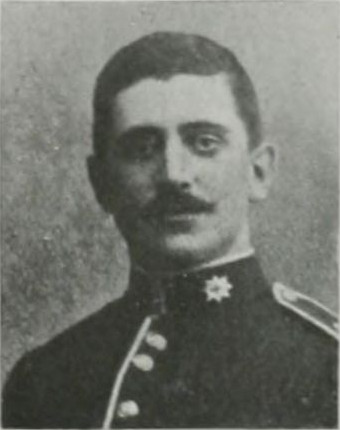
Edgar Kallaway.
KANE, CHARLES, Stoker, 1st Class, 302531, H.M.S. Good Hope; lost in action off Coronel, on the coast of Chili, 1 Nov. 1914.
KAVANAGH, THOMAS JOSEPH CUTHBERT, A.B. (R.F.R., Ch. B. 1521), 177201, H.M.S. Aboukir; lost in action in the North Sea, 22 Sept. 1914.
KEABLE, JOSEPH WILLIAM, Stoker, 1st Class, K. 14165, H.M.S. Aboukir; lost in action in the North Sea, 22 Sept. 1914.
KEAM, GEORGE JAMES, Seaman, R.N.R., 1893 D., H.M.S. Cressy; lost in action in the North Sea, 22 Sept. 1914.
KEATES, ARTHUR SYDNEY, A. B., R.N.V.R. Mersey, Z/24, C Coy. Howe Battn., s. of William Keates, of Anfield, by his wife, Jane Ann, dau. of the late David Greenwood, of Liverpool, Ship’s Carpenter, and gdson. of the late John Keates, of Liverpool, formerly Coldstream Guards; b. Bessbrook, co. Armagh, 27 May, 1897; educ. Walton Lane Council School, Liverpool, enlisted following the outbreak of war, 7 Sept. 1914, and d. in No. 17 Hospital, Alexandria, 15 May, 1915, from wounds in the left hand and shoulder, received in action in Gallipoli on Sunday, 2 May. On the eve of embarking at Bristol he wrote to his father: “I am going without the slightest fear of death and with a true confidence in my Maker. My motto is duty.”
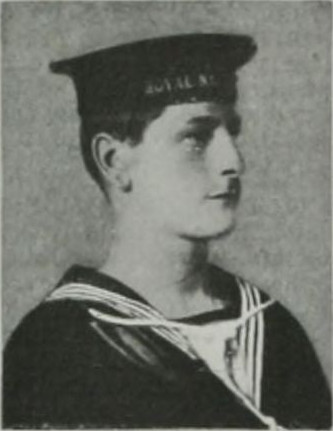
Arthur Sydney Keates.
KEATES, REGINALD, A.B. (R.F.R., B. 6237), S.S. 2565, H.M.S. Good Hope; lost in action off Coronel, on the coast of Chili, 1 Nov. 1914.
KEATES, THOMAS TRANCER, Stoker, 1st Class, K. 14113, H.M.S. Cressy; lost in action in the North Sea, 22 Sept. 1914.
KEELAN, JOHN, Private, No. 14908, 2nd Battn. Royal Irish Rifles, eldest s. of Patrick Keelan, of 13, Greville Street, Mullingar, J.P., General Draper, by his wife, Annie, dau. of John Skerrin Kilkenny; b. Mullingar, 13 Dec. 1882; educ. Christian Brothers Schools there; after the outbreak of war enlisted in the Royal Irish Rifles on or about 15 Sept. 1914, and was killed in action near Kemmel, in France, 30 Jan. 1915; unm.
KEELER, SIDNEY, Stoker, 1st Class (R.F.R., Ch. B. 7234), S.S. 102151, H.M.S. Aboukir; lost in action in the North Sea, 22 Sept. 1914.
KEEN, FRED, Officer’s Steward, 1st Class, L. 2470, Portsmouth, H.M.S. Pathfinder; lost when that ship was sunk by a mine, about 20 miles off the East Coast, 5 Sept. 1914.
KEENE, EDWARD, Stoker, 1st Class, K. 13675, H.M.S. Good Hope; lost in action off Coronel, on the coast of Chili, 1 Nov. 1914.
KEENE, OSWALD REES, Private, No. 15866, 2nd Battn. Duke of Wellington’s West Riding Regt., eldest s. of the late Rev. Rees Keene, M.A., Oxon, Theological Lecturer at St. Bees College, and afterwards Rector of Gosforth, co. Cumberland, 1895–1910; by his wife, Louisa Margaret, 2nd dau. of the late Sir Augustus Helder, M.P.; b. St. Bees, co. Cumberland, 30 April, 1891; educ. Alton School, Plymouth; The School, Malvern Link, and Malvern College; gazetted 2nd Lieut. 5th Border Territorial Regt., 31 May, 1911, but was obliged to retire through ill-health. On the outbreak of war he volunteered, and enlisted in the 3rd Battn. York and Lancaster Regt., 12 Dec. 1914, and was afterwards transferred to the Duke of Wellington’s. Left for the Front, 28 April, 1915, and was killed in action on Hill 60 by poisoned gas, 5 May, 1915. Buried at Ypres; unm.
KEENLYSIDE, CECIL ALEXANDER HEADLAM, Capt., 1st Cambridgeshire Regt. (T.F.), 3rd s. of the late Francis Headlam Keenlyside, of Gally Law, Weybridge, Barrister-at-Law, by his wife, Mary Anne Hales, 2nd dau. of Edward Charles Hales Wilkie, Lieut., 1st Dragoon Guards (gddau. of Lieut.-Col. Fletcher Wilkie, 35th and 38th Regt, and gt. gddau. of Thomas Wilkie, Lieut. 30th Regt., who died in the American War, 1781); b. Surbiton, 23 Oct. 1881; educ. Charterhouse, and Trinity College, Oxford; and while at the latter joined the Oxfordshire L.I. and served with them in the South African War. He afterwards obtained a commission as 2nd Lieut. in the Cambridge Territorials 24 Feb. 1913, and was promoted Lieut. 26 Aug. 1914, and Capt. 16 Sept. following. On the outbreak of the European War he volunteered for Imperial service; went to France with his regt., 14 Feb. 1915, and was killed in action near Armentières, 20 July, 1915. He was struck by a splinter of shell in the throat and immediately became unconscious, and died a quarter of an hour later. Col. Copeman, Commanding 1st Cambridgeshires wrote to his widow: “You ought to be told that his death is the most grievous blow that has yet befallen the Battn. That he was at all times an inspiration and help to us all and his loss is irreparable.” He was a very keen cricket and racquet player; played cricket for his school Charterhouse, and also several times for Cambridge county. A very active member of the National Service League. He m. at Weybridge, 14 Sept. 1910, Gladys Mary, dau. of the late Henry Ernest Milne, of Warrenhurst, Weybridge, Barrister-at-Law, and had two children: Francis Hugh, b. 7 July, 1911; and Phoebe Lavender, b. 28 Aug. 1914. His brother, Capt. G. F. H. Keenlyside, died of wounds (see following notice).
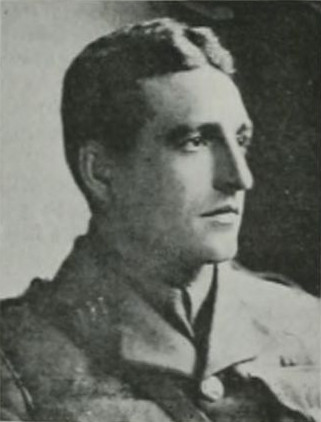
Cecil A. H. Keenlyside.
KEENLYSIDE, GUY FRANCIS HEADLAM, Capt., 1st Battn. Queen’s Own Royal West Kent Regt., 2nd s. of the late Francis Headlam Keenlyside, of Gally Law, Weybridge, Barrister-at-Law, etc. (see preceding notice); b. 9 Jan. 1880, educ. Charterhouse and Sandhurst; gazetted 2nd Lieut., Royal West Kent Regt., 12 Aug. 1899, and promoted Lieut. 5 June, 1901, and Capt. 21 Sept. 1904; was Adjutant of Volunteers, 16 July, 1906, to 31 March, 1908, and of Territorials, 1 April, 1908, to Aug. 1911; served with the Expeditionary Force in France and Flanders, and died in Hospital at Boulogne, 29 Oct. 1914, of wounds received in action at Neuve Chapelle. He m. 1906, Rose Margaret (Braemar, Kingston Road, Staines), dau. of Seymour Henry Knyvett, I.S.O., and had two sons: Richard Headlam, b. 13 May, 1909; and Christopher Headlam, b. 4 May, 1913.
KEIGHT, JOSEPH, A.B. (R.F.R., B. 2842), 198973 Chatham, H.M.S. Good Hope; lost in action off Coronel, on the coast of Chili, 1 Nov. 1914.
KELLAS, ARTHUR, M.B., Ch.B., D.P.H., Capt., tempy. Major, R.A.M.C. (T.F.), attd. 89th Field Ambulance, 86th Infantry Brigade, 29th Division, yst. s. of the late James Fowler Kellas, Superintendent of the Mercantile Marine for the Port of Aberdeen, by his wife, Mary Boyd (48, Carden Place, Aberdeen), dau. of Peter Mitchell, of Ballater, Aberdeenshire; b. Aberdeen, 1 March, 1884; educ. Aberdeen Grammar School and Aberdeen University, where he graduated M.B., Ch.B. in 1906, and in the following year took the degree of D.P.H. In 1914 he obtained the new diploma of psychiatry at the University of Edinburgh. For a short time he was Resident Physician and Surgeon in the Sick Children’s Hospital, and subsequently held the appointment of Senior Medical Assistant at the Royal Asylum, Aberdeen. While a student at Aberdeen University he served for some time in the R.A.M.C. (T.F.) and afterwards in the University Corps of the Scottish Horse. He received a commission as Lieut. in 1st Highland Ambulance, R.A.M.C. (T.F.), 2 Feb. 1909, and was promoted Capt., 2 Aug. 1912. On the outbreak of war he volunteered for Imperial service; left for the Dardanelles with the 29th Division on 18 March, 1915, and was killed in action in Gallipoli, 6 Aug. following. Buried in Military Cemetery at Lancashire Landing, Gallipoli; unm. Lieut.-Col. Thomas Fraser, commanding 1st Highland Field Ambulance, wrote: “To everyone in the Ambulance, Arthur had endeared himself by his excellent qualities of head and heart, by his devotion to duty and by his keen interest in everything that pertained to the good of the Ambulance as a whole. The men of his own section adored him, and there was no better trained or harder working unit in the Peninsula. To myself personally his loss is irreparable. Amongst a group of excellent officers, I regarded him as outstanding. He had been the greatest possible help to me, first as Transport Officer and then as Commander of C Section. We had been working together for just a year, and our most intimate association had been absolutely without friction. He had a great capacity for work, was an excellent organiser with a firm grasp of detail, of cool and sane judgment and a high sense of discipline, which was an outstanding example to all. Of his personal qualities and his unswerving loyalty I shall say nothing, save that they leave with me a lasting and unclouded memory which is full of pleasantness and cannot be effaced. We are all shocked by the suddenness of his end, though glad that it was a painless one. He was hit in the head by a sniper while making final arrangements before an action, during which it was his turn to take charge of our advanced Dressing Station. This was over 4 miles from our camp, but I decided that his body should be brought back to the Military Cemetery at Lancashire Landing, near which we have been stationed so long. There we buried him, wrapped in the colours for which he had given his life, yesterday afternoon at 2.14. A Church of England clergyman officiated. It was a most impressive service, to an accompaniment of shells from Achi Baba, which has been our daily and nightly portion for so long. There he sleeps in the company of many heroes who have laid down their lives for their country on these inhospitable and deadly shores, none of whom did his duty more earnestly or gallantly than he. I have received the enclosed letter from Col. Yarr, who at the landing was A.D.M.S. of the 29th Division. It speaks for itself, and shows how your son was regarded and appreciated at Headquarters.” The letter from Col. Yarr was as follows: “I hope you will express not only the regret of his unit but the grief of the whole 29th Division at the loss of a gallant comrade. Both in the 29th Division and in the 8th Army Corps, of which it forms part, I have known Capt. Kellas well; his watchword was Duty, and he died as he lived, a fearless, gallant officer and gentleman.” In the course of a notice of Major Kellas’s death which appeared in “Nature” (28 Aug. 1915), the writer observed: “His tenure of office at the Royal Asylum was a strikingly successful one; on both the therapeutic and the administrative sides he evinced gifts of no ordinary type.”
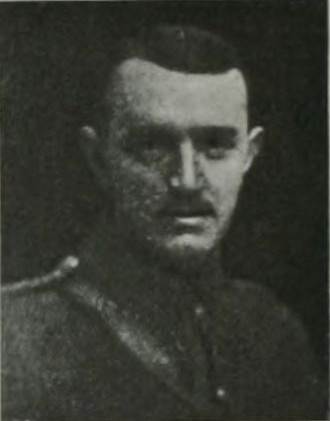
Arthur Kellas.
KELLEHER, CHRISTOPHER, Ordinary Seaman, J. 16289, H.M.S. Pathfinder; lost when that ship was sunk by a mine, about 20 miles off the East Coast, 5 Sept. 1914.
KELLEY, GEORGE, Private, R.M.L.I. (R.F.R., B. 98), lte. Ch./2399, H.M.S. Hogue; lost in action in the North Sea, 22 Sept. 1916.
KELLIE, ESMOND LAWRENCE, 2nd Lieut., 1st Battn. Bedfordshire Regt., yr. s. of Lawrence Kellie, of 191, Portsdown Road, Maida Vale, London, W., Musical Composer and Singer, by his wife, Gertrude Mary, dau. of John Stonier, of Post Hill, Staffordshire; b. Portsdown Road, London, 27 April, 1894; educ. Loudoun House School, St. John’s Wood, N.W., and Westminster School, where he was a member of the O.T.C.; obtained a 1st Class in the London University Matriculation Examination; joined the Artists’ Rifles as Private, 3 Aug. 1914, and went with that regt. to France in the following Oct.; was gazetted 2nd Lieut., Unattached List, 1 Jan. 1915, and later posted to the 1st Bedfords. On 19 April following he was wounded in the thigh while defending a trench captured from the enemy at Hill 60, and while being carried from the trench, was killed by a shell, which also wounded the stretcher-bearers. Buried, Hill 60; unm. His commanding officer, Lieut.-Col. C. R. J. Griffith, D.S.O., wrote that he was “a most courageous and useful officer and very popular with all in the regt.” He was a keen all-round sportsman, and had also artistic and musical tastes.
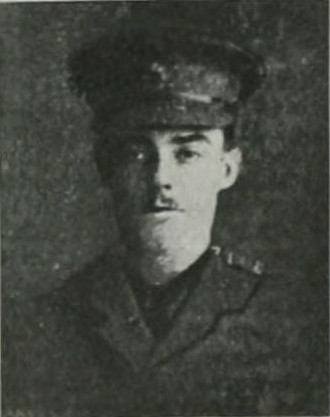
Esmond Lawrence Kellie.
KELLY, ARTHUR, Leading Seaman (R.F.R., 1st Class 66), 211500, H.M.S. Good Hope; lost in action off Coronel, on the coast of Chili, 1 Nov. 1914.
KELLY, HARRY HOLDSWORTH, Capt., R.E., yst. s. of Lieut.-Col. Henry Holdsworth Kelly, R.M.A. (ret.), of Montrose House, Southsea, by his wife, Elizabeth Eleanor, dau. of John Collum, of Bellevere, co. Fermanagh; b. Staff Officers’ House, Eastney Barracks, Portsmouth, 24 Aug. 1880; educ. Rugby and R.M.A., Woolwich (Feb. 1897–99); gazetted 2nd Lieut. R.E. 8 March, 1899; promoted Lieut. 25 July, 1901, and Capt. 8 March, 1908; served with the Egyptian Army, 1903–13; was Resident Engineer for the construction of the Town and Harbour of Port Sudan, 1904–08, and received the 4th Class Osmanieh for services in connection with this, 28 June, 1908; was Inspector of Roads and Communications for the Sudan, 13 Nov., 1908, serving as a member of the Lado Enclave Commission in 1911; Commissioner for the Sudan Government in the Sudan-Uganda Boundary Commission, 1913, and was responsible for the Reconnaissance to the Boma Plateau, carried out in the same year; took part in the operations in the Atwot Region, Sudan, in 1910 (Sudan medal), was Intelligence Officer in the operations against the Beir and Anuak tribes in South Eastern Sudan (clasp to Sudan medal and 3rd Class Medjidieh) 1912; decorated with the 3rd Class Osmanieh, 1913; re-absorbed into the British Establishment, Nov. 1913. He served with the 38th Field Coy. R.E. in France, and was killed in action at Bois Grenier, near Armentières, 24 Oct. 1914, while superintending wire entanglement work between the British and German trenches; buried at Bois Grenier; unm. His Commanding Officer, Major F. M. Browne, wrote: “He was killed early this morning while on duty in the trenches. He was struck by two bullets, one in the head and one in the back, and I feel sure that death was instantaneous and painless. We were enabled to recover his body, which was to-day buried simply by the chaplain in the presence of all the Coy. His grave lies by the roadside near a pretty country town and we are at present erecting a cross and railings to enclose it.... I need hardly tell you what a great loss your son’s death is to me, both as a friend and an officer. He was invaluable to me in every way and the country has lost in him a most valuable officer”; and writing home from a Colchester Hospital, Lieut. Arthur Evans, Royal Engineers (of Carnarvon), paid a tribute to the bravery and kindness shown by Capt. Kelly, who commanded his coy., in attending to him when he was wounded, four days before Capt. Kelly himself was killed. The letter states: “It was a great blow to me to read of Kelly having been killed in action just after I had written him a letter thanking him for being so decent to me after I was hit. He came down to me some miles from Coy. headquarters to the trenches, which must have been under heavy fire, saw me into the dressing station, and did not leave me until just before I left in the ambulance wagon. The dressing station was under fire, and was struck by a shell just before I got away. He was a fine man, 6 ft. 6 in. in his socks, beautifully built, popular and known everywhere, and I was very proud of his friendship.” Capt. Kelly won the Army and Navy Heavyweight Boxing Championship in 1901. He carried out explorations in Abyssinia in 1907, 1911 and 1913.
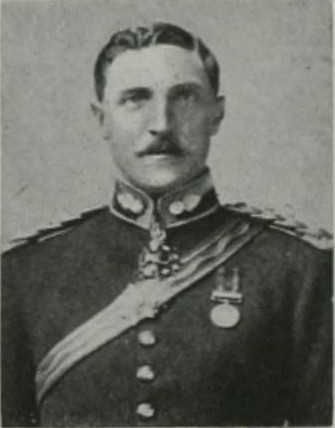
Harry Holdsworth Kelly.
KELLY, THOMAS, Stoker, 1st Class (R.F.R., B. 3286), 302040, H.M.S. Good Hope; lost in action off Coronel, on the coast of Chili, 1 Nov. 1914.
KEMP, ALFRED, Stoker, 1st Class, S.S. 101861, H.M.S. Cressy; lost in action in the North Sea, 22 Sept. 1914.
KEMP, ARTHUR, Private, No. 1818, C Coy. 5th (Cinque Ports) Battn. The Royal Sussex Regt. (T.F.), eldest s. of Sergt. Harry Kemp, of the same Battn., by his wife, Kate (Sunny Bank, Wadhurst, Sussex), dau. of James Patey; b. Moseham, Wadhurst, co. Sussex, 6 Oct. 1898; educ. Wadhurst Council School; joined the Sussex Territorials in March, 1914, and on the outbreak of war went with his Battn. to Dover and from thence to the Tower, where he volunteered for foreign service. He died in King’s College Hospital, Denmark Hill, 16 Jan. 1915, from pneumonia, contracted while trench digging at Whiligh. He had been a prominent member of the Wadhurst Boy Scouts, which he joined at its inception by Mr. E. Courthope. He was a patrol leader of the Rattlesnakes, and obtained a number of badges. He was also bugler of the troop.
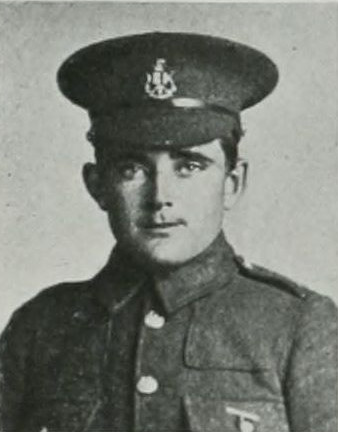
Arthur Kemp.
KEMP, SYDNEY, Ordinary Seaman, No. J. 17067, Ch., 2nd s. of George Kemp, of 66, Plough Road, Battersea, S.W., by his wife, Anna Maria; b. Hoxton, N., 8 April, 1896; educ. Clapton Road School; joined the Royal Navy about 15 April, 1912; and was lost when H.M.S. Cressy, together with the Aboukir and the Hogue, were sunk by torpedoe-fire off the Dutch coast, 22 Sept. 1914; unm.
KEMPSTER, JOHN DOUGLAS, A.B. (R.F.R., A. 3714), B. 2226, 212890, H.M.S. Good Hope; lost in action off Coronel, on the coast of Chili, 1 Nov. 1914.
KEMPTON, HARRY LEONARD, Stoker, 1st Class (R.F.R., A. 3714), 305750, H.M.S. Good Hope; lost in action off Coronel, on the coast of Chili, 1 Nov. 1914.
KEMSLEY, WILLIAM CHARLES HENRY, Private, No. 2331, Royal Army Medical Corps (T.F.), 2/1st Home Counties F.A., s. of George Albert Kemsley, of 1, Railway Place, Lower Halling, near Rochester; b. Snodland, 20 June, 1896; educ. Halling Board School; joined the R.A.M.C. Aug. 1914, and died at Windsor, 10 Feb. 1915, of cerebral hæmorrhage, while training. Buried, Halling Cemetery; unm.
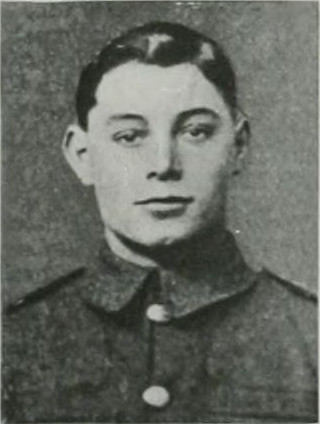
William C. H. Kemsley.
KENDALL, JESSE, Cooper, 282542, H.M.S. Good Hope; lost in action off Coronel, on the coast of Chili, 1 Nov. 1914.
KENNARD, ARTHUR, Private, No. 8557, 2nd Battn. The Hampshire Regt., yr. and only surviving s. of the late Edmund Arthur Kennard, of Hartfield, Tunbridge Wells, Master at Ipswich Grammar School (who d. 13 April, 1891), by his wife, Annie M. (Cairo Cottage, Southwater, Horsham), dau. of the late George Greenfield; b. posthumous at Hartfield, co. Sussex, 21 July, 1891; educ. Southwater Council School; joined the 1st Hants. Regt. at Portsmouth, 1 Jan. 1910, going direct to Londonderry till the Autumn, and then to Aldershot, where he was transferred to the 2nd Battn. for foreign service in the autumn of 1911; served Wynberg, South Africa; Mauritius and Mhow, Central India; came home suffering with malarial fever and was unable to accompany his regt. to the Front in March, 1915, but went out to the Dardanelles with a draft the following July. He was killed in action at the Dardanelles, in the great charge at Krithia, 6 Aug. 1915. On this occasion, out of the 900 who went into the action, only 250 returned.
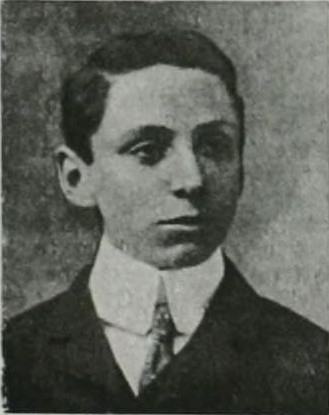
Arthur Kennard.
KENNARD, STANLEY CHARLES, Private, R.M.L.I. (R.F.R., Ch. B. 1981), H.M.S. Aboukir; lost in action in the North Sea, 22 Sept. 1914.
KENNEDY, ARTHUR ST. CLAIR, Lieut., 2nd Battn. Royal Dublin Fusiliers, yst. s. of Francis George Holland Kennedy, of Tivoli, co. Limerick, by his wife, Mary St. Clair, dau. of the late William Doyle Hobson, of Myler’s Park, co. Wexford; b. Shelbourne, co. Limerick, 12 Jan. 1892; educ. Aravon, Bray, co. Wicklow; gazetted 2nd Lieut. R.D.F. 10 June, 1914, and promoted Lieut. 15 Nov. 1914; served with the Expeditionary Force in France; was invalided home after the Battle of the Aisne, and subsequently sent on duty to Cork with the 3rd Battn. of his regt. There, while expecting to be again sent to the Front with a draft, he contracted pneumonia and died in the Royal Military Hospital, 6 March, 1915; unm. He was buried with full military honours on the 8th, in Cork Military Cemetery.
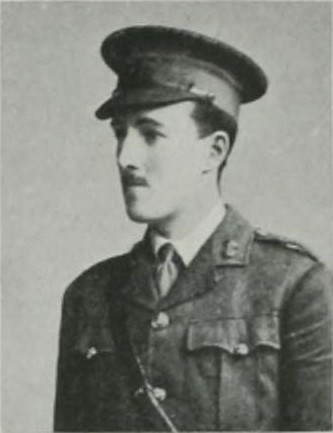
A. St. Clair Kennedy.
KENNEDY, JOHN HORACE, 2nd Lieut., 2nd Battn. Somerset L.I., attd. 2nd Cameronians (Scottish Rifles), only s. of Capt. William Horace Kennedy, of Annfield, Brannockstown, co. Kildare, late 60th Rifles; by his wife, Ada Constance, dau. of Surgeon Major-Gen. John Warren; b. Oaklands, Berkhamsted, co. Herts, 19 Oct. 1890; educ. Wellington College and Sandhurst; received a commission as 2nd Lieut. in the 3rd (Reserve) Battn. Connaught Rangers, 27 March, 1912, and was promoted Lieut. 1 Oct. 1913; transferred as 2nd Lieut. to 2nd Somerset L.I., 10 June, 1914; left for France, and was killed in action in the trenches near Esterre when attd. to the 2nd Cameronians, 10 Jan. 1915. Buried near Esterre; unm.