The Roll of Honour. (continued 33)
Reading edition
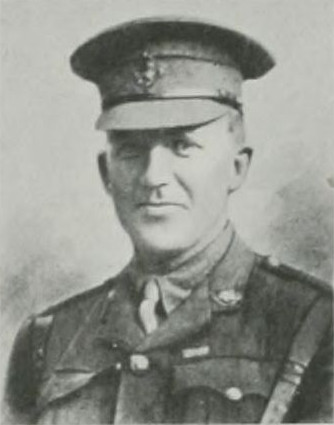
Ernest Cyril Miller.
MILLER, GODFREY LYALL, 2nd Lieut., Royal Engineers, elder s. of Sir John Ontario Miller, of Rowley Lodge, Arkley, Herts, K.C.S.I., late Indian Civil Service, by his wife, Mary Evelina, dau. of the late Sir Alfred Lyall; b. Cawnpore, India, 14 Feb. 1893; educ. Warden House School, Deal, Rugby, and Woolwich, where he gained the King’s Gold Medal; was gazetted 2nd Lieut., R.E., 20 Dec. 1912; visited Germany twice during leave to study the language; was appointed on mobilisation to the 11th Field Coy. R.E. attd. to the 2nd Division, with which he left for France on 15 Aug. 1914, and was killed in action while in charge of a bridge over a canal at Pont Arcy, 14 Sept. 1914, during the crossing of the Aisne; unm. Buried where he fell.
MILLER, HARRY, Stoker, 1st Class (R.F.R., B. 4694), 230012, H.M.S. Good Hope; lost in action off Coronel, on the coast of Chili, 1 Nov. 1914.
MILLER, INGLIS FRANCIS ROWLEY, Lieut., 3rd (Reserve), attd. 2nd, Battn. Royal Inniskilling Fusiliers, 2nd and only surviving s. of the late Major Rowley Alexander Rowley Miller, of Millbank, Omagh, co. Tyrone, by his wife, Ella Frances, dau. of the late Rev. Thomas Mason of All Saints’, Blackrock, Dublin; b. Millbank, 19 Jan. 1893; educ. Berkhamsted; gazetted 2nd Lieut. to the 3rd Battn. (Royal Tyrone Militia) Inniskilling Fusiliers, 1910, and promoted Lieut. 26 July, 1912; went to France with the Expeditionary Force in Aug. 1914, attd. to the 2nd Battn, and was wounded in the shoulder and leg in the first battle—at Cambray—26 Aug. during the retreat from Mons, and was taken prisoner. A week later his father received a card from him stating that he was doing well, and was well cared for. Tetanus, however, supervened, and he died at Venelon Hospital, France, 14 Sept. 1914; unm. It was not till the end of Jan. 1915, that notice of his death was received through the American Ambassador. He was mentioned in F.M. Sir John (now Lord) French’s Despatch of 8 Oct. [London Gazette, 19 Oct.] 1914, for gallant and distinguished conduct in the field. He was gazetted to the 2nd Inniskilling Fusiliers, 19 Nov. 1914.
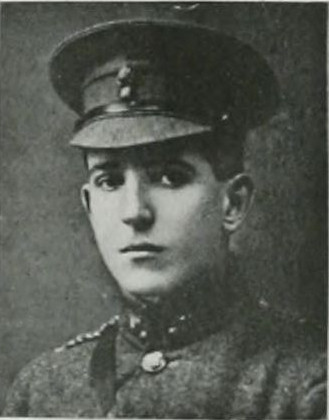
Inglis F. R. Miller.
MILLER, JOHN, Private, R.M.L.I. (R.F.R., Ch. B. 793), 7086, H.M.S. Cressy; lost in action in the North Sea, 22 Sept. 1914.
MILLER, LIONEL, A.B., 172493, H.M.S. Aboukir; lost in action in the North Sea, 22 Sept. 1914.
MILLER, RICHARD LESLIE, Private, No. 15245, A Coy. 2nd Battn. Suffolk Regt., s. of the late Horace Edward Miller, of Royton, co. Suffolk, and Zions Hill, Fincastle, Virginia, U.S.A., by his wife, Alice (now the wife of Harry Ernest Ling, of Little Cornard, Sudbury, Suffolk), dau. of Edward May, of Capel St. Andrew, Suffolk; b. Virginia, U.S.A., 8 Sept. 1882; educ. Haverstock Hill, London; was a Gardener; enlisted in Sept. 1914; went to France, 23 Feb. 1915, and was killed in action there, 26 July following; unm. He was buried at Spoilbank, between Lankhop Chateau and Chester Farm. His Commanding Officer spoke very highly of him in writing to his mother, and said that he died a heroic death.
MILLER, THOMAS JAMES, Stoker, 1st Class, K. 686, H.M.S. Cressy; lost in action in the North Sea, 22 Sept. 1914.
MILLER, WALTER, Stoker, 1st Class (R.F.R., B. 4590), S.S. 103698, H.M.S. Good Hope; lost in action off Coronel, on the coast of Chili, 1 Nov. 1914.
MILLETT, ARTHUR, Private, No. 2176, 5th Battn. King’s Own Yorkshire L.I. (T.F.), yr. s. of Alfred Miller, of Newgate, Pontefract, Miner; b. Newgate, 25 July, 1895; educ. St. Joseph’s Catholic School, Pontefract; was a Colliery Driver; enlisted 26 July, 1914; volunteered for foreign service on the outbreak of war; went to France, 13 March, and was mortally wounded 18 June, 1915, while assisting to repair a barbed-wire fence in front of our first-line trenches at Bois Grenier, and died the same day. Buried there; unm. His coy. officer wrote: “He was one of the nicest and cheeriest lads in the platoon, and I feel I have lost one of the best and bravest. I can assure you that all the lads of his platoon feel his loss deeply, as he was one of the most popular amongst them.... The time he was shot he was with a working party at night, in front of the parapet, repairing barbed wire, when several shots came across rapidly. Arthur lost consciousness almost at once, and when the end came he had not regained it, so that he practically suffered no pain.” Of his two brothers, the eldest, Sergt. Alfred Millett, R.E., was wounded in France, and the younger, William, is (1916) a Corpl. in the King’s Own Yorkshire L.I.
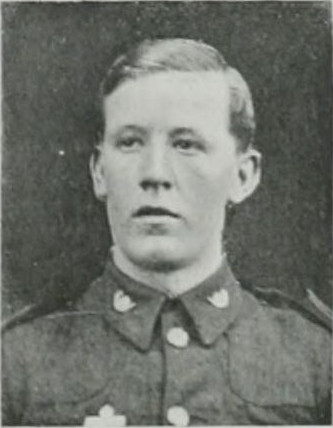
Arthur Millett.
MILLETT, FREDERICK, Stoker, R.N.R., T. 3025, H.M.S. Hawke; lost when that ship was torpedoed in the North Sea, 15 Oct. 1914; m.
MILLINGTON, GEORGE ERNEST, A.B. (R.F.R., B. 1710), 190050, H.M.S. Good Hope; lost in action off Coronel, on the coast of Chili, 1 Nov. 1914.
MILLINGTON, HERBERT HUGH, Rifleman, No. 1881, 18th Battn. (London Irish Rifles) The London Regt. (T.F.), yr. s. of the late Rev. William Millington, Rector of Cottingham, Northamptonshire, by his wife, Margaret (St. Margaret’s, Westcott, near Dorking, Surrey), dau. of George Smith, Manufacturer; b. Wandsworth Common, 14 May, 1873; educ. Merchant Taylors’ School, and Tucson Mining College, Arizona, U.S.A., and was a mining engineer and surveyor in America. Being in England on a holiday when war broke out, he joined the London Irish Rifles the next day; went to France in March, 1915, was wounded at Givenchy on 16 May, during the Second Battle of Ypres, and died on 17 May, 1915, of wounds; unm. Buried in the cemetery at Aire. A stained-glass window was erected to his memory in Cottingham Church.
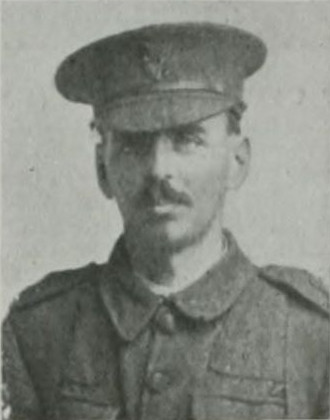
Herbert H. Millington.
MILLS, ARCHIBALD HARDING, S.S.A., M. 6886 (Ports.), H.M.S. Pathfinder; lost when that ship was sunk by a mine, about 20 miles off the East Coast, 5 Sept. 1914.
MILLS, CHARLES, Private, R.M.L.I., Po. 10422, H.M.S. Good Hope; lost in action off Coronel, on the coast of Chili, 1 Nov. 1914.
MILLS, CHARLES DANIEL, Boy Servant, L. 5452, H.M.S. Cressy, eldest s. of Henry Albert Mills, of 39, Boleyn Road, East Ham, Packing Case Maker, by his wife, Elizabeth Jane, dau. of Daniel Hills Hobbs, Carpenter and Joiner; b. Stratford New Town, co. Essex, 8 Dec. 1897; educ. Plashet Lane Council School, East Ham; joined the Navy, 16 June, 1914, and was lost when H.M.S. Cressy was torpedoed in the North Sea, 22 Sept. 1914; unm.
MILLS, EDWARD GEORGE, Private, No. 10465, 2nd Battn. Royal Sussex Regt., eldest s. of Percy Mills, of The Kennels, Findon, co. Sussex, by his wife, Eliza, dau. of James Kent; b. Littlehampton, 3 Oct. 1895; educ. there; was an Under Cowman; enlisted after the outbreak of war, 28 Aug. 1914; trained at Dover; went to France, 24 Jan. 1915, and was killed in action at the Battle of Loos, 25 Sept. 1915; unm.
MILLS, EWDIN, A.B. (R.F.R., B. 3937), 197120, H.M.S. Good Hope; lost in action off Coronel, on the coast of Chili, 1 Nov. 1914.
MILLS, GEORGE HARVEY, Private, No. 23128, 13th (Service) Battn. The Royal Scots, only surviving s. of George Mills, of Edinburgh, Draper, by his wife, Bertha Agnes, dau. of David Smith; b. Edinburgh, 22 March, 1894; educ. Musselburgh Grammar School, and Daniel Stewart’s College, Edinburgh; was Cashier with Messrs. Maxton, Graham & Syme, Chartered Accountants, Edinburgh; joined the Royal Scots, 1 June, 1915; went to France, 2 Oct. 1915, and was killed in action near Vermelles, 19 Nov. following, by the bursting of a shell, which entered the dug-out where he was; unm. Buried at Le Haie, east of Vermelles.
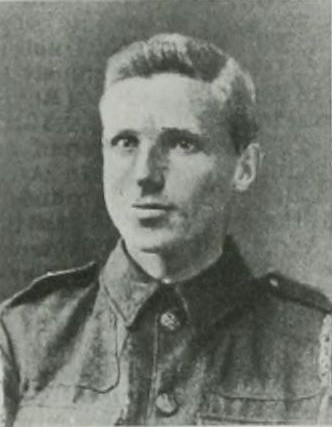
George Harvey Mills.
MILLS, JESSE, Sergt., No. 7159, 3rd Battn. Coldstream Guards, s. of Jesse Matthew Mills, of 45, Chapel Street, Bognor, by his wife, Janet, dau. of Henry Horner, of Bognor; b. Bognor, Sussex, 4 Feb. 1888; educ. Council School there; enlisted at Chichester, 4 March, 1907; served four years in England and three in Egypt; and then, in Jan. 1914, joined the Police Force at Ventnor, Isle of Wight. He was recalled to the Colours, 4 Aug. following; left for France on the 29th; was wounded in action at Ypres on 21 Oct., and died in the Mater Hospital at Dublin, 16 Nov. 1914; unm.
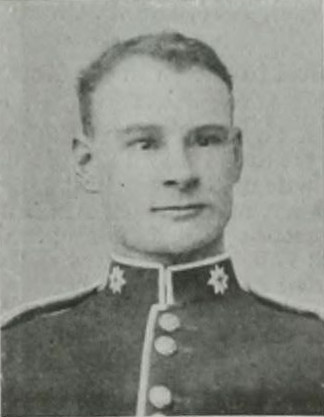
Jesse Mills.
MILLS, JOHN, Stoker, 1st Class (R.F.R., B. 9433), S.S. 106665, H.M.S. Hawke; lost when that ship was torpedoed in the North Sea, 15 Oct. 1914; m.
MILLS, JOSEPH, A.B. (R.F.R., B. 4920), S.S. 1772, H.M.S. Good Hope; lost in action off Coronel, on the coast of Chili, 1 Nov. 1914.
MILLS, JOSEPH HENRY, Private, 15/978, North Auckland Regt., New Zealand Expeditionary Force, s. of Joseph Mills, of Westport, Gold Miner; b. Charleston, New Zealand, 9 July, 1889; educ. Public School there; was a Carter in Auckland; on the outbreak of war joined the Expeditionary Force, 5 Sept. 1914, left for Egypt with the second contingent; took part in the repulse of the Turkish attack on the Suez Canal, and died of wounds received in action at the Dardanelles, 9 May, 1915; unm.
MILLS, MARK, Private, No. B. 1549, Ch. 9860, R.M.L.I., s. of Mark Mills, of Holloway, London, by his wife, Caroline, dau. of (——) Williamson; b. London, 11 Sept. 1879; educ. there; joined the Navy, 18 Aug. 1897, and was lost on H.M.S. Cressy, when that ship was sunk in the North Sea, 22 Sept. 1914. He m. at St. Paul’s Church, Upper Holloway, 27 Feb. 1910, Florence Caroline (53A, Ormiston Road, Shepherd’s Bush, W.), dau. of Albert Aldridge, and had three children: Mark, b. 5 Sept. 1911; Cecil, b. 25 July, 1913; and Margery, b. 26 July, 1910.
MILLS, WILLIAM, A.B. (R.F.R., Ch. B. 2795), 186948, H.M.S. Cressy; lost in action in the North Sea, 22 Sept. 1914.
MILLWARD, HENRY WOODVINE, Deckhand, No. 365 D.A., Trawler Section, R.N.R.; lost when the mine-sweeping trawler No. 61 (Thomas W. Irvine, of North Shields) was sunk by a mine, Aug. 1914.
MILNE, FRANCIS JAMES, Private, No. 1555, 1st Battn. Honourable Artillery Coy., elder s. of James Milne, of 14, Park Houses, Willesden Green, N.W., by his wife, Harriette Eugenie, dau. of William Southwood, of Exeter, and grandson of John Milne, formerly of New Merdrum, Rhynie, co. Aberdeen; b. Willesden Green, afsd. 20 Dec. 1891; educ. The Haberdashers’ School, West Hampstead; was a Commercial Traveller; on the outbreak of war joined the H.A.C., with his brother, Hugh, and volunteered for foreign service; went to France, 18 Sept. 1914, and was killed in action at Rouge Croix, 14 Nov. 1914, during the Battle for Calais; unm. Buried with full military honours in a farm garden, Les Lobes, La Conture, Pas-de-Calais. He was the first man in the H.A.C. to fall. Two days before he was killed he wrote: “Hugh and I are in the best of health. Don’t worry if you do not hear regularly from us. The post is very uncertain. We are quite safe and glad to be out here doing our duty.” Lieut.-Col. Treffery wrote: “He died as many others have done during the past few months, doing his duty and putting in the best he could for his country”; and Capt. A. L. Ward: “I think perhaps it may lessen your grief to know how well he has done his duty during the trying and difficult times we have had for the past three weeks, and as his captain, I can assure you of my sorrow at losing such an excellent soldier.” While at school he passed the junior Cambridge examination, and won V form prize. He gained many prizes and certificates for shooting and swimming, including life-saving, and was enrolled as first-class shot in National Roll of Marksmen; was a member of the Cadet Corps; Capt. of the Rifle Club, and best shot in the school. At Bisley in 1908 he won the 1st Prize, Silver Cigarette Case, in Marydown Competition; 2nd prize, Silver Watch, Cheylesmore Cup Competition; the Patriotic Society’s Badge and the Bisley medal.
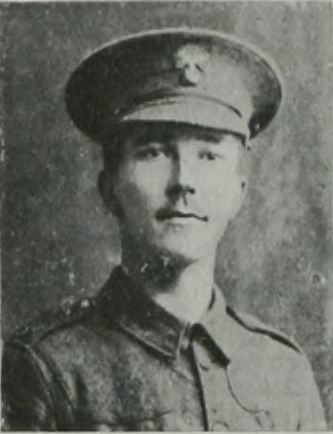
Francis James Milne.
MILNE, JAMES, Private, No. 1364, 15th Battn. Australian Imperial Force, elder s. of James Milne, of East Grange, Kinloss, by Forres, a Platelayer on the Highland Railway, by his wife, Jane Milne, dau. of John Bower, Road Contractor, Dufftown; b. Rothes, 23 March, 1893; educ. Inchberry and Alves Public Schools, afterwards being employed on the Highland Railway at Inverness; went to Australia in 1911, and was engaged in gold mining at Cobar; volunteered after the outbreak of war and joined the Australian Imperial Force in Feb. 1915; went to the Dardanelles, and died of wounds received in action there, 13 Oct. 1915; unm.
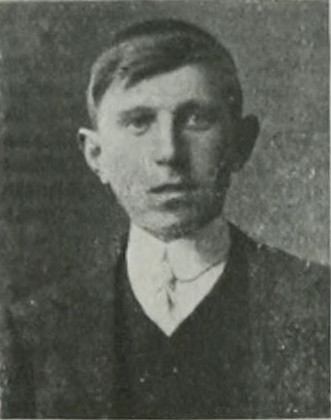
James Milne.
MILNE, WILLIAM, Private, No. 9383, 1st Battn. The Royal Scots, s. of William Milne, by his wife, Sarah, dau. of James McFarlane; b. Edinburgh, 1889; educ. St. Leonard Street Public School, Edinburgh; enlisted in 1900; went to France, 6th March, 1915, and died 23 April, 1915, of wounds received in the 2nd Battle of Ypres. He m. at Dundee, 1 Oct. 1905, Williamine (40, Watson’s Lane, Dundee), dau. of James Donnelly, of that city, and had a son, James, b. 17 Nov. 1910.
MILNER, JOHN LEWIS, M.A., 2nd Lieut., Royal Field Artillery, eldest s. of John William Milner, of 31 Penkett Road, Liscard, Wallasey, Merchant, by his wife, Annie, dau. of Henry Lewis; b. Liverpool, 26 Feb. 1892; educ. St. Bee’s School, Cumberland, and graduated B.A. in 1911, and M.A. in 1913. He was a brilliant scholar, and held Sir Edward Grey’s nomination for a position under the Foreign Office, and had spent some time abroad making a special study of modern languages, but on the outbreak of war, applied for a commission, and was gazetted to the reserve of officers, and went to Woolwich in Aug. 1914. He went out to the Front the first week in Jan. 1915, received a commission in the regular Army, 15 Feb., and was killed in action near Ypres, on Sunday, 9 May, 1915; unm. “He was in the trenches,” wrote his Colonel, “observing the fire of his battery. The Germans rushed our front trenches, and all the infantry officers at that point were killed. In rallying the Infantry to retake the trench, he was shot through the head. He was a very gallant officer.”
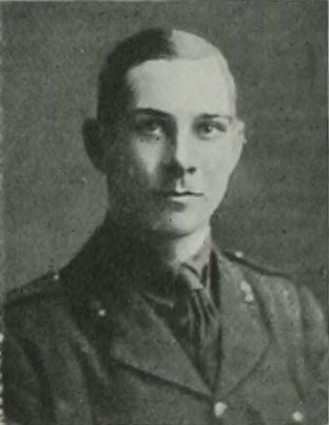
John Lewis Milner.
MILNES, EDMUND, A.B. (R.F.R., B. 4099), S.S. 1312, H.M.S. Good Hope; lost in action off Coronel, on the coast of Chili, 1 Nov. 1914.
MILNES, JESSE, A.B. (R.F.R., B. 5824), 206965, H.M.S. Hogue; lost in action in the North Sea, 22 Sept. 1914.
MINIHAN, PATRICK, Boatman C.G., 284271, Devonport, H.M.S. Good Hope; lost in action off Coronel, on the coast of Chili, 1 Nov. 1914.
MINNO, JOSEPH, Stoker, H.M.S. Good Hope; lost in action off Coronel, on the coast of Chili, 1 Nov. 1914.
MINTER, FREDERICK, A.B. (R.F.R., B. 4556), 172760, H.M.S. Hogue; lost in action in the North Sea, 22 Sept. 1914.
MINTON, WILLIAM, Private, R.M.L.I., 11718, H.M.S. Hawke; lost when that ship was torpedoed in the North Sea, 15 Oct. 1914.
MITCHELL, ALBERT CHARLES, A.B. (R.F.R., Ch. B. 9137), 203369 (Dev.), H.M.S. Cressy; lost in action in the North Sea, 22 Sept. 1914.
MITCHELL, ARTHUR JAMES, Officer’s Steward, 3rd Class, L. 3202 (Dev.), H.M.S. Cressy; lost in action in the North Sea, 22 Sept. 1914.
MITCHELL, AUGUSTUS JAMES, A.B., J. 3087, H.M.S. Cressy; lost in action in the North Sea, 22 Sept. 1914.
MITCHELL, BERTIE FREDERICK, Leading Seaman (R.F.R., Ch. B. 8923), 200567, H.M.S. Cressy; lost in action in the North Sea, 22 Sept. 1914.
MITCHELL, FREDERICK EUGENE HOBART, A.B., J. 3975, H.M.S. Hogue; lost in action in the North Sea, 22 Sept. 1914.
MITCHELL, GEORGE JOHN, Carpenter’s Mate (Pensioner), 157320 (Ports.), H.M.S. Cressy; lost in action in the North Sea, 22 Sept. 1914.
MITCHELL, JAMES BANNERMAN, Stoker, 1st Class (R.F.R., Ch. B. 8054), S.S. 103779, H.M.S. Cressy; lost in action in the North Sea, 22 Sept. 1914.
MITCHELL, JOHN MONFRIES, Capt., 1/7th Battn. Royal Scots (T.F.), yr. s. of the late Alexander Mitchell, Senior Partner in the firm of John Mitchell & Co. Timber Merchants, Leith, by his wife, Annie (101, Trinity Road, Edinburgh), dau. of Alexander Alexander, of Leith; b. Leith, 24 Sept. 1882; educ. Royal High School Edinburgh, and Blairlodge School, Polmont, and was a partner in his father’s firm. He was gazetted 2nd Lieut. to the 7th (then the 5th Vol.) Battn. Royal Scots, 18 Feb. 1905, and was promoted Lieut. 31 March, 1908, and Capt. 17 April, 1912. On the outbreak of war he volunteered for foreign service, but was killed on his way to the Front in the railway disaster at Gretna, 22 May, 1915; unm.
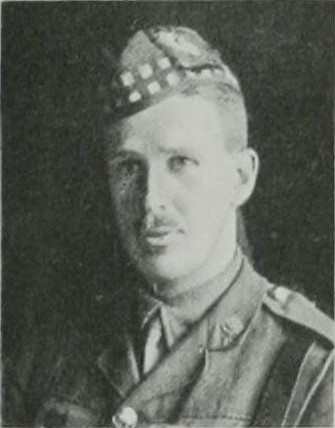
John Monfries Mitchell.
MITCHELL, WILLIAM ALEXANDER, Corpl., No. 8/437, 8th Southland Coy. Otago Battn. New Zealand Expeditionary Force, yst. s. of David Mitchell, of Southland, New Zealand, Manager, Ocean Beach Freezing Works there, by his wife, Ann, dau. of William Crabb, of Laverock Hall, Carmyllie, Scotland; b. Invercargill, New Zealand, 29 Sept. 1891; educ. Bluff Public School and the Southland Boys’ High School; was on the staff of the mercantile firm of J. G. Ward & Co., but on the outbreak of war immediately volunteered and joined the 8th Southland Coy. 12 Aug. 1914. He was wounded in the fighting at the Dardanelles, 2 May, 1915, and died at Alexandria, 29 May following; unm. He was buried in the Military Cemetery there. L.-Corpl. J. McLeary wrote: “When I was wounded on Sunday night (May 2) I had to crawl back to the Red Cross, and on my way I met Alic Mitchell. He said ‘I will see you up this rise,’ but he had no sooner spoken than he was moaning on the ground, shot in the mouth and arm. He seemed very bad, but we managed to get back without further injury, though the bullets from Turkish rifles and machine-guns were ploughing up the dirt all around us.” Corpl. Mitchell was a keen Territorial and a prominent athlete. For many years he represented Southland at Association football as half back. He was also a Rugby and tennis player and a member of the Bluff Cricket Club.
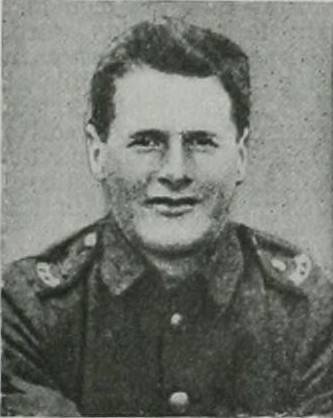
William A. Mitchell.
MITTEN, THOMAS HENRY, Stoker, 1st Class, K. 15477, H.M.S. Aboukir; lost in action in the North Sea, 22 Sept. 1914.
MOFFAT, ARCHIBALD SKIRVING WOOLERY, Lieut.-Col., 2nd Battn. Border Regt., 4th and yst. s. of James Moffat, of Ken Ervie, co. Kirkcudbright, by his wife, Mary, dau. of Capt. Robert Skirving of Croys; b. Castle Douglas, co. Kirkcudbright, 14 Nov. 1867; educ. Craigmount, Edinburgh, and in Switzerland; gazetted 2nd Lieut. to 2nd Border Regt. from the Militia, 10 Nov. 1888; and promoted Lieut. 9 July, 1890; Capt. 26 Aug. 1896; Major, 20 Oct. 1909, and Lieut.-Col. (posthumous) 22 June, 1915, to rank as from 3 May, 1915, and from June 1899, to June, 1903 was Adjutant. He served in the Waziristan Expedition of 1894–95, and received the medal with clasp. At the end of 1909 he joined the 1st Battn. of his regt. in India, and shortly afterwards proceeded to Burma, where he was second in command when war broke out. The battn. was ordered home and arrived in England in Jan. 1915, when he proceeded to France, and rejoined the 2nd Battn. as second in command. He was killed in action whilst leading a charge, during the Battle of Festubert, 16–17 May, 1915, and was buried near the spot where he fell. He was mentioned in F.M. Sir John (now Lord) French’s Despatches of 30 Nov. 1915. Lieut.-Col. Moffat excelled in all outdoor games and sports, and did much to encourage athletics among the men of his regt. Almost all his leaves were spent in big game shooting, and he had a fine collection of trophies. He m. at Newara-Eliya, Ceylon, 27 April, 1912, Marjorie Armstrong, dau. of Arthur Jadick Just, of Morireby, Newara-Eliya, Ceylon, and had a son: Archibald James, b. (posthumous), 18 Aug. 1915.
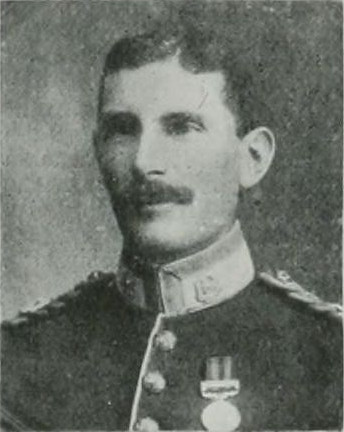
Archibald S. W. Moffat.
MOFFET, JOHN LEESON, B.Sc. (Hons.), A.M.I.E.E., 2nd Lieut., 3rd Battn. Royal Scots Fusiliers, elder s. of Thomas Moffet, of Ingleside, Kingsfield Road, Watford, Assistant Estate and Land Agent to the London & North-Western Railway Co., Chairman of the Watford Public Library and a member of the Watford Urban District Council, by his wife, Elizabeth Ann, dau. of the late John Leeson, of Rugby; b. Watford, co. Herts, 17 May, 1888; educ. Watford Grammar School, City and Guilds of London Technical College, Finsbury, and Manchester University, where he graduated B.Sc. (Engineering) with honours. On leaving there he became an Engineering Assistant at the Horwich Locomotive Works of the Lancashire and Yorkshire Railway Co. and in 1913 left there to take a position as Electrical Expert to the Chloride Electrical Storage and Battery Co., Clifton, Manchester. At Manchester University he had been in the O.T.C. for four years and a half, and had obtained certificates A and B; on the outbreak of war he applied for a commission and was gazetted 2nd Lieut. to the 3rd Royal Scots Fusiliers, 5 Sept. 1914, and at this date was at Portland in charge of electrical work on a submarine. He went to France on 26 Jan. 1915, and was killed in action at Neuve Chapelle, 10 March following; unm. His Commanding Officer wrote: “He was a most promising officer, keen and anxious to learn. He had a high sense of duty and had plenty of confidence in himself”; and another officer: “I last spoke to your son on the morning of March 10 while we were waiting for the artillery bombardment to cease. He was then quite cheery, and certainly not as nervous as a good many of us.” “I was in the same company as your son,” wrote another officer, “and only ten yards away when he was killed. We had been advancing in extended order just after the capture of the German first line of defence, when we suddenly struck some heavy rifle fire. Your son was in front of me with his platoon, and had just given the order to his men to lie down, when he was struck by a bullet through the left lung and died at once, without speaking. He died a noble death, leading his men into action, and it was through turning round himself to warn his men to take cover that he himself was hit.” Lieut. Moffet was an Associate Member of the Institution of Electrical Engineers, and while in training at Greenock received a unanimous invitation to accept the Chairmanship of the Manchester Students’ Section of the Institution. He was awarded the Premium Prize of the Institution for a paper on “Possibilities of Electrical Traction on Railways.” His younger brother, Lieut. Thomas Arthur Moffet, King’s Liverpool Regt. is now (1916) a Railway Transport Officer with the Expeditionary Force in France.
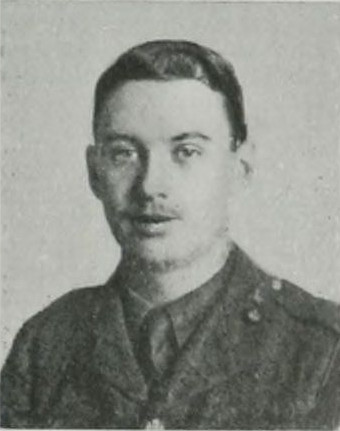
John Leeson Moffet.
MOGG, FREDERICK HARRY, A.B. (R.F.R., Ch. B. 7907), S.S. 103585, H.M.S. Aboukir; lost in action in the North Sea, 22 Sept. 1914.
MOGGRIDGE, ROBERT, Private, R.M.L.I., Ch./16964, H.M.S. Cressy; lost in action in the North Sea, 22 Sept. 1914.
MOHR, JOHN CARL BERNHARDT, No. G. 1420,2nd Battn. Sussex Regt. s. of Charles Mohr, of 91, Sumner Road, Peckham; served with the Expeditionary Force in France, etc.; killed in action, 4 Feb. 1915.
MOIR, ARCHIBALD GIFFORD, Lieut., 7th Battn. Argyll and Sutherland Highlanders (T.F.), elder s. of Archibald Patrick Moir, of Marshill, Alloa, by his wife, Margaret, dau. of Robert Gifford, of London; b. Alloa aforesaid, 17 March, 1890; educ. Edinburgh Academy, Banstead Hall, Surrey, and Fettes College, Edinburgh, and on leaving there studied law, qualifying in 1914, with the intention of joining his father in business. He was given a commission as 2nd Lieut. in the 7th Argyll and Sutherland Highlanders, 12 May, 1914, and promoted Lieut. 7 Sept. following; volunteered for Imperial service on the outbreak of war in Aug.; went to France in Dec., and was killed in action at Ypres, near Hill 60, 25 April, 1915; unm. Buried near St. Jean. Col. Carden, who was killed shortly afterwards, wrote: “He was the most popular officer in the regt. and the best at his work;” and one of his men: “You were asking about Mr. Moir, he was the finest officer in the Battn., everybody liked him. When he fell he was leading us. I have been to his grave, it is behind the firing trench. Everyone of us miss him. We have had other officers, but none like him. All he thought of was his men.” Lieut. Moir was mentioned in Sir John (now Lord) French’s Despatch of 31 May [London Gazette, 22 June], 1915. At Banstead Hall he was captain of the School, and gained all the important athletic prizes; at Fettes College he gained the gold medal in 1908, as the best athlete of his year; was captain of the Cricket XI; was also a brilliant three-quarter back at football, and seemed to be marked out for International honours, but an accident to his knee while playing for the Edinburgh Academicals stopped his football career. He played for his county regularly at cricket, and had many brilliant innings.
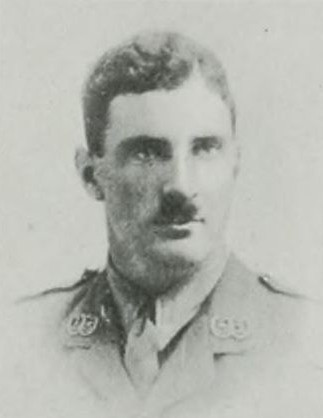
Archibald Gifford Moir.
MOIR, JAMES, Private, No. 1794, 11th Battn. Australian Imperial Force; served in Egypt, and at the Dardanelles; killed in action, 8 Aug. 1915.
MOIR, JOHN ANDREW ALEXANDER, 2nd Lieut., 2nd Battn. Argyll and Sutherland Highlanders, elder s. of Andrew John Moir, of 15, Clive Row, Calcutta, Merchant and Skipper; b. London. 1 Dec. 1897; educ. in Germany, and at Southport Modern School, and St. John’s College, Westcliff-on-Sea, Essex, where he was a Prefect, and on the outbreak of war, at once volunteered and joined the London Scottish (14th London Regt.), 28 Aug. 1914; went to the Front with them in 28 Nov. following; served in the trenches during the winter of 1914–15, and was selected for a commission and gazetted 2nd Lieut. 2nd Argyll and Sutherland Highlanders, 5 April, 1915. He fell leading an attack on a small party of Germans in the early morning of 16 June, 1915. His Col., Lieut.-Col. Gore, wrote of him: “I cannot tell you how sorry I am to have lost him. He was a most promising young officer and brave almost to recklessness, and, though he had been with us only a short time, was much liked and esteemed by all his comrades.” He was buried in Ration Farm Cemetery (Bois Grenier), near Armentières. He was an excellent horseman, motor cyclist and swimmer, and founded and managed the Thamesmouth Football Club until it was disbanded on the outbreak of war.
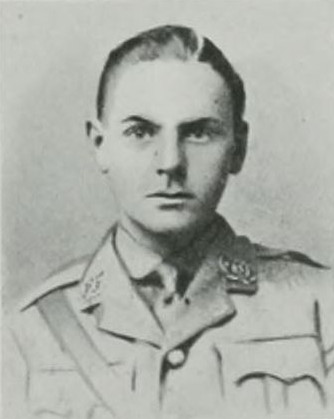
John Andrew A. Moir.
MOLE, HERBERT, Sergt., No. 6067, 1st Battn. Queen’s Royal West Surrey Regt., s. of Henry Mole, of Charlecote, Warwick; served with the Expeditionary Force in France, etc.; died 27 Oct. 1914, of wounds received in action.
MOLESWORTH, ERNEST KERR, Major, Royal Engineers, attd. 2nd Queen Victoria’s Own Sappers and Miners, Indian Army, 3rd s. of Lieut.-Col. Anthony Oliver Molesworth, of 3, Priory Street, Cheltenham, and of Cruicksfield, Duns, Berwickshire, late R.A., by his wife, Ann Elizabeth, yst. dau. of Major William Hope Smith, H.E.I.C.S., and gdson. of Capt. Anthony Oliver Molesworth, R.A., [brother of Richard Pigott, 7th Viscount Molesworth]; b. Montrose, 28 March, 1878; educ. privately and the Royal Military Academy, Woolwich; gazetted 2nd Lieut. R.E. 23 March, 1898, and promoted Lieut. 14 Feb. 1901; Capt. 23 March, 1907 and Major 30 Oct. 1914. He took part in the Tibet Expedition of 1903–4, and was present at the Delhi Durbars (medals). In 1907 he was attd. to the 2nd Queen Victoria’s Own Sappers and Miners, Indian Army, with headquarters at Bangalore, being appointed Company Commander, April, 1911. He left with the Indian Expeditionary Force for France, 16 Oct. 1914, and was accidentally shot at St. Hilaire, on 31 Dec. following. Major Molesworth m. in London, 31 May, 1905, Hilda Rosalie, dau. of Lieut.-Gen. Henry Alexander Brownlow, R.E., and had two children: Brownlow David, b. 10 Feb. 1913; and Mollie Rosalie, b. 11 March, 1907.
MOLINEUX, GEORGE KING, Capt., 2nd Battn. Northumberland Fusiliers, elder s. of Major Harold Parminter Molineux, of The Cottage, Isfield, Sussex, late Essex (56th) Regt., by his wife, Ross Eugenie Katherine, 2nd dau. of the late Henry King, of Isfield Place, Sussex; b. Eastbourne, co. Sussex, 15 April, 1887; educ. Winchester College and Magdalen College, Oxford; after serving two years in the 3rd Battn. South Staffordshire Regt. he was gazetted 2nd Lieut. 2nd Battn. Northumberland Fusiliers, 11 Dec. 1909, and served in England with his Regt. until Sept. 1913, when he proceeded with it to India, being promoted Lieut. 1 Nov. 1913, and Capt. 16 Jan. 1915. He was appointed Aide-de-Camp to Lord Hardinge of Penshurst, then Viceroy of India, in Aug. 1914, but resigned this appointment in Nov. 1914 in order to accompany his regt. to France on active service. He landed in France in Jan. 1915, and was engaged in transport work for a short time previous to going into the trenches in the Ypres district. On the 7 and 8 May, the Germans concentrated their guns on the salient held by the Brigade in advance of Ypres, the bombardment of the trenches being exceptionally severe. In the assault by the enemy which followed, owing to the giving way of a unit on the right of the Northumberland Fusiliers, the right flank of that regt. was overwhelmed, and Capt. Molineux was last seen wounded and unconscious in his trench, between Wieltje and Frezenberg, by the survivors who retired. He was most popular in his regt. and was beloved by all who knew him. He was unm. At Winchester he was in the cricket eleven in 1906, and was captain of Commoner Football. He gained his Harlequin colours at Oxford, and played in several matches for the University, also for Gentlemen of England against Oxford University and for the M.C.C. He was a first-class cricketer, shot, horseman, fisherman, and a good naturalist.
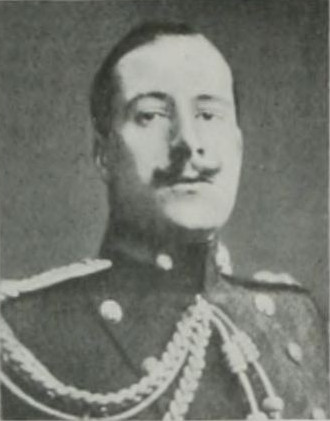
George King Molineux.
MOLLOY, CHARLES, Chief Petty Officer (R.F.R., B. 2975), 171847, H.M.S. Hawke; lost when that ship was torpedoed in the North Sea, 15 Oct. 1914.
MOLONEY, JOHN LAWRENCE, Sergt.-Major, Warrant Officer (1st Class), No. 68888, 22nd Brigade, Royal Field Artillery, s. of Michael Moloney, Sergt. Sussex Regt., by his wife, Mary; b. Chichester, co. Sussex, 17 June, 1873; enlisted, 24 Sept. 1888; served in the South African War (wounded at Lindley; Queen’s medal with two clasps); and with the 7th Division of the Expeditionary Force in France and Flanders from 5 Oct. 1914, and was killed in action near Gheluvelt, Belgium, 29 Oct. following. An officer wrote: “We were in a position near the village of Gheluvelt and were being heavily shelled. The Brigade Staff horses were in a farm shed behind our position, and as a shell set it on fire, Mr. Moloney ordered the horses to be taken out. He saw all safely out and led out the last one himself. Before he was ten yards away from the building, another shell burst near him killing him almost instantly. As you will see from this he died doing his duty; he is buried near where he fell, and the spot is marked by a cross bearing his name. You have all our sympathy, and his loss was deeply felt by all ranks.” Sergt.-Major Moloney was an all-round sportsman and had won many cups and medals for riding and jumping, tentpegging and shooting. He had the Silver Medal for best Man-at-Arms, Bombay Army, won at Poona, 1903, and was for many years a successful competitor at the London Military Tournament. He had the Good Conduct medal. He m. at Wimborne, Dorset, 17 Jan. 1905, Janet Christine (14, New Boro’, Wimborne), twin dau. of Samuel and Isabella Foster, of Homeleigh, Wimborne; s.p.
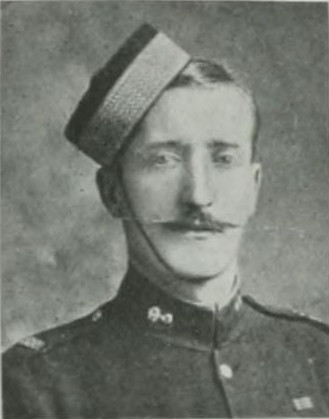
John Lawrence Moloney.
MOLLOY, MICHAEL VALLANCEY, 2nd Lieut., 2nd Battn. Sherwood Foresters, elder s. of the Rev. Eben Molloy, Vicar of Shenstone, B.A., by his wife, Harriet Rachel Emily, dau. of the late Rev. Thomas Maule Wetherall, Rector of Pelham Parva, M.A. [gdson. of Lieut.-Gen. Vallancey, R.E.]; b. Keyston Rectory, co. Huntingdon, 29 Sept. 1894; educ. Mr. Strahan’s School, Hythe, and Rossall School (Mr. Furneaux’s House), where he was in the O.T.C., and obtained Certificate “A”; later joined the Birmingham University O.T.C., and was gazetted 2nd Lieut. to the Special Reserve of Officers, 15 Aug. 1914, being at his own request attd. to the 3rd Sherwood Foresters; went to France early in Jan. 1915, attd. to the 2nd Battn., as Machine Gun Officer, and in April was given a commission in the regular Army; and was killed in action at Hooge, 9 Aug. 1915, while attending to his guns in a captured German trench; unm. Buried in Sanctuary Wood, Hooge. Gen. Congreve, V.C., wrote: “I knew him better than almost any of the young officers. I don’t quite know how, and feel I have myself lost a friend. He was an excellent officer—chosen because he was so, for the machine gun command, and he was killed when looking after the guns in a battle in which his brigade did everything it was asked to do”; and Major C. I. D. Hobbs, the commanding officer: “He is a great loss to the regt., as, in addition to being such a keen young officer, full of pluck, he was universally popular with officers and men. He was shot by a bullet through the heart while leading his men against the enemy, and must have been killed instantaneously.” Capt. Chidlow-Roberts, officer commanding C Coy., also wrote: “Everybody is most awfully cut up about it, as he was a top-hole fellow and a jolly good soldier. He was a great friend of mine. The word of it was he was too brave, and shouldn’t have gone down to see about the gun”; and Capt. Noel Chance, R.A.: “Mollie (as we all called him) was to me as dear as a younger brother. No loss has affected me so much in this war, and it has caused a gap that cannot be filled. You must, indeed, be proud to have such a son; brave, extraordinarily courteous, and always anxious to help and be a pleasure to others. He died a death we should all prefer, and he could have felt nothing. I have had two short letters from the regt., and in each case (one from Major Hobbs, the commanding officer, and one from Roberts), the outstanding comment is the loss of ‘Mollie.’ I have never known a boy of his age have so many friends among both senior and junior officers.”
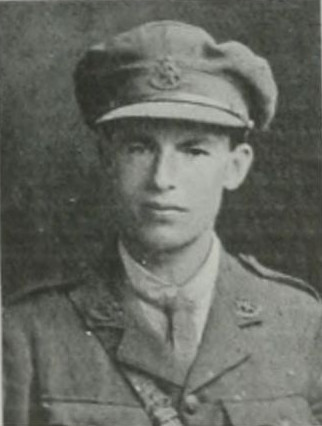
Michael Vallancey Molloy.
MOLSON, ERIC ELSDALE, Lieut., 3rd Battn. The Royal Scots, 2nd s. of Major John Elsdale Molson, of Goring Hall, Worthing, and 3, Morton Terrace, Gainsborough, J.P., R.A.M.C. (T.F.), by his wife, Mary, dau. of Dr. Arthur Edmund Leeson, M.A., M.D., Trinity College, Dublin; b. Chelmsford, co. Essex, 26 March, 1894; educ. Cheltenham College, and Pembroke College, Cambridge; gazetted 2nd Lieut., Royal Scots, 15 Aug. 1914, and promoted Lieut. 2 Feb. 1915; went to France, 21 Dec. 1914, and was killed in action in Flanders, 1 April, 1915, while on duty in a gap between two trenches; unm. Buried behind the trenches where he fell. His Colonel wrote: “I had a great admiration for the boy. He was universally popular. We should have considered ourselves very fortunate to get him to come into the regt. permanently. He was such a delightful type of an English gentleman, I often used to think when I looked at him”; and another: “He was very popular with everyone in the battn. and especially with his own platoon. Although he was a strict disciplinarian and insisted on things being thoroughly done, he always did the most dangerous work himself, such as going in front of his trench to put up the barbed wire, with the result that his men had absolute confidence in him. He did some particularly daring sniping work, which resulted in his being twice grazed by the German snipers, once in the head. For this work his name was sent in to the General.” While at Cheltenham he was captain of the College Football XV, 1912–13, a Prefect of the College and winner of the Hornby Prize. His father is (1916) on active service at Newhaven, attached to Military Hospital and Garrison, and his two brothers are (1916) Harold Elsdale Molson, 2nd Lieut., King’s Royal Rifles, who has been wounded, and Gerald Elsdale Molson, Sub-Lieut. in the Royal Navy.
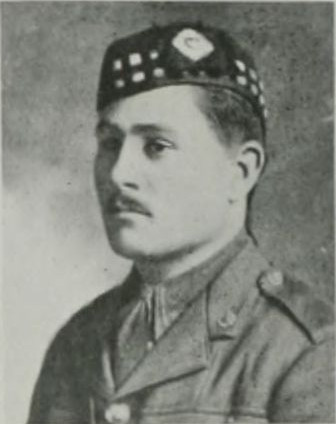
Eric Elsdale Molson.
MONCK, THE HON. CHARLES HENRY STANLEY, Capt., 3rd Battn. Coldstream Guards, elder and only surviving s. of Henry Power Charles Stanley, 5th Viscount Monck, late Capt., Coldstream Guards, by his wife, Lady Edith Caroline Sophia, née Scott, dau. of John, 3rd Earl of Clonmell; b. London, S.W., 9 Nov. 1876; educ. Eton; gazetted 2nd Lieut. to the Coldstream Guards from the Militia, 15 May, 1897, and promoted Lieut., 9 Nov. 1898, and Capt., 21 Nov. 1903; served in the South African War, 1899–1902; took part in the advance on, and relief of, Kimberley, including actions at Belmont, Enslin, Modder River and Magersfontein; operations in the Orange Free State, Feb.-May, 1900, including actions at Paardeberg, Poplar Grove, Dreifontein, Vet River and Zand River; operations in the Transvaal in May and June, 1900, including actions near Johannesburg, Pretoria and Diamond Hill; operations in the Transvaal, east of Pretoria, July to Oct. 1900, including action at Belfast; operations in the Transvaal, west of Pretoria, Nov. 1900; in Cape Colony, south of Orange River, 1900; in the Transvaal, Nov. to Dec. 1900; and those in Cape Colony, Dec. 1900, to 31 May, 1902; receiving the Queen’s medal with seven clasps and the King’s medal with two clasps; went to France with the British Expeditionary Force, 12 Aug. 1914; was wounded in the thigh, 8 Sept., but rejoined his regt. on the 24th, and was killed in action at St. Julien, 21 Oct. 1914. Buried there. He m. at Wellington Barracks Chapel, London, 16 Feb. 1904, Mary Florence, 2nd dau. of Sir William Wyndham Portal, of Laverstoke, 2nd Bart., and had three children: Henry Wyndham Stanley, b. 11 Dec. 1905; Elizabeth Noel, b. 25 Dec. 1908; and Mary Patricia, b. 22 June, 1911.
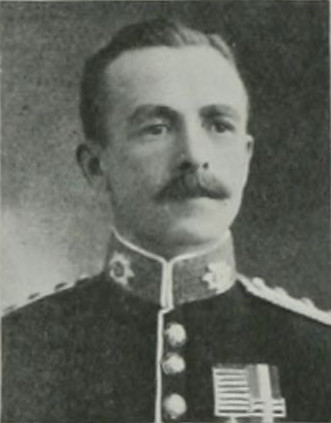
Hon. C. H. S. Monck.
MONCKTON, MARMADUKE HENRY, 2nd Lieut., Royal Garrison Artillery, attd. Royal Flying Corps, elder s. of Commander Henry Grant Monckton, by his wife, Maud Lilian, dau. of the Rev. John W. Hallowell; b. Clifton, Bristol, 31 May, 1891; educ. Cheltenham College and the Royal Military Academy, Woolwich; gazetted 2nd Lieut., R.G.A., 23 Dec. 1910; went to France, 1914, in charge of an anti-aircraft gun, and was attached to the Royal Flying Corps, 19 March, 1915. He was killed in action on 9 July, 1915, while flying over the enemy’s line near Bailleul. Buried at Bailleul; unm. His commanding officer wrote: “He was killed at mid-day to-day, while flying over the enemy’s lines. The attendant circumstances will never be accurately known, but it seems probable from evidence of onlookers that the machine, a Bristol scout, was hit by a fragment of shell and became uncontrollable from about 4,000 feet. Your nephew’s death was instantaneous. He was a gallant pilot and a fine, fearless soldier”; and in a later letter he spoke of his faithful and loyal services to himself.
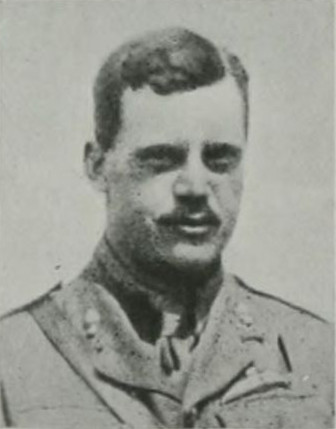
Marmaduke H. Monckton.
MONCUR, GEORGE CLARK, L.-Corpl., No. 3457, 9th Battn. (Queen Victoria Rifles) The London Regt. (T.F.), s. of John William Moncur, of Aberdeen, Hotel Proprietor (retired), by his wife, Elizabeth S. M., dau. of James S. Paterson; b. Aberdeen, 5 Feb. 1894; educ. Ashley Road School there; was a Window Dresser; joined the Queen Victoria Rifles, 11 Nov. 1914, and on the outbreak of war volunteered for foreign service; went to France in Feb. 1915, and was killed in action at Hill 60, 25 April, 1915. Buried at Headquarter Farm (c. 16–3, Reference Map, Belgium 281/40,000); unm. His brother, Sergt. Nicol Moncur, Dragoons, went to France with the Expeditionary Force in Aug. 1914, and is still (1916) serving there.
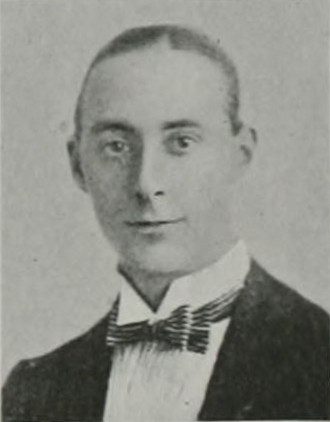
George Clark Moncur.
MONDAY, TOM, Farrier-Sergt., No. 769, 1st Battery, 2nd Northumbrian Brigade, R.F.A. (T.F.), eldest s. of the late George Monday, of 59, East Cheap, Hull, by his wife, Fanny, dau. of Tom Auckland; b. Hull, 7 Nov. 1878; educ. Collier Street School, Hull; was a Farrier Blacksmith; enlisted 23 March, 1908; was promoted Sergt. about Aug. 1912; went to the Front, 18 April, 1915; was killed in action at Ypres, 24 May following, and was buried there. He m. at St. Stephen’s Church, Hull, 1 May, Susanna (Waterloo Cottage, The Dene, Stainland, near Halifax), dau. of Jim Hardwick, and had ten children: George, b. 31 Dec. 1900; Jim, b. 24 Dec. 1905; Tom, b. 20 Dec. 1907; John, b. 2 Dec. 1913; Arthur, b. (posthumous), 25 Aug. 1915; Florence, b. 19 Feb. 1892; Fanny Elizabeth, b. 2 Dec. 1895; Sarah, b. 4 Dec. 1903; Alice, b. 19 Jan. 1909; and Edith, b. 26 Nov. 1911.
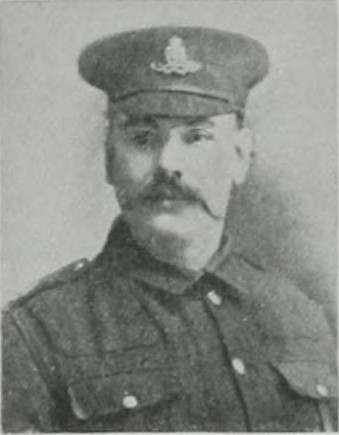
Tom Monday.
MONEY, HENRY IRONSIDE, Capt., 1st Battn. 1st King George’s Own Gurkha Rifles, the yr. s. of the late Lieut.-Col. Ernie Edmund Money, Commandant, 9th Bengal Lancers (who was killed in India in command of his regt., 20 Dec. 1894), by his wife, Alice Mary (Gardenia, Torquay Road, Paignton, South Devon), sister of Major Eric Grey Drummond, killed in action, 13 Nov. 1914, and dau. of the late Major-Gen. Henry Drummond, Bengal R.E., and gdson. of the late Rev. William Money, of Walthamstow, and Lea Marston, co. Warwick; b. Kasauli, Punjab, India, 21 Sept. 1883; educ. Marlborough College, and the Royal Military College, Sandhurst; gazetted 2nd Lieut. (unattd.), Indian Army, 27 Aug. 1902; served his first year with the Somerset L.I.; and joined the 1/1st Gurkha Rifles 18 Jan. 1904; was promoted Lieut. 27 Nov. following, and Capt. 27 Aug. 1911; passed and received his certificate in the Maxim Machine Gun Examination at the Erith Works, 29 Oct. 1909; attended the manœuvres near Wetzlar, Germany, in 1909, and those in Switzerland in the spring of 1914; was home on leave, when the European War broke out, and joined his regt. in Egypt during Aug. 1914; landed with them at Marseilles at the end of Nov., and was killed in action at Givenchy, 20 Dec. 1914; unm. He was mentioned in F.M. Sir John French’s Despatch of 31 May, 1915, for gallant and distinguished service in the field. A brother officer wrote: “Since we have been in France he has been in charge of our bomb-throwers, and has done magnificent work. Had he lived he would have been recommended for the D.S.O.”; and another: “He was last seen fighting most valiantly and with the greatest coolness. His name has gone in for D.S.O., and richly he deserved it.” Another: “He proved himself to be a magnificent soldier, and literally covered himself with glory. One can say that he died as he would have wished—leading and encouraging his men with whom he was enormously popular.”
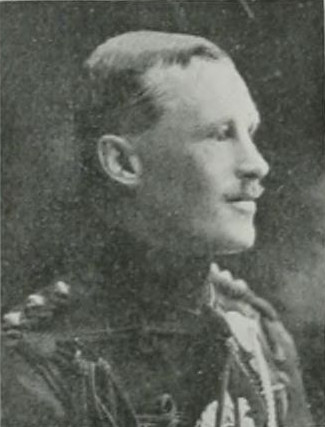
Henry Ironside Money.
MONK, GEORGE BERTRAM FIFIELD, 2nd Lieut., 2nd Battn. Royal Warwickshire Regt., yr. s. of Dr. Charles James Monk, of 15, Harley Street, W., and 3, Linnell Close, Hampstead Garden Suburb, N.W., Surgeon Dentist; b. Wiesbaden, Germany, 15 Sept. 1891; educ. St. George’s, Harpenden, Herts; Michigan University, U.S.A., and Guy’s Hospital, London, and was a Medical Student. He had joined the 28th Battn. (Artists’ Rifles) London Regt. in Jan. 1914; volunteered for foreign service and went to France with them, 27 Oct. 1914, and was gazetted 2nd Lieut. to the 2nd Warwicks (7th Division, 4th Corps), 11 Nov. 1914. He was killed in action in an attack on the enemy’s trenches near Armentières on 18 Dec. following; unm. Capt. I. H. G. White wrote: “Your son died a very gallant death. He was found, together with four other officers and 34 men, within a few yards of a German machine gun, and it was obvious that he was one of a party that had made an extraordinary gallant effort to capture the gun and prevent it killing their comrades who were coming up behind. We buried him the next morning on the spot on which he fell”; and an officer of the 2nd Queen’s: “On the 28th a general attack was ordered on the German position with a view to keeping the attention of the enemy fixed while important operations took place elsewhere. I was on duty in the trenches when the attacking party went out. Bertram went up the scaling ladder with a smile on his face. The moment the enemy’s fire broke out it was clear that no one could live in such a storm. Our men were assailed with a torrent of rifle bullets, machine-gun fire and hand grenades. The bravest might have blenched before this awful ordeal. As the fire died down the wounded began to crawl back to our lines; our patrols devotedly went out, helping them in. As the night wore on and I saw nothing of the officers of your son’s regt., I began to fear he was amongst the killed or was lying too badly wounded to come in. At daybreak the Germans made signs to us to come over and pick up our wounded. I went out; after a long search I found your brave son just where I should have expected. He was lying dead within 30 yards of the German trenches, half-way across the wire entanglements, his right hand outstretched as though pointing the way to his men. Death must have been instantaneous, for his head was pierced by two bullets from the machine gun. He was buried between the English and German trenches with his comrades. On Christmas Day we had another armistice to finish clearing the ground, and a funeral service was held, attended by a large gathering of German and English officers. It was a strange and impressive sight.” Capt. Bare, Artists’ Rifles, also wrote: “The following is an extract from a letter written by the Divisional General to our Colonel: “2nd Lieut. G. B. Monk was killed right on the enemy’s wire entanglement, well in front of his battn. and opposite a machine-gun position.... While deeply deploring the loss of these most promising young officers, it must be satisfactory for you to know that they gloriously upheld the traditions of your regt....’ The Colonel has ordered the General’s letter to be read to all the men in the regt., and we are proud to remember that your son belonged to C Coy. and to know that he could not have died a finer death.” Lieut. Monk was an excellent athlete, he represented his school at cricket and Rugby football and was in the Guy’s Hospital Rugby football team. A poem was written in 2nd Lieut. Monk’s honour by Canon Rawnsley and published in a book entitled ”The European War, 1914–1915.”
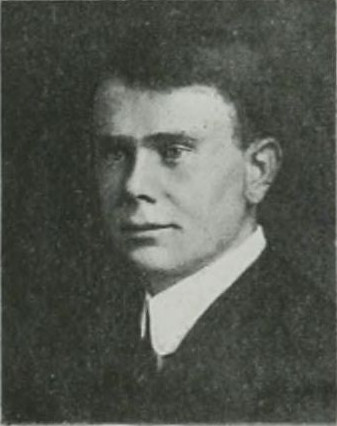
George Bertram F. Monk.
MONK, HENRY WILLIAM, Stoker, 1st Class, H.M.S. Aboukir; lost in action in the North Sea, 22 Sept. 1914.
MONK, OSWALD FRANK, Stoker, 1st Class, K. 10558, H.M.S. Hogue; lost in action in the North Sea, 22 Sept. 1914.
MONTGOMERY, ADAM, Private, No. 20231, 2/5th Battn. Royal Scots (T.F.), 3rd s. of the late William Montgomery, of Possilpark, Glasgow, Road Surfaceman in the employ of the Glasgow Corporation, by his wife, Margaret (378, Garscube Road, Glasgow), dau. of Gilbert Connell; b. Dunoon, co. Argyle, 15 July, 1884; educ. Dunoon Grammar School, was a Plumber in the employ of R. Munro & Son, Springburn; enlisted 25 Jan. 1915; joined at Glencorse Barracks on Monday the 29th; was sent to Weymouth the following Wednesday for training; crossed to France, 1 May; was wounded in action on the 16th of that month and invalided into hospital; discharged from there 21st and was back in the firing line on the 23rd, and was killed in action at Ypres, 26 May, 1915; unm.
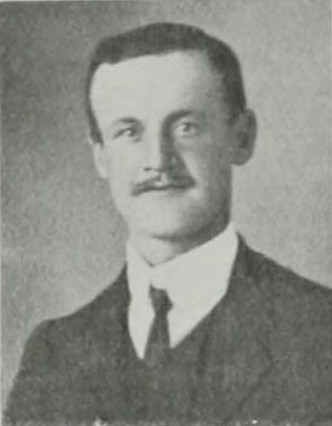
Adam Montgomery.
MONTGOMERY, SIDNEY GEORGE, Signaller, No. 9857, 6th (Service) Battn. Lincolnshire Regt., s. of George Montgomery, formerly of the 2nd Battn. of that Regt., by his wife, Annie, dau. of George Grundy, of Lincoln, Machine Fitter; b. Lincoln, 5 June, 1893; educ. St. Martin’s School there; was a Clerk in Messrs. Dawson’s Leather Works at Lincoln, but enlisted on the outbreak of war, and was killed in action at Suvla Bay, Gallipoli, 7 Aug. 1915; unm.
MONTGOMERY, WILLIAM SPROAT, Capt., 6th (Rifle) Battn. King’s Liverpool Regt. (T.F.), yr. s. of Hugh Montgomery, of The Allports, Bromborough, Cheshire, member of the firm of Simmonds, Hunt & Montgomery, of Liverpool; b. Liverpool, 25 May, 1881; educ. Liverpool College. He had joined the 6th (Territorial) Battn. of the King’s Liverpool Regt., 14 March, 1909, and on the outbreak of war volunteered for foreign service. He passed the School of Instruction and obtained his company, 8 Sept. 1914, and went to France, 22 Feb. 1915. He was killed in action at Ypres, 13 March, 1915; unm. He was a well-known Rugby football player, and played for his county of Lancashire and the Liverpool Rugby Football Club, which he captained in the season of 1908–9 and in which for several years he held the post of Secretary. He was also a member of the Racquet and the Royal Liverpool Clubs. It was said of him: “In business life and in private life, as well as in the battn. of which he was a member, Capt. Montgomery was persona grata to all with whom he came in contact.”
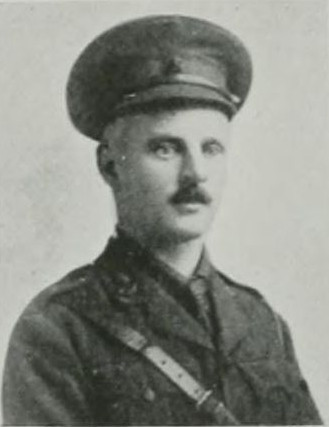
William S. Montgomery.
PIGOT-MOODIE, CHARLES ALFRED, 2nd Lieut., 6th Battn. Rifle Brigade, yst. s. of the late George Pigot-Moodie, of Westbrooke, Rondebosch, Cape Colony; M.L.C. of Cape Colony, and sometime Surveyor-General of the Transvaal, by his wife, Rose, dau. of Stephen Spranger, F.R.C.S. Eng., and gdson. of Lieut. Donald Moodie, R.N. Colonial Secretary of Natal (1845–49), and Speaker of the Legislative Assembly (1857) [3rd s. of Major James Moodie, 9th Laird of Melsetter, Orkney]; b. Westbrooke, 30 May, 1890; educ. Windlesham House, Brighton, Harrow and Magdalen College, Oxford; gazetted 2nd Lieut. 15 Aug. 1914; went to the Front, Nov. 1914, and was killed in action at Kemmel, Belgium, 13 Jan. 1915; unm. His elder brother, Lieut. George Frederick Arthur Pigot-Moodie, 2nd Dragoons (Scots Greys), is now on active service in France. He was wounded on 12 Sept. 1914, at Vailly, during the Battle of the Aisne, and was awarded the Military Cross, and the 3rd class Order of St. Anne of Russia (with swords).
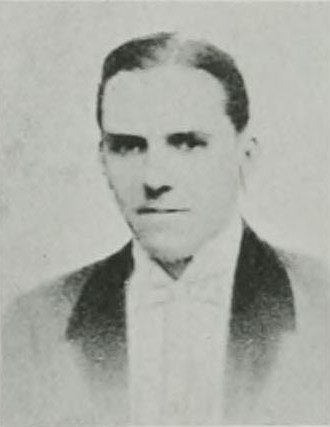
C. A. Pigot-Moodie.
MOODY, FREDERICK WILLIAM, Chief Armourer (Pensioner), 154309, H.M.S. Hogue; lost in action in the North Sea, 22 Sept. 1914
MOODY, ROBERT RONALD, Boy, 1st Class, J. 24634 (Ports.), H.M.S. Hawke; lost when that ship was torpedoed in the North Sea, 15 Oct. 1914.
MOOR, CHRISTOPHER, 2nd Lieut., 2nd Battn. Hampshire Regt., eldest s. of the Rev. Charles Moor, D.D., sometime Vicar of Barton-on-Humber and of Gainsborough and Canon of Lincoln, by his wife, Constance Mary, dau. of Robert Moon, M.A., Barrister-at-Law; b. at Barton-on-Humber, 2 Feb. 1892; educ. at Abbotsholme, at Bradfield. and at Pembroke College, Cambridge, where he took his degree with honours in Mechanical Science, afterwards taking a post-graduate course at McGill University, Montreal. He was gazetted to the 3rd Battn. Hants Regt., 15 Aug. 1914, and was afterwards transferred to the 2nd Battn. and sent to Gallipoli in May, 1915. After being invalided to Egypt, he returned to the front in July and took part in a very gallant charge at Krithia on 6 Aug. 1915, when he was one of the few to reach the Turkish trench, where he fell on the parapet, shot through the heart. He had given early promise of distinction in various fields of human culture and was a keen student of engineering, of architecture and of literature. He taught himself to read hieroglyphic writing and had compiled for his own use a vocabulary of ancient Egyptian words and was deeply interested in the history of Egypt. In his short military career he had trained the signaller of several battns. and was regarded as an extremely keen and promising officer
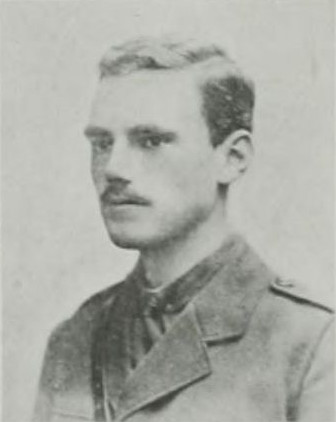
Christopher Moor.
MOORE, ALFRED, L.-Corpl., R.M.L.I., Ch./10271, H.M.S. Hawke; lost when that ship was torpedoed in the North Sea, 15 Oct. 1914; m.
MOORE, ANTHONY, Stoker, 1st Class, K. 13950 (Ports.), H.M.S. Hogue; lost in action in the North Sea, 22 Sept. 1914.
MOORE, ARTHUR, Private, No. 1990, 5th Battn. Australian Expeditionary Force; s. of Henry Albert Moore, of Park House, Whatley, near Frome, Somerset, by his wife, Elizabeth Thurzia, dau. of James Burge Whatley; b. 9 April, 1879; educ. Warminster Grammar School; went to Australia in 1900, and settled at Melbourne and Sydney; enlisted at Melbourne in Feb. 1915; was wounded at the Dardanelles, 7 Aug. 1915, and invalided home to England, and died in King George’s Hospital, 29 Feb. 1916; unm.
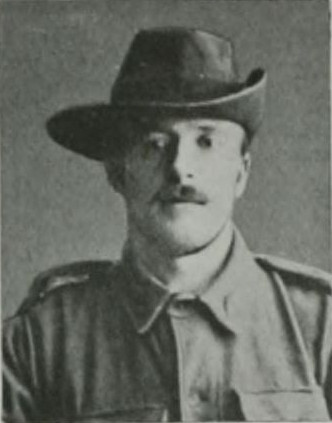
Arthur Moore.
MOORE, CHARLES JAMES, Private, No. 1772, 7th Battn. London Regt. (T.F.), s. of Francis Moore, of Nile Street, St. Luke’s, Picture Framer, by his wife, Amelia, dau. of Thomas Richard (and Elizabeth) Wells; b. St. Luke’s, London, 13 Dec. 1888; educ. Old Street Parochial School there; and on leaving school entered the employ of Messrs. Badcock, Golden Lane, City, Tailor, for whom he worked as a cutter for fifteen years. He joined the 7th London on 6 Aug. 1914, two days after war broke out; went to France 17 Feb. 1915, and died in hospital at Bethune, 17 May, 1915, of wounds received in action on the 14th. Buried in Bethune Cemetery; unm.
MOORE, FREDERICK, Petty Officer, 1st Class, 177856, H.M.S. Hawke; lost when that ship was torpedoed in the North Sea, 15 Oct. 1914; m.
MOORE, GEORGE, A.B., J. 5422, H.M.S. Good Hope; lost in action off Coronel, on the coast of Chili, 1 Nov. 1914.
MOORE, HENRY GLANVILLE ALLEN, Lieut.-Col., 6th (Service) Battn. East Yorkshire Regt. (Pioneers), only s. of the late Rev. Henry Dawson Moore, Vicar of Misterton, 1858–80, subsequently Vicar of Hornby, co. York, and Private Chaplain to the 9th Duke of Leeds, by his wife, Harriet Louisa (Roydwood, Kirkburton, co. York), dau. of the Rev. William Richards, M.A. Oxon., Vicar of Dawley Magna, Salop; b. Misterton, co. Nottingham, 28 Oct. 1865; educ. Aysgarth, Bedale, from which he gained an open junior scholarship for Rossall, at the age of 13; on leaving the latter in 1883 he was for three years a student at the Sussex County Hospital, and being then too old to enter the Army in any other way, enlisted in the Grenadier Guards in 1886; was gazetted 2nd Lieut. to the Royal Warwickshire Regt., 2 Sept. 1891, and promoted Lieut., 3 March, 1893; Capt., 21 Sept. 1898; Major, 21 Feb. 1908; and Lieut.-Col., 19 Aug. 1914; was Adjutant of his battn., 28 Jan. 1894 to 8 Dec. 1896, and of the King’s Own Malta Militia, 24 Sept. 1902 to 23 Sept. 1907; took part in the Egyptian Campaign, 1898 (medal, Egyptian medal with clasp); transferred to the East Yorks Regt., 8 July, 1908; was on half-pay, 3 Sept. 1910 to 28 Aug. 1911, and on the outbreak of war was appointed Lieut.-Col. commanding the 6th Battn., constituted as Pioneers in Nov. following; went to the Dardanelles, 22 July, 1915, and was killed in action at Suvla Bay, 7–11 Aug. 1915, from a bayonet thrust in a skirmish after the landing there. He was specially selected to raise the 6th Sappers of the New Army in Aug. 1914, and was mentioned in Despatches by Gen. Sir Ian Hamilton [London Gazette, 28 Jan. 1916] for gallant and distinguished service in the field. Lieut.-Col. Moore m. at the Cathedral, Kandy, Ceylon, 3 June, 1893, Julia Margaret (Dorset Lodge, Tonbridge), 7th dau. of the late William Parry-Okenden, of Turnworth, co. Dorset, and had two daus.: Marjorie Gladys, b. 18 April, 1894; and Katherine Georgina, b. 4 Feb. 1899.
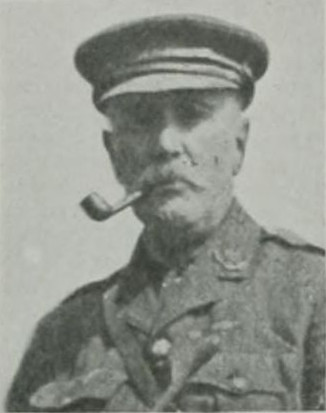
Henry G. A. Moore.
MOORE, HENRY JOHN, E.R.A., 2nd Class, 272213, H.M.S. Pathfinder; lost when that ship was sunk by a mine, about 20 miles off the East Coast, 5 Sept. 1914.
MOORE, JOHN THOMAS WARREN, 2nd S.B.S., 154465, H.M.S. Good Hope; lost in action off Coronel, on the coast of Chili, 1 Nov. 1914.
MOORE, REGINALD HENRY HAMILTON, Capt., 1st Battn. Border Regt., eldest s. of the late Col. Joseph Henry Moore, of Easterlands, Wellington, Somerset, R.A.M.C., by his wife, Jessie, dau. of John Pope; b. Bareilly, India, 2 Dec. 1884; educ. Wellington College and Sandhurst; gazetted 2nd Lieut., 1st Border Regt., 10 Oct. 1903; promoted Lieut., 16 Nov. 1905, and Capt., 29 Oct. 1914; left for the Dardanelles, 16 March, 1915, with the 29th Division, and was killed in action at Gallipoli, 11 June, following; unm. Buried in Gully Cemetery. His commanding officer wrote: “On 10 June we captured a trench; early the following morning the Turks counter-attacked, and in the confusion it seemed as if they would probably drive our men back. Your son, who was at the time acting as Adjutant, volunteered to lead an assaulting party back. Those with him say how magnificently he behaved, and at the head of his men he re-took the lost portion of the trench in a few minutes. He was the best type of officer and had proved himself several times in action”; and a brother officer: “For a short, but critical, period in the Gallipoli operations he commanded the battn., and his quiet and firm command earned the respect and confidence of all ranks....” Another wrote: “On this occasion he again displayed that personal courage and coolness in danger which had been an example to his men from the commencement of the campaign.” Capt. Moore was mentioned in Sir Ian Hamilton’s Despatch of 12 June, 1915.
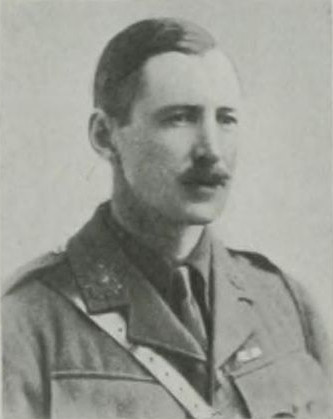
Reginald H. H. Moore.
MOORE, THOMAS, Leading Stoker (R.F.R., B. 3729), 302799, H.M.S. Good Hope; lost in action off Coronel, on the coast of Chili, 1 Nov. 1914.
MOORE, THOMAS, Stoker, 1st Class (R.F.R., Ch. B. 9618), S.S. 106969, H.M.S. Cressy; lost in action in the North Sea, 22 Sept. 1914.
MOORE, WILLIAM ALBERT, A.B., S.S. 132, H.M.S. Good Hope; lost in action off Coronel, on the coast of Chili, 1 Nov. 1914.
MOOREY, FRANK LESLIE, Private, No. 1714, 13th (Princess Louise’s Kensington) Battn. The London Regt. (T.F.), 2nd s. of William Edmund Moorey, Head of the Estate and Survey Department of John Barker & Co., Ltd., of Kensington (formerly of Christchurch, and for many years a member of the Town Council and President of the Bournemouth and District Cricket League, etc.), by his wife, Mary Jane, dau. of George Picken, of Kings Norton, co. Warwick; b. Christchurch, co. Hants, 20 March, 1894; educ. Bournemouth Public School, where he was a member of the O.T.C.; on leaving school, he received an appointment on the head office staff of the Bank of British North America, at 5, Gracechurch Street, E.C., and two days after the outbreak of war joined (7 Aug. 1914) the Kensingtons; leaving for France with his regt. 5 Nov. 1914. On the 18 Nov. he was wounded, went into hospital in France, but recovered, and was back again in the trenches before Christmas. During the fighting around La Bassée, in Jan. 1915, a German shell burst in the dug-out where he was, hitting some and practically burying others, whose mouths, nostrils and ears were filled with the clay. A virulent germ from this attacked him, and though sent home to England with frostbite in both feet (arriving 26 Jan.), septic pneumonia developed soon after his arrival, and he died in the 1st Eastern General Hospital at Cambridge, 19 Feb. 1915; unm. He was buried with full military honours in the Kensington Cemetery, 24 Feb. following. He was well-known in hockey circles in Hampshire and Kent, being an expert player, and was an excellent sculler, as well as a good footballer and cricketer. His elder brother, William Edward, joined the 10th City Battn. of the Royal Fusiliers and is now (1916) at the Front.
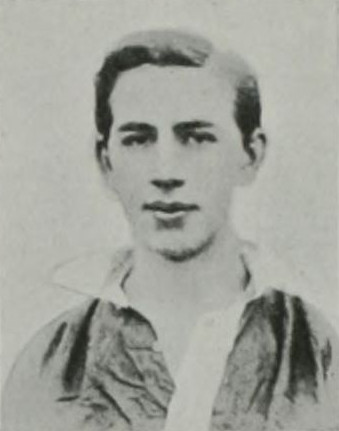
Frank Leslie Moorey.
MOORHOUSE, WILLIAM APPLEYARD, Boy, 1st Class, J. 26717 (Ports.), H.M.S. Hawke; lost when that ship was torpedoed in the North Sea, 15 Oct. 1914.
RHODES-MOORHOUSE, WILLIAM BARNARD, V.C., Lieut., Royal Flying Corps, elder s. of Edward Moorhouse, of Parnham House, Dorsetshire, by his wife, Mary Anne, dau. of the Hon. William Bernard Rhodes, M.L.C., New Zealand; b. in London, 26 Sept. 1887 educ. The Golden Parsonage, Hertfordshire Harrow, and Trinity College, Cambridge, and after leaving there was engaged in monoplane experiments at Huntingdon in 1909–10, and has been truthfully described as “one of the pioneers” of aviation in England. He made many long flights before taking his pilot’s certificate in Oct. 1911. and was then considered probably the finest cross-country flier in this country, and quite the equal of anyone abroad.” He finished third in the Aerial Derby for 1912, and the same year established a record in aviation as the first pilot to make a Channel-crossing with two passengers (one of whom was his wife). Soon after joining the R.F.C. in Aug. 1914, he was placed in charge of work shops at Aircraft Park, South Farnborough, and remained there till 20 March, 1915, when he was sent out to the Front to join the No. 2 Squadron, No. 1 Wing, at Merville, as a flying officer. His promotion to the rank of Lieut. was gazetted after his death to rank as from 24 April, 1915. On Monday, 26 April, during the Second Battle of Ypres, an urgent message came through from Headquarters ordering the immediate destruction of the railway line at Courtrai Junction to prevent the bringing up of German reinforcements, and he was detailed for this important task, his instructions being “to use his own discretion as to his height at which he would drop his bomb.” He left Merville flying ground at 3.5 p.m., and returned again mortally wounded at 4.15, having piloted his machine over 35 miles under conditions of extreme difficulty after receiving his first serious wound. He made a full report before he was taken to hospital, so that Sir John French was able to record the destruction of Courtrai Junction in his Report from Headquarters despatched the same evening. He died of his wounds next day, but before his death received the following message: “But for pressure of urgent work the Field-Marshal Commanding-in-Chief would have visited 2nd Lieut. Moorhouse himself to express his admiration of his courage and the way in which he carried out his duties yesterday.” [The Battle of Ypres was then in progress and Merville was over 30 miles from General Headquarters.] The following are extracts from the official accounts of his exploit: From Sir John French’s Report from Headquarters, 26 April, “One of our airmen bombed Courtrai Station this afternoon and destroyed the junction. Although wounded, he brought his machine back to our lines.” Extract from the Daily Bulletin issued to the troops (first issued by special request to the Indian Corps), who “had seen him flying back and were so impressed by his astounding courage” that they asked for further details and translated them into Hindustani, and it was afterwards circulated among all our troops at the Front. Dated 29 April, 1915. “British Air Raid on Courtrai. Details are now to hand of the successful air raid carried out on the 26th inst., and mentioned in yesterday’s bulletin. It is a story of amazing gallantry and heroism, and and is worthy of special notice. The aviator, 2nd Lieut. W. B. Rhodes-Moorhouse, left Merville at 3.5 in the afternoon, alone in a biplane, to drop a heavy bomb on the railway junction at Courtrai. Arriving at his destination, he volplaned down to a height of 300 ft. and successfully dropped the bomb on his objective, the effect of the explosion being felt by the aviator at a height of 300 ft. While at this low altitude he was subject to a tornado of fire from thousands of rifles, machine-guns and shell fire. He was severely wounded in the thigh (part of which was torn away), but instead of descending into the German lines where his life might have been saved, and to prevent his machine from falling into the hands of the Germans, he turned and made for the British lines. To increase his speed he descended a further 200 ft., and crossed the German lines at a height of 100 ft. only. He was again severely wounded by a bullet which ripped open his abdomen. Instead of landing at Ypres, he flew the whole way back to the flying ground at Merville, and made his report. We regret to say that he succumbed to his wounds 24 hours later. He was an aviator who had always performed several daring feats, and was the first man to do the ‘tail slide,’ and also the only man who had flown across the Channel with two passengers. This would appear worthy to be ranked among the most heroic stories of the world’s history.” Extract from Eye-witness’s communication dated 30 April: “The raid on Courtrai, unfortunately cost the nation a very gallant life, but it will live as one of the most heroic episodes of the war. The aviator started on the enterprise alone in a biplane. On arrival at Courtrai he glided down to a height of 300 ft., and dropped a large bomb on the railway junction. While he did this he was the target of hundreds of rifles, of machine guns, and of anti-aircraft armament, and was severely wounded in the thigh. Though he might have saved his life by at once coming down in the enemy’s lines, he decided to save his machine at all costs, and made for the British lines. Descending to a height of only 100 ft. in order to increase his speed, he continued to fly and was again wounded, this time mortally. He still flew on, however, and without coming down at the nearest of our aerodromes, went all the way back to his own base, where he executed a perfect landing and made his report. He died in hospital not long afterwards.” He was mentioned in F.M. Sir John (now Lord) French’s Despatch of 3 May, 1915, and was awarded the V.C. [London Gazette, 22 May, 1915] “for most conspicuous bravery on 26 April, 1915, in flying to Courtrai, and dropping bombs on the railway line near that station. On starting the return journey he was mortally wounded, but succeeded in flying for 35 miles to his destination at a very low altitude and reported the successful accomplishment of his object. He has since died of his wounds.” Lieut. Rhodes-Moorhouse m. at St. Paul’s, Knightsbridge, 25 June, 1912, Linda Beatrice (Parnham House, Beaminster, Dorset), yst. dau. of the late Robert Ambrose Morritt, of Rokeby, Yorkshire, and had a son: William Henry, b. 4 March, 1914. In accordance with the will of his grandfather he assumed the name of Rhodes in addition to, and before, that of Moorhouse by Royal Licence, 21 Jan. 1913.
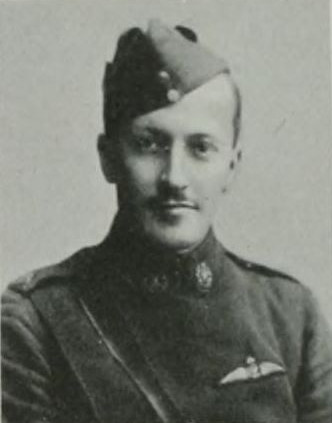
W. B. R. Rhodes-Moorhouse.
MORAN, JOHN BARROW, Stoker, 1st Class (R.F.R., Ch. B. 9651), S.S. 107013, H.M.S. Cressy; lost in action in the North Sea, 22 Sept. 1914.
MORAN, JOSEPH, Private, No. 7776, 3rd Battn. Coldstream Guards, s. of Michael Moran, of 9, Chatburn Avenue, Tanshelf, Pontefract, Miner, by his wife, Julianne, dau. of Patrick Tierney; b. Sharleston, near Wakefield, co. York, ... May, 1888; educ. Colliery School there; enlisted 1908; went to France with the Expeditionary Force, Aug. 1914; served through the retreat from Mons and the subsequent fighting on the Marne and Aisne, and died in hospital at Versailles, 24 Sept. 1914, of wounds received at La Cour de Soupir, on the Aisne, on the 17th. He was buried in Versailles Cemetery; unm.
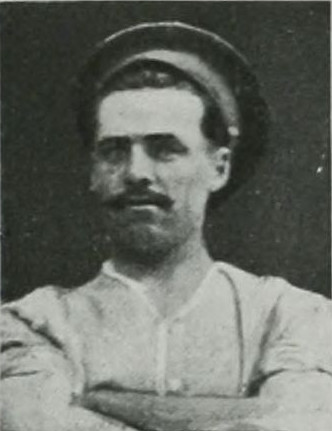
Joseph Moran.
MORGAN, ALBERT, A.B. (R.F.R., B. 2767), S.S. 674, H.M.S. Good Hope; lost in action off Coronel, on the coast of Chili, 1 Nov. 1914.
MORGAN ALBERT ERNEST, Lieut., 6th (Special Reserve) Battn. Royal Fusiliers, only s. of Albert Charles Frederick Morgan, of 135, Oakwood Court, Kensington, by his wife, Marion Grimston, 4th dau. of John Alexander Fladgate, 1st Baron da Roeda in Portugal, and grandson of the late Thomas Morgan, F.S.A.; b. London, 24 May, 1889; educ. at Summerfield, Oxford, and at Westminster School; gazetted 2nd Lieut. 22 May, 1911; promoted Lieut. 1913; and attd. to the Royal Flying Corps on 15 Sept. 1914; acted as Assistant Instructor at the Upavon Flying School until he proceeded to the Front in France, in December, 1914. He was killed by a shell whilst observing for artillery fire from an aeroplane, during the Battle of Neuve Chapelle, on 10 March, 1915; unm. He was mentioned in F.M. Sir John (now Lord) French’s Despatch of 31 May [London Gazette, 22 June, 1915] for gallant and distinguished service in the field.
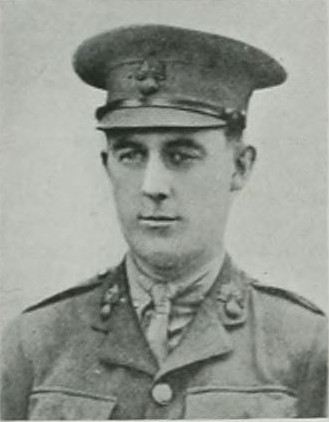
Albert Ernest Morgan.
MORGAN, ARTHUR, A.B. (R.F.R., Ch. B. 968), 141514, H.M.S. Cressy; lost in action in the North Sea, 22 Sept. 1914.
MORGAN, EDWARD CHARLES, 2nd Lieut., 1st, attd. to 5th Battn. Royal Berkshire Regt., elder s. of Charles Morgan, of Guildford, Surrey and formerly of Burdon Hall, Shackleford, M.A. Cantab., late Naval Instructor, R.N., by his wife, Kathleen Courtenay, dau. of Edward Robinson, of West Meath, and granddau. of the late Thomas Morgan, F.S.A.; b. Blackheath, 19 Dec. 1897; educ. at Haileybury and the Royal Military College, Sandhurst; obtained his first commission, 15 July, 1914, and shortly afterwards proceeded to France as an observer in the Royal Flying Corps, subsequently joining his Battn. in the trenches. He was killed by a shell when in charge of a machine gun, with three of his men, several others being wounded, on 18 Dec. 1915; unm. He was buried in Windy Corner (the Guards’ Cemetery), Givenchy. Lieut.-Col. F. W. Foley, in command of his Battn., wrote: “he was killed by a large shell, the first one from the German artillery on their suddenly opening fire in this locality.... I always felt in the position of a parent to him, he was so young ... all his officers loved him, and none more than I did; he was a perfectly delightful boy, and a first-rate officer.... I arranged with the Chaplain to bury him to-morrow morning in a coffin, and I will see that a cross is put up to his memory.”
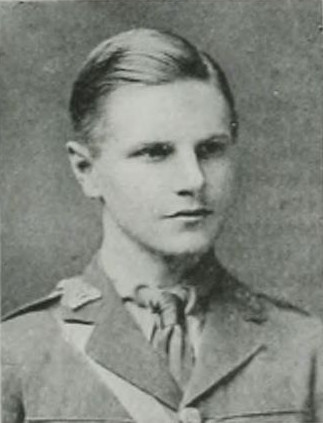
Edward Charles Morgan.
MORGAN, FRANCIS MATTHEW, Stoker, 1st Class, K. 5502, H.M.S. Pathfinder; lost when that ship was sunk by a mine, about 20 miles off the East Coast, 5 Sept. 1914.
MORGAN, GEORGE, Private, No. 4058, 3rd Battn. Coldstream Guards, eldest s. of the late William Morgan, of Worminster, near Shepton Mallet, Farm Labourer, by his wife, Mary, dau. of William Billing; b. North Wooten, near Shepton Mallet, co. Somerset, 12 May, 1883; educ. North Wooten Church of England School; enlisted 6 Feb. 1901; went to France, 12 Aug. 1914, and was killed in action by the explosion of a bomb at Vermelles, Belgium, 8 Oct. 1915. He m. at Shepton Mallet, 19 Sept. 1905, Florence (The Mill House, Shepton Mallet), 7th dau. of William Woolley, of Shepton Mallet, Farmer, and had four children: Ethel, b. 14 Oct. 1906; Edith Gwendoline, b. 9 Sept. 1907; Lillian Beatrice, b. 20 Feb. 1909; and Marion Olive, b. 27 Nov. 1910.
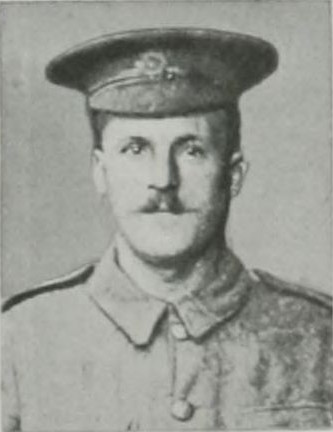
George Morgan.
MORGAN, HARRY, Lieut., 3rd Battn. Auckland (Countess of Ranfurly’s Own) Regt., s. of William Morgan, of Birmingham, by his wife, Harriet, dau. of James Duffield; b. West Bromwich, co. Stafford; educ. Birmingham; went to New Zealand about 1891 and was for some time Officer Commanding the 88th Coy. of Senior Cadets, Auckland. On the outbreak of war he volunteered for foreign service and was gazetted 2nd Lieut., 3rd Battn. Auckland Regt., 28 March, 1912, and promoted Lieut., 8 April, 1915, being Provost-Marshal while in Epsom Camp before proceeding with his regt. to the Front. He was killed in action at Cape Helles, 8 May, 1915. Capt. Frazer, since invalided to Auckland, told Lieut. Morgan’s wife: “The day on which he fell there had been a terrible charge. He was one of those to get back to the trenches safely, but, on peering out, saw some wounded still under fire. At his own risk he went out and brought one man in who had been shot in the thigh, and then started out for a brother officer, whom he had passed when getting the wounded man in. Unfortunately a sniper got him, and ended a glorious career”; and Lieut. Topham, Gallipoli, wrote: “I was quite near to him when he fell; he was shot through the head and only lived a few minutes. It had always been said that he would either get killed in action or win a V.C. He was so daring and had absolutely no fear. It happened down at Cape Helles on 8 May, the day on which the New Zealand Infantry made history.... He fell in the thick of the fight and died game, and was buried that night where he fell. A wooden cross was placed at the head of his grave by some of the men of his company.” An Auckland nurse from the 15th General Hospital, Alexandria, stated: “The soldier who told me of his death said his conduct had been most heroic, and that he was seen night after night creeping out of the trenches to help back the wounded soldiers.” Lieut. Morgan m. at Auckland, 12 May, 1897, Euphemia Margaret (“Waiuna,” Rata Street, New Lynn, Auckland), yst. dau. of David Heron, late Madras Commissariat Department, India, and had one dau., Gwendolen Margaret, b. 6 June, 1911.
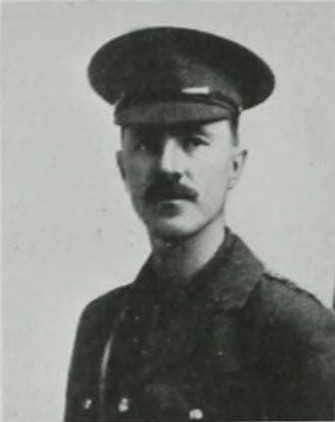
Harry Morgan.
MORGAN, ROBERT WILLIAM, Private, No. 696, 11th Battn. Australian Imperial Force, 2nd s. of the late William Henry Morgan, of 13, Albert Road, Leyton, Commercial Traveller, by his wife, Mary Ann (25, Wellesley Road, Leytonstone), dau. of Joseph Barnes, of Torquay, Devon; b. Leyton, co. Essex, 3 Sept. 1884; educ. Newport School, Leyton; enlisted in the 1st Battn. Northamptonshire Regt., 28 Jan. 1901; served in the South African War and afterwards in India, where he finished his service with the Colours. In 1909 he emigrated to Western Australia, and on the outbreak of war joined the Commonwealth Expeditionary Force and sailed for Egypt, Sept. 1914. He died on board H.M. Hospital Ship Sicilian, 9 June, 1915, of wounds received in action at the Dardanelles on the 4th of that month while on observation duty; unm.
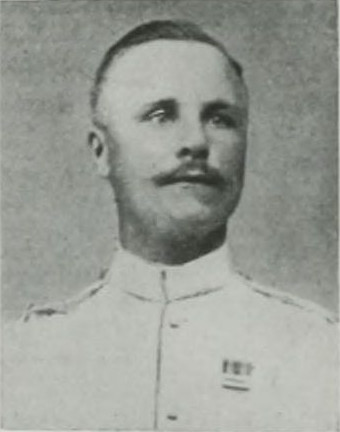
Robert William Morgan.
MORGAN, STEPHEN BEVERLEY, 2nd Lieut., 3rd attd. 1st Battn. Leicestershire Regt., 2nd s. of Frederick Beverley Morgan, of Muscalls, Paddock Wood, Kent, by his wife, Clara Elizabeth, dau. of Major Edgworth Horrocks; b. Tunbridge Wells, 22 April, 1896; educ. Hurstleigh, Tunbridge Wells, and Clifton College; gazetted 2nd Lieut. to the 3rd Leicestershires, 15 Aug. 1914; went to France attached to the 1st Battn., and was killed in action by shell fire in the trenches near Armentières, 14 May, 1915; unm. Buried in the Regimental Burial Ground behind the trenches. He was a well-known cricketer, and played for the Public Schools at Lords, in the summer of 1914.
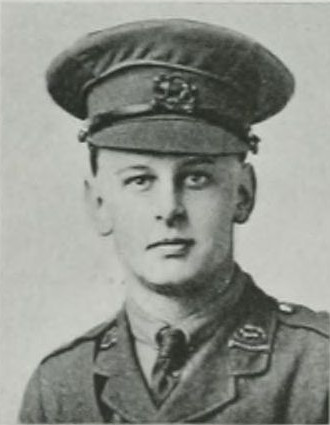
Stephen Beverley Morgan.
MORGANS, THOMAS ALFRED, Leading Seaman, 239252, H.M.S. Hogue; lost in action in the North Sea, 22 Sept. 1914.
MORIARTY, THOMAS, A.B. (R.F.R., B. 3851), 204033, H.M.S. Hawke; lost when that ship was torpedoed in the North Sea, 15 Oct. 1914; m.
MORKILL, RONALD FALSHAW, Lieut., 1st Battn. West Yorkshire Regt. and Flying Officer, Royal Flying Corps; 2nd s. of John William Morkill, of Newfield Hall, Malhamdale, Yorkshire, M.A., J.P., by his wife, Hannah Shaw, yst. dau. of Peter Hobson, of Castle Lodge, Yorkshire, and niece and co-heiress of Sir James Falshaw, Bart.; b. Edinburgh, 22 Nov. 1891; educ. Radley, and University College, London; received a commission as 2nd Lieut. 4th (Special Reserve) Battn. West Yorkshire Regt. 1 Oct. 1911, and was promoted Lieut. 3 Dec. 1912. After the outbreak of war he was (14 Aug. 1914) gazetted to the 1st West Yorkshires and the following day went to the Front as Lieut. attd. to the 1st East Yorkshires, with which he served through the winter of 1914–15. On 1 July, 1913, he gained a pilot’s certificate from the Royal Aero Club, and in Feb. 1915, was transferred to the Royal Flying Corps as a probationer. He qualified as a flying officer on 19 June, and was gazetted to the Corps on 15 July, after his death. Under orders on 22 June he piloted a Blériot Monoplane from Gosport to Shoreham, leaving the latter place on his return journey shortly after 6 o’clock in the evening. He had risen barely 200 feet when his engine was noticed to miss fire and finally stop. Having insufficient space beneath him he was unable to keep control of his craft which dived to the earth causing injuries by the impact from which he died in the Military Hospital a few hours later. A letter of sympathy from the N.C.Os. and men of the section he commanded, dated 3 July, 1915, contains the following passage: “The hardest and most terribly trying time—last winter—he spent in the trenches with us, and never a murmur of complaint was ever heard to fall from his lips. To say he was loved by all men would be to express our feelings in the mildest form.” Buried at Kirby-in-Malhamdale, Yorkshire. He m. at Holy Trinity Church, Heywood, Westbury, Wilts, 23 Sept. 1914, Ellen Mary, yst. dau. of the late Thomas Loyzelure Wilkinson, of Neasham Abbey, near Darlington; s.p.
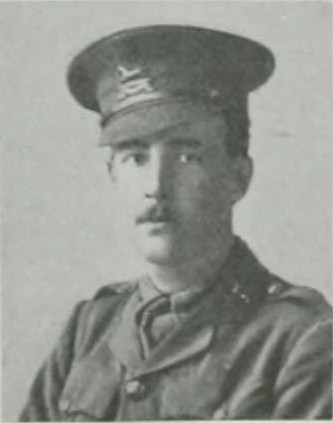
Ronald Falshaw Morkill.
MORLAND, HENRY ALFRED, Stoker, 1st Class, S.S. 111650 (Ports.), H.M.S. Cressy; lost in action in the North Sea, 22 Sept. 1914.
MORONEY, EDWARD FRANCIS, Stoker, 1st Class (R.F.R., B. 3965), S.S. 102026, H.M.S. Good Hope; lost in action off Coronel, on the coast of Chili, 1 Nov. 1914.
MORPETH, MOORE, Private, No. 12/1039, 6th Hauraki Coy., Auckland Infantry Battn., 5th s. of Henry Douglas Morpeth, Town Clerk of Waiki, Auckland, New Zealand; b. Auckland, 10 May, 1894; educ. Waiki District High School; was studying law in Auckland when war broke out, and was one of three brothers who at once volunteered and joined the New Zealand Expeditionary Force early in Aug. 1914. He left for Egypt with the main body on 16 Oct., and on 12 April embarked from there for the Dardanelles, taking part in the landing at Gaba Tepe on the 25th of that month. He was one of a small body of New Zealanders and Australians who, after making good their landing, had gained the ridges above Anzac Cove, but the enemy coming at them in force they were obliged to retire. One of the Australians was struck down, and Morpeth made over to his assistance, when he received a mortal wound that paralysed him. His comrades, in the face of advancing Turks, could do nothing for him, and next day when the ground was retaken his dead body was found where he fell; unm.
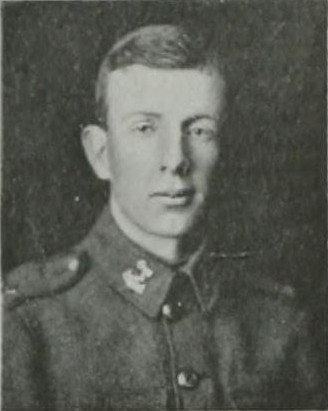
Moore Morpeth.
MORPHEW, ARTHUR, Stoker, 2nd Class, S.S. 115038, H.M.S. Pathfinder; lost when that ship was sunk by a mine, about 20 miles off the East Coast, 5 Sept. 1914.
MORPHEW, ERNEST, Stoker, 1st Class (R.F.R., B. 7934), S.S. 103605, H.M.S. Hogue; lost in action in the North Sea, 22 Sept. 1914.
MORRIS, ARTHUR, A.B. (R.F.R., B. 2176), 194828, H.M.S. Good Hope; lost in action off Coronel, on the coast of Chili, 1 Nov. 1914.
MORRIS, CLIVE WILSON, 2nd Lieut., 2nd Battn. King’s Royal Rifle Corps, 6th s. of Frank Robert-Morris, of Crofton, near Orpington, Kent; b. Oak Hill Park, Hampstead, N., 4 March, 1894; educ St. Cyprian’s, Eastbourne, and Repton; volunteered and joined the Artists’ Rifles on the outbreak of war, Oct. 1914; went to France in Oct.; was given a commission in the 2nd King’s Royal Rifle Corps, 1 April, 1915, and was killed in action at Richebourg L’Avoué, France, 9 May following; unm. His commanding officer wrote: “He was killed in an attack on a very strong German position, as he was gallantly leading his platoon across the open.”
MORRIS, HON. GEORGE HENRY, Lieut.-Col., 1st Battn. Irish Guards, 2nd s. of Michael, 1st Lord Morris and Killanin, P.C., Lord Chief Justice of Ireland, by his wife, Anna, dau. of the Hon. George Henry Hughes, a Baron of the Court of Exchequer in Ireland; b. co. Galway, 16 July, 1872; educ. The Oratory School, Birmingham, and the Royal Military College, Sandhurst; gazetted 2nd Lieut. to the 3rd Battn. Rifle Brigade, then stationed in India, 12 March, 1892, and promoted Lieut., 16 May, 1894; took part in the operations on the North-West Frontier of India, 1897–8, with the Tochi Field Force, for which he received the medal with clasp, and from 7 Jan. 1897, to 6 Jan. 1901, was Adjutant of his battn., receiving his company, 16 Aug. 1899. In 1901 he entered the Staff College, but left soon afterwards and went out to South Africa and served with Damant’s Horse in the latter stage of the Boer War, taking part in the operations in the Orange River Colony, Feb. to March, 1902, and in those in the Transvaal, March to 31 May, 1902, and was mentioned in despatches [London Gazette, 18 July, 1902] and received the Queen’s medal with four clasps. He then returned to the Staff College and passed out in 1903, and after being D.A.A.G. at Belfast (8–31 March, 1904), was Staff Capt., Army Headquarters, 1 April, 1904, to 12 March, 1906. He was gazetted Major to the 1st Battn. Irish Guards, 3 March, 1906, and on 15 May, 1908, was appointed D.A.A.G. (General Staff Officer, 2nd Grade), with the rank of temp. Lieut.-Col. at the Staff College, where he remained until 1911. On 15 July, 1913, he obtained command of his Battn., and in Aug. 1914, he went to France with the Expeditionary Force, in which the 1st Irish Guards formed part of the 4th Brigade (2nd Division, 1st Army Corps). He was killed in action during the retreat from Mons, while endeavouring to extricate some of his men from an impossible position, in the woods of Compiègne, near Villers Cotterets on 1 Sept. following. When the Battn. reassembled after a difficult rearguard fight through the beech woods, Lieut.-Col. Morris missed some of No. 4 Coy. and went back alone to find them, but they were hopelessly outnumbered, and he was killed while leading a final bayonet charge. He was buried in Villers Cotterets Cemetery. Lieut.-Col. Morris was a brilliant Lecturer on Military History and Tactics, and was universally regarded as one of the cleverest men of his age in the Army. The men of the Irish Guards were deeply attached to him and he was immensely proud of his battn. He m. at Westminster Cathedral, 29 April, 1913, Dora Wesley (10, Chesham Place, S.W.), dau. of the late James Wesley Hall, of Melbourne, and had a son, Michael, b. 30 July, 1914.
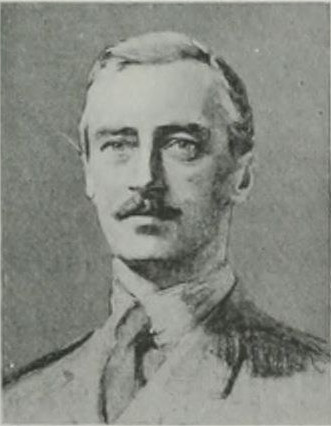
Hon. George H. Morris.
MORRIS, HENRY GAGE, 2nd Lieut., 2nd Battn. Duke of Cornwall’s L.I., only surviving child of Col. Henry Gage Morris, late commanding 2nd Battn. Duke of Cornwall’s L.I., and great-great-grandson of Col. Roger Morris of York, by his wife, Maude, dau. of the late Preston Gilbert Wallis, of Park Hill, Bodmin; b. Bodmin, co. Cornwall, 14 Aug. 1897; educ. Preparatory School, The Hoe, Plymouth; Marlborough College (Sept. 1911–July, 1914), and the Royal Military College, Sandhurst; gazetted 2nd Lieut. to the Duke of Cornwall’s L.I., 12 Jan. 1915, aged 17½ years; went to France, 15 Feb. 1915, and was killed in action at the second Battle of Ypres, 23 April, 1915, being buried where he fell. His commanding officer wrote: “He was such a nice boy, and a very brave and gallant lad, and died gallantly. He was killed in a counter-attack we made with the 13th Brigade, the East Yorks., York and Lancs., and 4th Canadians on the 23rd. I was commanding the Battn. at the time, and the last I saw of him he passed me with a platoon of C Coy., which was in Reserve. He came past me with a very cheerful face, and laughing under a very heavy cross-fire from machine guns, and sang out to me, ‘Shall I push on?’ and I answered, ‘Go on, laddie, as hard as you can.’ Poor lad, I did not see him again, but heard he was shot in the head, but he would not let anyone stay with him. He was such a good boy, always cheerful and always ready to do anything that was wanted. He was very popular with everyone—officers and men;” and Private W. Board, C Coy., Duke of Cornwall’s L.I.: “You must be proud to know your son was as brave a man as anyone could wish to meet. I was his servant while he was in France, and a better master I never had. The men in the platoon loved him, and would do anything for him. He was always cheerful and had friends every where he went. I was not with him when he got hit, but I heard he wanted to go on, and refused to be bandaged, as he said there were men who were hit more badly than himself. He always thought of others before himself.” A writer in his School Magazine (“The Marlburian,” 19 May, 1915) said: “From his earliest days in the school—in ‘A’ House, his company was a real pleasure. Always bright and full of fun, and merry talk, he had from the first great personal charm; and as he developed, one saw behind him those qualities of modesty, generosity, and straightness, which mark the perfect gentleman.”
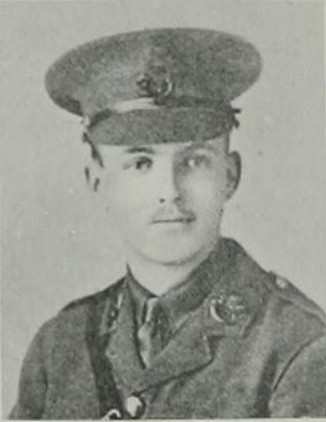
Henry Gage Morris.
MORRIS, JAMES, Ship’s Corpl., 1st Class, 279187, H.M.S. Hawke; lost when that ship was torpedoed in the North Sea, 15 Oct. 1914; m.
MORRIS, JOHN, Leading Stoker (C.G.), 151804, H.M.S. Hogue; lost in action in the North Sea, 22 Sept. 1914.
MORRIS, WILLIAM, Stoker, 2nd Class, S.S. 115482, H.M.S. Hogue; lost in action in the North Sea, 22 Sept. 1914.
MORRIS, WILLIAM, Leading Seaman, 214875, H.M.S. Pathfinder; lost when that ship was sunk by a mine, about 20 miles off the East Coast, 5 Sept. 1914.
MORRISON, EDWIN DUNCAN RUTHERFORD, Private No. 10/1007, 9th Hawkes Bay Regt., Wellington Infantry Battn., New Zealand Expeditionary Force; s. of George Morrison, of Normanby, New Zealand, by his wife, Fanny, dau. of Thomas Novis; b. Cust, Canterbury, New Zealand, 21 Nov. 1889; educ. Belfast, Canterbury. On the outbreak of war in August, 1914, he joined the N.Z.E.F. at Napier, Hawkes Bay; left for Egypt with the first contingent, took part in the repulse of the Turkish attack on the Suez Canal, in Feb. 1915, and was killed in action at the Dardanelles, 28 April following; unm. Throughout the whole of the day of his death Private Morrison had been fighting and escaped injury, but was fatally hit in the evening while digging a trench. He was an excellent shot, and before going to the Dardanelles had been selected as a sniper.
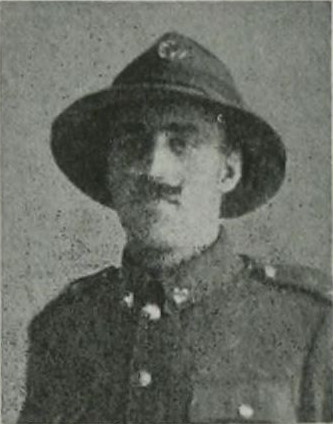
Edwin D. R. Morrison.
MORRISON, FREDERICK CHARLES, Corpl., No. 4972, 1st Battn. (The Prince Consort’s Own) The Rifle Brigade, s. of Frank Saunderson Morrison, of The Cottage, Hallaton, co. Leicester, F.R.C.S., J.P.; b. Dublin, 19 Aug. 1882; educ. Dundalk Educational Institution; St. John’s College, near Preston, and Trinity College, Dublin, of which he became a graduate and honour man; qualified as an engineer and went to Rhodesia; volunteered his services for the suppression of the rising in Natal, 1906–7, for which he received the King’s medal, and on the outbreak of the European War in Aug. 1914, he, with three other old University comrades, returned to England and joined the Rifle Brigade in Sept.; served with the Expeditionary Force in France, etc., and was killed in action during the engagement at Ploegsteert, 7 Feb. 1915; unm. He was a good athlete and footballer, playing for his school and college; a hard rider to hounds, well-known to the Louth Pack and Harriers.
MORRISON, GERARD HUMPHREYS, Capt., 5th Battn. (London Rifle Brigade) The London Regt. (T.F.), yr. s. of John Hebb Morrison, of 63, Hamilton Terrace, London, Member of Lloyds; b. London, 16 March, 1889; educ. Harrow, and Magdalen College, Oxford (where he was in the O.T.C.); received a commission in the London Rifle Brigade, on leaving Oxford, and was promoted Lieut. 18 Sept. 1913, and Capt. 25 Feb. 1915; volunteered for foreign service on the outbreak of war in Aug. 1914; went to France in Oct., and was killed in action near Armentières, 31 March. 1915; unm. Buried in the Rifle Brigade Cemetery in Ploegsteert Wood. His Col., Lord Cairns, wrote: “We all loved him—he was not only a personal friend to us all, but also a good and capable officer. He was a splendid example of cheerfulness and devotion to duty, and I am convinced that his men would have followed him anywhere”; and his Major: “Universally loved by us all, a born leader of men, it is impossible for me to tell you what a gap your son’s death will make in the regiment.” While at Harrow he was head of his house (H.O.D. Davidson’s), and in the football XI; at Oxford he took his degree with honours in law, and was made President I.C.R.
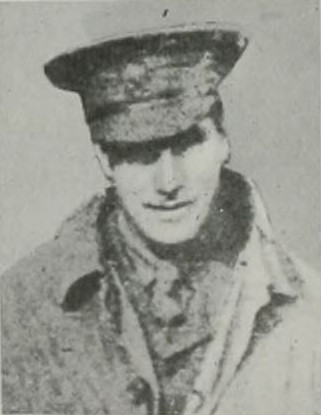
Gerard H. Morrison.
MORRISON, HERBERT HENRY, A.B. (R.F.R., B. 4507), 176230, H.M.S. Hawke; lost when that ship was torpedoed in the North Sea, 15 Oct. 1914; m.
MORRISON, JOHN, L.-Corpl., No. 5181, 1st Battn. Black Watch, 2nd surviving s. of John Morrison, Head Gamekeeper to Major, The Brodie of Brodie, Brodie Castle, Forres, by his wife Margaret, dau. of the late Alexander Ross, North Lodge, Orton, co. Moray; b. Inveravon, Banffshire, 14 Nov. 1885; enlisted 7 Sept. 1914, drafted to France in Nov.; killed during heavy fighting, in which his regt. was engaged at La Bassée, on 25 Jan. 1915; unm. A comrade wrote: “The attack was fierce, and John got a bullet in the leg. Nevertheless, he crawled to the assistance of his officer, 2nd Lieut. L. H. Willet, also wounded, and was in the act of helping him to remove his pack when fatally shot. He was promoted L.-Corpl. only a few days before.” 2nd Lieut. Willet said: “Some gallant fellow crawled up to me shortly after I was hit, and attempted to assist me off with my pack, but owing to the nature of my wound, I was unable to turn my neck sufficiently round to see who it was. I heard he was hit, and asked him if it was so. He replied: ‘Yes, Sir’; and when I inquired later, I received no reply, but could just touch his hand by reaching back, and found he was dead. From the sound of his voice I thought it was your brother, who was in my Platoon, and I hoped it wasn’t so, and that I had made a mistake, for he was one of my most valued men.... His end was a gallant one, and his was a peaceful conclusion to a career, which, had he been spared to prolong it, he could have looked back on with the justifiable pride of one who has done his work well.” His brother, George James, is a 2nd Lieut. 3/6th Seaforth Highlanders.
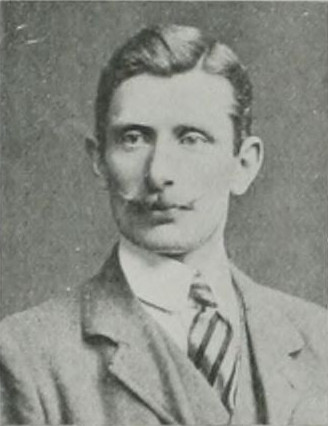
John Morrison.
MORROW, ROBERT, V.C., Private, No. 10531, 1st Battn. Princess Victoria’s Royal Irish Fusiliers, s. of Hugh Morrow (who died 21 years ago), by his wife Margaret Jane, dau. of Isaac William Ash McKnight, Tailor; b. Sessia, near Newmills, East Tyrone, 28 March, 1892; educ. Carland National School, 1909; enlisted about 1910; went to the Front with his battn. on the outbreak of war, and greatly distinguished himself at Messines on 12 April, 1915, by rescuing several wounded soldiers who were lying exposed to a dreadful rain of shell and rifle fire. For this he was awarded the Victoria Cross, the official record stating that it was granted “For most conspicuous bravery near Messines on 12 April, 1915, when he rescued and carried successively to places of comparative safety several men who had been buried in the débris of trenches wrecked by shell fire. Private Morrow carried out this gallant work on his own initiative, and under very heavy fire from the enemy.” On 25 April, barely a fortnight later, he was killed at St. Julien while in the act of again succouring the wounded. The Victoria Cross was forwarded to his mother, to whom His Majesty the King sent an autograph letter regretting that Private Morrow’s death had deprived him of the pride of personally conferring the Victoria Cross, “the greatest of all distinctions.” The Emperor of Russia also conferred on him the medal of St. George (3rd Class) for his “gallantry and distinguished service in the field,” the War Office in forwarding the decoration stated that it was to be retained as a memorial of the deceased soldier’s distinguished conduct. He was unm.
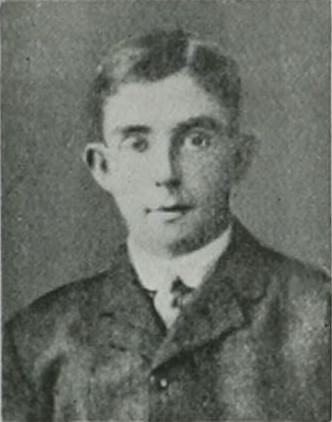
Robert Morrow.
MORRISON, WILLIAM, Stoker, R.N.R., T. 1981, H.M.S. Hawke; lost when that ship was torpedoed in the North Sea, 15 Oct. 1914.
MORSE, GORDON THOMAS HARCOURT, 2nd Lieut., 4th Battn. Middlesex Regt., 2nd s. of Lieut.-Col. Richard Edward Ricketts Morse, of Chargrove House, near Cheltenham, by his wife, Kathleen, dau. of the late Col. Neville Hill Shute (64th), North Staffordshire Regt.; b. Mian Meer, Punjab, India, 6 Dec. 1893; educ. Cheltenham College (Sept. 1908–Dec. 1912), and Royal Military College, Sandhurst (12 Feb. 1913–July, 1914), where he was an Hon. King’s Cadet; was gazetted 2nd Lieut. to the 4th Middlesex Regt., 8 Aug. 1914; went to France, 12 Sept. 1914, and was killed in action at La Bassée, 13 Oct. 1914; unm. He was buried at Rouge-Croix, France. His Col. wrote that he was killed instantaneously being shot while leading his platoon in an attack, and that “during the short time he was with the regiment he had become popular with both officers and men.” At College he rose to be a prefect, and his house-master said of him: “He was industrious at work, fearless at games, loyal to his friends, and esteemed by all.”
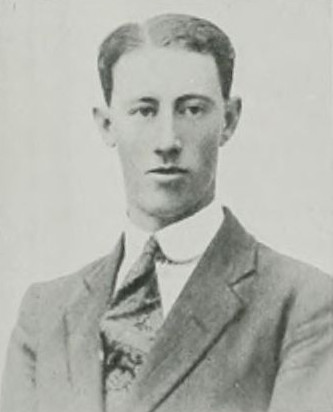
Gordon Thomas H. Morse.
MORSE, GURTH STEPHEN, 2nd Lieut., 34th Batty. Royal Field Artillery, yst. s. of Amyas Morse, of The Bourne, Bourne End, Bucks, late Superintending Engineer, Indian Public Works Department, by his wife, Rose, dau. of the late Rev. Henry John Maddock; b. Lahore, Punjab, India, 20 March, 1894; educ. Ashampstead, Eastbourne; Clifton College, and the Royal Military Academy, Woolwich; gazetted 2nd Lieut. R.F.A., 18 July, 1913; went to France, 12 Sept. 1914, and died in Hospital at Bailleul, on 9 Dec. following, of wounds received in action on the 4th, while observing for his battery at Bois Grenier, near Armentières. He was buried in the Communal Cemetery, Bailleul; unm.
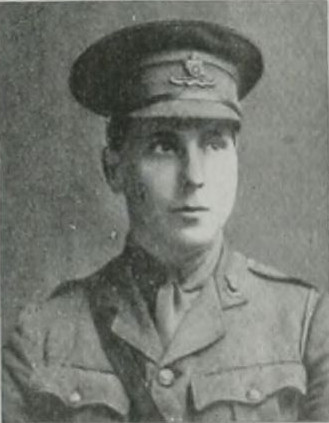
Gurth Stephen Morse.
MORTAR, GEORGE, Stoker, 1st Class, K. 10391, H.M.S. Good Hope; lost in action off Coronel, on the coast of Chili, 1 Nov. 1914.
MORTIMER, HARRY BROOKS, Private, No. 2731, 13th Battn. (Princess Louise’s Kensington) The London Regt. (T.F.), only s. of the late William Henry Mortimer, of Heaton Moor, near Stockport, by his wife, Mary Ann (Oakin Clough, Limehurst, Ashton-under-Lyne), dau. of the late Samuel Brooks; b. Longsight, Manchester, 31 Jan. 1883; educ. Grammar School, Longsight, and was a Manager of a Restaurant for John Lewis, Oxford Street, London. On the outbreak of war he joined the Kensingtons, 1 Sept. 1914; went to France on 3 Nov.; took part in the Battle of Neuve Chapelle in March, 1915, and in the attack on the German position near Fromelles on 9 May, in which his Battn. most brilliantly distinguished itself, and died in No. 6 Clearing Station, Merville, 12 May, 1915, from wounds received at the latter. He was buried in Merville Cemetery; unm.
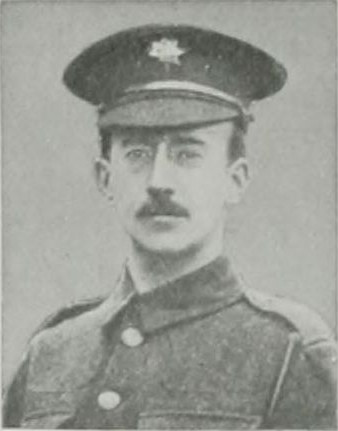
Harry Brooks Mortimer.
MORTON, EDGAR DOUGLAS, Trooper, No. 1391, 1st (Service) squadron, Royal East Kent Mounted Rifles (Yeomanry), only s. of Edgar Morton, of The Studio, Kennington, Ashford, Kent, by his wife, Eleanor Jane, dau. of Edward John Wall, of Great Chesterford; b. London, 7 June, 1895; educ. Ashford Grammar School (Sept. 1906, to Easter, 1913), and on leaving there entered the Canterbury Motor Works, where he was when war broke out. He joined the Waldershare Troop of the East Kent Yeomanry, 7 Sept. 1914, and was quartered with the regt. in huts on the Military Polo Ground at Canterbury during the autumn and winter. He died in the Canterbury V.A.D. Hospital, 22 Feb. 1915, from pneumonia and pleurisy contracted while on service. He was a good all-round sportsman and a crack shot. At Ashford he was the school prefect, and Capt. of the football team, and twice won the Strathcona shooting trophy. His former Headmaster (Mr. A. S. Lamprey) wrote: “One of the best, straightest, pluckiest boys I have ever known,” and Major Ffrench Blake “He was a general favourite, and we all mourn the loss of a young but keen soldier.”