The Roll of Honour. (continued 23)
Reading edition
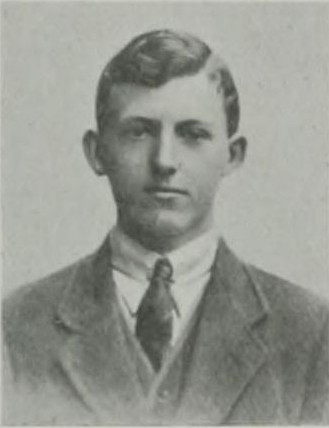
Lancelot Graham Harris.
HARRIS, NORMAN, Midshipman, Royal Navy; only surviving s. of William Birkbeck Harris, of the White House, Hayes, Kent, by his wife, Kathleen Marion, dau. of Edward Carey, of Shortlands, Kent; b. Hayes, 7 Nov. 1898; educ. Parkfield, Hayward’s Heath, and at Osborne and Dartmouth Royal Naval Colleges; joined H.M.S. Bulwark, 4 Aug. 1914, and was lost when that vessel was blown up off Sheerness, 26 Nov. 1914. He was the Senior Midshipman.
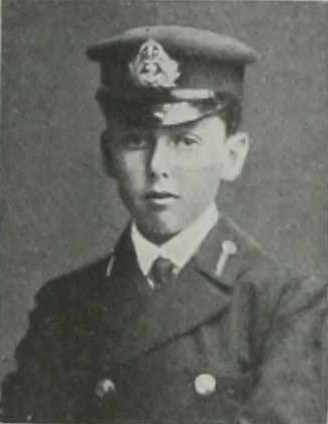
Norman Harris.
HARRIS, NORMAN ELTON, Corpl., No. 603, 4th Battn. Australian Imperial Force, only s. of George Copley Harris, of Wallandra, Parkes, N.S.W., Landowner [4th s. of the late William Harris, co. Limerick], by his wife, Kathleen Spring, dau. of (—) Spring-Rice; b. Bathurst. N.S.W., 2 Dec. 1887; educ. Sydney. After the outbreak of war enlisted in the Commonwealth Expeditionary Force, 1 Sept. 1914, and was killed in action at the Dardanelles, 19 June, 1915; unm. Writing to his father, Major Storey said that he had distinguished himself twice previously and had acted with great bravery.
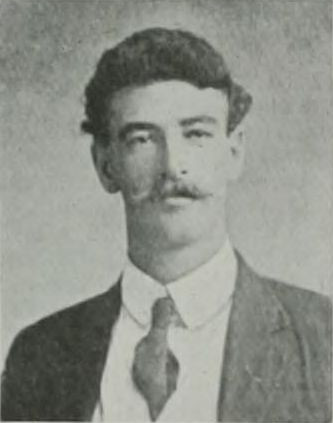
Norman Elton Harris.
HARRIS, WALDRON, E.R.A. 1st Class, 269689, H.M.S. Aboukir; lost in action in the North Sea, 22 Sept. 1914.
HARRIS, WILLIAM, S.S.A., M. 1034, H.M.S. Good Hope; lost in action off Coronel, on the coast of Chili, 1 Nov. 1914.
HARRIS, WILLIAM CHARLES, Stoker, 1st Class (R.F.R., B. 10031), S.S. 107618, H.M.S. Hogue; lost in action in the North Sea 22 Sept. 1914.
HARRIS, WILLIAM HENRY, A.B. (R.F.R., Ch. B. 3468), 187321, H.M.S. Aboukir; lost in action in the North Sea, 22 Sept. 1914.
HARRIS, WILLIAM THOMAS, Private, No. 11862, 2nd Battn. Coldstream Guards; only s. of George Harris, of South Newington, Banbury, Oxon, by his wife, Jane, dau. of Thomas Nash; b. South Newington, aforesaid, 18 Jan. 1887; educ. there; was a Farm Labourer; enlisted 11 Sept. 1914; went to France, 9 Feb. 1915, and was killed in action at Givenchy, 30 March, 1915; unm.
CARR-HARRIS, ERNEST DALE, Capt., R.E., eldest s. of Robert Carr-Harris, of The Vale, Bathurst, New Brunswick, Canada, Professor of Engineering, Royal Military College of Canada, by his wife, Ellen Jane, dau. of Robert Wiley Fitton, of co. Cork; b. Thurso, P. Quebec, Canada, 14 Feb. 1878; educ. at Queens University, and after four years’ course at the Royal Military College, Kingston, Ontario, Canada, graduated in 1899 at the Head of his Class, taking Honours in 13 subjects out of the 15 subjects of the course of the College, and received the Gold Medal of the year for subjects of instruction, and the Sword of Honour for distinction in Conduct and Discipline; gazetted 2nd Lieut. R.E. 19 June, 1899, and promoted Lieut. 29 Dec. 1901, and Capt. 19 June, 1908; served in China, 1900, during the Boxer rebellion (medal with clasp), and was detailed to construct the defences of the British Legation Grounds at Pekin; was then for two years Senior R.E. Officer at Singapore, and was afterwards engaged in the construction of the Military transfrontier road across the zone of the independent tribes between India and Afghanistan, on the completion of which he was nominated to the India Staff College at Quetta by the Gen. Commander-in-Chief. He completed his course in Sept. 1914, and was immediately detailed for service in East Africa, and was killed in action there, 3 Nov. of 1914; unm. Capt. Robertson wrote: “Capt. Carr-Harris was the first to land to examine Culvertsand Mines. It happened in the dark—he was surrounded in the Bush and put up a splendid fight. He seized a rifle and with a few others, whom he had collected on the spot, made a counter-attack and drove them back. He was found shot through the head. Our casualties were bigger in proportion than those suffered in European fights.” His two younger brothers are now (1916) taking their course at the Royal Military College of Canada. He was a member of the Presbyterian Church.
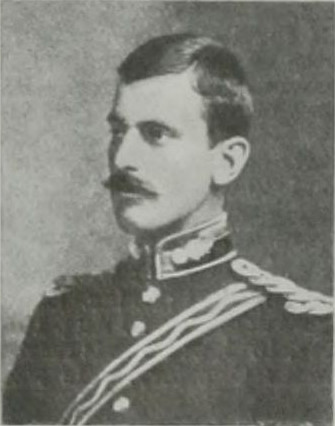
Ernest Dale Carr-Harris.
WILLIS-HARRIS, RALPH CLAUDIAN, Private, No. 65418, 24th Battn. (Victoria Rifles), 2nd Division, Canadian Expeditionary Force, s. of the late William Willis-Harris, of Midhurst, by his wife, Ada Sarah (now wife of Thomas Charles Popplewell, of Easebourne, Midhurst, Sussex), dau. of Ezra Battell; b. Pulborough, co. Sussex, 7 Aug. 1892; educ. Midhurst Grammar School; was an employee of the Bank of British North America, first in London and then at Montreal; volunteered on the outbreak of war, and joined the Canadian E.F. in Oct. 1914; came over with the 2nd Contingent, 20 May, 1915; went to France in Sept., and died 9 Nov. 1915, of wounds received the previous day, while assisting to carry a wounded comrade to the dressing station; unm. Buried in the Military Cemetery at Bailleul. Major R. O. Alexander wrote: “Your son was a very gallant soldier and a very fine man. I feel as if I had lost a great friend, and undoubtedly one of the most valuable men in my Company”; and Lieut. A. L. S. Mills wrote: “In case you have not heard the details, he was helping to carry one of his comrades (Private Diver), who afterwards died, to the dressing station, when they were seen by the enemy, who opened fire on them with machine-guns. Your son was hit, and had himself to be carried to the dressing station with Diver. He bore any pain he may have suffered with such wonderful nerve that everyone expected him to be up and about again in a very short time. Your son was one of my finest men, and ever since the sad news of his death came out, his friends have seemed absolutely stunned. He never shirked any work that came his way; in fact, time and again he volunteered for extra duties. He could always be entirely depended upon, and could easily have become a non-commissioned officer, but preferred to remain a Private with his friends.”
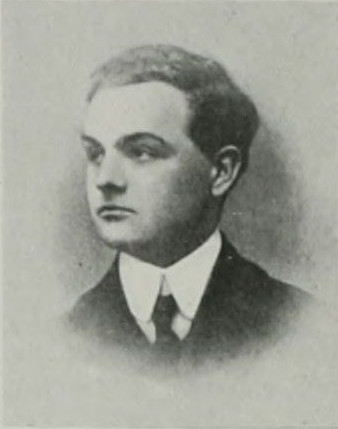
Ralph C. Willis-Harris.
HARRISON, ALFRED, Stoker, 1st Class (R.F.R., Ch. B. 9598), S.S. 106971, H.M.S. Cressy; lost in action in the North Sea, 22 Sept. 1914.
HARRISON, CECIL EUSTACE, Major, 1st Battn. The Rifle Brigade, eldest s. of Robert Hichens Camden Harrison, of Shiplake Court, Henley-on-Thames, co. Oxon, J.P., by his wife, Helen Mary, dau. of the late Eustace Smith; b. London, 29 Jan. 1878; educ. Eton and Sandhurst; gazetted 2nd Lieut. Rifle Brigade, 27 July, 1898, and promoted Lieut. 7 April, 1900; Capt. 12 April, 1904, and Major, 1 Dec. 1914; served (1) through the South African War, 1899–1902, being employed with the Mounted Infantry and as Station Staff Officer from 23 July, 1901; took part in the operations in Natal, 1899, including action at Lombards Kop; the defence of Ladysmith, including sortie of 10 Dec. 1899, and action of 6 Jan. 1900 (slightly wounded); operations in Natal, March to June, 1900, including action at Laings Nek (6 to 9 June); operations in the Transvaal, east of Pretoria, July to 29 Nov. 1900, including actions at Belfast (26–27 Aug.) and Lydenberg (5–8 Sept.); operations in the Transvaal, 30 Nov. 1900, to 31 May, 1902 (mentioned in Despatches [London Gazette, 25 April, 1902], Queen’s medal with four clasps and King’s medal with two clasps); and (2) with the Expeditionary Force in France and Flanders, 27 Aug. 1914, to 12 March, 1915; was wounded at the Battle of the Aisne and invalided home, but returned to duty in Jan., and was killed in action at the Battle of Neuve Chapelle, 12 March, 1915. He was mentioned in F.M. Sir John (now Lord) French’s Despatch of 31 May, 1915. He m. at the Oratory, Brompton, 23 Jan. 1912, Alice (29, Royal Avenue, Chelsea), yr. dau. of Major Sir Edwin Frederick Wodehouse, K.C.V.O., C.B., late R.A., Assist. Commissioner of Police [grandson of the Hon. Philip Wodehouse, Vice-Admiral of the White, 2nd s. of John, 1st Baron Wodehouse, of Kimberley], and had two children: Ralph Armine and Philippa Jane (twins), b. 2 Oct. 1912.
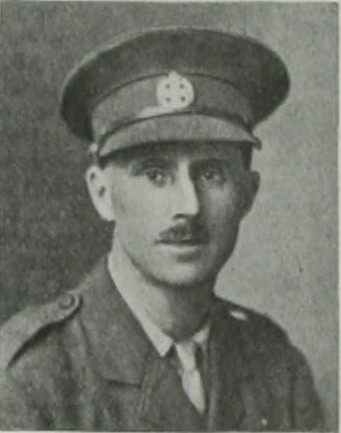
Cecil Eustace Harrison.
HARRISON, CHARLES BREWSTER, A.B. (R.F.R., B. 2275), 200443, H.M.S. Good Hope; lost in action off Coronel, on the coast of Chili, 1 Nov. 1914.
HARRISON, CHILLION BOOTH, A.B. (R.F.R., B. 1168), 203776, H.M.S. Good Hope; lost in action off Coronel, on the coast of Chili, 1 Nov. 1914.
HARRISON, FRED, Capt., 2nd Battn. Kimberley Regt., eldest s. of the late Ralph Seddon Harrison, of Halifax, co. York, by his wife, Mary, dau. of Thomas Moore; b. Halifax, 23 Feb. 1873; educ. Halifax Technical Schools; went to Africa in 1895, and entered the service of the De Beers Consolidated Mines in July of that year, and when war broke out had been for a long time chief of the data department of the Engineering Staff. He joined the Kimberley Volunteers soon after going to Kimberley; was made Sergt. in March, 1896; Sergt.-Major in 1897; Lieut. Oct. 1899, and promoted Capt. in 1900. He resigned his commission on the close of the Boer War in 1902, but on the formation of the 2nd Battn. rejoined and was given his old rank. He served (1) in Buchuanaland, 1896–97 (medal and clasp); (2) in the South African War 1899–1902 (Queen’s medal with three clasps, “Transvaal,” “Orange Free State,” “Kimberley,” and King’s medal with two clasps “South Africa 1901,” “1902”), and (3) in the Expedition against German South-West Africa, 30 Sept. 1914–26 April, 1915. He was killed in action at Trekkopjes, German South-West Africa, 26 April, 1915, and was buried there. His Col. wrote: “He fell in the forefront of the line and he died a soldier’s death.” He and the late Cecil Rhodes were the first to meet the relieving force at Kimberley, 15 Feb. 1900. Capt. Harrison m. at Kimberley, 3 April, 1899, Adelaide Emma (4, Elsmere Street, Kimberley, South Africa), eldest dau. of William Henry Good, Westport, co. Mayo, and left three children: Frederick William, b. 30 Sept. 1900; Ralph Benjamin, b. 28 July, 1910; and Eileen Mary, b. 19 May, 1903.
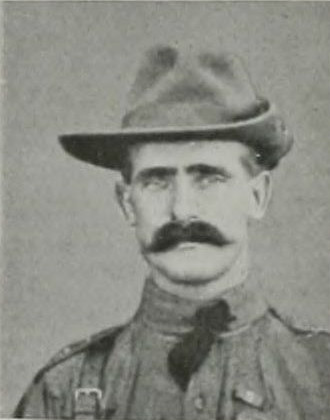
Fred Harrison.
HARRISON, HENRY, E.R.A., 1st Class, 269895, H.M.S. Cressy; lost in action in the North Sea, 22 Sept. 1914.
HARRISON, JAMES, Stoker, 1st Class (R.F.R., B. 836), 285301, H.M.S. Hogue; lost in action in the North Sea, 22 Sept. 1914.
HARRISON, JOHN BAILEY, A.B. (R.F.R., Ch. B. 2392), 182829, H.M.S. Aboukir; lost in action in the North Sea, 22 Sept. 1914.
HARRISON, LEONARD JOHN, Lieut., Indian Army, attd. 2nd Battn. Lancashire Fusiliers, elder s. of the Rev. Arthur Leonard Harrison, Rector of Yelverton, Norfolk, by his wife, Ethel, dau. of the late Major-Gen. John William Younghusband, C.S.I.; b. Burton, co. Pembroke, 21 Nov. 1895; was for five years a chorister at St. George’s Chapel, Windsor, then went to Haileybury and passed into the Royal Military College, Sandhurst, in Dec. 1912. He received his commission in the Indian Army, 8 Aug. 1914, and on the outbreak of war was attached to the Lancashire Fusiliers; went to France 16 Feb. 1915, and was killed in action at Shell Trap Farm about two miles N.E. of Ypres, on the road to St. Julien, 24 May, 1915; unm. His Colonel wrote: “Your son lost his life in endeavouring to retake some trenches which were lost. He behaved most gallantly, and nobody could have possibly shown a better example to the men. I am afraid his body was not recovered, as it lies between our lines and the Germans.” His Major also wrote: “Your son did sterling work for us, and we missed him badly when he was sent off to the Front. The officers and men deeply regret his loss.”
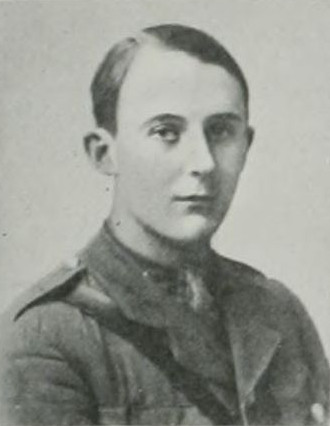
Leonard John Harrison.
HARRISON, THOMAS, Ch. E.R.A., 2nd Class, 270750, H.M.S. Hogue; lost in action in the North Sea, 22 Sept. 1914.
HARRISON, WILLIAM GEORGE, A.B. (R.F.R., Ch. B. 6606), 197077, H.M.S. Aboukir; lost in action in the North Sea, 22 Sept. 1914.
HARRISON, WILLIAM GEORGE, Private, R.M.L.I., Ch. 16459, H.M.S. Hawke; lost when that ship was torpedoed in the North Sea, 15 Oct. 1914.
HART, EDWARD JOHN, Stoker, 1st Class (R.F.R., Ch. B. 7915), S.S. 103600, H.M.S. Aboukir; lost in action in the North Sea, 22 Sept. 1914.
HART, FREDERICK JOHN, Gunner, R.M.A., 9811, H.M.S. Good Hope; lost in action off Coronel, on the coast of Chili, 1 Nov. 1914.
HART, HAROLD GEORGE, Rifleman, No. 1767, 9th Battn. (Queen Victoria’s Rifles) The London Regt. (T.F.), s. of G. I. Hart, of The Gables, East Acton Lane, W.; b. Collingham, Newark, co. Notts, 16 Jan. 1880; educ. St. Mark’s, Windsor, and Salisbury School, Salisbury, and was admitted a member of the Institute of Chartered Accountants in Jan. 1914; enlisted 1 April, 1908, and was discharged (time expired) 31 March, 1914, but on the outbreak of war re-enlisted in Queen Victoria’s Rifles, 5 Aug. 1914; left with his regt. for the Front; served in France and Flanders, and was killed by a bullet wound received in a trench near Messines, Belgium, 8 Jan. 1915; unm. His Col. wrote to his parents: “Your boy was always splendid in his earnest endeavours to benefit the Coy. in every way. Not long ago a member of the Coy. got embedded in the mud of the trench, and whilst others waited to be ordered to help the man, your son got to work and largely by his exertions the man was released.”
HART, HORACE CECIL, Private, No. 2365, 5th Battn. The Buffs (East Kent Regt. (T.F.)), 2nd s. and 5th child of John William Hart, Master Mariner, by his wife, Eliza Jane, dau. of (—) Nowland, of Praze, Penryn, Cornwall; b. Dover, 7 June, 1895; educ. Holy Trinity Boys’ School, Dover; was in business with Messrs. Baker & Clarke, but on the outbreak of war enlisted, and after a period of training at Canterbury, Ramsgate, and Sandwich, sailed for India, 30 Oct. 1914. Here he remained until 15 Nov. 1915, when he left for the Persian Gulf, and died of wounds received in action there, 17 Jan. 1916; unm. His elder and next younger brothers also enlisted after the outbreak of war, the first in the R.F.A. and the latter in the Buffs, and are now (1916) on active service. A brother-in-law, L.-Corpl. H. R. Harman, Australian Imperial Force, died of wounds at the Dardanelles (see notice), and another, Drummer M. J. Ford, King’s Own Royal Lancaster Regt., is a prisoner of war in Germany.
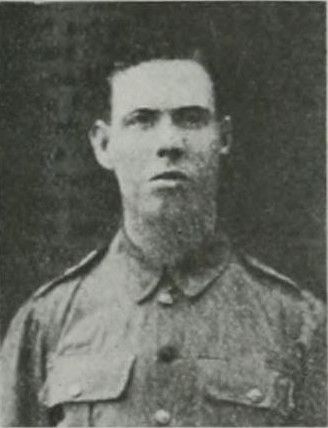
Horace Cecil Hart.
HARTNELL, CUTHBERT, Capt., 8th Battn. West Yorkshire Regt. (T.F.), only s. of Wilson Hartnell, of Aysgarth, Roundhay, Leeds, M. Inst. M.E., M. Inst. E.E., M. Brit. Ass., F.R.S.S.A. Edinburgh, F.R.S.A. London, Managing Director of Wilson Hartnell & Co., Ltd., Leeds, Manufacturers of Dynamos, motors and electrical machinery, by his wife, Elizabeth, dau. of Samuel Giles, of Manchester, and grandson of the Rev. Mark Antony Hartnell, M.A. Oxford; b. Leeds, 26 Aug. 1887; and was educ. at Bedford Grammar School and Leeds University. After leaving Bedford, he spent three years in the works of Messrs. J. & H. Maclaren, Ltd., Messrs. Kitson & Co.’s Airedale Foundry, and Messrs. Hathorn, Davy & Co., and then attended a two years’ course in Engineering and Science at the Leeds University. Subsequently he became a director of Wilson Hartnell & Co. (Ltd.), and was a member of the Leeds Court of Referees under the Insurance Act. At Leeds University he was a member of the O.T.C., and after rising to the rank of Col.-Sergt. was given a commission in the Leeds Rifles in 1911; and on the outbreak of war immediately volunteered for Foreign Service, and went to France with his battn. 15 April, 1915. He was promoted Capt. 10 June, and was killed in the trenches by a shell near Ypres, 16 July, 1915; unm. Capt. Hartnell was an Associate Member of the Institution of Civil Engineers of London, and took a keen interest in boating and Rugby Football. He was capt. of the Leeds Rifles football team and also played for the University team.
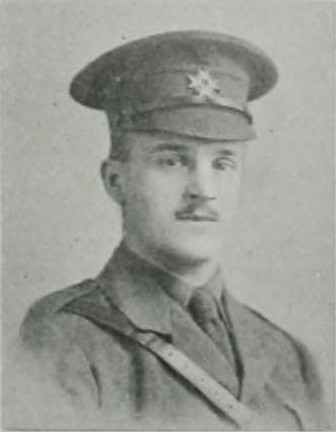
Cuthbert Hartnell.
HARTNOLL, HUGH PETER, Lieut., 1st Battn. Worcestershire Regt., s. of Sir Henry Sulivan Hartnoll, Puisne Judge of the Chief Court, Lower Burma, by his wife, Grace, dau. of the Rev. Peter Dodwell Digges La Touche; b. Bassein, Lower Burma, 16 Sept. 1893; educ. The Wells House, Malvern Wells, and Clifton College; gazetted 2nd Lieut. 2nd Battn. Worcesters, 3 Sept. 1913, later posted to the 1st Battn.; served with the Expeditionary Force in France, and promoted Lieut. while serving there; killed in action, near Neuve Chapelle, 12 Dec. 1914; unm.
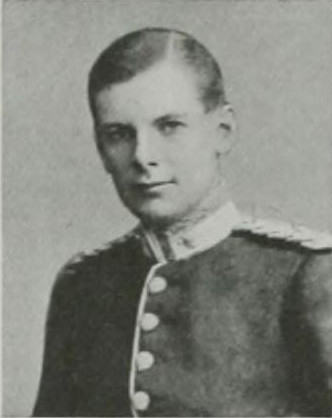
Hugh Peter Hartnoll.
HARTRIDGE, FRANCIS HENRY, A.B., Acting Chief Stoker (R.F.R., B. 4499), 192177, H.M.S. Good Hope; lost in action off Coronel, on the coast of Chili, 1 Nov. 1914.
HARVEY, BERNARD MATHESON, Lieut.-Commander, R.N., s. of the late Hon. Augustus William Harvey, of St. John’s, Newfoundland, by his wife, Elizabeth Gertrude; b. St. John’s, Newfoundland, 4 July, 1882; entered H.M.S. Britannia and obtained his naval cadetship in Jan. 1908, became Midshipman April following, sub-Lieut. Oct. 1901, Lieut. 31 Dec. 1903, and Lieut.-Commander, 1912; held various Torpedo Boat Commands, including T.B. No. 6, 1908–10 and the Destroyer Foyle, May, 1910–11; joined H.M.S. Cressy, 27 Jan. 1912, and was lost on 22 Sept. 1914, when that ship was torpedoed in the North Sea. He m. 4 Aug. 1910, Hester, dau. of His Honour Josiah Wood, Lieut.-Governor of New Brunswick, and had issue a son: Maurice, b. 11 Oct. 1911.
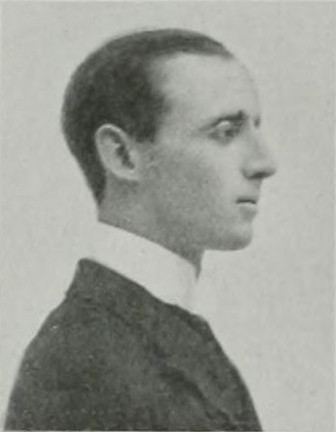
Bernard Matheson Harvey.
HARVEY, CHRISTOPHER EDWIN, Rifleman, No. 2113, 17th Battn. (Poplar and Stepney Rifles) The London Regt. (T.F.), 3rd s. of Robert Charles Harvey, of 102, Whitehorse Street, E., Foreman, Stepney Borough Council, by his wife, Martha Charlotte, dau. of Benjaman Morris; b. Forest Gate, co. Essex, 8 Oct. 1894; educ. St. Mark’s School, Whitechapel, and on leaving school entered the employ of Messrs Lawrence & Sons, Hounsditch, Wholesale Toy Merchants, and was with them when war broke out; joined the Poplar and Stepney Rifles, 7 Aug. 1914; left for France 9 March, 1915, and was killed in action by shell fire at Pont Fixe, Givenchy, 16 May, 1915; unm. Buried in an orchard just behind the spot where he fell.
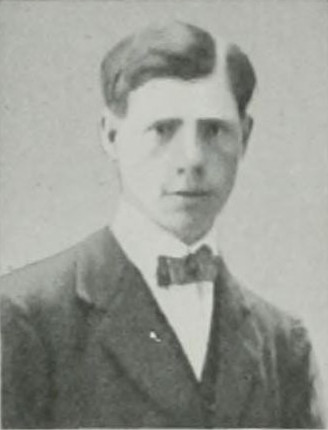
Christopher E. Harvey.
HARVEY, EMMANUEL, L.-Sergt., R.M.A., 9497, H.M.S. Aboukir; lost in action in the North Sea, 22 Sept. 1914.
HARVEY, JOSEPH VICTOR, Private, No. 61974, C Coy. 22nd (French Canadian) Regt. Canadian Expeditionary Force, s. of Elie Harvey, of Murray Bay, P. Quebec, Canada, Merchant, by his wife, Liveadis, dau. of Louis Batti; b. Murray Bay, 8 Dec. 1891; educ. there and at St. John’s College, St. John’s, Quebec, and for ten years was employed in various departments of the Intercolonial Railways of Canada, and at the time of the declaration of war was Chief Clerk in the Master Mechanics Office. He joined the 22nd Regt. at Amherst, N.B., about 25 April, 1915, left Canada about 22 May, and died at East Sandling Camp, England, 29 July, 1915, from an accident; unm.
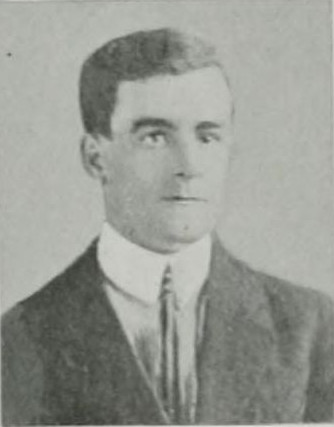
Joseph Victor Harvey.
HARVEY, LESLIE, Lieut., 8th Battn. The Duke of Cambridge’s Own Middlesex Regt. (T.F.), only s. of Cecil Allenby Harvey, of Highgate House, Hawkhurst, Bank Manager, by his wife, Annie, dau. of Thomas Amey of Petersfield; b. Windsor, 3 Jan. 1884; educ. Eastbourne, and Isleworth; and was a Solicitor; joined the Inns of Court Officers Training Corps and obtained his B Certificate; and on the outbreak of war at once volunteered and was given a commission in the 8th Middlesex Regt., 28 Aug. 1914; and promoted Lieut. Feb. 1915. He was sent with his regt. to Gibraltar in Oct., returning to England the following Feb., and went to the Front a fortnight later; was killed in action near Ypres, 25 April, 1915, while leading a bayonet charge. He was buried at the level crossing about 11 kilometres east of Ypres; unm.
HARVEY, RICHARD PRENTICE, Major, 3rd (Reserve), attd. 2nd, Battn. Royal Berkshire Regt., 4th s. of the late John Harvey, of the firm of John Harvey & Sons, Ltd., Wine Merchants, Denmark Street, Bristol, by his wife, Mary Russell (3, Sion Hill, Clifton, Bristol), dau. of George Prentice, of Strathore, Fifeshire; b. Clifton, Bristol, 10 Dec. 1873; educ. Lambrook, near Bracknell, Marlborough, and the Royal Military College, Sandhurst; gazetted 2nd Lieut. 2nd Royal Berkshires, 7 March, 1894, and promoted Lieut. 25 Aug. 1897, and Capt. 12 March, 1904; served in the South African War, 1900–1902; was Railway Staff Officer from 30 Nov. 1900; took part in the operations in the Orange Free State, April to July, 1900; in the Transvaal, east of Pretoria, July to Nov. 1900, and west of Pretoria, July to Aug. 1900, including action at Zilikat’s Nek; in the Transvaal, Nov. 1900 to July 1901; Orange River Colony, July, 1901 and in Cape Colony, July to 31 May, 1902 (Queen’s medal with three clasps and King’s medal with two clasps) and afterwards Egypt, Soudan and India. He retired 3 June, 1911, to join the family business of John Harvey & Sons, Ltd., and became a Director in 1914, and also a director of Charles Harvey & Co., Ltd., Kidderminster, but retained his connection with the Army by joining the special Reserve of Officers. On the outbreak of war he joined the 3rd Royal Berkshires at Portsmouth, and was promoted Major 26 Sept. 1914, and took out a draft to the 2nd Battn. at the Front, 18 March, 1915; and was in command of that battn. for a month, being gazetted temp. Lieut.-Col. from 3 to 4 May inclusive. He was killed in action near Fromelles, during the advance against the Aubers Ridge, 9 May following. Major Harvey m. at St. Mary’s Church, Leigh Woods, Bristol, 11 Aug. 1904, Eleanor Frances (Summerlands, Nailsea, Somerset), eldest dau. of the late Col. John Whaley Watson, Bombay Staff Corps, and had four daughters: Eleanor Nancy, b. 18 June, 1906; Jeanie Elizabeth, b. 19 June, 1908; Joan Mary, b. 29 March, 1911; and Marjorie Prentice, b. 3 Oct. 1914.
HARVEY, WICKHAM LEATHES, Lieut., 7th Duke of Connaught’s Own Rajputs, Indian Army, 2nd s. of Arthur Henry Harvey, of Hoon-Hay, the Drive, Belmont, Surrey, late P. & O.S.N. Coy. by his wife, Emily, dau. of the late Alfred Stanger-Leathes, of Leamington Spa, and Sydney, New South Wales, Australia; b. St. Margarets, Twickenham, co. Middlesex, 8 Jan. 1888; educ. Quernmore, Bromley, Kent, and the Royal Military College, Sandhurst; gazetted 2nd Lieut. unattd. list for Indian Army, 9 Sept. 1908, and attd. to the 1st South Wales Borderers for his first year, joining them at Quetta, 9 Nov. 1908; was posted to the 7th D.C.O. Rajputs, at Dinapore, 7 Nov. 1909; and promoted Lieut. 9 Dec. 1910; served with his regt. at Jask and Chabar on the Persian Gulf, stopping the gun running, for a year, and went to Mesopotamia with it on the outbreak of the European War; took part in the fighting before and in the occupation of Basra, and the Battle of Kurna, where he was wounded, and was killed in action during a reconnaissance near Ahwaz, Persia, 3 March, 1915, while endeavouring to rescue a wounded brother officer, Lieut. Burgoyne Wallace; unm. His Col. wrote: “I brought to the notice of the ‘General Officer Commanding’ the plucky way he handled the machine-guns under a hot fire (at the Battle of Kurna); the regt. has lost a keen, zealous, and promising young officer. Personally he was a great favourite of mine and he showed great ability in the Gulf three years ago, when at Jask acting as Quartermaster.” Lieut. Harvey was mentioned in Despatches [Gazette of India, 25 June, 1915] “for the very efficient manner in which he brought up his machine-gun section in support of the 120th Infantry, and acted throughout with conspicuous bravery and coolness. He was wounded in this action just after adjusting a jam in one of his guns,” and again in General Sir John Nixon’s despatch of 1 Jan. [London Gazette, 5 April], 1916, “for gallant and distinguished service in the field.”
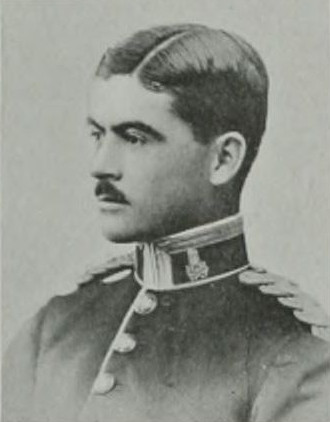
Wickham Leathes Harvey.
HARVEY, WILLIAM, Stoker, 1st Class, 309477, H.M.S. Cressy; lost in action in the North Sea, 22 Sept. 1914.
HARVEY, WILLIAM EDWARD, Sergt.-Major, No. 361, 9th Australian Light Horse, Australian Expeditionary Force, eldest s. of Surgeon Lieut.-Col. Charles Albert Harvey, Indian Medical Service, by his wife, Sarah, dau. of the late Edward Jones, of Clonmel, co. Tipperary; b. Nagode, Central India, 9 Oct. 1875; educ. Galway Grammar School; went to South Africa in 1895; served in Matebeleland (medal) and in the South African War, 1899–1902, with Driscoll’s Scouts, and was twice wounded; and in 1902 was one of the picked men sent over to represent South Africa at the King’s Coronation and received the Coronation Medal. He afterwards went to Australia in 1912, and on the outbreak of the European War, volunteered and joined the Commonwealth Expeditionary Force; left for Egypt in Jan. 1915; arrived at the Dardanelles, May 10, and was killed in action at Walker’s Ridge, Gallipoli, 7 Aug. 1915. Buried at Ari Burnu; unm.
HARVEY, WILLIAM EDWARD, S.P.O. (R.F.R., Ch. B. 10437), 299944, H.M.S. Aboukir; lost in action in the North Sea, 22 Sept. 1914.
HARWOOD, ARTHUR EDMUND, 2nd Yeoman of Signals (R.F.R., Ch. B. 325), 130190, H.M.S. Aboukir; lost in action in the North Sea, 22 Sept. 1914.
HARWOOD, WILLIAM, Stoker, 1st Class (R.F.R., Ch. B. 9496), S.S. 106874, H.M.S. Cressy; lost in action in the North Sea, 22 Sept. 1914.
HASKELL, ERNEST BONE, Private, No. 19815, 2nd Battn. Wiltshire Regt., s. of the late Harry Haskell, a Painter on Sir George A. Cooper’s Hursley Park Estate, by his wife, Anne, dau. of John Bone; b. Ampfield, co. Hants, 30 April, 1891; educ. Church of England School there. Had served four years in, and had just left, Romsey Coy. of the Hants Territorials when war was declared; enlisted in the Royal Warwickshire Regt., 24 Aug. 1914, being the first Ampfield lad to respond to the call for men; was subsequently transferred to the 2nd Wiltshires, and was killed in action in France at the Battle of Hulluch, 25 Sept. 1915; unm. A comrade (Private H. Wiltshire) wrote: “He was shot with a bullet through the lungs and he only lived a few minutes, and he did not speak to anyone.... He was a nice fellow, and he was liked very much in the company.... He was buried next day and a cross put on his grave, with his name and regt.”
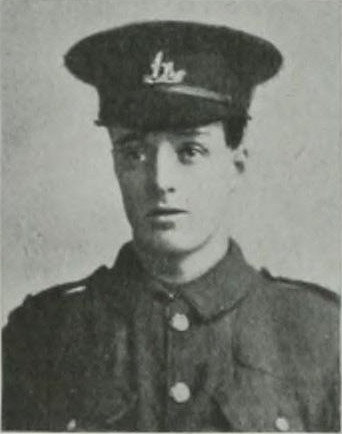
Ernest Bone Haskell.
HASKELL, FRANK, Gunner, R.M.A., H.M.S. Aboukir; lost in action in the North Sea, 22 Sept. 1914.
HASKELL, HARRY JAMES PAYNE, Private, No. 10977, 5th Battn. Dorsetshire Regt. (T.F.), s. of the late Harry Haskell, a Painter on Sir George A. Cooper’s Hursley Park Estate, by his wife, Anne, dau. of John Bone; b. Ampfield, co. Hants, 4 Sept. 1893; educ. Church School there; enlisted 7 Sept. 1914, and died in Malta, 30 Aug. 1915, of wounds received at the Dardanelles; unm. He was reported missing about 11 Aug., but there appears to be some confusion about this date, as a letter dated 10 Aug. was received from him saying he had a bad foot. The officer in charge of the Wounded Information Bureau in Malta, writing about it, said: “He arrived in Malta on the hospital ship Heuralia on the 29 Aug. suffering from a bullet wound in the left leg. The leg was amputated above the knee, but tetanus intervened, and he died at 6 p.m. on the following day. He was buried on the 31st in the Piela Cemetery.... His grave is No. 3, Row 7B.”
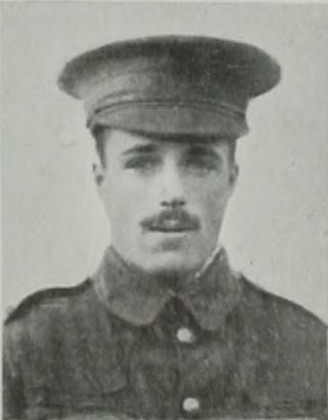
Harry James P. Haskell.
HASLER, JULIAN, Brigadier-General, The Buffs (East Kent Regt.), Commanding the 11th Infantry Brigade, 2nd s. of the late William Wyndham Hasler, J.P., of Aldingbourne House and Barkfold Manor, Sussex, by his wife, Selina Sarah, dau. of Lionel Charles Hervey; b. Halnaker House, Chichester, 16 Oct. 1868; educ. Winchester College and Sandhurst; gazetted to the Buffs, 19 Sept. 1888, and promoted Lieut. 4 Feb. 1892, Capt. 12 March, 1898, Brevet Major, 22 Aug. 1902, Major, 7 Feb. 1907, Lieut.-Col. 28 April, 1906, and Col. 11 Jan. 1910; was employed with the West African Frontier Force, 17 June, 1899, to 23 Feb. 1900; with the Rhodesian Field Force (on special service) 6 April, 1900 to 10 Oct. 1901, and with the West African Frontier Force, 17 June, 1903 to 25 April, 1910; served (1) with the Chitral Relief Force, 1895 (Medal with clasp); (2) in the Malakand Expedition on the North-West Frontier of India, 1897–8, took part in the operations in Bajaur and in the Mamund country, Utman Khel and Buner and in the attack and capture of the Tanga Pass (clasp); (3) in the South African War, 1899–1902, was severely wounded (mentioned in Despatches [London Gazette, 15 Nov. 1901], Queen’s medal with four clasps and King’s medal with two clasps, Brevet of Major); (4) In West Africa (Northern Nigeria) 1903, during the Kano Sokoto Campaign (medal with clasp), and (5) again in West Africa, in command of operations in Northern Nigeria (mentioned in Despatches [London Gazette, 18 Sept. 1906], Brevet of Lieut.-Col.). After the outbreak of the European War he was promoted Brigadier-General Feb. 1915, and was appointed to command the XIth Infantry Brigade. He went to France Sept. 1914; was wounded 21 Oct.; returned 20 Dec. in command of The Buffs, and was killed in action at St. Jean, near Ypres, 29 April, 1915. He was twice mentioned in Despatches by F.M. Sir John (now Lord) French [London Gazette, Feb. 17, 1915, and 22 June, 1915]. General Sir Charles Wilson, commanding the 4th Division wrote: “The 4th Division, and the whole Army has suffered a great loss in your husband’s death; he was not only a splendid soldier, but he was loved by everybody,” and General Lynden-Bell: “We all recognised him as one of our very finest Brigadiers. His bravery was extraordinary, and wherever the bullets and shells were thickest, he was sure to be found. I cannot express to you the terrible grief his death has caused to the whole of his Brigade, every man of which knew him and loved him.” General Hasler raised and commanded Hasler’s Australian Scouts, who did such excellent work in South Africa. He m. at Aldingbourne, 11 Aug. 1908, Edith Gwendoline, eldest dau. of Capt. John Orr-Ewing, 5th Dragoon Guards, and granddau. of Sir Archibald Orr-Ewing, 1st Bart., and had two sons: William Julian, b. 11 Oct. 1912, and John Wyndham, b. 21 April, 1914.
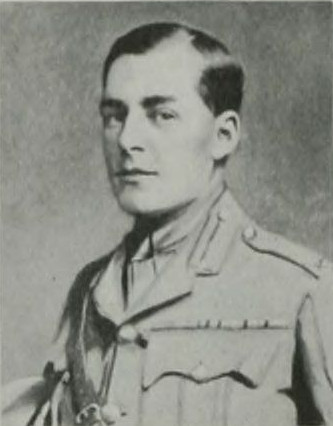
Julian Hasler.
HASLETT, JAMES HOLMES, Private, No. 30, 3rd Field Ambulance, 1st Division Australian Imperial Force, eldest s. of John Haslett, of 37, Clooney Terrace, Waterside, Londonderry, by his wife, Hannah, dau. of Archibald Rosborough, of Inchna Park, co. Derry; b. Londonderry, 15 Dec. 1889; educ. Ebrington National School and Model School, Derry; emigrated to Australia, 1 April, 1910, and settled at Sydney; volunteered on the outbreak of war and joined the 3rd Field Ambulance in Queensland; left for Egypt with the Main Force; took part in the landing at Gallipoli, 25 April, 1915, and was killed in action there 9 Aug. 1915; unm. His Capt. wrote: “He was engaged in his usual duties as stretcher-bearer when a shrapnel burst came into our lines, and he and a friend with a stretcher ran across to give help to a man who was wounded. While attending to him, another burst came over them and wounded his friend and Jim. The former was not severely wounded, but your son was, and lived only half-an-hour afterwards. I attended him myself, and at one time his condition improved, and he flattered our hopes, but it was only temporary, and he went out as he lived—a fine, brave chap. He was one of my best and most willing workers, and was beloved by all the men in camp, who, in their votes after the action placed him at the top of the list as having done the best work. He thus gave his life in doing his duty, and I have no doubt he will meet with his just reward. I knew him before he joined the Ambulance, in Brisbane, where I was Medical Officer to an Amateur Athletic Club, and so I feel his death more than usual. He was known by all the men here as ‘Irish,’ and his friends were greatly affected by his death. They have put up a fine cross where he was buried on the beach. The bullet entered his neck, and must have almost severed the spinal cord.”
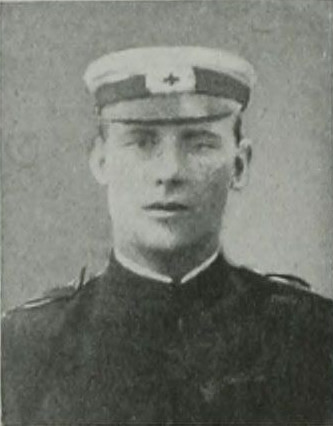
James Holmes Haslett.
HASLUCK, SIDNEY VANDYKE, 2nd Lieut., Indian Army Reserve of Officers, attd. 14th Sikhs, eldest s. of the Rev. Ernest Edward Hasluck, of Sixpenny Handley, Dorset, by his wife, Agnes Milborough, dau. of Richard Holliott Eliot, J.P., D.L.; b. Handsworth, Birmingham, 11 Nov. 1888; educ. Marlborough College, where he was in the Cadet Corps, and served three years in the Dorset Yeomanry. In 1909 he went to Ceylon and became a Tea and Rubber Planter. He had joined the Ceylon Mounted Rifles, and on the outbreak of war, he volunteered for active service with the Ceylon Contingent, and accompanied this force to Egypt. In January, 1915, he obtained a commission in the Indian Army Reserve of Officers, and being attd. to the 89th Punjabis, took part in the fight at Kantara. Subsequently he proceeded to the Dardanelles, became attd. to the 14th Sikhs, and was killed in action, 4 June, 1915. The Officer Commanding 89th Punjabis wrote: “During the time your son was with us, both in Egypt and in the Dardanelles, he worked hard, both at Hindustani and at his military duties. During the fight at Kantara, he showed himself cool under fire. Again in the Dardanelles, when Capt. Scruby was wounded, he and Lieut. Masters carried on under a heavy fire, while the Double Company dug itself in, and he gave a good example to everyone near him. I may mention that I sent both his name and Lieut. Masters’ to the General Officer Commanding Brigade for a ‘Mention in despatches,’ though it is probable that owing to the large number of recommendations their names have gone no further.” Capt. Scruby wrote: “We were together in a trench for 3 days, and at the time I got hit we had gone on to take up a new position in front of the old line. He was left in charge all day; we had fairly heavy casualties and I feel sure that if it had not been for his influence our company would not have held the new line. Your son made the men dig a hole for me and looked after me until we were relieved that night.”
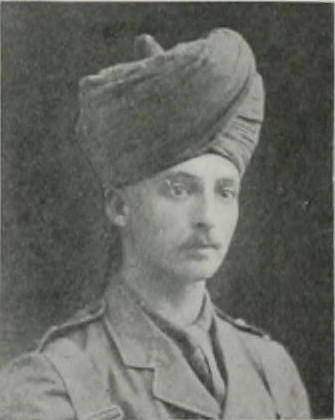
Sidney Vandyke Hasluck.
HASTINGS, CHARLES, Stoker, 1st Class, K. 6833 (Ports.), H.M.S. Hogue; lost in action in the North Sea, 22 Sept. 1914.
HASTINGS, FREDERICK STEWART, Boy, 1st Class, J. 27391 (Ports.), H.M.S. Hawke; lost when that ship was torpedoed in the North Sea, 15 Oct. 1914.
HATCH, WILLIAM LEONARD RINGROSE, Lieut., 2nd Battn. Royal Irish Fusiliers (Princess Victoria’s), elder s. of William Keith Hatch, Lieut.-Col. (retired) I.M.S., of 8, Earlham Road, Norwich, by his wife, Clare Catherine, dau. of Deputy Surgeon-Gen. S. Homan; b. Bombay, India, 27 Nov. 1890; educ. Shrewsbury and Royal Military College, Sandhurst; gazetted 2nd Lieut. Royal Irish Fusiliers, 25 March, 1911, and promoted Lieut. 13 April, 1913. On the outbreak of war was at Quetta with his regt.; returned to England in Oct., and after a short stay went to France, and was killed in action near Vierstraat, 25 Jan. 1915; unm. Buried at Vierstraat.
HATCHELL, THOMAS, Acting Chief Stoker, 278685, H.M.S. Good Hope; lost in action off Coronel, on the coast of Chili, 1 Nov. 1914.
HATCHER, FRASER, Rifleman: No. 2790, 12th Battn. (The Rangers), The London Regt. (T.F.), 2nd s. of Leonard George Hatcher, of 7 Dorville Road, Hammersmith, Clerk in Charge, West Kensington Station, District Railway, by his wife, Helen Johnston, dau. of Patrick Barry, Member Institute Journalists; b. Shepherd’s Bush, London, W., 2 Nov. 1898; educ. William Street Central School; was for some time a member of the Hammersmith Branch of the Lads’ Naval Brigade, and entered the Great Western Railway Co.’s service (Chief Accountant’s Office) in March, 1914; joined the Rangers, 1914, and showed so much keenness and energy in becoming efficient that he was selected for the service battn. and was one of the first to join it. He went to France, 8 March, 1915, and was killed in action north-east of Ypres, 4 May, 1915, and was buried near Fortuin; unm.
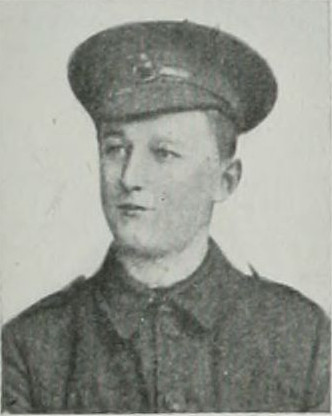
Fraser Hatcher.
HATCHER, GEORGE ERNEST, Leading Stoker, 299240 (Dev.), H.M.S. Hogue; lost in action in the North Sea, 22 Sept. 1914.
HATFIELD, ROY BERRIMAN, Lieut., 8th Battn. (Post Office Rifles) The London Regt. (T.F.), yr. s. of George Frederick Hatfield, of 11, Bedford Square, London, and The Old Lighthouse, South Foreland, Dover, Solicitor, by his wife, Ada Sophia Lucy, dau. of James Berriman Tippetts, and grandson of the late Charles William Hatfield, of Hall Cross, Doncaster; b. London, 6 Oct. 1885; educ. Merchant Taylors’ School, and Brasenose College, Oxford; was admitted to the Livery of the Merchant Taylors’ Company, 9 April, 1908, and a Solicitor in Jan. 1912; and obtained a commission in the Post Office Rifles on — Jan. 1912. In 1914 he was appointed Private Secretary and additional A.D.C. to the Governor of Hong Kong with the local rank of Capt., but on war being declared he applied for leave and rejoined his regt., and went to France with them on 17 March, 1915. At Festubert he was acting as Bomb Officer; was mortally wounded while leading his men down a German trench, 24 May, 1915, and died in the Bethune Hospital the same day. He was buried in the Military Cemetery there. His Commanding Officer wrote: “He had most gallantly led an attack when he was mortally wounded. The success of our operations that night was very largely due to the most gallant way in which Roy had organised and arranged the bombers and gone into the minutest details with them before starting off. Needless to say Roy is one of the greatest losses the regt. has had, and will be mourned by all ranks.” He m. at Marylebone, London, 7 April, 1914, Florence Elizabeth Elaine, dau. of William Brownhill, of Dawson City, Alaska; s.p.
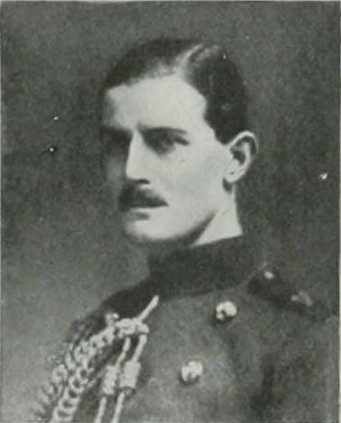
Roy Berriman Hatfield.
HATHAWAY, JOSEPH, Private, No. 1446, 4th Battn. East Yorkshire Regt. (T.F.), s. of Joseph Hathaway, of 17, Fleet Street, Stepney Lane, Hull, Plasterer; b. Hull, 7 Aug. 1894; educ. Beverley Road Council Schools there; was an employee in Messrs. Holmes’ Tannery, Hull; joined the 4th (Territorial Battn.) East Yorks Regt., in Feb. 1912; volunteered for active service on the outbreak of war; went to France, and was reported missing after the fighting, 4 May, 1915, and is now assumed to have been killed in action on that day; unm.
HATHORN, GEORGE HUGH VANS (“Jerry”), Lieut., R.M.L.I., eldest s. of the late Charles Hugh Vans Hathorn, of Seconce Tea Estate, Assam, by his wife, Emily Rose (5, Ravenlea Road, Folkestone), dau. of the late Benjamin Bensley, and grandson of the late Admiral George Hathorn, R.N.; b. Tezpur, Assam, 30 June, 1887; educ. Pretoria House Preparatory School, Folkestone, and Dover College; joined the R.M.L.I. 1 Sept. 1906, promoted Lieut. 1 July, 1907; served in the West Indies, Gibraltar, and Home Waters; was appointed to H.M.S. Formidable, 25 Jan. 1914, and lost his life in the disaster to that ship, 1 Jan. 1915; unm. In forwarding the following report by Lieut. V. C. V. Soutter, senior surviving executive officer of the Formidable, the Admiralty added that had Lieut. Hathorn survived, an expression of their appreciation of his conduct would have been conveyed to him. The report is as follows: “Lieut. George H. V. Hathorn, Royal Marines, collected volunteers and searched the Marines’ mess deck for any gear that would float. At a time when things became critical, this officer penetrated as far aft as the ward room, using the after hatch in the port battery and aided solely by the light from a small electric torch. His passage was greatly impeded by strung hammocks. His conduct was extremely plucky, for he continued to work there collecting chairs, etc., though it was apparent to all that the ship might capsize at any moment without warning. To add to this, the water was at a dangerous level on the starboard side of the same deck.” Hathorn had passed for his Captaincy while in the West Indian Station. His yr. brother, 2nd Lieut. N. McD. Hathorn, was killed in action, 14 July, 1915 (see following notice).
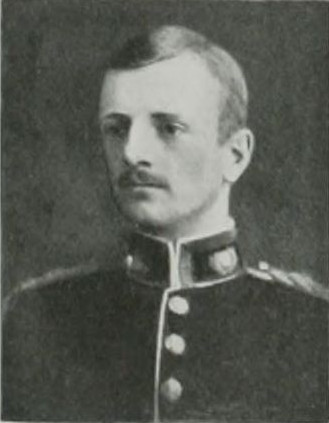
George Hugh Vans Hathorn.
HATHORN, NOEL McDOUALL, 2nd Lieut., 76th Punjabis, Indian Army, 2nd s. of the late Charles Hugh Vans Hathorn, of Seconce Tea Estate, Assam, by his wife, Emily Rose (5, Ravenlea Road, Folkestone), dau. of the late Benjamin Bensley, and grandson of the late Admiral George Hathorn, R.N.; b. Seconce, 26 Dec. 1891; educ. at Pretoria House, Folkestone, Dover College, and Wye Agricultural College; went to Ceylon tea planting in 1911; volunteered for service on the outbreak of war; joined the Ceylon Contingent, and was sent to Egypt. While there he was offered a commission in the Indian Army, and was gazetted to the 76th Punjabis, then at Suez, Jan. 1915. From Suez he was sent to the Persian Gulf, and was killed in action, being shot through the forehead, near Nasar-i-yeh, Mesopotamia, 14 July, 1915; unm. His colonel wrote to his mother as follows: “Your son was shot when most gallantly leading his men, much ahead of them, and in so doing had to swim a creek under fire. This was at night, and such fine action requires not only great nerve and determination, but splendid bravery in addition, and your boy has, I am gratified to learn, been recommended by the General for posthumous honour. The regt., of which I am proud, is proud of your son, and feels honoured that his name was on our rolls.” While at Wye College he won the champion light-weight boxing cup for one year, and in Ceylon was considered one of the leading sportsmen of his district. He won the quarter-mile race in record time for that country, and was one of the football fifteen for his province. His elder brother, Lieut. G. H. V. Hathorn, R.M.L.I., was lost in the Formidable, 1 Jan. 1915 (see preceding notice).
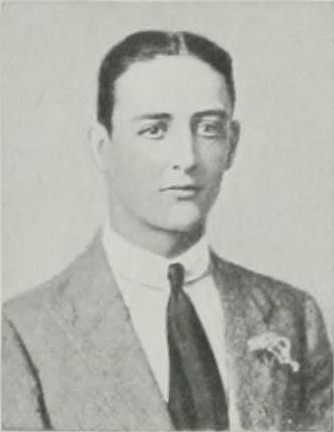
Noel McDouall Hathorn.
HATTERSLEY, HENRY WILLIAM, Ordinary Seaman, S.S. 4739, H.M.S. Hogue; lost in action in the North Sea, 22 Sept. 1914.
HATTON, LEONARD NELVINGTON, P.O., 198556, H.M.S. Hogue; lost in action in the North Sea, 22 Sept. 1914.
HAVERY, RALPH SAINT, Stoker, 1st Class (R.F.R., B. 2892), S.S. 100180, H.M.S. Good Hope; lost in action off Coronel, on the coast of Chili, 1 Nov. 1914.
HAWKES, JOHN CORNOCK, Lieut., R.A.M.C., attd. 8th (Service) Battn. King’s Royal Rifle Corps, 2nd s. of William Hawkes, of Bank House, Castletown, Berehaven, co. Cork, Manager, Munster and Leinster Bank, by his wife, Martha Elizabeth, eldest dau. of William Gillman; b. Castletown aforesaid, 3 March, 1885; educ. Cork Grammar School and Edinburgh University, and qualified as L.R.C.P., and S.Ed., and L.R.F.P.S. Glas. in 1910, and then went as a Ship’s Surgeon to West Africa, and afterwards to Canada. On the outbreak of war he volunteered and was gazetted Lieut., Royal Army Medical Corps, 6 Dec. 1914, and went to the Front the following May. He was killed in action at Hooge, 31 July, 1915, by a shell. His Col. wrote: “Your gallant son was beloved by officers and men for his genial pleasant manner and his genuine Irish wit, and his devotion to the wounded. He was a splendid professional man, and the battn. has suffered a severe loss by his death,” and Col. Thompson, writing on behalf of Surgeon-Gen. Porter, Director of Medical Service: “He was killed instantaneously by a shell, when advancing with his regt. near Hooge. They were about to take part in an assault on some trenches previously lost by another brigade. He bore the reputation of being a very gallant man, and one devoted to the care and succour of the wounded. He has now joined our band of heroes of the R.A.M.C., and his name will live on our annals and he himself in our memories as one who has conferred honour on the corps.”
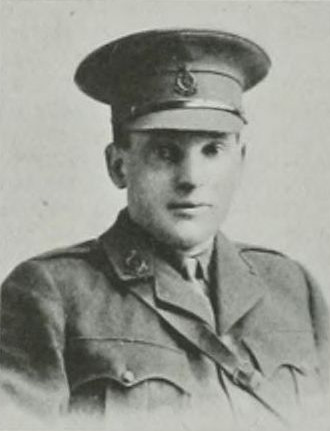
John Cornock Hawkes.
HAWKES, RUEBEN ERNEST, A.B. (R.F.R., B. 9297), 203656 (Chatham), H.M.S. Good Hope; lost in action off Coronel, on the coast of Chili, 1 Nov. 1914.
HAWKINS, BENJAMIN, Stoker, 1st Class, S.S. 111196, H.M.S. Hogue; lost in action in the North Sea, 22 Sept. 1914.
HAWKINS, CHARLES FRANCIS, Major, 46th Battery, Royal Field Artillery, only s. of the Rev. William Webster Hawkins, of Acomb, York, formerly, British Chaplain at Foochow, China, by his wife, Kate, dau. of Philip Leyburn, of London; b. Amoy, China, 16 Jan. 1880; educ. Haileybury; joined the Royal Artillery from the Militia, 17 March, 1900, and was promoted Lieut. 3 April, 1901, Captain 20 March, 1909 and Major 30 Oct. 1914; served (1) in the South African War, 1901–2; took part in the operations in the Orange Free State, March, and in the Transvaal, April-May, 1902 (Queen’s Medal with four clasps); and (2) with the 1st Division Expeditionary Force in France and Flanders, Aug. 1914–25 April, 1915, and was killed in action on the latter date in France; unm.
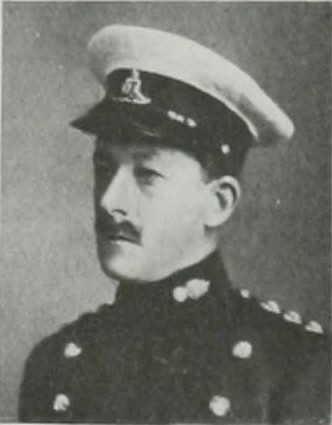
Charles Francis Hawkins.
HAWKINS, CHARLES VINCENT, Stoker, 1st Class (R.F.R., Ch. B. 7332), S.S. 10225, H.M.S. Aboukir; lost in action in the North Sea, 22 Sept. 1914.
HAWKINS, FREDERICK ROBERT, No. 5761, B Coy., 2nd Battn. Royal Fusiliers, 2nd s. of James Hawkins, of 2, Cumberland Street, Staines, by his wife, Maria, dau. of William May; b. Egham Hythe, co. Surrey, 22 June, 1881; enlisted Aug. 1897; served through the South African war (Queen’s medal with five bars and King’s medal with two bars), 1899–1902, and with the Mediterranean Expeditionary Force at the Dardanelles, and was killed in action, 4 June, 1915; unm. His eldest brother, William George, was killed in action (see following notice), and two other brothers are now (1916) on active service.
HAWKINS, GEORGE AUGUSTUS, Stoker, 2nd Class, K. 19106, H.M.S. Good Hope; lost in action off Coronel, on the coast of Chili, 1 Nov. 1914.
HAWKINS, HAROLD GEORGE, 2nd Lieut., 11th (Service) Battn. Middlesex Regt., eldest s. of Francis Henry Hawkins, LL.B., Solicitor; Foreign Secretary, London Missionary Society, by his wife, Frances Lydia, dau. of George Dugall, of Birmingham; b. Wrexham, co. Denbigh, 10 Nov. 1890; educ. Colet House, Rhyl; Mill Hill School, London (to which he obtained an open entrance scholarship in 1904), and Hertford College, Oxford (where he obtained Open Classical Scholarship and took the Honours School in Classics, July, 1914); gazetted 2nd Lieut. to the 11th Middlesex, 22 Aug. 1914; went to the Front, 31 May, 1915, and died 24 July, 1915, of wounds received at Armentières on the same day; unm. At School and College he had a good athletic record and was captain of his College Hockey Team and played hockey for the University.
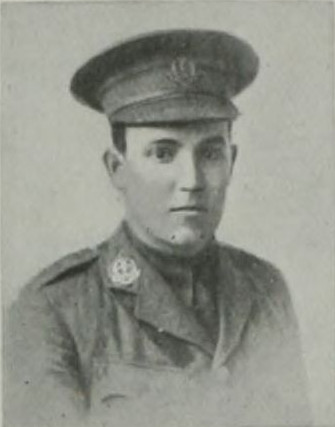
Harold George Hawkins.
HAWKINS, LEONARD, Corpl., No. 614, 5th Battn. (The London Rifle Brigade) The London Regt. (T.F.), 3rd s. of Samuel James Hawkins, of 109, Whipps Cross Road, Leytonstone, Printer, by his wife, Lizzie, dau. of the late Thomas Hunt; b. Walthamstow, co. Essex, 13 Jan. 1891; educ. Newport Road Council School, Leyton, and the Worshipful Company of Carpenters School, Stratford; was an Accountant’s Clerk; enlisted early in Sept. 1914, after the outbreak of war; promoted Corpl., Feb. 1915; went out to France with a draft, 14 March, and was killed in action at Wieltje, during the Second Battle of Ypres, 13 May, 1915; unm. He was buried near the front trenches at Wieltje. Letters speak of his having “done extremely well” and having “died fighting bravely.”
HAWKINS, LIONEL HOPE, Lieut., 1st, attd. 6th, Dragoon Guards, only s. of Isaac Thomas Hawkins, of 90, Drayton Gardens, S.W., C.E., late Colonial Civil Service, by his wife, Mary Hope, yst. dau. of Richard Butterworth, of Lancaster; b. Chichester, 28 July, 1886; educ. Waynfleet; Winchester, and the Royal Military College, Sandhurst, and was gazetted 2nd Lieut. 1st Dragoon Guards, 2 Feb. 1907, going to India with his regt. the following Nov., and was promoted Lieut., 18 Feb. 1908. He passed his Captain’s examination in Oct. 1912, and did good work with the signalling, having charge of a brigade for two years. Being in England on leave when war broke out, he volunteered and was attached to the 6th Dragoon Guards, and went to France, 15 Aug. 1914. He served through the retreat from Mons, the Battles of the Marne and the Aisne, and was killed in action on the night of 31 Oct.-1 Nov., when the Germans broke through our lines between Messines and Wytschaete in the 1st Battle of Ypres. The two forces had got mixed up, and Lieut. Hawkins observing a party approaching the trench which he held with his troop, got out of the trench and went forward. According to a statement made by a brother officer they shouted “Don’t fire! We are the London Scottish!” and he therefore continued to go forward. He had not gone more than 30 yards when he fell, shot through the right side. Two of his men immediately went out and brought him back to the trench, and he was carried back by his own men and the London Scottish towards Kemmel, but died shortly afterwards; unm. His Adjutant, Capt. P.M.A. Kerans, wrote: “Your son, of whom we had all grown very fond, was killed in an attack by the Germans in a line between Messines and Wytschaete in Southern Belgium on the night of 31 Oct. and 1 Nov. It appears that after the enemy had penetrated our line a party was observed by your son approaching the trench which he held with his troop. He ordered fire to open on them, but they shouted ‘Don’t fire, we are the Scottish’ and he ordered his men to cease fire; himself, bravely, but incautiously, got out of his trench and went towards them. He had gone about 30 yards when the Germans—for it was the Germans and not the London Scottish—opened fire and your son was seen to fall. Two men at once went out and brought him back to the trench. He was seen to be badly wounded in the right side and he was carried back by our men and the London Scottish towards Kemmel. On reaching a place of comparative safety two of the men went off to try and find a stretcher and two remained with your son who died very shortly afterwards. He had been unconscious from a few minutes after he had been hit and passed quietly away. The men were unable to bury him then and were obliged to leave him covered with a blanket at the edge of a wood, where I have no doubt, he has since been buried, but as, unfortunately, the Germans now hold the piece of ground, it has not been possible to do what would otherwise have been done. You have lost a gallant son and we a brave and well-beloved comrade who showed military qualities of a high order”; and Major S. W. Webster: “The farm we held was rushed by the Germans about midnight on 31 Oct. I at once went to the trench in which your son was. We retired from there to some reserve trenches about 200 yards in rear. I was there with him for about half an hour, I then left him to go and see a troop who were holding a trench on his right. After I had gone I believe he went forward a little to see if they really were Germans, as he seemed to think they were our own troops—it was pitch dark at the time. He was shot through the body, and some of my own men carried him back. He died when they had carried him about ½ mile to the rear. My man, Private Willings, then left the body under a fence. It was impossible to recover the body or even the wounded, as we had to evacuate the position at dawn. I am perfectly certain from what the men told me, that your son died within half an hour of his wound. It must seem strange to you, that we could not recover the body, but we were fighting for our lives through the night, in the pitch dark, over a front of at least half a mile. Three of our own officers and many men were left behind, and we do not even know if they are dead or prisoners.” Col. I. Annesley also wrote (12 Dec.): “Had your son lived it would not have been long before he earned great distinction, for he was very brave and a fine leader of men. On the night of the poor fellow’s death there were so many heroic actions on the part of my officers and men that it was impossible to pick out anyone in particular as being better than his fellows. As I say, had your son lived I should certainly have sent his name in for consideration at a later period for his splendid work as a troop leader from the beginning of hostilities, and I have written to this effect to the Brigadier General Commanding the 4th Cavalry Brigade, as I now hold a Staff appointment”; and Brigadier-General the Hon. Cecil Bingham, 4th Cavalry Brigade: “I only met your son, Lionel, when he became attached to the 6th Dragoon Guards, but I got to know him pretty well, and my regard for him grew as we got to know each other. During the retirement, and subsequently, he had several difficult patrols to carry out, and he always did his part with conspicuous success. He was a very brave man, and was careful of the lives of his men. On the night of his death, he, in company with many others, performed acts which redounded to their everlasting credit, but you will understand that all cannot be rewarded, the number was limited to two per unit, and a selection made from the reports.” In India he was known as one of the finest polo players, and was in the winning team of many tournaments, and besides was a good all-round sportsman. He played cricket for his school, won the steeplechase for his House at Winchester, and ran with his troop in the Marathon Race in June, 1908, when they won the Harkness Shield. “An excellent report which reflects great credit on Lieut. Hawkins, the Signalling Officer,” was the remark of the G.O.C., Ambala Cavalry Brigade, on Individual Tests, 31 March, 1913.
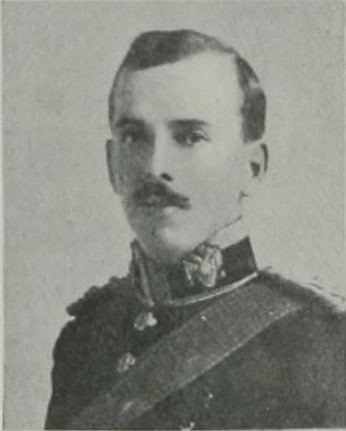
Lionel Hope Hawkins.
HAWKINS, WILLIAM DAVID, Leading Seaman, 195918, H.M.S. Good Hope; lost in action off Coronel, on the coast of Chili, 1 Nov. 1914.
HAWKINS, WILLIAM GEORGE, Private, No. 1901, 8th Battn. The Middlesex Regt. (T.F.), eldest s. of James Hawkins, of 2, Cumberland Street, Staines, by his wife, Maria, dau. of William May; was an old Volunteer; served with the Expeditionary Force in France, was wounded at Hill 60, and died in King George’s Hospital, London, 28 June 1915. He m. at Egham, Surrey, Elizabeth, dau. of (—) May, and had four children: Frederick, b. 23 Oct. 1899; William, b. 25 Sept. 1900; Alfred, b. 9 Dec. 1902; and Bessie, b. 22 March, 1901.
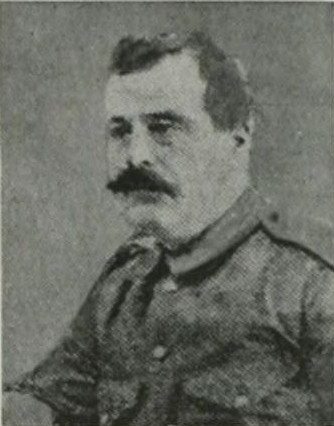
William George Hawkins.
HAWKRIDGE, JOHN, Rifleman, No. 2358 C Coy. 1/17th Battn. (Poplar and Stepney Rifles), The London Regt. (T.F.), s. of Robert Hawkridge, formerly of the ... Regt.; b. 21 Aug. 18—; and was in the Special Reserve; joined the Poplar and Stepney Rifles, 1 Sept. 1914; went to France, and was killed in action at Loos, 26 Sept. 1915. Capt. E. A. B. Chandler wrote to his widow: “Our Battn. did its share in the great advance and your husband too did his part in the very best way, and it grieves me deeply to tell you that he fell while in the front line.... The life and soul of his platoon, always full of fun, ‘Tosh,’ as he was called, is very much missed. Fearless, too, he was, and I had often occasion to admire his coolness in dangerous positions. As far as I know he lies near the chalk pit at Loos.” He m. at St. Mark’s, Victoria Park, E., Daisy Florence (48, Mandeville Street, Clapton Park, E.), dau. of (—), and had a dau., Florence Lilian, b. 10 Jan. 1915.
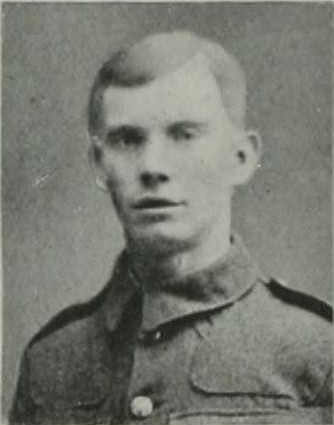
John Hawkridge.
HAWORTH, BENJAMIN, Signaller, No. 131, B Coy., 3rd Battn. 1st Division, Australian Imperial Force, eldest s. of Thomas Haworth, of 29, Bridge Street, Freetown, Bury, Lancashire, by his wife, Harriet, dau. of Thomas Ashworth, of Rossendale, Lancashire; b. Freetown, Bury, Lancashire, 21 Aug. 1891; educ. there; emigrated to Australia early in 1913, and settled at Morisset, N.S.W.; volunteered on the outbreak of war, and joined the Commonwealth Expeditionary Force in Aug. 1914, with his brother John Edward; left for Egypt on the Euripides, 20 Oct.; went to the Dardanelles, 29 Mar. 1915, and died of wounds received in action there, 9 Aug. 1915; unm. Buried at sea. His brothers, John Edward, now Sergt., No. 135, 3rd Battn. Australian Expeditionary Force, and Corpl. James Arthur Haworth, Machine Gun Section, 13th Battn. (5th Royal Highlanders), Canadian Expeditionary Force, are now (1916) on active service.
HAWORTH, FREDERICK, Corpl No. 3210, 10th Battn. (Service) Rifle Brigade, s. of Lister Haworth, of 10, Swan Street, Blackburn, by his wife, Isabella, dau. of John Macmillan, of Ayr; b. 2 June, 1879; educ. Christ Church School there; was a weaver; joined the 5th (Blackburn) Lancashire Artillery Volunteers in 1898, and was seventeen years with them (Medal) and was a Corpl.; volunteered for Foreign Service on the outbreak of war, 7 Sept. 1914. and died at the Isolation Hospital, Aldershot, 31 Mar. 1915, of spotted fever], contracted while training there. He m. at Christ Church, 1 Nov. 1902, Mary Alice (16 Swan Street, Blackburn), dau. of Richard Lang, and left two children: Maggie, b. 22 March, 1904; and Annie, b. 2 Feb. 1906.
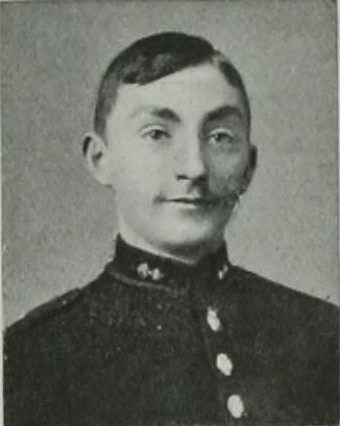
Frederick Haworth.
HAYDEN, HARRY, Rifleman, No. 2083, C Coy., 1st Battn. Rifle Brigade, only s. of Arthur Hayden, of Haddiscoe, Great Yarmouth, Norfolk, Signalman for 35 years on the Great Eastern Railway, by his wife, Sybilla Smythe, dau. of William Edward Snare, of Brandon, Suffolk; b. Weeting, co. Norfolk, 19 Jan. 1887; educ. Somerleyton, Suffolk; enlisted at Winchester, 6 May, 1907; served in Ireland 1907–08; India, Oct. 1908–Oct. 1914; and with the Expeditionary Force in France and Flanders, 8 Nov. 1914–15 March, 1915; was wounded in action at Neuve Chapelle, on the latter date, and died in No. 2 British Red Cross Hospital at Rouen on the 17th; unm. Buried in Rouen Cemetery. He was present as a special messenger at the Delhi Durbar, 1911.
HAYDON, LEONARD FLAXMAN LEE, Private, No. 2446. 5th Battn. Royal Sussex Regt. (T.F.), eldest s. of the late Flaxman Haydon, of Blomfield House, London Wall, Chartered Accountant, by his wife, Anne Juliana (760, Stanlake Road, Shepherd’s Bush), dau. of the late Henry Lee Hogg, of Cleobury Mortimer, Shropshire, Surgeon; b. Coleridge House, Lady Margaret Road, Kentish Town, 6 Aug. 1886; educ. Lewes Grammar School; was a Clerk in Barclays Bank, Lewes; enlisted, Sept. 1914; went to France, 18 Feb. 1915, and was killed in action at Richbourg L’Avoué, 9 May, 1915; unm. Major G. H. Courthope wrote: “He and his comrades joined with the utmost gallantry in the assault on the German lines at Richbourg L’Avoué. His dead body was found not far from a road known as the cinder track, by search parties of the Lahore Division. He and hundreds of others were buried close to the Rue du Bois, and I am informed that all the graves are carefully marked.”
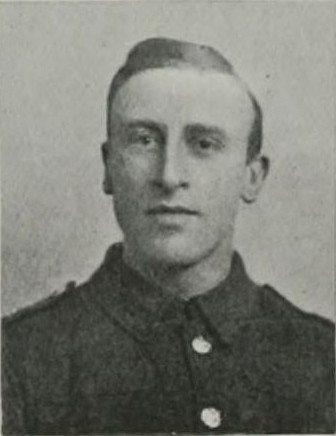
Leonard F. L. Haydon.
HAYERS, ARTHUR, A.B. (R.F.R., B. 10686), 216178, H.M.S. Hogue; lost in action in the North Sea, 22 Sept. 1914.
HAYES, ERNEST DE LANNOY, Major, 2nd Battn. The Cameronians (Scottish Rifles), 2nd s. of Vice-Admiral John Montagu Hayes, C.B., by his wife, Julia, dau. of Richard Atkinson Coward; b. Southsea, co. Hants, 8 July, 1869; educ. Stubbington, near Fareham; Westward Ho!, and the Royal Military College, Sandhurst; gazetted to the Cameronians, 3 May, 1890, promoted Lieut., 5 April, 1893, Capt., 22 Dec. 1897, Brevet Major, 22 Aug. 1902, and Major, 24 June, 1908; served (1) in the South African War, 1899–1902; took part in the Relief of Ladysmith, including action at Colenso; the operations of 17–24 Jan. 1900, and action at Spion Kop; operations of 5–7 Nov. 1900, and action at Vaal Krantz; operations on Tugela Heights (14–27 Feb. 1900), and action at Pieters Hill; operations in Natal, March to June, 1900; including action at Laings Nek (6–9 June); operations in the Transvaal, east of Pretoria, July to 29 Nov. 1900; operations in the Transvaal 30 Nov. 1900 to Aug. 1901, and Nov. 1901 to 31 May, 1902, and on the Zululand frontier of Natal, Sept. and Oct. 1901 (mentioned in Despatches [London Gazette, 29 July, 1902], Brevet Major; Queen’s medal with four clasps and King’s Medal with two clasps); and (2) with Expeditionary Force in France and Flanders from 4 Nov. 1914 to 10 March, 1915, on which day he was killed in action at Neuve Chapelle, while bravely leading his Company, “A,” which was literally mown down by machine gun and rifle fire; our Artillery having failed to cut barbed wire defending the section of German trench. A fellow officer wrote: “His name will go down in the history of the Regt. as the officer who led the attack in the severest fight the battn. has ever had to take part in.” He m. at Edinburgh, 1904, Constance Frances, dau. of the late Sir Thomas Macdonald Miller, of Glenlee, co. Ayr, and had a son, Montagu Ernest, b. 16 Jan. 1905.
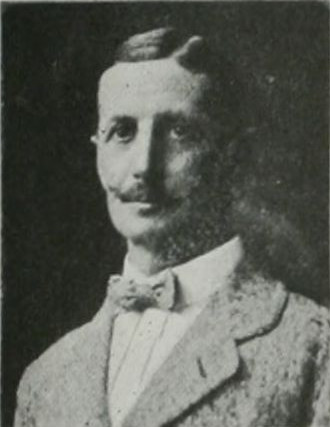
Ernest de Lannoy Hayes.
HAYLES, EDWARD, A.B. (R.F.R., B. 1999), 197731, H.M.S. Good Hope; lost in action off Coronel, on the coast of Chili, 1 Nov. 1914.
HAYMAN, JAMES GEORGE, Private, No. 7574, 2nd Battn. Coldstream Guards, 5th s. of the late Amos Hayman, of High Brooms, Tunbridge Wells, Farm Labourer, by his wife, Eliza, dau. of (—) Coorke; b. Longford, co. Oxford, 3 July, 1889; educ. Tunbridge Wells National School; enlisted, 16 Dec. 1907; served three years with the Colours, then passed into the Reserve and worked as a Gardener; mobilised, 5 Aug. 1914; went to France, 11 Aug.; served through the retreat from Mons, the Battles of the Marne, the Aisne, Ypres, Landrecies, &c. and was killed by a shell while sitting talking in the trenches at Rue du Bois, Belgium, 20 May, 1915. He m. at Tunbridge Wells, 4 Feb. 1911, Mary Louise (164, Portland Street, Walworth, S.E.), dau. of Moses Baker, of Walworth, and had three sons: Amos George, b. 29 July, 1911; Albert William, b. 23 March, 1913; and John Edward, b. 28 May, 1914.
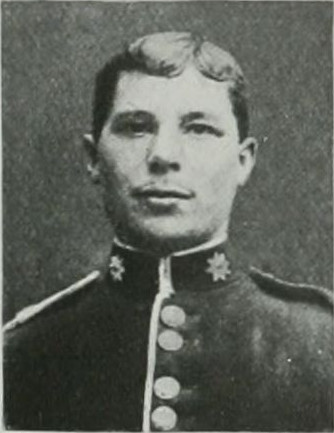
James George Hayman.
HAYMES, ALBERT, A.B., 219142, H.M.S. Aboukir; lost in action in the North Sea, 22 Sept. 1914.
HAYNES, ERNEST GEORGE, Stoker, R.N.R., 790U, H.M.S. Aboukir; lost in action in the North Sea, 22 Sept. 1914.
HAYNES, HENRY AGULAR, Private, No. 878, 18th Battn. Australian L.I., 2nd s. of the late Commander W. Clarke Haynes, R.N.; b. 187-, served through the South African War with the Cape Mounted Rifles (medal); went to Australia; joined the Australian Imperial Force after the outbreak of the European War, and was killed in action at the Dardanelles, 21–25 Aug. 1915; unm.
HAYTER, CYRIL, Lieut., 8th South Canterbury Mounted Rifles, New Zealand Expeditionary Force, 5th and yst. s. of Commander Francis Hayter, R.N., later a run-holder in New South Wales and New Zealand, by his wife, Eugenie Elizabeth, dau. of Frederick Huddleston; b. Rollesby, Burkes Pass, South Canterbury, New Zealand, 4 Feb. 1890; educ. Christ’s College, Christchurch, New Zealand, where he was a member of the College Cadet Corps; served sometime in the Mackenzie Mounted Rifles (Volunteers), and was gazetted Lieut. 8th South Canterbury Mounted Rifles when the Territorial system came into force in New Zealand. On the outbreak of war he was one of the first to volunteer for Imperial service. He left for Egypt 16 Oct.; afterwards going to the Dardanelles, and was killed in action in the brilliant attack by the New Zealand Mounted Rifles and the 5th Connaught Rangers on Hill 60, on the Azmak Dere, Gallipoli, 27 Aug. 1915. At the time of his death he was the only officer of his squadron left, all the others having been killed or wounded in the previous fighting; unm. Lieut. Hayter was mentioned in Gen. Sir Ian Hamilton’s Despatch of 11 Dec. 1915 [London Gazette, 28 Jan. 1916], for gallant and distinguished service in the field. He was a very keen sportsman; in 1908 and 1909 respectively he won the featherweight and middle-weight boxing championships at Christ’s College, Christchurch, and was an excellent shot. Two elder brothers of his are now (1916) at the Front, one with the Royal Engineers in France, and the other with the New Zealand Force.
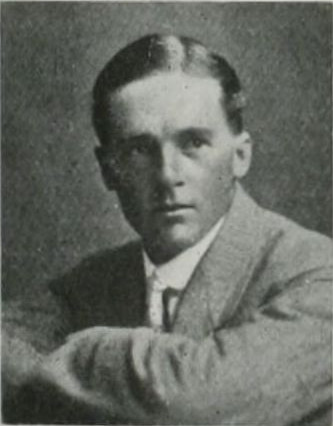
Cyril Hayter.
HAYTER, GEORGE ALFRED, Cooper Pensioner, 167166, H.M.S. Good Hope; lost in action off Coronel, on the coast of Chili, 1 Nov. 1914.
HAYTHORNTHWAITE, RYCHARDE MEAD, 2nd Lieut., Special Reserve, 3rd. attd. 2nd. Battn. The East Kent Regiment (The Buffs), elder s. of the Rev. John Parker Haythornthwaite, of Agra Lodge, Northwood. Middlesex, M.A., Principal of St. John’s College, Agra, 1890–1911; Fellow of Allahabad University; by his wife, Izset, L.R.C.P., L.R.C.S., dau. of Samuel Mead, of Stratford-on-Avon; b. Agra, India, 4 Jan. 1894; educ. C.M.S. Children’s Home, Limpsfield; Haileybury College (Scholar, Head of the School 1912–13; Colour-Sergeant O.T.C.), and Sidney Sussex College, Cambridge (Oct. 1913–July, 1914, Exhibitioner in History); gazetted 2nd Lieut. 3rd Buffs, 15 Aug. 1914; trained at Dover Sept. 1914–May, 1915; went to the front on 5 May, and was killed in action at the Second Battle of Ypres on the 24th of that month; unm. He was buried outside the garden gate of a ruined cottage on the right-hand side of the Menin Road, about 1,000 yards beyond the level crossing of the Ypres-Roulois Railway in one of three graves. In a letter written to his parents the day he was killed he said: “At 2.30 a.m. this morning the Germans started a terrific bombardment, using their vile gas. Our lads were splendid and stuck it. About 5.30 a.m. we got a message to reinforce the firing line, with my Company, ‘B.’ Unfortunately there was very bad communication, and our 1st Platoon did not reinforce. I went out to try and find out what was happening, and worked my way up to the front line, about 1,000 yards ahead, and found out what was happening, and then returned to our trenches. ‘B’ Company immediately pushed forward, as the line wanted reinforcing, but I stayed back to report to Headquarters. After doing that I started with one other fellow to work my way up. The shrapnel was terrific, but our luck was in, and we reached a ruined house just behind the firing line, and found there a good many wounded, poor beggars. I got a stretcher party together and we pulled in several badly wounded fellows in a field, but unfortunately they sniped at us, the brutes! Two of our poor chaps were hit. Since then we have done what we can to make them comfortable, but it is awfully hard for them. We can do so little for them till dark, and even then it isn’t safe. The shelling is something terrific, one burst on this house knocking bits over our wounded, and gave a few more nasty cuts. All we can do is to keep boiling water—it is not safe to drink otherwise—and give them sips of tea and Bovril, of which we have luckily got a certain amount. Unfortunately it is very hot, and their thirst must be terrific. I know mine is. It is just that fiendish gas. I have had nothing to eat since 7 p.m. last night, it is now 4 p.m. Only a few sips of different things, and this gas keeps up a horrible choking feeling, which prevents one working as hard as one wants to. What will happen to us I do not know. I think we are advancing now, and in that case all ought to be all right”; a Sergt.-Major W. Dunlop, Durham L.I., wrote: “I was with him on that memorable day. ‘Whit Monday,’ for about 10½ hours, at about 500 yds. from the Germans, without a British soldier in front and about 1,000 yds. from the nearest troops behind, attending to the wounded. First, I set away with a stretcher, my companion was either shot or fainted, so I went across to the ruins of an old cottage. There were a dozen or so wounded, with a wounded Corporal trying to dress the other poor souls. I could get no assistance there, so had to go to our reserves behind for someone to help me to get the stretcher in. I returned with two brave chaps, and on my return met Lieut. Haythornthwaite. He asked particulars and said it was certain death to venture out. I said, ‘I’m risking it.’ His answer was, ‘If you go, I’m coming also.’ The four of us set out, but could not find man or stretcher, and it was only by the protection of God Himself that we returned, for nothing human could have protected us from the murderous fire the brutes sent towards us, but not one of us was hit, thanks to God. It was after that I found the qualities of your son. The dressings of the wounded were not as they should have been, bandaged by little experienced hands, so your son and myself set about to try to stop the bleeding of the wounded.... After a while we got all made as comfortable as we could under the circumstances.... So he set to, and got a fire going, and we got some Bovril made. It was a God-send for the poor souls, as the water was not fit to drink if it had not been boiled, and the continual cry of the wounded was ‘water.’ It was during the time the water was boiling I saw your son sitting and writing the letter you eventually got, but the contents he did not mention at the time. After a while, the counter-attack started. Our troops started to advance. What a sight! Men falling right and left, but still the advance continued until they reached our cottage. Your son collected men on one side of the cottage, myself the other, and got them to dig themselves in so as to stop the brutes from advancing, and after a while we got a position formed which seemed strong enough to hold them in check. And then came more work, the poor souls who had been shot were either helped, or carried to us for ‘First Aid,’ and on several occasions your son and myself went out and brought men in, and it was on one of these that he got hit, the bullet passing through his left shoulder. I was dressing a chap with a finger blown off when it happened, but two men—I don’t know their names—carried him in, and set about dressing him. He called for me, and asked me to adjust his bandages, and said, ‘If there are any men about doing nothing tell them to try and get a rifle as every man is needed.’.... He was hit somewhere about 5 p.m., and after he was wounded he was as calm and cool as ever. He ordered a man—I don’t know his name—to take everything from his pockets, spectacles included, with the instructions, ‘See these things handed over to my people.’ The man repeated the words as he gave me the things I forwarded on to you.” Private James White, Royal Fusiliers, who brought him into the ruined cottage after he was wounded, in an interview with Lieut. Haythornthwaite’s father said that shortly after 4 p.m. the British counter attack began in great force. The Northumbrian Brigade led the attack, and one platoon as it drew near to the ruined cottage in one of its rushes, was left without its officer. He fell wounded and was brought in and laid with the others. Lieut. Haythornthwaite then said to him “Shall I take your men on?” He went forth to do so, and was almost immediately shot himself, and was left on the field until brought in by Private James White. This account is not inconsistent with that given by Sergt-Major Dunlop, as he admits that he did not actually see him fall, as he was busily engaged with the wounded. Lieut. Haythornthwaite was a keen athlete and long-distance runner at Haileybury. He won the half mile, under 16, in 1910, and the open mile in 1912. He also won his College Colours at Sidney Sussex, Cambridge, for athletics and football, and organised the Regimental Sports whilst in training at Dover.
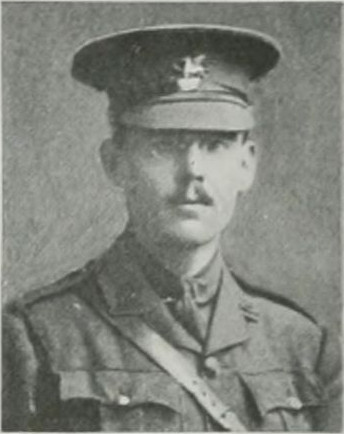
R. M. Haythornthwaite.
HAYWARD, ARTHUR CHARLES, Private, No. 51231, 16th Battn. (Canadian Scottish), Canadian Expeditionary Force, s. of Richard William Hayward, of The Mount, Hooe, Battle, co. Sussex, Mercantile Clerk, by his first wife, Susannah, dau. of Joseph Bleak; b. The Mount, Hooe, 29 Oct. 1882; educ. Castle Gate School, Lewes; and went to Canada in 1904. He had always had a strong desire for a military career, and had been a member of a voluntary corps both in England and Canada. On the outbreak of the European War he threw up his post of ranch manager in California, proceeding to Victoria, B.C., where he enlisted with the Victoria Fusiliers, and was one of a draft from that regt. despatched to England to reinforce Princess Patricia’s L.I., but on arrival on Salisbury Plain was attached to the 16th Battn. Canadian Scottish. He took part in their historic action in the wood near Ypres for recovery of the French guns on the night of 22–23 April, 1915, receiving his mortal wound immediately after that action, in which he had borne a gallant part. He was buried in the new military cemetery at Poperinghe; unm.
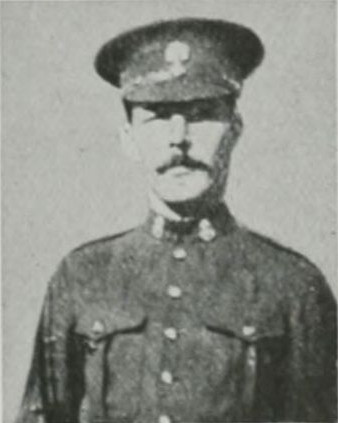
Arthur Charles Hayward.
HAYWARD, HARRY, A.B. (R.F.R., B. 6706), 220756, H.M.S. Hogue; lost in action in the North Sea, 22 Sept. 1914.
HAYWARD, THOMAS ALEXANDER, A.B., S.S. 3057, H.M.S. Aboukir; lost in action in the North Sea, 22 Sept. 1914.
HAZEL, JOHN THOMAS, Private, No. 12019, 5th Battn. Canadian Expeditionary Force, eldest s. of the late William Hazel, of 40, Sutherland Street, Middlesbrough, by his wife, Mary Eliza (43, Lloyd Street, Middlesbrough), dau. of James Hutchinson, of Whitby; b. Middlesbrough, 13 Jan. 1891; educ. Linthorpe Schools there; went to Canada in 1908; and was a Farmer; volunteered after the outbreak of war and joined the Canadian Expeditionary Force; came over with the first contingent; went to France in Feb. 1915, and died in No. 11 General Hospital, Boulogne, 26 May, 1915, of wounds received in action; unm.
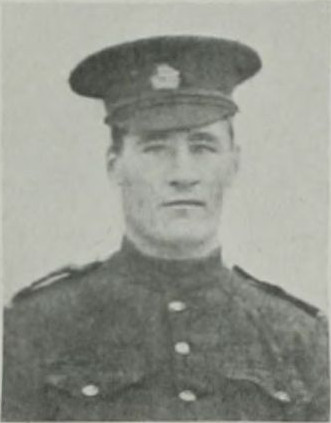
John Thomas Hazel.
HAZELDEN, JAMES, Leading Seaman (R.F.R., B. 4555), 167431, H.M.S. Hawke; lost when that ship was torpedoed in the North Sea, 15 Oct. 1914; m.
HEAD, GEORGE FREDERICK, Rifleman, No. 1874, 1/18th (London Irish Rifles) Battn. The London Regt. (T.F.), eldest s. of George Head, of Vine Cottage, Limpsfield, Surrey, Decorator, by his wife, Annie M., dau. of Walter Miles; b. Limpsfield, 17 Dec. 1894; educ. there; was a Draper’s Assistant at Sir Frederick Cook’s, in St. Paul’s Churchyard; volunteered on the declaration of war and joined the London Irish Rifles, 11 Aug. 1914; went to France, 9 March, and was killed in action at Loos, 26 Sept. 1915; unm. Buried at Noeux-les-Mines. His officer (to whom he was acting as servant) wrote: “He was a splendid little fellow. Absolutely without fear and the cheeriest man in the Company. He was by my side as we left the front line trench for the attack on Loos, and he fell very early in the charge.”
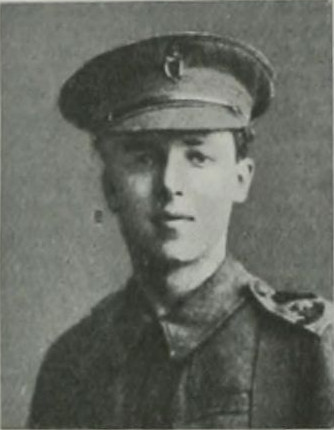
George Frederick Head.
HEAD, REGINALD, Capt., 1st Battn. The Border Regt., only s. of the late John Oswald Head, of Hackwood, J.P., by his wife, Dorothy (Hackwood, Hexham), dau. of William Kirsopp; b. Hackwood, co. Northumberland, 25 Nov. 1885; educ. Harrow and Sandhurst; gazetted 2nd Lieut. to The Border Regt., 24 Jan. 1906, and promoted Lieut., 13 April, 1909, and Capt., 20 Dec. 1914, and served with his regt. in India and Burma. On the outbreak of the European war he was serving with the Border Regt. in Maymyo, Burma, and in Jan. 1915, returned with it to England, where they were stationed at Rugby, afterwards going out with the Mediterranean Expeditionary Force; took part in the landing at the Dardanelles, 25–26 April, 1915, and was killed in action near Krithia, 28 April, 1915. He m. at St. Ambrose Church, Bournemouth, 5 Feb. 1914, Agnes Margaret (Sedaw, West Cliff Road, Bournemouth), yst. dau. of the late William Naunton Waller, of Bealings, Suffolk, D.L., and had a dau., Margaret Dorothy Pamela, b. 21 March, 1915.
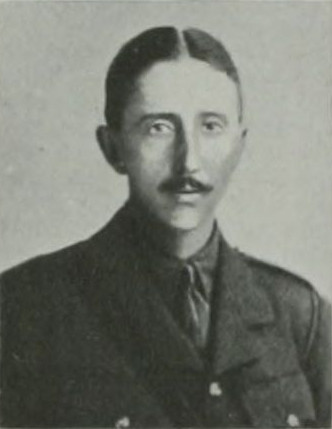
Reginald Head.
HEAD, WILLIAM ARTHUR, Private, No. 169, B Coy., 4th Battn. 1st Infantry Brigade, Australian Imperial Force, eldest s. of the late William Head, of Bristol, Carpenter, by his wife, Charlotte (Stafford Street, Bristol), dau. of Robert Groves; b. Bristol, 26 April, 1890; educ. there; went to Australia 4 Oct. 1912, and entered the service of the Hospital at Parramatta; volunteered on the outbreak of war, and joined the Commonwealth Expeditionary Force, 17 Aug. 1914; left for Egypt in Oct.; took part in the landing at the Dardanelles, 25 April, and was killed in action there, 10 June, 1915; unm. Buried in a small cemetery behind the firing line. Major Charles M. Macnaughton wrote to Mrs. Head: “You have probably before this heard of the death of your son, and how he died gallantly fighting.... Your son very nobly stopped with me until the stretcher-bearers came and took me down to the beach. Believe me, I am very grateful ..., and as I am unable to thank him personally, I write to you to express my gratitude.”
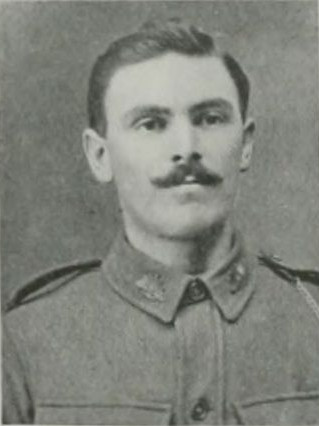
William Arthur Head.
HEAL, WILLIAM FRANCIS, A.B., J. 13229, H.M.S. Good Hope; lost in action off Coronel, on the coast of Chili, 1 Nov. 1914.
HEALY, THOMAS, Private, No. 5195, 3rd Battn. Coldstream Guards, eldest s. of Edward Healy, of Russelstown, Milltown, co. Galway, Farmer, by his wife, Mary, dau. of James Hughes, of Ballyglass, co. Mayo; b. Russelstown, March, 1876: educ. Dalgin School; enlisted 1 Oct. 1903, and after serving his time joined the Reserve; was employed in some iron works at Sheffield. On mobilisation he rejoined, went to the Front 12 Aug. 1914, and was killed in action at Rentel, 1 Nov. 1914; unm.
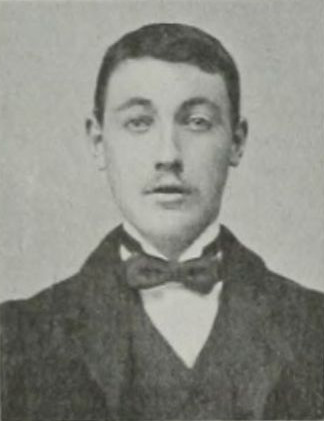
Thomas Healy.
HEARN, CHARLES JAMES, Private, R.M.L.I., Ch./8592, H.M.S. Aboukir; lost in action in the North Sea, 22 Sept. 1914.
HEARN, EDGAR FRANK, Stoker, 1st Class (R.F.R., Ch. B. 7604), S.S. 102977, H.M.S. Aboukir; lost in action in the North Sea, 22 Sept. 1914.
HEARN, JAMES SAMUEL, Leading Stoker (R.F.R., B. 10371), 299889, H.M.S. Hawke; lost when that ship was sunk in the North Sea, 15 Oct. 1914.
HEASTMAN, JOHN EDWARD, Private, No. 12/1428, 16th Waikato Regt., Auckland Infantry, New Zealand Expeditionary Force, eldest surviving s. of the late John Edward Heastman, of Clapton, by his wife, Sarah, dau. of Christopher Saunders; b. Clapton, London, N.E., 24 Oct. 1887; educ. at Homerton Row Elementary School; was a Dairy Farmer. Served some time in the Essex Territorials; went to New Zealand in 1911, and finally settled at Hobsonville, Auckland; volunteered on the outbreak of war, and joined the New Zealand Expeditionary Force on or about 24 Oct.; left for Egypt with the second reinforcement in Dec.; was drafted into the main body in or about March, 1915, being one of five men chosen to reinforce the main body; was taken ill and had to remain in hospital during the landing of the main body at Gallipoli, 25–26 April, 1915, but joined his regt. there 8 May, 1915, and was reported missing after the fighting on 8 Aug. following. On 25 Jan. 1916, he was reported “believed killed in action at Gallipoli on 8 Aug. 1915” by a Court of Inquiry held in Egypt. He was unm.
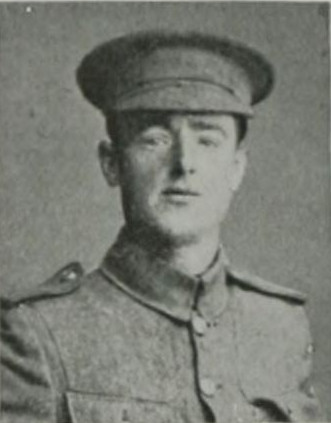
John Edward Heastman.
HEATH, ALBERT ARTHUR, Private, No. 11854, 3rd Battn. Coldstream Guards, eldest s. of Arthur Heath (18, Wilson Street, Winchmore Hill, N.), Gardener at Carter Page’s, 52–53, London Wall, by his wife, Kate, dau. of the late Jesse Knight, of Lodsworth, Sussex; b. Chichester 8 May, 1896; educ. Central Boys’ School there, and worked first at a Dairy Farm and then in a Greengrocery business at Winchmore Hill. After the outbreak of war he enlisted on 9 Sept. 1914, and made rapid progress with his training and was complimented by his company officer for good marksmanship. He left England with a draft for his regt. on or about 14 Jan., went straight into the firing line and was killed in action at Cuinchy, 7 Feb. 1915; unm.
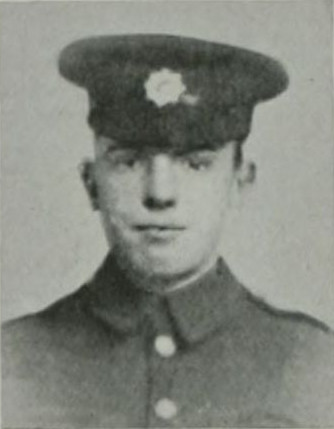
Albert Arthur Heath.
HEATH, ALFRED JAMES, Leading Seaman (R.F.R., Ch. B. 10771), 205750, H.M.S. Aboukir; lost in action in the North Sea, 22 Sept. 1914.
HEATH, GERALD COUSSMAKER, Corpl., No. 29524, 16th Battn. (72nd Canadian Seaforths) Canadian Expeditionary Force, 3rd s. of the late Col. Lewis Forbes Heath, Indian Army, formerly commanding 10th (now 110th) Mahrattas, by his wife, Susan Wilhelmina (Failand, Grosvenor, Paignton, Devon), dau. of Ezekiel Charles Petgrave; b. Mount Abu, Rajputana, India, 3 May, 1888; educ. Wellington College, Berks, and on leaving there went out to Canada, and for the five years before the war had been in Vancouver City, where he joined the 72nd Seaforths in 1911. On the declaration of war in August, 1914, he volunteered for service overseas, and left Canada with the first Canadian Contingent on 3 Oct. 1914; went to France early in Feb. 1915, and was mortally wounded in action at Langemarck, 25 April, 1915. He was carried off the field, but died shortly afterwards without recovering consciousness; unm. The Major of his regt. wrote: “His work in the hard fighting in which we were engaged on 22 April, and afterwards, was most excellent, and he had been noted for distinction for his gallant conduct.” Another officer who joined with reinforcements after the action, wrote: “Major Rae and all his comrades have nothing but praise for his work. Several times he volunteered and took out stretcher parties with wounded officers and men, always under fire. His efforts were evidently of the finest. He has been recommended for distinguished service recognition.” Heath was a fine athlete, and won many medals and prizes for hurdling and the broad jump. In 1912 he won the championship of British Columbia for hurdling, and the following year became champion hurdler of Canada. He was mentioned in F.M. Sir John French’s Despatches [London Gazette, 22 June, 1915].
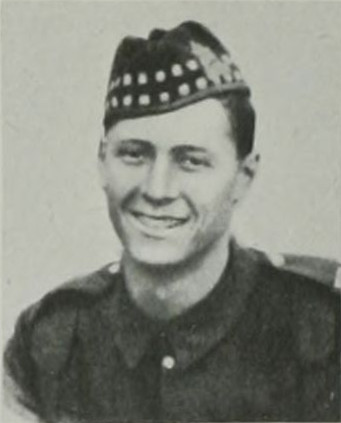
Gerald Coussmaker Heath.
HEATH, VOLTELIN PERCY, 2nd Lieut., Royal Horse Guards, only s. of Sir James Heath, of Oxenden Hall, Market Harborough, 1st Bart., M.P., North-West Stafford (1892–1906), by his wife, Euphemia Celina, 2nd dau. of Pieter Gerhard Van-der-Byl, of Cape Town, and Elsenwood, co. Surrey; b. Clayton, Newcastle, co. Stafford, 10 Jan. 1889; educ. Eton and Magdalen College, Oxford; gazetted to the Royal Horse Guards, 21 Oct. 1911, and promoted Lieut., 13 April, 1912; left for France with the Expeditionary Force in Aug. 1914; was wounded in action at Néry, near Compiègne, 1 Sept., during the retreat from Mons, and was taken to the Château Baron, where he died, 4 Sept. following, and was buried in the garden of the Château; unm. His Colonel, Viscount Crichton, wrote: “Volly was wounded yesterday in a skirmish we had. He led his troop most gallantly, and first got a bullet in his thigh, breaking the bone, and then was hit again in the head, so we had to leave him behind. The doctor tells me when he got up to him he was conscious and most awfully plucky.” Lieut. Heath took a Second in History Schools at Oxford, and was a great leader of all social and political movements of the time. He was Master of the Oxford Drag for two years, and Capt. of the polo team, and in 1914 played for his regt. in the Inter-regimental Polo Tournament.
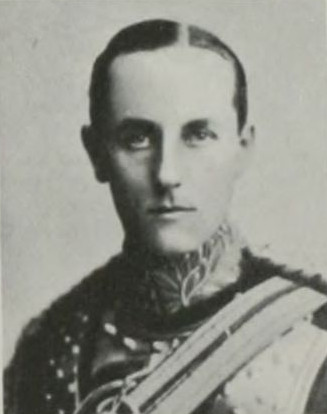
Voltelin P. Heath.
HEATLY, HENRY FRANCIS, Lieut., 2nd Battn. Yorkshire Regt. (attd. 2nd Battn. East Lancashire Regt.), s. of Henry Louis Heatly, of 89, Tufnell Park Road, London, Artist, by his wife, Kate Sophia, dau. of Charles Simmonds; b. London, 30 Aug. 1890; educ. University College School, and London University (B.Sc.), and on leaving the latter received a commission as 2nd Lieut. in the 2nd Yorkshire Reserve of Officers, 2 April, 1913, and joined at Farnborough. On the declaration of war, he joined the 3rd Battn. at West Hartlepool; was attached to the 2nd East Lancashire Regt. in Oct. 1914; went to France with them that month, and was killed in action at Croix-Barbée, 22 Feb. 1915; unm. Buried in the East Lancashire cemetery there. Major A. A. Sanders wrote: “He was on duty with the company under my command on Monday, 22 Feb., and at about 2 p.m. he went with an Engineer officer to visit and inspect an advanced trench which is situated at no great distance from the German lines. He was talking to the Engineer Officer, Lieut. Drew, and also a subaltern, Lieut. Daw, of my company, when inadvertently he must have raised his head above the level of the parapet, and he was shot in the head by a German bullet. He became unconscious immediately, and passed away about five minutes later. Your son has been with my company ever since we left Hursely Park. He was a very good officer and very brave and fearless, and popular with the men under his command. I feel his loss in my company very much.” Both at School and University he took a keen interest in the O.T.C. At school he was the best shot during his last year, winning the Thompson Silver Rifle, and shot for the school three successive years in the Ashburton Competition at Bisley. He gained the “A” Certificate at school, among the first under Lord Haldane’s scheme for Reserve of Officers, and the “B” Certificate at the University.
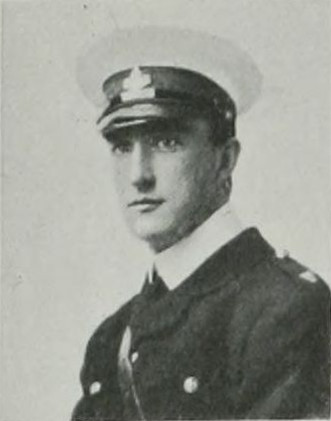
Henry Francis Heatly.
HEATON, EVELYN, Private, No. 58005, 20th Battn. Canadian Expeditionary Force, eldest s. of William Heaton, of 33, Victoria Road, Garswood, Lancashire, Colliery Engine Winder, by his wife, Anne, dau. of Joseph Barton; b. Ashton-in-Makerfield, co. Lancaster, 5 Aug. 1893; educ. Ashton Church of England School; went to Canada, 8 Aug. 1913, and in 1913 became Assayer of Silver at the McKingley Darragh Mine, Cobalt, Ontario; volunteered after the outbreak of war, and joined the Canadian Expeditionary Force in Jan. 1915; came over with the second contingent, 24 May, 1915; went to France, 13 Sept. 1915, and was killed in action at Dickebusch, near Ypres, 14 Nov. 1915; unm. A comrade wrote: “Will you forgive me intruding on your sorrow just to tell you how much we, Tim’s comrades, sympathise with you in that sorrow, and how fully we share it with you. We have lived, shared blankets and grub with him, ever since he came to us in Toronto. And we got to love him for his cheerfulness, his courage, his generosity. There isn’t a man in the section who has ever had a quarrel with him. On our route marches in training, when we were cold and wet and tired—almost played out—it was Tim’s smile and Tim’s song that earned for us the name of the ‘singing section.’ There was not a nicer fellow, a kinder fellow, or a cleaner fellow than Tim, and I would like you to know, as I do, that he was an example to us all, not only in cheerfulness under hardship, and courage under pain, but clean living in barracks. In all the months he was with us there isn’t an episode that you would not be proud to know of. And there isn’t a man that isn’t keenly feeling the loss of our lovable laughing Tim. He was shot coming in on Sunday morning. Our trenches here are all filled with water and caved in, and there is an open space of perhaps 20 ft. that a man must cross to get to his gun. Three men crossed in safety, but the Germans must have seen and they got him just about half-way across. The bullet broke his arm and spine, though we didn’t know his spine was broken at first. He laughed when we went to help him, saying he had got his ticket for England. But he felt his legs dead, and he knew though no one told him. He was singing to himself going down on the stretcher, and never a word about his pain, nor was there to the end. He only lasted a few minutes after we got him to the dressing station. The stretcher-bearers say he was the best wounded man they have handled. So he died as he was, ever an example to the rest of us. And we, who loved him and miss him hourly in our work and fun, want to offer you, his mother, our deepest sympathy in your bereavement. And we wanted to tell you how he died bravely in his duty. Throughout this letter I have used the name we gave him, the one we knew him best by, though, of course, I know his real name was Evelyn. In Toronto there is a big firm, Timothy Eaton & Co., and we adopted that name for him because of the similarity in Heaton and Eaton. This letter is written by one of his comrades on No. 4 gun. The sentiments are those of us all; it is at the request of the others that I am writing.”
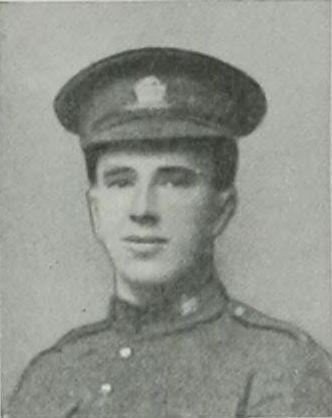
Evelyn Heaton.
HEATON, WILLIAM, Private, No. 5698, 3rd Battn. Coldstream Guards, eldest s. of William Heaton, of 1/11, Stoke Street, Birmingham, by his wife, Alice, dau. of John Gregson; b. Birmingham, co. Warwick, 8 Sept. 1883; educ. Severn Street Council School, Birmingham; enlisted, 1 Sept. 1904; served in Egypt, 29 Sept. 1906 to 23 March, 1911; went to France, 12 Aug. 1914; died in No. 12 General Hospital, Rouen, 6 Nov. 1914, of wounds received in action at Soupir; unm. Buried in the Cemetière des Brugeres, Rouen.
HEDEN, ALFRED HOWARD, Sergt., No. 1226, 13th Battn. (Princess Louise’s Kensington) The London Regt. (T.F.), only s. of Alfred Henry Heden, of 11, Grove Road, Barnes, S.W., by his wife, Hannah, dau. of Samuel Skeats; b. Peckham, 25 Oct. 1894; educ. Wandsworth Secondary School; was a Clerk; joined the Kensingtons, Oct. 1911, and on the outbreak of war volunteered for active service; trained at Abbots Langley, and went to France, 3 Nov. 1914. He took part in the actions at Neuve Chapelle in March and at Aubers Ridge on 9 May, 1915, and was seen to fall shot through the lungs at the latter, and was reported killed. Two months later a letter was received from him saying he was wounded and a prisoner of war; he died of his wounds at Valenciennes, 25 July, 1915, and was buried there; unm.
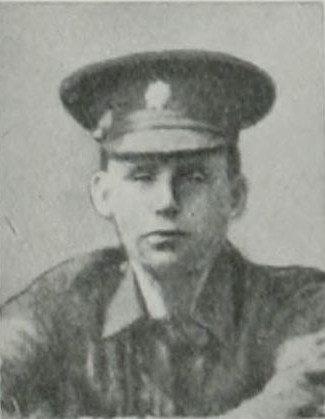
Alfred Howard Heden.
HEDGE, LEONARD AUGUSTUS, L.-Corpl., No. 2471, and Dispatch Rider, 2nd Montgomery Yeomanry (T.F.), 3rd s. of the late Charles Edward Hedge, of Stoke-on-Trent, Brewer, by his wife, Mary Ann (54, Broomhill Road, Ipswich), dau. of George Thomas William Mugliston, M.D., of Hatch End, Pinner, Middlesex; b. Stoke-on-Trent, 14 June, 1888; educ. Dean Close School, Cheltenham; and when war broke out was Senior Bank Clerk at the United Counties Bank, Ltd., Brecon, South Wales. He volunteered, and joined the Montgomery Yeomanry, 29 Sept. 1914, and was killed in a motor cycle accident at Welshpool, co. Salop, 16 June, 1915, while going through his course of training; unm.
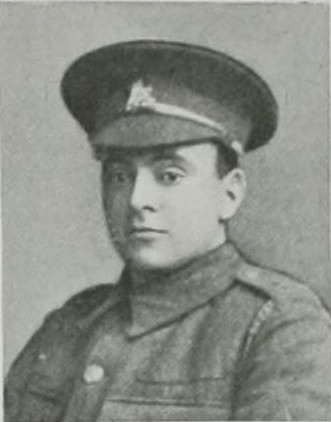
Leonard Augustus Hedge.
HEDGES, HENRY THOMAS, Private, R.M.L.I., Po. 8916, H.M.S. Good Hope; lost in action off Coronel, on the coast of Chili, 1 Nov. 1914.
HEDGES, HERBERT, Private, No. 9798, 1st Battn. East Kent Regt. (The Buffs); served with the Expeditionary Force in France, etc.; died 20 Oct. 1914, of wounds received in action.
HEDGES, RONALD EGERTON, Rifleman, No. 2869, 12th Battn. (The Rangers) The London Regt. (T.F.), 2nd s. of Frederick John Hedges, of The Shrubberies, George Lane, South Woodford, by his wife, Charlotte Elizabeth, dau. of John Abraham, of Dunstable, Beds; b. South Woodford, co. Essex, 9 Dec. 1896; educ. Woodford College and Loughton School; was a Marine Engineer; volunteered on the outbreak of war and joined the London Rangers, 9 Sept. 1914; went to France, 9 March, 1915, and was killed in action at the Second Battle of Ypres, 29 April, 1915; unm. Buried at Verlórenhock. His Adjutant wrote of him that: “He was brave and cheerful, one of our best ... a keen soldier, eager at all times to do his duty.”
HEELEY, ARNOLD, Private, No. 3426, 3rd Battn. Coldstream Guards, s. of Abraham Heeley, of 20, Eastfield Place, Sutton Mill, near Keighley, Yorks; b. co. York; enlisted 10 March, 1900; served in South Africa, 15 April, 1902, to 4 Oct. 1902 (Queen’s medal with two clasps, “Cape Colony,” “South Africa, 1902”), and in Egypt, 16 Jan. 1908 to 23 March, 1911; obtained his discharge, 9 March, 1912; re-enlisted following the outbreak of the European War, 22 Aug. 1914; went to France, 11 Sept., and died 23 Oct. following, of wounds received in action at St. Julien; unm. Buried in St. Julien Churchyard.
HEFFERNAN, WILLIAM PATRICK, 2nd Lieut., 3rd Battn. Royal Irish Regt., attached 1st Gloucesters, 2nd s. of William Kickham Heffernan, of Riversdale, Killenaule, co. Tipperary, and Harlow Moor Drive, Harrogate, M.D., J.P. co. York; b. Riversdale, 10 Dec. 1885; educ. Ampleforth College, Yorkshire, and Trinity College, Dublin, where he took honours in Mathematics. On leaving Trinity he settled down at Brittas Cashel, co. Tipperary, and kept a number of hunters, but on the outbreak of war applied for a commission, and was gazetted to the 3rd Reserve Battn. of the Royal Irish Regt. 15 Aug. 1915, being later attached to the Gloucesters. He was wounded at La Bassée in Feb. and was invalided to the Hospital de Cimiz, Nice, but rejoined, and was killed in action at Festubert, 9 May, 1915, leading the company, his company officer having been previously killed. While at Trinity he won a number of prizes, including the ’Varsity heavyweight at boxing and the Viceroy’s quarter-mile, which in 1911 he did in 51 seconds. Lieut. Heffernan was a regular follower of the Tipperary Hounds, and was noted in the south of Ireland as a keen and fearless rider in the Point-to-Point.
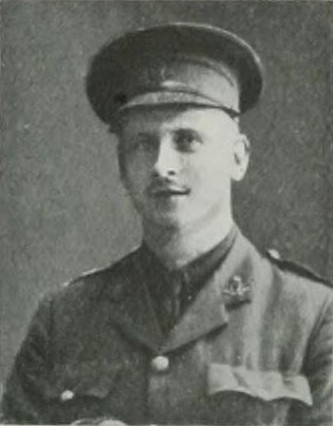
William Patrick Heffernan.
HEGARTY, DENNIS, A.B., 234197, H.M.S. Hawke; lost when that ship was torpedoed in the North Sea, 15 Oct. 1914.
HELLIWELL, JOSEPH GRANT, B.A.Sc., Capt., 1st Battn. 1st Infantry Brigade, Canadian Expeditionary Force, 2nd s. of Grant Helliwell, of 526, Confed. Life Building, Toronto, Canada, Architect, by his wife, Anna Maria, dau. of the late Isaac James Biggs Fitzsimons; b. Toronto, 26 Nov. 1888; educ. Toronto Public School, Collegiate Institute, and Toronto University, from which he graduated in the department of applied science with the degree of B.A.Sc. in 1910, and was an engineer. He was a member of the Cadet Corps at Jarvis Street Collegiate and of the Engineers Corps at the University, in which he held rank of Lieut., and joined the 21st (Essex Fusiliers) Regt. at Windsor, Ontario, in 1911. After taking his course at London, Ontario, he was gazetted Capt., 1 April, 1912, and on the outbreak of war in Aug. 1914, was the first officer in the Windsor Regt. to offer his services. He left Windsor with his regt. on 21 Aug., and after a few weeks at Valcartier, crossed to England with the 1st Contingent and went into training on Salisbury Plain, where he was given command of the Salisbury Piquet. They went to France in Feb., and he was killed in action at the Battle of Givenchy, 15 June, 1915; unm. Lieut. Brian Henderson wrote: “At Givenchy the 1st Battn. did the attack. His company and D Coy. were to start the attack. Our artillery had been shelling the German trench and had made a very good job of cutting the wire. On Tuesday, 15 June, the artillery opened up a terrific bombardment of the German trench and kept this up for three hours when at 5.58 p.m. a mine was blown up. One minute later these two companies went over our parapet and in a few seconds had arrived at the German trench which contained only a lot of dead; but machine guns on the flank were working, also the German artillery was doing terrific damage and the men began to fall in large numbers. At this trench Capt. Wilkinson was hit, and Joe took over the company and led them on to the next trench. An officer who saw him leading his men said it was magnificent, especially as he thought Joe had already been hit in the arm. He got as far as the next trench, but was seen to fall with a bullet through his head. The trenches taken had to be given up as the supporting divisions were unable to get on, and it was impossible to stay out with both flanks unprotected.” His younger brother, Lieut. M. R. Helliwell, is now (1916) on active service.