The Roll of Honour. (continued 48)
Reading edition
WEEDON, SYDNEY CHARLES, Private, No. 1102, 1/4th Battn. (Signal Section) Queen’s Own Royal West Kent Regt. (T.F.), 2nd s. of Albert Weedon, of 23, Scott Street, Maidstone, by his wife, Alice Celia, dau. of John Fryer, of Maidstone, b. Maidstone, co. Kent, 19 Aug. 1892; educ. St. Paul’s School there; was a Wire Mattress Maker; joined the R.W.K. Regt. early in 1911; went to India 29 Oct. 1914, and died on foreign service at Jubbulpore, India, 27 May, 1915, of septicæmia, contracted from drinking water from a native well; unm. He was buried in the English Cemetery there, with full military honours; a marble cross erected by the officers, non-commissioned officers and men of his Coy. marks the grave. The Officer Commanding the signal section wrote: “He was in my Signal Section, and was one of the best and keenest signallers I had. He and his brother have been of very great assistance to me, always ready to do anything and always doing it thoroughly and well.” Two of his brothers are now (1916) on service: Pte. Leonard Weedon and L.-Corpl. Percy Weedon, both with the Royal West Kent Regt.
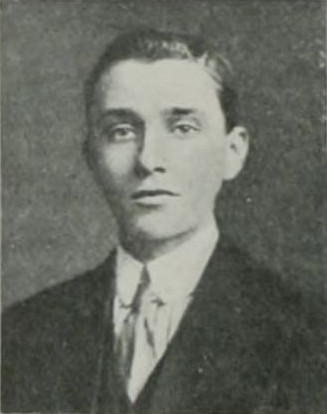
Sydney C. Weedon.
WEEDS, JAMES, Private, R.M.L.I., Ch. 11520, H.M.S. Hawke; lost when that ship was torpedoed in the North Sea, 15 Oct. 1914; m.
WEEKES, JOHN, Leading Stoker (R.F.R., B. 9369), 296881, H.M.S. Hawke; lost when that ship was torpedoed in the North Sea, 15 Oct. 1914; m.
WELBURN, ARTHUR, Private, No. 6663, 2nd Battn. Coldstream Guards; s. of Thomas Welburn, of Weaverthorpe, Sherbarn Eke, York, by his wife, Louisa, dau. of the late Thomas Swain; b. Allerston Marshes, Pickering, 9 Feb. 1889; educ. Sledmere; enlisted 25 Feb. 1904, served three years with the Colours, then passed into the Reserve, and was for some time in the Huddersfield Police Force and at the time of the outbreak of war was an attendant at the County Asylum, Rainhill, near Liverpool; he was called up on mobilization 5 Aug. 1914, and was killed in action at Rentel, Belgium, 30 Oct. 1914, by the bursting of a shell; unm.
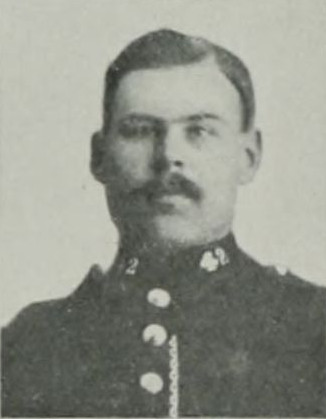
Arthur Welburn.
WELBY, RICHARD WILLIAM GREGORY, Lieut., 2nd Battn. Grenadier Guards, elder s. and h. of Sir Charles Glynne Earle Welby, of Denton Manor, Grantham, 5th Bt., C.B., formerly M.P. for Newark; by his wife, Lady Maria Louisa Helen, sister of Frederick William Fane, 4th Marquis of Bristol, and elder dau. of the late Lord Augustus Hervey; b. Denton Manor, 16 Oct. 1888; educ. Eton and Christ Church, Oxford; gazetted 2nd Lieut. 23 Feb. 1910, and promoted Lieut. 24 May, 1911; went to France with his battn. which formed part of the 4th (Guards) Brigade, 12 Aug. 1914; took part in the retreat from Mons, and was killed in action at the Battle of the Aisne, 16 Sept. 1914; unm. Buried in Soupir Churchyard, near Vailly on the Aisne. The Officer Commanding his battn. wrote: “We have been fighting a hard battle and had a very severe action on Tuesday, when Dick Welby was wounded in the shoulder. We were very short of officers owing to our heavy casualties, and every officer of Dick’s coy. had been killed or wounded. He very pluckily insisted on remaining at duty (instead of going to the hospital) to help us through the difficulty, and remained at duty during the following day; on the third day we got a terrible shelling and poor Dick was killed. I can’t tell you how we all deplore Dick’s loss, nor how gallantly he did his duty to the end.” Lieut. Welby was mentioned in F.M. Sir John (now Lord) French’s Despatch of 8 Oct [London Gazette, 19 Oct.] 1914.
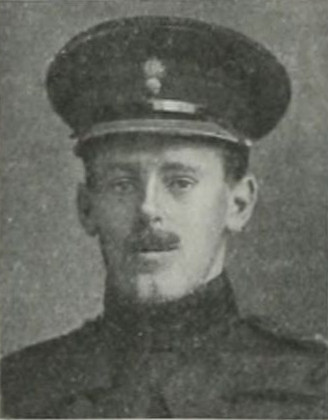
Richard W. G. Welby.
WELCH, GEORGE RICHARD, Leading Seaman, 190986, H.M.S. Cressy; lost in action in the North Sea, 22 Sept. 1914.
WELCH, WALTER GEORGE FREDERIC, Lieut., 117th Battery, Royal Field Artillery, only s. of Reginald Courtenay Welch, for twenty years Principal of the Army College, Heath End, Farnham, near Aldershot, by his wife, Adeline Charlotte, dau. of the late Abingdon Compton; b. Hyde Park, London, 7 March, 1890; educ. Charterhouse; The Army College, Farnham, and the Royal Military Academy, Woolwich (passed in 25th on list, Jan. 1909); gazetted 2nd Lieut. R.F.A., 22 July, 1910, and posted to 127th Battery at Bordon; went to Depôt at Preston, Jan. 1913, and was promoted Lieut. 23 July following. On mobilization he was attached to the 44th Brigade Ammunition Column; went to France 21 Aug. 1914, where he was, shortly after his arrival, posted to the 117th Battery, 26th Brigade, R.F.A. (1st Division), and took part in the fighting on the Aisne and in Flanders. He was killed in action while fighting his guns about 1,000 yards south of Veldhock, E.S.E. of Ypres, on the evening of 30 Oct. 1914; unm. His Commanding Officer wrote of him: “He was the life and soul of our little mess: a keen and a good soldier. We buried him alongside the guns he had fought”; and one of those who served under him wrote: “Mr. Welch was always very popular with the men, especially so in action.” Lieut. Welch was a keen football player and on one occasion at the Front took part in a match played behind the firing line, which was interrupted by a German bombardment and resumed when the fire died down.
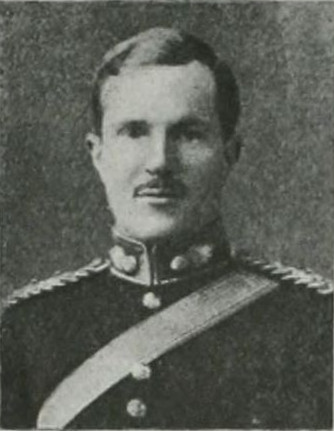
Walter George F. Welch.
WELCH, WALTER LEONARD, Private, R.M.L.I., Ch./15266, H.M.S. Hawke; lost when that ship was torpedoed in the North Sea, 15 Oct. 1914.
WELCH, WILLIAM GEORGE, Armourer’s Crew, M. 5907, H.M.S. Pathfinder; lost when that ship was sunk by a mine, about 20 miles off the East Coast, 5 Sept. 1914.
WELCHMAN, EDWARD THEODORE, D.S.O., Capt., 1st Battn. West Yorkshire Regt., 2nd s. of Edward Welchman, of Carshalton, L.R.C.P., M.R.C.S., formerly of Heckington, Lincolnshire, by his wife, Alice, dau. of James Singleton; b. Southea, co. Cambridge, 21 July, 1881; educ. Sleaford Grammar School and Sandhurst; gazetted 2nd Lieut. 2nd West Yorkshires, 11 Aug. 1900; and promoted Lieut. 20 March, 1902, and Capt. 7 March, 1910; served in the South African War, 1901–2; took part in the operations in the Transvaal, April, 1901, to 31 May, 1902 [Despatches, London Gazette, 17 Jan. 1902; Queen’s medal with three clasps, D.S.O.], and with the 1st Battn. in the Mohmand Expedition, 1908 (medal with clasp). On his return home he joined the 3rd Reserve Battn. at York, but on the outbreak of war rejoined the 1st Battn.; went to France, 1 Oct. 1914, and died 26 Oct. following, at the Base Hospital, Boulogne, of wounds received at Le Paradis on the 20th. Buried Boulogne Hospital Cemetery; unm. Capt. Welchman had a fine record, and numberless letters bear the highest testimony to his character and attainments. He was a keen sportsman, and very popular in both his regt. and outside it. He qualified for the Staff College, Camberley, which he entered Jan. 1914.
WELFARE, HAROLD CUTHBERT, Sergt., No. 1341, 1/1st Sussex Yeomanry (T.F.), s. of John Henry Welfare, of St. Elliott’s, Crowborough, Farmer, by his wife, Emily, dau. of William Boarer, of Boarshead, Sussex; b. Crowborough, co. Sussex, 6 Oct. 1892; educ. King Charles’ School, Tunbridge Wells; was for some time in a solicitor’s office; afterwards returned to his father’s farm; joined the Sussex Yeomanry in 1910; volunteered for foreign service in Aug. 1914, on the outbreak of war, and the same month was promoted L.-Sergt., Aug. 1915, and Sergt. 6 Oct. 1915, the day before landing at Gallipoli. He took part in the fighting there during Oct., Nov. and Dec., and was almost the last man of the Brigade to leave on the evacuation on 1 Jan. 1916. He died in the Island of Lemnos, 28 Jan. 1916, from heart failure while leading in a Brigade Marathon Race, and was buried there in Portianos Cemetery with full Military Honours. A memorial cross was subscribed for and erected by his comrades. His chief officer, Major H. Powell-Edwards, wrote: “I would rather have lost anyone in my squadron sooner than him. He was a most capable soldier, cheerful under all circumstances, and a tower of strength in hard times. He died in the service of his country, and was in his life a gallant soldier and a gentleman whom England could ill spare.” At King Charles’ School he was head boy and capt. of the school XI, and afterwards captained Crowborough Football Club and held the Regimental Cross Country Championship. He also took a great interest in the Boy Scout movement and was Scoutmaster of the 1st Crowborough Coy. He m. at Withyham St. John, 21 Sept. 1914, Marjorie Ursula (Crowborough House, Crowborough), dau. of the late Thomas Warmington, Headmaster of Sir Henry Fermor’s School, Crowborough; s.p.
WELHAM, JAMES, Seaman, R.N.R., 5330A, H.M.S. Hogue; lost in action in the North Sea, 22 Sept. 1914.
WELLER, CHARLES GEORGE, Officer’s Cook, 1st Class, L. 837, H.M.S. Cressy; lost in action in the North Sea, 22 Sept. 1914.
WELLER, EDWARD JOHN, Corpl., No. 8/124, North Otago Regt., New Zealand Expeditionary Force, s. of Edward Weller; b. Ardgowan, Oamaru, New Zealand, 9 Dec. 1893; educ. Ardgowan School. He was a member of the New Zealand Territorial Force, and when the war broke out was one of the first to volunteer, and left with the main Expeditionary Force, and was killed in action at Gallipoli, 27 April, 1915; unm. Corpl. Weller was a good shot and won the markman’s badge.
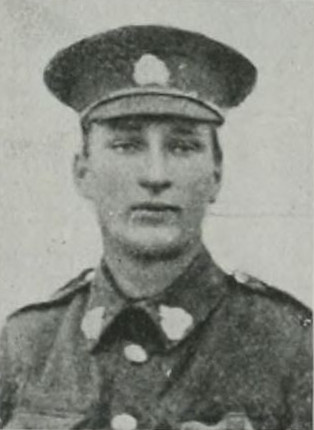
Edward John Weller.
WELLER, JACK, A.B. (R.F.R., Ch. B. 2414), 181557, H.M.S. Aboukir; lost in action in the North Sea, 22 Sept. 1914.
WELLS, ARTHUR, Stoker, 1st Class (R.F.R., Ch. B. 7240), S.S. 102191, H.M.S. Aboukir; lost in action in the North Sea, 22 Sept. 1914.
WELLS, ERNEST MAURICE, Private, No. 8131, 2nd Battn. Coldstream Guards, 3rd s. of Daniel Wells, of Whetstone, co. Leicester, Hosiery Hand, by his wife, Katherine, dau. of Joseph Wale; b. Whetstone aforesaid, 27 Feb. 1888; educ. National School there; was a Shore Hand; enlisted in the Coldstreams, 29 Oct. 1908; went to France, and was killed in action at Cuinchy, 1 Feb. 1915. Buried in the Cemetery there. He m. at Blaby Baptist Church, 25 Dec. 1912, Annie E. (Auburn Road, Blaby, Leicester), dau. of William Sabin, of Blaby, and had a daughter, Annie Wells, b. 20 Dec. 1913.
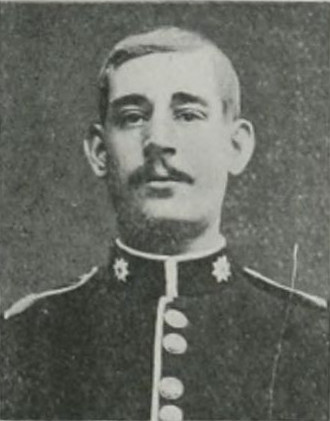
Ernest Maurice Wells.
WELLS, FRANCIS, Stoker, H.M.S. Good Hope.; lost in action off Coronel, on the coast of Chili, 1 Nov. 1914.
WELLS, FREDERICK PENNSON, Sergt., R.M.L.I., Ch./13273, H.M.S. Hawke; lost when that ship was torpedoed in the North Sea, 15 Oct. 1914; m.
WELLS, HARRY, Stoker, 1st Class, S.S. 111410, H.M.S. Aboukir; lost in action in the North Sea, 22 Sept. 1914.
WELLS, HARRY STEPHEN, Telegraphist, J. 8634, H.M.S. Hogue; lost in action in the North Sea, 22 Sept. 1914.
WELLS, JOHN DOUGLAS, Private, No. 6438, 3rd. Battn. Coldstream Guards, s. of the late John Wells, by his wife, Margaret, dau. of George Edward Meacock; b. Clerkenwell, 12 Jan. 1884; enlisted 13 Dec. 1905, and was killed in action at St. Julien, during the Battle of Ypres, 21 Oct. 1914, being buried in the Eastern Cemetery at Ypres. He m. at St. Paul’s, Newington, S.E., 24 Dec. 1911, Rose (51, Meadow Road, Clapham Road, S.W.), dau. of Frederick Brazier Smith, and had two children: Jack Douglas, b. 11 Nov. 1914, and Rose Kitty, b. 28 Dec. 1912.
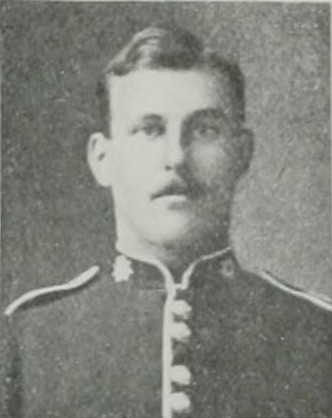
John Douglas Wells.
WELLS, JOHN THOMAS, A.B. (R.F.R., Ch. B. 1155), 140773, H.M.S. Cressy; lost in action in the North Sea, 22 Sept. 1914.
WELLS, WILLIAM APPLEYARD, Corpl. of Horse, No. 1385, Royal Horse Guards (The Blues), s. of William Appleyard Wells, of Grasmere, Fairbolt Road, Stamford Hill, Merchant, by his wife, Annie Matilda, dau. of Henry Scott; b. Tottenham, N., 21 Aug. 1890; educ. Cowper Street, City Road; enlisted in the Royal Horse Guards, 30 Nov. 1909, was promoted Corpl. Sept. 1914; served with his regt. in France and Flanders, and was killed in action at Verbuden Molen, Flanders, 6 Nov. 1914; unm.
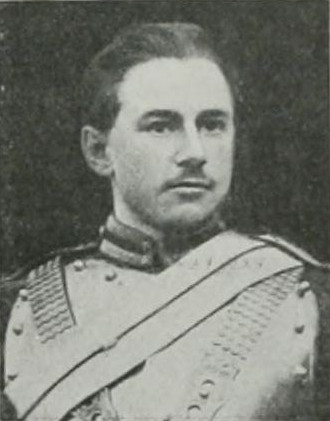
William Appleyard Wells.
WELLS, WILLIAM JOHN, Chief Stoker (R.F.R., Ch. A. 1914), 160507, H.M.S. Cressy; lost in action in the North Sea, 22 Sept. 1914.
WELSFORD, ARTHUR HADDEN, Private, No. 974, Honourable Artillery Coy., 3rd and yst. s. of the late Richard Sherring Welsford, of 6, The Orchard, Blackheath, Coffee Planter in Ceylon, by his wife, Jane Elizabeth (The Cottage, Semaphore Road, Guildford), dau. of the late James Alexander Hadden, of Bittacy House, Mill Hill, Hendon; b. Blackheath, London, S.E., 30 Oct. 1891; educ. Blackheath School, and St. Dunstan’s, Catford; was a clerk in the office of Messrs. G. W. Dawes & Co. 5, Lothbury, E.C.; volunteered and joined the H.A.C. the day war was declared, 5 Aug. 1914; went to France, 18 Sept. 1914, and was killed in the trenches in Flanders, 2 June, 1915, while repairing some wire on a parapet for which work he had volunteered; unm. He was buried in the cemetery of the Elsenwalla Château, near Dickebusch.
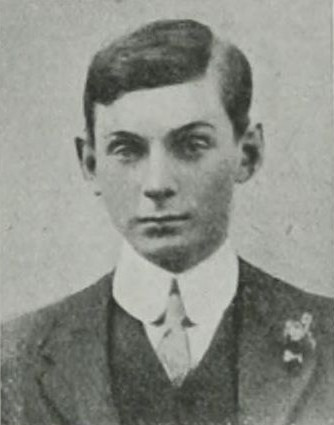
Arthur Hadden Welsford.
WELSH, DAVID FERGUSON, Engine Room Artificer, R.N.R., 1198 E.A., H.M.S. Aboukir; lost in action in the North Sea, 22 Sept. 1914.
WELTON, WILLIAM JOBSON, Stoker, 1st Class (R.F.R., B. 2722), 283951, H.M.S. Hawke; lost when that ship was torpedoed in the North Sea, 15 Oct. 1914.
WENDOVER, ALBERT EDWARD CHARLES ROBERT WYNN-CARRINGTON, Viscount, 2nd Lieut., Royal Horse Guards (The Blues), only s. and heir of Charles Robert, 1st Marquis of Lincolnshire, K.G., joint Lord Great Chamberlain of England, by his wife, the Hon. Cecilia Margaret, née Harbord, Lady of the Bedchamber to H.M. Queen Alexandra, eldest dau. of Charles, 5th Baron Suffield, K.C.B.; b. London, 24 April, 1895 (H.M. King Edward VII., sponsor); educ. Eton and Sandhurst; gazetted 2nd Lieut., Royal Horse Guards, 15 Aug. 1914; went to France, 8 March, 1915, and was mortally wounded, 13 May, 1915, in the charge of the 8th Cavalry Brigade (The Blues, the 10th Hussars and the Essex Yeomanry), near Hooge, during the Second Battle of Ypres, and died in hospital at Boulogne on the 19th; unm. Buried in Moulsoe Churchyard, Bucks.
WENHAM, CHARLES, Stoker, 1st Class, S.S. 111369, H.M.S. Pathfinder; lost when that ship was sunk by a mine, about 20 miles off the East Coast, 5 Sept. 1914.
WEST, ANDREW, Stoker, 1st Class, K. 3964, H.M.S. Pathfinder; lost when that ship was sunk by a mine, about 20 miles off the East Coast, 5 Sept. 1914.
WEST, FREDERICK, L.-Corpl., S./6056, 4th Battn. Middlesex Regt.; served with the Expeditionary Force in France; killed in action, 14 Nov. 1914.
WEST, FREDERICK, Private, G. 4447, 2nd Battn. Royal Sussex Regt., s. of Frederick West, of Bishops Hall Lodge, Romford; served with the Expeditionary Force in France; killed in action, 9 May, 1915.
WEST, GEORGE, Private, No. 13792, 1st Battn. Lincolnshire Regt., elder s. of John George West, of Old Bolingbroke, Spilsby, co. Lincoln, Labourer, by his wife, Martha (who died 8 June, two days after her son), dau. of Matthew Ward; b. Old Bolingbroke aforesaid, 31 Oct. 1893; educ. Village School there; enlisted Nov. 1914; went to France, 30 April, 1915, arriving at the Infantry Base, on Sunday, 2 May, and soon afterwards going into the trenches, and died in No. 4 General Hospital, Versailles, 6 June, 1915, of brain fever, following gunshot wound in the head, received in action, 28 May, 1915; unm. Buried in the General Cemetery, Versailles (G.R.C. 3378).
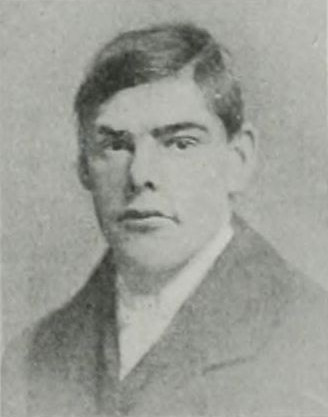
George West.
WEST, HERBERT GIDEON, Private, No. 9527, 2nd Battn. Coldstream Guards, 2nd s. of John West, of Silver Street, Steeple Ashton, near Trowbridge, Farmer, by his wife, Annie, dau. of John Kingman; b. Steeple Ashton, co. Wilts, 18 Jan. 1895; educ. National School there; enlisted in the Coldstreams, 18 March, 1912; went to France, 12 Aug. 1914, and was killed in action at Rentel, 6 Nov. 1914; unm. Buried in Rentel Woods.
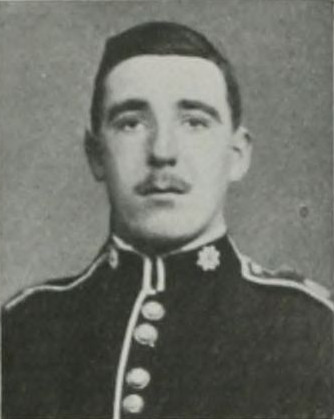
Herbert Gideon West.
WEST, HERBERT WILLIAM, Leading Seaman, 197482, H.M.S. Hogue; lost in action in the North Sea, 22 Sept. 1914.
WEST, ROBERT JOHN, Gunner, R.M.A., 10382, H.M.S. Hogue; lost in action in the North Sea, 22 Sept. 1914.
WEST, WILFRED SCRIMSHAW, L.-Corpl., No. 10886, 1st Battn. Coldstream Guards, yr. s. of Edward Scrimshaw West, of Yarwell, Peterborough, Entire Horse Proprietor, by his wife, Elizabeth Anne, dau. of Robert Spiers, of Eye, Peterborough; b. Wood Newton, co. Northants, 23 Nov. 1894; educ. Yarwell; volunteered on the outbreak of war, and enlisted, 8 Aug. 1914; went to France, Oct. 1914; was promoted L.-Corpl. in Sept., and was killed in action at Givenchy, 22 Dec. 1914, when the Coldstreams suffered heavily from concealed German machine-guns. He was a keen all-round sportsman; was a member of the choir at the Parish Church, and the Chaplain wrote saying what a help he had been to him in organising the open-air services.
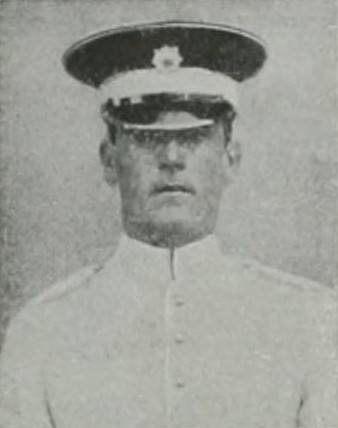
Wilfred Scrimshaw West.
WEST, WILLIAM EDWARD, Stoker, 1st Class (R.F.R., Ch. B. 7810), S.S. 103265, H.M.S. Aboukir; lost in action in the North Sea, 22 Sept. 1914.
WEST, WILLIAM FRANK, Private, N. 823, 5th, attd. 1st, Battn. (London Rifle Brigade) The London Regt. (T.F.), eldest and only surviving s. of Frank Albert West, of 111, Townsend Road, Southall, by his wife, Louisa Maria, dau. of Mathew Henry Leagas; b. Dalston, London, 17 March, 1890; educ. The Grocers’ Company School, Hackney Downs, N.E. and Islington Day Training College; was Assistant Master at St. Clement’s Church of England School, Notting Hill, but joined the London Rifle Brigade after the outbreak of war, 9 Sept. 1914; went to France with the 1st draft to join the 1st battn. 25 Jan. 1915, and died at Netley Hospital, Southampton, 12 May, 1915, after undergoing three serious operations, one being the amputation of his leg, rendered necessary by wounds received in action at the Battle of St. Julien, 25 April, 1915; unm. He was a keen athlete, fond of all games and sports; he held three silver medals for football, and the bronze Medallion and certificate for life saving.
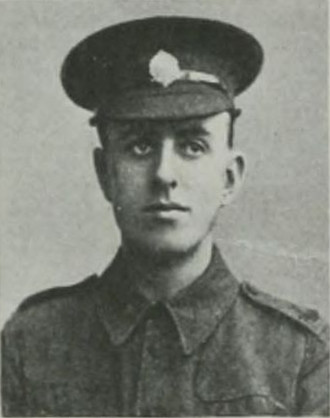
William Frank West.
WEST, WILLIAM HENRY, Petty Officer, 2nd Class, 199111, H.M.S. Cressy; lost in action in the North Sea, 22 Sept. 1914.
FAZAKERLEY-WESTBY, GILBERT BASIL JOCELYN, Capt., 9th Battn. (Queen Victoria’s Rifles) The London Regt. (T.F.), only s. of Capt. Jocelyn Tate Fazakerley-Westby, of Mowbreck Hall, Kirkham, and Whitehall, Great Eccleston, late Royal Scots Greys and Lancashire Hussars, D.L., J.P., Lancashire, by his wife, Beatrice, 3rd dau. of Thomas Barlow Jarvis, of Swinnerton Park, Lancashire, and Croft Lodge, near Ambleside, Westmoreland; b. Grosvenor Street, Grosvenor Square, London, W., 27 April, 1881; was christened in Aug. 1881, at the Roman Catholic Church, The Willows, Kirkham, Lancashire, by the Right Rev. the Lord Bishop of Liverpool; educ. St. Charles’ Roman Catholic College; entered the Queen Victoria’s Rifles as 2nd Lieut. 23 July, 1911; and promoted Lieut. 23 July, 1913, and Capt. Dec. 1914; volunteered for foreign service on the outbreak of war; went to France, 4 Nov. 1914, and was killed in action during the fighting at Hill 60 on the night of 20–21 April, 1915, on which occasion Queen Victoria’s Rifles brilliantly distinguished themselves; unm. His Commanding Officer wrote: “I cannot speak too highly of your son; all ranks loved and respected him. His fortitude and forbearance during that terrible week was an example to the whole regt. and never to be forgotten.” He was a good all-round sportsman, a dead shot with the pistol, and the holder of five silver cups and seven other silver articles as prizes for shooting and rowing, etc.
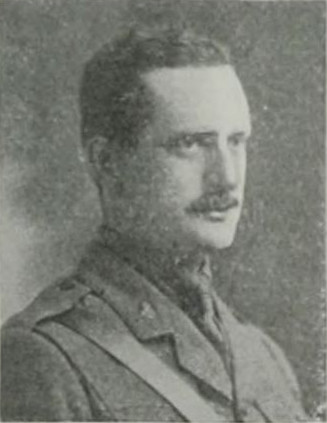
G. B. J. Fazakerley-Westby.
WESTERN, WILLIAM CHARLES, Stoker, Petty Officer, 230364, Devonport, H.M.S. Pathfinder; lost when that ship was sunk by a mine, about 20 miles off the East Coast, 5 Sept. 1914.
WESTLAKE, JOHN LUKE, Corpl., No. 3235, 1/14th Battn. (London Scottish) The London Regt. (T.F.), only s. of Thomas Treliving Westlake, of 3, Woburn Terrace, Tavistock, retired Prison official, by his wife, Elizabeth, dau. of Luke Knight, of Gunnislake; b. Princetown, co. Devon, 11 Feb. 1883; educ. Princetown Public School and Tavistock Grammar School; was apprenticed to the ironmongery business on leaving there, and was subsequently in the employ of Messrs. Helliwell, Ltd., of Dudley, as a Traveller; gave up this position and joined the 2nd London Scottish on the outbreak of war in Aug. 1914; was promoted to the rank of Sergt. in Dec. following, but in Aug. 1915, when volunteers for the 1st Battn. were called for, he offered himself, sacrificing his rank as sergt., and, crossing over to Rouen on the 18th of that month, joined the 1st Battn. as a Private. He took part in the Battle of Loos on 25 Sept., in which, though his company suffered severe losses, he was unwounded, and assisted in capturing and bringing in some prisoners. For his conduct on this occasion, he was restored to the rank of Corpl. He was killed in action on 13 Oct. 1915, while gallantly leading his men in an attack upon the German trenches near Loos, death being instantaneous; unm. His Coy. Commander, Capt. H. L. Seyer, wrote: “I find it difficult to tell you in what high regard Corpl. Westlake was held. I looked upon him as one of my coming men, a worthy successor of many fine non-commissioned officers who have left me to take commissions in this and other regts. His conduct at our severe engagement on 25 Sept. was beyond all praise, and his untimely end whilst leading his men on 13 Oct. is an enormous loss to me, his coy. and the whole battn. Your son was quite close to me when he fell, and I can vouch that he was killed quite instantaneously. It is such men as Corpl. Westlake who add lustre to the fame of the British Army and more particularly to the regt. to which they belong.”
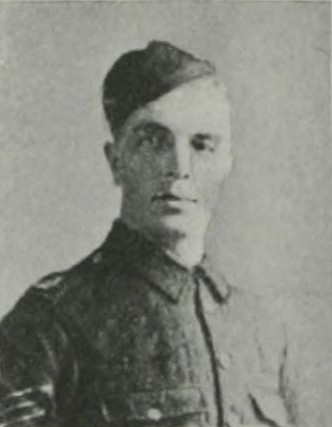
John Luke Westlake.
WESTMACOTT, ERIC WALTER POYNTZ, Lieut., Royal Navy, H.M.S. Arethusa, yr. s. of Edgell Edward Westmacott, of Udney Place, Teddington, by his wife, Marian Charlotte Isabel, dau. of Innes Colin Munro, of Poyntzfield, late Capt. His Majesty’s 12th Regt.; b. Teddington, co. Middlesex, 23 June, 1887; educ. J. Williams-White’s School for the Navy, Bognor, and H.M.S. Britannia; became Midshipman, 30 Jan. 1904; promoted Sub-Lieut. 30 March, 1907, and Lieut. 30 Jan. 1909, went to India in H.M.S. Argyll, one of the cruisers which escorted the King Emperor on the occasion of his visit to India after his Coronation; served as signal Lieut. to Commodore R. Y. Tyrwhitt, C.B., of the 1st Destroyer Flotilla, on the outbreak of war, and accompanied him when he transferred his flag to the Arethusa two days before the Battle off the Bight of Heligoland, 28 Aug. 1914, in which engagement he was killed. Commodore Tyrwhitt in his Despatch, said: “Lieut. Eric W. P. Westmacott (Signal Officer) was killed at my side during this action. I cannot refrain from adding that he carried out his duties calmly and collectedly, and was of the greatest assistance to me.” And he wrote to Mrs. Westmacott: “I can’t tell you how sorry I am and how splendid he was. He was standing next me on the bridge, and was so jolly and cheerful under a terrific fire. He had just said, ‘By Jove, they have got our range,’ which was true as we were in a regular inferno at the time, when he was hit ... his death being instantaneous.” Capt. Cecil Lambert, Fourth Sea Lord, wrote: “By the death of your husband the Service has lost a very gallant and valuable officer, and I have lost a personal friend, for whom I had a sincere admiration and affection.” Lieut. Westmacott was a fine hockey player, and in three successive years represented the Navy in their annual match with the Army. He m. at St. Andrew’s Church, Heybridge, Essex, 6 Aug. 1912, Dorothy, eldest dau. of Edmund Ernest Bentall, of The Towers, Heybridge, and had a son, Innes Bentall, b. 20 Sept. 1913. His brother, Richard Innes Edgell Westmacott, Sergt. 1st Scots Guards, was killed in action in France, 25 Jan. 1915.
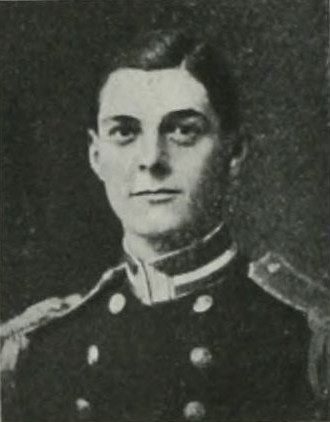
Eric W. P. Westmacott.
WESTMACOTT, SPENCER RUSCOMBE, Lieut., Prince of Wales’ Leinster Regt. (Royal Canadians), 4th s. of the Rev. Walter Westmacott, Vicar of Probus and Hon. Canon of Truro, by his wife, Helen Maria Maud, dau. of John Austin Madeley, of Wood Hall, Salop, J.P.; b. 29 Jan. 1890; educ. Marlborough College and Sandhurst; gazetted 2nd Lieut. to the Leinsters, 6 Nov. 1909, and promoted Lieut. 24 Jan. 1912; seconded for “Grass Farm” work in India, 5 Nov. 1913, but rejoined his regt. on the outbreak of war; went to France, Nov. 1914, and was killed in action near Ypres, 8 May, 1915; unm. His five brothers are (1916) or have been on active service. 2nd Lieut. John L. Westmacott, R.E., wounded in head, lost an eye in France, April, 1915; 2nd Lieut. Horatio Westmacott, R.N., H.M.S. Agincourt; 2nd Lieut. Rupert W. Westmacott, enlisted in New Zealand Auckland Contingent, got his commission in Gallipoli, where he lost his left leg. 2nd Lieut. Peter G. Westmacott, joined 4th D.C.L.I., and afterwards exchanged into 31st Punjabis; 2nd Lieut. Wilfred A. Westmacott, 9th West Yorks, invalided home from Gallipoli with enteric, has returned to duty.
WESTON, CHARLES WILLIAM, A.B. (R.F.R., B. 3928), 212186, H.M.S. Good Hope; lost in action off Coronel, on the coast of Chili, 1 Nov. 1914.
WESTON, GEORGE EDWARD, Sergt.-Major, No. 851, 2nd Battn. Australian Imperial Force, s. of Samuel Weston, of 3, East Street, Oadby, Leicestershire, Bricklayer, by his wife, Maria, dau. of John Folwell; b. Wigston, co. Leicester, 15 March, 1873; educ. Evington School, co. Leicester; enlisted 2nd Battn. West Yorkshire Regt. June 1889, and served 21 years with the Colours, rising to the rank of Sergt.; went to Australia, Aug. 1910, where he was working on Sheep Farm; volunteered on the outbreak of War in Aug. 1914, and joined the Commonwealth Expeditionary Force, being appointed Sergt.-Major; left for Egypt with the second reinforcements, and was killed in action in Gallipoli, 10 May, 1915 following. During the period he was in the West Yorks. he served in Ireland, China, India and South Africa, altogether serving 21 years, finishing with a life pension.
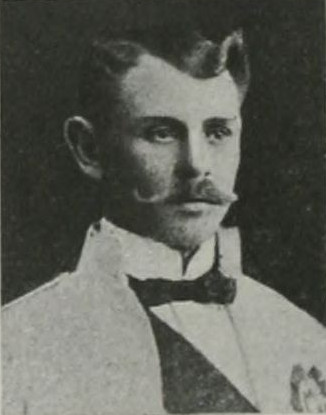
George Edward Weston.
WESTON, GEORGE HENRY, Private, No. 8/1103, 14th Otago Infantry, New Zealand Expeditionary Force, s. of John Weston, Carpenter; b. Wellington, New Zealand, 6 April, 1894; educ. there, was connected with the Wellington Boys’ Institute; volunteered on the outbreak of war, and enlisted in the Expeditionary Force, 12 Aug. 1914, was for some time in the 5th Wellington Battn., but was later transferred to the 14th Otago Infantry; served in Egypt; took part in the landing at the Dardanelles, 25 April, and was killed in action there, 8 May, 1915; unm.
WESTWOOD, ALEXANDER CLEGHORN, Lieut., 1/7th (Fife) Battn. The Black Watch, Royal Highlanders (T.F.), only s. of Alexander Westwood, of Linley, Cupar, J.P., Bookseller and Publisher, by his wife, Helen Ramsay, dau. of Alexander Cleghorn; b. Cupar, 15 May, 1894; educ. Bell-Baxter School, Cupar, and George Watson’s College, Edinburgh, and was associated with his father in business. At college he was an enthusiastic member of the Cadet Corps, and joined the Cupar Coy. of the 7th Battn. Black Watch in May, 1911. He was gazetted 2nd Lieut. 20 May, 1914, and promoted Lieut. Oct. 1914. During the whole of his three years service in the ranks he was a member of the machine-gun section, and in May 1915, Lieut. Westwood was appointed machine-gun officer of his battn. He was killed in action by shell fire, while holding trenches captured from the Germans at Festubert, 16 June, 1915; unm. Lieut.-Col. H. M. Allen, D.S.O., Officer Commanding the 1/7th Black Watch, wrote to his father: “On my own behalf I should like to testify to the extremely high opinion in which your son was held by his brother officers and by the men. He had rendered invaluable service as machine-gun officer, and, both as an officer and a comrade, his loss will be severely felt by us all. It will be some consolation to you to know that his death was instantaneous and painless, and that he met it with the greatest courage, nobly doing his duty in a manner worthy of the best traditions of the British Army.” Lieut. Westwood was a keen sportsman, and took part in the matches of the local hockey club whenever business allowed him, playing in not a few Association fixtures. While training at Kinghorn he played Rugby for the garrison as well as Soccer for E Coy. He was a keen motor-cyclist; while another hobby was that of a poultry farmer, an interest which led him to act for some time as Joint Secretary of the Cupar Ornithological Society.
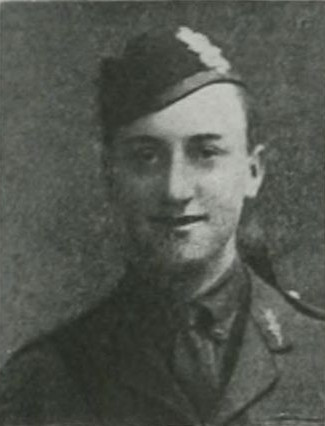
Alexander C. Westwood.
WESTWOOD, JOHN, Gunner, R.M.A., 12264, H.M.S. Aboukir; lost in action in the North Sea, 22 Sept. 1914.
WETTON, HENRY, Band-Sergt., No. 9133, 2nd Battn. Middlesex Regt., s. of the late Thomas Allen Wetton; b. Hounslow, co. Middlesex, 3 April, 1889; educ. Spring Grove, Isleworth; enlisted in the 2nd Middlesex, 1903; served with the Expeditionary Force in France, and was killed in action at the Battle of Neuve Chapelle, 10 March. 1915; unm.
WHARTON, HAROLD, Private, No. 9696, St. John’s Ambulance Brigade, R.N.R., s. of Ernest Wharton, of 4, Springfield Terrace, Crumlin, Dublin, Ordnance Surveyor, by his wife, Susannah, dau. of Richard Pughe; b. Llanfyllin, co. Montgomery, 23 Sept. 1894; educ. Holy Trinity (Nat. School), Cork; was Lieut. in the 15th Coy. Boys’ Brigade, Dublin, and joined the St. John’s Ambulance Brigade in Oct. 1913. On the 5th Oct. 1914 he was appointed to H.M. hospital ship Munich (sailing between Southampton and Calais) as Sick Bay Attendant. He was transferred to H.M.S. Bayano on 28 Dec. 1914, and was lost when that ship was torpedoed, 11 March, 1915.
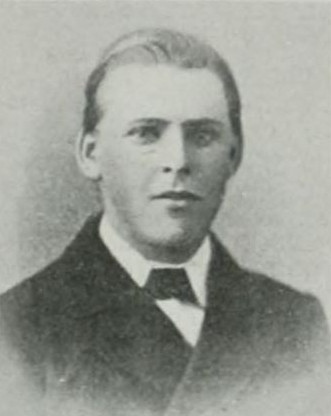
Harold Wharton.
WHARTON, JOHN, Stoker, 1st Class, K. 13459 (Ports.), H.M.S. Cressy; lost in action in the North Sea, 22 Sept. 1914.
WHATLEY, FRANK, Petty Officer (C.G.), 142041 (Ports.), H.M.S. Aboukir; lost in action in the North Sea, 22 Sept. 1914.
WHATLEY, SIDNEY JOHN, L.-Corpl., No. 8919, 1st Coy. 1st Battn. Coldstream Guards, 2nd s. of George Robert Whatley, Attendant Norfolk County Asylum, Thorpe, Norwich, by his wife, Mary Ann, dau. of the late Robart Carver, Yelverton, Norfolk; b. Postwick, Norwich, 6 Nov. 1892; educ. Thorpe St. Andrew’s School there; enlisted at Norwich, 13 June, 1910, and was killed in action at the Battle of the Aisne, 14 Sept. 1914, being shot through the head; unm.
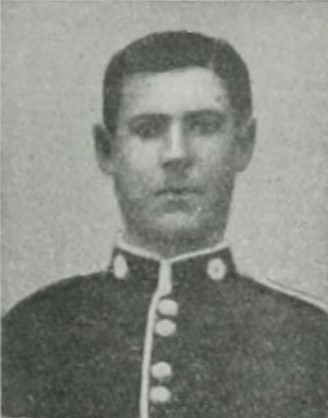
Sidney John Whatley.
WHEAT, GEORGE ALFRED, Signalman, 239001, H.M.S. Cressy; lost in action in the North Sea, 22 Sept. 1914.
WHEATLEY, ALBERT, Stoker, 1st Class (R.F.R., B. 4402), S.S. 103386, H.M.S. Good Hope; lost in action off Coronel, on the coast of Chili, 1 Nov. 1914.
WHEELER, CLIFFORD, A.B. (R.F.R., B. 982), 186074, H.M.S. Good Hope; lost in action off Coronel, on the coast of Chili, 1 Nov. 1914.
WHEELER, LLOYD CHARLES, Gunner, R.M.A., 9442 (R.F.R., I.C. 81), H.M.S. Good Hope; lost in action off Coronel, on the coast of Chili, 1 Nov. 1914.
WHEELER, WILLIAM FREDERICK, Gunner, R.M.A., 8118 (R.F.R., I.C. 29), H.M.S. Good Hope; lost in action off Coronel, on the coast of Chili, 1 Nov. 1914.
WHEELER, WILLIAM JOHN, L.-Corpl., No. 8638, 2nd Battn. The Royal Scots, s. of William John Wheeler, by his wife, Maria; b. Kingston-on-Thames, 12 July, 1880; educ. Public School there; was a House Decorator; enlisted in the Royal Scots, 7 Oct. 1903; served at Glencorse and in India; went to France, 26 Aug., and was killed in action at Vailly, during the Battle of the Aisne, 14 Sept. 1914; being buried there. He m. at Kingston, 19 Oct. 1908, Charlotte Madge (18, Royal Oak Road, Woking), 2nd dau. of Arthur Hillier; s.p.
WHELAN, BERNARD, Stoker, 1st Class (R.F.R., B. 9861), S.S. 107270, H.M.S. Hogue; lost in action in the North Sea, 22 Sept. 1914.
WHENNELL, JAMES, Stoker, 1st Class (R.F.R., Ch. B. 7812), S.S. 103273, H.M.S. Aboukir; lost in action in the North Sea, 22 Sept. 1914.
WHETLOR, ARTHUR CHARLES, A.B. (R.F.R., Ch. B. 6180), 214591, H.M.S. Aboukir; lost in action in the North Sea, 22 Sept. 1914.
WHICHELLO, RICHARD WILLIAM, Sergt., R.M.A. 7928, H.M.S. Hogue; lost in action in the North Sea, 22 Sept. 1914.
WHICHER, FREDERICK, A.B. (R.F.R., B. 1521), 206022, H.M.S. Good Hope; lost in action off Coronel, on the coast of Chili, 1 Nov. 1914.
WHILES, SIDNEY HERBERT, Rifleman, No. 1886, 12th Battn. (The Rangers) The London Regt. (T.F.), eldest s. of William Herbert Whiles, of 70, Northcote Road, Walthamstow, late Private, No. 6824, Army Service Corps (served with the Expeditionary Force in France, etc., and was discharged April 1916, owing to injury to eye), by his wife, Margaret, dau. of John Steuber; b. Leytonstone, 19 Nov. 1896; educ. Forest Road Council School, Walthamstow, and Walthamstow Higher Elementary School, at both of which he gained prizes for mathematics, and also showed proficiency in Art and Divinity; became a clerk in the National Amalgamated Insurance Society; joined the Rangers, Jan. 1914, and volunteered for Imperial Service on the outbreak of war; went to France with the first draft for his battn. which formed part of the 11th Brigade (4th Division), and was killed in action near the village of Fortuin during the Second Battle of Ypres, 26 April; unm. Buried at Fortuin. His Commander wrote: That he was a gallant soldier throughout and that he personally regretted his loss, as he had frequently accompanied the officer on billet finding expeditions, in which his knowledge of French enabled him to act as interpreter. A brass plate to his memory was placed in the church of St. Michael and All Angels, Walthamstow (where he was a chorister for eight years), by his old comrades.
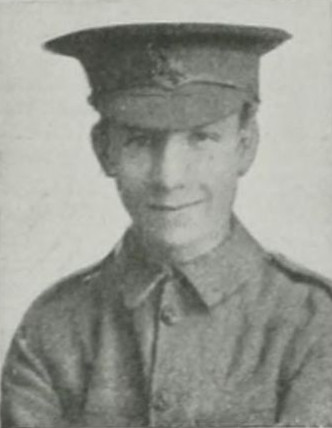
Sidney Herbert Whiles.
WHISKIN, ERNEST CHARLES, Coy.-Quartermaster-Sergt. 16th (Queen’s Westminster Rifles) Battn. The London Regt (T.F.), 2nd s. of the late Charles Frederick Whiskin, by his wife, Susanna Agnes; b. Aylesbury, co. Bucks, 13 May, 1870, and educated there. He joined the Queen’s Westminster Rifles in 1892, and in 1908, when the Territorial Force was formed, he continued his service in the same regt. Holding an important position at Messrs. Jas. Shoolbred & Co., Ltd., he was for many years a Sergt. in the firm’s Company, which rank he held when the Battn. left for France on 1 Nov. 1914. His was the first company to take over a fire trench on the 14th of that month, when they relieved B Coy. of the East Yorkshires at Burnt-out Farm, near Gris Pot, he being at the time No. 1 Platoon Sergt. He was promoted to Coy.-Quartermaster-Sergt. 26 Feb. 1915, and was killed in action at Houplines, Flanders, 3 May following. C.Q.M.S. Whiskin had the Volunteer Long Service medal, and received mention by his Colonel for good service in France; he was a good shot, and was held in high esteem by his officers, brother N.C.Os. and men. He m. at St. Pancras, Marylebone Road, London, 6 Sept. 1902, Annie Ethel (Bancroft, Powys Lane, Palmer’s Green, N.), dau. of Henry Barham, of Hitchin, and had two daughters: Agnes Nora, b. 19 July, 1903; and Winifred Ethel, b. 30 May, 1906.
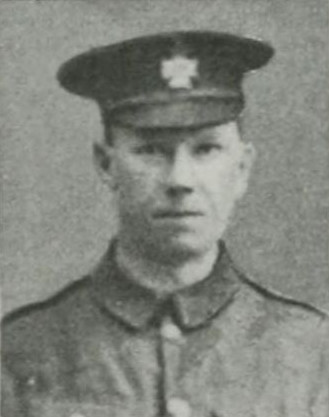
Ernest Charles Whiskin.
WHITAKER, CHARLES, A.B., 239469, H.M.S. Cressy; lost in action in the North Sea, 22 Sept. 1914.
WHITAKER, HAROLD, Capt., 2nd Battn. Rifle Brigade, eldest s. of Arthur Whitaker, of 52, Cadogan Square, S.W., by his wife, Emily, dau. of Charles Wilkin; b. London, 22 Sept. 1885; educ. Westgate-on-Sea (Mr. E. M. Hawtrey), Eton (Mr. E. Impey’s House), and the Royal Military College, Sandhurst (from which he passed out first of the Infantry candidates of his term in 1904); gazetted 2nd Lieut. 2nd Rifle Brigade, 4 June, 1904, and promoted Lieut. 15 Sept. 1907, and Capt. 21 Sept. 1913; served in Egypt, the Sudan and India, was Assistant Provost Marshal of the Delhi Durbar, 1911 (medal); returned to England with his regt. in Oct. 1914; went to France, 5 Nov. following, and was killed in action near Fauquissart on the night of 1–2 Dec. 1914, when, after visiting his sentries he had gone forward alone about 1.30 a.m. to reconnoitre, it having been surmised that fresh German troops had taken up positions in front of our line of trenches. He was a Fellow of the Royal Geographical Society and an ardent explorer and keen big game shot. Besides expeditions on the White Nile, in Kashmir and Mesopotamia, he returned to India in 1908 through Russia, Central Asia and Turkestan, the latter part of this journey he made with native following only, which no English traveller had done before crossing 23 passes over 10,000 feet high, the highest being the Karakorum, 18,317 feet above sea level. He m. at Grayshott, co. Hants, 27 April, 1910, Madeleine Eléonore, dau. of David de Pury, of Grayshott and Neuchatel, Switzerland, and had two children: John de Pury, b. 10 Oct. 1911; and Lorraine Marie, b. 30 July, 1914. It is feared that his younger brother, Lieut. Trevor Whitaker, R.N., lost his life on active service in the North Sea in Jan. 1915. A still younger brother, Capt. and Adjutant Raymond Whitaker, Rifle Brigade, is now (1916) on active service, attd. to the R.F.C., and his youngest brother, L.-Corpl Geoffrey Whitaker, is in the Eton College O.T.C.
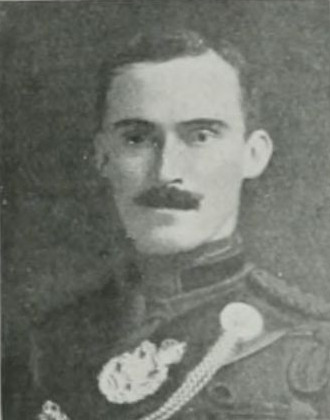
Harold Whitaker.
WHITBY, CHARLES BARRY DOUGLAS, Private, No. 26022, 14th Battn. (1st Royal Montreal Regt.), 3rd Brigade, Canadian Expeditionary Force, eldest s. of Charles Joseph Whitby, of 9, The Paragon, Bath, M.D. Cantab., by his wife, Clare, dau. of Joseph Hayden; b. Cambridge, 13 Nov. 1884; educ. Reading School, went to Canada about 1904, residing first in Montreal, later in Emerson and other places, then returning to Montreal, where at the outbreak of war in Aug. 1914, he held a position on the Staff of the “Gazette.” He at once enlisted and went into training at Valcartier, came to England with the first Canadian Contingent, and competed his training on Salisbury Plain. He crossed to Flanders with his Division early in 1915, and took part in the action at Neuve Chapelle. On 22 April, 1915, the Second Battle of Ypres was opened by the discharge of poison gas against the Turcos, who were driven back leaving the Canadian left exposed. On the morning of the 24th the 14th Battn., shelled out of a shallow dug-out they had prepared over night, in a field near St. Julien, retreated uphill under very heavy fire. Near the summit Private Whitby was hit and fell in a ditch, joking as he fell. He was never seen again by his comrades, but was officially reported “wounded and missing.” Later a report by the enemy stated that he had been picked up by them, had died on May 8 or 9, and was buried on Hill 20 (Kersselaare), not far from where he fell. In letters received from his comrades he was described as “a splendid soldier, always among the first to offer himself for any dangerous duty.” While at the front Private Whitby contributed several descriptive articles on life in the trenches to the “Montreal Gazette.”
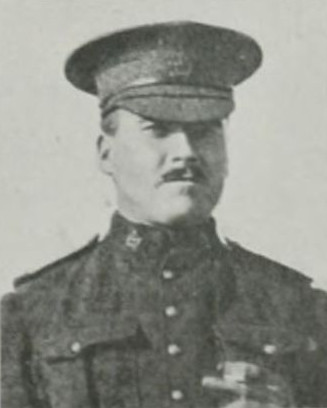
Charles B. D. Whitby.
WHITCHURCH, LESLIE SEDGWICK, Capt., 21st Prince Albert Victor’s Own Punjab Cavalry (Frontier Force), Indian Army, attd. 5th Dragoon Guards, 2nd s. of the late Rev. Walter Beaumont Gurney Whitchurch, Rector of Spixworth, Norfolk, by his wife, Margaret Elizabeth (Old Catton, Norfolk), dau. of (—) Sedgwick; b. Lockeridge House, co. Wilts, 6 April, 1880; educ. Marlborough and Sandhurst, where he took the Queen’s Gold Medal for Military Proficiency and the Sword of Honour, with six other prizes, and on passing out, broke the College “record” and was given six months seniority; gazetted 2nd Lieut., Indian Army, unattd., 19 July, 1899; entered Indian Staff College, 1 Oct. 1900, and was promoted Lieut. 19 Oct. 1901; and appointed Squadron Officer in 21st Cavalry, 29 May, 1902, and became Capt., 19 July, 1908; served on the N.W. Frontier of India, Waziristan, 1901–2 (medal with clasp), and also took part in the operations against the Darwesh Khel Waziris, 1902; was home on leave when the European War broke out, and at once applied to be attd. to a British Regt.; trained reserves for the 9th Lancers at Tidworth for a short time; was sent to France to join 5th Dragoons, 10th Squadron, and was killed in action at Messines on 31 Oct. following, during the First Battle of Ypres; unm. His commanding officer wrote: “He was a most gallant and capable officer, and I was most fortunate to have had him with me. He was killed when most gallantly holding on to an advanced post which he had occupied with a few men on the edge of the town, when the enemy made a very determined attack on the town we were holding. He held on there though the enemy in force were only a few yards away from him. He was quite dead when I reached him. I grieve to have to tell you we were unable to bring him back. All I can say is that it was not possible. I reported especially upon his conduct as having been most gallant.”
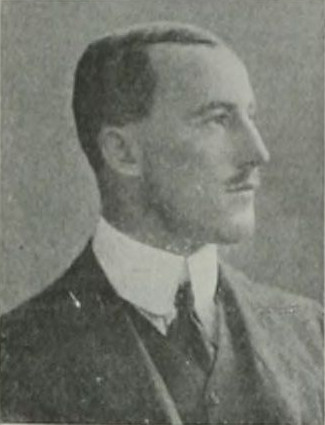
Leslie S. Whitchurch.
WHITCOMBE, DOUGLAS JAMES AUBREY, Private, No. 6/176, Canterbury Infantry Battn., New Zealand Expeditionary Force, s. of Frederick Whitcombe, of 24, Buckley’s Road, Linwood, Christchurch, New Zealand, by his wife, Alice, grand. dau. of Lieut.-Col. Mein, C.B., of Dumfries; and grandson of John Aubrey Whitcombe, of Hillfield, Gloucester; b. in New Zealand, May, 1893; volunteered on the outbreak of war; killed in action in Gallipoli, 7 Aug. 1915; unm.
WHITCOMBE, GERALD AUBREY, Trooper, No. 13/750, Auckland Mounted Rifles, New Zealand Expeditionary Force; 2nd s. of George Whitcombe, of Kawhia, New Zealand; by his wife Margaret Janet, dau. of Albert West Sedcat, and grandson of John Aubrey Whitcombe, of Hillfield, Gloucester; b. New Zealand, Oct. 1890, volunteered on the outbreak of war; killed in action in Gallipoli, 8 Aug. 1915; unm.
WHITCOMBE, JOHN, L.-Corpl., No. 15193, Royal Canadian Dragoons, only s. of Charles Henry Whitcombe, of Sunnyside, Crudwell, Malmesbury, F.R.C.S., by his wife, May, dau. of Richard Billiald, of Nottingham, and grandson of John Aubrey Whitcombe, of Hillfield, Gloucester; b. Westerham, co. Kent, 18 May, 1889; educ. the New School, Halifax, co. York, and the Royal Latin School, co. Bucks; was for two years in the Eastern Telegraph Co., but went to Canada in 1907 and took up farming at Pilot Mound, Manitoba. On the outbreak of the European War he joined the Fort Garry Horse, Aug. 1914; came over with the first contingent in Oct.; went to France in June, 1915, when he was attached to the Royal Canadian Dragoons; and died near Ploegsteert, 1 July, 1915, of wounds received in action same day; unm. He was buried in the Maple Leaf Military Cemetery, Romarin, near Nieppe, Belgium.
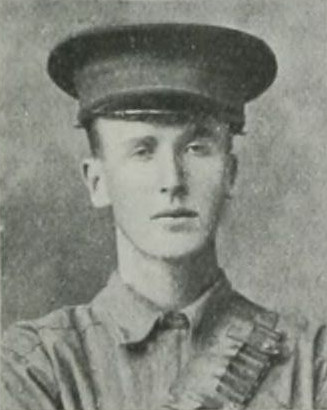
John Whitcombe.
WHITE, ALFRED, Leading Seaman, 200784 Devonport, H.M.S. Good Hope; lost in action off Coronel, on the coast of Chili, 1 Nov. 1914.
WHITE, ALFRED WILLIAM, Stoker, 1st Class, S.S. 106882, H.M.S. Hawke; lost when that ship was torpedoed in the North Sea, 15 Oct. 1914.
WHITE, BENJAMIN WILLIAM, Stoker, 1st Class, K. 11762, H.M.S. Pathfinder; lost when that ship was sunk by a mine, about 20 miles off the East Coast, 5 Sept. 1914.
WHITE, EDWARD, Stoker, 1st Class (R.F.R., B. 766), 280315, H.M.S. Hogue; lost in action in the North Sea, 22 Sept. 1914.
WHITE, ERNEST, Signal Boy, J. 24674, H.M.S. Pathfinder; lost when that ship was sunk by a mine, about 20 miles off the East Coast, 5 Sept. 1914.
WHITE, FREDERICK, Stoker, Petty Officer, 297650, H.M.S. Cressy; lost in action in the North Sea, 22 Sept. 1914.
WHITE, GEORGE EDWARD, Leading Seaman (R.F.R., Ch. B. 9578), 203769, H.M.S. Cressy; lost in action in the North Sea, 22 Sept. 1914.
WHITE, GILBERT VICTOR, Private, No. 871, The Honourable Artillery Company, yr. s. of William Baglin White, of High View, Sundridge Avenue, Bromley, Kent; b. Wood Green, co. Middlesex, 11 Jan. 1893; educ. Quernmore School and Clifton College; volunteered for Imperial Service on the outbreak of war, and joined the H.A.C. 4 Aug. 1914; went to France in Sept.; was in the trenches from Nov. to Jan., and died at St. Bartholomew’s Hospital, London, 2 Feb. 1915, of wounds received in action near Ypres, on 6 Jan. He was shot by a German sniper while helping to bring in a wounded comrade; unm.
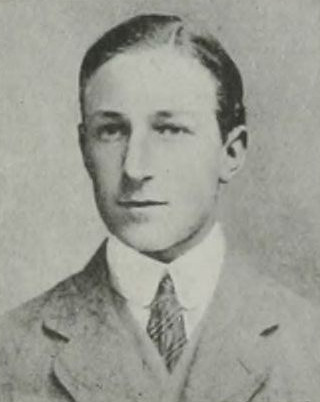
Gilbert V. White.
WHITE, HARRY ARTHUR ALBERT, Ordinary Signalman, J. 11354, H.M.S. Good Hope; lost in action off Coronel, on the coast of Chili, 1 Nov. 1914.
WHITE, JAMES ERNEST, Private, No. 287, 5th Battn. (London Rifle Brigade) The London Regt. (T.F.), 2nd s. of James White, of 2, Woodside Road, Wood Green, N., by his wife, Sarah Ann, dau. of Josiah Briscoe; b. London, N., 30 Sept. 1885; educ. Higher Grade School, Wood Green, N., and Birkbeck College; was a Clerk in the Oceana Land Co., Ltd.; joined the London Rifle Brigade on the outbreak of war in Aug. 1914; went to France, 13 March, 1915, and was killed in action at Zillebeke, 27 April, 1915; unm. He was buried at Fortuin. White took a prominent part in many branches of Church work, was an enthusiastic ’cellist, and led a small orchestra.
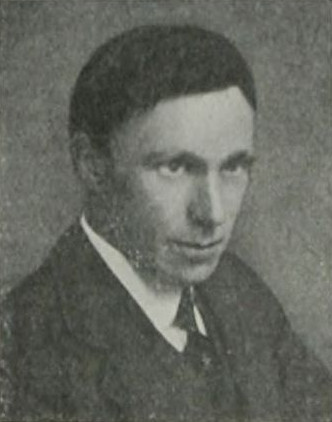
James Ernest White.
WHITE, LESLIE SPENSER, 2nd Lieut., 1st Battn. Royal West Kent Regt., eldest s. of Frank Faulder White, of Charlton Road, Blackheath, F.R.C.S. Eng., by his wife, Eva Dalgairns, dau. of the late Major J. D. Travers; b. Coventry, 21 Sept. 1891; educ. King Henry VIII’s School there, and Framlingham College; joined the Artists Rifles immediately on the declaration of war, 5 Aug. 1914; gazetted 2nd Lieut. to the Royal West Kent Regt., 27 Jan. 1915; went to France in Oct. 1914; served as temp. 2nd Lieut. with the 2nd Royal Scots Fusiliers in the trenches and was accidentally killed near Ypres, 15 March, 1915, by a bomb explosion, while on active service; unm. Buried there.
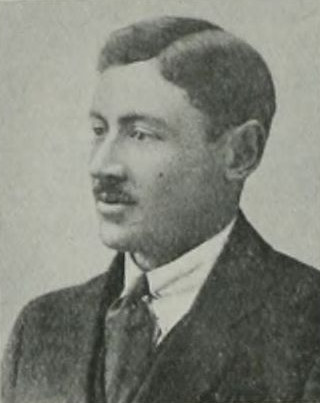
Leslie S. White.
WHITE, LLOYD ROBERT, Stoker, 1st Class, K. 9380, H.M.S. Good Hope; lost in action off Coronel, on the coast of Chili, 1 Nov. 1914.
WHITE, LYNTON WOOLMER, Lieut., 1st King’s Dragoon Guards, elder s. of Woolmer Rudolph Donati White, of Salle Park, co. Norfolk, and Southleigh Park, co. Hants, J.P., High Sheriff, co. Norfolk (1914), by his wife, Edith Wittcomb, yr. dau. of George Dawes Monck, of Hilsea, co. Hants.; b. Southsea, 5 May, 1886; educ. Cheltenham and Trinity College, Cambridge, gazetted 2nd Lieut. 7 May, 1905, and promoted Lieut. 25 March, 1910. Being home on leave when the war broke out, he was attached to the Queen’s Bays; was severely wounded in action at the Battle of Nery, 1 Sept. 1914, during the retreat from Mons and died at the Chateau de Baron, three days later. He was buried at first in the Chateau grounds and afterwards removed to the Churchyard. He m. at St. Mary Abbott’s, Kensington, 29 June, 1911, Dorothea, only dau. of W. R. Haughton, of Calcutta, V.D., M.I.C.E., formerly Engineer-in-Chief Eastern Bengal State Railway; s.p.
WHITE, ROBERT HENRY, Private, No. 9733, 3rd Battn. (Toronto Regt.) Canadian Expeditionary Force, 2nd s. of the late Robert White, Master Roscrea (Ireland) Union, by his wife, Elizabeth (44, Dingwall Avenue, Toronto, Canada), dau. of William Proctor, of Glashare, co. Kilkenny; b. Roscrea, co. Tipperary, 8 July, 1895; educ. National School there; went to Canada in May, 1914, and was a Sales Clerk; volunteered on the outbreak of war and joined the Canadian Expeditionary Force at Toronto, about 20 Aug. 1914; left Valcartier for England with the first contingent 9 Oct. 1914; trained on Salisbury Plain during the winter of 1914–15; went to France early in Feb. and was killed in action “in the field between St. Julien and St. Jean,” 23 April, 1915, being shot through the head and killed instantly.
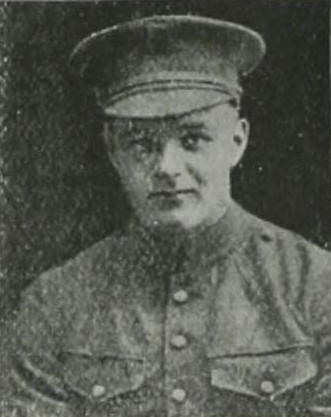
Robert H. White.
WHITE, WALTER EDWIN, Stoker, 1st Class, K. 7921, H.M.S. Good Hope; lost in action off Coronel, on the coast of Chili, 1 Nov. 1914.
WHITE, WILLIAM CHARLES, Blacksmith’s Mate, M. 5496, H.M.S. Cressy; lost in action in the North Sea, 22 Sept. 1914.
WHITE, WILLIAM CLEMENT, Leading Seaman (R.F.R., Ch. B. 5261), 181422, H.M.S. Cressy; lost in action in the North Sea, 22 Sept. 1914.
WHITE, WILLIAM DARCY, Stoker, 2nd Class, K. 19848, H.M.S. Hawke; lost when that ship was torpedoed in the North Sea, 15 Oct. 1914.
WHITEFORD, PETER, Sergt., No. 6965, 2nd Battn. The Queen’s Own Cameron Highlanders, 4th s. of Andrew Whiteford, of Cramond, by his wife, Hannah Lawrie, dau. of James Black, of Easter Drylaw, Cramond; b. Davidson’s Mains, Cramond, 15 May, 1886; educ. Davidson’s Mains Public School; enlisted in the Cameron Highlanders at Edinburgh in 1904, and after a few months in Dublin served three years in South Africa, two years in China, and two years in India, returning to England in Jan. 1912. He obtained his discharge 1 June that year, and became a gardener to Mr. W. R. Reid at Lauriston Castle. When war broke out he rejoined at Inverness, and after training recruits there for four months, was promoted Sergt., and went to France early in Dec. He was killed while leading his platoon into action at La Bassée 25 Jan. 1915; unm.
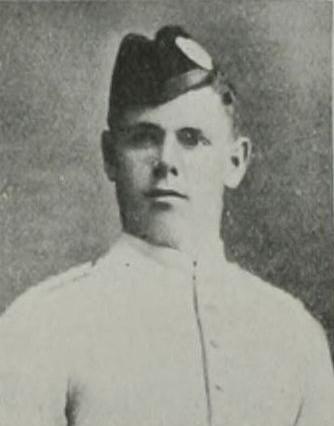
Peter Whiteford.
WHITEHEAD, ALFRED GEORGE, Signal Boy, J. 23867, H.M.S. Hawke; lost when that ship was torpedoed in the North Sea, 15 Oct. 1914.
WHITEHEAD, CHARLES, Private, R.M.L.I. (R.F.R.), Ch. 9373, H.M.S. Hawke; lost when that ship was torpedoed in the North Sea, 15 Oct. 1914; m.
WHITEHEAD, HARRY HARDING, Private, No. 3/927, R.N.V.R. Hawke Battn. 1st R.N. Brigade, R.N. Division, 2nd s. of James Dove Whitehead, of Middleton Hall, near Pickering, Yorks, J.P., North Riding, by his wife, Jane, 2nd dau. of the late Samuel Harding Loy, J.P., Keldead, Pickering; b. Scarborough, 26 March, 1891; educ. Repton School; qualified as an Engineer, and joined a Flying School for the Naval Flying Corps, joining the R.N.V.R. after the outbreak of war, in Nov. 1914, and was killed in action at Achi Baba, Gallipoli, 29 June, 1915; unm. His only brother, Capt. James Loy Whitehead, is now (1916) on active service.
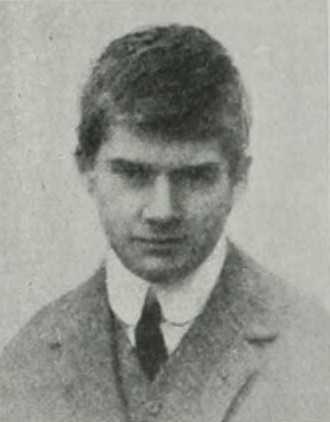
Harry H. Whitehead.
WHITEHEAD, HENRY MONTAGUE, 2nd Lieut., 4th, attd. 2nd, Battn. East Surrey Regt., 2nd s. of Henry Hammond Whitehead, of Boston Road, Brentford, by his wife, Edith Miriam, dau. of John Cove, of Northampton; b. Brentford, co. Middlesex, 16 Nov. 1890; educ. Tonbridge School, where he was in the O.T.C.; was an Architect; joined the Artists Rifles in 1908; gazetted 2nd Lieut. to the East Surreys, 15 Aug. 1914; went to France Jan. 1915; attd. to the 1st Battn. South Wales Borderers, joining the 2nd Battn. East Surreys in March, and was killed in action at Zonnebeke, 14 April, 1915; unm. Buried there.
WHITEHEAD, JAMES SCULLARD, A.B. (R.F.R., Ch. B. 2390), 161600, H.M.S. Aboukir; lost in action in the North Sea, 22 Sept. 1914.
WHITEHURST, CHARLEY, Private, No. 13205, 1st Battn. Coldstream Guards, s. of John William Whitehurst, of 4, Grove Lane, Smethwick; b. Birmingham; educ. Dudley Road and City Road Schools; was employed in the Ebbw Vale Steel Works; enlisted in the Coldstreams after the outbreak of war, 3 Sept. 1914; went to France, 1 Jan. 1915, and was reported missing after the fighting at Cuinchy, 25 Jan. following, and is now assumed to have been killed in action on or about that date. He m. at St. Matthew’s Church, Smethwick, 29 Sept. 1907, Emma (2, Fering Street, Corporation Road, Newport, co. Monmouth), dau. of Robert (and Emma) Bell, and had a dau., Elsie Agnes, b. 24 June, 1913.
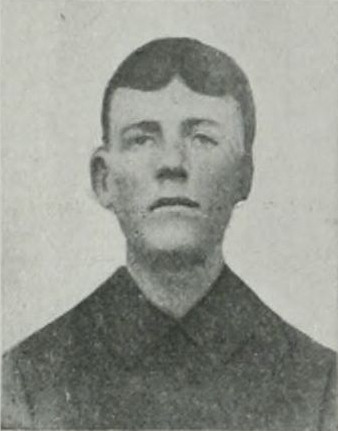
Charley Whitehurst.
WHITEHURST, HAROLD, Private, No. 1544, 1st Battn. Highland L.I., s. of William Whitehurst, of 31, Cove Street, Beverley Road, Hull; b. Hull, 27 Feb. 1897; educ. Trinity House School, Hull; after leaving school was apprenticed to Messrs. Wright & Bacon, Shipowners; joined 1st Highland L.I., 6 Aug. 1914; served with the Expeditionary Force in France, and was killed in action at Neuve Chapelle, between 11 and 18 March, 1915; unm. Two of his brothers are serving in the Army: George William Whitehurst in the N.E.R. Fusiliers (Pioneers), and Alfred Whitehurst in the 2nd Northumbrian R.F.A.
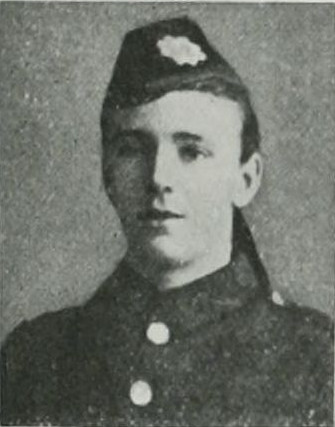
Harold Whitehurst.
WHITELAW, ALEXANDER, Private, No. 9040, 2nd Battn. Durham L.I., s. of Alexander Whitelaw, Foreman Carpenter with Messrs. Currie & Co., of Leith, Ship Owners, by his wife, Agnes, dau. of Adam Stenhouse, of Leith, b. Leith, 22 Aug. 1880; educ. Couper Street School there; enlisted in 1902, served for three years with the Colours and nine years in the Reserve, and on mobilization rejoined his regt. 17 Aug. 1914. He was shot through the head by a German sniper while helping to repair the trenches at Houplines, 30 Jan. 1915, and was buried in the military cemetery there. He m. at Leith, 9 July, 1908, Jane Jackson (66, Coburg Street, Leith), dau. of Allan McCallum, and had two sons and a dau.: Alexander, b. 6 Sept. 1909; Allan McCallum, b. 14 March, 1913, and Susan Webster, b. 9 Dec. 1910.
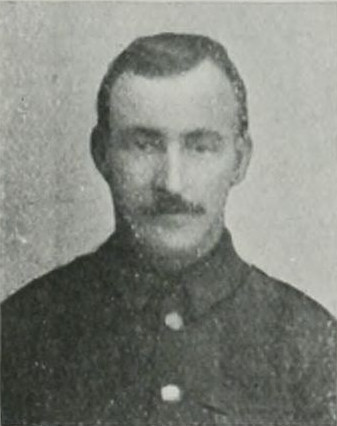
Alexander Whitelaw.
WHITEWAY, THOMAS, Petty Officer, 208492, H.M.S. Pathfinder; lost when that ship was sunk by a mine, about 20 miles off the East Coast, 5 Sept. 1914.
WHITFIELD, THOMAS NICHOLAS, E.R.A., 3rd Class, M. 1752, H.M.S. Arethusa; killed in action in the Heligoland Bight, 28 Aug. 1914.
WHITING, CHARLES, Ship’s Corpl., 1st Class, 186224, H.M.S. Pathfinder; lost when that ship was sunk by a mine, about 20 miles off the East Coast, 5 Sept. 1914.
WHITING, FREDERICK JOHN, L.-Corpl., No. 1050, 1/6th (Cyclist) Battn. The Suffolk Regt. (T.F.), yst. s. of John Whiting, of 73, Surrey Road, Ipswich, by his wife, Margaret; b. Westerfield, Ipswich, 10 Jan. 1893; educ. Council School and Boys’ British School there; joined the Suffolk Cyclists, 20 March, 1912, and died in the Military Hospital, Saxmundham, 12 May, 1915, from injuries received through an armoured car, while cycling out with his company, near Saxmundham; unm.
WHITTLE, GEORGE THOMAS, Petty Officer, 237335, H.M.S. Good Hope; lost in action off Coronel, on the coast of Chili, 1 Nov. 1914.
WHITTLE, JAMES, Stoker, 1st Class, 290939 Devonport, H.M.S. Good Hope; lost in action off Coronel, on the coast of Chili, 1 Nov. 1914.
WHYBROW, THOMAS JOHN, Stoker, 1st Class (R.F.R., Ch. B. 9533), 106899, H.M.S. Cressy; lost in action in the North Sea, 22 Sept. 1914.
WHYTE, CHARLES LEONARD LE BARON, Chief Petty Officer, 147436, H.M.S. Good Hope; lost in action off Coronel, on the coast of Chili, 1 Nov. 1914.
WHYTE, DAVID STEWART, Engine Room Artificer, No. Ch. 270811, R.N., only s. of the late John Stewart Whyte, of Stonehaven, Edinburgh, and 101, Stephen’s Road, Tunbridge Wells, Schoolmaster (died 23 March, 1915), by his wife Margaret (died 5 Sept. 1911), dau. of the late James Sutherland, Leith, N.L.S.; b. Stonehaven, co. Kincardine, 10 Nov. 1878; educ. Tewel Public School there, and Gordon’s College, Aberdeen; was 2nd Engineer in the Merchant Service; joined the Navy Nov. 1902, and was lost on H.M.S. Good Hope, 1 Nov. 1914, when that ship was sunk in the battle off Coronel, on the coast of Chili. He m. at St. Simon’s Church, Southsea, 1 Aug. 1908, Emmeline Annie (31, Wisborough Road, Southsea), dau. of the late David Williams, of Southsea, and had two children: Merry Sutherland, b. 28 Nov. 1909, and Lena, b. 1 Sept. 1913.
WICKENDEN, HARRY CHARLES, Sergt., R.M.L.I., Ch./6612, H.M.S. Cressy; lost in action in the North Sea, 22 Sept. 1914.
WICKINS, VERNON JOHN, Private, No. 2086, 15th Battn. 4th Infantry Brigade, Australian Imperial Force, eldest s. of the late Vernon Evan Wickins, Engineer (who died shortly after the outbreak of war), by his wife, Mary (Cambria, 32, Wellington Street, North Hobart, Tasmania), dau. of John McGinnes, of Edinburgh; b. Hobart, 30 Aug. 1886; educ. State School there; joined when young the Volunteer Force and for five and a half years was a member of the Derwent Infantry Regt., in which he was promoted Sergt., 27 May, 1911. He was for some years employed in the Government Railways Service at Launceston, and while there became an active member of the Hobart Launceston Rifle Club, but on the illness of his father resigned his position to return home to Hobart so as to be a help to his mother and the other members of the family. On his return to Hobart he joined the A.N.A. Rifle Club and was on the roll as an active member when war broke out. He volunteered for Imperial service and joined the 15th Battn., 6 Feb. 1915; left for Egypt with the fifth reinforcements and was killed in action at Lone Pine, Gallipoli, 8 Aug. 1915. Capt. L. Simpson, A.N.A. Rifle Club, wrote: “Vernon Wickins endeared himself to all his club mates and to all with whom he came in touch by his quiet, kindly and unassuming manner, and no greater testimony can be given of his love for country and fellow mortals than that he laid down his life for them.” He m. at Launceston, Tasmania, 3 April, 1915, Hilda, dau. of (—) Collins.
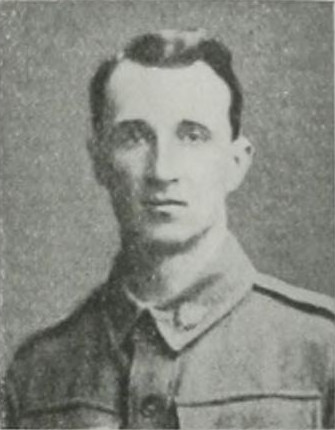
Vernon J. Wickins.
WICKS, JAMES, Private, No. 9532, 2nd Battn. Royal Sussex Regt., s. of George Wicks, of 22, Parkfield Road, Hollington, near Hastings; served with the Expeditionary Force in France; killed in action, 3 Oct. 1914.
WIDGER, JAMES SAUNDERS, Shipwright, 1st Class, 345559, H.M.S. Hogue; lost in action in the North Sea, 22 Sept. 1914.
WIGG, ARTHUR HARRY, Private, No. 2685, 1st Battn. Honourable Artillery Company, yr. s. of the late Harry Owen Wigg, of Ealing, W., formerly of West Derby, Liverpool, Draper’s Buyer, by his wife, Mary Walmsley (25, Gordon Road, Ealing, W.), dau. of the late Thomas Fletcher, of Newsham Park, Liverpool; b. West Derby, Liverpool, 16 Oct. 1890; educ. Elstow School (formerly called Bedford County School), Bedford; was in the service of Messrs. Dalton & Young, Fenchurch Street, E.C.; volunteered for Imperial service after the outbreak of war and joined the H.A.C. in Nov. 1914; left for France 26 April, 1915, as one of a draft to the 1st Battn.; and was killed in action at Hooge, 16 June following. Early on the morning of the 16th the British had attacked with some success south of Hooge, capturing 1,000 yards of German front trenches and part of their second line. Towards night the troops holding the most advanced of the captured trenches were obliged to fall back, and volunteers were called to go to their support. Private Wigg was one of those who volunteered, and while advancing with a party composed of men from various units under Major G. N. Crosfield, 4th South Lancashires, was hit in the head by a piece of high explosive shell and killed instantaneously. He was buried by the side of a path leading to the Sunken Road between Hooge and Potijze; unm. He was a very keen sportsman, being vice-captain of the Old Elstonian Hockey Club and a member of the Ealing Cricket Club, upon the committee of which he served.
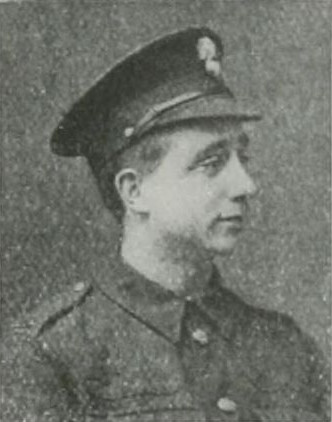
Arthur Harry Wigg.
WIGG, EDWARD CHARLES, A.B. (R.F.R., Ch. B. 1497), 208328, H.M.S. Aboukir; lost in action in the North Sea, 22 Sept. 1914.
WIGHTMAN, FRANCIS CHARLES, Private, No. 00189, 1st Imperial Light Horse, elder s. of the late John Wightman, of Edinburgh, Master Plumber and Sanitary Engineer, by his wife, Janet (28, Mardale Crescent, Edinburgh), dau. of James McFarlane; b. Edinburgh, 6 April, 1880; educ. Daniel Stewart’s College there; joined the Imperial Yeomanry (Sharpshooters) at the time of the South African War; took part in the operations there, receiving the Queen’s medal with four clasps; returned to South Africa, 1902, and was for a time at the Remount Camp at Mooi River, afterwards settling in Johannesburg, where he held a position in one of the Rand Mines, Cattine Modder, Brakham. On the outbreak of the European War he made preparations to return to Britain, but on the rebellion in South Africa he joined the 1st Imperial Light Horse, and was killed in action at Rooidam, 25 Nov. 1914, during a fight with Kemp’s force, which lasted all day; unm. He was buried there. He was a keen footballer and played for Daniel Stewart’s College F.P. 1st team; a good horseman and a good shot.
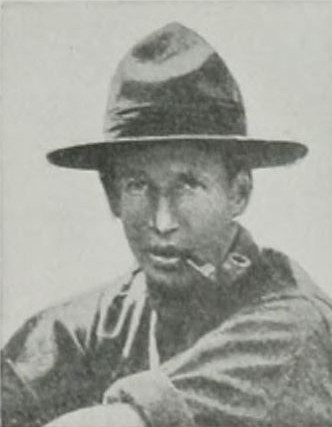
Francis C. Wightman.
WIGHTON, JAMES ALBERT FORGAN, Leading Carpenter and Diver, R.N., No. 346697, 2nd s. of the late James Brown Wighton, Jute Commission Agent, Calcutta, by his wife, Catherine (28, Redbourne Street, Boulevard, Hull), dau. of James Albert Forgan, of Hull, Engineer; b. Barrow-in-Furness, 19 Oct. 1886; educ. Constable Street Council School, Hull; joined the Navy in 1904; served on H.M.S. Assistance; went to India on H.M.S. Renown, with King George (then Prince of Wales); served on H.M.S. Glasgow, on her first Commission, and on H.M.S. Fearless; transferred to the Good Hope on the outbreak of war in Aug. 1914. and was lost when that ship was sunk in the action off Coronel on the coast of Chili, 1 Nov. 1914; unm. His brother-in-law, Joseph Williams, was lost on the Cressy (see his notice).
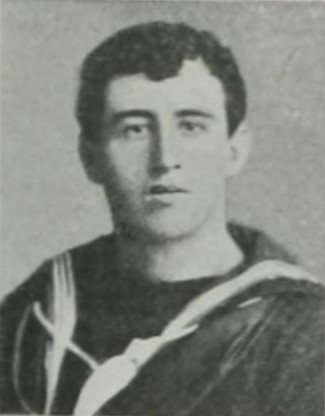
J. A. F. Wighton.
WIGMORE, JAMES EDWARD, Stoker, 1st Class, K. 12112, H.M.S. Hogue; lost in action in the North Sea, 22 Sept. 1914.
WILCOX, PERCY JOHN, Private, R.M.L.I., 10304 (R.F.R., Ch. B. 929), H.M.S. Cressy; lost in action in the North Sea, 22 Sept. 1914.
WILDE, REGINALD, Stoker, 1st Class, K. 5463 (Ports.), H.M.S. Hogue; lost in action in the North Sea, 22 Sept. 1914.
WILDMAN, HERBERT ARTHUR, Rifleman, No. 2970, 8th Battn. (Post Office Rifles) The London Regt. (T.F.), 2nd s. of William Wildman, of 1, Stanhope Road, North Finchley, by his wife, Florence May, dau. of Joseph Evans; b. Pulloxhill, co. Bedford, 30 May, 1894; educ. Christ Church School, Finchley, N.; was a Postman at Whetstone; volunteered for foreign service on the outbreak of war, and joined the Post Office Rifles, 15 Sept. 1914; went to France 17 March, 1915, and was killed in action at the Battle of Festubert, 25 May, 1915, after being reported missing since 22 May. Buried at Festubert; unm.
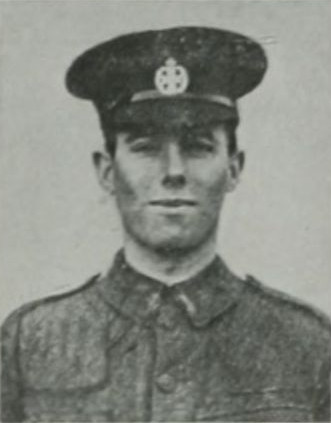
Herbert A. Wildman.
WILFRID, WILLIAM, Stoker, H.M.S. Good Hope; lost in action off Coronel, on the coast of Chili, 1 Nov. 1914.
WILGRESS, GEORGE KESTEVEN KORTRIGHT, Lieut., 21st Battn. Canadian Expeditionary Force, only s. of Arthur Trollope Wilgress, King’s Printer for Ontario, formerly Publisher and Editor of the Brockville Times, Brockville, Ontario, by his wife, Meta Carleton, dau. of the late George Acheson, of Tandragee, Ireland; b. Clarksburg, P. Ontario, Canada, 25 Jan. 1895; educ. St. Albans School, Brockville (Headmaster, Rev. F. G. Orchard, formerly of Bromsgrove, England); served on the Canadian Government Geodetic Survey in Western Canada, and also with the Canadian Pacific Railway Survey of their system north of Lake Superior; volunteered for Imperial service on the outbreak of war and was gazetted Lieut. 15 Sept. 1914; came over with the second Canadian contingent in May, 1915; went to France in Sept. 1915, and was killed in action near Ypres, 27 Nov. 1915; unm. Buried in Ridgewood Cemetery, near Ypres. He was mentioned in Despatches [London Gazette, 15 June, 1916] by Sir Douglas Haig, for gallant and distinguished conduct in rescuing wounded under heavy rifle fire at short range, and his commanding officer, Lieut.-Col. (now Brig.-Gen.) W. St. Pierre Hughes, wrote: “George’s death was a very severe blow to the whole Battn. There was not an officer, non-com. or man in the whole lot who did not respect, love and admire him. He was kindness itself, thoughtful of others to an extreme degree, and always prompt, careful, thorough and in all ways efficient. He was a soldier and a gentleman always. His heroic acts, performed only two hours before he was killed, have stamped him as one of the few. He knew no fear and feared no foe. He loved his men and they adored him.” At St. Albans School he was head boy and captain of the school, and also of the football team, and exercised a very strong influence for good by reason of his outstanding character.
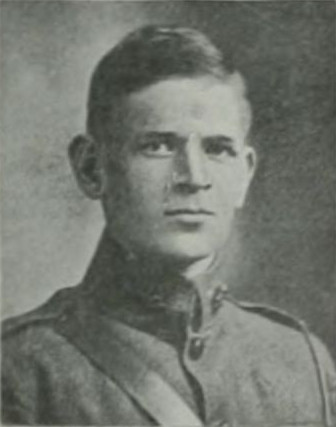
George K. K. Wilgress.
WILKENS, HENRY EDWARD, Leading Seaman (R.F.R., Ch. B. 608), 144292, H.M.S. Cressy; lost in action in the North Sea, 22 Sept. 1914.
WILKINS, ALFRED, Private, No. 730, 11th Battn. Australian Imperial Force; served in Egypt and at the Dardanelles; killed in action at Gallipoli, 3 May, 1915.
WILKINS, ARTHUR JOHN, Sergt., No. 6826, 3rd Battn. Coldstream Guards; s. of Cornelius Wilkins, of Strathmore, Alberta, Canada; enlisted 27 June, 1906; became L.-Corpl. 10 Sept. 1908; Corporal 17 Aug. 1912; L.-Sergt. 21 Jan. 1913, and Sergt. 22 Oct. 1914; served in Egypt 11 Oct. 1909 to 23 March, 1911, and with the Expeditionary Force in France and Flanders, from 22 Oct. 1914; killed in action at Cuinchy, 2 Feb. 1915; unm.
WILKINS, BERT, Sergt., No. S/9851, 2nd Battn. Royal Sussex Regt.; served with the Expeditionary Force in France, &c.; killed in action at Richebourg L’Avoué, 9 May, 1915; unm.
WILKINS, FREDERICK JOHN, Private, No. 6787, 3rd Battn. Coldstream Guards, s. of Frederick James Wilkins, of Towtree, Burghill, co. Hereford, Farmer and Licensed Victualler, by his wife, Amelia, dau. of Robert (and Mary) Sutton; b. Malvern, 22 Jan. 1882; educ. County Council School, Burghill; was a Chimneystack Builder; enlisted in the Coldstreams, 30 May, 1906; served in Egypt 31 Oct. 1907 to 23 March, 1911, and obtained his discharge in 1913; rejoined his old regt. on the outbreak of war, 5 Aug. 1914; went to France with the Expeditionary Force, 12 Aug.; served through the retreat from Mons, and subsequent engagements, and was killed in action at Cuinchy, 7 Feb. 1915, being shot through the head by a sniper while effecting the rescue of a wounded comrade on the morning after his coy. had cleared the Brickfields of the Germans at the point of the bayonet; unm. He was buried in Cuinchy Cemetery.
WILKINS, GEORGE, Private, R.M.L.I., 9557 (R.F.R., Ch. B. 1512), H.M.S. Aboukir; lost in action in the North Sea, 22 Sept. 1914.
WILKINS, HARRY, E.R.A., 1st Class (Pensioner), 152465, H.M.S. Aboukir; lost in action in the North Sea, 22 Sept. 1914.
WILKINS, HENRY JOHN, Private, No. 8896, 2nd Battn. Coldstream Guards, 2nd s. of Frederick Wilkins, of 8, Collingbourne Ducis, Marlborough, co. Wilts, Woodman, by his wife, Helen, eldest dau. of George Bulpits; b. Collingbourne, 5 June, 1890; educ. C.E. School there; was employed at the Army Ordnance Stores, Tidworth, enlisted in the Coldstreams, 25 Oct. 1910; obtained his discharge, and joined the Reserve in Oct. 1913, with an excellent character from his Company Officer; rejoined on the outbreak of war in Aug. 1914; went straight to France with the 1st Expeditionary Force; was wounded 21 Oct. 1914, and was in hospital in France until Jan. following, when he returned to the firing line, and was killed in the trenches at Cuinchy, 16 Feb. 1915; unm. He was buried near La Bassée.
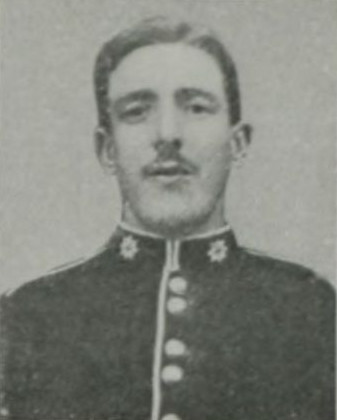
Henry J. Wilkins.
WILKINS, WILLIAM JOHN, Private, No. 10723, 1st Battn. Coldstream Guards, eldest s. of George Wilkins, of 59, Waterloo Street, Leamington, by his wife, Elizabeth, dau. of William Hortin; b. Leamington, co. Warwick, 11 Sept. 1894; educ. St. Peter’s R.C. School there; was a Dairyman; joined the 7th Warwickshire Territorials about Jan. 1911; enlisted in the Coldstreams, 2 May, 1914; went to France 6 Oct. 1914, and was killed in action during the First Battle of Ypres, 29 Oct. 1914; unm.
WILKINSON, CHARLES, Coy. Sergt.-Major, No. 4170, 1st Battn., Northumberland Fusiliers, eldest s. of Charles Wilkinson, of Stonebridge Park, by his wife Maria, dau. of (—) Churchill; b. Stonebridge Park, Middlesex; educ. there; enlisted 13 April, 1894, and became L.-Corpl. 16 March, 1899; Corpl. 1 April, 1900; L.-Sergt. 26 Feb. 1902; Sergt. 1 April, 1902; Col.-Sergt. 26 Sept. 1911, and Coy. Sergt.-Major 29 Nov. 1913; served in Gibraltar, 3 Oct. 1896 to 16 Jan. 1898; with the Soudan Expedition, 17 Jan. to 2 Oct. 1898 (Queen’s medal, Khedeval medal); during the occupation of Crete, 3 Oct. 1898 to 17 April, 1899; in South Africa, 16 Sept. 1899 to 6 April, 1903; including the actions at Belmont and the Modder River and the subsequent operations in the Orange Free State and the Transvaal (Queen’s medal with two clasps and King’s medal with two clasps); in the Mauritius, 7 April, 1903, to 8 Feb. 1906; in India, 9 Feb. 1906 to 11 March, 1907, and again 4 Sept. 1908 to 11 Nov. 1913; took part in the operations in the Mohmand Country, N.W. Frontier, 1908 (India General Service medal with clasp); present at Delhi Durbar, 1911 (medal); and with the Expeditionary Force in France and Flanders 15 Aug. to 14 Sept. 1914; including the retreat from Mons, and was killed at Vailly, during the Battle of the Aisne, 14 Sept. 1914. Major H. R. Sandilands wrote: “Sergt.-Major Wilkinson belonged to the finest type of British non-commissioned officers, keen, smart and straight as a die, he was loved and trusted equally by the officers and the men in the ranks of the regt. in whose welfare he was so keenly interested, and in whose service he died. ‘Wilkie’ will ever be held in affectionate remembrance by all who had the privilege of serving with him.” While in India Wilkinson was for nearly five years Officers’ Mess Sergt. and was afterwards Chief Warder in Military Prison at Mauritius. He had also the silver medal for good conduct and long service. He m. at Trinity Church, Karachi, India, 9 Dec. 1908, Maud (88, Yerbury Road, Tufnell Park, N.), dau. of Charles Mockridge, of Upper Holloway, and had three sons: Stanley Charles, b. Rawal Pindi, India, 3 Nov. 1909; Douglas Reginald, b. Mhow, Central India, 6 Oct. 1912; and Charles Frank St. George, b. (posthumous) 2 Nov. 1914.
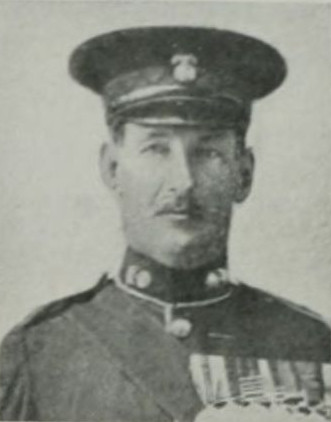
Charles Wilkinson.
WILKINSON, FRANK LEE, Gunner, No. 71456, 47th Battery, Royal Field Artillery, eldest s. of Francis Lee Wilkinson, of 8, Little Lockwood Street, Wincolmlee, Hull, Gunner, Royal Garrison Artillery, by his wife, Emily, dau. of Thomas Wakefield; b. Hull, 10 May, 1895; educ. Lincoln Street Board School there; joined R.F.A. 5 Dec. 1912; went to France 19 Aug. 1914, and died at No. 10 General Hospital, Rouen, 1 Oct. following, of wounds received on 20 Sept. at the Battle of the Marne; unm. The Rev. C. M. Chavasse, Chaplain to the Forces, wrote: “I write to tell you all I know of the last hours of your son, who died in hospital here on 1 Oct. His was rather a sad experience, but patiently borne. He had received a gunshot wound in the right arm during the Battle of the Marne on Sunday, 20 Sept., and arrived in hospital here on Thursday, 24 Sept. He was wonderfully good and patient and brave, and lay very quietly in the corner bed of the hospital tent. There was always a smile from him whenever I came to see him, and I do not think anyone realised how bad he was through his bravery. He was a very good boy, too, and, as he told me once, never forgot his prayers, and was trusting in our Lord Jesus Christ. He ought to have gone home on a hospital ship on the 30th, but another operation was necessary, which prevented this. This was a sad disappointment to him, but again no one could have been braver or more patient. And then on the 1st came the sudden collapse. I was suddenly fetched to his side in the morning, and had just time to whisper a prayer in his ear and to feel him squeeze my hand when he became unconscious, and very peacefully passed away at 2.15 p.m.” He was buried the next day in the Cemetery in the Sepulchre des Rouen (Grave No. 58).
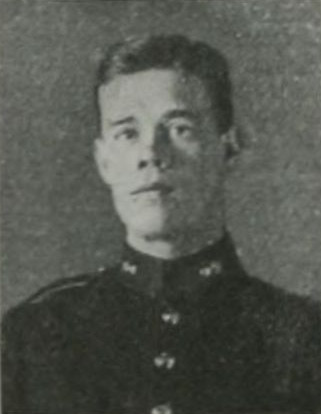
Frank Lee Wilkinson.
WILKINSON, JOHN ROTHES MARLOW, B.A., Lieut., 4th Battn. Middlesex Regt., eldest s. of the late Rev. Henry Marlow Wilkinson, Vicar of Milford, Lymington, Hants, by his wife, Florence Amy (Milford Corner, Milford-on-Sea), dau. of the late John Kemp-Welch, of Sopley Park, Hants; b. the Vicarage, Milford-on-Sea, 17 Oct. 1887; educ. Winchester College, and Worcester College, Oxford (1907–1911, B.A., Capt. of the College Boat Club); gazetted 2nd Lieut. to the 4th Middlesex, 22 March, 1911, and promoted Lieut. 10 Oct. 1913; left for France with the Expeditionary Force, Aug. 1914, and was killed in action at Oburg, near Mons, on the 23rd; unm. A Private of C Coy., 4th Middlesex, wrote: “On Sunday, 23 Aug., we were entrenched in front of a convent, when Capt. ... gave Lieut. Wilkinson an order to take half his platoon (two sections) to reinforce ‘A’ Coy. This Coy. was at the left of our position and was being hard pressed. We took up position under heavy fire at a group of houses. Your son went into one of the houses, and was heard directing the fire of his two sections through the skylight in the roof. He directed his fire so well that he forced the Germans to retire from his front. It was from this house that he saw overwhelming numbers of Germans coming through the wood to his front. The Germans came on again until they were within 200 yards. Lieut. Wilkinson then came out of the house into the trench. It was here that he got the order to retire. He got the order twice, but would not take it, as he thought it was not an official order. Eventually he got the order from the G.O.C. to retire. It was then I noticed he was limping. To retire we had to go through barbed wire; here we got separated owing to the heavy shell and rifle fire. I am very sorry to say that I was the only man of those two sections to get away from that place. No officers could give me any information of Lieut. Wilkinson. I reported to the C.O. what had happened and told him that Lieut. Wilkinson was a very brave man. He replied, ‘Yes, I know that, and I am very sorry to have lost him.’... I must say your son was a man in every sense of the word. I think he was as brave a gentleman as one could meet here. I told this to Capt.... I think I have an idea of a brave officer, as I went through the South African War and have eight clasps to my medal.”
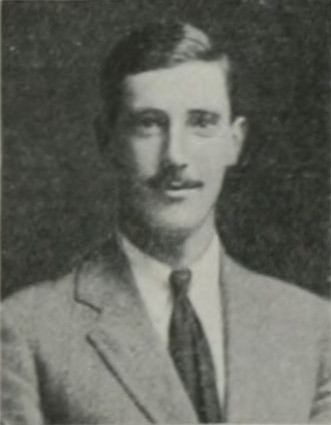
John R. M. Wilkinson.
WILKINSON, LEONARD RICHARD, Rifleman, No. 2240, C Coy., 1/9th (Queen Victoria’s Rifles) The London Regt. (T.F.), 2nd s. of George Henry Wilkinson, of Star Mills, Paper Maker, by his wife, Annie, dau. of William E. Pepper; b. Camberwell, 22 Dec. 1890; enlisted on the outbreak of war in Aug. 1914, served with the Expeditionary Force in France and Flanders and was killed in action during the severe fighting for Hill 60, near Ypres, on 24 April, 1915; unm.
WILKINSON, WILLIAM, Stoker, 1st Class (R.F.R., Ch. B. 6945), S.S. 101506, H.M.S. Cressy; lost in action in the North Sea, 22 Sept. 1914.
WILLAN, SAMUEL, Private, No. 11727, 2nd Battn. Coldstream Guards; b. co. Lancaster; served with the Expeditionary Force in France and Flanders; killed in action at Cuinchy, 3 Feb. 1915.
WILLETS, FREDERICK, Private, No. 7965, 2nd Battn. The Royal Scots, 2nd s. of Arthur Willetts, by his wife, Mary, dau. of Thomas Bennett; b. Aston, Birmingham, 7 Aug. 1883; educ. Vicarage Road there; was employed as a Stove Fitter; enlisted in the Royal Scots, 13 Feb. 1902; served three years with the Colours and nine years in the Reserve; went to the Front, Aug. 1914; was wounded and taken a prisoner at Haines, and died a prisoner of war at Erfurt, Germany, 16 Feb. 1915, and was buried there. He m. at Aston, Birmingham, 1907, Nellie (No. 2, Back, 119, Park Road, Aston, Birmingham), dau. of William Whadauck, and had a son, Frederick, b. 26 Jan. 1908.
WILLIAMS, ALBERT, Stoker, 1st Class, K. 3806 (Ports.), H.M.S. Aboukir; lost in action in the North Sea, 22 Sept. 1914.
WILLIAMS, ALBERT ERNEST, A.B. (R.F.R., B. 4015), 218031, H.M.S. Good Hope; lost in action off Coronel, on the coast of Chili, 1 Nov. 1914.
WILLIAMS, ARTHUR MONTAGU, Solicitor, Lieut. Machine Gun Section, 7th (Robin Hood) Battn. Sherwood Foresters (Nottinghamshire and Derbyshire Regt.) (T.F.), only s. of the late Arthur Williams, of 109, Forest Road, Nottingham, Solicitor, by his wife, Mary, dau. of the late Thomas Morley, of 46, Addison Street, Nottingham; b. Nottingham, 21 Dec. 1883; educ. Nottingham Boys’ High School; served his articles with Capt. J. A. H. Green, admitted a Solicitor in 1905, and was in practice in Nottingham and had lately been a partner in the firm of Messrs. Browne, Son & Williams. He had joined the Robin Hoods as a private on leaving school in 1900, and became a 2nd Lieut. when the Territorial Act came into operation, and was gazetted Lieut. 8 June, 1913. On the outbreak of war he volunteered with the Battn. for foreign service, went to France, 25 Feb. 1915, and was killed in action at Kemmel, 15 June, 1915; unm. He was buried in Kemmel Churchyard. One of his men (Private T. Linney, 1867) wrote: “On the night of 15 June, 1915, at about 9.30 p.m. the Germans thought to make a surprise attack on our trenches south of Ypres, by first of all blowing up our trenches and then by violently bombarding our position by artillery and hand grenades. The 8th Battn. Sherwood Foresters, were in the trenches at the time, and were expecting to be relieved that night by the 7th Battn. Sherwood Foresters, this accounting for the officers of the 7th being in the trenches in the afternoon to view the positions. After the violent bombardment the Germans tried to charge the trench, and this being the first severe attack the 8th Battn. had been in they did not know which way to turn or what to do; already they had lost a large number of men and officers and were naturally panic stricken, when Lieut. Williams came to the rescue. Already he had been to fetch a wounded officer, Lieut. Dobson, in, and seen him safe; when the Germans stormed the trenches, he gathered the men together, and by his cool manner and words made a desperate stand against the coming onslaught; the Germans had got as far as the barbed wire, when Lieut. Williams shouted to the men “Come on men, if we’ve got to die, we will die fighting,” this put new life into the men and by desperate fighting the Germans were driven back, but Lieut. Williams, who had saved the situation at such a critical time, was killed instantaneously, by part of a shell fracturing his skull”; and Capt. G. H. Stubington: “It was after dark and he had just gone into the trenches which the Robin Hoods were taking over from the 8th Battn. when Lieut. Dobson of the 8th Battn. was wounded by a shell. Arthur went to help him when another shell exploded and killed them both instantly. He died on duty and I need not tell you how much we feel his loss. He was a most efficient officer and also in my case a close personal friend; I have, as you are aware, known him for years and as far as Machine Gun work is concerned, I feel that I have lost my right hand man.... The Officer Commanding desires me to add that the Battn. has suffered a great loss by his death, and he will be very much missed by all ranks to whom he had endeared himself, and especially by his brother officers.” Lieut. Williams, who was a Freeman of the City of Nottingham by birth, had taken his Musketry and Machine Gun Course and had qualified as an Instructor of Musketry. He was a member of, and played for, the Notts. Amateur Cricket Club; was for some time Secretary of the Nottingham Children’s Hospital and Hon. Secretary of the Red Cross for Notts, and was a member of the Newstead Lodge of Freemasons.
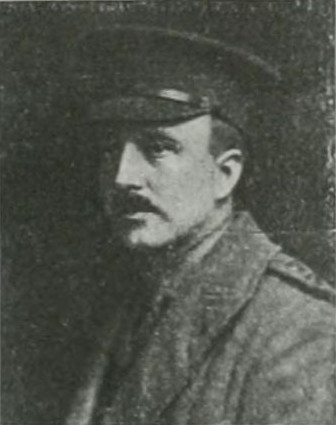
Arthur M. Williams.
WILLIAMS, BENJAMIN, Private, No. 9600, 3rd Battn. Coldstream Guards, s. of John Williams, of 25ct., 7h, Cheapside, Birmingham; b. Perry Barr, co. Stafford, 7 July, 1894; educ. Rea Street Board School, Birmingham; was a Metal Spinner, Simplex, Salop Street, Birmingham; enlisted in the Coldstreams, 11 May, 1912; went to France 14 Aug. 1914, and was accidentally drowned in Cuinchy Canal, 4 Aug. 1915, while on active service; unm. Buried in the Military Cemetery at Givenchy.
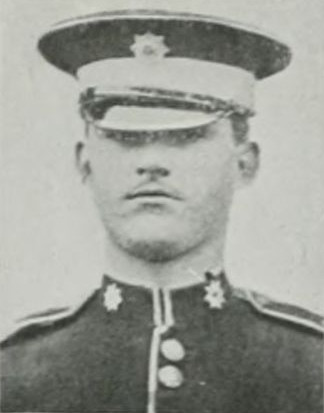
Benjamin Williams.
WILLIAMS, CHARLES, Gunner, R.M.A. (R.F.R., 370), H.M.S. Aboukir; lost in action in the North Sea, 22 Sept. 1914.
WILLIAMS, FREDERICK LEONARD, A.B. (R.F.R., B. 3177), S.S. 622, H.M.S. Good Hope; lost in action off Coronel, on the coast of Chili, 1 Nov. 1914.
WILLIAMS, GEORGE JACKSON, 2nd Lieut., 1/5th Battn. York and Lancaster Regt. (T.F.), 2nd s. of David Jones Williams, of Rhydwen, Barnsley, member of the firm of Williams Bros., Ltd., Coal Exporters, by his wife, Dinah, dau. of the late George Jackson, Mining Engineer; b. Royston, co. York, 6 Feb. 1895; educ. High School, Barnsley and Rydal Mount, Colwyn Bay, and on leaving there entered his father’s office in Paris. When war broke out he was in England on a short holiday and he immediately volunteered and joined the 5th Reserve Battn. of the York and Lancaster Regt. under Lieut.-Col. Mitchell and was gazetted 2nd Lieut. 23 Sept. 1914. Being anxious to get to the front he transferred to the 1st/5th Battn. under Lieut.-Col. Fox (which had volunteered for foreign service) and while training with it at Sheffield contracted rheumatism and developed endocarditis from which he died at Barnsley, 27 April, 1915; unm.
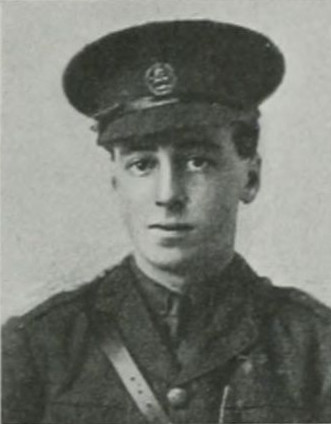
G. J. Williams.
WILLIAMS, GEORGE JOSEPH, Stoker, 1st Class, K. 14241 (Ports.), H.M.S. Cressy; lost in action in the North Sea, 22 Sept. 1914.
WILLIAMS, HAROLD, Stoker, 2nd Class, K. 21975, H.M.S. Good Hope; lost in action off Coronel, on the coast of Chili, 1 Nov. 1914.
WILLIAMS, HERBERT CHARLES, Corpl., No. 10080, 2nd Battn. King’s Own (Royal Lancaster) Regt., yst. but one of the six soldier sons of Ellis Williams, of Hanmer Place, Bowerham, Lancaster, ex Qr.-Mr.-Sergt. of the same regt. (with which he served for 25 years), by his wife, Eliza Mary, dau. of Henry Studd, late of the R.A.M.C.; b. the Barracks, Lancaster, 2 April, 1895; educ. Bowerham School; enlisted as a drummer in the King’s Own at Lancaster, 3 May, 1909, and joined his battn. in Jersey, subsequently accompanying it to India. He came home with it in Dec. 1914, and on 15 Jan. went to the Front. He was severely wounded on 16 March, 1915, while placing sand bags to repair front of trenches by Ypres, and died in hospital at Bailleul. His comrade, Band Sergt. J. A. Nichol, wrote: “He passed peacefully away at 6.15 a.m. this morning, 23 March. I was with him throughout, and I’m writing this letter for Lloyd, his brother, who is very much upset. The remains will be interred to-morrow at 9 a.m. in the cemetery there, and I’ll be there to put some token of love on his grave for you and the family.” His two elder brothers, Coy Qr.-Mr.-Sergt. Ellis Watkin Williams and Sergt. John Henry Williams of the 1st Battn. of the King’s Own were wounded in the retreat from Mons, the latter, now a prisoner at Doberitz, very severely. The third, Sergt. Lloyd Williams, suffered from shell concussion and is now (1916) in Egypt. Rifleman Reginald Williams, the fourth, belongs to the King’s Liverpool Regt., and the fifth and last son, Private Percival Williams, is in the Army Service Corps.
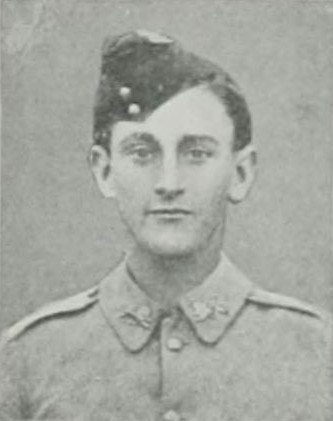
Herbert C. Williams.
WILLIAMS, HUBERT LESLIE, Trooper, No. 13/258, 11th North Auckland Mounted Rifles, New Zealand Expeditionary Force, 3rd s. of Harry Edwin Williams, of Parua Bay, Auckland, New Zealand, by his wife, Harriet Mary, dau. of the late Henry Morey; b. at Parua Bay, 23 Nov. 1892; educ. there; and entered the Army, 15 Aug. 1914, being one of the first to enlist from Parua Bay at the outbreak of war. Killed in action at Walker Ridge, Gallipoli, during a night attack, 26 May, 1915, buried there. The circumstances of his death are told as follows in a letter from a comrade to his mother: “A mate of mine, H. L. Williams, was dragging me to put me in a hole out of the firing line after I was shot down that awful night, he had stopped for a minute to give me a drop of water out of his bottle, had just dropped on his knees, when a bullet struck him in the breast, he fell over me, he put his hand in mine and said ‘good-bye old fellow, good luck to you, I’m fixed.’ And so he died without a move, good fellow that he was.”
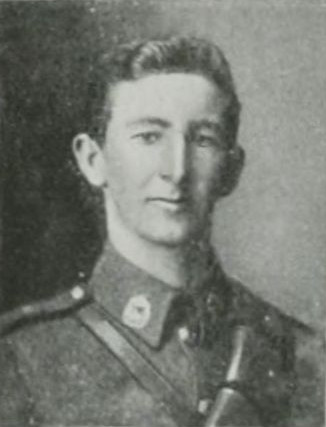
Hubert L. Williams.
WILLIAMS, IDRIS HAVARD JOSEPH, Capt., 3rd Battn. Royal Fusiliers, 4th s. of the late Morgan Stuart Williams, of Aberpergwm, co. Glamorgan, J.P., D.L., by his wife, Josephine (9, Stratford Place, W.), dau. of William Herbert, of Clytha, Monmouthshire, and nephew of the late Capt. George Williams, Frontier Light Horse, who was killed in the Zulu War; b. Aberpergwm, 29 Dec. 1878; educ. Charterhouse; received his commission as 2nd Lieut. in the Royal Fusiliers from the Militia, 5 Jan. 1901, and was promoted Lieut. 26 March, 1904, and Capt. 29 Jan. 1910; served through the South African War, 1899–1902 (Queen’s medal with three clasps and King’s medal with two clasps), and with the Expeditionary Force in France and Flanders, died at Boulogne, 3 June, 1915, of wounds received in action at Ypres; buried at St. Donat’s Castle; unm.
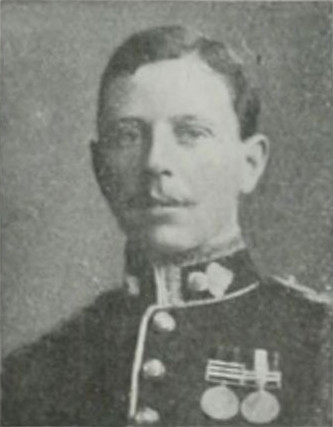
Idris H. J. Williams.
WILLIAMS, JETHROE, L.-Corpl., No. 6074, 3rd Battn. Coldstream Guards, s. of Cabel Williams, of High Street, Cheltenham, Market Gardener; b. Leigh, near Cheltenham, 5 Dec. 1885; educ. there; enlisted 21 Jan. 1905; was appointed L.-Corpl. 10 Oct. 1914; served in Egypt, 29 Sept. 1906 to 28 March, 1911, and with the Expeditionary Force in France and Flanders, from 12 Aug. 1914, and died in No. 13 General Hospital, Boulogne, 5 Nov. following, of wounds received in action. He m. at Fulham, 22 Sept. 1906, Evelyn May (8, Station Road, Maldon, Essex), dau. of Robert Everett Coney Weston, of Bury St. Edmunds, and had a dau., Edith Josephine, b. 20 April, 1907.
WILLIAMS, JOHN NATHANIEL, Private, No. 12/484, 6th (Hauraki) Auckland Battn., New Zealand Expeditionary Force (formerly Capt., 4th Dorsets (T.F.)), elder s. of Col. Sir Robert Williams, of Bridehead, Dorchester, 1st Bt., M.P., by his wife, Rosa Walker, dau. of Nathaniel Sims, of Strood Park, Horsham; b. London, W., 24 Jan. 1878; educ. Matfield, Kent; Eton, and New College, Oxford; was for some time in the 4th Territorial Battn. of the Dorsetshire Regt., becoming Capt., but resigned his commission and went to New Zealand in 1910. On the outbreak of war enlisted as a Private in the New Zealand Expeditionary Force; left for Egypt in Oct. 1914; took part in the repulse of the Turkish attack on the Suez Canal in Feb. 1915, and in the landing at the Dardanelles, 25 April, 1915, and was killed in action at Gaba Tepe that day; unm. Major-Gen. Sir A. I. Godley, K.C.M.G., C.B., Commanding New Zealand Forces, wrote: “He was killed leading and setting a most gallant example to the men in the forefront of the Battn., and all the officers, N.C.O.’s and men of the company speak of him in the highest terms of admiration and affection. He had evidently made himself most popular with them and respected by all, and had he not fallen he would have been given a commission in this force immediately after the first action. I believe the example which he set in enlisting, and dying as he did in the ranks, has done more for this force and perhaps for the Empire than he would have done as a commissioned officer.”
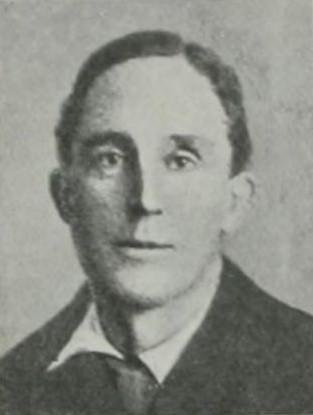
John Nathaniel Williams.
WILLIAMS, JOSEPH, Chief Yeoman of Signals, R.N., No. Ch./206951, 4th s. of the late Edward Williams, of Hull, Chemist, by his wife, Betsy Ann, dau. of Henry Hollingsworth, of Hull, Chemist; b. Hull, 25 Feb. 1883; educ. Boulevard Higher Grade School, Hull, joined the Navy in Feb. 1899; served on H.M. ships, Perseus, 1905–8; Jason, 1908–10; Shannon, 1910–12; and R.F.A. Maine, 1912–14, and was studying for an examination for warrant officer when war was declared; joined H.M.S. Cressy and was lost when that ship was torpedoed in the North Sea, 22 Sept. 1914. He m. at Boulevard Baptist Church, Hull, 8 Sept. 1910, Agnes Mary (28, Redbourne Street, Boulevard, Hull), sister of James Albert Forgan Wighton, R.N. (lost in the action off Coronel, 1 Nov. 1914), and only dau. of the late James Brown Wighton, and had two children; Joseph Albert, b. 8 Sept. 1914; and Catherine Marian, b. 23 Aug. 1912.
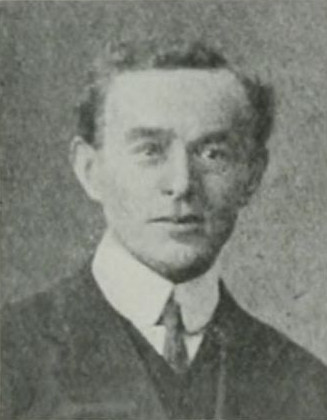
Joseph Williams.
WILLIAMS, MERVYN JAMES, Colour Sergt.-Major, No. 6854, 2nd Battn. Royal Inniskilling Fusiliers, only s. of John Williams, of Blackrock, by his wife, Ellen Dorcas, dau. of James Watts, of Grove Avenue, Blackrock; b. Blackrock, co. Dublin, 21 June, 1882; educ. Booterstown School there; enlisted Jan. 1910; served in South Africa, Egypt, and with the British Expeditionary Force in France and Flanders from 24 Aug. 1914 to 16 May, 1915, on which latter date he was killed in action at Festubert; unm.
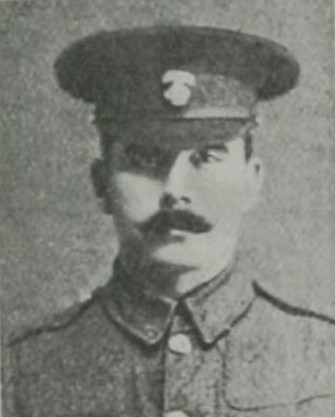
Mervyn J. Williams.
WILLIAMS, OWEN, Stoker, Petty Officer (R.F.R., B. 6104), 297624, H.M.S. Good Hope; lost in action off Coronel, on the coast of Chili, 1 Nov. 1914.
WILLIAMS, SYDNEY ERNEST, Ordinary Seaman, S.S. 4202, H.M.S. Pathfinder; lost when that ship was sunk by a mine, about 20 miles off the East Coast, 5 Sept. 1914.
WILLIAMS, THOMAS CHARLES, Stoker, 1st Class, 299881, H.M.S. Hawke; lost when that ship was torpedoed in the North Sea, 15 Oct. 1914.
WILLIAMS, TOM JAMES, Private, No. 11050, 2nd, attd. 1st, Battn. Welsh Regt., s. of George Williams, of Ffosyfedwen, Velindre, Henllan, Flannel Weaver, by his wife, Hannah, dau. of William Evans; b. Ffrontywann, 15 Nov. 1894; educ. National School, Velindre. He enlisted in the Welsh Regt. in Dec. 1913, was in training with the 2nd Battn. in Hampshire when the war broke out, and was soon afterwards sent out to France. There he was a driver in the transport section of his regt., till he contracted rheumatic fever, lying for some weeks in hospital at Le Havre, and then returning to England on three weeks’ leave. At the appointed time he reported himself at Cardiff Barracks, and was in a few days on his way back to France again, to join the 1st Battn. He served with them for three months, and was killed in action, being shot in a bayonet charge, at Zillebeke, 25 May, 1915; unm. His brother, Private William Williams, is now (1916) serving with the Devons.
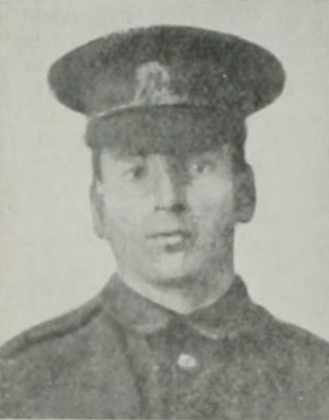
Tom J. Williams.
WILLIAMS, WALTER KENT, M.V.O., Engineer-Capt., R.N., 2nd s. of William Philips Williams, Journalist, some time of the South Wales Daily News, by his wife, Mary, dau. of Manoah Kent; b. St. Davids, co. Pembroke, 24 Oct. 1863; educ. Proprietary School, Cardiff, and Royal Naval College, Keyham, Devonport; entered the Navy as Assistant Engineer, 1 July, 1885; promoted Engineer, 2 April, 1887; Chief Engineer, 1 Aug. 1897; Engineer-Commander, 1 Aug. 1901, and Engineer-Capt., 1 Jan. 1912. While serving as Engineer in the Blanche, 1893, he landed with the Naval Brigade from H.M. ships Blanche, Swallow, and Sparrow under Commander Lindley to punish a robber chief, Fumo Omari, for various acts of treachery. The fortified strongholds at Puwani and Jongeni were stormed and captured. Capt. Williams was awarded the general Africa medal (Vitu, Aug. 1893 clasp) for these services. He was Engineer at the Royal Osborne College at the time the present Prince of Wales and his brother were students there, and for his services was awarded the M.V.O. in Oct. 1910. He afterwards served for a period ashore at Portsmouth, and on the outbreak of war was appointed on the staff of the Bulwark, and was lost when that ship was blown up off Sheerness, 26 Nov. 1914; unm.
WILLIAMS, WALTER ROLAND, Acting E.R.A., 4th Class, M. 7279, H.M.S. Hawke; lost when that ship was torpedoed in the North Sea, 15 Oct. 1914.
WILLIAMS, WILLIAM, Private, No. 1218, 3rd Battn. (Royal Fusiliers) The London Regt. (T.F.), eldest s. of the late Edwin James Williams, by his wife, Ellen, dau. of James Roberts; b. Plymouth, 24 Oct. 1889; educ. there; joined the 3rd London Regt. in July, 1912; volunteered for foreign service on the outbreak of war in Aug. 1914; went to Malta in Sept.; was sent to France in Jan. 1915, and was killed in action at the Battle of Neuve Chapelle, 10 March, 1915, being shot through the head in an attack on the German trenches; unm.
WILLIAMS, WILLIAM HENRY, Stoker, 1st Class (R.F.R., B. 4468), S.S. 103409, H.M.S. Good Hope; lost in action off Coronel, on the coast of Chili, 1 Nov. 1914.
ADDAMS-WILLIAMS, DONALD ARTHUR, 2nd Lieut., 4th Battn. (Service) South Wales Borderers, only s. of the Rev. Herbert Addams-Williams, Rector of Llangibby, co. Monmouth, by his wife, Grace, dau. of Thomas Royse Lysaght; b. Llangibby Rectory, 28 April, 1896; educ. Winton House, Winchester, and Marlborough College, where he was in the O.T.C., and joined the Public Schools Battn. immediately on the outbreak of war in Aug. 1914. He was gazetted 2nd Lieut. to the South Wales Borderers, 18 Nov. 1914; went to the Dardanelles 29 June, and was killed in action there, 11 Aug. 1915, after the advance from Anzac. Capt. A. W. Hooper wrote: “I am the only officer left out of the five who came out with the coy., and was in hospital wounded when Arthur was killed; hence I am somewhat handicapped, but I have spoken to Arthur’s platoon sergt. several times about the sad incident, and he has given me several little details about it. A covering party was sent forward to clear the enemy away from some wells from whence they had been sniping our troops for three or four days. This party was also to act as a screen to keep the enemy from advancing, or firing, while the remainder of our battn. went forward and dug themselves in, in an advanced position. Arthur, with his platoon, commanded a portion of this covering party, more of the enemy were found near the wells than was anticipated, and our covering party lost rather heavily. However, they nobly did their work, and kept the enemy back while the new trenches were being dug. Arthur was absolutely fearless, and always very cheerful in the trenches. He took his men forward, and had not advanced far before he was hit; he went on and presently was hit a second time, but where each of the first two shots struck him his sergt. did not know. However, being twice wounded, he continued to command his platoon, encouraging all of the men, and showing them a noble example by his own heroism, and disregard of self. A little time afterwards, while still advancing, he was wounded a third time. He turned completely round, and must have died within a few seconds. His sergt. knelt by him as he died, and has told me since that his death was a grand one to see. The sergt. had to leave him, to take charge of the platoon, and when the covering party retired his body was not seen. Several times Sergt. Worthington, his platoon sergt., volunteered to go forward and look for it, but the Turks were now holding that ground in very strong numbers, and it would have meant a further sacrifice of life to send a search party out; therefore his body, and those of two other officers who died the same evening, was never recovered. His death meant a great loss to his men, who thought so highly of him, to the whole coy., and also to myself, who found him an ever-cheerfull and lovable friend.” Nearly three months afterwards, during a reconnaisance, Lieut. Curtis, of the Northamptonshire Regt., discovered his body, and had it brought back to South Wales Borderers Valley, where it was buried in the little Military Cemetery on 3 Nov. 1915.