The Roll of Honour. (continued 17)
Reading edition
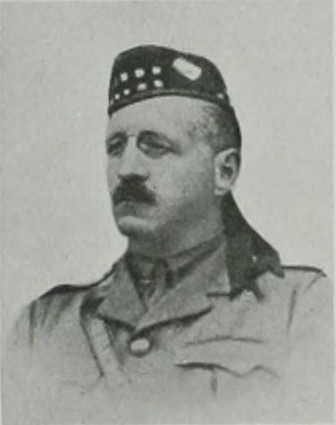
William Herbert Evans.
EVANS, WILLIAM JAMES, A.B., 221679, H.M.S. Pathfinder; lost when that ship was sunk by a mine, about 20 miles off the East Coast, 5 Sept. 1914.
EVASON, WILLIAM DODD, A.B. (R.F.R., Ch. B. 1131), 162903, H.M.S. Cressy; lost in action in the North Sea, 22 Sept. 1914.
EVATT, GEORGE RALEIGH KERR, Capt., 1st Battn. (57th Foot) Middlesex Regt., only s. of Surgeon-General George Joseph Hamilton Evatt, of Wayside, Camberley, co. Surrey, late of the Army Medical Staff, and Hon. Colonel of the Home Counties Division Territorial R.A.M.C., M.D., C.B., by his wife, Sophie Mary Frances, dau. of William Walter Raleigh Kerr, Treasurer of Mauritius, and granddau. of Major-Gen. Lord Robert Kerr [4th s. of William John, 5th Marquis of Lothian, K.T.]; b. Royal Military Academy, at Woolwich (where Surgeon-Gen. Evatt held the post of Medical Officer in Charge), 30 Sept. 1883; educ. Cheltenham College, and afterwards prepared by private tutor for University Matriculation. He entered the Middlesex Regt. as a University candidate 12 March, 1904, having passed through the necessary studies at St. John’s College, Cambridge, where his tutor was Sir Donald MacAlister, now principal of Glasgow University; was promoted Lieut. 9 May, 1906, and Capt. Sept. 1914. He served with the West African Frontier Force from April, 1909, to Dec. 1914, when he came home and rejoined his regiment. He was killed while in the trenches only 400 yards from the German lines, near La Boutillerie, about 3¼ miles south of Armentières, by a bullet in the temple, fired by a German sharp-shooter, 13 Nov. 1914, and was buried in the grounds of a private château near the trenches; unm. At the time of his death he was in command of A Coy. of the same battn. (57th Foot) in which his great-grandfather, Capt. John Hamilton Evatt, served at the battle of Albuera, in Spain, 1811, and who was severely wounded in that desperate fight. In the 301 years that have elapsed since the Evatt family passed over to Ireland in 1613 not less than 21 members of the family have served in the British army. While several were wounded, only two, however, were actually killed in action on the field of battle, viz., Capt. George R. K. Evatt, the subject of this notice, and Capt. Henry Evatt, of the 16th Lancers, who served in the revolutionary war in America (1775–7), and was eventually shot dead on the gate of Lord Moira’s House in the battle of Ballinahinch in 1798 by the Presbyterian rebels while serving with the Monaghan militia.
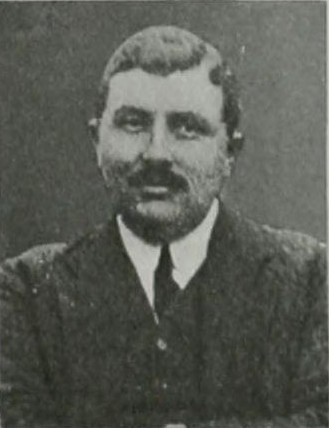
George R. Kerr Evatt.
EVERALL, EDWARD HENRY, A.B., 233891, H.M.S. Aboukir; lost in action in the North Sea, 22 Sept. 1914.
EWELL, LESLIE, E.R.A., 1st Class, 269768, H.M.S. Hogue; lost in action in the North Sea, 22 Sept. 1914.
EWEN, ERNEST CECIL, Ordinary Seaman, S.S. 4650, H.M.S. Aboukir; lost in action in the North Sea, 22 Sept. 1914.
EYERS, WILLIAM JAMES, Leading Seaman (R.F.R., B. 4768), 195096, H.M.S. Good Hope; lost in action off Coronel, on the coast of Chili, 1 Nov. 1914.
EYKYN, GILBERT DAVIDSON PITT, Capt. Royal Scots (Lothian Regt.), attached 4th Battn. Alexandra, Princess of Wales’s Own Yorkshire Regt., only s. of the late Rev. Pitt Eykyn, sometime Vicar of Magor-cum-Redwick, co. Monmouth, and at the time of his death Chaplain of Parel, Bombay, India, by his wife, Charlotte Elizabeth (82, Prince of Wales Mansions, Battersea Park, S.W.), dau. of James Davidson, Bengal Civil Service; b. France Lynch Parsonage, co. Glos., 22 Aug. 1881; educ. Haileybury College and Clayesmore School. He received his first commission in the 3rd Battn. Loyal North Lancashire Regt., 1899, was gazetted 2nd Lieut., 4th Battn. Manchester Regt., 4 May, 1901; was promoted Lieut., 24 Dec. 1901; transferred to Indian Army, 12 Feb. 1904; joined the Royal Scots, 4 Feb. 1905; was appointed Adjutant to the 4th Yorkshires (T.F.), 13 Feb. 1913, and promoted Capt. Royal Scots, 26 June following. He served for 11 years in India, and in the South African Campaign, taking part in the operations in the Orange River Colony and in the Transvaal, for which latter services he received the Queen’s medal with three clasps (Cape Colony, Wittenbergen and Transvaal). Capt. Eykyn fell in the first engagement of the 4th Yorks at the Second Battle of Ypres, after only a few days at the Front, while gallantly leading his regt. into action at the storming of St. Julien, 24 April, 1915, and was buried in a wood to the left of the reserve trenches. Col. Maurice Bell wrote to his wife: “Remember this, he trained the battn. and the General (Plumer) has personally thanked us for our behaviour at a critical moment. His is the credit”; and Corpl. Wearmouth: “It is only natural we looked up to our Adjutant, as he was responsible for all our training whilst at home, and naturally he having been through the African Campaign we followed him. The Adjutant never drew his revolver, all he thought about was the regt.’s first conduct under fire, and I am glad to say that we are mentioned in the General’s despatches, and it was all due to our Adjutant. The loss is being avenged, as every shot fired by our lads, they say as they pull the trigger ‘There’s one for the Adjutant.’” The following is an extract from the “Yorkshire Evening Post,” 29 April, 1915: “Capt. Eykyn was an ardent worker on behalf of the military forces long before the war broke out, and he addressed public meetings on the advantages of joining the service. He was also an amateur actor of considerable talent, and took part in playlets given on behalf of the National Service League.” The “Green Howards” Gazette for May, 1915, said: “The splendid work that he did as Adjutant has borne fruit in the gallantry displayed by the battn. in action, and the death of this fine young officer is deplored by all.” Capt. Eykyn had passed examinations in Hindustani and Russian, also as an Instructor of Gymnasia, and had obtained a D in Musketry. He m. at Bombay Cathedral, 28 Nov. 1902, Constance (The Cottage, Northallerton, co. Yorks), elder dau. of the late Arthur Norton, of Guildford, and had one son: Duncan Arthur Davidson, b. 11 Aug. 1906.
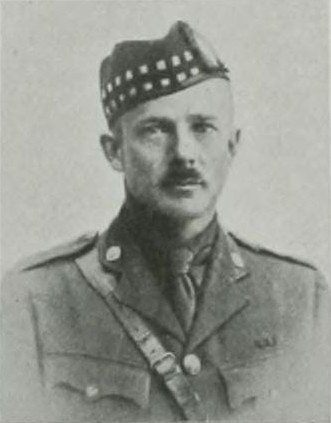
Gilbert D. Pitt Eykyn.
EYRE, JOHN, 2nd Yeoman of Signals (R.F.R., B. 425), 174716, H.M.S. Hogue; lost in action in the North Sea, 22 Sept. 1914.
EYRE, WILLIAM, Capt., 12th Battn. Welsh Regt., attd. 1st Battn. Lancashire Fusiliers, only s. of William Eyre, of 21, Babworth Road, Retford, retired Miller, by his wife, Mary, dau. of the late John Pagdin, of Morton, Gainsborough, Merchant; b. Creswell, co. Derby, 25 March, 1879; educ. King Edward VI Grammar School, Retford, and Sheffield University. He took the B.Sc. degree at London University with honours in chemistry, and returned to Retford Grammar School as Science Master, where he was for several years, and, after a short period in a similar capacity at Cranbrook School, joined in 1907 the staff of Christ’s Hospital, Horsham, as Science Master and House Master of Thornton B., where he remained until the outbreak of the war. An In Memoriam notice in “The Blue” said: “As an officer in the O.T.C., as president of the Natural History Society, in the house and in the playing fields, he worked hard for the good of Christ’s Hospital. His whole-hearted interest in all that would make for the good of the boys or of his colleagues and his affection for the ‘lads’ of this House, are known to us all. He was a most valuable member of our community.” He was appointed 2nd Lieut. in the Christ’s Hospital O.T.C. (T.F.), 17 July, 1908, and volunteered on the outbreak of war, and was gazetted Capt. in the 8th (Service) Battn. of the Welch Regt. 14 Dec. 1914. He was afterwards transferred to the 12th Battn., and subsequently attached to the 1st Lancashire Fusiliers, with which he went to the Dardanelles, 17 July, 1915. He was wounded near Gully Beach, Gallipoli, 6 Aug. 1915, and died in the 19th General Hospital at Alexandria on the 19th, being buried in the English cemetery there; unm. Col. Ommanney, 12th Battn. Welch Regt., wrote: “During the five months he was with us he not only did his work well, but made himself respected and beloved by all ranks. I feel I have lost in him a real friend, and I know that this feeling is shared by very many of his brother officers.”
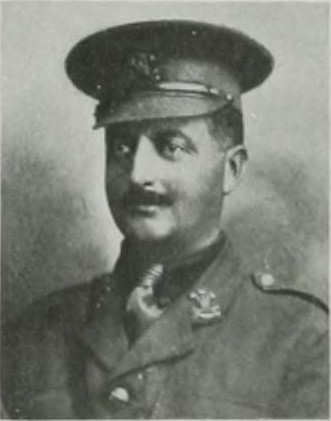
William Eyre.
FADE, HAROLD, A.B., 219145, H.M.S. Liberty; killed in action in the Heligoland Bight, 28 Aug. 1914.
FAGG, ALBERT, Chief Stoker (R.F.R., Ch. A. 1846), 154116, H.M.S. Cressy; lost in action in the North Sea, 22 Sept. 1914.
FAIR, ROY NICHOLS, L.-Corpl., No. 6914, 1st Battn. Canadian Expeditionary Force, s. of the Rev. Hugh James Fair, of Arkona, Ontario, Methodist Minister, by his wife, Eliza, dau. of Henry Nichols; b. Londesborough, Ontario, 17 May, 1894; educ. Exeter and Watford High Schools and Albert College, Belleville; was a Bookkeeper; volunteered on the outbreak of war and joined the Canadian Expeditionary Force in Aug. 1914; came over with the First Contingent, Oct. 1914; went to France, Feb. 1915, and was killed in action at Givenchy, 15 June, 1915; unm.
FAIRCHILD, EDWARD JAMES, Stoker, 1st Class, K. 5973 (Ports.), H.M.S. Cressy; lost in action in the North Sea, 22 Sept. 1914.
FAIRCLOUGH, JOHN, A.B. (R.F.R., Ch. B. 10324), 203995, 3rd s. of the late Thomas Fairclough, of Mossley Hill, Liverpool, by his wife, Sarah (20, Bearton Road, Hitchen, co. Herts), dau. of William Rawlinson; b. Holmfield, Aigburth, Liverpool, 19 Jan. 1884; educ. Beachwood, co. Herts; joined the Navy at the age of 18 in 1899, and served his full time, passing into the R.N.R. 19 Jan. 1914. On the outbreak of war he joined H.M.S. Cressy, and was lost when that ship was torpedoed in the North Sea, 22 Sept. 1914; unm.
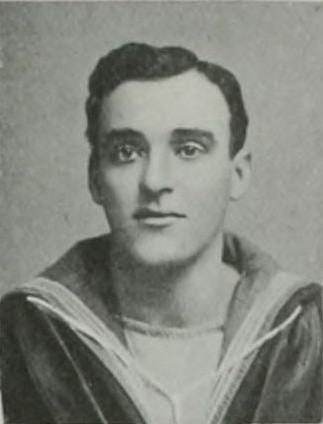
John Fairclough.
FAIRES, WILLIAM, A.B. (R.F.R., B. 3911), 194391, H.M.S. Good Hope; lost in action off Coronel, on the coast of Chili, 1 Nov. 1914.
FAIRS, ERNEST WILLIAM, Private, No. 9551, 5th Battn. (London Rifle Brigade) The London Regt. (T.F.), eldest s. of William Fairs, of 32, Beaconsfield Road, Croydon, Surrey, Joiner, by his wife, Ellen Sarah, dau. of Skillington Medwell; b. Banstead, co. Surrey, 15 Dec. 1895; educ. Sydenham Road Council Schools, Croydon, and was employed at Messrs. Giddy & Giddy, Regent Street, Auctioneers & Estate Agents; joined the London Rifle Brigade in Aug. 1913; volunteered for foreign service on the outbreak of war, in Aug. 1914; went to France, 5 Nov. 1914, and was killed in action at Ypres, 3 May, 1915, and buried at Forturn; unm.
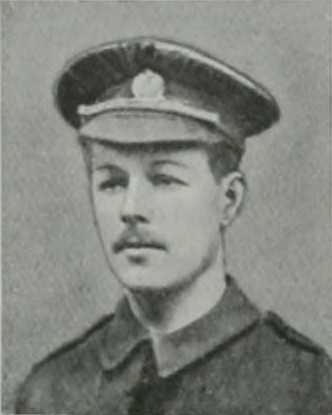
Ernest William Fairs.
FAIRWEATHER, GEORGE, Stoker, 1st Class, K. 6889, H.M.S. Aboukir; lost in action in the North Sea, 22 Sept. 1914.
FAIRWEATHER, JOHN, 2nd Engineer, R.N.R., yst. s. of William Fairweather, Gas Engineer to the Corporation of Kilmarnock, by his wife, Marjory, dau. of Peter Young, of Glamis, Forfarshire; b. Kilmarnock, 25 Jan. 1887; educ. Kilmarnock Academy; served his apprenticeship with Messrs. Andrew, Barclay, Sons & Co., Ltd., taking his second certificate as a marine engineer, and gaining considerable experience not only in shipbuilding yards on the Clyde, but in the service of the British India Co. and the Red Star Line; he was afterwards engaged in transport service between Canada and Liverpool, and after the outbreak of war joined the Royal Naval Reserve at the end of Oct. 1914. He was posted to the Clan MacNaughton which left Birkenhead just after Christmas, 1914, on her first patrol. The last signal made by her was at an early hour on the morning of 3 Feb. following, and it is supposed, according to the Admiralty report, that she was lost during the bad weather which prevailed at that time. Fairweather was unm.
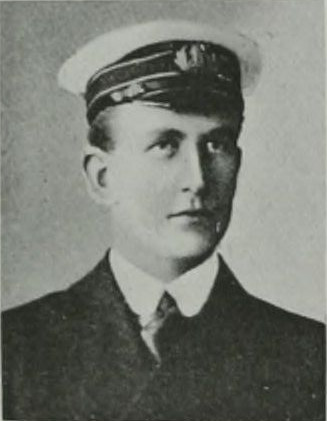
John Fairweather.
KEAY-FALCONER, WILLIAM, Jun., Lieut., 7th Battn. Princess Louise’s Argyll and Sutherland Highlanders (T.F.), only s. of William Keay-Falconer, Clerk of Lieutenancy and Sheriff-Clerk and County Clerk of Kinross-shire, by his wife, Margaret More, dau. of James Thomson Morrison, of Coatbridge; b. Kinross, 29 Nov. 1894; educ. Edinburgh Academy (1907–13), where for the last two years he served in the O.T.C., and at the Institut Polyglotte, Namur; afterwards being employed in his father’s office. He was gazetted 2nd Lieut. Argyll and Sutherland Highlanders, 20 Sept. 1913, and was promoted Lieut. 7 Sept. 1914. On the outbreak of war he immediately volunteered for service abroad, went to France with his regt. in Dec. following, and was killed while leading his men in a charge against the enemy, at Ypres, 25 April, 1915; unm. The Brigade of which his battn. was a unit had been called from a rest camp to help the Canadians whose flank was exposed through the troops acting with them having fallen back owing to gas. Col. Craig wrote: “While I was with the battn. in France I had many conversations with him on the subject of his work and have frequently remarked to Capt. Murdoch, and others who interested themselves in him, upon his coolness. He knew his work well, and was devoted to it. He didn’t know what fear was, and he seemed fully to realise the responsibility of his men’s comfort that rested upon him as a platoon commander, and the men were devoted to him.... I will never forget your son’s interest in his work, and his valuable services from the time of mobilisation in Aug. last till I left the battn. on 11 March.” Col. Carden who succeeded Col. Craig, wrote: “During the short time I have been in command of the battn. I had formed the highest opinion of your son’s military capabilities. He died bravely leading his men, and is mourned by all his brother officers”; and Capt. Murdoch: “Keay fell like a hero in front of his men.” Lieut. Keay-Falconer was a keen golfer, and a member of Edinburgh Academical Golf Club. He was also a prominent and enthusiastic member of Kinross Club, and held both the gold and silver medals for 1914. He spoke French fluently, and was consequently of much use to his comrades when abroad. Memorial brasses were erected to his memory in the Church of St. John the Evangelist, Princes Street, Edinburgh, and in St. Paul’s Church, Kinross. The tablet in the former church was placed there by the children of the church to perpetuate Lieut. Keay-Falconer’s memory, as he was Warden of their special services during the greater part of his school days in Edinburgh. The last five words of the inscription on the brass sum up his character as the subscribers to the memorial knew it: “Gallant and true and tender.” The brass in St. Paul’s Church, Kinross, was dedicated by the Bishop of St. Andrews on 1 Feb. 1916.
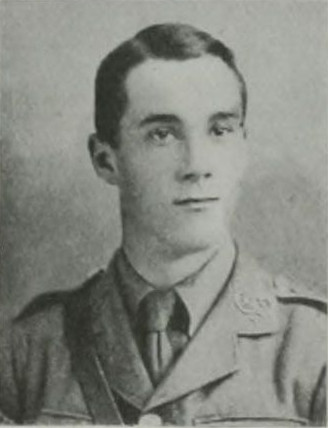
W. Keay-Falconer, Jun.
FARDELL, HUBERT GEORGE HENRY, Lieut., 3rd, att. 2nd, Battn. East Surrey Regt., only child of Hubert Askew Fardell, of 16, Brechin Place, S.W., late Capt. 4th East Surrey Regt., by his wife, Henrietta Alice, dau. of Henry Woods, of Warnford Park, Hants; b. London, 7 July, 1895; educ. Eton (R. S. de Havilland’s House), where he was Sergt. in charge of G Coy. in the O.T.C.; left there on the outbreak of War to join the Inns of Court O.T.C., and was given a commission as 2nd Lieut. in the 3rd East Surrey Regt., 15 Aug. 1914, and promoted Lieut., 9 March, 1915; went to the Front, 23 Feb. 1915, and was killed in action at Zonnebeke during the 2nd Battle of Ypres, 23 April, 1915. He was killed instantaneously, about 2.30 in the afternoon, whilst passing through a communication trench to see how one of his brother officers was faring as the shelling had been heavy. His servant wrote: “He was a very brave man, one of the bravest I’ve seen out of my seven months in the trenches.” He was buried in the graveyard by the ruined church just behind the firing lines. His C.O., Col. Shipley, wrote: “Your son showed such great promise of being a very capable officer and leader of men.” He had been intended for the Diplomatic Service, his strong intellect and quickness in acquiring foreign languages, clearly marking him out for such a career. “The Eton College Chronicle” of 20 May, 1915, said: “Mr. Fardell did well at Eton, both in school and on the river. He was in the boats, rowing in the Victory in 1914. He won Junior Sculling in 1913, and did well in School Sculling the following year. As a coach he had a wonderful power of getting the utmost out of a crew, and was an admirable captain of a football team. In fact, as a coach and as a leader he found the work that suited him. Had he lived he would undoubtedly have been a very valuable officer and a first-rate leader.”
FARMER, HORACE, Colour-Sergt., R.M.L.I., 6271A., (R.F.R., Ch. A. 640), H.M.S. Cressy; lost in action in the North Sea, 22 Sept. 1914.
FARMER, HENRY CHARLES MACLEAN, 2nd Lieut., 6th, attd. 4th, Battn. King’s Royal Rifle Corps, yr. s. of the Rev. James Edmund Gamul Farmer, Rector of Waddesdon with Upper Winchendon, Aylesbury, Bucks, by his wife, Margaret, dau. of Captain Charles Bampfield Yule, R.N.; b. Arundel Vicarage, co. Sussex, 8 Aug. 1892; educ. Summerfields, near Oxford; Eton (Mr. Ramsay’s House), and Trinity College, Cambridge; volunteered on the outbreak of war, and applied for a commission, and while waiting for it enlisted in the 3rd Dragoon Guards, 3 Sept. 1914; gazetted 2nd Lieut. 6th King’s R.R.C., 22 Sept. following; went to the Front in March, 1915, to join the 4th Battn. of his regt., and was killed in action near Ypres, 10 May, 1915. He was buried at the East Boundary of Bellewaarde Wood; unm. Col. Brownlow, K.R.R.C., wrote: “He worked hard down here (Sheerness) and was very keen to get to the Front”; and Capt. Field: “He was in my company the whole time he was at Sheerness, and King’s Ferry; a most excellent, cheery fellow, and a very conscientious, good, young officer.”
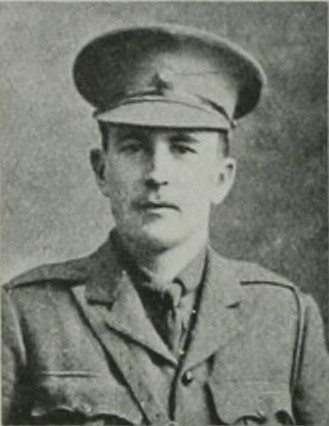
Henry C. M. Farmer.
FARNDON, WILLIAM, Boy, 1st Class, J. 26735, H.M.S. Hawke; lost when that ship was torpedoed in the North Sea, 15 Oct. 1914.
FARNSWORTH, JOHN, Private, No. 562, 4th Battn. Australian Imperial Force, 4th s. of Henry Farnsworth, of the Buck Hotel, High Street, Clay Cross, Wine and Spirit Merchant, by his wife, Margaret, dau. of Joseph Cutts, Builder & Contractor; b. High Street, Clay Cross, co. Derby, 3 Sept. 1880; educ. Board School, Clay Cross, and Collegiate School, Kettering; emigrated to N.S.W., Australia, 25 Sept. 1903, and worked for a year and a half in the copper mines at Cobar. He then took a position on the G.W. Ry. under his uncle, Mr. B. Farnsworth, Inspector of Permanent Way, which he held until war was declared in Aug. 1914. He immediately proceeded to Sydney, and joined the Australian Imperial Force, and was killed in action at Gaba Tepe, 2 May, 1915, while repelling an attack by the Turks on the Australian trenches; unm. Sergt.-Major E. H. Stone wrote the following description of the incident: “I daresay you read in the papers about our Coy. relieving the marines, and how our Major got his D.S.O. Well, for the next two days, the Turks were persistent in their attacks, and it was as much as we could do to beat them back. On the afternoon of 2 May, they made a very determined attack which lasted about two hours. We manned the parapet and fired into them as fast as we could load, and after we had beaten them back turned and found many of our own lads in the bottom of the trench, and among them, John, shot through the head—not a moments’ pain, thank God. We took them out to the back of the trenches and buried them and put up a large wooden cross over them. I can safely say there is not a man in the Battn. who is more regretted than John.”
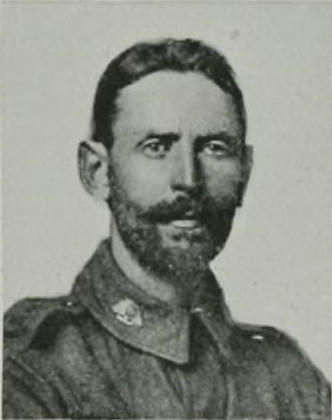
John Farnsworth.
FARQUHARSON, LEWIS SHAW, Capt., 1st Battn. Royal Scots, only s. of the Rev. Alexander Farquharson, of Spital, Aberdeenshire, and 41, Camden Square, London, N.W., by his wife, Mary Walker, dau. of Lewis Shaw, of Chesterfield; b. Chesterfield, co. Derby, 23 April, 1884; educ. Cottesmore, Charterhouse, and Sandhurst; gazetted 2nd Lieut., 10 Oct. 1903, and promoted Lieut. 5 April, 1906, and Capt. 31 Aug. 1914; served in India successively as Station Staff Officer at Kamptee, and as A.D.C. to General Keir, and was Adjutant of the 1st Battn. from 28 Aug. 1911 to 28 Aug. 1914. He also had the honour, with Col. D. G. Wemyss, of being selected to represent the regt. as extra A.D.C. to the King in Calcutta, during the Durbar tour. On the outbreak of war Capt. Farquharson was in India, and he went to the Front with his Battn. early in 1915. He saw much fighting, went through the varying phases of the long and severely contested Second Battle of Ypres, and had different narrow escapes. On 11 May, 1915, when the British line had been broken and a trench captured, on his own initiative Capt. Farquharson led forward his company, from the reserve line, drove back the enemy, and regained and held the lost ground. For his promptness and gallantry on this occasion he received the special thanks of his C.O., and Gen. Allenby sent his congratulations for what he described as “a splendid and successful counter attack.” Early the following morning (12 May) while superintending fresh protections for the shattered trench, he was shot through the head and killed instantly. He was subsequently mentioned in F.M. Sir John (now Lord) French’s Despatch [London Gazette, 1 Jan. 1916] for gallant and distinguished service in the field. He was buried in Valmertinghe Cemetery, near Ypres. Col. Callander wrote that the whole regt. mourned his loss and that Capt. Farquharson was in every sense, one of the best of the younger officers in the Army and the most sterling good fellow he had ever known. Gen. Sir John Keir also wrote saying that “his future as a soldier had been assured, and that his name would be honoured for all time.” At school and college he took many prizes and represented each of them at both cricket and football. He played cricket twice for All India.
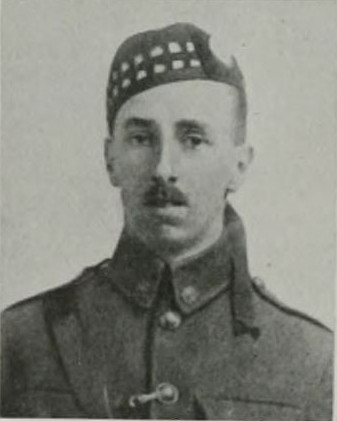
Lewis Shaw Farquharson.
FARR, JOHN, Seaman, R.N.R., 3525C, H.M.S. Aboukir; lost in action in the North Sea, 22 Sept. 1914.
FARRAR, SIR GEORGE HERBERT, 1st Bart., D.S.O., Col. and Assistant Q.M.-General, Central Force, Union Defence Forces, late Hon. Col. South African Light Horse, s. of the late Charles Farrar, of Chatteris, co. Cambridge, M.D., by his wife, Helen (The Crescent Lodge, Bedford), sister of Sir Frederick Howard, and dau. of John Howard; b. Chatteris, 17 June, 1859; educ. Bedford Modern School, and on leaving there entered the engineering business of his uncle Sir Frederick Howard, going in 1879 to South Africa to the Port Elizabeth and East London Branches. Eight years later he and his brothers established themselves at Johannesburg, where in a few years he became one of the leading men in the mining industry of the Witwatersrand. His chief enterprise was the formation of the East Rand Proprietary Mines, of which he was chairman from its inception to the day of his death. He was for some time a Member of the Legislative Assembly of the Transvaal and Leader of the Opposition. For his share in the Jameson Raid he was tried for treason and sentenced to death, but the sentence was remitted on payment of a fine of £25,000. When the South African War broke out he raised two regts. of South African Horse, and was appointed Major, Kaffrarian Rifles, 1 Dec. 1900, and served in this campaign as Major on the Staff of the Colonial Division, 1899–1900. He took part in the operations in the Orange Free State, including the defence of Wepener; operations in the Transvaal, west of Pretoria, Aug. to Sept. 1900; operations in Orange River Colony 1900, including actions at Wittebergen (1–29 July), and in Cape Colony, south of the Orange River. His services were mentioned in Despatches [London Gazette, 16 April, 1901], and he was awarded the Queen’s medal with four clasps and the D.S.O. (1900). After the conclusion of peace in 1902 he took an active part in the work of re-organisation, and when Responsible Government was granted to the Transvaal, he was unanimously elected leader of the Progressive Party in the House of Assembly, in opposition to the Ministry of General Botha. In 1903 was elected President of the Witwatersrand Chamber of Mines, and took a leading part in the negotiations which led up to formation of the Union of South Africa. He had been knighted in 1902, and on 2 Feb. 1911 was created a Baronet for his services on this occasion. He was M.P. for Georgetown in the first Parliament of the Union of South Africa, 1910–11, but in Dec. 1911 business demands in connection with the East Rand Co. compelled him to retire from political work in order to devote his whole energies to the re-organisation of that enterprise. When the European War broke out he was in England on a visit and was about to join General Sir Hubert Hamilton’s Staff with the Army in Belgium, but the day before he was to have left he was ordered by the authorities to South Africa. On arrival he was appointed to General McKenzie’s Force with the rank of Col., and was despatched to German South-West Africa as Assistant Q.M.-General. Proceeding to Luderitz Bay in advance of the main force he was engaged in the organisation of the base camp, and subsequently had charge of the restoration of the railway and of providing the water supply to the force, an operation of primary importance in that country. On 19 May, 1915, he was returning from a tour of inspection when the motor trolley in which he was travelling collided with a construction train at Kuibis, near Gidson, German South-West Africa, and Sir George succumbed to his injuries early next morning. Sir George Farrar was one of the best-known men in South Africa, to whose advancement he had, by legislative work, by attention to mining progress, and to practical sympathy with agriculture, powerfully contributed. He m. at Johannesburg, 3 June, 1893, Ella Mabel (Chicheley Hall, Newport Pagnell, Bucks; Bedford Farm, near Johannesburg, Transvaal), dau. of the late Charles William Waylen, I.M.S., and had six daus.: Helen Mabel, b. 2 Oct. 1894; Muriel Frances, b. 6 April, 1896; Gwendoline, b. 14 July, 1897; Georgina Marjorie, b. 17 Aug. 1901; Kathleen Elizabeth, b. 9 May, 1907; and Ella Marguerite, b. 28 April, 1911.
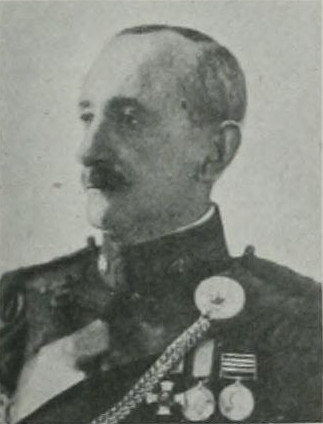
Sir George H. Farrar.
FARRAR, JOHN, Private, No. 7725, 4th Battn. Durham Light Infantry, only s. of William Farrar, of Southwick-on-Wear, by his wife, Treaser, dau. of Matthew Crawford, of Sunderland; b. Southwick, co. Durham, 12 Aug. 1890; educ. St. Benett’s R.C. School, Monkwearmouth; enlisted in 1907 in the Special Reserve of the Durhams and was discharged in 1913, when he rejoined for another term and was called up on mobilisation, 5 Aug. 1914, went to France with the first Expeditionary Force, and was killed in France, 5 Dec. 1914, while on sentry duty; and was buried on a farm, Du-Bix; unm.
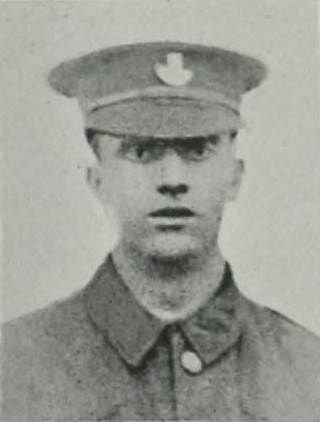
John Farrar.
FARRAR, LUKE, Private, No. 10735, 2nd Battn. Durham Light Infantry, 4th s. of Luke Farrar, of Southwick-on-Wear, Shipyard Labourer, by his wife, Elizabeth, dau. of George Clark, of Southwick; b. Southwick, co. Durham, 25 July, 1884; was employed in Pickersgill’s Yard, Sunderland; enlisted 26 Sept., 1914; trained at South Shields; killed in action “somewhere” in France, 6 Feb. 1916, and was buried in Rotize Cemetery. He m. at Sunderland, 22 May, 1906, Mary Jane (4, Stoney Lane, Southwick-on-Wear), dau. of James Foster, of Sunderland, and had four children: Luke, Burliss, b. 8 June, 1912; James, b. 13 April, 1915; Sarah Elizabeth, b. 19 July, 1905; and Esther Jane, b. 13 Sept. 1908.
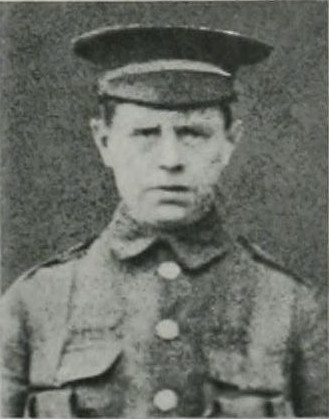
Luke Farrar.
FARRER, JOHN EDWARD, Private, No. 7152, 2nd East Lancashire Regt., s. of John Edward Farrer; b. 28 Jan. 1879; educ. Brunswick Day School, Burnley; was a Weaver; enlisted after the outbreak of war, 18 Sept. 1914; went to France, 26 Dec. following, and was killed in action at Neuve Chapelle, 14 March, 1915. He was formerly a cornet player in the local Volunteers. He m. at Gannow, Burnley, 4 June, 1904, Clara (37, Haslam Street, Burnley), dau. of William Sagar, and had two children: William Edward, b. 5 Nov. 1905; and Hilda, b. 4 May, 1914.
FAUGHNAN, FRANCIS, Private, No. 2972, 2nd Battn. The Royal Scots, s. of John Faughnan, of Briskillbeg, Farmer, by his wife, Ellen, dau. of Patrick McAvey; b. Briskillbeg, Newtonforbes, co. Longford; educ. Cloonteagh National School, Newtonforbes; enlisted after the outbreak of war, and was killed in action on the Western front, 17 Nov. 1915; unm.
FAUGHNAN, PATRICK, Private, No. 2707, 1st Battn. Argyll and Sutherland Highlanders, s. of John Faughnan, of Briskillbeg, Farmer, by his wife, Ellen, dau. of Patrick McAvey; b. Briskillbeg, Newtonforbes, co. Longford; educ. Cloonteagh National School, Newtonforbes; enlisted on the outbreak of war, and was killed in action on the Western front, 10 Oct. 1915; unm.
FAULKNER, VICTOR, Private, R.M.L.I., Ch./16023, H.M.S. Hawke; lost when that ship was torpedoed in the North Sea, 15 Oct. 1914.
FAULKS, PHILIP ALBERT, Boy, 1st Class, J. 27543 (Ports.), H.M.S. Hawke, s. of John Thomas Faulks, of 4, Cobden Street, Loughboro’; lost when that ship was torpedoed in the North Sea, 15 Oct. 1914.
FAWCETT, ROBERT HEATH, 2nd Lieut., 4th (Special Reserve), attached 1st, Battn. Bedfordshire Regt., eldest s. of Henry Heath Fawcett, of Berkhampsted, and of the War Office, by his wife, Colina, dau. of John Colin Sharp; b. Wimbledon, co. Surrey, 5 March, 1893; educ. Hillside, Godalming; Uppingham, and Emmanuel College, Cambridge (where he was an Exhibitioner, and a member of the O.T.C.); gazetted 2nd Lieut., 4th Battn. Bedfordshire Regt., 15 Aug. 1914; went to Flanders 10 April, 1915, where he was attached to the 1st Battn., and was killed in action near Ypres, 26 April, 1915; unm. He was buried at Zillebeke, near Ypres.
FAWLEY, FRANCIS HENRY BUCKLEY, Private, No. 1862, Honourable Artillery Company, s. of Henry John Buckley Fawley, of 35, Queen Elizabeth’s Walk, Stoke Newington, N., Journalist, by his wife, Emily, dau. of the late James (and Eliza) Smith, of Lordship Lane, Wood Green, N., formerly of Sittingbourne, Kent; b. Harringay, London, 16 Aug. 1895; educ. Finsbury Park College, London, was on the clerical staff of the Metropolitan Electric Tramways Company; joined the H.A.C. after the outbreak of the war in the beginning of Sept. 1914, went to France, 23 Jan. 1915, and was killed in action near Ypres, 15 May, 1915. He was buried in the grounds of the Chateau of Elzenwalle, near Voormezeele; unm. His Sergt. wrote: “He was killed on the night of the 15th inst. He lived for some hours after he was struck, and was quite conscious when I last saw him.... His pluck was wonderful; he knew he was mortally wounded yet possessed himself like the gentleman and man he was; never giving a sign of any pain—his main concern being for the safety of his comrades.... We all liked him and shall miss him greatly.”
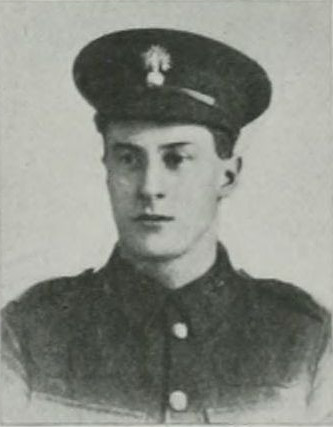
Francis H. B. Fawley.
FAY, WALTER EDWARD, Rifleman, No. 2407, 18th Battn. (London Irish Rifles) The London Regt. (T.F.), s. of the late James Charles Fay (died 13 Nov. 1915), by his wife, (—) (79, Limerstone Road, King’s Road, Chelsea, S.W.); b. Fulham, S.W., 24 July, 1894; educ. St. Mark’s College, Chelsea; enlisted after the outbreak of war 2 Sept. 1914, and died of wounds received in action at the Battle of Loos, 27 Sept. 1915; unm.
FEATHERSTONE, ALFRED CHARLES, Rifleman, No. 2472, 1/8th (Leeds Rifles) Battn. West Yorkshire Regt. (T.F.), eldest s. of Alfred Charles Featherstone, of West Normans, Park Avenue, Castleford, by his wife, Jane Harriet, dau. of Alfred Watson, of East Hardwicks, Yorks; b. Castleford, co. York, 30 April, 1891; educ. King’s School, Pontefract; entered the employ of the London City and Midland Bank at Morley, Yorkshire, when 16, and at the outbreak of the war was holding the post of Assistant Cashier. He enlisted 21 Sept. 1914; sailed for France, 15 April, 1915, and was killed in action at Neuve Chapelle, 12 May, 1915, and was buried in Rue de Bacquerot, France; unm. His officer wrote: “He was one of the most popular men in the company, and we all feel his loss very keenly.”
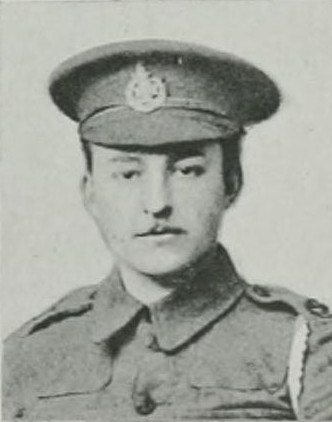
Alfred C. Featherstone.
FEATHERSTONE, CECIL FREDERICK, Lieut., 3rd, attached 2nd, Battn. East Surrey Regt., eldest s. of Frederick Featherstone, of Mount Pleasant, Plough Lane, Purley, member of London Stock Exchange, by his wife, Minnie Elizabeth, dau. of Thomas W. Dean; b. Lewisham, 13 Feb. 1897; educ. Holmwood, Bexhill-on-Sea (1906–1910), where in 1907 he joined the School Cadet Corps, which was affiliated with the 2nd Home Counties Royal Engineers (T.F.). In 1911 he went to Dover College, where he won prizes in English, Latin, and other subjects, and joined the O.T.C., in which he had reached the rank of Sergt., when gazetted 2nd Lieut. to the 3rd (Special Reserve) Battn. of the East Surreys, 16 Dec. 1914. Joining his regt in Jan. he left for France on 20 March, 1915, was attached for a while to C Coy. 1st Battn. Dorsetshire Regt., and later transferred for duty to the 2nd Battn. East Surrey Regt., being confirmed in his rank as 2nd Lieut. 9 April, 1915. He was killed in action, being shot through the heart while bravely leading his men in the repulse of the German attack on the British trenches near Ypres, 25 April, 1915. He was buried in the Officer’s Graveyard, 1½ miles east of Zonnebeke; unm. Sergt. Buckingham, of the East Surreys, gave the following graphic account of the incidents from 17 to 27 April: “Our headquarters were at Zonnebeke, near Ypres. About 3 p.m. on the 17th an order was given to pack up and move. There was some heavy shelling at the time, and it took about one hour to get everything on to the transport. We were then given another 150 rounds ammunition to carry and about 4.30 the order to move was given. We took a road to the left of Ypres. Our company officer, Capt. Fuller, was sick, so he was not with us, but Lieut. Rottman took charge. We had only three officers—Lieuts. Rottman, Featherstone and Ward—and we reached our destination, about a mile from Langemark, about 7 p.m. We were then under heavy shell fire. A, B and C Companies were put into position and we were to be the supports. We were in position all that night, but nothing happened. As it was getting daylight we retired a bit further back—this was the 18th—but had to stand to nearly all day as there was heavy rifle fire and shells. About 5 p.m. we pushed forward, going through the Canadians and some French infantry who had been pushed back, and we had to retake their trenches, which we did without much trouble. The French were made secure and got their trenches, and we took the Canadian’s and had orders to stop in them. We worked all night repairing the breastworks with sandbags, the officers and sergts. relieving one another for a rest. At dawn on the 19th the enemy started with their trench mortars, which were dropping just in rear of our trenches. We were expecting a big shelling then, but they must have been laying their guns or had brought more up for we were only getting a shell here and there and were pretty quiet and remained so until the afternoon of the 20th. From the 17th to the 20th we had no casualties amongst the officers and not many men. On the afternoon of the 20th the bombardment started, but they did not have a good range that day. At night the Middlesex brought our rations up and a working party, who made us a bit stronger. They left us about 3 a.m. on the 21st. Toward dawn we were bombarded again, this time a little closer. As it got lighter we saw about half a dozen German aeroplanes coming towards our trenches, they flew up and down dropping smoke bombs, and the shells were dropping all round us, so we had to lay close up to the parapets. Here we stayed all day, this night—21st, or rather early 22nd—no rations could be brought to us and no working party, so we dug ourselves right in as messages came that we were to hold on at all cost. We still had all our officers. As day dawned it was a bit quiet. That night we had our rations and hot soup brought up and were told we were going to be relieved the next night, 23rd. On the morning of the 23rd it was still quiet, but about 3 p.m. they started something terrible, only taking our regiment. They were then using gas shells and breaking our parapets and shelling the roads. Again a message came to hold on and that we would not be relieved, we then lost a few men. This lasted all day. On the early morning of the 24th Lieut. Fardell was killed, and gas was used all day. Lieut. Featherstone got some handkerchiefs and soaked them with water and handed them around and we lost about 40 men that day. As night came on, I think it was about 2 a.m. on the 25th. Mr. Featherstone, who was then taking his rest, came, and he looked very upset, and said to me: ‘Poor Mr. Rottman is killed.’ I said: ‘I am very sorry to hear that,’ and went and had a look at him. I came back and he was still standing, and I and Sergt. Lower said: ‘Why don’t you go and finish your rest, we will come and let you know if anything is wrong.’ So he went, but he did not stop long as it was getting on time to stand to arms, so we stood, and when it was light they sent shells in front of our trench and smashed the barbed wire, therefore we knew that they were going to attack, and while we were getting ready a shell struck the parapet, and me and Mr. Featherstone had the sandbags over us. We got out of that and laughed at one another. As it went on the parapets were being blown to bits, so an order came to get the men to the right and at some parts we had to crawl. Sergt. Lower led the way and Mr. Featherstone and I saw every man safe. It was while we were crawling past a gap in the parapet a piece of shell struck me, I did not stop, but he saw I was hit and said: ‘Are you all right? I said: ‘Yes, come on.’ We got past the gap and he said: ‘Where are you hit?’ I thought it was my arm and dropped my rifle. He picked it up and said: ‘We must get out of this,’ and we went on a bit and found we were in the Northumberlands and stayed there, and then the enemy were in our trenches. I had had my shoulder dressed and the order to spread out came. I then saw Mr Featherstone had lost his hat and getting close up to him I said, ‘the supports are driving them out so they were all shouting hurrah.’ Mr. Featherstone was then firing out of my rifle and I gave him another clip. I then saw him go up a little way further and fall. He was struck by a bullet and we sent for the stretcher bearers. He was then dead.” The Adjutant of his Battn. wrote to his father: “Like all our young officers he carried out his duty to the end and by his example the men remained steadfast and the trenches were held in spite of poisonous gases and rifle and shell fire. We have been so fortunate in having such good officers that the battn. has earned special praise from all, and General French thanked us yesterday for the work of 25 April, during which your son fell”; and a subaltern: “2nd Lieut. Featherstone was killed during the German attack on 25 April under circumstances which proved him a very brave officer. The enemy having got all round us our men were firing in all directions, generally at no particular object as often happens in times of excitement. It was in trying to stop the men wasting their munitions that Lieut. Featherstone was twice wounded. He still continued, however, to calm his men till he was shot in the heart by a stray bullet.” While at Holmwood School, Lieut. Featherstone was a sapper and shot in the School XI, winning the Sheffield Trophy on outdoor competition, at 200 and 500 yards with the service rifle; he also shot in the team for the Holman Cup, an indoor competition at 20 yards. At Dover College he was in the 1st Football XI, as well as playing cricket; and shot for his school at Bisley in 1913 in the Cadet pairs, likewise in the Team of the Ashburton Shield in 1914. Lieut. Featherstone was promoted Lieut. subsequent to his death.
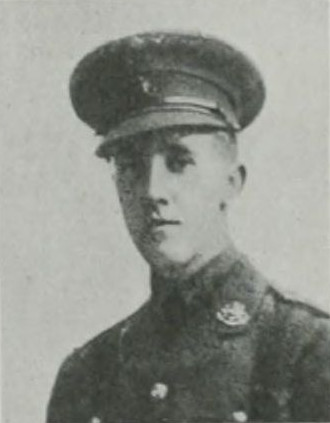
Cecil F. Featherstone.
FEE, SAMUEL, Stoker, 1st Class (R.F.R., B. 7543), S.S. 102801, H.M.S. Hawke; lost when that ship was torpedoed in the North Sea, 15 Oct. 1914; m.
FEE, SAMUEL, Corpl., No. 12808, 10th (Service) Battn. Highland L.I., 3rd s. of Robert Fee, of 33, Muslin Street, Bridgeton, Glasgow, Slater’s Labourer, by his wife, Lily, dau. of (—) Arnell; b. Bridgeton, Glasgow, 19 June, 1892; educ. Hozier Street Public School there; was a Miner, Old Farm Colliery, Rutherglen; enlisted 17 Aug. 1914; went to France in May, 1915, and was killed in front of the parapet during the advance at Loos, 25 Sept. 1915; unm. The Coy. Sergt.-Major wrote that “he was a good soldier and N.C.O.”
FEE, WILLIAM JOHN, Bugler. R.M.A., 11537, H.M.S. Hogue; lost in action in the North Sea, 22 Sept. 1914.
FEENEY, THOMAS, Leading Signaller, 220726, H.M.S. Hogue; lost in action in the North Sea, 22 Sept. 1914.
FEGAN, WILLIAM PATRICK, Sergt., No. 26519, 14th Battn. (Royal Montreal), Canadian Expeditionary Force, yst. s. of Francis Fegan, of Waggarandall, near Melbourne, Australia, Landowner, by his wife, Mary, dau. of (—) Homer; b. Major Plains, Melbourne, 29 Jan. 1877, and was educ. at Dookie College, near Melbourne. He was surveying in South Africa when the Boer War began; he immediately joined the Victorians, and served through that campaign, 1899–1902, being wounded twice and receiving the Queen’s and King’s medals. He then became an expert for the International Co., of Buenos Ayres, and went round the world eight times for them, and after some seven years at Buenos Ayres went to Canada where he was in Aug. 1914, when the European War was declared. He at once volunteered; enlisted in the Canadian Expeditionary Force; came over with the first contingent in Oct. 1914; went to France Feb. 1915, and was killed in action near Wulverghem, 27 Nov. 1915. His company officer, Capt. Whitehead, wrote: “Your husband was one of the finest men I ever met, and one of my most reliable N.C.O.’s, and his loss will be felt very heavily: he was killed almost instantly, the bullet entering the base of the neck, and passing through the body”; and Lieut. Gordon Leighton: “I can bear a few words of testimony of his courage and worth, having been associated with him since his arrival in France. He was a brave and soldierly man. He had been through some very trying times with us, but never lost his coolness and courage in the face of the gravest danger and difficult situations. Moreover he had voluntarily undertaken work he knew was of a dangerous character. I personally, and I think all the officers of the company, regret exceedingly the loss of Sergt. Fegan, as we feel we have lost a man who was far above the average and whose soldierly worth was invaluable.” He m. at St. Brigid’s Roman Catholic Church, Fitzroy, Melbourne, 10 June, 1911, Kathleen, sister of Private Arthur Moore, 5th Battn. Australian Imperial Force, who died of wounds received in action at the Dardanelles, 29 Feb. 1916 (see his notice), and dau. of Henry Albert Moore, of Park House, Whatley, near Frome, Somerset, and had two children: William Ernest Patrick, b. 10 Jan. 1913; and Kathleen Joan Florence, b. 5 Oct. 1915.
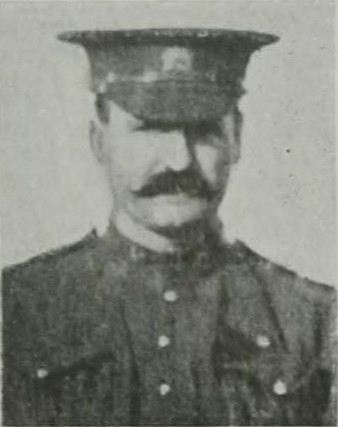
William Patrick Fegan.
FEILDEN, GRANVILLE JOHN HENRY, 2nd Lieut., 2nd Battn. Seaforth Highlanders, only s. of Major Granville Cholmondeley Feilden, D.S.O., late Seaforth Highlanders, now commanding the London Division of the Corps of Commissionaires (who served through the South African War, wounded at Paardeberg, 18 Feb. 1900, Queen’s medal three clasps, King’s medal two clasps), and his wife, Edith Margaret, 2nd dau. of the late Sir Henry Cockburn MacAndrew, of Aisthorpe, Inverness; b. Drummuie House, Golspie, co. Sutherland, 27 Aug. 1895; educ. the New Beacon, Sevenoaks, Wellington College (“Blucher”), and Sandhurst (Prize Cadet) and on passing out from the last was gazetted 2nd Lieut. to the 2nd Seaforth Highlanders, 12 Aug. 1914, and was ordered to join the 3rd Battn. at Cromarty on the 25 Aug. On 12 Sept. he went to France with a draft joining the 2nd Battn. on the Aisne. He moved from there with the 4th Division in the middle of Oct. to the Belgian frontier, and took part in the severe fighting around Frehlingham and Messines during the end of October and beginning of November, and spent five months with his regt. in the trenches near Messines. He came home on a week’s leave in Feb., returning to his regt. on the 10th of that month, and was killed in action on Sunday, 25 April, 1915, during the attack on St. Julien, in the second Battle of Ypres. His C.O. wrote: “You know how your son was loved by us all, he was so brave, so gallant, so cheery, and beloved by his men.... On the morning of 25 April I reached the right of the line about 9 a.m., and was close to your son when he was killed.... We have lost many gallant officers, but none more gallant than your son”; and the second in Command: “We advanced at dawn on Sunday, 25 April. The old Corps were as steady as ever.... our losses were very severe. Your son was killed instantaneously while doing his duty most well and gallantly.... We were all so fond of him, he was an absolutely first-class officer with any amount of initiative and ‘go’.” A fellow subaltern also wrote: “I was with John most of the night of the 24th and 25th, and he was very cheery then and full of spirits. I did not see him in the actual attack until we were about 40 yards from the German trenches, when he helped me to straighten out the company behind a defensive position. I was hit then, so did not see him again.” He was buried at Burnt Farm on the left of the St. Jean-St. Julien Road, with four of his brother officers, including the Capt. of his company.
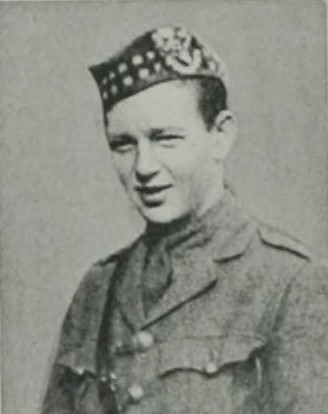
Granville J. H. Feilden.
FELLOWES. ARTHUR ROSS, Private, No. 6/226, 12th Nelson Regt., Canterbury Battn., New Zealand Expeditionary Force, s. of Robert Ross Fellowes, of Stoke, Nelson, New Zealand; b. Takaku, Nelson, 14 Sept. 18..; educ. at Wakefield, Nelson; volunteered on the outbreak of war, leaving home to join up 12 Aug. 1914; left for Egypt with the Main Force in Oct., took part in the repulse of the Turkish attack on the Suez Canal in Feb. 1915, and in the landing at the Dardanelles, 25 April, and was killed in action near Gabe Tepe, between 25 April and 1 May, 1915, being shot by a sniper; unm. As a school cadet and in Egypt he proved himself a remarkably good shot, winning several prizes. He was the first Wakefield man to fall in action.
FELLOWES, WILLIAM JOHN, Sick Berth Steward, 350884, H.M.S. Hawke; lost when that ship was torpedoed in the North Sea, 15 Oct. 1914; m.
FELTHAM, ARTHUR, Signalman, J. 14117, H.M.S. Pathfinder; lost when that ship was sunk by a mine, about 20 miles off the East Coast, 5 Sept. 1914.
FENDLEY, JOHN ROBERT, Leading Stoker (R.F.R., B. 5634), 284849, H.M.S. Aboukir; lost in action in the North Sea, 22 Sept. 1914.
FENERAN, FRANK EDWARD, Capt., 1st Battn. King’s Liverpool Regt., 2nd s. of the late Lieut.-Col. Edward Feneran, 1st Northamptonshire Regt, (who served in the Crimea), by his wife, Caroline Elizabeth, dau. of the late Charles Herring-Cooper, and gdson. of Col. Francis Feneran, Derbyshire Regt. (who served at Waterloo); b. Kensington, 23 April, 1881; educ. privately and at the Royal Military College, Sandhurst; gazetted to the King’s Liverpool Regt., 12 Aug. 1899, and was promoted Lieut. 21 July, 1900, and Capt. 18 Sept. 1909. From April 1904 to April 1907, he was Ordnance Officer (4th class) and in 1911 was appointed Adjutant to the Special Reserve. He passed the school of signalling and in 1914 the examination for the Staff College. On the outbreak of the European War, he went to France with his regiment, Aug. 1914, and was killed in action at Neuve Chapelle, 10 Mar. 1915, while leading his men; unm. A brother officer, writing to Lord Derby, graphically described the heroism of the Liverpool Regt. at Neuve Chapelle, stating A Coy. was commanded by Capt. Feneran, who was killed leading his men, adding that he was a very sad loss indeed to the Regt. in which he had spent his life, but that his was a gallant end. Capt. Feneran was mentioned in F.M. Sir John (now Lord) French’s Despatch of 31 May [London Gazette, 22 June], 1915.
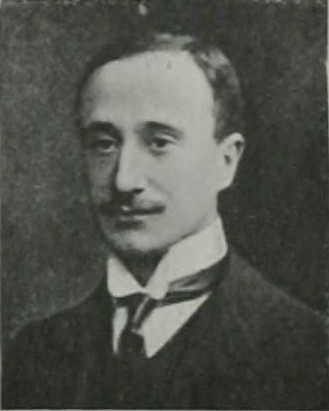
Frank Edward Feneran.
FENN, DAVID, Private, 10906, 1st Battn. Coldstream Guards, s. of Harry Fenn, of 36, Leader Road, Hillsboro’, Sheffield; b. co. York; served with the Expeditionary Force in France, etc.; killed in action at Richebourg, 2 April, 1915. Buried Rue des Berreaux, Bethune.
FENNELL, JOHN, Chief Petty Officer (R.F.R., A. 907), 121737, H.M.S. Aboukir; lost in action in the North Sea, 22 Sept. 1914.
FENNESY, RICHARD, Private, R.M.L.I. (R.F.R., B. 603), H.M.S. Aboukir; lost in action in the North Sea, 22 Sept. 1914].
FENWICK, BASIL MIDDLETON, Sergt., No. 109, A Squadron, 10th West Australian Light Horse, only s. of Charles Richard Fenwick, of Ben Rhydding, Yorks, and 26, Park Row, Leeds, M. Inst. C.E., F.S.I., by his wife, Margaret, dau. of William Middleton, Solicitor; b. Pool, co. York, 3 Sept. 1885; educ. Haileybury College; went to West Australia in 1909 to the Murchison Goldfield; volunteered on the outbreak of War in Aug. 1914, and joined the Commonwealth Expeditionary Force; left for Egypt in Feb. 1915, went to the Dardanelles; volunteered for special duty on 30 May, 1915, in the counter attack at Quinn’s Post, was there wounded and invalided into Hospital at Alexandria, being mentioned by his C.O., Maj. Thomas J. Todd, in his report; was promoted Sergt. June or July; returned to duty at Anzac in Aug. and was killed in action there a few days later, 7 Aug. 1915, on Russell’s Top, in the attack on the Turkish position at Walker’s Ridge. In this terrible charge some 700 men were killed in the course of a few minutes. Major Todd wrote, 22 Oct. 1915: “It may be a consolation to know that your son was specially mentioned for conspicuous bravery and I had him picked out for a commission, he was indeed a fine soldier.” Sergt. Arundel in hospital told a friend: “Sergt. Fenwick was one of the bravest, finest men on the Peninsula, a born soldier—a hero—he first distinguished himself at Quinn’s Post, bomb throwing in the most extraordinary brave way. He picked up and returned live bombs thrown by the Turks.” Trooper Sydney G. E. Robson wrote, 2 Oct. 1915: “In the charge at Quinn’s Post (30 May) we were side by side. Here your son showed great courage, he was first over the parapet, his coolness and initiative in the captured Turks’ trench undoubtedly saved our lives.” Major Love asked for names to be mentioned for distinction, a memorial was signed by the survivors, unanimously Basil Fenwick’s was voted. Lieut.-Gen. Sir Alexander Godley, C.B., K.C.M.G., also wrote: “I understand that he was looked upon by his comrades and officers as a particularly fine soldier and an exceptionally brave man.”
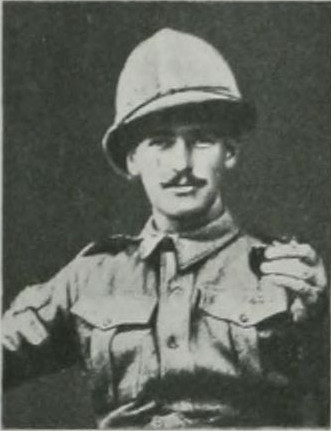
Basil Middleton Ferwick.
FENWICK, FREDERICK RICHARD WILLIAM, L.-Corpl., No. 11044, s. of John Fenwick, of 85, Oriel Street, Hirst Ashington, Northumberland; b. Durham; served with the Expeditionary Force in France, etc.; killed in action at Givenchy, 22 Dec. 1914, aged 22.
FEREDAY, THOMAS HAROLD, Stoker, 1st Class (R.F.R., B. 10391), 108085, H.M.S. Hogue; lost in action in the North Sea, 22 Sept. 1914.
FERG, EDWARD CHARLES, Private, No. 840, 8th Battn. Canadian Expeditionary Force, 2nd s. of Fannin Ferg (born in Germany, went to Canada at the age of five), by his wife Sarah (Monkton, Ontario, Canada), dau. of William Blighton, of Newark, England; b. Elma Township, Perth co., P. Ontario, 23 July, 1887; educ. local Public School; was a Locomotive Engineer; joined 90th Winnipeg Rifles, in Aug. 1914, after the outbreak of War; left Canada with the 1st Contingent, and was killed in action at Langemarck, 22 April, 1915; unm. He was buried at St. Julien, near Ypres.
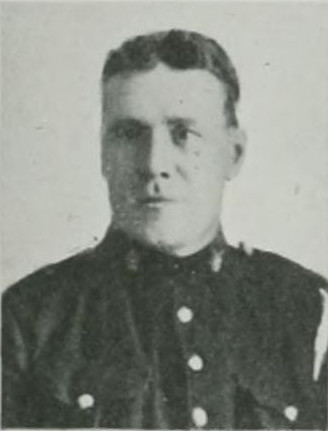
Edward Charles Ferg.
FERGUSON, JAMES, Private, No. 10202, 2nd Battn. Scots Guards, s. of James Ferguson, of 43, Lorburn Street, Dumfries; enlisted 4 Sept. 1914, aged 19; served with the Expeditionary Force in France, etc.; killed in action, 16 May, 1915; unm.
FERGUSON, JOHN, Private, No. 3361, 2nd Battn. The Royal Scots. 2nd s. of the late Thomas Ferguson, Wool Factory Worker, by his wife, Mary (16, Lothian Street, Hawick), dau. of John Watts; b. Weensland, Hawick, co. Roxburgh, 20 Sept. 1879; educ. Trinity School there; worked on North British Railway, enlisted 10 Sept., 1914, went to the front 10 Oct. 1914, and was killed in action at Petite La Bloise, near Kemmel, Belgium, 14 Dec. 1914; unm.
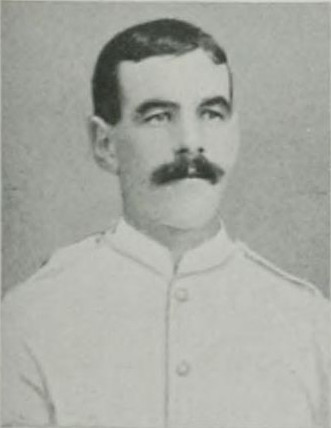
John Ferguson.
FERGUSON, MATTHEW, Private, No. 11699, 1st Battn. Highland L.I.; served with the Expeditionary Force in France, etc.; killed in action at Neuve Chapelle 11–18 March, 1915.
FERGUSON, PETER, Stoker, 1st Class (R.F.R., B. 10201), 298040, H.M.S. Hawke; lost when that ship was torpedoed in the North Sea, 15 Oct. 1914; m.
FERGUSON, ROBERT, Private, No. 7060, 1st Battn. Highland L.I.; served with the Expeditionary Force in France, etc.; killed in action at Richebourg, 17–23 May, 1915; m.
FERGUSON, WILLIAM, Private, No. 13355, 11th (Service) Battn. Royal Scots (Lothian Regt.); served with the Expeditionary Force in France; killed in action, 27 Sept. 1915.
FERGUSON, WILLIAM, Private, No. 1799, 10th (Service) Battn. Highland Light Infantry, eldest s. of the late Archibald Ferguson, Electric Crane Driver, by his wife, Helen (106, Green Street, Calton, Glasgow), dau. of the late William Thompson; b. Calton, 26 Nov. 1894; educ. Campbellfield Public School, Glasgow; was employed as machine man with Singers, Clydebank; enlisted 15 Dec. 1914; went to France in May, 1915; volunteered as a bomb thrower, and was killed at the Battle of Loos, 25 Sept. 1915, when in advance with a bombing party; unm. He is believed to have been buried at Cambrin.
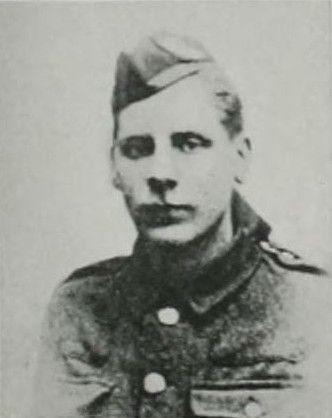
William Ferguson.
FERGUSSON, JAMES ADAM HAMILTON, 2nd Lieut., 2nd Battn. Highland L.I., 4th s. of Sir James Ranken Fergusson, of Spitalhaugh, co. Peebles, 2nd Bt., J.P., by his wife, Alice Fanny, dau. of the late John Price Simpson; b. London, 22 March, 1892; educ. Ardvreck, Crieff, Winchester College, and Sandhurst; gazetted 2nd Lieut. Highland L.I., 14 Feb. 1912, was promoted Lieut. June or July, 1914, went to France with his regt., Aug. 1914, and was killed at the Battle of the Aisne, 20 Sept. 1914, being shot through the forehead after rising from assisting a wounded man; unm. He was a good golfer, a keen sportsman, and a most dutiful son.
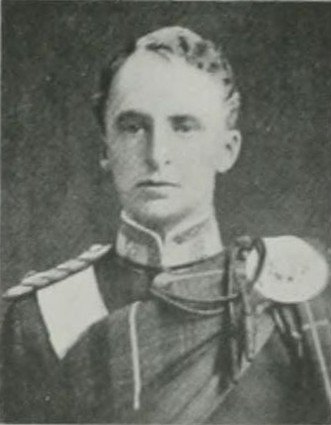
James A. H. Fergusson.
FERGUSSON, ROBERT FRANK, Lieut., 1/5th Battn. Royal Scots Fusiliers (T.F.), elder s. of David Fergusson, of 7, Park Terrace, Ayr, Scotland, Bachelor of Laws, Solicitor, by his wife, Mary K., dau. of the late Andrew Galloway, of Ayr; b. Ayr, 6 April, 1893; educ. Ayr Academy, and Glasgow University; served his apprenticeship with his father, and afterwards completed it in the office of Messrs. Russell & Duncan, Solicitors, 105, St. Vincent Street, Glasgow, with whom he was when the war broke out. During the two years he was in Glasgow he completed his law course for the B.L. degree and had passed three of his examinations. He received his commission, 1 Sept. 1914; was promoted Lieut. on the 30th of that month; left with his regt. for the Dardanelles on 20 May, 1915, and was killed in action there, 12 July, 1915; unm. Lieut.-Col. J. B. Pollok M’Call, Commanding the 5th Battn., wrote: “Whilst leading his men about 4 p.m. on 12th July he was struck in the heart. He was immediately carried down and at once attended to by our doctor. The doctor told me he was afraid he had no chance, as he feared a large blood-vessel was severed. Your son was sent on to try and get him to hospital, but he died on the way down, three hours after he was hit. He was partly conscious, but I do not think he suffered. He had been in the thick of the fight since early morning, and had done splendidly. I feel his loss to the 1/5th greatly. We buried him next day, and put a cross on his grave.” Capt. Cook also wrote: “He was killed on the 12th inst., in an action lasting from the 11th to the 15th. He did his part right nobly, leading his men across an open space of 200 yards amidst shell, rifle, and machine-gun fire. He reached his objective with few losses owing to his vigour and determination and the inspiring example he set his men. But unfortunately while busy with the work of reversing and consolidating the captured trench, he was struck down with shrapnel which at this stage was continuous. All was done that could be to make him comfortable and when night began to fall we had him taken back over the open to a dressing station where he received skilled aid, but he died the same evening. He was a gallant officer and a fine comrade and his loss is greatly deplored by all ranks.”
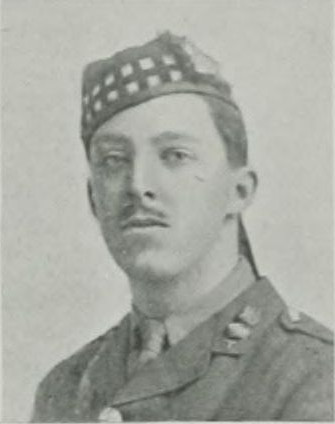
Robert Frank Fergusson.
FERNS, HAROLD JOHNSON, A.B. (R.F.R., B. 3516), 196242, H.M.S. Aboukir; lost in action in the North Sea, 22 Sept. 1914.
FERRAND, HERBERT HAROLD, Coy. Sergt.-Major, No. 6, 4th Battn. East Yorkshire Regt. (T.F.), only s. of Thomas Watson Ferrand, of 6, West View, Grove Street, Beverley Road, Hull, Plumber, by his wife, Sarah Nicholls, dau. of the late John Fayers, of Hull; b. Hull, co. York, 15 May, 1876; educ. St Paul’s School, Hull, and on leaving there entered the employ of the Yorkshire Fire and Life Insurance Co., Lowgate, in which he held a responsible post at the time of his death. He joined the 1st V.B. East Yorkshire Regt. April, 1894; volunteered for service in South Africa, 8 March, 1900, and served there for one year and 92 days, receiving the Queen’s medal with four clasps, and after his return was for a long time Signal Instructor (Aldershot certificate, 31 Aug. 1903). On the outbreak of the European War, his regiment were at Camp at Deganway, they were ordered home, and went straight into training at Darlington and later at Newcastle, and from there went to the Front, 18 April, 1915. He came safely through the night attack at Ypres, on Saturday the 25th, and was killed by shrapnel on Sunday, 26 April, 1915; unm. He had the King’s T.F. medal for efficiency.
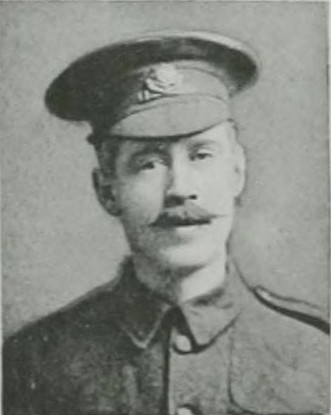
Herbert Harold Ferrand.
FERRIS, CORNELIUS PERCY SPARLING, Petty Officer, Tel. 178611, H.M.S. Hogue; lost in action in the North Sea, 22 Sept. 1914.
MOCKLER-FERRYMAN, HUGH, Lieut., 2nd Battn. Oxfordshire and Buckinghamshire L.I., elder s. of Lieut.-Col. Augustus Ferryman Mockler-Ferryman, of St. John’s House, Tavistock, Devon, late Oxfordshire L.I., by his wife, Evelyn, dau. of the late Sir Charles Whitehead; b. Maidstone, co. Kent, 3 May, 1892; educ. St. Neots, Eversley, Wellington College, and Sandhurst; received his commission as 2nd Lieut., 20 Sept. 1911, and was promoted Lieut., 27 April, 1914; went to France with his regt., on the outbreak of war; took part in the retreat from Mons, the Battles of the Marne and the Aisne, and was killed in action near La Soupir, 16 Sept. 1914, by a shell which burst in the middle of his company, killing and wounding several officers and men. He and two of his brother officers were buried that night in the churchyard of La Soupir; unm. A senior officer wrote: “The whole regt. mourns the loss of one of its best and most popular officers. You would be proud if you could hear the way in which the N.C.O.’s and men speak of him”; while a Corpl. in his company described him in a letter home as “a thorough sportsman, liked by everyone, and loved by his company.” Lieut. Mockler-Ferryman, who was a good cricketer and an excellent bowler, played for Berkshire County, Wellington College, and the Aldershot Command. In Switzerland, where he spent his winter leave, he came rapidly to the front as a curler, and in his last season as the youngest “skip” he contributed largely to Villars victories. He was a good shot and a keen fisherman.
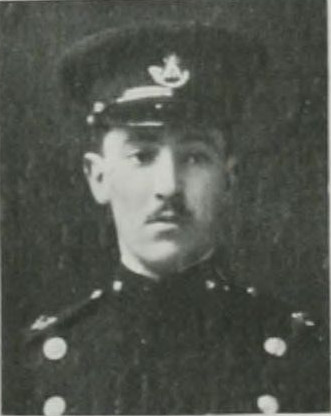
Hugh Mockler-Ferryman.
FESTER, WILLIAM ERNEST, A.B. (R.F.R., B. 7345), 224906, H.M.S. Aboukir; lost in action in the North Sea, 22 Sept. 1914.
FETHERSTONE, ROSS LEA, Private, No. 108219, 3rd Canadian Mounted Rifles, s. of Walter Fetherstone; b. North Bay, Ontario, Canada, 25 Nov. 1890; educ. Calgary, Alberta; joined the C.E.F. March, 1915, and died at Etaples, 30 Nov. 1915, of pneumonia, contracted while on active service. He m. at Akotoks, Alberta, 18 March, 1911, Kathleen (2060, Hamilton Street, Regina, Sask.), dau. of (—) Tabor, and had two children: Ernest Joseph, b. 18 Dec. 1913; and Sylvia Ethel, b. 3 Dec. 1911.
FFIELD, BERNARD OSBORNE, Flight Sub-Lieut., R.N., eldest s. of Bernard Ffield, of the Old Bank House, Coleshill, Warwickshire, Manufacturer, by his wife, Beatrice, elder dau. of the late William Hays, of Nevern Square, S.W., and Kilcraggan, co. Kilkenny; b. London, 17 Aug. 1894; educ. Wimbledon College; gazetted Sub-Lieut. R.N.A.S., 9 Sept. 1914, and received his brevet from the Royal Aero Club on 10 Dec. following. On 24 Dec. 1914 he was coming down from a height of about 2,000 ft. after a good flight, at the Royal Naval Air Station, Hendon, when, at about 200 ft. from the ground, the machine was seen to take a sudden vertical dive to earth, and was so smashed that it was impossible to ascertain what had gone wrong. He died the same evening, Christmas Eve, after receiving the last rites of his Church; unm. A senior brother officer wrote of him: “He was quite the best of all the others who had gained their certificates some three weeks before him. I watched most of his flights as I had to look after the flying. He was one of the neatest men I have seen; he was so beautifully gentle with his hands, and that is one of the secrets of a good pilot.”
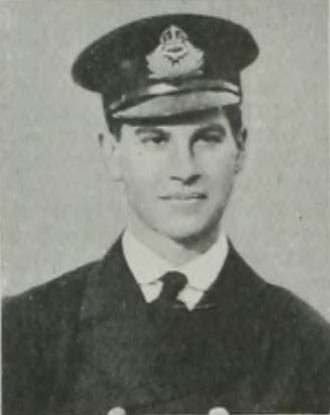
Bernard Osborne Ffield.
FFITCH, HARRY HERBERT, Lieut., 1st Canterbury Regt., New Zealand Expeditionary Force, s. of Henry Ffitch, of 34, Glandovey Road, Fendaton, New Zealand, Farmer, by his wife, Florence, dau. of George Dunnage; b. Springfield, New Zealand, 28 July, 1888; educ. High School, Christchurch; was a Lieut. in the New Zealand Territorial Force; passed his examination for Capt. 6 Oct. 1913, and on the outbreak of war volunteered for foreign service, and was gazetted Lieut. 14 Sept. 1914. He was killed in action at the landing at Gabe Tepe, 26 April, 1915. Sergt.-Major F. G. Hall-Jones, in describing the action in which Lieut. Ffitch met his death, wrote: “You will have read how we landed in the morning of 25 April, and advancing over a shrapnel-swept hill, were split up into small groups of tens and twenties. I took a small party to where reinforcements appeared to be urgently needed, and this locality appeared to be the apex of the triangle (based on the beach) which formed our front. It was, I think, a little to the right of what subsequently became Quinn’s Post, and I understand that the exact position subsequently became a ‘no man’s land,’ untenable by either friend or foe. The fire all the afternoon was very hot, the Turks having been reinforced, and the Australian officer (Capt. Leer) withdrew us from the scrub-covered open to the crest a few yards back, and met his death in so doing. At dusk, the fire ceasing somewhat, we again advanced, brought in the wounded, and endeavoured to keep the Turks from advancing up the other side of the hill; but eventually they outflanked us, and we again sought the crest and dug in. It was then that I first saw your son, although he was probably there all the afternoon, and gave him a message that our Major Dawson (3rd Auckland Coy.) wished to confer with him. The plans hastily improvised by these two undoubtedly saved the situation, and incidentally prevented the Turks from piercing our lines and firing down the big gully (Shrapnel Gully) behind us. The tactics adopted were: Dig in, send forward occasional scouts and organise small flanking parties. You will understand that our small party, consisting of 50 to 80 men, drawn from various Australian and New Zealand battns., was quite ‘in the air’ at the apex of the triangle, and the Turks were able to fire at us from three directions. Your son organised a party on our right flank in such a way that they not only prevented the enemy from troubling us from that quarter, but also enfiladed a body of Turks attacking our men 500 yards away. Let the facts speak their own tribute. The Turks advanced to the crest—they must have been at least 300 strong—and dug in only 20 yards away. Their jabbering was consistent throughout the night; they even talked to isolated units of our men, said they were Indians, and passed us false words of command. We fired rapidly the whole night through, and deceiving them as to our numbers prevented them from charging. I cannot even now remember with equanimity our condition—exhausted, cold, and over-strained—desirous only of hurling ourselves at the enemy and ending the tension one way or another. Mr. Dawson and Mr. Ffitch passed along frequently during the night with words of advice, encouragement and restraint, and I realised later their good sense in preventing us from charging. Had we gone forward we should have been wiped out. At dawn the Turks sent small parties creeping forward in the scrub, and we continually jumped up and took a pot shot at them. In this your son excelled, and the word was occasionally whispered near me, ‘Ffitch has got another one.’ I understand that he accounted for six that morning. Then, after another shot, he ejaculated, ‘Missed him,’ re-loaded, and jumped up to fire again. But the enemy was waiting, and even as he took aim a bullet cut through the belt of his wrist-watch, entered his cheek and killed him instantaneously. But his example and the spirit he had inspired in us did not pass with him, and by adopting his tactics we succeeded in beating back wave after wave of the enemy during that exhausting morning until a large party of Australians relieved us.”
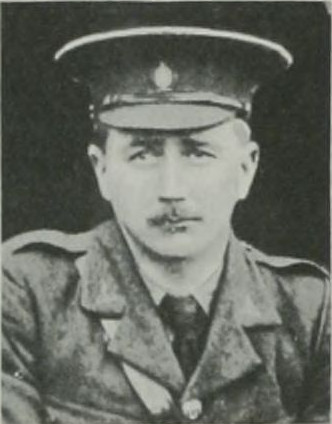
Harry Herbert Ffitch.
FIDDES, JAMES WILLIAM DICK, Private, No. 8/783, 10th North Otago Coy. Otago Infantry Battn. New Zealand Expeditionary Force, 2nd s. of J. Fiddes, of Duntroon, Otago, New Zealand, by his wife, Margaret; volunteered for Imperial Service on the outbreak of war; left for Egypt in Oct.; took part in the landing at the Dardanelles, 25 April, 1915, and died of wounds received in action there, 8 May, following; unm.
FIELD, EDWARD WILLIAM, Stoker, 1st Class (R.F.R., B. 4765), 293724, H.M.S. Good Hope; lost in action off Coronel, on the coast of Chili, 1 Nov. 1914.
FIELD, FRANCIS HENRY, A.B. (R.F.R., B. 1629), 198808, H.M.S. Good Hope; lost in action off Coronel, on the coast of Chili, 1 Nov. 1914.
FIELD, STEPHEN, Capt., Royal Army Medical Corps, only surviving s. of the late George Purdey Field, M.R.C.S., Aural Surgeon to St. Mary’s Hospital, London, and for 15 years Dean of the Medical School, by his wife, Pauline (By-the-Brook, Mortimer West End), dau. of Robert Faulder White; b. London, W., 16 April, 1880; educ. Mr. Hall’s School, Potters Bar, co. Herts; Framlingham, and Harrow, and St. Mary’s Medical School; gazetted Lieut. R.A.M.C., 28 Jan. 1907, and was promoted Capt. 28 July, 1910; served in Jamaica, Somaliland (medal), and with the Expeditionary Force in France and Flanders; was taken prisoner during the retreat from Mons, and died at the Prisoners’ Camp, Wittenberg, Saxony, 10 April, 1915, from typhus fever, contracted while tending soldiers ill of the disease. He m. in London, Margaret, dau. of (—) Price, and had a son and a dau.: Stephen, b. 15 Aug. 1906; and Stephanie Margaret, b. 15 Aug. 1904.
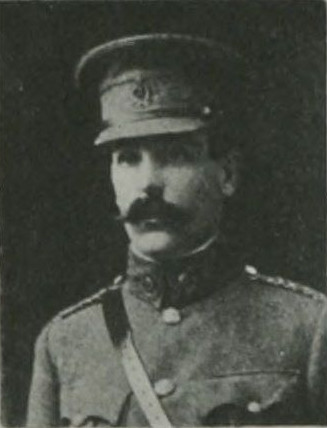
Stephen Field.
FIELDER, ALBERT EDWARD, Leading Stoker, Coastguard, 299691 (Po.), H.M.S. Aboukir; lost in action in the North Sea, 22 Sept. 1914.
FIELDER, GEORGE WILLIAM, Private, No. 2197, 1/5th Battn. King’s Own Yorkshire L.I. (T.F.), eldest s. of George William Fielder, now serving as Mate in the Navy on H.M. Patrol Ships; b. Goole, co. York, 15 April, 1895; educ. Alexander Street Council School there; enlisted March, 1914; went to France, and was killed in action in Flanders, 9 July, 1915. Buried in Poperinghe; unm. His comrade spoke of him as “the Little man with the Big heart.”
FILLEUL, LEONARD AMAURI, B.A. Oxon., 2nd Lieut., 3rd Battn. Somerset L.I., attd. to the Oxford and Bucks L.I., 2nd s. of the Rev. Philip William Girdlestone Filleul, Rector of Alfold, Billingshurst, Sussex, late Rector of Devizes, by his wife, Elizabeth, dau. of (—) Rodway and niece of Rowland Rodway, Adcroft, Trowbridge; b. Bath, 6 Feb. 1888, and was educ. Cleveland House, Weymouth; Trent College, Derbyshire; and Lincoln College, Oxford. He was in the University O.T.C., and rowed four years in his College Eight, and the last year in the winning trial Eight, and on leaving Oxford in 1911, became a master at Monkton Combe School, Bath. The same year he became attached to the 3rd Battn. Somerset L.I. as supplementary officer, and on the outbreak of war volunteered for foreign service, and after a short period of training with the Somerset Special Reserve Battn., Plymouth, was sent to the Front, 25 Sept., with a draft of the Oxford and Bucks. L.I. He was killed in action near St. Julien during the first Battle of Ypres, 21 Oct. 1914, and was buried midway between St. Julien and Poelcappelle, on the Ypres-St. Jean-Poelcappelle Road; unm. The Colonel of his own regt. wrote: “It was a great disappointment to learn on my arrival here that Filleul had been appointed to another regt., and was not coming out to join us at the Front, for he was a most capable officer, and very popular with his brother officers.” The former Colonel of his battn. wrote: “Filleul was my subaltern in two separate years, and of all the young fellows who were attached to the battn. he was far and away the best soldier. And not only the best soldier but one of the pleasantest and most delightful companions I have ever met. Always willing, keen and cheery, I loved having him with me, and I placed more reliance upon his judgment and ability than on many a more experienced man”; and the editor of the “Oxford Magazine” wrote: “He was one of the very best of his time, an inspiring leader, devoted to the College, and enthusiastically beloved.” At Trent College he won the Gold Medal of the National Service League for military proficiency, and at the same time received a book prize from Earl Roberts.
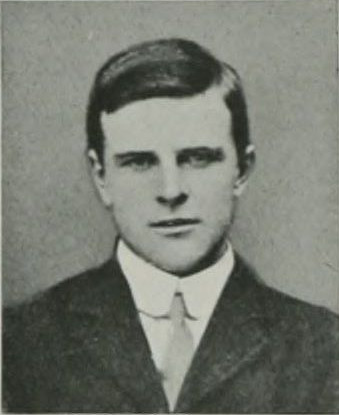
Leonard A. Filleul.
FINCH, EDWARD TERENCE DOYNE, Torpedo Lieut., Royal Navy, elder s. of Arthur Edward Finch, by his wife, Charlotte, dau. of the Rev. Philip Walter Doyne; b. Madras, India, 6 Nov. 1887; educ. Connaught House, Weymouth, and H.M.S. Britannia (1902–3); entered the Navy as a cadet, 15 Sept. 1903; became Midshipman, 15 Oct. following; Sub-Lieut., 15 Dec. 1906; Lieut., 15 June, 1908, and served in H.M. ships Hannibal, Prince George, Cornwall and Suffolk. He then commanded in turn H.M.T.B. 85 and H.M.T.B. 078, and afterwards H.M.T.B.D. Dasher and H.M.T.B.D. Brazen. He left this last destroyer in order to qualify as a Torpedo Lieut. in H.M.S. Vernon, and on obtaining this qualification he was appointed to the Bulwark, 13 Aug 1913, and was killed when that ship was blown up off Sheerness, 26 Nov. 1914; unm.
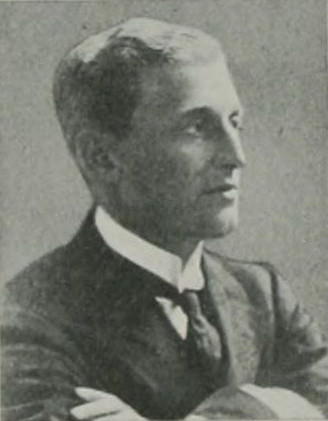
Edward Terence D. Finch.
FINCH, LEONARD EDWARD, Quarter-master-Sergt., No. 3793, 9th Lancers, s. of the late Alfred John Finch, of Brockley, Kent; b. St. John’s, co. Kent, 27 June, 1874; educ. there; enlisted 2 March, 1895; served through the South African War, 1899–1902 (Queen’s medal with five clasps and King’s medal), and with the Expeditionary Force in France and Flanders, Aug.-Sept. 1914, and died at the Military Hospital, Colchester, 17 Oct. 1914, of wounds received in action in France, 29 Sept. 1914. He m. at St. Thomas’ Cathedral, Bombay, 1 Oct. 1904, his cousin Ethel (3, Norham Villas, Hillingdon Heath, near Uxbridge, Middlesex), dau. of James Finch, of Greenwich, and had two sons and a dau.: Kenneth Leonard, b. 12 April, 1908; Edwin George, b. 3 Aug. 1909; and Eileen Margaret, b. 15 April, 1906. Quartermaster-Sergt. Finch had the Long Service and Good Conduct Medal.
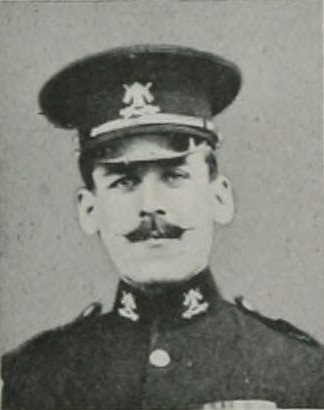
Leonard E. Finch.
FINCH, SYDNEY GEORGE, Stoker P.O. (R.F.R., B. 4716), 280524, H.M.S. Hogue; lost in action in the North Sea, 22 Sept. 1914.
FINDLAY, GEORGE HALLIDAY, W.T. Operator, 2nd Class, H.M.S. Aboukir; lost in action in the North Sea, 22 Sept. 1914.
FINDLAY, NEIL DOUGLAS, C.B., Brig.-Gen., Commanding Royal Artillery, 1st Division, Expeditionary Force, 2nd s. of Thomas Dunlop Findlay, of Easterhill, co. Lanark; b. Easterhill, co. Lanark, 7 May, 1859; entered Royal Military Academy, Woolwich, 19 Jan. 1877; gazetted Lieut., 18 Dec. 1878, and promoted Capt., 28 April, 1887; Major, 21 Dec. 1896; Brevet Lieut.-Col., 29 Nov. 1900; Lieut.-Col., 1 Sept. 1904; Brevet Col., 15 Oct. 1905; Col., 2 March, 1908; and Temp. Brig.-Gen., 14 July, 1910; and was Adjutant R.A., 1 March, 1894, to 14 Jan. 1896. He served with the Hazara Expedition in 1888, being mentioned in the despatches, and receiving the Medal and Clasp; and in the South African War, 1899–1900. He took part in the operations in Natal in Dec. 1899; the relief of Ladysmith; operations in Natal, March-June, 1900; and in the Transvaal, East of Pretoria, July to Nov. 1900. For his services in this campaign he was twice mentioned in despatches [London Gazette, 8 Feb. and 22 Feb. 1901], and twice by General Sir R. H. Buller (30 March and 9 Nov. 1900), and received the brevet of Lieut.-Col. and the Queen’s medal with six clasps. On his return from the Cape he was immediately (5 March, 1901) appointed Brigade Major, Royal Artillery, Aldershot, 1st Army Corps, which post he held till 14 April, 1904. He was A.A.G. at the War Office, 2 March, 1908 to 1910, and on 14 July, 1910, was appointed to the command of R.A. 1st Div. Aldershot Command, consisting of the 25th, 26th, 39th and 43rd Field Artillery Brigades. Brig.-Gen. Findlay took the Royal Artillery (1st Division) to France with the Expeditionary Force, 15 Aug. 1914, and was killed in action, near Courchamp, 10 Sept. 1914, while directing the fire of the batteries. He was made a C.B. in 1905. He m. at St. Paul’s Church, Knightsbridge, 17 Feb. 1892, Alma (Alphington, Frimley, Surrey), dau. of Thomas Lloyd, of Minard, co. Argyle, and had two daus.: Anne, b. 18 Dec. 1892; and Constance, b. 3 Dec. 1894.
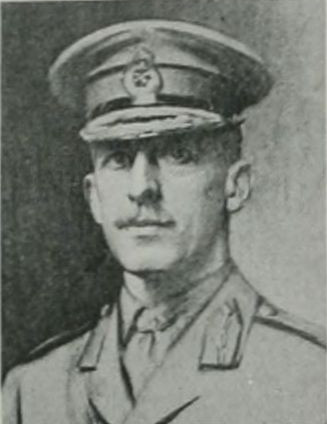
Neil Douglas Findlay.
FINES, GEORGE WILLIAM, Private, No. 47995, 15th Battn. (48th Highlanders), Canadian Expeditionary Force, s. of Charles Fines, of Spaldington Howden, by his wife, Jane, dau. of the late George Danby Cottingham; b. Blacktoft, near Howden, co. York, 16 July, 1889; educ. Little Weighton Church of England School; emigrated to Canada along with a brother in 1911, and was engaged on farm work. On the outbreak of war he enlisted in the Canadian Expeditionary Force, and was wounded in the trenches in France while on night duty, and died while being conveyed to the hospital, 23 Nov. 1915; unm. He was the first Spaldington man to fall.
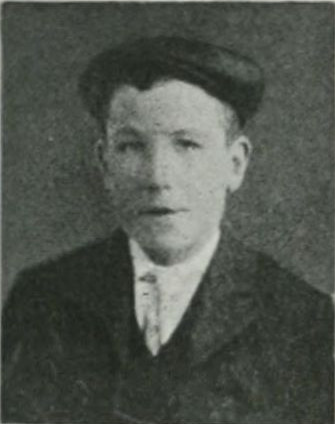
George William Fines.
FINK, GORDON, Private, No. 674, A Coy., 16th Battn. 4th Brigade, Australian Imperial Force, s. of Hon. Theodore Fink, of Melbourne, Barrister and Solicitor, ex-Minister of the Crown, Member of the University Council, etc., by his wife, Kate, dau. of the late George Isaacs; b. Broceliande, South Yarra, Melbourne, 21 Nov. 1884; educ. Ormond College, Melbourne University; Bachelor of Laws, 1907; admitted a Barrister, Victoria, 1908; served in the Australian Field Artillery, 1907–9, being promoted 2nd Lieut. in the later year; went to the Malay States in 1910, but returned in 1911 and settled in Western Australia; called to the Bar there 1913. On the outbreak of war he enlisted at Perth, left for Egypt with the second Expeditionary Force, and was killed in action near Gaba Tepe, Gallipoli, while gallantly carrying ammunition to the firing line, 2 May, 1915; unm. A comrade (Private Harry W. Leake) wrote: “On the evening of 2 May our battn. made an advance forward to take up a new position, and Gordon, who was Major Mansbridge’s observer, left the Major to assist the ammunition carriers get the boxes of ammunition up to our new trenches. There was one place where they had to go through a perfect hail of bullets, and Gordon was the only one who would face it. He got across safely with two or three boxes, and was then unfortunately shot through the head. Death was evidently instantaneous.” Major Mansbridge, in a letter to the “Perth Daily News,” said: “Gordon Fink, who was my observer and always at my side, asked if he could give a hand carrying ammunition up the side of a hill we call ‘Bloody Angle.’ I reluctantly gave permission, and that was the last I saw of him. His body was found 14 days later shot through the head.”
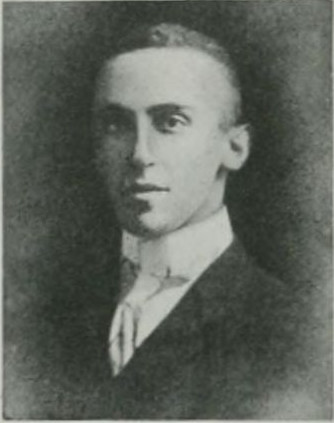
Gordon Fink.
FINLAY, FREDERICK, Private, No. 5492, 1st Battn. East Yorkshire Regt., s. of Edward Finlay, of Swalwell, Durham, by his wife; b. Scotswood, co. Northumberland, about 1890; enlisted 10 Aug. 1909, and was killed in action at Ypres, 18 Oct. 1914. He m. at Gateshead, 7 Feb. 1914, Elizabeth, dau. of Robert Somerville, and had one child, John Somerville, b. Blaydon, 19 Feb. 1913.
FINLAY, ROBERT CHRISTIE, Private, No. 8353, 2nd Battn. The Royal Scots, 3rd s. of Thomas Finlay, of 233, Morningside Road, Edinburgh, by his wife, Helen, dau. of Peter Heatly; b. Edinburgh, 21 Dec. 1887; educ. South Morningside Board School there; enlisted 4 Dec. 1902, and served three years with the Colours, and was at the time of the outbreak of war a Bricklayer in the employ of Colin McAndrew, of Lauriston Gardens. He went to the Front, 11 Nov. 1914, and was killed in action in a bayonet charge at Petit Bois, near Kemmel, 14 Dec. 1914. He was a member of St. Matthew’s Parish Church, Edinburgh. He m. at Edinburgh, 18 June, 1909, Jane Johnstone (22, Wardlaw Place, Edinburgh), yst. dau. of David Purves Hall, and had a dau., Margaret Johnstone Hall, b. 11 May, 1914. His brother, Lieut. James Heatly Finlay, 9th Battn., 3rd Brigade, Australian Imperial Force, is now (1916) on active service.
FINLAYSON, CHARLES TULLOCK, Seaman, R.N.R., No. 1757C, H.M.S. Aboukir, 7th s. of Donald Finlayson, of Lossiemouth, Morayshire, by his wife, Catherine; b. Lossiemouth, 21 May, 1878; educ. there; joined the R.N.R. about 1900; called up on mobilisation, 5 Aug. 1914, and was lost in H.M.S. Aboukir, 22 Sept. 1914. He m. at Aberdeen, 18 Aug. 1908, Maggie Taylor (30, Gladstone Street, Blyth), dau. of William Black; s.p.
FINLAYSON, GEORGE RUSSELL, L.-Sergt., No. 9864, 2nd Battn. The Black Watch (Royal Highlanders), yst. s. of the late Alexander Finlayson, Railway Goods Checker, by his wife, Jemima, dau. of George Russell, Coal Agent, Edinburgh; b. Edinburgh, 7 Dec. 1888; educ. Grammar School, Dunkeld, Perth; enlisted in the Black Watch at Perth, 25 April, 1904; and joined the 1st Battn. at Edinburgh Castle; went to India with a draft, and joined the 2nd Battn. in Dec. 1906; formed one of His Majesty’s Bodyguard at the Delhi Durbar (medal), 1911; left for France with the Indian Expeditionary Force after the outbreak of war, and was killed in action at Festubert, 12 Nov. 1914; unm.
FINNETT, HENRY CHARLES, Private, No. 1217, 3rd Battn. (Royal Fusiliers) The City of London Regt. (T.F.), s. of William Finnett, of 76, Jersey Road, Custom House, E., Labourer, by his wife, Mary Ann Amelia, dau. of James Pleasant; b. London, E., 25 April, 1892; educ. Russell Road School, Custom House; and joined the Royal Fusiliers in 1912. At the time of the outbreak of war he was employed as an electrician at the India Rubber Works, Silvertown, but immediately volunteered for foreign service. He was sent first to Southampton, afterwards to Alresford for a time, being finally despatched with a draft to Malta. From there he proceeded to France, where he was killed in action at Neuve Chapelle, 10 March, 1915; unm.
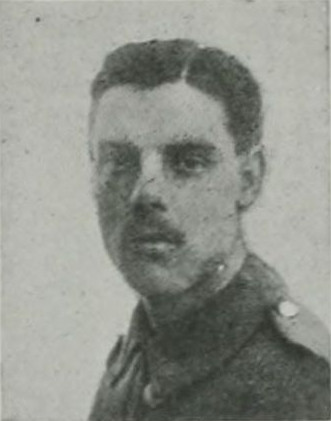
Henry Charles Finnett.
FINNIGAN, JAMES, Corpl., No. 3293, 2nd Battn. The Royal Scots, s. of the late Thomas Finnigan, for 20 years an employee of the Edinburgh Tramway Co., by his wife, Robina, dau. of James Tague; b. Edinburgh, 9 July, 1883; educ. St. Mary’s R.C. School, York Lane; joined the 11th Hussars, 8 Oct. 1900; served through the South African War, receiving the Queen’s medal, with three clasps, and obtained his discharge on 8 Oct. 1908. On the outbreak of the European War he re-enlisted in the 2nd Royal Scots, 20 Aug. 1914; went to France, 19 Dec. 1914, and was killed in action there, 20 June, 1915, by the bursting of a shell. Lieut. R. C. Blackwood, of the 2nd Royal Scots, wrote: “He had gone to act as a guide to the men who were to relieve us after a long time in the trenches. He was waiting for the new troops to arrive when a shell burst near him. His death happened in the night and as we had to hurry off I regret that we were unable to bury him, but this duty would be carried out by the troops who relieved us. I am exceedingly sorry to lose such a good corpl. His section was always the smartest on parade, and he kept them all up to the scratch. Only the day before his death he had been very active in carrying wounded soldiers into the trench, and in so doing must have brought comfort to many.” Corpl. Finnigan m. at St. Mary’s Cathedral, Edinburgh, 30 June, 1911, Helen Brodie (31, Eyre Place, Edinburgh), dau. of the late William (and Janet Knowles) Brodie, and had two children: James, b. 22 Sept. 1912; and May Helen, b. 19 May, 1914.
FINNIGAN, WILLIAM, A.B. (R.F.R., B. 5192), 208508, H.M.S. Hogue; lost in action in the North Sea, 22 Sept. 1914.
FINNIS, STEPHEN, Stoker P.O., 174441, H.M.S. Hogue; lost in action in the North Sea, 22 Sept. 1914.
FIPPARD, HERBERT JOHN, Corpl. No. 2087, 9th Battn. (Queen Victoria’s Rifles) The London Regt. (T.F.), elder s. of Herbert Samuel Bradshaw Fippard, of 11, Oakington Road, Maida Hill, W., by his wife, Anne Stephens, dau. of John Thomas Clift; b. Oakington Road aforesaid, 14 Aug. 1885; educ. Regent Street Polytechnic; joined Queen Victoria’s Rifles shortly after the outbreak of war, 20 Aug. 1914, and was killed in action near Ypres while attending a wounded comrade (the same day as his younger brother, see following notice), 4 June, 1915; unm. Capt. R. H. Lindsay Renton wrote: “He met his death while helping a wounded comrade, an act characteristic of his life out here. He was a man who always did his duty, a man respected by his comrades and trusted by his officers. I feel that his death is a great loss to my company, and I shall find his place difficult to fill”; and a comrade testified that: “In the recent trying experiences the company has gone through at Ypres, Hill 60, and with the Canadians his coolness was remarkable and gave confidence to every one around him.” He was mentioned in Orders, 1 May, by Lieut.-Col. R. B. Shipley, commanding 9th London Regt., who said: “In such operations as these it is difficult to pick out individuals who particularly distinguish themselves. All have done their duty so nobly and without the slightest hesitation. I, however, wish to call attention to the services of the undermentioned, and to thank them in the name of their battn. for the invaluable services on Hill 60 and during the operations east of the Yser Canal: Capt. W. F. Roe, R.A.M.C., and all stretcher-bearers; Lieut. G. H. Woolley, Sergt.-Major E. W. Andrews, Sergts. G. R. Warrington, F. Hooper and E. H. Pulleyn, Corpl. H. D. Peabody, L.-Corpls. F. A. Swoffer, P. G. Clarke and G. F. Selfer, and Rifleman A. B. Ashford, A Coy.; Sergts. M. Brown, S. D. Ramus, R. Browett and H. J. How, B Coy.; Coy.-Sergt.-Major Sherriff, Sergt. C. Arnold, L.-Corpl. Bell, and Rifleman A. Payne, C Coy.; Coy.-Sergt.-Major F. T. A. Brehant, Sergt. H. E. Soundy, L.-Corpls. C. H. Rose and H. J. Fippard, and Rifleman J. Darrell and C. A. Spooner, D Coy.”
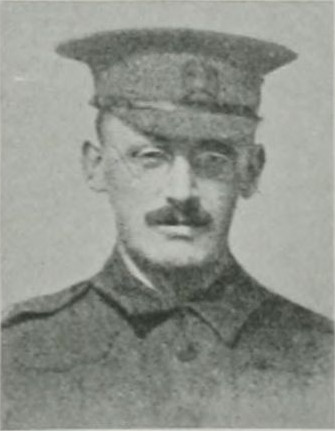
Herbert John Fippard.
FIPPARD, RICHARD CLIFT, F.I.A., Capt., 14th (Service) Battn. West Yorkshire Regt. (The Prince of Wales’s Own), attd. Lancashire Fusiliers, yr. s. of Herbert Samuel Bradshaw Fippard, of 11, Oakington Road, Maida Hill, W., and yr. brother of the preceding; b. Oakington Road afsd., 30 Dec. 1887; educ. Regent Street Polytechnic; matriculated at London University; admitted a Fellow of the Society of Actuaries, 14 June, 1910, and was Assistant Treasurer of the Prudential Approved Society, and joint author of a Primer on the Construction of Mortality and Sickness Tables. After the outbreak of war he was gazetted 2nd Lieut., 14th West Yorkshire Regt., 14 Dec. 1914 and promoted Capt. 30 March, 1914. He was attached to the Lancashire Fusiliers, drafted to them at the Dardanelles, and was killed in action at Achi Baba, 4 June, 1915; unm. He was at first reported missing, but on 21 Nov. 1915, was officially reported to have been killed on the former date, the two brothers thus being killed the same day—the one in Flanders, the other in Gallipoli.
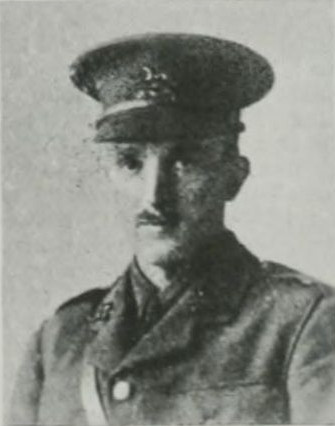
Richard Clift Fippard.
FISH, FRANCIS EDWARD, of Winterslow, Salisbury, Capt., 3rd (attd. 2nd) Battn. (Alexandra, Princess of Wales’ Own) Yorkshire Regt., s. of the late Ralph Fish, of Manchester and Blackburn, by his wife, Elizabeth Margaret, dau. of H. Loxon, of Leeds; b. Heaton Chapel, Manchester, 24 March, 1876; educ. King Edward’s School, Birmingham, and Askern College, Doncaster; joined the old 2nd Volunteer Battn. of the Yorkshire Regt. (The Green Howards) in 1901, and was transferred to the 3rd Battn. (Knaresborough Militia) in May, 1904, getting his company in 1909, in which year he retired. On the outbreak of war he rejoined, was gazetted Capt., 3rd Yorkshire Regt., Sept. 1914, and was for some time employed on Coast Defence, being blown off his feet during the bombardment of Hartlepool by a shell which burst some yards away; embarked for France with a draft of 350 men of the 2nd Battn. on 19 March, 1915, and was killed in action by a shell near Festubert, 17 May, 1915. He m. at Southport, March, 1912, Elizabeth, dau. of Edward Ackroyd, of Southport. She died s.p. June, 1914.
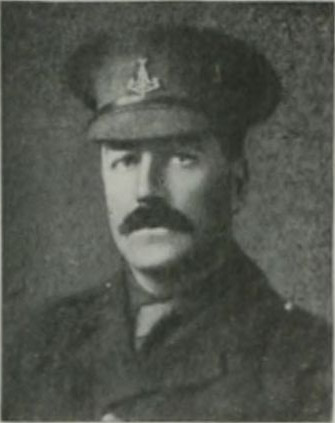
Francis Edward Fish.
FISHBOURNE, CHARLES EUSTACE, Capt., Royal Engineers, eldest surviving s. of the Rev. Edward Alexander Fishbourne, Vicar of Gresford, by his wife, Harriet, dau. of the Venerable William Crawley, Archdeacon of Monmouth, and Rector of Bryngwyn, Mon.; b. Llandyssil Rectory, co. Montgomery, 15 Jan. 1885; was educ. St. George’s, Windsor; and Malvern College; and after passing through Woolwich and Chatham, obtained his commission in the R.E., 21 Dec. 1904, and was promoted Lieut. 23 June, 1907. Subsequently he was employed under the Colonial Office from June, 1907 to 1908 in Uganda upon survey work, for which he was highly commended, and the Royal Geographical Society awarded him the Cuthbert Peek grant. In Oct. 1909, he was appointed under the Board of Trade upon the London Traffic Commission, and on 4 Jan. 1913 retired into the Special Reserve R.E. on taking up a post as Assistant General Manager to the London General Omnibus Company. On the outbreak of the war he rejoined, went to the Front with the 9th Field Company R.E., 21 Aug. 1914, and served till 18 Nov. 1914, when he was wounded at Ploegsteert Wood, and invalided home. On his recovery he was appointed Adjutant to the R.E. Reserves at Chatham. He died at Field House, Beaconsfield, 10 June, 1915, of spotted fever contracted at Chatham. He m. at Llanbedr, 8 June, 1911, Mary Elizabeth (89, Overstrand Mansions, Battersea, S.W.), dau. of William Gaskell Holland, and left two sons: Patrick Alexander, b. 10 Feb. 1913; and Charles Michael Eustace, b. 2 Nov. 1915. He was mentioned in F.M. Sir J. French’s Despatch of 14 Jan. [London Gazette, 17 Feb.] 1915.
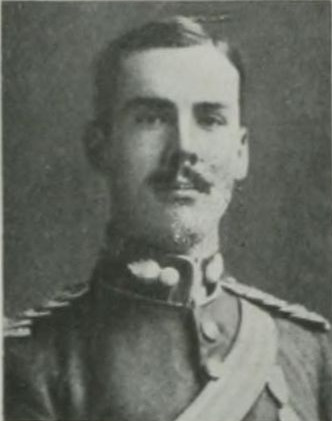
Charles E. Fishbourne.
FISHER, ALBERT WILLIAM, Gunner, Immed. Class (R.F.R., 90), H.M.S. Good Hope; lost in action off Coronel, on the coast of Chili, 1 Nov. 1914.
FISHER, ALFRED, Engine Room Artificer, No. 1523, Royal Naval Reserve, 3rd s. of Robert Fisher, Master Mariner, by his wife, Henrietta, dau. of John Myers; b. Boston, co. Lincoln, 15 April, 1888; educ. Hull Technical College; served his apprenticeship with Messrs. Earle & Co., Shipbuilders, Hull, and then went to sea. After obtaining his 1st Class certificate, he was appointed Resident Engineer at the Robert College, Constantinople, for three years, and on the outbreak of war returned to Hull; joined the R.N.R., and was appointed to H.M. auxiliary cruiser Viknor. He was drowned when this ship was lost off the North Coast of Ireland, 13 Jan. 1915. His body was recovered and buried in the island of Aronsay, Argyle. He m. at the British Consulate, Constantinople, 7 Oct. 1912, Elsie (10, Myrtle Avenue, Williamson Street, Hull), dau. of George Sloper, and had two sons: Alfred, b. 16 Dec. 1913; and Frank, b. 1 Aug. 1915.
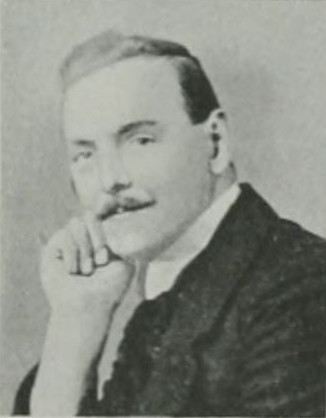
Alfred Fisher.
FISHER, ARTHUR ERNEST, A.B., 205321, H.M.S. Aboukir; lost in action in the North Sea, 22 Sept. 1914.
FISHER, CHARLES, A.B. (R.F.R., B. 3992), 197064, H.M.S. Hogue; lost in action in the North Sea, 22 Sept. 1914.
FISHER, EDWARD, Stoker (R.F.R., B. 7255), S.S. 102176, H.M.S. Aboukir; lost in action in the North Sea, 22 Sept. 1914.
FISHER, EDWARD HERBERT, Private, No. 10/1166, Wellington Infantry Battn., New Zealand Expeditionary Force, s. of Edward Herbert Fisher, of Wellington, New Zealand, Clerk in Valuation Department, by his wife, Margaret, dau. of the late Ralph Milligan, of Drumderryglass, co. Cavan, and gdson. of the late James Temple Fisher, Postmaster-General in Sir George Grey’s Government; b. Ingham, Herbert River, North Queensland, 13 Oct. 1891; educ. Townsville, North Queensland, and at Wellington, New Zealand; was in the Telegraph Department, Wellington, but after the outbreak of war left 13 Oct. 1914; joined the Wellington Infantry Battn. the following day, and sailed for Egypt in the Arawa (Transport No. 10) two days later. On the voyage to Egypt was transferred to the Limerick (No. 7) as Wireless Operator, and was on duty during the engagement between H.M.A. Cruiser Sydney and the German Cruiser Emden, near Cocos Island; also on duty in Telephone Bureau on the banks of the Suez Canal during the Turkish attack; after being on the Canal for about a month he returned to Zeitoun Camp and from thence to Gallipoli, where he was killed a few days after landing, 29 April, 1915; unm. Fisher was an enthusiastic Rugby footballer, and was one of the team that won the Ranfurly Shield in Taranaki in 1914. It was reported that he was shot through the head while helping a wounded Australian.
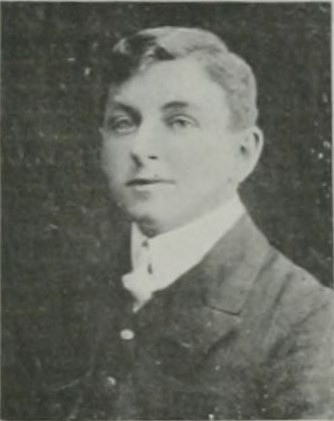
Edward Herbert Fisher.
FISHER, HENRY RAYMOND, Corpl., No. 25710, 14th Battn. (1st Royal Montreal Regt.), Canadian Expeditionary Force, s. of Charles Frederic Fisher, of Rollingdam, New Brunswick, Farmer, by his wife, Mary Ellen, dau. of Henry Johnston, of Rollingdam; b. Rollingdam, 1 April, 1883; educ. Rollingdam School; was for 15 years with the Canadian Pacific Railway as a fireman and engineer; volunteered on the outbreak of war in Aug. 1914, and enlisted at Montreal; came over with the first Canadian Contingent in Oct.; trained on Salisbury Plain during the winter; went to France on 15 Feb.; took part in the Battle of Ypres, where the 14th Battn. is said to have saved the day, and died 2 May, 1915, from shrapnel wounds in the head, received in action in the reserve trenches. He was buried in Poperinghe Cemetery. His brother, L.-Corpl. Charles D. Fisher, 15th Battn. (48th Highlanders of Canada) is now (1916) on active service in France.
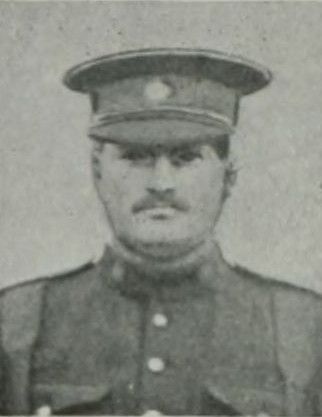
Henry R. Fisher.
FISHER, JOHN EDMUND, Private, R.M.L.I. (R.F.R., B. 341), late Ch./6698, H.M.S. Hogue; lost in action in the North Sea, 22 Sept. 1914.
FISHER, LESLIE BENITO, Lieut., 12th (Service) Battn. King’s Royal Rifles, only s. of the late William Edgar Fisher, Accountant, by his wife, Emma Louisa (Brampton Park, Brampton, Huntingdonshire), dau. of Benjamin Beasley; b. Fulham, S.W., 25 June, 1885; educ. privately; went to the Federated Malay States (Klang) in 1910 to take up a post with the North Hummock Rubber Co. Here his promotion was rapid, and at the time of his return home on leave in 1914 he was making an excellent position for himself. He arrived in England in August of that year, and three weeks later joined the Royal Fusiliers (Empire Battn.). In Nov. he was offered a commission in the 12th Service Battn. of the King’s Royal Rifles, which he accepted, and was gazetted 2nd Lieut. 17 Nov. 1914, and promoted Lieut. and machine gun officer in April, 1915. He was killed instantaneously by a shell in action at Bois Grenier, France, 14 Aug. 1915. As a schoolboy his great hobby was physical culture, and he was an ardent follower of Sandow, being remarkable for his splendid athletic physique and physical fitness. In 1909 he competed in a Marathon race at Bapton, Wiltshire, the course being 20 miles, and out of 32 entries only three ran the whole course, Lieut. Fisher being one of them. He was a brilliant hockey player, playing for Sussex and Dorset, and obtaining his colours for the latter county. In 1908 he joined as a trooper the Dorsetshire Yeomanry, and was offered a commission, which, however, he declined. His grandfather, the late Mr. Benjamin Beasley, was a noted shot, and in 1862 competed at Wimbledon for the Elcho Challenge Shield, becoming one of the first famous “English Eight.” Lieut. Fisher was unm., and was buried at Bois Grenier, France. A monument was erected to his memory in the chancel of St. Mary’s Church, Brampton, Huntingdonshire, Brampton being the village in which a great part of his life was spent.