Volume 2 — Vol. II.—36.
Reading edition
Nathan Coward, Glover and Poet, of Dersingham, Norfolk.
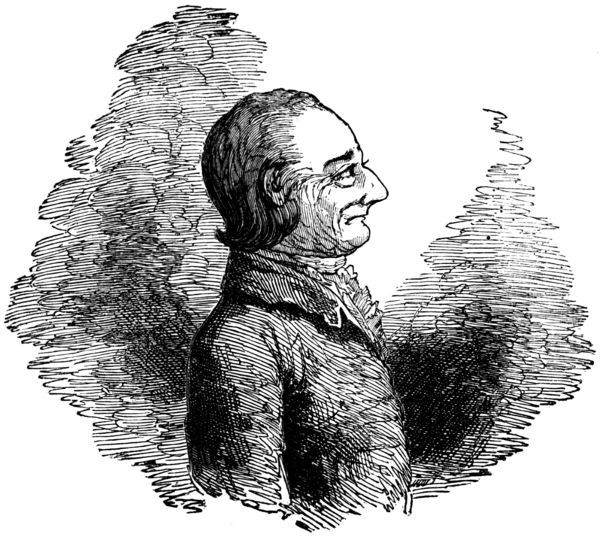
Nathan Coward, Glover and Poet, of Dersingham, Norfolk.
For the Table Book.
This eccentric individual, whose fertile pen procured him notoriety, was the son of a small grocer at March in the Isle of Ely. To use his favourite expression, he “came forth” on Friday, the 13th of April, 1735, O. S. He received the rudiments of his education under “dame Hawkins,” from whom he was removed to a most sagacious schoolmaster, named Wendall; and he “astonished his schoolfellows by the brilliancy of his genius,” till he was bound to his cousin Coward, of Lynn, to learn the art and mystery of a “glover and breeches-maker.” He had nearly passed through his apprenticeship, and attained to the age of twenty, unconscious of the numerous “ills that flesh is heir to,” when one day gazing at a small shop-window, nearly blinded by gloves and second-hand unmentionables, an accidental aperture favoured him with a glimpse of the too charming Miss Barbara Green, in the act of making wash-leather gloves. She was a maiden, and though something more than fifty, her fading beauty rendered her, to Nathan, all that
“Youthful poets fancy when they love.”
From that moment his eyes lost their lustre,—
“Love, like a worm i’ th’ bud, preyed on his damask cheek.”
He was to be seen pursuing his avocations at his “board of green cloth” day by day, sitting
——“Like Patience on a monument Smiling at grief.”
He “never told his love” till chance enabled him to make the idol of his hope the offer of his hand. “No,” said the too fascinating Barbara Green, “I will be an Evergreen.” The lady was inexorable, and Nathan was in despair; but time and reflection whispered “grieving’s a folly,” and “it’s better to have any wife than none,” and Nathan took unto himself another, with whom he enjoyed all the “ecstatic ecstasies” of domestic felicity.
Nathan’s business at Lynn became inadequate to his wants, and he removed to the village of Dersingham, a few miles distant; and there, as a “glover, poet, haberdasher, green-grocer, and psalm-singer,” he vegetated remote from vulgar throng, and beguiled his leisure by “cogitating in cogibundity of cogitation.”—Here it was, he tells us, that in 1775 he had a “wonderful, incomprehensible, and pathetic dream”—a vision of flames, in the shapes of “wig-blocks” and “Patagonian cucumbers,” attended with horrid crashes, like the noise of a thousand Merry Andrew’s rackets, which terrified and drove him to the “mouth of the sea;” where, surrounded by fire and water, he could only escape from dreadful destruction by—awaking. He believed that the fiery wig-blocks were “opened to him” in a dream as a caution, to preserve him from temptation. It was soon after this that, seeing one of his neighbours at the point of death, he “cogitated” the following
“Reflection.
“What creatures are we! Under the hands of he, Who created us for to be, Objects of his great mercy: And the same must I be, When years seventy, Creep upon me.”
On another occasion, while his wife was dangerously ill, Nathan, sitting by her bedside, became overwhelmed with “the influence of fancy,” and believing her actually dead, concocted this
“Epitaph.
“My wife is dead,—she was the best, And I her bosom friend; Yes, she is gone,—her soul’s at rest, And I am left to mend.”
Nathan made a trifling mistake; for, “to his great surprise,” his wife recovered, and the epitaph was put by till the proper time should arrive.
Nathan’s dexterity in wielding his pen enabled him to serve unlettered swains in other matters, besides their nether garments. He wrote letters for them “on love or business,” in
“Thoughts that breathe, and words that burn.”
The following ending of a “Love-letter written by particular desire,” is a specimen of his “effusions in prose.”
——“Marriage is like war; the battle causes fear, but the sweet hope of winning at the last stimulates us to proceed. But the effects of matrimony are much more agreeable than war, because the engagement may be accomplished without being prejudicial to the welfare of society. Were I to mention all the comparisons my warm imagination could furnish me with, it would swell this letter to a very great bulk.
“So to conclude;—the many inconveniences attending my being in business alone, are beyond conception; and I wish the fatigue to be abated by sharing it with some congenial soul, who may be intrusted with both secrets and circumstances, and all affairs of importance, too tedious to mention.”
Filled with self-importance by a lively sense of his vast acquirements, and his amazing utility to his village neighbours, he turned his thoughts to the “affairs of the nation” in the year 1799, and projected the salvation of the empire, by a plan of finance for raising adequate supplies to carry on the war against France with vigour. This he submitted in a spirited memorial, addressed
“To the Hon. Wm. Pitt, First of Ministers, &c. &c. &c.
“May it please your gracious Honour, Dear sir, to take into your honourable consideration the undermentioned business, which at this critical crisis and expensive period wants very much to be put in practice, to the advantage of the world, the benefit of our own government, the public’s welfare, and the glory of Dersingham.”
Nathan’s memorial runs to great length, but he states its real “business” in a few words.—“Beloved and honourable sir, be not angry at my proposal, if not approved of, which is, to beg of all dukes, lords, earls, baronets, country squires, profound justices, gentlemen, great and rich farmers, topping tradesmen, and others, who, to my certain and inconceivable knowledge, have so much unnecessary ornamental and useless plate, of all sorts and descriptions, to deliver up the same immediately to government, to be made into money for the support of this just and necessary war. Honoured sir, my plan is not to debar any one from having a sufficient quantity of such like plate, but only that which stands and remains useless and unused, which would raise many hundreds, if not thousands of money. I have but little, yet I am (so is my wife, in God’s name) minded, willing, and desirous, out of half a dozen teaspoons, to deliver up half, which you know, mighty sir, will be exactly three.”
Nathan proceeds to say, that “Many useless things, such as great waiters, tea-kettles, frying and sauce pans, and sundry other articles in the gold and silver way, too tedious to mention, were they now turned into money, would supply your wants of cash. Brass, earthenware, pipe-clay, china and glass, nothing can be sweeter, nor look neater, and sufficient for any man or woman upon earth to eat and drink out of.—Mr. Pitt, these sentiments I deliver from my heart; they are the dictates of wisdom and the fruit of experience.—Was our good and gracious king, as also yourself, worthy Mr. Pitt, once to come down into the country, and take a survey of matters, you would be astonished how abundance of individuals live. Pray, sir, in God’s name, take off a few taxes from the necessaries of life, especially salt, sugar, leather, and parchment. I myself have but six or seven shillings a week coming in, and sometimes not that, by losses and bad debts; and now corn is risen, we labour under great apprehension in other articles.—Dear and noble sir, I once heard a sermon preached on a thanksgiving day, for the proclamation of peace, by one Rev. Mr. Stony, at Lynn, Norfolk, mentioning the whole calamities of the war; and he brought your honourable father in, very fine. I wish from the bottom of my heart I may shortly hear such a like one preached upon yourself.”
In conclusion, Nathan thus inquires of Mr. Pitt, “Honoured sir, from whence comes wars, and rumours of wars, cock-fightings, and burglaries?” Finally, says Nathan, “The limits of one sheet of paper being filled, I must conclude, with wishing well to our good and gracious king, the queen, and all the royal family; as also to your honour, Mr. Pitt, your consort, sons and daughters, (if any,) and family in general.”
Nathan established his public character by his epistle to Mr. Pitt. He made known its contents to all his friends, and shortly after he had transmitted it, he received an acknowledgment of thanks and a promise of reward, in a scrawling hand with an unintelligible signature; whereupon he sagely consoled himself with this remark, that great men, “despising the common, plebeian method of writing, generally scratch their names so illegible, that neither themselves nor any body else can read them.”
Nathan’s notoriety was now at its height. He usually visited Lynn once or twice a week; and flattered by the general encomiums bestowed on his transcendent abilities by his admirers in that ancient town, he ventured to disclose a long-cherished hope, the object of his ardent ambition, to appear in print as an author. His desire was fostered by several literary youths, resident in Lynn, to whom he submitted his writings for arrangement, and in 1800 they were published to the world under the title of “Quaint Scraps, or Sudden Cogitations.” Previous to its appearance, he received repeated congratulations on the forthcoming book. Among other “Commendatory Verses” was a poetical address, purporting to have been written in America, addressed “To Nathan Coward, the sage Author of Scraps and Cogitations, by Barnabas Boldero, LL.D. VS. MOPQ. &c. of the Cogitating College, Philadelphia.” This pleasing testimonial required Milton, and the “far-famed bards of elder times,” to give place to the rising luminary of the poetical hemisphere.
“Avaunt! avaunt! hide your diminish’d heads! When the sun shines the stars should seek their beds. No longer clouds the dawning light imprison. The golden age is come! a mighty sun has risen A mighty sun, whose congregated rays At Dersingham pour forth their dazzling blaze; Not there alone, but e’en throughout all nations, Beam Nathan’s Scraps and Sudden Cogitations! None better knows Pindaric odes to write, None e’er a better love-song can indite; None better knows to play the tragic part, Or with sweet anthems captivate the heart; None better knows to sport extemp’re wit, Or with strange spells avert an ague fit; None better knows to frame th’ elegiac air, Or with the nasal Jews harp charm the ear.”
This address is printed entire in Nathan’s book, which consisted of epitaphs, love-letters, valentines, cures for the ague and consumption, reflections, songs, &c. &c. The preface, the sketch of his life, and the conclusion to the work, were drawn up by Nathan’s youthful editors. Through them Nathan appealed to the reviewers in an address, containing the following spirited passage:—“It is ye, ye mites of criticism, it is ye alone I fear; for, like your namesakes, the greater the richness and goodness of the cheese the more destructive are your depredations, and the more numerous your partisans.” Towards the public, the poet of Dersingham was equally candid and courageous.—“I shun the general path of authors,” says Nathan, “and instead of ‘feeling conscious of the numerous defects, and submitting my trifles, with all possible humility, to the candour of a generous public,’ I venture to assert, that the public must receive the greatest advantage from my labours; and every member of society shall bless the hour that ushered into existence my ‘Quaint Scraps and my Sudden Cogitations.’ For what author, were he actually conscious of his numerous defects, would wish to trust himself to the mercy of that generous public, whom every one condemns for want of discernment and liberality. No, I profess, and I am what I do profess, a man of independent spirit! and although I have hitherto dwelt in obscurity, and felt the annihilating influence of oppression and the icy grasp of poverty, yet I have ever enjoyed the praiseworthy luxury of having an opinion of my own; because,—I am conscious of the inferiority of the opinions of others.”
These were some of the preliminary means by which, with an honesty worthy to be imitated by authors of greater fame, Nathan aspired to win “golden opinions.” The final sentence of his valedictory address “to the reader” is remarkable for feeling and dignity. “I am conscious,” says Nathan, “that I begin to fade; and be assured, that if I should be so fortunate as to blossom a few years longer, it must be entirely imputed to the animating influence of your praises, which will be grateful as the pure and renovating dews of heaven. And when at length the soft breeze of evening shall fly over the spot where I once bloomed, the traveller will refresh it with the soft tears of melancholy, and sigh at the frailty of all sublunary grandeur.”
His wish accomplished, and his book published, Nathan’s spare person, (about the middle size,) clad in tight leather “shorts,” frequently ambulated the streets of Lynn, and he had the ineffable pleasure of receiving loud congratulations from his numerous friends. Here, perhaps, his literary career had terminated, had not Napoleon’s abortive threats of invasion roused Nathan to take his stand, with daring pen, in defiance of the insolent foe. Our patriotic author produced a “Sermon” on the impending event. His former editorial assistants again aided him, and announced his intentions by a prospectus, setting forth that, on such an occasion, “when address, argument, and agitation, elegy, epitaph, and epithalamium, puff, powder, poetry, and petition, have been employed to invigorate and inspirit the minds of Englishmen, it surely must be a matter of serious exultation, that a writer of such superlative celebrity as Nathan Coward should draw his pen in defence of the common cause.—Cold and disloyal indeed must be that breast which, even on the bare perusal, does not feel the glow of enthusiastic patriotism,—does not beat with rapture at the pride of Dersingham, the glory of his country, and the admiration of the universe.”
“Rise, Britons, rise, and rising nobly raise Your joyful Pæans to great Nathan’s praise; Nathan, whose powers all glorious heights can reach, Now charm an ague,—now a Sermon preach;— Nathan, who late, as time and cause seem’d fit, Despatch’d a letter to great premier Pitt. Showing how quick the public in a dash Might change their spoons and platters into cash; And now with zeal, attach’d to name nor party, Thunders out vengeance ’gainst great Buonaparte; Zeal that no rival bard shall e’er exceed; To prove your judgment, quickly buy and read.”
Soon after the publication of his “Sermon,” Nathan became more sensible to the infirmities of “threescore years and ten.” And the epitaph on his wife having been duly appropriated, for in good time she died, he removed to Liverpool, where he had a daughter married and settled, and there, in her arms, about the year 1815, he breathed his last at the age of eighty.—Requiescat in pace.
K.
PETER AND MARY.
Dr. Soams, master of Peterhouse, Cambridge, towards the close of the sixteenth century, by a whimsical perverseness deprived the college over which he presided of a handsome estate. Mary, the widow of Thomas Ramsey, lord mayor of London, in 1577, after conferring several favours on that foundation, proffered to settle five hundred pounds a year (a very large income at that period) upon the house, provided that it might be called “The college of Peter and Mary.” “No!” said the capricious master, “Peter, who has lived so long single, is too old now for a female partner.” Fuller says it was “a dear jest by which to lose so good a benefactress.” The lady, offended by the doctor’s fantastic scruple, turned the stream of her benevolence to the benefit of other public foundations.
Garrick Plays. No. XXXII.
[From “Love’s Metamorphosis,” a Comedy, by John Lily, M. A. 1601.]
Love half-denied is Love half-confest.
Nisa. Niobe, her maid.
Nisa. I fear Niobe is in love.
Niobe. Not I, madam; yet must I confess, that oftentimes I have had sweet thoughts, sometimes hard conceits; betwixt both, a kind of yielding; I know not what; but certainly I think it is not love: sigh I can, and find ease in melancholy: smile I do, and take pleasure in imagination: I feel in myself a pleasing pain, a chill heat, a delicate bitterness; how to term it I know not; without doubt it may be Love; sure I am it is not Hate.
[From “Sapho and Phao,” a Comedy, by the same Author, 1601.]
Phao, a poor Ferryman, praises his condition.—He ferries over Venus; who inflames Sapho and him with a mutual passion.
Phao. Thou art a ferryman, Phao, yet a freeman; possessing for riches content, and for honours quiet. Thy thoughts are no higher than thy fortunes, nor thy desires greater than thy calling. Who climbeth, standeth on glass, and falleth on thorn. Thy heart’s thirst is satisfied with thy hand’s thrift, and thy gentle labours in the day turn to sweet slumbers in the night. As much doth it delight thee to rule thy oar in a calm stream, as it doth Sapho to sway the sceptre in her brave court. Envy never casteth her eye low, ambition pointeth always upward, and revenge barketh only at stars. Thou farest delicately, if thou have a fare to buy any thing. Thine angle is ready, when thy oar is idle; and as sweet is the fish which thou gettest in the river, as the fowl which others buy in the market. Thou needest not fear poison in thy glass, nor treason in thy guard. The wind is thy greatest enemy, whose might is withstood by policy. O sweet life! seldom found under a golden covert, often under a thatcht cottage. But here cometh one; I will withdraw myself aside; it may be a passenger.
Venus, Phao; She, as a mortal.
Venus. Pretty youth, do you keep the ferry, that conducteth to Syracusa?
Phao. The ferry, fair lady, that conducteth to Syracusa.
Venus. I fear, if the water should begin to swell, thou wilt want cunning to guide.
Phao. These waters are commonly as the passengers are; and therefore, carrying one so fair in show, there is no cause to fear a rough sea.
Venus. To pass the time in thy boat, can’st thou devise any pastime?
Phao. If the wind be with me, I can angle, or tell tales: if against me, it will be pleasure for you to see me take pains.
Venus. I like not fishing; yet was I born of the sea.
Phao. But he may bless fishing, that caught such an one in the sea.
Venus. It was not with an angle, my boy, but with a net.
Phao. So, was it said, that Vulcan caught Mars with Venus.
Venus. Did’st thou hear so? it was some tale.
Phao. Yea, Madam; and that in the boat did I mean to make my tale.
Venus. It is not for a ferryman to talk of the Gods Loves: but to tell how thy father could dig, and thy mother spin. But come, let us away.
Phao. I am ready to wait—
Sapho, sleepless for love of Phao, who loves her as much, consults with him about some medicinal herb: She, a great Lady; He, the poor Ferryman, but now promoted to be her Gardener.
Sapho. What herbs have you brought, Phao?
Phao. Such as will make you sleep, Madam; though they cannot make me slumber.
Sapho. Why, how can you cure me, when you cannot remedy yourself?
Phao. Yes, madam; the causes are contrary. For it is only a dryness in your brains, that keepeth you from rest. But—
Sapho. But what?
Phao. Nothing: but mine is not so—
Sapho. Nay then, I despair of help, if our disease be not all one.
Phao. I would our diseases were all one!
Sapho. It goes hard with the patient, when the physician is desperate.
Phao. Yet Medea made the ever-waking dragon to snort, when she (poor soul) could not wink.
Sapho. Medea was in love, and nothing could cause her rest but Jason.
Phao. Indeed I know no herb to make lovers sleep but Heart’s Ease: which, because it groweth so high, I cannot reach, for—
Sapho. For whom?
Phao. For such as love—
Sapho. It stoopeth very low, and I can never stoop to it, that——
Phao. That what?
Sapho. That I may gather it. But why do you sigh so, Phao?
Phao. It is mine use, Madam.
Sapho. It will do you harm, and me too: for I never hear one sigh, but I must sigh also.
Phao. It were best then that your Ladyship give me leave to be gone; for I can but sigh—
Sapho. Nay, stay; for now I begin to sigh, I shall not leave, though you be gone. But what do you think best for your sighing, to take it away?
Phao. Yew, Madam.
[II-267, II-268]
Sapho. Me!
Phao. No, Madam; Yew of the tree.
Sapho. Then will I love Yew the better. And indeed I think it would make me sleep too; therefore, all other simples set aside, I will simply use only Yew.
Phao. Do, Madam; for I think nothing in the world so good as Yew.
Sapho. Farewell, for this time.
Sapho questions her low-placed Affection.
Sapho. Into the nest of an Alcyon no bird can enter but the Alcyon: and into the heart of so great a Lady can any creep but a great Lord?
Cupid. Sapho cured of her love by the pity of Venus.
Cupid. But what will you do for Phao?
Sapho. I will wish him fortunate. This will I do for Phao, because I once loved Phao: for never shall it be said, that Sapho loved to hate: or that out of love she could not be as courteous, as she was in love passionate.
Phao’s final resolution.
Phao. O Sapho, thou hast Cupid in thy arms, I in my heart; thou kissest him for sport, I must curse him for spite; yet will I not curse him, Sapho, whom thou kissest. This shall be my resolution, wherever I wander, to be as I were ever kneeling before Sapho; my loyalty unspotted, though unrewarded. With as little malice will I go to my grave, as I did lie withal in my cradle. My life shall be spent in sighing and wishing; the one for my bad fortune, the other for Sapho’s good.
C. L.
For the Table Book.
WHITTLE SHEEPSHANKS, ESQ.
Formerly there was a farmer of very extensive property, who was also of great piety, residing in Craven, with the above awkward Christian and surname. He once purchased some sheep of a native of North Britain at one of the Skipton cattle fairs, and not having cash enough with him to pay for them, he said to the man, “I’ve no money by me at present, but I’ll settle with you next fair.” “An’ wha ma ye be, sir?” said the Scotsman. “What, don’t ye know me? I thought every body knew Whittle Sheepshanks.” “Hout! mon,” said the Scotsman, “dinna think to make a fule o’ me; wha’ ever heard sic a name o’ a sheepshanks wi’ a whittle to it.” This so offended Mr. Sheepshanks, that he changed his name to York.
T. Q. M.
For the Table Book.
MY “HOME.”
This is the soothing word that calms the mind under all the various anxieties, mortifications, and disappointments we meet with, day after day, in the busy world. This is the idea that enables us to support the most trying vexations and troubles—it is an antidote for every evil—
My “Home!”—There is a deliciously restful, quiet tone about the word. It presents heavenly ideas of soft ease, and gentle repose to the oppressed mind and languid body—ideas of quiet seclusion, where one’s powers and faculties may be relaxed, and be at rest. The idea of “home” is perhaps the only one which preserves an equal influence over us through all the different periods of life.
The weary child that slowly draws its little tender feet, one after the other, in endeavours to keep up with “dear papa,” who has taken it out for a long walk, looks up in his face with brightening eyes, as he says, “Never mind, we shall soon be home now.” Its tiny fingers take a firmer grasp of the supporting hand of its father, and its poor drooping head half erects, as it thinks of the kind mother who will receive it with words of sympathy for its fatigue, seat it in her lap, lay its face on her cherishing bosom with comforting expressions, and chafe its aching limbs with her soft palms.
The school boy, or girl, when holiday-time comes—with what anxiety do they not look forward to the time of the chaise’s arrival, which is to take them “home!” They both think of the approaching happy meeting with all their affectionate family—the encouraging smile of the proud father—the overwhelming kisses of the fond mother—the vociferous welcomes of the delighted brothers and sisters. Visions of well-merited praise bestowed on the different exhibitions of the neatly executed copybook, the correctly worked sums, (those tremendously long phalanxes of figures, that call forth the mirthful astonishment of the younger party,) the well-recited Latin lines, and the “horribly hard” translation, pass before his mind.—She anticipates the admiration that will be elicited by the display of certain beautiful needlework, (that pernicious destroyer of female health, both bodily and mental,) which, at the expense of shape and eyesight, is perhaps brought to such perfection as exactly to imitate the finest “Brussels.”—Alas, poor Woman! How comes it that we are so blind to our own good, as to employ in such trifling and even injurious pursuits all your faculties, which (inferior to man’s, as man assumes they are) might still be cultivated and developed, so as to add mental acquirements to your gentle qualities, and render you a still more amiable and desirable companion for us.
The man while busy at his daily occupation thinks of going “home” after the fatigues of the day with ecstasy. He knows that on his return he shall find an affectionate face to welcome him—a warm snug room—a bright fire—a clean hearth—the tea-things laid—the sofa wheeled round on the rug—and, in a few minutes after his entrance, his wife sitting by his side, consoling him in his vexations, aiding him in his plans for the future, or participating in his joys, and smiling upon him for the good news he may have brought home for her—his children climbing on the hassock at his feet, leaning over his knees to eye his face with joyous eagerness, that they may coaxingly win his intercession with “dear mamma” for “only half an hour longer.”——
I have hitherto looked only at the bright side of the picture. I am unhappily aware that there are individuals who never can know the luxury of “home.” Mr. Charles Lamb says, that “the home of the very poor is no home.” And I also aver, that the home of the very rich is no home. He may be constantly at home if he chooses, therefore he can never know the delightful sensation of a return to it, after having been obliged (for with human beings the chief charm of a thing seems to arise from its being denied to us) to remain out all day. Besides, “home” should be a place of simplicity and quiet retirement after the turmoil of the world. Do the rich find these amid their numerous guests and officious domestics—their idle ceremony, and pomp, and ostentation? This is not the “ease and comfort” (that greatest source of an Englishman’s delight) which should be peculiar to “home.”——
There is, likewise, another being who never can taste the truly exquisite enjoyment of “home:”—I mean the “Old Bachelor.” He returns to his lodging (I will not say to his “home”)—there may be every thing he can possibly desire in the shape of mere external comforts, provided for him by the officious zeal and anxious wish to please of Mrs. Smith, (his housekeeper,) but still the room has an air of chilling vacancy:—the very atmosphere of the apartment has a dim, uninhabited appearance—the chairs, set round with provoking neatness, look reproachfully useless and unoccupied—and the tables and other furniture shine with impertinent and futile brightness. All is dreary and repelling. No gentle face welcomes his arrival—no loving hand meets his—no kind looks answer the listless gaze he throws round the apartment as he enters. He sits down to a book—alone. There is no one sitting by his side to enjoy with him the favourite passage, the apt remark, the just criticism—no eyes in which to read his own feelings—his own tastes are unappreciated and unreflected—he has no resource but himself—no one to look up to but himself—all his enjoyment, all his happiness must emanate from himself. He flings down the volume in despair—buries his face in his hands—thinks of her who might have been his beloved and heart-cheering companion—she is gone!——
Home!—scene of tenderly cherished infancy—of youthful buoyancy, brilliant with enjoying and hopeful feelings—of maturer and exquisite happiness—of all our best feelings—towards thee does my heart ever yearn in constant and grateful affection!—
M. H.
For the Table Book.
THE BLACKBERRY BLOSSOM. Written in Epping Forest.
The maiden’s blush, Sweet blackberry blossom, thou Wearest, in prickly leaves that rove O’er friendlike turning bough. Companionship Thine attributes, thou givest Likeness of virtue shielded safe From lives with whom thou livest. What is mankind? But like thy wand’ring?—Time Leads mortals through the maze of life, And thousands hopewards climb. A sudden blast— Then what of hope remains? Beauty full soon by sickness falls, And pleasures die in pains. But fruit succeeds— Thou ripenest by the sky: May human hearts bear fruits of peace Before in earth they lie!
August 19, 1827. ——
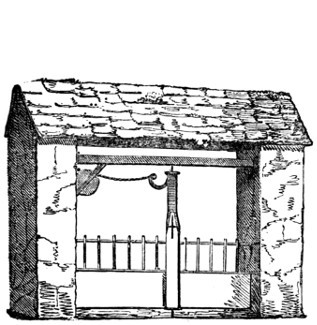
Burnsal Lich-Gate.
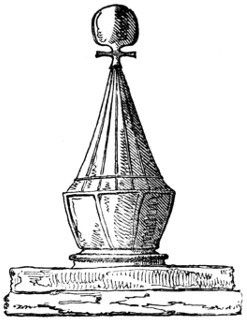
Grassmere Font.
NOTES ON A TOUR, CHIEFLY PEDESTRIAN, FROM SKIPTON IN CRAVEN, YORKSHIRE, TO KESWICK, IN CUMBERLAND.
“I hate the man who can travel from Dan to Beersheba and say ’tis all barren.”—Sterne
July 14, 1827. Left Skipton for Keswick. The road from Skipton to Burnsal exhibits some romantic scenery, which the muse of Wordsworth has made classic ground. About half a mile from Rilston, on the right-hand side of the road, are the ruins of Norton tower, one of the principal scenes in the poem of the “White Doe of Rylstone.” Having visited the tower before, I did not think it worth while to reascend the immense precipice on which it stands.
15th, Sunday. Previously to the commencement of the service at Burnsal church, I sketched the “lich-gate,” which differs considerably from the beautiful one of Beckenham, in Kent; a drawing whereof is in my friend Mr. Hone’s Table Book. The manner wherein the gate turns on its pivot is rather curious, and will be best exemplified by the drawing above. The church, an old structure, apparently of the reign of Henry VII., is pleasantly situated on “the banks of the crystal Wharfe.” While attending divine service, one or two things struck me as remarkable. The church has an organ, on which two voluntaries were played; one after the psalms for the day, and the other after the second lesson; but during the singing of the metrical psalms the organ was silent. Instead of it two or three strange-looking countrymen in the organ gallery raised an inharmonious noise with a small fiddle, a flute, and a clarinet. Why do the churchwardens allow this? The gallery of the church should not be allowed to resemble the interior of an ale-house at a village feast. The church would have looked better had it been cleaner: the pew wherein I sat was covered with cobwebs. The business of the churchwardens seemed to me to consist rather in thumping the heads of naughty boys than in looking after the state of the church.
Afternoon, same day. At Linton, about two miles up the river, arrived during the time of service. This church has suffered much from the “beautifiers;” who, amongst other equally judicious improvements, have placed a Venetian window over the altar of the Gothic edifice: the present incumbent, the Rev. Mr. Coulthurst, is about to remove it. The altar rails were covered with garlands made of artificial flowers. Church garlands were formerly made of real flowers. They are borne before the corpses of unmarried young women. I have heard an old woman in Durham sing the following stanza, which evidently alludes to the custom:—
When I am dead, before I be buried, Hearken ye maidens fair, this must ye do— Make me a garland of marjoram and lemon thyme, Mixed with the pansy, rosemary, and rue.
The practice of bearing the garlands is still very common in the country churches in Craven.
In the church-yard is the following inscription on a stone, date 1825! The march of intellect is surely here proceeding at a rapid pace!
Remember man, that paseth by As thou is now so once was I; And as I is so must thou be, Prepare thyself to follow me.
Some one had written beneath,
To follow you’s not my intent, Unless I knew which way you went.
July 16. Went from Linton over the moors to Clapham; passed through Skirethorns, over Skirethorns moor, by Malham Water, by the side of Pennygent, through Great and Little Stainforth, over —— moor,[338] through Wharfe and Austwick. Malham Water is a beautiful lake, well worthy of the traveller’s notice; it is supposed to be the source of the river Aire, which springs in the neighbourhood. About a mile from it is the famous chasm Gordale. (Vide Gray’s Journal.) From —— moor,[339] above the village of Little Stainforth, is a sublime view of mountain scenery, in which Pennygent is a principal object. No traveller should pass through Little Stainforth without seeing the waterfall below the bridge. There is a finer one in the neighbourhood, but I was ignorant of it when I passed through the village. From the waterfall the bridge appears to great advantage; the arch has a fine span. There are, I was told, some curious caves in this part. N.B. This day’s journey taught me that the information of the peasantry with respect to distances is not to be depended upon: at Little Stainforth I was informed it was three miles to Clapham; six would have been nearer the mark.
July 17, 18. Kirby Lonsdale. This town is on the banks of the Lune, which here winds through a finely wooded valley. It has an elegant old bridge. In one of the battlements is a stone, resembling a Roman altar, with this inscription—Feare God, Honore te Kinge, 1683. Why and when placed there I know not. Drunken Barnaby’s “Aulam factam in tabernam,” may be seen in the main street: it is still used as an inn. The church is a handsome structure; near the altar rails I observed the table of consanguinity placed.[340] At the west end is a fine Norman doorway, a considerable sufferer by “beautifying.” In the church-yard, on a neat pyramidal tombstone, is the following melancholy inscription:—
Eastern side.
Sacred to the Memory of
Alice Clark, Aged 31 years;
Agnes Walling, Aged 25;
Bella Cornthwaite, Aged 20;
Hannah Armstrong, Aged 18;
Agnes Nicholson, Aged 17:
All of whom were hurried into eternity by the awful conflagration by fire of the Rose and Crown Hotel, in this town, on the night of the 6 December, 1820.
Western side.
In the midst of life we are in Death.
Before the mountains were brought forth, or ever thou hadst formed the earth and the world, even from everlasting to everlasting thou art, O God!
Thou turnest man to destruction, and sayest, Return, ye children of men.
Thou carriest them away as with a flood; they are as a sleep: in the morning they are like grass which springeth up.
In the morning it flourisheth and groweth up: in the evening it is cut down and withered.
Erected by voluntary contributions.
All the sufferers in this dreadful conflagration seem to have been young. “Whom the Gods love die young,” I think is said by one of the Grecian poets.
A walk, extending from the north gate of the church-yard along the banks of the Lune, affords a delightful prospect of the county, with several gentlemen’s seats. N.B. The Rev. Mr. Hunt, the author of an elegant version of Tasso’s Jerusalem Delivered, was once curate here. I believe the well-known Carus Wilson is the officiating minister at present.
18th, Evening—At Kendal. At Cowbrow half way between Kirby Lonsdale and this place, is the following stanza, beneath a sign representing a ploughboy:—
The weather’s fair, the season’s now, Drive on my boys, God speed the plough; All you my friends pray call and see What jolly boys we ploughmen be.
Had this “poetry” been in the neighbourhood of Durham, I should have suspected it to have been written either by the late Baron Brown, or Vet. Doc. Marshall, though I do not think the doctor would have made such a bull as runs in the last line.
19. Left Kendal for Bowness. Arrived there in the evening, and took up my quarters at the posting-house at the entrance of the village. From the front windows of the inn is a good view of Windermere. At the time of my arrival it was invisible; both lake and village were enveloped in a thick mist. About eight o’clock the mist dispersed, the sky grew clear, and Windermere was seen in all its beauty. This is the largest of the English lakes; and, according to Mr. Athey’s Guide, is ten miles in length. The hills around it are delightfully wooded, but the scenery is tame when compared with that of the more northern lakes. Bell’s Island is now called Curwen’s Island, from its being the country residence of Mr. Curwen: it is the largest of the numerous islands on Windermere. In Bowness church-yard is a tomb to the memory of Rassellas Belfield, an Abyssinian. Near Troutbeck bridge, in the neighbourhood, is the seat of the laureate of the Palmy isle. In the midst of the village is a tree on which notices of sales are posted. Bowness is to the inhabitants of Kendal what Hornsey is to the cocknies, and during the summer months gipsying excursions are very frequent. On the evening that I arrived some Oxonians were “astonishing the natives:” they seemed to think that, as they were from college, they had a right to give themselves airs. The inhabitants appeared to regard them with mingled looks of pity and derision.
July 20. Left Bowness for Grassmere, through Ambleside and Rydal. At the last place I turned aside to see Rydal Mount, the residence of the celebrated poet, Wordsworth. While proceeding to his cottage, an old woman popped out her head from the window of a rude hut, and asked me if I should like to see the waterfall: I entered her dwelling, where a good fire of sticks and turf was burning on the hearth; and, from the conversation of the dame, I gleaned that she was a dependant on the bounty of Lady le Fleming, in whose grounds the waterfall was: she at length conducted me to it. This waterfall is certainly a fine one, but as seen through the window of a summer-house it has rather a cockney appearance. Rydal Hall is a huge uncouth building; the beautifiers have made the old mansion look like a factory: when I first saw it from the road I mistook it for one. N.B. For seeing the waterfall, the price is “what you choose!”
I now proceeded to Rydal Mount, which, from the trees surrounding it, can hardly be seen from the road: the approach is shaded by beautiful laurels—proper trees for the residence of Wordsworth! While reconnoitring I was caught in a heavy thunder-shower, and should have been drenched, had not a pretty servant girl invited me into the kitchen, where I sat for at least an hour. On the dresser, in a large wicker cage, were two turtledoves; these, I learnt, were great favourites, or rather pets, (that was the word,) with the bard. The shower having ceased, I obtained Mrs. Wordsworth’s leave to walk through the garden: from the mount in it I gained an excellent view of the front part of the house. I had scarcely reached the village of Rydal when another shower drove me into a cottage, from the door of which I had my first view of the author of the Lyrical Ballads: he is rather tall, apparently about fifty years of age; he was dressed in a hair cap, plaid coat, and white trowsers. It was gratifying to hear how the Rydal peasantry spoke of this good man. One said he was kind to the poor; another, that he was very religious; another, that he had no pride, and would speak to any body: all were loud in his praise.
At Rydal is a neat gothic church, lately erected at the sole cost of Lady le Fleming. I have not seen any new church that pleased me so much as this; the east end is finely conceived, and both the exterior and interior reflect the highest credit on the taste and talent of the artist, Mr. Webster of Kendal. I wished Mr. Hone had seen it with me, for I know he would have been delighted with it. The church tower forms a pretty object from many parts of the neighbourhood. Rydal lake is small, but very romantic. On some of the surrounding hills I observed those rude erections of loose stones which the country boys are in the habit of building, and which they call men. Wordsworth alludes to these men in his Lyrical Ballads:—
To the top of high[341] —— they chanc’d to climb, And there did they build, without mortar or lime, A man on the top of the crag.
A few of these “men” being provided with arms, resemble crosses, and transport the imagination of the beholder to catholic countries. The “Opium Eater” resides in this part; I saw him; his name is De Q——.
July 21. Grassmere. Arrived here at nine in the morning, and took up my quarters at Jonathan Bell’s, the Grassmere inn. This is a most lovely village. The poem of the “City of the Plague,” in which its lake and church are so exquisitely described, conveys but a faint idea of its beauties—even my favourite, Wilson, has failed in delineating this fairy spot. On entering, the first object that struck me was the church and its cemetery.
There is a little church-yard on the side Of a low hill that hangs o’er Grassmere lake. Most beautiful it is! a vernal spot Enclos’d with wooded rocks, where a few graves Lie shelter’d, sleeping in eternal calm— Go thither when you will, and that sweet spot Is bright with sunshine. Death put on The countenance of an angel, in the spot Which he had sanctified——
City of the Plague.
I found the description correct, with the exception of the sunshine passage; for when I entered the church-yard not a sun ray smiled on the graves; but, on the contrary, gloomy clouds were frowning above. The church door was open, and I discovered that the villagers were strewing the floors with fresh rushes. I learnt from the old clerk, that, according to annual custom, the rush-bearing procession would be in the evening. I asked the clerk if there were any dissenters in the neighbourhood; he said, no, not nearer than Keswick, where there were some that called themselves Presbyterians; but he did not know what they were, he believed them to be a kind of papishes.[342] During the whole of this day I observed the children busily employed in preparing garlands of such wild flowers as the beautiful valley produces, for the evening procession, which commenced at nine, in the following order:—The children (chiefly girls) holding these garlands, paraded through the village, preceded by the Union band, (thanks to the great drum for this information;) they then entered the church, where the three largest garlands were placed on the altar, and the remaining ones in various other parts of the place. (By the by, the beautifiers have placed an ugly window above the altar, of the nondescript order of architecture.) In the procession I observed the “Opium Eater,” Mr. Barber, an opulent gentleman residing in the neighbourhood, Mr. and Mrs. Wordsworth, Miss Wordsworth, and Miss Dora Wordsworth. Wordsworth is the chief supporter of these rustic ceremonies. The procession over, the party adjourned to the ball-room, a hayloft, at my worthy friend, Mr. Bell’s, where the country lads and lasses tripped it merrily and heavily. They called the amusement dancing, but I called it thumping; for he who could make the greatest noise seemed to be esteemed the best dancer; and, on the present occasion, I think Mr. Pooley, the schoolmaster, bore away the palm. Billy Dawson, the fiddler, boasted to me of having been the officiating minstrel at this ceremony for the last six and forty years. He made grievous complaints of the outlandish tunes which the “Union band chaps” introduce: in the procession of this evening they annoyed Billy by playing the “Hunters’ Chorus in Friskits.” “Who,” said Billy, “can keep time with such a queer thing?” Amongst the gentlemen dancers was one Dan Burkitt; he introduced himself to me, by seizing my coat collar in a mode that would have given a Burlington Arcade lounger the hysterics, and saying, “—— I’m old Dan Burkitt, of Wytheburn, sixty-six years old—not a better jigger in Westmoreland.” No, thought I, nor a greater tosspot. On my relating this to an old man present, he told me not to judge of Westmoreland manners by Dan’s; “for,” said he, “you see, sir, he is a statesman, and has been at Lunnon, and so takes liberties.” In Westmoreland, farmers residing on their own estate are called “statesmen.” The dance was kept up till a quarter to twelve, when a livery-servant entered, and delivered the following verbal message to Billy—“Master’s respects, and will thank you to lend him the fiddlestick.” Billy took the hint; the sabbath morn was at hand, and the pastor of the parish had adopted this gentle mode of apprizing the assembled revellers that they ought to cease their revelry. The servant departed with the fiddlestick, the chandelier was removed, and when the village clock struck twelve not an individual was to be seen out of doors in the village. No disturbance of any kind interrupted the dance: Dan Burkitt was the only person at all “how came you so?” and he was “non se ipse” before the jollity commenced. He told me he was “seldom sober;” and I believed what he said. The rush-bearing is now, I believe, almost entirely confined to Westmoreland. It was once customary in Craven, as appears from the following extract from Dr. Whitaker:—“Among the seasons of periodical festivity, was the rush-bearing, or the ceremony of conveying fresh rushes to strew the floor of the parish church. This method of covering floors was universal in houses while floors were of earth, but is now confined to places of worship: the bundles of the girls were adorned with wreaths of flowers, and the evening concluded with a dance. In Craven the custom has wholly ceased.”
In Westmoreland the custom has undergone a change. Billy remembered when the lasses bore the rushes in the evening procession, and strewed the church floor at the same time that they decorated the church with garlands; now, the rushes are laid in the morning by the ringer and clerk, and no rushes are introduced in the evening procession. I do not like old customs to change; for, like mortals, they change before they die altogether.
The interest of the scene at Grassmere was heightened to me, by my discovering that the dancing-room of the rush-bearers was the ball-room of Mr. Wilson’s children’s dance. The dancing-master described so exquisitely in his poem is John Carradus. From an old inhabitant of Grassmere I had the following anecdotes of the now professor of moral philosophy. He was once a private in the Kendal local militia; he might have been a captain, but not having sufficient knowledge of military tactics, he declined the honour.
Wilson, while in the militia, was billeted at one of the Kendal inns, where a brother private was boasting of his skill in leaping, and stated, that he never met with his equal. Wilson betted a guinea that he would outleap him; the wager was accepted, and the poet came off victorious, having leaped seven yards; his bragging antagonist leaped only five. Mr. Wilson appears to have been celebrated in Westmoreland for these things; being a good climber of trees, an excellent swimmer, and a first-rate leaper.
The poet had a curious fancy in wearing his hair in long curls, which flowed about his neck. His sergeant noticed these curls, and remarked, that in the militia they wanted men and not puppies; requesting, at the same time, that he would wear his hair like other Christians. The request of the sergeant was complied with, and the poet’s head was soon deprived of its tresses. On a friend blaming him for submitting to the orders of a militia sergeant, he coolly said, “I have acted correctly; it is the duty of an inferior soldier to submit to a superior.”
While in the militia, Wilson opposed himself to seven beggars, or trampers, of “Younghusband’s gang,” who were insulting a poor man. In this fray the bard got two black eyes; “but,” added the narrator, “no matter—he got ’em in a good cause.”
July 22, Sunday. Attended church. After service sketched the font, which appeared to be of great antiquity. Near the altar is the following inscription on a beautiful marble monument, designed and executed by Webster of Kendal: the poetry is by Wordsworth.
In the Burial Ground
Of this church are deposited the remains of Jemima Ann Deborah, second Daughter of Sir Egerton Brydges, of Denton Court, Kent, Bart. She departed this life, at the Ivy Cottage, Rydal, May 25, 1822, Aged 28 years. This memorial is erected by her husband, Edward Quillinan.
These vales were saddened with no common gloom When good Jemima perished in her bloom; When, such the awful will of Heaven, she died By flames breathed on her from her own fire-side. On earth we dimly see, and but in part We know, yet faith sustains the sorrowing heart: And she the pure, the patient, and the meek, Might have fit epitaph could feelings speak: If words could tell, and monuments record, How treasures lost are inwardly deplored, No name by grief’s fond eloquence adorned, More than Jemima’s would be praised and mourned The tender virtues of her blameless life, Bright in the daughter, brighter in the wife; And in the cheerful mother brightest shone— That light hath past away—the will of God be done.
From the church-yard I transcribed the following inscriptions:—
Here lieth
The body of Thomas, the son of William and Mary [II-281, II-282] Wordsworth. He died on the 1st of December, A. D. 1812.
Six months to six years added, he remained Upon this sinful earth by sin unstained. O blessed Lord, whose mercy then removed A child whom every eye that looked on loved, Support us, teach us calmly to resign What we possessed, and now is wholly thine.
Sacred to the Memory of
William Green, the last 23 years of whose life were passed in the neighbourhood, where, by his skill and industry as an artist, he produced faithful representations of the county, and lasting memorials of its more perishable features.
He was born at Manchester, And died at Ambleside, On the 29 Day of April, 1823, in the 63 year of his age, deeply lamented by a numerous family, and universally respected.
His afflicted Widow Caused this stone to be erected.
Green was a surprising man, and his sketches of mountain scenes are correctly executed, though I never liked his manner of drawing; and in his colouring there is something glaring and unnatural. But the fame of Green does not rest on his abilities as an artist. As the historian of the English maintains, his descriptive talents were of the first order. His entertaining and invaluable “Guide” will be perused by posterity with increased admiration. There is a charm about it which I have not found in any other of the numerous publications of a similar nature. I have been informed, however, that notwithstanding its excellence its sale was limited, and the author was out of pocket by it.
July 23. Ascended Silvertop or Silverhow, a hill at Grassmere. It is not very high, but from its unevenness it is not easy to reach the summit. The view from it is rather extensive, considering its very moderate height. When I ascended there was a considerable mist, yet I could distinguish Windermere, Rydal lake and church, and the surrounding objects. To day I leave Grassmere; I do it with regret, but with hopes of once more visiting it, and seeing Jonathan Bell again. He is one of the pleasantest fellows I ever met with, and I shall recommend the Grassmere inn to all my friends who may visit the lakes.
July 24. Walked to Keswick. The road from Grassmere is so well described in Mr. Otley’s small guide, (which has been of the greatest use to me,) that it would be only a waste of time and paper to particularize its numerous interesting objects. The road passes by Thulmere, or contracted Lake, (so called from its sudden contraction in the middle, where there is a neat bridge,) through the greatest part of Saint John’s Vale, so celebrated by sir Walter Scott’s poem, the “Bridal of Triermain.” Opposite Wytheburn chapel, (which is the smallest I ever saw,) I entered into conversation with a labouring man, who was well acquainted with the late Charles Gouche, the “gentle pilgrim of nature,” who met an untimely death by falling over one of the precipices of Helvellyn. Some time previous to his death he had lodged at the Cherry Tree, near Wytheburn. The man related many anecdotes of him, but none particularly interesting. Mr. Gouche was an enthusiastic admirer of poetry, which he would frequently recite to him and others of his friends.
Keswick is a neat town. The Greta runs through it; but, alas! its once pure waters have become polluted by the filthy factories now on its banks. Having been obliged to leave Keswick in the afternoon of the day after my arrival, I was unable to see much of it or its neighbourhood. I paid a hasty visit to Derwentwater and the falls of Lowdore. The latter, from the dryness of the season, much disappointed me. I saw the Druid’s Temple on the old road to Penrith; it is a circle formed of rough stones. The common people pretend these stones cannot be counted, but I found no difficulty in ascertaining their number to be forty-eight. A barbarian once recommended the owner to blast these stones for walling, but happily for the antiquary his suggestion was not attended to. Green, in his guide, speaking of this spot, alludes to the very erroneous opinion that the druidical was a polytheistic religion.—N.B. Skiddaw has a majestic appearance when viewed from Keswick. Southey’s house is at the foot.
During my residence in the above parts I collected the following scraps, by whom written, or whether original, I know not.
Sonnet.
The nimble fancy of all beauteous Greece Fabled young Love an everlasting boy, That through the blithe air, like a pulse of joy, Wing’d his bright way—a life that could not cease, Nor suffer diminution or increase; Whose quiver, fraught with quaint delicious woes, And wounds that hurt not—thorns plucked from the rose Making the fond heart hate its stagnant fence— Was ever full. Oh musical conceit Of old Idolatry, and youthful time, Fit emanation of a happy clime, Where but to live, to move, to breathe, was sweet; And love indeed came floating on the air, A winged God, for ever fresh and fair!
Sonnet.
It must be so—my infant love must find In my own breast a cradle and a grave; Like a rich jewel hid beneath the wave, Or rebel spirit bound within the rind Of some old [wither’d] oak—or fast enshrin’d In the cold durance of an echoing cave—— Yet better thus, than cold disdain to brave; Or worse, to taint the quiet of that mind That decks its temple with unearthly grace, Together must we dwell my dream and I— Unknown then live, and unlamented die Rather than dim the lustre of that face, Or drive the laughing dimple from its place, Or heave that white breast with a painful sigh.
Sonnet.
Few lov’d the youthful bard, for he was one Whose face, tho’ with intelligence it beam’d, Was ever sad; if with a smile it gleam’d It was but momentary, like the sun Darting one bright ray thro’ the thunder cloud— He lov’d the secret vale, and not the crowd And hum of populous cities—some would say There was a secret labouring in his breast, That made him cheerless and disturb’d his rest; Whose influence sad he could not drive away. What caused the young bard’s woe was never known, Yet, once, a wanderer deem’d an hapless flame Consum’d his life away, for one, whose name He heard him breathe, upon the mountains lone!
Song.
She is not fair to outward view, As many maidens be; Her loveliness I never knew, Until she smil’d on me. O then I saw her eye was bright, A well of love, a spring of light. But now her looks are coy and cold, To mine they ne’er reply; And yet I cease not to behold The love-light in her eye— Her very frowns are fairer far, Than smiles of other maidens are.
Song.
I have lived, and I have loved, Have lived, and loved in vain; Some joy, and many woes, have proved, Which may not be again. My heart is old—my eye is sere— Joy wins no smile, and grief no tear. I would hope, if hope I could, Tho’ sure to be deceived; There’s sweetness in a thought of good, If ’tis not quite believed— But fancy ne’er repeats the strain That memory once reproves, for vain.
Here endeth my journal.
T. Q. M.
GENDERS.—JAMES HARRIS.
A good translation of Xenophon’s Cyropædia is much wanted. That by Ashley is vilely done; though Mr. Harris has pronounced a high eulogium on it in his Philological Inquiries.
Mr. Harris was an excellent Greek scholar, but beyond that he does not seem to have great merit as a writer. In his “Hermes,” speaking of the grammatical genders, he says, they are founded on a “reasoning which discovers, even in things without sex, a distant analogy to that great distinction, which, according to Milton, animates the world.” To this he adds, in a note, “Linnæus has traced the distinction of sexes through the vegetable world, and made it the basis of his botanic method.” Should not one be induced to think from this, that Linnæus classed some plants as male, and others as female, from their form and character? when, in fact, they are classed according to the number and form of those parts on which the fructification of the plants actually depends. What becomes of this supposed analogy in the German language, where the sun is feminine, and the moon masculine?
Lowth, in his grammar, mentions the poetical advantage our language derives from making all inanimate things neuter, by the power it gives of personification by the mere change of gender.[343]
For the Table Book.
WHAT IS LIFE?
What is life? ’tis like the ocean, In its placid hours of rest, Sleeping calmly—no emotion Rising in its tranquil breast. But too soon the heavenly sky Is obscured by nature’s hand, And the whirlwind passing by Leaves a wreck upon the strand.
S.
DOCTOR LETTSOM.
To the Editor.
Sir,—Few inherited better qualities or were more eccentric than the late Dr. Lettsom. While he associated with literary men, communicated with literary works, and wrote and published his medical experience, he gave gratuitous aid to the needy, and apportioned his leisure to useful and practical purposes.
In a work, called “Moods and Tenses,” lately published, I find anecdotes of the doctor, which I had sent to a literary publication,[344] reprinted without acknowledgment, and extracted since into other works. In addition to the printed anecdotes of so amiable a man, I trust, sir, you will not be unwilling further to illustrate his character by an anecdote or two, until now untold.
The first is of a Lady and her Servant. The doctor was once called in to attend a sick lady and her maid-servant. On entering the passage, he was asked by the nurse into the lady’s chamber. “Very well,” said he mildly, “but is there not a servant ill also.” “Yes, sir,” was the reply. “Then let me prescribe for her first,” he rejoined, “as her services will be first wanted.” His request was complied with; and as he predicted so it proved,—by the second visit the servant was convalescent. “I generally find this the case,” observed the doctor, good-humouredly, to his friend; “Servants want physic only, but their mistresses require more skill than physic. This is owing to the difference between scrubbing the stairs and scrubbing the teeth.”
The second anecdote refers to books. Whenever a friend borrowed a book from the doctor’s library, he rarely lent it but with this stipulation, that the supposed value of the book should be deposited, with the name of the borrower, and the title of the volume with date, in the vacant place till the book was restored. “Though attended with some pains, I find this a good plan,” said the doctor; “many of my sets would otherwise be imperfect. I feel pleasure in lending my books, (many I give away,) but I like to see my library, like my practice, as regularly conducted as possible.”
The third anecdote relates to the cure of filching. The doctor had a favourite servant, who manifested the frailty of taking that which did not belong to him. John had abstracted a loaf of sugar from the store closet, and sold it to a person that kept a shop. Shortly afterwards, on the carriage passing the shop, the doctor desired John to go in and order a loaf of lump sugar, and to pay for it, which was accordingly done; but when they returned home, John suspecting his master’s motive, made a full confession of the crime, fell on his knees, implored forgiveness, and was pardoned on his solemn promise of future honesty.
The fourth anecdote is worthy of the consideration of medical practitioners. The doctor having been called to a poor “lone woman,” pitied her desolate situation so much, that he shed tears. Her person and room were squalid; her language and deportment indicated that she had seen better days; he took a slip of paper out of his pocket, and wrote with his pencil the following very rare prescription to the overseers of the parish in which she resided:—
“A shilling per diem for Mrs. Maxton: Money, not Physic, will cure her.
Lettsom.”
That the doctor was not a rich man may be easily accounted for, when it is considered that at the houses of the necessitous he gave more fees than he took. At public medical dinners, anniversaries, and lectures, he must be well remembered by many a truly vivacious companion, with a truly benevolent heart and good understanding.
ΠΡΙ
For the Table Book.
A FAREWELL.
Go, go, thy heart is still thine own, Go, taste of joy and gladness; I fondly dreamt that heart mine own, To hope so now were madness. Many a mortal yet will woo thee, Many a lover trust that smile, But, if well as I they knew thee, Few thy beauty would beguile. Like the merchant who has ventured All his fortune on the sea, So in thee my hopes were center’d, Destin’d soon a wreck to be. Then fare-thee-well, we meet no more Better had we never met; Thou hast many joys in store, I have none—my sun is set.
S.
“PAST, PRESENT, AND FUTURE.”
Extemporaneous Lines, written to oblige a young Friend, who suggested the Topic.
The PAST, which once was present, then did seem, As doth this present, but “a sick man’s dream.” Now, the remembrance of that past appears, Through the dim distance of receding years, A lovely vision of fair forms:—and yet, How different it was! Fool! to regret What had no being! Time, that faithful tutor, Were I but teachable, might show the FUTURE As the PRESENT is; and yet I paint it Teeming with joy; and my hope doth saint it, With haloes round the fond imagination. And so through life I pass—without a station Whence I can see the present, a reality To be enjoy’d—living on ideality.
August 25, 1827. *
For the Table Book.
TOMMY MITCHESON, OF DURHAM.
The above is a well-known character in Durham, called “the philosopher:” and were his literary attainments to be measured by the books he peruses, they would far exceed those of any gentleman in the place. Tommy reads every thing that he can borrow—legal, medical, theological, historical—true narrative, or romance, it matters little to him;—but Tommy has no recollection. On arriving at the last page of a work he is just as wise as before he commenced. A friend of mine once lent him Gibbon’s “Decline and Fall;” and when Tommy returned the last volume, asked him how he liked it. “It is a nice work.”—“Well, how did you like that part about the boxing match between Crib and Molineux?”—“Oh,” said he, “it was the nicest part in the whole book!” Poor Tommy! I can say this of thee; I have lent thee many a book, and have always had them returned clean and unsoiled! I cannot say this of some of my book borrowers.
T. Q. M.
A MAN-LIKING BIRD.
“I have read of a bird,” says Dr. Fuller, in his Worthies of England, “which hath a face like, and yet will prey upon, a man, who coming to the water to drink, and finding there, by reflection, that he had killed one like himself, pineth away by degrees, and never afterwards enjoyeth itself.”
For the Table Book.
PENNY A LOT.
A Schoolboy’s fruitless Ramble through Town.
The morning is warm, and the weather is fine, ’Tis too late for school, and too early to dine; Through the streets as I go for refreshment, or not, All the dainties to sell are, a—Penny a Lot! Fine pears, by their cheeks, are inviting to taste, With their tails curling round, like bashaws in the east; Red apples in heaps, on a wicker-work spot,— How d’ye sell them?—These—here, are, a—Penny a Lot! But your plums—are they cheap? By their Orlean hues They belong to the Indigo Warehouse,—the Blues; And your gages, so green!—are they fresh from the cot?— From the Garden this morning, sir,—Penny a Lot! Barcelonas in small wooden measures are piled; How attractive they look to the one-copper child, With his treasure to spend! But what there have ye got? Acid Drops! cries a Jew Boy, a—Penny a Lot! Nice slices of cocoa-nut, white as the snow, Brazil-nuts and almond-nuts all in a row; Napoleon’s-ribs,—brandy-balls for the sot, And sweet cakes—what are these? Sir, a—Penny a Lot. Groundsel, chickweed, canes, posies, beads, cresses, and grapes, Currants sodden’d with rains, raisins press’d in their shapes; Seaweeds, shells, and ornaments, fit for a Grot, Are all sold at the rate of, a—Penny a Lot! What chance has the Far-thing to burn a hole through? What chance has the Half-penny, though it were new? Unbless’d with a purchase, though thirsty and hot, All the order of sale is, a—Penny a Lot.
P.
FISH.
Philip II. of Spain, the consort of our queen Mary, gave a whimsical reason for not eating fish. “They are,” said he, “nothing but element congealed, or a jelly of water.”
It is related of a queen Aterbatis, that she forbad her subjects ever to touch fish, “lest,” said she, with calculating forecast, “there should not be enough left to regale their sovereign.”