The poore man payes for all.
Reading edition
This is but a dreame which here shall insue, But the Author wishes his words were not true.
To the Tune of In slumbring sleepe I lay.
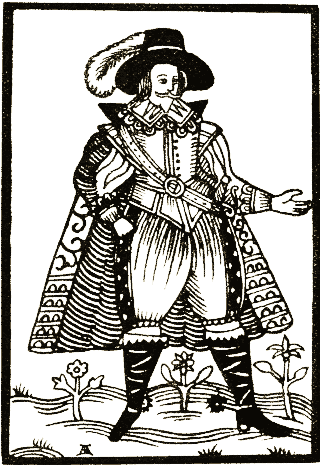
[56.]As I lay musing all alone upon my resting bed, Full many a cogitation did come into my head: And waking from my sleepe, I my dreame to mind did call, Methought I saw before mine eyes, how poore men payes for all.
I many objects did behold, in this my frightfull Dreame, A part of them I will unfold; and though my present Theame Is but a fancy you may say, yet many things doe fall Too true alas; for at this day the poore man payes for all.
Methought I saw (which caused my care) what I wish were a fable, That poore men still inforced are to pay more than they are able; Me thought I heard them weeping say, their substance was but small, For rich men will beare all the sway, and poore men pay for all.
Me thought I saw how wealthy men did grind the poore mens faces, And greedily did prey on them, not pittying their cases: They make them toyle and labour sore, for wages too too small: The rich men in the Tavernes rore, but poore men pay for all.
Methought I saw an Usurer old walke in his Fox-fur'd gowne, Whose wealth and eminence control'd the most men in the Towne: His wealth he by extortion got, and rose by others fall, He had what his hands earned not, but poor men pay for all.
Me thought I saw a Courtier proud, goe swaggering along, That unto any scarce allow'd the office of his tongue: Me thought wert not for bribery, his Peacocks plumes would fall, He ruffles out in bravery, but poor men pay for all.
Me thought I met (sore discontent) some poore men on the way, I asked one whither he went, so fast, and could not stay? Quoth he, I must go take my Lease, or else another shall, My Landlords riches doe increase, but poore men pay for all.
Me thought I saw most stately wives
That live delightfull idle lives,
and go in garments gay:
That with the men their shapes doe change,
or else they'l chide and brawle,
Thus women goe like monsters strange,
but poore men pay for all.
Me thought I was i' th' countrey where poore men take great paines, And labour hard continually, onely for rich mens gaines: Like th' Israelites in Egypt, the poore are kept in thrall, The task-masters are playing kept, but poore men pay for all.
Me thought I saw poore Tradesmen i' th' City and else where, Whom rich men keepe as beads-men, in bondage, care, and feare: Thei'l have them worke for what they list, thus weakest goe to the wall, The rich men eate and drinke the best but poore men pay for all.
Me thought I saw two Lawyers base one to another say, We have had in hand this poore mans Case, a twelvemonth and a day; And yet wee'l not contented be to let the matter fall, Beare thou with me, & Ile beare with thee while poore men pay for all.
Me thought I saw a red-nose Oast, as fat as he could wallow, Whose carkasse, if it should be roast, would drop seven stone of tallow: He grows rich out of measure, with filling measure small, He lives in mirth and pleasure, but poore men pay for all.
And so likewise the Brewer stout, the Chandler and the Baker, The Mault man also without doubt, and the Tobacco taker, Though they be proud and stately growne, and beare themselves so tall, Yet to the world it is well knowne, that poore men pay for all.
Even as the mighty fishes still,
doe feed upon the lesse;
So rich men, might they have ther will
It is a proverbe old and true,
that weakest goe to th' wall,
Rich men can drinke till th' sky looke blue,
but poore men pay for all.
But now, as I before did say, this is but a Dreame indeed, Though all dreames prove not true, some may hap right, as I doe reade. And if that any come to passe, I doubt this my Dreame shall; For still tis found too true a case, that poore men pay for all.
FINIS.
Printed at London for H. G.
83 Seize.
A Witty answer of a Countrey fellow.
[52.] A Country fellow walking London Streets, and gazing up and down at every sight he saw, some mockt him, others pulled him by the Cloake, in so much he could not passe in quiet. He having as much wit, as the boyes knavery, thought hee would requite them for their kinde salutations, with something to laugh at, and to try their wits; and, comming to Paul's gate, where they sell pinnes and Needles, the boyes being very saucie, pulled him by the cloake, and one said. What lacke you friend? another, What lacke you Countryman? Quoth the fellow, minding to make himself some sport, I want a hood for a Humble Bee, or a payre of Spectacles for a blinde Beare: which so amazed the boy, that he had nothing to reply, and the Countrey Man went laughing away.
[32.] What is that which 20 will goe into a Tankard, and one will fill a Barn?
Solution. It is 20 Candles not lighted and one lighted.
[51.]A Sort of Clownes for loss which they sustain'd By Souldiers, to the Captaine sore complain'd, With dolefull wordes, and very woefull faces, They Moov'd him to compassionate their Cases. Good Sir (sayes one) I pray redress our wrong, They that have done it, unto you belong; Of all that eare we had we are bereft, Except our very Shirts, theres nothing left. The Captaine answer'd thus; Fellowes heare mee: My Souldiers rob'd you not, I plainely see: At your first speech, you made me somewhat sad, But your last wordes resolv'd the doubt I had. For they which rifled you left Shirts (you say) And I am sure mine carry all away: By this I know an errour you are in, My Souldiers would have left you but your skin.
[4.] A brisk young Lady, seeing the Sheriff of a County who was a comely young Man, wait upon the Judge who was an old Man, was asked by one, which she had most mind to, the Judge or the Sheriff? She answered, the Sheriff. He asking the reason, she replied, That she loved Judgement well, but Execution much better.
[12.]One did praise dead Beer, Says his Friend, I fear That you have a Worm in your Head; Why de'e praise dead Beer? So must you too I swear, We must all speak well of the dead.
[52.] It chanced, on a Bartholomew-day, when men keep Boothes in Smithfield, a Countrey Gentleman having some Store of money (and no lesse honesty) about him, comming to the Faire, would, amongst the rest needes view the pictures at that time hanging in the Cloysters, where was then much variety of postures, personages, stories, landskips, and such like, which carieth away the Senses, to a kinde of admiration for the present: and as he was thus gazing up and down, there comes a nimble diver (as at that time there resorts many) and closes with him, and quickly draws his purse forth of his pocket, and away he hies him presently: the Gentleman mist his purse, but knew not how to helpe himselfe. Going home to his lodging, and pondering in his minde how either to regain his losses, or to be revenged on the Pick-pocket, at length he bethought himself of this device: he caused an honest Taylor to sew a certain number of Fish hookes within, and round about the mouth of his pocket; with the poynts of the hookes hanging downward, and the next day hies him to the same place, in another Countrey like habit, and baites his Pocket with more money, and there he stood gazing againe at the pictures, presently his former fish (or one of his fraternity) closes with him again, and dives, which the Gentleman being watchfull of, gives a slip aside and had presently strucke the nibling fish into the hand, and feeling him fast, begins to goe away, and the more he hastes away, the deeper the hookes went into the Divers hand, Oh, (quoth the Pick-pocket) how now Sir (quoth the Gentleman) what makes your hand in my Pocket? Pull it out I say: Oh Sir (quoth he) I beseech you be good to me: The people gathering together, imagined the Gentleman had an inchanted Pocket, and that the fellow had not power to pull forth his hand again, they would have him before the Justice. No (quoth the Gentleman) Ile carry him myselfe, so away he went (with the fellowes hand in his Pocket) to a Taverne, with two or three of his friends, and told him what he had lost there the day before, and unlesse he would restore it, he would have him before a Justice: which match the fellow for feare of hanging, willingly condescended to surrender. And that ten pound, and ten shillings more towards the mending of his Pocket: so the Gentleman being well satisfied, ript forth his pocket, and away went the Cutpurse, who had so much picking worke to get out of his hands, he could not use his trade for a Moneth after.
[32.] I came to a tree where were apples, I eat no apples, I gave away no apples, nor I left no apples behind me: and yet I eat, gave away, and left behind me. Solution. There were three apples on the tree, for I eat one apple, gave away one apple, and left one. So I eat no apples, for I eat but one apple, which is no apples, and thus I gave away no apples, for I gave but one, and thus I left no apples for I left but one.
[5.]When Crassus in his office was instal'd, For summs of money, which he yet doth owe, A client by the name of Clerk him Call'd, As he next day to Westminster did go. Which Crassus hearing, whispers thus in's eare, Sirrah, you now mistake, and much do erre, That henceforth must the name of Clerke forbear, And know I am become an Officer. Alas (quoth he) I did not so much marke, Good Mr Officer, that are no clerke.
[8.] When Sir Thomas Moore lived in the City of London, being one of the Justices of Peace, he used to go to the Sessions at New-gate, where it fell out that one of the ancientest Justices of the Bench was wont to chide the poor men whose purses had been cut, for not being more careful; telling them their negligence was the cause that so many cut-purses were brought thither, which when Sir Thomas Moore observed him so often to repeat at one time, especially; the night after, he sent for one of the chief Cut-purses that was in prison, and promised to save him harmless, and stand his friend too, if he would cut the aforesaid Justices Purse the next day as he sate on the Bench, and then presently make a sign of it to him: the fellow very gladly promiseth him to do it the next day; therefore, when they sate again, that Thief was called among the first, who, being accused of his fact, said he did not doubt but that he could sufficiently excuse himself, if he were permitted to speak to some of the Bench in private. He was therefore bid to chuse one who he would, and presently he chose that grave old man, who then had his pouch at his girdle, as they wore them in those dayes; and whilst he whispered him in the ear, he cunningly cut his purse, and then solemnly taking his leave, returns to his place. Sir Thomas knowing by a private sign, that the business was dispatcht, presently took occasion to move the Bench to distribute some alms to a poor needy fellow that was there, and for good example began himself to do it; when the old man came to open his purse, and sees it cut away, and, much wondering, said he was confident he brought it with him when he came thither that morning, Sir Thomas replied presently, What! will you charge any of us with felony? But his choler rising, and he being ashamed of the thing, Sir Thomas calls the Cut-purse and bids him give him his purse again, and withal advised the good old Justice hereafter Not to be so bitter a censurer of innocent mens negligence, when as himself could not secure his purse in that open assembly.